EP1500432B1 - Method for oxidizing alcohol on a ruthenium-carrying alumina catalyst - Google Patents
Method for oxidizing alcohol on a ruthenium-carrying alumina catalyst Download PDFInfo
- Publication number
- EP1500432B1 EP1500432B1 EP03717729A EP03717729A EP1500432B1 EP 1500432 B1 EP1500432 B1 EP 1500432B1 EP 03717729 A EP03717729 A EP 03717729A EP 03717729 A EP03717729 A EP 03717729A EP 1500432 B1 EP1500432 B1 EP 1500432B1
- Authority
- EP
- European Patent Office
- Prior art keywords
- group
- alcohol
- ruthenium
- formula
- hydrogen atom
- Prior art date
- Legal status (The legal status is an assumption and is not a legal conclusion. Google has not performed a legal analysis and makes no representation as to the accuracy of the status listed.)
- Expired - Lifetime
Links
Classifications
-
- B—PERFORMING OPERATIONS; TRANSPORTING
- B01—PHYSICAL OR CHEMICAL PROCESSES OR APPARATUS IN GENERAL
- B01J—CHEMICAL OR PHYSICAL PROCESSES, e.g. CATALYSIS OR COLLOID CHEMISTRY; THEIR RELEVANT APPARATUS
- B01J23/00—Catalysts comprising metals or metal oxides or hydroxides, not provided for in group B01J21/00
- B01J23/38—Catalysts comprising metals or metal oxides or hydroxides, not provided for in group B01J21/00 of noble metals
- B01J23/40—Catalysts comprising metals or metal oxides or hydroxides, not provided for in group B01J21/00 of noble metals of the platinum group metals
- B01J23/46—Ruthenium, rhodium, osmium or iridium
-
- C—CHEMISTRY; METALLURGY
- C07—ORGANIC CHEMISTRY
- C07D—HETEROCYCLIC COMPOUNDS
- C07D333/00—Heterocyclic compounds containing five-membered rings having one sulfur atom as the only ring hetero atom
- C07D333/02—Heterocyclic compounds containing five-membered rings having one sulfur atom as the only ring hetero atom not condensed with other rings
- C07D333/04—Heterocyclic compounds containing five-membered rings having one sulfur atom as the only ring hetero atom not condensed with other rings not substituted on the ring sulphur atom
- C07D333/06—Heterocyclic compounds containing five-membered rings having one sulfur atom as the only ring hetero atom not condensed with other rings not substituted on the ring sulphur atom with only hydrogen atoms, hydrocarbon or substituted hydrocarbon radicals, directly attached to the ring carbon atoms
- C07D333/22—Radicals substituted by doubly bound hetero atoms, or by two hetero atoms other than halogen singly bound to the same carbon atom
-
- B—PERFORMING OPERATIONS; TRANSPORTING
- B01—PHYSICAL OR CHEMICAL PROCESSES OR APPARATUS IN GENERAL
- B01J—CHEMICAL OR PHYSICAL PROCESSES, e.g. CATALYSIS OR COLLOID CHEMISTRY; THEIR RELEVANT APPARATUS
- B01J23/00—Catalysts comprising metals or metal oxides or hydroxides, not provided for in group B01J21/00
- B01J23/38—Catalysts comprising metals or metal oxides or hydroxides, not provided for in group B01J21/00 of noble metals
- B01J23/40—Catalysts comprising metals or metal oxides or hydroxides, not provided for in group B01J21/00 of noble metals of the platinum group metals
- B01J23/46—Ruthenium, rhodium, osmium or iridium
- B01J23/462—Ruthenium
-
- B—PERFORMING OPERATIONS; TRANSPORTING
- B01—PHYSICAL OR CHEMICAL PROCESSES OR APPARATUS IN GENERAL
- B01J—CHEMICAL OR PHYSICAL PROCESSES, e.g. CATALYSIS OR COLLOID CHEMISTRY; THEIR RELEVANT APPARATUS
- B01J37/00—Processes, in general, for preparing catalysts; Processes, in general, for activation of catalysts
- B01J37/02—Impregnation, coating or precipitation
- B01J37/03—Precipitation; Co-precipitation
- B01J37/031—Precipitation
-
- C—CHEMISTRY; METALLURGY
- C07—ORGANIC CHEMISTRY
- C07B—GENERAL METHODS OF ORGANIC CHEMISTRY; APPARATUS THEREFOR
- C07B61/00—Other general methods
-
- C—CHEMISTRY; METALLURGY
- C07—ORGANIC CHEMISTRY
- C07C—ACYCLIC OR CARBOCYCLIC COMPOUNDS
- C07C205/00—Compounds containing nitro groups bound to a carbon skeleton
- C07C205/44—Compounds containing nitro groups bound to a carbon skeleton the carbon skeleton being further substituted by —CHO groups
-
- C—CHEMISTRY; METALLURGY
- C07—ORGANIC CHEMISTRY
- C07C—ACYCLIC OR CARBOCYCLIC COMPOUNDS
- C07C45/00—Preparation of compounds having >C = O groups bound only to carbon or hydrogen atoms; Preparation of chelates of such compounds
- C07C45/27—Preparation of compounds having >C = O groups bound only to carbon or hydrogen atoms; Preparation of chelates of such compounds by oxidation
- C07C45/32—Preparation of compounds having >C = O groups bound only to carbon or hydrogen atoms; Preparation of chelates of such compounds by oxidation with molecular oxygen
- C07C45/37—Preparation of compounds having >C = O groups bound only to carbon or hydrogen atoms; Preparation of chelates of such compounds by oxidation with molecular oxygen of >C—O—functional groups to >C=O groups
- C07C45/38—Preparation of compounds having >C = O groups bound only to carbon or hydrogen atoms; Preparation of chelates of such compounds by oxidation with molecular oxygen of >C—O—functional groups to >C=O groups being a primary hydroxyl group
-
- C—CHEMISTRY; METALLURGY
- C07—ORGANIC CHEMISTRY
- C07C—ACYCLIC OR CARBOCYCLIC COMPOUNDS
- C07C45/00—Preparation of compounds having >C = O groups bound only to carbon or hydrogen atoms; Preparation of chelates of such compounds
- C07C45/27—Preparation of compounds having >C = O groups bound only to carbon or hydrogen atoms; Preparation of chelates of such compounds by oxidation
- C07C45/32—Preparation of compounds having >C = O groups bound only to carbon or hydrogen atoms; Preparation of chelates of such compounds by oxidation with molecular oxygen
- C07C45/37—Preparation of compounds having >C = O groups bound only to carbon or hydrogen atoms; Preparation of chelates of such compounds by oxidation with molecular oxygen of >C—O—functional groups to >C=O groups
- C07C45/39—Preparation of compounds having >C = O groups bound only to carbon or hydrogen atoms; Preparation of chelates of such compounds by oxidation with molecular oxygen of >C—O—functional groups to >C=O groups being a secondary hydroxyl group
-
- C—CHEMISTRY; METALLURGY
- C07—ORGANIC CHEMISTRY
- C07C—ACYCLIC OR CARBOCYCLIC COMPOUNDS
- C07C51/00—Preparation of carboxylic acids or their salts, halides or anhydrides
- C07C51/16—Preparation of carboxylic acids or their salts, halides or anhydrides by oxidation
- C07C51/21—Preparation of carboxylic acids or their salts, halides or anhydrides by oxidation with molecular oxygen
- C07C51/23—Preparation of carboxylic acids or their salts, halides or anhydrides by oxidation with molecular oxygen of oxygen-containing groups to carboxyl groups
- C07C51/235—Preparation of carboxylic acids or their salts, halides or anhydrides by oxidation with molecular oxygen of oxygen-containing groups to carboxyl groups of —CHO groups or primary alcohol groups
-
- B—PERFORMING OPERATIONS; TRANSPORTING
- B01—PHYSICAL OR CHEMICAL PROCESSES OR APPARATUS IN GENERAL
- B01J—CHEMICAL OR PHYSICAL PROCESSES, e.g. CATALYSIS OR COLLOID CHEMISTRY; THEIR RELEVANT APPARATUS
- B01J21/00—Catalysts comprising the elements, oxides, or hydroxides of magnesium, boron, aluminium, carbon, silicon, titanium, zirconium, or hafnium
- B01J21/02—Boron or aluminium; Oxides or hydroxides thereof
- B01J21/04—Alumina
Definitions
- the present invention relates to a process for producing ketones, aldehydes, carboxylic acids and the like by oxidizing alcohols with molecular oxygen in the presence of a ruthenium-carrying alumina as a catalyst.
- a process for oxidizing alcohols a process of contacting the alcohols with molecular oxygen in the presence of a ruthenium catalyst is known.
- a ruthenium catalyst such as a ruthenium-carrying alumina, a ruthenium-carrying carbon, etc. together with an oxygen-activator such as dihydrodihydroxynaphthalene.
- JP-A-11-226417 proposes to carry out the above oxidation reaction in the presence of a ruthenium catalyst such as dichlorotris-(triphenylphosphine)ruthenium, tetrapropylammonium perruthenate salt, a ruthenium-carrying carbon, etc. together with dioxybenzenes or their oxidized derivatives. Furthermore, JP-A-2000-70723 proposes to carry out the above oxidation reaction in the presence of a ruthenium-containing hydrotalcite.
- a ruthenium catalyst such as dichlorotris-(triphenylphosphine)ruthenium, tetrapropylammonium perruthenate salt, a ruthenium-carrying carbon, etc.
- the ruthenium catalysts used in the above conventional processes do not necessarily have sufficient catalytic activities so that the desired conversion of alcohols is not achieved. Therefore, the conventional processes may not be satisfactory in the productivity of oxidized products.
- JP-A-10/137587 discloses a process for the production of noble metal catalyst on a carrier by depositing a noble metal on a carrier using an alkali solution to render the metal insoluble as a hydroxide and then treating the metal at specified temperature in an inert gas atmosphere or under reduced pressure without the presence of an oxidative gas.
- JP-A-10/024235 discloses a catalyst for producing high calorie gas.
- the catalyst is produced by carrying 1.5 to 4 wt % ruthenium on an active alumina composite carrier and reducing at 80 - 800°C.
- JP-A-01/130734 discloses a ruthenium-containing catalyst produced by impregnating a solution containing nitrate anions and ruthenium onto a support, adding alkali to deposit the ruthenium as hydroxide, removing nitrate anions by filtration or decantation and drying and firing.
- US 4,996,001 discloses a process for the oxidation of alcohols to aldehydes, acids or esters. Alcohol and oxygen are contacted and reacted with a dihydro dihydroxy-naphtalene or a dihydrodihydroxyanthracene in the presence of a Group VIII metal oxidation catalyst. Ru(10%)/Al 2 O 3 is one of the catalysts exemplified.
- EP 0 980 706 Al discloses the oxidation of an oxidation catalyst system composed of (A) a ruthenium compound and (B) a dioxybenzene or its oxidant.
- An object of the present invention is to provide a process for preparing ketones, aldehydes, carboxylic acids and the like at a high productivity by oxidizing alcohols at a high conversion using a catalyst prepared by a process for preparing a ruthenium catalyst having a good activity to oxidize alcohols.
- the present invention provides a process for oxidizing an alcohol, the process consisting essentially of steps of: suspending alumina in a solution containing trivalent ruthenium; adding a base to the suspension; performing a solid-liquid separation; and optionally washing with water and/or drying to obtain a ruthenium-carrying alumina catalyst ; and contacting the alcohol with molecular oxygen in the presence of the ruthenium-carrying alumina catalyst. Furthermore, the present invention provides a process for preparing a carbonyl compound comprising oxidizing an alcohol by the oxidizing process described above.
- trivalent ruthenium (ruthenium (III)) is utilized as a ruthenium source, and alumina is suspended in a solution containing trivalent ruthenium.
- Water is usually used as a solvent of the ruthenium solution, although a mixed solvent of water and an organic solvent, or an organic solvent alone may be used, if necessary.
- the amount of the solvent is adjusted such that a ruthenium concentration in the solution is usually from 0.1 mM to 1 M, preferably from 1 mM to 100 mM.
- the kind of alumina to be suspended in the ruthenium solution is not limited, and various kinds of alumina such as ⁇ -alumina, ⁇ -alumina, ⁇ -alumina, etc. may be used. Among them, ⁇ -alumina is preferably used.
- the amount of alumina is adjusted such that an ruthenium content in the ruthenium-carrying alumina is usually from 0.1 to 20% by weight, preferably from 0.5 to 10% by weight.
- a base is added to the suspension of alumina prepared in the previous step to adjust the pH of the suspension to usually at least 8, preferably at least 10, more preferably 12 to 14. If no base is added, the activity of the ruthenium-carrying alumina as a catalyst for oxidizing alcohols is not sufficiently high.
- the base examples include metal hydroxides such as sodium hydroxide, potassium hydroxide, magnesium hydroxide, etc.; metal carbonates such as sodium carbonate, potassium carbonate, magnesium carbonate, etc.; metal acetates such as sodium acetate, potassium acetate, etc.; ammonia; and the like. They may be used as a mixture of two or more of them, if desired.
- the suspension After the addition of the base, the suspension is subjected to solid-liquid separation treatment. Thereby, the ruthenium-carrying alumina is recovered from the suspension.
- the solid-liquid separation treatment is usually filtration or decantation.
- the recovered ruthenium-carrying alumina may optionally be post-treated such as washing with water, drying, etc.
- the ruthenium-carrying alumina prepared by the above process is used as a catalyst for oxidizing an alcohol with molecular oxygen.
- This oxidation reaction may be carried out either in a liquid phase or in a gas phase. Preferably, it is carried out in the liquid phase.
- the amount of the ruthenium-carrying alumina used in the oxidizing process is usually from 0.000001 to 1 mole, preferably from 0.0001 to 0.1 mole, more preferably from 0.001 to 0.05 mole, in terms of ruthenium per one mole of the alcohol.
- the alcohol as a substrate to be oxidized may be a primary alcohol or a secondary alcohol, and may be a monohydric alcohol or a polyhydric alcohol.
- the alcohol may be used as a mixture of two or more of alcohols, if desired.
- the alcohol as a substrate is an alcohol represented by the following formula (1), (2) or (3): wherein R 1 represents a hydrogen atom; a hydrocarbon group which may optionally be substituted with at least one substituent selected from the group consisting of a halogen atom, a nitro group, an alkoxy group, a phenoxy group and an acyloxy group; or a heterocyclic group, wherein R 2 and R 3 represent independently each other a hydrocarbon group which may optionally be substituted with at least one substituent selected from the group consisting of a halogen atom, a nitro group, an alkoxy group, a phenoxy group and an acyloxy group; or a heterocyclic group, while R 2 and R 3 may be combined to form a ring together with the carbon atom to which they are bonded, wherein X represents a single bond or a divalent hydrocarbon group, and R 4 and R 5 represent independently each other a hydrogen atom; a hydrocarbon group which may optionally be substituted with
- R 1 in the formula (1) is a hydrocarbon group which may optionally be substituted with at least one substituent selected from the group consisting of a halogen atom, a nitro group, an alkoxy group, a phenoxy group and an acyloxy group
- the hydrocarbon group is preferably an alkyl group, a cycloalkyl group, an alkenyl group, an aryl group, an arylalkyl group or an arylalkenyl group, each of which has 1 to 20 carbon atoms.
- the alkoxyl group and the acyloxy group as a substituent of the hydrocarbon group may have 1 to 10 carbon atoms.
- R 1 is a heterocyclic group, it preferably has at least one hetero atom selected from oxygen, nitrogen and sulfur atoms.
- the heterocyclic group is preferably a five-or six-membered ring.
- R 2 or R 3 in the formula (2) is a hydrocarbon group which may optionally be substituted with at least one substituent selected from the group consisting of a halogen atom, a nitro group, an alkoxy group, a phenoxy group and an acyloxy group
- the hydrocarbon group is preferably an alkyl group, a cycloalkyl group, an alkenyl group, an aryl group, an arylalkyl group or an arylalkenyl group, each of which has 1 to 20 carbon atoms.
- the alkoxyl group and the acyloxy group as a substituent of the hydrocarbon group may have 1 to 10 carbon atoms.
- R 2 or R 3 is a heterocyclic group, it preferably has at least one hetero atom selected from oxygen, nitrogen and sulfur atoms.
- the heterocyclic group is preferably a five- or six-membered ring.
- the ring is preferably a monocyclic or polycyclic ring having 5 to 20 carbon atoms
- X in the formula (3) is a divalent hydrocarbon group, it is preferably an alkylidene group, an alkylene group or an arylene group each of which has 1 to 20 carbon atoms.
- R 4 or R 5 in the formula (3) is a hydrocarbon group which may optionally be substituted with at least one substituent selected from the group consisting of a halogen atom, a nitro group, an alkoxy group, a phenoxy group and an acyloxy group
- the hydrocarbon group is preferably an alkyl group, a cycloalkyl group, an alkenyl group, an aryl group, an arylalkyl group or an arylalkenyl group, each of which has 1 to 20 carbon atoms.
- the alkoxyl group and the acyloxy group as a substituent of the hydrocarbon group may have 1 to 10 carbon atoms.
- R 4 or R 5 is a heterocyclic group, it preferably has at least one hetero atom selected from oxygen, nitrogen and sulfur atoms.
- the heterocyclic group is preferably a five- or six-membered ring.
- the ring is preferably a monocyclic or polycyclic ring having 5 to 20 carbon atoms.
- the alcohol represented by the formula (1) include methanol, ethanol, 1-propanol, 1-butanol, 1-pentanol, 1-hexanol, 1-heptanol, 1-octanol, 1-decanol, 1-eicosanol, 3-methyl-1-butanol, 3,3-dimethyl-1-butanol, 4-methyl-1-pentanol, 2-methyl-1-pentanol, 2,2-dimethyl-1-pentanol, 5-methyl-1-hexanol, 3-chloro-1-propanol, allyl alcohol, geraniol, benzyl alcohol, p-methylbenzyl alcohol, p-methoxybenzyl alcohol, p-chlorobenzyl alcohol, p-nitrobenzyl alcohol, 2-phenylethanol, 2-(p-chlorophenyl)ethanol, cinnamyl alcohol, furfuryl alcohol, 2-thiophenemethanol, etc.
- alcohol represented by the formula (2) include 2-propanol, 2-butanol, 2-pentanol, 2-hexanol, 2-heptanol, 2-octanol, 2-decanol, 2-eicosanol, 3-pentanol, 3-hexanol, 3-heptanol, 3-decanol, 3-eicosanol, 4-heptanol, 4-decanol, 4-eicosanol, 3-methyl-2-butanol, 3,3-dimethyl-2-butanol, 4-methyl-2-pentanol, 2-methyl-3-pentanol, 2,2-dimethyl-3-pentanol, 5-methyl-3-hexanol, 1-chloro-2-propanol, 1-bromo-2-propanol, 1-methoxy-2-propanol, 1-phenoxy-2-propanol, 1-acetoxy-2-propanol, 3-penten-2-ol, 1-phenylethanol,
- alcohol represented by the formula (3) examples include ethylene glycol, propylene glycol, 1,3-propanediol, 1,2-butanediol, 1,3-butanediol, 1,4-butanediol, 2,3-butanediol, 1,2-pentanediol, 1,5-pentanediol, 1,2-hexanediol, 1,6-hexanediol, 1,2-heptanediol, 1,7-heptanediol, 1,2-octanediol, 1,8-octanediol, 1,2-decanediol, 1,10-decanediol, 3-methyl-1,2-butanediol, 3,3-dimethyl-1,2-butanediol, 4-methyl-1,2-pentanediol, 5-methyl-1,2-hexanediol, 3-chloro-1,2-
- Oxygen gas or an air can be used as a molecular oxygen source to be used in the oxidation reaction, and the oxygen gas or air may be diluted with an inert gas such as nitrogen, carbon dioxide, helium, etc.
- the contact of the alcohol with molecular oxygen can be carried out by placing a liquid containing the alcohol and the ruthenium-carrying alumina in the atmosphere of a molecular oxygen-containing gas, or by bubbling the molecular oxygen-containing gas through such a liquid.
- the oxidation reaction may be carried out in the presence of a solvent, which is less active to the oxidation reaction than alcohol.
- a solvent include halogenated hydrocarbons such as dichloromethane, dichloroethane, chloroform, etc.; esters such as isobutyl acetate, tert-butyl acetate, etc.; nitriles such as acetonitrile, etc.; aromatic hydrocarbons such as toluene, etc.; halogenated aromatic hydrocarbons such as chlorobenzene, trifluorotoluene, etc.; and the like.
- the solvent is used, the amount thereof is usually from 1 to 100,000 parts by weight, preferably from 10 to 10,000 parts by weight, per 100 parts by weight of the alcohol.
- a reaction temperature is usually from 20 to 300°C, preferably from 50 to 200°C, and a reaction pressure is usually from 0.1 to 10 MPa.
- the oxidation reaction may be carried out continuously or batchwise.
- the above oxidation reaction produces various carbonyl compounds as oxidation products from the alcohols as the substrates.
- the alcohol is a primary alcohol
- a corresponding aldehyde and/or carboxylic acid can be produced.
- a secondary alcohol a corresponding ketone can be produced.
- the alcohol is a polyhydric alcohol, a corresponding polycarbonyl compound can be produced.
- an aldehyde represented by the formula (4): wherein R 1 is the same as defined above, and/or a carboxylic acid represented by the formula (5): wherein R 1 is the same as defined above, can be produced as an oxidation product.
- the alcohols can be oxidized with molecular oxygen at a high conversion.
- the oxidation products such as ketones, aldehydes, carboxylic acids, etc. can be produced from the alcohols with a good productivity by such a process.
- ⁇ -alumina 2.0 g
- KHS-24 manufactured by Sumitomo Chemical Co., Ltd., specific surface area: 163 m 2 /g
- the suspension had a pH of 2.3.
- a 1 M aqueous solution of sodium hydroxide (26.4 ml) was added to the suspension to adjust pH to 13.2, and then the suspension was stirred at room temperature for 24 hours.
- the suspension was filtrated, and the residual solid was washed with water and dried to obtain a ruthenium-carrying alumina (1.9 g) (ruthenium content: 2.45% by weight, specific surface area: 187 m 2 /g).
- the ruthenium-carrying alumina prepared in Example 1 (0.044 g) was added to and suspended in trifluorotoluene (1.5 ml) and stirred at room temperature for 5 minutes.
- benzyl alcohol (0.108 g) was added, and oxidized by flowing oxygen through the suspension at 83°C for 24 hours while stirring.
- the reaction mixture was analyzed.
- the conversion of benzyl alcohol was 84%, and the selectivity to benzaldehyde was more than 99%.
- the ruthenium-carrying alumina prepared in Example 1 (0.11 g) was added to and suspended in trifluorotoluene (1.5 ml) and stirred at room temperature for 5 minutes.
- benzyl alcohol (0.108 g) was added, and oxidized by flowing oxygen through the suspension at 83°C for 1 hour while stirring.
- the reaction mixture was analyzed.
- the conversion of benzyl alcohol was 99%, and the selectivity to benzaldehyde was more than 99%.
- Example 4 The same procedures as in Example 4 were repeated except that air was flowed through the suspension in place of oxygen, and the reaction time was changed to be 4 hours.
- the conversion of benzyl alcohol was 98%, and the selectivity to benzaldehyde was more than 99%
- Example 4 The same procedures as in Example 4 were repeated except that p-methylbenzyl alcohol was used as a substrate in place of benzyl alcohol.
- the conversion of p-methylbenzyl alcohol was more than 99%, and the selectivity to p-methylbenzaldehyde was more than 99%.
- Example 4 The same procedures as in Example 4 were repeated except that p-methoxybenzyl alcohol was used as a substrate in place of benzyl alcohol.
- the conversion of p-methoxybenzyl alcohol was more than 99%, and the selectivity to p-methoxybenzaldehyde was more than 99%.
- Example 4 The same procedures as in Example 4 were repeated except that p-chlorobenzyl alcohol was used as a substrate in place of benzyl alcohol.
- the conversion of p-chlorobenzyl alcohol was more than 99%, and the selectivity to p-chlorobenzaldehyde was more than 99%.
- Example 4 The same procedures as in Example 4 were repeated except that p-nitrobenzyl alcohol was used as a substrate in place of benzyl alcohol, and the reaction time was changed to be 3 hours.
- the conversion of p-nitrobenzyl alcohol was 97%, and the selectivity to p-nitrobenzaldehyde was more than 99%.
- Example 4 The same procedures as in Example 4 were repeated except that 1-phenylethanol was used as a substrate in place of benzyl alcohol. The conversion of 1-phenylethanol was more than 99%, and the selectivity to acetophenone was more than 99%.
- Example 4 The same procedures as in Example 4 were repeated except that cyclopropylphenylmethanol was used as a substrate in place of benzyl alcohol.
- the conversion of cyclopropylphenylmethanol was more than 99%, and the selectivity to cyclopropylphenylketone was more than 99%.
- Example 4 The same procedures as in Example 4 were repeated except that cinnamyl alcohol was used as a substrate in place of benzyl alcohol, and the reaction time was changed to be 1.5 hours. The conversion of cinnamyl alcohol was more than 99%, and the selectivity to cinnamaldehyde was 98%.
- Example 4 The same procedures as in Example 4 were repeated except that geraniol was used as a substrate in place of benzyl alcohol, and the reaction time was changed to be 6 hours. The conversion of geraniol was 89%, and the selectivity to geranial was 97%.
- Example 4 The same procedures as in Example 4 were repeated except that 2-octanol was used as a substrate in place of benzyl alcohol, and the reaction time was changed to be 2 hours. The conversion of 2-octanol was 91%, and the selectivity to 2-octanone was more than 99%.
- Example 4 The same procedures as in Example 4 were repeated except that 2-thiophenemethanol was used as a substrate in place of benzyl alcohol, and the reaction time was changed to be 1.5 hours. The conversion of 2-thiophenemethanol was more than 99%, and the selectivity to 2-thiophenecarboxyaldehyde was more than 99%.
- the ruthenium-carrying alumina prepared in Example 1 (0.22 g) was added to and suspended in trifluorotoluene (1.5 ml) and stirred at room temperature for 5 minutes.
- cyclohexanol (0.100 g) was added, and oxidized by flowing oxygen through the suspension at 83°C for 8 hours while stirring.
- the reaction mixture was analyzed.
- the conversion of cyclohexanol was 53%, and the selectivity to cyclohexanone was more than 99%.
- Example 17 The same procedures as in Example 17 were repeated except that 1-octanol was used as a substrate in place of cyclohexanol, and the reaction time was changed to 4 be hours.
- the conversion of 1-octanol was 80%, and the selectivities to 1-octanal and 1-octanoic acid were 85% and 10%, respectively.
- Example 17 The same procedures as in Example 17 were repeated except that cyclopentanol was used as a substrate in place of cyclohexanol.
- the conversion of cyclopentanol was 92%, and the selectivity to cyclopentanone was more than 99%.
- Example 17 The same procedures as in Example 17 were repeated except that cyclooctanol was used as a substrate in place of cyclohexanol, and the reaction temperature was changed to be 6 hours.
- the conversion of cyclooctanol was 81%, and the selectivity to cycloctanone was more than 99%.
- the ruthenium-carrying alumina prepared in Example 1 (0.11 g) was added to and suspended in 1-phenylethanol (3.05 g) and stirred at room temperature for 5 minutes. Then, 1-phenylethanol was oxidized by flowing oxygen through the suspension at 150°C for 18 hours while stirring. The conversion of 1-phenylethanol was 95%, and the selectivity to acetophenone was more than 99%.
- the ruthenium-carrying alumina prepared in Example 1 (0.11 g) was added to and suspended in 2-octanol (3.25 g) and stirred at room temperature for 5 minutes. Then, 2-octanol was oxidized by flowing oxygen through the suspension at 150°C for 24 hours while stirring. The conversion of 2-octanol was 98%, and the selectivity to 2-octanone was more than 99%.
- the ruthenium-carrying alumina prepared in Example 2 (0.11 g) was added to and suspended in trifluorotoluene (1.5 ml) and stirred at room temperature for 5 minutes.
- benzyl alcohol (0.108 g) was added, and oxidized by flowing oxygen through the suspension at 83°C for 1 hour while stirring.
- the reaction mixture was analyzed.
- the conversion of benzyl alcohol was 99%, and the selectivity to benzaldehyde was more than 99%.
- the ruthenium-carrying alumina prepared in Example 2 (0.11 g) was added to and suspended in trifluorotoluene (5 ml) and stirred at room temperature for 5 minutes.
- ethylene glycol 0.071 g was added, and oxidized by flowing air through the suspension at 83°C for 5 hours and 10 minutes while stirring.
- the reaction mixture was analyzed.
- the conversion of ethylene glycol was 72%, and the selectivity to glyoxal was 91%.
- the ruthenium-carrying alumina prepared in Comparative Example 1 (0.044 g) was added to and suspended in trifluorotoluene (1.5 ml) and stirred at room temperature for 5 minutes.
- benzyl alcohol (0.108 g) was added, and oxidized by flowing oxygen through the suspension at 83°C for 24 hours while stirring.
- the reaction mixture was analyzed.
- the conversion of benzyl alcohol was 23%, and the selectivity to benzaldehyde was more than 99%.
Landscapes
- Chemical & Material Sciences (AREA)
- Organic Chemistry (AREA)
- Engineering & Computer Science (AREA)
- Materials Engineering (AREA)
- Chemical Kinetics & Catalysis (AREA)
- Oil, Petroleum & Natural Gas (AREA)
- Organic Low-Molecular-Weight Compounds And Preparation Thereof (AREA)
- Catalysts (AREA)
- Low-Molecular Organic Synthesis Reactions Using Catalysts (AREA)
- Heterocyclic Compounds Containing Sulfur Atoms (AREA)
Abstract
Description
- The present invention relates to a process for producing ketones, aldehydes, carboxylic acids and the like by oxidizing alcohols with molecular oxygen in the presence of a ruthenium-carrying alumina as a catalyst.
- As a process for oxidizing alcohols, a process of contacting the alcohols with molecular oxygen in the presence of a ruthenium catalyst is known. For example,
US Patent No. 4,996,007 proposes to carry out the above oxidation reaction in the presence of a ruthenium catalyst such as a ruthenium-carrying alumina, a ruthenium-carrying carbon, etc. together with an oxygen-activator such as dihydrodihydroxynaphthalene.JP-A-11-226417 JP-A-2000-70723 - However, the ruthenium catalysts used in the above conventional processes do not necessarily have sufficient catalytic activities so that the desired conversion of alcohols is not achieved. Therefore, the conventional processes may not be satisfactory in the productivity of oxidized products.
-
JP-A-10/137587 -
JP-A-10/024235 -
JP-A-01/130734 -
US 4,996,001 discloses a process for the oxidation of alcohols to aldehydes, acids or esters. Alcohol and oxygen are contacted and reacted witha dihydro dihydroxy-naphtalene or a dihydrodihydroxyanthracene in the presence of a Group VIII metal oxidation catalyst. Ru(10%)/Al2O3 is one of the catalysts exemplified. -
US 4,218,401 describes the oxidation of primary and secondary alcohols, to aldehydes and ketones respectively, by passing a gaseous mixture of the alcohol and oxygen (air) over a supported catalyst of Ru, Rh, Pd, Pt, Ir or Os. 0.1% Ru supported on alumina is one of the catalysts exemplified. -
EP 0 980 706 Al discloses the oxidation of an oxidation catalyst system composed of (A) a ruthenium compound and (B) a dioxybenzene or its oxidant. - An object of the present invention is to provide a process for preparing ketones, aldehydes, carboxylic acids and the like at a high productivity by oxidizing alcohols at a high conversion using a catalyst prepared by a process for preparing a ruthenium catalyst having a good activity to oxidize alcohols.
- Accordingly, the present invention provides a process for oxidizing an alcohol, the process consisting essentially of steps of: suspending alumina in a solution containing trivalent ruthenium; adding a base to the suspension; performing a solid-liquid separation; and optionally washing with water and/or drying to obtain a ruthenium-carrying alumina catalyst ; and contacting the alcohol with molecular oxygen in the presence of the ruthenium-carrying alumina catalyst. Furthermore, the present invention provides a process for preparing a carbonyl compound comprising oxidizing an alcohol by the oxidizing process described above.
- In the process for preparing a ruthenium-carrying alumina, trivalent ruthenium (ruthenium (III)) is utilized as a ruthenium source, and alumina is suspended in a solution containing trivalent ruthenium.
- Examples of ruthenium compounds which can be used as sources of trivalent ruthenium include ruthenium halides such as ruthenium(III) chloride, ruthenium(III) bromide, etc.; oxo acid salts such as ruthenium(III) nitrate, ruthenium(III) sulfate, etc.; and so on. They may be used as a mixture of two or more of them, if desired. Among them, ruthenium halides such as ruthenium(III) chloride are preferable.
- Water is usually used as a solvent of the ruthenium solution, although a mixed solvent of water and an organic solvent, or an organic solvent alone may be used, if necessary. The amount of the solvent is adjusted such that a ruthenium concentration in the solution is usually from 0.1 mM to 1 M, preferably from 1 mM to 100 mM.
- The kind of alumina to be suspended in the ruthenium solution is not limited, and various kinds of alumina such as α-alumina, β-alumina, γ-alumina, etc. may be used. Among them, γ-alumina is preferably used. The amount of alumina is adjusted such that an ruthenium content in the ruthenium-carrying alumina is usually from 0.1 to 20% by weight, preferably from 0.5 to 10% by weight.
- Then, a base is added to the suspension of alumina prepared in the previous step to adjust the pH of the suspension to usually at least 8, preferably at least 10, more preferably 12 to 14. If no base is added, the activity of the ruthenium-carrying alumina as a catalyst for oxidizing alcohols is not sufficiently high.
- Examples of the base include metal hydroxides such as sodium hydroxide, potassium hydroxide, magnesium hydroxide, etc.; metal carbonates such as sodium carbonate, potassium carbonate, magnesium carbonate, etc.; metal acetates such as sodium acetate, potassium acetate, etc.; ammonia; and the like. They may be used as a mixture of two or more of them, if desired.
- After the addition of the base, the suspension is subjected to solid-liquid separation treatment. Thereby, the ruthenium-carrying alumina is recovered from the suspension. The solid-liquid separation treatment is usually filtration or decantation. The recovered ruthenium-carrying alumina may optionally be post-treated such as washing with water, drying, etc.
- The ruthenium-carrying alumina prepared by the above process is used as a catalyst for oxidizing an alcohol with molecular oxygen. This oxidation reaction may be carried out either in a liquid phase or in a gas phase. Preferably, it is carried out in the liquid phase.
- The amount of the ruthenium-carrying alumina used in the oxidizing process is usually from 0.000001 to 1 mole, preferably from 0.0001 to 0.1 mole, more preferably from 0.001 to 0.05 mole, in terms of ruthenium per one mole of the alcohol.
- The alcohol as a substrate to be oxidized may be a primary alcohol or a secondary alcohol, and may be a monohydric alcohol or a polyhydric alcohol. The alcohol may be used as a mixture of two or more of alcohols, if desired.
- Preferably, the alcohol as a substrate is an alcohol represented by the following formula (1), (2) or (3):


- When R1 in the formula (1) is a hydrocarbon group which may optionally be substituted with at least one substituent selected from the group consisting of a halogen atom, a nitro group, an alkoxy group, a phenoxy group and an acyloxy group, the hydrocarbon group is preferably an alkyl group, a cycloalkyl group, an alkenyl group, an aryl group, an arylalkyl group or an arylalkenyl group, each of which has 1 to 20 carbon atoms. The alkoxyl group and the acyloxy group as a substituent of the hydrocarbon group may have 1 to 10 carbon atoms.
- When R1 is a heterocyclic group, it preferably has at least one hetero atom selected from oxygen, nitrogen and sulfur atoms. The heterocyclic group is preferably a five-or six-membered ring.
- When R2 or R3 in the formula (2) is a hydrocarbon group which may optionally be substituted with at least one substituent selected from the group consisting of a halogen atom, a nitro group, an alkoxy group, a phenoxy group and an acyloxy group, the hydrocarbon group is preferably an alkyl group, a cycloalkyl group, an alkenyl group, an aryl group, an arylalkyl group or an arylalkenyl group, each of which has 1 to 20 carbon atoms. The alkoxyl group and the acyloxy group as a substituent of the hydrocarbon group may have 1 to 10 carbon atoms.
- When R2 or R3 is a heterocyclic group, it preferably has at least one hetero atom selected from oxygen, nitrogen and sulfur atoms. The heterocyclic group is preferably a five- or six-membered ring.
- When R2 and R3 are combined to form a ring together with the carbon atom to which they are bonded, the ring is preferably a monocyclic or polycyclic ring having 5 to 20 carbon atoms
- When X in the formula (3) is a divalent hydrocarbon group, it is preferably an alkylidene group, an alkylene group or an arylene group each of which has 1 to 20 carbon atoms.
- When R4 or R5 in the formula (3) is a hydrocarbon group which may optionally be substituted with at least one substituent selected from the group consisting of a halogen atom, a nitro group, an alkoxy group, a phenoxy group and an acyloxy group, the hydrocarbon group is preferably an alkyl group, a cycloalkyl group, an alkenyl group, an aryl group, an arylalkyl group or an arylalkenyl group, each of which has 1 to 20 carbon atoms. The alkoxyl group and the acyloxy group as a substituent of the hydrocarbon group may have 1 to 10 carbon atoms.
- When R4 or R5 is a heterocyclic group, it preferably has at least one hetero atom selected from oxygen, nitrogen and sulfur atoms. The heterocyclic group is preferably a five- or six-membered ring.
- When R4 and R5 are combined to form a ring together with the carbon atoms to which R4, R5 and X are bonded, the ring is preferably a monocyclic or polycyclic ring having 5 to 20 carbon atoms.
- Specific examples of the alcohol represented by the formula (1) include methanol, ethanol, 1-propanol, 1-butanol, 1-pentanol, 1-hexanol, 1-heptanol, 1-octanol, 1-decanol, 1-eicosanol, 3-methyl-1-butanol, 3,3-dimethyl-1-butanol, 4-methyl-1-pentanol, 2-methyl-1-pentanol, 2,2-dimethyl-1-pentanol, 5-methyl-1-hexanol, 3-chloro-1-propanol, allyl alcohol, geraniol, benzyl alcohol, p-methylbenzyl alcohol, p-methoxybenzyl alcohol, p-chlorobenzyl alcohol, p-nitrobenzyl alcohol, 2-phenylethanol, 2-(p-chlorophenyl)ethanol, cinnamyl alcohol, furfuryl alcohol, 2-thiophenemethanol, etc.
- Specific examples of the alcohol represented by the formula (2) include 2-propanol, 2-butanol, 2-pentanol, 2-hexanol, 2-heptanol, 2-octanol, 2-decanol, 2-eicosanol, 3-pentanol, 3-hexanol, 3-heptanol, 3-decanol, 3-eicosanol, 4-heptanol, 4-decanol, 4-eicosanol, 3-methyl-2-butanol, 3,3-dimethyl-2-butanol, 4-methyl-2-pentanol, 2-methyl-3-pentanol, 2,2-dimethyl-3-pentanol, 5-methyl-3-hexanol, 1-chloro-2-propanol, 1-bromo-2-propanol, 1-methoxy-2-propanol, 1-phenoxy-2-propanol, 1-acetoxy-2-propanol, 3-penten-2-ol, 1-phenylethanol, cyclopropylphenylmethanol, benzhydrol, 1-(p-tolyl)ethanol, 1-(p-chlorophenyl)ethanol, 1-(p-bromophenyl)ethanol, 1-(p-methoxyphenyl)ethanol, 1-(p-phenoxyphenyl)ethanol, 1-(p-acetoxyphenyl)ethanol, 1-phenyl-2-propanol, 1-(p-tolyl)-2-propanol, 1-(p-chlorophenyl)-2-propanol, 1-(p-bromophenyl)-2-propanol, 1-(p-methoxyphenyl)-2-propanol, 1-(p-phenoxyphenyl)-2-propanol, 1-(p-acetoxyphenyl)-2-propanol, cyclopentanol, cyclohexanol, cycloheptanol, cyclooctanol, cyclododecanol, exo-norborneol, endo-norborneol, 1-indanol, 1-tetralol, 9-fluorenol, etc.
- Specific examples of the alcohol represented by the formula (3) include ethylene glycol, propylene glycol, 1,3-propanediol, 1,2-butanediol, 1,3-butanediol, 1,4-butanediol, 2,3-butanediol, 1,2-pentanediol, 1,5-pentanediol, 1,2-hexanediol, 1,6-hexanediol, 1,2-heptanediol, 1,7-heptanediol, 1,2-octanediol, 1,8-octanediol, 1,2-decanediol, 1,10-decanediol, 3-methyl-1,2-butanediol, 3,3-dimethyl-1,2-butanediol, 4-methyl-1,2-pentanediol, 5-methyl-1,2-hexanediol, 3-chloro-1,2-propanediol, 3-butene-1,2-diol, 4-pentene-1,2-diol, 1-phenylethane-1,2-diol, 1-(4-methylphenyl)ethane-1,2-diol, 1-(4-methoxyphenyl) ethane-1,2-diol, 1-(4-chlorophenyl)ethane-1,2-diol, 1-(4-nitrophenyl)ethane-1,2-diol, 1-cyclohexylethane-1,2-diol, 1,2-cyclohexanediol, etc.
- Oxygen gas or an air can be used as a molecular oxygen source to be used in the oxidation reaction, and the oxygen gas or air may be diluted with an inert gas such as nitrogen, carbon dioxide, helium, etc.
- The contact of the alcohol with molecular oxygen can be carried out by placing a liquid containing the alcohol and the ruthenium-carrying alumina in the atmosphere of a molecular oxygen-containing gas, or by bubbling the molecular oxygen-containing gas through such a liquid.
- The oxidation reaction may be carried out in the presence of a solvent, which is less active to the oxidation reaction than alcohol. Examples of such a solvent include halogenated hydrocarbons such as dichloromethane, dichloroethane, chloroform, etc.; esters such as isobutyl acetate, tert-butyl acetate, etc.; nitriles such as acetonitrile, etc.; aromatic hydrocarbons such as toluene, etc.; halogenated aromatic hydrocarbons such as chlorobenzene, trifluorotoluene, etc.; and the like. When the solvent is used, the amount thereof is usually from 1 to 100,000 parts by weight, preferably from 10 to 10,000 parts by weight, per 100 parts by weight of the alcohol.
- In the oxidation reaction, a reaction temperature is usually from 20 to 300°C, preferably from 50 to 200°C, and a reaction pressure is usually from 0.1 to 10 MPa. The oxidation reaction may be carried out continuously or batchwise.
- The above oxidation reaction produces various carbonyl compounds as oxidation products from the alcohols as the substrates. For example, when the alcohol is a primary alcohol, a corresponding aldehyde and/or carboxylic acid can be produced. When the alcohol is a secondary alcohol, a corresponding ketone can be produced. When the alcohol is a polyhydric alcohol, a corresponding polycarbonyl compound can be produced.
- When the alcohol represented by the formula (1) is used, an aldehyde represented by the formula (4):


- When the alcohol represented by the formula (2) is used, a ketone represented by the formula (6):

- When the alcohol represented by the formula (3) is used, a compound represented by the formula (7):

- When the ruthenium-carrying alumina prepared by the process described herein is used as a catalyst, the alcohols can be oxidized with molecular oxygen at a high conversion. Thus, the oxidation products such as ketones, aldehydes, carboxylic acids, etc. can be produced from the alcohols with a good productivity by such a process.
- The present invention will be illustrated by the Examples, which do not limit the scope of the invention in any way.
- In the Examples, the reaction mixture was analyzed by gas chromatography, and the conversion of a substrate and the selectivity to each product are calculated by the following formulas:


- In 60 ml of aqueous solution of ruthenium(III) chloride (8.3 mM), γ-alumina (2.0 g) (Reference catalyst JRC-ALO-4 of the Society of Catalyst, specific surface area : 177 m2/g) was added and suspended, and the suspension was stirred at room temperature for 15 minutes. At this time, the suspension had a pH of 2.1. Thereafter, a 1 M aqueous solution of sodium hydroxide was added to the suspension to adjust pH to 13.2, and then the suspension was stirred at room temperature for 24 hours. The suspension was filtrated, and the residual solid was washed with water and dried to obtain a ruthenium-carrying alumina (2.1 g) (ruthenium content: 2.28% by weight, specific surface area: 182 m2/g).
- In 60 ml of aqueous solution of ruthenium(III) chloride (8.3 mM), γ-alumina (2.0 g) (KHS-24 manufactured by Sumitomo Chemical Co., Ltd., specific surface area: 163 m2/g) was added and suspended, and the suspension was stirred at room temperature for 15 minutes. At this time, the suspension had a pH of 2.3. Thereafter, a 1 M aqueous solution of sodium hydroxide (26.4 ml) was added to the suspension to adjust pH to 13.2, and then the suspension was stirred at room temperature for 24 hours. The suspension was filtrated, and the residual solid was washed with water and dried to obtain a ruthenium-carrying alumina (1.9 g) (ruthenium content: 2.45% by weight, specific surface area: 187 m2/g).
- In 60 ml of aqueous solution of ruthenium(III) chloride (8.3 mM), γ-alumina (2.0 g) (Reference catalyst JRC-ALO-4 of the Society of Catalyst, specific surface area: 177 m2/g) was added and suspended, and the suspension was stirred at room temperature for 24 hours. Then, the resulting suspension haying a pH of 2.4 was filtrated, and the residual solid was washed with water and dried to obtain a ruthenium-carrying alumina (2.0 g) (ruthenium content: 1.74% by weight, specific surface area: 180 m2/g). Oxidation of Alcohol
- The ruthenium-carrying alumina prepared in Example 1 (0.044 g) was added to and suspended in trifluorotoluene (1.5 ml) and stirred at room temperature for 5 minutes. To the suspension, benzyl alcohol (0.108 g) was added, and oxidized by flowing oxygen through the suspension at 83°C for 24 hours while stirring. The reaction mixture was analyzed. The conversion of benzyl alcohol was 84%, and the selectivity to benzaldehyde was more than 99%.
- The ruthenium-carrying alumina prepared in Example 1 (0.11 g) was added to and suspended in trifluorotoluene (1.5 ml) and stirred at room temperature for 5 minutes. To the suspension, benzyl alcohol (0.108 g) was added, and oxidized by flowing oxygen through the suspension at 83°C for 1 hour while stirring. The reaction mixture was analyzed. The conversion of benzyl alcohol was 99%, and the selectivity to benzaldehyde was more than 99%.
- The same procedures as in Example 4 were repeated except that air was flowed through the suspension in place of oxygen, and the reaction time was changed to be 4 hours. The conversion of benzyl alcohol was 98%, and the selectivity to benzaldehyde was more than 99%
- The same procedures as in Example 4 were repeated except that p-methylbenzyl alcohol was used as a substrate in place of benzyl alcohol. The conversion of p-methylbenzyl alcohol was more than 99%, and the selectivity to p-methylbenzaldehyde was more than 99%.
- The same procedures as in Example 4 were repeated except that p-methoxybenzyl alcohol was used as a substrate in place of benzyl alcohol. The conversion of p-methoxybenzyl alcohol was more than 99%, and the selectivity to p-methoxybenzaldehyde was more than 99%.
- The same procedures as in Example 4 were repeated except that p-chlorobenzyl alcohol was used as a substrate in place of benzyl alcohol. The conversion of p-chlorobenzyl alcohol was more than 99%, and the selectivity to p-chlorobenzaldehyde was more than 99%.
- The same procedures as in Example 4 were repeated except that p-nitrobenzyl alcohol was used as a substrate in place of benzyl alcohol, and the reaction time was changed to be 3 hours. The conversion of p-nitrobenzyl alcohol was 97%, and the selectivity to p-nitrobenzaldehyde was more than 99%.
- The same procedures as in Example 4 were repeated except that 1-phenylethanol was used as a substrate in place of benzyl alcohol. The conversion of 1-phenylethanol was more than 99%, and the selectivity to acetophenone was more than 99%.
- The same procedures as in Example 4 were repeated except that cyclopropylphenylmethanol was used as a substrate in place of benzyl alcohol. The conversion of cyclopropylphenylmethanol was more than 99%, and the selectivity to cyclopropylphenylketone was more than 99%.
- The same procedures as in Example 4 were repeated except that cinnamyl alcohol was used as a substrate in place of benzyl alcohol, and the reaction time was changed to be 1.5 hours. The conversion of cinnamyl alcohol was more than 99%, and the selectivity to cinnamaldehyde was 98%.
- The same procedures as in Example 4 were repeated except that geraniol was used as a substrate in place of benzyl alcohol, and the reaction time was changed to be 6 hours. The conversion of geraniol was 89%, and the selectivity to geranial was 97%.
- The same procedures as in Example 4 were repeated except that 2-pentanol was used as a substrate in place of benzyl alcohol, and the reaction time was changed to 5 be hours. The conversion of 2-pentanol was 90%, and the selectivity to 2-pentanone was more than 99%.
- The same procedures as in Example 4 were repeated except that 2-octanol was used as a substrate in place of benzyl alcohol, and the reaction time was changed to be 2 hours. The conversion of 2-octanol was 91%, and the selectivity to 2-octanone was more than 99%.
- The same procedures as in Example 4 were repeated except that 2-thiophenemethanol was used as a substrate in place of benzyl alcohol, and the reaction time was changed to be 1.5 hours. The conversion of 2-thiophenemethanol was more than 99%, and the selectivity to 2-thiophenecarboxyaldehyde was more than 99%.
- The ruthenium-carrying alumina prepared in Example 1 (0.22 g) was added to and suspended in trifluorotoluene (1.5 ml) and stirred at room temperature for 5 minutes. To the suspension, cyclohexanol (0.100 g) was added, and oxidized by flowing oxygen through the suspension at 83°C for 8 hours while stirring. The reaction mixture was analyzed. The conversion of cyclohexanol was 53%, and the selectivity to cyclohexanone was more than 99%.
- The same procedures as in Example 17 were repeated except that 3-penten-2-ol was used as a substrate in place of cyclohexanol, and the reaction time was changed to be 6 hours. The conversion of 3-penten-2-ol was 84%, and the selectivity to 3-penten-2-one was more than 99%.
- The same procedures as in Example 17 were repeated except that 1-octanol was used as a substrate in place of cyclohexanol, and the reaction time was changed to 4 be hours. The conversion of 1-octanol was 80%, and the selectivities to 1-octanal and 1-octanoic acid were 85% and 10%, respectively.
- The same procedures as in Example 17 were repeated except that cyclopentanol was used as a substrate in place of cyclohexanol. The conversion of cyclopentanol was 92%, and the selectivity to cyclopentanone was more than 99%.
- The same procedures as in Example 17 were repeated except that cyclooctanol was used as a substrate in place of cyclohexanol, and the reaction temperature was changed to be 6 hours. The conversion of cyclooctanol was 81%, and the selectivity to cycloctanone was more than 99%.
- The ruthenium-carrying alumina prepared in Example 1 (0.11 g) was added to and suspended in 1-phenylethanol (3.05 g) and stirred at room temperature for 5 minutes. Then, 1-phenylethanol was oxidized by flowing oxygen through the suspension at 150°C for 18 hours while stirring. The conversion of 1-phenylethanol was 95%, and the selectivity to acetophenone was more than 99%.
- The ruthenium-carrying alumina prepared in Example 1 (0.11 g) was added to and suspended in 2-octanol (3.25 g) and stirred at room temperature for 5 minutes. Then, 2-octanol was oxidized by flowing oxygen through the suspension at 150°C for 24 hours while stirring. The conversion of 2-octanol was 98%, and the selectivity to 2-octanone was more than 99%.
- The ruthenium-carrying alumina prepared in Example 2 (0.11 g) was added to and suspended in trifluorotoluene (1.5 ml) and stirred at room temperature for 5 minutes. To the suspension, benzyl alcohol (0.108 g) was added, and oxidized by flowing oxygen through the suspension at 83°C for 1 hour while stirring. The reaction mixture was analyzed. The conversion of benzyl alcohol was 99%, and the selectivity to benzaldehyde was more than 99%.
- The ruthenium-carrying alumina prepared in Example 2 (0.11 g) was added to and suspended in trifluorotoluene (5 ml) and stirred at room temperature for 5 minutes. To the suspension, ethylene glycol (0.071 g) was added, and oxidized by flowing air through the suspension at 83°C for 5 hours and 10 minutes while stirring. The reaction mixture was analyzed. The conversion of ethylene glycol was 72%, and the selectivity to glyoxal was 91%.
- The ruthenium-carrying alumina prepared in Comparative Example 1 (0.044 g) was added to and suspended in trifluorotoluene (1.5 ml) and stirred at room temperature for 5 minutes. To the suspension, benzyl alcohol (0.108 g) was added, and oxidized by flowing oxygen through the suspension at 83°C for 24 hours while stirring. The reaction mixture was analyzed. The conversion of benzyl alcohol was 23%, and the selectivity to benzaldehyde was more than 99%.
Claims (5)
- A process for oxidizing an alcohol, the process consisting essentially of the steps of:suspending alumina in a solution containing trivalent ruthenium;adding a base to the suspension; performing a solid-liquid separation; and optionally washing with water and/or drying to obtain a ruthenium-carrying alumina catalyst; andcontacting the alcohol with molecular oxygen in the presence of the ruthenium-carrying alumina catalyst.
- A process for preparing a carbonyl compound, the process comprising the step of:oxidizing an alcohol by the process according to claim 1.
- The process according to claim 2, wherein said alcohol is an alcohol represented by the formula (1):


- The process according to claim 2, wherein said alcohol is an alcohol represented by the formula (2):
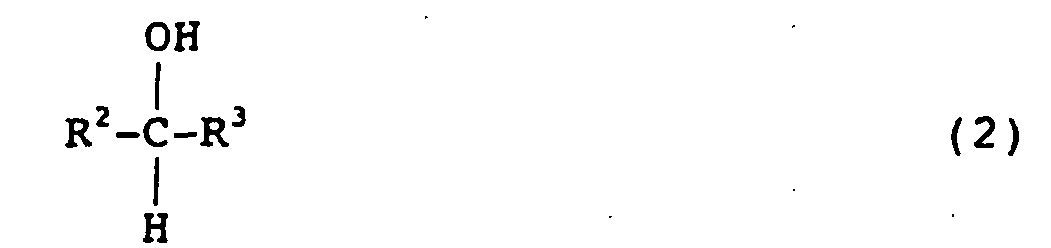
and said carbonyl compound is a ketone represented by the formula (6):
- The process according to claim 2, wherein said alcohol is an alcohol represented by the formula (3):

and said carbonyl compound is a compound represented by the formula (7):
Priority Applications (1)
| Application Number | Priority Date | Filing Date | Title |
|---|---|---|---|
| EP08017943A EP2055378A1 (en) | 2002-04-26 | 2003-04-25 | Method for preparing ruthenium-carrying alumina and method for oxidizing alcohol |
Applications Claiming Priority (5)
| Application Number | Priority Date | Filing Date | Title |
|---|---|---|---|
| JP2002126189 | 2002-04-26 | ||
| JP2002126189 | 2002-04-26 | ||
| JP2002345108 | 2002-11-28 | ||
| JP2002345108A JP4250954B2 (en) | 2002-04-26 | 2002-11-28 | Method for producing ruthenium-supported alumina and method for oxidizing alcohol |
| PCT/JP2003/005299 WO2003090926A1 (en) | 2002-04-26 | 2003-04-25 | Method for preparing ruthenium-carrying alumina and method for oxidizing alcohol |
Related Child Applications (1)
| Application Number | Title | Priority Date | Filing Date |
|---|---|---|---|
| EP08017943A Division EP2055378A1 (en) | 2002-04-26 | 2003-04-25 | Method for preparing ruthenium-carrying alumina and method for oxidizing alcohol |
Publications (3)
| Publication Number | Publication Date |
|---|---|
| EP1500432A1 EP1500432A1 (en) | 2005-01-26 |
| EP1500432A4 EP1500432A4 (en) | 2006-02-08 |
| EP1500432B1 true EP1500432B1 (en) | 2009-04-22 |
Family
ID=29272366
Family Applications (2)
| Application Number | Title | Priority Date | Filing Date |
|---|---|---|---|
| EP03717729A Expired - Lifetime EP1500432B1 (en) | 2002-04-26 | 2003-04-25 | Method for oxidizing alcohol on a ruthenium-carrying alumina catalyst |
| EP08017943A Withdrawn EP2055378A1 (en) | 2002-04-26 | 2003-04-25 | Method for preparing ruthenium-carrying alumina and method for oxidizing alcohol |
Family Applications After (1)
| Application Number | Title | Priority Date | Filing Date |
|---|---|---|---|
| EP08017943A Withdrawn EP2055378A1 (en) | 2002-04-26 | 2003-04-25 | Method for preparing ruthenium-carrying alumina and method for oxidizing alcohol |
Country Status (9)
| Country | Link |
|---|---|
| US (2) | US7169954B2 (en) |
| EP (2) | EP1500432B1 (en) |
| JP (1) | JP4250954B2 (en) |
| KR (1) | KR100976748B1 (en) |
| CN (1) | CN100548473C (en) |
| AU (1) | AU2003227370A1 (en) |
| CA (1) | CA2452176A1 (en) |
| DE (1) | DE60327313D1 (en) |
| WO (1) | WO2003090926A1 (en) |
Families Citing this family (17)
| Publication number | Priority date | Publication date | Assignee | Title |
|---|---|---|---|---|
| CN101293799B (en) * | 2008-05-20 | 2011-06-22 | 大连理工大学 | A method for preparing aldehydes or ketones by catalytically oxidizing alcohol compounds |
| US8426660B2 (en) * | 2008-08-21 | 2013-04-23 | Sud-Chemie Inc. | Process for purification of ethylene-containing feedstreams |
| JP2010202555A (en) * | 2009-03-02 | 2010-09-16 | Nagoya Industrial Science Research Inst | Method for producing carbonyl compound |
| JP2012184213A (en) * | 2010-04-06 | 2012-09-27 | Sumitomo Chemical Co Ltd | Method for producing sulfur-containing amino acid |
| JP2012067074A (en) * | 2010-08-27 | 2012-04-05 | Sumitomo Chemical Co Ltd | Process for preparing sulfur-containing 2-ketocarboxylate compound |
| US9458354B2 (en) | 2010-10-06 | 2016-10-04 | Resinate Technologies, Inc. | Polyurethane dispersions and methods of making and using same |
| US8912366B2 (en) | 2010-11-22 | 2014-12-16 | Mitsubishi Gas Chemical Company, Inc. | Process for preparing adamantane polyol |
| JP2014520008A (en) | 2011-06-10 | 2014-08-21 | フェリス、クリストファー、エム. | Transparent acrylic coating |
| JP2014108393A (en) * | 2012-12-03 | 2014-06-12 | Kao Corp | Paper catalyst structure and method of producing the same |
| DE102013203420A1 (en) * | 2013-02-28 | 2014-08-28 | Evonik Industries Ag | Hydrogenolysis of furfuryl alcohol to 1,2-pentanediol |
| FR3029518B1 (en) * | 2014-12-05 | 2016-12-02 | Adisseo France Sas | CATALYTIC OXIDATION OF BUT-3-ENE-1,2-DIOL |
| WO2016172108A1 (en) * | 2015-04-20 | 2016-10-27 | Honeywell International Inc. | Coating composition including alkyl oximes |
| CN111278798B (en) * | 2017-08-26 | 2023-02-28 | 西姆莱斯股份公司 | Process for the preparation of terpene aldehydes and terpene ketones |
| CN107952432B (en) * | 2017-11-29 | 2021-03-05 | 西安元创化工科技股份有限公司 | Preparation method of hydrogen chloride oxidation catalyst |
| KR102262496B1 (en) * | 2018-12-21 | 2021-06-07 | 한화솔루션 주식회사 | A process for producing a ruthenium oxide supported catalyst for chlorine production, and a catalyst thereof |
| CN113332998B (en) * | 2021-05-28 | 2023-05-26 | 北京化工大学 | High-dispersion ruthenium nanoparticle catalyst loaded on brucite and application of catalyst in preparing acetic acid by catalyzing ethanol liquid phase oxidation |
| WO2026074904A1 (en) * | 2024-10-02 | 2026-04-09 | 花王株式会社 | Method for producing aliphatic aldehyde |
Citations (1)
| Publication number | Priority date | Publication date | Assignee | Title |
|---|---|---|---|---|
| EP0980706A1 (en) * | 1998-02-18 | 2000-02-23 | Daicel Chemical Industries, Ltd. | Oxidation catalyst system and method of oxidation with the same |
Family Cites Families (25)
| Publication number | Priority date | Publication date | Assignee | Title |
|---|---|---|---|---|
| US3673257A (en) | 1970-02-02 | 1972-06-27 | Tenneco Chem | Process for the production of aromatic hydroxyaldehydes |
| US4026905A (en) * | 1972-12-26 | 1977-05-31 | Monsanto Company | Electrically conducting organic salts |
| US4218401A (en) | 1974-01-11 | 1980-08-19 | The Dow Chemical Company | Oxydehydrogenation of alcohols |
| FR2305420A1 (en) | 1975-03-28 | 1976-10-22 | Rhone Poulenc Ind | PROCESS FOR PREPARING HYDROXYBENZALDEHYDES |
| JPS5494491A (en) | 1978-01-10 | 1979-07-26 | Kawaken Fine Chem Co Ltd | Ruthenium catalyst |
| JPS57108035A (en) | 1980-12-26 | 1982-07-05 | Sagami Chem Res Center | Preparation of unsaturated carbonyl compound |
| SU978909A1 (en) | 1981-05-20 | 1982-12-07 | Институт общей и неорганической химии АН БССР | Catalyst for dehydrogenation of cyclohexanol to cyclohexanone |
| JPS62265244A (en) | 1986-05-13 | 1987-11-18 | Showa Denko Kk | Production of 1,4-cyclohexanedione |
| JPS6430734A (en) | 1987-07-28 | 1989-02-01 | Teijin Ltd | Manufacture of fiber reinforced molded product |
| JP2595582B2 (en) | 1987-11-17 | 1997-04-02 | 三菱化学株式会社 | Method for producing ruthenium-containing catalyst |
| US4996007A (en) | 1990-01-19 | 1991-02-26 | Shell Oil Company | Process for the oxidation of alcohols to aldehydes/acids/esters |
| DE4228487A1 (en) | 1991-08-30 | 1993-03-04 | Kao Corp | METHOD FOR PRODUCING A CONNECTION HAVING A CARBONYL AND / OR CARBOXYL GROUP |
| JP3345943B2 (en) | 1993-03-12 | 2002-11-18 | 住友化学工業株式会社 | Method for producing ketone |
| JPH1024235A (en) | 1996-07-10 | 1998-01-27 | Cosmo Sogo Kenkyusho:Kk | Catalyst for producing high calorie gas and its production |
| DE19748299A1 (en) * | 1996-10-31 | 1998-05-07 | Sumitomo Chemical Co | Production of chlorine@ |
| JPH10137587A (en) | 1996-11-11 | 1998-05-26 | Cosmo Sogo Kenkyusho:Kk | Method for producing supported noble metal catalyst |
| JP4143773B2 (en) | 1997-03-14 | 2008-09-03 | 富田製薬株式会社 | Method for producing carbonyl compound using immobilized metal catalyst |
| DE19743621C1 (en) | 1997-10-02 | 1999-03-25 | Rwe Dea Ag | Oxidation of primary alcohol to aldehyde and acid |
| JP2000070723A (en) | 1998-08-26 | 2000-03-07 | New Japan Chem Co Ltd | Ru-Al-Mg TYPE SYNTHETIC HYDROTALCITE, OXIDATION CATALYST AND PRODUCTION OF CARBONYL COMPOUND USING SAME |
| JP2000086245A (en) | 1998-09-11 | 2000-03-28 | New Japan Chem Co Ltd | Synthetic hydrotalcite, oxidation catalyst and preparation of aldehyde, ketone or carboxylic acid |
| JP2001048824A (en) | 1999-08-06 | 2001-02-20 | Daicel Chem Ind Ltd | Method for producing aldehyde |
| EP1078908A1 (en) | 1999-08-23 | 2001-02-28 | Daicel Chemical Industries, Ltd. | Process for producing dialdehyde |
| JP2001302581A (en) | 2000-04-19 | 2001-10-31 | Daicel Chem Ind Ltd | Method for producing dialdehyde |
| JP2001064222A (en) | 1999-08-23 | 2001-03-13 | Daicel Chem Ind Ltd | Method for producing dialdehyde |
| JP3854442B2 (en) | 2000-03-08 | 2006-12-06 | 三洋化成工業株式会社 | Catalyst for highly selective oxidation reaction |
-
2002
- 2002-11-28 JP JP2002345108A patent/JP4250954B2/en not_active Expired - Fee Related
-
2003
- 2003-04-25 CN CNB038005387A patent/CN100548473C/en not_active Expired - Fee Related
- 2003-04-25 DE DE60327313T patent/DE60327313D1/en not_active Expired - Lifetime
- 2003-04-25 EP EP03717729A patent/EP1500432B1/en not_active Expired - Lifetime
- 2003-04-25 AU AU2003227370A patent/AU2003227370A1/en not_active Abandoned
- 2003-04-25 CA CA002452176A patent/CA2452176A1/en not_active Abandoned
- 2003-04-25 EP EP08017943A patent/EP2055378A1/en not_active Withdrawn
- 2003-04-25 KR KR1020037016904A patent/KR100976748B1/en not_active Expired - Fee Related
- 2003-04-25 US US10/481,755 patent/US7169954B2/en not_active Expired - Fee Related
- 2003-04-25 WO PCT/JP2003/005299 patent/WO2003090926A1/en not_active Ceased
-
2005
- 2005-12-13 US US11/299,813 patent/US20060094899A1/en not_active Abandoned
Patent Citations (1)
| Publication number | Priority date | Publication date | Assignee | Title |
|---|---|---|---|---|
| EP0980706A1 (en) * | 1998-02-18 | 2000-02-23 | Daicel Chemical Industries, Ltd. | Oxidation catalyst system and method of oxidation with the same |
Also Published As
| Publication number | Publication date |
|---|---|
| CA2452176A1 (en) | 2003-11-06 |
| KR100976748B1 (en) | 2010-08-18 |
| EP2055378A1 (en) | 2009-05-06 |
| AU2003227370A1 (en) | 2003-11-10 |
| CN100548473C (en) | 2009-10-14 |
| US20040204597A1 (en) | 2004-10-14 |
| EP1500432A4 (en) | 2006-02-08 |
| WO2003090926A1 (en) | 2003-11-06 |
| US7169954B2 (en) | 2007-01-30 |
| CN1522176A (en) | 2004-08-18 |
| KR20040100854A (en) | 2004-12-02 |
| JP4250954B2 (en) | 2009-04-08 |
| US20060094899A1 (en) | 2006-05-04 |
| DE60327313D1 (en) | 2009-06-04 |
| EP1500432A1 (en) | 2005-01-26 |
| JP2004000894A (en) | 2004-01-08 |
Similar Documents
| Publication | Publication Date | Title |
|---|---|---|
| US7169954B2 (en) | Method for preparing ruthenium-carrying alumina and method for oxidizing alcohol | |
| JP6074858B2 (en) | Process for producing unsaturated alcohol | |
| EP2130583A1 (en) | Method for producing carbonyl compound | |
| RU2233830C2 (en) | Method for preparing mixture of alcohols with ketones | |
| Komiya et al. | Water-soluble diruthenium complexes bearing acetate and carbonate bridges: highly efficient catalysts for aerobic oxidation of alcohols in water | |
| JP5469607B2 (en) | Catalyst used for hydrogen transfer reaction of alcohol, process for producing the same, and process for producing carbonyl group-containing compound | |
| CN105601490B (en) | Efficiently catalyzing and oxidizing α isophorones prepare ketoisophorone | |
| JP6037209B2 (en) | Method for producing tetrahydrofuran compound, hydrogenation catalyst and method for producing the same | |
| JP4278220B2 (en) | Method for producing aldehyde | |
| JP4126387B2 (en) | Alcohol oxidation method | |
| EP2269971B1 (en) | Process for producing a 2-alkyl-2-cycloalkene-1-one | |
| RU2288211C2 (en) | Method for catalytic decomposition of c6-c12-cycloalkyl hydroperoxides | |
| US4319054A (en) | Process for producing pyrogallol | |
| JPS629099B2 (en) | ||
| JPS63104932A (en) | Post treatment of reaction mixture containing cyclohexylhydroperoxide | |
| JP3537763B2 (en) | Catalyst for asymmetric aldol reaction in aqueous solution | |
| JP2618442B2 (en) | Method for producing benzonitrile | |
| JP3526345B2 (en) | Method for producing arylalkyl hydroperoxides | |
| US5900513A (en) | Production method of 2-cyclohexene-1-ol | |
| KR20060050698A (en) | Process for preparing cycloalkanol and / or cycloalkanone | |
| JPH11292820A (en) | Method for producing isobutyraldehyde | |
| JP4634638B2 (en) | Method for producing optically active alcohol | |
| JPH0640976A (en) | Manufacturing method of phenols | |
| JPH09104648A (en) | Method for hydrogenating halogenated ketone | |
| JP2002201154A (en) | Process for producing β-hydroxyhydroperoxides and ketones and their catalysts |
Legal Events
| Date | Code | Title | Description |
|---|---|---|---|
| PUAI | Public reference made under article 153(3) epc to a published international application that has entered the european phase |
Free format text: ORIGINAL CODE: 0009012 |
|
| 17P | Request for examination filed |
Effective date: 20040114 |
|
| AK | Designated contracting states |
Kind code of ref document: A1 Designated state(s): AT BE BG CH CY CZ DE DK EE ES FI FR GB GR HU IE IT LI LU MC NL PT RO SE SI SK TR |
|
| AX | Request for extension of the european patent |
Extension state: AL LT LV MK |
|
| A4 | Supplementary search report drawn up and despatched |
Effective date: 20051223 |
|
| GRAP | Despatch of communication of intention to grant a patent |
Free format text: ORIGINAL CODE: EPIDOSNIGR1 |
|
| RTI1 | Title (correction) |
Free format text: METHOD FOR OXIDIZING ALCOHOL ON A RUTHENIUM-CARRYING ALUMINA CATALYST |
|
| GRAS | Grant fee paid |
Free format text: ORIGINAL CODE: EPIDOSNIGR3 |
|
| GRAA | (expected) grant |
Free format text: ORIGINAL CODE: 0009210 |
|
| AK | Designated contracting states |
Kind code of ref document: B1 Designated state(s): BE DE FR GB IT NL |
|
| REG | Reference to a national code |
Ref country code: GB Ref legal event code: FG4D |
|
| REF | Corresponds to: |
Ref document number: 60327313 Country of ref document: DE Date of ref document: 20090604 Kind code of ref document: P |
|
| NLV1 | Nl: lapsed or annulled due to failure to fulfill the requirements of art. 29p and 29m of the patents act | ||
| PG25 | Lapsed in a contracting state [announced via postgrant information from national office to epo] |
Ref country code: NL Free format text: LAPSE BECAUSE OF FAILURE TO SUBMIT A TRANSLATION OF THE DESCRIPTION OR TO PAY THE FEE WITHIN THE PRESCRIBED TIME-LIMIT Effective date: 20090422 |
|
| PG25 | Lapsed in a contracting state [announced via postgrant information from national office to epo] |
Ref country code: BE Free format text: LAPSE BECAUSE OF FAILURE TO SUBMIT A TRANSLATION OF THE DESCRIPTION OR TO PAY THE FEE WITHIN THE PRESCRIBED TIME-LIMIT Effective date: 20090422 |
|
| PLBE | No opposition filed within time limit |
Free format text: ORIGINAL CODE: 0009261 |
|
| STAA | Information on the status of an ep patent application or granted ep patent |
Free format text: STATUS: NO OPPOSITION FILED WITHIN TIME LIMIT |
|
| GBPC | Gb: european patent ceased through non-payment of renewal fee |
Effective date: 20090722 |
|
| 26N | No opposition filed |
Effective date: 20100125 |
|
| PG25 | Lapsed in a contracting state [announced via postgrant information from national office to epo] |
Ref country code: GB Free format text: LAPSE BECAUSE OF NON-PAYMENT OF DUE FEES Effective date: 20090722 |
|
| PG25 | Lapsed in a contracting state [announced via postgrant information from national office to epo] |
Ref country code: IT Free format text: LAPSE BECAUSE OF FAILURE TO SUBMIT A TRANSLATION OF THE DESCRIPTION OR TO PAY THE FEE WITHIN THE PRESCRIBED TIME-LIMIT Effective date: 20090422 |
|
| PGFP | Annual fee paid to national office [announced via postgrant information from national office to epo] |
Ref country code: DE Payment date: 20130508 Year of fee payment: 11 |
|
| PGFP | Annual fee paid to national office [announced via postgrant information from national office to epo] |
Ref country code: FR Payment date: 20130625 Year of fee payment: 11 |
|
| REG | Reference to a national code |
Ref country code: DE Ref legal event code: R119 Ref document number: 60327313 Country of ref document: DE |
|
| REG | Reference to a national code |
Ref country code: DE Ref legal event code: R119 Ref document number: 60327313 Country of ref document: DE Effective date: 20141101 |
|
| REG | Reference to a national code |
Ref country code: FR Ref legal event code: ST Effective date: 20141231 |
|
| PG25 | Lapsed in a contracting state [announced via postgrant information from national office to epo] |
Ref country code: DE Free format text: LAPSE BECAUSE OF NON-PAYMENT OF DUE FEES Effective date: 20141101 |
|
| PG25 | Lapsed in a contracting state [announced via postgrant information from national office to epo] |
Ref country code: FR Free format text: LAPSE BECAUSE OF NON-PAYMENT OF DUE FEES Effective date: 20140430 |