EP1498814B1 - Granular control over the authority of replicated information via fencing and unfencing - Google Patents
Granular control over the authority of replicated information via fencing and unfencing Download PDFInfo
- Publication number
- EP1498814B1 EP1498814B1 EP04102757A EP04102757A EP1498814B1 EP 1498814 B1 EP1498814 B1 EP 1498814B1 EP 04102757 A EP04102757 A EP 04102757A EP 04102757 A EP04102757 A EP 04102757A EP 1498814 B1 EP1498814 B1 EP 1498814B1
- Authority
- EP
- European Patent Office
- Prior art keywords
- resource
- data
- fence
- resources
- meta
- Prior art date
- Legal status (The legal status is an assumption and is not a legal conclusion. Google has not performed a legal analysis and makes no representation as to the accuracy of the status listed.)
- Expired - Lifetime
Links
Images




Classifications
-
- G—PHYSICS
- G06—COMPUTING OR CALCULATING; COUNTING
- G06F—ELECTRIC DIGITAL DATA PROCESSING
- G06F12/00—Accessing, addressing or allocating within memory systems or architectures
- G06F12/16—Protection against loss of memory contents
-
- G—PHYSICS
- G06—COMPUTING OR CALCULATING; COUNTING
- G06F—ELECTRIC DIGITAL DATA PROCESSING
- G06F16/00—Information retrieval; Database structures therefor; File system structures therefor
- G06F16/10—File systems; File servers
- G06F16/18—File system types
- G06F16/182—Distributed file systems
- G06F16/184—Distributed file systems implemented as replicated file system
- G06F16/1844—Management specifically adapted to replicated file systems
-
- Y—GENERAL TAGGING OF NEW TECHNOLOGICAL DEVELOPMENTS; GENERAL TAGGING OF CROSS-SECTIONAL TECHNOLOGIES SPANNING OVER SEVERAL SECTIONS OF THE IPC; TECHNICAL SUBJECTS COVERED BY FORMER USPC CROSS-REFERENCE ART COLLECTIONS [XRACs] AND DIGESTS
- Y10—TECHNICAL SUBJECTS COVERED BY FORMER USPC
- Y10S—TECHNICAL SUBJECTS COVERED BY FORMER USPC CROSS-REFERENCE ART COLLECTIONS [XRACs] AND DIGESTS
- Y10S707/00—Data processing: database and file management or data structures
- Y10S707/99951—File or database maintenance
- Y10S707/99952—Coherency, e.g. same view to multiple users
- Y10S707/99954—Version management
Definitions
- the present invention relates generally to computing devices, and more particularly to resource replication systems.
- Opportunistic, multi-master replication systems allow unrestricted changes to replicated content on any machine participating in a given replica set. These potentially conflicting changes are reconciled under the control of the replication system using a set of conflict resolution criteria that defines, for every conflict situation, which conflicting change takes precedence over others.
- the main conflict resolution criteria used has been the physical or logical time of the change, with the most recent change taking precedence over all the others.
- Oracle8i Replication - Release 8.1.5, February 1999 relates to replication in distributed database systems.
- the receiving site detects an update conflict if there is any difference between the old values of the replicated row, i.e., the value before the modification and the current values of the same row at the receiving site.
- conflict resolution methods that can be used to resolve conflicts including the earliest and latest timestamp value, priority groups and site priority methods.
- the earliest timestamp method applies the changes from the site with the earliest timestamp and the latest timestamp method applies the changes from the site with the latest timestamp.
- Priority groups allow a priority level to be assigned to each possible value of a particular column.
- Site priority is a specialized form of priority groups. To detect and resolve an update conflict for a row, the propagating site must send a certain amount of data about the new and old versions of the row to the receiving site. The amount of data that must be communicated can be reduced by sending old values only if they are needed to detect and resolve conflicts as well as the new values of each updated column in the column group.
- Oralce8i - Replication Management API Reference - Release 2 (8.1.6), December 1999 is a replication management API description explaining how the above conflict resolution methods can be implemented.
- a replica set is comprised of a set of resources.
- Each resource is associated with resource data and resource meta-data.
- Resource data for the case of files, includes file contents and attributes, while resource meta-data includes additional attributes that are relevant for negotiating synchronization during replication.
- An extra field called a "fence value" is added to the meta-data associated with each resource.
- fence values are compared. The resource with the highest fence value includes the content that is controlling and gets replicated. If fence values are equal (and greater than a particular value), the controlling resource is determined based on other meta-data.
- Fence values are independent of local changes to content. That is, while a local change in content may affect other meta-data (e.g., a time stamp, clock value, or otherwise), the local change in content does not affect a fence value unless otherwise indicated.
- meta-data e.g., a time stamp, clock value, or otherwise
- a resource may have a fence value that indicates that the resource is unfenced. If a resource is unfenced, this indicates that the resource should not be transmitted from the machine upon which the resource is stored. When a contending resource is received for synchronization, a resource that is unfenced loses (and is replaced during synchronization) to resources that are fenced.
- resource meta-data may be transmitted without transmitting resource content.
- differences in resource content may be transmitted during synchronization.
- Figure 1 illustrates an example of a suitable computing system environment 100 on which the invention may be implemented.
- the computing system environment 100 is only one example of a suitable computing environment and is not intended to suggest any limitation as to the scope of use or functionality of the invention. Neither should the computing environment 100 be interpreted as having any dependency or requirement relating to any one or combination of components illustrated in the exemplary operating environment 100.
- the invention is operational with numerous other general purpose or special purpose computing system environments or configurations.
- Examples of well known computing systems, environments, and/or configurations that may be suitable for use with the invention include, but are not limited to, personal computers, server computers, hand-held or laptop devices, multiprocessor systems, microcontroller-based systems, set top boxes, programmable consumer electronics, network PCs, minicomputers, mainframe computers, distributed computing environments that include any of the above systems or devices, and the like.
- the invention may be described in the general context of computer-executable instructions, such as program modules, being executed by a computer.
- program modules include routines, programs, objects, components, data structures, and so forth, which perform particular tasks or implement particular abstract data types.
- the invention may also be practiced in distributed computing environments where tasks are performed by remote processing devices that are linked through a communications network.
- program modules may be located in both local and remote computer storage media including memory storage devices.
- an exemplary system for implementing the invention includes a general-purpose computing device in the form of a computer 110.
- Components of the computer 110 may include, but are not limited to, a processing unit 120, a system memory 130, and a system bus 121 that couples various system components including the system memory to the processing unit 120.
- the system bus 121 may be any of several types of bus structures including a memory bus or memory controller, a peripheral bus, and a local bus using any of a variety of bus architectures.
- such architectures include Industry Standard Architecture (ISA) bus, Micro Channel Architecture (MCA) bus, Enhanced ISA (EISA) bus, Video Electronics Standards Association (VESA) local bus, and Peripheral Component Interconnect (PCI) bus also known as Mezzanine bus.
- ISA Industry Standard Architecture
- MCA Micro Channel Architecture
- EISA Enhanced ISA
- VESA Video Electronics Standards Association
- PCI Peripheral Component Interconnect
- Computer 110 typically includes a variety of computer-readable media.
- Computer-readable media can be any available media that can be accessed by the computer 110 and includes both volatile and nonvolatile media, and removable and non-removable media.
- Computer-readable media may comprise computer storage media and communication media.
- Computer storage media includes both volatile and nonvolatile, removable and non-removable media implemented in any method or technology for storage of information such as computer-readable instructions, data structures, program modules, or other data.
- Computer storage media includes, but is not limited to, RAM, ROM, EEPROM, flash memory or other memory technology, CD-ROM, digital versatile disks (DVD) or other optical disk storage, magnetic cassettes, magnetic tape, magnetic disk storage or other magnetic storage devices, or any other medium which can be used to store the desired information and which can accessed by the computer 110.
- Communication media typically embodies computer-readable instructions, data structures, program modules, or other data in a modulated data signal such as a carrier wave or other transport mechanism and includes any information delivery media.
- modulated data signal means a signal that has one or more of its characteristics set or changed in such a manner as to encode information in the signal.
- communication media includes wired media such as a wired network or direct-wired connection, and wireless media such as acoustic, RF, infrared and other wireless media. Combinations of the any of the above should also be included within the scope of computer-readable media.
- the system memory 130 includes computer storage media in the form of volatile and/or nonvolatile memory such as read only memory (ROM) 131 and random access memory (RAM) 132.
- ROM read only memory
- RAM random access memory
- BIOS basic input/output system
- RAM 132 typically contains data and/or program modules that are immediately accessible to and/or presently being operated on by processing unit 120.
- Figure 1 illustrates operating system 134, application programs 135, other program modules 136, and program data 137.
- the computer 110 may also include other removable/non-removable, volatile/nonvolatile computer storage media.
- Figure 1 illustrates a hard disk drive 140 that reads from or writes to non-removable, nonvolatile magnetic media, a magnetic disk drive 151 that reads from or writes to a removable, nonvolatile magnetic disk 152, and an optical disk drive 155 that reads from or writes to a removable, nonvolatile optical disk 156 such as a CD ROM or other optical media.
- removable/non-removable, volatile/nonvolatile computer storage media that can be used in the exemplary operating environment include, but are not limited to, magnetic tape cassettes, flash memory cards, digital versatile disks, digital video tape, solid state RAM, solid state ROM, and the like.
- the hard disk drive 141 is typically connected to the system bus 121 through a non-removable memory interface such as interface 140, and magnetic disk drive 151 and optical disk drive 155 are typically connected to the system bus 121 by a removable memory interface, such as interface 150.
- hard disk drive 141 is illustrated as storing operating system 144, application programs 145, other program modules 146, and program data 147. Note that these components can either be the same as or different from operating system 134, application programs 135, other program modules 136, and program data 137. Operating system 144, application programs 145, other program modules 146, and program data 147 are given different numbers herein to illustrate that, at a minimum, they are different copies.
- a user may enter commands and information into the computer 20 through input devices such as a keyboard 162 and pointing device 161, commonly referred to as a mouse, trackball or touch pad.
- Other input devices may include a microphone, joystick, game pad, satellite dish, scanner, a touch-sensitive screen of a handheld PC or other writing tablet, or the like.
- These and other input devices are often connected to the processing unit 120 through a user input interface 160 that is coupled to the system bus, but may be connected by other interface and bus structures, such as a parallel port, game port or a universal serial bus (USB).
- a monitor 191 or other type of display device is also connected to the system bus 121 via an interface, such as a video interface 190.
- computers may also include other peripheral output devices such as speakers 197 and printer 196, which may be connected through an output peripheral interface 190.
- the computer 110 may operate in a networked environment using logical connections to one or more remote computers, such as a remote computer 180.
- the remote computer 180 may be a personal computer, a server, a router, a network PC, a peer device or other common network node, and typically includes many or all of the elements described above relative to the computer 110, although only a memory storage device 181 has been illustrated in Figure 1 .
- the logical connections depicted in Figure 1 include a local area network (LAN) 171 and a wide area network (WAN) 173, but may also include other networks.
- LAN local area network
- WAN wide area network
- Such networking environments are commonplace in offices, enterprise-wide computer networks, intranets and the Internet.
- the computer 110 When used in a LAN networking environment, the computer 110 is connected to the LAN 171 through a network interface or adapter 170. When used in a WAN networking environment, the computer 110 typically includes a modem 172 or other means for establishing communications over the WAN 173, such as the Internet.
- the modem 172 which may be internal or external, may be connected to the system bus 121 via the user input interface 160 or other appropriate mechanism.
- program modules depicted relative to the computer 110, or portions thereof may be stored in the remote memory storage device.
- Figure 1 illustrates remote application programs 185 as residing on memory device 181. It will be appreciated that the network connections shown are exemplary and other means of establishing a communications link between the computers may be used.
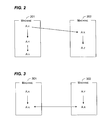
- FIG. 2 is a block diagram representing a resource replication system including two machines that replicate resources in accordance with various aspects of the invention.
- Machines 201 and 202 both replicate resource A and update it concurrently from having content x to having content y, u, or z.
- Content x, y, u, and z may correspond, for example, to different version sequence numbers and clocks for resource A.
- machine is not limited simply to a physical machine. Rather, a single physical machine may include multiple virtual machines. Replication from one machine to another machine, as used herein, implies replication of one or more members of the same replica set from one machine, virtual or physical, to another machine, virtual or physical. A single physical machine may include multiple members of the same replica set. Thus, replicating members of a replica set may involve synchronizing the members of a single physical machine that includes two or more members of the same replica set.
- a replication system will typically maintain two related sets of data with each resource: resource data and resource meta-data.
- resource data may include file contents, as well as any file attributes that are stored on the file system in association with the file contents.
- File attributes may include access control lists (ACLs), creation/modification times, and other data associated with a file.
- ACLs access control lists
- replication systems including data stores not based on named files in a file system e.g., ones in which resources are stored in a database or object-based data store
- resource data appropriate to the data store is stored.
- replication systems based on files in a file system are often used for illustation, but it will be recognized that any data store capable of storing content may be used without departing from the scope of the present invention.
- Resource meta-data comprises a set of additional attributes that are relevant for negotiating synchronization during replication.
- resource meta-data may include a globally unique identifier (GUID), whether the resource has been deleted, a version sequence number together with authorship of a change, a clock value to reflect the time a change occurred, and other fields, such as a digest that summarizes values of resource data and may include signatures for resource content.
- GUID globally unique identifier
- a digest may be used for a quick comparison to bypass data-transfer during replication synchronization, for example. If a resource on a destination machine is synchronized with content on a source machine (e.g., as indicated by a digest), network overhead may be minimized by transmitting just the resource meta-data, without transmitting the resource data itself.
- Transmitting the resource meta-data is done so that the destination machine may reflect the meta-data included on the source machine in its subsequent replication activities. This may allow the destination machine, for example, to become a source machine in a subsequent replication activity.
- Resource meta-data may be stored with or separate from resource data with departing from the scope of the invention.
- clock values may be used to determine a conflict winner based on a last-writer-wins conflict resolution strategy. Data with the highest clock value may indicate more recent data than replicated data with lesser clock values. The last-writer-wins strategy is consistent with logical clocks, as they preserve causality.
- resource meta-data is augmented with a numeric field called a "fence value.”
- a fence value may be assigned to each resource or portion thereof. Fence values are used during conflict resolution, in conjunction with the other meta-data, according to a set of rules defined below.
- fence values are initialized to either zero or one.
- a zero value indicates that the resource should not be sent or made visible (via the replication mechanism) to another machine.
- a value of one indicates that the resource may be replicated and made visible to other machines.
- a resource that has a fence value of zero may be considered a slave resource while a resource that has a fence value of one may be considered a master resource.
- a resource e.g., resource A
- the resource having the higher fence value is replicated to the machine with the resource having the lower fence value.
- the resource with the higher fence value wins (and is replicated), regardless of what other resource meta-data is present.
- the replication mechanism may determine what data in the resource on the sending machine is different from data in the resource on the receiving machine and send one or more differences or deltas to update the resource on the receiving machine.
- fence values supply fine-grained control over the conflict resolution process, since they take precedence in conflict resolution. That is, when the meta-data of two resources is compared, the resource with the highest fence value takes precedence. Other attributes, such as logical clocks, are compared only when the fences are equal.
- Fence values may have similar properties to logical clocks, as in one implementation they can only be incremented, or reset to zero. For example, a fence value may be incremented when a user or process instructs the replication system to do so. This is sometimes referred to as "fencing the resource” or simply “fencing.” An increment to the fence value is independent of updates to the resource data. Fence increments are made visible (e.g., are transmitted in meta-data) by replication. Since fencing is not a frequent operation, an integer representation of the wall-clock time may be used to increment a fence to the maximum of (the current fence value plus one) and (the current wall-clock time).
- a fence value may be reset to zero when a user or process instructs the replication system to do so. This is sometimes referred to as “unfencing the resource” or simply “unfencing.” Slave mode resources that are unfenced (i.e., whose fence values have been reset to zero) may not be replicated to any other machine outside the machine that holds them. This prevents a slave-mode resource from becoming externally visible. Hence, fence value resets are not made visible by replication.
- fence values remain constant during replication.
- a positive fence value does not change when the resource data is updated or when logical clocks change.
- Zero-valued fence values should also not change on content updates for slave machines.
- fencing a resource on one machine allows forcing the replication of said resource regardless of concurrent updates to the resource on other members of the replica set. It will also be recognized that unfencing a resource allows forcing any other replicated resource to take precedence over the local (unfenced) one and prevents the unfenced resource from replicating out.
- Fences can be set on an existing resource via a replication system application programming interface (API) that fences selected resources. Furthermore, fences can be set on a future resources by exposing an API that fences resources matching specific parameters, (such as resource names and attributes) when these resources become visible to the replication system. Control of future fencing and unfencing may also be provided by specifying stickiness: creation of indirectly related resources, such as resources under a fenced/unfenced directory may inherit the fencing value based on a policy set on the parent.
- API application programming interface
- Unfencing also provides a granular way to control the master or slave behavior of replication partners. Setting a fence on selected resources effectively makes a machine a master of that version of the content (until the content is updated for the first time). Unfencing selected resources makes a machine behave as a slave with respect to the content associated with the selected resources.
- fencing and unfencing may be used in a number of areas including backup restore, out-of-band replication, upgrading to a newer version of the replicator, and providing administrator control.
- a machine that includes an unfenced resource may choose to change the unfenced resource fence value to a fenced resource value (e.g., one) for a resource that is updated locally on the slave. This may be done, for example, to make the update visible.
- a fenced resource value e.g., one
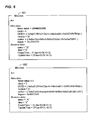
- FIG. 3 is a block diagram representing a system in which two machines attempt to reconcile a resource included on both in accordance with various aspects of the invention.
- each machine has its own version of the resource and the resource has the same name or identifier.
- the goal is to have a replicated resource having either the content of x or y.
- the content x of machine 301 wins over the content y of machine 302. This may occur, for example, if a fence value is higher for resource A on machine 301 or through comparison of other resource meta-data.
- FIG. 4 shows some exemplary resource data and meta-data that could be used for A:x of FIGS. 2 and 3 in accordance with various aspects of the invention.
- the resource meta-data includes a fence value of 1, a clock value, a GUID, replica member that authored the change, and digest.
- the resource data includes a name of the resource, the data itself, a create time, a modify time, and other attributes of the resource data.
- FIG. 5 shows some exemplary resource data and meta-data that may be used in accordance with various aspects of the invention, related to the synchronization shown in FIG. 3 .
- the content on machine 501 e.g., x
- wins over the content on machine 502 e.g., y
- the fence value for the resource associated with x i.e., 1056603359
- the fence value for the resource associated with y i.e., 1).
- y would win over x because of a larger update clock time.
- FIG. 6 is a dataflow diagram that generally represents exemplary steps that may occur to synchronize a resource between two machines in accordance with various aspects of the present invention. The process begins at block 605.
- a determination as to whether at least one of the fence values indicates that the resource should be propagated.
- Both of the fence values may be set to an unfenced state (e.g., 0). In this case, the resource should not be propagated. If one of the fence values is set to a fenced value (e.g., 1 or greater), then the resource should be propagated if needed to synchronize the two resources.
- the resource or a portion thereof e.g., the meta-data, fence value, differences in content, and the like are propagated from the machine that was determined at block 625.
- processing branches to block 630.
- the resource or a portion thereof e.g., the meta-data, fence value, differences in content, and the like
- processing ends.
- Non-authoritative backup restore when data becomes corrupted or is lost, a user managing a member of a replicated resource system may erase the member and ask to obtain all the data associated with the member via the resource replication system. When a member is relatively large in relation to the bandwidth of a link connecting the member to the resource replication system, this course of action may take too long or cost too much. Using an aspect of the invention, however, the user may restore resources of a member from a backup. The user may then unfence the resources in the backup (e.g., set the fence value at 0) and allow the resource replication system to update resources that are out of date.
- the resources in the backup e.g., set the fence value at 0
- the restored content just acts as a "content cache” that given the appropriate logic may be used by the replicator to avoid transferring content over a slow link (e.g., "over the wire"), thus keeping the initial synchronization traffic following a backup restore restricted to meta-data and resource data that need to be updated.
- any remaining resources having a fence value of 0 may be deleted or may have their fence value set to 1 to allow them to replicate.
- new members of a replica set may potentially include a large amount of data.
- the new members may be sent through a channel that has lower cost and/or faster service for the user.
- the new members may be copied to a hard disk or burned on CD-ROMs or DVD-ROMs and shipped overnight.
- they may be unfenced as described above with respect to non-authoritative backup restore. Unfencing the new members is done to avoid transferring the content copied onto the remote site to other sites.
- Authoritative backup restore a user may wish to restore from a backup and propagate the restored content to all systems in the replicated resource system. To do so, the user may restore the resources to a system and then fence the resources the user wishes to propagate.
- Ad hoc scenarios a user may desire to force a specific version of a set of resources to replicate and take precedence over any other conflicting content in a replica set. This may be done by fencing the set of resources.
- Initial synchronization is a special case of out-of-band copying.
- a user may designate one machine as a master (i.e., to contain content that is to be replicated to the other machines) and designate the other machines as slaves (i.e., to receive the content from the master).
- the user may fence the resource on the master to have an initial fence value of 1 and unfence the existing resources on the slaves with a fence value of 0.
- a resource that comes into existence on a slave after this initialization may be fenced with 1 so that it will be replicated. Since an unfenced slave resource is not replicated, it is not necessary to synchronize additional meta-data for such a resource when it loses against a name-conflicting resource from the master.
- FIG. 7 is a dataflow diagram that generally represents exemplary steps that may occur to perform a non-authoritative backup restore in accordance with various aspects of the invention.
- Data in a member is deleted or corrupted (block 710).
- the administrator restores from a backup (block 715).
- the administrator marks the restored data as unfenced (block 720). Synchronization occurs, as represented at block 725.
- the administrator deletes or marks the remaining resources with a fence value of 1 (block 730), and the process ends (block 735).
- FIG. 7 is provided as one example for steps that may occur in the non-authoritative backup describe above. It will be recognized that the other applications mentioned above have also been described in enough detail to easily reduce to dataflow diagrams. It will also be understood that many other variations may be made to the steps of FIG. 7 or the applications described above without departing from the spirit or scope of the present invention.
- FIG. 8 is a block diagram representing a machine configured to operate in a resource replication system in accordance with various aspects of the invention.
- the machine 805 includes an update mechanism 810, resources 822, and a communications mechanism 840.
- the update mechanism 810 includes fence comparator logic 815 that is used to compare fence values and determine whether resources should be propagated from the machine 805 or whether the resources should even be visible to other machines.
- the fence comparator logic 815 may also be used to determine how fence values should be updated in the event of a fencing operation or the corruption or deletion and subsequent rebuilding of resource meta-data 830 (as described in further detail below).
- the other meta-data conflict resolution logic 820 includes logic used to determine which resource wins (and should be propagated) should the fence values for the resources be equivalent.
- the update mechanism 810 may access data in the resource meta-data 830 and/or the resource data 825 to determine whether a resource (or a portion thereof) should be propagated to or received from another machine.
- the resources 822 include the resource data 825 and the resource meta-data 830.
- the distinction between resource data and resource meta-data was described above with reference to FIG. 2 .
- the resource data 825 may be stored in a separate store relative to the resource meta-data 830.
- the communications mechanism 840 allows the update mechanism 810 to communicate with other update mechanisms (not shown) on other machines. Together, the update mechanisms determine which resources should be synchronized and how the synchronization may occur.
- the communications mechanism 840 may be a network interface or adapter 170, modem 172, or any other means for establishing communications as described in conjunction with FIG. 1 .
- -1 takes the role of 0 above (i.e., the unfenced value) and 0 may indicate that the resource may replicate as long as there is no other resource with a fence value that is 1 or higher.
- a utility of this extension is in handling the loss of the replication meta-data. For example, a resource replicator may keep the meta-data in a store separate from the store used to store the resource data. Thus the meta-data and the resource data (i.e., the content) may fail independently.
- a machine that has lost its meta-data may fence its resource with a value of -1 initially, as it does not know whether that resource was already replicated or just created locally (and therefore not known to the other machines in the replica set).
- Prematurely changing the fence value from -1 to 1 could have the effect of re-introducing stale content back into the network as content from more up to date but disconnected machines may be overwritten.
- Changing the fence from -1 to 0, on the other hand may allow such content to be re-introduced up until the point where some other participant may determine that it is stale. Note that 0, 1 and 2 (or some other numbering scheme) may be used instead if only positive integers are desired shifting each value described above.
- Yet another embodiment of this invention uses - ⁇ and 0 as possible initial fence values.
- the fence value of - ⁇ replaces the 0 (i.e., is the unfenced value) while the 0 replaces the 1 (i.e., indicates that the resource should be replicated).
- other negative fence values e.g., -1, -2, -3, ..., -n
- Such fence values would lose against resources fenced with higher values.
- a utility of this generalization includes scenarios where availability of fresh resources is more important than bandwidth usage during a restore.
- Machines may each be assigned a different fence value (e.g, -1, -2, ... , -n) that is used on the initial resources. The ordering gives precedence to a leader machine using fence -1, yet non-conflicting content from all machines is immediately available.
- Another application of this representation includes decrementing fence values each time a machine recovers or rebuilds its meta-data in response to corruption or loss of the meta-data.
- a heuristic value of this application is that each time the machine rebuilds its meta-data, it is likely that the resource data stored on the machine is becoming less and less reliable and/or up-to-date. Through this mechanism, content on machines that rebuild their meta-data less frequently is considered more reliable and wins via fence values over content on machines that rebuild their meta-data more frequently.
- fence values described above are logical fence values that may be implemented in any variety of physical fence values.
- the fence values may be physically represented as unsigned integers, floating point numbers, bit values, or any other type of numbering scheme without departing from the scope of the invention.
Landscapes
- Engineering & Computer Science (AREA)
- Theoretical Computer Science (AREA)
- Physics & Mathematics (AREA)
- General Engineering & Computer Science (AREA)
- General Physics & Mathematics (AREA)
- Databases & Information Systems (AREA)
- Data Mining & Analysis (AREA)
- Information Retrieval, Db Structures And Fs Structures Therefor (AREA)
- Document Processing Apparatus (AREA)
- Hardware Redundancy (AREA)
- Storage Device Security (AREA)
- Glass Compositions (AREA)
- Devices For Checking Fares Or Tickets At Control Points (AREA)
Applications Claiming Priority (4)
| Application Number | Priority Date | Filing Date | Title |
|---|---|---|---|
| US48662703P | 2003-07-10 | 2003-07-10 | |
| US486627P | 2003-07-10 | ||
| US10/733,459 US7660833B2 (en) | 2003-07-10 | 2003-12-10 | Granular control over the authority of replicated information via fencing and unfencing |
| US733459 | 2003-12-10 |
Publications (2)
| Publication Number | Publication Date |
|---|---|
| EP1498814A1 EP1498814A1 (en) | 2005-01-19 |
| EP1498814B1 true EP1498814B1 (en) | 2010-04-07 |
Family
ID=33479336
Family Applications (1)
| Application Number | Title | Priority Date | Filing Date |
|---|---|---|---|
| EP04102757A Expired - Lifetime EP1498814B1 (en) | 2003-07-10 | 2004-06-16 | Granular control over the authority of replicated information via fencing and unfencing |
Country Status (13)
| Country | Link |
|---|---|
| US (1) | US7660833B2 (https=) |
| EP (1) | EP1498814B1 (https=) |
| JP (2) | JP5192635B2 (https=) |
| KR (1) | KR101109257B1 (https=) |
| CN (1) | CN100410874C (https=) |
| AT (1) | ATE463789T1 (https=) |
| AU (1) | AU2004202863B2 (https=) |
| BR (1) | BRPI0402702A (https=) |
| CA (1) | CA2472528A1 (https=) |
| DE (1) | DE602004026389D1 (https=) |
| ES (1) | ES2341245T3 (https=) |
| MX (1) | MXPA04006721A (https=) |
| RU (1) | RU2372649C2 (https=) |
Families Citing this family (39)
| Publication number | Priority date | Publication date | Assignee | Title |
|---|---|---|---|---|
| US7506007B2 (en) * | 2003-03-03 | 2009-03-17 | Microsoft Corporation | Interval vector based knowledge synchronization for resource versioning |
| US7660833B2 (en) | 2003-07-10 | 2010-02-09 | Microsoft Corporation | Granular control over the authority of replicated information via fencing and unfencing |
| US7529811B2 (en) * | 2003-08-21 | 2009-05-05 | Microsoft Corporation | Systems and methods for the implementation of a core schema for providing a top-level structure for organizing units of information manageable by a hardware/software interface system |
| US8166101B2 (en) * | 2003-08-21 | 2012-04-24 | Microsoft Corporation | Systems and methods for the implementation of a synchronization schemas for units of information manageable by a hardware/software interface system |
| US8238696B2 (en) * | 2003-08-21 | 2012-08-07 | Microsoft Corporation | Systems and methods for the implementation of a digital images schema for organizing units of information manageable by a hardware/software interface system |
| US7401104B2 (en) * | 2003-08-21 | 2008-07-15 | Microsoft Corporation | Systems and methods for synchronizing computer systems through an intermediary file system share or device |
| US7590643B2 (en) | 2003-08-21 | 2009-09-15 | Microsoft Corporation | Systems and methods for extensions and inheritance for units of information manageable by a hardware/software interface system |
| US7720890B2 (en) * | 2005-02-22 | 2010-05-18 | Microsoft Corporation | Ghosted synchronization |
| US7620668B2 (en) * | 2005-05-06 | 2009-11-17 | Microsoft Corporation | Authoritative and non-authoritative restore |
| US7490300B2 (en) * | 2005-08-12 | 2009-02-10 | Microsoft Corporation | Copying and updating files |
| US7536419B2 (en) * | 2005-11-15 | 2009-05-19 | Microsoft Corporation | Slave replica member |
| US7788223B2 (en) * | 2005-12-05 | 2010-08-31 | Microsoft Corporation | Resource freshness and replication |
| US7650389B2 (en) * | 2006-02-01 | 2010-01-19 | Subhashis Mohanty | Wireless system and method for managing logical documents |
| US7640247B2 (en) * | 2006-02-06 | 2009-12-29 | Microsoft Corporation | Distributed namespace aggregation |
| US7552148B2 (en) * | 2006-02-28 | 2009-06-23 | Microsoft Corporation | Shutdown recovery |
| US7620721B2 (en) * | 2006-02-28 | 2009-11-17 | Microsoft Corporation | Pre-existing content replication |
| TWI305619B (en) * | 2006-05-12 | 2009-01-21 | Qisda Corp | State synchronization systems and methods |
| TW200743028A (en) * | 2006-05-12 | 2007-11-16 | Benq Corp | State synchronization apparatuses and methods |
| TWI320534B (en) * | 2006-06-23 | 2010-02-11 | Qisda Corp | State synchronization systems and methods |
| US8150800B2 (en) * | 2007-03-28 | 2012-04-03 | Netapp, Inc. | Advanced clock synchronization technique |
| US8239479B2 (en) | 2007-06-22 | 2012-08-07 | Microsoft Corporation | Server-assisted and peer-to-peer synchronization |
| US7991740B2 (en) * | 2008-03-04 | 2011-08-02 | Apple Inc. | Synchronization server process |
| US8099571B1 (en) | 2008-08-06 | 2012-01-17 | Netapp, Inc. | Logical block replication with deduplication |
| US8321380B1 (en) | 2009-04-30 | 2012-11-27 | Netapp, Inc. | Unordered idempotent replication operations |
| US8655848B1 (en) | 2009-04-30 | 2014-02-18 | Netapp, Inc. | Unordered idempotent logical replication operations |
| US8671072B1 (en) | 2009-09-14 | 2014-03-11 | Netapp, Inc. | System and method for hijacking inodes based on replication operations received in an arbitrary order |
| US8799367B1 (en) | 2009-10-30 | 2014-08-05 | Netapp, Inc. | Using logical block addresses with generation numbers as data fingerprints for network deduplication |
| US8473690B1 (en) | 2009-10-30 | 2013-06-25 | Netapp, Inc. | Using logical block addresses with generation numbers as data fingerprints to provide cache coherency |
| JP5445177B2 (ja) * | 2010-01-28 | 2014-03-19 | 富士通株式会社 | 確定クロック判定プログラム及び方法、並びにノード装置 |
| RU2575987C2 (ru) * | 2010-02-11 | 2016-02-27 | Телефонактиеболагет Л М Эрикссон (Пабл) | Управление данными в базе данных каталога |
| US8930320B2 (en) * | 2011-09-30 | 2015-01-06 | Accenture Global Services Limited | Distributed computing backup and recovery system |
| US10747776B2 (en) | 2012-12-04 | 2020-08-18 | International Business Machines Corporation | Replication control using eventually consistent meta-data |
| WO2015072220A1 (ja) * | 2013-11-14 | 2015-05-21 | ソニー株式会社 | 情報処理装置、情報処理方法および記憶媒体 |
| JP6337605B2 (ja) * | 2014-05-14 | 2018-06-06 | コニカミノルタ株式会社 | 更新管理装置、画像形成装置、更新管理装置の制御プログラム、および画像形成装置の制御プログラム |
| CN105791357A (zh) * | 2014-12-24 | 2016-07-20 | 金蝶软件(中国)有限公司 | Erp多机集群系统中的文件同步方法及系统 |
| US10339111B2 (en) | 2016-04-29 | 2019-07-02 | Netapp Inc. | Cloned virtual machine disk replication |
| US10846183B2 (en) * | 2018-06-11 | 2020-11-24 | Dell Products, L.P. | Method and apparatus for ensuring data integrity in a storage cluster with the use of NVDIMM |
| US11177012B1 (en) * | 2020-06-24 | 2021-11-16 | Western Digital Technologies, Inc. | Fast copy through controller |
| US12373459B2 (en) * | 2023-07-27 | 2025-07-29 | Sap Se | Change-aware snapshot replication |
Family Cites Families (46)
| Publication number | Priority date | Publication date | Assignee | Title |
|---|---|---|---|---|
| DE68924061T2 (de) * | 1989-05-12 | 1996-04-18 | Ibm | Versionskontrolle in einem Datenverarbeitungssystem. |
| JP2614361B2 (ja) * | 1990-11-29 | 1997-05-28 | 沖電気工業株式会社 | ファイル内容変更方法 |
| GB2263797B (en) * | 1992-01-31 | 1996-04-03 | Plessey Telecomm | Object orientated system |
| JPH05250239A (ja) * | 1992-03-10 | 1993-09-28 | Sharp Corp | コンピュータネットワークシステム |
| CA2120381C (en) * | 1993-04-05 | 2005-07-26 | Gregory Barton Vatt | Distributed multi-outlet paging |
| US5701462A (en) | 1993-12-29 | 1997-12-23 | Microsoft Corporation | Distributed file system providing a unified name space with efficient name resolution |
| US5486826A (en) | 1994-05-19 | 1996-01-23 | Ps Venture 1 Llc | Method and apparatus for iterative compression of digital data |
| US5784615A (en) * | 1994-12-13 | 1998-07-21 | Microsoft Corporation | Computer system messaging architecture |
| US5765171A (en) | 1995-12-29 | 1998-06-09 | Lucent Technologies Inc. | Maintaining consistency of database replicas |
| US5806074A (en) * | 1996-03-19 | 1998-09-08 | Oracle Corporation | Configurable conflict resolution in a computer implemented distributed database |
| US5953662A (en) * | 1996-04-30 | 1999-09-14 | Ericsson, Inc. | Dual home location registers in a mobile radio system |
| US5832514A (en) * | 1996-06-26 | 1998-11-03 | Microsoft Corporation | System and method for discovery based data recovery in a store and forward replication process |
| US5787262A (en) * | 1996-06-26 | 1998-07-28 | Microsoft Corporation | System and method for distributed conflict resolution between data objects replicated across a computer network |
| US6412017B1 (en) | 1996-07-01 | 2002-06-25 | Microsoft Corporation | Urgent replication facility |
| US5787247A (en) * | 1996-07-12 | 1998-07-28 | Microsoft Corporation | Replica administration without data loss in a store and forward replication enterprise |
| JPH10289142A (ja) * | 1997-04-16 | 1998-10-27 | Kokusai Electric Co Ltd | ネットワークのファイル更新システム |
| US6098079A (en) * | 1998-04-02 | 2000-08-01 | Mitsubishi Electric Information Technology Center America, Inc. (Ita) | File version reconciliation using hash codes |
| JP3501968B2 (ja) * | 1998-05-18 | 2004-03-02 | シャープ株式会社 | データベース管理装置、および、そのプログラムが記録された記録媒体 |
| US6976093B2 (en) | 1998-05-29 | 2005-12-13 | Yahoo! Inc. | Web server content replication |
| US6317754B1 (en) * | 1998-07-03 | 2001-11-13 | Mitsubishi Electric Research Laboratories, Inc | System for user control of version /Synchronization in mobile computing |
| US6192443B1 (en) * | 1998-07-29 | 2001-02-20 | International Business Machines Corporation | Apparatus for fencing a member of a group of processes in a distributed processing environment |
| US6341291B1 (en) * | 1998-09-28 | 2002-01-22 | Bentley Systems, Inc. | System for collaborative engineering using component and file-oriented tools |
| US6401120B1 (en) * | 1999-03-26 | 2002-06-04 | Microsoft Corporation | Method and system for consistent cluster operational data in a server cluster using a quorum of replicas |
| JP3254434B2 (ja) * | 1999-04-13 | 2002-02-04 | 三菱電機株式会社 | データ通信装置 |
| JP2000311105A (ja) * | 1999-04-28 | 2000-11-07 | Toshiba Corp | コンピュータおよびデータ同期方法 |
| JP3963417B2 (ja) * | 1999-11-19 | 2007-08-22 | 株式会社東芝 | データ同期処理のための通信方法および電子機器 |
| US8156074B1 (en) | 2000-01-26 | 2012-04-10 | Synchronoss Technologies, Inc. | Data transfer and synchronization system |
| US6820088B1 (en) * | 2000-04-10 | 2004-11-16 | Research In Motion Limited | System and method for synchronizing data records between multiple databases |
| US7363633B1 (en) * | 2000-04-24 | 2008-04-22 | Microsoft Corporation | Registering and storing dependencies among applications and objects in a computer system and communicating the dependencies to a recovery or backup service |
| EP1160682A1 (en) | 2000-06-02 | 2001-12-05 | Thomas Dr. Seidl | Relation interval tree |
| US7162499B2 (en) * | 2000-06-21 | 2007-01-09 | Microsoft Corporation | Linked value replication |
| US7788335B2 (en) * | 2001-01-11 | 2010-08-31 | F5 Networks, Inc. | Aggregated opportunistic lock and aggregated implicit lock management for locking aggregated files in a switched file system |
| EP1410202B1 (en) | 2001-03-16 | 2006-07-26 | Novell, Inc. | Client-server model for synchronization of files |
| US6715050B2 (en) * | 2001-05-31 | 2004-03-30 | Oracle International Corporation | Storage access keys |
| US6952708B2 (en) * | 2001-06-27 | 2005-10-04 | Microsoft Corporation | Method and system for using a sync key |
| JP2003015934A (ja) * | 2001-06-29 | 2003-01-17 | Toshiba Corp | 情報記憶装置及び情報記憶方法 |
| JP2003122618A (ja) * | 2001-10-11 | 2003-04-25 | Nec Soft Ltd | データベースダウンロードシステムおよびプログラム |
| US7149759B2 (en) * | 2002-03-25 | 2006-12-12 | International Business Machines Corporation | Method and system for detecting conflicts in replicated data in a database network |
| US7149769B2 (en) | 2002-03-26 | 2006-12-12 | Hewlett-Packard Development Company, L.P. | System and method for multi-destination merge in a storage area network |
| US20040068523A1 (en) | 2002-10-07 | 2004-04-08 | Keith Robert Olan | Method and system for full asynchronous master-to-master file synchronization |
| US7739240B2 (en) | 2002-12-09 | 2010-06-15 | Hewlett-Packard Development Company, L.P. | Replication and replica management in a wide area file system |
| US7290019B2 (en) | 2003-03-03 | 2007-10-30 | Microsoft Corporation | Garbage collection of tombstones for optimistic replication systems |
| US7506007B2 (en) | 2003-03-03 | 2009-03-17 | Microsoft Corporation | Interval vector based knowledge synchronization for resource versioning |
| US7660833B2 (en) | 2003-07-10 | 2010-02-09 | Microsoft Corporation | Granular control over the authority of replicated information via fencing and unfencing |
| US8166101B2 (en) | 2003-08-21 | 2012-04-24 | Microsoft Corporation | Systems and methods for the implementation of a synchronization schemas for units of information manageable by a hardware/software interface system |
| US7788223B2 (en) | 2005-12-05 | 2010-08-31 | Microsoft Corporation | Resource freshness and replication |
-
2003
- 2003-12-10 US US10/733,459 patent/US7660833B2/en not_active Expired - Lifetime
-
2004
- 2004-06-16 AT AT04102757T patent/ATE463789T1/de not_active IP Right Cessation
- 2004-06-16 DE DE602004026389T patent/DE602004026389D1/de not_active Expired - Lifetime
- 2004-06-16 EP EP04102757A patent/EP1498814B1/en not_active Expired - Lifetime
- 2004-06-16 ES ES04102757T patent/ES2341245T3/es not_active Expired - Lifetime
- 2004-06-25 CA CA002472528A patent/CA2472528A1/en not_active Abandoned
- 2004-06-25 AU AU2004202863A patent/AU2004202863B2/en not_active Expired
- 2004-07-06 JP JP2004199703A patent/JP5192635B2/ja not_active Expired - Lifetime
- 2004-07-07 BR BR0402702-7A patent/BRPI0402702A/pt not_active IP Right Cessation
- 2004-07-09 RU RU2004121135/09A patent/RU2372649C2/ru not_active IP Right Cessation
- 2004-07-09 MX MXPA04006721A patent/MXPA04006721A/es active IP Right Grant
- 2004-07-09 KR KR1020040053359A patent/KR101109257B1/ko not_active Expired - Lifetime
- 2004-07-09 CN CNB2004100636526A patent/CN100410874C/zh not_active Expired - Lifetime
-
2011
- 2011-09-22 JP JP2011207572A patent/JP2011253574A/ja active Pending
Also Published As
| Publication number | Publication date |
|---|---|
| CA2472528A1 (en) | 2005-01-10 |
| JP2005032249A (ja) | 2005-02-03 |
| US7660833B2 (en) | 2010-02-09 |
| ATE463789T1 (de) | 2010-04-15 |
| RU2372649C2 (ru) | 2009-11-10 |
| KR101109257B1 (ko) | 2012-01-30 |
| MXPA04006721A (es) | 2005-04-19 |
| CN1607500A (zh) | 2005-04-20 |
| US20050015413A1 (en) | 2005-01-20 |
| JP2011253574A (ja) | 2011-12-15 |
| BRPI0402702A (pt) | 2005-05-24 |
| EP1498814A1 (en) | 2005-01-19 |
| KR20050007179A (ko) | 2005-01-17 |
| CN100410874C (zh) | 2008-08-13 |
| RU2004121135A (ru) | 2006-01-10 |
| AU2004202863A1 (en) | 2005-01-27 |
| ES2341245T3 (es) | 2010-06-17 |
| DE602004026389D1 (de) | 2010-05-20 |
| AU2004202863B2 (en) | 2010-06-10 |
| JP5192635B2 (ja) | 2013-05-08 |
Similar Documents
| Publication | Publication Date | Title |
|---|---|---|
| EP1498814B1 (en) | Granular control over the authority of replicated information via fencing and unfencing | |
| CN101322116B (zh) | 资源新鲜度和复制 | |
| US6938045B2 (en) | Image server synchronization | |
| TWI395104B (zh) | 在分散式儲存系統中資料之基元多重修改 | |
| US7222141B2 (en) | System and method for synchronizing data in multiple databases | |
| US7032033B1 (en) | Handling collisions during synchronization of data between client and server computers | |
| US6665675B1 (en) | Shared file system having a token-ring style protocol for managing meta-data | |
| CN101305358B (zh) | 在参与复制组的从属成员上维护复制资源的装置和方法 | |
| US20040162853A1 (en) | Method, apparatus, system, and program product for attaching files and other objects to a partially replicated database | |
| US7933868B2 (en) | Method and system for partition level cleanup of replication conflict metadata | |
| CN100555279C (zh) | 不用快照的项同步系统和方法 | |
| US6457011B1 (en) | Method of updating a shared database in a computer network | |
| JP2000259474A (ja) | 異なるデータファイルを調停する方法 | |
| US20100293143A1 (en) | Initialization of database for synchronization | |
| EP1066571A1 (en) | Method, apparatus, system, and program product for attaching files and other objects to a partially replicated database | |
| HK1124140B (en) | Resource freshness and replication | |
| HK1124140A (en) | Resource freshness and replication |
Legal Events
| Date | Code | Title | Description |
|---|---|---|---|
| PUAI | Public reference made under article 153(3) epc to a published international application that has entered the european phase |
Free format text: ORIGINAL CODE: 0009012 |
|
| AK | Designated contracting states |
Kind code of ref document: A1 Designated state(s): AT BE BG CH CY CZ DE DK EE ES FI FR GB GR HU IE IT LI LU MC NL PL PT RO SE SI SK TR |
|
| AX | Request for extension of the european patent |
Extension state: AL HR LT LV MK |
|
| 17P | Request for examination filed |
Effective date: 20050621 |
|
| AKX | Designation fees paid |
Designated state(s): AT BE BG CH CY CZ DE DK EE ES FI FR GB GR HU IE IT LI LU MC NL PL PT RO SE SI SK TR |
|
| RIN1 | Information on inventor provided before grant (corrected) |
Inventor name: TEODOSIU DAN Inventor name: BJORNER NIKOLAJ S. |
|
| GRAP | Despatch of communication of intention to grant a patent |
Free format text: ORIGINAL CODE: EPIDOSNIGR1 |
|
| GRAS | Grant fee paid |
Free format text: ORIGINAL CODE: EPIDOSNIGR3 |
|
| GRAA | (expected) grant |
Free format text: ORIGINAL CODE: 0009210 |
|
| AK | Designated contracting states |
Kind code of ref document: B1 Designated state(s): AT BE BG CH CY CZ DE DK EE ES FI FR GB GR HU IE IT LI LU MC NL PL PT RO SE SI SK TR |
|
| REG | Reference to a national code |
Ref country code: GB Ref legal event code: FG4D |
|
| REG | Reference to a national code |
Ref country code: CH Ref legal event code: EP |
|
| REG | Reference to a national code |
Ref country code: IE Ref legal event code: FG4D |
|
| REF | Corresponds to: |
Ref document number: 602004026389 Country of ref document: DE Date of ref document: 20100520 Kind code of ref document: P |
|
| REG | Reference to a national code |
Ref country code: ES Ref legal event code: FG2A Ref document number: 2341245 Country of ref document: ES Kind code of ref document: T3 |
|
| REG | Reference to a national code |
Ref country code: NL Ref legal event code: VDEP Effective date: 20100407 |
|
| PG25 | Lapsed in a contracting state [announced via postgrant information from national office to epo] |
Ref country code: SI Free format text: LAPSE BECAUSE OF FAILURE TO SUBMIT A TRANSLATION OF THE DESCRIPTION OR TO PAY THE FEE WITHIN THE PRESCRIBED TIME-LIMIT Effective date: 20100407 |
|
| PG25 | Lapsed in a contracting state [announced via postgrant information from national office to epo] |
Ref country code: SE Free format text: LAPSE BECAUSE OF FAILURE TO SUBMIT A TRANSLATION OF THE DESCRIPTION OR TO PAY THE FEE WITHIN THE PRESCRIBED TIME-LIMIT Effective date: 20100407 Ref country code: NL Free format text: LAPSE BECAUSE OF FAILURE TO SUBMIT A TRANSLATION OF THE DESCRIPTION OR TO PAY THE FEE WITHIN THE PRESCRIBED TIME-LIMIT Effective date: 20100407 |
|
| PG25 | Lapsed in a contracting state [announced via postgrant information from national office to epo] |
Ref country code: FI Free format text: LAPSE BECAUSE OF FAILURE TO SUBMIT A TRANSLATION OF THE DESCRIPTION OR TO PAY THE FEE WITHIN THE PRESCRIBED TIME-LIMIT Effective date: 20100407 Ref country code: AT Free format text: LAPSE BECAUSE OF FAILURE TO SUBMIT A TRANSLATION OF THE DESCRIPTION OR TO PAY THE FEE WITHIN THE PRESCRIBED TIME-LIMIT Effective date: 20100407 |
|
| PG25 | Lapsed in a contracting state [announced via postgrant information from national office to epo] |
Ref country code: GR Free format text: LAPSE BECAUSE OF FAILURE TO SUBMIT A TRANSLATION OF THE DESCRIPTION OR TO PAY THE FEE WITHIN THE PRESCRIBED TIME-LIMIT Effective date: 20100708 Ref country code: CY Free format text: LAPSE BECAUSE OF FAILURE TO SUBMIT A TRANSLATION OF THE DESCRIPTION OR TO PAY THE FEE WITHIN THE PRESCRIBED TIME-LIMIT Effective date: 20100421 Ref country code: PL Free format text: LAPSE BECAUSE OF FAILURE TO SUBMIT A TRANSLATION OF THE DESCRIPTION OR TO PAY THE FEE WITHIN THE PRESCRIBED TIME-LIMIT Effective date: 20100407 |
|
| PG25 | Lapsed in a contracting state [announced via postgrant information from national office to epo] |
Ref country code: MC Free format text: LAPSE BECAUSE OF NON-PAYMENT OF DUE FEES Effective date: 20100630 Ref country code: PT Free format text: LAPSE BECAUSE OF FAILURE TO SUBMIT A TRANSLATION OF THE DESCRIPTION OR TO PAY THE FEE WITHIN THE PRESCRIBED TIME-LIMIT Effective date: 20100809 Ref country code: EE Free format text: LAPSE BECAUSE OF FAILURE TO SUBMIT A TRANSLATION OF THE DESCRIPTION OR TO PAY THE FEE WITHIN THE PRESCRIBED TIME-LIMIT Effective date: 20100407 Ref country code: DK Free format text: LAPSE BECAUSE OF FAILURE TO SUBMIT A TRANSLATION OF THE DESCRIPTION OR TO PAY THE FEE WITHIN THE PRESCRIBED TIME-LIMIT Effective date: 20100407 |
|
| REG | Reference to a national code |
Ref country code: CH Ref legal event code: PL |
|
| PLBE | No opposition filed within time limit |
Free format text: ORIGINAL CODE: 0009261 |
|
| STAA | Information on the status of an ep patent application or granted ep patent |
Free format text: STATUS: NO OPPOSITION FILED WITHIN TIME LIMIT |
|
| PG25 | Lapsed in a contracting state [announced via postgrant information from national office to epo] |
Ref country code: SK Free format text: LAPSE BECAUSE OF FAILURE TO SUBMIT A TRANSLATION OF THE DESCRIPTION OR TO PAY THE FEE WITHIN THE PRESCRIBED TIME-LIMIT Effective date: 20100407 Ref country code: CZ Free format text: LAPSE BECAUSE OF FAILURE TO SUBMIT A TRANSLATION OF THE DESCRIPTION OR TO PAY THE FEE WITHIN THE PRESCRIBED TIME-LIMIT Effective date: 20100407 Ref country code: RO Free format text: LAPSE BECAUSE OF FAILURE TO SUBMIT A TRANSLATION OF THE DESCRIPTION OR TO PAY THE FEE WITHIN THE PRESCRIBED TIME-LIMIT Effective date: 20100407 Ref country code: BE Free format text: LAPSE BECAUSE OF FAILURE TO SUBMIT A TRANSLATION OF THE DESCRIPTION OR TO PAY THE FEE WITHIN THE PRESCRIBED TIME-LIMIT Effective date: 20100407 |
|
| 26N | No opposition filed |
Effective date: 20110110 |
|
| PG25 | Lapsed in a contracting state [announced via postgrant information from national office to epo] |
Ref country code: IE Free format text: LAPSE BECAUSE OF NON-PAYMENT OF DUE FEES Effective date: 20100616 Ref country code: LI Free format text: LAPSE BECAUSE OF NON-PAYMENT OF DUE FEES Effective date: 20100630 Ref country code: CH Free format text: LAPSE BECAUSE OF NON-PAYMENT OF DUE FEES Effective date: 20100630 |
|
| PG25 | Lapsed in a contracting state [announced via postgrant information from national office to epo] |
Ref country code: BG Free format text: LAPSE BECAUSE OF FAILURE TO SUBMIT A TRANSLATION OF THE DESCRIPTION OR TO PAY THE FEE WITHIN THE PRESCRIBED TIME-LIMIT Effective date: 20100407 Ref country code: HU Free format text: LAPSE BECAUSE OF FAILURE TO SUBMIT A TRANSLATION OF THE DESCRIPTION OR TO PAY THE FEE WITHIN THE PRESCRIBED TIME-LIMIT Effective date: 20101008 Ref country code: LU Free format text: LAPSE BECAUSE OF NON-PAYMENT OF DUE FEES Effective date: 20100616 |
|
| PGFP | Annual fee paid to national office [announced via postgrant information from national office to epo] |
Ref country code: IT Payment date: 20120621 Year of fee payment: 9 |
|
| PG25 | Lapsed in a contracting state [announced via postgrant information from national office to epo] |
Ref country code: TR Free format text: LAPSE BECAUSE OF FAILURE TO SUBMIT A TRANSLATION OF THE DESCRIPTION OR TO PAY THE FEE WITHIN THE PRESCRIBED TIME-LIMIT Effective date: 20100407 |
|
| PGFP | Annual fee paid to national office [announced via postgrant information from national office to epo] |
Ref country code: ES Payment date: 20120726 Year of fee payment: 9 |
|
| PG25 | Lapsed in a contracting state [announced via postgrant information from national office to epo] |
Ref country code: BG Free format text: LAPSE BECAUSE OF FAILURE TO SUBMIT A TRANSLATION OF THE DESCRIPTION OR TO PAY THE FEE WITHIN THE PRESCRIBED TIME-LIMIT Effective date: 20100707 |
|
| PG25 | Lapsed in a contracting state [announced via postgrant information from national office to epo] |
Ref country code: IT Free format text: LAPSE BECAUSE OF NON-PAYMENT OF DUE FEES Effective date: 20130616 |
|
| REG | Reference to a national code |
Ref country code: ES Ref legal event code: FD2A Effective date: 20140707 |
|
| PG25 | Lapsed in a contracting state [announced via postgrant information from national office to epo] |
Ref country code: ES Free format text: LAPSE BECAUSE OF NON-PAYMENT OF DUE FEES Effective date: 20130617 |
|
| REG | Reference to a national code |
Ref country code: DE Ref legal event code: R082 Ref document number: 602004026389 Country of ref document: DE Representative=s name: GRUENECKER, KINKELDEY, STOCKMAIR & SCHWANHAEUS, DE |
|
| REG | Reference to a national code |
Ref country code: GB Ref legal event code: 732E Free format text: REGISTERED BETWEEN 20150115 AND 20150121 |
|
| REG | Reference to a national code |
Ref country code: DE Ref legal event code: R082 Ref document number: 602004026389 Country of ref document: DE Representative=s name: GRUENECKER PATENT- UND RECHTSANWAELTE PARTG MB, DE Effective date: 20150126 Ref country code: DE Ref legal event code: R081 Ref document number: 602004026389 Country of ref document: DE Owner name: MICROSOFT TECHNOLOGY LICENSING, LLC, REDMOND, US Free format text: FORMER OWNER: MICROSOFT CORP., REDMOND, WASH., US Effective date: 20150126 |
|
| REG | Reference to a national code |
Ref country code: FR Ref legal event code: TP Owner name: MICROSOFT TECHNOLOGY LICENSING, LLC, US Effective date: 20150724 |
|
| REG | Reference to a national code |
Ref country code: FR Ref legal event code: PLFP Year of fee payment: 13 |
|
| REG | Reference to a national code |
Ref country code: FR Ref legal event code: PLFP Year of fee payment: 14 |
|
| REG | Reference to a national code |
Ref country code: FR Ref legal event code: PLFP Year of fee payment: 15 |
|
| P01 | Opt-out of the competence of the unified patent court (upc) registered |
Effective date: 20230505 |
|
| PGFP | Annual fee paid to national office [announced via postgrant information from national office to epo] |
Ref country code: FR Payment date: 20230523 Year of fee payment: 20 Ref country code: DE Payment date: 20230523 Year of fee payment: 20 |
|
| PGFP | Annual fee paid to national office [announced via postgrant information from national office to epo] |
Ref country code: GB Payment date: 20230524 Year of fee payment: 20 |
|
| REG | Reference to a national code |
Ref country code: DE Ref legal event code: R071 Ref document number: 602004026389 Country of ref document: DE |
|
| PG25 | Lapsed in a contracting state [announced via postgrant information from national office to epo] |
Ref country code: GB Free format text: LAPSE BECAUSE OF EXPIRATION OF PROTECTION Effective date: 20240615 |
|
| PG25 | Lapsed in a contracting state [announced via postgrant information from national office to epo] |
Ref country code: GB Free format text: LAPSE BECAUSE OF EXPIRATION OF PROTECTION Effective date: 20240615 |