EP1480427A1 - Dropped call continuation - Google Patents
Dropped call continuation Download PDFInfo
- Publication number
- EP1480427A1 EP1480427A1 EP03256877A EP03256877A EP1480427A1 EP 1480427 A1 EP1480427 A1 EP 1480427A1 EP 03256877 A EP03256877 A EP 03256877A EP 03256877 A EP03256877 A EP 03256877A EP 1480427 A1 EP1480427 A1 EP 1480427A1
- Authority
- EP
- European Patent Office
- Prior art keywords
- call
- party
- dropped
- address
- communication
- Prior art date
- Legal status (The legal status is an assumption and is not a legal conclusion. Google has not performed a legal analysis and makes no representation as to the accuracy of the status listed.)
- Withdrawn
Links
Images



Classifications
-
- A—HUMAN NECESSITIES
- A61—MEDICAL OR VETERINARY SCIENCE; HYGIENE
- A61F—FILTERS IMPLANTABLE INTO BLOOD VESSELS; PROSTHESES; DEVICES PROVIDING PATENCY TO, OR PREVENTING COLLAPSING OF, TUBULAR STRUCTURES OF THE BODY, e.g. STENTS; ORTHOPAEDIC, NURSING OR CONTRACEPTIVE DEVICES; FOMENTATION; TREATMENT OR PROTECTION OF EYES OR EARS; BANDAGES, DRESSINGS OR ABSORBENT PADS; FIRST-AID KITS
- A61F7/00—Heating or cooling appliances for medical or therapeutic treatment of the human body
- A61F7/007—Heating or cooling appliances for medical or therapeutic treatment of the human body characterised by electric heating
-
- H—ELECTRICITY
- H04—ELECTRIC COMMUNICATION TECHNIQUE
- H04W—WIRELESS COMMUNICATION NETWORKS
- H04W4/00—Services specially adapted for wireless communication networks; Facilities therefor
- H04W4/24—Accounting or billing
-
- A—HUMAN NECESSITIES
- A61—MEDICAL OR VETERINARY SCIENCE; HYGIENE
- A61H—PHYSICAL THERAPY APPARATUS, e.g. DEVICES FOR LOCATING OR STIMULATING REFLEX POINTS IN THE BODY; ARTIFICIAL RESPIRATION; MASSAGE; BATHING DEVICES FOR SPECIAL THERAPEUTIC OR HYGIENIC PURPOSES OR SPECIFIC PARTS OF THE BODY
- A61H33/00—Bathing devices for special therapeutic or hygienic purposes
- A61H33/06—Artificial hot-air or cold-air baths; Steam or gas baths or douches, e.g. sauna or Finnish baths
-
- A—HUMAN NECESSITIES
- A61—MEDICAL OR VETERINARY SCIENCE; HYGIENE
- A61H—PHYSICAL THERAPY APPARATUS, e.g. DEVICES FOR LOCATING OR STIMULATING REFLEX POINTS IN THE BODY; ARTIFICIAL RESPIRATION; MASSAGE; BATHING DEVICES FOR SPECIAL THERAPEUTIC OR HYGIENIC PURPOSES OR SPECIFIC PARTS OF THE BODY
- A61H35/00—Baths for specific parts of the body
- A61H35/006—Baths for specific parts of the body for the feet
-
- A—HUMAN NECESSITIES
- A61—MEDICAL OR VETERINARY SCIENCE; HYGIENE
- A61H—PHYSICAL THERAPY APPARATUS, e.g. DEVICES FOR LOCATING OR STIMULATING REFLEX POINTS IN THE BODY; ARTIFICIAL RESPIRATION; MASSAGE; BATHING DEVICES FOR SPECIAL THERAPEUTIC OR HYGIENIC PURPOSES OR SPECIFIC PARTS OF THE BODY
- A61H39/00—Devices for locating or stimulating specific reflex points of the body for physical therapy, e.g. acupuncture
- A61H39/04—Devices for pressing such points, e.g. Shiatsu or Acupressure
-
- H—ELECTRICITY
- H04—ELECTRIC COMMUNICATION TECHNIQUE
- H04M—TELEPHONIC COMMUNICATION
- H04M15/00—Arrangements for metering, time-control or time indication ; Metering, charging or billing arrangements for voice wireline or wireless communications, e.g. VoIP
-
- H—ELECTRICITY
- H04—ELECTRIC COMMUNICATION TECHNIQUE
- H04M—TELEPHONIC COMMUNICATION
- H04M15/00—Arrangements for metering, time-control or time indication ; Metering, charging or billing arrangements for voice wireline or wireless communications, e.g. VoIP
- H04M15/04—Recording calls, or communications in printed, perforated or other permanent form
-
- H—ELECTRICITY
- H04—ELECTRIC COMMUNICATION TECHNIQUE
- H04M—TELEPHONIC COMMUNICATION
- H04M15/00—Arrangements for metering, time-control or time indication ; Metering, charging or billing arrangements for voice wireline or wireless communications, e.g. VoIP
- H04M15/41—Billing record details, i.e. parameters, identifiers, structure of call data record [CDR]
-
- H—ELECTRICITY
- H04—ELECTRIC COMMUNICATION TECHNIQUE
- H04M—TELEPHONIC COMMUNICATION
- H04M3/00—Automatic or semi-automatic exchanges
- H04M3/42—Systems providing special services or facilities to subscribers
- H04M3/42195—Arrangements for calling back a calling subscriber
-
- H—ELECTRICITY
- H04—ELECTRIC COMMUNICATION TECHNIQUE
- H04M—TELEPHONIC COMMUNICATION
- H04M3/00—Automatic or semi-automatic exchanges
- H04M3/42—Systems providing special services or facilities to subscribers
- H04M3/42314—Systems providing special services or facilities to subscribers in private branch exchanges
-
- H—ELECTRICITY
- H04—ELECTRIC COMMUNICATION TECHNIQUE
- H04W—WIRELESS COMMUNICATION NETWORKS
- H04W76/00—Connection management
- H04W76/10—Connection setup
- H04W76/19—Connection re-establishment
-
- A—HUMAN NECESSITIES
- A61—MEDICAL OR VETERINARY SCIENCE; HYGIENE
- A61F—FILTERS IMPLANTABLE INTO BLOOD VESSELS; PROSTHESES; DEVICES PROVIDING PATENCY TO, OR PREVENTING COLLAPSING OF, TUBULAR STRUCTURES OF THE BODY, e.g. STENTS; ORTHOPAEDIC, NURSING OR CONTRACEPTIVE DEVICES; FOMENTATION; TREATMENT OR PROTECTION OF EYES OR EARS; BANDAGES, DRESSINGS OR ABSORBENT PADS; FIRST-AID KITS
- A61F7/00—Heating or cooling appliances for medical or therapeutic treatment of the human body
- A61F2007/0001—Body part
- A61F2007/0039—Leg or parts thereof
- A61F2007/0045—Foot
-
- A—HUMAN NECESSITIES
- A61—MEDICAL OR VETERINARY SCIENCE; HYGIENE
- A61F—FILTERS IMPLANTABLE INTO BLOOD VESSELS; PROSTHESES; DEVICES PROVIDING PATENCY TO, OR PREVENTING COLLAPSING OF, TUBULAR STRUCTURES OF THE BODY, e.g. STENTS; ORTHOPAEDIC, NURSING OR CONTRACEPTIVE DEVICES; FOMENTATION; TREATMENT OR PROTECTION OF EYES OR EARS; BANDAGES, DRESSINGS OR ABSORBENT PADS; FIRST-AID KITS
- A61F7/00—Heating or cooling appliances for medical or therapeutic treatment of the human body
- A61F7/007—Heating or cooling appliances for medical or therapeutic treatment of the human body characterised by electric heating
- A61F2007/0075—Heating or cooling appliances for medical or therapeutic treatment of the human body characterised by electric heating using a Peltier element, e.g. near the spot to be heated or cooled
-
- A—HUMAN NECESSITIES
- A61—MEDICAL OR VETERINARY SCIENCE; HYGIENE
- A61F—FILTERS IMPLANTABLE INTO BLOOD VESSELS; PROSTHESES; DEVICES PROVIDING PATENCY TO, OR PREVENTING COLLAPSING OF, TUBULAR STRUCTURES OF THE BODY, e.g. STENTS; ORTHOPAEDIC, NURSING OR CONTRACEPTIVE DEVICES; FOMENTATION; TREATMENT OR PROTECTION OF EYES OR EARS; BANDAGES, DRESSINGS OR ABSORBENT PADS; FIRST-AID KITS
- A61F7/00—Heating or cooling appliances for medical or therapeutic treatment of the human body
- A61F2007/0086—Heating or cooling appliances for medical or therapeutic treatment of the human body with a thermostat
-
- A—HUMAN NECESSITIES
- A61—MEDICAL OR VETERINARY SCIENCE; HYGIENE
- A61H—PHYSICAL THERAPY APPARATUS, e.g. DEVICES FOR LOCATING OR STIMULATING REFLEX POINTS IN THE BODY; ARTIFICIAL RESPIRATION; MASSAGE; BATHING DEVICES FOR SPECIAL THERAPEUTIC OR HYGIENIC PURPOSES OR SPECIFIC PARTS OF THE BODY
- A61H2205/00—Devices for specific parts of the body
- A61H2205/12—Feet
- A61H2205/125—Foot reflex zones
-
- H—ELECTRICITY
- H04—ELECTRIC COMMUNICATION TECHNIQUE
- H04M—TELEPHONIC COMMUNICATION
- H04M2203/00—Aspects of automatic or semi-automatic exchanges
- H04M2203/10—Aspects of automatic or semi-automatic exchanges related to the purpose or context of the telephonic communication
- H04M2203/1091—Fixed mobile conversion
-
- H—ELECTRICITY
- H04—ELECTRIC COMMUNICATION TECHNIQUE
- H04M—TELEPHONIC COMMUNICATION
- H04M2203/00—Aspects of automatic or semi-automatic exchanges
- H04M2203/20—Aspects of automatic or semi-automatic exchanges related to features of supplementary services
- H04M2203/2088—Call or conference reconnect, e.g. resulting from isdn terminal portability
-
- H—ELECTRICITY
- H04—ELECTRIC COMMUNICATION TECHNIQUE
- H04M—TELEPHONIC COMMUNICATION
- H04M2215/00—Metering arrangements; Time controlling arrangements; Time indicating arrangements
- H04M2215/01—Details of billing arrangements
- H04M2215/0164—Billing record, e.g. Call Data Record [CDR], Toll Ticket[TT], Automatic Message Accounting [AMA], Call Line Identifier [CLI], details, i.e. parameters, identifiers, structure
-
- H—ELECTRICITY
- H04—ELECTRIC COMMUNICATION TECHNIQUE
- H04M—TELEPHONIC COMMUNICATION
- H04M2215/00—Metering arrangements; Time controlling arrangements; Time indicating arrangements
- H04M2215/20—Technology dependant metering
- H04M2215/2026—Wireless network, e.g. GSM, PCS, TACS
-
- H—ELECTRICITY
- H04—ELECTRIC COMMUNICATION TECHNIQUE
- H04M—TELEPHONIC COMMUNICATION
- H04M2215/00—Metering arrangements; Time controlling arrangements; Time indicating arrangements
- H04M2215/32—Involving wireless systems
-
- H—ELECTRICITY
- H04—ELECTRIC COMMUNICATION TECHNIQUE
- H04M—TELEPHONIC COMMUNICATION
- H04M3/00—Automatic or semi-automatic exchanges
- H04M3/22—Arrangements for supervision, monitoring or testing
- H04M3/2218—Call detail recording
Definitions
- This invention relates to communications systems in general and to wireless communication systems in particular.
- Communications switching systems such as private branch exchanges (PBXs), for instance-provide a variety of call-hold, transfer, and conferencing features to their users. Some also offer a feature where a user can call the PBX from an external (e.g., public network) phone and then use the PBX facilities to make internal or external calls, usually in order to reduce toll charges.
- PBXs private branch exchanges
- the Digital HotDesk by Avaya Inc. is a private branch exchange (PBX) application that extends PBX-like functionality to off-net telephony endpoints such as cellular phones. It has a cellular cut-off feature wherein, when the caller has the feature enabled in his or her profile and the call terminates at a called mobile location, Digital HotDesk monitors the state of a call, and will try to ascertain whether a Cellular Cut-Off of the called party has occurred during a conversation. It does this by waiting a specified period of time after the called party has cleared down, when the caller is still holding on the call.
- PBX private branch exchange
- HotDesk automatically places a call back to the called party at the number that the called party disconnected from, and plays a voice message to the caller to inform him or her that the HotDesk is trying to reconnect the call.
- the system will try the called party for a given time period, before placing the caller either in caller options or in the called party's mailbox.
- a call that has been cut-off is presented back to the called user, it is announced like any other HotDesk call. If a reconnection is established, it is given a new call billing record but the same call handle as the cut-off call so that the two calls can be linked.
- HotDesk users participating in conference calls on their mobile phones with Cellular Cut-Off enabled if the user wants to leave the call prior to the end of the conference, the system will see the user hanging-up as a Cellular Cut-Off, and try and re-connect the call while playing a prompt to the remaining conference participants. The call will then either be answered by the user or by voice mail. It is therefore recommended that users likely to participate in conference calls from their mobile phone have the Cellular Cut-Off feature disabled.
- the Cellular Cut-Off feature While going a long way to solve the problem of dropped calls, the Cellular Cut-Off feature is limited in its capabilities, restoring calls only to called parties at the called numbers. For example, it works only for called parties and not for calling parties; it cannot change the phone number or the medium of the connection that is reestablished to the called party; and it does not preserve the context of the call.
- a dropped portion of an existing communication (e.g., a phone call) is reestablished as follows.
- a calling party e.g., has been or is being
- an address of the calling party is determined
- the communication is reestablished to the calling party at the determined address
- contents of the call record of the existing call are associated with the reestablished communication.
- the determined address may be the same or a different address from the one to which the existing communication was established.
- a dropped portion of an existing communication is reestablished as follows. When it is detected that a called party is dropped from a communication extending between a calling party and the called party at a first call address, a second call address of the called party other than the first call address is determined, the communication is reestablished to the called party at the second call address, and contents of the call record of the existing communication are associated with the reestablished call.
- the call addresses need not be of the same type; for example, one may be the wireless phone number and the other may be the wired phone number of the party.
- the call record of the existing communication may comprise a context of one of the parties, which context is automatically restored upon reestablishment of the call.
- detection that the existing communication is being dropped may be effected by receiving signaling to that effect from the party that is being dropped. That is, dropping of the party may be intentionally and actively initiated. This signaling may be originated either automatically by the communications terminal of the dropped party or manually by the dropped party by manipulating (e.g., entering a code by pressing keys) on his or her communications terminal.
- the reestablishment of the dropped portion of the existing communication may be initiated by one of the parties calling a monitoring entity, and in response having said (the "existing") communication established to the one of the parties through the monitoring entity, whereupon the detecting that a party is dropped from the existing communication is effected by the monitoring entity.
- the illustrative embodiment of the invention described below leverages hold and transfer or conferencing features of a private branch exchange to provide a simple mechanism for effecting call continuation. It also optionally provides value-added services such as transfer of the remaining call participant(s) to voice mail or to a third party, or callback upon the dropped party reaching the head of a call-center queue.
- the invention has been characterized in terms of method, it also encompasses apparatus that performs the method.
- the apparatus preferably includes an effector--any entity that effects the corresponding step, unlike a means--for each step.
- the invention further encompasses any computer-readable medium containing instructions which, when executed in a computer, cause the computer to perform the method steps.
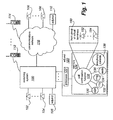
- FIG. 1 shows an illustrative communications system that includes an illustrative embodiment of the invention.
- the communications system comprises a communications switching system 100, such as a local central office switch or a PBX, connected to a communications network 116, such as the public service telephone network and/or the Internet.
- Both switching system 100 and communications network 116 are connected to wired communications terminals 102-105 and 106-110, respectively, be they user terminals such as telephones or personal computers, or adjuncts such as messaging systems, interactive voice response systems, or customer contact centers (e.g., call centers), running communications software.
- System 100 and network 116 provide communications services to terminals 102-104 and 106-110.
- System 100 and network 116 also communicate with and provide services to wireless communications terminals 112-114, such as cell phones or personal digital assistants. Some wireless terminals 112-114 may be served only by their “home” switching system 100, while others may "roam” and be served by whatever portion of network 116 that provides wireless services is closest to them at any one time. As described so far, the communications system of FIG. 1 is conventional.
- the communications system of FIG. 1 additionally includes an adjunct processor 120 that is connected to switching system 100.
- Adjunct processor 120 is a stored-program controlled machine, such as a workstation that includes a memory 124 or any other suitable computer-readable storage medium that stores programs and data, and a processor 122 that executes programs out of memory 124 and stores and retrieves data to and from memory 124. Included among programs that are stored in memory 124 are various service functions 130-138 such as automatic speech recognition (ASR) 130, text-to-speech conversion (TTS) 132, Touch-Tone detection (TTD) 134, audio generation and coding (audio) 136, and telephony controls 138 such as H.234, SIP, or TSAPI.
- ASR automatic speech recognition
- TTS text-to-speech conversion
- TTD Touch-Tone detection
- audio audio generation and coding
- telephony controls 138 such as H.234, SIP, or TSAPI.
- adjunct processor 120 is also conventional. It is illustratively the Avaya Conversant@ interactive voice response (IVR) system.
- switching system 100 is a stored-program-controlled machine such as an Avaya Definity® PBX
- adjunct processor 120 may be dispensed with and its functionality may be implemented directly in the switching system, with the processor and the memory or some other computer-readable storage device of switching system 100 taking the place of the processor and memory of adjunct processor 120.
- a call-continuation function 126 Also included among the programs stored in memory 124 is a call-continuation function 126.
- Function 126 provides reestablishment of connections (portions of existing communications) and continuation of the existing communications that are dropped and lost for some undesired reason, such as degradation or loss of the radio signal on a wireless call, for example.
- Function 126 uses service functions 130-138 in the process.
- Function 126 also leverages the hold, transfer, and/or conferencing features of switching system 100 to provide the continuation-of-communications capability.
- Function 126 implements a hunt group 150 of virtual communication terminals 152-154.
- Virtual terminals 152-154 are used to represent, or emulate, physical communications terminals during calls in order to effect reestablishment of dropped connections and continuation of lost calls, as described further below.
- Each virtual terminal 152-154 is implemented as a data structure to which an instance of function 126 can attach.
- Call-continuation function 126 may be invoked either by a user of one of terminals 102-105 and 106-114 or by switching system 100, either to the same address (e.g., a phone number) or to a different address of the dropped party. In user-initiated invocation, the user reestablishes the call connection via the same wireless service as carried the call previously, via a different wireless service, or via a wireline telephone.
- Terminals 102-104 and 106-114 may be programmed to invoke function 126 either by the user actuating a dedicated actuator (e.g., a user pushing a dedicated button) of the terminal, or by entering an alphanumeric (e.g., a 2-digit) code.
- a dedicated actuator e.g., a user pushing a dedicated button
- Terminals 102-114 can also invoke function 126 automatically in response to detected conditions.
- switching system 100 calls the user either at the disconnected terminal or at another, predesignated, terminal at intervals for some period of time in an attempt to reestablish the call.
- Switching system 100 maintains the call to the other (not-dropped) call participant or participants while it either awaits reconnection by the dropped party or attempts to reconnect to the dropped party.
- the other participant may be either another user or a service, such as IVR (e.g., voice mail). If the dropped party was interacting with an IVR service or was waiting in a call queue for an agent when the connection was dropped, the context of the party is maintained throughout the disconnection and reestablishment. If the party was interacting with one other participant, that participant is asked whether they wish to remain on hold in anticipation of reconnection, or if they prefer to connect to some other entity, e.g., leave a voice-mail message in the dropped party's mailbox.
- IVR e.g., voice mail
- the participants may continue their conference and optionally may record it for later delivery to the dropped party. Or, the participants may either wait on hold for the dropped party to reconnect, or leave a voice-mail message for the dropped party and then disconnect the dropped party from the conference.
- a user of a wireless phone 112-114 may be able to anticipate the failure of the connection, either through perceived degradation in the quality-of-service of the call or upon entry into a known dead-service area.
- the user can ask the other party or parties to the call to wait while the user reconnects.
- a message asking the other party or parties to hold can be played out or not as a configured option of the user.
- TTD134 In the presence of TTD134 to collect and interpret in-band signals from the terminals that are entered as alphanumeric codes on the terminals, the following applications may be provided:
- the data connection can be used to provide out-of-band signaling and all the applications listed above for in-band signaling can be performed via out-of-band signaling.
- adjunct 120 can also be added to allow adjunct 120 to provide new connections proactively to improve a wireless user's quality of service.
- These facilities include the ability to monitor the quality of service of a wireless phone connection, or to obtain the location of the wireless phone. With this information, adjunct 120 can predict when the quality of service of the call will degrade, based on past experience. If such a prediction capability is provided, then the following application is also possible:
- adjunct 120 When adjunct 120 detects quality of service below a certain threshold or anticipates a dropped call, it initiates a new call to the user via an alternate wireless service provider. Switching system 100 optionally conferences the two calls together. The user can then change to the higher quality call and discontinue the lower-quality call at the user's discretion, and seamlessly in the case of the conferenced calls.
- the technique works best with a wireless phone that can simultaneously access multiple wireless networks and assist the user in managing the transition between calls.
- the call-continuation function illustratively proceeds as follows: A phone user calls adjunct 120 and causes it to place an outgoing call to another person or terminal (another party). After placing the call, adjunct 120 monitors the call. If and when the call connection to one of the parties is dropped, adjunct 120 causes switching system 100 to maintain the connection to the other party and waits to determine if the other party hangs up. If the other party does not hang up, adjunct 120 asks the party to hold for reconnection (reestablishment of the call) and may offer additional service options such as transfer to voice mail or to a third party.
- Call reestablishment may be initiated either by the dropped party or by adjunct 120.
- the dropped phone user initiates a reconnection attempt by calling a special number on switching system 100 via the same wireless service, another wireless service, or a wired phone--that is, either from the same phone number as in the original call connection or from a different phone number.
- adjunct 120 causes switching system 100 to reconnect the dropped phone user to the other party or informs the user of the disposition of the call.
- switching system 100 can use its pre-existing facilities for splicing, transferring, or conferencing calls as appropriate. Caller ID can be used to make the reconnection seamless from any phones owned by the wireless phone user.
- Authentication is done for a phone user who calls from a public or an unknown phone.
- the phone user may also be given choices at configuration or reconnection time about what services to offer to the other party who may wait for reconnection (e.g., hold, voice mail, transfer).
- Incoming calls to the phone user can be handled in a similar way.
- a caller calls a number on switching system 100, and switching system automatically connects the call to the called destination.
- Adjunct 120 then monitors the call and performs the functions described above for calls initiated by the phone user.
- adjunct 120 collects callback information from automatic caller ID, from the caller, or from a database of callback information for the particular caller. If the phone call is dropped, switching system 100 maintains the context of the call and attempts to reconnect to the phone user by using the callback information. Switching system 100 and its associated applications may maintain the location of the user in queue and call the user back when it is the user's turn for service. The user may need to authenticate itself with switching system 100 or the call center, as appropriate, before being restored to its in-queue position.
- call-continuation may proceed specifically involves a switching system in a wireless network. Every wireless phone has a home switching system that provides these services. The wireless phone user might place and receive all calls through this switching system, or dropped calls might be transferred to this switching system to await a reconnection attempt. In the case where all calls are placed through the user's home switching system, the switching system can be identical to the switching system described above. In a more complex example, the wireless network would hold the call open on the switching system that experienced the disconnection. In this case, the wireless network would locate the call for the reconnecting wireless phone user by going back to an edge switch for the last known location of the wireless phone. In all cases, the wireless phone user would resume the call as before by calling a special number that provides access to the switching system that reconnects the call.
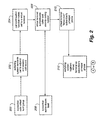
- call continuation function 126 The operation of call continuation function 126 will now be described in greater detail, in conjunction with FIGs. 2-6.
- the scenario begins with a subscriber of the call-continuation service provided by function 126 calling a telephone number that is assigned to virtual hunt group 150, at step 200 of FIG. 2.
- the subscriber may place the call from any wired or wireless terminal 102-114.
- the call is routed to switching system 100, either directly if the call is made on a terminal 102-104 or 112 that is directly connected to switching system 100, or indirectly through communications network 116 if the call is made on a terminal 106-108 or 114, as is conventional.
- switching system 100 routes the call to adjunct 120 and creates a call record for the call, at step 202.
- Function 126 of adjunct 120 responds to receipt of the call by mapping it to (associating it with) one of virtual terminals 152-154 of hunt group 150, at step 204.
- An instance of function 126 that is associated with the mapped virtual terminal 152-154 henceforth acts on behalf of the subscriber, and is henceforth referred to as the mapped virtual terminal performing the action.
- the mapped virtual terminal answers the call and communicates with the subscriber over the call, at steps 206 and 208, to authenticate the subscriber as being entitled to services of function 126 and to determine and record the number from which the subscriber is calling.
- Authentication is akin to a login procedure on a computer and may involve the mapped virtual terminal prompting the subscriber to provide his or her personal telephone number and password ID.
- Determining the calling number may be done automatically, e.g., via ANI, or by prompting the subscriber to enter the number from which the subscriber is calling.
- the calling number is remembered by the mapped virtual terminal.
- the mapped virtual terminal Upon authentication of the subscriber, the mapped virtual terminal "takes over" the user's principal phone 102-104 on switching system 100, at step 210.
- the user's principal phone 102-104 need not be a physical phone, but may itself be a virtual phone such as a "phantom" phone on an Avaya Definity® PBX -- that is, a set of switch terminal translations that is associated with the subscriber's personal phone number in a translations database of switching system 100.
- the translations determine, inter alia, the physical port of switching system 100 that is associated with the subscriber's telephone number, the types of services that the subscriber is entitled to, and the billing arrangements for that subscriber.
- the "take-over" involves the mapped virtual terminal commanding switching system 100 to associate the terminal translations of the subscriber's principal phone with the physical port of switching system 100 that corresponds to the mapped virtual terminal.
- Switching system 100 responds to the command by doing so, at step 212, thus causing the mapped virtual telephone to become a virtual embodiment of the subscriber's principal phone. Further action depends on whether the subscriber wishes to invoke function 126 for an outgoing call or for incoming calls.
- function 126 is being invoked for an outgoing call
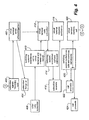
- the subscriber enters the number that he or she wishes to call, at step 300 of FIG. 3.
- the subscriber may do so in response to the mapped virtual terminal prompting the user to enter either a called number or a code indicating that function 126 is being invoked for outgoing calls.
- the mapped virtual terminal receives the called number and calls that number, at step 302, causing switching system 100 to establish a call between the mapped one of the virtual terminals 152-154 and the called terminal as well as a call record for the call, at step 304.
- the called terminal may again be any wired or wireless terminal 102-114. It may also be a hunt group, such as an automated call distribution (ACD) skill/split.
- ACD automated call distribution
- the mapped virtual terminal 152-154 monitors the conference call, at step 316. If desired, additional parties may now be conferenced into the call.
- the subscriber enters a code to that effect, at step 400 of FIG. 4.
- the mapped virtual terminal receives the code and returns an acknowledgement to the subscriber, at step 402.
- the subscriber then hangs up the call, at step 404.
- switching system 100 connects the call to adjunct 120 and creates a call record for the call, at step 410.
- the virtual terminal 152-154 that is mapped to the subscriber retrieves the subscriber's telephone number which it stored at step 206 of FIG. 2 and calls the subscriber at that number, at step 412.
- Switching system 100 establishes the call to the subscriber and creates a call record therefor, at step 414.
- the mapped virtual terminal detects the subscriber's answer and commands switching system 100 to combine (e.g., conference) the two calls into one, at step 418.
- Switching system 100 does so and combines the calls' two call records into one, at step 420.
- the conferenced calls now form two legs of a single, conference, call that connects the calling party and the subscriber, and this call proceeds between the two parties, at steps 422 and 424.
- the mapped one of the virtual terminals 152-154 monitors the conference call, at step 426. If desired, additional parties now may be conferenced into the call.
- the call connection of either party--that is, either party's leg of the conference call-- may be dropped, either inadvertently or intentionally.
- Either party to the call may detect that its call connection is about to be dropped and signal the mapped virtual terminal to that effect. Since the mapped virtual terminal is monitoring the conference call, at step 316 of FIG. 3 or step 426 of FIG. 4, it detects either that one of the parties has been dropped or the signaling indicating that one of the parties is about to be dropped. If the mapped virtual terminal detects that the non-subscriber party has been or is being dropped from the conference call but that the subscriber party has stayed on the call (has not hung up), at step 500 of FIG.
- switching system 100 causes switching system 100 to drop the non-subscriber's leg of the conference call if it has not been dropped already, at step 502, and switching system 100 does so, at step 504.
- the mapped virtual terminal then informs the subscriber that the other party has been dropped and queries the subscriber for whether the connection with the dropped party should be reestablished, at step 504.
- the mapped virtual terminal may also offer other options to the subscriber at step 504. For example, if the conference call involves more than two parties, the remaining conference participants may choose to continue the conference while having adjunct 120 record it, either instead of attempting to reconnect with the dropped party or in case the dropped party is not reconnected, and they may send the recording to the dropped party's voicemail mailbox if the dropped party does not get reconnected.
- the mapped virtual terminal proceeds to end the call, in a conventional manner, at step 510. If the subscriber signals a desire to have the call reestablished, at step 508, the mapped virtual terminal calls the dropped party, at step 512, either at the number at which the dropped party had been called at step 302 of FIG. 3 or at the number from which the dropped party had called at step 408 of FIG. 4. Switching system 100 establishes the call and a call record therefor, at step 514. If and when the called (previously dropped) party answers, at step 516, the mapped virtual terminal informs the called party that this is a reestablishment of the previous call, at step 518.
- the mapped virtual terminal 152-154 now commands switching system 100 to combine (e.g., conference) the two calls into one, at step 520.
- Switching system 100 does so and combines the two calls' call records into one, at step 522.
- the conferenced calls again form two legs of a single conference call that connects the two parties, and this call proceeds between them, at step 524 and 526.
- the mapped virtual terminal 152-154 monitors the conference call, at step 530.
- the mapped virtual terminal detects that the subscriber is being dropped from the conference call but that the non-subscriber party has stayed on the call (has not hung up), at step 600 of FIG. 6, it causes switching system 100 to drop the subscriber's portion of the conference call if it has not been dropped already, at step 602, and switching system 100 does so, at step 604.
- the mapped virtual terminal then informs the other party that the subscriber has been dropped and that the call is being reestablished, at step 606.
- the mapped virtual terminal may also query the other party for other desired options. For example, instead of waiting for call reestablishment, the other party may wish to be transferred to the subscriber's voice-mail mailbox or to a third party such as the subscriber's secretary or colleague.
- the mapped terminal aborts the attempt at call reestablishment and effects the selected option if one was selected, and ends the call, at step 612.
- the mapped terminal calls the subscriber back to inform the subscriber of the call's disposition. If the party merely stays on the call to await call reestablishment, at step 610, function 126 checks, at step 614, the translations of the mapped virtual terminal 152-154 to determine if call reestablishment is to be initiated by it or by the subscriber, and if by it, to what telephone number.
- the mapped virtual terminal places a call to the subscriber at the number specified by the translations, at step 616.
- Switching system 100 establishes the call and a call record therefor, at step 618.
- the mapped virtual terminal informs the subscriber that this is a reestablishment of the previous call, at step 622.
- the mapped virtual terminal awaits receipt of a call from the subscriber to the telephone number that is associated with the mapped virtual terminal 152-154, at step 624.
- the subscriber may place that call from any terminal 102-114, be it the same terminal or a different terminal than the one whose connection was dropped.
- switching system establishes the call to the mapped virtual terminal and creates a call record for the call, at step 628.
- the mapped virtual terminal 152-154 monitors the conference call, at step 638.
- the mapped virtual terminal detects that both parties have dropped from the call, and the call has a "persistent connection" feature active, the mapped terminal reestablishes the call to both parties by effecting the procedures of Figs. 5 and 6 in parallel.
Landscapes
- Engineering & Computer Science (AREA)
- Signal Processing (AREA)
- Health & Medical Sciences (AREA)
- Computer Networks & Wireless Communication (AREA)
- Public Health (AREA)
- Rehabilitation Therapy (AREA)
- Animal Behavior & Ethology (AREA)
- General Health & Medical Sciences (AREA)
- Veterinary Medicine (AREA)
- Life Sciences & Earth Sciences (AREA)
- Physical Education & Sports Medicine (AREA)
- Pain & Pain Management (AREA)
- Epidemiology (AREA)
- Business, Economics & Management (AREA)
- Accounting & Taxation (AREA)
- Heart & Thoracic Surgery (AREA)
- Vascular Medicine (AREA)
- Biomedical Technology (AREA)
- Mobile Radio Communication Systems (AREA)
- Telephonic Communication Services (AREA)
- Exchange Systems With Centralized Control (AREA)
- Sub-Exchange Stations And Push- Button Telephones (AREA)
Applications Claiming Priority (2)
| Application Number | Priority Date | Filing Date | Title |
|---|---|---|---|
| US442617 | 2003-05-21 | ||
| US10/442,617 US7228145B2 (en) | 2003-05-21 | 2003-05-21 | Dropped call continuation |
Publications (1)
| Publication Number | Publication Date |
|---|---|
| EP1480427A1 true EP1480427A1 (en) | 2004-11-24 |
Family
ID=33097987
Family Applications (1)
| Application Number | Title | Priority Date | Filing Date |
|---|---|---|---|
| EP03256877A Withdrawn EP1480427A1 (en) | 2003-05-21 | 2003-10-30 | Dropped call continuation |
Country Status (6)
| Country | Link |
|---|---|
| US (1) | US7228145B2 (https=) |
| EP (1) | EP1480427A1 (https=) |
| JP (1) | JP4313165B2 (https=) |
| KR (1) | KR100806428B1 (https=) |
| CN (1) | CN100508660C (https=) |
| CA (1) | CA2445926A1 (https=) |
Cited By (13)
| Publication number | Priority date | Publication date | Assignee | Title |
|---|---|---|---|---|
| WO2007061545A1 (en) | 2005-11-18 | 2007-05-31 | Cisco Technology, Inc. | Method and system of automatically pausing an automated voice session |
| FR2903835A1 (fr) * | 2006-07-13 | 2008-01-18 | Aastra Matra Telecom Soc Par A | Retablissement d'appel dans un serveur d'appel d'installation de telecommunications privee |
| EP1971173A1 (en) * | 2007-03-16 | 2008-09-17 | Research In Motion Limited | Holding a call while re-establishing a wireless communication link |
| EP2107817A1 (en) * | 2008-04-03 | 2009-10-07 | France Telecom | A system and method for alerting a party in a call of a call disconnection of another party |
| EP2111027A1 (en) * | 2008-04-15 | 2009-10-21 | Alcatel Lucent | Method for recording a dropped telephone call |
| EP2182768A1 (en) * | 2008-10-30 | 2010-05-05 | France Telecom | A system and method enabling a user to receive a reconnection notification in a telecommunication network |
| EP2224717A1 (en) * | 2009-02-27 | 2010-09-01 | Research In Motion Limited | System and method for reconnecting a device to a group call |
| EP2477448A1 (en) * | 2011-01-13 | 2012-07-18 | Telefónica O2 Germany GmbH & Co. oHG | Method of re-establishing an interrupted communication connection and telecommunication system therefor |
| US8238537B2 (en) | 2009-02-27 | 2012-08-07 | Research In Motion Limited | System and method for reconnecting a device to a group call |
| US8346247B2 (en) | 2007-03-16 | 2013-01-01 | Research In Motion Limited | Soliciting first party in communication session to maintain call when degradation of connection to second party is anticipated |
| EP2618623A1 (en) * | 2012-01-20 | 2013-07-24 | Research In Motion Limited | Apparatus, and associated method, for reconnecting dropped call |
| US8755780B2 (en) | 2012-01-20 | 2014-06-17 | Blackberry Limited | Apparatus, and associated method, for reconnecting dropped call |
| WO2019051275A1 (en) | 2017-09-08 | 2019-03-14 | Ujet, Inc. | RECONNECTING A CALL |
Families Citing this family (124)
| Publication number | Priority date | Publication date | Assignee | Title |
|---|---|---|---|---|
| US7072641B2 (en) * | 2002-03-19 | 2006-07-04 | Sprint Spectrum L.P. | Reactive management of dropped calls in a wireless communication system |
| GB0306864D0 (en) * | 2003-03-25 | 2003-04-30 | Nokia Corp | Service provisioning in a communication system |
| US7590230B1 (en) * | 2003-05-22 | 2009-09-15 | Cisco Technology, Inc. | Automated conference recording for missing conference participants |
| US7889849B2 (en) * | 2003-07-14 | 2011-02-15 | Cisco Tech Inc | Mobile device conference calls via private branch exchange |
| US7787607B2 (en) * | 2003-07-14 | 2010-08-31 | Cisco Technology, Inc. | Mobile device calls via private branch exchange |
| US20050048981A1 (en) * | 2003-08-27 | 2005-03-03 | Vinod Anupam | Method and apparatus for reconnecting dropped wireless calls |
| US7395057B2 (en) * | 2003-09-30 | 2008-07-01 | Avaya Technology Corp. | System and method for reconnecting dropped cellular phone calls |
| US8296361B1 (en) * | 2004-01-08 | 2012-10-23 | Cisco Technology, Inc. | Method and system for managing conference resources |
| US7130619B2 (en) * | 2004-01-20 | 2006-10-31 | Lucent Technologies Inc. | Mobile-originated reconnection of dropped wireless calls |
| US7107054B2 (en) * | 2004-01-20 | 2006-09-12 | Lucent Technologies Inc. | Reconnection of wireless calls to mobile units in border cells |
| US7486949B2 (en) * | 2004-03-10 | 2009-02-03 | Broadcom Corporation | Method for re-establishing telephone calls after unintended termination |
| US8645575B1 (en) | 2004-03-31 | 2014-02-04 | Apple Inc. | Apparatus, method, and computer program for performing text-to-speech conversion of instant messages during a conference call |
| US7308476B2 (en) * | 2004-05-11 | 2007-12-11 | International Business Machines Corporation | Method and system for participant automatic re-invite and updating during conferencing |
| US7233788B2 (en) * | 2004-07-20 | 2007-06-19 | San Disk Il Ltd. | Recovering from a disconnected phone call |
| US7493103B2 (en) * | 2004-07-22 | 2009-02-17 | International Business Machines Corporation | Method and apparatus to transfer data and detect weak signals |
| KR100652650B1 (ko) * | 2004-07-28 | 2006-12-06 | 엘지전자 주식회사 | 서비스 음영지역에서 동기화를 위한 피티티 서비스 시스템및 방법 |
| US7089012B2 (en) * | 2004-07-29 | 2006-08-08 | Motorola, Inc. | Method and system for use in reducing cost associated with lost connections in wireless communication |
| US7280652B2 (en) * | 2004-09-13 | 2007-10-09 | Research In Motion Limited | Handheld electronic device having improved phone call log, and associated method |
| US7542756B2 (en) * | 2004-09-28 | 2009-06-02 | Siemens Communications, Inc. | Apparatus and method for restoring a conference connection to a cellular telephone |
| US7889854B2 (en) * | 2004-11-24 | 2011-02-15 | Siemens Enterprise Communications Gmbh & Co. Kg | Systems, devices, and methods for handling connectivity loss |
| US8494504B2 (en) | 2004-12-06 | 2013-07-23 | Callwave Communications, Llc | Methods and systems for telephony processing, including location based call transfers |
| US8107609B2 (en) | 2004-12-06 | 2012-01-31 | Callwave, Inc. | Methods and systems for telephony call-back processing |
| US7437141B2 (en) * | 2004-12-13 | 2008-10-14 | Siemens Communications, Inc. | Apparatus and method for easily restoring a connection to a telephone |
| US8254552B2 (en) * | 2005-01-06 | 2012-08-28 | Cisco Technology, Inc. | System and method for providing a recovery mode in a session initiation protocol (SIP) environment |
| US8259920B2 (en) * | 2005-01-25 | 2012-09-04 | Avaya Inc. | Call extension in telecommunications systems |
| US8077635B2 (en) * | 2005-01-28 | 2011-12-13 | Cisco Technology, Inc. | Method and system for reserving facility resources for a conference |
| US8855107B1 (en) | 2005-07-01 | 2014-10-07 | Callwave Communications, Llc | Methods and systems for call routing via a telephone number |
| EP1744530A1 (en) * | 2005-07-13 | 2007-01-17 | Thomson Telecom Belgium | Device and method allowing to successively use several terminal devices in a same voice communication |
| MX2008002809A (es) | 2005-09-07 | 2008-04-07 | Nokia Corp | Senalizacion de identificacion de celular en guia de servicio de difusion movil para difusion localizada. |
| FR2892256A1 (fr) * | 2005-10-14 | 2007-04-20 | France Telecom | Procede et serveur d'invocation des serveurs d'application dans un reseau sip |
| US20070133438A1 (en) * | 2005-12-14 | 2007-06-14 | Cisco Technology, Inc. | Method and system for reserving resources in a conferencing system |
| US7715881B1 (en) * | 2005-12-28 | 2010-05-11 | At&T Intellectual Property, I, L.P. | Automatically initiating and answering communications |
| SE531400C2 (sv) * | 2006-05-10 | 2009-03-24 | Rebtel Networks Ab | Telefonkommunikation |
| US20070275711A1 (en) * | 2006-05-24 | 2007-11-29 | Buti Ajay K | Automatic credit and reconnect of dropped calls |
| US8705558B2 (en) * | 2006-06-01 | 2014-04-22 | Cisco Technology, Inc. | Swapping bandwidth reservations |
| US7856092B2 (en) * | 2006-06-13 | 2010-12-21 | Avaya Inc. | Method and apparatus for handling disconnected call |
| US8744054B2 (en) * | 2006-06-29 | 2014-06-03 | Apple Inc. | Method and system for automatic call redialing |
| US8582750B2 (en) * | 2006-07-31 | 2013-11-12 | Cisco Technology, Inc. | Connection recovery in a call center |
| US8855292B1 (en) * | 2006-09-08 | 2014-10-07 | Avaya Inc. | Agent-enabled queue bypass to agent |
| JP2008085758A (ja) * | 2006-09-28 | 2008-04-10 | Oki Electric Ind Co Ltd | 応答システム、応答管理装置、応答端末、および応答管理方法 |
| US8837697B2 (en) * | 2006-09-29 | 2014-09-16 | Verint Americas Inc. | Call control presence and recording |
| US7965828B2 (en) | 2006-09-29 | 2011-06-21 | Verint Americas Inc. | Call control presence |
| US8031857B2 (en) * | 2006-12-19 | 2011-10-04 | Scenera Technologies, Llc | Methods and systems for changing a communication quality of a communication session based on a meaning of speech data |
| US9232076B2 (en) * | 2007-01-08 | 2016-01-05 | Qualcomm Incorporated | Methods and systems of providing status message calling |
| WO2008086412A2 (en) * | 2007-01-09 | 2008-07-17 | Iskoot, Inc. | Method and system for transmitting audio data between computing devices |
| WO2008100909A2 (en) | 2007-02-12 | 2008-08-21 | Iskoot, Inc. | Methods and systems for performing authentication and authorization in a user-device environment |
| US8494490B2 (en) * | 2009-05-11 | 2013-07-23 | Silent Communicatin Ltd. | Method, circuit, system and application for providing messaging services |
| US8229409B2 (en) * | 2007-02-22 | 2012-07-24 | Silent Communication Ltd. | System and method for telephone communication |
| JP5114075B2 (ja) * | 2007-03-08 | 2013-01-09 | Necインフロンティア株式会社 | 無線通信システム、無線端末および通信中再接続方法 |
| WO2008121965A2 (en) * | 2007-03-29 | 2008-10-09 | Iskoot, Inc. | Methods and systems for performing server-based mobile chat |
| US9774746B1 (en) * | 2007-04-03 | 2017-09-26 | At&T Mobility Ii Llc | Advanced conference call controls |
| WO2008151033A2 (en) * | 2007-05-30 | 2008-12-11 | Iskoot, Inc. | Methods and systems for propagating information across a network |
| US10469556B2 (en) * | 2007-05-31 | 2019-11-05 | Ooma, Inc. | System and method for providing audio cues in operation of a VoIP service |
| US8391848B2 (en) * | 2007-06-07 | 2013-03-05 | Qualcomm Iskoot, Inc. | Telecommunication call support for mobile devices with presence features |
| US7933581B2 (en) * | 2007-06-08 | 2011-04-26 | Research In Motion Limited | Methods and apparatus for use in processing disconnected emergency calls and other communications involving mobile communication devices and the remote monitoring thereof |
| US9848447B2 (en) * | 2007-06-27 | 2017-12-19 | Ford Global Technologies, Llc | Method and system for emergency notification |
| US20090047939A1 (en) * | 2007-08-14 | 2009-02-19 | Jrad Ahmad M | Method and Apparatus for Signaling a Call From a Caller Terminal to a Callee Terminal |
| US20090110172A1 (en) * | 2007-10-26 | 2009-04-30 | Musa Raoul Unmehopa | Method of queuing and returning calls to an interactive voice response system |
| US8300779B2 (en) * | 2007-11-15 | 2012-10-30 | At&T Intellectual Property I, L.P. | Call processing in a voicemail system |
| US9130965B2 (en) * | 2007-11-20 | 2015-09-08 | Alcatel Lucent | Method of call conferencing to support session continuity for multi-mode clients |
| US9386151B2 (en) | 2007-11-23 | 2016-07-05 | Foncloud, Inc. | System and method for replacing hold-time with a call-back in a contact center environment |
| US8908847B2 (en) * | 2007-11-23 | 2014-12-09 | Foncloud, Inc. | System and method for deep dialing phone systems |
| US8515028B2 (en) | 2007-11-23 | 2013-08-20 | Foncloud, Inc. | System and method for externally mapping an Interactive Voice Response menu |
| US9288316B2 (en) * | 2007-11-23 | 2016-03-15 | Foncloud, Inc. | System and method for eliminating hold-time in phone calls |
| US9270817B2 (en) * | 2007-11-23 | 2016-02-23 | Foncloud, Inc. | Method for determining the on-hold status in a call |
| US10027805B2 (en) * | 2007-11-26 | 2018-07-17 | General Motors Llc | Connection management for a vehicle telematics unit |
| JP4886670B2 (ja) * | 2007-12-20 | 2012-02-29 | 株式会社エヌ・ティ・ティ・ドコモ | 移動通信システム、自動接続復旧ノード |
| US8135394B1 (en) * | 2008-01-03 | 2012-03-13 | At&T Intellectual Property I, L.P. | Computational communications service maintenance methods and systems |
| US7724652B2 (en) * | 2008-01-08 | 2010-05-25 | International Business Machines Corporation | Method of reducing network congestion |
| CN101237498B (zh) * | 2008-03-04 | 2011-07-13 | 中兴通讯股份有限公司 | 业务计费方法 |
| US20090268606A1 (en) * | 2008-04-29 | 2009-10-29 | Delew David A | Method and apparatus for detecting and correcting faults in a session initiation protocol (sip) network |
| US8131268B2 (en) * | 2008-08-05 | 2012-03-06 | International Business Machines Corporation | Managing wireless transmissions upon unintentional disconnection of service |
| US8249236B2 (en) * | 2008-08-08 | 2012-08-21 | Alcatel Lucent | Network call back to add conference participants and/or media capabilities |
| US8605869B1 (en) * | 2008-08-08 | 2013-12-10 | Mobilesphere, Ltd. | Method and apparatus for forcing a call to a carrier provided voice mail facility |
| US8891751B2 (en) * | 2008-10-09 | 2014-11-18 | At&T Intellectual Property I, L.P. | Method and apparatus for providing call parking |
| US8218744B2 (en) * | 2008-12-12 | 2012-07-10 | At&T Intellectual Property I, L.P. | Method for indicating the context of a call to a called party |
| US8903351B2 (en) * | 2009-03-06 | 2014-12-02 | Ford Motor Company | Method and system for emergency call handling |
| US8374317B2 (en) * | 2009-05-07 | 2013-02-12 | International Business Machines Corporation | Interactive voice response (IVR) system call interruption handling |
| US8761364B2 (en) * | 2009-08-05 | 2014-06-24 | Oracle International Corporation | Techniques for controlling access to teleconferences |
| US8537976B2 (en) * | 2010-02-09 | 2013-09-17 | International Business Machines Corporation | System and method for handling telephone interruptions |
| US8903354B2 (en) * | 2010-02-15 | 2014-12-02 | Ford Global Technologies, Llc | Method and system for emergency call arbitration |
| US20110230159A1 (en) * | 2010-03-19 | 2011-09-22 | Ford Global Technologies, Llc | System and Method for Automatic Storage and Retrieval of Emergency Information |
| EP2589234B1 (en) | 2010-06-29 | 2024-10-23 | Georgia Tech Research Corporation | Systems and methods for detecting call provenance from call audio |
| US8667606B2 (en) * | 2010-07-24 | 2014-03-04 | International Business Machines Corporation | Session-controlled-access of client data by support personnel |
| US8369496B2 (en) * | 2010-07-27 | 2013-02-05 | Avaya Inc. | System and method for managing abrupt contact disconnects |
| CN102176734B (zh) * | 2010-12-01 | 2013-11-06 | 北京佳讯飞鸿电气股份有限公司 | 一种人工台断电恢复的方法 |
| US20120190324A1 (en) | 2011-01-25 | 2012-07-26 | Ford Global Technologies, Llc | Automatic Emergency Call Language Provisioning |
| US8818325B2 (en) | 2011-02-28 | 2014-08-26 | Ford Global Technologies, Llc | Method and system for emergency call placement |
| US8718626B2 (en) * | 2011-07-11 | 2014-05-06 | Blackberry Limited | Communication system utilizing near field communication (NFC) to provide enhanced teleconference features and related methods |
| US9131049B2 (en) * | 2012-02-10 | 2015-09-08 | Nuance Communications, Inc. | Multi-channel end-to-end hosted call recording system for IVR-call center analytics |
| US20130215212A1 (en) * | 2012-02-16 | 2013-08-22 | Chiaka Chukwuma Okoroh | Mobile phone videoconferencing with incoming mobile phone calls made to different mobile phone number profiles |
| US8594616B2 (en) | 2012-03-08 | 2013-11-26 | Ford Global Technologies, Llc | Vehicle key fob with emergency assistant service |
| US9307373B2 (en) | 2012-12-19 | 2016-04-05 | Dell Products, Lp | System and method for transferring or rejoining a conference call from any device |
| US9049584B2 (en) | 2013-01-24 | 2015-06-02 | Ford Global Technologies, Llc | Method and system for transmitting data using automated voice when data transmission fails during an emergency call |
| DE102013006351A1 (de) * | 2013-04-12 | 2014-10-30 | Unify Gmbh & Co. Kg | Verfahren und Vorrichtung zur Verwaltung eines Anrufs an ein Callcenter |
| FR3009468A1 (fr) * | 2013-08-02 | 2015-02-06 | Orange | Technique de mise en relation de deux entites clientes |
| US9386148B2 (en) | 2013-09-23 | 2016-07-05 | Ooma, Inc. | Identifying and filtering incoming telephone calls to enhance privacy |
| US9288646B2 (en) * | 2013-10-01 | 2016-03-15 | Qualcomm Incorporated | Multiple SIM multiple network diversity for enhancing call connectivity |
| US10553098B2 (en) | 2014-05-20 | 2020-02-04 | Ooma, Inc. | Appliance device integration with alarm systems |
| US9633547B2 (en) | 2014-05-20 | 2017-04-25 | Ooma, Inc. | Security monitoring and control |
| US10769931B2 (en) | 2014-05-20 | 2020-09-08 | Ooma, Inc. | Network jamming detection and remediation |
| US11330100B2 (en) | 2014-07-09 | 2022-05-10 | Ooma, Inc. | Server based intelligent personal assistant services |
| US9571660B2 (en) * | 2014-10-10 | 2017-02-14 | Avaya Inc. | Conference call question manager |
| US9467854B2 (en) | 2015-01-14 | 2016-10-11 | Google Inc. | Security techniques for reconnecting to a conference session using a computing device |
| US11171875B2 (en) | 2015-05-08 | 2021-11-09 | Ooma, Inc. | Systems and methods of communications network failure detection and remediation utilizing link probes |
| US10009286B2 (en) | 2015-05-08 | 2018-06-26 | Ooma, Inc. | Communications hub |
| US10771396B2 (en) | 2015-05-08 | 2020-09-08 | Ooma, Inc. | Communications network failure detection and remediation |
| US9521069B2 (en) | 2015-05-08 | 2016-12-13 | Ooma, Inc. | Managing alternative networks for high quality of service communications |
| US10911368B2 (en) | 2015-05-08 | 2021-02-02 | Ooma, Inc. | Gateway address spoofing for alternate network utilization |
| US10471348B2 (en) | 2015-07-24 | 2019-11-12 | Activision Publishing, Inc. | System and method for creating and sharing customized video game weapon configurations in multiplayer video games via one or more social networks |
| US10116796B2 (en) | 2015-10-09 | 2018-10-30 | Ooma, Inc. | Real-time communications-based internet advertising |
| US9716787B1 (en) * | 2016-03-08 | 2017-07-25 | Ford Global Technologies, Llc | Method and apparatus for cellular dead zone handling |
| US10674011B1 (en) * | 2017-05-04 | 2020-06-02 | Noble Systems Corporation | Enhanced abandoned call recovery for a contact center |
| US10477018B2 (en) * | 2017-12-19 | 2019-11-12 | Avaya Inc. | Management of agent sessions for omnichannel predictive outbound |
| US10135985B1 (en) * | 2018-02-01 | 2018-11-20 | Avaya Inc. | Immediate reconnection of a call to an agent in a contact center |
| KR101940444B1 (ko) * | 2018-02-13 | 2019-01-18 | 현철우 | 통화 중 데이터를 처리할 수 있는 통신시스템 및 그 방법 |
| FR3080512A1 (fr) * | 2018-04-24 | 2019-10-25 | Orange | Procede et systeme de detection de coupures de communications mobiles et de retablissement automatique des communications. |
| US10516777B1 (en) * | 2018-09-11 | 2019-12-24 | Qualcomm Incorporated | Enhanced user experience for voice communication |
| US10750021B1 (en) | 2019-07-04 | 2020-08-18 | Noble Systems Corporation | Handling a callback call in a contact center in response to a limited-content message |
| US11082467B1 (en) * | 2020-09-03 | 2021-08-03 | Facebook, Inc. | Live group video streaming |
| US11647115B2 (en) * | 2021-01-25 | 2023-05-09 | Optum Services (Ireland) Limited | Conformational framework for call drop likelihood from interactive voice response system |
| US11356555B1 (en) | 2021-07-30 | 2022-06-07 | Zoom Video Communications, Inc. | Message-based interactive voice response menu reconnection |
| US12238247B2 (en) * | 2023-01-12 | 2025-02-25 | InContact Inc. | System and method for reconnecting an inbound originated call |
| US12432301B1 (en) * | 2023-07-12 | 2025-09-30 | Zoom Communications, Inc. | Disconnected contact center request management |
Citations (6)
| Publication number | Priority date | Publication date | Assignee | Title |
|---|---|---|---|---|
| US5566225A (en) * | 1994-11-21 | 1996-10-15 | Lucent Technologies Inc. | Wireless data communications system for detecting a disabled condition and simulating a functioning mode in response to detection |
| US5566236A (en) * | 1994-02-16 | 1996-10-15 | Priority Call Management, Inc. | System and method for re-establishing a disconnected telephone communication |
| US5752185A (en) * | 1994-11-21 | 1998-05-12 | Lucent Technologies Inc. | Disconnection management system for wireless voice communications |
| WO1998035482A2 (en) * | 1997-02-07 | 1998-08-13 | Mci Worldcom, Inc. | System and method for call park and transfer in a telecommunications network |
| US6032040A (en) * | 1997-01-24 | 2000-02-29 | Lucent Technologies Inc. | Method and system for autoreconnect of wireless calls |
| US6292551B1 (en) * | 1998-02-04 | 2001-09-18 | Avaya Technology Corp. | Call reestablishment system |
Family Cites Families (22)
| Publication number | Priority date | Publication date | Assignee | Title |
|---|---|---|---|---|
| US4995075A (en) | 1989-09-05 | 1991-02-19 | At&T Bell Laboratories | Apparatus and method for encoding telephone ringing signals |
| US5040208A (en) | 1989-11-03 | 1991-08-13 | International Business Machines Corporation | Coordinated voice and data display having temporary storage of transaction data |
| US5185782A (en) | 1991-02-08 | 1993-02-09 | A&T Bell Laboratories | ACD arrangement for automatically returning a call at a time specified by the original caller |
| US5664007A (en) * | 1995-03-06 | 1997-09-02 | Samadi; Behrokh | Method and apparatus for providing continuation of a communication call across multiple networks |
| US5794155A (en) * | 1995-07-03 | 1998-08-11 | Motorola, Inc. | Method and parameter prediction system for reestablishing a temporarily interrupted dynamic communication link |
| US6405041B1 (en) * | 1996-06-27 | 2002-06-11 | At&T Wireless Services, Inc. | Concurrent ringing on multiple network telephones |
| US5995830A (en) * | 1997-04-09 | 1999-11-30 | At&T Wireless Services Inc. | System and method for processing dropped calls |
| JPH10327462A (ja) * | 1997-05-23 | 1998-12-08 | Matsushita Electric Ind Co Ltd | 無線電話装置 |
| US6141328A (en) * | 1997-09-29 | 2000-10-31 | Qwest Communications International Inc. | Method and system for two-way negotiated call hold |
| KR100318940B1 (ko) * | 1998-04-17 | 2002-04-22 | 윤종용 | 이동통신시스템에서의호장애시재접속방법 |
| US6208854B1 (en) * | 1998-05-14 | 2001-03-27 | Ameritech Corporation | System and method for routing a call to a called party's landline or wireless communication unit |
| KR100277131B1 (ko) * | 1998-12-03 | 2001-01-15 | 윤종용 | 이동통신시스템에서의호장애시호자동재접속방법 |
| KR100277104B1 (ko) * | 1998-12-03 | 2001-01-15 | 윤종용 | 이동통신시스템에서의호장애시호재접속방법 |
| US6445918B1 (en) * | 1999-11-01 | 2002-09-03 | Telefonaktiebolaget L M Ericsson (Publ) | Method and system for saving dropped calls |
| US6556668B1 (en) | 2000-05-02 | 2003-04-29 | Avaya Technology Corp. | Consumer contact toll optimizer |
| US6603965B1 (en) * | 2000-05-11 | 2003-08-05 | International Business Machines Corporation | Pervasive voice handset system |
| ES2296708T3 (es) * | 2000-12-05 | 2008-05-01 | Ivar Plahte | Intercambio de ramificacion movil. |
| US20020090947A1 (en) * | 2000-12-22 | 2002-07-11 | Frank Brooks | Automatic reconnect of dropped calls |
| US7130620B2 (en) * | 2002-07-11 | 2006-10-31 | Hewlett-Packard Development Company, L.P. | Telecommunications services and apparatus regarding lost connectivity events |
| US7171226B2 (en) * | 2002-11-19 | 2007-01-30 | General Motors Corporation | Communication retry method over digital wireless systems |
| US20050048981A1 (en) * | 2003-08-27 | 2005-03-03 | Vinod Anupam | Method and apparatus for reconnecting dropped wireless calls |
| US7395057B2 (en) * | 2003-09-30 | 2008-07-01 | Avaya Technology Corp. | System and method for reconnecting dropped cellular phone calls |
-
2003
- 2003-05-21 US US10/442,617 patent/US7228145B2/en not_active Expired - Fee Related
- 2003-10-21 CA CA002445926A patent/CA2445926A1/en not_active Abandoned
- 2003-10-30 EP EP03256877A patent/EP1480427A1/en not_active Withdrawn
- 2003-12-01 JP JP2003401694A patent/JP4313165B2/ja not_active Expired - Fee Related
-
2004
- 2004-05-14 CN CNB2004100432590A patent/CN100508660C/zh not_active Expired - Fee Related
- 2004-05-20 KR KR1020040035847A patent/KR100806428B1/ko not_active Expired - Fee Related
Patent Citations (6)
| Publication number | Priority date | Publication date | Assignee | Title |
|---|---|---|---|---|
| US5566236A (en) * | 1994-02-16 | 1996-10-15 | Priority Call Management, Inc. | System and method for re-establishing a disconnected telephone communication |
| US5566225A (en) * | 1994-11-21 | 1996-10-15 | Lucent Technologies Inc. | Wireless data communications system for detecting a disabled condition and simulating a functioning mode in response to detection |
| US5752185A (en) * | 1994-11-21 | 1998-05-12 | Lucent Technologies Inc. | Disconnection management system for wireless voice communications |
| US6032040A (en) * | 1997-01-24 | 2000-02-29 | Lucent Technologies Inc. | Method and system for autoreconnect of wireless calls |
| WO1998035482A2 (en) * | 1997-02-07 | 1998-08-13 | Mci Worldcom, Inc. | System and method for call park and transfer in a telecommunications network |
| US6292551B1 (en) * | 1998-02-04 | 2001-09-18 | Avaya Technology Corp. | Call reestablishment system |
Cited By (22)
| Publication number | Priority date | Publication date | Assignee | Title |
|---|---|---|---|---|
| EP1949663A4 (en) * | 2005-11-18 | 2010-12-08 | Cisco Tech Inc | METHOD AND SYSTEM FOR AUTOMATIC MOMENTAL INTERRUPTION OF A VOICE SESSION |
| WO2007061545A1 (en) | 2005-11-18 | 2007-05-31 | Cisco Technology, Inc. | Method and system of automatically pausing an automated voice session |
| FR2903835A1 (fr) * | 2006-07-13 | 2008-01-18 | Aastra Matra Telecom Soc Par A | Retablissement d'appel dans un serveur d'appel d'installation de telecommunications privee |
| WO2008007010A3 (fr) * | 2006-07-13 | 2008-03-13 | Aastra Matra Telecom | Retablissement d'appel dans un serveur d'appel d'installation de telecommunications privee |
| EP1971173A1 (en) * | 2007-03-16 | 2008-09-17 | Research In Motion Limited | Holding a call while re-establishing a wireless communication link |
| US8712398B2 (en) | 2007-03-16 | 2014-04-29 | Blackberry Limited | Soliciting first party in communication session to maintain call when degradation of connection to second party is anticipated |
| US8346247B2 (en) | 2007-03-16 | 2013-01-01 | Research In Motion Limited | Soliciting first party in communication session to maintain call when degradation of connection to second party is anticipated |
| WO2009121954A1 (en) * | 2008-04-03 | 2009-10-08 | France Telecom | A system and method for alerting a party in a call of a call disconnection of another party |
| EP2107817A1 (en) * | 2008-04-03 | 2009-10-07 | France Telecom | A system and method for alerting a party in a call of a call disconnection of another party |
| WO2009127588A1 (en) * | 2008-04-15 | 2009-10-22 | Alcatel Lucent | Method for recording a dropped telephone call |
| EP2111027A1 (en) * | 2008-04-15 | 2009-10-21 | Alcatel Lucent | Method for recording a dropped telephone call |
| EP2182768A1 (en) * | 2008-10-30 | 2010-05-05 | France Telecom | A system and method enabling a user to receive a reconnection notification in a telecommunication network |
| EP2224717A1 (en) * | 2009-02-27 | 2010-09-01 | Research In Motion Limited | System and method for reconnecting a device to a group call |
| US9225839B2 (en) | 2009-02-27 | 2015-12-29 | Blackberry Limited | System and method for reconnecting a device to a group call |
| US8238537B2 (en) | 2009-02-27 | 2012-08-07 | Research In Motion Limited | System and method for reconnecting a device to a group call |
| US8861703B2 (en) | 2009-02-27 | 2014-10-14 | Blackberry Limited | System and method for reconnecting a device to a group call |
| EP2477448A1 (en) * | 2011-01-13 | 2012-07-18 | Telefónica O2 Germany GmbH & Co. oHG | Method of re-establishing an interrupted communication connection and telecommunication system therefor |
| WO2012095470A1 (en) * | 2011-01-13 | 2012-07-19 | Telefónica Germany GmbH & Co. OHG | Method of re-establishing an interrupted communication connection and telecommunication system therefor |
| US8755780B2 (en) | 2012-01-20 | 2014-06-17 | Blackberry Limited | Apparatus, and associated method, for reconnecting dropped call |
| EP2618623A1 (en) * | 2012-01-20 | 2013-07-24 | Research In Motion Limited | Apparatus, and associated method, for reconnecting dropped call |
| WO2019051275A1 (en) | 2017-09-08 | 2019-03-14 | Ujet, Inc. | RECONNECTING A CALL |
| EP3679713A4 (en) * | 2017-09-08 | 2021-05-19 | Ujet, Inc. | CALL RECONNECTION |
Also Published As
| Publication number | Publication date |
|---|---|
| JP4313165B2 (ja) | 2009-08-12 |
| CN100508660C (zh) | 2009-07-01 |
| US7228145B2 (en) | 2007-06-05 |
| US20040235509A1 (en) | 2004-11-25 |
| JP2004350260A (ja) | 2004-12-09 |
| CN1575018A (zh) | 2005-02-02 |
| CA2445926A1 (en) | 2004-11-21 |
| KR100806428B1 (ko) | 2008-02-21 |
| KR20040101009A (ko) | 2004-12-02 |
Similar Documents
| Publication | Publication Date | Title |
|---|---|---|
| US7228145B2 (en) | Dropped call continuation | |
| US8457293B1 (en) | Methods and systems for telephony call-back processing | |
| US7630486B2 (en) | Method and system for handling a queued automatic call distributor call | |
| US8494504B2 (en) | Methods and systems for telephony processing, including location based call transfers | |
| US7555110B2 (en) | Methods and apparatus for providing expanded telecommunications service | |
| US7391853B2 (en) | Systems and methods for monitoring network-based voice messaging systems | |
| US6298062B1 (en) | System providing integrated services over a computer network | |
| US7580510B2 (en) | Peer to peer voice over IP network with distributed call processing | |
| US8078155B2 (en) | Call processing for group conferencing | |
| US20030148758A1 (en) | Wireless telephone call manager | |
| US8848693B2 (en) | Automated attendant multimedia session | |
| US20130343205A1 (en) | Methods and apparatus for providing expanded telecommunications service | |
| EP1949663B1 (en) | Method and system of automatically pausing an automated voice session | |
| US8102985B2 (en) | Method and system for providing a camp-on hold service | |
| EP1290818A1 (en) | System providing integrated services over a computer network |
Legal Events
| Date | Code | Title | Description |
|---|---|---|---|
| PUAI | Public reference made under article 153(3) epc to a published international application that has entered the european phase |
Free format text: ORIGINAL CODE: 0009012 |
|
| AK | Designated contracting states |
Kind code of ref document: A1 Designated state(s): AT BE BG CH CY CZ DE DK EE ES FI FR GB GR HU IE IT LI LU MC NL PT RO SE SI SK TR |
|
| AX | Request for extension of the european patent |
Extension state: AL LT LV MK |
|
| 17P | Request for examination filed |
Effective date: 20050127 |
|
| 17Q | First examination report despatched |
Effective date: 20050224 |
|
| AKX | Designation fees paid |
Designated state(s): DE FR GB NL |
|
| RIC1 | Information provided on ipc code assigned before grant |
Ipc: H04M 15/00 20060101ALI20130731BHEP Ipc: H04M 3/22 20060101ALI20130731BHEP Ipc: H04M 3/42 20060101AFI20130731BHEP Ipc: H04W 4/24 20090101ALI20130731BHEP Ipc: H04W 76/02 20090101ALI20130731BHEP Ipc: H04M 15/04 20060101ALI20130731BHEP |
|
| STAA | Information on the status of an ep patent application or granted ep patent |
Free format text: STATUS: THE APPLICATION IS DEEMED TO BE WITHDRAWN |
|
| 18D | Application deemed to be withdrawn |
Effective date: 20140314 |