EP1469692A2 - Mobiles Endgerät, Verwaltungsverfahren für seine Daten und Rechnerprogramm zur Datenverwaltung - Google Patents
Mobiles Endgerät, Verwaltungsverfahren für seine Daten und Rechnerprogramm zur Datenverwaltung Download PDFInfo
- Publication number
- EP1469692A2 EP1469692A2 EP04008911A EP04008911A EP1469692A2 EP 1469692 A2 EP1469692 A2 EP 1469692A2 EP 04008911 A EP04008911 A EP 04008911A EP 04008911 A EP04008911 A EP 04008911A EP 1469692 A2 EP1469692 A2 EP 1469692A2
- Authority
- EP
- European Patent Office
- Prior art keywords
- information
- mobile terminal
- user
- memory area
- memory medium
- Prior art date
- Legal status (The legal status is an assumption and is not a legal conclusion. Google has not performed a legal analysis and makes no representation as to the accuracy of the status listed.)
- Granted
Links
Images




Classifications
-
- H—ELECTRICITY
- H04—ELECTRIC COMMUNICATION TECHNIQUE
- H04W—WIRELESS COMMUNICATION NETWORKS
- H04W12/00—Security arrangements; Authentication; Protecting privacy or anonymity
- H04W12/06—Authentication
-
- H—ELECTRICITY
- H04—ELECTRIC COMMUNICATION TECHNIQUE
- H04W—WIRELESS COMMUNICATION NETWORKS
- H04W12/00—Security arrangements; Authentication; Protecting privacy or anonymity
- H04W12/03—Protecting confidentiality, e.g. by encryption
- H04W12/033—Protecting confidentiality, e.g. by encryption of the user plane, e.g. user's traffic
-
- H—ELECTRICITY
- H04—ELECTRIC COMMUNICATION TECHNIQUE
- H04W—WIRELESS COMMUNICATION NETWORKS
- H04W12/00—Security arrangements; Authentication; Protecting privacy or anonymity
- H04W12/60—Context-dependent security
- H04W12/69—Identity-dependent
- H04W12/72—Subscriber identity
-
- H—ELECTRICITY
- H04—ELECTRIC COMMUNICATION TECHNIQUE
- H04W—WIRELESS COMMUNICATION NETWORKS
- H04W88/00—Devices specially adapted for wireless communication networks, e.g. terminals, base stations or access point devices
- H04W88/02—Terminal devices
Definitions
- the present invention relates to a technique enabling the secure information management for a mobile terminal such as a mobile phone, particularly to a technique enabling the identification of an authorized user of a mobile terminal on the basis of identification information stored in a memory medium.
- Such a third generation mobile phone includes, as separate elements, a mobile phone body and a memory medium (IC card) which stores information about a subscriber.
- UIM cards user identity module cards, or they may be also called USIM or R-UIM cards.
- the UIM card is an IC card which stores information about a subscriber or an owner of the card (including information about a service provider), and other information (e.g., ID information necessary for credit-based transaction). It is possible for a user to receive a service via any given 3G mobile phone by inserting his/her own UIM card into the body of the mobile phone.
- a SIM (subscriber identity module) card only contains information about one subscriber.
- a 3G mobile phone plural users can use the same phone by connecting their respective UIM cards to that mobile phone.
- a UIM card it is desirable for a UIM card to contain not only information of a subscriber (and service provider), but also his/her personal data (personal contents), in order to ensure privacy of the personal data of the subscriber.
- the personal contents used herein refer to data fed by a user, such as a list of phone numbers utilized by the user, log record of e-mails received and dispatched, his/her own personal schedules, and customized settings of the mobile phone.
- UIM card since the UIM card is limited in its storage capacity, it is impossible for a UIM card to store all the personal contents (which may be also called "user data" hereinafter). Thus, actually, the majority of various personal contents fed, customized and utilized by a user (e.g., log record of e-mails, list of phone numbers, customized setting of applications, etc.) are stored in an internal memory of the mobile phone body, and the data are kept stored there even when the mobile phone is not actually used by the user.
- personal contents which may be also called "user data” hereinafter.
- a 3G mobile phone having a constitution as above and owned by a certain user. If another user (extension user) different from the owner user connects (attaches) his UIM card to the mobile phone, the extension user will be able to receive a service via the mobile phone on the basis of his/her own subscription data. At the same time, the extension user can gain access to the personal contents fed by the owner user and stored in an internal memory of the mobile phone, and freely utilize or change them if he wants.
- a user Even when he switches it on, cannot receive a service via the mobile phone unless he connects his UIM card to the mobile phone. However, even in that situation, he can freely gain access to the personal contents fed by previous users into an internal memory of the mobile phone; and utilize them if he wants.
- each mobile phone stores information about a subscriber and subscription condition in a non-volatile area of its internal memory. Therefore, with regard to such a mobile phone, only its owner or subscriber can gain access to data stored in its memory: management of subscription data (including subscriber information) and management of personal contents are executed by only one user.
- management of subscription data including subscriber information
- management of personal contents are executed by only one user.
- 3G mobile phone since the mobile phone is highly likely to be shared by plural users as described above, it is necessary to comprise a function for protecting the privacy of personal contents stored in an internal memory of the mobile phone.
- a mobile terminal, and method for protecting the privacy of user data stored in its memory can be mentioned.
- This technique concerns with the protection, in a mobile terminal which stores user data in a non-volatile area of its internal memory, of the user data against deletion or wrong registration during their registration.
- a mobile phone based on the use of a subscriber's card As a third technique known in the prior art, there is "A mobile phone based on the use of a subscriber's card” (see, for example, Japanese Patent Laid-Open No. 2002-300254). According to this technique, if a mobile phone working on a SIM card and contains, in its internal memory, personal data of the owner user (e.g., a list of phone numbers fed by the user, log record of e-mails received and dispatched by the user, his/her own personal schedules, and customized setting of the mobile phone) is transferred to another user, the latter user is prevented from gaining access to the personal data.
- personal data of the owner user e.g., a list of phone numbers fed by the user, log record of e-mails received and dispatched by the user, his/her own personal schedules, and customized setting of the mobile phone
- Japanese Patent Laid-Open No. 2001-101079 is directed towards mobile phones distinct from 3G mobile phones which require the use of a UIM card.
- the keyword used for encrypting user ID information is fed by the user himself, and is not based on information stored in his UIM card, and thus this system does not fit to 3G mobile phones.
- the invention disclosed in Japanese Patent Laid-Open No. 2002-300254 is applicable to 3G mobile phones. Indeed, the personal data stored in an internal memory of a mobile phone are deleted, as soon as an SIM card is removed from the body of the mobile phone. However, the personal data are transferred, in an encrypted form, into an external memory different from the SIM card to be stored there, when the SIM card is removed from the body of the mobile phone. Namely, according to this invention, for the protection of the privacy of personal data, a mobile phone requires another external memory in addition to a SIM card.
- a mobile terminal including a 3G mobile phone capable of securely protecting the privacy of personal data, which does not require any additional card such as a memory card other than a UIM card, and in which a current user can not gain access to personal data of previous users stored in an internal memory of the terminal, even when the terminal is switched on with no UIM card being connected thereto.
- the present invention being proposed with a view to solve the problems encountered in the prior art as described above, aims to provide a mobile terminal which can be shared by plural users (sharing users) in which the individual users can be identified on the basis of ID information stored in their respective external memory media which can be freely attached to or detached from the mobile terminal, and in which the improved protection of the privacy of personal contents of any given sharing user stored in an internal memory of the mobile terminal is ensured, and a method therefor.
- the present invention provides a mobile terminal (mobile phone 100) capable of identifying an authorized user, when a user connects a detachable memory medium (IC card or UIM card 8) to the mobile terminal, based on ID information (IMSI or international mobile subscriber identifier, information of a subscriber, information of a service provider, etc.) stored in the memory medium, the mobile terminal comprises:
- the memory area creating means may automatically create, in response to a memory medium being connected to the mobile terminal, a specific,memory area in association with ID information stored in the memory medium.
- a preferred embodiment may further comprise an information sharing means which allows the users at least either to write contents into a common memory area (shared folder) or to gain access to contents stored in the common memory area.
- the encrypting means may generate a cryptographic key based on ID information read out from the memory medium connected to the mobile terminal, and encrypts personal contents using the cryptographic key.
- the decrypting means may generate a cryptographic key on the basis of ID information read out from the memory medium connected to the mobile terminal, and decrypts the encrypted personal contents stored in the specific memory area associated with the ID information by using the cryptographic key.
- the above-described objects may be achieved by an information management method applicable to a mobile terminal having an aforementioned constitution.
- the above-described objects may be achieved by allowing the method to be achieved in a mobile terminal having an aforementioned constitution which is, in turn, achieved by executing program codes by way of a computer, or by running a computer with such program codes by way of a memory medium legible to the computer.
- the present invention relates to a mobile terminal which includes, as its representative, a mobile phone.
- FIG. 2 is a block diagram for illustrating a common constitution of a mobile phone to which the invention can be applied.
- the mobile phone 100 shown in the figure is a 3G mobile phone on the basis of a common standard such as IMT-2000, which a UIM card 8 can be freely attached to or detached from.
- the UIM (user identity module) card 8 is a memory medium on the basis of a so-called IC card.
- the UIM card stores, in advance, the ID information of a user who is authorized to use the mobile phone 100.
- the ID information is the information of a subscriber (information of a service provider) called IMSI (international mobile subscriber identifier).
- IMSI international mobile subscriber identifier
- IMSI is information assigned to each subscriber (user) to uniquely identify the subscriber.
- a wireless unit 1 transmits/receives radio waves having a specific frequency band to/from a base station for wireless communication.
- a signal-processing unit 2 converts signals on radio waves received by the wireless unit 1 into digital signals which are legible to a central,control unit 3.
- the signal-processing unit 2 modulates digital signals delivered by the central control unit 3 such that the resulting signals can be transmitted by the wireless unit 1.
- the central control unit 3 includes hardware consisting of a CPU (central processing unit) which governs the overall operation of the mobile phone 100 and a memory (both of which are not shown), and software consisting of various programs to be executed by the CPU.
- the mobile phone 100 includes, as one of executable software programs, a cryptography software program 13 (which will be detailed later).
- a peripherals controlling unit 4 controls, under the instruction from the central control unit 3, auditory output to a receiver (speaker) 9, voice input from a microphone 10. Also, the peripherals controlling unit 4 controls, under the instruction from the central control unit 3, functions of operation switches and a display (not shown).
- a UIM card control unit 7 reads, under the instruction of the central control unit 3, information from a UIM card 8 connected to the mobile phone 100, and writes the information into a memory of the mobile phone when needed.
- a power control unit 5 contains a battery not shown, and supplies power to every part of the mobile phone 100.
- a non-volatile memory 11 (or volatile memory in which stored data are backed up ceaselessly) is a memory unit such as EEPROM for storing user data (personal contents), and various software programs to be executed by CPU in the central control unit 3.
- the user data (personal contents) of a user refer to a list of phone numbers, mails received and dispatched, log record of telephone calls made and received, and other such data, and instructions for customized setting of the operation of the mobile phone (for example, instructions for customized arrangement of icons on the display of the mobile phone).
- a temporary memory unit 12 temporarily stores data read from a UIM card 8, and data to be written into the UIM card, and also serves as a work area when the central control unit 3 executes a program.
- a common bus 6 is connected to every unit constituting the mobile phone 100 and is responsible for delivering various necessary data in accordance with the current operation of the mobile phone.
- a user When a user wants to use the mobile phone 100, he attaches a UIM card 8 to a specified site such as a slot (not shown) on the body of the mobile phone 100. By so doing, the user is ready to receive various services (including access to Web sites) for which he subscribes, such as communication with a desired person via a cellular network.
- a specified site such as a slot (not shown) on the body of the mobile phone 100.
- the constitution of the mobile phone 100 described above (particularly the one described in connection with wireless communication in FIG. 2) is mentioned as an illustrative example. Since various new technologies are currently available for the construction of the systems responsible for wireless communication, further description of the role of individual units in this embodiment will be omitted.
- FIG. 3A is a diagram outlining the static management of data in an information processing system
- FIG. 3B a diagram outlining the dynamic management of data in an information processing system.
- individual data clusters are distributed to different areas which are provided in advance and have a definite capacity, to be stored there.
- individual data clusters are stored as data files each having a varied size in accordance with file management information (file management table).
- file management information is stored in a specified area of a non-volatile memory of the information processing system, and, for a given data cluster, its mapping with respect to a physical address in that specified area is registered.
- individual data clusters are stored in a non-volatile memory.
- the individual data clusters thus stored are fetched from the non-volatile memory to be delivered to a temporary memory for ready access in response, for example, to the power-on of the information processing system or to a read-out request from the user.
- the user wants to change certain data, he accesses to a relevant data cluster stored in the temporary memory to change the data, and then the change is transferred to the corresponding data cluster stored in the non-volatile memory.
- the timing at which data stored in the non-volatile memory are changed in accordance with the change of the corresponding data in the temporary memory unit varies according to the property of the data.
- this embodiment basically depends on dynamic data management (see FIG. 3B).
- FIG. 1 is a diagram outlining how user data are managed in a mobile phone 100 according to an embodiment of the invention.
- This embodiment presupposes that user data stored in a mobile phone 100 are managed dynamically.
- An area within a non-volatile memory 11 provided for storing user data stores folders (data representing folders).
- the folders are associated IMSIs of individual users.
- These folders (to be referred to as “IMSI specific folders" hereinafter) are stored, on a one-to-one basis, in connection with (in association with) their corresponding IMSIs (subscriber identification data) which have been given to uniquely identify authorized users of the mobile phone 100.
- the user data of a user is stored in an "IMSI specific folder" provided in connection with an IMSI recorded on a UIM card 8 used by the user.
- the area provided in the non-volatile memory 11 for storing user data also includes a "shared folder" for storing contents which can be shared by the users who are authorized to use the mobile phone 100.
- the "shared folder” as well as the "IMSI specific folders” are managed in accordance with the file management information (file management table) described above with reference to FIG. 3B.
- an "IMSI specific folder” is instituted, it is uniquely connected with the corresponding IMSI.
- the file for storing encrypted personal contents is a data file having a variable size.
- the central control unit 3 dynamically manages the connection of "IMSI specific folders" which occupy a specified memory area, with IMSIs or ID information of the sharing users with the aid of the file management information.
- key information (cryptographic key) is generated on the basis of an IMSI read from a UIM card 8.
- key information used for encrypting and decrypting user data is generated on the basis of an IMSI read from a UIM card 8.
- the key information may be generated based on part of the IMSI or on its entirety. Generation of cryptography key information on the basis of part of an IMSI or on its entirety may be achieved by means of encryption procedures or hash treatment.
- the cryptography software program 13 is responsible for the encryption and decryption (deciphering) of user data (personal contents).
- the cryptography software program 13 is responsible not only for generating a cryptography key (key information) on the basis of ID information (IMSI) read out from a UIM card 8 (memory medium), but also for encrypting personal contents connected to the IMSI using the cryptography key.
- the cryptography software program 13 is also responsible not only for generating a cryptography key on the basis of an IMSI read out from a UIM card 8, but also for decrypting personal contents currently stored in an "IMSI specific folder" in connection with the IMSI in an encrypted form, using the cryptography key.
- the cryptography software program 13 causes an IMSI read out from a UIM card 8 to be stored temporarily, before it engages with the encryption or decryption of user data connected to the IMSI as described above.
- the central control unit 3 of the mobile phone 100 executes a main program (not shown) necessary for the overall control of the operation of the mobile phone. As soon as the mobile phone 100 is powered on, the main program causes the cryptography software program 13 to be activated, regardless of whether a UIM card 8 is connected to the mobile phone 100 or not.
- the main program causes the cryptography software program 13 to be activated when personal contents stored in a temporary memory 12 (user data not yet encrypted) are exchanged (updated) by a user for new data fed or downloaded by the user.
- the cryptography software program 13 encrypts the updated data using the cryptographic key, stores the encrypted data in the temporary memory 12, and then transfers the data to a corresponding "IMSI specific folder."
- the central control unit 3 arrests, via the main program, the cryptography software program 13, each time an encryption or decryption session is completed.
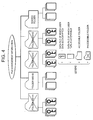
- FIG. 4 is a diagram outlining how user data decrypted and user data encrypted coexist in a mobile phone 100 embodying the invention, both decryption and encryption of data being achieved by the user data management method of the invention.
- the user can also gain access to contents stored in a "shared folder.”
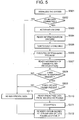
- FIG. 5 is a flowchart showing control steps executed in a mobile phone 100 embodying the invention subsequent to the power-on of the phone.
- FIG. 6' is a flowchart showing control steps executed in a mobile phone 100 embodying the invention for reading user data.
- FIG. 7 is a flowchart showing control steps executed in a mobile phone 100 embodying the invention for storing user data.
- FIGS. 5 to 7 represent a sequence of steps which are executed by the CPU (not shown) in the central control unit 3 shown in FIG. 2 by way of a software program.
- the sequential steps shown in the flowchart of' FIG. 5 start when a power control unit 5 causes power to be supplied to the central control unit 3 as soon as it detects that a power-on operation is executed according to a specified manner.
- the central control unit 3 initializes the mobile phone 100 (step S501) and simultaneously checks whether a UIM card 8 is connected or not (step S502).
- the central control unit 3 finds the answer YES (a UIM card 8 is connected) at step S502, it activates the UIM card 8 connected (step S503), and simultaneously reads out necessary data from the card (step S504).
- the data read out at step S504 include an IMSI or ID information of a user.
- the central control unit 3 delivers the IMSI thus read out to a temporary memory 12 to be temporarily stored there (step S505), and proceeds to step S506.
- Step S506 the central control unit 3 starts to execute a cryptography software program 13. Step S506 is also executed when the central control unit 3 finds the answer NO (no UIM card 8 is connected) at step S502.
- the central control unit 3 fetches data contained in a "shared folder” and delivers them to the temporary memory 12 to be temporarily stored there (step S507). During this operation, no encryption or decryption of data occurs, because the data contained in the "shared folder" are open to all users.
- the central control unit 3 checks whether the IMSI temporarily stored in the temporary memory 12 at step S505 are really there or not (step S508). When the central control unit 3 finds the answer YES (the IMSI is really present in the temporary memory 12) at step S508, it checks whether a folder corresponding with the IMSI stored in the temporary memory 12 (that is, an "IMSI specific folder" associated with the IMSI) is present or not (step S509).
- the central control unit 3 finds the answer YES at step S509 (the sought "IMSI specific folder” is present), it fetches encrypted data contained in that "IMSI specific folder" stored in a non-volatile memory 11, and delivers them to the temporary memory 21 (step S510).
- the central control unit 3 generates a cryptographic key based on the IMSI temporarily stored, and decrypts user data read out at step S510 using the key (step S511).
- the central control unit 3 arranges the user data decrypted at step S511 and contents (common data) of the "shared folder" read out at step S507 in the temporary memory 12 so as to render them readily accessible.
- the central control unit 3 determines the answer NO at step S508 or S509, when it encounters following situations:
- step S512 If the central control unit 3 encounters either of the above situations, it proceeds to step S512 so that it can arrange the common data read out at step S507 in the temporary memory 12 so as to render them readily accessible.
- the central control unit 3 When the central control unit 3 detects a request from a user for reading data (step S601), it checks whether the request is configured to designate the reading out of common data contained in the "shared folder" or not (step S602).
- the central control unit 3 finds the answer YES at step S602, it fetches common data in the "shared folder" (step S603) and delivers them to the temporary memory 12 to render them readily accessible (step S609). Since the common data is open to every user and is not encrypted, decryption of the data is not required.
- step S602 if the central control unit 3 finds the answer NO (the request is not for common data) at step S602, it concludes that the request dispatched at step S601 is for user data specifically connected with the user. In this case, the central control unit 3 checks (step S604) whether or not there is a temporarily stored IMSI that should be present, if the central control unit 3 has properly performed necessary steps , particularly step S505 (see FIG. 5) subsequent to the power-on of the mobile phone 100 and connection of a UMI card 8 thereto.
- the central control unit 3 finds the answer YES (an IMSI is stored temporarily) at step S604, it checks whether a folder connected (associated) with the temporarily stored IMSI (that is, an "IMSI specific folder" uniquely connected with the IMSI) is present or not (step S605).
- the central control unit 3 executes the cryptography software program 13 at step S606, and performs the same operations at steps S607 and S608 as those performed at steps S510 and S511, respectively. These operations make it possible for the user data connected with the temporarily stored IMSI to be decrypted.
- the central control unit 3 delivers the decrypted user data to the temporary memory 12 to render them readily accessible (step S609).
- the central control unit 3 determines the answer NO when it encounters either of the two situations (1) and (2) described above with respect to the operation performed at step S508 or S509. When encountering either of the two situations, the central control unit 3 completes a session of operations without reading out data (step S610).
- Contents are accumulated in the mobile phone 100 when a user adds new phone numbers to a list of phone numbers, receives/dispatches new mails, and downloads new data via networks and the like. Newly obtained data are registered in the temporary memory 11. According to this embodiment, the user can store the newly obtained data in the non-volatile memory area.
- the central control unit 3 When the central control unit 3 detects a request from a user for storing data permanently (step S701), it checks whether the request is for storing the data in the "shared folder" as sharable data, or in an "IMSI specific folder" uniquely connected with the user after encryption of the data (step S702).
- step S702 When the central control unit 3 finds at step S702 that the request is for storing the data in the shared folder as sharable data, it stores the data in the "shared folder" as common data without encrypting them (step S703).
- the central control unit 3 finds at step S702 that the request is for storing data in an "IMSI specific folder" uniquely connected with the user, it checks (step S704) whether or not there is a temporarily stored IMSI that should be present, if the central control unit 3 has properly performed necessary steps, particularly step S505 (see FIG. 5) subsequent to the power-on of the mobile phone 100 and connection of a UMI card 8 thereto.
- step S704 If the central control unit 3 finds the answer NO at step S704, it means that no "IMSI specific folder" uniquely connected with the user exists in the mobile phone 100, or no UIM card 8 is connected to the mobile phone 100. In these situations, the central control unit 3 completes a session of operations (step S711).
- step S704 when the answer obtained at step S704 is found to be YES, it means that a temporarily stored IMSI is present. Then, the central control unit 3 checks whether a folder connected with the temporarily stored IMSI (that is, an "IMSI specific folder" uniquely associated with the IMSI) is present or not (step S705).
- a folder connected with the temporarily stored IMSI that is, an "IMSI specific folder" uniquely associated with the IMSI
- the central control unit 3 executes the cryptography software program 13 at step S706, and generates a cryptographic key on the basis of the IMSI temporarily stored, and encrypts, using the key, the user data which were requested to be stored at step S701 (step S707).
- the central control unit 3 stores the user data encrypted at step S707 in the "IMSI specific folder" present in the non-volatile memory 11 which is uniquely connected with the IMSI (step S708).
- step S705 determines whether a corresponding "IMSI specific folder" is present, there should be a temporarily stored IMSI, as long as YES was obtained at step S704.
- the central control unit 3 checks whether a new "IMSI specific folder" should be prepared in connection with the temporarily stored IMSI (step S709).
- the central control unit 3 informs the user of the absence of an "IMSI specific folder" connected with the IMSI, and prompts the user to determine whether or not a new "IMSI specific folder" should be prepared in connection with the IMSI of the user.
- the central control unit 3 When the central control unit 3 obtains an answer YES at step S709, it prepares a new "IMSI specific folder" in connection with the IMSI. At this step, the "IMSI specific folder" newly prepared in connection with the IMSI in question is stored in the non-volatile memory 11 of the mobile phone 100 together with the connection data, and remains there as long as it is not deleted.
- step S705 the central control unit 3 proceeds to step S705, and executes the above-described operations at steps S706 and S707, so that user data, after being encrypted, are stored in the newly prepared "IMSI specific folder."
- the aforementioned embodiment of the present invention presupposes a mobile terminal (mobile phone 100) in which it is possible to carry subscriber information (IMSI) stored in a memory medium such as a UIM card 8 (IC card), independently of a phone body.
- a mobile terminal can store user data (personal contents) in its internal memory in such a manner as to allow the user data, after being encrypted, to be stored in a folder (IMSI specific folder) which is uniquely connected with the ID information (IMSI) of a UIM card.
- the user data, after being encrypted, stored in an IMSI specific folder are not accessible, unless a UIM card carrying ID information uniquely connected (associated) with the IMSI specific folder is connected to the mobile phone.
- the embodiment even if a mobile terminal is shared by plural users like a so-called 3G mobile phone, it is possible to prevent the personal data of a user from being accessed or changed by other users.
- the embodiment is quite in contrast with the above conventional technique where a user, to ensure the same advantage, must have a second memory medium, in addition to an IC card carrying subscriber information, which is connectable to a mobile phone.
- the embodiment improves the convenience of users sharing a mobile phone far better than the corresponding conventional technique.
- key information used for encrypting and decrypting user data is generated on the basis of the ID information of the user (that is, his IMSI). Furthermore, a folder specifically directed to a user is prepared in connection with his or her IMSI. In contrast, according to this modification, IMSI is substituted for a serial number uniquely attached to a UIM card which is an IC card.
- encrypted user data are dynamically managed in accordance with file management information (file management table). That is, user data are distributed to appropriate data files having a varied size according to file management information.
- file management information file management table
- fixed memory areas are provided in the non-volatile memory 11, and individual encrypted user data are distributed to the fixed memory areas as shown in FIG. 3A to be statically managed there.
- assignment of a fixed memory area to each user may be wasteful.
- a tag is attached to a header portion of each fixed memory area.
- the system seeks a tag corresponding with ID information read from a UIM card 8 connected to the system, and locates the desired fixed memory area specifically directed to the user identified by the ID information.
- the system if the system finds that there is no "IMSI specific folder" in the non-volatile memory 11 connected with an IMSI assigned to a user, the system prompts the user at step S709 to determine whether a new "IMSI specific folder" should be prepared or not.
- operation performed at step S709 is omitted, that is, if the system finds at step S705 that there is no "IMSI specific folder” connected with an IMSI assigned to a user, the system automatically prepares a new "IMSI specific folder" associated with the IMSI of the user.
- the system may prepare a subfolder (subordinate memory area) specifically connected with the foregoing IMSI specific folder in response to a request from the user. This further improves the convenience of users.
- personal contents of'a user rendered accessible may be transferred or copied in a "shared folder" in response to a request from the user.
- contents (common data) in a "shared folder” may be transferred or copied in an "IMSI specific folder” specifically connected with a user in response to a request from the user.
- the mobile terminal to which the invention can be applied is not limited to mobile phones.
- the present invention can be applied to PDAs (personal digital assistances) to which a memory medium such as an IC card can be detachably attached.
- the present invention described above by means of an embodiment applied to a mobile phone 100 can be achieved by providing a computer program capable of supporting the operations performed at the steps shown in the above figures to the mobile phone, and allowing a CPU in the phone to execute the program.
- the computer program provided to the mobile phone may be stored in a memory device such as a readable/writable memory (e.g., non-volatile memory 11) in the phone.
- Providing a computer program to a mobile phone can be achieved by installing the program into the phone by way of an IC card (or memory card) which works on the physically same standard with that of the UIM card 8, or by downloading the program from an external source via a network such as Internet.
- the'present invention takes the form of the code sequences of such a computer program, or a memory medium containing the program.
- An embodiment of the present invention may be summarized as providing a mobile phone 100 comprising, as separate elements, a body and a UIM card 8 carrying subscriber information (IMSI) with the UIM card 8 being detachably attached to the body, in which, if a UIM card 8 is connected to the mobile phone 100 and IMSI is read from the card, user data (personal contents) fed to the mobile phone 100 are stored, after being encrypted, in a folder (IMSI specific folder) specifically associated with the IMSI recorded in the UIM card 8.
- IMSI subscriber information
Landscapes
- Engineering & Computer Science (AREA)
- Computer Security & Cryptography (AREA)
- Computer Networks & Wireless Communication (AREA)
- Signal Processing (AREA)
- Telephone Function (AREA)
- Storage Device Security (AREA)
- Telephonic Communication Services (AREA)
- Mobile Radio Communication Systems (AREA)
Applications Claiming Priority (2)
| Application Number | Priority Date | Filing Date | Title |
|---|---|---|---|
| JP2003112110 | 2003-04-16 | ||
| JP2003112110 | 2003-04-16 |
Publications (3)
| Publication Number | Publication Date |
|---|---|
| EP1469692A2 true EP1469692A2 (de) | 2004-10-20 |
| EP1469692A3 EP1469692A3 (de) | 2006-04-26 |
| EP1469692B1 EP1469692B1 (de) | 2008-01-16 |
Family
ID=32906050
Family Applications (1)
| Application Number | Title | Priority Date | Filing Date |
|---|---|---|---|
| EP04008911A Expired - Lifetime EP1469692B1 (de) | 2003-04-16 | 2004-04-14 | Mobiles Endgerät, Verwaltungsverfahren für seine Daten und Rechnerprogramm zur Datenverwaltung |
Country Status (4)
| Country | Link |
|---|---|
| US (1) | US20040209651A1 (de) |
| EP (1) | EP1469692B1 (de) |
| CN (1) | CN1324918C (de) |
| DE (1) | DE602004011284T8 (de) |
Cited By (11)
| Publication number | Priority date | Publication date | Assignee | Title |
|---|---|---|---|---|
| EP1523202A1 (de) * | 2003-10-07 | 2005-04-13 | Samsung Electronics Co., Ltd. | Mobilkommunikationsendgerät und Verfahren zum Schutz von privaten Informationen |
| WO2006077278A1 (en) * | 2004-12-29 | 2006-07-27 | Nokia Corporation | Protection of data to be stored in the memory of a device |
| WO2006124191A1 (en) * | 2005-05-16 | 2006-11-23 | Hewlett-Packard Development Company, L.P. | Computer security system and method |
| FR2904449A1 (fr) * | 2006-07-28 | 2008-02-01 | Ercom Engineering Reseaux Comm | Procede de securisation pour appareil electronique utilisant une carte a puce |
| WO2009004411A1 (en) * | 2007-07-04 | 2009-01-08 | Freescale Semiconductor, Inc. | Communication device with secure storage of user data |
| EP2028829A1 (de) * | 2007-08-23 | 2009-02-25 | Infineon Technologies AG | Nachrichtenverarbeitungsvorrichtung, drahtlose Vorrichtung und Verfahren zum Speichern einer Nachricht in einer drahtlosen Vorrichtung |
| WO2010011257A1 (en) * | 2008-07-22 | 2010-01-28 | Tzee, Inc. | Wireless mobile device with privacy groups that independently control access to resident application programs |
| EP1565016A3 (de) * | 2004-02-12 | 2010-11-24 | Samsung Electronics Co., Ltd. | Mobiles Kommunikationsgerät und Verfahren zur Verwaltung von historischer Gebrauchsinformation |
| CN101896007A (zh) * | 2010-07-30 | 2010-11-24 | 华为终端有限公司 | 无线模块、终端和存储方法 |
| WO2016195789A1 (en) * | 2015-05-29 | 2016-12-08 | Qualcomm Incorporated | Protecting data stored on a mobile communication device utilizing a personal identification number code of a universal integrated circuit card |
| KR20170091609A (ko) * | 2014-12-02 | 2017-08-09 | 알리바바 그룹 홀딩 리미티드 | 모바일 단말 상의 데이터를 암호화/복호화하는 방법 및 장치 |
Families Citing this family (24)
| Publication number | Priority date | Publication date | Assignee | Title |
|---|---|---|---|---|
| JP2008524759A (ja) * | 2004-01-15 | 2008-07-10 | サンディスク アイエル リミテッド | ブックマーク付き着脱式メディア |
| KR100713413B1 (ko) * | 2004-10-30 | 2007-05-04 | 삼성전자주식회사 | 카드 정보를 자동으로 인식하여 구동 모드를 선택하는듀얼모드 이동통신 단말기 및 그 방법 |
| JP4305854B2 (ja) * | 2005-01-19 | 2009-07-29 | 富士フイルム株式会社 | 画像管理装置及び方法 |
| WO2007004623A1 (ja) * | 2005-07-04 | 2007-01-11 | Matsushita Electric Industrial Co., Ltd. | グループネットワーク形成方法及びグループネットワークシステム |
| JP4777725B2 (ja) | 2005-08-31 | 2011-09-21 | フェリカネットワークス株式会社 | 携帯端末装置,サーバ装置,アプリケーション提供方法およびコンピュータプログラム |
| US8855714B2 (en) * | 2005-09-14 | 2014-10-07 | Sandisk Il Ltd. | Removable media player for mobile phones |
| JP4361522B2 (ja) * | 2005-09-15 | 2009-11-11 | 株式会社エヌ・ティ・ティ・ドコモ | 外部メモリ管理装置、及び外部メモリ管理方法 |
| US20070288752A1 (en) * | 2006-06-08 | 2007-12-13 | Weng Chong Chan | Secure removable memory element for mobile electronic device |
| JP4430055B2 (ja) * | 2006-10-03 | 2010-03-10 | 株式会社エヌ・ティ・ティ・ドコモ | 移動通信端末及び端末制御方法 |
| US8051297B2 (en) * | 2006-11-28 | 2011-11-01 | Diversinet Corp. | Method for binding a security element to a mobile device |
| US7865212B2 (en) * | 2007-01-17 | 2011-01-04 | Research In Motion Limited | Methods and apparatus for use in transferring user data between two different mobile communication devices using a removable memory card |
| US20090067625A1 (en) * | 2007-09-07 | 2009-03-12 | Aceurity, Inc. | Method for protection of digital rights at points of vulnerability in real time |
| US8688093B2 (en) * | 2007-09-13 | 2014-04-01 | Sony Corporation | Device and method for preserving customized user settings when transitioning between mobile communication devices |
| JP5209281B2 (ja) * | 2007-11-22 | 2013-06-12 | 株式会社エヌ・ティ・ティ・ドコモ | 通信端末装置、アクセス制御方法、icカード |
| US20090282256A1 (en) * | 2008-05-12 | 2009-11-12 | Sony Ericsson Mobile Communications Ab | Secure push messages |
| CN101667240B (zh) * | 2009-08-20 | 2013-03-13 | 北京握奇数据系统有限公司 | 智能卡及其写卡方法、设备和系统 |
| US8862178B2 (en) | 2010-02-24 | 2014-10-14 | Qualcomm Incorporated | Methods and systems for managing participation in multiple wireless networks |
| TWI447653B (zh) * | 2011-05-20 | 2014-08-01 | Abancast Ltd | 應用具有雙晶片的智能卡之行動通訊裝置與資料驗證系統 |
| WO2013010330A1 (zh) * | 2011-07-21 | 2013-01-24 | 展讯通信(上海)有限公司 | 多卡移动终端服务运营商判断方法及驻留方法 |
| CN102866960A (zh) * | 2012-09-05 | 2013-01-09 | 中兴通讯股份有限公司 | 一种在存储卡中实现加密的方法、解密的方法和装置 |
| CN102883323B (zh) * | 2012-09-27 | 2018-07-27 | 中兴通讯股份有限公司 | 一种保护移动终端用户私密数据的方法和装置 |
| CN103501222B (zh) * | 2013-10-09 | 2016-08-17 | 贝壳网际(北京)安全技术有限公司 | 一种用户数据的保护方法及装置 |
| US20170171751A1 (en) * | 2013-11-26 | 2017-06-15 | Lg Electronics Inc. | Method for allocating ae id in wireless communication system |
| TWI549529B (zh) * | 2014-04-30 | 2016-09-11 | Chunghwa Telecom Co Ltd | Mobile terminal device software authorization system and method |
Family Cites Families (13)
| Publication number | Priority date | Publication date | Assignee | Title |
|---|---|---|---|---|
| JP3662946B2 (ja) * | 1993-09-22 | 2005-06-22 | 株式会社東芝 | ファイル管理方式および携帯可能電子装置 |
| DE19511031C2 (de) * | 1995-03-28 | 2000-06-29 | Deutsche Telekom Mobil | Chipkarte für den Einsatz in einem Mobilfunknetz |
| JPH0950405A (ja) * | 1995-08-04 | 1997-02-18 | Fujitsu Ltd | バックアップ機能付き記憶装置および同記憶装置を有する情報処理システム |
| FI101584B (fi) * | 1995-11-24 | 1998-07-15 | Nokia Telecommunications Oy | Matkaviestintilaajan tunnusluvun tarkistaminen |
| GB2327570C2 (en) * | 1997-07-18 | 2005-08-22 | Orange Personal Comm Serv Ltd | Subscriber system |
| US6195568B1 (en) * | 1998-02-24 | 2001-02-27 | Ericsson Inc. | Radiotelephone adapted to the identity of its user |
| JP3601363B2 (ja) * | 1999-06-28 | 2004-12-15 | 富士電機システムズ株式会社 | インクジェット記録装置及びその製造方法 |
| EP1107623A3 (de) * | 1999-12-06 | 2002-01-02 | Nokia Mobile Phones Ltd. | Mobilstation mit Benützer-definierter Privatzone für Zugriffseinschränkung auf Benützerprogrammdaten |
| JP4049525B2 (ja) * | 2000-08-16 | 2008-02-20 | 富士通株式会社 | 分散処理システム |
| GB2373679B (en) * | 2001-03-22 | 2004-04-07 | Ericsson Telefon Ab L M | Mobile communications device |
| JP3763349B2 (ja) * | 2001-04-03 | 2006-04-05 | 日本電気株式会社 | 加入者カードを用いる携帯電話機 |
| US7162644B1 (en) * | 2002-03-29 | 2007-01-09 | Xilinx, Inc. | Methods and circuits for protecting proprietary configuration data for programmable logic devices |
| US20040043788A1 (en) * | 2002-08-28 | 2004-03-04 | Guarav Mittal | Management of parameters in a removable user identity module |
-
2004
- 2004-04-14 CN CNB2004100329087A patent/CN1324918C/zh not_active Expired - Fee Related
- 2004-04-14 DE DE602004011284T patent/DE602004011284T8/de active Active
- 2004-04-14 EP EP04008911A patent/EP1469692B1/de not_active Expired - Lifetime
- 2004-04-14 US US10/823,655 patent/US20040209651A1/en not_active Abandoned
Cited By (23)
| Publication number | Priority date | Publication date | Assignee | Title |
|---|---|---|---|---|
| EP1523202A1 (de) * | 2003-10-07 | 2005-04-13 | Samsung Electronics Co., Ltd. | Mobilkommunikationsendgerät und Verfahren zum Schutz von privaten Informationen |
| US7945243B2 (en) | 2003-10-07 | 2011-05-17 | Samsung Electronics Co., Ltd | Mobile communication terminal for protecting private contents and method for controlling the same |
| EP1565016A3 (de) * | 2004-02-12 | 2010-11-24 | Samsung Electronics Co., Ltd. | Mobiles Kommunikationsgerät und Verfahren zur Verwaltung von historischer Gebrauchsinformation |
| WO2006077278A1 (en) * | 2004-12-29 | 2006-07-27 | Nokia Corporation | Protection of data to be stored in the memory of a device |
| US8972743B2 (en) | 2005-05-16 | 2015-03-03 | Hewlett-Packard Development Company, L.P. | Computer security system and method |
| CN101176103B (zh) * | 2005-05-16 | 2010-05-19 | 惠普开发有限公司 | 计算机安全系统 |
| WO2006124191A1 (en) * | 2005-05-16 | 2006-11-23 | Hewlett-Packard Development Company, L.P. | Computer security system and method |
| GB2440697A (en) * | 2005-05-16 | 2008-02-06 | Hewlett Packard Development Co | Computer security system and method |
| GB2440697B (en) * | 2005-05-16 | 2010-04-21 | Hewlett Packard Development Co | Computer security system and method |
| FR2904449A1 (fr) * | 2006-07-28 | 2008-02-01 | Ercom Engineering Reseaux Comm | Procede de securisation pour appareil electronique utilisant une carte a puce |
| EP1883034A3 (de) * | 2006-07-28 | 2010-04-28 | Ercom Engineering Réseaux Communications | Methode zum Schützen eines elektronischen Geräts durch Verwendung einer Chipkarte |
| WO2009004411A1 (en) * | 2007-07-04 | 2009-01-08 | Freescale Semiconductor, Inc. | Communication device with secure storage of user data |
| US9391997B2 (en) | 2007-08-23 | 2016-07-12 | Intel Deutschland Gmbh | Message processing apparatus, wireless device and method of storing a message in a wireless device |
| EP2028829A1 (de) * | 2007-08-23 | 2009-02-25 | Infineon Technologies AG | Nachrichtenverarbeitungsvorrichtung, drahtlose Vorrichtung und Verfahren zum Speichern einer Nachricht in einer drahtlosen Vorrichtung |
| WO2010011257A1 (en) * | 2008-07-22 | 2010-01-28 | Tzee, Inc. | Wireless mobile device with privacy groups that independently control access to resident application programs |
| CN101896007A (zh) * | 2010-07-30 | 2010-11-24 | 华为终端有限公司 | 无线模块、终端和存储方法 |
| CN101896007B (zh) * | 2010-07-30 | 2014-07-09 | 华为终端有限公司 | 移动台和存储方法 |
| KR20170091609A (ko) * | 2014-12-02 | 2017-08-09 | 알리바바 그룹 홀딩 리미티드 | 모바일 단말 상의 데이터를 암호화/복호화하는 방법 및 장치 |
| EP3229510A4 (de) * | 2014-12-02 | 2018-06-20 | Alibaba Group Holding Limited | Verfahren und vorrichtung zur verschlüsselung/entschlüsselung von daten auf einem mobilen endgerät |
| KR102051720B1 (ko) | 2014-12-02 | 2019-12-03 | 알리바바 그룹 홀딩 리미티드 | 모바일 단말 상의 데이터를 암호화/복호화하는 방법 및 장치 |
| US11134377B2 (en) | 2014-12-02 | 2021-09-28 | Advanced New Technologies Co., Ltd. | Encrypting/decrypting data on mobile terminal |
| WO2016195789A1 (en) * | 2015-05-29 | 2016-12-08 | Qualcomm Incorporated | Protecting data stored on a mobile communication device utilizing a personal identification number code of a universal integrated circuit card |
| US9526009B1 (en) | 2015-05-29 | 2016-12-20 | Qualcomm Incorporated | Protecting data stored on a mobile communication device utilizing a personal identification number code of a universal integrated circuit card |
Also Published As
| Publication number | Publication date |
|---|---|
| EP1469692B1 (de) | 2008-01-16 |
| EP1469692A3 (de) | 2006-04-26 |
| DE602004011284T8 (de) | 2009-08-13 |
| CN1324918C (zh) | 2007-07-04 |
| US20040209651A1 (en) | 2004-10-21 |
| CN1538777A (zh) | 2004-10-20 |
| DE602004011284D1 (de) | 2008-03-06 |
| DE602004011284T2 (de) | 2009-05-07 |
Similar Documents
| Publication | Publication Date | Title |
|---|---|---|
| EP1469692B1 (de) | Mobiles Endgerät, Verwaltungsverfahren für seine Daten und Rechnerprogramm zur Datenverwaltung | |
| JP4451346B2 (ja) | 通信ネットワークシステムおよびその制御方法、移動体、サーバ、移動体制御プログラム、サーバ制御プログラム、ならびに該プログラムを記録した記録媒体 | |
| JP4816161B2 (ja) | 無線通信装置、macアドレス管理システム、無線通信方法及び無線通信プログラム | |
| EP2003842B1 (de) | Verfahren und Vorrichtungen zur Bereitstellung eines sicheren Datenbackups von einem mobilen Kommunikationsgerät zu einer externen Berechnungsvorrichtung | |
| EP3082353B1 (de) | Verfahren und endgerätevorrichtung zum senden und empfangen von benutzerdaten | |
| EP1441553B1 (de) | Verfahren und System zur Fernsteuerung eines tragbaren Endgerätes durch Einfügen eines Speichermediums | |
| US20110131421A1 (en) | Method for installing an application on a sim card | |
| US9730060B2 (en) | Method and system for transfering profiles of authentication module | |
| US20110029786A1 (en) | Method for accessing and transferring data linked to an application installed on a security module associated with a mobile terminal, and associated security module, management server and system | |
| US20080148042A1 (en) | System and method for wiping and disabling a removed device | |
| EP1151625B1 (de) | Verfahren zur verwendung von in einem teilnehmeridentitatsmodul gespeicherten anwendung und zur sicherheitsbehandlung damit verbundener information | |
| JP2004336719A (ja) | 携帯端末及びその情報管理方法、並びにコンピュータ・プログラム | |
| EP1331752B1 (de) | Module zur Personalisierung von Inhalten gemäss Anweisungen enthalten in einem "Voucher" für Mobil Gerate | |
| WO2011136150A1 (en) | Access management system | |
| JP2001320768A (ja) | 携帯電話機およびデータの秘匿方法 | |
| EP1696359A2 (de) | Tragbares Informationsendgerät und Datenschutzverfahren | |
| CN113626833B (zh) | 一种卡应用数据备份和恢复方法及相关设备 | |
| US20040083378A1 (en) | Method, systems and devices for handling files while operated on in physically different computer devices | |
| JP5381975B2 (ja) | Icチップを搭載した携帯端末、アプリケーション領域制御方法及びアプリケーション領域制御プログラム | |
| JP3748368B2 (ja) | 携帯通信端末の個人登録情報のバックアップサービス提供方法 | |
| US20070112680A1 (en) | System and method for processing digital media content in a mobile device | |
| JP4887362B2 (ja) | Sim機能を保全モジュールに後日に実装するための方法 | |
| US20060133617A1 (en) | Data transmission system and data transmission method | |
| JPWO2005041610A1 (ja) | 無線装置 | |
| JP2003250184A (ja) | 携帯端末、メモリカード、管理端末、携帯端末制御システム、使用制限方法及び退避方法 |
Legal Events
| Date | Code | Title | Description |
|---|---|---|---|
| PUAI | Public reference made under article 153(3) epc to a published international application that has entered the european phase |
Free format text: ORIGINAL CODE: 0009012 |
|
| AK | Designated contracting states |
Kind code of ref document: A2 Designated state(s): AT BE BG CH CY CZ DE DK EE ES FI FR GB GR HU IE IT LI LU MC NL PL PT RO SE SI SK TR |
|
| AX | Request for extension of the european patent |
Extension state: AL HR LT LV MK |
|
| PUAL | Search report despatched |
Free format text: ORIGINAL CODE: 0009013 |
|
| AK | Designated contracting states |
Kind code of ref document: A3 Designated state(s): AT BE BG CH CY CZ DE DK EE ES FI FR GB GR HU IE IT LI LU MC NL PL PT RO SE SI SK TR |
|
| AX | Request for extension of the european patent |
Extension state: AL HR LT LV MK |
|
| 17P | Request for examination filed |
Effective date: 20060626 |
|
| AKX | Designation fees paid |
Designated state(s): DE FR GB IT |
|
| GRAP | Despatch of communication of intention to grant a patent |
Free format text: ORIGINAL CODE: EPIDOSNIGR1 |
|
| GRAS | Grant fee paid |
Free format text: ORIGINAL CODE: EPIDOSNIGR3 |
|
| GRAA | (expected) grant |
Free format text: ORIGINAL CODE: 0009210 |
|
| AK | Designated contracting states |
Kind code of ref document: B1 Designated state(s): DE FR GB IT |
|
| REG | Reference to a national code |
Ref country code: GB Ref legal event code: FG4D |
|
| REF | Corresponds to: |
Ref document number: 602004011284 Country of ref document: DE Date of ref document: 20080306 Kind code of ref document: P |
|
| ET | Fr: translation filed | ||
| PLBE | No opposition filed within time limit |
Free format text: ORIGINAL CODE: 0009261 |
|
| STAA | Information on the status of an ep patent application or granted ep patent |
Free format text: STATUS: NO OPPOSITION FILED WITHIN TIME LIMIT |
|
| 26N | No opposition filed |
Effective date: 20081017 |
|
| REG | Reference to a national code |
Ref country code: GB Ref legal event code: 732E Free format text: REGISTERED BETWEEN 20141023 AND 20141029 |
|
| REG | Reference to a national code |
Ref country code: FR Ref legal event code: TP Owner name: LENOVO INNOVATIONS LIMITED (HONG KONG), HK Effective date: 20141119 |
|
| REG | Reference to a national code |
Ref country code: FR Ref legal event code: PLFP Year of fee payment: 13 |
|
| PGFP | Annual fee paid to national office [announced via postgrant information from national office to epo] |
Ref country code: IT Payment date: 20160418 Year of fee payment: 13 |
|
| REG | Reference to a national code |
Ref country code: FR Ref legal event code: PLFP Year of fee payment: 14 |
|
| PGFP | Annual fee paid to national office [announced via postgrant information from national office to epo] |
Ref country code: FR Payment date: 20170313 Year of fee payment: 14 |
|
| REG | Reference to a national code |
Ref country code: DE Ref legal event code: R082 Ref document number: 602004011284 Country of ref document: DE Representative=s name: BETTEN & RESCH PATENT- UND RECHTSANWAELTE PART, DE Ref country code: DE Ref legal event code: R081 Ref document number: 602004011284 Country of ref document: DE Owner name: LENOVO INNOVATIONS LIMITED, HK Free format text: FORMER OWNER: NEC CORP., TOKYO, JP |
|
| PG25 | Lapsed in a contracting state [announced via postgrant information from national office to epo] |
Ref country code: IT Free format text: LAPSE BECAUSE OF NON-PAYMENT OF DUE FEES Effective date: 20170414 |
|
| PG25 | Lapsed in a contracting state [announced via postgrant information from national office to epo] |
Ref country code: FR Free format text: LAPSE BECAUSE OF NON-PAYMENT OF DUE FEES Effective date: 20180430 |
|
| PGFP | Annual fee paid to national office [announced via postgrant information from national office to epo] |
Ref country code: DE Payment date: 20190430 Year of fee payment: 16 |
|
| PGFP | Annual fee paid to national office [announced via postgrant information from national office to epo] |
Ref country code: GB Payment date: 20190429 Year of fee payment: 16 |
|
| REG | Reference to a national code |
Ref country code: DE Ref legal event code: R119 Ref document number: 602004011284 Country of ref document: DE |
|
| PG25 | Lapsed in a contracting state [announced via postgrant information from national office to epo] |
Ref country code: DE Free format text: LAPSE BECAUSE OF NON-PAYMENT OF DUE FEES Effective date: 20201103 |
|
| GBPC | Gb: european patent ceased through non-payment of renewal fee |
Effective date: 20200414 |
|
| PG25 | Lapsed in a contracting state [announced via postgrant information from national office to epo] |
Ref country code: GB Free format text: LAPSE BECAUSE OF NON-PAYMENT OF DUE FEES Effective date: 20200414 |