EP1331752B1 - Module zur Personalisierung von Inhalten gemäss Anweisungen enthalten in einem "Voucher" für Mobil Gerate - Google Patents
Module zur Personalisierung von Inhalten gemäss Anweisungen enthalten in einem "Voucher" für Mobil Gerate Download PDFInfo
- Publication number
- EP1331752B1 EP1331752B1 EP03250459A EP03250459A EP1331752B1 EP 1331752 B1 EP1331752 B1 EP 1331752B1 EP 03250459 A EP03250459 A EP 03250459A EP 03250459 A EP03250459 A EP 03250459A EP 1331752 B1 EP1331752 B1 EP 1331752B1
- Authority
- EP
- European Patent Office
- Prior art keywords
- content
- voucher
- information
- rights expression
- usage
- Prior art date
- Legal status (The legal status is an assumption and is not a legal conclusion. Google has not performed a legal analysis and makes no representation as to the accuracy of the status listed.)
- Expired - Lifetime
Links
- 238000000034 method Methods 0.000 claims description 16
- 230000001172 regenerating effect Effects 0.000 claims 1
- 230000006870 function Effects 0.000 description 5
- 238000010586 diagram Methods 0.000 description 4
- 238000010276 construction Methods 0.000 description 3
- 230000008685 targeting Effects 0.000 description 1
Images


Classifications
-
- H—ELECTRICITY
- H04—ELECTRIC COMMUNICATION TECHNIQUE
- H04L—TRANSMISSION OF DIGITAL INFORMATION, e.g. TELEGRAPHIC COMMUNICATION
- H04L63/00—Network architectures or network communication protocols for network security
- H04L63/06—Network architectures or network communication protocols for network security for supporting key management in a packet data network
-
- H—ELECTRICITY
- H04—ELECTRIC COMMUNICATION TECHNIQUE
- H04L—TRANSMISSION OF DIGITAL INFORMATION, e.g. TELEGRAPHIC COMMUNICATION
- H04L67/00—Network arrangements or protocols for supporting network services or applications
- H04L67/01—Protocols
- H04L67/04—Protocols specially adapted for terminals or networks with limited capabilities; specially adapted for terminal portability
-
- H—ELECTRICITY
- H04—ELECTRIC COMMUNICATION TECHNIQUE
- H04L—TRANSMISSION OF DIGITAL INFORMATION, e.g. TELEGRAPHIC COMMUNICATION
- H04L67/00—Network arrangements or protocols for supporting network services or applications
- H04L67/2866—Architectures; Arrangements
- H04L67/30—Profiles
- H04L67/303—Terminal profiles
-
- H—ELECTRICITY
- H04—ELECTRIC COMMUNICATION TECHNIQUE
- H04L—TRANSMISSION OF DIGITAL INFORMATION, e.g. TELEGRAPHIC COMMUNICATION
- H04L9/00—Cryptographic mechanisms or cryptographic arrangements for secret or secure communications; Network security protocols
- H04L9/40—Network security protocols
-
- H—ELECTRICITY
- H04—ELECTRIC COMMUNICATION TECHNIQUE
- H04L—TRANSMISSION OF DIGITAL INFORMATION, e.g. TELEGRAPHIC COMMUNICATION
- H04L2463/00—Additional details relating to network architectures or network communication protocols for network security covered by H04L63/00
- H04L2463/101—Additional details relating to network architectures or network communication protocols for network security covered by H04L63/00 applying security measures for digital rights management
-
- H—ELECTRICITY
- H04—ELECTRIC COMMUNICATION TECHNIQUE
- H04L—TRANSMISSION OF DIGITAL INFORMATION, e.g. TELEGRAPHIC COMMUNICATION
- H04L69/00—Network arrangements, protocols or services independent of the application payload and not provided for in the other groups of this subclass
- H04L69/30—Definitions, standards or architectural aspects of layered protocol stacks
- H04L69/32—Architecture of open systems interconnection [OSI] 7-layer type protocol stacks, e.g. the interfaces between the data link level and the physical level
- H04L69/322—Intralayer communication protocols among peer entities or protocol data unit [PDU] definitions
- H04L69/329—Intralayer communication protocols among peer entities or protocol data unit [PDU] definitions in the application layer [OSI layer 7]
Definitions
- the present invention relates to a network; and more particularly relates to a network in which content is personalized by content creators or providers.
- DRM Digital Rights Management
- the voucher may include a field which is used by the content provider for binding content usage rules to a specific device using, for example, the International Mobile Equipment Identity (IMEI) code of a phone, a device identifier (ID), etc. This is called content targeting or content personalization. Content is personalized by the content provider when generating the voucher (i.e. the value of the field is set).
- IMEI International Mobile Equipment Identity
- ID device identifier
- SIM Subscriber Identity Module
- known personalization systems are all server-based and the problem with these systems has been typically solved with expensive hardware (HW) or some software (SW) based systems, which are not necessarily safe.
- HW hardware
- SW software
- server-based content personalization is not possible until there are proper download and key exchange protocols.
- the known server-based systems also need complex encryption schemes and protocols and also put an extra load on the network (when exchanging keys) and the content service provider.
- the present invention provides a new and unique method and apparatus for personalizing content on a mobile phone, device or terminal, as any other type of user equipment, instead of the personalization being performed by a network infrastructure device such as a voucher server.
- the mobile phone, device or terminal has a voucher-driven on-device content personalization module for personalizing the content based on information contained in a rights expression voucher that accompanies the content.
- the mobile phone, device or terminal personalizes the content without server-side support from the network infrastructure. After personalization, the content is not usable if the device used for personalization is not available; and the personalized content can only be used in common with that device.
- the present invention makes this kind of functionality possible without server-side support from the network infrastructure.
- the mobile phone, device or terminal provides content personalization instead of a voucher server in the network.
- the rights expression voucher contains information that controls the content personalization in the device.
- the device receives content with this kind of rights expression voucher, it starts personalization operation according to personalization information.
- This personalization operation can personalize content to the same "individuals" as the server-based personalization.
- the device-based personalization operation can use personalization information not known by the voucher server (for example, device specific hardware operations).
- the personalization can be made by a local encryption of a Content Encryption Key (CEK), the content, the rights expression voucher itself, or a combination thereof, which may be encrypted using a key generated from a seed derived from information in the rights expression voucher, or may alternatively be encrypted using a device specific hardware function derived from information in the rights expression voucher.
- CEK Content Encryption Key
- the local encryption key is preferably not stored in the mobile phone, device or terminal. Instead, the local CEK encryption key is regenerated from the same seed when needed. This ensures that the content cannot be used if the seed for the key is not present.
- the content provider may describe to which device the content will be personalized.
- the options may include, for example, the SIM or any other type of smart card or external, terminal connected module, IMEI, some terminal hardware (HW) function, the rights expression voucher itself, a terminal secret key, an application specific circuit (ASIC) or a hardware identifier (ID), or any other fixed value from the device.
- the rights expression voucher has a field that provides the device or terminal with a method and possible parameters, for example, information about the seed for the local encryption key, which are used for the local encryption of the CEK, the content, the rights expression voucher itself or a combination thereof.
- the rights expression voucher provides information about how the content is to be bound to the device. For example, it provides the information: "use IMEI code as a seed.” In contrast, it does not provide the IMEI itself. Alternatively, it can provide just the encryption method: "encrypt this using HW function X in the device,” and optionally provide some parameters to that HW function, e.g. the seed.
- either a HW or SW implementation module encrypts the CEK according to instructions described in the rights expression voucher (e.g., by using the encryption key generated from the seed described in the rights expression voucher, or using a device specific HW function described in the rights expression voucher), alternatively encrypts the whole content (not just the CEK) in a similar way.
- the device to which the content is bound is not necessarily only the personalizing device itself, but may also be any other device coupled to the personalizing device, such as a SIM or any other type of terminal connected module.
- One advantage of the present invention is that it does not need complex encryption schemes and protocols.
- Another advantage of the present invention is that it solves the problem concerning the storage of the decryption key. When the key itself is not stored at all it is impossible to copy it into some other device.
- Another advantage of the present invention is that the content creator or provider can make decisions regarding the personalization of content without negotiating with the party that is delivering the personalized content to the end user, or with the party that is receiving the content.
- Another advantage of the present invention is that it off-loads considerable data processing related to personalization from the voucher servers to devices.
- Another advantage of the present invention is that it adds additional security because the content specific CEK is encrypted .
- FIG. 1 The Basic Invention
- Figure 1 shows a wireless network generally indicated as 10 having a network infrastructure 11, a first wireless phone, terminal or device 12, a content creator or provider 13 and a second wireless phone, terminal or device 14.
- a wireless network generally indicated as 10 having a network infrastructure 11, a first wireless phone, terminal or device 12, a content creator or provider 13 and a second wireless phone, terminal or device 14.
- the invention is described by way of example in relation to the wireless network 10, the scope of the invention is also intended to include non-wireless networks.
- the wireless recipient 12 or 14 personalizes content received from the content creator or provider 13 instead of the personalization being performed by a network infrastructure device such as a voucher server.
- the personalization of the content is based on information contained in a rights expression voucher that accompanies the content.
- the rights expression voucher contains information that controls the content personalization by the device 12 or 14.
- the mobile phone, device or terminal 12, 14 receives content with this kind of rights expression voucher, it starts personalization operation according to the personalization information contained therein.
- the mobile phone, device or terminal 12, 14 provides the content personalization instead of a voucher server in the wireless network infrastructure 11. After personalization, the content is not usable if the device used for personalization is not available; and the personalized content can only be used in common with that device.
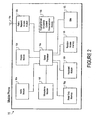
- FIG. 2 shows a block diagram of a wireless phone, device or terminal 15, like the wireless sender 12 or the wireless recipient 14.
- the wireless device 15 includes a signal processor 15a connected to a radio access network module 15b (connected to an antenna 15c), a display module 15d, an audio module 15e, a microphone 15f, a read only memory 15g (ROM or EPROM), a keyboard module 15h, a random access memory 15i (RAM) and a SIM 15j.
- the signal processor 15a controls the operation of wireless terminal 15, the operation of which is known in the art.
- the scope of the invention is not intended to be limited to any particular kind or type of the aforementioned elements 15a, 15b, ..., 15j.
- the scope of the invention is intended to include the radio access network module 15b being either an antenna module, a radio frequency (RF) module, a radio modem or the like.
- the wireless terminal 15 may also include many other circuit elements known in the art which are not shown or described.
- the wireless device 15 features a voucher-driven on-device content personalization module 15k for providing content personalization instead of the voucher server in the wireless network infrastructure 11 ( Figure 1).
- the voucher-driven on-device content personalization module 15k may be implemented using hardware, software, or a combination thereof.
- the module can be implemented either inside the device 15, or in an outside module, e.g. in a smart card.
- the voucher-driven on-device content personalization module 15k would be a microprocessor-based architecture having a microprocessor, a random access memory (RAM), a read only memory (ROM), input/output devices and control, data and address buses connecting the same.
- DRM Digital Rights Management
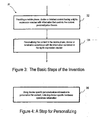
- FIG. 3 shows a flow chart having basic steps generally indicated as 30 of the voucher-driven on-device content personalization that is the subject matter of the present invention.
- the method includes two important steps:
- the mobile phone, device or terminal 12, 14 in Figure 1 is provided content having a rights expression voucher with information that controls the content personalization therein.
- the content creator or provider 13 ( Figure 1) typically provides the content.
- the voucher-driven on-device content personalization module 15k in Figure 2 of the mobile phone, device or terminal in Figure 1 personalizes the content instead of the personalization being performed by the network infrastructure device 11 ( Figure 1) such as a voucher server.
- the personalization of the content is based on information contained in the rights expression voucher.
- the voucher-driven on-device content personalization module 15k may do the following:
- FIG. 4 shows a step 36, wherein the voucher-driven on-device content personalization module 15k personalizes content by using personalization information not known by the voucher server (for example, device specific hardware operations) to personalize the content.
- the voucher server for example, device specific hardware operations
- Figure 5 shows a step 38, wherein the voucher-driven on-device content personalization module 15k personalizes content by encrypting the content encryption key, the content, the rights expression voucher, or a combination thereof using a key generated from a seed derived from information in the rights expression voucher.
- Figure 6 shows a step 40, wherein the voucher-driven on-device content personalization module 15k personalizes content by encrypting the CEK using the information contained in the rights expression voucher about a terminal or SIM specific seed for the local encryption key.
- the voucher-driven on-device content personalization module 15k may use any one or a combination of the aforementioned steps.
- the scope of the invention is intended to include any personalization scheme known in the art, and is not intended to be limited to how the content is personalized by the voucher-driven on-device content personalization module 15k in the mobile phone, device or terminal 12, 14 in Figure 1.
- the local CEK encryption key is not stored in the mobile phone, device or terminal 12, 14; instead, the local CEK encryption key is regenerated, when needed, using the same information in the rights expression voucher used to determine the content personalization, to ensure that the content cannot be used if the device used for personalization is not present.
- the invention comprises the features of construction, combination of elements, and arrangement of parts which will be exemplified in the construction hereinafter set forth.
Landscapes
- Engineering & Computer Science (AREA)
- Computer Networks & Wireless Communication (AREA)
- Signal Processing (AREA)
- Computer Security & Cryptography (AREA)
- Computer Hardware Design (AREA)
- Computing Systems (AREA)
- General Engineering & Computer Science (AREA)
- Storage Device Security (AREA)
- Mobile Radio Communication Systems (AREA)
- Telephonic Communication Services (AREA)
Claims (18)
- Verfahren, um Verwendung von Inhalt an eine mobilen Vorrichtung zu binden, umfassend:Empfangen des Inhalts an der Vorrichtung; undEmpfangen eines Belegs, der Rechte angibt, an der Vorrichtung, gekennzeichnet dadurch:dass der Beleg, der Rechte angibt, Informationen darüber bereitstellt, wie der Inhalt kryptographisch an die Vorrichtung zu binden ist und dass die Vorrichtung die Informationen verwendet, die in dem Beleg, der Rechte angibt, enthalten ist, um die Verwendung des Inhalts an die Vorrichtung zu binden, so dass der Inhalt anschließend nur in Verbindung mit der Vorrichtung verwendbar ist.
- Verfahren gemäß Anspruch 1, einschließend die Verwendung von vorrichtungsspezifischen Personalisierungsinformationen, um die Verwendung des Inhalts an die Vorrichtung zu binden.
- Verfahren gemäß Anspruch 2, wobei die vorrichtungsspezifischen Personalisierungsinformationen vorrichtungsspezifische Informationen von Hardwareoperationen einschließen.
- Verfahren gemäß Anspruch 1, wobei der Schritt des Bindens der Verwendung des Inhalts an die Vorrichtung lokales Verschlüsseln eines Inhaltsverschlüsselungsschlüssels, des Inhalts, des Beleg, der Rechte angibt oder einer Kombination davon einschließt.
- Verfahren gemäß Anspruch 4, umfassend Durchführen der Verschlüsselung, durch Verwenden eines Schlüssels, der von einem Ausgangswert erzeugt wird, der aus Informationen in dem Beleg, der Rechte angibt, abgeleitet wird.
- Verfahren gemäß Anspruch 4, umfassend Durchführen der Verschlüsselung, durch Verwenden einer vorrichtungsspezifischen Hardwarefunktion, die aus Informationen in dem Beleg, der Rechte angibt, abgeleitet ist.
- Verfahren gemäß Anspruch 5, einschließend Erneuern des Schlüssels von dem Ausgangswert, wenn benötigt, um zu vermeiden den Schlüssel lokal zu speichern.
- Verfahren gemäß Anspruch 1, wobei der Schritt des Bindens der Verwendung des Inhalts an die Vorrichtung ein Verwenden eines Feldes einschließt, das in dem Beleg, der Rechte angibt, enthalten ist, wobei das Feld der Vorrichtung einen Ausgangswert für den Schlüssel bereitstellt, welcher verwendet wird zum lokalen Verschlüsselung eines Inhalts-Verschlüsselungs-Schlüssels.
- Verfahren gemäß Anspruch 8, wobei ein Hardware- oder Software-Implementierungs-Modul in der Vorrichtung verwendet wird, um den Schlüssel zu erzeugen und den Inhalts-Verschlüsselungs-Schlüssel durch Verwendung des Ausgangswerts zu verschlüsseln.
- Verfahren gemäß Anspruch 1, wobei der Schritt des Bindens der Verwendung des Inhalts an die Vorrichtung ein Verwenden von Informationen einschließt, in Bezug auf entweder ein Teilnehmer-Identitäts-Modul, internationale Mobilfunkkennung, eine Endgerät-Hardware-Funktion, den Beleg, der Rechte angibt, einen geheimen Schlüssel eines Endgeräts, eine anwendungsspezifische integrierte Schaltung oder eine Hardware-ID oder irgend ein andere Festwert von der Vorrichtung.
- Verfahren gemäß einem der vorhergehenden Ansprüche, einschließend Bereitstellen des Inhalts und des Beleg, der Rechte angibt, von der Netz-Infrastruktur-Vorrichtung zu der mobilen Vorrichtung, wobei der Beleg, der Rechte angibt, Informationen einschließt, die das Binden der Verwendung des Inhalts steuern.
- Mobile Vorrichtung zur Verwendung in einem Netz, gekennzeichnet dadurch, dass die Vorrichtung ein belegbetriebenes, vorrichtungsgebundenes Modul zur Personalisierung von Inhalt umfasst, um die Verwendung des Inhalts an die Vorrichtung, auf Basis von Informationen, die in einem Beleg, der Rechte angibt, enthalten sind zu binden, der den Inhalt begleitet, wobei die Informationen bestimmen, wie der Inhalt kryptographisch an die Vorrichtung zu binden ist, so dass der Inhalt anschließend nur in Verbindung mit der Vorrichtung verwendbar ist.
- Vorrichtung gemäß Anspruch 12, wobei das belegbetriebene, vorrichtungsgebundene Modul zur Personalisierung von Inhalt Personalisierungs-Infonnationen verwendet, einschließend vorrichtungsspezifischer Hardwareoperationen, um die Verwendung des Inhalts an die Vorrichtung zu binden.
- Vorrichtung gemäß Anspruch 12, wobei das belegbetriebene, vorrichtungsgebundene Modul zur Personalisierung von Inhalt die Verwendung des Inhalts an die Vorrichtung, durch eine lokale Verschlüsselung eines Inhalts-Verschlüsselungs-Schlüssel, des Inhalts, des Belegs, der Rechte angibt, oder einer Kombination davon bindet.
- Vorrichtung gemäß Anspruch 12, wobei das belegbetriebene, vorrichtungsgebundene Modul zur Personalisierung von Inhalt einen Inhalts-Verschlüsselungs-Schlüssel, den Inhalt, den Beleg, der Rechte angibt, oder eine Kombination davon verschlüsselt, wobei ein Schlüssel verwendet wird, der von einem Ausgangswert erzeugt wird, der aus Informationen in einem Beleg, der Rechte angibt, abgeleitet ist.
- Netz, das eine mobile Vorrichtung einschließt, gekennzeichnet dadurch, dass die Vorrichtung ein belegbetriebenes, vorrichtungsgebundenes Modul zur Personalisierung von Inhalt umfasst, um die Verwendung des Inhalts an die Vorrichtung zu binden, auf Basis von Informationen darüber, wie der Inhalt kryptographisch an die Vorrichtung zu binden ist, wobei die Information in einem Beleg, der Rechte angibt, enthalten ist, der den Inhalt begleitet, so dass der Inhalt anschließend nur in Verbindung mit der Vorrichtung verwendbar ist.
- Netz gemäß Anspruch 16, dadurch gekennzeichnet, dass das belegbetriebene, vorrichtungsgebundene Modul zur Personalisierung von Inhalt PersonalisierungsInformationen verwendet, einschließend vorrichtungsspezifische Hardwareoperationen, um die Verwendung des Inhalts an die Vorrichtung zu binden.
- Netz gemäß Anspruch 16, dadurch gekennzeichnet, dass das belegbetriebene, vorrichtungsgebundene Modul zur Personalisierung von Inhalt einen Inhalts-Verschlüsselungs-Schlüssel, den Inhalt, den Beleg, der Rechte angibt, oder eine Kombination davon verschlüsselt, wobei ein Schlüssel verwendet wird, der von einem Ausgangswert erzeugt wird, der aus Informationen in einem Beleg, der Rechte angibt, abgeleitet ist.
Applications Claiming Priority (2)
| Application Number | Priority Date | Filing Date | Title |
|---|---|---|---|
| US59099 | 1997-09-16 | ||
| US10/059,099 US7191343B2 (en) | 2002-01-25 | 2002-01-25 | Voucher driven on-device content personalization |
Publications (2)
| Publication Number | Publication Date |
|---|---|
| EP1331752A1 EP1331752A1 (de) | 2003-07-30 |
| EP1331752B1 true EP1331752B1 (de) | 2006-07-19 |
Family
ID=22020849
Family Applications (1)
| Application Number | Title | Priority Date | Filing Date |
|---|---|---|---|
| EP03250459A Expired - Lifetime EP1331752B1 (de) | 2002-01-25 | 2003-01-24 | Module zur Personalisierung von Inhalten gemäss Anweisungen enthalten in einem "Voucher" für Mobil Gerate |
Country Status (4)
| Country | Link |
|---|---|
| US (1) | US7191343B2 (de) |
| EP (1) | EP1331752B1 (de) |
| CN (1) | CN1278574C (de) |
| DE (1) | DE60306821T2 (de) |
Families Citing this family (23)
| Publication number | Priority date | Publication date | Assignee | Title |
|---|---|---|---|---|
| IL134035A0 (en) * | 2000-01-13 | 2001-04-30 | Ronen Daniel | A device, system and method for remote push-publishing of content onto display screens of mobile devices including a screen saver application |
| US7487363B2 (en) | 2001-10-18 | 2009-02-03 | Nokia Corporation | System and method for controlled copying and moving of content between devices and domains based on conditional encryption of content key depending on usage |
| FR2847756B1 (fr) * | 2002-11-22 | 2005-09-23 | Cegetel Groupe | Procede d'etablissement et de gestion d'un modele de confiance entre une carte a puce et un terminal radio |
| EP1542117A1 (de) * | 2003-10-29 | 2005-06-15 | Sony Ericsson Mobile Communications AB | Binden von Inhalt an Benutzer |
| US20050149359A1 (en) * | 2003-12-12 | 2005-07-07 | Steinberg Earl P. | Method, apparatus and computer readable medium for identifying health care options |
| FI120174B (fi) * | 2004-03-19 | 2009-07-15 | Nokia Corp | Tietojen tallentaminen laitteen yhteydessä |
| US20060089123A1 (en) * | 2004-10-22 | 2006-04-27 | Frank Edward H | Use of information on smartcards for authentication and encryption |
| US20060224443A1 (en) * | 2005-03-16 | 2006-10-05 | Resolution Health, Inc. | Method, system, apparatus and computer readable medium for preparing insurance claims for retail activites |
| US20060212345A1 (en) * | 2005-03-16 | 2006-09-21 | Resolution Health, Inc. | Method, system, apparatus and computer readable medium for preparing insurance claims for retail activities |
| JP4537882B2 (ja) * | 2005-04-18 | 2010-09-08 | 株式会社東芝 | 情報端末装置 |
| DE102005032311A1 (de) * | 2005-07-11 | 2007-01-25 | Giesecke & Devrient Gmbh | Verfahren zum nachträglichen Implementieren einer SIM-Funktionalität in einem Sicherheitsmodul |
| US20090254997A1 (en) * | 2005-09-21 | 2009-10-08 | Fathy Fouad Yassa | Method and apparatus for content rights management |
| JP2007150846A (ja) * | 2005-11-29 | 2007-06-14 | Toshiba Corp | コンテンツ再生システム |
| IL173663A0 (en) * | 2006-02-12 | 2006-08-01 | Celltick Technologies Ltd | System and method for displaying personalized content on personal cellular telecommunication devices |
| KR100941535B1 (ko) * | 2006-06-09 | 2010-02-10 | 엘지전자 주식회사 | 디지털 저작권 관리에서 장치의 도메인 탈퇴 방법, 그 장치및 그 시스템 |
| IL176274A0 (en) * | 2006-06-13 | 2007-05-15 | Celltick Technologies Ltd | Web content distribution to personal cellular telecommunications devices |
| IL180168A0 (en) | 2006-12-19 | 2007-06-03 | Celltick Technologies Ltd | Mobile advertising packages for displaying advertisement display messages on personal cellular telecommunications devices |
| US8527603B2 (en) * | 2006-12-22 | 2013-09-03 | International Business Machines Corporation | In-system memory personalization |
| IL180542A0 (en) * | 2007-01-04 | 2007-07-04 | Celltick Technologies Ltd | Mobile advertising on personal cellular telecommunications devices |
| IL184963A0 (en) * | 2007-07-31 | 2008-01-06 | Celltick Technologies Ltd | Data collection and reporting of user activity of users of personal cellular telecommunications devices |
| EP2224681B1 (de) * | 2009-02-27 | 2011-05-04 | Research In Motion Limited | Kommunikationssystem mit einer personalisierten mobilen Funkkommunikationsvorrichtungsnachrichten und zugehörige Verfahren |
| CN101860850B (zh) * | 2010-05-07 | 2014-09-10 | 中兴通讯股份有限公司 | 一种利用驱动实现移动终端锁网或锁卡的方法 |
| CN103106607A (zh) * | 2012-08-22 | 2013-05-15 | 杨磊 | 金融凭证处理系统及其方法 |
Family Cites Families (6)
| Publication number | Priority date | Publication date | Assignee | Title |
|---|---|---|---|---|
| GB1156017A (en) | 1965-12-08 | 1969-06-25 | Teddington Aircraft Controls L | Improvements in or relating to Control Systems. |
| FR2788649A1 (fr) | 1999-01-18 | 2000-07-21 | Schlumberger Systems & Service | Procede de chargement securise de donnees entre des modules de securite |
| US6885748B1 (en) * | 1999-10-23 | 2005-04-26 | Contentguard Holdings, Inc. | System and method for protection of digital works |
| EP1890247A3 (de) | 2000-04-28 | 2008-09-17 | Nokia Corporation | Verfahren und Endgerät zur Verhinderung unbefugter Nutzung von Dateien mit gesichertem Inhalt |
| US20020157002A1 (en) | 2001-04-18 | 2002-10-24 | Messerges Thomas S. | System and method for secure and convenient management of digital electronic content |
| US7421411B2 (en) * | 2001-07-06 | 2008-09-02 | Nokia Corporation | Digital rights management in a mobile communications environment |
-
2002
- 2002-01-25 US US10/059,099 patent/US7191343B2/en not_active Expired - Lifetime
-
2003
- 2003-01-24 DE DE60306821T patent/DE60306821T2/de not_active Expired - Lifetime
- 2003-01-24 EP EP03250459A patent/EP1331752B1/de not_active Expired - Lifetime
- 2003-01-27 CN CNB031012957A patent/CN1278574C/zh not_active Expired - Lifetime
Also Published As
| Publication number | Publication date |
|---|---|
| DE60306821D1 (de) | 2006-08-31 |
| US20030142828A1 (en) | 2003-07-31 |
| CN1278574C (zh) | 2006-10-04 |
| DE60306821T2 (de) | 2007-07-12 |
| CN1434658A (zh) | 2003-08-06 |
| EP1331752A1 (de) | 2003-07-30 |
| US7191343B2 (en) | 2007-03-13 |
Similar Documents
| Publication | Publication Date | Title |
|---|---|---|
| US7191343B2 (en) | Voucher driven on-device content personalization | |
| KR101248790B1 (ko) | 다수의 소비자 시스템들 중 하나에 암호화된 콘텐트에 대한 액세스를 제공하는 방법, 암호화된 콘텐트에 대한 액세스를 제공하는 장치 및 보안 콘텐트 패키지를 발생시키는 방법 | |
| EP1530885B1 (de) | Robuste und flexible verwaltung von digitalen rechten unter einbezug eines fälschungssicheren identitätsmoduls | |
| US7617158B2 (en) | System and method for digital rights management of electronic content | |
| CN1522516B (zh) | 多内容电子邮件的安全标题信息 | |
| JP4980592B2 (ja) | 権利データオブジェクトを提供する方法 | |
| US20060093149A1 (en) | Certified deployment of applications on terminals | |
| WO2005107140A1 (en) | System and method for generating reproducible session keys | |
| US20070112680A1 (en) | System and method for processing digital media content in a mobile device | |
| EP1739913A1 (de) | DRM-System für Geräte zum kommunizieren mit einem tragbaren Gerät | |
| KR100827070B1 (ko) | 라이센스 데이터 관리 장치 및 그 방법 | |
| JP2004015249A (ja) | 携帯端末への情報配信システム及びその方法 | |
| HK1087207B (en) | Method and system of providing rights data objects |
Legal Events
| Date | Code | Title | Description |
|---|---|---|---|
| PUAI | Public reference made under article 153(3) epc to a published international application that has entered the european phase |
Free format text: ORIGINAL CODE: 0009012 |
|
| AK | Designated contracting states |
Designated state(s): AT BE BG CH CY CZ DE DK EE ES FI FR GB GR HU IE IT LI LU MC NL PT SE SI SK TR |
|
| AX | Request for extension of the european patent |
Extension state: AL LT LV MK RO |
|
| 17P | Request for examination filed |
Effective date: 20040107 |
|
| 17Q | First examination report despatched |
Effective date: 20040213 |
|
| AKX | Designation fees paid |
Designated state(s): DE FI FR GB NL |
|
| GRAP | Despatch of communication of intention to grant a patent |
Free format text: ORIGINAL CODE: EPIDOSNIGR1 |
|
| RTI1 | Title (correction) |
Free format text: MODULE FOR PERSONALIZING CONTENT ACCORDING TO INSTRUCTION CONTAINED IN A VOUCHER FOR MOBILE DEVICES. |
|
| GRAS | Grant fee paid |
Free format text: ORIGINAL CODE: EPIDOSNIGR3 |
|
| GRAA | (expected) grant |
Free format text: ORIGINAL CODE: 0009210 |
|
| AK | Designated contracting states |
Kind code of ref document: B1 Designated state(s): DE FI FR GB NL |
|
| REG | Reference to a national code |
Ref country code: GB Ref legal event code: FG4D |
|
| REF | Corresponds to: |
Ref document number: 60306821 Country of ref document: DE Date of ref document: 20060831 Kind code of ref document: P |
|
| ET | Fr: translation filed | ||
| PLBE | No opposition filed within time limit |
Free format text: ORIGINAL CODE: 0009261 |
|
| STAA | Information on the status of an ep patent application or granted ep patent |
Free format text: STATUS: NO OPPOSITION FILED WITHIN TIME LIMIT |
|
| 26N | No opposition filed |
Effective date: 20070420 |
|
| PGFP | Annual fee paid to national office [announced via postgrant information from national office to epo] |
Ref country code: NL Payment date: 20110117 Year of fee payment: 9 Ref country code: FR Payment date: 20110128 Year of fee payment: 9 Ref country code: FI Payment date: 20110112 Year of fee payment: 9 |
|
| REG | Reference to a national code |
Ref country code: NL Ref legal event code: V1 Effective date: 20120801 |
|
| REG | Reference to a national code |
Ref country code: FR Ref legal event code: ST Effective date: 20120928 |
|
| PG25 | Lapsed in a contracting state [announced via postgrant information from national office to epo] |
Ref country code: FI Free format text: LAPSE BECAUSE OF NON-PAYMENT OF DUE FEES Effective date: 20120124 |
|
| PG25 | Lapsed in a contracting state [announced via postgrant information from national office to epo] |
Ref country code: FR Free format text: LAPSE BECAUSE OF NON-PAYMENT OF DUE FEES Effective date: 20120131 |
|
| PG25 | Lapsed in a contracting state [announced via postgrant information from national office to epo] |
Ref country code: NL Free format text: LAPSE BECAUSE OF NON-PAYMENT OF DUE FEES Effective date: 20120801 |
|
| REG | Reference to a national code |
Ref country code: GB Ref legal event code: 732E Free format text: REGISTERED BETWEEN 20150910 AND 20150916 |
|
| REG | Reference to a national code |
Ref country code: DE Ref legal event code: R082 Ref document number: 60306821 Country of ref document: DE Representative=s name: BECKER, KURIG, STRAUS, DE Ref country code: DE Ref legal event code: R081 Ref document number: 60306821 Country of ref document: DE Owner name: NOKIA TECHNOLOGIES OY, FI Free format text: FORMER OWNER: NOKIA CORP., 02610 ESPOO, FI |
|
| PGFP | Annual fee paid to national office [announced via postgrant information from national office to epo] |
Ref country code: GB Payment date: 20211203 Year of fee payment: 20 |
|
| PGFP | Annual fee paid to national office [announced via postgrant information from national office to epo] |
Ref country code: DE Payment date: 20211130 Year of fee payment: 20 |
|
| REG | Reference to a national code |
Ref country code: DE Ref legal event code: R071 Ref document number: 60306821 Country of ref document: DE |
|
| REG | Reference to a national code |
Ref country code: GB Ref legal event code: PE20 Expiry date: 20230123 |
|
| PG25 | Lapsed in a contracting state [announced via postgrant information from national office to epo] |
Ref country code: GB Free format text: LAPSE BECAUSE OF EXPIRATION OF PROTECTION Effective date: 20230123 |