EP1459738A1 - Pharmaceutical composition having thrombolytic, anti-inflammatory and cytoprotective properties - Google Patents
Pharmaceutical composition having thrombolytic, anti-inflammatory and cytoprotective properties Download PDFInfo
- Publication number
- EP1459738A1 EP1459738A1 EP02806416A EP02806416A EP1459738A1 EP 1459738 A1 EP1459738 A1 EP 1459738A1 EP 02806416 A EP02806416 A EP 02806416A EP 02806416 A EP02806416 A EP 02806416A EP 1459738 A1 EP1459738 A1 EP 1459738A1
- Authority
- EP
- European Patent Office
- Prior art keywords
- gel
- mixture
- composition
- proteases
- dextran
- Prior art date
- Legal status (The legal status is an assumption and is not a legal conclusion. Google has not performed a legal analysis and makes no representation as to the accuracy of the status listed.)
- Granted
Links
Images


Classifications
-
- A—HUMAN NECESSITIES
- A61—MEDICAL OR VETERINARY SCIENCE; HYGIENE
- A61K—PREPARATIONS FOR MEDICAL, DENTAL OR TOILETRY PURPOSES
- A61K47/00—Medicinal preparations characterised by the non-active ingredients used, e.g. carriers or inert additives; Targeting or modifying agents chemically bound to the active ingredient
- A61K47/30—Macromolecular organic or inorganic compounds, e.g. inorganic polyphosphates
- A61K47/32—Macromolecular compounds obtained by reactions only involving carbon-to-carbon unsaturated bonds, e.g. carbomers, poly(meth)acrylates, or polyvinyl pyrrolidone
-
- A—HUMAN NECESSITIES
- A61—MEDICAL OR VETERINARY SCIENCE; HYGIENE
- A61K—PREPARATIONS FOR MEDICAL, DENTAL OR TOILETRY PURPOSES
- A61K38/00—Medicinal preparations containing peptides
- A61K38/16—Peptides having more than 20 amino acids; Gastrins; Somatostatins; Melanotropins; Derivatives thereof
- A61K38/43—Enzymes; Proenzymes; Derivatives thereof
- A61K38/46—Hydrolases (3)
- A61K38/48—Hydrolases (3) acting on peptide bonds (3.4)
- A61K38/482—Serine endopeptidases (3.4.21)
-
- A—HUMAN NECESSITIES
- A61—MEDICAL OR VETERINARY SCIENCE; HYGIENE
- A61K—PREPARATIONS FOR MEDICAL, DENTAL OR TOILETRY PURPOSES
- A61K41/00—Medicinal preparations obtained by treating materials with wave energy or particle radiation ; Therapies using these preparations
-
- A—HUMAN NECESSITIES
- A61—MEDICAL OR VETERINARY SCIENCE; HYGIENE
- A61K—PREPARATIONS FOR MEDICAL, DENTAL OR TOILETRY PURPOSES
- A61K47/00—Medicinal preparations characterised by the non-active ingredients used, e.g. carriers or inert additives; Targeting or modifying agents chemically bound to the active ingredient
- A61K47/02—Inorganic compounds
-
- A—HUMAN NECESSITIES
- A61—MEDICAL OR VETERINARY SCIENCE; HYGIENE
- A61K—PREPARATIONS FOR MEDICAL, DENTAL OR TOILETRY PURPOSES
- A61K47/00—Medicinal preparations characterised by the non-active ingredients used, e.g. carriers or inert additives; Targeting or modifying agents chemically bound to the active ingredient
- A61K47/06—Organic compounds, e.g. natural or synthetic hydrocarbons, polyolefins, mineral oil, petrolatum or ozokerite
- A61K47/26—Carbohydrates, e.g. sugar alcohols, amino sugars, nucleic acids, mono-, di- or oligo-saccharides; Derivatives thereof, e.g. polysorbates, sorbitan fatty acid esters or glycyrrhizin
-
- A—HUMAN NECESSITIES
- A61—MEDICAL OR VETERINARY SCIENCE; HYGIENE
- A61K—PREPARATIONS FOR MEDICAL, DENTAL OR TOILETRY PURPOSES
- A61K47/00—Medicinal preparations characterised by the non-active ingredients used, e.g. carriers or inert additives; Targeting or modifying agents chemically bound to the active ingredient
- A61K47/50—Medicinal preparations characterised by the non-active ingredients used, e.g. carriers or inert additives; Targeting or modifying agents chemically bound to the active ingredient the non-active ingredient being chemically bound to the active ingredient, e.g. polymer-drug conjugates
- A61K47/69—Medicinal preparations characterised by the non-active ingredients used, e.g. carriers or inert additives; Targeting or modifying agents chemically bound to the active ingredient the non-active ingredient being chemically bound to the active ingredient, e.g. polymer-drug conjugates the conjugate being characterised by physical or galenical forms, e.g. emulsion, particle, inclusion complex, stent or kit
- A61K47/6903—Medicinal preparations characterised by the non-active ingredients used, e.g. carriers or inert additives; Targeting or modifying agents chemically bound to the active ingredient the non-active ingredient being chemically bound to the active ingredient, e.g. polymer-drug conjugates the conjugate being characterised by physical or galenical forms, e.g. emulsion, particle, inclusion complex, stent or kit the form being semi-solid, e.g. an ointment, a gel, a hydrogel or a solidifying gel
-
- A—HUMAN NECESSITIES
- A61—MEDICAL OR VETERINARY SCIENCE; HYGIENE
- A61K—PREPARATIONS FOR MEDICAL, DENTAL OR TOILETRY PURPOSES
- A61K9/00—Medicinal preparations characterised by special physical form
- A61K9/0012—Galenical forms characterised by the site of application
- A61K9/0019—Injectable compositions; Intramuscular, intravenous, arterial, subcutaneous administration; Compositions to be administered through the skin in an invasive manner
-
- A—HUMAN NECESSITIES
- A61—MEDICAL OR VETERINARY SCIENCE; HYGIENE
- A61K—PREPARATIONS FOR MEDICAL, DENTAL OR TOILETRY PURPOSES
- A61K9/00—Medicinal preparations characterised by special physical form
- A61K9/06—Ointments; Bases therefor; Other semi-solid forms, e.g. creams, sticks, gels
-
- A—HUMAN NECESSITIES
- A61—MEDICAL OR VETERINARY SCIENCE; HYGIENE
- A61P—SPECIFIC THERAPEUTIC ACTIVITY OF CHEMICAL COMPOUNDS OR MEDICINAL PREPARATIONS
- A61P17/00—Drugs for dermatological disorders
- A61P17/02—Drugs for dermatological disorders for treating wounds, ulcers, burns, scars, keloids, or the like
-
- A—HUMAN NECESSITIES
- A61—MEDICAL OR VETERINARY SCIENCE; HYGIENE
- A61P—SPECIFIC THERAPEUTIC ACTIVITY OF CHEMICAL COMPOUNDS OR MEDICINAL PREPARATIONS
- A61P29/00—Non-central analgesic, antipyretic or antiinflammatory agents, e.g. antirheumatic agents; Non-steroidal antiinflammatory drugs [NSAID]
-
- A—HUMAN NECESSITIES
- A61—MEDICAL OR VETERINARY SCIENCE; HYGIENE
- A61P—SPECIFIC THERAPEUTIC ACTIVITY OF CHEMICAL COMPOUNDS OR MEDICINAL PREPARATIONS
- A61P37/00—Drugs for immunological or allergic disorders
- A61P37/02—Immunomodulators
-
- A—HUMAN NECESSITIES
- A61—MEDICAL OR VETERINARY SCIENCE; HYGIENE
- A61P—SPECIFIC THERAPEUTIC ACTIVITY OF CHEMICAL COMPOUNDS OR MEDICINAL PREPARATIONS
- A61P7/00—Drugs for disorders of the blood or the extracellular fluid
- A61P7/02—Antithrombotic agents; Anticoagulants; Platelet aggregation inhibitors
-
- A—HUMAN NECESSITIES
- A61—MEDICAL OR VETERINARY SCIENCE; HYGIENE
- A61P—SPECIFIC THERAPEUTIC ACTIVITY OF CHEMICAL COMPOUNDS OR MEDICINAL PREPARATIONS
- A61P9/00—Drugs for disorders of the cardiovascular system
- A61P9/10—Drugs for disorders of the cardiovascular system for treating ischaemic or atherosclerotic diseases, e.g. antianginal drugs, coronary vasodilators, drugs for myocardial infarction, retinopathy, cerebrovascula insufficiency, renal arteriosclerosis
-
- C—CHEMISTRY; METALLURGY
- C12—BIOCHEMISTRY; BEER; SPIRITS; WINE; VINEGAR; MICROBIOLOGY; ENZYMOLOGY; MUTATION OR GENETIC ENGINEERING
- C12N—MICROORGANISMS OR ENZYMES; COMPOSITIONS THEREOF; PROPAGATING, PRESERVING, OR MAINTAINING MICROORGANISMS; MUTATION OR GENETIC ENGINEERING; CULTURE MEDIA
- C12N11/00—Carrier-bound or immobilised enzymes; Carrier-bound or immobilised microbial cells; Preparation thereof
- C12N11/02—Enzymes or microbial cells immobilised on or in an organic carrier
- C12N11/08—Enzymes or microbial cells immobilised on or in an organic carrier the carrier being a synthetic polymer
- C12N11/089—Enzymes or microbial cells immobilised on or in an organic carrier the carrier being a synthetic polymer obtained otherwise than by reactions only involving carbon-to-carbon unsaturated bonds
Definitions
- the present invention relates to medicine, particularly to pharmacology and drugs based on enzyme preparations, and can be used in complex therapy for treating ischemic heart disease, ischemic cerebral strokes, rheumatoid processes and other diseases accompanied by ischemic, thrombotic, and non-specific inflammation phenomena.
- This invention encompasses the field of enzymatic hydrolysis of thrombogenic proteins, mainly fibrin, structure-forming protein of all thrombi, irrespective of the location and size of peptides. More particularly, the invention relates to compounds containing proteolytic enzymes possessing fibrinolytic properties, immobilized on (attached to) hydrophilic water-soluble polymers. The invention is also associated with methods of using such compounds for fibrinolytic therapy in treating acute myocardial infarctions, ischemic cerebral strokes, and also with therapeutic methods directed to the correction (improvement) of hemorheological characteristics in treating ischemic injuries of organs and tissues of different etiology, including microthrombosis.
- thrombolytic medicinal preparations used for treating acute myocardial infarctions and ischemic cerebral strokes.
- pharmaceutical preparations such as streptase, streptokinase, tissue plasminogen activator (alteplase) and fibrinolysine (Methodological Recommendations for Carrying out Early Therapeutic Measures in Patients with Acute Myocardial Infarction, Communication of the American Cardiologic College and American Heart Association. V.N.
- Medicinal preparations are known, which are capable of diminishing the inflammatory reaction.
- the most widespread of these preparations are non-steroidal anti-inflammatory preparations, such as aspirin, indomethacin, sodium diclofenac, and others (Nasonov E.L., Tsvetkova V.S., and Tov N.L., Selective inhibitors of cyclooxygenase-2: new plospects of treating human diseases //Ter. Arvicv, 1998, No. 5, pp. 8-14 (in Russian)).
- the known pharmaceutical preparations are not free from essential disadvantages: they may cause stomach injuries with development of non-steroidal gastropathy, hemorrhages and ulcerations of the gastrointestinal tract mucosa.
- compositions which have cytoprotective properties, such as preductal (cardioprotective effect) and blockers of H 2 receptors (gastrozepine, ranitidine).
- cytoprotective properties such as preductal (cardioprotective effect) and blockers of H 2 receptors (gastrozepine, ranitidine).
- the known preparations have a weak cytoprotective effect and prove to display pharmacological action on prolonged administration (Brottier L., Barat J.L., Combie C. et al., Therapeutic value of a cardioprotective agent in patients with severe ischaemic cardiomyopathy //Eur. Heart J., 1990, vol. 11, pp. 207-212).
- the herein-presented investigation meets the above-said requirements and also offers relative advantages over other medicinal preparations and methods of preparing pharmaceutical compositions featuring a complex synergic therapeutic effect on various links of the pathogenesis of ischemic heart disease.
- the presented investigation, the claimed pharmaceutical composition, and methods of preparing thereof ensure the obtaining of high therapeutic effect in treating non-specific inflammatory processes owing to cytoprotective, thrombolytic and anti-ischemic effects.
- the proposed invention is directed to the provision of compositions for selective hydrolysis of thrombogenic proteins, consisting of active proteases attached to a combination of hydrophilic water-soluble polymers. Said compositions predominantly consist of subtilysines immobilized on hydrophilic polymers.
- This invention contributes to the development of methods of making such compositions by attaching proteases to water-soluble polymers to produce a mixture and simultaneously sterilize said mixture by irradiation, particularly with the help of a stream of accelerated electrons or gamma-radiation, as well as other kinds of ionizing radiation, including laser radiation sources.
- the proposed invention is directed to novel pharmaceutical compositions for the hydrolysis of thrombogenic proteins, consisting of active proteases attached to hydrophilic polymers. Such compositions are useful for the removal of thrombi comprising fibrin and other formations.
- the proposed invention is also directed to novel compounds for correcting pathological changes in tissues and organs, originated as a result of thrombosis and ischemia, as well as to the correction of non-specific inflammatory reactions, and as an auxiliary means for treating and preventing gas-tropathies developing as a result of administering non-steroidal anti-inflammatory preparations.
- Proteases immobilized on hydrophilic polymers according to the invention selectively degrade thrombogenic proteins, mainly fibrin, while live cells and functionally active proteins remain intact and undamaged.
- proteases which are capable of recognizing and hydrolyzing various peptide linkages.
- Natural proteases include, for instance, subtilysine, trypsin, chemotrypsin, papain and other enzymes of animal and bacterial origin, having fibrinolytic and proteolytic activity.
- proteases are obtainable from any sources, including animal and vegetable ones, bacterial proteases are especially preferable. Compared with other types of proteases, bacterial proteases are usually less costly and are available in unlimited amounts.
- Preferable bacterial proteases of the proposed invention can be reproduced by Bac. subtilis and are known as subtilysines. A mixture of neutral and/or alkaline subtilysines is preferable, because the mixture can selectively degrade a variety of peptide linkages and preserve activity at pH from 6.0 to 10.0.
- the proteases according to the proposed invention are attached to a combination of water-soluble polymers which act as carriers for proteolytic enzymes.
- Preferable water-soluble polymers are polyethylene oxide (PEO), synonym: polyethylene glycol (PEG), having a molecular weight of 1500 kDa (PEO-1500), and dextran having a molecular weight of 30-40 kDa.
- PEO polyethylene oxide
- PEG polyethylene glycol
- dextran having a molecular weight of 30-40 kDa
- PEO-1500 polyethylene glycol
- dextran having a molecular weight of 30-40 kDa.
- Other suitable water-soluble polymers and their combinations that also can be used include, e.g., polyvinyl alcohol, polyvinylpyrrolidone, and the like.
- compositions according to the proposed invention can be in any non-solid or solid form or in a combination of aggregate forms. It is preferable to use lyophilized powders (substances) in various combinations with water-soluble polymers as the compositions, depending on the field in which the compound is planned to be used.
- antibodies, therapeutic disinfectants, glucocorticoids, tissue regeneration stimulants, and other therapeutic agents can be added to the given composition.
- agents should not be mixed in a considerable amount with proteases, unless their effect on the specific and therapeutic activity of the claimed pharmaceutical composition has been circumstantiated (investigated).
- the present invention is also directed to methods of preparing compositions by attaching proteases to water-soluble polymers and simultaneously sterilizing the mixture by radiation.
- Preferable kinds of radiation are accelerated electrons or gamma-radiation.
- the technology is as follows: a solution of a mixture of proteases, preferably subtilysines, and water-soluble polymers, preferably polyethylene oxide and dextran, is subjected to the action of electrons emitted by an electron accelerator in a dose which promotes attaching thereof to a polymeric carrier and simultaneously sterilizing the obtained compound.
- an electron accelerator preferably gamma-rays emitted by Co 60 can be used instead of an electron bunch with the provision of attaching and sterilizing the components.
- a sufficient radiation dose can be selected by a person skilled in the art by calculating the conditions for the provision of the mixture sterility and inessential effect on the proteolytic activity of the enzymes.
- compositions according to the present invention are effective when used as preparations for pharmaceutical purposes in different ways and fields, such as medicine, stomatology, veterinary medicine, and personal care.
- compositions according to the present invention are particularly eligible for treating ischemic heart disease and its complications, as well as ischemic cerebral strokes, rheumatoid diseases and other pathologies, in whose pathogenesis there take place an inflammatory reaction, ischemia of tissues, disturbances of hemorheology and vascular microcirculation because of thrombosis.
- the claimed pharmaceutical composition is also suitable for enzymatic destruction of viscous biological fluids, such as secreted mucosae (e.g., bronchial secret), therefore it is effective in treating pulmonary diseases for the prevention and treatment of bronchial obstruction.
- the claimed pharmaceutical composition is also applicable for the enzymatic destruction of proteins and peptides of necrotic tissues which are always present in traumatic and infectious-inflammatory processes. Therefore this composition is also effective in treating pyoinflammatory diseases of different etiology and localization.
- compositions can be applied to the focus of injury by any method known in the medicine. Such methods include, for instance, parenteral administration, intracavitary and external use, aerosol spraying, syringing through a trocar, catheters, bronchoscope, or other suitable use.
- parenteral administration intracavitary and external use
- aerosol spraying syringing through a trocar, catheters, bronchoscope, or other suitable use.
- the method of administration will depend, at least partially, on the nature of the injured area and on the type and quantity of thrombogenic or necrotic tissues to be removed.
- the predominant method of administration is parenteral administration of the preparation (compositions).
- Fig. 1 demonstrates the thrombolytic properties of the claimed composition, investigated on a model of thrombolysis in vitro.
- the claimed composition in the standard therapeutic dose of 50 physiological units/ml reliably excels fibrinolysine (p ⁇ 0.02); trypsin (p ⁇ 0.01); and spontaneous thrombolysis in physiological solution (p ⁇ 0.01).
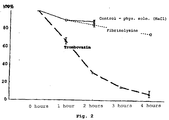
- Fig. 2 demonstrates that the thrombolytic properties of the claimed composition are preserved as the thrombus "age" increases to 7 days. Fibrolysine does not act on the 7-days thrombus. During the first two hours the action of fibrolysine does not differ with certainty from the spontaneous background lysis in physiological solution. By the end of the 4th hour the claimed composition dissolves the thrombus completely, while fibrinolysine lyses only 20% of the mass of the "old" thrombus.
- Fig. 3 demonstrates the anti-inflammatory properties of the claimed composition, investigated on a model simulating induction of an inflammation mediator - tumor necrosis factor ( ⁇ TNF) in CBA-line mice with endotoxic shock.
- ⁇ TNF inflammation mediator - tumor necrosis factor
- the activity of the ⁇ TNF was measured using L929 line cells and was expressed in activity units (AU):
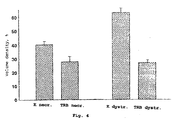
- Fig. 4 demonstrates the cytoprotective properties of the claimed composition, studied on a model of adrenaline myocarditis in rats. Data of histological morphometric investigations of the volume of necroses and dystrophic changes in the myocardium of the rats are presented. The volume of injuries was determined planimetrically and expressed in percent of the volume density which is equal to the volume of injuries/total value of tissue ratio multiplied by 100%.
- the first two columns demonstrate positive effect of the claimed composition (approximately 1.5-fold reduction of the number of necroses in the cardiac muscle) by the end of the third day of treating the animals.
- the proposed pharmaceutical composition is prepared in the following manner:
- a composition containing a protease complex from Bac. subtilis, immobilized on polyethylene oxide and dextran.
- the proteolytic activity of the obtained composition in one vial is from 500 to 1000.0 proteolytic units per gram (PU/g).
- the composition comprises a slightly yellowish porous homogeneous mass.
- a solution of the claimed composition is used (conditional appellation thereof being "Trombovazim"), which is prepared ex tempore by dissolving the contents of a vial in 10 ml of sterile isotonic solution of sodium chloride or in 10 ml of water for injections.
- the claimed composition can be prepared by another method, namely, by preparing separately an active component (component (1)) which contains a complex of proteases immobilized on polyethylene oxide and dextran, and a solvent which is a solution of polyethylene oxide (component (2)).
- component (1) an active component
- component (2) a solvent which is a solution of polyethylene oxide
- the two-component formulation of the composition makes it possible to vary the activity of the claimed pharmaceutical composition by varying the active component/solvent ratio, so that individual schemes of treating can be selected.
- the two-component composition is prepared in the following manner:
- Component (1) active substance
- the reaction mixture is prepared by dissolving protosubtilin (predominantly protosubtilin G3Kh) and polyethylene oxide (PEO) having a molecular weight of 400-20000 Da (predominantly 1500 Da) in a solution of dextran having a molecular weight of 70-40 kDa (predominantly 40 kDa) in a 0.025 M sodium phosphate buffer solution with pH 7.5-8.2.
- the obtained mixture is purified by removing ballast proteins by salt precipitation and subsequent filtration.
- the resulting solution is subjected to irradiation with gamma-rays or a stream of accelerated electrons (with energy of 2.0 MeV) in a dose of 1.0 Mrad.
- the solution after irradiation is subjected to sterilizing filtration and packaged in 10 ml batches into 15 ml vials. Then the solution is lyophilized to a residual moisture content not exceeding 2%.
- component (1) of the composition which component contains a protease complex from Bac. subtilis, immobilized on polyethylene and dextran.
- the proteolytic activity of the obtained composition is from 500 to 1000.0 PU/g.
- Component (1) comprises a porous slightly yellowish homogeneous mass.
- a solution of polyethylene oxide (predominantly polyethylene oxide with a molecular weight of 1500 Da) is prepared in a 0.025 M sodium phosphate buffer solution with pH 7.5-8.2.
- the obtained solution is subjected to irradiation with gamma-rays or a stream of accelerated electrons (with energy of 2.0 MeV) in a dose of 1.0 Mrad.
- the solution after irradiation is subjected to sterilizing filtration and packaged in 10 ml batches into 15 ml vials.
- the solvent comprises a slightly yellowish liquid.
- a solution of the claimed composition is used (conditional numelation thereof being "Trombovazim"), which is prepared ex tempore by dissolving the contents of a vial with component (1) containing immobilized proteases in 10 ml of component (2) (solvent).
- composition having the following formulation in weight percent: 1. Protosubtilin G3Kh 2.1 2. Dextran (molecular weight 40 kDa) 10.0 3. Polyethylene oxide PEO-1500 5.0 4. 0.025 M sodium phosphate buffer 82.9
- the proteolytic activity of the composition is 850 PU/g.
- composition having the following formulation in weight percent: 1. Protosubtilin G3Kh 2.0 2. Dextran (molecular weight 40 kDa) 5.0 3. Polyethylene oxide PEO-1500 5.0 4. 0.025 M sodium phosphate buffer 88.0
- the proteolytic activity of the composition is 800 PU/g.
- polyethylene oxide PEO-1500 0.5 of polyethylene oxide PEO-1500 is dissolved in 300 ml of a 10% solution of dextran having a molecular weight of 40 kDa in a 0.025 M sodium phosphate buffer with pH 8.2, 5.7 g of protosubtilin G3Kh are added, the mixture is stirred at a temperature of 18-20°C for 30 minutes. Then ballast proteins are precipitated by salt precipitation techniques. For this to be done, added to the mixture in succession till complete dissolution are 1.3 g of sodium phosphate disubstituted to final concentration of 0.45% and 1.9 g of calcium chloride to final concentration of 0.63%.
- composition having the following formulation in weight percent: 1. Protosubtilin G3Kh 1.9 2. Dextran (molecular weight 40 kDa) 10.0 3. Polyethylene oxide PEO-1500 0.5 4. 0.025 M sodium phosphate buffer 87.6
- the proteolytic activity of the composition is 750 PU/g.
- composition having the following formulation in weight percent: 1. Protosubtilin G3Kh 2.5 2. Dextran (molecular weight 40 kDa) 5.0 3. Polyethylene oxide PEO-1500 5.0 4. 0.025 M sodium phosphate buffer 87.5
- the proteolytic activity of the composition is 500 PU/g.
- composition having the following formulation in weight percent: 1. Protosubtilin G10Kh 2.5 2. Dextran (molecular weight 70 kDa) 5.0 3. Polyethylene oxide PEO-4000 5.0 4. 0.025 M sodium phosphate buffer 87.5
- the proteolytic activity of the composition is 1000 PU/g.
- polyethylene oxide PEO-1500 0.5 of polyethylene oxide PEO-1500 are dissolved in 300 ml of a 10% solution of dextran having a molecular weight of 40 kDa in a 0.025 M sodium phosphate buffer with pH 8.2, 5.7 g of protosubtilin G3Kh are added, the mixture is stirred at a temperature of 18-20°C for 30 minutes. Then ballast proteins are precipitated by salt precipitation techniques. For this to be done, added to the mixture in succession till complete dissolution are 1.3 g of sodium phosphate disubstituted to final concentration of 0.45% and 1.9 g of calcium chloride to final concentration of 0.63%.
- component (1) of the composition is obtained, having the following formulation in weight percent: 1. Protosubtilin G3Kh 1.9 2. Dextran (molecular weight 40 kDa) 10.0 3. Polyethylene oxide PEO-1500 0.5 4. 0.025 M sodium phosphate buffer 87.6
- the proteolytic activity of component (1) is 750 PU/g.
- polyethylene oxide PEO-1500 15.0 g of polyethylene oxide PEO-1500 are dissolved in 300 ml of a 0.025 M sodium phosphate buffer. Then the solution is filtered through paper filters ("white ribbon"). The volume of the filtrate is 300 ml. The obtained solution is subjected to gamma irradiation in a dose of 1.0 Mrad. After the irradiation the solution is subjected to sterilizing filtration and packaged in batches of 10 ml in 15 ml vials. As a result, component (2) of the composition is obtained, having the following formulation in weight percent: 1. Polyethylene oxide PEO-1500 5.0 2. 0.025 M sodium phosphate buffer 95.0
- component (1) in the solvent (component (2)) and lyophilization give the claimed pharmaceutical composition.
- the action of fibrolysine does not differ with certainty from the spontaneous background lysis in physiological solution.
- the claimed composition dissolves the thrombus completely, while fibrinolysine lyses only 20% of the mass of the "old" thrombus.
- fibrinolysine is the most active fibrinolytic (2), while such preparations as streptokinase, urokinase, alteplase and tissue plasminogen activator are indirect fibrinolytics and their thrombolytic action is mediated by the activation of the fibrinolysis system and production of endogenous fibrinolysine, the latter leading to the lysis of the formed thrombus (1).
- the anti-inflammatory properties of the claimed composition have been investigated on a model of inducing one of the main inflammation mediators - tumor necrosis factor ( ⁇ TNF) in mice of the CBA line with endotoxic shock (Figure 3).
- the activity of the ⁇ TNF was measured biologically, using L929 line cells and was expressed in units of action (UA). Shown in Figure 3 are: the ⁇ TNF activity in intact animals (1) and in animals after endotoxin administration (2).
- the administration of "Trombovazim" one hour before the administration of endotoxin (3) reduces 50-fold the ⁇ TNF activity, this proving the anti-inflammatory properties of "Trombovazim".
- Figure 4 shows the data of histological morphometric investigation of the volume of necroses and dystrophic changes in the myocardium of rats with adrenaline myocarditis.
- the volume of injuries was determined planimetrically and expressed in percent of the volume density which is equal to the volume of injuries/total value of tissue ratio multiplied by 100%.
- K In the control group (K), after administering adrenaline, 1.0 ml of isotonic NaCl solution was administered intraperitoneally twice a day; in the experimental group (TRB) 1 ml of "Trombovazim" was administered intraperitoneally twice a day.
- the disintoxication, anti-ischemic and cytoprotective effects were investigated also on a model of the liver ischemia/reperfusion.
- the liver triad in the animals after laparotomy was clamped for 20 minutes, i.e., the regional lymph and blood circulation were completely blocked. Then the blood flow was restored, and the histological structure of the liver in the animals was investigated (the main quantitative criterion was the accumulation of leukocytes in regional lymphatic nodes as the characteristic of response to the cytotoxic injury of the liver tissue by the products of ischemia/reperfusion: peroxides and free radicals).
- the results of the investigation are presented in Figure 5.
- Troombovazim produces a hepatoprotective effect on the model of liver ischemia/reperfusion, and this is an additional confirmation of the cytoprotective, disintoxication and anti-inflammatory properties of "Trombovazim”.
Landscapes
- Health & Medical Sciences (AREA)
- Chemical & Material Sciences (AREA)
- Life Sciences & Earth Sciences (AREA)
- General Health & Medical Sciences (AREA)
- Public Health (AREA)
- Veterinary Medicine (AREA)
- Medicinal Chemistry (AREA)
- Pharmacology & Pharmacy (AREA)
- Animal Behavior & Ethology (AREA)
- Epidemiology (AREA)
- Engineering & Computer Science (AREA)
- Bioinformatics & Cheminformatics (AREA)
- Organic Chemistry (AREA)
- Chemical Kinetics & Catalysis (AREA)
- General Chemical & Material Sciences (AREA)
- Nuclear Medicine, Radiotherapy & Molecular Imaging (AREA)
- Genetics & Genomics (AREA)
- Zoology (AREA)
- Biochemistry (AREA)
- Inorganic Chemistry (AREA)
- Immunology (AREA)
- Wood Science & Technology (AREA)
- Dermatology (AREA)
- Gastroenterology & Hepatology (AREA)
- Biomedical Technology (AREA)
- General Engineering & Computer Science (AREA)
- Microbiology (AREA)
- Biotechnology (AREA)
- Molecular Biology (AREA)
- Oil, Petroleum & Natural Gas (AREA)
- Proteomics, Peptides & Aminoacids (AREA)
- Vascular Medicine (AREA)
- Rheumatology (AREA)
- Cardiology (AREA)
- Urology & Nephrology (AREA)
- Heart & Thoracic Surgery (AREA)
- Hematology (AREA)
- Diabetes (AREA)
- Pain & Pain Management (AREA)
- Medicines That Contain Protein Lipid Enzymes And Other Medicines (AREA)
Abstract
Description
- The present invention relates to medicine, particularly to pharmacology and drugs based on enzyme preparations, and can be used in complex therapy for treating ischemic heart disease, ischemic cerebral strokes, rheumatoid processes and other diseases accompanied by ischemic, thrombotic, and non-specific inflammation phenomena.
- This invention encompasses the field of enzymatic hydrolysis of thrombogenic proteins, mainly fibrin, structure-forming protein of all thrombi, irrespective of the location and size of peptides. More particularly, the invention relates to compounds containing proteolytic enzymes possessing fibrinolytic properties, immobilized on (attached to) hydrophilic water-soluble polymers. The invention is also associated with methods of using such compounds for fibrinolytic therapy in treating acute myocardial infarctions, ischemic cerebral strokes, and also with therapeutic methods directed to the correction (improvement) of hemorheological characteristics in treating ischemic injuries of organs and tissues of different etiology, including microthrombosis.
- Known in the art are various medicinal preparations used for treating ischemic heart disease and ischemic cerebral strokes. As a rule, at the final stage of these diseases the main pathogenetic factor is intravascular thrombosis. In present-day medical practice thrombolytic medicinal preparations have become widely used as etiotropic therapy means for treating acute myocardial infarctions and ischemic cerebral strokes. There are known pharmaceutical preparations, such as streptase, streptokinase, tissue plasminogen activator (alteplase) and fibrinolysine (Methodological Recommendations for Carrying out Early Therapeutic Measures in Patients with Acute Myocardial Infarction, Communication of the American Cardiologic College and American Heart Association. V.N. Ganyukov (Ed.), Collection of Papers, Novosibirsk, 1998, p. 100 (Russian translation)). All these preparations, directly or as a result of activation of the anticoagulative system of blood, act on fibrin, leading to its destruction and, correspondingly, to lysis of the intravascular thrombus. In spite of their high therapeutic effectiveness, these preparations have a pronounced side effect, namely, they can induce uncontrollable and dangerous hemorrhages, due to depletion of the coagulative system of blood (Saunders W.B. Indications for Fibrinolytic Therapy Trialists Collaborative Group.//Lancet Ltd., 1994, vol. 343, pp. 311-322). Besides; for such preparations as streptokinase and alteplase it is difficult to select an adequate therapeutic dosage, because of the existence of an individual antiserum activity to streptococcus in the human organism, that leads to the inactivation of these preparations.
- Medicinal preparations are known, which are capable of diminishing the inflammatory reaction. The most widespread of these preparations are non-steroidal anti-inflammatory preparations, such as aspirin, indomethacin, sodium diclofenac, and others (Nasonov E.L., Tsvetkova V.S., and Tov N.L., Selective inhibitors of cyclooxygenase-2: new plospects of treating human diseases //Ter. Arkhiv, 1998, No. 5, pp. 8-14 (in Russian)). The known pharmaceutical preparations are not free from essential disadvantages: they may cause stomach injuries with development of non-steroidal gastropathy, hemorrhages and ulcerations of the gastrointestinal tract mucosa.
- Pharmaceutical preparations are known, which have cytoprotective properties, such as preductal (cardioprotective effect) and blockers of H2 receptors (gastrozepine, ranitidine). The known preparations have a weak cytoprotective effect and prove to display pharmacological action on prolonged administration (Brottier L., Barat J.L., Combie C. et al., Therapeutic value of a cardioprotective agent in patients with severe ischaemic cardiomyopathy //Eur. Heart J., 1990, vol. 11, pp. 207-212).
- At present no data can be found in scientific and medical literature concerning the provision of pharmaceutical compositions producing multipurpose synergic effect on the main pathogenetic links of ischemia, inflammation and thrombosis in combination with cytoprotective properties.
- Different methods for the immobilization of enzymes, including proteases, on a number of polymeric carriers were reported. For instance, in the work by R.I. Salganik et al. "Immobilized Proteolytic Enzymes in Treating Purulent Processes", Novosibirsk, pp. 3-8, 1981 (in Russian) a method is described for treating purulent wounds, abscesses and phlegmons with the help of proteolytic enzymes attached covalently to solid granules of cellulose. The use of liquid polymers with attached proteases is described by O.A. Peretyagin et al. in "Oftalmologiya", 1987, No. 3, pp. 145-148 and by Gonchar et al. in "Veterinariya", 1989, No. 4, pp. 52-55. In most cases a bifunctional chemical reagent was used as the binding agent, in which one chemical group was linked to the amino acid residue of the enzyme protein, while another reactive group was linked to the polymeric carrier. A number of chemical procedures for the covalent attachment of various proteins to solid carriers were investigated. However, proteases attached to solid granules or fibers cannot be used for treating injuries or diseases which lead to intravascular thrombosis and are accompanied by negative changes of hemorheology in the microcirculatory channel of tissues and organs.
- Therefore, compounds are required, which effectively hydrolyze proteins, predominantly those responsible for thrombosis in blood vessels of different diameters, which constitute an etiological factor of the development of such diseases as acute myocardial infarction and ischemic cerebral stroke. At present such compounds containing nontcxic thrombolytics and substances with hemorheological corrective functions have not been synthesized for complex therapy of ischemic heart disease, hypertensive disease and rheumatoid diseases. Simple, inexpensive and convenient methods are also required for simultaneously attaching proteases to a complex of polymeric carriers and providing sterilization of the end product. Ideal methods are those which can provide compounds having different viscosity and aggregate state, suitable for different purposes and different ways of administration.
- The herein-presented investigation meets the above-said requirements and also offers relative advantages over other medicinal preparations and methods of preparing pharmaceutical compositions featuring a complex synergic therapeutic effect on various links of the pathogenesis of ischemic heart disease. The presented investigation, the claimed pharmaceutical composition, and methods of preparing thereof ensure the obtaining of high therapeutic effect in treating non-specific inflammatory processes owing to cytoprotective, thrombolytic and anti-ischemic effects.
- The proposed invention is directed to the provision of compositions for selective hydrolysis of thrombogenic proteins, consisting of active proteases attached to a combination of hydrophilic water-soluble polymers. Said compositions predominantly consist of subtilysines immobilized on hydrophilic polymers.
- This invention contributes to the development of methods of making such compositions by attaching proteases to water-soluble polymers to produce a mixture and simultaneously sterilize said mixture by irradiation, particularly with the help of a stream of accelerated electrons or gamma-radiation, as well as other kinds of ionizing radiation, including laser radiation sources.
- The proposed invention is directed to novel pharmaceutical compositions for the hydrolysis of thrombogenic proteins, consisting of active proteases attached to hydrophilic polymers. Such compositions are useful for the removal of thrombi comprising fibrin and other formations. The proposed invention is also directed to novel compounds for correcting pathological changes in tissues and organs, originated as a result of thrombosis and ischemia, as well as to the correction of non-specific inflammatory reactions, and as an auxiliary means for treating and preventing gas-tropathies developing as a result of administering non-steroidal anti-inflammatory preparations. Proteases immobilized on hydrophilic polymers according to the invention selectively degrade thrombogenic proteins, mainly fibrin, while live cells and functionally active proteins remain intact and undamaged. For effective hydrolysis of the proteins of thrombotic masses, it is preferable to have a polyfunctional mixture of proteases which are capable of recognizing and hydrolyzing various peptide linkages. Natural proteases include, for instance, subtilysine, trypsin, chemotrypsin, papain and other enzymes of animal and bacterial origin, having fibrinolytic and proteolytic activity.
- Though proteases are obtainable from any sources, including animal and vegetable ones, bacterial proteases are especially preferable. Compared with other types of proteases, bacterial proteases are usually less costly and are available in unlimited amounts. Preferable bacterial proteases of the proposed invention can be reproduced by Bac. subtilis and are known as subtilysines. A mixture of neutral and/or alkaline subtilysines is preferable, because the mixture can selectively degrade a variety of peptide linkages and preserve activity at pH from 6.0 to 10.0.
- The proteases according to the proposed invention are attached to a combination of water-soluble polymers which act as carriers for proteolytic enzymes. Preferable water-soluble polymers are polyethylene oxide (PEO), synonym: polyethylene glycol (PEG), having a molecular weight of 1500 kDa (PEO-1500), and dextran having a molecular weight of 30-40 kDa. Polyethylene oxides and dextrans having a smaller or greater molecular weight can also be used instead of or together with PEO-1500 and dextran having a molecular weight of 30-40 kDa. Other suitable water-soluble polymers and their combinations that also can be used include, e.g., polyvinyl alcohol, polyvinylpyrrolidone, and the like.
- The compositions according to the proposed invention can be in any non-solid or solid form or in a combination of aggregate forms. It is preferable to use lyophilized powders (substances) in various combinations with water-soluble polymers as the compositions, depending on the field in which the compound is planned to be used.
- For the provision of the overall therapeutic properties, antibodies, therapeutic disinfectants, glucocorticoids, tissue regeneration stimulants, and other therapeutic agents can be added to the given composition. To the benefit of the case in hand, such agents should not be mixed in a considerable amount with proteases, unless their effect on the specific and therapeutic activity of the claimed pharmaceutical composition has been circumstantiated (investigated).
- The present invention is also directed to methods of preparing compositions by attaching proteases to water-soluble polymers and simultaneously sterilizing the mixture by radiation. Preferable kinds of radiation are accelerated electrons or gamma-radiation.
- Briefly, the technology is as follows: a solution of a mixture of proteases, preferably subtilysines, and water-soluble polymers, preferably polyethylene oxide and dextran, is subjected to the action of electrons emitted by an electron accelerator in a dose which promotes attaching thereof to a polymeric carrier and simultaneously sterilizing the obtained compound. On the other hand, gamma-rays emitted by Co60 can be used instead of an electron bunch with the provision of attaching and sterilizing the components. A sufficient radiation dose can be selected by a person skilled in the art by calculating the conditions for the provision of the mixture sterility and inessential effect on the proteolytic activity of the enzymes.
- Finally, the proposed invention is also directed to methods of cleaning the vascular bed from thrombi by controlling or using effective amounts of the claimed composition for the removal of this material. The compositions according to the present invention are effective when used as preparations for pharmaceutical purposes in different ways and fields, such as medicine, stomatology, veterinary medicine, and personal care.
- In this connection, the compositions according to the present invention are particularly eligible for treating ischemic heart disease and its complications, as well as ischemic cerebral strokes, rheumatoid diseases and other pathologies, in whose pathogenesis there take place an inflammatory reaction, ischemia of tissues, disturbances of hemorheology and vascular microcirculation because of thrombosis. The claimed pharmaceutical composition is also suitable for enzymatic destruction of viscous biological fluids, such as secreted mucosae (e.g., bronchial secret), therefore it is effective in treating pulmonary diseases for the prevention and treatment of bronchial obstruction. The claimed pharmaceutical composition is also applicable for the enzymatic destruction of proteins and peptides of necrotic tissues which are always present in traumatic and infectious-inflammatory processes. Therefore this composition is also effective in treating pyoinflammatory diseases of different etiology and localization.
- These compositions can be applied to the focus of injury by any method known in the medicine. Such methods include, for instance, parenteral administration, intracavitary and external use, aerosol spraying, syringing through a trocar, catheters, bronchoscope, or other suitable use. The method of administration will depend, at least partially, on the nature of the injured area and on the type and quantity of thrombogenic or necrotic tissues to be removed. The predominant method of administration is parenteral administration of the preparation (compositions).
- Fig. 1 demonstrates the thrombolytic properties of the claimed composition, investigated on a model of thrombolysis in vitro.
- The claimed composition in the standard therapeutic dose of 50 physiological units/ml (50 PhU/ml) reliably excels fibrinolysine (p < 0.02); trypsin (p < 0.01); and spontaneous thrombolysis in physiological solution (p < 0.01).
- Fig. 2 demonstrates that the thrombolytic properties of the claimed composition are preserved as the thrombus "age" increases to 7 days. Fibrolysine does not act on the 7-days thrombus. During the first two hours the action of fibrolysine does not differ with certainty from the spontaneous background lysis in physiological solution. By the end of the 4th hour the claimed composition dissolves the thrombus completely, while fibrinolysine lyses only 20% of the mass of the "old" thrombus.
- Fig. 3 demonstrates the anti-inflammatory properties of the claimed composition, investigated on a model simulating induction of an inflammation mediator - tumor necrosis factor (αTNF) in CBA-line mice with endotoxic shock. The activity of the αTNF was measured using L929 line cells and was expressed in activity units (AU):
- 1 - αTNF activity in intact animals;
- 2 - αTNF activity in animals after administration of endotoxin;
- 3 - αTNF activity in animals to which the claimed composition was administered one hour before the administration of endotoxin. As is seen, the claimed composition reduces 50-fold the αTNF activity.
- Fig. 4 demonstrates the cytoprotective properties of the claimed composition, studied on a model of adrenaline myocarditis in rats. Data of histological morphometric investigations of the volume of necroses and dystrophic changes in the myocardium of the rats are presented. The volume of injuries was determined planimetrically and expressed in percent of the volume density which is equal to the volume of injuries/total value of tissue ratio multiplied by 100%.
- K necr. - control animals to which after administering
adrenaline 1 ml of isotonic NaCl solution was administered intraperitoneally twice a day. - TRB necr. - experimental animals to which after administering
adrenaline 1 ml of the claimed composition was administered intraperitoneally twice a day. - The first two columns demonstrate positive effect of the claimed composition (approximately 1.5-fold reduction of the number of necroses in the cardiac muscle) by the end of the third day of treating the animals.
- The next two columns demonstrate positive effect of the claimed composition (approximately 2.5-fold reduction of the number of dystrophic changes in the cardiac muscle) by the end of the seventh day of treating the animals.
- The Examples which follow are intended to illustrate the formulation, the method of preparing and the pharmacological properties of the claimed composition, but not to limit the proposed invention.
- The proposed pharmaceutical composition is prepared in the following manner:
- a reaction mixture is prepared by dissolving protosubtilin, predominantly protosubtilin G3Kh and polyethylene oxide (PEO) having a molecular weight of 400-20000 Da (predominantly 1500 Da) in a solution of dextran having a molecular weight of 40-70 kDa (predominantly 40 kDa) in a 0.025 M sodium phosphate buffer solution with pH 7.5-8.2. The obtained mixture is purified by removing ballast proteins by salt precipitation and subsequent filtration. The resulting solution is subjected to irradiation with gamma-rays or a stream of accelerated electrons (with energy of 2.0 MeV) in a dose of 0.5-1.5 Mrad. The solution after irradiation is subjected to sterilizing filtration and packaged in 10 ml batches into 15 ml vials. Then the solution is lyophilized to a residual moisture content not exceeding 2%.
- As a result, a composition is obtained, containing a protease complex from Bac. subtilis, immobilized on polyethylene oxide and dextran. The proteolytic activity of the obtained composition in one vial is from 500 to 1000.0 proteolytic units per gram (PU/g). The composition comprises a slightly yellowish porous homogeneous mass.
- For therapeutic purposes a solution of the claimed composition is used (conditional appellation thereof being "Trombovazim"), which is prepared ex tempore by dissolving the contents of a vial in 10 ml of sterile isotonic solution of sodium chloride or in 10 ml of water for injections.
- The claimed composition can be prepared by another method, namely, by preparing separately an active component (component (1)) which contains a complex of proteases immobilized on polyethylene oxide and dextran, and a solvent which is a solution of polyethylene oxide (component (2)). The two-component formulation of the composition makes it possible to vary the activity of the claimed pharmaceutical composition by varying the active component/solvent ratio, so that individual schemes of treating can be selected. The two-component composition is prepared in the following manner:
- The reaction mixture is prepared by dissolving protosubtilin (predominantly protosubtilin G3Kh) and polyethylene oxide (PEO) having a molecular weight of 400-20000 Da (predominantly 1500 Da) in a solution of dextran having a molecular weight of 70-40 kDa (predominantly 40 kDa) in a 0.025 M sodium phosphate buffer solution with pH 7.5-8.2. The obtained mixture is purified by removing ballast proteins by salt precipitation and subsequent filtration. The resulting solution is subjected to irradiation with gamma-rays or a stream of accelerated electrons (with energy of 2.0 MeV) in a dose of 1.0 Mrad. The solution after irradiation is subjected to sterilizing filtration and packaged in 10 ml batches into 15 ml vials. Then the solution is lyophilized to a residual moisture content not exceeding 2%.
- As a result, component (1) of the composition is obtained, which component contains a protease complex from Bac. subtilis, immobilized on polyethylene and dextran. The proteolytic activity of the obtained composition is from 500 to 1000.0 PU/g. Component (1) comprises a porous slightly yellowish homogeneous mass.
- A solution of polyethylene oxide (predominantly polyethylene oxide with a molecular weight of 1500 Da) is prepared in a 0.025 M sodium phosphate buffer solution with pH 7.5-8.2. The obtained solution is subjected to irradiation with gamma-rays or a stream of accelerated electrons (with energy of 2.0 MeV) in a dose of 1.0 Mrad. The solution after irradiation is subjected to sterilizing filtration and packaged in 10 ml batches into 15 ml vials.
- As a result, a sterile solvent for component (1) of the claimed composition is obtained. The solvent comprises a slightly yellowish liquid.
- For therapeutic purposes a solution of the claimed composition is used (conditional appellation thereof being "Trombovazim"), which is prepared ex tempore by dissolving the contents of a vial with component (1) containing immobilized proteases in 10 ml of component (2) (solvent).
- Dissolution ex tempore of component (1) in the solvent (component (2)) gives the claimed pharmaceutical composition.
- 15 of polyethylene oxide PEO-1500 are dissolved in 300 ml of a 10% solution of dextran having a molecular weight of 40 kDa in a 0.025 M sodium phosphate buffer with pH 7.5, 6.3 g of protosubtilin G3Kh are added, the mixture is stirred at a temperature of 18-20°C for 30 minutes. Then ballast proteins are precipitated by salt precipitation techniques. For this to be done, added to the mixture in succession till complete dissolution are 1.3 g of sodium phosphate disubstituted to final concentration of 0.45% and 1.9 g of calcium chloride to final concentration of 0.63%. After the dissolution of calcium chloride an insoluble precipitate of calcium phosphate is formed in the reaction mixture, and this calcium phosphate adsorbs the ballast proteins. The mixture is maintained for 12 hours at a temperature of 4 to 8°C for complete precipitation of the ballast proteins. After that the reaction mixture is filtered through paper filters ("white ribbon"). The volume of the filtrate is 300 ml. The obtained solution is subjected to gamma irradiation in a dose of 1.0 Mrad. After the irradiation the solution is subjected to sterilizing filtration, packaged in batches of 10 ml in 15 ml vials and lyophilized to a residual moisture content not exceeding 2%. As a result, a composition is obtained, having the following formulation in weight percent:
1. Protosubtilin G3Kh 2.1 2. Dextran ( molecular weight 40 kDa)10.0 3. Polyethylene oxide PEO-1500 5.0 4. 0.025 M sodium phosphate buffer 82.9 - The proteolytic activity of the composition is 850 PU/g.
- 15 of polyethylene oxide PEO-1500 are dissolved in 300 ml of a 5% solution of dextran having a molecular weight of 40 kDa in a 0.025 M sodium phosphate buffer with pH 8.2, 6.0 g of protosubtilin G3Kh are added, the mixture is stirred at a temperature of 18-20°C for 30 minutes. Then ballast proteins are precipitated by salt precipitation techniques. For this to be done, added to the mixture in succession till complete dissolution are 1.3 g of sodium phosphate disubstituted to final concentration of 0.45% and 1.9 g of calcium chloride to final concentration of 0.63%. After the dissolution of calcium chloride an insoluble precipitate of calcium phosphate is formed in the reaction mixture, and this calcium phosphate adsorbs the ballast proteins. The mixture is maintained for 12 hours at a temperature of 4 to 8°C for complete precipitation of the ballast proteins. After that the reaction mixture is filtered through paper filters ("white ribbon"). The volume of the filtrate is 300 ml. The obtained solution is subjected to gamma irradiation in a dose of 1.0 Mrad. After the irradiation the solution is subjected to sterilizing filtration, packaged in batches of 10 ml in 15 ml vials and lyophilized to a residual moisture content not exceeding 2%. As a result, a composition is obtained, having the following formulation in weight percent:
1. Protosubtilin G3Kh 2.0 2. Dextran ( molecular weight 40 kDa)5.0 3. Polyethylene oxide PEO-1500 5.0 4. 0.025 M sodium phosphate buffer 88.0 - The proteolytic activity of the composition is 800 PU/g.
- 0.5 of polyethylene oxide PEO-1500 is dissolved in 300 ml of a 10% solution of dextran having a molecular weight of 40 kDa in a 0.025 M sodium phosphate buffer with pH 8.2, 5.7 g of protosubtilin G3Kh are added, the mixture is stirred at a temperature of 18-20°C for 30 minutes. Then ballast proteins are precipitated by salt precipitation techniques. For this to be done, added to the mixture in succession till complete dissolution are 1.3 g of sodium phosphate disubstituted to final concentration of 0.45% and 1.9 g of calcium chloride to final concentration of 0.63%. After the dissolution of calcium chloride an insoluble precipitate of calcium phosphate is formed in the reaction mixture, and this calcium phosphate adsorbs the ballast proteins. The mixture is maintained for 12 hours at a temperature of 4 to 8°C for complete precipitation of the ballast proteins. After that the reaction mixture is filtered through paper filters ("white ribbon"). The volume of the filtrate is 300 ml. The obtained solution is subjected to gamma irradiation in a dose of 1.0 Mrad. After the irradiation the solution is subjected to sterilizing filtration, packaged in batches of 10 ml in 15 ml vials and lyophilized to a residual moisture content not exceeding 2%. As a result, a composition is obtained, having the following formulation in weight percent:
1. Protosubtilin G3Kh 1.9 2. Dextran ( molecular weight 40 kDa)10.0 3. Polyethylene oxide PEO-1500 0.5 4. 0.025 M sodium phosphate buffer 87.6 - The proteolytic activity of the composition is 750 PU/g.
- 15 of polyethylene oxide PEO-1500 are dissolved in 300 ml of a 5% solution of dextran having a molecular weight of 40 kDa in a 0.025 M sodium phosphate buffer with pH 8.2, 7.5 g of protosubtilin G3Kh are added, the mixture is stirred at a temperature of 18-20°C for 30 minutes. Then ballast proteins are precipitated by salt precipitation techniques. For this to be done, added to the mixture in succession till complete dissolution are 1.3 g of sodium phosphate disubstituted to final concentration of 0.45% and 1.9 g of calcium chloride to final concentration of 0.63%. After the dissolution of calcium chloride an insoluble precipitate of calcium phosphate is formed in the reaction mixture, and this calcium phosphate adsorbs the ballast proteins. The mixture is maintained for 12 hours at a temperature of 4 to 8°C for complete precipitation of the ballast proteins. After that the reaction mixture is filtered through paper filters ("white ribbon"). The volume of the filtrate is 300 ml. The obtained solution is subjected to gamma irradiation in a dose of 1.2 Mrad. After the irradiation the solution is subjected to sterilizing filtration, packaged in batches of 10 ml in 15 ml vials and lyophilized to a residual moisture content not exceeding 2%. As a result, a composition is obtained, having the following formulation in weight percent:
1. Protosubtilin G3Kh 2.5 2. Dextran ( molecular weight 40 kDa)5.0 3. Polyethylene oxide PEO-1500 5.0 4. 0.025 M sodium phosphate buffer 87.5 - The proteolytic activity of the composition is 500 PU/g.
- 15 of polyethylene oxide PEO-4000 are dissolved in 300 ml of a 5% solution of dextran having a molecular weight of 70 kDa in a 0.025 M sodium phosphate buffer with pH 8.2, 7.5 g of protosubtilin G10Kh are added, the mixture is stirred at a temperature of 18-20°C for 30 minutes. Then ballast proteins are precipitated by salt precipitation techniques. For this to be done, added to the mixture in succession till complete dissolution are 1.3 g of sodium phosphate disubstituted to final concentration of 0.45% and 1.9 g of calcium chloride to final concentration of 0.63%. After the dissolution of calcium chloride an insoluble precipitate of calcium phosphate is formed in the reaction mixture, and this calcium phosphate adsorbs the ballast proteins. The mixture is maintained for 12 hours at a temperature of 4 to 8°C for complete precipitation of the ballast proteins. After that the reaction mixture is filtered through paper filters ("white ribbon"). The volume of the filtrate is 300 ml. The obtained solution is subjected to gamma irradiation in a dose of 0.8 Mrad. After the irradiation the solution is subjected to sterilizing filtration, packaged in batches of 10 ml in 15 ml vials and lyophilized to a residual moisture content not exceeding 2%. As a result, a composition is obtained, having the following formulation in weight percent:
1. Protosubtilin G10Kh 2.5 2. Dextran (molecular weight 70 kDa) 5.0 3. Polyethylene oxide PEO-4000 5.0 4. 0.025 M sodium phosphate buffer 87.5 - The proteolytic activity of the composition is 1000 PU/g.
- 0.5 of polyethylene oxide PEO-1500 are dissolved in 300 ml of a 10% solution of dextran having a molecular weight of 40 kDa in a 0.025 M sodium phosphate buffer with pH 8.2, 5.7 g of protosubtilin G3Kh are added, the mixture is stirred at a temperature of 18-20°C for 30 minutes. Then ballast proteins are precipitated by salt precipitation techniques. For this to be done, added to the mixture in succession till complete dissolution are 1.3 g of sodium phosphate disubstituted to final concentration of 0.45% and 1.9 g of calcium chloride to final concentration of 0.63%. After the dissolution of calcium chloride an insoluble precipitate of calcium phosphate is formed in the reaction mixture, and this calcium phosphate adsorbs the ballast proteins. The mixture is maintained for 12 hours at a temperature of 4 to 8°C for complete precipitation of the ballast proteins. After that the reaction mixture is filtered through paper filters ("white ribbon"). The volume of the filtrate is 300 ml. The obtained solution is subjected to gamma irradiation in a dose of 1.0 Mrad. After the irradiation the solution is subjected to sterilizing filtration, packaged in batches of 10 ml in 15 ml vials and lyophilized to a residual moisture content not exceeding 2%. As a result, component (1) of the composition is obtained, having the following formulation in weight percent:
1. Protosubtilin G3Kh 1.9 2. Dextran ( molecular weight 40 kDa)10.0 3. Polyethylene oxide PEO-1500 0.5 4. 0.025 M sodium phosphate buffer 87.6 - The proteolytic activity of component (1) is 750 PU/g.
- 15.0 g of polyethylene oxide PEO-1500 are dissolved in 300 ml of a 0.025 M sodium phosphate buffer. Then the solution is filtered through paper filters ("white ribbon"). The volume of the filtrate is 300 ml. The obtained solution is subjected to gamma irradiation in a dose of 1.0 Mrad. After the irradiation the solution is subjected to sterilizing filtration and packaged in batches of 10 ml in 15 ml vials. As a result, component (2) of the composition is obtained, having the following formulation in weight percent:
1. Polyethylene oxide PEO-1500 5.0 2. 0.025 M sodium phosphate buffer 95.0 - The dissolution of component (1) in the solvent (component (2)) and lyophilization give the claimed pharmaceutical composition.
- The pharmacological properties of the claimed composition (its conditional appellation being "Trombovazim") have been checked under laboratory conditions in vitro and in vivo.
- The thrombolytic properties of the composition have been investigated on a model of thrombolysis in vitro (Figure 1). As can be seen from Figure 1, "Trombovazim" produces a sharply pronounced thrombolytic effect, reliably exceeding in the standard therapeutic concentration of 50 PhU/ml the effect of fibrinolysine (p < 0.02); trypsin (p < 0.01); and spontaneous thrombolysis in physiological solution (p < 0.01). It should be noted that as the "age" of the thrombus increases to 7 days, the thrombolytic properties of "Trombovazim" are preserved (Figure 2), while fibrinolysine practically does not act on the 7-days thrombus. During the first two hours the action of fibrolysine does not differ with certainty from the spontaneous background lysis in physiological solution. By the end of the 4th hour the claimed composition dissolves the thrombus completely, while fibrinolysine lyses only 20% of the mass of the "old" thrombus.
- It is known that fibrinolysine is the most active fibrinolytic (2), while such preparations as streptokinase, urokinase, alteplase and tissue plasminogen activator are indirect fibrinolytics and their thrombolytic action is mediated by the activation of the fibrinolysis system and production of endogenous fibrinolysine, the latter leading to the lysis of the formed thrombus (1).
- The specific thrombolytic activity of "Trombovazim" in vivo has been investigated on a model of carotid artery thrombosis induced in rats by the application of ferrous chloride.
- The results of the effect of prophylactic administering "Trombovazim" (80 PU per animal) on the blood flow (ml/min) along ipsilateral carotid arteries after the application of ferrous chloride (0-15 min) in Wistar line rats are presented in Table 2.
Table 2 Group 0 min 15 min 30 min 45 min 60 min 75 min 90 min Control n = 9 3.8±0.3 2.3±0.4 0.9±0.5 0.4±0.2 0.5±0.4 0.2±0.1 0.2±0.1 Experiment n = 10 2.9±0.3 2.5±0.1 2.1±0.3 1.9±0.4 1.9±0.5 1.9±0.4 1.7±0.4 - As is seen from the presented results, prophylactic administration of "Trombovazim" effectively limits the process of thrombosis in the carotid artery during the first 1.5 hours after the effect of ferrous chloride thereon.
- The results of the effect of therapeutic administering "Trombovazim" (80 PU per animal) on the blood flow (ml/min) along ipsilateral carotid arteries after the application of ferrous chloride (0-15 min) in Wistar line rats are presented in Table 3.
Table 3 Group 0 min 15 min 30 min 45 min 60 min 75 min 90 min Control n = 8 3.3±0.4 2.6±0.6 2.8±0.9 2.1±0.7 2.3±0.7 1.2±0.4 0.9±0.4 Experiment n = 9 3.8±0.3 3.3±0.5 2.7±0.5 1.7±0.4 1.6±0.3 1.6±0.4 1.8±0.4 - As is seen from the presented results, therapeutic administration of "Trombovazim" effectively inhibits the process of thrombosis in the carotid artery during the first 1.5 hours after the effect of ferrous chloride thereon. Besides, histological (morphometric) investigations have shown that upon therapeutic administration of "Trombovazim" after 24 hours the proportion of animals with complete occlusion of the carotid artery and with the presence of a thrombus in it reduces 3-fold, this being indicative of a pronounced thrombolytic activity of the preparation.
- The anti-inflammatory properties of the claimed composition have been investigated on a model of inducing one of the main inflammation mediators - tumor necrosis factor (αTNF) in mice of the CBA line with endotoxic shock (Figure 3). The activity of the αTNF was measured biologically, using L929 line cells and was expressed in units of action (UA). Shown in Figure 3 are: the αTNF activity in intact animals (1) and in animals after endotoxin administration (2). The administration of "Trombovazim" one hour before the administration of endotoxin (3) reduces 50-fold the αTNF activity, this proving the anti-inflammatory properties of "Trombovazim".
- The cytoprotective properties of "Trombovazim" have been studied on a model of indomethacin gastropathy (Table 1) and adrenaline myocarditis in rats (Figure 4).
Table 1 No. of animal in group Control: 6.2 mg of indomethacin administered intragastrically 1 hour before experimental effect of intraperitoneal administration of 3 ml of physiological solution Experiment: 6.2 mg of indomethacin administered intragastrically 1 hour before experimental effect of intraperitoneal administration of 3 ml of "Trombovazim" Sstomach, mm2 SH Sbleeding, mm2 SB % of injuries, S% Sstomach, mm2 SH Sbleeding, mm2 SB % of injuries, S% 1 910 17.3 1.9 830 29.2 3.5 2 685 26.9 3.9 778 13.6 1.8 3 650 24.0 3.7 845 12.2 1.4 4 784 18.4 2.3 745 8.54 1.1 5 726 34.3 4.7 823 7.6 1.1 6 927 22.7 2.5 769 0 0 7 699 46.6 6.7 778 0 0 8 853 17.0 2.0 575 10.2 1.8 9 892 34.1 3.8 653 16.2 2.4 10 - - - 568 0 0 X ± SD 792±106 26.8±9.9 3.5±1.5 715±151 9.8±9.0 1.3±1.2 - From the presented Table it follows that the control and experimental groups of the rats are comparable in terms of the total stomach area (SH): there was no reliable difference between the characteristics. The area of bleedings (SB) in the groups reliably differed: in the group with preliminary administration of "Trombovazim" (experiment) SB is 3 times smaller than in control (p < 0.01). The same reliable relationship is observed when comparing the relative affected area (S%). Hence, "Trombovazim" displays a pronounced cytoprotective effect in the case of indomethacin injury of the stomach mucosa.
- Figure 4 shows the data of histological morphometric investigation of the volume of necroses and dystrophic changes in the myocardium of rats with adrenaline myocarditis. The volume of injuries was determined planimetrically and expressed in percent of the volume density which is equal to the volume of injuries/total value of tissue ratio multiplied by 100%. In the control group (K), after administering adrenaline, 1.0 ml of isotonic NaCl solution was administered intraperitoneally twice a day; in the experimental group (TRB) 1 ml of "Trombovazim" was administered intraperitoneally twice a day. From the presented results it follows that after the development of adrenaline myocarditis the treatment with "Trombovazim" reliably reduces 1.5-fold the number of necroses in the cardiac muscle by the end of the 3rd day: (TBR necr.) compared with control K necr.). Dystrophic changes in the cardiac muscle in the experimental group (TBR dystr.) by the end of the 7th day are reliably 2.5 times smaller than in the control group (K dystr.).
- The results presented in Table 1 and in Figure 4 prove that "Trombovazim" has pronounced cardioprotective and cytoprotective activity. The protective effect of "Trombovazim" reliably manifests itself in specific gastropathy caused by non-steroidal anti-inflammatory preparations, particularly by indomethacin, and the therapeutic effect of "Trombovazim" reliably manifests itself in acute adrenaline myocarditis, in whose pathogenesis the key role is played by acute ischemia, necrosis with the development of myocardial dystrophy.
- The disintoxication, anti-ischemic and cytoprotective effects were investigated also on a model of the liver ischemia/reperfusion. For this purpose, in the experimental and control groups of Wistar line rats (10 rats in each group) the liver triad in the animals after laparotomy was clamped for 20 minutes, i.e., the regional lymph and blood circulation were completely blocked. Then the blood flow was restored, and the histological structure of the liver in the animals was investigated (the main quantitative criterion was the accumulation of leukocytes in regional lymphatic nodes as the characteristic of response to the cytotoxic injury of the liver tissue by the products of ischemia/reperfusion: peroxides and free radicals). The results of the investigation are presented in Figure 5.
- As is seen from the presented results, "Trombovazim" produces a hepatoprotective effect on the model of liver ischemia/reperfusion, and this is an additional confirmation of the cytoprotective, disintoxication and anti-inflammatory properties of "Trombovazim".
- Though the description of the present invention is commendatory for the preferable use thereof, it should be understood that various modifications may be made therein without departing from the true spirit of the present invention. Therefore, the invention is limited only by the following set of claims.
Claims (23)
- A composition having thrombolytic, anti-inflammatory, disintoxication and cytoprotective properties for treating diseases accompanied by ischemia, thrombosis, intoxication, inflammation, said composition consisting of active proteases immobilized on a mixture of water-soluble polymers.
- A composition according to claim 1, characterized in that immobilization of proteases from the mixture of water-soluble polymers is effected with the help of ionizing radiation, by acting therewith on an aqueous solution containing an active protease and a mixture of water-soluble polymers.
- A composition according to claim 1, characterized in that the ionizing radiation is a flow of accelerated electrons, gamma-radiation and UV-radiation.
- A composition according to claim 1, characterized in that proteolytic enzymes obtained from microbiological, animal or vegetable starting material are used as the active protease.
- A composition according to claim 4, characterized in that proteolytic enzymes produced by Bacillus subtilis are used as the active protease.
- A composition according to claim 1, characterized in that a mixture of polyethylene oxide and dextran is used as the mixture of water-soluble polymeric carriers for the immobilization of active proteases.
- A composition according to claim 1, characterized in that it comprises a one-component medicinal form containing lyophilized active proteases immobilized on a mixture of polyethylene oxide and dextran, and also combinations with aspirin, indomethacin and diclofenac.
- A composition according to claim 1, characterized in that it comprises a two-component medicinal form containing lyophilized active proteases immobilized on a mixture of polyethylene oxide with dextran and a solvent.
- A composition according to claim 8, characterized in that a solution of polyethylene oxide activated by ionizing radiation is used as the solvent.
- A composition according to claim 1, characterized in that it is an effective therapeutic agent for treating: ischemic heart disease and acute myocardial infarctions, ischemic disturbances of cerebral circulation, arterial and venous thromboses, obstructive diseases of the lungs, gas-trites and stomach ulcer, gynecological, stomatological and surgical diseases.
- A composition according to claim 10, characterized in that the therapeutic effect is attained upon parenteral, oral, intracavitary and local administration.
- A composition producing a protective effect on the stomach mucosa upon combined administration with non-steroidal analgesics.
- A method of preparing a composition of claim 1, comprising simultaneous attachment of proteases to a gel or to a mixture of a gel with a water-soluble polymer for the formation of a non-solid mixture, and radiation sterilization of the mixture.
- A method according to claim 13, wherein the radiation is a flow of accelerated electrons or gamma-radiation.
- A method according to claim 13, wherein subtilysine is used as said proteases, polyethylene glycol is used as said gel, and said water-soluble polymer is polyethylene glycol.
- A method of protein hydrolysis, consisting in applying an effective amount of a compound consisting of proteases attached to a gel or to a mixture of a gel with a water-soluble polymer for the hydrolysis of the above-mentioned proteins.
- A method according to claim 16, wherein the compound is applied by way of local application, as an aerosol, by injection, through a trocar, bronchoscopically or with the help of a turunda.
- A method according to claim 16, wherein said proteases are subtilysine, chemotrypsin, papain or streptokinase.
- A method according to claim 18, wherein said protease is subtilysine.
- A method according to claim 16, wherein said gel is a polyethylene glycol gel, dextran gel or polyglycane gel.
- A method according to claim 16, wherein said gel is a polyethylene glycol gel.
- A method according to claim 16, wherein said water-soluble polymer is polyethylene glycol, polyvinyl alcohol, dextran or polyglycane.
- A method according to claim 22, wherein said polymer is polyethylene glycol.
Applications Claiming Priority (3)
| Application Number | Priority Date | Filing Date | Title |
|---|---|---|---|
| RU2001135876 | 2001-12-26 | ||
| RU2001135876/14A RU2213557C2 (en) | 2001-12-26 | 2001-12-26 | Pharmaceutical composition eliciting thrombolytic, anti-inflammatory and cytoprotective properties |
| PCT/RU2002/000552 WO2003059326A1 (en) | 2001-12-26 | 2002-12-24 | Pharmaceutical composition having thrombolytic, anti-inflammatory and cytoprotective properties |
Publications (3)
| Publication Number | Publication Date |
|---|---|
| EP1459738A1 true EP1459738A1 (en) | 2004-09-22 |
| EP1459738A4 EP1459738A4 (en) | 2006-11-22 |
| EP1459738B1 EP1459738B1 (en) | 2011-02-09 |
Family
ID=20255004
Family Applications (1)
| Application Number | Title | Priority Date | Filing Date |
|---|---|---|---|
| EP02806416A Expired - Lifetime EP1459738B1 (en) | 2001-12-26 | 2002-12-24 | Pharmaceutical composition having thrombolytic, anti-inflammatory and cytoprotective properties |
Country Status (8)
| Country | Link |
|---|---|
| US (1) | US7429377B2 (en) |
| EP (1) | EP1459738B1 (en) |
| CN (1) | CN1517126B (en) |
| AT (1) | ATE497759T1 (en) |
| DE (1) | DE60239156D1 (en) |
| ES (1) | ES2362205T3 (en) |
| RU (1) | RU2213557C2 (en) |
| WO (1) | WO2003059326A1 (en) |
Cited By (2)
| Publication number | Priority date | Publication date | Assignee | Title |
|---|---|---|---|---|
| WO2012056024A1 (en) * | 2010-10-29 | 2012-05-03 | Imarko Research S.A. | Composition comprising a combination of at least one proteolytic enzyme and at least one lipolytic enzyme, for use in preventing triglyceride synthesis |
| EP2327777A4 (en) * | 2008-08-18 | 2014-09-10 | Scient Future Man Sfm | METHOD FOR IMMOBILIZING A BIOLOGICALLY ACTIVE SUBSTANCE ON POLYMERIC (AND VARIANT) AND CONJUGATED MEDIA OBTAINED THEREFROM |
Families Citing this family (19)
| Publication number | Priority date | Publication date | Assignee | Title |
|---|---|---|---|---|
| RU2213557C2 (en) | 2001-12-26 | 2003-10-10 | Закрытое акционерное общество "Аксис" | Pharmaceutical composition eliciting thrombolytic, anti-inflammatory and cytoprotective properties |
| RU2270861C1 (en) * | 2004-07-23 | 2006-02-27 | Закрытое акционерное общество "Аксис" | Method for preparing water-soluble immobilized enzyme protease preparation |
| RU2316339C1 (en) * | 2006-09-13 | 2008-02-10 | Общество С Ограниченной Ответственностью "Концерн О3" | Method for preparing insulin preparation for oral using |
| RU2007131782A (en) * | 2007-08-22 | 2009-02-27 | Общество с ограниченной ответственностью "Концерн O3" (RU) | HYPOGLYCEMIC PRODUCT AND METHOD FOR PRODUCING IT |
| RU2414907C2 (en) * | 2007-10-05 | 2011-03-27 | Общество С Ограниченной Ответственностью "Саентифик Фьючер Менеджмент" | Pharmaceutical composition, possessing anticoagulant and cholesterol-lowering properties |
| RU2007137048A (en) * | 2007-10-05 | 2009-04-10 | Общество С Ограниченной Ответственностью "Концерн О3" (Ru) | MEDICINE FOR TREATMENT AND PREVENTION OF COMPLICATIONS IN SUGAR DIABETES |
| RU2007137044A (en) * | 2007-10-05 | 2009-04-10 | Общество С Ограниченной Ответственностью "Концерн О3" (Ru) | HEMOPOESITIMULATING AND HEPATOPROTECTIVE ACTION MEDICINES |
| RU2401112C2 (en) * | 2008-01-21 | 2010-10-10 | Общество С Ограниченной Ответственностью "Саентифик Фьючер Менеджмент" | Pharmaceutical composition for treating autoimmune diseases associated with increased nucleic acid antibody formation |
| RU2389793C2 (en) * | 2008-07-02 | 2010-05-20 | Федеральное агентство по образованию Государственное образовательное учреждение высшего профессионального образования "Московский государственный университет леса" | Method for preparing immobilised protease |
| CA2734646C (en) * | 2008-08-20 | 2016-06-28 | James W. Mcginity | Hot-melt extrusion of modified release multi-particulates |
| RU2416643C2 (en) * | 2008-12-05 | 2011-04-20 | ООО "Саентифик Фьючер Менеджмент" ("Scientific Future Management, "SFM") | Immobilised bacillus licheniformis bacteria produced subtilisin showing thrombolytic and anticoagulant properties |
| RU2421230C2 (en) * | 2009-07-23 | 2011-06-20 | ООО "Саентифик Фьючер Менеджмент" ("Scientific Future Management", "SFM") | Method for prevention of desulphation and high bioavailability of biologically active sulphated oral polysaccharides |
| RU2422120C1 (en) * | 2009-12-03 | 2011-06-27 | Государственное образовательное учреждение высшего профессионального образования "Волгоградский государственный медицинский университет Федерального агентства по здравоохранению и социальному развитию" | Method of treating hemophthalmia |
| CA2782622C (en) | 2009-12-08 | 2018-05-22 | Healthpoint, Ltd. | Enzymatic wound debriding compositions with enhanced enzymatic activity |
| RU2483750C1 (en) * | 2012-03-19 | 2013-06-10 | Общество с ограниченной ответственностью "СупраГен" | Method of treating patients with st segment elevation acute myocardial infarction |
| FR3035120B1 (en) * | 2015-04-15 | 2020-02-07 | Arcadophta | IMMOBILIZED PLASMINOGENASE COMPOSITION, PREPARATION METHOD, USE AND DEVICE COMPRISING SUCH COMPOSITION |
| RU2613155C1 (en) * | 2016-05-25 | 2017-03-15 | Общество с ограниченной ответственностью "Саентифик Фьючер Менеджмент" (ООО "СФМ") | Method for treating patients with acute thrombosis of venous bed of lower extremities |
| RU2630668C1 (en) * | 2016-07-25 | 2017-09-11 | Федеральное бюджетное учреждение науки "Государственный научный центр вирусологии и биотехнологии "Вектор" (ФБУН ГНЦ ВБ "Вектор") | Substance of proteolithic ferment based on protosubtilin gzh immobilized on chitosan and composition for treatment of purulent-necrotic wounds |
| RU2678332C1 (en) * | 2017-09-08 | 2019-01-28 | Общество с ограниченной ответственностью "Саентифик Фьючер Менеджмент" (ООО "СФМ") | Pegylated interferon lambda with high bioaccessability in oral use and method for production thereof |
Family Cites Families (11)
| Publication number | Priority date | Publication date | Assignee | Title |
|---|---|---|---|---|
| CS249311B1 (en) | 1983-09-29 | 1987-03-12 | Jaroslava Turkova | Proteolytic wound dressing |
| CA1340994C (en) | 1989-09-21 | 2000-05-16 | Rudolf Edgar Dr. Falk | Treatment of conditions and disease |
| US5133968A (en) * | 1990-08-20 | 1992-07-28 | Kanebo, Ltd. | Modified protease, method of producing the same and cosmetic products containing the modified protease |
| RU2113220C1 (en) * | 1991-07-24 | 1998-06-20 | Энзакор Пропертиз Лимитед | Composition, method of enteric infection treatment, method of nonspecific stimulation of immune system, method of delivery of biologically active material in intestine upper regions |
| RU2003346C1 (en) * | 1991-07-31 | 1993-11-30 | Рудольф Иосифович Салганик | Composition for enzymic hydrolysis of protein |
| WO1993020838A1 (en) * | 1992-04-20 | 1993-10-28 | Rufeld, Inc. | Method and compositions for treatment of pyonecrotic processes |
| RU2069952C1 (en) * | 1993-02-03 | 1996-12-10 | Александр Иванович Островский | Composition for biological tissue conservation |
| RU2158603C2 (en) | 1994-05-31 | 2000-11-10 | Амген Инк. | Methods and preparations for stimulating growth and differentiation of megacariocytes |
| RU2150936C1 (en) * | 1997-12-16 | 2000-06-20 | Государственный научный центр вирусологии и биотехнологии "Вектор" | Composition for treatment of suppurative-necrotic wounds (variants) |
| RU2137835C1 (en) * | 1998-11-10 | 1999-09-20 | Общество с ограниченной ответственностью "Биолекс" | Method of preparing water-soluble immobilized enzyme preparation |
| RU2213557C2 (en) | 2001-12-26 | 2003-10-10 | Закрытое акционерное общество "Аксис" | Pharmaceutical composition eliciting thrombolytic, anti-inflammatory and cytoprotective properties |
-
2001
- 2001-12-26 RU RU2001135876/14A patent/RU2213557C2/en active
-
2002
- 2002-12-24 WO PCT/RU2002/000552 patent/WO2003059326A1/en not_active Ceased
- 2002-12-24 ES ES02806416T patent/ES2362205T3/en not_active Expired - Lifetime
- 2002-12-24 DE DE60239156T patent/DE60239156D1/en not_active Expired - Lifetime
- 2002-12-24 AT AT02806416T patent/ATE497759T1/en not_active IP Right Cessation
- 2002-12-24 EP EP02806416A patent/EP1459738B1/en not_active Expired - Lifetime
- 2002-12-24 US US10/498,839 patent/US7429377B2/en not_active Expired - Lifetime
- 2002-12-25 CN CN021542902A patent/CN1517126B/en not_active Expired - Fee Related
Cited By (4)
| Publication number | Priority date | Publication date | Assignee | Title |
|---|---|---|---|---|
| EP2327777A4 (en) * | 2008-08-18 | 2014-09-10 | Scient Future Man Sfm | METHOD FOR IMMOBILIZING A BIOLOGICALLY ACTIVE SUBSTANCE ON POLYMERIC (AND VARIANT) AND CONJUGATED MEDIA OBTAINED THEREFROM |
| WO2012056024A1 (en) * | 2010-10-29 | 2012-05-03 | Imarko Research S.A. | Composition comprising a combination of at least one proteolytic enzyme and at least one lipolytic enzyme, for use in preventing triglyceride synthesis |
| FR2966734A1 (en) * | 2010-10-29 | 2012-05-04 | Max Rombi | COMPOSITION COMPRISING AT LEAST ONE PROTEOLYTIC ENZYME FOR ITS USE TO PREVENT THE SYNTHESIS OF TRIGLYCERIDES |
| US9375461B2 (en) | 2010-10-29 | 2016-06-28 | Imarko Research S.A. | Composition comprising a combination of at least one proteolytic enzyme and at least one lipolytic enzyme, for use in preventing triglyceride synthesis |
Also Published As
| Publication number | Publication date |
|---|---|
| ES2362205T3 (en) | 2011-06-29 |
| ATE497759T1 (en) | 2011-02-15 |
| DE60239156D1 (en) | 2011-03-24 |
| US20050220780A1 (en) | 2005-10-06 |
| WO2003059326A1 (en) | 2003-07-24 |
| RU2213557C2 (en) | 2003-10-10 |
| EP1459738A4 (en) | 2006-11-22 |
| CN1517126B (en) | 2010-06-16 |
| RU2001135876A (en) | 2004-02-27 |
| EP1459738B1 (en) | 2011-02-09 |
| CN1517126A (en) | 2004-08-04 |
| US7429377B2 (en) | 2008-09-30 |
Similar Documents
| Publication | Publication Date | Title |
|---|---|---|
| US7429377B2 (en) | Therapeutic composition containing a plurality of immobilized proteases | |
| DE60036017T2 (en) | THROMBOLYSIS METHOD THROUGH LOCAL TREATMENT WITH REVERSIBLE INACTIVATED, ANNEALED PLASMINE | |
| HU185223B (en) | Process for preparing an enzymatic derivative containing a binary complex of streptokynase and plasminogen | |
| JP2006193535A (en) | Local delivery of fibrinolysis enhancers | |
| JPS58135817A (en) | Fibrinogen medicine and manufacture | |
| JPH0525470B2 (en) | ||
| JP2690944B2 (en) | High concentration solution of protein having tissue plasminogen activator activity | |
| KR20030009338A (en) | Polymer blends as biodegradable matrices for preparing biocomposites | |
| JPH0696039B2 (en) | Tissue adhesive and method for producing the same | |
| IE64080B1 (en) | Pharmaceutical for subcutaneous administration containing polypeptides | |
| JP2007521937A (en) | Wound dressing comprising protein polymer and multifunctional spacer | |
| US5364622A (en) | Methods for preventing adhesions to organs and parts of organs by application of tissue plasminogen activator and hydroxyethylcellulose hydrogel | |
| CA1267602A (en) | Composition containing tissue plasminogen activator | |
| US5578305A (en) | Methods and preparations for preventing adhesions to organs and parts of organs | |
| CN101797377B (en) | Fibrin sealant and preparation method thereof | |
| JP3767831B2 (en) | Composition for sterilization of Helicobacter pylori | |
| ES2284528T3 (en) | USE OF ELASTASE TO OPEN ARTERIES AND OBSTRUCTED VEINS. | |
| CN102724995A (en) | Fibrinogen preparations enriched in fibrinogen with an extended alpha chain | |
| JP2688603B2 (en) | Thrombolytic agent | |
| WO2005017139A1 (en) | Thrombin from venom of agkistrodon acutus used as drugs for the treatment of haemorrhage | |
| JPH0569508B2 (en) | ||
| JP4166851B2 (en) | Novel inhibitor of ischemia / reperfusion injury | |
| CN1164744C (en) | Method for preparing modified enzyme of earthworm plasmin | |
| JPS584686B2 (en) | Stable oral urokinase preparation | |
| JPS60248621A (en) | Method of stabilizing single stranded tissue plasminogen activator |
Legal Events
| Date | Code | Title | Description |
|---|---|---|---|
| PUAI | Public reference made under article 153(3) epc to a published international application that has entered the european phase |
Free format text: ORIGINAL CODE: 0009012 |
|
| 17P | Request for examination filed |
Effective date: 20040616 |
|
| AK | Designated contracting states |
Kind code of ref document: A1 Designated state(s): AT BE BG CH CY CZ DE DK EE ES FI FR GB GR IE IT LI LU MC NL PT SE SI SK TR |
|
| A4 | Supplementary search report drawn up and despatched |
Effective date: 20061024 |
|
| 17Q | First examination report despatched |
Effective date: 20071113 |
|
| RAP1 | Party data changed (applicant data changed or rights of an application transferred) |
Owner name: SCIENTIFIC FUTURE MANAGEMENT SFM |
|
| GRAP | Despatch of communication of intention to grant a patent |
Free format text: ORIGINAL CODE: EPIDOSNIGR1 |
|
| GRAS | Grant fee paid |
Free format text: ORIGINAL CODE: EPIDOSNIGR3 |
|
| GRAA | (expected) grant |
Free format text: ORIGINAL CODE: 0009210 |
|
| AK | Designated contracting states |
Kind code of ref document: B1 Designated state(s): AT BE BG CH CY CZ DE DK EE ES FI FR GB GR IE IT LI LU MC NL PT SE SI SK TR |
|
| REG | Reference to a national code |
Ref country code: GB Ref legal event code: FG4D |
|
| REG | Reference to a national code |
Ref country code: CH Ref legal event code: EP |
|
| REG | Reference to a national code |
Ref country code: IE Ref legal event code: FG4D |
|
| REF | Corresponds to: |
Ref document number: 60239156 Country of ref document: DE Date of ref document: 20110324 Kind code of ref document: P |
|
| REG | Reference to a national code |
Ref country code: DE Ref legal event code: R096 Ref document number: 60239156 Country of ref document: DE Effective date: 20110324 |
|
| REG | Reference to a national code |
Ref country code: NL Ref legal event code: T3 |
|
| REG | Reference to a national code |
Ref country code: SE Ref legal event code: TRGR |
|
| REG | Reference to a national code |
Ref country code: ES Ref legal event code: FG2A Ref document number: 2362205 Country of ref document: ES Kind code of ref document: T3 Effective date: 20110629 |
|
| PG25 | Lapsed in a contracting state [announced via postgrant information from national office to epo] |
Ref country code: PT Free format text: LAPSE BECAUSE OF FAILURE TO SUBMIT A TRANSLATION OF THE DESCRIPTION OR TO PAY THE FEE WITHIN THE PRESCRIBED TIME-LIMIT Effective date: 20110609 Ref country code: GR Free format text: LAPSE BECAUSE OF FAILURE TO SUBMIT A TRANSLATION OF THE DESCRIPTION OR TO PAY THE FEE WITHIN THE PRESCRIBED TIME-LIMIT Effective date: 20110510 |
|
| PG25 | Lapsed in a contracting state [announced via postgrant information from national office to epo] |
Ref country code: BE Free format text: LAPSE BECAUSE OF FAILURE TO SUBMIT A TRANSLATION OF THE DESCRIPTION OR TO PAY THE FEE WITHIN THE PRESCRIBED TIME-LIMIT Effective date: 20110209 Ref country code: BG Free format text: LAPSE BECAUSE OF FAILURE TO SUBMIT A TRANSLATION OF THE DESCRIPTION OR TO PAY THE FEE WITHIN THE PRESCRIBED TIME-LIMIT Effective date: 20110509 Ref country code: AT Free format text: LAPSE BECAUSE OF FAILURE TO SUBMIT A TRANSLATION OF THE DESCRIPTION OR TO PAY THE FEE WITHIN THE PRESCRIBED TIME-LIMIT Effective date: 20110209 Ref country code: FI Free format text: LAPSE BECAUSE OF FAILURE TO SUBMIT A TRANSLATION OF THE DESCRIPTION OR TO PAY THE FEE WITHIN THE PRESCRIBED TIME-LIMIT Effective date: 20110209 Ref country code: CY Free format text: LAPSE BECAUSE OF FAILURE TO SUBMIT A TRANSLATION OF THE DESCRIPTION OR TO PAY THE FEE WITHIN THE PRESCRIBED TIME-LIMIT Effective date: 20110209 Ref country code: SI Free format text: LAPSE BECAUSE OF FAILURE TO SUBMIT A TRANSLATION OF THE DESCRIPTION OR TO PAY THE FEE WITHIN THE PRESCRIBED TIME-LIMIT Effective date: 20110209 |
|
| PG25 | Lapsed in a contracting state [announced via postgrant information from national office to epo] |
Ref country code: DK Free format text: LAPSE BECAUSE OF FAILURE TO SUBMIT A TRANSLATION OF THE DESCRIPTION OR TO PAY THE FEE WITHIN THE PRESCRIBED TIME-LIMIT Effective date: 20110209 Ref country code: EE Free format text: LAPSE BECAUSE OF FAILURE TO SUBMIT A TRANSLATION OF THE DESCRIPTION OR TO PAY THE FEE WITHIN THE PRESCRIBED TIME-LIMIT Effective date: 20110209 |
|
| PG25 | Lapsed in a contracting state [announced via postgrant information from national office to epo] |
Ref country code: SK Free format text: LAPSE BECAUSE OF FAILURE TO SUBMIT A TRANSLATION OF THE DESCRIPTION OR TO PAY THE FEE WITHIN THE PRESCRIBED TIME-LIMIT Effective date: 20110209 Ref country code: CZ Free format text: LAPSE BECAUSE OF FAILURE TO SUBMIT A TRANSLATION OF THE DESCRIPTION OR TO PAY THE FEE WITHIN THE PRESCRIBED TIME-LIMIT Effective date: 20110209 |
|
| PLBE | No opposition filed within time limit |
Free format text: ORIGINAL CODE: 0009261 |
|
| STAA | Information on the status of an ep patent application or granted ep patent |
Free format text: STATUS: NO OPPOSITION FILED WITHIN TIME LIMIT |
|
| 26N | No opposition filed |
Effective date: 20111110 |
|
| PGFP | Annual fee paid to national office [announced via postgrant information from national office to epo] |
Ref country code: SE Payment date: 20111228 Year of fee payment: 10 |
|
| REG | Reference to a national code |
Ref country code: DE Ref legal event code: R097 Ref document number: 60239156 Country of ref document: DE Effective date: 20111110 |
|
| PG25 | Lapsed in a contracting state [announced via postgrant information from national office to epo] |
Ref country code: MC Free format text: LAPSE BECAUSE OF NON-PAYMENT OF DUE FEES Effective date: 20111231 |
|
| REG | Reference to a national code |
Ref country code: CH Ref legal event code: PL |
|
| REG | Reference to a national code |
Ref country code: CH Ref legal event code: AEN Free format text: WEITERBEHANDLUNG GUTGEHEISSEN Ref country code: CH Ref legal event code: NV Representative=s name: E. BLUM & CO. AG PATENT- UND MARKENANWAELTE VSP |
|
| REG | Reference to a national code |
Ref country code: IE Ref legal event code: MM4A |
|
| PG25 | Lapsed in a contracting state [announced via postgrant information from national office to epo] |
Ref country code: IE Free format text: LAPSE BECAUSE OF NON-PAYMENT OF DUE FEES Effective date: 20111224 |
|
| PG25 | Lapsed in a contracting state [announced via postgrant information from national office to epo] |
Ref country code: LU Free format text: LAPSE BECAUSE OF NON-PAYMENT OF DUE FEES Effective date: 20111224 |
|
| PG25 | Lapsed in a contracting state [announced via postgrant information from national office to epo] |
Ref country code: SE Free format text: LAPSE BECAUSE OF NON-PAYMENT OF DUE FEES Effective date: 20121225 |
|
| PGFP | Annual fee paid to national office [announced via postgrant information from national office to epo] |
Ref country code: DE Payment date: 20141216 Year of fee payment: 13 Ref country code: CH Payment date: 20141212 Year of fee payment: 13 Ref country code: ES Payment date: 20141211 Year of fee payment: 13 Ref country code: GB Payment date: 20141224 Year of fee payment: 13 |
|
| PGFP | Annual fee paid to national office [announced via postgrant information from national office to epo] |
Ref country code: NL Payment date: 20141210 Year of fee payment: 13 |
|
| PGFP | Annual fee paid to national office [announced via postgrant information from national office to epo] |
Ref country code: IT Payment date: 20141217 Year of fee payment: 13 |
|
| PGFP | Annual fee paid to national office [announced via postgrant information from national office to epo] |
Ref country code: FR Payment date: 20141223 Year of fee payment: 13 |
|
| PGFP | Annual fee paid to national office [announced via postgrant information from national office to epo] |
Ref country code: TR Payment date: 20131224 Year of fee payment: 12 |
|
| REG | Reference to a national code |
Ref country code: DE Ref legal event code: R119 Ref document number: 60239156 Country of ref document: DE |
|
| REG | Reference to a national code |
Ref country code: CH Ref legal event code: PL |
|
| GBPC | Gb: european patent ceased through non-payment of renewal fee |
Effective date: 20151224 |
|
| REG | Reference to a national code |
Ref country code: NL Ref legal event code: MM Effective date: 20160101 |
|
| REG | Reference to a national code |
Ref country code: FR Ref legal event code: ST Effective date: 20160831 |
|
| PG25 | Lapsed in a contracting state [announced via postgrant information from national office to epo] |
Ref country code: DE Free format text: LAPSE BECAUSE OF NON-PAYMENT OF DUE FEES Effective date: 20160701 Ref country code: NL Free format text: LAPSE BECAUSE OF NON-PAYMENT OF DUE FEES Effective date: 20160101 Ref country code: CH Free format text: LAPSE BECAUSE OF NON-PAYMENT OF DUE FEES Effective date: 20151231 Ref country code: LI Free format text: LAPSE BECAUSE OF NON-PAYMENT OF DUE FEES Effective date: 20151231 Ref country code: GB Free format text: LAPSE BECAUSE OF NON-PAYMENT OF DUE FEES Effective date: 20151224 |
|
| PG25 | Lapsed in a contracting state [announced via postgrant information from national office to epo] |
Ref country code: FR Free format text: LAPSE BECAUSE OF NON-PAYMENT OF DUE FEES Effective date: 20151231 |
|
| PG25 | Lapsed in a contracting state [announced via postgrant information from national office to epo] |
Ref country code: IT Free format text: LAPSE BECAUSE OF NON-PAYMENT OF DUE FEES Effective date: 20151224 |
|
| REG | Reference to a national code |
Ref country code: ES Ref legal event code: FD2A Effective date: 20170228 |
|
| PG25 | Lapsed in a contracting state [announced via postgrant information from national office to epo] |
Ref country code: ES Free format text: LAPSE BECAUSE OF NON-PAYMENT OF DUE FEES Effective date: 20151225 |
|
| PG25 | Lapsed in a contracting state [announced via postgrant information from national office to epo] |
Ref country code: TR Free format text: LAPSE BECAUSE OF NON-PAYMENT OF DUE FEES Effective date: 20151224 |