EP1452979A2 - Multidirektionale Anzeigevorrichtung und Navigation von hierarchischen Daten und Optimierung des Anzeigeflächenverbrauches. - Google Patents
Multidirektionale Anzeigevorrichtung und Navigation von hierarchischen Daten und Optimierung des Anzeigeflächenverbrauches. Download PDFInfo
- Publication number
- EP1452979A2 EP1452979A2 EP04001816A EP04001816A EP1452979A2 EP 1452979 A2 EP1452979 A2 EP 1452979A2 EP 04001816 A EP04001816 A EP 04001816A EP 04001816 A EP04001816 A EP 04001816A EP 1452979 A2 EP1452979 A2 EP 1452979A2
- Authority
- EP
- European Patent Office
- Prior art keywords
- hierarchy
- nodes
- identifiers
- display
- levels
- Prior art date
- Legal status (The legal status is an assumption and is not a legal conclusion. Google has not performed a legal analysis and makes no representation as to the accuracy of the status listed.)
- Withdrawn
Links
Images



Classifications
-
- G—PHYSICS
- G06—COMPUTING OR CALCULATING; COUNTING
- G06F—ELECTRIC DIGITAL DATA PROCESSING
- G06F3/00—Input arrangements for transferring data to be processed into a form capable of being handled by the computer; Output arrangements for transferring data from processing unit to output unit, e.g. interface arrangements
- G06F3/01—Input arrangements or combined input and output arrangements for interaction between user and computer
- G06F3/048—Interaction techniques based on graphical user interfaces [GUI]
- G06F3/0481—Interaction techniques based on graphical user interfaces [GUI] based on specific properties of the displayed interaction object or a metaphor-based environment, e.g. interaction with desktop elements like windows or icons, or assisted by a cursor's changing behaviour or appearance
- G06F3/0482—Interaction with lists of selectable items, e.g. menus
-
- G—PHYSICS
- G06—COMPUTING OR CALCULATING; COUNTING
- G06F—ELECTRIC DIGITAL DATA PROCESSING
- G06F16/00—Information retrieval; Database structures therefor; File system structures therefor
- G06F16/90—Details of database functions independent of the retrieved data types
- G06F16/904—Browsing; Visualisation therefor
Definitions
- the present invention relates to the field of data display and navigation.
- this invention relates to displaying large data sets in a multi-directional hierarchy for navigation by a user while optimizing use of the display area.
- the tree structure When working with large amounts of data, the user must scroll the display area to view additional data.
- the tree structure In an organization chart, the tree structure generally starts in the top-center of the display area and then expands downwards and outwards in a single direction relative to the next higher level in the hierarchy by centering all of the nodes on each level.
- This kind of tree waste display area in either top comer and lacks the ability for the user to re-organize the levels to effectively display relevant data.
- Such existing systems fail to provide multi-directional display of levels in a hierarchy, dynamic adjustment of level display direction, and expansion of more than one node in any one level. As such, these existing systems fail to optimize the available display area limiting the amount of data displayed to a user.
- a system for displaying data in a multi-directional hierarchy for navigation by a user and optimization of consumption of the display area is desired to address one or more of these and other disadvantages.
- the invention includes displaying data in a user interface for navigation by a user and optimization of consumption or use of the display area.
- the data is associated with a plurality of nodes organized according to a hierarchy having a plurality of levels where each of the nodes has an identifier.
- a computer system executes software routines of the invention to arrange the identifier for each of the nodes to display one or more of the levels in one of a plurality of directions relative to a higher one of the levels (e.g., substantially horizontal or substantially vertical) in a visual representation of the hierarchy.
- the multi-directional display may be implemented in various embodiments including, but not limited to, application programs (e.g., a file manager) and web services (e.g., in a decision support system) to present hierarchical data and effectively maximize display area.
- application programs e.g., a file manager
- web services e.g., in a decision support system
- the invention includes interactive re-organization of the displayed data.
- the invention software provides functionality to the user to dynamically select and modify (e.g., expand and pivot) the direction of each level.
- a method presents data in a user interface for navigation by a user.
- the data is associated with a plurality of nodes and is stored in a memory area.
- the nodes are organized according to a hierarchy having a plurality of levels. Each of the nodes is identified by an identifier associated therewith.
- the method includes arranging the identifiers to display the nodes of one or more of the levels in a visual representation of the hierarchy.
- the identifiers are arranged to display one or more of the nodes of one level in a first direction relative to a higher level in the hierarchy and to display one or more of the nodes of at least one other level in a second direction relative to a higher level in the hierarchy.
- the first direction is different than the second direction.
- the method also includes displaying to the user the visual representation of the hierarchy having the arranged identifiers for the nodes.
- a method displays data in a computer system that has a user interface including a display and is responsive to a user interface selection device.
- the data is associated with a plurality of nodes and is stored in a memory area.
- the nodes are organized according to a hierarchy having a plurality of levels.
- the nodes are further identified by identifiers corresponding thereto.
- the method includes arranging the identifiers for the nodes to display one or more of the levels in a visual representation of the hierarchy on the display.
- Each of the displayed levels is displayed on the display by the identifiers arranged in one of a plurality of directions relative to a higher one of the levels.
- the method also includes receiving an activation request from a user to expand the visual representation of the hierarchy.
- the activation request corresponds to at least one of the identifiers selected by the user via the user interface selection device. At least one of the identifiers is associated with a node of a specific one of the levels. The request further includes an operative direction associated with the at least one of the identifiers. The method also includes arranging the identifiers associated with the nodes in one of the levels lower than the specific one of the levels for display in the operative direction in the visual representation of the hierarchy on the display.
- a computer-readable medium has computer-executable components for presenting data in a user interface for navigation by a user.
- the data is associated with a plurality of nodes and is stored in a memory area.
- the nodes are organized according to a hierarchy having a plurality of levels. Each of the nodes is identified by an identifier associated therewith.
- the components include a user interface component for arranging the identifiers to display the nodes of one or more of the levels in a visual representation of the hierarchy.
- Each of the identifiers associated with the nodes of the displayed levels is displayed in one of a plurality of directions relative to a higher one of the levels.
- a data reporting system presents data in a user interface for navigation by a user.
- the data is associated with a plurality of nodes and is stored in a memory area.
- the nodes are organized according to a hierarchy having a plurality of levels. Each of the nodes is identified by an identifier associated therewith.
- the system includes means for arranging the identifiers to display the nodes of one or more of the levels in a visual representation of the hierarchy.
- the identifiers are arranged to display one or more of the nodes of one level in a first direction relative to a higher level in the hierarchy and to display one or more of the nodes of at least one other level in a second direction relative to a higher level in the hierarchy.
- the first direction is different than the second direction.
- the system also includes means for displaying to the user the visual representation of the hierarchy having the arranged identifiers for each of the nodes.
- the invention may comprise various other methods and apparatuses.
- FIG. 1 is a prior art embodiment of a vertical tree structure.
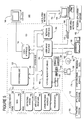
- FIG. 2 is an exemplary block diagram illustrating a hierarchy with levels displayed in multiple directions according to the invention.
- FIG. 3 is an exemplary flow chart illustrating operation of software according to the invention to arrange and display the nodes in the multi-directional hierarchy.
- FIG. 4 is a block diagram illustrating an exemplary computer-readable medium on which software according to the invention may be stored.
- FIG. 5 is a block diagram illustrating one example of a suitable computing system environment in which the invention may be implemented.
- FIG. 6 is a screen shot of an exemplary embodiment of the invention illustrating a multi-directional hierarchy.
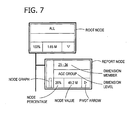
- FIG. 7 is a screen shot of an embodiment of the invention illustrating a root node and its exemplary nodal data.
- the invention includes software executing on a server computer or on a client computer to display data in a user interface for navigation by a user of the client computer (see FIG. 2).
- the data is associated with a plurality of nodes and is stored in a memory area such as a database (e.g., a non-relational database).
- the nodes are organized according to a hierarchy (e.g., a tree structure) having a plurality of levels. Each of the nodes has an identifier associated with it (e.g., a label or icon).
- Software according to the invention arranges the identifier for each of the nodes to display one or more of the levels in a visual representation of the hierarchy. Each of the levels is displayed in one of a plurality of directions relative to a higher one of the levels.
- the invention provides platform-independent hierarchical display and data navigation software.
- the invention is a control implemented as a hypertext markup language (HTML) component (HTC) for use by a web browser.
- HTTP hypertext markup language
- Exemplary software according to the invention embodies the arranged identifiers in an HTML document for use by the client computer.
- the software routines of the invention operate with any data stored in the memory area corresponding to nodes organized as levels in the hierarchy. Each node in the hierarchy has an identifier (e.g., a label) corresponding to that node.
- an exemplary block diagram illustrates a hierarchy with levels displayed in multiple directions according to the invention.
- display of each of the levels alternates between directions that are vertical and horizontal relative to a higher level in the hierarchy.
- the nodes identified by the labels “Jan,” “Feb,” “Mar,” “Apr,” “May,” and “Jun” are displayed horizontally relative to the node in the next higher level identified by the label “Female.”
- the nodes identified by the labels "USA,” “Canada,” “UK,” and “India” are displayed vertically relative to the node in the next higher level identified by the label "Apr.”
- a root of the hierarchy at a top left comer of a display area, each level subsequently lower than the root is displayed in a downward-right motion to a bottom right comer of the display area.
- a node inherits a display direction from a node in a higher level.
- a child node inherits the display direction of a parent no
- the invention includes functionality allowing a user to interactively or dynamically pivot any level to display in another direction.
- an interactive pivot point 202 illustrated in FIG. 2 indicate locations that the user may select to dynamically display the nodes in the next lower level in a particular direction. That is, the software dynamically arranges the identifier for each of the nodes according to user input to display one or more of the levels in the visual representation of the hierarchy.
- the invention may be implemented in various forms such as an application program executing on a client or as a web service accessible via a browser from the client.
- the software routines of the invention are applicable for navigating various types of hierarchical data.
- the invention is operable with any memory area in which the data is organized as a hierarchy or otherwise categorized into different levels.
- the software routines may be executed by a computing device to analyze web usage data, to select reports, or to browse the Internet with a mobile device such as a laptop, a personal data assistant (PDA), or a cellular telephone.
- the software routines of the invention provide client side error trapping by including a validation routine to determine if the current state of the HTC is valid.
- the invention software is extensible for various scenarios in that a software developer or other user may designate an initial set of nodes, levels, and corresponding display directions as a default selection (e.g., stored in a file accessed on initialization of the software).
- the visual representation of the hierarchy includes data associated with each node.
- the nodal data may include file names.
- nodal data includes, but is not limited to, numeric data and a histogram representing a percentage of numeric data for a specific node versus numeric data for a node in a higher level.
- the histogram represents an absolute comparison in that the numeric data for a specific node is compared with numeric data in a root node.
- the histogram represents a relative comparison in that the numeric data for a specific node is compared with numeric data for a node in an immediately higher level.
- the histograms are user-configurable.
- the nodal data is stored in an extensible markup language document or a dynamic hypertext markup language document.
- each of the identifiers is represented by a rectangle with an aspect ratio corresponding to an aspect ratio associated with a display area in the visual representation of the hierarchy. That is, each node is shaped as a rectangle with the long sides of the rectangle placed horizontally (e.g., a 4:3 aspect ratio) to maximize use of the display area. Because the display is shaped as a primarily horizontal rectangle (e.g., a 4:3 aspect ratio), such a nodal shape further conserves screen display area.
- An "autofit" option enabled by the user automatically scales (e.g., larger or smaller) all the displayed nodes to fit into the display area without scrolling. This means that the hierarchy will be displayed with very large-sized nodes when there are only a few nodes. The hierarchy becomes progressively smaller as more levels and nodes are expanded.
- an exemplary flow chart illustrates operation of software according to the invention to arrange and present or display the nodes in the multi-directional hierarchy.
- the exemplary software arranges the identifier for each of the nodes to display one or more of the levels in the visual representation of the hierarchy at 302.
- Each of the levels is displayed in one of a plurality of directions relative to a higher one of the levels. That is, the identifiers are arranged to display one or more of the nodes of one level in a first direction relative to a higher level in the hierarchy.
- the identifiers are arranged to display one or more of the nodes of other level in a second direction relative to a higher level in the hierarchy. The first direction is different than said second direction.
- each of the levels is displayed in either a substantially horizontal or a substantially vertical direction relative to a higher one of the levels.
- a substantially horizontal direction occurs along any axis that is approximately forty-five degrees on either side of a horizontal axis.
- a substantially vertical direction occurs along any axis that is approximately forty-five degrees on either side of a vertical axis.
- each level is displayed in a direction that is generally different than the direction of a higher one of the levels.
- the levels may be displayed in a "stair-step" pattern (see below).
- the software executes on the client computer
- the software further displays to the user the visual representation of the hierarchy.
- the software does not have access to the rendering routines on the client computer (e.g., the software executes on the server computer)
- the software delivers the visual representation of the hierarchy to the user for display.
- the client computer may include a display and a user interface selection device. Via the user interface selection device, the user sends requests to the invention software to expand, collapse, or pivot the visual representation of the hierarchy.
- the invention software performs the requested expansion, collapse, or pivoting at 306.
- the software receives an activation request from a user to expand the visual representation of the hierarchy.
- the activation request includes at least one of the identifiers selected by the user via the user interface selection device.
- the selected identifier is associated with a node of a specific one of the levels.
- the activation request further includes an operative direction associated with the selected identifier.
- the software arranges the identifiers associated with the nodes in one of the levels lower than the specific one of the levels for display in the operative direction in the visual representation of the hierarchy on the display.
- a sample activation request to expand the displayed hierarchy may include the label "Apr" as the identifier and specify vertical as the operative direction.
- the software expands the hierarchy to display the nodes in the level lower than the level associated with the node identified by "Apr.”
- the nodes are displayed in a vertical direction relative to the node identified by "Apr.”
- the displayed nodes include "USA,” “Canada,” “UK,” and "India.”
- the software may receive an activation request from a user to pivot or otherwise alter the direction of a displayed level in the visual representation of the hierarchy.
- the activation request includes at least one of the identifiers selected by the user via the user interface selection device.
- the selected identifier is associated with a node of a specific one of the levels.
- the activation request further includes an operative direction associated with the selected identifier.
- the software arranges the identifiers associated with the nodes in one of the levels lower than the specific one of the levels for display in the operative direction in the visual representation of the hierarchy on the display.
- a sample activation request to pivot the displayed hierarchy may include the label "Apr" as the identifier and specify horizontal as the operative direction.
- the software pivots the hierarchy to display the nodes in the level lower than the level associated with the node identified by "Apr.”
- the nodes are displayed in a horizontal direction relative to the node identified by "Apr” (not shown).
- the horizontally displayed nodes include "USA,” “Canada,” “UK,” and "India.”
- Interactive pivoting allows the user to interactively arrange meaningful information in the most prominent position in the display area and arrange less relevant information elsewhere (e.g., obtainable via scrolling). For example, a more efficient use of the display area may occur when more levels of the hierarchy are displayed in one direction than another. Interactive pivoting allows the user to make such a determination and alter the expansion direction of each level accordingly.
- an algorithm automatically pivots the expansion direction of each level based on the number of nodes in each level and the aspect ratio of the display area (e.g., a window) to maximize use of the display area.
- the aspect ratio of the display may be 4:3, 16:9, or a custom aspect ratio associated with such devices as a personal digital assistant or a mobile telephone.
- the algorithm adjusts the display of the hierarchy to optimize consumption or use of the particular display area (e.g., a window in the display, or the entire display). It is contemplated by the inventors that one skilled in the art could readily design a basic form of such an algorithm.
- the software may receive an activation request to collapse the visual representation of the hierarchy.
- Such an activation request includes at least one of the displayed identifiers selected by the user via the user interface selection device.
- the selected identifier is associated with a node of a specific one of the levels.
- the software collapses the specific one of the levels in the visual representation of the hierarchy on the display.
- a sample activation request to collapse the displayed hierarchy may include the identifier "Apr.”
- the software collapses the displayed hierarchy by removing the nodes identified by "USA,” “Canada,” “UK,” and "India” from the displayed hierarchy.
- the activation request may constitute various other operations or manipulations of the hierarchy resulting in the software arranging the displayed identifiers in accordance with the activation request.
- the activation request includes, but is not limited to, a request to scale the displayed visual representation of the hierarchy to fit the available display area, to display only a certain number of nodes and provide scroll bars to view the remaining nodes, to add or delete nodes, to navigate through the drill path (e.g., to step forward and backward through each activation request from the user), to combine nodes from one level into one node, to expand or contract multiple nodes at once, and to zoom in or out of a portion of the displayed hierarchy.
- the user may zoom in on any particular level up to 200% of its original size or zoom out of a particularly large hierarchy down to 10% of it's original size.
- Virtual grouping includes combining nodes from one level into one node. That is, the user may create a virtual group by combining existing nodes in one level into a custom group node. For example, the user may group the nodes identified by "Washington,” “Oregon,” and “California” into a new group identified by "West Coast.”
- One or more computer-readable media have computer-executable instructions for performing the method illustrated in FIG. 3.
- the computer-executable instructions may be stored on the computer-readable media as an application program or as an applet.
- FIG. 4 a block diagram illustrates an exemplary computer-readable medium 402 on which software according to the invention may be stored.
- the computer-readable medium 402 has computer-executable components to implement the invention.
- the computer-executable components operate to display and manipulate data.
- the computer-readable medium stores a user interface component 404 for arranging the identifier for each of the nodes to display one or more of the levels in a visual representation of the hierarchy. Each of the levels is displayed in one of a plurality of directions relative to a higher one of the levels.
- the user interface component 404 arranges the identifier for each of the nodes to display one or more of the levels in either a horizontal or vertical direction relative to a higher one of the levels.
- the computer-readable medium 402 also includes a service component 406 for expanding, collapsing, or pivoting the visual representation of the hierarchy in response to one or more requests from the user to expand, collapse, or pivot, respectively, the visual representation of the hierarchy with the identifier arranged by the user interface component 404.
- a service component 406 for expanding, collapsing, or pivoting the visual representation of the hierarchy in response to one or more requests from the user to expand, collapse, or pivot, respectively, the visual representation of the hierarchy with the identifier arranged by the user interface component 404.
- the data is stored in a memory area 412 such as a database accessible by the client computer 408.
- a memory area 412 such as a database accessible by the client computer 408.
- the invention is particularly useful is in the management of web usage, or "click" data, which often involves well in excess of a terabyte of data for relatively large networks of Internet services.
- the memory area 412 is accessible by the server computer 410.
- the server computer 410 has access to a computer-readable medium 414 storing the user interface component 416 and the service component 418.
- the memory area 412 may also be accessible by the client computer 408 and the server computer 410 via a network.
- the memory area 412 is any memory as described with reference to FIG. 5.
- the invention software is implemented as an HTC with a well-formed object model that is self-contained and independent.
- the invention software is lightweight in that it is downloaded as a script file.
- the invention software operates like a binary control while not having any of the security problems associated with a binary control (such as an ACTIVE X control).
- the invention software may be implemented in JAVASCRIPT using HTML component-based object modeling to define self-contained controls.
- the invention software is generated using standard dynamic HTML known to those skilled in the art. In this embodiment, the user does not need to separately install any software on the client computer.
- the invention may be implemented as an application program or within an application program.
- the invention may be implemented using one or more applets written in JAVA.
- the applets are downloaded to and executed by the client computer.
- the invention is implemented with JAVASCRIPT or with an object-oriented programming language.
- the method illustrated in FIG. 3 may be implemented as computer-executable instructions on one or more computer-readable media (e.g., computer-readable medium 402) executed by or combined with various hardware components, software components, or both within the scope of the invention.
- the invention software may be downloaded as an HTML component, an applet written in JAVA or JAVASCRIPT, or as a plug-in for a browser.
- a browser on a mobile computing device such as a laptop, a cellular telephone, or a personal digital assistant may execute the invention software.
- the invention is implemented in a data reporting system such as a customer intelligence data mine that transforms raw user data into holistic user profiles stored, for example, in an on-line analytical processing database.
- a data reporting system such as a customer intelligence data mine that transforms raw user data into holistic user profiles stored, for example, in an on-line analytical processing database.
- the user With such a data reporting system, the user generates reports about users across multiple web services or application programs and about their characteristics.
- the reports include user profile data including age, gender, language, location, client software settings, site level usage and lifetime usage.
- the data reporting system includes means for arranging the identifiers to display the nodes of one or more of the levels in the visual representation of the hierarchy.
- the data reporting system further includes means for displaying to the user the visual representation of the hierarchy having the arranged identifiers for each of the nodes.
- the data reporting system further includes means for receiving an activation request from a user to expand or pivot the visual representation of the hierarchy.
- the data reporting system further includes means for arranging the identifiers to display the nodes of a lower level relative to the specific one of the levels in the visual representation of the hierarchy.
- the identifiers are arranged to display the nodes of the lower level in the operative direction relative to a higher level in the hierarchy to expand the visual representation of the hierarchy in response to the received activation request.
- the data reporting system further includes means for arranging the identifiers to display the nodes of the specific one of the levels in the visual representation of the hierarchy in the operative direction relative to a higher level in the hierarchy to pivot the visual representation of the hierarchy in response to the received activation request.
- the data reporting system further includes means for receiving an activation request from a user to collapse the visual representation of the hierarchy.
- the data reporting system further includes means for arranging the identifiers to collapse the specific one of the levels in the visual representation of the hierarchy in response to the received activation request.
- Software according to the invention and all its possible functionality constitute these exemplary means.
- the means for arranging the identifiers to display the nodes of one or more of the levels in the visual representation of the hierarchy includes a software component. The software component automatically scales a size of each of the arranged identifiers to fit a display area of the user interface without scrolling. Further, the examples described above and examples described elsewhere herein constitute these exemplary means.
- FIG. 5 shows one example of a general purpose computing device in the form of a computer 130.
- a computer such as the computer 130 is suitable for use in the other figures illustrated and described herein.
- Computer 130 has one or more processors or processing units 132 and a system memory 134.
- a system bus 136 couples various system components including the system memory 134 to the processors 132.
- the bus 136 represents one or more of any of several types of bus structures, including a memory bus or memory controller, a peripheral bus, an accelerated graphics port, and a processor or local bus using any of a variety of bus architectures.
- such architectures include Industry Standard Architecture (ISA) bus, Micro Channel Architecture (MCA) bus, Enhanced ISA (EISA) bus, Video Electronics Standards Association (VESA) local bus, and Peripheral Component Interconnect (PCI) bus also known as Mezzanine bus.
- ISA Industry Standard Architecture
- MCA Micro Channel Architecture
- EISA Enhanced ISA
- VESA Video Electronics Standards Association
- PCI Peripheral Component Interconnect
- the computer 130 typically has at least some form of computer readable media.
- Computer readable media which include both volatile and nonvolatile media, removable and non-removable media, may be any available medium that can be accessed by computer 130.
- Computer readable media comprise computer storage media and communication media.
- Computer storage media include volatile and nonvolatile, removable and non-removable media implemented in any method or technology for storage of information such as computer readable instructions, data structures, program modules or other data.
- computer storage media include RAM, ROM, EEPROM, flash memory or other memory technology, CD-ROM, digital versatile disks (DVD) or other optical disk storage, magnetic cassettes, magnetic tape, magnetic disk storage or other magnetic storage devices, or any other medium that can be used to store the desired information and that can be accessed by computer 130.
- Communication media typically embody computer readable instructions, data structures, program modules, or other data in a modulated data signal such as a carrier wave or other transport mechanism and include any information delivery media. Those skilled in the art are familiar with the modulated data signal, which has one or more of its characteristics set or changed in such a manner as to encode information in the signal.
- Wired media such as a wired network or direct-wired connection
- wireless media such as acoustic, RF, infrared, and other wireless media
- communication media such as acoustic, RF, infrared, and other wireless media
- the system memory 134 includes computer storage media in the form of removable and/or non-removable, volatile and/or nonvolatile memory.
- system memory 134 includes read only memory (ROM) 138 and random access memory (RAM) 140.
- ROM read only memory
- RAM random access memory
- BIOS basic input/output system
- RAM 140 typically contains data and/or program modules that are immediately accessible to and/or presently being operated on by processing unit 132.
- FIG. 5 illustrates operating system 144, application programs 146, other program modules 148, and program data 150.
- the computer 130 may also include other removable/non-removable, volatile/nonvolatile computer storage media.
- FIG. 5 illustrates a hard disk drive 154 that reads from or writes to non-removable, nonvolatile magnetic media.
- FIG. 5 also shows a magnetic disk drive 156 that reads from or writes to a removable, nonvolatile magnetic disk 158, and an optical disk drive 160 that reads from or writes to a removable, nonvolatile optical disk 162 such as a CD-ROM or other optical media.
- removable/non-removable, volatile/nonvolatile computer storage media that can be used in the exemplary operating environment include, but are not limited to, magnetic tape cassettes, flash memory cards, digital versatile disks, digital video tape, solid state RAM, solid state ROM, and the like.
- the hard disk drive 154, and magnetic disk drive 156 and optical disk drive 160 are typically connected to the system bus 136 by a non-volatile memory interface, such as interface 166.
- the drives or other mass storage devices and their associated computer storage media discussed above and illustrated in FIG. 5, provide storage of computer readable instructions, data structures, program modules and other data for the computer 130.
- hard disk drive 154 is illustrated as storing operating system 170, application programs 172, other program modules 174, and program data 176. Note that these components can either be the same as or different from operating system 144, application programs 146, other program modules 148, and program data 150. Operating system 170, application programs 172, other program modules 174, and program data 176 are given different numbers here to illustrate that, at a minimum, they are different copies.
- a user may enter commands and information into computer 130 through input devices or user interface selection devices such as a keyboard 180 and a pointing device 182 (e.g., a mouse, trackball, pen, or touch pad).
- Other input devices may include a microphone, joystick, game pad, satellite dish, scanner, or the like.
- processing unit 132 through a user input interface 184 that is coupled to system bus 136, but may be connected by other interface and bus structures, such as a parallel port, game port, or a Universal Serial Bus (USB).
- a monitor 188 or other type of display device is also connected to system bus 136 via an interface, such as a video interface 190.
- computers often include other peripheral output devices (not shown) such as a printer and speakers, which may be connected through an output peripheral interface (not shown).
- the computer 130 may operate in a networked environment using logical connections to one or more remote computers, such as a remote computer 194.
- the remote computer 194 may be a personal computer, a server, a router, a network PC, a peer device or other common network node, and typically includes many or all of the elements described above relative to computer 130.
- the logical connections depicted in FIG. 5 include a local area network (LAN) 196 and a wide area network (WAN) 198, but may also include other networks.
- LAN local area network
- WAN wide area network
- Such networking environments are commonplace in offices, enterprise-wide computer networks, intranets, and global computer networks (e.g., the Internet).
- computer 130 When used in a local area networking environment, computer 130 is connected to the LAN 196 through a network interface or adapter 186. When used in a wide area networking environment, computer 130 typically includes a modem 178 or other means for establishing communications over the WAN 198, such as the Internet.
- the modem 178 which may be internal or external, is connected to system bus 136 via the user input interface 184, or other appropriate mechanism.
- program modules depicted relative to computer 130, or portions thereof may be stored in a remote memory storage device (not shown).
- FIG. 5 illustrates remote application programs 192 as residing on the memory device. It will be appreciated that the network connections shown are exemplary and other means of establishing a communications link between the computers may be used.
- the data processors of computer 130 are programmed by means of instructions stored at different times in the various computer-readable storage media of the computer.
- Programs and operating systems are typically distributed, for example, on floppy disks or CD-ROMs. From there, they are installed or loaded into the secondary memory of a computer. At execution, they are loaded at least partially into the computer's primary electronic memory.
- the invention described herein includes these and other various types of computer-readable storage media when such media contain instructions or programs for implementing the steps described below in conjunction with a microprocessor or other data processor.
- the invention also includes the computer itself when programmed according to the methods and techniques described herein.
- computing system environment is not intended to suggest any limitation as to the scope of use or functionality of the invention.
- computing system environment should not be interpreted as having any dependency or requirement relating to any one or combination of components illustrated in the exemplary operating environment.
- Examples of well known computing systems, environments, and/or configurations that may be suitable for use with the invention include, but are not limited to, personal computers, server computers, hand-held or laptop devices, multiprocessor systems, microprocessor-based systems, set top boxes, programmable consumer electronics, network PCs, minicomputers, mainframe computers, distributed computing environments that include any of the above systems or devices, and the like.
- the invention may be described in the general context of computer-executable instructions, such as program modules, executed by one or more computers or other devices.
- program modules include, but are not limited to, routines, programs, objects, components, and data structures that perform particular tasks or implement particular abstract data types.
- the invention may also be practiced in distributed computing environments where tasks are performed by remote processing devices that are linked through a communications network.
- program modules may be located in both local and remote computer storage media including memory storage devices.
- computer 130 executes computer-executable instructions such as those illustrated in FIG. 3 to arrange the identifiers for the nodes to display one or more of the levels in the visual representation of the hierarchy on the display in one of a plurality of directions relative to a higher one of the levels.
- Computer 130 also executes computer-executable instructions to receive an activation request from a user to expand the visual representation of the hierarchy.
- the activation request includes at least one of the identifiers selected by the user via the user interface selection device.
- the selected identifier is associated with a node of a specific one of the levels.
- the request further includes an operative direction associated with the selected identifier.
- Computer 130 also executes computer-executable instructions to arrange the identifiers associated with the nodes in one of the levels lower than the specific one of the levels for display in the operative direction in the visual representation of the hierarchy on the display.
- FIG. 6 is a screen shot of an exemplary embodiment of the invention illustrating a multi-directional hierarchy.
- FIG. 6 illustrates a "stair stepping" feature in which the display direction of nodes alternates between a vertical axis and a horizontal axis.
- a pivot arrow in each node such as pivot arrow 602 indicates the display direction in which subsequent nodes will appear if expanded.
- the stair stepping behavior is enabled by default. Alternating the display of data between vertical and horizontal directions conserves screen display area by changing the overall angle of hierarchy expansion. That is, the general direction of expansion changes from primarily down (e.g., traditional vertically-displayed hierarchies) to a forty-five degree angle equally vertical and equally horizontal. Such a change in expansion angle causes substantially more information to be displayed without scrolling.
- a dimension is a hierarchy of levels that are the basis for constraining and grouping within queries.
- a location dimension includes a hierarchy of dimension levels such as Country, State, DMA, City, and Zip code.
- a dimension level e.g., age group
- the user queries the database to display all users by their age group.
- the invention software displays the data using one or multiple nodes. Each node displays information about the dimension member of the selected dimension level. For example, 25-34 is a dimension member of the age group dimension level.
- a screen shot illustrates a root node in the hierarchy and identifies the different sections of the exemplary nodal data associated with the root node.
- the root node represents all user data collected during a specific time interval.
- the node value of the root node equals the total number of users (e.g., 165 million).
- a dimension level represents the name of a group of related members in a dimension hierarchy.
- AgeGroup and LegalStatus are dimension levels in an Age dimension.
- a dimension member is an item in a dimension level representing one or more occurrences of data.
- Members of the AgeGroup dimension level include 25-34 and 35-50.
- a member can be either unique or non-unique.
- the Browser dimension contains two dimension levels, Browser and BrowserVersion.
- Browser X represents a unique member of the Browser dimension level and 1.0 represents a non-unique member of the BrowserVersion dimension level.
- a node graph depicts a graphical representation of the data represented by the node.
- the default graph is a bar graph. In the example above, the bar graph represents 26% of the parent or root node.
- a nodal value is a data value associated with the node. In the above example, 42.9 million is the number of users that are in the 25-34 year old Age Group.
- a node percentage represents the percentage comparing a nodal value of a current node with a nodal value of a node in a higher level.
- a pivot arrow identifies the direction of levels expanded by subsequent queries. The user may select the arrow to specify the display direction. Additional information is provided by hovering a pointer over a report node via a user interface selection device. This displays a data summary for that node.
- Software of the invention includes an option to manually or automatically group dimensions.
- the user selects a node (e.g., performs a right-click via a user interface selection device) to add the node to a specific dimension group.
- the invention software also automatically creates dimension groups (e.g., alphabetically by dimension group name).
- the invention software generates metadata describing the dimension groups. Dimensions groups may include, for example, "demographic information" or "client settings.”
Landscapes
- Engineering & Computer Science (AREA)
- Theoretical Computer Science (AREA)
- General Engineering & Computer Science (AREA)
- Physics & Mathematics (AREA)
- General Physics & Mathematics (AREA)
- Databases & Information Systems (AREA)
- Human Computer Interaction (AREA)
- Data Mining & Analysis (AREA)
- User Interface Of Digital Computer (AREA)
- Input From Keyboards Or The Like (AREA)
- Information Retrieval, Db Structures And Fs Structures Therefor (AREA)
Applications Claiming Priority (2)
| Application Number | Priority Date | Filing Date | Title |
|---|---|---|---|
| US376404 | 2003-02-27 | ||
| US10/376,404 US20040169688A1 (en) | 2003-02-27 | 2003-02-27 | Multi-directional display and navigation of hierarchical data and optimization of display area consumption |
Publications (2)
| Publication Number | Publication Date |
|---|---|
| EP1452979A2 true EP1452979A2 (de) | 2004-09-01 |
| EP1452979A3 EP1452979A3 (de) | 2007-04-18 |
Family
ID=32771489
Family Applications (1)
| Application Number | Title | Priority Date | Filing Date |
|---|---|---|---|
| EP04001816A Withdrawn EP1452979A3 (de) | 2003-02-27 | 2004-01-28 | Multidirektionale Anzeigevorrichtung und Navigation von hierarchischen Daten und Optimierung des Anzeigeflächenverbrauches. |
Country Status (5)
| Country | Link |
|---|---|
| US (1) | US20040169688A1 (de) |
| EP (1) | EP1452979A3 (de) |
| JP (1) | JP2004259286A (de) |
| CN (1) | CN1542599A (de) |
| BR (1) | BRPI0400546A (de) |
Families Citing this family (69)
| Publication number | Priority date | Publication date | Assignee | Title |
|---|---|---|---|---|
| US7167866B2 (en) * | 2004-01-23 | 2007-01-23 | Microsoft Corporation | Selective multi level expansion of data base via pivot point data |
| JP4325449B2 (ja) * | 2004-03-19 | 2009-09-02 | ソニー株式会社 | 表示制御装置,表示制御方法,記録媒体 |
| US7421665B2 (en) * | 2004-08-31 | 2008-09-02 | Oracle International Corporation | Node scrollers |
| US20060085435A1 (en) * | 2004-10-14 | 2006-04-20 | International Business Machines Corporation | Method and data processing system for displaying hierarchical tree data |
| US7548925B2 (en) * | 2005-01-24 | 2009-06-16 | Microsoft Corporation | Diagrammatic access and arrangement of data |
| US20060184892A1 (en) * | 2005-02-17 | 2006-08-17 | Morris Robert P | Method and system providing for the compact navigation of a tree structure |
| US8561008B2 (en) * | 2005-03-10 | 2013-10-15 | Siemens Aktiengesellschaft | Presentation of hierarchical software structures |
| US7797641B2 (en) * | 2005-05-27 | 2010-09-14 | Nokia Corporation | Mobile communications terminal and method therefore |
| US20060271867A1 (en) * | 2005-05-27 | 2006-11-30 | Wang Kong Q | Mobile communications terminal and method therefore |
| JP4842572B2 (ja) * | 2005-06-30 | 2011-12-21 | マイクロソフト コーポレーション | 連絡先情報管理装置、連絡先情報提供方法、コンピュータプログラムおよびコンピュータ読み取り可能な記憶媒体 |
| US20070192181A1 (en) * | 2006-02-10 | 2007-08-16 | Microsoft Corporation | Automatically modifying web pages to integrate advertising without changing UI |
| JP4183094B2 (ja) * | 2006-03-01 | 2008-11-19 | 株式会社オーバル | ハイアラーキ構成の表示装置 |
| US7747564B2 (en) * | 2006-06-22 | 2010-06-29 | International Business Machines Corporation | Comparative analysis of business intelligence data |
| US8103547B2 (en) * | 2006-09-18 | 2012-01-24 | Microsoft Corporation | Logocons: AD product for brand advertisers |
| KR101380936B1 (ko) | 2006-10-05 | 2014-04-10 | 스플렁크 인코퍼레이티드 | 시계열 검색 엔진 |
| US20080229250A1 (en) * | 2007-03-13 | 2008-09-18 | International Business Machines Corporation | Method and system for navigation tree node level control |
| US7979808B2 (en) * | 2007-08-24 | 2011-07-12 | Oracle International Corporation | Navigational tools for large trees |
| US8261201B2 (en) * | 2008-02-22 | 2012-09-04 | Microsoft Corporation | Spectrum bar control |
| US8887100B1 (en) * | 2008-09-10 | 2014-11-11 | Intuit Inc. | Multi-dimensional hierarchical browsing |
| US7669147B1 (en) * | 2009-01-02 | 2010-02-23 | International Business Machines Corporation | Reorienting navigation trees based on semantic grouping of repeating tree nodes |
| US8677279B2 (en) * | 2009-05-06 | 2014-03-18 | Business Objects Software Limited | Visual hierarchy explorer |
| US8190710B2 (en) | 2009-06-23 | 2012-05-29 | Oracle International Corporation | System and method for providing user context support in a native transaction platform |
| US8326913B2 (en) * | 2009-06-25 | 2012-12-04 | Oracle International Corporation | Method and system for service contract discovery |
| US8205171B2 (en) * | 2009-09-01 | 2012-06-19 | Oracle International Corporation | System and method for providing graphical user interface displaying multiple views |
| US8863029B2 (en) * | 2009-09-01 | 2014-10-14 | Oracle International Corporation | Method and system for providing graphical user interface having filtering capability |
| US8806377B2 (en) * | 2009-09-01 | 2014-08-12 | Oracle International Corporation | Method and system for providing graphical user interface with contextual view |
| US9035949B1 (en) * | 2009-12-21 | 2015-05-19 | Lucasfilm Entertainment Company Ltd. | Visually representing a composite graph of image functions |
| US8943442B1 (en) * | 2009-12-21 | 2015-01-27 | Lucasfilm Entertainment Company Ltd. | Controlling operations for execution |
| US20110179390A1 (en) * | 2010-01-18 | 2011-07-21 | Robert Paul Morris | Methods, systems, and computer program products for traversing nodes in path on a display device |
| US8983989B2 (en) * | 2010-02-05 | 2015-03-17 | Microsoft Technology Licensing, Llc | Contextual queries |
| US8260664B2 (en) * | 2010-02-05 | 2012-09-04 | Microsoft Corporation | Semantic advertising selection from lateral concepts and topics |
| US8903794B2 (en) * | 2010-02-05 | 2014-12-02 | Microsoft Corporation | Generating and presenting lateral concepts |
| US8150859B2 (en) * | 2010-02-05 | 2012-04-03 | Microsoft Corporation | Semantic table of contents for search results |
| US20110231395A1 (en) * | 2010-03-19 | 2011-09-22 | Microsoft Corporation | Presenting answers |
| US8584047B2 (en) * | 2010-05-18 | 2013-11-12 | Microsoft Corporation | Orbital representation of hierarchical navigation |
| US20110289450A1 (en) * | 2010-05-21 | 2011-11-24 | Yokogawa Electric Corporation | Method and apparatus for displaying batch execution data of an industrial plant |
| US20120159376A1 (en) * | 2010-12-15 | 2012-06-21 | Microsoft Corporation | Editing data records associated with static images |
| US9152612B2 (en) * | 2011-09-13 | 2015-10-06 | Microsoft Technology Licensing, Llc | Input control processing |
| CN103106197B (zh) * | 2011-11-09 | 2016-05-04 | 深圳市金蝶中间件有限公司 | 层次化数据的展示方法及系统 |
| US9454298B2 (en) | 2012-10-04 | 2016-09-27 | Brigham Young University | Methods and apparatus related to expanding or contracting representations of data |
| US8863035B2 (en) * | 2012-10-26 | 2014-10-14 | International Business Machines Corporation | Dynamic self-reorganizing trees in a user interface |
| US10318541B2 (en) | 2013-04-30 | 2019-06-11 | Splunk Inc. | Correlating log data with performance measurements having a specified relationship to a threshold value |
| US10353957B2 (en) | 2013-04-30 | 2019-07-16 | Splunk Inc. | Processing of performance data and raw log data from an information technology environment |
| US9015716B2 (en) | 2013-04-30 | 2015-04-21 | Splunk Inc. | Proactive monitoring tree with node pinning for concurrent node comparisons |
| US10019496B2 (en) | 2013-04-30 | 2018-07-10 | Splunk Inc. | Processing of performance data and log data from an information technology environment by using diverse data stores |
| US8904389B2 (en) | 2013-04-30 | 2014-12-02 | Splunk Inc. | Determining performance states of components in a virtual machine environment based on performance states of related subcomponents |
| US10225136B2 (en) | 2013-04-30 | 2019-03-05 | Splunk Inc. | Processing of log data and performance data obtained via an application programming interface (API) |
| US9164786B2 (en) | 2013-04-30 | 2015-10-20 | Splunk Inc. | Determining performance states of parent components in a virtual-machine environment based on performance states of related child components during a time period |
| US12373497B1 (en) | 2013-04-30 | 2025-07-29 | Splunk Inc. | Dynamic generation of performance state tree |
| US10614132B2 (en) | 2013-04-30 | 2020-04-07 | Splunk Inc. | GUI-triggered processing of performance data and log data from an information technology environment |
| US8972992B2 (en) | 2013-04-30 | 2015-03-03 | Splunk Inc. | Proactive monitoring tree with state distribution ring |
| US10997191B2 (en) | 2013-04-30 | 2021-05-04 | Splunk Inc. | Query-triggered processing of performance data and log data from an information technology environment |
| US9495187B2 (en) * | 2013-04-30 | 2016-11-15 | Splunk, Inc. | Interactive, top-down presentation of the architecture and performance of a hypervisor environment |
| US9185007B2 (en) | 2013-04-30 | 2015-11-10 | Splunk Inc. | Proactive monitoring tree with severity state sorting |
| US9142049B2 (en) | 2013-04-30 | 2015-09-22 | Splunk Inc. | Proactive monitoring tree providing distribution stream chart with branch overlay |
| US10346357B2 (en) | 2013-04-30 | 2019-07-09 | Splunk Inc. | Processing of performance data and structure data from an information technology environment |
| US9400825B2 (en) * | 2013-05-23 | 2016-07-26 | Strategy Companion Corporation | Pivot analysis method using condition group |
| US10505820B2 (en) | 2014-02-24 | 2019-12-10 | Red Hat Israel, Ltd. | User interface with an expandable navigation tree |
| US10176605B2 (en) | 2014-03-26 | 2019-01-08 | Brigham Young University | Dynamic display of heirarchal data |
| US9990116B2 (en) * | 2014-08-29 | 2018-06-05 | Sap Se | Systems and methods for self-learning dynamic interfaces |
| US10565560B2 (en) * | 2014-11-12 | 2020-02-18 | Successfactors, Inc. | Alternative people charting for organizational charts |
| KR102314109B1 (ko) * | 2015-01-05 | 2021-10-18 | 삼성전자주식회사 | 디스플레이 장치 및 디스플레이 방법 |
| US20190258396A1 (en) * | 2018-02-20 | 2019-08-22 | Adobe Inc. | Layout design with adaptive areas |
| US20190377801A1 (en) * | 2018-06-11 | 2019-12-12 | Deloitte Development Llc | Relational data model for hierarchical databases |
| WO2020018592A1 (en) * | 2018-07-17 | 2020-01-23 | Methodical Mind, Llc. | Graphical user interface system |
| KR102762782B1 (ko) | 2019-12-27 | 2025-02-05 | 메쏘디컬 마인드, 엘엘씨. | 그래픽 사용자 인터페이스 시스템 |
| JP7702958B2 (ja) | 2020-01-22 | 2025-07-04 | メソディカル マインド,エルエルシー. | グラフィカルユーザインターフェースシステム |
| CN112132980B (zh) * | 2020-09-22 | 2022-10-11 | 广西农业职业技术学院 | 一种用于心理咨询的思维导图操作方法 |
| KR20240109974A (ko) | 2021-07-21 | 2024-07-12 | 메쏘디컬 마인드, 엘엘씨. | 그래픽 사용자 인터페이스 시스템 가이드 모듈 |
Family Cites Families (33)
| Publication number | Priority date | Publication date | Assignee | Title |
|---|---|---|---|---|
| US5295243A (en) * | 1989-12-29 | 1994-03-15 | Xerox Corporation | Display of hierarchical three-dimensional structures with rotating substructures |
| US5333254A (en) * | 1991-10-02 | 1994-07-26 | Xerox Corporation | Methods of centering nodes in a hierarchical display |
| JPH06176081A (ja) * | 1992-12-02 | 1994-06-24 | Hitachi Ltd | 階層構造ブラウジング方法およびその装置 |
| EP0603425A1 (de) * | 1992-12-22 | 1994-06-29 | International Business Machines Corporation | Darstellung einer N-fach-Baumstruktur |
| US5675752A (en) * | 1994-09-15 | 1997-10-07 | Sony Corporation | Interactive applications generator for an interactive presentation environment |
| EP0717344B1 (de) * | 1994-12-13 | 2001-10-31 | Microsoft Corporation | Taskbar mit Startmenü |
| US5838319A (en) * | 1994-12-13 | 1998-11-17 | Microsoft Corporation | System provided child window control for displaying items in a hierarchical fashion |
| US5644736A (en) * | 1995-05-25 | 1997-07-01 | International Business Machines Corporation | System and method for selecting components of a hierarchical file structure |
| US5774669A (en) * | 1995-07-28 | 1998-06-30 | The United States Of America As Represented By The Administrator Of The National Aeronautics And Space Administration | Scalable hierarchical network management system for displaying network information in three dimensions |
| JP3850514B2 (ja) * | 1997-05-13 | 2006-11-29 | 株式会社日立製作所 | データベースの表示方法 |
| US5923328A (en) * | 1996-08-07 | 1999-07-13 | Microsoft Corporation | Method and system for displaying a hierarchical sub-tree by selection of a user interface element in a sub-tree bar control |
| US6018343A (en) * | 1996-09-27 | 2000-01-25 | Timecruiser Computing Corp. | Web calendar architecture and uses thereof |
| US5812135A (en) * | 1996-11-05 | 1998-09-22 | International Business Machines Corporation | Reorganization of nodes in a partial view of hierarchical information |
| US6131098A (en) * | 1997-03-04 | 2000-10-10 | Zellweger; Paul | Method and apparatus for a database management system content menu |
| US5877766A (en) * | 1997-08-15 | 1999-03-02 | International Business Machines Corporation | Multi-node user interface component and method thereof for use in accessing a plurality of linked records |
| US6247020B1 (en) * | 1997-12-17 | 2001-06-12 | Borland Software Corporation | Development system with application browser user interface |
| AR014332A1 (es) * | 1998-01-30 | 2001-02-07 | Koninkl Philips Electronics Nv | Un metodo para operar un equipo de audio/video como el basado en un menu jerarquico de items seleccionados como puntos grandes y colocados en cadena yun equipo de audio/video dispuesto para practicar el metodo |
| JP3208116B2 (ja) * | 1998-02-03 | 2001-09-10 | 株式会社次世代情報放送システム研究所 | 映像インデックス情報を記録した記録媒体、映像インデックス情報を用いた映像情報管理方法、音声インデックス情報を記録した記録媒体および音声インデックス情報を用いた音声情報管理方法 |
| JPH11331646A (ja) * | 1998-05-18 | 1999-11-30 | Olympus Optical Co Ltd | 電子的撮像装置 |
| US6330598B1 (en) * | 1998-06-23 | 2001-12-11 | Ameritech Corporation | Global service management system for an advanced intelligent network |
| US6499036B1 (en) * | 1998-08-12 | 2002-12-24 | Bank Of America Corporation | Method and apparatus for data item movement between disparate sources and hierarchical, object-oriented representation |
| US6314424B1 (en) * | 1998-09-28 | 2001-11-06 | International Business Machines Corporation | System and method for dynamically expanding and collapsing a tree view for an HTML web interface |
| US6359635B1 (en) * | 1999-02-03 | 2002-03-19 | Cary D. Perttunen | Methods, articles and apparatus for visibly representing information and for providing an input interface |
| KR100369127B1 (ko) * | 1999-07-08 | 2003-01-24 | 현대자동차주식회사 | 차량 주행기록 검색 방법 |
| US6292188B1 (en) * | 1999-07-28 | 2001-09-18 | Alltrue Networks, Inc. | System and method for navigating in a digital information environment |
| JP3478331B2 (ja) * | 1999-10-29 | 2003-12-15 | 株式会社リコー | 構造表示方法およびその方法をコンピュータに実行させるプログラムを記録したコンピュータ読み取り可能な記録媒体 |
| US7167859B2 (en) * | 2000-04-27 | 2007-01-23 | Hyperion Solutions Corporation | Database security |
| US20020070953A1 (en) * | 2000-05-04 | 2002-06-13 | Barg Timothy A. | Systems and methods for visualizing and analyzing conditioned data |
| US6879332B2 (en) * | 2000-05-16 | 2005-04-12 | Groxis, Inc. | User interface for displaying and exploring hierarchical information |
| US6675202B1 (en) * | 2000-05-30 | 2004-01-06 | Cary D. Perttunen | Methods, articles and apparatus for providing a browsing session |
| US6859217B2 (en) * | 2000-07-19 | 2005-02-22 | Microsoft Corporation | System and method to display and manage data within hierarchies and polyarchies of information |
| AU2002224333A1 (en) * | 2000-09-20 | 2002-04-02 | A2I, Inc. | Method and apparatus for structuring, maintaining, and using families of data |
| US6765597B2 (en) * | 2001-04-19 | 2004-07-20 | International Business Machines Corporation | System and method for using layer bars to indicate levels within non-indented tree view control |
-
2003
- 2003-02-27 US US10/376,404 patent/US20040169688A1/en not_active Abandoned
-
2004
- 2004-01-28 EP EP04001816A patent/EP1452979A3/de not_active Withdrawn
- 2004-02-16 BR BR0400546-5A patent/BRPI0400546A/pt not_active IP Right Cessation
- 2004-02-27 CN CNA2004100082239A patent/CN1542599A/zh active Pending
- 2004-02-27 JP JP2004055386A patent/JP2004259286A/ja active Pending
Also Published As
| Publication number | Publication date |
|---|---|
| US20040169688A1 (en) | 2004-09-02 |
| CN1542599A (zh) | 2004-11-03 |
| JP2004259286A (ja) | 2004-09-16 |
| EP1452979A3 (de) | 2007-04-18 |
| BRPI0400546A (pt) | 2004-12-28 |
Similar Documents
| Publication | Publication Date | Title |
|---|---|---|
| EP1452979A2 (de) | Multidirektionale Anzeigevorrichtung und Navigation von hierarchischen Daten und Optimierung des Anzeigeflächenverbrauches. | |
| US7506274B2 (en) | System and method for interactively displaying multi-dimensional data | |
| US9390082B1 (en) | Generating multiple views of a multidimensional cube | |
| US6243094B1 (en) | Clustering user interface | |
| US8135722B2 (en) | Creation of segmentation definitions | |
| US6658419B2 (en) | System and method for facilitating a windows based content manifestation environment within a WWW browser | |
| US7890888B2 (en) | Systems and methods for configuring a user interface having a menu | |
| US20050134589A1 (en) | Systems and methods for the estimation of user interest in graph theoretic structures | |
| US7730397B2 (en) | System and method for rapid presentation of structured digital content items | |
| US7428705B2 (en) | Web map tool | |
| US20160266766A1 (en) | Three dimensional conditional formatting | |
| US9081830B1 (en) | Updating a view of a multidimensional cube | |
| JP2004171539A (ja) | ウェブページの利用パターンを特定する方法および装置 | |
| US20030154442A1 (en) | Visualization tool for web analytics | |
| US20030231196A1 (en) | Implementation for determining user interest in the portions of lengthy received web documents by dynamically tracking and visually indicating the cumulative time spent by user in the portions of received web document | |
| US8909680B1 (en) | Intelligent caching of multidimensional cube data | |
| US20090106685A1 (en) | Method and Apparatus for Displaying Status of Hierarchical Operations | |
| EP0917071A2 (de) | Erfassen eines Hypertexts ohne Seitenwechsel in einem Dokument mit Seitenwechsel | |
| JP4877831B2 (ja) | 確認システム、情報提供システム、ならびに、プログラム | |
| EP1708093A2 (de) | Scrollbare und größenveränderbare Formelleiste | |
| JPH08101830A (ja) | 複合文書を作成し最新表示するためのシステムおよび方法 | |
| US20030154443A1 (en) | Visual discovery tool | |
| US20050257162A1 (en) | Method and system to maintain a user interface context | |
| CN107992589A (zh) | 一种svg地图数据的加载方法、装置及系统 | |
| JP2009037637A (ja) | 推定関心度に基づいてノード・リンク構造体をブラウジングするためのプログラム |
Legal Events
| Date | Code | Title | Description |
|---|---|---|---|
| PUAI | Public reference made under article 153(3) epc to a published international application that has entered the european phase |
Free format text: ORIGINAL CODE: 0009012 |
|
| AK | Designated contracting states |
Kind code of ref document: A2 Designated state(s): AT BE BG CH CY CZ DE DK EE ES FI FR GB GR HU IE IT LI LU MC NL PT RO SE SI SK TR |
|
| AX | Request for extension of the european patent |
Extension state: AL LT LV MK |
|
| PUAL | Search report despatched |
Free format text: ORIGINAL CODE: 0009013 |
|
| AK | Designated contracting states |
Kind code of ref document: A3 Designated state(s): AT BE BG CH CY CZ DE DK EE ES FI FR GB GR HU IE IT LI LU MC NL PT RO SE SI SK TR |
|
| AX | Request for extension of the european patent |
Extension state: AL LT LV MK |
|
| 17P | Request for examination filed |
Effective date: 20071009 |
|
| 17Q | First examination report despatched |
Effective date: 20071107 |
|
| AKX | Designation fees paid |
Designated state(s): AT BE BG CH CY CZ DE DK EE ES FI FR GB GR HU IE IT LI LU MC NL PT RO SE SI SK TR |
|
| STAA | Information on the status of an ep patent application or granted ep patent |
Free format text: STATUS: THE APPLICATION HAS BEEN WITHDRAWN |
|
| 18W | Application withdrawn |
Effective date: 20121016 |