EP1451131B1 - Use of molecular sieves for the conversion of oxygenates to olefins - Google Patents
Use of molecular sieves for the conversion of oxygenates to olefins Download PDFInfo
- Publication number
- EP1451131B1 EP1451131B1 EP02795570A EP02795570A EP1451131B1 EP 1451131 B1 EP1451131 B1 EP 1451131B1 EP 02795570 A EP02795570 A EP 02795570A EP 02795570 A EP02795570 A EP 02795570A EP 1451131 B1 EP1451131 B1 EP 1451131B1
- Authority
- EP
- European Patent Office
- Prior art keywords
- molecular sieve
- sapo
- value
- micron
- less
- Prior art date
- Legal status (The legal status is an assumption and is not a legal conclusion. Google has not performed a legal analysis and makes no representation as to the accuracy of the status listed.)
- Expired - Lifetime
Links
Images
Classifications
-
- C—CHEMISTRY; METALLURGY
- C10—PETROLEUM, GAS OR COKE INDUSTRIES; TECHNICAL GASES CONTAINING CARBON MONOXIDE; FUELS; LUBRICANTS; PEAT
- C10G—CRACKING HYDROCARBON OILS; PRODUCTION OF LIQUID HYDROCARBON MIXTURES, e.g. BY DESTRUCTIVE HYDROGENATION, OLIGOMERISATION, POLYMERISATION; RECOVERY OF HYDROCARBON OILS FROM OIL-SHALE, OIL-SAND, OR GASES; REFINING MIXTURES MAINLY CONSISTING OF HYDROCARBONS; REFORMING OF NAPHTHA; MINERAL WAXES
- C10G3/00—Production of liquid hydrocarbon mixtures from oxygen-containing organic materials, e.g. fatty oils, fatty acids
- C10G3/62—Catalyst regeneration
-
- B—PERFORMING OPERATIONS; TRANSPORTING
- B01—PHYSICAL OR CHEMICAL PROCESSES OR APPARATUS IN GENERAL
- B01J—CHEMICAL OR PHYSICAL PROCESSES, e.g. CATALYSIS OR COLLOID CHEMISTRY; THEIR RELEVANT APPARATUS
- B01J29/00—Catalysts comprising molecular sieves
- B01J29/82—Phosphates
- B01J29/84—Aluminophosphates containing other elements, e.g. metals, boron
- B01J29/85—Silicoaluminophosphates [SAPO compounds]
-
- B—PERFORMING OPERATIONS; TRANSPORTING
- B01—PHYSICAL OR CHEMICAL PROCESSES OR APPARATUS IN GENERAL
- B01J—CHEMICAL OR PHYSICAL PROCESSES, e.g. CATALYSIS OR COLLOID CHEMISTRY; THEIR RELEVANT APPARATUS
- B01J35/00—Catalysts, in general, characterised by their form or physical properties
- B01J35/40—Catalysts, in general, characterised by their form or physical properties characterised by dimensions, e.g. grain size
-
- B—PERFORMING OPERATIONS; TRANSPORTING
- B01—PHYSICAL OR CHEMICAL PROCESSES OR APPARATUS IN GENERAL
- B01J—CHEMICAL OR PHYSICAL PROCESSES, e.g. CATALYSIS OR COLLOID CHEMISTRY; THEIR RELEVANT APPARATUS
- B01J35/00—Catalysts, in general, characterised by their form or physical properties
- B01J35/40—Catalysts, in general, characterised by their form or physical properties characterised by dimensions, e.g. grain size
- B01J35/45—Nanoparticles
-
- C—CHEMISTRY; METALLURGY
- C01—INORGANIC CHEMISTRY
- C01B—NON-METALLIC ELEMENTS; COMPOUNDS THEREOF; METALLOIDS OR COMPOUNDS THEREOF NOT COVERED BY SUBCLASS C01C
- C01B37/00—Compounds having molecular sieve properties but not having base-exchange properties
- C01B37/06—Aluminophosphates containing other elements, e.g. metals, boron
- C01B37/08—Silicoaluminophosphates [SAPO compounds], e.g. CoSAPO
-
- C—CHEMISTRY; METALLURGY
- C07—ORGANIC CHEMISTRY
- C07C—ACYCLIC OR CARBOCYCLIC COMPOUNDS
- C07C1/00—Preparation of hydrocarbons from one or more compounds, none of them being a hydrocarbon
- C07C1/20—Preparation of hydrocarbons from one or more compounds, none of them being a hydrocarbon starting from organic compounds containing only oxygen atoms as heteroatoms
-
- C—CHEMISTRY; METALLURGY
- C10—PETROLEUM, GAS OR COKE INDUSTRIES; TECHNICAL GASES CONTAINING CARBON MONOXIDE; FUELS; LUBRICANTS; PEAT
- C10G—CRACKING HYDROCARBON OILS; PRODUCTION OF LIQUID HYDROCARBON MIXTURES, e.g. BY DESTRUCTIVE HYDROGENATION, OLIGOMERISATION, POLYMERISATION; RECOVERY OF HYDROCARBON OILS FROM OIL-SHALE, OIL-SAND, OR GASES; REFINING MIXTURES MAINLY CONSISTING OF HYDROCARBONS; REFORMING OF NAPHTHA; MINERAL WAXES
- C10G3/00—Production of liquid hydrocarbon mixtures from oxygen-containing organic materials, e.g. fatty oils, fatty acids
- C10G3/42—Catalytic treatment
- C10G3/44—Catalytic treatment characterised by the catalyst used
- C10G3/48—Catalytic treatment characterised by the catalyst used further characterised by the catalyst support
- C10G3/49—Catalytic treatment characterised by the catalyst used further characterised by the catalyst support containing crystalline aluminosilicates, e.g. molecular sieves
-
- C—CHEMISTRY; METALLURGY
- C07—ORGANIC CHEMISTRY
- C07C—ACYCLIC OR CARBOCYCLIC COMPOUNDS
- C07C2529/00—Catalysts comprising molecular sieves
- C07C2529/82—Phosphates
- C07C2529/84—Aluminophosphates containing other elements, e.g. metals, boron
- C07C2529/85—Silicoaluminophosphates (SAPO compounds)
-
- C—CHEMISTRY; METALLURGY
- C10—PETROLEUM, GAS OR COKE INDUSTRIES; TECHNICAL GASES CONTAINING CARBON MONOXIDE; FUELS; LUBRICANTS; PEAT
- C10G—CRACKING HYDROCARBON OILS; PRODUCTION OF LIQUID HYDROCARBON MIXTURES, e.g. BY DESTRUCTIVE HYDROGENATION, OLIGOMERISATION, POLYMERISATION; RECOVERY OF HYDROCARBON OILS FROM OIL-SHALE, OIL-SAND, OR GASES; REFINING MIXTURES MAINLY CONSISTING OF HYDROCARBONS; REFORMING OF NAPHTHA; MINERAL WAXES
- C10G2300/00—Aspects relating to hydrocarbon processing covered by groups C10G1/00 - C10G99/00
- C10G2300/70—Catalyst aspects
- C10G2300/703—Activation
-
- C—CHEMISTRY; METALLURGY
- C10—PETROLEUM, GAS OR COKE INDUSTRIES; TECHNICAL GASES CONTAINING CARBON MONOXIDE; FUELS; LUBRICANTS; PEAT
- C10G—CRACKING HYDROCARBON OILS; PRODUCTION OF LIQUID HYDROCARBON MIXTURES, e.g. BY DESTRUCTIVE HYDROGENATION, OLIGOMERISATION, POLYMERISATION; RECOVERY OF HYDROCARBON OILS FROM OIL-SHALE, OIL-SAND, OR GASES; REFINING MIXTURES MAINLY CONSISTING OF HYDROCARBONS; REFORMING OF NAPHTHA; MINERAL WAXES
- C10G2400/00—Products obtained by processes covered by groups C10G9/00 - C10G69/14
- C10G2400/20—C2-C4 olefins
-
- Y—GENERAL TAGGING OF NEW TECHNOLOGICAL DEVELOPMENTS; GENERAL TAGGING OF CROSS-SECTIONAL TECHNOLOGIES SPANNING OVER SEVERAL SECTIONS OF THE IPC; TECHNICAL SUBJECTS COVERED BY FORMER USPC CROSS-REFERENCE ART COLLECTIONS [XRACs] AND DIGESTS
- Y02—TECHNOLOGIES OR APPLICATIONS FOR MITIGATION OR ADAPTATION AGAINST CLIMATE CHANGE
- Y02P—CLIMATE CHANGE MITIGATION TECHNOLOGIES IN THE PRODUCTION OR PROCESSING OF GOODS
- Y02P30/00—Technologies relating to oil refining and petrochemical industry
- Y02P30/20—Technologies relating to oil refining and petrochemical industry using bio-feedstock
-
- Y—GENERAL TAGGING OF NEW TECHNOLOGICAL DEVELOPMENTS; GENERAL TAGGING OF CROSS-SECTIONAL TECHNOLOGIES SPANNING OVER SEVERAL SECTIONS OF THE IPC; TECHNICAL SUBJECTS COVERED BY FORMER USPC CROSS-REFERENCE ART COLLECTIONS [XRACs] AND DIGESTS
- Y02—TECHNOLOGIES OR APPLICATIONS FOR MITIGATION OR ADAPTATION AGAINST CLIMATE CHANGE
- Y02P—CLIMATE CHANGE MITIGATION TECHNOLOGIES IN THE PRODUCTION OR PROCESSING OF GOODS
- Y02P30/00—Technologies relating to oil refining and petrochemical industry
- Y02P30/40—Ethylene production
Definitions
- This invention relates to a process for converting an oxygenate feedstock to light olefins using a crystalline silicoaluminophosphate molecular sieve having a high silicon content and a small particle size. It also relates to crystalline silicoaluminophosphate molecular sieves with high silicon content and a small particle size.
- Olefins particularly light olefins
- Oxygenates are becoming an alternative feedstock for making light olefins, particularly ethylene and propylene.
- Promising oxygenate feedstocks are alcohols, such as methanol and ethanol, dimethyl ether, methyl ethyl ether, diethyl ether, dimethyl carbonate, and methyl formate.
- alcohols such as methanol and ethanol, dimethyl ether, methyl ethyl ether, diethyl ether, dimethyl carbonate, and methyl formate.
- Many of these oxygenates can be produced from a variety of sources including natural gas. Because of the relatively low-cost of these sources, alcohol, alcohol derivatives, and other oxygenates have promise as an economical source for light olefin production.
- olefins One way of producing olefins is by the conversion of methanol to olefins (MTO) catalyzed by a molecular sieve.
- MTO methanol to olefins
- Some of the most useful molecular sieves for converting methanol to olefin(s) are the metalloaluminophosphates such as the silicoaluminophosphates (SAPO's).
- SAPO's silicoaluminophosphates
- U.S. Patent No. 4,499,327 to Kaiser discloses making olefins from methanol using a variety of SAPO molecular sieve catalysts. The process can be carried out at a temperature between 300°C and 500°C, a pressure between 0.1 atmosphere to 100 atmospheres, and a weight hourly space velocity (WHSV) of between 0.1 and 40 hr -1 .
- WHSV weight hourly space velocity
- SAPO molecular sieves contain a three-dimensional microporous crystal framework structure of [SiO 2 ], [AlO 2 ] and [PO 2 ] corner sharing tetrahedral units.
- the number of [SiO 2 ] tetrahedral units is related to the acidic properties of the SAPO molecular sieve: the higher the Si content, the higher the molecular sieve acidity.
- SAPO molecular sieves There are a wide variety of SAPO molecular sieves known in the art. Of these the more important examples as catalysts for the conversion of oxygenates to olefins include SAPO-5, SAPO-11, SAPO-18, SAPO-34, SAPO-35, SAPO-41, and SAPO-56. SAPO molecular sieves having the CHA framework type and especially SAPO-34 are particularly important catalysts.
- the CHA framework type has a double six-ring structure in an ABC stacking arrangement. The pore openings of the structure are defined by eight member rings that have a diameter of about 4.0 ⁇ , and cylindrical cages within the structure of approximately 10 x 6.7 ⁇ type ("Atlas of Zeolite Framework Types", 2001, 5th Edition, p. 96-97).
- SAPO-34 crystals have a cubic-like morphology and typically crystallize as cubes, partial cubes, platelets or flakes, depending on the height of the crystals.
- Other SAPO molecular sieves of CHA framework type include SAPO-44, SAPO-47 and ZYT-6.
- SAPO molecular sieves Another important class of SAPO molecular sieves consists of mixed or intergrown phases of molecular sieves having the CHA and AEI framework types. Examples of such materials are disclosed in WO98/15496, published 16 April 1998, and in PCT WOO2l070407, published September 12, 2002.
- U.S. Patent No. 5,126,308 and U.S. Patent No. S,I91,141 to Barger et al. disclose a method for converting methanol to light olefins using an ELAPO catalyst.
- the catalyst comprises a metal aluminophosphate molecular sieve having the empirical formula (EL x Al y P 2 )O 2 where EL is a metal and x, y and z are mole fractions of EL, Al and P respectively.
- Preferred EL metals are silicon, magnesium and cobalt, with silicon especially preferred. According to these documents, small particle size SAPO-34 having low Si/Al ratios have a longer life and increased selectivity over other types of SAPOs when used as catalysts in MTO processes.
- Preferred EL metals are silicon, magnesium and cobalt, with silicon especially preferred. This document shows that small SAPO-34 crystals are obtained when low concentrations of silica are used in the gel mixture, while large SAPO-34 crystals are obtained when the silica concentration in the gel mixture is raised. According to this document, SAPO-34 with large crystal sizes are most desirable for catalytic performance.
- Wilson, et al. reported that it is beneficial to use SAPO molecular sieves having low Si content for MTO conversions ( Microporous and Mesoporous Materials, 29, 117-126, 1999). According to Wilson, SAPOs with low Si content deactivate slower and produce less undesired products than other SAPOs when used in MTO conversions.
- PCT WO 01/23500 published April 5, 2001 discloses a method for making an olefin product from an oxygenate-containing feedstock.
- a silicoaluminophosphate molecular sieve catalyst is contacted with the oxygenate-containing feedstock in a reactor at an average catalyst feedstock exposure (ACFE) index of at least 1.0.
- ACFE average catalyst feedstock exposure
- the method produces lower coke yield and provides an olefin product which is lower in C1-C4 paraffin content than when the ACFE index is lower than 1.0.
- SAPOs with low Si/Al atomic ratios are preferred in order to mimimize selectivity to propane.
- SAPO crystalline silicoaluminophosphate
- x has a value preferably of at least 0.07, more preferably of at least 0.08, even more preferably of at least 0.085 and most preferably of at least 0.09.
- x/y is greater than 0.15, preferably, x/y is at least 0.17 and most preferably, x/y is at least 0.18.
- the molecular sieve is preferably selected from the group consisting of SAPO-5, SAPO-11, SAPO-18, SAPO-34-, SAPO-35, SAPO-41, SAPO-56, mixtures thereof and intergrown forms thereof. Most preferably, the molecular sieve is SAPO-34.
- the oxygenate is preferably selected from methanol, dimethyl ether and mixtures thereof. Most preferably, the oxygenate is methanol.
- the present invention is based on the observation that crystalline silicoaluminophosphate (SAPO) molecular sieves, that have a small particle size and a high Si content have excellent catalytic performances when used in MTO processes.
- SAPO crystalline silicoaluminophosphate
- the belief prior to this invention was that, when used in MTO processes, silicoaluminophosphate (SAPO) molecular sieves with small particle size and low silicon content provided fewer by-products and deactived less quickly than other SAPOs.
- SAPO silicoaluminophosphate
- SAPO silicoaluminophosphate
- the silicoaluminophosphate molecular sieves of the invention can have a variety of crystal morphologies, depending on the crystal framework type and symmetry.
- the preferred silicoaluminophosphate molecular sieves have the CHA framework type, and most preferably are SAPO-34.
- the preferred crystal morphology is cubic or cubic-like. Cubic-like as used herein means that the crystals are not cubes in the strictest sense (rhombohedral with alpha, beta and gamma angles of exactly 90°), but are almost cubic (rhombohedral with alpha, beta and gamma angles close to, but not exactly equal to, 90°).
- Molecular sieves with cubic or cubic-like morphology can be in the form of cubes, partial cubes (cubes with a height less than the other two crystal edges), platelets or even flakes, depending on the crystal height.
- the crystals are cubes or partial cubes.
- the molecular sieve crystals of the present invention have at least one crystal dimension of less than 0.20 micron, preferably less than 0.15 micron, more preferably less than 0.1 micron. In the embodiment in which the crystals have cubic or cubic-like morphology, this means that at least one edge of all crystals is smaller than 0.2 micron, preferably smaller than 0.15 micron, more preferably smaller than 0.10 micron, as determined by electron microscopy. In a separate embodiment, the crystals have at least one dimension of less than 0.20 micron, and have at least one other dimension smaller than 0.2 micron, preferably smaller than 0.15 micron, more preferably smaller than 0.10 micron. In yet another separate embodiment, all crystal dimensions are smaller than 0..2 micron, preferably smaller than 0.15 micron, more preferably smaller than 0.10 micron.
- the x/y atomic ratio of the molecular sieve is greater than 0.15, preferably from 0.17 to 0.25.
- the x/y atomic ratio is conveniently determined by elemental analysis of the molecular sieve; on an anhydrous basis.
- the molecular sieves of the present invention are obtained by hydrothermal treatment of a synthesis mixture comprising at least one source of silicon, at least one source of aluminum and at least one source of phosphorus.
- phosphoric acid As source for the phosphorus in the synthesis mixture, there may be mentioned phosphoric acid, organic phosphates, e.g.., triethylphosphate, and aluminophosphates.
- alumina hydrate As source for the aluminum in the synthesis mixture there may be mentioned alumina hydrate, alumina, sodium aluminate, pseudoboehmite, aluminum phosphate, organic aluminum sources, e.g., alkoxides, for example, aluminum isopropoxide.
- Silicon sources include fumed silica, e.g., that sold under the trade name Aerosil; aqu.eous colloidal suspensions of silica, e.g., that sold under the trade name Ludox AS40, Ludox.HS40 or Hydroseal HS40; or organic silicon sources.
- the silicon source is an organic silicon source, e.g., a tetraalkyl orthosilicate, for example, tetramethyl orthosilicate, tetraethyl orthosilicate, tetrapropyl orthosilicate, and tetrabutyl orthosilicate, more preferably tetraethyl orthosilicate (TEOS).
- TEOS tetraethyl orthosilicate
- templates include especially amines and quaternary ammonium compounds, used either singly or in mixtures.
- templates there may be mentioned, for example, tetraethyl ammonium compounds, cyclopentylamine, aminomethyl cyclohexane, piperidine, triethylamine, cyclohexylamine, trimethyl hydroxyethylamine, morpholine, dipropylamine (DPA), pyridine, isopropylamine and mixtures thereof.
- DPA dipropylamine
- Preferred templates include tetraethyl ammonium hydroxide and salts, e.g., phosphate, fluoride, chloride, bromide and acetate, dipropylamine (DPA), triethylamine, cyclohexylamine, 1-methylanudazole, morpholine, pyridine, piperidine, and diethylethanolamine (DEA).
- DPA dipropylamine
- DEA diethylethanolamine
- the molecular sieve structure may be effectively controlled using combinations of templates.
- a synthesis mixture for producing SAPO-34 according to the invention advantageously has a molar composition, within the following ranges: Components Range Preferred range P 2 O 5 : Al 2 O 3 0.6 : 1 to 1.2 : 1 about 1 : 1 SiO 2 Al 2 O 3 0.01 : 1 to 0.5 : 1 0, 1 : 1 to 0.5 : 1 H 2 O : Al 2 O 3 10 : 1 to 100 : 1 15 : 1 to 60 : 1 together with an organic template, advantageously tetraethylammonium hydroxide (TEAOH), dipropylamine (DPA), isopropylamine or morpholine, or a mixture of two or more such templates, in a proportion appropriate to yield SAPO-34.
- TEAOH tetraethylammonium hydroxide
- DPA dipropylamine
- isopropylamine or morpholine or a mixture of two or more such templates
- the synthesis mixture may also contain other components, e.g. water-miscible organic solvents.
- water-miscible organic solvent there may be mentioned sulphoxides and C 1 to C 5 oxygenated hydrocarbons, the latter advantageously being an acid, aldehyde, ketone or mono- or polyhydric alcohol.
- sulphoxides and C 1 to C 5 oxygenated hydrocarbons advantageously being an acid, aldehyde, ketone or mono- or polyhydric alcohol.
- the synthesis mixture is surfactant-free.
- the treatment of the synthesis mixture to yield the desired crystalline molecular sieve is advantageously carried out under autogenous pressure, for example in an autoclave, for example a stainless steel autoclave which may, if desired, be ptfe-lined.
- the treatment may, for example, be carried out at a temperature within the range of from 50°C to 250°C, advantageously from 90°C to 250°C, especially 120°C to 250°C, depending on the molecular sieve being made.
- the treatment may, for example, be carried out for a period within the range of from 1 to 200 hours, preferably up to 100 hours, again depending on the molecular sieve being formed.
- the procedure may include an ageing period, either at room temperature or, preferably, at a moderately elevated temperature, before the hydrothermal treatment at more elevated temperature. The latter may include a period of gradual or stepwise variation in temperature.
- the treatment may be carried out with the vessel static or, preferably, with stirring or with rotating the vessel about a horizontal axis (tumbling).
- the synthesis mixture may be stirred or tumbled during an initial part of the heating stage, for example, from room temperature to an elevated, e.g., the final treatment, temperature, and be static for the remainder. Agitation generally produces a product with a smaller particle size and a narrower particle size distribution than static hydrothermal treatment.
- the molecular sieves of the invention are useful as catalysts in various chemical processes, in particular in methanol to olefins conversion processes.
- the molecular sieves are usually calcined and/or formed into molecular sieve catalyst compositions before catalytic use.
- the molecular sieves of the present invention may be combined with one or more formulating agents, to form a molecular sieve catalyst composition or a formulated molecular sieve catalyst composition.
- the formulating agents may be one or more materials selected from the group consisting of binding agents, matrix or filler materials and mixtures thereof
- the formulated molecular sieve catalyst composition is formed into useful shape and sized particles by well-known techniques such as spray drying, pelletizing, extrusion, and the like.
- Non-limiting examples of binders that are useful alone or in combination include various types of hydrated alumina, silicas, and/or other inorganic oxide sol.
- One preferred alumina containing sol is aluminium chlorhydrol.
- the inorganic oxide sol acts like glue binding the synthesized molecular sieves and other materials together.
- an alumina sol will convert to aluminium oxide following heat treatment.
- Aluminium chlorhydrol a hydroxylated aluminium based sol containing a chloride counter ion, has the general formula of Al m O n (OH) o Cl p •x(H 2 O) wherein m is 1 to 20, n is 1 to 8, o is 5 to 40, p is 2 to 15, and x is 0 to 30.
- the binder is Al 13 O 4 (OH) 24 Cl 7 •12(H 2 O) as is described in G.M. Wolterman, et al., Stud. Surf. Sci. and Catal., 76, pages 105-144 (1993).
- the molecular sieve of the present invention may be combined with one or more matrix material(s).
- matrix materials include one or more of the following: rare earth metals, metal oxides including titania, zirconia, magnesia, thoria, beryllia, quartz, silica or sols, and mixtures thereof, for example silica-magnesia, silica-zirconia, silica-titania, silica-alumina and silica-alumina-thoria.
- matrix materials are natural clays such as those from the families of montmorillonite and kaolin.
- these natural clays include sabbentonites and those kaolins known as, for example, Dixie, McNamee, Georgia and Florida clays.
- Non-limiting examples of other matrix materials include: haloysite, kaolinite; dickite, nacrite, or anauxite.
- the matrix material preferably any of the clays, are subjected to well known modification processes such as calcination and/or acid treatment and/or chemical treatment.
- the matrix material is a clay or a clay-type composition, preferably the clay or clay-type composition having a low iron or titania content, and most preferably the matrix material is kaolin.
- Kaolin has been found to form a pumpable, high solid content slurry; it has a low fresh surface area, and it packs together easily due to its platelet structure.
- a preferred average particle size of the matrix material, most preferably kaolin, is from about 0.1 ⁇ m to about 0.6 ⁇ m with a D90 particle size distribution of less than about 1 ⁇ m.
- the binder, the molecular sieve and the matrix material are combined in the presence of a liquid to form a molecular sieve catalyst composition.
- a liquid to form a molecular sieve catalyst composition Upon combining the molecular sieve and the matrix material, optionally with a binder, in a liquid to form a slurry, mixing, preferably rigorous mixing is needed to produce a substantially homogeneous mixture containing the molecular sieve.
- suitable liquids include one or a combination of water, alcohol, ketones, aldehydes, and/or esters. The most preferred liquid is water.
- the slurry is colloid-milled for a period of time sufficient to produce the desired slurry texture, sub-particle size, and/or sub-particle size distribution.
- the molecular sieve and matrix material, and the optional binder may be in the same or different liquid, and may be combined in any order, together, simultaneously, sequentially, or a combination thereof.
- the same liquid preferably water is used.
- the molecular sieve, matrix material, and optional binder are combined in a liquid as solids, substantially dry or in a dried form, or as slurries, together or separately. If solids are added together as dry or substantially dried solids, it is preferable to add a limited and/or controlled amount of liquid.
- the slurry of the molecular sieve, binder and matrix materials is mixed or milled to achieve a sufficiently uniform slurry of sub-particles of the molecular sieve catalyst composition that is then fed to a forming unit that produces the molecular sieve catalyst composition.
- the forming unit is spray dryer.
- the forming unit is maintained at a temperature sufficient to remove most of the liquid from the slurry, and from the resulting molecular sieve catalyst composition.
- the resulting catalyst composition when formed in this way takes the form of microspheres.
- the slurry of the molecular sieve and matrix material, and optionally a binder is co-fed to the spray drying volume with a drying gas with an average inlet temperature ranging from 200 °C to SSO °C, and a combined outlet temperature ranging from 100 °C to about 225°C
- the formulated molecular sieve catalyst composition contains from about 1% to about 99%, more preferably from about 5% to about 90%, and most preferably from about 10% to about 80%, by weight of the molecular sieve based on the total weight of the molecular sieve catalyst composition.
- a heat treatment such as calcination, at an elevated temperature is usually performed.
- a conventional calcination environment is air that typically includes a small amount of water vapour.
- Typical calcination temperatures are in the range from about 400°C to about 1,000°C, preferably from about 500°C to about 800°C, and most preferably from about 550°C to about 700°C, preferably in a calcination environment such as air, nitrogen, helium, flue gas (combustion product lean in oxygen), or any combination thereof.
- the molecular sieve catalyst composition is heated in nitrogen at a temperature of from about 600°C to about 700°C. Heating is carried out for a period of time typically from 30 minutes to 15 hours, preferably from 1 hour to about 10 hours, more preferably from about 1 hour to about 5 hours, and most preferably from about 2 hours to about 4 hours.
- the catalyst compositions of the present invention may comprise one or several other catalytically active materials.
- the molecular sieve of the present invention may be bound to another molecular sieve, as disclosed for example in U.S. Patent No. 5,972,203, PCT WO 98/57743, U.S. Patent No. 6,300,535, and mesoporous molecular sieves. Binder may no longer be necessary in such systems.
- the molecular sieve of the present invention may be combined with a metal catalyst, for example as a Fischer-Tropsch catalyst.
- Catalyst compositions comprising the molecular sieves of the invention are useful in various chemical processes.
- the preferred processes of the present invention include processes directed to the conversion of a feedstock comprising one or more oxygenates into one or more olefin(s) and processes directed to the conversion of a feedstock comprising one or more oxygenates and ammonia into alkyl amines, in particular methylamines.
- the feedstock contains one or more oxygenates, more specifically, one or more organic compound(s) containing at least one oxygen atom.
- the oxygenate in the feedstock is one or more alcohol(s), preferably aliphatic alcohol(s) where the aliphatic moiety of the alcohol(s) has from 1 to 20 carbon atoms, preferably from 1 to 10 carbon atoms, and most preferably from 1 to 4 carbon atoms.
- the alcohols useful as feedstock in the process of the invention include lower straight and branched chain aliphatic alcohols and their unsaturated counterparts.
- Non-limiting examples of oxygenates include methanol, ethanol, n-propanol, isopropanol, methyl ethyl ether, dimethyl ether, diethyl ether, di- , isopropyl ether, formaldehyde, dimethyl carbonate, dimethyl ketone, acetic acid, and mixtures thereof.
- the feedstock is selected from one or more of methanol, ethanol, dimethyl ether, diethyl ether or a combination thereof, more preferably methanol and dimethyl ether, and most preferably methanol.
- the feedstock preferably of one or more oxygenates
- a molecular sieve catalyst composition into olefin(s) having 2 to 6 carbons atoms, preferably 2 to 4 carbon atoms.
- the olefin(s), alone or combination are converted from a feedstock containing an oxygenate, preferably an alcohol, most preferably methanol, to the preferred olefin(s) ethylene and/or propylene.
- MTO methanol-to-olefins
- an oxygenated feedstock most preferably a methanol containing feedstock
- a molecular sieve catalyst composition into one or more olefin(s), preferably and predominantly, ethylene and/or propylene, often referred to as light olefin(s).
- the feedstock can contain one or more diluent(s), typically used to reduce the concentration of the oxygenate in the feedstock.
- diluents include helium, argon, nitrogen, carbon monoxide, carbon dioxide, water, essentially non-reactive paraffins (especially alkanes such as methane, ethane, and propane), essentially non-reactive aromatic compounds, and mixtures thereof.
- the most preferred diluents are water and nitrogen, with water being particularly preferred.
- the amount of diluent in the feedstock is in the range of from about 1 to about 99 mole percent, preferably from about 1 to 80 mole percent, more preferably from about 5 to about 50 mole percent, most preferably from about 5 to about 25 mole percent, based on the total number of moles of the feedstock and diluent.
- the process for converting a feedstock containing one or more oxygenates, in the presence of a molecular sieve catalyst composition of the invention is carried out in a reactor, operated as a fixed or fluidized (including turbulent) bed reactor.
- the process is a continuous fluidised bed process, and most preferably a continuous high velocity fluidised bed process.
- Suitable conventional reactor types are described in for example U.S. Patent No. 4,076,796, U.S. Patent No. 6,287,522, and Fluidization Engineering, D. Kunii and O. Levenspiel, Robert E. Krieger Publishing Company, New York, New York 1977.
- the preferred reactors are riser reactors generally described in Riser Reactor, Fluidization and Fluid-Particle Systems, pages 48 to 59, F.A. Zenz and D.F. Othmo, Reinhold Publishing Corporation, New York, 1960, U.S. Patent No. 6,166,282, and WO 01/85872 published November 15, 2001.
- a fluidised bed process or high velocity fluidised bed process includes a reactor system, a regeneration system and a recovery system.
- the reactor system preferably is a fluid bed reactor system having a first reaction zone within one or more riser reactor(s) and a second reaction zone within at least one disengaging vessel, preferably comprising one or more cyclones.
- the one or more riser reactor(s) and disengaging vessel is contained within a single reactor vessel.
- Fresh feedstock, preferably containing one or more oxygenates, optionally with one or more diluent(s) is fed to the one or more riser reactor(s) in which a molecular sieve catalyst composition and/or coked version thereof is introduced.
- the molecular sieve catalyst composition and/or coked version thereof is contacted with a liquid or gas, or combination thereof, prior to being introduced to the riser reactor(s).
- the liquid is water or methanol
- the gas is an inert gas such as nitrogen.
- the amount of fresh feedstock fed separately or jointly with a vapour feedstock, to a reactor system is in the range of from 0.1 weight percent to about 85 weight percent, preferably from about 1 weight percent to about 75 weight percent, more preferably from about 5 weight percent to about 65 weight percent based on the total weight of the feedstock including any diluent contained therein.
- the liquid and vapour feedstocks are preferably the same composition, or contain varying proportions of the same or different feedstock with the same or different diluent.
- the feedstock entering the reactor system is preferably converted, partially or fully, in the first reactor zone into a gaseous effluent that enters the disengaging vessel along with a coked molecular sieve catalyst composition.
- cyclone(s) within the disengaging vessel are designed to separate the molecular sieve catalyst composition, preferably a coked molecular sieve catalyst composition, from the gaseous effluent containing one or more olefin(s) within the disengaging zone.
- Gravity effects within the disengaging vessel will also separate the catalyst compositions from the gaseous effluent.
- Other methods for separating the catalyst compositions from the gaseous effluent include the use of plates, caps, elbows, and the like.
- the disengaging system includes a disengaging vessel; typically a lower portion of the disengaging vessel is a stripping zone.
- a gas preferably one or a combination of steam, methane, carbon dioxide, carbon monoxide, hydrogen, or an inert gas such as argon, preferably steam, to recover adsorbed hydrocarbons from the coked molecular sieve catalyst composition that is then introduced to the regeneration system.
- the stripping zone is in a separate vessel from the disengaging vessel and the gas is passed at a gas hourly superficial velocity (GHSV) of from 1 hr -1 to about 20,000 hr -1 based on the volume of gas to volume of coked molecular sieve catalyst composition, preferably at an elevated temperature from 250°C to about 750°C, preferably from about 350°C to 650°C, over the coked molecular sieve catalyst composition.
- GHSV gas hourly superficial velocity
- the conversion temperature employed in the conversion process, specifically within the reactor system, is in the range of from about 200°C to about 1000°C, preferably from about 250°C to about 800°C, more preferably from about 250°C to about 750 °C, yet more preferably from about 300°C to about 650°C, yet even more preferably from about 350°C to about 600°C, most preferably from about 350°C to about 550°C.
- the conversion pressure employed in the conversion process varies over a wide range including autogenous pressure.
- the conversion pressure is based on the partial pressure of the feedstock exclusive of any diluent therein.
- the conversion pressure employed in the process is in the range of from about 0.1 kPaa to about 5 MPaa, preferably from about 5 kPaa to about 1 MPaa, and most preferably from about 20 kPaa to about 500 kPaa.
- the weight hourly space velocity is defined as the total weight of the feedstock excluding any diluents to the reaction zone per hour per weight of molecular sieve in the molecular sieve catalyst composition in the reaction zone.
- the WHSV is maintained at a level sufficient to keep the catalyst composition in a fluidised state within a reactor.
- the WHSV ranges from about 1 hr -1 to about 5000 hr -1 , preferably from about 2 hr -1 to about 3000 hr -1 , more preferably from about 5 hr -1 to about 1500 hr -1 , and most preferably from about 10 hr -1 to about 1000 hr -1 .
- the WHSV is greater than 20 hr -1 ; preferably the WHSV for conversion of a feedstock containing methanol and dimethyl ether is in the range of from about 20 hr -1 to about 300 hr -1 .
- the superficial gas velocity (SGV) of the feedstock including diluent and reaction products within the reactor system is preferably sufficient to fluidise the molecular sieve catalyst composition within a reaction zone in the reactor.
- the SGV in the process, particularly within the reactor system, more particularly within the riser reactor(s), is at least 0.1 meter per second (m/sec), preferably greater than 0.5 m/sec, more preferably greater than 1 m/sec, even more preferably greater than 2 m/sec, yet even more preferably greater than 3 m/sec, and most preferably greater than 4 m/sec. See for example WO 01/85871 published November 15, 2001.
- the process is operated at a WHSV of at least 20 hr -1 and a Temperature Corrected Normalized Methane . Selectivity (TCNMS) of less than 0.016, preferably less than or equal to 0.01. See for example U.S. Patent No. 5,952,538 016.
- the WHSV is from 0.01 hr -1 to about 100 hr -1 , at a temperature of from about 350°C to 550°C. See for example EP-0642 485 B1.
- the molecular sieves used for converting oxygenates lose catalytic activity due to the deposit of reaction by-products, referred to as coke, on the catalyst. Catalytic activity can be restored by removing these coke deposits, i.e. regenerating the catalyst.
- coke reaction by-products
- metalloaluminophosphate molecular sieves having high metal content and small particle sizes have longer catalyst lifes than other molecular sieves.
- the regeneration system comprises a regenerator where the coked catalyst composition is contacted with a regeneration medium, preferably a gas containing oxygen, under general regeneration conditions of temperature, pressure and residence time.
- Non-limiting examples of the regeneration medium include one or more of oxygen, O 3 , SO 3 , N 2 O, NO, NO 2 N 2 O 5 , air, air diluted with nitrogen or carbon dioxide, oxygen and water (U.S. Patent No. 6,245,703), carbon monoxide and/or hydrogen.
- the regeneration conditions are those capable of burning coke from the coked catalyst composition, preferably to a level less than 0.5 weight percent based on the total weight of the coked molecular sieve catalyst composition entering the regeneration system.
- the coked molecular sieve catalyst composition withdrawn from the regenerator forms a regenerated molecular sieve catalyst composition.
- the regeneration temperature is in the range of from about 200°C to about 1500°C, preferably from about 300°C to about 1000°C, more preferably from about 450°C to about 750°C, and most preferably from about 550°C to 700°C.
- the regeneration pressure is in the range of from about 15 psia (103 kPaa) to about 500 psia (3448 kPaa), preferably from about 20 psia (138 kPaa) to about 250 psia (1724 kPaa), more preferably from about 25 psia (172kPaa) to about 150 psia (1034 kPaa), and most preferably from about 30 psia (207 kPaa) to about 60 psia (414 kPaa).
- the burning of coke is an exothermic reaction, and in an embodiment, the temperature within the regeneration system is controlled by various techniques in the art including feeding a cooled gas to the regenerator vessel, operated either in a batch, continuous, or semi-continuous mode, or a combination thereof.
- a preferred technique involves withdrawing the regenerated molecular sieve catalyst composition from the regeneration system and passing the regenerated molecular sieve catalyst composition through a catalyst cooler that forms a cooled regenerated molecular sieve catalyst composition.
- the catalyst cooler in an embodiment, is a heat exchanger that is located either internal or external to the regeneration system.
- Recovery systems generally comprise one or more or a combination of a various separation, fractionation and/or distillation towers, columns, splitters, or trains, reaction systems such as ethylbenzene manufacture (U.S. Patent No. 5,476,978) and other derivative processes such as aldehydes, ketones and ester manufacture (U.S. Patent No. 5,675,041), and other associated equipment for example various condensers, heat exchangers, refrigeration systems or chill trains, compressors, knock-out drums or pots, pumps, and the like.
- the molecular sieves of the present invention may also be used in the manufacture of alkylamines, using a feedstock comprising ammonia in addition to oxygenates.
- suitable processes are as described in published European Patent Application EP 0 993 867 A1, and in U.S. Patent No. 6, 153, 798 to Hidaka et. al..
- crystal morphology and sizes were determined by visual analysis of electron microscopy pictures taken on a Hitachi S-4500 scanning electron microscope using an accelerating voltage of 1.2 to 1.4 kV.
- X-ray diffraction patterns were obtained on a Siemens D500 diffractometer using Cu radiation, 1 ° divergence and anti-scatter slits, secondary graphite monochromator, and scintillation counter. Patterns were collected in step scan mode from 2.00 to 50.00° 2 ⁇ with a step scan size of 0.02' 2 ⁇ and a counting time of 1 sec.
- This example illustrates the manufacture of SAPO-34 according to the invention, having a cubic-like crystal morphology with edges of less than 0.1 microns and a Si/Al atomic ratio of 0.189.
- a synthesis mixture was prepared as follows: 19.7 parts of H 3 PO 4 (85%, available from Aldrich), 47.2 parts of ethanol, 5.3 parts of tetraethylorthosilicate (TEOS, available from Petrarch), 11.8 parts of alumina hydrate (Catapal B, Condea Vista, 74% Al 2 O 3 , 26% H 2 O, available from Sasol Chemical Industries), 71.8 parts of tetraethylammonium hydroxide (TEAOH, 35% in water; available from SACHEM, Inc.) and 4.20 parts of deionized water were mixed together, to yield a synthesis mixture of molar composition: Al 2 O 3 : P 2 O 5 : 0.3 SiO 2 : 2 TEAOH : 40 H 2 O : 12 C 2 H 5 OH
- the synthesis mixture was placed in a ptfe-lined stainless steel autoclave, which was mounted on a shelf in an air oven, the shelf being rotated, tumbling the autoclave at 12 rpm, and maintained at 200°C for 24.5 hours. After cooling, the product was recovered by centrifuging, washed with water, and dried in an air oven.
- This example illustrates the manufacture of SAPO-34 having a cubic-like crystal morphology with edges between 0.1 and 0.4 microns and a Si/Al atomic ratio of 0.179.
- the synthesis mixture was placed in a ptfe-lined stainless steel autoclave, which was mounted on a shelf in an air oven, the shelf being rotated, tumbling the autoclave at 12 rpm, and maintained at 200°C for 24.5 hours. After cooling, the product was recovered by centrifuging, washed with water, and dried in an air oven.
- the powder X-ray diffraction (XRD) pattern showed the product to be SAPO-34.
- This example illustrates the manufacture of SAPO-34 having a square platelet-like crystal morphology with edges between 0.25 and 1.0 microns, a thickness between 0.05 and 0.2 microns and a Si/AI atomic ratio of 0.175.
- a synthesis mixture was prepared from the following components in the proportions (by weight) shown.
- Component Proportion A H 3 PO 4 Aldrich
- Water 20.0 Al 2 O 3 Catapal A, Condea Vista
- B TEAOH, (SACHEM) 35 % in water 84.5
- Components A and B were combined and transferred to a stainless steel blender. The mixture was thoroughly homogenized in the blender for 5 minutes. The molar composition of the mixture was: Al 2 O 3 : P 2 O 5 : 0.3 SiO 2 : 2.0 TEAOH : 52 H 2 O
- the synthesis mixture was heated in a ptfe lined stainless steel autoclave to 175°C and maintained at that temperature under static conditions for 88.5 hours. After cooling, the solid product was recovered by centrifugation, washed four times with water and dried overnight at 115°C in an air oven.
- This example illustrates the manufacture of SAPO-34 having a cubic-like crystal morphology with edges between 10 and 30 microns and a Si/Al atomic ratio of 0.20.
- a synthesis mixture was prepared from the following components in the proportions (by weight) shown.
- Component Proportion A H 3 PO 4 Aldrich
- 85% in water 12.2
- Water 20.0 Al 2 O 3 Catapal A, Condea Vista
- DPA dipropylamine, Aldrich
- Colloidal silica Lidox HS-40, duPont
- 40 % in water 3.17 Water 19.0 SAPO-34 seeds(prepared as in example 1) 0.050 Total 75.0
- the synthesis mixture was heated in a ptfe lined stainless steel autoclave to 200°C and maintained at that temperature while the autoclave was rotated at 10 rpm for 45.5 hours. After cooling, the solid product was recovered by filtration, washed four times with water and dried overnight at 115°C in an air oven.
- This example illustrates the manufacture of crystals of a mixed phase of CHA/AEI having a morphology of half-cubes with longest edges between 0.3 to 0.6 microns and a Si/AI atomic ratio of 0.07.
- a solution of 33.66 gr of phosphoric acid (85% in water), 32.88 gr of demineralized water, and 61.6 gr of a TEAOH solution (35% in water) was prepared in a glass beaker. To this solution were added 2.23 gr of Ludox AS 40 (40% silica).
- This slurry was mixed until homogeneous and transferred to a 150 ml stainless steel autoclave.
- This autoclave was mounted on a rotating axis in an oven. The axis was rotated at 60 rpm and the oven was heated in 8 hours to 175°C. The autoclave was kept at this temperature for 48 hours. After cooling to room temperature, a sample was taken and washed and dried.
- This example illustrates the catalytic performance of the crystalline molecular sieves prepared at Examples 1, 2, 3 and 5 in the conversion of an oxygenate feedstock into light olefins.
- the molecular sieves hereinafter referred to as catalysts, were tested as follows. Before testing, each catalyst was calcined in a muffle oven at 600°C in air for one hour to remove the template. Catalyst was loaded into a fixed bed reactor. A methanol feedstock was prepared by sparging argon through a vessel containing methanol at a fixed temperature. The resulting feedstock contained 70 to 100 torr of methanol in argon. The total pressure was 760 torr. The argon/methanol feedstock was passed across the catalyst bed at 450°C and a WHSV (Weight Hourly Space Velocity) of 300-1000. The reactor effluent was passed to both an on-line mass spectrometer and an on-line gas chromatograph.
- WHSV Weight Hourly Space Velocity
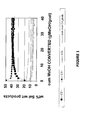
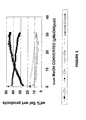
- the activity of each catalyst is provided in Table 1.
- the catalysts prepared at Examples 1 to 5 were tested at 500°C and 25 psig in a plug flow reactor equipped with on-line gas chromatography analysis.
- the catalyst selectivity data are provided in Table 2, in which E refers to the ethylene selectivity, P refers to the propylene selectivity and Propane refers to the propane selectivity.
- E refers to the ethylene selectivity
- P refers to the propylene selectivity
- Propane refers to the propane selectivity.
- the molecular sieve can be tailored to enable significantly higher activity while maintaining selectivity to light olefins.
- the higher activity (or Si content) allows to use less sieve while achieving the same conversion.
- the high activity sieve according to the present invention has low selectivity to undesired products such as propane, comparable to the propane selectivity of the low activity catalyst of example 5.
Landscapes
- Chemical & Material Sciences (AREA)
- Organic Chemistry (AREA)
- Engineering & Computer Science (AREA)
- Chemical Kinetics & Catalysis (AREA)
- Materials Engineering (AREA)
- Oil, Petroleum & Natural Gas (AREA)
- General Chemical & Material Sciences (AREA)
- Crystallography & Structural Chemistry (AREA)
- Inorganic Chemistry (AREA)
- Organic Low-Molecular-Weight Compounds And Preparation Thereof (AREA)
- Catalysts (AREA)
- Solid-Sorbent Or Filter-Aiding Compositions (AREA)
- Gas Separation By Absorption (AREA)
- Low-Molecular Organic Synthesis Reactions Using Catalysts (AREA)
- Silicates, Zeolites, And Molecular Sieves (AREA)
Applications Claiming Priority (5)
| Application Number | Priority Date | Filing Date | Title |
|---|---|---|---|
| US997778 | 2001-11-29 | ||
| US09/997,778 US6773688B2 (en) | 2001-11-29 | 2001-11-29 | Process for manufacture of molecular sieves |
| US997779 | 2001-11-29 | ||
| US09/997,779 US6696032B2 (en) | 2001-11-29 | 2001-11-29 | Process for manufacturing a silicoaluminophosphate molecular sieve |
| PCT/US2002/034674 WO2003048084A2 (en) | 2001-11-29 | 2002-10-29 | Use of molecular sieves for the conversion of oxygenates to olefins |
Publications (2)
| Publication Number | Publication Date |
|---|---|
| EP1451131A2 EP1451131A2 (en) | 2004-09-01 |
| EP1451131B1 true EP1451131B1 (en) | 2006-08-02 |
Family
ID=27130676
Family Applications (1)
| Application Number | Title | Priority Date | Filing Date |
|---|---|---|---|
| EP02795570A Expired - Lifetime EP1451131B1 (en) | 2001-11-29 | 2002-10-29 | Use of molecular sieves for the conversion of oxygenates to olefins |
Country Status (7)
| Country | Link |
|---|---|
| EP (1) | EP1451131B1 (enExample) |
| JP (1) | JP2005511669A (enExample) |
| CN (1) | CN1253416C (enExample) |
| AT (1) | ATE334954T1 (enExample) |
| AU (1) | AU2002360321A1 (enExample) |
| DE (1) | DE60213649D1 (enExample) |
| WO (1) | WO2003048084A2 (enExample) |
Cited By (1)
| Publication number | Priority date | Publication date | Assignee | Title |
|---|---|---|---|---|
| US9492818B2 (en) | 2009-06-12 | 2016-11-15 | Albemarle Europe Sprl | SAPO molecular sieve catalysts and their preparation and uses |
Families Citing this family (11)
| Publication number | Priority date | Publication date | Assignee | Title |
|---|---|---|---|---|
| US7371915B1 (en) * | 2004-06-25 | 2008-05-13 | Uop Llc | Conversion of oxygenate to propylene using moving bed technology |
| US7528201B2 (en) | 2004-12-22 | 2009-05-05 | Exxonmobil Chemical Patents Inc. | Synthesis of silicoaluminophosphate molecular sieves |
| WO2007100418A1 (en) * | 2006-02-27 | 2007-09-07 | Exxonmobil Chemical Patents Inc. | Method of making and process for using molecular sieve catalyst |
| CN101284246B (zh) * | 2008-04-24 | 2011-05-18 | 中国石油化工股份有限公司 | 含氧化合物转化为低碳烯烃的催化剂 |
| CN102099117B (zh) * | 2008-07-25 | 2013-03-27 | 埃克森美孚化学专利公司 | 含菱沸石的分子筛的合成和它们在含氧物至烯烃的转化中的应用 |
| JP5772387B2 (ja) | 2011-08-23 | 2015-09-02 | トヨタ自動車株式会社 | マグネシウムを有するシリコアルミノリン酸塩モレキュラーシーブ及びその製造方法 |
| US20140171713A1 (en) * | 2012-12-14 | 2014-06-19 | Uop Llc | Nano sapo-35 and method of making |
| JP6703772B2 (ja) * | 2015-10-09 | 2020-06-03 | 国立大学法人大阪大学 | ゼオライト触媒の製造方法、ゼオライト触媒及びシリコアルミノホスフェート型ゼオライト |
| JP2019166418A (ja) | 2016-08-08 | 2019-10-03 | 富士フイルム株式会社 | ガス分離膜、ガス分離膜モジュールおよびガス分離装置 |
| CN116002711B (zh) * | 2021-10-22 | 2025-05-30 | 中国石油化工股份有限公司 | Sapo-35/sapo-34共生分子筛及其制备方法和应用以及分子筛组合物及其应用 |
| CN116002710B (zh) * | 2021-10-22 | 2025-05-30 | 中国石油化工股份有限公司 | 一种sapo-35/sapo-5共生分子筛及其制备方法和应用以及分子筛组合物及其应用 |
Family Cites Families (3)
| Publication number | Priority date | Publication date | Assignee | Title |
|---|---|---|---|---|
| US6534692B1 (en) * | 1997-12-09 | 2003-03-18 | Uop Llc | Methanol to olefin process with increased selectivity to ethylene and propylene |
| US5912393A (en) * | 1997-12-09 | 1999-06-15 | Uop Llc | Metallo aluminophosphate molecular sieve with novel crystal morphology and methanol to olefin process using the sieve |
| JP4168214B2 (ja) * | 1998-10-15 | 2008-10-22 | 三菱瓦斯化学株式会社 | メチルアミン製造触媒及び該触媒の製造方法 |
-
2002
- 2002-10-29 JP JP2003549279A patent/JP2005511669A/ja active Pending
- 2002-10-29 DE DE60213649T patent/DE60213649D1/de not_active Expired - Lifetime
- 2002-10-29 AT AT02795570T patent/ATE334954T1/de not_active IP Right Cessation
- 2002-10-29 EP EP02795570A patent/EP1451131B1/en not_active Expired - Lifetime
- 2002-10-29 AU AU2002360321A patent/AU2002360321A1/en not_active Abandoned
- 2002-10-29 WO PCT/US2002/034674 patent/WO2003048084A2/en not_active Ceased
- 2002-10-29 CN CNB028238907A patent/CN1253416C/zh not_active Expired - Fee Related
Cited By (1)
| Publication number | Priority date | Publication date | Assignee | Title |
|---|---|---|---|---|
| US9492818B2 (en) | 2009-06-12 | 2016-11-15 | Albemarle Europe Sprl | SAPO molecular sieve catalysts and their preparation and uses |
Also Published As
| Publication number | Publication date |
|---|---|
| WO2003048084A3 (en) | 2003-10-16 |
| ATE334954T1 (de) | 2006-08-15 |
| WO2003048084A2 (en) | 2003-06-12 |
| EP1451131A2 (en) | 2004-09-01 |
| DE60213649D1 (de) | 2006-09-14 |
| CN1596235A (zh) | 2005-03-16 |
| AU2002360321A1 (en) | 2003-06-17 |
| JP2005511669A (ja) | 2005-04-28 |
| CN1253416C (zh) | 2006-04-26 |
Similar Documents
| Publication | Publication Date | Title |
|---|---|---|
| US7009086B2 (en) | Use of molecular sieves for the conversion of oxygenates to olefins | |
| US7375050B2 (en) | Synthesis and use of aluminophosphates and silicoaluminophosphates | |
| US6812372B2 (en) | Silicoaluminophosphate molecular sieve | |
| US6620983B1 (en) | Synthesis of aluminophosphates and silicoaluminophosphates | |
| US7691354B2 (en) | Synthesis of SAPO-34 with essentially pure CHA framework | |
| US7977273B2 (en) | Enhancement of molecular sieve performance | |
| EP1511687B1 (en) | Synthesis of molecular sieves having the cha framework type | |
| US7247287B2 (en) | Synthesis of aluminophosphates and silicoaluminophosphates | |
| ZA200403277B (en) | Use of molecular sieves for the conversion of oxygenates to olefins. | |
| US7785554B2 (en) | Process for manufacture of silicoaluminophosphate molecular sieves | |
| EP1451131B1 (en) | Use of molecular sieves for the conversion of oxygenates to olefins | |
| US6767858B1 (en) | Synthesis of alumino- and silicoalumino-phosphates of CHA framework type | |
| EP1511688A1 (en) | Synthesis of aluminophosphates and silicoaluminophosphates | |
| US6835363B1 (en) | Synthesis of molecular sieves of CHA framework type | |
| US6927187B2 (en) | Synthesis of silicoaluminophosphates | |
| EP1799346B1 (en) | Aluminophosphate molecular sieve, its synthesis and use |
Legal Events
| Date | Code | Title | Description |
|---|---|---|---|
| PUAI | Public reference made under article 153(3) epc to a published international application that has entered the european phase |
Free format text: ORIGINAL CODE: 0009012 |
|
| 17P | Request for examination filed |
Effective date: 20040615 |
|
| AK | Designated contracting states |
Kind code of ref document: A2 Designated state(s): AT BE BG CH CY CZ DE DK EE ES FI FR GB GR IE IT LI LU MC NL PT SE SK TR |
|
| AX | Request for extension of the european patent |
Extension state: AL LT LV MK RO SI |
|
| 17Q | First examination report despatched |
Effective date: 20050421 |
|
| GRAP | Despatch of communication of intention to grant a patent |
Free format text: ORIGINAL CODE: EPIDOSNIGR1 |
|
| GRAS | Grant fee paid |
Free format text: ORIGINAL CODE: EPIDOSNIGR3 |
|
| GRAA | (expected) grant |
Free format text: ORIGINAL CODE: 0009210 |
|
| AK | Designated contracting states |
Kind code of ref document: B1 Designated state(s): AT BE BG CH CY CZ DE DK EE ES FI FR GB GR IE IT LI LU MC NL PT SE SK TR |
|
| PG25 | Lapsed in a contracting state [announced via postgrant information from national office to epo] |
Ref country code: IT Free format text: LAPSE BECAUSE OF FAILURE TO SUBMIT A TRANSLATION OF THE DESCRIPTION OR TO PAY THE FEE WITHIN THE PRESCRIBED TIME-LIMIT;WARNING: LAPSES OF ITALIAN PATENTS WITH EFFECTIVE DATE BEFORE 2007 MAY HAVE OCCURRED AT ANY TIME BEFORE 2007. THE CORRECT EFFECTIVE DATE MAY BE DIFFERENT FROM THE ONE RECORDED. Effective date: 20060802 Ref country code: BE Free format text: LAPSE BECAUSE OF FAILURE TO SUBMIT A TRANSLATION OF THE DESCRIPTION OR TO PAY THE FEE WITHIN THE PRESCRIBED TIME-LIMIT Effective date: 20060802 Ref country code: SK Free format text: LAPSE BECAUSE OF FAILURE TO SUBMIT A TRANSLATION OF THE DESCRIPTION OR TO PAY THE FEE WITHIN THE PRESCRIBED TIME-LIMIT Effective date: 20060802 Ref country code: LI Free format text: LAPSE BECAUSE OF FAILURE TO SUBMIT A TRANSLATION OF THE DESCRIPTION OR TO PAY THE FEE WITHIN THE PRESCRIBED TIME-LIMIT Effective date: 20060802 Ref country code: CH Free format text: LAPSE BECAUSE OF FAILURE TO SUBMIT A TRANSLATION OF THE DESCRIPTION OR TO PAY THE FEE WITHIN THE PRESCRIBED TIME-LIMIT Effective date: 20060802 Ref country code: AT Free format text: LAPSE BECAUSE OF FAILURE TO SUBMIT A TRANSLATION OF THE DESCRIPTION OR TO PAY THE FEE WITHIN THE PRESCRIBED TIME-LIMIT Effective date: 20060802 Ref country code: FI Free format text: LAPSE BECAUSE OF FAILURE TO SUBMIT A TRANSLATION OF THE DESCRIPTION OR TO PAY THE FEE WITHIN THE PRESCRIBED TIME-LIMIT Effective date: 20060802 Ref country code: CZ Free format text: LAPSE BECAUSE OF FAILURE TO SUBMIT A TRANSLATION OF THE DESCRIPTION OR TO PAY THE FEE WITHIN THE PRESCRIBED TIME-LIMIT Effective date: 20060802 Ref country code: NL Free format text: LAPSE BECAUSE OF FAILURE TO SUBMIT A TRANSLATION OF THE DESCRIPTION OR TO PAY THE FEE WITHIN THE PRESCRIBED TIME-LIMIT Effective date: 20060802 |
|
| REG | Reference to a national code |
Ref country code: GB Ref legal event code: FG4D |
|
| REG | Reference to a national code |
Ref country code: CH Ref legal event code: EP |
|
| REG | Reference to a national code |
Ref country code: IE Ref legal event code: FG4D |
|
| REF | Corresponds to: |
Ref document number: 60213649 Country of ref document: DE Date of ref document: 20060914 Kind code of ref document: P |
|
| PGFP | Annual fee paid to national office [announced via postgrant information from national office to epo] |
Ref country code: GB Payment date: 20060915 Year of fee payment: 5 |
|
| PG25 | Lapsed in a contracting state [announced via postgrant information from national office to epo] |
Ref country code: MC Free format text: LAPSE BECAUSE OF NON-PAYMENT OF DUE FEES Effective date: 20061031 Ref country code: IE Free format text: LAPSE BECAUSE OF NON-PAYMENT OF DUE FEES Effective date: 20061031 |
|
| PG25 | Lapsed in a contracting state [announced via postgrant information from national office to epo] |
Ref country code: SE Free format text: LAPSE BECAUSE OF FAILURE TO SUBMIT A TRANSLATION OF THE DESCRIPTION OR TO PAY THE FEE WITHIN THE PRESCRIBED TIME-LIMIT Effective date: 20061102 Ref country code: BG Free format text: LAPSE BECAUSE OF FAILURE TO SUBMIT A TRANSLATION OF THE DESCRIPTION OR TO PAY THE FEE WITHIN THE PRESCRIBED TIME-LIMIT Effective date: 20061102 Ref country code: DK Free format text: LAPSE BECAUSE OF FAILURE TO SUBMIT A TRANSLATION OF THE DESCRIPTION OR TO PAY THE FEE WITHIN THE PRESCRIBED TIME-LIMIT Effective date: 20061102 |
|
| PG25 | Lapsed in a contracting state [announced via postgrant information from national office to epo] |
Ref country code: DE Free format text: LAPSE BECAUSE OF FAILURE TO SUBMIT A TRANSLATION OF THE DESCRIPTION OR TO PAY THE FEE WITHIN THE PRESCRIBED TIME-LIMIT Effective date: 20061103 |
|
| PG25 | Lapsed in a contracting state [announced via postgrant information from national office to epo] |
Ref country code: ES Free format text: LAPSE BECAUSE OF FAILURE TO SUBMIT A TRANSLATION OF THE DESCRIPTION OR TO PAY THE FEE WITHIN THE PRESCRIBED TIME-LIMIT Effective date: 20061113 |
|
| NLV1 | Nl: lapsed or annulled due to failure to fulfill the requirements of art. 29p and 29m of the patents act | ||
| PG25 | Lapsed in a contracting state [announced via postgrant information from national office to epo] |
Ref country code: PT Free format text: LAPSE BECAUSE OF FAILURE TO SUBMIT A TRANSLATION OF THE DESCRIPTION OR TO PAY THE FEE WITHIN THE PRESCRIBED TIME-LIMIT Effective date: 20070102 |
|
| REG | Reference to a national code |
Ref country code: CH Ref legal event code: PL |
|
| EN | Fr: translation not filed | ||
| PLBE | No opposition filed within time limit |
Free format text: ORIGINAL CODE: 0009261 |
|
| STAA | Information on the status of an ep patent application or granted ep patent |
Free format text: STATUS: NO OPPOSITION FILED WITHIN TIME LIMIT |
|
| 26N | No opposition filed |
Effective date: 20070503 |
|
| PG25 | Lapsed in a contracting state [announced via postgrant information from national office to epo] |
Ref country code: GR Free format text: LAPSE BECAUSE OF FAILURE TO SUBMIT A TRANSLATION OF THE DESCRIPTION OR TO PAY THE FEE WITHIN THE PRESCRIBED TIME-LIMIT Effective date: 20061103 Ref country code: FR Free format text: LAPSE BECAUSE OF FAILURE TO SUBMIT A TRANSLATION OF THE DESCRIPTION OR TO PAY THE FEE WITHIN THE PRESCRIBED TIME-LIMIT Effective date: 20070511 |
|
| GBPC | Gb: european patent ceased through non-payment of renewal fee |
Effective date: 20071029 |
|
| PG25 | Lapsed in a contracting state [announced via postgrant information from national office to epo] |
Ref country code: EE Free format text: LAPSE BECAUSE OF FAILURE TO SUBMIT A TRANSLATION OF THE DESCRIPTION OR TO PAY THE FEE WITHIN THE PRESCRIBED TIME-LIMIT Effective date: 20060802 |
|
| PG25 | Lapsed in a contracting state [announced via postgrant information from national office to epo] |
Ref country code: TR Free format text: LAPSE BECAUSE OF FAILURE TO SUBMIT A TRANSLATION OF THE DESCRIPTION OR TO PAY THE FEE WITHIN THE PRESCRIBED TIME-LIMIT Effective date: 20060802 Ref country code: LU Free format text: LAPSE BECAUSE OF NON-PAYMENT OF DUE FEES Effective date: 20061029 |
|
| PG25 | Lapsed in a contracting state [announced via postgrant information from national office to epo] |
Ref country code: CY Free format text: LAPSE BECAUSE OF FAILURE TO SUBMIT A TRANSLATION OF THE DESCRIPTION OR TO PAY THE FEE WITHIN THE PRESCRIBED TIME-LIMIT Effective date: 20060802 Ref country code: FR Free format text: LAPSE BECAUSE OF FAILURE TO SUBMIT A TRANSLATION OF THE DESCRIPTION OR TO PAY THE FEE WITHIN THE PRESCRIBED TIME-LIMIT Effective date: 20060802 Ref country code: GB Free format text: LAPSE BECAUSE OF NON-PAYMENT OF DUE FEES Effective date: 20071029 |