EP1442622B1 - Coordination among mobile stations servicing terminal equipment - Google Patents
Coordination among mobile stations servicing terminal equipment Download PDFInfo
- Publication number
- EP1442622B1 EP1442622B1 EP02776337.4A EP02776337A EP1442622B1 EP 1442622 B1 EP1442622 B1 EP 1442622B1 EP 02776337 A EP02776337 A EP 02776337A EP 1442622 B1 EP1442622 B1 EP 1442622B1
- Authority
- EP
- European Patent Office
- Prior art keywords
- mobile station
- terminal device
- network
- wireless
- network connection
- Prior art date
- Legal status (The legal status is an assumption and is not a legal conclusion. Google has not performed a legal analysis and makes no representation as to the accuracy of the status listed.)
- Expired - Lifetime
Links
- 238000004891 communication Methods 0.000 claims description 46
- 238000000034 method Methods 0.000 claims description 22
- 230000001413 cellular effect Effects 0.000 claims description 14
- 238000011156 evaluation Methods 0.000 claims description 7
- 230000004044 response Effects 0.000 claims description 5
- 230000008569 process Effects 0.000 claims description 2
- 238000010586 diagram Methods 0.000 description 6
- 230000000153 supplemental effect Effects 0.000 description 4
- 238000007726 management method Methods 0.000 description 3
- 230000007246 mechanism Effects 0.000 description 3
- 230000009471 action Effects 0.000 description 2
- 230000005540 biological transmission Effects 0.000 description 2
- 238000005516 engineering process Methods 0.000 description 2
- 230000002452 interceptive effect Effects 0.000 description 2
- 230000010267 cellular communication Effects 0.000 description 1
- 230000008859 change Effects 0.000 description 1
- 230000000694 effects Effects 0.000 description 1
- 230000000977 initiatory effect Effects 0.000 description 1
- 230000009897 systematic effect Effects 0.000 description 1
Images

Classifications
-
- H—ELECTRICITY
- H04—ELECTRIC COMMUNICATION TECHNIQUE
- H04L—TRANSMISSION OF DIGITAL INFORMATION, e.g. TELEGRAPHIC COMMUNICATION
- H04L12/00—Data switching networks
- H04L12/54—Store-and-forward switching systems
- H04L12/56—Packet switching systems
- H04L12/5691—Access to open networks; Ingress point selection, e.g. ISP selection
-
- H—ELECTRICITY
- H04—ELECTRIC COMMUNICATION TECHNIQUE
- H04W—WIRELESS COMMUNICATION NETWORKS
- H04W76/00—Connection management
- H04W76/10—Connection setup
-
- H—ELECTRICITY
- H04—ELECTRIC COMMUNICATION TECHNIQUE
- H04W—WIRELESS COMMUNICATION NETWORKS
- H04W88/00—Devices specially adapted for wireless communication networks, e.g. terminals, base stations or access point devices
- H04W88/02—Terminal devices
- H04W88/04—Terminal devices adapted for relaying to or from another terminal or user
Definitions
- the present invention relates generally to wireless network systems, and more particularly to a wireless network system in which mobile stations such as cellular phones provide and maintain a most appropriate wireless network connection for a terminal device by exchanging network connectivity requirements of the terminal device with one another.
- a terminal device such as laptop computers and handheld PALM devices are capable of connecting to a packet data network (PDN) or to the public switched telephone network (PSTN) through a wireless connection.
- a terminal device typically makes such a network connection when, for example, it is linked via a connector or cable to a mobile station such as a cellular phone that functions as a wireless modem.
- a network subscriber can access the Internet from any location in which cellular network coverage is available.
- handover to a second mobile station would be impossible unless the connector/cable link was changed from the original mobile station to a second mobile station.
- One suggested solution to the above connectivity problem would enable a network connection to be facilitated via an ad hoc network in which the terminal device, the cellular phone and other terminal devices and cellular phones all act as nodes to form a node-to-node connection from the terminal device to the network.
- the terminal device, the cellular phone and other terminal devices and cellular phones all act as nodes to form a node-to-node connection from the terminal device to the network.
- all nodes in the ad hoc network would be both originating and terminating nodes, such an ad hoc network would be complex.
- an ad hoc network would be expensive because all terminal devices and phones used to form the node-to-node connection would have to include appropriate connectivity hardware and software.
- implementation using 2.5 and third generation cell phone technology would not be feasible.
- German patent application publication no. DE-A-19618947 describes a dynamic channel management method which determines which base station is a least utilized base station for servicing a channel request made by a subscriber unit. The least utilized base station is based on what base station is more available to handle the channel request. If the least utilized base station can handle the channel request, it assigns and grants a channel to the subscriber unit. Otherwise, the channel request is blocked or denied.
- the dynamic channel management method provides a systematic way for dynamically matching the available channel resources with the actual demand as a function of time.
- PCT application publication no. WO 01/35585 describes a method and apparatus for providing selective access to a network, between an end device, such as a printer, lap top and cellular phone, and a network such as the Internet through one or more access network terminating devices, such as a cellular access mechanism, LAN access mechanism, satellite access mechanism.
- An access capability for each access network terminating device is determined and the access capability is compared with a preferred access capability associated with a user preference. Once a match is found, one of the access network terminating devices is selected based on the comparison and the end device is configured according to the access capability of the selected one of the access network terminating devices.
- Access capabilities include, for example, cost of access, coverage area, and QoS.
- the end device While communicating with the network, the end device continues to detect if new access network terminating devices are available and the access capability for each of the new access network terminating devices is determined and compared with the preferred access capability and/or the current access capabilities being provided to the end device. One of the new access network terminating devices can be selected based on the comparison.
- the present invention provides a method of optimizing wireless network connections for terminal devices by permitting a first mobile station that establishes a wireless network connection to communicate a request for network connection service by a terminal device to other mobile stations.
- the first mobile station and the other mobile stations then either jointly or independently determine which of the mobile stations best satisfies the requirements for the particular network connection service request. This determination is based upon service requirement parameters communicated from the terminal device to the first mobile station or based upon availability of the first mobile station.
- the chosen mobile station then establishes the network communication between a service provider and the terminal device.
- a terminal device to make a network service connection request to a first mobile station and to have the request forwarded to a more suitable mobile station if the first mobile station cannot meet the terminal devices requirements so that the more suitable mobile station can provide the services.
- the present disclosure concerns communications systems or networks and methods therein arranged an constructed to link terminal devices with requested services either initially or dynamically as those services vary according to the demands of the terminal equipment or availability of such services.
- Such systems or networks are expected to be advantageous as future generations (2.5G and 3G) of cellular and cellular like equipment become available.
- future generations 2.5G and 3G
- inventive principles and combinations thereof are advantageously employed to effect the arranging for services for the terminal equipment within the wireless communications network thus better meeting the needs or requirements of subscriber devices on an as required basis provided these principles or equivalents are utilized.
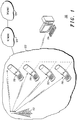
- FIG. 1 in large part and at the simplified level depicted is a representative diagram of a wireless communications network 10 that will serve to explain the problems and certain inventive solutions thereto according to the present invention.
- FIG. 1 shows an exemplary wireless communications system 110 in which mobile station coordination according to a preferred embodiment of the present invention is implemented.
- the wireless communications system 110 includes a service provider 112, a terminal device 114 for requesting network services from the service provider 112 and a plurality of mobile stations such as, for example, mobile or portable cellular telephones, 116 - 119 or similar communications devices.
- the mobile stations 116 - 119 have the ability to communicate with one another to determine and establish a most appropriate wireless network connection between the service provider 112 and the terminal device 114 within a predetermined service provider zone of coverage 122.
- the service provider 112 provides wireless network services such as, for example, voice data or packet data transmission services, to the mobile stations 116 - 119 within the predetermined zone of coverage 122, and enables a mobile station capable of providing a most appropriate wireless network connection to link the terminal device 114 to a communications network 124 such as, for example, a local area network, a wide area network, a packet data network or the publicly switched telephone network, and ultimately to the Internet 126 in a manner well known in the art.
- a communications network 124 such as, for example, a local area network, a wide area network, a packet data network or the publicly switched telephone network, and ultimately to the Internet 126 in a manner well known in the art.
- a communications network 124 such as, for example, a local area network, a wide area network, a packet data network or the publicly switched telephone network, and ultimately to the Internet 126 in a manner well known in the art.
- a communications network 124 such as, for example, a local area network, a wide
- the terminal device 114 is a laptop computer including a wireless modem (not shown).
- the terminal device 114 may be any type of wireless communication device having the capability of requesting wireless services from a mobile station such as the mobile stations 116 - 119 or the service provider 112 and for communicating via a wireless connection over the communications network 124.
- the terminal device 114 continuously scans for network connections that can provide wireless or wired network connectivity into the network 124 and has network connectivity requirements that it communicates to devices that can provide a network connection, such as the mobile stations 116 - 119.
- the terminal device 114 communicates these network connectivity requirements to the mobile stations 116 - 119 via a short range, low power wireless connection by using, for example, a micro or pico modem or commercially available wireless IP or BluetoothTM communication protocol.
- the terminal device 114 can communicate these network connectivity requirements to the mobile stations 116 - 119 via any adequate wireless communication protocol.
- the mobile stations 116 - 119 are 2.5 or third generation wireless devices capable of establishing a network connection between the terminal device 114 and the network 124 through the service provider 112.
- the mobile stations 116 - 119 are capable of communicating with each other to determine and establish a most appropriate wireless network connection between the service provider 112 and the terminal device 114 within the predetermined zone of coverage 122 via, for example, a wireless local network using a protocol that runs on top of Transmission Control Protocol (TCP) or User Datagram Protocol (UDP), which in turn would run on top of a wireless local area network.
- TCP Transmission Control Protocol
- UDP User Datagram Protocol
- the mobile stations 116 - 119 could communicate with one another through the terminal device 114 or via the service provider 112.
- Each of the mobile stations 116 - 119 can evaluate whether it satisfies the network connectivity requirements of the terminal device 114 by, for example, querying the service provider 112 and receiving network-based instructions back from the service provider 112, by reading the overhead messages broadcast by the service provider 112 that describe the connectivity capabilities of an initial wireless network connection established through, for example, the first mobile station 116 for the terminal device 114, by measuring the quality of the wireless link to estimate its connectivity capabilities, or by comparing the connectivity requirements of the terminal device 114 with connection capabilities that have recently been used or that are currently being used.
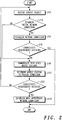
- a mobile station such as the first mobile station 116 receives via a first wireless connection a service request for network access from the terminal device 114 that includes network connectivity requirements of the terminal device 114 such as bandwidth and destination network information as well as required protocols to be used for mobile station coordination purposes.
- the first mobile station 116 determines if it can meet the network connectivity requirements and if it has sufficient bandwidth available to meet the bandwidth requirements of the terminal device 114.
- the first mobile station 116 determines whether it can continue to adequately meet the network connectivity requirements. If it determines that it can continue to adequately meet the network connectivity requirements, it may maintain the wireless network connection and may not attempt to communicate with the other mobile stations 117 - 119.
- the first mobile station 116 If at 212 the first mobile station 116 cannot initially meet the network connectivity requirements, or at 216 it can no longer satisfy connectivity requirements, at 218 it communicates the service request and network connectivity requirements to a pre or currently determined plurality of second mobile stations, such as the mobile stations 117 - 119, by one of the above-discussed communication modes. It should be noted that the first mobile station 116 also communicates with the second mobile stations 117 - 119, even though it is able to establish an initial network connection at 212, if potential connectivity switching conditions exist. Potential connectivity switching conditions may exist if, for example, the bandwidth requirements of the terminal device 114 change, or an existing network connection is degraded as the first mobile station 116 leaves a service area.
- the terminal device 114 preferably provides a list of mobile stations that it has recently contacted to the first mobile station 116.
- the service provider 112 may provide a list of mobile stations that are registered with the service provider 112 and that are within the service provider zone of coverage 122 or near the geographic location of the first mobile station 116.
- the list may include supplemental information about each mobile station including mobile station identifiers, mobile station types, or operators.
- the first mobile station 116 may also use known wireless discovery methods, such as those according to the Bluetooth specification, to discover the presence of the plurality of mobile stations 117 - 119. It will be appreciated that as the mobile stations 117-119 and others move about relative to mobile station 116, the terminal device 114, or service provider 112 their abilities to support a desired connection with device 114 will vary.
- each of the plurality of mobile stations 116 - 119 determines if it can satisfy the network connectivity requirements of the terminal device 114. If more than one mobile station satisfies the network connectivity requirements of the terminal device 114, supplemental connectivity requirements can be evaluated to determine which of the mobile stations 116 - 119 provides a most appropriate wireless network connection. For example, if the service request of the terminal device 114 includes a high bandwidth network connectivity requirement, only those mobile stations that have high bandwidth capabilities will be selected at 220. If several available mobile stations meet the network connectivity requirements even after additional factors are considered, the mobile station that has, for example, the most available bandwidth or the highest potential throughput may be selected.
- the terminal device 114 requests a voice connection, and more than one mobile station is capable of providing such a connection, a mobile station that already has an established voice connection may be chosen to provide the most appropriate wireless network connection.
- the mobile stations may be required to support certain protocols, such as a specific packet data protocol, or a specific session management protocol, such as Session Initiation Protocol (SIP). Only a mobile station that is capable of supporting the required protocols will be chosen. Factors related to the desirability of supporting a connection from the mobile stations perspective may also be used to select the proper mobile station. For example, remaining battery life or economic considerations may be considered.
- one of the mobile stations such as the first mobile station 116, the terminal device 114, or the service provider 112 itself can be utilized to identify the mobile station that will provide the most appropriate wireless network connection. For example, if the first mobile station 116 is utilized to identify the mobile station capable of providing the most appropriate wireless network connection, all of the other second mobile stations 117 - 119 communicate the results of their internal evaluations to the first mobile station 116. The first mobile station 116 then determines which of the mobile stations 116 - 119 is capable of providing the most appropriate wireless network connection after comparing all of the internal evaluations made by the mobile stations 116 - 119. The first mobile station 116 can also send out supplemental network connectivity requirements as discussed above if it concludes that more than one mobile station satisfies the network connectivity requirements specified by the terminal device 114.
- the service provider 112 can request the mobile stations 116 - 119 to provide their respective network connectivity capabilities. After evaluating these capabilities, at 220 it can determine which of the mobile stations 116 - 119 is capable of providing the most appropriate network connection and transmit network-based instructions to the mobile stations 116 - 119 regarding which of the mobile stations should be utilized to provide the most appropriate network connection.
- the mobile stations 116 - 119 can jointly identify the mobile station capable of providing the most appropriate wireless network connection. For example, each of the mobile stations 116 - 119 can maintain a list of all other mobile stations that received the service request and network connectivity requirements from the terminal device 114. Each of the mobile stations can then communicate the results of its own internal evaluation to the other mobile stations on the list, and can eliminate itself from the list if it fails to satisfy the network connectivity requirements. Consequently, the mobile station that is capable of providing the most appropriate wireless network connection will be selected.
- the first mobile station 116 (or, alternatively as discussed above, the network component programmed to select a mobile station capable of providing a most appropriate network connection) can communicate this result to the terminal device 114.
- the first mobile station 116 can then receive a supplemental service request from the terminal device 114 with less stringent network connectivity requirements that increases the probability of identifying a mobile station that can provide a most appropriate wireless network connection.
- the wireless network connection is established via that mobile station. If it is determined that the first mobile station 116 is no longer capable of providing the most appropriate wireless network connection, a handover procedure is used to switch the connection from the first mobile station 116 to a mobile station, such as the second mobile station 117, selected to provide the most appropriate wireless network connection. During the handover procedure, the first mobile station 116, the selected second mobile station 117 and the terminal device 114 collaborate to switch the connection established between the first mobile station 116 and the terminal device 114 to the selected second mobile station 117.
- the handover procedure will be done using known methods provided by the protocols used on the wireless link established between the first mobile station 116 and the terminal device 114.
- the first mobile station 116 may be required to inform the terminal device 114 on how the terminal device 114 can connect to the second mobile station 117 by, for example, passing the ID or address of the second mobile station 117.
- the first mobile station 116 may be required to inform the second mobile station 117 on how the second mobile station 117 can connect to the terminal device 114 by, for example, passing the ID or address of the terminal device 114.
- FIGs. 3 - 4 A specific example of the above-discussed handover procedure is illustrated in FIGs. 3 - 4 .
- the terminal device 114 communicates a service request to the first mobile station 116.
- the first mobile station 116 establishes an initial network connection with the service provider 112 for the terminal device 114.
- the mobile station coordination as discussed above in connection with FIG. 2 identifies and selects a mobile station, such as the second mobile station 117, that is capable of providing the most appropriate wireless network connection for the terminal device 114.
- the first mobile station 116 if the first mobile station 116 cannot satisfy the network connectivity requirements of the terminal device 114, mobile station coordination according to another preferred embodiment of the present invention prohibits it from automatically establishing an initial network connection for the terminal device 114. Regardless, the first mobile station 116 communicates the service request to the second mobile station 117 that is also registered with or otherwise in communication with the service provider 112.
- a network connection is established between the service provider 112 and the terminal device 114 based on communication and coordination between the available mobile stations 116, 117 in accordance with the present invention.
- the mobile station coordination of the present invention can be initiated if the quality of service being provided by a mobile station initially selected to provide a most appropriate wireless network connection is degraded by a predetermined amount or to a predetermined level. For example, if the mobile station providing the most appropriate wireless network connection detects that the terminal device needs more bandwidth than the mobile station currently can provide, it could execute the mobile station coordination of the present invention to search for a subsequent mobile station that is more capable of providing the most appropriate wireless network connection for the terminal device 114. The connection between the service provider 112 and the terminal device 114 can then be handed over to the newly selected mobile station as discussed above.
- the mobile station coordination of the present invention can also be utilized to find the most cost effective network connection for a terminal device. For example, per minute cost for each of the mobile stations 116 - 119 can be communicated to the terminal device 114 or to the first mobile station 116 in response to the service request from the terminal device 114. The terminal device 114 or the first mobile station 116 can then select the mobile station that can provide the most appropriate wireless network connection in the most cost effective manner. Alternatively, a mobile station that initially receives the service request can attempt to match or beat the cost quotes received from the most cost effective mobile station to minimize the number of required handovers.
- the mobile station coordination of the present invention can also be utilized to match the connections of terminal devices with mobile stations in a manner that optimizes the overall performance of the service provider network. For example, a mobile station supporting an interactive packet data connection can be handed over to a mobile station with an established voice/multi-media connection. As a result, the terminal device requiring the interactive packet data connection can utilize unused time slots of the voice/multi-media connection and free up the mobile station providing the initial support, thereby improving overall network efficiency.
- the number of mobile stations in the plurality of mobile station can be one.
Landscapes
- Engineering & Computer Science (AREA)
- Computer Networks & Wireless Communication (AREA)
- Signal Processing (AREA)
- Mobile Radio Communication Systems (AREA)
- Telephonic Communication Services (AREA)
Priority Applications (1)
| Application Number | Priority Date | Filing Date | Title |
|---|---|---|---|
| EP12185921A EP2542020A1 (en) | 2001-10-30 | 2002-10-29 | Coordination Among Mobile Stations Servicing Terminal Equipment |
Applications Claiming Priority (3)
| Application Number | Priority Date | Filing Date | Title |
|---|---|---|---|
| US10/012,907 US7184774B2 (en) | 2001-10-30 | 2001-10-30 | Coordination among mobile stations servicing terminal equipment |
| US12907 | 2001-10-30 | ||
| PCT/US2002/034511 WO2003039178A1 (en) | 2001-10-30 | 2002-10-29 | Coordination among mobile stations servicing terminal equipment |
Related Child Applications (1)
| Application Number | Title | Priority Date | Filing Date |
|---|---|---|---|
| EP12185921A Division-Into EP2542020A1 (en) | 2001-10-30 | 2002-10-29 | Coordination Among Mobile Stations Servicing Terminal Equipment |
Publications (3)
| Publication Number | Publication Date |
|---|---|
| EP1442622A1 EP1442622A1 (en) | 2004-08-04 |
| EP1442622A4 EP1442622A4 (en) | 2010-07-07 |
| EP1442622B1 true EP1442622B1 (en) | 2016-12-14 |
Family
ID=21757312
Family Applications (2)
| Application Number | Title | Priority Date | Filing Date |
|---|---|---|---|
| EP02776337.4A Expired - Lifetime EP1442622B1 (en) | 2001-10-30 | 2002-10-29 | Coordination among mobile stations servicing terminal equipment |
| EP12185921A Withdrawn EP2542020A1 (en) | 2001-10-30 | 2002-10-29 | Coordination Among Mobile Stations Servicing Terminal Equipment |
Family Applications After (1)
| Application Number | Title | Priority Date | Filing Date |
|---|---|---|---|
| EP12185921A Withdrawn EP2542020A1 (en) | 2001-10-30 | 2002-10-29 | Coordination Among Mobile Stations Servicing Terminal Equipment |
Country Status (7)
| Country | Link |
|---|---|
| US (1) | US7184774B2 (enExample) |
| EP (2) | EP1442622B1 (enExample) |
| JP (1) | JP4121959B2 (enExample) |
| KR (1) | KR100612176B1 (enExample) |
| CN (1) | CN100525536C (enExample) |
| BR (1) | BR0213804A (enExample) |
| WO (1) | WO2003039178A1 (enExample) |
Cited By (1)
| Publication number | Priority date | Publication date | Assignee | Title |
|---|---|---|---|---|
| US12684632B2 (en) | 2024-01-25 | 2026-07-14 | T-Mobile Usa, Inc. | Providing telecommunications resources to users based on availability |
Families Citing this family (47)
| Publication number | Priority date | Publication date | Assignee | Title |
|---|---|---|---|---|
| US5694546A (en) | 1994-05-31 | 1997-12-02 | Reisman; Richard R. | System for automatic unattended electronic information transport between a server and a client by a vendor provided transport software with a manifest list |
| US7487112B2 (en) * | 2000-06-29 | 2009-02-03 | Barnes Jr Melvin L | System, method, and computer program product for providing location based services and mobile e-commerce |
| US7133837B1 (en) * | 2000-06-29 | 2006-11-07 | Barnes Jr Melvin L | Method and apparatus for providing communication transmissions |
| US7532862B2 (en) * | 2002-03-19 | 2009-05-12 | Apple Inc. | Method and apparatus for configuring a wireless device through reverse advertising |
| US10489449B2 (en) | 2002-05-23 | 2019-11-26 | Gula Consulting Limited Liability Company | Computer accepting voice input and/or generating audible output |
| US8611919B2 (en) * | 2002-05-23 | 2013-12-17 | Wounder Gmbh., Llc | System, method, and computer program product for providing location based services and mobile e-commerce |
| US7818015B2 (en) * | 2002-09-12 | 2010-10-19 | Broadcom Corporation | Method of determining optimal cell configuration based upon determined device location |
| CN1717902A (zh) * | 2003-05-29 | 2006-01-04 | 松下电器产业株式会社 | Ad hoc网络中包含的移动通信设备 |
| US11294618B2 (en) | 2003-07-28 | 2022-04-05 | Sonos, Inc. | Media player system |
| US8290603B1 (en) | 2004-06-05 | 2012-10-16 | Sonos, Inc. | User interfaces for controlling and manipulating groupings in a multi-zone media system |
| US8234395B2 (en) | 2003-07-28 | 2012-07-31 | Sonos, Inc. | System and method for synchronizing operations among a plurality of independently clocked digital data processing devices |
| US8020023B2 (en) | 2003-07-28 | 2011-09-13 | Sonos, Inc. | Systems and methods for synchronizing operations among a plurality of independently clocked digital data processing devices without a voltage controlled crystal oscillator |
| US11650784B2 (en) | 2003-07-28 | 2023-05-16 | Sonos, Inc. | Adjusting volume levels |
| US11106424B2 (en) | 2003-07-28 | 2021-08-31 | Sonos, Inc. | Synchronizing operations among a plurality of independently clocked digital data processing devices |
| US11106425B2 (en) | 2003-07-28 | 2021-08-31 | Sonos, Inc. | Synchronizing operations among a plurality of independently clocked digital data processing devices |
| US20050027466A1 (en) * | 2003-07-29 | 2005-02-03 | Jay Steinmetz | Wireless collection of battery performance metrics system, method, and computer program product |
| US9977561B2 (en) | 2004-04-01 | 2018-05-22 | Sonos, Inc. | Systems, methods, apparatus, and articles of manufacture to provide guest access |
| US8797926B2 (en) | 2004-06-04 | 2014-08-05 | Apple Inc. | Networked media station |
| US10972536B2 (en) | 2004-06-04 | 2021-04-06 | Apple Inc. | System and method for synchronizing media presentation at multiple recipients |
| US20070110074A1 (en) | 2004-06-04 | 2007-05-17 | Bob Bradley | System and Method for Synchronizing Media Presentation at Multiple Recipients |
| US8443038B2 (en) | 2004-06-04 | 2013-05-14 | Apple Inc. | Network media device |
| US8326951B1 (en) | 2004-06-05 | 2012-12-04 | Sonos, Inc. | Establishing a secure wireless network with minimum human intervention |
| US8868698B2 (en) | 2004-06-05 | 2014-10-21 | Sonos, Inc. | Establishing a secure wireless network with minimum human intervention |
| US7333773B2 (en) * | 2004-09-16 | 2008-02-19 | International Business Machines Corporation | Coordination of cellular telephones in a residential area to obviate need for wired residential service |
| US8483853B1 (en) | 2006-09-12 | 2013-07-09 | Sonos, Inc. | Controlling and manipulating groupings in a multi-zone media system |
| US12167216B2 (en) | 2006-09-12 | 2024-12-10 | Sonos, Inc. | Playback device pairing |
| US8788080B1 (en) | 2006-09-12 | 2014-07-22 | Sonos, Inc. | Multi-channel pairing in a media system |
| US9202509B2 (en) | 2006-09-12 | 2015-12-01 | Sonos, Inc. | Controlling and grouping in a multi-zone media system |
| KR101273909B1 (ko) * | 2008-10-28 | 2013-06-14 | 에스케이플래닛 주식회사 | 효율적 연결을 위한 추천 시스템, 추천 방법, 서비스 서버,종단 단말기, 연결 방법 및 저장 매체 |
| US8842525B2 (en) * | 2009-10-08 | 2014-09-23 | Clearwire Ip Holdings Llc | System and method for extending a wireless communication coverage area of a cellular base transceiver station (BTS) |
| US20110270747A1 (en) * | 2010-04-28 | 2011-11-03 | Xu Richard H | System and Method for Adding Funds to a Prepaid Account for a Mobile Device Associated with Mulitple Communication Profiles |
| US8780859B2 (en) | 2010-07-15 | 2014-07-15 | CSC Holdings, LLC | Efficient use of a communications network |
| US9491690B2 (en) | 2010-07-15 | 2016-11-08 | CSC Holdings, LLC | Efficient searching for communications networks |
| US11429343B2 (en) | 2011-01-25 | 2022-08-30 | Sonos, Inc. | Stereo playback configuration and control |
| US11265652B2 (en) | 2011-01-25 | 2022-03-01 | Sonos, Inc. | Playback device pairing |
| US9344292B2 (en) | 2011-12-30 | 2016-05-17 | Sonos, Inc. | Systems and methods for player setup room names |
| US9438642B2 (en) | 2012-05-01 | 2016-09-06 | Google Technology Holdings LLC | Methods for coordinating communications between a plurality of communication devices of a user |
| US9560108B2 (en) * | 2012-09-13 | 2017-01-31 | Google Technology Holdings LLC | Providing a mobile access point |
| US20150319682A1 (en) * | 2012-12-06 | 2015-11-05 | Nec Corporation | Communication system, communication device, and network connection control method |
| US10248376B2 (en) | 2015-06-11 | 2019-04-02 | Sonos, Inc. | Multiple groupings in a playback system |
| US10303422B1 (en) | 2016-01-05 | 2019-05-28 | Sonos, Inc. | Multiple-device setup |
| US10712997B2 (en) | 2016-10-17 | 2020-07-14 | Sonos, Inc. | Room association based on name |
| US11297369B2 (en) | 2018-03-30 | 2022-04-05 | Apple Inc. | Remotely controlling playback devices |
| US10783929B2 (en) | 2018-03-30 | 2020-09-22 | Apple Inc. | Managing playback groups |
| US10993274B2 (en) | 2018-03-30 | 2021-04-27 | Apple Inc. | Pairing devices by proxy |
| US10614857B2 (en) | 2018-07-02 | 2020-04-07 | Apple Inc. | Calibrating media playback channels for synchronized presentation |
| US12549945B2 (en) | 2020-09-25 | 2026-02-10 | Sonos, Inc. | Intelligent setup for playback devices |
Citations (1)
| Publication number | Priority date | Publication date | Assignee | Title |
|---|---|---|---|---|
| WO2001030024A2 (de) * | 1999-10-18 | 2001-04-26 | Koninklijke Philips Electronics N.V. | Verfahren zum betrieb drahtloser basisstationen für paketvermittelnde funksysteme mit garantierter dienstgüte |
Family Cites Families (9)
| Publication number | Priority date | Publication date | Assignee | Title |
|---|---|---|---|---|
| US5412654A (en) * | 1994-01-10 | 1995-05-02 | International Business Machines Corporation | Highly dynamic destination-sequenced destination vector routing for mobile computers |
| US6597913B2 (en) * | 1995-06-05 | 2003-07-22 | Motorola, Inc. | Distributed dynamic channel management in cellular systems |
| US5822309A (en) * | 1995-06-15 | 1998-10-13 | Lucent Technologies Inc. | Signaling and control architecture for an ad-hoc ATM LAN |
| US5923702A (en) * | 1996-06-10 | 1999-07-13 | Breeze Wireless Communications Ltd. | Frequency hopping cellular LAN system |
| US5987011A (en) * | 1996-08-30 | 1999-11-16 | Chai-Keong Toh | Routing method for Ad-Hoc mobile networks |
| JP3097581B2 (ja) * | 1996-12-27 | 2000-10-10 | 日本電気株式会社 | アドホックローカルエリアネットワークの構成方法、通信方法及び端末 |
| US6965948B1 (en) * | 1999-11-12 | 2005-11-15 | Telefonaktiebolaget Lm Ericsson (Publ) | Method and apparatus for selective network access |
| US7577451B2 (en) * | 2001-04-04 | 2009-08-18 | Intel Corporation | Extending personal area networks |
| US6735417B2 (en) * | 2002-08-15 | 2004-05-11 | Motorola, Inc. | Method and apparatus for relaying information in an AD-HOC network |
-
2001
- 2001-10-30 US US10/012,907 patent/US7184774B2/en not_active Expired - Lifetime
-
2002
- 2002-10-29 BR BR0213804-2A patent/BR0213804A/pt not_active Application Discontinuation
- 2002-10-29 KR KR1020047006442A patent/KR100612176B1/ko not_active Expired - Fee Related
- 2002-10-29 EP EP02776337.4A patent/EP1442622B1/en not_active Expired - Lifetime
- 2002-10-29 EP EP12185921A patent/EP2542020A1/en not_active Withdrawn
- 2002-10-29 JP JP2003541295A patent/JP4121959B2/ja not_active Expired - Fee Related
- 2002-10-29 CN CNB028218655A patent/CN100525536C/zh not_active Expired - Fee Related
- 2002-10-29 WO PCT/US2002/034511 patent/WO2003039178A1/en not_active Ceased
Patent Citations (1)
| Publication number | Priority date | Publication date | Assignee | Title |
|---|---|---|---|---|
| WO2001030024A2 (de) * | 1999-10-18 | 2001-04-26 | Koninklijke Philips Electronics N.V. | Verfahren zum betrieb drahtloser basisstationen für paketvermittelnde funksysteme mit garantierter dienstgüte |
Cited By (1)
| Publication number | Priority date | Publication date | Assignee | Title |
|---|---|---|---|---|
| US12684632B2 (en) | 2024-01-25 | 2026-07-14 | T-Mobile Usa, Inc. | Providing telecommunications resources to users based on availability |
Also Published As
| Publication number | Publication date |
|---|---|
| KR20050040839A (ko) | 2005-05-03 |
| BR0213804A (pt) | 2004-10-19 |
| EP1442622A1 (en) | 2004-08-04 |
| US20030083061A1 (en) | 2003-05-01 |
| EP2542020A1 (en) | 2013-01-02 |
| CN1582592A (zh) | 2005-02-16 |
| US7184774B2 (en) | 2007-02-27 |
| KR100612176B1 (ko) | 2006-08-16 |
| WO2003039178A1 (en) | 2003-05-08 |
| CN100525536C (zh) | 2009-08-05 |
| EP1442622A4 (en) | 2010-07-07 |
| JP4121959B2 (ja) | 2008-07-23 |
| JP2005508127A (ja) | 2005-03-24 |
Similar Documents
| Publication | Publication Date | Title |
|---|---|---|
| US7184774B2 (en) | Coordination among mobile stations servicing terminal equipment | |
| JP5025736B2 (ja) | プロアクティブ型のクラス毎の負荷管理 | |
| US6879584B2 (en) | Communication services through multiple service providers | |
| US6850503B2 (en) | Method and apparatus for effecting a handoff between two IP connections for time critical communications | |
| KR100683087B1 (ko) | 선택적인 네트워크 액세스를 위한 방법, 시스템 및 단말 디바이스 | |
| EP1935205B1 (en) | User terminal-initiated hard handoff from a wireless local area network to a cellular network | |
| EP1527560B1 (en) | Method for exchanging higher layer system information on a wireless system and automatic system selection of a wireless lan | |
| JP4743200B2 (ja) | 通信端末、端末切替システムおよび端末切替方法 | |
| KR100879541B1 (ko) | 듀얼 모드 휴대 단말기의 무선 통신 장치 및 방법 | |
| WO2008107766A2 (en) | Neighbor network advertisement | |
| KR20060081962A (ko) | 복합 무선 단말의 소비전력 감소 방법 및 그 장치 | |
| JP2007528176A (ja) | 異種ネットワークシステム、ネットワークノード、および移動ホスト | |
| GB2424347A (en) | Providing call service in a wireless local area network (WLAN). | |
| KR101376611B1 (ko) | 다수의 인터넷프로토콜 주소를 사용하는 wifi 핸드오버 | |
| KR100509151B1 (ko) | 이중 모드 단말기 및 그의 구동 방법 | |
| KR100386091B1 (ko) | 옥내/외로 이동하는 이용자를 위한 최적의 이동통신망접속 및 로밍 시스템 및 방법 | |
| KR20040071071A (ko) | 무선인터넷 이동전화 시스템 및 무선인터넷을 이용한음성통신 서비스 제공방법 | |
| Singh et al. | Qualitative study of intelligent access point handover in WLAN systems | |
| KR20090108992A (ko) | 무선 동기 시스템 기반의 오버레이 망에서 우선적으로 망접속을 제공하는 장치 및 방법 | |
| HK1222960A1 (zh) | 用於发现经由无线网络可用的网络能力的方法和装置 |
Legal Events
| Date | Code | Title | Description |
|---|---|---|---|
| PUAI | Public reference made under article 153(3) epc to a published international application that has entered the european phase |
Free format text: ORIGINAL CODE: 0009012 |
|
| 17P | Request for examination filed |
Effective date: 20040601 |
|
| AK | Designated contracting states |
Kind code of ref document: A1 Designated state(s): AT BE BG CH CY CZ DE DK EE ES FI FR GB GR IE IT LI LU MC NL PT SE SK TR |
|
| AX | Request for extension of the european patent |
Extension state: AL LT LV MK RO SI |
|
| A4 | Supplementary search report drawn up and despatched |
Effective date: 20100604 |
|
| RIC1 | Information provided on ipc code assigned before grant |
Ipc: H04W 88/02 20090101AFI20100528BHEP |
|
| RAP1 | Party data changed (applicant data changed or rights of an application transferred) |
Owner name: MOTOROLA, INC. |
|
| 17Q | First examination report despatched |
Effective date: 20100924 |
|
| RAP1 | Party data changed (applicant data changed or rights of an application transferred) |
Owner name: MOTOROLA SOLUTIONS, INC. |
|
| GRAP | Despatch of communication of intention to grant a patent |
Free format text: ORIGINAL CODE: EPIDOSNIGR1 |
|
| INTG | Intention to grant announced |
Effective date: 20160624 |
|
| GRAS | Grant fee paid |
Free format text: ORIGINAL CODE: EPIDOSNIGR3 |
|
| STAA | Information on the status of an ep patent application or granted ep patent |
Free format text: STATUS: GRANT OF PATENT IS INTENDED |
|
| GRAA | (expected) grant |
Free format text: ORIGINAL CODE: 0009210 |
|
| STAA | Information on the status of an ep patent application or granted ep patent |
Free format text: STATUS: THE PATENT HAS BEEN GRANTED |
|
| RAP1 | Party data changed (applicant data changed or rights of an application transferred) |
Owner name: MOTOROLA SOLUTIONS, INC. |
|
| AK | Designated contracting states |
Kind code of ref document: B1 Designated state(s): AT BE BG CH CY CZ DE DK EE ES FI FR GB GR IE IT LI LU MC NL PT SE SK TR |
|
| REG | Reference to a national code |
Ref country code: GB Ref legal event code: FG4D |
|
| REG | Reference to a national code |
Ref country code: CH Ref legal event code: EP |
|
| RAP2 | Party data changed (patent owner data changed or rights of a patent transferred) |
Owner name: MOTOROLA SOLUTIONS, INC. |
|
| REG | Reference to a national code |
Ref country code: IE Ref legal event code: FG4D |
|
| REG | Reference to a national code |
Ref country code: AT Ref legal event code: REF Ref document number: 854581 Country of ref document: AT Kind code of ref document: T Effective date: 20170115 |
|
| REG | Reference to a national code |
Ref country code: DE Ref legal event code: R096 Ref document number: 60248558 Country of ref document: DE |
|
| REG | Reference to a national code |
Ref country code: NL Ref legal event code: MP Effective date: 20161214 |
|
| PG25 | Lapsed in a contracting state [announced via postgrant information from national office to epo] |
Ref country code: SE Free format text: LAPSE BECAUSE OF FAILURE TO SUBMIT A TRANSLATION OF THE DESCRIPTION OR TO PAY THE FEE WITHIN THE PRESCRIBED TIME-LIMIT Effective date: 20161214 Ref country code: GR Free format text: LAPSE BECAUSE OF FAILURE TO SUBMIT A TRANSLATION OF THE DESCRIPTION OR TO PAY THE FEE WITHIN THE PRESCRIBED TIME-LIMIT Effective date: 20170315 |
|
| REG | Reference to a national code |
Ref country code: AT Ref legal event code: MK05 Ref document number: 854581 Country of ref document: AT Kind code of ref document: T Effective date: 20161214 |
|
| PG25 | Lapsed in a contracting state [announced via postgrant information from national office to epo] |
Ref country code: FI Free format text: LAPSE BECAUSE OF FAILURE TO SUBMIT A TRANSLATION OF THE DESCRIPTION OR TO PAY THE FEE WITHIN THE PRESCRIBED TIME-LIMIT Effective date: 20161214 |
|
| PG25 | Lapsed in a contracting state [announced via postgrant information from national office to epo] |
Ref country code: NL Free format text: LAPSE BECAUSE OF FAILURE TO SUBMIT A TRANSLATION OF THE DESCRIPTION OR TO PAY THE FEE WITHIN THE PRESCRIBED TIME-LIMIT Effective date: 20161214 |
|
| PG25 | Lapsed in a contracting state [announced via postgrant information from national office to epo] |
Ref country code: CZ Free format text: LAPSE BECAUSE OF FAILURE TO SUBMIT A TRANSLATION OF THE DESCRIPTION OR TO PAY THE FEE WITHIN THE PRESCRIBED TIME-LIMIT Effective date: 20161214 Ref country code: SK Free format text: LAPSE BECAUSE OF FAILURE TO SUBMIT A TRANSLATION OF THE DESCRIPTION OR TO PAY THE FEE WITHIN THE PRESCRIBED TIME-LIMIT Effective date: 20161214 Ref country code: EE Free format text: LAPSE BECAUSE OF FAILURE TO SUBMIT A TRANSLATION OF THE DESCRIPTION OR TO PAY THE FEE WITHIN THE PRESCRIBED TIME-LIMIT Effective date: 20161214 |
|
| PG25 | Lapsed in a contracting state [announced via postgrant information from national office to epo] |
Ref country code: IT Free format text: LAPSE BECAUSE OF FAILURE TO SUBMIT A TRANSLATION OF THE DESCRIPTION OR TO PAY THE FEE WITHIN THE PRESCRIBED TIME-LIMIT Effective date: 20161214 Ref country code: BE Free format text: LAPSE BECAUSE OF FAILURE TO SUBMIT A TRANSLATION OF THE DESCRIPTION OR TO PAY THE FEE WITHIN THE PRESCRIBED TIME-LIMIT Effective date: 20161214 Ref country code: ES Free format text: LAPSE BECAUSE OF FAILURE TO SUBMIT A TRANSLATION OF THE DESCRIPTION OR TO PAY THE FEE WITHIN THE PRESCRIBED TIME-LIMIT Effective date: 20161214 Ref country code: AT Free format text: LAPSE BECAUSE OF FAILURE TO SUBMIT A TRANSLATION OF THE DESCRIPTION OR TO PAY THE FEE WITHIN THE PRESCRIBED TIME-LIMIT Effective date: 20161214 Ref country code: BG Free format text: LAPSE BECAUSE OF FAILURE TO SUBMIT A TRANSLATION OF THE DESCRIPTION OR TO PAY THE FEE WITHIN THE PRESCRIBED TIME-LIMIT Effective date: 20170314 Ref country code: PT Free format text: LAPSE BECAUSE OF FAILURE TO SUBMIT A TRANSLATION OF THE DESCRIPTION OR TO PAY THE FEE WITHIN THE PRESCRIBED TIME-LIMIT Effective date: 20170414 |
|
| REG | Reference to a national code |
Ref country code: DE Ref legal event code: R097 Ref document number: 60248558 Country of ref document: DE |
|
| PLBE | No opposition filed within time limit |
Free format text: ORIGINAL CODE: 0009261 |
|
| STAA | Information on the status of an ep patent application or granted ep patent |
Free format text: STATUS: NO OPPOSITION FILED WITHIN TIME LIMIT |
|
| REG | Reference to a national code |
Ref country code: FR Ref legal event code: PLFP Year of fee payment: 16 |
|
| 26N | No opposition filed |
Effective date: 20170915 |
|
| PG25 | Lapsed in a contracting state [announced via postgrant information from national office to epo] |
Ref country code: DK Free format text: LAPSE BECAUSE OF FAILURE TO SUBMIT A TRANSLATION OF THE DESCRIPTION OR TO PAY THE FEE WITHIN THE PRESCRIBED TIME-LIMIT Effective date: 20161214 |
|
| PG25 | Lapsed in a contracting state [announced via postgrant information from national office to epo] |
Ref country code: MC Free format text: LAPSE BECAUSE OF FAILURE TO SUBMIT A TRANSLATION OF THE DESCRIPTION OR TO PAY THE FEE WITHIN THE PRESCRIBED TIME-LIMIT Effective date: 20161214 |
|
| REG | Reference to a national code |
Ref country code: CH Ref legal event code: PL |
|
| REG | Reference to a national code |
Ref country code: IE Ref legal event code: MM4A |
|
| PG25 | Lapsed in a contracting state [announced via postgrant information from national office to epo] |
Ref country code: CH Free format text: LAPSE BECAUSE OF NON-PAYMENT OF DUE FEES Effective date: 20171031 Ref country code: LU Free format text: LAPSE BECAUSE OF NON-PAYMENT OF DUE FEES Effective date: 20171029 Ref country code: LI Free format text: LAPSE BECAUSE OF NON-PAYMENT OF DUE FEES Effective date: 20171031 |
|
| REG | Reference to a national code |
Ref country code: FR Ref legal event code: PLFP Year of fee payment: 17 |
|
| PG25 | Lapsed in a contracting state [announced via postgrant information from national office to epo] |
Ref country code: IE Free format text: LAPSE BECAUSE OF NON-PAYMENT OF DUE FEES Effective date: 20171029 |
|
| PG25 | Lapsed in a contracting state [announced via postgrant information from national office to epo] |
Ref country code: CY Free format text: LAPSE BECAUSE OF NON-PAYMENT OF DUE FEES Effective date: 20161214 |
|
| PG25 | Lapsed in a contracting state [announced via postgrant information from national office to epo] |
Ref country code: TR Free format text: LAPSE BECAUSE OF FAILURE TO SUBMIT A TRANSLATION OF THE DESCRIPTION OR TO PAY THE FEE WITHIN THE PRESCRIBED TIME-LIMIT Effective date: 20161214 |
|
| PGFP | Annual fee paid to national office [announced via postgrant information from national office to epo] |
Ref country code: FR Payment date: 20201027 Year of fee payment: 19 |
|
| PGFP | Annual fee paid to national office [announced via postgrant information from national office to epo] |
Ref country code: GB Payment date: 20211026 Year of fee payment: 20 |
|
| PGFP | Annual fee paid to national office [announced via postgrant information from national office to epo] |
Ref country code: DE Payment date: 20211228 Year of fee payment: 20 |
|
| PG25 | Lapsed in a contracting state [announced via postgrant information from national office to epo] |
Ref country code: FR Free format text: LAPSE BECAUSE OF NON-PAYMENT OF DUE FEES Effective date: 20211031 |
|
| REG | Reference to a national code |
Ref country code: DE Ref legal event code: R071 Ref document number: 60248558 Country of ref document: DE |
|
| REG | Reference to a national code |
Ref country code: GB Ref legal event code: PE20 Expiry date: 20221028 |
|
| PG25 | Lapsed in a contracting state [announced via postgrant information from national office to epo] |
Ref country code: GB Free format text: LAPSE BECAUSE OF EXPIRATION OF PROTECTION Effective date: 20221028 |