EP1429007A2 - Verfahren zum Einstellen einer Abgasrückführrate - Google Patents
Verfahren zum Einstellen einer Abgasrückführrate Download PDFInfo
- Publication number
- EP1429007A2 EP1429007A2 EP03010882A EP03010882A EP1429007A2 EP 1429007 A2 EP1429007 A2 EP 1429007A2 EP 03010882 A EP03010882 A EP 03010882A EP 03010882 A EP03010882 A EP 03010882A EP 1429007 A2 EP1429007 A2 EP 1429007A2
- Authority
- EP
- European Patent Office
- Prior art keywords
- exhaust gas
- gas recirculation
- recirculation rate
- egr
- valve
- Prior art date
- Legal status (The legal status is an assumption and is not a legal conclusion. Google has not performed a legal analysis and makes no representation as to the accuracy of the status listed.)
- Granted
Links
Images

Classifications
-
- F—MECHANICAL ENGINEERING; LIGHTING; HEATING; WEAPONS; BLASTING
- F02—COMBUSTION ENGINES; HOT-GAS OR COMBUSTION-PRODUCT ENGINE PLANTS
- F02D—CONTROLLING COMBUSTION ENGINES
- F02D21/00—Controlling engines characterised by their being supplied with non-airborne oxygen or other non-fuel gas
- F02D21/06—Controlling engines characterised by their being supplied with non-airborne oxygen or other non-fuel gas peculiar to engines having other non-fuel gas added to combustion air
- F02D21/08—Controlling engines characterised by their being supplied with non-airborne oxygen or other non-fuel gas peculiar to engines having other non-fuel gas added to combustion air the other gas being the exhaust gas of engine
-
- F—MECHANICAL ENGINEERING; LIGHTING; HEATING; WEAPONS; BLASTING
- F02—COMBUSTION ENGINES; HOT-GAS OR COMBUSTION-PRODUCT ENGINE PLANTS
- F02D—CONTROLLING COMBUSTION ENGINES
- F02D41/00—Electrical control of supply of combustible mixture or its constituents
- F02D41/0025—Controlling engines characterised by use of non-liquid fuels, pluralities of fuels, or non-fuel substances added to the combustible mixtures
- F02D41/0047—Controlling exhaust gas recirculation [EGR]
- F02D41/006—Controlling exhaust gas recirculation [EGR] using internal EGR
- F02D41/0062—Estimating, calculating or determining the internal EGR rate, amount or flow
-
- F—MECHANICAL ENGINEERING; LIGHTING; HEATING; WEAPONS; BLASTING
- F02—COMBUSTION ENGINES; HOT-GAS OR COMBUSTION-PRODUCT ENGINE PLANTS
- F02D—CONTROLLING COMBUSTION ENGINES
- F02D41/00—Electrical control of supply of combustible mixture or its constituents
- F02D41/0025—Controlling engines characterised by use of non-liquid fuels, pluralities of fuels, or non-fuel substances added to the combustible mixtures
- F02D41/0047—Controlling exhaust gas recirculation [EGR]
- F02D41/0065—Specific aspects of external EGR control
- F02D41/0072—Estimating, calculating or determining the EGR rate, amount or flow
-
- Y—GENERAL TAGGING OF NEW TECHNOLOGICAL DEVELOPMENTS; GENERAL TAGGING OF CROSS-SECTIONAL TECHNOLOGIES SPANNING OVER SEVERAL SECTIONS OF THE IPC; TECHNICAL SUBJECTS COVERED BY FORMER USPC CROSS-REFERENCE ART COLLECTIONS [XRACs] AND DIGESTS
- Y02—TECHNOLOGIES OR APPLICATIONS FOR MITIGATION OR ADAPTATION AGAINST CLIMATE CHANGE
- Y02T—CLIMATE CHANGE MITIGATION TECHNOLOGIES RELATED TO TRANSPORTATION
- Y02T10/00—Road transport of goods or passengers
- Y02T10/10—Internal combustion engine [ICE] based vehicles
- Y02T10/40—Engine management systems
Definitions
- the invention relates to a method for setting an exhaust gas recirculation rate an internal combustion engine, in which an exhaust gas recirculation valve by means of a on this acting actuator depending on requirements for Internal combustion engine is adjusted.
- the invention has for its object a method of the aforementioned Provide type in which the exhaust gas recirculation valve by means of the actuator in on is adjusted in stages in a known manner and the exhaust gas recirculation rate is optimized becomes.
- the exhaust gas recirculation rate is provided in a manner known per se is roughly regulated in stages to a setpoint, and that after the rough regulation a fine control is carried out, in which it is determined whether the exhaust gas recirculation rate has reached a specified accuracy and a fine adjustment by acting on an intake and / or exhaust valve activity of a concerned combustion chamber takes place if the specified accuracy after the Rough control has not been reached.
- the tax conditions are always optimal adjusted exhaust gas recirculation achieved even if the exhaust gas recirculation valve is in relatively coarse gradations is adjustable. This ensures optimal coordination the feedback rate depending on the requirements for the internal combustion engine, such as. optimal exhaust gas composition or optimal torque achievable at the respective speed.
- An actuator used is, for example in a stepper motor.
- By acting on the inlet and / or Exhaust valve activity for example by adjusting a camshaft or on known other valve actuators, including the valve lifts and / or a valve overlap can be suitably controlled or regulated can, the in the combustion chamber (and possibly upstream or downstream Duct sections) existing internal exhaust gas recirculation rate varies. Thereby fine adjustment of the total exhaust gas recirculation rate is achieved, which is from the internal and the external, i.e. passed through a return channel Exhaust gas recirculation rate.
- Engine control data can, for example, in an engine control device and / or by means of suitable sensors be recorded.
- An advantageous embodiment of the method consists, for example, in that the engine control data include measured exhaust gas measurement data.
- a further advantageous embodiment of the method results from the fact that the requirements to optimize a torque, an exhaust gas composition or a combination thereof and that in the event of a deviation of the optimal torque and / or the optimal exhaust gas composition due to the fine adjustment, optimization by changing other control parameters he follows.
- Fig. 1 shows a section of an internal combustion engine with an input side connected to an intake manifold AR and on the outlet side to an exhaust duct AK Combustion chamber BR.
- a return duct RK leads from the exhaust duct AK a controllable or adjustable exhaust gas recirculation valve ARV back to the intake pipe AR, as per itself, for example, from DE 29 11 mentioned at the beginning 209 A1 known.
- the exhaust gas recirculation valve ARV is switched on by means of an actuator Form of a servomotor SM depending on requirements for the internal combustion engine adjusted, the adjustment signals from a control device are delivered, e.g. Which engine control data is part of an engine control system MS provides that are stored or generated in it.
- the motor control is suitably programmed and with input and output connections provided so that you e.g. also suitable sensor data from sensors S can be fed.
- the MS motor control can also be used Activity of the intake and exhaust valves EV, AV, for example via a adjustable camshaft NW or corresponding actuators controlled or be regulated as known per se.
- a respective ignition timing can also be parameterized by means of the engine control be specified.
- the stepping motor SM is used to adjust the exhaust gas recirculation valve ARV and thus the EGR exhaust gas recirculation rate in stages, i.e. in the Usually very rough depending on the step size of the stepper motor SM and of an existing pressure drop on the ARV exhaust gas recirculation valve.
- the total exhaust gas recirculation rate is made up of one in the combustion chamber BR and possibly also in connected sections of the Intake pipe AR and the exhaust duct AK existing internal exhaust gas recirculation rate as well as one via the return duct RK and the exhaust gas recirculation valve ARV returned external exhaust gas recirculation rate.
- From the given total exhaust gas recirculation rate is the internal exhaust gas recirculation rate, for example calculated from the current camshaft positions, deducted.
- the difference thus obtained serves as the setpoint for the external one Exhaust gas recirculation rate. This setpoint is converted into a set exhaust gas mass flow and finally into a target opening or a target opening angle of the exhaust gas recirculation valve Converted ARV.
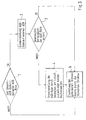
- step 3 shows the procedure for the present method for setting the exhaust gas recirculation rate of the fuel rail, which is an Otto engine or can trade a diesel engine.
- a first step 1 a Target-actual comparison between the target total exhaust gas recirculation rate and the current one Total exhaust gas recirculation rate carried out and if a tolerance threshold is exceeded up or down in a second step 2 a rough setting the exhaust gas recirculation rate by changing the external exhaust gas recirculation rate Corresponding setting of the exhaust gas recirculation valve ARV using the stepper motor SM made.
- a third step 3 it is determined whether a desired or predetermined accuracy of the total exhaust gas recirculation rate achieved is.
- the others are controlled by means of the motor control MS Settings according to the requirements for the internal combustion engine, for example the required torque is set by the torque structure.
- the desired accuracy of the exhaust gas recirculation rate in third step 3 in Due to the roughly quantized exhaust gas mass flow is not achieved in one fourth step 4, fine-tune the total exhaust gas recirculation rate Regulate the internal exhaust gas recirculation rate by adjusting the intake and / or Exhaust valve operation performed. This happens, for example by adjusting the intake and / or exhaust camshaft NW.
- the procedure described is particularly useful for systems with Stepper motors an optimal setting of the exhaust gas recirculation rate of an internal combustion engine reached.
Landscapes
- Engineering & Computer Science (AREA)
- Chemical & Material Sciences (AREA)
- Combustion & Propulsion (AREA)
- Mechanical Engineering (AREA)
- General Engineering & Computer Science (AREA)
- Exhaust-Gas Circulating Devices (AREA)
- Output Control And Ontrol Of Special Type Engine (AREA)
Abstract
Description
- Fig. 1
- eine schematische Darstellung einer Anordnung zum Einstellen einer Abgasrückführrate,
- Fig. 2
- einen stufigen Verlauf von Einstellungen eines Abgasrückführventils und
- Fig. 3
- ein Ablaufdiagramm zur Vorgehensweise beim Einstellen einer Abgasrückführrate.
Claims (4)
- Verfahren zum Einstellen einer Abgasrückführrate (AGR) einer Brennkraftmaschine, bei dem ein Abgasrückführventil (ARV) mittels eines auf dieses einwirkenden Stellglieds in Abhängigkeit von Anforderungen an die Brennkraftmaschine verstellt wird,
dadurch gekennzeichnet, dass die Abgasrückführrate (AGR) in an sich bekannter Weise in Stufen grob auf einen Sollwert geregelt wird,
dass nach der Grobeinregelung eine Feinregelung durchgeführt wird, bei der festgestellt wird, ob die Abgasrückführrate (AGR) eine vorgegebene Genauigkeit erreicht hat und eine Feineinstellung mittels Einwirkens auf eine Einlass- und/oder Auslassventiltätigkeit eines betreffenden Brennraumes (BR) erfolgt, falls die vorgegebene Genauigkeit nach der Grobregelung nicht erreicht ist. - Verfahren nach Anspruch 1,
dadurch gekennzeichnet, dass die Feineinstellung auf der Grundlage von in einer Steuereinrichtung ausgewerteten Motorsteuerdaten erfolgt. - Verfahren nach Anspruch 2,
dadurch gekennzeichnet, dass die Motorsteuerdaten erfasste Abgasmessdaten umfassen. - Verfahren nach einem der vorhergehenden Ansprüche,
dadurch gekennzeichnet, dass die Anforderungen eine Optimierung eines Drehmoments, einer Abgaszusammensetzung oder einer Kombination daraus umfassen und
dass bei Abweichung von dem optimalen Drehmoment und/oder der optimalen Abgaszusammensetzung infolge der Feineinstellung die Optimierung durch Ändern anderer Steuerparameter erfolgt.
Applications Claiming Priority (2)
| Application Number | Priority Date | Filing Date | Title |
|---|---|---|---|
| DE10257031A DE10257031A1 (de) | 2002-12-06 | 2002-12-06 | Verfahren zum Einstellen einer Abgasrückführrate |
| DE10257031 | 2002-12-06 |
Publications (3)
| Publication Number | Publication Date |
|---|---|
| EP1429007A2 true EP1429007A2 (de) | 2004-06-16 |
| EP1429007A3 EP1429007A3 (de) | 2005-01-26 |
| EP1429007B1 EP1429007B1 (de) | 2006-04-12 |
Family
ID=32318984
Family Applications (1)
| Application Number | Title | Priority Date | Filing Date |
|---|---|---|---|
| EP03010882A Expired - Lifetime EP1429007B1 (de) | 2002-12-06 | 2003-05-15 | Verfahren zum Einstellen einer Abgasrückführrate |
Country Status (2)
| Country | Link |
|---|---|
| EP (1) | EP1429007B1 (de) |
| DE (2) | DE10257031A1 (de) |
Cited By (3)
| Publication number | Priority date | Publication date | Assignee | Title |
|---|---|---|---|---|
| EP1770265A2 (de) | 2005-09-30 | 2007-04-04 | Honda Motor Co., Ltd | Vorrichtung zur Regelung der Abgasrückführung einer Brennkraftmaschine |
| WO2008090162A1 (de) * | 2007-01-25 | 2008-07-31 | Continental Automotive Gmbh | Verfahren zum steuern der abgasrückführung bei einer brennkraftmaschine |
| WO2008152473A1 (en) * | 2007-06-13 | 2008-12-18 | Toyota Jidosha Kabushiki Kaisha | Exhaust gas recirculation system and exhaust gas recirculation method for internal combustion engine |
Families Citing this family (3)
| Publication number | Priority date | Publication date | Assignee | Title |
|---|---|---|---|---|
| DE102007007945A1 (de) | 2007-02-17 | 2008-08-21 | Daimler Ag | Verfahren zum Einstellen einer Abgasrückführrate einer Brennkraftmaschine |
| DE102009018735A1 (de) * | 2009-04-27 | 2010-10-28 | Fev Motorentechnik Gmbh | Abgasrückführung |
| DE102010050164B3 (de) * | 2010-10-30 | 2011-12-29 | Iav Gmbh Ingenieurgesellschaft Auto Und Verkehr | Verfahren zum Betrieb einer Verbrennungskraftmaschine mit einer Abgasrückführung |
Family Cites Families (3)
| Publication number | Priority date | Publication date | Assignee | Title |
|---|---|---|---|---|
| JPS5993953A (ja) * | 1982-11-19 | 1984-05-30 | Toyota Motor Corp | 可変バルブタイミング装置付排気ガス再循環式内燃機関 |
| JP2001248484A (ja) * | 2000-02-29 | 2001-09-14 | Hitachi Ltd | 筒内噴射エンジン及びその制御装置,制御方法 |
| WO2002090746A1 (en) * | 2001-05-09 | 2002-11-14 | Hitachi, Ltd. | Controller of cylinder injection type internal combustion engine |
-
2002
- 2002-12-06 DE DE10257031A patent/DE10257031A1/de not_active Ceased
-
2003
- 2003-05-15 EP EP03010882A patent/EP1429007B1/de not_active Expired - Lifetime
- 2003-05-15 DE DE50302951T patent/DE50302951D1/de not_active Expired - Lifetime
Cited By (5)
| Publication number | Priority date | Publication date | Assignee | Title |
|---|---|---|---|---|
| EP1770265A2 (de) | 2005-09-30 | 2007-04-04 | Honda Motor Co., Ltd | Vorrichtung zur Regelung der Abgasrückführung einer Brennkraftmaschine |
| EP1770265A3 (de) * | 2005-09-30 | 2011-02-23 | Honda Motor Co., Ltd. | Vorrichtung zur Regelung der Abgasrückführung einer Brennkraftmaschine |
| WO2008090162A1 (de) * | 2007-01-25 | 2008-07-31 | Continental Automotive Gmbh | Verfahren zum steuern der abgasrückführung bei einer brennkraftmaschine |
| WO2008152473A1 (en) * | 2007-06-13 | 2008-12-18 | Toyota Jidosha Kabushiki Kaisha | Exhaust gas recirculation system and exhaust gas recirculation method for internal combustion engine |
| US8302583B2 (en) | 2007-06-13 | 2012-11-06 | Toyota Jidosha Kabushiki Kaisha | Exhaust gas recirculation system and exhaust gas recirculation method for internal combustion engine |
Also Published As
| Publication number | Publication date |
|---|---|
| EP1429007B1 (de) | 2006-04-12 |
| DE50302951D1 (de) | 2006-05-24 |
| DE10257031A1 (de) | 2004-06-17 |
| EP1429007A3 (de) | 2005-01-26 |
Similar Documents
| Publication | Publication Date | Title |
|---|---|---|
| DE19502150C1 (de) | System zur Regelung der Aufladung einer Brennkraftmaschine | |
| EP2977596B1 (de) | Brennkraftmaschine mit einer regeleinrichtung | |
| EP0084037B1 (de) | Einrichtung zum steueren des ladedrucks bei einer mit aufladung betriebenen brennkraftmaschine | |
| DE10313503B4 (de) | Verfahren und Vorrichtung zur Abgasrückführungssteuerung in Brennkraftmaschinen | |
| DE102004056894A1 (de) | Verfahren und Vorrichtung zur Regelung des Ladedrucks einer Brennkraftmaschine | |
| EP0810360B1 (de) | System zur Steuerung einer Brennkraftmaschine | |
| DE10352467A1 (de) | Verfahren zur Steuerung mindestens eines Stellgliedes in einer Massenstromleitung | |
| DE3020131A1 (de) | Vorrichtung zur luftdurchsatzsteuerung bei einem brennkraftmotor | |
| DE102009055236B4 (de) | Verfahren und Vorrichtung zur Regelung eines Abgasturboladers | |
| WO2012139816A1 (de) | Ladeeinrichtung und zugehöriges betriebsverfahren | |
| DE3316660C2 (de) | ||
| EP1429007B1 (de) | Verfahren zum Einstellen einer Abgasrückführrate | |
| DE10256241A1 (de) | Verfahren und Vorrichtung zur Steuerung einer eine Abgasrückführung aufweisenden Brennkraftmaschine | |
| WO2012010462A1 (de) | Erhöhung der abgasrückführrate bei bereits völlig offenem abgasrückführventil | |
| DE3624248C2 (de) | ||
| DE19754353C2 (de) | Gasmotor | |
| DE4005046A1 (de) | Anlage zum ueberwachen des ladedrucks einer maschine | |
| DE102010027778B4 (de) | Verfahren und Vorrichtung zum Betreiben eines Klappenstellers zum Steuern eines Massenstromes sowie einen Klappensteller | |
| WO2007090216A2 (de) | Verfahren zur regelung des luftsystems bei einer brennkraftmaschine | |
| DE19935901B4 (de) | Verfahren und Vorrichtung zur Regelung einer Brennkraftmaschine | |
| EP0728922B1 (de) | Luftmassenregler für eine turboaufgeladene Brennkraftmaschine mit angepasstem I-Anteil | |
| EP1088977B1 (de) | Verfahren zur Regelung eines Ansaugvolumens von Brennkraftmaschinen mit Mehrfachansaugsystemen | |
| EP1672203B1 (de) | Verfahren und Vorrichtung zur Motorsteuerung bei einem Kraftfahrzeug | |
| DE3931455A1 (de) | Verfahren zur steuerung der luftzufuhr einer brennkraftmaschine eines kraftfahrzeugs | |
| DE19813531C2 (de) | Einrichtung und Verfahren zur Verbesserung der Dynamik von AGR-Regelungen |
Legal Events
| Date | Code | Title | Description |
|---|---|---|---|
| PUAI | Public reference made under article 153(3) epc to a published international application that has entered the european phase |
Free format text: ORIGINAL CODE: 0009012 |
|
| AK | Designated contracting states |
Kind code of ref document: A2 Designated state(s): AT BE BG CH CY CZ DE DK EE ES FI FR GB GR HU IE IT LI LU MC NL PT RO SE SI SK TR |
|
| AX | Request for extension of the european patent |
Extension state: AL LT LV MK |
|
| PUAL | Search report despatched |
Free format text: ORIGINAL CODE: 0009013 |
|
| AK | Designated contracting states |
Kind code of ref document: A3 Designated state(s): AT BE BG CH CY CZ DE DK EE ES FI FR GB GR HU IE IT LI LU MC NL PT RO SE SI SK TR |
|
| AX | Request for extension of the european patent |
Extension state: AL LT LV MK |
|
| GRAP | Despatch of communication of intention to grant a patent |
Free format text: ORIGINAL CODE: EPIDOSNIGR1 |
|
| 17P | Request for examination filed |
Effective date: 20050726 |
|
| AKX | Designation fees paid |
Designated state(s): DE FR IT SE |
|
| GRAS | Grant fee paid |
Free format text: ORIGINAL CODE: EPIDOSNIGR3 |
|
| GRAA | (expected) grant |
Free format text: ORIGINAL CODE: 0009210 |
|
| AK | Designated contracting states |
Kind code of ref document: B1 Designated state(s): DE FR IT SE |
|
| REF | Corresponds to: |
Ref document number: 50302951 Country of ref document: DE Date of ref document: 20060524 Kind code of ref document: P |
|
| REG | Reference to a national code |
Ref country code: SE Ref legal event code: TRGR |
|
| ET | Fr: translation filed | ||
| PLBE | No opposition filed within time limit |
Free format text: ORIGINAL CODE: 0009261 |
|
| STAA | Information on the status of an ep patent application or granted ep patent |
Free format text: STATUS: NO OPPOSITION FILED WITHIN TIME LIMIT |
|
| 26N | No opposition filed |
Effective date: 20070115 |
|
| PGFP | Annual fee paid to national office [announced via postgrant information from national office to epo] |
Ref country code: SE Payment date: 20091222 Year of fee payment: 8 |
|
| REG | Reference to a national code |
Ref country code: SE Ref legal event code: EUG |
|
| PG25 | Lapsed in a contracting state [announced via postgrant information from national office to epo] |
Ref country code: SE Free format text: LAPSE BECAUSE OF NON-PAYMENT OF DUE FEES Effective date: 20110516 |
|
| REG | Reference to a national code |
Ref country code: FR Ref legal event code: PLFP Year of fee payment: 13 |
|
| PGFP | Annual fee paid to national office [announced via postgrant information from national office to epo] |
Ref country code: FR Payment date: 20150519 Year of fee payment: 13 Ref country code: IT Payment date: 20150519 Year of fee payment: 13 |
|
| PGFP | Annual fee paid to national office [announced via postgrant information from national office to epo] |
Ref country code: DE Payment date: 20160726 Year of fee payment: 14 |
|
| PG25 | Lapsed in a contracting state [announced via postgrant information from national office to epo] |
Ref country code: IT Free format text: LAPSE BECAUSE OF NON-PAYMENT OF DUE FEES Effective date: 20160515 |
|
| REG | Reference to a national code |
Ref country code: FR Ref legal event code: ST Effective date: 20170131 |
|
| PG25 | Lapsed in a contracting state [announced via postgrant information from national office to epo] |
Ref country code: FR Free format text: LAPSE BECAUSE OF NON-PAYMENT OF DUE FEES Effective date: 20160531 |
|
| REG | Reference to a national code |
Ref country code: DE Ref legal event code: R119 Ref document number: 50302951 Country of ref document: DE |
|
| PG25 | Lapsed in a contracting state [announced via postgrant information from national office to epo] |
Ref country code: DE Free format text: LAPSE BECAUSE OF NON-PAYMENT OF DUE FEES Effective date: 20171201 |