EP1427039A2 - Positive active material of a lithium-sulfur battery and method of fabricating same - Google Patents
Positive active material of a lithium-sulfur battery and method of fabricating same Download PDFInfo
- Publication number
- EP1427039A2 EP1427039A2 EP03007388A EP03007388A EP1427039A2 EP 1427039 A2 EP1427039 A2 EP 1427039A2 EP 03007388 A EP03007388 A EP 03007388A EP 03007388 A EP03007388 A EP 03007388A EP 1427039 A2 EP1427039 A2 EP 1427039A2
- Authority
- EP
- European Patent Office
- Prior art keywords
- lithium
- sulfur
- active material
- conductive agent
- sulfur battery
- Prior art date
- Legal status (The legal status is an assumption and is not a legal conclusion. Google has not performed a legal analysis and makes no representation as to the accuracy of the status listed.)
- Withdrawn
Links
Images





Classifications
-
- H—ELECTRICITY
- H01—ELECTRIC ELEMENTS
- H01M—PROCESSES OR MEANS, e.g. BATTERIES, FOR THE DIRECT CONVERSION OF CHEMICAL ENERGY INTO ELECTRICAL ENERGY
- H01M10/00—Secondary cells; Manufacture thereof
- H01M10/05—Accumulators with non-aqueous electrolyte
- H01M10/052—Li-accumulators
-
- H—ELECTRICITY
- H01—ELECTRIC ELEMENTS
- H01M—PROCESSES OR MEANS, e.g. BATTERIES, FOR THE DIRECT CONVERSION OF CHEMICAL ENERGY INTO ELECTRICAL ENERGY
- H01M4/00—Electrodes
- H01M4/02—Electrodes composed of, or comprising, active material
- H01M4/36—Selection of substances as active materials, active masses, active liquids
- H01M4/60—Selection of substances as active materials, active masses, active liquids of organic compounds
-
- H—ELECTRICITY
- H01—ELECTRIC ELEMENTS
- H01M—PROCESSES OR MEANS, e.g. BATTERIES, FOR THE DIRECT CONVERSION OF CHEMICAL ENERGY INTO ELECTRICAL ENERGY
- H01M4/00—Electrodes
- H01M4/02—Electrodes composed of, or comprising, active material
- H01M4/13—Electrodes for accumulators with non-aqueous electrolyte, e.g. for lithium-accumulators; Processes of manufacture thereof
- H01M4/136—Electrodes based on inorganic compounds other than oxides or hydroxides, e.g. sulfides, selenides, tellurides, halogenides or LiCoFy
-
- H—ELECTRICITY
- H01—ELECTRIC ELEMENTS
- H01M—PROCESSES OR MEANS, e.g. BATTERIES, FOR THE DIRECT CONVERSION OF CHEMICAL ENERGY INTO ELECTRICAL ENERGY
- H01M4/00—Electrodes
- H01M4/02—Electrodes composed of, or comprising, active material
- H01M4/36—Selection of substances as active materials, active masses, active liquids
- H01M4/362—Composites
- H01M4/366—Composites as layered products
-
- H—ELECTRICITY
- H01—ELECTRIC ELEMENTS
- H01M—PROCESSES OR MEANS, e.g. BATTERIES, FOR THE DIRECT CONVERSION OF CHEMICAL ENERGY INTO ELECTRICAL ENERGY
- H01M4/00—Electrodes
- H01M4/02—Electrodes composed of, or comprising, active material
- H01M4/36—Selection of substances as active materials, active masses, active liquids
- H01M4/58—Selection of substances as active materials, active masses, active liquids of inorganic compounds other than oxides or hydroxides, e.g. sulfides, selenides, tellurides, halogenides or LiCoFy; of polyanionic structures, e.g. phosphates, silicates or borates
- H01M4/581—Chalcogenides or intercalation compounds thereof
-
- H—ELECTRICITY
- H01—ELECTRIC ELEMENTS
- H01M—PROCESSES OR MEANS, e.g. BATTERIES, FOR THE DIRECT CONVERSION OF CHEMICAL ENERGY INTO ELECTRICAL ENERGY
- H01M4/00—Electrodes
- H01M4/02—Electrodes composed of, or comprising, active material
- H01M4/36—Selection of substances as active materials, active masses, active liquids
- H01M4/58—Selection of substances as active materials, active masses, active liquids of inorganic compounds other than oxides or hydroxides, e.g. sulfides, selenides, tellurides, halogenides or LiCoFy; of polyanionic structures, e.g. phosphates, silicates or borates
- H01M4/581—Chalcogenides or intercalation compounds thereof
- H01M4/5815—Sulfides
-
- H—ELECTRICITY
- H01—ELECTRIC ELEMENTS
- H01M—PROCESSES OR MEANS, e.g. BATTERIES, FOR THE DIRECT CONVERSION OF CHEMICAL ENERGY INTO ELECTRICAL ENERGY
- H01M4/00—Electrodes
- H01M4/02—Electrodes composed of, or comprising, active material
- H01M4/62—Selection of inactive substances as ingredients for active masses, e.g. binders, fillers
- H01M4/624—Electric conductive fillers
-
- H—ELECTRICITY
- H01—ELECTRIC ELEMENTS
- H01M—PROCESSES OR MEANS, e.g. BATTERIES, FOR THE DIRECT CONVERSION OF CHEMICAL ENERGY INTO ELECTRICAL ENERGY
- H01M4/00—Electrodes
- H01M4/02—Electrodes composed of, or comprising, active material
- H01M4/62—Selection of inactive substances as ingredients for active masses, e.g. binders, fillers
- H01M4/624—Electric conductive fillers
- H01M4/626—Metals
-
- B—PERFORMING OPERATIONS; TRANSPORTING
- B82—NANOTECHNOLOGY
- B82Y—SPECIFIC USES OR APPLICATIONS OF NANOSTRUCTURES; MEASUREMENT OR ANALYSIS OF NANOSTRUCTURES; MANUFACTURE OR TREATMENT OF NANOSTRUCTURES
- B82Y30/00—Nanotechnology for materials or surface science, e.g. nanocomposites
-
- H—ELECTRICITY
- H01—ELECTRIC ELEMENTS
- H01M—PROCESSES OR MEANS, e.g. BATTERIES, FOR THE DIRECT CONVERSION OF CHEMICAL ENERGY INTO ELECTRICAL ENERGY
- H01M4/00—Electrodes
- H01M4/02—Electrodes composed of, or comprising, active material
- H01M2004/021—Physical characteristics, e.g. porosity, surface area
-
- H—ELECTRICITY
- H01—ELECTRIC ELEMENTS
- H01M—PROCESSES OR MEANS, e.g. BATTERIES, FOR THE DIRECT CONVERSION OF CHEMICAL ENERGY INTO ELECTRICAL ENERGY
- H01M4/00—Electrodes
- H01M4/02—Electrodes composed of, or comprising, active material
- H01M2004/026—Electrodes composed of, or comprising, active material characterised by the polarity
- H01M2004/028—Positive electrodes
-
- H—ELECTRICITY
- H01—ELECTRIC ELEMENTS
- H01M—PROCESSES OR MEANS, e.g. BATTERIES, FOR THE DIRECT CONVERSION OF CHEMICAL ENERGY INTO ELECTRICAL ENERGY
- H01M4/00—Electrodes
- H01M4/02—Electrodes composed of, or comprising, active material
- H01M4/13—Electrodes for accumulators with non-aqueous electrolyte, e.g. for lithium-accumulators; Processes of manufacture thereof
- H01M4/134—Electrodes based on metals, Si or alloys
-
- H—ELECTRICITY
- H01—ELECTRIC ELEMENTS
- H01M—PROCESSES OR MEANS, e.g. BATTERIES, FOR THE DIRECT CONVERSION OF CHEMICAL ENERGY INTO ELECTRICAL ENERGY
- H01M4/00—Electrodes
- H01M4/02—Electrodes composed of, or comprising, active material
- H01M4/13—Electrodes for accumulators with non-aqueous electrolyte, e.g. for lithium-accumulators; Processes of manufacture thereof
- H01M4/139—Processes of manufacture
- H01M4/1397—Processes of manufacture of electrodes based on inorganic compounds other than oxides or hydroxides, e.g. sulfides, selenides, tellurides, halogenides or LiCoFy
-
- H—ELECTRICITY
- H01—ELECTRIC ELEMENTS
- H01M—PROCESSES OR MEANS, e.g. BATTERIES, FOR THE DIRECT CONVERSION OF CHEMICAL ENERGY INTO ELECTRICAL ENERGY
- H01M4/00—Electrodes
- H01M4/02—Electrodes composed of, or comprising, active material
- H01M4/62—Selection of inactive substances as ingredients for active masses, e.g. binders, fillers
- H01M4/624—Electric conductive fillers
- H01M4/625—Carbon or graphite
-
- Y—GENERAL TAGGING OF NEW TECHNOLOGICAL DEVELOPMENTS; GENERAL TAGGING OF CROSS-SECTIONAL TECHNOLOGIES SPANNING OVER SEVERAL SECTIONS OF THE IPC; TECHNICAL SUBJECTS COVERED BY FORMER USPC CROSS-REFERENCE ART COLLECTIONS [XRACs] AND DIGESTS
- Y02—TECHNOLOGIES OR APPLICATIONS FOR MITIGATION OR ADAPTATION AGAINST CLIMATE CHANGE
- Y02E—REDUCTION OF GREENHOUSE GAS [GHG] EMISSIONS, RELATED TO ENERGY GENERATION, TRANSMISSION OR DISTRIBUTION
- Y02E60/00—Enabling technologies; Technologies with a potential or indirect contribution to GHG emissions mitigation
- Y02E60/10—Energy storage using batteries
Definitions
- the present invention relates to a positive active material of a lithium-sulfur battery and a method of fabricating the same, and more specifically, to a positive active material of a lithium-sulfur battery having high capacity and a method of fabricating the same.
- Lithium-sulfur batteries are expected to satisfy demands since active materials used in the batteries, lithium and sulfur, are cheap and environmentally friendly, as well as having high theoretical capacities.
- the theoretical capacity of lithium, used as a negative active material is about 3800 mAh/g
- the theoretical capacity of sulfur, used as a positive active material is about 1650 mAh/g.
- the lithium-sulfur batteries are secondary batteries composed of a positive electrode containing a sulfur-based compound having sulfur-sulfur bonds and a negative electrode such as an alkaline metal, e.g., lithium.
- the batteries produce and store electric energy as the results of a redox reaction in which the oxidation number of sulfur is decreased and sulfur-sulfur bonds are cleaved upon the reduction reaction (discharge), and the oxidation number of sulfur is increased and sulfur-sulfur bonds are formed upon the oxidation reaction (charge).
- the sulfur based materials including sulfur and polysulfides are referred to "active sulfur.”
- the theoretical final oxidation state is S 8
- the final reduction state is Li 2 S.
- S 8 is completely reduced to Li 2 S (200% utilization in this patent)
- the theoretical capacity is estimated as 1675 mAh/g, which is a higher energy density than with any other chemicals.
- the positive electrode is designed in either a manner in which active sulfur is dissolved in electrolyte (one phase positive electrode), or one in which the active sulfur coexists in partially solid (partial precipitation) and in partially solution phases.
- one phase positive electrode one phase positive electrode
- the active sulfur coexists in partially solid (partial precipitation) and in partially solution phases.
- FIG. 1 the solution phase is represented in a slope showing the sharp decline of discharge potential with the lapse of time. The plateau shows the region of coexisting solution and solid phases.
- Lithium-sulfur batteries exist in both solid and liquid phases, while that of other kind of batteries such as lithium ion batteries exists only as a solid.
- Lithium-sulfur batteries have a positive active material which may be attached to the positive electrode or dissolved in electrolyte.
- the positive active material may leak from the positive electrode into the separator or out of an electrode plate group (positive electrode, negative electrode, and separator) since it can be present in a flowing liquid phase. This renders the positive active material electrochemically inactive (incapable of participating in a redox reaction). Because this is an irreversible reaction, the lithium-sulfur battery does not display capabilities as well as is anticipated from the high theoretical capacity. Another problem is that the sulfur is precipitated on the surface of a conductive network by repeatedly reducing lithium polysulfide. This phenomenon seems to depend on the composition of the electrolyte.
- an organosulfur compound (U.S. Patent Nos. 4,833,048, 4,917,974, and 5,162,175), DMcT-PAn (2,5-dimercapto-1,3,4-thiadiazol-polyanyline) (Oyama et al., Nature, 373, 598-600, 1995), and a carbon-sulfur compound (U.S. Patent Nos. 5,441,831, 5,460,905, 5,601,947, and 5,609,720) have been suggested as a positive active material of lithium-sulfur batteries.
- these alternatives may cause problems, such as the organosulfur compound having a low theoretical capacity and a slow reaction rate, and the carbon-sulfur compound having a low theoretical capacity and not facilitating repeated realization of a material having the same molecular structure.
- the elemental sulfur (S 8 ) is expected to provide a positive electrode having high capacity and active material densities due to use of a powder form, which has the highest theoretical capacity. Elemental sulfur generally has no electrical conductivity, i.e., sulfur is a non-conductive material. Accordingly, to have an electrochemical reaction take place in the battery, an electrically conductive agent capable of providing a fluent electrochemical reaction must be added.
- U.S. Patent Nos. 5,523,179 and 5,582,623 disclose a method to prepare an active sulfur-containing electrode comprising mixing sulfur and a conductive agent of carbon powder with a positive active material layer (mass).
- the sulfur is converted to polysulfide upon repeated charge and discharge cycles, then the polysulfide is effused to the electrolyte as a liquid phase in the aforementioned structure.
- the electrode structure collapses, decreasing the capacity and cycle-life characteristics of the lithium-sulfur battery.
- WO 99/33125 discloses a method to prevent the diffusion of the soluble polysulfide by encapsulating the positive electrode with a separator of a micro-porous pseudo-boehmite layer.
- WO 99/33127 discloses a cationic polymer comprising a quaternary ammonium salt group to make polysulfide anions stay around the cationic polymer. Nonetheless, the above disclosures do not avoid a deteriorating energy density due to an additional additive having specific functions.
- the present invention provides a positive active material of a lithium-sulfur battery including a sulfur-conductive agent-agglomerated complex in which the conductive agent particle is attached onto the surface of a sulfur particle having an average particle size less than or equal to 7 ⁇ m.
- the present invention also provides a method of fabricating a positive active material of a sulfur-conductive agent-agglomerated complex in which the conductive agent particle is attached onto the surface of a sulfur particle having an average particle size less than or equal to 7 ⁇ m, comprising mixing a sulfur powder and a conductive agent powder to form a mixture and milling the mixture.
- the present invention also provides a lithium-sulfur battery comprising a positive electrode including a positive active material comprising a sulfur-conductive agent-agglomerated complex in which the conductive agent particle is attached onto the surface of a sulfur particle having an average particle size less than or equal to 7 ⁇ m; a negative electrode including a negative active material selected from the group consisting of a material capable of reversibly intercalating lithium ions, a material capable of reversibly reacting with lithium metals, a lithium metal, or a lithium alloy; and an electrolyte.
- Elemental sulfur is a non-conductive material, so an electrically conductive agent capable of providing an effluent conductive network must be added to prepare a positive electrode using the elemental sulfur.
- the conventional process of introducing a conductive agent to the positive electrode is to add a conductive agent powder together with a sulfur powder during the preparation of a slurry for an electrode, as shown in FIG 2A. More specifically, the sulfur powder and the conductive agent powder are mixed (S1), a binder solution is added to provide a slurry of a positive active material (S2), a current collector is coated with the slurry (S3), and the coated collector is subjected to a rolling process (S4). Thus, a positive electrode plate is prepared (S5).
- the particle size of the sulfur particles is not controlled due to the aggregation of sulfur particles, and the sulfur particles are irregularly distributed in the electrode plate.
- the sulfur particles are aggregated, the sulfur is effused as polysulfide upon repeated charge and discharge cycles so the size of obtained pores is enlarged, and the pores are irregularly distributed.
- a sulfur-conductive agent-agglomerated complex in which the conductive agent particle is attached onto the surface of sulfur particles having an average particle size less than or equal to 7 ⁇ m, is used to prepare a slurry of a positive active material.
- the positive electrode of a lithium-sulfur battery comprises a positive active material layer coated on a current collector, wherein the positive active material layer comprises a positive active material, a conductive agent, and a binder.
- the binder acts to bind the positive active material and the conductive agent tightly as a network to maintain the conductive network structure of the positive active material layer.
- the electrochemical reaction occurs at an electrochemically active site on the surface of solid sulfur, but does not occur inside of the solid sulfur, since the solid sulfur is non-conductive. Accordingly, the number of active sites must be increased to improve the effectiveness of the reaction in the lithium-sulfur battery. Thus, the reactive surface area may be increased by decreasing the average particle size of the solid sulfur.
- the average particle size of sulfur is maintained at a size that is less than or equal to 7 ⁇ m, preferably up to 5 ⁇ m, more preferably up to 3 ⁇ m. If the average particle size is more than 7 ⁇ m, it is not preferable since the reactive surface area is decreased.
- a sulfur-conductive agent-agglomerated complex is utilized wherein the conductive agent particle is attached onto the surface of a sulfur particle, so that aggregation between sulfur particles is prevented, and the sulfur particle size is easily regulated during the preparation of a slurry.
- Examples of the conductive agent include, but are not limited to, carbon black, graphite, carbon fiber, carbon nanotubes, activated carbon, carbon prepared by heat-treating cork or pitch, a metal powder, a metal compound, and a mixture thereof.
- the carbon black may include ketjen black, denka black, acetylene black, thermal black, channel black, PRINTEX XE2B (manufactured by DEGUSSA), SUPER P (manufactured by MMM), KS 6 (manufactured by TIMCAL), CORAX Hl-BLACK 40B2 ( KOREA CARBON BLACK CO., LTD), VULCAN XC72 ( CABOT CORP.), etc.
- the graphite may be a synthetic graphite or a natural graphite.
- the metal may include Sc, Ti, V, Cr, Mn, Fe, Co, Ni, Cu, Zn, Al, etc.
- the metal compound may be a perovskite material such as SnPO 4 , titanium oxide, LaSrCoO 3 , and LaSrMnO 3 .
- the conductive agent may be a powder that may have an average particle size of between 10 nm and 20 ⁇ m, which is varied depending upon the kind of conductive agent.
- carbon black preferably has an average particle size of between 10 nm and 200 nm, and more preferably between 10 nm and 100 nm.
- Graphite preferably has an average particle size of between 100 nm and 5 ⁇ m, and more preferably between 100 nm and 1 ⁇ m.
- the conductive agent may be used in mixing the carbon black with the graphite, in which the carbon black and the graphite may have different average particle sizes.
- the sulfur powder and the conductive agent powder are mixed and subjected to a milling process to prepare a sulfur-conductive agent-agglomerated complex.
- the milling process may be performed without adding solvent, i.e., a dry milling process, or by adding solvent, i.e., a wet milling process.
- the solvent used in the wet milling process may include, but is not limited to, isopropyl alcohol, acetonitrile, ethanol, methanol, water, dimethylformamide, ether, hexane, cyclohexane, etc.
- the milling process may be performed by the conventional methods conceived in the art, and may be performed by a ball milling process.
- the milling process is carried out for between 6 hours and 5 days.
- the particle size of the sulfur-conductive agent-agglomerated complex is excessively coarse. If the milling process is carried out for more than 5 days, money and time are wasted.
- the sulfur-conductive agent-agglomerated complex obtained from the milling process may be subjected to a drying process at a temperature of between 30°C and 100°C.
- the drying duration may be between 2 and 24 hours.
- FIG. 3 schematically shows the sulfur-conductive agent-agglomerated complex obtained from the milling and drying processes.
- the sulfur-conductive agent-agglomerated complex 100 according to the present invention has a structure in which the conductive agent powder 102 is attached onto the surface of the sulfur powder 101.
- the sulfur-conductive agent-agglomerated complex is composed in a sulfur to conductive agent weight ratio of 5 ⁇ 10:1, and preferably 6 ⁇ 8:1.
- the sulfur to conductive agent weight ratio is less than 5:1, the amount of sulfur becomes too minor to provide a battery having high capacity.
- the sulfur to conductive agent weight ratio is more than 10:1, the amount of conductive agent is too small to increase the reactive site on the electrode, causing a problem in that the high C-rate characteristic deteriorates in the battery.
- FIG. 2B shows a method of fabricating a positive electrode using a positive active material of sulfur-conductive agent-agglomerated complex according to an embodiment of the present invention.
- the sulfur and conductive agent are mixed (S10) and milled to provide a sulfur-conductive agent-agglomerated complex (S11).
- a binder solution is added thereto to provide a slurry of positive active material (S12).
- a current collector is coated with the slurry (S13) and rolled (S14) to provide a positive electrode plate.
- the positive active material of the sulfur-conductive agent-agglomerated complex is easily dispersed in the binder solution during the preparation of the slurry (S12), and the sulfur particles are not aggregated so that the particle size of sulfur is regulated, and the size of pores generated on the positive electrode during charge and discharge is decreased.
- the pore distribution is also controlled to provide a uniform distribution of pores on the electrode. Since the conductive agent is present in amounts just required to bind the conductive network on the surface of the sulfur particle, an amount of sulfur increases and an amount of the conductive agent and the binder decreases in the slurry compared to amounts conventionally used, so that a positive electrode having relatively high capacity may be obtained.
- a binder solution is prepared by adding a binder to the solvent that binds the positive active material to the current collector.
- binders that may be used include poly(vinyl acetate), polyvinyl alcohol, polyethylene oxide, polyvinyl pyrrolidone, alkylated polyethylene oxide, cross linked polyethylene oxide, polyvinyl ether, poly(methyl methacrylate), polyvinylidene fluoride, a copolymer of polyhexafluoropropylene and polyvinylidene fluoride (KYNAR), poly(ethyl acrylate), polytetrafluoro ethylene, polyvinyl chloride, polyacrylonitrile, polyvinylpyridine, polystyrene, derivatives thereof, blends thereof, and copolymers thereof.
- polyethylene oxide, polyvinyl pyrrolidone, and polyvinyl alcohol are preferable since the examples are media capable of passing ions to act as an ionic conductive agent.
- the solvent dissolving the binder is capable of homogeneously dispersing the positive active material and the binder.
- the solvents are easily evaporated.
- Useful solvents include acetonitrile, methanol, ethanol, tetrahydrofurane, water, isopropyl alcohol, and dimethyl formamide.
- At least one additive selected from transition metals, Group IIIA elements, Group IVA elements, sulfur compounds thereof, or alloys thereof may be further added.
- transition metals include Sc, Ti, V, Cr, Mn, Fe, Co, Ni, Cu, Zn, Y, Zr, Nb, Mo, Tc, Ru, Rh, Pd, Ag, Cd, Ta, W, Re, Os, lr, Pt, Au, and Hg.
- the Group IIIA elements preferably may include one selected from the group consisting of Al, Ga, In, and Tl.
- the Group IVA elements preferably may include one selected from the group consisting of Si, Ge, Sn, and Pb.
- the positive active material slurry may further comprise, if required, the electrically conductive agent which is used in preparing the sulfur-conductive agent-agglomerated complex in order to facilitate the movement of electrons within the positive electrode.
- the conductive agent used for the sulfur-conductive agent-agglomerated complex is attached onto the surface of sulfur particles, while the additional conductive agent for the slurry is present independently from the sulfur-conductive agent-agglomerated complex.
- the amount of positive active material, binder, solvent, or optional additives is not critical, as long as the resultant slurry has a viscosity suitable for coating.
- the slurry is coated on a current collector in an appropriate thickness depending upon the slurry viscosity and the thickness of the positive electrode, forming a positive active material layer (S13) that may be between 2 and 200 ⁇ m thick.
- the current collector may include a conductive material such as stainless steel, aluminum, cupper, and titanium, and preferably, a carbon-coated aluminum current collector.
- the carbon-coated aluminum current collector has some benefits compared with an aluminum current collector without carbon coating.
- the carbon-coated aluminum current collector has an excellent adhesive strength, allowing the current collector to adhere readily to the active material, a low contact resistance, and corrosion resistance against polysulfide .
- FIG. 4 shows a perspective view of a lithium-sulfur battery manufactured by using the positive electrode according to an embodiment the present invention.
- the lithium-sulfur battery 1 comprises a battery can 5 enclosing a positive electrode 3, a negative electrode 4, and a separator 2 interposed between the positive electrode 3 and the negative electrode 4.
- the electrolyte is injected between the positive electrode 3 and the negative electrode 4.
- the negative electrode 4 includes a negative active material selected from the group consisting of a material capable of reversibly intercalating lithium ions, a material capable of reversibly reacting with lithium ions to form a lithium-containing compound, a lithium alloy, and a lithium metal.
- the materials in which lithium intercalation reversibly occurs are carbon-based compounds. Any carbon material may be used as long as the carbon material is capable of intercalating and deintercalating lithium ions. Examples of the carbon material include crystalline carbon, amorphous carbon, or a mixture thereof.
- the represented examples of a material capable of reversibly reacting with lithium ions to form a lithium-containing compound include, but are not limited to, SnO 2 , titanium nitrate, Si, etc.
- the examples of a lithium alloy may include, but are not limited to, an alloy of lithium with a metal selected from the group consisting of Na, K, Rb, Cs, Fr, Be, Mg, Ca, Sr, Ba, Ra, Al, and S
- the negative electrode may be a material in which an inorganic protective layer, an organic protective layer, or both is laminated on the surface of lithium metal.
- the inorganic protective layer may comprise a material selected from the group consisting of Mg, Al, B, C, Sn, Pb, Cd, Si, In, Ga, lithium silicate, lithium borate, lithium phosphate, lithium phosphor nitride, lithium silicosulfide, lithium borosulfide, lithium aluminosulfide, and lithium phosphosulfide.
- the organic protective layer may comprise a conductive monomer, oligomer, or polymer selected from the group consisting of poly(p-phenylene), polyacetylene, poly(p-phenylene vinylene), polyanyline, polypyrrol, polythiophen, poly(2,5-ethylene vinylene), acetylene, poly(perinaphthalene), polyacene, and poly(naphthalene-2,6-diyl).
- the sulfur used for the positive active material may be converted to inactive sulfur and attached onto the surface of the lithium negative electrode.
- the inactive sulfur is defined as sulfur that is incapable of taking part in the electrochemical reaction of the positive electrode. Accordingly, the inactive sulfur renders a benefit of providing the surface of the negative electrode with a protective layer.
- the negative electrode may comprise a lithium metal and inactive sulfur such as lithium sulfide formed on the lithium metal.
- the lithium-sulfur battery further comprises an electrolyte.
- the electrolyte is in a solid phase or a liquid phase.
- the solid electrolyte acts as a separator mechanically separating two electrodes as well as a medium to transport metal ions.
- Any ionic conductive material can be useable as long as the ionic conductive material is electrochemically stable.
- the ionic conductive material may be exemplified by a glass electrolyte, a polymer electrolyte, or a ceramic electrolyte.
- the preferable solid electrolyte has an appropriate electrolyte support salt mixed in a polymer electrolyte such as polyether, polyimine, and polythioether.
- the solid electrolyte separator may comprise a non-aqueous inorganic solvent of less than about 20 wt%. In this case, the electrolyte may further comprise a suitable gelling agent to decrease the fluidity of the organic solvent.
- the liquid electrolyte is adopted in the lithium-sulfur battery, a separator comprising porous glass, plastic, ceramic, or polymer is further required to mechanically separate the electrodes.
- the liquid electrode comprises a non-aqueous organic solvent and an electrolyte salt.
- the organic solvent may use any conventional non-aqueous organic electrolyte such as ethylene carbonate, propylene carbonate, dioxolane, sulfolane, xylene, diglyme, tetrahydrofurane, and tetraglyme.
- the electrolyte salt may be a lithium salt including lithium cations, a salt including organic cations, or a mixture thereof.
- the examples of lithium salt include, but are not limited to, LiPF 6 , LiBF 4 , LiSbF 6 , LiAsF 6 , LiClO 4 , LiCF 3 SO 3 , Li(CF 3 SO 2 ) 2 N, LiC 4 F 9 SO 3 , LiSbF 6 , LiAlO 4 , LiAlCl 4 , LiN(C x F 2x+1 SO 2 )(C y F 2y+1 SO 2 ) (wherein x and y are natural numbers), LiCl, and Lil.
- the organic cation-included salt has advantages of low vapor pressure, high flash point, and inflammability and corrosion resistance to provide a mechanically stable film.
- the preferable salt includes large organic cations having a van der Waals volume of no less than 100 ⁇ 3 . The more the van der Waals volume of cations, the less the lattice energy of molecules and the more the ionic conductivity.
- the organic cation-included salt can be present in a liquid phase at a wide range of temperatures, and particularly at a temperature of operating the battery.
- the organic cation-included salt is preferably capable of being in a liquid phase at no more than 100°C, more preferably no more than 50°C, and most preferably no more than 25°C.
- the organic cation-included salt can be present in a liquid phase at different temperatures depending upon the application method.
- the organic cations may be cationic heterocyclic compounds.
- the hetero atom is selected from N, O, S, or a combination thereof.
- the number of hetero atoms is preferably between 1 and 4, and more preferably between 1 and 2.
- Examples of a cationic heterocyclic compound may include, but are not limited to, pyridinium, pyridazinium, pyrimidinium, pyrasinium, imidazolium, pyrazolium, thiazolium, oxazolium, and triazolium, or a substitute thereof.
- a preferable compound is exemplified as a cation of an imidazolium compound such as 1-ethyl-3-methylimidazolium (EMI), 1,2-dimethyl-3-propyl imidazolium (DMPI), or 1-butyl-3-methylimidazolium (BMI).
- an imidazolium compound such as 1-ethyl-3-methylimidazolium (EMI), 1,2-dimethyl-3-propyl imidazolium (DMPI), or 1-butyl-3-methylimidazolium (BMI).
- the anion to be bound with the cation is exemplified as bis(perfluoro ethylsulfonyl)imide (N(C 2 F 5 SO 2 ) 2 - , Beti), bis(trifluoro methylsulfonyl)imide (N(CF 3 SO 2 ) 2 - , lm), tris(trifluoro methylsulfonyl methide (C(CF 3 SO 2 ) 2 - , Me), trifluoro methane sulfonimide, trifluoro methyl sulfonimide, trifluoro methylsulfonate, AsF 6 - , CIO 4 - , PF 6 - , and BF 4 - .
- the organic cation-included salt is preferably 1-ethyl-3-methylimidazolium bis(perfluoro ethylsulfonyl)imide (EMIBeti), 1,2-dimethyl-3-propyl imidazolium bis(trifluoromethyl sulfonyl)imide (DMPllm), or 1-butyl-3-methylimidazolium hexafluorophosphate (BMIPF 6 ).
- EMIBeti 1-ethyl-3-methylimidazolium bis(perfluoro ethylsulfonyl)imide
- DMPllm 1,2-dimethyl-3-propyl imidazolium bis(trifluoromethyl sulfonyl)imide
- BIPF 6 1-butyl-3-methylimidazolium hexafluorophosphate
- FIG. 5 is a SEM photograph of a sulfur-ketjen black agglomerated complex. The average particle size of sulfur is approximately 3 ⁇ m, as shown in FIG. 5.
- a test cell was assembled as follows: the sulfur-ketjen black agglomerated complex was added to a binder solution to prepare a slurry for a positive active material; the binder solution was prepared by adding 21.1 parts by weight polyethylene oxide into acetonitrile; and the uniformly dispersed slurry was coated on a carbon-coated Al current collector with a doctor blade to provide a positive electrode.
- the resultant positive electrode had an energy density of 2.0 mA/cm 2 .
- the positive electrode, the vacuum dried polyethylene separator, and a lithium negative electrode were successively laminated and put into a pouch.
- An electrolyte of 1 M LiN(CF 3 SO 2 ) in 1,3-dioxolane/dimethoxyethane/diglyme (2/4/4 volume ratio) was then injected therein, and the pouch was sealed to provide a pouch-type test cell.
- a test cell was assembled as follows: the sulfur-ketjen black agglomerated complex was added to a binder solution to prepare a slurry for a positive active material; the binder solution was prepared by adding 5 parts by weight of polyvinylpyrrolidone and 1 part by weight polyethylene imine to acetonitrile; and the uniformly dispersed slurry was coated on a carbon-coated Al current collector by a doctor blade to provide a positive electrode.
- the positive electrode, the vacuum dried polyethylene separator, and a lithium negative electrode were successively laminated and put into a pouch.
- An electrolyte of 1 M LiN(CF 3 SO 2 ) in 1,3-dioxolane/dimethoxyethane/diglyme (2/4/4 volume ratio) was injected therein, and the pouch was sealed to provide a pouch-type test cell.
- the test cell had a theoretical capacity of 25 mAh.
- a test cell was fabricated by the same procedure as described in Example 1, except that a mixture of the elemental sulfur powder and the ketjen black powder was subjected to a dry ball milling process without adding isopropyl alcohol to prepare a sulfur-ketjen black agglomerated complex.
- a test cell was fabricated by the same procedure as described in Example 1, except that a sulfur powder having an average particle size of 5 ⁇ m was used.
- the positive electrode, the vacuum dried polyethylene separator, and a lithium negative electrode were successively laminated and put into a pouch.
- An electrolyte of 1 M LiN(CF 3 SO 2 ) in 1,3-dioxolane/dimethoxyethane/diglyme (2/4/4 volume ratio) was injected therein, and the pouch was sealed to provide a pouch-type test cell.
- the positive electrode, the vacuum dried polyethylene separator, and a lithium negative electrode were successively laminated and put into a pouch.
- An electrolyte of 1 M LiN(CF 3 SO 2 ) in 1,3-dioxolane/dimethoxyethane/diglyme (2/4/4 volume ratio) was injected therein, and the pouch was sealed to provide a pouch-type test cell.
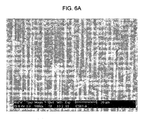
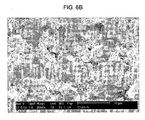
- FIG. 6A shows a Scanning Electron Microscope photograph (SEM; ⁇ 1000) of an electrode plate using a sulfur-ketjen black agglomerated complex according to Example 1, and FIG. 6B shows an enlarged SEM photograph ( ⁇ 3000) thereof.
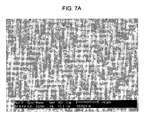
- FIG. 7A shows a SEM photograph ( ⁇ 1000) of an electrode plate according to Comparative Example 1
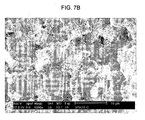
- FIG. 7B shows an enlarged SEM photograph ( ⁇ 3000) thereof.
- the sulfur has a small average particle size since the sulfur particles are not aggregated.
- the electrode plate according to Comparative Example 1 has sulfur particles having average particle sizes that are significantly larger than those of Example 1, as shown in FIGS. 7A and 7B.
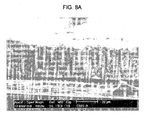
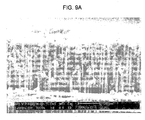
- FIGS. 8A and 9A show SEM photographs ( ⁇ 1000) of cross-sections of electrodes according to Example 1 and Comparative Example 1, respectively.
- FIGs. 8B and 9B show enlarged SEM photographs ( ⁇ 3000) of FIGS. 8A and 9A, respectively.
- the electrode plate according to Example 1 has a thin thickness and excellent charge-density since the positive active material has a small average particle size.
- the electrode plate of Comparative Example 1 shown in FIG. 9A has a thickness that is significantly greater than that of Example 1 due to the large average particle size of the positive active material.
- the formation process was carried out while charging and discharging test cells of Examples and Comparative Examples 5 times.
- testing of cells was begun by discharging at a current density of 0.2 mA/cm 2 since the cells had already been charged.
- the charge current density was constantly maintained at 0.4 mA/ cm 2 (0.2C) from the second to the fifth cycles, while the discharge current density was changed to 0.2, 0.4, 1.0, and 2.0 mA/ ⁇ m (the respective C-rates were 0.1 C, 0.2C, 0.5C, and 1C).
- test cells were measured for cycle-life characteristics.
- the cells were charged and discharged at a charge current density of 0.4 mA/cm 2 (0.2C) and a discharge current density of 1.0 mA/cm 2 (0.5C).
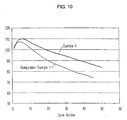
- the sulfur utilization upon completion of each cycle was measured and the results are shown in FIG. 10. If all elemental sulfur in the positive electrode reacts completely (so that all sulfur resides in Li 2 S 2 ), the sulfur in the electrode is 100% utilized so that a capacity of 837.5 mAh per sulfur 1g is extracted during discharge.
- FIG. 10 shows that the test cell according to Example 1 has excellent cycle-life characteristics that are superior to those of Comparative Example 1.
- test cells were measured on cycle-life characteristics.
- the cells are charged and discharged at a charge current density of 1 mA/cM 2 (0.5C) and a discharge current density of 2.0 mA/cm 2 (1C).
- FIG. 11 shows a discharge curve of test cells according to Example 2 and Comparative Example 2 at the first cycle.
- the sulfur utilization of the cell according to Example 2 was 84% while that of Comparative Example 2 was 78%.
- the sulfur utilization of the 10 th cycle was 82% for Example 2 and 76% for Comparative Example 2, which shows that the cycle-life characteristics of Example 2 were superior to those of Comparative Example 2.
- the sulfur-conductive agent-agglomerated complex according to the present invention has various advantages in that the positive active material is easily dispersed during the preparation of slurry, the size of sulfur particles is uniformly regulated by preventing the aggregation of sulfur particles, and the pores are uniformly distributed and the pore size generated on the positive electrode is decreased during charge and discharge.
- the conductive agent is present on the surface of sulfur particles only in the amount required to form a conductive network, resulting in the amount of conductive agent decreasing and the amount of sulfur particles increasing to provide a lithium-sulfur battery having a high capacity.
- the lithium-sulfur battery of the present invention may be utilized to provide power in an electronic device.
- the lithium-sulfur battery may be implemented in one of a pager, a cellular telephone, a portable telephone, a two-way radio, a video game, a portable digital assistant, a portable television, a portable computer, a notebook computer, a calculator, a computer, a telephone, a check-out device that registers purchases, a monitoring device, an electronic toy, a digital clock, and the like.
Landscapes
- Chemical & Material Sciences (AREA)
- Chemical Kinetics & Catalysis (AREA)
- Electrochemistry (AREA)
- General Chemical & Material Sciences (AREA)
- Inorganic Chemistry (AREA)
- Engineering & Computer Science (AREA)
- Composite Materials (AREA)
- Manufacturing & Machinery (AREA)
- Materials Engineering (AREA)
- Battery Electrode And Active Subsutance (AREA)
- Secondary Cells (AREA)
Abstract
Description
Claims (32)
- A positive active material of a lithium-sulfur battery comprising:a sulfur-conductive agent-agglomerated complex in which a conductive agent particle is attached onto a surface of a sulfur particle having an average particle size less than or equal to 7 µm.
- The positive active material of a lithium-sulfur battery according to claim 1, wherein the sulfur particle has an average particle size less than or equal to 5 µm.
- The positive active material of a lithium-sulfur battery according to claim 2, wherein the sulfur particle has an average particle size of no more than 3 µm.
- The positive active material of a lithium-sulfur battery according to claim 1, wherein the conductive agent is selected from the group consisting of carbon black, graphite, carbon fiber, carbon nanotubes, activated carbon, carbon prepared by heat-treating cork or pitch, a metal powder, a metal compound, or a mixture thereof.
- The positive active material of a lithium-sulfur battery according to claim 4, wherein the carbon black is selected from the group consisting of ketjen black, denka black, acetylene black, thermal black, channel black, PRINTEX XE2B, SUPER P, KS 6, CORAX Hl-BLACK 40B2, and VULCAN XC72.
- The positive active material of a lithium-sulfur battery according to claim 4, wherein the graphite is a synthetic graphite or a natural graphite.
- The positive active material of a lithium-sulfur battery according to claim 4, wherein the metal powder is selected from the group consisting of Sc, Ti, V, Cr, Mn, Fe, Co, Ni, Cu, Zn, and Al.
- The positive active material of a lithium-sulfur battery according to claim 4, wherein the metal compound is selected from the group consisting of SnPO4, titanium oxide, LaSrCoO3, and LaSrMnO3.
- The positive active material of a lithium-sulfur battery according to claim 1, wherein the conductive agent has an average particle size between 10 nm and 20 µm.
- The positive active material of a lithium-sulfur battery according to claim 1, wherein the conductive agent is carbon black having an average particle size between 10 nm and 200 nm.
- The positive active material of a lithium-sulfur battery according to claim 10, wherein the conductive agent is carbon black having an average particle size between 10 nm and 100 nm.
- The positive active material of a lithium-sulfur battery according to claim 1, wherein the conductive agent is graphite having an average particle size between 100 nm and 5 µm.
- The positive active material of a lithium-sulfur battery according to claim 12, wherein the conductive agent is graphite having an average particle size between 100 nm and 1 µm.
- The positive active material of a lithium-sulfur battery according to claim 1, wherein the conductive agent is a mixture of carbon black and graphite having different average particle sizes.
- The positive active material of a lithium-sulfur battery according to claim 1, wherein the sulfur-conductive agent-agglomerated complex is manufactured by mixing a sulfur powder and a conductive agent powder to form a mixture and milling the mixture.
- The positive active material of a lithium-sulfur battery according to claim 15, wherein the milling is performed by either dry milling or wet milling, wherein the dry milling is carried out without adding a solvent and the wet milling is carried out adding a solvent.
- The positive active material of a lithium-sulfur battery according to claim 15, wherein the milling is performed for a period comprising between 6 hours and 5 days.
- The positive active material of a lithium-sulfur battery according to claim 1, wherein the sulfur-conductive agent-agglomerated complex is manufactured by mixing a sulfur powder and a conductive agent powder to form a mixture and milling the mixture, followed by drying at a temperature of between 30°C and 100°C.
- The positive active material of a lithium-sulfur battery according to claim 1, wherein the sulfur-conductive agent-agglomerated complex has a sulfur to conductive agent weight ratio of 5∼10: 1.
- The positive active material of a lithium-sulfur battery according to claim 19, wherein the sulfur-conductive agent-agglomerated complex has a sulfur to conductive agent weight ratio of 6∼8:1.
- A lithium-sulfur battery comprising:a positive electrode comprising a sulfur-conductive agent-agglomerated complex, in which a conductive agent particle is attached onto a surface of a sulfur particle having an average particle size less than or equal to 7 µm;a negative electrode including a negative active material selected from the group consisting of a material capable of reversibly intercalating lithium ions, a material capable of reversibly reacting with lithium ions to form a lithium-included compound, a lithium metal, and a lithium alloy; andan electrolyte impregnated in the positive electrode and the negative electrode.
- The lithium-sulfur battery according to claim 21, wherein the positive electrode further comprises at least one additive selected from the group consisting of transition metals, Group IIIA elements, Group IVA elements, sulfur compounds thereof, and alloys thereof.
- The lithium-sulfur battery according to claim 22, wherein the transition metals are selected from the group consisting of Sc, Ti, V, Cr, Mn, Fe, Co, Ni, Cu, Zn, Y, Zr, Nb, Mo, Tc, Ru, Rh, Pd, Ag, Cd, Ta, W, Re, Os, lr, Pt, Au, and Hg; wherein the Group IIIA elements are selected from the group consisting of Al, Ga, In, and TI; and wherein the Group IVA elements are selected from the group consisting of Si, Ge, Sn, and Pb.
- The lithium-sulfur battery according to claim 21, wherein the positive electrode further comprises an electrically conductive agent facilitating movement of electrons.
- The lithium-sulfur battery according to claim 21, wherein the positive electrode further comprises a current collector and a binder binding the sulfur-conductive agent-agglomerated complex to the current collector, the binder being selected from the group consisting of poly(vinyl acetate), polyvinyl alcohol, polyethylene oxide, polyvinyl pyrrolidone, alkylated polyethylene oxide, cross-linked polyethylene oxide, polyvinyl ether, poly(methyl methacrylate), polyvinylidene fluoride, a copolymer of polyhexafluoropropylene and polyvinylidene fluoride (KYNAR), poly(ethyl acrylate), polytetrafluoro ethylene, polyvinyl chloride, polyacrylonitrile, polyvinylpyridine, polystyrene, derivatives thereof, blends thereof, and copolymers thereof.
- The lithium-sulfur battery according to claim 21, wherein the material capable of reversibly intercalating lithium ions is crystalline carbon, amorphous carbon, or a mixture thereof; wherein the material capable of reversibly reacting with lithium ions to form a lithium-included compound is SnO2, titanium nitrate, or Si; and wherein the lithium alloy is an alloy of lithium with a metal selected from the group consisting of Na, K, Rb, Cs, Fr, Be, Mg, Ca, Sr, Ba, Ra, Al, and Sn.
- The lithium-sulfur battery according to claim 21, wherein the negative electrode is one of an inorganic protective layer, an organic protective layer, or both an inorganic protective layer and an organic protective layer, and the negative electrode is laminated on the surface of lithium metal.
- The lithium-sulfur battery according to claim 27, wherein the inorganic protective layer is a material selected from the group consisting of Mg, Al, B, Ca, Sn, Pb, Cd, Si, In, Ga, lithium silicate, lithium borate, lithium phosphate, lithium phosphor nitride, lithium silicosulfide, lithium borosulfide, lithium aluminosulfide, and lithium phosphosulfide; and wherein the organic protective layer is a conductive monomer, oligomer, or polymer selected from the group consisting of poly(p-phenylene), polyacetylene, poly(p-phenylene vinylene), polyanyline, polypyrrol, polythiophen, poly(2,5-ethylene vinylene), acetylene, poly(peri-naphthalene), polyacene, and poly(naphthalene-2,6-diyl).
- The lithium-sulfur battery according to claim 21, wherein the electrolyte is one of a solid electrolyte or a liquid electrolyte.
- The lithium-sulfur battery according to claim 21, wherein the electrolyte comprises a salt having an organic cation having a van der Waals volume at least equal to 100 Å3.
- An electronic device having a lithium-sulfur battery in accordance with claims 21 to 30.
- The electronic device of claim 31 wherein the electronic device is one of a pager, a cellular telephone, a portable telephone, a two-way radio, a video game, a portable digital assistant, a portable television, a portable computer, a notebook computer, a calculator, a computer, a telephone, a check-out device that registers purchases, a monitoring device, an electronic toy, and a digital clock.
Applications Claiming Priority (2)
| Application Number | Priority Date | Filing Date | Title |
|---|---|---|---|
| KR20020057576A KR100484642B1 (en) | 2002-09-23 | 2002-09-23 | Positive active material for lithium-sulfur battery and method for preparing the same |
| KR2002057576 | 2002-09-23 |
Publications (2)
| Publication Number | Publication Date |
|---|---|
| EP1427039A2 true EP1427039A2 (en) | 2004-06-09 |
| EP1427039A3 EP1427039A3 (en) | 2005-12-21 |
Family
ID=31987509
Family Applications (1)
| Application Number | Title | Priority Date | Filing Date |
|---|---|---|---|
| EP03007388A Withdrawn EP1427039A3 (en) | 2002-09-23 | 2003-04-02 | Positive active material of a lithium-sulfur battery and method of fabricating same |
Country Status (5)
| Country | Link |
|---|---|
| US (1) | US7029796B2 (en) |
| EP (1) | EP1427039A3 (en) |
| JP (1) | JP2004119367A (en) |
| KR (1) | KR100484642B1 (en) |
| CN (1) | CN100355123C (en) |
Cited By (13)
| Publication number | Priority date | Publication date | Assignee | Title |
|---|---|---|---|---|
| GB2498802A (en) * | 2012-01-30 | 2013-07-31 | Nexeon Ltd | Anode Composition |
| CN102160217B (en) * | 2008-10-17 | 2014-02-05 | 独立行政法人产业技术综合研究所 | Sulfur-modified polyacrylonitrile, manufacturing method therefor, and application thereof |
| WO2014095483A1 (en) * | 2012-12-19 | 2014-06-26 | Basf Se | Electrode structure and method for making same |
| CN104362296A (en) * | 2014-11-21 | 2015-02-18 | 厦门大学 | Novel sulfenyl material electrode and preparation method and application thereof |
| US9548489B2 (en) | 2012-01-30 | 2017-01-17 | Nexeon Ltd. | Composition of SI/C electro active material |
| US10008716B2 (en) | 2012-11-02 | 2018-06-26 | Nexeon Limited | Device and method of forming a device |
| US10077506B2 (en) | 2011-06-24 | 2018-09-18 | Nexeon Limited | Structured particles |
| US10090513B2 (en) | 2012-06-01 | 2018-10-02 | Nexeon Limited | Method of forming silicon |
| US10090528B2 (en) | 2011-06-21 | 2018-10-02 | Fraunhofer-Gesellschaft Zur Forderung Der Angewandten Forschung E.V. | Cathode unit for an alkaline metal/sulfur battery having an optimised arrester structure |
| US10103379B2 (en) | 2012-02-28 | 2018-10-16 | Nexeon Limited | Structured silicon particles |
| US10396355B2 (en) | 2014-04-09 | 2019-08-27 | Nexeon Ltd. | Negative electrode active material for secondary battery and method for manufacturing same |
| US10476072B2 (en) | 2014-12-12 | 2019-11-12 | Nexeon Limited | Electrodes for metal-ion batteries |
| US10586976B2 (en) | 2014-04-22 | 2020-03-10 | Nexeon Ltd | Negative electrode active material and lithium secondary battery comprising same |
Families Citing this family (148)
| Publication number | Priority date | Publication date | Assignee | Title |
|---|---|---|---|---|
| KR100454030B1 (en) * | 2002-08-07 | 2004-10-20 | 삼성에스디아이 주식회사 | Positive electrode for lithium-sulfur battery, method of preparing same, and lithium-sulfur battery comprising same |
| KR100485093B1 (en) * | 2002-10-28 | 2005-04-22 | 삼성에스디아이 주식회사 | Positive electrode for lithium-sulfur battery and lithium-sulfur battery comprising same |
| US7531267B2 (en) * | 2003-06-02 | 2009-05-12 | Kh Chemicals Co., Ltd. | Process for preparing carbon nanotube electrode comprising sulfur or metal nanoparticles as a binder |
| JP4529432B2 (en) * | 2003-12-08 | 2010-08-25 | 日産自動車株式会社 | Positive electrode material for lithium ion battery and battery using the same |
| US10629947B2 (en) | 2008-08-05 | 2020-04-21 | Sion Power Corporation | Electrochemical cell |
| FR2870639B1 (en) * | 2004-05-19 | 2006-11-10 | Electricite De France | CURRENT COLLECTOR TYPE SUPPORT AND ITS USE AS A BATTERY ELECTRODE |
| JP4296427B2 (en) * | 2004-11-10 | 2009-07-15 | ソニー株式会社 | Negative electrode and battery |
| KR100756927B1 (en) * | 2005-02-22 | 2007-09-07 | 주식회사 코캄 | Cathode active material for lithium secondary battery, manufacturing method thereof and lithium secondary battery using same |
| CN1770515B (en) * | 2005-08-22 | 2010-05-12 | 中国科学院成都有机化学有限公司 | A kind of lithium-ion secondary battery positive electrode, negative electrode material conductive agent and preparation method thereof |
| KR100796687B1 (en) | 2005-11-30 | 2008-01-21 | 삼성에스디아이 주식회사 | Active material for lithium secondary battery, preparation method thereof and lithium secondary battery comprising same |
| KR100728160B1 (en) | 2005-11-30 | 2007-06-13 | 삼성에스디아이 주식회사 | Anode active material for lithium secondary battery, preparation method thereof and lithium secondary battery comprising same |
| KR100786864B1 (en) * | 2006-02-10 | 2007-12-20 | 삼성에스디아이 주식회사 | Anode active material for lithium secondary battery, manufacturing method thereof and lithium secondary battery comprising same |
| KR100889451B1 (en) * | 2006-02-14 | 2009-03-24 | 주식회사 엘지화학 | Manufacturing method of nanoparticle-containing electrode active material with improved dispersibility |
| US8883354B2 (en) | 2006-02-15 | 2014-11-11 | Optodot Corporation | Separators for electrochemical cells |
| JP5228501B2 (en) * | 2007-02-23 | 2013-07-03 | Tdk株式会社 | Electrode active material particles, electrode, electrochemical device, and electrode manufacturing method |
| US20080201925A1 (en) * | 2007-02-28 | 2008-08-28 | Maxwell Technologies, Inc. | Ultracapacitor electrode with controlled sulfur content |
| WO2009014845A2 (en) * | 2007-06-28 | 2009-01-29 | Ultralife Corporation | High capacity and high rate lithium cells with cfx-mno2 hybrid cathode |
| WO2009089018A2 (en) | 2008-01-08 | 2009-07-16 | Sion Power Corporation | Porous electrodes and associated methods |
| KR100840742B1 (en) * | 2007-10-24 | 2008-06-23 | 주식회사 쎄타텍 | Carbon Nanotube / Metal Composite Powder Manufacturing Method |
| CN101453011B (en) * | 2007-11-28 | 2011-07-06 | 比亚迪股份有限公司 | A kind of positive electrode of lithium ion battery and preparation method thereof |
| CN101478036B (en) * | 2008-01-04 | 2011-06-08 | 陈风 | Manufacturing process for battery pole piece |
| JP5425107B2 (en) * | 2008-03-05 | 2014-02-26 | イーグルピッチャー テクノロジーズ,エルエルシー | Lithium-sulfur battery and its cathode |
| JP5680288B2 (en) | 2008-07-07 | 2015-03-04 | トヨタ自動車株式会社 | Method for producing sulfide solid electrolyte |
| US8178241B2 (en) | 2008-08-28 | 2012-05-15 | 3M Innovative Properties Company | Electrode including current collector with nano-scale coating and method of making the same |
| US20100068609A1 (en) * | 2008-09-15 | 2010-03-18 | Ultralife Corportion | Hybrid cell construction for improved performance |
| EP2409349A4 (en) * | 2009-03-19 | 2013-05-01 | Sion Power Corp | Cathode for lithium battery |
| FR2943463B1 (en) * | 2009-03-19 | 2011-07-01 | Arkema France | COMPOSITE MATERIALS BASED ON FLUORO BINDERS AND CARBON NANOTUBES FOR POSITIVE ELECTRODES OF LITHIUM BATTERIES. |
| JP2010232085A (en) * | 2009-03-27 | 2010-10-14 | Daihatsu Motor Co Ltd | Electrode active material, secondary battery and manufacturing method of electrode active material |
| US8563173B2 (en) * | 2009-05-08 | 2013-10-22 | Robert Bosch Gmbh | Li-ion battery with anode current collector coating |
| US8405351B2 (en) * | 2009-05-08 | 2013-03-26 | Robert Bosch Gmbh | System and method for charging and discharging a Li-ion battery |
| US8859123B2 (en) * | 2009-05-08 | 2014-10-14 | Robert Bosch Gmbh | System and method for pressure determination in a Li-ion battery |
| US9123974B2 (en) | 2009-05-08 | 2015-09-01 | Robert Bosch Gmbh | Li-ion battery with load leveler |
| US8426052B2 (en) * | 2009-05-08 | 2013-04-23 | Robert Bosch Gmbh | Li-ion battery with porous anode support |
| US8673491B2 (en) * | 2009-05-08 | 2014-03-18 | Robert Bosch Gmbh | Li-ion battery with selective moderating material |
| US20100285361A1 (en) * | 2009-05-08 | 2010-11-11 | Robert Bosch Gmbh | Li-ION BATTERY WITH LOAD LEVELER |
| US8426046B2 (en) * | 2009-05-08 | 2013-04-23 | Robert Bosch Gmbh | Li-ion battery with over-charge/over-discharge failsafe |
| US8313864B2 (en) * | 2009-05-08 | 2012-11-20 | Robert Bosch Gmbh | Li-ion battery with blended electrode |
| US20100285351A1 (en) * | 2009-05-08 | 2010-11-11 | Robert Bosch Gmbh | Li-ION BATTERY WITH ANODE EXPANSION AREA |
| US8329327B2 (en) * | 2009-05-08 | 2012-12-11 | Robert Bosch Gmbh | Li-ion battery with variable volume reservoir |
| US20100285365A1 (en) * | 2009-05-08 | 2010-11-11 | Robert Bosch Gmbh | Li-ION BATTERY WITH POROUS ANODE |
| US8354824B2 (en) * | 2009-05-08 | 2013-01-15 | Robert Bosch Gmbh | System and method for charging and discharging a Li-ion battery pack |
| US8188715B2 (en) * | 2009-05-15 | 2012-05-29 | Robert Bosch Gmbh | Method for determining extent and type of capacity fade |
| CN101577323B (en) * | 2009-06-11 | 2011-08-31 | 上海交通大学 | Sulfenyl anode of lithium-sulfur rechargeable battery and preparation method thereof |
| JP5682557B2 (en) | 2009-06-30 | 2015-03-11 | 日本ゼオン株式会社 | Positive electrode for secondary battery and secondary battery |
| WO2011031297A2 (en) * | 2009-08-28 | 2011-03-17 | Sion Power Corporation | Electrochemical cells comprising porous structures comprising sulfur |
| US20110206992A1 (en) * | 2009-08-28 | 2011-08-25 | Sion Power Corporation | Porous structures for energy storage devices |
| DE102010001631A1 (en) * | 2009-12-23 | 2011-06-30 | Robert Bosch GmbH, 70469 | Method for producing a cathode structure for Li batteries with directional, cycle-resistant structures |
| US8354193B2 (en) | 2010-04-12 | 2013-01-15 | Toyota Motor Engineering & Manufacturing North America | Electrolyte for a magnesium sulfur battery |
| US8318354B2 (en) | 2010-04-27 | 2012-11-27 | Toyota Motor Engineering & Manufacturing North America | Electrochemical device with a magnesium anode and a stable, safe electrolyte compatible with sulfur |
| CN101841036A (en) * | 2010-05-26 | 2010-09-22 | 耿世达 | Multi-sulfur carbon nanofiber composite cathode material for lithium ion battery and manufacturing method |
| JP5856609B2 (en) | 2010-05-28 | 2016-02-10 | ビーエーエスエフ ソシエタス・ヨーロピアBasf Se | Solid composite material used for positive electrode of lithium-sulfur current generation cell, method for producing the same, and lithium-sulfur current generation cell |
| DE102010030887A1 (en) * | 2010-07-02 | 2012-01-05 | Fraunhofer-Gesellschaft zur Förderung der angewandten Forschung e.V. | Cathode unit for alkali metal-sulfur battery |
| PL2596538T3 (en) | 2010-07-19 | 2019-06-28 | Optodot Corporation | Separators for electrochemical cells |
| US8753772B2 (en) | 2010-10-07 | 2014-06-17 | Battelle Memorial Institute | Graphene-sulfur nanocomposites for rechargeable lithium-sulfur battery electrodes |
| US8541133B2 (en) | 2010-10-27 | 2013-09-24 | Toyota Motor Engineering & Manufacturing North America, Inc. | Electrochemical device with a magnesium anode and a stable, safe electrolyte compatible with sulfur |
| CN103210525B (en) * | 2010-11-26 | 2015-11-25 | 株式会社爱发科 | Positive electrode for lithium-sulfur secondary battery and method for forming same |
| CN102082260A (en) * | 2011-01-07 | 2011-06-01 | 中国地质大学(武汉) | Preparation method of positive composite material of lithium battery |
| JP5623303B2 (en) * | 2011-01-28 | 2014-11-12 | ダイハツ工業株式会社 | Electrode for lithium-sulfur secondary battery and lithium-sulfur secondary battery |
| DE102011004094A1 (en) * | 2011-02-15 | 2012-08-16 | Robert Bosch Gmbh | Polymer-ionophore Separator |
| CN102142554A (en) * | 2011-02-16 | 2011-08-03 | 中国人民解放军63971部队 | Nano carbon sulfur composite material with network structure and preparation method of nano carbon composite material |
| JP2012238448A (en) * | 2011-05-11 | 2012-12-06 | Sony Corp | Secondary battery, method for manufacturing secondary battery, positive electrode for secondary battery, method for manufacturing positive electrode for secondary battery, battery pack, electronic device, electric vehicle, electrical power system, and power supply for power storage |
| EP2720979A1 (en) * | 2011-06-14 | 2014-04-23 | Rockwood Lithium GmbH | Method for producing a carbon-coated lithium sulfide and use thereof |
| EP2721665B1 (en) | 2011-06-17 | 2021-10-27 | Sion Power Corporation | Plating technique for electrode |
| US9929429B2 (en) * | 2011-08-08 | 2018-03-27 | Battelle Memorial Institute | Polymer-sulfur composite materials for electrodes in Li-S energy storage devices |
| US8877025B2 (en) | 2011-08-24 | 2014-11-04 | Toyota Motor Engineering & Manufacturing North America, Inc. | Combinatorial material screening method for an electrochemical cell |
| WO2013051302A1 (en) * | 2011-10-05 | 2013-04-11 | 国立大学法人東北大学 | Secondary battery |
| CN103947027B (en) | 2011-10-13 | 2016-12-21 | 赛昂能源有限公司 | Electrode structure and manufacture method thereof |
| WO2013076958A1 (en) * | 2011-11-24 | 2013-05-30 | 株式会社豊田自動織機 | Positive electrode material for nonaqueous electrolyte secondary batteries, nonaqueous electrolyte secondary battery, and method for producing positive electrode material for nonaqueous electrolyte secondary batteries |
| US20130164625A1 (en) * | 2011-12-22 | 2013-06-27 | Arumugam Manthiram | Sulfur-carbon composite cathodes for rechargeable lithium-sulfur batteries and methods of making the same |
| US8974960B2 (en) * | 2011-12-22 | 2015-03-10 | Board Of Regents, The University Of Texas System | Binder-free sulfur—carbon nanotube composite cathodes for rechargeable lithium—sulfur batteries and methods of making the same |
| KR101997261B1 (en) | 2011-12-23 | 2019-07-08 | 현대자동차주식회사 | Fabrication of Sulfur infiltrated Mesoporous Carbon nanocomposites with vacant Mesoporous Carbon for cathode of Lithium-Sulfur secondary batteries |
| CN102522530B (en) * | 2011-12-27 | 2014-08-20 | 雷天电池技术有限公司 | Nano-sulfur composite cathode material for rare earth lithium-sulfur battery and preparation method thereof |
| WO2013097116A1 (en) * | 2011-12-28 | 2013-07-04 | Chung Winston | Nano-sulphur composite positive pole material for rare earth lithium sulphur battery and method for preparing same. |
| US9077041B2 (en) | 2012-02-14 | 2015-07-07 | Sion Power Corporation | Electrode structure for electrochemical cell |
| JP2013175314A (en) * | 2012-02-24 | 2013-09-05 | Toyota Industries Corp | Lithium ion secondary battery, and vehicle |
| JP6065450B2 (en) * | 2012-08-09 | 2017-01-25 | 国立大学法人山口大学 | Positive electrode and secondary battery containing sulfur composite |
| KR101365679B1 (en) * | 2012-08-16 | 2014-02-20 | 부산대학교 산학협력단 | Method for manufacturing positive electrode for lithium-sulfur battery and lithium-sulfur battery |
| KR101417347B1 (en) * | 2012-09-24 | 2014-07-08 | 현대자동차주식회사 | Cathode of lithium-sulfur secondary batteries containing sulfur-infiltrated mesoporous conductive nanocomposites and a fabrication process thereof |
| CN102867940B (en) * | 2012-10-12 | 2014-12-24 | 武汉工程大学 | Process for preparing lithium sulfur battery modified anode |
| CN103035879B (en) * | 2012-12-07 | 2015-03-25 | 湘潭大学 | Positive pole piece for lithium-sulfur batteries and preparation method thereof |
| KR101481234B1 (en) * | 2012-12-07 | 2015-01-09 | 현대자동차주식회사 | A binder-treated sulfur electrode using sulfur composite powder, and lithium sulfur battery system |
| US9306207B2 (en) | 2012-12-28 | 2016-04-05 | Hyundai Motor Company | Method of fabricating sulfur-infiltrated mesoporous conductive nanocomposites for cathode of lithium-sulfur secondary battery |
| JP2016506055A (en) * | 2013-01-08 | 2016-02-25 | エルジー・ケム・リミテッド | Cathode active material for lithium-sulfur battery and method for producing the same |
| US9153818B2 (en) | 2013-03-15 | 2015-10-06 | Wildcat Discovery Technologies, Inc. | Lithium sulfide cathode material with transition metal coating |
| WO2014144046A1 (en) * | 2013-03-15 | 2014-09-18 | Wildcat Discovery Technologies, Inc. | High energy cathode material |
| KR102380095B1 (en) * | 2013-03-15 | 2022-03-29 | 웰스태트 바이오커탤리시스, 엘엘씨 | Methods of making nanofiber electrodes for batteries |
| US12261284B2 (en) | 2013-03-15 | 2025-03-25 | Sion Power Corporation | Protective structures for electrodes |
| WO2014179355A1 (en) | 2013-04-29 | 2014-11-06 | Madico, Inc. | Nanoporous composite separators with increased thermal conductivity |
| CN105359305A (en) * | 2013-05-07 | 2016-02-24 | 通用汽车环球科技运作有限责任公司 | Voltage-responsive coatings for lithium-sulfur batteries |
| CN103326003A (en) * | 2013-06-08 | 2013-09-25 | 苏州诺信创新能源有限公司 | Preparation method of nickel fiber tube used in lithium-sulfur battery |
| CA2820635A1 (en) | 2013-06-21 | 2014-12-21 | Hydro-Quebec | All-solid state polymer li-s electrochemical cells and their manufacturing processes |
| US10033040B2 (en) * | 2013-07-08 | 2018-07-24 | The Board Of Trustees Of The Leland Standford Junior University | Stable cycling of lithium sulfide cathodes through strong affinity with multifunctional binders |
| KR101669316B1 (en) | 2013-07-30 | 2016-10-25 | 주식회사 엘지화학 | Sulfur-carbon composite and method for manufacturing the same |
| WO2015023154A1 (en) * | 2013-08-16 | 2015-02-19 | 주식회사 엘지화학 | Anode for lithium-sulfur battery and preparation method therefor |
| WO2015026951A1 (en) * | 2013-08-21 | 2015-02-26 | GM Global Technology Operations LLC | Lithium-based battery electrodes |
| CN103531814B (en) * | 2013-10-28 | 2015-03-25 | 深圳格林德能源有限公司 | Composite conductive agent and dispersion method thereof as well as positive plate and lithium ion battery |
| JP6298625B2 (en) * | 2013-12-09 | 2018-03-20 | 株式会社アルバック | Method for forming positive electrode for lithium-sulfur secondary battery and positive electrode for lithium-sulfur secondary battery |
| CN103872299B (en) * | 2014-03-19 | 2017-01-04 | 陕西煤业化工技术研究院有限责任公司 | A kind of lithium-sulphur cell positive electrode element doping oxide-sulfur composite and preparation method thereof |
| KR102622781B1 (en) | 2014-05-01 | 2024-01-08 | 시온 파워 코퍼레이션 | Electrode fabrication methods and associated articles |
| CN105140461A (en) | 2014-06-04 | 2015-12-09 | 清华大学 | Lithium-sulfur battery positive material and preparation method thereof |
| CN104157909B (en) * | 2014-07-14 | 2016-06-29 | 浙江大学 | A kind of preparation method of lithium-sulfur cell membrane electrode |
| CN104269554B (en) * | 2014-10-18 | 2017-09-05 | 山东默锐科技有限公司 | A kind of room temperature sodium-sulphur batter positive electrode and preparation method thereof |
| CN104362293B (en) * | 2014-12-05 | 2017-05-17 | 上海空间电源研究所 | Sulfur-containing positive electrode material with multi-grade structure as well as preparation method and application of sulfur-containing positive electrode material |
| DE102014226396B4 (en) * | 2014-12-18 | 2025-12-18 | Bayerische Motoren Werke Aktiengesellschaft | Production of a composite cathode |
| CN104505516B (en) * | 2014-12-29 | 2017-02-22 | 北京化工大学 | Positive active material for lithium sulfur battery and preparation method of positive active material |
| CN104638236B (en) * | 2015-01-16 | 2017-06-23 | 中国计量学院 | A kind of preparation method of the polyaniline of hollow core-shell structure/sulphur composite |
| US12040506B2 (en) | 2015-04-15 | 2024-07-16 | Lg Energy Solution, Ltd. | Nanoporous separators for batteries and related manufacturing methods |
| US10381623B2 (en) | 2015-07-09 | 2019-08-13 | Optodot Corporation | Nanoporous separators for batteries and related manufacturing methods |
| CN104900880B (en) * | 2015-06-03 | 2017-07-11 | 中国地质大学(武汉) | A kind of lithium-sulfur battery composite anode material and preparation method thereof |
| KR102006721B1 (en) | 2015-06-22 | 2019-08-02 | 주식회사 엘지화학 | Electrode for lithium secondary battery, method for manufacturing the same, electrode assembly comprising the same, and lithium secondary battery comprising the same |
| JP6521545B2 (en) * | 2015-09-14 | 2019-05-29 | エルジー・ケム・リミテッド | Positive electrode for lithium-sulfur battery, method for producing the same, and lithium-sulfur battery including the same |
| WO2017047998A1 (en) * | 2015-09-14 | 2017-03-23 | 주식회사 엘지화학 | Cathode for lithium-sulfur battery, manufacturing method therefor, and lithium-sulfur battery containing same |
| KR101990615B1 (en) | 2015-09-23 | 2019-06-18 | 주식회사 엘지화학 | Positive Active Material and Positive Electrode Comprising Metal Nanoparticles and Lithium-Sulfur Battery Comprising Thereof |
| KR20170050078A (en) | 2015-10-29 | 2017-05-11 | 주식회사 엘지화학 | The acrylic binder for the manufacturing of cathode of lithium sulfur secondary battery |
| CN105406077A (en) * | 2015-11-24 | 2016-03-16 | 青岛能迅新能源科技有限公司 | Nanoscale conductive coating material of lithium ion battery positive electrode and preparation method therefor |
| JP6323725B2 (en) * | 2015-11-30 | 2018-05-16 | トヨタ自動車株式会社 | Positive electrode active material used for lithium ion secondary battery |
| JP6313491B2 (en) | 2016-03-11 | 2018-04-18 | 東京電力ホールディングス株式会社 | All-solid lithium-sulfur battery and method for producing the same |
| FR3058167B1 (en) * | 2016-10-28 | 2019-11-22 | Arkema France | NEW PROCESS FOR MANUFACTURING HIGHLY CARBON MATERIALS AND HIGHLY CARBON MATERIAL OBTAINED |
| CN107195868B (en) * | 2017-01-06 | 2019-08-13 | 中国计量大学 | A kind of sulphur anode composite material preparation facilities and control method based on sodium thiosulfate and acid reaction |
| EP3355384A1 (en) * | 2017-01-31 | 2018-08-01 | Universite De Liege | Flexible thin-films for battery electrodes |
| KR102126250B1 (en) | 2017-03-07 | 2020-06-24 | 주식회사 엘지화학 | Carbon-surfur complex, manufacturing method thereof, positive electrode and lithium-sulfur battery comprising the same |
| JP6722389B2 (en) * | 2017-06-22 | 2020-07-15 | トヨタ自動車株式会社 | Non-aqueous electrolyte secondary battery |
| CN107611396B (en) * | 2017-09-08 | 2019-12-24 | 中国科学院山西煤炭化学研究所 | A kind of sulfur-pitch base/graphene composite material and its preparation method and application |
| FR3071362B1 (en) * | 2017-09-15 | 2019-09-13 | Commissariat A L'energie Atomique Et Aux Energies Alternatives | METHOD FOR MANUFACTURING ELECTRODE FOR LITHIUM-SULFUR BATTERY WITH IMPORTANT ACTIVE SURFACE |
| KR102302554B1 (en) * | 2017-10-30 | 2021-09-14 | 주식회사 엘지화학 | Carbon-surfur complex and manufacturing method of the same |
| KR102328257B1 (en) | 2017-12-27 | 2021-11-18 | 주식회사 엘지에너지솔루션 | Binder for lithium-sulfur battery, positive electrode and lithium-sulfur battery comprising the same |
| FR3076952B1 (en) * | 2018-01-16 | 2023-08-11 | Arkema France | FORMULATION IN THE FORM OF A SOLID-LIQUID DISPERSION FOR THE MANUFACTURE OF A CATHODE FOR A LI/S BATTERY AND METHOD FOR PREPARING THE SAID FORMULATION |
| JP2020013732A (en) * | 2018-07-19 | 2020-01-23 | ブラザー工業株式会社 | Lithium sulfur battery |
| CN111224076B (en) * | 2018-11-26 | 2021-09-21 | 中国科学院大连化学物理研究所 | Electrode for inhibiting polysulfide ion shuttle in lithium-sulfur battery, preparation and application |
| CN109585827A (en) * | 2018-11-28 | 2019-04-05 | 东莞理工学院 | Preparation method of titanium dioxide coated sulfur-doped carbon nanotube lithium-sulfur battery positive electrode material |
| EP3680961A1 (en) * | 2019-01-09 | 2020-07-15 | The Provost, Fellows, Scholars and other Members of Board of Trinity College Dublin | Highly efficient electrodes enabled by segregated networks |
| KR102874983B1 (en) * | 2019-01-15 | 2025-10-22 | 테슬라, 인크. | Composition and method for lithiumizing energy storage devices |
| GB2588749A (en) * | 2019-10-15 | 2021-05-12 | Oxis Energy Ltd | Lithium sulfur cell |
| CN111416090A (en) * | 2020-03-10 | 2020-07-14 | 上海电力大学 | Perovskite oxide-modified separator materials for lithium-sulfur batteries, lithium-sulfur batteries |
| CN114203979B (en) * | 2020-09-17 | 2024-05-17 | 湖南中科星城石墨有限公司 | Graphite negative electrode material and preparation method and application thereof |
| US11404692B1 (en) * | 2021-07-23 | 2022-08-02 | Lyten, Inc. | Lithium-sulfur battery cathode formed from multiple carbonaceous regions |
| WO2022209595A1 (en) * | 2021-04-02 | 2022-10-06 | 株式会社村田製作所 | Positive electrode and electrochemical device |
| KR20240005710A (en) | 2021-04-29 | 2024-01-12 | 24엠 테크놀로지즈, 인크. | Electrochemical cell having multiple separators and method for producing the same |
| CN116250098B (en) * | 2021-07-09 | 2026-03-31 | 株式会社Lg新能源 | Lithium-sulfur battery positive electrode and lithium-sulfur battery containing it |
| US12009470B2 (en) * | 2021-07-23 | 2024-06-11 | Lyten, Inc. | Cylindrical lithium-sulfur batteries |
| US20250125337A1 (en) * | 2021-09-02 | 2025-04-17 | Nissan Motor Co., Ltd. | Positive Electrode Material for Electric Device, and Positive Electrode for Electric Device and Electric Device Using Same |
| KR20230075579A (en) * | 2021-11-23 | 2023-05-31 | 주식회사 엘지에너지솔루션 | Lithium-sulfur battery with improved energy density and output |
| CN115064677B (en) * | 2022-07-04 | 2023-09-01 | 福州大学 | High-energy-density lithium sulfur battery with polyquaternary ammonium salt as binder |
| CN115472839B (en) * | 2022-09-30 | 2025-03-25 | 储天新能源科技(长春)有限公司 | A battery negative electrode material and preparation method thereof, and a zinc ion battery and preparation method thereof |
| TW202443944A (en) | 2022-12-16 | 2024-11-01 | 美商24M科技公司 | Systems and methods for minimizing and preventing dendrite formation in electrochemical cells |
| CN117229755B (en) * | 2023-08-30 | 2024-06-18 | 中国科学院重庆绿色智能技术研究院 | Water-soluble supermolecule binder with rare earth catalytic function, preparation method thereof and application thereof in lithium-sulfur battery |
| US20250239599A1 (en) * | 2024-01-22 | 2025-07-24 | Lg Energy Solution, Ltd. | Composite cathode for all-solid-state battery, methods for making, and an all-solid-state battery thereof |
| US12431545B1 (en) | 2024-03-26 | 2025-09-30 | 24M Technologies, Inc. | Systems and methods for minimizing and preventing dendrite formation in electrochemical cells |
Family Cites Families (14)
| Publication number | Priority date | Publication date | Assignee | Title |
|---|---|---|---|---|
| US6376123B1 (en) * | 1994-11-23 | 2002-04-23 | Polyplus Battery Company | Rechargeable positive electrodes |
| JPH09147868A (en) | 1995-11-17 | 1997-06-06 | Yazaki Corp | Activated carbon fiber for sulfide secondary battery and electrode material |
| DE69710787T2 (en) * | 1996-05-22 | 2002-11-21 | Moltech Corp., Tucson | COMPOSITE CATHODES, ELECTROCHEMICAL CELLS WITH COMPOSITE CATHODES AND METHOD FOR THE PRODUCTION THEREOF |
| US6110619A (en) | 1997-12-19 | 2000-08-29 | Moltech Corporation | Electrochemical cells with cationic polymers and electroactive sulfur compounds |
| US6210831B1 (en) * | 1997-12-19 | 2001-04-03 | Moltech Corporation | Cathodes comprising electroactive sulfur materials and secondary batteries using same |
| US6153337A (en) | 1997-12-19 | 2000-11-28 | Moltech Corporation | Separators for electrochemical cells |
| JPH11214007A (en) * | 1998-01-26 | 1999-08-06 | Fujikura Ltd | Electrode composition |
| US6703163B2 (en) * | 1998-03-31 | 2004-03-09 | Celanese Ventures Gmbh | Lithium battery and electrode |
| CN1262533A (en) * | 1999-01-28 | 2000-08-09 | 中国科学院物理研究所 | Secondary lithium battery |
| JP2002110237A (en) * | 2000-08-17 | 2002-04-12 | Samsung Sdi Co Ltd | Positive active material composition for lithium-sulfur battery, method for producing the same, and lithium-sulfur battery |
| KR100379249B1 (en) * | 2000-08-29 | 2003-04-08 | 한국과학기술원 | Sulfur Positive Electrodes in the Lithium Secondary Batteries and Method for Preparing the Same |
| KR20020084618A (en) * | 2001-05-03 | 2002-11-09 | 한국과학기술원 | Sulfur Positive Electrodes in the Lithium Secondary Batteries and Method for Preparing the Same |
| KR100433001B1 (en) * | 2001-11-05 | 2004-05-24 | 삼성에스디아이 주식회사 | Method for manufacturing cathode electrode, cathode electrode manufactured using the same, and lithium battery containing the same |
| KR100416098B1 (en) * | 2001-12-18 | 2004-01-24 | 삼성에스디아이 주식회사 | Cathode electrode, manufacturing method thereof, and lithium sulfur battery using the same |
-
2002
- 2002-09-23 KR KR20020057576A patent/KR100484642B1/en not_active Expired - Fee Related
-
2003
- 2003-04-02 EP EP03007388A patent/EP1427039A3/en not_active Withdrawn
- 2003-04-03 US US10/405,237 patent/US7029796B2/en not_active Expired - Fee Related
- 2003-04-25 CN CNB031233139A patent/CN100355123C/en not_active Expired - Fee Related
- 2003-06-20 JP JP2003176947A patent/JP2004119367A/en active Pending
Cited By (19)
| Publication number | Priority date | Publication date | Assignee | Title |
|---|---|---|---|---|
| CN102160217B (en) * | 2008-10-17 | 2014-02-05 | 独立行政法人产业技术综合研究所 | Sulfur-modified polyacrylonitrile, manufacturing method therefor, and application thereof |
| US8940436B2 (en) | 2008-10-17 | 2015-01-27 | National Institute Of Advanced Industrial Science And Technology | Sulfur-modified polyacrylonitrile, manufacturing method therefor, and application thereof |
| US10090528B2 (en) | 2011-06-21 | 2018-10-02 | Fraunhofer-Gesellschaft Zur Forderung Der Angewandten Forschung E.V. | Cathode unit for an alkaline metal/sulfur battery having an optimised arrester structure |
| US10077506B2 (en) | 2011-06-24 | 2018-09-18 | Nexeon Limited | Structured particles |
| US10822713B2 (en) | 2011-06-24 | 2020-11-03 | Nexeon Limited | Structured particles |
| GB2498802B (en) * | 2012-01-30 | 2014-06-11 | Nexeon Ltd | Composition comprising particulate electroactive material |
| US10388948B2 (en) | 2012-01-30 | 2019-08-20 | Nexeon Limited | Composition of SI/C electro active material |
| US9548489B2 (en) | 2012-01-30 | 2017-01-17 | Nexeon Ltd. | Composition of SI/C electro active material |
| GB2498802A (en) * | 2012-01-30 | 2013-07-31 | Nexeon Ltd | Anode Composition |
| US10103379B2 (en) | 2012-02-28 | 2018-10-16 | Nexeon Limited | Structured silicon particles |
| US10090513B2 (en) | 2012-06-01 | 2018-10-02 | Nexeon Limited | Method of forming silicon |
| US10008716B2 (en) | 2012-11-02 | 2018-06-26 | Nexeon Limited | Device and method of forming a device |
| US9577267B2 (en) | 2012-12-19 | 2017-02-21 | Sion Power Corporation | Electrode structure and method for making same |
| WO2014095483A1 (en) * | 2012-12-19 | 2014-06-26 | Basf Se | Electrode structure and method for making same |
| US10396355B2 (en) | 2014-04-09 | 2019-08-27 | Nexeon Ltd. | Negative electrode active material for secondary battery and method for manufacturing same |
| US10693134B2 (en) | 2014-04-09 | 2020-06-23 | Nexeon Ltd. | Negative electrode active material for secondary battery and method for manufacturing same |
| US10586976B2 (en) | 2014-04-22 | 2020-03-10 | Nexeon Ltd | Negative electrode active material and lithium secondary battery comprising same |
| CN104362296A (en) * | 2014-11-21 | 2015-02-18 | 厦门大学 | Novel sulfenyl material electrode and preparation method and application thereof |
| US10476072B2 (en) | 2014-12-12 | 2019-11-12 | Nexeon Limited | Electrodes for metal-ion batteries |
Also Published As
| Publication number | Publication date |
|---|---|
| KR100484642B1 (en) | 2005-04-20 |
| US7029796B2 (en) | 2006-04-18 |
| CN100355123C (en) | 2007-12-12 |
| CN1485941A (en) | 2004-03-31 |
| JP2004119367A (en) | 2004-04-15 |
| EP1427039A3 (en) | 2005-12-21 |
| KR20040026207A (en) | 2004-03-30 |
| US20040058246A1 (en) | 2004-03-25 |
Similar Documents
| Publication | Publication Date | Title |
|---|---|---|
| US7029796B2 (en) | Positive active material of a lithium-sulfur battery and method of fabricating same | |
| US7018739B2 (en) | Positive active material and positive active material composition for lithium-sulfur battery and method of preparing positive active material composition | |
| US7241535B2 (en) | Electrolyte for lithium-sulfur batteries and lithium-sulfur batteries comprising the same | |
| US20040029014A1 (en) | Positive electrode for lithium-sulfur battery, method of producing same, and lithium-sulfur battery | |
| US20180138503A1 (en) | Cathode for lithium-sulfur battery, manufacturing method therefor, and lithium-sulfur battery containing same | |
| US20040009393A1 (en) | Electrolyte of lithium-sulfur batteries and lithium-sulfur batteries comprising the same | |
| US20040101753A1 (en) | Positive electrode for lithium-sulfur battery and lithium-sulfur battery comprising same | |
| CN100521296C (en) | Cathode for chargeable lithium cell and chargeable lithium cell adopting same | |
| US20050130040A1 (en) | Negative electrode for rechargeable lithium battery and rechargeable lithium battery comprising same | |
| JP2016506055A (en) | Cathode active material for lithium-sulfur battery and method for producing the same | |
| KR20170018332A (en) | Method for producing sulfur charged carbon nanotubes and cathodes for lithium ion batteries | |
| KR102634600B1 (en) | Metal-Carbon Composite Anode material for lithium secondary battery, method for manufacturing the same and lithium secondary battery comprising the same | |
| US20260121063A1 (en) | Lithium-sulfur battery positive electrode, lithium-sulfur battery, and charging/discharging method for the same | |
| JP2003123840A (en) | Electrolyte for lithium-sulfur battery and lithium-sulfur battery containing the same | |
| US9853285B2 (en) | Method for manufacturing electrode for lithium-sulfur battery and lithium-sulfur battery | |
| KR20230021670A (en) | Porous cathode for secondary battery | |
| JP2005025991A (en) | Nonaqueous electrolyte secondary battery | |
| KR20200032661A (en) | Cathode for lithium secondary battery comprising pyrite, and lithium secondary battery comprising thereof | |
| US20250260001A1 (en) | Cathode compositions with blends of intercalation materials for use in a lithium sulfur battery | |
| US20230216041A1 (en) | Silicon anode for use in an electrochemical cell | |
| Okashy et al. | Practical anodes for Li-ion batteries comprising metallurgical silicon particles and multiwall carbon nanotubes | |
| US20250260009A1 (en) | Carbon-free cathodes for lithium sulfur batteries | |
| TW202535781A (en) | Electrolytes that include lithium iodide and batteries that include such electrolytes | |
| JP2025542259A (en) | Supramolecular Binders | |
| TW202348559A (en) | Core-shell nanoparticles and methods of fabrication thereof |
Legal Events
| Date | Code | Title | Description |
|---|---|---|---|
| PUAI | Public reference made under article 153(3) epc to a published international application that has entered the european phase |
Free format text: ORIGINAL CODE: 0009012 |
|
| AK | Designated contracting states |
Kind code of ref document: A2 Designated state(s): AT BE BG CH CY CZ DE DK EE ES FI FR GB GR HU IE IT LI LU MC NL PT SE SI SK TR |
|
| AX | Request for extension of the european patent |
Extension state: AL LT LV MK RO |
|
| RIN1 | Information on inventor provided before grant (corrected) |
Inventor name: LEE, YOUNG, II Inventor name: JUNG, YONGJU Inventor name: PARK, SEUNG-HEE Inventor name: HAN, JI-SEONG Inventor name: CHOI, YUN-SUK Inventor name: CHOI, SU-SUK |
|
| PUAL | Search report despatched |
Free format text: ORIGINAL CODE: 0009013 |
|
| AK | Designated contracting states |
Kind code of ref document: A3 Designated state(s): AT BE BG CH CY CZ DE DK EE ES FI FR GB GR HU IE IT LI LU MC NL PT RO SE SI SK TR |
|
| AX | Request for extension of the european patent |
Extension state: AL LT LV MK |
|
| 17P | Request for examination filed |
Effective date: 20060302 |
|
| 17Q | First examination report despatched |
Effective date: 20060724 |
|
| AKX | Designation fees paid |
Designated state(s): DE FR GB |
|
| 17Q | First examination report despatched |
Effective date: 20060724 |
|
| STAA | Information on the status of an ep patent application or granted ep patent |
Free format text: STATUS: THE APPLICATION IS DEEMED TO BE WITHDRAWN |
|
| 18D | Application deemed to be withdrawn |
Effective date: 20081031 |