EP1413070B1 - Method and apparatus for combined spatial and temporal signal equalization in a communication system with multiple receiver antennas - Google Patents
Method and apparatus for combined spatial and temporal signal equalization in a communication system with multiple receiver antennas Download PDFInfo
- Publication number
- EP1413070B1 EP1413070B1 EP02756726A EP02756726A EP1413070B1 EP 1413070 B1 EP1413070 B1 EP 1413070B1 EP 02756726 A EP02756726 A EP 02756726A EP 02756726 A EP02756726 A EP 02756726A EP 1413070 B1 EP1413070 B1 EP 1413070B1
- Authority
- EP
- European Patent Office
- Prior art keywords
- mse
- global
- recited
- combined
- local
- Prior art date
- Legal status (The legal status is an assumption and is not a legal conclusion. Google has not performed a legal analysis and makes no representation as to the accuracy of the status listed.)
- Expired - Lifetime
Links
- 238000000034 method Methods 0.000 title claims abstract description 29
- 238000004891 communication Methods 0.000 title claims abstract description 24
- 230000002123 temporal effect Effects 0.000 title claims description 34
- 238000012545 processing Methods 0.000 claims description 8
- 230000000875 corresponding effect Effects 0.000 claims description 6
- 230000008569 process Effects 0.000 abstract description 5
- 238000007781 pre-processing Methods 0.000 abstract description 4
- 238000005457 optimization Methods 0.000 description 20
- 230000003044 adaptive effect Effects 0.000 description 5
- 238000010586 diagram Methods 0.000 description 4
- 238000013459 approach Methods 0.000 description 3
- 230000000694 effects Effects 0.000 description 3
- 238000012549 training Methods 0.000 description 3
- 230000006870 function Effects 0.000 description 2
- 239000002245 particle Substances 0.000 description 2
- 230000006978 adaptation Effects 0.000 description 1
- 238000003491 array Methods 0.000 description 1
- 230000001413 cellular effect Effects 0.000 description 1
- 238000006243 chemical reaction Methods 0.000 description 1
- 230000021615 conjugation Effects 0.000 description 1
- 230000001419 dependent effect Effects 0.000 description 1
- 238000013461 design Methods 0.000 description 1
- 239000006185 dispersion Substances 0.000 description 1
- 238000005516 engineering process Methods 0.000 description 1
- 238000012986 modification Methods 0.000 description 1
- 230000004048 modification Effects 0.000 description 1
- 230000003287 optical effect Effects 0.000 description 1
- 230000004044 response Effects 0.000 description 1
Images

Classifications
-
- H—ELECTRICITY
- H04—ELECTRIC COMMUNICATION TECHNIQUE
- H04B—TRANSMISSION
- H04B7/00—Radio transmission systems, i.e. using radiation field
- H04B7/02—Diversity systems; Multi-antenna system, i.e. transmission or reception using multiple antennas
- H04B7/04—Diversity systems; Multi-antenna system, i.e. transmission or reception using multiple antennas using two or more spaced independent antennas
- H04B7/08—Diversity systems; Multi-antenna system, i.e. transmission or reception using multiple antennas using two or more spaced independent antennas at the receiving station
-
- H—ELECTRICITY
- H04—ELECTRIC COMMUNICATION TECHNIQUE
- H04B—TRANSMISSION
- H04B7/00—Radio transmission systems, i.e. using radiation field
- H04B7/02—Diversity systems; Multi-antenna system, i.e. transmission or reception using multiple antennas
- H04B7/04—Diversity systems; Multi-antenna system, i.e. transmission or reception using multiple antennas using two or more spaced independent antennas
- H04B7/08—Diversity systems; Multi-antenna system, i.e. transmission or reception using multiple antennas using two or more spaced independent antennas at the receiving station
- H04B7/0837—Diversity systems; Multi-antenna system, i.e. transmission or reception using multiple antennas using two or more spaced independent antennas at the receiving station using pre-detection combining
- H04B7/0842—Weighted combining
- H04B7/0848—Joint weighting
- H04B7/0854—Joint weighting using error minimizing algorithms, e.g. minimum mean squared error [MMSE], "cross-correlation" or matrix inversion
-
- H—ELECTRICITY
- H04—ELECTRIC COMMUNICATION TECHNIQUE
- H04B—TRANSMISSION
- H04B7/00—Radio transmission systems, i.e. using radiation field
- H04B7/02—Diversity systems; Multi-antenna system, i.e. transmission or reception using multiple antennas
- H04B7/04—Diversity systems; Multi-antenna system, i.e. transmission or reception using multiple antennas using two or more spaced independent antennas
- H04B7/08—Diversity systems; Multi-antenna system, i.e. transmission or reception using multiple antennas using two or more spaced independent antennas at the receiving station
- H04B7/0837—Diversity systems; Multi-antenna system, i.e. transmission or reception using multiple antennas using two or more spaced independent antennas at the receiving station using pre-detection combining
- H04B7/0842—Weighted combining
- H04B7/0845—Weighted combining per branch equalization, e.g. by an FIR-filter or RAKE receiver per antenna branch
-
- H—ELECTRICITY
- H04—ELECTRIC COMMUNICATION TECHNIQUE
- H04L—TRANSMISSION OF DIGITAL INFORMATION, e.g. TELEGRAPHIC COMMUNICATION
- H04L1/00—Arrangements for detecting or preventing errors in the information received
- H04L1/02—Arrangements for detecting or preventing errors in the information received by diversity reception
- H04L1/06—Arrangements for detecting or preventing errors in the information received by diversity reception using space diversity
- H04L1/0618—Space-time coding
Definitions
- the present invention relates generally to the field of communications, and more specifically, to communications over a dispersive channel with multiple receiver antennas.
- the communication channel between a transmitter and a receiver may be time varying and dispersive.
- the dispersion of the channel may result in multipath and inter-symbol interference (ISI) and a receiver may need special processing to counteract these and possibly other time varying effects.
- ISI inter-symbol interference
- Such a receiver may include an equalizer for reducing the effect of multipath interference and ISI.
- a communication receiver performs signal equalization by minimizing a combined local and global mean square error (MSE).
- a receiver may include a plurality of antennas for receiving a plurality of signals transmitted from a common source. The plurality of signals carry a common stream of data symbols.
- a pre-processing block processes the received signals to produce a plurality of processed received signals.
- the temporal coefficients for the signals from different antenna are optimized based solely on minimizing the MSE between the transmitted symbol and the local estimate of the transmitted symbol.
- the temporal coefficients and spatial combiner weights for signals from all antennas are optimized jointly to minimize the global MSE.
- a signal equalizer minimizes a combined local and global MSE over the processed received signals to produce a combined signal.
- a decoder decodes the combined signal to retrieve the stream of data symbols.
- a processor is configured for combining a local MSE and a global MSE in accordance with a weighting factor ⁇ to produce the combined local and global MSE.
- the processor is configured for adjusting the weighting factor ⁇ to achieve a corresponding effect of adaptation speed and error magnitude in minimizing the combined local and global the MSE.
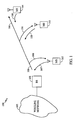
- FIG. 1 illustrates a communication system capable of operating in accordance with various embodiments of the invention
- FIG. 2 illustrates a receiver block diagram in a communication system receiver for minimizing a combined local and global mean square error for a signal equalization
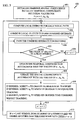
- FIG. 3 illustrates a flow chart for minimizing the combined local and global mean square error for a signal equalization.
- CDMA code division multiple access
- TIA Telecommunication Industry Association
- TIA/EIA-95 standard
- TIA/EIA-IS-2000 standard IMT-2000 standard
- WCDMA WCDMA standard
- TIA/EIA/IS-856 cdma2000 High Rate Packet Data Air Interface Specification also provides for a system wherein one or more aspects of the invention may be incorporated.
- a copy of the standards may be obtained by accessing the world wide web at the address: http://www.cdg.org , or by writing to TIA, Standards and Technology Department, 2500 Wilson Boulevard, Arlington, VA 22201, United States of America.
- the specification generally identified as WCDMA standard may be obtained by contacting 3GPP Support Office, 650 Route des Lucioles-Sophia Antipolis, Valbonne-France.
- This invention relates generally to a novel and improved method and apparatus for signal equalization in a communication system.
- One or more exemplary embodiments described herein are set forth in the context of a wireless data communication system. While use within this context is advantageous, different embodiments of the invention may be incorporated in different environments or configurations.
- the various systems described herein may be formed using software-controlled processors, integrated circuits, or discrete logic.
- the data, instructions, commands, information, signals, symbols, and chips that may be referenced throughout the application are advantageously represented by voltages, currents, electromagnetic waves, magnetic fields or particles, optical fields or particles, or a combination thereof.
- the blocks shown in each block diagram may represent hardware or method steps.
- FIG. 1 illustrates a general block diagram of a communication system 100 capable of operating in accordance with any of the code division multiple access (CDMA) communication system standards.
- communication system 100 includes a base station 101 that provides communication links between a number of mobile stations, such as mobile stations 102-104, and between the mobile stations 102-104 and a wireline network 105.
- Base station 101 may include a number of components, such as a mobile station controller, a base station controller, and a radio frequency transceiver. For simplicity, such components are not shown.
- Base station 101 may also be in communication with other base stations (not shown).
- Base station 101 communicates with each mobile station 102-104 via a forward link. The forward link may be maintained by a forward link signal transmitted from base station 101.
- the forward link signals targeted for several mobile stations 102-104 may be summed to form a forward link signal 106.
- Each of the mobile stations 102-104 receiving forward link signal 106 decodes the forward link signal 106 to extract the information that is,targeted for its user.
- the receiver may treat as interference the portion of the received forward link signal 106 targeted for others.
- Mobile stations 102-104 communicate with base station 101 via a corresponding reverse link. Each reverse link is maintained by a reverse link signal, such as reverse link signals 107-109 for respectively mobile stations 102-104.
- Base station 101 may also transmit a predefined series of data bits on a pilot channel via the forward link to all mobile stations to assist each mobile station in decoding the forward link signal 106.
- Each of the mobile stations 102-104 may transmit a pilot channel to base station 101.
- the pilot channel transmitted from a mobile station may be used for decoding the information carried by the reverse link signal transmitted from the same mobile station. The use and operation of a pilot channel are well known.
- a transmitter and a receiver for communicating via the forward and reverse links are included in each mobile station 102-104, and base station 101.
- Receiver 400 may have several antennas 292-1 to 292-K for receiving the transmitted signal waveform.
- the signals received at antennas 292-1 to 292-K may be processed in corresponding pre-processing blocks 299-1 to 299-K to produce corresponding signals 298-1 to 298-K.
- the pre-processing blocks 299-1 to 299-K may include several operations not shown, such as RF/IF downconvertors, AGC (automatic gain control) compensation, A/D (analog-to-digital) conversion.
- the signals 298-1 to 298-K pass through an equalizer 401 to present a signal 499 for the decoder.
- the signals received at antennas 292-1 to 292-K originate from a common source and carry the same stream of data symbols y[n], where "n" represents the temporal index of the symbols in the received data stream.
- the stream of data symbols y[n] may be transmitted from any of the mobile stations 102-104 through a communication channel to receiver 400 in base station 101, or from a base station 101 to any of the mobile stations 102-104.
- Receiver 400 may be incorporated in base station 101 for receiving signals from a mobile station over a dispersive channel, or in a mobile station 102-104 for receiving signals from base station 101 over a dispersive channel.
- Equalizer 401 may include a number of finite impulse response (FIR) filters 470-1 to 470-K. Although several filters 470-1 to 470-K are shown in FIG. 2 , the implementation of the filters may be different in various embodiments.
- FIR finite impulse response
- one filter may be used repeatedly to process all the signals 298-1 to 298-K.
- a filter may be dedicated to each signal 298-1 to 298-K from the antennas 292-1 to 292-K.
- the equalizer for the path from the mth antenna may be a tapped delay line FIR filter with temporal coefficients C m [n]. Use and operation of FIR filters are well known in the art.
- each of the filters 470-1 to 470-K represents an estimate of a transmitted data symbol in the data stream y[n].
- the outputs of filters 470-1 to 470-K are scaled by the multipliers 480-1 to 480-K each of which has an associated spatial coefficient S m [n]. After the scaling operation, the resulting signals are summed in a combiner 490 to form a combined signal 499 which represents a combined symbol estimate ⁇ [ n ] of the transmitted data symbol y[n].
- the signal 499 would then carry an estimate of the transmitted data symbols that could be decoded with improved reliability.
- MMSE Minimum Mean Square Error
- Local Optimization optimizes the temporal coefficients C m [n] for the m-th antenna based solely on minimizing the MSE between the transmitted symbol y[n] and the local estimate of the transmitted symbol ⁇ m [ n ], i.e., the FIR output signal 470-m for the m -th antenna branch.
- the spatial combiner weights S m [n] are chosen to minimize the mean square error (MSE) in the combined output signal ⁇ [ n ].
- Global Optimization Another method, called Global Optimization, optimizes the temporal coefficients C m [n] and spatial combiner weights S m [n] for all antennas jointly, using the combined output signal ⁇ [ n ].
- the temporal coefficients and combiner weights are selected jointly to minimize the Global MSE :
- GlobalMSE E ⁇ y [ n ] - y ⁇ n 2 .
- the spatial combiner weights S m [n] may be set equal to one in an exemplary embodiment.
- CombinedMSE ⁇ E ⁇ y n - y ⁇ 1 n 2 + E ⁇ y n - y ⁇ 2 n 2 + ... + E ⁇
- ⁇ is set equal to zero
- ⁇ may be any number between zero and one (0 ⁇ 1).
- the parameter a specifies the relative weight of the Local and Global MSE in the combined optimization. Proper selection of ⁇ could allow the adaptive algorithm to achieve a better combination of fast convergence time and low steady state MSE
- step-size parameters ⁇ c and ⁇ s and update the temporal coefficients C m [n] and spatial coefficients S m [n] in an iterative fashion.
- the temporal and spatial coefficients associated with the first antenna branch can be updated as follows:
- C 1 [ n ] is updated by:
- C 1 k [ n + 1 ] C 1 k [ n ] + ⁇ c ⁇ X 1 n ⁇ k ⁇ ⁇ ( y n - y ⁇ 1 n ) * + ( 1 - ⁇ ) S 1 * n ⁇ y n - y ⁇ n *
- ⁇ c is the step-size parameter for the temporal coefficients
- C 1 [n+1] denotes the updated temporal coefficients at time n+1.
- the temporal coefficients C m [n] and spatial coefficients S m [n] for the other antenna branches are updated analogously.
- the step-size parameters ⁇ c and ⁇ s can be any values which guarantee convergence of the iterative updates. Methods for selecting step-size parameters meeting these requirements are well known in the art. Furthermore, it follows by methods well known in the art that these nested iterations converge to a solution which achieves the CombinedMSE.
- FIG. 3 shows a flow chart 600 depicting one or more steps necessary to perform a combined optimization of the temporal coefficients C m [n] and spatial coefficients S m [n].
- Various steps of the flow chart 600 may be performed by a control system.
- the temporal coefficients C m [n] and spatial coefficients S m [n] are initialized and the initial values of the parameters ⁇ , ⁇ c and ⁇ s are selected.
- an estimate ⁇ m [ n ] of the transmitted symbol is generated for the m -th antenna branch using X m [n], the data stream received on antenna m, and the temporal coefficients C m [n].
- the estimates on each of the antenna branches are combined, using the spatial combiner coefficients S m [n], to generate a combined estimate ⁇ [ n ] of the data symbol.
- the combined estimate may be passed at step 604 to a decoder and may be evaluated in step 605 to determine whether additional updates of the temporal and spatial coefficients is required. Additional updates may not be necessary when the MSE error is at an acceptably small level.
- the counter is incremented for the next data symbol and the process proceeds to step 602.
- the values of the temporal coefficients C m [n] and spatial coefficients S m [n] are updated in accordance with the parameters ⁇ , ⁇ c and ⁇ s .
- the parameters ⁇ , ⁇ c and ⁇ s may be adjusted, if desired, from the initial values set at step 601. For example, by adjusting ⁇ 2 , the compromise between Local Optimization and Global Optimization can be controlled. When the value for ⁇ approaches zero, the updates are effectively those of Global Optimization rather than Local Optimization. Similarly, when the value for a approaches one, the updates are effectively those of Local Optimization rather than Global Optimization. This allows the possibility of trading off faster convergence for increased magnitude of the MSE error, and vice-versa. Reducing the values for the step-size parameters ⁇ c and ⁇ s yields lower steady-state MSE at the expense of slower convergence of the iterations.
- step 610 the counter is incremented for the next pilot symbol.
- step 611 the process determines whether the last data symbol in the training interval has been processed. If additional processing over the same stream of data is desired, the proceeds to step 602.
- DSP digital signal processor
- ASIC application specific integrated circuit
- FPGA field programmable gate array
- a general purpose processor may be a microprocessor, but in the alternative, the processor may be any conventional processor, controller, microcontroller, or state machine.
- a processor may also be implemented as a combination of computing devices, e.g., a combination of a DSP and a microprocessor, a plurality of microprocessors, one or more microprocessors in conjunction with a DSP core, or any other such configuration.
- a software module may reside in RAM memory, flash memory, ROM memory, EPROM memory, EEPROM memory, registers, hard disk, a removable disk, a CD-ROM, or any other form of storage medium known in the art.
- An exemplary storage medium is coupled to the processor such that the processor can read information from, and write information to, the storage medium.
- the storage medium may be integral to the processor.
- the processor and the storage medium may reside in an ASIC.
- the ASIC may reside in a user terminal.
- the processor and the storage medium may reside as discrete components in a user terminal.
Landscapes
- Engineering & Computer Science (AREA)
- Computer Networks & Wireless Communication (AREA)
- Signal Processing (AREA)
- Physics & Mathematics (AREA)
- Mathematical Physics (AREA)
- Cable Transmission Systems, Equalization Of Radio And Reduction Of Echo (AREA)
- Radio Transmission System (AREA)
- Mobile Radio Communication Systems (AREA)
- Radio Relay Systems (AREA)
Applications Claiming Priority (3)
| Application Number | Priority Date | Filing Date | Title |
|---|---|---|---|
| US918770 | 2001-07-27 | ||
| US09/918,770 US6745052B2 (en) | 2001-07-27 | 2001-07-27 | Method and apparatus for signal equalization in a communication system with multiple receiver antennas |
| PCT/US2002/023911 WO2003021812A1 (en) | 2001-07-27 | 2002-07-25 | Method and apparatus for combined spatial and temporal signal equalization in a communication system with multiple receiver antennas |
Publications (2)
| Publication Number | Publication Date |
|---|---|
| EP1413070A1 EP1413070A1 (en) | 2004-04-28 |
| EP1413070B1 true EP1413070B1 (en) | 2008-10-01 |
Family
ID=25440943
Family Applications (1)
| Application Number | Title | Priority Date | Filing Date |
|---|---|---|---|
| EP02756726A Expired - Lifetime EP1413070B1 (en) | 2001-07-27 | 2002-07-25 | Method and apparatus for combined spatial and temporal signal equalization in a communication system with multiple receiver antennas |
Country Status (9)
| Country | Link |
|---|---|
| US (1) | US6745052B2 (enExample) |
| EP (1) | EP1413070B1 (enExample) |
| JP (1) | JP2005502263A (enExample) |
| KR (1) | KR100932884B1 (enExample) |
| CN (1) | CN100505578C (enExample) |
| AT (1) | ATE409988T1 (enExample) |
| DE (1) | DE60229138D1 (enExample) |
| TW (1) | TW578398B (enExample) |
| WO (1) | WO2003021812A1 (enExample) |
Families Citing this family (12)
| Publication number | Priority date | Publication date | Assignee | Title |
|---|---|---|---|---|
| US7161974B2 (en) * | 2001-09-10 | 2007-01-09 | Sasken Communication Technologies Ltd. | Method for 2D antenna rake combining in a code division multiplication access system |
| US6882857B2 (en) * | 2002-11-26 | 2005-04-19 | Qualcomm, Incorporated | Method and apparatus for efficient processing of data for transmission in a communication system |
| GB0227626D0 (en) * | 2002-11-27 | 2003-01-08 | Koninkl Philips Electronics Nv | Low complexity equalizer for radio receiver |
| US7437135B2 (en) * | 2003-10-30 | 2008-10-14 | Interdigital Technology Corporation | Joint channel equalizer interference canceller advanced receiver |
| US7400692B2 (en) | 2004-01-14 | 2008-07-15 | Interdigital Technology Corporation | Telescoping window based equalization |
| CA2553678C (en) * | 2004-01-30 | 2014-07-08 | Universite Laval | Multi-user adaptive array receiver and method |
| US8041233B2 (en) * | 2004-07-14 | 2011-10-18 | Fundación Tarpuy | Adaptive equalization in coherent fiber optic communication |
| JP4732161B2 (ja) * | 2005-12-27 | 2011-07-27 | 京セラ株式会社 | 無線通信装置及び無線通信制御方法 |
| US8411732B2 (en) | 2007-03-21 | 2013-04-02 | Qualcomm Incorporated | Fast square root algorithm for MIMO equalization |
| US8335248B2 (en) | 2007-03-21 | 2012-12-18 | Qualcomm Incorporated | Fast square root algorithm for MIMO equalization |
| JP2009135712A (ja) * | 2007-11-29 | 2009-06-18 | Kyocera Corp | 受信装置、無線基地局及び受信方法 |
| US8098767B2 (en) | 2007-12-20 | 2012-01-17 | Qualcomm Incorporated | Receiver adjustment between pilot bursts |
Family Cites Families (13)
| Publication number | Priority date | Publication date | Assignee | Title |
|---|---|---|---|---|
| US5844951A (en) * | 1994-06-10 | 1998-12-01 | Northeastern University | Method and apparatus for simultaneous beamforming and equalization |
| DE69604595T2 (de) * | 1995-08-22 | 2000-05-31 | Thomson-Csf, Paris | Verfahren und anordnung zur räumlichen multiplexierung/demultiplexierung von funksignalen in einem sdma-mobilfunksystem |
| FR2742619B1 (fr) * | 1995-12-15 | 1998-02-06 | Thomson Csf | Procede d'egalisation multicapteur permettant une reception multicapteur en presence d'interferences et de multitrajets de propagation, et recepteur pour sa mise en oeuvre |
| JP3323067B2 (ja) * | 1996-07-12 | 2002-09-09 | 沖電気工業株式会社 | Cdma受信装置 |
| JPH1051366A (ja) * | 1996-08-02 | 1998-02-20 | Nippon Telegr & Teleph Corp <Ntt> | ダイバーシチ受信器 |
| EP0931388B1 (en) * | 1996-08-29 | 2003-11-05 | Cisco Technology, Inc. | Spatio-temporal processing for communication |
| JPH11112395A (ja) * | 1997-09-30 | 1999-04-23 | Hitachi Denshi Ltd | 等化器 |
| JP3305639B2 (ja) * | 1997-12-24 | 2002-07-24 | 株式会社エヌ・ティ・ティ・ドコモ | 直接拡散cdma伝送方式におけるrake受信機 |
| US5973642A (en) * | 1998-04-01 | 1999-10-26 | At&T Corp. | Adaptive antenna arrays for orthogonal frequency division multiplexing systems with co-channel interference |
| ITMI981280A1 (it) * | 1998-06-05 | 1999-12-05 | Italtel Spa | Metodo di rqualizzazione spaziale e temporale a convergenza rapida per la cancellazione di interferenti isofrequenziali stazionari e non |
| US6574293B1 (en) * | 1998-10-28 | 2003-06-03 | Ericsson Inc. | Receivers and methods for reducing interference in radio communications |
| US7187907B2 (en) * | 2000-05-09 | 2007-03-06 | Bernard Widrow | Simultaneous two-way transmission of information signals in the same frequency band |
| US6434375B1 (en) * | 2000-09-13 | 2002-08-13 | Neoreach, Inc. | Smart antenna with no phase calibration for CDMA reverse link |
-
2001
- 2001-07-27 US US09/918,770 patent/US6745052B2/en not_active Expired - Fee Related
-
2002
- 2002-07-25 EP EP02756726A patent/EP1413070B1/en not_active Expired - Lifetime
- 2002-07-25 WO PCT/US2002/023911 patent/WO2003021812A1/en not_active Ceased
- 2002-07-25 DE DE60229138T patent/DE60229138D1/de not_active Expired - Lifetime
- 2002-07-25 AT AT02756726T patent/ATE409988T1/de not_active IP Right Cessation
- 2002-07-25 KR KR1020047001222A patent/KR100932884B1/ko not_active Expired - Fee Related
- 2002-07-25 JP JP2003526025A patent/JP2005502263A/ja active Pending
- 2002-07-25 CN CNB028167309A patent/CN100505578C/zh not_active Expired - Fee Related
- 2002-07-26 TW TW091116720A patent/TW578398B/zh not_active IP Right Cessation
Also Published As
| Publication number | Publication date |
|---|---|
| JP2005502263A (ja) | 2005-01-20 |
| TW578398B (en) | 2004-03-01 |
| KR100932884B1 (ko) | 2009-12-21 |
| US20030027598A1 (en) | 2003-02-06 |
| CN100505578C (zh) | 2009-06-24 |
| ATE409988T1 (de) | 2008-10-15 |
| WO2003021812A1 (en) | 2003-03-13 |
| KR20040018527A (ko) | 2004-03-03 |
| CN1547811A (zh) | 2004-11-17 |
| EP1413070A1 (en) | 2004-04-28 |
| US6745052B2 (en) | 2004-06-01 |
| DE60229138D1 (de) | 2008-11-13 |
Similar Documents
| Publication | Publication Date | Title |
|---|---|---|
| US7826575B2 (en) | Selectively disabling interference cancellation based on channel dispersion estimation | |
| CN100568859C (zh) | 改变基于多普勒频率的自适应均衡器长度的方法和装置 | |
| US20080279270A1 (en) | High speed data packet access minimum mean squared equalization with direct matrix inversion training | |
| WO2004036345A2 (en) | Iterative equalisation | |
| US6745052B2 (en) | Method and apparatus for signal equalization in a communication system with multiple receiver antennas | |
| KR100940134B1 (ko) | 타임-버스트 파일럿과 부분 간격 등화기로 시스템내지연을 보상하는 방법 및 장치 | |
| GB2414147A (en) | Equaliser comprising a first filter for adapting filter coefficients and a second filter for equalising data using the adapted coefficients | |
| WO2003058845A2 (en) | Robust low complexity multi-antenna adaptive minimum mean square error equalizer | |
| CN110445525B (zh) | 一种多径信道下时域均衡波束赋形方法 | |
| Riera-Palou et al. | Variable length equalizers for broadband mobile systems | |
| US7099386B2 (en) | Channel tracking using channel covariance estimation | |
| CN101283514B (zh) | 用于干扰抵消的联合空时最优滤波器 | |
| EP2871812B1 (en) | Signal correction method and receiver | |
| CN101283516B (zh) | 包括使用乔列斯基和特征值分解的联合空时最优滤波器的无线通信设备 | |
| EP1609282B1 (en) | Filtering method for transmit processing in orthogonal frequency division multiplex communication systems and related filtering apparatus | |
| CN101199125B (zh) | 用于干扰消除的联合空时最优滤波器(jstof) | |
| CN101283611B (zh) | 具有至少一个天线、至少一个信道和联合滤波器权重-信道冲激响应估计的联合空时最优滤波器 | |
| Dietl et al. | Multi-stage MMSE decision feedback equalization for EDGE | |
| CN101297490A (zh) | 包括使用qr和特征值分解的联合空时最优滤波器的无线通信设备 | |
| HK1070194A (en) | Method and apparatus for combined spatial and temporal signal equalization in a communication system with multiple receiver antennas | |
| CN101283515B (zh) | 无线通信设备及用于在无线通信设备内减小同信道干扰的方法 | |
| CN101283513B (zh) | 使用奇异值分解的联合空时最优滤波器 | |
| CN101283512B (zh) | 使用qr和特征值分解的联合空时最优滤波器 | |
| Yoshii et al. | Adaptive spatial and temporal optimal receiver using adaptive array antenna | |
| CN101297564A (zh) | 用于干扰抵消的联合空时最优滤波器 |
Legal Events
| Date | Code | Title | Description |
|---|---|---|---|
| PUAI | Public reference made under article 153(3) epc to a published international application that has entered the european phase |
Free format text: ORIGINAL CODE: 0009012 |
|
| 17P | Request for examination filed |
Effective date: 20040127 |
|
| AK | Designated contracting states |
Kind code of ref document: A1 Designated state(s): AT BE BG CH CY CZ DE DK EE ES FI FR GB GR IE IT LI LU MC NL PT SE SK TR |
|
| AX | Request for extension of the european patent |
Extension state: AL LT LV MK RO SI |
|
| RIN1 | Information on inventor provided before grant (corrected) |
Inventor name: FERNANDEZ-CORBATON, IVAN Inventor name: SMEE, JOHN E. Inventor name: JAYARAMAN, SRIKANT |
|
| RIN1 | Information on inventor provided before grant (corrected) |
Inventor name: SMEE, JOHN E. Inventor name: FERNANDEZ-CORBATON, IVAN Inventor name: JAYARAMAN, SRIKANT |
|
| 17Q | First examination report despatched |
Effective date: 20070115 |
|
| GRAP | Despatch of communication of intention to grant a patent |
Free format text: ORIGINAL CODE: EPIDOSNIGR1 |
|
| GRAS | Grant fee paid |
Free format text: ORIGINAL CODE: EPIDOSNIGR3 |
|
| GRAA | (expected) grant |
Free format text: ORIGINAL CODE: 0009210 |
|
| AK | Designated contracting states |
Kind code of ref document: B1 Designated state(s): AT BE BG CH CY CZ DE DK EE ES FI FR GB GR IE IT LI LU MC NL PT SE SK TR |
|
| REG | Reference to a national code |
Ref country code: GB Ref legal event code: FG4D |
|
| REG | Reference to a national code |
Ref country code: CH Ref legal event code: EP |
|
| REG | Reference to a national code |
Ref country code: IE Ref legal event code: FG4D |
|
| REF | Corresponds to: |
Ref document number: 60229138 Country of ref document: DE Date of ref document: 20081113 Kind code of ref document: P |
|
| NLV1 | Nl: lapsed or annulled due to failure to fulfill the requirements of art. 29p and 29m of the patents act | ||
| PG25 | Lapsed in a contracting state [announced via postgrant information from national office to epo] |
Ref country code: BG Free format text: LAPSE BECAUSE OF FAILURE TO SUBMIT A TRANSLATION OF THE DESCRIPTION OR TO PAY THE FEE WITHIN THE PRESCRIBED TIME-LIMIT Effective date: 20090101 Ref country code: ES Free format text: LAPSE BECAUSE OF FAILURE TO SUBMIT A TRANSLATION OF THE DESCRIPTION OR TO PAY THE FEE WITHIN THE PRESCRIBED TIME-LIMIT Effective date: 20090112 Ref country code: AT Free format text: LAPSE BECAUSE OF FAILURE TO SUBMIT A TRANSLATION OF THE DESCRIPTION OR TO PAY THE FEE WITHIN THE PRESCRIBED TIME-LIMIT Effective date: 20081001 |
|
| PG25 | Lapsed in a contracting state [announced via postgrant information from national office to epo] |
Ref country code: PT Free format text: LAPSE BECAUSE OF FAILURE TO SUBMIT A TRANSLATION OF THE DESCRIPTION OR TO PAY THE FEE WITHIN THE PRESCRIBED TIME-LIMIT Effective date: 20090302 Ref country code: FI Free format text: LAPSE BECAUSE OF FAILURE TO SUBMIT A TRANSLATION OF THE DESCRIPTION OR TO PAY THE FEE WITHIN THE PRESCRIBED TIME-LIMIT Effective date: 20081001 Ref country code: NL Free format text: LAPSE BECAUSE OF FAILURE TO SUBMIT A TRANSLATION OF THE DESCRIPTION OR TO PAY THE FEE WITHIN THE PRESCRIBED TIME-LIMIT Effective date: 20081001 |
|
| PG25 | Lapsed in a contracting state [announced via postgrant information from national office to epo] |
Ref country code: EE Free format text: LAPSE BECAUSE OF FAILURE TO SUBMIT A TRANSLATION OF THE DESCRIPTION OR TO PAY THE FEE WITHIN THE PRESCRIBED TIME-LIMIT Effective date: 20081001 Ref country code: BE Free format text: LAPSE BECAUSE OF FAILURE TO SUBMIT A TRANSLATION OF THE DESCRIPTION OR TO PAY THE FEE WITHIN THE PRESCRIBED TIME-LIMIT Effective date: 20081001 Ref country code: DK Free format text: LAPSE BECAUSE OF FAILURE TO SUBMIT A TRANSLATION OF THE DESCRIPTION OR TO PAY THE FEE WITHIN THE PRESCRIBED TIME-LIMIT Effective date: 20081001 |
|
| PLBE | No opposition filed within time limit |
Free format text: ORIGINAL CODE: 0009261 |
|
| STAA | Information on the status of an ep patent application or granted ep patent |
Free format text: STATUS: NO OPPOSITION FILED WITHIN TIME LIMIT |
|
| PG25 | Lapsed in a contracting state [announced via postgrant information from national office to epo] |
Ref country code: IT Free format text: LAPSE BECAUSE OF FAILURE TO SUBMIT A TRANSLATION OF THE DESCRIPTION OR TO PAY THE FEE WITHIN THE PRESCRIBED TIME-LIMIT Effective date: 20081001 Ref country code: SE Free format text: LAPSE BECAUSE OF FAILURE TO SUBMIT A TRANSLATION OF THE DESCRIPTION OR TO PAY THE FEE WITHIN THE PRESCRIBED TIME-LIMIT Effective date: 20090101 Ref country code: CZ Free format text: LAPSE BECAUSE OF FAILURE TO SUBMIT A TRANSLATION OF THE DESCRIPTION OR TO PAY THE FEE WITHIN THE PRESCRIBED TIME-LIMIT Effective date: 20081001 |
|
| 26N | No opposition filed |
Effective date: 20090702 |
|
| PG25 | Lapsed in a contracting state [announced via postgrant information from national office to epo] |
Ref country code: SK Free format text: LAPSE BECAUSE OF FAILURE TO SUBMIT A TRANSLATION OF THE DESCRIPTION OR TO PAY THE FEE WITHIN THE PRESCRIBED TIME-LIMIT Effective date: 20081001 |
|
| PG25 | Lapsed in a contracting state [announced via postgrant information from national office to epo] |
Ref country code: MC Free format text: LAPSE BECAUSE OF NON-PAYMENT OF DUE FEES Effective date: 20090731 |
|
| REG | Reference to a national code |
Ref country code: CH Ref legal event code: PL |
|
| PG25 | Lapsed in a contracting state [announced via postgrant information from national office to epo] |
Ref country code: CH Free format text: LAPSE BECAUSE OF NON-PAYMENT OF DUE FEES Effective date: 20090731 Ref country code: LI Free format text: LAPSE BECAUSE OF NON-PAYMENT OF DUE FEES Effective date: 20090731 |
|
| PG25 | Lapsed in a contracting state [announced via postgrant information from national office to epo] |
Ref country code: IE Free format text: LAPSE BECAUSE OF NON-PAYMENT OF DUE FEES Effective date: 20090725 |
|
| PG25 | Lapsed in a contracting state [announced via postgrant information from national office to epo] |
Ref country code: GR Free format text: LAPSE BECAUSE OF FAILURE TO SUBMIT A TRANSLATION OF THE DESCRIPTION OR TO PAY THE FEE WITHIN THE PRESCRIBED TIME-LIMIT Effective date: 20090102 |
|
| PGFP | Annual fee paid to national office [announced via postgrant information from national office to epo] |
Ref country code: DE Payment date: 20100730 Year of fee payment: 9 Ref country code: FR Payment date: 20100813 Year of fee payment: 9 Ref country code: GB Payment date: 20100616 Year of fee payment: 9 |
|
| PG25 | Lapsed in a contracting state [announced via postgrant information from national office to epo] |
Ref country code: LU Free format text: LAPSE BECAUSE OF NON-PAYMENT OF DUE FEES Effective date: 20090725 |
|
| PG25 | Lapsed in a contracting state [announced via postgrant information from national office to epo] |
Ref country code: TR Free format text: LAPSE BECAUSE OF FAILURE TO SUBMIT A TRANSLATION OF THE DESCRIPTION OR TO PAY THE FEE WITHIN THE PRESCRIBED TIME-LIMIT Effective date: 20081001 |
|
| PG25 | Lapsed in a contracting state [announced via postgrant information from national office to epo] |
Ref country code: CY Free format text: LAPSE BECAUSE OF FAILURE TO SUBMIT A TRANSLATION OF THE DESCRIPTION OR TO PAY THE FEE WITHIN THE PRESCRIBED TIME-LIMIT Effective date: 20081001 |
|
| GBPC | Gb: european patent ceased through non-payment of renewal fee |
Effective date: 20110725 |
|
| REG | Reference to a national code |
Ref country code: FR Ref legal event code: ST Effective date: 20120330 |
|
| PG25 | Lapsed in a contracting state [announced via postgrant information from national office to epo] |
Ref country code: FR Free format text: LAPSE BECAUSE OF NON-PAYMENT OF DUE FEES Effective date: 20110801 Ref country code: DE Free format text: LAPSE BECAUSE OF NON-PAYMENT OF DUE FEES Effective date: 20120201 |
|
| REG | Reference to a national code |
Ref country code: DE Ref legal event code: R119 Ref document number: 60229138 Country of ref document: DE Effective date: 20120201 |
|
| PG25 | Lapsed in a contracting state [announced via postgrant information from national office to epo] |
Ref country code: GB Free format text: LAPSE BECAUSE OF NON-PAYMENT OF DUE FEES Effective date: 20110725 |