EP1405836A1 - Piezoelectric porcelain and method for preparation thereof - Google Patents
Piezoelectric porcelain and method for preparation thereof Download PDFInfo
- Publication number
- EP1405836A1 EP1405836A1 EP02738718A EP02738718A EP1405836A1 EP 1405836 A1 EP1405836 A1 EP 1405836A1 EP 02738718 A EP02738718 A EP 02738718A EP 02738718 A EP02738718 A EP 02738718A EP 1405836 A1 EP1405836 A1 EP 1405836A1
- Authority
- EP
- European Patent Office
- Prior art keywords
- type oxide
- mol
- perovskite
- piezoelectric ceramic
- elements
- Prior art date
- Legal status (The legal status is an assumption and is not a legal conclusion. Google has not performed a legal analysis and makes no representation as to the accuracy of the status listed.)
- Granted
Links
Images

Classifications
-
- C—CHEMISTRY; METALLURGY
- C04—CEMENTS; CONCRETE; ARTIFICIAL STONE; CERAMICS; REFRACTORIES
- C04B—LIME, MAGNESIA; SLAG; CEMENTS; COMPOSITIONS THEREOF, e.g. MORTARS, CONCRETE OR LIKE BUILDING MATERIALS; ARTIFICIAL STONE; CERAMICS; REFRACTORIES; TREATMENT OF NATURAL STONE
- C04B35/00—Shaped ceramic products characterised by their composition; Ceramics compositions; Processing powders of inorganic compounds preparatory to the manufacturing of ceramic products
- C04B35/01—Shaped ceramic products characterised by their composition; Ceramics compositions; Processing powders of inorganic compounds preparatory to the manufacturing of ceramic products based on oxide ceramics
- C04B35/495—Shaped ceramic products characterised by their composition; Ceramics compositions; Processing powders of inorganic compounds preparatory to the manufacturing of ceramic products based on oxide ceramics based on vanadium, niobium, tantalum, molybdenum or tungsten oxides or solid solutions thereof with other oxides, e.g. vanadates, niobates, tantalates, molybdates or tungstates
-
- C—CHEMISTRY; METALLURGY
- C04—CEMENTS; CONCRETE; ARTIFICIAL STONE; CERAMICS; REFRACTORIES
- C04B—LIME, MAGNESIA; SLAG; CEMENTS; COMPOSITIONS THEREOF, e.g. MORTARS, CONCRETE OR LIKE BUILDING MATERIALS; ARTIFICIAL STONE; CERAMICS; REFRACTORIES; TREATMENT OF NATURAL STONE
- C04B35/00—Shaped ceramic products characterised by their composition; Ceramics compositions; Processing powders of inorganic compounds preparatory to the manufacturing of ceramic products
- C04B35/622—Forming processes; Processing powders of inorganic compounds preparatory to the manufacturing of ceramic products
- C04B35/626—Preparing or treating the powders individually or as batches ; preparing or treating macroscopic reinforcing agents for ceramic products, e.g. fibres; mechanical aspects section B
- C04B35/62605—Treating the starting powders individually or as mixtures
- C04B35/6261—Milling
- C04B35/6262—Milling of calcined, sintered clinker or ceramics
-
- C—CHEMISTRY; METALLURGY
- C04—CEMENTS; CONCRETE; ARTIFICIAL STONE; CERAMICS; REFRACTORIES
- C04B—LIME, MAGNESIA; SLAG; CEMENTS; COMPOSITIONS THEREOF, e.g. MORTARS, CONCRETE OR LIKE BUILDING MATERIALS; ARTIFICIAL STONE; CERAMICS; REFRACTORIES; TREATMENT OF NATURAL STONE
- C04B35/00—Shaped ceramic products characterised by their composition; Ceramics compositions; Processing powders of inorganic compounds preparatory to the manufacturing of ceramic products
- C04B35/622—Forming processes; Processing powders of inorganic compounds preparatory to the manufacturing of ceramic products
- C04B35/626—Preparing or treating the powders individually or as batches ; preparing or treating macroscopic reinforcing agents for ceramic products, e.g. fibres; mechanical aspects section B
- C04B35/62605—Treating the starting powders individually or as mixtures
- C04B35/62695—Granulation or pelletising
-
- C—CHEMISTRY; METALLURGY
- C04—CEMENTS; CONCRETE; ARTIFICIAL STONE; CERAMICS; REFRACTORIES
- C04B—LIME, MAGNESIA; SLAG; CEMENTS; COMPOSITIONS THEREOF, e.g. MORTARS, CONCRETE OR LIKE BUILDING MATERIALS; ARTIFICIAL STONE; CERAMICS; REFRACTORIES; TREATMENT OF NATURAL STONE
- C04B35/00—Shaped ceramic products characterised by their composition; Ceramics compositions; Processing powders of inorganic compounds preparatory to the manufacturing of ceramic products
- C04B35/622—Forming processes; Processing powders of inorganic compounds preparatory to the manufacturing of ceramic products
- C04B35/626—Preparing or treating the powders individually or as batches ; preparing or treating macroscopic reinforcing agents for ceramic products, e.g. fibres; mechanical aspects section B
- C04B35/63—Preparing or treating the powders individually or as batches ; preparing or treating macroscopic reinforcing agents for ceramic products, e.g. fibres; mechanical aspects section B using additives specially adapted for forming the products, e.g.. binder binders
- C04B35/638—Removal thereof
-
- H—ELECTRICITY
- H10—SEMICONDUCTOR DEVICES; ELECTRIC SOLID-STATE DEVICES NOT OTHERWISE PROVIDED FOR
- H10N—ELECTRIC SOLID-STATE DEVICES NOT OTHERWISE PROVIDED FOR
- H10N30/00—Piezoelectric or electrostrictive devices
- H10N30/01—Manufacture or treatment
- H10N30/09—Forming piezoelectric or electrostrictive materials
- H10N30/093—Forming inorganic materials
- H10N30/097—Forming inorganic materials by sintering
-
- H—ELECTRICITY
- H10—SEMICONDUCTOR DEVICES; ELECTRIC SOLID-STATE DEVICES NOT OTHERWISE PROVIDED FOR
- H10N—ELECTRIC SOLID-STATE DEVICES NOT OTHERWISE PROVIDED FOR
- H10N30/00—Piezoelectric or electrostrictive devices
- H10N30/80—Constructional details
- H10N30/85—Piezoelectric or electrostrictive active materials
- H10N30/853—Ceramic compositions
- H10N30/8542—Alkali metal based oxides, e.g. lithium, sodium or potassium niobates
-
- C—CHEMISTRY; METALLURGY
- C04—CEMENTS; CONCRETE; ARTIFICIAL STONE; CERAMICS; REFRACTORIES
- C04B—LIME, MAGNESIA; SLAG; CEMENTS; COMPOSITIONS THEREOF, e.g. MORTARS, CONCRETE OR LIKE BUILDING MATERIALS; ARTIFICIAL STONE; CERAMICS; REFRACTORIES; TREATMENT OF NATURAL STONE
- C04B2235/00—Aspects relating to ceramic starting mixtures or sintered ceramic products
- C04B2235/02—Composition of constituents of the starting material or of secondary phases of the final product
- C04B2235/30—Constituents and secondary phases not being of a fibrous nature
- C04B2235/32—Metal oxides, mixed metal oxides, or oxide-forming salts thereof, e.g. carbonates, nitrates, (oxy)hydroxides, chlorides
- C04B2235/3201—Alkali metal oxides or oxide-forming salts thereof
-
- C—CHEMISTRY; METALLURGY
- C04—CEMENTS; CONCRETE; ARTIFICIAL STONE; CERAMICS; REFRACTORIES
- C04B—LIME, MAGNESIA; SLAG; CEMENTS; COMPOSITIONS THEREOF, e.g. MORTARS, CONCRETE OR LIKE BUILDING MATERIALS; ARTIFICIAL STONE; CERAMICS; REFRACTORIES; TREATMENT OF NATURAL STONE
- C04B2235/00—Aspects relating to ceramic starting mixtures or sintered ceramic products
- C04B2235/02—Composition of constituents of the starting material or of secondary phases of the final product
- C04B2235/30—Constituents and secondary phases not being of a fibrous nature
- C04B2235/32—Metal oxides, mixed metal oxides, or oxide-forming salts thereof, e.g. carbonates, nitrates, (oxy)hydroxides, chlorides
- C04B2235/3201—Alkali metal oxides or oxide-forming salts thereof
- C04B2235/3203—Lithium oxide or oxide-forming salts thereof
-
- C—CHEMISTRY; METALLURGY
- C04—CEMENTS; CONCRETE; ARTIFICIAL STONE; CERAMICS; REFRACTORIES
- C04B—LIME, MAGNESIA; SLAG; CEMENTS; COMPOSITIONS THEREOF, e.g. MORTARS, CONCRETE OR LIKE BUILDING MATERIALS; ARTIFICIAL STONE; CERAMICS; REFRACTORIES; TREATMENT OF NATURAL STONE
- C04B2235/00—Aspects relating to ceramic starting mixtures or sintered ceramic products
- C04B2235/02—Composition of constituents of the starting material or of secondary phases of the final product
- C04B2235/30—Constituents and secondary phases not being of a fibrous nature
- C04B2235/32—Metal oxides, mixed metal oxides, or oxide-forming salts thereof, e.g. carbonates, nitrates, (oxy)hydroxides, chlorides
- C04B2235/3205—Alkaline earth oxides or oxide forming salts thereof, e.g. beryllium oxide
- C04B2235/3206—Magnesium oxides or oxide-forming salts thereof
-
- C—CHEMISTRY; METALLURGY
- C04—CEMENTS; CONCRETE; ARTIFICIAL STONE; CERAMICS; REFRACTORIES
- C04B—LIME, MAGNESIA; SLAG; CEMENTS; COMPOSITIONS THEREOF, e.g. MORTARS, CONCRETE OR LIKE BUILDING MATERIALS; ARTIFICIAL STONE; CERAMICS; REFRACTORIES; TREATMENT OF NATURAL STONE
- C04B2235/00—Aspects relating to ceramic starting mixtures or sintered ceramic products
- C04B2235/02—Composition of constituents of the starting material or of secondary phases of the final product
- C04B2235/30—Constituents and secondary phases not being of a fibrous nature
- C04B2235/32—Metal oxides, mixed metal oxides, or oxide-forming salts thereof, e.g. carbonates, nitrates, (oxy)hydroxides, chlorides
- C04B2235/3205—Alkaline earth oxides or oxide forming salts thereof, e.g. beryllium oxide
- C04B2235/3208—Calcium oxide or oxide-forming salts thereof, e.g. lime
-
- C—CHEMISTRY; METALLURGY
- C04—CEMENTS; CONCRETE; ARTIFICIAL STONE; CERAMICS; REFRACTORIES
- C04B—LIME, MAGNESIA; SLAG; CEMENTS; COMPOSITIONS THEREOF, e.g. MORTARS, CONCRETE OR LIKE BUILDING MATERIALS; ARTIFICIAL STONE; CERAMICS; REFRACTORIES; TREATMENT OF NATURAL STONE
- C04B2235/00—Aspects relating to ceramic starting mixtures or sintered ceramic products
- C04B2235/02—Composition of constituents of the starting material or of secondary phases of the final product
- C04B2235/30—Constituents and secondary phases not being of a fibrous nature
- C04B2235/32—Metal oxides, mixed metal oxides, or oxide-forming salts thereof, e.g. carbonates, nitrates, (oxy)hydroxides, chlorides
- C04B2235/3205—Alkaline earth oxides or oxide forming salts thereof, e.g. beryllium oxide
- C04B2235/3213—Strontium oxides or oxide-forming salts thereof
-
- C—CHEMISTRY; METALLURGY
- C04—CEMENTS; CONCRETE; ARTIFICIAL STONE; CERAMICS; REFRACTORIES
- C04B—LIME, MAGNESIA; SLAG; CEMENTS; COMPOSITIONS THEREOF, e.g. MORTARS, CONCRETE OR LIKE BUILDING MATERIALS; ARTIFICIAL STONE; CERAMICS; REFRACTORIES; TREATMENT OF NATURAL STONE
- C04B2235/00—Aspects relating to ceramic starting mixtures or sintered ceramic products
- C04B2235/02—Composition of constituents of the starting material or of secondary phases of the final product
- C04B2235/30—Constituents and secondary phases not being of a fibrous nature
- C04B2235/32—Metal oxides, mixed metal oxides, or oxide-forming salts thereof, e.g. carbonates, nitrates, (oxy)hydroxides, chlorides
- C04B2235/3205—Alkaline earth oxides or oxide forming salts thereof, e.g. beryllium oxide
- C04B2235/3215—Barium oxides or oxide-forming salts thereof
-
- C—CHEMISTRY; METALLURGY
- C04—CEMENTS; CONCRETE; ARTIFICIAL STONE; CERAMICS; REFRACTORIES
- C04B—LIME, MAGNESIA; SLAG; CEMENTS; COMPOSITIONS THEREOF, e.g. MORTARS, CONCRETE OR LIKE BUILDING MATERIALS; ARTIFICIAL STONE; CERAMICS; REFRACTORIES; TREATMENT OF NATURAL STONE
- C04B2235/00—Aspects relating to ceramic starting mixtures or sintered ceramic products
- C04B2235/02—Composition of constituents of the starting material or of secondary phases of the final product
- C04B2235/30—Constituents and secondary phases not being of a fibrous nature
- C04B2235/32—Metal oxides, mixed metal oxides, or oxide-forming salts thereof, e.g. carbonates, nitrates, (oxy)hydroxides, chlorides
- C04B2235/3231—Refractory metal oxides, their mixed metal oxides, or oxide-forming salts thereof
- C04B2235/3232—Titanium oxides or titanates, e.g. rutile or anatase
-
- C—CHEMISTRY; METALLURGY
- C04—CEMENTS; CONCRETE; ARTIFICIAL STONE; CERAMICS; REFRACTORIES
- C04B—LIME, MAGNESIA; SLAG; CEMENTS; COMPOSITIONS THEREOF, e.g. MORTARS, CONCRETE OR LIKE BUILDING MATERIALS; ARTIFICIAL STONE; CERAMICS; REFRACTORIES; TREATMENT OF NATURAL STONE
- C04B2235/00—Aspects relating to ceramic starting mixtures or sintered ceramic products
- C04B2235/02—Composition of constituents of the starting material or of secondary phases of the final product
- C04B2235/30—Constituents and secondary phases not being of a fibrous nature
- C04B2235/32—Metal oxides, mixed metal oxides, or oxide-forming salts thereof, e.g. carbonates, nitrates, (oxy)hydroxides, chlorides
- C04B2235/3231—Refractory metal oxides, their mixed metal oxides, or oxide-forming salts thereof
- C04B2235/3232—Titanium oxides or titanates, e.g. rutile or anatase
- C04B2235/3234—Titanates, not containing zirconia
- C04B2235/3236—Alkaline earth titanates
-
- C—CHEMISTRY; METALLURGY
- C04—CEMENTS; CONCRETE; ARTIFICIAL STONE; CERAMICS; REFRACTORIES
- C04B—LIME, MAGNESIA; SLAG; CEMENTS; COMPOSITIONS THEREOF, e.g. MORTARS, CONCRETE OR LIKE BUILDING MATERIALS; ARTIFICIAL STONE; CERAMICS; REFRACTORIES; TREATMENT OF NATURAL STONE
- C04B2235/00—Aspects relating to ceramic starting mixtures or sintered ceramic products
- C04B2235/02—Composition of constituents of the starting material or of secondary phases of the final product
- C04B2235/30—Constituents and secondary phases not being of a fibrous nature
- C04B2235/32—Metal oxides, mixed metal oxides, or oxide-forming salts thereof, e.g. carbonates, nitrates, (oxy)hydroxides, chlorides
- C04B2235/3231—Refractory metal oxides, their mixed metal oxides, or oxide-forming salts thereof
- C04B2235/3251—Niobium oxides, niobates, tantalum oxides, tantalates, or oxide-forming salts thereof
-
- C—CHEMISTRY; METALLURGY
- C04—CEMENTS; CONCRETE; ARTIFICIAL STONE; CERAMICS; REFRACTORIES
- C04B—LIME, MAGNESIA; SLAG; CEMENTS; COMPOSITIONS THEREOF, e.g. MORTARS, CONCRETE OR LIKE BUILDING MATERIALS; ARTIFICIAL STONE; CERAMICS; REFRACTORIES; TREATMENT OF NATURAL STONE
- C04B2235/00—Aspects relating to ceramic starting mixtures or sintered ceramic products
- C04B2235/02—Composition of constituents of the starting material or of secondary phases of the final product
- C04B2235/30—Constituents and secondary phases not being of a fibrous nature
- C04B2235/32—Metal oxides, mixed metal oxides, or oxide-forming salts thereof, e.g. carbonates, nitrates, (oxy)hydroxides, chlorides
- C04B2235/3231—Refractory metal oxides, their mixed metal oxides, or oxide-forming salts thereof
- C04B2235/3251—Niobium oxides, niobates, tantalum oxides, tantalates, or oxide-forming salts thereof
- C04B2235/3255—Niobates or tantalates, e.g. silver niobate
-
- C—CHEMISTRY; METALLURGY
- C04—CEMENTS; CONCRETE; ARTIFICIAL STONE; CERAMICS; REFRACTORIES
- C04B—LIME, MAGNESIA; SLAG; CEMENTS; COMPOSITIONS THEREOF, e.g. MORTARS, CONCRETE OR LIKE BUILDING MATERIALS; ARTIFICIAL STONE; CERAMICS; REFRACTORIES; TREATMENT OF NATURAL STONE
- C04B2235/00—Aspects relating to ceramic starting mixtures or sintered ceramic products
- C04B2235/02—Composition of constituents of the starting material or of secondary phases of the final product
- C04B2235/30—Constituents and secondary phases not being of a fibrous nature
- C04B2235/32—Metal oxides, mixed metal oxides, or oxide-forming salts thereof, e.g. carbonates, nitrates, (oxy)hydroxides, chlorides
- C04B2235/3262—Manganese oxides, manganates, rhenium oxides or oxide-forming salts thereof, e.g. MnO
-
- C—CHEMISTRY; METALLURGY
- C04—CEMENTS; CONCRETE; ARTIFICIAL STONE; CERAMICS; REFRACTORIES
- C04B—LIME, MAGNESIA; SLAG; CEMENTS; COMPOSITIONS THEREOF, e.g. MORTARS, CONCRETE OR LIKE BUILDING MATERIALS; ARTIFICIAL STONE; CERAMICS; REFRACTORIES; TREATMENT OF NATURAL STONE
- C04B2235/00—Aspects relating to ceramic starting mixtures or sintered ceramic products
- C04B2235/02—Composition of constituents of the starting material or of secondary phases of the final product
- C04B2235/30—Constituents and secondary phases not being of a fibrous nature
- C04B2235/32—Metal oxides, mixed metal oxides, or oxide-forming salts thereof, e.g. carbonates, nitrates, (oxy)hydroxides, chlorides
- C04B2235/327—Iron group oxides, their mixed metal oxides, or oxide-forming salts thereof
- C04B2235/3272—Iron oxides or oxide forming salts thereof, e.g. hematite, magnetite
-
- C—CHEMISTRY; METALLURGY
- C04—CEMENTS; CONCRETE; ARTIFICIAL STONE; CERAMICS; REFRACTORIES
- C04B—LIME, MAGNESIA; SLAG; CEMENTS; COMPOSITIONS THEREOF, e.g. MORTARS, CONCRETE OR LIKE BUILDING MATERIALS; ARTIFICIAL STONE; CERAMICS; REFRACTORIES; TREATMENT OF NATURAL STONE
- C04B2235/00—Aspects relating to ceramic starting mixtures or sintered ceramic products
- C04B2235/02—Composition of constituents of the starting material or of secondary phases of the final product
- C04B2235/30—Constituents and secondary phases not being of a fibrous nature
- C04B2235/32—Metal oxides, mixed metal oxides, or oxide-forming salts thereof, e.g. carbonates, nitrates, (oxy)hydroxides, chlorides
- C04B2235/327—Iron group oxides, their mixed metal oxides, or oxide-forming salts thereof
- C04B2235/3275—Cobalt oxides, cobaltates or cobaltites or oxide forming salts thereof, e.g. bismuth cobaltate, zinc cobaltite
-
- C—CHEMISTRY; METALLURGY
- C04—CEMENTS; CONCRETE; ARTIFICIAL STONE; CERAMICS; REFRACTORIES
- C04B—LIME, MAGNESIA; SLAG; CEMENTS; COMPOSITIONS THEREOF, e.g. MORTARS, CONCRETE OR LIKE BUILDING MATERIALS; ARTIFICIAL STONE; CERAMICS; REFRACTORIES; TREATMENT OF NATURAL STONE
- C04B2235/00—Aspects relating to ceramic starting mixtures or sintered ceramic products
- C04B2235/02—Composition of constituents of the starting material or of secondary phases of the final product
- C04B2235/30—Constituents and secondary phases not being of a fibrous nature
- C04B2235/32—Metal oxides, mixed metal oxides, or oxide-forming salts thereof, e.g. carbonates, nitrates, (oxy)hydroxides, chlorides
- C04B2235/327—Iron group oxides, their mixed metal oxides, or oxide-forming salts thereof
- C04B2235/3275—Cobalt oxides, cobaltates or cobaltites or oxide forming salts thereof, e.g. bismuth cobaltate, zinc cobaltite
- C04B2235/3277—Co3O4
-
- C—CHEMISTRY; METALLURGY
- C04—CEMENTS; CONCRETE; ARTIFICIAL STONE; CERAMICS; REFRACTORIES
- C04B—LIME, MAGNESIA; SLAG; CEMENTS; COMPOSITIONS THEREOF, e.g. MORTARS, CONCRETE OR LIKE BUILDING MATERIALS; ARTIFICIAL STONE; CERAMICS; REFRACTORIES; TREATMENT OF NATURAL STONE
- C04B2235/00—Aspects relating to ceramic starting mixtures or sintered ceramic products
- C04B2235/02—Composition of constituents of the starting material or of secondary phases of the final product
- C04B2235/30—Constituents and secondary phases not being of a fibrous nature
- C04B2235/32—Metal oxides, mixed metal oxides, or oxide-forming salts thereof, e.g. carbonates, nitrates, (oxy)hydroxides, chlorides
- C04B2235/327—Iron group oxides, their mixed metal oxides, or oxide-forming salts thereof
- C04B2235/3279—Nickel oxides, nickalates, or oxide-forming salts thereof
-
- C—CHEMISTRY; METALLURGY
- C04—CEMENTS; CONCRETE; ARTIFICIAL STONE; CERAMICS; REFRACTORIES
- C04B—LIME, MAGNESIA; SLAG; CEMENTS; COMPOSITIONS THEREOF, e.g. MORTARS, CONCRETE OR LIKE BUILDING MATERIALS; ARTIFICIAL STONE; CERAMICS; REFRACTORIES; TREATMENT OF NATURAL STONE
- C04B2235/00—Aspects relating to ceramic starting mixtures or sintered ceramic products
- C04B2235/02—Composition of constituents of the starting material or of secondary phases of the final product
- C04B2235/30—Constituents and secondary phases not being of a fibrous nature
- C04B2235/32—Metal oxides, mixed metal oxides, or oxide-forming salts thereof, e.g. carbonates, nitrates, (oxy)hydroxides, chlorides
- C04B2235/3284—Zinc oxides, zincates, cadmium oxides, cadmiates, mercury oxides, mercurates or oxide forming salts thereof
-
- C—CHEMISTRY; METALLURGY
- C04—CEMENTS; CONCRETE; ARTIFICIAL STONE; CERAMICS; REFRACTORIES
- C04B—LIME, MAGNESIA; SLAG; CEMENTS; COMPOSITIONS THEREOF, e.g. MORTARS, CONCRETE OR LIKE BUILDING MATERIALS; ARTIFICIAL STONE; CERAMICS; REFRACTORIES; TREATMENT OF NATURAL STONE
- C04B2235/00—Aspects relating to ceramic starting mixtures or sintered ceramic products
- C04B2235/02—Composition of constituents of the starting material or of secondary phases of the final product
- C04B2235/30—Constituents and secondary phases not being of a fibrous nature
- C04B2235/32—Metal oxides, mixed metal oxides, or oxide-forming salts thereof, e.g. carbonates, nitrates, (oxy)hydroxides, chlorides
- C04B2235/3289—Noble metal oxides
- C04B2235/3291—Silver oxides
-
- C—CHEMISTRY; METALLURGY
- C04—CEMENTS; CONCRETE; ARTIFICIAL STONE; CERAMICS; REFRACTORIES
- C04B—LIME, MAGNESIA; SLAG; CEMENTS; COMPOSITIONS THEREOF, e.g. MORTARS, CONCRETE OR LIKE BUILDING MATERIALS; ARTIFICIAL STONE; CERAMICS; REFRACTORIES; TREATMENT OF NATURAL STONE
- C04B2235/00—Aspects relating to ceramic starting mixtures or sintered ceramic products
- C04B2235/60—Aspects relating to the preparation, properties or mechanical treatment of green bodies or pre-forms
- C04B2235/604—Pressing at temperatures other than sintering temperatures
-
- C—CHEMISTRY; METALLURGY
- C04—CEMENTS; CONCRETE; ARTIFICIAL STONE; CERAMICS; REFRACTORIES
- C04B—LIME, MAGNESIA; SLAG; CEMENTS; COMPOSITIONS THEREOF, e.g. MORTARS, CONCRETE OR LIKE BUILDING MATERIALS; ARTIFICIAL STONE; CERAMICS; REFRACTORIES; TREATMENT OF NATURAL STONE
- C04B2235/00—Aspects relating to ceramic starting mixtures or sintered ceramic products
- C04B2235/70—Aspects relating to sintered or melt-casted ceramic products
- C04B2235/74—Physical characteristics
- C04B2235/76—Crystal structural characteristics, e.g. symmetry
-
- C—CHEMISTRY; METALLURGY
- C04—CEMENTS; CONCRETE; ARTIFICIAL STONE; CERAMICS; REFRACTORIES
- C04B—LIME, MAGNESIA; SLAG; CEMENTS; COMPOSITIONS THEREOF, e.g. MORTARS, CONCRETE OR LIKE BUILDING MATERIALS; ARTIFICIAL STONE; CERAMICS; REFRACTORIES; TREATMENT OF NATURAL STONE
- C04B2235/00—Aspects relating to ceramic starting mixtures or sintered ceramic products
- C04B2235/70—Aspects relating to sintered or melt-casted ceramic products
- C04B2235/74—Physical characteristics
- C04B2235/76—Crystal structural characteristics, e.g. symmetry
- C04B2235/768—Perovskite structure ABO3
-
- C—CHEMISTRY; METALLURGY
- C04—CEMENTS; CONCRETE; ARTIFICIAL STONE; CERAMICS; REFRACTORIES
- C04B—LIME, MAGNESIA; SLAG; CEMENTS; COMPOSITIONS THEREOF, e.g. MORTARS, CONCRETE OR LIKE BUILDING MATERIALS; ARTIFICIAL STONE; CERAMICS; REFRACTORIES; TREATMENT OF NATURAL STONE
- C04B2235/00—Aspects relating to ceramic starting mixtures or sintered ceramic products
- C04B2235/70—Aspects relating to sintered or melt-casted ceramic products
- C04B2235/94—Products characterised by their shape
Definitions
- the present invention relates to a piezoelectric ceramic comprising a composition including a perovskite-type oxide and a tungsten bronze-type oxide, more specifically to a piezoelectric ceramic suitable for vibration devices such as actuators or the like, sound components, sensors and so on.
- An actuator using a piezoelectric ceramic uses such a piezoelectric effect that when an electric field is applied, mechanical strain and stress will be generated.
- the actuator has such characteristics that a very small displacement can be obtained with high accuracy, and generated strain is large, and, for example, the actuator is used to position a precision tool or an optical device.
- PZT lead zirconate titanate
- lead zirconate titanate contains a large amount of lead, so adverse effects on global environment such as lead leaching due to acid rain have become controversial. Therefore, the development of piezoelectric ceramics not including lead instead of lead zirconate titanate is desired.
- a piezoelectric ceramic including barium titanate (BaTiO 3 ) as a main component is known (refer to Japanese Unexamined Patent Application Publication No. Hei 2-159079).
- the piezoelectric ceramic is superior in a high relative dielectric constant ⁇ r and a high electromechanical coupling factor kr, so the piezoelectric ceramic holds promise as a piezoelectric material for the actuator.
- a piezoelectric ceramic including potassium sodium lithium niobate as a main component is known (refer to Japanese Unexamined Patent Application Publication No. Sho 49-125900 or Japanese Examined Patent Application Publication No.
- the piezoelectric ceramic has a high Curie temperature of 350°C or over, and an excellent electromechanical coupling factor kr, so the piezoelectric ceramic holds promise as a piezoelectric material. Further, a compound including potassium sodium niobate and a tungsten bronze-type oxide has been recently reported (Japanese Unexamined Patent Application Publication No. Hei 9-165262).
- the piezoelectric ceramics not including lead have such a problem that they have lower piezoelectric properties, compared to lead-based piezoelectric ceramics, so a sufficiently large amount of generated displacement cannot be obtained.
- barium titanate has a low Curie temperature of approximately 120°C, so there is such a problem that an operating temperature range is limited to 100°C or less.
- sodium lithium potassium niobate sodium, potassium and lithium are easily volatilized during sintering, so there is such a problem that it is difficult to sinter the piezoelectric ceramic.
- a first piezoelectric ceramic according to the invention comprises a composition including a perovskite-type oxide and a tungsten bronze-type oxide, wherein the perovskite-type oxide includes a first element including sodium (Na), potassium (K) and lithium (Li), a second element including at least niobium (Nb) selected from the group consisting of niobium and tantalum (Ta), and oxygen (O).
- the perovskite-type oxide includes a first element including sodium (Na), potassium (K) and lithium (Li), a second element including at least niobium (Nb) selected from the group consisting of niobium and tantalum (Ta), and oxygen (O).
- the perovskite-type oxide and the tungsten bronze-type oxide are comprised, and the perovskite-type oxide includes sodium, potassium and lithium, so a higher Curie temperature, and higher values of a electromechanical coupling factor kr, a relative dielectric constant ⁇ r and an amount of generated displacement can be obtained, and sintering can be easily carried out.
- silver (Ag) may be further included.
- the content of silver in the first element is preferably within a range of 5 mol% or less.
- a second piezoelectric ceramic according to the invention comprises a composition including a first perovskite-type oxide, a second perovskite-type oxide and a tungsten bronze-type oxide, wherein the first perovskite-type oxide includes a first element including sodium and potassium, a second element including at least niobium selected from the group consisting of niobium and tantalum, and oxygen, the second perovskite-type oxide includes an element of Group 2 in the long form of the periodic table of the elements and titanium (Ti), and the content of the second perovskite-type oxide in the composition is less than 10 mol%.
- the second perovskite-type oxide is comprised in addition to the first perovskite-type oxide and the tungsten bronze-type oxide, so the Curie temperature can be increased, and sintering can be easily carried out, and a larger amount of generated displacement can be obtained.
- the first perovskite-type oxide may further include lithium as the first element.
- the content of potassium in the first element is preferably within a range of 10 mol% to 90 mol% both inclusive, and the content of lithium in the first element is preferably 20 mol% or less.
- a composition ratio of the first element to the second element is preferably within a range of 0.95 to 1.05 both inclusive at molar ratio.
- the content of the tungsten bronze-type oxide in the composition is preferably 5.3 mol% or less.
- the tungsten bronze-type oxide preferably includes a third element including at least one kind selected from elements of Group 2 in the long form of the periodic table of the elements, a fourth element including at least niobium selected from the group consisting of niobium and tantalum, and oxygen.
- the third element preferably includes at least one kind selected from the group consisting of magnesium (Mg), calcium (Ca), strontium (Sr) and barium (Ba).
- the total content of tantalum in the second element and the fourth element is preferably within a range of 0 mol% to 50 mol% both inclusive.
- the composition is considered as a main component, and as a sub-component, an oxide including at least one kind selected from the group consisting of elements of Groups 4 through 11 in the long form of the periodic table of the elements, elements of Group 3 in the long form of the periodic table of the elements and elements of Group 12 in the long form of the periodic table of the elements is included within a range of 0.01 wt% to 1 wt% both inclusive relative to the main component in total by each element group.
- an oxide including manganese (Mn) is preferably included, and more preferably an oxide including at least one kind selected from the group consisting of iron (Fe), cobalt (Co), nickel (Ni) and zinc (Zn) is included in addition to manganese.
- the piezoelectric ceramic comprises a first perovskite-type oxide including a first element including sodium and potassium, a second element including at least niobium selected from the group consisting of niobium and tantalum, and oxygen, a second perovskite-type oxide including an element of Group 2 in the long form of the periodic table of the elements and titanium, and a tungsten bronze-type oxide, and the method comprises the step of calcining a mixture including elements of the first perovskite-type oxide, the second perovskite-type oxide and elements of the tungsten bronze-type oxide.
- the second perovskite-type oxide is added to the mixture, so the piezoelectric ceramic comprising the first perovskite-type oxide, the second perovskite-type oxide and the tungsten bronze-type oxide can be easily obtained, and a higher Curie temperature and a larger amount of generated displacement can be obtained.
- a piezoelectric ceramic according to a first embodiment of the invention comprises a composition including a perovskite-type oxide and a tungsten bronze-type oxide as a main component.
- the perovskite-type oxide and the tungsten bronze-type oxide may form a solid solution, or may not perfectly form a solid solution.
- the perovskite-type oxide includes a first element, a second element and oxygen.
- the first element includes sodium, potassium and lithium, and may further include silver.
- the second element includes at least niobium selected from the group consisting of niobium and tantalum, and preferably further includes tantalum, because in such a case, superior piezoelectric properties can be obtained with no lead or a smaller content of lead. Further, it is because the Curie temperature can be increased, thereby an operating temperature range can be extended.
- the perovskite-type oxide is represented by, for example, Chemical Formula 1.
- the values of x, y, z and w are within a range of 0 ⁇ x ⁇ 1, 0 ⁇ y ⁇ 1, 0 ⁇ z ⁇ 1 and 0 ⁇ w ⁇ 1, respectively.
- p is 1, but the perovskite-type oxide may deviate from the stoichiometric composition.
- the composition of oxygen is stoichiometrically determined, and it may deviate from the stoichiometric composition.
- the content of potassium in the first element is preferably within a range of 10 mol% to 90 mol% inclusive.
- the value of x in Chemical Formula 1 is preferably within a range of 0.1 ⁇ x ⁇ 0.9 at molar ratio, because when the content of potassium is too small, a relative dielectric constant ⁇ r, an electromechanical coupling factor kr, and an amount of generated displacement cannot be sufficiently increased, and when the content of potassium is too large, potassium is vigorously volatilized during sintering, so it is difficult to sinter.
- the content of potassium is more preferably within a range of 20 mol% to 75 mol% inclusive, still more preferably within a range of 30 mol% to 60 mol% inclusive, still more preferably within a range of 33 mol% to 57 mol% inclusive, and still more preferably within a range of 38 mol% to 55 mol% inclusive.
- the value of x in Chemical Formula 1 is more preferably within a range of 0.2 ⁇ x ⁇ 0.75, still more preferably 0.3 ⁇ x ⁇ 0.6, more preferably 0.33 ⁇ x ⁇ 0.57 and still more preferably 0.38 ⁇ x ⁇ 0.55.
- the content of lithium in the first element is preferably within a range of 20 mol% or less.
- the value of y in Chemical Formula 1 is preferably within a range of 0 ⁇ y ⁇ 0.2 at molar ratio, because when the content of lithium is too large, the relative dielectric constant ⁇ r, the electromechanical coupling factor kr and the amount of generated displacement cannot be sufficiently increased.
- the content of lithium is more preferably within a range of 2 mol% to 20 mol% inclusive, and still more preferably 5 mol% to 10 mol% inclusive.
- the value of y in Chemical Formula 1 is more preferably within a range of 0.02 ⁇ y ⁇ 0.2, and still more preferably within a range of 0.05 ⁇ y ⁇ 0.1.
- the content of silver in the first element is preferably within a range of 5 mol% or less.
- the value of z in Chemical Formula 1 is preferably within a range of 0 ⁇ z ⁇ 0.05 at molar ratio, because when the content of silver is too large, the relative dielectric constant ⁇ r, the electromechanical coupling factor kr and the amount of generated displacement cannot be sufficiently increased.
- a composition ratio of the first element to a second element that is, for example, the value of p in Chemical Formula 1 is preferably within a range of 0.95 to 1.05 inclusive at molar ratio. It is because when it is less than 0.95, the relative dielectric constant ⁇ r, the electromechanical coupling factor kr and the amount of generated displacement become smaller, and when it is larger than 1.05, it is difficult to carry out polarization due to a decline in sintering density.
- the tungsten bronze-type oxide includes a third element, a fourth element and oxygen.
- the third element preferably includes, for example, at least one kind selected from elements of Group 2 in the long form of the periodic table of the elements, and more preferably includes at least one kind selected from the group consisting of magnesium, calcium, strontium and barium.
- the fourth element preferably includes, for example, at least niobium selected from the group consisting of niobium and tantalum, and more preferably further includes tantalum, because in such a case, superior piezoelectric properties can be obtained with no lead or a smaller content of lead.
- the tungsten bronze-type oxide is represented by, for example, Chemical Formula 2.
- M represents the third element, and the value of v is within a range of 0 ⁇ v ⁇ 1.
- a composition ratio of the third element, the fourth element and oxygen is stoichiometrically determined, and it may deviate from the stoichiometric composition.
- the fourth element may be the same as or different from the second element.
- the total content of tantalum in the second element and the fourth element is preferably within a range of 50 mol% or less. It is because when the total content of tantalum is too large, the Curie temperature is decreased to 150°C or less, and the electromechanical coupling factor kr and the amount of generated displacement become smaller.
- the total content of tantalum is more preferably within a range of 3 mol% to 30 mol% inclusive, and still more preferably within a range of 6 mol% to 20 mol% inclusive.
- a composition ratio of the perovskite-type oxide and the tungsten bronze-type oxide is preferably within a range shown in Chemical Formula 3 at molar ratio. More specifically, the content of the tungsten bronze-type oxide in the composition is preferably within a range of larger than 0 mol% and equal to 5.3 mol% or less, more preferably within a range of 0.2 mol% to 2.6 mol% inclusive, and still more preferably within a range of 0.5 mol% to 1.0 mol% inclusive.
- the tungsten bronze-type oxide is included in addition to the perovskite-type oxide, sintering can be easily carried out, and the relative dielectric constant ⁇ r, the electromechanical coupling factor kr and the amount of generated displacement can be increased. However, when the content of the tungsten bronze-type oxide is too large, the electromechanical coupling factor kr and the amount of generated displacement become smaller.
- A represents the perovskite-type oxide
- B represents the tungsten bronze-type oxide
- the value of n is preferably within a range of 0 ⁇ n ⁇ 0.053, more preferably within a range of 0.002 ⁇ n ⁇ 0.026, and still more preferably within a range of 0.005 ⁇ n ⁇ 0.01.
- the piezoelectric ceramic preferably comprises an oxide including at least one kind selected from the group consisting of elements of Groups 4 through 11 in the long form of the periodic table of the elements, elements of Group 3 in the long form of the periodic table of the elements and elements of Group 12 in the long form of the periodic table of the elements as a sub-component in addition to the above composition which is a main component. It is because by improved sinterability, piezoelectric properties can be further improved.
- an oxide including manganese is preferably included as the sub-component, because a higher effect can be obtained.
- manganese oxide is considered as a first sub-component, and in addition to manganese oxide, an oxide including at least one kind selected from the group consisting of iron, cobalt, nickel and zinc are more preferably included as a second sub-component, because a higher effect can be obtained.
- the oxides as the sub-components may exist in a grain boundary of the composition of the main component, or may exist so as to be dispersed in a part of the composition of the main component.
- the total content of the sub-component relative to the main component by each of oxides including elements of Groups 4 through 11 in the long form of the periodic table of the elements, oxides including elements of Group 3 in the long form of the periodic table of the elements, and oxides including elements of Group 12 in the long form of the periodic table of the elements is preferably within a range of 0.01 wt% to 1 wt% inclusive.
- the total content of oxides by each element group is preferably within the above range.
- the component of the sub-component is too large, original properties of the main component cannot be obtained, and the amount of generated displacement decreases.
- MnO, Fe 2 O 3 , Co 3 O 4 , NiO, ZnO or the like in chemical formula is used as a reference.
- the piezoelectric ceramic may include lead (Pb), but the component of lead is preferably within a range of 1 wt% or less, and more preferably, no lead is included. It is because the volatilization of lead during sintering, and the emission of lead into environment after the piezoelectric ceramic is distributed in a market as a piezoelectric part, and then is disposed can be minimized, and it is preferable in the point of ultra-low emission, environmental friendliness and ecology.
- lead lead
- the piezoelectric ceramic is preferably used as, for example, a material of a vibration device such as an actuator or the like, a sound component, a sensor or the like which is a piezoelectric device.
- FIG. 1 shows an example of a piezoelectric device using the piezoelectric ceramic according to the embodiment.
- the piezoelectric device comprises a piezoelectric substrate 1 made of the piezoelectric ceramic according to the embodiment, and a pair of electrodes 2 and 3 disposed on a pair of facing surfaces 1a and 1b of the piezoelectric substrate 1, respectively.
- the piezoelectric substrate 1 is polarized, for example, in a thickness direction, that is, a direction where the electrodes 2 and 3 face each other, and when a voltage is applied through the electrodes 2 and 3, vertical vibration in a thickness direction occurs, and then vibration propagates in a diameter direction.
- the electrodes 2 and 3 are made of, for example, metal such as gold (Au) or the like, and are disposed on the whole facing surfaces 1a and 1b of the piezoelectric substrate 1, respectively.
- the electrodes 2 and 3 are electrically connected to an external power source (not shown) through a wire (not shown).
- the piezoelectric ceramic and the piezoelectric device having such a structure can be manufactured as follows.
- oxide powders including sodium, potassium, lithium, silver, an element of Group 2 in the long form of the periodic table of the elements are prepared as required.
- a material of the sub-component for example, an oxide powder including at least one kind selected from the group consisting of elements of Groups 4 through 11 in the long form of the periodic table of the elements, elements of Group 3 in the long form of the periodic table of the elements and elements of Group 12 in the long form of the periodic table of the elements is prepared as required.
- materials which become oxides through firing such as carbonate or oxalate may be used instead of the oxides.
- the materials are weighed so that the final composition is within the above-described range.
- the materials are dried, and are pressed, and then is calcined at 750°C to 1100°C for 1 to 4 hours.
- the calcined material is sufficiently pulverized by a ball mill or the like in an organic solvent or water, and is dried again, then a binder is added to the material to granulate the material.
- the granulated powder is pressed by the use of a uniaxial press, a cold isostatic press (CIP) or the like.
- CIP cold isostatic press
- the pressed body After pressing, for example, the pressed body is heated to remove the binder, and then is further sintered at 950°C to 1350°C for 2 to 4 hours. After sintering, the obtained sintered body is processed as required to form the piezoelectric substrate 1, and then the electrodes 2 and 3 are disposed on the piezoelectric substrate 1. Then, an electric field is applied to the piezoelectric substrate 1 in heated silicon oil to carry out polarization. Thereby, the above-described piezoelectric ceramic and the piezoelectric device shown in FIG. 1 can be obtained.
- the perovskite-type oxide and the tungsten bronze-type oxide are included, and the perovskite-type oxide includes sodium, potassium and lithium, so the Curie temperature can be increased to 150°C or over, and the operating temperature range can be extended, and the relative dielectric constant ⁇ r, the electromechanical coupling factor kr and the amount of generated displacement can be increased. Further, sintering can be easily carried out.
- the piezoelectric ceramic and the piezoelectric device including no lead or a smaller content of lead can be increased.
- a smaller amount of lead is volatilized during sintering, and the risk of emitting lead into environment even after the piezoelectric ceramic and the piezoelectric device are distributed in a market and then are disposed is lower, so the piezoelectric ceramic and the piezoelectric device being superior in the point of ultra-low emission, environmental friendliness and ecology can be utilized.
- the content of potassium in the first element is within a range of 10 mol% to 90 mol% inclusive, more preferably within a range of 20 mol% to 75 mol% inclusive, still more preferably within a range of 30 mol% to 60 mol% inclusive, still more preferably within a range of 33 mol% to 57 mol% inclusive, and still more preferably within a range of 38 mol% to 55 mol% inclusive, superior piezoelectric properties can be obtained, and sintering can be more easily carried out.
- the content of lithium in the first element is within a range of 20 mol% or less, more preferably within a range of 2 mol% to 20 mol% inclusive, and still more preferably within a range of 5 mol% to 10 mol% inclusive, or when the composition ratio of the first element to the second element (the first element/the second element) is within a range of 0.95 to 1.05 inclusive at molar ratio, the relative dielectric constant ⁇ r, the electromechanical coupling factor kr and the amount of generated displacement can be increased.
- the amount of generated displacement can be increased, and sintering can be easily carried out. More specifically, when the content of silver in the first element is within a range of 5 mol% or less, the amount of generated displacement can be further increased.
- the electromechanical coupling factor kr and the amount of generated displacement can be further increased.
- the tungsten bronze-type oxide includes the third element including at least one kind selected from the group consisting of elements of Group 2 in the long form of the periodic table of the elements, the fourth element including at least niobium selected from the group consisting of niobium and tantalum, and oxygen, and specifically the third element includes at least one kind selected from the group consisting of magnesium, calcium, strontium and barium which are elements of Group 2 in the long form of the periodic table of the elements, superior piezoelectric properties can be obtained.
- the Curie temperature can be increased to 150° or over, that is, to such an extent that there is no problem in practical use, and the electromechanical coupling factor kr and the amount of generated displacement can be further increased.
- an oxide including at least one kind selected from the group consisting of elements of Groups 4 through 11 in the long form of the periodic table of the elements, element of Group 3 in the long form of the periodic table of the elements and elements of Group 12 in the long form of the periodic table of the elements is included within a range of 0.01 wt% to 1 wt% relative to the main component in total by each element group, sinterability can be improved, and the piezoelectric properties can be further improved.
- an oxide including manganese is included, a higher effect can be obtained, and when an oxide including at least one kind selected from the group consisting of iron, cobalt, nickel and zinc is included in addition to manganese, a higher effect can be obtained.
- a piezoelectric ceramic according to a second embodiment of the invention has the same structure as the piezoelectric ceramic according to the first embodiment, except that as the perovskite-type oxide, a first perovskite-type oxide and a second perovskite-type oxide are included.
- the first perovskite-type oxide, the second perovskite-type oxide and the tungsten bronze-type oxide may form a solid solution, or may not perfectly form a solid solution.
- the first perovskite-type oxide includes a first element including sodium and potassium, a second element including at least niobium selected from the group consisting of niobium and tantalum, and oxygen.
- the first element preferably further includes lithium, and may further include silver.
- the second element preferably further includes tantalum. It is because in such a case, superior piezoelectric properties can be obtained with no lead or a smaller content of lead. Moreover, it is because the Curie temperature can be increased, and the operating temperature range can be extended.
- the first perovskite-type oxide is represented by, for example, Chemical Formula 4.
- the values of x, y, z and w are within a range of 0 ⁇ x ⁇ 1, 0 ⁇ y ⁇ 1, 0 ⁇ z ⁇ 1 and 0 ⁇ w ⁇ 1, respectively.
- p is 1, but the first perovskite-type oxide may deviate from the stoichiometric composition.
- the composition of oxygen is stoichiometrically determined, and it may deviate from the stoichiometric composition.
- Preferable contents of potassium and lithium in the first element, a preferable range of the composition ratio of the first element to the second element (the first element/the second element), and a preferable total content of tantalum in the second element and the fourth element are equivalent to those in the first embodiment.
- the second perovskite-type oxide includes at least an element of Group 2 in the long form of the periodic table of the elements and titanium.
- the element of Group 2 in the long form of the periodic table of the elements at least one kind selected from the group consisting of magnesium, calcium, strontium and barium is preferable, because in such a case, superior piezoelectric properties can be obtained.
- the second perovskite-type oxide is represented by, for example, Chemical Formula 5.
- Q represents the element of Group 2 in the long form of the periodic table of the elements.
- a composition ratio of the element of Group 2 in the long form of the periodic table of the elements, titanium and oxygen is stoichiometrically determined, and it may deviate from the stoichiometric composition.
- a composition ratio of the first perovskite-type oxide, the second perovskite-type oxide and the tungsten bronze-type oxide is preferably within a range represented by Chemical Formula 6 at molar ratio.
- the content of the second perovskite-type oxide in the composition is preferably within a range of larger than 0 mol% and less than 10 mol%. It is because when the second perovskite-type oxide is included, the relative dielectric constant ⁇ r and the amount of generated displacement can be increased, but when the content of the second perovskite-type oxide is too large, it is difficult to sinter.
- the content of the tungsten bronze-type oxide is preferably within a range of larger than 0 mol% and equal to 5.3 mol% or less, more preferably within a range of 0.2 mol% to 2.6 mol% inclusive, and still more preferably within a range of 0.5 mol% to 1.0 mol% inclusive as in the case of the first embodiment.
- Al represents the first perovskite-type oxide
- A2 represents the second perovskite-type oxide
- B represents the tungsten bronze-type oxide.
- m and n are within a range of 0 ⁇ m ⁇ 0.1 and 0 ⁇ n ⁇ 0.053, respectively.
- the piezoelectric ceramic is preferably used as a material of the piezoelectric device as in the case of the first embodiment.
- the piezoelectric ceramic and the piezoelectric device having such a structure can be manufactured as follows.
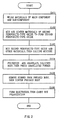
- FIG. 2 shows a flow chart of a method of manufacturing the piezoelectric ceramic.
- elements of the main component for example, oxide powders including sodium, potassium, lithium, silver, niobium, tantalum, the element of Group 2 in the long form of the periodic table of the elements and titanium are prepared as required.
- materials of elements of the sub-component for example, an oxide powder including at least one kind selected from the group consisting of elements of Groups 4 through 11 in the long form of the periodic table of the elements, elements of Group 3 in the long form of the periodic table of the elements and elements of Group 12 in the long form of the periodic table of the elements is prepared as required.
- step S101 As the materials of the main component and the sub-component, carbonate or oxalate which becomes oxide through sintering may be used instead of oxide. Next, after these materials are sufficiently dried, the materials are weighed so that the final composition is within the above-described range (step S101).
- the materials of the second perovskite-type oxide are mixed in an organic solvent or water by a ball mill or the like, the materials are dried, and sintered at 1000°C to 1200°C for 2 to 4 hours so as to form the second perovskite-type oxide (step S102).
- the second perovskite-type oxide After the second perovskite-type oxide is formed, the second perovskite-type oxide, the materials of the first perovskite-type oxide, the materials of the tungsten bronze-type oxide, and the materials of the sub-component are sufficiently mixed in an organic solvent or water by a ball mill or the like. After that, the mixture is dried, and is pressed, and then is calcined at 750°C to 1100°C for 1 to 4 hours (step S103).
- the reason why the materials of the other main component are mixed after forming the second perovskite-type oxide is that when the materials of the second perovskite-type oxide and the materials of the first perovskite-type oxide are mixed and then are sintered, the materials of the second perovskite-type oxide react with the first perovskite-type oxide, thereby the second perovskite-type oxide cannot be formed.
- the calcined body After calcining, for example, the calcined body is sufficiently pulverized in an organic solvent or water by a ball mill or the like, and is dried again, then a binder is added to the calcined body to granulate the body. After granulating, the granulated powder is pressed by the use of a uniaxial press, a cold isostatic press (CIP) or the like (step S104).
- CIP cold isostatic press
- the pressed body After pressing, for example, the pressed body is heated to remove the binder, and then is further sintered at 950°C to 1350°C for 2 to 4 hours (step S105). After sintering, the obtained sintered body is processed as required to form the piezoelectric substrate 1, and then the electrode 2 and 3 are disposed on the piezoelectric substrate 1. Then, an electric field is applied to the piezoelectric substrate 1 in heated silicon oil to carry out polarization (step S106). Thereby, the piezoelectric ceramic and the piezoelectric device according to the embodiment can be obtained.
- the first perovskite-type oxide including sodium, potassium and niobium, the second perovskite-type oxide including an element of Group 2 in the long form of the periodic table of the elements and titanium, and the tungsten bronze-type oxide are included, and the content of the second perovskite-type oxide in the main component is within a range of less than 10 mol%, so the Curie temperature can be increased to 150°C or over, and the operating temperature range can be extended, and the relative dielectric constant ⁇ r, the electromechanical coupling factor kr and the amount of generated displacement can be increased. Moreover, sintering can be easily carried out.
- the piezoelectric ceramic and the piezoelectric device including no lead or a smaller content of lead can be increased.
- a smaller amount of lead is volatilized during sintering, and the risk of emitting lead into environment even after the piezoelectric ceramic and the piezoelectric device are distributed in a market and then are disposed is lower, so the piezoelectric ceramic and the piezoelectric device being superior in the point of ultra-low emission, environmental friendliness and ecology can be utilized.
- the piezoelectric properties can be further improved.
- the piezoelectric ceramic according to the embodiment can be easily obtained, and the piezoelectric ceramic according to the embodiment can be formed.
- a piezoelectric ceramic comprising a composition represented by Chemical Formula 7 including a perovskite-type oxide and a tungsten bronze-type oxide as a main component was used to form the piezoelectric device shown in FIG. 1.
- Examples 1-1 through 1-5 will be described referring to FIG. 1, and like components are denoted by like numerals shown in FIG. 1.
- a sodium carbonate (Na 2 CO 3 ) powder, a potassium carbonate (K 2 CO 3 ) powder, a lithium carbonate (Li 2 CO 3 ) powder, a barium carbonate (BaCO 3 ) powder and a niobium oxide (Nb 2 O 5 ) powder were prepared.
- a manganese carbonate (MnCO 3 ) powder was prepared.
- the materials of the main component and the sub-component were sufficiently dried, and weighed, they were mixed in water by a ball mill for 5 hours, and then were dried so as to obtain a mixture powder.
- the mixed ratios of the mixture powders of Examples 1-1 through 1-5 were adjusted so that the content of the tungsten bronze-type oxide in the composition of the main component, that is, the value of n in Chemical Formula 7 varied as shown in Table 1. Moreover, the content of manganese oxide, which was the sub-component, relative to the main component was 0.31 wt% on a basis of MnO. Further, carbonates among the materials of the main component were converted into oxides formed by dissociating CO 2 from the carbonates, and as the content of the sub-component, a mixed amount of the manganese carbonate powder, which was the material of the sub-component, relative to the total mass of the converted materials of the main component was adjusted to be 0.5 wt%.
- the mixture powder was pressed, and then was calcined at 850°C to 1000°C for 2 hours.
- the pressed body was pulverized in water by the ball mill, and was dried again.
- polyvinyl alcohol was added to the pulverized body to granulate.
- the granulated powder was pressed by a uniaxial press with a pressure of approximately 40 MPa so as to form a cylindrical shape with a diameter of 17 mm, and then was isostatically pressed with a pressure of approximately 400 MPa.
- the pressed body was heated at 650°C for 4 hours to remove the binder, and then the pressed body was sintered at 950°C to 1350°C for 4 hours. After that, the sintered body was formed into a disk shape with a thickness of 0.6 mm through a slicing process and a lapping process so as to form the piezoelectric substrate 1. Then, a silver paste was printed on both sides of the piezoelectric substrate 1, and was baked at 650°C so as to form the electrodes 2 and 3. After forming the electrodes 2 and 3, an electric field of 3 kV/mm to 10 kV/mm was applied to the piezoelectric substrate 1 in silicon oil of 30°C to 250°C for 1 to 30 minutes to carry out polarization. Thereby, the piezoelectric devices using the piezoelectric ceramics of Examples 1-1 through 1-5 were obtained.
- the relative dielectric constant ⁇ r, the electromechanical coupling factor kr, and the amount of generated displacement when an electric field of 3 kV/mm was applied were measured.
- the relative dielectric constant ⁇ r and the electromechanical coupling factor kr were measured by an impedance analyzer (Hewlett-Packard's HP4194A), and a frequency when measuring the relative dielectric constant ⁇ r was 1 kHz.
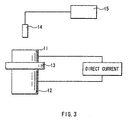
- the amount of generated displacement was measured by a displacement measuring device using eddy currents as shown in FIG. 3.
- a test sample 13 was sandwiched between a pair of electrodes 11 and 12, and the displacement of the test sample 13 when a direct current was applied was detected by a displacement sensor 14, and then the amount of generated displacement was determined by a displacement detecting device 15.
- Table 1 The amount of generated displacement shown in Table 1 was determined by dividing the measured value by the thickness of the test sample and then multiplying by 100 (the measured value/the thickness of the test sample ⁇ 100).
- Example 1-1 As Comparative Example 1-1 relative to Examples, a piezoelectric device was formed as in the case of Examples 1-1 through 1-5, except that the tungsten bronze-type oxide was not included, that is, the value of n in Chemical Formula 7 was 0. The content of the sub-component was the same as that in Example 1-2.
- the relative dielectric constant ⁇ r, the electromechanical coupling factor kr and the amount of generated displacement when an electric field of 3 kV/mm was applied in the piezoelectric device of Comparative Example 1-1 were measured as in the case of Examples. These results are also shown in Table 1.
- Examples 1-1 through 1-5 could obtain a higher value of the relative dielectric constant ⁇ r, the electromechanical coupling factor kr or the amount of generated displacement than Comparative Example 1-1
- Examples 1-1 through 1-4 could obtain higher values of the relative dielectric constant ⁇ r, the electromechanical coupling factor kr and the amount of generated displacement than Comparative Example 1-1.
- n in Chemical Formula 7 increases, that is, as the content of the tungsten bronze-type oxide increased, the relative dielectric constant ⁇ r increased, and the electromechanical coupling factor kr and the amount of generated displacement increased to the maximum values, then decreased.
- the piezoelectric properties could be improved.
- the content of the tungsten bronze-type oxide in the composition was within a range of 5.3 mol% or less, preferably within a range of 0.2 mol% to 2.6 mol% inclusive, and more preferably within a range of 0.5 mol% to 1.0 mol% inclusive, the amount of generated displacement could be further increased.
- Example 2-1 through 2-8 The piezoelectric devices of Examples 2-1 through 2-8 were formed as in the case of Example 1-2, except that a composition shown in Chemical Formula 8 was included as the main component. At that time, in Examples 2-1 through 2-8, the content of potassium in the first element, that is, the value of x in Chemical Formula 8 varied as shown in Table 2. Example 2-4 was equivalent to Example 1-2. The content of the tungsten bronze-type oxide, that is, the value of n in Chemical Formula 8 was 0.005 as in the case of Example 1-2, and the content of the sub-component relative to the main component was 0.31 wt% as in the case of Example 1-2.
- Comparative Examples 2-1 through 2-3 the piezoelectric devices were formed as in the case of Examples except that the tungsten bronze-type oxide was not included.
- Comparative Example 2-1 corresponds to Example 2-1
- Comparative Example 2-2 corresponds to Example 2-4
- Comparative Example 2-3 corresponds to Example 2-8.
- Example 2-1 through 2-8 could obtain higher values of the relative dielectric constant ⁇ r, the electromechanical coupling factor kr and the amount of generated displacement than corresponding Comparative Examples. Moreover, there was a tendency that as the value of x in Chemical Formula 8 increased, that is, as the content of potassium increased, the relative dielectric constant ⁇ r, the electromechanical coupling factor kr and the amount of generated displacement increased to the maximum values, then decreased.
- the piezoelectric properties could be improved, and the amount of generated displacement could be increased.
- Example 3-4 The piezoelectric devices of Examples 3-1 through 3-4 were formed as in the case of Example 1-2, except that a composition shown in Chemical Formula 9 was included as the main component.
- a composition shown in Chemical Formula 9 was included as the main component.
- the contents of potassium and lithium in the first element, that is, the values of x and y in Chemical Formula 9 varied as shown in Table 3.
- Example 3-2 was equivalent to Example 1-2.
- the content of the tungsten bronze-type oxide, that is, the value of n in Chemical Formula 9 was 0.005
- the content of the sub-component relative to the main component was 0.31 wt%.
- Comparative Examples 3-1 through 3-3 the piezoelectric devices were formed as in the case of Examples, except that the tungsten bronze-type oxide was not included.
- Comparative Example 3-1 corresponds to Example 3-2
- Comparative Example 3-2 corresponds to Example 3-3
- Comparative Example 3-3 corresponds to Example 3-4.
- Examples 3-1 through 3-4 could obtain higher values of the relative dielectric constant ⁇ r, the electromechanical coupling factor kr and the amount of generated displacement than Comparative Examples. Moreover, there was a tendency that as the value of y in Chemical Formula 9 increased, that is, as the content of lithium increased, the relative dielectric constant ⁇ r, the electromechanical coupling factor kr and the amount of generated displacement increased to the maximum values, then decreased.
- the piezoelectric properties could be improved, and the amount of generated displacement could be increased.
- the piezoelectric devices of Examples 4-1 through 4-7 were formed as in the case of Example 1-2, except that a composition shown in Chemical Formula 10 was included as the main component. At that time, the contents of tantalum in the second element and the fourth element, that is, the values of w and v in Chemical Formula 10 varied in Examples 4-1 through 4-7 as shown in Table 4. As a material of tantalum, a tantalum oxide (Ta 2 O 5 ) powder was used. Example 4-1 was equivalent to Example 1-2. Moreover, as in the case of Example 1-2, the content of the tungsten bronze-type oxide, that is, the value of n in Chemical Formula 10 was 0.005, and the content of the sub-component relative to the main component was 0.31 wt%.
- the relative dielectric constant ⁇ r, the electromechanical coupling factor kr and the amount of generated displacement when an electric field of 3 kV/mm was applied in the piezoelectric devices of Examples 4-1 through 4-7 were measured as in the case of Example 1-2. The results are shown in Table 4. Further, the Curie temperature in the piezoelectric ceramics of Examples 4-1 through 4-7 was measured. The results are also shown in Table 4.
- Example 4-1 through 4-7 could obtain higher values of the relative dielectric constant ⁇ r, the electromechanical coupling factor kr and the amount of generated displacement. Moreover, in Examples 4-2 through 4-7 in which tantalum was included in the second element and the fourth element, a higher amount of generated displacement could be obtained, compared to Example 4-1 in which no tantalum was included. Further, there was a tendency that as the values of w and v in Chemical Formula 10 increased, that is, as the total content of tantalum in the second element and the fourth element increased, the relative dielectric constant ⁇ r increased, and the electromechanical coupling factor kr and the amount of generated displacement increased to the maximum values, then decreased.
- the second element and the fourth element included tantalum, and the total content of tantalum in the second element and the fourth element was within a range of 50 mol% or less, preferably within a range of 3 mol% to 30 mol% inclusive, and more preferably within a range of 6 mol% to 20 mol% inclusive, while maintaining a high Curie temperature, the amount of generated displacement could be further increased.
- Example 5-1 through 5-4 were formed as in the case of Example 1-2, except that a composition shown in Chemical Formula 11 was included as the main component. At that time, the composition ratio of the first element to the second element, that is, the value of p in Chemical Formula 11 varied in Examples 5-1 through 5-4 as shown in Table 5.
- Example 5-2 was equivalent to Example 1-2.
- the content of the tungsten bronze-type oxide, that is, the value of n in Chemical Formula 11 was 0.005, and the content of the sub-component was 0.31 wt%.
- Example 5 As shown in Table 5, in Examples 5-1 through 5-4, as in the case of Example 1-2, higher values of the relative dielectric constant ⁇ r, the electromechanical coupling factor kr and the amount of generated displacement could be obtained. Moreover, there was a tendency that as the value of p in Chemical Formula 11 increased, that is, as the composition ratio of the first element to the second element increased, the relative dielectric constant ⁇ r, the electromechanical coupling factor kr and the amount of generated displacement increased to the maximum values, then decreased. In other words, it was found out that when the composition ratio of the first element to the second element was within a range of 0.95 to 1.05 inclusive, the piezoelectric properties could be further improved, and the amount of generated displacement could be further increased.
- the piezoelectric devices of Examples 6-1 through 6-3 were formed as in the case of Example 1-2, except that a composition shown in Chemical Formula 12 was included as the main component.
- the composition of the third element, that is, M in Chemical Formula 12 varied in Examples 6-1 through 6-3 as shown in Table 6, and as a material of strontium, a strontium carbonate (SrCO 3 ) powder was used, and as a material of calcium, a calcium carbonate (CaCO 3 ) powder was used.
- the content of the tungsten bronze-type oxide, that is, the value of n in Chemical Formula 12 was 0.005, and the content of the sub-component was 0.31 wt%.
- Examples 6-1 through 6-3 could obtain higher values of the relative dielectric constant ⁇ r, the electromechanical coupling factor kr and the amount of generated displacement than Comparative Example 1-1. In other words, it was found out that even if another element of Group 2 in the long form of the periodic table of the elements was included in the third element, superior piezoelectric properties could be obtained.
- the piezoelectric devices of Examples 7-1 through 7-10 were formed as in the case of Example 1-2, except that a composition shown in Chemical Formula 13 was included as the main component, and oxide shown in Table 7 was included as the sub-component.
- the composition of the main component shown in Chemical Formula 13 was equivalent to that in Example 4-4, and as the first sub-component, manganese oxide was used in common.
- Example 7-1 in which the second sub-component was not included was equivalent to Example 4-4.
- iron oxide, cobalt oxide, nickel oxide or zinc oxide was used in Examples 7-2 through 7-10.
- the contents of the first sub-component and the second sub-component relative to the main component were calculated on a basis of chemical formulas shown in Table 7.
- a ferric oxide (Fe 2 O 3 ) powder was used, and as a material of cobalt, a cobalt oxide (Co 3 O 4 ) powder was used, and as a material of nickel, a nickel oxide (NiO) powder was used, and as a material of zinc, a zinc oxide (ZnO) powder was used, and as a material of tantalum, a tantalum oxide (Ta 2 O 5 ) powder was used.
- Examples 7-2 through 7-10 in which the second sub-component was included could obtain higher values of the electromechanical coupling factor kr and the amount of generated displacement than Example 7-1 in which the second sub-component was not included.
- an oxide including at least one kind selected from the group consisting of iron, cobalt, nickel and zinc was included as the sub-component in addition to manganese, the piezoelectric properties could be further improved, and the amount of generated displacement could be increased.
- the piezoelectric devices of Examples 8-1 through 8-4 were formed as in the case of Example 1-2, except that a composition shown in Chemical Formula 14 was included as the main component. At that time, the contents of potassium and silver in the first element, that is, the values of x and z in Chemical Formula 14 varied in Examples 8-1 through 8-4 as shown in Table 8.
- a material of silver a silver oxide (Ag 2 O) powder was used.
- the content of the tungsten bronze-type oxide, that is, the value of n in Chemical Formula 14 was 0.005, and the content of the sub-component relative to the main component was 0.31 wt%.
- Comparative Examples 8-1 through 8-4 the piezoelectric devices were formed as in the case of Examples, except that the tungsten bronze-type oxide was not included.
- Comparative Example 8-1 corresponds to all Examples
- Comparative Example 8-2 corresponds to Example 8-1
- Comparative Example 8-3 corresponds to Example 8-2
- Comparative Example 8-4 corresponds to Example 8-3.
- Examples 8-1 through 8-4 could obtain higher values of the relative dielectric constant ⁇ r, the electromechanical coupling factor kr and the amount of generated displacement than corresponding Comparative Examples. In other words, it was found out that even in the case where silver was included as the first element, when the tungsten bronze-type oxide was added, the piezoelectric properties could be improved.
- the piezoelectric devices of Examples 9-1 through 9-4 were formed as in the case of Example 8-1, except that a composition shown in Chemical Formula 15 was included as the main component, and oxide shown in Table 9 was included as the sub-component.
- the composition of the main component shown in Chemical Formula 15 was equivalent to that in Example 8-1, and as the first sub-component, manganese oxide was used in common.
- the second sub-component iron oxide, cobalt oxide, nickel oxide or zinc oxide was used in Examples 9-1 through 9-4.
- the contents of the first sub-component and the second sub-component relative to the main component were calculated on a basis of chemical formulas shown in Table 9, and as materials of the sub-components, materials shown in Table 9 were used.
- Examples 9-1 through 9-4 in which the second sub-component was included could obtain higher values of the electromechanical coupling factor kr and the amount of generated displacement than Example 8-1 in which the second sub-component was not included.
- an oxide including at least one kind selected from the group consisting of iron, cobalt, nickel and zinc was included as the sub-component in addition to manganese, the piezoelectric properties could be further improved, and the amount of generated displacement could be increased.
- a piezoelectric ceramic comprising a composition shown in Chemical Formula 16 as the main component was used to form the piezoelectric device shown in FIG. 1 through the steps shown in FIG. 2.
- Examples 10-1 through 10-3 will be described referring to FIGs. 1 and 2, and like components are denoted by like numerals shown in FIG. 1.
- a sodium carbonate (Na 2 CO 3 ) powder, a potassium carbonate (K 2 CO 3 ) powder, a lithium carbonate (Li 2 CO 3 ) powder, a niobium oxide (Nb 2 O 5 ) powder, a barium carbonate (BaCO 3 ) powder and titanium oxide (TiO 2 ) were prepared.
- a manganese carbonate (MnCO 3 ) powder was prepared as a material of the sub-component.
- Example 10-1 was equivalent to Example 1-2 in which the second perovskite-type oxide was not included, and in Examples 10-2 and 10-3, the second perovskite-type oxide was included in addition to the first perovskite-type oxide and the tungsten bronze-type oxide.
- carbonates among the materials of the main component were converted into oxides formed by releasing CO 2 from the carbonates, and as the content of the sub-component, a mixed amount of the manganese carbonate powder, which was the material of the sub-component, relative to the total mass of the converted materials of the main component was adjusted to be 0.5 wt%.
- barium titanate After forming barium titanate, barium titanate, other materials of the main component, and the material of the sub-component were mixed in water by the ball mill, and were dried. Then, the mixture was pressed, and was calcined at 850°C to 1000°C for 2 hours (refer to step S103 in FIG. 2). After calcining, the calcined body was pulverized in water by the ball mill, and was dried again. Then, polyvinyl alcohol was added to the pulverized body to granulate.
- the granulated powder was pressed by a uniaxial press with a pressure of approximately 40 MPa so as to form a cylindrical shape with a diameter of 17 mm, and then was isostatically pressed with a pressure of approximately 400 MPa (refer to step S104 in FIG. 2).
- the pressed body was heated at 650°C for 4 hours to remove the binder, and then the pressed body was sintered at 950°C to 1350°C for 4 hours (refer to step S105 in FIG. 2). After that, the sintered body was formed into a disk shape with a thickness of 0.6 mm through a slicing process and a lapping process so as to form the piezoelectric substrate 1. Then, a silver paste was printed on both sides of the piezoelectric substrate 1, and was baked at 650°C so as to form the electrodes 2 and 3.
- the piezoelectric device was formed as in the case of Examples, except that the content of barium titanate in the main component was 10 mol%, that is, the value of m in Chemical Formula 16 was 0.1.
- Examples 10-2 and 10-3 could obtain higher values of the relative dielectric constant ⁇ r, and the amount of generated displacement than Example 10-1 in which barium titanate was not included. Moreover, there was a tendency that as the value of m in Chemical Formula 16 increased, that is, as the content of barium titanate increased, the relative dielectric constant ⁇ r and the amount of generated displacement increased. Further, in Comparative Example 10-1 in which the content of barium titanate was 10 mol%, sintering could not be carried out, so the properties could not be measured. In Examples 10-2 and 10-3, a decline in the Curie temperature Tc was observed, compared to Example 10-1 in which barium titanate was not included. However, a declined amount was extremely small, so there is no problem in practical use.
- the piezoelectric devices of Examples 11-1 though 11-13 were formed as in the case of Examples 10-1 through 10-3, except that a composition shown in Chemical Formula 17 was included as the main component.
- the composition of the first element (the values of x and y in Chemical Formula 17) and the content of barium titanate which was the second perovskite-type oxide (the value of m in Chemical Formula 17) varied in Examples 11-1 through 11-13 as shown in Table 11. Further, the content of the sub-component was equivalent to that in Examples 10-1 through 10-3.
- Examples 11-2, 11-4, 11-5, 11-7, 11-9, 11-11 and 11-13 could obtain higher values of the relative dielectric constant ⁇ r and the amount of generated displacement than Examples in which barium titanate was not included.
- the value of x in Chemical Formula 17 increased, that is, as the content of potassium increased, the relative dielectric constant ⁇ r, the electromechanical coupling factor kr and the amount of generated displacement increased to the maximum values, then decreased.
- the piezoelectric properties could be improved, and the amount of generated displacement could be increased.
- the piezoelectric devices of Examples 12-1 through 12-3 were formed as in the case of Examples 10-1 through 10-3, except that a composition shown in Chemical Formula 18 was included as the main component.
- the content of tantalum (the values of w and v in Chemical Formula 18) and the content of barium titanate which was the second perovskite-type oxide (the value of m in Chemical Formula 18) varied in Examples 12-1 through 12-3 as shown in Table 12.
- the content of the sub-component was equivalent to that in Examples 10-1 through 10-3, and a tantalum oxide (Ta 2 O 5 ) powder was used as a material of tantalum.
- the relative dielectric constant ⁇ r, the electromechanical coupling factor kr and the amount of generated displacement when an electric field of 3 kV/mm was applied in the piezoelectric devices of Examples 12-1 through 12-3 were measured as in the case of Example 1-2, and the Curie temperate Tc was measured by a thermal analyzer. The results are shown in Table 12 together with the results of Examples 10-1 through 10-3.
- Examples 12-2 and 12-3 could obtain higher values of the relative dielectric constant ⁇ r and the amount of generated displacement than Example 12-1 in which barium titanate was not included. Moreover, in Examples 12-2 and 12-3 in which tantalum was included in the second element and the fourth element, a higher amount of generated displacement could be obtained, compared to Examples 10-2 and 10-3 in which tantalum was not included. However, in Examples 12-2 and 12-3, a larger decline in Curie temperature Tc was observed, compared to Examples 10-2 and 10-3.
- the second element and the fourth element included tantalum, and the total content of tantalum in the second element and the fourth element was within a range of 50 mol% or less, while maintaining the Curie temperature Tc to a certain extent or higher, the amount of generated displacement could be increased.
- the piezoelectric devices of Examples 13-1 through 13-4 were formed as in the case of Example 10-3, except that a composition shown in Chemical Formula 19 was included as the main component, and oxide shown in Table 13 was included as the sub-component.
- the composition of the main component shown in Chemical Formula 19 was equivalent to that in Example 10-3, and as the first sub-component, manganese oxide was used in common.
- the second sub-component iron oxide, cobalt oxide, nickel oxide or zinc oxide was used in Examples 13-1 through 13-4.
- the contents of the first sub-component and the second component relative to the main component were calculated on a basis of chemical formulas shown in Table 13, and as the materials of the sub-components, materials shown in Table 13 were used.
- Example 13-1 through 13-4 in which the second sub-component was included higher values of the electromechanical coupling factor kr and the amount of generated displacement could be obtained, compared to Example 10-3 in which the second sub-component was not included.
- an oxide including at least one kind selected from the group consisting of iron, cobalt, nickel and zinc was included as the sub-component in addition to manganese, the piezoelectric properties could be further improved, and the amount of generated displacement could be increased.
- composition including the perovskite-type oxide and the tungsten bronze-type oxide is described in detail referring to some examples. However, as long as the composition is within a range described in the above embodiments, even if any other composition is used, the same effects can be obtained.
- the present invention is described referring to the embodiments and the examples, the invention is not limited to the above embodiments and the above examples, and is variously modified.
- the case where the composition including the perovskite-type oxide and the tungsten bronze-type oxide is compriesed is described; however, any other component may be further included in the composition in addition to the perovskite-type oxide and the tungsten bronze-type oxide.
- the case where the perovskite-type oxide including the first element, the second element and oxygen is included or the case where the first perovskite-type oxide including the first element, the second element and oxygen, and the second perovskite-type oxide including an element of Group 2 in the long form of the periodic table of the elements and titanium are included is described; however, any other perovskite-type oxide may be further included.
- the composition of the main component includes the first element including sodium, potassium and, if necessary, lithium and silver, the second element including at least niobium selected from the group consisting of niobium and tantalum, the third element including at least one kind selected from elements of Group 2 in the long form of the periodic table of the elements, and the fourth element including at least niobium selected from the group consisting of niobium and tantalum is described; however, each of the first element, the second element, the third element and the fourth element may further include any other element.
- the second perovskite-type oxide includes at least an element of Group 2 in the long form of the periodic table of the elements and titanium is described; however, any other element may be further included.
- the case where the sub-component is included in addition to the main component is described.
- the invention can be widely applied to the case where the sub-component is not included. Further, the invention can be applied to the case where any other sub-component is included in a like manner.
- the piezoelectric device with a single-layer structure is described, the invention can be applied to a piezoelectric device with any other structure such as a multilayer structure or the like in a like manner.
- a vibration device such as an actuator, a sound component and a sensor are taken as examples of the piezoelectric device, the invention can be applied to any other piezoelectric device.
- the perovskite-type oxide and the tungsten bronze-type oxide are comprised, and the perovskite-type oxide includes sodium, potassium and lithium, or in a second piezoelectric ceramic according to the invention, the first perovskite-type oxide including sodium, potassium and niobium, the second perovskite-type oxide including an element of Group 2 in the long form of the periodic table of the elements and titanium, and the tungsten bronze-type oxide are comprised, and the content of the second perovskite-type oxide in the main component is less than 10 mol%, so the Curie temperature can be increased to 150°C or over, thereby the operating temperature range can be extended, and the relative dielectric constant ⁇ r, the electromechanical coupling factor kr and the amount of generated displacement can be increased. Moreover, sintering can be easily carried out.
- the piezoelectric ceramic and the piezoelectric device including no lead or a smaller content of lead can be increased.
- a smaller amount of lead is volatilized during sintering, and the risk of emitting lead into environment even after the piezoelectric ceramic and the piezoelectric device are distributed in a market and then are disposed is lower, so the piezoelectric ceramic and the piezoelectric device being superior in the point of ultra-low emission, environmental friendliness and ecology can be utilized.
- the content of potassium in the first element is within a range of 10 mol% to 90 mol% inclusive, so superior piezoelectric properties can be obtained, and sintering can be more easily carried out.
- the content of lithium in the first element is 20 mol% or less, or the composition ratio of the first element to the second element (the first element/the second element) is within a range of 0.95 to 1.05 inclusive at molar ratio, so the relative dielectric constant ⁇ r, the electromechanical coupling factor kr and the amount of generated displacement can be further increased.
- the content of the tungsten bronze-type oxide in the composition is 5.3 mol% or less, so the electromechanical coupling factor kr and the amount of generated displacement can be further increased.
- the tungsten bronze-type oxide includes the third element including at least one kind selected from elements of Group 2 in the long form of the periodic table of the elements, the fourth element including at least niobium selected from the group consisting of niobium and tantalum, and oxygen, so superior piezoelectric properties can be obtained.
- the total content of tantalum in the second element and the fourth element is 50 mol% or less, so the Curie temperature can be increased to 150°C or over, that is, to such an extent that there is no problem in practical use, and the electromechanical coupling factor kr and the amount of generated displacement can be further increased.
- an oxide including at least one kind selected from the group consisting of elements of Groups 4 through 11 in the long form of the periodic table of the elements, elements of Group 3 in the long form of the periodic table of the elements and elements of Group 12 in the long form of the periodic table of the elements is included within a range of 0.01 wt% to 1 wt% inclusive relative to the main component in total by each element group, so the sinterability can be improved, and the piezoelectric properties can be further improved.
- an oxide including manganese is included, or as the sub-component, an oxide including at least one kind selected from the group consisting of iron, cobalt, nickel and is zinc included in addition to manganese, so the piezoelectric properties can be further improved.
- a mixture including the materials of the elements of the first perovskite-type oxide, the second perovskite-type oxide, and elements of the tungsten bronze-type oxide is calcined, so the second piezoelectric ceramic according to the invention can be easily obtained, and the second piezoelectric ceramic according to the invention can be formed.
Landscapes
- Engineering & Computer Science (AREA)
- Chemical & Material Sciences (AREA)
- Ceramic Engineering (AREA)
- Manufacturing & Machinery (AREA)
- Materials Engineering (AREA)
- Structural Engineering (AREA)
- Organic Chemistry (AREA)
- Inorganic Chemistry (AREA)
- Compositions Of Oxide Ceramics (AREA)
Abstract
Description
(Na1-x-y-zKxLiyAgz)p (Nb1-wTaw)O3
M (Nb1-v Tav)2O6
(1-n)A + nB
(Na1-x-y Kx LiyAgz)p (Nb1-w Taw) O3
QTiO3
(1-m-n)A1 + mA2 + nB
(1-n){(Na0.57K0.38Li0.05)NbO3} + n{BaNb2O6}
(1-n){(Na0.95-xKxLi0.05)NbO3} + n{BaNb2O6}
(1-n){(Na1-x-yKxLiy)NbO3} + n{BaNb2O6}
(1-n){(Na0.57K0.38Li0.05)(Nb1-wTaw)O3} + n{Ba(Nb1-vTav)2O6}
(1-n){(Na0.57K0.38Li0.05)pNbO3} + n{BaNb2O6}
(1-n){(Na0.57K0.38Li0.05)NbO3} + n{MNb2O6}
0.995{(Na0.57K0.38Li0.05)(Nb0.9Ta0.1)O3} + 0.005{Ba(Nb0.9Ta0.1)2O6}
(1-n){(Na0.95-x-zKxLi0.05Agz)NbO3} + n{BaNb2O6}
0.995{(Na0.56K0.38Li0.05Ag0.01)NbO3} + 0.005{BaNb2O6}
(0.995-m) (Na0.57K0.38Li0.05)NbO3 + mBaTiO3 + 0.005BaNb2O6
(0.995-m)(Na1-x-yKxLiy)NbO3 + mBaTiO3 + 0.005BaNb2O6
(0.995-m) (Na0.57K0.38Li0.05)(Nb1-wTaw)O3 + mBaTiO3 + 0.005Ba(Nb1-vTav)2O6
0.985 (Na0.57K0.38Li0.05) NbO3 + 0.01BaTiO3 + 0.005BaNb2O6
| COMPOSITION OF MAIN COMPONENT | CONTENT OF MnO RELATIVE TO MAIN COMPONENT (wt%) | RELATIVE DIELECTRIC CONSTANT ε r | ELECTROMECHANICAL COUPLING FACTOR kr (%) | AMOUNT OF GENERATED DISPLACEMENT (%) | ||
| THIRD ELEMENT M | n (mol) | |||||
| EXAMPLE1-1 | Ba | 0.002 | 0.31 | 470 | 41.9 | 0.075 |
| EXAMPLE1-2 | Ba | 0.005 | 0.31 | 535 | 43.1 | 0.083 |
| EXAMPLE1-3 | Ba | 0.01 | 0.31 | 572 | 40.8 | 0.081 |
| EXAMPLE1-4 | Ba | 0.026 | 0.31 | 682 | 36.5 | 0.079 |
| EXAMPLE1-5 | Ba | 0.053 | 0.31 | 949 | 28.2 | 0.072 |
| COMPARATIVE EXAMPLE1-1 | - | 0 | 0.31 | 375 | 33.9 | 0.053 |
| COMPOSITION OF MAIN COMPONENT | CONTENT OF MnO RELATIVE TO MAIN COMPONENT (wt%) | RELATIVE DIELECTRIC CONSTANT ε r | ELECTROMECHANICAL COUPLING FACTOR kr (%) | AMOUNT OF GENERATED DISPLACEMENT (%) | |||
| THIRD ELEMENT M | x (mol) | n (mol) | |||||
| EXAMPLE2-1 | Ba | 0.20 | 0.005 | 0.31 | 348 | 30.5 | 0.048 |
| EXAMPLE2-2 | Ba | 0.30 | 0.005 | 0.31 | 425 | 37.6 | 0.065 |
| EXAMPLE2-3 | Ba | 0.33 | 0.005 | 0.31 | 503 | 40.1 | 0.076 |
| EXAMPLE2-4 | Ba | 0.38 | 0.005 | 0.31 | 535 | 43.1 | 0.083 |
| EXAMPLE2-5 | Ba | 0.55 | 0.005 | 0.31 | 543 | 41.4 | 0.081 |
| EXAMPLE2-6 | Ba | 0.57 | 0.005 | 0.31 | 546 | 40.2 | 0.078 |
| EXAMPLE2-7 | Ba | 0.60 | 0.005 | 0.31 | 525 | 38.6 | 0.074 |
| EXAMPLE2-8 | Ba | 0.75 | 0.005 | 0.31 | 374 | 32.2 | 0.053 |
| COMPARATIVE EXAMPLE2-1 | - | 0.20 | 0 | 0.31 | 220 | 24.1 | 0.029 |
| COMPARATIVE EXAMPLE2-2 | - | 0.38 | 0 | 0.31 | 375 | 33.9 | 0.053 |
| COMPARATIVE EXAMPLE2-3 | - | 0.75 | 0 | 0.31 | 232 | 25.5 | 0.031 |
| COMPOSITION OF MAIN COMPONENT | CONTENT OF MnO RELATIVE TO MAIN COMPONENT (wt%) | RELATIVE DIELECTRIC CONSTANT εr | ELECTROMECHANICAL COUPLING FACTOR kr(%) | AMOUNT OF GENERATED DISPLACEMENT (%) | ||||
| THIRD ELEMENT M | x (mol) | y (mol) | n (mol) | |||||
| EXAMPLE3-1 | Ba | 0.39 | 0.02 | 0.005 | 0.31 | 408 | 35.5 | 0.060 |
| EXAMPLE3-2 | Ba | 0.38 | 0.05 | 0.005 | 0.31 | 535 | 43.1 | 0.083 |
| EXAMPLE3-3 | Ba | 0.36 | 0.1 | 0.005 | 0.31 | 763 | 34.3 | 0.080 |
| EXAMPLE3-4 | Ba | 0.32 | 0.2 | 0.005 | 0.31 | 541 | 28.4 | 0.056 |
| COMPARATIVE EXAMPLE3-1 | - | 0.38 | 0.05 | 0 | 0.31 | 375 | 33.9 | 0.053 |
| COMPARATIVE EXAMPLE3-2 | - | 0.36 | 0.10 | 0 | 0.31 | 602 | 25.9 | 0.052 |
| COMPARATIVE EXAMPLE3-3 | - | 0.32 | 0.20 | 0 | 0.31 | 390 | 18.1 | 0.029 |
| COMPOSITION OF MAIN COMPONENT | CONTENT OF MnO RELATIVE TO MAIN COMPONENT (wt%) | RELATIVE DIELECTRIC CONSTANT ε r | ELECTROMECHANICAL COUPLING FACTOR kr (%) | AMOUNT OF GENERATED DISPLACEMENT (%) | CURIE TEMPERATURE (°C) | |||
| THIRD ELEMENT M | w,v (mol) | n (mol) | ||||||
| EXAMPLE4-1 | Ba | 0 | 0.005 | 0.31 | 535 | 43.1 | 0.083 | 462 |
| EXAMPLE4-2 | Ba | 0.03 | 0.005 | 0.31 | 706 | 45.6 | 0.101 | 445 |
| EXAMPLE4-3 | Ba | 0.06 | 0.005 | 0.31 | 916 | 46.9 | 0.118 | 429 |
| EXAMPLE4-4 | Ba | 0.1 | 0.005 | 0.31 | 965 | 45.7 | 0.118 | 405 |
| EXAMPLE4-5 | Ba | 0.2 | 0.005 | 0.31 | 998 | 43.1 | 0.115 | 351 |
| EXAMPLE4-6 | Ba | 0.3 | 0.005 | 0.31 | 1006 | 40.7 | 0.108 | 293 |
| EXAMPLE4-7 | Ba | 0.5 | 0.005 | 0.31 | 1030 | 33.4 | 0.09 | 158 |
| COMPOSITION OF MAIN COMPONENT | CONTENT OF MnO RELATIVE TO MAIN COMPONENT (wt%) | RELATIVE DIELECTRIC CONSTANT εr | ELECTROMECHANICAL COUPLING FACTOR kr (%) | AMOUNT OF GENERATED DISPLACEMENT (%) | |||
| THIRD ELEMENT M | p (mol) | n (mol) | |||||
| EXAMPLE5-1 | Ba | 1.01 | 0.005 | 0.31 | 402 | 38.5 | 0.065 |
| BMMPLE5-2 | Ba | 1.00 | 0.005 | 0.31 | 535 | 43.1 | 0.083 |
| EXAMPLE5-3 | Ba | 0.99 | 0.005 | 0.31 | 502 | 41.3 | 0.078 |
| EXAMPLE5-4 | Ba | 0.98 | 0.005 | 0.31 | 436 | 39.8 | 0.070 |
| COMPOSITION OF MAIN COMPONENT | CONTENT OF MnO RELATIVE TO MAIN COMPONENT (wt%) | RELATIVE DIELECTRIC CONSTANT ε r | ELECTROMECHANICAL COUPLING FACTOR kr(%) | AMOUNT OF GENERATED DISPLACEMENT (%) | ||
| THIRD ELEMENT M | n (mol) | |||||
| EXAMPLE1-2 | Ba | 0.005 | 0.31 | 535 | 43.1 | 0.083 |
| EXAMPLE6-1 | (Ba0.5Sr0.3Ca0.2) | 0.005 | 0.31 | 516 | 41.7 | 0.079 |
| EXAMPLE6-2 | (Ba0.4Sr0.4Ca0.2) | 0.005 | 0.31 | 513 | 42.0 | 0.079 |
| EXAMPLE6-3 | (Ba0.3Sr0.5Ca0.2) | 0.005 | 0.31 | 518 | 42.3 | 0.080 |
| COMPARATIVE EXAMPLE1-1 | - | 0 | 0.31 | 375 | 33.9 | 0.053 |
| FIRST SUB-COMPONENT | SECOND SUB-COMPONENT | RELATIVE DIELECTRIC CONSTANT ε r | ELECTROMECHANICAL COUPLING FACTOR kr (%) | AMOUNT OF GENERATED DISPLACEMENT (%) | |||
| KIND | CONTENT RELATIVE TO MAIN COMPONENT (wt%) | KIND | CONTENT RELATIVE TO MAIN COMPONENT (wt%) | ||||
| ExAMPLE7-1 | MnO | 0.31 | - | 0 | 965 | 45.7 | 0.118 |
| EXAMPLE7-2 | MnO | 0.31 | Fe2O3 | 0.2 | 1015 | 47.5 | 0.126 |
| EXAMPLE7-3 | MnO | 0.31 | Co3O4 | 0.2 | 1015 | 48.2 | 0.126 |
| EXAMPLE7-4 | MnO | 0.31 | NiO | 0.2 | 962 | 47.3 | 0.124 |
| EXAMPLE7-5 | MnO | 0.31 | ZnO | 0.01 | 953 | 47.2 | 0.124 |
| EXAMPLE7-6 | MnO | 0.31 | ZnO | 0.05 | 948 | 49.0 | 0.131 |
| EXAMPLE7-7 | MnO | 0.31 | ZnO | 0.1 | 976 | 48.3 | 0.128 |
| EXAMPLE7-8 | MnO | 0.31 | ZnO | 0.2 | 1013 | 47.5 | 0.124 |
| EXAMPLE7-9 | MnO | 0.31 | ZnO | 0.5 | 1041 | 47.0 | 0.122 |
| EXAMPLE7-10 | MnO | 0.31 | ZnO | 1.0 | 1020 | 46.8 | 0.122 |
| COMPOSITION OF MAIN COMPONENT | CONTENT OF MnO RELATIVE TO MAIN COMPONENT (wt%) | RELATIVE DIELECTRIC CONSTANT ε r | ELECTROMECHANICAL COUPLING FACTOR kr % | AMOUNT OF GENERATED DISPLACEMENT (%) | ||||
| THIRD ELEMENT M | x (mol) | z (mol) | n(mol) | |||||
| EXAMPLE8-1 | Ba | 0.38 | 0.005 | 0.005 | 0.31 | 541 | 43.2 | 0.083 |
| EXAMPLE8-2 | Ba | 0.38 | 0.01 | 0.005 | 0.31 | 502 | 40.3 | 0.075 |
| EXAMPLE8-3 | Ba | 0.37 | 0.03 | 0.005 | 0.31 | 475 | 39.9 | 0.072 |
| EXAMPLE8-4 | Ba | 0.36 | 0.05 | 0.005 | 0.31 | 455 | 38.6 | 0.068 |
| COMPARATIVE EXAMPLE8-1 | - | 0.38 | 0 | 0 | 0.31 | 375 | 33.9 | 0.053 |
| COMPARATIVE EXAMPLE8-2 | - | 0.38 | 0.005 | 0 | 0.31 | 453 | 41.4 | 0.073 |
| COMPARATIVE EXAMPLE8-3 | - | 0.38 | 0.01 | 0 | 0.31 | 412 | 38.1 | 0.064 |
| COMPARATIVE EXAMPLE8-4 | - | 0.37 | 0.03 | 0 | 0.31 | 417 | 38.9 | 0.066 |
| FIRST SUB-COMPONENT | SECOND SUB-COMPONENT | RELATIVE DIELECTRIC CONSTANT εr | ELECTRO MECHANICAL COUPLING FACTOR kr(%) | AMOUNT OF GENERATED DISPLACEMEN T (%) | |||
| KIND | CONTENT RELATIVE TO MAIN COMPONENT (wt%) | KIND | CONTENT RELATIVE TO MAIN COMPONENT (wt%) | ||||
| EXAMPLE8-1 | MnO | 0.31 | - | 0 | 502 | 40.3 | 0.075 |
| EXAMPLE9-1 | MnO | 0.31 | Fe2O3 | 0.2 | 548 | 41.9 | 0.081 |
| EXAMPLE9-2 | MnO | 0.31 | Co3O4 | 0.2 | 548 | 42.4 | 0.082 |
| EXAMPLE9-3 | MnO | 0.31 | NiO | 0.2 | 499 | 41.7 | 0.079 |
| EXAMPLE9-4 | MnO | 0.31 | ZnO | 0.2 | 545 | 41.9 | 0.081 |
| COMPOSITION OF MAIN COMPONENT m(mol) | CONTENT OF MnO RELATIVE TO MAIN COMPONENT (wt%) | RELATIVE DIELECTRIC CONSTANT εr | ELECTROMECHANICAL COUPLING FACTOR kr (%) | AMOUNT OF GENERATED DISPLACEMENT (%) | CURIE TEMPERATURE Tc (°C) | |
| EXAMPLE10-1 | 0 | 0.31 | 535 | 43.1 | 0.083 | 462 |
| EXAMPLE10-2 | 0.005 | 0.31 | 724 | 39.7 | 0.089 | 460 |
| EXAMPLE10-3 | 0.01 | 0.31 | 855 | 41.4 | 0.101 | 459 |
| COMPARATIVE EXAMPLE10-1 | 0.1 | 0.31 | - | - | - | - |
| COMPOSITION OF MAIN COMPONENT | CONTENT OF MnO RELATIVE TO MAIN COMPONENT (wt%) | RELATIVE DIELECTRIC CONSTANT εr | ELECTROMECHANICAL COUPLING FACTOR kr (%) | AMOUNT OF GENERATED DISPLACEMENT (%) | |||
| x (mol) | y (mol) | m (mol) | |||||
| EXAMPLE11-1 | 0.19 | 0.05 | 0 | 0.31 | 348 | 30.5 | 0.048 |
| EXAMPLE11-2 | 0.19 | 0.05 | 0.08 | 0.31 | 574 | 26.7 | 0.053 |
| EXAMPLE11-3 | 0.285 | 0.05 | 0 | 0.31 | 344 | 34.8 | 0.052 |
| EXAMPLE11-4 | 0.285 | 0.05 | 0.01 | 0.31 | 546 | 33.5 | 0.064 |
| EXAMPLE11-5 | 0.285 | 0.05 | 0.02 | 0.31 | 741 | 34.6 | 0.076 |
| EXAMPLE11-6 | 0.36 | 0.1 | 0 | 0.31 | 763 | 34.3 | 0.080 |
| EXAMPLE11-7 | 0.36 | 0.1 | 0.01 | 0.31 | 1144 | 32.5 | 0.089 |
| EXAMPLE11-8 | 0.75 | 0.05 | 0 | 0.31 | 374 | 32.2 | 0.053 |
| EXAMPLE11-9 | 0.75 | 0.05 | 0.03 | 0.31 | 511 | 29.7 | 0.057 |
| EXAMPLE11-10 | 0.6 | 0 | 0 | 0.31 | 270 | 42.8 | 0.058 |
| EXAMPLE11-11 | 0.6 | 0 | 0.01 | 0.31 | 444 | 39.2 | 0.067 |
| EXAMPLE11-12 | 0.8 | 0 | 0 | 0.31 | 239 | 29.2 | 0.040 |
| EXAMPLE11-13 | 0.8 | 0 | 0.08 | 0.31 | 490 | 28.3 | 0.045 |
| COMPOSITION OF MAIN COMPONENT | CONTENT OF MnO RELATIVE TO MAIN COMPONENT (wt%) | RELATIVE DIELECTRIC CONSTANT εr | ELECTROMECHANICAL COUPLING FACTOR kr(%) | AMOUNT OF GENERATED DISPLACE MENT (%) | CURIE TEMPERATURE Tc (°C) | ||
| w, v (mol) | m (mol) | ||||||
| EXAMPLE10-1 | 0 | 0 | 0.31 | 535 | 43.1 | 0.083 | 462 |
| EXAMPLE10-2 | 0 | 0.005 | 0.31 | 724 | 39.7 | 0.089 | 460 |
| EXAMPLE10-3 | 0 | 0.01 | 0.31 | 855 | 41.4 | 0.101 | 459 |
| EXAMPLE12-1 | 0.05 | 0 | 0.31 | 883 | 42.0 | 0.101 | 434 |
| EXAMPLE12-2 | 0.05 | 0.005 | 0.31 | 977 | 42.7 | 0.108 | 430 |
| EXAMPLE12-3 | 0.05 | 0.01 | 0.31 | 938 | 41.9 | 0.104 | 428 |
| FIRST SUB-COMPONENT | SECOND SUB-COMPONENT | RELATIVE DIELECTRIC CONSTANT ε r | ELECTROMECHANICAL COUPLING FACTOR kr (%) | AMOUNT OF GENERATED DISPLACEMENT (%) | |||
| KIND | CONTENT RELATIVE TO MAIN COMPONENT (wt%) | KIND | CONTENT RELATIVE TO MAIN COMPONENT (wt%) | ||||
| EXAMPLE10-3 | MnO | 0.31 | - | 0 | 855 | 41.4 | 0.101 |
| EXAMPLE13-1 | MnO | 0.31 | Fe2O3 | 0.2 | 903 | 43 | 0.107 |
| EXAMPLE13-2 | MnO | 0.31 | Co3O4 | 0.2 | 904 | 43.8 | 0.109 |
| EXAMPLE13-3 | MnO | 0.31 | NiO | 0.2 | 853 | 42.7 | 0.105 |
| EXAMPLE13-4 | MnO | 0.31 | ZnO | 0.2 | 901 | 42.9 | 0.107 |
Claims (16)
- A piezoelectric ceramic comprising:
a composition including a perovskite-type oxide and a tungsten bronze-type oxide,
wherein the perovskite-type oxide includes a first element including sodium (Na), potassium (K) and lithium (Li), a second element including at least niobium (Nb) selected from the group consisting of niobium and tantalum (Ta), and oxygen (O). - A piezoelectric ceramic according to claim 1, wherein
as the first element, silver (Ag) is further included. - A piezoelectric ceramic according to claim 2, wherein
the content of silver in the first element is within a range of 5 mol% or less. - A piezoelectric ceramic, comprising:
a composition including a first perovskite-type oxide, a second perovskite-type oxide and a tungsten bronze-type oxide,
wherein the first perovskite-type oxide includes a first element including sodium (Na) and potassium (K), a second element including at least niobium (Nb) selected from the group consisting of niobium and tantalum (Ta), and oxygen (O),
the second perovskite-type oxide includes an element of Group 2 in the long form of the periodic table of the elements and titanium (Ti), and
the content of the second perovskite-type oxide in the composition is less than 10 mol%. - A piezoelectric ceramic according to claim 4, wherein
as the first element, lithium (Li) is further included. - A piezoelectric ceramic according to claim 1 or 4, wherein
the content of potassium in the first element is within a range of 10 mol% to 90 mol% both inclusive. - A piezoelectric ceramic according to claim 1 or 5, wherein
the content of lithium in the first element is 20 mol% or less. - A piezoelectric ceramic according to claim 1 or 4, wherein
a composition ratio of the first element to the second element (the first element/the second element) in the perovskite-type oxide or the first perovskite-type oxide is within a range of 0.95 to 1.05 both inclusive at molar ratio. - A piezoelectric ceramic according to claim 1 or 4, wherein
the content of the tungsten bronze-type oxide in the composition is 5.3 mol% or less. - A piezoelectric ceramic according to claim 1 or 4, wherein the tungsten bronze-type oxide includes:
a third element including at least one kind selected from elements of Group 2 in the long form of the periodic table of the elements,
a fourth element including at least niobium selected from the group consisting of niobium and tantalum, and oxygen. - A piezoelectric ceramic according to claim 10, wherein
the third element includes at least one kind selected from the group consisting of magnesium (Mg), calcium (Ca), strontium (Sr) and barium (Ba). - A piezoelectric ceramic according to claim 10, wherein
the total content of tantalum in the second element and the fourth element is within a range of 0 mol% to 50 mol% both inclusive. - A piezoelectric ceramic according to claim 1 or 4, wherein
the composition is considered as a main component, and as a sub-component, an oxide including at least one kind selected from the group consisting of elements of Groups 4 through 11 in the long form of the periodic table of the elements, elements of Group 3 in the long form of the periodic table of the elements and elements of Group 12 in the long form of the periodic table of the elements is included within a range of 0.01 wt% to 1 wt% both inclusive relative to the main component in total by each element group. - A piezoelectric ceramic according to claim 13, wherein
as the sub-component, an oxide including manganese (Mn) is included. - A piezoelectric ceramic according to claim 14, wherein
as the sub-component, an oxide including at least one kind selected from the group consisting of iron (Fe), cobalt (Co), nickel (Ni) and zinc (Zn) is included in addition to manganese. - A method of manufacturing a piezoelectric ceramic, the piezoelectric ceramic comprising a first perovskite-type oxide including a first element including sodium (Na) and potassium (K), a second element including at least niobium (Nb) selected from the group consisting of niobium and tantalum (Ta), and oxygen, a second perovskite-type oxide including an element of Group 2 in the long form of the periodic table of the elements and titanium (Ti), and a tungsten bronze-type oxide, the method comprising the step of:
calcining a mixture including elements of the first perovskite-type oxide, the second perovskite-type oxide and elements of the tungsten bronze-type oxide.
Applications Claiming Priority (11)
| Application Number | Priority Date | Filing Date | Title |
|---|---|---|---|
| JP2001182423 | 2001-06-15 | ||
| JP2001182423 | 2001-06-15 | ||
| JP2002023411A JP4001362B2 (en) | 2002-01-31 | 2002-01-31 | Piezoelectric ceramic and manufacturing method thereof |
| JP2002023411 | 2002-01-31 | ||
| JP2002059091 | 2002-03-05 | ||
| JP2002059091 | 2002-03-05 | ||
| JP2002078577 | 2002-03-20 | ||
| JP2002078577A JP4039871B2 (en) | 2002-03-20 | 2002-03-20 | Piezoelectric ceramic |
| JP2002161115A JP4001366B2 (en) | 2001-06-15 | 2002-06-03 | Piezoelectric ceramic |
| JP2002161115 | 2002-06-03 | ||
| PCT/JP2002/005966 WO2002102738A1 (en) | 2001-06-15 | 2002-06-14 | Piezoelectric porcelain and method for preparation thereof |
Publications (3)
| Publication Number | Publication Date |
|---|---|
| EP1405836A1 true EP1405836A1 (en) | 2004-04-07 |
| EP1405836A4 EP1405836A4 (en) | 2007-05-02 |
| EP1405836B1 EP1405836B1 (en) | 2011-03-16 |
Family
ID=27531926
Family Applications (1)
| Application Number | Title | Priority Date | Filing Date |
|---|---|---|---|
| EP02738718A Expired - Lifetime EP1405836B1 (en) | 2001-06-15 | 2002-06-14 | Piezoelectric porcelain and method for preparation thereof |
Country Status (6)
| Country | Link |
|---|---|
| US (1) | US7309450B2 (en) |
| EP (1) | EP1405836B1 (en) |
| CN (1) | CN100462330C (en) |
| DE (1) | DE60239464D1 (en) |
| TW (1) | TW560094B (en) |
| WO (1) | WO2002102738A1 (en) |
Cited By (4)
| Publication number | Priority date | Publication date | Assignee | Title |
|---|---|---|---|---|
| WO2007096306A1 (en) * | 2006-02-24 | 2007-08-30 | Siemens Aktiengesellschaft | Lead-free piezoceramic material with an alkaline earth doping, method for producing a piezoceramic component using said material and use of the component |
| WO2009043746A3 (en) * | 2007-09-28 | 2009-11-26 | Siemens Aktiengesellschaft | Lead-free piezoceramic material of the potassium-sodium-niobate system doped with manganese, method for producing a component comprising the piezoelectric material and use of said component |
| WO2013013910A1 (en) * | 2011-07-22 | 2013-01-31 | Robert Bosch Gmbh | Method for producing a ceramic multi-layer component and ceramic multi-layer component |
| WO2014045121A1 (en) * | 2012-09-21 | 2014-03-27 | Tdk Corporation | Thin film piezoelectric device, piezoelectric actuator, piezoelectric sensor, hard disk drive and ink jet printer device |
Families Citing this family (37)
| Publication number | Priority date | Publication date | Assignee | Title |
|---|---|---|---|---|
| JP4631246B2 (en) * | 2002-03-20 | 2011-02-16 | 株式会社豊田中央研究所 | Piezoelectric ceramic composition, manufacturing method thereof, piezoelectric element and dielectric element |
| JP4513948B2 (en) * | 2003-12-22 | 2010-07-28 | Tdk株式会社 | Piezoelectric ceramic and manufacturing method thereof |
| WO2005075378A1 (en) * | 2004-02-06 | 2005-08-18 | Murata Manufacturing Co.,Ltd. | Ferroelectric ceramic composition and ferroelectricity application device utilizing the same |
| WO2006027892A1 (en) * | 2004-09-09 | 2006-03-16 | Murata Manufacturing Co., Ltd. | Piezoelectric porcelain and piezoelectric ceramic element |
| US7477004B2 (en) * | 2004-09-29 | 2009-01-13 | Ngk Insulators, Ltd. | Piezoelectric/electrostrictive porcelain composition, piezoelectric/electrostrictive article, and piezoelectric/electrostrictive film type element |
| US7332851B2 (en) * | 2004-09-29 | 2008-02-19 | Ngk Insulators, Ltd. | Piezoelectric/electrostrictive film type device and method of manufacturing the same |
| JP4541985B2 (en) * | 2004-10-29 | 2010-09-08 | 株式会社デンソー | Method for producing polycrystal |
| JP4338091B2 (en) * | 2005-04-08 | 2009-09-30 | Tdk株式会社 | Resonator |
| KR20080005226A (en) * | 2005-04-18 | 2008-01-10 | 가부시키가이샤 무라타 세이사쿠쇼 | Dielectric Ceramic Compositions and Multilayer Ceramic Capacitors |
| JP5044902B2 (en) * | 2005-08-01 | 2012-10-10 | 日立電線株式会社 | Piezoelectric thin film element |
| JP4735840B2 (en) | 2005-12-06 | 2011-07-27 | セイコーエプソン株式会社 | Piezoelectric laminate, surface acoustic wave device, thin film piezoelectric resonator, and piezoelectric actuator |
| CN100386285C (en) * | 2006-01-05 | 2008-05-07 | 武汉理工大学 | Low-temperature sintered niobate microwave dielectric ceramic and its preparation method |
| CN101038950B (en) * | 2006-03-17 | 2010-06-23 | 日本碍子株式会社 | Piezoelectric ceramic and method of manufacturing the same |
| JP2007258280A (en) * | 2006-03-20 | 2007-10-04 | Tdk Corp | Multilayer piezoelectric element |
| JP4258530B2 (en) * | 2006-06-05 | 2009-04-30 | 日立電線株式会社 | Piezoelectric thin film element |
| CN100456393C (en) * | 2006-12-04 | 2009-01-28 | 天津大学 | High dielectric constant microwave dielectric ceramics and preparation method thereof |
| JP5021452B2 (en) * | 2007-02-27 | 2012-09-05 | 日本碍子株式会社 | Piezoelectric / electrostrictive porcelain composition and piezoelectric / electrostrictive element |
| CN101679123B (en) * | 2007-06-20 | 2012-11-14 | 株式会社村田制作所 | Dielectric ceramic composition, and laminated ceramic capacitor |
| DE102007035623A1 (en) * | 2007-07-30 | 2009-02-05 | Siemens Ag | Lead-free, two-phase piezoceramic material, method for producing a piezoceramic component with the material and use of the component |
| US8022604B2 (en) * | 2007-10-19 | 2011-09-20 | Ngk Insulators, Ltd. | (Li, Na, K)(Nb, Ta)O3 type piezoelectric/electrostrictive ceramic composition containing 30-50 mol% Ta and piezoelectric/electrorestrictive device containing the same |
| DE102008042955A1 (en) * | 2007-11-08 | 2009-05-14 | Denso Corp., Kariya-shi | Method for producing a ceramic with crystal orientation |
| DE102008008902B3 (en) * | 2008-02-13 | 2009-06-04 | Siemens Aktiengesellschaft | Method for producing a lead-free piezoceramic material of the potassium-sodium niobate system with the aid of niobium hydroxide and use of a component with the material |
| JP4567768B2 (en) * | 2008-05-30 | 2010-10-20 | 株式会社デンソー | Manufacturing method of multilayer piezoelectric element |
| JP5035374B2 (en) * | 2009-06-10 | 2012-09-26 | 日立電線株式会社 | Piezoelectric thin film element and piezoelectric thin film device including the same |
| CN101924179B (en) * | 2009-06-10 | 2013-12-25 | 日立电线株式会社 | Piezoelectric thin film element and piezoelectric thin film device having same |
| JP5035378B2 (en) * | 2009-06-22 | 2012-09-26 | 日立電線株式会社 | Piezoelectric thin film element, manufacturing method thereof, and piezoelectric thin film device |
| WO2011040630A1 (en) * | 2009-09-30 | 2011-04-07 | Canon Kabushiki Kaisha | Piezolectric material comprising tungsten bronze structure metal oxide |
| TWI403009B (en) * | 2010-04-02 | 2013-07-21 | 中原大學 | Ring type piezoeletric device, method for processing the same, and torque sensor assembled with the same |
| DE102010025659A1 (en) * | 2010-06-30 | 2012-01-05 | Siemens Aktiengesellschaft | Piezoelectric component e.g. monolithic piezoceramic multilayer actuator, for controlling fuel injection valve of combustion engine for motor car, has piezoceramic layer comprising sodium, lithium, silver and ozone in specified composition |
| CN102249596B (en) * | 2011-03-25 | 2012-08-15 | 四川大学 | Niobate-series leadless piezoelectric ceramic-polymer three-phase composite material with high dielectric constant |
| US20140357534A1 (en) * | 2011-12-09 | 2014-12-04 | William Marsh Rice University | Methods, apparatus, and sensors for tracing frac fluids in mineral formations, production waters, and the environment using magnetic particles |
| JP5704725B2 (en) * | 2012-08-24 | 2015-04-22 | 太陽誘電株式会社 | Piezoelectric ceramics and piezoelectric element |
| JP2015084393A (en) * | 2013-10-25 | 2015-04-30 | セイコーエプソン株式会社 | Piezoelectric element, liquid ejection head and liquid ejection device |
| CN106478096A (en) * | 2015-08-31 | 2017-03-08 | 中国民航大学 | A kind of rare earth base novel non-full of type tungsten bronze ferroelectric material and preparation method thereof |
| CN106478098A (en) * | 2016-09-29 | 2017-03-08 | 陕西科技大学 | A method for preparing tungsten bronze nanometer Ba6FeNb9O30 powder by microwave hydrothermal method |
| EP4069658B1 (en) | 2019-12-02 | 2025-02-26 | Oulun yliopisto | Electro-ceramic material component, its manufacturing method and method of converting energy |
| CN112341160B (en) * | 2020-11-06 | 2022-08-30 | 南京工业大学 | Broadband high-Q low-temperature coefficient barium-magnesium-calcium-niobium-tantalum composite ceramic and preparation method thereof |
Family Cites Families (21)
| Publication number | Priority date | Publication date | Assignee | Title |
|---|---|---|---|---|
| US3640865A (en) * | 1970-04-09 | 1972-02-08 | Ibm | New ferroelectric materials and process of preparation |
| JPS5630713B2 (en) | 1973-04-04 | 1981-07-16 | ||
| JPS51120000A (en) | 1975-04-11 | 1976-10-20 | Taiyo Yuden Co Ltd | Piezo-electric ceramic composition |
| JPS56120180A (en) | 1981-02-12 | 1981-09-21 | Nec Corp | Piezoelectric porcelain |
| CN85100426B (en) * | 1985-04-01 | 1987-09-02 | 中国科学院上海硅酸盐研究所 | Piezoelectric ceramic material for bismuth sodium potassium titanate system ultrasound |
| JPH02159079A (en) | 1988-12-12 | 1990-06-19 | Honda Motor Co Ltd | Piezoelectric materials for actuators and their laminated displacement elements |
| FR2644779A1 (en) | 1989-03-22 | 1990-09-28 | Centre Nat Rech Scient | CERAMIC COMPOSITION HAVING A HIGH DIELECTRIC CONSTANT |
| JPH09165262A (en) * | 1995-12-19 | 1997-06-24 | Matsushita Electric Ind Co Ltd | Piezoelectric porcelain composition |
| JPH10231172A (en) * | 1997-02-24 | 1998-09-02 | Murata Mfg Co Ltd | Piezoelectric porcelain sintered body |
| JPH1128226A (en) | 1997-07-11 | 1999-02-02 | Ige:Kk | Wheelchair operation type vehicle |
| TW429636B (en) | 1998-02-18 | 2001-04-11 | Murata Manufacturing Co | Piezoelectric ceramic composition |
| JP3282576B2 (en) * | 1998-02-18 | 2002-05-13 | 株式会社村田製作所 | Piezoelectric ceramic composition |
| TW563265B (en) | 1998-02-18 | 2003-11-21 | Murata Manufacturing Co | Piezoelectric ceramic composition |
| JP3259678B2 (en) | 1998-02-18 | 2002-02-25 | 株式会社村田製作所 | Piezoelectric ceramic composition |
| JP3654408B2 (en) * | 1998-02-18 | 2005-06-02 | 株式会社村田製作所 | Piezoelectric ceramic composition |
| JP3259677B2 (en) | 1998-02-18 | 2002-02-25 | 株式会社村田製作所 | Piezoelectric ceramic composition |
| JP3531803B2 (en) | 1999-02-24 | 2004-05-31 | 株式会社豊田中央研究所 | Alkali metal containing niobium oxide based piezoelectric material composition |
| KR20020015048A (en) | 1999-06-10 | 2002-02-27 | 시메트릭스 코포레이션 | Metal oxide thin films for high dielectric constant applications |
| JP2001114560A (en) * | 1999-10-18 | 2001-04-24 | Matsushita Electric Ind Co Ltd | Piezoelectric ceramic composition |
| JP4003920B2 (en) * | 2001-05-10 | 2007-11-07 | Tdk株式会社 | Piezoelectric ceramic composition, piezoelectric ceramic sintered body and electronic component |
| JP4432280B2 (en) * | 2001-05-23 | 2010-03-17 | Tdk株式会社 | Piezoelectric ceramic |
-
2002
- 2002-06-14 TW TW091113055A patent/TW560094B/en not_active IP Right Cessation
- 2002-06-14 CN CNB028115856A patent/CN100462330C/en not_active Expired - Lifetime
- 2002-06-14 US US10/479,576 patent/US7309450B2/en not_active Expired - Lifetime
- 2002-06-14 EP EP02738718A patent/EP1405836B1/en not_active Expired - Lifetime
- 2002-06-14 DE DE60239464T patent/DE60239464D1/en not_active Expired - Lifetime
- 2002-06-14 WO PCT/JP2002/005966 patent/WO2002102738A1/en not_active Ceased
Cited By (8)
| Publication number | Priority date | Publication date | Assignee | Title |
|---|---|---|---|---|
| WO2007096306A1 (en) * | 2006-02-24 | 2007-08-30 | Siemens Aktiengesellschaft | Lead-free piezoceramic material with an alkaline earth doping, method for producing a piezoceramic component using said material and use of the component |
| DE102006008742A1 (en) * | 2006-02-24 | 2007-08-30 | Siemens Ag | Lead-free piezoceramic material with Erdalkalidotierung, method for producing a piezoceramic component with the material and use of the component |
| DE102006008742B4 (en) * | 2006-02-24 | 2010-01-28 | Siemens Ag | Lead-free piezoceramic material with Erdalkalidotierung, method for producing a piezoceramic component with the material and use of the component |
| WO2009043746A3 (en) * | 2007-09-28 | 2009-11-26 | Siemens Aktiengesellschaft | Lead-free piezoceramic material of the potassium-sodium-niobate system doped with manganese, method for producing a component comprising the piezoelectric material and use of said component |
| WO2013013910A1 (en) * | 2011-07-22 | 2013-01-31 | Robert Bosch Gmbh | Method for producing a ceramic multi-layer component and ceramic multi-layer component |
| WO2014045121A1 (en) * | 2012-09-21 | 2014-03-27 | Tdk Corporation | Thin film piezoelectric device, piezoelectric actuator, piezoelectric sensor, hard disk drive and ink jet printer device |
| CN104641481A (en) * | 2012-09-21 | 2015-05-20 | Tdk株式会社 | Thin film piezoelectric device, piezoelectric actuator, piezoelectric sensor, hard disk drive and ink jet printer device |
| CN104641481B (en) * | 2012-09-21 | 2017-06-23 | Tdk株式会社 | Membrane piezoelectric element, piezo-activator, piezoelectric transducer, hard disk drive and ink-jet printer device |
Also Published As
| Publication number | Publication date |
|---|---|
| CN1514811A (en) | 2004-07-21 |
| WO2002102738A1 (en) | 2002-12-27 |
| TW560094B (en) | 2003-11-01 |
| US7309450B2 (en) | 2007-12-18 |
| EP1405836A4 (en) | 2007-05-02 |
| CN100462330C (en) | 2009-02-18 |
| EP1405836B1 (en) | 2011-03-16 |
| DE60239464D1 (en) | 2011-04-28 |
| US20050006618A1 (en) | 2005-01-13 |
Similar Documents
| Publication | Publication Date | Title |
|---|---|---|
| US7309450B2 (en) | Piezoelectric porcelain and method for preparation thereof | |
| EP1702906B1 (en) | Piezoelectric porcelain and method for production thereof | |
| JP4510966B2 (en) | Piezoelectric ceramics | |
| EP1340731B1 (en) | Piezoelectric ceramic | |
| US20090243439A1 (en) | Piezoelectric ceramic and piezoelectric element employing it | |
| US6979410B2 (en) | Piezoelectric ceramic, method of manufacturing the same and piezoelectric device | |
| US20070216264A1 (en) | Multilayer piezoelectric element | |
| CN105461303B (en) | Piezoelectric composition, piezoelectric element and sputtering target material | |
| US7264744B2 (en) | Piezoelectric ceramic and piezoelectric device | |
| JP4524558B2 (en) | Piezoelectric ceramic and manufacturing method thereof | |
| JP4001362B2 (en) | Piezoelectric ceramic and manufacturing method thereof | |
| US6551522B2 (en) | Piezoelectric ceramics | |
| JP4039871B2 (en) | Piezoelectric ceramic | |
| JP2001220226A (en) | Piezoelectric ceramic | |
| JP4001366B2 (en) | Piezoelectric ceramic | |
| JP4432280B2 (en) | Piezoelectric ceramic | |
| JP2003206179A (en) | Piezoelectric ceramic | |
| JP4003920B2 (en) | Piezoelectric ceramic composition, piezoelectric ceramic sintered body and electronic component | |
| JP4108349B2 (en) | Piezoelectric ceramics | |
| JP4355665B2 (en) | Piezoelectric ceramic and piezoelectric element | |
| JP4001363B2 (en) | Piezoelectric ceramic | |
| JP2871326B2 (en) | Method for producing bismuth layered compound sintered body | |
| JP2005041753A (en) | Piezoelectric ceramic | |
| JP2001158662A (en) | Piezoelectric porcelain composition | |
| JP2002284573A (en) | Manufacturing method of piezoelectric ceramic |
Legal Events
| Date | Code | Title | Description |
|---|---|---|---|
| PUAI | Public reference made under article 153(3) epc to a published international application that has entered the european phase |
Free format text: ORIGINAL CODE: 0009012 |
|
| 17P | Request for examination filed |
Effective date: 20031222 |
|
| AK | Designated contracting states |
Kind code of ref document: A1 Designated state(s): DE FR GB NL |
|
| A4 | Supplementary search report drawn up and despatched |
Effective date: 20070330 |
|
| RIC1 | Information provided on ipc code assigned before grant |
Ipc: H01L 41/24 20060101ALI20070326BHEP Ipc: C04B 35/495 20060101AFI20030107BHEP Ipc: H01L 41/187 20060101ALI20070326BHEP |
|
| 17Q | First examination report despatched |
Effective date: 20080606 |
|
| GRAP | Despatch of communication of intention to grant a patent |
Free format text: ORIGINAL CODE: EPIDOSNIGR1 |
|
| GRAS | Grant fee paid |
Free format text: ORIGINAL CODE: EPIDOSNIGR3 |
|
| GRAA | (expected) grant |
Free format text: ORIGINAL CODE: 0009210 |
|
| AK | Designated contracting states |
Kind code of ref document: B1 Designated state(s): DE FR GB NL |
|
| REG | Reference to a national code |
Ref country code: GB Ref legal event code: FG4D |
|
| REF | Corresponds to: |
Ref document number: 60239464 Country of ref document: DE Date of ref document: 20110428 Kind code of ref document: P |
|
| REG | Reference to a national code |
Ref country code: DE Ref legal event code: R096 Ref document number: 60239464 Country of ref document: DE Effective date: 20110428 |
|
| REG | Reference to a national code |
Ref country code: NL Ref legal event code: VDEP Effective date: 20110316 |
|
| PG25 | Lapsed in a contracting state [announced via postgrant information from national office to epo] |
Ref country code: NL Free format text: LAPSE BECAUSE OF FAILURE TO SUBMIT A TRANSLATION OF THE DESCRIPTION OR TO PAY THE FEE WITHIN THE PRESCRIBED TIME-LIMIT Effective date: 20110316 |
|
| PLBE | No opposition filed within time limit |
Free format text: ORIGINAL CODE: 0009261 |
|
| STAA | Information on the status of an ep patent application or granted ep patent |
Free format text: STATUS: NO OPPOSITION FILED WITHIN TIME LIMIT |
|
| 26N | No opposition filed |
Effective date: 20111219 |
|
| GBPC | Gb: european patent ceased through non-payment of renewal fee |
Effective date: 20110616 |
|
| REG | Reference to a national code |
Ref country code: FR Ref legal event code: ST Effective date: 20120229 |
|
| REG | Reference to a national code |
Ref country code: DE Ref legal event code: R097 Ref document number: 60239464 Country of ref document: DE Effective date: 20111219 |
|
| PG25 | Lapsed in a contracting state [announced via postgrant information from national office to epo] |
Ref country code: FR Free format text: LAPSE BECAUSE OF NON-PAYMENT OF DUE FEES Effective date: 20110630 |
|
| PG25 | Lapsed in a contracting state [announced via postgrant information from national office to epo] |
Ref country code: GB Free format text: LAPSE BECAUSE OF NON-PAYMENT OF DUE FEES Effective date: 20110616 |
|
| PGFP | Annual fee paid to national office [announced via postgrant information from national office to epo] |
Ref country code: DE Payment date: 20210518 Year of fee payment: 20 |
|
| REG | Reference to a national code |
Ref country code: DE Ref legal event code: R071 Ref document number: 60239464 Country of ref document: DE |