EP1403294A2 - Stabilisierte Metallocenverbindungen von Gruppe-4-Übergangsmetallen und Verfahren zu deren Herstellung - Google Patents
Stabilisierte Metallocenverbindungen von Gruppe-4-Übergangsmetallen und Verfahren zu deren Herstellung Download PDFInfo
- Publication number
- EP1403294A2 EP1403294A2 EP03078025A EP03078025A EP1403294A2 EP 1403294 A2 EP1403294 A2 EP 1403294A2 EP 03078025 A EP03078025 A EP 03078025A EP 03078025 A EP03078025 A EP 03078025A EP 1403294 A2 EP1403294 A2 EP 1403294A2
- Authority
- EP
- European Patent Office
- Prior art keywords
- group
- formula
- metallocene complex
- previous
- complex according
- Prior art date
- Legal status (The legal status is an assumption and is not a legal conclusion. Google has not performed a legal analysis and makes no representation as to the accuracy of the status listed.)
- Granted
Links
Images


Classifications
-
- C—CHEMISTRY; METALLURGY
- C08—ORGANIC MACROMOLECULAR COMPOUNDS; THEIR PREPARATION OR CHEMICAL WORKING-UP; COMPOSITIONS BASED THEREON
- C08F—MACROMOLECULAR COMPOUNDS OBTAINED BY REACTIONS ONLY INVOLVING CARBON-TO-CARBON UNSATURATED BONDS
- C08F10/00—Homopolymers and copolymers of unsaturated aliphatic hydrocarbons having only one carbon-to-carbon double bond
-
- C—CHEMISTRY; METALLURGY
- C07—ORGANIC CHEMISTRY
- C07F—ACYCLIC, CARBOCYCLIC OR HETEROCYCLIC COMPOUNDS CONTAINING ELEMENTS OTHER THAN CARBON, HYDROGEN, HALOGEN, OXYGEN, NITROGEN, SULFUR, SELENIUM OR TELLURIUM
- C07F17/00—Metallocenes
-
- C—CHEMISTRY; METALLURGY
- C08—ORGANIC MACROMOLECULAR COMPOUNDS; THEIR PREPARATION OR CHEMICAL WORKING-UP; COMPOSITIONS BASED THEREON
- C08F—MACROMOLECULAR COMPOUNDS OBTAINED BY REACTIONS ONLY INVOLVING CARBON-TO-CARBON UNSATURATED BONDS
- C08F8/00—Chemical modification by after-treatment
- C08F8/04—Reduction, e.g. hydrogenation
-
- C—CHEMISTRY; METALLURGY
- C08—ORGANIC MACROMOLECULAR COMPOUNDS; THEIR PREPARATION OR CHEMICAL WORKING-UP; COMPOSITIONS BASED THEREON
- C08F—MACROMOLECULAR COMPOUNDS OBTAINED BY REACTIONS ONLY INVOLVING CARBON-TO-CARBON UNSATURATED BONDS
- C08F110/00—Homopolymers of unsaturated aliphatic hydrocarbons having only one carbon-to-carbon double bond
- C08F110/02—Ethene
-
- C—CHEMISTRY; METALLURGY
- C08—ORGANIC MACROMOLECULAR COMPOUNDS; THEIR PREPARATION OR CHEMICAL WORKING-UP; COMPOSITIONS BASED THEREON
- C08F—MACROMOLECULAR COMPOUNDS OBTAINED BY REACTIONS ONLY INVOLVING CARBON-TO-CARBON UNSATURATED BONDS
- C08F210/00—Copolymers of unsaturated aliphatic hydrocarbons having only one carbon-to-carbon double bond
- C08F210/16—Copolymers of ethene with alpha-alkenes, e.g. EP rubbers
-
- C—CHEMISTRY; METALLURGY
- C08—ORGANIC MACROMOLECULAR COMPOUNDS; THEIR PREPARATION OR CHEMICAL WORKING-UP; COMPOSITIONS BASED THEREON
- C08F—MACROMOLECULAR COMPOUNDS OBTAINED BY REACTIONS ONLY INVOLVING CARBON-TO-CARBON UNSATURATED BONDS
- C08F4/00—Polymerisation catalysts
- C08F4/42—Metals; Metal hydrides; Metallo-organic compounds; Use thereof as catalyst precursors
- C08F4/44—Metals; Metal hydrides; Metallo-organic compounds; Use thereof as catalyst precursors selected from light metals, zinc, cadmium, mercury, copper, silver, gold, boron, gallium, indium, thallium, rare earths or actinides
- C08F4/60—Metals; Metal hydrides; Metallo-organic compounds; Use thereof as catalyst precursors selected from light metals, zinc, cadmium, mercury, copper, silver, gold, boron, gallium, indium, thallium, rare earths or actinides together with refractory metals, iron group metals, platinum group metals, manganese, rhenium technetium or compounds thereof
- C08F4/62—Refractory metals or compounds thereof
- C08F4/64—Titanium, zirconium, hafnium or compounds thereof
- C08F4/659—Component covered by group C08F4/64 containing a transition metal-carbon bond
- C08F4/65908—Component covered by group C08F4/64 containing a transition metal-carbon bond in combination with an ionising compound other than alumoxane, e.g. (C6F5)4B-X+
-
- Y—GENERAL TAGGING OF NEW TECHNOLOGICAL DEVELOPMENTS; GENERAL TAGGING OF CROSS-SECTIONAL TECHNOLOGIES SPANNING OVER SEVERAL SECTIONS OF THE IPC; TECHNICAL SUBJECTS COVERED BY FORMER USPC CROSS-REFERENCE ART COLLECTIONS [XRACs] AND DIGESTS
- Y10—TECHNICAL SUBJECTS COVERED BY FORMER USPC
- Y10S—TECHNICAL SUBJECTS COVERED BY FORMER USPC CROSS-REFERENCE ART COLLECTIONS [XRACs] AND DIGESTS
- Y10S526/00—Synthetic resins or natural rubbers -- part of the class 520 series
- Y10S526/943—Polymerization with metallocene catalysts
Definitions
- the present invention relates to new stabilized metallocene compounds of transition metals of the fourth group and a process for their preparation.
- the present invention relates to a group of metallocene complexes which includes stabilized hydrocarbyl groups, used particularly in the formation of catalysts for the (co)polymerization of ⁇ -olefins and the hydrogenation of ethylenically unsaturated compounds.
- catalysts with a high activity and selectivity in the polymerization of ⁇ -olefins can be obtained by combining certain organic oxy-derivatives of aluminum (in particular, polymeric methylaluminoxane or MAO) with an ⁇ 5 -cyclopentadienyl compound (metallocene) of a transition metal of group four of the periodic table of elements (in the form approved by IUPAC and published in "IUPAC Nomenclature of Inorganic Chemistry, Recommendations 1990", to which reference is also made hereunder).
- organic oxy-derivatives of aluminum in particular, polymeric methylaluminoxane or MAO
- metalocene ⁇ 5 -cyclopentadienyl compound of a transition metal of group four of the periodic table of elements
- catalysts of the metallocene type have been developed in the art, capable of polymerizing olefins also in the absence of organo-oxygenated compounds of aluminum and, in any case, including a lower overall quantity of metals.
- Said catalytic systems are normally obtained by contact and reaction of a suitable metallocene with an activator consisting of a strong Lewis acid or, more advantageously, of certain organometallic salts whose anion has a delocalized charge and is slightly coordinative, usually a fluorinated tetra aryl borane.
- metallocene catalysts which do not contain aluminoxanes are the relative complexity of the process for their obtainment, as well as various problems relating to their stability. It is well known, in fact, that these catalysts can be obtained by the direct reaction of an alkyl-metallocene, such as, for example, dimethyl bis-indenyl zirconium, with a suitable salt including a boro-anion with a delocalized charge and a cation capable of extracting an alkyl group bonded to the metallocene and forming a neutral and stable molecule.
- an alkyl-metallocene such as, for example, dimethyl bis-indenyl zirconium
- alkyl metallocenes causes serious problems relating to the preservation and stability of these compounds, and consequently the possibility is known of obtaining equally active catalysts also starting from metallocene chlorides but using an alkyl aluminum to form, in situ, an alkyl metallocene.
- This latter method does not allow full utilization of the metallocene compound, which is partially deactivated, and also requires the use of high quantities of aluminum in the co-catalyst, with a consequent deterioration in the dielectric properties and compatibility with food of the polymeric or hydrogenated products obtained in the presence of said catalysts.
- Japanese patent application No. 11-165075 describes certain metallocene complexes of a metal of group 4 comprising two styril or oligostyril groups bonded to the metal. Such complexes are used for the catalytic hydrogenation of olefins.
- the Applicant has now found a new group of metallocene complexes with stabilizing hydrocarbyl groups in the molecule, which surprisingly allow catalytic systems to be obtained, which are stable enough to allow their transportation and storage for prolonged periods of time and which are also easy to prepare and suitable for the formation of metallocene catalysts, combined both with co-catalysts based on aluminoxanes and with co-catalysts based on ionizing ionic compounds, such as the salts of tetra-aryl boron-anions mentioned above.
- a first object of the present invention therefore relates to a metallocene complex of a metal of group 4 of the periodic table, having the following formula (I): wherein:
- a simple, high-yield process for the preparation of said complexes having formula (I), constitutes a second object of the invention.
- (co)polymerization of ⁇ -olefins refers to both the homo- and co-polymerization of ⁇ -olefins between each other or with a different ethylenically unsaturated compound, polymerizable with ⁇ -olefins.
- suitable as used in the text and claims, with reference to groups, radicals and substituents in the formulae of organic and organometallic compounds, means that said groups, radicals and substituents are compatible with the stability characteristics of said compounds in the pure state, i.e. substantially inert with respect to the whole molecule under examination or any part thereof, on the basis of the characteristics of chemical reactivity generally known to average technical experts in the field.
- the term "derivative”, as used herein with reference to monomeric units, means the attainment of said units in accordance with one of the known anionic poly-addition reactions, with both a 1-2 and, when possible, 1-4 mechanism.
- the monomeric units thus obtained essentially have the same structure as the monomer from which they derive, but with one unsaturation less, and are bonded by a covalent bond to both ends of the oligomeric chain to which they belong.
- the complex having formula (I), in accordance with the present invention is a metallocene complex of a metal of the 4 th group of the periodic table, and is characterized by an enhanced stability in solution or in the pure state, as well as by a specific reactivity during the formation of catalytic compositions suitable for promoting (co)polymerization processes of ⁇ -olefins and the hydrogenation of olefinically unsaturated compounds.
- the metal M can be selected from titanium, zirconium and hafnium, preferably from titanium and zirconium.
- the compounds having formula (I), wherein the metal M is titanium in the oxidation state +3 and "w" is zero, i.e. the optional group R" is absent, have proved to be more advantageous for the formation of hydrogenation catalysts.
- mixtures of two or more complexes having formula (I) can be advantageous for particular uses in the field of (co)polymerization, possibly comprising two or even three different metals M, with the same or different oxidation state, such as, for example, Ti(III) and Hf(IV) or Zr(IV) and Hf(IV), which are however included in the scope of the present invention.
- the group R' schematically represented with the above formula (II), is an unsaturated group consisting of several monomeric units of the A and/or D, and possibly U type, as specified above, without any limitation of formula or chain sequence.
- said formula (II) must be interpreted in the most general meaning of empirical formula of said oligomeric group, with no limitation in the sequence of said monomeric units or group of monomeric units.
- said oligomeric groups having formula (II) can be obtained through anionic polymerization under controlled conditions, said formula (II) must be necessarily interpreted, according to common practice, as being representative of a mixture of compounds deriving from a polymerization process and consequently having a varying number of units, distributed around an average value which represents the average polymerization degree.
- the unsaturations can be of the olefin type, in the D monomeric units deriving from a diene, or of the aromatic type, in the A units deriving from a vinylaromatic compound.
- Oligomeric groups having formula (II), in accordance with the present invention can consist of a single block of two or more D units in a sequence, resulting from a single conjugated diolefin, possibly partially polymerized with a 1-4 mechanism and partially with a 1-2 mechanism, according to what is known from the anionic polymerization technique, or from a single block of two or more A units in a sequence, resulting from a single vinylaromatic compound.
- Oligomeric groups consisting of at least two monomeric units A or at least two monomeric units D, different from each other, deriving from two or more conjugated diolefins or two or more vinylaromatic compounds, are also included in formula (II).
- Oligomeric groups consisting of at least one monomeric unit D resulting from a conjugated diolefin, at least one monomeric unit A resulting from a vinylaromatic compound and possibly at least one co-polymerizable unit U, are also included in formula (II). Said oligomeric groups can have a statistical distribution of the different monomeric units, or can consist of more or less homogeneous blocks of units A or D or U, bonded to one another.
- said formula (II) represents a block oligomer, preferably di-block, wherein a first block can be distinguished, made up of D units alone, bonded to each other, said first block, in turn, being bonded to a second block essentially made up of A units alone.
- a first block can be distinguished, made up of D units alone, bonded to each other, said first block, in turn, being bonded to a second block essentially made up of A units alone.
- the sequence with which the blocks are bonded to each other and to the metal M and to the group R I , respectively, at the chain ends, can be easily selected by an average expert, on the basis of the polymerization techniques available, as can be seen hereunder.
- the block D is preferably bonded to the metal M.
- Typical diolefins polymerizable via anionic polymerization to form monomeric units of the D type are 1,3-diolefins with 4 to 20, preferably 4 to 10 carbon atoms, such as, for example, 1,3-butadiene, isoprene, chloroprene, 2,3-dimethyl-1,3-butadiene, 1,3-pentadiene, 2-methyl-1,3-pentadiene, 1,3-hexadiene, 4,5-diethyl-1,3-octadiene, 3-butyl-1,3-octadiene, or certain cyclodiolefins, such as, for example, 1,3-cyclohexadiene.
- Typical vinyl aromatic compounds polymerizable through anionic polymerization to form monomeric units of the A type are compounds wherein a group of an aromatic nature (also hetero-aromatic) is bonded in ⁇ position to a vinyl group, i.e. a primary olefin group, for example styrene, 4-tert-butyl styrene, ⁇ -methyl styrene, o-methyl styrene, p-methyl styrene, vinyl naphthalene, 2-vinyl furan and 2-vinyl pyridine.
- Preferred vinyl aromatic compounds are hydrocarbyl compounds having from 8 to 15 carbon atoms, preferably styrene.
- Acrylic and methacrylic esters such as methyl methacrylate, ethyl methacrylate, acrylonitrile, methyl acrylate, t-butyl acrylate, methyl-2-ethyl acrylate, methyl-2-phenyl acrylate are, for example, typical compounds polymerizable with the previous ones to form monomeric units of the U type.
- R' groups are those wherein the sum of the indexes (x + y + z) is between 2 and 15. According to a particular aspect, "z” is equal to 0 and (x + y) is between 2 and 15. According to another particular aspect, "x" and “z” are both equal to 0 and said R' group consists of an oligomer of a conjugated diene D with an average polymerization degree ranging from 2 to 15.
- the R I group in formula (II) preferably represents an aliphatic, cycloaliphatic, aromatic or alkyl aromatic group having from 1 to 20, preferably from 2 to 10, more preferably from 3 to 6, carbon atoms and derives from the organic residue of the polymerization initiator in the preparation process of said oligomeric group having formula (II).
- Typical, non limiting examples of the group R I are tert-butyl, n-butyl, isopropyl, n-hexyl, cyclohexyl, benzyl, phenyl, toluyl.
- the R" group in formula (I) can have any of the general or specific meanings normally attributed to it in technical literature of the field, with reference to a non-cyclopentadienyl substituent of the metal M in a metallocene complex. It can therefore be inorganic or organic, of a more or less anionic nature, according to the relative electro negativity of its atoms.
- a second end of this group can also be bonded to the group R 6 in formula (I), to form an overall cyclic structure including the metal M, as, for example, in the case of a divalent tetramethylene -(CH 2 ) 4 -, group or the group 1,4-tetramethylene-dioxide -O-(CH 2 ) 4 -O-.
- Non-limiting examples of groups of substituents which can be represented, in this case, by R" are: hydrogen, halogen such as chlorine or bromine, an alkyl or alkyl aryl C 1 -C 20 group, an allyl C 3 -C 20 group, an alkyl silyl C 3 -C 20 group, a cycloalkyl C 5 -C 20 group, an aryl or aryl alkyl C 6 -C 20 group, an alkoxide or thioalkoxide C 1 -C 20 group, a carboxylate or carbamate C 2 -C 20 group, a dialkyl amide C 2 -C 20 group and an alkyl silylamide C 4 -C 20 group.
- halogen such as chlorine or bromine
- an alkyl or alkyl aryl C 1 -C 20 group an allyl C 3 -C 20 group, an alkyl silyl C 3 -C 20 group, a cycloalkyl C 5
- Typical examples are hydride, halide, especially chloride or bromide, a linear or branched alkyl group such as methyl, ethyl, isopropyl, isoamyl, octyl, decyl, benzyl, an alkyl silyl group such as, for example, trimethyl silyl, triethyl silyl or tributyl silyl, a cycloalkyl group such as cyclopentyl, cyclohexyl, 4-methyl cyclohexyl, an aryl group such as phenyl or toluyl, an alkoxyl or thioalkoxyl group such as methoxyl, ethoxyl, iso- or sec- butoxyl, ethyl sulfide, a carboxylate group such as acetate, trifluoro acetate, propionate, butyrate, pivalate, stearate, benzoate or, again
- both groups R' and R" are, independently, oligomeric groups having formula (II). Metallocene complexes of this type show a particularly high stability, but also maintain excellent activities when used as catalyst components.
- the two groups R' and R" can represent two different groups having formula (II) bonded to the same metal M, or, even more preferably, they can substantially have the same formula as they have been obtained through the same anionic polymerization process, with the proviso that, when R 6 is a ⁇ 5 -cyclopenta-dienyl or substituted ⁇ 5 -cyclopentadienyl group and R' is -(A x )R I , R" is different from -(A x )R I .
- said complexes can also include the two groups R' and R" having the same terminal group R I in common, so as to form a cyclic structure with the metal M.
- Complexes of this type can be obtained starting from a living dianionic group, as specified in more detail hereunder.
- Each or said atoms or radicals R 1 , R 2 , R 3 , R 4 , R 5 , bonded to a first ⁇ 5 -cyclopentadienyl group in the complex having formula (I), can independently be hydrogen, halogen or any hydrocarbyl group having from 1 to 20, preferably from 1 to 10, carbon atoms, substituted, when necessary, with suitable hetero-atoms such as, for example, Si, Ge, O, F, Cl or Br.
- radicals are: hydrogen, methyl, ethyl, propyl, isopropyl, butyl, sec-butyl, isobutyl, tert-butyl, hexyl, 2-ethyl butyl, octyl, decyl, dodecyl, hexadecyl, octadecyl, cyclohexyl, methyl cyclohexyl, ethyl cyclohexyl, 2,4,6-trimethyl cyclohexyl, octyl cyclohexyl, phenyl, methyl-phenyl, ethylphenyl, biphenyl, 2,4,6-trimethyl phenyl, octyl-phenyl, benzyl, 4-methyl benzyl, biphenyl methyl, trifluoro-methyl, perfluoro-ethyl, pen
- two or even more of said radicals having suitable structures can be bonded to each other to give a cyclic, or even poly-cyclic, saturated, unsaturated or aromatic structure, having at least one common bond "condensed" (according to the term normally used) with said cyclopentadienyl ring.
- indenyl and fluorenyl groups are non-limiting examples of said condensed cyclic structures.
- any radical or condensed group bonded to said first ⁇ 5 -cyclopentadienyl group can, in turn, be covalently bonded to said group R 6 to form a cyclic, so-called "bridged" structure, according to the wording currently used in the field, which also includes said metal M in the cycle.
- Typical, non-limiting examples of said first cyclopentadienyl group in formula (I) are: cyclopentadienyl, 1,2,3-trimethyl cyclopentadienyl, 1,2,4-trimethyl cyclopentadienyl, pentamethyl cyclopentadienyl, indenyl, fluorenyl, 4,5,6,7-tetrahydroindenyl, 1,3-dimethyl-4,5,6,7-tetrahydroindenyl, 1,2,3-trimethyl indenyl, octahydrofluorenyl, the benzocycloalkyl pentadienyl groups described in Italian patent application Nr. MI00A000680.
- R 6 group having formula (I), according to the present invention represents, in its most general form, any organic or inorganic group bonded to the metal M, of a more or less anionic nature, according to the relative electro-negativity of its atoms, analogously with the usual definition of a generic ligand of the metal in a metallocene complex.
- R 6 can have, for example, any of the previously mentioned meanings for the R" group. It can be hydrogen, a halogen or an alkyl, cycloalkyl, aryl, alkoxy, aryloxy, amide or carboxy group, having from 1 to 30, preferably from 1 to 20, carbon atoms.
- a second chain-end of R 6 can also be joined to the group R", or preferably to said first cyclopentadienyl group in formula (I), to form an overall cyclic structure including the metal M, as, for example, in the case of a divalent tetramethylene -(CH 2 ) 4 -group, or the group 1, 4-tetramethylenedioxide -O-(CH 2 ) 4 -O-, 1,2-ethylenebis- ⁇ 5 -cyclopentadienyl groups.
- Non-limiting examples of substituent groups which can be represented, in this case, by R 6 are, hydride, halide such as chloride or bromide, an alkyl or alkylaryl C 1 -C 20 group, an allyl C 3 -C 20 group, an alkylsilyl C 3 -C 20 group, a cycloalkyl C 5 -C 20 group, an aryl or arylalkyl C 6 -C 20 group, an alkoxide or thioalkoxide C 1 -C 20 group, a carboxylate or carbamate C 2 -C 20 group, a dialkylamide C 2 -C 20 group and an alkylsilylamide C 4 -C 20 group.
- hydride halide such as chloride or bromide
- an alkyl or alkylaryl C 1 -C 20 group an allyl C 3 -C 20 group, an alkylsilyl C 3 -C 20 group, a cycloalkyl
- Typical examples are: hydride, methyl chloride, ethyl, butyl, isopropyl, isoamyl, octyl, decyl, benzyl, trimethyl silyl, triethyl silyl or tributyl silyl, cyclopentyl, cyclohexyl, 4-methylcyclohexyl, phenyl or toluyl, methoxyl, ethoxyl, iso- or sec-butoxyl, ethyl sulfide, acetate, trifluoro acetate, propionate, butyrate, pivalate, stearate, benzoate, diethyl amide, dibutyl amide, bis(trimethyl silyl) amide or ethyl trimethyl silylamide.
- hydrogen and the organic alkyl, alkyl amide and alkyl silyl groups having from 1 to 20 carbon atoms
- said R 6 includes a second cyclopentadienyl group, ⁇ 5 -coordinated to metal M, and can also be optionally bonded, by means of a covalent bond, to any non-monovalent atom of said first cyclopentadienyl group, preferably in substitution of the group R 1 , to form, as mentioned above, a bridged cyclic structure including the same metal M.
- said R 6 group can have the following formula (III): wherein each of the different R' 1 , R' 2 , R' 3 , R' 4 , R' 5 , groups is independently selected from any of the different meanings previously mentioned with reference to the R 1 , R 2 , R 3 , R 4 , R 5 groups of said first cyclopentadienyl group.
- said group having formula (III) is bonded to said first cyclopentadienyl group to form a so-called "bridged" cyclic structure
- said R 1 and R' 1 groups preferably form together a divalent group having 1 to 20, preferably 2 to 15 carbon atoms and possibly also containing atoms selected from silicon germanium and halogens, particularly fluorine.
- Typical, non-limiting examples of said divalent groups are methylene, 1,2-ethylene, 1,3-propylene, 1,4-butylene, 1,4-but-2-enylene, dimethyl silylene, diethyl silylene, 1,2-tetramethyldisilylene, 1,2-xilylene, 1,3-xilylene, 1,2-phenylenemethylene, dimethyl germylene, 1,3-cyclohexylene.
- Non-limiting examples of the groups R' 1 , R' 2 , R' 3 , R' 4 , R' 5 are hydrogen, methyl, ethyl, propyl, isopropyl, butyl, sec-butyl, isobutyl, tert-butyl, hexyl, 2-ethyl butyl, octyl, decyl, dodecyl, hexadecyl, octadecyl, cyclohexyl, methyl cyclohexyl, ethyl cyclohexyl, 2,4,6-trimethyl cyclohexyl, octyl cyclohexyl, phenyl, methyl-phenyl, ethylphenyl, biphenyl, 2,4,6-trimethyl phenyl, octyl-phenyl, benzyl, 4-methyl benzyl, biphenyl methyl
- R 6 represents an organic group bonded to the metal M by means of an atom selected from N, P, O or S, for example, any amido group having the formula R 7 R 8 N-, phosphido group having the formula R 7 R 8 P-, oxy group having the formula R 7 O-, thio of formula R 7 S-, wherein said R 7 and R 8 groups can have any of the meanings specified above for any of the groups R' 1 , R' 2 , R' 3 , R' 4 , R' 5 .
- said R 6 group can represent another oligomeric group having formula (II), to form a metallocene complex which comprises said first cyclopentadienyl group and two or three oligomeric groups having formula (II), respectively, depending on whether the metal M has oxidation state (III) or (IV).
- Non-limiting examples of complexes having formula (I), in accordance with the present invention, are listed below: CP 2 Zr[((D C5H8 ) 3 A C8H8 ) 3 Pr i ] 2 Cp 2 Zr[((D C5H8 ) 3 A C8H8 ) 3 Pr i ] 2 Cp 2 ZrCl[(A C8H8 ) 3 Bu t ] CP 2 ZrCl[((D C5H8 ) 3 A C8H8 ) 5 Pr i ] Cp 2 ZrCl[(A C8H8 ) 10 Pr i ] Cp 2 ZrCl[((D C5H8 ) 3 A C8H8 ) 10 Pr i ] Cp 2 Zr[(D C5H8 ) 20 Bu t ] 2 [o-Xen-(Cp) 2 ]Zr[(D C5H8 ) 4 Bu t ] 2 [o-Xen-(Cp) 2
- Metallocene polynuclear compounds consisting of two or more metallocene compounds, each of which has a structure corresponding to a compound included in the above formula (I), joined to each other through one or more covalent bonds between two or more groups bonded to each metal, are not excluded from the scope of this invention, as they are obvious equivalents of the same.
- Lewis bases can form stable adducts, which can be isolated in pure form, or a coordination sphere in solution, with complexes showing a coordinative deficiency, such as those in accordance with the present invention.
- the above-mentioned complexes having formula (I) can also be supported on suitable solids, such as, for example, certain active materials such as magnesium chloride, in polymerizations of the Ziegler-Natta type, or inert materials, preferably including Si and/or Al oxides such as, for example, silica, alumina or silico-aluminates, in order to produce solid components for catalysts, more convenient than the corresponding soluble catalysts in certain industrial processes, as they allow, for example, the catalyst to be easily separated, by filtration, from the reaction product.
- suitable solids such as, for example, certain active materials such as magnesium chloride, in polymerizations of the Ziegler-Natta type, or inert materials, preferably including Si and/or Al oxides such as, for example, silica, alumina or silico-aluminates, in order to produce solid components for catalysts, more convenient than the corresponding soluble catalysts in certain industrial processes, as they allow, for example, the catalyst to be easily separated, by
- the complexes according to the present invention can be prepared according to the methods and processes typical of organometallic chemistry.
- they can be prepared by means of a process which includes the reaction of a suitable oligomeric organometallic compound with a suitable metallocene precursor, according to the procedure of a nucleophilic substitution reaction, as described, for example, in the publication "Comprehensive Organometallic Chemistry", Pergamon Press Ltd., vol. 3, pages 331-426, 560-599 (1982).
- a second object of the present invention therefore relates to a process for the preparation of a metallocene complex having the above formula (I), which comprises the contact and reaction, in suitable proportions, of a metallocene precursor having the following formula (IV): wherein:
- Said process is suitably carried out, in accordance with the present invention, under relatively mild conditions, typical of organometallic reactions, preferably in the presence of a suitable inert solvent and at temperatures ranging from -60 to +100°C, more preferably from -20 to +40°C.
- the reaction is normally very rapid and is preferably completed in times ranging from 5 minutes to 2 hours, in relation to the other reaction parameters.
- Solvents suitable for the purpose are generally substances which do not react with the reagents used, and are liquid at the reaction temperature.
- Hydrocarbon solvents such as cyclohexane, hexane, heptane, toluene, ethyl benzene are typical solvents of this type.
- the precursor having formula (IV) and the organometallic compound having formula (V) are put in contact with each other with atomic ratios M'/M generally around the stoichiometric value of the reaction, i.e., for instance, 1/1, 2/1 or 3/1, depending on whether a complex comprising 1, 2 or 3 unsaturated oligomeric groups having formula (I), respectively, is to be obtained.
- This value can also be a decimal number between 1 and 3, if a product consisting of a mixture of complexes with a different number of oligomeric substituents, is required at the end.
- the precursor bis(indenyl)ZrCl 2 for example, is reacted with the oligomeric salt, for instance Li(isoprene) 6 Bu t , with a salt/complex molar ratio of about 1.5, to obtain a mixture of complexes which can be schematically represented by the empirical formula bis (indenyl) Zr[(isoprene) 6 ] 1.5 Cl 1.5 .
- the structure of the precursor is more suitably selected so that 2 or 3 outgoing groups are respectively available on the metal M.
- a slight excess, up to 15% in moles, of organometallic compound (V), can favour the completion of the desired reaction.
- the contact conditions of said two reagents are not particularly critical and can be chosen by experts in the field on the basis of the technical notes used in organometallic chemistry for effecting substitution reactions on complexes.
- a solution of the compound having formula (V) is slowly added, under vigorous stirring, to a solution or suspension of the precursor having formula (IV).
- said precursor having formula (IV) consists of a metallocene compound in which at least one X group is an outgoing group in the presence of an organometallic compound with strong anionic characteristics and a high nucleophilic nature, such as the compound having formula (V), which belongs to the group of metalloalkyls.
- X is generally a group capable of forming an anion with a low nucleophilic property.
- It can typically be a halide, such as chloride or bromide, an alkylsilyl C 3 -C 20 group, an alkoxide or thioalkoxide C 1 -C 20 group, a carboxylate or carbamate C 2 -C 20 group, a dialkylamide C 2 -C 20 group and a alkylsilylamide C 4 -C 20 group.
- a halide such as chloride or bromide
- an alkylsilyl C 3 -C 20 group an alkoxide or thioalkoxide C 1 -C 20 group
- carboxylate or carbamate C 2 -C 20 group a dialkylamide C 2 -C 20 group
- a dialkylamide C 2 -C 20 group and a alkylsilylamide C 4 -C 20 group.
- Typical examples are chloride or bromide, trimethyl silyl, triethyl silyl or tributyl silyl, methoxyl, ethoxyl, iso- or sec-butoxyl, ethyl sulfide, acetate, trifluoro-acetate, propionate, butyrate, pivalate, stearate, benzoate, diethyl amide, dibutyl amide, bis(trimethyl silyl) amide or ethyl trimethyl silylamide.
- the chloride group is preferred.
- the precursor having formula (IV) can be conveniently selected from the complexes in which the groups R 6 and R" also consist of one of the above outgoing groups, as defined for group X.
- R 6 and R" are preferably both chloride.
- the organometallic compound (V) can have a reducing effect (through ⁇ -elimination) on the precursor having formula (IV), especially if used in excess with respect to the stoichiometric value, allowing a Ti(III) complex to be obtained, also starting from a precursor containing Ti(IV) and operating at relatively high temperatures, normally higher than 10 °C.
- the complex of Ti(III) itself has been obtained starting from the corresponding precursor containing Ti(III).
- the metallocene precursor having formula (IV) can normally be prepared by means of one of the suitable methods, known in the art, for the synthesis of metallocene complexes of metals of group 4. These methods and their numerous variations are widely described in literature easily available to technical experts in the field, for instance in the above-mentioned "Comprehensive Organometallic Chemistry". Many Ti and Zr metallocene precursors, in which X and R" in formula (IV) represent chloride or methyl, are commercially available products.
- the organometallic compound having formula (V) consists of an unsaturated hydrocarbyl metal wherein said anionic group [(A x D y U z )R I ] corresponds to said oligomeric group having formula (II).
- the metal M' can be an alkaline metal, such as lithium, sodium, potassium, or earth-alkaline such as magnesium or calcium. Lithium or sodium are preferred.
- M' belongs to group 2, it is preferably magnesium and the complex having formula (V) comprises a second counter-anion T which preferably consists of an inorganic anion, especially a hydride or a halide, for example chloride or bromide, or it can be a second oligomeric hydrocarbyl group [(A x D y U z )R I ].
- a second counter-anion T which preferably consists of an inorganic anion, especially a hydride or a halide, for example chloride or bromide, or it can be a second oligomeric hydrocarbyl group [(A x D y U z )R I ].
- the organometallic compound having formula (V) is generally used, in practice, in the form of a solution in a hydrocarbon solvent, as obtained from the synthesis process, without isolating it as a pure compound. It is preferably prepared by means of one of the known living anionic polymerization techniques.
- the desired amount of polymerizable monomer is progressively added, under stirring, to a solution of a suitable initiator.
- the reaction proceeds with the typical so-called living anionic polymerization mechanism, as the anionic chain-end of the polymeric chain remains active during the reaction time and allows further amounts of monomer to be incorporated, even different from the initial monomer, if this is added to the reaction mixture.
- Oligomers made up of different monomeric blocks, or with a statistical distribution or consisting of blocks separated by sections of chains with a statistical distribution (tapered), can thus be formed.
- Said preparation is normally carried out according to the known technique, at temperatures between -80 and +80 °C, preferably -30 and +20 °C, in hydrocarbon solvents, possibly containing small amounts of aprotic polar compounds, such as tetrahydrofuran, to obtain particular distributions of the monomeric units in the chain.
- R I Compounds having the formula M' T t R I are suitable anionic polymerization initiators, wherein the meaning of M', T, "t" and R I is specified above.
- groups of these compounds are lithium alkyls, lithium aryls, sodium alkyls, magnesium alkylhalides (Grignard compounds).
- the R I group can be a dianionic group bonded to two atoms of the metal M'.
- dianionic groups as initiators allows divalent oligomeric groups to be obtained, which, as already mentioned, are bonded to the metal M in the complex having formula (I), forming a cyclic structure including the same metal or, if reacted in the presence of a higher concentration of the metallocene precursor, can form binuclear complexes.
- the initiator can also be obtained by the reaction of a suitable unsaturated monomer, for example styrene or isoprene, with an alkaline metal, such as sodium or potassium. Also in this case dianionic initiators are formed.
- Organic compounds of lithium such as, for example, n-propyl lithium, isopropyl lithium, n-butyl lithium, sec-butyl lithium, tert-butyl lithium, n-pentyl lithium, benzyl lithium, 1,4-dilithium-n-butane, 1,5-dilithium pentane, 1,2-dilithium biphenyl ethane, are preferably used as initiators.
- said organometallic compound having formula (V) can also be prepared by the metalation of an unsaturated oligomer conveniently prepared by means of any of the suitable polymerization or co-polymerization techniques of conjugated dienes, vinylaromatic compounds and possibly other co-polymerizable monomers mentioned above.
- Said techniques can be of the radicalic type, of the catalytic type, for example by means of the well-known Ziegler-Natta catalysts, including metallocene catalysts, or of the anionic type.
- the oligomers (sometimes, also with a relatively long chain) thus obtained are reacted with a suitable metalating agent, such as, for example, an alkaline metal or an alkyl compound of a metal of group 1 or 2 of the periodic table, to obtain the desired organometallic compound having formula (V).
- a suitable metalating agent such as, for example, an alkaline metal or an alkyl compound of a metal of group 1 or 2 of the periodic table
- the complexes having formula (I), in accordance with the present invention are surprisingly stable over a long period of time, also at room temperatures or higher. This solves evident problems relating to preservation for long periods of time, which, on the other hand, create a serious drawback in the use of the other metallocene complexes, particularly metallocene alkyl complexes, known in the art.
- the above complexes having formula (I) have also proved to be particularly advantageous in the formation of compositions with an excellent catalytic activity in the polymerization of olefins.
- they allow catalytic compositions to be prepared by means of reaction with the ionizing activators known in the art, without the addition of aluminum-alkyls, as organometallic co-activators, thus drastically reducing the amount of metal residues present in the olefin polymer obtained at the end of the process.
- a further advantage of said complexes having formula (I) consists in the possibility of regulating the chain length of the oligomeric groups having formula (II) to the desired value, according to the above-mentioned procedure of the anionic polymerization technique. It is therefore possible to obtain complexes having formula (I) with optimal solubility in certain solvents, such as hydrocarbons, especially aliphatic hydrocarbons, due to the presence of an oligomeric group with a relatively long chain having lipophilic characteristics.
- the characterization by means of 1 H-NMR spectroscopy is carried out on a Bruker® MSL-300 nuclear magnetic resonance spectrophotometer.
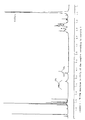
- Figures 1, 2, 3 and 4 enclosed herewith show the 1 H-NMR spectra of some of the complexes obtained in accordance with the subsequent examples, for further characterization. Each figure also shows the most significant signals of the spectrum.
- the measurement of the molecular weights of the olefin polymers and diene oligomers was effected by means of Gel-Permeation Chromatography (GPC).
- GPC Gel-Permeation Chromatography
- the analyses of the samples were carried out in 1,2,4-trichloro-benzene (stabilized with Santonox®) at 135 °C with a WATERS® 150-CV chromatograph, using a Waters differential refractometer as detector.
- the chromatographic separation was obtained using a set of ⁇ -Styragel HT (Waters) columns, three of which with a pore-size of 10 3 , 10 4 , 10 5 ⁇ , respectively, and two with a pore-size of 10 6 ⁇ , with an eluant flow-rate of 1 ml/min.
- the data were acquired and processed by means of Maxima 820 software version 3.30 (Millipore®); the calculation of the number average molecular weight (Mn) and weight average molecular weight (Mw) was effected by means of universal calibration, using calibration standards of polystyrene with molecular weights within the range of 6,500,000 - 2,000.
- the characterization of the oligomeric products having formula (II) in the solutions prepared for the living anionic oligomerization was effected by taking an aliquot which is quenched with MeOH and HCl at 37% and extracted with CH 2 Cl 2 . The organic extract is washed with water until a neutral pH is reached, anhydrified on Na 2 SO 4 , filtered and the solvent evaporated; an oil is obtained which is analyzed by means of the above-mentioned GPC and 1 H-NMR techniques.
- the NMR characterization is based on known techniques, for example according to what is described in the publications: J.A. Frankland et alii, Spectrochimica Acta; vol 47A Nr 11, pages 1511-24 (1991); H.
- the EPR characterization was carried out with a Brucker WSP300E spectrometer.
- the solutions of the samples in toluene were analyzed as such, by simple transfer into the sample-holder tube, at room temperature.
- reagents and/or solvents used which do not appear in the above list, are those commonly adopted in laboratory practice and on an industrial scale, and can therefore be easily found on the specialized market.
- the procedures and precautions of standard practice were observed, particularly for reactions effected with organometallic compounds in an inert atmosphere and with anhydrous solvents.
- Example 13 polymerization of ethylene
- the whole mixture is thermo-regulated at 50 °C and at this point, 10 ml of a toluene solution containing 2.5 ⁇ 10 -3 mmoles of "Zr(I2) 2 complex", prepared according to the previous example 3, and 2.5 ⁇ 10 -3 mmoles (2.3 mg) of B(C 6 F 5 ) 4 CPh 3 are charged, under a nitrogen flow, into the autoclave.
- the autoclave is pressurized at 80 KPa (rel.) with ethylene, maintaining the pressure constant for 30 minutes.
- the autoclave is de-pressurized and the polymerization is blocked with methanol.
- Example 14 polymerization of ethylene
- the reactor is pressurized at 50 KPa (rel.) with ethylene and the mixture is maintained under stirring for 60 minutes at 50 °C, continuously feeding ethylene to maintain the pressure constant at the initial value.
- the reactor is depressurized and 5 ml of methanol are introduced to complete the polymerization and deactivate the catalyst.
- a solution of the polymerization catalyst according to the present invention is prepared separately, by dissolving 61 mg (0.048 mmoles) of the "TiI2 complex", prepared according to the previous example 7, in 53 ml of anhydrous toluene, and adding 0.048 mmoles (44 mg) of B(C 6 F 5 ) 4 CPf 3 to this mixture, at room temperature, so that the atomic ratio B/Zr is equal to about 1.
- the catalyst solution thus prepared is left to mature, leaving it under stirring for 10 minutes at room temperature, before introducing it into the polymerization mixture.
- 900 ml of toluene (previously distilled on sodium metal), 60 ml of 1-hexene (previously distilled on calcium hydride CaH 2 ) and 1.5 mmoles of TIBAL as impurity scavenger, are charged into a BUCHI 2 liter glass autoclave, equipped with a helix stirrer and thermostatic jacket, maintained under vacuum for at least two hours, interrupted by three flushings with nitrogen.
- the autoclave is pressurized with ethylene at 0.2 MPa and is heated to a temperature of 40 °C.
- the autoclave is depressurized and 1.1 ml of the catalyst solution, prepared as above, are charged under an ethylene flow.
- the autoclave is again pressurized to 2 atm with ethylene and the polymerization is carried out for 30 minutes, by thermostat-regulating the temperature at 40 °C and continuously feeding ethylene to keep the pressure constant during the test.
- the reaction is interrupted by adding 5 ml of methanol acidified with hydrochloric acid, the autoclave is depressurized and the polymer is recovered by precipitation with 3 liters of acidified methanol and subsequent washing with acetone.
- 10 g of an ethylene/1-hexene (LLDPE) copolymer are obtained after drying, having the following characteristics:
- Example 16 Ethylene polymerization with a catalyst prepared 6 months before and preserved in a refrigerator.
Landscapes
- Chemical & Material Sciences (AREA)
- Organic Chemistry (AREA)
- Health & Medical Sciences (AREA)
- Chemical Kinetics & Catalysis (AREA)
- Medicinal Chemistry (AREA)
- Polymers & Plastics (AREA)
- General Chemical & Material Sciences (AREA)
- Organic Low-Molecular-Weight Compounds And Preparation Thereof (AREA)
Applications Claiming Priority (2)
| Application Number | Priority Date | Filing Date | Title |
|---|---|---|---|
| IT002052A ITMI20022052A1 (it) | 2002-09-27 | 2002-09-27 | Composti metallocenici stabilizzati di metalli di transizione del gruppo 4 e processo per la loro preparazione. |
| ITMI20022052 | 2002-09-27 |
Publications (3)
| Publication Number | Publication Date |
|---|---|
| EP1403294A2 true EP1403294A2 (de) | 2004-03-31 |
| EP1403294A3 EP1403294A3 (de) | 2004-04-07 |
| EP1403294B1 EP1403294B1 (de) | 2016-05-04 |
Family
ID=31972212
Family Applications (1)
| Application Number | Title | Priority Date | Filing Date |
|---|---|---|---|
| EP03078025.8A Expired - Lifetime EP1403294B1 (de) | 2002-09-27 | 2003-09-24 | Stabilisierte Metallocenverbindungen von Gruppe-4-Übergangsmetallen und Verfahren zu deren Herstellung |
Country Status (5)
| Country | Link |
|---|---|
| US (1) | US6833465B2 (de) |
| EP (1) | EP1403294B1 (de) |
| ES (1) | ES2585883T3 (de) |
| HU (1) | HUE029266T2 (de) |
| IT (1) | ITMI20022052A1 (de) |
Families Citing this family (3)
| Publication number | Priority date | Publication date | Assignee | Title |
|---|---|---|---|---|
| KR100999592B1 (ko) * | 2007-02-15 | 2010-12-08 | 주식회사 엘지화학 | 새로운 시클로펜타디에닐 리간드를 갖는 4족 전이금속화합물, 이의 제조방법 및 이를 이용한 올레핀계 중합체의제조방법 |
| KR100988055B1 (ko) | 2007-04-30 | 2010-10-18 | 주식회사 엘지화학 | 헤테로 원자를 포함하는 새로운 4족 전이금속 화합물 |
| EP2913348B1 (de) * | 2012-10-24 | 2017-09-20 | Asahi Kasei Kabushiki Kaisha | Verfahren zur herstellung einer hydrierungskatalysatorzusammensetzung und hydrierungskatalysatorzusammensetzung |
Family Cites Families (4)
| Publication number | Priority date | Publication date | Assignee | Title |
|---|---|---|---|---|
| BR9407034A (pt) * | 1993-06-24 | 1996-03-19 | Dow Chemical Co | Complexos de titânio ( I) ou zircônio (II) e catalisadores de polimerização por adição dos mesmos |
| US5814709A (en) * | 1996-04-12 | 1998-09-29 | Shell Oil Company | Process for hydrogenation on conjugataed diene polymers and catalyst composition suitable for use therein |
| EP0861853A1 (de) | 1997-02-27 | 1998-09-02 | ENICHEM S.p.A. | Katalysator und Verfahren für die syndiotaktische Polymerisation von vinylaromatischen Verbindungen |
| JP3941197B2 (ja) * | 1997-12-05 | 2007-07-04 | Jsr株式会社 | オレフイン性不飽和化合物の水素添加触媒および水素添加方法 |
-
2002
- 2002-09-27 IT IT002052A patent/ITMI20022052A1/it unknown
-
2003
- 2003-09-24 HU HUE03078025A patent/HUE029266T2/hu unknown
- 2003-09-24 EP EP03078025.8A patent/EP1403294B1/de not_active Expired - Lifetime
- 2003-09-24 ES ES03078025.8T patent/ES2585883T3/es not_active Expired - Lifetime
- 2003-09-26 US US10/670,348 patent/US6833465B2/en not_active Expired - Lifetime
Also Published As
| Publication number | Publication date |
|---|---|
| ITMI20022052A1 (it) | 2004-03-28 |
| HUE029266T2 (hu) | 2017-02-28 |
| ES2585883T3 (es) | 2016-10-10 |
| EP1403294B1 (de) | 2016-05-04 |
| US6833465B2 (en) | 2004-12-21 |
| EP1403294A3 (de) | 2004-04-07 |
| US20040116632A1 (en) | 2004-06-17 |
Similar Documents
| Publication | Publication Date | Title |
|---|---|---|
| CN114805656B (zh) | 制造聚烯烃产物 | |
| CA2024899C (en) | Olefin polymerization catalysts | |
| JP6499195B2 (ja) | ポリオレフィンの製造方法およびこれから製造されたポリオレフィン | |
| CN101616922B (zh) | 含有环戊二烯基配体的新型第4族过渡金属化合物、制备该化合物的方法以及使用该化合物制备烯烃聚合物的方法 | |
| CA2306986A1 (en) | Metallocene catalysts and preparation and use | |
| CA2262868C (en) | Bridged metallocene complex for the (co)polymerization of olefins | |
| WO2008066266A1 (en) | Supported catalysts for olefin polymerization using transition metal compound having phenylene-bridge, method for preparing the same, and method for preparing polyolefin using the same | |
| EP3184556B1 (de) | Metallocen-geträgerter katalysator und verfahren zur herstellung von polyolefin damit | |
| EA003246B1 (ru) | Металлоорганическая композиция, каталитическая композиция для (со)полимеризации олефинов, способ ее получения и фторированное органическое соединение | |
| EP0791607B1 (de) | Substituierte Metallocen-Katalysator für die Olefinpolymerisation | |
| WO2016122017A1 (ko) | 메탈로센 화합물, 이를 포함하는 촉매 조성물 및 이를 이용하는 올레핀계 중합체의 제조방법 | |
| EP1403294B1 (de) | Stabilisierte Metallocenverbindungen von Gruppe-4-Übergangsmetallen und Verfahren zu deren Herstellung | |
| JP3320619B2 (ja) | 新規メタロセン化合物とそれを用いたオレフィンまたはジエンの重合方法 | |
| KR100958676B1 (ko) | 이핵으로 구속된 배열을 갖는 균일계 촉매의 합성방법 및이를 이용하여 제조한 선형알파올레핀 공중합체 | |
| EP3330296B1 (de) | Verfahren zur herstellung eines geträgerten metallocen-katalysators | |
| US20020002256A1 (en) | Catalyst composition for the polymerization of olefins | |
| JP5441407B2 (ja) | エチレン単独重合体又はエチレンとα−オレフィンとの共重合体製造用均一触媒系 | |
| EP1408054B1 (de) | Katalysatorzusammensetzung zur (Co)Polymerisation von Alpha-Olefinen | |
| KR101092572B1 (ko) | 담지촉매를 이용한 폴리올레핀의 제조방법 | |
| EP1425318A1 (de) | Aktivierende metallorganische zusammensetzung für die (co)polymerisation von alpha-olefinen mit fluorierten cyclopentadienylverbindungen | |
| RU2444533C2 (ru) | Ванадиевая каталитическая система сополимеризации этилена, пропилена и диена (варианты) и способ получения сополимеров этилена с пропиленом и диенами | |
| JP4016581B2 (ja) | 触媒及び共役ジエンの重合方法 | |
| EP1343794A1 (de) | Allyl-metallocen-komplexe und deren verwendung für die katalyse von (co)polymerisationsverfahren von alpha-olefinen | |
| US20040058804A1 (en) | Supported metallocene catalyst and olefin polymerization using the same | |
| NO309657B1 (no) | Anvendelse av metallocenforbindelser ved olefinpolymerisasjon |
Legal Events
| Date | Code | Title | Description |
|---|---|---|---|
| PUAI | Public reference made under article 153(3) epc to a published international application that has entered the european phase |
Free format text: ORIGINAL CODE: 0009012 |
|
| PUAL | Search report despatched |
Free format text: ORIGINAL CODE: 0009013 |
|
| AK | Designated contracting states |
Kind code of ref document: A2 Designated state(s): AT BE BG CH CY CZ DE DK EE ES FI FR GB GR HU IE IT LI LU MC NL PT RO SE SI SK TR |
|
| AX | Request for extension of the european patent |
Extension state: AL LT LV MK |
|
| AK | Designated contracting states |
Kind code of ref document: A3 Designated state(s): AT BE BG CH CY CZ DE DK EE ES FI FR GB GR HU IE IT LI LU MC NL PT RO SE SI SK TR |
|
| AX | Request for extension of the european patent |
Extension state: AL LT LV MK |
|
| RIC1 | Information provided on ipc code assigned before grant |
Ipc: 7C 08F 4/642 B Ipc: 7C 07F 17/00 B Ipc: 7C 08F 8/04 B Ipc: 7C 08F 10/00 A |
|
| 17P | Request for examination filed |
Effective date: 20040917 |
|
| AKX | Designation fees paid |
Designated state(s): AT BE BG CH CY CZ DE DK EE ES FI FR GB GR HU IE IT LI LU MC NL PT RO SE SI SK TR |
|
| 17Q | First examination report despatched |
Effective date: 20051006 |
|
| RAP1 | Party data changed (applicant data changed or rights of an application transferred) |
Owner name: VERSALIS S.P.A. |
|
| GRAP | Despatch of communication of intention to grant a patent |
Free format text: ORIGINAL CODE: EPIDOSNIGR1 |
|
| INTG | Intention to grant announced |
Effective date: 20150605 |
|
| INTG | Intention to grant announced |
Effective date: 20151214 |
|
| INTG | Intention to grant announced |
Effective date: 20160219 |
|
| GRAS | Grant fee paid |
Free format text: ORIGINAL CODE: EPIDOSNIGR3 |
|
| GRAA | (expected) grant |
Free format text: ORIGINAL CODE: 0009210 |
|
| AK | Designated contracting states |
Kind code of ref document: B1 Designated state(s): AT BE BG CH CY CZ DE DK EE ES FI FR GB GR HU IE IT LI LU MC NL PT RO SE SI SK TR |
|
| REG | Reference to a national code |
Ref country code: GB Ref legal event code: FG4D |
|
| REG | Reference to a national code |
Ref country code: CH Ref legal event code: EP |
|
| REG | Reference to a national code |
Ref country code: AT Ref legal event code: REF Ref document number: 796855 Country of ref document: AT Kind code of ref document: T Effective date: 20160515 |
|
| REG | Reference to a national code |
Ref country code: IE Ref legal event code: FG4D |
|
| REG | Reference to a national code |
Ref country code: DE Ref legal event code: R096 Ref document number: 60348907 Country of ref document: DE |
|
| REG | Reference to a national code |
Ref country code: RO Ref legal event code: EPE |
|
| REG | Reference to a national code |
Ref country code: NL Ref legal event code: FP |
|
| REG | Reference to a national code |
Ref country code: FR Ref legal event code: PLFP Year of fee payment: 14 |
|
| REG | Reference to a national code |
Ref country code: ES Ref legal event code: FG2A Ref document number: 2585883 Country of ref document: ES Kind code of ref document: T3 Effective date: 20161010 |
|
| PG25 | Lapsed in a contracting state [announced via postgrant information from national office to epo] |
Ref country code: SE Free format text: LAPSE BECAUSE OF FAILURE TO SUBMIT A TRANSLATION OF THE DESCRIPTION OR TO PAY THE FEE WITHIN THE PRESCRIBED TIME-LIMIT Effective date: 20160504 Ref country code: GR Free format text: LAPSE BECAUSE OF FAILURE TO SUBMIT A TRANSLATION OF THE DESCRIPTION OR TO PAY THE FEE WITHIN THE PRESCRIBED TIME-LIMIT Effective date: 20160805 Ref country code: PT Free format text: LAPSE BECAUSE OF FAILURE TO SUBMIT A TRANSLATION OF THE DESCRIPTION OR TO PAY THE FEE WITHIN THE PRESCRIBED TIME-LIMIT Effective date: 20160905 |
|
| PG25 | Lapsed in a contracting state [announced via postgrant information from national office to epo] |
Ref country code: EE Free format text: LAPSE BECAUSE OF FAILURE TO SUBMIT A TRANSLATION OF THE DESCRIPTION OR TO PAY THE FEE WITHIN THE PRESCRIBED TIME-LIMIT Effective date: 20160504 Ref country code: SK Free format text: LAPSE BECAUSE OF FAILURE TO SUBMIT A TRANSLATION OF THE DESCRIPTION OR TO PAY THE FEE WITHIN THE PRESCRIBED TIME-LIMIT Effective date: 20160504 Ref country code: DK Free format text: LAPSE BECAUSE OF FAILURE TO SUBMIT A TRANSLATION OF THE DESCRIPTION OR TO PAY THE FEE WITHIN THE PRESCRIBED TIME-LIMIT Effective date: 20160504 |
|
| REG | Reference to a national code |
Ref country code: DE Ref legal event code: R097 Ref document number: 60348907 Country of ref document: DE |
|
| REG | Reference to a national code |
Ref country code: HU Ref legal event code: AG4A Ref document number: E029266 Country of ref document: HU |
|
| PLBE | No opposition filed within time limit |
Free format text: ORIGINAL CODE: 0009261 |
|
| STAA | Information on the status of an ep patent application or granted ep patent |
Free format text: STATUS: NO OPPOSITION FILED WITHIN TIME LIMIT |
|
| 26N | No opposition filed |
Effective date: 20170207 |
|
| PG25 | Lapsed in a contracting state [announced via postgrant information from national office to epo] |
Ref country code: MC Free format text: LAPSE BECAUSE OF FAILURE TO SUBMIT A TRANSLATION OF THE DESCRIPTION OR TO PAY THE FEE WITHIN THE PRESCRIBED TIME-LIMIT Effective date: 20160504 |
|
| REG | Reference to a national code |
Ref country code: CH Ref legal event code: PL |
|
| PG25 | Lapsed in a contracting state [announced via postgrant information from national office to epo] |
Ref country code: SI Free format text: LAPSE BECAUSE OF FAILURE TO SUBMIT A TRANSLATION OF THE DESCRIPTION OR TO PAY THE FEE WITHIN THE PRESCRIBED TIME-LIMIT Effective date: 20160504 |
|
| REG | Reference to a national code |
Ref country code: IE Ref legal event code: MM4A |
|
| PG25 | Lapsed in a contracting state [announced via postgrant information from national office to epo] |
Ref country code: IE Free format text: LAPSE BECAUSE OF NON-PAYMENT OF DUE FEES Effective date: 20160924 Ref country code: CH Free format text: LAPSE BECAUSE OF NON-PAYMENT OF DUE FEES Effective date: 20160930 Ref country code: LI Free format text: LAPSE BECAUSE OF NON-PAYMENT OF DUE FEES Effective date: 20160930 |
|
| PG25 | Lapsed in a contracting state [announced via postgrant information from national office to epo] |
Ref country code: LU Free format text: LAPSE BECAUSE OF NON-PAYMENT OF DUE FEES Effective date: 20160924 |
|
| REG | Reference to a national code |
Ref country code: FR Ref legal event code: PLFP Year of fee payment: 15 |
|
| PG25 | Lapsed in a contracting state [announced via postgrant information from national office to epo] |
Ref country code: CY Free format text: LAPSE BECAUSE OF FAILURE TO SUBMIT A TRANSLATION OF THE DESCRIPTION OR TO PAY THE FEE WITHIN THE PRESCRIBED TIME-LIMIT Effective date: 20160504 |
|
| REG | Reference to a national code |
Ref country code: FR Ref legal event code: PLFP Year of fee payment: 16 |
|
| REG | Reference to a national code |
Ref country code: AT Ref legal event code: UEP Ref document number: 796855 Country of ref document: AT Kind code of ref document: T Effective date: 20160504 |
|
| PGFP | Annual fee paid to national office [announced via postgrant information from national office to epo] |
Ref country code: NL Payment date: 20190926 Year of fee payment: 17 Ref country code: FR Payment date: 20190925 Year of fee payment: 17 Ref country code: IT Payment date: 20190920 Year of fee payment: 17 Ref country code: RO Payment date: 20190904 Year of fee payment: 17 Ref country code: CZ Payment date: 20190906 Year of fee payment: 17 Ref country code: TR Payment date: 20190905 Year of fee payment: 17 Ref country code: FI Payment date: 20190927 Year of fee payment: 17 |
|
| PGFP | Annual fee paid to national office [announced via postgrant information from national office to epo] |
Ref country code: BG Payment date: 20190924 Year of fee payment: 17 Ref country code: HU Payment date: 20190911 Year of fee payment: 17 |
|
| PGFP | Annual fee paid to national office [announced via postgrant information from national office to epo] |
Ref country code: AT Payment date: 20190903 Year of fee payment: 17 Ref country code: GB Payment date: 20190927 Year of fee payment: 17 |
|
| PGFP | Annual fee paid to national office [announced via postgrant information from national office to epo] |
Ref country code: DE Payment date: 20190927 Year of fee payment: 17 |
|
| PGFP | Annual fee paid to national office [announced via postgrant information from national office to epo] |
Ref country code: ES Payment date: 20191001 Year of fee payment: 17 Ref country code: BE Payment date: 20190927 Year of fee payment: 17 |
|
| REG | Reference to a national code |
Ref country code: DE Ref legal event code: R119 Ref document number: 60348907 Country of ref document: DE |
|
| REG | Reference to a national code |
Ref country code: FI Ref legal event code: MAE |
|
| PG25 | Lapsed in a contracting state [announced via postgrant information from national office to epo] |
Ref country code: CZ Free format text: LAPSE BECAUSE OF NON-PAYMENT OF DUE FEES Effective date: 20200924 Ref country code: RO Free format text: LAPSE BECAUSE OF NON-PAYMENT OF DUE FEES Effective date: 20200924 Ref country code: FI Free format text: LAPSE BECAUSE OF NON-PAYMENT OF DUE FEES Effective date: 20200924 |
|
| REG | Reference to a national code |
Ref country code: NL Ref legal event code: MM Effective date: 20201001 |
|
| REG | Reference to a national code |
Ref country code: AT Ref legal event code: MM01 Ref document number: 796855 Country of ref document: AT Kind code of ref document: T Effective date: 20200924 |
|
| GBPC | Gb: european patent ceased through non-payment of renewal fee |
Effective date: 20200924 |
|
| REG | Reference to a national code |
Ref country code: BE Ref legal event code: MM Effective date: 20200930 |
|
| PG25 | Lapsed in a contracting state [announced via postgrant information from national office to epo] |
Ref country code: NL Free format text: LAPSE BECAUSE OF NON-PAYMENT OF DUE FEES Effective date: 20201001 |
|
| PG25 | Lapsed in a contracting state [announced via postgrant information from national office to epo] |
Ref country code: BG Free format text: LAPSE BECAUSE OF NON-PAYMENT OF DUE FEES Effective date: 20210331 Ref country code: DE Free format text: LAPSE BECAUSE OF NON-PAYMENT OF DUE FEES Effective date: 20210401 Ref country code: FR Free format text: LAPSE BECAUSE OF NON-PAYMENT OF DUE FEES Effective date: 20200930 |
|
| PG25 | Lapsed in a contracting state [announced via postgrant information from national office to epo] |
Ref country code: AT Free format text: LAPSE BECAUSE OF NON-PAYMENT OF DUE FEES Effective date: 20200924 Ref country code: BE Free format text: LAPSE BECAUSE OF NON-PAYMENT OF DUE FEES Effective date: 20200930 Ref country code: HU Free format text: LAPSE BECAUSE OF NON-PAYMENT OF DUE FEES Effective date: 20200925 Ref country code: GB Free format text: LAPSE BECAUSE OF NON-PAYMENT OF DUE FEES Effective date: 20200924 |
|
| PG25 | Lapsed in a contracting state [announced via postgrant information from national office to epo] |
Ref country code: IT Free format text: LAPSE BECAUSE OF NON-PAYMENT OF DUE FEES Effective date: 20200924 |
|
| REG | Reference to a national code |
Ref country code: ES Ref legal event code: FD2A Effective date: 20220118 |
|
| PG25 | Lapsed in a contracting state [announced via postgrant information from national office to epo] |
Ref country code: ES Free format text: LAPSE BECAUSE OF NON-PAYMENT OF DUE FEES Effective date: 20200925 |
|
| PG25 | Lapsed in a contracting state [announced via postgrant information from national office to epo] |
Ref country code: TR Free format text: LAPSE BECAUSE OF NON-PAYMENT OF DUE FEES Effective date: 20200924 |