EP1372348B1 - Verfahren zur Datenübertragung in einem Funkkommunikationssystem - Google Patents
Verfahren zur Datenübertragung in einem Funkkommunikationssystem Download PDFInfo
- Publication number
- EP1372348B1 EP1372348B1 EP02013403A EP02013403A EP1372348B1 EP 1372348 B1 EP1372348 B1 EP 1372348B1 EP 02013403 A EP02013403 A EP 02013403A EP 02013403 A EP02013403 A EP 02013403A EP 1372348 B1 EP1372348 B1 EP 1372348B1
- Authority
- EP
- European Patent Office
- Prior art keywords
- channel elements
- assigned
- connection
- service
- subscriber
- Prior art date
- Legal status (The legal status is an assumption and is not a legal conclusion. Google has not performed a legal analysis and makes no representation as to the accuracy of the status listed.)
- Expired - Lifetime
Links
- 230000005540 biological transmission Effects 0.000 title claims description 42
- 238000000034 method Methods 0.000 title claims description 33
- 238000004891 communication Methods 0.000 title claims description 23
- 239000011159 matrix material Substances 0.000 claims description 29
- 230000008859 change Effects 0.000 claims description 22
- 239000000969 carrier Substances 0.000 claims description 2
- 239000013598 vector Substances 0.000 claims description 2
- 230000009467 reduction Effects 0.000 description 16
- 150000001875 compounds Chemical class 0.000 description 8
- 230000006978 adaptation Effects 0.000 description 7
- 230000002452 interceptive effect Effects 0.000 description 6
- 230000008901 benefit Effects 0.000 description 4
- 230000008569 process Effects 0.000 description 4
- 230000014759 maintenance of location Effects 0.000 description 3
- 238000007726 management method Methods 0.000 description 3
- 238000004364 calculation method Methods 0.000 description 2
- 230000006872 improvement Effects 0.000 description 2
- 230000009286 beneficial effect Effects 0.000 description 1
- 230000007423 decrease Effects 0.000 description 1
- 230000006866 deterioration Effects 0.000 description 1
- 238000005516 engineering process Methods 0.000 description 1
- 238000005457 optimization Methods 0.000 description 1
- 238000007616 round robin method Methods 0.000 description 1
- 230000007480 spreading Effects 0.000 description 1
Images



Classifications
-
- H—ELECTRICITY
- H04—ELECTRIC COMMUNICATION TECHNIQUE
- H04W—WIRELESS COMMUNICATION NETWORKS
- H04W28/00—Network traffic management; Network resource management
- H04W28/16—Central resource management; Negotiation of resources or communication parameters, e.g. negotiating bandwidth or QoS [Quality of Service]
- H04W28/18—Negotiating wireless communication parameters
- H04W28/20—Negotiating bandwidth
-
- H—ELECTRICITY
- H04—ELECTRIC COMMUNICATION TECHNIQUE
- H04W—WIRELESS COMMUNICATION NETWORKS
- H04W28/00—Network traffic management; Network resource management
- H04W28/16—Central resource management; Negotiation of resources or communication parameters, e.g. negotiating bandwidth or QoS [Quality of Service]
- H04W28/24—Negotiating SLA [Service Level Agreement]; Negotiating QoS [Quality of Service]
-
- H—ELECTRICITY
- H04—ELECTRIC COMMUNICATION TECHNIQUE
- H04W—WIRELESS COMMUNICATION NETWORKS
- H04W72/00—Local resource management
- H04W72/50—Allocation or scheduling criteria for wireless resources
- H04W72/54—Allocation or scheduling criteria for wireless resources based on quality criteria
- H04W72/542—Allocation or scheduling criteria for wireless resources based on quality criteria using measured or perceived quality
-
- H—ELECTRICITY
- H04—ELECTRIC COMMUNICATION TECHNIQUE
- H04W—WIRELESS COMMUNICATION NETWORKS
- H04W72/00—Local resource management
- H04W72/50—Allocation or scheduling criteria for wireless resources
- H04W72/56—Allocation or scheduling criteria for wireless resources based on priority criteria
Definitions
- Radio communication systems serve to transmit information Language or data, with the help of electromagnetic Waves over a radio interface, also air interface called between a sending and a receiving Radio station.
- An example of a radio communication system is the well-known GSM mobile radio system and its further development with a packet data service GPRS or EGPRS, whose Architecture z. In P. Walke, mobile networks and their protocols, Volume 1, Teubner Verlag Stuttgart, 1998, page 138 bis 151 and pages 295 to 311. It is for transmission a subscriber signal in each case by a narrowband frequency range formed channel provided. The transmission in a channel takes place in timeframes, the include multiple time slots. Each time slot defines a channel element.
- the radio station can detect make the data of the subscriber signal.
- the individual participants in addition, by different A distinction is made between spreading codes.
- the calculation is performed the required number of channel elements based on a for the Service guaranteed data rate.
- a certain data rate such as for interactive services or background services are provided by the network used given data rates. These are for example according to the maximum data rate that is available from the network for one Connection can be provided or from the terminal can be received and processed or a portion thereof.
- Another possibility is the network-side assignment certain data rates based on certain preferences based and for different quality of service requirements can be different. These are given by the network Data rates are used as a guide when the traffic load in the cell is so high that not all participants be assigned the maximum data rate at the same time can. This guideline for services with non-real-time requirements or the guaranteed data rate for Real-time requirements are considered to be the "data rate to be achieved" designated.
- the procedure allows a deliberate reduction of the Transmission resources through the network aware of the service
- the lowest quality of service requirement begins and increases Load on services with higher quality of service requirements is extended.
- this process is not just a local optimization per channel element performed but a global assignment of the channel elements available in the pool which also involves a resorting of resource shares across multiple channel elements.
- a channel element through a time slot is realized on a carrier.
- a carrier is realized for example by a carrier frequency.
- the quality of service on the basis of Parameter MS multislot class and / or radio priority and / or service precedence and / or delay class and / or peak throughput class and / or mean throughput class and / or traffic class and / or reliability class and / or maximum bitrate and / or guaranteed bitrate and / or delivery order of erroneous SDU and / or maximum SDU size and / or SDU error rate and / or residual bit error ratio and / or transfer delay and / or traffic handling priority and / or allocation / retention to distinguish priority.
- Figure 1 shows a section of the architecture of a Radio communication system.
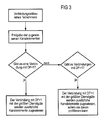
- FIG. 3 shows a flow chart for a disconnection.
- Figure 4 shows a flow chart for a change of the channel element assignment after an improvement of the radio conditions for a participant.
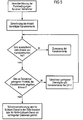
- FIG. 5 shows a flow chart for a change in the channel allocation after a deterioration of the radio conditions for a participant.
- the base station subsystem BSS there is a packet data control unit PCU, which may be attached to the base station controller BSC, for example.
- the BSC for switching of packet-switched data
- the packet data control unit PCU which is connected on the one hand via the A to interface with the base station BTS and on the other hand, for example, via a G b interface with a packet data service node SGSN connected over a connection to a packet data network, for example the IP network, is realized.
- the base station BTS comprises a plurality of transmitting / receiving units CU and a central unit CORE. Data transmitted via the A to interface are supplied by the central unit CORE to the respectively relevant transceiver unit CU.
- the send / receive units CU of a base station BTS differ in each of the sent or received Carrier frequency.
- a channel is through different time slots divided into channel elements. It will be a timeframe eight timeslots defined.
- a channel element becomes through a given timeslot in a timeframe of respective transmitting / receiving unit CU defined.
- the packet-switched data transmission can be used for several connections in time division over one and the same physical Channel element done. A connection can also do this more than one channel element can be assigned simultaneously.
- the Assignment of the individual connections to a channel element takes place in the packet data controller PCU via a queue manager W and in the base station BTS via the central Unit CORE.
- the number of required channel elements for the subscriber k is first calculated (see FIG. 2).
- the data rate to be achieved for the subscriber k due to the assigned quality of service is taken into account.
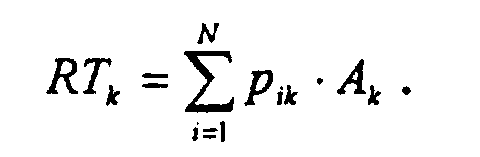
- the given radio conditions are taken into account. The calculation is based on the following formula:
- N is the number of possible channel elements
- RT k the data rate to be achieved for the subscriber k
- p ik the proportion of the transmission capacity on the channel element i for the subscriber k
- CS_ Throughput k the maximum theoretical user data rate for subscriber k based on the selected GPRS / EDGE coding scheme
- block_error_prob k the repetition rate for the subscriber k due to the block error probability, which depends on the radio conditions.
- the channel elements It could be used for connections with real-time conditions rejected the request to establish a connection for connections without real-time underflow conditions a minimum number of channel elements the request rejected for connection establishment.
- the new connection can also be assigned a larger number of channel elements, provided that it can benefit from this.
- a data rate parameter DF k is calculated and stored.
- the data rate parameter DF k in this case is greater than 1.
- the maximum possible number of channel elements that can be assigned to the subscriber k is limited by the property of the mobile station to which the connection is established. A maximum of so many channel elements realized by different time slots can be allocated, as there are time slots in the mobile station on which it is possible to simultaneously receive or transmit. Further limitations may be due to processor performance, for example.
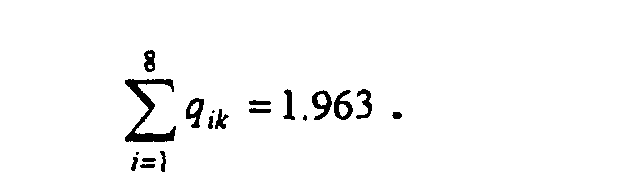
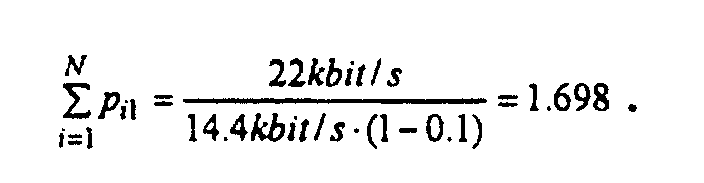
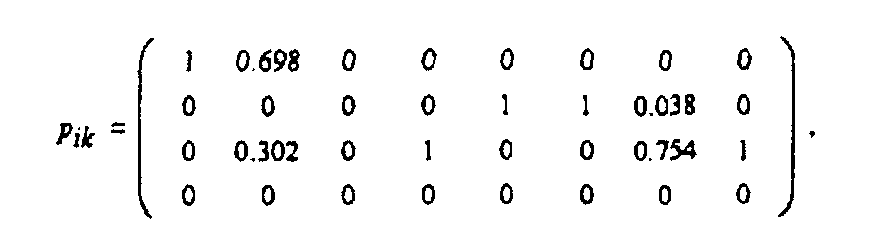
- a connection is assigned coding scheme CS-2, which corresponds to a data rate of 12 kbit / s, and the block error probability is 0.1 and the data rate to be achieved is 22 kbit / s, then the sum of the proportional factors p ik applies
- a further possibility consists of the proportion 0.5 on the channel element 1, 0.5 on the channel element 2, 0.7 on the channel element 3, 0.3 on the channel element 4 and 0.3 on the channel element 5 to allocate the share 0.037.
- connection to a Mobile station to be set up, the send or Received over three timeslots allowed.
- the connection to a mobile station has to be established, when sending or receiving to at least five Time slots is possible.
- the sum of the proportional factors p ik remains constant as long as the radio relations do not change. In the event of a change in the radio conditions which causes a change in the coding scheme or which causes a change in the block error rate, the sum of the proportional factors p ik must be recalculated.
- the number of subscribers n a maximum of eight for connections from the mobile stations to BTS (uplink) and maximum 16 for opposite direction of the BTS to the mobile stations (downlink).
- the number of channel elements assigned to a subscriber must not be higher than the maximum number of time slots over which the mobile station to which the connection is established can send or receive.
- Another limitation is the maximum data rate, which, for example, may be lower than the actual maximum data rate of the mobile station alone due to the additional connection of the mobile station to an external data display device. For this purpose, for example, an infrared radio link between the mobile station and the data display device can lead to a reduction of the possible data rate.
- the number of subscribers multiplexed onto a channel element must not be greater than a threshold that ensures a reasonable data rate for each mobile station even at high traffic load.
- connection of a subscriber is terminated, the released to this participant assigned channel elements (see Figure 3). It then checks if there are connections gives with a data rate parameter DF less than 1. Is this the case, the connection with the highest quality of service, which has the data rate parameter DF smaller than 1, additional Assigned channel elements. Here is the maximum possible number of channel elements due to the associated mobile station considered.
- radio parameters for a subscriber change, so can an adaptation of the number of channel elements assigned to the subscriber be required.
- the radio conditions for one deteriorate Subscribers the new number of required channel elements becomes due to the poorer radio conditions, which in usually greater than the number of previously assigned Channel elements (see Figure 5). Subsequently, it is checked whether in the radio communication system, sufficient shares of channel elements are free to the participants considered the now assign required number of channel elements. is If this is the case, the channel elements are assigned.
- Channel elements can be reduced by a factor, so that these participants can share channel elements.
- This condition is always fulfilled when the participant is on Reason for the data rate to be achieved for this connection and the number of channel elements required by the prevailing radio links or a larger number is assigned.
- a minimum factor is defined among which Number of channel elements assigned to a participant not can be reduced. Is there such a participant who Enable channel elements, this participant gives lesser Quality of service channel elements free to the subscriber, whose radio conditions have deteriorated and one assigned a higher quality of service. This procedure allows participants with higher levels Quality of service takes precedence over participants with lower Quality of service.
- P 3i the initial coefficient
- the example shows that the transmission capacity of the channel element 3 is distributed in a ratio 3: 1 to the subscribers 1 and 2, as it corresponds to the ratio P 31 to P 32 .
- the desired distribution of the transmission capacity to the participating subscribers is achieved.
- a connection is set up for a second subscriber 2, which is characterized in exactly the same way as the first subscriber 1, but which has a lower quality of service priority than the first subscriber 1. Since sufficient resources are available, the second subscriber 2 is assigned four channel elements. As a result, the matrix p ik changes as follows:
- the data rate parameter DF 2 is also calculated for the second subscriber 2.
- the third party 3 For a third party 3 a connection should be established.
- the third party 3 has a quality of service priority higher than that of the second party 2 but lower than that of the first party 1.
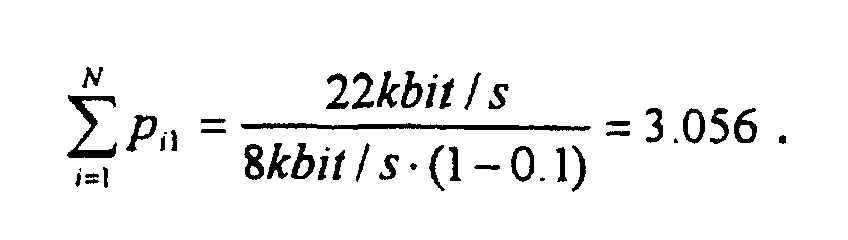
- the quality of service priorities are stored in the packet data controller in a priority list for the respective cell. Further characteristics of the subscriber 3 are: GPRS mobile station, which can transmit or receive on four time slots, initial coding scheme CS-1, data rate 22 kbit / s to be achieved and block error probability of 10%. This results in the required number of channel elements
- the number of shared channel elements in the cell is equal
- this pik matrix is rebuilt and the matrix elements filled so that the mobile stations are each assigned adjacent row elements.
- the first row remains unchanged, the matrix elements of the second row are shifted one column to the right and the matrix element with the value 0.037 is swapped with the first one.
- the elements of columns 7 and 8 are moved to columns 6 (value 0.963) and 5 (value 1).
- the following pik matrix results:
- a connection should be established. Due to its quality of service, the priority of the fourth party 4 is lower than that of the first party 1 but higher than that of the third party 3.
- the other features of the new party 4 are: GPRS mobile station, which can transmit or receive simultaneously on four time slots, initial coding scheme CS-4, data rate to be achieved 44kbit / s and a block error probability of 10%. This results in the sum of p i4
- the free channel elements in the cell are now in the sixth and seventh timeslot. In total, 1,888 channel elements are free.
- 2,444-1,888 0,556 channel elements are needed. Therefore, now the number of assigned channel elements for the third party 3, which has a higher quality of service than the second party 2, but a lower quality of service than the fourth party 4, adjusted.
- connection requests require additional channel elements be released. Enables the reduction of one participant assigned channel elements to the first reduction factor RF1 is not off, so must starting from the participant with the lowest quality of service the number of assigned channel elements be reduced by the second reduction factor RF2.
- a k CS _ throughput k ⁇ (1- block _ error _ prob k ).
- threshold values controlled by threshold values to decide from which deviation of the actual value of the target value, a reconfiguration of the time slots should be performed.
- An example of a reconfiguration of the time slots is the shifting of the matrix elements by one column. Since, due to the technology, a reconfiguration of the time slots can lead to a short-term reduction of the throughput rate, threshold values are defined which trigger a change of the pik matrix depending on the quality of service requirements or tolerate a certain non-compliance with the desired data rate.
Landscapes
- Engineering & Computer Science (AREA)
- Quality & Reliability (AREA)
- Computer Networks & Wireless Communication (AREA)
- Signal Processing (AREA)
- Mobile Radio Communication Systems (AREA)
Description

N die Anzahl der möglichen Kanalelemente,
RTk die für den Teilnehmer k zu erzielende Datenrate,
pik der Anteil an der Übertragungskapazität auf dem Kanalelement i für den Teilnehmer k,
CS_ Throughputk die maximale theoretische Nutzdatenrate für den Teilnehmer k auf Grund des gewählten GPRS/EDGE Kodierschemas und
block_error_probk die Wiederholungsrate für den Teilnehmer k auf Grund der Blockfehlerwahrscheinlichkeit, die von den Funkverhältnissen abhängt.



















Claims (16)
- Verfahren zur Datenübertragung in einem
Funkkommunikationssystem,dadurch gekennzeichnet, dass die Reduktion der Anzahl der zugewiesenen Kanalelemente in zwei Schritten erfolgt, wobei in einem ersten Schritt sukzessive bei allen Verbindungen von Teilnehmern, deren Dienstgüte geringer ist als die des Teilnehmers der neuen Verbindung, die Anzahl der zugewiesenen Kanalelemente um einen ersten Faktor reduziert wird und in einem zweiten Schritt um einen zweiten Faktor reduziert wird, wobei der erste Faktor und der zweite Faktor vom jeweiligen Dienst abhängig sind.a) bei dem jedem Teilnehmer eine Dienstgüte zugeordnet wird,b) bei dem zum Aufbau einer neuen Verbindung, über die ein Dienst bedient werden soll, für einen Teilnehmer auf Grund der dem Teilnehmer zugeordneten Dienstgüte und der Funkverhältnisse und eine für die Datenübertragung über eine Schnittstelle des Funkkommunikationssystems erforderliche Anzahl von Kanalelementen bestimmt wird,c) bei dem, falls die erforderliche Anzahl von Kanalelementen zur Verfügung steht, der Verbindung die Kanalelemente zugewiesen werden und die Verbindung aufgebaut wird,d) bei dem, falls die erforderliche Anzahl von Kanalelementen nicht zur Verfügung steht und es mindestens eine Verbindung eines Teilnehmers mit einer geringerer Dienstgüte, als sie dem Teilnehmer der neuen Verbindung zugeordnet ist, gibt, dieser bestehenden Verbindung die Anzahl der zugewiesenen Kanalelemente reduziert wird und die übrigen Kanalelemente freigegeben werden, wobei die Anzahl der dieser Verbindung zugewiesenen Kanalelemente einen vorgegebenen Wert nicht unterschreitet,e) bei dem, falls die Anzahl der freigegebenen Kanalelemente mindestens der erforderlichen Anzahl entspricht, die Verbindung aufgebaut wird. - Verfahren nach Anspruch 1, dadurch gekennzeichnet, dass ein Kanalelement durch einen Zeitschlitz auf einem Träger realisiert ist.
- Verfahren nach Anspruch 2, dadurch gekennzeichnet, dass die einer Verbindung zugewiesenen Kanalelemente auf mindestens zwei Träger verteilt sind.
- Verfahren nach einem der Ansprüche 1 bis 3, dadurch gekennzeichnet, dass, falls beim Aufbau der neuen Verbindung in dem Funkkommunikationssystem eine größere Anzahl an Kanalelementen zur Verfügung steht, als für den Aufbau der neuen Verbindung erforderlich ist, der neuen Verbindung zusätzliche Kanalelemente zugewiesen werden.
- Verfahren nach Anspruch 4, dadurch gekennzeichnet,dass, falls die erforderliche Anzahl von Kanalelementen zum Aufbau der neuen Verbindung nicht zur Verfügung steht und mindestens einer bestehenden Verbindung eine größere Anzahl von Kanalelementen zugewiesen ist, als auf Grund der zugeordneten Dienstgüte und der Funkverhältnisse erforderlich ist, zunächst die Anzahl der Kanalelemente, die dieser bestehenden Verbindung zugewiesen sind, auf die erforderliche Anzahl reduziert wird und die zusätzlichen Kanalelemente freigegeben werden,dass, falls die Anzahl der freigegebenen Kanalelemente mindestens der erforderlichen Anzahl entspricht, die Verbindung aufgebaut wird.
- Verfahren nach Anspruch 4 oder 5, dadurch gekennzeichnet, dass in dem Funkkommunikationssystem für jeden Teilnehmer ein Datenratenparameter gespeichert wird, der von der aktuell zugewiesenen Anzahl von Kanalelementen und der auf Grund der zugeordneten Dienstgüte und der Funkverhältnisse erforderlichen Anzahl von Kanalelementen abhängt.
- Verfahren nach einem der Ansprüche 1 bis 6, dadurch gekennzeichnet, dass die einem Teilnehmer zugewiesenen Kanalelemente auf eine größere Anzahl von Kanalelementen verteilt werden, als es der zugewiesenen Anzahl von Kanalelementen entspricht.
- Verfahren nach einem der Ansprüche 1 bis 7, dadurch gekennzeichnet,dass bei einer Beendigung einer Verbindung die der beendeten Verbindung zugewiesenen Kanalelemente freigegeben werden,dass die freigegebenen Kanalelemente Verbindungen zugewiesen werden, denen eine geringere Anzahl von Kanalelementen zugewiesen ist als der auf Grund der zugeordneten Dienstgüte und der Funkverhältnisse erforderlichen Anzahl von Kanalelementen.
- Verfahren nach einem der Ansprüche 1 bis 8, dadurch gekennzeichnet,dass bei einer Beendigung einer Verbindung die der beendeten Verbindung zugewiesenen Kanalelemente freigegeben werden,dass, falls allen bestehenden Verbindungen mindestens die auf Grund der zugeordneten Dienstgüte und der Funkverhältnisse erforderliche Anzahl von Kanalelementen zugewiesen ist, mindestens ein Teil der freigegebenen Kanalelemente einer bestehenden Verbindung zugewiesen werden.
- Verfahren nach einem der Ansprüche 1 bis 9, dadurch gekennzeichnet,dass bei einer Änderung der Funkverhältnisse für eine Verbindung die auf Grund der zugeordneten Dienstgüte und der geänderten Funkverhältnisse erforderliche Anzahl von Kanalelementen neu bestimmt wird,dass, falls die Anzahl der zugewiesenen Kanalelemente größer als die neu bestimmte erforderliche Anzahl von Kanalelementen ist, die überzähligen Kanalelemente freigegeben werden,dass, falls die Anzahl der zugewiesenen Kanalelemente kleiner als die neu bestimmte erforderliche Anzahl von Kanalelementen ist, für mindestens eine Verbindung eines Teilnehmers mit einer geringeren Dienstgüte, als sie dem Teilnehmer der Verbindung mit den geänderten Funkverhältnissen zugeordnet ist, die Anzahl der zugewiesenen Kanalelemente unter die auf Grund der zugeordneten Dienstgüte und der Funkverhältnisse erforderliche Anzahl reduziert wird, wobei ein vorgegebener Wert nicht unterschritten wird, und die übrigen Kanalelemente freigegeben werden und die freigegebenen Kanalelemente der Verbindung mit den geänderten Funkverhältnissen zugeordnet werden.
- Verfahren nach einem der Ansprüche 1 bis 10, dadurch gekennzeichnet, dass die über die einzelnen Verbindungen bedienten Dienste in einer Liste geordnet werden und bei sich ändernden Funkbedingungen Kanalelemente von Verbindungen mit Diensten geringerer Priorität zu Verbindungen mit Diensten höherer Priorität verschoben werden, wobei zunächst auf die Verbindung mit dem Dienst niedrigster Priorität zugegriffen wird, um Kanalelemente für Verbindungen mit Diensten höherer Priorität zur Verfügung zu stellen und wobei bei der Zuweisung frei gewordener Kanalelemente zunächst Verbindungen mit Diensten mit höher Priorität bedient werden.
- Verfahren nach einem der Ansprüche 1 bis 11, dadurch gekennzeichnet, dass der vorgegebene Wert, der bei der Reduktion der Anzahl der einer Verbindung zugewiesenen Kanalelemente nicht unterschritten wird, aus der auf Grund der zugeordneten Dienstgüte und der geänderten Funkverhältnisse erforderliche Anzahl von Kanalelementen durch Multiplikation mit einem Faktor bestimmt wird.
- Verfahren nach einem der Ansprüche 1 bis 12, dadurch gekennzeichnet, dass zur Steuerung der Kanalelementzuweisung eine Matrix verwendet wird, deren Spalten den Kanalelementen eines Kanals zugeordnet sind und deren Zeilen den Verbindungen zugeordnet sind, wobei die Matrixelemente jeweils den Anteil des jeweiligen Kanalelementes, der der zugehörigen Verbindung zugewiesen ist, angeben.
- Verfahren nach Anspruch 13, dadurch gekennzeichnet, dass die Spalten der Matrix als Spaltenvektor zur Steuerung der Datenübertragung in dem jeweiligen Kanalelement verwendet werden.
- Verfahren nach Anspruch 13 oder 14, dadurch gekennzeichnet,dass den Teilnehmern jeweils ein Anteil vi, i=l...n eines Kanalelementes j zugewiesen wird,dass zur Datenübertragung das Kanalelement j jeweils demjenigen Teilnehmer k zugewiesen wird, dem der größte Anteil vk zugewiesen ist, so dass für alle Teilnehmer i≠k gilt vk>vi,dass der Anteil vk um 1 verringert wird und auf die Anteile vi aller Teilnehmer jeweils der anfängliche Wert des Anteils vi dazu addiert wird.
- Verfahren nach Anspruch 1 bis 15, dadurch gekennzeichnet,dass die erforderliche Anzahl an Kanalelementen gemäß der zu erzielende Datenrate, für Dienste mit Echtzeit-Anforderungen aus einer für den Dienst garantierten Datenrate und einer Durchsatzrate eines verwendeten Kodierschemas sowie Blockfehlerraten, beziehungsweise Blockfehlerwahrscheinlichkeiten, berechnet wird,dass die geforderte Anzahl an Kanalelementen für Dienste mit Nicht-Echtzeit-Anforderungen auf Grund einer vom Netz vorgesehenen Datenrate, einer Durchsatzrate eines verwendeten Kodierschemas und einer Blockfehlerrate, beziehungsweise Blockfehlerwahrscheinlichkeit berechnet wird, wobei die vom Netz vorgesehene Datenrate als Anteil einer maximal möglichen Durchsatzrate bestimmt wird, oder über Voreinstellungen und der übermittelten Dienstgüte-Anforderungen gewählt wird,dass die geforderte Anzahl an Kanalelementen wahlweise auch gemäß einer maximalen Übertragungs-/Verzögerungszeit beziehungsweise einer bestimmten Zuverlässigkeit berechnet wird.
Priority Applications (3)
| Application Number | Priority Date | Filing Date | Title |
|---|---|---|---|
| EP02013403A EP1372348B1 (de) | 2002-06-12 | 2002-06-12 | Verfahren zur Datenübertragung in einem Funkkommunikationssystem |
| DE50203955T DE50203955D1 (de) | 2002-06-12 | 2002-06-12 | Verfahren zur Datenübertragung in einem Funkkommunikationssystem |
| ES02013403T ES2244701T3 (es) | 2002-06-12 | 2002-06-12 | Procedimiento para la transmision de datos en un sistema de radiocomunicacion. |
Applications Claiming Priority (1)
| Application Number | Priority Date | Filing Date | Title |
|---|---|---|---|
| EP02013403A EP1372348B1 (de) | 2002-06-12 | 2002-06-12 | Verfahren zur Datenübertragung in einem Funkkommunikationssystem |
Publications (2)
| Publication Number | Publication Date |
|---|---|
| EP1372348A1 EP1372348A1 (de) | 2003-12-17 |
| EP1372348B1 true EP1372348B1 (de) | 2005-08-17 |
Family
ID=29558341
Family Applications (1)
| Application Number | Title | Priority Date | Filing Date |
|---|---|---|---|
| EP02013403A Expired - Lifetime EP1372348B1 (de) | 2002-06-12 | 2002-06-12 | Verfahren zur Datenübertragung in einem Funkkommunikationssystem |
Country Status (3)
| Country | Link |
|---|---|
| EP (1) | EP1372348B1 (de) |
| DE (1) | DE50203955D1 (de) |
| ES (1) | ES2244701T3 (de) |
Families Citing this family (2)
| Publication number | Priority date | Publication date | Assignee | Title |
|---|---|---|---|---|
| KR100578303B1 (ko) * | 2004-12-21 | 2006-05-11 | 한국전자통신연구원 | 비실시간 서비스들이 대역폭을 공유하는 락(Lock)방식의 호 수락 제어 방법 |
| CN117395185B (zh) * | 2023-12-07 | 2024-02-13 | 广州市炬元互联网科技有限公司 | 一种Asub接口的数据处理方法、装置、设备及介质 |
Family Cites Families (4)
| Publication number | Priority date | Publication date | Assignee | Title |
|---|---|---|---|---|
| US5649299A (en) * | 1993-10-27 | 1997-07-15 | Motorola, Inc. | Apparatus and method for adapting a digital radiotelephone system to increased subscriber traffic |
| US5583869A (en) * | 1994-09-30 | 1996-12-10 | Motorola, Inc. | Method for dynamically allocating wireless communication resources |
| US6201971B1 (en) * | 1998-03-26 | 2001-03-13 | Nokia Mobile Phones Ltd. | Apparatus, and associated method for controlling service degradation performance of communications in a radio communication system |
| EP1041771B1 (de) * | 1999-04-01 | 2009-06-17 | Lucent Technologies Inc. | Verbesserte Datenratensteuerung zur drahtlosen Kommunikation |
-
2002
- 2002-06-12 DE DE50203955T patent/DE50203955D1/de not_active Expired - Fee Related
- 2002-06-12 EP EP02013403A patent/EP1372348B1/de not_active Expired - Lifetime
- 2002-06-12 ES ES02013403T patent/ES2244701T3/es not_active Expired - Lifetime
Also Published As
| Publication number | Publication date |
|---|---|
| DE50203955D1 (de) | 2005-09-22 |
| EP1372348A1 (de) | 2003-12-17 |
| ES2244701T3 (es) | 2005-12-16 |
Similar Documents
| Publication | Publication Date | Title |
|---|---|---|
| DE60126806T2 (de) | Verfahren und system zur aufwärtsplanung von paketdatenverkehr in drahlosen systemen | |
| DE69820667T2 (de) | Verfahren zur steuerung von kommunikationsressourcen | |
| DE69738644T2 (de) | Verfahren und Anordnung zur Bandbreitenzuteilung | |
| EP1206083B1 (de) | Drahtloses Netzwerk und zugeordnete Apparate für eine Auswahl von Transport-Format-Kombinationen | |
| DE69938423T2 (de) | Kommunikationsgerät und verfahren für datenpakete in einem mobilen kommunikationssystem | |
| DE60036837T2 (de) | Mediumzuteilungsverfahren | |
| DE60115108T2 (de) | Einrichtung und verfahren zur flusssteuerung basierend auf prioritäten in einem mobilen netzwerk | |
| DE60317480T2 (de) | Adaptive zustandsübergangssteuerung | |
| DE69926563T2 (de) | Verfahren zur Kommunikation zwischen einer mobile Station und einer Basisstation in einer mobile Kommunikationsanordnung | |
| DE19816350B4 (de) | Verfahren und Vorrichtung zum Betrieb eines Kommunikationssystems, in dem sich mehrere Stationen den Zugang zu einem gemeinsamen Kommunikationskanal nach einem Mehrfachzugriffsformat im Zeitmultiplex teilen | |
| EP1225772A2 (de) | Drahtloses Netzwerk mit einer Auswahl von Transport-Format-Kombinationen | |
| DE69828608T2 (de) | Aufteilungsschema für ein Zufallszugriffskanal in einem CDMA System | |
| DE10393174T5 (de) | Dedizierter Hochprioritätszugriffskanal | |
| EP3092829B1 (de) | Zentrale kommunikationseinheit eines kraftfahrzeuges | |
| DE602005003703T2 (de) | Dynamische Kanalzuweisung in drahtlosen lokalen Netzwerken | |
| WO2000054534A1 (de) | Verfahren zur vergabe von zugriffsrechten auf einen telekommunikationskanal an teilnehmerstationen eines telekommunikationsnetzes und teilnehmerstation | |
| DE60224453T2 (de) | Funkbetriebsmittelzuweisung in einem funkübertragungsnetzwerk | |
| DE10014396C2 (de) | Verfahren zur Ressourcenzuteilung in einem Funk-Kommunikationssystem und Funk-Kommunikationssystem zum Durchführen des Verfahrens | |
| EP1032987B1 (de) | Verfahren zur zuordnung von funktechnischen ressourcen und einrichtung zum funkressourcenmanagement | |
| DE60200708T2 (de) | Verfahren und Vorrichtung zur steuerung der Übertragung von Datenblöcken | |
| EP1090520B1 (de) | Verfahren und basisstation zur übertragung von organisationsinformationen in einem funk-kommunikationssystem | |
| EP1372348A1 (de) | Verfahren zur Datenübertragung in einem Funkkommunikationssystem | |
| DE112006000582B4 (de) | Kommunikationssystem und Prozessor und Verfahren zur Verwendung darin | |
| EP1597930B1 (de) | Verfahren zur zuweisung funktechnischer ressourcen für eine datenübertragung in einem funkkommunikationssystem | |
| EP1155533A1 (de) | Verfahren, zentrale und teilnehmereinrichtung zur effektiven ausnutzung von datenpaketen unterschiedlicher kapazität |
Legal Events
| Date | Code | Title | Description |
|---|---|---|---|
| PUAI | Public reference made under article 153(3) epc to a published international application that has entered the european phase |
Free format text: ORIGINAL CODE: 0009012 |
|
| AK | Designated contracting states |
Kind code of ref document: A1 Designated state(s): AT BE CH CY DE DK ES FI FR GB GR IE IT LI LU MC NL PT SE TR |
|
| AX | Request for extension of the european patent |
Extension state: AL LT LV MK RO SI |
|
| 17P | Request for examination filed |
Effective date: 20040119 |
|
| 17Q | First examination report despatched |
Effective date: 20040315 |
|
| AKX | Designation fees paid |
Designated state(s): AT BE CH LI |
|
| RBV | Designated contracting states (corrected) |
Designated state(s): DE ES FR |
|
| REG | Reference to a national code |
Ref country code: DE Ref legal event code: 8566 |
|
| GRAP | Despatch of communication of intention to grant a patent |
Free format text: ORIGINAL CODE: EPIDOSNIGR1 |
|
| GRAS | Grant fee paid |
Free format text: ORIGINAL CODE: EPIDOSNIGR3 |
|
| GRAA | (expected) grant |
Free format text: ORIGINAL CODE: 0009210 |
|
| AK | Designated contracting states |
Kind code of ref document: B1 Designated state(s): DE ES FR |
|
| REF | Corresponds to: |
Ref document number: 50203955 Country of ref document: DE Date of ref document: 20050922 Kind code of ref document: P |
|
| REG | Reference to a national code |
Ref country code: ES Ref legal event code: FG2A Ref document number: 2244701 Country of ref document: ES Kind code of ref document: T3 |
|
| ET | Fr: translation filed | ||
| PLBE | No opposition filed within time limit |
Free format text: ORIGINAL CODE: 0009261 |
|
| STAA | Information on the status of an ep patent application or granted ep patent |
Free format text: STATUS: NO OPPOSITION FILED WITHIN TIME LIMIT |
|
| 26N | No opposition filed |
Effective date: 20060518 |
|
| PGFP | Annual fee paid to national office [announced via postgrant information from national office to epo] |
Ref country code: ES Payment date: 20080627 Year of fee payment: 7 |
|
| PGFP | Annual fee paid to national office [announced via postgrant information from national office to epo] |
Ref country code: DE Payment date: 20080620 Year of fee payment: 7 |
|
| REG | Reference to a national code |
Ref country code: FR Ref legal event code: TP |
|
| PG25 | Lapsed in a contracting state [announced via postgrant information from national office to epo] |
Ref country code: DE Free format text: LAPSE BECAUSE OF NON-PAYMENT OF DUE FEES Effective date: 20100101 |
|
| PGFP | Annual fee paid to national office [announced via postgrant information from national office to epo] |
Ref country code: FR Payment date: 20100706 Year of fee payment: 9 |
|
| REG | Reference to a national code |
Ref country code: ES Ref legal event code: FD2A Effective date: 20090613 |
|
| PG25 | Lapsed in a contracting state [announced via postgrant information from national office to epo] |
Ref country code: ES Free format text: LAPSE BECAUSE OF NON-PAYMENT OF DUE FEES Effective date: 20090613 |
|
| REG | Reference to a national code |
Ref country code: FR Ref legal event code: ST Effective date: 20120229 |
|
| PG25 | Lapsed in a contracting state [announced via postgrant information from national office to epo] |
Ref country code: FR Free format text: LAPSE BECAUSE OF NON-PAYMENT OF DUE FEES Effective date: 20110630 |