EP1372210A1 - Nonaqueous electrolytic solution and lithium secondary battery - Google Patents
Nonaqueous electrolytic solution and lithium secondary battery Download PDFInfo
- Publication number
- EP1372210A1 EP1372210A1 EP02705452A EP02705452A EP1372210A1 EP 1372210 A1 EP1372210 A1 EP 1372210A1 EP 02705452 A EP02705452 A EP 02705452A EP 02705452 A EP02705452 A EP 02705452A EP 1372210 A1 EP1372210 A1 EP 1372210A1
- Authority
- EP
- European Patent Office
- Prior art keywords
- alkyl group
- ring
- electrolytic solution
- carbon atoms
- ketone compound
- Prior art date
- Legal status (The legal status is an assumption and is not a legal conclusion. Google has not performed a legal analysis and makes no representation as to the accuracy of the status listed.)
- Granted
Links
Classifications
-
- H—ELECTRICITY
- H01—ELECTRIC ELEMENTS
- H01M—PROCESSES OR MEANS, e.g. BATTERIES, FOR THE DIRECT CONVERSION OF CHEMICAL ENERGY INTO ELECTRICAL ENERGY
- H01M10/00—Secondary cells; Manufacture thereof
- H01M10/05—Accumulators with non-aqueous electrolyte
- H01M10/056—Accumulators with non-aqueous electrolyte characterised by the materials used as electrolytes, e.g. mixed inorganic/organic electrolytes
- H01M10/0564—Accumulators with non-aqueous electrolyte characterised by the materials used as electrolytes, e.g. mixed inorganic/organic electrolytes the electrolyte being constituted of organic materials only
- H01M10/0566—Liquid materials
- H01M10/0567—Liquid materials characterised by the additives
-
- H—ELECTRICITY
- H01—ELECTRIC ELEMENTS
- H01M—PROCESSES OR MEANS, e.g. BATTERIES, FOR THE DIRECT CONVERSION OF CHEMICAL ENERGY INTO ELECTRICAL ENERGY
- H01M10/00—Secondary cells; Manufacture thereof
- H01M10/05—Accumulators with non-aqueous electrolyte
- H01M10/056—Accumulators with non-aqueous electrolyte characterised by the materials used as electrolytes, e.g. mixed inorganic/organic electrolytes
- H01M10/0564—Accumulators with non-aqueous electrolyte characterised by the materials used as electrolytes, e.g. mixed inorganic/organic electrolytes the electrolyte being constituted of organic materials only
- H01M10/0566—Liquid materials
- H01M10/0568—Liquid materials characterised by the solutes
-
- H—ELECTRICITY
- H01—ELECTRIC ELEMENTS
- H01M—PROCESSES OR MEANS, e.g. BATTERIES, FOR THE DIRECT CONVERSION OF CHEMICAL ENERGY INTO ELECTRICAL ENERGY
- H01M10/00—Secondary cells; Manufacture thereof
- H01M10/05—Accumulators with non-aqueous electrolyte
- H01M10/052—Li-accumulators
-
- H—ELECTRICITY
- H01—ELECTRIC ELEMENTS
- H01M—PROCESSES OR MEANS, e.g. BATTERIES, FOR THE DIRECT CONVERSION OF CHEMICAL ENERGY INTO ELECTRICAL ENERGY
- H01M10/00—Secondary cells; Manufacture thereof
- H01M10/05—Accumulators with non-aqueous electrolyte
- H01M10/052—Li-accumulators
- H01M10/0525—Rocking-chair batteries, i.e. batteries with lithium insertion or intercalation in both electrodes; Lithium-ion batteries
-
- H—ELECTRICITY
- H01—ELECTRIC ELEMENTS
- H01M—PROCESSES OR MEANS, e.g. BATTERIES, FOR THE DIRECT CONVERSION OF CHEMICAL ENERGY INTO ELECTRICAL ENERGY
- H01M10/00—Secondary cells; Manufacture thereof
- H01M10/42—Methods or arrangements for servicing or maintenance of secondary cells or secondary half-cells
- H01M10/4235—Safety or regulating additives or arrangements in electrodes, separators or electrolyte
-
- H—ELECTRICITY
- H01—ELECTRIC ELEMENTS
- H01M—PROCESSES OR MEANS, e.g. BATTERIES, FOR THE DIRECT CONVERSION OF CHEMICAL ENERGY INTO ELECTRICAL ENERGY
- H01M2300/00—Electrolytes
- H01M2300/0017—Non-aqueous electrolytes
- H01M2300/0025—Organic electrolyte
- H01M2300/0028—Organic electrolyte characterised by the solvent
- H01M2300/0037—Mixture of solvents
-
- H—ELECTRICITY
- H01—ELECTRIC ELEMENTS
- H01M—PROCESSES OR MEANS, e.g. BATTERIES, FOR THE DIRECT CONVERSION OF CHEMICAL ENERGY INTO ELECTRICAL ENERGY
- H01M2300/00—Electrolytes
- H01M2300/0017—Non-aqueous electrolytes
- H01M2300/0025—Organic electrolyte
- H01M2300/0028—Organic electrolyte characterised by the solvent
- H01M2300/0037—Mixture of solvents
- H01M2300/004—Three solvents
-
- H—ELECTRICITY
- H01—ELECTRIC ELEMENTS
- H01M—PROCESSES OR MEANS, e.g. BATTERIES, FOR THE DIRECT CONVERSION OF CHEMICAL ENERGY INTO ELECTRICAL ENERGY
- H01M50/00—Constructional details or processes of manufacture of the non-active parts of electrochemical cells other than fuel cells, e.g. hybrid cells
- H01M50/10—Primary casings; Jackets or wrappings
- H01M50/102—Primary casings; Jackets or wrappings characterised by their shape or physical structure
- H01M50/109—Primary casings; Jackets or wrappings characterised by their shape or physical structure of button or coin shape
-
- Y—GENERAL TAGGING OF NEW TECHNOLOGICAL DEVELOPMENTS; GENERAL TAGGING OF CROSS-SECTIONAL TECHNOLOGIES SPANNING OVER SEVERAL SECTIONS OF THE IPC; TECHNICAL SUBJECTS COVERED BY FORMER USPC CROSS-REFERENCE ART COLLECTIONS [XRACs] AND DIGESTS
- Y02—TECHNOLOGIES OR APPLICATIONS FOR MITIGATION OR ADAPTATION AGAINST CLIMATE CHANGE
- Y02E—REDUCTION OF GREENHOUSE GAS [GHG] EMISSIONS, RELATED TO ENERGY GENERATION, TRANSMISSION OR DISTRIBUTION
- Y02E60/00—Enabling technologies; Technologies with a potential or indirect contribution to GHG emissions mitigation
- Y02E60/10—Energy storage using batteries
Definitions
- the present invention relates to a lithium secondary battery showing excellent performances in safety under the overcharge conditions, cycle performance, electric capacity and storage endurance, and further to a non-aqueous electrolytic solution favorably employable for preparing the lithium secondary battery.
- the lithium secondary battery mainly comprises a positive electrode, a non-aqueous electrolytic solution, and a negative electrode.
- the non-aqueous lithium secondary battery preferably employs a positive electrode of lithium complex oxide such as LiCoO 2 and a negative electrode of carbonaceous material or lithium metal.
- the non-aqueous electrolytic solution for the lithium secondary battery preferably employs carbonate compounds such as ethylene carbonate (EC), propylene carbonate (PC), dimethyl carbonate (DMC), diethyl carbonate (DEC), and methyl ethyl carbonate (MEC).
- oxidative decomposition of a portion of a solvent of the non-aqueous, electrolytic solution takes place in the electric charging stage.
- the decomposition product disturbs electrochemical reaction of the battery so that the battery performance lowers. It is considered that the oxidative decomposition occurs in the solvent on the interface between the positive electrode and the non-aqueous electrolytic solution. Therefore, the battery performances such as cycle performance and electric capacity are not satisfactory for batteries to be repeatedly charged and discharged at a maximum working voltage exceeding 4.1 V.
- reductive decomposition of the solvent of the non-aqueous electrolytic solution takes place on the surface of the negative electrode in the charging stage.
- the reductive decomposition on the negative electrode takes place after repeated charging-discharging procedures even in the case of using EC which is generally employed in the non-aqueous electrolytic solution.
- the battery performances such as cycle performance and electric capacity are at present considered to be not satisfactory.
- both of the positive electrode and negative electrode become chemically unstable.
- the carbonate in the non-aqueous electrolytic solution rapidly decomposes under exothermic reaction.
- the rapid exothermic reaction causes abnormal heat production of the battery and impairs safety of the battery.
- the present invention has an object to provide a lithium secondary battery that is so free from the above-mentioned problems as to be excellent in the safety in overcharging and further in battery performances such as cycle performance, electric capacity and storage endurance under the charged conditions, and to provide a novel non-aqueous electrolytic solution favorably employable for the preparation of the lithium secondary battery.
- the present invention relates to a non-aqueous electrolytic solution comprising an electrolyte dissolved in a non-aqueous solvent, characterized in that the non-aqueous electrolytic solution contains at least one ketone compound having the formula (I): [in the formula, each of R 1 , R 2 , R 3 , R 4 , R 5 , and R 6 independently represents a hydrogen atom or an alkyl group having 1-12 carbon atoms; or R 1 , R 2 , R 3 , R 4 , R 5 , and R 6 are combined together to form a cycloalkanone having 4-16 carbon atoms; provided that a total number of hydrogen atoms for R 1 , R 2 and R 3 is 0 or 1] and to a lithium secondary battery employing the non-aqueous electrolytic solution.
- the present invention resides in a non-aqueous electrolytic solution for lithium secondary batteries comprising an electrolyte dissolved in a non-aqueous solvent, which further contains a ketone compound having the above-mentioned formula (I)[wherein each of R 1 and R 2 independently represents a linear or branched alkyl group having 1-12 carbon atoms; and each of R 3 , R 4 , R 5 and R 6 independently represents a hydrogen atom or a linear or branched alkyl group having 1-12 carbon atoms; provided that R 1 and R 4 can be combined to form a cycloalkanone ring having a ring-constituting 4-16 carbon atoms in conjunction with a propanone skeleton to which R 1 and R 4 are connected, that two or more of an alkyl group of R 2 , an alkyl group of R 5 , a branched chain of an alkyl group of R 1 , and a branched chain of an alkyl group of R
- the aforementioned ketone compound contained in the non-aqueous electrolytic solution reacts with a lithium metal deposited on the negative electrode under the overcharged condition to form a passive material coat on the negative electrode so that the active lithium metal is inactivated and then further production of active lithium metal is suppressed due to increase of resistance at the negative electrode.
- the safety of battery is ensured.
- the ketone compound contained in the non-aqueous electrolytic solution has a relatively low oxidation potential
- the ketone compound is electrochemically oxidized on the positive electrode under the overcharged condition to produce a cation, and the cation moves to the negative electrode on which the cation reacts with the lithium metal deposited on the negative electrode so that a passive material coat is formed on the negative electrode.
- the active lithium metal is inactivated, and further production of an active lithium metal is suppressed by increase of resistance on the negative electrode, whereby the safety of battery is ensured.
- the aforementioned ketone compound contained in the non-aqueous electrolytic solution has such a high oxidation voltage as +4.5 V to + 5.2 V (voltage relative to the oxidation voltage of lithium), the solvent of the electrolytic solution does not decompose even when the voltage locally exceeds 4.2 V in the case that the charge-discharge operation is produced at such a high temperature as 40°C or higher or at a normal working voltage. Further, the ketone compound decomposes by reduction on the negative electrode to form a stable thin coat on the negative electrode. For these reasons, a lithium secondary battery having not only excellent battery safety under the overcharged condition but also excellent battery performances such as cycle performance, electric capacity and storage endurance can be provided.
- R 1 and R 2 independently represents a linear or branched alkyl group having 1-12 carbon atoms; and R 3 represents a hydrogen atom or a linear or branched alkyl group having 1-12 carbon atoms.
- alkyl groups include linear alkyl groups such as methyl, ethyl, propyl, butyl, pentyl, hexyl, and dodecyl and branched alkyl groups such as isopropyl, isobutyl, sec-butyl, tert-butyl and 1,1-dimethylpropyl.
- Each of R 4 , R 5 and R 6 independently represents a hydrogen atom or a linear or branched alkyl group having 1-12 carbon atoms.
- alkyl groups include linear alkyl groups such as methyl, ethyl, propyl, butyl, pentyl, hexyl, and dodecyl and branched alkyl groups such as isopropyl, isobutyl, sec-butyl, tert-butyl and 1,1-dimethylpropyl.
- R 1 and R 4 can be combined to each other to form a cycloalkanone ring having 4-16 carbon atoms.
- the cycloalkanone ring having 4-16 carbon atoms include cyclobutanone, cyclopentanone, cyclohexanone, cycloheptanone, cyclododecanone, cyclooctanone, cyclononanone, and their bicyclo and tricyclo compounds.
- Examples of the ketone compounds of the formula (I) include 3-methyl-2-butanone, 2-methyl-3-pentanone, 2,4-dimethyl-3-pentanone, 3-methyl-2-pentanone, 4-methyl-3-hexanone, 3,5-dimethyl-4-heptanone, 3,3-dimethyl-2-pentanone, pinacoline, 2,2-dimethyl-3-pentanone, 2,2,4-trimethyl-3-pentanone, 2,2,4,4-tetramethyl-3-pentanone, 3,4-dimethyl-2-pentanone, 3,5-dimethyl-2-hexanone, 3,4-dimethyl-2-hexanone, 3-isopropyl-2-heptanone, 2,4-dimethylcyclobutanone, 2,2,4,4-tetramethylcyclobutanone, 2,5-dimethylcyclopentanone, 2,2,5,5-tetramethylcyclopentanone, (-)-thujone, 2,6-dimethylcycl
- R 3 of the ketone compound of the formula (I) is either a hydrogen atom or an alkyl group. They are concretely classified in the following manner.
- the amount of a ketone compound of the formula (I) in the non-aqueous electrolytic solution is excessively large, the battery performance may be impaired. If the amount is too small, the expected battery performance cannot be obtained. Accordingly, the amount is in the range of 0.1 to 20 wt.%, preferably 0.2 to 10 wt.%, more preferably 0.5 to 5 wt.%, from the viewpoint of increase of the cycle performance.
- non-aqueous solvents examples include cyclic carbonates such as ethylene carbonate (EC), propylene carbonate (PC), butylene carbonate (BC), and vinylene carbonate (VC), lactones such as ⁇ -butyrolactone, linear carbonates such as dimethyl carbonate (DMC), methyl ethyl carbonate (MEC), and diethyl carbonate (DEC), ethers such as tetrahydrofuran, 2-methyltetrahydrofuran, 1,4-dioxane, 1,2-dimethoxyethane, 1,2-diethoxyethane, and 1,2-dibutoxyethane, nitriles such as acetonitrile, esters such as methyl propionate, methyl pivalate and octyl pivalate, and amides such as dimethylformamide.
- cyclic carbonates such as ethylene carbonate (EC), propylene carbonate (PC), butylene carbonate (BC), and vinylene carbonate (VC
- the solvents can be used singly or in combinations of two or more. There are no specific limitations with respect to the combinations of the non-aqueous solvents. For instance, there can be mentioned a combination of a cyclic carbonate and a linear carbonate, a combination of a cyclic carbonate and a lactone, and a combination of three cyclic carbonates and a linear carbonate.
- the non-aqueous electrolytic solution can be mixed with 0.1-5 wt.% of at least one organic compound selected from biphenyl, 4-methylbiphenyl, 4-ethylbiphenyl, o-terphenyl, m-terphenyl, p-terphenyl, and cyclohexylbenzene.
- electrolytes examples include LiPF 6 , LiBF 4 , LiClO 4 , LiN(SO 2 CF 3 ) 2 , LiN(SO 2 C 2 F 5 ) 2, LiC(SO 2 CF 3 ) 3 , LiPF 4 (CF 3 ) 2 , LiPF 3 (C 2 F 5 ) 3 , LiPF 3 (CF 3 ) 3 , LiPF 3 (iso-C 3 F 7 ) 3 , and LiPF 5 (iso-C 3 F 7 ).
- the electrolytes can be employed singly or in combinations of two ore more.
- the electrolyte can be dissolved in the non-aqueous solvent in such an amount to give an electrolytic solution of 0.1 M to 3 M, preferably 0.5 M to 1.5 M.
- the electrolytic solution of the invention can be obtained by mixing the non-aqueous solvents, dissolving the electrolyte in the mixture, and dissolving a ketone compound of the formula (I).
- the electrolytic solution of the invention can be favorably employed as a component material of a secondary battery, especially a lithium secondary battery.
- a component material of a secondary battery especially a lithium secondary battery.
- various conventional component materials can be employed.
- the positive electrode active material can be a complex metal oxide of lithium and cobalt or nickel.
- the positive electrode active materials can be used singly or in combinations of two or more.
- the complex metal oxides include LiCoO 2 , LiNiO 2 and LiCO 1-x Ni x O 2 (0.01 ⁇ x ⁇ 1). Further, a mixture of LiCoO 2 and LiMn 2 O 4 , a mixture of LiCoO 2 and LiNiO 2 , and a mixture of LiMn 2 O 4 and LiNiO 2 can be used.
- the positive electrode can be prepared by kneading the above-mentioned positive electrode active material with an electroconductive agent such as acetylene black or carbon black, a binder such as poly(tetrafluoroethylene) (PTFE), poly(vinylidene fluoride) (PVDF), styrenebutadiene copolymer (SBR), acrylonitrile-butadiene copolymer (NBR) or carboxymethylcellulose (CMC), and a solvent, to give a positive electrode material composition; coating the composition on a collector such as aluminum foil or stainless steel lath plate; drying the coated composition; pressing it for molding, and heating the molded product at a temperature of approx. 50°C to 250°C, under vacuum, for approx. 2 hours.
- an electroconductive agent such as acetylene black or carbon black
- a binder such as poly(tetrafluoroethylene) (PTFE), poly(vinylidene fluoride) (PVDF), s
- a negative electrode active material a lithium metal, a lithium alloy, a carbonaceous material having a graphite-type crystalline structure which can absorb and release lithium [thermally decomposed carbonaceous material, coke, graphite (e.g., artificial graphite and natural graphite), fired organic polymer material, and carbon fiber], or a complex tin oxide.
- the negative electrode active materials can be used singly or in combination with two or more.
- the negative electrode active material in the powdery form such as carbonaceous powder is preferably used in combination with a binder such as ethylene propylene diene terpolymer (EPDM), poly(tetrafluoroethylene) (PTFE), poly(vinylidene fluoride) (PVDF), styrene-butadiene copolymer (SBR), acrylonitrile-butadiene copolymer (NBR) or carboxymethylcellulose (CMC), to give a negative electrode material composition.
- a binder such as ethylene propylene diene terpolymer (EPDM), poly(tetrafluoroethylene) (PTFE), poly(vinylidene fluoride) (PVDF), styrene-butadiene copolymer (SBR), acrylonitrile-butadiene copolymer (NBR) or carboxymethylcellulose (CMC), to give a negative electrode material composition.
- EPDM ethylene propylene diene
- the non-aqueous secondary battery can be a battery of coin type comprising a single-layered or multi-layered positive electrode, a negative electrode, and a separator; a polymer battery; or a cylindrical or prismatic battery comprising a positive electrode roll, a negative electrode roll, and a separator roll.
- the separator can be a known microporous polyolefin film, woven fabric, or non-woven fabric.
- LiCoO 2 positive electrode active material, 80 wt.%, acetylene black (electro-conductive material, 10 wt.%), and poly(vinylidene fluoride) (binder, 10 wt.%) were mixed. To the resulting mixture was further added 1-methyl-2-pyrrolidone (solvent). Thus produced positive electrode mixture was coated on aluminum foil, dried, molded under pressure, and heated to give a positive electrode.
- the positive and negative electrodes, a microporous polypropylene film separator, and the non-aqueous electrolytic solution were combined to give a coin-type battery (diameter: 20 mm, thickness: 3.2 mm).
- the coin-type battery was charged at room temperature (20°C) with a constant electric current (0.8 mA, per electrode area) to reach 4.2 V and then the charging was continued under a constant voltage of 4.2 V. The charging was performed for 5 hours. Subsequently, the battery was discharged to give a constant electric current (0.8 mA). The discharge was continued to give a terminal voltage of 2.7 V. The charge-discharge cycle was repeated.
- the initial discharge capacity was 1.03 times as much as that measured in a battery using a non-aqueous electrolytic solution comprising a solvent mixture of EC/MEC (30/70, volume ratio) and 1M LiPF 6 but no ketone compound) [see Comparison Example 1].
- the discharge capacity was 92.4% of the initial discharge capacity (100%).
- the coin-type battery was further subjected to another 50 cycle charge-discharge procedures, and then subjected to a overcharging test by continuing the charging at room temperature (20°C) at a constant current of 0.8 mA from the fully-charged state. After the overcharging test, a lithium on the negative electrode was inactivated, and was gray. The low temperature performance was also good.
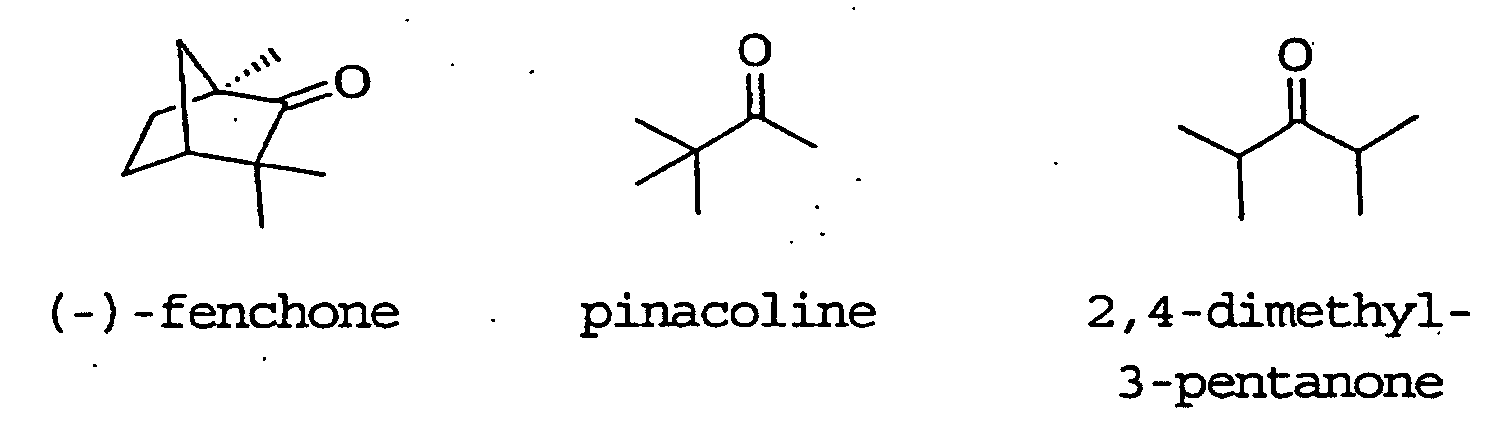
- Example 1 The procedures of Example 1 were repeated except that (-)-fenchone was employed for the electrolytic solution in an amount of 0.5 wt.%, to prepare a coin-type battery.
- a battery performance after 50 cycles was measured.
- the discharge capacity retention was 85.9%.
- a lithium on the negative electrode was inactivated, and was gray.
- Example 1 The procedures of Example 1 were repeated except that (-)-fenchone was employed for the electrolytic solution in an amount of 3.0 wt.%, to prepare a coin-type battery.
- Example 1 The procedures of Example 1 were repeated except that (-) -fenchone was employed for the electrolytic solution in an amount of 5.0 wt.%, to prepare a coin-type battery.
- Example 1 The procedures of Example 1 were repeated except that pinacoline was employed for the electrolytic solution in an amount of 1.0 wt.%, to prepare a coin-type battery.
- Example 1 The procedures of Example 1 were repeated except that 2,4-dimethyl-3-pentanone was employed for the electrolytic solution in an amount of 2.0 wt.%, to prepare a coin-type battery.
- a battery performance after 50 cycles was measured.
- the discharge capacity retention was 95.0%.
- a lithium on the negative electrode was inactivated, and was gray.
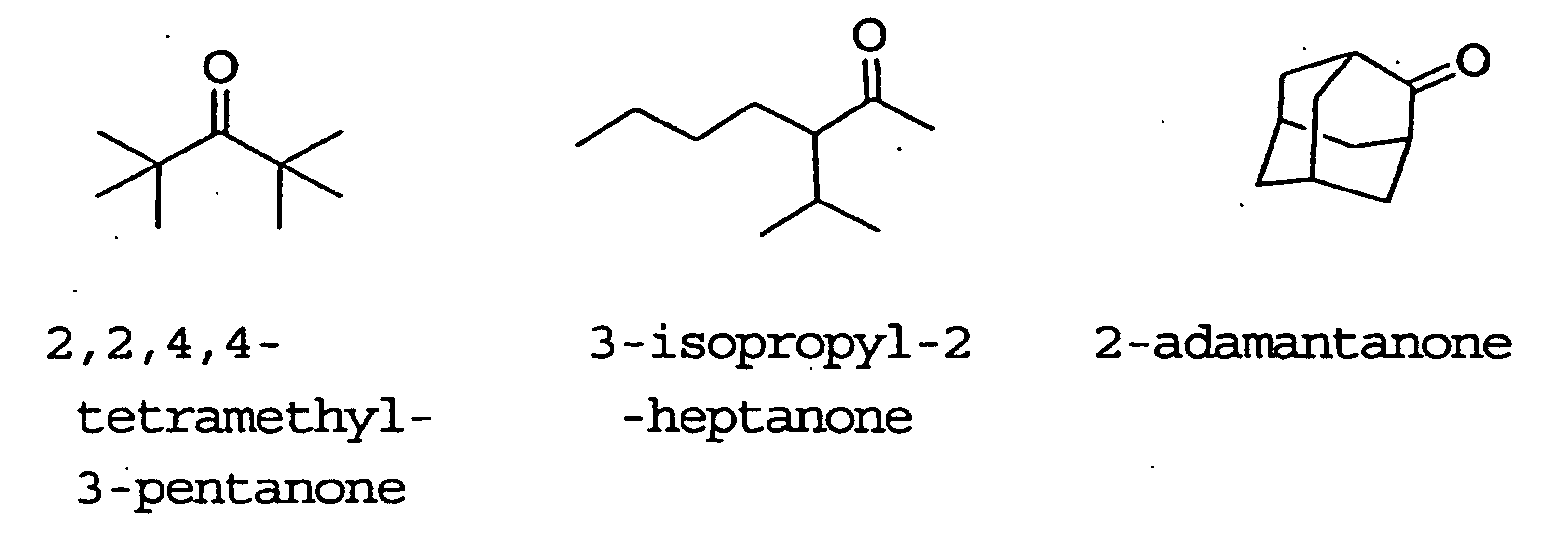
- Example 2 The procedures of Example 1 were repeated except that 2,2,4,4-tetramethyl-3-pentanone was employed for the electrolytic solution in an amount of 1.0 wt.%, to prepare a coin-type battery.
- Example 1 The procedures of Example 1 were repeated except that 3-isopropyl-2-heptanone was employed for the electrolytic solution in an amount of 2.0 wt.%, to prepare a coin-type battery.
- Example 1 The procedures of Example 1 were repeated except that 2-adamantanone was employed for the electrolytic solution in an amount of 1.0 wt.%, to prepare a coin-type battery.
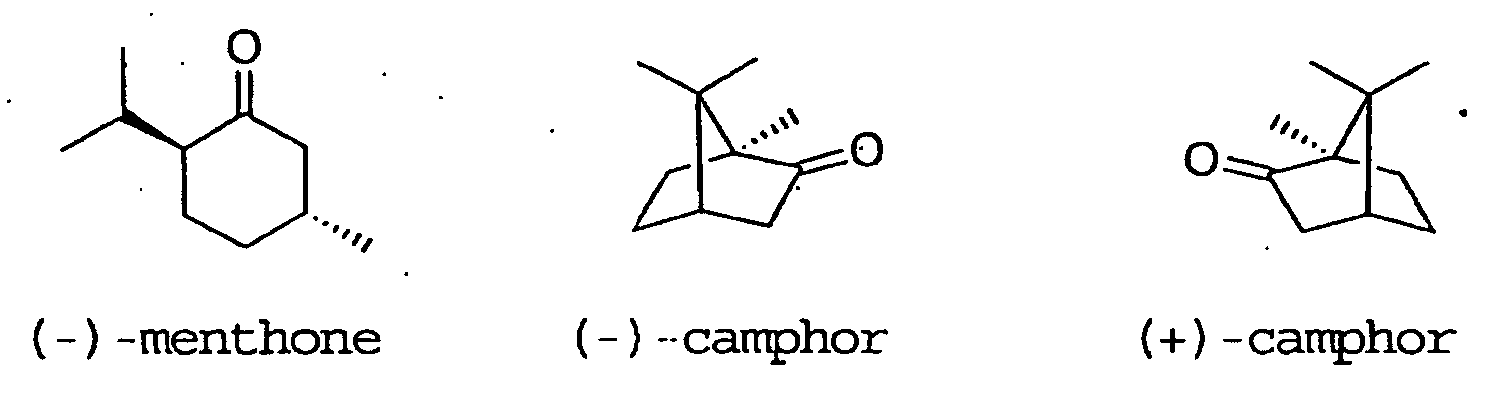
- Example 1 The procedures of Example 1 were repeated except that (-)-menthone was employed for the electrolytic solution in an amount of 1.0 wt.%, to prepare a coin-type battery.
- Example 1 The procedures of Example 1 were repeated except that (-)-camphor was employed for the electrolytic solution in an amount of 1.0 wt.%, to prepare a coin-type battery.
- a battery performance after 50 cycles was measured.
- the discharge capacity retention was 93.7%.
- a lithium on the negative electrode was inactivated, and was gray.
- Example 1 The procedures of Example 1 were repeated except that LiPF 6 was dissolved in a non-aqueous mixture of EC:DEC [30:70, volume ratio] to give a non-aqueous electrolytic solution of 1 M concentration and that (+)-fenchone was employed for the electrolytic solution in an amount of 1.0 wt.%, to prepare a coin-type battery.
- Example 1 The procedures of Example 1 were repeated except that LiPF 6 was dissolved in a non-aqueous mixture of EC:DEC [30:70, volume ratio] to give a non-aqueous electrolytic solution of 1 M concentration and that (+)-camphor was employed for the electrolytic solution in an amount of 1.0 wt.%, to prepare a coin-type battery.
- a battery performance after 50 cycles was measured.
- the discharge capacity retention was 93.6%.
- a lithium on the negative electrode was inactivated, and was gray.
- Example 1 The procedures of Example 1 were repeated except for employing the above-mentioned electrolytic solution, to prepare a coin-type battery. A battery performance was then measured.
- the discharge capacity retention after the 50 cycle test was 82.6%. After the overcharging test, a lithium on the negative electrode was not inactivated, and dendrite deposited on the electrode.
- Example 1 The procedures of Example 1 were repeated except that acetone was employed for the electrolytic solution in an amount of 1.0 wt.%, to prepare a coin-type battery.
- Example 1 The procedures of Example 1 were repeated except that cyclohexanone was employed for the electrolytic solution in an amount of 1.0 wt.%, to prepare a coin-type battery. A battery performance was measured. The discharge capacity retention after the 50 cycle test was 0.4%. The preparation and performances of the coin-type battery are set forth in Table 1.
- Example 2 The procedures of Example 1 were repeated except that the non-aqueous electrolytic solution was replaced with 1 M LiPF 6 -EC/PC/MEC/DMC (30/5/50/15, volume ratio] and that LiCoO 2 (positive electrode active material) was replaced with LiNi 0.8 CO 0.2 O 2 , to prepare a coin-type battery.
- Example 1 The procedures of Example 1 were repeated except that the non-aqueous electrolytic solution was replaced with 1 M LiBF 4 -EC/PC/DEC/DMC (30/5/30/35, volume ratio] and that LiCoO 2 (positive electrode active material) was replaced with LiMn 2 O 4 , to prepare a coin-type battery.
- Positive electrode LiCoO 2 for Examples 1-13 and Comparison Examples 1-3; LiNi 0.8 CO 0.2 O 2 for Example 14: and LiMn 2 O 4 for Example 15.
- Negative electrode artificial graphite for all Examples and Comparison Examples.
- the present invention is not limited to the above-mentioned examples, and various combinations inferred from the gist of the invention are utilizable. Particularly, no limitations with respect to the combinations of the solvents are given by the those of Examples. Further, the present invention is applicable to batteries of cylindrical-type and prismatic-type, and polymer battery.
- the present invention provides a lithium secondary battery that is excellent in battery safety and battery performances such as cycle performance, electric capacity, and storage endurance.
Landscapes
- Chemical & Material Sciences (AREA)
- Engineering & Computer Science (AREA)
- Manufacturing & Machinery (AREA)
- Chemical Kinetics & Catalysis (AREA)
- Electrochemistry (AREA)
- General Chemical & Material Sciences (AREA)
- Physics & Mathematics (AREA)
- Condensed Matter Physics & Semiconductors (AREA)
- General Physics & Mathematics (AREA)
- Inorganic Chemistry (AREA)
- Materials Engineering (AREA)
- Secondary Cells (AREA)
Abstract

is favorably employed as a constituent material for preparing a lithium secondary battery that is excellent in the battery performances and cycle performance.
Description

| Compound (wt.%) | Initial discharge capacity (R.V.) | Discharge capacity retention (%) | |
| Ex. 1 | (-)-fenchone (1.0) | 1.03 | 92.4 |
| Ex. 2 | (-)-fenchone (0.5) | 1.01 | 85.9 |
| Ex. 3 | (-) -fenchone (3.0) | 1.02 | 90.3 |
| Ex. 4 | (-)-fenchone (5.0) | 0.98 | 88 .1 |
| Ex. 5 | pinacoline (1.0) | 1.00 | 97.2 |
| Ex. 6 | 2,4-dimethyl-pentanone (2.0) | 0.97 | 95.0 |
| Ex. 7 | 2,2,4,4-tetramethyl-3-pentanone (1.0) | 1.01 | 85.6 |
| Ex. 8 | 3-isopropyl-2-heptanone (2.0) | 0.93 | 96.4 |
| Ex. 9 | 2-adamantanone (1.0) | 0.96 | 85.3 |
| Ex. 10 | (-)-menthone (1.0) | 1.01 | 88.5 |
| Ex. 11 | (-)-camphor (1.0) | 1.02 | 93.7 |
| Ex. 12 | (+) -fenchone (1.0) | 1.02 | 92. 6 |
| Ex. 13 | (+)-camphor (1.0) | 1.01 | 93.6 |
| Com.1 | none | 1.00 | 82.6 |
| Com.2 | acetone (1.0) | 0.82 | 1.1 |
| Com.3 | cyclohexanone (1.0) | 0.83 | 0.4 |
| Ex. 14 | (-)-fenchone (1.0) | 1.06 | 91.1 |
| Ex. 15 | (-)-fenchone (1.0) | 0.99 | 92.5 |
Claims (20)
- A non-aqueous electrolytic solution for lithium secondary batteries comprising an electrolyte dissolved in a non-aqueous solvent, which further contains a ketone compound having the formula (I):wherein each of R1 and R2 independently represents a linear or branched alkyl group having 1-12 carbon atoms; and each of R3, R4, R5 and R6 independently represents a hydrogen atom or a linear or branched alkyl group having 1-12 carbon atoms; provided that R1 and R4 can be combined to form a cycloalkanone ring having a ring-constituting 4-16 carbon atoms in conjunction with a propanone skeleton to which R1 and R4 are connected, that two or more of an alkyl group of R2, an alkyl group of R5, a branched chain of an alkyl group of R1, and a branched chain of an alkyl group of R4 can be combined to form a cycloalkane ring having a ring-constituting 4-16 carbon atoms, or that an alkyl group of R1 and an alkyl group of R2 and/or an alkyl group of R4 and an alkyl group of R5 can be combined to each other to form a cycloalkane ring having a ring-constituting 3-16 carbon atoms.

- The non-aqueous electrolytic solution of claim 1, wherein the ketone compound has the formula (I) in which each of R1 and R2 independently is a linear or branched alkyl group having 1 to 6 carbon atoms.
- The non-aqueous electrolytic solution of claim 1, wherein the ketone compound has the formula (I) in which R1 and R4 are combined to form a cycloalkanone ring having a ring-constituting 4-8 carbon atoms in conjunction with a propanone skeleton to which R1 and R4 are connected.
- The non-aqueous electrolytic solution of claim 3, wherein the ketone compound has 2 to 6 substituents on the cycloalkanone ring.
- The non-aqueous electrolytic solution of claim 1, wherein the ketone compound has the formula (I) in which R1 and R4 are combined to form a cycloalkanone ring having a ring-constituting 4-8 carbon atoms in conjunction with a propanone skeleton to which R1 and R4 are connected, and further in which two or more of an alkyl group of R2, an alkyl group of R5, a branched chain of an alkyl group of R1, and a branched chain of an alkyl group of R4 are combined to form 1 to 3 cycloalkane rings having a ring-constituting 4-8 carbon atoms.
- The non-aqueous electrolytic solution of any one of claims 1 to 5, wherein the ketone compound is an optical isomer or a stereoisomer.
- The non-aqueous electrolytic solution of claim 1, wherein the ketone compound is selected from the group consisting of fenchone, pinacoline, 2,4-dimethyl-3-pentanone, 2,2,4,4-tetramethyl-3-pentanone, 3-isopropyl-2-heptanone, 2-adamantanone, menthone, and camphor.
- The non-aqueous electrolytic solution of any one of claims 1 to 7, wherein the ketone compound is contained in an amount of 0.2 to 10 wt.%.
- The non-aqueous electrolytic solution of claim 8, wherein the ketone compound is contained in an amount of 0.5 to 5 wt.%.
- The non-aqueous electrolytic solution of any one of claims 1 to 9, wherein the non-aqueous solvent is a mixture solvent comprising at least a cyclic carbonate and a linear carbonate.
- The non-aqueous electrolytic solution of any one of claims 1 to 10, wherein the electrolyte is selected from the group consisting of LiPF6, LiBF4, LiClO4, LiN(SO2CF3)2, LiN(SO2C2F5)2, LiC(SO2CF3)3, LiPF4(CF3)2, LiPF3(C2F5)3, LiPF3(Cf3)3, LiPF3(iso-C3F7)3, and LiPF5 (iso-C3F7) .
- A lithium secondary battery comprising a positive electrode, a negative electrode, and a non-aqueous electrolytic solution comprising an electrolyte dissolved in a non-aqueous solvent, wherein the non-aqueous electrolytic solution for lithium secondary batteries comprises an electrolyte dissolved in a non-aqueous solvent, which further contains a ketone compound having the formula (I):wherein each of R1 and R2 independently represents a linear or branched alkyl group having 1-12 carbon atoms; and each of R3, R4, R5 and R6 independently represents a hydrogen atom or a linear or branched alkyl group having 1-12 carbon atoms; provided that R1 and R4 can be combined to form a cycloalkanone ring having a ring-constituting 4-16 carbon atoms in conjunction with a propanone skeleton to which R1 and R4 are connected, that two or more of an alkyl group of R2, an alkyl group of R5, a branched chain of an alkyl group of R1, and a branched chain of an alkyl group of R4 can be combined to form a cycloalkane ring having a ring-constituting 4-16 carbon atoms, or that an alkyl group of R1 and an alkyl group of R2 and/or an alkyl group of R4 and an alkyl group of R5 can be combined to each other to form a cycloalkane ring having a ring-constituting 3-16 carbon atoms.

- The lithium secondary battery of claim 12, wherein the ketone compound has the formula (I) in which each of R1 and R2 independently is a linear or branched alkyl group having 1 to 6 carbon atoms.
- The lithium secondary battery of claim 12, wherein the ketone compound has the formula (I) in which R1 and R4 are combined to form a cycloalkanone ring having a ring-constituting 4-8 carbon atoms in conjunction with a propanone skeleton to which R1 and R4 are connected.
- The lithium secondary battery of claim 14, wherein the ketone compound has 2 to 6 substituents on the cycloalkanone ring.
- The lithium secondary battery of claim 12, wherein the ketone compound has the formula (I) in which R1 and R4 are combined to form a cycloalkanone ring having a ring-constituting 4-8 carbon atoms in conjunction with a propanone skeleton to which R1 and R4 are connected, and further in which two or more of an alkyl group of R2, an alkyl group of R5, a branched chain of an alkyl group of R1, and a branched chain of an alkyl group of R4 are combined to form 1 to 3 cycloalkane rings having a ring-constituting 4-8 carbon atoms.
- The lithium secondary battery of claim 12, wherein the ketone compound is selected from the group consisting of fenchone, pinacoline, 2,4-dimethyl-3-pentanone, 2,2,4,4-tetramethyl-3-pentanone, 3-isopropyl-2-heptanone, 2-adamantanone, menthone, and camphor.
- The lithium secondary battery of any one of claims 12 to 17, wherein the ketone compound is contained in an amount of 0.2 to 10 wt.%.
- The lithium secondary battery of claim 18, wherein the ketone compound is contained in an amount of 0.5 to 5 wt.%.
- The lithium secondary battery of any one of claims 12 to 19, wherein the negative electrode comprises artificial graphite as a negative electrode active material.
Applications Claiming Priority (5)
| Application Number | Priority Date | Filing Date | Title |
|---|---|---|---|
| JP2001080464 | 2001-03-21 | ||
| JP2001080464 | 2001-03-21 | ||
| JP2002015189A JP4042416B2 (en) | 2001-03-21 | 2002-01-24 | Nonaqueous electrolyte and lithium secondary battery using the same |
| JP2002015189 | 2002-01-24 | ||
| PCT/JP2002/002787 WO2002075836A1 (en) | 2001-03-21 | 2002-03-22 | Nonaqueous electrolytic solution and lithium secondary battery |
Publications (3)
| Publication Number | Publication Date |
|---|---|
| EP1372210A1 true EP1372210A1 (en) | 2003-12-17 |
| EP1372210A4 EP1372210A4 (en) | 2007-02-28 |
| EP1372210B1 EP1372210B1 (en) | 2010-04-21 |
Family
ID=26611657
Family Applications (1)
| Application Number | Title | Priority Date | Filing Date |
|---|---|---|---|
| EP02705452A Expired - Lifetime EP1372210B1 (en) | 2001-03-21 | 2002-03-22 | Non-aqueous electrolytic solution and lithium secondary battery |
Country Status (8)
| Country | Link |
|---|---|
| US (1) | US7550233B2 (en) |
| EP (1) | EP1372210B1 (en) |
| JP (1) | JP4042416B2 (en) |
| KR (1) | KR100856370B1 (en) |
| CN (1) | CN100440606C (en) |
| AT (1) | ATE465527T1 (en) |
| DE (1) | DE60236072D1 (en) |
| WO (1) | WO2002075836A1 (en) |
Cited By (3)
| Publication number | Priority date | Publication date | Assignee | Title |
|---|---|---|---|---|
| EP1619743A2 (en) | 2004-07-21 | 2006-01-25 | Sony Corporation | Electrolyte for battery |
| DE102018201984A1 (en) * | 2018-02-08 | 2019-08-08 | Fraunhofer-Gesellschaft zur Förderung der angewandten Forschung e.V. | Solid state battery with ion-conductive matrix of 2-adamantanone and use of 2-adamantanone as a solid matrix and / or component of a composite electrode |
| US11664532B2 (en) | 2017-08-24 | 2023-05-30 | Fraunhofer-Gesellschaft Zur Foerderung Der Angewandten Forschung E.V. | Solid-state battery based on an ion-conductive matrix composed of camphor or 2-adamantanone |
Families Citing this family (7)
| Publication number | Priority date | Publication date | Assignee | Title |
|---|---|---|---|---|
| JP4660104B2 (en) * | 2004-03-23 | 2011-03-30 | スリーエム イノベイティブ プロパティズ カンパニー | Non-aqueous mixed solvent and non-aqueous electrolyte containing the same |
| CN100382379C (en) * | 2004-07-21 | 2008-04-16 | 索尼株式会社 | Battery |
| JP2009099449A (en) * | 2007-10-18 | 2009-05-07 | Sony Corp | Non-aqueous electrolyte secondary battery and non-aqueous electrolyte composition |
| JP4413276B2 (en) * | 2008-03-28 | 2010-02-10 | パナソニック株式会社 | Electrode active material for power storage device, power storage device, electronic equipment and transport equipment |
| WO2011091176A1 (en) | 2010-01-24 | 2011-07-28 | Medtronic, Inc. | Method of making a battery including applying a cathode material slurry to a current collector |
| KR20180023731A (en) * | 2016-08-26 | 2018-03-07 | 삼성에스디아이 주식회사 | Positive active material, and positive electrode and lithium secondary battery containing the material |
| KR20250017536A (en) * | 2023-07-27 | 2025-02-04 | 삼성에스디아이 주식회사 | Rechargeable lithium battery including the same |
Family Cites Families (20)
| Publication number | Priority date | Publication date | Assignee | Title |
|---|---|---|---|---|
| FR2127398A5 (en) * | 1971-03-05 | 1972-10-13 | Accumulateurs Fixes | |
| BE791609A (en) * | 1971-11-26 | 1973-05-21 | Accumulateurs Fixes | CYLINDRICAL ELECTRIC BATTERY |
| SU518811A1 (en) | 1974-07-10 | 1976-06-25 | Новосибирский Завод Радиодеталей | Organic binder |
| JP2654553B2 (en) | 1988-05-13 | 1997-09-17 | 日本電信電話株式会社 | Electrolyte for lithium secondary battery |
| JPH0290473A (en) * | 1988-09-28 | 1990-03-29 | Matsushita Electric Ind Co Ltd | lithium secondary battery |
| JPH06267589A (en) | 1993-03-10 | 1994-09-22 | Asahi Chem Ind Co Ltd | Electrolyte for organic solvent battery |
| JPH0778632A (en) | 1993-09-08 | 1995-03-20 | Matsushita Electric Ind Co Ltd | Lithium secondary battery |
| JPH08321311A (en) | 1995-05-24 | 1996-12-03 | Sanyo Electric Co Ltd | Nonaqueous electrolyte battery |
| US5576398A (en) * | 1995-07-07 | 1996-11-19 | Japan Synthetic Rubber Co., Ltd. | Thermosetting resin composition |
| US5804613A (en) * | 1995-12-22 | 1998-09-08 | Amcol International Corporation | Intercalates and exfoliates formed with monomeric carbonyl-functional organic compounds, including carboxylic and polycarboxylic acids; aldehydes; and ketones; composite materials containing same and methods of modifying rheology therewith |
| US5919440A (en) * | 1997-05-05 | 1999-07-06 | Procter & Gamble Company | Personal care compositions containing an odor masking base |
| ATE242549T1 (en) | 1998-02-25 | 2003-06-15 | Celanese Ventures Gmbh | METHOD FOR PRODUCING A MEMBRANE FROM JELLILED COMPOSITE ELECTROLYTE |
| JP4051864B2 (en) * | 1999-07-21 | 2008-02-27 | 三菱化学株式会社 | Battery electrolyte, battery using the electrolyte, and manufacturing method thereof |
| JP2001185215A (en) * | 1999-10-14 | 2001-07-06 | Mitsubishi Chemicals Corp | Non-aqueous electrolyte and non-aqueous electrolyte secondary battery using the same |
| JP2001176550A (en) | 1999-12-21 | 2001-06-29 | Mitsubishi Chemicals Corp | Lithium secondary battery |
| JP3973333B2 (en) | 1999-12-22 | 2007-09-12 | 三菱化学株式会社 | Semi-solid electrolyte and lithium secondary battery |
| JP2001202991A (en) * | 2000-01-21 | 2001-07-27 | Mitsubishi Chemicals Corp | Lithium secondary battery |
| US6770777B2 (en) * | 2000-05-16 | 2004-08-03 | Tokuyama Corporation | Process for producing 2-alkyl-2-adamantyl ester |
| US20020169090A1 (en) * | 2000-07-19 | 2002-11-14 | Foley Peter Robert | Cleaning composition |
| JP2002222663A (en) | 2001-01-26 | 2002-08-09 | Mitsubishi Chemicals Corp | Electrolyte and secondary battery |
-
2002
- 2002-01-24 JP JP2002015189A patent/JP4042416B2/en not_active Expired - Fee Related
- 2002-03-22 KR KR1020037012189A patent/KR100856370B1/en not_active Expired - Fee Related
- 2002-03-22 AT AT02705452T patent/ATE465527T1/en not_active IP Right Cessation
- 2002-03-22 CN CNB028104617A patent/CN100440606C/en not_active Expired - Fee Related
- 2002-03-22 EP EP02705452A patent/EP1372210B1/en not_active Expired - Lifetime
- 2002-03-22 US US10/472,202 patent/US7550233B2/en not_active Expired - Fee Related
- 2002-03-22 DE DE60236072T patent/DE60236072D1/en not_active Expired - Lifetime
- 2002-03-22 WO PCT/JP2002/002787 patent/WO2002075836A1/en not_active Ceased
Cited By (5)
| Publication number | Priority date | Publication date | Assignee | Title |
|---|---|---|---|---|
| EP1619743A2 (en) | 2004-07-21 | 2006-01-25 | Sony Corporation | Electrolyte for battery |
| EP1619743A3 (en) * | 2004-07-21 | 2011-03-02 | Sony Corporation | Electrolyte for battery |
| US11664532B2 (en) | 2017-08-24 | 2023-05-30 | Fraunhofer-Gesellschaft Zur Foerderung Der Angewandten Forschung E.V. | Solid-state battery based on an ion-conductive matrix composed of camphor or 2-adamantanone |
| DE102018201984A1 (en) * | 2018-02-08 | 2019-08-08 | Fraunhofer-Gesellschaft zur Förderung der angewandten Forschung e.V. | Solid state battery with ion-conductive matrix of 2-adamantanone and use of 2-adamantanone as a solid matrix and / or component of a composite electrode |
| DE102018201984B4 (en) | 2018-02-08 | 2019-08-14 | Fraunhofer-Gesellschaft zur Förderung der angewandten Forschung e.V. | Solid state battery with ion-conductive matrix of 2-adamantanone and use of 2-adamantanone as a solid matrix and / or component of a composite electrode |
Also Published As
| Publication number | Publication date |
|---|---|
| CN100440606C (en) | 2008-12-03 |
| US20040096748A1 (en) | 2004-05-20 |
| JP4042416B2 (en) | 2008-02-06 |
| WO2002075836A1 (en) | 2002-09-26 |
| KR100856370B1 (en) | 2008-09-04 |
| ATE465527T1 (en) | 2010-05-15 |
| JP2002352853A (en) | 2002-12-06 |
| US7550233B2 (en) | 2009-06-23 |
| KR20030087021A (en) | 2003-11-12 |
| DE60236072D1 (en) | 2010-06-02 |
| CN1511355A (en) | 2004-07-07 |
| EP1372210B1 (en) | 2010-04-21 |
| EP1372210A4 (en) | 2007-02-28 |
Similar Documents
| Publication | Publication Date | Title |
|---|---|---|
| US7294436B2 (en) | Nonaqueous electrolytic solution and lithium secondary batteries | |
| TWI413289B (en) | Lithium battery for nonaqueous electrolytic solution and the use of its lithium battery | |
| US8394541B2 (en) | Lithium secondary battery and non-aqueous electrolytic solution | |
| US6927001B1 (en) | Non-aqueous electrolytic solution and lithium secondary battery | |
| KR101290875B1 (en) | Lithium secondary cell and its nonaqueous electrolyte | |
| US20070148554A1 (en) | Non-aqueous electrolytic solution and lithium secondary battery | |
| US7550233B2 (en) | Nonaqueous electrolytic solution containing ketone compound and lithium secondary battery | |
| US7794885B2 (en) | Non-aqueous electrolytic solution and lithium secondary battery | |
| EP1199766B1 (en) | Non-aqueous secondary battery having enhanced discharge capacity retention | |
| US11424485B2 (en) | Lithium secondary battery electrolyte and lithium secondary battery comprising same | |
| US7691539B2 (en) | Non-aqueous secondary battery having increased discharge capacity retention | |
| JP4075416B2 (en) | Nonaqueous electrolyte and lithium secondary battery using the same | |
| JP3610948B2 (en) | Non-aqueous electrolyte and lithium secondary battery using the same | |
| US7537861B2 (en) | Lithium secondary battery employing fluorine-substituted cyclohexylbenzene containing electrolytic solution | |
| JP2002110229A (en) | Non-aqueous electrolyte and lithium secondary battery using the same | |
| KR102905187B1 (en) | Electrolyte for lithium secondary battery, and lithium secondary battery including the same | |
| EP4439764A1 (en) | Electrolyte for lithium secondary battery and lithium secondary battery comprising the same | |
| EP4648167A1 (en) | Lithium secondary battery | |
| HK1065895A (en) | Nonaqueous electrolytic solution and lithium secondary battery | |
| JP2004006401A (en) | Non-aqueous electrolyte and lithium secondary battery using the same |
Legal Events
| Date | Code | Title | Description |
|---|---|---|---|
| PUAI | Public reference made under article 153(3) epc to a published international application that has entered the european phase |
Free format text: ORIGINAL CODE: 0009012 |
|
| 17P | Request for examination filed |
Effective date: 20030917 |
|
| AK | Designated contracting states |
Kind code of ref document: A1 Designated state(s): AT BE CH CY DE DK ES FI FR GB GR IE IT LI LU MC NL PT SE TR |
|
| AX | Request for extension of the european patent |
Extension state: AL LT LV MK RO SI |
|
| A4 | Supplementary search report drawn up and despatched |
Effective date: 20070130 |
|
| 17Q | First examination report despatched |
Effective date: 20071112 |
|
| GRAP | Despatch of communication of intention to grant a patent |
Free format text: ORIGINAL CODE: EPIDOSNIGR1 |
|
| RTI1 | Title (correction) |
Free format text: NON-AQUEOUS ELECTROLYTIC SOLUTION AND LITHIUM SECONDARY BATTERY |
|
| GRAS | Grant fee paid |
Free format text: ORIGINAL CODE: EPIDOSNIGR3 |
|
| GRAA | (expected) grant |
Free format text: ORIGINAL CODE: 0009210 |
|
| AK | Designated contracting states |
Kind code of ref document: B1 Designated state(s): AT BE CH CY DE DK ES FI FR GB GR IE IT LI LU MC NL PT SE TR |
|
| AX | Request for extension of the european patent |
Extension state: AL LT LV MK RO SI |
|
| REG | Reference to a national code |
Ref country code: GB Ref legal event code: FG4D |
|
| REG | Reference to a national code |
Ref country code: CH Ref legal event code: EP |
|
| REG | Reference to a national code |
Ref country code: IE Ref legal event code: FG4D |
|
| REF | Corresponds to: |
Ref document number: 60236072 Country of ref document: DE Date of ref document: 20100602 Kind code of ref document: P |
|
| REG | Reference to a national code |
Ref country code: NL Ref legal event code: VDEP Effective date: 20100421 |
|
| LTIE | Lt: invalidation of european patent or patent extension |
Effective date: 20100421 |
|
| PG25 | Lapsed in a contracting state [announced via postgrant information from national office to epo] |
Ref country code: NL Free format text: LAPSE BECAUSE OF FAILURE TO SUBMIT A TRANSLATION OF THE DESCRIPTION OR TO PAY THE FEE WITHIN THE PRESCRIBED TIME-LIMIT Effective date: 20100421 Ref country code: ES Free format text: LAPSE BECAUSE OF FAILURE TO SUBMIT A TRANSLATION OF THE DESCRIPTION OR TO PAY THE FEE WITHIN THE PRESCRIBED TIME-LIMIT Effective date: 20100801 Ref country code: SE Free format text: LAPSE BECAUSE OF FAILURE TO SUBMIT A TRANSLATION OF THE DESCRIPTION OR TO PAY THE FEE WITHIN THE PRESCRIBED TIME-LIMIT Effective date: 20100421 |
|
| PG25 | Lapsed in a contracting state [announced via postgrant information from national office to epo] |
Ref country code: FI Free format text: LAPSE BECAUSE OF FAILURE TO SUBMIT A TRANSLATION OF THE DESCRIPTION OR TO PAY THE FEE WITHIN THE PRESCRIBED TIME-LIMIT Effective date: 20100421 Ref country code: AT Free format text: LAPSE BECAUSE OF FAILURE TO SUBMIT A TRANSLATION OF THE DESCRIPTION OR TO PAY THE FEE WITHIN THE PRESCRIBED TIME-LIMIT Effective date: 20100421 |
|
| PG25 | Lapsed in a contracting state [announced via postgrant information from national office to epo] |
Ref country code: CY Free format text: LAPSE BECAUSE OF FAILURE TO SUBMIT A TRANSLATION OF THE DESCRIPTION OR TO PAY THE FEE WITHIN THE PRESCRIBED TIME-LIMIT Effective date: 20100421 Ref country code: GR Free format text: LAPSE BECAUSE OF FAILURE TO SUBMIT A TRANSLATION OF THE DESCRIPTION OR TO PAY THE FEE WITHIN THE PRESCRIBED TIME-LIMIT Effective date: 20100722 |
|
| PG25 | Lapsed in a contracting state [announced via postgrant information from national office to epo] |
Ref country code: PT Free format text: LAPSE BECAUSE OF FAILURE TO SUBMIT A TRANSLATION OF THE DESCRIPTION OR TO PAY THE FEE WITHIN THE PRESCRIBED TIME-LIMIT Effective date: 20100823 Ref country code: DK Free format text: LAPSE BECAUSE OF FAILURE TO SUBMIT A TRANSLATION OF THE DESCRIPTION OR TO PAY THE FEE WITHIN THE PRESCRIBED TIME-LIMIT Effective date: 20100421 |
|
| PLBE | No opposition filed within time limit |
Free format text: ORIGINAL CODE: 0009261 |
|
| STAA | Information on the status of an ep patent application or granted ep patent |
Free format text: STATUS: NO OPPOSITION FILED WITHIN TIME LIMIT |
|
| PG25 | Lapsed in a contracting state [announced via postgrant information from national office to epo] |
Ref country code: BE Free format text: LAPSE BECAUSE OF FAILURE TO SUBMIT A TRANSLATION OF THE DESCRIPTION OR TO PAY THE FEE WITHIN THE PRESCRIBED TIME-LIMIT Effective date: 20100421 |
|
| 26N | No opposition filed |
Effective date: 20110124 |
|
| PG25 | Lapsed in a contracting state [announced via postgrant information from national office to epo] |
Ref country code: IT Free format text: LAPSE BECAUSE OF FAILURE TO SUBMIT A TRANSLATION OF THE DESCRIPTION OR TO PAY THE FEE WITHIN THE PRESCRIBED TIME-LIMIT Effective date: 20100421 |
|
| PG25 | Lapsed in a contracting state [announced via postgrant information from national office to epo] |
Ref country code: MC Free format text: LAPSE BECAUSE OF NON-PAYMENT OF DUE FEES Effective date: 20110331 |
|
| REG | Reference to a national code |
Ref country code: CH Ref legal event code: PL |
|
| REG | Reference to a national code |
Ref country code: IE Ref legal event code: MM4A |
|
| PG25 | Lapsed in a contracting state [announced via postgrant information from national office to epo] |
Ref country code: LI Free format text: LAPSE BECAUSE OF NON-PAYMENT OF DUE FEES Effective date: 20110331 Ref country code: IE Free format text: LAPSE BECAUSE OF NON-PAYMENT OF DUE FEES Effective date: 20110322 Ref country code: CH Free format text: LAPSE BECAUSE OF NON-PAYMENT OF DUE FEES Effective date: 20110331 |
|
| PGFP | Annual fee paid to national office [announced via postgrant information from national office to epo] |
Ref country code: FR Payment date: 20130325 Year of fee payment: 12 Ref country code: DE Payment date: 20130320 Year of fee payment: 12 Ref country code: GB Payment date: 20130320 Year of fee payment: 12 |
|
| PG25 | Lapsed in a contracting state [announced via postgrant information from national office to epo] |
Ref country code: LU Free format text: LAPSE BECAUSE OF NON-PAYMENT OF DUE FEES Effective date: 20110322 |
|
| PG25 | Lapsed in a contracting state [announced via postgrant information from national office to epo] |
Ref country code: TR Free format text: LAPSE BECAUSE OF FAILURE TO SUBMIT A TRANSLATION OF THE DESCRIPTION OR TO PAY THE FEE WITHIN THE PRESCRIBED TIME-LIMIT Effective date: 20100421 |
|
| REG | Reference to a national code |
Ref country code: DE Ref legal event code: R119 Ref document number: 60236072 Country of ref document: DE |
|
| GBPC | Gb: european patent ceased through non-payment of renewal fee |
Effective date: 20140322 |
|
| REG | Reference to a national code |
Ref country code: FR Ref legal event code: ST Effective date: 20141128 |
|
| REG | Reference to a national code |
Ref country code: DE Ref legal event code: R119 Ref document number: 60236072 Country of ref document: DE Effective date: 20141001 |
|
| PG25 | Lapsed in a contracting state [announced via postgrant information from national office to epo] |
Ref country code: GB Free format text: LAPSE BECAUSE OF NON-PAYMENT OF DUE FEES Effective date: 20140322 Ref country code: DE Free format text: LAPSE BECAUSE OF NON-PAYMENT OF DUE FEES Effective date: 20141001 Ref country code: FR Free format text: LAPSE BECAUSE OF NON-PAYMENT OF DUE FEES Effective date: 20140331 |