EP1364948B1 - Biomimetische Systeme aus Lipidmembranen gebunden an ein Substrat - Google Patents
Biomimetische Systeme aus Lipidmembranen gebunden an ein Substrat Download PDFInfo
- Publication number
- EP1364948B1 EP1364948B1 EP03011554A EP03011554A EP1364948B1 EP 1364948 B1 EP1364948 B1 EP 1364948B1 EP 03011554 A EP03011554 A EP 03011554A EP 03011554 A EP03011554 A EP 03011554A EP 1364948 B1 EP1364948 B1 EP 1364948B1
- Authority
- EP
- European Patent Office
- Prior art keywords
- lipid
- compounds
- group
- supported membrane
- substrate
- Prior art date
- Legal status (The legal status is an assumption and is not a legal conclusion. Google has not performed a legal analysis and makes no representation as to the accuracy of the status listed.)
- Expired - Lifetime
Links
Images






Classifications
-
- C—CHEMISTRY; METALLURGY
- C07—ORGANIC CHEMISTRY
- C07D—HETEROCYCLIC COMPOUNDS
- C07D339/00—Heterocyclic compounds containing rings having two sulfur atoms as the only ring hetero atoms
- C07D339/02—Five-membered rings
- C07D339/04—Five-membered rings having the hetero atoms in positions 1 and 2, e.g. lipoic acid
-
- B—PERFORMING OPERATIONS; TRANSPORTING
- B82—NANOTECHNOLOGY
- B82Y—SPECIFIC USES OR APPLICATIONS OF NANOSTRUCTURES; MEASUREMENT OR ANALYSIS OF NANOSTRUCTURES; MANUFACTURE OR TREATMENT OF NANOSTRUCTURES
- B82Y10/00—Nanotechnology for information processing, storage or transmission, e.g. quantum computing or single electron logic
-
- C—CHEMISTRY; METALLURGY
- C07—ORGANIC CHEMISTRY
- C07F—ACYCLIC, CARBOCYCLIC OR HETEROCYCLIC COMPOUNDS CONTAINING ELEMENTS OTHER THAN CARBON, HYDROGEN, HALOGEN, OXYGEN, NITROGEN, SULFUR, SELENIUM OR TELLURIUM
- C07F9/00—Compounds containing elements of Groups 5 or 15 of the Periodic Table
- C07F9/02—Phosphorus compounds
- C07F9/06—Phosphorus compounds without P—C bonds
- C07F9/08—Esters of oxyacids of phosphorus
- C07F9/09—Esters of phosphoric acids
- C07F9/10—Phosphatides, e.g. lecithin
-
- C—CHEMISTRY; METALLURGY
- C08—ORGANIC MACROMOLECULAR COMPOUNDS; THEIR PREPARATION OR CHEMICAL WORKING-UP; COMPOSITIONS BASED THEREON
- C08G—MACROMOLECULAR COMPOUNDS OBTAINED OTHERWISE THAN BY REACTIONS ONLY INVOLVING UNSATURATED CARBON-TO-CARBON BONDS
- C08G65/00—Macromolecular compounds obtained by reactions forming an ether link in the main chain of the macromolecule
- C08G65/02—Macromolecular compounds obtained by reactions forming an ether link in the main chain of the macromolecule from cyclic ethers by opening of the heterocyclic ring
- C08G65/32—Polymers modified by chemical after-treatment
- C08G65/329—Polymers modified by chemical after-treatment with organic compounds
- C08G65/334—Polymers modified by chemical after-treatment with organic compounds containing sulfur
-
- G—PHYSICS
- G01—MEASURING; TESTING
- G01N—INVESTIGATING OR ANALYSING MATERIALS BY DETERMINING THEIR CHEMICAL OR PHYSICAL PROPERTIES
- G01N33/00—Investigating or analysing materials by specific methods not covered by groups G01N1/00 - G01N31/00
- G01N33/48—Biological material, e.g. blood, urine; Haemocytometers
- G01N33/50—Chemical analysis of biological material, e.g. blood, urine; Testing involving biospecific ligand binding methods; Immunological testing
- G01N33/53—Immunoassay; Biospecific binding assay; Materials therefor
- G01N33/543—Immunoassay; Biospecific binding assay; Materials therefor with an insoluble carrier for immobilising immunochemicals
- G01N33/54353—Immunoassay; Biospecific binding assay; Materials therefor with an insoluble carrier for immobilising immunochemicals with ligand attached to the carrier via a chemical coupling agent
-
- G—PHYSICS
- G01—MEASURING; TESTING
- G01N—INVESTIGATING OR ANALYSING MATERIALS BY DETERMINING THEIR CHEMICAL OR PHYSICAL PROPERTIES
- G01N33/00—Investigating or analysing materials by specific methods not covered by groups G01N1/00 - G01N31/00
- G01N33/48—Biological material, e.g. blood, urine; Haemocytometers
- G01N33/50—Chemical analysis of biological material, e.g. blood, urine; Testing involving biospecific ligand binding methods; Immunological testing
- G01N33/53—Immunoassay; Biospecific binding assay; Materials therefor
- G01N33/543—Immunoassay; Biospecific binding assay; Materials therefor with an insoluble carrier for immobilising immunochemicals
- G01N33/54366—Apparatus specially adapted for solid-phase testing
- G01N33/54373—Apparatus specially adapted for solid-phase testing involving physiochemical end-point determination, e.g. wave-guides, FETS, gratings
- G01N33/5438—Electrodes
-
- G—PHYSICS
- G06—COMPUTING OR CALCULATING; COUNTING
- G06N—COMPUTING ARRANGEMENTS BASED ON SPECIFIC COMPUTATIONAL MODELS
- G06N3/00—Computing arrangements based on biological models
- G06N3/002—Biomolecular computers, i.e. using biomolecules, proteins, cells
-
- C—CHEMISTRY; METALLURGY
- C08—ORGANIC MACROMOLECULAR COMPOUNDS; THEIR PREPARATION OR CHEMICAL WORKING-UP; COMPOSITIONS BASED THEREON
- C08L—COMPOSITIONS OF MACROMOLECULAR COMPOUNDS
- C08L2203/00—Applications
- C08L2203/02—Applications for biomedical use
-
- G—PHYSICS
- G01—MEASURING; TESTING
- G01N—INVESTIGATING OR ANALYSING MATERIALS BY DETERMINING THEIR CHEMICAL OR PHYSICAL PROPERTIES
- G01N2610/00—Assays involving self-assembled monolayers [SAMs]
Definitions
- the invention relates to a hydrophilic linker functionalized lipids containing a support group for bonding to a surface. Furthermore, the invention relates to self-assembled monolayers of lipids on substrates, in particular ultralatte gold substrates.
- the lipids and lipid monolayers or bilayers containing these lipids can be used to prepare biomimetic supported membrane systems.
- these systems can be used after incorporation of functional molecules, such as membrane-associated proteins, for applications such as biological membrane model systems, screening methods, sensors, and bioelectronic devices such as biocomputers.
- biomimetic systems consists of a biological membrane-like lipid bilayer deposited on an electrically conductive, planar substrate.
- membrane-associated biomolecules eg H + -ATPase, cytochrome oxidase, ion channels, etc.
- the functional attachment of the lipid membrane to a solid substrate via a flexible, polar (hydrophilic) intermediate part has been a popular approach for years (Sackmann, see above) with the following advantages: Firstly, it achieves a robust attachment of the sensitive lipid bilayer to the solid substrate which, through its planarity, opens up access to a series of sensitive electrical and surface-analytical methods and decouples the membrane from the surface. The decoupling from the surface leads to suppression of the hydrophobic interaction that occurs on metal surfaces, and increases the cytosol analogous volume between membrane and substrate surface, which is of fundamental importance in volume-dependent transport processes as well as for the generation of fluid membranes.
- the measuring methods suitable for use on membrane systems include, for example, in the electrical methods such as impedance spectroscopy (IS), voltammetry, and other potentiometric and amperometric methods, such as the chrono-coulometry.
- the surface analytical techniques are composed of a number of methods, many of which rely particularly on planar metal films as the proximal layer prior to modification with the system being analyzed. They often allow analysis to sub-molecular orders of magnitude, which is only accessible by such solid-supported membranes. These include, for example, surface plasmon resonance spectroscopy (OPR, SPR or also called SPS) for determining the layer thickness (refractive index) of the compounds applied to the substrate (eg Au or Ag films).
- OCR surface plasmon resonance spectroscopy
- SPR surface plasmon resonance spectroscopy
- SPS surface plasmon resonance spectroscopy
- a large number of other, sometimes very sensitive, measuring methods can be used to characterize the described system. These include methods such as ellipsometry, fluorescence methods, internal reflectometry, light scattering methods, X-ray or neutron scattering, surface acoustic methods, utilization of thermal effects (changes in temperature or heat flow), measurement of masses or density changes, which can be determined, for example, with the quartz microbalance, measurement of the Change in membrane phase, radioimmunoassays or enzyme-linked assays.
- membrane systems based on thiol-modified oligopeptides and thiollipopeptides can be used (see, for example, US Pat Bunjes et al., Langmuir, 1997, 13, 6188-6194 ; Naumann et al., Bioelectrochem. Bioenerg. 1997, 42, 241-247 ; Schmidt et al., Biosensens. Bioelectron. 1998, 13, 585-591 ; Naumann et al., Biosens. Bioelectron. 1999, 14, 651-662 such as WO 96/18645 and WO 99/20649 ).
- Oligopeptide are also described as membrane-supporting components, which are provided with polar Triethylenglykolinateketten and form a hydrophilic monolayer.
- the components used to construct the membrane consist of various monophytanyl / monophytanoyl-oligoethylene glycol thiols / disulfides, polar lateral spacer molecules, and a membrane spanning thiolipid. Functionalizing molecules such as gramicidin can be incorporated into the membrane.
- the membrane is generated after treating a gold surface with an ethanolic solution of the individual components by rinsing with buffer in situ.
- WO 97/43274 Compound lipids are described with which a membrane can be connected to an electrode.
- the membrane is formed either partially or completely from the compound lipid.
- the linking lipids consist of a polar head group, a hydrophobic region, a hydrophilic region and a attachment group with which the lipid can be attached to the electrode surface.
- the hydrophobic region can span at least half of the membrane.
- R 1 and R 2 is a saturated or unsaturated hydrocarbon or acyl radical substituted by one or more methyl groups.
- R 1 and R 2 are particularly preferably such hydrocarbon or acyl radicals.
- the chain length of R 1 and R 2 is preferably 12-20 C atoms and more preferably 13-18 C atoms.
- hydrocarbon or acyl radicals examples include phytanyl phytanoyl, lauryl, lauroyl, tridecanyl, tridecanoyl, myristyl, myristoyl, pentadecanyl, pentadecanoyl, palmityl, palmitoyl, oleyl, oleoyl, linoleyl, linoleoyl, arachidonoyl, docosahexaenyl, docosahexaenoyl, etc.
- hydrocarbon radicals bound to the support via an ether group such as phytanyl.
- the linking group X is preferably O.
- the compounds of general formulas (Ia) and (Ib) are preferably glycerol derivatives having in particular 2 hydrocarbon and / or acyl radicals and a radical serving for anchoring to a substrate, which contains an oligoethylene oxide group having, for example, 1-100 ethylene oxide units.
- the compound (I) is selected from 2,3-di-O-phytanyl-sn-glycero-1-tetraethylene glycol-DL- ⁇ -lipoic acid ester and optical isomers thereof.
- suitable compounds are diphytanyl / oyl-phosphatidyl-tetraethylenglycolliponklareester, corresponding compounds in which the Liponchure Modell instead of the ester linkage an ether or Carries carbon-carbon linkage, and the stereochemistry at the glycerol block also contains the corresponding 1,2- and 1,3-di-O-phytanyl linkages.
- the compounds (I) according to the invention are characterized in that they contain two non-polar lipid groups, which are bonded via an ether or ester bond to a carrier building block, e.g. a D-Glycerinbaustein bound.
- the carrier component contains an oligoethylene glycol chain, which is preferably also bonded via an ether group. Due to their structure, the compounds according to the invention have a low susceptibility to hydrolysis, which proves to be very advantageous in long-term applications.
- the support group it is preferable to use a disulfide group, more preferably a cyclic disulfide group. Conveniently, both sulfur atoms of the disulfide are covalently bonded to the polar Oligoethylenoxidrest.
- the compounds (I) can be anchored on a substrate surface via the support group. This anchoring is preferably an adsorptive bond, which ensures a lateral mobility of individual molecules of the compounds (I) on the substrate surface.
- spacer molecules ie molecules having a support group and optionally a hydrophilic group, can be bound to the substrate surface in order to achieve a dilution of the molecules of the compounds (I).
- suitable spacer molecules with S-containing support groups are lipoic acid, thioethanol, thiodiglycolic acid, cysteine, thioacetic acid, dimercaptosuccinic acid, hydroxy / carboxy-alkylthiols and Disulfides of 1-12 carbon chain length, and analogous dialkyl sulfides (thioethers), but also hydrophobic compounds such as alkylthiols and disulfides of 1-12 carbon chain length, and analogous thioethers, phenylthiol, bisphenylthiol and others.
- the molar ratio of molecules of the compounds (1) to spacer molecules is preferably in the range of 100: 0.05 to 0.05: 100, more preferably in the range of 0.1: 100 to 100: 1, and most preferably 15: 100 to 70: 1.
- pure support lipid layers can also be used.
- a supported biomimetic membrane comprising a lipid layer comprising at least one compound of general formula (I) as a support lipid for anchoring to a substrate.
- the lipid layer may comprise a monolayer or, if additional mobile lipids are present, a bilayer.
- the substrate preferably has an electrically conductive surface, for example a metal surface, in particular a noble metal surface, such as gold, silver or platinum. Particularly preferred is a gold surface.
- a substrate with an ultra-smooth surface which has a surface roughness in or below the order of magnitude of a molecule, for example at most 2-3 nm, preferably below 2 nm, more preferably below 1 nm and 0.5 nm in the example shown
- An example of such an ultra-smooth surface is an ultra-smooth gold surface which is accessible by template casting of gold surfaces ( Wagner et al., Langmuir, 1995, 11, 3867-3875 ).
- an optimal supramolecular arrangement of the individual functional sections of the compounds (I) is given, so that a particularly favorable hydrophobic interaction of the hydrocarbon chains can be achieved.
- a supported lipid bilayer can be formed from a monolayer containing compounds of general formula (I).
- suitable mobile lipids are phospholipids, such as 1,2-di-o-phytanyl-sn-glycero-3-phosphocholine (DphyPC), 1,2-di-O-phytanoyl-snglycerophosphocholine, 1,2-di-O-phytanyl -sn-glycerophosphoethanolamine, 1,2-di-O-phytanoyl-snglycerophosphoethanolamin, corresponding 1,2- or 2,3-diphytanyl or Diphytanoylderivate and mixtures of several of said compounds or other phospholipids, such as egg phosphatidylcholine, DMPC ( Dimyristoylphosphatidylcholine), DMPE (dimyristoylphosphatidylethanolamine), lecithins and non-phosphorus
- DphyPC 1,2-di-o-phytanyl-s
- the preparation of the lipid bilayer can also be achieved by LB (Langmuir-Blodgett) transfer of lipid layers, spontaneous bilayer formation, by dilution of e.g. ethanolic lipid solution with water or buffer solution or by reverse osmosis and dilution of vesicular solutions.
- LB Lipiduir-Blodgett
- Another advantage of the supported membrane of the invention is its simple construction, since it can be constructed from a monolayer with only a single compound (I).
- a monolayer-modified substrate such as a gold support
- a monolayer-modified substrate can be stored dry without loss of quality and, if desired, simply converted to a functional model biological membrane by vesicle function or another method described above.
- the storage of prior art systems requires special measures, since only complete model membranes can be produced and stored there, which disintegrate immediately without the addition of special compounds during drying. In addition, in such systems, a noticeable loss of quality can occur even after a short storage.
- the supported membranes of the invention have excellent electrical properties. Thus, they may have a capacity of 0.4 to 0.7 ⁇ F / cm 2 , preferably 0.4 to 0.6 ⁇ F / cm 2 .
- the resistance is preferably at least 1 M ⁇ ⁇ cm 2 , more preferably at least 5 M ⁇ ⁇ cm 2 , for example in the range of 6-24 M ⁇ ⁇ cm 2 .
- Functional molecules such as proteins, for example membrane-associated proteins, such as H + -ATPases, cytochrome oxidases, ion channels, etc., which are associated with electrical processes, other membrane proteins, light-dependent proteins, such as Bacteriorhodopsin, antibiotics, membrane receptors and ligands, eg, peptides or proteins or additional carbohydrate- or / and lipid-containing structures, or structures consisting of heterocycles or combinations thereof.
- membrane-associated proteins such as H + -ATPases, cytochrome oxidases, ion channels, etc.
- light-dependent proteins such as Bacteriorhodopsin, antibiotics, membrane receptors and ligands, eg, peptides or proteins or additional carbohydrate- or / and lipid-containing structures, or structures consisting of heterocycles or combinations thereof.
- the supported membranes of the invention can be used for a variety of applications, for example in biosensing and drug screening, eg for the identification or / and characterization of pharmacological agents.
- the supported membranes can be used for analysis of biomolecules, for example of membrane-associated biomolecules selected from proteins, antibiotics, etc.
- the membranes can be used in electrotechnical applications, in particular as electrical sealing materials. They can be used, for example, in bioelectromechanical micro- and nanoparticles (Bio-MEMS / NEMS) for the electrical sealing or embedding of macroscopic and / or molecular electrical components and for molecular wires (Aviram and Rathner, Chem. Phys.
- the membranes are also able, by their compartmentalizing ability, to serve as systems which, for example, serve as an interface for biomechanical problems in the field of ATP-dependent molecular motors, such as, for example, myosin, kinesin and dynein ( Taylor et al., Nanotechnology, 1999, 10, 237-243 ) Can provide system components, especially when combined with ATP-delivering membrane systems or other functional systems, eg, light dependent proteins such as bacteriorhodopsin.
- DPhyPC 1,2-di-O-phytanoyl-sn-glycero-phosphocholine
- SPR Surface plasmon resonance
- D-mannitol is used under standard conditions, described by Baer, J. Amer. Chem. Soc. 1945, 67, 338 converted to the diisopropylidene protected compound (1,2,5,6-diisopropylidene-D-mannitol).
- This is cleaved with sodium periodate at 0 ° C in water oxidatively to the aldehyde and worked up the solution after complete conversion with ethanol, the resulting precipitate separated and the remaining solution with sodium borohydride, suspended in water, added in an ice bath and the aldehyde to 2,3- Isopropylidene-D-glycerol reduced. The reaction is stirred overnight and adjusted to pH 7 the next morning with acetic acid.
- the organic solvent is removed by distillation.
- the aqueous phase is extracted with methylene chloride and the organic phase is dried with sodium sulfate / sodium carbonate.
- the isopropylidene protected Glycerinbaustein is obtained.
- the isopropylidene protected Glycerinbaustein is taken up in chloroform and dried with Molsieb (3 ⁇ ).
- Tetraethylene glycol is dissolved in tetrahydrofuran (dried over calcium hydride) and dried with molecular sieves (3 ⁇ ) (the flask is filled with argon). The Molsieb is removed and the tetraethylene glycol deprotonated with one molar equivalent of sodium hydride. Then the tosylated, isopropylidene protected Glycerinbaustein is added dropwise, then added Dimethyaminopydridin and stirred for 6 h at room temperature, then for 3 days at 60 ° C under an argon atmosphere. The batch is filtered through Celite® filter gel, the solvent is removed by distillation and the crude product is diluted with dichloromethane and extracted with water.
- the organic phase is dried with sodium sulfate and the solvent removed by distillation.
- the product phase obtained is taken up in dry dimethylformamide (distilled over calcium hydride), cooled to -2.5 ° C and deprotonated with sodium hydride. Benzylbromide is then added dropwise at 0 ° C, the temperature is kept below 10 ° C. After completion of the addition, the cooling bath is removed and the mixture is stirred at room temperature for two days under argon atmosphere. The mixture is filtered through Celite® filter gel and the solvent removed by distillation. The crude product is taken up in dichloromethane, extracted with water and purified by flash chromatography on silica gel with a mobile dichloromethane phase.
- Tetrahydrofuran / water is added to the resulting benzyl-tetraethylene glycol-2,3-isopropylidene-D-glycerol unit, and the isopropylidene protective group is split off with trifluoroacetic acid at 40 ° C. for 36 hours.
- the reaction mixture is neutralized with sodium carbonate and extracted after further addition of water with dichloromethane.
- the organic phase is dried, the solvent is removed by distillation and the resulting crude product is purified by flash chromatography on silica gel with a mobile phase of ethyl acetate and acetone with increasing acetone gradient.
- phytol is first hydrogenated to phytanol with platinum oxide in methanol at 40 ° C. and 70 bar hydrogen pressure for 2 days.
- the resulting crude product is purified by gel filtration on silica gel with hexane.
- the resulting phytanol is dissolved in dichloromethane and combined with triphenylphosphine and N-bromosuccinimide brominated at a temperature of less than 30 ° C overnight.
- the dichloromethane is removed by distillation, the residue extracted with hexane and filtered through a glass frit.
- the hexane is removed by distillation and the crude product containing phytanbromide is purified by flash chromatography with hexane on silica gel.
- the unidirectionally benzyl ether-protected tetraethylene glycol-modified D-glycerol unit in which the 2- and 3-positions were deprotected by cleavage of the isopropylidene with trifluoroacetic acid is dissolved in dry dimethylformamide, deprotonated with sodium hydride and the phytan bromide added under an argon atmosphere with a dropping funnel.
- the flask is stirred under exclusion of light for 4 days at room temperature. After the addition of water, it is extracted with dichloromethane, the organic phase is dried with sodium sulfate and the solvent is removed by distillation.
- the crude product is purified by flash chromatography on silica gel with a mobile petroleum ether / ethyl acetate phase.
- the 2,3-di-O-phytanyl-sn-glycero-1-tetraethylene glycol O-benzyl ether is dissolved in tetrahydrofuran / methanol and the benzyl ether protecting group is palladium-catalyzed hydrogenolytically cleaved at room temperature analog standard method known.
- the solvent is removed by distillation and the batch is purified by flash chromatography on silica gel with petroleum ether / acetone as the mobile phase.
- the product obtained is dissolved in dry dichloromethane, in which previously presented DL-lipoic acid with N- (3-dimethylaminopropyl) -N'-ethyl-carbodiimide hydrochloride and stirred for 20 min. Dimethylaminopyridine is added to this solution after 30 minutes, and the reaction is stirred for 41 ⁇ 2 hours.
- the mixture is filtered through Celite® filter gel, the crude product diluted with dichloromethane and extracted with saturated sodium bicarbonate solution and water.
- the organic phase is dried with sodium sulfate and the solvent removed by distillation.
- the purification is carried out by flash chromatography on silica gel with petroleum ether / acetone as a mobile phase. The purity of the products and their identity are confirmed by thin-layer chromatography, NMR and IR spectroscopy, polarimetry and elemental analyzes.
- Mica is split into thin layers under extremely clean conditions, so that the uppermost layer consists of a closed crystal surface.
- the mica flakes are baked in a tube furnace at 650 ⁇ 1 ° C in a gentle stream of nitrogen, on a steel wire holder in 15 s to the center of the furnace tube, then held there for 30 s and in another 15 s from the Oven are moved out. Then they are placed in an electrothermal vaporization apparatus (eg, electro-thermal evaporator, Edvards) and immediately evacuated.
- an electrothermal vaporization apparatus eg, electro-thermal evaporator, Edvards
- a plasma-capable gold film for example 60 nm, is vapor-deposited at a pressure of ⁇ 5 ⁇ 10 -6 mbar and a vapor deposition rate of ⁇ 0.1 nm / s.
- the gold-coated mica substrates are removed from the sputtering apparatus and immediately annealed under the same conditions as for heating the mica substrates (650 ° C., nitrogen flow, 15 s, 30 s, 15 s), whereby the gold has the crystal structure of Au ( 111). This could be proven by Atomic Force Microscopy (AFM) ( Fig. 3 ).
- AFM Atomic Force Microscopy
- the mica gold substrates with the gold side are then glued onto glass substrates (eg high-index glass - LaSFN9, if the substrates are also to be examined by SPR), whereby the adhesive is evenly distributed over the surface by vigorous pressing. After drying at 150 ° C (60 min), the substrates are placed in tetrahydrofuran for 2-3 min. Then the mica flakes are peeled off, so that now shows the gold with the previously facing the mica (smooth) side up.
- the scanning force micrograph ( Fig. 4 ) now shows a finer-grained but smoother surface, compare the roughness of Au (111), Fig. 3 , and the TSG, Fig. 4 ,
- the finished substrates are desirably immediately immersed in a coating solution. Otherwise, they can be stored in pure ethanol.
- the gold substrates are stored in a solution of DPTL in ethanol (0.2 mg / ml) for 24 hours, then rinsed with ethanol, dried in a nitrogen stream and stored in an argon atmosphere until used.
- Example 4 Preparation of anchored lipid bilayers by vesicle fusion of the monolayer and measurement of their layer thicknesses and electrical properties
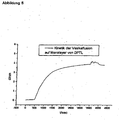
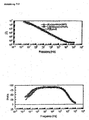
- Fig. 5 The kinetics of vesicle fusion by SPR is in Fig. 5 and the SPR and IS spectra before and after vesicle fusion are in Fig. 6 and 7 shown.
- a comparison with simulated data shows the uniformity of the layers.
- the comparison with the electrical data of pure lipid bilayers (bilayer lipid membranes (BMLs)) or with the layer thicknesses calculated from the molecular dimensions shows a good agreement.
- BMLs bilayer lipid membranes
- the comparison with literature data on anchored lipid bilayers also produced by vesicle function on gold shows the much better agreement of the layers of DPLT described here with BLM data (membranes comparable to biological membranes are reported in the literature with a membrane resistance of more than 10 M ⁇ cm 2 ( Sackmann, Wagner, J. Phys. Chem. B, 2002 )), especially in terms of resistance.
- Fig. 5 The kinetics of vesicle fusion by SPR is in Fig. 5 and the SPR and IS spectra before and after vesicle fusion are in Fig. 6 and 7 shown.
- the resistance of the layer falls by 3 orders of magnitude.
- the capacity of the anchor region with 4.6 ⁇ F cm -2 is firstly sufficiently different from the capacity of the lipid layer (which results in a clear inflection point in the IS spectrum) and secondly very similar to that described in the literature, but more costly anchored lipid layers from Cornell et al (supra).
Landscapes
- Chemical & Material Sciences (AREA)
- Health & Medical Sciences (AREA)
- Engineering & Computer Science (AREA)
- Life Sciences & Earth Sciences (AREA)
- Immunology (AREA)
- Organic Chemistry (AREA)
- Physics & Mathematics (AREA)
- Molecular Biology (AREA)
- Biomedical Technology (AREA)
- General Health & Medical Sciences (AREA)
- Hematology (AREA)
- Urology & Nephrology (AREA)
- General Physics & Mathematics (AREA)
- Medicinal Chemistry (AREA)
- Theoretical Computer Science (AREA)
- Biochemistry (AREA)
- Pathology (AREA)
- Microbiology (AREA)
- Biophysics (AREA)
- Cell Biology (AREA)
- Biotechnology (AREA)
- Food Science & Technology (AREA)
- Analytical Chemistry (AREA)
- Nanotechnology (AREA)
- Mathematical Physics (AREA)
- Chemical Kinetics & Catalysis (AREA)
- Artificial Intelligence (AREA)
- General Engineering & Computer Science (AREA)
- Computing Systems (AREA)
- Evolutionary Computation (AREA)
- Data Mining & Analysis (AREA)
- Computational Linguistics (AREA)
- Software Systems (AREA)
- Spectroscopy & Molecular Physics (AREA)
- Polymers & Plastics (AREA)
- General Chemical & Material Sciences (AREA)
- Crystallography & Structural Chemistry (AREA)
- Organic Low-Molecular-Weight Compounds And Preparation Thereof (AREA)
- Peptides Or Proteins (AREA)
- Medicines Containing Antibodies Or Antigens For Use As Internal Diagnostic Agents (AREA)
Description
- Die Erfindung betrifft mit einem hydrophilen Linker funktionalisierte Lipide, die eine Stützungsgruppe zur Bindung an eine Oberfläche enthalten. Weiterhin betrifft die Erfindung selbstassemblierte Monoschichten der Lipide auf Substraten, insbesondere auf ultraglatten Goldsubstraten. Die Lipide und diese Lipide enthaltende Lipidmono- oder Doppelschichten können zur Herstellung von biomimetischen gestützten Membransystemen verwendet werden. Diese Systeme können gegebenenfalls nach Einbau von funktionellen Molekülen, wie etwa membranassoziierten Proteinen, für Anwendungen, wie etwa Modellsysteme zur Untersuchung von biologischen Membranen, Screeningverfahren, Sensoren und bioelektronischen Vorrichtungen, wie etwa Biocomputern, eingesetzt werden.
- Die Beantwortung biologisch-medizinischer Fragestellungen ist in Zeiten des rasanten Fortschritts nicht nur im Bereich der Entschlüsselung des Erbguts kompletter Lebewesen (Genomik) und dem mit der Verifizierungung der "Code"-Funktionsbeziehungen zwischen Genom und Proteom befassten Gebiet der Proteomik in verschiedenen Bereichen der Analytik an limitierende Faktoren gestoßen. Auch in der Erforschung von Zell-ZellWechselwirkungen und Membranproteinen ist man im wachsenden Maß auf leistungsfähige Modellsysteme angewiesen, da deren Analyse in nativer Umgebung oft nur unter schwierigen Bedingungen, z.B. mit Methoden wie der Patch-Clamp Technik, möglich ist, welche sich für einen Einsatz im größeren Umfang (Standardanalysen und Meßsysteme), nicht eignen. Eine Anwendung von biologischen Modellmembransystemen, welche nicht notwendigerweise in erster Linie von deren strikten elektrischen Eigenschaften, sondern eher von ihrer Fluidität und chemischen Beschaffenheit abhängt, besteht in der Untersuchung der gerade besprochenen Vorgänge im Zusammenhang mit deren Einfluß auf Zell-ZellWechselwirkungen und (neuro)degnerativen Zellveränderungen, welche sich auch in veränderten Glycolipidstrukturen auf der Zelloberfläche bemerkbar machen (Kolter, Sandhoff, Angew. Chem. Int. Ed. 1999, 38, 1532-1568) oder sich beim Auftreten veränderter Glycopeptidstrukturen (z.B. bei Mucinen, welche eine wichtige Rolle bei Zellwechselwirkungen spielen (Schiller, S., Diplomarbeit, Mainz, 1998)), zeigen.
- Die Suche nach biomimetischen Systemen, welche die Erforschung solcher Systeme oder deren Einsatz in der Analytik ermöglicht, stellt hohe Anforderungen an das verwendete Modellsystem. Eine Grundanforderung ist die größtmögliche Übereinstimmung von natürlichem Vorbild und dem biomimetischen Modell, welches das natürliche Vorbild in seinen für die entsprechende Fragestellung wesentlichen Eigenschaften nachzuahmen in der Lage sein muss.
- Eines der wichtigsten biomimetischen Systeme besteht aus einer der biologischen Membran ähnlichen Lipiddoppelschicht, die auf einem elektrisch leitenden, planaren Substrat aufgebracht ist. Ein solches System ermöglicht die Untersuchung von membranassoziierten Biomolekülen (z.B. H+-ATPase, Cytochromoxidase, lonenkanäle etc.), die mit elektrischen Vorgängen zusammenhängen bzw. von ihnen kontrolliert werden und daher in der Biosensorik und im Drug Screening Verwendung finden.
- Beschreibungen einer Vielzahl von Anwendungen, ihrer biophysikalischen Eigenschaften und unterschiedlichsten chemischen Zusammensetzungen bezüglich der die Membran stützenden Molekülteile und Variationen im Lipidteil (von gesättigten bis zu ungesättigten Alkylketten unterschiedlicher Kettenlänge, in monomerer, dimerer oder mehrfach auftretender Form, welche zusätzlich noch mit hydrophoben Seitengruppen versehen sein können und verschiedene polare, diese verbindende Kopfgruppen enthalten können) und deren Anbindung an die meist polare eben genannten Stützungsgruppe (Tether) finden sich bei Ringsdorf et al., Angew. Chem. Int. Ed., 1988, 27, 113-158; Lang, et al., Langmuir, 1994, 10, 197; Sackmann, Science, 1996, 271, 43-48; Guidelli et al., J. Electroanal. Chem., 2001, 504, 1-28 und Knoll et al., Mol. Biotechnol., 2000, 74, 137-158.
- Die funktionelle Anbindung der Lipidmembran an ein festes Substrat über einen flexiblen, polaren (hydrophilen) Zwischenteil ist ein seit Jahren populärer Ansatz (Sackmann, siehe oben) mit folgenden Vorteilen: Zum einen wird über sie eine robuste Anbindung der empfindlichen Lipiddoppelschicht an das feste Substrat erreicht, welche durch ihre Planarität Zugang zu einer Reihe sensitiver elektrischer und oberflächenanalytischer Methoden erschließt, zum anderen entkoppelt sie die Membran von der Oberfläche. Die Entkopplung von der Oberfläche führt zu einer Unterdrückung der auf Metalloberflächen auftretenden, für die Membran negativen hydrophoben Wechselwirkung, und vergrößert das cytosolanaloge Volumen zwischen Membran und Substratoberfläche, was besonders bei volumenabhänigen Transportprozessen, als auch zur Erzeugung von fluiden Membranen von grundlegender Bedeutung ist.
- Die zur Anwendung auf Membransysteme geeigneten Messmethoden umfassen bei den elektrischen Methoden z.B. Impedanz-Spektroskopie (IS), Voltametrie, und andere potentiometrische und amperometrische Verfahren, wie z.B. die Chrono-Coulometrie. Die oberflächenanalytischen Verfahren setzen sich aus einer Reihe von Methoden, von denen viele besonders auf planare Metallfilme als proximale Schicht vor der Modifizierung mit dem zu analysierenden System angewiesen sind, zusammen. Sie erlauben oft eine Analyse bis in submolekularen Größenordnungenen, welche nur durch solche festkörpergestützte Membranen zugänglich ist. Hierzu zählt zum Beispiel die Oberflächen-Plasmonen-Resonanzspektroskopie (OPR, SPR oder auch SPS genannt) zur Bestimmung der Schichtdicke (Brechungsindex) der auf dem Substrat (z.B. Au- oder Ag-Filmen) aufgebrachten Verbindungen. Zur Charakterisierung des beschriebenen Systems können aber noch eine große Zahl anderer, zum Teil sehr empfindlicher Meßverfahren angewandt werden. Hierzu gehören Methoden wie Ellipsometrie, Fluoreszenzmethoden, interne Reflektometrie, Lichtstreumethoden, Röntgen- oder Neutronenstreuung, oberflächenakustische Verfahren, Ausnutzung thermischer Effekte (Änderungen der Temperatur oder des Wärmeflusses), Messung der Massen oder Dichtenänderungen, welche z.B. mit der Quarzmikrowaage ermittelt werden können, Messung der Änderung der Membranphase, Radioimmunassays oder Enzym gebundene Assays.
- Die Verwirklichung eines Modellsystems, welches die Anwendung der oben genannten Methoden erlaubt und andererseits die Voraussetzung für eine funktionelle biologische Modellmembran mit den notwendigen Eigenschaften gibt, ist ein Problem, welches höchste Anforderungen an die molekularen Eigenschaften der Membranbestandteile, deren Oberflächenanbindung, die sie umgebenden Moleküle, die Eigenschaften und Güte der Oberfläche und die anzuwendenden Messmethoden stellt.
- Aus dem Stand der Technik sind zahlreiche Beispiele für gestützte Membransysteme bekannt. So können beispielsweise Membransysteme auf Basis von thiolmodifizierten Oligopeptiden und Thiollipopeptiden eingesetzt werden (siehe z.B. Bunjes et al., Langmuir, 1997, 13, 6188-6194; Naumann et al., Bioelectrochem. Bioenerg. 1997, 42, 241-247; Schmidt et al., Biosensens. Bioelectron. 1998, 13, 585-591; Naumann et al., Biosens. Bioelectron. 1999, 14, 651-662 sowie
WO 96/18645 WO 99/20649 - Mit Polyethylenglykol hydrophil gestützte Membransysteme sind bei Lang et al., Langmuir, 1994, 10, 197-210, Heyse et al., Biochem. Biophys. Acta 1998, 85507, 319-338,
EP-A-0 441 120 undEP-A-0 637 384 beschrieben. Ein weiteres, mit einer kurzen Oligoethylenglykolkette gestütztes Membransystem, welches Cholesterin als hydrophobe Domäne aufweist, ist von Williams et al., Langmuir 1997, 13, 751-757 und Jenkins et al., Langmuir, 1998, 14, 4657, beschrieben. - Weitere Membransysteme sind von Cornell et al., Nature 1997, 387, 580-583, Raguse et al., Langmuir 1998, 14, 648-659, Krishna et al., Langmuir 2001, 17, 4858-4866 sowie in
WO 89/01159 WO 90/02327 WO 94/07593 WO97/01092 US 5,753,093 undUS 5,783,054 beschrieben. Die zum Aufbau der Membran verwendeten Komponenten bestehen aus verschiedenen Monophytanyl/Monophytanoyl-Oligoethylenglycol-Thiolen/Disulfiden, polaren lateralen Spacermolekülen und einem membrandurchspannenden Thiolipid. In die Membran können Funktionalisierungsmoleküle, wie z.B. Gramicidin, eingebaut werden. Die Membran wird nach Behandeln einer Goldoberfläche mit einer ethanolischen Lösung der Einzelkomponenten durch Spülen mit Puffer in situ erzeugt. - In
WO 97/43274 - Nachteile der oben genannten Membransysteme bestehen darin, dass oftmals nur ungenügende elektrische Eigenschaften, insbesondere hinsichtlich der Kapazität und des Widerstands bei Bindung an eine elektrisch leitfähige Substratoberfläche erhalten werden. Einige der aus dem Stand der Technik bekannten Membransysteme weisen darüber hinaus eine unzureichende chemische Stabilität auf. Somit bestand eine der vorliegenden Erfindung zugrunde liegende Aufgabe darin, neue Membransysteme bereitzustellen, bei denen die oben genannten Nachteile zumindest teilweise beseitigt sind. Insbesondere sollten die erfindungsgemäßen Membransysteme verbesserte elektrische Eigenschaften gegenüber dem Stand der Technik aufweisen.
- Diese Aufgabe wird gelöst durch die Bereitstellung von neuen Verbindungen der allgemeinen Formeln (la) und (Ib):


- n
- eine ganze Zahl von 1-100 ist,
- R3
- ein eine Stützungsgruppe enthaltender Rest ist und
- X
- eine Verknüpfungsgruppe ist, die aus O, S oder NR ausgewählt wird,
- Dabei stehen die Verbindungen (Ia) sowohl für die 1,2 sn- als auch für die 2,3 sn-Lipide nach der für Lipide geltenden stereochemischen Nomenklatur (sn).
- Vorzugsweise ist zumindest einer von R1 und R2 ein gesättigter oder ungesättigter Kohlenwasserstoff- oder Acylrest, der durch eine oder mehrere Methylgruppen substituiert ist. Besonders bevorzugt sind R1 und R2 derartige Kohlenwasserstoff- oder Acylreste. Die Kettenlänge von R1 und R2 beträgt vorzugsweise 12-20 C-Atome und besonders bevorzugt 13-18 C-Atome. Beispiele für geeignete Kohlenwasserstoff- oder Acylreste sind Phytanyl Phytanoyl, Lauryl, Lauroyl, Tridecanyl, Tridecanoyl, Myristyl, Myristoyl, Pentadecanyl, Pentadecanoyl, Palmityl, Palmitoyl, Oleyl, Oleoyl, Linoleyl, Linoleoyl, Arachidonoyl, Docosahexaenyl, Docosahexaenoyl etc. Besonders bevorzugt sind Kohlenwasserstoffreste, die an den Träger über eine Ethergruppe gebunden, wie Phytanyl.
- Die Verknüpfungsgruppe X ist vorzugsweise O.
- Die Verbindungen der allgemeinen Formeln (Ia) und (Ib) sind vorzugsweise Glycerinderivate mit insbesondere 2 Kohlenwasserstoff- oder/und Acylresten und einem zur Verankerung an ein Substrat dienenden Rest, der eine Oligoethylenoxidgruppe mit beispielsweise 1-100 Ethylenoxideinheiten enthält.
- In einer besonders bevorzugten Ausführungsform wird die Verbindung (I) aus 2,3-Di-O-phytanyl-sn-glycero-1-tetraethylenglycol-DL-α-liponsäureester und optischen Isomeren davon ausgewählt. Weitere Beispiele für geeignete Verbindungen sind Diphytanyl/oyl-phosphatidyl-tetraethylenglycolliponsäureester, entsprechende Verbindungen, bei denen die Liponsäurestruktur anstelle der Esterverknüpfung eine Ether- oder Kohlenstoff-Kohlenstoffverknüpfung trägt, und die Stereochemie am Glycerinbaustein auch die entsprechenden 1,2- und 1,3-Di-O-phytanylverknüpfungen enthält. Denkbar ist ebenso die Wahl eines anderen Trägers der Phytanylgruppen anstelle des Glycerinbausteins, wie z.B. Tris[2-Amino-2-hydroxymethyl-1,3-propandiol], welcher eine zusätzliche polare Hydroxylgruppe trägt, oder in der Lage ist, eine dritte Phytanylgruppe aufzunehmen.
- Die erfindungsgemäßen Verbindungen (I) zeichnen sich dadurch aus, dass sie zwei unpolare Lipidgruppen enthalten, die über eine Ether- oder Esterbindung an einen Trägerbaustein, z.B. einen D-Glycerinbaustein, gebunden sind. An der dritten Funktionalität, z.B. an einer Hydroxygruppe, enthält der Trägerbaustein eine Oligoethylenglycolkette, die vorzugsweise ebenfalls über eine Ethergruppen gebunden ist. Aufgrund ihrer Struktur besitzen die erfindungsgemäßen Verbindungen eine geringe Hydrolyseempfindlichkeit, die sich bei Langzeitanwendungen als sehr vorteilhaft erweist. Als Stützungsgruppe wird vorzugsweise eine Disulfidgruppe, besonders bevorzugt eine cyclische Disulfidgruppe, verwendet. Günstigerweise sind beide Schwefelatome des Disulfids kovalent mit dem polaren Oligoethylenoxidrest verbunden.
- Die Verbindungen (I) können auf einer Substratoberfläche über die Stützungsgruppe verankert werden. Diese Verankerung ist vorzugsweise eine adsorptive Bindung, durch die eine laterale Beweglichkeit einzelner Moleküle der Verbindungen (I) auf der Substratoberfläche gewährleistet bleibt. Zusätzlich zu den Molekülen der Verbindungen (I) können auf der Substratoberfläche noch Spacermoleküle, d.h. Moleküle mit einer Stützungsgruppe und gegebenenfalls einer hydrophilen Gruppe, gebunden werden, um eine Verdünnung der Moleküle der Verbindungen (I) zu erreichen. Beispiele für geeignete Spacermoleküle mit S-haltigen Stützungsgruppen sind Liponsäure, Thioethanol, Thiodiglycolsäure, Cystein, Thioessigsäure, Dimercaptobernsteinsäure, Hydroxy/Carboxy-Alkylthiole und Disulfide einer Kettenlänge von 1-12 Kohlenstoffatomen, und analoge Dialkylsulfide (Thioether), aber auch hydrophobe Verbindungen, wie Alkylthiole und Disulfide einer Kettenlänge von 1-12 Kohlenstoffatomen, und analoge Thioether, Phenylthiol, Bisphenylthiol und andere. Das molare Verhältnis von Molekülen der Verbindungen (1) zu Spacermolekülen liegt vorzugsweise im Bereich von 100:0,05 bis 0,05:100, besonders bevorzugt im Bereich von 0,1:100 bis 100:1 und am meisten bevorzugt von 15:100 bis 70:1. Selbstverständlich können aber auch reine Stützlipidschichten eingesetzt werden.
- Ein weiterer Aspekt der Erfindung ist eine gestützte biomimetische Membran, umfassend eine Lipidschicht mit mindestens einer Verbindung der allgemeinen Formel (I) als Stützungslipid zur Verankerung auf einem Substrat. Die Lipidschicht kann eine Monoschicht oder - wenn zusätzliche mobile Lipide vorhanden sind - eine Doppelschicht umfassen.
- Das Substrat weist vorzugsweise eine elektrisch leitfähige Oberfläche, beispielsweise eine Metalloberfläche, insbesondere eine Edelmetalloberfläche, wie etwa Gold, Silber oder Platin, auf. Besonders bevorzugt ist eine Goldoberfläche.
- Weiterhin besonders bevorzugt ist ein Substrat mit einer ultraglatten Oberfläche, die eine Oberflächenrauheit in oder unterhalb der Größenordnung einer Moleküldimension aufweist, z.B. maximal 2-3 nm, bevorzugt unter 2 nm, besonders bevorzugt unter 1 nm und im gezeigten Beispiel 0,5 nm. Ein Beispiel für eine derartige ultraglatte Oberfläche ist eine ultraglatte Goldoberfläche, die durch Templatabformung von Goldoberflächen zugänglich ist (Wagner et al., Langmuir, 1995, 11, 3867-3875). Bei Vorliegen einer ultraglatten Oberfläche ist eine optimale supramolekulare Anordnung der einzelnen funktionellen Abschnitte der Verbindungen (I) gegeben, so dass eine besonders günstige hydrophobe Wechselwirkung der Kohlenwasserstoffketten zustande kommen kann.
- Aus einer Monoschicht, die Verbindungen der allgemeinen Formel (I) enthält, kann durch Zugabe von mobilen Lipiden, beispielsweise durch Vesikelfusion, eine gestützte Lipiddoppelschicht gebildet werden. Beispiele für geeignete mobile Lipide sind Phospholipide, wie etwa 1,2-Di-Ophytanyl-sn-glycero-3-phosphocholin (DphyPC), 1,2-Di-O-phytanoyl-snglycerophosphocholin, 1,2-Di-O-phytanyl-sn-glycerophosphoethanolamin, 1,2-Di-O-phytanoyl-snglycerophosphoethanolamin, entsprechende 1,2- oder 2,3-Diphytanyl- oder Diphytanoylderivate sowie Mischungen von mehreren der genannten Verbindungen oder andere Phospholipide, wie etwa Ei-Phosphatidylcholin, DMPC (Dimyristoylphosphatidylcholin),DMPE (Dimyristoylphosphatidylethanolamin), Lecithine und nicht phosphorhaltige Lipide in gesättigter und ungesättigter Form, versehen mit gleichen oder unterschiedlich substituierten oder nichtsubstituierten Alkylketten mit vorzugsweise 8-22 Kohlenstoffatomen, insbesondere mit zwei Phytanyl-oder/und Phtanoylgruppen, welche an Glycerin über Ether- oder/und Esterbindungen verknüpft sind, Glycolipide, quarternäre Ammoniumverbindungen mit zwei C1-C4-Alkylgruppen und zwei C8-C18-Alkylketten, tertiäre Amine mit zwei C8-C18-Alkylketten und einer C1-C4-Alkylkette oder einem Wasserstoffatom anstelle der C1-C4-Alkylkette, Steroide oder chemisch ähnliche Verbindungen, welche sich vom Cholestangerüst ableiten lassen oder Isoprenoide, sowie Lipidmischungen, bestehend aus den genannten Verbindungen, wobei die Lipide gegebenenfalls polare Kopfgruppen, wie Hydroxyl, Carboxyl, Phosphorsäureester und deren Derivate, Schwefeloxidderivate unterschiedlicher Oxidationsstufe des Schwefels, und natürlich vorkommende Gruppen, wie Choline, Ethanolamine, Inositole, Glycerine, Aminoglycerine (in Sphingosinen) und Aminosäuren und deren neutrale, kationische oder anionische Formen oder Derivate enthalten können. Bei Verwendung von Vesikeln mit Membranen, in denen funktionelle Moleküle, beispielsweise Membranproteine integriert sind, können diese bei der Vesikelfusion direkt in die gestützte Membran eingebaut werden.
- Die Präparation der Lipiddoppelschicht kann darüber hinaus auch durch LB (Langmuir-Blodgett)-Übertrag von Lipidschichten, spontane Doppelschichtbildung, durch Verdünnen einer z.B. ethanolischen Lipidlösung mit Wasser oder Pufferlösung oder durch Umkehrosmose und Verdünnen vesikulärer Lösungen erfolgen.
- Ein weiterer Vorteil der erfindungsgemäßen gestützten Membran besteht in ihrem einfachen Aufbau, da sie aus einer Monoschicht mit nur einer einzigen Verbindung (I) aufgebaut werden kann. Die Verwendung von synthetisch aufwendigen und dadurch teuren membrandurchspannenden Lipiden ist nicht erforderlich. Außerdem kann ein mit einer Monoschicht modifiziertes Substrat, beispielsweise ein Goldträger, ohne Qualitätsverlust trocken gelagert werden und bei Bedarf einfach durch Vesikelfunktion oder eine andere oben beschriebene Methode in eine funktionsfähige biologische Modellmembran umgewandelt werden. Im Gegensatz dazu erfordert die Lagerung von Systemen des Standes der Technik besondere Maßnahmen, da dort nur komplette Modellmembranen hergestellt und aufbewahrt werden können, welche ohne Zugabe spezieller Verbindungen beim Trocknen sofort desintegrieren. Außerdem kann bei derartigen Systemen schon nach kurzer Aufbewahrung ein merklicher Qualitätsverlust auftreten.
- Die erfindungsgemäßen gestützten Membranen weisen hervorragende elektrische Eigenschaften auf. So können sie eine Kapazität von 0,4 bis 0,7 µF/cm2, vorzugsweise von 0,4 bis 0,6 µF/cm2, aufweisen. Der Widerstand ist vorzugsweise von mindestens 1 MΩ·cm2, besonders bevorzugt mindestens 5 MΩ·cm2, beispielsweise im Bereich von 6-24 MΩ·cm2.
- In die Lipidmembran können funktionelle Moleküle, wie etwa Proteine, beispielsweise membranassoziierte Proteine, wie H+-ATPasen, Cytochromoxidasen, lonenkanäle etc., die mit elektrischen Vorgängen zusammenhängen, andere Membranproteine, lichtabhängige Proteine, wie Bakteriorhodopsin, Antibiotika, Membranrezeptoren und Liganden, z.B. Peptide oder Proteine oder zusätzliche kohlenhydrat- oder/und lipidhaltige Strukturen, oder aus Heterozyklen bestehende Strukturen oder Kombinationen davon eingebaut werden.
- Die erfindungsgemäßen gestützten Membranen können für eine Vielzahl von Anwendungen, beispielsweise in der Biosensorik und im Wirkstoffscreening, z.B. zur Identifizierung oder/und Charakterisierung pharmakologischer Wirkstoffe, eingesetzt werden. Weiterhin können die gestützten Membranen zu Analyse von Biomolekülen, beispielsweise von membranassoziierten Biomolekülen, ausgewählt aus Proteinen, Antibiotika, etc., dienen. Außerdem können die Membranen aufgrund ihres hohen Widerstandes und ihrer effektiven Ladungsseparation für elektrotechnische Anwendungen, insbesondere als elektrische Dichtungsmaterialien, dienen. Sie können beispielsweise in bioelektro- mechanischen Mikro- und Nanovorrichtungen (Bio-MEMS/NEMS) zur elektrischen Abdichtung bzw. Einbettung von makroskopischen oder/und molekularen elektrischen Bauteilen und für molekulare Drähte (Aviram und Rathner, Chem. Phys. Let. 1974, 29, 257) Verwendung finden, insbesondere deshalb, weil sich ihre Dicke auf molekularer Größenordnung befindet. Darüber hinaus sind die Membranen auch durch ihr Kompartimentierungsvermögen auch in der Lage, als Systeme zu dienen, welche z.B. als Nahtstelle für biomechanische Fragestellungen im Bereich von ATP-abhängigen molekularen Motoren, wie z.B. Myosin, Kinesin und Dynein (Taylor et al., Nanotechnology, 1999, 10, 237-243) Systemkomponenten liefern können, vor allem wenn man sie mit ATP-liefernden Membransystemen oder anderen funktionellen Systemen, z.B. lichtabhängigen Proteinen, wie Bakteriorhodopsin, kombiniert.
- Weiterhin soll die Erfindung durch die nachfolgenden Abbildungen und Beispiele erläutert werden.
- 2,3-Di-O-phytanyl-sn-glycero-1-tetraethylenglycol-DL-α-liponsäureester (DPTL)
- 1,2-Di-O-phytanoyl-sn-glycero-phosphocholin (DPhyPC)
- Rasterkraftmikroskopische Aufnahmen von Goldsubstraten
- Kinetik einer Vesikelfusion mit einer DPTL-Monoschicht
- Oberflächen-Plasmonenresonanz(SPR)-Spektrum einer DPTL-Schicht vor und nach einer Vesikelfusion
- Impendanz(IS)-Spektrum einer DTPL-Schicht vor und nach einer Vesikelfusion
- Spektren einer DTPL-Lipiddoppelschicht vor und nach Einbau von Valinomycin
- Verbindungen gemäß Formel (I), z.B. 2,3-Di-O-phytanyl-sn-glycero-1-tetraethylenglycol-DL-α-liponsäureester und deren Ausgangsstoffe können nach bekannten Methoden hergestellt werden, wie sie in der Literatur (z.B. Standardwerken wie Houben Weyl, Methoden der organischen Chemie, Georg Thieme-Verlag, Stuttgart) beschrieben sind, und zwar unter Reaktionsbedingungen, die für die genannten, auch die hier nicht näher erwähnten Varianten Gebrauch machen.
- D-Mannit wird unter Standardbedingungen, beschrieben von Baer, J. Amer. Chem. Soc. 1945, 67, 338, zur diisopropylidengeschützten Verbindung umgesetzt (1,2;5,6- Diisopropyliden-D-Mannit). Diese wird mit Natriumperiodat bei 0 °C in Wasser oxidativ zum Aldehyd gespalten und die Lösung nach vollständigem Umsatz mit Ethanol aufgearbeitet, der entstehende Niederschlag abgetrennt und die verbleibende Lösung mit Natriumborhydrid, suspendiert in Wasser, im Eisbad versetzt und der Aldehyd zum 2,3-Isopropyliden-D-glycerin reduziert. Die Reaktion wird über Nacht gerührt und am nächsten Morgen mit Essigsäure auf pH 7 eingestellt. Anschließend wird das organische Lösungsmittel destillativ entfernt. Die wässrige Phase wird mit Methylenchlorid extrahiert und die organische Phase mit Natriumsulfat/Natriumcarbonat getrocknet. Nach Entfernen des Lösungsmittels wird der isopropylidengeschützte Glycerinbaustein erhalten. Der isopropylidengeschützte Glycerinbaustein wird in Chloroform aufgenommen und mit Molsieb (3 Å) getrocknet.
- Alle weiteren Schritte bis zur Aufarbeitung werden unter Argonatmosphäre durchgeführt. Zur Lösung wird p-Toluolsulfonsäurechlorid gegeben und nach 15 min Pyridin (über Kaliumhydroxid getrocknet) zugetropft. Das Eisbad wird entfernt und der Ansatz über Nacht gerührt. Der Ansatz wird mit Wasser und gesättigter Natriumchloridlösung extrahiert und die organische Phase über Natriumsulfat getrocknet und das Lösungsmittel destillativ entfernt. Das erhaltene Rohprodukt wird durch Flashchromatographie an Kieselgel mit Petrolether/ Essigsäureethylester-Mischungen als mobile Phase gereinigt.
- Tetraethylenglycol wird in Tetrahydrofuran (über Calciumhydrid getrocknet) gelöst und mit Molsieb (3 Å) getrocknet (der Kolben mit Argon gefüllt). Das Molsieb wird entfernt, und das Tetraethylenglycol mit einem Moläquivalent Natriumhydrid deprotoniert. Dann wird der tosylierte, isopropylidengeschützte Glycerinbaustein zugetropft, anschließend Dimethyaminopydridin zugegeben und erst 6 h bei Raumtemperatur, anschließend 3 Tage bei 60 °C unter Argonatmosphäre gerührt. Der Ansatz wird über Celite®-Filtergel filtriert, das Lösungsmittel destillativ entfernt und das Rohprodukt mit Dichlormethan verdünnt und mit Wasser extrahiert. Die organische Phase wird mit Natriumsulfat getrocknet und das Lösungsmittel destillativ entfernt. Die erhaltene Produktphase wird in trockenem Dimethylformamid (über Calciumhydrid destilliert) aufgenommen, auf -2,5 °C abgekühlt und mit Natriumhydrid deprotoniert. Anschließend wird bei 0 °C Benzylbromid zugetropft, wobei die Temperatur unter 10°C gehalten wird. Nach vollendeter Zugabe wird das Kältebad entfernt und der Ansatz bei Raumtemperatur zwei Tage unter Argonatmosphäre gerührt. Der Ansatz wird über Celite®-Filtergel filtriert und das Lösungsmittel destillativ entfernt. Das Rohprodukt wird in Dichlormethan aufgenommen, mit Wasser extrahiert und durch Flashchromatographie an Kieselgel mit einer mobilen Dichlormethanphase gereinigt. Der erhaltene Benzyl-tetraethylenglycol-2,3-isopropyliden-D-glycerinbaustein wird mit Tetrahydrofuran/Wasser versetzt, und die Isopropylidenschutzgruppe mit Trifluoressigsäure bei 40 °C 36 h abgespalten. Die Reaktionsmischung wird mit Natriumcarbonat neutralisiert, und nach weiterer Wasserzugabe mit Dichlormethan extrahiert. Die organische Phase wird getrocknet, das Lösungsmittel destillativ entfernt und das erhaltene Rohprodukt durch Flashchromatographie an Kieselgel mit einer mobilen Phase aus Essigsäureethylester und Aceton mit zunehmendem Aceton-Gradienten gereinigt.
- Für die Modifizierung des Produkts mit den zwei Phytanylresten wird zuerst Phytol mit Platinoxid in Methanol bei 40 °C und 70 bar Wasserstoffdruck 2 Tage zu Phytanol hydriert. Das erhaltene Rohprodukt wird durch Gelfiltration an Kieselgel mit Hexan gereinigt. Das erhaltene Phytanol wird in Dichlormethan gelöst und mit Triphenylphosphin und N-Bromsuccinimid bei einer Temperatur von weniger als 30°C über Nacht bromiert. Aus dem Rohprodukt wird das Dichlormethan destillativ entfernt, der Rückstand mit Hexan extrahiert und über eine Glasfritte filtriert. Das Hexan wird destillativ entfernt und das Phytanbromid enhaltende Rohprodukt mit Hexan an Kielselgel durch Flashchromatographie gereinigt.
- Der mit einseitig benzylethergeschütztem Tetraethylenglycol modifizierte D-Glycerinbaustein, bei dem die 2- und die 3-Position durch Abspaltung des Isopropylidenrests mit Trifluoressigsäure entschützt wurden, wird in trockenem Dimethyformamid gelöst, mit Natriumhydrid deprotoniert und unter Argonatmospähre das Phytanbromid mit einem Tropftrichter zugegeben. Der Kolben wird unter Auschluss von Licht 4 Tage bei Raumtemperatur gerührt. Nach der Zugabe von Wasser wird mit Dichlormethan extrahiert, die organische Phase mit Natriumsulfat getrocknet und das Lösungsmittel destillativ entfernt. Das Rohprodukt wird durch Flashchromatographie an Kieselgel mit einer mobilen Petrolether/Essigsäureethylester-Phase gereinigt. Der 2,3-Di-O-phytanyl-sn- glycero-1-tetraethylenglycol-O-benzylether wird in Tetrahydrofuran/ Methanol gelöst und die Benzyletherschutzgruppe palladiumkatalysiert hydrogenolytisch bei Raumtemperatur analog bekannten Standardverfahren gespalten. Nach 2 h wird das Lösungsmittel durch Destillation entfernt und der Ansatz durch Flashchromatographie an Kieselgel mit Petrolether/Aceton als mobile Phase gereinigt.
- Das erhaltene Produkt wird in trockenem Dichlormethan gelöst, in dem zuvor DL-Liponsäure mit N-(3- Dimethylaminopropyl)-N'-ethyl-carbodiimid Hydrochlorid vorgelegt und für 20 min gerührt worden ist. Zu dieser Lösung wird nach 30 min Dimethylaminopyridin gegeben und die Reaktion für 4 1/2 h gerührt. Der Ansatz wird über Celite®-Filtergel filtriert, das Rohprodukt mit Dichlormethan verdünnt und mit gesättigter Natriumhydrogencarbonatlösung und Wasser extrahiert. Die organische Phase wird mit Natriumsulfat getrocknet und das Lösungsmittel destillativ entfernt. Die Reinigung geschieht durch Flashchromatographie an Kieselgel mit Petrolether/Aceton als mobile Phase. Die Reinheit der Produkte und ihre Identität wird durch Dünnschichtchromatographie, NMR- und IR-Spektroskopie, Polarimetrie und Elementaranalysen bestätigt.
- Glimmer wird unter äußersten Reinheitsbedingungen in dünne Schichten gespalten, so dass die oberste Schicht möglichst aus einer geschlossenen Kristallfläche besteht. Um anhaftendes Wasser zu entfernen, werden die Glimmerplättchen im Röhrenofen bei 650±1 °C im leichten Stickstoffstrom ausgeheizt, wobei sie an einem Stahldrahthalter in 15 s bis in die Mitte des Ofenrohrs bewegt, dann dort 30 s gehalten und in weiteren 15 s aus dem Ofen heraus bewegt werden. Danach werden sie in eine elektrothermische Bedampfungsapparatur gebracht (z.B. Elektrothermischer Evaporator, Edvards) und sofort evakuiert. Dort wird bei einem Druck von <5 x 10⁻⁶ mbar und einer Aufdampfrate von <0,1 nm/s ein plasmonenfähiger Goldfilm, z.B. 60 nm, aufgedampft. Nach dem Abkühlen werden die mit Gold bedampften Glimmersubstrate aus der Bedampfungsapparatur entnommen und sofort unter den gleichen Bedingungen wie beim Ausheizen der Glimmersubstrate (650 °C, Stickstoffstrom, 15 s, 30 s, 15 s) getempert, wobei das Gold die Kristallstruktur von Au(111) annimmt. Dies konnte durch Rasterkraftmikroskopie (AFM) nachgewiesen werden (
Abb. 3 ). - Danach werden die Glimmergoldsubstrate mit der Goldseite auf Glassubstrate (z.B. hochbrechendes Glas - LaSFN9, sofern die Substrate auch durch SPR untersucht werden sollen) aufgeklebt, wobei der Klebstoff durch kräftiges Anpressen gleichmäßig über die Fläche verteilt wird. Nach dem Trocknen bei 150 °C (60 min) werden die Substrate für 2-3 min in Tetrahydrofuran gestellt. Danach werden die Glimmerplättchen abgezogen, so dass nun das Gold mit der vorher dem Glimmer zugewandten (glatten) Seite nach oben zeigt. Die rasterkraftmikroskopische Aufnahme (
Abb. 4 ) zeigt nun eine feinkörnigere aber glattere Oberfläche, vergleiche die Rauhigkeiten des Au(111),Abb. 3 , und des TSG,Abb. 4 . - Die fertigen Substrate werden günstigerweise sofort in eine Beschichtungslösung getaucht. Andernfalls können sie in reinem Ethanol aufbewahrt werden.
- Die Goldsubstrate werden 24 Stunden lang in einer Lösung von DPTL in Ethanol (0,2 mg/ml) aufbewahrt, danach mit Ethanol gespült, im Stickstoffstrom getrocknet und bis zur Verwendung in einer Argonatmosphäre aufbewahrt.
- In einer Anlage zur kombinierten Oberflächenplasmonenresonanz-Spektroskopie (Surface plasmon resonance spectroscopy (SPR)) und Impedanzspektroskopie (IS) und der dazugehörigen Messzelle, siehe z.B. Bunjes et al. (Langmuir, 1997, 13, 6188-6194) werden die mit einer DPTL-Monoschicht beschichteten Substrate in einer Pufferlösung von KCI 0,1 mol/l, Tricine 0,01 mol/l, Na2HPO4 0,01 mol/l, MgSO4 0,0002 mol/l, in Wasser, pH = 7,4, geflutet. Dann wird die Schichtdicke mittels SPR, die Kapazität und der Widerstand der Monoschicht mittels IS gemessen. Die Temperatur in der Messzelle beträgt 32°C. Danach gibt man in die Messzelle von 1 ml Inhalt 50 µL einer Suspension von frisch durch Extrusion (durch ein 50 nm Filter) hergestellten Liposomen aus Diphytanoylphosphatidylcholin (DPhyPC) (4 mg/ml des o.g. Puffers). Die Schichtdickenzunahme wird durch SPR in Abhängigkeit von der Zeit beobachtet. Nach Erreichen eines stationären Zustandes und Spülen mit reiner Pufferlösung werden die Schichtdicke durch SPR sowie die elektrischen Eigenschaften durch IS gemessen.
- Die Ergebnisse dieser Messungen sind in Tabelle 1 zusammengefasst, zum Vergleich sind darin auch die für die BLM bekannten Werte angegeben.
Tabelle 1 Cm/µF cm-2 gemessen Rm/MΩ cm2 gemessen Cm/µF cm-2 BLM Rm/MΩ cm2 BLM d/nm gemessen d/nm berechnet DPTL, Monoschicht Vor Vesikelfusion 0.5 2.5 4.7 4.7 Lipiddoppelschicht Nach Vesikelfusion 0.42 6.2 0.5 10 8.5 8 - Die Kinetik der Vesikelfusion mittels SPR ist in
Abb. 5 und die SPR und IS Spektren vor und nach Vesikelfusion sind inAbb. 6 und7 gezeigt. - Ein Vergleich mit simulierten Daten (siehe ebenfalls
Abbildung 6 und7 ) zeigt die Einheitlichkeit der Schichten. Der Vergleich mit den elektrischen Daten von reinen Lipiddoppelschichten (Bilayer lipid membranes (BML's)) bzw. mit den aus den Moleküldimensionen berechneten Schichtdicken zeigt eine gute Übereinstimmung. Der Vergleich mit Literaturangaben über ebenfalls durch Vesikelfunktion hergestellte verankerte Lipiddoppelschichten auf Gold zeigt die wesentlich bessere Übereinstimmung der hier beschriebenen Schichten aus DPLT, mit BLM-Daten (mit biologischen Membranen vergleichbare Membranen werden in der Literatur mit einem Membranwiderstand von mehr als 10 MΩ cm2 angegeben (Sackmann, Wagner, J. Phys. Chem. B, 2002)), besonders im Hinblick auf den Widerstand. - Zu der wie oben beschriebenen hergestellten Lipiddoppelschicht wird in der 1 ml Messzelle und in der o.g. Pufferlösung 50 µl einer Valinomycinlösung (8 x 10⁻⁵ M, in Ethanol) zugesetzt. Die IS-Spektren vor und nach dem Einbau des Valinomycins sind in
Abb. 8 zusammen mit den an Ersatzschaltkreis angepassten Daten gezeigt. Kapazität und Widerstand aus dem angepaßen Daten sind in Tabelle 2 zusammengefasst.Tabelle 2: Cm/µF cm-2 gemessen Rm/MΩ cm2 gemessen Cm/µF cm-2 BLM Rm/MΩ cm2 BLM d/nm gemessen d/nm berechnet DPTL, Monoschicht Vor Vesikelfusion 0.5 2.5 4.7 4.7 Lipiddoppelschicht Nach Vesikelfusion 0.42 6.2 0.5 10 8.5 8 - Die Kinetik der Vesikelfusion mittels SPR ist in
Abb. 5 und die SPR und IS Spektren vor und nach Vesikelfusion sind inAbb. 6 und7 gezeigt. - Nach dem Einbau von Valinomycin fällt (in Gegenwart der in der Pufferlösung vorhandenen Kaliumionen) der Widerstand der Schicht um 3 Größenordnungen. Außerdem ist die Kapazität der Ankerregion mit 4,6 µF cm-2 erstens hinreichend verschieden von der Kapazität der Lipidschicht (dadurch ergibt sich ein deutlicher ,inflection point' im IS-Spektrum) und zweitens sehr gut vergleichbar mit den in der Literatur beschriebenen, aber mit größerem Aufwand hergestellten verankerten Lipidschichten von Cornell et al (supra).
Claims (31)
- Verbindungen der allgemeinen Formeln (Ia) oder (Ib)

 worin mindestens einer von R1 und R2 jeweils unabhängig ein gesättigter oder ungesättigter Kohlenwasserstoffrest oder ein Acylrest mit einer Kettenlänge von 10-22 C-Atomen ist, der gegebenenfalls durch eine oder mehrere Seitengruppen, substituiert sein kann, und der andere Wasserstoff, ein C1-C9-Kohlenwasserstoffrest oder ein Rest, umfassend eine Phospholipid-, Carboxyl-, Carbonyl-, SO-, SO2-, Amid-, Amino- oder Thiolgruppe mit oder ohne einem C1-C9- Kohlenwasserstoffrest ist,n eine ganze Zahl von 1-100 ist,R3 ein eine Stützungsgruppe enthaltender Rest ist undX O, S oder NR ist, wobei R H oder ein C1-C4-Alkylrest ist.
 - Verbindungen nach Anspruch 1,
dadurch gekennzeichnet,
dass zumindest einer von R1 und R2 ausgewählt ist aus gesättigten und ungesättigten Kohlenwasserstoffresten. - Verbindungen nach Anspruch 2,
dadurch gekennzeichnet,
dass zumindest einer von R1 rund R2 ausgewählt ist aus gesättigten Kohlenwasserstoffresten, die durch eine oder mehrere Methylgruppen substituiert sind. - Verbindungen nach einem der Ansprüche 1 bis 3,
dadurch gekennzeichnet,
dass X für O steht. - Verbindungen nach einem der Ansprüche 1 bis 4, dadurch gekennzeichnet,
dass n eine ganze Zahl von 2-70 ist. - Verbindungen nach einem der Ansprüche 1 bis 5,
dadurch gekennzeichnet,
dass die Stützungsgruppe ausgewählt ist aus S-haltigen Gruppen, Phosphingruppen und CN-Gruppen. - Verbindungen nach Anspruch 6,
dadurch gekennzeichnet,
dass die Stützungsgruppe eine S-S-Gruppe ist. - Verbindungen nach Anspruch 7,
dadurch gekennzeichnet,
dass die Stützungsgruppe eine cyclische S-S-Gruppe ist. - Verbindungen nach einem der Ansprüche 1 bis 8,
dadurch gekennzeichnet,
dass die Stützungsgruppe einen Liponsäurerest darstellt. - Verbindungen nach einem der Ansprüche 1 bis 9,
dadurch gekennzeichnet,
dass sie aus 2,3-Di-O-phytanyl-sn-glycero-1-tetraethylenglycol-DL-α-liponsäureester, 2,3-Di-O-phytanoyl-sn-glycero-1-tetraethylen-glycol-DL-a-liponsäureester, entsprechenden 1,2- oder 1,3-Diphytanyl- oder DiphytanoylDerivaten und optischen Isomeren davon ausgewählt ist. - Gestützte biomimetische Membran, umfassend eine Lipidschicht mit mindestens einer Verbindung der allgemeinen Formel (I) nach einem der Ansprüche 1 bis 10
als Stützungslipid zur Verankerung auf einem Substrat. - Gestützte Membran nach Anspruch 11,
dadurch gekennzeichnet,
dass das Substrat eine elektrisch leitfähige Oberfläche aufweist. - Gestützte Membran nach Anspruch 12,
dadurch gekennzeichnet,
dass das Substrat eine Edelmetalloberfläche aufweist. - Gestützte Membran nach Anspruch 13,
dadurch gekennzeichnet,
dass das Substrat eine Goldoberfläche aufweist. - Gestützte Membran nach einem der Ansprüche 11 bis 14,
dadurch gekennzeichnet,
dass das Substrat eine ultraglatte Oberfläche aufweist. - Gestützte Membran nach einem der Ansprüche 11 bis 15,
dadurch gekennzeichnet,
dass zusätzlich auf dem Substrat Spacermoleküle gebunden sind. - Gestützte Membran nach einem der Ansprüche 11 bis 16 weiterhin umfassend mindestens ein mobiles Lipid.
- Gestützte Membran nach Anspruch 17,
dadurch gekennzeichnet,
dass das mobile Lipid ein Phospholipid oder ein nicht phosphorhaltiges Lipid versehen mit gleichen oder unterschiedlichen substituierten oder nichtsubstituierten Alkylketten mit 8-22 Kohlenstoffatomen, welche an Glycerin über Ether- oder/und Esterbindungen verknüpft sind, ein Glycolipid, eine quaternäre Ammoniumverbindung mit zwei C1-C4-Alkylgruppen und zwei C8-C18-Alkylketten, ein tertiäres Amin mit zwei C8-C18-Alkylketten und einer kurzen C1-C4-Alkylkette oder einem Wasserstoffatom, ein Steroid oder eine chemisch ähnliche Verbindung, welche vom Cholestangerüst abgeleitet ist, oder ein Isoprenoid sowie Lipidmischungen bestehend aus mehreren der genannten Verbindungen ist, wobei die Lipide gegebenenfalls polare Kopfgruppen, wie Hydroxyl, Carboxyl, Phosphorsäureester und deren Derivate, Schwefeloxidderivate mit unterschiedlicher Oxidationsstufe des Schwefels, Choline, Ethanolamine, Inositole, Kohlenhydrate, Glycerine, Aminoglycerine (in Sphingosinen) und Aminosäuren und deren neutrale, kationische oder anionische Formen oder Derivate enthalten können. - Gestützte Membran nach Anspruch 18,
dadurch gekennzeichnet,
dass die Lipidschicht als mobiles Lipid ausgewählt ist aus 1,2-Di-Ophytanyl-snglycerophosphocholin, 1,2-Di-O-phytanoyl-snglycerophosphocholin, 1,2-Di-O-phytanyl-sn-glycerophosphoethanolamin, 1,2-Di-O-phytanoyl-sn-glycerophosphoethanolamin sowie entsprechenden 1,2- oder 2,3-Diphytanyl- oder Diphytanoylderivaten sowie Mischungen von mehreren der genannten Verbindungen. - Gestützte Membran nach Anspruch 19,
dadurch gekennzeichnet,
dass die Lipidschicht als mobiles Lipid 1,2-Di-O-phytanoyl-sn-glycero-phosphocholin enthält. - Gestützte Membran nach einem der Ansprüche 15 bis 20,
dadurch gekennzeichnet,
dass sie eine Kapazität von 0,4 bis 0,7 µF/cm2 aufweist. - Gestützte Membran nach einem der Ansprüche 15 bis 21,
dadurch gekennzeichnet,
dass sie einen Widerstand von mindestens 1 MΩ·cm2 aufweist. - Gestützte Membran nach einem der Ansprüche 11 bis 22.
dadurch gekennzeichnet,
dass funktionelle Moleküle in die Lipidschicht eingebaut sind. - Gestützte Membran nach Anspruch 23,
dadurch gekennzeichnet,
dass die funktionellen Moleküle ausgewählt sind aus Proteinen, Antibiotika, Signalerkennungsmolekülen, Botenstoffen, Porinen, lonenkanälen, membranverändernden Substanzen, wie z.B. Narkotika, Carriern, Liganden, Rezeptoren, Peptiden, Glycolipiden und herterozyklischen Verbindungen. - Verwendung einer gestützten Membran nach einem der Ansprüche 11 bis 24 als Biosensor.
- Verwendung nach Anspruch 25 in einem Nachweisverfahren.
- Verwendung nach Anspruch 25 in einem Screeningverfahren.
- Verwendung nach Anspruch 27 zur Identifizierung oder/und Charakterisierung pharmakologischer Wirkstoffe.
- Verwendung nach Anspruch 25 zur Analyse von Biomolekülen.
- Verwendung nach Anspruch 29 zur Analyse von membranassoziierten Biomolekülen, ausgewählt aus Proteinen, Antibiotika, Signalerkennungsmolekülen, Botenstoffen, Porinen, lonenkanälen, membranverändernden Substanzen, wie z.B. Narkotika, Carriern, Liganden, Rezeptoren, Peptiden, Glycolipiden und herterozyklischen Verbindungen.
- Verwendung nach Anspruch 25 als elektrische Dichtungsmaterialien.
Applications Claiming Priority (2)
| Application Number | Priority Date | Filing Date | Title |
|---|---|---|---|
| DE10222588A DE10222588B4 (de) | 2002-05-22 | 2002-05-22 | Biomimetische Systeme aus Lipidmembranen gebunden an ein Substrat |
| DE10222588 | 2002-05-22 |
Publications (3)
| Publication Number | Publication Date |
|---|---|
| EP1364948A2 EP1364948A2 (de) | 2003-11-26 |
| EP1364948A3 EP1364948A3 (de) | 2004-04-07 |
| EP1364948B1 true EP1364948B1 (de) | 2010-11-10 |
Family
ID=29285637
Family Applications (1)
| Application Number | Title | Priority Date | Filing Date |
|---|---|---|---|
| EP03011554A Expired - Lifetime EP1364948B1 (de) | 2002-05-22 | 2003-05-21 | Biomimetische Systeme aus Lipidmembranen gebunden an ein Substrat |
Country Status (4)
| Country | Link |
|---|---|
| US (1) | US20040023304A1 (de) |
| EP (1) | EP1364948B1 (de) |
| AT (1) | ATE487708T1 (de) |
| DE (2) | DE10222588B4 (de) |
Families Citing this family (5)
| Publication number | Priority date | Publication date | Assignee | Title |
|---|---|---|---|---|
| US7514267B1 (en) * | 2005-08-19 | 2009-04-07 | Stcunm | Detection systems utilizing supported lipid bilayers |
| KR100740071B1 (ko) * | 2006-03-10 | 2007-07-16 | 한불화장품주식회사 | 리포익산 유도체 및 이를 함유한 피부외용제 조성물 |
| US20140094383A1 (en) | 2012-10-02 | 2014-04-03 | Ohio State Innovation Foundation | Tethered Lipoplex nanoparticle Biochips And Methods Of Use |
| WO2015112089A2 (en) * | 2014-01-21 | 2015-07-30 | Nanyang Technological University | Hydration layer/lipid bilayer structures |
| KR102155313B1 (ko) * | 2018-05-29 | 2020-09-11 | 서울대학교산학협력단 | 지질 나노타블렛 |
Family Cites Families (5)
| Publication number | Priority date | Publication date | Assignee | Title |
|---|---|---|---|---|
| EP0639269B1 (de) * | 1991-03-27 | 2002-06-12 | Ambri Limited | Ionisches reservoir an der oberfläche einer elektrode |
| JPH07508342A (ja) * | 1992-04-22 | 1995-09-14 | エコール ポリテクニーク フェデラル ドゥ ローザンヌ(エーペーエフエル) | 脂質膜センサー |
| EP1130387A1 (de) * | 1992-10-01 | 2001-09-05 | Australian Membrane And Biotechnology Research Institute | Linkerlipid zur Sensormembranen |
| AUPN980796A0 (en) * | 1996-05-13 | 1996-06-06 | Australian Membrane And Biotechnology Research Institute | Improved reservoir components |
| US6821529B2 (en) * | 2001-09-05 | 2004-11-23 | Deanna Jean Nelson | Oligo(ethylene glycoll)-terminated 1,2-dithiolanes and their conjugates useful for preparing self-assembled monolayers |
-
2002
- 2002-05-22 DE DE10222588A patent/DE10222588B4/de not_active Expired - Fee Related
-
2003
- 2003-05-21 EP EP03011554A patent/EP1364948B1/de not_active Expired - Lifetime
- 2003-05-21 AT AT03011554T patent/ATE487708T1/de active
- 2003-05-21 DE DE50313251T patent/DE50313251D1/de not_active Expired - Lifetime
- 2003-05-22 US US10/443,659 patent/US20040023304A1/en not_active Abandoned
Also Published As
| Publication number | Publication date |
|---|---|
| EP1364948A2 (de) | 2003-11-26 |
| DE10222588A1 (de) | 2003-12-11 |
| EP1364948A3 (de) | 2004-04-07 |
| DE10222588B4 (de) | 2008-09-25 |
| ATE487708T1 (de) | 2010-11-15 |
| DE50313251D1 (de) | 2010-12-23 |
| US20040023304A1 (en) | 2004-02-05 |
Similar Documents
| Publication | Publication Date | Title |
|---|---|---|
| DE69232641T2 (de) | Ionisches reservoir an der oberfläche einer elektrode | |
| US8791098B2 (en) | Bioactive pre-tubulysins and use thereof | |
| DE69305160T2 (de) | Lipidmembranen fur biosensoranwendungen | |
| DE69030811T2 (de) | Rezeptormembranen und selektive steuerung des ionenflusses durch ionophoren | |
| DE60032159T2 (de) | Kombinatorische herstellung von bibliotheken aus makrozyklischen verbindungen zur entdeckung von pharmazeutischen wirkstoffen | |
| DE69618600T2 (de) | Colchicine derivate, deren verwendung und sie enthaltende formulierungen | |
| DE69612987T2 (de) | Selektiv funktionalisierbare desdendrimere | |
| DE102004038134B4 (de) | Multivalente Chelatoren zum Modifizieren und Organisieren von Zielmolekülen, Verfahren zu ihrer Herstellung sowie ihre Verwendung | |
| US6417009B1 (en) | Reservoir components | |
| DE10222588B4 (de) | Biomimetische Systeme aus Lipidmembranen gebunden an ein Substrat | |
| DE60105037T2 (de) | Verfahren zur kupplung in lösung zwischen einem peptid und einer lipophilen verbindung, und verwendungen davon | |
| DE69506540T2 (de) | Aminosulfonsäurederivate, ihre verwendung zur herstellung von pseudopeptiden und verfahren zu ihrer herstellung | |
| DE3132221A1 (de) | Neue cyclophosphamid-derivate, verfahren zu ihrer herstellung und ihre verwendung | |
| DE60204459T2 (de) | Biomembranmimetische oberflächenbeschichtungen | |
| EP0783515B1 (de) | Schutz- bzw. ankergruppen und deren verwendung (carbamide) | |
| WO2000021919A1 (de) | Pseudo-ceramide | |
| Gour et al. | Synthesis and AFM studies of lectin–carbohydrate self-assemblies | |
| DE10228857B4 (de) | Tetraetherlipide mit kleinen Kopfgruppen, deren Herstellung und Verwendung | |
| WO1997049669A1 (de) | Verbindungen, die mit metallen komplexe bilden können | |
| DE69702158T2 (de) | Carnitine-Bisalkanoylester mit bakterizider, fungizider und antiprotozoischer Wirkung | |
| US6447656B1 (en) | Biosensor | |
| CH629474A5 (de) | Verfahren zur herstellung eines radiojodierten sekretinderivates sowie dessen verwendung zur bestimmung von sekretin. | |
| DE102005022182A1 (de) | Modulatoren der PDZ-Domäne | |
| CN107151310A (zh) | 共轭聚合物和含酯键的共轭聚合物及其制备方法和应用 | |
| Li et al. | Design, synthesis and antitumor activity of dimeric bile acid-amino acid conjugates |
Legal Events
| Date | Code | Title | Description |
|---|---|---|---|
| PUAI | Public reference made under article 153(3) epc to a published international application that has entered the european phase |
Free format text: ORIGINAL CODE: 0009012 |
|
| AK | Designated contracting states |
Kind code of ref document: A2 Designated state(s): AT BE BG CH CY CZ DE DK EE ES FI FR GB GR HU IE IT LI LU MC NL PT RO SE SI SK TR |
|
| AX | Request for extension of the european patent |
Extension state: AL LT LV MK |
|
| PUAL | Search report despatched |
Free format text: ORIGINAL CODE: 0009013 |
|
| AK | Designated contracting states |
Kind code of ref document: A3 Designated state(s): AT BE BG CH CY CZ DE DK EE ES FI FR GB GR HU IE IT LI LU MC NL PT RO SE SI SK TR |
|
| AX | Request for extension of the european patent |
Extension state: AL LT LV MK |
|
| 17P | Request for examination filed |
Effective date: 20040804 |
|
| RAP1 | Party data changed (applicant data changed or rights of an application transferred) |
Owner name: MAX-PLANCK-GESELLSCHAFT ZUR FOERDERUNGDER WISSENSC |
|
| AKX | Designation fees paid |
Designated state(s): AT BE BG CH CY CZ DE DK EE ES FI FR GB GR HU IE IT LI LU MC NL PT RO SE SI SK TR |
|
| RAP3 | Party data changed (applicant data changed or rights of an application transferred) |
Owner name: MAX-PLANCK-GESELLSCHAFT ZUR FOERDERUNG DER WISSENS |
|
| GRAP | Despatch of communication of intention to grant a patent |
Free format text: ORIGINAL CODE: EPIDOSNIGR1 |
|
| GRAC | Information related to communication of intention to grant a patent modified |
Free format text: ORIGINAL CODE: EPIDOSCIGR1 |
|
| 18D | Application deemed to be withdrawn |
Effective date: 20090425 |
|
| GRAS | Grant fee paid |
Free format text: ORIGINAL CODE: EPIDOSNIGR3 |
|
| 18RA | Request filed for re-establishment of rights before grant |
Effective date: 20100119 |
|
| R18D | Application deemed to be withdrawn (corrected) |
Effective date: 20090225 |
|
| 18RA | Request filed for re-establishment of rights before grant |
Effective date: 20100119 |
|
| RAP1 | Party data changed (applicant data changed or rights of an application transferred) |
Owner name: KNOLL, WOLFGANG |
|
| GRAA | (expected) grant |
Free format text: ORIGINAL CODE: 0009210 |
|
| D18D | Application deemed to be withdrawn (deleted) | ||
| AK | Designated contracting states |
Kind code of ref document: B1 Designated state(s): AT BE BG CH CY CZ DE DK EE ES FI FR GB GR HU IE IT LI LU MC NL PT RO SE SI SK TR |
|
| REG | Reference to a national code |
Ref country code: CH Ref legal event code: EP |
|
| REG | Reference to a national code |
Ref country code: IE Ref legal event code: FG4D Free format text: LANGUAGE OF EP DOCUMENT: GERMAN |
|
| REF | Corresponds to: |
Ref document number: 50313251 Country of ref document: DE Date of ref document: 20101223 Kind code of ref document: P |
|
| REG | Reference to a national code |
Ref country code: NL Ref legal event code: VDEP Effective date: 20101110 |
|
| PG25 | Lapsed in a contracting state [announced via postgrant information from national office to epo] |
Ref country code: NL Free format text: LAPSE BECAUSE OF FAILURE TO SUBMIT A TRANSLATION OF THE DESCRIPTION OR TO PAY THE FEE WITHIN THE PRESCRIBED TIME-LIMIT Effective date: 20101110 Ref country code: CY Free format text: LAPSE BECAUSE OF FAILURE TO SUBMIT A TRANSLATION OF THE DESCRIPTION OR TO PAY THE FEE WITHIN THE PRESCRIBED TIME-LIMIT Effective date: 20101110 Ref country code: FI Free format text: LAPSE BECAUSE OF FAILURE TO SUBMIT A TRANSLATION OF THE DESCRIPTION OR TO PAY THE FEE WITHIN THE PRESCRIBED TIME-LIMIT Effective date: 20101110 Ref country code: SI Free format text: LAPSE BECAUSE OF FAILURE TO SUBMIT A TRANSLATION OF THE DESCRIPTION OR TO PAY THE FEE WITHIN THE PRESCRIBED TIME-LIMIT Effective date: 20101110 Ref country code: SE Free format text: LAPSE BECAUSE OF FAILURE TO SUBMIT A TRANSLATION OF THE DESCRIPTION OR TO PAY THE FEE WITHIN THE PRESCRIBED TIME-LIMIT Effective date: 20101110 Ref country code: PT Free format text: LAPSE BECAUSE OF FAILURE TO SUBMIT A TRANSLATION OF THE DESCRIPTION OR TO PAY THE FEE WITHIN THE PRESCRIBED TIME-LIMIT Effective date: 20110310 |
|
| REG | Reference to a national code |
Ref country code: IE Ref legal event code: FD4D |
|
| PG25 | Lapsed in a contracting state [announced via postgrant information from national office to epo] |
Ref country code: GR Free format text: LAPSE BECAUSE OF FAILURE TO SUBMIT A TRANSLATION OF THE DESCRIPTION OR TO PAY THE FEE WITHIN THE PRESCRIBED TIME-LIMIT Effective date: 20110211 |
|
| REG | Reference to a national code |
Ref country code: CH Ref legal event code: NV Representative=s name: BOHEST AG |
|
| PG25 | Lapsed in a contracting state [announced via postgrant information from national office to epo] |
Ref country code: CZ Free format text: LAPSE BECAUSE OF FAILURE TO SUBMIT A TRANSLATION OF THE DESCRIPTION OR TO PAY THE FEE WITHIN THE PRESCRIBED TIME-LIMIT Effective date: 20101110 Ref country code: EE Free format text: LAPSE BECAUSE OF FAILURE TO SUBMIT A TRANSLATION OF THE DESCRIPTION OR TO PAY THE FEE WITHIN THE PRESCRIBED TIME-LIMIT Effective date: 20101110 Ref country code: ES Free format text: LAPSE BECAUSE OF FAILURE TO SUBMIT A TRANSLATION OF THE DESCRIPTION OR TO PAY THE FEE WITHIN THE PRESCRIBED TIME-LIMIT Effective date: 20110221 Ref country code: IE Free format text: LAPSE BECAUSE OF FAILURE TO SUBMIT A TRANSLATION OF THE DESCRIPTION OR TO PAY THE FEE WITHIN THE PRESCRIBED TIME-LIMIT Effective date: 20101110 |
|
| PG25 | Lapsed in a contracting state [announced via postgrant information from national office to epo] |
Ref country code: SK Free format text: LAPSE BECAUSE OF FAILURE TO SUBMIT A TRANSLATION OF THE DESCRIPTION OR TO PAY THE FEE WITHIN THE PRESCRIBED TIME-LIMIT Effective date: 20101110 Ref country code: DK Free format text: LAPSE BECAUSE OF FAILURE TO SUBMIT A TRANSLATION OF THE DESCRIPTION OR TO PAY THE FEE WITHIN THE PRESCRIBED TIME-LIMIT Effective date: 20101110 |
|
| PLBE | No opposition filed within time limit |
Free format text: ORIGINAL CODE: 0009261 |
|
| STAA | Information on the status of an ep patent application or granted ep patent |
Free format text: STATUS: NO OPPOSITION FILED WITHIN TIME LIMIT |
|
| 26N | No opposition filed |
Effective date: 20110811 |
|
| BERE | Be: lapsed |
Owner name: KNOLL, WOLFGANG Effective date: 20110531 |
|
| REG | Reference to a national code |
Ref country code: DE Ref legal event code: R097 Ref document number: 50313251 Country of ref document: DE Effective date: 20110811 |
|
| PG25 | Lapsed in a contracting state [announced via postgrant information from national office to epo] |
Ref country code: IT Free format text: LAPSE BECAUSE OF FAILURE TO SUBMIT A TRANSLATION OF THE DESCRIPTION OR TO PAY THE FEE WITHIN THE PRESCRIBED TIME-LIMIT Effective date: 20101110 |
|
| PG25 | Lapsed in a contracting state [announced via postgrant information from national office to epo] |
Ref country code: BE Free format text: LAPSE BECAUSE OF NON-PAYMENT OF DUE FEES Effective date: 20110531 |
|
| PGFP | Annual fee paid to national office [announced via postgrant information from national office to epo] |
Ref country code: AT Payment date: 20120511 Year of fee payment: 10 |
|
| PGFP | Annual fee paid to national office [announced via postgrant information from national office to epo] |
Ref country code: DE Payment date: 20130430 Year of fee payment: 11 Ref country code: MC Payment date: 20130513 Year of fee payment: 11 Ref country code: LU Payment date: 20130528 Year of fee payment: 11 Ref country code: CH Payment date: 20130523 Year of fee payment: 11 Ref country code: GB Payment date: 20130521 Year of fee payment: 11 |
|
| PGFP | Annual fee paid to national office [announced via postgrant information from national office to epo] |
Ref country code: FR Payment date: 20130603 Year of fee payment: 11 |
|
| PG25 | Lapsed in a contracting state [announced via postgrant information from national office to epo] |
Ref country code: TR Free format text: LAPSE BECAUSE OF FAILURE TO SUBMIT A TRANSLATION OF THE DESCRIPTION OR TO PAY THE FEE WITHIN THE PRESCRIBED TIME-LIMIT Effective date: 20101110 |
|
| PG25 | Lapsed in a contracting state [announced via postgrant information from national office to epo] |
Ref country code: HU Free format text: LAPSE BECAUSE OF FAILURE TO SUBMIT A TRANSLATION OF THE DESCRIPTION OR TO PAY THE FEE WITHIN THE PRESCRIBED TIME-LIMIT Effective date: 20101110 |
|
| PG25 | Lapsed in a contracting state [announced via postgrant information from national office to epo] |
Ref country code: RO Free format text: LAPSE BECAUSE OF FAILURE TO SUBMIT A TRANSLATION OF THE DESCRIPTION OR TO PAY THE FEE WITHIN THE PRESCRIBED TIME-LIMIT Effective date: 20101110 |
|
| REG | Reference to a national code |
Ref country code: CH Ref legal event code: PCAR Free format text: NEW ADDRESS: HOLBEINSTRASSE 36-38, 4051 BASEL (CH) |
|
| PG25 | Lapsed in a contracting state [announced via postgrant information from national office to epo] |
Ref country code: BG Free format text: LAPSE BECAUSE OF NON-PAYMENT OF DUE FEES Effective date: 20101110 |
|
| REG | Reference to a national code |
Ref country code: DE Ref legal event code: R119 Ref document number: 50313251 Country of ref document: DE |
|
| PG25 | Lapsed in a contracting state [announced via postgrant information from national office to epo] |
Ref country code: LU Free format text: LAPSE BECAUSE OF NON-PAYMENT OF DUE FEES Effective date: 20140521 |
|
| REG | Reference to a national code |
Ref country code: CH Ref legal event code: PL |
|
| REG | Reference to a national code |
Ref country code: AT Ref legal event code: MM01 Ref document number: 487708 Country of ref document: AT Kind code of ref document: T Effective date: 20140521 |
|
| GBPC | Gb: european patent ceased through non-payment of renewal fee |
Effective date: 20140521 |
|
| PG25 | Lapsed in a contracting state [announced via postgrant information from national office to epo] |
Ref country code: LI Free format text: LAPSE BECAUSE OF NON-PAYMENT OF DUE FEES Effective date: 20140531 Ref country code: MC Free format text: LAPSE BECAUSE OF NON-PAYMENT OF DUE FEES Effective date: 20140602 Ref country code: CH Free format text: LAPSE BECAUSE OF NON-PAYMENT OF DUE FEES Effective date: 20140531 |
|
| REG | Reference to a national code |
Ref country code: DE Ref legal event code: R119 Ref document number: 50313251 Country of ref document: DE Effective date: 20141202 |
|
| PG25 | Lapsed in a contracting state [announced via postgrant information from national office to epo] |
Ref country code: AT Free format text: LAPSE BECAUSE OF NON-PAYMENT OF DUE FEES Effective date: 20140521 |
|
| REG | Reference to a national code |
Ref country code: FR Ref legal event code: ST Effective date: 20150130 |
|
| PG25 | Lapsed in a contracting state [announced via postgrant information from national office to epo] |
Ref country code: DE Free format text: LAPSE BECAUSE OF NON-PAYMENT OF DUE FEES Effective date: 20141202 |
|
| PG25 | Lapsed in a contracting state [announced via postgrant information from national office to epo] |
Ref country code: GB Free format text: LAPSE BECAUSE OF NON-PAYMENT OF DUE FEES Effective date: 20140521 Ref country code: FR Free format text: LAPSE BECAUSE OF NON-PAYMENT OF DUE FEES Effective date: 20140602 |