EP1345618B1 - Chlorzoxazon zur behandlung von psoriasis - Google Patents
Chlorzoxazon zur behandlung von psoriasis Download PDFInfo
- Publication number
- EP1345618B1 EP1345618B1 EP01272669A EP01272669A EP1345618B1 EP 1345618 B1 EP1345618 B1 EP 1345618B1 EP 01272669 A EP01272669 A EP 01272669A EP 01272669 A EP01272669 A EP 01272669A EP 1345618 B1 EP1345618 B1 EP 1345618B1
- Authority
- EP
- European Patent Office
- Prior art keywords
- group
- expression
- cells
- activity
- polypeptide
- Prior art date
- Legal status (The legal status is an assumption and is not a legal conclusion. Google has not performed a legal analysis and makes no representation as to the accuracy of the status listed.)
- Expired - Lifetime
Links
Images





Classifications
-
- G—PHYSICS
- G01—MEASURING; TESTING
- G01N—INVESTIGATING OR ANALYSING MATERIALS BY DETERMINING THEIR CHEMICAL OR PHYSICAL PROPERTIES
- G01N33/00—Investigating or analysing materials by specific methods not covered by groups G01N1/00 - G01N31/00
- G01N33/48—Biological material, e.g. blood, urine; Haemocytometers
- G01N33/50—Chemical analysis of biological material, e.g. blood, urine; Testing involving biospecific ligand binding methods; Immunological testing
- G01N33/5005—Chemical analysis of biological material, e.g. blood, urine; Testing involving biospecific ligand binding methods; Immunological testing involving human or animal cells
- G01N33/5008—Chemical analysis of biological material, e.g. blood, urine; Testing involving biospecific ligand binding methods; Immunological testing involving human or animal cells for testing or evaluating the effect of chemical or biological compounds, e.g. drugs, cosmetics
- G01N33/5044—Chemical analysis of biological material, e.g. blood, urine; Testing involving biospecific ligand binding methods; Immunological testing involving human or animal cells for testing or evaluating the effect of chemical or biological compounds, e.g. drugs, cosmetics involving specific cell types
-
- A—HUMAN NECESSITIES
- A61—MEDICAL OR VETERINARY SCIENCE; HYGIENE
- A61K—PREPARATIONS FOR MEDICAL, DENTAL OR TOILETRY PURPOSES
- A61K31/00—Medicinal preparations containing organic active ingredients
- A61K31/33—Heterocyclic compounds
- A61K31/395—Heterocyclic compounds having nitrogen as a ring hetero atom, e.g. guanethidine or rifamycins
- A61K31/41—Heterocyclic compounds having nitrogen as a ring hetero atom, e.g. guanethidine or rifamycins having five-membered rings with two or more ring hetero atoms, at least one of which being nitrogen, e.g. tetrazole
- A61K31/4164—1,3-Diazoles
- A61K31/4184—1,3-Diazoles condensed with carbocyclic rings, e.g. benzimidazoles
-
- A—HUMAN NECESSITIES
- A61—MEDICAL OR VETERINARY SCIENCE; HYGIENE
- A61K—PREPARATIONS FOR MEDICAL, DENTAL OR TOILETRY PURPOSES
- A61K31/00—Medicinal preparations containing organic active ingredients
- A61K31/33—Heterocyclic compounds
- A61K31/395—Heterocyclic compounds having nitrogen as a ring hetero atom, e.g. guanethidine or rifamycins
- A61K31/41—Heterocyclic compounds having nitrogen as a ring hetero atom, e.g. guanethidine or rifamycins having five-membered rings with two or more ring hetero atoms, at least one of which being nitrogen, e.g. tetrazole
- A61K31/42—Oxazoles
- A61K31/423—Oxazoles condensed with carbocyclic rings
-
- A—HUMAN NECESSITIES
- A61—MEDICAL OR VETERINARY SCIENCE; HYGIENE
- A61K—PREPARATIONS FOR MEDICAL, DENTAL OR TOILETRY PURPOSES
- A61K31/00—Medicinal preparations containing organic active ingredients
- A61K31/33—Heterocyclic compounds
- A61K31/395—Heterocyclic compounds having nitrogen as a ring hetero atom, e.g. guanethidine or rifamycins
- A61K31/41—Heterocyclic compounds having nitrogen as a ring hetero atom, e.g. guanethidine or rifamycins having five-membered rings with two or more ring hetero atoms, at least one of which being nitrogen, e.g. tetrazole
- A61K31/425—Thiazoles
- A61K31/428—Thiazoles condensed with carbocyclic rings
-
- A—HUMAN NECESSITIES
- A61—MEDICAL OR VETERINARY SCIENCE; HYGIENE
- A61K—PREPARATIONS FOR MEDICAL, DENTAL OR TOILETRY PURPOSES
- A61K31/00—Medicinal preparations containing organic active ingredients
- A61K31/33—Heterocyclic compounds
- A61K31/395—Heterocyclic compounds having nitrogen as a ring hetero atom, e.g. guanethidine or rifamycins
- A61K31/435—Heterocyclic compounds having nitrogen as a ring hetero atom, e.g. guanethidine or rifamycins having six-membered rings with one nitrogen as the only ring hetero atom
- A61K31/44—Non condensed pyridines; Hydrogenated derivatives thereof
- A61K31/4422—1,4-Dihydropyridines, e.g. nifedipine, nicardipine
-
- A—HUMAN NECESSITIES
- A61—MEDICAL OR VETERINARY SCIENCE; HYGIENE
- A61K—PREPARATIONS FOR MEDICAL, DENTAL OR TOILETRY PURPOSES
- A61K38/00—Medicinal preparations containing peptides
- A61K38/16—Peptides having more than 20 amino acids; Gastrins; Somatostatins; Melanotropins; Derivatives thereof
- A61K38/17—Peptides having more than 20 amino acids; Gastrins; Somatostatins; Melanotropins; Derivatives thereof from animals; from humans
- A61K38/1703—Peptides having more than 20 amino acids; Gastrins; Somatostatins; Melanotropins; Derivatives thereof from animals; from humans from vertebrates
- A61K38/1709—Peptides having more than 20 amino acids; Gastrins; Somatostatins; Melanotropins; Derivatives thereof from animals; from humans from vertebrates from mammals
-
- A—HUMAN NECESSITIES
- A61—MEDICAL OR VETERINARY SCIENCE; HYGIENE
- A61P—SPECIFIC THERAPEUTIC ACTIVITY OF CHEMICAL COMPOUNDS OR MEDICINAL PREPARATIONS
- A61P17/00—Drugs for dermatological disorders
- A61P17/02—Drugs for dermatological disorders for treating wounds, ulcers, burns, scars, keloids, or the like
-
- A—HUMAN NECESSITIES
- A61—MEDICAL OR VETERINARY SCIENCE; HYGIENE
- A61P—SPECIFIC THERAPEUTIC ACTIVITY OF CHEMICAL COMPOUNDS OR MEDICINAL PREPARATIONS
- A61P17/00—Drugs for dermatological disorders
- A61P17/04—Antipruritics
-
- A—HUMAN NECESSITIES
- A61—MEDICAL OR VETERINARY SCIENCE; HYGIENE
- A61P—SPECIFIC THERAPEUTIC ACTIVITY OF CHEMICAL COMPOUNDS OR MEDICINAL PREPARATIONS
- A61P17/00—Drugs for dermatological disorders
- A61P17/06—Antipsoriatics
-
- A—HUMAN NECESSITIES
- A61—MEDICAL OR VETERINARY SCIENCE; HYGIENE
- A61P—SPECIFIC THERAPEUTIC ACTIVITY OF CHEMICAL COMPOUNDS OR MEDICINAL PREPARATIONS
- A61P17/00—Drugs for dermatological disorders
- A61P17/10—Anti-acne agents
-
- A—HUMAN NECESSITIES
- A61—MEDICAL OR VETERINARY SCIENCE; HYGIENE
- A61P—SPECIFIC THERAPEUTIC ACTIVITY OF CHEMICAL COMPOUNDS OR MEDICINAL PREPARATIONS
- A61P17/00—Drugs for dermatological disorders
- A61P17/16—Emollients or protectives, e.g. against radiation
-
- A—HUMAN NECESSITIES
- A61—MEDICAL OR VETERINARY SCIENCE; HYGIENE
- A61P—SPECIFIC THERAPEUTIC ACTIVITY OF CHEMICAL COMPOUNDS OR MEDICINAL PREPARATIONS
- A61P37/00—Drugs for immunological or allergic disorders
- A61P37/08—Antiallergic agents
-
- A—HUMAN NECESSITIES
- A61—MEDICAL OR VETERINARY SCIENCE; HYGIENE
- A61P—SPECIFIC THERAPEUTIC ACTIVITY OF CHEMICAL COMPOUNDS OR MEDICINAL PREPARATIONS
- A61P43/00—Drugs for specific purposes, not provided for in groups A61P1/00-A61P41/00
-
- G—PHYSICS
- G01—MEASURING; TESTING
- G01N—INVESTIGATING OR ANALYSING MATERIALS BY DETERMINING THEIR CHEMICAL OR PHYSICAL PROPERTIES
- G01N33/00—Investigating or analysing materials by specific methods not covered by groups G01N1/00 - G01N31/00
- G01N33/48—Biological material, e.g. blood, urine; Haemocytometers
- G01N33/50—Chemical analysis of biological material, e.g. blood, urine; Testing involving biospecific ligand binding methods; Immunological testing
- G01N33/5005—Chemical analysis of biological material, e.g. blood, urine; Testing involving biospecific ligand binding methods; Immunological testing involving human or animal cells
- G01N33/5008—Chemical analysis of biological material, e.g. blood, urine; Testing involving biospecific ligand binding methods; Immunological testing involving human or animal cells for testing or evaluating the effect of chemical or biological compounds, e.g. drugs, cosmetics
-
- G—PHYSICS
- G01—MEASURING; TESTING
- G01N—INVESTIGATING OR ANALYSING MATERIALS BY DETERMINING THEIR CHEMICAL OR PHYSICAL PROPERTIES
- G01N33/00—Investigating or analysing materials by specific methods not covered by groups G01N1/00 - G01N31/00
- G01N33/48—Biological material, e.g. blood, urine; Haemocytometers
- G01N33/50—Chemical analysis of biological material, e.g. blood, urine; Testing involving biospecific ligand binding methods; Immunological testing
- G01N33/5005—Chemical analysis of biological material, e.g. blood, urine; Testing involving biospecific ligand binding methods; Immunological testing involving human or animal cells
- G01N33/5008—Chemical analysis of biological material, e.g. blood, urine; Testing involving biospecific ligand binding methods; Immunological testing involving human or animal cells for testing or evaluating the effect of chemical or biological compounds, e.g. drugs, cosmetics
- G01N33/502—Chemical analysis of biological material, e.g. blood, urine; Testing involving biospecific ligand binding methods; Immunological testing involving human or animal cells for testing or evaluating the effect of chemical or biological compounds, e.g. drugs, cosmetics for testing non-proliferative effects
-
- G—PHYSICS
- G01—MEASURING; TESTING
- G01N—INVESTIGATING OR ANALYSING MATERIALS BY DETERMINING THEIR CHEMICAL OR PHYSICAL PROPERTIES
- G01N33/00—Investigating or analysing materials by specific methods not covered by groups G01N1/00 - G01N31/00
- G01N33/48—Biological material, e.g. blood, urine; Haemocytometers
- G01N33/50—Chemical analysis of biological material, e.g. blood, urine; Testing involving biospecific ligand binding methods; Immunological testing
- G01N33/68—Chemical analysis of biological material, e.g. blood, urine; Testing involving biospecific ligand binding methods; Immunological testing involving proteins, peptides or amino acids
- G01N33/6872—Intracellular protein regulatory factors and their receptors, e.g. including ion channels
-
- G—PHYSICS
- G01—MEASURING; TESTING
- G01N—INVESTIGATING OR ANALYSING MATERIALS BY DETERMINING THEIR CHEMICAL OR PHYSICAL PROPERTIES
- G01N33/00—Investigating or analysing materials by specific methods not covered by groups G01N1/00 - G01N31/00
- G01N33/48—Biological material, e.g. blood, urine; Haemocytometers
- G01N33/50—Chemical analysis of biological material, e.g. blood, urine; Testing involving biospecific ligand binding methods; Immunological testing
- G01N33/68—Chemical analysis of biological material, e.g. blood, urine; Testing involving biospecific ligand binding methods; Immunological testing involving proteins, peptides or amino acids
- G01N33/6881—Chemical analysis of biological material, e.g. blood, urine; Testing involving biospecific ligand binding methods; Immunological testing involving proteins, peptides or amino acids from skin
-
- G—PHYSICS
- G01—MEASURING; TESTING
- G01N—INVESTIGATING OR ANALYSING MATERIALS BY DETERMINING THEIR CHEMICAL OR PHYSICAL PROPERTIES
- G01N33/00—Investigating or analysing materials by specific methods not covered by groups G01N1/00 - G01N31/00
- G01N33/48—Biological material, e.g. blood, urine; Haemocytometers
- G01N33/50—Chemical analysis of biological material, e.g. blood, urine; Testing involving biospecific ligand binding methods; Immunological testing
- G01N33/68—Chemical analysis of biological material, e.g. blood, urine; Testing involving biospecific ligand binding methods; Immunological testing involving proteins, peptides or amino acids
- G01N33/6893—Chemical analysis of biological material, e.g. blood, urine; Testing involving biospecific ligand binding methods; Immunological testing involving proteins, peptides or amino acids related to diseases not provided for elsewhere
-
- G—PHYSICS
- G01—MEASURING; TESTING
- G01N—INVESTIGATING OR ANALYSING MATERIALS BY DETERMINING THEIR CHEMICAL OR PHYSICAL PROPERTIES
- G01N2800/00—Detection or diagnosis of diseases
- G01N2800/20—Dermatological disorders
- G01N2800/205—Scaling palpular diseases, e.g. psoriasis, pytiriasis
Definitions
- the invention relates to the use of chlorozoxazone for the preparation of a diagnostic or diagnostic drug, Prevention and / or treatment of psoriasis.
- the wound healing process is an extreme complex process, characterized by the phases of blood clotting in the area of Wound, the recruitment of inflammatory cells, reepithalation and Tissue organization is characterized. It comes to the blood clotting Formation of a fibrin matrix, which serves as the result of the wound Fill cavity and provide a matrix over the cells can immigrate. Subsequently, by embedded in the matrix Chemoattractants neutrophils and monocytes recruited, the one Initiate inflammatory reaction.
- Potassium channels are a heterogeneous group of proteins that play an important role in the regulation of the membrane potential and thus also of the secondary play energetized transmembrane transport of molecules. Furthermore they often play a role in cell proliferation (Nilius and Droogmans; 1994, News in Physiol. Sci, 9: 105-110). Potassium channels were in some cases related to genetically inherited diseases (Curran, 1998, Curr. Opin. in Biotech., 9: 565-572). This fact, as well as the benefits of Potassium channels, that with them robust assay systems for in vitro Characterization and "high throughput screening", justify the attractiveness of the potassium channels as the goal of Drug development (Curran, supra).
- the family of potassium channels is a very heterogeneous group, divided into five Subfamilies: the voltage-activated potassium channels (Kv), the "long QT related" Kalimkanäle, the "inward rectifying” potassium channels and the Calcium-activated potassium channels.
- the voltage-dependent potassium channels are considered to be suitable targets in a variety of publications Treatment of diseases of the skin called (WO 99/07411, WO 97/18332; WO 99/25703), but so far no drugs for the treatment of Diseases related to impaired keratinocyte activity, been developed.
- the calcium-activated potassium channels are well-characterized in three Subgroups classified: the small-conductance (SK); "intermediate conductance "(IK) and” big-conductance "(BK) potassium channels Subgroups differ in their voltage and calcium sensitivity, their expression profile, biological function and their pharmacological Properties.
- Gardos channel plays an important role in strength the severity of the sickle cell anemia phenotype by using the Dehydration and the volume of diseased erythrocytes (Curran, supra).
- the cDNA encoding the IK channel was knocked out Erythroleukemia cells isolated (Vandorpe et al., Supra).
- the expression of mIK1 during the differentiation of ES cells are increased to erythroid cells.
- the proliferation and Differentiation inhibited by inhibitors of the ion channel.
- hIK1 for the diagnosis, prevention or treatment of Diseases related to dysfunctional leukocytes proposed (WO 99/25347).
- inhibitors of the IK channel are found the development of drugs for the treatment of diarrhea and cystic Fibrosis application.
- a variety of specific Modulators of IK activity are developed which are used pharmaceutically (Syme et al., 2000, Am. J. Physiol 278: C570-581; WO 99/25347; WO 00/33834; WO 00/34228; WO 00134248; WO 00/37422).
- the object of the invention was polypeptides and / or these coding To provide nucleic acids.
- the use of the diagnosis of modulators should, Prevention or treatment and the identification and development of Pharmaceuticals used in disorders associated with impaired keratinocyte activity in the Related, effective, decisively improving.
- the in diseases related to impaired keratinocyte activity could be released in the skin, could be a long-lasting Hyperpolarization of keratinocytes can be measured.
- Surprisingly could have an intermediate-conductance calcium-activated potassium channel as Mediator of this electrophysiological response to be identified, so far not detected in the skin or in keratinocytes and the first time with disturbed keratinocyte activity.
- Chlorzoxazone for the preparation of a diagnostic agent for diagnosis or a drug for the prevention and / or treatment of psoriasis.
- chlorzoxazone for diagnosis, prevention and / or Treatment of disorders with impaired keratinocyte activity in Related, in particular wound healing disorders and / or Psoriasis, can be used, giving completely new therapeutic approaches starting from this invention.
- the described polypeptides may further characterized be characterized in that they are produced synthetically. That's how it works entire polypeptide or parts thereof, for example, using the classical Synthesis (Merrifield technique) are synthesized. Parts of the preceding described polypeptides are particularly suitable for the production of Antisera, with the help of which suitable gene expression banks are searched can be used to further functional variants of the To arrive polypeptide.
- keratinocyte activity is meant the condition of a keratinocyte, the by the parameter proliferation rate and the degree of differentiation of investigating keratinocytes.
- Methods for the determination of Parameters are known to those skilled in the art (de Fries and Mitsuhashi, 1995, J. Clin. Lab. Anal. 9: 89-95; Perros and Weightman, 1991, Cell Prolif. 24: 517-23; Savino and Dardenne, 1985, J. Immunol. Methods 85: 221-6; Schulz et al., 1994, J. Immunol. Methods 167: 1-13; Frahm et al., 1998, J. Immunol. Methods 211: 43-50; Rosenthal et al., 1992, J. Invest, Dermatol, 98: 343-50).
- the degree of differentiation may be obtained, for example, by suitable dyeings known to those skilled in the art, are determined.
- distal keratinocyte activity is meant a keratinocyte activity a keratinocyte in the skin that depends on the keratinocyte activity of Keratinocytes differs in normal, intact skin.
- Activity of "disturbed” keratinocytes by increased or decreased Proliferation rate or by a premature, accelerated, slowed, delayed or non-existent differentiation of normal keratinocytes differ.
- Diseases associated with impaired keratinocyte activity in For example, contact dermatitis, atopic eczema, Vitiligo, hyperkeratoses, actinic keratoses, hypertrophic scars, keloids, Lentigo, ephelides, aging skin.
- wounds for example, normal healing wounds and poorly healing wounds, especially ulcers preferred diseases according to the present Invention characterized by impaired keratinocyte activity.
- a particularly preferred disease is psoriasis.
- regulation for example, the increase or Lowering the amount and / or activity of the polypeptides or coding them Nucleic acid understood, this change, for example, on transcriptional, translational and posttranscriptional or post-translational level can take place.
- polypeptides which for example, such as the polypeptides usable in the described in the Related to disturbed keratinocyte activity and / or Have structural features of the invention usable polypeptides.
- Functional variants also include fusion proteins of the IK channels, with a Proportion of about 1-300, preferably about 1-200, more preferably about 1-150, especially about 1-100, especially about 1-50 foreign amino acids, the N-tenninal, C-terminal and linked as an insertion with the polypeptide chain of the IK channels can.
- Functional variants of the polypeptide may also be parts of the Polypeptides of at least 6 amino acids in length, preferably having at least 8 amino acids in length, especially at least 12 Amino acid length, especially with at least 20 amino acid length, before anything with at least 40 amino acids in length, preferably at least 80 Be amino acid length. Also included are deletions of the polypeptide in the Range of about 1-60, preferably from about 1-30, in particular from about 1-15, before everything from about 1-5 amino acids. For example, the first amino acid Methionine is absent without the function of the polypeptide being significantly altered becomes.
- “Functional variants” in the sense of the present invention are polypeptides, the sequence homology, in particular a sequence identity, of about 50%, preferably about 60%, in particular about 70%, particularly preferably about 90%, most preferably 95% to one of the IK channels having the amino acid sequence according to any one of SEQ ID NO: 3 or SEQ ID NO: 4.
- Examples of such functional variants are therefore also the corresponding polypeptides, the from other organisms than the human or the mouse, preferably from non-human mammals such. As monkeys, pigs and rats come.
- Other examples include polypeptides that are affected by different alleles of the gene, in different individuals or in different organs of an organism be encoded.
- BlastP 2.0.1 is used, for example the filter is set “off” and BLOSUM is 62.
- Functional variants include, for example, polypeptides derived from Nucleic acids are encoded from non-skin-specific tissue, eg. B. Embryonic tissue, but after expression in a keratinocyte have the designated functions.
- a useful polypeptide can by means of functional tests the activity of the polypeptide to be tested with the activity a useful polypeptide according to SEQ ID NO. 3 or according to SEQ ID NO. 4 are compared. Under the condition that that too testing polypeptide requirements a functional variant on the requirements Level of sequence identity, it is the one to be tested Polypeptide then a functional variant, if its activity in functional assay similar to that of the useful polypeptide or identical fails.
- These functional tests include, for example, the application of a Expression vector encoding a polypeptide to be tested Contains nucleic acid, or the application of the polypeptide to be tested itself or an antibody directed against the polypeptide to be tested or Antisense oligonucleotide in wounds. After incubation, for example one Expression vector, the progress of wound healing with administration of the different expression vectors containing either one to testing polypeptide-encoding nucleic acid or a according to the invention usable polypeptide-encoding nucleic acid or an expression vector compared without insert.
- these functional tests may include the activity of the polypeptide to be tested in disorders of wound healing, for Example of poorly healing, dexamethasone-treated or diabetic Wounds of animals; be applied.
- tail skin has so-called "hinge” regions, where hair comes out from under the scales; there is the Skin is orthokeratotic and has a granular layer like normal skin.
- the anti-inflammatory effect of the polypeptide to be tested by topical Application to mice in those with oxazolone edema or on pigs at used to induce allergic skin reactions with DNFB (Meingassner et al., 1997, Br J Dermatol 137: 568-576).
- Functional tests also include measuring the influence of the polypeptide to be tested on the Extent of dandruff. This is confirmed by measurements of the transepidennal Water loss (TEWL) in psoriatic patients that pathological altered epithelial layers have lost their barrier to water (Frodin et al., 1988, Acta Derm Venerol 68: 461-467, see example).
- TEWL transepidennal Water loss
- coding nucleic acid refers to a DNA sequence that for an isolatable bioactive polypeptide or polypeptide encoded a precursor.
- the polypeptide can be characterized by a full-length sequence or any part of the coding sequence, as long as the specific, For example, ion channel activity is maintained.
- this invention also includes so-called "variants" of the nucleic acids described above.
- variants refers to all DNA sequences which are complementary to a DNA sequence that under stringent conditions hybridize with the reference sequence and encode a polypeptide having a has activity similar to that encoded by the reference sequence Polypeptide.
- Variants of the nucleic acids can also be parts of the used nucleic acids of at least 8 nucleotides in length, preferably with at least 18 nucleotides in length, in particular with at least 24 Be nucleotides in length.
- the used Nucleic acids to DNA or RNA, preferably a DNA, in particular a double-stranded DNA.
- sequence of nucleic acids can thereby be characterized in that they have at least one intron and / or a polyA sequence having.
- the nucleic acids used can also be in the form their antisense sequence can be used.
- nucleic acid can be used which has been synthetically produced. So can the usable nucleic acid, for example chemically based on the cDNA sequences according to SEQ ID No. 1 or SEQ ID No. 2 and / or based on the protein sequences according to SEQ ID No. 3 or SEQ ID No. 4 (see also Table 1) using of the genetic code z. B. synthesized by the phosphotriester method see, for example, Uhlmann, E. & Peyman, A. (1990) Chemical Reviews, 90, 543-584, no. 4).
- nucleic acid sequences Another use of the nucleic acid sequences used is the construction of anti-sense oligonucleotides (Zheng and Kemeny, 1995, Clin. Exp. Immunol. 100: 380-2; Nellen and Lichtenstein, 1993, Trends Biochem. Sci. 18: 419-23; Stein, 1992, Leukemia 6: 967-74) and / or Ribozymes (Amarzguioui, et al., 1998, Cell Mol. Life Sci. 54: 1175-202, Vaish, et al., 1998, Nucleic Acids Res. 26: 5237-42; Persidis, 1997, Nat. Biotechnol. 15: 921-2; Couture and Stinchcomb, 1996, Trends Genet.
- siRNAs small interfering RNA molecules
- This strategy is suitable for skin cells, preferably for keratinocytes, especially if the "antisense” oligonucleotides complexed with liposomes (Smyth et al., 1997, J. Invest. Dermatol. 108: 523-6; White et al., 1999, J. Invest. Dermatol. 112: 699-705; White et al., 1999, J. Invest. Dermatol. 112: 887-92).
- Probe or as an "antisense" oligonucleotide is a single-stranded DNA or RNA is preferred.
- the probe can be used to diagnose diseases that occur in the Related to impaired keratinocyte activity, optionally combined or together with suitable additives and / or auxiliaries, be used.
- Oligonucleotides are usually rapidly metabolized by endo- or exonucleases, especially degraded by occurring in the cell DNases and RNases.
- nucleic acid it is advantageous to modify the nucleic acid in order to protect against it Stabilize degradation so that over a long period of high Concentration of nucleic acid in the cell is maintained (Beigelman et al., 1995, Nucleic Acids Res. 23: 3989-94; Dudycz, 1995, WO 95/11910; Macadam et al., 1998, WO 98/37240; Reese et al., 1997, WO 97/29116).
- Such stabilization through the introduction of one or more Intemukleotid Phosphor phenomenon or by the introduction of one or more Non-phosphoric nucleotides are obtained.
- Suitable modified intemucleotides are described in Uhlmann and Peymann (1990 Chem. Rev. 90, 544) (see also Beigelman et al., 1995 Nucleic Acids Res. 23: 3989-94; Dudycz, 1995, WO 95/11910; Macadam et al., 1998, WO 98/37240; Reese et al., 1997, WO 97/29116).
- Modified Intemucleotide Phosphate Residues and / or non-phosphorus bridges in a nucleic acid which is present in one of the uses can be used for example, methylphosphonate, phosphorothioate, phosphoramidate, Phosphorodithioate, phosphate ester, while non-phosphorus internucleotide analogs, for example, siloxane bridges, carbonate bridges, carboxymethyl esters, Acetamidat stipulaten and / or thioether bridges included. It is also intends that this modification the shelf life of a pharmaceutical Composition used in one of the uses can be used improved.
- the usable nucleic acids can be used to produce a vector, preferably in Form of a "shuttle” vector, phagemid, cosmid expression vector or be used gene therapy vector. Furthermore, under Use of the previously described nucleic acids "knock-out" gene constructs or expression cassettes are made.
- the usable nucleic acid in a vector preferably in an expression vector or gene therapy effective Vector, be included.
- the gene therapy effective contains Vector skin or keratinocyte-specific regulatory sequences, the are functionally connected to the above-described nucleic acid.
- a double-stranded DNA is preferred, wherein the DNA region coding for the polypeptide is particularly preferred.
- this area starts with the first in a Kozak sequence (Kozak, 1987, Nucleic Acids Res. 15: 8125-48) Start codon (ATG) to the next stop codon (TAG, TGA or TAA), the in the same reading frame to the ATG.
- ATG Start codon
- TAG stop codon
- TGA stop codon
- this area begins with a conserved one a few nucleotides above the start codon Sequence of 6 nucleotides, the so-called Shine-Dalgarno sequence (Shine & Dalgamo, 1975, Eur J Biochem. 57: 221-30).
- the expression vectors may be prokaryotic or eukaryotic Be expression vectors.
- prokaryotic expression vectors are for expression in E. coli e.g. the vectors pGEM or pUC derivatives and for eukaryotic expression vectors for expression in Saccharomyces cerevisiae z.
- the vectors p426Met25 or p426GAL1 (Mumberg et al. Nucl. Acids Res., 22, 5767-5768), for expression in insect cells, e.g.
- Baculovirus vectors as disclosed in EP-B1-0 127 839 or EP-B1-0 549 721, and for expression in mammalian cells, e.g. As the vectors Rc / CMV and Rc / RSV or SV40 vectors, all of which are commonly available.
- the expression vectors also contain for the respective Host cell suitable promoters such.
- mammalian cells are suitable for regulatory elements that have a constitutive, regulatable, tissue-specific, cell-cycle-specific or allow for metabolically specific expression in eukaryotic cells. Regulatory elements according to the present invention contain promoter, Activator, enhancer, silencer and / or repressor sequences.
- suitable regulatory elements constitutive expression in Eukaryotes enable promoters derived from RNA polymerase III or viral promoters, CMV enhancers, CMV promoter, SV40 Promoter or LTR promoters z. From MMTV (mouse mammary tuinour virus; Lee et al. (1981) Nature 214, 228-232) and other viral promoter and promoter Activator sequences derived from, for example, HBV, HCV, HSV, HPV, EBV, HTLV or HIV.
- MMTV mouse mammary tuinour virus
- regulatory elements examples include the tetracycline operator in combination with a corresponding repressor (Gossen M. et al. (1994) Curr. Opin. Biotechnol. 516-20).
- tissue-specific Promoters such as the human K10 promoter (Bailleul et al., 1990. Cell 62: 697-708), the human K14 promoter (Vassar et al., 1989, Proc. Natl. Acad. Sci. USA 86: 1563-67) or the bovine cytokeratin IV promoter (Fuchs et al., 1988; The biology of wool and hair (Ed .: G.E. Rogers, et al.), Pp. 287-309. Chapman and Hall, London / New York) are particularly advantageous.
- tissue-specific expression in Eukaryotes are promoters or activator sequences Promoters or enhancers of such genes encoding proteins that only in certain cell types, preferably keratinocytes.
- regulatory elements that express cell cycle specific expression in Eukaryotes are promoters of the following genes: cdc25, cyclin A, Cyclin E, cdc2, E2F, B-myb or DHFR (Zwicker J. and Müller R. (1997) Trends Genet. 13, 3-6).
- regulatory elements the metabolically specific expression in Eukaryotes are promoters that are activated by hypoxia, through Glucose deficiency, regulated by phosphate concentration or by heat shock become.
- regulatory elements that are spatially and temporally allow limited expression, are nucleic acids that are responsible for a fusion protein encode, wherein the nucleic acid between the sequence for the site-specific Recombinase Cre and a modified estrogen receptor, which under the Control of a tissue-specific promoter is included.
- the resulting, tissue-specific cytoplasmic fusion protein can by Transfusion of the estrogen analog tamoxifen into the cell nucleus and Produce recombinations that lead to altered gene expression (Feil et al., 1996, Proc Natl Acad Sci 93: 10887-90).
- the nucleic acid can be considered as Plasmid, as part of a viral or non-viral vector.
- viral Vectors are particularly suitable here: baculoviruses, vaccinia viruses, adenoviruses, adeno-associated viruses and herpesviruses.
- non-viral vectors are suitable especially: virosomes, liposomes, cationic lipids, or poly-lysine conjugated DNA.
- gene therapeutically effective vectors are virus vectors, for example adenovirus vectors or retroviral vectors (Lindemann et al., 1997, Mol. Med. 3: 466-76; Springer et al., 1998, Mol. Cell. 2: 549-58).
- Eukaryotic expression vectors are useful in isolated form for the gene therapy application, as naked DNA in topical application in Skin cells (Hengge et al., 1996, J. Clin. Invest. 97: 2911-6; et al., 1999, J. Invest. Dermatol. 112: 370-5).
- Gene therapeutically effective vectors can also be obtained by the nucleic acid used is complexed with liposomes, since thus a very high transfection efficiency, especially of skin cells, can be achieved (Alexander and Akhurst, 1995, Hum Mol. Genet. 4: 2279-85).
- lipofection small unilamellar vesicles become cationic Producing lipids by sonication of the liposome suspension.
- the DNA is ionically bound to the surface of the liposomes, in such a relationship that a net positive charge remains and the Plasmid DNA is completely complexed by the liposomes.
- DOTMA 1,2-dioleyloxpropyl-3-trimethylammonium bromide
- DPOE dioleoylphosphatidylethanolamine
- Lipid formulations are DOTAP N- [1- (2,3-dioleoyloxy) propyl] -N, N, N-trimethyl ammonium ethyl sulfate or DOGS (TRANSFECTAM; dioctadecylamidoglycylspermine).
- Excipients that increase the transfer of nucleic acids into the cell can For example, proteins or peptides that are bound to DNA or synthetic peptide-DNA molecules that facilitate the transport of nucleic acid into the DNA To enable the nucleus of the cell to be (Schwartz et al. (1999) Gene Therapy 6, 282; Brandén et al. (1999) Nature Biotech. 17, 784). Excipients close too Molecules include the release of nucleic acids into the cytoplasm of the cell Chem. 269, 12918 (Planck et al., 1994) J. Biol. Chem. 269, 12918, Kichler et al. Bioconj. Chem.
- gene therapy Vectors can be obtained by using the Nucleic acids on gold particles and applies these with the help of so-called "Gene gun” in tissue, preferably in the skin, or shoots cells (Wang et al., 1999, J. Invest. Dermatol., 112: 775-81, Tuting et al., 1998, J. Invest. Dermatol. 111: 183-8).
- Gene gun in tissue, preferably in the skin, or shoots cells
- When shooting the skin are preferably epidermal cells and Keratinocytes, which form the main component of the epidermis transfected (Udvardi et al., 1999, J. Mol. Med. 77: 744-750; Lu and Goldsmith, 1996, Proc. Assoc. At the. Physicians, 108: 165-172).
- Another form of geneherapeutisch effective vector can be through the Introduction of "naked" expression vectors into a biocompatible matrix, for example, a collagen matrix.
- This matrix can be in skin with disturbed keratinocyte activity, for example, a wound is introduced, to transfect the invading cells with the expression vector and the to use polypeptides according to the invention in the cells (Goldstein and Banadio, US 5,962,427).
- nucleic acid if the part of the nucleic acid which is responsible for the Polypeptide encodes one or more non-coding sequences including Intron sequences, preferably between the promoter and the start codon of the Polypeptide, and / or a polyA sequence, in particular the natural occurring polyA sequence or an SV40 virus polyA sequence, especially at the 3 'end of the gene, as this stabilizes the mRNA Jackson, R.J. (1993) Cell 74, 9-14 and Palmiter, R.D. et al. (1991). Proc. Natl. Acad. Sci. USA 88, 478-482).
- the invention further describes a host cell, preferably a skin cell, in particular a keratinocyte, at least a vector and / or at least one "knock-out" gene construct, the one Nucleic acid, or variants thereof, which are polypeptide or functional Variants thereof according to SEQ ID no. ID NO. 3 or SEQ ID NO. ID No. 4 coded, includes.
- "Knock-out" gene constructs are for example the expert U.S. Patents US 5,625,122; US 5,698,765; US 5,583,278 and US 5,750,825 known.
- Host cells can be both prokaryotic and eukaryotic cells, examples of prokaryotic host cells are E. coli and for eukaryotic cells S. cerevisiae or insect cells.
- the host cells may be used for diagnosis, prevention, and / or Treatment of disorders with impaired keratinocyte activity in Related, in particular wound healing disorders and / or Psoriasis or used to identify pharmacologically active substances become.
- Another transformed host cell is a transgenic embryonic non-human stem cell containing at least one nucleic acid or variant thereof, which is for a polypeptide or functional variant thereof according to SEQ ID No. ID NO. 3 or SEQ ID NO. ID No. 4 coded contains.
- Advantageous points is the preceding nucleic acid in a "knock-out" gene construct or an expression cassette or a previously described one Stem cell included.
- Method of transformation, transfection or infection Host cells and / or stem cells are well known to those skilled in the art and include, for example, electroporation or microinjection.
- the invention further describes a transgenic non-human A mammal comprising at least one previously described "knock-out" gene construct or an expression cassette described above, preferably integrated into the genome contains.
- Transgenic animals show in general, a tissue-specific increased expression of the nucleic acids and / or polypeptides and can be used for the analysis and / or diagnosis of Diseases associated with impaired keratinocyte activity especially of wound healing disorders and / or psoriasis.
- an Activin A transgenic mouse has an improved Wound healing (Munz et al., 1999, EMBO J. 18: 5205-15) during a Transgenic mouse with dominant negative KGF receptor delayed Wound healing (Werner et al., 1994, Science 266: 819-22).
- transgenic animals in particular the mouse
- Methods for the production of transgenic animals, in particular the mouse are the expert also from DE 196 25 049 and US 4,736,866; US 5,625,122; US 5,698,765; US 5,583,278 and US 5,750,825 known and include transgenic animals, for example, via direct injection of Expression vectors (see above) in embryos or spermatocytes, via the Transfection of expression vectors into embryonic stem cells (Polites and Pinkert: DNA Microinjection and Transgenic Animal Production, pages 15 to 68 in Pinkert, 1994: Transgenic animal technology: a laboratory handbook, Academic Press, London, UK; Houdebine, 1997, Harwood Academic Publishers, Amsterdam, The Netherlands; Doetschman: Gene transfer into Embryonic star Cells, pp.
- nucleic acids which can be used in the present case can be used in integrated so-called "targeting" vectors (Pinkert, 1994, supra) can after Transfection of embryonic stem cells and homologous recombination
- "knock-out" mice are generally generated as heterozygous mice show decreased expression of the nucleic acid while homozygous mice no longer have expression of the nucleic acid. It is a tissue-specific reduction of the expression used Genes, for example in skin-specific cells, in particular in keratinocytes using the Cre-loxP system (stat3 knock-out, Sano et al., EMBO J 1999 18: 4657-68), especially to be preferred.
- transgenic and for example, "knock-out" cells or animals can be used to analyze Diseases associated with impaired keratinocyte activity For example, use a wound. They can be, for example, too for the screening and identification of pharmacologically active substances or gene-therapeutically active vectors.
- the invention further describes a method for the production a polypeptide for the diagnosis and / or prevention and / or treatment of Diseases associated with impaired keratinocyte activity, in particular of wound healing disorders and / or psoriasis, or Identification of pharmacologically active substances in a suitable Host cell characterized in that a previously described Nucleic acid is used.
- the polypeptide is prepared, for example, by expression of the above-described nucleic acid in a suitable expression system, as already described above, according to methods generally known to the person skilled in the art.
- suitable host cells are, for example, the E. coli strains DHS, HB101 or BL21, the yeast strain S. cerevisiae, the insect cell line Lepidopteran, z. From Spodoptera frugiperda , or the animal cells COS, Vero, 293, HaCaT, and HeLa, all of which are commonly available.
- the invention further describes a method for producing a Fusion protein for the diagnosis and / or prevention and / or treatment of Diseases associated with impaired keratinocyte activity or for the identification of pharmacologically active substances in one suitable host cell, wherein a previously described nucleic acid is used.
- polypypetide useful in the invention is a fusion protein, i. Fusion proteins containing at least one polypeptide according to SEQ ID NO: 3 or SEQ ID NO: 4 or a functional variant thereof. These fusion proteins can be used to diagnose, prevent, and / or treat diseases that associated with impaired keratinocyte activity, in particular of Wound healing disorders and / or psoriasis, or for identification pharmacologically active substances are used.
- fusion proteins are produced which contain the polypeptides described above, wherein the fusion proteins themselves already have the function of a polypeptide described above or only after cleavage of the fusion portion, the specific function are functionally active. Above all, this includes fusion proteins with a proportion of about 1-300, preferably about 1-200, more preferably about 1-150, in particular about 1-100, especially about 1-50 foreign amino acids.
- peptide sequences are prokaryotic peptide sequences, e.g. B. may be derived from the galactosidase of E. coli .
- viral peptide sequences such as bacteriophage M13, can be used to generate fusion proteins for the "phage display" method known to those skilled in the art.
- peptide sequences for fusion proteins are Peptides that facilitate the detection of the fusion protein include this for example, "green fluorescent protein" or variants thereof.
- a further / further polypeptide may be added.
- Suitable protein tags allow, for example, the high-affinity absorption to a matrix, stringent washing with suitable buffers, without eluting the complex to any significant degree and then targeted elution of the absorbed complex.
- Examples of the protein tags known to those skilled in the art are (His) 6 -tag, myc-tag, FLAG-tag, hemagluteinin-tag, glutathione-transferase (GST) -tag, intein with an affinity-chintin-binding-tag or maltose- binding protein (MBP) tag.
- GST glutathione-transferase
- MBP maltose- binding protein
- the invention further describes a method for the production an antibody, preferably a polyclonal or monoclonal antibody Antibody for the diagnosis, prevention and / or treatment of Diseases associated with impaired keratinocyte activity in particular of wound healing disorders and / or psoriasis, or Identification of pharmacologically active substances in which a polypeptide or functional equivalents thereof or parts thereof having at least 6 Amino acids, preferably with at least 8 amino acids, in particular with at least 12 amino acids is used.
- the process is carried out by methods well known to those skilled in the art Immunize a mammal, such as a rabbit, with the previously described polypeptide or parts thereof, optionally in the presence of z.
- B. Freund's adjuvant and / or Aluminum hydroxide gels see, e.g., Diamond, B.A. et al., (1981) The New England Journal of Medicine, 1344-1349.
- the in the animal due to a immunological reaction resulting polyclonal antibody can be then easily isolated from the blood according to well-known methods and Z. B. purified by column chromatography.
- Monoclonal antibodies can for example, according to the well-known method of Winter & Milstein (Winter, G. & Milstein, C. (1991) Nature, 349, 293-299).
- an antibody for the analysis, diagnosis, prevention and / or treatment of diseases associated with impaired keratinocyte activity, in particular wound healing disorders and / or psoriasis, or for the identification of pharmacologically active substances which are active against a previously described polypeptide or functional variants thereof, and are specifically reactive with the polypeptides described above, wherein the above-mentioned portions of the polypeptide are either themselves immunogenic or by coupling to suitable carriers, such as. B. bovine serum albumin, immunogenic or can be increased in their immunogenicity.
- This antibody is either polyclonal or monoclonal, preferably a monoclonal antibody.
- the term antibody also means genetically engineered and optionally modified antibodies or antigen-binding parts thereof, such as chimeric antibodies, humanized antibodies, multifunctional antibodies, bi- or oligospecific antibodies, single-stranded antibodies, F (ab) or F (ab) 2 fragments (see eg EP-B1-0 368 684, US 4,816,567, US 4,816,397, WO 88/01649, WO 93/06213, WO 98/24884).
- the invention describes the use of modulators of Activity of a polypeptide or functional variants thereof according to SEQ ID NO. 3 or SEQ ID NO. 4, preferably a polypeptide according to SEQ ID NO. 3 or SEQ ID NO: 4 for the diagnosis and / or prevention and / or treatment of Diseases associated with impaired keratinocyte activity.
- a modulator may be an inhibitor that the Activity of the ion channel or an activator that inhibits the activity of the ion channel Ion channels activated.
- modulator also includes compounds, Compositions and mixtures containing the expression of the polypeptides according to the SEQ ID NO: 3 or SEQ ID NO: 4 or modulating functional variants thereof.
- the modulation may e.g. at transcriptional or translational level occur.
- Substances which are the amount of the invention usable Increasing polypeptides are activators, while substances that increase the amount of Reduce polypeptides which can be used according to the invention and inhibitors.
- IK channels for example, have been expressed by in vitro transcription and injection into oocytes, and ion channel activity has been measured by the "patch-clamp" method (WO 98/11139; Gerlach et al., 2000, J. Biol. Chem., 275: 585- 598; Khanna et al., 1999, J. Biol. Chem., 274: 14838-14849). Furthermore, IK channels can be expressed in human cell lines and analyzed by the "patch-clamp" method (WO 00/37422, WO 99/25347).
- IK channels can also be examined in this way (Gerlach et al., 2000, J. Biol. Chem., 275: 585-598).
- expressed IK channels can be used endogenously or by means of transfection into skin cells, for example keratinocytes.
- Other methods that are useful in identifying modulators of channels include, for example, radioactive Ru + fluorescent test systems and fluorescence test systems with voltage-dependent dyes (Vestergaard-Bogind et al., 1988, J. Membr. Biol. 88: 67-75, Daniel et al , 1991, J.
- a FLIPR test system (“Fluorescence Image Plate Reader”) can be used (WO 99/25347).
- Test systems for testing the inhibitory or activating effect of a substance on the potassium flux through an IK channel can be performed by adding the substances to a solution which is in contact with IK channel-expressing cells (eg Blatz et al. , 1986, Nature, 323: 718-720; Park, 1994, J. Physiol., 481: 555-570).
- the activity of a channel can be measured by measuring the electrical Current or the ion flux or the secondary effects of the electric current or the ion flux.
- Modulators of ionic activity Change the electric current or the ion flux. That way you can too testing substances for their modulatory properties. Changes in the cation flux through the channel can, for example, directly by determining the concentration changes of the ions or indirectly the measurement of the membrane potential by radioactive labeling of the ions be detected. If the influence of the modulators on intact cells or Organisms detected, can be various secondary physiological Effects to be measured. Possible effects are transcriptional changes, Cell volume changes, changes in cell metabolism, release of Hormones etc (WO 98/11139). Methods for screening a chemical Substance for a modulatory effect on an IK channel are in WO 99/25347.
- At least one antibody, against a polypeptide or functional variants thereof according to SEQ ID no. ID NO. 3 or SEQ ID NO. ID No. 4 is used. It can the antibodies inhibiting or activating the activity of the usable polypeptide act.
- Inhibitors of the IK channel activity are known, for example, from WO 99/25347.
- a symmetrical or asymmetric derivative of 1,4-dihydropyridine-3,5-dicarboxylic acid according to general formula (I): or a pharmaceutically acceptable salt, oxide or hydrate thereof are used according to the invention; in which R represents an alkyl group or cycloalkyl group optionally substituted with halogen, preferably with F or Cl; or R represents a mono- or polycyclic aryl group, wherein the aryl group is substituted by a substituent selected from halogen, in particular F or Cl, trifluoromethyl (-CF 3 ), nitro (-NO 2 ), cyano (-CN), azido (-N 3 ), a group of the formula -S (O) n -alkyl, -S (O) n -NH-alkyl, or -S (O) n -N- (alkyl) 2 , where n
- R is a 2-nitrophenyl group, a 3-nitrophenyl group, a 4-nitrophenyl group, a 2-trifluoromethylphenyl group, a 3-trifluoromethylphenyl group, a 4-trifluoroethylphenyl group, a 2-cyanophenyl group represents a 3-cyanophenyl group, a 4-cyanophenyl group; or R is a 2-pyridyl, 4-pyridyl, 3-pyridyl, a 1,2- or 1,4- or 1,6-dihydro-2-pyridyl, a 1,2- or 1,4- or 1, Represents 6-dihydro-3-pyridyl, a 1,2- or 1,4- or 1,6-dihydro-4-pyridyl group, wherein the pyridyl or dihydropyridyl groups with C 1-6 alkyl, a group of Formula -COO-C
- a modulator of the general formula (I) may be used, wherein R 1 , R 2 , R 3 , and R 4 independently of one another are C 1-6 -alkyl, preferably methyl, ethyl, propyl, isopropyl, butyl or isobutyl.
- inhibitors which contain derivatives or metabolites of clotrimazole according to the general formula (II) (see also WO 99/25347). or a pharmaceutically acceptable salt, oxide or hydrate thereof; in which X is halogen, in particular F or Cl, a trifluoromethyl group, a nitro group or a cyano group; R 5 is hydrogen, halogen, especially F or Cl, hydroxy, an alkyl group, a cycloalkyl group, an alkoxy group, or an alkoxy group, optionally substituted with halogen, preferably F or Cl, substituted; R 6 is hydrogen, or a phenyl group, where the phenyl group may be mono- or polysubstituted with substituents selected from halogen, preferably F or Cl, and hydroxy; R 7 is hydrogen, halogen, preferably F or Cl, hydroxy, alkyl or alkoxy, optionally substituted with halogen, preferably F or Cl, substituted; R 8
- WO 99/25347 discloses other substances used as inhibitors of hIK1 act and can be used.
- examples are the imidazole derivatives miconazole, econazole, butoconazole, oxiconazole, Sulconazole, thioconazole, the triazole derivatives fluconazole, terconazole, Itraconazole, the nitroimidazole derivatives metronidazole, tinidazole, nimorazole, Omidazole and Benznidazole.
- oxime derivatives according to the general formula (III) (see WO 00/34228): or a pharmaceutically acceptable salt, oxide or hydrate thereof; in which Y represents oxygen, sulfur or an amino group, preferably an amino group of the formula NHR 13 ; R 11 is hydrogen; an alkyl group; a cycloalkyl group; a hydroxy group; an alkoxy group; an acyl group; a phenyl group or a benzyl group, where the group, in particular the phenyl or benzyl group, may be monosubstituted or polysubstituted by substituents selected from halogen, in particular F or Cl, -CF 3 , -NO 2 , -CN, alkyl, cycloalkyl- , Hydroxy and alkoxy group; a group of the formula CH 2 CN; a group of the formula CH 2 CO 2 R ', wherein R' represents hydrogen or an alkyl group; a group of formula (III) (see
- R 11 may be hydrogen or an alkyl group.
- R 12 may be hydrogen, an alkyl group or a benzyl or phenyl group, wherein the phenyl or benzyl group is mono- or polysubstituted by substituents selected from halo, -CF 3 , -NO 2 , -CN, alkyl, cycloalkyl, hydroxy and Alkoxy can be substituted.
- Y may represent oxygen or an amino group of the formula NHR 13 , where R 13 here is hydrogen, alkyl, benzyl or acetyl.
- R 14 and R 15 may be independently hydrogen, halogen, alkyl or alkoxy.
- R 14 and R 15 may together form an additional 6-membered condensed ring, which condensed ring may be aromatic or partially saturated, which condensed ring may be mono- or polysubstituted with substituents selected from halogen, especially F or Cl, -CF 3 , -NO 2 , -CN and a group of the formula -SO 2 NR "R '", where R "and R''' independently of one another denote hydrogen or an alkyl group.
- chemical compounds according to the general formula (IV) are used as modulators; in which A is oxygen, sulfur, or nitrogen; R 16 is hydrogen; an alkyl group; a cycloalkyl group; a hydroxy group; an alkoxy group; an acyl group, a phenyl group or a benzyl group, wherein the group, in particular the phenyl or benzyl group, may be monosubstituted or polysubstituted by substituents selected from halogen, in particular F or Cl, -CF 3 , -NO 2 , -CN, alkyl , Cycloalkyl, hydroxy and alkoxy; a group of the formula CH 2 CN; a group of the formula CH 2 CO 2 R ', wherein R' represents hydrogen or an alkyl group; a group of formula CH 2 CONR IV R V wherein R IV and R V independently represent hydrogen or an alkyl group;
- R 16 may represent hydrogen or an alkyl group.
- R 17 may represent hydrogen or an alkyl group.
- R 19 , R 20 and R 18 may independently represent hydrogen or an alkyl group.
- a modulator according to formula (IV) may be used, wherein R 18 and R 19 together form a 5- or 6-membered fused ring, which ring may be heterocyclic; Furthermore, the ring may be aromatic, saturated or partially saturated and the ring having substituents selected from the group consisting of halogen, in particular F or Cl, -CF 3 , -NO 2 , -CN and a group of the formula - SO 2 NR "R ''', optionally mono- or polysubstituted, where R "and R''' are independently hydrogen or an alkyl group, optionally substituted, in particular with F or Cl, mean.
- a chemical compound according to the general formula (V) (see WO 00/37422): or a pharmaceutically acceptable salt, oxide or hydrate thereof are used as modulator; in which B and C, independently of one another, are a group of the formula - (CH 2 ) n -, of the formula - (CH 2 ) n -Y'- (in one of the two directions) or of the formula - (CH 2 ) n -Y'- (CH 2 ) m -, in which formula n and m independently of one another represent 0, 1, 2, 3 or 4, Y 'represents O, S or NR''', wherein R '''is hydrogen or an alkyl group ; R 21 and R 22 independently of one another are alkyl, alkenyl, alkynyl, cycloalkyl, amino, trihalomethyl, in particular trifluoromethyl or trichloromethyl, nitro, cyano, phenyl or a group of the formula OR '
- the modulator which can be used may be a malonic ester derivative according to the general formula (VIII) or a pharmaceutically acceptable salt, oxide or hydrate thereof, in which A, B, R 21 and R 22 are as defined above and R 25 and R 26 are independently hydrogen, alkyl, cycloalkyl, optionally substituted, in particular with F or Cl, or a group of formula NR '''R''', wherein R''' and R '''' are independently hydrogen or alkyl, optionally substituted, in particular with F or Cl represent.
- VIII malonic ester derivative according to the general formula (VIII) or a pharmaceutically acceptable salt, oxide or hydrate thereof, in which A, B, R 21 and R 22 are as defined above and R 25 and R 26 are independently hydrogen, alkyl, cycloalkyl, optionally substituted, in particular with F or Cl, or a group of formula NR '''R''', wherein R''' and R '''' are independently hydrogen or alky
- a malonic ester derivative can be used as described above, wherein R 25 and R 26 together form a 6-9 membered heterocyclic ring and give a diester derivative.
- the used Modulators can act as activators of the IK activity.
- Isatin derivatives according to the following general formula (VI) may be used as the activator; in which R 27 is hydrogen; an alkyl group; a cycloalkyl group; an acyl group; a phenyl or benzyl group, wherein the group, in particular the phenyl or benzyl group with a group selected from halogen, in particular F or Cl, -NO 2 , -CN, -CF 3 , alkyl, cycloalkyl, hydroxy and alkoxy one or more times may be substituted; a group of the formula -CH 2 CN; a group of the formula -CH 2 CO 2 R ', wherein R' is hydrogen or an alkyl group, optionally substituted, in particular with F or Cl; a group of formula - CH 2 CONR IV R V , wherein R IV and R V are independently hydrogen, alkyl, optionally substituted, in
- R 28 is hydrogen; an alkyl group; a cycloalkyl group; a group of the formula -CH 2 CO 2 R ', wherein R' is hydrogen or an alkyl group; or a phenyl or benzyl group, wherein the phenyl or benzyl group, optionally substituted with substituents selected from halogen, in particular with F or Cl, -NO 2 , -CN, CF 3 , alkyl, cycloalkyl, hydroxy and alkoxy mono- or polysubstituted can be; and R 29 , R 30 , R 31 and R 32 are independently hydrogen; Halogen, especially with F or Cl; NO 2 ; -CN; CF 3 ; alkyl; an alkoxy group; a phenyl or benzyl group, wherein the phenyl or benzyl groups may be mono- or polysubstituted by substituents selected from halogen, especially with F or Cl, -NO 2 , -
- R 27 of the formula (VI) may be hydrogen; a C 1-6 alkyl group; a phenyl group; a benzyl group; a group of the formula -CH 2 CO 2 R ', wherein R' is hydrogen or a C 1-6 alkyl group, optionally substituted, in particular with F or Cl; a group of the formula -CH 2 NH-Z, where Z is a phenyl or benzyl group, where these phenyl or benzyl groups may be mono- or polysubstituted by halogen, in particular by F or Cl; or a group of the formula CH 2 CO-Y ", where Y" is a heterocyclic 6-membered monocyclic group containing at least one nitrogen atom as heteroatom, and which may be monosubstituted or polysubstituted by a C 1-6 alkyl group or a phenyl group , Y "is preferably a piperidinyl or a piperazinyl group.
- R 28 of the formula (VI) may be hydrogen, C 1-6 alkyl group, phenyl, benzyl or a group of the formula - CH 2 COOH.
- R 29 , R 30 , R 31 , and R 32 may be independently hydrogen, F, Br, Cl, NO 2 , CN, CF 3, or C 1-6 alkyl, optionally substituted, especially with F or Cl.
- Modulators that are used may be: 5,7-dinitro-1-methyl-1H-indole-2,3-dione-3- (O-methyloxime); 5-bromo-7-nitro-1H-indole-2,3-dione-3-oxime; 5-bromoisatin 3-oxime; 5,6-dichloro-1-methylisatin 3-oxime; 4.5-dichloroisatin 3-oxime; 4,5-dichloro-1-methylisatin 3-oxime; O-methyl-4,5-dichloro-1-methylisatin 3-oxime; Benzoisatin-3-oxime; 6,7-dichloroisatin 3-oxime; O-methyl 6,7-dichloroisatin-3-oxime; O-methyl 6,7-dichloro-1-methylisatin-3-oxime; 6,7-dichloro-1-methylisatin 3-oxime; O-t-butyl-6,7-dichloroisatin 3-oxime; O - ((4-
- Zoxazolamine acts as an activator of hIK1 (Syme et al., 2000, Am. Physiol. 278: C570-C581).
- Halogen means a fluorine, chlorine, bromine or iodine atom. Particularly advantageous halogens are F or Cl.
- alkyl group in this case means a monovalent, saturated, unbranched or branched hydrocarbon chain.
- the hydrocarbon chain preferably contains 1 to 12 carbon atoms (C 1-12 alkyl), more preferably 1 to 6 carbon atoms (C 1-6 alkyl; lower alkyl) containing pentyl, isopentyl, neopentyl, tertiary pentyl, hexyl and isohexyl.
- alkyl may represent a C 1-4 alkyl group containing butyl, isobutyl, secondary butyl and tertiary butyl.
- alkyl may denote a C 1-3 alkyl group, which may in particular be methyl, ethyl, propyl or isopropyl.
- a cycloalkyl group means a cyclic alkyl group preferably containing from three to seven carbon atoms (C 3-7 cycloalkyl) including cyclopropyl, cyclobutyl, cyclopentyl and cyclohexyl.
- alkoxy group means an "alkyl-O-" group, wherein alkyl is as defined above.
- An amino group may be a primary (-NH 2 ), secondary (-NH-R) or tertiary amino group (-N-R'R "), wherein R 'and R" independently represent alkyl as defined above.
- An acyl group means one Carboxy group or an alkylcarbonyl group, wherein alkyl is as defined above is.
- Examples of preferred acyl groups are carboxy, acetyl and propionyl.
- alkenyl group means a carbon chain containing one or more double bonds, including di-enes, trienes and poly-enes.
- the alkenyl group contains between two and six carbon atoms (C 2-6 alkenyl).
- Particularly advantageous alkenyl groups are ethenyl, 1,2 or 2,3-propenyl; or 1,2-, 2,3- or 3,4-butenyl.
- An alkynyl group designates a carbon chain containing one or more triple bonds, including diynes, thienes, and polyynes.
- the alkynyl group contains between two and six carbon atoms (C 2-6 alkynyl).
- Particularly advantageous alkynyl groups are ethynyl, 1,2 or 2,3-propynyl; or 1,2-, 2,3- or 3,4-butynyl.
- An amido group means one Substituents of the formula R'-CO-NH- or R'-CO-N (alkyl) -, where R ' Is hydrogen or an alkyl group as defined above.
- examples for Amido groups are formamido, acetamido and propionamido.
- a mono- or polycyclic aryl group means a monocyclic or polycyclic aromatic hydrocarbon group.
- aryl groups are phenyl, naphthyl and anthracenyl.
- An unsaturated mono- or polycyclic group represents a mono- or polycyclic aryl group, i. a monocyclic one or polycyclic aromatic hydrocarbon chain.
- An example of one partially saturated monocyclic group is cyclopenta-2,4-dien-1-ylidene.
- An aralkyl group means an aryl group, as above wherein the aryl group is defined with an alkyl group as defined above connected is.
- An example is benzyl.
- a mono- or heterocyclic group means one mono- or polycyclic compound containing one or more heteroatoms in the Ring structure contains.
- Advantageous heteroatoms contain nitrogen (N), oxygen (O) and sulfur (S).
- One or more ring structures may be aromatic (i.e. Heteroaryl), saturated or partially saturated.
- Advantageous monocyclic Groups contain 5- and 6-membered heterocyclic groups. Examples monocyclic heterocyclic groups contain furan-2-yl; Furan-3-yl; 2-, 4- or 5-imidazolyl, 3-, 4- or 5-isoxazolyl, 1-, 2-, 3-pyridinyl and 1- or 2-thienyl.
- saturated or partially saturated monocyclic heterocyclic groups contain 1,3,5,6,2-dioxadiazinyl, Piperazinyl, piperidinyl, 1,2-, 1,3- or 1,4-pyranyl and pyrrolidinyl.
- aromatic heterocyclic groups contain acridinyl, Carbazolyl, indazolyl, quinolinyl, benzofuranyl.
- a heteroalkyl group designates a mono- or poly-heterocyclic Group as defined above, wherein the heterocyclic group with an alkyl group as defined above.
- hIK4 activators 1-EBIO (1-ethyl-2-benzimidazolinone), DCEBIO (5,6-dichloro-1-ethyl-1,3-dihydro-2H-benzimidazol-2-one) and the Benzoxazolone Chlorzoxazone and zoxazolamine, which act as activators of hIK1 (Syme et al., 2000, Am. J. Physiol. 278: C570-C581). Furthermore are Isatin derivatives from WO 00/33834 known as activators of hIK1. Examples For example, 5-bromoisatin 3-oxime and 5,6-dichloro-1-methylisatin are 3-oxime.
- hIK4 particularly advantageous inhibitors of hIK4 are charybdotoxin and clotrimazole (Khanna et al., 1999, J. Biol. Chem. 274: 14838-14849).
- WO 99/25347 discloses other substances that act as inhibitors of hIK1. Examples are the Imidazole derivatives miconazole, econazole, butoconazole, oxiconazole, sulconazole, Thioconazole, the triazole derivatives fluconazole, terconazole, itraconazole, the Nitroimidazole derivatives metronidazole, tinidazole, nimorazole, ornidazole, Benznidazole.
- the document discloses derivatives of 1,4-dihydropyridine-3,5-dicarboxylic acid, for example, ethyl 1,4-dihydro-2,6-dimethyl-4- (2-nitrophenyl) pyridine-3,5-dicarboxylate, and clotrimazole derivatives, For example, 2-chlorophenyl-4-hydroxyphenyl-phenyl-methane.
- the modulators used can be used for diagnosis and / or Prevention and / or treatment of disorders that interfere with Keratinocyte activity, in particular of Wound healing; particularly preferred psoriasis.
- Diseases associated with impaired keratinocyte activity in Are contact dermatitis, atopic dermatitis, vitiligo, Hyperkeratoses, actinic keratoses, hypertrophic scars, keloids, lentigo, Ephelides and aging skin.
- Other diseases are wounds, for example, normal healing wounds and poorly healing wounds, especially ulcers, as well as psoriasis.
- the present invention also describes a process for the preparation of a Drug for the treatment of disorders that interfere with Keratinocyte activity, in particular of Wound healing disorders, most preferably psoriasis, in which at least a nucleic acid which can be used according to the invention, at least one According to the invention usable polypeptide, at least one according to the invention usable antibody and / or at least one according to the invention suitable modulator together with suitable additives and auxiliaries combined.
- a modulator is the activity of Ion channels, for example, an activator of the activity of the ion channel or an inhibitor of the activity of the ion channel advantageous.
- modulators are DCEBIO, zoxazolamine, Chlorzoxazone, 1-EBIO and a specific antibody.
- a nucleic acid which results in a downregulation of Amount of IK channel leads, for example, an antisense oligonucleotide, a siRNA or a ribozyme.
- the present invention further describes a method according to this method manufactured drug for the treatment of disorders that interfere with Keratinocyte activity, in particular of Wound healing disorders and / or psoriasis, particularly beneficial psoriasis, the at least one polypeptide, according to SEQ ID No. 3 or SEQ ID No. 4, or a this coding nucleic acid or or at least one according to the invention suitable antibody or at least one suitable Modulator, optionally together with suitable additives and auxiliaries, contains.
- the invention further describes the use of this medicament for Treatment of disorders with impaired keratinocyte activity in Related.
- the medicaments of the invention contain. So it is possible to use the appropriate additives or adjuvants, such. B. physiological saline, demineralized water, stabilizers, Proteinase inhibitors, gel formulations, e.g. white vaseline, low viscosity Paraffin and / or yellow wax, etc., containing topical and local drugs to administer the disease immediately and immediately.
- the Administration of the medicaments according to the invention can furthermore optionally in the form of liposome complexes or gold particle complexes, also topically and locally in the area of the diseased skin area.
- TTS transdermal therapeutic System
- the treatment by means of the medicaments according to the invention can also over oral dosage forms, e.g. Tablets or capsules, via the mucous membranes, for example, the nose or the oral cavity, or in the form of under the skin Implanted Dispositories done.
- One possible form of a drug is for prevention and / or treatment of psoriasis, whereby the keratinocyte activity decreases shall be. It is the Inhibition of the (electrophysiological) activity of the hIK1 channel according to the invention particularly advantageous by suitable modulators and / or antibodies.
- a particularly preferred embodiment consists in the administration of a Drug containing a modulator according to the invention can be used take the form of the active form of the modulator.
- a Composition containing the active form of the modulator, optionally in the form a pharmaceutically acceptable salt, together with one or more suitable additives and auxiliaries, such as adjuvants, Support materials and buffer solutions and diluents, such.
- suitable additives and auxiliaries such as adjuvants, Support materials and buffer solutions and diluents, such.
- suitable additives and auxiliaries such as adjuvants, Support materials and buffer solutions and diluents, such.
- RNA molecules that are sequence-specific and posttranscriptional downregulate gene expression (Elbashir et al., 2001, Nature 411: 494-498).
- the described nucleic acid in the naked form or in the form of any of the gene therapy vectors or vectors described above contains in complexed with liposomes or gold particles form.
- the pharmaceutical carrier is for example a physiological buffer solution, preferably at a pH of about 6.0-8.0, preferably about 6.8-7.8. In particular of about 7.4 and / or an osmolarity of about 200-400 milliosmol / liter, preferably from about 290-310 milliosmol / liter.
- the pharmaceutical carrier may contain suitable stabilizers, e.g. Nuclease inhibitors, preferably complexing agents such as EDTA and / or others contain auxiliaries known to the person skilled in the art.
- the administration of the described nucleic acid optionally in the form of described above virus vectors or as liposome complexes or Goldpumblekomplex is usually topical and local in. Field of Wound.
- polypeptide itself with appropriate adjunct or Auxiliaries, such as Saline, demineralized water, Stabilizers, proteinase inhibitors, gel formulations, e.g. white Vaseline, low-viscosity paraffin and / or yellow wax, etc., to administer to influence the wound healing immediately and immediately.
- adjunct or Auxiliaries such as Saline, demineralized water, Stabilizers, proteinase inhibitors, gel formulations, e.g. white Vaseline, low-viscosity paraffin and / or yellow wax, etc.
- Transplantation autologous or allogeneic Cells expressing the polypeptide of the invention by means of a suitable Support material, e.g. Microcarriers made of biocompatible Materials such as a dextran matrix exist (see US598888).
- the present invention further describes a process for the preparation of a Diagnostic for the diagnosis of disorders that interfere with Keratinocyte activity, in particular of Wound healing disorders and / or psoriasis, which is characterized in that at least one nucleic acid, according to SEQ ID Nos. 1 and 2, at least one Polypeptide according to SEQ ID Nos. 3 and 4, or at least one modulator, optionally together with appropriate additional and Auxiliaries, is used.
- the present invention describes a diagnostic agent for the diagnosis of diseases with impaired keratinocyte activity in Related, in particular wound healing disorders and / or Psoriasis comprising at least one nucleic acid according to SEQ ID Nos. 1 and 2, at least one polypeptide according to SEQ ID Nos. 3 and 4, or at least one Modulator optionally together with suitable Additives and auxiliaries, contains.
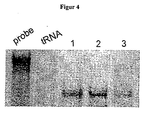
- one of the nucleic acids described above can be a diagnostic agent based on the polymerase chain reaction (Examples 3, 4, 5, PCR diagnostics, eg according to EP 0 200 362) or an "RNase protection assay", as in Example 1 2 shown in more detail, are produced. These assays are based on the specific hybridization of the previously described nucleic acids with the complementary strand, usually the corresponding mRNA.
- the nucleic acid described above may also be modified in this case, such as. As described in EP 0 063 879.
- a previously described DNA fragment is purified by suitable reagents, e.g. B.
- RNA preferably previously to suitable membranes of z. B. cellulose or nylon was incubated.
- the amount of mRNA specifically labeled by the probe and compared to the amount of healthy tissue mRNA can be determined.
- the determination of mRNA can also be carried out in tissue sections by means of in situ hybridization (see, for example, Werner et al., 1992, Proc. Natl. Acad. Sci. U SA 89: 6896-900).
- the diagnostic agent it is thus also possible to specifically measure a tissue sample in vitro for the expression strength of the corresponding gene in order to be able to reliably diagnose a possible disease associated with impaired keratinocyte activity (Examples 2, 3, 4, 5).
- a tissue sample in vitro for the expression strength of the corresponding gene in order to be able to reliably diagnose a possible disease associated with impaired keratinocyte activity.
- such a method is suitable for the early prognosis of disorders.
- This enables a preventive therapy and the analysis of predispositions.
- the expression of the gene mIK1 is already in the unwound state in the intact skin of old mice, which had wound healing wound healing disorders, compared to intact skin of control mice and in particular to intact skin of young mice increased.
- the expression strength of the gene mIK1 therefore makes it possible to predict the wound healing disturbance still in the intact tissue (Example 3, Table 2).
- Another diagnostic contains the described Polypeptide or the immunogenic parts described in more detail above from that.
- the polypeptide or the parts thereof which are preferably attached to a solid phase, z. B. of nitrocellulose or nylon, bound, for example, with the to be examined body fluid, eg. B. wound secretions, in vitro in contact be brought to react for example with autoimmune antibodies to can.
- the antibody-peptide complex can then be, for example, using labeled anti-human IgG or anti-hujnan IgM antibodies be detected.
- the mark is a Enzyme, such as peroxidase, which catalyzes a color reaction. The presence and the amount of autoimmune antibodies present can thus be over the Color reaction can be detected easily and quickly.
- Another diagnostic contains the antibodies themselves For example, using these antibodies can make a tissue sample easy and fast be examined to see whether the polypeptide in question in an elevated Amount is present, thereby indicating a possible disease, which is associated with disturbed keratinocyte activity, to obtain.
- the antibodies are for example with a Enzyme, as already described above, marked.
- the specific antibody-peptide complex This makes it easy and just as fast on an enzymatic Color reaction can be detected.
- Another diagnostic contains a probe, preferably a DNA probe, and / or primer.
- a probe preferably a DNA probe, and / or primer.
- This opens up another possibility usable nucleic acids, for example by isolation from a suitable gene bank, for example from a wound-specific Genbank, using a suitable probe to obtain (see, for example, J. Sambrook et al., 1989, Molecular Cloning. A Laboratory Manual 2nd edition., Cold Spring Harbor Laboratory, Cold Spring Harbor, NY Chapter 8, pages 8.1 through 8.81, chapter 9 pages 9.47 to 9.58 and chapter 10 pages 10.1 to 10.67).
- DNA or RNA fragments with a Length of about 100-1000 nucleotides, preferably with a length of about 200-500 Nucleotides, in particular with a length of about 100-400 nucleotides their sequence from the polypeptide sequences or functional variants thereof according to SEQ ID No. 3 or SEQ ID No. 4 of the Sequence Listing and / or by reference the cDNA sequences or variants thereof according to SEQ ID NO: 1 or SEQ ID No. 2 can be derived (see also Example 2).
- Oligonucleotides are synthesized, posing as primers for a polymerase Chain reaction are suitable.
- the suitable one can Nucleic acid or parts thereof from cDNA, for example skin-specific cDNA, amplified and isolated (Examples 2, 3, 4, 5).
- Suitable primers for example, DNA fragments with a length of about 10-100 nucleotides, preferably with a length of about 10 to 50 nucleotides, in particular with a length of 10-30 nucleotides of their sequence from the polypeptides according to SEQ ID NO: 3 to SEQ ID NO: 4 and / or based on the cDNA sequences according to SEQ ID No. 1 or SEQ ID No. 2 can be derived (Examples 3, 4, 5).
- the invention further describes a method for the production a test for the discovery of pharmacologically active substances in the Related to disorders with impaired keratinocyte activity, especially of wound healing disorders and / or psoriasis, thereby in that at least one nucleic acid according to SEQ ID Nos. 1 and 2, at least one polypeptide, according to SEQ ID Nos. 3 and 4, at least one Antibody or at least one modulator optionally together with suitable additives and auxiliaries, for Preparation of the test is used.
- pharmacologically active substances is to be understood as meaning all those molecules, compounds and / or compositions and mixtures of substances which may be combined with the above-described nucleic acids, polypeptides or antibodies, optionally together with suitable additives and excipients Conditions can interact.
- Possible pharmacologically active substances are simple chemical organic or inorganic molecules or compounds, but may also contain peptides, proteins or complexes thereof.
- pharmacologically active substances may influence the function (s) of the nucleic acids, polypeptides or antibodies in vivo or in vitro or else bind to the nucleic acids, polypeptides or antibodies described above or enter into other interactions with them covalently or noncovalently ,
- pharmacologically active substances are substances which can modulate the channel activity as described above.
- the invention further describes a test for pharmacological identification active substances associated with disorders that interfere with Keratinocyte activity associated with at least one Nucleic acid, at least one polypeptide or at least one modulator, together with appropriate additional and excipients.
- a suitable system can be prepared, for example, by the stable transformation of epidermal or dermal cells, in particular of keratinocytes with expression vectors which contain selectable marker genes and the nucleic acids described above.
- the expression of the above-described nucleic acids in the cells is changed so that it corresponds to the pathologically disturbed expression in vivo .
- Anti-sense oligonucleotides containing the useful nucleic acid sequences can also be used for this purpose. It is therefore of particular advantage for these systems to know the expression behavior of the genes in the case of disturbed physiological processes, as described in this application. It is often possible to mimic the pathological behavior of the cells in vitro and to search for substances that restore the normal behavior of the cells and that have a therapeutic potential.
- HaCaT cells which are commonly available, and the expression vector pCMV4 (Anderson et al., 1989, J. Biol. Chem. 264: 8222-9) are useful in these assay systems.
- the usable nucleic acid can be integrated into the expression vectors both in sense and in antisense orientation, so that the functional concentration of mRNA of the corresponding genes in the cells is either increased or decreased by hybridization with the antisense RNA.
- cells in culture After transformation and selection of stable transformants, cells in culture generally show altered proliferation, migration, and / or differentiation behavior compared to control cells. This behavior in vitro is often correlated with the function of the corresponding genes in regenerative processes in the organism (Yu et al., 1997, Arch. Dermatol. Res.
- the proliferation behavior of cells can be achieved very rapidly by, for example, the incorporation of labeled nucleotides into the DNA of the cells (see, for example, de Fries and Mitsuhashi, 1995, J.
- differentiation markers are, for example, keratin 6, 10 and 14 and loricrin and involucrin (Rosenthal et al., 1992, J, Invest, Dermatol, 98: 343-50), whose expression can be easily detected, for example, by means of commonly available antibodies.
- test system is based on the identification of interactions with the so-called “two-hybrid system” (Fields and Stemglanz, 1994, Trends in Genetics, 10, 286-292; Colas and Brent, 1998 TIBTECH, 16, 355-363).
- cells are transformed with expression vectors which Fusion proteins from the usable polypeptide and a DNA binding domain of a transcription factor such as Gal4 or Express LexA.
- the transformed cells also contain a Reporter gene whose promoter binding sites for the corresponding DNA Contain binding domain.
- the expression of the reporter gene can be strong be increased when the second fusion protein with the invention usable polypeptide interacts.
- This expression increase can be exploit to identify new pharmacologically active substances, for example, by adding a second to the construction of the second fusion protein cDNA library is made from regenerating tissue.
- this test system can be use this test system to screen for substances that interact between the usable polypeptide and one already inhibit known pharmacologically active substances.
- Such substances reduce the expression of the reporter gene in cells containing fusion proteins of the According to the invention usable polypeptide and the pharmacologically active Expressing substances (Vidal and Endoh, 1999, Trends in Biotechnology, 17: 374-81). In this way, new active substances can quickly be identified for therapy of disorders related to impaired keratinocyte activity can be used.
- Pharmacologically active substances of the usable Polypeptides may also be nucleic acids obtained via selection methods, such as For example, SELEX (see Jayasena, 1999, Clin. Chem. 45: 1628-50, Klug and Famulok, 1994, M. Mol. Biol. Rep. 20: 97-107; Toole et al., 1996, US 5582981) be isolated.
- SELEX see Jayasena, 1999, Clin. Chem. 45: 1628-50, Klug and Famulok, 1994, M. Mol. Biol. Rep. 20: 97-107; Toole et al., 1996, US 5582981
- SELEX see Jayasena, 1999, Clin. Chem. 45: 1628-50, Klug and Famulok, 1994, M. Mol. Biol. Rep. 20: 97-107; Toole et al., 1996, US 5582981
- Aptamers can also be used in their mirror-image form, for example as L-ribonucleotide, synthesized and Selected (Nolte et al., 1996, Nat. Biotechnol. 14: 1116-9; Klussmann et al., 1996, Nat. Biotechnol. 14: 1112-5). So isolated forms have the advantage that they are not degraded by naturally occurring ribonucleases and therefore have greater stability.
- the invention further describes a method for producing a a carrier fixed arrays for analysis in connection with Diseases associated with impaired keratinocyte activity in which at least one nucleic acid, at least one polypeptide or at least one antibody is used for production.
- the invention further describes a fixed on a support material Array for analysis related to disorders that interfere with Keratinocyte activity, in particular of Wound healing disorders and / or psoriasis, which is characterized in that at least one nucleic acid and / or at least one polypeptide and / or or at least one antibody.
- Arrays can be used for analysis Diseases associated with impaired keratinocyte activity especially of wound healing disorders and / or psoriasis.
- the invention further describes a method for producing a DNA chips and / or protein chips for analysis related Diseases associated with impaired keratinocyte activity in particular, wound healing disorders and / or psoriasis resulting therefrom in that at least one nucleic acid according to SEQ ID Nos. 1 and 2, at least one polypeptide, according to SEQ ID Nos. 3 and 4, or at least one Antibody as described above is used for the preparation.
- Methods for producing such DNA chips and / or protein chips are for Example from WO 89/109077, WO 90/15070, WO 95/35505 and US 5,744,305 by means of mottling, printing or solid phase chemistry in conjunction with Photolabile protecting groups known.
- the invention further describes a DNA chip and / or Protein chip for analysis related to disorders that interfere with Keratinocyte activity, in particular of Wound healing disorders and / or psoriasis, the at least one nucleic acid, according to SEQ ID Nos. 1 and 2, and / or at least one polypeptide, according to SEQ ID Nos. 3 and 4, and / or or at least one antibody contains.
- DNA chips are known, for example, from US 5,837,832.
- the invention further describes a medicament for Indication and therapy, which is a usable nucleic acid, a useful polypeptide or a usable modulator and optionally suitable additives or auxiliaries contains and a process for the preparation of such a medicament for Treatment of disorders with impaired keratinocyte activity in Related, in particular wound healing disorders and / or Psoriasis, in which a usable nucleic acid, according to SEQ ID Nos. 1 and 2, a useful polypeptide according to SEQ ID Nos. 3 and 4, or a usable modulator with a pharmaceutically acceptable carrier.
- polypeptide sequences of mIK1 and hIK1, as well as their coding Nucleic acids are listed according to SEQ ID No. 1 to SEQ ID No. 4.
- oligonucleotides and polynucleotides used for the examples are listed according to SEQ ID NO: 5 to SEQ ID NO: 13.
- Example 1 The "intermediate-conductance" calcium-dependent potassium channel hIK1 mediates a long-lasting, modulated by 1-EBIO Hyperpolarization of keratinocytes after stimulation with ATP, bradykinin or histamine
- HaCaT cells were electrophysiologically examined.
- the HaCaT keratinocytes were grown in DEM with 10% FRS (Gibco BRL) to which antibiotics (penicillin / streptomycin 100 U / ml) had been added.
- the final Ca 2+ concentration was 1.8 mM.
- the cells were incubated until a confluent cell culture had formed; then the culture medium was replaced with "Standard Bath Solution”(SBS; 130 mM NaCl, 3 mM KCl, 2 mM CaCl 2 , 2 mM MgCl 2 , 25 mM HEPES / NaHEPES, 10 mM D-glucose, pH 7.4) and examined the shells on an inverted microscope (Axiovert, Zeiss). The "patch” pipettes were made from borosilicate tubes on a horizontal puller (DMZ, Zeitz) after the two-stage extraction process.
- SBS Standard Bath Solution
- the resistance of these "patch" pipettes was 5-8 G ⁇ in the bath. After sealing in the G ⁇ range (typically 1.5-2 G ⁇ ), the amplifier was switched to current clamp mode. Within 3-5 min, the membrane potentials reached stable values.
- the electrophysiological signals were recorded, amplified and digitized using an Axopatch 200 amplifier in conjunction with a TL-1 Labmaster interface and AXOTAPE software (Axon Instruments). Statistical evaluation (one-way ANOVA with Bonferri post-test comparison) was performed with Graphpad prism 2.0.
- the electrophysiological leads were perforated "patches” HaCaT cells were grown which grew to a confluent monolayer were.
- the perfusion of HaCaT cells with ATP (1-1000 ⁇ M) induced a biphasic change in the Membrane potential resulting from a short, transient depolarization followed by There was a clear and long-lasting hyperpolarization (Figure 1 A).
- the strong hyperpolarization lasted at ATP concentrations of ⁇ 10 ⁇ M at least 5 min after ATP addition (5 min), with some keratinocytes even remained hyperpolarized throughout the observation period (up to 20 min). This observation shows that changes in the ATP concentration long-lasting changes in the membrane potential and thus the Effect keratinocyte activity.
- Verapamil (10-100 ⁇ M), which inhibits K + currents in terminally differentiating keratinocytes (Mauro et al., 1997, J. Invest. Derm., 108: 864-870), did not affect the hyperpolarizing effect of ATP (hyperpolarization on 73 ⁇ 1 mV, n 3).
- K + channels, which are inhibited by clotrimazole and charybdotoxin are voltage-independent calcium-activated potassium channels.
- 1-EBIO a specific activator of the "intermediate-conductance" calcium-activated potassium channel hIK1 (Syme et al., 2000, Am. J.
- DCEBIO depolarizes 300-1000 fold more than HaCaT 1-EBIO Cells can cause.
- DCEBIO can be used in much lower concentrations to achieve the same electrophysiological effect as with 1-EBIO (approximately 300-1000 fold less concentrated) and thus is a particularly preferred modulator of the hIK1 channel.
- hIK1 was detected in keratinocytes and its Role in keratinocyte activity. This shows that Polypeptide hIK1 and this encoding nucleic acids and modulators of the Channels for use in diseases with impaired keratinocyte activity related, especially in wound healing disorders and / or Psoriasis, are suitable.
- proliferating sub-confluent cells proliferating sub-confluent cells, cells that had just reached confluence, and resting cells (4 days after confluence) were examined.
- the activity of these keratinocytes was determined by differentiation-specific keratin-10 expression.
- the cells were washed in ice-cold PBS and fixed with acetone / methanol (1: 1) at -20 ° C. for 20 min. Endogenous peroxidases were blocked with 1% H 2 O 2 at room temperature.
- the cells After saturating the non-specific binding sites with 3% BSA in PBS, the cells were incubated overnight in a 1: 500 dilution of the mouse anti-K10 antibody (DAKO) in 3% BSA in PBS at 4 ° C and then 3 times washed with PBS and once with 3% BSA in PBS. After 2 h incubation with a peroxidase-coupled anti-mouse antibody at room temperature, the cells were washed three times with PBS and once with ddH 2 O. Subsequently, the cells were stained with the peroxidase substrate kit and 3-amino-9-ethylcarbazole as a chromogenic substrate (Vector Laboratories).
- DAKO mouse anti-K10 antibody
- a PCR-amplified gene fragment was cloned into the transcription vector pBluescript KSII (+) (Stratagene) and the plasmid was linearized.
- An "antisense" transcript was then prepared in vitro using T3 or T7 polymerase and 32 P-UTP (800 Ci / mol). 20 ⁇ g of RNA were hybridized at 42 ° C overnight with 100,000 cpm labeled "antisense" transcript. As a negative control 20 ug tRNA were used. The hybrids were then digested for 1 h at 30 ° C with RNAse and RNAse T1. The protected fragments were separated on 5% acrylamide / 8 M urea gels and analyzed by autoradiography.
- hIK1 For the detection of hIK1, a riboprobe (SEQ ID NO: 5) was used that is complementary to nucleotides 740-1004 of the human hIK1 gene. The result of the experiment is shown in FIG. It was observed that hIK1 is strongly expressed in proliferating (lane “1”) and straight confluent cells (lane “2”), while the amount was significantly reduced in postconfluent, partially differentiated cells (lane “3”). No signal was observed in the negative control (lane “tRNA”). In the "Probe” lane, 1000 cpm of the hybridization probe was plotted as a control of radioactive label and as a size standard.
- the skin is a highly complex system whose cell composition is subject to spatial and temporal changes, for example during a disease. Furthermore, the activities of the cells change, for example, through interaction with other cells. Therefore, processes in the skin can not be adequately mimicked by simple cell systems.
- the expression of murine mIK 1 (SEQ ID NO: 2) was used as an example of wound healing and various wound healing states. followed in biopsies by punch wounds. The investigation was carried out by means of "TaqMan analysis" in the GeneAmp5700 from Applied Biosystems.
- Normal healing Day 1 wounds and intact skin were obtained from isotonic saline-treated 10 week old BALB / c mice by scissors cutting.
- BALB / c mice were treated with dexamethasone (0.5 mg dexamethasone in isotonic saline per kg body weight ip twice a day for 5 days) before wounding prior to wounding.
- the control used was intact skin from mice treated with isotonic saline as described above.
- untreated Day 1 wounds and intact skin samples from 4 week old and 12 month old BALB / c mice were used.
- RNAclean buffer AGS, Heidelberg
- 2-mercaptoethanol had been added using a disperser.
- the RNA was then extracted by phenolating twice with water-saturated acidic phenol and in the presence of 1-bromo-3-chloro-propane. Subsequently, an isopropanol and an ethanol precipitation were carried out and the RNA was washed with 75% ethanol. Thereafter, DNase I digestion of the RNA was performed.
- RNA was phenolated, ethanol precipitated and washed. All the above steps were carried out with DEPC (diethylpyrocarbonate) -treated solutions or liquids as far as they did not contain any reactive amino groups. Subsequently, the production of cDNA from the extracted RNA.
- DEPC diethylpyrocarbonate
- RNA was distributed to 2 0.2 ml tubes (50 ⁇ l each) and reverse transcription carried out in a temperature cycler (10 min at 25 ° C, 30 min at 48 ° C and 5 min at 95 ° C).
- the subsequent quantification of the cDNA was carried out by means of quantitative PCR using the "SYBR-Green PCR Master Mix” (PE Applied Biosystems), wherein for the determination of the mIK1 cDNA amount one Triple determination (in each case with mIK1 primers and GAPDH primers) was carried out.
- the stock solution for each triplet contained 57 ⁇ l Total volume 37.5 ⁇ l 2 x "SYBR Master Mix", 0.75 ⁇ l AmpErase UNG (1 U / ⁇ l) and 18.75 ⁇ l of DEPC-treated water.
- cDNA solutions were used as a dilution series to generate a standard curve for the GAPDH-PCR (4 ng / ⁇ l; 2 ng / ul; 1 ng / ⁇ l; 0.5 ng / ⁇ l and 0.25 ng / ⁇ l). 15 ⁇ l each of these cDNA solutions were used mixed with 60 ⁇ l of stock solution / primer mixture to determine GAPDH and distributed on 3 "wells".
- a standard curve for the mIK1-PCR created; The same dilutions were used for the GAPDH standard curve were used.
- a PCR approach was used without cDNA.
- the evaluation was done by determining the relative abundance of mIK1 relative to the GAPDH reference.
- a standard curve was first created by plotting the C T values of the dilution series against the logarithm of the cDNA amount in the PCR approach (in ng of transcribed RNA) and ascertaining the slope (s) of the straight line.
- a disease associated with impaired keratinocyte activity to determine the expression of mIK1 in murine biopsies of determined at different times of wound healing. It was to Time 1 h, 7 h, 15 h, 24 h, 3 days, 5 days, 7 days and 14 days after Wound wound biopsies and a biopsy of intact skin of 10 Weekly control mice as described above by silhouette receive. The RNA was isolated from the tissue and the relative amount of mIK1 in the biopsies. This showed that already 7 h after Wounding a significant upregulation of mIK1 expression to observe is (Table 3).
- mice have proven to be a suitable model system for investigating wound healing in humans. Nevertheless, it should be checked whether a differential expression of the nucleic acids which can be used according to the invention, which has been observed in the mouse by the example of wound healing, can also be detected in humans.
- skin samples were taken from healthy volunteers from untreated, intact skin, from day 1 wounds or from day 5 wounds using 4 mm or 6 mm punches. From each group (intact skin, day 1 wound, day 5 wound), biopsies were pooled by 14 subjects each. In addition, patients with chronic venous ulcers (Ulcera cruris venosum) received biopsies of both intact skin and the wound base and wound margin at the same time.
- Ulcera cruris venosum chronic venous ulcers
- biopsies were pooled by 6 subjects each.
- the biopsies were minced using a ball mill and, as described in Example 3, isolated from RNA as described in Example 3, then digested DNase I and then transcribed into cDNA.
- the quantification of wound healing-relevant cDNAs was also carried out as described in Example 3. The results of the experiments are summarized in Table 4.
- hGAPDH primer 1 CATGGGTGTGAACCATGAGAAG (SEQ ID NO: 10); hGAPDH primer 2: CTAAGCAGTTGGTGGTGCAGG (SEQ ID NO: 11), hIK1 primer 1: GCGCTCTCAATCAAGTCCG (SEQ ID NO: 11); 8), hIK1 primer 2: GTGTTCATGTAAAGCTTGGCCA (SEQ ID NO: 9)) based on the known sequences of human GAPDH (GenBank: M17851) and human hIK1 (SEQ ID NO: 1).
- cDNA from 10 ng reverse transcribed total RNA were amplified per batch in a total volume of 25 ul.
- PCR was performed according to the manufacturer's instructions (PE Applied Biosystems, SYBR Green PCR and RT-PCR Reagents Protocol, 1998).
- the C T values were analyzed and used to calculate the frequency of hIK1 mRNA relative to GAPDH mRNA.
- the results of the experiment are shown in Table 4. It was found that the amount of hIK1 mRNA was only slightly increased in human day 1 wounds compared to intact skin, whereas on day 5 after wound replacement a reduced expression of hIK1 was measured, which was for example due to the increased differentiation of keratinocytes ( see example 2).
- hIK1 has already been shown in different tissues in humans (Ishii et al 1997, Proc Natl Acad Sci USA 94: 11651-11656; Joiner et al. 1997; Proc. Natl. Acad. Sci. USA 94: 11013-11018; WO 99/03882). Striking is that the expression on non-electrically excitable organs, such as Placenta and prostate is limited, but no expression in the brain or in the Heart was detected. This is reflected in the doctrine that the expression of hIK1 in humans on cells of the blood and the Blood vessel system is limited (WO00 / 34248).
- Organs expressed were organ-specific total RNA pools of adult human donors (BioChain Institute, Inc.): from 5 Donors were isolated total kidney RNA from 5 donors lung total RNA, of 4 donors total fatty tissue RNA, of 5 donors total liver RNA, of 5 donors brain total RNA, of 5 donors total heart RNA, of 2 donors total spleen RNA, from 5 donors total skeletal muscle RNA and isolated from 5 donors of total small intestinal RNA, digested with DNAse I, and the total RNAs are pooled separately according to organs.
- Example 3 a "TaqMan analysis" as described in Example 3 with the total RNAs of these Organs and total RNA from skin obtained as in Example 4 and the frequency of hIK1 mRNA relative to GAPDH mRNA certainly.
- the relative amounts of hIK1 mRNA in the organs are in Table 5 specified.
- hIK1 is expressed in the skin.
- hIK1 is expressed in skin to a comparable extent, such as in Lungs and spleen. In the latter two organs was a comparatively strong Expression of hIK1 has been demonstrated (WO 99/03882).
- hIK1 in brain, heart and skeletal muscle be detected.
- the result is inconsistent with the prior art probably compared with the higher sensitivity of the TaqMan analysis based on the "Northern Blot" analysis used in the prior art.
- This Experiment therefore shows two aspects of the present invention.
- the expression of hIK1 is a prerequisite that the gene hIK1, the Protein and modulators of its activity for diagnosis, prevention and / or Treatment of diseases associated with impaired keratinocyte activity in the Related, can be used.
- the prevention and / or treatment of Diseases associated with impaired keratinocyte activity, especially wound healing disorders and / or psoriasis, are against Preferably to treat topically, since this form of application the direct and ensures specific contact with the keratinocytes. Therefore, the Use of hIK1, its coding nucleic acids and / or modulators Its activity is particularly advantageous in prevention and / or treatment of these diseases.
- Equal amounts of protein from the various lysates were then compared by immunoblotting against the keratinocyte differentiation markers involucrin (1: 500, Sigma) and keratin 1 and 10 (1: 250, Progen) (FIG. 6). It is clearly evident that the two activators of hIK1, 1-EBIO and zoxazolamine inhibit the differentiation and thus the keratinocyte activity of HaCaT cells in a dose-dependent manner.
- KGM / 10% FCS was used as the positive control for proliferation, while the IK1 activator zoxazolamine at 1 mM concentration was used as a comparison for the 1-EBIO effect.
- the solvent control was 1% DMSO in KGM.
- Cell proliferation was measured by the incorporation of bromo-dideoxyuridine (BrDU) during cell division according to the manufacturer's instructions ("The Cell Proliferation ELISA", BrDU, Roche) . The incorporation of BrDU was quantified by determining absorbance at 450 nm The absorption (A [450 nm]) as a measure of the proliferation rate on the Y axis is plotted in each case in FIGS. 7 and 8.
- FIGS Serum-treated and untreated cells clearly show that, on the one hand alone, the two activators are incapable of stimulating cell proliferation (Figure 7)
- both activators are capable of inhibiting serum-induced proliferation and thus can inhibit keratinocyte activity
- FIG. 8 also shows that inhibition by the hIK1 activator 1-EBIO is dose-dependent and shows the strongest effect at a concentration of 1 mM.
- derivatives of the modulators which are lower in size Concentration can be used, for example, DCEBIO (5,6-dichloro-1-ethyl-1,3-dihydro-2H-benzimidazol-2-one) as a dichloro derivative of 1-EBIO. Accordingly, for the treatment of wound healing disorders in which a Stimulation of keratinocyte proliferation, an increase in the Amount of IK channel preferred. This may, for example gene therapy under Use of a gene therapeutic vector containing a nucleic acid coding for an inventively usable IK channel done.
- DCEBIO 5,6-dichloro-1-ethyl-1,3-dihydro-2H-benzimidazol-2-one
- MIK1 cDNA amount Intact skin 1.00 1 h 1.03 7 h 1.71 15 h 2.24 24 hours 1.86 3 d 2.71 5 d 2.59 7 d 2.43 14 d 2.24 biopsy Rel.
- HIK1 cDNA amount Patient Pool 1: Intact skin Healthy patients 1.00
- Patient Pool 2 Day 1 wound Healthy patients 1.32
- Patient Pool 3 Day 5 wound Healthy patients 0.64
- Patient Pool 4 Intact skin Ulcer patients 0.83
- HIK cDNA amount skin 0.54 kidney 0.41 liver 0.23 brain 0.39 heart 0.36 spleen 0.66 skeletal muscle 0.28 small intestine 0.56 lung 0.58 adipose tissue 0.58
Landscapes
- Health & Medical Sciences (AREA)
- Life Sciences & Earth Sciences (AREA)
- Engineering & Computer Science (AREA)
- Chemical & Material Sciences (AREA)
- General Health & Medical Sciences (AREA)
- Medicinal Chemistry (AREA)
- Immunology (AREA)
- Biomedical Technology (AREA)
- Molecular Biology (AREA)
- Public Health (AREA)
- Pharmacology & Pharmacy (AREA)
- Animal Behavior & Ethology (AREA)
- Hematology (AREA)
- Veterinary Medicine (AREA)
- Urology & Nephrology (AREA)
- Bioinformatics & Cheminformatics (AREA)
- Cell Biology (AREA)
- Organic Chemistry (AREA)
- Nuclear Medicine, Radiotherapy & Molecular Imaging (AREA)
- General Chemical & Material Sciences (AREA)
- Chemical Kinetics & Catalysis (AREA)
- General Physics & Mathematics (AREA)
- Biochemistry (AREA)
- Microbiology (AREA)
- Biotechnology (AREA)
- Pathology (AREA)
- Food Science & Technology (AREA)
- Physics & Mathematics (AREA)
- Analytical Chemistry (AREA)
- Dermatology (AREA)
- Epidemiology (AREA)
- Proteomics, Peptides & Aminoacids (AREA)
- Toxicology (AREA)
- Tropical Medicine & Parasitology (AREA)
- Zoology (AREA)
- Gastroenterology & Hepatology (AREA)
- Pulmonology (AREA)
- Marine Sciences & Fisheries (AREA)
- Pharmaceuticals Containing Other Organic And Inorganic Compounds (AREA)
- Medicines That Contain Protein Lipid Enzymes And Other Medicines (AREA)
Applications Claiming Priority (5)
| Application Number | Priority Date | Filing Date | Title |
|---|---|---|---|
| DE10065475A DE10065475A1 (de) | 2000-12-28 | 2000-12-28 | Verwendung von "intermediate-conductance" Kaliumkanälen und Modulatoren zur Diagnose und Behandlung von Krankheiten mit gestörter Keratinozytenfunktion |
| DE10065475 | 2000-12-28 | ||
| US27745301P | 2001-03-20 | 2001-03-20 | |
| US277453P | 2001-03-20 | ||
| PCT/EP2001/015317 WO2002053171A2 (de) | 2000-12-28 | 2001-12-27 | Verwendung von 'intermediate-conductance kaliumkanälen und modulatoren zur diagnose und behandlung von krankheiten mit gestörter keratinozytenaktivität |
Publications (2)
| Publication Number | Publication Date |
|---|---|
| EP1345618A2 EP1345618A2 (de) | 2003-09-24 |
| EP1345618B1 true EP1345618B1 (de) | 2005-03-23 |
Family
ID=26008117
Family Applications (1)
| Application Number | Title | Priority Date | Filing Date |
|---|---|---|---|
| EP01272669A Expired - Lifetime EP1345618B1 (de) | 2000-12-28 | 2001-12-27 | Chlorzoxazon zur behandlung von psoriasis |
Country Status (5)
| Country | Link |
|---|---|
| EP (1) | EP1345618B1 (enExample) |
| JP (1) | JP2004530642A (enExample) |
| AT (1) | ATE291435T1 (enExample) |
| CA (1) | CA2433041A1 (enExample) |
| WO (1) | WO2002053171A2 (enExample) |
Families Citing this family (3)
| Publication number | Priority date | Publication date | Assignee | Title |
|---|---|---|---|---|
| DE10250870A1 (de) * | 2002-10-31 | 2004-05-13 | Switch Biotech Ag | Zusammensetzung enthaltend Aktivatoren von IK-Kaliumkanälen und Calcineurin-Antagonisten und deren Verwendung |
| WO2004064835A1 (en) * | 2003-01-17 | 2004-08-05 | Neurosearch A/S | Use of ion channel modulating agents for treating pain |
| US7851431B2 (en) * | 2005-07-27 | 2010-12-14 | Prescription Dispensing Laboratories | Treatment of actinic keratoses with calcium channel blockers |
Family Cites Families (11)
| Publication number | Priority date | Publication date | Assignee | Title |
|---|---|---|---|---|
| US4569935A (en) * | 1983-03-17 | 1986-02-11 | University Of Tennessee Research Corp. | Topical treatment of psoriasis with imidazole antibiotics |
| DE3563964D1 (en) * | 1984-10-16 | 1988-09-01 | Synthelabo | Piperidine derivatives, their preparation and their therapeutical application |
| GB2273873A (en) * | 1992-12-23 | 1994-07-06 | Univ Sheffield | Treatment of psoriasis |
| WO1997018332A1 (en) * | 1995-11-13 | 1997-05-22 | Brandeis University | Regulation of cancer-causing tyrosine kinases by potassium ion conductance |
| WO1998011139A1 (en) * | 1996-09-11 | 1998-03-19 | Oregon Health Sciences University | Small and intermediate conductance, calcium-activated potassium channels and uses thereof |
| WO1999025347A2 (en) * | 1997-11-14 | 1999-05-27 | Neurosearch A/S | Chemical compounds having ion channel blocking activity for the treatment of immune dysfunction |
| JPH11209302A (ja) * | 1998-01-21 | 1999-08-03 | Pola Chem Ind Inc | 抗掻痒剤 |
| ATE285769T1 (de) * | 1998-12-04 | 2005-01-15 | Neurosearch As | Verwendung von isatinderivaten als ionenkanalaktivierende mittel |
| EP1144387A1 (en) * | 1998-12-04 | 2001-10-17 | Neurosearch A/S | New benzimidazolone-, benzoxazolone-, or benzothiazolone derivatives as ion channel modulating agents |
| AU1549700A (en) * | 1998-12-04 | 2000-06-26 | Neurosearch A/S | Ion channel modulating agents |
| EP1140784A2 (en) * | 1998-12-22 | 2001-10-10 | Neurosearch A/S | Ion channel modulating agents |
-
2001
- 2001-12-27 EP EP01272669A patent/EP1345618B1/de not_active Expired - Lifetime
- 2001-12-27 JP JP2002554120A patent/JP2004530642A/ja active Pending
- 2001-12-27 WO PCT/EP2001/015317 patent/WO2002053171A2/de not_active Ceased
- 2001-12-27 CA CA002433041A patent/CA2433041A1/en not_active Abandoned
- 2001-12-27 AT AT01272669T patent/ATE291435T1/de not_active IP Right Cessation
Also Published As
| Publication number | Publication date |
|---|---|
| CA2433041A1 (en) | 2002-07-11 |
| EP1345618A2 (de) | 2003-09-24 |
| JP2004530642A (ja) | 2004-10-07 |
| ATE291435T1 (de) | 2005-04-15 |
| WO2002053171A2 (de) | 2002-07-11 |
| WO2002053171A3 (de) | 2003-03-20 |
Similar Documents
| Publication | Publication Date | Title |
|---|---|---|
| DE60202727T2 (de) | Inhibition von Histondeacetylase zur Behandlung von Herzhypertrophie | |
| Arredondo et al. | Central role of α7 nicotinic receptor in differentiation of the stratified squamous epithelium | |
| Calorio et al. | Impaired chromaffin cell excitability and exocytosis in autistic Timothy syndrome TS2‐neo mouse rescued by L‐type calcium channel blockers | |
| Imlach et al. | The molecular mechanism of “ryegrass staggers,” a neurological disorder of K+ channels | |
| Zhang et al. | Induction of apoptosis by human amylin in RINm5F islet β‐cells is associated with enhanced expression of p53 and p21WAF1/CIP1 | |
| EP1176200A2 (de) | Verwendung von Polypeptiden oder diese kodierende Nukleinsäuren zur Diagnose oder Behandlung von Hauterkrankung oder Wundheilung sowie ihre Verwendung zur Indentifizierung von pharmakologisch aktiven Substanzen | |
| EP1579221A2 (de) | Verwendungen von hmgb, hmgn, hmga proteinen | |
| EP2358364A1 (en) | Therapeutics for neurological disorders | |
| DE10065475A1 (de) | Verwendung von "intermediate-conductance" Kaliumkanälen und Modulatoren zur Diagnose und Behandlung von Krankheiten mit gestörter Keratinozytenfunktion | |
| Carlson et al. | Chronic treatment with agents that stabilize cytosolic IκB-α enhances survival and improves resting membrane potential in MDX muscle fibers subjected to chronic passive stretch | |
| US20110144125A1 (en) | Anti-Arrhythmia Agents, Methods of Their Use, Methods of Their Identification and Kits Therefore | |
| DE10121254A1 (de) | MRP8/MRP14 Heterodimers oder seiner Einzelkomponenten alleine oder in Kombination zur Behandlung und/oder Prävention von Hauterkrankungen, Wunden und/oder Wundheilungsstörungen, die durch eine verringerte Menge an MRP8/MRP14 Heterodimeren gekennzeichnet sind | |
| WO2003072126A2 (de) | Verwendung eines fibroblastenwachstumsfaktor-bindeproteins zur behandlung und diagnose von diabetischen wundheilungsstörungen | |
| EP2289520A1 (de) | Verwendung von Acetylsalicylsäure zur Prophylaxe und/oder Therapie von Influenzavirus Infekten. | |
| WO2002053171A2 (de) | Verwendung von 'intermediate-conductance kaliumkanälen und modulatoren zur diagnose und behandlung von krankheiten mit gestörter keratinozytenaktivität | |
| DE10121255A1 (de) | Verwendung von alpha 1-Antichymotrypsin Polypeptiden oder diese kodierende Nukleinsäuren, oder einer ein ACT Polypeptid oder diese kodierende Nukleinsäure exprimierende Zelle, zur Behandlung und/oder Prävention von diabetes-assoziierten und/oder arteriellen schlecht heilenden Wunden und zur Identifizierung von pharmakologisch aktiven Substanzen | |
| DE69926535T2 (de) | Behandlung von erkrankungen mit zystenbildung | |
| JP7097613B2 (ja) | 疼痛治療のためのアルファ-チューブリンアセチル化の阻害剤 | |
| DE60009333T2 (de) | Verfahren zur hemmung der atrophie oder förderung der hypertrophie | |
| EP1178053A2 (de) | Polypeptide oder diese kodierende Nukleinsäuren einer Familie von G-Protein gekoppelten Rezeptoren sowie deren Verwendung zur Diagnose oder Behandlung von Hautkrankheiten | |
| WO2004039409A2 (de) | Zusammensetzung enthaltend aktivatoren von ik-kaliumkanälen und calcineurin-antagonisten und deren verwendung | |
| Esquerro et al. | THE EFFECTS OF THE CALCIUM IONOPHORE, A23187, ON THE AXOPLASMIC TRANSPORT OF DOPAMINE β‐HYDROXYLASE | |
| EP1340507B1 (de) | Verwendung eines Fibroblastenwachstumsfaktor-Bindeproteins zur Behandlung und Diagnose von diabetischen Wundheilugnsstörungen | |
| US11278504B1 (en) | Treatment of a lionfish sting and formulations for use thereof | |
| EP1395834A2 (de) | Screeningverfahren mit bnpi und dnpi |
Legal Events
| Date | Code | Title | Description |
|---|---|---|---|
| PUAI | Public reference made under article 153(3) epc to a published international application that has entered the european phase |
Free format text: ORIGINAL CODE: 0009012 |
|
| 17P | Request for examination filed |
Effective date: 20030617 |
|
| AK | Designated contracting states |
Kind code of ref document: A2 Designated state(s): AT BE CH CY DE DK ES FI FR GB GR IE IT LI LU MC NL PT SE TR |
|
| AX | Request for extension of the european patent |
Extension state: AL LT LV MK RO SI |
|
| RAP1 | Party data changed (applicant data changed or rights of an application transferred) |
Owner name: SWITCH BIOTECH AKTIENGESELLSCHAFT Owner name: LUDWIG MAXIMILIANS UNIVERSITAET |
|
| RAP1 | Party data changed (applicant data changed or rights of an application transferred) |
Owner name: LUDWIG MAXIMILIANS UNIVERSITAET Owner name: ALZHEIMER, CHRISTIAN Owner name: SWITCH BIOTECH AKTIENGESELLSCHAFT |
|
| RIC1 | Information provided on ipc code assigned before grant |
Ipc: 7A 61P 17/06 B Ipc: 7A 61K 38/17 A Ipc: 7A 61K 31/428 B |
|
| RTI1 | Title (correction) |
Free format text: CHLORZOXAZONE FOR THE TREATMENT OF PSORIASIS |
|
| GRAP | Despatch of communication of intention to grant a patent |
Free format text: ORIGINAL CODE: EPIDOSNIGR1 |
|
| GRAS | Grant fee paid |
Free format text: ORIGINAL CODE: EPIDOSNIGR3 |
|
| GRAA | (expected) grant |
Free format text: ORIGINAL CODE: 0009210 |
|
| AK | Designated contracting states |
Kind code of ref document: B1 Designated state(s): AT BE CH CY DE DK ES FI FR GB GR IE IT LI LU MC NL PT SE TR |
|
| PG25 | Lapsed in a contracting state [announced via postgrant information from national office to epo] |
Ref country code: IT Free format text: LAPSE BECAUSE OF FAILURE TO SUBMIT A TRANSLATION OF THE DESCRIPTION OR TO PAY THE FEE WITHIN THE PRESCRIBED TIME-LIMIT;WARNING: LAPSES OF ITALIAN PATENTS WITH EFFECTIVE DATE BEFORE 2007 MAY HAVE OCCURRED AT ANY TIME BEFORE 2007. THE CORRECT EFFECTIVE DATE MAY BE DIFFERENT FROM THE ONE RECORDED. Effective date: 20050323 Ref country code: NL Free format text: LAPSE BECAUSE OF FAILURE TO SUBMIT A TRANSLATION OF THE DESCRIPTION OR TO PAY THE FEE WITHIN THE PRESCRIBED TIME-LIMIT Effective date: 20050323 Ref country code: TR Free format text: LAPSE BECAUSE OF FAILURE TO SUBMIT A TRANSLATION OF THE DESCRIPTION OR TO PAY THE FEE WITHIN THE PRESCRIBED TIME-LIMIT Effective date: 20050323 Ref country code: GB Free format text: LAPSE BECAUSE OF FAILURE TO SUBMIT A TRANSLATION OF THE DESCRIPTION OR TO PAY THE FEE WITHIN THE PRESCRIBED TIME-LIMIT Effective date: 20050323 Ref country code: FI Free format text: LAPSE BECAUSE OF FAILURE TO SUBMIT A TRANSLATION OF THE DESCRIPTION OR TO PAY THE FEE WITHIN THE PRESCRIBED TIME-LIMIT Effective date: 20050323 Ref country code: IE Free format text: LAPSE BECAUSE OF FAILURE TO SUBMIT A TRANSLATION OF THE DESCRIPTION OR TO PAY THE FEE WITHIN THE PRESCRIBED TIME-LIMIT Effective date: 20050323 |
|
| REG | Reference to a national code |
Ref country code: GB Ref legal event code: FG4D Free format text: NOT ENGLISH |
|
| RIN1 | Information on inventor provided before grant (corrected) |
Inventor name: GOPPELT, ANDREAS Inventor name: ALZHEIMER, CHRISTIAN Inventor name: KOEGEL, HEIDI |
|
| REG | Reference to a national code |
Ref country code: CH Ref legal event code: EP |
|
| REG | Reference to a national code |
Ref country code: IE Ref legal event code: FG4D Free format text: GERMAN |
|
| REF | Corresponds to: |
Ref document number: 50105735 Country of ref document: DE Date of ref document: 20050428 Kind code of ref document: P |
|
| PG25 | Lapsed in a contracting state [announced via postgrant information from national office to epo] |
Ref country code: GR Free format text: LAPSE BECAUSE OF FAILURE TO SUBMIT A TRANSLATION OF THE DESCRIPTION OR TO PAY THE FEE WITHIN THE PRESCRIBED TIME-LIMIT Effective date: 20050623 Ref country code: DK Free format text: LAPSE BECAUSE OF FAILURE TO SUBMIT A TRANSLATION OF THE DESCRIPTION OR TO PAY THE FEE WITHIN THE PRESCRIBED TIME-LIMIT Effective date: 20050623 |
|
| PG25 | Lapsed in a contracting state [announced via postgrant information from national office to epo] |
Ref country code: ES Free format text: LAPSE BECAUSE OF FAILURE TO SUBMIT A TRANSLATION OF THE DESCRIPTION OR TO PAY THE FEE WITHIN THE PRESCRIBED TIME-LIMIT Effective date: 20050704 |
|
| NLV1 | Nl: lapsed or annulled due to failure to fulfill the requirements of art. 29p and 29m of the patents act | ||
| PG25 | Lapsed in a contracting state [announced via postgrant information from national office to epo] |
Ref country code: PT Free format text: LAPSE BECAUSE OF FAILURE TO SUBMIT A TRANSLATION OF THE DESCRIPTION OR TO PAY THE FEE WITHIN THE PRESCRIBED TIME-LIMIT Effective date: 20050907 |
|
| GBV | Gb: ep patent (uk) treated as always having been void in accordance with gb section 77(7)/1977 [no translation filed] |
Effective date: 20050323 |
|
| REG | Reference to a national code |
Ref country code: IE Ref legal event code: FD4D |
|
| PG25 | Lapsed in a contracting state [announced via postgrant information from national office to epo] |
Ref country code: CY Free format text: LAPSE BECAUSE OF FAILURE TO SUBMIT A TRANSLATION OF THE DESCRIPTION OR TO PAY THE FEE WITHIN THE PRESCRIBED TIME-LIMIT Effective date: 20051227 Ref country code: AT Free format text: LAPSE BECAUSE OF NON-PAYMENT OF DUE FEES Effective date: 20051227 |
|
| PG25 | Lapsed in a contracting state [announced via postgrant information from national office to epo] |
Ref country code: MC Free format text: LAPSE BECAUSE OF NON-PAYMENT OF DUE FEES Effective date: 20051231 Ref country code: LU Free format text: LAPSE BECAUSE OF NON-PAYMENT OF DUE FEES Effective date: 20051231 Ref country code: LI Free format text: LAPSE BECAUSE OF NON-PAYMENT OF DUE FEES Effective date: 20051231 Ref country code: BE Free format text: LAPSE BECAUSE OF NON-PAYMENT OF DUE FEES Effective date: 20051231 Ref country code: CH Free format text: LAPSE BECAUSE OF NON-PAYMENT OF DUE FEES Effective date: 20051231 |
|
| PLBE | No opposition filed within time limit |
Free format text: ORIGINAL CODE: 0009261 |
|
| STAA | Information on the status of an ep patent application or granted ep patent |
Free format text: STATUS: NO OPPOSITION FILED WITHIN TIME LIMIT |
|
| 26N | No opposition filed |
Effective date: 20051227 |
|
| EN | Fr: translation not filed | ||
| PG25 | Lapsed in a contracting state [announced via postgrant information from national office to epo] |
Ref country code: DE Free format text: LAPSE BECAUSE OF NON-PAYMENT OF DUE FEES Effective date: 20060701 |
|
| REG | Reference to a national code |
Ref country code: CH Ref legal event code: PL |
|
| BERE | Be: lapsed |
Owner name: LUDWIG MAXIMILIANS UNIVERSITAT Effective date: 20051231 Owner name: SWITCH BIOTECH A.G. Effective date: 20051231 Owner name: ALZHEIMER, CHRISTIAN Effective date: 20051231 |
|
| PG25 | Lapsed in a contracting state [announced via postgrant information from national office to epo] |
Ref country code: SE Free format text: LAPSE BECAUSE OF FAILURE TO SUBMIT A TRANSLATION OF THE DESCRIPTION OR TO PAY THE FEE WITHIN THE PRESCRIBED TIME-LIMIT Effective date: 20050623 |
|
| PG25 | Lapsed in a contracting state [announced via postgrant information from national office to epo] |
Ref country code: FR Free format text: LAPSE BECAUSE OF NON-PAYMENT OF DUE FEES Effective date: 20051231 |
|
| PG25 | Lapsed in a contracting state [announced via postgrant information from national office to epo] |
Ref country code: FR Free format text: LAPSE BECAUSE OF NON-PAYMENT OF DUE FEES Effective date: 20050323 |