EP1343872B1 - Culturing tissue using magnetically generated mechanical stresses - Google Patents
Culturing tissue using magnetically generated mechanical stresses Download PDFInfo
- Publication number
- EP1343872B1 EP1343872B1 EP01272072.8A EP01272072A EP1343872B1 EP 1343872 B1 EP1343872 B1 EP 1343872B1 EP 01272072 A EP01272072 A EP 01272072A EP 1343872 B1 EP1343872 B1 EP 1343872B1
- Authority
- EP
- European Patent Office
- Prior art keywords
- tissue
- cells
- bioreactor
- magnetic field
- magnetic
- Prior art date
- Legal status (The legal status is an assumption and is not a legal conclusion. Google has not performed a legal analysis and makes no representation as to the accuracy of the status listed.)
- Expired - Lifetime
Links
- 238000012258 culturing Methods 0.000 title claims description 6
- 210000001519 tissue Anatomy 0.000 claims description 54
- 230000005291 magnetic effect Effects 0.000 claims description 51
- 238000000034 method Methods 0.000 claims description 32
- 239000000696 magnetic material Substances 0.000 claims description 15
- 239000011554 ferrofluid Substances 0.000 claims description 12
- 210000000845 cartilage Anatomy 0.000 claims description 9
- 230000033001 locomotion Effects 0.000 claims description 9
- 210000000988 bone and bone Anatomy 0.000 claims description 8
- 239000001963 growth medium Substances 0.000 claims description 7
- 238000000338 in vitro Methods 0.000 claims description 7
- 239000006249 magnetic particle Substances 0.000 claims description 5
- 210000002435 tendon Anatomy 0.000 claims description 5
- 210000002808 connective tissue Anatomy 0.000 claims description 4
- 210000003041 ligament Anatomy 0.000 claims description 4
- 230000004044 response Effects 0.000 claims description 2
- 210000004027 cell Anatomy 0.000 description 59
- 239000002105 nanoparticle Substances 0.000 description 12
- 239000002245 particle Substances 0.000 description 12
- 239000011859 microparticle Substances 0.000 description 9
- 108090000862 Ion Channels Proteins 0.000 description 7
- 102000004310 Ion Channels Human genes 0.000 description 7
- 230000004907 flux Effects 0.000 description 6
- 230000006835 compression Effects 0.000 description 5
- 238000007906 compression Methods 0.000 description 5
- 102000008186 Collagen Human genes 0.000 description 4
- 108010035532 Collagen Proteins 0.000 description 4
- 230000004913 activation Effects 0.000 description 4
- 239000011324 bead Substances 0.000 description 4
- 229920001436 collagen Polymers 0.000 description 4
- 230000012010 growth Effects 0.000 description 4
- 108010044426 integrins Proteins 0.000 description 4
- 102000006495 integrins Human genes 0.000 description 4
- 230000004048 modification Effects 0.000 description 4
- 238000012986 modification Methods 0.000 description 4
- 241001465754 Metazoa Species 0.000 description 3
- 230000008901 benefit Effects 0.000 description 3
- 210000002449 bone cell Anatomy 0.000 description 3
- 210000000170 cell membrane Anatomy 0.000 description 3
- 230000005294 ferromagnetic effect Effects 0.000 description 3
- 239000000463 material Substances 0.000 description 3
- 229920000954 Polyglycolide Polymers 0.000 description 2
- VYPSYNLAJGMNEJ-UHFFFAOYSA-N Silicium dioxide Chemical compound O=[Si]=O VYPSYNLAJGMNEJ-UHFFFAOYSA-N 0.000 description 2
- 230000001413 cellular effect Effects 0.000 description 2
- 125000004122 cyclic group Chemical group 0.000 description 2
- 210000000805 cytoplasm Anatomy 0.000 description 2
- UQSXHKLRYXJYBZ-UHFFFAOYSA-N iron oxide Inorganic materials [Fe]=O UQSXHKLRYXJYBZ-UHFFFAOYSA-N 0.000 description 2
- SZVJSHCCFOBDDC-UHFFFAOYSA-N iron(II,III) oxide Inorganic materials O=[Fe]O[Fe]O[Fe]=O SZVJSHCCFOBDDC-UHFFFAOYSA-N 0.000 description 2
- 239000002609 medium Substances 0.000 description 2
- 239000012528 membrane Substances 0.000 description 2
- 229910052751 metal Inorganic materials 0.000 description 2
- 239000002184 metal Substances 0.000 description 2
- 239000004005 microsphere Substances 0.000 description 2
- 238000010899 nucleation Methods 0.000 description 2
- 235000015097 nutrients Nutrition 0.000 description 2
- 230000010355 oscillation Effects 0.000 description 2
- NDLPOXTZKUMGOV-UHFFFAOYSA-N oxo(oxoferriooxy)iron hydrate Chemical compound O.O=[Fe]O[Fe]=O NDLPOXTZKUMGOV-UHFFFAOYSA-N 0.000 description 2
- 230000035699 permeability Effects 0.000 description 2
- 239000004633 polyglycolic acid Substances 0.000 description 2
- 229950008885 polyglycolic acid Drugs 0.000 description 2
- 230000000638 stimulation Effects 0.000 description 2
- 239000000758 substrate Substances 0.000 description 2
- 102000000844 Cell Surface Receptors Human genes 0.000 description 1
- 108010001857 Cell Surface Receptors Proteins 0.000 description 1
- 108091006146 Channels Proteins 0.000 description 1
- 102000009268 Collagen Receptors Human genes 0.000 description 1
- 108010048623 Collagen Receptors Proteins 0.000 description 1
- 102000016359 Fibronectins Human genes 0.000 description 1
- 108010067306 Fibronectins Proteins 0.000 description 1
- 241000282412 Homo Species 0.000 description 1
- 206010020772 Hypertension Diseases 0.000 description 1
- 239000004793 Polystyrene Substances 0.000 description 1
- 239000004372 Polyvinyl alcohol Substances 0.000 description 1
- 101000781681 Protobothrops flavoviridis Disintegrin triflavin Proteins 0.000 description 1
- XUIMIQQOPSSXEZ-UHFFFAOYSA-N Silicon Chemical compound [Si] XUIMIQQOPSSXEZ-UHFFFAOYSA-N 0.000 description 1
- QJVKUMXDEUEQLH-UHFFFAOYSA-N [B].[Fe].[Nd] Chemical compound [B].[Fe].[Nd] QJVKUMXDEUEQLH-UHFFFAOYSA-N 0.000 description 1
- 230000003213 activating effect Effects 0.000 description 1
- 238000005842 biochemical reaction Methods 0.000 description 1
- 238000001574 biopsy Methods 0.000 description 1
- 238000004364 calculation method Methods 0.000 description 1
- 230000021164 cell adhesion Effects 0.000 description 1
- 230000010261 cell growth Effects 0.000 description 1
- 210000001612 chondrocyte Anatomy 0.000 description 1
- KPLQYGBQNPPQGA-UHFFFAOYSA-N cobalt samarium Chemical compound [Co].[Sm] KPLQYGBQNPPQGA-UHFFFAOYSA-N 0.000 description 1
- 230000008878 coupling Effects 0.000 description 1
- 238000010168 coupling process Methods 0.000 description 1
- 238000005859 coupling reaction Methods 0.000 description 1
- 210000004748 cultured cell Anatomy 0.000 description 1
- 238000004163 cytometry Methods 0.000 description 1
- 230000003436 cytoskeletal effect Effects 0.000 description 1
- 230000000593 degrading effect Effects 0.000 description 1
- 230000001419 dependent effect Effects 0.000 description 1
- 238000002474 experimental method Methods 0.000 description 1
- 210000002950 fibroblast Anatomy 0.000 description 1
- 239000012530 fluid Substances 0.000 description 1
- 238000007654 immersion Methods 0.000 description 1
- 238000001727 in vivo Methods 0.000 description 1
- 230000003993 interaction Effects 0.000 description 1
- 239000003446 ligand Substances 0.000 description 1
- 239000002069 magnetite nanoparticle Substances 0.000 description 1
- 238000004519 manufacturing process Methods 0.000 description 1
- 238000010297 mechanical methods and process Methods 0.000 description 1
- 210000002901 mesenchymal stem cell Anatomy 0.000 description 1
- 230000002503 metabolic effect Effects 0.000 description 1
- 239000011325 microbead Substances 0.000 description 1
- 210000003098 myoblast Anatomy 0.000 description 1
- 229910001172 neodymium magnet Inorganic materials 0.000 description 1
- 210000000496 pancreas Anatomy 0.000 description 1
- 230000037361 pathway Effects 0.000 description 1
- 230000010412 perfusion Effects 0.000 description 1
- 230000000737 periodic effect Effects 0.000 description 1
- 230000000704 physical effect Effects 0.000 description 1
- 239000004626 polylactic acid Substances 0.000 description 1
- 229920000642 polymer Polymers 0.000 description 1
- 229920002223 polystyrene Polymers 0.000 description 1
- 229920002451 polyvinyl alcohol Polymers 0.000 description 1
- 102000005962 receptors Human genes 0.000 description 1
- 108020003175 receptors Proteins 0.000 description 1
- 238000009256 replacement therapy Methods 0.000 description 1
- 229910000938 samarium–cobalt magnet Inorganic materials 0.000 description 1
- 229910052710 silicon Inorganic materials 0.000 description 1
- 239000010703 silicon Substances 0.000 description 1
- 239000000377 silicon dioxide Substances 0.000 description 1
- 239000012798 spherical particle Substances 0.000 description 1
- 230000003068 static effect Effects 0.000 description 1
- 230000004936 stimulating effect Effects 0.000 description 1
- 239000003104 tissue culture media Substances 0.000 description 1
- 239000002699 waste material Substances 0.000 description 1
Images
Classifications
-
- C—CHEMISTRY; METALLURGY
- C12—BIOCHEMISTRY; BEER; SPIRITS; WINE; VINEGAR; MICROBIOLOGY; ENZYMOLOGY; MUTATION OR GENETIC ENGINEERING
- C12M—APPARATUS FOR ENZYMOLOGY OR MICROBIOLOGY; APPARATUS FOR CULTURING MICROORGANISMS FOR PRODUCING BIOMASS, FOR GROWING CELLS OR FOR OBTAINING FERMENTATION OR METABOLIC PRODUCTS, i.e. BIOREACTORS OR FERMENTERS
- C12M35/00—Means for application of stress for stimulating the growth of microorganisms or the generation of fermentation or metabolic products; Means for electroporation or cell fusion
- C12M35/04—Mechanical means, e.g. sonic waves, stretching forces, pressure or shear stimuli
-
- C—CHEMISTRY; METALLURGY
- C12—BIOCHEMISTRY; BEER; SPIRITS; WINE; VINEGAR; MICROBIOLOGY; ENZYMOLOGY; MUTATION OR GENETIC ENGINEERING
- C12N—MICROORGANISMS OR ENZYMES; COMPOSITIONS THEREOF; PROPAGATING, PRESERVING, OR MAINTAINING MICROORGANISMS; MUTATION OR GENETIC ENGINEERING; CULTURE MEDIA
- C12N13/00—Treatment of microorganisms or enzymes with electrical or wave energy, e.g. magnetism, sonic waves
-
- C—CHEMISTRY; METALLURGY
- C12—BIOCHEMISTRY; BEER; SPIRITS; WINE; VINEGAR; MICROBIOLOGY; ENZYMOLOGY; MUTATION OR GENETIC ENGINEERING
- C12M—APPARATUS FOR ENZYMOLOGY OR MICROBIOLOGY; APPARATUS FOR CULTURING MICROORGANISMS FOR PRODUCING BIOMASS, FOR GROWING CELLS OR FOR OBTAINING FERMENTATION OR METABOLIC PRODUCTS, i.e. BIOREACTORS OR FERMENTERS
- C12M1/00—Apparatus for enzymology or microbiology
- C12M1/42—Apparatus for the treatment of microorganisms or enzymes with electrical or wave energy, e.g. magnetism, sonic waves
-
- C—CHEMISTRY; METALLURGY
- C12—BIOCHEMISTRY; BEER; SPIRITS; WINE; VINEGAR; MICROBIOLOGY; ENZYMOLOGY; MUTATION OR GENETIC ENGINEERING
- C12M—APPARATUS FOR ENZYMOLOGY OR MICROBIOLOGY; APPARATUS FOR CULTURING MICROORGANISMS FOR PRODUCING BIOMASS, FOR GROWING CELLS OR FOR OBTAINING FERMENTATION OR METABOLIC PRODUCTS, i.e. BIOREACTORS OR FERMENTERS
- C12M21/00—Bioreactors or fermenters specially adapted for specific uses
- C12M21/08—Bioreactors or fermenters specially adapted for specific uses for producing artificial tissue or for ex-vivo cultivation of tissue
-
- C—CHEMISTRY; METALLURGY
- C12—BIOCHEMISTRY; BEER; SPIRITS; WINE; VINEGAR; MICROBIOLOGY; ENZYMOLOGY; MUTATION OR GENETIC ENGINEERING
- C12M—APPARATUS FOR ENZYMOLOGY OR MICROBIOLOGY; APPARATUS FOR CULTURING MICROORGANISMS FOR PRODUCING BIOMASS, FOR GROWING CELLS OR FOR OBTAINING FERMENTATION OR METABOLIC PRODUCTS, i.e. BIOREACTORS OR FERMENTERS
- C12M35/00—Means for application of stress for stimulating the growth of microorganisms or the generation of fermentation or metabolic products; Means for electroporation or cell fusion
- C12M35/06—Magnetic means
-
- C—CHEMISTRY; METALLURGY
- C12—BIOCHEMISTRY; BEER; SPIRITS; WINE; VINEGAR; MICROBIOLOGY; ENZYMOLOGY; MUTATION OR GENETIC ENGINEERING
- C12N—MICROORGANISMS OR ENZYMES; COMPOSITIONS THEREOF; PROPAGATING, PRESERVING, OR MAINTAINING MICROORGANISMS; MUTATION OR GENETIC ENGINEERING; CULTURE MEDIA
- C12N5/00—Undifferentiated human, animal or plant cells, e.g. cell lines; Tissues; Cultivation or maintenance thereof; Culture media therefor
- C12N5/0062—General methods for three-dimensional culture
-
- C—CHEMISTRY; METALLURGY
- C12—BIOCHEMISTRY; BEER; SPIRITS; WINE; VINEGAR; MICROBIOLOGY; ENZYMOLOGY; MUTATION OR GENETIC ENGINEERING
- C12N—MICROORGANISMS OR ENZYMES; COMPOSITIONS THEREOF; PROPAGATING, PRESERVING, OR MAINTAINING MICROORGANISMS; MUTATION OR GENETIC ENGINEERING; CULTURE MEDIA
- C12N5/00—Undifferentiated human, animal or plant cells, e.g. cell lines; Tissues; Cultivation or maintenance thereof; Culture media therefor
- C12N5/06—Animal cells or tissues; Human cells or tissues
- C12N5/0602—Vertebrate cells
- C12N5/0652—Cells of skeletal and connective tissues; Mesenchyme
-
- B—PERFORMING OPERATIONS; TRANSPORTING
- B82—NANOTECHNOLOGY
- B82Y—SPECIFIC USES OR APPLICATIONS OF NANOSTRUCTURES; MEASUREMENT OR ANALYSIS OF NANOSTRUCTURES; MANUFACTURE OR TREATMENT OF NANOSTRUCTURES
- B82Y5/00—Nanobiotechnology or nanomedicine, e.g. protein engineering or drug delivery
Definitions
- the present invention relates to' a method of culturing cells and relates more particularly (but not exclusively) to the culturing of cells to form replacement human or animal tissue.
- the invention relates even more particularly, but again not exclusively, to the culturing of mechano-responsive tissue.
- replacement tissue for humans and animals is an important development allowing the tissue to be grown from cells taken from the patient so that the replacement tissue does not cause rejection problems.
- replacement tissues that may be produced for such replacement therapies include connective tissue, bone, cartilage, tendon and pancreas.
- the replacement tissue must not only be comprised of the same type of cells as the tissue it is intended to replace but must also have the required, possibly complex, 3-dimensional shape.
- the replacement tissue is generally grown on or within a suitably shaped scaffold immersed in a culture medium in a bioreactor.
- the scaffold is a cell growth substrate which is shaped to provide growth of the tissue' into the required 3-dimensional form.
- Within the bioreactor there is a (generally constant) flow of culture medium ensuring that the tissue-forming cells on or within the scaffold continuously receive a supply of nutrients and that the metabolic waste products of the cells are removed.
- the perfusion of culture medium throughout the scaffold allows all cells to benefit from viable conditions for growth throughout the structure [1].
- tissue forming cells it may be necessary to subject the tissue forming cells to mechanical stresses during their culture to produce fully functional tissue.
- some types of connective tissue such as bone, cartilage, ligament and tendons need to be subjected to mechanical stress during culturing thereof to give the required mechanical properties [2].
- the degree of stress needed varies according to the cell types used and tissue types required.
- a number of ways of producing such stresses are known in the art, including direct mechanical stimulation of the cells, and hydrodynamic compression systems.
- the former method uses rollers or the like to compress the cells, whereas the latter utilises pulses of increased pressure in the culture medium supplying the bioreactor to mechanically stimulate the cells.
- None of the known methods of mechanically stimulating cells in order to produce functional tissue are, however, entirely satisfactory for many types of tissue such as bone, tendon and ligaments.
- Direct mechanical methods are cumbersome, and produce difficulties in maintaining the aseptic conditions required for culture.
- Hydrodynamic compression methods are generally ineffective.
- Yuge Louis et al. discloses a cell stimulation method in which magnetic microparticles (MPs) were introduced into the cytoplasm of cultured myoblasts and the cells were cultured in a magnetic field, which provided a precisely quantitative and stable stimulus.
- MPs magnetic microparticles
- Liu et al. (In Vitro Cell. Dev. Biol. - Anima 33:87-93, February 1999 ) discloses a computerized Bio-Stretch system which can apply uniaxial stretch to cells cultured in a three-dimensional environment.
- Kaspar et al. Journal of Biomechanics 33(2000), 45-51 ) monolayers of subconfluently grown human-bone-derived cells were stretched in rectangular silicon dishes with cyclic predominantly uniaxial movement along their longitudinal axis.
- the cell substrate consists of rectangular, optically clear, elastic culture dishes, which were subjected to cyclic, homogenous stretching.
- collagen-coated ferric oxide beads attach to the surface of cells via integrin receptors, and a constant (i.e., not time varying) magnetic field gradient that is uniform over a relatively large area is applied to produce a constant force.
- Wang (Hypertension (1998) 32; p.162-165 ) disclosed the method of magnetic twisting cytometry, by which rotational stress was applied directly to integrin receptors with ferromagnetic beads coated with RGD containing peptide.
- Glogauer et al. discloses a magnetic particle-electromagnet model that allows the application of controlled forces to the plasma membrane of substrate-attached fibroblasts.
- Ferric oxide microparticles were coated with collagen and individual beads were bound to the cells by collagen receptors.
- cells were placed 1 mm from pole of electromagnet. The magnetic flux density and its gradient were relatively uniform at that distance from the pole piece.
- magnetically generated stresses are applied to the tissue forming cells so as to ensure that fully functional tissue is produced.
- the method of the invention may be applied in vitro for the growth of tissue to be implanted in a patient. If effected in vitro it is preferred that the tissue forming cells are cultured on or in a 3-dimensional scaffold and preferably also in a bioreactor through which flows a tissue culture medium. Other types of tissue culture vessels may however be used.
- the stresses may be generated by a magnetic material capable of generating' a force in response to a magnetic field applied within the bioreactor and transmitting that force to the tissue forming cells being cultured so as to apply the required stresses thereto.
- the magnetic material is attached to the tissue forming cells and, for preference, takes the form of micro- or nano-particles, preferably coated magnetic micro- or nano-particles.
- the magnetic material may be a ferrofluid which is inserted into the culture medium.
- a further possibility is the combined use of magnetic material attached to the cells and a ferrofluid.
- the use of a time-varying magnetic gradient or homogeneous field modulates the movement of the magnetic material and consequently allows stresses to be repeatedly applied to the tissue forming cells.
- Such stresses may be accurately varied both in their magnitude and direction of application so that the tissue forming cells may be subjected to the required stress forming regime to ensure that fully functional tissue is produced.
- This can be accomplished by varying the magnetic properties of particles attached to different cells in different regions of the same scaffold (or different scaffolds) or through the use of the spatial variation of field strength in the gradient field.
- the magnetic field may be varied at a frequency of, for example, 0.1 to 10 Hz. But, frequencies outside this range can also be used.
- the magnetic field will typically have a flux density on the order of (but not limited to) 10 mT to 1400 mT.
- the magnitude of the stresses applied to the cells will be generally on the order of (but not limited to) 0.1 to 100 piconewtons (pN) and the direction in which the stress is applied may result from a linear, translational motion (due to the gradient, particle does not need to be magnetically blocked) of the magnetic material in the applied magnetic field.
- pN piconewtons
- the method of the invention can be used to produce a variety of tissue types in bioreactor which require mechanical loading or activation of mechanosensitive ion channels. These include (but are not limited to) connective tissue such as bone, cartilage, ligament and tendons. Biopsies of the cells to be cultured may be obtained by standardized procedure [4].
- tissue constructs comprised of tissues of at least two different types, e.g. bone and cartilage. It is also possible to use human mesenchymal stem cells as a source which are differentiated into chondrocytes or bone cells on or within scaffolds.
- a preferred embodiment of the invention involves attachment of magnetic micro- or nano- particles to the tissue forming cells for the purposes of applying the required stresses thereto.
- the magnetic micro- and nano-particles may be functionalised and attached to the tissue forming cells prior to seeding of the latter onto a scaffold on or in which the tissue is to be grown.
- the micro- and nano- particles may be coated with adhesion molecules, e.g. fibronectin and RGD molecules for attachment to the cells.
- micro- and nano- particles (intended to be attached to the cells) will generally be spherical or elliptical and have a diameter in the range 10nm to 10 ⁇ m.
- the particles for attachment to the cells may be coated or uncoated and single or multi-domain.
- suitable particles include, but are not limited to:
- the magnetic material it is not however essential for the magnetic material to be particulate nor that it be attached to the cells. It is possible, for example, for the profusion medium in a bioreactor or in vivo to contain a ferrofluid which is used to generate forces, from an applied magnetic gradient field, to the cells being cultured.
- the bioreactor may for example be a modification of an existing bioreactor such as profusion, spinner flask, hydrodynamic compression and rotating vessel systems.
- the magnetic field is generated outside the tissue culture vessel, and may be provided by a permanent magnet or an electromagnet.
- a permanent magnet may be moved relative to the cells being cultured.
- such movement may for example be longitudinally along the reactor, towards-and-away from the reactor or around the reactor. Any combination of these movements may also be used.
- varying magnetic fields may be generated by provision of appropriate electric current levels to the electromagnet optionally in combination with movement of the electromagnet in the same manner as described for the permanent magnet.
- Examples of commercially available magnets that may be used include Neodymium-Iron-Boron and Samarium-Cobalt permanent magnets that are capable of generating the required field gradients and flux densities. They can be geometrically tailored and magnetized to a variety of required specifications and produce flux densities at the surface in excess of 1 T (10,000 Gauss).
- Examples of electromagnets that may be used include cryo-cooled, superconducting magnetic coils capable of producing fields of several tesla.
- the forces applied to the cells will generally be from 0.1 to lOpN (as previously indicated), such forces being capable of opening transmembrane ion channels.
- the compressional (translational) force experienced by the tissue constructs in the presence of ferrofluids and magnetic particles is dependent on the strength of the field, the field gradient and the volumetric and magnetic properties of the particles.
- One of these parameters will have a strong spatial variation - the field strength/gradient product. This will enable the application of differential forces in three dimensions.
- the three-dimensional variation in applied force can be enhanced. This facilitates the growth of complex tissue structures via the spatial variation of applied forces inside the bioreactor.
- a number of different scaffold types can be used.
- One of the advantages of the present invention is that the scaffolds do not need enhanced mechanical properties as the stresses involved are generally small. It is possible, for example, to use a biodegradable, porous polylactic acid (PLA) based scaffold.
- Alternative scaffolds include PGA (poly glycolic acid) materials which are rapidly degrading and are less mechanically strong and collagen scaffolds which are natural materials [7].
- the scaffold may be coated with collagen type 1 or other adhesion molecules (such as RGD or non-RGD based molecules) to improve cell adhesion.
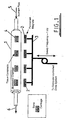
- FIG 1 there is illustrated a tubular bioreactor 1 associated with permanent magnets 2 which are positioned externally of the reactor 1 and which are mounted on a carrier arrangement 3 connected to a computer-controlled (or other time-varying) drive system not illustrated in detail in the drawings.
- a computer-controlled (or other time-varying) drive system not illustrated in detail in the drawings.
- tissue constructs 4 each depicted as being comprised on bone tissue on one side (the side remote from the magnets 3) and cartilage tissue on the other side (other tissue types may also be used).
- the tissue cells have magnetic beads (not shown) attached thereto and are seeded on 3-D scaffolds (again not shown). Nutrients are supplied to the bioreactor as depicted by arrow 5 and exit therefrom as depicted by arrow 6.
- magnets 2 There are a total of four magnets 2 (though this number can vary to match the number of tissue constructs) which are external of the bioreactor and longitudinally spaced therealong.
- the positioning of the magnets is such that there is one magnet associated with each of the tissue constructs, the magnets being provided on the cartilage sides thereof.
- the carrier is driven so as to oscillate the magnets transversely towards and away from the bioreactor.
- the oscillation frequency at which the magnets are driven will usually be varied and generally be in the range of 0.1 to 10 Hz although values outside this range may be used.
- the oscillation of the magnets stimulates a compression/relaxation cycle which is applied to the tissue constructs, the frequency of which can also be varied by mechanical drivers (not shown) attached to the magnets.
- the magnet field gradient (spatially varying magnetic field strength) ensures that the cartilage experiences slightly higher flux densities than the bone cells.
- the magnetic particles associated with the bone cells may have different magnetic properties from those associated with the cartilage so that different mechanically stresses are applied to the two different types of cells.
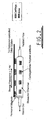
- Fig 2 illustrates a modification of the apparatus shown in Fig 1 .
- the (permanent) magnets are oscillated parallel to the longitudinal axis of the bioreactor (rather then transversely to the axis in the case of Fig 1 ).
- the magnets may be swept relatively around the bioreactor. This may most conveniently, but not necessarily, be achieved by keeping the magnets fixed and rotating the bioreactor around its longitudinal axis.
- the permanent magnets illustrated in Figs 1 and 2 may be replaced by electromagnets.
- the nanoparticles attached to the cells may be replaced by ferrofluids. If desired, a combination of attached nanoparticles and ferrofluids may also be used.
- a further possibility is to use magnetic/metal plates or other structures which could, be attracted to the magnets in order to deform the entire scaffold.
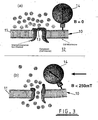
- Fig 3 illustrates an alternative methods of activation of mechano-sensitive transmembrane ion channels by the use of a magnetic field so as to simulate period mechanical loading of a tissue construct.
- FIG 3 illustrates a cell 10 having a membrane 11 enclosing the cell's cytoplasm 12.
- a mechanosensitive ion channel 13 Within membrane 11 is a mechanosensitive ion channel 13.
- the magnetic particle 14 attached to the cell 10 can be twisted, exerting a mechanical stress on the cell membrane 11 and activating the mechano-sensitive in channel 13 ( Figure 3b ).
- This ion channel activation initiates biochemical reaction pathways in the cells being cultured and simulates periodic mechanical loading of tissue constructs inside the bioreactor.
Landscapes
- Health & Medical Sciences (AREA)
- Engineering & Computer Science (AREA)
- Life Sciences & Earth Sciences (AREA)
- Chemical & Material Sciences (AREA)
- Bioinformatics & Cheminformatics (AREA)
- Organic Chemistry (AREA)
- Wood Science & Technology (AREA)
- Zoology (AREA)
- Genetics & Genomics (AREA)
- Biotechnology (AREA)
- Biomedical Technology (AREA)
- General Health & Medical Sciences (AREA)
- Microbiology (AREA)
- Biochemistry (AREA)
- General Engineering & Computer Science (AREA)
- Sustainable Development (AREA)
- Cell Biology (AREA)
- Molecular Biology (AREA)
- Rheumatology (AREA)
- Mechanical Engineering (AREA)
- Medicinal Chemistry (AREA)
- Micro-Organisms Or Cultivation Processes Thereof (AREA)
- Apparatus Associated With Microorganisms And Enzymes (AREA)
- Materials For Medical Uses (AREA)
- Immobilizing And Processing Of Enzymes And Microorganisms (AREA)
Applications Claiming Priority (7)
| Application Number | Priority Date | Filing Date | Title |
|---|---|---|---|
| GB0031462 | 2000-12-22 | ||
| GB0031462A GB0031462D0 (en) | 2000-12-22 | 2000-12-22 | Culturing tissue |
| GB0031651 | 2000-12-23 | ||
| GB0031651A GB0031651D0 (en) | 2000-12-23 | 2000-12-23 | Culturing tissue |
| US26703201P | 2001-02-07 | 2001-02-07 | |
| US267032P | 2001-02-07 | ||
| PCT/GB2001/005606 WO2002051985A2 (en) | 2000-12-22 | 2001-12-19 | Culturing tissue using magnetically generated mechanical stresses |
Publications (2)
| Publication Number | Publication Date |
|---|---|
| EP1343872A2 EP1343872A2 (en) | 2003-09-17 |
| EP1343872B1 true EP1343872B1 (en) | 2013-08-14 |
Family
ID=27256027
Family Applications (1)
| Application Number | Title | Priority Date | Filing Date |
|---|---|---|---|
| EP01272072.8A Expired - Lifetime EP1343872B1 (en) | 2000-12-22 | 2001-12-19 | Culturing tissue using magnetically generated mechanical stresses |
Country Status (8)
| Country | Link |
|---|---|
| EP (1) | EP1343872B1 (enExample) |
| JP (2) | JP2004520028A (enExample) |
| KR (1) | KR100837265B1 (enExample) |
| CN (1) | CN1250714C (enExample) |
| AU (1) | AU2002216206B2 (enExample) |
| CA (1) | CA2432574A1 (enExample) |
| NZ (1) | NZ526533A (enExample) |
| WO (1) | WO2002051985A2 (enExample) |
Families Citing this family (23)
| Publication number | Priority date | Publication date | Assignee | Title |
|---|---|---|---|---|
| GB0214209D0 (en) | 2002-06-19 | 2002-07-31 | Univ Keele | Method |
| US20040248291A1 (en) * | 2003-04-10 | 2004-12-09 | Pentax Corporation | Method for culturing cells, cell culture carriers and cell culture apparatus |
| WO2005003332A2 (en) * | 2003-06-30 | 2005-01-13 | University Of South Florida | Diamagnetically stabilised three-dimensional cell culture |
| US20090137018A1 (en) | 2003-06-30 | 2009-05-28 | University Of South Florida | Magnetic three-dimensional cell culture apparatus and method |
| WO2005010139A2 (en) | 2003-07-23 | 2005-02-03 | University Of South Florida | Ferromagnetic cell and tissue culture microcarriers |
| GB0329310D0 (en) * | 2003-12-18 | 2004-01-21 | Univ Keele | Method |
| EP1780266A4 (en) * | 2004-06-17 | 2009-09-09 | Ken Nakata | CELL CULTIVATION PROCESS WITH BIOMECHANICAL LOAD TREATMENT AND ITS DEVICE |
| JP4883666B2 (ja) * | 2005-01-25 | 2012-02-22 | セイコーインスツル株式会社 | 培養用容器及び培養用ユニット |
| JP4919296B2 (ja) * | 2005-12-26 | 2012-04-18 | 国立大学法人大阪大学 | 生体形状を含んだ三次元組織の培養方法 |
| CN101126688B (zh) * | 2007-09-11 | 2010-05-26 | 深圳职业技术学院 | 一种规模化制备细胞显微样品的方法 |
| DE102008059731A1 (de) * | 2008-12-01 | 2010-06-02 | Gottfried Wilhelm Leibniz Universität Hannover | Verfahren und Vorrichtung zum Stimulieren von Zellen |
| JP2012528576A (ja) * | 2009-06-03 | 2012-11-15 | オーフス ウニベルシテット | 液面下に沈める灌流バイオリアクター |
| KR101232554B1 (ko) * | 2010-02-19 | 2013-02-12 | 연세대학교 산학협력단 | 자성입자의 충격자극이 가능한 물리적자극기가 통합된 세포배양장치 |
| WO2012118304A2 (ko) * | 2011-02-28 | 2012-09-07 | 주식회사 코리아본뱅크 | 동종 연조직 이식체 배양 장치 |
| KR101313769B1 (ko) | 2011-02-28 | 2013-10-01 | 주식회사 셀루메드 | 동종 연조직 이식체 배양 장치 |
| WO2013047974A1 (ko) * | 2011-09-27 | 2013-04-04 | 서울대학교 산학협력단 | 3차원 세포 배양 용구 및 이를 이용한 세포의 3차원 배양 방법 |
| WO2015005299A1 (ja) | 2013-07-09 | 2015-01-15 | ユニバーサル・バイオ・リサーチ株式会社 | 培養装置、培養システム、及び培養方法 |
| WO2015037468A1 (ja) | 2013-09-12 | 2015-03-19 | ユニバーサル・バイオ・リサーチ株式会社 | 培養システム、及び培養方法 |
| KR101630017B1 (ko) * | 2013-10-04 | 2016-06-13 | 동국대학교 산학협력단 | 자성나노입자와 전자기장을 이용한 골 재생 촉진 방법 |
| WO2016081816A1 (en) * | 2014-11-20 | 2016-05-26 | The Johns Hopkins University | System and method for conditioning of engineered tissues |
| IT201900018614A1 (it) * | 2019-10-11 | 2021-04-11 | Fondazione St Italiano Tecnologia | Sistema e metodo di co-coltura cellulare |
| CN112375679B (zh) * | 2020-11-17 | 2024-04-09 | 苏州大学附属第二医院 | 细胞周期性压力电动施加装置及施加方法 |
| EP4574968A3 (en) | 2022-03-07 | 2025-10-22 | DEKA Products Limited Partnership | Tissue maturation bioreactor systems with uniform cell distribution |
Family Cites Families (2)
| Publication number | Priority date | Publication date | Assignee | Title |
|---|---|---|---|---|
| JPH05219936A (ja) * | 1992-02-14 | 1993-08-31 | Kobe Steel Ltd | バイオリアクター |
| US5486457A (en) * | 1993-08-25 | 1996-01-23 | Children's Medical Center Corporation | Method and system for measurement of mechanical properties of molecules and cells |
-
2001
- 2001-12-19 NZ NZ526533A patent/NZ526533A/en not_active IP Right Cessation
- 2001-12-19 WO PCT/GB2001/005606 patent/WO2002051985A2/en not_active Ceased
- 2001-12-19 CN CNB018212700A patent/CN1250714C/zh not_active Expired - Fee Related
- 2001-12-19 EP EP01272072.8A patent/EP1343872B1/en not_active Expired - Lifetime
- 2001-12-19 KR KR1020037008187A patent/KR100837265B1/ko not_active Expired - Fee Related
- 2001-12-19 JP JP2002553466A patent/JP2004520028A/ja active Pending
- 2001-12-19 AU AU2002216206A patent/AU2002216206B2/en not_active Ceased
- 2001-12-19 CA CA002432574A patent/CA2432574A1/en not_active Abandoned
-
2008
- 2008-05-07 JP JP2008121418A patent/JP2008263986A/ja active Pending
Also Published As
| Publication number | Publication date |
|---|---|
| NZ526533A (en) | 2005-09-30 |
| EP1343872A2 (en) | 2003-09-17 |
| AU2002216206B2 (en) | 2007-10-04 |
| CN1483075A (zh) | 2004-03-17 |
| WO2002051985A3 (en) | 2003-01-16 |
| CA2432574A1 (en) | 2002-07-04 |
| JP2004520028A (ja) | 2004-07-08 |
| KR20040028700A (ko) | 2004-04-03 |
| CN1250714C (zh) | 2006-04-12 |
| JP2008263986A (ja) | 2008-11-06 |
| KR100837265B1 (ko) | 2008-06-11 |
| WO2002051985A2 (en) | 2002-07-04 |
Similar Documents
| Publication | Publication Date | Title |
|---|---|---|
| EP1343872B1 (en) | Culturing tissue using magnetically generated mechanical stresses | |
| US7553662B2 (en) | Culturing tissue using magnetically generated mechanical stresses | |
| AU2002216206A1 (en) | Culturing tissue using magnetically generated mechanical stresses | |
| Dobson et al. | Principles and design of a novel magnetic force mechanical conditioning bioreactor for tissue engineering, stem cell conditioning, and dynamic in vitro screening | |
| Mushtaq et al. | Magnetoelectric 3D scaffolds for enhanced bone cell proliferation | |
| Tanase et al. | Magnetic tweezers in cell biology | |
| Zablotskii et al. | Effects of high-gradient magnetic fields on living cell machinery | |
| JP5775455B2 (ja) | 細胞および材料の磁気誘導およびパターン形成のためのシステムおよび方法 | |
| Brown | Techniques for mechanical stimulation of cells in vitro: a review | |
| US9752139B2 (en) | Magnetic three-dimensional cell culture apparatus and method | |
| Lin et al. | Probing cellular traction forces with magnetic nanowires and microfabricated force sensor arrays | |
| CA2543374A1 (en) | Method and bioreactor for the cultivation and stimulation of three-dimensional vital and mechanically-resistant cell transplants | |
| JP2004520028A5 (enExample) | ||
| Martino et al. | The effects of pulsed electromagnetic fields on the cellular activity of SaOS‐2 cells | |
| US20200308525A1 (en) | Cell culture device and electromagnetic stimulation cell culturing system having the same | |
| US20100298816A1 (en) | Magnetic delivery device | |
| US7811297B2 (en) | Actuable structures and methods of fabrication and use | |
| Van Loon | Mechanomics and physicomics in gravisensing | |
| Hogan et al. | Conditioning of cardiovascular tissue using a noncontact magnetic stretch bioreactor with embedded magnetic nanoparticles | |
| US20070026517A1 (en) | Method and bioreactor for the cultivation and stimulation of three-dimensional, vitally and mechanically reistant cell transplants | |
| Cartmell et al. | Use of magnetic particles to apply mechanical forces for bone tissue engineering purposes | |
| Pang et al. | Design and development of a novel biostretch apparatus for tissue engineering | |
| Dobson et al. | Nanomagnetic Actuation: Controlling Cell Behavior with Magnetic Nanoparticles | |
| Cagan-Algan et al. | Negative Magnetophoresis Guided Unidirectional Cell Patterning on Culture Surface | |
| Sakthivel et al. | High-throughput three-dimensional cellular platforms for screening biophysical microenvironmental signals |
Legal Events
| Date | Code | Title | Description |
|---|---|---|---|
| PUAI | Public reference made under article 153(3) epc to a published international application that has entered the european phase |
Free format text: ORIGINAL CODE: 0009012 |
|
| 17P | Request for examination filed |
Effective date: 20030714 |
|
| AK | Designated contracting states |
Kind code of ref document: A2 Designated state(s): AT BE CH CY DE DK ES FI FR GB GR IE IT LI LU MC NL PT SE TR |
|
| AX | Request for extension of the european patent |
Extension state: AL LT LV MK RO SI |
|
| GRAP | Despatch of communication of intention to grant a patent |
Free format text: ORIGINAL CODE: EPIDOSNIGR1 |
|
| REG | Reference to a national code |
Ref country code: DE Ref legal event code: R079 Ref document number: 60148230 Country of ref document: DE Free format text: PREVIOUS MAIN CLASS: C12N0005080000 Ipc: C12N0005220000 |
|
| RIC1 | Information provided on ipc code assigned before grant |
Ipc: C12N 5/22 20060101AFI20130322BHEP |
|
| RAP1 | Party data changed (applicant data changed or rights of an application transferred) |
Owner name: MICA BIOSYSTEMS LIMITED |
|
| GRAS | Grant fee paid |
Free format text: ORIGINAL CODE: EPIDOSNIGR3 |
|
| GRAA | (expected) grant |
Free format text: ORIGINAL CODE: 0009210 |
|
| AK | Designated contracting states |
Kind code of ref document: B1 Designated state(s): AT BE CH CY DE DK ES FI FR GB GR IE IT LI LU MC NL PT SE TR |
|
| REG | Reference to a national code |
Ref country code: GB Ref legal event code: FG4D |
|
| REG | Reference to a national code |
Ref country code: CH Ref legal event code: EP Ref country code: AT Ref legal event code: REF Ref document number: 626894 Country of ref document: AT Kind code of ref document: T Effective date: 20130815 |
|
| REG | Reference to a national code |
Ref country code: IE Ref legal event code: FG4D |
|
| REG | Reference to a national code |
Ref country code: DE Ref legal event code: R096 Ref document number: 60148230 Country of ref document: DE Effective date: 20131010 |
|
| REG | Reference to a national code |
Ref country code: NL Ref legal event code: VDEP Effective date: 20130814 Ref country code: AT Ref legal event code: MK05 Ref document number: 626894 Country of ref document: AT Kind code of ref document: T Effective date: 20130814 |
|
| PG25 | Lapsed in a contracting state [announced via postgrant information from national office to epo] |
Ref country code: SE Free format text: LAPSE BECAUSE OF FAILURE TO SUBMIT A TRANSLATION OF THE DESCRIPTION OR TO PAY THE FEE WITHIN THE PRESCRIBED TIME-LIMIT Effective date: 20130814 Ref country code: PT Free format text: LAPSE BECAUSE OF FAILURE TO SUBMIT A TRANSLATION OF THE DESCRIPTION OR TO PAY THE FEE WITHIN THE PRESCRIBED TIME-LIMIT Effective date: 20131216 Ref country code: AT Free format text: LAPSE BECAUSE OF FAILURE TO SUBMIT A TRANSLATION OF THE DESCRIPTION OR TO PAY THE FEE WITHIN THE PRESCRIBED TIME-LIMIT Effective date: 20130814 Ref country code: CY Free format text: LAPSE BECAUSE OF FAILURE TO SUBMIT A TRANSLATION OF THE DESCRIPTION OR TO PAY THE FEE WITHIN THE PRESCRIBED TIME-LIMIT Effective date: 20130619 |
|
| PG25 | Lapsed in a contracting state [announced via postgrant information from national office to epo] |
Ref country code: BE Free format text: LAPSE BECAUSE OF FAILURE TO SUBMIT A TRANSLATION OF THE DESCRIPTION OR TO PAY THE FEE WITHIN THE PRESCRIBED TIME-LIMIT Effective date: 20130814 Ref country code: FI Free format text: LAPSE BECAUSE OF FAILURE TO SUBMIT A TRANSLATION OF THE DESCRIPTION OR TO PAY THE FEE WITHIN THE PRESCRIBED TIME-LIMIT Effective date: 20130814 Ref country code: GR Free format text: LAPSE BECAUSE OF FAILURE TO SUBMIT A TRANSLATION OF THE DESCRIPTION OR TO PAY THE FEE WITHIN THE PRESCRIBED TIME-LIMIT Effective date: 20131115 |
|
| PG25 | Lapsed in a contracting state [announced via postgrant information from national office to epo] |
Ref country code: CY Free format text: LAPSE BECAUSE OF FAILURE TO SUBMIT A TRANSLATION OF THE DESCRIPTION OR TO PAY THE FEE WITHIN THE PRESCRIBED TIME-LIMIT Effective date: 20130814 |
|
| PG25 | Lapsed in a contracting state [announced via postgrant information from national office to epo] |
Ref country code: NL Free format text: LAPSE BECAUSE OF FAILURE TO SUBMIT A TRANSLATION OF THE DESCRIPTION OR TO PAY THE FEE WITHIN THE PRESCRIBED TIME-LIMIT Effective date: 20130814 Ref country code: DK Free format text: LAPSE BECAUSE OF FAILURE TO SUBMIT A TRANSLATION OF THE DESCRIPTION OR TO PAY THE FEE WITHIN THE PRESCRIBED TIME-LIMIT Effective date: 20130814 |
|
| PG25 | Lapsed in a contracting state [announced via postgrant information from national office to epo] |
Ref country code: ES Free format text: LAPSE BECAUSE OF FAILURE TO SUBMIT A TRANSLATION OF THE DESCRIPTION OR TO PAY THE FEE WITHIN THE PRESCRIBED TIME-LIMIT Effective date: 20130814 Ref country code: IT Free format text: LAPSE BECAUSE OF FAILURE TO SUBMIT A TRANSLATION OF THE DESCRIPTION OR TO PAY THE FEE WITHIN THE PRESCRIBED TIME-LIMIT Effective date: 20130814 |
|
| PLBE | No opposition filed within time limit |
Free format text: ORIGINAL CODE: 0009261 |
|
| STAA | Information on the status of an ep patent application or granted ep patent |
Free format text: STATUS: NO OPPOSITION FILED WITHIN TIME LIMIT |
|
| 26N | No opposition filed |
Effective date: 20140515 |
|
| REG | Reference to a national code |
Ref country code: DE Ref legal event code: R097 Ref document number: 60148230 Country of ref document: DE Effective date: 20140515 |
|
| PG25 | Lapsed in a contracting state [announced via postgrant information from national office to epo] |
Ref country code: LU Free format text: LAPSE BECAUSE OF FAILURE TO SUBMIT A TRANSLATION OF THE DESCRIPTION OR TO PAY THE FEE WITHIN THE PRESCRIBED TIME-LIMIT Effective date: 20131219 Ref country code: MC Free format text: LAPSE BECAUSE OF FAILURE TO SUBMIT A TRANSLATION OF THE DESCRIPTION OR TO PAY THE FEE WITHIN THE PRESCRIBED TIME-LIMIT Effective date: 20130814 |
|
| PGFP | Annual fee paid to national office [announced via postgrant information from national office to epo] |
Ref country code: CH Payment date: 20140612 Year of fee payment: 13 |
|
| REG | Reference to a national code |
Ref country code: IE Ref legal event code: MM4A |
|
| PG25 | Lapsed in a contracting state [announced via postgrant information from national office to epo] |
Ref country code: IE Free format text: LAPSE BECAUSE OF NON-PAYMENT OF DUE FEES Effective date: 20131219 |
|
| PGFP | Annual fee paid to national office [announced via postgrant information from national office to epo] |
Ref country code: FR Payment date: 20140630 Year of fee payment: 13 |
|
| PG25 | Lapsed in a contracting state [announced via postgrant information from national office to epo] |
Ref country code: TR Free format text: LAPSE BECAUSE OF FAILURE TO SUBMIT A TRANSLATION OF THE DESCRIPTION OR TO PAY THE FEE WITHIN THE PRESCRIBED TIME-LIMIT Effective date: 20130814 |
|
| PGFP | Annual fee paid to national office [announced via postgrant information from national office to epo] |
Ref country code: DE Payment date: 20150625 Year of fee payment: 14 |
|
| REG | Reference to a national code |
Ref country code: CH Ref legal event code: PL |
|
| REG | Reference to a national code |
Ref country code: FR Ref legal event code: ST Effective date: 20150831 |
|
| PG25 | Lapsed in a contracting state [announced via postgrant information from national office to epo] |
Ref country code: LI Free format text: LAPSE BECAUSE OF NON-PAYMENT OF DUE FEES Effective date: 20141231 Ref country code: CH Free format text: LAPSE BECAUSE OF NON-PAYMENT OF DUE FEES Effective date: 20141231 |
|
| PG25 | Lapsed in a contracting state [announced via postgrant information from national office to epo] |
Ref country code: FR Free format text: LAPSE BECAUSE OF NON-PAYMENT OF DUE FEES Effective date: 20141231 |
|
| REG | Reference to a national code |
Ref country code: DE Ref legal event code: R119 Ref document number: 60148230 Country of ref document: DE |
|
| PG25 | Lapsed in a contracting state [announced via postgrant information from national office to epo] |
Ref country code: DE Free format text: LAPSE BECAUSE OF NON-PAYMENT OF DUE FEES Effective date: 20160701 |
|
| PGFP | Annual fee paid to national office [announced via postgrant information from national office to epo] |
Ref country code: GB Payment date: 20170130 Year of fee payment: 16 |
|
| GBPC | Gb: european patent ceased through non-payment of renewal fee |
Effective date: 20171219 |
|
| PG25 | Lapsed in a contracting state [announced via postgrant information from national office to epo] |
Ref country code: GB Free format text: LAPSE BECAUSE OF NON-PAYMENT OF DUE FEES Effective date: 20171219 |