EP1327146B1 - Compounds with a branched linker - Google Patents
Compounds with a branched linker Download PDFInfo
- Publication number
- EP1327146B1 EP1327146B1 EP01985752A EP01985752A EP1327146B1 EP 1327146 B1 EP1327146 B1 EP 1327146B1 EP 01985752 A EP01985752 A EP 01985752A EP 01985752 A EP01985752 A EP 01985752A EP 1327146 B1 EP1327146 B1 EP 1327146B1
- Authority
- EP
- European Patent Office
- Prior art keywords
- group
- linker
- groups
- branched
- compound
- Prior art date
- Legal status (The legal status is an assumption and is not a legal conclusion. Google has not performed a legal analysis and makes no representation as to the accuracy of the status listed.)
- Expired - Lifetime
Links
- 0 CC(NC(CC*C*)*NCCC(NC(CCC(O)=O)C(N)=*)=O)=O Chemical compound CC(NC(CC*C*)*NCCC(NC(CCC(O)=O)C(N)=*)=O)=O 0.000 description 2
- NMSABZLDLIHMRZ-UHFFFAOYSA-N CC(CC1)(C(CC2)C(CC3)C1C(CC1)C3=CC1=N)C2O Chemical compound CC(CC1)(C(CC2)C(CC3)C1C(CC1)C3=CC1=N)C2O NMSABZLDLIHMRZ-UHFFFAOYSA-N 0.000 description 1
- ROFVEXUMMXZLPA-UHFFFAOYSA-N c1cc(-c2cccc[n]2)ncc1 Chemical compound c1cc(-c2cccc[n]2)ncc1 ROFVEXUMMXZLPA-UHFFFAOYSA-N 0.000 description 1
Images




Classifications
-
- G—PHYSICS
- G01—MEASURING; TESTING
- G01N—INVESTIGATING OR ANALYSING MATERIALS BY DETERMINING THEIR CHEMICAL OR PHYSICAL PROPERTIES
- G01N33/00—Investigating or analysing materials by specific methods not covered by groups G01N1/00 - G01N31/00
- G01N33/48—Biological material, e.g. blood, urine; Haemocytometers
- G01N33/50—Chemical analysis of biological material, e.g. blood, urine; Testing involving biospecific ligand binding methods; Immunological testing
- G01N33/68—Chemical analysis of biological material, e.g. blood, urine; Testing involving biospecific ligand binding methods; Immunological testing involving proteins, peptides or amino acids
- G01N33/6803—General methods of protein analysis not limited to specific proteins or families of proteins
- G01N33/6845—Methods of identifying protein-protein interactions in protein mixtures
-
- C—CHEMISTRY; METALLURGY
- C07—ORGANIC CHEMISTRY
- C07K—PEPTIDES
- C07K1/00—General methods for the preparation of peptides, i.e. processes for the organic chemical preparation of peptides or proteins of any length
- C07K1/107—General methods for the preparation of peptides, i.e. processes for the organic chemical preparation of peptides or proteins of any length by chemical modification of precursor peptides
- C07K1/1072—General methods for the preparation of peptides, i.e. processes for the organic chemical preparation of peptides or proteins of any length by chemical modification of precursor peptides by covalent attachment of residues or functional groups
- C07K1/1075—General methods for the preparation of peptides, i.e. processes for the organic chemical preparation of peptides or proteins of any length by chemical modification of precursor peptides by covalent attachment of residues or functional groups by covalent attachment of amino acids or peptide residues
-
- C—CHEMISTRY; METALLURGY
- C07—ORGANIC CHEMISTRY
- C07K—PEPTIDES
- C07K1/00—General methods for the preparation of peptides, i.e. processes for the organic chemical preparation of peptides or proteins of any length
- C07K1/107—General methods for the preparation of peptides, i.e. processes for the organic chemical preparation of peptides or proteins of any length by chemical modification of precursor peptides
- C07K1/1072—General methods for the preparation of peptides, i.e. processes for the organic chemical preparation of peptides or proteins of any length by chemical modification of precursor peptides by covalent attachment of residues or functional groups
- C07K1/1077—General methods for the preparation of peptides, i.e. processes for the organic chemical preparation of peptides or proteins of any length by chemical modification of precursor peptides by covalent attachment of residues or functional groups by covalent attachment of residues other than amino acids or peptide residues, e.g. sugars, polyols, fatty acids
-
- C—CHEMISTRY; METALLURGY
- C07—ORGANIC CHEMISTRY
- C07K—PEPTIDES
- C07K14/00—Peptides having more than 20 amino acids; Gastrins; Somatostatins; Melanotropins; Derivatives thereof
- C07K14/001—Peptides having more than 20 amino acids; Gastrins; Somatostatins; Melanotropins; Derivatives thereof by chemical synthesis
-
- G—PHYSICS
- G01—MEASURING; TESTING
- G01N—INVESTIGATING OR ANALYSING MATERIALS BY DETERMINING THEIR CHEMICAL OR PHYSICAL PROPERTIES
- G01N33/00—Investigating or analysing materials by specific methods not covered by groups G01N1/00 - G01N31/00
- G01N33/48—Biological material, e.g. blood, urine; Haemocytometers
- G01N33/50—Chemical analysis of biological material, e.g. blood, urine; Testing involving biospecific ligand binding methods; Immunological testing
- G01N33/53—Immunoassay; Biospecific binding assay; Materials therefor
- G01N33/5306—Improving reaction conditions, e.g. reduction of non-specific binding, promotion of specific binding
-
- G—PHYSICS
- G01—MEASURING; TESTING
- G01N—INVESTIGATING OR ANALYSING MATERIALS BY DETERMINING THEIR CHEMICAL OR PHYSICAL PROPERTIES
- G01N33/00—Investigating or analysing materials by specific methods not covered by groups G01N1/00 - G01N31/00
- G01N33/48—Biological material, e.g. blood, urine; Haemocytometers
- G01N33/50—Chemical analysis of biological material, e.g. blood, urine; Testing involving biospecific ligand binding methods; Immunological testing
- G01N33/53—Immunoassay; Biospecific binding assay; Materials therefor
- G01N33/531—Production of immunochemical test materials
-
- G—PHYSICS
- G01—MEASURING; TESTING
- G01N—INVESTIGATING OR ANALYSING MATERIALS BY DETERMINING THEIR CHEMICAL OR PHYSICAL PROPERTIES
- G01N33/00—Investigating or analysing materials by specific methods not covered by groups G01N1/00 - G01N31/00
- G01N33/48—Biological material, e.g. blood, urine; Haemocytometers
- G01N33/50—Chemical analysis of biological material, e.g. blood, urine; Testing involving biospecific ligand binding methods; Immunological testing
- G01N33/53—Immunoassay; Biospecific binding assay; Materials therefor
- G01N33/531—Production of immunochemical test materials
- G01N33/532—Production of labelled immunochemicals
-
- G—PHYSICS
- G01—MEASURING; TESTING
- G01N—INVESTIGATING OR ANALYSING MATERIALS BY DETERMINING THEIR CHEMICAL OR PHYSICAL PROPERTIES
- G01N33/00—Investigating or analysing materials by specific methods not covered by groups G01N1/00 - G01N31/00
- G01N33/48—Biological material, e.g. blood, urine; Haemocytometers
- G01N33/50—Chemical analysis of biological material, e.g. blood, urine; Testing involving biospecific ligand binding methods; Immunological testing
- G01N33/53—Immunoassay; Biospecific binding assay; Materials therefor
- G01N33/531—Production of immunochemical test materials
- G01N33/532—Production of labelled immunochemicals
- G01N33/533—Production of labelled immunochemicals with fluorescent label
-
- G—PHYSICS
- G01—MEASURING; TESTING
- G01N—INVESTIGATING OR ANALYSING MATERIALS BY DETERMINING THEIR CHEMICAL OR PHYSICAL PROPERTIES
- G01N33/00—Investigating or analysing materials by specific methods not covered by groups G01N1/00 - G01N31/00
- G01N33/48—Biological material, e.g. blood, urine; Haemocytometers
- G01N33/50—Chemical analysis of biological material, e.g. blood, urine; Testing involving biospecific ligand binding methods; Immunological testing
- G01N33/68—Chemical analysis of biological material, e.g. blood, urine; Testing involving biospecific ligand binding methods; Immunological testing involving proteins, peptides or amino acids
Definitions
- the present invention concerns new linkers and their use for producing conjugates for applications in diagnostic or therapeutic methods.
- Conjugates comprising several binding groups or/and effector groups e.g. labeling or solid phase binding groups or toxins are often used in diagnostic or therapeutic methods.
- Such conjugates can be prepared by direct coupling or by using the bridge or linker structures known in the prior art. Interfering intramolecular and intermolecular interactions between the conjugate partners or other components are often disadvantageous for the properties of such conjugates.
- linkers that are known in the prior art for the conjugation of luminescent metal complexes (EP-A-0 178 450, EP-A-0 580 979, WO 87/06706) for example leads to a worsening of the dynamic range of an assay.
- Other disadvantages of such conjugates are a high unspecific binding to proteins and high blank values.
- similar problems also occur with other labeling and solid phase binding groups.
- WO 96/03409 and WO 96/03410 disclose that the introduction of free positive or/and negative charge carriers in the linkers that link the reactive coupling group of the metal complex to one of the ligands or the introduction of hydrophilic groups into these luminescent metal complexes reduces the unspecific adsorption of conjugates of these complexes and thus improves the test sensitivity as well as the stability and recovery of the conjugates in immunoassays. Moreover in some cases it is possible to achieve an increase in quantum yield.
- a subject matter of the present invention is the use of a polyfunctional compound of the general formula (I): Z n - Y - X m in which Z denotes at least one reactive functional group or a binding group, X is a reactive functional group which is bound covalently to Z via a linker Y where the linker is a branched linker which has a molecular weight of ⁇ 1000 Da and contains at least one charge carrier or/and at least one hydrophilic group, n is an integer from 1 to 10 and preferably from 1 to 4 and m is 1 or 2 and preferably 1, for the production of conjugates.
- the group Z can occur once or several times and can in each case be independently a reactive functional group or a binding group.
- binding groups are labeling groups or effector groups.
- Effector groups are for example partners of a bioaffine binding pair which can specifically interact with the other partner of the bioaffine binding pair.
- the labeling groups can be selected from any detectable known groups such as dyes, luminescent labeling groups such as chemiluminescent groups e.g. acridinium esters or dioxetanes or fluorescent dyes e.g. fluorescein, coumarin, rhodamine, oxazine, resorufin, cyanine and derivatives thereof.
- luminescent labeling groups such as chemiluminescent groups e.g. acridinium esters or dioxetanes or fluorescent dyes e.g. fluorescein, coumarin, rhodamine, oxazine, resorufin, cyanine and derivatives thereof.
- Other examples of labeling groups are luminescent metal complexes such as ruthenium or europium complexes, enzymes as used for CEDIA (Cloned Enzyme Donor Immunoassay, e.g. EP 0 061 888), microparticles
- the labeling group is a luminescent metal complex and the compound has a structure of the general formula (II): [M(L 1 L 2 L 3 )] n - Y - X m A in which M is a divalent or trivalent metal cation selected from rare earth or transition metal ions, L 1 , L 2 and L 3 are the same or different and denote ligands with at least two nitrogen-containing heterocycles in which L 1 , L 2 and L 3 are bound to the metal cation via nitrogen atoms, X is a reactive functional group which is covalently bound to at least one of the ligands L 1 , L 2 and L 3 via a linker Y, n is an integer from 1 to 10, preferably 1 to 4, m is 1 or 2 and preferably 1 and A denotes the counterion which may be required to equalize the charge.
- M is a divalent or trivalent metal cation selected from rare earth or transition metal ions
- L 1 , L 2 and L 3 are
- the metal complex is preferably a luminescent metal complex i.e. a metal complex which undergoes a detectable luminescence reaction after appropriate excitation.
- the luminescence reaction can for example be detected by fluorescence or by electrochemiluminescence measurement.
- the metal cation in this complex is for example a transition metal or a rare earth metal.
- the metal is preferably ruthenium, osmium, rhenium, iridium, rhodium, platinum, indium, palladium, molybdenum, technetium, copper, chromium or tungsten. Ruthenium, iridium, rhenium, chromium and osmium are particularly preferred. Ruthenium is most preferred.
- the ligands L 1 , L 2 and L 3 are ligands with at least two nitrogen-containing heterocycles. Aromatic heterocycles such as bipyridyl, bipyrazyl, terpyridyl and phenanthrolyl are preferred.
- the ligands L 1 , L 2 and L 3 are particularly preferably selected from bipyridine and phenanthroline ring systems.
- the complex can additionally contain one or several counterions A to equalize the charge.
- suitable negatively charged counterions are halogenides, OH - , carbonate, alkylcarboxylate, e.g. trifluoroacetate, sulphate, hexafluorophosphate and tetrafluoroborate groups. Hexafluorophosphate, trifluoroacetate and tetrafluoroborate groups are particularly preferred.
- suitable positively charged counterions are monovalent cations such as alkaline metal and ammonium ions.
- the group Z can be an effector group which interacts specifically and preferably non-covalently with a binding partner.
- suitable binding partners are hapten or antigen/antibody, biotin or biotin analogues such as aminobiotin, iminobiotin or desthiobiotin/avidin or streptavidin, sugar/lectin, nucleic acid or nucleic acid analogue/complementary nucleic acid, receptor/ligand e.g. steroid hormone receptor/steroid hormone in which one partner of the binding pair is the effector group and thus a component of compound (I).
- Z can also be a therapeutically active substance e.g. a toxin or protoxin e.g. an anti-tumour substance.
- a therapeutically active substance e.g. a toxin or protoxin e.g. an anti-tumour substance.
- the compounds (I) are used as linker molecules to prepare conjugates.
- a binding partner and in particular a binding partner as stated above is coupled covalently to the at least one free functional group of the compound (I).
- the resulting coupling product contains at least two, preferably different, binding groups which are linked together via the branched linker Y.
- the reactive functional group X or Z of the compound (I) or of the complex (II) is a reactive group which can be coupled covalently to a biological substance.
- the group X is preferably an activated carboxylic acid group such as a carboxylic acid halogenide, a carboxylic acid anhydride, a carboxylic acid hydrazide, a carboxylic acid azide or an active ester e.g. an N-hydroxy-succinimide, a p-nitrophenyl, pentafluorophenyl, imidazolyl or N-hydroxybenzotriazolyl ester, an amine, a maleimide, a thiol or a photoactivatable group e.g. an azide.
- the compound can contain one or several functional groups X or Z which can be the same or different.
- X and Z are preferably different. If Z is a functional group, it preferably only occurs once. If Z is a binding group, it can be present several times e.g. up to 10 times.
- the functional groups or binding groups Z respectively can be the same or different and be optionally blocked by protective groups. However, the total number of groups X plus Z is at least 2 i.e. the compound is at least a bifunctional compound, preferably at least a hetero-bifunctional compound. Appropriate active groups for hetero-bifunctional linkers are described in Aslam M., Dent A., Bioconjugation (1998) Mcmillan Reference Ltd., London, p 216-363.
- the molecular weight of the linker is at least 1000 Da, because then the advantages of the linker become particularly apparent
- the molecular weight of the linker is preferably in the range of 1000 to 50,000 Da, particularly in the range of 1000 to 20,000 Da and most preferably in the range of 1000 to 10,000 Da.
- the compound (I) and the metal complex (II) differ from the prior art in that the linker Y between X and Z is a branched linker with at least one charge carrier or/and at least one hydrophilic group.
- charge carrier means a group which is present mainly in an ionic form at a pH value in the range 6 to 8.
- the linker preferably contains up to 70, particularly preferably 1 to 40 and most preferably 2 to 20 such charge carriers.
- the linker particularly preferably contains at least one negative charge carrier.
- suitable negative charge carriers are phosphate, phosphonate, sulphinate, sulphonate, sulphate and carboxylate groups, carboxylate groups and phosphate groups being most preferred.
- positive charge carriers are amino and mono-substituted or polysubstituted amino groups such as mono-, di- or trialkyl amino groups, in which alkyl denotes a straight-chained or branched alkyl residue with 1 to 6 C atoms or a cyclic alkyl residue with 3 to 6 C atoms.
- the positive charge carriers are particularly preferably selected from basic amino acids such as lysine or substituted amino acids such as diethyllysine, or dipropyllysine. Amines and substituted amines can also be used as electron donors for the detection of metal complexes by electrochemiluminescence.
- the linkers can also contain uncharged hydrophilic groups as an alternative to or in addition to the charge carriers.
- uncharged hydrophilic groups are ethylene oxide or polyethylene oxide groups with preferably at least three ethylene oxide units, sulphoxide, sulphone, carboxylic acid amide, carboxylic acid ester, phosphonic acid amide, phosphonic acid ester, phosphoric acid amide, phosphoric acid ester, sulphonic acid amide, sulphonic acid ester, sulphuric acid amide and sulphuric acid ester groups.
- the amide groups are preferably primary amide groups, particularly preferably carboxylic acid amide residues in amino acid side groups e.g. the amino acids asparagine and glutamine.
- the esters are preferably derived from hydrophilic alcohols, in particular C 1 -C 3 alcohols or diols or triols.
- branched means that the linker contains a main chain between the groups Z and X and in addition one or several side chains starting from the main chain.
- the charge carriers and hydrophilic groups can be located in the main chain or/and in a side chain. If the linker according to the invention contains several groups Z and X, the main chain itself can already be branched. However, the linker in any case additionally contains one or several side chains which contain none of the groups Z and X.
- the number of side chains is preferably 1 to 10, particularly preferably 2 to 6 and most preferably 2 to 4.
- the linker contains a main chain which contains one or several uncharged hydrophilic groups as mentioned above in particular carboxylic acid amide groups or/and polyethylene glycol groups while there is at least one charge carrier in one or several of the side chains.
- 1 to 10 charge carriers and in particular 1 to 5 charge carriers can for example be present per side chain.
- the linker can also contain charge carriers in the main chain and uncharged hydrophilic groups in one or several side chains.
- the main chain and the side chains contain uncharged hydrophilic groups as well as charge carriers.
- branched linker comprises groups other than X and Z, which might interfere with the intended coupling chemistry, e.g., like -COO - groups or -NH 2 groups
- appropriate protective groups which are known to the skilled artisan are used during synthesis and/or coupling.
- Terminal -NH 2 groups in peptidic side chains preferably are inactivated, e.g., by acetylation or succinylation.
- the length of the main chain of the linker is preferably 7 to 200 atoms, particularly preferably 7 to 100 atoms.
- the main chain is an alkylene chain modified by the incorporation of heteroatoms e.g. O atoms or amide groups and contains at least one branch site.
- the side chains formed at the branching site preferably having a length of 4 to 100 atoms.
- the charge carriers are preferably located in the linker in such a manner that a H atom of an alkylene unit of the main chain or/and in a side chain is replaced by a group containing a charge carrier e.g. NH 3 + or CO 2 - .
- the branched linker which contains the free charge carriers or/and hydrophilic groups is preferably at least partially composed of aminocarboxylic acid units that are linked together by peptide bonds.
- the branching points can be derived from polyfunctional aminocarboxylic acids which contain at least three functional groups e.g. amino or carboxylate groups such that one functional group is still present after incorporation into the main chain which can be used as the starting point for the synthesis of the side chain.
- the branches are particularly preferably generated with diaminocarboxylic acids such as lysine, ornithine, hydroxylysine etc.
- the charge carriers of the branched linker can be preferably derived from free positively or/and negatively charged groups of polyfunctional amino-carboxylic acids which contain a total of at least three charged groups e.g. amino, carboxylate or phosphate groups such that after incorporation into the linker and the concomitant reaction of two of the charged groups, at least one free charge carrier is still present.
- the charge carriers can be derived from trifunctional aminocarboxylic acids which contain (a) an amino group and two carboxylate groups or (b) two amino groups and one carboxylate group.
- trifunctional aminocarboxylic acids examples include lysine, ornithine, hydroxylysine, aspartic acid and glutamic acid, symmetric trifunctional carboxylic acids like those described in EP 0 618 192 or US 5,519,142.
- one of the carboxylate groups in the trifunctional aminocarboxylic acids (a) can be replaced by a phosphate, sulphonate or sulphate group.
- An example of such a trifunctional amino acid is phosphoserine.
- the branched linker can also be composed at least partially of phosphate-sugar units e.g. a DNA backbone without nucleobases or composed of glyco-peptidic structures.
- the linker can also be composed at least partially of saccharide units.
- the side chain of the linker is preferably situated at a branch site of the main chain which is formed by a trifunctional unit and the length of a side chain is at least two of the building blocks used for the synthesis e.g. natural or synthetic amino acids or other components such as ethylene glycol.
- the branched hydrophilic linker is used in immunological procedures to reduce problems caused by non-specific binding.
- the branched linker comprising a metal complex has the general formula (III): in which M, X, A, n and m are defined as above, R 1 , R 2 , R 3 , R 4 , R 5 and R 6 are the same or different and each denotes one or several substituents provided that X is bound to one of the ligands via one of the substituents R 1 , R 2 , R 3 , R 4 , R 5 or R 6 and the linker Y.
- the ligands of the complex are optionally substituted phenanthroline or bipyridene systems depending on whether the groups denoted by the broken lines are present or not
- R 1 , R 2 , R 3 , R 4 , R 5 and R 6 on the ligands are preferably hydrogen, C 1 -C 5 alkyl, in particular C 1 -C 3 alkyl, phenyl or a hydrophilic group as defined above provided they do not contain the linker Y.
- the branched linker comprising a metal complex has the general formula (IIIa): in which M, X and A are defined as above, R 1 , R 2 , R 3 , R 4 , R 5 are as defined above, s is an integer from 0 to 6 preferably from 1 to 4 and Y denotes the branched linker with free charge carriers or/and hydrophilic groups.
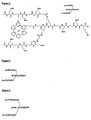
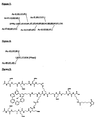
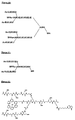
- Examples of compounds of formula (I) with metal complexes as labeling groups or biotin as an effector group and the amino side group of lysine as the reactive functional group are shown in figs. 1-7.
- the branching points of the linker are formed by the trifunctional amino acid lysine which has two amino groups and one carboxylate group. One amino group and one carboxylate group are used to form peptide bonds in the main chain of the linker whereas the second amino group is used as the starting point for the synthesis of the side chain.
- the free charge carriers are formed from glutamic acid side chains.
- the lysine amino group is blocked by phenylacetyl (Phac).
- the blocking of one or several reactive groups in the linker by protective groups e.g. phenylacetyl or/and other protective groups compatible with the overall structure also enables labile binding groups to be introduced into the compound (I).
- the reactive carboxylate group can for example be converted into an active ester by reaction with N-hydroxysuccinimide or disuccinimidyl suberate (DSS) (see Fig. 12).
- DSS disuccinimidyl suberate
- the primary amino group can also be converted into a maleimide group by reaction with maleimidohexanoyl-N-hydroxysuccinimide ester (MHS) (see figs. 9 - 11).
- the synthesis of a charged and branched linker on a labeling group or solid phase binding group such as the N-heterocyclic ligand of a metal complex can be carried out as a coupling reaction in solution by coupling an optionally partially protected aminocarboxylic acid to a reactive group of the ligand e.g. a carboxylic acid.
- This coupling stage can optionally be repeated until a branched linker of the desired length has been synthesized.
- at least one polyfunctional aminocarboxylic acid is introduced which contains one or several charged side groups.
- the reactive group X is introduced and protective groups that may be present on the side groups of the aminocarboxylic acids are cleaved off.
- This synthesis of the ligand by successively coupling amino acids in solution can take place on a single ligand and also on a ligand that has already been bound to a metal complex as the starting material.
- a suitable starting material is for example a luminescent metal complex which contains a free carboxylate group.
- Such complexes are known from the above-mentioned documents and are also offered commercially for example by the Igen Inc. Company, Rockville, MD, USA.
- the branched linker can also be prepared by solid phase peptide synthesis.
- an amino acid is coupled via its carboxylate group to the solid phase support and then the desired linker is synthesized by successively coupling further amino acids.
- at least one amino acid which contains a charged group as a side group e.g. an amino group or a carboxylate group and at least one amino acid which serves as the branching site and is optionally in a protected form are used to prepare a linker according to the invention.
- an activated metal complex e.g. an active ester
- the reactive group X can be coupled to the carboxy terminus of the peptide linker and protective groups that may be present are cleaved off.
- an amino acid-metal complex conjugate which contains a protected amino group and a carboxylate group e.g. Fmoc-Lys(-Ru(bipyridyl) 3 -OH) can be anchored to a solid phase by means of the free carboxylate group and a peptide linker can be synthesized after release of the blocked amino group.
- the complex is cleaved from the solid phase to obtain a linker which contains at least the original carboxylate anchor group as the free charge carrier.
- the reactive group X can be coupled to the amino terminus of the resulting peptide linker.
- the branched linker sequence with charge carriers can also be synthesized directly on a selected peptide epitope.
- a combination of the above-mentioned synthesis variants can also be used to prepare the compounds according to the invention.
- Amino acid-metal complex conjugates that are suitable for the solid phase synthesis of the complexes according to the invention with a charged linker are described in DE 44 30 998.8. Reference is herewith made to this disclosure.
- a further subject matter of the present invention is a compound of the general formula (I) as defined above.
- a conjugate comprising at least one biological substance to which at least one compound (I) according to the invention is coupled.
- suitable biological substances are cells, viruses, subcellular particles, proteins, lipoproteins, glycoproteins, peptides, polypeptides, nucleic acids, peptidic nucleic acids (PNA), oligosaccharides, polysaccharides, lipopoly-saccharides, cellular metabolites, haptens, hormones, pharmacological substances, alkaloids, steroids, vitamins, amino acids and sugars.
- the compound is coupled to the biological substance by means of a reactive functional group of the compound that can covalently couple to a functional group of the biological substance.
- a reactive functional group of the compound that can covalently couple to a functional group of the biological substance.
- the functional group is an active ester, it can for example be coupled to free amino groups of the biological substance.
- the functional group is a maleimide residue, it can for example be coupled to free SH groups of the biological substance.
- the compounds are coupled to peptides which preferably have a maximum length of 50 amino acids and particularly preferably a maximum of 30 amino acids.
- These peptides are preferably prepared by synthesizing a peptide of the desired amino acid sequence on a solid phase during which a) a solid phase binding group or/and a labeling group e.g. an activated metal complex, preferably a metal complex-active ester derivative is coupled to the N-terminal amino group of the peptide or/and b) an amino acid derivative which is coupled covalently to an effector or/and labeling group e.g. a hapten or metal complex is introduced during the synthesis in at least one position of the peptide.
- a labeling group e.g. an activated metal complex, preferably a metal complex-active ester derivative is coupled to the N-terminal amino group of the peptide or/and
- an amino acid derivative which is coupled covalently to an effector or/and labeling group e.g. a
- the coupling of the effector group or/and labeling group e.g. to the N-terminal amino acid of the peptide is preferably carried out before cleaving the peptide from the solid phase and before cleaving protective groups on reactive side groups of the amino acid derivatives used for the peptide synthesis.
- the peptides preferably contain one or several immunologically reactive epitope regions. These epitope regions are preferably derived from pathogenic organisms, e.g. bacteria, viruses and protozoa or from autoimmune antigens. The epitope region is particularly preferably derived from viral antigens and corresponds to the amino acid sequences of HIVI, HIVII, HIVO or hepatitis C virus (HCV).
- pathogenic organisms e.g. bacteria, viruses and protozoa or from autoimmune antigens.
- the epitope region is particularly preferably derived from viral antigens and corresponds to the amino acid sequences of HIVI, HIVII, HIVO or hepatitis C virus (HCV).
- biological substances are biotin, toxins, protoxins, nucleic acids, antibodies or antibody fragments, polypeptide antigens i.e. immunologically reactive polypeptides or haptens i.e. organic molecules having a molecular weight of 150 to 2000, in particular molecules with a steroid backbone such as cardenolides, cardenolide glycosides (e.g. digoxin, digoxigenin), steroid alkaloids, sex hormones (e.g. progesterone), glucocorticoids etc.
- haptens are prostaglandins, leucotreines, leuco-endiines, thromboxanes etc.
- Yet a further subject matter of the present invention is the use of the compounds according to the invention or the conjugates according to the invention in a detection method e.g. in an immunological detection method or an nucleic acid hybridization method, in particular in a luminescence assay.
- a metal complex is used as the labeling group, it is preferably detected by electrochemiluminescence in which luminescent species are generated electrochemically on the surface of an electrode.
- electrochemiluminescence assays examples for carrying out luminescence assays with metal complexes of the prior art can be found in EP 0 580 979, WO 90/05301, WO 90/11511 and WO 92/14138. Reference is herewith made to the methods and devices for luminescence assays disclosed therein.
- the electrochemiluminescence assays are carried out in the presence of a solid phase which is preferably composed of microparticles, in particular of magnetic microparticles which are provided with a reactive coating e.g. with streptavidin. In this manner it is possible to detect immune or hybridization complexes containing a metal complex as the labeling group that are bound to the solid phase.
- the electrochemiluminescence measurement is preferably carried out in the presence of a reducing agent for the metal complex e.g. an amine.
- a reducing agent for the metal complex e.g. an amine.
- Aliphatic amines are preferred and in particular primary, secondary and tertiary alkylamines whose alkyl groups each have 1 to 3 carbon atoms. Tripropylamine is particularly preferred.
- the amine can, however, also be an aromatic amine such as aniline or a heterocyclic amine.
- the reducing agent can already be integrated into the ligand sphere of the complex.
- a surface active agent e.g. a non-ionic agent such as an ethoxylated phenol may be present as an amplifier.
- a surface active agent e.g. a non-ionic agent such as an ethoxylated phenol
- Such substances are for example commercially available under the names Triton X100 or Triton N401.
- the luminescent metal complex can also be detected by measuring the fluorescence or time-resolved fluorescence in which the metal chelate is excited by irradiation with light of a suitable wavelength and the resulting fluorescence radiation is measured.
- fluorescence assays are to be found in EP 0 178 450 and EP 0 255 534. Reference is herewith made to this disclosure.
- branched linkers According to the invention, e.g., positively charged luminescent metal complexes can be better handled within a conjugate comprising a negatively charged branched linker.
- An improved solubility and thus a lower unspecific binding is generally found when the branched linkers are used in combination with hydrophobic labeling groups or/and biological substances. In many cases this can be used to increase the number of labeling groups and thus to increase signal yields.
- the sterically demanding branched linkers prevent interactions between hydrophobic labeling groups and hydrophobic biological substances which ensures an improved accessibility of the labeling group.
- the branched linkers according to the invention can be very advantageous in diagnostic methods by for example reducing the blank value, improving the dynamic range of the test, lowering the lower limit of detection, broadening the test range or/and improving the signal-to-noise ratio.
- a reduction of the dose of active substance or/and a reduction of side effects can be achieved in therapeutic applications.
- linkers that carry one or several charge carriers or/and one or several hydrophilic groups as defined above cause a large shift of the apparent molecular weight in chromatographic methods such as gel electrophoresis e.g. agarose gel electrophoresis, SDS gel electrophoresis, gel filtration, hydrophobic interaction chromatography and ion exchange chromatography.
- gel electrophoresis e.g. agarose gel electrophoresis, SDS gel electrophoresis, gel filtration, hydrophobic interaction chromatography and ion exchange chromatography.
- the linkers appear to have a higher molecular weight than is actually the case, they can be used to prepare conjugates with a defined stoichiometry and homogeneous composition.
- the linker which for example carries a defined number of labeling groups or effector groups, has been coupled to a binding group e.g. a biomolecule
- the reaction products of the preparation can be simply obtained by chromatographic methods according to their stoichiometry (e.g. one molecule of linker per binding group, two molecules of linker per binding group, three molecules of linker per binding group etc.) in the form of separate fractions.
- the linker used to prepare a particular conjugate should in this case have an apparent molecular weight of preferably ⁇ 20 %, particularly preferably of ⁇ 30 % and most preferably of ⁇ 40 % of the apparent molecular weight of the binding group in the same chromatographic separation system.
- reagent kits (linker plus labeling group(s) or effector group(s) plus binding group e.g. biomolecule to be labeled), a system (including a measuring device to detect the respective labeling group) and a composition containing a reagent of defined stoichiometry and functionality are provided.
- conjugates with a defined stoichiometry are mono-digoxigenylated Fab' antibody fragment conjugates.
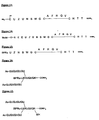
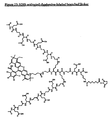
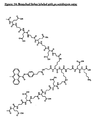
- Fig. 1 to 12 and 16 to 20 as well as 23 to 25 show compounds according to the invention
- Fig. 13 to 15 show amino acid sequences of reference antigens
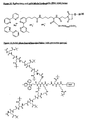
- Figures 21 and 22 show the solid-phase-bound branched linker (with and without the Mtt-protective group and with protective groups on the amino acid side chains) used to produce the conjugates of Fig. 23 to 25.
- the branched linkers were synthesized by means of fluorenylmethyloxycarbonyl-(Fmoc)-solid phase peptide synthesis on a batch peptide synthesizer e.g. from Applied Biosystems A433. In each case 4.0 equivalents of the amino acid derivative shown in table 1 were used for this.
- the amino acids and amino acid derivatives were dissolved in N-methyl-pyrrolion.
- the peptide is synthesized on Wang resin (Wang, S. S., J Am Chem Soc 95 (1973) 1328-33).
- the resin is loaded with 0.2 to 0.4 mMol/g.
- the coupling reactions were carried out for 20 minutes using 4 equivalents dicyclohexylcarbodiimide and 4 equivalents N-hydroxybenzotriazole in dimethyl-formamide relative to the Fmoc-amino acid derivative in dimethylformamide as the reaction medium.
- the Fmoc group was cleaved after each step of the synthesis with 20 % piperidine in dimethylformamide for 20 min.
- the amount of resin was selected such that after the last branch, 4 equivalents Fmoc-amino acid relative to the amino groups are used.
- Fmoc-Lys(Fmoc)-OH is used for the branch and subsequent synthesis of two identical arms.
- the unsymmetric branches are achieved by amino acid derivatives with orthogonal side chain protective groups such as Fmoc-Lys(Dde) or Fmoc-Lys(Alloc). These orthogonal protective groups are cleaved on the resin by methods known in the literature (Bycroft, B. W., et al., J. Chem. Soc., Chem. Commun.
- Terminal amino groups on the solid phase are optionally acetylated or succinylated with acetic anhydride or succinic anhydride.
- the hapten, label or functional group in those cases where the corresponding amino acid derivative is stable during the solid phase synthesis was already introduced on the resin e.g. on the N-terminal amino acid of the peptide.
- a metal chelate label was carried out via appropriate active ester derivatives at the free N-terminal amino group of the carrier-bound peptide.
- ruthenium(bipyridyl) 3 complex (BPRu) per free primary amino function were activated with N-hydroxybenzotriazole/dicyclohexyl-carbodiimide and dissolved in a small amount of DMSO and this was added dropwise and stirred for 2 h at room temperature.
- a hapten or a label can also be introduced at the C-terminus already during the solid phase synthesis by the direct incorporation of for example a metal chelate or biotin-coupled amino acid derivatives (described in WO 96/03409).
- the peptide is released from the support and the acid-labile protective groups are cleaved with 20 ml tri-fluoroacetic acid, 0.5 ml ethanediol, 1 ml thioanisole, 1.5 g phenol and 1 ml water within 40 min at room temperature.
- the amino acid derivatives that are used, it is also possible to use cocktails containing fewer radical traps.
- 300 ml cooled diisopropyl ether was subsequently added to the reaction solution and was kept for 40 min at 0°C in order to completely precipitate the peptide. The precipitate was filtered, washed with diisopropyl ether and dissolved in a small amount of 50 % acetic acid and lyophilized.
- the crude material obtained was purified by means of preparative HPLC on Delta-PAK RP C18 (column 50 x 300 mm, 100 ⁇ ; 15 ⁇ ) over an appropriate gradient (eluant A: water, 0.1 % trifluoroacetic acid, eluant B: acetonitrile, 0.1 % trifluoroacetic acid) within ca. 120 min.
- the eluted material was identified by mass spectrometry.
- the labeling group label
- the effector group hapten
- the functional group can also be introduced after cleavage from the resin.
- a protective group which is stable during the solid phase peptide synthesis as well as during the cleavage (e.g. phenylacetyl (Phac)).
- the protective group can be removed enzymatically with PenG amidase (described in PCT/EP95/02921).
- the preparation was purified by preparative HPLC (see above). The identity of the eluted material was checked by means of mass spectrometry.
- Example 4 Use of metal complex-antigen conjugates with branched and charged linkers in immunological tests
- a double antigen bridge test was carried out to detect specific antibodies to HIV.
- the sample liquid was incubated with a ruthenium-labeled antigen and a biotinylated antigen for the antibody to be determined in the presence of a streptavidin-coated solid phase.
- the presence of anti-HN antibodies in the sample liquid is determined by measuring the label on the solid phase by means of electrochemiluminescence using the Elecsys® system.
- a partial sequence (SEQ ID NO: 1) of the gp36 protein of HIV2 is known to comprise antigenic epitopes as recognized by important antibodies in patient sera.
- a peptide comprising SEQ ID NO: 1 extended at the N-terminus with an SH functional linker (SEQ ID NO: 2 and Fig. 13) was prepared as described in WO 96/03652.
- the full line between the two cysteines (C) of Fig. 13 shall indicate a -SS- cystine bridge.
- the peptide of SEQ ID NO: 2 (Fig. 13) was conjugated within 2 h at room temperature to the respective maleinimido-activated ruthenium linker in 0.1 mol/l potassium phosphate buffer pH 7 in order to derivatize the HIV peptide with maleinimido-activated ruthenium complexes.
- Non-reacted components were either separated by means of preparative HPLC or gel chromatography.
- the purified products were lyophilized.
- conjugates comprising SEQ ID NO: 2 and one of the various linker variants (compounds A-D) were evaluated with the test format describe above. All evaluations were carried out with the same biotinylated peptide comprising the identical gp36 epitope of SEQ ID NO: 1 (Fig. 14) and at the same concentration. Labeled detection antigens were used in an equimolar concentration to the biotinylated capture antigen.
- the antigens according to the invention were used in equimolar amounts relative to the antigen of the prior art.
- the concentration was 0.018 nmol/l.
- Table 4 shows the result from the experiment with conjugate D compared to the compound of Fig. 15 in ECL counts. Surprisingly uncharged branched, hydrophilic linkers also have a positive effect on the blank value. The signal-to-noise ratio is improved. Experiment Comparison D negative sample 6718 2015 positive sample 553816 759947 ratio positive/negative 82.4 377.1
- a monoclonal anti-Dig antibody was cleaved by pepsin to form F(ab') 2 -fragments. After quantitative cleavage the pepsin was inactivated by increasing the pH and adding pepstatin. The F(ab') 2 was reduced by means of cysteamine to Fab' without prior purification. Cysteamine cleaves almost selectively the disulfide bridges in the hinge region. It was subsequently dialysed. This removes most of the Fc cleavage products generated by pepsin since they are small enough to pass through the pores of the dialysis tube (> 10,000 Dalton).
- the conjugate synthesis was carried out by reacting the Fab' with an excess of BPRu-linker-MH. In this process an SH group in the hinge region was mainly converted. Small amounts of polyruthenylated Fab' were formed as a side reaction most likely as a result of reduced intramolecular disulphide bridges in the light and in the Fd chain.
- the crude conjugate was purified by a molecular sieve. In this process the monoruthenylated material was separated from the polyruthenylated material.
- the lyophilisate of the monoclonal antibody anti-DIG-M19.11 IgG was reconstituted with H 2 O to obtain a concentration of 20 mg/ml.
- the solution was heated in a water bath to 37°C. 100 ⁇ l pepsin solution (3 mg/ml) was added per ml antibody solution and incubated at 37°C in a water bath. After complete cleavage the reaction was stopped by increasing the pH value and adding pepstatin.
- the BPRu-linker-MH was dissolved in DMSO.
- the stoichiometry Fab':BPRu-linker-MH was 1:3 (mole/mole).
- the final concentration of Fab' in the mixture was 3.9 mg/ml.
- the maximum concentration of DMSO in the mixture was 10 %.
- the reaction time was 1 h at room temperature.
- the crude conjugate was concentrated 2-3-fold using an AMICON PM 10 and purified by means of Superdex 200 (buffer: 25 mM MOPS/NaOH pH 6.5, 50 mM NaCl, 10 % DMSO; applied amount: max 1.5 % of the gel bed, fractions: 0.5 % of the gel bed).
- the fractions containing the Fab'-BPRu-linker conjugate were pooled.
- Example 6 Use of metal complex-antibody fragment conjugates with branched and charged linkers in immunological tests
- a double antigen bridge test was carried out to detect specific antibodies to HIV.
- the sample liquid was incubated with a biotinylated antigen and a digoxigenin-labeled antigen to the antibody to be determined in the presence of a streptavidin-coated solid phase and anti-Dig-BPRu antibody.
- the presence of anti-HIV antibodies in the sample liquid was determined by determining the label bound via the double antigen bridge to the solid phase by electrochemiluminescence using the Elecsys® system.
- a HIV peptide from the gp41 region of HIV1 (SEQ ID NO: 3), which was labeled at the N-terminus was used as the antigen.
- the preparation of the biotinylated and the digoxigenylated antigens is described in PCT/EP 95/02921. Two anti-Dig-BPRu conjugates were used for detection of ruthenylated gp41 peptide.
- Antigens were used in equimolar amounts at a concentration of 20 ng/ml.
- Table 7 shows the unspecific binding of the antibody conjugate to the streptavidin solid phase.
- BPRu conjugate system blank value compound
- BPRu-linker-NH 2 8.5 mg BPRu-linker-NH 2 (Fig. 1) was dissolved in ca. 2 ml phosphate buffer pH 8.5 and 1.8 mg of the activated testosterone derivative (testosterone-3-dimethyl-carboxyoxime-NHS) dissolved in 2 ml dioxane was added dropwise. It was allowed to stir for 6 h at room temperature with the exclusion of light.
- the crude product is purified by means of preparative HPLC.
- the molecular weight was confirmed by means of mass spectrometry (MALDI) as 3180.
- the further coupling of the maleinimide to the gp36-peptide was carried out analogously to the already described method.
- the molecular weight determined with mass spectrometry corresponded to the expected molecular weight of 6990.
- the Mtt-protected branched peptidic linker (Fig. 21) is synthesized according to standard procedures.
- the Mtt protecting group is cleaved off specifically according to the procedure described in Aletras A., et al., Int. J. Peptide Res. (1995) 45, 488 to yield the solid phase bound linker of Fig. 22.
- the acridinium-labeled linker was purified by prep. HPLC and lyophilised.
- the product (cf. Fig. 24) was analyzed by MALDI-TOF and the molecular weight was found to correspond to the theoretical value.
- acridinium-labeled branched solid phase bound compound is synthesised as described in example 7.4 (synthesis of the acridinium sulfonamide see US 5,543,524). After cleavage from the solid phase and purification (see above) the free C-terminal amino group of the peptidic linker (4 mg linker) is reacted with 0,7 mg maleimidopropionyl-oxy succinimide ester (MPS) in 1 ml DMF (room temperature, 150 h) and purified by prep. HPLC.
- MPS maleimidopropionyl-oxy succinimide ester
- the product (cf. Fig. 25) was analyzed by MALDI-TOF and the molecular weight was found to correspond to the theoretical value.
- the MPS-activated acridinium sulfonamide labeled linker is conjugated to SH groups.
- TSH thyroid-stimulating hormone
- TSH-conjugate of this example was compared to a TSH-conjugate without linker.
- the TSH-concentrations are given as ⁇ IU/ml in table 8.
- Cal 1 and Cal 2 are commercial products, Roche Diagnostics order numbers TSH Cal Set: Id. Nr: 1731483, the samples marked Tris (100mM Tris, 1% BSA, 0,1% Thesit, 0,1% Oxaban, pH 7,4) comprise 0 and 50 ⁇ IU TSH per ml, respectively.
- TSH ⁇ IU/ml Signal-to-noise ratio (without linker) Signal-to-noise ratio (with linker) Cal1 0 Cal2 1.43 2 7 Tris 0 0 Tris 50 50 17 127
- the TSH-conjugate comprising the branched linker according to the present invention shows a significant improvement with regard to signal-to-noise ratio as compared to a conjugate without such linker.
Landscapes
- Health & Medical Sciences (AREA)
- Life Sciences & Earth Sciences (AREA)
- Chemical & Material Sciences (AREA)
- Immunology (AREA)
- Engineering & Computer Science (AREA)
- Molecular Biology (AREA)
- Biomedical Technology (AREA)
- Urology & Nephrology (AREA)
- Hematology (AREA)
- Medicinal Chemistry (AREA)
- General Health & Medical Sciences (AREA)
- Biochemistry (AREA)
- Analytical Chemistry (AREA)
- Physics & Mathematics (AREA)
- Microbiology (AREA)
- Organic Chemistry (AREA)
- Biotechnology (AREA)
- Food Science & Technology (AREA)
- Cell Biology (AREA)
- General Physics & Mathematics (AREA)
- Pathology (AREA)
- Proteomics, Peptides & Aminoacids (AREA)
- Biophysics (AREA)
- Chemical Kinetics & Catalysis (AREA)
- Genetics & Genomics (AREA)
- General Chemical & Material Sciences (AREA)
- Bioinformatics & Cheminformatics (AREA)
- Bioinformatics & Computational Biology (AREA)
- Gastroenterology & Hepatology (AREA)
- Peptides Or Proteins (AREA)
- Medicinal Preparation (AREA)
- Organic Low-Molecular-Weight Compounds And Preparation Thereof (AREA)
- Investigating Or Analysing Biological Materials (AREA)
- Measuring Or Testing Involving Enzymes Or Micro-Organisms (AREA)
- Medicines Containing Antibodies Or Antigens For Use As Internal Diagnostic Agents (AREA)
- Detergent Compositions (AREA)
- Pharmaceuticals Containing Other Organic And Inorganic Compounds (AREA)
Applications Claiming Priority (3)
| Application Number | Priority Date | Filing Date | Title |
|---|---|---|---|
| DE10048417 | 2000-09-29 | ||
| DE10048417A DE10048417A1 (de) | 2000-09-29 | 2000-09-29 | Verbindungen mit verzweigtem Linker |
| PCT/EP2001/011118 WO2002027315A2 (en) | 2000-09-29 | 2001-09-26 | Compounds with a branched linker |
Publications (2)
| Publication Number | Publication Date |
|---|---|
| EP1327146A2 EP1327146A2 (en) | 2003-07-16 |
| EP1327146B1 true EP1327146B1 (en) | 2005-09-14 |
Family
ID=7658168
Family Applications (1)
| Application Number | Title | Priority Date | Filing Date |
|---|---|---|---|
| EP01985752A Expired - Lifetime EP1327146B1 (en) | 2000-09-29 | 2001-09-26 | Compounds with a branched linker |
Country Status (10)
| Country | Link |
|---|---|
| US (2) | US20040086943A1 (enExample) |
| EP (1) | EP1327146B1 (enExample) |
| JP (1) | JP3647845B2 (enExample) |
| AT (1) | ATE304709T1 (enExample) |
| AU (1) | AU2002215904A1 (enExample) |
| CA (1) | CA2423916C (enExample) |
| DE (2) | DE10048417A1 (enExample) |
| DK (1) | DK1327146T3 (enExample) |
| ES (1) | ES2248405T3 (enExample) |
| WO (1) | WO2002027315A2 (enExample) |
Families Citing this family (22)
| Publication number | Priority date | Publication date | Assignee | Title |
|---|---|---|---|---|
| KR100361933B1 (ko) | 1993-09-08 | 2003-02-14 | 라 졸라 파마슈티칼 컴파니 | 화학적으로정의된비중합성결합가플랫폼분자및그것의콘주게이트 |
| US6858210B1 (en) | 1998-06-09 | 2005-02-22 | La Jolla Pharmaceutical Co. | Therapeutic and diagnostic domain 1 β2GPI polypeptides and methods of using same |
| CA2414076A1 (en) | 2000-06-08 | 2001-12-13 | La Jolla Pharmaceutical Company | Multivalent platform molecules comprising high molecular weight polyethylene oxide |
| US20100056762A1 (en) | 2001-05-11 | 2010-03-04 | Old Lloyd J | Specific binding proteins and uses thereof |
| DK1392359T4 (da) | 2001-05-11 | 2013-06-10 | Ludwig Inst For Cancer Res Ltd | Specifikke bindingsproteiner og deres anvendelser. |
| KR100985457B1 (ko) | 2001-06-21 | 2010-10-06 | 다이나박스 테크놀로지 코퍼레이션 | 키메라 면역조절 화합물 및 그것들의 사용 방법 |
| DE10227599B4 (de) * | 2002-06-20 | 2005-04-28 | Proteome Factory Ag | Verfahren und Reagenz zur spezifischen Identifizierung und Quantifizierung von einem oder mehreren Proteinen in einer Probe |
| WO2004016786A2 (de) * | 2002-07-19 | 2004-02-26 | Mologen Ag | Dna-expressionskonstrukt zur multiplen genexpression |
| GB0329825D0 (en) * | 2003-12-23 | 2004-01-28 | Celltech R&D Ltd | Biological products |
| ES2349649T3 (es) * | 2004-07-30 | 2011-01-07 | Advanced Life Science Institute, Inc. | Complejo sonda. |
| EP1951870B1 (de) | 2005-11-25 | 2013-04-24 | Mologen AG | Dna-konstrukte zur spezifischen hemmung der genexpression durch rna-interferenz |
| GB0607479D0 (en) * | 2006-04-13 | 2006-05-24 | Johnson Matthey Plc | Adhesion promoting compound |
| US9090693B2 (en) | 2007-01-25 | 2015-07-28 | Dana-Farber Cancer Institute | Use of anti-EGFR antibodies in treatment of EGFR mutant mediated disease |
| JP5618549B2 (ja) | 2007-03-15 | 2014-11-05 | ルードヴィッヒ インスティテュート フォー キャンサーリサーチ リミテッド | Egfr抗体及びsrc阻害剤を用いる治療方法及び関連製剤 |
| JP5532486B2 (ja) | 2007-08-14 | 2014-06-25 | ルードヴィッヒ インスティテュート フォー キャンサー リサーチ | Egf受容体を標的とするモノクローナル抗体175ならびにその誘導体および用途 |
| WO2010008519A2 (en) * | 2008-07-14 | 2010-01-21 | Andrew Metters | In vitro diagnostic markers comprising carbon nanoparticles and kits |
| CN103588801A (zh) * | 2013-12-02 | 2014-02-19 | 天津大港油田圣达科技有限公司 | 一种微量元素井间示踪剂的使用方法 |
| AU2019403552A1 (en) * | 2018-12-21 | 2021-06-17 | Seagen Inc. | ADCs with thiol multiplex linkers |
| CN113454455B (zh) | 2018-12-28 | 2024-04-30 | 雅培制药有限公司 | 微粒上的单分子的直接检测 |
| US12540893B2 (en) | 2019-12-18 | 2026-02-03 | Standard Biotools Canada Inc. | Mass cytometry reagents and methods for signal amplification |
| WO2022136234A1 (en) * | 2020-12-22 | 2022-06-30 | F. Hoffmann-La Roche Ag | Method for detecting an analyte of interest in a sample |
| CN119775256B (zh) * | 2024-12-31 | 2025-09-19 | 英科新创(苏州)生物科技有限公司 | 吖啶磺酰胺衍生物、制备方法、其应用及试剂盒 |
Citations (1)
| Publication number | Priority date | Publication date | Assignee | Title |
|---|---|---|---|---|
| US5958783A (en) * | 1994-07-25 | 1999-09-28 | Roche Diagnostics Gmbh | Metal complexes with a charged linker |
Family Cites Families (20)
| Publication number | Priority date | Publication date | Assignee | Title |
|---|---|---|---|---|
| US5075447A (en) * | 1984-09-17 | 1991-12-24 | Hoffmann-La Roche Inc. | Ruthenium complexes useful as carriers for immunologically active materials |
| DK365785A (da) * | 1984-09-17 | 1986-03-18 | Hoffmann La Roche | Metalcomplexer |
| FR2579224B1 (fr) * | 1985-03-25 | 1987-05-22 | Genetica | Procede de preparation microbiologique de la serum-albumine humaine |
| US5750409A (en) * | 1991-11-18 | 1998-05-12 | Boehringer Mannheim Gmbh | Pentacyclic compounds and their use as absorption or fluorescent dyes |
| GB9215780D0 (en) * | 1992-07-24 | 1992-09-09 | Univ London Pharmacy | Peptide compounds |
| DE4310141A1 (de) * | 1993-03-29 | 1994-10-06 | Boehringer Mannheim Gmbh | Homobidentale trifunktionelle Linker |
| GB9407812D0 (en) * | 1994-04-20 | 1994-06-15 | Nycomed Salutar Inc | Compounds |
| WO1996003652A1 (de) * | 1994-07-25 | 1996-02-08 | Boehringer Mannheim Gmbh | Bestimmung von spezifischem immunglobulin unter verwendung multipler antigene |
| DE59507438D1 (de) * | 1994-07-25 | 2000-01-20 | Roche Diagnostics Gmbh | Hydrophile metallkomplexe |
| WO1996003651A1 (de) * | 1994-07-25 | 1996-02-08 | Boehringer Mannheim Gmbh | Metallchelat-markierte peptide |
| US5804371A (en) * | 1994-07-25 | 1998-09-08 | Boehringer Mannheim Gmbh | Hapten-labelled peptides |
| US5718915A (en) * | 1994-10-31 | 1998-02-17 | Burstein Laboratories, Inc. | Antiviral liposome having coupled target-binding moiety and hydrolytic enzyme |
| DE19519973A1 (de) * | 1995-05-31 | 1996-12-05 | Boehringer Mannheim Gmbh | Entstörungsreagenz für die Bestimmung eines Analyten mit einem lumineszenzfähigen Metallkomplex |
| US5714360A (en) * | 1995-11-03 | 1998-02-03 | Bsi Corporation | Photoactivatable water soluble cross-linking agents containing an onium group |
| EP0941120A4 (en) * | 1996-11-05 | 2004-08-18 | Bristol Myers Squibb Co | BRANCHED PEPTIDLINKERS |
| CA2323048C (en) * | 1998-03-12 | 2006-10-10 | Shearwater Polymers, Inc. | Poly(ethylene glycol) derivatives with proximal reactive groups |
| DE19811582A1 (de) * | 1998-03-17 | 1999-09-23 | Roche Diagnostics Gmbh | Stabilisierung und Verstärkung von Elektrochemilumineszenz-Signalen |
| US6153655A (en) * | 1998-04-17 | 2000-11-28 | Enzon, Inc. | Terminally-branched polymeric linkers and polymeric conjugates containing the same |
| US6708967B1 (en) * | 1998-09-29 | 2004-03-23 | Hewlett-Packard Development Company, L.P. | Method and apparatus for making booklets |
| GB2413081A (en) * | 2004-04-13 | 2005-10-19 | Sca Hygiene Prod Ab | Absorbant article with folded side flap portions and method of manufacture |
-
2000
- 2000-09-29 DE DE10048417A patent/DE10048417A1/de not_active Withdrawn
-
2001
- 2001-09-26 ES ES01985752T patent/ES2248405T3/es not_active Expired - Lifetime
- 2001-09-26 AT AT01985752T patent/ATE304709T1/de active
- 2001-09-26 AU AU2002215904A patent/AU2002215904A1/en not_active Abandoned
- 2001-09-26 EP EP01985752A patent/EP1327146B1/en not_active Expired - Lifetime
- 2001-09-26 JP JP2002530643A patent/JP3647845B2/ja not_active Expired - Lifetime
- 2001-09-26 DE DE60113445T patent/DE60113445T2/de not_active Expired - Lifetime
- 2001-09-26 WO PCT/EP2001/011118 patent/WO2002027315A2/en not_active Ceased
- 2001-09-26 CA CA002423916A patent/CA2423916C/en not_active Expired - Lifetime
- 2001-09-26 DK DK01985752T patent/DK1327146T3/da active
- 2001-09-26 US US10/381,944 patent/US20040086943A1/en not_active Abandoned
-
2009
- 2009-02-13 US US12/370,886 patent/US20090264618A1/en not_active Abandoned
Patent Citations (1)
| Publication number | Priority date | Publication date | Assignee | Title |
|---|---|---|---|---|
| US5958783A (en) * | 1994-07-25 | 1999-09-28 | Roche Diagnostics Gmbh | Metal complexes with a charged linker |
Also Published As
| Publication number | Publication date |
|---|---|
| DE60113445T2 (de) | 2006-06-29 |
| ES2248405T3 (es) | 2006-03-16 |
| US20090264618A1 (en) | 2009-10-22 |
| JP2004510160A (ja) | 2004-04-02 |
| US20040086943A1 (en) | 2004-05-06 |
| DE10048417A1 (de) | 2002-04-11 |
| DE60113445D1 (de) | 2005-10-20 |
| AU2002215904A1 (en) | 2002-04-08 |
| EP1327146A2 (en) | 2003-07-16 |
| WO2002027315A3 (en) | 2002-07-11 |
| CA2423916A1 (en) | 2002-04-04 |
| CA2423916C (en) | 2009-02-03 |
| JP3647845B2 (ja) | 2005-05-18 |
| ATE304709T1 (de) | 2005-09-15 |
| DK1327146T3 (da) | 2006-01-23 |
| WO2002027315A2 (en) | 2002-04-04 |
Similar Documents
| Publication | Publication Date | Title |
|---|---|---|
| US20090264618A1 (en) | Compounds With a Branched Linker | |
| JP3556228B2 (ja) | 複数の抗原を使用した特異的免疫グロブリンの測定 | |
| CA2172145C (en) | Metal complexes with a charged linker | |
| CN1075817C (zh) | 亲水的金属络合物 | |
| US20080187904A1 (en) | Metal chelate-labelled pepetides | |
| US6780967B1 (en) | Metal chelate-labelled peptides | |
| CN113801215B (zh) | 一种环瓜氨酸肽、含该肽的抗原、试剂、试剂盒及应用 | |
| CA2420768C (en) | Conjugates of defined stoichiometry | |
| CA2195752C (en) | Oligomeric carrier molecules with defined incorporated marker groups andhaptens | |
| EP4242660A1 (en) | Reagent for measuring l-biotin, method for measuring sample containing l-biotin, method for determining number of labels of l-biotin-labeled substance, and method for producing solid phase on which optically isomeric biotin-binding site is immobilized | |
| US20040005548A1 (en) | Anti-HIV1 antibodies | |
| US20010021503A1 (en) | Oligomeric carrier molecules with defined incorporated marker groups and haptens | |
| EP1245956A1 (en) | Conjugates of defined stoichiometry |
Legal Events
| Date | Code | Title | Description |
|---|---|---|---|
| PUAI | Public reference made under article 153(3) epc to a published international application that has entered the european phase |
Free format text: ORIGINAL CODE: 0009012 |
|
| 17P | Request for examination filed |
Effective date: 20030429 |
|
| AK | Designated contracting states |
Designated state(s): AT BE CH CY DE DK ES FI FR GB GR IE IT LI LU MC NL PT SE TR |
|
| AX | Request for extension of the european patent |
Extension state: AL LT LV MK RO SI |
|
| GRAP | Despatch of communication of intention to grant a patent |
Free format text: ORIGINAL CODE: EPIDOSNIGR1 |
|
| GRAS | Grant fee paid |
Free format text: ORIGINAL CODE: EPIDOSNIGR3 |
|
| GRAA | (expected) grant |
Free format text: ORIGINAL CODE: 0009210 |
|
| AK | Designated contracting states |
Kind code of ref document: B1 Designated state(s): AT BE CH CY DE DK ES FI FR GB GR IE IT LI LU MC NL PT SE TR |
|
| REG | Reference to a national code |
Ref country code: GB Ref legal event code: FG4D |
|
| REG | Reference to a national code |
Ref country code: CH Ref legal event code: EP |
|
| PG25 | Lapsed in a contracting state [announced via postgrant information from national office to epo] |
Ref country code: CY Free format text: LAPSE BECAUSE OF FAILURE TO SUBMIT A TRANSLATION OF THE DESCRIPTION OR TO PAY THE FEE WITHIN THE PRESCRIBED TIME-LIMIT Effective date: 20050926 |
|
| PG25 | Lapsed in a contracting state [announced via postgrant information from national office to epo] |
Ref country code: MC Free format text: LAPSE BECAUSE OF NON-PAYMENT OF DUE FEES Effective date: 20050930 |
|
| REG | Reference to a national code |
Ref country code: IE Ref legal event code: FG4D |
|
| REF | Corresponds to: |
Ref document number: 60113445 Country of ref document: DE Date of ref document: 20051020 Kind code of ref document: P |
|
| PG25 | Lapsed in a contracting state [announced via postgrant information from national office to epo] |
Ref country code: LU Free format text: LAPSE BECAUSE OF NON-PAYMENT OF DUE FEES Effective date: 20051114 |
|
| PG25 | Lapsed in a contracting state [announced via postgrant information from national office to epo] |
Ref country code: GR Free format text: LAPSE BECAUSE OF FAILURE TO SUBMIT A TRANSLATION OF THE DESCRIPTION OR TO PAY THE FEE WITHIN THE PRESCRIBED TIME-LIMIT Effective date: 20051214 |
|
| REG | Reference to a national code |
Ref country code: SE Ref legal event code: TRGR |
|
| REG | Reference to a national code |
Ref country code: DK Ref legal event code: T3 |
|
| PG25 | Lapsed in a contracting state [announced via postgrant information from national office to epo] |
Ref country code: PT Free format text: LAPSE BECAUSE OF FAILURE TO SUBMIT A TRANSLATION OF THE DESCRIPTION OR TO PAY THE FEE WITHIN THE PRESCRIBED TIME-LIMIT Effective date: 20060214 |
|
| REG | Reference to a national code |
Ref country code: ES Ref legal event code: FG2A Ref document number: 2248405 Country of ref document: ES Kind code of ref document: T3 |
|
| ET | Fr: translation filed | ||
| PLBE | No opposition filed within time limit |
Free format text: ORIGINAL CODE: 0009261 |
|
| STAA | Information on the status of an ep patent application or granted ep patent |
Free format text: STATUS: NO OPPOSITION FILED WITHIN TIME LIMIT |
|
| 26N | No opposition filed |
Effective date: 20060615 |
|
| PGFP | Annual fee paid to national office [announced via postgrant information from national office to epo] |
Ref country code: IE Payment date: 20150826 Year of fee payment: 15 Ref country code: FI Payment date: 20150907 Year of fee payment: 15 Ref country code: DK Payment date: 20150826 Year of fee payment: 15 |
|
| PGFP | Annual fee paid to national office [announced via postgrant information from national office to epo] |
Ref country code: AT Payment date: 20150825 Year of fee payment: 15 Ref country code: SE Payment date: 20150908 Year of fee payment: 15 Ref country code: BE Payment date: 20150916 Year of fee payment: 15 |
|
| PGFP | Annual fee paid to national office [announced via postgrant information from national office to epo] |
Ref country code: NL Payment date: 20150930 Year of fee payment: 15 |
|
| REG | Reference to a national code |
Ref country code: FR Ref legal event code: PLFP Year of fee payment: 16 |
|
| PG25 | Lapsed in a contracting state [announced via postgrant information from national office to epo] |
Ref country code: BE Free format text: LAPSE BECAUSE OF NON-PAYMENT OF DUE FEES Effective date: 20160930 |
|
| REG | Reference to a national code |
Ref country code: DK Ref legal event code: EBP Effective date: 20160930 |
|
| PG25 | Lapsed in a contracting state [announced via postgrant information from national office to epo] |
Ref country code: SE Free format text: LAPSE BECAUSE OF NON-PAYMENT OF DUE FEES Effective date: 20160927 Ref country code: FI Free format text: LAPSE BECAUSE OF NON-PAYMENT OF DUE FEES Effective date: 20160926 |
|
| REG | Reference to a national code |
Ref country code: SE Ref legal event code: EUG |
|
| REG | Reference to a national code |
Ref country code: NL Ref legal event code: MM Effective date: 20161001 |
|
| REG | Reference to a national code |
Ref country code: AT Ref legal event code: MM01 Ref document number: 304709 Country of ref document: AT Kind code of ref document: T Effective date: 20160926 |
|
| REG | Reference to a national code |
Ref country code: IE Ref legal event code: MM4A |
|
| PG25 | Lapsed in a contracting state [announced via postgrant information from national office to epo] |
Ref country code: NL Free format text: LAPSE BECAUSE OF NON-PAYMENT OF DUE FEES Effective date: 20161001 |
|
| PG25 | Lapsed in a contracting state [announced via postgrant information from national office to epo] |
Ref country code: IE Free format text: LAPSE BECAUSE OF NON-PAYMENT OF DUE FEES Effective date: 20160926 |
|
| REG | Reference to a national code |
Ref country code: FR Ref legal event code: PLFP Year of fee payment: 17 |
|
| PG25 | Lapsed in a contracting state [announced via postgrant information from national office to epo] |
Ref country code: AT Free format text: LAPSE BECAUSE OF NON-PAYMENT OF DUE FEES Effective date: 20160926 |
|
| REG | Reference to a national code |
Ref country code: BE Ref legal event code: MM Effective date: 20160930 |
|
| PG25 | Lapsed in a contracting state [announced via postgrant information from national office to epo] |
Ref country code: DK Free format text: LAPSE BECAUSE OF NON-PAYMENT OF DUE FEES Effective date: 20160930 |
|
| PGFP | Annual fee paid to national office [announced via postgrant information from national office to epo] |
Ref country code: TR Payment date: 20150926 Year of fee payment: 15 |
|
| REG | Reference to a national code |
Ref country code: FR Ref legal event code: PLFP Year of fee payment: 18 |
|
| PGFP | Annual fee paid to national office [announced via postgrant information from national office to epo] |
Ref country code: FR Payment date: 20190819 Year of fee payment: 19 Ref country code: IT Payment date: 20190924 Year of fee payment: 19 |
|
| PGFP | Annual fee paid to national office [announced via postgrant information from national office to epo] |
Ref country code: GB Payment date: 20190827 Year of fee payment: 19 |
|
| PGFP | Annual fee paid to national office [announced via postgrant information from national office to epo] |
Ref country code: CH Payment date: 20190725 Year of fee payment: 19 |
|
| PGFP | Annual fee paid to national office [announced via postgrant information from national office to epo] |
Ref country code: ES Payment date: 20191001 Year of fee payment: 19 |
|
| PGFP | Annual fee paid to national office [announced via postgrant information from national office to epo] |
Ref country code: DE Payment date: 20200812 Year of fee payment: 20 |
|
| REG | Reference to a national code |
Ref country code: CH Ref legal event code: PL |
|
| GBPC | Gb: european patent ceased through non-payment of renewal fee |
Effective date: 20200926 |
|
| PG25 | Lapsed in a contracting state [announced via postgrant information from national office to epo] |
Ref country code: FR Free format text: LAPSE BECAUSE OF NON-PAYMENT OF DUE FEES Effective date: 20200930 |
|
| PG25 | Lapsed in a contracting state [announced via postgrant information from national office to epo] |
Ref country code: GB Free format text: LAPSE BECAUSE OF NON-PAYMENT OF DUE FEES Effective date: 20200926 Ref country code: LI Free format text: LAPSE BECAUSE OF NON-PAYMENT OF DUE FEES Effective date: 20200930 Ref country code: CH Free format text: LAPSE BECAUSE OF NON-PAYMENT OF DUE FEES Effective date: 20200930 |
|
| REG | Reference to a national code |
Ref country code: DE Ref legal event code: R071 Ref document number: 60113445 Country of ref document: DE |
|
| REG | Reference to a national code |
Ref country code: ES Ref legal event code: FD2A Effective date: 20220118 |
|
| PG25 | Lapsed in a contracting state [announced via postgrant information from national office to epo] |
Ref country code: IT Free format text: LAPSE BECAUSE OF NON-PAYMENT OF DUE FEES Effective date: 20200926 |
|
| PG25 | Lapsed in a contracting state [announced via postgrant information from national office to epo] |
Ref country code: ES Free format text: LAPSE BECAUSE OF NON-PAYMENT OF DUE FEES Effective date: 20200927 |
|
| PG25 | Lapsed in a contracting state [announced via postgrant information from national office to epo] |
Ref country code: TR Free format text: LAPSE BECAUSE OF NON-PAYMENT OF DUE FEES Effective date: 20160926 |