EP1303599B1 - Methylated nucleotide regulation of upa gene expression - Google Patents
Methylated nucleotide regulation of upa gene expression Download PDFInfo
- Publication number
- EP1303599B1 EP1303599B1 EP01953714A EP01953714A EP1303599B1 EP 1303599 B1 EP1303599 B1 EP 1303599B1 EP 01953714 A EP01953714 A EP 01953714A EP 01953714 A EP01953714 A EP 01953714A EP 1303599 B1 EP1303599 B1 EP 1303599B1
- Authority
- EP
- European Patent Office
- Prior art keywords
- sequence
- complementary
- upa
- oligonucleotide
- seq
- Prior art date
- Legal status (The legal status is an assumption and is not a legal conclusion. Google has not performed a legal analysis and makes no representation as to the accuracy of the status listed.)
- Expired - Lifetime
Links
- 125000003729 nucleotide group Chemical group 0.000 title claims abstract description 48
- 230000014509 gene expression Effects 0.000 title claims abstract description 32
- 230000033228 biological regulation Effects 0.000 title description 4
- 108090000435 Urokinase-type plasminogen activator Proteins 0.000 claims abstract description 124
- 108091034117 Oligonucleotide Proteins 0.000 claims abstract description 79
- 210000004027 cell Anatomy 0.000 claims abstract description 75
- 102100031358 Urokinase-type plasminogen activator Human genes 0.000 claims abstract description 66
- 230000000295 complement effect Effects 0.000 claims abstract description 60
- 230000011987 methylation Effects 0.000 claims abstract description 58
- 238000007069 methylation reaction Methods 0.000 claims abstract description 58
- 239000002773 nucleotide Substances 0.000 claims abstract description 43
- 238000000034 method Methods 0.000 claims abstract description 42
- OPTASPLRGRRNAP-UHFFFAOYSA-N cytosine Chemical class NC=1C=CNC(=O)N=1 OPTASPLRGRRNAP-UHFFFAOYSA-N 0.000 claims abstract description 35
- 210000004962 mammalian cell Anatomy 0.000 claims abstract description 9
- 239000000074 antisense oligonucleotide Substances 0.000 claims abstract description 8
- 238000012230 antisense oligonucleotides Methods 0.000 claims abstract description 8
- 230000001105 regulatory effect Effects 0.000 claims abstract description 7
- 206010028980 Neoplasm Diseases 0.000 claims description 41
- 108091029523 CpG island Proteins 0.000 claims description 37
- 108020004414 DNA Proteins 0.000 claims description 37
- JLCPHMBAVCMARE-UHFFFAOYSA-N [3-[[3-[[3-[[3-[[3-[[3-[[3-[[3-[[3-[[3-[[3-[[5-(2-amino-6-oxo-1H-purin-9-yl)-3-[[3-[[3-[[3-[[3-[[3-[[5-(2-amino-6-oxo-1H-purin-9-yl)-3-[[5-(2-amino-6-oxo-1H-purin-9-yl)-3-hydroxyoxolan-2-yl]methoxy-hydroxyphosphoryl]oxyoxolan-2-yl]methoxy-hydroxyphosphoryl]oxy-5-(5-methyl-2,4-dioxopyrimidin-1-yl)oxolan-2-yl]methoxy-hydroxyphosphoryl]oxy-5-(6-aminopurin-9-yl)oxolan-2-yl]methoxy-hydroxyphosphoryl]oxy-5-(6-aminopurin-9-yl)oxolan-2-yl]methoxy-hydroxyphosphoryl]oxy-5-(6-aminopurin-9-yl)oxolan-2-yl]methoxy-hydroxyphosphoryl]oxy-5-(6-aminopurin-9-yl)oxolan-2-yl]methoxy-hydroxyphosphoryl]oxyoxolan-2-yl]methoxy-hydroxyphosphoryl]oxy-5-(5-methyl-2,4-dioxopyrimidin-1-yl)oxolan-2-yl]methoxy-hydroxyphosphoryl]oxy-5-(4-amino-2-oxopyrimidin-1-yl)oxolan-2-yl]methoxy-hydroxyphosphoryl]oxy-5-(5-methyl-2,4-dioxopyrimidin-1-yl)oxolan-2-yl]methoxy-hydroxyphosphoryl]oxy-5-(5-methyl-2,4-dioxopyrimidin-1-yl)oxolan-2-yl]methoxy-hydroxyphosphoryl]oxy-5-(6-aminopurin-9-yl)oxolan-2-yl]methoxy-hydroxyphosphoryl]oxy-5-(6-aminopurin-9-yl)oxolan-2-yl]methoxy-hydroxyphosphoryl]oxy-5-(4-amino-2-oxopyrimidin-1-yl)oxolan-2-yl]methoxy-hydroxyphosphoryl]oxy-5-(4-amino-2-oxopyrimidin-1-yl)oxolan-2-yl]methoxy-hydroxyphosphoryl]oxy-5-(4-amino-2-oxopyrimidin-1-yl)oxolan-2-yl]methoxy-hydroxyphosphoryl]oxy-5-(6-aminopurin-9-yl)oxolan-2-yl]methoxy-hydroxyphosphoryl]oxy-5-(4-amino-2-oxopyrimidin-1-yl)oxolan-2-yl]methyl [5-(6-aminopurin-9-yl)-2-(hydroxymethyl)oxolan-3-yl] hydrogen phosphate Polymers Cc1cn(C2CC(OP(O)(=O)OCC3OC(CC3OP(O)(=O)OCC3OC(CC3O)n3cnc4c3nc(N)[nH]c4=O)n3cnc4c3nc(N)[nH]c4=O)C(COP(O)(=O)OC3CC(OC3COP(O)(=O)OC3CC(OC3COP(O)(=O)OC3CC(OC3COP(O)(=O)OC3CC(OC3COP(O)(=O)OC3CC(OC3COP(O)(=O)OC3CC(OC3COP(O)(=O)OC3CC(OC3COP(O)(=O)OC3CC(OC3COP(O)(=O)OC3CC(OC3COP(O)(=O)OC3CC(OC3COP(O)(=O)OC3CC(OC3COP(O)(=O)OC3CC(OC3COP(O)(=O)OC3CC(OC3COP(O)(=O)OC3CC(OC3COP(O)(=O)OC3CC(OC3COP(O)(=O)OC3CC(OC3COP(O)(=O)OC3CC(OC3CO)n3cnc4c(N)ncnc34)n3ccc(N)nc3=O)n3cnc4c(N)ncnc34)n3ccc(N)nc3=O)n3ccc(N)nc3=O)n3ccc(N)nc3=O)n3cnc4c(N)ncnc34)n3cnc4c(N)ncnc34)n3cc(C)c(=O)[nH]c3=O)n3cc(C)c(=O)[nH]c3=O)n3ccc(N)nc3=O)n3cc(C)c(=O)[nH]c3=O)n3cnc4c3nc(N)[nH]c4=O)n3cnc4c(N)ncnc34)n3cnc4c(N)ncnc34)n3cnc4c(N)ncnc34)n3cnc4c(N)ncnc34)O2)c(=O)[nH]c1=O JLCPHMBAVCMARE-UHFFFAOYSA-N 0.000 claims description 36
- 201000011510 cancer Diseases 0.000 claims description 30
- 206010027476 Metastases Diseases 0.000 claims description 26
- 230000009401 metastasis Effects 0.000 claims description 26
- 108091023045 Untranslated Region Proteins 0.000 claims description 18
- 230000000692 anti-sense effect Effects 0.000 claims description 16
- 108700039691 Genetic Promoter Regions Proteins 0.000 claims description 14
- 206010006187 Breast cancer Diseases 0.000 claims description 10
- 208000026310 Breast neoplasm Diseases 0.000 claims description 10
- 108091028043 Nucleic acid sequence Proteins 0.000 claims description 9
- 239000013615 primer Substances 0.000 claims description 9
- 229940104302 cytosine Drugs 0.000 claims description 7
- 238000012384 transportation and delivery Methods 0.000 claims description 7
- 230000008569 process Effects 0.000 claims description 6
- 239000003155 DNA primer Substances 0.000 claims description 4
- 238000003556 assay Methods 0.000 claims description 4
- 239000003814 drug Substances 0.000 claims description 4
- 230000036210 malignancy Effects 0.000 claims description 4
- 238000004519 manufacturing process Methods 0.000 claims description 4
- 238000012408 PCR amplification Methods 0.000 claims description 3
- 206010060862 Prostate cancer Diseases 0.000 claims description 3
- 208000000236 Prostatic Neoplasms Diseases 0.000 claims description 3
- 230000003211 malignant effect Effects 0.000 claims description 3
- 238000001890 transfection Methods 0.000 claims description 3
- 206010009944 Colon cancer Diseases 0.000 claims description 2
- 102000053602 DNA Human genes 0.000 claims description 2
- 206010058467 Lung neoplasm malignant Diseases 0.000 claims description 2
- 108020004682 Single-Stranded DNA Proteins 0.000 claims description 2
- 208000029742 colonic neoplasm Diseases 0.000 claims description 2
- 201000005202 lung cancer Diseases 0.000 claims description 2
- 208000020816 lung neoplasm Diseases 0.000 claims description 2
- 238000003752 polymerase chain reaction Methods 0.000 claims description 2
- 238000000338 in vitro Methods 0.000 claims 3
- 108090000623 proteins and genes Proteins 0.000 abstract description 17
- 102000003990 Urokinase-type plasminogen activator Human genes 0.000 abstract description 4
- 241000282414 Homo sapiens Species 0.000 description 24
- 210000004881 tumor cell Anatomy 0.000 description 20
- 241001465754 Metazoa Species 0.000 description 11
- 238000011282 treatment Methods 0.000 description 11
- 108020004999 messenger RNA Proteins 0.000 description 7
- WSFSSNUMVMOOMR-UHFFFAOYSA-N Formaldehyde Chemical compound O=C WSFSSNUMVMOOMR-UHFFFAOYSA-N 0.000 description 6
- 230000000875 corresponding effect Effects 0.000 description 6
- 238000002405 diagnostic procedure Methods 0.000 description 6
- 239000003795 chemical substances by application Substances 0.000 description 5
- 230000003993 interaction Effects 0.000 description 5
- 108020004707 nucleic acids Proteins 0.000 description 5
- 102000039446 nucleic acids Human genes 0.000 description 5
- 150000007523 nucleic acids Chemical class 0.000 description 5
- 238000010561 standard procedure Methods 0.000 description 5
- 230000017858 demethylation Effects 0.000 description 4
- 238000010520 demethylation reaction Methods 0.000 description 4
- 230000014493 regulation of gene expression Effects 0.000 description 4
- 239000000523 sample Substances 0.000 description 4
- 108020004463 18S ribosomal RNA Proteins 0.000 description 3
- LRSASMSXMSNRBT-UHFFFAOYSA-N 5-methylcytosine Chemical compound CC1=CNC(=O)N=C1N LRSASMSXMSNRBT-UHFFFAOYSA-N 0.000 description 3
- 230000030933 DNA methylation on cytosine Effects 0.000 description 3
- 101000638886 Homo sapiens Urokinase-type plasminogen activator Proteins 0.000 description 3
- 238000000636 Northern blotting Methods 0.000 description 3
- 238000004458 analytical method Methods 0.000 description 3
- 108091092328 cellular RNA Proteins 0.000 description 3
- 230000001413 cellular effect Effects 0.000 description 3
- LOKCTEFSRHRXRJ-UHFFFAOYSA-I dipotassium trisodium dihydrogen phosphate hydrogen phosphate dichloride Chemical compound P(=O)(O)(O)[O-].[K+].P(=O)(O)([O-])[O-].[Na+].[Na+].[Cl-].[K+].[Cl-].[Na+] LOKCTEFSRHRXRJ-UHFFFAOYSA-I 0.000 description 3
- 208000037265 diseases, disorders, signs and symptoms Diseases 0.000 description 3
- 238000011534 incubation Methods 0.000 description 3
- 230000002401 inhibitory effect Effects 0.000 description 3
- 230000001035 methylating effect Effects 0.000 description 3
- 239000002953 phosphate buffered saline Substances 0.000 description 3
- 230000009467 reduction Effects 0.000 description 3
- 238000011935 selective methylation Methods 0.000 description 3
- 210000001519 tissue Anatomy 0.000 description 3
- 238000013518 transcription Methods 0.000 description 3
- 230000035897 transcription Effects 0.000 description 3
- 230000004614 tumor growth Effects 0.000 description 3
- 229920000936 Agarose Polymers 0.000 description 2
- QCMYYKRYFNMIEC-UHFFFAOYSA-N COP(O)=O Chemical class COP(O)=O QCMYYKRYFNMIEC-UHFFFAOYSA-N 0.000 description 2
- 230000007067 DNA methylation Effects 0.000 description 2
- 239000003391 RNA probe Substances 0.000 description 2
- IQFYYKKMVGJFEH-XLPZGREQSA-N Thymidine Chemical compound O=C1NC(=O)C(C)=CN1[C@@H]1O[C@H](CO)[C@@H](O)C1 IQFYYKKMVGJFEH-XLPZGREQSA-N 0.000 description 2
- ISAKRJDGNUQOIC-UHFFFAOYSA-N Uracil Chemical compound O=C1C=CNC(=O)N1 ISAKRJDGNUQOIC-UHFFFAOYSA-N 0.000 description 2
- 230000003321 amplification Effects 0.000 description 2
- 230000033115 angiogenesis Effects 0.000 description 2
- 239000013060 biological fluid Substances 0.000 description 2
- 238000001574 biopsy Methods 0.000 description 2
- 230000008859 change Effects 0.000 description 2
- 239000002299 complementary DNA Substances 0.000 description 2
- 238000011161 development Methods 0.000 description 2
- 208000035475 disorder Diseases 0.000 description 2
- 210000002919 epithelial cell Anatomy 0.000 description 2
- 238000001727 in vivo Methods 0.000 description 2
- 208000015181 infectious disease Diseases 0.000 description 2
- 230000005764 inhibitory process Effects 0.000 description 2
- 238000002347 injection Methods 0.000 description 2
- 239000007924 injection Substances 0.000 description 2
- 239000002502 liposome Substances 0.000 description 2
- 230000001394 metastastic effect Effects 0.000 description 2
- 206010061289 metastatic neoplasm Diseases 0.000 description 2
- 239000000178 monomer Substances 0.000 description 2
- 210000004877 mucosa Anatomy 0.000 description 2
- 238000003199 nucleic acid amplification method Methods 0.000 description 2
- 102000004169 proteins and genes Human genes 0.000 description 2
- 238000004064 recycling Methods 0.000 description 2
- 238000011160 research Methods 0.000 description 2
- 238000002560 therapeutic procedure Methods 0.000 description 2
- 238000013519 translation Methods 0.000 description 2
- 229960005356 urokinase Drugs 0.000 description 2
- 239000003981 vehicle Substances 0.000 description 2
- 239000013603 viral vector Substances 0.000 description 2
- HWPZZUQOWRWFDB-UHFFFAOYSA-N 1-methylcytosine Chemical compound CN1C=CC(N)=NC1=O HWPZZUQOWRWFDB-UHFFFAOYSA-N 0.000 description 1
- 108020003589 5' Untranslated Regions Proteins 0.000 description 1
- 102000007469 Actins Human genes 0.000 description 1
- 108010085238 Actins Proteins 0.000 description 1
- 108020000948 Antisense Oligonucleotides Proteins 0.000 description 1
- DWRXFEITVBNRMK-UHFFFAOYSA-N Beta-D-1-Arabinofuranosylthymine Natural products O=C1NC(=O)C(C)=CN1C1C(O)C(O)C(CO)O1 DWRXFEITVBNRMK-UHFFFAOYSA-N 0.000 description 1
- OKTJSMMVPCPJKN-UHFFFAOYSA-N Carbon Chemical compound [C] OKTJSMMVPCPJKN-UHFFFAOYSA-N 0.000 description 1
- 102000008186 Collagen Human genes 0.000 description 1
- 108010035532 Collagen Proteins 0.000 description 1
- 108020004635 Complementary DNA Proteins 0.000 description 1
- 108091029430 CpG site Proteins 0.000 description 1
- 102000004190 Enzymes Human genes 0.000 description 1
- 108090000790 Enzymes Proteins 0.000 description 1
- 102000010834 Extracellular Matrix Proteins Human genes 0.000 description 1
- 108010037362 Extracellular Matrix Proteins Proteins 0.000 description 1
- 206010015866 Extravasation Diseases 0.000 description 1
- 102000016359 Fibronectins Human genes 0.000 description 1
- 108010067306 Fibronectins Proteins 0.000 description 1
- 102000007547 Laminin Human genes 0.000 description 1
- 108010085895 Laminin Proteins 0.000 description 1
- 108091026898 Leader sequence (mRNA) Proteins 0.000 description 1
- 102000016397 Methyltransferase Human genes 0.000 description 1
- 108060004795 Methyltransferase Proteins 0.000 description 1
- 241000699670 Mus sp. Species 0.000 description 1
- 101710163270 Nuclease Proteins 0.000 description 1
- 239000004677 Nylon Substances 0.000 description 1
- 102000013566 Plasminogen Human genes 0.000 description 1
- 108010051456 Plasminogen Proteins 0.000 description 1
- 108091081021 Sense strand Proteins 0.000 description 1
- 238000012300 Sequence Analysis Methods 0.000 description 1
- DWAQJAXMDSEUJJ-UHFFFAOYSA-M Sodium bisulfite Chemical compound [Na+].OS([O-])=O DWAQJAXMDSEUJJ-UHFFFAOYSA-M 0.000 description 1
- 230000001594 aberrant effect Effects 0.000 description 1
- 230000009471 action Effects 0.000 description 1
- 239000012190 activator Substances 0.000 description 1
- 210000000577 adipose tissue Anatomy 0.000 description 1
- IQFYYKKMVGJFEH-UHFFFAOYSA-N beta-L-thymidine Natural products O=C1NC(=O)C(C)=CN1C1OC(CO)C(O)C1 IQFYYKKMVGJFEH-UHFFFAOYSA-N 0.000 description 1
- 230000015572 biosynthetic process Effects 0.000 description 1
- 239000008280 blood Substances 0.000 description 1
- 210000004369 blood Anatomy 0.000 description 1
- 229910052799 carbon Inorganic materials 0.000 description 1
- 230000015556 catabolic process Effects 0.000 description 1
- 125000002091 cationic group Chemical group 0.000 description 1
- 230000021164 cell adhesion Effects 0.000 description 1
- 230000012292 cell migration Effects 0.000 description 1
- 230000004663 cell proliferation Effects 0.000 description 1
- 229920001436 collagen Polymers 0.000 description 1
- 230000000052 comparative effect Effects 0.000 description 1
- 230000002596 correlated effect Effects 0.000 description 1
- 230000008878 coupling Effects 0.000 description 1
- 238000010168 coupling process Methods 0.000 description 1
- 238000005859 coupling reaction Methods 0.000 description 1
- 238000006731 degradation reaction Methods 0.000 description 1
- 239000012649 demethylating agent Substances 0.000 description 1
- 239000000412 dendrimer Substances 0.000 description 1
- 229920000736 dendritic polymer Polymers 0.000 description 1
- 238000001514 detection method Methods 0.000 description 1
- 238000003745 diagnosis Methods 0.000 description 1
- 201000010099 disease Diseases 0.000 description 1
- 239000003937 drug carrier Substances 0.000 description 1
- 238000007876 drug discovery Methods 0.000 description 1
- 230000000694 effects Effects 0.000 description 1
- 238000005516 engineering process Methods 0.000 description 1
- 230000002708 enhancing effect Effects 0.000 description 1
- 229940088598 enzyme Drugs 0.000 description 1
- ZJXZSIYSNXKHEA-UHFFFAOYSA-N ethyl dihydrogen phosphate Chemical class CCOP(O)(O)=O ZJXZSIYSNXKHEA-UHFFFAOYSA-N 0.000 description 1
- 210000002744 extracellular matrix Anatomy 0.000 description 1
- 230000036251 extravasation Effects 0.000 description 1
- VUERQRKTYBIULR-UHFFFAOYSA-N fosetyl Chemical class CCOP(O)=O VUERQRKTYBIULR-UHFFFAOYSA-N 0.000 description 1
- 238000009650 gentamicin protection assay Methods 0.000 description 1
- 229940029575 guanosine Drugs 0.000 description 1
- 239000005556 hormone Substances 0.000 description 1
- 229940088597 hormone Drugs 0.000 description 1
- 230000006698 induction Effects 0.000 description 1
- 239000003112 inhibitor Substances 0.000 description 1
- 230000000977 initiatory effect Effects 0.000 description 1
- 238000010255 intramuscular injection Methods 0.000 description 1
- 239000007927 intramuscular injection Substances 0.000 description 1
- 230000007774 longterm Effects 0.000 description 1
- 210000004072 lung Anatomy 0.000 description 1
- 210000001165 lymph node Anatomy 0.000 description 1
- 238000007726 management method Methods 0.000 description 1
- 230000007246 mechanism Effects 0.000 description 1
- 230000010534 mechanism of action Effects 0.000 description 1
- 239000012528 membrane Substances 0.000 description 1
- 125000002496 methyl group Chemical group [H]C([H])([H])* 0.000 description 1
- 238000007855 methylation-specific PCR Methods 0.000 description 1
- 239000000203 mixture Substances 0.000 description 1
- 230000035772 mutation Effects 0.000 description 1
- 238000007857 nested PCR Methods 0.000 description 1
- 229920001778 nylon Polymers 0.000 description 1
- 125000005642 phosphothioate group Chemical group 0.000 description 1
- 238000013439 planning Methods 0.000 description 1
- 239000013641 positive control Substances 0.000 description 1
- 230000002062 proliferating effect Effects 0.000 description 1
- 230000001737 promoting effect Effects 0.000 description 1
- 238000000746 purification Methods 0.000 description 1
- 238000011002 quantification Methods 0.000 description 1
- 238000011084 recovery Methods 0.000 description 1
- 230000022532 regulation of transcription, DNA-dependent Effects 0.000 description 1
- 108091008146 restriction endonucleases Proteins 0.000 description 1
- 230000035945 sensitivity Effects 0.000 description 1
- 150000003384 small molecules Chemical class 0.000 description 1
- 235000010267 sodium hydrogen sulphite Nutrition 0.000 description 1
- 239000000126 substance Substances 0.000 description 1
- 239000000758 substrate Substances 0.000 description 1
- 238000003786 synthesis reaction Methods 0.000 description 1
- 230000002194 synthesizing effect Effects 0.000 description 1
- 230000001225 therapeutic effect Effects 0.000 description 1
- 229940104230 thymidine Drugs 0.000 description 1
- 230000001988 toxicity Effects 0.000 description 1
- 231100000419 toxicity Toxicity 0.000 description 1
- 230000002103 transcriptional effect Effects 0.000 description 1
- 229940035893 uracil Drugs 0.000 description 1
- 210000002700 urine Anatomy 0.000 description 1
Images


Classifications
-
- C—CHEMISTRY; METALLURGY
- C12—BIOCHEMISTRY; BEER; SPIRITS; WINE; VINEGAR; MICROBIOLOGY; ENZYMOLOGY; MUTATION OR GENETIC ENGINEERING
- C12N—MICROORGANISMS OR ENZYMES; COMPOSITIONS THEREOF; PROPAGATING, PRESERVING, OR MAINTAINING MICROORGANISMS; MUTATION OR GENETIC ENGINEERING; CULTURE MEDIA
- C12N15/00—Mutation or genetic engineering; DNA or RNA concerning genetic engineering, vectors, e.g. plasmids, or their isolation, preparation or purification; Use of hosts therefor
- C12N15/09—Recombinant DNA-technology
- C12N15/11—DNA or RNA fragments; Modified forms thereof; Non-coding nucleic acids having a biological activity
- C12N15/113—Non-coding nucleic acids modulating the expression of genes, e.g. antisense oligonucleotides; Antisense DNA or RNA; Triplex- forming oligonucleotides; Catalytic nucleic acids, e.g. ribozymes; Nucleic acids used in co-suppression or gene silencing
- C12N15/1137—Non-coding nucleic acids modulating the expression of genes, e.g. antisense oligonucleotides; Antisense DNA or RNA; Triplex- forming oligonucleotides; Catalytic nucleic acids, e.g. ribozymes; Nucleic acids used in co-suppression or gene silencing against enzymes
-
- A—HUMAN NECESSITIES
- A61—MEDICAL OR VETERINARY SCIENCE; HYGIENE
- A61P—SPECIFIC THERAPEUTIC ACTIVITY OF CHEMICAL COMPOUNDS OR MEDICINAL PREPARATIONS
- A61P35/00—Antineoplastic agents
-
- A—HUMAN NECESSITIES
- A61—MEDICAL OR VETERINARY SCIENCE; HYGIENE
- A61P—SPECIFIC THERAPEUTIC ACTIVITY OF CHEMICAL COMPOUNDS OR MEDICINAL PREPARATIONS
- A61P35/00—Antineoplastic agents
- A61P35/04—Antineoplastic agents specific for metastasis
-
- A—HUMAN NECESSITIES
- A61—MEDICAL OR VETERINARY SCIENCE; HYGIENE
- A61P—SPECIFIC THERAPEUTIC ACTIVITY OF CHEMICAL COMPOUNDS OR MEDICINAL PREPARATIONS
- A61P43/00—Drugs for specific purposes, not provided for in groups A61P1/00-A61P41/00
-
- A—HUMAN NECESSITIES
- A61—MEDICAL OR VETERINARY SCIENCE; HYGIENE
- A61P—SPECIFIC THERAPEUTIC ACTIVITY OF CHEMICAL COMPOUNDS OR MEDICINAL PREPARATIONS
- A61P9/00—Drugs for disorders of the cardiovascular system
-
- C—CHEMISTRY; METALLURGY
- C12—BIOCHEMISTRY; BEER; SPIRITS; WINE; VINEGAR; MICROBIOLOGY; ENZYMOLOGY; MUTATION OR GENETIC ENGINEERING
- C12Q—MEASURING OR TESTING PROCESSES INVOLVING ENZYMES, NUCLEIC ACIDS OR MICROORGANISMS; COMPOSITIONS OR TEST PAPERS THEREFOR; PROCESSES OF PREPARING SUCH COMPOSITIONS; CONDITION-RESPONSIVE CONTROL IN MICROBIOLOGICAL OR ENZYMOLOGICAL PROCESSES
- C12Q1/00—Measuring or testing processes involving enzymes, nucleic acids or microorganisms; Compositions therefor; Processes of preparing such compositions
- C12Q1/68—Measuring or testing processes involving enzymes, nucleic acids or microorganisms; Compositions therefor; Processes of preparing such compositions involving nucleic acids
- C12Q1/6876—Nucleic acid products used in the analysis of nucleic acids, e.g. primers or probes
- C12Q1/6883—Nucleic acid products used in the analysis of nucleic acids, e.g. primers or probes for diseases caused by alterations of genetic material
- C12Q1/6886—Nucleic acid products used in the analysis of nucleic acids, e.g. primers or probes for diseases caused by alterations of genetic material for cancer
-
- C—CHEMISTRY; METALLURGY
- C12—BIOCHEMISTRY; BEER; SPIRITS; WINE; VINEGAR; MICROBIOLOGY; ENZYMOLOGY; MUTATION OR GENETIC ENGINEERING
- C12Y—ENZYMES
- C12Y304/00—Hydrolases acting on peptide bonds, i.e. peptidases (3.4)
- C12Y304/21—Serine endopeptidases (3.4.21)
- C12Y304/21073—Serine endopeptidases (3.4.21) u-Plasminogen activator (3.4.21.73), i.e. urokinase
-
- A—HUMAN NECESSITIES
- A61—MEDICAL OR VETERINARY SCIENCE; HYGIENE
- A61K—PREPARATIONS FOR MEDICAL, DENTAL OR TOILETRY PURPOSES
- A61K38/00—Medicinal preparations containing peptides
-
- C—CHEMISTRY; METALLURGY
- C12—BIOCHEMISTRY; BEER; SPIRITS; WINE; VINEGAR; MICROBIOLOGY; ENZYMOLOGY; MUTATION OR GENETIC ENGINEERING
- C12N—MICROORGANISMS OR ENZYMES; COMPOSITIONS THEREOF; PROPAGATING, PRESERVING, OR MAINTAINING MICROORGANISMS; MUTATION OR GENETIC ENGINEERING; CULTURE MEDIA
- C12N2310/00—Structure or type of the nucleic acid
- C12N2310/30—Chemical structure
- C12N2310/33—Chemical structure of the base
- C12N2310/334—Modified C
- C12N2310/3341—5-Methylcytosine
-
- C—CHEMISTRY; METALLURGY
- C12—BIOCHEMISTRY; BEER; SPIRITS; WINE; VINEGAR; MICROBIOLOGY; ENZYMOLOGY; MUTATION OR GENETIC ENGINEERING
- C12Q—MEASURING OR TESTING PROCESSES INVOLVING ENZYMES, NUCLEIC ACIDS OR MICROORGANISMS; COMPOSITIONS OR TEST PAPERS THEREFOR; PROCESSES OF PREPARING SUCH COMPOSITIONS; CONDITION-RESPONSIVE CONTROL IN MICROBIOLOGICAL OR ENZYMOLOGICAL PROCESSES
- C12Q2600/00—Oligonucleotides characterized by their use
- C12Q2600/154—Methylation markers
-
- C—CHEMISTRY; METALLURGY
- C12—BIOCHEMISTRY; BEER; SPIRITS; WINE; VINEGAR; MICROBIOLOGY; ENZYMOLOGY; MUTATION OR GENETIC ENGINEERING
- C12Q—MEASURING OR TESTING PROCESSES INVOLVING ENZYMES, NUCLEIC ACIDS OR MICROORGANISMS; COMPOSITIONS OR TEST PAPERS THEREFOR; PROCESSES OF PREPARING SUCH COMPOSITIONS; CONDITION-RESPONSIVE CONTROL IN MICROBIOLOGICAL OR ENZYMOLOGICAL PROCESSES
- C12Q2600/00—Oligonucleotides characterized by their use
- C12Q2600/156—Polymorphic or mutational markers
Definitions
- the invention relates to the field of gene expression, and more particularly to predicting and regulating the expression of the urokinase type plasminogen ("uPA”) activator gene.
- uPA urokinase type plasminogen
- Urokinase type plasminogen activator is a protein which may play a role in metastasis. uPA appears to be important to the degradation of components in the extracellular matrix such as laminin, fibronectin and collagen to facilitate the extravasation of tumour cells. uPA has also been implicated in promoting tumour angiogenesis, cell migration and adhesion. Tumour cells that do not express uPA are generally benign or non-metastasizing. Tumour cells that express uPA are in general more aggressive with an increased tendency to metastasize. However, by the time uPA expression is observed in tumour cells, metastasis may have already occurred, reducing the patient's chances for recovery.
- WO 99/24560 provided a single standard oligonucleotide complementary to a specific region of a gene promoter, methylated at carbon 5 of all cytosine residues in cytosine-guanine (CG) dinucleotide.
- An oligonucleotide complementary to the sense standard of c-Ha-ras promoter having a methyl group on all cytosine residues of its 6 CpG sites was specifically effective in inhibiting breast tumor cell proliferation and tumorigenicity.
- WO 97/46705 discloses a method for detecting a methylated CpG-containing nucleic acid, the method including contacting a nucleic acid containing specimen with an agent that modifies unmethylated cytosine, amplifying the CpG-specific oligonucleotide primers, wherein the oligonucleotide primers distinguish between modified methylated and non-methylated nucleic acid and detecting the methylated nucleic acid.
- WO 97/46705 also discloses a method for detecting a cell having a methylated CpG island or a cell proliferative disorder associated with methylated CpG in a tissue or biological fluid of a subject, comprising contacting a target cellular component suspected of expressing a gene having a methylated CpG or having a CpG-associated disorder, with an agent which binds to the component.
- the invention provides antisense nucleotide sequences corresponding to these target sequences which may be methylated and used to cause a decrease in uPA gene expression.
- the ability to decrease uPA gene expression is a valuable therapeutic tool In combating tumour metastasis and angiogenesis.
- regions of the uPA gene have been identified which are useful in predicting the likelihood that a cancer cell population will metastasize. Specifically, the extent of methylation of CpG Islands within target sequences in the untranslated region of the uPA gene is predictive of the risk of metastasis. Cells with lower levels of methylation in these target region CpG islands are more likely to metastasize.
- Expression of some genes may be regulated by the selective methylation of particular regions within the gene of interest.
- identification of therapeutically or diagnostically useful target regions for methylation/demethylation of the uPA gene and a means of methylating such regions in vivo has, up to this point, proven elusive.
- the present invention provides a sequence selected from the group consisting of SEQ. ID No. 1, 2, 3, 4, 5, 6, 7, 8, 9, 10, 11, 12, 13, 14, 15, 16 and 17 and a methylated antisense deoxy-oligonucleotides substantially complementary to and capable of forming a stable complex with a target sequence within the untranslated region of the uPA gene located between nucleotides 1 and 1226 and which contains CpG islands, wherein said oligonucleotides are selected from the group consisting of oligonucleotides substantially complementary to at least one of SEQ. ID. NOs.
- the present invention also provides the use of a single stranded DNA primer substantially complementary to and capable of forming a stable complex with a region of the uPA gene within 20 nucleotides of a CpG island located within the sequence of one of SEQ. ID. NOs. 1, 2, 3, 4, 5, 6, 7, 8, 9, 10, 11, 12, 13, 14, 15, 16 or 17 in a stage of a diagnostic assay for metastasis risk wherein in one stage of the assay the region of the uPA gene is amplified and in a subsequent stage the extent of methylation of the region is determined, and wherein said primer is exactly complementary to said CpG island in base sequences but not necessarily in methylation status.
- the present invention also provides the use of a methylated antisense oligonucleotide substantially complementary to at least one of targets comprising SEQ. ID. NOs. 1, 2, 3, 4, 5, 6, 7, 8, 9, 10, 11, 12, 13, 14, 15, 16 and 17 located in the uPA gene in modulating uPA gene expression, said targets containing at least one CpG island, said oligonucleotide being capable of forming a stable complex with said sequence.
- the present invention provides a population of DNA comprising DNA segments substantially complementary to and capable of forming a stable complex with a target sequence including at least one of SEQ. ID. NOs. 1, 2, 3, 4, 5, 6, 7, 8, 9, 10, 11, 12, 13, 14, 15, 16 and 17.
- the present invention also provides a kit for determining the degree of malignancy of a cancer based on determination of the methylation status of the uPA gene promoter region, said kit comprising primers suitable for use in the methylation specific polymerase chain reaction amplification of a portion of the uPA gene promoter region containing at least one of SEQ. ID. NOs. 1, 2, 3, 4, 5, 6, 7, 8, 9, 10, 11, 12, 13, 14, 15, 16 or 17 and instructions for carrying out the method of claim 17.
- the present invention provides the use of a methylated antisense deoxy-oligonucleotide sequence substantially complementary to and capable of forming a stable complex with a target nucleotide sequence in cancer cells of a patient, said target sequence Including at least one of SEQ. ID. NOs.
- oligonucleotide sequence having 5 methylated cytosine in place of unmethylated cytosine in the region complementary to the CpG island in the target nucleotide sequence for manufacturing a medicament for reducing metastasis of cancer cells by administration to a mammalian patient otherwise prone to metastasis whereby said oligonucleotide sequence enters the nucleus oftumuor cells and Interacts with the target sequence to promote methylation of the target nucleotide sequence.
- the present invention also provides the use of a methylated antisense deoxy-oligonucleotide sequence substantially complementary to and capable of forming a stable complex with a target nucleotide sequence in a mammalian cell, said target sequence including at least one ofSEQ. ID. NOs.
- oligonucleotide sequence having 5 methylated cytosine in place of unmethylated cytosine In the region complementary to the CpG island in the target nucleotide sequence for manufacturing a medicament for regulating the methylation status of a portion of a uPA DNA sequence in a mammalian cell, such that said oligonucleotide sequence enters the nucleus and interacts with the target sequence.
- methylated antisense oligonucleotides complementary to a portion of the untranslated region of the uPA gene and containing CpG islands.
- a method of assessing the risk of metastasis of a population of cancer cells in a patient comprising: (a) amplifying a portion of a uPA target sequence from the cell population; (b) determining the extent of uPA methylation of the target sequence; and (c) comparing the extent of uPA methylation from step (b) with a reference.
- the present invention also provides a process of assessing the risk of metastasis presented by a population of mammalian cancer cells having a functional uPA gene, comprising:
- the present invention provides a method of assessing the risk of metastasis of a mammalian cancer cell population having a functional uPA gene, comprising:
- the sequence of the uPA gene is known (Ricco et al., Nucleic Acids Res., 13(8), 2759 (1985) also NCBI Accession No. X02419).
- the transcribed region starts at nucleotide 1227.
- Nucleotides 1-1226 are the untranscribed region which contains the promoter region.
- Generalized sites within the uPA promoter region and the first uPA exon which could be methylated have been previously identified. ( Int. J. Cancer, 81, 443-450, 1999 ). However, particular methylation sites having regulatory activity have not previously been identified, nor has a method of methylating such sites to reduce uPA expression been proposed.
- target nucleotide sequences are sequences containing one or more CpG islands, located in the untranslated region of the uPA gene.
- CpG islands are regions of DNA which contain two or more cytosine-guanosine dinucleotide (CpG) sequences with no more than 28 bases between cytosine (“C”) residues suitable for 5 methylation.
- CpG cytosine-guanosine dinucleotide
- designated sequences are methylated oligonucleotide sequences suitable for interaction with target nucleotide sequences. Preferably, designated sequences having a length of between 15 and 150 bases are used. More preferably, designated sequences having a length of between 15 and 60 bases are used. Yet more preferably, designated sequences having a length of between 15 to 30 bases are used. Examples of designated sequences are shown in Table 1. However, it will be apparent to those skilled in the art, in light of the disclosure herein, that other designated sequences are contemplated and can be readily synthesized according to standard procedures.
- deoxynucleotides.methylated oligonucleotide sequences substantially complementary to a portion of the uPA promoter region within the uPA untranslated region and containing CpG islands are used.
- reducing sequences are designated sequences which are effective In reducing uPA gene expression in at least one cell line.
- impeding sequences are designated sequences which are effective to significantly impede the ability of highly invasive tumour cells to invade through MATRIGEL TM .
- target nucleotide sequences can be readily carried out using the method herein disclosed of methylating target nucleotide sequences wherein cells containing a target nucleotide sequence are exposed to substantially complementary methylated oligonucleotides under conditions which permit interaction between the methylated oligonucleotides and the target nucleotide sequence in the nucleus of the cell.
- An oligonucleotide is substantially complementary to a target sequence if the bases of the two sequences are complementary (C corresponding to G and A to T) for at least 75% of the oligonucleotide's length, CpG islands in the target sequence are exactly complementary in base sequence (but not necessarily methylation) to the corresponding portion of the oligonucleotide, and the oligonucleotide is capable of forming a stable complex with the target sequence In the cell.
- Table 1 lists some target sequences complementary to corresponding designated sequences.
- a target sequence contains 5 methyl cytosine immediately 5' to G
- the designated sequence preferably includes 5 methyl cytosine as the complementary nucleotide to the G, such that the complementary sequence to 5' CmG 3' would be 3'CmG5'.
- the designated sequence complementary to SEQ. ID. No.1 is CCmGGGCTTATTGCTTTCmG).
- methylated antisense oligonucleotide sequences contain two or more methylated cytosines with no more than 28 bases between 5 methyl cytosine residues in the region complementary to the CpG region in the target nucleotide sequence.
- nucleotide analogues may be used to replace some or all of the nucleotides in a designated sequence in appropriate circumstances, although C and G in CpG regions are preferably not replaced by analogues.
- substantially complementary oligonucleotides may have some or all nucleotide monomers replaced by suitable analogues
- analogues such as phosphothioates, methyl phosphonates or P-ethoxyphosphanates may offer advantages in some circumstances.
- Such nucleotides are generally resistant to nucleases and may therefore provide greater oligonucleotide stability.
- Methyl phosphonates and P-ethoxyphosphonates may be incorporated into liposomes with high efficiency and are less prone to activate RNaseH or complement than native nucleotides.
- Methylated antisense nucleotides may be of any length which permits effective uptake into cancer cells, interaction of the oligonucleotide with its corresponding target sequence and methylation of cytosine in the target sequence.
- the exact length of the antisense methylated oligonucleotide is not critical so long as a stable complex is formed between the target sequence (sense strand) and the antisense methylated oligonucleotide.
- Methylated oligonucleotide sequences are preferably between about 15 and 60 nucleotides long, more preferably between about 15 to 30 nucleotides long. ( Matsuno et al., Methods in Enzymology, Vol. 313,pg.359 )
- the mechanism probably relates to binding of the antisense sequence to the target nucleotide sequence thereby providing the DNA methyltransferase (Mtase) enzyme with a hemimethylated substrate, allowing DNA Mtase to methylate complementary GC sites using methylated antisense strand as the template.
- Mcase DNA methyltransferase
- suitable conditions these means conditions which permit the uptake of a particular designated sequences into the nucleus of the cell in a form which permits interaction between the designated sequence and the target sequence resulting in the 5 methylation of cytosine in the target sequence sufficient to reduce its expression.
- suitable conditions in respect of particular oligonucleotides.
- Cationic lipids also called cytofectins
- cytofectins are a known delivery vehicle, and may be suitable in some situations.
- oligonucleotide delivery is coupling the oligonucleotide to a relatively small molecule that can enhance its entry into cells.
- Dendrimers, umbrella amphiphiles, transport enhancing proteins and ligand-linker-antisense conjugates can each be combined with the methylated complementary oligonucleotides of the present invention to permit oligonucleotide delivery.
- One skilled in the art, in light of the disclosure herein, can readily select from any available delivery technology with reference to the oligonucleotide to be delivered, the cell type to be treated, the patients condition and other factors including toxicity and interactions with plasma.
- transfection by infection of mammalian cells by a viral vector containing the methylated antisense oligos of the present invention is also contemplated by the invention as a method for delivering the DNA into the mammalian cells.
- a viral vector may be used to permit treatment of cells within a subject by infection of the mammalian subject.
- Subjects may also receive designated sequences by injection, such as i.v. or i.p. or intra-muscular injection of designated sequences in a pharmaceutically acceptable carrier. Injection directly into the tumour site will be preferred in some circumstances. Treatment can be repeated at scheduled intervals.
- methylation of the uPA utr in cancer cells from the patient is determined and compared to a standard, substantially according to the diagnostic method of the present invention.
- treatments should be continued at least until methylation reaches normal levels. In some cases it will also be desirable to administer designated sequences on an ongoing basis to reduce the likelihood of significant demethylation developing.
- a diagnostic test for assessing the degree of malignancy of a cancer either from a biopsy or more preferably from a biological fluid or mucosa of the patient is also provided. Diagnostic tools requiring less invasive techniques are valuable in reducing patient discomfort and may also reduce the cost of diagnosis. It is useful to have a method to categorize the aggressiveness of a cancer at an early stage as this assists in selecting a suitable therapy and/or life planning.
- a portion of the untranslated region ("utr") of the uPA gene from a cell population of interest is examined and its methylation status is determined. Methylation status may be assessed by any suitable means, including the use of methylation-sensitive restriction enzymes and methylation specific polymerase chain reaction ("msPCR"). Conveniently, msPCR is used to selectively amplify the untranslated region of the uPA gene. The PCR amplification products can then be analyzed using conventional means to determine the methylation status of the uPA utr. Cells having comparatively low levels of methylation of the uPA utr, and particularly the promoter region therein, indicate a significant risk of metastasis.
- msPCR methylation specific polymerase chain reaction
- Methylation status may be graded according to any appropriate method. For example, methylation status of a particular uPA gene region may be compared to normal, non-malignant tissue from the same or a similar source as the sample. Samples having less methylation than the normal reference are considered to present a metastasis risk. In some instances, samples may also be compared to cells derived from the same or similar tissue source and known to be highly invasive (such as cell lines having defined characteristics). A sample having a methylation status closely resembling the methylation status of the highly invasive cells, is assessed as presenting a greater risk of metastasis than a sample having a greater extent of methylation.
- a suitable 'normal' reference would be normal mammary epithelial cells from a healthy subject of a similar age and ethnicity to the patient.
- a suitable reference for highly invasive cells would be MDA-231 cells.
- the diagnostic method may be applied to any cancer presenting a risk of uPA related metastasis.
- the diagnostic method is especially suited for use with breast cancer, prostate cancer, lung cancer and colon cancer.
- the region amplified by msPCR preferably includes at least a portion of the uPA untranslated region containing one or more CpG islands. In some cases it is desirable to amplify a region including at least a portion of the uPA promoter containing CpG islands. Still more preferably, the region amplified includes uPA base pairs 592 to 891. In some cases it will be desirable to amplify a portion of the untranslated region of the uPA gene including the sequence 5'GGCGG. In one embodiment of the diagnostic method of the present invention the uPA region amplified contains a nucleotide sequence identical or substantially homologous to one of SEQ. ID. NOs. 5 to 17, preferably one of SEQ. ID. NOs.
- msPCR primers are complementary to a portion of the uPA gene, and preferably to a portion of the uPA utr. Even more preferably, the region of the uPA gene to which the primer is complementary is within 20 nucleotides of a CpG island. Factors to be considered in the selection of PCR primers are known and a person skilled in the art could prepare suitable primers, in light of the disclosure herein.
- the invention provides a process of assessing the risk of metastasis presented by a population of mammalian cancer cells having a functional uPA gene, comprising: (a) determining the extent of cytosine methylation in a portion of the uPA gene 5' untranslated region containing a CpG island; and (b) comparing the extent of methylation from (a) to a reference.
- the methylated oligonucleotide method of the present invention is distinguished from and offers significant advantages over conventional antisense compositions which are believed to act to inhibit translation of mRNA, but not transcription of the gene to produce mRNA.
- Promoter-specific methylated oligonuclotides of the present invention may inhibit gene activity at the transcriptional level so that cells cannot escape inhibition by recycling their mRNA.
- Methylation imprinting in a select region of the promoter or untranscribed region may silence the uPA gene in a heritable manner, inhibiting cellular recycling which might otherwise reduce the inhibitory effects of oligonucleotides.
- the present invention reduces the need for the continuous delivery of large amounts of chemically-modified antisense agents.
- Suitable cell lines include PC-3 and MDA-MB-231 cell lines.
- the selected cells are treated with graded doses of certain selected designated sequences.
- the optimal dosage level is determined empirically.
- the dosage level is preferably in the range of 0.5 to 30 micrograms per ml, more preferably in the range from 1 to 15 micrograms per ml, and even more preferably in the range of 5 to 10 micrograms per ml.
- a control population of tumour cells is treated with either PBS (phosphate buffered saline) or non-specific oligonucleotides having a similar length to the designated sequences employed but having no change of cytosine to methyl cytosine.
- PBS phosphate buffered saline
- non-specific oligonucleotides having a similar length to the designated sequences employed but having no change of cytosine to methyl cytosine.
- tumour cells are incubated under suitable conditions with the oligonucleotides for between 6 and 48 hours.
- the exact period of incubation can be determined empirically in light of the sequence characteristics and the disclosure contained herein, by a person skilled in the art.
- cellular RNA is extracted and evaluated for uPA mRNA using northern blot analysis, according to methods known in the art. Expression of actin, cyclophiline or 18S RNA is used as a control for the quantification of the uPA expression.
- Tumour cell lines treated with designated sequences show a statistically significant reduction of uPA gene expression. Some designated sequences reduce uPA gene expression in some cell lines but not others.
- Highly invasive tumour cells are placed in a compartment of a Boyden chamber.
- the impact of incubation of the highly invasive tumour cells with reducing sequences on the ability of the highly invasive tumour cells to invade through the MATRIGEL TM is assessed by incubating one cell population in the presence of reducing sequences under suitable conditions and comparing this population to a population not exposed to reducing sequences.
- Those designated sequences which significantly impede the ability of highly invasive tumour cells to invade through MATRIGEL TM are of particular interest. These are "impeding sequences".
- methylated oligonucleotides to reduce uPA expression by tumour cells in vivo is assessed according to standard procedures for assessing gene expression. (For example Xing, R. et al., Cancer Research, 57:3585-3593, 1997 ).
- 1,000,000 uPA expressing cells are inoculated into the mammary fat pads of 4-6 week old female/C/nu/nu mice.
- the animals are then injected interperitoneally (i.p.) with either PBS, non-specific oligonucleotides or impeding sequences. This i.p. treatment is repeated every week for 7-8 weeks and the animals are monitored regularly and the tumour volume is determined.
- Tumour cells are collected from either a tumour biopsy or blood, urine or mucosa of human cancer patients. Methylation specific PCR is used to amplify the DNA of the uPA promoter region. (uPA is minimally expressed in non-tumour cells so these do not significantly interfere.) DNA sequence analysis is performed to measure the extent and the change in the methylation status of the uPA gene. The methylation status of the tumour cells is compared to the methylation status of the comparable DNA region of control cells of varying metastatic aggressiveness. Aggressive cell types are found to have lower levels of methylation of the uPA promoter region than normal cells. uPA promoter region demethylation can be correlated with an increased risk to metastasis in human cancer patients.
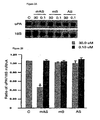
- human breast cancer cells MDA-231 were transfected with one of: methylated antisense oligonucleotide complementary to SEQ. ID. NO. 15 (mAS); the oligonucleotide of SEQ. ID. NO. 15 (mS); or unmethylated antisense oligonucleotide complementary to SEQ. ID. NO. 15 (AS). Transfection was allowed to proceed for 18 hours using LIPFECTAMIN TM (GIBCO TM ) according to manufacturer's instructions.
- RNA from each treatment group was obtained according to standard methods and was electrophoresed on a 1.1% agarose/formaldehyde gel and blotted to a nylon membrane by capillary action. Blots were hybridized with a 32 P labeled human uPA cDNA or with a 32 P labeled 18 S RNA probe. The ratio of uPA expression to 18 S mRNA expression was calculated.
- Total cellular genomic DNA was extracted from MDA-231, LNCap and MCF-7 cells. 2 micrograms of genomic DNA was treated with sodium bisulfite at 55°C for 14 hours which results in all unmethylated cystosines (C) being converted to uracil (U). During subsequent amplification, these uracils are further converted to Thymidine (T) via amplification using nested PCR using uPA primers corresponding to 5'UTR 572-591 bp (caggtgcatgggaggaagca) and 892-911 bp (gagtgccgcggtcctgagat) of uPA. This allows ready detection of the level of cytosine methylation in the sample.
- FIG. 3 which provides a comparative view of a portion of the uPA utr across cell types
- greater than 90% of cytosines are methylated within the CpG islands of the uPA promoter in MCF-7 cells (line 4).
- the top line of Figure 3 shows the unmodified sequence of part of the untranslated region of the uPA gene.
- MD-231 cells which exhibit high uPA levels contain unmethylated cytosine (line 5).
- methylation status of the uPA utr is predictive of uPA expression and the risk of metastasis.
Landscapes
- Health & Medical Sciences (AREA)
- Life Sciences & Earth Sciences (AREA)
- Chemical & Material Sciences (AREA)
- Organic Chemistry (AREA)
- Engineering & Computer Science (AREA)
- Genetics & Genomics (AREA)
- General Health & Medical Sciences (AREA)
- Bioinformatics & Cheminformatics (AREA)
- Zoology (AREA)
- Wood Science & Technology (AREA)
- General Engineering & Computer Science (AREA)
- Molecular Biology (AREA)
- Biomedical Technology (AREA)
- Biotechnology (AREA)
- Biochemistry (AREA)
- Proteomics, Peptides & Aminoacids (AREA)
- Nuclear Medicine, Radiotherapy & Molecular Imaging (AREA)
- Physics & Mathematics (AREA)
- General Chemical & Material Sciences (AREA)
- Medicinal Chemistry (AREA)
- Chemical Kinetics & Catalysis (AREA)
- Animal Behavior & Ethology (AREA)
- Analytical Chemistry (AREA)
- Veterinary Medicine (AREA)
- Public Health (AREA)
- Immunology (AREA)
- Pharmacology & Pharmacy (AREA)
- Biophysics (AREA)
- Microbiology (AREA)
- Pathology (AREA)
- Oncology (AREA)
- Virology (AREA)
- Hospice & Palliative Care (AREA)
- Plant Pathology (AREA)
- Heart & Thoracic Surgery (AREA)
- Cardiology (AREA)
- Measuring Or Testing Involving Enzymes Or Micro-Organisms (AREA)
- Medicines That Contain Protein Lipid Enzymes And Other Medicines (AREA)
- Pharmaceuticals Containing Other Organic And Inorganic Compounds (AREA)
- Saccharide Compounds (AREA)
Applications Claiming Priority (3)
| Application Number | Priority Date | Filing Date | Title |
|---|---|---|---|
| CA002312051A CA2312051A1 (en) | 2000-07-13 | 2000-07-13 | Methylated nucleotide regulation of gene expression |
| CA2312051 | 2000-07-13 | ||
| PCT/CA2001/001023 WO2002006462A2 (en) | 2000-07-13 | 2001-07-13 | Methylated nucleotide regulation of upa gene expression |
Publications (2)
| Publication Number | Publication Date |
|---|---|
| EP1303599A2 EP1303599A2 (en) | 2003-04-23 |
| EP1303599B1 true EP1303599B1 (en) | 2007-12-19 |
Family
ID=4166531
Family Applications (1)
| Application Number | Title | Priority Date | Filing Date |
|---|---|---|---|
| EP01953714A Expired - Lifetime EP1303599B1 (en) | 2000-07-13 | 2001-07-13 | Methylated nucleotide regulation of upa gene expression |
Country Status (9)
| Country | Link |
|---|---|
| US (1) | US7316900B2 (enExample) |
| EP (1) | EP1303599B1 (enExample) |
| JP (1) | JP2004504028A (enExample) |
| AT (1) | ATE381616T1 (enExample) |
| AU (2) | AU7620501A (enExample) |
| CA (1) | CA2312051A1 (enExample) |
| DE (1) | DE60131973T2 (enExample) |
| ES (1) | ES2298243T3 (enExample) |
| WO (1) | WO2002006462A2 (enExample) |
Families Citing this family (5)
| Publication number | Priority date | Publication date | Assignee | Title |
|---|---|---|---|---|
| CA2589986A1 (en) * | 2004-12-07 | 2006-06-15 | Releaf | Security and storage system and method |
| FR2886946B1 (fr) * | 2005-06-09 | 2007-08-10 | Biomerieux Sa | Procede pour le diagnoctic/pronostic du cancer du sein |
| US9023819B2 (en) * | 2008-06-09 | 2015-05-05 | National Chung Cheng University | Treatment of a disease or a condition associated with aberrant gene hypomethylation by a method involving tailored epigenomic modification |
| US20100161039A1 (en) | 2008-12-23 | 2010-06-24 | Vipul Dave | Adhesion promoting temporary mask for coated surfaces |
| TWI393779B (zh) * | 2009-10-16 | 2013-04-21 | Nat Univ Chung Cheng | 用於哺乳動物細胞的三元件基因表現報導系統及其應用 |
Family Cites Families (7)
| Publication number | Priority date | Publication date | Assignee | Title |
|---|---|---|---|---|
| US5000000A (en) * | 1988-08-31 | 1991-03-19 | University Of Florida | Ethanol production by Escherichia coli strains co-expressing Zymomonas PDC and ADH genes |
| US5840497A (en) | 1993-06-11 | 1998-11-24 | The Commonwealth Of Australia Commonwealth Scientific And Industrial Research Organization | Method for specific silencing of genes by DNA methylation |
| US5552390A (en) * | 1993-12-09 | 1996-09-03 | The Board Of Regents Of The University Of Nebraska | Phosphorothioate inhibitors of metastatic breast cancer |
| US6017704A (en) * | 1996-06-03 | 2000-01-25 | The Johns Hopkins University School Of Medicine | Method of detection of methylated nucleic acid using agents which modify unmethylated cytosine and distinguishing modified methylated and non-methylated nucleic acids |
| US5874416A (en) | 1997-11-07 | 1999-02-23 | Sheikhnejad; Gholamreza | RAS antisense inhibition |
| US6812339B1 (en) * | 2000-09-08 | 2004-11-02 | Applera Corporation | Polymorphisms in known genes associated with human disease, methods of detection and uses thereof |
| US6900016B1 (en) * | 2000-09-08 | 2005-05-31 | Applera Corporation | Polymorphisms in known genes associated with inflammatory autoimmune disease, methods of detection and uses thereof |
-
2000
- 2000-07-13 CA CA002312051A patent/CA2312051A1/en not_active Abandoned
-
2001
- 2001-07-13 US US10/332,542 patent/US7316900B2/en not_active Expired - Fee Related
- 2001-07-13 WO PCT/CA2001/001023 patent/WO2002006462A2/en not_active Ceased
- 2001-07-13 EP EP01953714A patent/EP1303599B1/en not_active Expired - Lifetime
- 2001-07-13 JP JP2002512355A patent/JP2004504028A/ja not_active Withdrawn
- 2001-07-13 AU AU7620501A patent/AU7620501A/xx active Pending
- 2001-07-13 AU AU2001276205A patent/AU2001276205B2/en not_active Ceased
- 2001-07-13 ES ES01953714T patent/ES2298243T3/es not_active Expired - Lifetime
- 2001-07-13 AT AT01953714T patent/ATE381616T1/de not_active IP Right Cessation
- 2001-07-13 DE DE60131973T patent/DE60131973T2/de not_active Expired - Lifetime
Also Published As
| Publication number | Publication date |
|---|---|
| CA2312051A1 (en) | 2002-01-13 |
| AU2001276205B2 (en) | 2006-02-16 |
| DE60131973D1 (de) | 2008-01-31 |
| ATE381616T1 (de) | 2008-01-15 |
| WO2002006462A2 (en) | 2002-01-24 |
| US7316900B2 (en) | 2008-01-08 |
| US20040053259A1 (en) | 2004-03-18 |
| WO2002006462A3 (en) | 2002-10-24 |
| ES2298243T3 (es) | 2008-05-16 |
| JP2004504028A (ja) | 2004-02-12 |
| AU7620501A (en) | 2002-01-30 |
| DE60131973T2 (de) | 2008-12-04 |
| EP1303599A2 (en) | 2003-04-23 |
Similar Documents
| Publication | Publication Date | Title |
|---|---|---|
| Horton et al. | Novel mitochondrial DNA deletion found in a renal cell carcinoma | |
| US5801154A (en) | Antisense oligonucleotide modulation of multidrug resistance-associated protein | |
| US5968748A (en) | Antisense oligonucleotide modulation of human HER-2 expression | |
| Zhang et al. | Methylation of a single intronic CpG mediates expression silencing of the PMP24 gene in prostate cancer | |
| EP3420086A1 (en) | COMPOSITIONS AND METHODS OF USING piRNAS IN CANCER DIAGNOSTICS AND THERAPEUTICS | |
| CN102725420A (zh) | 用于染色体重排相关肿瘤的诊断、预后和治疗的基于微小rna的方法和组合物 | |
| WO2001009311A2 (en) | Methods of inhibiting cancer cells with adnf iii antisense oligonucleotides | |
| US6586244B2 (en) | Compositions and methods for treating neoplastic disease using inhibitors of laminin5beta3 | |
| JP2001507229A (ja) | テロメラーゼのrna成分を検出および阻害するための方法 | |
| US20030143667A1 (en) | Repeat sequences of the CA125 gene and their use for diagnostic and therapeutic interventions | |
| EP1200579B1 (en) | Antisense therapy for hormone-regulated tumors | |
| EP1303599B1 (en) | Methylated nucleotide regulation of upa gene expression | |
| AU2001276205A1 (en) | Methylated Nucleotide Regulation of UPA Gene Expression | |
| US20070092498A1 (en) | Methods of diagnosing, prognosing and treating breast cancer | |
| Waha et al. | SGNE1/7B2 is epigenetically altered and transcriptionally downregulated in human medulloblastomas | |
| US6828151B2 (en) | Antisense modulation of hematopoietic cell protein tyrosine kinase expression | |
| CN114531876A (zh) | Rna编辑抑制剂及其用途 | |
| EP1322658A1 (en) | Oligonucleotide modulation of her-1 expression | |
| CA2415723A1 (en) | Methylated nucleotide regulation of upa gene expression | |
| EP4299742A1 (en) | Combination therapy for melanoma | |
| CN108950001B (zh) | 一种与直肠腺癌发生发展相关的分子标志物 | |
| WO1997011172A1 (en) | Antisense oligonucleotide chemotherapy for benign hyperplasia or cancer of the prostate | |
| US20030225008A1 (en) | Diagnostic and therapeutic methods using the H37 tumor suppressor gene | |
| JP2009501024A (ja) | 癌の診断及び治療における遺伝的及びエピジェネティックな変化 | |
| CN111394469A (zh) | Linc01355在诊治肝癌中的新用途 |
Legal Events
| Date | Code | Title | Description |
|---|---|---|---|
| PUAI | Public reference made under article 153(3) epc to a published international application that has entered the european phase |
Free format text: ORIGINAL CODE: 0009012 |
|
| 17P | Request for examination filed |
Effective date: 20030212 |
|
| AK | Designated contracting states |
Designated state(s): AT BE CH CY DE DK ES FI FR GB GR IE IT LI LU MC NL PT SE TR |
|
| AX | Request for extension of the european patent |
Extension state: AL LT LV MK RO SI |
|
| RAP1 | Party data changed (applicant data changed or rights of an application transferred) |
Owner name: QUEBEPHARMA RECHERCHE INC. |
|
| 17Q | First examination report despatched |
Effective date: 20040423 |
|
| GRAP | Despatch of communication of intention to grant a patent |
Free format text: ORIGINAL CODE: EPIDOSNIGR1 |
|
| TPAC | Observations filed by third parties |
Free format text: ORIGINAL CODE: EPIDOSNTIPA |
|
| GRAS | Grant fee paid |
Free format text: ORIGINAL CODE: EPIDOSNIGR3 |
|
| GRAA | (expected) grant |
Free format text: ORIGINAL CODE: 0009210 |
|
| AK | Designated contracting states |
Kind code of ref document: B1 Designated state(s): AT BE CH CY DE DK ES FI FR GB GR IE IT LI LU MC NL PT SE TR |
|
| REG | Reference to a national code |
Ref country code: GB Ref legal event code: FG4D |
|
| REG | Reference to a national code |
Ref country code: IE Ref legal event code: FG4D |
|
| REG | Reference to a national code |
Ref country code: CH Ref legal event code: EP |
|
| REF | Corresponds to: |
Ref document number: 60131973 Country of ref document: DE Date of ref document: 20080131 Kind code of ref document: P |
|
| PG25 | Lapsed in a contracting state [announced via postgrant information from national office to epo] |
Ref country code: SE Free format text: LAPSE BECAUSE OF FAILURE TO SUBMIT A TRANSLATION OF THE DESCRIPTION OR TO PAY THE FEE WITHIN THE PRESCRIBED TIME-LIMIT Effective date: 20080319 Ref country code: LI Free format text: LAPSE BECAUSE OF FAILURE TO SUBMIT A TRANSLATION OF THE DESCRIPTION OR TO PAY THE FEE WITHIN THE PRESCRIBED TIME-LIMIT Effective date: 20071219 Ref country code: CH Free format text: LAPSE BECAUSE OF FAILURE TO SUBMIT A TRANSLATION OF THE DESCRIPTION OR TO PAY THE FEE WITHIN THE PRESCRIBED TIME-LIMIT Effective date: 20071219 |
|
| REG | Reference to a national code |
Ref country code: ES Ref legal event code: FG2A Ref document number: 2298243 Country of ref document: ES Kind code of ref document: T3 |
|
| PG25 | Lapsed in a contracting state [announced via postgrant information from national office to epo] |
Ref country code: NL Free format text: LAPSE BECAUSE OF FAILURE TO SUBMIT A TRANSLATION OF THE DESCRIPTION OR TO PAY THE FEE WITHIN THE PRESCRIBED TIME-LIMIT Effective date: 20071219 Ref country code: FI Free format text: LAPSE BECAUSE OF FAILURE TO SUBMIT A TRANSLATION OF THE DESCRIPTION OR TO PAY THE FEE WITHIN THE PRESCRIBED TIME-LIMIT Effective date: 20071219 |
|
| NLV1 | Nl: lapsed or annulled due to failure to fulfill the requirements of art. 29p and 29m of the patents act | ||
| REG | Reference to a national code |
Ref country code: CH Ref legal event code: PL |
|
| PG25 | Lapsed in a contracting state [announced via postgrant information from national office to epo] |
Ref country code: AT Free format text: LAPSE BECAUSE OF FAILURE TO SUBMIT A TRANSLATION OF THE DESCRIPTION OR TO PAY THE FEE WITHIN THE PRESCRIBED TIME-LIMIT Effective date: 20071219 |
|
| ET | Fr: translation filed | ||
| PG25 | Lapsed in a contracting state [announced via postgrant information from national office to epo] |
Ref country code: BE Free format text: LAPSE BECAUSE OF FAILURE TO SUBMIT A TRANSLATION OF THE DESCRIPTION OR TO PAY THE FEE WITHIN THE PRESCRIBED TIME-LIMIT Effective date: 20071219 |
|
| PG25 | Lapsed in a contracting state [announced via postgrant information from national office to epo] |
Ref country code: PT Free format text: LAPSE BECAUSE OF FAILURE TO SUBMIT A TRANSLATION OF THE DESCRIPTION OR TO PAY THE FEE WITHIN THE PRESCRIBED TIME-LIMIT Effective date: 20080519 |
|
| PLBE | No opposition filed within time limit |
Free format text: ORIGINAL CODE: 0009261 |
|
| STAA | Information on the status of an ep patent application or granted ep patent |
Free format text: STATUS: NO OPPOSITION FILED WITHIN TIME LIMIT |
|
| PG25 | Lapsed in a contracting state [announced via postgrant information from national office to epo] |
Ref country code: DK Free format text: LAPSE BECAUSE OF FAILURE TO SUBMIT A TRANSLATION OF THE DESCRIPTION OR TO PAY THE FEE WITHIN THE PRESCRIBED TIME-LIMIT Effective date: 20071219 |
|
| 26N | No opposition filed |
Effective date: 20080922 |
|
| PG25 | Lapsed in a contracting state [announced via postgrant information from national office to epo] |
Ref country code: GR Free format text: LAPSE BECAUSE OF FAILURE TO SUBMIT A TRANSLATION OF THE DESCRIPTION OR TO PAY THE FEE WITHIN THE PRESCRIBED TIME-LIMIT Effective date: 20080320 |
|
| PG25 | Lapsed in a contracting state [announced via postgrant information from national office to epo] |
Ref country code: MC Free format text: LAPSE BECAUSE OF NON-PAYMENT OF DUE FEES Effective date: 20080731 |
|
| PG25 | Lapsed in a contracting state [announced via postgrant information from national office to epo] |
Ref country code: IE Free format text: LAPSE BECAUSE OF NON-PAYMENT OF DUE FEES Effective date: 20080714 Ref country code: CY Free format text: LAPSE BECAUSE OF FAILURE TO SUBMIT A TRANSLATION OF THE DESCRIPTION OR TO PAY THE FEE WITHIN THE PRESCRIBED TIME-LIMIT Effective date: 20071219 |
|
| REG | Reference to a national code |
Ref country code: GB Ref legal event code: 732E Free format text: REGISTERED BETWEEN 20100114 AND 20100120 |
|
| REG | Reference to a national code |
Ref country code: GB Ref legal event code: 732E Free format text: REGISTERED BETWEEN 20100121 AND 20100127 |
|
| REG | Reference to a national code |
Ref country code: FR Ref legal event code: TP |
|
| PG25 | Lapsed in a contracting state [announced via postgrant information from national office to epo] |
Ref country code: LU Free format text: LAPSE BECAUSE OF NON-PAYMENT OF DUE FEES Effective date: 20080713 |
|
| PG25 | Lapsed in a contracting state [announced via postgrant information from national office to epo] |
Ref country code: TR Free format text: LAPSE BECAUSE OF FAILURE TO SUBMIT A TRANSLATION OF THE DESCRIPTION OR TO PAY THE FEE WITHIN THE PRESCRIBED TIME-LIMIT Effective date: 20071219 |
|
| PGFP | Annual fee paid to national office [announced via postgrant information from national office to epo] |
Ref country code: ES Payment date: 20100830 Year of fee payment: 10 |
|
| PGFP | Annual fee paid to national office [announced via postgrant information from national office to epo] |
Ref country code: IT Payment date: 20100723 Year of fee payment: 10 Ref country code: FR Payment date: 20100812 Year of fee payment: 10 |
|
| PGFP | Annual fee paid to national office [announced via postgrant information from national office to epo] |
Ref country code: GB Payment date: 20100802 Year of fee payment: 10 |
|
| PGFP | Annual fee paid to national office [announced via postgrant information from national office to epo] |
Ref country code: DE Payment date: 20100930 Year of fee payment: 10 |
|
| GBPC | Gb: european patent ceased through non-payment of renewal fee |
Effective date: 20110713 |
|
| REG | Reference to a national code |
Ref country code: FR Ref legal event code: ST Effective date: 20120330 |
|
| PG25 | Lapsed in a contracting state [announced via postgrant information from national office to epo] |
Ref country code: FR Free format text: LAPSE BECAUSE OF NON-PAYMENT OF DUE FEES Effective date: 20110801 Ref country code: DE Free format text: LAPSE BECAUSE OF NON-PAYMENT OF DUE FEES Effective date: 20120201 |
|
| REG | Reference to a national code |
Ref country code: DE Ref legal event code: R119 Ref document number: 60131973 Country of ref document: DE Effective date: 20120201 |
|
| PG25 | Lapsed in a contracting state [announced via postgrant information from national office to epo] |
Ref country code: IT Free format text: LAPSE BECAUSE OF NON-PAYMENT OF DUE FEES Effective date: 20110713 |
|
| PG25 | Lapsed in a contracting state [announced via postgrant information from national office to epo] |
Ref country code: GB Free format text: LAPSE BECAUSE OF NON-PAYMENT OF DUE FEES Effective date: 20110713 |
|
| REG | Reference to a national code |
Ref country code: ES Ref legal event code: FD2A Effective date: 20130604 |
|
| PG25 | Lapsed in a contracting state [announced via postgrant information from national office to epo] |
Ref country code: ES Free format text: LAPSE BECAUSE OF NON-PAYMENT OF DUE FEES Effective date: 20110714 |