EP1293375B1 - Procédé de commande des électrovannes de sélection et d'embrayage d'une transmission automatisée - Google Patents
Procédé de commande des électrovannes de sélection et d'embrayage d'une transmission automatisée Download PDFInfo
- Publication number
- EP1293375B1 EP1293375B1 EP02292252A EP02292252A EP1293375B1 EP 1293375 B1 EP1293375 B1 EP 1293375B1 EP 02292252 A EP02292252 A EP 02292252A EP 02292252 A EP02292252 A EP 02292252A EP 1293375 B1 EP1293375 B1 EP 1293375B1
- Authority
- EP
- European Patent Office
- Prior art keywords
- electrically
- shorted
- operated valve
- valve used
- gear
- Prior art date
- Legal status (The legal status is an assumption and is not a legal conclusion. Google has not performed a legal analysis and makes no representation as to the accuracy of the status listed.)
- Expired - Lifetime
Links
- 230000005540 biological transmission Effects 0.000 title claims description 37
- 238000000034 method Methods 0.000 title claims description 15
- 230000004913 activation Effects 0.000 claims description 2
- 230000007935 neutral effect Effects 0.000 description 6
- 238000013475 authorization Methods 0.000 description 4
- 230000015556 catabolic process Effects 0.000 description 3
- 230000003100 immobilizing effect Effects 0.000 description 3
- 241000287107 Passer Species 0.000 description 1
- 230000000903 blocking effect Effects 0.000 description 1
- 238000011217 control strategy Methods 0.000 description 1
- 230000009849 deactivation Effects 0.000 description 1
- 238000010586 diagram Methods 0.000 description 1
- 229940082150 encore Drugs 0.000 description 1
Images



Classifications
-
- B—PERFORMING OPERATIONS; TRANSPORTING
- B60—VEHICLES IN GENERAL
- B60W—CONJOINT CONTROL OF VEHICLE SUB-UNITS OF DIFFERENT TYPE OR DIFFERENT FUNCTION; CONTROL SYSTEMS SPECIALLY ADAPTED FOR HYBRID VEHICLES; ROAD VEHICLE DRIVE CONTROL SYSTEMS FOR PURPOSES NOT RELATED TO THE CONTROL OF A PARTICULAR SUB-UNIT
- B60W30/00—Purposes of road vehicle drive control systems not related to the control of a particular sub-unit, e.g. of systems using conjoint control of vehicle sub-units
- B60W30/18—Propelling the vehicle
-
- B—PERFORMING OPERATIONS; TRANSPORTING
- B60—VEHICLES IN GENERAL
- B60W—CONJOINT CONTROL OF VEHICLE SUB-UNITS OF DIFFERENT TYPE OR DIFFERENT FUNCTION; CONTROL SYSTEMS SPECIALLY ADAPTED FOR HYBRID VEHICLES; ROAD VEHICLE DRIVE CONTROL SYSTEMS FOR PURPOSES NOT RELATED TO THE CONTROL OF A PARTICULAR SUB-UNIT
- B60W10/00—Conjoint control of vehicle sub-units of different type or different function
- B60W10/02—Conjoint control of vehicle sub-units of different type or different function including control of driveline clutches
-
- B—PERFORMING OPERATIONS; TRANSPORTING
- B60—VEHICLES IN GENERAL
- B60W—CONJOINT CONTROL OF VEHICLE SUB-UNITS OF DIFFERENT TYPE OR DIFFERENT FUNCTION; CONTROL SYSTEMS SPECIALLY ADAPTED FOR HYBRID VEHICLES; ROAD VEHICLE DRIVE CONTROL SYSTEMS FOR PURPOSES NOT RELATED TO THE CONTROL OF A PARTICULAR SUB-UNIT
- B60W10/00—Conjoint control of vehicle sub-units of different type or different function
- B60W10/10—Conjoint control of vehicle sub-units of different type or different function including control of change-speed gearings
-
- B—PERFORMING OPERATIONS; TRANSPORTING
- B60—VEHICLES IN GENERAL
- B60W—CONJOINT CONTROL OF VEHICLE SUB-UNITS OF DIFFERENT TYPE OR DIFFERENT FUNCTION; CONTROL SYSTEMS SPECIALLY ADAPTED FOR HYBRID VEHICLES; ROAD VEHICLE DRIVE CONTROL SYSTEMS FOR PURPOSES NOT RELATED TO THE CONTROL OF A PARTICULAR SUB-UNIT
- B60W30/00—Purposes of road vehicle drive control systems not related to the control of a particular sub-unit, e.g. of systems using conjoint control of vehicle sub-units
- B60W30/18—Propelling the vehicle
- B60W30/1819—Propulsion control with control means using analogue circuits, relays or mechanical links
-
- F—MECHANICAL ENGINEERING; LIGHTING; HEATING; WEAPONS; BLASTING
- F16—ENGINEERING ELEMENTS AND UNITS; GENERAL MEASURES FOR PRODUCING AND MAINTAINING EFFECTIVE FUNCTIONING OF MACHINES OR INSTALLATIONS; THERMAL INSULATION IN GENERAL
- F16H—GEARING
- F16H61/00—Control functions within control units of change-speed- or reversing-gearings for conveying rotary motion ; Control of exclusively fluid gearing, friction gearing, gearings with endless flexible members or other particular types of gearing
- F16H61/12—Detecting malfunction or potential malfunction, e.g. fail safe ; Circumventing or fixing failures
-
- F—MECHANICAL ENGINEERING; LIGHTING; HEATING; WEAPONS; BLASTING
- F16—ENGINEERING ELEMENTS AND UNITS; GENERAL MEASURES FOR PRODUCING AND MAINTAINING EFFECTIVE FUNCTIONING OF MACHINES OR INSTALLATIONS; THERMAL INSULATION IN GENERAL
- F16H—GEARING
- F16H61/00—Control functions within control units of change-speed- or reversing-gearings for conveying rotary motion ; Control of exclusively fluid gearing, friction gearing, gearings with endless flexible members or other particular types of gearing
- F16H61/12—Detecting malfunction or potential malfunction, e.g. fail safe ; Circumventing or fixing failures
- F16H2061/1224—Adapting to failures or work around with other constraints, e.g. circumvention by avoiding use of failed parts
-
- F—MECHANICAL ENGINEERING; LIGHTING; HEATING; WEAPONS; BLASTING
- F16—ENGINEERING ELEMENTS AND UNITS; GENERAL MEASURES FOR PRODUCING AND MAINTAINING EFFECTIVE FUNCTIONING OF MACHINES OR INSTALLATIONS; THERMAL INSULATION IN GENERAL
- F16H—GEARING
- F16H61/00—Control functions within control units of change-speed- or reversing-gearings for conveying rotary motion ; Control of exclusively fluid gearing, friction gearing, gearings with endless flexible members or other particular types of gearing
- F16H61/12—Detecting malfunction or potential malfunction, e.g. fail safe ; Circumventing or fixing failures
- F16H2061/124—Limiting the input power, torque or speed
-
- F—MECHANICAL ENGINEERING; LIGHTING; HEATING; WEAPONS; BLASTING
- F16—ENGINEERING ELEMENTS AND UNITS; GENERAL MEASURES FOR PRODUCING AND MAINTAINING EFFECTIVE FUNCTIONING OF MACHINES OR INSTALLATIONS; THERMAL INSULATION IN GENERAL
- F16H—GEARING
- F16H61/00—Control functions within control units of change-speed- or reversing-gearings for conveying rotary motion ; Control of exclusively fluid gearing, friction gearing, gearings with endless flexible members or other particular types of gearing
- F16H61/12—Detecting malfunction or potential malfunction, e.g. fail safe ; Circumventing or fixing failures
- F16H2061/1244—Keeping the current state
-
- F—MECHANICAL ENGINEERING; LIGHTING; HEATING; WEAPONS; BLASTING
- F16—ENGINEERING ELEMENTS AND UNITS; GENERAL MEASURES FOR PRODUCING AND MAINTAINING EFFECTIVE FUNCTIONING OF MACHINES OR INSTALLATIONS; THERMAL INSULATION IN GENERAL
- F16H—GEARING
- F16H61/00—Control functions within control units of change-speed- or reversing-gearings for conveying rotary motion ; Control of exclusively fluid gearing, friction gearing, gearings with endless flexible members or other particular types of gearing
- F16H61/12—Detecting malfunction or potential malfunction, e.g. fail safe ; Circumventing or fixing failures
- F16H2061/1256—Detecting malfunction or potential malfunction, e.g. fail safe ; Circumventing or fixing failures characterised by the parts or units where malfunctioning was assumed or detected
- F16H2061/126—Detecting malfunction or potential malfunction, e.g. fail safe ; Circumventing or fixing failures characterised by the parts or units where malfunctioning was assumed or detected the failing part is the controller
- F16H2061/1268—Electric parts of the controller, e.g. a defect solenoid, wiring or microprocessor
-
- F—MECHANICAL ENGINEERING; LIGHTING; HEATING; WEAPONS; BLASTING
- F16—ENGINEERING ELEMENTS AND UNITS; GENERAL MEASURES FOR PRODUCING AND MAINTAINING EFFECTIVE FUNCTIONING OF MACHINES OR INSTALLATIONS; THERMAL INSULATION IN GENERAL
- F16H—GEARING
- F16H2300/00—Determining of new ratio
- F16H2300/14—Selecting a state of operation, e.g. depending on two wheel or four wheel drive mode
-
- F—MECHANICAL ENGINEERING; LIGHTING; HEATING; WEAPONS; BLASTING
- F16—ENGINEERING ELEMENTS AND UNITS; GENERAL MEASURES FOR PRODUCING AND MAINTAINING EFFECTIVE FUNCTIONING OF MACHINES OR INSTALLATIONS; THERMAL INSULATION IN GENERAL
- F16H—GEARING
- F16H61/00—Control functions within control units of change-speed- or reversing-gearings for conveying rotary motion ; Control of exclusively fluid gearing, friction gearing, gearings with endless flexible members or other particular types of gearing
- F16H61/02—Control functions within control units of change-speed- or reversing-gearings for conveying rotary motion ; Control of exclusively fluid gearing, friction gearing, gearings with endless flexible members or other particular types of gearing characterised by the signals used
- F16H61/0202—Control functions within control units of change-speed- or reversing-gearings for conveying rotary motion ; Control of exclusively fluid gearing, friction gearing, gearings with endless flexible members or other particular types of gearing characterised by the signals used the signals being electric
- F16H61/0248—Control units where shifting is directly initiated by the driver, e.g. semi-automatic transmissions
-
- F—MECHANICAL ENGINEERING; LIGHTING; HEATING; WEAPONS; BLASTING
- F16—ENGINEERING ELEMENTS AND UNITS; GENERAL MEASURES FOR PRODUCING AND MAINTAINING EFFECTIVE FUNCTIONING OF MACHINES OR INSTALLATIONS; THERMAL INSULATION IN GENERAL
- F16H—GEARING
- F16H61/00—Control functions within control units of change-speed- or reversing-gearings for conveying rotary motion ; Control of exclusively fluid gearing, friction gearing, gearings with endless flexible members or other particular types of gearing
- F16H61/68—Control functions within control units of change-speed- or reversing-gearings for conveying rotary motion ; Control of exclusively fluid gearing, friction gearing, gearings with endless flexible members or other particular types of gearing specially adapted for stepped gearings
- F16H61/682—Control functions within control units of change-speed- or reversing-gearings for conveying rotary motion ; Control of exclusively fluid gearing, friction gearing, gearings with endless flexible members or other particular types of gearing specially adapted for stepped gearings with interruption of drive
-
- F—MECHANICAL ENGINEERING; LIGHTING; HEATING; WEAPONS; BLASTING
- F16—ENGINEERING ELEMENTS AND UNITS; GENERAL MEASURES FOR PRODUCING AND MAINTAINING EFFECTIVE FUNCTIONING OF MACHINES OR INSTALLATIONS; THERMAL INSULATION IN GENERAL
- F16H—GEARING
- F16H63/00—Control outputs from the control unit to change-speed- or reversing-gearings for conveying rotary motion or to other devices than the final output mechanism
- F16H63/40—Control outputs from the control unit to change-speed- or reversing-gearings for conveying rotary motion or to other devices than the final output mechanism comprising signals other than signals for actuating the final output mechanisms
- F16H63/46—Signals to a clutch outside the gearbox
Definitions
- the present invention relates to the control of automated transmissions. More specifically, it relates to the control of the solenoid valves of an automated transmission in a failure situation.
- It relates to a method of controlling the solenoid valves controlling the opening and closing of the input clutch, the selection and the engagement of the reports of an automated transmission having an automatic mode and a manual mode .
- This invention finds application on transmissions consisting of an input clutch and a gearbox with parallel shafts and walkmans, actuated by an electro-hydraulic control unit placed under the control of a computer, and having a manual mode and automatic mode selectable by the driver.
- the electro-hydraulic assembly performs the functions of clutch and disengagement (closing and opening of the input clutch), selection, and shifting. These functions are then provided by hydraulic actuators, controlled by solenoid valves.
- the present invention aims to avoid immobilizing failures in the event of failure of an automatic transmission control solenoid valve.
- the failure of one of the solenoid valves imposes on the transmission the manual mode by allowing the driver to engage the reports remaining available.
- the short circuit to the ground or the disconnection of one of the solenoid valves in gear ratio causes the blocking of the transmission on the gear engaged.
- the short-circuit feeding of the reversing solenoid valve and the even-numbered ratios while an odd-order ratio is engaged may cause the temporary activation of the solenoid valve. commitment of odd rank reports, to allow selection recall before commitment of an even rank report.
- Block 3 includes a gear line selection cylinder 1, a speed commitment cylinder 2, and five solenoid valves 4, 6, 7, 8 and 9 (EV0, EV1, EV2, EV3, EV4), driving for example in this order the clutch, first-third and fifth-first engagement, second, fourth and reverse engagement, selection of line 1-2, and selection of line 5-MAR.
- the solenoid valves enable the actuators to be placed in selective communication with the accumulator 13. At rest, the solenoid valves receive the pressure from the accumulator 13, but do not transmit it to the actuators 1, 2, 11. When they are energized, they selectively establish the communication between the accumulator and the actuators, so as to put them under pressure according to the instructions of the computer of the transmission (not shown).
- the solenoid valves can no longer be actuated and drive the corresponding actuators.
- the two selection valves EV3 and EV4, 8, 9 may be of the all-or-none type, the two engagement valves EV1 and EV2, 6, 7 of the proportional pressure-driven type, and the clutch control valve EV0, 4, of the proportional type controlled in flow.
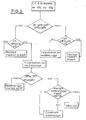
- FIG. 2 presenting in simplified manner a degraded control mode of the transmission, applicable in the event of a short-circuit to the ground (or of disconnection), of one or the other of the solenoid valves of engagement of speed EV1 or EV2, one sees that if the vehicle rolls (non-zero vehicle speed), the transmission remains locked on the report already engaged.
- the strategy implemented depends on the ratio engaged at the time of the failure.
- start authorization of the vehicle.
- the start is made normally; in second or third, it is only allowed if the energy passing through the clutch is less than an admitted threshold, and in the opposite case the clutch is automatically opened.
- the solenoid valve EV1 is activated temporarily, so as to momentarily keep the neutral to let the return spring in selection possibly discard the transmission of the fifth line / reverse, then EV1 is off, and let EV2 engage the second or reverse as appropriate. If the vehicle is running, the transmission remains locked on this new report. Otherwise, the vehicle is allowed to restart only in second (not in fourth). This authorization is however subject to the condition that the amount of energy dissipated in the clutch is less than a threshold, otherwise the clutch is automatically opened so as to prohibit the restart.
- the vehicle continues to drive with its transmission blocked.
- the vehicle is not allowed to restart in the fifth gear.
- the restart is subject to a maximum energy threshold condition dissipated in the clutch, above which the latter is systematically open.
- the vehicle can restart in the third, provided that the energy dissipated in the clutch is less than a threshold, because otherwise, the clutch is open.
- the gear engaged is blocked.
- the vehicle will be allowed to restart in the third as long as the energy threshold dissipated in the clutch is not reached. However, if the neutral is not requested, the vehicle may restart in first or second without special conditions.
- the degraded mode three, four, five, reverse is set up, with third start in some cases, and on a three-two passage request. , the transmission remains in third.
- a degraded three-four-five-reverse mode is set up by the solicitation of EV3 which makes it possible to return to the three-four line, and the calculator exceptionally allows the start in the third.
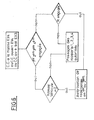
- the invention provides another strategy in the event of a short-circuit to the ground or disconnection of EV4, or short-circuit supply of EV3 (cf. figure 6 ).
- a degraded mode one-two-three-four is set up, on a request for passage in fifth, the transmission remains in fourth, while at the stop, the vehicle is allowed to restart in the first or in second.
Landscapes
- Engineering & Computer Science (AREA)
- Mechanical Engineering (AREA)
- Transportation (AREA)
- Chemical & Material Sciences (AREA)
- Combustion & Propulsion (AREA)
- Automation & Control Theory (AREA)
- General Engineering & Computer Science (AREA)
- Control Of Transmission Device (AREA)
Description
- La présente invention concerne la commande des transmissions automatisées. Plus précisément, elle concerne la commande des électrovannes d'une transmission automatisée en situation de défaillance.
- Elle a pour objet un procédé de commande des électrovannes pilotant l'ouverture et la fermeture de l'embrayage d'entrée, la sélection et l'engagement des rapports d'une transmission automatisée disposant d'un mode automatique et d'un mode manuel.
- Cette invention trouve une application sur les transmissions constituées d'un embrayage d'entrée et d'une boîte de vitesses à arbres parallèles et à baladeurs, actionnés par un ensemble électro-hydraulique de commande placé sous le contrôle d'un calculateur, et disposant d'un mode manuel et d'un mode automatique sélectionnables par le conducteur.
- Selon une disposition classique dans le domaine, par example comme montrée par le
brevet FR 2788243 - En cas de défaillance de type court circuit à la masse, ou déconnexion d'une électrovanne de sélection ou d'engagement de rapport, la stratégie habituelle de sécurité de fonctionnement consiste à rester sur le rapport déjà engagé jusqu'à l'arrêt complet du véhicule. En cas d'impossibilité de quitter le rapport engagé pour passer au neutre, cette stratégie, acceptable du point de vue de la sécurité, ne peut pas pallier tous les cas de pannes immobilisantes.
- La présente invention vise à éviter les pannes immobilisantes en cas de défaillance d'une électrovanne de commande de transmission automatisée.
- Dans ce but, elle propose de mettre en oeuvre des modes de fonctionnement dégradés de la transmission, adaptés aux situations rencontrées.
- Conformément à l'invention, la défaillance d'une des électrovannes impose à la transmission le mode manuel en autorisant le conducteur à engager les rapports restant disponibles.
- En règle générale, le court circuit à la masse ou la déconnexion d'une des électrovannes d'engagement de rapport en roulage, provoque le blocage de la transmission sur le rapport engagé.
- Par ailleurs, le court-circuit d'alimentation de l'électrovanne d'engagement de la marche arrière et des rapports de rang pair alors qu'un rapport de rang impair est engagé, peut provoquer l'activation temporaire de l'électrovanne d'engagement des rapports de rang impair, pour permettre le rappel en sélection avant l'engagement d'un rapport de rang pair.
- D'autres caractéristiques et avantages de la présente invention apparaîtront clairement à la lecture de la description suivante d'un mode de réalisation particulier de celle-ci, en se référant aux dessins annexés, sur lesquels :
- la
figure 1 décrit un schéma hydraulique de commande de transmission automatisée, non limitatif de l'application de l'invention, et - les
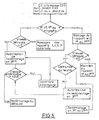
figures 2 à 6 illustrent différentes stratégies de commande proposées par l'invention. - Sur la
figure 1 , on a fait apparaître à l'intérieur d'un trait pointillé différents éléments d'un bloc de commande électro-hydraulique 3 de type connu d'une boîte de vitesses robotisée à cinq rapports de marche avant, et un rapport de marche arrière, avec trois lignes de sélection, respectivement un-deux, trois-quatre et cinquième-marche arrière. Le bloc 3 regroupe un vérin de sélection de ligne de vitesses 1, un vérin d'engagement de vitesse 2, et cinq électrovannes 4, 6, 7, 8 et 9 (EV0, EV1, EV2, EV3, EV4), pilotant par exemple dans cet ordre l'embrayage, l'engagement de première de troisième et de cinquième, l'engagement de seconde, quatrième et marche arrière, la sélection de la ligne 1-2, et la sélection de la ligne 5-MAR. - A l'extérieur du bloc, on trouve le vérin de commande d'embrayage 11, et les éléments de circuit suivants : un groupe électro-pompe 12, un accumulateur de pression 13, le réservoir d'huile 14 et un capteur de pression 16. Par ailleurs, la partie mécanique de la transmission est munie de façon classique d'un système de rappel élastique (non représenté), capable de la rappeler sur la ligne de sélection centrale, lorsqu'aucun actionneur de sélection n'est activé.
- Les électrovannes permettent la mise en communication sélective des actionneurs avec l'accumulateur 13. Au repos, les électrovannes reçoivent la pression de l'accumulateur 13, mais ne la transmettent pas aux actionneurs 1, 2, 11. Lorsqu'elles sont excitées, elles établissent sélectivement la communication entre l'accumulateur et les actionneurs, de façon à mettre ces derniers sous pression selon les consignes du calculateur de la transmission (non représenté).
- En cas de court-circuit à la masse ou de déconnexion, les électrovannes ne peuvent plus être actionnées et piloter les actionneurs correspondants.
- A l'inverse, en cas de court-circuit d'alimentation, ou « court circuit au + batterie », les électrovannes sont toujours sous tension, et les actionneurs correspondants ne peuvent plus être désactivés.
- Selon une disposition courante, mais non limitative, les deux vannes de sélection EV3 et EV4, 8, 9, peuvent être du type tout ou rien, les deux vannes d'engagement EV1 et EV2, 6, 7 du type proportionnel pilotée en pression, et la vanne de commande d'embrayage EV0, 4, du type proportionnel pilotée en débit.
- Comme indiqué plus haut, en cas de défaillance de type court-circuit à la masse ou déconnexion d'une électrovanne d'engagement ou de sélection, 6, 7, 8, 9, la stratégie classique consiste à maintenir le rapport déjà engagé, ou à passer au neutre, si cela est encore possible.
- Pour éviter les pannes immobilisantes, l'invention propose les mesures suivantes :
- dans tous les cas de défaillance d'électrovanne où tous les rapports ne sont plus disponibles, on interdit l'accès au mode automatique.
- si la transmission est en mode automatique au moment de la panne, elle passe en mode manuel dès la détection de la panne (en autorisant les rapports encore accessibles)
- si la transmission est en mode manuel au moment de la panne, la transmission reste en mode manuel, et le conducteur perd la possibilité de passer en mode automatique.
- En se reportant à la
figure 2 , présentant de façon simplifiée un mode de commande dégradé de la transmission, applicable en cas de court-circuit à la masse (ou de déconnexion), de l'une ou l'autre des électrovannes d'engagement de vitesse EV1 ou EV2, on voit que si le véhicule roule (vitesse du véhicule non nulle), la transmission reste bloquée sur le rapport déjà engagé. - Dans le cas contraire, la stratégie mise en oeuvre dépend du rapport engagé au moment de la panne. Lorsque la transmission est en première en seconde ou en troisième, et que le véhicule s'est arrêté sur l'un de ces trois rapports il a l'autorisation de se remettre en route (« autorisation de redémarrage» du véhicule»). En première, le démarrage s'effectué normalement ; en seconde ou en troisième, il n'est autorisé que si l'énergie transitant par l'embrayage est inférieure à un seuil admis, et dans le cas contraire l'embrayage est automatiquement ouvert.
- Si en revanche, la transmission n'est pas sur l'un des trois premiers rapports de marche avant lors de la panne, le véhicule n'aura pas la possibilité de redémarrer.
- En cas de court-circuit d'alimentation de EV2, « EV2 au plus batterie », alors que la cinquième est engagée (cf.
figure 3 ), la stratégie mise en oeuvre vise à éviter impérativement tout risque d'engagement intempestif de la marche arrière. - Si la première, la troisième ou la cinquième est engagée, l'électrovanne EV1 est activée temporairement, de manière à garder momentanément le neutre pour laisser le ressort de rappel en sélection écarter éventuellement la transmission de la ligne cinquième/marche arrière, puis EV1 est désactivée, et on laisse EV2 engager la seconde ou la marche arrière selon le cas. Si le véhicule est en roulage, la transmission reste alors bloquée sur ce nouveau rapport. Sinon, le véhicule a l'autorisation de redémarrer uniquement en seconde (pas en quatrième). Cette autorisation est cependant soumise à condition que la quantité d'énergie dissipée dans l'embrayage soit inférieure à un seuil, faute de quoi l'embrayage est automatiquement ouvert de manière à interdire le redémarrage.
- Si l'on roule en seconde en quatrième ou en marche arrière lors du court circuit d'alimentation deEV2, la transmission reste bloquée sur le rapport engagé. Si on est à l'arrêt en quatrième, le redémarrage est interdit. Enfin, si on est à l'arrêt en seconde ou en marche arrière, l'autorisation de redémarrer est soumise à la même condition de seuil d'énergie dans l'embrayage que si la seconde a été engagée par EV2 après la désactivation de EV1.
- La stratégie mise en oeuvre en cas de court-circuit d'alimentation de EV1 est analogue (cf.
figure 4 ). Si on est en seconde, quatrième ou marche arrière, EV2 est activée, de manière à garder momentanément le neutre pour laisser agir le ressort de rappel en sélection, puis EV2 est désactivée, et on laisse EV1 engager un rapport inférieur (première ou troisième). - Si la seconde, la quatrième ou la marche arrière ne sont pas engagées lors du court circuit, le véhicule continue à rouler avec sa transmission bloquée A l'arrêt, le véhicule n'a pas l'autorisation de redémarrer en cinquième. En première ou en troisième, le redémarrage est soumis à une condition de seuil maximum d'énergie dissipée dans l'embrayage, au dessus duquel ce dernier est systématiquement ouvert.
- En cas de court-circuit à la masse ou déconnexion de EV3, ou de court-circuit d'alimentation de ECV4 (cf.
figure 5 ), un mode dégradé troisième, quatrième, cinquième ou marche arrière est imposé à la transmission. En effet ces deux ces défaillances se traduisent par l'impossibilité d'atteindre la ligne de sélection 1 - 2. - Si la troisième, la quatrième ou la cinquième ou la marche arrière est engagée et si le véhicule roule lors de la panne de EV3, le passage sur l'ensemble de ces rapports est autorisé. A l'arrêt, le véhicule peut redémarrer en troisième, à condition que l'énergie dissipée dans l'embrayage soit inférieure à un seuil, car dans le cas contraire, l'embrayage est ouvert.
- Si en revanche, on roule en première ou en seconde lors de la panne, le rapport engagé est bloqué. A l'arrêt, si le conducteur a demandé le neutre, le véhicule aura l'autorisation de redémarrer en troisième pour autant que le seuil d'énergie dissipée dans l'embrayage ne soit pas atteint. Toutefois, si le neutre n'est pas demandé, le véhicule pourra redémarrer en première ou en seconde sans condition particulière.
- En résumé, en cas de court circuit à la masse ou de déconnexion de EV3, le mode dégradé trois, quatre, cinq, marche arrière est mis en place, avec démarrage en troisième dans certains cas, et sur une demande de passage trois-deux, la transmission reste en troisième. De façon analogue, en cas de court-circuit d'alimentation de EV4, un mode dégradé trois-quatre-cinq-marche arrière est mis en place grâce à la sollicitation de EV3 qui permet de revenir à la ligne trois-quatre, et le calculateur autorise exceptionnellement le démarrage en troisième.
- L'invention prévoit une autre stratégie en cas de court-circuit à la masse ou de déconnexion de EV4, ou de court-circuit d'alimentation de EV3 (cf.
figure 6 ). Dans les deux cas, un mode dégradé un-deux-trois-quatre est mis en place, sur une demande de passage en cinquième, la transmission reste en quatrième, tandis qu'à l'arrêt, le véhicule est autorisé à redémarrer en première ou en seconde.
Claims (13)
- Procédé de commande des électrovannes (4, 6, 7, 8, 9) pilotant l'ouverture et la fermeture de l'embrayage d'entrée, la sélection et l'engagement des rapports d'une transmission automatisée disposant d'un mode automatique et d'un mode manuel, caractérisé en ce que la défaillance d'une des électrovannes impose à la transmission le mode manuel en autorisant le conducteur à engager les rapports restant disponibles.
- Procédé de commande selon la revendication 1, caractérisé en ce que le court circuit à la masse ou la déconnexion d'une des électrovannes d'engagement de rapport (6, 7) en roulage, provoque le blocage de la transmission sur le rapport engagé.
- Procédé de commande selon la revendication 1 ou 2, caractérisé en ce que le court-circuit d'alimentation de l'électrovanne d'engagement de la marche arrière et des rapports de rang pair (7) alors qu'un rapport de rang impair est engagé, provoque l'activation temporaire de l'électrovanne d'engagement des rapports de rang impair (6), pour permettre le rappel en sélection avant l'engagement d'un rapport de rang pair.
- Procédé de commande selon la revendication 3, caractérisé en ce que l'activation temporaire de l'électrovanne d'engagement des rapports de rang impair (6), interdit le passage direct en marche arrière à partir du rapport de marche avant situé sur la même ligne que celle-ci.
- Procédé de commande selon l'une des revendications précédentes, caractérisé en ce que le court-circuit d'alimentation de l'électrovanne d'engagement des rapports de rang impair (6) provoque l'activation temporaire de l'électrovanne d'engagement des rapports de rang pair (7) pour permettre le rappel en sélection avant l'engagement d'un autre rapport de rang impair.
- Procédé de commande selon l'une des revendications précédentes, caractérisé en ce que lé court circuit à la masse ou la déconnexion de l'électrovanne due sélection des deux premiers rapports de marche avant (8) ou le court-circuit d'alimentation de l'électrovanne de sélection de la ligne de marche arrière (9) provoque l'adoption d'un mode dégradé trois-quatre-cinq-marche arrière.
- Procédé de commande selon l'une des revendications précédentes, caractérisé en ce que le court-circuit à la masse ou la déconnexion de l'électrovanne de sélection de la ligne de marche arrière (9) ou le court-circuit d'alimentation de l'électrovanne de sélection des deux premiers rapports de marche avant (8) provoque l'adoption d'un mode dégradé un-deux-trois-quatre.
- Procédé de commande selon la revendication 6, caractérisé en ce que si le court circuit à la masse ou la déconnexion de l'électrovanne de sélection des deux premiers rapports de marche avant (8) ou le court-circuit d'alimentation de l'électrovanne de sélection de la ligne de marche arrière (9) intervient lorsque le véhicule roule en première ou en seconde, la transmission reste bloquée sur le rapport engagé.
- Procédé de commande selon la revendication 2, caractérisé en ce que si le véhicule est à l'arrêt lors du court circuit à la masse ou de la déconnexion d'une des électrovannes d'engagement de rapport (6, 7), le redémarrage du véhicule est interdit en quatrième et en cinquième, et autorisé en seconde, ou en troisième sous réserve que la quantité d'énergie dissipée dans l'embrayage soit inférieure à un seuil.
- Procédé de commande selon la revendication 3 ou 4, caractérisé en ce si le véhicule est à l'arrêt lors du court-circuit d'alimentation de l'électrovanne d'engagement de la marche arrière et des rapports de rang pair (7), le redémarrage est autorisé en seconde ou en marche arrière si la quantité d'énergie dissipée dans l'embrayage est inférieure à un seuil.
- Procédé de commande selon la revendication 5, caractérisé en ce que si le véhicule est à l'arrêt lors du court-circuit d'alimentation de l'électrovanne d'engagement des rapports de rang impair (6), le redémarrage en première ou en troisième est autorisé si la quantité d'énergie dissipée dans l'embrayage est inférieure à un seuil.
- Procédé de commande selon la revendication 6, caractérisé en ce que si le véhicule est à l'arrêt lors du court circuit à la masse ou la déconnexion de l'électrovanne de sélection des deux premiers rapports de marche avant (8) ou du court-circuit d'alimentation de l'électrovanne de sélection de la ligne de marche arrière (9), le redémarrage est toujours autorisé en première ou en seconde, et en troisième si la quantité d'énergie dissipée dans l'embrayage est inférieure à un seuil.
- Procédé de commande selon la revendication 7, caractérisé en ce que si le véhicule est à l'arrêt lors du court-circuit à la masse ou la déconnexion de l'électrovanne de sélection de la ligne de marche arrière (9) ou du court-circuit d'alimentation de l'électrovanne de sélection des deux premiers rapports de marche avant (8), le redémarrage est autorisé en première ou en seconde.
Applications Claiming Priority (2)
| Application Number | Priority Date | Filing Date | Title |
|---|---|---|---|
| FR0111912A FR2829822B1 (fr) | 2001-09-14 | 2001-09-14 | Procede de commande des electrovannes d'une transmission automatisee |
| FR0111912 | 2001-09-14 |
Publications (2)
| Publication Number | Publication Date |
|---|---|
| EP1293375A1 EP1293375A1 (fr) | 2003-03-19 |
| EP1293375B1 true EP1293375B1 (fr) | 2010-08-11 |
Family
ID=8867287
Family Applications (1)
| Application Number | Title | Priority Date | Filing Date |
|---|---|---|---|
| EP02292252A Expired - Lifetime EP1293375B1 (fr) | 2001-09-14 | 2002-09-13 | Procédé de commande des électrovannes de sélection et d'embrayage d'une transmission automatisée |
Country Status (4)
| Country | Link |
|---|---|
| EP (1) | EP1293375B1 (fr) |
| DE (1) | DE60237267D1 (fr) |
| ES (1) | ES2350195T3 (fr) |
| FR (1) | FR2829822B1 (fr) |
Families Citing this family (1)
| Publication number | Priority date | Publication date | Assignee | Title |
|---|---|---|---|---|
| JP2002147597A (ja) * | 2000-11-13 | 2002-05-22 | Fuji Heavy Ind Ltd | 車両用自動変速機の制御装置 |
Family Cites Families (6)
| Publication number | Priority date | Publication date | Assignee | Title |
|---|---|---|---|---|
| JPH0615310B2 (ja) * | 1983-12-30 | 1994-03-02 | いすゞ自動車株式会社 | 電子制御による車両の非常時制御装置 |
| JP2820732B2 (ja) * | 1989-09-13 | 1998-11-05 | 株式会社ゼクセル | 自動変速装置 |
| US5251733A (en) * | 1992-07-31 | 1993-10-12 | Deere & Company | Transmission control with limp-home function |
| DE4441896B4 (de) * | 1994-11-24 | 2009-10-08 | Continental Automotive Gmbh | Steuerung für ein Kraftfahrzeug |
| US5790969A (en) * | 1996-01-03 | 1998-08-04 | Case Corporation | Switch activated limp-home circuit for a power transmission |
| DE19960334A1 (de) * | 1999-01-08 | 2000-07-13 | Luk Lamellen & Kupplungsbau | Kraftfahrzeug |
-
2001
- 2001-09-14 FR FR0111912A patent/FR2829822B1/fr not_active Expired - Fee Related
-
2002
- 2002-09-13 DE DE60237267T patent/DE60237267D1/de not_active Expired - Lifetime
- 2002-09-13 EP EP02292252A patent/EP1293375B1/fr not_active Expired - Lifetime
- 2002-09-13 ES ES02292252T patent/ES2350195T3/es not_active Expired - Lifetime
Also Published As
| Publication number | Publication date |
|---|---|
| EP1293375A1 (fr) | 2003-03-19 |
| FR2829822B1 (fr) | 2003-12-05 |
| ES2350195T3 (es) | 2011-01-20 |
| DE60237267D1 (de) | 2010-09-23 |
| FR2829822A1 (fr) | 2003-03-21 |
Similar Documents
| Publication | Publication Date | Title |
|---|---|---|
| KR101096834B1 (ko) | 자동 변속기의 유압 제어 장치 | |
| KR101148474B1 (ko) | 자동 변속기의 유압 제어 장치 | |
| CN102333976B (zh) | 自动变速器的控制装置 | |
| KR101715947B1 (ko) | 자동 변속기의 제어 장치 | |
| US6544139B1 (en) | Electronic-hydraulic control for automobile drive systems with automatic gear shifting | |
| JPH0842681A (ja) | 油圧作動式変速機の制御装置 | |
| FR2829073A1 (fr) | Dispositif de commande d'un embrayage a prise de vehicules et son procede de commande | |
| FR2843434A1 (fr) | Dispositif et procede de commande de pression hydraulique destines a une transmission automatique de vehicule | |
| JP3691691B2 (ja) | 自動変速機の故障検出装置 | |
| US10641393B2 (en) | Automatic transmission | |
| KR101789576B1 (ko) | 자동 변속기 및 그 유압 제어 방법 | |
| FR2724704A1 (fr) | Dispositif pour commander un dispositif de changement de vitesse automatique d'une boite de vitesses d'un vehicule automobile. | |
| US8088039B2 (en) | Hydraulic control apparatus for vehicle automatic transmission | |
| CN111316016A (zh) | 用于多级变速器的控制系统及其方法 | |
| US20180283504A1 (en) | Transmission control device and automatic transmission including the same | |
| KR101491253B1 (ko) | 림프홈모드 상태에서 전/후진 주행이 가능한 변속기 유압회로 | |
| JP2007278435A (ja) | 原動機停止システム | |
| FR2829822A1 (fr) | Procede de commande des electrovannes d'une transmission automatisee | |
| US10563735B2 (en) | Automatic transmission | |
| CN103362982B (zh) | 车辆用动力单元中的离合器控制装置 | |
| JP3523523B2 (ja) | 自動変速機の制御装置 | |
| US10823261B2 (en) | Automatic transmission | |
| JP3657648B2 (ja) | 自動変速機の変速制御装置 | |
| FR2759441A3 (fr) | Dispositif de commande pour une transmission automatique d'un vehicule utilitaire | |
| FR2689595A1 (fr) | Dispositif de pilotage universel de récepteur de boîte automatique. |
Legal Events
| Date | Code | Title | Description |
|---|---|---|---|
| PUAI | Public reference made under article 153(3) epc to a published international application that has entered the european phase |
Free format text: ORIGINAL CODE: 0009012 |
|
| AK | Designated contracting states |
Kind code of ref document: A1 Designated state(s): AT BE BG CH CY CZ DE DK EE ES FI FR GB GR IE IT LI LU MC NL PT SE SK TR |
|
| AX | Request for extension of the european patent |
Extension state: AL LT LV MK RO SI |
|
| 17P | Request for examination filed |
Effective date: 20030911 |
|
| AKX | Designation fees paid |
Designated state(s): BE DE ES GB IT |
|
| RIC1 | Information provided on ipc code assigned before grant |
Ipc: B60W 10/10 20060101ALN20091222BHEP Ipc: B60W 50/02 20060101AFI20091222BHEP Ipc: B60W 30/18 20060101ALN20091222BHEP Ipc: F16H 61/12 20100101ALI20091222BHEP Ipc: B60W 10/02 20060101ALN20091222BHEP |
|
| GRAP | Despatch of communication of intention to grant a patent |
Free format text: ORIGINAL CODE: EPIDOSNIGR1 |
|
| GRAJ | Information related to disapproval of communication of intention to grant by the applicant or resumption of examination proceedings by the epo deleted |
Free format text: ORIGINAL CODE: EPIDOSDIGR1 |
|
| GRAP | Despatch of communication of intention to grant a patent |
Free format text: ORIGINAL CODE: EPIDOSNIGR1 |
|
| GRAS | Grant fee paid |
Free format text: ORIGINAL CODE: EPIDOSNIGR3 |
|
| GRAA | (expected) grant |
Free format text: ORIGINAL CODE: 0009210 |
|
| AK | Designated contracting states |
Kind code of ref document: B1 Designated state(s): BE DE ES GB IT |
|
| REG | Reference to a national code |
Ref country code: GB Ref legal event code: FG4D Free format text: NOT ENGLISH |
|
| REF | Corresponds to: |
Ref document number: 60237267 Country of ref document: DE Date of ref document: 20100923 Kind code of ref document: P |
|
| REG | Reference to a national code |
Ref country code: ES Ref legal event code: FG2A Effective date: 20110110 |
|
| BERE | Be: lapsed |
Owner name: RENAULT S.A.S. Effective date: 20100930 |
|
| PLBE | No opposition filed within time limit |
Free format text: ORIGINAL CODE: 0009261 |
|
| STAA | Information on the status of an ep patent application or granted ep patent |
Free format text: STATUS: NO OPPOSITION FILED WITHIN TIME LIMIT |
|
| 26N | No opposition filed |
Effective date: 20110512 |
|
| PG25 | Lapsed in a contracting state [announced via postgrant information from national office to epo] |
Ref country code: BE Free format text: LAPSE BECAUSE OF NON-PAYMENT OF DUE FEES Effective date: 20100930 |
|
| REG | Reference to a national code |
Ref country code: DE Ref legal event code: R097 Ref document number: 60237267 Country of ref document: DE Effective date: 20110512 |
|
| PGFP | Annual fee paid to national office [announced via postgrant information from national office to epo] |
Ref country code: DE Payment date: 20150922 Year of fee payment: 14 Ref country code: GB Payment date: 20150917 Year of fee payment: 14 Ref country code: ES Payment date: 20150928 Year of fee payment: 14 |
|
| PGFP | Annual fee paid to national office [announced via postgrant information from national office to epo] |
Ref country code: IT Payment date: 20150924 Year of fee payment: 14 |
|
| REG | Reference to a national code |
Ref country code: DE Ref legal event code: R119 Ref document number: 60237267 Country of ref document: DE |
|
| GBPC | Gb: european patent ceased through non-payment of renewal fee |
Effective date: 20160913 |
|
| PG25 | Lapsed in a contracting state [announced via postgrant information from national office to epo] |
Ref country code: DE Free format text: LAPSE BECAUSE OF NON-PAYMENT OF DUE FEES Effective date: 20170401 Ref country code: GB Free format text: LAPSE BECAUSE OF NON-PAYMENT OF DUE FEES Effective date: 20160913 |
|
| PG25 | Lapsed in a contracting state [announced via postgrant information from national office to epo] |
Ref country code: IT Free format text: LAPSE BECAUSE OF NON-PAYMENT OF DUE FEES Effective date: 20160913 |
|
| PG25 | Lapsed in a contracting state [announced via postgrant information from national office to epo] |
Ref country code: ES Free format text: LAPSE BECAUSE OF NON-PAYMENT OF DUE FEES Effective date: 20160914 |
|
| REG | Reference to a national code |
Ref country code: ES Ref legal event code: FD2A Effective date: 20181126 |