EP1288227A1 - Coaktivator von nukleären Rezeptoren - Google Patents
Coaktivator von nukleären Rezeptoren Download PDFInfo
- Publication number
- EP1288227A1 EP1288227A1 EP02015042A EP02015042A EP1288227A1 EP 1288227 A1 EP1288227 A1 EP 1288227A1 EP 02015042 A EP02015042 A EP 02015042A EP 02015042 A EP02015042 A EP 02015042A EP 1288227 A1 EP1288227 A1 EP 1288227A1
- Authority
- EP
- European Patent Office
- Prior art keywords
- nucleic acid
- cell
- arap3
- substances
- test system
- Prior art date
- Legal status (The legal status is an assumption and is not a legal conclusion. Google has not performed a legal analysis and makes no representation as to the accuracy of the status listed.)
- Granted
Links
Images


Classifications
-
- C—CHEMISTRY; METALLURGY
- C07—ORGANIC CHEMISTRY
- C07K—PEPTIDES
- C07K14/00—Peptides having more than 20 amino acids; Gastrins; Somatostatins; Melanotropins; Derivatives thereof
- C07K14/435—Peptides having more than 20 amino acids; Gastrins; Somatostatins; Melanotropins; Derivatives thereof from animals; from humans
- C07K14/46—Peptides having more than 20 amino acids; Gastrins; Somatostatins; Melanotropins; Derivatives thereof from animals; from humans from vertebrates
- C07K14/47—Peptides having more than 20 amino acids; Gastrins; Somatostatins; Melanotropins; Derivatives thereof from animals; from humans from vertebrates from mammals
- C07K14/4701—Peptides having more than 20 amino acids; Gastrins; Somatostatins; Melanotropins; Derivatives thereof from animals; from humans from vertebrates from mammals not used
- C07K14/4702—Regulators; Modulating activity
-
- A—HUMAN NECESSITIES
- A61—MEDICAL OR VETERINARY SCIENCE; HYGIENE
- A61P—SPECIFIC THERAPEUTIC ACTIVITY OF CHEMICAL COMPOUNDS OR MEDICINAL PREPARATIONS
- A61P15/00—Drugs for genital or sexual disorders; Contraceptives
-
- A—HUMAN NECESSITIES
- A61—MEDICAL OR VETERINARY SCIENCE; HYGIENE
- A61P—SPECIFIC THERAPEUTIC ACTIVITY OF CHEMICAL COMPOUNDS OR MEDICINAL PREPARATIONS
- A61P15/00—Drugs for genital or sexual disorders; Contraceptives
- A61P15/10—Drugs for genital or sexual disorders; Contraceptives for impotence
-
- A—HUMAN NECESSITIES
- A61—MEDICAL OR VETERINARY SCIENCE; HYGIENE
- A61P—SPECIFIC THERAPEUTIC ACTIVITY OF CHEMICAL COMPOUNDS OR MEDICINAL PREPARATIONS
- A61P17/00—Drugs for dermatological disorders
- A61P17/02—Drugs for dermatological disorders for treating wounds, ulcers, burns, scars, keloids, or the like
-
- A—HUMAN NECESSITIES
- A61—MEDICAL OR VETERINARY SCIENCE; HYGIENE
- A61P—SPECIFIC THERAPEUTIC ACTIVITY OF CHEMICAL COMPOUNDS OR MEDICINAL PREPARATIONS
- A61P17/00—Drugs for dermatological disorders
- A61P17/14—Drugs for dermatological disorders for baldness or alopecia
-
- A—HUMAN NECESSITIES
- A61—MEDICAL OR VETERINARY SCIENCE; HYGIENE
- A61P—SPECIFIC THERAPEUTIC ACTIVITY OF CHEMICAL COMPOUNDS OR MEDICINAL PREPARATIONS
- A61P35/00—Antineoplastic agents
-
- A—HUMAN NECESSITIES
- A61—MEDICAL OR VETERINARY SCIENCE; HYGIENE
- A61P—SPECIFIC THERAPEUTIC ACTIVITY OF CHEMICAL COMPOUNDS OR MEDICINAL PREPARATIONS
- A61P43/00—Drugs for specific purposes, not provided for in groups A61P1/00-A61P41/00
-
- A—HUMAN NECESSITIES
- A61—MEDICAL OR VETERINARY SCIENCE; HYGIENE
- A61K—PREPARATIONS FOR MEDICAL, DENTAL OR TOILETRY PURPOSES
- A61K38/00—Medicinal preparations containing peptides
Definitions
- the invention relates to comodulators of nuclear receptors and their use for Provision of new drugs.
- the superfamily of nuclear receptors which includes about 50 different proteins, consists of a group of related transcription factors that determine the transcription of the controls the respective target gene depending on specific, specific ligands. This family can be based on certain criteria such as Dimerization status, type of ligand or structure of the DNA binding element can be divided into several subfamilies (Beato et al., 2000, Human Reproduct. Update, 6, 225-236).
- Characteristic of the nuclear Receptors is the consistent structure of functional domains (with the Designations A to F), consisting of a highly variable, only slightly conserved N-terminal Region with autonomous constitutive activation function (AF-1), one strong conserved DNA binding domain (DBD), which is used for the detection of special DNA binding elements is responsible and consists of two zinc finger motifs, one variable Hinge domain (hinge) and a conserved multifunctional C-terminal Ligand binding domain (LBD) consisting of dimerization and ligand dependent Transactivation function (AF-2).
- C-terminal located region the function of which is not known and which is associated with receptors such as PR (Progesterone receptor), PPAR (peroxisome proliferator-activated receptor) and RXR (Retinoid X receptor) is absent (Mangelsdorf & Evans, 1995; Cell, 83, 841-850; Robyr et al., 2000, Mol. Endocrinol., 14, 329-347).
- PR Progesterone receptor
- PPAR peroxisome proliferator-activated receptor
- RXR Retinoid X receptor
- Steroid hormone receptors such as Estrogen (ER), progesterone (PR), Bind glucocorticoid (GR), mineralocorticoid (MR) and androgen (AR) receptors steroidal ligands, such as the progestins, the estrogens, the glucocorticoids, the Mineralocorticoids and androgens, all derived from pregnenolone.
- ER Estrogen
- PR progesterone
- GR Bind glucocorticoid
- MR mineralocorticoid
- AR steroidal ligands
- the binding of the Ligands to the NR activate the receptor and control expression accordingly Target genes.
- comodulators activation or repression
- gene transcription as bridge molecules between the transcription initiation complex and the nuclear receptors play an important role (McKenna et al., 1999, Endocr. Rev., 20, 321-347).
- a co-activator enhances the receptor function and interacts in the presence of an agonist - but not in the presence of an antagonist - directly with the Activation domain of nuclear receptors. He also interacts with the basal transcription apparatus and does not strengthen the basal on its own Transcriptional activity.
- Most comodulators interact using an or several LXXLL motifs (NR boxes) in the protein sequence with the AF-2 domain of nuclear receptors.
- A1B1 An estrogen receptor coactivator called A1B1 has been shown to function in Breast cancer and ovarian cancer cell lines are expressed at elevated levels and are believed to play an important role plays in the course of steroid hormone-dependent tumors (Anzick et al. 1997, Science 277, 965-968).
- hybridization under stringent conditions is in Sambrook et al. (Molecular Cloning, A Laboratory Manual, Cold Spring Harbor Laboratory Press, 1989).
- a stringent hybridization lies, for example before if after washing for 1 h with 1 x SSC and 0.1% SDS at 50 ° C, preferably at 55 ° C, particularly preferably at 62 ° C and most preferably at 68 ° C, especially for 1h in 0.2 x SSC and 0.1% SDS at 55 ° C, preferably at 62 ° C and most a hybridization signal is preferably observed at 68 ° C.
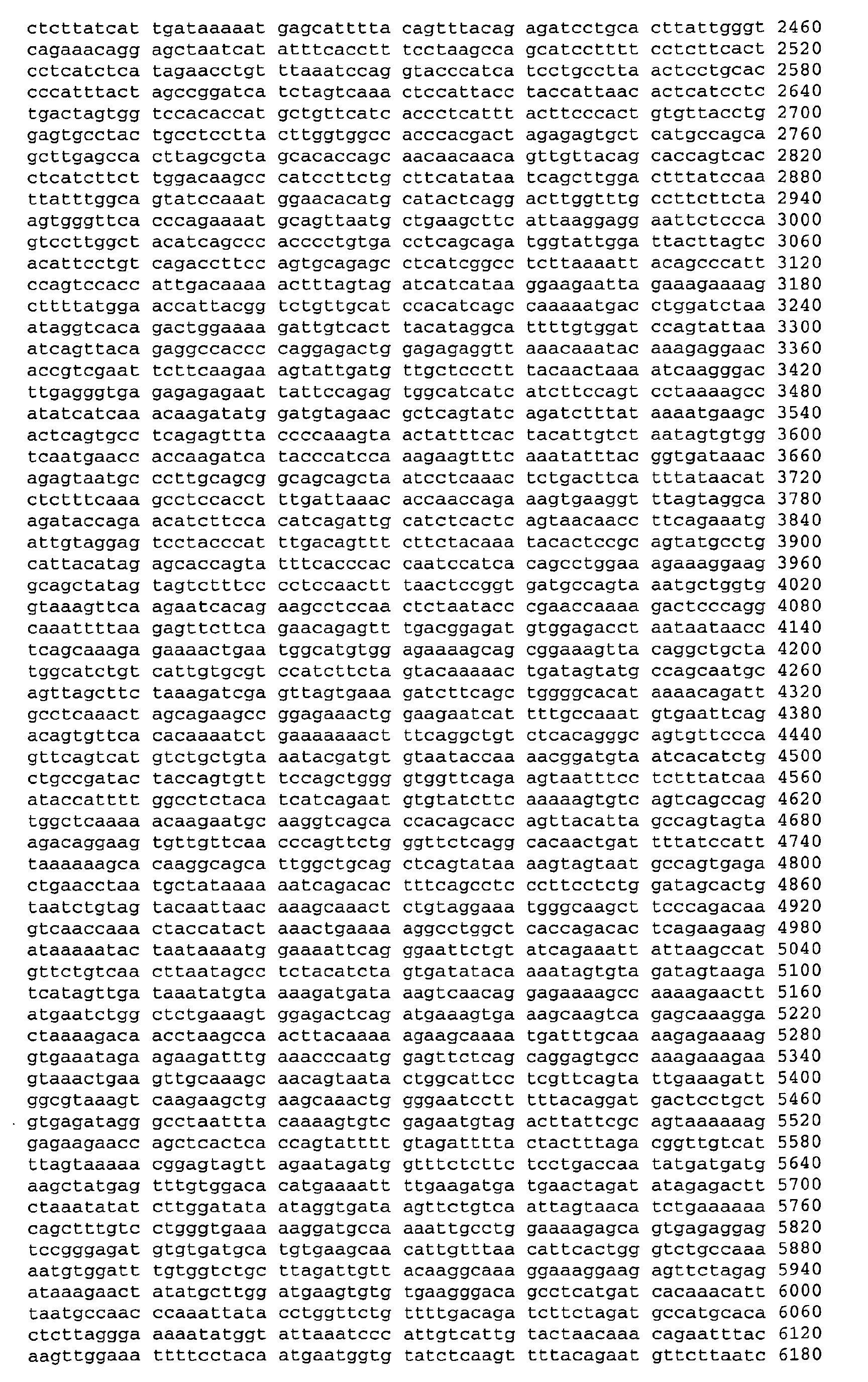
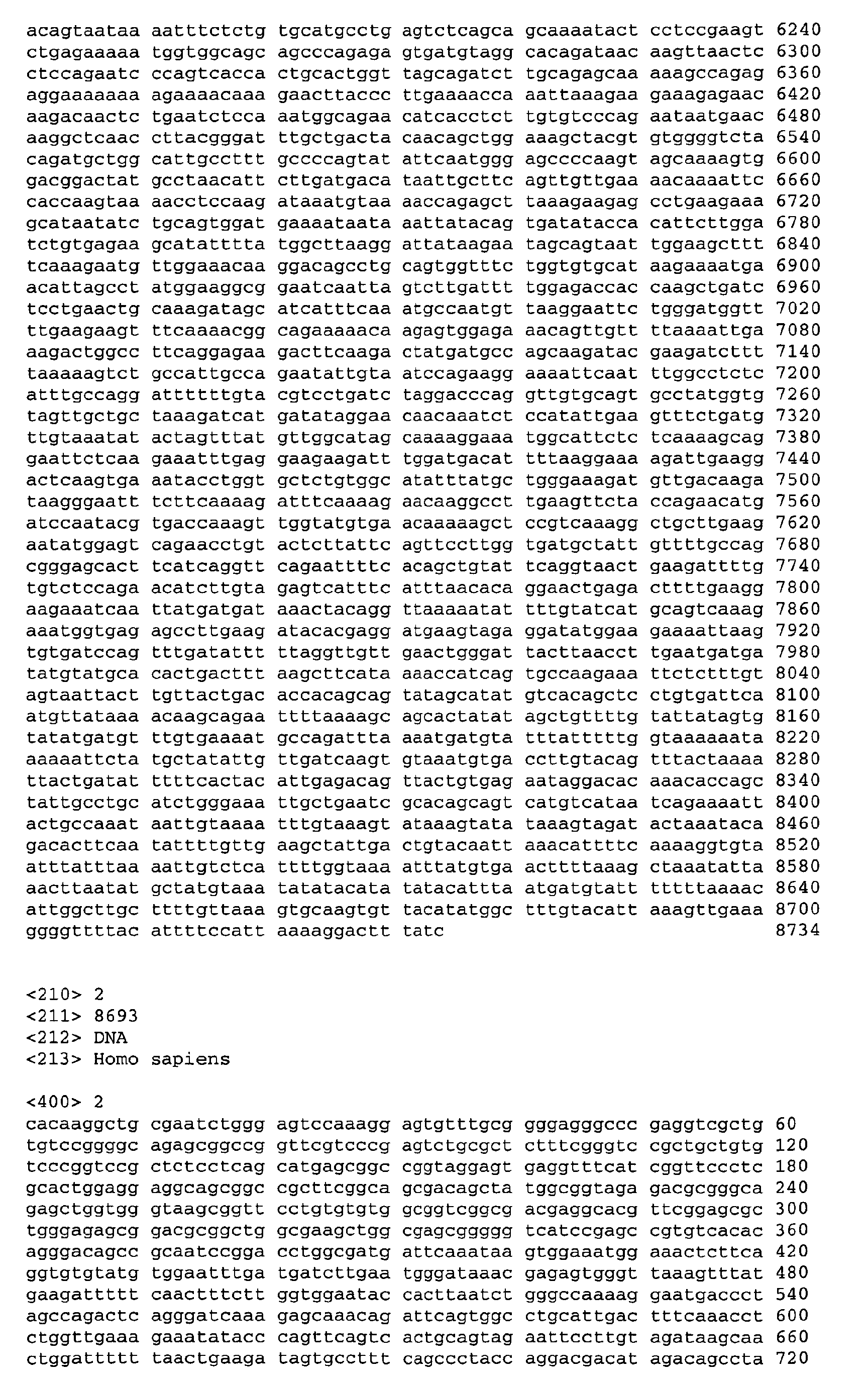
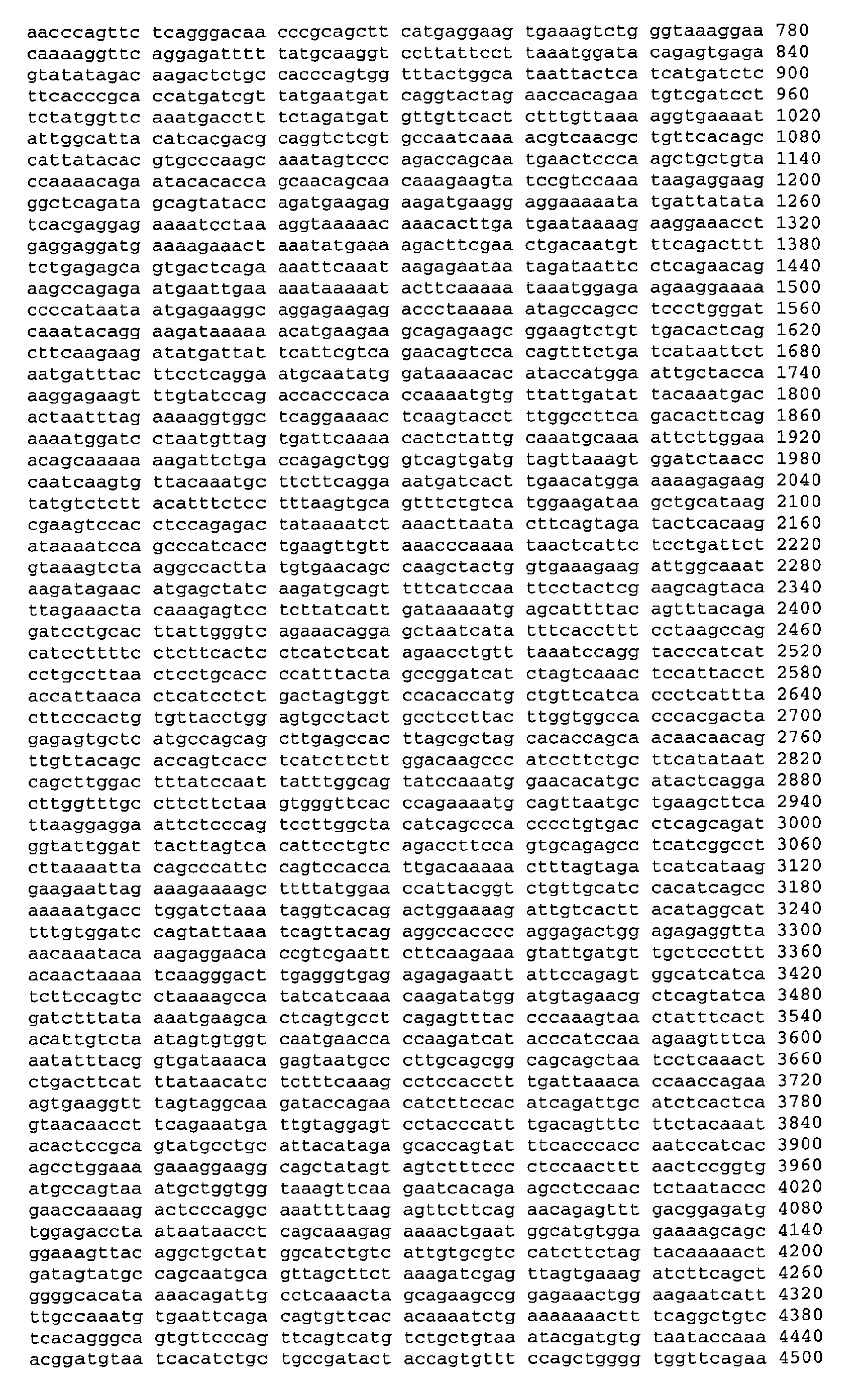
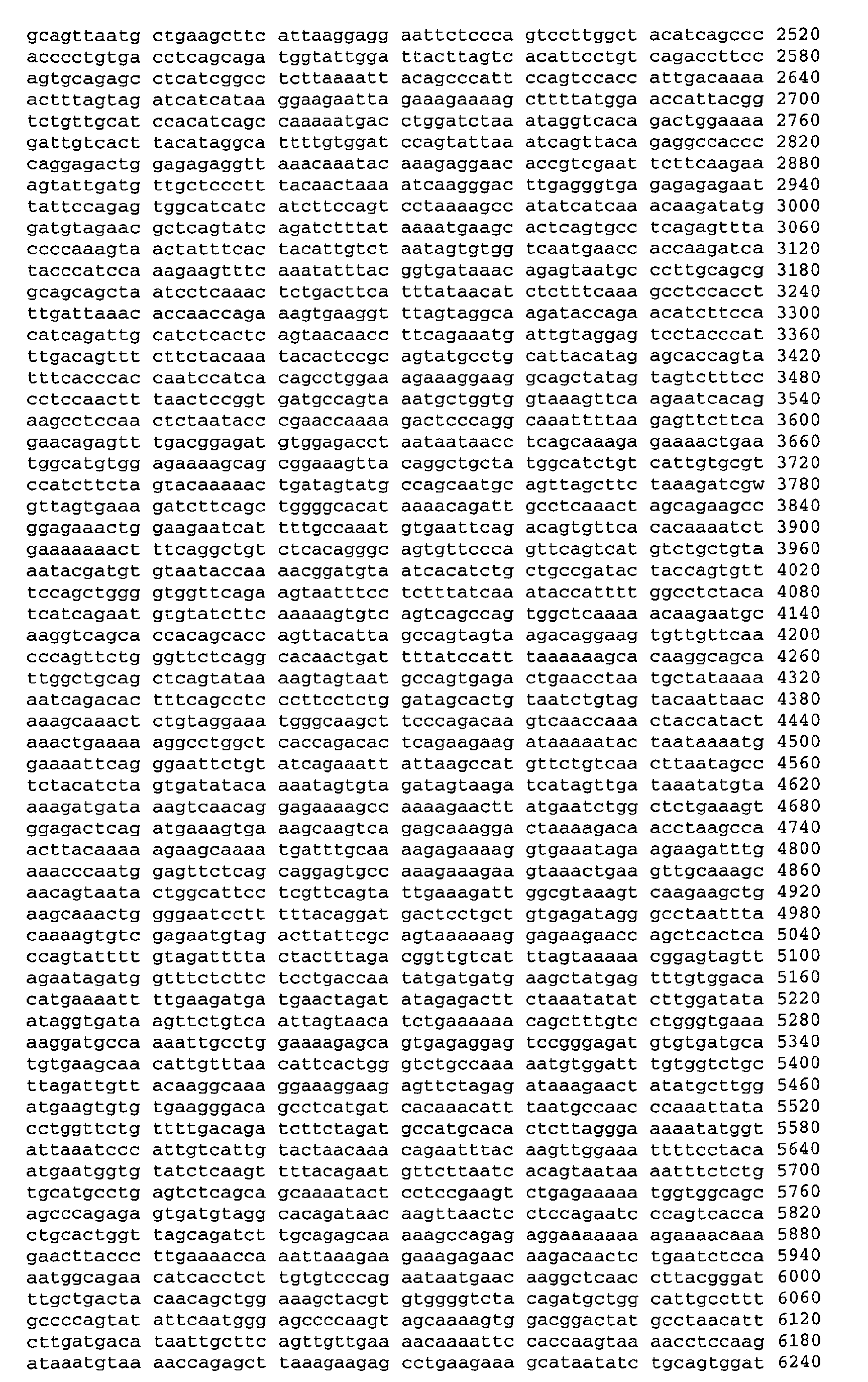
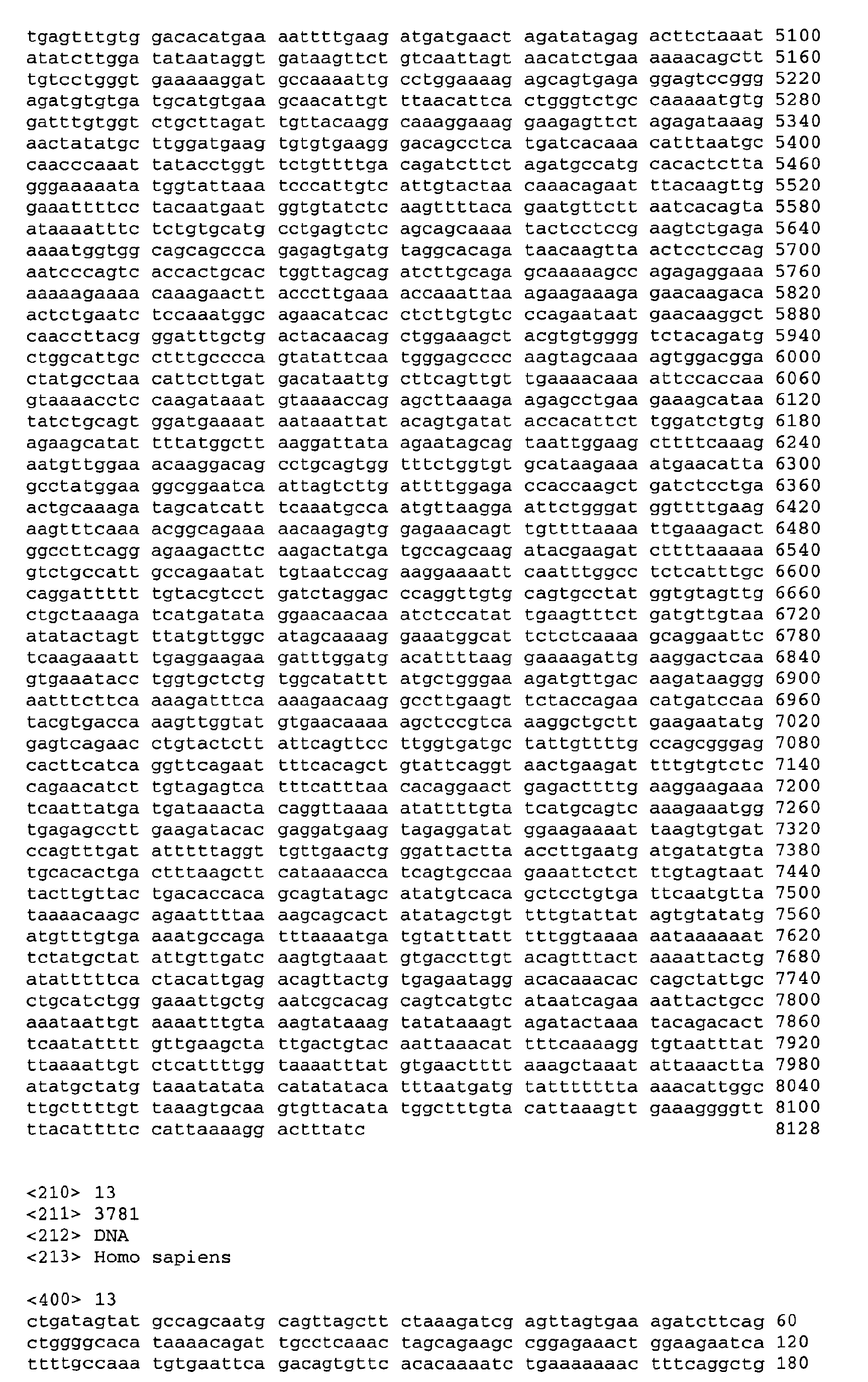
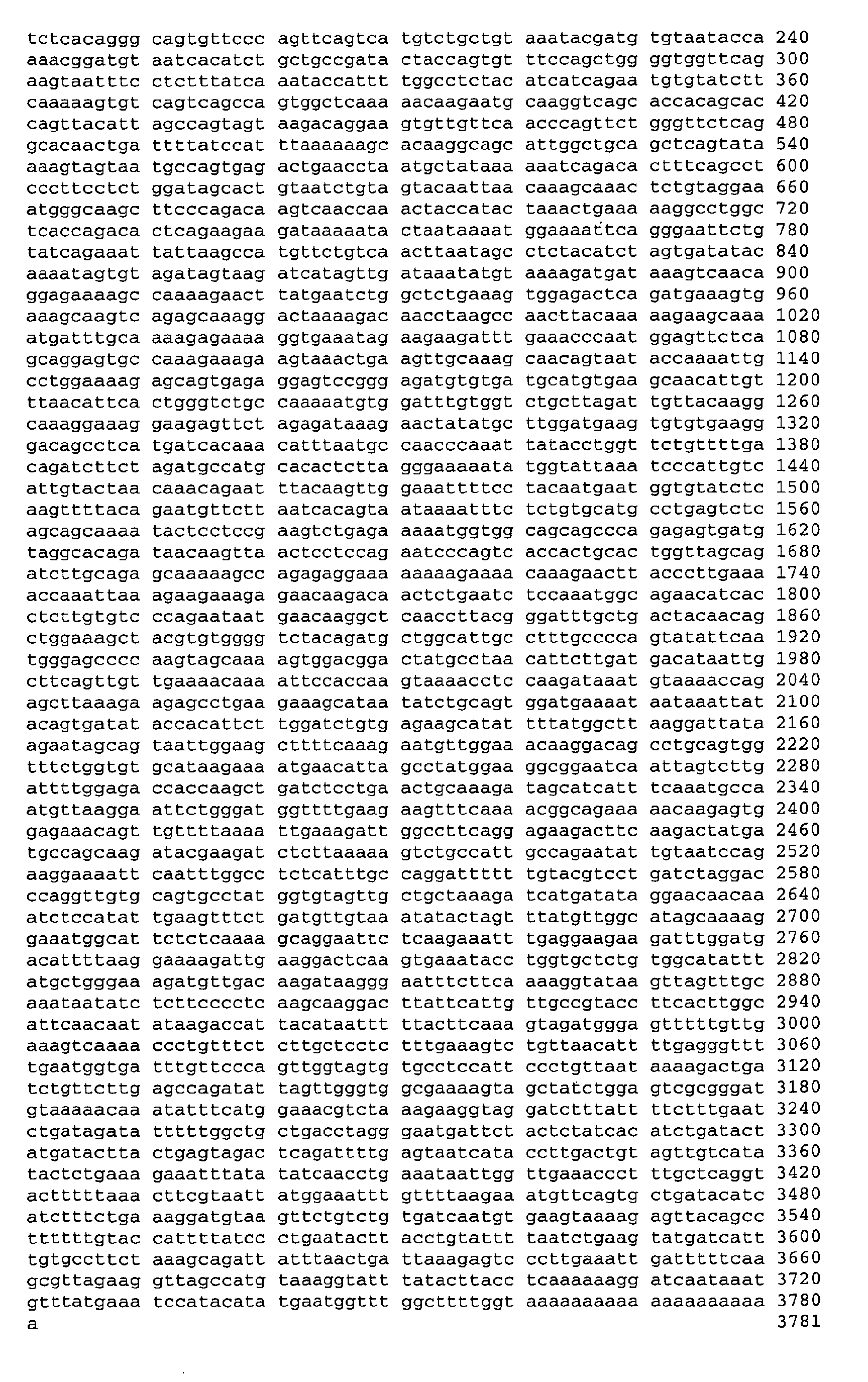
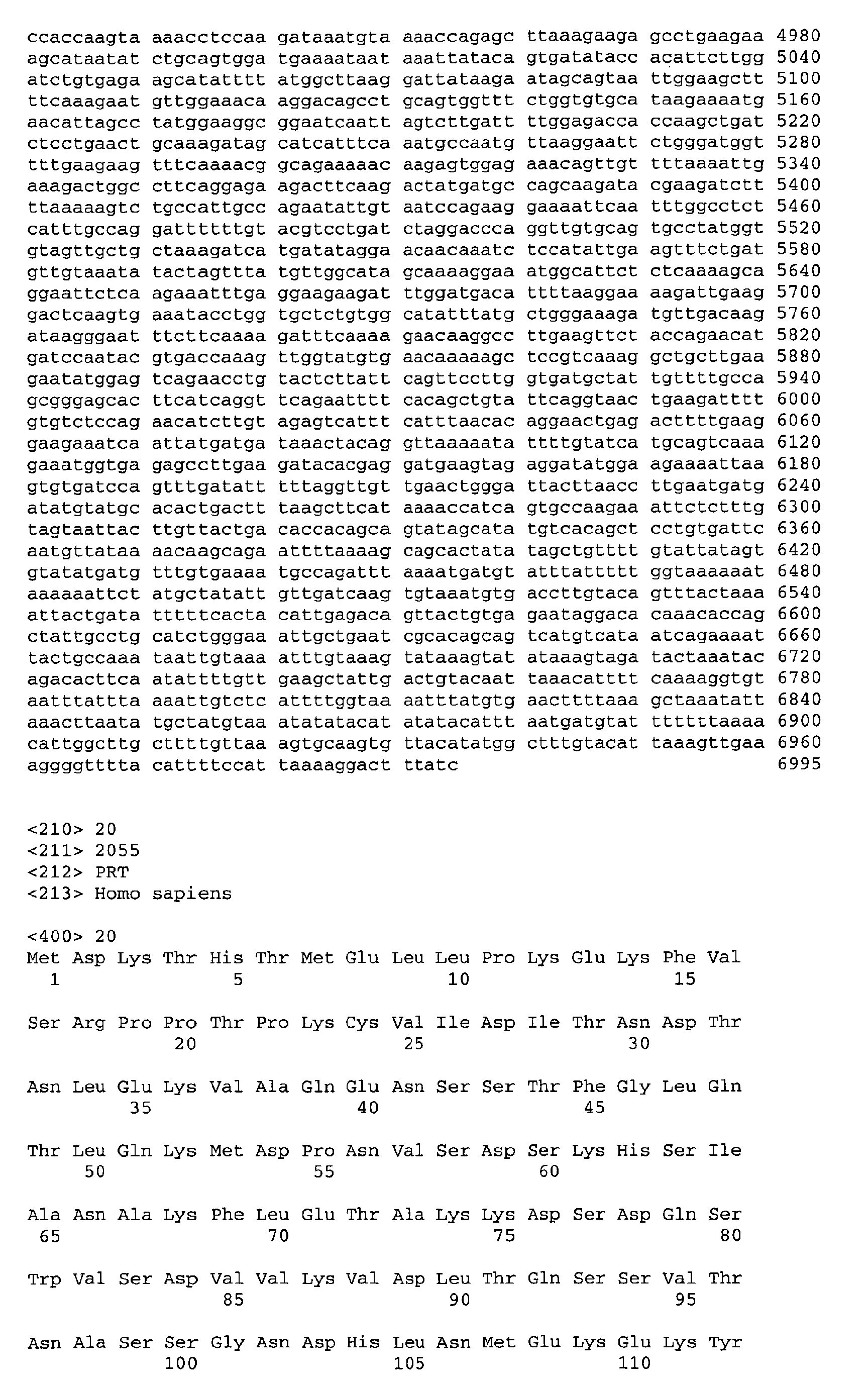
- the nucleic acids that under these conditions with the nucleic acids shown in Seq ID NO 1-13, 19 or one of these sequences as part of the degeneration of the genetic code hybridize corresponding nucleotide sequences are also the subject of the present Invention.
- Nucleic acids can be single or double stranded DNA, e.g. cDNA, or RNA, e.g. mRNA, represent cRNA, pre-mRNA.
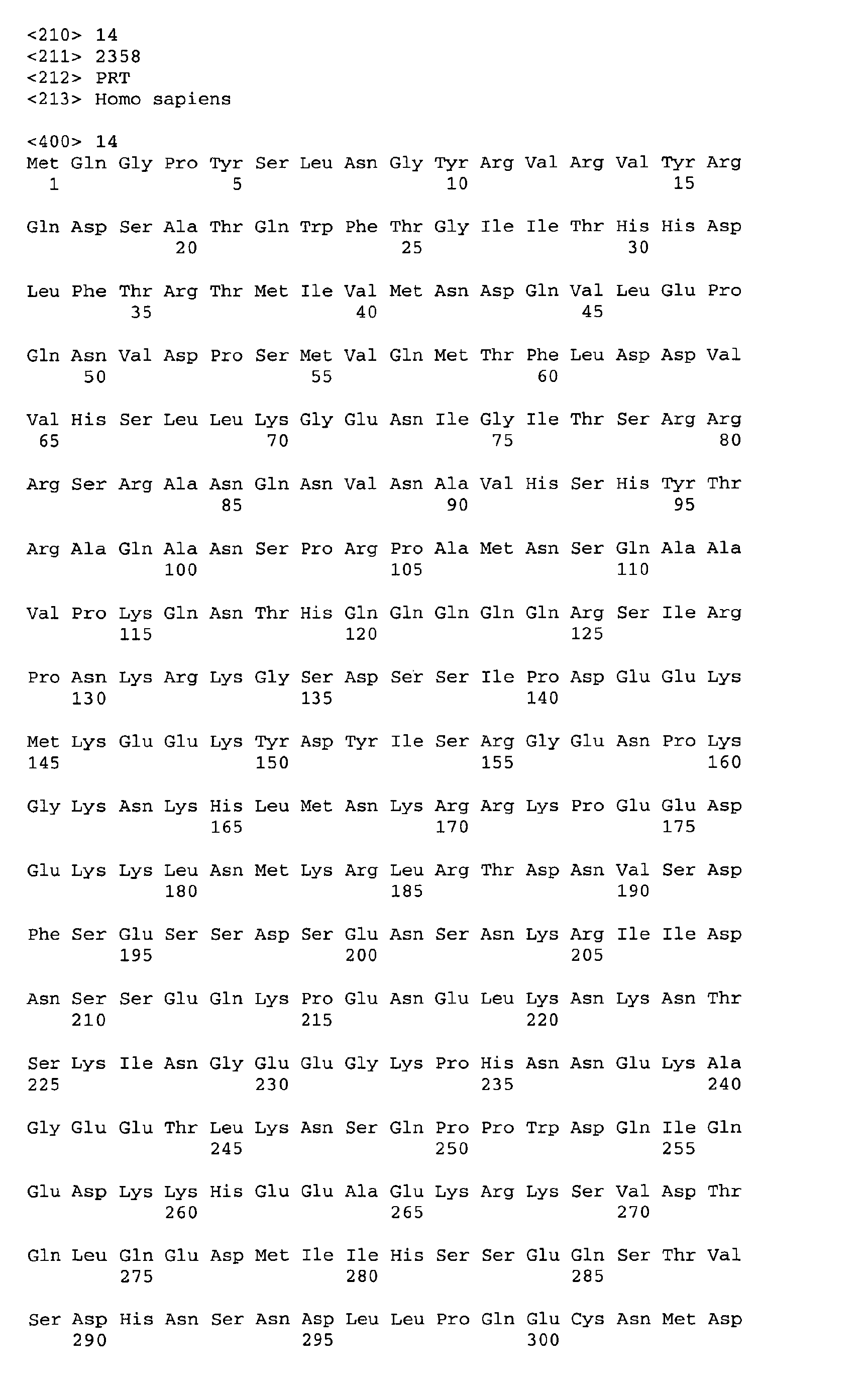
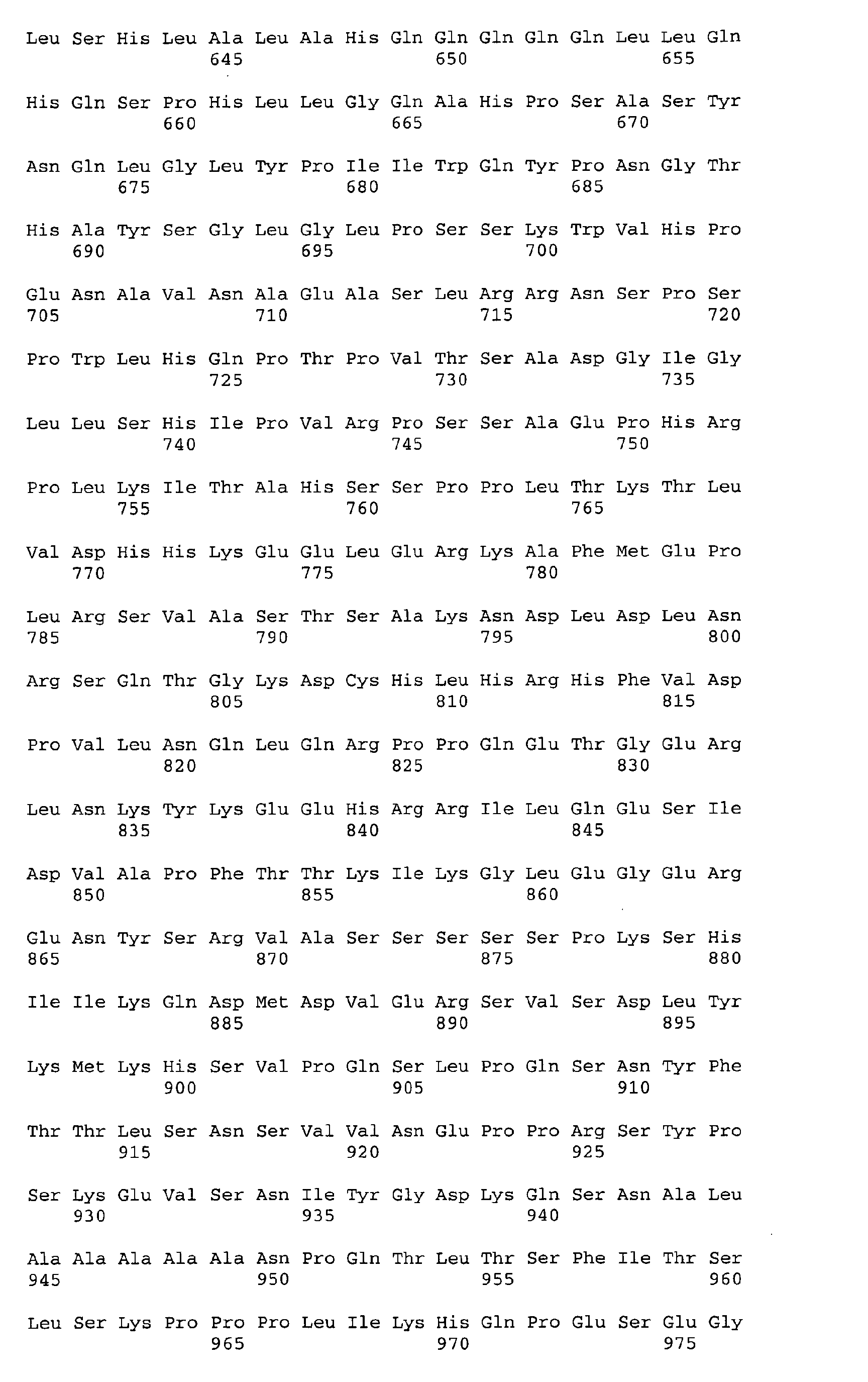
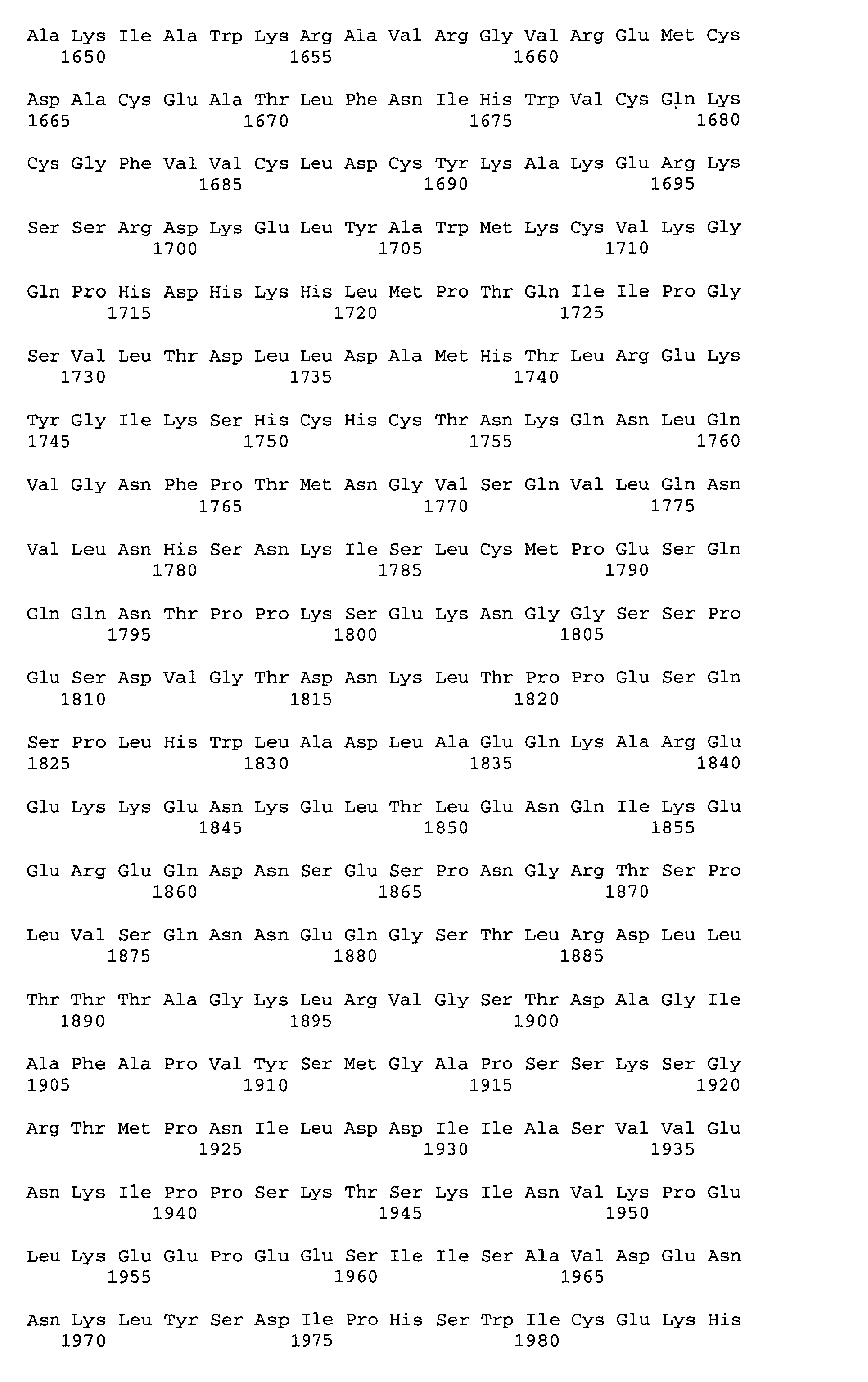
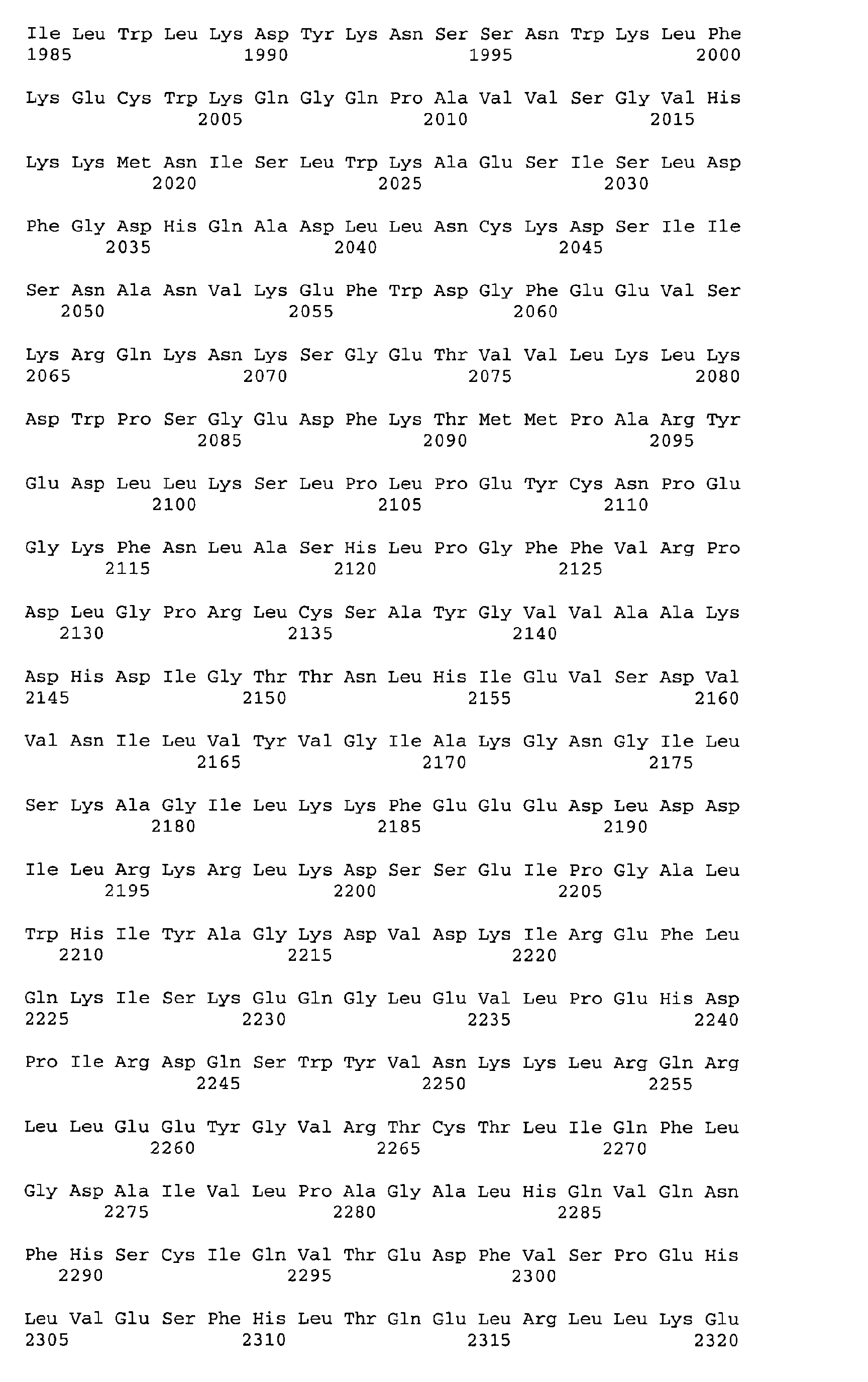
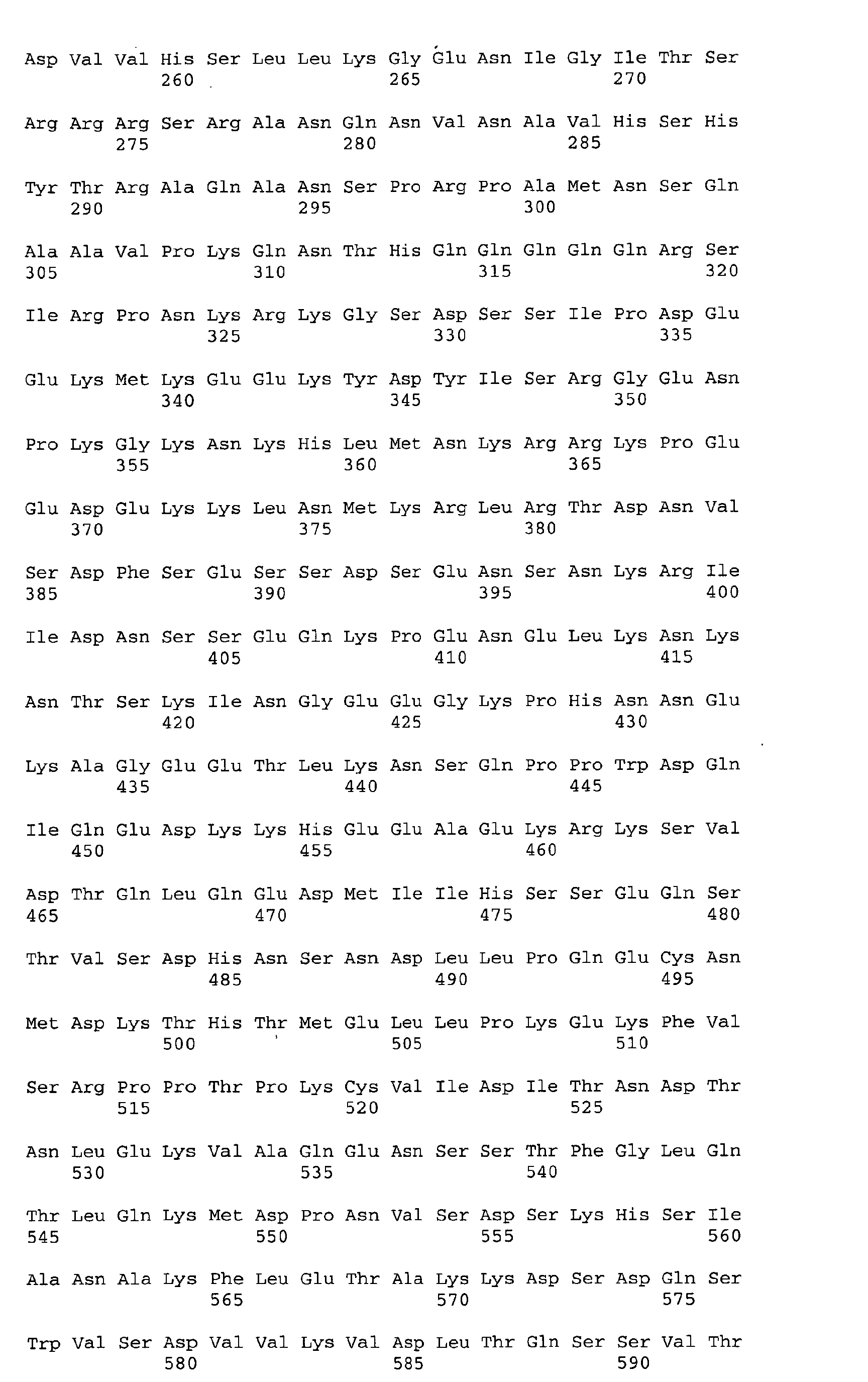
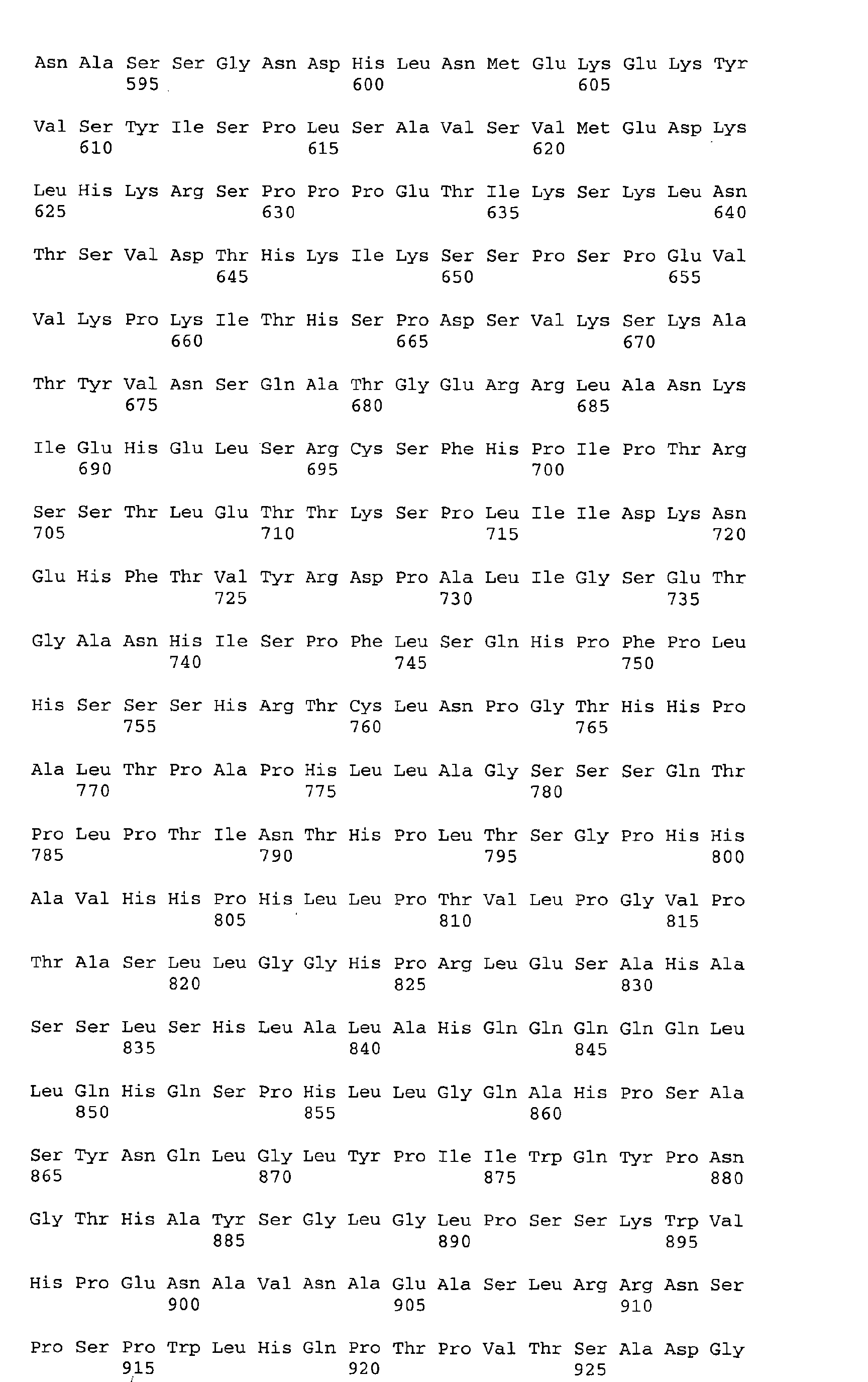
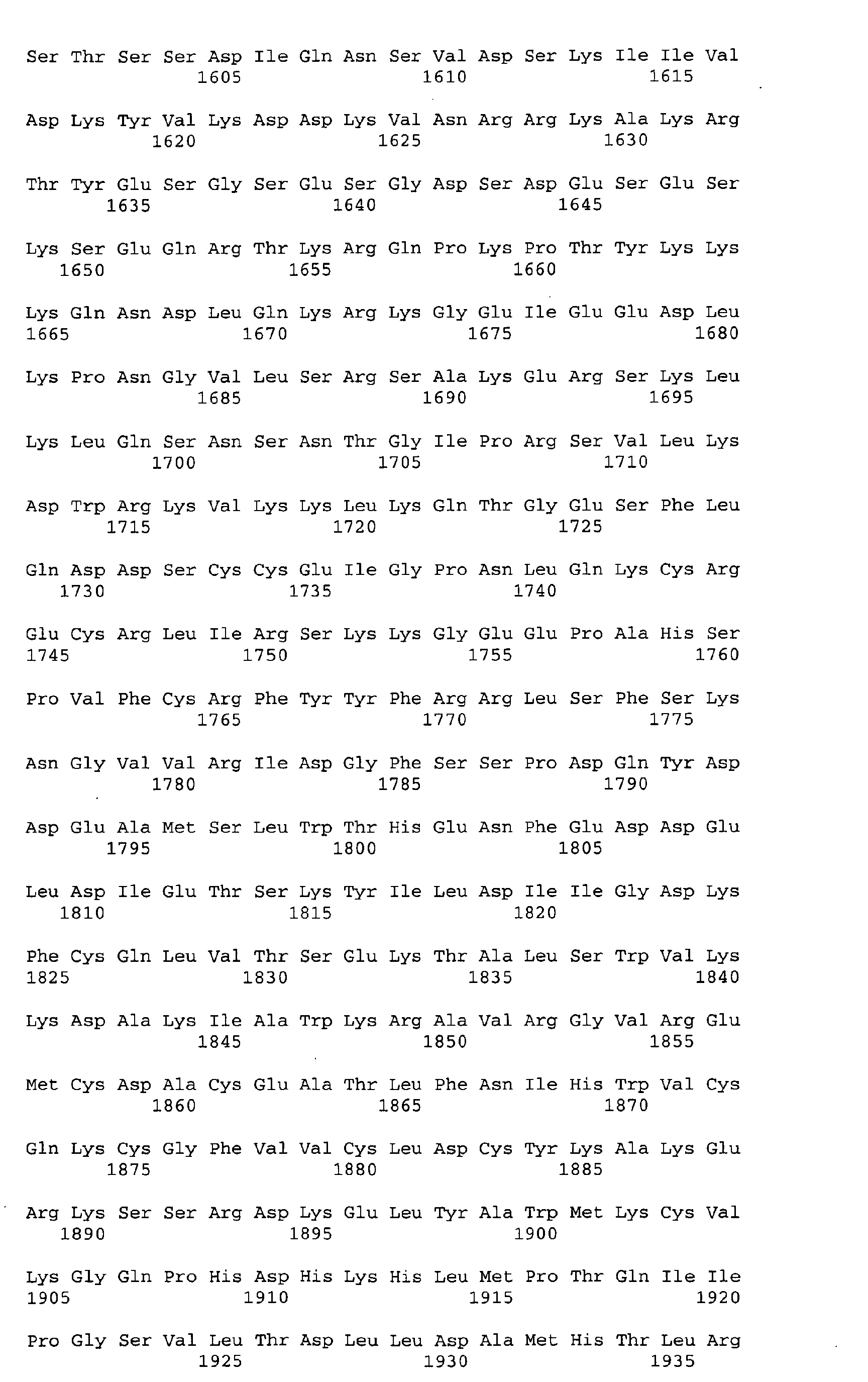
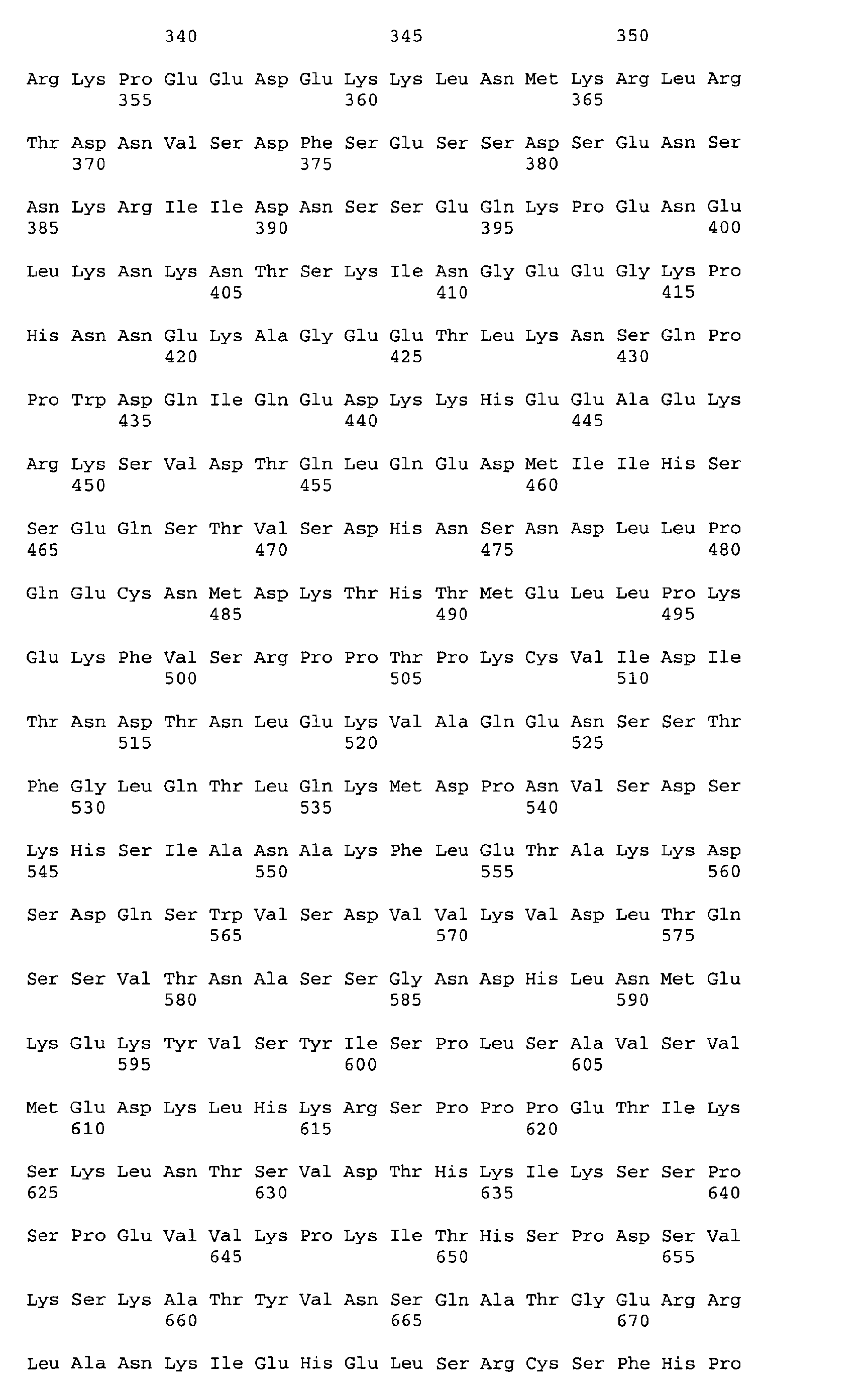
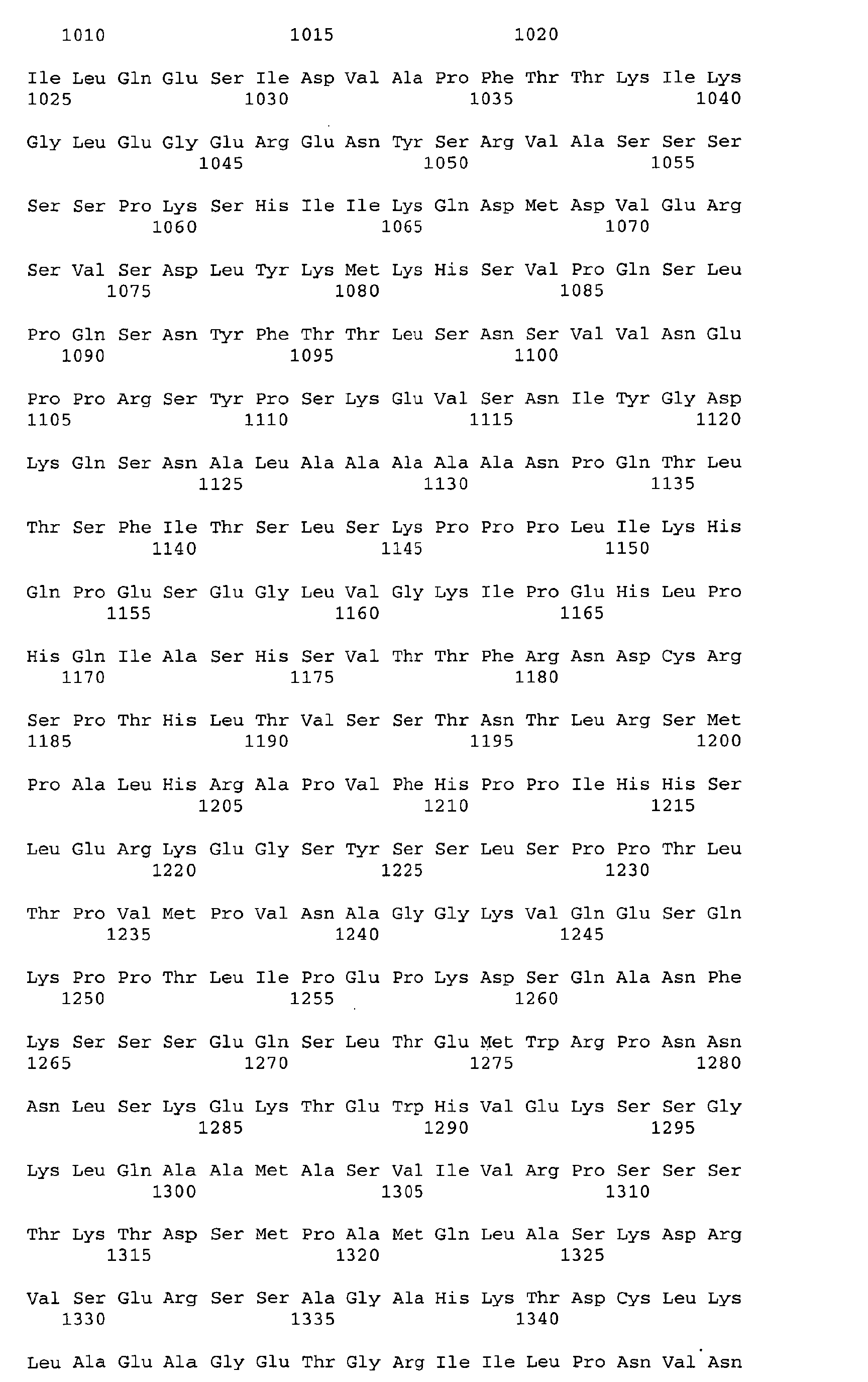
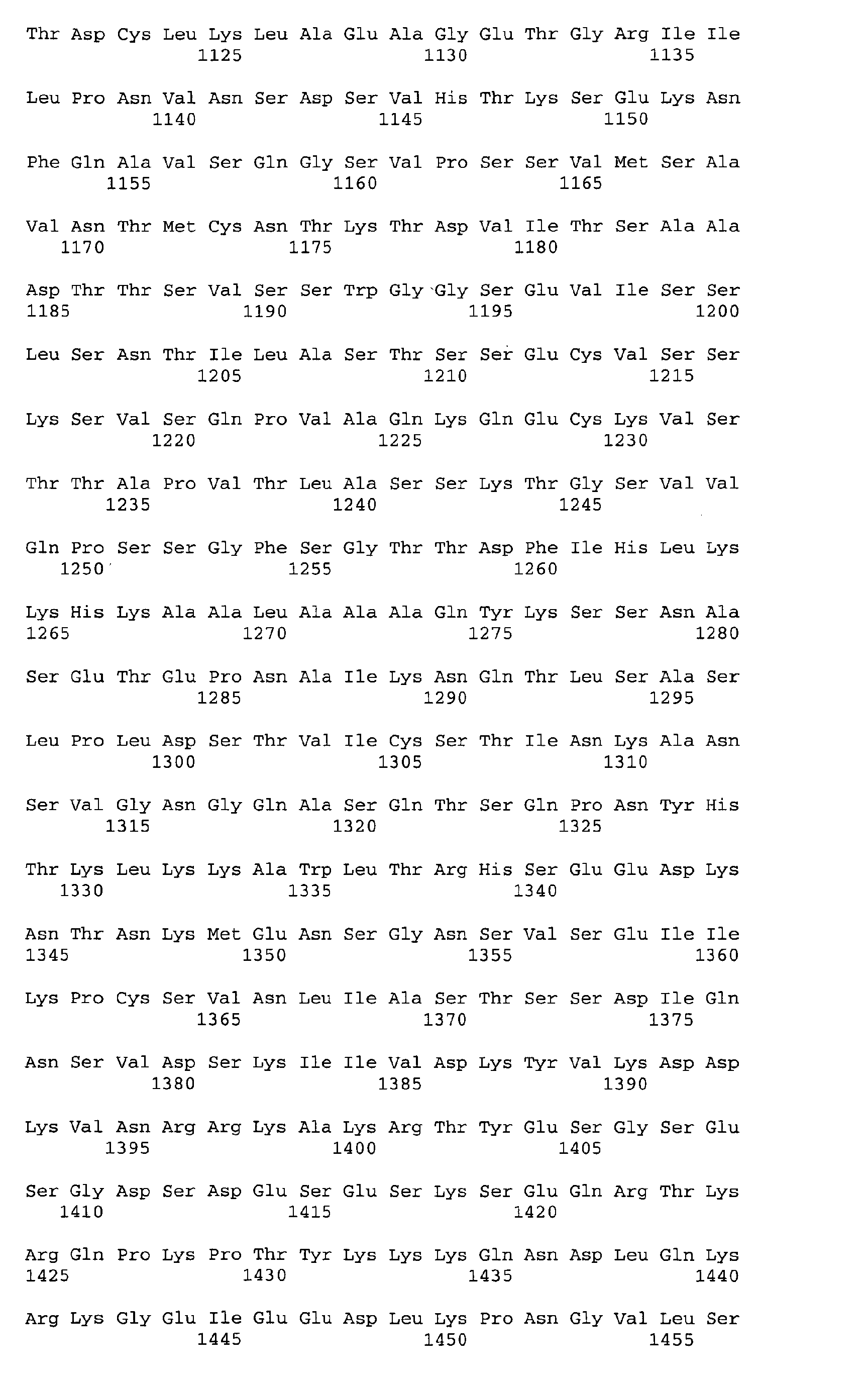
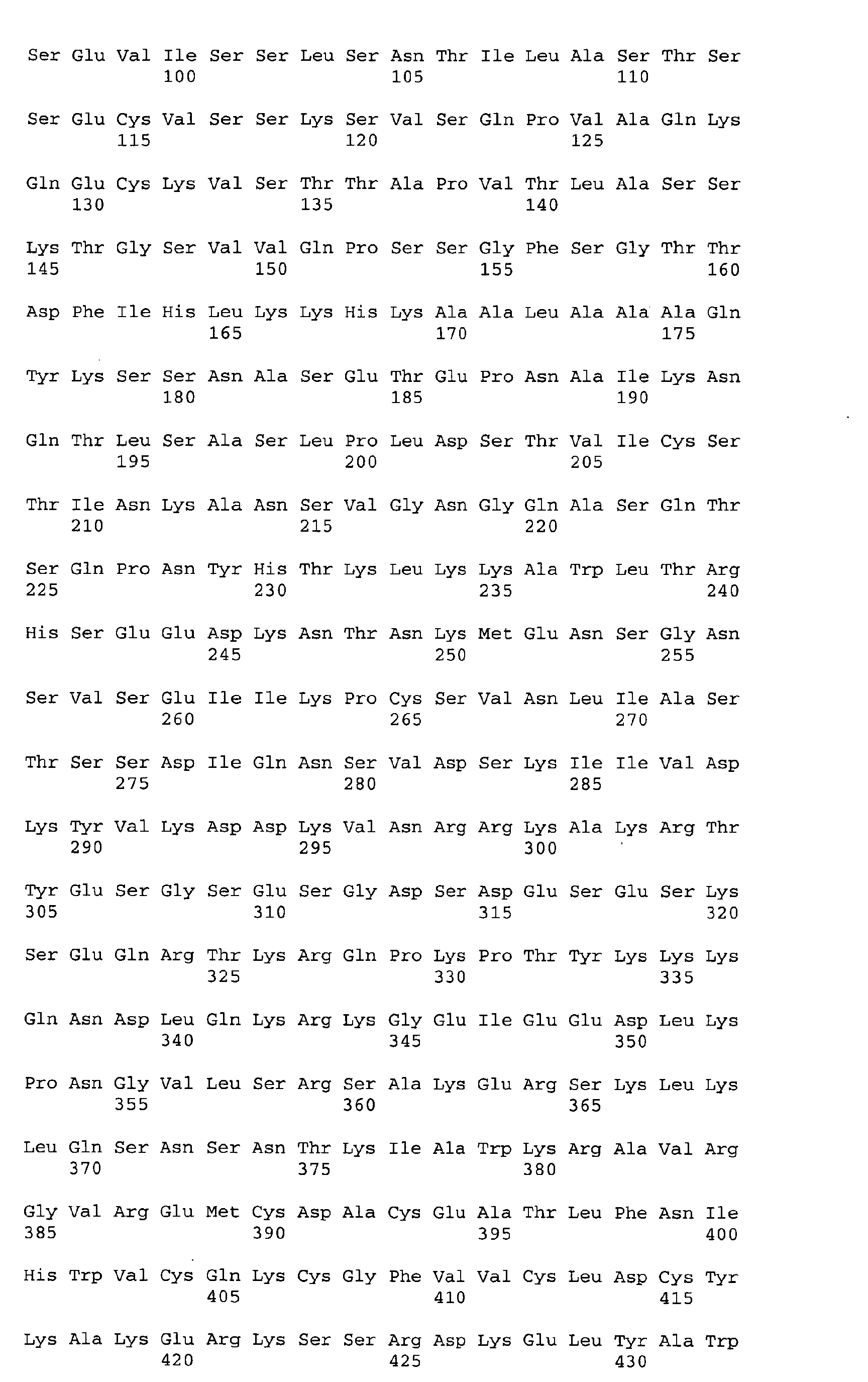
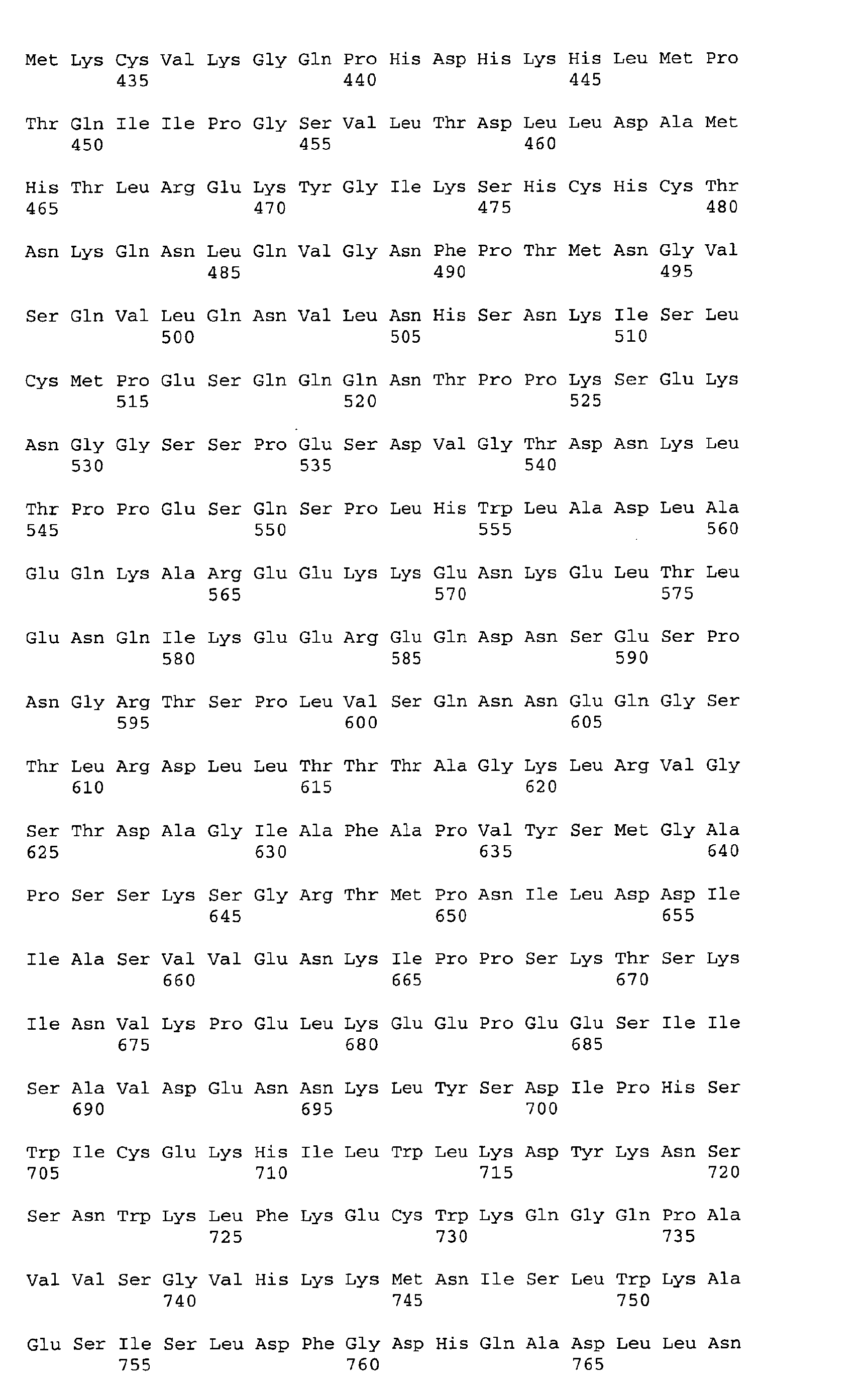
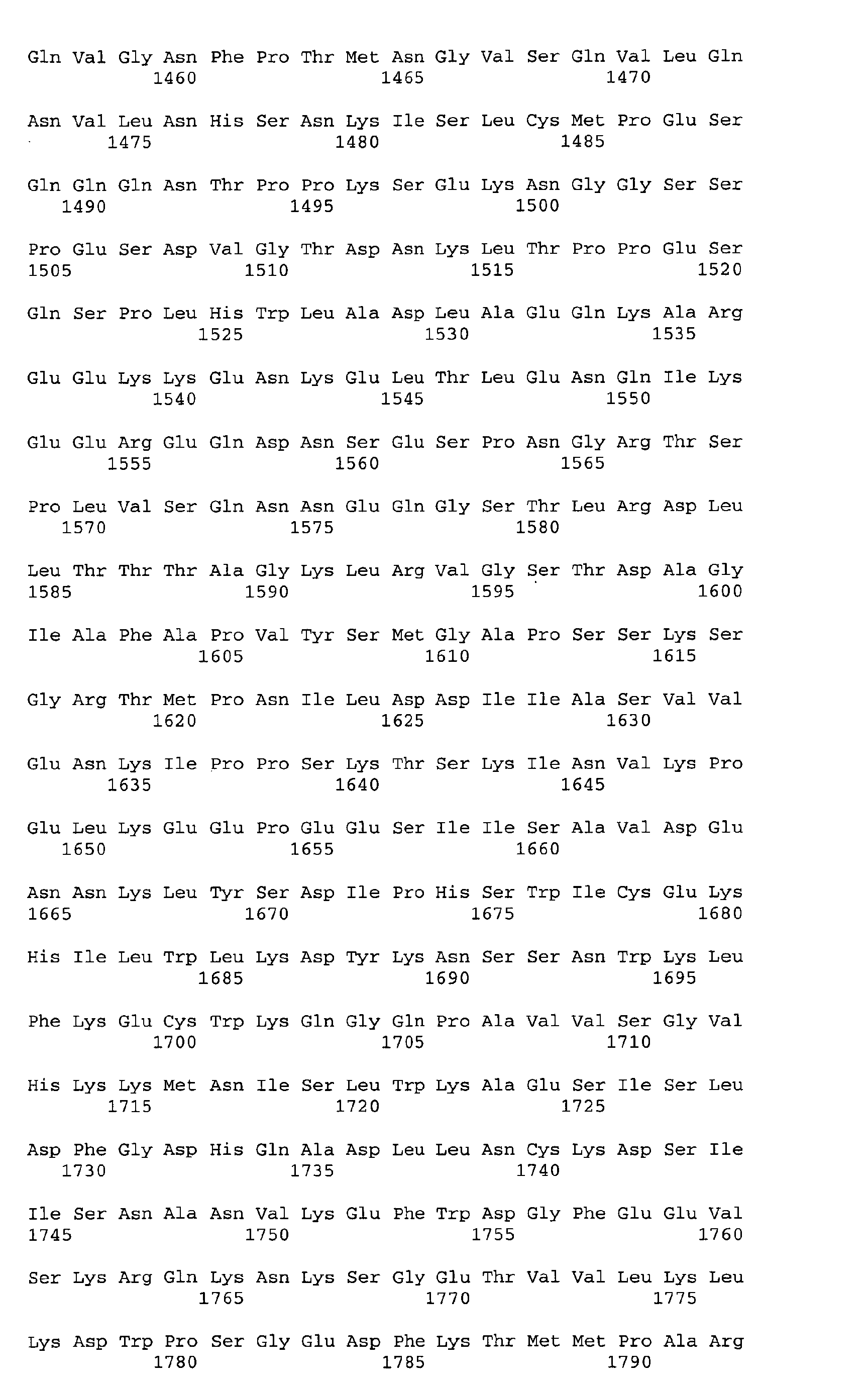
- the invention further relates to polypeptides which are encoded by the nucleic acids according to the invention or which comprise amino acid sequences shown in Seq ID NO 14-18, 20.
- These polypeptides according to the invention are hereinafter called ARAP3 variants or ARAP3 for short.
- These nucleic acid variants are expressed tissue-specifically by using alternative promoters and are generated by alternative processing or splicing of the pre mRNA.
- ARAP3 variants contain a zinc finger domain. They show homologies to other members of the zinc finger domain family such as, for example, Hairless protein (Cachon-Gonzales et al., 1994, Proc. Natl. Acad.
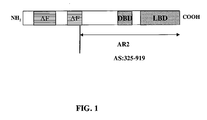
- ARAP3 also contains a core localization domain. ARAP3 binds to the androgen receptor. The binding takes place to the region amino acid 325 to 919 of the androgen receptor (see FIG. 2 AR2 fragment).
- the binding site is in the ranges of the polypeptides according to the invention, as indicated in the following table: Amino acid regions of the domains of ARAP3 polypeptides Seq ID NO Zinc finger AS Androgen receptor binding domain Core Localization Domain (NLD) jmjC domain 14 1664-1692 1732 -1841 2183 - 2193 2199-2298 15 1858 to 1886 1926 to 2035 2377 to 2385 2393 to 2492 16 1846 to 1874 1914 to 2023 2365 to 2373 2381 to 2480 17 1627 to 1655 1695 to 1804 2146 to 2154 2162 to 2261 18 390 to 418 458 to 567 909 to 917 925 to 953 part. 20 1361 to 1389 1430 to 1539 1881 to 1898 1897 to 1996
- ARAP3 has the function of a comodulator of nuclear receptors, especially Steroid hormone receptors.
- receptors are the androgen receptor, Estrogen receptor ⁇ , estrogen receptor ⁇ , progesterone receptor A, progesterone receptor B, glucocorticoid receptor, mineralocorticoid receptor, thyroid hormone receptor, vitamin D receptor and peroxisome proliferator-activated receptor.
- ARAP3 binds particularly well the androgen receptor. Through this binding, the receptor function. be modulated i.e. be strengthened or weakened.
- ARAP3 is particularly strong in the heart, liver, testicles and Expressed ovary.
- the invention furthermore relates to vectors which contain at least one copy of a contain the nucleic acids of the invention.
- Vectors can be prokaryotic or be eukaryotic vectors. Examples of vectors are pPRO (Clontech), pBAD (Invitrogen), pSG5 (Stratagene), pCl (Promega), pIRES (Clontech), pBAC (Clontech), pMET (Invitrogen), pBlueBac (Invitrogen).
- the nucleic acids according to the invention are inserted.
- the Nucleic acids according to the invention are preferably in association with Expression signals such as Promoter and enhancer on the vector.
- the invention further relates to cells which are transfected with one of the nucleic acid sequences according to the invention or with a vector according to the invention.
- cells which are transfected with one of the nucleic acid sequences according to the invention or with a vector according to the invention.
- E. coli, yeast, Pichia, Sf9, COS, CV-1 or BHK can be used as cells. These cells can be used for the production of the polypeptides according to the invention or for test systems.
- polypeptides according to the invention or partial areas thereof can be used for Antibody production can be used.
- polyclonal antibodies the polypeptides or peptides e.g. bound to KLH (Keyhole Limpet Hemocyanin) and animals, e.g. Rabbit being sprayed. You can also use it to manufacture monoclonal antibodies can be used.
- KLH Keyhole Limpet Hemocyanin
- animals e.g. Rabbit being sprayed.
- You can also use it to manufacture monoclonal antibodies can be used.
- a inventive polypeptide or peptide or a mixture of several Peptides according to the invention can be used.
- the antibodies are produced according to standard procedures such as in Kohler, G. and Milstein, C., Nature 1975, 256, 495-497 and Nelson, P.N. et al., Mol. Pathol. 2000, 53, 111-117.
- the invention also relates to the antibodies which are directed against the polypeptides according to the invention.
- the antibodies according to the invention can be used for the detection of ARAP3 and its variants. This can be done, for example, by immunohistochemistry.
- the antibodies according to the invention can also be used in other immunoassays such as an ELISA (enzyme linked immunosorbent assay) or in radioimmunoassays. In this way the concentration of ARAP3 in tissue or cell extracts can be detected.
- the detection of the expression of the polypeptides according to the invention can also be via the Detection of mRNA in the cells.
- the invention therefore also relates to Use of a probe with nucleic acid sequences that are complementary to the Nucleic acid sequences encoding ARAP3 are for the production of a reagent for Detection of the presence of mRNA according to the invention in cells.
- a probe is a short one DNA piece with at least 14 nucleotides.
- the probes according to the invention can e.g. in a Northern blot analysis can be used. This method is e.g. in Sambrook, J. et al., 1989, Cold Spring Harbor Laboratory Press. Other methods of detection the RNA are in situ hybridization, RNAse protection assay or PCR.
- the detection of the expression of ARAP3 is especially dependent on androgen Diseases used.
- increased androgen activability in diseases such as prostate cancer and benign prostate hyperplasia and for acne or hair loss can be attributed to an increased coactivator activity of ARAP3.
- a diminished one Coactivator activity can help with hypogonadism, erectile dysfunction and androgen insensitive syndromes such as. testicular feminization syndrome. at In these diseases, the balance between androgen receptor and coactivator can be disturbed. Therefore, in addition to the amount of ARAP3 expressed, it is also appropriate to include the amount of to determine the expressed androgen receptor in the same tissue.
- the Androgen receptor protein can also be obtained by immunological methods such as e.g. Radioimmunoassay, ELISA or Western blot can be determined.
- An object of the invention is the use of ARAP3 or the coding for it Nucleic acids as target substance for the production of an agent for the treatment of Steroid-dependent disorders.
- Such steroid hormone-dependent diseases e.g. Estrogen-dependent diseases such as Breast cancer and osteoporosis or Cardiovascular and vascular diseases.
- ARAP3 could also be used as Target substance for the manufacture of drugs to influence the male Fertility can be used.
- the effectors of ARAP3 can be used to treat steroid hormone-dependent Diseases are used.
- diseases that e.g. to a strong androgen activability may be an inhibitor of the interaction of ARAP3 and the Androgen receptor are administered and for diseases that are reduced on a Based on coactivator activity, a stimulator of this interaction can be administered.
- a vector that contains a nucleic acid according to the invention contains, designed and applied. Examples are vectors derived from adenovirus, adenovirus virus, herpes simplex virus or SV40.
- Gene therapy can following a protocol as described by Gomez-Navarro, J. et al. (Eur. J. Cancer 1999, 35, 867-885) described.
- the application can be local, i.e. directly into the affected Fabrics such as the tumor or systemic, i.e. via the bloodstream. this leads to to an increased expression of ARAP3.
- ARAP3 can be applied in the form of a fusion polypeptide.
- the fused polypeptide e.g. EGF or transferrin becomes the polypeptide according to the invention preferably to the desired tissue, e.g. transported to the tumor tissue.
- the activity of ARAP3, which in step b. is measured, the gain is the Receptor function of the nuclear receptor used. Steroid hormone receptors are preferred the androgen receptor is particularly preferred.
- test systems according to the invention can also be used to test environmental samples be used. Many substances in the environment come in so low Concentrations before that they only have an effect on human steroid hormone receptors who increasingly express the corresponding coactivator. By using a These substances could be identified according to the test system according to the invention. A genetic predisposition to the effects of these substances can be determined by the detection of ARAP3 according to the invention can be determined.
- AF means Activation function
- DBD DNA binding domain DBD DNA binding domain
- LBD ligand binding domain S stands for amino acid.
- the fragment of the androgen receptor (AR2) is shown, which for the two-hybrid screen was used.
- FIG. 2 shows a schematic representation of the ARAP3 polypeptide Seq ID NO 20. Shown is the region that binds to the androgen receptor and the zinc finger domain.
- FIG. 3 shows the tissue distribution of ARAP3.
- a Northern blot analysis is shown. 2 ⁇ g human poly A + RNA were separated on a gel, transferred to a membrane and hybridized with an ARAP3 cDNA fragment. kb stands for kilobases.
- Example 4 shows the result of a mammalian hybrid test with the ARAP3 fragment AS1430 bis 1539 of Seq ID NO 20 and the human androgen receptor. The attempt was like in Example 2 was carried out. An analog VP16 was used as a positive control Construct an SRC1 fragment binding to the androgen receptor.
- a yeast-2-hybrid system was screened in the presence and absence of 10 -6 mol of dihydroxy testosterone (DHT) performed.
- DHT dihydroxy testosterone
- the number of clones screened was 3x10 6 or 2x10 7 .
- the number of independent clones was 3.5x10 6 .
- 800 positive clones were selected and tested with a ⁇ -galactosidase assay, with 240 being confirmed as lacZ positive clones.
- the ARAP3 cDNA was then extended using PCR techniques found different splice variants which represent nucleic acids 1 to 13. Out 5 polypeptides with amino acid sequences 14 to 18 are derived from these.
- the binding of the ARAP3 fragment (AS 1430-1539) to the androgen receptor (AR) was confirmed in the mammalian hybrid test ( Figure 4)
- the ARAP3 fragment was identified as Fusion protein cloned with VP16 (CMX-VP16-ARAP3-III).
- Human PC3 cells were made with CMX-VP16-ARAP3-III, the expression vector which contains the complete AR, (pSG5AR) and the reporter gene luciferase, which are under the control of the AR MMTV Promoters stands (pMMTV-luc), transfected. After 24 hours, the cells were with Dihydroxytestosterone (DHT) incubated. After another day, the cells were lysed and the activity of the reporter gene luciferase was determined. The results are normalized on the basis of the protein contents of the batches determined in parallel. An approach with serves as a control the empty expression vector CMX-VP16-empty.
- a eukaryotic expression vector e.g. pCMX, which is the ARAP3 cDNA, which is the encodes complete ARAP3 protein or a functional part, contains (pCMX-ARAP3), is broken down into suitable cell lines, e.g. SH-SY5Y or PC3 transfected, together with pSG5AR and pMMTV-luc.
- An approach with the empty expression vector pCMX serves as a control.
- the Androgenic activity can be determined by the activity of the reporter luciferase analogous to the above Example can be determined.
- the effect of ARAP3 on the androgenic signal can be determined by comparing the activity of the control approach.
- a GST pulldown experiment is a test arrangement that allows one in vitro expressed GST fusion protein to an equally in vitro expressed and radioactive bind labeled protein, then separate from non-interacting proteins and detect the bound proteins and view them as a measure of binding.
- the Experiments were carried out according to Sambrook and Russel, Molecular Cloning, Volume 3, Chapter 18, Protocol 3 (page 18.55 ff); Cold Spring Harbor Laboratory Press; New York 2001 stated, carried out:
- an ARAP3 fragment (AS 1735 to 1840 of Seq ID NO 14) was cloned as a GST fusion protein in the vector pGEX-KG (Pharmacia) and overexpressed and prepared in bacterial cells according to the manufacturer's instructions.
- the ARAP3 fusion protein was bound to glutathione Sepharose beads and incubated with 35S-methionine-labeled androgen receptor (pSG5AR expressed with T7 TNT reticulocyte lysate from Promega). The mixture was then centrifuged and the bound proportion of androgen receptor on the GST-ARAP3 beads was determined by SDS-PAGE and subsequent autofluography.
- a binding ratio could be formed by comparing the blackening of the androgen receptor protein bands on the hyper film (TM Amersham) and evaluating them using density integration.
- the validated binding values of GST-ARAP3 compared to GST-empty resulted from the protein input amounts determined by Western blot, as shown in Table 2 as the ARAP3 / GST ratio and can be regarded as evidence for the binding of ARAP3 to the androgen receptor.
Landscapes
- Health & Medical Sciences (AREA)
- Chemical & Material Sciences (AREA)
- Life Sciences & Earth Sciences (AREA)
- Organic Chemistry (AREA)
- General Health & Medical Sciences (AREA)
- Medicinal Chemistry (AREA)
- Public Health (AREA)
- Pharmacology & Pharmacy (AREA)
- Animal Behavior & Ethology (AREA)
- Chemical Kinetics & Catalysis (AREA)
- Veterinary Medicine (AREA)
- Nuclear Medicine, Radiotherapy & Molecular Imaging (AREA)
- General Chemical & Material Sciences (AREA)
- Engineering & Computer Science (AREA)
- Bioinformatics & Cheminformatics (AREA)
- Dermatology (AREA)
- Endocrinology (AREA)
- Reproductive Health (AREA)
- Genetics & Genomics (AREA)
- Molecular Biology (AREA)
- Biophysics (AREA)
- Biochemistry (AREA)
- Gastroenterology & Hepatology (AREA)
- Zoology (AREA)
- Gynecology & Obstetrics (AREA)
- Toxicology (AREA)
- Proteomics, Peptides & Aminoacids (AREA)
- Micro-Organisms Or Cultivation Processes Thereof (AREA)
- Peptides Or Proteins (AREA)
- Measuring Or Testing Involving Enzymes Or Micro-Organisms (AREA)
- Acyclic And Carbocyclic Compounds In Medicinal Compositions (AREA)
- Medicines That Contain Protein Lipid Enzymes And Other Medicines (AREA)
- Transition And Organic Metals Composition Catalysts For Addition Polymerization (AREA)
- Investigating Or Analysing Biological Materials (AREA)
- Medicines Containing Antibodies Or Antigens For Use As Internal Diagnostic Agents (AREA)
- Pharmaceuticals Containing Other Organic And Inorganic Compounds (AREA)
- Low-Molecular Organic Synthesis Reactions Using Catalysts (AREA)
- Organic Low-Molecular-Weight Compounds And Preparation Thereof (AREA)
Abstract
Description
| Aminosäurebereiche der Domänen von ARAP3 Polypeptiden | ||||
| Seq ID NO | Zinkfinger AS | Androgenrezeptor Bindungsdomäne | Kernlokalisierungs-domäne (NLD) | jmjC - Domäne |
| 14 | 1664 - 1692 | 1732 -1841 | 2183 - 2193 | 2199 - 2298 |
| 15 | 1858 bis 1886 | 1926 bis 2035 | 2377 bis 2385 | 2393 bis 2492 |
| 16 | 1846 bis 1874 | 1914 bis 2023 | 2365 bis 2373 | 2381 bis 2480 |
| 17 | 1627 bis 1655 | 1695 bis 1804 | 2146 bis 2154 | 2162 bis 2261 |
| 18 | 390 bis 418 | 458 bis 567 | 909 bis 917 | 925 bis 953 part. |
| 20 | 1361 bis 1389 | 1430 bis 1539 | 1881 bis 1898 | 1897 bis 1996 |
Die erfindungsgemäßen Antikörper können zur Detektion von ARAP3 und seinen Varianten verwendet werden. Dies kann z.B. durch Immunhistochemie erfolgen. Die erfindungsgemäßen Antikörper können auch in anderen Immuntests wie z.B. einem ELISA (enzyme linked immunosorbent assay) oder in Radioimmunotests eingesetzt werden. So kann die Konzentration an ARAP3 in Gewebe-oder Zellextrakten nachgewiesen werden.
Effektoren sind Substanzen, die auf ARAP3 inhibitorisch oder aktivierend wirken, und die in der Lage sind, die Funktionen von ARAP3 zu beeinflussen, welche aufgrund der Wechselwirkungen durch Bindung von ARAP3 an ein Zielmolekül entstehen. Bevorzugt sind solche Substanzen, die die Interaktion von ARAP3 mit dem Androgenrezeptor modulieren. Dies kann z.B. getestet werden, indem die Bindung des gereinigten ARAP3-Polypeptids an das Androgenrezeptorpolypeptid in Gegenwart von zu testenden Substanzen gemessen wird und mit dem Kontrollwert, der ohne die zu testenden Substanzen erhoben wird, verglichen wird. Die Bindung kann durch Marker, die an ARAP3 oder am Androgenrezeptor gebunden sind, bestimmt werden. Solche Marker können z.B. Fluoreszenzmarker, Biotin oder radioaktive Marker sein.
Eine andere Möglichkeit zur Identifizierung von Effektoren ist die Verwendung einer Zelle, die cDNA von ARAP3 oder eines funktionellen Teils davon, die cDNA des Androgenrezeptors oder eines anderen nukleären Rezeptors und die cDNA eines Reportergens enthält. Als Reportergen kann z.B. Luziferase verwendet werden. Die Aktivität der Luziferase spiegelt hierbei die Aktivierung des nukleären Rezeptors wieder. Die Zellen werden in Gegenwart der zu testenden Substanzen inkubiert und die Luziferaseaktivität bestimmt. Die Inkubation kann auch zusätzlich in Gegenwart des Liganden des nukleären Rezeptors erfolgen. So können z.B. antagonistische Effekte gemessen werden. Bevorzugt ist die Verwendung des Androgenrezepors und dessen Liganden, einem Androgen.
Weiterhin ist Gegenstand der Erfindung ein Verfahren zur Bereitstellung eines pharmazeutischen Mittels, wobei
| Experiment | Protein, Western | Bindung, Pulldown | RATIO | |||||
| NO | GST-leer in Vol./µl | GST-ARAP3 in Vol./µl | GST-leer in Vol./µl | GST-ARAP3 in Vol./µl | GST-ARAP3 / GST-leer | |||
| 1 | 445 | 220 | 160 | 2094 | 26,5 | |||
| 2 | 833 | 351 | 10,6 | ∼5000 | 1122 | |||
| 3 | 4614 | 208 | < 1 | 257 | >> 100 | |||
| 4 | 349 | 382 | < 1 | 225 | >> 100 |































Claims (17)
- Nukleinsäuren ausgewählt aus der Gruppe bestehend ausa. Nukleinsäuren kodierend für Polypeptide, welche die in Seq ID NO14 bis 18 und 20 dargestellten Aminosäuresequenzen umfassen,b. Nukleinsäuren umfassend die in Seq ID NO1 bis 13 und 19 dargestellten Nukleotidsequenzen,c. Nukleinsäuren mit einer mit den Sequenzen aus a. und/oder b. unter stringenten Bedingungen hybridisierenden Nukleotidsequenzen, die für Polypeptide mit der biologischen Aktivität von Comodulatoren kodieren oderd. Nukleinsäuren mit einer der Sequenzen aus a, b oder c im Rahmen der Degeneration des genetischen Codes entsprechenden Nukleotidsequenzen.
- Polypeptide kodiert von Nukleinsäuren nach Anspruch 1
- Polypeptide umfassend die in Seq ID NO 14 bis 18, und 20 dargestellten Aminosäuresequenzen
- Vektor, dadurch gekennzeichnet, daß er mindestens eine Kopie einer Nukleinsäure nach Anspruch 1 enthält
- Zelle, dadurch gekennzeichnet, daß sie mit einer Nukleinsäure nach Anspruch 1 oder mit einem Vektor nach Anspruch 4 transfiziert ist.
- Verwendung einer Zelle nach Anspruch 5 zur Expression der Nukleinsäure nach Anspruch 1
- Verwendung eines Polypeptids nach Anspruch 2 oder 3 oder eines Teils davon zur Herstellung von Antikörpern.
- Antikörper gegen ein Polypeptid nach einem der Ansprüche 2 oder 3 oder gegen ein Teil des Polypeptids.
- Verwendung eines Antikörpers nach Anspruch 8 zur Detektion eines Polypeptids nach Anspruch 2 oder 3.
- Verwendung einer Sonde mit Nukleinsäuresequenzen, die komplementär zu den Nukleinsäuresequenzen sind, die für die Polypeptide nach Anspruch 2 oder 3 kodieren, zur Herstellung eines Reagenz zum Nachweis der Gegenwart von mRNA nach Anspruch 1
- Verwendung einer Nukleinsäure nach Anspruch 1 oder eines Polypeptids nach Anspruch 2 oder 3 als Zielsubstanz zur Herstellung eines Mittels für Steroidhormon-abhängige Erkrankungen.
- Verwendunga. einer Nukleinsäure nach Anspruch 1b. eines Polypeptids nach Anspruch 2 oder 3,c. einer Zelle nach Anspruch 5 zur Identifizierung von Effektoren eines Polypeptids nach Anspruch 2 oder 3.
- Testsystem zur Detektion von Effektoren eines Polypeptids nach Anspruch 2 oder 3, wobeia. in einer Zelle nach Anspruch 5 ein Reportergen exprimiert wird undb. diese Zelle, wenn sie keinen oder nur wenig eines nukleären Rezeptors enthält, zusätzlich mit einem Vektor, der die DNA des nukleären Rezeptors enthält, transfiziert wird,c. die Zelle in Gegenwart oder Abwesenheit der Testsubstanzen kultiviert werden undd. die Veränderung der Expression des Reportergens gemessen wird.
- Testsystem nach Anspruch 13, wobei der nukleäre Rezeptor der Androgenrezeptor ist
- Testsystem nach Anspruch 13, wobei die Zelle in Gegenwart oder Abwesenheit der Testsubstanzen bei gleichzeitiger Anwesenheit eines Liganden des nukleären Rezeptors kultiviert wird
- Testsystem nach Anspruch 15, wobei der nukleäre Rezeptor der Androgenrezeptor und der Ligand ein Androgen ist.
- Verfahren zur Bereitstellung eines pharmazeutischen Mittels, wobeia. Substanzen mit einem Testsystem nach Anspruch 13 in Kontakt gebracht werden,b. die Wirkung der Substanzen auf das Testsystem im Vergleich zu Kontrollen gemessen wird,c. eine Substanz, die in Schritt b. eine Modulation der Aktivität des Polypeptids gemäß Anspruch 2 oder 3 zeigt, identifiziert wirdd. und die in Schritt c. identifizierte Substanz mit in der Pharmazie üblichen Formulierungsstoffen gemischt wird.
Applications Claiming Priority (2)
| Application Number | Priority Date | Filing Date | Title |
|---|---|---|---|
| DE10135787 | 2001-07-23 | ||
| DE10135787A DE10135787A1 (de) | 2001-07-23 | 2001-07-23 | Coaktivator von nukleären Rezeptoren |
Publications (2)
| Publication Number | Publication Date |
|---|---|
| EP1288227A1 true EP1288227A1 (de) | 2003-03-05 |
| EP1288227B1 EP1288227B1 (de) | 2006-03-29 |
Family
ID=7692769
Family Applications (1)
| Application Number | Title | Priority Date | Filing Date |
|---|---|---|---|
| EP02015042A Expired - Lifetime EP1288227B1 (de) | 2001-07-23 | 2002-07-05 | Coaktivator von nukleären Rezeptoren |
Country Status (8)
| Country | Link |
|---|---|
| EP (1) | EP1288227B1 (de) |
| JP (1) | JP2003144179A (de) |
| AT (1) | ATE321780T1 (de) |
| DE (2) | DE10135787A1 (de) |
| DK (1) | DK1288227T3 (de) |
| ES (1) | ES2261557T3 (de) |
| NO (1) | NO20023483L (de) |
| PT (1) | PT1288227E (de) |
-
2001
- 2001-07-23 DE DE10135787A patent/DE10135787A1/de not_active Withdrawn
-
2002
- 2002-07-05 EP EP02015042A patent/EP1288227B1/de not_active Expired - Lifetime
- 2002-07-05 DE DE50206196T patent/DE50206196D1/de not_active Expired - Fee Related
- 2002-07-05 PT PT02015042T patent/PT1288227E/pt unknown
- 2002-07-05 AT AT02015042T patent/ATE321780T1/de not_active IP Right Cessation
- 2002-07-05 DK DK02015042T patent/DK1288227T3/da active
- 2002-07-05 ES ES02015042T patent/ES2261557T3/es not_active Expired - Lifetime
- 2002-07-22 NO NO20023483A patent/NO20023483L/no not_active Application Discontinuation
- 2002-07-23 JP JP2002213640A patent/JP2003144179A/ja active Pending
Non-Patent Citations (12)
| Title |
|---|
| ANDREEV J ET AL: "Identification of a new Pyk2 target protein with Arf-GAP activity.", MOLECULAR AND CELLULAR BIOLOGY, vol. 19, no. 3, March 1999 (1999-03-01), pages 2338 - 2350, XP002145146, ISSN: 0270-7306 * |
| BOSHANS RITA L ET AL: "ADP-ribosylation factor 6 regulates actin cytoskeleton remodeling in coordination with Rac1 and RhoA.", MOLECULAR AND CELLULAR BIOLOGY, vol. 20, no. 10, May 2000 (2000-05-01), pages 3685 - 3694, XP002213688, ISSN: 0270-7306 * |
| BROWN MEGAN T ET AL: "ASAP1, a phospholipid-dependent Arf GTPase-activating protein that associates with and is phosphorylated by Src.", MOLECULAR AND CELLULAR BIOLOGY, vol. 18, no. 12, December 1998 (1998-12-01), pages 7038 - 7051, XP002213685, ISSN: 0270-7306 * |
| DATABASE EBI [online] EMBL; 29 September 2000 (2000-09-29), "Homo sapiens cDNA: FLJ21338 fis, clone COL02572", XP002213692, Database accession no. AK024991 * |
| DATABASE EBI [online] SWALL; 1 October 2000 (2000-10-01), "Hypothetical protein KIAA1380", XP002213693, Database accession no. Q9P2G7 * |
| JACKSON TREVOR R ET AL: "ACAPs are Arf6 GTPase-activating proteins that function in the cell periphery.", JOURNAL OF CELL BIOLOGY, vol. 151, no. 3, 30 October 2000 (2000-10-30), pages 627 - 638, XP002213687, ISSN: 0021-9525 * |
| JACKSON TREVOR R ET AL: "Cytohesins and centaurins: Mediators of PI 3-kinase-regulated Arf signaling.", TRENDS IN BIOCHEMICAL SCIENCES, vol. 25, no. 10, October 2000 (2000-10-01), pages 489 - 495, XP002213684, ISSN: 0968-0004 * |
| KAM JEANELLE L ET AL: "Phosphoinositide-dependent activation of the ADP-ribosylation factor GTPase-activating protein ASAP1. Evidence for the pleckstrin homology domain functioning as an allosteric site.", JOURNAL OF BIOLOGICAL CHEMISTRY, vol. 275, no. 13, 31 March 2000 (2000-03-31), pages 9653 - 9663, XP002213686, ISSN: 0021-9258 * |
| KRUGMANN S ET AL: "Identification of ARAP3, a novel PI3K effector regulating both Arf and Rho GTPases, by selective capture on phosphoinositide affinity matrices.", MOLECULAR CELL, vol. 9, no. 1, January 2002 (2002-01-01), January, 2002, pages 95 - 108, XP002213691, ISSN: 1097-2765 * |
| MIURA KOICHI ET AL: "ARAP1: A point of convergence for Arf and Rho signaling.", MOLECULAR CELL, vol. 9, no. 1, January 2002 (2002-01-01), January, 2002, pages 109 - 119, XP002213690, ISSN: 1097-2765 * |
| NAGASE T ET AL: "Prediction of the coding sequences of unidentified human genes. XVI. THE COMPLETE SEQUENCES OF 150 NEW CDNA CLONES FROM BRAIN WHICH CODE FOR LARGE PROTEINS IN VITRO", DNA RESEARCH, UNIVERSAL ACADEMY PRESS, JP, vol. 7, Q9P2G7, 28 February 2000 (2000-02-28), pages 65 - 73, XP000949814, ISSN: 1340-2838 * |
| VAN AELST LINDA ET AL: "Rho GTPases and signaling networks.", GENES & DEVELOPMENT, vol. 11, no. 18, 1997, pages 2295 - 2322, XP002213689, ISSN: 0890-9369 * |
Also Published As
| Publication number | Publication date |
|---|---|
| JP2003144179A (ja) | 2003-05-20 |
| ES2261557T3 (es) | 2006-11-16 |
| ATE321780T1 (de) | 2006-04-15 |
| PT1288227E (pt) | 2006-07-31 |
| DE10135787A1 (de) | 2003-02-13 |
| NO20023483L (no) | 2003-01-24 |
| DE50206196D1 (de) | 2006-05-18 |
| NO20023483D0 (no) | 2002-07-22 |
| DK1288227T3 (da) | 2006-07-24 |
| EP1288227B1 (de) | 2006-03-29 |
Similar Documents
| Publication | Publication Date | Title |
|---|---|---|
| US6599698B1 (en) | Mutated steroid hormone receptors, methods for their use and molecular switch for gene therapy | |
| DE69709561T2 (de) | Östrogen-Rezeptor | |
| Wyszomierski et al. | Cooperative effects of STAT5 (signal transducer and activator of transcription 5) and C/EBP β (CCAAT/enhancer-binding protein-β) onβ-casein gene transcription are mediated by the glucocorticoid receptor | |
| Lu et al. | Differential regulation of androgen and glucocorticoid receptors by retinoblastoma protein | |
| DE69738072T2 (de) | Modifizierte steroid-hormon rezeptoren | |
| DE69432422T2 (de) | Methoden zum aufspüren von anti-östrogenverbindungen | |
| Ikonen et al. | Heterodimerization is mainly responsible for the dominant negative activity of amino‐terminally truncated rat androgen receptor forms | |
| EP1288227B1 (de) | Coaktivator von nukleären Rezeptoren | |
| EP1371988B1 (de) | Verfahren zur Testung des hormonellen Effekts von Substanzen | |
| Ozawa et al. | Transcriptional regulation of the human PRL-releasing peptide (PrRP) receptor gene by a dopamine 2 receptor agonist: cloning and characterization of the human PrRP receptor gene and its promoter region | |
| EP1376136B1 (de) | Verfahren zur Testung des hormonellen Effekts von Substanzen | |
| Nakajima et al. | Characterization of the activation function-2 domain of the human 1, 25-dihydroxyvitamin D3 receptor | |
| DE60130686T2 (de) | Funktionelles fragment des leptinrezeptors | |
| DE69835741T2 (de) | Inhibitoren der wechselwirkung zwischen nukleäre protein und nukleären rezeptoren | |
| EP1455190B1 (de) | Verfahren zur Bestimmung des hormonellen Effekts von Substanzen mittels der Interaktion zwischen dem Androgenrezeptor und Ewing Sarkoma Protein. | |
| EP1213300B1 (de) | Neue humane Androgenrezeptor-Varianten | |
| EP1330474B1 (de) | Diagnostische verwendung eines spezifischen co-aktivators für humane nukleäre rezeptoren | |
| WO2001027265A1 (de) | Nukleinsäuresequenzen von hyperplasien und tumoren der schilddrüse | |
| EP1485412B1 (de) | Repressor der skelettmuskeldifferenzierung, dafür kodierende nucleinsäure und dessen verwendung in diagnostik und therapie | |
| DE10161325A1 (de) | Verfahren zur Testung des hormonellen Effekts von Substanzen | |
| DE10121710A1 (de) | Verfahren zur Testung des hormonellen Effekts von Substanzen | |
| DE60216105T2 (de) | Verfahren zur identifizierung von substanzen, die die interleukin 4 (il-4) signalkette modulieren | |
| DE10309280A1 (de) | Verfahren zur Bestimmung des hormonellen Effekts von Substanzen | |
| DE10222714B4 (de) | Kofaktoren, die spezifisch mit dem Glukokortikoidrezeptor interagieren sowie Verfahren zu deren Identifizierung | |
| EP1058117B1 (de) | Verwendung von SLIM3 zur Bindung an Moleküle |
Legal Events
| Date | Code | Title | Description |
|---|---|---|---|
| PUAI | Public reference made under article 153(3) epc to a published international application that has entered the european phase |
Free format text: ORIGINAL CODE: 0009012 |
|
| 17P | Request for examination filed |
Effective date: 20020719 |
|
| AK | Designated contracting states |
Kind code of ref document: A1 Designated state(s): AT BE BG CH CY CZ DE DK EE ES FI FR GB GR IE IT LI LU MC NL PT SE SK TR |
|
| AX | Request for extension of the european patent |
Extension state: AL LT LV MK RO SI |
|
| 17Q | First examination report despatched |
Effective date: 20030627 |
|
| RAP1 | Party data changed (applicant data changed or rights of an application transferred) |
Owner name: SCHERING AG |
|
| AKX | Designation fees paid |
Designated state(s): AT BE BG CH CY CZ DE DK EE ES FI FR GB GR IE IT LI LU MC NL PT SE SK TR |
|
| GRAP | Despatch of communication of intention to grant a patent |
Free format text: ORIGINAL CODE: EPIDOSNIGR1 |
|
| GRAS | Grant fee paid |
Free format text: ORIGINAL CODE: EPIDOSNIGR3 |
|
| GRAA | (expected) grant |
Free format text: ORIGINAL CODE: 0009210 |
|
| AK | Designated contracting states |
Kind code of ref document: B1 Designated state(s): AT BE BG CH CY CZ DE DK EE ES FI FR GB GR IE IT LI LU MC NL PT SE SK TR |
|
| PG25 | Lapsed in a contracting state [announced via postgrant information from national office to epo] |
Ref country code: SK Free format text: LAPSE BECAUSE OF FAILURE TO SUBMIT A TRANSLATION OF THE DESCRIPTION OR TO PAY THE FEE WITHIN THE PRESCRIBED TIME-LIMIT Effective date: 20060329 |
|
| REG | Reference to a national code |
Ref country code: GB Ref legal event code: FG4D Free format text: NOT ENGLISH |
|
| REG | Reference to a national code |
Ref country code: CH Ref legal event code: EP |
|
| REG | Reference to a national code |
Ref country code: IE Ref legal event code: FG4D Free format text: LANGUAGE OF EP DOCUMENT: GERMAN |
|
| REF | Corresponds to: |
Ref document number: 50206196 Country of ref document: DE Date of ref document: 20060518 Kind code of ref document: P |
|
| PG25 | Lapsed in a contracting state [announced via postgrant information from national office to epo] |
Ref country code: BG Free format text: LAPSE BECAUSE OF FAILURE TO SUBMIT A TRANSLATION OF THE DESCRIPTION OR TO PAY THE FEE WITHIN THE PRESCRIBED TIME-LIMIT Effective date: 20060629 |
|
| REG | Reference to a national code |
Ref country code: SE Ref legal event code: TRGR |
|
| REG | Reference to a national code |
Ref country code: DK Ref legal event code: T3 |
|
| PG25 | Lapsed in a contracting state [announced via postgrant information from national office to epo] |
Ref country code: MC Free format text: LAPSE BECAUSE OF NON-PAYMENT OF DUE FEES Effective date: 20060731 |
|
| REG | Reference to a national code |
Ref country code: PT Ref legal event code: SC4A Effective date: 20060531 |
|
| GBT | Gb: translation of ep patent filed (gb section 77(6)(a)/1977) |
Effective date: 20060717 |
|
| REG | Reference to a national code |
Ref country code: ES Ref legal event code: FG2A Ref document number: 2261557 Country of ref document: ES Kind code of ref document: T3 |
|
| ET | Fr: translation filed | ||
| PLBE | No opposition filed within time limit |
Free format text: ORIGINAL CODE: 0009261 |
|
| STAA | Information on the status of an ep patent application or granted ep patent |
Free format text: STATUS: NO OPPOSITION FILED WITHIN TIME LIMIT |
|
| 26N | No opposition filed |
Effective date: 20070102 |
|
| PGFP | Annual fee paid to national office [announced via postgrant information from national office to epo] |
Ref country code: DK Payment date: 20070612 Year of fee payment: 6 |
|
| PGFP | Annual fee paid to national office [announced via postgrant information from national office to epo] |
Ref country code: FI Payment date: 20070613 Year of fee payment: 6 |
|
| PGFP | Annual fee paid to national office [announced via postgrant information from national office to epo] |
Ref country code: CH Payment date: 20070615 Year of fee payment: 6 Ref country code: SE Payment date: 20070615 Year of fee payment: 6 |
|
| PGFP | Annual fee paid to national office [announced via postgrant information from national office to epo] |
Ref country code: IE Payment date: 20070618 Year of fee payment: 6 Ref country code: PT Payment date: 20070618 Year of fee payment: 6 |
|
| PGFP | Annual fee paid to national office [announced via postgrant information from national office to epo] |
Ref country code: DE Payment date: 20070621 Year of fee payment: 6 |
|
| PGFP | Annual fee paid to national office [announced via postgrant information from national office to epo] |
Ref country code: ES Payment date: 20070704 Year of fee payment: 6 |
|
| PGFP | Annual fee paid to national office [announced via postgrant information from national office to epo] |
Ref country code: AT Payment date: 20070607 Year of fee payment: 6 Ref country code: GB Payment date: 20070622 Year of fee payment: 6 Ref country code: TR Payment date: 20070614 Year of fee payment: 6 |
|
| PGFP | Annual fee paid to national office [announced via postgrant information from national office to epo] |
Ref country code: IT Payment date: 20070616 Year of fee payment: 6 |
|
| PGFP | Annual fee paid to national office [announced via postgrant information from national office to epo] |
Ref country code: BE Payment date: 20070711 Year of fee payment: 6 Ref country code: NL Payment date: 20070613 Year of fee payment: 6 |
|
| PG25 | Lapsed in a contracting state [announced via postgrant information from national office to epo] |
Ref country code: CZ Free format text: LAPSE BECAUSE OF FAILURE TO SUBMIT A TRANSLATION OF THE DESCRIPTION OR TO PAY THE FEE WITHIN THE PRESCRIBED TIME-LIMIT Effective date: 20060329 Ref country code: GR Free format text: LAPSE BECAUSE OF FAILURE TO SUBMIT A TRANSLATION OF THE DESCRIPTION OR TO PAY THE FEE WITHIN THE PRESCRIBED TIME-LIMIT Effective date: 20060630 |
|
| PGFP | Annual fee paid to national office [announced via postgrant information from national office to epo] |
Ref country code: FR Payment date: 20070611 Year of fee payment: 6 |
|
| PG25 | Lapsed in a contracting state [announced via postgrant information from national office to epo] |
Ref country code: EE Free format text: LAPSE BECAUSE OF FAILURE TO SUBMIT A TRANSLATION OF THE DESCRIPTION OR TO PAY THE FEE WITHIN THE PRESCRIBED TIME-LIMIT Effective date: 20060329 |
|
| PG25 | Lapsed in a contracting state [announced via postgrant information from national office to epo] |
Ref country code: LU Free format text: LAPSE BECAUSE OF NON-PAYMENT OF DUE FEES Effective date: 20060705 |
|
| PG25 | Lapsed in a contracting state [announced via postgrant information from national office to epo] |
Ref country code: CY Free format text: LAPSE BECAUSE OF FAILURE TO SUBMIT A TRANSLATION OF THE DESCRIPTION OR TO PAY THE FEE WITHIN THE PRESCRIBED TIME-LIMIT Effective date: 20060329 |
|
| REG | Reference to a national code |
Ref country code: PT Ref legal event code: MM4A Free format text: LAPSE DUE TO NON-PAYMENT OF FEES Effective date: 20090105 |
|
| REG | Reference to a national code |
Ref country code: CH Ref legal event code: PL |
|
| REG | Reference to a national code |
Ref country code: DK Ref legal event code: EBP |
|
| EUG | Se: european patent has lapsed | ||
| GBPC | Gb: european patent ceased through non-payment of renewal fee |
Effective date: 20080705 |
|
| NLV4 | Nl: lapsed or anulled due to non-payment of the annual fee |
Effective date: 20090201 |
|
| PG25 | Lapsed in a contracting state [announced via postgrant information from national office to epo] |
Ref country code: DE Free format text: LAPSE BECAUSE OF NON-PAYMENT OF DUE FEES Effective date: 20090203 Ref country code: AT Free format text: LAPSE BECAUSE OF NON-PAYMENT OF DUE FEES Effective date: 20080705 |
|
| REG | Reference to a national code |
Ref country code: FR Ref legal event code: ST Effective date: 20090331 |
|
| PG25 | Lapsed in a contracting state [announced via postgrant information from national office to epo] |
Ref country code: FI Free format text: LAPSE BECAUSE OF NON-PAYMENT OF DUE FEES Effective date: 20080705 Ref country code: PT Free format text: LAPSE BECAUSE OF NON-PAYMENT OF DUE FEES Effective date: 20090105 Ref country code: NL Free format text: LAPSE BECAUSE OF NON-PAYMENT OF DUE FEES Effective date: 20090201 |
|
| PG25 | Lapsed in a contracting state [announced via postgrant information from national office to epo] |
Ref country code: CH Free format text: LAPSE BECAUSE OF NON-PAYMENT OF DUE FEES Effective date: 20080731 Ref country code: GB Free format text: LAPSE BECAUSE OF NON-PAYMENT OF DUE FEES Effective date: 20080705 Ref country code: LI Free format text: LAPSE BECAUSE OF NON-PAYMENT OF DUE FEES Effective date: 20080731 |
|
| PG25 | Lapsed in a contracting state [announced via postgrant information from national office to epo] |
Ref country code: IE Free format text: LAPSE BECAUSE OF NON-PAYMENT OF DUE FEES Effective date: 20080707 Ref country code: DK Free format text: LAPSE BECAUSE OF NON-PAYMENT OF DUE FEES Effective date: 20080731 |
|
| PG25 | Lapsed in a contracting state [announced via postgrant information from national office to epo] |
Ref country code: IT Free format text: LAPSE BECAUSE OF NON-PAYMENT OF DUE FEES Effective date: 20080705 Ref country code: FR Free format text: LAPSE BECAUSE OF NON-PAYMENT OF DUE FEES Effective date: 20080731 |
|
| REG | Reference to a national code |
Ref country code: ES Ref legal event code: FD2A Effective date: 20080707 |
|
| PG25 | Lapsed in a contracting state [announced via postgrant information from national office to epo] |
Ref country code: ES Free format text: LAPSE BECAUSE OF NON-PAYMENT OF DUE FEES Effective date: 20080707 |
|
| PG25 | Lapsed in a contracting state [announced via postgrant information from national office to epo] |
Ref country code: BE Free format text: LAPSE BECAUSE OF NON-PAYMENT OF DUE FEES Effective date: 20080731 Ref country code: SE Free format text: LAPSE BECAUSE OF NON-PAYMENT OF DUE FEES Effective date: 20080706 |
|
| PG25 | Lapsed in a contracting state [announced via postgrant information from national office to epo] |
Ref country code: TR Free format text: LAPSE BECAUSE OF NON-PAYMENT OF DUE FEES Effective date: 20100916 |
|
| PG25 | Lapsed in a contracting state [announced via postgrant information from national office to epo] |
Ref country code: TR Free format text: LAPSE BECAUSE OF NON-PAYMENT OF DUE FEES Effective date: 20080705 |