EP1284263B1 - Derivate von p-hydroxyphenyl-propionsäure als antiproliferative mittel - Google Patents
Derivate von p-hydroxyphenyl-propionsäure als antiproliferative mittel Download PDFInfo
- Publication number
- EP1284263B1 EP1284263B1 EP01911771A EP01911771A EP1284263B1 EP 1284263 B1 EP1284263 B1 EP 1284263B1 EP 01911771 A EP01911771 A EP 01911771A EP 01911771 A EP01911771 A EP 01911771A EP 1284263 B1 EP1284263 B1 EP 1284263B1
- Authority
- EP
- European Patent Office
- Prior art keywords
- added
- cell
- mmoles
- cdcl
- nmr
- Prior art date
- Legal status (The legal status is an assumption and is not a legal conclusion. Google has not performed a legal analysis and makes no representation as to the accuracy of the status listed.)
- Expired - Lifetime
Links
- 0 *c(cc1)ccc1O* Chemical compound *c(cc1)ccc1O* 0.000 description 4
- RGHHSNMVTDWUBI-UHFFFAOYSA-N Oc1ccc(C=O)cc1 Chemical compound Oc1ccc(C=O)cc1 RGHHSNMVTDWUBI-UHFFFAOYSA-N 0.000 description 1
Classifications
-
- C—CHEMISTRY; METALLURGY
- C07—ORGANIC CHEMISTRY
- C07D—HETEROCYCLIC COMPOUNDS
- C07D307/00—Heterocyclic compounds containing five-membered rings having one oxygen atom as the only ring hetero atom
- C07D307/02—Heterocyclic compounds containing five-membered rings having one oxygen atom as the only ring hetero atom not condensed with other rings
- C07D307/34—Heterocyclic compounds containing five-membered rings having one oxygen atom as the only ring hetero atom not condensed with other rings having two or three double bonds between ring members or between ring members and non-ring members
- C07D307/56—Heterocyclic compounds containing five-membered rings having one oxygen atom as the only ring hetero atom not condensed with other rings having two or three double bonds between ring members or between ring members and non-ring members with hetero atoms or with carbon atoms having three bonds to hetero atoms with at the most one bond to halogen, e.g. ester or nitrile radicals, directly attached to ring carbon atoms
- C07D307/58—One oxygen atom, e.g. butenolide
-
- A—HUMAN NECESSITIES
- A61—MEDICAL OR VETERINARY SCIENCE; HYGIENE
- A61P—SPECIFIC THERAPEUTIC ACTIVITY OF CHEMICAL COMPOUNDS OR MEDICINAL PREPARATIONS
- A61P37/00—Drugs for immunological or allergic disorders
Definitions
- propionic acid derivatives occupy an outstanding place from both the therapeutic and commercial points of view.
- the central idea of the present invention therefore consists of obtaining a series of molecules on the basis of an adequate functionalisation using compound VI of Diagram 1 and using the corresponding derivatives of the aromatic rings, benzene and naphthalene, as functionalised syntones.
- the cell the structural and functional unit of all living beings, is governed by a series of mechanisms that take decisions which in turn determine different conducts: proliferation, differentiation, activation, senescence and apoptosis.
- proliferation the proliferation, differentiation, activation, senescence and apoptosis.
- stem cells that generate the functional mature cells by proliferation and differentiation.
- the immunological system constitutes an essential defence mechanism for preserving the viability of the individual.
- Multicellular beings including humans, find themselves in an environment with many microorganisms that can penetrate into their interior and use them for their own growth.
- the immune system is capable of recognising microorganisms and triggering an effector response leading to their destruction or functional cancellation.
- multicellular beings undergo errors in cell proliferation processes and they accumulate mutations that lead to the tumoral transformation of some of their components.
- the immune system is also capable of recognising cells that have undergone neoplastic transformation and of successfully suppressing tumoral growth and dissemination. Nevertheless, the effector capacity of the immune system can provoke inflammatory tissue alterations with lesions to parenchymatous components.
- autoimmune processes are accompanied by infiltration and proliferation of cells from the immune system into the tissues.
- Other inflammatory processes mediated by the immune system are those known as autoimmune, which are triggered in the presence of the actual components of the organism, such as rheumatoid arthritis, inflammatory disease of the digestive tract, etc.
- the immune system can also undergo tumoral transformations giving rise to malign lymphoproliferative syndromes.
- the immune system can also participate in aptogenis of tissue damage by chronic processes such as some demencias and arteriosclerosis.
- immunological responses In the analysis of immunological responses, a distinction is drawn between natural or non-specific immunity and acquired or specific immunity. The latter is in turn divided into tumoral immunity characterised by the production of antibodies by type B lymphocytes and in cell mediation response via T lymphocytes.
- the immunological response consists of a complex feedback network in which autocrine and paracrine mediators, cytokins, growth factors, etc., all play a role, in addition to the mediators responsible for connection with the endocrine system and the nervous system.
- An essential element in the generation of the specific immunological response is the capacity to expand lymphocyte subpopulations by antigen stimulus determined via a complex process of recognition and processing of the antigen followed by a process of presentation to the effector cell that finally generates the response.
- This process can be summarised by saying that the proliferation of the subpopulations corresponding to the antigen is the essential property of mature lymphocytes (Abbas AK, Lichtman AH, Pober JS. Cellular and Molecular Immunology. 2nd ed. W.B. USA: Saunders Company, 1994:31-32).
- the cellular mechanisms for proliferation in turn imply a complex mechanism for the reception of signals external to the cell via membrane receptors, and the transmission of those signals to the cell nucleus in order to put into operation the mitotic mechanisms which likewise imply nuclear and cytoplasmatic processes (Metezeau PH, Ronot X, Le loan-Merliquac Q, Ratinard MH. La Citometrie en Flux. In: Le Gorde Cellulaire. Paris: MEDSI/Mc Gram Hin, 1988:77-87).
- the physiological mechanisms of the immunological system must necessarily include an availability of "defensive” cells at sites where their activity is needed, hence the existence of "call” mechanisms, circulation, recruitment and adhesion.
- Proliferative dysfunction wherein a cell population or subpopulation proliferates out of control, giving rise to various types of leukaemias and lymphomas and other malign and benign lymphoproliferative syndromes.
- Functional dysfunction therefore implies an exacerbation of the response that gives to, for example, autoimmune pathologies due to errors in antigen recognition, or a decrease in the type of response giving rise to different situations of immunosuppression.
- autoimmune pathologies due to errors in antigen recognition, or a decrease in the type of response giving rise to different situations of immunosuppression.
- One particular case consists of pathologies or situations of inflammation (chronic or acute) with the concomitant tissue destruction and functional alteration, which can be produced in the context of systemic autoimmune diseases or specific organs as well as in response to various infectious agents.
- the pathology of the immunological system is in some aspects, and paradoxically so, parallel to the course of technological and social processes.
- there can be no doubting the close relation between the development of the AIDS pandemic with social factors such as the enormous increase in displacements, the liberalisation of customs or the unemployment situation with its consequences of margination and drug addiction (Balter M, Cohen J. International AIDs Meeting Infects a dose of realism. Science (New Fows) 1998;281:159-160., Mann JM, Tarantola DJ. HIV 1998: the global picture. Sci Am 1998;279(1):82-3, Bartlett JG, Moore RD. Improving HIV therapy. Sci Am 1998;279(1):84-7).
- immunomodulators substances capable of therapeutically manipulating the immunological system
- lymphocytes One of the essential aspects already mentioned and to which this present invention is especially tied is the capacity of one type of immune cell, the lymphocytes, to enter into proliferation (mitosis) via different stimuli for which it has specific receptors.
- one way of blocking this proliferative phenomenon could be to block one or several of the activation mechanisms, i.e., the blocking of specific receptors, to interfere with the transmitters of the signal as far as the cell nucleus.
- the present invention describes the obtaining of a set of substances capable of interfering with different mechanisms for the transmission of activation signals in immunocompetent cells, thereby blocking processes of cell proliferation.
- This will be able to permit the therapeutic use of those substances in processes accompanied by an inadequate proliferation of immune system cells.
- the lymphocyte proliferation also participates pathogenically in various chronic diseases such as amyloidosis, Alzheimer type dementia, arteriosclerosis, etc., which could benefit from the use of these agents.
- Another antecedent consists of lactones derived from kava, a plant used in traditional medicine in Indonesia (Lebot V, Levesque J. El Kava ⁇ un remedio contra el estrés?. Mundo Cient ⁇ fico 1987;178:366-70).
- Antiproliferative products must necessarily act at the level of controlling the cell cycle, which means that it is necessary to have a knowledge of the biochemical mechanisms involved in it. This permits (and will permit) the design of inhibitors with greater safety and specificity (Morgan DO. Principles of CDK regulation. Nature 1995;374:131-4., Edgar BA, Lehner CA. Developmental control of cell cycle regulators: A fly's perspective. Science 1996;374:1646-51).
- Antiproliferative effects of SR31747A in animal cell lines are mediated by inhibition of cholesterol biosynthesis at the sterol isomerase step.
- Antiproliferative naphthopyrans biological activity, mechanistic studies and therapeutic potential.
- Current Medicinal Chemistry 1998;5:179-94. Kamei H, Koide T, Kojima T, Hashimoto Y, Hasegawa M. Inhibition of cell growth in cultures by quinones. Cancer Biotherapy & Radiopharmaceuticals 1998;13 (3) :185-188. , Zafra-Polo MC, Figadere B, Gallardo T, Tormo JR, Cortes D.
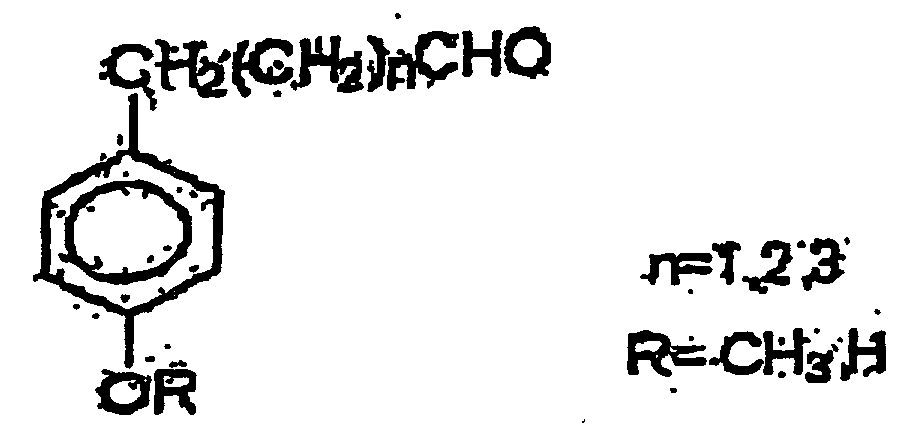
- the compounds of the invention have the following chemical structures:
- the precursors would be: with all the synthesis steps of Diagram 1 being maintained up to the obtaining of the end products. (I), where the product (IIa) is the corresponding precursor of the naphthyl series.
- the aldehyde (III) was treated with acetic anhyride [(CH 3 -CO) 2 O] and pyridine (C 5 H 5 N).
- lactone Biological activities are described of the product described in example 1 (henceforth referred to as "lactone").
- mice were used, male, aged 6-8 weeks (IFFA-CREDO).
- Negative control cells in the presence of complete culture medium.
- Positive control cells in the presence of some mitogen.
- the statistical significance is determined by the Student t method.
- Proliferation of murine splenocytes Mitogen (cpm ⁇ DS) Lactone ⁇ g/ml Con A 2.5 ⁇ g/ml PHA 50 ⁇ g/ml a CD3 20 ⁇ g/ml LPS 10 ⁇ g/ml 100 147 ⁇ 10 19,500 ⁇ 2,000 285 ⁇ 20 614 ⁇ 35 50 190 ⁇ 10 19,000 ⁇ 1,800 1,235 ⁇ 200 2,700 ⁇ 120 25 244 ⁇ 15 21,000 ⁇ 2,000 5,600 ⁇ 300 3,200 ⁇ 400 12 370 ⁇ 20 6 78,200 ⁇ 725 3 92,600 ⁇ 100 1.5 150,400 ⁇ 12,500 0.75 131,523 ⁇ 10,000 0 150,000 ⁇ 15,000 20,000 ⁇ 2,000 40,000 ⁇ 4,000 30,000 ⁇ 1,600
- lactone clearly demonstrated its capacity for inhibiting proliferation induced by various mitogenic agents: ConA, antiCD3 and LPS, but not that induced by PHA.
- CMSP peripheral blood mononuclear cells
- Venous blood The CMSP were obtained from venous blood extracted by antecubital venous puncture. 50 ml of blood were extracted to which were added 50 U of calcic heparin and the mixture was diluted 1/1 (vol/vol) with PSS.
- Human mononucleated cells In order to isolate the CMSP they were proceeded to be separated from the rest of the blood components by means of the formation of a density gradient on Ficoll. The cells thus obtained are resuspended in PSS and centrifuged at 400 ⁇ g for 10 minutes (washing process) and then resuspended in PSS. This operation is repeated three times. In the last of them, PSS is replaced with complete medium.
- the method used for quantifying the cell proliferation was analysis of the incorporation of 3H-thymidine (3H-T) into DNA synthesised de novo, detecting the emission of ⁇ radiation from the dry extracts of cell cultures to which the tritiated base had been added before its finalisation and collection.
- the synthesis of DNA was done in triplicate on sterile dishes with 96 flat-bottom wells.
- the spontaneous blastogen response of the CMSP falls by 50% if 0.66 ⁇ g/ml of lactone are added to the culture.
- the blastogen response induced in CMSP due to phytohaemaglutinin M (PHA) falls by 50% if 0.25 ⁇ g/ml of lactone are added to the culture.
- the blastogen response induced in CMSP by immobilised anti-CD3 (aCD3) falls by 50% if 0.06 ⁇ g/ml of lactone are added to the culture.
- the blastogen response induced in CMSP by aCD3 + PHA falls by 50% if 0.24 ⁇ g/ml of lactone are added to the culture.
- the blastogen response induced in CMSP by aCD3 + Con A falls by 50% if 0.21 ⁇ g/ml of lactone are added to the culture.
- Proliferative response of peripheral blood mononuclear cells Proliferation of human peripheral blood mononuclear cells Mitogens (cpm ⁇ DS) Lact one ⁇ g/ml Medium PHA 10 ⁇ g/ml Con A 2 ⁇ g/ml aCD3 5 ⁇ g/ml aCD3 + PHA aCD3 + Con A 100 104 ⁇ 26 1086 ⁇ 308 204 ⁇ 43 39 ⁇ 10 13 ⁇ 4 8 ⁇ 6 10 72 ⁇ 72 71 ⁇ 14 48 ⁇ 7 119 ⁇ 7 23 ⁇ 7 11 ⁇ 1 1 1805 ⁇ 1870 25118 ⁇ 6642 13294 ⁇ 3395 1286 ⁇ 255 8689 ⁇ 5361 829 ⁇ 484 0.01 2867 ⁇ 1527 71092 ⁇ 3555 55503 ⁇ 9023 40378
- the blastogen response induced in CMSP by rhIL-2 falls by 50% if 0.26 ⁇ g/ml of lactone are added to the culture.
- the blastogen response induced in CMSP by PHA + rhIL-2 falls by 50% if 0.29 ⁇ g/ml of lactone are added to the culture.
- the blastogen response induced in CMSP by Con A + rhIL-2 falls by 50% if 0.27 ⁇ g/ml of lactone are added to the culture.
- the blastogen response induced in CMSP by immobilised aCD3 + rhIL-2 falls by 50% if 0.24 ⁇ g/ml of lactone are added to the culture.
- the blastogen response induced in CMSP by immobilised aCD3 + PHA + rhIL-2 falls by 50% if 0.26 ⁇ g/ml of lactone are added to the culture.
- the blastogen response induced in CMSP by immobilised aCD3 + Con A + rhIL-2 falls by 50% if 0.25 ⁇ g/ml of lactone are added to the culture. Proliferative response of peripheral blood mononuclear cells in the presence of rhIL-2.
- the sample remains for one year at room temperature and at a concentration of 40.0 mg/ml in DMSO.
Landscapes
- Chemical & Material Sciences (AREA)
- Organic Chemistry (AREA)
- Health & Medical Sciences (AREA)
- Nuclear Medicine, Radiotherapy & Molecular Imaging (AREA)
- Pharmacology & Pharmacy (AREA)
- Chemical Kinetics & Catalysis (AREA)
- General Chemical & Material Sciences (AREA)
- Medicinal Chemistry (AREA)
- Bioinformatics & Cheminformatics (AREA)
- Engineering & Computer Science (AREA)
- Immunology (AREA)
- Life Sciences & Earth Sciences (AREA)
- Animal Behavior & Ethology (AREA)
- General Health & Medical Sciences (AREA)
- Public Health (AREA)
- Veterinary Medicine (AREA)
- Organic Low-Molecular-Weight Compounds And Preparation Thereof (AREA)
- Acyclic And Carbocyclic Compounds In Medicinal Compositions (AREA)
- Pharmaceuticals Containing Other Organic And Inorganic Compounds (AREA)
Claims (6)
- Derivate der Verbindungdadurch gekennzeichnet, dass sie die folgende allgemeine Formel aufweisen:
 wobei n die Werte 1, 2, 3 annehmen kann; R H oder CH3 sein kann und R1 CH3 oder H sein kann.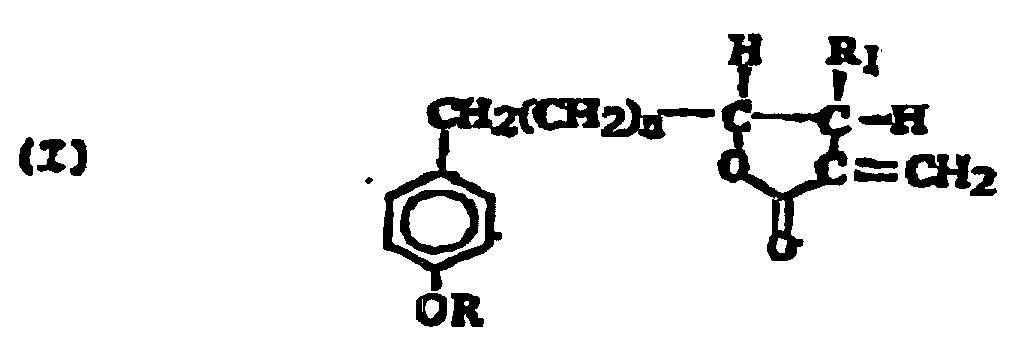
- Verbindungen nach Anspruch 1, die beliebige der möglichen Kombinationen der verschiedenen Werte von n und der Strukturen, die den Resten R und R1 entsprechen, darstellen.
- Derivate der Verbindungdadurch gekennzeichnet, dass sie die folgende allgemeine Formel aufweisen:
 wobei n die Werte 1, 2, 3 annehmen kann; R H oder CH3 sein kann und R1 CH3 oder H sein kann.
- Verbindungen nach Anspruch 3, die beliebige der möglichen Kombinationen der verschiedenen Werte von n und der Strukturen, die den Resten R und R1 entsprechen, darstellen.
- Verbindungen nach den Ansprüchen 1 und 3 mit pharmakologischer Aktivität und ihre Anwendung in der Medizin für die Behandlung von Störungen des Immunsystems.
- Verbindungen nach den Ansprüchen 1 und 3 und ihre Anwendung in der Pharmazie für ihre Verwendung bei der Herstellung der gewöhnllchen galenischen Formen, welche die ursprünglichen Verbindungen und Ester oder Glycoside als Pro-Drugs enthalten.
Applications Claiming Priority (3)
| Application Number | Priority Date | Filing Date | Title |
|---|---|---|---|
| ES200000660 | 2000-03-20 | ||
| ES200000660A ES2160093B1 (es) | 2000-03-20 | 2000-03-20 | Derivados del acido p-hidroxifenil propionico como agentes antiproliferativos. |
| PCT/ES2001/000102 WO2001072733A1 (es) | 2000-03-20 | 2001-03-16 | Derivados del acido p-hidroxifenil propionico como agentes antiproliferativos |
Publications (2)
| Publication Number | Publication Date |
|---|---|
| EP1284263A1 EP1284263A1 (de) | 2003-02-19 |
| EP1284263B1 true EP1284263B1 (de) | 2003-12-10 |
Family
ID=8492770
Family Applications (1)
| Application Number | Title | Priority Date | Filing Date |
|---|---|---|---|
| EP01911771A Expired - Lifetime EP1284263B1 (de) | 2000-03-20 | 2001-03-16 | Derivate von p-hydroxyphenyl-propionsäure als antiproliferative mittel |
Country Status (6)
| Country | Link |
|---|---|
| US (1) | US6818780B2 (de) |
| EP (1) | EP1284263B1 (de) |
| AU (1) | AU2001240702A1 (de) |
| DE (1) | DE60101472T2 (de) |
| ES (2) | ES2160093B1 (de) |
| WO (1) | WO2001072733A1 (de) |
Cited By (1)
| Publication number | Priority date | Publication date | Assignee | Title |
|---|---|---|---|---|
| EP2070533A1 (de) * | 2007-12-11 | 2009-06-17 | Apoteknos Para La Piel, s.l. | Verwendung einer aus P-Hydroxyphenyl-Propionsäure entwickelten Verbindung zur Behandlung von Psoriase |
Families Citing this family (4)
| Publication number | Priority date | Publication date | Assignee | Title |
|---|---|---|---|---|
| ES2379925B1 (es) * | 2010-10-06 | 2013-03-19 | Apoteknos Para La Piel, S.L. | PROCEDIMIENTO PARA LA SINTESIS DE LACTONAS DERIVADAS DEL ACIDO p-HIDROXIFENIL PROPIONICO |
| ES2388965B1 (es) * | 2011-03-24 | 2013-09-05 | Apoteknos Para La Piel S L | PROCEDIMIENTO PARA LA SINTESIS DE LACTONAS DERIVADAS DEL ACIDO p-HIDROXIFENIL PROPIONICO MEJORADO. |
| CN102212007A (zh) * | 2011-04-11 | 2011-10-12 | 启东东岳药业有限公司 | 高纯度2-羟甲基丙烯酸甲酯的制备方法 |
| WO2026013449A2 (en) * | 2024-07-11 | 2026-01-15 | Sea4Us - Biotecnologia E Recursos Marinhos, Sa | Oxazolidone-derived compounds and their use in the treatment of chronic and acute pain |
-
2000
- 2000-03-20 ES ES200000660A patent/ES2160093B1/es not_active Expired - Fee Related
-
2001
- 2001-03-16 EP EP01911771A patent/EP1284263B1/de not_active Expired - Lifetime
- 2001-03-16 AU AU2001240702A patent/AU2001240702A1/en not_active Abandoned
- 2001-03-16 WO PCT/ES2001/000102 patent/WO2001072733A1/es not_active Ceased
- 2001-03-16 DE DE60101472T patent/DE60101472T2/de not_active Expired - Lifetime
- 2001-03-16 ES ES01911771T patent/ES2213106T3/es not_active Expired - Lifetime
-
2002
- 2002-09-20 US US10/251,914 patent/US6818780B2/en not_active Expired - Fee Related
Cited By (1)
| Publication number | Priority date | Publication date | Assignee | Title |
|---|---|---|---|---|
| EP2070533A1 (de) * | 2007-12-11 | 2009-06-17 | Apoteknos Para La Piel, s.l. | Verwendung einer aus P-Hydroxyphenyl-Propionsäure entwickelten Verbindung zur Behandlung von Psoriase |
Also Published As
| Publication number | Publication date |
|---|---|
| EP1284263A1 (de) | 2003-02-19 |
| US20030199575A1 (en) | 2003-10-23 |
| US6818780B2 (en) | 2004-11-16 |
| ES2213106T3 (es) | 2004-08-16 |
| ES2160093B1 (es) | 2002-06-16 |
| WO2001072733A1 (es) | 2001-10-04 |
| DE60101472T2 (de) | 2004-10-07 |
| ES2160093A1 (es) | 2001-10-16 |
| AU2001240702A1 (en) | 2001-10-08 |
| DE60101472D1 (en) | 2004-01-22 |
Similar Documents
| Publication | Publication Date | Title |
|---|---|---|
| KR100888466B1 (ko) | 혈관형성 억제, 항 종양 및 전 세포사멸 활성을 갖는레티노이드 유도체 | |
| Jain et al. | Pyrano-isochromanones as IL-6 inhibitors: synthesis, in vitro and in vivo antiarthritic activity | |
| EP1176134A1 (de) | Liganden von nuklearen rezeptor ppar's | |
| SA96170405B1 (ar) | مركبات تستخدم كمثبطات لانزيم cox-2 | |
| CA2398996A1 (en) | Compounds having antitumor activity: process for their preparation and pharmaceutical compositions containing them | |
| MC1303A1 (fr) | Acetophenones substituees | |
| CA2424555A1 (en) | Triptolide analogs for the treatment of autoimmune and inflammatory disorders | |
| EP1284263B1 (de) | Derivate von p-hydroxyphenyl-propionsäure als antiproliferative mittel | |
| JP5542930B2 (ja) | ステロール誘導体、並びにそれらの合成及び使用 | |
| CN115636809A (zh) | 一种查尔酮类衍生物的合成及其制药应用 | |
| HU184288B (en) | Process for preparing substituted acetophenone derivatives | |
| Kapelle et al. | Rekayasa Proses Sintesis Piperonal dari Kulit Lawang (Cinnamomum culilawan Blume) sebagai Prekursor Obat Kanker | |
| Xiao et al. | Novel 2-phenyl-4H-chromen derivatives: synthesis and anti-inflammatory activity evaluation in vitro and in vivo | |
| JP2004509167A (ja) | 安息香酸誘導体及びその使用方法 | |
| JP2013520484A (ja) | 炎症性疾患の治療のためのピロリジン置換フラボン | |
| JP4182218B2 (ja) | アポトーシスを誘導する新規なグルコース誘導体、その製造方法及び医薬としてのその用途 | |
| JPH08269066A (ja) | ピリピロペン誘導体 | |
| CN114478464B (zh) | 一种炎症小体选择性抑制剂及其合成方法和应用 | |
| CN119591617B (zh) | 一种新型二硫醚联苯酚醚化合物及其制备方法和应用 | |
| CN101774976B (zh) | 磺酰基异噁唑啉衍生物及抗肿瘤用途 | |
| JP2013194050A (ja) | Dnaポリメラーゼ阻害活性を有する新規化合物 | |
| EP2240024A1 (de) | Verbindungen zur behandlung von stoffwechselstörungen | |
| CN1148353C (zh) | 一类磷脂酶甲2的抑制剂及其制备方法和用途 | |
| Gu et al. | Synthesis and Anti-HIV-Evaluation of Novel Andrographolide Derivatives | |
| JP2013194044A (ja) | Dnaポリメラーゼ阻害活性を有する新規化合物 |
Legal Events
| Date | Code | Title | Description |
|---|---|---|---|
| PUAI | Public reference made under article 153(3) epc to a published international application that has entered the european phase |
Free format text: ORIGINAL CODE: 0009012 |
|
| 17P | Request for examination filed |
Effective date: 20021018 |
|
| AK | Designated contracting states |
Designated state(s): AT BE CH CY DE DK ES FI FR GB GR IE IT LI LU MC NL PT SE TR |
|
| AX | Request for extension of the european patent |
Extension state: AL LT LV MK RO SI |
|
| GRAH | Despatch of communication of intention to grant a patent |
Free format text: ORIGINAL CODE: EPIDOS IGRA |
|
| GRAS | Grant fee paid |
Free format text: ORIGINAL CODE: EPIDOSNIGR3 |
|
| GRAA | (expected) grant |
Free format text: ORIGINAL CODE: 0009210 |
|
| AK | Designated contracting states |
Kind code of ref document: B1 Designated state(s): DE ES FR GB IT |
|
| REG | Reference to a national code |
Ref country code: GB Ref legal event code: FG4D |
|
| REG | Reference to a national code |
Ref country code: IE Ref legal event code: FG4D |
|
| REF | Corresponds to: |
Ref document number: 60101472 Country of ref document: DE Date of ref document: 20040122 Kind code of ref document: P |
|
| LTIE | Lt: invalidation of european patent or patent extension |
Effective date: 20031210 |
|
| REG | Reference to a national code |
Ref country code: ES Ref legal event code: FG2A Ref document number: 2213106 Country of ref document: ES Kind code of ref document: T3 |
|
| ET | Fr: translation filed | ||
| PLBE | No opposition filed within time limit |
Free format text: ORIGINAL CODE: 0009261 |
|
| STAA | Information on the status of an ep patent application or granted ep patent |
Free format text: STATUS: NO OPPOSITION FILED WITHIN TIME LIMIT |
|
| 26N | No opposition filed |
Effective date: 20040913 |
|
| REG | Reference to a national code |
Ref country code: IE Ref legal event code: MM4A |
|
| PGFP | Annual fee paid to national office [announced via postgrant information from national office to epo] |
Ref country code: IT Payment date: 20140327 Year of fee payment: 14 |
|
| REG | Reference to a national code |
Ref country code: FR Ref legal event code: PLFP Year of fee payment: 15 |
|
| PGFP | Annual fee paid to national office [announced via postgrant information from national office to epo] |
Ref country code: DE Payment date: 20150930 Year of fee payment: 15 Ref country code: GB Payment date: 20150921 Year of fee payment: 15 |
|
| PGFP | Annual fee paid to national office [announced via postgrant information from national office to epo] |
Ref country code: FR Payment date: 20150928 Year of fee payment: 15 |
|
| PG25 | Lapsed in a contracting state [announced via postgrant information from national office to epo] |
Ref country code: IT Free format text: LAPSE BECAUSE OF NON-PAYMENT OF DUE FEES Effective date: 20150316 |
|
| PGFP | Annual fee paid to national office [announced via postgrant information from national office to epo] |
Ref country code: ES Payment date: 20160610 Year of fee payment: 16 |
|
| REG | Reference to a national code |
Ref country code: DE Ref legal event code: R119 Ref document number: 60101472 Country of ref document: DE |
|
| GBPC | Gb: european patent ceased through non-payment of renewal fee |
Effective date: 20160316 |
|
| REG | Reference to a national code |
Ref country code: FR Ref legal event code: ST Effective date: 20161130 |
|
| PG25 | Lapsed in a contracting state [announced via postgrant information from national office to epo] |
Ref country code: FR Free format text: LAPSE BECAUSE OF NON-PAYMENT OF DUE FEES Effective date: 20160331 Ref country code: DE Free format text: LAPSE BECAUSE OF NON-PAYMENT OF DUE FEES Effective date: 20161001 Ref country code: GB Free format text: LAPSE BECAUSE OF NON-PAYMENT OF DUE FEES Effective date: 20160316 |
|
| REG | Reference to a national code |
Ref country code: ES Ref legal event code: FD2A Effective date: 20180704 |
|
| PG25 | Lapsed in a contracting state [announced via postgrant information from national office to epo] |
Ref country code: ES Free format text: LAPSE BECAUSE OF NON-PAYMENT OF DUE FEES Effective date: 20170317 |