EP1276762B1 - Porphyromonas gingivalis recombinant proteins and truncations - Google Patents
Porphyromonas gingivalis recombinant proteins and truncations Download PDFInfo
- Publication number
- EP1276762B1 EP1276762B1 EP01925217.0A EP01925217A EP1276762B1 EP 1276762 B1 EP1276762 B1 EP 1276762B1 EP 01925217 A EP01925217 A EP 01925217A EP 1276762 B1 EP1276762 B1 EP 1276762B1
- Authority
- EP
- European Patent Office
- Prior art keywords
- gingivalis
- residues
- polypeptide
- seq
- antibody
- Prior art date
- Legal status (The legal status is an assumption and is not a legal conclusion. Google has not performed a legal analysis and makes no representation as to the accuracy of the status listed.)
- Expired - Lifetime
Links
Images

Classifications
-
- C—CHEMISTRY; METALLURGY
- C07—ORGANIC CHEMISTRY
- C07K—PEPTIDES
- C07K16/00—Immunoglobulins [IG], e.g. monoclonal or polyclonal antibodies
- C07K16/12—Immunoglobulins [IG], e.g. monoclonal or polyclonal antibodies against material from bacteria
- C07K16/1203—Gram-negative bacteria
-
- A—HUMAN NECESSITIES
- A61—MEDICAL OR VETERINARY SCIENCE; HYGIENE
- A61P—SPECIFIC THERAPEUTIC ACTIVITY OF CHEMICAL COMPOUNDS OR MEDICINAL PREPARATIONS
- A61P1/00—Drugs for disorders of the alimentary tract or the digestive system
- A61P1/02—Stomatological preparations, e.g. drugs for caries, aphtae, periodontitis
-
- A—HUMAN NECESSITIES
- A61—MEDICAL OR VETERINARY SCIENCE; HYGIENE
- A61P—SPECIFIC THERAPEUTIC ACTIVITY OF CHEMICAL COMPOUNDS OR MEDICINAL PREPARATIONS
- A61P31/00—Antiinfectives, i.e. antibiotics, antiseptics, chemotherapeutics
- A61P31/04—Antibacterial agents
-
- A—HUMAN NECESSITIES
- A61—MEDICAL OR VETERINARY SCIENCE; HYGIENE
- A61P—SPECIFIC THERAPEUTIC ACTIVITY OF CHEMICAL COMPOUNDS OR MEDICINAL PREPARATIONS
- A61P37/00—Drugs for immunological or allergic disorders
- A61P37/02—Immunomodulators
- A61P37/04—Immunostimulants
-
- C—CHEMISTRY; METALLURGY
- C07—ORGANIC CHEMISTRY
- C07K—PEPTIDES
- C07K14/00—Peptides having more than 20 amino acids; Gastrins; Somatostatins; Melanotropins; Derivatives thereof
- C07K14/195—Peptides having more than 20 amino acids; Gastrins; Somatostatins; Melanotropins; Derivatives thereof from bacteria
-
- A—HUMAN NECESSITIES
- A61—MEDICAL OR VETERINARY SCIENCE; HYGIENE
- A61K—PREPARATIONS FOR MEDICAL, DENTAL OR TOILETRY PURPOSES
- A61K38/00—Medicinal preparations containing peptides
-
- A—HUMAN NECESSITIES
- A61—MEDICAL OR VETERINARY SCIENCE; HYGIENE
- A61K—PREPARATIONS FOR MEDICAL, DENTAL OR TOILETRY PURPOSES
- A61K39/00—Medicinal preparations containing antigens or antibodies
-
- Y—GENERAL TAGGING OF NEW TECHNOLOGICAL DEVELOPMENTS; GENERAL TAGGING OF CROSS-SECTIONAL TECHNOLOGIES SPANNING OVER SEVERAL SECTIONS OF THE IPC; TECHNICAL SUBJECTS COVERED BY FORMER USPC CROSS-REFERENCE ART COLLECTIONS [XRACs] AND DIGESTS
- Y10—TECHNICAL SUBJECTS COVERED BY FORMER USPC
- Y10S—TECHNICAL SUBJECTS COVERED BY FORMER USPC CROSS-REFERENCE ART COLLECTIONS [XRACs] AND DIGESTS
- Y10S530/00—Chemistry: natural resins or derivatives; peptides or proteins; lignins or reaction products thereof
- Y10S530/806—Antigenic peptides or proteins
-
- Y—GENERAL TAGGING OF NEW TECHNOLOGICAL DEVELOPMENTS; GENERAL TAGGING OF CROSS-SECTIONAL TECHNOLOGIES SPANNING OVER SEVERAL SECTIONS OF THE IPC; TECHNICAL SUBJECTS COVERED BY FORMER USPC CROSS-REFERENCE ART COLLECTIONS [XRACs] AND DIGESTS
- Y10—TECHNICAL SUBJECTS COVERED BY FORMER USPC
- Y10S—TECHNICAL SUBJECTS COVERED BY FORMER USPC CROSS-REFERENCE ART COLLECTIONS [XRACs] AND DIGESTS
- Y10S530/00—Chemistry: natural resins or derivatives; peptides or proteins; lignins or reaction products thereof
- Y10S530/82—Proteins from microorganisms
- Y10S530/825—Bacteria
Definitions
- the present invention relates to P. gingivalis nucleotide sequences and P. gingivalis polypeptides.
- the P. gingivalis polypeptides and nucleotides can be used in compositions for use in raising an immune response in a subject against P. gingivalis and treating or preventing or reducing the severity of the condition known as periodontitis or in other conditions related to infection with P. gingivalis.
- Periodontal diseases are bacterial-associated inflammatory diseases of the supporting tissues of the teeth and range from the relatively mild form of gingivitis, the non-specific, reversible inflammation of gingival tissue to the more aggressive forms of periodontitis which are characterised by the destruction of the tooth's supporting structures.
- Periodontitis is associated with a subgingival infection of a consortium of specific Gram-negative bacteria that leads to the destruction of the periodontium and is a major public health problem.
- P. gingivalis As the recovery of this microorganism from adult periodontitis lesions can be up to 50% of the subgingival anaerobically cultivable flora, whereas P.
- gingivalis is rarely recovered, and then in low numbers, from healthy sites.
- a proportional increase in the level of P. gingivalis in subgingival plaque has been associated with an increased severity of periodontitis and eradication of the microorganism from the cultivable subgingival microbial population is accompanied by resolution of the disease.
- the progression of periodontitis lesions in non-human primates has been demonstrated with the subgingival implantation of P. gingivalis.
- P. gingivalis is a black-pigmented, anaerobic, asaccharolytic, proteolytic Gram-negative rod that obtains energy from the metabolism of specific amino acids.
- the microorganism has an absolute growth requirement for iron, preferentially in the form of haeme or its Fe(III) oxidation product haemin and when grown under conditions of excess haemin is highly virulent in experimental animals.
- a number of virulence factors have been implicated in the pathogenicity of P. gingivalis including the capsule, adhesins, cytotoxins and extracellular hydrolytic enzymes.
- DNA sequencing As the gene is present (but not transcribed) even when the organism is grown in vitro it can be identified, cloned and produced as a recombinant DNA protein. Similarly, a protective antigen or therapeutic target may be transiently expressed by the organism in vitro or produced in low levels making the identification of these molecules extremely difficult by conventional methods.
- P. gingivalis produces a range of broadly active proteases (International Patent Application No WO 97/16542 , US Patent Nos. 5,475,097 and 5,523,390 ), which make the identification of intact proteins diffcult because of their degradation by these proteases.
- WO 01/47961 is part of the prior art according to Article 54(3) EPC and discloses a fusion protein of residues 192 to 290 of the r-Rgp44 adhesin of P. gingivalis linked to residues 286 to 380 of SEQ ID NO: 4.
- the present inventors have now identified fragments of the P. gingivalis PG32 and PG33 proteins which exhibit improved solubility when compared to the full length proteins. Using a murine lesion model of infection, the present inventors have found that these soluble fragments are capable of protecting against P. gingivalis challenge.
- the present invention provides a soluble P. gingivalis polypeptide consisting of a polypeptide having a sequence selected from the group consisting of residues 86 to 223 of SEQ ID NO: 3, residues 191 to 322 of SEQ ID NO: 3, residues 224 to 391 of SEQ ID NO: 3, residues 213 to 380 of SEQ ID NO: 4, residues 224 to 306 of SEQ ID NO: 3 and residues 281 to 384 of SEQ ID NO: 3 or a variant of said sequence which is capable of raising an immune response against P. gingivalis, wherein the variant is not a fusion protein of residues 192 to 290 of the r-Rgp44 adhesin of P. gingivalis linked to residues 286 to 380 of SEQ ID NO: 4.
- the present invention provides a chimeric or fusion construct comprising a soluble polypeptide of the first aspect.
- the present invention provides an isolated DNA molecule, the DNA molecule comprising a nucleotide sequence which encodes a soluble polypeptide of the first aspect.
- the present invention provides a recombinant expression vector comprising the DNA molecule of the third aspect of the present invention operably linked to a transcription regulatory element.
- the present invention provides a cell comprising a recombinant expression vector of the fourth aspect.
- the present invention provides a method for producing P. gingivalis polypeptide comprising culturing a cell of the fifth aspect under conditions that permit expression of the polypeptide.
- the present invention provides a composition for use in raising an immune response directed under P. gingivalis in a subject, the composition comprising an effective amount of at least one polypeptide of the first aspect, and/or at least one DNA molecule of the third aspect of the present invention, and a pharmaceutically acceptable carrier.
- the pharmaceutically acceptable carrier is an adjuvant.
- the present invention provides a composition of the seventh aspect for use in reducing or preventing the incidence or severity of P. gingivalis infection in a subject.
- composition of the seventh aspect of the present invention may also be used in a prophylactic therapy to reduce the incidence or severity of CVD or as an adjunct in treating CVD.
- the present invention provides an antibody raised and directed against a soluble polypeptide, the polypeptide consisting of a sequence selected from the group consisting of residues 191 to 322 of SEQ ID NO: 3, residues 224 to 391 of SEQ ID NO: 3, residues 213 to 380 of SEQ ID NO: 4, residues 224 to 306 of SEQ ID NO: 3, and residues 281 to 384 of SEQ ID NO: 3.
- the antibody of the ninth aspect may be polyclonal or monoclonal.
- the present invention provides a composition comprising an antibody of the ninth aspect and a pharmaceutically acceptable carrier.
- the composition is selected from the group consisting of a toothpaste, mouthwash, toothpowder, liquid dentifrice, mouthwash, troche, chewing gum, dental paste, gingival massage cream, gargle tablet, dairy product and other foodstuff composition.
- the present invention provides an antibody of the ninth aspect for use in the treatment or prevention of P. gingivalis infection in a subject, wherein the antibody is raised and directed against a soluble polypeptide consisting of a sequence selected from the group consisting of residues 224 to 391 of SEQ ID NO: 3 and residues 213 to 380 of SEQ ID NO: 4.
- the present invention provides a diagnostic method for detecting the presence or absence of P. gingivalis polypeptide in a sample, the method comprising contacting the sample with an antibody of the ninth aspect under conditions sufficient for the antibody to form an immune complex with a P. gingivalis polypeptide in the sample, and detecting the presence or absence of an immune complex.
- the present invention provides a diagnostic method for detecting the presence or absence of a P. gingivalis antibody in a sample, the method comprising contacting the sample with a soluble polypeptide of the first aspect, or a chimeric or fusion construct of the second aspect under conditions sufficient for the soluble fragment of a polypeptide to form an immune complex with an antibody in the sample, and detecting the presence or absence of an immune complex.
- the present invention provides a kit comprising a soluble polypeptide of the first aspect or a chimeric fusion construct of the second aspect and/or an antibody of the ninth aspect.
- the present invention provides the use of a polypeptide of the first aspect to raise an antibody.
- Porphyromonas gingivalis contains on its surface the major outer membrane proteins PG32 and PG33. Truncated, soluble fragments of these proteins provide improved protection against P. gingivalis challenge in a mouse abscess model when compared to the full length proteins. Accordingly, in a first aspect of the present invention provides a soluble fragment of the PG32 or PG33 polypeptide as defined in claim 1.
- soluble means at least 5% soluble and preferably greater than 10% soluble as determined by the following method.
- the levels and solubility of the recombinant proteins or their truncations can be assessed by taking a small amount of the recombinant E . coli cell culture (5-20ml), pelleting the cells by centrifugation and resuspending the cells in 1.5ml of TE buffer at pH8.0. Cells are then sonicated with 2 X 10 sec bursts using a sonciator fitted with a microprobe (eg a Virosonic Digital 475 ultrasonic cell disruptor set at level 5, The Virtis Company, NY). Following centrifugation for 15 minutes (13,000 rpm) the supernatant is collected, this fraction represents the soluble fraction.
- a microprobe eg a Virosonic Digital 475 ultrasonic cell disruptor set at level 5, The Virtis Company, NY.
- the pellet is washed and then resuspended in TE buffer pH8.0, this represents the insoluble fraction.
- Analysis of the various fractions to determine the level of recombinant protein present in each fraction can be carried out using SDS-PAGE and Western blot analysis and if the recombinant protein is purified, standard protein assays can also be used.
- the level of solubility is judged by determining the relative amounts of the recombinant protein in the "soluble" fraction compared to the amount in the "insoluble" fraction with the total representing 100% of the total recombinant protein recovered.
- non-ionic detergents such as NOG and CHAPS at levels of 0.1-1% w/v or 0.1-1% Tween-20 v/v can be added to the sonication process to aid in the solubilisation of the recombinant protein.
- a suitable buffer eg. 5 mM imidazole, 500 nM NaCl, 20 mM Tris-HCl, pH 7.9.
- the level of solubility of recombinant proteins or truncations expressed in yeast can be determined using the following procedure.
- a sample of the yeast culture expressing the recombinant protein can be harvested by centrifugation (3000g for 5 minutes) and resuspended in 500ul breaking buffer (50mM sodium dihydrogen orthophosphate, 1mM EDTA, 5% glycerol, pH7.4 containing 1mM PMSF, 10mM E-64, Sigma).
- a 2.0ml screw cap vial (Biospec) is three quarters filled with 0.5mm glass beads (Biospec) and the remaining vial volume filled with resuspended cells.
- the mixture is then homogenised in a mini-beadbeater cell disrupter (eg Biospec for 8x30 sec set at 5,000rpm) with a 30 sec incubation on ice between runs.
- the beads are left to settle and the broken yeast cells recovered.
- the supernatant is collected and this represents the soluble fraction.
- the remaining pellet resuspended in breaking buffer represents the insoluble fraction.
- non-ionic detergents such as NOG and CHAPS at levels of 0.1-1% w/v or 0.1-1% Tween-20 v/v can be added to aid in the solubilisation of the recombinant protein Fractions are analysed using SDS-PAGE and Western blot analysis in a similar manner to the E . coli derived material in order to assess the relative amounts of recombinant protein present in the soluble and insoluble fractions.
- the present invention provides a soluble P. gingivalis polypeptide consisting of a polypeptide having a sequence selected from the group consisting of residues 86 to 223 of SEQ ID NO: 3, residues 191 to 322 of SEQ ID NO: 3, residues 224 to 391 of SEQ ID NO: 3, residues 213 to 380 of SEQ ID NO: 4, residues 224 to 306 of SEQ ID NO: 3, and residues 281 to 384 of SEQ ID NO: 3 or a variant of said sequence which is capable of raising an immune response against P. gingivalis, wherein the variant is not a fusion protein of residues 192 to 290 of the r-Rgp44 adhesin of P. gingivalis linked to residues 286 to 380 of SEQ ID NO: 4.
- polypeptide of the first aspect is in the form of a chimeric or a fusion protein.
- the present invention also encompasses soluble variants and derivatives of the polypeptides of the first aspect.
- variant or “derivative” in relation to the amino acid sequences of the present invention includes any substitution of, variation of, modification of, replacement of, deletion of or addition of one (or more) amino acids from or to the sequence providing the resultant amino acid sequence is capable of raising an immune respond against P.gingivalis, preferably having at least 25 to 50% of the activity as the polypeptides presented in the sequence listings, more preferably at least substantially the same activity.
- Amino acid sequence mutants of the polypeptides of the present invention can be prepared by introducing appropriate nucleotide changes into a nucleic acid sequence, or by in vitro synthesis of the desired polypeptide.
- Such mutants include, for example, deletions, insertions or substitutions of residues within the amino acid sequence.
- a combination of deletion, insertion and substitution can be made to arrive at the final construct, provided that the final protein product possesses the desired characteristics.
- the location of the mutation site and the nature of the mutation will depend on characteristic(s) to be modified.
- the sites for mutation can be modified individually or in series, e.g., by (1) substituting first with conservative amino acid choices and then with more radical selections depending upon the results achieved, (2) deleting the target residue, or (3) inserting other residues adjacent to the located site.
- Amino acid sequence deletions generally range from about 1 to 30 residues, more preferably about 1 to 10 residues and typically about 1 to 5 contiguous residues.
- Substitution mutants have at least one amino acid residue in the polypeptide molecule removed and a different residue inserted in its place.
- the sites of greatest interest for substitutional mutagenesis include sites identified as the antigenic determining region(s), and the active site(s). Other sites of interest are those in which particular residues obtained from various species are identical. These positions may be important for biological activity. These sites, especially those falling within a sequence of at least three other identically conserved sites, are preferably substituted in a relatively conservative manner. Such conservative substitutions are shown in Table 1 under the heading of "exemplary substitutions". Table 1.
- Exemplary Substitutions Original Residue Exemplary Substitutions Ala (A) val; leu; ile; gly Arg (R) lys; gln; asn Asn (N) gln; his; lys; arg Asp (D) glu Cys (C) ser Gln(Q) asn; his Glu (E) asp Gly (G) pro; ala His (H) asn; gln; lys; arg Ile (I) leu; val; ala; met; phe Leu (L) ile; val; met; ala; phe Lys (K) arg; gln; asn Met (M) leu; phe; ile Phe (F) leu; val; ala; ile; tyr; trp Pro (P) gly Ser (S) thr Thr (T) ser Trp (W) tyr; phe Tyr (Y) t
- unnatural amino acids or chemical amino acid analogues can be introduced as a substitution or addition into the polypeptide of the present invention.
- Such amino acids include, but are not limited to, the D-isomers of the common amino acids, 2,4-diaminobutyric acid, ⁇ -amino isobutyric acid, 4-aminobutyric acid, 2-aminobutyric acid, 6-amino hexanoic acid, 2-amino isobutyric acid, 3-amino propionic acid, ornithine, norleucine, norvaline, hydroxyproline, sarcosine, citrulline, homocitrulline, cysteic acid, t-butylglycine, t-butylalanine, phenylglycine, cyclohexylalanine, ⁇ -alanine, fluoro-amino acids, designer amino acids such as ⁇ -methyl amino acids, C ⁇ -methyl amino acids, N ⁇ -methyl amino acids, N
- polypeptides of the present invention which are differentially modified during or after synthesis, e.g., by biotinylation, benzylation, glycosylation, acetylation, phosphorylation, amidation, derivatization by known protecting/blocking groups, proteolytic cleavage, linkage to an antibody molecule or other cellular ligand, etc. These modifications may serve to increase the stability and/or bioactivity of the polypeptide of the invention.
- biologically active fragments of the polypeptides of the present invention are also included within the scope of the invention.
- biologically active fragment we mean a soluble fragment of a sequence of the second or third aspects which retains at least one of the activities of the native polypeptide.
- a “biologically active fragment” of the present invention is capable of raising an immune response against P.gingivalis when the fragment is administered to a subject.
- a "chimeric protein” or “fusion protein” comprises a first polypeptide of the present invention operatively linked to a partner polypeptide.
- the term "operatively linked” is intended to indicate that the first polypeptide and the partner polypeptide are fused in-frame to each other.
- the partner polypeptide can be fused to the N-terminus or C-terminus of the polypeptide of the present invention.
- the partner polypeptide can be derived from the same or a different organism and may be the same of different to the first polypeptide. Accordingly, the fusion protein may comprises at least two polypeptides of the present invention.
- the fusion protein is a polypeptide of the present invention containing a heterologous signal sequence at its N-terminus.
- expression and/or secretion of a polypeptide can be increased through use of a heterologous signal sequence.
- the fusion protein comprises a polypeptide of the present invention linked to a Maltose Binding Protein (MPB) or a glutathione transferase (GST) protein.
- MBP fusion proteins can be made using the New England Biolabs pMal expression system. Fusion of MBP or GST to recombinant proteins have been shown in some cases to facilitate the folding of the recombinant fusion partner and hence may increase solubility of the fusion protein compared to the non-fused recombinant P. gingivalis polypeptides of the present invention.
- a chimeric or fusion protein of the invention is produced by standard recombinant DNA techniques.
- DNA fragments coding for the different polypeptide sequences are ligated together in-frame in accordance with conventional techniques, for example by employing blunt-ended or stagger-ended termini for ligation, restriction enzyme digestion to provide for appropriate termini, filling-in of cohesive ends as appropriate, alkaline phosphatase treatment to avoid undesirable joining, and enzymatic ligation.
- the fusion gene can be synthesized by conventional techniques including automated DNA synthesizers.
- PCR amplification of gene fragments can be carried out using anchor primers which give rise to complementary overhangs between two consecutive gene fragments which can subsequently be annealed and reamplified to generate a chimeric gene sequence (see, for example, Current Protocols in Molecular Biology, eds. Ausubel et al. John Wiley & Sons: 1992 ).
- anchor primers which give rise to complementary overhangs between two consecutive gene fragments which can subsequently be annealed and reamplified to generate a chimeric gene sequence
- many expression vectors are commercially available that already encode a fusion moiety (e.g., a GST polypeptide).
- a nucleic acid encoding a polypeptide of the present invention may be cloned into such an expression vector such that the fusion moiety is linked in-frame to a polypeptide of the present invention.
- the present invention also provides nucleotide sequences coding for the soluble peptides of the invention, and functional equivalents of said nucleotide sequences and nucleic acid probes for said nucleotide sequences.
- the invention also includes within its scope various applications and uses of the above nucleotides and recombinant products including chimeric or fusion recombinant polypeptides.
- a gene sequence encoding a soluble PG32 or PG33 fragment of the invention is incorporated into an expression vector, and the recombinant vector is introduced into an appropriate host cell thereby directing the expression of the sequence in that particular host cell.
- the expression system comprising the recombinant vector introduced into the host cell, can be used (a) to produce soluble PG32 or PG33 fragments which can be purified for use as immunogens in vaccine formulations; (b) to produce soluble PG32 or PG33 fragments to be used as antigens for diagnostic immunoassays or for generating P.
- gingivalis -specific antisera of therapeutic and/or diagnostic value (c) or if the recombinant expression vector is a live virus such as vaccinia virus, the vector itself may be used as a live or inactivated vaccine preparation to be introduced into the host's cells for expression of soluble PG32 or PG33 fragments; (d) for introduction into live attenuated bacterial cells or genetically engineered commensal intra-oral bacteria which are used to express soluble PG32 or PG33 fragments to vaccinate individuals; (e) or for introduction directly into an individual to immunize against the encoded and expressed soluble PG32 or PG33 .
- live virus such as vaccinia virus
- the recombinant bacterial vaccine can be based on a commensal inhabitant of the human oral cavity or animal if the vaccine is to prevent periodontal disease in animals.
- the recombinant bacterial vaccine expressing soluble PG32 or PG33 fragments can be used to colonise the oral cavity, supragingival or subgingival plaque.
- the intra-oral bacterium can be isolated from the patient with periodontitis and genetically engineered to express the soluble PG32 or PG33 fragments.
- the soluble PG32 or PG33 fragments will stimulate the mucosal-associated lymphoid tissues (MALT) to produce specific antibodies to P. gingivalis.
- MALT mucosal-associated lymphoid tissues
- Soluble PG32 or PG33 fragments of the invention can be used as immunogens in prophylactic and/or therapeutic vaccine formulations against pathogenic strains of P . gingivalis, whether the immunogen is chemically synthesized, purified from P. gingivalis, or purified from a recombinant expression vector system.
- a gene segment encoding a soluble PG32 or PG33 fragment of the invention may be incorporated into a bacterial or viral vaccine comprising recombinant bacteria or virus which is engineered to produce one or more soluble PG32 or PG33 fragments, or in combination with immunogenic epitopes of other pathogenic microorganisms.
- a gene encoding a soluble PG32 or PG33 fragment, operatively linked to one or more regulatory elements, can be introduced directly into humans to express the soluble fragment to elicit a protective immune response.
- a vaccine can also be based upon a recombinant component of a soluble PG32 or PG33 fragment incorporated into an appropriate vector and expressed in a suitable transformed host (eg, E. coli, Bacillus subtilis, Saccharomyces cerevisiae, COS cells, CHO cells and HeLa cells) (containing the vector.
- the vaccine can be based on an intra-oral recombinant bacterial vaccine, where the recombinant bacterium expressing a soluble PG32 or PG33 fragment is a commensal inhabitant of the oral cavity.
- a preferred embodiment of the invention is a vaccine based on a soluble polypeptide of the first aspect and suitable adjuvant delivered by nasal spray, orally or by injection to produce a specific immune response against the PG32 or PG33 protein.
- a vaccine can also be based upon a recombinant component of a soluble fragments of the first or second aspect incorporated into an appropriate vector and expressed in a suitable transformed host (eg. B. coli , Bacillus subtilis, Saccharomyces cerevisiae, COS cells, CHO cells and HeLa cells) containing the vector.
- a suitable transformed host eg. B. coli , Bacillus subtilis, Saccharomyces cerevisiae, COS cells, CHO cells and HeLa cells
- the present invention also provides antibodies raised and directed against certain soluble polypeptides of the present invention.
- antibody includes fragments of whole antibodies which retain their binding activity for a target antigen. Such fragments include Fv, F(ab') and F(ab')2 fragments, as well as single chain antibodies (scFv). Furthermore, the antibodies and fragments thereof may be humanised antibodies, for example as described in EP-A-239400 .
- the soluble PG32 and PG33 polypeptides of the present invention can be used to generate antibodies using standard techniques.
- the animals used for antibody generation can be rabbits, goats, chickens, sheep, horses, cows etc.
- a high antibody titre against a soluble fragment is detected by immunoassay the animals are bled or eggs or milk are collected and the serum prepared and/or antibody purified using standard techniques or monoclonal antibodies produced by fusing spleen cells with myeloma cells using standard techniques.
- the antibody immunoglobulin fraction
- the antiserum or the milk is saturated with ammonium sulphate to produce a precipitate, followed by dialyzing the precipitate against physiological saline to obtain the purified immunoglobulin fraction with the specific anti-PG32 or anti-PG33.
- the preferred antibody is obtained from the equine antiserum and the bovine antiserum and milk.
- the antibody contained in the antiserum and milk obtained by immunising the animal with the soluble fragments is blended into the oral composition.
- the antiserum and milk as well as the antibody separated and purified from the antiserum and milk may be used. Each of these materials may be used alone or in combination of two or more.
- Antibodies against PG32 and PG33 can be used in oral compositions such as toothpaste and mouthwash.
- the antibodies can also be used for the early detection of P. gingivalis in subgingival plaque samples by a chairside Enzyme Linked Immunosorbent Assay (ELISA).
- ELISA Enzyme Linked Immunosorbent Assay
- the amount of the above antibodies administered is 0.0001 -50 g/kg/day and that the content of the above antibodies is 0.0002 - 10% by weight preferably 0.002 -5% by weight of the composition.
- the composition of this invention which contains the above-mentioned serum or milk antibody may be prepared and used in various forms applicable to the mouth such as dentifrice including toothpastes, toothpowders and liquid dentifrices, mouthwashes, troches, periodontal pocket irrigating devices, chewing gums, dental pastes, gingival massage creams, gargle tablets, dairy products and other foodstuffs.
- the oral composition according to this invention may further include additional well known ingredients depending on the type and form of a particular oral composition.
- the composition may be substantially liquid in character, such as a mouthwash or rinse.
- vehicle is typically a water-alcohol mixture desirably including a humectant as described below.
- the weight ratio of water to alcohol is in the range of from about 1:1 to about 20:1.
- the total amount of water-alcohol mixture in this type of preparation is typically in the range of from about 70 to about 99.9% by weight of the preparation.
- the alcohol is typically ethanol or isopropanol. Ethanol is preferred.
- the pH of such liquid and other preparations of the invention is generally in the range of from about 4.5 to about 9 and typically from about 5.5 to 8.
- the pH is preferably in the range of from about 6 to about 8.0, preferably 7.4.
- the pH can be controlled with acid (e.g. citric acid or benzoic acid) or base (e.g. sodium hydroxide) or buffered (as with sodium citrate, benzoate, carbonate, or bicarbonate, disodium hydrogen phosphate, sodium dihydrogen phosphate, etc).
- the composition may be substantially solid or pasty in character, such as toothpowder, a dental tablet or a dentifrice, that is a toothpaste (dental cream) or gel dentifrice.
- the vehicle of such solid or pasty oral preparations generally contains dentally acceptable polishing material.
- polishing materials are water-insoluble sodium metaphosphate, potassium metaphosphate, tricalcium phosphate, dihydrated calcium phosphate, anhydrous dicalcium phosphate, calcium pyrophosphate, magnesium orthophosphate, trimagnesium phosphate, calcium carbonate, hydrated alumina, calcined alumina, aluminum silicate, zirconium silicate, silica, bentonite, and mixtures thereof.
- polishing material include the particulate thermosetting resins such as melamine-, phenolic, and urea-formaldehydes, and cross-linked polyepoxides and polyesters.
- Preferred polishing materials include crystalline silica having particle size of up to about 5 microns, a mean particle size of up to about 1.1 microns, and a surface area of up to about 50,000 cm 2 /gm., silica gel or colloidal silica, and complex amorphous alkali metal aluminosilicate.
- a polishing agent of colloidal silica such as those sold under the trademark SYLOID as Syloid 72 and Syloid 74 or under the trademark SANTOCEL as Santocel 100
- alkali metal alumino-silicate complexes are particularly useful since they have refractive indices close to the refractive indices of gelling agent-liquid (including water and/or humectant) systems commonly used in dentifrices.
- insoluble sodium metaphosphate may be formed in any suitable manner as illustrated by Thorpe's Dictionary of Applied Chemistry, [Volume 9, 4th Edition, pp. 510-511 ].
- the forms of insoluble sodium metaphosphate known as Madrell's salt and Kurrol's salt are further examples of suitable materials.
- These metaphosphate salts exhibit only a minute solubility in water, and therefore are commonly referred to as insoluble metaphosphates (IMP).
- IMP insoluble metaphosphates
- impurities usually a few percent such as up to 4% by weight.
- the amount of soluble phosphate material which is believed to include a soluble sodium trimetaphosphate in the case of insoluble metaphosphate, may be reduced or eliminated by washing with water if desired.
- the insoluble alkali metal metaphosphate is typically employed in powder form of a particle size such that no more than 1% of the material is larger than 37 microns.
- the polishing material is generally present in the solid or pasty compositions in weight concentrations of about 10% to about 99%. Preferably, it is present in amounts from about 10% to about 75% in toothpaste, and from about 70% to about 99% in toothpowder. In toothpastes, when the polishing material is silicious in nature, it is generally present in amount of about 10-30% by weight. Other polishing materials are typically present in amount of about 30-75% by weight.
- the liquid vehicle may comprise water and humectant typically in an amount ranging from about 10% to about 80% by weight of the preparation.
- humectant typically in an amount ranging from about 10% to about 80% by weight of the preparation.
- Glycerine, propylene glycol, sorbitol and polypropylene glycol exemplify suitable humectants/carriers.
- liquid mixtures of water, glycerine and sorbitol are particularly advantageous. In clear gels where the refractive index is an important consideration, about 2.5 - 30% w/w of water, 0 to about 70% w/w of glycerine and about 20-80% w/w of sorbitol are preferably employed.
- Toothpaste, creams and gels typically contain a natural or synthetic thickener or gelling agent in proportions of about 0.1 to about 10, preferably about 0.5 to about 5% w/w.
- a suitable thickener is synthetic hectorite, a synthetic colloidal magnesium alkali metal silicate complex clay available for example as Laponite (e.g. CP, SP 2002, D) marketed by Laporte Industries Limited.
- Laponite D is, approximately by weight 58.00% SiO 2 , 25.40% MgO, 3.05% Na 2 O, 0.98% Li 2 O, and some water and trace metals. Its true specific gravity is 2.53 and it has an apparent bulk density of 1.0 g/ml at 8% moisture.
- thickeners include Irish moss, iota carrageenan, gum tragacanth, starch, polyvinylpyrrolidone, hydroxyethylpropylcellulose, hydroxybutyl methyl cellulose, hydroxypropyl methyl cellulose, hydroxyethyl cellulose (e.g. available as Natrosol), sodium carboxymethyl cellulose, and colloidal silica such as finely ground Syloid (e.g. 244).
- Irish moss iota carrageenan
- gum tragacanth starch
- polyvinylpyrrolidone hydroxyethylpropylcellulose
- hydroxybutyl methyl cellulose hydroxypropyl methyl cellulose
- sodium carboxymethyl cellulose hydroxyethyl cellulose
- colloidal silica such as finely ground Syloid (e.g. 244).
- Solubilizing agents may also be included such as humectant polyols such propylene glycol, dipropylene glycol and hexylene glycol, cellosolves such as methyl cellosolve and ethyl cellosolve, vegetable oils and waxes containing at least about 12 carbons in a straight chain such as olive oil, castor oil and petrolatum and esters such as amyl acetate, ethyl acetate and benzyl benzoate.
- humectant polyols such propylene glycol, dipropylene glycol and hexylene glycol
- cellosolves such as methyl cellosolve and ethyl cellosolve
- vegetable oils and waxes containing at least about 12 carbons in a straight chain such as olive oil, castor oil and petrolatum and esters such as amyl acetate, ethyl acetate and benzyl benzoate.
- a jar of mouthrinse will have a label describing it, in substance, as a mouthrinse or mouthwash and having directions for its use; and a toothpaste, cream or gel will usually be in a collapsible tube, typically aluminium, lined lead or plastic, or other squeeze, pump or pressurized dispenser for metering out the contents, having a label describing it, in substance, as a toothpaste, gel or dental cream.
- Organic surface-active agents are used in the compositions of the present invention to achieve increased prophylactic action, assist in achieving thorough and complete dispersion of the active agent throughout the oral cavity, and render the instant compositions more cosmetically acceptable.
- the organic surface-active material is preferably anionic, nonionic or ampholytic in nature which does not denature the antibody of the invention, and it is preferred to employ as the surface-active agent a detersive material which imparts to the composition detersive and foaming properties while not denaturing the antibody.
- anionic surfactants are water-soluble salts of higher fatty acid monoglyceride monosulfates, such as the sodium salt of the monosulfated monoglyceride of hydrogenated coconut oil fatty acids, higher alkyl sulfates such as sodium lauryl sulfate, alkyl aryl sulfonates such as sodium dodecyl benzene sulfonate, higher alkylsulfo-acetates, higher fatty acid esters of 1,2-dihydroxy propane sulfonate, and the substantially saturated higher aliphatic acyl amides of lower aliphatic amino carboxylic acid compounds, such as those having 12 to 16 carbons in the fatty acid, alkyl or acyl radicals, and the like.
- Examples of the last mentioned amides are N-lauroyl sarcosine, and the sodium, potassium, and ethanolamine salts of N-lauroyl, N-myristoyl, or N-palmitoyl sarcosine which should be substantially free from soap or similar higher fatty acid material.
- the use of these sarconite compounds in the compositions of the present invention is particularly advantageous since these materials exhibit a prolonged marked effect in the inhibition of acid formation in the oral cavity due to carbohydrates breakdown in addition to exerting some reduction in the solubility of tooth enamel in acid solutions.
- Examples of water-soluble nonionic surfactants suitable for use with antibodies are condensation products of ethylene oxide with various reactive hydrogen-containing compounds reactive therewith having long hydrophobic chains (e.g.
- condensation products contain hydrophilic polyoxyethylene moieties, such as condensation products of poly (ethylene oxide) with fatty acids, fatty alcohols, fatty amides, polyhydric alcohols (e.g. sorbitan monostearate) and polypropyleneoxide (e.g. Pluronic materials).
- Surface active agent is typically present in amount of about 0.1-5% by weight. It is noteworthy, that the surface active agent may assist in the dissolving of the antibody of the invention and thereby diminish the amount of solubilizing humectant needed.
- Various other materials may be incorporated in the preparations of this invention such as whitening agents, preservatives, silicones, chlorophyll compounds and/or ammoniated material such as urea, diammonium phosphate, and mixtures thereof.
- whitening agents such as whitening agents, preservatives, silicones, chlorophyll compounds and/or ammoniated material such as urea, diammonium phosphate, and mixtures thereof.
- flavoring or sweetening material may also be employed.
- suitable flavoring constituents are flavoring oils, e.g. oil of spearmint, peppermint, wintergreen, sassafras, clove, sage, eucalyptus, marjoram, cinnamon, lemon, and orange, and methyl salicylate.
- suitable sweetening agents include sucrose, lactose, maltose, sorbitol, xylitol, sodium cyclamate, perillartine, AMP (aspartyl phenyl alanine, methyl ester), saccharine, and the like.
- flavor and sweetening agents may each or together comprise from about 0.1% to 5% more of the preparation.
- a composition according to this invention such as mouthwash or dentifrice containing the composition of the present invention is preferably applied regularly to the gums and teeth, such as every day or every second or third day or preferably from 1 to 3 times daily, at a pH of about 4.5 to about 9, generally about 5.5 to about 8, preferably about 6 to 8, for at least 2 weeks up to 8 weeks or more up to a lifetime.
- compositions of this invention can be incorporated in lozenges, or in chewing gum or other products, e.g. by stirring into a warm gum base or coating the outer surface of a gum base, illustrative of which may be mentioned jelutong, rubber latex, vinylite resins, etc., desirably with conventional plasticizers or softeners, sugar or other sweeteners or such as glucose, sorbitol and the like.
- compositions of this invention also includes targeted delivery vehicles such as periodontal pocket irrigation devices, collagen, elastin, or synthetic sponges, membranes or fibres placed in the periodontal pocket or used as a barrier membrane or applied directly to the tooth root
- targeted delivery vehicles such as periodontal pocket irrigation devices, collagen, elastin, or synthetic sponges, membranes or fibres placed in the periodontal pocket or used as a barrier membrane or applied directly to the tooth root
- the present invention also provides a method of diagnosis for the presence of P. gingivalis characterised by the use of any one or a combination of an antibody or antigen as hereinbefore defined comprising the application of known techniques including for example, enzyme linked immunosorbent assay.
- Example 1 Cloning and analysis of the P. gingivalis recombinant proteins PG32 and PG33 and fragments or truncations of these proteins
- PG32 (GenBank accession number AF175 714) and PG33 (GenBank accession number AF175715) have previously been described as immunoreactive proteins of P. gingivalis strain W50.
- the complete DNA sequence and protein sequence for PG32 are given in SEQ ID NOs: 1 and 3 respectively and for PG33 in SEQ ID NOs: 2 and 4 respectively.
- oligonucleotide primers listed in Table 2 full length PG32, PG33 (with their leader sequences removed) and a number of fragments from PG32 and PG33 were PCR amplified from purified P. gingivalis W50 genomic DNA using Pfu DNA polymerase (Promega) and a PTC-100 thermal cycler (MJ Research). The PCR reactions used the following conditions: 30 cycles of denaturation (95°C, 1 min), annealing (50°C, 2 min), and extension (72°C, 6 min). Each PCR product was proteinase K treated (Boehringer Mannheim) and purified using the QIAquick PCR purification kit (Qiagen).
- the DNA was then digested at the primer introduced restriction enzyme sites with Eco RI and Not I.
- the DNA fragment was purified following electrophoresis through a 1% low melting agarose gel (Bio-Rad) and extracted using the QIAexII gel extraction kit (Qiagen).
- the purified DNA was ligated into QIAexII purified plasmid expression vector pET24a(+) (Novagen) that had been previously digested with Eco RI and Not I.
- the ligation products were transformed into calcium competent E. coli BL21 DE3 cells (Stratagene) and transformants selected on LB containing 50 ⁇ g kanamycin.
- a single colony transformant was used to inoculate 20 mls of Luria-Bertani broth (LB) containing 50 ⁇ g/ml kanamycin and shaken at 37°C overnight. This inoculum was then used to inoculate 500 ml of Terrific broth (containing potassium phosphates and 50 ⁇ g/ml kanamycin) and shaken at 37°C until the optical density (OD600) was 2.0. The culture was induced with 0.1 mM IPTG. After a 1-4 hour induction period at 30°C or 37°C the culture was harvested by centrifuging at 4000 rpm for 10 min at 4°C and the pellet was stored at -70°C for determination of solubility of the recombinant protein.
- LB Luria-Bertani broth
- OD600 optical density
- r-PG32 or r-PG33 proteins or their truncations were assessed following IPTG induction.
- the recombinant E. coli pellet was thawed on ice and resuspended in binding buffer, then sonicated and centrifuged at 20,000 x g to collect the inclusion bodies. The pellet was resuspended in binding buffer and the process of sonication and centrifugation repeated twice more to release further protein. The pellet was then resuspended in binding buffer containing 6 M urea and incubated on ice for 2-3 hrs stirring to completely dissolve proteins. Any remaining insoluble material was removed by centrifuging at 39,000 x g for 20 min. The supernatant was filtered through a 0.45 ⁇ m membrane before column purification.
- Ni-NTA Nickel-nitrilotriaectic acid
- Ni-NTA metal affinity chromatography was used to purify the recombinant proteins via the H6 tag. Briefly, proteins were batch bound to the equilibrated Ni-NTA resin (Qiagen) which was poured into a small column and unbound proteins were eluted under gravity. The column was then washed with 10ml of binding buffer followed by 6ml of wash buffer (60 mM imidazole, 500 mM NaCl, 20 mM Tris-HCl, pH 7.9). The bound protein was then eluted in buffer containing 1M imidazole, 500 mM NaCl, 20 mM Tris-HCl, pH 7.9). If solubilised inclusion bodies or insoluble recombinant protein was being purified, 6 M urea was added to the above buffers.
- wash buffer 60 mM imidazole, 500 mM NaCl, 20 mM Tris-HCl, pH 7.9
- the eluted protein fractions from the Ni-NTA resin were pooled before dialysis against 0.5 M Tris-HCl, 50 mM NaCl to remove traces of imidazole.
- the eluted protein fractions from the Ni-NTA resin were pooled and refolded by the step-wise dialysis from 6 M to 4 M to 2M to 0.5 M to 0 M urea contained in the following buffer 50 mM Tris-HCl, 0.5 M NaCl and 8% Glycerol. A minimum of 2hr dialysis was carried out at each different urea concentration. Various detergents were also added to the dialysis buffer in some cases to improve solubility such as 0.5-1% NOG or 0.5%-1% CHAPS.
- Membranes were later washed and incubated with a goat anti-rabbit-HRP conjugate (KPL) or a goat anti-mouse-HRP conjugate (KPL), washed and developed with TMB membrane peroxidase substrate (KPL).
- KPL goat anti-rabbit-HRP conjugate
- KPL goat anti-mouse-HRP conjugate
- Polyclonal antiserum was raised to the purified recombinant proteins by dosing BALB/c mice with 2 X 20 ⁇ g of the PG32 (construct 21) recombinant protein in Freunds incomplete adjuvant (FIA; Sigma) three weeks apart. Mice were bled one week after the second dose and the antiserum generated was used to screen Western blots of whole cell P. gingivalis W50 run under denaturing and reducing conditions. Antisera were also raised in rabbits by immunisation with 3 doses of either whole P. gingivalis cells (strain W50) or sarkosyl insoluble enriched fractions (a method which enriches for outer membrane proteins of gram negative organisms) of P.
- mice Groups of 10 female BALB/c mice (6-8 weeks old) were immunized (20 ⁇ g/dose) subcutaneously with each recombinant protein, PG32 (Construct 1 in 0.5M urea), PG33 (Construct 2 in 2M urea), PG32 fragment (Construct 21) and PG33 fragment (Construct 22).
- Control mice were given formalin-killed P. gingivalis cells (approximately 2x10 9 , or E. coli lysate (20 ⁇ g/dose); all emulsified in Incomplete Freunds Adjuvant (Sigma). The immunizations were given subcutaneously at the base of the tail and occurred four weeks and one week prior to challenge with P. gingivalis.
- mice Two days prior to challenge mice were bled from the retrobulbar plexus.
- BALB/c mice were challenged with 7.5 x 10 9 viable cells of P. gingivalis 33277 subcutaneously into the ventral region of the abdomen. Following challenge, mice were examined daily for the number and size of lesions over a period of seven days. Lesions developed on the abdomen of the mice around the injection site and the lesions were measured daily.
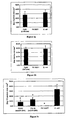
- Figure 1 shows the results from 3 separate experiments in which full length r-PG32 (Construct 1; aa21-391 in 0.5 M urea) figure 1a ; and full length r-PG33 (Construct 2; aa22-380 in 2M urea) Figure 1b ; were used to immunise mice and compared to fragments of r-PG32 (Construct 21; aa224-391 in PBS) and r-PG33 (Construct 22; aa213-380 in PBS), Figure 1c .
- Control mice were given formalin killed P. gingivalis strain 33277 whole cells (FK 33277) or whole E. coli lysate (E. coli).
- PG32 (Construct 21) was PCR amplified and extracted as outlined in Example 1. The purified DNA was ligated into QIAexII purified yeast GST expression vector pYEX4T-1 (Amrad) that had been previously digested with Eco RI and Not I. The ligation product was transformed into calcium competent E. coli BL21 DE3 (Stratagene) and selected on LB plates containing 50 ⁇ g ampicillin. A single colony of E. coli cells containing the recombinant plasmid was inoculated into a 100ml culture containing Terrific broth containing ampicillin overnight and the plasmid purified with a QIAGEN Plasmid Maxi Kit before being transformed into yeast.
- Yeast transformation A sample of S. cerevisiae DY150 glycerol stock was streaked out onto a YPD plate and placed at 30°C for 3-4 days. A single colony was inoculated into 20ml YPD medium and shaken at 30°C for 24hrs. A 500 ⁇ l volume of the overnight culture was centrifuged at 3000rpm for 5 min and the DY150 pellet was washed in 1ml of dH 2 0. The pellet was resuspended in 10mg/ml calf thymus DNA (Sigma), to which was added 1ug of plasmid DNA along with 500ul of plate solution, and the mixture was incubated at 25°C for 24hrs. Cells were spun at 3000rpm for 5 min and the plate solution was removed. Yeast was washed in 1ml of dH 2 0, plated out on a YNBS plate and incubated at 30°C for 4-5 days.
- the mixture was homogenised in a mini-beadbeater cell disrupter (Biospec) for 8x30 sec (5,000rpm) with a 30 sec incubation on ice between runs. The beads were left to settle and the broken yeast cells were recovered. Following centrifugation for 5 minutes (3,000g) the supernatant was collected and represented the soluble fraction. The pellet was resuspended in breaking buffer to produce the insoluble fraction. Fractions were analysed using SDS-PAGE and Western blot analysis.
- Lanes 2a and 2b The results of the yeast expression of the PG32 fragment (aa224-391) are shown in Figures 2a and 2b .
- Lane1 in both figures contains pre-stained molecular weight markers (Novex, SeeBlue) while Lane 2 contains supernatant from disrupted recombinant yeast expressing only GST.
- Lanes 3-7 represent expanded individual clones of disrupted yeast cells containing GST fused with the PG32 gene (aa224-391) without (lane 3) and with the PG32 gene optimised for yeast codon usage (lanes 4-7, see Example 5).
- Example 5 Construction and cloning of synthetic PG32 (aa224-391) for optimum protein expression in yeast
- a synthetic PG32 truncated gene (corresponding to PG32 aa224-391) was constructed using the predicted S. cerevisiae codon usage to improve the expression of P. gingivalis proteins in S. cerevisiae. Oligonucleotides covering the entire double stranded DNA sequence, as listed in Table 4 were designed with high expression bias codons for expression in yeast ( Sharp, P. M., and Cowe, E. (1991) Yeast. 7, 657-678 ).
- the oligonucleotide primers A and B were converted to a dsDNA fragment by PCR with TaqPlus precision (Stratagene) DNA polymerase using the following conditions: 20 cycles of denaturation (96°C, 1min), annealing (53°C, 1min), and extension (72°C, 2min), with the duration of the extension step increased by 5 sec at each cycle ( Di Donato, A., de Nigris, M., Russo, N., Di Biase, S., and D'Alessio, G. (1993) Analytical Biochemistry. 212, 291-293 ).
- a 1/20 aliquot of the core mixture was used in a second PCR run with oligonucleotide primers C and D functioning to elongate the core template. The procedure was repeated, with each primer pair until the 500bp product was generated.
- This PCR product was proteinase K treated (Boehringer Mannheim), purified using the QIAquick PCR purification kit (Qiagen) and digested at the primer introduced restriction enzyme sites EcoRI and NotI. The DNA fragment was purified by electrophoresis through a 1% low melting agarose gel (Bio-Rad) and extracted using the QIAexII gel extraction kit (Qiagen).
- the purified DNA was ligated into QIAexII purified yeast GST expression vector pYEX4T-1 (Amrad) that had been previously digested with Eco RI and Not I.
- the ligation products were transformed into calcium competent E. coli BL21 DE3 (Stratagene) and selected on LB plates containing 50 ⁇ g ampicillin. The integrity of the codon replaced insert was confirmed by DNA sequence analysis. Transformation of yeast and the expression of PG32 was performed as outlined above.
- Figure 2 shows the expression and immunoreactivity of yeast expressed synthetic PG32 (aa224-391) fused with GST.
- Lane 3 contains the unmodified P.
- gingivalis codons expressed in yeast and lanes 4,5,6,7 contain clones which have had their codons optimised for expression in yeast as outlined above. There appeared to be some enhanced expression and immunoreactivity when the codon optimisation was undertaken as evidenced by the increased reactivity in the bands at approximately 48kD (see arrows) especially when the antisera to PG32 was used ( Figure 2b ).
- Oligonucleotide DNA Sequence (5' ⁇ 3') SEQ ID NO.
- AC Overlap A (62-mer) GGCTGTTTTGTTCAG ATTCGATTCTCACGTTGTT 31 GATAA GGATCAATTGATTAACTTGTACG 32 AB Overlap BD Overlap B (57-mer) GGTTCGTTAGTTTCC TTAACGAATTGAGCAACA 33 TCGTACAAGTTAATCAATTGATCC 34
- Overlap CE Overlap C (62-mer) CCAGAAGTTACTCCA GTTACTAAGACTGAAAA 35 CATTTTGACTGAAAA GGCTGTTTTGTTCAG 36
- CA Overlap DF Overlap D (61-mer) GTATTGAGTGTTACCAGTTGGATCAGCGTAACC 37 AACAACAGTAATT GGTTCGTTAGTTTCC 38 DB Overlap EG Overlap E (60-mer) GAAGTTGAAGAATTGTCT AAGAGACCAGTTTCT 39 TGTCCAGAATGT CCAGAAGTTACTCC
Landscapes
- Health & Medical Sciences (AREA)
- Chemical & Material Sciences (AREA)
- Organic Chemistry (AREA)
- Medicinal Chemistry (AREA)
- General Health & Medical Sciences (AREA)
- Life Sciences & Earth Sciences (AREA)
- Immunology (AREA)
- Genetics & Genomics (AREA)
- Biochemistry (AREA)
- Proteomics, Peptides & Aminoacids (AREA)
- Molecular Biology (AREA)
- Biophysics (AREA)
- General Chemical & Material Sciences (AREA)
- Pharmacology & Pharmacy (AREA)
- Chemical Kinetics & Catalysis (AREA)
- Animal Behavior & Ethology (AREA)
- Nuclear Medicine, Radiotherapy & Molecular Imaging (AREA)
- Public Health (AREA)
- Veterinary Medicine (AREA)
- Bioinformatics & Cheminformatics (AREA)
- Gastroenterology & Hepatology (AREA)
- Engineering & Computer Science (AREA)
- Oncology (AREA)
- Communicable Diseases (AREA)
- Peptides Or Proteins (AREA)
- Cosmetics (AREA)
- Medicines Containing Antibodies Or Antigens For Use As Internal Diagnostic Agents (AREA)
- Micro-Organisms Or Cultivation Processes Thereof (AREA)
- Preparation Of Compounds By Using Micro-Organisms (AREA)
- Medicines That Contain Protein Lipid Enzymes And Other Medicines (AREA)
Applications Claiming Priority (3)
| Application Number | Priority Date | Filing Date | Title |
|---|---|---|---|
| AUPQ718200 | 2000-04-28 | ||
| AUPQ7182A AUPQ718200A0 (en) | 2000-04-28 | 2000-04-28 | Porphyromonas gingivalis recombinant proteins and truncations |
| PCT/AU2001/000482 WO2001083530A1 (en) | 2000-04-28 | 2001-04-27 | Porphyromonas gingivalis recombinant proteins and truncations |
Publications (3)
| Publication Number | Publication Date |
|---|---|
| EP1276762A1 EP1276762A1 (en) | 2003-01-22 |
| EP1276762A4 EP1276762A4 (en) | 2004-07-07 |
| EP1276762B1 true EP1276762B1 (en) | 2013-05-29 |
Family
ID=3821267
Family Applications (1)
| Application Number | Title | Priority Date | Filing Date |
|---|---|---|---|
| EP01925217.0A Expired - Lifetime EP1276762B1 (en) | 2000-04-28 | 2001-04-27 | Porphyromonas gingivalis recombinant proteins and truncations |
Country Status (9)
| Country | Link |
|---|---|
| US (1) | US7204991B2 (https=) |
| EP (1) | EP1276762B1 (https=) |
| JP (1) | JP5209166B2 (https=) |
| AU (1) | AUPQ718200A0 (https=) |
| CA (2) | CA2750984A1 (https=) |
| DK (1) | DK1276762T3 (https=) |
| ES (1) | ES2426034T3 (https=) |
| NZ (1) | NZ521797A (https=) |
| WO (1) | WO2001083530A1 (https=) |
Families Citing this family (13)
| Publication number | Priority date | Publication date | Assignee | Title |
|---|---|---|---|---|
| AUPO652897A0 (en) | 1997-04-30 | 1997-05-29 | University Of Melbourne, The | Synthetic peptide constructs for the diagnosis and treatment of periodontitis |
| US8129500B2 (en) * | 1997-12-10 | 2012-03-06 | Csl Limited | Porphyromonas gingivalis polypeptides and nucleotides |
| US7378101B2 (en) | 2001-12-21 | 2008-05-27 | Pfizer, Inc. | Vaccine for periodontal disease |
| US7468185B2 (en) | 2001-12-21 | 2008-12-23 | Pfizer Inc. | Vaccine for periodontal disease |
| AU2003294350A1 (en) * | 2002-11-18 | 2004-06-15 | Boston Medical Center Corporation | Immunization with porphyromonas gingivalis protects against heart disease |
| WO2006084129A2 (en) * | 2005-02-01 | 2006-08-10 | University Of Florida Research Foundation | Genes of porphyromonas gingivalis w83 involved in invasion of human cells |
| CA2652957A1 (en) | 2006-06-27 | 2008-01-03 | Oral Health Australia Pty Ltd. | Porphyromonas gingivalis polypeptides useful in the prevention of periodontal disease |
| US20100297179A1 (en) | 2007-07-12 | 2010-11-25 | Stuart Geoffrey Dashper | Immunology Treatment for Biofilms |
| AU2013203250B2 (en) * | 2007-07-12 | 2014-11-13 | Oral Health Australia Pty Ltd | Immunology treatment for biofilms |
| WO2009006699A1 (en) * | 2007-07-12 | 2009-01-15 | Oral Health Australia Pty Ltd | Biofilm treatment |
| DK2328914T3 (en) | 2008-08-29 | 2017-07-10 | Oral Health Australia Pty Ltd | Prevention, treatment and diagnosis of P. gingivalis infection |
| US8140041B2 (en) * | 2009-08-27 | 2012-03-20 | Mediatek Inc. | Tunable capacitive device with linearization technique employed therein |
| EP4021437A1 (en) * | 2020-03-30 | 2022-07-06 | Colgate-Palmolive Company | Improving, maintaining, protecting and repairing tissue integrity, barrier function and immunity using a composition comprising a source of zinc ions |
Family Cites Families (7)
| Publication number | Priority date | Publication date | Assignee | Title |
|---|---|---|---|---|
| US5536497A (en) * | 1992-12-21 | 1996-07-16 | The Research Foundation Of State University Of New York | Fimbrial polypeptides useful in the prevention of periodontitis |
| US5523390A (en) * | 1993-09-10 | 1996-06-04 | University Of Georgia Research Foundation, Inc. | Porphyromonas gingivalis arginine-specific proteinase |
| US5475097A (en) * | 1993-10-21 | 1995-12-12 | University Of Georgia Research Foundation, Inc. | Lysine-specific Porphyromonas gingivalis proteinase |
| AUPN627595A0 (en) * | 1995-10-30 | 1995-11-23 | University Of Melbourne, The | Diagnostics and treatments of periodontal disease |
| ES2377751T3 (es) * | 1997-12-10 | 2012-03-30 | Csl Limited | Polipéptidos y polinucleótidos de Porfiromonas gingivalis |
| AUPQ485999A0 (en) * | 1999-12-24 | 2000-02-03 | Csl Limited | P. gingivalis antigenic composition |
| US20030083287A1 (en) * | 2000-11-30 | 2003-05-01 | Burgess Nicola A. | ginS |
-
2000
- 2000-04-28 AU AUPQ7182A patent/AUPQ718200A0/en not_active Abandoned
-
2001
- 2001-04-27 WO PCT/AU2001/000482 patent/WO2001083530A1/en not_active Ceased
- 2001-04-27 DK DK01925217.0T patent/DK1276762T3/da active
- 2001-04-27 CA CA2750984A patent/CA2750984A1/en not_active Abandoned
- 2001-04-27 CA CA2407603A patent/CA2407603C/en not_active Expired - Fee Related
- 2001-04-27 EP EP01925217.0A patent/EP1276762B1/en not_active Expired - Lifetime
- 2001-04-27 NZ NZ521797A patent/NZ521797A/en not_active IP Right Cessation
- 2001-04-27 JP JP2001580954A patent/JP5209166B2/ja not_active Expired - Fee Related
- 2001-04-27 ES ES01925217T patent/ES2426034T3/es not_active Expired - Lifetime
-
2002
- 2002-10-28 US US10/283,024 patent/US7204991B2/en not_active Expired - Lifetime
Also Published As
| Publication number | Publication date |
|---|---|
| CA2750984A1 (en) | 2001-11-08 |
| CA2407603C (en) | 2013-06-11 |
| US20030215402A1 (en) | 2003-11-20 |
| EP1276762A1 (en) | 2003-01-22 |
| NZ521797A (en) | 2005-07-29 |
| DK1276762T3 (da) | 2013-08-19 |
| JP2003531634A (ja) | 2003-10-28 |
| EP1276762A4 (en) | 2004-07-07 |
| WO2001083530A1 (en) | 2001-11-08 |
| US7204991B2 (en) | 2007-04-17 |
| AUPQ718200A0 (en) | 2000-05-25 |
| JP5209166B2 (ja) | 2013-06-12 |
| CA2407603A1 (en) | 2001-11-08 |
| ES2426034T3 (es) | 2013-10-18 |
Similar Documents
| Publication | Publication Date | Title |
|---|---|---|
| US8784831B2 (en) | P. gingivalis antigenic composition | |
| EP1276762B1 (en) | Porphyromonas gingivalis recombinant proteins and truncations | |
| AU771544B2 (en) | Synthetic peptides containing protective epitopes for the treatment and prevention of periodontitis associated with porphyromonas gingivalis | |
| EP0954529B1 (en) | Porphyromonas gingivalis antigens for the diagnosis and treatment of periodontitis | |
| AU2001252042B2 (en) | Porphyromonas gingivalis recombinant proteins and truncations | |
| AU775228B2 (en) | P. gingivalis antigenic composition | |
| AU713844B2 (en) | Porphyromonas gingivalis antigens for the diagnosis and treatment of periodontitis | |
| HK1149938B (en) | P.gingivalis antigenic composition |
Legal Events
| Date | Code | Title | Description |
|---|---|---|---|
| PUAI | Public reference made under article 153(3) epc to a published international application that has entered the european phase |
Free format text: ORIGINAL CODE: 0009012 |
|
| 17P | Request for examination filed |
Effective date: 20021001 |
|
| AK | Designated contracting states |
Kind code of ref document: A1 Designated state(s): AT BE CH CY DE DK ES FI FR GB GR IE IT LI LU MC NL PT SE TR |
|
| AX | Request for extension of the european patent |
Free format text: AL;LT;LV;MK;RO;SI |
|
| A4 | Supplementary search report drawn up and despatched |
Effective date: 20040524 |
|
| RIC1 | Information provided on ipc code assigned before grant |
Ipc: 7C 07K 14/195 B Ipc: 7C 12N 15/11 A |
|
| 17Q | First examination report despatched |
Effective date: 20060816 |
|
| 17Q | First examination report despatched |
Effective date: 20060816 |
|
| RAP1 | Party data changed (applicant data changed or rights of an application transferred) |
Owner name: THE UNIVERSITY OF MELBOURNE Owner name: CSL LIMITED |
|
| GRAC | Information related to communication of intention to grant a patent modified |
Free format text: ORIGINAL CODE: EPIDOSCIGR1 |
|
| GRAP | Despatch of communication of intention to grant a patent |
Free format text: ORIGINAL CODE: EPIDOSNIGR1 |
|
| GRAP | Despatch of communication of intention to grant a patent |
Free format text: ORIGINAL CODE: EPIDOSNIGR1 |
|
| GRAS | Grant fee paid |
Free format text: ORIGINAL CODE: EPIDOSNIGR3 |
|
| GRAA | (expected) grant |
Free format text: ORIGINAL CODE: 0009210 |
|
| AK | Designated contracting states |
Kind code of ref document: B1 Designated state(s): AT BE CH CY DE DK ES FI FR GB GR IE IT LI LU MC NL PT SE TR |
|
| REG | Reference to a national code |
Ref country code: GB Ref legal event code: FG4D |
|
| REG | Reference to a national code |
Ref country code: CH Ref legal event code: EP |
|
| REG | Reference to a national code |
Ref country code: AT Ref legal event code: REF Ref document number: 614431 Country of ref document: AT Kind code of ref document: T Effective date: 20130615 |
|
| REG | Reference to a national code |
Ref country code: IE Ref legal event code: FG4D |
|
| REG | Reference to a national code |
Ref country code: DE Ref legal event code: R096 Ref document number: 60148038 Country of ref document: DE Effective date: 20130725 |
|
| REG | Reference to a national code |
Ref country code: DK Ref legal event code: T3 |
|
| REG | Reference to a national code |
Ref country code: SE Ref legal event code: TRGR |
|
| REG | Reference to a national code |
Ref country code: NL Ref legal event code: T3 |
|
| REG | Reference to a national code |
Ref country code: AT Ref legal event code: MK05 Ref document number: 614431 Country of ref document: AT Kind code of ref document: T Effective date: 20130529 |
|
| REG | Reference to a national code |
Ref country code: ES Ref legal event code: FG2A Ref document number: 2426034 Country of ref document: ES Kind code of ref document: T3 Effective date: 20131018 |
|
| PG25 | Lapsed in a contracting state [announced via postgrant information from national office to epo] |
Ref country code: FI Free format text: LAPSE BECAUSE OF FAILURE TO SUBMIT A TRANSLATION OF THE DESCRIPTION OR TO PAY THE FEE WITHIN THE PRESCRIBED TIME-LIMIT Effective date: 20130529 Ref country code: GR Free format text: LAPSE BECAUSE OF FAILURE TO SUBMIT A TRANSLATION OF THE DESCRIPTION OR TO PAY THE FEE WITHIN THE PRESCRIBED TIME-LIMIT Effective date: 20130830 Ref country code: AT Free format text: LAPSE BECAUSE OF FAILURE TO SUBMIT A TRANSLATION OF THE DESCRIPTION OR TO PAY THE FEE WITHIN THE PRESCRIBED TIME-LIMIT Effective date: 20130529 Ref country code: PT Free format text: LAPSE BECAUSE OF FAILURE TO SUBMIT A TRANSLATION OF THE DESCRIPTION OR TO PAY THE FEE WITHIN THE PRESCRIBED TIME-LIMIT Effective date: 20130930 |
|
| PLBE | No opposition filed within time limit |
Free format text: ORIGINAL CODE: 0009261 |
|
| STAA | Information on the status of an ep patent application or granted ep patent |
Free format text: STATUS: NO OPPOSITION FILED WITHIN TIME LIMIT |
|
| 26N | No opposition filed |
Effective date: 20140303 |
|
| REG | Reference to a national code |
Ref country code: DE Ref legal event code: R097 Ref document number: 60148038 Country of ref document: DE Effective date: 20140303 |
|
| PGFP | Annual fee paid to national office [announced via postgrant information from national office to epo] |
Ref country code: GB Payment date: 20140424 Year of fee payment: 14 |
|
| PGFP | Annual fee paid to national office [announced via postgrant information from national office to epo] |
Ref country code: NL Payment date: 20140416 Year of fee payment: 14 Ref country code: IT Payment date: 20140424 Year of fee payment: 14 Ref country code: SE Payment date: 20140422 Year of fee payment: 14 Ref country code: FR Payment date: 20140430 Year of fee payment: 14 Ref country code: ES Payment date: 20140425 Year of fee payment: 14 Ref country code: DE Payment date: 20140423 Year of fee payment: 14 Ref country code: CH Payment date: 20140415 Year of fee payment: 14 |
|
| PGFP | Annual fee paid to national office [announced via postgrant information from national office to epo] |
Ref country code: DK Payment date: 20140423 Year of fee payment: 14 Ref country code: BE Payment date: 20140417 Year of fee payment: 14 |
|
| PG25 | Lapsed in a contracting state [announced via postgrant information from national office to epo] |
Ref country code: LU Free format text: LAPSE BECAUSE OF FAILURE TO SUBMIT A TRANSLATION OF THE DESCRIPTION OR TO PAY THE FEE WITHIN THE PRESCRIBED TIME-LIMIT Effective date: 20140427 Ref country code: MC Free format text: LAPSE BECAUSE OF FAILURE TO SUBMIT A TRANSLATION OF THE DESCRIPTION OR TO PAY THE FEE WITHIN THE PRESCRIBED TIME-LIMIT Effective date: 20130529 |
|
| REG | Reference to a national code |
Ref country code: IE Ref legal event code: MM4A |
|
| PG25 | Lapsed in a contracting state [announced via postgrant information from national office to epo] |
Ref country code: IE Free format text: LAPSE BECAUSE OF NON-PAYMENT OF DUE FEES Effective date: 20140427 |
|
| REG | Reference to a national code |
Ref country code: DE Ref legal event code: R119 Ref document number: 60148038 Country of ref document: DE |
|
| REG | Reference to a national code |
Ref country code: DK Ref legal event code: EBP Effective date: 20150430 |
|
| REG | Reference to a national code |
Ref country code: CH Ref legal event code: PL |
|
| REG | Reference to a national code |
Ref country code: SE Ref legal event code: EUG |
|
| GBPC | Gb: european patent ceased through non-payment of renewal fee |
Effective date: 20150427 |
|
| REG | Reference to a national code |
Ref country code: NL Ref legal event code: MM Effective date: 20150501 |
|
| PG25 | Lapsed in a contracting state [announced via postgrant information from national office to epo] |
Ref country code: GB Free format text: LAPSE BECAUSE OF NON-PAYMENT OF DUE FEES Effective date: 20150427 Ref country code: IT Free format text: LAPSE BECAUSE OF NON-PAYMENT OF DUE FEES Effective date: 20150427 Ref country code: CH Free format text: LAPSE BECAUSE OF NON-PAYMENT OF DUE FEES Effective date: 20150430 Ref country code: DE Free format text: LAPSE BECAUSE OF NON-PAYMENT OF DUE FEES Effective date: 20151103 Ref country code: LI Free format text: LAPSE BECAUSE OF NON-PAYMENT OF DUE FEES Effective date: 20150430 |
|
| REG | Reference to a national code |
Ref country code: FR Ref legal event code: ST Effective date: 20151231 |
|
| PG25 | Lapsed in a contracting state [announced via postgrant information from national office to epo] |
Ref country code: SE Free format text: LAPSE BECAUSE OF NON-PAYMENT OF DUE FEES Effective date: 20150428 Ref country code: FR Free format text: LAPSE BECAUSE OF NON-PAYMENT OF DUE FEES Effective date: 20150430 |
|
| PG25 | Lapsed in a contracting state [announced via postgrant information from national office to epo] |
Ref country code: NL Free format text: LAPSE BECAUSE OF NON-PAYMENT OF DUE FEES Effective date: 20150501 |
|
| PG25 | Lapsed in a contracting state [announced via postgrant information from national office to epo] |
Ref country code: DK Free format text: LAPSE BECAUSE OF NON-PAYMENT OF DUE FEES Effective date: 20150430 |
|
| REG | Reference to a national code |
Ref country code: ES Ref legal event code: FD2A Effective date: 20160527 |
|
| PG25 | Lapsed in a contracting state [announced via postgrant information from national office to epo] |
Ref country code: CY Free format text: LAPSE BECAUSE OF FAILURE TO SUBMIT A TRANSLATION OF THE DESCRIPTION OR TO PAY THE FEE WITHIN THE PRESCRIBED TIME-LIMIT Effective date: 20130529 |
|
| PG25 | Lapsed in a contracting state [announced via postgrant information from national office to epo] |
Ref country code: ES Free format text: LAPSE BECAUSE OF NON-PAYMENT OF DUE FEES Effective date: 20150428 Ref country code: TR Free format text: LAPSE BECAUSE OF FAILURE TO SUBMIT A TRANSLATION OF THE DESCRIPTION OR TO PAY THE FEE WITHIN THE PRESCRIBED TIME-LIMIT Effective date: 20130529 |
|
| PG25 | Lapsed in a contracting state [announced via postgrant information from national office to epo] |
Ref country code: BE Free format text: LAPSE BECAUSE OF NON-PAYMENT OF DUE FEES Effective date: 20150430 |