EP1275743A2 - Hochtemperaturresistente ausdehnungsangepasste metallische Schutz- und Haftschichten auf Superlegierungen - Google Patents
Hochtemperaturresistente ausdehnungsangepasste metallische Schutz- und Haftschichten auf Superlegierungen Download PDFInfo
- Publication number
- EP1275743A2 EP1275743A2 EP02015236A EP02015236A EP1275743A2 EP 1275743 A2 EP1275743 A2 EP 1275743A2 EP 02015236 A EP02015236 A EP 02015236A EP 02015236 A EP02015236 A EP 02015236A EP 1275743 A2 EP1275743 A2 EP 1275743A2
- Authority
- EP
- European Patent Office
- Prior art keywords
- layer
- mass
- layers
- alloys
- composition according
- Prior art date
- Legal status (The legal status is an assumption and is not a legal conclusion. Google has not performed a legal analysis and makes no representation as to the accuracy of the status listed.)
- Withdrawn
Links
Images



Classifications
-
- C—CHEMISTRY; METALLURGY
- C23—COATING METALLIC MATERIAL; COATING MATERIAL WITH METALLIC MATERIAL; CHEMICAL SURFACE TREATMENT; DIFFUSION TREATMENT OF METALLIC MATERIAL; COATING BY VACUUM EVAPORATION, BY SPUTTERING, BY ION IMPLANTATION OR BY CHEMICAL VAPOUR DEPOSITION, IN GENERAL; INHIBITING CORROSION OF METALLIC MATERIAL OR INCRUSTATION IN GENERAL
- C23C—COATING METALLIC MATERIAL; COATING MATERIAL WITH METALLIC MATERIAL; SURFACE TREATMENT OF METALLIC MATERIAL BY DIFFUSION INTO THE SURFACE, BY CHEMICAL CONVERSION OR SUBSTITUTION; COATING BY VACUUM EVAPORATION, BY SPUTTERING, BY ION IMPLANTATION OR BY CHEMICAL VAPOUR DEPOSITION, IN GENERAL
- C23C28/00—Coating for obtaining at least two superposed coatings either by methods not provided for in a single one of groups C23C2/00 - C23C26/00 or by combinations of methods provided for in subclasses C23C and C25C or C25D
- C23C28/30—Coatings combining at least one metallic layer and at least one inorganic non-metallic layer
- C23C28/32—Coatings combining at least one metallic layer and at least one inorganic non-metallic layer including at least one pure metallic layer
- C23C28/321—Coatings combining at least one metallic layer and at least one inorganic non-metallic layer including at least one pure metallic layer with at least one metal alloy layer
- C23C28/3215—Coatings combining at least one metallic layer and at least one inorganic non-metallic layer including at least one pure metallic layer with at least one metal alloy layer at least one MCrAlX layer
-
- C—CHEMISTRY; METALLURGY
- C22—METALLURGY; FERROUS OR NON-FERROUS ALLOYS; TREATMENT OF ALLOYS OR NON-FERROUS METALS
- C22C—ALLOYS
- C22C19/00—Alloys based on nickel or cobalt
- C22C19/03—Alloys based on nickel or cobalt based on nickel
- C22C19/05—Alloys based on nickel or cobalt based on nickel with chromium
- C22C19/058—Alloys based on nickel or cobalt based on nickel with chromium without Mo and W
-
- C—CHEMISTRY; METALLURGY
- C23—COATING METALLIC MATERIAL; COATING MATERIAL WITH METALLIC MATERIAL; CHEMICAL SURFACE TREATMENT; DIFFUSION TREATMENT OF METALLIC MATERIAL; COATING BY VACUUM EVAPORATION, BY SPUTTERING, BY ION IMPLANTATION OR BY CHEMICAL VAPOUR DEPOSITION, IN GENERAL; INHIBITING CORROSION OF METALLIC MATERIAL OR INCRUSTATION IN GENERAL
- C23C—COATING METALLIC MATERIAL; COATING MATERIAL WITH METALLIC MATERIAL; SURFACE TREATMENT OF METALLIC MATERIAL BY DIFFUSION INTO THE SURFACE, BY CHEMICAL CONVERSION OR SUBSTITUTION; COATING BY VACUUM EVAPORATION, BY SPUTTERING, BY ION IMPLANTATION OR BY CHEMICAL VAPOUR DEPOSITION, IN GENERAL
- C23C28/00—Coating for obtaining at least two superposed coatings either by methods not provided for in a single one of groups C23C2/00 - C23C26/00 or by combinations of methods provided for in subclasses C23C and C25C or C25D
- C23C28/30—Coatings combining at least one metallic layer and at least one inorganic non-metallic layer
- C23C28/32—Coatings combining at least one metallic layer and at least one inorganic non-metallic layer including at least one pure metallic layer
- C23C28/322—Coatings combining at least one metallic layer and at least one inorganic non-metallic layer including at least one pure metallic layer only coatings of metal elements only
-
- C—CHEMISTRY; METALLURGY
- C23—COATING METALLIC MATERIAL; COATING MATERIAL WITH METALLIC MATERIAL; CHEMICAL SURFACE TREATMENT; DIFFUSION TREATMENT OF METALLIC MATERIAL; COATING BY VACUUM EVAPORATION, BY SPUTTERING, BY ION IMPLANTATION OR BY CHEMICAL VAPOUR DEPOSITION, IN GENERAL; INHIBITING CORROSION OF METALLIC MATERIAL OR INCRUSTATION IN GENERAL
- C23C—COATING METALLIC MATERIAL; COATING MATERIAL WITH METALLIC MATERIAL; SURFACE TREATMENT OF METALLIC MATERIAL BY DIFFUSION INTO THE SURFACE, BY CHEMICAL CONVERSION OR SUBSTITUTION; COATING BY VACUUM EVAPORATION, BY SPUTTERING, BY ION IMPLANTATION OR BY CHEMICAL VAPOUR DEPOSITION, IN GENERAL
- C23C28/00—Coating for obtaining at least two superposed coatings either by methods not provided for in a single one of groups C23C2/00 - C23C26/00 or by combinations of methods provided for in subclasses C23C and C25C or C25D
- C23C28/30—Coatings combining at least one metallic layer and at least one inorganic non-metallic layer
- C23C28/34—Coatings combining at least one metallic layer and at least one inorganic non-metallic layer including at least one inorganic non-metallic material layer, e.g. metal carbide, nitride, boride, silicide layer and their mixtures, enamels, phosphates and sulphates
- C23C28/345—Coatings combining at least one metallic layer and at least one inorganic non-metallic layer including at least one inorganic non-metallic material layer, e.g. metal carbide, nitride, boride, silicide layer and their mixtures, enamels, phosphates and sulphates with at least one oxide layer
- C23C28/3455—Coatings combining at least one metallic layer and at least one inorganic non-metallic layer including at least one inorganic non-metallic material layer, e.g. metal carbide, nitride, boride, silicide layer and their mixtures, enamels, phosphates and sulphates with at least one oxide layer with a refractory ceramic layer, e.g. refractory metal oxide, ZrO2, rare earth oxides or a thermal barrier system comprising at least one refractory oxide layer
-
- C—CHEMISTRY; METALLURGY
- C23—COATING METALLIC MATERIAL; COATING MATERIAL WITH METALLIC MATERIAL; CHEMICAL SURFACE TREATMENT; DIFFUSION TREATMENT OF METALLIC MATERIAL; COATING BY VACUUM EVAPORATION, BY SPUTTERING, BY ION IMPLANTATION OR BY CHEMICAL VAPOUR DEPOSITION, IN GENERAL; INHIBITING CORROSION OF METALLIC MATERIAL OR INCRUSTATION IN GENERAL
- C23C—COATING METALLIC MATERIAL; COATING MATERIAL WITH METALLIC MATERIAL; SURFACE TREATMENT OF METALLIC MATERIAL BY DIFFUSION INTO THE SURFACE, BY CHEMICAL CONVERSION OR SUBSTITUTION; COATING BY VACUUM EVAPORATION, BY SPUTTERING, BY ION IMPLANTATION OR BY CHEMICAL VAPOUR DEPOSITION, IN GENERAL
- C23C30/00—Coating with metallic material characterised only by the composition of the metallic material, i.e. not characterised by the coating process
-
- Y—GENERAL TAGGING OF NEW TECHNOLOGICAL DEVELOPMENTS; GENERAL TAGGING OF CROSS-SECTIONAL TECHNOLOGIES SPANNING OVER SEVERAL SECTIONS OF THE IPC; TECHNICAL SUBJECTS COVERED BY FORMER USPC CROSS-REFERENCE ART COLLECTIONS [XRACs] AND DIGESTS
- Y02—TECHNOLOGIES OR APPLICATIONS FOR MITIGATION OR ADAPTATION AGAINST CLIMATE CHANGE
- Y02T—CLIMATE CHANGE MITIGATION TECHNOLOGIES RELATED TO TRANSPORTATION
- Y02T50/00—Aeronautics or air transport
- Y02T50/60—Efficient propulsion technologies, e.g. for aircraft
Definitions
- the invention relates to a chemical composition of Ni alloys, coated substrates and a process for their Production.
- High temperature oxidation forms between the Ceramic layer and the adhesive layer an aluminum-rich oxide layer, preferably from corundum phase, the formation of which is evaporated Ceramic layers for better adhesion are even desirable.
- the metallic adhesive layers can vary widely be composed and also with different procedures be applied.
- transition oxides of aluminum has higher ones Oxidation rates result that are not about retroactive by a more favorable barrier effect of this layer after its would be worth converting to the stable corundum, but it carries accelerated loss of aluminum from the adhesive layer.
- the MCrAIY layers represent an essential part of the overlay oxidation protection layers. They are generally made up of ⁇ -Ni and ⁇ -NiAI phases due to higher Al and Cr contents and occasionally and to a lesser extent from the phases ⁇ -Cr, ⁇ '-Ni 3 Al and ⁇ - or others TCP phases together. While the ⁇ phase contributes to ductility and strength at higher temperatures, the ⁇ phase provides its Al reservoir and its high diffusivity at higher temperatures for the necessary formation of an oxidic protective layer. However, it is problematic from a mechanical point of view, especially because of its brittleness at low to moderate temperatures and because of its low creep resistance at high temperatures.
- Adhesive layers There are individual problems in each of the publications mentioned Adhesive layers have been addressed and improved. A comprehensive one Improvement of layers, which possible all aspects of mechanical and chemical resistance and compatibility with those of an optimal Adhesion and resistance to oxidation do not exist.
- NiCoCrAIY By direct electron microscopic investigations of the interfaces between metal and oxide on oxidized NiCoCrAIY [O. Unal, TE Mitchell, AH Heuer, J. Am. Ceram. Soc. 77 (1994) pp. 984-92], for example, the existence of an epitaxial relationship between the atomically most densely packed crystal faces could be found in rare cases, which reads as follows: Ni (111)
- the object of this invention is that the provision of such crystal surfaces which have more closely matched atomic distances on certain crystal surfaces or only comparable fit densities of the atoms have any crystal surface, lead to a more spontaneous formation of ⁇ -Al 2 O 3 due to epitaxial or other atomic fits.
- the rate of oxidation would decrease by approximately two orders of magnitude (according to MW Brumm, HJ Grabke; The Oxidation Behavior of NiAl, Corrosion Science 33 (1992) pp. 1677-1690), which corresponds to the low diffusion rate in ⁇ -Al 2 O 3 Grid can be assigned to be expected.
- a ⁇ - ⁇ 'alloy as an adhesive layer is entirely within the meaning of this invention, especially since the ⁇ phase loses its strength above 700 ° C., that is to say layers with a high ⁇ content under extreme high-temperature conditions may have a “stressful” effect .: parasitic loading) and the additional load of a thermal insulation layer can no longer hold it safely.
- suitable hardening mechanisms can also be mobilized in ⁇ -containing alloys, which should bring about sufficient creep resistance of the layers.
- a ductile matrix is based on stress theory for example by H.E. Evans [Materials at High Temperatures 12 (1994) pp. 219-227], however, is best suited to Tendency to premature flaking of the protective ones against oxidation Mitigate oxide layers by plastically sealing the fracture. According to his remarks can be special by providing flowable substrates the cooling interval until the flaking off protective oxides can be expanded or the oxides can be used as Alternatively, grow to a greater critical thickness without spall. On the other hand, every heat cycle, like that with it familiar expert is known, by plastic flow to a contribute to further roughening of the surface.
- Ni alloys can be effectively increased up to the highest temperatures by finely dispersed formation of the ⁇ '-Ni 3 (Al, Ta) phase in the matrix.
- Ta can have a beneficial influence on oxidation resistance.
- Re is a well-known high-temperature mixed crystal hardener in a nickel matrix and supports the corrosion resistance in alloys.
- the adhesion of the thermally generated oxide layers on the ⁇ '-Ni 3 Al phase is known to deteriorate due to the formation of pores at the Me / MeO interface [JD Kuenzly et al .: Oxidation of Metals 8, No.3 (1974) S . 139-178].
- the alloys of the invention can in particular by Electron beam vapor deposition applied as a thermal barrier coating become. In principle, however, any other method is the Layer application or coating process possible.
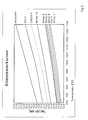
- alloy compositions which have been produced within a series of vacuum induction melts, have proven to be particularly slow-oxidizing and are listed as reference 1 in comparison to a vaporized NiCoCrAlY layer: Composition of the alloys, the oxidation kinetics of which are shown in FIG.
- a protective oxide layer was formed, which consisted primarily of ⁇ -Al 2 O 3 and is essentially responsible for the weight gain.
- the oxidation kinetics in the case of cyclic oxidation at 1100 ° C. (1100 ° C. 50 min / room temperature 10 min) is shown in FIG. 1.
- Alloy class II denotes alloys with a ⁇ + ⁇ (+ ⁇ ) phase composition in turn, the duration of liability of the Oxide layers in the cyclic oxidation test of the ⁇ + ⁇ '(+ ⁇ ) alloys are slightly inferior, show 7 to 13% Ta, 5 to 7% Re and 7 to 15% Cr (in mass%) in addition to other alloy components the lowest tendency to oxidize.
- the mass ratio of Re to Ta is between 0.5 and 1 special for these alloys advantageous.
- alloys are classified here as alloy class I designated. Higher levels of ⁇ -Re phase are in both cases acceptable because they do not affect the oxidation behavior.
- the thermal expansion coefficients of some alloys examined in comparison to NiCoCrAIY and to a single-crystal Ni superalloy are shown in FIG. 2 in the interval 900 to 1100 ° C.
- the composition of these alloys is shown in Table 2. Composition of the alloys, the thermal expansion behavior of which is shown in FIG.
- Example 5 (yttrium contents are present in traces of approximately 0.2% by mass) description Ni Cr al Ta re phases
- the size of the unit cells of the alloys according to the invention has been widened by about 0.35243 nm compared to that of nickel in NiCoCrAlY.
- Two alloys according to the invention are shown in comparison to the NiCoCrAlY standard alloy between room temperature (RT) and 1100 ° C.
- the grid spacing of the (11 2 3) -plane of ⁇ -Al 2 O 3 is 0.2085 nm at room temperature and is assumed to be about 0.2101 nm at 1000 ° C with an expansion coefficient of 8.00 x 10 -6 K -1 .
- the adjustment of the lattice parameters for the (hypothetical) purpose of epitaxy-based and thus facilitated ⁇ -Al 2 O 3 formation during the oxidation has thus been made with sufficient accuracy and thus, as the low oxidation values also suggest, fulfills the peculiarity of what has been explained development approach.
- the properties intended according to the invention are thus the Layer alloy like high creep resistance through ⁇ '- Precipitation hardening and mixed crystal hardening, lowest tendency to oxidize at operating temperatures, as well as on superalloy substrates and corundum thermal expansion coefficients largely matched been achieved.
- the high hardness and Allow creep strengths in particular through ⁇ '-precipitation hardening reduce if necessary by this elimination phase is reduced or eliminated by an appropriate substitution of the Nickel content due to cobalt.
- a coated superalloy sample according to Example 11 was one cyclic oxidation test at 1100 ° C (1100 ° C 50 min / room temperature 10 min). The oxidation kinetics for this is inserted in Fig. 1.
- Example 11 Another coated superalloy sample according to Example 11 was both untreated (a) and after usual Shot peening (b) and annealing (c) for residual stresses examined.
- the monocrystalline known to the person skilled in the art became Super alloy CMSX-4 used.
- the voltage measured in the layers is shown in FIG. 4.
- a NiCrAITaReY-coated cylinder sample (No. 2) according to Example 11 was followed by conventional shot peening and annealing treatments a 220 ⁇ m thick EB-PVD thermal insulation layer.
- Comparative sample was one with alternatively with one commercial produced otherwise identical sample provided PtAl adhesive layer (No.1) in thermal cycling test (50 min at 1100 ° C, 10 min to RT) checked.
- Another sample (No.3) that already has a similar commercial was provided with PtAl adhesive layer, with a evaporated NiCrAITaReY alloy layer according to Example 12 busy.
- the substrate alloy was the superalloy in all three cases CMSX 4.
- the interdiffusion zone of sample No. 2 is shown in FIG. 6.
- the sample was 368 hours at 1100 ° C and has an interdiffusion zone that is only 5 ⁇ m wide caused. It is free from brittle phases, so-called TCP phases (topologically-close packed) and consists of ⁇ '-phase.
- the outer zone of sample 3 shows Fig. 7.
- the sample was round during 1300 cycles in total 1083h at 1100 ° C in air and shows none Flaking of the WDS.
- the aluminum-depleted zone, it is closed recognize by the absence of the otherwise dominant ⁇ '-phase (deeply etched), is only about 10 ⁇ m wide. Both pictures show the high Long-term stability of this layer against interdiffusion and inside to the outside against oxidation. This material property suggests this type of layer in a lower layer thickness than previously customary to be able to apply.
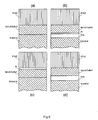
- FIG. 8 (a) shows the basic structure of a substrate described that with a nickel alloy according to the invention is coated. This nickel alloy is in turn through a Thermal insulation layer (PYSZ) protected.
- PYSZ Thermal insulation layer
- Fig. 8 (b) is between the invention Adhesive layer and the substrate an underlying PtAl or Alitiertik as well as an additional alloy or element layer of Transition metals in a thickness of 2 to 15 ⁇ m.
- This will especially made of nickel, cobalt or platinum before the shooting Adhesive coating applied.
- the PtAl or alitation layer or also under the PtAl or Alitier harsh can also a layer made of Pt, Re, Ta or alloys thereof with Ni in a thickness of 2 to 15 ⁇ m be applied.
- Fig. 8 (c) is an adhesive layer on the invention Platinum layer, in particular applied in a thickness of 2 to 10 microns.
Landscapes
- Chemical & Material Sciences (AREA)
- Engineering & Computer Science (AREA)
- Materials Engineering (AREA)
- Mechanical Engineering (AREA)
- Metallurgy (AREA)
- Organic Chemistry (AREA)
- Inorganic Chemistry (AREA)
- Chemical Kinetics & Catalysis (AREA)
- Ceramic Engineering (AREA)
- Other Surface Treatments For Metallic Materials (AREA)
- Laminated Bodies (AREA)
Abstract
Description
- Sie sollen mit dem Substrat verträglich sein; und das bedeutet ferner, sie sollen auch substratverträglich aufgebracht werden. Das heißt sie sollen möglichst ähnliche thermische Ausdehnung haben, um wenig Fehlstellen/Versetzungen bei thermischer Wechselbelastung zu initiieren, die ansonsten Einfluss auf schädigende Diffusions- und Kriechprozesse nähmen; dabei ist insbesondere an die modernen hochrefraktärmetallhaltigen einkristallinen Superlegierungen mit ihren vergleichsweise geringen thermischen Ausdehnungskoeffizienten gedacht. Die Ausdehnungskoeffizienten sollen sich dabei möglichst nahe an die von den Deckoxiden annähern. Sie sollen chemisch ähnlich sein, um ebenfalls wenig Interdiffusion und die Behinderung der Bildung von unerwünschten Phasen zu bewirken. Die Interdiffusion könnte erforderlichenfalls noch durch zusätzliche dünne Diffusionssperrschichten z. B. aus Platin oder/und Rhenium eingeschränkt werden. Die jeweiligen Schichten sollten speziell im Falle von Einkristallsubstraten ohne verformungsinduzierende Vorbehandlungen wie scharfes Strahlen oder ähnliches, die zu Rekristallisationserscheinungen führen können, bevorzugt mit einem "sanften" Verfahren wie zum Beispiel der PVD- oder CVD-Technologien aufgebracht werden.
- Sie sollten bei Einsatztemperatur noch über eine gewisse mechanische Festigkeit verfügen, die es erlaubt, dass die Aerodynamik der Laufschaufeloberflächen trotz des Gewichtes der Keramikschichten (Kriechbeständigkeit) und der Temperaturwechsel (Gefahr der Oberflächen-/Grenzflächenaufrauhung, engl.: rumpling, ratcheting) erhalten bleibt.
- Sie sollten über eine geringe Oxidationsneigung durch frühe Ausbildung von schützendem Aluminiumoxid in der chemisch stabilsten Modifikation des Korund verfügen, wobei die langfristige Haftung dieser Oxidschicht auf der Haftschicht durch geeignete Legierungsmaßnahmen (Seltene Erden, Yttrium und Platinmetalle) und sonstige haftungsfördernden Maßnahmen (minimale Konzentrationen grenzflächenaktiver Elementen wie S und O in der Schicht) gewährleistet sein soll.
| Zusammensetzung der Legierungen, deren Oxidationskinetik in Fig. 1 dargestellt ist | |||||||
| Legierungsbeispiele | Ni | Cr | Al | Ta | Re | Y | Phasen |
| NiCoCrAIY- | 61,8 | 14,55 | 23,37 | 0,2 | |||
| at.% | 8 | γ+β | |||||
| Referenz 1 | 72 | 15 | 12,5 | ||||
| 0,5 | |||||||
| Masse% | |||||||
| 42,11 Ni + 19,69 Co 49 Ni + 23 Co | |||||||
| Beispiel 1 | 60,09 | 15,19 | 19,90 | 2,63 | 1,86 | 0,3 | Re:Ta = |
| at.% | 61,8 | 13,8 | 9,4 | 8,4 | 6,1 | 3 | 0,71 |
| 0,5 | γ+β+δ | ||||||
| Masse% | |||||||
| Beispiel 2 | 70,33 | 8,66 | 15,19 | 2,91 | 2,88 | 0,0 | Re:Ta = |
| at.% | 68,19 | 7,44 | 6,77 | 8,7 | 8,86 | 3 | 0,99 |
| 0,0 | γ+γ'+δ | ||||||
| Masse% | 4 | ||||||
| Beispiel 3 | 71,5 | 4,06 | 15,4 | 3,51 | 5,42 | 0,1 | Re:Ta = |
| at.% | 64,79 | 3,26 | 6,42 | 9,81 | 15,5 | 1 | 1,54 |
| 8 | 0,1 | γ+γ'+δ | |||||
| Masse% | 5 | ||||||
| Beispiel 4 | 63,7 | 4,6 | 15,38 | 5,54 | 10,7 | 0,0 | Re:Ta = |
| at.% | 50,54 | 3,23 | 5,61 | 13,5 | 3 | 5 | 1,94 |
| 5 | 27,0 | 0,0 | γ+γ'+δ | ||||
| Masse% | 1 | 6 |
| Zusammensetzung der Legierungen, deren thermisches Ausdehnungsverhalten in Fig. 2 dargestellt ist (Yttriumgehalte liegen in Spuren von etwa 0,2 Masse% vor) | ||||||
| Bezeichnung | Ni | Cr | Al | Ta | Re | Phasen |
| Beispiel 5* at.% | 71,61 | 4,06 | 15,40 | 3,51 | 5,42 | γ + γ' + δ |
| Masse % | 64,9 | 3,3 | 6,4 | 9,8 | 15,6 | |
| Beispiel 6* at.% | 75,77 | 3,55 | 13,98 | 3,72 | 2,98 | γ + γ' + δ |
| Masse % | 71,3 | 3,0 | 6,1 | 10,8 | 8,9 | |
| Beispiel 7 at.% | 75,07 | 3,73 | 12,92 | 4,63 | 3,65 | γ + γ' + δ |
| Masse % | 68,1 | 3,0 | 5,4 | 13,0 | 10,5 | |
| Referenz 2 at.% | 73,84 | 3,11 | 19,21 | 3,84 | γ' + δ | |
| Masse % | 75,7 | 2,8 | 9,1 | 12,5 | ||
| Beispiel 8* at.% | 76,04 | 3,28 | 13,13 | 4,57 | 2,91 | γ + γ' + δ |
| Masse % | 70,1 | 2,7 | 5,6 | 13,0 | 8,5 | |
| Beispiel 9 at.% | 63,70 | 4,70 | 15,38 | 5,54 | 10,73 | γ + γ' + δ |
| Masse % | 50,5 | 3,23 | 5,6 | 13,6 | 27,0 | |
| Beispiel 10* at.% | 79,07 | 3,13 | 12,56 | 2,46 | 2,78 | γ + γ' + δ |
| Masse % | 76,0 | 2,7 | 5,6 | 7,3 | 8,5 | |
| Referenz 3 at.% | 75,63 | 5,21 | 12,4 | 6,697 | γ + γ' + η | |
| Masse % | 70,9 | 4,3 | 5,4 | 19,4 |
| Chemische Zusammensetzungen von mit Zweitiegel Elektronenstrahl-bedampfung in Springstrahltechnik aufgedampften Haftschichten | |||||||
| Charge | Ni | Cr | Al | Ta | Re | Y | Phasen |
| Beispiel 11 | 77,35 | 3,0 | 13,2 | 2,73 | 3,4 | 0,2 | γ+γ'+δ |
| at.% | 73,3 | 1 | 7 | 8,0 | 3 | 1 | |
| 2,5 | 5,8 | 10, | 0,3 | ||||
| Gew.-% | 3 | ||||||
| Beispiel 12 | 77,71 | 3,0 | 13,6 | 2,13 | 3,2 | 0,1 | γ+γ'+δ |
| at.% | 74,9 | 5 | 9 | 6,3 | 4 | 8 | |
| 2,6 | 6,1 | 9,9 | 0,3 | ||||
| Gew.-% | |||||||
| Beispiel 13 | 76,45 | 3,5 | 13,0 | 2,53 | 4,2 | 0,2 | γ+γ'+δ |
| at.% | 71,4 | 1 | 7 | 7,3 | 3 | 1 | |
| 2,9 | 5,6 | 12, | 0,3 | ||||
| Gew.-% | 5 |
Claims (18)
- Chemische Zusammensetzung von Ni-Legierungen zum Oxidationsschutz und zur Haftanbindung von keramischen Wärmedämmschichten mit der Zusammensetzung: 1 bis 8 Masse% Cr, 5,2 bis 7 Masse% Al, 8 bis 30 Masse% Re, 6 bis 15 Masse% Ta, 0,03 bis 1,0 Masse% Y und Rest Ni.
- Zusammensetzung nach Anspruch 1, dadurch gekennzeichnet, dass sie im wesentlichen aus γ/γ'- oder γ'-Phasen bestehen und 0 bis 50 % δ-Re-Phase enthält.
- Zusammensetzung nach Anspruch 1, dadurch gekennzeichnet, dass sie einen thermischen Ausdehnungskoeffizienten der Legierungen (αRT bis 1000°C im Bereich von 13,5 bis 15,5 x 10⁻⁶K-1) aufweisen, der gegebenenfalls durch Einstellen der Ta- und Re-Gehalte oder durch einen Anteil an δ-Re-Phase eingestellt wird.
- Zusammensetzung nach Anspruch 1, dadurch gekennzeichnet, dass das Massenverhältnis von Re zu Ta im Bereich von 0,9 bis 2,0 liegt.
- Chemische Zusammensetzung von Ni-Legierungen zum Oxidationsschutz und zur Haftanbindung von keramischen Wärmedämmschichten mit der Zusammensetzung: 7 bis 15 Masse% Cr, 8,5 bis 11 Masse% Al, 1 bis 10 Masse% Ta, 5 bis 7 Masse % Re, 0,05 bis 1,0 Masse % Y, und Rest Ni.
- Zusammensetzung nach Anspruch 5, dadurch gekennzeichnet, dass das Massenverhältnis von Re zu Ta im Bereich von 0,2 bis 1,0 liegt.
- Zusammensetzung nach Anspruch 6, dadurch gekennzeichnet, dass die Schichten im wesentlichen aus β/γ-Legierung bestehen.
- Zusammensetzung nach Anspruch 5, dadurch gekennzeichnet, dass neben der Möglichkeit der Mischkristallhärtung von γ-Phase durch Re die zusätzliche Härtung durch Ausscheidung der δ-Re-Phase in beliebigen Volumenanteilen erfolgt.
- Zusammensetzung nach einem der Ansprüche 1 bis 8 dadurch gekennzeichnet, dass der Anteil an Ni teilweise oder vollständig durch Co in den entsprechenden Atomanteilen ersetzt ist.
- Zusammensetzung nach einem der Ansprüche 1 bis 9, dadurch gekennzeichnet, dass man die Schichten mittels PVD-, CVD-, oder PS-Verfahren aufgebracht worden sind.
- Substrate aus ein- oder vielkristallinen Superlegierungen, beschichtet mit einer chemischen Zusammensetzung nach einem der Ansprüche 1 bis 10 als Haftbeschichtung.
- Substrate nach Anspruch 11, wobei die Dicke der Haftbeschichtung 20 bis 300 µm beträgt.
- Substrate nach einem der Ansprüche 10 bis 12, dadurch gekennzeichnet, dass die Haftbeschichtung zusätzlich entweder mit einer Alitier-, einer PtAl- oder einer Schicht der Platinmetalle, insbesondere einer Pt-Schicht, gegenüber dem Substrat unterlegt ist.
- Substrate nach einem der Ansprüche 12 oder 13, dadurch gekennzeichnet, dass die Haftbeschichtung zusätzlich mit einer Schicht aus Pt, Re, Ta oder Legierungen daraus mit Ni bzw. Co oder beiden Elementen in einer Dicke von 2 bis 15 µm unterlegt ist.
- Substrate nach Anspruch 10, dadurch gekennzeichnet, dass die Oberfläche der Haftbeschichtung eine Pt-Schicht, insbesondere in einer Schichtdicke von 3 bis 10 µm aufweist.
- Substrate nach einem der Ansprüche 10 bis 15, dadurch gekennzeichnet, dass die Oberfläche der Haftbeschichtung, mit oder ohne Pt-Schicht, eine keramische Wärmedämmschicht aufweist.
- Verfahren zur Herstellung von beschichteten Substraten nach einem der Ansprüche 11 bis 16 durch Glühung unter reduzierender Atmosphäre, insbesondere Wasserstoff, oder im Vakuum und bei Temperaturen im Bereich von 1100 von 1200°C im Verlauf von 10 min und 5h zur Diffusionsanbindung.
- Verfahren zur Herstellung von beschichteten Substraten nach Anspruch 17, dadurch gekennzeichnet, dass die Wärmedämmschicht mittels Elektronenstrahlaufdampfung aufgebracht wird.
Applications Claiming Priority (2)
| Application Number | Priority Date | Filing Date | Title |
|---|---|---|---|
| DE10133925A DE10133925B4 (de) | 2001-07-12 | 2001-07-12 | Hochtemperaturresistente ausdehnungsangepasste metallische Schutz- und Haftschichten auf Legierungen |
| DE10133925 | 2001-07-12 |
Publications (2)
| Publication Number | Publication Date |
|---|---|
| EP1275743A2 true EP1275743A2 (de) | 2003-01-15 |
| EP1275743A3 EP1275743A3 (de) | 2003-03-05 |
Family
ID=7691553
Family Applications (1)
| Application Number | Title | Priority Date | Filing Date |
|---|---|---|---|
| EP02015236A Withdrawn EP1275743A3 (de) | 2001-07-12 | 2002-07-09 | Hochtemperaturresistente ausdehnungsangepasste metallische Schutz- und Haftschichten auf Superlegierungen |
Country Status (2)
| Country | Link |
|---|---|
| EP (1) | EP1275743A3 (de) |
| DE (1) | DE10133925B4 (de) |
Cited By (4)
| Publication number | Priority date | Publication date | Assignee | Title |
|---|---|---|---|---|
| WO2009038636A1 (en) * | 2007-09-14 | 2009-03-26 | Siemens Energy Inc. | Combustion turbine component having rare earth nicrai coating and associated methods |
| EP2317078A3 (de) * | 2009-11-02 | 2013-07-31 | Alstom Technology Ltd | Abrasive einkristalline Turbinenschaufel |
| EP2690197A1 (de) * | 2012-05-30 | 2014-01-29 | Hitachi Ltd. | Turbinenschaufel für Industriegasturbine und Industriegasturbine |
| EP2014784B1 (de) * | 2007-07-11 | 2018-11-07 | United Technologies Corporation | Wärmedämmschichtsystem für thermischen Dauerfestigkeit |
Family Cites Families (6)
| Publication number | Priority date | Publication date | Assignee | Title |
|---|---|---|---|---|
| DE3683091D1 (de) * | 1985-05-09 | 1992-02-06 | United Technologies Corp | Schutzschichten fuer superlegierungen, gut angepasst an die substrate. |
| US4719080A (en) * | 1985-06-10 | 1988-01-12 | United Technologies Corporation | Advanced high strength single crystal superalloy compositions |
| US5316866A (en) * | 1991-09-09 | 1994-05-31 | General Electric Company | Strengthened protective coatings for superalloys |
| JPH0841566A (ja) * | 1994-07-29 | 1996-02-13 | Ishikawajima Harima Heavy Ind Co Ltd | 耐酸化ニッケル基単結晶合金及びその製造方法 |
| WO1996012049A1 (de) * | 1994-10-14 | 1996-04-25 | Siemens Aktiengesellschaft | Schutzschicht zum schutz eines bauteils gegen korrosion, oxidation und thermische überbeanspruchung sowie verfahren zu ihrer herstellung |
| WO2000075398A1 (en) * | 1999-06-02 | 2000-12-14 | Abb Research Ltd. | Coating composition for high temperature protection |
-
2001
- 2001-07-12 DE DE10133925A patent/DE10133925B4/de not_active Expired - Fee Related
-
2002
- 2002-07-09 EP EP02015236A patent/EP1275743A3/de not_active Withdrawn
Cited By (7)
| Publication number | Priority date | Publication date | Assignee | Title |
|---|---|---|---|---|
| EP2014784B1 (de) * | 2007-07-11 | 2018-11-07 | United Technologies Corporation | Wärmedämmschichtsystem für thermischen Dauerfestigkeit |
| WO2009038636A1 (en) * | 2007-09-14 | 2009-03-26 | Siemens Energy Inc. | Combustion turbine component having rare earth nicrai coating and associated methods |
| US8043718B2 (en) | 2007-09-14 | 2011-10-25 | Siemens Energy, Inc. | Combustion turbine component having rare earth NiCrAl coating and associated methods |
| EP2317078A3 (de) * | 2009-11-02 | 2013-07-31 | Alstom Technology Ltd | Abrasive einkristalline Turbinenschaufel |
| US8647073B2 (en) | 2009-11-02 | 2014-02-11 | Alstom Technology Ltd. | Abrasive single-crystal turbine blade |
| EP2317078B1 (de) | 2009-11-02 | 2016-10-19 | General Electric Technology GmbH | Abrasive einkristalline Turbinenschaufel |
| EP2690197A1 (de) * | 2012-05-30 | 2014-01-29 | Hitachi Ltd. | Turbinenschaufel für Industriegasturbine und Industriegasturbine |
Also Published As
| Publication number | Publication date |
|---|---|
| EP1275743A3 (de) | 2003-03-05 |
| DE10133925B4 (de) | 2004-04-15 |
| DE10133925A1 (de) | 2003-01-30 |
Similar Documents
| Publication | Publication Date | Title |
|---|---|---|
| US5455119A (en) | Coating composition having good corrosion and oxidation resistance | |
| DE69509202T2 (de) | Wärmedämmschicht sowie Methode zu deren Auftragung auf einen Superlegierungskörper | |
| EP0948667B1 (de) | Schutzbeschichtung für hochtemperatur | |
| US8334056B2 (en) | High-temperature coatings with Pt metal modified γ-Ni + γ′-Ni3Al alloy compositions | |
| DE19983957B4 (de) | Beschichtungszusammensetzung für Hochtemperturschutz | |
| DE69504023T2 (de) | Hochtemperatur-Schutzschicht für Superlegierung und Verwendungsverfahren | |
| DE68911363T2 (de) | Mit Keramik beschichteter hitzebeständiger Legierungsbestandteil. | |
| EP0786017B1 (de) | Schutzschicht zum schutz eines bauteils gegen korrosion, oxidation und thermische überbeanspruchung sowie verfahren zu ihrer herstellung | |
| WO2005042802A1 (de) | Schutzschicht zum schutz eines bauteils gegen korrosion und oxidation bei hohen temperaturen und bauteil | |
| WO1999055527A2 (de) | Erzeugnis mit einer schutzschicht gegen korrosion sowie verfahren zur herstellung einer schutzschicht gegen korrosion | |
| DE60209661T2 (de) | Hafnium enthaltende Nickelaluminid-Beschichtung und daraus hergestellte Beschichtungssysteme | |
| DE69819276T2 (de) | Verfahren zur Verbesserung der Oxidations- und Korrosionsbeständigkeit eines Gegenstand aus Superlegierung und Gegenstand aus Superlegierung so hergestellt | |
| EP1784517B1 (de) | HOCHTEMPERATURBESCHICHTUNGEN UND MASSIVLEGIERUNGEN aus -Ni+ '-Ni3Al-LEGIERUNGEN, DIE MIT EINER AUS DER PT GRUPPE MODIFIZIERT SIND, UND DIE EINER HOCHTEMPERATURKORROSIONSBESTÄNDIGKEIT AUFWEISEN | |
| EP0937786B1 (de) | Wärmedämmschichtsystem mit integrierter Aluminiumoxidschicht | |
| DE10133925B4 (de) | Hochtemperaturresistente ausdehnungsangepasste metallische Schutz- und Haftschichten auf Legierungen | |
| EP1812613B1 (de) | Bauteil mit Schutzschicht gegen Korrosion und Oxidation bei hohen Temperaturen | |
| DE19801424B4 (de) | Wärmedämmstoff für hohe Temperaturen und seine Verwendung | |
| Lih et al. | Effect of pre-aluminization on the properties of ZrO2-8wt.% Y2O3/Co-29Cr-6Al-1Y thermal-barrier coatings | |
| WO2013007281A1 (de) | Schichtsystem mit zweilagiger metallischen schicht | |
| Lih et al. | The effect of pack-aluminisation on the microstructure of MCrAlY and the performance of thermal barrier coatings | |
| DE69905497T2 (de) | VERFAHREN ZUR HERSTELLUNG EINER BESCHICHTUNG AUS METALLEGIERUNG VOM TYPE MCrAlY | |
| DE69821480T2 (de) | Wärmedämmendes Beschichtungssystem | |
| DE69835208T2 (de) | Haftbeschichtung für wärmedämmendes Beschichtungssystem | |
| DE102023209819A1 (de) | Legierung, Schutzschicht und Bauteil | |
| Ning | Microstructures and properties of hafnium containing nickel aluminide-based overlay coatings |
Legal Events
| Date | Code | Title | Description |
|---|---|---|---|
| PUAI | Public reference made under article 153(3) epc to a published international application that has entered the european phase |
Free format text: ORIGINAL CODE: 0009012 |
|
| AK | Designated contracting states |
Kind code of ref document: A2 Designated state(s): AT BE BG CH CY CZ DE DK EE ES FI FR GB GR IE IT LI LU MC NL PT SE SK TR |
|
| AX | Request for extension of the european patent |
Free format text: AL;LT;LV;MK;RO;SI |
|
| PUAL | Search report despatched |
Free format text: ORIGINAL CODE: 0009013 |
|
| AK | Designated contracting states |
Kind code of ref document: A3 Designated state(s): AT BE BG CH CY CZ DE DK EE ES FI FR GB GR IE IT LI LU MC NL PT SE SK TR Designated state(s): AT BE BG CH CY CZ DE DK EE ES FI FR GB GR IE IT LI LU MC NL PT SE SK TR |
|
| AX | Request for extension of the european patent |
Extension state: AL LT LV MK RO SI |
|
| AKX | Designation fees paid | ||
| REG | Reference to a national code |
Ref country code: DE Ref legal event code: 8566 |
|
| STAA | Information on the status of an ep patent application or granted ep patent |
Free format text: STATUS: THE APPLICATION IS DEEMED TO BE WITHDRAWN |
|
| 18D | Application deemed to be withdrawn |
Effective date: 20030905 |