EP1270744A1 - Reporter gene construct for the detection of HIV rev and HIV tat - Google Patents
Reporter gene construct for the detection of HIV rev and HIV tat Download PDFInfo
- Publication number
- EP1270744A1 EP1270744A1 EP02013820A EP02013820A EP1270744A1 EP 1270744 A1 EP1270744 A1 EP 1270744A1 EP 02013820 A EP02013820 A EP 02013820A EP 02013820 A EP02013820 A EP 02013820A EP 1270744 A1 EP1270744 A1 EP 1270744A1
- Authority
- EP
- European Patent Office
- Prior art keywords
- reporter gene
- rev
- gene construct
- cells
- tat
- Prior art date
- Legal status (The legal status is an assumption and is not a legal conclusion. Google has not performed a legal analysis and makes no representation as to the accuracy of the status listed.)
- Withdrawn
Links
Images

Classifications
-
- C—CHEMISTRY; METALLURGY
- C07—ORGANIC CHEMISTRY
- C07K—PEPTIDES
- C07K14/00—Peptides having more than 20 amino acids; Gastrins; Somatostatins; Melanotropins; Derivatives thereof
- C07K14/005—Peptides having more than 20 amino acids; Gastrins; Somatostatins; Melanotropins; Derivatives thereof from viruses
-
- C—CHEMISTRY; METALLURGY
- C12—BIOCHEMISTRY; BEER; SPIRITS; WINE; VINEGAR; MICROBIOLOGY; ENZYMOLOGY; MUTATION OR GENETIC ENGINEERING
- C12N—MICROORGANISMS OR ENZYMES; COMPOSITIONS THEREOF; PROPAGATING, PRESERVING, OR MAINTAINING MICROORGANISMS; MUTATION OR GENETIC ENGINEERING; CULTURE MEDIA
- C12N15/00—Mutation or genetic engineering; DNA or RNA concerning genetic engineering, vectors, e.g. plasmids, or their isolation, preparation or purification; Use of hosts therefor
- C12N15/09—Recombinant DNA-technology
- C12N15/63—Introduction of foreign genetic material using vectors; Vectors; Use of hosts therefor; Regulation of expression
- C12N15/79—Vectors or expression systems specially adapted for eukaryotic hosts
- C12N15/85—Vectors or expression systems specially adapted for eukaryotic hosts for animal cells
-
- C—CHEMISTRY; METALLURGY
- C07—ORGANIC CHEMISTRY
- C07K—PEPTIDES
- C07K2319/00—Fusion polypeptide
-
- C—CHEMISTRY; METALLURGY
- C12—BIOCHEMISTRY; BEER; SPIRITS; WINE; VINEGAR; MICROBIOLOGY; ENZYMOLOGY; MUTATION OR GENETIC ENGINEERING
- C12N—MICROORGANISMS OR ENZYMES; COMPOSITIONS THEREOF; PROPAGATING, PRESERVING, OR MAINTAINING MICROORGANISMS; MUTATION OR GENETIC ENGINEERING; CULTURE MEDIA
- C12N2740/00—Reverse transcribing RNA viruses
- C12N2740/00011—Details
- C12N2740/10011—Retroviridae
- C12N2740/16011—Human Immunodeficiency Virus, HIV
- C12N2740/16311—Human Immunodeficiency Virus, HIV concerning HIV regulatory proteins
- C12N2740/16322—New viral proteins or individual genes, new structural or functional aspects of known viral proteins or genes
-
- C—CHEMISTRY; METALLURGY
- C12—BIOCHEMISTRY; BEER; SPIRITS; WINE; VINEGAR; MICROBIOLOGY; ENZYMOLOGY; MUTATION OR GENETIC ENGINEERING
- C12N—MICROORGANISMS OR ENZYMES; COMPOSITIONS THEREOF; PROPAGATING, PRESERVING, OR MAINTAINING MICROORGANISMS; MUTATION OR GENETIC ENGINEERING; CULTURE MEDIA
- C12N2830/00—Vector systems having a special element relevant for transcription
- C12N2830/50—Vector systems having a special element relevant for transcription regulating RNA stability, not being an intron, e.g. poly A signal
Definitions
- the present invention relates to a reporter gene construct for the detection of the HIV Rev and HIV Tat proteins. Furthermore, the invention relates to a functionality test method for Rev and Rev fusion proteins prepared by recombinant DNA technology, a method of screening for sequences of different origin for their activity as an instability element, a method of screening for those sequences causing transport out of the nucleus into the cytoplasm by binding to cellular or other viral shuttle proteins as well as to a method for the detection of HIV-infected cells.
- Rev and Tat are regulatory factors of the human immunodeficiency virus (HIV). They are among the first proteins to be synthesized in infected cells, and both are stimulators of HIV gene expression.
- the biological activity of Tat and Rev is important for the amount of virus production by infected cells. For example, the low HIV production which is characteristic for human astrocytes is associated with a 10time decreased activity of HIV Rev (Ludwig et al., 1999, J. Virol. 73 :8279-8289).
- Rev and Tat for the amount of virus production renders them particularly suitable for methods for the detection of HIV infection.
- HIV Gag proteins e.g. vector pBR37R (Ludwig et al., 1999, J. Virol. 73 :8279-8289)
- Rev reporter protein is detected in an indirect manner, i.e. either by means of antibody-ELISA (Gag, CAT) or, in the case of pDM128, by a functional CAT test. Both reporter proteins are detected in lysates of transfected cells for which several thousands of transfected cells must be employed.
- the main disadvantages of the "gag-ELISA” are the relatively high efforts with respect to time and materials, the requirement of cell lysis (no further use of the cell population is possible), and the high costs (the techniques used so far are based on detecting Rev activity by the so-called “batch” method (antigen detection in the extract of lysed cells)).
- the object of the present invention is to provide a highly specific reporter gene construct which may be used to perform HIV Rev-and Tat-specific test assays using living cells on a single cell level in a quick and cost-effective manner.
- the invention enables the detection and quantification of the function of HIV Rev and Tat proteins in living cells on a single cell level.
- the test is based on a qualitative and quantitative evaluation, and possibly selection and further cultivation of Rev-containing cells by means of the expression of a reporter gene.
- a reporter plasmid is used which is introduced into the cells to be tested.
- This reporter plasmid has the following elements in functional association:
- the reporter construct according to the invention can be transferred into cells (for example by transfection, microinjection etc.), and the recipient cells are analyzed after a defined time period. This time period depends on the amount of vector, e.g. plasmid transferred, the cell type, and the amount of Tat and Rev proteins produced in the cells to be examined.
- An advantage of the newly developed reporter construct is its uncomplicated and cost-effective use (only one plasmid is necessary) by which almost any large number of cells may be subjected to screening. Another advantage is the fact that single cell analyses may be performed. This is of particular importance for diagnostic detection of low amounts of infected cells in patients suffering from a HIV infection.
- the method of choice is fluorescence flow cytometry which also enables the selection and further cultivation of the selected cells.
- the present receptor construct contains all HIV elements causing expression dependence of Tat and Rev in association with a heterologous reporter. This serves to achieve a very high specificity for the activity of these HIV factors.
- a reporter protein encoded by a reporter gene
- reporter proteins include for example fluorescent proteins (e.g. with red, yellow, or blue fluorescence), or enzymes metabolizing a cellular dye, or briefly all proteins which may be detected without cell fixation on a single cell level via non-toxic products.
- beta-galactosidase As an example for enzymes metabolizing a cellular (or cell penetrating) dye, the enzymes beta-galactosidase, beta-glucuronidase and luciferase can be used.
- the use of such reporter proteins also contributes to an increase in specificity and enables a quicker and more cost-effective test procedure.
- promoter as used in the claims and the specification is meant to include any transcriptional control unit capable of intitiating transcription and includes regulatory elements such as enhancers and other regions binding transcriptional control factors.
- the reporter gene construct according to the present invention preferably contains instability elements (INSs). These instability elements, preferably derived from HIV RNA, inhibit expression in the absence of Rev. By incorporation of these INSs into the construct downstream of the reporter, maximal inhibition of reporter expression is achieved in the absence of Rev without effecting the translation of the reporter in the presence of Rev. Thus, due to the presence of INSs, the reporter systems shown an extremely low "background" without Rev. A detailed description of the INSs may be found in the publication by Schneider R. et al., Journal of Virology, July 1997, pages 4892-4903 which is incorporated hereby by reference in its entirety.
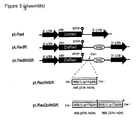
- the INS is incorporated into the reporter construct downstream of the reporter gene sequence. If a termination sequence for protein synthesis (see below) is included in the construct directly following the reporter gene sequence, the INS will be incorporated between this termination sequence and the HIV Rev responsive element (RRE) (see also Fig. 3). According to the invention, one or more INSs may be included in the construct. By repetitive inclusion of INS sequences the "background" described above may be further minimized (in this respect, see also Fig. 3).
- the reporter gene construct preferably also contains a termination signal for protein synthesis downstream of the reporter gene sequence.
- the instability element is derived from the genome of HIV, e.g. from the INS portions of the gag region of HIV, and may for example consist of bases No. 379-1424 of the HIV HXB2R genome (see also Schneider et al ., supra).
- the reporter construct according to the invention finds use in a method for in vitro detection of HIV infected eukaryotic cells.
- the reporter gene construct according to the present invention is introduced into cells, the cells are harvested after a defined period of time, and eventually a determination of the presence/amount of the reporter protein will be carried out.
- a time interval of about 24 h has proven to be particularly advantageous.
- the cells, in which the inventive reporter gene construct is introduced in this case are preferably living human cells, in which Rev and Tat are potentially expressed.
- the reporter gene construct preferably encodes a fluorescent protein wherein the determination of the protein is carried out by means of fluorescence microscopy or FACS.
- Preferred proteins are well known fluorescent proteins like green fluorescent protein (for example, from Aequoria victoria ) or red fluorescent protein from coral; or Ds Red obtained from Clontech. Any other variation of a fluorescent protein may be considered.
- the present invention provides a method of screening for gene sequences for their activity as an instability element or as Rev responsive element (RRE).
- a test sequence is substituted for the instability element or the Rev responsive element (RRE) of the inventive reporter gene construct, cells are transfected with this test reporter gene construct, and eventually the expression of the reporter gene is compared to the expression of the original reporter gene construct in the presence of Tat and Rev.
- the term test sequence encompasses all gene sequences, which theoretically could positively influence the expression and/or synthesis of the reporter gene construct of the present invention. Those test sequences might be derived, for example, from the human genome or from viral genomes.
- such a screening method might be performed by providing to sets of cells, wherein one set is transfected with the inventive (original) reporter gene construct, and the other is transfected with the test reporter gene construct. Afterwards, expression of the reporter gene is compared in both sets of cells. A comparable or even higher expression of the reporter gene in the cells transfected with the test reporter gene construct indicates that the test sequence, which has been substituted for the original Rev-responsive sequences (ARE) and/or INS might have a similar function.
- ARE Rev-responsive sequences
- a reporter construct lacking the ARE can be used to detect novel INS elements, by assaying for diminished production of the reporter protein when comparing with a similar construct lacking the INS or containing the INS in antisense orientation.
- the reporter construct can also be used for functional screening of Rev or Tat mutants or identification of other proteins of cellular or viral origins with similar functions as Tat or Rev. Furthermore, it can be used to identify Tat-responsive promoters of cellular or viral orgin Furthermore, the present invention provides a method of screening for gene sequences which cause the transport out of the nucleus by binding to cellular or other viral shuttle proteins wherein the Rev responsive element of the reporter gene construct according to the invention is replaced by a test sequence and afterwards cells are transfected with this reporter gene construct, and the expression of this test reporter gene is compared to the expression of the original reporter gene construct in the presence of Tat and Rev.
- transgene in this context is defined as a gene (in form of a suitable gene construct), which has been transferred from one species to another.
- an expression vector containing a reporter gene construct according to the present invention an eukaryotic or prokaryotic cell transformed by this expression vector as well as RNA produced by the transcription of one of the expression vectors according to the invention.
- Representative examples of appropriate cells, in which the reporter gene construct is introduced in the above described methods are including bacterial cells, such as Streptococci, Staphylococci, E. coli, Streptomyces and Bacillus subtilis cells; fungal cells, such as yeast cells and Aspergillus cells; insect cells such as Drosophila S2 and Spodoptera Sf9 cells; animal cells such as CHO, COS, HeLa, C127, 3T3, BHK, HEK 293 and Bowes melanoma cells; and plant cells.
- bacterial cells such as Streptococci, Staphylococci, E. coli, Streptomyces and Bacillus subtilis cells
- fungal cells such as yeast cells and Aspergillus cells
- insect cells such as Drosophila S2 and Spodoptera Sf9 cells
- animal cells such as CHO, COS, HeLa, C127, 3T3, BHK, HEK 293 and Bowes melanoma cells
- plant cells
- reporter gene construct for instance, chromosomal, episomal and virus-derived systems, e.g., vectors derived from bacterial plasmids, from bacteriophage, from transposons, from yeast episomes, from insertion elements, from yeast chromosomal elements, from viruses such as baculoviruses, papova viruses, such as SV40, vaccinia viruses, adenoviruses, fowl pox viruses, pseudo-rabies viruses and retroviruses, and vectors derived from combinations thereof, such as those derived from plasmid and bacteriophage genetic elements, such as cosmids and phagemids.
- chromosomal, episomal and virus-derived systems e.g., vectors derived from bacterial plasmids, from bacteriophage, from transposons, from yeast episomes, from insertion elements, from yeast chromosomal elements, from viruses such as baculoviruses, papova viruses, such as SV
- any system or vector which is able to maintain, propagate or express a polynucleotide to produce a polypeptide in a host may be used.
- the appropriate nucleotide sequence may be inserted into an expression system by any of a variety of well-known and routine techniques, such as, for example, those set forth in Sambrook et al., MOLECULAR CLONING, A LABORATORY MANUAL, 2nd Ed., Cold Spring Harbor Laboratory Press, Cold Spring Harbor, N.Y. (1989).
- introduction of the reporter gene construct into the above described cells can be effected by methods described in many standard laboratory manuals, such as Davis et al., Basic Methods in Molecular Biology (1986) and Sambrook et al., Molecular Cloning: A Laboratory Manual, (supra).
- Preferred such methods include, for instance, calcium phosphate transfection, DEAF-dextran mediated transfection, transvection, microinjection, cationic lipid-mediated transfection, electroporation, transduction, scrape loading, ballistic introduction or infection.
- the present invention comprises a functionality test for Rev and Rev fusion proteins prepared in a recombinant manner wherein cells are transfected with a reporter gene construct according to the invention and wherein the cells are co-transfected with an expression plasmid, or the test is carried out in a cell line expressing Tat in a stable manner.
- ARE Rev responsive element
- INSs HIV RNA elements
- the HIV gag gene has been introduced in which several INSs have been identified so far (Schneider et al., 1997).
- the INSs are localized outside of the regions encoding the reporter and therefore do not affect the synthesis of the reporter on a translational level.
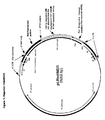
- the reporter construct depicted in Fig. 1 consists of the following elements:
- cells are transfected, microinjected etc. by means of the reporter construct according to the invention, and these cells are harvested and analyzed after a defined time point.
- This time point depends on the amount of plasmid transfected, the cell type, and the amount of Tat and Rev proteins in the cells to be examined. For typical cell culture experiments, a time interval of 24 h will be optimal.
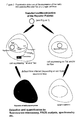
- FIG 4 shows a schematic representation of the Rev-dependence of two reporter constructs by means of FACS analysis.
- HeLa Tat cells were transfected with a reporter construct (upper FACS plots: pLRedINSR; lower FACS plots: pLRed(2xINS)R) and each with a green fluorescent transfection control (left plots) and a green fluorescent Rev fusion protein (right plots).
- Cells which are strongly positive for expression of the red fluorescent reporter are localized high up in the right upper quadrant.
- Transfected cells which are positive only for the constitutively expressed transfection control are localized in the lower right quadrant. Untransfected cells are in the lower left quadrant. It is clearly seen that in the presence of Rev far more reporter protein is expressed and that the two constructs differ in their Rev-dependence (the construct of the lower plots is much more dependent on Rev).
- HeLa cells were transfected with different combinations of the plasmids described and analyzed for the expression of fluorescent proteins.
- HeLa cells were transfected with the constructs described and analyzed by means of FACS analysis:
- Cells were seeded into 60 mm culture dishes and transfected after 24 h with the reporter constructs and a transfection control (GFP), and with the reporter constructs together with an expression construct for a Rev-GFP fusion protein, respectively, using different methods.
- the method used was calcium phosphate co-precipitation (Cell Phect, Amersham Pharmacia) and FuGene (Roche). The results obtained were independent of the method used.
Landscapes
- Health & Medical Sciences (AREA)
- Life Sciences & Earth Sciences (AREA)
- Chemical & Material Sciences (AREA)
- Genetics & Genomics (AREA)
- Organic Chemistry (AREA)
- Engineering & Computer Science (AREA)
- Biophysics (AREA)
- Bioinformatics & Cheminformatics (AREA)
- Biochemistry (AREA)
- Zoology (AREA)
- Molecular Biology (AREA)
- Wood Science & Technology (AREA)
- General Health & Medical Sciences (AREA)
- General Engineering & Computer Science (AREA)
- Biotechnology (AREA)
- Biomedical Technology (AREA)
- Virology (AREA)
- Physics & Mathematics (AREA)
- Plant Pathology (AREA)
- Gastroenterology & Hepatology (AREA)
- Microbiology (AREA)
- Proteomics, Peptides & Aminoacids (AREA)
- Medicinal Chemistry (AREA)
- Micro-Organisms Or Cultivation Processes Thereof (AREA)
- Measuring Or Testing Involving Enzymes Or Micro-Organisms (AREA)
Applications Claiming Priority (2)
| Application Number | Priority Date | Filing Date | Title |
|---|---|---|---|
| DE10130155A DE10130155B3 (de) | 2001-06-22 | 2001-06-22 | Reportergen-Konstrukt zum Nachweis von HIV-Rev und HIV-Tat |
| DE10130155 | 2001-06-22 |
Publications (1)
| Publication Number | Publication Date |
|---|---|
| EP1270744A1 true EP1270744A1 (en) | 2003-01-02 |
Family
ID=7689082
Family Applications (1)
| Application Number | Title | Priority Date | Filing Date |
|---|---|---|---|
| EP02013820A Withdrawn EP1270744A1 (en) | 2001-06-22 | 2002-06-21 | Reporter gene construct for the detection of HIV rev and HIV tat |
Country Status (4)
| Country | Link |
|---|---|
| US (1) | US7183047B2 (enExample) |
| EP (1) | EP1270744A1 (enExample) |
| JP (1) | JP2003111587A (enExample) |
| DE (1) | DE10130155B3 (enExample) |
Cited By (1)
| Publication number | Priority date | Publication date | Assignee | Title |
|---|---|---|---|---|
| EP1687398A4 (en) * | 2003-09-28 | 2008-09-10 | Us Health | HIV-dependent expression enhancers and uses thereof |
Families Citing this family (3)
| Publication number | Priority date | Publication date | Assignee | Title |
|---|---|---|---|---|
| DE10053781B4 (de) * | 2000-10-30 | 2008-07-03 | Geneart Ag | Kernexportreportersystem |
| EP2121984A2 (en) * | 2007-03-16 | 2009-11-25 | 454 Life Sciences Corporation | System and method for detection of hiv drug resistant variants |
| EP3033087A4 (en) | 2013-08-16 | 2017-03-15 | The J. David Gladstone Institutes | Compositions and methods for identifying latently infected cells |
Family Cites Families (6)
| Publication number | Priority date | Publication date | Assignee | Title |
|---|---|---|---|---|
| US5654398A (en) * | 1993-06-03 | 1997-08-05 | The Regents Of The University Of California | Compositions and methods for inhibiting replication of human immunodeficiency virus-1 |
| CA2203832A1 (en) * | 1995-09-08 | 1997-03-13 | Jaime E. Arenas | Screen for compounds with affinity for rna |
| US6225045B1 (en) * | 1996-05-13 | 2001-05-01 | Ribotargets, Ltd. | Assays for screening for inhibitors of HIV |
| US5989814A (en) * | 1997-04-01 | 1999-11-23 | Reagents Of The University Of California | Screening methods in eucaryotic cells |
| WO1999039011A1 (en) * | 1998-01-30 | 1999-08-05 | Duke University | A method of assaying for rna:protein interactions |
| US6573045B1 (en) * | 1998-06-05 | 2003-06-03 | Ribotargets, Ltd. | Methods and kits for discovery of RNA-binding compounds |
-
2001
- 2001-06-22 DE DE10130155A patent/DE10130155B3/de not_active Expired - Fee Related
-
2002
- 2002-06-20 JP JP2002179815A patent/JP2003111587A/ja active Pending
- 2002-06-20 US US10/176,010 patent/US7183047B2/en not_active Expired - Fee Related
- 2002-06-21 EP EP02013820A patent/EP1270744A1/en not_active Withdrawn
Non-Patent Citations (5)
| Title |
|---|
| DORSKY D I ET AL: "DETECTION OF HIV-1 INFECTION WITH A GREEN FLUORESCENT PROTEIN REPORTER SYSTEM", JOURNAL OF ACQUIRED IMMUNE DEFICIENCY SYNDROMES AND HUMAN RETROVIROLOGY, LIPPINCOT-RAVEN, XX, vol. 13, no. 4, 1 December 1996 (1996-12-01), pages 308 - 313, XP000915451, ISSN: 1077-9450 * |
| GERVAIX ALAIN ET AL: "A new reporter cell line to monitor HIV infection and drug susceptibility in vitro.", PROCEEDINGS OF THE NATIONAL ACADEMY OF SCIENCES OF THE UNITED STATES, vol. 94, no. 9, 1997, 1997, pages 4653 - 4658, XP002142660, ISSN: 0027-8424 * |
| HARRISON G S ET AL: "ACTIVATION OF A DIPHTERIA TOXIN A GENE BY EXPRESSION OF HUMAN IMMUNODEFICIENCY VIRUS-1 THAT AND REV PROTEINS IN TRANSFECTED CELLS", HUMAN GENE THERAPY, XX, XX, vol. 2, no. 1, 1991, pages 53 - 60, XP000651800, ISSN: 1043-0342 * |
| POESCHLA E ET AL: "Development of HIV vectors for anti-HIV gene therapy.", PROCEEDINGS OF THE NATIONAL ACADEMY OF SCIENCES OF THE UNITED STATES OF AMERICA. UNITED STATES 15 OCT 1996, vol. 93, no. 21, 15 October 1996 (1996-10-15), pages 11395 - 11399, XP000616290, ISSN: 0027-8424 * |
| SCHNEIDER R ET AL: "Inactivation of the human immunodeficiency virus type 1 inhibitory elements allows rev-independent expression of gag and gag/protease and particle formation", JOURNAL OF VIROLOGY, THE AMERICAN SOCIETY FOR MICROBIOLOGY, US, vol. 71, no. 7, July 1997 (1997-07-01), pages 4892 - 4903, XP002137891, ISSN: 0022-538X * |
Cited By (1)
| Publication number | Priority date | Publication date | Assignee | Title |
|---|---|---|---|---|
| EP1687398A4 (en) * | 2003-09-28 | 2008-09-10 | Us Health | HIV-dependent expression enhancers and uses thereof |
Also Published As
| Publication number | Publication date |
|---|---|
| JP2003111587A (ja) | 2003-04-15 |
| DE10130155B3 (de) | 2004-03-04 |
| US20030092032A1 (en) | 2003-05-15 |
| US7183047B2 (en) | 2007-02-27 |
Similar Documents
| Publication | Publication Date | Title |
|---|---|---|
| Seeber et al. | Escherichia coli β-galactosidase as an in vitro and in vivo reporter enzyme and stable transfection marker in the intracellular protozoan parasite Toxoplasma gondii | |
| US5795737A (en) | High level expression of proteins | |
| AU738156B2 (en) | Viral vectors and their uses | |
| US6025192A (en) | Modified retroviral vectors | |
| US6107477A (en) | Non-optimal Kozaks sequences | |
| Fiordalisi et al. | Mammalian expression vectors for Ras family proteins: generation and use of expression constructs to analyze Ras family function | |
| CA3076270A1 (en) | Retroviral vectors | |
| WO1998012339A9 (en) | Viral vectors and their uses | |
| US6555342B1 (en) | Fusion protein delivery system and uses thereof | |
| EP0646644A2 (en) | Periplasmic membrane-bound system for detecting protein-protein interactions | |
| US6114111A (en) | Mammalian protein interaction cloning system | |
| US6251676B1 (en) | Mammalian cell two-hybrid system | |
| US20040002056A1 (en) | Methods of screening for bioactive agents using cells transformed with self-inactivating viral vectors | |
| US7183047B2 (en) | Reporter gene construct for the detection of HIV Rev and HIV Tat | |
| Hu et al. | Generation of a stable mammalian cell line for simultaneous expression of multiple genes by using 2A peptide-based lentiviral vector | |
| KR100984268B1 (ko) | 조절된 핵산 발현 시스템 | |
| Stull et al. | Simultaneous flow cytometric analyses of enhanced green and yellow fluorescent proteins and cell surface antigens in doubly transduced immature hematopoietic cell populations | |
| US7767455B2 (en) | Nucleus export reporter system | |
| US6902886B1 (en) | Genetic assay for protein nuclear transport | |
| Israel et al. | A bioluminescence assay for gene expression by continuously growing mammalian cells: application for detection of human immunodeficiency virus type 1 (HIV-1) | |
| JP2003159069A (ja) | 異なる2つの選択マーカーからなる融合タンパク質 | |
| WO2005123930A1 (en) | Lentiviral vector | |
| Koken et al. | A sensitive promoter assay based on the transcriptional activator Tat of the HIV-1 virus | |
| AU773277B2 (en) | Viral vectors and their uses | |
| WO1993005185A1 (en) | Method of detecting infectious virus strains |
Legal Events
| Date | Code | Title | Description |
|---|---|---|---|
| PUAI | Public reference made under article 153(3) epc to a published international application that has entered the european phase |
Free format text: ORIGINAL CODE: 0009012 |
|
| AK | Designated contracting states |
Kind code of ref document: A1 Designated state(s): AT BE CH CY DE DK ES FI FR GB GR IE IT LI LU MC NL PT SE TR |
|
| AX | Request for extension of the european patent |
Free format text: AL;LT;LV;MK;RO;SI |
|
| 17P | Request for examination filed |
Effective date: 20030626 |
|
| AKX | Designation fees paid |
Designated state(s): AT BE CH CY DE DK ES FI FR GB GR IE IT LI LU MC NL PT SE TR |
|
| RAP1 | Party data changed (applicant data changed or rights of an application transferred) |
Owner name: HELMHOLTZ ZENTRUM MUENCHEN DEUTSCHES F |
|
| 17Q | First examination report despatched |
Effective date: 20080710 |
|
| STAA | Information on the status of an ep patent application or granted ep patent |
Free format text: STATUS: THE APPLICATION IS DEEMED TO BE WITHDRAWN |
|
| 18D | Application deemed to be withdrawn |
Effective date: 20100205 |