EP1264850B1 - Polyurethane foams having improved heat sag and a process for their production - Google Patents
Polyurethane foams having improved heat sag and a process for their production Download PDFInfo
- Publication number
- EP1264850B1 EP1264850B1 EP02011575A EP02011575A EP1264850B1 EP 1264850 B1 EP1264850 B1 EP 1264850B1 EP 02011575 A EP02011575 A EP 02011575A EP 02011575 A EP02011575 A EP 02011575A EP 1264850 B1 EP1264850 B1 EP 1264850B1
- Authority
- EP
- European Patent Office
- Prior art keywords
- isocyanate
- weight
- reactive component
- groups
- reactive
- Prior art date
- Legal status (The legal status is an assumption and is not a legal conclusion. Google has not performed a legal analysis and makes no representation as to the accuracy of the status listed.)
- Expired - Lifetime
Links
Images


Classifications
-
- C—CHEMISTRY; METALLURGY
- C08—ORGANIC MACROMOLECULAR COMPOUNDS; THEIR PREPARATION OR CHEMICAL WORKING-UP; COMPOSITIONS BASED THEREON
- C08G—MACROMOLECULAR COMPOUNDS OBTAINED OTHERWISE THAN BY REACTIONS ONLY INVOLVING UNSATURATED CARBON-TO-CARBON BONDS
- C08G18/00—Polymeric products of isocyanates or isothiocyanates
- C08G18/06—Polymeric products of isocyanates or isothiocyanates with compounds having active hydrogen
- C08G18/28—Polymeric products of isocyanates or isothiocyanates with compounds having active hydrogen characterised by the compounds used containing active hydrogen
- C08G18/65—Low-molecular-weight compounds having active hydrogen with high-molecular-weight compounds having active hydrogen
- C08G18/66—Compounds of groups C08G18/42, C08G18/48, or C08G18/52
- C08G18/6666—Compounds of group C08G18/48 or C08G18/52
- C08G18/6696—Compounds of group C08G18/48 or C08G18/52 with compounds of group C08G18/36 or hydroxylated esters of higher fatty acids of C08G18/38
-
- C—CHEMISTRY; METALLURGY
- C08—ORGANIC MACROMOLECULAR COMPOUNDS; THEIR PREPARATION OR CHEMICAL WORKING-UP; COMPOSITIONS BASED THEREON
- C08G—MACROMOLECULAR COMPOUNDS OBTAINED OTHERWISE THAN BY REACTIONS ONLY INVOLVING UNSATURATED CARBON-TO-CARBON BONDS
- C08G18/00—Polymeric products of isocyanates or isothiocyanates
- C08G18/06—Polymeric products of isocyanates or isothiocyanates with compounds having active hydrogen
- C08G18/70—Polymeric products of isocyanates or isothiocyanates with compounds having active hydrogen characterised by the isocyanates or isothiocyanates used
- C08G18/72—Polyisocyanates or polyisothiocyanates
- C08G18/77—Polyisocyanates or polyisothiocyanates having heteroatoms in addition to the isocyanate or isothiocyanate nitrogen and oxygen or sulfur
- C08G18/78—Nitrogen
-
- C—CHEMISTRY; METALLURGY
- C08—ORGANIC MACROMOLECULAR COMPOUNDS; THEIR PREPARATION OR CHEMICAL WORKING-UP; COMPOSITIONS BASED THEREON
- C08G—MACROMOLECULAR COMPOUNDS OBTAINED OTHERWISE THAN BY REACTIONS ONLY INVOLVING UNSATURATED CARBON-TO-CARBON BONDS
- C08G18/00—Polymeric products of isocyanates or isothiocyanates
- C08G18/06—Polymeric products of isocyanates or isothiocyanates with compounds having active hydrogen
- C08G18/28—Polymeric products of isocyanates or isothiocyanates with compounds having active hydrogen characterised by the compounds used containing active hydrogen
- C08G18/30—Low-molecular-weight compounds
- C08G18/36—Hydroxylated esters of higher fatty acids
-
- C—CHEMISTRY; METALLURGY
- C08—ORGANIC MACROMOLECULAR COMPOUNDS; THEIR PREPARATION OR CHEMICAL WORKING-UP; COMPOSITIONS BASED THEREON
- C08G—MACROMOLECULAR COMPOUNDS OBTAINED OTHERWISE THAN BY REACTIONS ONLY INVOLVING UNSATURATED CARBON-TO-CARBON BONDS
- C08G18/00—Polymeric products of isocyanates or isothiocyanates
- C08G18/06—Polymeric products of isocyanates or isothiocyanates with compounds having active hydrogen
- C08G18/28—Polymeric products of isocyanates or isothiocyanates with compounds having active hydrogen characterised by the compounds used containing active hydrogen
- C08G18/40—High-molecular-weight compounds
- C08G18/48—Polyethers
- C08G18/4804—Two or more polyethers of different physical or chemical nature
- C08G18/4816—Two or more polyethers of different physical or chemical nature mixtures of two or more polyetherpolyols having at least three hydroxy groups
-
- C—CHEMISTRY; METALLURGY
- C08—ORGANIC MACROMOLECULAR COMPOUNDS; THEIR PREPARATION OR CHEMICAL WORKING-UP; COMPOSITIONS BASED THEREON
- C08J—WORKING-UP; GENERAL PROCESSES OF COMPOUNDING; AFTER-TREATMENT NOT COVERED BY SUBCLASSES C08B, C08C, C08F, C08G or C08H
- C08J9/00—Working-up of macromolecular substances to porous or cellular articles or materials; After-treatment thereof
-
- C—CHEMISTRY; METALLURGY
- C08—ORGANIC MACROMOLECULAR COMPOUNDS; THEIR PREPARATION OR CHEMICAL WORKING-UP; COMPOSITIONS BASED THEREON
- C08G—MACROMOLECULAR COMPOUNDS OBTAINED OTHERWISE THAN BY REACTIONS ONLY INVOLVING UNSATURATED CARBON-TO-CARBON BONDS
- C08G2110/00—Foam properties
- C08G2110/0025—Foam properties rigid
-
- C—CHEMISTRY; METALLURGY
- C08—ORGANIC MACROMOLECULAR COMPOUNDS; THEIR PREPARATION OR CHEMICAL WORKING-UP; COMPOSITIONS BASED THEREON
- C08J—WORKING-UP; GENERAL PROCESSES OF COMPOUNDING; AFTER-TREATMENT NOT COVERED BY SUBCLASSES C08B, C08C, C08F, C08G or C08H
- C08J2201/00—Foams characterised by the foaming process
- C08J2201/02—Foams characterised by the foaming process characterised by mechanical pre- or post-treatments
- C08J2201/022—Foams characterised by the foaming process characterised by mechanical pre- or post-treatments premixing or pre-blending a part of the components of a foamable composition, e.g. premixing the polyol with the blowing agent, surfactant and catalyst and only adding the isocyanate at the time of foaming
-
- C—CHEMISTRY; METALLURGY
- C08—ORGANIC MACROMOLECULAR COMPOUNDS; THEIR PREPARATION OR CHEMICAL WORKING-UP; COMPOSITIONS BASED THEREON
- C08J—WORKING-UP; GENERAL PROCESSES OF COMPOUNDING; AFTER-TREATMENT NOT COVERED BY SUBCLASSES C08B, C08C, C08F, C08G or C08H
- C08J2205/00—Foams characterised by their properties
- C08J2205/04—Foams characterised by their properties characterised by the foam pores
- C08J2205/052—Closed cells, i.e. more than 50% of the pores are closed
-
- C—CHEMISTRY; METALLURGY
- C08—ORGANIC MACROMOLECULAR COMPOUNDS; THEIR PREPARATION OR CHEMICAL WORKING-UP; COMPOSITIONS BASED THEREON
- C08J—WORKING-UP; GENERAL PROCESSES OF COMPOUNDING; AFTER-TREATMENT NOT COVERED BY SUBCLASSES C08B, C08C, C08F, C08G or C08H
- C08J2205/00—Foams characterised by their properties
- C08J2205/10—Rigid foams
-
- C—CHEMISTRY; METALLURGY
- C08—ORGANIC MACROMOLECULAR COMPOUNDS; THEIR PREPARATION OR CHEMICAL WORKING-UP; COMPOSITIONS BASED THEREON
- C08J—WORKING-UP; GENERAL PROCESSES OF COMPOUNDING; AFTER-TREATMENT NOT COVERED BY SUBCLASSES C08B, C08C, C08F, C08G or C08H
- C08J2375/00—Characterised by the use of polyureas or polyurethanes; Derivatives of such polymers
- C08J2375/04—Polyurethanes
Definitions
- the present invention relates to polyurethane foams having a closed cell content of at least 90% and improved heat sag properties produced by reaction injection molding ("RIM”) and to a process for the production of such foams.
- RIM reaction injection molding
- an organic diisocyanate or polyisocyanate is reacted with an isocyanate-reactive component that includes at least one (generally more than one) polyol, a catalyst, a cross-linking agent and other processing aids.
- the polyols used are those which are typically derived from sources such as sucrose, amines, glycerine, ethylene glycol, etc. Many of these starting materials are derived from increasingly expensive petrochemicals. It would therefore be advantageous to substitute some or all of these polyols with polyols derived from less expensive starting materials.
- renewable sources such as vegetable oils (e.g., soybean oil, castor oil, linseed oil, tung oil, peanut oil, sunflower oil) and fish oils.
- U.S. Patent 2,787,601 discloses cellular, flexible polyurethanes made with hydroxyl-group containing fatty acid glycerides. More specifically, a simple (i.e., unmodified) and untreated hydroxyl-group containing fatty acid glyceride such as castor oil is reacted with an aromatic diisocyanate to form an isocyanate-terminated prepolymer. This prepolymer is then reacted with water to form a cellular foam having reported apparent densities of from 2.8 to 6.5 pounds per cubic foot.
- U.S. Patent 2,833,730 also discloses cellular polyurethanes produced from a polyol based on a fatty acid triglyceride which reportedly do not have the shrinkage problems encountered with similar, prior art polyurethanes made from such polyols. More specifically, a mixture of a low molecular weight polyhydroxyl compound and a hydroxyl group-containing triglyceride (unmodified and untreated) is reacted with an aromatic diisocyanate to form an isocyanate-terminated prepolymer. This prepolymer is then reacted with water to form the desired polyurethane product.
- the ratio of the low molecular weight polyhydroxyl compound to the hydroxyl-group containing triglyceride should be at least 0.6 to 1 in order to obtain a polyurethane having the improved shrinkage property.
- Unmodified vegetable oils have not, however, been used as a major reaction component to produce rigid polyurethane foams by a RIM process.
- unmodified vegetable oils as a major substituent of a polyol component used to produce rigid polyurethane foams is, however, disadvantageous because the unmodified vegetable oil tends to migrate to the polyurethane surface over time and thereby increase the potential for problems after a molded part is painted and reduction of physical properties.
- U.S. Patent 4,742,087 discloses a process in which the epoxidized oils are partially converted by alcoholysis or transesterification to alkyl ester polyols which are used to produce isocyanate-terminated prepolymers. These prepolymers are subsequently reacted to produce polyurethane foams.
- U.S. Patent 5,482,980 discloses a process for the production of flexible open-celled, urethane foams in which epoxidized soybean oil is included in the polyether polyol reaction component.
- modified vegetable oils is also commercially disadvantageous due to the energy, materials and time required for epoxidation and any subsequent conversion, e.g., to a polyester polyol.
- U.S. Patent 6,180,686 One alternative to such chemically modified vegetable oils is disclosed in U.S. Patent 6,180,686 .
- urethane foams and elastomers are produced by reacting an isocyanate with a vegetable oil which has been treated by passing air through the oil to remove impurities and thicken the oil (referred to as "blown oil") in the presence of a multifunctional alcohol crosslinking agent such as butanediol or ethylene glycol.
- the blown oil is used as the sole isocyanate-reactive component.
- No petroleum-based polyester or polyether polyol is included. Rigid, closed-celled polyurethane foams are not, however, taught to be producible with the disclosed blown vegetable oils.
- rigid, closed cell, polyurethane foams may be produced by a RIM process using as a polyol component an unmodified renewable source such as a vegetable oil without sacrificing the physical properties of that rigid foam.
- a blown bio-based oil also referred to herein as a "bio-based polyol” or “blown vegetable oil” or a “polymerized vegetable oil”
- soybean oil in an isocyanate-reactive component to be used in a RIM process.
- the present invention relates to a RIM process for the production of rigid, closed-cell polyurethane foams and particularly to the use of an isocyanate-reactive component in which up to 30% by weight is a blown bio-based oil such as soybean oil.
- the invention also relates to the rigid, closed cell polyurethane foams produced by this process.
- suitable bio-based oils which may be used in the present invention after being blown include: vegetable oils such as soybean oil, rapeseed or canola oil, peanut oil, cottonseed oil, olive oil, grapeseed oil, coconut oil, palm oil, linseed oil, and castor oil; fish oils and oils derived from animal fats. Soybean oil and castor oil are preferred. Soybean oil is particularly preferred. Such blown oils are described in U.S. Patent 6,180,686 and are commercially available from Urethane Soy Systems under the names SoyOyl P38.GC5 bio-based polyol and SoyOyl P38-05 bio-based polyol and SoyOyl P56.05 bio-based polyol.
- vegetable oils such as soybean oil, rapeseed or canola oil, peanut oil, cottonseed oil, olive oil, grapeseed oil, coconut oil, palm oil, linseed oil, and castor oil
- fish oils and oils derived from animal fats Soybean
- the other constituents of the isocyanate-reactive component useful in combination with the required blown vegetable oil include any of the known isocyanate-reactive materials, chain extenders, cross-linking agents, catalysts, foaming agents, additives and processing aids commonly used in RIM processes.
- Suitable isocyanate-reactive compounds useful in combination with the required blown vegetable oil include compounds having a number average molecular weight of from 400 to about 10,000, preferably from about 470 to about 8,000, most preferably from about 1,000 to about 6,000 and contain amino groups, hydroxyl groups, thiol groups, or a combination thereof. These isocyanate-reactive compounds generally contain from about 1 to about 8 isocyanate-reactive groups, preferably from about 2 to about 6 isocyanate-reactive groups. Suitable such compounds include polyethers, polyesters, polyacetals, polycarbonates, polyesterethers, polyester carbonates, polythioethers, polyamides, polyesteramides, polysiloxanes, polybutadienes, and polyacetones. Particularly preferred isocyanate-reactive compounds contain 2 to 4 reactive amino or hydroxyl groups.
- isocyanate-reactive compounds are generally included in the isocyanate-reactive component in an amount of from about 5 to about 80% by weight (based on total weight of isocyanate-reactive component), preferably from about 5 to about 60% by weight, most preferably from about 10 to about 50% by weight.
- Suitable hydroxyl-containing polyethers are known and commercially available.
- Such polyether polyols can be prepared, for example, by the polymerization of epoxides such as ethylene oxide, propylene oxide, butylene oxide, tetrahydrofuran, styrene oxide, or epichlorohydrin, optionally in the presence of BF 3 , or by chemical addition of such epoxides, optionally as mixtures or successively, to starting components containing reactive hydrogen atoms, such as water, alcohols, or amines.
- epoxides such as ethylene oxide, propylene oxide, butylene oxide, tetrahydrofuran, styrene oxide, or epichlorohydrin
- starting components include ethylene glycol, 1,2- or 1,3-propanediol, 1,2-, 1,3-, or 1,4-butanediol, glycerin, trimethylolpropane, pentaerythritol, 4,4'-dihydroxydiphenylpropane, aniline, 2,4- or 2,6-diaminotoluene, ammonia, ethanolamine, triethanolamine, or ethylene diamine.
- Sucrose polyethers may also be used. Polyethers that contain predominantly primary hydroxyl groups (up to about 90% by weight, based on all of the hydroxyl groups in the polyether) are preferred.
- Polyethers modified by vinyl polymers of the kind obtained, for example, by the polymerization of styrene and acrylonitrile in the presence of polyethers are also suitable, as are polybutadienes containing hydroxyl groups.
- Particularly preferred polyethers include polyoxyalkylene polyether polyols, such as polyoxyethylene diol, polyoxypropylene diol, polyoxybutylene diol, and polytetramethylene diol.
- Hydroxyl-containing polyesters are also suitable for use in the isocyanate-reactive component.
- Suitable hydroxyl-containing polyesters include reaction products of polyhydric alcohols (preferably diols), optionally with the addition of trihydric alcohols, and polybasic (preferably dibasic) carboxylic acids.
- polyhydric alcohols preferably diols
- polybasic preferably dibasic carboxylic acids.
- the corresponding polycarboxylic acid anhydrides or corresponding polycarboxylic acid esters of lower alcohols or mixtures thereof may be used for preparing the polyesters.
- the polycarboxylic acids may be aliphatic, cycloaliphatic, aromatic, or heterocyclic and may be substituted, e.g., by halogen atoms, and/or unsaturated.
- Suitable polycarboxylic acids include succinic acid, adipic acid, suberic acid, azelaic acid, sebacic acid, phthalic acid, isophthalic acid, trimellitic acid, phthalic acid anhydride, tetrahydrophthalic acid anhydride, hexahydrophthalic acid anhydride, tetrachlorophthalic acid anhydride, endomethylene tetrahydrophthalic acid anhydride, glutaric acid anhydride, maleic acid, maleic acid anhydride, fumaric acid, dimeric and trimeric fatty acids, dimethyl terephthalic, and terephthalic acid bis-glycol esters.
- Suitable polyhydric alcohols include ethylene glycol, 1,2- and 1,3-propanediol, 1,4- and 2,3-butanediol, 1,6-hexanediol, 1,8-octanediol, neopentyl glycol, 1,3- and 1,4-bis(hydroxymethyl)cyclohexane, 2-methyl-1,3-propanediol, glycerol, trimethylolpropane, 1,2,6-hexanetriol, 1,2,4-butanetriol, trimethylolethane, pentaerythritol, quinnitol, mannitol, sorbitol, methyl glycoside, diethylene glycol, triethylene glycol, tetraethylene glycol, polyethylene glycols, dipropylene glycol, polypropylene glycols, dibutylene glycol, and polybutylene glycols.
- polyesters may also contain a proportion of carboxyl end groups.
- Polyesters of lactones, such as ⁇ -caprolactone, or of hydroxycarboxylic acids, such as ⁇ -hydroxycaproic acid may also be used.
- Hydrolytically stable polyesters are preferably used in order to obtain the greatest benefit relative to the hydrolytic stability of the final product.
- Preferred polyesters include polyesters obtained from adipic acid or isophthalic acid and straight chained or branched diols, as well as lactone polyesters, preferably those based on caprolactone and diols.
- Suitable catalysts include tertiary amines and metal compounds known in the art.
- Suitable tertiary amine catalysts include triethylamine, tributylamine, N-methylmorpholine, N-ethylmorpholine, N,N,N',N'-tetramethylethylene diamine, pentamethyldiethylene triamine, and higher homologs, 1,4-diazabicyclo[2.2.2]octane, N-methyl-N'-(dimethylaminoethyl)piperazine, bis(dimethylaminoalkyl)piperazines, N,N-dimethylbenzylamine, N,N-dimethylcyclohexylamine, N,N-diethylbenzylamine, bis(N,N-diethylaminoethyl) adipate, N,N,N',N'-tetramethyl-1,3-butanediamine, N,N-dimethyl- ⁇ -phen
- Patent 3,330,782 tertiary amines containing amide groups (preferably formamide groups).
- the catalysts used may also be the known Mannich bases of secondary amines (such as dimethylamine) and aldehydes (preferably formaldehyde) or ketones (such as acetone) and phenols.
- Suitable catalysts also include certain tertiary amines containing isocyanate reactive hydrogen atoms.
- examples of such catalysts include triethanolamine, triisopropanolamine, N-methyldiethanolamine, N-ethyldiethanolamine, N,N-dimethylethanolamine, their reaction products with alkylene oxides (such as propylene oxide and/or ethylene oxide) and secondary-tertiary amines.
- Suitable catalysts include organic metal compounds, especially organic tin, bismuth, and zinc compounds.
- Suitable organic tin compounds include those containing sulfur, such as dioctyl tin mercaptide and, preferably, tin(II) salts of carboxylic acids, such as tin(II) acetate, tin(II) octoate, tin(II) ethylhexoate, and tin(II) laurate, as well as tin(IV) compounds, such as dibutyltin dilaurate, dibutyltin dichloride, dibutyltin diacetate, dibutytin maleate, and dioctyltin diacetate.
- the catalyst is generally included in the isocyanate-reactive component in an amount of from about 0.01 to about 7% by weight, based on total weight of isocyanate-reactive component, preferably from about 0.5 to about 6% by weight, most preferably from about 1 to about 5% by weight.
- Suitable blowing agents for use in the preparation of polyurethane foams include water and/or readily volatile organic substances.
- Organic blowing agents include acetone, ethyl acetate, methanol, ethanol, low-boiling hydrocarbons (such as butane, hexane, or heptane) or fluorocarbons, chlorofluorocarbons, hydrochlorofluorocarbons, or other halogen-substituted alkanes (such as methylene chloride, chloroform, ethylidene chloride, vinylidene chloride, monofluorotrichloro-methane, chlorodifluoromethane, and dichlorodifluoromethane), diethyl ether, or carboxylic acids (such as lactic acid, citric acid, and malonic acid), as well as carbon dioxide generated by the hydrolysis of isocyanate groups.
- a blowing effect may also be obtained by adding compounds which decompose at temperatures above room
- additives which may optionally be included in the isocyanate-reactive component of the invention and include, for example, flame retardants, internal mold release agents, surfactants, acid scavengers, water scavengers, cell regulators, pigments, dyes, UV stabilizers, plasticizers, fungistatic or bacteriostatic substances, and fillers.
- Suitable flame retardants include phosphonates, phosphites, and phosphates (such as dimethyl methylphosphonate, ammonium polyphosphate, and various cyclic phosphate and phosphonate esters known in the art); halogen-containing compounds known in the art (such as brominated diphenyl ether and other brominated aromatic compounds); melamine; antimony oxides (such as antimony pentoxide and antimony trioxide); zinc compounds (such as various known zinc borates); aluminum compounds (such as alumina trihydrate); and magnesium compounds (such as magnesium hydroxide).
- phosphonates such as dimethyl methylphosphonate, ammonium polyphosphate, and various cyclic phosphate and phosphonate esters known in the art
- halogen-containing compounds such as brominated diphenyl ether and other brominated aromatic compounds
- melamine antimony oxides (such as antimony pentoxide and antimony trioxide)
- zinc compounds such as various known zinc borates
- Water scavengers are compounds that maintain a low water content in the compositions of the invention. Suitable water scavengers are described, for example, in U.S. Patents 3,755,222 and 4,695,618 . Examples of suitable water scavengers include alkali aluminosilicates (available as BAYLITH L, BAYLITH T, and BAYLITH W powders or pastes from Bayer AG, Germany) and chemically reacting water scavengers (such as ZOLDINE MS-Plus from Angus Chemical Company).
- alkali aluminosilicates available as BAYLITH L, BAYLITH T, and BAYLITH W powders or pastes from Bayer AG, Germany
- chemically reacting water scavengers such as ZOLDINE MS-Plus from Angus Chemical Company.
- the isocyanate-reactive compositions of the present invention can be used for the preparation of various urethane-based products by reaction injection molding ("RIM").
- RIM reaction injection molding
- polyurethane also refers to polyureas and polyurethane polyurea hybrids.
- the isocyanate-reactive component is allowed to react with an organic polyisocyanate.
- Suitable polyisocyanates are known in the art. Suitable polyisocyanates can be unmodified isocyanates, modified polyisocyanates, or isocyanate prepolymers. Suitable organic polyisocyanates include aliphatic, cycloaliphatic, araliphatic, aromatic, and heterocyclic polyisocyanates of the type described, for example, by W. Siefken in Justus Liebigs Annalen der Chemie, 562, pages 75 to 136 .
- Suitable isocyanates include ethylene diisocyanate; 1,4-tetramethylene diisocyanate; 1,6- hexamethylene diisocyanate; 1,12-dodecane diisocyanate; cyclobutane-1,3-diisocyanate; cyclohexane-1,3-and -1,4-diisocyanate, and mixtures of these isomers; 1-isocyanato-3,3,5-trimethyl-5-isocyanatomethyl-cyclohexane ("isophorone diisocyanate”); 2,4- and 2,6-hexahydrotoluene diisocyanate and mixtures of these isomers; dicyclohexylmethane-4,4'-diisocyanate ("hydrogenated MDI", or "HMDI”); 1,3- and 1,4-phenylene diisocyanate; 2,4- and 2,6-toluene diisocyanate and mixtures of these isomers
- isocyanate-containing distillation residues accumulating in the production of isocyanates on a commercial scale, optionally in solution in one or more of the polyisocyanates mentioned above. It is also possible to use mixtures of the polyisocyanates described above.
- isocyanate prepolymers prepared by reaction of any of the above polyisocyanates with a substoichiometric amount of an isocyanate-reactive compound are also possible.
- preferred isocyanate-reactive compositions of the invention include: (1) from 0.5 to 30% by weight (more preferably from 5 to 25% by weight, most preferably from 10 to 20% by weight) of blown bio-based oil; (2) from 5 to 80% by weight (more preferably from 5 to 60% by weight) of a polyether polyol having a molecular weight of at least 400; (3) from 1 to 75% by weight (more preferably from 10 to 65% by weight) of chain extender or crosslinker; (4) from 0.05 to 7% by weight (more preferably from 0.1 to 6% by weight) of blowing agent; and (5) from 0.01 to 7% by weight (more preferably from 0.5 to 6% by weight) of catalyst, all amounts being based on the total amount of materials present in the isocyanate-reactive component.
- Other, optional additives, if included, are generally used in an amount of from 1 to 30% by weight, based on total weight of isocyan
- the polyurethane foams produced in accordance with the present invention are rigid foams having a closed cell content of at least 90%, preferably at least 95%, most preferably approximately 100%. These rigid foams have densities of from 0.128 to 0.88 g/m 3 (8 to 55 Ibs/ft 3 ), preferably from 0.24 to 0.88 g/m 3 (15 to 55), most preferably from 0.40 to 0.72 g/m 3 (25 to 45). These foams have a Shore D hardness of at least 40, preferably from 50-75.
- TH Thickness Measured (reported in cm (inches))
- D Density Determined in accordance with ASTM D 3574 (reported in kg/m 3 (lb/ft 3 ))
- CCC Closed Cell Content (reported in %) SD1 Hardness
- Shore D Determined in accordance with ASTM D 2240 1 second SD5 Hardness
- Shore D Determined in accordance with ASTM D 2240 5 seconds
- Cl Charpy Impact Determined by modified ASTM D 256 in which sample was impacted on 0.5 inch sample face (reported in kJ/m 2 (ft-lb/in 2 ))
- FM Flex Modulus Determined in accordance with ASTM D 790 (reported in kPa (psi) x 10)
- FS Flex Strength Determined in accordance with ASTM D 790 (reported in kPa (psi))
- TS Tensile Strength Determined
- the isocyanate-reactive component was then reacted with ISOCYANATE A in an amount such that the Isocyanate Index was 110 using a Cannon HE-120 RIM machine.
- the reaction mixture was introduced into an aluminum plaque mold. The properties of the molded article are reported in Table 6.
- Examples illustrate polyurethane foams produced from foam-forming mixtures in: (1) no blown soybean oil was included in the isocyanate-reactive component (Examples 19-22); (2) approximately 25% of the lower molecular weight polyether polyol was replaced with blown soybean oil (Examples 23-26); and (3) approximately 50% of the lower molecular weight polyether polyol was replaced with blown soybean oil (Examples 27-30). Plaques having different densities were prepared from each of these mixtures.
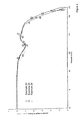
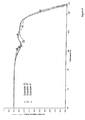
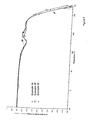
- TMA analysis was also conducted on each of the plaques produced in Examples 19-30 using a Perkin Elmer TMA7 in the penetration mode.
- the plaques were heated to temperatures of from -50°C to 250°C at 5°C per minute. Liquid nitrogen was used as the coolant and helium gas was used as the purge. The force on the probe was 500 mN.
- Table 8 The results are this analysis are given in Table 8 below and are graphically presented in Figures 2 (plaques from Examples 31, 35 and 39), 3 (plaques from Examples 32, 36 and 40), 4 (plaques from Examples 33, 37 and 41) and 5 (plaques from Examples 34, 38 and 42).
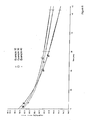
- Plaques produced in accordance with Examples 32, 36 and 40 were also subjected to TMA analysis using a Perkin Elmer TMA7 in the penetration mode using liquid nitrogen as the coolant and helium as the purge with a force on the penetration probe of 500 mN while being heated from 0°C to 120°C at 10°C/min. and held isothermally for 30 minutes. The total penetration of the probe over the entire run was measured and is reported as ⁇ Height in the following Table 9. The results of this analysis are reported in Table 9 and graphically presented in Figure 6.
- Table 9 EXAMPLE D ⁇ Height Slope (%penetration/ min) 32 561 (35) 5.594 0.038 36 561 (35) 5.315 0.025 40 561 (35) 5.194 0.021
Landscapes
- Chemical & Material Sciences (AREA)
- Health & Medical Sciences (AREA)
- Chemical Kinetics & Catalysis (AREA)
- Medicinal Chemistry (AREA)
- Polymers & Plastics (AREA)
- Organic Chemistry (AREA)
- Engineering & Computer Science (AREA)
- Materials Engineering (AREA)
- Polyurethanes Or Polyureas (AREA)
- Manufacture Of Porous Articles, And Recovery And Treatment Of Waste Products (AREA)
- Biological Depolymerization Polymers (AREA)
Applications Claiming Priority (2)
| Application Number | Priority Date | Filing Date | Title |
|---|---|---|---|
| US876778 | 2001-06-07 | ||
| US09/876,778 US20030083394A1 (en) | 2001-06-07 | 2001-06-07 | Polyurethane foams having improved heat sag and a process for their production |
Publications (2)
| Publication Number | Publication Date |
|---|---|
| EP1264850A1 EP1264850A1 (en) | 2002-12-11 |
| EP1264850B1 true EP1264850B1 (en) | 2007-09-19 |
Family
ID=25368559
Family Applications (1)
| Application Number | Title | Priority Date | Filing Date |
|---|---|---|---|
| EP02011575A Expired - Lifetime EP1264850B1 (en) | 2001-06-07 | 2002-05-27 | Polyurethane foams having improved heat sag and a process for their production |
Country Status (16)
| Country | Link |
|---|---|
| US (2) | US20030083394A1 (https=) |
| EP (1) | EP1264850B1 (https=) |
| JP (1) | JP2003026757A (https=) |
| KR (1) | KR20020093586A (https=) |
| CN (1) | CN1390869A (https=) |
| AT (1) | ATE373684T1 (https=) |
| AU (1) | AU4583302A (https=) |
| BR (1) | BR0202107A (https=) |
| CA (1) | CA2388585C (https=) |
| DE (1) | DE60222496T2 (https=) |
| DK (1) | DK1264850T3 (https=) |
| ES (1) | ES2294064T3 (https=) |
| HU (1) | HUP0201931A3 (https=) |
| IL (1) | IL149983A0 (https=) |
| NZ (1) | NZ519353A (https=) |
| RU (1) | RU2002114915A (https=) |
Families Citing this family (73)
| Publication number | Priority date | Publication date | Assignee | Title |
|---|---|---|---|---|
| US6180686B1 (en) | 1998-09-17 | 2001-01-30 | Thomas M. Kurth | Cellular plastic material |
| US20020058774A1 (en) | 2000-09-06 | 2002-05-16 | Kurth Thomas M. | Transesterified polyol having selectable and increased functionality and urethane material products formed using the polyol |
| US6962636B2 (en) | 1998-09-17 | 2005-11-08 | Urethane Soy Systems Company, Inc. | Method of producing a bio-based carpet material |
| US20030191274A1 (en) | 2001-10-10 | 2003-10-09 | Kurth Thomas M. | Oxylated vegetable-based polyol having increased functionality and urethane material formed using the polyol |
| US6979477B2 (en) * | 2000-09-06 | 2005-12-27 | Urethane Soy Systems Company | Vegetable oil-based coating and method for application |
| US8575226B2 (en) | 1998-09-17 | 2013-11-05 | Rhino Linings Corporation | Vegetable oil-based coating and method for application |
| US7063877B2 (en) | 1998-09-17 | 2006-06-20 | Urethane Soy Systems Company, Inc. | Bio-based carpet material |
| US20090223620A1 (en) * | 1998-09-17 | 2009-09-10 | Kurth Thomas M | Method of producing a bio-based carpet material |
| US20030083394A1 (en) * | 2001-06-07 | 2003-05-01 | Clatty Jan L. | Polyurethane foams having improved heat sag and a process for their production |
| US7842746B2 (en) * | 2002-05-02 | 2010-11-30 | Archer-Daniels-Midland Company | Hydrogenated and partially hydrogenated heat-bodied oils and uses thereof |
| US8293808B2 (en) * | 2003-09-30 | 2012-10-23 | Cargill, Incorporated | Flexible polyurethane foams prepared using modified vegetable oil-based polyols |
| US7763341B2 (en) * | 2004-01-23 | 2010-07-27 | Century-Board Usa, Llc | Filled polymer composite and synthetic building material compositions |
| DE102004010809A1 (de) * | 2004-03-05 | 2005-09-22 | Bayer Materialscience Ag | Flexible Formteile aus geschäumtem Polyurethan und ihre Verwendung |
| US20050282921A1 (en) * | 2004-06-18 | 2005-12-22 | Ford Global Technologies, Llc | Automotive grade, flexible polyurethane foam and method for making the same |
| US20050287349A1 (en) * | 2004-06-23 | 2005-12-29 | Yu Poli C | Method for coating coils |
| CN101111353B (zh) | 2004-06-24 | 2011-09-28 | 世纪-博得美国公司 | 用于三维泡沫产品的连续成型设备 |
| US7786239B2 (en) * | 2004-06-25 | 2010-08-31 | Pittsburg State University | Modified vegetable oil-based polyols |
| US7794224B2 (en) | 2004-09-28 | 2010-09-14 | Woodbridge Corporation | Apparatus for the continuous production of plastic composites |
| US7465757B2 (en) * | 2004-10-15 | 2008-12-16 | Danisco A/S | Foamed isocyanate-based polymer, a mix and process for production thereof |
| JP2008517086A (ja) * | 2004-10-15 | 2008-05-22 | ダニスコ エイ/エス | 発泡イソシアネートベースのポリマー、その製造のためのミックス及び方法 |
| US20070185223A1 (en) * | 2005-02-18 | 2007-08-09 | Basf Aktiengesellschaft | Tin and transition metal free polyurethane foams |
| EP1856023A4 (en) * | 2005-03-03 | 2010-08-04 | South Dakota Soybean Processor | NOVEL POLYOLS DERIVED FROM AN OXIDATION PROCESS FROM A PLANT OIL |
| US20060276614A1 (en) * | 2005-04-12 | 2006-12-07 | Niemann Lance K | Bio-based, multipurpose adhesive |
| US20060235100A1 (en) * | 2005-04-13 | 2006-10-19 | Kaushiva Bryan D | Polyurethane foams made with vegetable oil hydroxylate, polymer polyol and aliphatic polyhydroxy alcohol |
| JP2008539314A (ja) | 2005-04-25 | 2008-11-13 | カーギル インコーポレイテッド | オリゴマーポリオールを含むポリウレタン発泡体 |
| US7700661B2 (en) * | 2005-05-05 | 2010-04-20 | Sleep Innovations, Inc. | Prime foam containing vegetable oil polyol |
| EP1921099B1 (en) * | 2005-08-12 | 2012-09-19 | Mitsui Chemicals, Inc. | Composition for polyurethane foam, polyurethane foam obtained from the composition, and use thereof |
| KR100944893B1 (ko) * | 2005-08-12 | 2010-03-03 | 미쓰이 가가쿠 가부시키가이샤 | 폴리우레탄 폼용 조성물, 상기 조성물로부터 얻어지는폴리우레탄 폼 및 그의 용도 |
| US20070123597A1 (en) * | 2005-11-29 | 2007-05-31 | Ford Global Technologies, Llc | Encapsulated flexible polyurethane foam and method for making polyol to form foam |
| US20070129451A1 (en) * | 2005-12-01 | 2007-06-07 | Niemann Lance K | Bio-based, insulating foam |
| US20070135536A1 (en) * | 2005-12-14 | 2007-06-14 | Board Of Trustees Of Michigan State University | Biobased compositions from distillers' dried grains with solubles and methods of making those |
| US7538236B2 (en) | 2006-01-04 | 2009-05-26 | Suresh Narine | Bioplastics, monomers thereof, and processes for the preparation thereof from agricultural feedstocks |
| RU2435793C2 (ru) * | 2006-03-23 | 2011-12-10 | ДАУ ГЛОБАЛ ТЕКНОЛОДЖИЗ ЭлЭлСи | Полиолы на основе природных масел с собственными поверхностно-активными свойствами для вспенивания полиуретанов |
| US20070225419A1 (en) | 2006-03-24 | 2007-09-27 | Century-Board Usa, Llc | Polyurethane composite materials |
| US20070238800A1 (en) * | 2006-04-11 | 2007-10-11 | Bayer Materialscience Llc | Storage stable isocyanate-reactive component containing vegetable oil-based polyol |
| US8692030B1 (en) * | 2006-04-20 | 2014-04-08 | Pittsburg State University | Biobased-petrochemical hybrid polyols |
| US20080090923A1 (en) * | 2006-10-13 | 2008-04-17 | John Gano | Container, Methods and Components Involving Multi-Use Bio-based Materials |
| US20080107849A1 (en) * | 2006-11-08 | 2008-05-08 | Gano & Gandy Industries, Inc. | Bio-Based Materials and Containers Involving Such Materials |
| US7601762B2 (en) * | 2007-02-26 | 2009-10-13 | Bayer Materialscience Llc | Polyvinylchloride/polyurethane hybrid foams with improved burn properties and reduced after-glow |
| US7601761B2 (en) * | 2007-02-26 | 2009-10-13 | Bayer Materialscience Llc | Rigid polyurethane foams with increased heat performance |
| BRPI0808206A2 (pt) * | 2007-03-02 | 2014-07-15 | Proprietect L.P. | Polímero espumado à base de isocianato |
| US7678936B2 (en) * | 2007-08-21 | 2010-03-16 | Lear Corporation | Isocyanato terminated precursor and method of making the same |
| US20110020633A1 (en) * | 2008-01-04 | 2011-01-27 | Johnson Controls Technology Company | Trim component with increased renewable materials |
| US20090287007A1 (en) * | 2008-05-13 | 2009-11-19 | Cargill, Incorporated | Partially-hydrogenated, fully-epoxidized vegetable oil derivative |
| KR100935701B1 (ko) * | 2008-05-28 | 2010-01-07 | 한국신발피혁연구소 | 내가수분해성이 우수한 저비중 폴리우레탄 발포체 조성물 |
| CA2753866C (en) | 2009-03-06 | 2020-04-28 | Biopolymer Technologies, Ltd. | Protein-containing emulsions and adhesives, and manufacture and use thereof |
| EP2403886A2 (en) * | 2009-03-06 | 2012-01-11 | Biopolymer Technologies, Ltd. | Protein-containing foams, manufacture and use thereof |
| US8846776B2 (en) | 2009-08-14 | 2014-09-30 | Boral Ip Holdings Llc | Filled polyurethane composites and methods of making same |
| US9481759B2 (en) | 2009-08-14 | 2016-11-01 | Boral Ip Holdings Llc | Polyurethanes derived from highly reactive reactants and coal ash |
| US8022164B1 (en) | 2010-03-04 | 2011-09-20 | Microvast, Inc. | Two-component solvent-free polyurethane adhesives |
| LT2576661T (lt) | 2010-06-07 | 2017-04-10 | Evertree | Baltymo turintys klijai, jų gamyba ir panaudojimas |
| US9676896B2 (en) * | 2010-09-09 | 2017-06-13 | Innovative Urethane, Llc | Sugar-based polyurethanes, methods for their preparation, and methods of use thereof |
| US9725555B2 (en) | 2010-09-09 | 2017-08-08 | Innovative Urethane, Llc | Sugar-based polyurethanes, methods for their preparation, and methods of use thereof |
| US9309366B2 (en) * | 2011-03-16 | 2016-04-12 | Chemtura Corporation | Reactive flame retardants blends for flexible polyurethane foams |
| RU2621798C2 (ru) | 2011-09-09 | 2017-06-07 | Эвертри | Белоксодержащие адгезивы и их получение и применение |
| HUE032642T2 (en) | 2011-09-09 | 2017-10-30 | Evertree | Protein-based adhesives, their production and use |
| WO2013052732A1 (en) | 2011-10-07 | 2013-04-11 | Boral Industries Inc. | Inorganic polymer/organic polymer composites and methods of making same |
| US9873823B2 (en) | 2012-07-30 | 2018-01-23 | Evertree | Protein adhesives containing an anhydride, carboxylic acid, and/or carboxylate salt compound and their use |
| JP6622088B2 (ja) | 2012-11-13 | 2019-12-18 | インヴィスタ テクノロジーズ エスアエルエルINVISTA TECHNOLOGIES S.a.r.l. | 反応射出成形によるポリウレタン発泡体 |
| US9637607B2 (en) | 2012-11-21 | 2017-05-02 | Sealed Air Corporation (Us) | Method of making foam |
| US10323116B2 (en) | 2013-03-15 | 2019-06-18 | Imperial Sugar Company | Polyurethanes, polyurethane foams and methods for their manufacture |
| WO2014168633A1 (en) | 2013-04-12 | 2014-10-16 | Boral Ip Holdings (Australia) Pty Limited | Composites formed from an absorptive filler and a polyurethane |
| WO2016018226A1 (en) | 2014-07-28 | 2016-02-04 | Crocco Guy | The use of evaporative coolants to manufacture filled polyurethane composites |
| WO2016022103A1 (en) | 2014-08-05 | 2016-02-11 | Amitabha Kumar | Filled polymeric composites including short length fibers |
| US9988512B2 (en) | 2015-01-22 | 2018-06-05 | Boral Ip Holdings (Australia) Pty Limited | Highly filled polyurethane composites |
| WO2016195717A1 (en) | 2015-06-05 | 2016-12-08 | Boral Ip Holdings (Australia) Pty Limited | Filled polyurethane composites with lightweight fillers |
| CN106317365B (zh) * | 2015-10-14 | 2019-03-05 | 江苏绿源新材料有限公司 | 具有高含量生物基材料的生物基聚氨酯喷涂泡沫塑料 |
| US20170267585A1 (en) | 2015-11-12 | 2017-09-21 | Amitabha Kumar | Filled polyurethane composites with size-graded fillers |
| WO2018111750A1 (en) * | 2016-12-15 | 2018-06-21 | Dow Global Technologies Llc | Polyurethane product with sulfur-containing polyester polyol |
| EP3778706B1 (en) | 2018-03-30 | 2024-08-28 | Kaneka Corporation | Reactive silicon group-containing polymer and curable composition |
| CN112424269B (zh) * | 2018-06-07 | 2023-02-28 | 株式会社钟化 | 发泡体用树脂组合物、发泡体及发泡体的制造方法 |
| US12054577B2 (en) * | 2020-08-24 | 2024-08-06 | Inoac Usa, Inc. | Bio-renewable polyurethane foam for consumer cleaning applications |
| CN114349927B (zh) * | 2021-12-29 | 2023-12-12 | 山东一诺威新材料有限公司 | 卷闸门用聚氨酯保温隔音材料及其制备方法 |
Family Cites Families (17)
| Publication number | Priority date | Publication date | Assignee | Title |
|---|---|---|---|---|
| US2787601A (en) | 1953-03-03 | 1957-04-02 | Du Pont | Cellular plastic materials which are condensation products of hydroxy containing fatty acid glycerides and arylene dhsocyanates |
| US2833730A (en) | 1953-09-30 | 1958-05-06 | Du Pont | Arylene diisocyanate-fatty acid triglyceride-polyol cellular materials and process of producing same |
| JPS5962617A (ja) * | 1982-10-04 | 1984-04-10 | Dainippon Ink & Chem Inc | 新規な硬質ウレタンフオ−ム |
| DE3626223A1 (de) | 1986-08-02 | 1988-02-04 | Henkel Kgaa | Polyurethan-praepolymere auf basis oleochemischer polyole, ihre herstellung und verwendung |
| US5026739A (en) | 1988-07-15 | 1991-06-25 | Honda Giken Kogyo Kabushiki Kaisha | Methods of producing rigid polyurethane foams for interior or exterior use for automobiles |
| CA2003934A1 (en) | 1988-11-30 | 1990-05-31 | Satofumi Yamamori | Polyol compositions for producing rigid polyurethane foams |
| US5482980A (en) | 1994-07-14 | 1996-01-09 | Pmc, Inc. | Methods for preparing flexible, open-celled, polyester and polyether urethane foams and foams prepared thereby |
| US5837172A (en) | 1995-10-30 | 1998-11-17 | Davidson Textron Inc. | Method for manufacturing an automotive trim product |
| DE19616579A1 (de) * | 1996-04-25 | 1997-11-06 | Basf Ag | Verfahren zur Herstellung von dimensionsstabilen und geschlossenzelligen Polyurethan-Hartschaumstoffen mit geringer Dichte |
| DE19634700A1 (de) | 1996-08-28 | 1998-03-05 | Bayer Ag | Verfahren zur Herstellung von Polyurethanhartschaumstoffen |
| US5750583A (en) | 1997-05-28 | 1998-05-12 | Bayer Corporation | Process for the production of molded polyurethane products |
| US6329440B2 (en) * | 1998-05-09 | 2001-12-11 | Basf Aktiengesellschaft | Preparation of polyisocyanate polyaddition products |
| US6180686B1 (en) * | 1998-09-17 | 2001-01-30 | Thomas M. Kurth | Cellular plastic material |
| US6005016A (en) | 1998-10-06 | 1999-12-21 | Bayer Corporation | Rigid polyurethane foam based on polyethers of TDA |
| PT102214B (pt) * | 1998-10-15 | 2002-09-30 | Martin Ernst Stielau | O oleo de soja natural na fabricacao de poliuretanos |
| EP1162222A2 (en) * | 2000-06-08 | 2001-12-12 | Smithers-Oasis Company | Biodegradable foams based on renewable resources |
| US20030083394A1 (en) * | 2001-06-07 | 2003-05-01 | Clatty Jan L. | Polyurethane foams having improved heat sag and a process for their production |
-
2001
- 2001-06-07 US US09/876,778 patent/US20030083394A1/en not_active Abandoned
-
2002
- 2002-05-27 AT AT02011575T patent/ATE373684T1/de active
- 2002-05-27 EP EP02011575A patent/EP1264850B1/en not_active Expired - Lifetime
- 2002-05-27 DE DE60222496T patent/DE60222496T2/de not_active Expired - Lifetime
- 2002-05-27 DK DK02011575T patent/DK1264850T3/da active
- 2002-05-27 ES ES02011575T patent/ES2294064T3/es not_active Expired - Lifetime
- 2002-05-31 CA CA2388585A patent/CA2388585C/en not_active Expired - Fee Related
- 2002-06-03 IL IL14998302A patent/IL149983A0/xx unknown
- 2002-06-04 NZ NZ519353A patent/NZ519353A/en unknown
- 2002-06-05 BR BR0202107-2A patent/BR0202107A/pt not_active Application Discontinuation
- 2002-06-05 KR KR1020020031565A patent/KR20020093586A/ko not_active Withdrawn
- 2002-06-06 RU RU2002114915/04A patent/RU2002114915A/ru not_active Application Discontinuation
- 2002-06-06 JP JP2002165615A patent/JP2003026757A/ja active Pending
- 2002-06-07 CN CN02121817A patent/CN1390869A/zh active Pending
- 2002-06-07 HU HU0201931A patent/HUP0201931A3/hu unknown
- 2002-06-07 AU AU45833/02A patent/AU4583302A/en not_active Abandoned
-
2003
- 2003-03-04 US US10/336,111 patent/US6649667B2/en not_active Expired - Fee Related
Non-Patent Citations (1)
| Title |
|---|
| None * |
Also Published As
| Publication number | Publication date |
|---|---|
| JP2003026757A (ja) | 2003-01-29 |
| DE60222496T2 (de) | 2008-06-19 |
| KR20020093586A (ko) | 2002-12-16 |
| US6649667B2 (en) | 2003-11-18 |
| IL149983A0 (en) | 2002-12-01 |
| AU4583302A (en) | 2002-12-12 |
| US20030083394A1 (en) | 2003-05-01 |
| CA2388585A1 (en) | 2002-12-07 |
| EP1264850A1 (en) | 2002-12-11 |
| RU2002114915A (ru) | 2003-12-20 |
| ATE373684T1 (de) | 2007-10-15 |
| BR0202107A (pt) | 2003-04-22 |
| NZ519353A (en) | 2003-11-28 |
| DE60222496D1 (de) | 2007-10-31 |
| HUP0201931A2 (hu) | 2003-03-28 |
| US20030166735A1 (en) | 2003-09-04 |
| DK1264850T3 (da) | 2007-12-10 |
| HU0201931D0 (https=) | 2002-08-28 |
| HUP0201931A3 (en) | 2003-04-28 |
| CA2388585C (en) | 2010-08-03 |
| CN1390869A (zh) | 2003-01-15 |
| ES2294064T3 (es) | 2008-04-01 |
Similar Documents
| Publication | Publication Date | Title |
|---|---|---|
| EP1264850B1 (en) | Polyurethane foams having improved heat sag and a process for their production | |
| US4774263A (en) | Process for the production of elastic molded articles | |
| CA1180146A (en) | Reaction injection molded polyurethanes employing aliphatic amine chain extenders | |
| US4218543A (en) | Rim process for the production of elastic moldings | |
| CA1070450A (en) | Process for the production of polyurethane elastomer moldings | |
| EP0353786B1 (en) | Manufacture of polyurethane foam | |
| CA1242848A (en) | Flexible polyurethane foams | |
| US4294934A (en) | Process for the production of elastic, optionally cellular, polyurethane ureas | |
| EP0124843A1 (en) | Process and composition for the production of polyurethane elastomer moldings | |
| CA2632128A1 (en) | Water-blown, flame retardant rigid polyurethane foam | |
| HK1004338B (en) | Manufacture of polyurethane foam | |
| HK1004338A1 (en) | Manufacture of polyurethane foam | |
| US4919878A (en) | Process for the production of polyurethane-and/or polyurea-based moldings | |
| US4857561A (en) | Novel neopentyladipate based prepolymers and reaction injection molded products made therefrom | |
| US5028635A (en) | Polyurea-cyclic carbonate RIM systems having improved flow properties | |
| US5141967A (en) | Process for the preparation of polyurea-polyurethane elastomers | |
| US5149458A (en) | Polyurea rim systems having improved flow properties and containing an organic cyclic carbonate | |
| EP0350644A1 (en) | Polyurea rin sytems having improved flow properties | |
| EP1172388B1 (en) | Low-density, water blown polyurethane foams for energy-absorbing applications | |
| EP0379916B1 (en) | Novel polyetherester based prepolymers and elastomers made therefrom | |
| US5622777A (en) | Heat-resistant reinforced foam | |
| EP0410240A2 (en) | Process for the preparation of polyurea-polyurethane elastomers and elastomers obtained by said process | |
| US5239038A (en) | Cyclohexanedimethanoladipate based prepolymers and reaction injection molded products made therefrom | |
| CA2041546A1 (en) | Isocyanate terminated prepolymers and the use thereof in a rim process | |
| JPH04272918A (ja) | 反応射出成形エラストマーの製造方法 |
Legal Events
| Date | Code | Title | Description |
|---|---|---|---|
| PUAI | Public reference made under article 153(3) epc to a published international application that has entered the european phase |
Free format text: ORIGINAL CODE: 0009012 |
|
| AK | Designated contracting states |
Kind code of ref document: A1 Designated state(s): AT BE CH CY DE DK ES FI FR GB GR IE IT LI LU MC NL PT SE TR |
|
| AX | Request for extension of the european patent |
Free format text: AL;LT;LV;MK;RO;SI |
|
| 17P | Request for examination filed |
Effective date: 20030611 |
|
| AKX | Designation fees paid |
Designated state(s): AT BE CH CY DE DK ES FI FR GB GR IE IT LI LU MC NL PT SE TR |
|
| GRAP | Despatch of communication of intention to grant a patent |
Free format text: ORIGINAL CODE: EPIDOSNIGR1 |
|
| GRAS | Grant fee paid |
Free format text: ORIGINAL CODE: EPIDOSNIGR3 |
|
| GRAA | (expected) grant |
Free format text: ORIGINAL CODE: 0009210 |
|
| AK | Designated contracting states |
Kind code of ref document: B1 Designated state(s): AT BE CH CY DE DK ES FI FR GB GR IE IT LI LU MC NL PT SE TR |
|
| REG | Reference to a national code |
Ref country code: GB Ref legal event code: FG4D |
|
| REG | Reference to a national code |
Ref country code: CH Ref legal event code: NV Representative=s name: E. BLUM & CO. AG PATENT- UND MARKENANWAELTE VSP Ref country code: CH Ref legal event code: EP |
|
| REF | Corresponds to: |
Ref document number: 60222496 Country of ref document: DE Date of ref document: 20071031 Kind code of ref document: P |
|
| REG | Reference to a national code |
Ref country code: IE Ref legal event code: FG4D |
|
| REG | Reference to a national code |
Ref country code: DK Ref legal event code: T3 |
|
| REG | Reference to a national code |
Ref country code: SE Ref legal event code: TRGR |
|
| REG | Reference to a national code |
Ref country code: ES Ref legal event code: FG2A Ref document number: 2294064 Country of ref document: ES Kind code of ref document: T3 |
|
| ET | Fr: translation filed | ||
| PG25 | Lapsed in a contracting state [announced via postgrant information from national office to epo] |
Ref country code: GR Free format text: LAPSE BECAUSE OF FAILURE TO SUBMIT A TRANSLATION OF THE DESCRIPTION OR TO PAY THE FEE WITHIN THE PRESCRIBED TIME-LIMIT Effective date: 20071220 |
|
| PG25 | Lapsed in a contracting state [announced via postgrant information from national office to epo] |
Ref country code: PT Free format text: LAPSE BECAUSE OF FAILURE TO SUBMIT A TRANSLATION OF THE DESCRIPTION OR TO PAY THE FEE WITHIN THE PRESCRIBED TIME-LIMIT Effective date: 20080219 |
|
| PLBE | No opposition filed within time limit |
Free format text: ORIGINAL CODE: 0009261 |
|
| STAA | Information on the status of an ep patent application or granted ep patent |
Free format text: STATUS: NO OPPOSITION FILED WITHIN TIME LIMIT |
|
| PGFP | Annual fee paid to national office [announced via postgrant information from national office to epo] |
Ref country code: ES Payment date: 20080619 Year of fee payment: 7 Ref country code: DK Payment date: 20080515 Year of fee payment: 7 |
|
| 26N | No opposition filed |
Effective date: 20080620 |
|
| PGFP | Annual fee paid to national office [announced via postgrant information from national office to epo] |
Ref country code: FI Payment date: 20080515 Year of fee payment: 7 |
|
| PGFP | Annual fee paid to national office [announced via postgrant information from national office to epo] |
Ref country code: NL Payment date: 20080501 Year of fee payment: 7 |
|
| PG25 | Lapsed in a contracting state [announced via postgrant information from national office to epo] |
Ref country code: MC Free format text: LAPSE BECAUSE OF NON-PAYMENT OF DUE FEES Effective date: 20080531 |
|
| PGFP | Annual fee paid to national office [announced via postgrant information from national office to epo] |
Ref country code: BE Payment date: 20081128 Year of fee payment: 7 |
|
| PG25 | Lapsed in a contracting state [announced via postgrant information from national office to epo] |
Ref country code: IE Free format text: LAPSE BECAUSE OF NON-PAYMENT OF DUE FEES Effective date: 20080527 |
|
| PG25 | Lapsed in a contracting state [announced via postgrant information from national office to epo] |
Ref country code: CY Free format text: LAPSE BECAUSE OF FAILURE TO SUBMIT A TRANSLATION OF THE DESCRIPTION OR TO PAY THE FEE WITHIN THE PRESCRIBED TIME-LIMIT Effective date: 20070919 |
|
| BERE | Be: lapsed |
Owner name: BAYER CORP. Effective date: 20090531 |
|
| REG | Reference to a national code |
Ref country code: DK Ref legal event code: EBP |
|
| PG25 | Lapsed in a contracting state [announced via postgrant information from national office to epo] |
Ref country code: FI Free format text: LAPSE BECAUSE OF NON-PAYMENT OF DUE FEES Effective date: 20090527 |
|
| NLV4 | Nl: lapsed or anulled due to non-payment of the annual fee |
Effective date: 20091201 |
|
| PG25 | Lapsed in a contracting state [announced via postgrant information from national office to epo] |
Ref country code: NL Free format text: LAPSE BECAUSE OF NON-PAYMENT OF DUE FEES Effective date: 20091201 |
|
| PG25 | Lapsed in a contracting state [announced via postgrant information from national office to epo] |
Ref country code: DK Free format text: LAPSE BECAUSE OF NON-PAYMENT OF DUE FEES Effective date: 20090531 |
|
| PG25 | Lapsed in a contracting state [announced via postgrant information from national office to epo] |
Ref country code: BE Free format text: LAPSE BECAUSE OF NON-PAYMENT OF DUE FEES Effective date: 20090531 |
|
| REG | Reference to a national code |
Ref country code: ES Ref legal event code: FD2A Effective date: 20090528 |
|
| PG25 | Lapsed in a contracting state [announced via postgrant information from national office to epo] |
Ref country code: LU Free format text: LAPSE BECAUSE OF NON-PAYMENT OF DUE FEES Effective date: 20080527 |
|
| PG25 | Lapsed in a contracting state [announced via postgrant information from national office to epo] |
Ref country code: TR Free format text: LAPSE BECAUSE OF FAILURE TO SUBMIT A TRANSLATION OF THE DESCRIPTION OR TO PAY THE FEE WITHIN THE PRESCRIBED TIME-LIMIT Effective date: 20070919 |
|
| PG25 | Lapsed in a contracting state [announced via postgrant information from national office to epo] |
Ref country code: ES Free format text: LAPSE BECAUSE OF NON-PAYMENT OF DUE FEES Effective date: 20090528 |
|
| PGFP | Annual fee paid to national office [announced via postgrant information from national office to epo] |
Ref country code: DE Payment date: 20120523 Year of fee payment: 11 Ref country code: CH Payment date: 20120514 Year of fee payment: 11 |
|
| PGFP | Annual fee paid to national office [announced via postgrant information from national office to epo] |
Ref country code: SE Payment date: 20120511 Year of fee payment: 11 Ref country code: GB Payment date: 20120523 Year of fee payment: 11 Ref country code: FR Payment date: 20120608 Year of fee payment: 11 |
|
| PGFP | Annual fee paid to national office [announced via postgrant information from national office to epo] |
Ref country code: IT Payment date: 20120428 Year of fee payment: 11 |
|
| PGFP | Annual fee paid to national office [announced via postgrant information from national office to epo] |
Ref country code: AT Payment date: 20120426 Year of fee payment: 11 |
|
| REG | Reference to a national code |
Ref country code: CH Ref legal event code: PL |
|
| REG | Reference to a national code |
Ref country code: SE Ref legal event code: EUG |
|
| REG | Reference to a national code |
Ref country code: AT Ref legal event code: MM01 Ref document number: 373684 Country of ref document: AT Kind code of ref document: T Effective date: 20130531 |
|
| GBPC | Gb: european patent ceased through non-payment of renewal fee |
Effective date: 20130527 |
|
| PG25 | Lapsed in a contracting state [announced via postgrant information from national office to epo] |
Ref country code: SE Free format text: LAPSE BECAUSE OF NON-PAYMENT OF DUE FEES Effective date: 20130528 Ref country code: DE Free format text: LAPSE BECAUSE OF NON-PAYMENT OF DUE FEES Effective date: 20131203 Ref country code: CH Free format text: LAPSE BECAUSE OF NON-PAYMENT OF DUE FEES Effective date: 20130531 Ref country code: LI Free format text: LAPSE BECAUSE OF NON-PAYMENT OF DUE FEES Effective date: 20130531 Ref country code: AT Free format text: LAPSE BECAUSE OF NON-PAYMENT OF DUE FEES Effective date: 20130531 |
|
| REG | Reference to a national code |
Ref country code: DE Ref legal event code: R119 Ref document number: 60222496 Country of ref document: DE Effective date: 20131203 |
|
| PG25 | Lapsed in a contracting state [announced via postgrant information from national office to epo] |
Ref country code: IT Free format text: LAPSE BECAUSE OF NON-PAYMENT OF DUE FEES Effective date: 20130527 |
|
| REG | Reference to a national code |
Ref country code: FR Ref legal event code: ST Effective date: 20140131 |
|
| PG25 | Lapsed in a contracting state [announced via postgrant information from national office to epo] |
Ref country code: GB Free format text: LAPSE BECAUSE OF NON-PAYMENT OF DUE FEES Effective date: 20130527 |
|
| PG25 | Lapsed in a contracting state [announced via postgrant information from national office to epo] |
Ref country code: FR Free format text: LAPSE BECAUSE OF NON-PAYMENT OF DUE FEES Effective date: 20130531 |