EP1255113A1 - Verfahren zur Testung des hormonellen Effekts von Substanzen - Google Patents
Verfahren zur Testung des hormonellen Effekts von Substanzen Download PDFInfo
- Publication number
- EP1255113A1 EP1255113A1 EP02009699A EP02009699A EP1255113A1 EP 1255113 A1 EP1255113 A1 EP 1255113A1 EP 02009699 A EP02009699 A EP 02009699A EP 02009699 A EP02009699 A EP 02009699A EP 1255113 A1 EP1255113 A1 EP 1255113A1
- Authority
- EP
- European Patent Office
- Prior art keywords
- receptor
- fragment
- arap11
- protein
- cells
- Prior art date
- Legal status (The legal status is an assumption and is not a legal conclusion. Google has not performed a legal analysis and makes no representation as to the accuracy of the status listed.)
- Granted
Links
- 230000003054 hormonal effect Effects 0.000 title claims abstract description 14
- 231100000508 hormonal effect Toxicity 0.000 title claims abstract description 14
- 238000003556 assay Methods 0.000 title description 5
- 150000001875 compounds Chemical class 0.000 title 1
- 239000012634 fragment Substances 0.000 claims abstract description 52
- 108010080146 androgen receptors Proteins 0.000 claims abstract description 34
- 108020004414 DNA Proteins 0.000 claims abstract description 27
- 108020005497 Nuclear hormone receptor Proteins 0.000 claims abstract description 25
- 108020004017 nuclear receptors Proteins 0.000 claims abstract description 25
- 239000000126 substance Substances 0.000 claims abstract description 23
- 239000013598 vector Substances 0.000 claims abstract description 19
- 238000012360 testing method Methods 0.000 claims abstract description 15
- 230000003993 interaction Effects 0.000 claims abstract description 11
- 230000001548 androgenic effect Effects 0.000 claims abstract description 10
- 230000007246 mechanism Effects 0.000 claims abstract description 7
- 230000002103 transcriptional effect Effects 0.000 claims abstract description 3
- 102000001307 androgen receptors Human genes 0.000 claims abstract 5
- 108090000623 proteins and genes Proteins 0.000 claims description 38
- 238000000034 method Methods 0.000 claims description 36
- 102100032187 Androgen receptor Human genes 0.000 claims description 29
- 210000004027 cell Anatomy 0.000 claims description 25
- 102000006255 nuclear receptors Human genes 0.000 claims description 24
- 102000004169 proteins and genes Human genes 0.000 claims description 24
- 150000001413 amino acids Chemical group 0.000 claims description 18
- 102000005962 receptors Human genes 0.000 claims description 9
- 108020003175 receptors Proteins 0.000 claims description 9
- 230000002280 anti-androgenic effect Effects 0.000 claims description 7
- 210000003527 eukaryotic cell Anatomy 0.000 claims description 6
- 238000005259 measurement Methods 0.000 claims description 6
- 102000003728 Peroxisome Proliferator-Activated Receptors Human genes 0.000 claims description 4
- 108090000029 Peroxisome Proliferator-Activated Receptors Proteins 0.000 claims description 4
- 102000034527 Retinoid X Receptors Human genes 0.000 claims description 4
- 108010038912 Retinoid X Receptors Proteins 0.000 claims description 4
- 238000000636 Northern blotting Methods 0.000 claims description 3
- 239000013604 expression vector Substances 0.000 claims description 3
- 230000004850 protein–protein interaction Effects 0.000 claims description 3
- 238000000018 DNA microarray Methods 0.000 claims description 2
- 238000002965 ELISA Methods 0.000 claims description 2
- 108010007005 Estrogen Receptor alpha Proteins 0.000 claims description 2
- 108010041356 Estrogen Receptor beta Proteins 0.000 claims description 2
- 102100038595 Estrogen receptor Human genes 0.000 claims description 2
- 102100029951 Estrogen receptor beta Human genes 0.000 claims description 2
- 108090000079 Glucocorticoid Receptors Proteins 0.000 claims description 2
- 102100033417 Glucocorticoid receptor Human genes 0.000 claims description 2
- 108090000375 Mineralocorticoid Receptors Proteins 0.000 claims description 2
- 102100021316 Mineralocorticoid receptor Human genes 0.000 claims description 2
- 102000016978 Orphan receptors Human genes 0.000 claims description 2
- 108070000031 Orphan receptors Proteins 0.000 claims description 2
- 210000000601 blood cell Anatomy 0.000 claims description 2
- 210000002919 epithelial cell Anatomy 0.000 claims description 2
- 210000002950 fibroblast Anatomy 0.000 claims description 2
- 210000003494 hepatocyte Anatomy 0.000 claims description 2
- 238000012744 immunostaining Methods 0.000 claims description 2
- 210000000663 muscle cell Anatomy 0.000 claims description 2
- 210000004498 neuroglial cell Anatomy 0.000 claims description 2
- 210000002569 neuron Anatomy 0.000 claims description 2
- 210000000963 osteoblast Anatomy 0.000 claims description 2
- 210000002997 osteoclast Anatomy 0.000 claims description 2
- 108010090388 progesterone receptor A Proteins 0.000 claims description 2
- 108010090371 progesterone receptor B Proteins 0.000 claims description 2
- 210000005267 prostate cell Anatomy 0.000 claims description 2
- 238000003127 radioimmunoassay Methods 0.000 claims description 2
- 102000003702 retinoic acid receptors Human genes 0.000 claims description 2
- 108090000064 retinoic acid receptors Proteins 0.000 claims description 2
- 238000003757 reverse transcription PCR Methods 0.000 claims description 2
- 102000004217 thyroid hormone receptors Human genes 0.000 claims description 2
- 108090000721 thyroid hormone receptors Proteins 0.000 claims description 2
- 102000009310 vitamin D receptors Human genes 0.000 claims description 2
- 108050000156 vitamin D receptors Proteins 0.000 claims description 2
- 238000001262 western blot Methods 0.000 claims description 2
- 102000007399 Nuclear hormone receptor Human genes 0.000 abstract 1
- 239000002299 complementary DNA Substances 0.000 description 12
- 239000003098 androgen Substances 0.000 description 11
- 230000014509 gene expression Effects 0.000 description 11
- 230000000694 effects Effects 0.000 description 9
- 210000001519 tissue Anatomy 0.000 description 9
- 108700008625 Reporter Genes Proteins 0.000 description 8
- 241000700159 Rattus Species 0.000 description 7
- 210000001550 testis Anatomy 0.000 description 7
- 239000012190 activator Substances 0.000 description 6
- 108010085238 Actins Proteins 0.000 description 5
- 108060001084 Luciferase Proteins 0.000 description 5
- 239000003446 ligand Substances 0.000 description 5
- 239000000523 sample Substances 0.000 description 5
- 108091032973 (ribonucleotides)n+m Proteins 0.000 description 4
- 102000007469 Actins Human genes 0.000 description 4
- 241000282414 Homo sapiens Species 0.000 description 4
- 239000005089 Luciferase Substances 0.000 description 4
- 241001465754 Metazoa Species 0.000 description 4
- 208000037265 diseases, disorders, signs and symptoms Diseases 0.000 description 4
- 239000012528 membrane Substances 0.000 description 4
- 230000035897 transcription Effects 0.000 description 4
- 238000013518 transcription Methods 0.000 description 4
- 206010056292 Androgen-Insensitivity Syndrome Diseases 0.000 description 3
- 101001022170 Homo sapiens FYN-binding protein 2 Proteins 0.000 description 3
- 101000990990 Homo sapiens Midkine Proteins 0.000 description 3
- 101000928259 Homo sapiens NADPH:adrenodoxin oxidoreductase, mitochondrial Proteins 0.000 description 3
- 102100030335 Midkine Human genes 0.000 description 3
- 108700026244 Open Reading Frames Proteins 0.000 description 3
- 125000003275 alpha amino acid group Chemical group 0.000 description 3
- 230000027455 binding Effects 0.000 description 3
- 210000004899 c-terminal region Anatomy 0.000 description 3
- 238000006243 chemical reaction Methods 0.000 description 3
- 230000006690 co-activation Effects 0.000 description 3
- 239000003814 drug Substances 0.000 description 3
- 229940011871 estrogen Drugs 0.000 description 3
- 239000000262 estrogen Substances 0.000 description 3
- 239000003862 glucocorticoid Substances 0.000 description 3
- 102000046818 human AR Human genes 0.000 description 3
- 239000002395 mineralocorticoid Substances 0.000 description 3
- 210000004897 n-terminal region Anatomy 0.000 description 3
- 230000008569 process Effects 0.000 description 3
- 102000003998 progesterone receptors Human genes 0.000 description 3
- 108090000468 progesterone receptors Proteins 0.000 description 3
- 230000005758 transcription activity Effects 0.000 description 3
- 101000775732 Homo sapiens Androgen receptor Proteins 0.000 description 2
- 241000713333 Mouse mammary tumor virus Species 0.000 description 2
- 239000004677 Nylon Substances 0.000 description 2
- RJKFOVLPORLFTN-LEKSSAKUSA-N Progesterone Chemical compound C1CC2=CC(=O)CC[C@]2(C)[C@@H]2[C@@H]1[C@@H]1CC[C@H](C(=O)C)[C@@]1(C)CC2 RJKFOVLPORLFTN-LEKSSAKUSA-N 0.000 description 2
- 230000004913 activation Effects 0.000 description 2
- 239000011543 agarose gel Substances 0.000 description 2
- 238000004458 analytical method Methods 0.000 description 2
- 230000008901 benefit Effects 0.000 description 2
- 102000005936 beta-Galactosidase Human genes 0.000 description 2
- 108010005774 beta-Galactosidase Proteins 0.000 description 2
- 230000008859 change Effects 0.000 description 2
- 239000003795 chemical substances by application Substances 0.000 description 2
- 230000007547 defect Effects 0.000 description 2
- 238000001514 detection method Methods 0.000 description 2
- 238000006471 dimerization reaction Methods 0.000 description 2
- 201000010099 disease Diseases 0.000 description 2
- 208000035475 disorder Diseases 0.000 description 2
- 229940079593 drug Drugs 0.000 description 2
- 238000002474 experimental method Methods 0.000 description 2
- 210000002216 heart Anatomy 0.000 description 2
- 108020001756 ligand binding domains Proteins 0.000 description 2
- 210000004185 liver Anatomy 0.000 description 2
- 239000000463 material Substances 0.000 description 2
- WSFSSNUMVMOOMR-NJFSPNSNSA-N methanone Chemical compound O=[14CH2] WSFSSNUMVMOOMR-NJFSPNSNSA-N 0.000 description 2
- 229920001778 nylon Polymers 0.000 description 2
- 239000013612 plasmid Substances 0.000 description 2
- 230000023603 positive regulation of transcription initiation, DNA-dependent Effects 0.000 description 2
- 210000002307 prostate Anatomy 0.000 description 2
- 150000003431 steroids Chemical class 0.000 description 2
- 210000001541 thymus gland Anatomy 0.000 description 2
- 238000005406 washing Methods 0.000 description 2
- PCTMTFRHKVHKIS-BMFZQQSSSA-N (1s,3r,4e,6e,8e,10e,12e,14e,16e,18s,19r,20r,21s,25r,27r,30r,31r,33s,35r,37s,38r)-3-[(2r,3s,4s,5s,6r)-4-amino-3,5-dihydroxy-6-methyloxan-2-yl]oxy-19,25,27,30,31,33,35,37-octahydroxy-18,20,21-trimethyl-23-oxo-22,39-dioxabicyclo[33.3.1]nonatriaconta-4,6,8,10 Chemical compound C1C=C2C[C@@H](OS(O)(=O)=O)CC[C@]2(C)[C@@H]2[C@@H]1[C@@H]1CC[C@H]([C@H](C)CCCC(C)C)[C@@]1(C)CC2.O[C@H]1[C@@H](N)[C@H](O)[C@@H](C)O[C@H]1O[C@H]1/C=C/C=C/C=C/C=C/C=C/C=C/C=C/[C@H](C)[C@@H](O)[C@@H](C)[C@H](C)OC(=O)C[C@H](O)C[C@H](O)CC[C@@H](O)[C@H](O)C[C@H](O)C[C@](O)(C[C@H](O)[C@H]2C(O)=O)O[C@H]2C1 PCTMTFRHKVHKIS-BMFZQQSSSA-N 0.000 description 1
- AKHONHCNYRUTLT-NXBFSHDWSA-N (8R,9S,10R,13S,14S,17S)-15,15,17-trihydroxy-10,13-dimethyl-2,6,7,8,9,11,12,14,16,17-decahydro-1H-cyclopenta[a]phenanthren-3-one Chemical compound O=C1CC[C@]2(C)[C@H]3CC[C@](C)([C@H](CC4(O)O)O)[C@@H]4[C@@H]3CCC2=C1 AKHONHCNYRUTLT-NXBFSHDWSA-N 0.000 description 1
- 102000040650 (ribonucleotides)n+m Human genes 0.000 description 1
- 208000002874 Acne Vulgaris Diseases 0.000 description 1
- 102000002260 Alkaline Phosphatase Human genes 0.000 description 1
- 108020004774 Alkaline Phosphatase Proteins 0.000 description 1
- 108010035563 Chloramphenicol O-acetyltransferase Proteins 0.000 description 1
- 102000008169 Co-Repressor Proteins Human genes 0.000 description 1
- 108010060434 Co-Repressor Proteins Proteins 0.000 description 1
- 230000004568 DNA-binding Effects 0.000 description 1
- 102000016680 Dioxygenases Human genes 0.000 description 1
- 108010028143 Dioxygenases Proteins 0.000 description 1
- 208000010228 Erectile Dysfunction Diseases 0.000 description 1
- 108010043121 Green Fluorescent Proteins Proteins 0.000 description 1
- 102000004144 Green Fluorescent Proteins Human genes 0.000 description 1
- 101000836540 Homo sapiens Aldo-keto reductase family 1 member B1 Proteins 0.000 description 1
- 101000809450 Homo sapiens Amphiregulin Proteins 0.000 description 1
- 206010020751 Hypersensitivity Diseases 0.000 description 1
- 206010058359 Hypogonadism Diseases 0.000 description 1
- 108091093105 Nuclear DNA Proteins 0.000 description 1
- 108020004711 Nucleic Acid Probes Proteins 0.000 description 1
- 108091028043 Nucleic acid sequence Proteins 0.000 description 1
- 238000002944 PCR assay Methods 0.000 description 1
- ORNBQBCIOKFOEO-YQUGOWONSA-N Pregnenolone Natural products O=C(C)[C@@H]1[C@@]2(C)[C@H]([C@H]3[C@@H]([C@]4(C)C(=CC3)C[C@@H](O)CC4)CC2)CC1 ORNBQBCIOKFOEO-YQUGOWONSA-N 0.000 description 1
- 206010060862 Prostate cancer Diseases 0.000 description 1
- 208000000236 Prostatic Neoplasms Diseases 0.000 description 1
- 240000004808 Saccharomyces cerevisiae Species 0.000 description 1
- 102000040945 Transcription factor Human genes 0.000 description 1
- 108091023040 Transcription factor Proteins 0.000 description 1
- HCHKCACWOHOZIP-UHFFFAOYSA-N Zinc Chemical compound [Zn] HCHKCACWOHOZIP-UHFFFAOYSA-N 0.000 description 1
- 206010000496 acne Diseases 0.000 description 1
- 239000013543 active substance Substances 0.000 description 1
- 239000000556 agonist Substances 0.000 description 1
- 208000026935 allergic disease Diseases 0.000 description 1
- 229940030486 androgens Drugs 0.000 description 1
- 230000001833 anti-estrogenic effect Effects 0.000 description 1
- 230000000692 anti-sense effect Effects 0.000 description 1
- 101150010487 are gene Proteins 0.000 description 1
- 230000036621 balding Effects 0.000 description 1
- 230000015572 biosynthetic process Effects 0.000 description 1
- 210000001124 body fluid Anatomy 0.000 description 1
- 239000010839 body fluid Substances 0.000 description 1
- 210000004556 brain Anatomy 0.000 description 1
- 238000004113 cell culture Methods 0.000 description 1
- 238000012512 characterization method Methods 0.000 description 1
- 230000000052 comparative effect Effects 0.000 description 1
- 230000006552 constitutive activation Effects 0.000 description 1
- 230000003247 decreasing effect Effects 0.000 description 1
- 230000001419 dependent effect Effects 0.000 description 1
- 230000003828 downregulation Effects 0.000 description 1
- 239000000328 estrogen antagonist Substances 0.000 description 1
- 230000001076 estrogenic effect Effects 0.000 description 1
- 238000011156 evaluation Methods 0.000 description 1
- 230000002349 favourable effect Effects 0.000 description 1
- 230000001605 fetal effect Effects 0.000 description 1
- 238000002866 fluorescence resonance energy transfer Methods 0.000 description 1
- 239000000499 gel Substances 0.000 description 1
- 239000005090 green fluorescent protein Substances 0.000 description 1
- 229940088597 hormone Drugs 0.000 description 1
- 239000005556 hormone Substances 0.000 description 1
- 108091008039 hormone receptors Proteins 0.000 description 1
- 230000009610 hypersensitivity Effects 0.000 description 1
- 238000001114 immunoprecipitation Methods 0.000 description 1
- 201000001881 impotence Diseases 0.000 description 1
- 238000012296 in situ hybridization assay Methods 0.000 description 1
- 208000000509 infertility Diseases 0.000 description 1
- 230000036512 infertility Effects 0.000 description 1
- 231100000535 infertility Toxicity 0.000 description 1
- 101150066555 lacZ gene Proteins 0.000 description 1
- 230000001404 mediated effect Effects 0.000 description 1
- 238000002844 melting Methods 0.000 description 1
- 230000008018 melting Effects 0.000 description 1
- 108020004999 messenger RNA Proteins 0.000 description 1
- 230000035772 mutation Effects 0.000 description 1
- 238000010606 normalization Methods 0.000 description 1
- 239000002853 nucleic acid probe Substances 0.000 description 1
- YCIMNLLNPGFGHC-UHFFFAOYSA-N o-dihydroxy-benzene Natural products OC1=CC=CC=C1O YCIMNLLNPGFGHC-UHFFFAOYSA-N 0.000 description 1
- 238000010422 painting Methods 0.000 description 1
- 230000000144 pharmacologic effect Effects 0.000 description 1
- 229940037129 plain mineralocorticoids for systemic use Drugs 0.000 description 1
- 229960000249 pregnenolone Drugs 0.000 description 1
- ORNBQBCIOKFOEO-QGVNFLHTSA-N pregnenolone Chemical compound C1C=C2C[C@@H](O)CC[C@]2(C)[C@@H]2[C@@H]1[C@@H]1CC[C@H](C(=O)C)[C@@]1(C)CC2 ORNBQBCIOKFOEO-QGVNFLHTSA-N 0.000 description 1
- 239000000186 progesterone Substances 0.000 description 1
- 229960003387 progesterone Drugs 0.000 description 1
- 239000000583 progesterone congener Substances 0.000 description 1
- 238000010379 pull-down assay Methods 0.000 description 1
- 238000004445 quantitative analysis Methods 0.000 description 1
- 230000001105 regulatory effect Effects 0.000 description 1
- 230000004044 response Effects 0.000 description 1
- 238000012216 screening Methods 0.000 description 1
- 238000012163 sequencing technique Methods 0.000 description 1
- 230000007781 signaling event Effects 0.000 description 1
- 102000005969 steroid hormone receptors Human genes 0.000 description 1
- 108020003113 steroid hormone receptors Proteins 0.000 description 1
- 230000003637 steroidlike Effects 0.000 description 1
- 230000000638 stimulation Effects 0.000 description 1
- 238000003786 synthesis reaction Methods 0.000 description 1
- 229940037128 systemic glucocorticoids Drugs 0.000 description 1
- 230000002381 testicular Effects 0.000 description 1
- 230000005026 transcription initiation Effects 0.000 description 1
- 238000001890 transfection Methods 0.000 description 1
- 238000003146 transient transfection Methods 0.000 description 1
- 238000010396 two-hybrid screening Methods 0.000 description 1
- 239000011701 zinc Substances 0.000 description 1
- 229910052725 zinc Inorganic materials 0.000 description 1
Images


Classifications
-
- C—CHEMISTRY; METALLURGY
- C07—ORGANIC CHEMISTRY
- C07K—PEPTIDES
- C07K14/00—Peptides having more than 20 amino acids; Gastrins; Somatostatins; Melanotropins; Derivatives thereof
- C07K14/435—Peptides having more than 20 amino acids; Gastrins; Somatostatins; Melanotropins; Derivatives thereof from animals; from humans
- C07K14/46—Peptides having more than 20 amino acids; Gastrins; Somatostatins; Melanotropins; Derivatives thereof from animals; from humans from vertebrates
- C07K14/47—Peptides having more than 20 amino acids; Gastrins; Somatostatins; Melanotropins; Derivatives thereof from animals; from humans from vertebrates from mammals
- C07K14/4701—Peptides having more than 20 amino acids; Gastrins; Somatostatins; Melanotropins; Derivatives thereof from animals; from humans from vertebrates from mammals not used
- C07K14/4702—Regulators; Modulating activity
- C07K14/4705—Regulators; Modulating activity stimulating, promoting or activating activity
-
- G—PHYSICS
- G01—MEASURING; TESTING
- G01N—INVESTIGATING OR ANALYSING MATERIALS BY DETERMINING THEIR CHEMICAL OR PHYSICAL PROPERTIES
- G01N33/00—Investigating or analysing materials by specific methods not covered by groups G01N1/00 - G01N31/00
- G01N33/48—Biological material, e.g. blood, urine; Haemocytometers
- G01N33/50—Chemical analysis of biological material, e.g. blood, urine; Testing involving biospecific ligand binding methods; Immunological testing
- G01N33/74—Chemical analysis of biological material, e.g. blood, urine; Testing involving biospecific ligand binding methods; Immunological testing involving hormones or other non-cytokine intercellular protein regulatory factors such as growth factors, including receptors to hormones and growth factors
- G01N33/743—Steroid hormones
-
- G—PHYSICS
- G01—MEASURING; TESTING
- G01N—INVESTIGATING OR ANALYSING MATERIALS BY DETERMINING THEIR CHEMICAL OR PHYSICAL PROPERTIES
- G01N2500/00—Screening for compounds of potential therapeutic value
- G01N2500/10—Screening for compounds of potential therapeutic value involving cells
Definitions
- the invention relates to a method for testing the hormonal effect of Substances, a method for determining disorders in the co-modulation mechanism of nuclear receptors and agents suitable for this, in particular the co-activator ARAP11 for the human androgen receptor and for others nuclear receptors and DNA coding for them.
- the present invention is therefore based on the object of a method and for this to provide suitable means with which in a reliable, sensitive, simple, a cost-effective and quick way to make a statement about the hormonal effect of the testing substances can be taken.
- cells transformed with a vector are used, wherein the vectors have DNA which is for a nuclear receptor protein or encoded a fragment of it.
- the super family of nuclear receptors (NRs), to which more than 50 different proteins belong to, is a group of related transcription factors called transcription of the respective target gene in response to specific ligands, e.g. B. hormones control.
- the family can be based on certain characteristics, such as Dimerization status, type of Ligand or structure of the DNA reaction element, divided into several subfamilies (Beato et al., 2000, Human Reproduct. Update, 6, 225-236).
- the feature of the NRs is the coincident structure of the functional domain (with the Designations A to F) with a highly variable, only slightly conserved N-terminal Region with autonomous constitutive activation function (AF-1), one strong conserved DNA binding domain (DBD), which is used for the detection of special DNA reaction elements is responsible and consists of two zinc finger motifs, one variable hinge domain and a conserved multifunctional C-terminal ligand binding domain (LBD) with dimerization and ligand-dependent transactivation function (AF-2). This is followed by the furthest C-terminal Region whose function is not known and which is associated with receptors such as e.g.
- PR progesterone receptor
- PPAR peroxisome proliferator-activated receptor
- RXR retinoid-X receptor
- Steroid hormone receptors such as Estrogen (ER), progesterone (PR), glucocorticoid (GR), Mineralocorticoid (MR) and androgen (AR) receptors bind steroidal ligands, which are derived from pregnenolone, like the progestins, the estrogens, the glucocorticoids and the mineralocorticoids, as well as androgens. Ligand binding activates the receptor and controls the expression of corresponding target genes.
- Estrogen ER
- PR progesterone
- GR glucocorticoid
- MR Mineralocorticoid
- AR androgen
- step a) of the method according to the invention Cells used that contain a vector used for a co-modulator or a DNA encoding fragment thereof.
- the co-modulators are a class of proteins that, when activated (co-activators) or repression (co-repressors) of gene transcription as bridge molecules between the transcription initiation complex and the NRs (McKenna et al., 1999, Endocr. Rev., 20, 321-347).
- a co-activator must be able to function as a receptor amplify and in the presence of an agonist with the activation domain interact directly from NRs. It also has to interact with the basal transcription apparatus, and, finally, it must not itself increase basal transcription activity.
- co-modulators interact using one or more LXXLL motif (s) (NR boxes) with the AF-2 domain of NRs, however, some co-modulators have also been used that interact with other NR regions (Ding et al., 1998, Mol. Endocrinol., 12, 302-313). Furthermore, many co-modulators have been identified which are described in similarly interact with several different NRs, so conveniently the degree of specificity of each co-modulator should be tested.
- LXXLL motif NR boxes
- the ARAP11 designated co-modulator or that having amino acids 813 to 1390 Fragment of ARAP11 used.
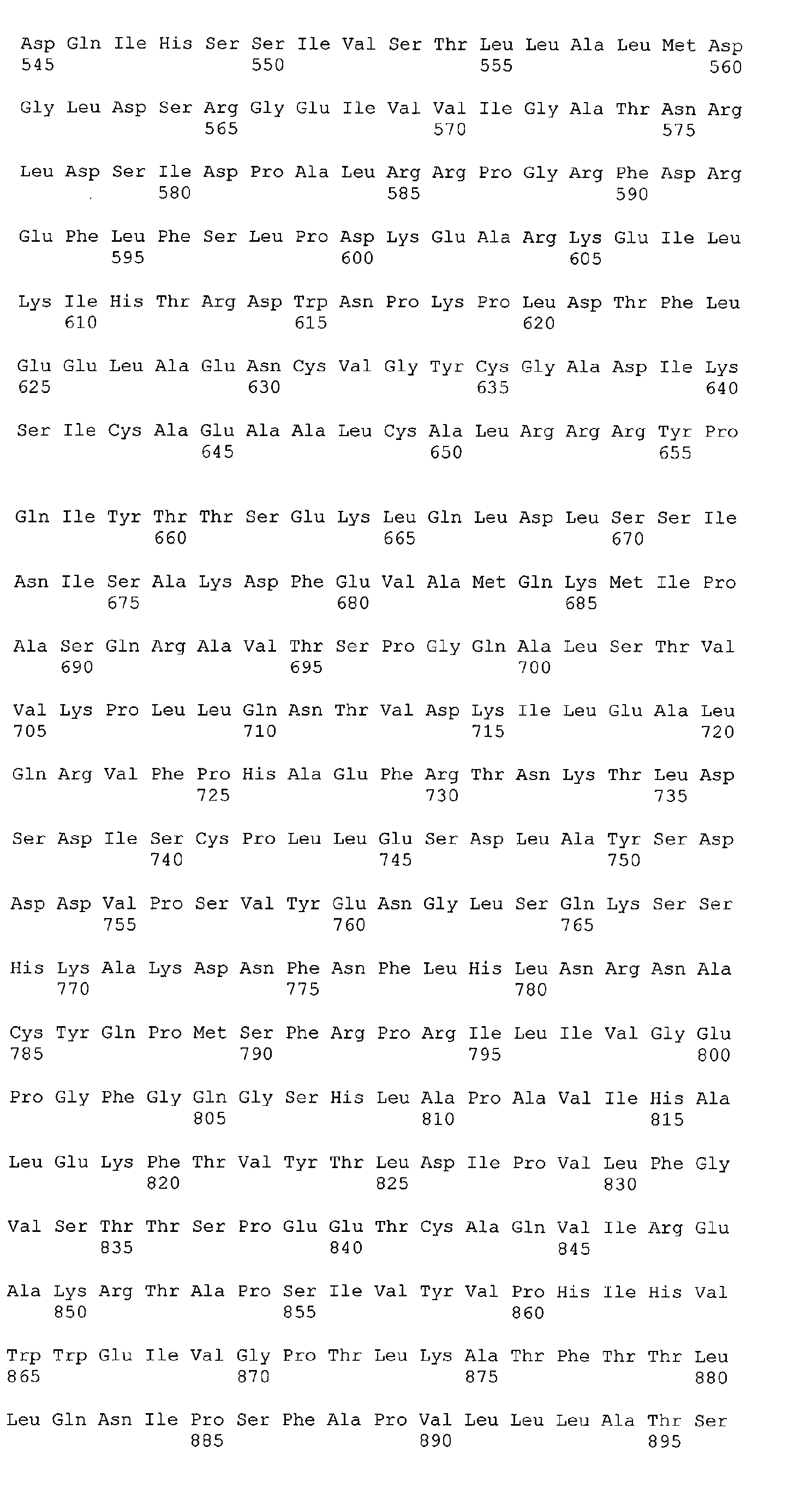
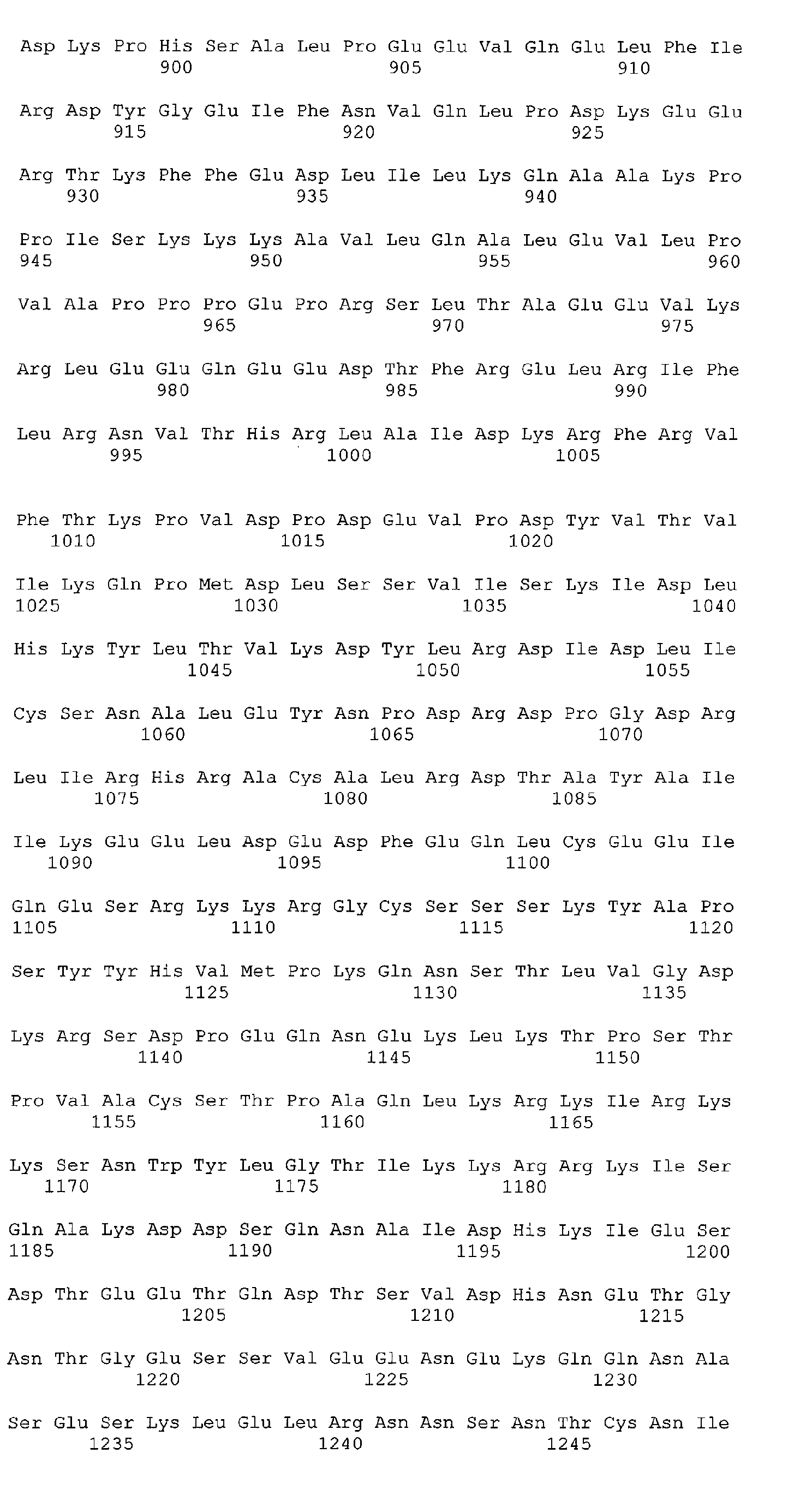
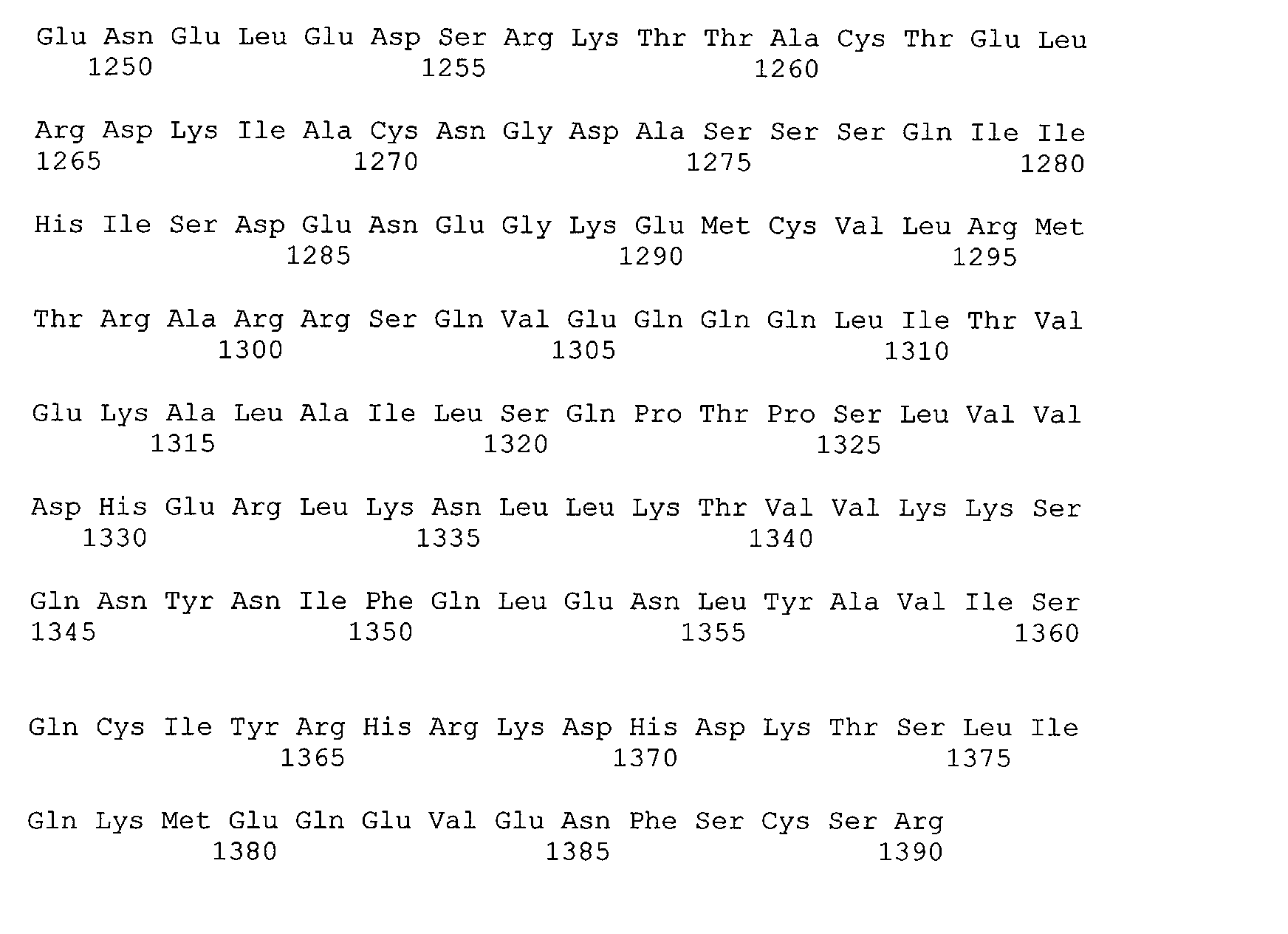
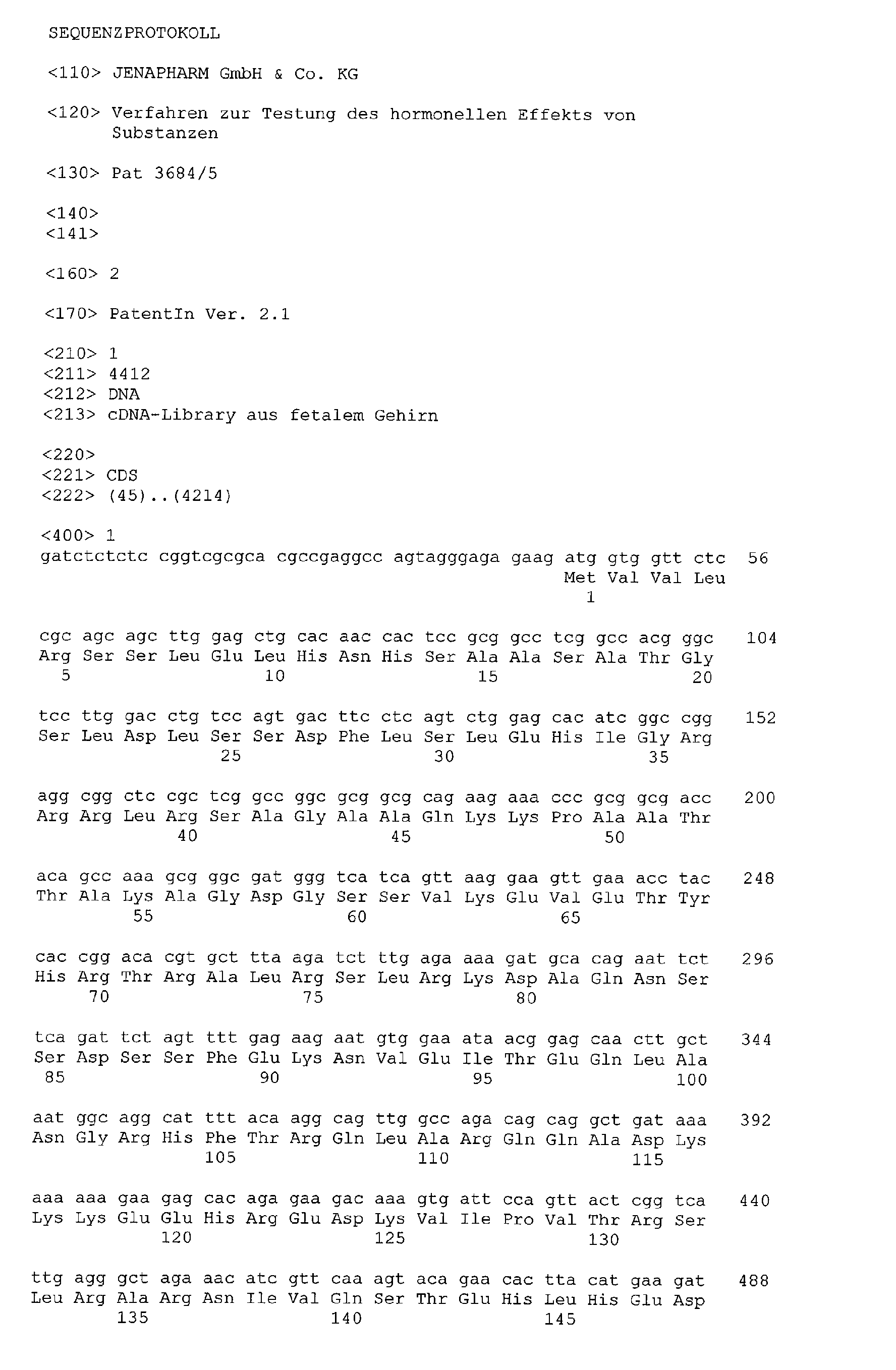
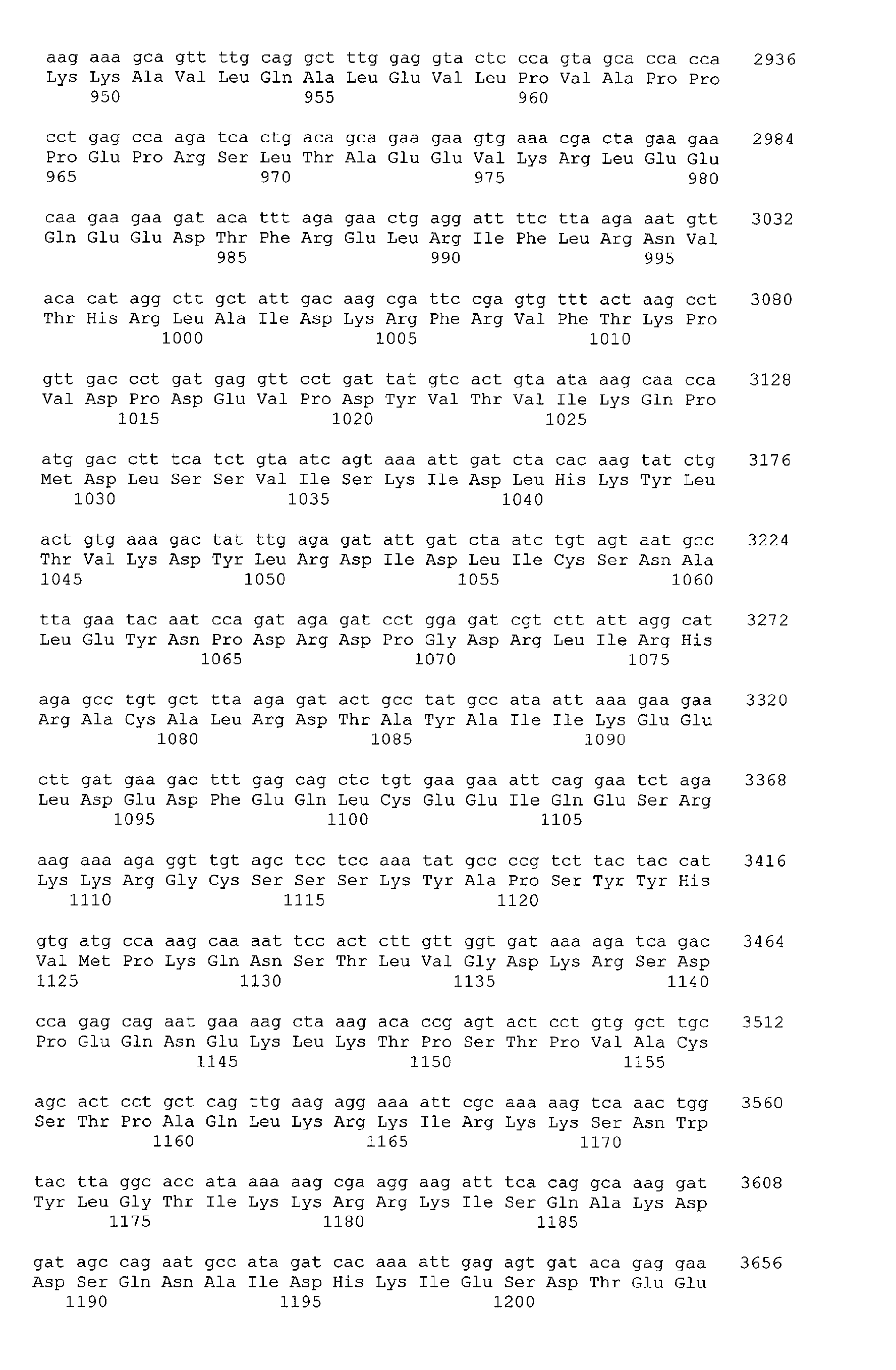
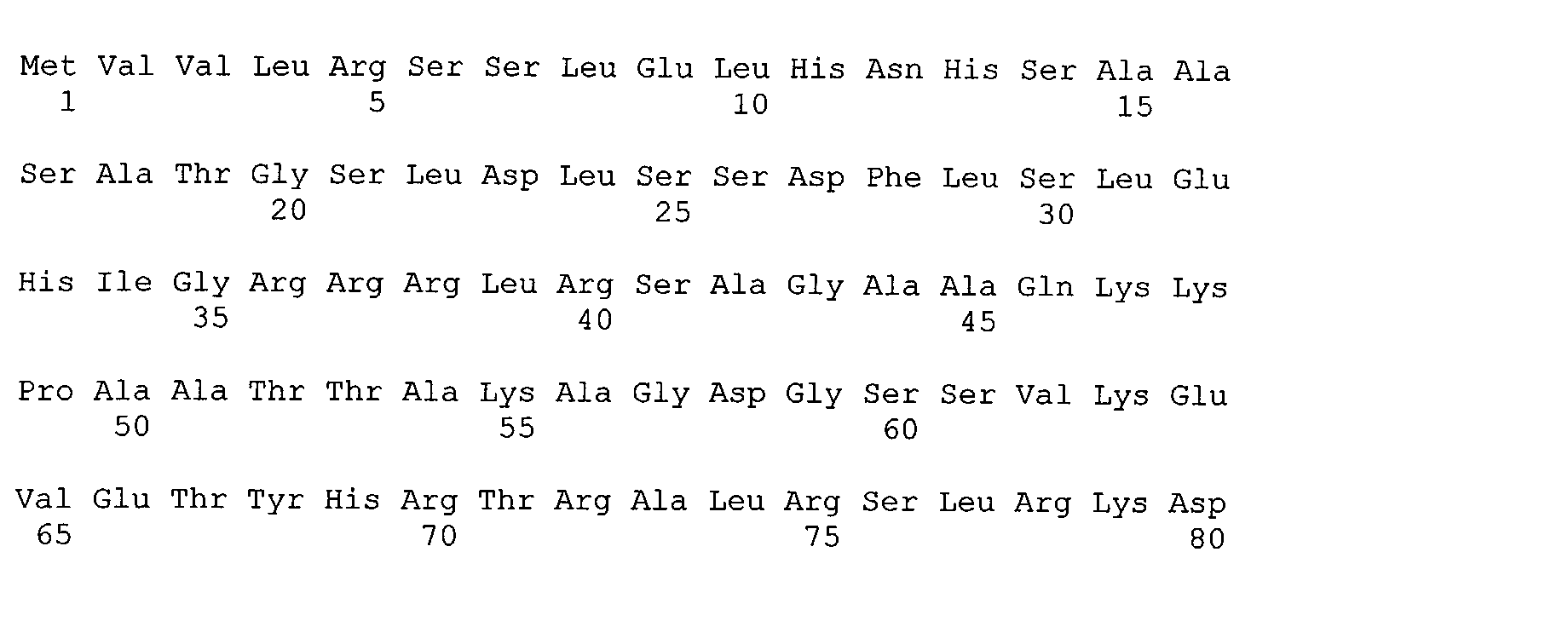
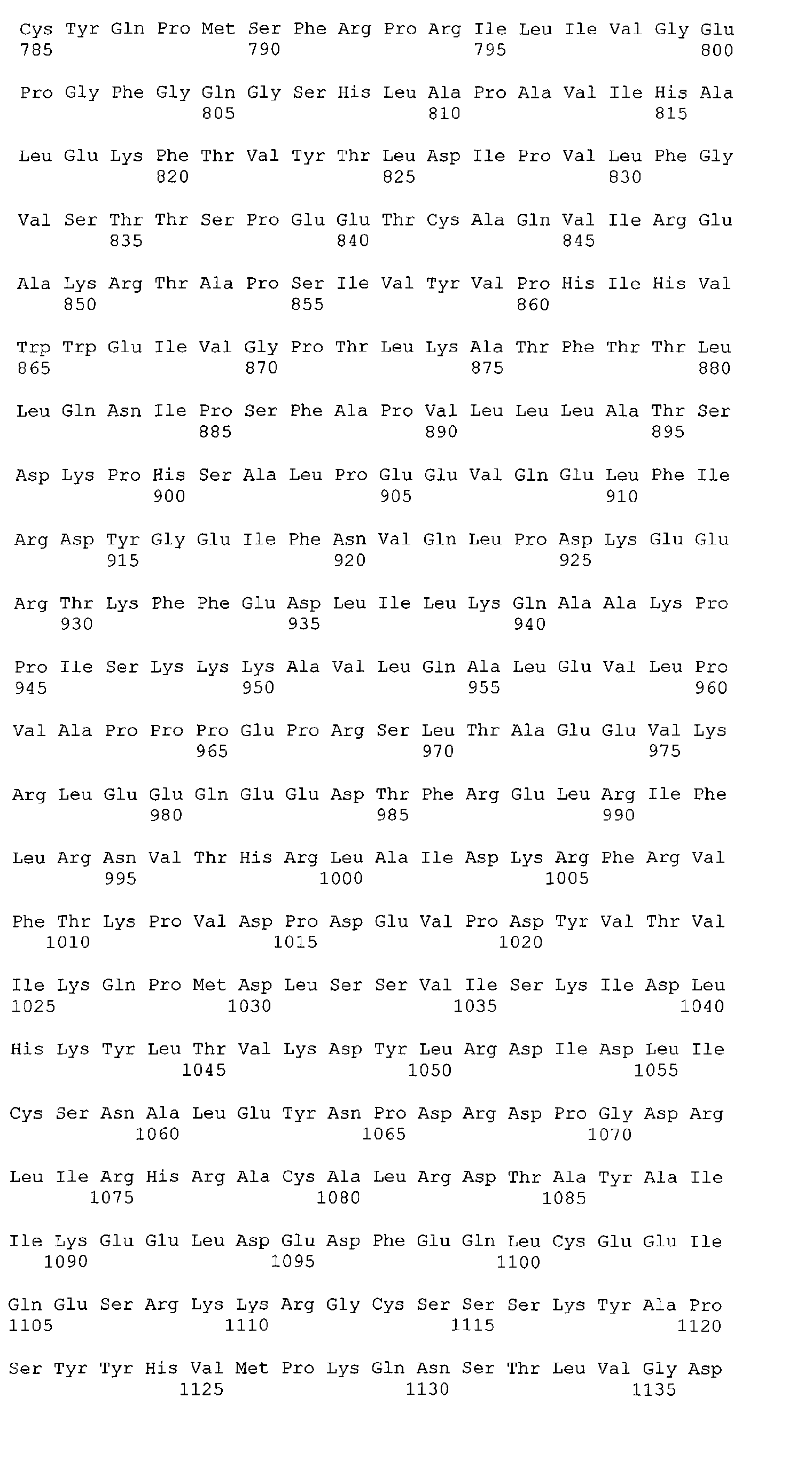
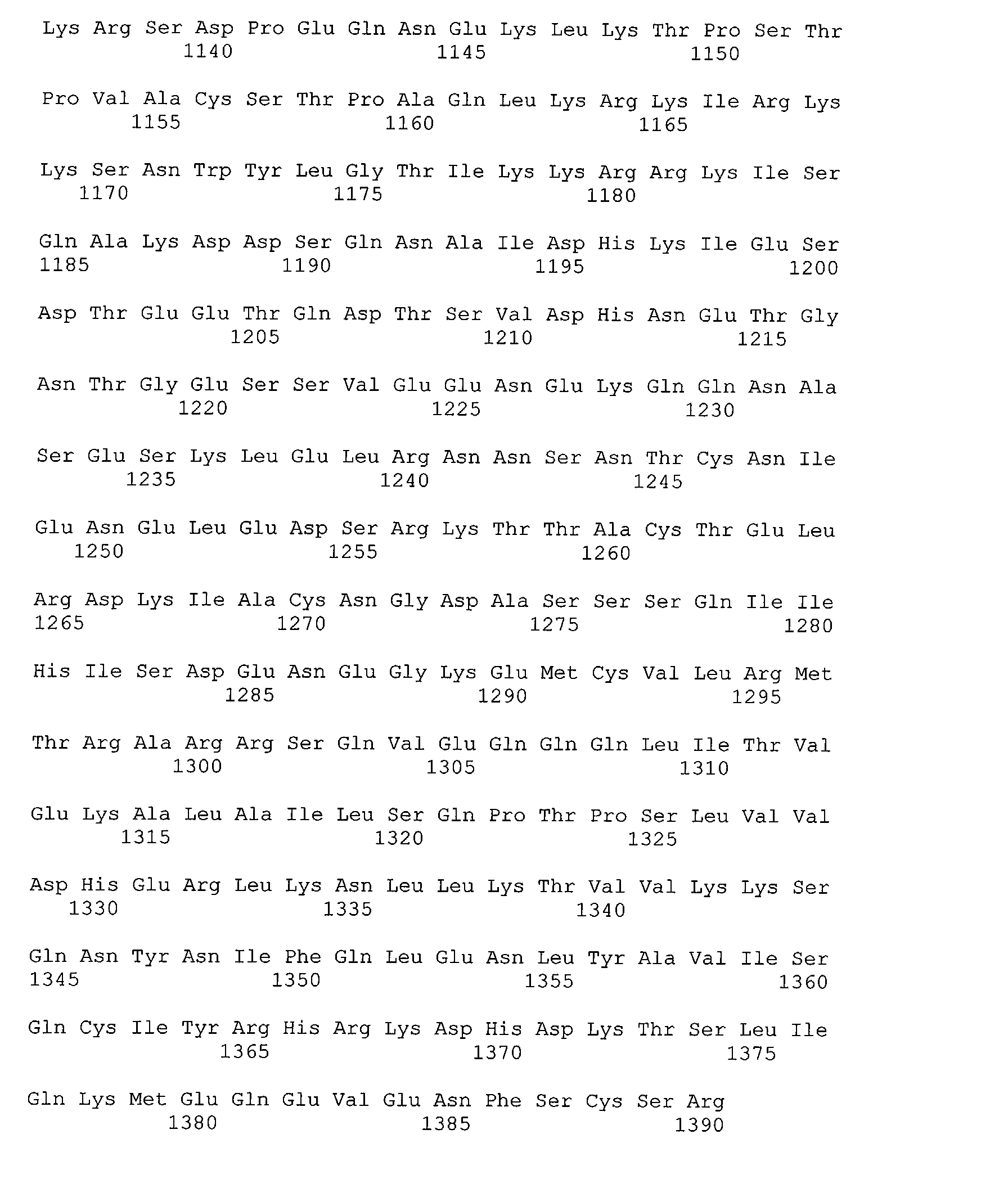
- the cDNA sequence or the 1390 amino acids The amino acid sequence of the co-modulator ARAP11 is shown in SEQ ID No. 1 or SEQ ID No. 2 shown.
- the inventive Procedures are carried out.
- the ARAP11 fragments in particular the fragment of ARAP11 having amino acids 813 to 1390, the Advantage on that they are easier to handle and clone, but still the functional properties of ARAP 11.
- ARAP11 is a co-activator for the human androgen receptor and other nuclear receptors, the interaction between an androgen and the Receptor enhanced. Part of the sequence of ARAP11 is already in the Pro2000 Genbank XM 005253; however, no function is specified there. Compared for the sequence already known from the Genbank, it has now been found that the amino acid sequence of ARAP 11 is larger than the known sequence; it points to N-terminal region on additional amino acids. Furthermore, an interaction between nuclear receptors, especially AR, on the one hand, and ARAP11, on the other and an increase in AR-mediated transactivation were found. ARAP11 is a protein that acts as a co-mediator by binding steroids at the nuclear receptor the transcription effect is amplified or repressed and also promotes the binding and activation of the nuclear receptor to molecules, which previously had no hormonal effects.
- the protein ARAP11 is a co-activator for the androgen receptor and other nuclear Receptors such as estrogen receptor ⁇ , estrogen receptor ⁇ , progesterone receptor A, progesterone receptor B, glucocorticoid receptor, mineralocorticoid receptor, thyroid hormone receptor, Vitamin D receptor, peroxisome proliferator-activated receptor, Retinoic acid receptor, retinoid X receptor and orphan receptors; in the invention Methods, these receptors are preferably used, since the above Advantages of the method according to the invention can be achieved particularly cheaply can.
- vectors which are above for fragments can also be used Encode proteins, are used.
- fragments related the above proteins are understood to be those which have an amino acid or several amino acids less than the full-length proteins and still the functional ones Have properties of a nuclear receptor or a co-modulator.
- Step a) used cells that are transfected with two vectors, which are for special proteins contain coding DNA. So these cells are able to differentiate these two To express proteins.
- the cells are preferably established cell lines and / or eukaryotic cells, in particular Prostate cells, nerve cells, glial cells, fibroblasts, blood cells, osteoblasts, Osteoclasts, hepatocytes, epithelial cells or muscle cells.
- eukaryotic cells especially those listed above eukaryotic cells can advantageously with the inventive method particularly meaningful results are obtained.
- eukaryotic Expression vectors used, e.g. pCMX or pSG5.
- the method according to the invention can be particularly favorable and be done quickly, and it will be particularly meaningful results receive.
- the transcription activity can be measured by the nuclear receptor or its fragment in the presence of the co-modulator or its fragment. This can be done, for example, by detection of a reporter gene.
- Reporter genes are genes or gene fragments that are related to other genes or regulatory Sequences are coupled in order to detect the activity of these sequences do. Reporter genes produce gene products that are as easy to detect as possible, z. B. photometrically by color reactions. Commonly used reporter genes are Gene for ⁇ -galactosidase, the gene for alkaline phosphatase, the gene for chloramphenicol acetyltransferase, the gene for the catechol dioxygenase, the gene for the "green fluorescent protein” and various luciferase genes that make the cells Can bring lights.
- reporter genes can also be generated using vectors, in particular eukaryotic ones Expression vectors into which cells are introduced.
- Example of a vector used for A reporter gene encoding DNA is the vector MMTV luciferase, which is used for measurement the androgenic effect of substances is used.
- Substances with a hormonal effect are then due to the increased or decreased activity of the Reporter gene recognizable.
- the measurement of the influence of the test substance on the interaction between the receptor or its fragment and the co-modulator or its fragment can also by determining the protein-protein interaction, e.g. B. by double hybrid systems, Immunoprecipitation, GST pull-down assays, FRET analysis and ABCD assays, as well by determining the protein-protein-DNA interaction, such as by gel retardation assays, respectively.
- ARAP11 is very good as an indicator of androgen-related diseases, which sometimes only appear in old age.
- Relevant androgen-related Diseases such as Prostate cancer, erectile dysfunction, infertility, Balding, acne or hypogonadism, and androgen resistance syndromes, such as e.g. testicular feminization is based on defects in the co-modulation mechanism between AR and ARAP11.
- An option for patients with Such disturbances therefore consist in measuring the relative concentrations of AR and ARAP11. This measurement is advantageously carried out in body fluids, body cells or body tissue extracorporeally.
- ARAP11 cDNA in the usual way Wise to construct probes for a PCR assay that works in certain patients Detect mutations in the normal DNA sequence or transcripts for the Northern Have a blot assay or a DNA generated for in situ hybridization assays.
- the measured ratio of AR to ARAP11 can be larger or smaller than that be with healthy people.
- the normal value in healthy people can be done in a simple way can be determined, for example, by the ratio of AR to ARAP11 at a large number of healthy volunteers is averaged. By comparing the normal value with the determined ratio of AR to ARAP11 in the person to be examined Patients can be determined whether the value for the determined ratio is greater or less than the normal value.
- the concentration of ARAP11 and / or AR in the tissue can be different, e.g. the concentration of ARAP11 is very high in testes, whereas in liver, Heart, thymus and prostate are less, are the different tissue concentrations to be considered for the evaluation, i.e. the test value and the normal value should come from the same tissue.
- Another way of determining defects in the co-modulation mechanism between AR and ARAP11 can only be the concentration of ARAP11 too measure, assuming that the AR concentration is at least approximately is constant. If a lower than the normal ARAP11 concentration is measured it means that the ratio of AR to ARAP11 has shifted, which in turn indicates an error in the co-modulation mechanism.
- ARAP11-specific probe to make changes in ARAP11 expression and thus to determine in relation to AR. Such changes can be causally involved in various clinical pictures or as a consequence occur.
- Such measurements of the AR / ARAP11 ratio or ARAP11 is the surprising one and knowledge based on the discovery and characterization of ARAP11 underlying that, for example, an androgen resistance syndrome on a disorder the balance between AR and ARAP11 prevalence in the target cells can. Too much ARAP11 could lead to hypersensitivity of the AR system, so that it responds to molecules that normally don't have an androgenic effect. Conversely, the lack or a painting function of ARAP11 leads to at all levels Androgen insensitivity. Evidence of too much ARAP11 in one patient would suggest the use of down-regulation agents, e.g. Antisense or similar Medicines to test the ARAP11 titer under clinical conditions Reduce patients.
- down-regulation agents e.g. Antisense or similar Medicines to test the ARAP11 titer under clinical conditions Reduce patients.
- the protein ARAP11 is very suitable for carrying out the methods.
- the present invention therefore also relates to ARAP11 having the following amino acid sequence or the ARAP11 fragment containing amino acids 813 to 1390 of this protein.
- the subject of the present application is also an ARAP11 or its fragment, especially the fragment encoding the amino acids 813 to 1390 DNA and a DNA hybridizing to it.
- hybridizing DNA indicates a DNA that under normal conditions, especially at 20 ° C under the melting point of the DNA hybridized with the coding DNA.
- FIG. 2 shows the tissue distribution of ARAP11 in a manner known per se was determined by means of Northern blot analysis. From various human tissues isolated poly-A + RNA (2 ⁇ g) was separated with an agarose gel containing formaldehyde, blotted onto a nylon membrane and with a labeled ARAP11 cDNA Fragment hybridizes. A was used for the experiment described in Fig. 2a and 2b Fragment from 3111 to 4217 bp used, for which in Fig. 2c a fragment from 2065-2476 bp of the cDNA sequence from ARAP11. After washing, the membrane was on put a film and after exposure for 24 hours (Fig. 2a and 2c) or 8 days (Fig.2b). As can be seen in Figure 2, there was one in testicles very strong, but weaker expression in the liver, heart, thymus and prostate proven by ARAP11. Two transcripts (6.0 kb and 5.2 kb) were discovered.
- the ARAP11 cDNA generated by PCR that for the ARAP 11 fragment of the Amino acids 813 to 1390 were encoded in the usual way in the vector CMX and with pSG5-AR and MMTV luciferase in SH-SY5Y cells also in the usual way transfected.
- the transfected cells were harvested after a further 24 hours and the activity of the reporter gene luciferase was measured. In addition, the total cell protein amount was determined for normalization. One experiment and four measurements were carried out for each transfection batch and substance concentration. The error deviation was given as SD. For all signals, the values of the corresponding controls were subtracted without DHT. The activity is given in relative units.
- Figure 4 shows the expression of ARAP11 and ⁇ -actin in testes from rats.
- Poly-A + RNAs (4 ⁇ g) were isolated from tissues of rat testes, separated with an agarose gel containing formaldehyde, transferred to a nylon membrane and either with a labeled ARAP11 cDNA fragment (2226 - 4228 bp) or a labeled ⁇ -actin cDNA (rat) hybridized. After washing, the membrane was placed on a film and developed for 5 days after exposure. An RNA transcript (6.0 kb) was found in the testicular tissue of the rat. In column 1, the isolated RNA from 3-week-old animals was applied, in column 2 from 6-week-old animals and in column 3 from 2-year-old animals.
- a clear age-related dependence of the expression of the ARAP11 gene can be seen, the expression of the ⁇ -actin gene showing no change. 6 weeks after birth, the expression of ARAP11 is significantly reduced (more than 50%) and only very low expression of the ARAP11 gene can be seen in old animals (2 years). A similar behavior of a change in the gene expression of the co-modulator ARAP11 can be expected in clinical pictures.
Landscapes
- Health & Medical Sciences (AREA)
- Life Sciences & Earth Sciences (AREA)
- Chemical & Material Sciences (AREA)
- Molecular Biology (AREA)
- Engineering & Computer Science (AREA)
- Biochemistry (AREA)
- Organic Chemistry (AREA)
- Hematology (AREA)
- General Health & Medical Sciences (AREA)
- Biomedical Technology (AREA)
- Medicinal Chemistry (AREA)
- Immunology (AREA)
- Urology & Nephrology (AREA)
- Cell Biology (AREA)
- Physics & Mathematics (AREA)
- Proteomics, Peptides & Aminoacids (AREA)
- Genetics & Genomics (AREA)
- Biotechnology (AREA)
- Biophysics (AREA)
- Gastroenterology & Hepatology (AREA)
- Zoology (AREA)
- Microbiology (AREA)
- Toxicology (AREA)
- Food Science & Technology (AREA)
- Endocrinology (AREA)
- Analytical Chemistry (AREA)
- General Physics & Mathematics (AREA)
- Pathology (AREA)
- Measuring Or Testing Involving Enzymes Or Micro-Organisms (AREA)
- Investigating Or Analysing Biological Materials (AREA)
- Peptides Or Proteins (AREA)
- Medicines That Contain Protein Lipid Enzymes And Other Medicines (AREA)
- Sampling And Sample Adjustment (AREA)
- General Preparation And Processing Of Foods (AREA)
- Saccharide Compounds (AREA)
- Micro-Organisms Or Cultivation Processes Thereof (AREA)
- Transition And Organic Metals Composition Catalysts For Addition Polymerization (AREA)
Abstract
Description






Claims (12)
- Verfahren zur Testung des hormonellen Effekts, insbesondere des androgenen oder antiandrogenen Effekts, von Substanzen, bei dema) Zellen, die mit zwei Vektoren transfektiert sind, wobei der eine Vektor DNA, die für ein nukleäres Rezeptor-Protein oder ein Fragment davon kodiert, und der andere Vektor DNA enthält, die für einen Co-Modulator oder ein Fragment davon kodiert, der Substanz ausgesetzt werden undb) die Transkriptionsaktivität, die der nukleäre Rezeptor oder dessen Fragment in Anwesenheit des Co-Modulators oder dessen Fragment auslöst, und/oder der Einfluss der Substanz auf die Interaktion zwischen dem Rezeptor oder dessen Fragment und dem Co-Modulator oder dessen Fragment durch Protein-Protein-Interaktion oder Protein-Protein-DNA-Interaktion gemessen wird.
- Verfahren nach Anspruch 1, wobei der Co-Modulator ARAP11 ist, das die folgende Aminosäuresequenz umfaßt:


- Verfahren nach Anspruch 1, wobei das Fragmenten des Co-Modulators die Aminosäuren 813 bis 1390 von ARAP11 aufweist.
- Verfahren nach einem der vorhergehenden Ansprüche, wobei der nukleäre Rezeptor ausgewählt ist unter Androgenrezeptor, Estrogenrezeptor α, Estrogenrezeptor β, Progesteronrezeptor A, Progesteronrezeptor B, Glukokortikoidrezeptor, Mineralokortikoidrezeptor, Schilddrüsenhormonrezeptor, Vitamin-D-Rezeptor, Peroxisomproliferator-aktivierter Rezeptor, Retinsäurerezeptor, Retinoid-X-Rezeptor und Orphan-Rezeptoren.
- Verfahren nach einem der vorhergehenden Ansprüche, wobei die Zellen etablierte Zelllinien und/oder eukaryotische Zellen sind.
- Verfahren nach Anspruch 5, wobei die eukaryotischen Zellen unter Prostatazellen, Nervenzellen, Gliazellen, Fibroblasten, Blutzellen, Osteoblasten, Osteoklasten, Hepatozyten, Epithelzellen oder Muskelzellen ausgewählt sind.
- Verfahren nach einem der vorhergehenden Ansprüche, wobei der Vektor ein eukaryotischer Expressionsvektor ist.
- Verfahren zur Bestimmung von Störungen im Co-Modulationsmechanismus zwischen Androgenrezeptoren und ARAP11, wobei die Konzentrationen von ARAP11 oder einem Fragment davon und/oder Androgenrezeptor oder einem Fragment davon gemessen werden.
- Verfahren nach Anspruch 8, wobei die Konzentrationsmessung durch Radioimmunassay, ELISA-Tests, Immunfärbung, RT-PCR, Western-Blot, Northern-Blot, DNA-Chip oder Protein-Chip erfolgt.
- Protein oder Fragment davon mit Co-Modulatoreigenschaften für den Androgenrezeptor, wobei es die Aminosäuresequenz gemäß Anspruch 2 aufweist.
- Protein nach Anspruch 10, wobei das Fragment die Aminosäuren 813 bis 1390 aufweist.
- DNA, kodieren für das Proteine nach Anspruch 10 oder 11 oder damit hybridisierende DNA.
Applications Claiming Priority (4)
| Application Number | Priority Date | Filing Date | Title |
|---|---|---|---|
| DE10121710A DE10121710A1 (de) | 2001-05-04 | 2001-05-04 | Verfahren zur Testung des hormonellen Effekts von Substanzen |
| DE10121710 | 2001-05-04 | ||
| DE10161325 | 2001-12-13 | ||
| DE2001161325 DE10161325A1 (de) | 2001-12-13 | 2001-12-13 | Verfahren zur Testung des hormonellen Effekts von Substanzen |
Publications (2)
| Publication Number | Publication Date |
|---|---|
| EP1255113A1 true EP1255113A1 (de) | 2002-11-06 |
| EP1255113B1 EP1255113B1 (de) | 2004-05-19 |
Family
ID=26009230
Family Applications (1)
| Application Number | Title | Priority Date | Filing Date |
|---|---|---|---|
| EP02009699A Expired - Lifetime EP1255113B1 (de) | 2001-05-04 | 2002-04-29 | Verfahren zur Testung des hormonellen Effekts von Substanzen |
Country Status (10)
| Country | Link |
|---|---|
| US (1) | US20030124508A1 (de) |
| EP (1) | EP1255113B1 (de) |
| JP (1) | JP4071033B2 (de) |
| AT (1) | ATE267402T1 (de) |
| DE (1) | DE50200452D1 (de) |
| DK (1) | DK1255113T3 (de) |
| ES (1) | ES2219601T3 (de) |
| NO (1) | NO20021900L (de) |
| PT (1) | PT1255113E (de) |
| TR (1) | TR200402024T4 (de) |
Cited By (10)
| Publication number | Priority date | Publication date | Assignee | Title |
|---|---|---|---|---|
| EP1371988A3 (de) * | 2002-06-12 | 2004-01-02 | Jenapharm GmbH & Co. KG | Verfahren zur Testung des hormonellen Effekts von Substanzen |
| EP1376136A3 (de) * | 2002-06-12 | 2004-01-14 | Jenapharm GmbH & Co. KG | Verfahren zur Testung des hormonellen Effekts von Substanzen |
| US8663088B2 (en) | 2003-09-15 | 2014-03-04 | Covidien Lp | System of accessories for use with bronchoscopes |
| US8764725B2 (en) | 2004-02-09 | 2014-07-01 | Covidien Lp | Directional anchoring mechanism, method and applications thereof |
| US8905920B2 (en) | 2007-09-27 | 2014-12-09 | Covidien Lp | Bronchoscope adapter and method |
| US8932207B2 (en) | 2008-07-10 | 2015-01-13 | Covidien Lp | Integrated multi-functional endoscopic tool |
| US9055881B2 (en) | 2004-04-26 | 2015-06-16 | Super Dimension Ltd. | System and method for image-based alignment of an endoscope |
| US10426555B2 (en) | 2015-06-03 | 2019-10-01 | Covidien Lp | Medical instrument with sensor for use in a system and method for electromagnetic navigation |
| US10582834B2 (en) | 2010-06-15 | 2020-03-10 | Covidien Lp | Locatable expandable working channel and method |
| US10952593B2 (en) | 2014-06-10 | 2021-03-23 | Covidien Lp | Bronchoscope adapter |
Families Citing this family (1)
| Publication number | Priority date | Publication date | Assignee | Title |
|---|---|---|---|---|
| US7655700B2 (en) | 2005-08-25 | 2010-02-02 | Michigan State University | Transgenic mouse model and methods for treatment of neuro muscular disease by interfering with androgen-androgen receptor interaction in skeletal muscles |
Citations (1)
| Publication number | Priority date | Publication date | Assignee | Title |
|---|---|---|---|---|
| US5506102A (en) * | 1993-10-28 | 1996-04-09 | Ligand Pharmaceuticals Incorporated | Methods of using the A form of the progesterone receptor to screen for antagonists of steroid intracellar receptor-mediated transcription |
-
2002
- 2002-04-22 NO NO20021900A patent/NO20021900L/no not_active Application Discontinuation
- 2002-04-25 JP JP2002123454A patent/JP4071033B2/ja not_active Expired - Fee Related
- 2002-04-29 DE DE50200452T patent/DE50200452D1/de not_active Expired - Fee Related
- 2002-04-29 TR TR2004/02024T patent/TR200402024T4/xx unknown
- 2002-04-29 DK DK02009699T patent/DK1255113T3/da active
- 2002-04-29 AT AT02009699T patent/ATE267402T1/de not_active IP Right Cessation
- 2002-04-29 ES ES02009699T patent/ES2219601T3/es not_active Expired - Lifetime
- 2002-04-29 PT PT02009699T patent/PT1255113E/pt unknown
- 2002-04-29 EP EP02009699A patent/EP1255113B1/de not_active Expired - Lifetime
- 2002-05-03 US US10/137,418 patent/US20030124508A1/en not_active Abandoned
Patent Citations (1)
| Publication number | Priority date | Publication date | Assignee | Title |
|---|---|---|---|---|
| US5506102A (en) * | 1993-10-28 | 1996-04-09 | Ligand Pharmaceuticals Incorporated | Methods of using the A form of the progesterone receptor to screen for antagonists of steroid intracellar receptor-mediated transcription |
Non-Patent Citations (4)
| Title |
|---|
| DATABASE EBI [online] XP002207652, retrieved from EBI accession no. Q9UHS5 Database accession no. Q9UHS5 * |
| DING XIU FEN ET AL: "Nuclear receptor-binding sites of coactivators glucocorticoid receptor interacting protein 1 (GRIP1) and steroid receptor coactivator 1 (SRC-1): Multiple motifs with different binding specificities", MOLECULAR ENDOCRINOLOGY, BALTIMORE, MD, US, vol. 12, no. 2, February 1998 (1998-02-01), pages 302 - 313, XP001040351, ISSN: 0888-8809 * |
| MCKENNA N J ET AL: "NUCLEAR RECEPTOR COREGULATORS: CELLULAR AND MOLECULAR BIOLOGY", ENDOCRINE REVIEWS, BALTIMORE, MD, US, vol. 20, no. 3, June 1999 (1999-06-01), pages 321 - 344, XP002921971 * |
| STENOIEN D L ET AL: "LIGAND-MEDIATED ASSEMBLY AND REAL-TIME CELLULAR DYNAMICS OF ESTROGEN RECEPTOR ALPHA-COACTIVATOR COMPLEXES IN LIVING CELLS", MOLECULAR AND CELLULAR BIOLOGY, AMERICAN SOCIETY FOR MICROBIOLOGY, WASHINGTON, US, vol. 21, no. 13, July 2001 (2001-07-01), pages 4404 - 4412, XP001058122, ISSN: 0270-7306 * |
Cited By (22)
| Publication number | Priority date | Publication date | Assignee | Title |
|---|---|---|---|---|
| EP1376136A3 (de) * | 2002-06-12 | 2004-01-14 | Jenapharm GmbH & Co. KG | Verfahren zur Testung des hormonellen Effekts von Substanzen |
| EP1371988A3 (de) * | 2002-06-12 | 2004-01-02 | Jenapharm GmbH & Co. KG | Verfahren zur Testung des hormonellen Effekts von Substanzen |
| US9089261B2 (en) | 2003-09-15 | 2015-07-28 | Covidien Lp | System of accessories for use with bronchoscopes |
| US8663088B2 (en) | 2003-09-15 | 2014-03-04 | Covidien Lp | System of accessories for use with bronchoscopes |
| US10383509B2 (en) | 2003-09-15 | 2019-08-20 | Covidien Lp | System of accessories for use with bronchoscopes |
| US8764725B2 (en) | 2004-02-09 | 2014-07-01 | Covidien Lp | Directional anchoring mechanism, method and applications thereof |
| US9055881B2 (en) | 2004-04-26 | 2015-06-16 | Super Dimension Ltd. | System and method for image-based alignment of an endoscope |
| US10321803B2 (en) | 2004-04-26 | 2019-06-18 | Covidien Lp | System and method for image-based alignment of an endoscope |
| US10390686B2 (en) | 2007-09-27 | 2019-08-27 | Covidien Lp | Bronchoscope adapter and method |
| US9668639B2 (en) | 2007-09-27 | 2017-06-06 | Covidien Lp | Bronchoscope adapter and method |
| US9986895B2 (en) | 2007-09-27 | 2018-06-05 | Covidien Lp | Bronchoscope adapter and method |
| US10980400B2 (en) | 2007-09-27 | 2021-04-20 | Covidien Lp | Bronchoscope adapter and method |
| US8905920B2 (en) | 2007-09-27 | 2014-12-09 | Covidien Lp | Bronchoscope adapter and method |
| US10070801B2 (en) | 2008-07-10 | 2018-09-11 | Covidien Lp | Integrated multi-functional endoscopic tool |
| US10912487B2 (en) | 2008-07-10 | 2021-02-09 | Covidien Lp | Integrated multi-function endoscopic tool |
| US8932207B2 (en) | 2008-07-10 | 2015-01-13 | Covidien Lp | Integrated multi-functional endoscopic tool |
| US11234611B2 (en) | 2008-07-10 | 2022-02-01 | Covidien Lp | Integrated multi-functional endoscopic tool |
| US11241164B2 (en) | 2008-07-10 | 2022-02-08 | Covidien Lp | Integrated multi-functional endoscopic tool |
| US12507906B2 (en) | 2008-07-10 | 2025-12-30 | Covidien Lp | Integrated multi-functional endoscopic tool |
| US10582834B2 (en) | 2010-06-15 | 2020-03-10 | Covidien Lp | Locatable expandable working channel and method |
| US10952593B2 (en) | 2014-06-10 | 2021-03-23 | Covidien Lp | Bronchoscope adapter |
| US10426555B2 (en) | 2015-06-03 | 2019-10-01 | Covidien Lp | Medical instrument with sensor for use in a system and method for electromagnetic navigation |
Also Published As
| Publication number | Publication date |
|---|---|
| JP2003018996A (ja) | 2003-01-21 |
| NO20021900D0 (no) | 2002-04-22 |
| DE50200452D1 (de) | 2004-06-24 |
| EP1255113B1 (de) | 2004-05-19 |
| US20030124508A1 (en) | 2003-07-03 |
| PT1255113E (pt) | 2004-10-29 |
| DK1255113T3 (da) | 2004-10-04 |
| ATE267402T1 (de) | 2004-06-15 |
| ES2219601T3 (es) | 2004-12-01 |
| TR200402024T4 (tr) | 2004-09-21 |
| NO20021900L (no) | 2002-11-05 |
| JP4071033B2 (ja) | 2008-04-02 |
Similar Documents
| Publication | Publication Date | Title |
|---|---|---|
| EP1255113B1 (de) | Verfahren zur Testung des hormonellen Effekts von Substanzen | |
| EP1371988B1 (de) | Verfahren zur Testung des hormonellen Effekts von Substanzen | |
| DE10226674B4 (de) | Verfahren zur Testung des hormonellen Effekts von Substanzen | |
| DE10054639B4 (de) | Verwendung von RanBPM als Co-Modulator von Steroidhormonrezeptoren | |
| EP1455190B1 (de) | Verfahren zur Bestimmung des hormonellen Effekts von Substanzen mittels der Interaktion zwischen dem Androgenrezeptor und Ewing Sarkoma Protein. | |
| DE10161325A1 (de) | Verfahren zur Testung des hormonellen Effekts von Substanzen | |
| DE10121710A1 (de) | Verfahren zur Testung des hormonellen Effekts von Substanzen | |
| DE60120656T2 (de) | Synergistische aktivierung regulatorischer elemente durch rel proteine und steroidrezeptoren | |
| DE60130686T2 (de) | Funktionelles fragment des leptinrezeptors | |
| DE60116109T2 (de) | In vitro Screening nach Liganden des Östrogenrezeptors | |
| DE69835741T2 (de) | Inhibitoren der wechselwirkung zwischen nukleäre protein und nukleären rezeptoren | |
| EP1288227B1 (de) | Coaktivator von nukleären Rezeptoren | |
| DE10309280A1 (de) | Verfahren zur Bestimmung des hormonellen Effekts von Substanzen | |
| Schulz et al. | Distinct proteins interacting with the glucocorticoid receptor | |
| DE19855013C2 (de) | Androgen- und Progesteron-Rezeptor bindendes Hormon Response Element | |
| DE69813677T2 (de) | Humäne Serumglucocorticoidregulierte Kinase, ein Ziel für chronischer Nierenerkrankung und diabetische Nephropathie | |
| EP1877803A2 (de) | Verfahren zur charakterisierung der transaktivierungs- und transrespressionsaktivität von glukokortikoidrezeptor-liganden in primären immunzellen | |
| DE102006021267A1 (de) | Verfahren zur Charakterisierung der Transaktivierungs- und Transrespressionsaktivität von Glukokortikoid-rezeptor-Liganden in primären Immunzellen | |
| Hong | Molecular chaperones and cochaperones as regulators of the transcriptional activity of the glucocorticoid receptor | |
| Schulte et al. | Steroidhormonrezeptordefekte | |
| EP1213300A1 (de) | Neue humane Androgenrezeptor-Varianten |
Legal Events
| Date | Code | Title | Description |
|---|---|---|---|
| PUAI | Public reference made under article 153(3) epc to a published international application that has entered the european phase |
Free format text: ORIGINAL CODE: 0009012 |
|
| AK | Designated contracting states |
Kind code of ref document: A1 Designated state(s): AT BE CH CY DE DK ES FI FR GB GR IE IT LI LU MC NL PT SE TR |
|
| AX | Request for extension of the european patent |
Free format text: AL;LT;LV;MK;RO;SI |
|
| 17P | Request for examination filed |
Effective date: 20021113 |
|
| 17Q | First examination report despatched |
Effective date: 20030409 |
|
| AKX | Designation fees paid |
Designated state(s): AT BE CH CY DE DK ES FI FR GB GR IE IT LI LU MC NL PT SE TR |
|
| GRAP | Despatch of communication of intention to grant a patent |
Free format text: ORIGINAL CODE: EPIDOSNIGR1 |
|
| GRAS | Grant fee paid |
Free format text: ORIGINAL CODE: EPIDOSNIGR3 |
|
| GRAA | (expected) grant |
Free format text: ORIGINAL CODE: 0009210 |
|
| AK | Designated contracting states |
Kind code of ref document: B1 Designated state(s): AT BE CH CY DE DK ES FI FR GB GR IE IT LI LU MC NL PT SE TR |
|
| REG | Reference to a national code |
Ref country code: GB Ref legal event code: FG4D Free format text: NOT ENGLISH |
|
| REG | Reference to a national code |
Ref country code: CH Ref legal event code: EP |
|
| REG | Reference to a national code |
Ref country code: IE Ref legal event code: FG4D Free format text: GERMAN |
|
| REF | Corresponds to: |
Ref document number: 50200452 Country of ref document: DE Date of ref document: 20040624 Kind code of ref document: P |
|
| RAP2 | Party data changed (patent owner data changed or rights of a patent transferred) |
Owner name: SCHERING AKTIENGESELLSCHAFT |
|
| REG | Reference to a national code |
Ref country code: CH Ref legal event code: NV Representative=s name: KELLER & PARTNER PATENTANWAELTE AG |
|
| PG25 | Lapsed in a contracting state [announced via postgrant information from national office to epo] |
Ref country code: GR Free format text: LAPSE BECAUSE OF FAILURE TO SUBMIT A TRANSLATION OF THE DESCRIPTION OR TO PAY THE FEE WITHIN THE PRESCRIBED TIME-LIMIT Effective date: 20040819 |
|
| REG | Reference to a national code |
Ref country code: SE Ref legal event code: TRGR |
|
| NLT2 | Nl: modifications (of names), taken from the european patent patent bulletin |
Owner name: SCHERING AKTIENGESELLSCHAFT |
|
| GBT | Gb: translation of ep patent filed (gb section 77(6)(a)/1977) |
Effective date: 20040831 |
|
| REG | Reference to a national code |
Ref country code: DK Ref legal event code: T3 |
|
| REG | Reference to a national code |
Ref country code: PT Ref legal event code: SC4A Free format text: AVAILABILITY OF NATIONAL TRANSLATION Effective date: 20040819 |
|
| NLXE | Nl: other communications concerning ep-patents (part 3 heading xe) |
Free format text: PAT. BUL. 11/2004: CORR.: SCHERING AKTIENGESELLSCHAFT. |
|
| REG | Reference to a national code |
Ref country code: ES Ref legal event code: FG2A Ref document number: 2219601 Country of ref document: ES Kind code of ref document: T3 |
|
| ET | Fr: translation filed | ||
| PLBE | No opposition filed within time limit |
Free format text: ORIGINAL CODE: 0009261 |
|
| STAA | Information on the status of an ep patent application or granted ep patent |
Free format text: STATUS: NO OPPOSITION FILED WITHIN TIME LIMIT |
|
| PG25 | Lapsed in a contracting state [announced via postgrant information from national office to epo] |
Ref country code: CY Free format text: LAPSE BECAUSE OF FAILURE TO SUBMIT A TRANSLATION OF THE DESCRIPTION OR TO PAY THE FEE WITHIN THE PRESCRIBED TIME-LIMIT Effective date: 20050429 Ref country code: LU Free format text: LAPSE BECAUSE OF NON-PAYMENT OF DUE FEES Effective date: 20050429 |
|
| PG25 | Lapsed in a contracting state [announced via postgrant information from national office to epo] |
Ref country code: MC Free format text: LAPSE BECAUSE OF NON-PAYMENT OF DUE FEES Effective date: 20050430 |
|
| 26N | No opposition filed |
Effective date: 20050222 |
|
| PGFP | Annual fee paid to national office [announced via postgrant information from national office to epo] |
Ref country code: AT Payment date: 20070308 Year of fee payment: 6 |
|
| PGFP | Annual fee paid to national office [announced via postgrant information from national office to epo] |
Ref country code: FI Payment date: 20070314 Year of fee payment: 6 |
|
| PGFP | Annual fee paid to national office [announced via postgrant information from national office to epo] |
Ref country code: CH Payment date: 20070315 Year of fee payment: 6 Ref country code: DK Payment date: 20070315 Year of fee payment: 6 Ref country code: GB Payment date: 20070315 Year of fee payment: 6 Ref country code: IE Payment date: 20070315 Year of fee payment: 6 Ref country code: NL Payment date: 20070315 Year of fee payment: 6 |
|
| PGFP | Annual fee paid to national office [announced via postgrant information from national office to epo] |
Ref country code: SE Payment date: 20070319 Year of fee payment: 6 |
|
| PGFP | Annual fee paid to national office [announced via postgrant information from national office to epo] |
Ref country code: PT Payment date: 20070321 Year of fee payment: 6 |
|
| PGFP | Annual fee paid to national office [announced via postgrant information from national office to epo] |
Ref country code: DE Payment date: 20070326 Year of fee payment: 6 |
|
| PGFP | Annual fee paid to national office [announced via postgrant information from national office to epo] |
Ref country code: BE Payment date: 20070330 Year of fee payment: 6 |
|
| PGFP | Annual fee paid to national office [announced via postgrant information from national office to epo] |
Ref country code: ES Payment date: 20070410 Year of fee payment: 6 |
|
| PGFP | Annual fee paid to national office [announced via postgrant information from national office to epo] |
Ref country code: TR Payment date: 20070315 Year of fee payment: 6 |
|
| PGFP | Annual fee paid to national office [announced via postgrant information from national office to epo] |
Ref country code: IT Payment date: 20070616 Year of fee payment: 6 |
|
| PGFP | Annual fee paid to national office [announced via postgrant information from national office to epo] |
Ref country code: FR Payment date: 20070312 Year of fee payment: 6 |
|
| BERE | Be: lapsed |
Owner name: *SCHERING A.G. Effective date: 20080430 |
|
| REG | Reference to a national code |
Ref country code: PT Ref legal event code: MM4A Free format text: LAPSE DUE TO NON-PAYMENT OF FEES Effective date: 20081029 |
|
| REG | Reference to a national code |
Ref country code: CH Ref legal event code: PL |
|
| REG | Reference to a national code |
Ref country code: DK Ref legal event code: EBP |
|
| EUG | Se: european patent has lapsed | ||
| GBPC | Gb: european patent ceased through non-payment of renewal fee |
Effective date: 20080429 |
|
| NLV4 | Nl: lapsed or anulled due to non-payment of the annual fee |
Effective date: 20081101 |
|
| PG25 | Lapsed in a contracting state [announced via postgrant information from national office to epo] |
Ref country code: DE Free format text: LAPSE BECAUSE OF NON-PAYMENT OF DUE FEES Effective date: 20081101 Ref country code: LI Free format text: LAPSE BECAUSE OF NON-PAYMENT OF DUE FEES Effective date: 20080430 Ref country code: CH Free format text: LAPSE BECAUSE OF NON-PAYMENT OF DUE FEES Effective date: 20080430 Ref country code: NL Free format text: LAPSE BECAUSE OF NON-PAYMENT OF DUE FEES Effective date: 20081101 Ref country code: PT Free format text: LAPSE BECAUSE OF NON-PAYMENT OF DUE FEES Effective date: 20081029 |
|
| REG | Reference to a national code |
Ref country code: FR Ref legal event code: ST Effective date: 20081231 |
|
| REG | Reference to a national code |
Ref country code: IE Ref legal event code: MM4A |
|
| PG25 | Lapsed in a contracting state [announced via postgrant information from national office to epo] |
Ref country code: AT Free format text: LAPSE BECAUSE OF NON-PAYMENT OF DUE FEES Effective date: 20080429 Ref country code: FI Free format text: LAPSE BECAUSE OF NON-PAYMENT OF DUE FEES Effective date: 20080429 |
|
| PG25 | Lapsed in a contracting state [announced via postgrant information from national office to epo] |
Ref country code: BE Free format text: LAPSE BECAUSE OF NON-PAYMENT OF DUE FEES Effective date: 20080430 |
|
| PG25 | Lapsed in a contracting state [announced via postgrant information from national office to epo] |
Ref country code: IE Free format text: LAPSE BECAUSE OF NON-PAYMENT OF DUE FEES Effective date: 20080429 Ref country code: DK Free format text: LAPSE BECAUSE OF NON-PAYMENT OF DUE FEES Effective date: 20080430 Ref country code: FR Free format text: LAPSE BECAUSE OF NON-PAYMENT OF DUE FEES Effective date: 20080430 |
|
| REG | Reference to a national code |
Ref country code: ES Ref legal event code: FD2A Effective date: 20080430 |
|
| PG25 | Lapsed in a contracting state [announced via postgrant information from national office to epo] |
Ref country code: GB Free format text: LAPSE BECAUSE OF NON-PAYMENT OF DUE FEES Effective date: 20080429 |
|
| PG25 | Lapsed in a contracting state [announced via postgrant information from national office to epo] |
Ref country code: ES Free format text: LAPSE BECAUSE OF NON-PAYMENT OF DUE FEES Effective date: 20080430 |
|
| PG25 | Lapsed in a contracting state [announced via postgrant information from national office to epo] |
Ref country code: IT Free format text: LAPSE BECAUSE OF NON-PAYMENT OF DUE FEES Effective date: 20080429 |
|
| PG25 | Lapsed in a contracting state [announced via postgrant information from national office to epo] |
Ref country code: SE Free format text: LAPSE BECAUSE OF NON-PAYMENT OF DUE FEES Effective date: 20080430 |
|
| PG25 | Lapsed in a contracting state [announced via postgrant information from national office to epo] |
Ref country code: TR Free format text: LAPSE BECAUSE OF NON-PAYMENT OF DUE FEES Effective date: 20100930 |
|
| PG25 | Lapsed in a contracting state [announced via postgrant information from national office to epo] |
Ref country code: TR Free format text: LAPSE BECAUSE OF NON-PAYMENT OF DUE FEES Effective date: 20080429 |