EP1254258B2 - Methode zur detektion von pathogenen organismen - Google Patents
Methode zur detektion von pathogenen organismen Download PDFInfo
- Publication number
- EP1254258B2 EP1254258B2 EP01901634.4A EP01901634A EP1254258B2 EP 1254258 B2 EP1254258 B2 EP 1254258B2 EP 01901634 A EP01901634 A EP 01901634A EP 1254258 B2 EP1254258 B2 EP 1254258B2
- Authority
- EP
- European Patent Office
- Prior art keywords
- rnase
- rna
- species
- chlamydia
- gene
- Prior art date
- Legal status (The legal status is an assumption and is not a legal conclusion. Google has not performed a legal analysis and makes no representation as to the accuracy of the status listed.)
- Expired - Lifetime
Links
Images



Classifications
-
- C—CHEMISTRY; METALLURGY
- C12—BIOCHEMISTRY; BEER; SPIRITS; WINE; VINEGAR; MICROBIOLOGY; ENZYMOLOGY; MUTATION OR GENETIC ENGINEERING
- C12Q—MEASURING OR TESTING PROCESSES INVOLVING ENZYMES, NUCLEIC ACIDS OR MICROORGANISMS; COMPOSITIONS OR TEST PAPERS THEREFOR; PROCESSES OF PREPARING SUCH COMPOSITIONS; CONDITION-RESPONSIVE CONTROL IN MICROBIOLOGICAL OR ENZYMOLOGICAL PROCESSES
- C12Q1/00—Measuring or testing processes involving enzymes, nucleic acids or microorganisms; Compositions therefor; Processes of preparing such compositions
- C12Q1/68—Measuring or testing processes involving enzymes, nucleic acids or microorganisms; Compositions therefor; Processes of preparing such compositions involving nucleic acids
- C12Q1/6876—Nucleic acid products used in the analysis of nucleic acids, e.g. primers or probes
- C12Q1/6888—Nucleic acid products used in the analysis of nucleic acids, e.g. primers or probes for detection or identification of organisms
- C12Q1/689—Nucleic acid products used in the analysis of nucleic acids, e.g. primers or probes for detection or identification of organisms for bacteria
Definitions
- the present invention relates to a method for detection of mycobacteria or chlamydia wherein the method includes differentiation between species.
- the method is especially suitable to detect and to diagnose infection by mycobacteria or chlamydia which are hard and/or laborious to detect with conventional methods.
- the method relies upon analysis of specific variable regions of the RNase P RNA gene.
- RNase P is an enzyme present in all living cells. It catalyses the removal of 5' leader sequences from tRNA precursor molecules.
- RNase P consists of an RNA molecule of some 400 nt in length (11, 28) and a small (about 120 aa) protein (33).
- the RNA moiety has been shown to function as an efficient catalyst in vitro (12); hence at least in these organisms, RNase P is a ribozyme (an RNA molecule catalysing chemical reactions).
- Bacterial RNase P RNAs have been separated into two main structural classes. Type A is the most common structural class and type B is found in the low G+C Gram-positive Bacteria (50).
- the secondary structure of RNase P RNA has been characterised for many bacterial lineages and variation among the helices provides useful phylogenetic information (51).
- RNase P RNA gene sequences are not very well preserved between bacterial groups, (5) but within a genus, genes can be quite similar.
- Several hundreds of RNase P RNA sequences are present in the RNase P RNA database (( http://jwbrown.mbio.ncsu.edu/RNaseP/home.html ).
- Chlamydiales is a group of obligately intracellular bacteria which have a unique developmental cycle and pathogenicity. They are parasites of humans and a wide variety of animals. Species in the Chlamydiaceae family have recently been reclassified into two genera, Chlamydia and Chlamydophila, that include nine species (43). In addition, new families now also belong to Chlamydiales, and they include Parachlamydiaceae and Simkaniaceae (43).
- Parachlamydiaceae The type species of Parachlamydiaceae is Parachlamydia acanthamoebae, a symbiont of the amoebae Acanthamoeba castellani and an occasional pathogen of people who acquire this amoebae (34).
- Simkania negevensis is the type species of Simkaniaceae and, like many other chlamydiae, also causes human infection (56, 57, 61).
- mycobacteria Another important family of pathogens, where fast and sensitive diagnostic methods are vital, are the mycobacteria.
- Traditional diagnostic methods have relied on the demonstration of acid-fast bacilli in clinical samples following cultivation. This is reliable but time consuming, since slow-growing species such as Mycobacterium tuberculosis may need six to eight weeks to form a sufficiently large population.
- PCR-based detection assays have been developed based on eg the hsp60 gene (16) or the variable interspersing region between the 16S and 23S rRNA genes (15, 24, 30) and this trend continues.
- the RNase P RNA gene sequence from M. tuberculosis is known (6) as well as that from M. bovis BCG and M. leprae.
- the M. bovis sequence is identical to that from M. tuberculosis, while there are differences to M. leprae.
- the regions in the RNase P RNA gene which have been indicated by other means as important for catalytic activity, were almost totally conserved between the mycobacteria.
- the close relationship within microbial genuses, such as mycobacteria has rendered differentiation between species of the same genus very difficult or impossible.
- U.S. Patent No. 5,574,145 discloses a method for differentiating between species using variable regions in the genome.
- the present invention solves the problem of differentiation between mycobacteria and chlamydia. Furthermore, the present invention solves the problem of detecting pathogens which are hard and/or laborious to detect with conventional methods.
- the inventive method may be used for diagnosing infection by mycobacteria or chlamydia.
- the present inventors detected differences in the P3 region of the RNase P RNA gene which were sufficient to enable species determination.
- the invention relates to a method for detection of mycobacteria or chlamydia including inter-species differentiation, comprising using the P3 hypervariable region of the RNase P RNA gene as a diagnostic target.
- the purpose of the method of the invention may be, for example, diagnose of infection caused by mycobacteria or chlamydia and epidemic investigation of the spreading of drug resistant bacteria.
- the region(s) is/are amplified, such as by PCR (Polymerase Chain reaction) and sequenced or otherwise fingerprinted for species identification, such as by heteroduplex analysis, size determination, RFLP (Restriction Fragment Length Polymorphism), melting point determination etc.
- PCR Polymerase Chain reaction
- sequenced or otherwise fingerprinted for species identification such as by heteroduplex analysis, size determination, RFLP (Restriction Fragment Length Polymorphism), melting point determination etc.
- the invention in a second aspect relates to a method for detection of mycobacteria or chlamydia including inter-species differentiation, comprising amplification of nucleic acids of hypervariable region(s) of the P3 region of the RNase P RNA gene from the pathogens; forming a heteroduplex with related nucleic acid; and analysis thereof.
- An example of a method according to the invention involving a heteroduplex analysis comprises of an amplification reaction, a hybridisation step and a non-denaturing gel electrophoresis analysis.
- the whole process can be carried out in less than 24 hours.
- PCR amplification of the RNase P RNA genes Based on the published sequences of M. tuberculosis and M. leprae, (GenBank Accession Numbers Z70692 and L78818 respectively) a primer pair was designed which hybridised close to the ends of the gene.
- the forward primer tbf (5' CGGATGAGTTGGCTGGGCGG 3', SEQ ID NO: 1 ) and reverse primer tbr (5' GTTGGCCTGTAAGCCGGATT 3', SEO ID NO: 2) both show one mismatch to the M. leprae sequence.
- the RNase P gene could be amplified from all mycobacteria tested.
- PCR was done in 50 ⁇ l reactions in a Rapidcycler capillary PCR apparatus (Idaho technology, Idaho Falls USA) with the following parameters: 94°C 10"; 50°C 10" 72°C 15".
- PCR products were purified over 1 per cent agarose gels to remove the primers. Approximately 1/20 of the purified DNA was used for automated sequencing with the same primers as were used in the amplification reaction. Sequencing was done on an Applied Biosystems model 310 capillary sequencer.
- DNA was amplified (50 ⁇ l reactions) with the oligonucleotides tbf and 280r (5' CTTGCTTGCCCTCCCTTTGCC 3', SEQ ID NO: 3 ) which give a product of about 250 bp.
- the products were gel purified and approximately 1/10 of the products used in each analysis.
- DNA was mixed with equal amounts of DNA from M. tuberculosis, heated to 95 °C for 1' and allowed to cool to room temperature. The products were separated on 10 per cent non-denaturing polyacrylamide gels run at 15 mA for 14 hrs. Bands were visualised by silver staining.
- each reaction yielded a single fragment in the range of 387 ( M . celatum) to 428 (M. tuberculosis) bp depending on mycobacterial species.
- Fig.1 An alignment of the sequences ( Fig.1 ) shows very well conserved nucleotide sequences along most of the gene, with the exception of three major regions where the similarities break down and no adequate alignment is possible.
- the overall similarity of the genes was between 80 and 85 per cent. This is not a very informative figure however, since the similarity within the well conserved regions is close to 100 per cent, while the divergent regions are too dissimilar to be aligned at all.
- the divergent regions are localised on a two-dimensional representation of the RNase P RNA molecule ( Fig.2 ), it is conspicuous how most of the differences fall into regions which belong to ends of stem-loop structures.
- the major divergent regions are the P3, P16 and P19 loops.
- the major interspecies differences are within the P3 and P19 loops.
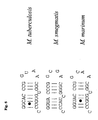
- the one species where heterogenous RNase P RNA gene sequences were observed between different serovars was M. kansasii ( Fig. 3 ).
- the differences were mainly C-to-T transitions.
- Two strains of M. gastri were sequenced as well, but in this species the gene sequences were identical between isolates.
- all RNase P RNA gene sequences from M. kansasii strains differed from those of M. gastri. Three of these differences were C-to-T transitions, while the fourth was a C-to-A transversion.
- the interspecies differences found in the P3 loop was considered to be large enough for an attempt at a simple diagnostic application through heteroduplex analysis.
- the hypervariable P3 region was analysised and amplified using the tbf and 280r oligonucleotides. Each PCR reaction yielded single bands of about 250 bp.
- the region from M. tuberculosis was used as a standard and was mixed in equal amounts with the products from different species. After separating the fragments on non-denaturing polyacrylamide gels, the bands were silver stained. There were clear differences in the heteroduplex pattern between all species tested ( Fig. 4A ).
- M. kansasii All species studied had their own conspicuous sequence characteristics. Within a species, no differences were seen except for M. kansasii , a species which has on other grounds been described as heterogeneous (1, 14, 32). Even though several of the variant positions were shared between M. kansasii and M. gastri, there are enough M. kansasii -specific bases in the gene to enable differentiation from the closely related M. gastri through microsequencing or heteroduplex analysis. M. kansasii is an important cause of pulmonary disease resulting from non-tuberculous mycobacteria.
- M. avium complex which includes M. avium and M. intracellulare, is a major opportunistic infection in AIDS patients (21, 22). Differentiating between the members of this complex requires molecular methods and our heteroduplex analysis of PCR products from the RNase P RNA gene offers a rapid and fairly inexpensive alternative to current methods (7, 8, 10, 18, 19, 23, 27, 29).
- the bases 160-164 corresponding to the end of the P12 loop are not present in the RNase P RNA gene sequence.
- the P12 loop is missing in the gene from some other organisms, such as Mycoplasma fermentans (4, 25) and thus does not seem necessary for ribozyme activity.
- the alignment also supports conclusions about RNase P structure drawn from other experiments. Suggested important regions such as the motif bp 75-85 and pairing nt 409-417 ( Fig. 2 ) are preserved throughout all analysed mycobacterial species. In all probability, these two regions base pair, since matching sequences are well conserved between organisms. The most variable regions between mycobacterial species were the P3 and P19 loops respectively. The P19 structure is not necessary for RNase P activity in vitro (25) and there is considerable variability in the P3 loop between organisms, but their role in vivo is unclear.
- M . tuberculosis RNase P RNA could still be improved upon with the help of sequence variations between species.
- a structure which is believed to be of importance is the P18 stem-loop, (the region nt 330-351) which has a well-preserved stem in the Escherichia coli and Clamydia RNase P RNAs.
- the suggested mycobacterial structure has a far less convincing stem structure. (See Fig. 2 , which is based on the old structure prediction.) However, in M. smegmatis and M. marinum there are variations from the consensus sequence.
- Rodolakis OCl Ovine conjunctivitis Rodolakis et al. (1989) Rodolakis AVj Bovine, abortion Rodolakis et al. (1989) Rodolakis ACl Caprine, abortion Rodolakis et al. (1989) Rodolakis iCl Ovine Rodolakis et al. (1989) Rodolakis Chlamydophila felis FP Baker T Feline Baker (1942) NADC AJ012171 Cello Feline Cello (1967) Storey Pring Feline Wills et al.
- NADC Clamydia muridarum MoPn T (VR-123 T ) Mouse Nigg (1942) NADC AJ012177 SFPD Hamster Stills et al. (1991) NADC Simkania negevensis Z T (VR-1471 T ) Cell culture Kahane et al. (1995) Kahane AJ012178 Parachlamydia acanthamoebae Bn 9 T Amoeba/human Amann et al. (1997) Michel AJ012179 Berg 13 Amoeba/human Amann et al. (1997) Michel
- rnpB gene in species of Chlamydiaceae was amplified by PCR with the primer pair BH1-BH2, which was designed based on the C. trachomatis sequence (13) (Table 3).
- the reaction mixture contained 0.2 ⁇ M of each primer, 200 ⁇ M dNTP, 1.5 mM MgCl 2 , 10 mM Tris-HCl (pH 8.3), 50 mM KCl, 15% glycerol and 2 U Taq polymerase.
- Amplification conditions consisted of 7 cycles with 45 s at 94°C, 45 s at 42°C, 1 min at 72°C followed by 35 cycles where the annealing temperature was increased to 58 °C. If not otherwise stated, all PCR-products mentioned in the text refer to the use of the primer pair BH1-BH2, which amplified 82% of the full-length gene.
- Sequence alignment and phylogenetic analysis Sequence alignment required secondary structure modelling of each RNase P RNA molecule which was performed manually by using comparative sequence analysis. The predicted structures were subsequently used in the alignment procedure as an aid for the identification of loop and stem regions. The alignment was used to study molecular phylogeny. The calculated distance matrix was corrected for multiple base changes at single locations by the one parameter model of Jukes & Cantor (1969)(55). This matrix was subsequently used to compute a phylogenetic tree by using the neighbor-joining program (77), implemented under the name NEIGHBOR in the Phylogenetic Inference Package, PHYLIP version 3.51c (44). Maximum parsimony trees were inferred using the DNAPARS program.
- the SEQBOOT program was used to bootstrap the trees based on neighbor-joining and maximum parsimony by resampling the data sets 1000 times.
- the construction of the maximum likelihood tree was performed with the DNAML program using the F84 model of molecular evolution applying empirical base frequencies, global rearrangement and the jumble option.
- RNase P RNA assay The RNase P RNA activity was monitored at 37 °C in our standard reaction buffer (50 mM Tris-HCl (pH 7.5), 5% (w/v) PEG 6000, 100 mM NH 4 Cl (or 1M NH 4 Cl as indicated) and 100 mM MgCl 2 ) as previously described (59 and references therein) and the final concentration of C. trachomatis RNase P RNA was ⁇ 2.4 pmol ⁇ mL -1 and of precursor tRNA Tyr Su3 ⁇ 0.052 pmol ⁇ mL -1 .
- nucleotide sequence accession numbers Representative nucleotide sequences for examined species have been submitted to EMBL. Accession numbers are listed in Table 2.
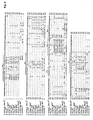
- Fig. 6 DNA sequence comparison of rnpB from the 9 Chlamydiaceae species, P. acanthamoebae and S. negevensis. Dots indicate identity with the C. trachomatis A/Har-13 T sequence (SEQ ID NO: 14) and dashes indicate gaps in the alignment. The hypervaribale regions P3, P12, P17 and P19 are indicated. Numbering is according to Brown (39).
- Fig. 7 Deduced secondary structures of RNase P RNA in C. psittaci (SEQ ID NO: 15), P. acanthamoebae (SEQ ID NO: 17) and S. negevensis (SEQ ID NO: 16).
- the nucleotides in the primer sequences are in lower case type, m indicates an adenine-cytosine mixture, and r indicates adenine-guanine mixture at this position.
- N denotes tentative nucleotides in the flanking regions of the primer based on the minimum consensus bacterial RNase P RNA (39).
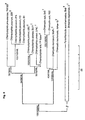
- Fig. 8 Neighbour-joining tree based on rnpB, showing the relationships among members of the family Chlamydiaceae. P. acanthamoebae, strain Bn 9 T and S. negevensis, strain Z T were chosen as outgroups. Parsimony and ML analyses produced an identical branch order. However, two taxa branched slightly different in the ML tree and this node is marked with an asterisk. Bootstrap support values at the nodes were obtained from 1000 resamplings of the data set using neighbor-joining and maximum parsimony. The scale bar indicates 5 substitutions per 100 nucleotides.
- PCR products that included 82% of the full-length rnpB gene were obtained from 60 chlamydial strains.
- the products from P. acanthamoebae strain Bn 9 T and Berg 17 were 313 bases long and their sequences were identical.
- the sequence of the 299-bp product from the Z T strain of S. negevensis was 68.9% similar to the P. acanthamoebae sequence.
- the Chlamydiaceae PCR products were between 63.8% and 69.3% similar to the segments available from P. acanthamoebae and S. negevensis.
- the rnpB sequences from Chlamydia and Chlamydophila which are the 2 genera in the Chlamydiaceae, were 75.9% - 83.3% similar.
- the 18 strains belonging to Chlamydia were >89.9% similar; the 38 strains belonging to Chlamydophila were >84.8% similar.
- the 14 C. trachomatis sequences differed by only a single base substitution in the LGV biovar compared to the Trachoma biovar.
- the 2 Chlamydia suis strains differed in only two nucleotide positions.
- the 6 Chlamydia pecorum strains were identical or differed by only 1 or 2 bases.
- Sequences were identical within species for 10 Chlamydia psittaci strains (except strain M56, see below), 10 Chlamydia pneumoniae TWAR biovar sequences, 9 Chlamydia abortus sequences, 3 Chlamydia felis sequences and the 2 Chlamydia muridarum sequences.
- the strains MoPn T (mouse) and SFPD (hamster) of the species C. muridarum have been shown to differ in their MOMP gene sequences (85).
- the rnpB genes in the two C. muridarum strains were identical, as also has been found in the ribosomal 16S/23S intergenic spacers and 23S domain I segments (42). Evolutionary pressure on the surface exposed protein has clearly been greater than on the genes involved in the translation process.
- M56 was isolated in 1961 from a muskrat in Canada (79), then stocked and distributed to ATCC from the USDA National Animal Disease Center in Ames, Iowa, USA. In cell culture, the ATCC preparation of M56 grew out as M56 serotype in one cell line and as the feline serotype in another (Andersen, unpublished). Fukushi & Hirai (1989)(46) reported a feline serotype for M56 obtained from ATCC. PCR of M56 cultured at NADC on 8/1/90 in the yolk sacs of embryonating eggs gave C. psittaci -avian-like ribosomal and full-length major outer membrane protein gene sequences (42). M56 DNA used in the current study was an aliquot from the 1997 study (Table 2). In view of this history, our rnpB analysis suggests that M56 cultures were contaminated with feline chlamydiae during the 1960's and that uncontaminated isolates may no longer be available.
- the P15 loop (see Fig. 7 ) is of interest since in most bacterial RNase P RNA molecules it harbours a GGU-motif that interacts with tRNA precursors by base pairing with the 3'-terminal RCCA motif of the tRNA (60).
- the absence of this sequence motif from all members of the Chlamydiales is striking and an ATAA-bulge is seen in all nine Chlamydiaceae species (positions 291 to 294 in C. psittaci, Fig. 7 ), except in C. pneumoniae (GAAA) and in C. felis (ACAA).
- a different structure in the P15 region of Chlamydiaceae species is rationalized by the finding that none of the identified tRNA genes encode the 3' terminal CCA sequence (80).
- the P15 region in P. acanthamoebae harbours a purine rich bulge carrying a GGU-motif.
- these RNase P RNAs interact with the 3' terminal RCCA sequence as does E. coli RNase P RNA, given that the CCA sequence is encoded in the tRNA genes in this species.
- the P15 loop structure of RNase P RNA derived from S. negevensis is similar to that observed in most cyanobacteria (87) and it carries a GGAU-motif in the P15 loop as does RNase P RNA derived from Thermus thermophilus (53). It has been suggested that this loop of RNase P RNA in T. thermophilus carries a high-affinity binding site for the 3' end of a tRNA precursor (52) and it may therefore also be valid for S. negevensis.
- RNase P RNA does not require a P15 internal loop (or a P15 hairpin loop) for catalytic activity.
- the extent of cleavage by C. trachomatis RNase P RNA was significantly reduced compared to cleavage by E. coli RNase P RNA.
- Fig. 8 shows that the genera Chlamydophila and Chlamydia can readily be distinguished from one another by comparing rnpB gene sequences.
- 16S rRNA genes provide low resolution in describing the evolutionary interrelationships of the members of the Chlamydiaceae family.
- RNase P RNA gene was determined for 60 strains representing all nine species in the Chlamydiaceae family and for the related Chlamydiales species, Parachlamydia acanthamoebae and Simkania negevensis. These sequences were used to infer evolutionary relationships among the Chlamydiaceae.
- Chlamydophila and Chlamydia into two lineages, with Chlamydophila forming three distinct clusters: the Chlamydophila pneumoniae strains, the Chlamydophila pecorum strains and a third cluster comprising the species Chlamydophila psittaci, Chlamydophila abortus, Chlamydophila caviae and Chlamydophila felis.
- the Chlamydia line of descent contained two clusters, with the Chlamydia suis strains distinctly separated from strains of Chlamydia trachomatis and Chlamydia muridarum.
Landscapes
- Chemical & Material Sciences (AREA)
- Life Sciences & Earth Sciences (AREA)
- Analytical Chemistry (AREA)
- Proteomics, Peptides & Aminoacids (AREA)
- Organic Chemistry (AREA)
- Zoology (AREA)
- Wood Science & Technology (AREA)
- Health & Medical Sciences (AREA)
- Engineering & Computer Science (AREA)
- Microbiology (AREA)
- Bioinformatics & Cheminformatics (AREA)
- Molecular Biology (AREA)
- Biotechnology (AREA)
- Biophysics (AREA)
- Physics & Mathematics (AREA)
- Biochemistry (AREA)
- Immunology (AREA)
- General Engineering & Computer Science (AREA)
- General Health & Medical Sciences (AREA)
- Genetics & Genomics (AREA)
- Measuring Or Testing Involving Enzymes Or Micro-Organisms (AREA)
- Geophysics And Detection Of Objects (AREA)
- Measuring Pulse, Heart Rate, Blood Pressure Or Blood Flow (AREA)
Claims (7)
- Verfahren zur Unterscheidung von Arten pathogener Organismen, umfassend Analysieren der P3 hypervariablen Region des RNase P RNA-Gens, wobei die Pathogene Mykobakterien oder Chlamydien sind.
- Verfahren gemäß Anspruch 1, das eine Nukleinsäureamplifizierung umfasst und wobei die Nukleinsäure zur Identifizierung einer Art sequenziert wird.
- Verfahren gemäß Anspruch 1, das eine Nukleinsäureamplifizierung umfasst und wobei die Nukleinsäure zur Identifikation einer Art einem Finger Printing unterzogen wird zum Beispiel mittels RFLP, Heteroduplexanalyse, Größenbestimmung oder Schmelzpunktbestimmung.
- Verfahren zur Detektion pathogener Organismen einschließlich einer Unterscheidung von Arten der Organismen, umfassend einen Schritt zur Unterscheidung von Arten gemäß Anspruch 1, wobei das Analysieren eine Amplifizierung von Nukleinsäuren der hypervariablen Region P3 des RNase P RNA-Gens der Pathogene, die Ausbildung eines Heteroduplex mit einer verwandten Nukleinsäure, und die Analyse desselben umfasst.
- Verfahren gemäß Anspruch 1, umfassend eine Unterscheidung zwischen Mitgliedern des M. avium Komplexes.
- Verfahren gemäß Anspruch 1, umfassend eine Unterscheidung zwischen M. gastri und M. kansasii.
- Verfahren gemäß Anspruch 1, wobei die Pathogene Chlamydien sind und die Primer zur Amplifizierung JB1 (SEQ ID NO:7) und JB2 (SEQ ID NO:8) sind.
Priority Applications (1)
| Application Number | Priority Date | Filing Date | Title |
|---|---|---|---|
| DE60127238.2T DE60127238T3 (de) | 2000-01-10 | 2001-01-10 | Methode zur detektion von pathogenen organismen |
Applications Claiming Priority (3)
| Application Number | Priority Date | Filing Date | Title |
|---|---|---|---|
| SE0000061A SE0000061D0 (sv) | 2000-01-10 | 2000-01-10 | A method for detection of pathogenic organisms |
| SE0000061 | 2000-01-10 | ||
| PCT/SE2001/000031 WO2001051662A1 (en) | 2000-01-10 | 2001-01-10 | A method for detection of pathogenic organisms |
Publications (3)
| Publication Number | Publication Date |
|---|---|
| EP1254258A1 EP1254258A1 (de) | 2002-11-06 |
| EP1254258B1 EP1254258B1 (de) | 2007-03-14 |
| EP1254258B2 true EP1254258B2 (de) | 2014-07-23 |
Family
ID=20278064
Family Applications (1)
| Application Number | Title | Priority Date | Filing Date |
|---|---|---|---|
| EP01901634.4A Expired - Lifetime EP1254258B2 (de) | 2000-01-10 | 2001-01-10 | Methode zur detektion von pathogenen organismen |
Country Status (20)
| Country | Link |
|---|---|
| US (2) | US8367321B2 (de) |
| EP (1) | EP1254258B2 (de) |
| JP (1) | JP5214083B2 (de) |
| CN (1) | CN1394235A (de) |
| AT (1) | ATE356884T1 (de) |
| AU (1) | AU2721701A (de) |
| CA (1) | CA2397176A1 (de) |
| DE (1) | DE60127238T3 (de) |
| EE (1) | EE200200378A (de) |
| ES (1) | ES2283391T3 (de) |
| HU (1) | HUP0301009A2 (de) |
| IL (1) | IL150670A0 (de) |
| MX (1) | MXPA02006588A (de) |
| NO (1) | NO20023311L (de) |
| NZ (1) | NZ519649A (de) |
| PL (1) | PL356306A1 (de) |
| RU (1) | RU2002121510A (de) |
| SE (1) | SE0000061D0 (de) |
| SK (1) | SK9582002A3 (de) |
| WO (1) | WO2001051662A1 (de) |
Families Citing this family (37)
| Publication number | Priority date | Publication date | Assignee | Title |
|---|---|---|---|---|
| US20030027135A1 (en) | 2001-03-02 | 2003-02-06 | Ecker David J. | Method for rapid detection and identification of bioagents |
| US20040121309A1 (en) | 2002-12-06 | 2004-06-24 | Ecker David J. | Methods for rapid detection and identification of bioagents in blood, bodily fluids, and bodily tissues |
| US7226739B2 (en) | 2001-03-02 | 2007-06-05 | Isis Pharmaceuticals, Inc | Methods for rapid detection and identification of bioagents in epidemiological and forensic investigations |
| WO2004060278A2 (en) | 2002-12-06 | 2004-07-22 | Isis Pharmaceuticals, Inc. | Methods for rapid identification of pathogens in humans and animals |
| US7666588B2 (en) | 2001-03-02 | 2010-02-23 | Ibis Biosciences, Inc. | Methods for rapid forensic analysis of mitochondrial DNA and characterization of mitochondrial DNA heteroplasmy |
| US7217510B2 (en) | 2001-06-26 | 2007-05-15 | Isis Pharmaceuticals, Inc. | Methods for providing bacterial bioagent characterizing information |
| US8073627B2 (en) | 2001-06-26 | 2011-12-06 | Ibis Biosciences, Inc. | System for indentification of pathogens |
| US20040185438A1 (en) * | 2003-03-10 | 2004-09-23 | Ecker David J. | Methods of detection and notification of bioagent contamination |
| US8057993B2 (en) | 2003-04-26 | 2011-11-15 | Ibis Biosciences, Inc. | Methods for identification of coronaviruses |
| US7964343B2 (en) | 2003-05-13 | 2011-06-21 | Ibis Biosciences, Inc. | Method for rapid purification of nucleic acids for subsequent analysis by mass spectrometry by solution capture |
| US8158354B2 (en) | 2003-05-13 | 2012-04-17 | Ibis Biosciences, Inc. | Methods for rapid purification of nucleic acids for subsequent analysis by mass spectrometry by solution capture |
| US8546082B2 (en) | 2003-09-11 | 2013-10-01 | Ibis Biosciences, Inc. | Methods for identification of sepsis-causing bacteria |
| US8242254B2 (en) | 2003-09-11 | 2012-08-14 | Ibis Biosciences, Inc. | Compositions for use in identification of bacteria |
| US8097416B2 (en) | 2003-09-11 | 2012-01-17 | Ibis Biosciences, Inc. | Methods for identification of sepsis-causing bacteria |
| US8163895B2 (en) | 2003-12-05 | 2012-04-24 | Ibis Biosciences, Inc. | Compositions for use in identification of orthopoxviruses |
| US7666592B2 (en) | 2004-02-18 | 2010-02-23 | Ibis Biosciences, Inc. | Methods for concurrent identification and quantification of an unknown bioagent |
| ES2641832T3 (es) | 2004-05-24 | 2017-11-14 | Ibis Biosciences, Inc. | Espectrometría de masas con filtración de iones selectiva por establecimiento de umbrales digitales |
| US20050266411A1 (en) | 2004-05-25 | 2005-12-01 | Hofstadler Steven A | Methods for rapid forensic analysis of mitochondrial DNA |
| US7811753B2 (en) | 2004-07-14 | 2010-10-12 | Ibis Biosciences, Inc. | Methods for repairing degraded DNA |
| US7309589B2 (en) * | 2004-08-20 | 2007-12-18 | Vironix Llc | Sensitive detection of bacteria by improved nested polymerase chain reaction targeting the 16S ribosomal RNA gene and identification of bacterial species by amplicon sequencing |
| US20060205040A1 (en) | 2005-03-03 | 2006-09-14 | Rangarajan Sampath | Compositions for use in identification of adventitious viruses |
| US8084207B2 (en) | 2005-03-03 | 2011-12-27 | Ibis Bioscience, Inc. | Compositions for use in identification of papillomavirus |
| EP1904655A2 (de) | 2005-07-21 | 2008-04-02 | Isis Pharmaceuticals, Inc. | Verfahren zur raschen identifizierung und quantifizierung von nukleinsäurevarianten |
| AU2007353877B2 (en) | 2006-09-14 | 2012-07-19 | Ibis Biosciences, Inc. | Targeted whole genome amplification method for identification of pathogens |
| JP5680304B2 (ja) | 2007-02-23 | 2015-03-04 | アイビス バイオサイエンシズ インコーポレイティッド | 迅速な法医学的dna分析法 |
| US9598724B2 (en) | 2007-06-01 | 2017-03-21 | Ibis Biosciences, Inc. | Methods and compositions for multiple displacement amplification of nucleic acids |
| WO2010007605A1 (en) * | 2008-07-16 | 2010-01-21 | Agriculture And Food Development Authority (Teagasc) | A method of assessing bacterial load of a sample |
| US8534447B2 (en) | 2008-09-16 | 2013-09-17 | Ibis Biosciences, Inc. | Microplate handling systems and related computer program products and methods |
| EP2349549B1 (de) | 2008-09-16 | 2012-07-18 | Ibis Biosciences, Inc. | Mischpatronen, mischstationen und verwandte ausrüstungen, und system |
| WO2010033627A2 (en) | 2008-09-16 | 2010-03-25 | Ibis Biosciences, Inc. | Sample processing units, systems, and related methods |
| EP2396803A4 (de) | 2009-02-12 | 2016-10-26 | Ibis Biosciences Inc | Ionisationssondenanordnungen |
| US8950604B2 (en) | 2009-07-17 | 2015-02-10 | Ibis Biosciences, Inc. | Lift and mount apparatus |
| EP2454000A4 (de) | 2009-07-17 | 2016-08-10 | Ibis Biosciences Inc | Systeme zur identifizierung von biowirkstoffen |
| EP2957641B1 (de) | 2009-10-15 | 2017-05-17 | Ibis Biosciences, Inc. | Multiple-displacement-amplifikation |
| US20170222326A1 (en) * | 2014-07-21 | 2017-08-03 | Telefonaktiebolaget Lm Ericsson (Publ) | Slotted slot antenna |
| US20170117630A1 (en) * | 2015-10-21 | 2017-04-27 | Microsoft Technology Licensing, Llc | Single loop near field communications antenna |
| CN108779499B (zh) * | 2016-01-04 | 2023-08-11 | 简·探针公司 | 用于检测念珠菌属物种的方法和组合物 |
Family Cites Families (4)
| Publication number | Priority date | Publication date | Assignee | Title |
|---|---|---|---|---|
| IE81145B1 (en) * | 1989-04-20 | 2000-05-03 | Thomas Gerard Barry | Generation of specific probes for target nucleotide sequences |
| US6984487B1 (en) * | 1989-08-22 | 2006-01-10 | Hsc Research Development Corporation | Cystic fibrosis gene |
| JP2001514025A (ja) * | 1997-09-04 | 2001-09-11 | スミスクライン・ビーチャム・コーポレイション | 新規rnasep |
| US7041490B1 (en) * | 1997-11-28 | 2006-05-09 | Serono Genetics Institute, S.A. | Chlamydia trachomatis polynucleotides and vectors, recombinant host cells, DNA chips or kits containing the same |
-
2000
- 2000-01-10 SE SE0000061A patent/SE0000061D0/xx unknown
-
2001
- 2001-01-10 RU RU2002121510/13A patent/RU2002121510A/ru unknown
- 2001-01-10 AU AU27217/01A patent/AU2721701A/en not_active Abandoned
- 2001-01-10 EE EEP200200378A patent/EE200200378A/xx unknown
- 2001-01-10 AT AT01901634T patent/ATE356884T1/de not_active IP Right Cessation
- 2001-01-10 CN CN01803592A patent/CN1394235A/zh active Pending
- 2001-01-10 US US10/169,831 patent/US8367321B2/en not_active Expired - Fee Related
- 2001-01-10 PL PL01356306A patent/PL356306A1/xx not_active Application Discontinuation
- 2001-01-10 IL IL15067001A patent/IL150670A0/xx unknown
- 2001-01-10 HU HU0301009A patent/HUP0301009A2/hu unknown
- 2001-01-10 DE DE60127238.2T patent/DE60127238T3/de not_active Expired - Lifetime
- 2001-01-10 NZ NZ519649A patent/NZ519649A/en unknown
- 2001-01-10 CA CA002397176A patent/CA2397176A1/en not_active Abandoned
- 2001-01-10 JP JP2001551236A patent/JP5214083B2/ja not_active Expired - Fee Related
- 2001-01-10 EP EP01901634.4A patent/EP1254258B2/de not_active Expired - Lifetime
- 2001-01-10 ES ES01901634T patent/ES2283391T3/es not_active Expired - Lifetime
- 2001-01-10 WO PCT/SE2001/000031 patent/WO2001051662A1/en not_active Ceased
- 2001-01-10 MX MXPA02006588A patent/MXPA02006588A/es unknown
- 2001-01-10 SK SK958-2002A patent/SK9582002A3/sk unknown
-
2002
- 2002-07-09 NO NO20023311A patent/NO20023311L/no not_active Application Discontinuation
-
2013
- 2013-01-02 US US13/732,625 patent/US20140018445A1/en not_active Abandoned
Non-Patent Citations (2)
| Title |
|---|
| CHO M. ET AL: "Application of the ribonuclease P (RNase P) RNA gene sequence for phylogenetic analysis of the genus Saccharomonospora", INTERNATIONAL JOURNAL OF SISTEMATIC BACTERIOLOGY, vol. 48, 1998, pages 1223 - 1230 † |
| HERMANN B. ET AL.: "Differentiation of Chlamydia spp. by Sequence Determination", JOURNAL OF CLINICAL MICROBIOLOGY, vol. 34, no. 8, August 1996 (1996-08-01), pages 1897 - 1902 † |
Also Published As
| Publication number | Publication date |
|---|---|
| IL150670A0 (en) | 2003-02-12 |
| NZ519649A (en) | 2004-02-27 |
| US20140018445A1 (en) | 2014-01-16 |
| RU2002121510A (ru) | 2004-02-20 |
| PL356306A1 (en) | 2004-06-28 |
| DE60127238T3 (de) | 2014-12-24 |
| JP5214083B2 (ja) | 2013-06-19 |
| NO20023311D0 (no) | 2002-07-09 |
| DE60127238T2 (de) | 2007-12-20 |
| CN1394235A (zh) | 2003-01-29 |
| MXPA02006588A (es) | 2004-09-10 |
| EP1254258A1 (de) | 2002-11-06 |
| US8367321B2 (en) | 2013-02-05 |
| US20030134295A1 (en) | 2003-07-17 |
| ATE356884T1 (de) | 2007-04-15 |
| AU2721701A (en) | 2001-07-24 |
| DE60127238D1 (de) | 2007-04-26 |
| HUP0301009A2 (hu) | 2003-07-28 |
| SE0000061D0 (sv) | 2000-01-10 |
| WO2001051662A1 (en) | 2001-07-19 |
| CA2397176A1 (en) | 2001-07-19 |
| ES2283391T3 (es) | 2007-11-01 |
| NO20023311L (no) | 2002-09-09 |
| EP1254258B1 (de) | 2007-03-14 |
| SK9582002A3 (en) | 2003-01-09 |
| JP2003519494A (ja) | 2003-06-24 |
| EE200200378A (et) | 2003-10-15 |
Similar Documents
| Publication | Publication Date | Title |
|---|---|---|
| EP1254258B1 (de) | Methode zur detektion von pathogenen organismen | |
| Ossewaarde et al. | Molecular evidence for the existence of additional members of the order Chlamydiales | |
| Liebana et al. | Assessment of genetic markers for species differentiation within the Mycobacterium tuberculosis complex | |
| Rodriguez et al. | Species-specific identification of Mycobacterium bovis by PCR | |
| Aranaz et al. | Mycobacterium tuberculosis subsp. caprae subsp. nov.: a taxonomic study of a new member of the Mycobacterium tuberculosis complex isolated from goats in Spain | |
| Cloeckaert et al. | Classification of Brucella strains isolated from marine mammals by infrequent restriction site-PCR and development of specific PCR identification tests | |
| US6261769B1 (en) | Intergenic spacer target sequence for detecting and distinguishing Chlamydial species or strains | |
| Guerrero et al. | A novel insertion element from Mycobacterium avium, IS1245, is a specific target for analysis of strain relatedness | |
| Schnittger et al. | Ribosomal small-subunit RNA gene-sequence analysis of Theileria lestoquardi and a Theileria species highly pathogenic for small ruminants in China | |
| US7303870B2 (en) | Method of detecting microorganisms | |
| Kim et al. | Molecular analysis of isoniazid resistance in Mycobacterium tuberculosis isolates recovered from South Korea | |
| Wilson | Molecular biology as a tool for taxonomy | |
| Herrmann et al. | Characterization of the rnpB gene and RNase P RNA in the order Chlamydiales. | |
| Tyler et al. | Oligonucleotide primers designed to differentiate pathogenic pseudomonads on the basis of the sequencing of genes coding for 16S-23S rRNA internal transcribed spacers | |
| AU2001276180A1 (en) | A method of detecting microorganisms | |
| Dvorska et al. | Strategies for differentiation, identification and typing of medically important species of mycobacteria by molecular methods | |
| Tomioka et al. | A multiplex polymerase chain reaction microarray assay to detect bioterror pathogens in blood | |
| Frothingham | Evolutionary bottlenecks in the agents of tuberculosis, leprosy, and paratuberculosis | |
| WO2003031654A1 (en) | Microarray comprising probes for mycobacteria species genotyping, m. tuberculosis strain differenciation, and antibiotic-resistant strain detection | |
| Zumárraga et al. | Molecular characterization of mycobacteria isolated from seals | |
| Bascuñana et al. | Detection and identification of mycobacteria in formalin-fixed, paraffin-embedded tissues by nested PCR and restriction enzyme analysis | |
| Cochrane et al. | Multiple genotypes of Chlamydia pneumoniae identified in human carotid plaque | |
| Vera-Cabrera et al. | Analysis of genetic polymorphism in the phospholipase region of Mycobacterium tuberculosis | |
| JP3631252B2 (ja) | 直列変異反復配列オリゴタイピングによる結核菌群細菌の検出および鑑別 | |
| Ellingson et al. | Detection of Mycobacterium avium subspecies paratuberculosis in free-ranging bison (Bison bison) by PCR |
Legal Events
| Date | Code | Title | Description |
|---|---|---|---|
| PUAI | Public reference made under article 153(3) epc to a published international application that has entered the european phase |
Free format text: ORIGINAL CODE: 0009012 |
|
| 17P | Request for examination filed |
Effective date: 20020719 |
|
| AK | Designated contracting states |
Kind code of ref document: A1 Designated state(s): AT BE CH CY DE DK ES FI FR GB GR IE IT LI LU MC NL PT SE TR |
|
| AX | Request for extension of the european patent |
Free format text: AL PAYMENT 20020719;LT PAYMENT 20020719;LV PAYMENT 20020719;MK PAYMENT 20020719;RO PAYMENT 20020719;SI PAYMENT 20020719 |
|
| 17Q | First examination report despatched |
Effective date: 20040825 |
|
| GRAP | Despatch of communication of intention to grant a patent |
Free format text: ORIGINAL CODE: EPIDOSNIGR1 |
|
| GRAS | Grant fee paid |
Free format text: ORIGINAL CODE: EPIDOSNIGR3 |
|
| GRAA | (expected) grant |
Free format text: ORIGINAL CODE: 0009210 |
|
| AK | Designated contracting states |
Kind code of ref document: B1 Designated state(s): AT BE CH CY DE DK ES FI FR GB GR IE IT LI LU MC NL PT SE TR |
|
| AX | Request for extension of the european patent |
Extension state: AL LT LV MK RO SI |
|
| PG25 | Lapsed in a contracting state [announced via postgrant information from national office to epo] |
Ref country code: BE Free format text: LAPSE BECAUSE OF FAILURE TO SUBMIT A TRANSLATION OF THE DESCRIPTION OR TO PAY THE FEE WITHIN THE PRESCRIBED TIME-LIMIT Effective date: 20070314 Ref country code: FI Free format text: LAPSE BECAUSE OF FAILURE TO SUBMIT A TRANSLATION OF THE DESCRIPTION OR TO PAY THE FEE WITHIN THE PRESCRIBED TIME-LIMIT Effective date: 20070314 Ref country code: AT Free format text: LAPSE BECAUSE OF FAILURE TO SUBMIT A TRANSLATION OF THE DESCRIPTION OR TO PAY THE FEE WITHIN THE PRESCRIBED TIME-LIMIT Effective date: 20070314 |
|
| REG | Reference to a national code |
Ref country code: GB Ref legal event code: FG4D |
|
| REG | Reference to a national code |
Ref country code: CH Ref legal event code: EP |
|
| REF | Corresponds to: |
Ref document number: 60127238 Country of ref document: DE Date of ref document: 20070426 Kind code of ref document: P |
|
| REG | Reference to a national code |
Ref country code: IE Ref legal event code: FG4D |
|
| REG | Reference to a national code |
Ref country code: SE Ref legal event code: TRGR |
|
| PG25 | Lapsed in a contracting state [announced via postgrant information from national office to epo] |
Ref country code: PT Free format text: LAPSE BECAUSE OF FAILURE TO SUBMIT A TRANSLATION OF THE DESCRIPTION OR TO PAY THE FEE WITHIN THE PRESCRIBED TIME-LIMIT Effective date: 20070814 |
|
| REG | Reference to a national code |
Ref country code: CH Ref legal event code: NV Representative=s name: PATENTANWAELTE SCHAAD, BALASS, MENZL & PARTNER AG |
|
| LTIE | Lt: invalidation of european patent or patent extension |
Effective date: 20070314 |
|
| ET | Fr: translation filed | ||
| REG | Reference to a national code |
Ref country code: ES Ref legal event code: FG2A Ref document number: 2283391 Country of ref document: ES Kind code of ref document: T3 |
|
| PLBI | Opposition filed |
Free format text: ORIGINAL CODE: 0009260 |
|
| PLAX | Notice of opposition and request to file observation + time limit sent |
Free format text: ORIGINAL CODE: EPIDOSNOBS2 |
|
| 26 | Opposition filed |
Opponent name: MACLEAN, MARTIN ROBERT Effective date: 20071214 |
|
| PG25 | Lapsed in a contracting state [announced via postgrant information from national office to epo] |
Ref country code: DK Free format text: LAPSE BECAUSE OF FAILURE TO SUBMIT A TRANSLATION OF THE DESCRIPTION OR TO PAY THE FEE WITHIN THE PRESCRIBED TIME-LIMIT Effective date: 20070314 |
|
| NLR1 | Nl: opposition has been filed with the epo |
Opponent name: MACLEAN, MARTIN ROBERT |
|
| PG25 | Lapsed in a contracting state [announced via postgrant information from national office to epo] |
Ref country code: GR Free format text: LAPSE BECAUSE OF FAILURE TO SUBMIT A TRANSLATION OF THE DESCRIPTION OR TO PAY THE FEE WITHIN THE PRESCRIBED TIME-LIMIT Effective date: 20070615 |
|
| PGFP | Annual fee paid to national office [announced via postgrant information from national office to epo] |
Ref country code: CH Payment date: 20080115 Year of fee payment: 8 Ref country code: ES Payment date: 20080124 Year of fee payment: 8 |
|
| PLAF | Information modified related to communication of a notice of opposition and request to file observations + time limit |
Free format text: ORIGINAL CODE: EPIDOSCOBS2 |
|
| PGFP | Annual fee paid to national office [announced via postgrant information from national office to epo] |
Ref country code: IT Payment date: 20080119 Year of fee payment: 8 Ref country code: NL Payment date: 20080122 Year of fee payment: 8 Ref country code: SE Payment date: 20080111 Year of fee payment: 8 |
|
| PLBB | Reply of patent proprietor to notice(s) of opposition received |
Free format text: ORIGINAL CODE: EPIDOSNOBS3 |
|
| PG25 | Lapsed in a contracting state [announced via postgrant information from national office to epo] |
Ref country code: MC Free format text: LAPSE BECAUSE OF NON-PAYMENT OF DUE FEES Effective date: 20080131 |
|
| PG25 | Lapsed in a contracting state [announced via postgrant information from national office to epo] |
Ref country code: IE Free format text: LAPSE BECAUSE OF NON-PAYMENT OF DUE FEES Effective date: 20080110 |
|
| PG25 | Lapsed in a contracting state [announced via postgrant information from national office to epo] |
Ref country code: CY Free format text: LAPSE BECAUSE OF FAILURE TO SUBMIT A TRANSLATION OF THE DESCRIPTION OR TO PAY THE FEE WITHIN THE PRESCRIBED TIME-LIMIT Effective date: 20070314 |
|
| REG | Reference to a national code |
Ref country code: CH Ref legal event code: PL |
|
| EUG | Se: european patent has lapsed | ||
| NLV4 | Nl: lapsed or anulled due to non-payment of the annual fee |
Effective date: 20090801 |
|
| PG25 | Lapsed in a contracting state [announced via postgrant information from national office to epo] |
Ref country code: LI Free format text: LAPSE BECAUSE OF NON-PAYMENT OF DUE FEES Effective date: 20090131 Ref country code: CH Free format text: LAPSE BECAUSE OF NON-PAYMENT OF DUE FEES Effective date: 20090131 |
|
| RDAF | Communication despatched that patent is revoked |
Free format text: ORIGINAL CODE: EPIDOSNREV1 |
|
| PG25 | Lapsed in a contracting state [announced via postgrant information from national office to epo] |
Ref country code: NL Free format text: LAPSE BECAUSE OF NON-PAYMENT OF DUE FEES Effective date: 20090801 |
|
| APBM | Appeal reference recorded |
Free format text: ORIGINAL CODE: EPIDOSNREFNO |
|
| APBP | Date of receipt of notice of appeal recorded |
Free format text: ORIGINAL CODE: EPIDOSNNOA2O |
|
| APAH | Appeal reference modified |
Free format text: ORIGINAL CODE: EPIDOSCREFNO |
|
| APBQ | Date of receipt of statement of grounds of appeal recorded |
Free format text: ORIGINAL CODE: EPIDOSNNOA3O |
|
| REG | Reference to a national code |
Ref country code: ES Ref legal event code: FD2A Effective date: 20090112 |
|
| PG25 | Lapsed in a contracting state [announced via postgrant information from national office to epo] |
Ref country code: ES Free format text: LAPSE BECAUSE OF NON-PAYMENT OF DUE FEES Effective date: 20090112 |
|
| PG25 | Lapsed in a contracting state [announced via postgrant information from national office to epo] |
Ref country code: LU Free format text: LAPSE BECAUSE OF NON-PAYMENT OF DUE FEES Effective date: 20080110 |
|
| PG25 | Lapsed in a contracting state [announced via postgrant information from national office to epo] |
Ref country code: TR Free format text: LAPSE BECAUSE OF FAILURE TO SUBMIT A TRANSLATION OF THE DESCRIPTION OR TO PAY THE FEE WITHIN THE PRESCRIBED TIME-LIMIT Effective date: 20070314 |
|
| PG25 | Lapsed in a contracting state [announced via postgrant information from national office to epo] |
Ref country code: IT Free format text: LAPSE BECAUSE OF NON-PAYMENT OF DUE FEES Effective date: 20090110 |
|
| PG25 | Lapsed in a contracting state [announced via postgrant information from national office to epo] |
Ref country code: SE Free format text: LAPSE BECAUSE OF NON-PAYMENT OF DUE FEES Effective date: 20090111 |
|
| APBU | Appeal procedure closed |
Free format text: ORIGINAL CODE: EPIDOSNNOA9O |
|
| PUAH | Patent maintained in amended form |
Free format text: ORIGINAL CODE: 0009272 |
|
| STAA | Information on the status of an ep patent application or granted ep patent |
Free format text: STATUS: PATENT MAINTAINED AS AMENDED |
|
| 27A | Patent maintained in amended form |
Effective date: 20140723 |
|
| AK | Designated contracting states |
Kind code of ref document: B2 Designated state(s): AT BE CH CY DE DK ES FI FR GB GR IE IT LI LU MC NL PT SE TR |
|
| AX | Request for extension of the european patent |
Extension state: AL LT LV MK RO SI |
|
| REG | Reference to a national code |
Ref country code: DE Ref legal event code: R102 Ref document number: 60127238 Country of ref document: DE |
|
| REG | Reference to a national code |
Ref country code: DE Ref legal event code: R102 Ref document number: 60127238 Country of ref document: DE Effective date: 20140723 |
|
| REG | Reference to a national code |
Ref country code: FR Ref legal event code: PLFP Year of fee payment: 15 |
|
| PGFP | Annual fee paid to national office [announced via postgrant information from national office to epo] |
Ref country code: DE Payment date: 20150722 Year of fee payment: 15 Ref country code: GB Payment date: 20150728 Year of fee payment: 15 |
|
| PGFP | Annual fee paid to national office [announced via postgrant information from national office to epo] |
Ref country code: FR Payment date: 20150731 Year of fee payment: 15 |
|
| REG | Reference to a national code |
Ref country code: DE Ref legal event code: R119 Ref document number: 60127238 Country of ref document: DE |
|
| GBPC | Gb: european patent ceased through non-payment of renewal fee |
Effective date: 20160110 |
|
| REG | Reference to a national code |
Ref country code: FR Ref legal event code: ST Effective date: 20160930 |
|
| PG25 | Lapsed in a contracting state [announced via postgrant information from national office to epo] |
Ref country code: GB Free format text: LAPSE BECAUSE OF NON-PAYMENT OF DUE FEES Effective date: 20160110 Ref country code: DE Free format text: LAPSE BECAUSE OF NON-PAYMENT OF DUE FEES Effective date: 20160802 |
|
| PG25 | Lapsed in a contracting state [announced via postgrant information from national office to epo] |
Ref country code: FR Free format text: LAPSE BECAUSE OF NON-PAYMENT OF DUE FEES Effective date: 20160201 |