EP1248603B1 - Verwendung spezieller verbindungen zur prophylaxe und therapie von hepatitis c - Google Patents
Verwendung spezieller verbindungen zur prophylaxe und therapie von hepatitis c Download PDFInfo
- Publication number
- EP1248603B1 EP1248603B1 EP01909624A EP01909624A EP1248603B1 EP 1248603 B1 EP1248603 B1 EP 1248603B1 EP 01909624 A EP01909624 A EP 01909624A EP 01909624 A EP01909624 A EP 01909624A EP 1248603 B1 EP1248603 B1 EP 1248603B1
- Authority
- EP
- European Patent Office
- Prior art keywords
- use according
- formula
- atom
- group
- hepatitis
- Prior art date
- Legal status (The legal status is an assumption and is not a legal conclusion. Google has not performed a legal analysis and makes no representation as to the accuracy of the status listed.)
- Expired - Lifetime
Links
- 0 *C(C(c1c2nccc1)=O)=C(*)C2=O Chemical compound *C(C(c1c2nccc1)=O)=C(*)C2=O 0.000 description 7
- YDEUKNRKEYICTH-UHFFFAOYSA-N Nc(c1c2nccc1)ccc2O Chemical compound Nc(c1c2nccc1)ccc2O YDEUKNRKEYICTH-UHFFFAOYSA-N 0.000 description 1
- GXGORQOUKCMHGK-UHFFFAOYSA-N Oc(cc1)c(cccc2)c2c1NCc1ccccc1 Chemical compound Oc(cc1)c(cccc2)c2c1NCc1ccccc1 GXGORQOUKCMHGK-UHFFFAOYSA-N 0.000 description 1
Classifications
-
- A—HUMAN NECESSITIES
- A61—MEDICAL OR VETERINARY SCIENCE; HYGIENE
- A61K—PREPARATIONS FOR MEDICAL, DENTAL OR TOILETRY PURPOSES
- A61K31/00—Medicinal preparations containing organic active ingredients
- A61K31/13—Amines
- A61K31/135—Amines having aromatic rings, e.g. ketamine, nortriptyline
- A61K31/136—Amines having aromatic rings, e.g. ketamine, nortriptyline having the amino group directly attached to the aromatic ring, e.g. benzeneamine
-
- A—HUMAN NECESSITIES
- A61—MEDICAL OR VETERINARY SCIENCE; HYGIENE
- A61K—PREPARATIONS FOR MEDICAL, DENTAL OR TOILETRY PURPOSES
- A61K31/00—Medicinal preparations containing organic active ingredients
- A61K31/12—Ketones
- A61K31/122—Ketones having the oxygen directly attached to a ring, e.g. quinones, vitamin K1, anthralin
-
- A—HUMAN NECESSITIES
- A61—MEDICAL OR VETERINARY SCIENCE; HYGIENE
- A61K—PREPARATIONS FOR MEDICAL, DENTAL OR TOILETRY PURPOSES
- A61K31/00—Medicinal preparations containing organic active ingredients
- A61K31/33—Heterocyclic compounds
- A61K31/395—Heterocyclic compounds having nitrogen as a ring hetero atom, e.g. guanethidine or rifamycins
- A61K31/435—Heterocyclic compounds having nitrogen as a ring hetero atom, e.g. guanethidine or rifamycins having six-membered rings with one nitrogen as the only ring hetero atom
- A61K31/47—Quinolines; Isoquinolines
-
- A—HUMAN NECESSITIES
- A61—MEDICAL OR VETERINARY SCIENCE; HYGIENE
- A61P—SPECIFIC THERAPEUTIC ACTIVITY OF CHEMICAL COMPOUNDS OR MEDICINAL PREPARATIONS
- A61P1/00—Drugs for disorders of the alimentary tract or the digestive system
- A61P1/16—Drugs for disorders of the alimentary tract or the digestive system for liver or gallbladder disorders, e.g. hepatoprotective agents, cholagogues, litholytics
-
- A—HUMAN NECESSITIES
- A61—MEDICAL OR VETERINARY SCIENCE; HYGIENE
- A61P—SPECIFIC THERAPEUTIC ACTIVITY OF CHEMICAL COMPOUNDS OR MEDICINAL PREPARATIONS
- A61P31/00—Antiinfectives, i.e. antibiotics, antiseptics, chemotherapeutics
- A61P31/12—Antivirals
Definitions
- the present invention relates to the use of specific Compounds for the prophylaxis and therapy of hepatitis C.
- Hepatitis C is a chronic viral infection of epidemic Extent. 400 million people, or every fifteenth worldwide and about 800,000 Germans suffer from this disease; per year there are around 40,000 new cases in Germany.
- hepatitis C virus 60-80% of infections with the hepatitis C virus (HCV) are chronic. Over the course of 10-20 years, 20-30% of people develop Patients with cirrhosis of the liver, 20-25 years after infection heaped up liver cell carcinomas. It is currently believed that about 20% of all affected have life-threatening liver conditions will develop. The number of fatalities from hepatitis C has increased tenfold in the past ten years; hepatitis C is one of the ten leading causes of death in today Germany. To date, drug treatment for hepatitis C only partially successful.
- WO 98/19670 discloses a method and compositions for Treatment of hepatitis C infection. Generally include Compositions of at least two compounds derived from the Nucleoside analogs, quinolone antibiotics, and anti-viral Amantadine agents existing group can be selected. Optionally, these compositions or Drug combinations containing an interferon for example interferon ⁇ .
- A is preferably a CH group: or an N atom:
- R is an H atom or a benzyl group.
- Such compounds have a particularly good effect the prophylaxis or control (therapy) of hepatis C (viruses) on.
- the compounds can be administered orally, parenterally, transdermally, intranasal, transmucosal, systemic, subcutaneous, intravascular, administered intramuscularly, topically, rectally, intravaginally and e.g. as capsule, tablet, lozenge, Lozenge, spray, nasal spray, suppository, suppository, injection, Enema, ointment, cream or plaster formulated become.
- the compounds can also be formulated as sustained release preparations.
- the active compounds according to the invention can be used as prophylactic or therapeutic agents in human and veterinary medicine.
- systemic application means e.g. an intravenous, intrapleural, intraperitoneal, rectal, oral, application or the flushing of body cavities and urinary bladder.
- local Application means e.g. the subcutaneous, intracutaneous, intratumoral, peritumoral application, e.g. in the form of injection solutions, Injection suspensions, creams, lotions, gels and ointments.
- the active ingredients used according to the invention have systemic and with local application a dose-dependent HCV combating Effect.
- the dose of the active ingredients according to the invention is in the order of magnitude for therapeutic use per day from 0.01 to 100 mg / kg body weight, preferably from 2 to 40 mg / kg body weight. In individual cases, the dosage be larger or smaller than specified above.
- the active ingredients used according to the invention can be known Way - according to the individual clinical picture - in one Formulation can be applied, such as plasters, ointments, pastes, Creams, soluble powders, emulsions, powders, suspensions and injection solutions.
- the active ingredients used according to the invention can be exemplary in a solution for injection with the help of Solubilizers in diluted physiologically acceptable Bases dissolved and by adding physiologically compatible acids in an injectable form from pH 6 to 8, especially 6.9 brought to 7.5.
- Exemplary physiologically compatible bases can be hydroxides, Hydrogen carbonates, carbonates of alkali and alkaline earth metals, especially potassium, sodium and calcium.
- physiologically acceptable acids can be lactic acid, Citric acid, tartaric acid, oxalic acid, malic acid, acetic acid, Formic acid, benzoic acid, salicylic acid, hydrochloric acid, Be sulfuric acid or phosphoric acid.
- auxiliaries are added in the formulation of the active ingredients used according to the invention - which can be used alone or in groups -.
- auxiliaries can be solid, semi-solid or liquid carriers, emulsifiers or dispersants.
- concentration of the active compounds according to the invention is between 1 and 90% by weight, preferably 5 to 50% by weight.
- the dosage units of the active ingredients used according to the invention can consist of 1, 2, 3 or 4 single doses, for example or 1/2, 1/3 or 1/4 of a single dose.
- a single dose preferably contains the amount of active ingredient in a Application is administered and usually an entire, a half or a third or even a quarter of one Daily dose corresponds.
- Creams, pastes, ointments and gels can be in addition to the active ingredient (s) usual carriers known to the person skilled in the art, for example Waxes, paraffins, starches, vegetable and animal Fats, cellulose derivatives, tragacanth, silica, talc, zinc oxide, Contain bentonites, silicones, polyethylene glycols.
- active ingredient s
- usual carriers known to the person skilled in the art, for example Waxes, paraffins, starches, vegetable and animal Fats, cellulose derivatives, tragacanth, silica, talc, zinc oxide, Contain bentonites, silicones, polyethylene glycols.
- Sprays and powders can be customary in addition to the active ingredient (s) carriers known to the person skilled in the art, such as milk sugar, talc, Silicic acid, aluminum hydroxide, calcium silicate or polyamide powder or mixtures thereof. Sprays can be added Blowing agents, for example chlorofluorocarbons contain.
- active ingredient (s) carriers known to the person skilled in the art, such as milk sugar, talc, Silicic acid, aluminum hydroxide, calcium silicate or polyamide powder or mixtures thereof.
- Sprays can be added Blowing agents, for example chlorofluorocarbons contain.
- Suppositories can be the usual in addition to the active ingredient (s) Carriers known to those skilled in the art, such as polyethylene glycols, fats or mixtures thereof.
- the active ingredients can be used to achieve better local relevance Active substance concentrations and for better tolerability in Liposomes are packed.
- the compounds used according to the invention can in themselves be produced in the usual way.
- IC 50 values were determined analogously to the NS3 proteinase assay described in: M. Taliani et al., Analytical Biochemistry, 240 (1996) 60-67. The evaluation was carried out with the aid of the "GraFit 4" program from Erithacus Software Ltd. (Staines, Middlesex, UK).
Landscapes
- Health & Medical Sciences (AREA)
- Life Sciences & Earth Sciences (AREA)
- Animal Behavior & Ethology (AREA)
- Pharmacology & Pharmacy (AREA)
- Medicinal Chemistry (AREA)
- General Health & Medical Sciences (AREA)
- Public Health (AREA)
- Veterinary Medicine (AREA)
- Chemical & Material Sciences (AREA)
- Epidemiology (AREA)
- General Chemical & Material Sciences (AREA)
- Organic Chemistry (AREA)
- Nuclear Medicine, Radiotherapy & Molecular Imaging (AREA)
- Chemical Kinetics & Catalysis (AREA)
- Oncology (AREA)
- Communicable Diseases (AREA)
- Virology (AREA)
- Gastroenterology & Hepatology (AREA)
- Engineering & Computer Science (AREA)
- Bioinformatics & Cheminformatics (AREA)
- Pharmaceuticals Containing Other Organic And Inorganic Compounds (AREA)
- Medicinal Preparation (AREA)
- Medicines That Contain Protein Lipid Enzymes And Other Medicines (AREA)
- Peptides Or Proteins (AREA)
- Acyclic And Carbocyclic Compounds In Medicinal Compositions (AREA)
- Steroid Compounds (AREA)
Description


zur Herstellung eines Medikaments zur Therapie oder Prophylaxe von Hepatitis C gelöst.
Vorzugsweise ist n = 7.
Vorzugsweise sind die Alkylreste eine Methyl-, Ethyl-, Propyl-, Isopropyl- oder Butylgruppe.


Die erfindungsgemäßen Wirkstoffe können als Prophylaktika oder Therapeutika in der Human- und Tiermedizin eingesetzt werden.


Claims (13)
- Verwendung einer Verbindung der Formel (I):worin:
 ist,U-V-W(R1)-X(R2)-Y-Z die Formel RHN-C=CR1-CR2=C-OH, HO-C=CR1-CR2=C-OH oder O=C-CR1=CR2-C=O aufweist,A ein N-Atom oder die Gruppe CH ist,R ein H-Atom, eine C1-C6-Alkyl- oder eine Benzylgruppe ist,R1 ein H-Atom oder eine Methylgruppe ist, undR2 ein H-Atom oder eine Gruppe der Formeloder

wobei n = 6, 7, 8 oder 9 ist,
Zur Herstellung eines Medikaments
zur Therapie oder Prophylaxe von Hepatitis C. - Verwendung nach Anspruch 1, dadurch gekennzeichnet, daß U-V-W(R1)-X(R2)-Y-Z die Formel RHN-C=CR1-CR2=C-OH aufweist:

- Verwendung nach Anspruch 1, dadurch gekennzeichnet, daß U-V-W(R1)-X(R2)-Y-Z die Formel HO-C=CR1-CR2=C-OH aufweist:
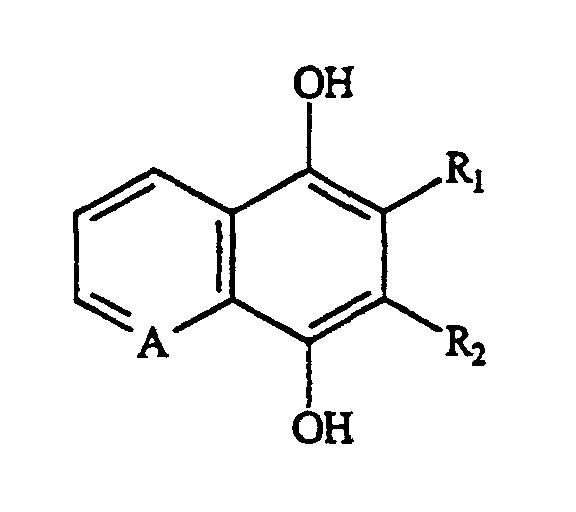
- Verwendung nach Anspruch 1, dadurch gekennzeichnet, daß U-V-W(R1)-X(R2)-Y-Z die Formel O=C-CR1=CR2-C=O aufweist:

- Verwendung nach einem der vorstehenden Ansprüche, dadurch gekennzeichnet, daß A eine CH-Gruppe ist:oder

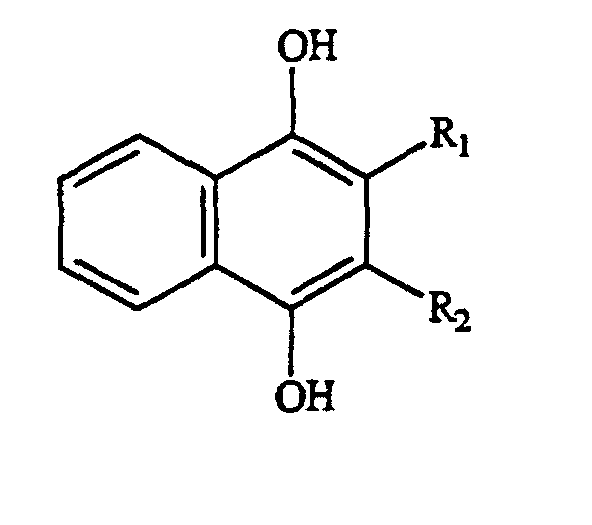
- Verwendung nach einem der Ansprüche 1 bis 4, dadurch gekennzeichnet, daß A ein N-Atom ist:oder
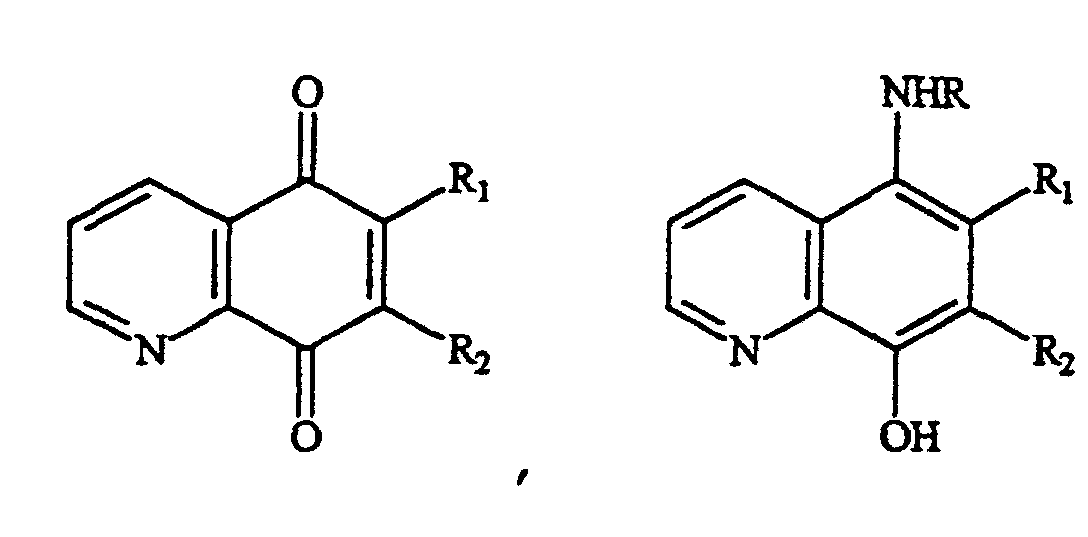

- Verwendung nach einem der vorstehenden Ansprüche, dadurch gekennzeichnet, daß R ein H-Atom ist.
- Verwendung nach einem der Ansprüche 1 bis 6, dadurch gekennzeichnet, daß R eine Benzylgruppe ist.
- Verwendung nach einem der vorstehenden Ansprüche, dadurch gekennzeichnet, daß die Verbindung die Formeln:
 oder
oder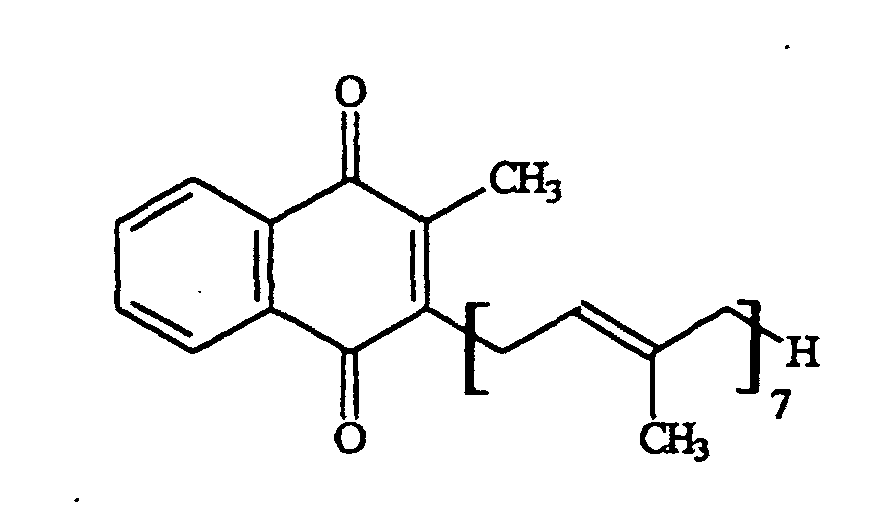 aufweist.
- Verwendung nach einem der vorstehenden Ansprüche, dadurch gekennzeichnet, daß das Medikament oral, parenteral, transdermal, intranasal, transmucosal, systemisch, subkutan, intravasculär, intramuskulär, topisch, rektal, intravaginal, verabreicht wird.
- Verwendung nach einem der vorstehenden Ansprüche, dadurch gekennzeichnet, daß die Verbindung als Kapsel, Tablette, Pastille, Lutschbonbon, Spray, Nasenspray, Zäpfchen, Suppositorium, Injektionspräparat, Einlauf, Salbe, Creme oder Pflaster formuliert wird.
- Verwendung nach einem der vorstehenden Ansprüche, dadurch gekennzeichnet, daß die Verbindung als Präparat mit retardierter Freisetzung formuliert wird.
- Verwendung nach einem der vorstehenden Ansprüche, dadurch gekennzeichnet, daß zusätzlich ein weiterer Wirkstoff eingesetzt wird.
Applications Claiming Priority (3)
| Application Number | Priority Date | Filing Date | Title |
|---|---|---|---|
| DE10001729 | 2000-01-17 | ||
| DE10001729A DE10001729A1 (de) | 2000-01-17 | 2000-01-17 | Verwendung spezieller Verbindungen zur Prophylaxe und Therapie von Hepatitis C |
| PCT/EP2001/000390 WO2001052824A2 (de) | 2000-01-17 | 2001-01-15 | Verwendung spezieller verbindungen zur prophylaxe und therapie von hepatitis c |
Publications (2)
| Publication Number | Publication Date |
|---|---|
| EP1248603A2 EP1248603A2 (de) | 2002-10-16 |
| EP1248603B1 true EP1248603B1 (de) | 2004-10-13 |
Family
ID=7627769
Family Applications (1)
| Application Number | Title | Priority Date | Filing Date |
|---|---|---|---|
| EP01909624A Expired - Lifetime EP1248603B1 (de) | 2000-01-17 | 2001-01-15 | Verwendung spezieller verbindungen zur prophylaxe und therapie von hepatitis c |
Country Status (8)
| Country | Link |
|---|---|
| EP (1) | EP1248603B1 (de) |
| JP (1) | JP2003520225A (de) |
| AT (1) | ATE279182T1 (de) |
| AU (1) | AU3730201A (de) |
| CA (1) | CA2393694A1 (de) |
| DE (2) | DE10001729A1 (de) |
| IL (1) | IL150100A0 (de) |
| WO (1) | WO2001052824A2 (de) |
Families Citing this family (4)
| Publication number | Priority date | Publication date | Assignee | Title |
|---|---|---|---|---|
| ITMI20031011A1 (it) * | 2003-05-20 | 2004-11-21 | Vanetta S P A | Composti biocidi per il trattamento delle acque. |
| CN1946385A (zh) * | 2004-02-20 | 2007-04-11 | 罗伯特·F·霍夫曼 | 靶向氧化治疗制剂在治疗病毒性疾病中的用途 |
| US20070141137A1 (en) * | 2004-03-04 | 2007-06-21 | Naoki Nagahara | Stable capsule preparation |
| GB0806794D0 (en) * | 2008-04-15 | 2008-05-14 | Ludwig Inst Cancer Res | Therapeutic compounds |
Family Cites Families (5)
| Publication number | Priority date | Publication date | Assignee | Title |
|---|---|---|---|---|
| FR2502008A1 (fr) * | 1981-03-19 | 1982-09-24 | Chekroun Mehir | Composition pharmaceutique a base de gomme ammoniaque utile dans le traitement de diverses maladies et application de cette composition au traitement de tumeurs malignes |
| DE3431236A1 (de) * | 1984-08-24 | 1986-02-27 | Carnivora-Deutschland GmbH, 7109 Jagsthausen | Verwendung von 1,4-naphthochinon-derivaten in niedrigen konzentrationen zur immunstimulation |
| DK196688A (da) * | 1987-04-28 | 1988-10-29 | Fujisawa Pharmaceutical Co | Bicykliske forbindelser og fremgangsmaade til fremstilling deraf |
| US6080791A (en) * | 1992-07-24 | 2000-06-27 | Seres Laboratories, Inc. | Method of treating a viral condition by inhibiting membrane fusion |
| AU5157998A (en) * | 1996-11-01 | 1998-05-29 | Thomas Najarian | Methods and compositions for treatment of hepatitis c infection |
-
2000
- 2000-01-17 DE DE10001729A patent/DE10001729A1/de not_active Ceased
-
2001
- 2001-01-15 WO PCT/EP2001/000390 patent/WO2001052824A2/de not_active Ceased
- 2001-01-15 CA CA002393694A patent/CA2393694A1/en not_active Abandoned
- 2001-01-15 AT AT01909624T patent/ATE279182T1/de not_active IP Right Cessation
- 2001-01-15 AU AU37302/01A patent/AU3730201A/en not_active Abandoned
- 2001-01-15 EP EP01909624A patent/EP1248603B1/de not_active Expired - Lifetime
- 2001-01-15 DE DE2001504100 patent/DE50104100D1/de not_active Expired - Lifetime
- 2001-01-15 IL IL15010001A patent/IL150100A0/xx unknown
- 2001-01-15 JP JP2001552872A patent/JP2003520225A/ja not_active Withdrawn
Non-Patent Citations (2)
| Title |
|---|
| AUTERHOFF H. ET AL: "Lehrbuch der Pharmazeutischen Chemie", 1991, WISSENSCHAFTLICHE VERLAGSGESELLSCHAFT, STUTTGART, DE * |
| FÖRTH W. ET AL: "Allgemeine und spezielle Pharmakologie und Toxikologie", 1996, SPEKTRUM AKADEMISCHER VERLAG, HEIDELBERG, DE * |
Also Published As
| Publication number | Publication date |
|---|---|
| JP2003520225A (ja) | 2003-07-02 |
| IL150100A0 (en) | 2002-12-01 |
| DE10001729A1 (de) | 2001-07-26 |
| DE50104100D1 (de) | 2004-11-18 |
| WO2001052824A3 (de) | 2002-03-07 |
| AU3730201A (en) | 2001-07-31 |
| ATE279182T1 (de) | 2004-10-15 |
| WO2001052824A2 (de) | 2001-07-26 |
| EP1248603A2 (de) | 2002-10-16 |
| CA2393694A1 (en) | 2001-07-26 |
Similar Documents
| Publication | Publication Date | Title |
|---|---|---|
| DE69201948T2 (de) | Verwendung von 1,3-oxathiolanalogen von nukleosiden zur herstellung eines arzneimittels zur behandlung von hepatitis-b. | |
| EP1964844B1 (de) | Neue Thiophenglycosidderivate, Verfahren zu deren Herstellung, diese Verbindungen enthaltende Arzneimittel und deren Verwendung | |
| DE69826644T2 (de) | Topische pharmazeutische zusammensetzung, enthaltend einen cholinergischen wirkstoff oder einen kalziumkanalblocker | |
| DE68914292T2 (de) | Zusammensetzung zur Behandlung von ischämischen Störungen in Organen. | |
| DE2633925A1 (de) | Topisch anwendbare steroidzusammensetzung | |
| DE2128462C2 (de) | Arzneimittel auf Basis von Vitamin-A-Säure-Isomeren | |
| EP0661053A1 (de) | Verwendung von Tocopherol Askorbinsäure Phosphate für hemorrhoidalen Beschwerden | |
| LU84892A1 (fr) | Komposition zur reduktion der sebumsekretion | |
| DE69330680T2 (de) | Verwendung von 17 Alpha - Dihydroequilenin zur Senkung des Cholesterinspiegels | |
| EP0908183A1 (de) | Dehydroepiandrosterone oder ihre Derivate zur Erhöhung des Hyaluronische Saüre-Gehalts der Haut | |
| DE69402463T2 (de) | (7S)-7-(2R)-2-(3-Chlorophenyl)-2-Hydoxyethylamino-5,6,7,8-Tetrahydronaphtalen-2-yloxy Essigsäure, ihre pharmazeutisch akzeptablen Salze, mit Beta-3-adrenergischer agonistischer Aktivität und diese enthaltende pharmazeutische Zusammensetzungen | |
| WO2001052824A2 (de) | Verwendung spezieller verbindungen zur prophylaxe und therapie von hepatitis c | |
| DE3116211A1 (de) | "nonaprenylamin-derivate und sie enthaltende pharmazeutische mittel" | |
| EP0381303B1 (de) | Verwendung von Suramin und physiologisch verträglichen Derivaten davon, gegebenenfalls in Kombination mit anti-androgenen Mitteln zur Herstellung von Arzneimitteln zur Behandlung des humanen Prostatakarzinoms | |
| DE2941288A1 (de) | Cystein-derivate | |
| DE69125204T2 (de) | Therapeutische Anwendung von Histamin-H3-Agonisten, neue Wirkstoffe und Verwendung zur Herstellung von Arzneimitteln | |
| DE3326163A1 (de) | Verwendung von zuckerderivaten zur prophylaxe und therapie von virusinfektionen | |
| EP0028660B1 (de) | Xanthinoxydasehemmer und Verwendung von Benztriazinderivaten | |
| EP0170237B1 (de) | Verwendung von 5-(3-Ethoxy -4-pentyloxyphenyl)-2,4-thiazoli- dindion zur Herstellung eines topischen Mittels für die Augen | |
| DE2215499C2 (de) | Diäther des Östradiol | |
| DE2059338C3 (de) | Verwendung von Cyproteronacetat bei der Behandlung der Pubertas praecox | |
| US20030153594A1 (en) | Use of particular compounds for prophylaxis and treatment of hepatitis c | |
| EP0394928A1 (de) | Topische, virushemmende, pharmazeutische Zusammensetzung die ein nicht-ionisches oberflächenaktives Mittel enthält | |
| EP1150683B9 (de) | Verwendung von dienogest in hoher dosierung | |
| DE10156617A1 (de) | Herstellung reiner Stereoisomere von Tricyclo[5.2.1.0··2··.··6··]-dec-9-yl-xanthogenat und Arzneimittel daraus |
Legal Events
| Date | Code | Title | Description |
|---|---|---|---|
| PUAI | Public reference made under article 153(3) epc to a published international application that has entered the european phase |
Free format text: ORIGINAL CODE: 0009012 |
|
| 17P | Request for examination filed |
Effective date: 20020621 |
|
| AK | Designated contracting states |
Kind code of ref document: A2 Designated state(s): AT BE CH CY DE DK ES FI FR GB GR IE IT LI LU MC NL PT SE TR |
|
| AX | Request for extension of the european patent |
Free format text: AL;LT;LV;MK;RO;SI |
|
| RIN1 | Information on inventor provided before grant (corrected) |
Inventor name: BEHNKE, DIRK Inventor name: CAPPI, MICHAEL, W. Inventor name: NERDINGER, SVEN Inventor name: WEBER, LUTZ |
|
| 17Q | First examination report despatched |
Effective date: 20030820 |
|
| GRAP | Despatch of communication of intention to grant a patent |
Free format text: ORIGINAL CODE: EPIDOSNIGR1 |
|
| GRAS | Grant fee paid |
Free format text: ORIGINAL CODE: EPIDOSNIGR3 |
|
| GRAA | (expected) grant |
Free format text: ORIGINAL CODE: 0009210 |
|
| AK | Designated contracting states |
Kind code of ref document: B1 Designated state(s): AT BE CH CY DE DK ES FI FR GB GR IE IT LI LU MC NL PT SE TR |
|
| PG25 | Lapsed in a contracting state [announced via postgrant information from national office to epo] |
Ref country code: TR Free format text: LAPSE BECAUSE OF FAILURE TO SUBMIT A TRANSLATION OF THE DESCRIPTION OR TO PAY THE FEE WITHIN THE PRESCRIBED TIME-LIMIT Effective date: 20041013 Ref country code: NL Free format text: LAPSE BECAUSE OF FAILURE TO SUBMIT A TRANSLATION OF THE DESCRIPTION OR TO PAY THE FEE WITHIN THE PRESCRIBED TIME-LIMIT Effective date: 20041013 Ref country code: IT Free format text: LAPSE BECAUSE OF FAILURE TO SUBMIT A TRANSLATION OF THE DESCRIPTION OR TO PAY THE FEE WITHIN THE PRESCRIBED TIME-LIMIT;WARNING: LAPSES OF ITALIAN PATENTS WITH EFFECTIVE DATE BEFORE 2007 MAY HAVE OCCURRED AT ANY TIME BEFORE 2007. THE CORRECT EFFECTIVE DATE MAY BE DIFFERENT FROM THE ONE RECORDED. Effective date: 20041013 Ref country code: IE Free format text: LAPSE BECAUSE OF FAILURE TO SUBMIT A TRANSLATION OF THE DESCRIPTION OR TO PAY THE FEE WITHIN THE PRESCRIBED TIME-LIMIT Effective date: 20041013 Ref country code: GB Free format text: LAPSE BECAUSE OF FAILURE TO SUBMIT A TRANSLATION OF THE DESCRIPTION OR TO PAY THE FEE WITHIN THE PRESCRIBED TIME-LIMIT Effective date: 20041013 Ref country code: FR Free format text: LAPSE BECAUSE OF FAILURE TO SUBMIT A TRANSLATION OF THE DESCRIPTION OR TO PAY THE FEE WITHIN THE PRESCRIBED TIME-LIMIT Effective date: 20041013 Ref country code: FI Free format text: LAPSE BECAUSE OF FAILURE TO SUBMIT A TRANSLATION OF THE DESCRIPTION OR TO PAY THE FEE WITHIN THE PRESCRIBED TIME-LIMIT Effective date: 20041013 Ref country code: ES Free format text: LAPSE BECAUSE OF FAILURE TO SUBMIT A TRANSLATION OF THE DESCRIPTION OR TO PAY THE FEE WITHIN THE PRESCRIBED TIME-LIMIT Effective date: 20041013 |
|
| REG | Reference to a national code |
Ref country code: GB Ref legal event code: FG4D Free format text: NOT ENGLISH |
|
| REG | Reference to a national code |
Ref country code: CH Ref legal event code: EP |
|
| REG | Reference to a national code |
Ref country code: IE Ref legal event code: FG4D Free format text: GERMAN |
|
| REF | Corresponds to: |
Ref document number: 50104100 Country of ref document: DE Date of ref document: 20041118 Kind code of ref document: P |
|
| PG25 | Lapsed in a contracting state [announced via postgrant information from national office to epo] |
Ref country code: SE Free format text: LAPSE BECAUSE OF FAILURE TO SUBMIT A TRANSLATION OF THE DESCRIPTION OR TO PAY THE FEE WITHIN THE PRESCRIBED TIME-LIMIT Effective date: 20050113 Ref country code: GR Free format text: LAPSE BECAUSE OF FAILURE TO SUBMIT A TRANSLATION OF THE DESCRIPTION OR TO PAY THE FEE WITHIN THE PRESCRIBED TIME-LIMIT Effective date: 20050113 Ref country code: DK Free format text: LAPSE BECAUSE OF FAILURE TO SUBMIT A TRANSLATION OF THE DESCRIPTION OR TO PAY THE FEE WITHIN THE PRESCRIBED TIME-LIMIT Effective date: 20050113 |
|
| PG25 | Lapsed in a contracting state [announced via postgrant information from national office to epo] |
Ref country code: LU Free format text: LAPSE BECAUSE OF NON-PAYMENT OF DUE FEES Effective date: 20050115 Ref country code: CY Free format text: LAPSE BECAUSE OF FAILURE TO SUBMIT A TRANSLATION OF THE DESCRIPTION OR TO PAY THE FEE WITHIN THE PRESCRIBED TIME-LIMIT Effective date: 20050115 |
|
| PG25 | Lapsed in a contracting state [announced via postgrant information from national office to epo] |
Ref country code: MC Free format text: LAPSE BECAUSE OF NON-PAYMENT OF DUE FEES Effective date: 20050131 Ref country code: BE Free format text: LAPSE BECAUSE OF NON-PAYMENT OF DUE FEES Effective date: 20050131 |
|
| PGFP | Annual fee paid to national office [announced via postgrant information from national office to epo] |
Ref country code: DE Payment date: 20050224 Year of fee payment: 5 |
|
| PGFP | Annual fee paid to national office [announced via postgrant information from national office to epo] |
Ref country code: AT Payment date: 20050322 Year of fee payment: 5 |
|
| PGFP | Annual fee paid to national office [announced via postgrant information from national office to epo] |
Ref country code: CH Payment date: 20050323 Year of fee payment: 5 |
|
| LTIE | Lt: invalidation of european patent or patent extension |
Effective date: 20041013 |
|
| NLV1 | Nl: lapsed or annulled due to failure to fulfill the requirements of art. 29p and 29m of the patents act | ||
| GBV | Gb: ep patent (uk) treated as always having been void in accordance with gb section 77(7)/1977 [no translation filed] |
Effective date: 20041013 |
|
| REG | Reference to a national code |
Ref country code: IE Ref legal event code: FD4D |
|
| BERE | Be: lapsed |
Owner name: MORPHOCHEM A.G. Effective date: 20050131 |
|
| PLBE | No opposition filed within time limit |
Free format text: ORIGINAL CODE: 0009261 |
|
| STAA | Information on the status of an ep patent application or granted ep patent |
Free format text: STATUS: NO OPPOSITION FILED WITHIN TIME LIMIT |
|
| 26N | No opposition filed |
Effective date: 20050714 |
|
| EN | Fr: translation not filed | ||
| PG25 | Lapsed in a contracting state [announced via postgrant information from national office to epo] |
Ref country code: AT Free format text: LAPSE BECAUSE OF NON-PAYMENT OF DUE FEES Effective date: 20060115 |
|
| PG25 | Lapsed in a contracting state [announced via postgrant information from national office to epo] |
Ref country code: DE Free format text: LAPSE BECAUSE OF THE APPLICANT RENOUNCES Effective date: 20060126 |
|
| PG25 | Lapsed in a contracting state [announced via postgrant information from national office to epo] |
Ref country code: LI Free format text: LAPSE BECAUSE OF NON-PAYMENT OF DUE FEES Effective date: 20060131 Ref country code: CH Free format text: LAPSE BECAUSE OF NON-PAYMENT OF DUE FEES Effective date: 20060131 |
|
| REG | Reference to a national code |
Ref country code: CH Ref legal event code: PL |
|
| BERE | Be: lapsed |
Owner name: *MORPHOCHEM A.G. Effective date: 20050131 |
|
| PG25 | Lapsed in a contracting state [announced via postgrant information from national office to epo] |
Ref country code: PT Free format text: LAPSE BECAUSE OF NON-PAYMENT OF DUE FEES Effective date: 20050313 |