EP1248118A2 - System und Verfahren zur Positionsbestimmung - Google Patents
System und Verfahren zur Positionsbestimmung Download PDFInfo
- Publication number
- EP1248118A2 EP1248118A2 EP02006156A EP02006156A EP1248118A2 EP 1248118 A2 EP1248118 A2 EP 1248118A2 EP 02006156 A EP02006156 A EP 02006156A EP 02006156 A EP02006156 A EP 02006156A EP 1248118 A2 EP1248118 A2 EP 1248118A2
- Authority
- EP
- European Patent Office
- Prior art keywords
- signal
- receiving device
- processing device
- central processing
- position receiving
- Prior art date
- Legal status (The legal status is an assumption and is not a legal conclusion. Google has not performed a legal analysis and makes no representation as to the accuracy of the status listed.)
- Withdrawn
Links
Images




Classifications
-
- G—PHYSICS
- G01—MEASURING; TESTING
- G01S—RADIO DIRECTION-FINDING; RADIO NAVIGATION; DETERMINING DISTANCE OR VELOCITY BY USE OF RADIO WAVES; LOCATING OR PRESENCE-DETECTING BY USE OF THE REFLECTION OR RERADIATION OF RADIO WAVES; ANALOGOUS ARRANGEMENTS USING OTHER WAVES
- G01S11/00—Systems for determining distance or velocity not using reflection or reradiation
- G01S11/02—Systems for determining distance or velocity not using reflection or reradiation using radio waves
-
- G—PHYSICS
- G01—MEASURING; TESTING
- G01S—RADIO DIRECTION-FINDING; RADIO NAVIGATION; DETERMINING DISTANCE OR VELOCITY BY USE OF RADIO WAVES; LOCATING OR PRESENCE-DETECTING BY USE OF THE REFLECTION OR RERADIATION OF RADIO WAVES; ANALOGOUS ARRANGEMENTS USING OTHER WAVES
- G01S11/00—Systems for determining distance or velocity not using reflection or reradiation
- G01S11/12—Systems for determining distance or velocity not using reflection or reradiation using electromagnetic waves other than radio waves
-
- G—PHYSICS
- G01—MEASURING; TESTING
- G01S—RADIO DIRECTION-FINDING; RADIO NAVIGATION; DETERMINING DISTANCE OR VELOCITY BY USE OF RADIO WAVES; LOCATING OR PRESENCE-DETECTING BY USE OF THE REFLECTION OR RERADIATION OF RADIO WAVES; ANALOGOUS ARRANGEMENTS USING OTHER WAVES
- G01S11/00—Systems for determining distance or velocity not using reflection or reradiation
- G01S11/14—Systems for determining distance or velocity not using reflection or reradiation using ultrasonic, sonic or infrasonic waves
Definitions
- the present invention relates to a system Method and / or corresponding devices for Position determination, and in particular a system Method and / or corresponding devices for Positioning a person using a mobile Emergency signaling device activated.
- the position of the person can be determined quickly and as accurately as possible.
- a mobile emergency transmitters or the like used that the person carries with him and with which an emergency signal can be given. Then can displayed in a monitoring center, for example where the person is, and relief efforts can be launched specifically and without time-consuming searches become.
- a transponder is a microelectronic circuit with a transmission and Receiving antenna, control logic, data storage and energy storage.
- the task of such Circuitry is stored information with a range that is within range Exchange reading station wirelessly.
- a headquarters When pressing an emergency button or the like, for example, a headquarters communicated that a person with a certain Transponder in the area of a specific reading station and reports an emergency.
- a headquarters communicated that a person with a certain Transponder in the area of a specific reading station and reports an emergency.
- the range of the transponders a variety of distributed reading stations required to have a adequate coverage of the area to be monitored to reach.
- GPS global positioning system
- Position determination can be used.
- a portable GPS receiver constantly receives GPS satellites Signals that this into geographic information transforms. Trouble-free reception is the Satellite signals required. The geographical Information is then sent to the headquarters in an emergency transmitted.
- the location transmitters work here for example for the transmission of the location code after the inductive principle or the infrared principle.
- the means the mobile position transmitter also serves as Location data receiver.
- the position transmitter When you press a send button, for example, in an emergency, the In addition to its own identifier, the position transmitter also includes the received location code transmitted to the control center. to Ensure that the location ID of the current location is available, the location code data is constantly sent and received.
- the energy supply of the Position transmitter is loaded by charging in appropriate Charging stations guaranteed. Examples of such Positioning systems are using the PNA-2000 system Localization and the MINIPHON-alpha-2-secury system, both from Tenovis GmbH & Co. KG.
- An object of the present invention is an improved method and / or an improved one System and corresponding improved devices for Provide position determination.
- This task is solved, for example, by a Method for determining a position of a Position transmitter device with a Position receiving device or more Position receiving devices communicates with the Steps sending a first signal over a first Signal path, receiving and processing the first signal, Prepare a second signal path, send one second signal via the second signal path at a first predetermined time and determining whether the second Signal via the second signal path in a second predetermined time is received, in which case that the second signal over the second data path in the second predetermined time is received Primary message is generated and the primary message for Determining the position being processed.
- a Position transmitter device with an external Position receiving device communicates, for determination one position, with one actuator, one Processing device, a first transmission device for a first signal path and a second Transmitting device for a second signal path, the Processing facility in response to actuation the actuator causes the first Transmitter a first signal to the Position receiving device sends and that at a first predetermined time the second transmitter second signal to the position receiving device sends.
- a position receiving device with an external Position transmitter and an external central Processing device communicates, for determination one position, with a processing device, one first receiving device for receiving via a first signal path, a second receiving device for Receive over a second signal path and one Data transmission device, the "Processing facility is set up by the first receiving device received first signal process the second receiving device in response prepare for a reception and determine whether the second signal by the second receiving device is received in a second predetermined time, wherein in the event that the second signal through the second Receiving device in the second predetermined time is received, a primary message is generated and by the data transmission device to the external central processing device for determining the Position is sent.
- a Position determination system for determining a position, with a position transmitter, one Position receiving device or more Position receiving devices and a central Processing device, wherein a first signal from the Position transmission device via a first signal path the position receiving device is sent, the Position receiving device receives the first signal and evaluates and in response to the evaluation Receive a second signal over a second Signal path prepared, the position transmitter that second signal via the second signal path at a first predetermined time that sends Position receiving device determines whether the second Signal via the second signal path in a second predetermined time is received, in which case that the second signal over the second data path in the second predetermined time is received Position receiving device generates a primary message and via a data line to the central Processing device sends the central Processing device to determine the primary message the position processed and the specific position displays.
- the present invention makes it simple possible the position of a position transmitter (and thus a person) to determine and display.
- the necessary to determine the position Location information is in the fixed Position receiving devices filed. This is a simple structure of the portable Position sending device possible.
- the stationary Position receiving devices can Fixed network must be connected.
- the primary message comprises identification information of the position transmitting device transmitted by the first signal in a data telegram, location information stored in the position receiving device and confirmation information about the reception of the second signal.
- the secondary message comprises identification information of the position transmitting device transmitted by the first signal in a data telegram and one stored in the position receiving device Location information.
- the confirmation information about the reception of the second signal is not contained in the secondary message (or it contains information that the second signal was not received in the second predetermined time).
- Every one addressed Position receiving device reports to the central processing device that it has received the first data telegram (the first signal) (secondary message).
- the second data telegram (the second signal) is only reported by the position receiving device, which receives it within the second predetermined time (primary message). This position receiving device then does not send a secondary message.
- first and second signal path By using two different ones Signaling (first and second signal path) between the position transmitter and the Position receiving device become false triggers avoided. This is done by an appropriate one Timing control for sending and receiving the Signals supported.
- the reception of the second signal is only possible if the first signal is at least partially. has been received.
- the reception of the second signal is for example, only within a predetermined Time possible so that a false trigger by a random signal similar to the second signal and as such can be interpreted is unlikely.
- Both primary and secondary reports are used by the position receiving devices of the fed to central processing device. This processes the received messages and correlates them she. The central processing device knows where it is each position transmitter is located. When a Primary notification exists, can be a specific one Position determination take place, whereas in the case at which only has secondary reports, a relative one Position determination is possible.
- the central one Processing device capable of the result of Processing of the primary and / or received Visualize secondary messages. For example on a digitized map of the monitored area a marker is displayed that represents the position. So is a quick position determination for example possible through support teams.
- the Position receiving devices the signal strength of the determine the first signal. Thereupon, for example under the primary and Secondary messages representing the signal strength Information to the central processing device Posted.
- the central processing device this takes into account the signal strength Processing information for Positioning.
- determining the Signal strength can be a more accurate position determination can be achieved.
- the central processing device only on Secondary reports can enable Information regarding the signal strength at the individual position receiving devices a more accurate Positioning.
- the position receiving device can also have a Position receiving sub-unit or more Position receiving sub-units have.
- the Position receiving sub-units are in the same room distributed in which the (main) Position receiving device is located, and are with this connected.
- a Redundancy created, which increases reliability has the consequence.
- a more accurate Positioning can be achieved if, for example the position receiving sub-unit has a sub-identifier sends, which makes it possible to determine which Subunit received the data telegram.
- Position receiving subunits the signal strength of the to determine the first signal and the signal strength descriptive information about the (main) Send position receiving device.
- the (main) Position receiving device guides the information the central processing device further, for example in the context of primary and / or Secondary message. This can also Position determination can be refined.
- the first signal path i.e. for the transmission of the first data telegram
- Radio frequency radio signal used while for the second signal path (i.e. for the transmission of the second Data telegram) an acoustic signal or an optical signal is used.
- a confirmation message or confirmation message via the position receiving device to the Position transmission device (and thus to a Operator) to send.
- the position transmitter then signals reception the confirmation message by a suitable means, for example a buzzer, a lamp or like. This makes it possible to Operator to indicate that, for example, the Emergency call has been received and the position is determined has been.
- the position receiving device be set up to check their functionality, i.e. for example the readiness to receive corresponding receiving devices and the like.
- the Result of the review is sent to the central Processing device sent. This processes the Test result and take it into account, for example in the In the event of a fault in the position receiving device, the position determination. For example possible when determining a position if a Position receiving device has failed, by the Messages from two neighboring Position receiving devices and knowledge of the Disturbance conclusions about the location of the Pull position transmitter.
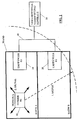
- Fig. 1 is a first embodiment of a Positioning system shown.
- reference numeral 10 denotes a Position transmission device, for example, from a Person X is worn.
- Reference numeral 20 denotes Position receiving devices that receive signals from the Position transmitter 10 receives.
- Reference numeral 30 denotes a central processing device that installed in an emergency call center, for example and with the position receiving devices 20 via a Data line 40 is connected.
- Position receiving device 20 are located in a room A.
- a second position receiving device 20 (hereinafter referred to as receiver E2) is located in a room B. Rooms A and B are delimited by walls.
- transmitter N1 is activated by person X, then one in Fig. 1 by a broken line and a dashed circular arc shown first signal output.
- the first signal is, for example, a High-frequency radio signal (or RF signal) and transmits an encoded data telegram. With this first signal or first data telegram is sent by the transmitter N1 for example, that activation has taken place (i.e. that there is an emergency) and an associated one Sender identification (i.e. a specific code for Identification of the transmitter, here for example "N1").
- the first signal both from the receiver E1 in room A and from that Receive receiver E2 in room B.
- that first signal is from the walls delimiting room A. not (or at least only partially) shielded.
- the transmitter N1 independently sends a second signal (indicated by the solid arrows in FIG. 1).
- the second signal is, for example, an acoustic signal, preferably in the audible range, or an optical signal, for example an infrared signal.
- the second The signal can also be a data telegram that essentially contains the same information as the first data telegram, or it can only represent a carrier signal, the presence of which is detected in the receivers.
- the second signal is received by the receiver E1 in room A, but not by the receiver E2 installed in the adjacent room B. This means that the second signal is blocked or shielded by the walls delimiting room A.
- the receivers E1 and E2 pass over the data line 40 corresponding reports to the central office Processing device 30 from.
- the reports Receiver E1 for example the reception of an emergency signal, the identifier of the transmitter N1 (i.e. the content of the first Data telegram), a location identifier where the recipient is E1 is located (for example "E1 in room A") and one Confirmation information that the second signal received has been. This information forms a so-called Primary message.
- Location identifier can only be the identifier of the Recipient (for example "E1", "E2"), to those in the central processing device later the corresponding position is assigned (comparison Identifier of the recipient with stored information).
- the receiver E2 reports the Receive an emergency signal, the identifier of the transmitter N1 (i.e. the content of the first data telegram) and one Location identifier, where the receiver E2 is located (for example, "E2 in room B") who Confirmation information about receipt of the second However, Signals is missing.
- the one sent by the receiver E2 Message is referred to as a secondary message.
- the central processing device 30 now evaluates the received primary message and secondary message.
- central processing device becomes, for example Computer or the like used. it is located for example in a monitoring center in one another room of the building to be monitored or like. It includes a memory in which Location information and comparison data for assignment a location identifier for a location are stored.
- central processing device 30 determines that an emergency call has been made and that an There is a primary notification, i.e. the position can be determined specifically (namely that the Transmitter N1 in room A monitored by receiver E1 located).
- the Site plan is an example digitized representation of the of the Positioning system monitored areas.
- a display device (not shown) can Site plan display and a display element for display the specified position. So it can Position can be determined quickly and accurately.
- the central processing device 30 can in addition to the Evaluation of the messages and the position determination too perform other tasks. For example, it is possible via the central processing device Logging of monitoring events . embric. A forwarding is also a received emergency call (e.g. to a public Rescue service or the like) possible. Finally also takes over the central processing device alerting rescue teams on site, for example by a buzzer, a siren, a Lamp or the like.
- the data line 40 for the transmission of the primary message or the secondary message from Position receiving device 20 to the central Processing device 30 is, for example, a fixed one Connection, such as a fiber optic cable or a Copper wire cable, or a wireless connection like a radio link or an optical link (laser or similar).
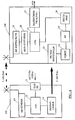
- FIG 2 is an example of one Position transmitter 10 and one Position receiving device 20 shown.
- Reference numeral 11 an actuator that for example by an operator for activation the position transmitter 10 is operated.
- the Actuator 11 can be, for example Pushbutton or one coupled with a rope Demolition switch or the like.
- a position sensor that detects the position of the Position transmitter 10 (and thus the Operator) recorded, controlled contact possible.
- Reference numeral 12 denotes a CPU hereinafter designated processing facility.
- the CPU 12 controls all executed in the position transmitter 10. Operations and is with a (not shown) memory for Storage of for the position transmitter 10 specific data. Is in memory for example the aforementioned transmitter identifier (N1) saved.
- the CPU 12 further includes one Timing circuit by means of one below described timing control of the position transmitter 10 is made possible.
- Reference numeral 13 denotes a first transmission device.
- the first transmission device 13 is, for example, a High-frequency transmitter or RF transmitter, which has an antenna the first signal (the first data telegram) after a Control by the processing device 12 by means of '. an RF radio link.
- Reference numeral 14 denotes a second transmission device.
- the second transmission device 14 is, for example, a acoustic or an optical signaling device that the second signal (the second data telegram) after one Control by the processing device 12 by means of an acoustic or optical signal transmission sends.
- the acoustic signal is preferably in the audible range. But there is also a Ultrasound signal or the like possible in the case optical signal transmission is preferably a Infrared signal used.
- the position transmitter 10 further includes one Power supply device, not shown, such as for example a battery that contains all the elements of the Position transmitter 10 powered.
- the Energy supply device is preferred not rechargeable, but can be rechargeable.
- the first receiving device 21 corresponds to the first Transmitter 13 of the position transmitter 10.
- Numeral 22 denotes a processing device (CPU). Equivalent to the CPU 12 of the position transmitter 10, the processing device 22 controls all of them Position receiving device 20 operations to be performed. Furthermore, the processing device 22 is connected to a memory (not shown) for storing data specific to the position receiving device 20. The above-mentioned location identifier (“E1 in room A”) is stored in this memory, for example. The processing device 22 also further comprises a timing control circuit, by means of which one described below. Time control of the position receiving device 20 is made possible.
- Numeral 23 denotes a second one Receiving device.
- the second receiving device 23 corresponds to the second transmitter 14 of the Position sending device 10. That is, for example, that the second receiving device 23 is an acoustic or is an optical signal receiver that is the second Signal (the second data telegram) via an acoustic or receives optical signal transmission.
- a acoustic signal transmission includes the second Receiving device, for example piezoelectric transducer, a dynamic microphone or the like, which the acoustic signal into a convert electrical signal.
- the reference numerals 24, 25 and 26 are devices for processing the converted second signal designated. These devices 24, 25 and 26 are included to the signal transmission used for the second signal and the specifications of the second receiving device 23 customizable.
- an acoustic Signal transmission becomes, for example, an amplifier 24 for amplifying that of the piezoelectric transducer converted electrical signal, a bandpass 25 for .Filtering the amplified electrical signal and a Decoder 26 for decoding in the electrical signal contained information used.
- an amplifier 24 for amplifying that of the piezoelectric transducer converted electrical signal
- a bandpass 25 for .Filtering the amplified electrical signal
- a Decoder 26 for decoding in the electrical signal contained information used.
- Reference numeral 27 denotes a data transmission device.
- the data transmission device 27 serves to receive messages from the processing device 22 Position receiving device 20 to be transmitted to the central processing device 30 via the data line 40.
- the data transmission device 27 is adapted to the type of connection used for the data line 40.
- the operator operates the operating device 11, the power supply to the Position transmitter 10 turned on.
- the CPU 12 then controls the first transmission device 13, the to send the first data telegram.
- the Time control circuit the time from sending the to capture the first data telegram.
- the CPU 12 controls the second Transmitter 14 to the second data telegram send.
- the first receiving device 21 receives the Position receiving device 20 the first data telegram, it transmits this to the processing device 22.
- the processing device evaluates the received Data telegram and records the emergency call as well as the Sender ID. These are, for example cached.
- the Timing circuit of the processing device 22 started the time since the reception of the first Data telegram recorded.
- the Processing device 22 the second Receiving device 23 in standby, so that this Reception of the second data telegram is ready.
- the processing device 22 determines using the timing circuit, whether in a second predetermined time received the second data message has been. After a third predetermined time then a message from the processing device 22 generated for the central processing device 30 and sent via the data transmission device 27.
- 3A is an example of a timing diagram for the signals or data telegrams in the Positioning system shown with which the the above timing is illustrated.
- the sending of the first Data telegram from the time control circuit of the CPU 12 of the position transmitter 10 detected. Is becoming Signal transmission uses an RF radio link captures the timing circuit of the Processing device 22 of Position receiving device 20 almost simultaneously Time of beginning reception of the first Data telegram.
- the two timing circuits of the Position transmitter 10 and the Position receiving device 20 can thus as are considered synchronized.
- the amount of time it takes to transfer the first Data telegram is required, is set in advance. For example, it is t1.
- This time t1 can also be used as the time when the Processing device 22 of Position receiving device 20 the second Receiving device 23 switches to standby.
- the CPU 12 initiates the Position sending device 10 sending the second Data telegram by the second transmitter 14.
- the Time t2 is therefore the first mentioned above predetermined time. It should be noted that the timing to ready the second receiving device 23 of the Position receiving device 20 is selected so that the second receiving device is ready to receive before the time t2 has been reached (for example t1).
- the amount of time it takes to transfer the second Data telegram is required, ends at t3. Also this time period (namely t3 - t2) can already be in advance be defined. That is, the time ends at time t3 Position sending device 10 sending.
- a timing t G is defined by the timing control circuit of the processing device 22 of the position receiving device 20.
- the time t G defines the time until the second receiving device 23 is switched to standby (this corresponds to the aforementioned second predetermined time). That is, if the second receiving device 23 does not receive a second data telegram by the time t G , the processing device 22 switches off the second receiving device 23. However, if a second data telegram is received, the second receiving device 23 remains in operation.
- the time t G can be selected as desired. It is only necessary to ensure that the second data telegram can have reached the second receiving device 23, that is to say at least at t2 plus a corresponding transit time for the second signal.
- a suitable choice of the point in time t G can, for example, prevent incorrect detection of a signal which is similar to the second signal but is actually not.
- the processing device 22 causes the position receiving device 20 to either send a primary message (if the second data message was received before t G ) or a secondary message (if no second data message was received).
- the second data telegram for example, only has to be recorded as being present, so that no additional data have to be received and evaluated. Then the second 'data telegram is considered to have been received as soon as the second signal is detected as being present.
- t4 can then be, for example, t G (or t G plus processing time), or t4 can be, for example, t2 plus the signal transit time of the second signal plus the processing time.
- the duration for the entire time control i.e. of Time t0 to time t4 is, for example 1 second.
- 3B is another example of one Timing diagram for the signals or data telegrams shown in the positioning system.
- 3B essentially corresponds to FIG. 3A.
- the difference from the example shown in FIG. 3A is. that the second signal (the second data telegram) is already sent if the first data telegram is still being sent. 3B is therefore before t1.
- t2 can be chosen arbitrarily (indicated by the arrows). It is also possible to choose t2 equal to t0.
- the transmission device 10 triggers the first and the second transmission device 13, 14 simultaneously. The other times t3, t4 and t G shift accordingly. This shortens the time span, for example, until a position can be determined.
- this includes first data telegram, for example, a data block that is sent at the beginning of the data telegram Initialization of the activation of the second signal path (the second receiving device 23) on the Receiving end. That is, the second receiving device 23 is switched to ready to receive while the first Receiving device 21 still the first data telegram receives.
- first data telegram for example, a data block that is sent at the beginning of the data telegram Initialization of the activation of the second signal path (the second receiving device 23) on the Receiving end. That is, the second receiving device 23 is switched to ready to receive while the first Receiving device 21 still the first data telegram receives.
- step S10 Positioning process started. This happens for example by actuating the actuating element 11 the position transmitter 10 if one Report operator (Person X) an emergency want. Thereupon, for example, the energy supply the position transmitter 10 started. Since the Energy supply is only switched on when required, the position transmitter 10 does not consume power, as long as they are not through the actuator is switched on.
- step S20 the CPU 12 Position transmitter 10 an actuation signal of the actuator 11 received.
- the actuation signal is generated by the CPU 12 in step S30 the first data telegram that indicates an emergency and the transmitter identifier of the position transmitter 10 includes.
- the first data telegram is then the first Signal sent by the first transmitter 13.
- step S40 the first signal from the Position receiving device 20 via the first Receiving device 21 received and by the Processing device 22 evaluated.
- the Processing device 22 recognizes during the evaluation the first data telegram that there is an emergency, and uses the transmitter identifier to determine which Position sending device 10 has sent.
- the second receiving device then becomes in step S50 23 of the position receiving device 20 in standby switched to receive the second signal.
- step S60 the CPU 12 Position transmission device 10, the second data message generated and in the first predetermined time t2 over the second transmitter 14 sent as a second signal.
- step S70 the processing device 22 of the position receiving device 20 determines whether the second data telegram is received in the second predetermined time t G.
- step S80 the second one Signal in step S80 (Fig. 5B) by the second Receiving device 23 added and via the Machining devices 24, 25 and 26 to the Processing device 22 forwarded.
- the Processing device 22 evaluates the second Data telegram off (step S90). Thereupon the Processing device 22 in step S100 Primary message generated and via the Data transmission device 27 and the data line 40 sent to the central processing device 30 '.
- the central processing device 30 evaluates in Step S110 the received message from and recognizes that it is a primary notification. she processes the information contained in the primary notification Information (emergency, transmitter identification, location identification, Confirmation regarding the second signal) and correlated this with the available information (for example Linking the location code with the corresponding one Coordinate information) to determine the position. The position determined in this way is then determined by the central processing device 30, for example a map is displayed. So that's it Position determination ended (step S140).
- the primary notification Information emergency, transmitter identification, location identification, Confirmation regarding the second signal
- available information for example Linking the location code with the corresponding one Coordinate information
- step S70 If, in the position receiving device 20, the determination in step S70 is negative (ie no second signal was received in the second predetermined time t G ), the processing device 22 generates the secondary message in step S120 (FIG. 5C) and sends it via the Data transmission device 27 and the data line 40 to the central processing device 30.
- the central processing device 30 evaluates in Step S130 the received message and recognizes that it is a secondary report. she processes the ones contained in the secondary message Information (emergency, transmitter identification, location identification) and correlates this with the available information (for example, linking the area code with corresponding coordinate information) for determination the position. The position determined in this way will then appear by the central processing device 30 displayed, for example, by a map. In contrast to that executed in step S110 Evaluation results in the evaluation of the secondary message only a relative position determination. this will described in more detail below.
- the central Processing device 30 usually several Can receive messages via the data line 40, namely a primary notification and at least one Secondary message.
- a primary notification e.g. a primary notification
- at least one Secondary message e.g. a Secondary message
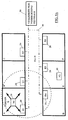
- FIGS. 5A to 5C An exemplary structure is shown in FIGS. 5A to 5C a position determination system according to that in FIG. 1 shown positioning system, which one Area monitored by six rooms A to F with receivers E1 to E6 (position receiving devices 20) and one the corridor connecting the rooms.
- the six recipients E1 to E6 are each connected via a data line 40 one installed in a central surveillance room central processing device 30 connected.
- Fig. 5A Operates the person X in room A their transmitter N1, for example to report an emergency situation and Getting help first becomes the first signal sent (dashed ellipse).
- the first signal sent (dashed ellipse).
- the Position of person X or transmitter N1 in the three Space coordinates within space A (or within of the monitored area) is the spread of the first Signals differ and therefore the range of the Transmitter N1 different.
- an RF radio signal used, receive different recipients the signal with different signal strengths.
- the receivers E1, E2 and E4 receive the first signal with sufficient signal strength. Thereupon, in the three Receivers E1, E2 and E4 are switched to the respective second receiving devices 23.
- the transmitter N1 now transmits after the first predetermined Time out the second signal (solid arrows). Becomes for the second signal, for example, an acoustic one Used signal transmission, shield the room A surrounding walls the acoustic signal. This means, within the second predetermined time only the Receiver E1 the second signal, whereas the 'receiver E2 and E4 no second signal received.
- the central processing device 30 thus receives three reports, namely a primary report from the Receiver E1 and two secondary messages from the Receivers E2 and E4.
- the central processing device 30 can now for example, only the primary notification at Take into account position determination and the two Ignore secondary reports. A specific one Position determination is possible.
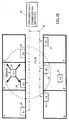
- FIG. 5B The example shown in FIG. 5B is similar to that in FIG 5A example described.
- the transmitter N1 is here in room B.
- the receivers E2, E3 and E5 the first signal, whereas only the Receiver E2 receives the second signal.
- the receiver E2 So sends the primary message while the recipient E3 and E5 send a secondary message.
- transmitter N1 reports an emergency in room B.
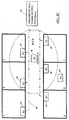
- FIG. 5C Another example is shown in Fig. 5C.
- the in 5C is the example of the transmitter N1 carrying person X in none of those with a receiver E1 to E6 equipped rooms A to F, but in the hallway, that has no recipient.
- the transmitter N1 actuated by person X, received for example the receivers E2, E3, E5 and E6 the first signal. sends however, the transmitter N1 off the second signal, so the second due to the shielding through the walls Signal from none of the receivers E2, E3, E5 and E6 receive.
- the position transmitter device 110 corresponds in FIG Essentially that shown in Fig. 2 Position transmitter 10. On a closer Description is therefore omitted.
- the position receiving device 120 corresponds in many Parts of the position receiving device 20 according to FIG. 2.
- the same parts have the same reference numerals provided and on a more detailed description of these parts is omitted here.
- Position receiving device 20 The difference between that shown in Fig. 2 Position receiving device 20 and that in FIG. 6 Position receiving device 120 shown lies in a with reference numeral 28 designated device for measurement the signal strength of the first signal.
- the signal strength measuring device 28 can be used as an independent element or as part of the first receiving device 21 or the Processing device 22 are present.
- the processing device 22 are transmitted in addition to that by the first signal first data telegram from the signal strength measuring device 28 fed information that the measured strength of the first signal when received represent.
- the processing device 22 evaluates the Information representing signal strength from and transfers them to the central processing device 30.
- the transfer to the central Processing device 30 can either be separate Report done, or preferably within the scope of transmitting primary report or secondary report.
- primary notification or secondary notification is made expanded another information element.
- the information representing signal strength is evaluated and taken into account when determining the position. So can for example using a comparison table, previously for this purpose at the central Processing device is to be saved, one measured signal strength a certain distance of the Position transmitter device 110 of the Position receiving device 120 are assigned. This enables a more precise position determination.
- the central processing device 30 only secondary messages from the receivers E2, E3, E5 and E6.
- the central processing device Determine 30 distances from the respective recipients and process. For example, only the Secondary reports from the two recipients at the Positioning takes into account the highest Have signal strength (i.e. the closest to the Sendef N1 are).
- the position determination from the secondary reports taking into account the signal strength: transmitter N1 reports Emergency and is located between rooms C and E.
- a corresponding visualization on the Site plan display supports fast Positioning.
- FIGS. 5A and 5B Also in the cases shown in FIGS. 5A and 5B is an inclusion of those representing the signal strength Information for a more precise positioning usable.
- the primary notification is like it a specific one is described above Position determination possible, but this can be done through the Consideration of the measured signal strength continues be improved. For example, if the first signal has a very high signal strength Transmitter N1 in the case of FIG. 5A very close to that Receiver E1. This can then be done, for example, at Position determination from the primary notification taken into account are: Sender N1 reports emergency in room A in the immediate vicinity of the receiver E1.
- the Processing device 22 of Position receiving device 120 decides that a The secondary message was not sent.
- the Position receiving device 120 at a great distance from the position transmitting device sending the first signal 110 is located.
- Position receiving devices present in the system who receive a stronger first signal and possibly even receive the second signal (Primary Notification).
- the processing facility 22 able to do so if the signal strength is too low Sending the secondary message as not required assess and prevent accordingly in this case the second receiving device 23 not on standby.
- the signal signal falls below a minimum Advantage that fewer secondary reports to the central Processing device 30 from the recipients of the Positioning system are sent. Only that Receiver located at a certain distance from the transmitter N1 (which is a minimum signal strength received), send corresponding messages. As a result, the burden of Transmission system between receivers and central Processing device 30 reduced, in particular to the data line 40, on the other hand, the load on the central processing device 30 itself, since at the Position determination fewer messages are evaluated have to.
- FIG. 7 are designated by reference numeral 210 Position sending device and one with reference numeral 220 designated position receiving device shown.
- the position transmitter 210 corresponds in many Parts of the position transmitter shown in Fig. 2 10. The same parts have the same reference numerals provided and. on a more detailed description of these parts is omitted here.
- the position receiving device 220 corresponds in many ways Parts of the position receiving device 20 according to FIG. 2. The same parts have the same reference numerals provided and on a more detailed description of these parts is omitted here.
- Position transmitter device 10 The difference between that shown in Fig. 2 Position transmitter device 10 and that shown in FIG. 7 Position transmitter device 210 is in one Reference numeral 15 designated receiving device and one designated by reference numeral 16 Display means.
- the receiving device 15 can be designed as an independent receiving part, or with the first transmission device 13 a transmission / Form receiving device, for example, an RF radio signal transmission used.
- the display device 16 is generated by the CPU 12 of the position sending device 210 driven. For example, it is a lamp like one Light emitting diode or LED, a buzzer to deliver a Sound signal or the like.
- Position receiving device 20 The difference between that shown in Fig. 2 Position receiving device 20 and that in FIG. 7 Position receiving device 220 shown lies in a transmitting device designated by reference numeral 29.
- the Transmitting device 29 can stand alone Transmitting part be formed, or with the Receiving device 21 a transmitting / receiving device form, for example, an RF radio signal transmission used.
- the transmitter 29 of the Position receiving device 220 and the Receiving device 15 of the position transmitting device 210 are coordinated.
- an acknowledgment message to the Position sending device 210 to send. If the central processing device 30 the position has determined a confirmation message for the transmitting position transmitter 210 generated and over the data line 40 to the position receiving device 220 sent. The processing device 22 of the Position receiving device 220 evaluates the Confirmation message and sends over the Transmitting device 29 an acknowledgment message to the Position sending device 210 Sender identification of the 'position transmitter device 210 used (for example N1) to the acknowledgment message only to the corresponding position transmitter 210 to send (for example, by appropriate Encoding).
- the receiving device 15 of the position transmitter 210 routes the acknowledgment message to CPU 12 of Position transmitter device 210 further '.
- the CPU 12 evaluates the acknowledgment message and controls the Display device 16 on.
- the display device 16 the receipt of the acknowledgment message from the Operator (person X) is displayed.
- the central Processing device 30 instead of the simple one Confirmation message transmit voice signals that for example via a microphone from one Surveillance person.
- the speech signals become the same as described above Position transmitter device 210 transmitted.
- There are the Speech signals then, for example, via a loudspeaker (which replaces the display device 16) in sound signals converted.
- FIG. 8 shows a position determination system that the position determination system shown in FIG corresponds to many parts. The same parts are the same Provide reference numerals and for a more detailed description is waived.
- Positioning system includes that shown in FIG. 8 Positioning system in each room A, B with one respective position receiving device 20 connected Position receiving sub-units 50, which have a (wired or wireless) connection 60 data with of the respective position receiving device 20 change.
- the position receiving sub-units 50 have one Similar structure to a position receiving device 20 on. That is, they include first and second Receiving devices for receiving the first and the second signal, a processing device for Processing the received signals, a Data transmission device for sending data and like.
- Position receiving sub-units 50 U1 or U2
- main position receiving device 20 E1 or E2
- Position receiving sub-units 50 communicate Position receiving sub-units 50 (U1 or U2) only with of the respective (main) position receiving device 20 (E1 or E2).
- Position receiving sub-units 50 also none Primary message or secondary message generated, but only by the first and if necessary by the second signal received data telegrams are too the processing device 22 of the (main) Position receiving device 20 transmitted.
- the Primary notification or secondary notification continues in the Processing device 22 of the (main) Position receiving device 20 generated. This takes over data transfer to the central continues Processing device 30.
- the Control of position receiving sub-unit 50 by the Processing device 22 of the (main) Position receiving device 20 are adopted.
- a own processing facility of Position receiving sub-units 50 is omitted. This simplifies the structure of the Position receiving sub-units 50.
- Position receiving sub-unit 50 By a suitable distribution of a position receiving sub-unit 50 or more Position receiving sub-units 50 in a room to be monitored can achieve better coverage. In particular in rooms in which reception of the second signal can be disturbed, for example, by objects standing around, an improvement in reception security is achieved. Furthermore, redundancy against failure of a position receiving device is created.
- the (main) Position receiving device 20 additionally Information about the central processing device 30 sent with which, strength which Position receiving sub-unit U1, U2 the first signal has received.
- the strength of the received second Signals can be measured.
- the in the (Main) position receiving device E1 and Position receiving subunit U1 measured signal strengths of the second signal become equivalent to that above described method for measuring the signal strength of the processed the first signal and when determining the position considered.
- the position receiving device have a self-monitoring functionality.
- the means every position receiving device is checked for example periodically whether the first and second Receiving device are operational, i.e. if this first and second signals are received correctly can. Returns the. Checking that a mistake has occurred, this immediately becomes the central one Processing device 30 reported.
- the central one Processing device 30 then initiates maintenance the corresponding position receiving device. Should in the meantime an emergency call from one Position transmitter in the area of the defective Position receiving device are given, so this, as described above, also from surrounding Receiving position receiving devices (at least that first signal).
- When evaluating the incoming The failure then becomes secondary reports, for example the defective position receiving device is taken into account.
- a Alternative message indicated that the transmitter (N1) is in that of the defective position receiving device monitored room (that is actually a Primary message from the defective Position receiving device would have been issued).
- the central processing device 30 gives one corresponding display, for example on the Site plan display. This will help locate the Person X even in the event of a defect Position receiving device facilitated.
- the position transmitter device can also Have self-monitoring function and in the case of a Issue a defect warning.
- the position transmitter device can be used in the Beep continuously.
- the continuous tone and the second signal be coupled together. This makes it easy to find the person X relieved. Furthermore, an additional Alerting bystanders can be reached.
- the central one Processing device 30 possible after Position determination via the.
- Transmitter 29 of the Position receiving device 220 and the Receiving device 15 of the position transmitting device 210 other position transmitters of other people to control and, for example, a voice message to transmit them to others People who are close to the person making the emergency call Person X are informed about the emergency and receive corresponding position information.
- the in 5A to 5C for example the person in room E. alarmed accordingly with the transmitter N2.
- the alarm takes place via a position receiving device (e.g. E5) or all Position receiving devices (E1 to E6) in the Positioning system as a general call to everyone Position sending devices 210.
- the positioning system to be modified so that between the individual position receiving devices a connection for data exchange between the Processing facilities 22 is present. If one Position receiving device receives the second signal, so a 'primary message to central Processing device 30 for specific Position determination will send, reports the corresponding Processing device 22 this in advance to the others Position receiving devices. They can do that Prevent sending of corresponding secondary messages. This message must appear before time t4 in FIG. 3A or 3B. This will make the Processing load on the central Processing device 30 and the transmission load reduced on data line 40.
- the first signal is not is shielded while the second signal is shielded becomes.
- the order can also be reversed. This means that the second signal is sent first, and then the first signal.
- a position determination system for determining a position.
- the system comprises one or more position transmitter devices 10, a position receiver device or a plurality of position receiver devices 20 and a central processing device 30.
- a first signal is sent from the position transmitter device to the position receiver device via a first signal path.
- the position receiving device receives the first signal and evaluates it.
- a second signal path is being prepared.
- the position transmitter sends a second signal over the second signal path at a first predetermined time t2.
- the position receiving device determines whether the second signal is received in a second predetermined time t G. If so, a primary message is sent to the central processing device. If not, a secondary message is sent to the central processing device.
- the central processing device determines the position from the received messages and displays it. Furthermore, a position determination method, a corresponding position sending device and a corresponding position receiving device are proposed.
Landscapes
- Physics & Mathematics (AREA)
- Engineering & Computer Science (AREA)
- General Physics & Mathematics (AREA)
- Radar, Positioning & Navigation (AREA)
- Remote Sensing (AREA)
- Electromagnetism (AREA)
- Mobile Radio Communication Systems (AREA)
- Position Fixing By Use Of Radio Waves (AREA)
- Radar Systems Or Details Thereof (AREA)
Abstract
Description
Ortsinformation. Die Bestätigungsinformation über den Empfang des zweiten Signals ist in der Sekundärmeldung nicht enthalten (bzw. es ist eine Information enthalten, dass das zweite Signal nicht in der zweiten vorbestimmten Zeit empfangen wurde).
Positionsempfangsvorrichtung meldet der zentralen Verarbeitungsvorrichtung, dass sie das erste Datentelegramm (das erste Signal) empfangen hat (Sekundärmeldung). Den Empfang des zweiten Datentelegramms (des zweiten Signals) dagegen meldet nur die Positionsempfangsvorrichtung, die dieses innerhalb der zweiten vorbestimmten Zeit empfängt (Primärmeldung). Diese Positionsempfangsvorrichtung sendet dann keine Sekundärmeldung.
Positionsempfangsvorrichtung 20 befinden sich in einem Raum A. Eine zweite (nachstehend kurz als Empfänger E2 bezeichnete) Positionsempfangsvorrichtung 20 befindet sich in einem Raum B. Die Räume A und B sind durch Wände abgegrenzt.
Signal kann ebenfalls ein Datentelegramm sein, das im Wesentlichen die selben Informationen wie das erste Datentelegramm umfasst, oder lediglich ein Trägersignal darstellen, dessen Vorhandensein in den Empfängern erfasst wird. Im Gegensatz zu dem ersten Signal wird das zweite Signal von dem Empfänger E1 in Raum A, nicht aber von dem in dem benachbarten Raum B installierten Empfänger E2 empfangen. Das heißt, das zweite Signal wird durch die den Raum A begrenzenden Wände blockiert bzw. abgeschirmt.
Positionsempfangsvorrichtung 20 auszuführenden Vorgänge. Ferner ist die Verarbeitungseinrichtung 22 mit einem (nicht gezeigten) Speicher zur Speicherung von für die Positionsempfangsvorrichtung 20 spezifischen Daten verbunden. In diesem Speicher ist beispielsweise die vorstehend genannte Ortskennung ("E1 in Raum A") gespeichert. Die Verarbeitungseinrichtung 22 umfasst ferner ebenfalls eine Zeitsteuerungsschaltung, mittels der eine nachstehend beschriebene. Zeitsteuerung der Positionsempfangsvorrichtung 20 ermöglicht wird.
Positionsempfangsvorrichtung 20 über die Datenleitung 40 an die zentrale Verarbeitungseinrichtung 30 zu übertragen. Dabei ist die Datenübertragungseinrichtung 27 an die verwendete Verbindungsart der Datenleitung 40 angepasst.
Empfängern E1, E2 und E4 die jeweiligen zweiten Empfangseinrichtungen 23 in Bereitschaft geschaltet.
Positionsempfangsuntereinheiten 50 in einem zu überwachenden Raum kann eine bessere Abdeckung erreicht werden. Insbesondere in Räumen, in denen ein Empfang des zweiten Signals beispielsweise durch herumstehende Gegenstände gestört werden kann, wird eine Verbesserung der Empfangssicherheit erreicht. Des Weiteren wird eine Redundanz gegen einen Ausfall einer Positionsempfangseinrichtung geschaffen.
Claims (36)
- Verfahren zum Bestimmen einer Position einer Positionssendevorrichtung (10), die mit einer Positionsempfangsvorrichtung oder mehreren Positionsempfangsvorrichtungen (20) kommuniziert, mit den Schritten
Senden (S30) eines ersten Signals über einen ersten Signalweg,
Empfangen und Verarbeiten (S40) des ersten Signals,
Vorbereiten (S50) eines zweiten Signalwegs,
Senden (S60) eines zweiten Signals über den zweiten Signalweg bei einer ersten vorbestimmten Zeit (t2) und
Bestimmen (S70), ob das zweite Signal über den zweiten Signalweg in einer zweiten vorbestimmten Zeit (tG) empfangen wird,
wobei in dem Fall, dass das zweite Signal über den zweiten Datenweg in der zweiten vorbestimmten Zeit empfangen wird (S80), eine Primärmeldung erzeugt wird (S100) und die Primärmeldung zur Bestimmung der Position verarbeitet wird (S110). - Verfahren nach Anspruch 1, wobei in dem Fall, dass der Bestimmungsschritt (S70) ergibt, dass das zweite Signal nicht in der zweiten vorbestimmten Zeit empfangen wird, eine Sekundärmeldung erzeugt wird (S120) und die Sekundärmeldung zur Bestimmung der Position verarbeitet wird (S130).
- Verfahren nach Anspruch 1, wobei die Primärmeldung eine durch das erste Signal übermittelte Kenninformation der Positionssendevorrichtung, eine in der Positionsempfangsvorrichtung gespeicherte Ortsinformation und eine Bestätigungsinformation über den Empfang des zweiten Signals umfasst.
- Verfahren nach Anspruch 2, wobei die Sekundärmeldung eine durch das erste Signal übermittelte Kenninformation der Positionssendevorrichtung und eine in'der Positionsempfangsvorrichtung gespeicherte Ortsinformation umfasst.
- Verfahren nach einem der vorhergehenden Ansprüche, mit einem Schritt zum Bestimmen (S40) der Signalstärke der Signale des ersten Signalwegs, wobei die Signalstärke darstellende Informationen bei der Verarbeitung zur Bestimmung der Position verwendet werden.
- Verfahren nach einem der vorhergehenden Ansprüche, wobei bei dem ersten Signalweg ein Hochfrequenz-Funksignal verwendet wird und bei dem zweiten Signalweg ein akustisches oder optisches Signal verwendet wird.
- Verfahren nach einem der vorhergehenden Ansprüche, wobei bei der Verarbeitung zur Bestimmung der Position eine Lageplandarstellung verwendet wird.
- Verfahren nach einem der vorhergehenden Ansprüche, mit den Schritten
Senden einer Bestätigungsnachricht nach der Verarbeitung zur Bestimmung der Position an die Positionssendevorrichtung und
Signalisieren des Empfangs der Bestätigungsnachricht bei der Positionssendevorrichtung. - Verfahren nach einem der vorhergehenden Ansprüche, mit den Schritten
Überprüfen der Funktionalität der Positionsempfangsvorrichtung und
Melden des Ergebnisses der Überprüfung der Funktionalität der Positionsempfangsvorrichtung an eine zentrale Verarbeitungsvorrichtung. - Positionssendevorrichtung (10), die mit einer externen Positionsempfangsvorrichtung (20) kommuniziert, zur Bestimmung einer Position, mit
einer Betätigungseinrichtung (11),
einer Verarbeitungseinrichtung (12),
einer ersten Sendeeinrichtung (13) für einen ersten Signalweg und
einer zweiten Sendeeinrichtung (14) für einen zweiten Signalweg, wobei
die Verarbeitungseinrichtung in Reaktion auf eine Betätigung der Betätigungseinrichtung veranlasst, dass die erste Sendeeinrichtung ein erstes Signal an die Positionsempfangsvorrichtung sendet und dass bei einer ersten vorbestimmten Zeit (t2) die zweite Sendeeinrichtung ein zweites Signal an die Positionsempfangsvorrichtung sendet. - Positionssendevorrichtung nach Anspruch 10, wobei die erste Sendeeinrichtung eingerichtet ist, ein Hochfrequenz-Funksignal zu senden, und die zweite Sendeeinrichtung eingerichtet ist, ein akustisches Signal zu senden.
- Positionssendevorrichtung nach Anspruch 10, wobei die erste Sendeeinrichtung eingerichtet ist, ein Hochfrequenz-Funksignal zu senden, und die zweite Sendeeinrichtung eingerichtet ist, ein optisches Signal zu senden.
- Positionssendevorrichtung nach einem der Ansprüche 10 bis 12, mit
einer Empfangseinrichtung (15), die eingerichtet ist, eine Bestätigungsnachricht 'für eine Verarbeitung zur Bestimmung der Position zu empfangen, und
einer Signalisierungseinrichtung, die eingerichtet ist, den Empfang der Bestätigungsnachricht zu signalisieren. - Positionsempfangsvorrichtung (20), die mit einer externen Positionssendevorrichtung (10) und einer externen zentralen Verarbeitungsvorrichtung (30) kommuniziert, zur Bestimmung einer Position, mit
einer Verarbeitungseinrichtung (22),
einer ersten Empfangseinrichtung (21) zum Empfangen über einen ersten Signalweg,
einer zweiten Empfangseinrichtung (23) zum Empfangen über einen zweiten Signalweg und
einer Datenübertragungseinrichtung (27),
wobei die Verarbeitungseinrichtung eingerichtet ist, ein durch die erste Empfangseinrichtung empfangenes erstes Signal zu verarbeiten, die zweite Empfangseinrichtung in Reaktion darauf für einen Empfang vorzubereiten und zu bestimmen, ob das zweite Signal durch die zweite Empfangseinrichtung in einer zweiten vorbestimmten Zeit (tG) empfangen wird,
wobei in dem Fall, dass das zweite Signal durch die zweite Empfangseinrichtung in der zweiten vorbestimmten Zeit empfangen wird, eine Primärmeldung erzeugt wird und durch die Datenübertragungseinrichtung zu der externen zentralen Verarbeitungsvorrichtung zur Bestimmung der Position gesendet wird. - Positionsempfangsvorrichtung nach Anspruch 14, wobei in dem Fall, dass die Bestimmung ergibt, dass das zweite' Signal durch die zweite Empfangseinrichtung nicht in der zweiten vorbestimmten Zeit empfangen wird, die Verarbeitungseinrichtung eingerichtet ist, eine Sekundärmeldung zu erzeugen und durch die Datenübertragungseinrichtung zu der externen zentralen Verarbeitungsvorrichtung zur Bestimmung der Position zu senden.
- Positionsempfangsvorrichtung nach Anspruch 14, wobei die Primärmeldung eine durch das erste Signal übermittelte Kenninformation der Positionssendevorrichtung, eine in der Positionsempfangsvorrichtung gespeicherte Ortsinformation und eine Bestätigungsinformation über den Empfang des zweiten Signals umfasst.
- Positionsempfangsvorrichtung nach Anspruch 15, wobei die Sekundärmeldung eine durch das erste Signal übermittelte Kenninformation der Positionssendevorrichtung und eine in der Positionsempfangsvorrichtung gespeicherte Ortsinformation umfasst.
- Positionsempfangsvorrichtung nach einem der Ansprüche 14 bis 17, mit einer Signalstärkebestimmungseinrichtung (28) zur Bestimmung der Signalstärke des ersten Signals, wobei die Signalstärke darstellende Informationen zu der externen zentralen Verarbeitungsvorrichtung zur Bestimmung der Position gesendet werden.
- Positionsempfangsvorrichtung nach einem der Ansprüche 14 bis 18, mit
einer Positionsempfangsuntereinheit oder mehreren Positionsempfangsuntereinheiten (50), die in einem Raum verteilt sind und mit der Positionsempfangsvorrichtung verbunden sind, wobei jede Positionsempfangsuntereinheit eingerichtet ist, das erste Signal und das zweite Signal zu empfangen und an die Verarbeitungseinrichtung der Positionsempfangsvorrichtung weiterzuleiten. - Positionsempfangsvorrichtung nach Anspruch 19, wobei jede Positionsempfangsuntereinheit eingerichtet ist, die Signalstärke des ersten Signals zu bestimmen und die Signalstärke darstellende Informationen zu der Verarbeitungseinrichtung der Positionsempfangsvorrichtung zu senden.
- Positionsempfangsvorrichtung nach einem der Ansprüche 14 bis 20, wobei die erste Empfangseinrichtung eingerichtet ist, Hochfrequenz-Funksignale zu empfangen, und die zweite Empfangseinrichtung eingerichtet ist, ein akustisches Signal zu empfangen.
- Positionsempfangsvorrichtung nach einem der Ansprüche 14 bis 20, wobei die erste Empfangseinrichtung eingerichtet ist, Hochfrequenz-Funksignale zu empfangen, und die zweite Empfangseinrichtung eingerichtet ist, ein optisches Signal zu empfangen.
- Positionsempfangsvorrichtung nach einem der Ansprüche 14 bis 22, mit einer Sendeeinrichtung (29), die eingerichtet ist, eine Bestätigungsnachricht für eine Verarbeitung zur Bestimmung der Position an die Positionssendevorrichtung in Reaktion auf eine Anweisung von der externen zentralen Verarbeitungsvorrichtung zu senden.
- Positionsempfangsvorrichtung nach einem der Ansprüche 14 bis 23, wobei'die Verarbeitungseinrichtung eingerichtet ist, die Funktionalität der Positionsempfangsvorrichtung zu überprüfen und über die Datenübertragungseinrichtung das Ergebnis der Überprüfung der Funktionalität der Positionsempfangsvorrichtung an eine externe zentrale Verarbeitungsvorrichtung zu senden.
- Positionsbestimmungssystem zur Bestimmung einer Position, mit
einer Positionssendevorrichtung (10),
einer Positionsempfangsvorrichtung oder mehreren Positionsempfangsvorrichtungen (20) und
einer zentralen Verarbeitungsvorrichtung (30),
wobei ein erstes Signal von der
Positionssendevorrichtung über einen ersten Signalweg zu der Positionsempfangsvorrichtung gesendet wird,
die Positionsempfangsvorrichtung das erste Signal empfängt und auswertet sowie in Reaktion auf die Auswertung den Empfang eines zweiten Signals über einen zweiten Signalweg vorbereitet,
die Positionssendevorrichtung das zweite Signal über den zweiten Signalweg bei einer ersten vorbestimmten Zeit (t2) sendet,
die Positionsempfangsvorrichtung bestimmt, ob das zweite Signal über den zweiten Signalweg in einer zweiten vorbestimmten Zeit (tG) empfangen wird,
wobei in dem Fall, dass das zweite Signal über den zweiten Datenweg in der zweiten vorbestimmten Zeit empfangen wird, die Positionsempfangsvorrichtung eine Primärmeldung erzeugt und über eine Datenleitung (40) an die zentrale Verarbeitungsvorrichtung sendet, die zentrale Verarbeitungsvorrichtung die Primärmeldung zur Bestimmung der Position verarbeitet und die bestimmte Position anzeigt. - System nach Anspruch 25, wobei in dem Fall, dass die Positionsempfangsvorrichtung bestimmt, dass das zweite Signal nicht in der zweiten vorbestimmten Zeit empfangen wird, die Positionsempfangsvorrichtung eine Sekundärmeldung erzeugt und über die Datenleitung an die zentrale Verarbeitungsvorrichtung sendet, die zentrale Verarbeitungsvorrichtung die Sekundärmeldung zur Bestimmung der Position verarbeitet und die bestimmte Position anzeigt.
- System nach Anspruch 25, wobei die Primärmeldung eine durch das erste Signal übermittelte Kenninformation der Positionssendevorrichtung, eine in der Positionsempfangsvorrichtung gespeicherte Ortsinformation und eine Bestätigungsinformation über den Empfang des zweiten Signals umfasst.
- System nach Anspruch 26, wobei die Sekundärmeldung eine durch das erste Signal übermittelte Kenninformation der Positionssendevorrichtung und eine in der Positionsempfangsvorrichtung gespeicherte Ortsinformation umfasst.
- System nach einem der Ansprüche 25 bis 28, wobei die Positionsempfangsvorrichtung eingerichtet ist, die Signalstärke des ersten Signals zu bestimmen sowie die Signalstärke darstellende Informationen an die zentrale Verarbeitungsvorrichtung zu senden, und die zentrale Verarbeitungsvorrichtung eingerichtet ist, die Position unter Berücksichtigung der die Signalstärke darstellenden Informationen zu bestimmen.
- System nach einem der Ansprüche 25 bis 29, wobei die Positionsempfangsvorrichtung eine Positionsempfangsuntereinheit oder mehrere Positionsempfangsuntereinheiten (50) umfasst, die in einem Raum verteilt sind und mit der Positionsempfangsvorrichtung verbunden sind (60), wobei jede Positionsempfangsuntereinheit eingerichtet ist, das erste Signal und das zweite Signal zu empfangen und an die Positionsempfangsvorrichtung weiterzuleiten.
- System nach Anspruch 30, wobei jede Positionsempfangsuntereinheit eingerichtet ist, die Signalstärke des ersten Signals zu bestimmen und die Signalstärke darstellende Informationen zu der Positionsempfangsvorrichtung zu senden, die die Informationen an die zentrale Verarbeitungsvorrichtung weiterleitet, und die zentrale Verarbeitungsvorrichtung eingerichtet ist, die Position unter Berücksichtigung der die Signalstärke darstellenden Informationen zu bestimmen.
- System nach einem der Ansprüche 25 bis 31, wobei bei dem ersten Signalweg ein Hochfrequenz-Funksignal verwendet wird und bei dem zweiten Signalweg ein akustisches Signal verwendet wird.
- System nach einem der Ansprüche 25 bis 31, wobei bei dem ersten Signalweg ein Hochfrequenz-Funksignal verwendet wird und bei dem zweiten Signalweg ein optisches Signal verwendet wird.
- System nach einem der Ansprüche 25 bis 33, wobei die zentrale Verarbeitungsvorrichtung eine Lageplandarstellung umfasst, bei der die bestimmte Position dargestellt wird.
- System nach einem der Ansprüche 25 bis 34, wobei
die zentrale Verarbeitungsvorrichtung eingerichtet ist, eine Bestätigungsmeldung nach der Bestimmung der Position über die Positionsempfangsvorrichtung an die Positionssendevorrichtung zu senden, und
die Positionssendevorrichtung eingerichtet ist, den Empfang der Bestätigungsmeldung zu signalisieren. - System nach einem der Ansprüche 25 bis 35, wobei
die Positionsempfangsvorrichtung eingerichtet ist, die Funktionalität der Positionsempfangsvorrichtung zu überprüfen und das Ergebnis der Überprüfung der Funktionalität der Positionsempfangsvorrichtung an die zentrale Verarbeitungsvorrichtung zu senden, und
die zentrale Verarbeitungsvorrichtung eingerichtet ist, die das gesendete Ergebnis zu verarbeiten und bei der Bestimmung der Position zu berücksichtigen.
Applications Claiming Priority (2)
| Application Number | Priority Date | Filing Date | Title |
|---|---|---|---|
| DE10113545 | 2001-03-20 | ||
| DE2001113545 DE10113545A1 (de) | 2001-03-20 | 2001-03-20 | System und Verfahren zur Positionsbestimmung |
Publications (2)
| Publication Number | Publication Date |
|---|---|
| EP1248118A2 true EP1248118A2 (de) | 2002-10-09 |
| EP1248118A3 EP1248118A3 (de) | 2003-03-19 |
Family
ID=7678245
Family Applications (1)
| Application Number | Title | Priority Date | Filing Date |
|---|---|---|---|
| EP02006156A Withdrawn EP1248118A3 (de) | 2001-03-20 | 2002-03-19 | System und Verfahren zur Positionsbestimmung |
Country Status (2)
| Country | Link |
|---|---|
| EP (1) | EP1248118A3 (de) |
| DE (1) | DE10113545A1 (de) |
Cited By (1)
| Publication number | Priority date | Publication date | Assignee | Title |
|---|---|---|---|---|
| US8779895B2 (en) | 2007-11-13 | 2014-07-15 | Universitetet I Oslo | Ultrasound zone location system with high capacity |
Families Citing this family (2)
| Publication number | Priority date | Publication date | Assignee | Title |
|---|---|---|---|---|
| DE10315277A1 (de) * | 2003-04-03 | 2004-10-28 | Peter Brettschneider | Anordnung zur Ortung von Personen |
| DE102004016041A1 (de) * | 2004-03-30 | 2005-10-27 | Dieter Josef Martin | Verfahren und Vorrichtung zum Orten eines Objekts |
Family Cites Families (8)
| Publication number | Priority date | Publication date | Assignee | Title |
|---|---|---|---|---|
| DE1813128A1 (de) * | 1968-12-06 | 1970-06-25 | Chisholm John Peter | System zur Ermittlung und Anzeige des jeweiligen Standorts von Fahrzeugen |
| FR2248517B1 (de) * | 1973-10-23 | 1978-08-04 | Sercel Rech Const Elect | |
| DE3816377C2 (de) * | 1988-05-13 | 1995-11-16 | Aeg Mobile Communication | Einrichtung zur Eigenstandortbestimmung, insbesondere von Fahrzeugen |
| US5293645A (en) * | 1991-10-04 | 1994-03-08 | Sharp Microelectronics Technology, Inc. | Apparatus and method for locating mobile and portable radio terminals in a radio network |
| DE4409178A1 (de) * | 1994-03-17 | 1995-09-21 | Siemens Ag | Verfahren und Anordnung zum Ermitteln der Position von Mobilstationen in einem Mobilfunksystem |
| IL111550A (en) * | 1994-11-07 | 1998-04-05 | Visonic Ltd | Signaling network system |
| US5508708A (en) * | 1995-05-08 | 1996-04-16 | Motorola, Inc. | Method and apparatus for location finding in a CDMA system |
| US6211790B1 (en) * | 1999-05-19 | 2001-04-03 | Elpas North America, Inc. | Infant and parent matching and security system and method of matching infant and parent |
-
2001
- 2001-03-20 DE DE2001113545 patent/DE10113545A1/de not_active Withdrawn
-
2002
- 2002-03-19 EP EP02006156A patent/EP1248118A3/de not_active Withdrawn
Cited By (1)
| Publication number | Priority date | Publication date | Assignee | Title |
|---|---|---|---|---|
| US8779895B2 (en) | 2007-11-13 | 2014-07-15 | Universitetet I Oslo | Ultrasound zone location system with high capacity |
Also Published As
| Publication number | Publication date |
|---|---|
| EP1248118A3 (de) | 2003-03-19 |
| DE10113545A1 (de) | 2002-10-02 |
Similar Documents
| Publication | Publication Date | Title |
|---|---|---|
| DE69027773T2 (de) | Hausarrestsystem | |
| DE69809281T2 (de) | Ortungsvorrichtung | |
| EP2879104B2 (de) | Zusatzeinrichtung für einen als Punktmelder ausgebildeten Gefahrenmelder zur Funktionsüberwachung des Gefahrenmelders, sowie Anordnung und Verwendung einer solchen Einrichtung | |
| EP2601760B1 (de) | Verfahren, vorrichtung und system zur adressierung von betriebsgeräten für leuchtmittel | |
| DE102013225325A1 (de) | Verfahren zum Betreiben eines Notrufsystems, Notrufsystem | |
| EP2983145A1 (de) | Meldersockel und Anschlussbasis zur lösbaren Anbringung eines Gefahrenmelders mit jeweils einer Funkeinrichtung zum Aussenden von Positionsdaten des Montageorts des Meldersockels bzw. der Anschlussbasis und/oder eines Verweises auf diese Positionsdaten | |
| DE10113545A1 (de) | System und Verfahren zur Positionsbestimmung | |
| EP3688743B1 (de) | Einrichtung zur unterstützung der mobilität sehbehinderter personen im strassenverkehr | |
| DE102007030725B3 (de) | Mobiler Akustik-Sensor | |
| EP1427992B1 (de) | Verfahren zum ermitteln der position einer mobilen vorrichtung, insbesondere einer notrufvorrichtung, notrufsystem sowie notrufvorrichtung | |
| EP2817791B1 (de) | Automatische wartungserkennung in einer prozesseinrichtung | |
| AT504987A2 (de) | System zur alarmierung von einsatzkräften | |
| EP2503527B1 (de) | Kommunikationssystem insbesondere für Gefahrenmelder und Verfahren zu dessen Betrieb | |
| EP1111565B1 (de) | Kommunikationssystem für ein Gebäude | |
| DE202021106499U1 (de) | Warneinrichtung mit einer Warnmeldergruppe aus Warnmeldern | |
| EP1977404B1 (de) | Globales informations- und risikowarnsystem unter verwendung von satellitennavigationssystemen und benutzerendgeräten | |
| EP3264113A1 (de) | Verfahren und anordnung zur lokalisierung von störungen in elektrischen verteilnetzen | |
| EP4057248A1 (de) | Verfahren zum betrieb eines evakuierungssystems zur unterstützung eines evakuierungsfalls und ein evakuierungssystem | |
| EP1480479B1 (de) | Verfahren, um den Standort von mit einem Mobilgerät ausgerüsteten Personen zu bestimmen | |
| EP1775687B1 (de) | Rauchmeldeanlage | |
| DE102010040594A1 (de) | Verfahren zur Ortung eines mobilen Telekommunikationsendgeräts | |
| DE10005443A1 (de) | Verfahren, System, Objektmelder und Ortungsmelder zur Diebstahlsicherung | |
| WO2018114079A1 (de) | Verfahren und einrichtung zur überwachung wenigstens einer lautsprecherlinie | |
| EP1756610A1 (de) | Vorrichtung und verfahren zum auffinden vermisster personen und/oder gegenstände | |
| DE102010005581B4 (de) | Verbesserung des Rückkanals für Notrufe in einem satellitenbasierten SAR-System |
Legal Events
| Date | Code | Title | Description |
|---|---|---|---|
| PUAI | Public reference made under article 153(3) epc to a published international application that has entered the european phase |
Free format text: ORIGINAL CODE: 0009012 |
|
| AK | Designated contracting states |
Kind code of ref document: A2 Designated state(s): AT BE CH CY DE DK ES FI FR GB GR IE IT LI LU MC NL PT SE TR |
|
| AX | Request for extension of the european patent |
Free format text: AL;LT;LV;MK;RO;SI |
|
| PUAL | Search report despatched |
Free format text: ORIGINAL CODE: 0009013 |
|
| AK | Designated contracting states |
Kind code of ref document: A3 Designated state(s): AT BE CH CY DE DK ES FI FR GB GR IE IT LI LU MC NL PT SE TR Designated state(s): AT BE CH CY DE DK ES FI FR GB GR IE IT LI LU MC NL PT SE TR |
|
| AX | Request for extension of the european patent |
Extension state: AL LT LV MK RO SI |
|
| RAP1 | Party data changed (applicant data changed or rights of an application transferred) |
Owner name: FUNKTEL GMBH |
|
| 17P | Request for examination filed |
Effective date: 20030910 |
|
| 17Q | First examination report despatched |
Effective date: 20031007 |
|
| AKX | Designation fees paid |
Designated state(s): AT BE CH CY DE DK ES FI FR GB GR IE IT LI LU MC NL PT SE TR |
|
| STAA | Information on the status of an ep patent application or granted ep patent |
Free format text: STATUS: THE APPLICATION IS DEEMED TO BE WITHDRAWN |
|
| 18D | Application deemed to be withdrawn |
Effective date: 20040518 |