EP1240894A2 - Verwendung von Lichtschutzmittelkombinationen in kosmetischen und pharmazeutischen Zubereitungen - Google Patents
Verwendung von Lichtschutzmittelkombinationen in kosmetischen und pharmazeutischen Zubereitungen Download PDFInfo
- Publication number
- EP1240894A2 EP1240894A2 EP02003206A EP02003206A EP1240894A2 EP 1240894 A2 EP1240894 A2 EP 1240894A2 EP 02003206 A EP02003206 A EP 02003206A EP 02003206 A EP02003206 A EP 02003206A EP 1240894 A2 EP1240894 A2 EP 1240894A2
- Authority
- EP
- European Patent Office
- Prior art keywords
- formula
- compound
- range
- der
- compounds
- Prior art date
- Legal status (The legal status is an assumption and is not a legal conclusion. Google has not performed a legal analysis and makes no representation as to the accuracy of the status listed.)
- Withdrawn
Links
- 0 CCN(CC)C1=CCC(C(c2ccccc2*)=O)C(O)=C1 Chemical compound CCN(CC)C1=CCC(C(c2ccccc2*)=O)C(O)=C1 0.000 description 2
- UAJRSHJHFRVGMG-UHFFFAOYSA-N COc1ccc(C=C)cc1 Chemical compound COc1ccc(C=C)cc1 UAJRSHJHFRVGMG-UHFFFAOYSA-N 0.000 description 2
- IHYJWQSUVCKKKI-UHFFFAOYSA-N CCCCC(CC)COc1ccc(C2N=C(c(ccc(OCC(CC)CCCC)c3)c3O)NC(C(C=C3)=CCC3OC)N2)c(O)c1 Chemical compound CCCCC(CC)COc1ccc(C2N=C(c(ccc(OCC(CC)CCCC)c3)c3O)NC(C(C=C3)=CCC3OC)N2)c(O)c1 IHYJWQSUVCKKKI-UHFFFAOYSA-N 0.000 description 1
Classifications
-
- A—HUMAN NECESSITIES
- A61—MEDICAL OR VETERINARY SCIENCE; HYGIENE
- A61Q—SPECIFIC USE OF COSMETICS OR SIMILAR TOILETRY PREPARATIONS
- A61Q17/00—Barrier preparations; Preparations brought into direct contact with the skin for affording protection against external influences, e.g. sunlight, X-rays or other harmful rays, corrosive materials, bacteria or insect stings
- A61Q17/04—Topical preparations for affording protection against sunlight or other radiation; Topical sun tanning preparations
-
- A—HUMAN NECESSITIES
- A61—MEDICAL OR VETERINARY SCIENCE; HYGIENE
- A61K—PREPARATIONS FOR MEDICAL, DENTAL OR TOILETRY PURPOSES
- A61K8/00—Cosmetics or similar toiletry preparations
- A61K8/18—Cosmetics or similar toiletry preparations characterised by the composition
- A61K8/30—Cosmetics or similar toiletry preparations characterised by the composition containing organic compounds
- A61K8/33—Cosmetics or similar toiletry preparations characterised by the composition containing organic compounds containing oxygen
- A61K8/35—Ketones, e.g. benzophenone
-
- A—HUMAN NECESSITIES
- A61—MEDICAL OR VETERINARY SCIENCE; HYGIENE
- A61K—PREPARATIONS FOR MEDICAL, DENTAL OR TOILETRY PURPOSES
- A61K8/00—Cosmetics or similar toiletry preparations
- A61K8/18—Cosmetics or similar toiletry preparations characterised by the composition
- A61K8/30—Cosmetics or similar toiletry preparations characterised by the composition containing organic compounds
- A61K8/33—Cosmetics or similar toiletry preparations characterised by the composition containing organic compounds containing oxygen
- A61K8/37—Esters of carboxylic acids
-
- A—HUMAN NECESSITIES
- A61—MEDICAL OR VETERINARY SCIENCE; HYGIENE
- A61K—PREPARATIONS FOR MEDICAL, DENTAL OR TOILETRY PURPOSES
- A61K8/00—Cosmetics or similar toiletry preparations
- A61K8/18—Cosmetics or similar toiletry preparations characterised by the composition
- A61K8/30—Cosmetics or similar toiletry preparations characterised by the composition containing organic compounds
- A61K8/40—Cosmetics or similar toiletry preparations characterised by the composition containing organic compounds containing nitrogen
-
- A—HUMAN NECESSITIES
- A61—MEDICAL OR VETERINARY SCIENCE; HYGIENE
- A61K—PREPARATIONS FOR MEDICAL, DENTAL OR TOILETRY PURPOSES
- A61K8/00—Cosmetics or similar toiletry preparations
- A61K8/18—Cosmetics or similar toiletry preparations characterised by the composition
- A61K8/30—Cosmetics or similar toiletry preparations characterised by the composition containing organic compounds
- A61K8/40—Cosmetics or similar toiletry preparations characterised by the composition containing organic compounds containing nitrogen
- A61K8/41—Amines
- A61K8/411—Aromatic amines, i.e. where the amino group is directly linked to the aromatic nucleus
-
- A—HUMAN NECESSITIES
- A61—MEDICAL OR VETERINARY SCIENCE; HYGIENE
- A61K—PREPARATIONS FOR MEDICAL, DENTAL OR TOILETRY PURPOSES
- A61K8/00—Cosmetics or similar toiletry preparations
- A61K8/18—Cosmetics or similar toiletry preparations characterised by the composition
- A61K8/30—Cosmetics or similar toiletry preparations characterised by the composition containing organic compounds
- A61K8/49—Cosmetics or similar toiletry preparations characterised by the composition containing organic compounds containing heterocyclic compounds
- A61K8/494—Cosmetics or similar toiletry preparations characterised by the composition containing organic compounds containing heterocyclic compounds with more than one nitrogen as the only hetero atom
- A61K8/4946—Imidazoles or their condensed derivatives, e.g. benzimidazoles
-
- A—HUMAN NECESSITIES
- A61—MEDICAL OR VETERINARY SCIENCE; HYGIENE
- A61K—PREPARATIONS FOR MEDICAL, DENTAL OR TOILETRY PURPOSES
- A61K8/00—Cosmetics or similar toiletry preparations
- A61K8/18—Cosmetics or similar toiletry preparations characterised by the composition
- A61K8/30—Cosmetics or similar toiletry preparations characterised by the composition containing organic compounds
- A61K8/49—Cosmetics or similar toiletry preparations characterised by the composition containing organic compounds containing heterocyclic compounds
- A61K8/494—Cosmetics or similar toiletry preparations characterised by the composition containing organic compounds containing heterocyclic compounds with more than one nitrogen as the only hetero atom
- A61K8/496—Triazoles or their condensed derivatives, e.g. benzotriazoles
-
- A—HUMAN NECESSITIES
- A61—MEDICAL OR VETERINARY SCIENCE; HYGIENE
- A61K—PREPARATIONS FOR MEDICAL, DENTAL OR TOILETRY PURPOSES
- A61K8/00—Cosmetics or similar toiletry preparations
- A61K8/18—Cosmetics or similar toiletry preparations characterised by the composition
- A61K8/30—Cosmetics or similar toiletry preparations characterised by the composition containing organic compounds
- A61K8/49—Cosmetics or similar toiletry preparations characterised by the composition containing organic compounds containing heterocyclic compounds
- A61K8/494—Cosmetics or similar toiletry preparations characterised by the composition containing organic compounds containing heterocyclic compounds with more than one nitrogen as the only hetero atom
- A61K8/4966—Triazines or their condensed derivatives
-
- A—HUMAN NECESSITIES
- A61—MEDICAL OR VETERINARY SCIENCE; HYGIENE
- A61K—PREPARATIONS FOR MEDICAL, DENTAL OR TOILETRY PURPOSES
- A61K8/00—Cosmetics or similar toiletry preparations
- A61K8/18—Cosmetics or similar toiletry preparations characterised by the composition
- A61K8/30—Cosmetics or similar toiletry preparations characterised by the composition containing organic compounds
- A61K8/58—Cosmetics or similar toiletry preparations characterised by the composition containing organic compounds containing atoms other than carbon, hydrogen, halogen, oxygen, nitrogen, sulfur or phosphorus
- A61K8/585—Organosilicon compounds
-
- A—HUMAN NECESSITIES
- A61—MEDICAL OR VETERINARY SCIENCE; HYGIENE
- A61K—PREPARATIONS FOR MEDICAL, DENTAL OR TOILETRY PURPOSES
- A61K8/00—Cosmetics or similar toiletry preparations
- A61K8/18—Cosmetics or similar toiletry preparations characterised by the composition
- A61K8/72—Cosmetics or similar toiletry preparations characterised by the composition containing organic macromolecular compounds
- A61K8/84—Cosmetics or similar toiletry preparations characterised by the composition containing organic macromolecular compounds obtained by reactions otherwise than those involving only carbon-carbon unsaturated bonds
- A61K8/89—Polysiloxanes
-
- A—HUMAN NECESSITIES
- A61—MEDICAL OR VETERINARY SCIENCE; HYGIENE
- A61P—SPECIFIC THERAPEUTIC ACTIVITY OF CHEMICAL COMPOUNDS OR MEDICINAL PREPARATIONS
- A61P17/00—Drugs for dermatological disorders
Definitions
- the invention relates to the use of light protection combinations, which as an essential component that in the UV-A range absorbing dialkyl 2- (4-alkoxy-anilinomethylene) -malonate contain and at least one further light stabilizer, that in the UV-A, in the UV-B range or in both ranges absorbed, selected from one in detail below defined group as a photostable UV filter combination in cosmetic and pharmaceutical preparations for protection against the human epidermis or human hair UV radiation, especially in the range from 320 to 400 nm.
- light protection combinations which as an essential component that in the UV-A range absorbing dialkyl 2- (4-alkoxy-anilinomethylene) -malonate contain and at least one further light stabilizer, that in the UV-A, in the UV-B range or in both ranges absorbed, selected from one in detail below defined group as a photostable UV filter combination in cosmetic and pharmaceutical preparations for protection against the human epidermis or human hair UV radiation, especially in the range from 320 to 400 nm.
- Light protection agents have the task of damaging influences to prevent sunlight from reaching human skin or at least reduce their impact. Besides these light protection agents also serve to protect others Ingredients before destruction or degradation by UV radiation. In Hair cosmetic formulations are said to damage the keratin fiber can be reduced by UV rays.
- UV-B 280 to 320 nm
- UV-A radiation > 320 nm
- UV-A radiation can cause skin damage and allergies can, for example, by the keratin or elastin is damaged. This increases elasticity and water retention of the skin, i.e. the skin becomes less supple and tends to wrinkle.
- sunscreens for cosmetic and pharmaceutical preparations especially can serve as UV-A filters and therefore their absorption maxima should be in the range of approx. 320 to 380 nm.
- Such light stabilizers should also have a high have specific absorbance.
- sunscreen for cosmetic preparations there are many more Meet requirements, for example good solubility in cosmetic oils, high stability of those made with them Emulsions, toxicological harmlessness and low odor and low intrinsic color.
- UV-A filter when used alone or in combination used with UV-B filters, not photochemically resistant enough to provide lasting skin protection during to ensure a longer sunbath, which was repeated Requires applications in regular and short intervals if you have effective skin protection against the whole Want to achieve UV rays.
- EP-A-0 251 398 and EP-A-0 416 837 proposed chromophores absorbing UV-A and UV-B radiation to unite in a molecule through a link. This has the Disadvantage that on the one hand no free combination of UV-A and UV-B filters in cosmetic preparation are more possible and that difficulties in chemically linking the chromophores allow only certain combinations.
- light stabilizer combinations to be used according to the invention can not only single of the connections (Ba) to (Bk), but also mixtures of several of these compounds be included.
- Cosmetic and pharmaceutical containing light stabilizers Preparations are usually based on a Carrier containing at least one oil phase. But there are also Water-based preparations alone when using compounds possible with hydrophilic substituents. Come accordingly Oils, oil-in-water and water-in-oil emulsions, creams and Pastes, lip protection stick masses or fat-free gels can be considered.
- the emulsions include also O / W macroemulsions, O / W microemulsions or O / W / O emulsions with the dispersed in Form present compound of formula I into consideration, wherein the emulsions by phase inversion technology, according to DE-A-197 26 121 are available. You choose the particle size the compound of the formula I so that it is 3 ⁇ m or less, preferably 1 ⁇ m or less of the average particle size is.
- Usual cosmetic adjuvants considered as additives can come are e.g. Co-emulsifiers, fats and waxes, Stabilizers, thickeners, biogenic agents, film formers, Fragrances, dyes, pearlescent agents, preservatives, Pigments, electrolytes (e.g. magnesium sulfate) and pH regulators.
- Known co-emulsifiers are preferably known W / O and also O / W emulsifiers such as polyglycerol esters, Sorbitan esters or partially esterified glycerides.
- typical Examples of fats are glycerides; as waxes include Beeswax, Paraffin wax or micro wax, if necessary in combination with hydrophilic waxes.
- Suitable thickeners are, for example, cross-linked polyacrylic acids and their Derivatives, polysaccharides, especially xanthan gum, guar guar, Agar, alginates and tyloses, carboxymethyl cellulose and Hydroxyethyl cellulose, also fatty alcohols, monoglycerides and fatty acids, polycrylates, polyvinyl alcohol and polyvinyl pyrrolidone.
- Biogenic active ingredients are, for example To understand plant extracts, protein hydrolyzates and vitamin complexes.
- Common film formers are, for example, hydrocolloids such as chitosan, microcrystalline chitosan or quaternized Chitosan, polyvinylpyrrolidone, vinylpyrrolidone-vinyl acetate copolymers, Polymers of the acrylic acid series, quaternary Cellulose derivatives and similar compounds.
- a preservative are suitable, for example, formaldehyde solution, p-hydroxybenzoate or sorbic acid.
- pearlescent agents are: Glycol distearic acid esters such as ethylene glycol distearate, however also fatty acids and fatty acid monoglycol esters into consideration.
- Dyes can be suitable and approved for cosmetic purposes Substances are used, such as in the publication "Cosmetic Dyes” of the Dye Commission the German Research Foundation, published by the publisher Chemie, Weinheim, 1984. These dyes are usually in a concentration of 0.001 to 0.1 wt .-%, based on the entire mixture used.
- antioxidants An additional level of antioxidants is generally prefers. So as cheap antioxidants all for suitable for cosmetic and / or dermatological applications or common antioxidants can be used.
- the antioxidants are advantageously selected from the group consisting of amino acids (eg glycine, histidine, tyrosine, tryptophan) and their derivatives, imidazoles (eg urocanic acid) and their derivatives, peptides such as D, L-carnosine, D-carnosine, L-carnosine and their derivatives (e.g. anserine), carotenoids, carotenes (e.g. ß-carotene, lycopene) and their derivatives, chlorogenic acid and their derivatives, lipoic acid and their derivatives (e.g. dihydroliponic acid), aurothioglucose, propylthiouracil and other thiols (e.g.
- amino acids eg glycine, histidine, tyrosine, tryptophan
- imidazoles eg urocanic acid
- peptides such as D, L-carnosine, D-carnosine, L
- thioredoxin glutathione, cysteine , Cystine, cystamine and their glycosyl, N-acetyl, methyl, ethyl, propyl, amyl, butyl, and lauryl, palmitoyl, oleyl, ⁇ -linoleyl, cholesteryl and glyceryl esters) and their salts, dilauryl thiodipropionate, distearyl thiodipropionate, thiodipropionic acid and their derivatives (esters, ethers, peptides, lipids, nucleotides, nucleosides and salts) as well as sulfoximine compounds (e.g.
- buthioninsulfoximines homocysteine sulfoximines, buthioninsulfones, penta-, hexa-, hep tathionine sulfoximine) in very low tolerable doses (e.g. pmol to ⁇ mol / kg), also (metal) chelators (e.g. ⁇ -hydroxy fatty acids, palmitic acid, phytic acid, lactoferrin), ⁇ -hydroxy acids (e.g. citric acid, lactic acid, malic acid), humic acid, bile acid , Biliary extracts, biliburin, biliverdin, EDTA and their derivatives, unsaturated fatty acids and their derivatives (e.g.
- metal chelators e.g. ⁇ -hydroxy fatty acids, palmitic acid, phytic acid, lactoferrin
- ⁇ -hydroxy acids e.g. citric acid, lactic acid, malic acid
- humic acid
- ⁇ -linolenic acid linoleic acid, oleic acid
- folic acid and their derivatives ubiquinone and ubiquinol and their derivatives
- vitamin C and their derivatives e.g. ascorbyl palmitate, Mg -Ascorbyl phosphate, ascorbyl acetate
- tocopherol and derivatives e.g.
- vitamin E acetate, tocotrienol
- vitamin A and derivatives vitamin A palmitate
- the amount of the aforementioned antioxidants (one or more compounds) in the preparations is preferably 0.001 to 30% by weight, particularly preferably 0.05 to 20% by weight, in particular 1 to 10 wt .-%, based on the total weight of the preparation.
- the antioxidant (s) represent, it is advantageous to their respective Concentration in the range of 0.001 to 10 wt .-%, based based on the total weight of the formulation.
- vitamin A and / or its derivatives or carotenoids or which are antioxidants it is advantageous to use them respective concentration from the range from 0.001 to 10% by weight, based on the total weight of the formulation.
- Common oil components in cosmetics are, for example Paraffin oil, glyceryl stearate, isopropyl myristate, diisopropyl adipate, 2-ethylhexanoic acid, cetylstearyl ester, hydrogenated polyisobutene, Vaseline, caprylic acid / capric acid triglycerides, microcrystalline Wax, lanolin and stearic acid.
- the total proportion of auxiliaries and additives can be 1 to 80, preferably 6 to 40% by weight and the non-aqueous portion ("active substance") 20 to 80, preferably 30 to 70 wt .-% - based on the middle - amount.
- the production of the funds can be done in in a manner known per se, i.e. for example by hot, cold, Hot-hot / cold or PIT emulsification take place. This is what it is about is a purely mechanical process, a chemical reaction does not take place.
- sunscreen preparations can accordingly in liquid, pasty or solid form, for example as water-in-oil creams, Oil-in-water creams and lotions, aerosol foam creams, Gels, oils, fat sticks, powders, sprays or alcoholic water Lotions.
- UV range absorbent substances are also used, provided that they are in the Overall system of the combination to be used according to the invention from UV filters are stable.
- UV-A and UV-B filter substances are suitable as UV filter substances which can additionally be used with the light stabilizer combinations to be used according to the invention.
- the cosmetic and dermatological preparations according to the invention can advantageously also contain further inorganic pigments based on metal oxides and / or other metal compounds which are sparingly soluble or insoluble in water, in particular the oxides of iron (for example Fe 2 O 3 ), zirconium (ZrO 2 ), silicon (SiO 2 ), Manganese (eg MnO), aluminum (Al 2 O 3 ), cerium (eg Ce 2 O 3 ), mixed oxides of the corresponding metals and mixtures of such oxides.
- iron for example Fe 2 O 3
- ZrO 2 zirconium
- silicon SiO 2
- Manganese eg MnO
- Al 2 O 3 aluminum
- Ce 2 O 3 cerium
- mixed oxides of the corresponding metals and mixtures of such oxides e.g Ce 2 O 3
- the inorganic Pigments are in hydrophobic form, i.e. that they're superficial are treated to be water-repellent.
- This surface treatment can be that the pigments per se known manner, as described in DE-A-33 14 742, with a thin hydrophobic layer are provided.
- the Light stabilizer combinations to be used according to the invention in shampoos, lotions, gels, hair sprays, aerosol foam creams or emulsions in concentrations of 0.1 to 10% by weight, preferably 1 to 7% by weight can be incorporated.
- the respective Formulations can include for washing, dyeing and Hairstyles can be used.
- the light stabilizer combinations to be used according to the invention are easily soluble in cosmetic oils and can be easily incorporate into cosmetic formulations.
- the one with the new combinations of light stabilizers are particularly characterized by their high stability, the light protection combinations itself due to its high photo stability from, and those made with the light stabilizer combinations Preparations characterized by their pleasant feeling on the skin.
- UV filter effect of the light stabilizer combinations to be used according to the invention can also be used to stabilize Active and auxiliary substances in cosmetic and pharmaceutical Formulations can be used.
- a 5% by weight alcoholic solution of the light stabilizer to be tested is applied using an Eppendorf pipette (20 ⁇ l) the milling of a glass plate is applied. Through the The presence of the alcohol distributes the solution evenly on the roughened glass surface. The amount applied corresponds the amount of sunscreen that is used in sunscreens Achievement of a medium sun protection factor is required.
- 4 glass plates are irradiated. The The evaporation time and the irradiation are 30 minutes each. The Glass plates are cooled by water cooling during the irradiation, which is on the bottom of the sun tester, easily cooled. The temperature inside the Suntest device is during the irradiation 40 ° C.
- Example 4 Composition for sunblock with micropigments Mass content (% by weight)
- Example 5 Composition for sunblock with micropigments Mass content (% by weight)
- Example 8 Sunscreen Mass content (% by weight)
- Example 10 Sunscreen Waterproof Mass content (% by weight)
- Example 11 Waterproof sunscreen Mass content (% by weight)
- Example 12 Sun Milk Mass content (% by weight)
Landscapes
- Health & Medical Sciences (AREA)
- Life Sciences & Earth Sciences (AREA)
- Animal Behavior & Ethology (AREA)
- General Health & Medical Sciences (AREA)
- Public Health (AREA)
- Veterinary Medicine (AREA)
- Birds (AREA)
- Epidemiology (AREA)
- Emergency Medicine (AREA)
- Dermatology (AREA)
- Engineering & Computer Science (AREA)
- Bioinformatics & Cheminformatics (AREA)
- Chemical & Material Sciences (AREA)
- Chemical Kinetics & Catalysis (AREA)
- General Chemical & Material Sciences (AREA)
- Medicinal Chemistry (AREA)
- Nuclear Medicine, Radiotherapy & Molecular Imaging (AREA)
- Organic Chemistry (AREA)
- Pharmacology & Pharmacy (AREA)
- Cosmetics (AREA)
- Compositions Of Macromolecular Compounds (AREA)
- Pharmaceuticals Containing Other Organic And Inorganic Compounds (AREA)
- Acyclic And Carbocyclic Compounds In Medicinal Compositions (AREA)
Abstract
- A) wirksamen Mengen mindestens einer der Verbindungen der
Formel I,
in der die Substituenten R1 bis R3 unabhängig voneinander C1-C8-Alkyl bedeuten, besteht

Description
- A) wirksamen Mengen mindestens einer der Verbindungen der
Formel I,
in der die Substituenten R1 bis R3 unabhängig voneinander C1-C8-Alkyl bedeuten, besteht

und der Bestandteil - B) wirksame Mengen einer oder mehrerer Verbindungen enthält, ausgewählt aus der Gruppe bestehend aus
- Ba) Hydroxybenzophenone der allgemeinen Formel II
in der die Substituenten unabhängig voneinander folgende Bedeutung haben:

- R4 und R5
- Wasserstoff, C1-C12-Alkyl, C3-C10-Cycloalkyl, wobei die Substituenten R4 und R5 gemeinsam mit dem Stickstoffatom, an dem sie gebunden sind, einen 5- oder 6-Ring bilden können und
- R6
- Wasserstoff, C1-C12-Alkyl, C3-C10-Cycloalkyl;
- Bb) Diarylbutadiene der Formel III
in der die Substituenten R7 und R8 unabhängig voneinander Wasserstoff, C1-C12-Alkyl oder C3-C10-Cycloalkyl bedeuten können,

- Bc) der Verbindung der Formel IV

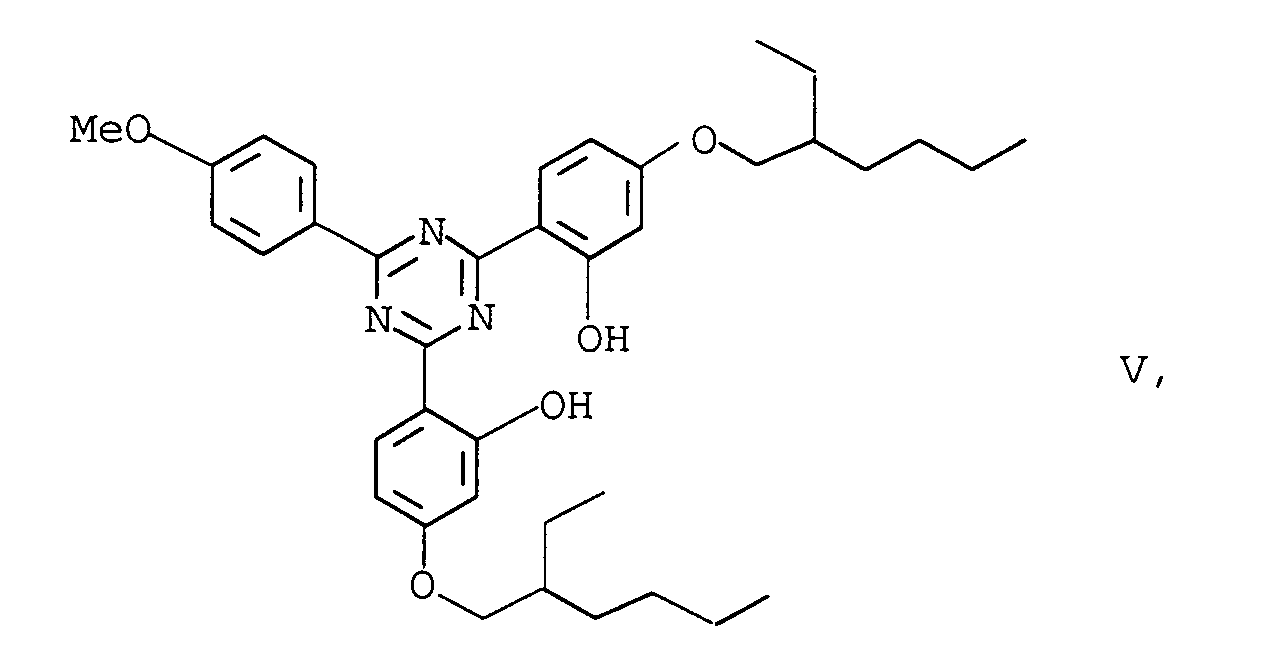
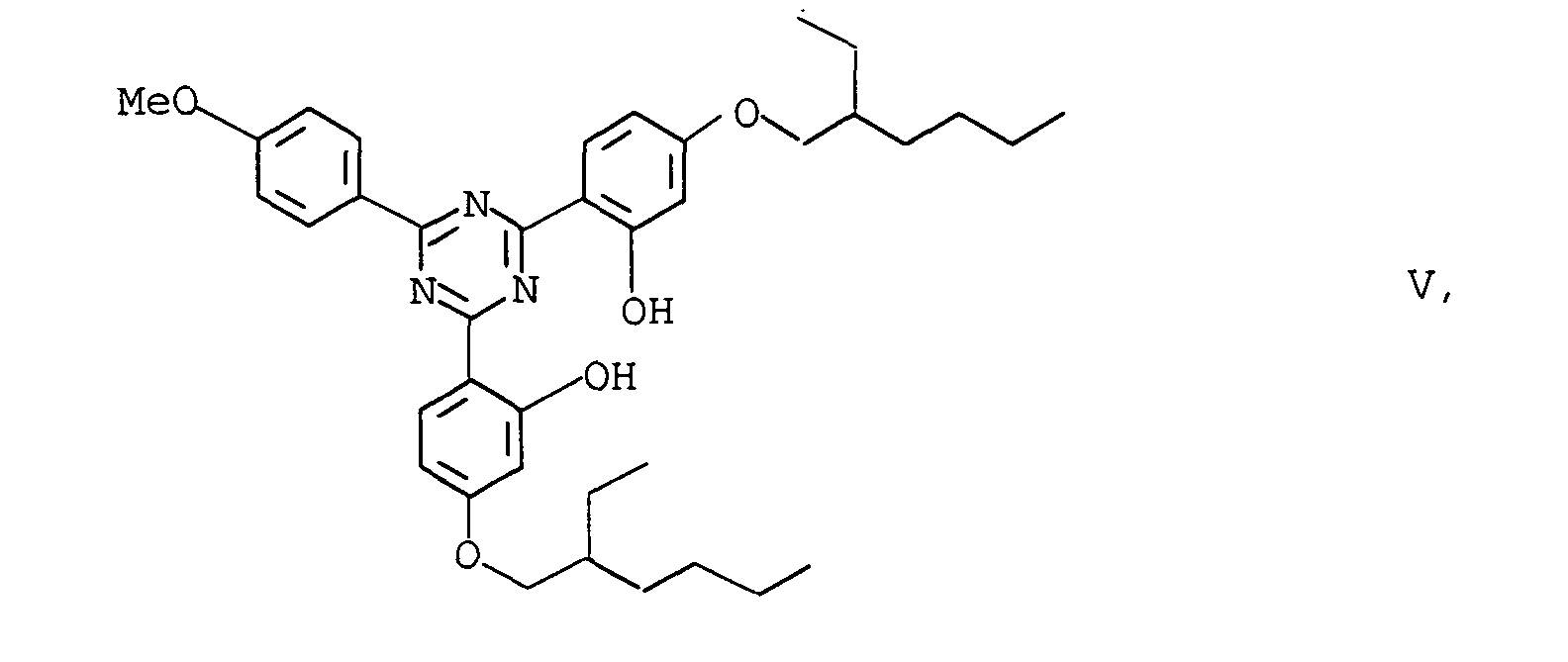
- Bd) der Verbindung der Formel V
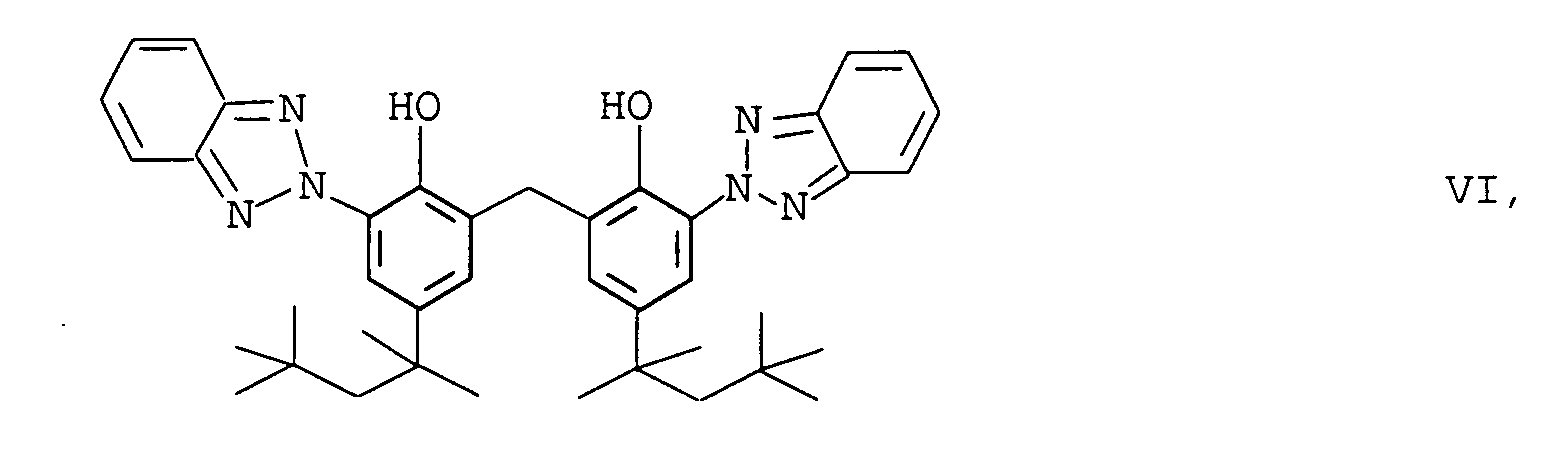
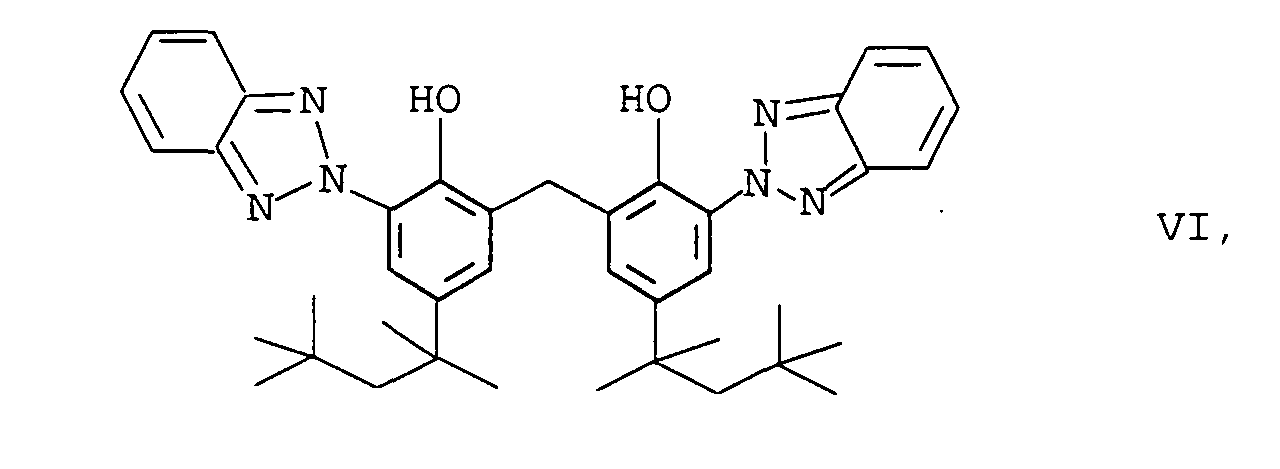
- Be) der Verbindung der Formel VI

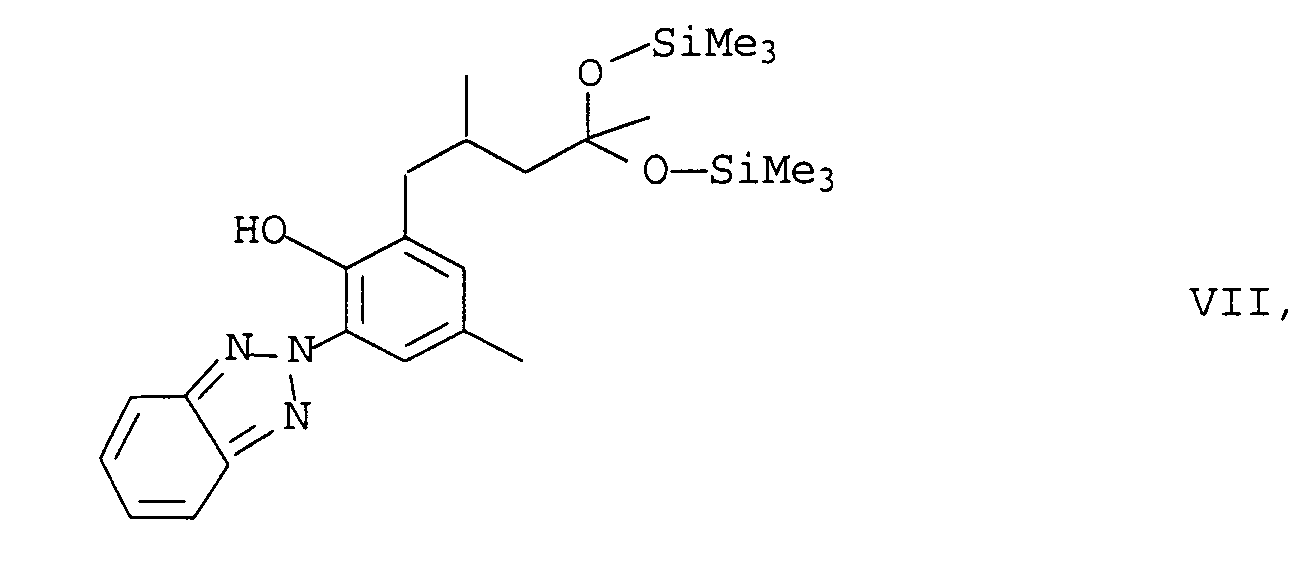
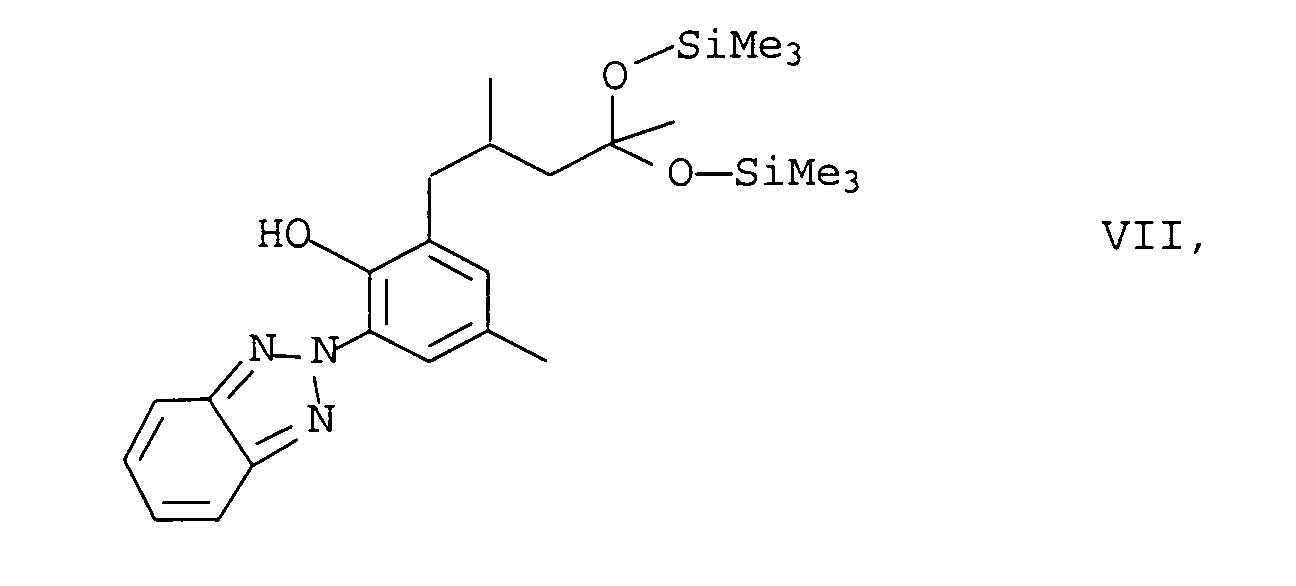
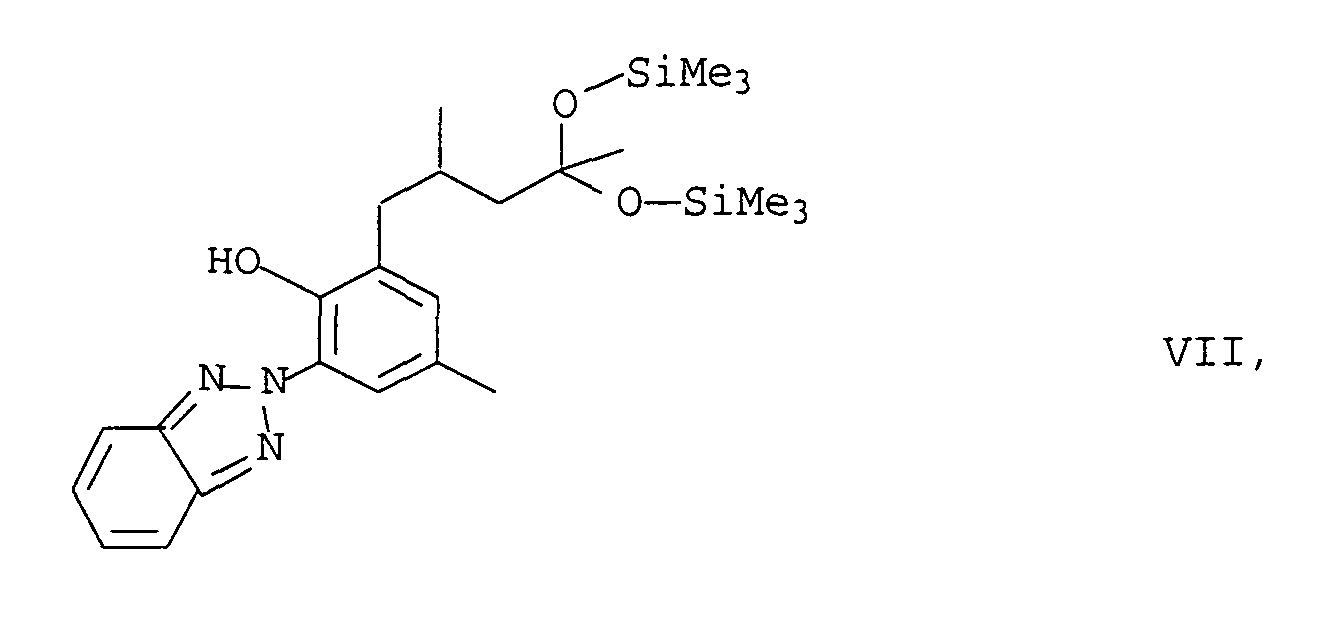
- Bf) der Verbindung der Formel VII
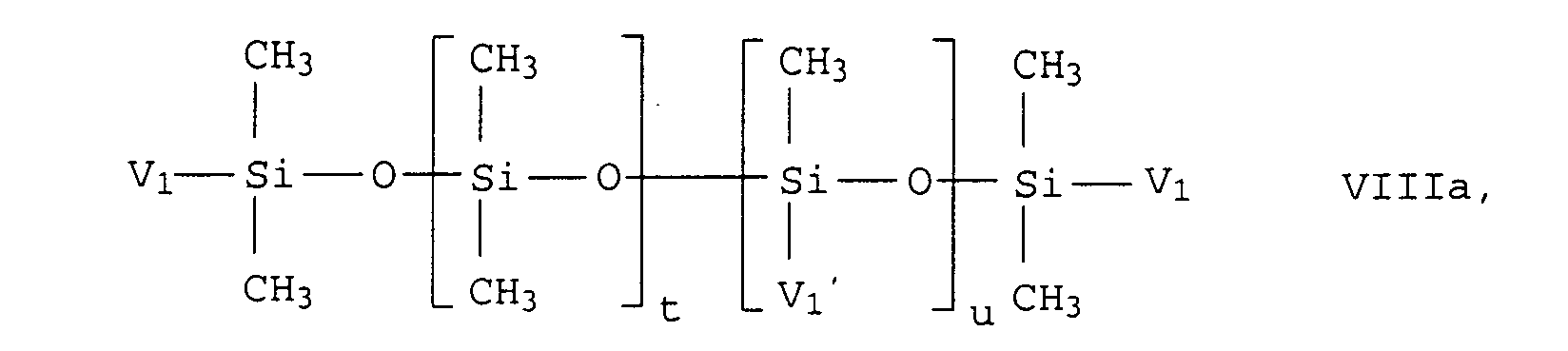
- Bg) einem Organosiloxanbenzalmalonat der Formel VIIIa
in der
- V1'
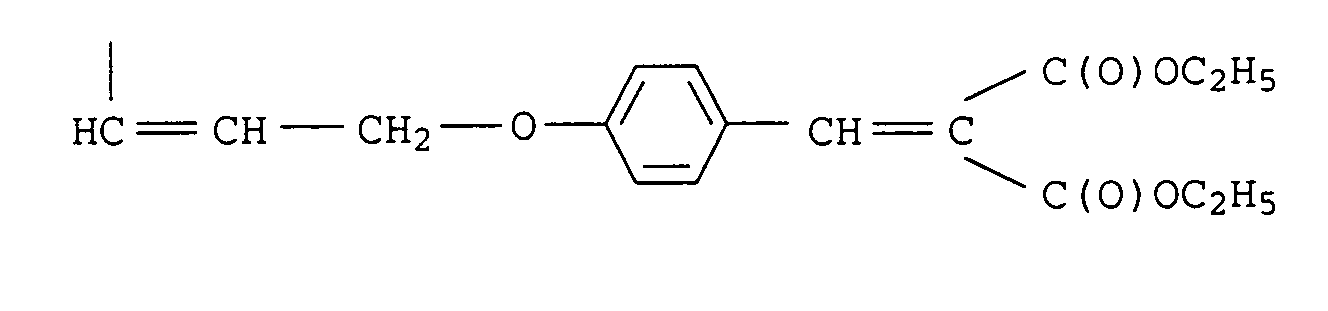
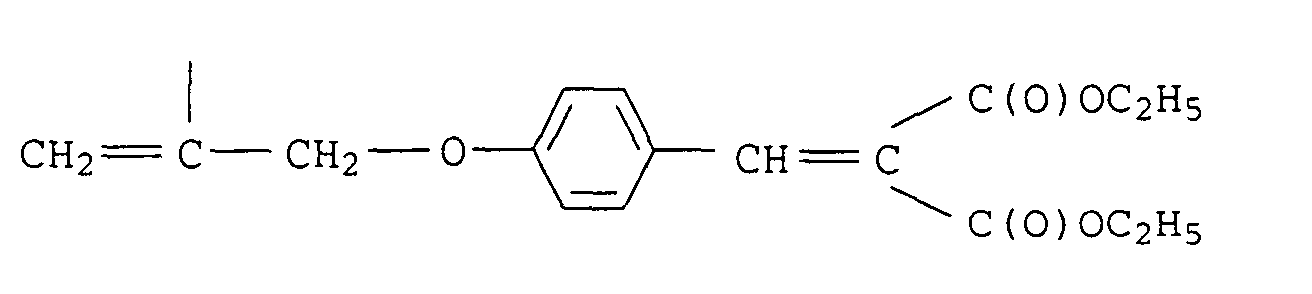
- die Gruppe

- V1
- eine Methylgruppe oder V1' bedeutet oder
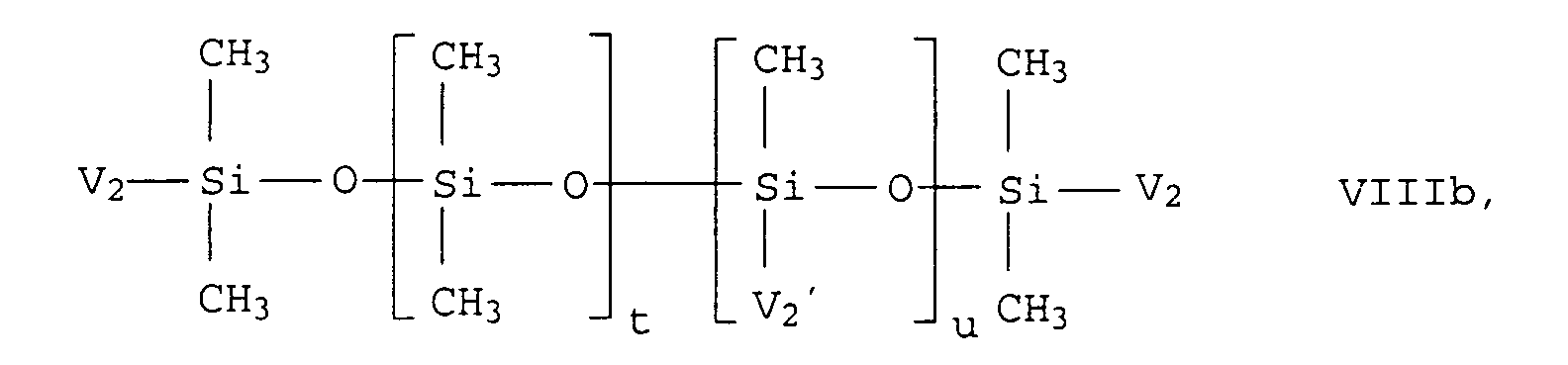
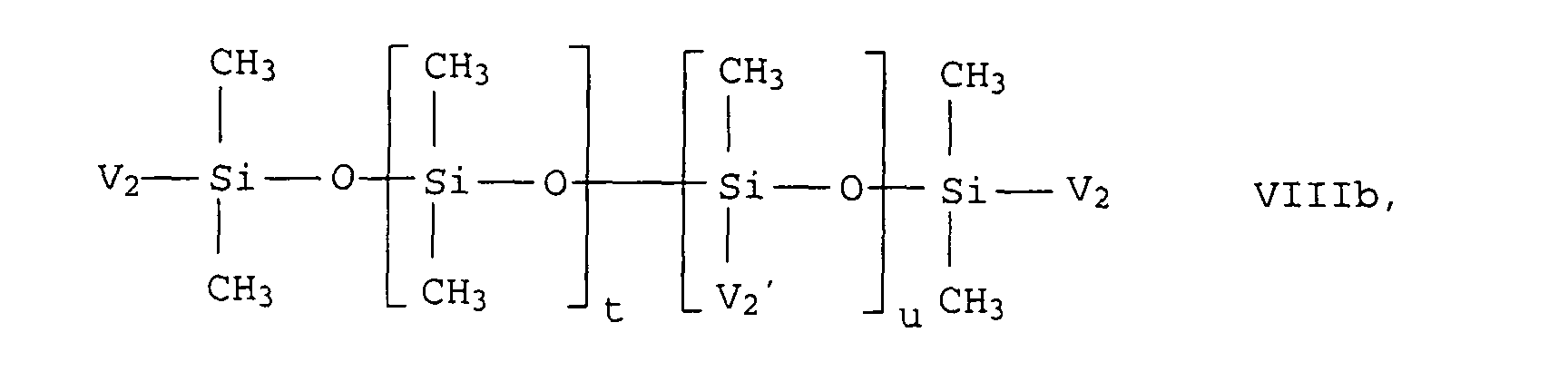
der Formel VIIIb


- V2
- eine Methylgruppe oder V2' bedeutet
wobei t für einen Wert bis 100 und u für einen Wert bis 20 steht mit der Maßgabe, daß u = 0 ist, wenn V1 = V1' und/oder V2 = V'2 ist und u einen Wert von 1 bis 20 bedeutet, wenn V1 = CH3 und/oder V2 = CH3 ist, - Bh) der Verbindung der Formel IX
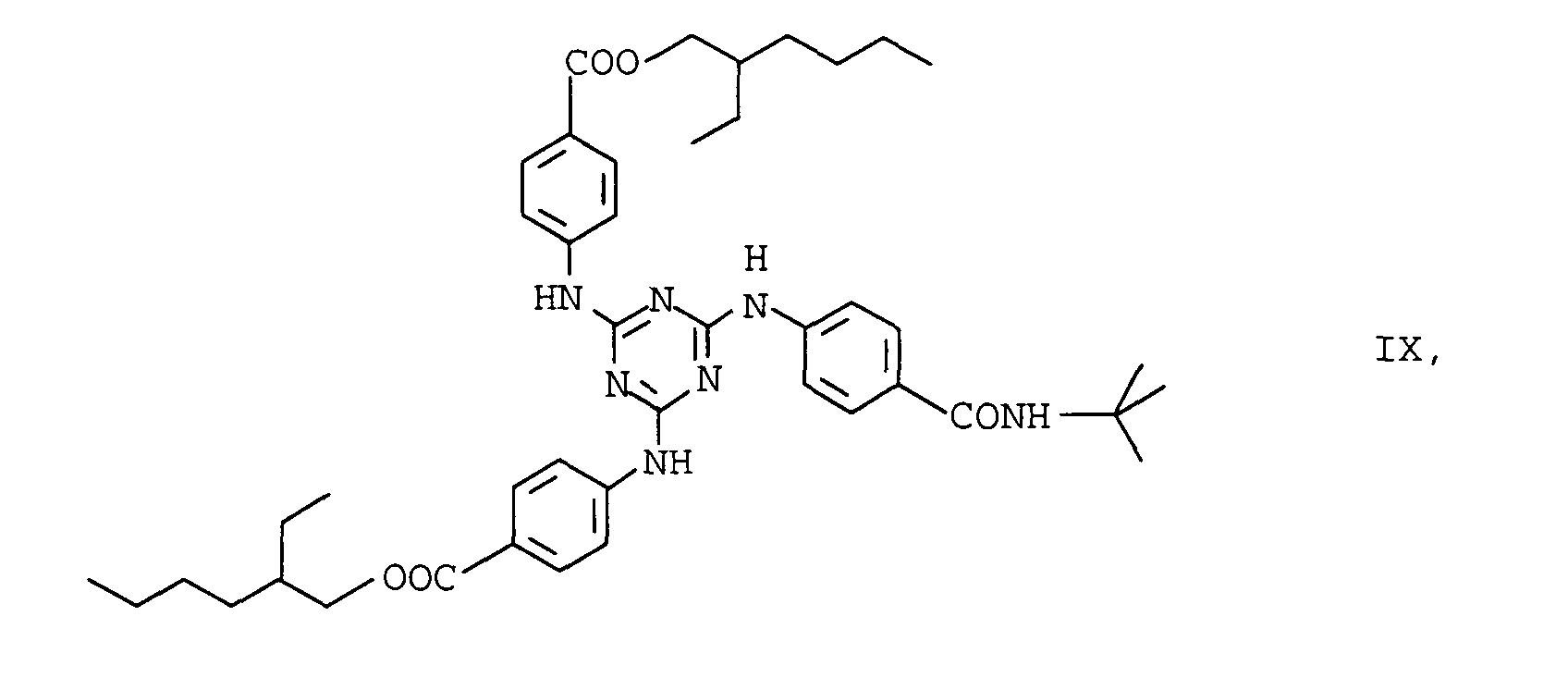
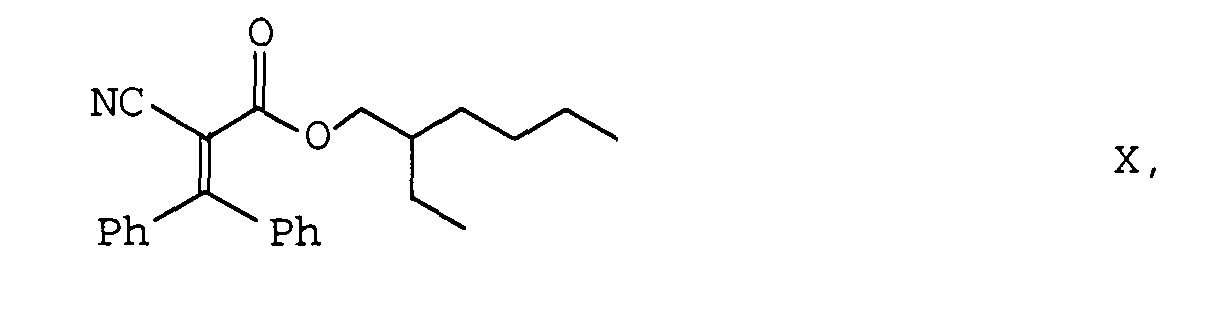
- Bi) der Verbindung der Formel X
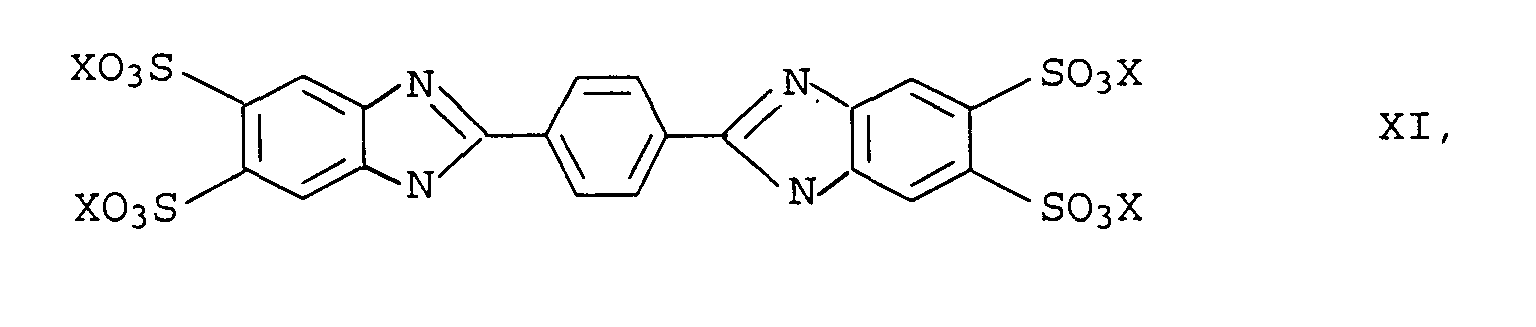
- Bj) der Verbindung der Formel XI
in der X Wasserstoff, Natrium, Kalium, Ammonium oder Triethanolammonium bedeutet,

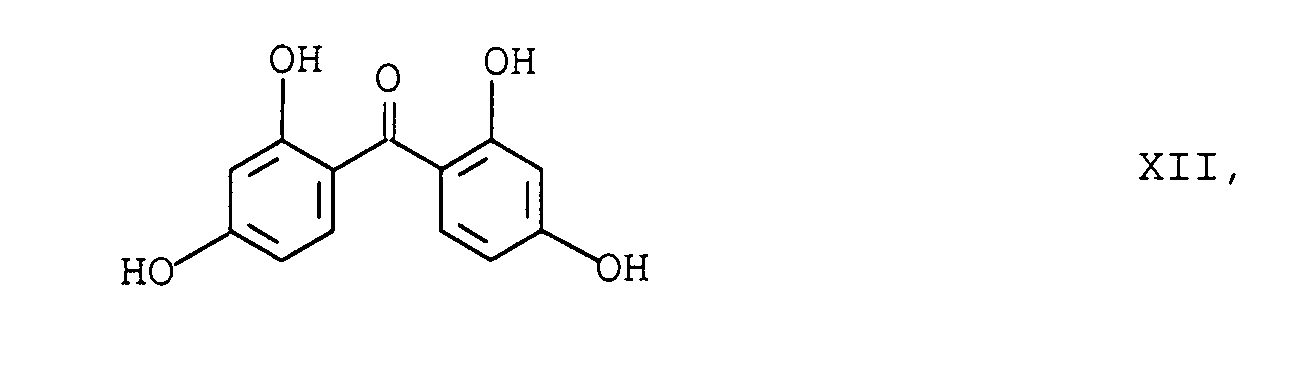
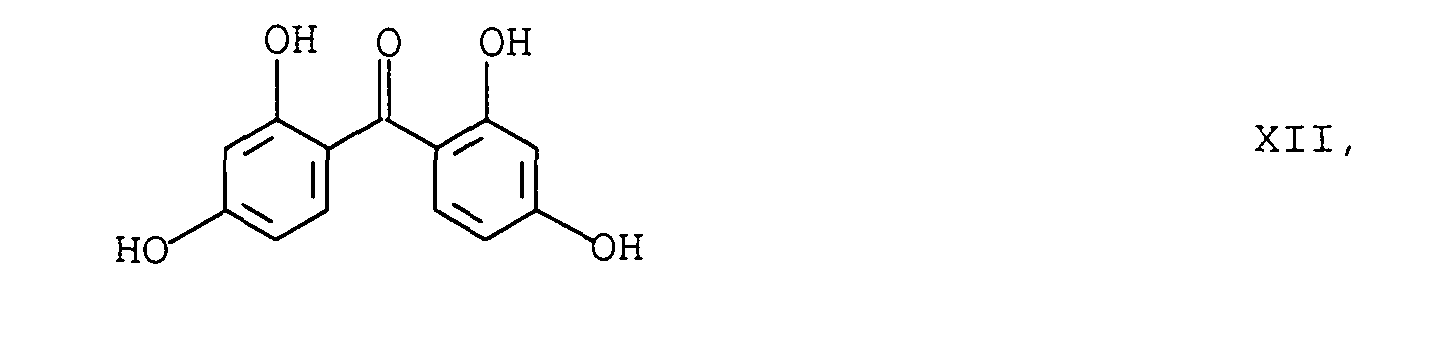
- Bk) der Verbindung der Formel XII
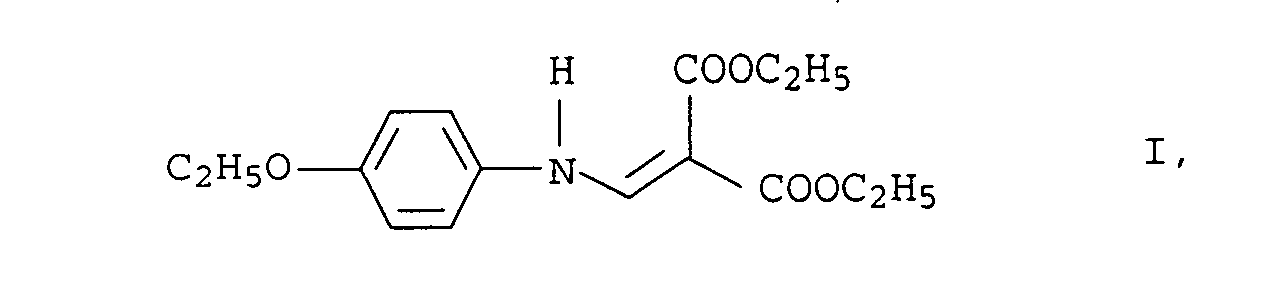
als photostabile UV-Filter in kosmetischen und pharmazeutischen Zubereitungen zum Schutz der menschlichen Haut oder menschlicher Haare gegen UV-Strahlen, insbesondere gegen natürliche Sonnenstrahlen, gegebenenfalls zusammen mit weiteren an sich für kosmetische und pharmazeutische Zubereitungen bekannten, im UV-Bereich absorbierenden Verbindungen. Als Alkylreste R1 bis R3 in Verbindung I seien verzweigte oder unverzweigte C1-C8-Alkylketten, bevorzugt Methyl, Ethyl, n-Propyl, 1-Methylethyl, n-Butyl, 1-Methylpropyl-, 2-Methylpropyl, 1,1-Dimethylethyl, n-Pentyl, 1-Methylbutyl, 2-Methylbutyl, 3-Methylbutyl, 2,2-Dimethylpropyl, 1-Ethylpropyl, n-Hexyl, 1,1-Dimethylpropyl, 1,2-Dimethylpropyl, 1-Methylpentyl, 2-Methylpentyl, 3-Methylpentyl, 4-Methylpentyl, 1,1-Dimethylbutyl, 1,2-Dimethylbutyl, 1,3-Dimethylbutyl, 2,2-Dimethylbutyl, 2,3-Dimethylbutyl, 3,3-Dimethylbutyl, 1-Ethylbutyl, 2-Ethylbutyl, 1,1,2-Trimethylpropyl, 1,2,2-Trimethylpropyl, 1-Ethyl-1-methylpropyl, 1-Ethyl-2-methylpropyl, n-Heptyl oder n-Octyl genannt. Bevorzugte Reste für R1 bis R3 sind Methyl, Ethyl, n-Propyl und 1-Methylethyl.Als Alkylreste R4, R5 und R6 der Verbindung II seien verzweigte oder unverzweigte C1-C12-Alkylketten, bevorzugt Methyl, Ethyl, n-Propyl, 1-Methylethyl, n-Butyl, 1-Methylpropyl-, 2-Methylpropyl, 1,1-Dimethylethyl, n-Pentyl, 1-Methylbutyl, 2-Methylbutyl, 3-Methylbutyl, 2,2-Dimethylpropyl, 1-Ethylpropyl, n-Hexyl, 1,1-Dimethylpropyl, 1,2-Dimethylpropyl, 1-Methylpentyl, 2-Methylpentyl, 3-Methylpentyl, 4-Methylpentyl, 1,1-Dimethylbutyl, 1,2-Dimethylbutyl, 1,3-Dimethylbutyl, 2,2-Dimethylbutyl, 2,3-Dimethylbutyl, 3,3-Dimethylbutyl, 1-Ethylbutyl, 2-Ethylbutyl, 1,1,2-Trimethylpropyl, 1,2,2-Trimethylpropyl, 1-Ethyl-1-methylpropyl, 1-Ethyl-2-methylpropyl, n-Heptyl, n-Octyl oder 2-Ethylhexyl genannt.Als besonders bevorzugte Alkylreste seien für R4, R5 und R6 Methyl, Ethyl, n-Propyl, 1-Methylethyl, n-Butyl, 1-Methylpropyl-, 2-Methylpropyl, 1,1-Dimethylethyl, n-Pentyl, 1-Methylbutyl, 2-Methylbutyl, 3-Methylbutyl, 2,2-Dimethylpropyl, 2-Ethylhexyl genannt. Als Alkylreste R7 und R8 der Verbindung III seien verzweigte oder unverzweigte C1-C12-Alkylketten, bevorzugt Methyl, Ethyl, n-Propyl, 1-Methylethyl, n-Butyl, 1-Methylpropyl-, 2-Methylpropyl, 1,1-Dimethylethyl, n-Pentyl, 1-Methylbutyl, 2-Methylbutyl, 3-Methylbutyl, 2,2-Dimethylpropyl, 1-Ethylpropyl, n-Hexyl, 1,1-Dimethylpropyl, 1,2-Dimethylpropyl, 1-Methylpentyl, 2-Methylpentyl, 3-Methylpentyl, 4-Methylpentyl, 1,1-Dimethylbutyl, 1,2-Dimethylbutyl, 1,3-Dimethylbutyl, 2,2-Dimethylbutyl, 2,3-Dimethylbutyl, 3,3-Dimethylbutyl, 1-Ethylbutyl, 2-Ethylbutyl, 1,1,2-Trimethylpropyl, 1,2,2-Trimethylpropyl, 1-Ethyl-1-methylpropyl, 1-Ethyl-2-methylpropyl, n-Heptyl, n-Octyl oder 2-Ethylhexyl genannt.Als besonders bevorzugte Alkylreste seien für R7 und R8 Methyl, Ethyl, n-Propyl, 1-Methylethyl, n-Butyl, 1-Methylpropyl-, 2-Methylpropyl, 1,1-Dimethylethyl, n-Pentyl, 1-Methylbutyl, 2-Methylbutyl, 3-Methylbutyl, 2,2-Dimethylpropyl, 2-Ethylhexyl genannt.Als Cycloalkylreste seien für R4 bis R8 der Formeln II und III bevorzugt verzweigte oder unverzweigte C3-C10-Cycloalkylketten wie Cyclopropyl, Cyclobutyl, Cyclopentyl, Cyclohexyl, Cycloheptyl, 1-Methylcyclopropyl, 1-Ethylcyclopropyl, 1-Propylcyclopropyl, 1-Butylcyclopropyl, 1-Pentylcyclopropyl, 1-Methyl-1-Butylcyclopropyl, 1,2-Dimethylcyclopropyl, 1-Methyl-2-Ethylcyclopropyl, Cyclooctyl, Cyclononyl oder Cyclodecyl genannt.Als besonders bevorzugte Cycloalkylreste für R4 bis R8 seien C3-C6-Cycloalkylreste, ganz besonders bevorzugt Cyclopropyl, Cyclopentyl und Cyclohexyl genannt.Die Lichtschutzmittelkombination aus den Verbindungen (A) und (B) kann allein oder in Verbindung mit weiteren im UV-Bereich absorbierenden Verbindungen angewandt werden, doch sollen mindestens wirksame Mengen der Verbindungen (A) bzw. (B) in den Lichtschutzpräparaten enthalten sein. Unter wirksamen Mengen der Verbindungen (A) und der Verbindungen (B) werden im allgemeinen jeweils mindestens 0,1 Gew.-%, jeweils bezogen auf die kosmetische Zubereitung, verstanden.In den erfindungsgemäßen Lichtschutzmittelkombinationen überwiegt in der Regel die Menge der im UV-B-Bereich absorbierenden Verbindungen. Demgemäß beträgt der Gehalt der im UV-A-Bereich absorbierenden Verbindung (A) im allgemeinen 5 bis 50 Gew.-%, vorzugsweise 10 bis 25 Gew.-%, jeweils bezogen auf Lichtschutzmittelkombination aus (A) und (B). Die Lichtschutzmittelkombinationen zeichnen sich durch ihre hohe Photostabilität, die mit den Lichtschutzmittelkombinationen hergestellten Zubereitungen durch ihr angenehmes Hautgefühl aus. Die mit den Kombinationen erzielten Lichtschutzfaktoren sind deutlich höher als die additiven Werte der einzelnen UV-Filter. Auch die UVA-Schutzleistung der erfindungsgemäßen Lichtschutzmittelkombinationen - hinsichtlich der kritischen Wellenlänge, dem PPD-Wert (persistent pigment darkening), dem IPD-Wert (immediate pigment darkening) sowie dem UVA/UVB-Verhältnis - ist höher als die, die durch die bekannten, dem Stand der Technik gemäßen UV-Filter erzielbar ist.Die Verbindung der Formel I ist in US 6,069,170 als Bestandteil kosmetischer Zubereitungen beschrieben. Darüber hinaus ist in Spalte 3 der genannten Patentschrift, Zeilen 5 bis 27 erwähnt, daß es möglich ist, die Verbindungsgruppe, zu der die Verbindung der Formel I gehört, zusammen mit bekannten UltraviolettAbsorbern zu verwenden. Es konnte jedoch aus diesen Angaben nicht geschlossen werden, daß mit bestimmten, ausgewählten UV-Absorbern besonders vorteilhafte Kombinationen erhalten werden können.Die Verbindungen (B) sind sämtlich bekannt und werden im folgenden näher charakterisiert:
- Ba) Die Verbindung der Formel II ist aus EP-A-1 046 391 bekannt.
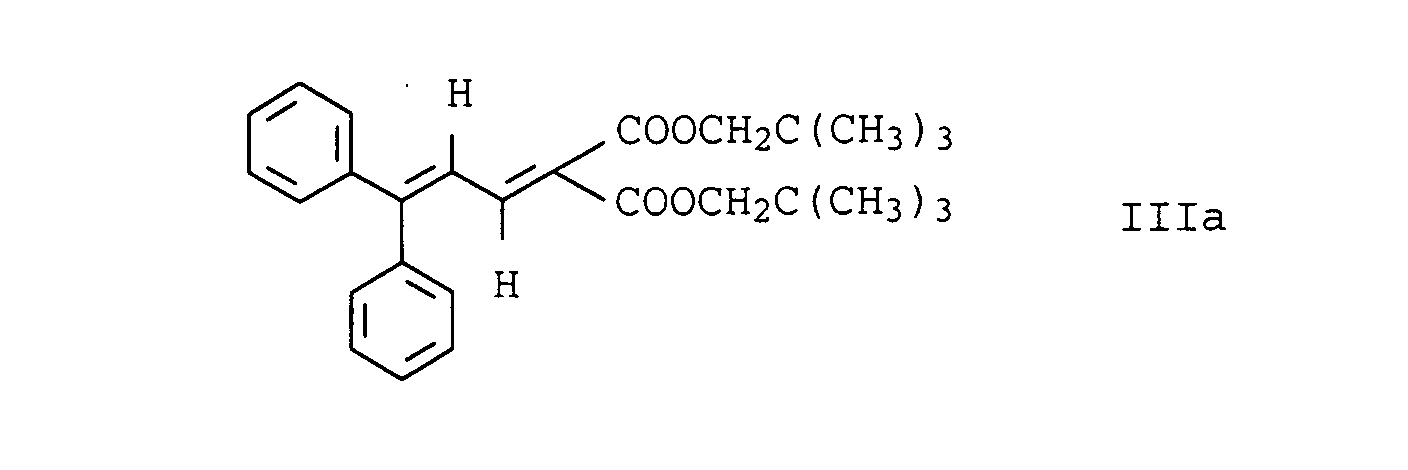
- Bb) Die Verbindung der Formel III ist aus EP-A-0 916335 bekannt.
- Bc) Die Verbindung der Formel IV hat die CAS Nr. 88122-99-0 und wird unter dem Markennamen Uvinul® T150 (BASF) vertrieben.
- Bd) Die Verbindung der Formel V hat die CAS Nr. 187393-00-6.
- Be) Die Verbindung der Formel VI hat die CAS Nr. 103597-45-1 und wird unter dem Markennamen Tinosorb® M (CIBA) vertrieben.
- Bf) Die Verbindung der Formel VII hat die CAS Nr. 155633-54-8 und ist unter dem Markennamen Mexoryl® XL (CHIMEX) bekannt.
- Bg) Die Verbindungen bzw. Gemische von Verbindungen der Formel VIII sind aus EP-A 0920859 bekannt. Von den Verbindungen der Formeln VIIIa und/oder VIIIb kommen vor allem die mit den CAS Nummern 208391-15-5, 208391-15-5D, 177955-90-7, 177955-90-7D und 177995-90-7DP in Betracht.
- Bh) Die Verbindung der Formel IX hat die CAS Nr. 154702-15-5 und wird unter dem Markennamen Uvasorb® HEB (BV Sigma) vertrieben.
- Bi) Die Verbindung der Formel X hat die CAS Nr. 6197-30-4 und wird unter dem Markennamen Uvinul® N539 (BASF) vertrieben.
- Bj) Die Verbindung der Formel XI hat die CAS Nr. 180898-37-7 (Haarmann & Reimer).
- Bk) Die Verbindung der Formel XII hat die CAS Nr. 131-55-5 und wird unter dem Markennamen Uvinul® D50 (BASF) vertrieben.
wobei der im UV-A-Bereich absorbierende Bestandteil aus
und der Bestandteil




- V1'
- die Gruppe
- V1
- eine Methylgruppe oder V1' bedeutet oder
der Formel VIIIb
in der V2' die Gruppe der Struktur
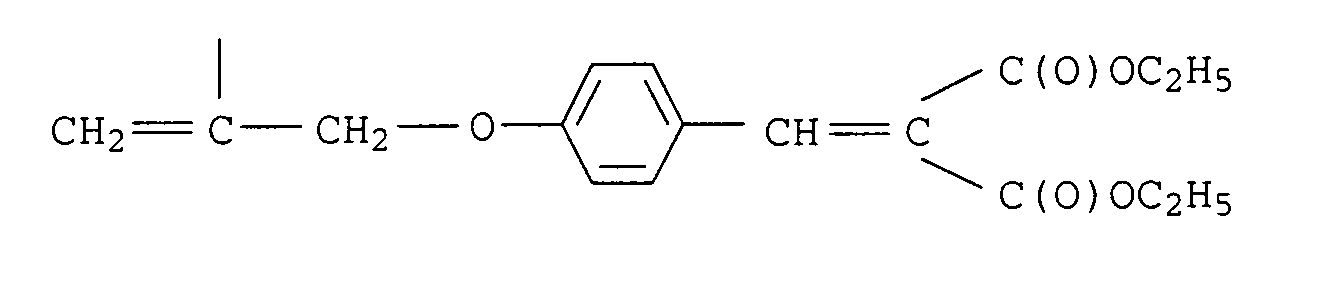
- V2
- eine Methylgruppe oder V2' bedeutet
wobei t für einen Wert bis 100 und u für einen Wert bis 20 steht mit der Maßgabe, daß u = 0 ist, wenn V1 = V1' und/oder V2 = V'2 ist und u einen Wert von 1 bis 20 bedeutet, wenn V1 = CH3 und/oder V2 = CH3 ist,


| Nr. | Stoff | CAS-Nr. (=Säure) |
| 1 | 4-Aminobenzoesäure | 150-13-0 |
| 2 | 3-(4'Trimethylammonium)-benzylidenbornan-2-on-methylsulfat | 52793-97-2 |
| 3 | 3,3,5-Trimethyl-cyclohexyl-salicylat (Homosalatum) | 118-56-9 |
| 4 | 2-Hydroxy-4-methoxy-benzophenon (Oxybenzonum) | 131-57-7 |
| 5 | 2-Phenylbenzimidazol-5-sulfonsäure und ihre Kalium-, Natrium- u. Triethanolaminsalze | 27503-81-7 |
| 6 | 3,3'-(1,4-Phenylendimethin)-bis(7,7-dimethyl-2-oxobicyclo[2.2.1]heptan-1-methansulfonsäure) und ihre Salze | 90457-82-2 |
| 7 | 4-Bis(polyethoxy)amino-benzoesäurepolyethoxyethylester | 113010-52-9 |
| 8 | 4-Dimethylamino-benzoesäure-2-ethylhexylester | 21245-02-3 |
| 9 | Salicylsäure-2-ethylhexylester | 118-60-5 |
| 10 | 4-Methoxy-zimtsäure-2-ethylhexylester | 5466-77-3 |
| 11 | 2-Hydroxy-4-methoxy-benzophenon-5-sulfonsäure (Sulisobenzonum) und das Natriumsalz | 4065-45-6 |
| 12 | 3-(4'-Sulfo)benzyliden-bornan-2-on und Salze | 58030-58-6 |
| 13 | 3-Benzylidenbornan-2-on | 16087-24-8 |
| 14 | 1-(4'-Isopropylphenyl)-3-phenylpropan-1,3-dion | 63260-25-9 |
| 15 | 4-Isopropylbenzylsalicylat | 94134-93-7 |
| 16 | 3-Imidazol-4-yl-acrylsäure und ihr Ethylester | 104-98-3 |
| 17 | 2-Cyano-3,3-diphenylacrylsäureethylester | 5232-99-5 |
| 18 | Menthyl-o-aminobenzoate oder: 5-Methyl-2-(1-methylethyl)-2-aminobenzoate | 134-09-8 |
| 19 | Glyceryl p-aminobenzoat oder: 4-Aminobenzoesäure-1-glyceryl-ester | 136-44-7 |
| 20 | 2,2'-Dihydroxy-4-methoxybenzophenon (Dioxybenzone) | 131-53-3 |
| 21 | 2-Hydroxy-4-methoxy-4-methylbenzophenon (Mexonon) | 1641-17-4 |
| 22 | Triethanolamin Salicylat | 2174-16-5 |
| 23 | Dimethoxyphenylglyoxalsäure oder: 3,4-dimethoxy-phenyl-glyoxal-saures Natrium | 4732-70-1 |
| 24 | 3-(4'Sulfo)benzyliden-bornan-2-on und seine Salze | 56039-58-8 |
| 25 | 4-tert.-Butyl-4'-methoxy-dibenzoylmethan | 70356-09-1 |
| 26 | 3-(4-Methylbenzyliden)-campher | 36861-47-9 |
10,00 Glycerin
Filterkombination bestehend aus
5,00 (I)
8,00 (II)
10,00 TiO2
5,00 ZnO2
4,00 Castoröl
4,00 Pentaerythrityl Stearat/caprat/Caprylat Adipat
3,00 Glyceryl Stearat SE
2,00 Bienenwachs
2,00 Microkristallines Wachs
2,00 Quaternium-18 Bentonit
1,50 PEG-45/Dodecyl Glycol Copolymer
10,00 Glycerin
Filterkombination bestehend aus
1,00 (I)
8,00 (II)
4,00 (V)
10,00 TiO2
5,00 ZnO2
4,00 Castoröl
4,00 Pentaerythrityl Stearat/caprat/Caprylat Adipat
3,00 Glyceryl Stearat SE
2,00 Bienenwachs
2,00 Microkristallines Wachs
2,00 Quaternium-18 Bentonit
1,50 PEG-45/Dodecyl Glycol Copolymer
6,00 PEG-7-Hydrogenated Castor Öl
Filterkombination bestehend aus
2,00 (I)
3,00 (V)
10,00 (II)
3,00 (X)
6,00 TiO2
5,00 Mineral Öl
5,00 Isoamyl p-Methoxycinnamat
5,00 Propylen Glycol
3,00 Jojoba Öl
2,00 PEG-45/Dodecyl Glycol Copolymer
1,00 Dimethicon
0,50 PEG-40-Hydrogenated Castor Öl
0,50 Tocopheryl Acetat
0,50 Phenoxyethanol
0,20 EDTA
6,00 PEG-7-Hydrogenated Castor Öl
Filterkombination bestehend aus
2,00 (I)
3,00 (IV)
10,00 (II)
3,00 (X)
6,00 TiO2
5,00 Mineral Öl
5,00 Isoamyl p-Methoxycinnamat
5,00 Propylen Glycol
3,00 Jojoba Öl
2,00 PEG-45/Dodecyl Glycol Copolymer
1,00 Dimethicon
0,50 PEG-40-Hydrogenated Castor Öl
0,50 Tocopheryl Acetat
0,50 Phenoxyethanol
0,20 EDTA
Filterkombination bestehend aus
2,00 (I)
3,00 (VI)
8,00 (II)
1,00 (X)
7,00 TiO2
5,00 Glycerin
5,00 PEG-25 PABA
0,40 Acrylate C10-C30 Alkyl Acrylat Crosspolymer
0,30 Imidazolidinyl Urea
0,25 Hydroxyethyl Cellulose
0,25 Sodium Methylparaben
0,20 Disodium EDTA
0,15 Fragrance
0,15 Sodium Propylparaben
0,10 Sodium Hydroxid
Filterkombination bestehend aus
1,00 (I)
4,00 (VI)
8,00 (II)
1,00 (X)
7,00 TiO2
5,00 Glycerin
5,00 PEG-25 PABA
0,40 Acrylate C10-C30 Alkyl Acrylat Crosspolymer
0,30 Imidazolidinyl Urea
0,25 Hydroxyethyl Cellulose
0,25 Sodium Methylparaben
0,20 Disodium EDTA
0,15 Fragrance
0,15 Sodium Propylparaben
0,10 Sodium Hydroxid
Filterkombination bestehend aus
2,00 (I)
3,00 (XIV)
8,00 (II)
1,00 (X)
8,00 TiO2
5,00 ZnO2
6,00 PEG-7-Hydrogenated Castor Öl
6,00 Mineral Öl
5,00 Isopropyl Palmitat
0,30 Imidazolidinyl Urea
3,00 Jojoba Öl
2,00 PEG-45/Dodecyl Glycol Copolymer
0,60 Magnesium Stearat
0,50 Tocopheryl Acetat
0,25 Methylparaben
0,20 Disodium EDTA
0,15 Propylparaben
Filterkombination bestehend aus
3,00 (I)
3,00 (XI)
8,00 (II)
8,00 TiO2
5,00 ZnO2
6,00 PEG-7-Hydrogenated Castor Öl
6,00 Mineral Öl
5,00 Isopropyl Palmitat
0,30 Imidazolidinyl Urea
3,00 Jojoba Öl
2,00 PEG-45/Dodecyl Glycol Copolymer
0,60 Magnesium Stearat
0,50 Tocopheryl Acetat
0,25 Methylparaben
0,20 Disodium EDTA
0,15 Propylparaben
Filterkombination bestehend aus
1,00 (I)
4,00 (IX)
8,00 (II)
2,00 (X)
3,00 TiO2
5,00 PEG-7-Hydrogenated Castor Öl
5,00 Propylene Glycol
4,00 Isopropyl Palmitat
4,00 Caprylic/Capric Triglycerid
4,00 Glycerin
3,00 Jojoba Öl
1,50 PEG-45/Dodecyl Glycol Copolymer
1,50 Dimethicon
0,70 Magnesium Sulfat
0,50 Magnesium Stearat
0,15 Fragrance
Filterkombination bestehend aus
2,00 (I)
5,00 (XII)
2,00 TiO2
5,00 PEG-7-Hydrogenated Castor Öl
5,00 Propylene Glycol
4,00 Isopropyl Palmitat
4,00 Caprylic/Capric Triglycerid
4,00 Glycerin
3,00 Jojoba Öl
1,50 PEG-45/Dodecyl Glycol Copolymer
1,50 Dimethicon
0,70 Magnesium Sulfat
0,50 Magnesium Stearat
0,15 Fragrance
10,00 Mineral Öl
6,00 PEG-7-Hydrogenated Castor Öl
5,00 Isopropyl Palmitat
Filterkombination bestehend aus
3,00 (I)
5,50 (VIII)
3,00 Caprylic/Capric Triglycerid
3,00 Jojoba Öl
2,00 PEG-45/Dodecyl Glycol Copolymer
0,70 Magnesium Sulfat
0,60 Magnesium Stearat
0,50 Tocopheryl Acetat
3,00 Glycerin
0,25 Methylparaben
0,15 Propylparaben
0,05 Tocopherol
10,00 Mineral Öl
6,00 PEG-7-Hydrogenated Castor Öl
5,00 Isopropyl Palmitat
Filterkombination bestehend aus
1,00 (I)
4,00 (XIV)
3,50 (II)
3,00 Caprylic/Capric Triglycerid
3,00 Jojoba Öl
2,00 PEG-45/Dodecyl Glycol Copolymer
0,70 Magnesium Sulfat
0,60 Magnesium Stearat
0,50 Tocopheryl Acetat
3,00 Glycerin
0,25 Methylparaben
0,15 Propylparaben
0,05 Tocopherol
Claims (4)
- Verwendung von Lichtschutzmittelkombinationen, enthaltend einewobei der im UV-A-Bereich absorbierende Bestandteil ausA) im wesentlichen im UV-A-Bereich absorbierende Verbindung undB) weitere im UV-A-Bereich, im UV-B-Bereich und über beide Bereiche absorbierende Verbindungen,A) wirksamen Mengen mindestens einer der Verbindungen der Formel I besteht,in der die Substituenten R1 bis R3 unabhängig voneinander C1-C8-Alkyl bedeuten

und der BestandteilB) wirksame Mengen einer oder mehrerer Verbindungen enthält, ausgewählt aus der Gruppe bestehend ausBa) Hydroxybenzophenone der allgemeinen Formel IIin der die Substituenten unabhängig voneinander folgende Bedeutung haben:
- R4 und R5
- Wasserstoff, C1-C12-Alkyl, C3-C10-Cycloalkyl, wobei die Substituenten R4 und R5 gemeinsam mit dem Stickstoffatom, an dem sie gebunden sind, einen 5- oder 6-Ring bilden können und
- R6
- Wasserstoff, C1-C12-Alkyl, C3-C10-Cycloalkyl;
Bb) Diarylbutadiene der Formel IIIin der die Substituenten R7 und R8 unabhängig voneinander Wasserstoff, C1-C12-Alkyl oder C3-C10-Cycloalkyl bedeuten können, Bc) der Verbindung der Formel IV
 Bd) der Verbindung der Formel V
 Be) der Verbindung der Formel VI
 Bf) der Verbindung der Formel VII
 Bg) einem Organosiloxanbenzalmalonat der Formel VIIIain der
- V1'
- die Gruppe

- V1
- eine Methylgruppe oder V1' bedeutet oder
der Formel VIIIb
in der V2' die Gruppe der Struktur
- V2
- eine Methylgruppe oder V2' bedeutet
wobei t für einen Wert bis 100 und u für einen Wert bis 20 steht mit der Maßgabe, daß u = 0 ist, wenn V1 = V1' und/oder V2 = V'2 ist und u einen Wert von 1 bis 20 bedeutet, wenn V1 = CH3 und/oder V2 = CH3 ist,Bh) der Verbindung der Formel IX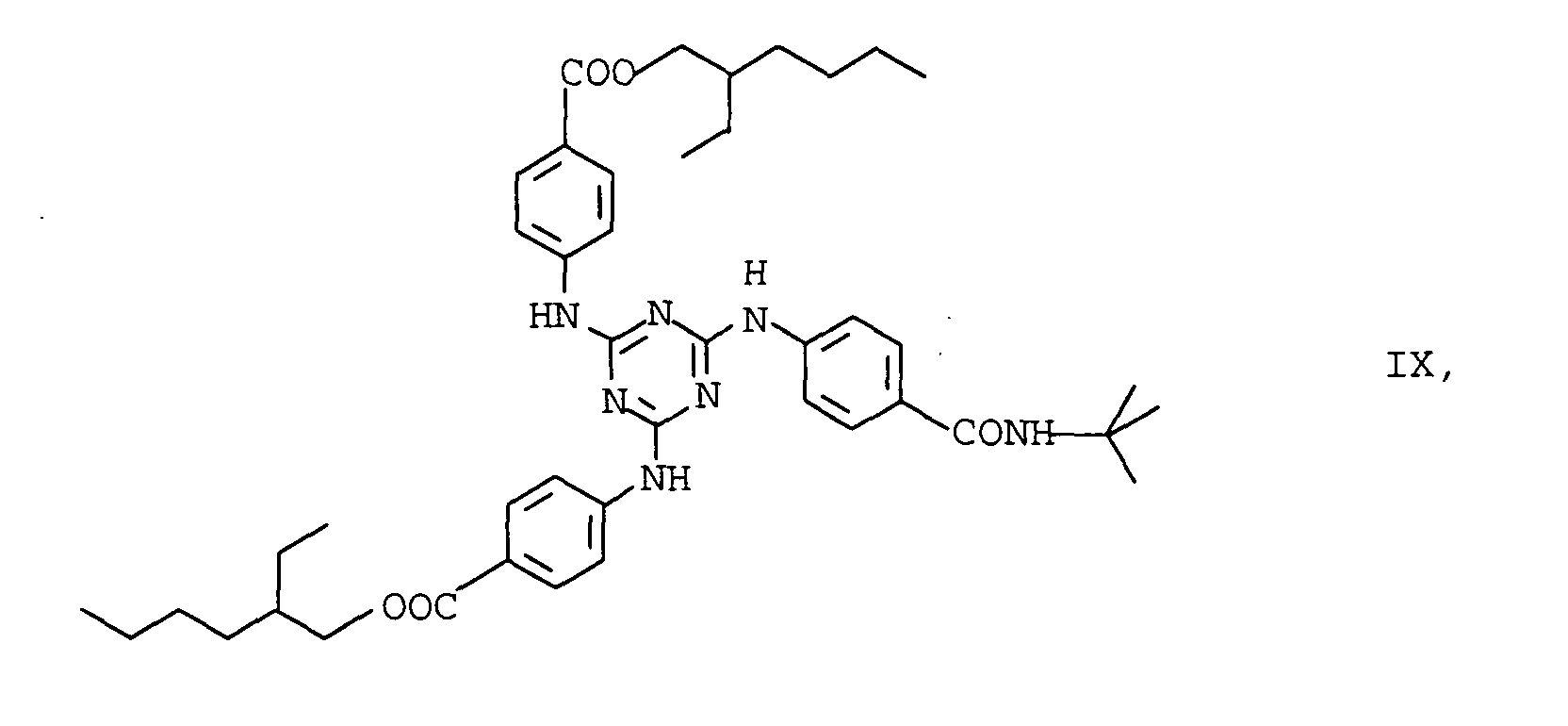 Bi) der Verbindung der Formel X
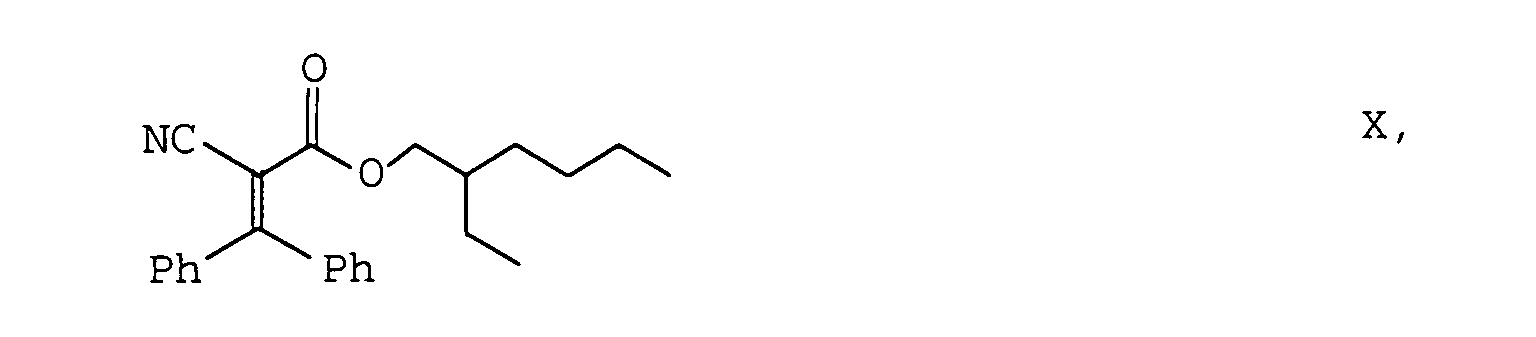 Bj) der Verbindung der Formel XIin der X Wasserstoff, Natrium, Kalium, Ammonium oder Triethanolammonium bedeutet,
 Bk) der Verbindung der Formel XIIals photostabile UV-Filter in kosmetischen und pharmazeutischen Zubereitungen zum Schutz der menschlichen Haut oder menschlicher Haare gegen Sonnenstrahlen, gegebenenfalls zusammen mit weiteren an sich für kosmetische und pharmazeutische Zubereitungen bekannten, im UV-Bereich absorbierenden Verbindungen.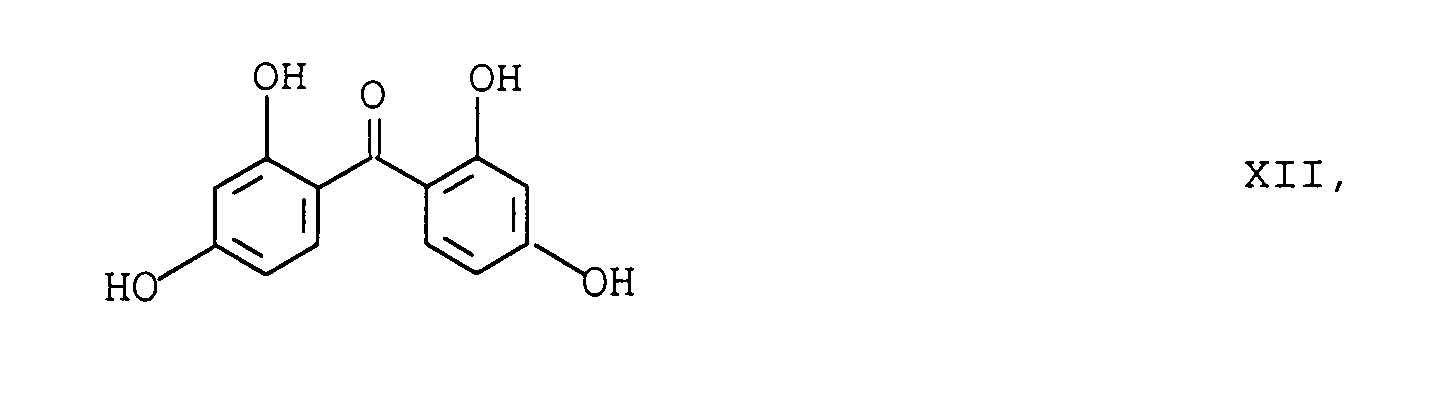
- Verwendung von Lichtschutzmittelkombinationen gemäß Anspruch 1, dadurch gekennzeichnet, daß sie den Bestandteil A) der Formel I in Mengen von mindestens 5 Gew.-%, bezogen auf die Lichtschutzmittelkombination, enthalten.
- Lichtschutzmittelkombinationen enthaltende kosmetische und pharmazeutische Zubereitungen zum Schutz der menschlichen Epidermis oder der menschlichen Haare gegen UV-Licht im Bereich von 280 bis 400 nm, dadurch gekennzeichnet, daß sie in einem kosmetisch und pharmazeutisch geeigneten Träger als photostabile UV-Filter wirksame Mengen von Lichtschutzmittelkombinationen enthalten, diewobei der im UV-A-Bereich absorbierende Bestandteil ausA) eine im wesentlichen im UV-A-Bereich absorbierende Verbindung undB) weitere im UV-A-Bereich, im UV-B-Bereich und über beide Bereiche absorbierende Verbindungen aufweisen,A) wirksamen Mengen der Verbindung der Formelbesteht
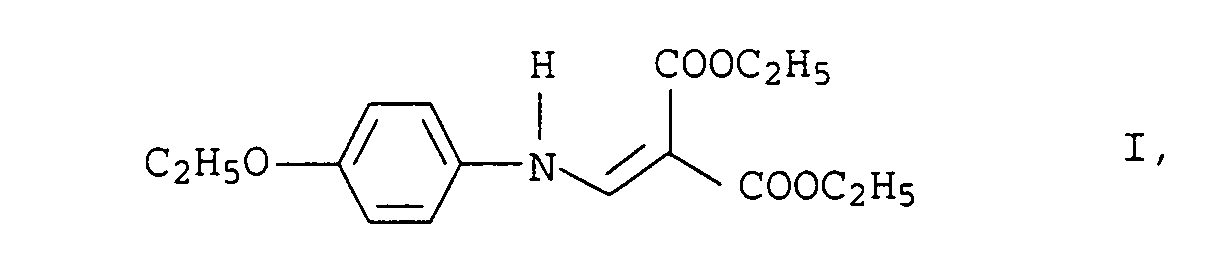
und der BestandteilB) wirksame Mengen einer oder mehrerer Verbindungen enthält, ausgewählt aus der Gruppe bestehend ausBa) Hydroxybenzophenon der Formel IIa, Bb) Diarylbutadien der Formel IIIa,
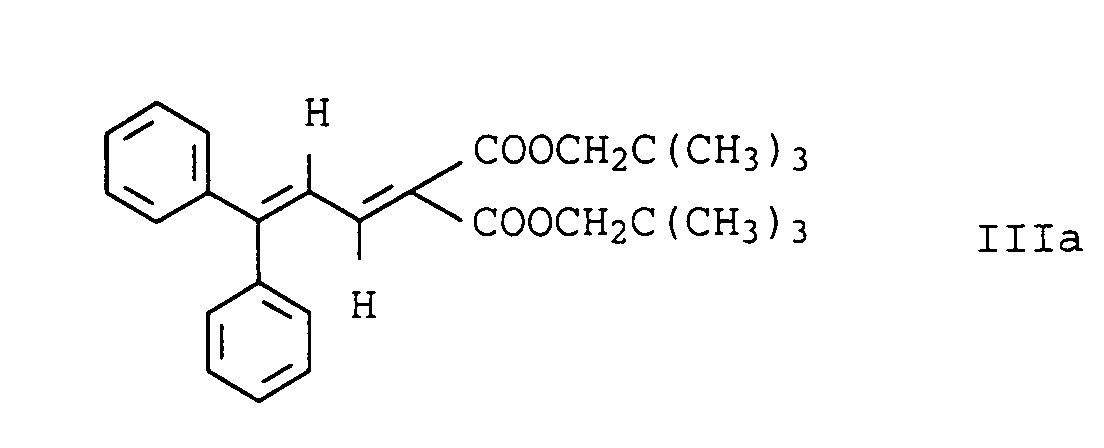 Bc) der Verbindung der Formel IV
 Bd) der Verbindung der Formel V
 Be) der Verbindung der Formel VI
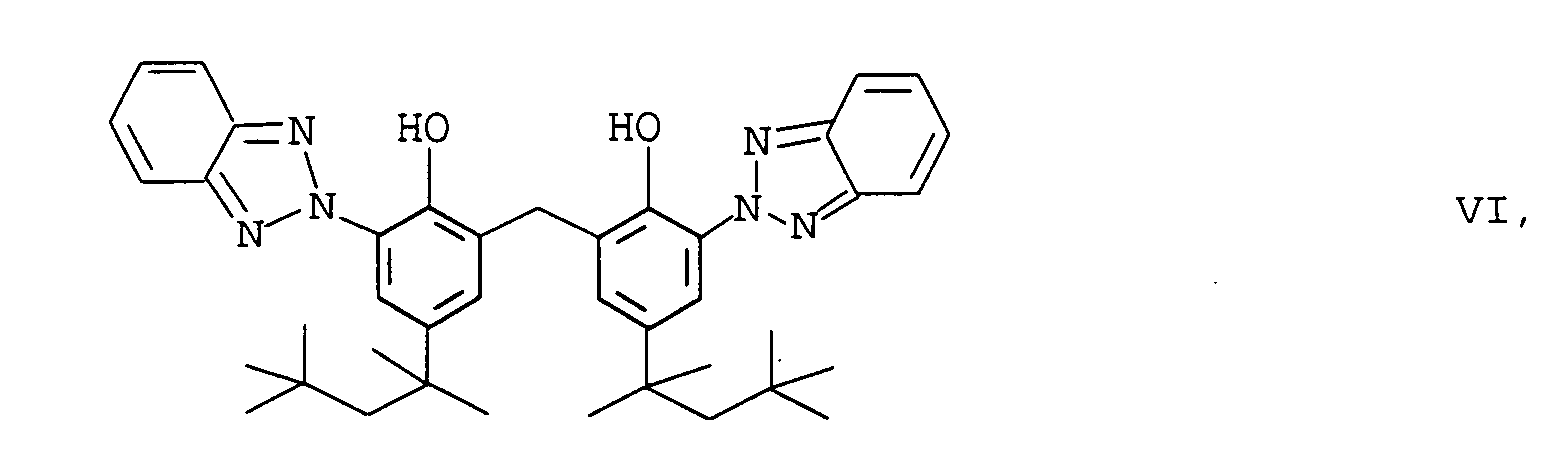 Bf) der Verbindung der Formel VII
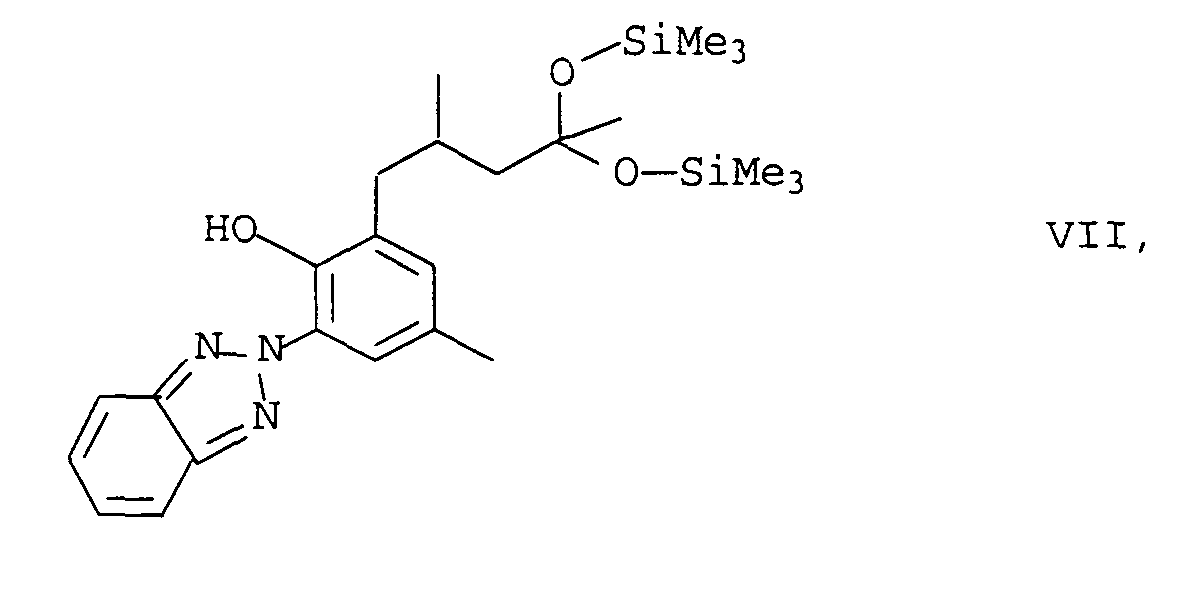 Bg) einem Organosiloxanbenzalmalonat der Formel VIIIain der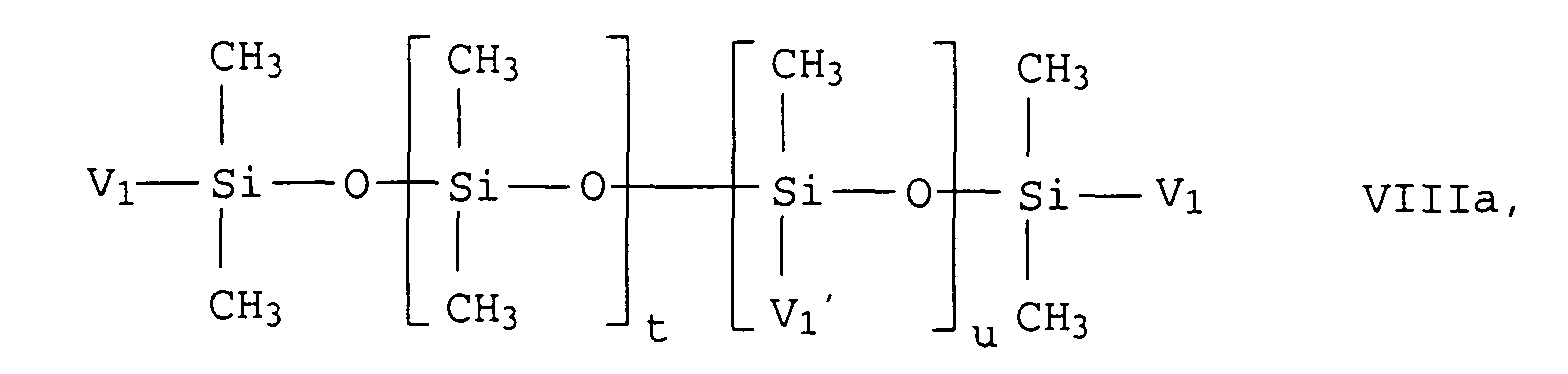
- V1'
- die Gruppe

- V1
- eine Methylgruppe oder V1' bedeutet oder
der Formel VIIIb
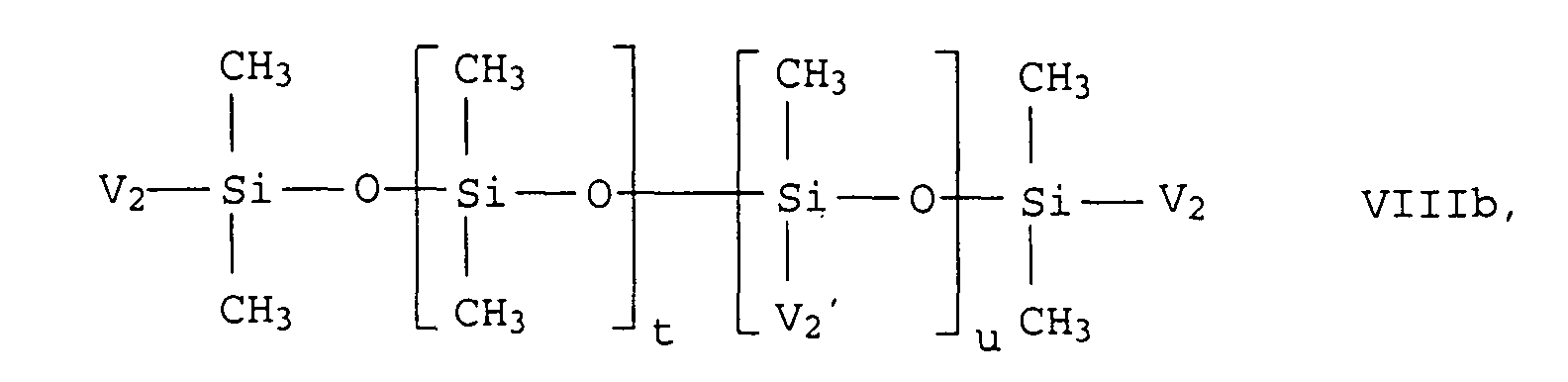

- V2
- eine Methylgruppe oder V2' bedeutet
Bh) der Verbindung der Formel IX Bi) der Verbindung der Formel X
 Bj) der Verbindung der Formel XIin der X Wasserstoff, Natrium, Kalium, Ammonium oder Triethanolammonium bedeutet,
 Bk) der Verbindung der Formel XIIgegebenenfalls zusammen mit weiteren an sich für kosmetische und pharmazeutische Zubereitungen bekannten, im UV-Bereich absorbierenden Verbindungen.
- Lichtschutzmittelkombinationen enthaltende kosmetische und pharmazeutische Zubereitungen gemäß Anspruch 3, dadurch gekennzeichnet, daß die Lichtschutzmittelkombinationen den Bestandteil der Formel I in Mengen von mindestens 5 Gew.-%, bezogen auf die Lichtschutzmittelkombination, enthalten.
Applications Claiming Priority (2)
| Application Number | Priority Date | Filing Date | Title |
|---|---|---|---|
| DE10113058A DE10113058A1 (de) | 2001-03-15 | 2001-03-15 | Verwendung von Lichtschutzmittelkombinationen, die als wesentlichen Bestandteil 2-(4-Alkoxy-anilinomethylen)-malonsäure-dialkylester enthalten als photostabile UV-Filter in kosmetischen und pharmazeutischen Zubereitungen |
| DE10113058 | 2001-03-15 |
Publications (2)
| Publication Number | Publication Date |
|---|---|
| EP1240894A2 true EP1240894A2 (de) | 2002-09-18 |
| EP1240894A3 EP1240894A3 (de) | 2002-11-06 |
Family
ID=7677946
Family Applications (1)
| Application Number | Title | Priority Date | Filing Date |
|---|---|---|---|
| EP02003206A Withdrawn EP1240894A3 (de) | 2001-03-15 | 2002-02-19 | Verwendung von Lichtschutzmittelkombinationen in kosmetischen und pharmazeutischen Zubereitungen |
Country Status (7)
| Country | Link |
|---|---|
| US (1) | US6488915B1 (de) |
| EP (1) | EP1240894A3 (de) |
| JP (1) | JP2002308751A (de) |
| CN (1) | CN1382433A (de) |
| AU (1) | AU2461302A (de) |
| BR (1) | BR0200839A (de) |
| DE (1) | DE10113058A1 (de) |
Cited By (7)
| Publication number | Priority date | Publication date | Assignee | Title |
|---|---|---|---|---|
| EP1291007A1 (de) * | 2001-09-07 | 2003-03-12 | Basf Aktiengesellschaft | Emulgatorarme oder emulgatorfreie Systeme vom Typ Öl-in-Wasser mit einem Gehalt an Stabilisatoren und einem aminosubstituierten Hydroxybenzophenon |
| EP1291009A3 (de) * | 2001-09-07 | 2003-05-02 | Basf Aktiengesellschaft | Kosmetische und dermatologische Zubereitungen in Form von W/O-Emulsionen, enthaltend ein aminosubstituiertes Hydroxybenzophenon |
| EP1291010A3 (de) * | 2001-09-07 | 2003-05-02 | Basf Aktiengesellschaft | Kosmetische und dermatologische Zubereitungen in Form von O/W-Emulsionen, enthaltend ein aminosubstituiertes Hydroxybenzophenon |
| EP1290999A3 (de) * | 2001-09-07 | 2003-05-02 | Basf Aktiengesellschaft | Kosmetische und dermatologische Zubereitungen in Stiftform, enthaltend ein aminosubstituiertes Hydroxybenzophenon |
| WO2003039507A1 (de) * | 2001-11-09 | 2003-05-15 | Beiersdorf Ag | Kosmetische und dermatologische lichtschutzformulierungen mit einem gehalt an hydroxybenzophenonen, triazin- und/oder benzotriazol-derivaten |
| DE10214058A1 (de) * | 2002-03-28 | 2003-10-09 | Beiersdorf Ag | Wasserfeste kosmetische und dermatologische Lichtschutzformulierungen mit einem Gehalt an Polyoxyethylen-Polydodecylglykol-Blockpolymeren |
| LU91919B1 (fr) * | 2011-12-16 | 2013-06-17 | Luxcos S A | Composition de maquillage des fibres kératiniques |
Families Citing this family (9)
| Publication number | Priority date | Publication date | Assignee | Title |
|---|---|---|---|---|
| US7108860B2 (en) * | 2002-06-06 | 2006-09-19 | Playtex Products, Inc. | Sunscreen compositions |
| AU2003298343B2 (en) * | 2002-12-12 | 2010-02-25 | Basf Se | Amino substituted hydroxyphenyl benzophenone derivatives |
| WO2004067539A1 (en) * | 2003-01-28 | 2004-08-12 | L'oreal | Photoprotective compositions based on methyltrialkylsilanes containing a cinnamate, cinnamamide, benzalmalonamide or benzalmalonate function |
| FR2856301B1 (fr) * | 2003-06-23 | 2007-08-03 | Galderma Res & Dev | Composition sous forme de spray comprenant un actif pharmaceutique, au moins un silicone volatile et une phase non polaire non volatile |
| DE102004020627A1 (de) * | 2004-03-23 | 2005-10-13 | Beiersdorf Ag | Kosmetische und dermatologische Lichtschutzformulierungen |
| EP1586306A1 (de) * | 2004-03-23 | 2005-10-19 | Beiersdorf AG | Kosmetische und dermatologische Lichtschutzformulierungen |
| JP4840976B2 (ja) * | 2005-10-14 | 2011-12-21 | 株式会社 資生堂 | 日焼け止め化粧料 |
| EP2451427B1 (de) * | 2009-07-07 | 2018-04-25 | Basf Se | Uv-filterkombinationen, die benzylidenmalonate umfassen |
| JP5955583B2 (ja) * | 2012-02-24 | 2016-07-20 | 株式会社Adeka | 新規化合物、染料及び着色感光性組成物 |
Family Cites Families (12)
| Publication number | Priority date | Publication date | Assignee | Title |
|---|---|---|---|---|
| NL279734A (de) * | 1961-06-26 | |||
| NL190101C (nl) | 1978-11-13 | 1993-11-01 | Givaudan & Cie Sa | Dibenzoylmethaanverbinding en tegen licht beschermend preparaat. |
| DE3314742C2 (de) | 1983-04-23 | 1987-04-02 | Degussa Ag, 6000 Frankfurt | Verfahren zur Herstellung von an der Oberfläche modifizierten natürlichen, oxidischen oder silikatischen Füllstoffen und deren Verwendung |
| DE3781048T2 (de) | 1986-06-27 | 1992-12-17 | Procter & Gamble | Chromophore, sonnenschutzpraeparate und verfahren zur verhuetung des sonnenbrandes. |
| US5087445A (en) | 1989-09-08 | 1992-02-11 | Richardson-Vicks, Inc. | Photoprotection compositions having reduced dermal irritation |
| FR2658075B1 (fr) | 1990-02-14 | 1992-05-07 | Oreal | Composition cosmetique filtrante photostable contenant un filtre uv-a et un beta,beta-diphenylacrylate ou alpha-cyano-beta,beta-diphenylacrylate d'alkyle. |
| DE19726121A1 (de) | 1997-06-20 | 1998-12-24 | Beiersdorf Ag | Kosmetische und dermatologische Lichtschutzformulierungen in Form von Emulsionen, insbesondere O/W-Makroemulsionen, O/W-Mikroemulsionen oder O/W/O-Emulsionen, mit einem Gehalt an Bis-Resorcinyltriazinderivaten |
| US6069170A (en) | 1997-08-05 | 2000-05-30 | Roche Vitamins Inc. | Light screening compounds and compositions |
| ES2231925T3 (es) * | 1997-08-13 | 2005-05-16 | Basf Aktiengesellschaft | Preparados cosmeticos y farmaceuticos que contienen filtros uv fotoestables. |
| FR2771630B1 (fr) | 1997-12-03 | 2000-03-31 | Oreal | Dispersion aqueuse comprenant un filtre uv du type organosiloxane a fonction benzalmalonate et un tensioactif cationique insoluble dans l'eau |
| EP1025836A1 (de) * | 1999-02-08 | 2000-08-09 | F. Hoffmann-La Roche Ag | Kosmetiches Lichtschutzmittel |
| DE19917906A1 (de) * | 1999-04-20 | 2000-10-26 | Basf Ag | Verwendung von aminosubstituierten Hydroxybenzophenonen als photostabile UV-Filter in kosmetischen und pharmazeutischen Zubereitungen |
-
2001
- 2001-03-15 DE DE10113058A patent/DE10113058A1/de not_active Withdrawn
-
2002
- 2002-02-19 EP EP02003206A patent/EP1240894A3/de not_active Withdrawn
- 2002-03-12 US US10/095,224 patent/US6488915B1/en not_active Expired - Fee Related
- 2002-03-13 JP JP2002069215A patent/JP2002308751A/ja not_active Withdrawn
- 2002-03-14 AU AU24613/02A patent/AU2461302A/en not_active Abandoned
- 2002-03-14 BR BR0200839-4A patent/BR0200839A/pt not_active Application Discontinuation
- 2002-03-15 CN CN02107541A patent/CN1382433A/zh active Pending
Cited By (9)
| Publication number | Priority date | Publication date | Assignee | Title |
|---|---|---|---|---|
| EP1291007A1 (de) * | 2001-09-07 | 2003-03-12 | Basf Aktiengesellschaft | Emulgatorarme oder emulgatorfreie Systeme vom Typ Öl-in-Wasser mit einem Gehalt an Stabilisatoren und einem aminosubstituierten Hydroxybenzophenon |
| EP1291009A3 (de) * | 2001-09-07 | 2003-05-02 | Basf Aktiengesellschaft | Kosmetische und dermatologische Zubereitungen in Form von W/O-Emulsionen, enthaltend ein aminosubstituiertes Hydroxybenzophenon |
| EP1291010A3 (de) * | 2001-09-07 | 2003-05-02 | Basf Aktiengesellschaft | Kosmetische und dermatologische Zubereitungen in Form von O/W-Emulsionen, enthaltend ein aminosubstituiertes Hydroxybenzophenon |
| EP1290999A3 (de) * | 2001-09-07 | 2003-05-02 | Basf Aktiengesellschaft | Kosmetische und dermatologische Zubereitungen in Stiftform, enthaltend ein aminosubstituiertes Hydroxybenzophenon |
| WO2003039507A1 (de) * | 2001-11-09 | 2003-05-15 | Beiersdorf Ag | Kosmetische und dermatologische lichtschutzformulierungen mit einem gehalt an hydroxybenzophenonen, triazin- und/oder benzotriazol-derivaten |
| DE10214058A1 (de) * | 2002-03-28 | 2003-10-09 | Beiersdorf Ag | Wasserfeste kosmetische und dermatologische Lichtschutzformulierungen mit einem Gehalt an Polyoxyethylen-Polydodecylglykol-Blockpolymeren |
| LU91919B1 (fr) * | 2011-12-16 | 2013-06-17 | Luxcos S A | Composition de maquillage des fibres kératiniques |
| EP2606876A2 (de) | 2011-12-16 | 2013-06-26 | Luxcos S.A. | Schminkset mit Keratinfasern |
| EP2606876A3 (de) * | 2011-12-16 | 2015-03-25 | Luxcos S.A. | Schminkset mit Keratinfasern |
Also Published As
| Publication number | Publication date |
|---|---|
| CN1382433A (zh) | 2002-12-04 |
| EP1240894A3 (de) | 2002-11-06 |
| BR0200839A (pt) | 2003-03-25 |
| US20020192167A1 (en) | 2002-12-19 |
| DE10113058A1 (de) | 2002-09-19 |
| JP2002308751A (ja) | 2002-10-23 |
| AU2461302A (en) | 2002-09-19 |
| US6488915B1 (en) | 2002-12-03 |
Similar Documents
| Publication | Publication Date | Title |
|---|---|---|
| EP1046391B1 (de) | Verwendung von aminosubstituierten Hydroxybenzophenonen als photostabile UV-Filter in kosmetischen und pharmazeutischen Zubereitungen | |
| EP1005855B1 (de) | Dimere Alpha-Alkyl-Styrolderivate als photostabile UV-Filter in kosmetischen und pharmazeutischen Zubereitungen | |
| EP1133981A2 (de) | Verwendung von Lichtschutzmittelkombinationen, die als wesentlichen Bestandteil 4,4-Diarylbutadiene enthalten als photostabile UV-Filter in kosmetischen und pharmazeutischen Zubereitungen | |
| EP1133980A2 (de) | Verwendung von Lichtschutzmittelkombinationen, die als wesentlichen Bestandteil aminosubstituierte Hydroxybenzophenone enthalten als photostabile UV-Filter in kosmetischen und pharmazeutischen Zubereitungen | |
| EP0916335B1 (de) | Photostabile UV-Filter enthaltende kosmetsche und pharmazeutische Zubereitungen | |
| EP0852137B1 (de) | Photostabile UV-A-Filter enthaltende kosmetische Zubereitungen | |
| EP0967200B1 (de) | 4,4-Diarylbutadiene als wasserlösliche photostabile UV-Filter für kosmetische und pharmazeutische Zubereitungen | |
| EP1240894A2 (de) | Verwendung von Lichtschutzmittelkombinationen in kosmetischen und pharmazeutischen Zubereitungen | |
| EP1219287A2 (de) | Lichtschutzmittelkombinationen enthaltend 2,2'-p-Phenylen-bis(3,1-benzoxazin-4-on) als photostabile UV-Filter in kosmetischen und pharmazeutischen Zubereitungen | |
| EP1129695A1 (de) | Kosmestische oder dermatologische Lichtschutzmittelzubereitungen | |
| EP1216692A2 (de) | Verwendung von Chroman-Derivaten in kosmetischen oder dermatologischen Zubereitungen | |
| DE10238144A1 (de) | Verwendung von Diketopiperazin-Derivaten als photostabile UV-Filter in kosmetischen und pharmazeutischen Zubereitungen | |
| EP0826361B1 (de) | Photostabile UV-A-Filter enthaltende kosmetische Zubereitungen | |
| EP1060734A2 (de) | Verwendung von cyclischen Enaminen als Lichtschutzmittel | |
| EP0911020B1 (de) | Methyl-Styrol derivate als UV-filter und diese enthaltende kosmetische und pharmazeutische Zubereitungen | |
| EP1092721B1 (de) | Chirale Glucoside und deren Verwendung als chirale Dotierstoffe zur Herstellung von cholestrisch-flüssigkristallinen Zusammensetzungen | |
| EP1660030B1 (de) | Mischung bestehend aus einem uv-a- und einem uv-b-filter | |
| EP0945125B1 (de) | Photostabile UV-Filter enthaltende kosmetische und pharmazeutische Zubereitungen | |
| EP0858318B1 (de) | Photostabile uv-a-filter enthaltende kosmetische zubereitungen | |
| EP1004290A2 (de) | Kosmetische oder pharmazeutische Zubereitungen, enthaltend 1,3,5-Triazinderivate und Zinkoxid | |
| EP1258481B1 (de) | Enaminotriazine als UV-Filter | |
| DE10009442A1 (de) | Kosmetische oder dermatologische Lichtschutzmittelzubereitung | |
| EP1059082A1 (de) | Verwendung von substituierten Vinyl-tetrahydronaphthalinen und Vinyl-benzotetrahydropyranen als Lichtschutzmittel | |
| DE10044351A1 (de) | Kosmetische oder dermatologische Lichtschutzmittelzubereitungen |
Legal Events
| Date | Code | Title | Description |
|---|---|---|---|
| PUAI | Public reference made under article 153(3) epc to a published international application that has entered the european phase |
Free format text: ORIGINAL CODE: 0009012 |
|
| AK | Designated contracting states |
Kind code of ref document: A2 Designated state(s): AT BE CH CY DE DK ES FI FR GB GR IE IT LI LU MC NL PT SE TR |
|
| AX | Request for extension of the european patent |
Free format text: AL;LT;LV;MK;RO;SI |
|
| PUAL | Search report despatched |
Free format text: ORIGINAL CODE: 0009013 |
|
| AK | Designated contracting states |
Kind code of ref document: A3 Designated state(s): AT BE CH CY DE DK ES FI FR GB GR IE IT LI LU MC NL PT SE TR |
|
| AX | Request for extension of the european patent |
Free format text: AL;LT;LV;MK;RO;SI |
|
| 17P | Request for examination filed |
Effective date: 20021016 |
|
| AKX | Designation fees paid |
Designated state(s): AT BE CH CY DE DK ES FI FR GB GR IE IT LI LU MC NL PT SE TR |
|
| AXX | Extension fees paid |
Extension state: RO Payment date: 20021016 Extension state: SI Payment date: 20021016 |
|
| STAA | Information on the status of an ep patent application or granted ep patent |
Free format text: STATUS: THE APPLICATION IS DEEMED TO BE WITHDRAWN |
|
| 18D | Application deemed to be withdrawn |
Effective date: 20050830 |