EP1238646B1 - Haarbehandlungsmittel - Google Patents
Haarbehandlungsmittel Download PDFInfo
- Publication number
- EP1238646B1 EP1238646B1 EP02004613A EP02004613A EP1238646B1 EP 1238646 B1 EP1238646 B1 EP 1238646B1 EP 02004613 A EP02004613 A EP 02004613A EP 02004613 A EP02004613 A EP 02004613A EP 1238646 B1 EP1238646 B1 EP 1238646B1
- Authority
- EP
- European Patent Office
- Prior art keywords
- copolymer
- meth
- alkyl
- acrylic acid
- carboxylic acid
- Prior art date
- Legal status (The legal status is an assumption and is not a legal conclusion. Google has not performed a legal analysis and makes no representation as to the accuracy of the status listed.)
- Expired - Lifetime
Links
- 229920001577 copolymer Polymers 0.000 claims abstract description 30
- 150000007934 α,β-unsaturated carboxylic acids Chemical class 0.000 claims abstract description 6
- 239000000178 monomer Substances 0.000 claims abstract description 5
- 239000000203 mixture Substances 0.000 claims description 28
- CERQOIWHTDAKMF-UHFFFAOYSA-N Methacrylic acid Chemical compound CC(=C)C(O)=O CERQOIWHTDAKMF-UHFFFAOYSA-N 0.000 claims description 10
- IAYPIBMASNFSPL-UHFFFAOYSA-N Ethylene oxide Chemical compound C1CO1 IAYPIBMASNFSPL-UHFFFAOYSA-N 0.000 claims description 5
- 150000001875 compounds Chemical class 0.000 claims description 5
- ATVJXMYDOSMEPO-UHFFFAOYSA-N 3-prop-2-enoxyprop-1-ene Chemical compound C=CCOCC=C ATVJXMYDOSMEPO-UHFFFAOYSA-N 0.000 claims description 3
- WSFSSNUMVMOOMR-UHFFFAOYSA-N Formaldehyde Chemical compound O=C WSFSSNUMVMOOMR-UHFFFAOYSA-N 0.000 claims description 2
- AHVOFPQVUVXHNL-UHFFFAOYSA-N butyl prop-2-enoate;methyl 2-methylprop-2-enoate Chemical group COC(=O)C(C)=C.CCCCOC(=O)C=C AHVOFPQVUVXHNL-UHFFFAOYSA-N 0.000 claims description 2
- ISXSCDLOGDJUNJ-UHFFFAOYSA-N tert-butyl prop-2-enoate Chemical compound CC(C)(C)OC(=O)C=C ISXSCDLOGDJUNJ-UHFFFAOYSA-N 0.000 claims description 2
- 229920003145 methacrylic acid copolymer Polymers 0.000 claims 3
- CERQOIWHTDAKMF-UHFFFAOYSA-M Methacrylate Chemical compound CC(=C)C([O-])=O CERQOIWHTDAKMF-UHFFFAOYSA-M 0.000 claims 2
- 229940117927 ethylene oxide Drugs 0.000 claims 1
- 238000006116 polymerization reaction Methods 0.000 claims 1
- 125000000217 alkyl group Chemical group 0.000 abstract description 9
- NIXOWILDQLNWCW-UHFFFAOYSA-M Acrylate Chemical compound [O-]C(=O)C=C NIXOWILDQLNWCW-UHFFFAOYSA-M 0.000 abstract description 3
- 239000003795 chemical substances by application Substances 0.000 description 12
- -1 Jojoba oil Substances 0.000 description 11
- 150000001252 acrylic acid derivatives Chemical class 0.000 description 7
- 239000000499 gel Substances 0.000 description 6
- 239000003921 oil Substances 0.000 description 6
- 235000019198 oils Nutrition 0.000 description 6
- 239000000126 substance Substances 0.000 description 6
- SMZOUWXMTYCWNB-UHFFFAOYSA-N 2-(2-methoxy-5-methylphenyl)ethanamine Chemical compound COC1=CC=C(C)C=C1CCN SMZOUWXMTYCWNB-UHFFFAOYSA-N 0.000 description 5
- 150000001412 amines Chemical class 0.000 description 5
- 150000002191 fatty alcohols Chemical class 0.000 description 4
- 239000002736 nonionic surfactant Substances 0.000 description 4
- 239000002562 thickening agent Substances 0.000 description 4
- NIXOWILDQLNWCW-UHFFFAOYSA-N Acrylic acid Chemical compound OC(=O)C=C NIXOWILDQLNWCW-UHFFFAOYSA-N 0.000 description 3
- 230000003750 conditioning effect Effects 0.000 description 3
- 239000000470 constituent Substances 0.000 description 3
- 235000014113 dietary fatty acids Nutrition 0.000 description 3
- 229930195729 fatty acid Natural products 0.000 description 3
- 239000000194 fatty acid Substances 0.000 description 3
- 229920001296 polysiloxane Polymers 0.000 description 3
- OOCCDEMITAIZTP-QPJJXVBHSA-N (E)-cinnamyl alcohol Chemical compound OC\C=C\C1=CC=CC=C1 OOCCDEMITAIZTP-QPJJXVBHSA-N 0.000 description 2
- RECMXJOGNNTEBG-UHFFFAOYSA-N 1-phenylmethoxyethanol Chemical compound CC(O)OCC1=CC=CC=C1 RECMXJOGNNTEBG-UHFFFAOYSA-N 0.000 description 2
- NLMKTBGFQGKQEV-UHFFFAOYSA-N 2-[2-[2-[2-[2-[2-[2-[2-[2-[2-[2-[2-[2-[2-[2-[2-[2-[2-[2-(2-hexadecoxyethoxy)ethoxy]ethoxy]ethoxy]ethoxy]ethoxy]ethoxy]ethoxy]ethoxy]ethoxy]ethoxy]ethoxy]ethoxy]ethoxy]ethoxy]ethoxy]ethoxy]ethoxy]ethoxy]ethanol Chemical compound CCCCCCCCCCCCCCCCOCCOCCOCCOCCOCCOCCOCCOCCOCCOCCOCCOCCOCCOCCOCCOCCOCCOCCOCCOCCO NLMKTBGFQGKQEV-UHFFFAOYSA-N 0.000 description 2
- WRMNZCZEMHIOCP-UHFFFAOYSA-N 2-phenylethanol Chemical compound OCCC1=CC=CC=C1 WRMNZCZEMHIOCP-UHFFFAOYSA-N 0.000 description 2
- VVQNEPGJFQJSBK-UHFFFAOYSA-N Methyl methacrylate Chemical compound COC(=O)C(C)=C VVQNEPGJFQJSBK-UHFFFAOYSA-N 0.000 description 2
- GOOHAUXETOMSMM-UHFFFAOYSA-N Propylene oxide Chemical compound CC1CO1 GOOHAUXETOMSMM-UHFFFAOYSA-N 0.000 description 2
- 229920002125 Sokalan® Polymers 0.000 description 2
- 229920002472 Starch Polymers 0.000 description 2
- XSQUKJJJFZCRTK-UHFFFAOYSA-N Urea Chemical compound NC(N)=O XSQUKJJJFZCRTK-UHFFFAOYSA-N 0.000 description 2
- 125000005250 alkyl acrylate group Chemical group 0.000 description 2
- MTHSVFCYNBDYFN-UHFFFAOYSA-N anhydrous diethylene glycol Natural products OCCOCCO MTHSVFCYNBDYFN-UHFFFAOYSA-N 0.000 description 2
- 125000004432 carbon atom Chemical group C* 0.000 description 2
- 239000004359 castor oil Substances 0.000 description 2
- 235000019438 castor oil Nutrition 0.000 description 2
- NOPFSRXAKWQILS-UHFFFAOYSA-N docosan-1-ol Chemical compound CCCCCCCCCCCCCCCCCCCCCCO NOPFSRXAKWQILS-UHFFFAOYSA-N 0.000 description 2
- 230000000694 effects Effects 0.000 description 2
- 150000002170 ethers Chemical class 0.000 description 2
- ZEMPKEQAKRGZGQ-XOQCFJPHSA-N glycerol triricinoleate Natural products CCCCCC[C@@H](O)CC=CCCCCCCCC(=O)OC[C@@H](COC(=O)CCCCCCCC=CC[C@@H](O)CCCCCC)OC(=O)CCCCCCCC=CC[C@H](O)CCCCCC ZEMPKEQAKRGZGQ-XOQCFJPHSA-N 0.000 description 2
- 239000004615 ingredient Substances 0.000 description 2
- 239000007788 liquid Substances 0.000 description 2
- 229920001223 polyethylene glycol Polymers 0.000 description 2
- 229920000151 polyglycol Polymers 0.000 description 2
- 239000010695 polyglycol Substances 0.000 description 2
- 229920000642 polymer Polymers 0.000 description 2
- 239000003755 preservative agent Substances 0.000 description 2
- 239000003531 protein hydrolysate Substances 0.000 description 2
- 229920002545 silicone oil Polymers 0.000 description 2
- HEMHJVSKTPXQMS-UHFFFAOYSA-M sodium hydroxide Inorganic materials [OH-].[Na+] HEMHJVSKTPXQMS-UHFFFAOYSA-M 0.000 description 2
- 229940073743 steareth-20 methacrylate Drugs 0.000 description 2
- JNYAEWCLZODPBN-JGWLITMVSA-N (2r,3r,4s)-2-[(1r)-1,2-dihydroxyethyl]oxolane-3,4-diol Chemical class OC[C@@H](O)[C@H]1OC[C@H](O)[C@H]1O JNYAEWCLZODPBN-JGWLITMVSA-N 0.000 description 1
- ALSTYHKOOCGGFT-KTKRTIGZSA-N (9Z)-octadecen-1-ol Chemical compound CCCCCCCC\C=C/CCCCCCCCO ALSTYHKOOCGGFT-KTKRTIGZSA-N 0.000 description 1
- JLBXCKSMESLGTJ-UHFFFAOYSA-N 1-ethoxypropan-1-ol Chemical compound CCOC(O)CC JLBXCKSMESLGTJ-UHFFFAOYSA-N 0.000 description 1
- LHENQXAPVKABON-UHFFFAOYSA-N 1-methoxypropan-1-ol Chemical compound CCC(O)OC LHENQXAPVKABON-UHFFFAOYSA-N 0.000 description 1
- IIZPXYDJLKNOIY-JXPKJXOSSA-N 1-palmitoyl-2-arachidonoyl-sn-glycero-3-phosphocholine Chemical compound CCCCCCCCCCCCCCCC(=O)OC[C@H](COP([O-])(=O)OCC[N+](C)(C)C)OC(=O)CCC\C=C/C\C=C/C\C=C/C\C=C/CCCCC IIZPXYDJLKNOIY-JXPKJXOSSA-N 0.000 description 1
- OWEGMIWEEQEYGQ-UHFFFAOYSA-N 100676-05-9 Natural products OC1C(O)C(O)C(CO)OC1OCC1C(O)C(O)C(O)C(OC2C(OC(O)C(O)C2O)CO)O1 OWEGMIWEEQEYGQ-UHFFFAOYSA-N 0.000 description 1
- LGEZTMRIZWCDLW-UHFFFAOYSA-N 14-methylpentadecyl octadecanoate Chemical compound CCCCCCCCCCCCCCCCCC(=O)OCCCCCCCCCCCCCC(C)C LGEZTMRIZWCDLW-UHFFFAOYSA-N 0.000 description 1
- XDOFQFKRPWOURC-UHFFFAOYSA-N 16-methylheptadecanoic acid Chemical compound CC(C)CCCCCCCCCCCCCCC(O)=O XDOFQFKRPWOURC-UHFFFAOYSA-N 0.000 description 1
- JAHNSTQSQJOJLO-UHFFFAOYSA-N 2-(3-fluorophenyl)-1h-imidazole Chemical compound FC1=CC=CC(C=2NC=CN=2)=C1 JAHNSTQSQJOJLO-UHFFFAOYSA-N 0.000 description 1
- ICIDSZQHPUZUHC-UHFFFAOYSA-N 2-octadecoxyethanol Chemical compound CCCCCCCCCCCCCCCCCCOCCO ICIDSZQHPUZUHC-UHFFFAOYSA-N 0.000 description 1
- QCDWFXQBSFUVSP-UHFFFAOYSA-N 2-phenoxyethanol Chemical compound OCCOC1=CC=CC=C1 QCDWFXQBSFUVSP-UHFFFAOYSA-N 0.000 description 1
- DDGPBVIAYDDWDH-UHFFFAOYSA-N 3-[dodecyl(dimethyl)azaniumyl]-2-hydroxypropane-1-sulfonate Chemical compound CCCCCCCCCCCC[N+](C)(C)CC(O)CS([O-])(=O)=O DDGPBVIAYDDWDH-UHFFFAOYSA-N 0.000 description 1
- HIQIXEFWDLTDED-UHFFFAOYSA-N 4-hydroxy-1-piperidin-4-ylpyrrolidin-2-one Chemical compound O=C1CC(O)CN1C1CCNCC1 HIQIXEFWDLTDED-UHFFFAOYSA-N 0.000 description 1
- QTBSBXVTEAMEQO-UHFFFAOYSA-M Acetate Chemical compound CC([O-])=O QTBSBXVTEAMEQO-UHFFFAOYSA-M 0.000 description 1
- 235000019489 Almond oil Nutrition 0.000 description 1
- GUBGYTABKSRVRQ-XLOQQCSPSA-N Alpha-Lactose Chemical compound O[C@@H]1[C@@H](O)[C@@H](O)[C@@H](CO)O[C@H]1O[C@@H]1[C@@H](CO)O[C@H](O)[C@H](O)[C@H]1O GUBGYTABKSRVRQ-XLOQQCSPSA-N 0.000 description 1
- QGZKDVFQNNGYKY-UHFFFAOYSA-O Ammonium Chemical compound [NH4+] QGZKDVFQNNGYKY-UHFFFAOYSA-O 0.000 description 1
- 244000144730 Amygdalus persica Species 0.000 description 1
- 244000060011 Cocos nucifera Species 0.000 description 1
- 235000013162 Cocos nucifera Nutrition 0.000 description 1
- 102000008186 Collagen Human genes 0.000 description 1
- 108010035532 Collagen Proteins 0.000 description 1
- GUBGYTABKSRVRQ-CUHNMECISA-N D-Cellobiose Chemical compound O[C@@H]1[C@@H](O)[C@H](O)[C@@H](CO)O[C@H]1O[C@@H]1[C@@H](CO)OC(O)[C@H](O)[C@H]1O GUBGYTABKSRVRQ-CUHNMECISA-N 0.000 description 1
- SHZGCJCMOBCMKK-UHFFFAOYSA-N D-mannomethylose Natural products CC1OC(O)C(O)C(O)C1O SHZGCJCMOBCMKK-UHFFFAOYSA-N 0.000 description 1
- XMSXQFUHVRWGNA-UHFFFAOYSA-N Decamethylcyclopentasiloxane Chemical compound C[Si]1(C)O[Si](C)(C)O[Si](C)(C)O[Si](C)(C)O[Si](C)(C)O1 XMSXQFUHVRWGNA-UHFFFAOYSA-N 0.000 description 1
- XTJFFFGAUHQWII-UHFFFAOYSA-N Dibutyl adipate Chemical compound CCCCOC(=O)CCCCC(=O)OCCCC XTJFFFGAUHQWII-UHFFFAOYSA-N 0.000 description 1
- 102000016942 Elastin Human genes 0.000 description 1
- 108010014258 Elastin Proteins 0.000 description 1
- VGGSQFUCUMXWEO-UHFFFAOYSA-N Ethene Chemical group C=C VGGSQFUCUMXWEO-UHFFFAOYSA-N 0.000 description 1
- 239000005977 Ethylene Substances 0.000 description 1
- 229930091371 Fructose Natural products 0.000 description 1
- 239000005715 Fructose Substances 0.000 description 1
- RFSUNEUAIZKAJO-ARQDHWQXSA-N Fructose Chemical compound OC[C@H]1O[C@](O)(CO)[C@@H](O)[C@@H]1O RFSUNEUAIZKAJO-ARQDHWQXSA-N 0.000 description 1
- PNNNRSAQSRJVSB-SLPGGIOYSA-N Fucose Natural products C[C@H](O)[C@@H](O)[C@H](O)[C@H](O)C=O PNNNRSAQSRJVSB-SLPGGIOYSA-N 0.000 description 1
- WQZGKKKJIJFFOK-GASJEMHNSA-N Glucose Natural products OC[C@H]1OC(O)[C@H](O)[C@@H](O)[C@@H]1O WQZGKKKJIJFFOK-GASJEMHNSA-N 0.000 description 1
- CMBYOWLFQAFZCP-UHFFFAOYSA-N Hexyl dodecanoate Chemical compound CCCCCCCCCCCC(=O)OCCCCCC CMBYOWLFQAFZCP-UHFFFAOYSA-N 0.000 description 1
- DGAQECJNVWCQMB-PUAWFVPOSA-M Ilexoside XXIX Chemical compound C[C@@H]1CC[C@@]2(CC[C@@]3(C(=CC[C@H]4[C@]3(CC[C@@H]5[C@@]4(CC[C@@H](C5(C)C)OS(=O)(=O)[O-])C)C)[C@@H]2[C@]1(C)O)C)C(=O)O[C@H]6[C@@H]([C@H]([C@@H]([C@H](O6)CO)O)O)O.[Na+] DGAQECJNVWCQMB-PUAWFVPOSA-M 0.000 description 1
- 102000011782 Keratins Human genes 0.000 description 1
- 108010076876 Keratins Proteins 0.000 description 1
- SHZGCJCMOBCMKK-DHVFOXMCSA-N L-fucopyranose Chemical compound C[C@@H]1OC(O)[C@@H](O)[C@H](O)[C@@H]1O SHZGCJCMOBCMKK-DHVFOXMCSA-N 0.000 description 1
- GUBGYTABKSRVRQ-QKKXKWKRSA-N Lactose Natural products OC[C@H]1O[C@@H](O[C@H]2[C@H](O)[C@@H](O)C(O)O[C@@H]2CO)[C@H](O)[C@@H](O)[C@H]1O GUBGYTABKSRVRQ-QKKXKWKRSA-N 0.000 description 1
- 239000004166 Lanolin Substances 0.000 description 1
- 235000018330 Macadamia integrifolia Nutrition 0.000 description 1
- 240000000912 Macadamia tetraphylla Species 0.000 description 1
- 235000003800 Macadamia tetraphylla Nutrition 0.000 description 1
- GUBGYTABKSRVRQ-PICCSMPSSA-N Maltose Natural products O[C@@H]1[C@@H](O)[C@H](O)[C@@H](CO)O[C@@H]1O[C@@H]1[C@@H](CO)OC(O)[C@H](O)[C@H]1O GUBGYTABKSRVRQ-PICCSMPSSA-N 0.000 description 1
- 240000007817 Olea europaea Species 0.000 description 1
- 235000019482 Palm oil Nutrition 0.000 description 1
- 239000005662 Paraffin oil Substances 0.000 description 1
- 235000019483 Peanut oil Nutrition 0.000 description 1
- 239000004264 Petrolatum Substances 0.000 description 1
- 239000002202 Polyethylene glycol Substances 0.000 description 1
- 235000006040 Prunus persica var persica Nutrition 0.000 description 1
- CZMRCDWAGMRECN-UGDNZRGBSA-N Sucrose Chemical compound O[C@H]1[C@H](O)[C@@H](CO)O[C@@]1(CO)O[C@@H]1[C@H](O)[C@@H](O)[C@H](O)[C@@H](CO)O1 CZMRCDWAGMRECN-UGDNZRGBSA-N 0.000 description 1
- 229930006000 Sucrose Natural products 0.000 description 1
- 235000019486 Sunflower oil Nutrition 0.000 description 1
- SZAMSYKZCSDVBH-CLFAGFIQSA-N [(z)-octadec-9-enyl] (z)-docos-13-enoate Chemical compound CCCCCCCC\C=C/CCCCCCCCCCCC(=O)OCCCCCCCC\C=C/CCCCCCCC SZAMSYKZCSDVBH-CLFAGFIQSA-N 0.000 description 1
- VJHCJDRQFCCTHL-UHFFFAOYSA-N acetic acid 2,3,4,5,6-pentahydroxyhexanal Chemical compound CC(O)=O.OCC(O)C(O)C(O)C(O)C=O VJHCJDRQFCCTHL-UHFFFAOYSA-N 0.000 description 1
- 239000002253 acid Substances 0.000 description 1
- 150000007513 acids Chemical class 0.000 description 1
- 239000004480 active ingredient Substances 0.000 description 1
- 239000000654 additive Substances 0.000 description 1
- 239000000443 aerosol Substances 0.000 description 1
- 239000003513 alkali Substances 0.000 description 1
- 125000003282 alkyl amino group Chemical group 0.000 description 1
- 229940086737 allyl sucrose Drugs 0.000 description 1
- OOCCDEMITAIZTP-UHFFFAOYSA-N allylic benzylic alcohol Natural products OCC=CC1=CC=CC=C1 OOCCDEMITAIZTP-UHFFFAOYSA-N 0.000 description 1
- 239000008168 almond oil Substances 0.000 description 1
- 239000002280 amphoteric surfactant Substances 0.000 description 1
- 239000008163 avocado oil Substances 0.000 description 1
- 235000021302 avocado oil Nutrition 0.000 description 1
- 229940110830 beheneth-25 methacrylate Drugs 0.000 description 1
- WQZGKKKJIJFFOK-VFUOTHLCSA-N beta-D-glucose Chemical compound OC[C@H]1O[C@@H](O)[C@H](O)[C@@H](O)[C@@H]1O WQZGKKKJIJFFOK-VFUOTHLCSA-N 0.000 description 1
- GUBGYTABKSRVRQ-QUYVBRFLSA-N beta-maltose Chemical compound OC[C@H]1O[C@H](O[C@H]2[C@H](O)[C@@H](O)[C@H](O)O[C@@H]2CO)[C@H](O)[C@@H](O)[C@@H]1O GUBGYTABKSRVRQ-QUYVBRFLSA-N 0.000 description 1
- ZFMQKOWCDKKBIF-UHFFFAOYSA-N bis(3,5-difluorophenyl)phosphane Chemical compound FC1=CC(F)=CC(PC=2C=C(F)C=C(F)C=2)=C1 ZFMQKOWCDKKBIF-UHFFFAOYSA-N 0.000 description 1
- CQEYYJKEWSMYFG-UHFFFAOYSA-N butyl acrylate Chemical compound CCCCOC(=O)C=C CQEYYJKEWSMYFG-UHFFFAOYSA-N 0.000 description 1
- 239000004202 carbamide Substances 0.000 description 1
- 150000001732 carboxylic acid derivatives Chemical class 0.000 description 1
- 229960001777 castor oil Drugs 0.000 description 1
- 229920006317 cationic polymer Polymers 0.000 description 1
- 229940056318 ceteth-20 Drugs 0.000 description 1
- 235000012000 cholesterol Nutrition 0.000 description 1
- 150000001841 cholesterols Chemical class 0.000 description 1
- 239000003240 coconut oil Substances 0.000 description 1
- 235000019864 coconut oil Nutrition 0.000 description 1
- 229920001436 collagen Polymers 0.000 description 1
- 239000000084 colloidal system Substances 0.000 description 1
- 230000003766 combability Effects 0.000 description 1
- 239000008139 complexing agent Substances 0.000 description 1
- 238000007334 copolymerization reaction Methods 0.000 description 1
- 239000008406 cosmetic ingredient Substances 0.000 description 1
- 229920006037 cross link polymer Polymers 0.000 description 1
- 125000004122 cyclic group Chemical group 0.000 description 1
- 229940086555 cyclomethicone Drugs 0.000 description 1
- 125000002704 decyl group Chemical group [H]C([H])([H])C([H])([H])C([H])([H])C([H])([H])C([H])([H])C([H])([H])C([H])([H])C([H])([H])C([H])([H])C([H])([H])* 0.000 description 1
- KBODESQIOVVMAI-UHFFFAOYSA-N decyl octadecanoate Chemical compound CCCCCCCCCCCCCCCCCC(=O)OCCCCCCCCCC KBODESQIOVVMAI-UHFFFAOYSA-N 0.000 description 1
- SASYSVUEVMOWPL-NXVVXOECSA-N decyl oleate Chemical compound CCCCCCCCCCOC(=O)CCCCCCC\C=C/CCCCCCCC SASYSVUEVMOWPL-NXVVXOECSA-N 0.000 description 1
- 239000003599 detergent Substances 0.000 description 1
- 229940100539 dibutyl adipate Drugs 0.000 description 1
- XXJWXESWEXIICW-UHFFFAOYSA-N diethylene glycol monoethyl ether Chemical compound CCOCCOCCO XXJWXESWEXIICW-UHFFFAOYSA-N 0.000 description 1
- 229940008099 dimethicone Drugs 0.000 description 1
- 239000004205 dimethyl polysiloxane Substances 0.000 description 1
- 235000013870 dimethyl polysiloxane Nutrition 0.000 description 1
- WSDISUOETYTPRL-UHFFFAOYSA-N dmdm hydantoin Chemical compound CC1(C)N(CO)C(=O)N(CO)C1=O WSDISUOETYTPRL-UHFFFAOYSA-N 0.000 description 1
- 229960000735 docosanol Drugs 0.000 description 1
- LQZZUXJYWNFBMV-UHFFFAOYSA-N dodecan-1-ol Chemical compound CCCCCCCCCCCCO LQZZUXJYWNFBMV-UHFFFAOYSA-N 0.000 description 1
- POULHZVOKOAJMA-UHFFFAOYSA-M dodecanoate Chemical compound CCCCCCCCCCCC([O-])=O POULHZVOKOAJMA-UHFFFAOYSA-M 0.000 description 1
- SYELZBGXAIXKHU-UHFFFAOYSA-N dodecyldimethylamine N-oxide Chemical compound CCCCCCCCCCCC[N+](C)(C)[O-] SYELZBGXAIXKHU-UHFFFAOYSA-N 0.000 description 1
- 239000000975 dye Substances 0.000 description 1
- 229920002549 elastin Polymers 0.000 description 1
- 239000000839 emulsion Substances 0.000 description 1
- 150000002148 esters Chemical class 0.000 description 1
- RTZKZFJDLAIYFH-UHFFFAOYSA-N ether Substances CCOCC RTZKZFJDLAIYFH-UHFFFAOYSA-N 0.000 description 1
- 238000007046 ethoxylation reaction Methods 0.000 description 1
- 125000001495 ethyl group Chemical group [H]C([H])([H])C([H])([H])* 0.000 description 1
- SFNALCNOMXIBKG-UHFFFAOYSA-N ethylene glycol monododecyl ether Chemical compound CCCCCCCCCCCCOCCO SFNALCNOMXIBKG-UHFFFAOYSA-N 0.000 description 1
- 235000008524 evening primrose extract Nutrition 0.000 description 1
- 229940089020 evening primrose oil Drugs 0.000 description 1
- 239000010475 evening primrose oil Substances 0.000 description 1
- 239000003925 fat Substances 0.000 description 1
- 235000019197 fats Nutrition 0.000 description 1
- 150000004665 fatty acids Chemical class 0.000 description 1
- 239000003205 fragrance Substances 0.000 description 1
- 239000008103 glucose Substances 0.000 description 1
- 230000003760 hair shine Effects 0.000 description 1
- IPCSVZSSVZVIGE-UHFFFAOYSA-M hexadecanoate Chemical compound CCCCCCCCCCCCCCCC([O-])=O IPCSVZSSVZVIGE-UHFFFAOYSA-M 0.000 description 1
- XJNUECKWDBNFJV-UHFFFAOYSA-N hexadecyl 2-ethylhexanoate Chemical compound CCCCCCCCCCCCCCCCOC(=O)C(CC)CCCC XJNUECKWDBNFJV-UHFFFAOYSA-N 0.000 description 1
- RSRQBSGZMPVCOI-UHFFFAOYSA-N hexadecyl propanoate Chemical compound CCCCCCCCCCCCCCCCOC(=O)CC RSRQBSGZMPVCOI-UHFFFAOYSA-N 0.000 description 1
- 229940100463 hexyl laurate Drugs 0.000 description 1
- 239000003906 humectant Substances 0.000 description 1
- 230000002209 hydrophobic effect Effects 0.000 description 1
- 230000001965 increasing effect Effects 0.000 description 1
- 229940078545 isocetyl stearate Drugs 0.000 description 1
- 229940119170 jojoba wax Drugs 0.000 description 1
- 239000008101 lactose Substances 0.000 description 1
- 229940039717 lanolin Drugs 0.000 description 1
- 235000019388 lanolin Nutrition 0.000 description 1
- 230000002045 lasting effect Effects 0.000 description 1
- 229940070765 laurate Drugs 0.000 description 1
- 239000000787 lecithin Substances 0.000 description 1
- 229940067606 lecithin Drugs 0.000 description 1
- 235000010445 lecithin Nutrition 0.000 description 1
- 239000006210 lotion Substances 0.000 description 1
- 230000008018 melting Effects 0.000 description 1
- 238000002844 melting Methods 0.000 description 1
- 125000005397 methacrylic acid ester group Chemical group 0.000 description 1
- 125000002496 methyl group Chemical group [H]C([H])([H])* 0.000 description 1
- LVHBHZANLOWSRM-UHFFFAOYSA-N methylenebutanedioic acid Natural products OC(=O)CC(=C)C(O)=O LVHBHZANLOWSRM-UHFFFAOYSA-N 0.000 description 1
- 239000002480 mineral oil Substances 0.000 description 1
- 125000000896 monocarboxylic acid group Chemical group 0.000 description 1
- 150000002772 monosaccharides Chemical class 0.000 description 1
- 229940078812 myristyl myristate Drugs 0.000 description 1
- 125000004123 n-propyl group Chemical group [H]C([H])([H])C([H])([H])C([H])([H])* 0.000 description 1
- 229920005615 natural polymer Polymers 0.000 description 1
- 239000010466 nut oil Substances 0.000 description 1
- QIQXTHQIDYTFRH-UHFFFAOYSA-N octadecanoic acid Chemical compound CCCCCCCCCCCCCCCCCC(O)=O QIQXTHQIDYTFRH-UHFFFAOYSA-N 0.000 description 1
- 229940049964 oleate Drugs 0.000 description 1
- ZQPPMHVWECSIRJ-KTKRTIGZSA-N oleic acid Chemical compound CCCCCCCC\C=C/CCCCCCCC(O)=O ZQPPMHVWECSIRJ-KTKRTIGZSA-N 0.000 description 1
- BARWIPMJPCRCTP-UHFFFAOYSA-N oleic acid oleyl ester Natural products CCCCCCCCC=CCCCCCCCCOC(=O)CCCCCCCC=CCCCCCCCC BARWIPMJPCRCTP-UHFFFAOYSA-N 0.000 description 1
- 229940055577 oleyl alcohol Drugs 0.000 description 1
- XMLQWXUVTXCDDL-UHFFFAOYSA-N oleyl alcohol Natural products CCCCCCC=CCCCCCCCCCCO XMLQWXUVTXCDDL-UHFFFAOYSA-N 0.000 description 1
- 229940120511 oleyl erucate Drugs 0.000 description 1
- BARWIPMJPCRCTP-CLFAGFIQSA-N oleyl oleate Chemical compound CCCCCCCC\C=C/CCCCCCCCOC(=O)CCCCCCC\C=C/CCCCCCCC BARWIPMJPCRCTP-CLFAGFIQSA-N 0.000 description 1
- 229920001542 oligosaccharide Polymers 0.000 description 1
- 150000002482 oligosaccharides Chemical class 0.000 description 1
- 239000004006 olive oil Substances 0.000 description 1
- 235000008390 olive oil Nutrition 0.000 description 1
- 239000002540 palm oil Substances 0.000 description 1
- 239000000312 peanut oil Substances 0.000 description 1
- 229940086539 peg-7 glyceryl cocoate Drugs 0.000 description 1
- 239000002304 perfume Substances 0.000 description 1
- 235000019271 petrolatum Nutrition 0.000 description 1
- 229940066842 petrolatum Drugs 0.000 description 1
- 229960005323 phenoxyethanol Drugs 0.000 description 1
- WVDDGKGOMKODPV-ZQBYOMGUSA-N phenyl(114C)methanol Chemical compound O[14CH2]C1=CC=CC=C1 WVDDGKGOMKODPV-ZQBYOMGUSA-N 0.000 description 1
- 229940067107 phenylethyl alcohol Drugs 0.000 description 1
- 239000000419 plant extract Substances 0.000 description 1
- 229920001983 poloxamer Polymers 0.000 description 1
- 229920000435 poly(dimethylsiloxane) Polymers 0.000 description 1
- 229920001184 polypeptide Polymers 0.000 description 1
- 230000002335 preservative effect Effects 0.000 description 1
- 102000004196 processed proteins & peptides Human genes 0.000 description 1
- 108090000765 processed proteins & peptides Proteins 0.000 description 1
- 150000003856 quaternary ammonium compounds Chemical class 0.000 description 1
- 150000003839 salts Chemical class 0.000 description 1
- 239000008159 sesame oil Substances 0.000 description 1
- 235000011803 sesame oil Nutrition 0.000 description 1
- 239000011734 sodium Substances 0.000 description 1
- 229910052708 sodium Inorganic materials 0.000 description 1
- 239000000243 solution Substances 0.000 description 1
- 239000003549 soybean oil Substances 0.000 description 1
- 235000012424 soybean oil Nutrition 0.000 description 1
- 239000007921 spray Substances 0.000 description 1
- 230000000087 stabilizing effect Effects 0.000 description 1
- 239000008107 starch Substances 0.000 description 1
- 235000019698 starch Nutrition 0.000 description 1
- 229940114926 stearate Drugs 0.000 description 1
- 229940100459 steareth-20 Drugs 0.000 description 1
- 238000003756 stirring Methods 0.000 description 1
- 239000005720 sucrose Substances 0.000 description 1
- 239000002600 sunflower oil Substances 0.000 description 1
- 239000004094 surface-active agent Substances 0.000 description 1
- 229920001059 synthetic polymer Polymers 0.000 description 1
- 229920001897 terpolymer Polymers 0.000 description 1
- DZKXJUASMGQEMA-UHFFFAOYSA-N tetradecyl tetradecanoate Chemical compound CCCCCCCCCCCCCCOC(=O)CCCCCCCCCCCCC DZKXJUASMGQEMA-UHFFFAOYSA-N 0.000 description 1
- 230000008719 thickening Effects 0.000 description 1
- 150000003626 triacylglycerols Chemical class 0.000 description 1
- UKBHVNMEMHTWQO-UHFFFAOYSA-N trioctadecyl 2-hydroxypropane-1,2,3-tricarboxylate Chemical compound CCCCCCCCCCCCCCCCCCOC(=O)CC(O)(C(=O)OCCCCCCCCCCCCCCCCCC)CC(=O)OCCCCCCCCCCCCCCCCCC UKBHVNMEMHTWQO-UHFFFAOYSA-N 0.000 description 1
- 235000013311 vegetables Nutrition 0.000 description 1
- XLYOFNOQVPJJNP-UHFFFAOYSA-N water Substances O XLYOFNOQVPJJNP-UHFFFAOYSA-N 0.000 description 1
- 239000004520 water soluble gel Substances 0.000 description 1
- 239000001993 wax Substances 0.000 description 1
- 239000010497 wheat germ oil Substances 0.000 description 1
- 239000002888 zwitterionic surfactant Substances 0.000 description 1
Classifications
-
- A—HUMAN NECESSITIES
- A61—MEDICAL OR VETERINARY SCIENCE; HYGIENE
- A61Q—SPECIFIC USE OF COSMETICS OR SIMILAR TOILETRY PREPARATIONS
- A61Q5/00—Preparations for care of the hair
- A61Q5/06—Preparations for styling the hair, e.g. by temporary shaping or colouring
-
- A—HUMAN NECESSITIES
- A61—MEDICAL OR VETERINARY SCIENCE; HYGIENE
- A61K—PREPARATIONS FOR MEDICAL, DENTAL OR TOILETRY PURPOSES
- A61K8/00—Cosmetics or similar toiletry preparations
- A61K8/18—Cosmetics or similar toiletry preparations characterised by the composition
- A61K8/72—Cosmetics or similar toiletry preparations characterised by the composition containing organic macromolecular compounds
- A61K8/81—Cosmetics or similar toiletry preparations characterised by the composition containing organic macromolecular compounds obtained by reactions involving only carbon-to-carbon unsaturated bonds
- A61K8/8141—Compositions of homopolymers or copolymers of compounds having one or more unsaturated aliphatic radicals, each having only one carbon-to-carbon double bond, and at least one being terminated by only one carboxyl radical, or of salts, anhydrides, esters, amides, imides or nitriles thereof; Compositions of derivatives of such polymers
- A61K8/8152—Homopolymers or copolymers of esters, e.g. (meth)acrylic acid esters; Compositions of derivatives of such polymers
-
- A—HUMAN NECESSITIES
- A61—MEDICAL OR VETERINARY SCIENCE; HYGIENE
- A61K—PREPARATIONS FOR MEDICAL, DENTAL OR TOILETRY PURPOSES
- A61K8/00—Cosmetics or similar toiletry preparations
- A61K8/18—Cosmetics or similar toiletry preparations characterised by the composition
- A61K8/72—Cosmetics or similar toiletry preparations characterised by the composition containing organic macromolecular compounds
- A61K8/84—Cosmetics or similar toiletry preparations characterised by the composition containing organic macromolecular compounds obtained by reactions otherwise than those involving only carbon-carbon unsaturated bonds
- A61K8/86—Polyethers
-
- A—HUMAN NECESSITIES
- A61—MEDICAL OR VETERINARY SCIENCE; HYGIENE
- A61K—PREPARATIONS FOR MEDICAL, DENTAL OR TOILETRY PURPOSES
- A61K2800/00—Properties of cosmetic compositions or active ingredients thereof or formulation aids used therein and process related aspects
- A61K2800/40—Chemical, physico-chemical or functional or structural properties of particular ingredients
- A61K2800/59—Mixtures
- A61K2800/594—Mixtures of polymers
Definitions
- the present invention relates to a hair treatment agent in the form of an aqueous gel having improved rheological properties.
- hair treatment agents such as setting and conditioning agents of various kinds. They usually contain film-forming active ingredients such as natural and synthetic polymers and are used in particular as solutions, emulsions, gels or lotions, which can also be used as aerosols or pump sprays.
- compositions which as a rule remain in the hair after application are described, for example, in the monograph by K. Schrader, Kunststoff und paragraphuren der Kosmetika, 2nd ed. (Hüthig Buch Verlag, 1989), pages 737 to 760.
- the present invention is therefore based on the object of providing viscous-stable gel-like hair treatment compositions which also have a satisfactory hair-conditioning or hair-firming effect, can be massaged well into the hair and also give the hair gloss and volume.
- the viscosity range of the agent according to the invention is 50,000 to 150,000 mPa.s, measured at 20 ° C (Brookfield RVT, Heliopath spindle C 10UpM).
- this product not only does this product give the hair shine, fullness and volume, full feel, resilience and improved wet and dry combability, it also lacks any stickiness or hygroscopicity commonly found in such products.
- this gel is extremely homogeneous and viscosity stable up to 50 ° C; it can also be prepared at normal temperature by simply stirring the ingredients together.
- the preferred proportion of the copolymers a) is about 2 to about 7.5, in particular about 2.5 to about 6 wt .-%, calculated on the total composition.
- the proportion of the carboxylic acid is preferably about 5 to 20% of the copolymer.
- Such copolymers are obtained by copolymerization of the corresponding monomers and are also available on the market, for example among the Trade names “Balance 0/55®”, “Balance CR®” and “Balance Extra®” from National Starch Chemical Co., “Luvimer®” from BASF AG or “Carbose®” from Goodrich. They are listed in the CTFA International Cosmetic Ingredient Dictionary under the generic name “Acrylates Copolymers", and specifically "Acrylic / Acrylate Copolymer”. In the compositions according to the invention they are, for example, as alkali, ammonium or alkanolamine salts of.
- the component b) of the composition according to the invention is preferably present in an amount of 0.5 to 4, in particular 1 to 2.5 wt .-%, calculated on the total composition.
- Preferred constituents b) are copolymers of acrylic acid, methacrylic acid and itaconic acid with esters of these acids with ethoxylated C 8 -C 24 -, in particular C 12 -C 22 fatty alcohols, wherein the preferred number x of ethylene oxide units in the formula (I) between 5 to 30 lies.
- suitable copolymers are acrylic or methacrylic acid / acrylic or methacrylic acid polyethoxyalkyl ester copolymers of the acrylates / steareth-20-methacrylate copolymer type as described by Rohm and Haas Co.
- copolymers in this context are those of (meth) acrylic acid and a methacrylic acid ester of a behenyl alcohol ethoxylated with 25 ethylene units, known under the trade name "Aculyn 28®, and the products described in EP 0870 785 A1, for example one under the name “Synthaler®” available Acrylates / Palmeth-25 Acrylate Copolymer.
- the gel compositions according to the invention may contain the usual substances in such agents, as long as they do not affect the stability of the gel.
- Such substances include liquid fats and oils with a maximum melting point of about 30 ° C, preferably about 25 ° C, natural oils such as avocado oil, coconut oil, palm oil, sesame oil, peanut oil, sperm oil, sunflower oil, almond oil, peach kernel oil, wheat germ oil, macadamia nut oil, evening primrose oil , Jojoba oil, castor oil, purcellin oil (cetearyl octanoate) or olive or soybean oil, and other mono-, di- and triglycerides, lanolin and its derivatives, as well as mineral oils such as paraffin oil and petrolatum, synthetic oils and waxes such as silicone oils, polyethylene glycols, and others hydrophobic components, for example fatty acid esters such as ethyl, n-propyl and isopropyl myristate, palmitate, stearate, laurate
- ete substances are fatty alcohols such as oleyl alcohol, decyl and lauryl alcohol and natural mixtures thereof such as coconut fatty alcohol, which may also be ethoxylated.
- surfactants especially nonionic, amphoteric or zwitterionic, may be added.
- nonionic surfactants are, for example, fatty alcohol polyglycol ethers.
- C 10 -C 22 fatty alcohol ethers are those listed under the common names "Laureth”"myristeth”"oleth”,”ceteth”,”deceth”,”steareth”,”trideceth” and “ceteareth” according to the CTFA nomenclature the number of ethylene oxide molecules designated alkyl polyglycol ethers, eg "Laureth-16” and “Trideceth-6".
- the average degree of ethoxylation is between about 2.5 and about 25, preferably about 5 and about 20.
- Suitable further nonionic surfactants are compounds from the class of alkyl polyglucosides having the general formula RO- (CH 2 CH 2 O) n -Z x , wherein R is an alkyl group having 8 to 20, preferably 10 to 14 carbon atoms, Z x is a saccharide radical having 5 to 6 carbon atoms, n is a number from 0 to 10, and x is a number between 1 and 5, preferably 1.1 to 2, 5 mean.
- nonionic surfactants are, for example, the various sorbitan esters such as Polyethylenglykolsorbitanstearinklareester, Fettchurepolyglykolester or mixed condensates of ethylene oxide and propylene oxide, as they are, for example, under the trade name "Pluronics®" in the market.
- Further usable nonionic surfactants are amine oxides.
- Such amine oxides have long been state of the art, for example, C 12- C 18 alkyl dimethyl such as lauryl dimethyl amine oxide, C 12 -C 18 -Alkylamidopropyl- or -ethylaminoxide, C 12 -C 18 alkyl di (hydroxyethyl) -, or - (hydroxypropyl) amine oxide , or amine oxides with ethylene oxide and / or propylene oxide groups in the alkyl chain.
- Suitable amine oxides are, for example, commercially available under the names "Ammonyx®", "Aromox®” or "Genaminox®”.
- Suitable amphoteric or zwitterionic surfactants are, in particular, the various known betaines, such as fatty acid amidoalkylbetaines and sulfobetaines, for example laurylhydroxysulfobetaine; also long-chain alkyl amino acids such as cocoaminoacetate, cocoaminopropionate and sodium cocoamphopropionate and acetate have proven to be suitable.
- betaines such as fatty acid amidoalkylbetaines and sulfobetaines, for example laurylhydroxysulfobetaine
- long-chain alkyl amino acids such as cocoaminoacetate, cocoaminopropionate and sodium cocoamphopropionate and acetate have proven to be suitable.
- the hair treatment composition according to the invention may also contain, as further constituent, at least one compound selected from the group consisting of 1-methoxypropanol (-2), 1-ethoxypropanol (-2), diethylene glycol monomethyl or -ethyl ether, dipropylene glycol monomethyl or -ethyl ether, benzyl alcohol, benzyloxyethanol, Phenylethyl alcohol, phenoxyethanol and / or cinnamyl alcohol, preferably in an amount of 0.5 to 25, in particular 1 to 20, especially 2.5 to 15 wt .-%, calculated on the total composition of the composition.
- Preferred compounds from this group are ethoxydiglycol and benzyloxyethanol.
- urea preferably in an amount of about 1 to 10, in particular about 2.5 to 7.5 wt .-% of the inventive composition.
- inventive compositions may comprise, in addition to the essential additionally also further conditioning, water-soluble protein hydrolyzates and polypeptides, for example, keratin hydrolyzates, collagen hydrolyzates of the type Nutrilan® "or elastin as well as in particular vegetable, optionally cationized protein hydrolyzates, for example” Gluadin R ".
- water-soluble protein hydrolyzates and polypeptides for example, keratin hydrolyzates, collagen hydrolyzates of the type Nutrilan® "or elastin as well as in particular vegetable, optionally cationized protein hydrolyzates, for example” Gluadin R ".
- compositions may be present.
- complexing agents dyes, preservatives, pH regulators, fragrances, pearlescing agents, thickeners, humectants, cholesterols such as lecithin and its derivatives, etc.
- a list of such additives can also be found in Schrader, Ic, at p. 695 to 722.
- known polysiloxanes can also be used as additional conditioning agents in the hair treatment compositions according to the invention. Their preferred proportion is approximately between 0.5 and about 5, in particular 1 to 3 wt .-% of the total composition.
- Suitable are both highly volatile and difficult-to-handle cyclic or linear polysiloxanes, for example the silicone oils known under the trivial names “Dimethicone” or “Phenyldimethicone” and “Cyclomethicone”, and also, for example, the silicone derivatives described in EP-A 398 177 which are combined there with alkyl polyglucosides in liquid detergent compositions.
- compositions of the invention are plant extracts in an amount of about 0.01 to about 10, preferably 0.1 to 7.5, in particular 0.5 to 5 wt .-%, calculated as the dry residue thereof to the total amount of agent.
- Another effect-increasing component in the compositions according to the invention are mono- and oligosaccharides in an amount between about 0.05 and 5, in particular 0.1 to 4, preferably 0.25 to 2.5 wt .-% of the total composition.
- Preferred substances are glucose, sucrose, fructose, maltose, lactose, cellobiose and in particular fucose.
- Aculyn® 22 Acrylates / Steareth-20 Methacrylate Copolymer
- Aculyn® 28 Acrylates / beheneth-25 methacrylate copolymer Salcare® SC 80 steareth-10 allyl ether / acrylate copolymer Synthalen® W 2000: Acrylates / Palmeth-25 Acrylate Copolymer Carbopol® ETD 2020: Acrylates / C10-30 Alkyl Acrylate Crosspolymer * Incht according to the invention
Landscapes
- Life Sciences & Earth Sciences (AREA)
- Health & Medical Sciences (AREA)
- Animal Behavior & Ethology (AREA)
- General Health & Medical Sciences (AREA)
- Public Health (AREA)
- Veterinary Medicine (AREA)
- Birds (AREA)
- Epidemiology (AREA)
- Cosmetics (AREA)
- Acyclic And Carbocyclic Compounds In Medicinal Compositions (AREA)
- Addition Polymer Or Copolymer, Post-Treatments, Or Chemical Modifications (AREA)
Description
- Die vorliegende Erfindung betrifft ein Haarbehandlungsmittel in Form eines wäßrigen Gels mit verbesserten rheologischen Eigenschaften.
- Es ist seit Jahrzehnten bekannt, Haarbehandlungsmittel wie Festigungs- und Konditioniermittel der verschiedensten Art zu benutzen. Sie enthalten in der Regel filmbildende Wirkstoffe wie natürliche und synthetische Polymere und werden insbesondere als Lösungen, Emulsionen, Gele oder Lotionen eingesetzt, die auch als Aerosole oder Pumpsprays zum Einsatz gelangen können.
- Entsprechende Zusammensetzungen, die in der Regel nach der Applikation im Haar verbleiben, sind beispielsweise in der Monographie von K. Schrader, Grundlagen und Rezepturen der Kosmetika, 2. Aufl. (Hüthig Buch Verlag, 1989), auf den Seiten 737 bis 760 beschrieben.
- Besonders bevorzugt ist hierbei die Verwendung von gelförmigen Produkten. Hier stellt sich jedoch das Problem, daß die filmbildenden Substanzen für sich allein keine ausreichende verdickende Wirkung ausüben; andererseits die zusätzliche Mitverwendung von Verdickungsmitteln zu Inkompatibilitäten führen kann.
- Die vorliegende Erfindung geht daher von der Aufgabenstellung aus, viskositätsstabile gelförmige Haarbehandlungsmittel zur Verfügung zu stellen, die außerdem eine befriedigende haarkonditionierende bzw. haarfestigende Wirkung ausüben, gut in das Haar einmassiert werden können und dem Haar auch Glanz und Volumen verleihen.
- Diese Aufgabe wird durch ein Haarbehandlungsmittel gelöst, daß in Form eines wasserlöslichen Gels vorliegt, und eine Kombination aus
- a) 1 bis 10 Gew.-% mindestens eines neutralisierten, filmbildenden Copolymerisats aus Methylmethacrylat n-Butyl- oder tert.-Butylacrylat und (Meth)Acrylsäure und
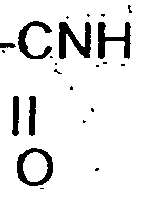
- b) 0,25 bis 5 Gew.-% mindestens eines neutralisierten Copolymerisats aus mindestens einem Monomeren der allgemeinen Formel (I)
CH 2 =CR 1 R 2 (I),
wobei R1 für eine Gruppe A-(CH2CH2O)x-R3 steht,

- Der Viskositätsbereich des erfindungsgemäßen Mittels liegt bei 50 000 bis 150 000 mPa.s, gemessen bei 20°C (Brookfield RVT; Heliopath Spindel C 10UpM).
- Dieses Produkt verleiht dem Haar nicht nur Glanz, Fülle und Volumen, einen vollen Griff, Spannkraft und verbesserte Naß- und Trockenkämmbarkeit, sondern weist auch keinerlei sonst bei solchen Produkten häufig auftretende Klebrigkeit oder Hygroskopizität auf.
Darüber hinaus ist dieses Gel äußerst homogen und bis 50°C viskositätsstabil; es kann auch bei Normaltemperatur durch einfaches Zusammenrühren der Bestandteile hergestellt werden. - Der bevorzugte Anteil an den Copolymeren a) liegt bei etwa 2 bis etwa 7,5, insbesondere etwa 2,5 bis etwa 6 Gew.-%, berechnet auf die Gesamtzusammensetzung.
Dabei beträgt der Anteil der Carbonsäure vorzugsweise etwa 5 bis 20 % des Copolymeren. - Derartige Copolymere werden durch Copolymerisation der entsprechenden Monomeren gewonnen und sind auch auf dem Markt erhältlich, z.B. unter den Handelsnamen "Balance 0/55 ®", "Balance CR®" und "Balance Extra®" der Fa. National Starch Chemical Co., "Luvimer®" der BASF AG oder "Carbose®" der Fa. Goodrich. Sie sind im CTFA International Cosmetic Ingredient Dictionary unter der generischen Bezeichnung "Acrylates Copolymers", und speziell "Acrylic/Acrylate Copolymer" gelistet. In den erfindungsgemäßen Zusammensetzungen liegen sie beispielsweise als Alkali-, Ammonium- oder Alkanolaminsalze von.
- Der Bestandteil b) der erfindungsgemäßen Zusammensetzung ist vorzugsweise in einer Menge von 0,5 bis 4, insbesondere 1 bis 2,5 Gew.-%, berechnet auf die Gesamtzusammensetzung, enthalten.
- Bevorzugte Bestandteile b) sind Copolymerisate aus Acrylsäure, Methacrylsäure und Itaconsäure mit Estern dieser Säuren mit ethoxylierten C8-C24-, insbesondere C12-C22-Fettalkoholen, wobei die bevorzugte Zahl x der Ethylenoxideinheiten in der Formel (I) zwischen 5 bis 30 liegt.
- Geeignete Copolymere sind beispielsweise Acryl- oder Methacrylsäure/ Acryl- oder Methacrylsäurepolyethoxyalkylester-Copolymere des Typs Acrylates/ Steareth-20 Methacrylate Copolymer, wie sie von der Firma Rohm and Haas Co. unter der Bezeichnung "Acrysol-22®" und "Aculyn-22®", oder Acryl- oder Methacrylsäure/Polyethoxyalkylallylether-Copolymere des Typs Steareth-10 Allyl Ether/Acrylates-Copolymer, wie sie von der Firma Allied Colloids unter der Bezeichnung "Salcare SC90®" oder Acryl- oder Methacrylsäure/ ltaconsäurepolyethoxyalkyfester Copolymere des Typs Acrylates/ Steareth-20 Itaconate Copolymer und Acrylates/ Ceteth-20 Itaconate Copolymer, wie sie von der Firma National Starch Co. unter der Bezeichnung "Structure 2001®" und "Structure 300®" vertrieben werden.
- Weitere in diesem Zusammenhang geeignete Copolymere sind solche aus (Meth)Acrylsäure und einem Methacrylsäureester eines mit 25 Ethylenoxid-Einheiten ethoxylierten Behenylalkohols, bekannt unter dem Handelsnamen "Aculyn 28®, und die in der EP 0870 785 A1 beschriebenen Produkte, beispielsweise ein unter dem Namen "Synthaler®" erhältliches Acrylates/ Palmeth-25 Acrylate Copolymer.
- Die erfindungsgemäßen gelförmigen Zusammensetzungen können die in solchen Mitteln üblichen Stoffe enthalten, soweit diese die Stabilität des Gels nicht beeinträchtigen.
Solche Stoffe sind z.B. flüssige Fette und Öle mit einem Schmelzpunkt von maximal etwa 30°C, vorzugsweise etwa 25°C, natürliche Öle wie Avocadoöl, Cocosöl, Palmöl, Sesamöl, Erdnußöl, Spermöl, Sonnenblumenöl, Mandelöl, Pfirsichkernöl, Weizenkeimöl, Macadamianußöl, Nachtkerzenöl, Jojobaöl, Ricinusöl, Purcellinöl (Cetearyloctanoat) oder auch Oliven- bzw. Sojaöl, sowie sonstige Mono-, Di- und Triglyceride, Lanolin und dessen Derivate, ebenso Mineralöle wie Paraffinöl und Vaseline, synthetische Öle und Wachse wie Silikonöle, Polyethylenglykole, sowie weitere hydrophobe Komponenten, z.B. Fettsäureester wie Ethyl-, n-Propyl- und Isopropylmyristat, -palmitat, -stearat, -laurat, -oleat und -isostearat, Decyloleat, Oleyloleat, Isocetylstearat, Hexyllaurat, Decylstearat, Dibutyladipat, Oleyladipat, Dioctyladipat, Tristearylcitrat, Myristylmyristat, Cetylpropionat, Oleylerucat, Polyethylenglykol- und Polyglycerylfettsäureester wie PEG-7-glycerylcocoat, etc. Weitere geeignete Substanzen sind Fettalkohole wie Oleylalkohol, Decyl- und Laurylalkohol und natürliche Gemische derselben wie Cocosfettalkohol, die auch ethoxyliert sein können.
Falls erwünscht, können oberflächenaktive Stoffe, insbesondere nichtionische, amphotere oder zwitterionische, zugesetzt werden. Solche nichtionischen Tenside sind beispielsweise Fettalkoholpolyglykolether.
Besonders geeignete C10-C22-Fettalkoholether sind die unter den Trivialnamen "Laureth" "Myristeth" "Oleth" , "Ceteth", "Deceth", "Steareth", "Trideceth" und "Ceteareth" nach der CTFA-Nomenklatur mit Anfügung der Zahl der Ethylenoxid-Moleküle bezeichneten Alkylpolyglykolether, z.B. "Laureth-16" und "Trideceth-6".
Der durchschnittliche Ethoxylierungsgrad liegt dabei zwischen etwa 2,5 und etwa 25, vorzugsweise etwa 5 und etwa 20. - Geeignete weitere nichtionische Tenside sind Verbindungen aus der Klasse der Alkylpolyglucoside mit der allgemeinen Formel
R-O-(CH2CH2O)n-Zx,
worin R eine Alkylgruppe mit 8 bis 20, vorzugsweise 10 bis 14 Kohlenstoffatomen, Zx einen Saccharidrest mit 5 bis 6 Kohlenstoffatomen, n, eine Zahl von 0 bis 10, und x eine Zahl zwischen 1 und 5, vorzugsweise 1,1 bis 2,5 bedeuten.
Andere zusätzlich mitverwendbare nichtionische Tenside sind z.B. die verschiedenen Sorbitanester wie Polyethylenglykolsorbitanstearinsäureester, Fettsäurepolyglykolester oder auch Mischkondensate aus Ethylenoxid und Propylenoxid, wie sie beispielsweise unter der Handelsbezeichnung "Pluronics® " im Verkehr sind.
Weitere einsetzbare nichtionische Tenside sind Aminoxide.
Solche Aminoxide gehören seit langem zum Stand der Technik, beispielsweise C12-C18-Alkyldimethylaminoxide wie Lauryldimethylaminoxid, C12-C18-Alkylamidopropyl- oder -ethylaminoxide, C12-C18-Alkyldi(hydroxyethyl)- oder -(hydroxypropy)aminoxide, oder auch Aminoxide mit Ethylenoxid- und/oder Propylenoxidgruppen in der Alkylkette.
Geeignete Aminoxide sind beispielsweise unter den Bezeichnungen "Ammonyx®", "Aromox®", oder "Genaminox®" im Handel. Geeignete amphotere bzw. zwitterionische Tenside sind insbesondere die verschiedenen bekannten Betaine wie Fettsäureamidoalkylbetaine und Sulfobetaine, beispielsweise Laurylhydroxysulfobetain; auch langkettige Alkylaminosäuren wie Cocoaminoacetat, Cocoaminopropionat und Natriumcocoamphopropionat und -acetat haben sich als geeignet erwiesen. - Weitere einsetzbare Stoffe sind die verschiedenen quaternären Ammoniumverbindungen, haarkonditionierende kationische Polymere, sowie auch nichtionische, amphotere und/oder zwitterionische Polymere.
Diese Polymeren sind dem Fachmann bekannt und auf dem Markt erhältlich. - Das erfindungsgemäße Haarbehandlungsmittel kann als weiteren Bestandteil noch mindestens eine Verbindung, ausgewählt aus der Gruppe 1-Methoxypropanol(-2), 1-Ethoxypropanol(-2), Diethylenglykolmonomethyl- oder -ethylether, Dipropylenglykol-monomethyl- oder -ethylether, Benzylalkohol, Benzyloxyethanol, Phenylethylalkohol, Phenoxyethanol und/oder Zimtalkohol, vorzugsweise in einer Menge von 0,5 bis 25, insbesondere 1 bis 20, vor allem 2,5 bis 15 Gew.-%, berechnet auf die Gesamt-zusammensetzung des Mittels, enthalten.
Bevorzugte Verbindungen aus dieser Gruppe sind Ethoxydiglykol und Benzyloxyethanol. - Ein weiterer möglicher Bestandteil in diesen Mitteln ist Harnstoff, vorzugsweise in einer Menge von etwa 1 bis 10, insbesondere etwa 2,5 bis 7,5 Gew.-% des erfindungsgemäßen Mittels.
- Die erfindungsgemäßen Mittel können neben den essentiellen zusätzlich auch noch weitere konditionierende wasserlösliche Eiweißhydrolysate und Polypeptide, z.B. Keratinhydrolysate, Kollagenhydrolysate vom Typ Nutrilan®" oder Elastinhydrolysate sowie insbesondere auch pflanzliche, gegebenenfalls kationisierte Eiweißhydrolysate, z.B. "GluadinR", enthalten.
- Des weiteren können alle in solchen Zusammensetzungen üblichen Bestandteile anwesend sein.
Als solche seien beispielhaft Komplexbildner, Farbstoffe, Konservierungsmittel, pH-Regler, Duftstoffe, Perlglanzmittel, Verdickungsmittel, Feuchthaltemittel, Cholesterine wie Lecithin und dessen Derivate, etc. genannt.
Eine Auflistung solcher Zusatzstoffe findet sich ebenfalls bei Schrader, I.c., auf S.695 bis 722.
Schließlich können auch noch bekannte Polysiloxane als zusätzliche konditionierende Mittel in den erfindungsgemäßen Haarbehandlungsmitteln mitverwendet werden. Deren bevorzugter Anteil liegt dabei etwa zwischen 0,5 und etwa 5, insbesondere 1 bis 3 Gew.-% der Gesamtzusammensetzung. - Geeignet sind sowohl leichtflüchtige als auch schwerffüchtige cyclische oder lineare Polysiloxane, beispielsweise die unter den Trivialnamen "Dimethicone" bzw. "Phenyldimethicone" sowie "Cyclomethicone" bekannten Silikonöle, sowie beispielsweise auch die in der EP-A 398 177 beschriebenen Silikonderivate, die dort in Kombination mit Alkylpolyglucosiden in flüssigen Detergens-Zusammensetzungen eingesetzt werden.
- Ein weiterer möglicher Bestandteil in den erfindungsgemäßen Mitteln sind Pflanzenextrakte in einer Menge von etwa 0,01 bis etwa 10, vorzugsweise 0,1 bis 7,5, insbesondere 0,5 bis 5 Gew.-%, berechnet als Trockenrückstand desselben auf die Gesamtmenge des Mittels.
Ein weiterer wirkungssteigernder Bestandteil in den erfindungsgemäßen Zusammensetzungen sind Mono- und Oligosaccharide in einer Menge zwischen etwa 0,05 und 5, insbesondere 0,1 bis 4, vorzugsweise 0,25 bis 2,5 Gew.-% der Gesamtzusammensetzung.
Bevorzugte Substanzen sind dabei Glucose, Saccharose, Fructose, Maltose, Lactose, Cellobiose und insbesondere Fucose. - Im folgenden werden anhand von Ausführungsbeispielen die Erfindung und der durch sie erreichte viskositätsstabilisierende und -steigernde Effekt erläutert.
- Es wurden folgende gelförmige Zusammensetzungen hergestellt
Beispiele Nr. 1 2 3 4 5 6 DMDM-Hydantoin (Konservierungsmittel) 0,3 0,3 0,3 0,3 0,3 0,3 Terpolymer aus Methylmethacrylat, n-Butylacrylat und Methacrylsäure (Balance® 0/55) 6,0 6,0 6,0 6,0 6,0 - Acrylates Copolymer (Luvimer® 100P) - - - - - 3,0 PEG-40-hydriertes Ricinusöl 0,3 0,3 0,3 0,3 0,3 0,3 Parfum 0,3 0,3 0,3 0,3 0,3 0,3 Aculyn® 22 1,2 - - - - 1,2 Aculyn® 28 - 0,7 - - - - Salcare® SC 80 - - 1,5 - - - Synthalen® W 2000 - - - 1,2 Carbopor® ETD 2020 - - - - 1,0 - NaOH 32-%ig adpH 7,64 7,72 7,55 7,60 7,20 7,70 Wasser ad 100,0 100,0 100,0 100,0 100,0 100,0 Viskosität Sp. C 10 UpM (20°C) 155.000 71.000 72.000 76.200 15.400 52.700 mPa·s Aculyn® 22: Acrylates/Steareth-20 Methacrylate Copolymer Aculyn® 28: Acrylates/Beheneth-25 Methacrylate Copolymer Salcare® SC 80 Steareth-10 Allyl Ether/Acrylates Copolymer Synthalen® W 2000: Acrylates/Palmeth-25 Acrylate Copolymer Carbopol® ETD 2020: Acrylates/C10-30 Alkyl Acrylate Crosspolymer * incht erfindungsgemäß - Diese Beispiele zeigen die überraschende Viskositätssteigerung beim Einsatz der erfindungsgemäßen Mischung aus speziellem Filmbildner a) und Verdickungsmittel b) nach den Beispielen 2 bis 4 und 6, im Vergleich mit einer bekannten Kombination nach dem Stand der Technik (Beispiel 5) mit dem Verdickungsmittel CarbopolR ETD 2020, einem vernetzten (Meth) Acrylsäure/ C10-C30-Alkylacrylat/ Allylsucroseether-Copolymerisat.
Darüber hinaus lassen sich die die erfindungsgemäßen Zusammensetzungen gut in das Haar einmassieren; das behandelte Haar zeigte einen dezenten Glanz und eine anhaltende Formstabilität der Frisur.
Claims (4)
- Gelförmiges Haarbehandlungsmittel auf wäßriger Basis, enthaltend eine Kombination ausa) 1 bis 10 Gew.-% mindestens eines neutralisierten, filmbildenden Copolymerisats aus Methylmethacrylat n-Butyl- oder tert.-Butyl acrylat und (Meth)Acrylsäure, undb) 0,25 bis 5 Gew.-% mindestens eines neutralisierten Copolymerisats aus mindestens einem Monomeren der allgemeinen Formel (I)
CH 2 =CR 1 R 2 (I),
wobei R1 für eine Gruppe A-(CH2CH2O)x=R3 steht,
- Mittel nach Anspruch 1 dadurch gekennzeichnet, daß die Komponente b) ein Copolymerisat aus (Meth)Acrylsäure und einem Allylether eines mit 5 bis 15 Mol Ethylenoxid ethoxylierten C10-C24-Fettalkohols darstellt.
- Mittel nach Anspruch 1 und/oder 2, dadurch gekennzeichnet, daß die Komponente b) ein Copolymerisat aus (Meth)Acrylsäure und einem C10-C24-Alkylpolyglykolethermethabrylat darstellt.
- Mittel nach Anspruch 3, dadurch gekennzeichnet, daß Komponente b) ein Copolymerisat aus (Meth)Acrylsaure und einem C12-C18-Fettalkoholpolyglykolether (15-25) methacryfat darstellt.
Applications Claiming Priority (2)
| Application Number | Priority Date | Filing Date | Title |
|---|---|---|---|
| DE10109820A DE10109820A1 (de) | 2001-03-01 | 2001-03-01 | Haarbehandlungsmittel |
| DE10109820 | 2001-03-01 |
Publications (2)
| Publication Number | Publication Date |
|---|---|
| EP1238646A1 EP1238646A1 (de) | 2002-09-11 |
| EP1238646B1 true EP1238646B1 (de) | 2006-06-21 |
Family
ID=7675907
Family Applications (1)
| Application Number | Title | Priority Date | Filing Date |
|---|---|---|---|
| EP02004613A Expired - Lifetime EP1238646B1 (de) | 2001-03-01 | 2002-02-28 | Haarbehandlungsmittel |
Country Status (3)
| Country | Link |
|---|---|
| EP (1) | EP1238646B1 (de) |
| AT (1) | ATE330583T1 (de) |
| DE (2) | DE10109820A1 (de) |
Cited By (1)
| Publication number | Priority date | Publication date | Assignee | Title |
|---|---|---|---|---|
| DE102007008089A1 (de) | 2007-02-13 | 2008-08-14 | Beiersdorf Ag | Haarstylinggel mit hohem Langzeithalt |
Families Citing this family (3)
| Publication number | Priority date | Publication date | Assignee | Title |
|---|---|---|---|---|
| DE102015204148A1 (de) * | 2015-03-09 | 2016-09-15 | Henkel Ag & Co. Kgaa | "Mittel und Verfahren zur temporären Verformung keratinhaltiger Fasern" |
| DE102015204149A1 (de) * | 2015-03-09 | 2016-09-15 | Henkel Ag & Co. Kgaa | "Mittel und Verfahren zur temporären Verformung keratinhaltiger Fasern" |
| DE102015204150A1 (de) | 2015-03-09 | 2016-09-15 | Henkel Ag & Co. Kgaa | "Mittel und Verfahren zur temporären Verformung keratinhaltiger Fasern" |
Family Cites Families (4)
| Publication number | Priority date | Publication date | Assignee | Title |
|---|---|---|---|---|
| EP0897711B1 (de) * | 1997-07-31 | 2000-10-25 | Wella Aktiengesellschaft | Mittel zur Erhöhung der Formbarkeit und des Glanzes von Haaren |
| US5972356A (en) * | 1997-11-05 | 1999-10-26 | The Procter & Gamble Company | Personal care compositions |
| US20010002254A1 (en) * | 1998-09-08 | 2001-05-31 | Revlon Consumer Products Corporation | Compositions and methods for coloring hair |
| DE69934461T2 (de) * | 1998-09-11 | 2007-09-27 | Rohm And Haas Co. | Festigende Haarformungs-Zusammensetzungen |
-
2001
- 2001-03-01 DE DE10109820A patent/DE10109820A1/de not_active Ceased
-
2002
- 2002-02-28 EP EP02004613A patent/EP1238646B1/de not_active Expired - Lifetime
- 2002-02-28 AT AT02004613T patent/ATE330583T1/de not_active IP Right Cessation
- 2002-02-28 DE DE50207243T patent/DE50207243D1/de not_active Expired - Lifetime
Cited By (1)
| Publication number | Priority date | Publication date | Assignee | Title |
|---|---|---|---|---|
| DE102007008089A1 (de) | 2007-02-13 | 2008-08-14 | Beiersdorf Ag | Haarstylinggel mit hohem Langzeithalt |
Also Published As
| Publication number | Publication date |
|---|---|
| DE10109820A1 (de) | 2002-09-12 |
| EP1238646A1 (de) | 2002-09-11 |
| ATE330583T1 (de) | 2006-07-15 |
| DE50207243D1 (de) | 2006-08-03 |
Similar Documents
| Publication | Publication Date | Title |
|---|---|---|
| EP1847253A1 (de) | Wasserlösliche Polymere und ihre Verwendung in kosmetischen und pharmazeutischen Zubereitungen | |
| EP2117651B1 (de) | Haarstylinggel mit hohem langzeithalt | |
| EP0965322A1 (de) | Haar- und Körperreinigungsmittel mit verminderter Hautirritation | |
| DE19723763C2 (de) | Haarwaschmittel | |
| DE19823552A1 (de) | Zubereitung zur Behandlung der menschlichen Haut und der menschlichen Haare mit einer speziellen Wirkstoffkombination sowie Verwendung dieser Wirkstoffkombination | |
| EP1034775B1 (de) | Haarwaschmittel | |
| EP2456415B1 (de) | Mittel für keratinhaltige fasern, enthaltend mindestens ein acrylat/glycerylacrylat-copolymer, mindestens ein filmbildendes und/oder festigendes polymer und mindestens ein esteröl | |
| EP1127565A2 (de) | Gelförmige Zusammensetzungen und verdickte Haarbehandlungsmittel | |
| EP1133973B1 (de) | Haarpflegemulsion | |
| EP1238646A1 (de) | Haarbehandlungsmittel | |
| DE19941819B4 (de) | Kosmetisches Mittel und dessen Verwendung | |
| DE19741162C5 (de) | Tönungs-Haarwaschmittel | |
| DE19937917B4 (de) | Wässriges Haarwaschmittel | |
| DE19937830B4 (de) | Kosmetisches Mittel und dessen Verwendung | |
| DE20103544U1 (de) | Haarbehandlungsmittel | |
| EP2651385A2 (de) | Haarbehandlungsmittel enthaltend dicocoyl pentaerythrityl distearyl citrate | |
| DE19619661C2 (de) | Haarwaschmittel | |
| DE102009026775A1 (de) | Tensidhaltiges kosmetisches Reinigungsmittel mit Gelee Royale | |
| EP1179335B1 (de) | Verwendung propoxylierter C10-C18-Fettsäurealkanolamide in Haarwaschmitteln | |
| DE4324962A1 (de) | Haarpflegemittel | |
| DE10002107C2 (de) | Haarpflegeemulsion | |
| JPH09301838A (ja) | 液状整髪料 | |
| WO2011020646A2 (de) | Zusammensetzungen zur haarpflege enthaltend lanolinalkohol mit einem hohen gehalt langkettiger fettalkohole | |
| EP1180356B1 (de) | Konditionierendes Haarwaschmittel | |
| DE19964178A1 (de) | Flüssiges Körperreinigungsmittel |
Legal Events
| Date | Code | Title | Description |
|---|---|---|---|
| PUAI | Public reference made under article 153(3) epc to a published international application that has entered the european phase |
Free format text: ORIGINAL CODE: 0009012 |
|
| AK | Designated contracting states |
Kind code of ref document: A1 Designated state(s): AT BE CH CY DE DK ES FI FR GB GR IE IT LI LU MC NL PT SE TR |
|
| AX | Request for extension of the european patent |
Free format text: AL;LT;LV;MK;RO;SI |
|
| 17P | Request for examination filed |
Effective date: 20021001 |
|
| RAP1 | Party data changed (applicant data changed or rights of an application transferred) |
Owner name: KPSS-KAO PROFESSIONAL SALON SERVICES GMBH |
|
| AKX | Designation fees paid | ||
| RBV | Designated contracting states (corrected) |
Designated state(s): AT BE CH CY DE DK ES FI FR GB GR IE IT LI LU MC NL PT SE TR |
|
| REG | Reference to a national code |
Ref country code: DE Ref legal event code: 8566 |
|
| 17Q | First examination report despatched |
Effective date: 20040804 |
|
| GRAP | Despatch of communication of intention to grant a patent |
Free format text: ORIGINAL CODE: EPIDOSNIGR1 |
|
| RIC1 | Information provided on ipc code assigned before grant |
Ipc: A61K 8/81 20060101AFI20060206BHEP Ipc: A61K 8/86 20060101ALI20060206BHEP Ipc: A61Q 5/06 20060101ALI20060206BHEP |
|
| GRAS | Grant fee paid |
Free format text: ORIGINAL CODE: EPIDOSNIGR3 |
|
| GRAA | (expected) grant |
Free format text: ORIGINAL CODE: 0009210 |
|
| AK | Designated contracting states |
Kind code of ref document: B1 Designated state(s): AT BE CH CY DE DK ES FI FR GB GR IE IT LI LU MC NL PT SE TR |
|
| PG25 | Lapsed in a contracting state [announced via postgrant information from national office to epo] |
Ref country code: IT Free format text: LAPSE BECAUSE OF FAILURE TO SUBMIT A TRANSLATION OF THE DESCRIPTION OR TO PAY THE FEE WITHIN THE PRESCRIBED TIME-LIMIT;WARNING: LAPSES OF ITALIAN PATENTS WITH EFFECTIVE DATE BEFORE 2007 MAY HAVE OCCURRED AT ANY TIME BEFORE 2007. THE CORRECT EFFECTIVE DATE MAY BE DIFFERENT FROM THE ONE RECORDED. Effective date: 20060621 Ref country code: FI Free format text: LAPSE BECAUSE OF FAILURE TO SUBMIT A TRANSLATION OF THE DESCRIPTION OR TO PAY THE FEE WITHIN THE PRESCRIBED TIME-LIMIT Effective date: 20060621 Ref country code: NL Free format text: LAPSE BECAUSE OF FAILURE TO SUBMIT A TRANSLATION OF THE DESCRIPTION OR TO PAY THE FEE WITHIN THE PRESCRIBED TIME-LIMIT Effective date: 20060621 Ref country code: IE Free format text: LAPSE BECAUSE OF FAILURE TO SUBMIT A TRANSLATION OF THE DESCRIPTION OR TO PAY THE FEE WITHIN THE PRESCRIBED TIME-LIMIT Effective date: 20060621 |
|
| REG | Reference to a national code |
Ref country code: GB Ref legal event code: FG4D Free format text: NOT ENGLISH |
|
| REG | Reference to a national code |
Ref country code: CH Ref legal event code: EP |
|
| REG | Reference to a national code |
Ref country code: IE Ref legal event code: FG4D Free format text: LANGUAGE OF EP DOCUMENT: GERMAN |
|
| REF | Corresponds to: |
Ref document number: 50207243 Country of ref document: DE Date of ref document: 20060803 Kind code of ref document: P |
|
| GBT | Gb: translation of ep patent filed (gb section 77(6)(a)/1977) |
Effective date: 20060822 |
|
| PG25 | Lapsed in a contracting state [announced via postgrant information from national office to epo] |
Ref country code: DK Free format text: LAPSE BECAUSE OF FAILURE TO SUBMIT A TRANSLATION OF THE DESCRIPTION OR TO PAY THE FEE WITHIN THE PRESCRIBED TIME-LIMIT Effective date: 20060921 Ref country code: SE Free format text: LAPSE BECAUSE OF FAILURE TO SUBMIT A TRANSLATION OF THE DESCRIPTION OR TO PAY THE FEE WITHIN THE PRESCRIBED TIME-LIMIT Effective date: 20060921 |
|
| PG25 | Lapsed in a contracting state [announced via postgrant information from national office to epo] |
Ref country code: ES Free format text: LAPSE BECAUSE OF FAILURE TO SUBMIT A TRANSLATION OF THE DESCRIPTION OR TO PAY THE FEE WITHIN THE PRESCRIBED TIME-LIMIT Effective date: 20061002 |
|
| PG25 | Lapsed in a contracting state [announced via postgrant information from national office to epo] |
Ref country code: PT Free format text: LAPSE BECAUSE OF FAILURE TO SUBMIT A TRANSLATION OF THE DESCRIPTION OR TO PAY THE FEE WITHIN THE PRESCRIBED TIME-LIMIT Effective date: 20061121 |
|
| NLV1 | Nl: lapsed or annulled due to failure to fulfill the requirements of art. 29p and 29m of the patents act | ||
| ET | Fr: translation filed | ||
| REG | Reference to a national code |
Ref country code: IE Ref legal event code: FD4D |
|
| PG25 | Lapsed in a contracting state [announced via postgrant information from national office to epo] |
Ref country code: CH Free format text: LAPSE BECAUSE OF NON-PAYMENT OF DUE FEES Effective date: 20070228 Ref country code: MC Free format text: LAPSE BECAUSE OF NON-PAYMENT OF DUE FEES Effective date: 20070228 Ref country code: LI Free format text: LAPSE BECAUSE OF NON-PAYMENT OF DUE FEES Effective date: 20070228 |
|
| PLBE | No opposition filed within time limit |
Free format text: ORIGINAL CODE: 0009261 |
|
| STAA | Information on the status of an ep patent application or granted ep patent |
Free format text: STATUS: NO OPPOSITION FILED WITHIN TIME LIMIT |
|
| 26N | No opposition filed |
Effective date: 20070322 |
|
| REG | Reference to a national code |
Ref country code: CH Ref legal event code: PL |
|
| BERE | Be: lapsed |
Owner name: KPSS-KAO PROFESSIONAL SALON SERVICES G.M.B.H. Effective date: 20070228 |
|
| PG25 | Lapsed in a contracting state [announced via postgrant information from national office to epo] |
Ref country code: BE Free format text: LAPSE BECAUSE OF NON-PAYMENT OF DUE FEES Effective date: 20070228 |
|
| PG25 | Lapsed in a contracting state [announced via postgrant information from national office to epo] |
Ref country code: GR Free format text: LAPSE BECAUSE OF FAILURE TO SUBMIT A TRANSLATION OF THE DESCRIPTION OR TO PAY THE FEE WITHIN THE PRESCRIBED TIME-LIMIT Effective date: 20060922 |
|
| PG25 | Lapsed in a contracting state [announced via postgrant information from national office to epo] |
Ref country code: AT Free format text: LAPSE BECAUSE OF NON-PAYMENT OF DUE FEES Effective date: 20070228 |
|
| PG25 | Lapsed in a contracting state [announced via postgrant information from national office to epo] |
Ref country code: CY Free format text: LAPSE BECAUSE OF FAILURE TO SUBMIT A TRANSLATION OF THE DESCRIPTION OR TO PAY THE FEE WITHIN THE PRESCRIBED TIME-LIMIT Effective date: 20060621 Ref country code: LU Free format text: LAPSE BECAUSE OF NON-PAYMENT OF DUE FEES Effective date: 20070228 |
|
| PG25 | Lapsed in a contracting state [announced via postgrant information from national office to epo] |
Ref country code: TR Free format text: LAPSE BECAUSE OF FAILURE TO SUBMIT A TRANSLATION OF THE DESCRIPTION OR TO PAY THE FEE WITHIN THE PRESCRIBED TIME-LIMIT Effective date: 20060621 |
|
| REG | Reference to a national code |
Ref country code: FR Ref legal event code: CD Owner name: KAO GERMANY GMBH, DE Effective date: 20120411 |
|
| REG | Reference to a national code |
Ref country code: FR Ref legal event code: PLFP Year of fee payment: 15 |
|
| REG | Reference to a national code |
Ref country code: FR Ref legal event code: PLFP Year of fee payment: 16 |
|
| REG | Reference to a national code |
Ref country code: FR Ref legal event code: PLFP Year of fee payment: 17 |
|
| PGFP | Annual fee paid to national office [announced via postgrant information from national office to epo] |
Ref country code: GB Payment date: 20200226 Year of fee payment: 19 |
|
| PGFP | Annual fee paid to national office [announced via postgrant information from national office to epo] |
Ref country code: FR Payment date: 20200225 Year of fee payment: 19 |
|
| PGFP | Annual fee paid to national office [announced via postgrant information from national office to epo] |
Ref country code: DE Payment date: 20200429 Year of fee payment: 19 |
|
| REG | Reference to a national code |
Ref country code: DE Ref legal event code: R119 Ref document number: 50207243 Country of ref document: DE |
|
| GBPC | Gb: european patent ceased through non-payment of renewal fee |
Effective date: 20210228 |
|
| PG25 | Lapsed in a contracting state [announced via postgrant information from national office to epo] |
Ref country code: GB Free format text: LAPSE BECAUSE OF NON-PAYMENT OF DUE FEES Effective date: 20210228 Ref country code: FR Free format text: LAPSE BECAUSE OF NON-PAYMENT OF DUE FEES Effective date: 20210228 Ref country code: DE Free format text: LAPSE BECAUSE OF NON-PAYMENT OF DUE FEES Effective date: 20210901 |