EP1237113A2 - System und Verfahren zur Integration von Pharmazie- und Labordaten - Google Patents
System und Verfahren zur Integration von Pharmazie- und Labordaten Download PDFInfo
- Publication number
- EP1237113A2 EP1237113A2 EP02004033A EP02004033A EP1237113A2 EP 1237113 A2 EP1237113 A2 EP 1237113A2 EP 02004033 A EP02004033 A EP 02004033A EP 02004033 A EP02004033 A EP 02004033A EP 1237113 A2 EP1237113 A2 EP 1237113A2
- Authority
- EP
- European Patent Office
- Prior art keywords
- lab
- data
- ade
- drug
- patient
- Prior art date
- Legal status (The legal status is an assumption and is not a legal conclusion. Google has not performed a legal analysis and makes no representation as to the accuracy of the status listed.)
- Withdrawn
Links
Images









Classifications
-
- G—PHYSICS
- G16—INFORMATION AND COMMUNICATION TECHNOLOGY [ICT] SPECIALLY ADAPTED FOR SPECIFIC APPLICATION FIELDS
- G16H—HEALTHCARE INFORMATICS, i.e. INFORMATION AND COMMUNICATION TECHNOLOGY [ICT] SPECIALLY ADAPTED FOR THE HANDLING OR PROCESSING OF MEDICAL OR HEALTHCARE DATA
- G16H50/00—ICT specially adapted for medical diagnosis, medical simulation or medical data mining; ICT specially adapted for detecting, monitoring or modelling epidemics or pandemics
- G16H50/20—ICT specially adapted for medical diagnosis, medical simulation or medical data mining; ICT specially adapted for detecting, monitoring or modelling epidemics or pandemics for computer-aided diagnosis, e.g. based on medical expert systems
-
- G—PHYSICS
- G16—INFORMATION AND COMMUNICATION TECHNOLOGY [ICT] SPECIALLY ADAPTED FOR SPECIFIC APPLICATION FIELDS
- G16H—HEALTHCARE INFORMATICS, i.e. INFORMATION AND COMMUNICATION TECHNOLOGY [ICT] SPECIALLY ADAPTED FOR THE HANDLING OR PROCESSING OF MEDICAL OR HEALTHCARE DATA
- G16H10/00—ICT specially adapted for the handling or processing of patient-related medical or healthcare data
- G16H10/40—ICT specially adapted for the handling or processing of patient-related medical or healthcare data for data related to laboratory analysis, e.g. patient specimen analysis
-
- G—PHYSICS
- G16—INFORMATION AND COMMUNICATION TECHNOLOGY [ICT] SPECIALLY ADAPTED FOR SPECIFIC APPLICATION FIELDS
- G16H—HEALTHCARE INFORMATICS, i.e. INFORMATION AND COMMUNICATION TECHNOLOGY [ICT] SPECIALLY ADAPTED FOR THE HANDLING OR PROCESSING OF MEDICAL OR HEALTHCARE DATA
- G16H20/00—ICT specially adapted for therapies or health-improving plans, e.g. for handling prescriptions, for steering therapy or for monitoring patient compliance
- G16H20/10—ICT specially adapted for therapies or health-improving plans, e.g. for handling prescriptions, for steering therapy or for monitoring patient compliance relating to drugs or medications, e.g. for ensuring correct administration to patients
-
- G—PHYSICS
- G16—INFORMATION AND COMMUNICATION TECHNOLOGY [ICT] SPECIALLY ADAPTED FOR SPECIFIC APPLICATION FIELDS
- G16H—HEALTHCARE INFORMATICS, i.e. INFORMATION AND COMMUNICATION TECHNOLOGY [ICT] SPECIALLY ADAPTED FOR THE HANDLING OR PROCESSING OF MEDICAL OR HEALTHCARE DATA
- G16H40/00—ICT specially adapted for the management or administration of healthcare resources or facilities; ICT specially adapted for the management or operation of medical equipment or devices
- G16H40/60—ICT specially adapted for the management or administration of healthcare resources or facilities; ICT specially adapted for the management or operation of medical equipment or devices for the operation of medical equipment or devices
- G16H40/67—ICT specially adapted for the management or administration of healthcare resources or facilities; ICT specially adapted for the management or operation of medical equipment or devices for the operation of medical equipment or devices for remote operation
-
- G—PHYSICS
- G16—INFORMATION AND COMMUNICATION TECHNOLOGY [ICT] SPECIALLY ADAPTED FOR SPECIFIC APPLICATION FIELDS
- G16H—HEALTHCARE INFORMATICS, i.e. INFORMATION AND COMMUNICATION TECHNOLOGY [ICT] SPECIALLY ADAPTED FOR THE HANDLING OR PROCESSING OF MEDICAL OR HEALTHCARE DATA
- G16H70/00—ICT specially adapted for the handling or processing of medical references
- G16H70/40—ICT specially adapted for the handling or processing of medical references relating to drugs, e.g. their side effects or intended usage
-
- G—PHYSICS
- G16—INFORMATION AND COMMUNICATION TECHNOLOGY [ICT] SPECIALLY ADAPTED FOR SPECIFIC APPLICATION FIELDS
- G16H—HEALTHCARE INFORMATICS, i.e. INFORMATION AND COMMUNICATION TECHNOLOGY [ICT] SPECIALLY ADAPTED FOR THE HANDLING OR PROCESSING OF MEDICAL OR HEALTHCARE DATA
- G16H10/00—ICT specially adapted for the handling or processing of patient-related medical or healthcare data
- G16H10/60—ICT specially adapted for the handling or processing of patient-related medical or healthcare data for patient-specific data, e.g. for electronic patient records
Definitions
- This invention relates to a method and system for managing and anticipating adverse drug events ("ADE"). More particularly, the invention relates to a method and system for integrating and using data from a medical facility's pharmacy and laboratory information systems to anticipate potential ADEs in a patient's medication regiment.
- ADE adverse drug events
- a number of preventable patient care errors occur because the prescription of medication to a patient is done without first consulting a patient's laboratory results. Some patients have had drugs continuously administered to them for hours or days after toxic levels for that drug are recorded by the lab. Some patients have received particular medication long after the laboratory has documented signs of drug-related side effects. Others have received erroneous laboratory test results because their medication interferes with the laboratory tests they are undergoing. Still others have received medications even after the patient's lab result indicates that it is dangerous to do so. All these errors, and many more not mentioned, could have all been prevented if a patients laboratory results were consulted prior to prescribing or administrating a medication.
- pharmacies Since a pharmacy department of a medical facility is typically responsible for filling all prescriptions and dispensing all medications to patients, it is often the only means for catching some of these errors. To that extent, some pharmacies have information systems in place that can alert the pharmacist that an ADE would occur between drugs administered to a patient. However, these information systems are typically limited to detecting a potential ADE between drugs administered to a patient. These pharmacy information systems are not capable of predicting an ADE based on a patient's physiological condition, because these systems typically do not monitor or have access or have the capability to process a patient's laboratory results.
- a laboratory department of a medical facility typically performs tests and analyzes specimens (such as blood, urine, cell cultures, etc.) received from a patient and stores these results on a laboratory information system.
- specimens such as blood, urine, cell cultures, etc.
- the test results and analysis on patient specimens are germane to the administration of medication.
- these two departments and their work processes, personnel, and particularly their information systems rarely effectively communicate with each other.
- the present invention is a system and method for anticipating potential ADEs in a patient's medication regimen by integrating data typically located in laboratory and pharmacy information systems and filtering the data using predefined criteria.
- the present invention includes a system for anticipating a possible ADE through the use of a search engine that compares integrated data from laboratory and pharmacy information systems and compares it to predefined ADE rules defining normal ranges for a particular laboratory test.
- an alert procedure is triggered which allows for a period of time wherein the patient's lab and pharmacy data is monitored in order to determine if a proper corrective action is undertaken, and if no corrective action or an improper corrective action is taken within that period of time, the healthcare provider is warned of a potential ADE.
- the ADE monitoring system is utilized in an application service provider environment (ASP) wherein the ADE monitoring system is comprised of at least one server having a communication link to a computer network.
- ASP application service provider environment
- a secure intranet provides the conduit through which data is downloaded from the medical facility, and users access the ADE monitoring system.
- a method for detecting an ADE includes extracting information within pharmacy and lab data and respectively placing it into a normalized drug table or a normalized lab table. The data within these tables are then filtered by an ADE search engine which searches an ADE rule database to see if it matches any predefined ADE rule. If a match is made an alert procedure is activated .
- the subject invention is a system and method for monitoring patient - drug/lab interactions by integrating data typically located in laboratory and pharmacy information systems and comparing it to predefined ADE rules. It is also contemplated that physiological data (such as blood pressure or heart rate ) or patient information, obtainable from computer systems within a health care facility, can also be integrated into the disclosed invention in a manner similar to that described for the pharmacy and laboratory systems..
- physiological data such as blood pressure or heart rate
- patient information obtainable from computer systems within a health care facility
- the subject invention includes a system configuration which facilitates data transfer, a data import procedure which integrates laboratory and pharmacy data, an ADE monitoring procedure which performs an extensive search for potential ADE, an alert generation procedure for notifying medical facilities of potential ADE, report generating functions for arranging the display of data, and a user interface which allows for simple operation of the ADE monitoring system.
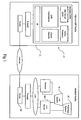
- an embodiment of an ADE monitoring system 10 in accordance with the subject invention is shown.
- This embodiment is comprised of a central processor 11 having included therein a number of task oriented applications.
- the central processor 11 can be any computer known to those skilled in the art, including standard attachments and components thereof (e.g., a disk drive, hard drive, CD/DVD player or network server that communicates with a CPU and main memory, a sound board, a keyboard and mouse, and a monitor).
- the processor of the CPU in the computer may be any conventional general-purpose single- or multi-chip microprocessor.
- the processor may be any conventional special purpose processor such as a digital signal processor or a graphics processor.
- the microprocessor can include conventional address lines, conventional data lines, and one or more conventional control lines.
- the ADE monitoring system 20 is utilized in an application service provider environment ("ASP") accessible to a plurality of users and medical facilities through a secure intranet.
- the central processor 11 includes a web site hosted by at least one web server 21 in communication with the intranet.
- the central processor 11 may also include a plurality of web servers 21, database servers 22, application servers 23, or directory servers 24, and may run on a variety of platforms known in the art, including but not limited to, SQL Server 2000, Windows 2000, Active Directory and IIS.
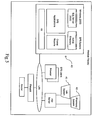
- the ADE monitoring system 30 is configured to operate in a stand-alone environment, located within a medical facility. Data from laboratory 41 and pharmacy 42 information systems may be compiled and transmitted by a FTP server 43 through a Local Area Network (LAN).
- LAN Local Area Network
- data from laboratory 31 and pharmacy 32 information systems may be compiled and transmitted to the ADE monitoring system 10 by a File Transfer Protocol ("FTP") server 33 through a router 34 in communication with the ADE monitoring system 30 via a computer network such as a secure intranet or a LAN.
- FTP File Transfer Protocol
- telephonic means or even direct hard wire connections can be utilized for transmitting data to the ADE monitoring system 10.
- the data transfers are typically initiated by a medical facility, and can be transmitted periodically or may be transferred dynamically as the data is created.
- the data is encrypted prior to transmission to secure the privacy of the information.
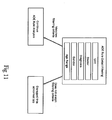
- the central processor 11 includes software applications or computer instructions located on application servers 23. As will be explained further below, and more specifically in the sections pertaining to their function, the applications coordinate the functional components of the ADE monitoring system 10. These applications may include common software components that are commercially sold, as well as proprietary applications specifically developed to perform specific functions in the ADE monitoring system.
- a Patient Data Import Application 42 is included to receive, validate, and format pharmacy and lab data received from a medical facility.
- An Adverse Drug Event Application 43 is included to correlate and examine pharmacy and lab data for each patient, and to generate an alert when these criteria do not comply with predefined criteria.
- a User Access Application 46 may also be included for limiting access to the ADE monitoring system 10 to authorized individuals and for limiting access to information.
- the User Access Application typically works in conjunction with a User Directory 45 located on a directory server 24.
- the User Directory 45 is comprised of a database of authorized users and a level of accessibility allowed for each.
- An Administration Application may also be included for organizing and maintaining databases pertaining to particular medical facilities and users.
- a report generation application such as Crystal Reports may also be included.
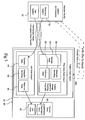
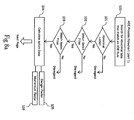
- data records from a healthcare facility is transmitted to the ADE monitoring system through a secure intranet.
- the ADE monitoring system 10 first subjects the data record to a validation process (block 54) to verify that the data record is in a known format and to verify that it is complete. Once the data record is verified, it is then reformatted by a reformatting process (block 55) to be compatible with data structure employed by a database wherein the data is stored.
- an exception handling procedure (block 58) is triggered.
- the exception handling procedure includes the steps of creating an error message and posting it on an error log which notes the time and date of the error. Also, an electronic message, preferably an E-mail, is sent to the healthcare provider sending the data record to notify it of the error.
- a pharmacy information system 51 will typically provide the ADE monitoring system 10 with pharmacy data for each patient and a laboratory information system 52 typically provides information pertaining to lab tests.
- a data record imported from a pharmacy information system will typically include information pertaining to a medication prescribed to a patient and the logistics as to how the medication is to be administered.
- a data record from a lab information system typically provides data pertaining to lab tests for each patient. Lab or pharmacy data is extracted from their respective data records and this data is then correlated with records pertaining to the same patient ID, and stored within a database.
- a pharmacy database 56 stores pharmacy data and a laboratory database 57 stores laboratory data.
- the data record can be an ASCII file or it can be formatted in any known manner.
- a pharmacy data record will typically include data fields containing a patient ID, a doctor ID, the drug administered, a dosage, a time of dosage, a begin date, and a discontinuance date.
- a lab data record will typically include data fields for a patient ID, a doctor ID, a lab test performed, the test result, the date and time of the test.
- a normalized table called a daily record is created from data extracted from a pharmacy data record and stored within the pharmacy database 56.
- the table is comprised of a chronological sequence of records, with each record having data fields identifying a drug, a drug dosage given or to be given, and a time and date when the drug dosage is administered or will be administered.
- Each record also includes a data field which represents the total dosage for a particular drug within a 24 hour period from the time the drug is or will be given.
- a new record is created with each drug dosage given or each drug dosage to be given, and the daily record is updated with each new record.
- a normalized lab table is also created from lab data and stored within the laboratory database 57.
- the table is also comprised of a chronological sequence of data records, with each data record having data fields identifying a patient ID, a time of the test, the lab name, and the lab result.
- a new record is created for every test result, and the lab table is updated after the creation of each new record.
- ADE rules 64, 65 are created and stored within the ADE rule database 60.
- Each ADE rule contain a plurality of data fields therein which contain information that is used by the ADE monitoring system to determine if an ADE has occurred.
- the values which are contained in each data field are either defined by or approved by a healthcare provider utilizing the ADE rules.
- These ADE rules can include some created by a service which provides ADE monitoring 64 and some created by the medical facility 65.
- an ADE rule is a data record that includes a plurality of fields.
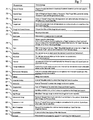
- an ADE rule includes data fields for search status 71, search type 72, target drug 73, target lab 74, drug lab/search name 75, severity 76, lab code 77, pattern 78, type 79, baseline 80, absolute 81, interval 82, danger multiplier 83, momentum multiplier 84, allergy 85, hospital unit 86, doctor(s) 87, diagnosis 88, gender 89, age range 90, concurrent drugs 91, concurrent labs 92, alert template 93, description 94, and contact 95.
- search status 71 search type 72, target drug 73, target lab 74, drug lab/search name 75, severity 76, lab code 77, pattern 78, type 79, baseline 80, absolute 81, interval 82, danger multiplier 83, momentum multiplier 84, allergy 85, hospital unit 86, doctor(s) 87, diagnosis 88, gender 89, age range 90, concurrent drugs 91, concurrent labs 92, alert template 93
- Search Status 71 determines if a rule is to be used when performing ADE monitoring. If enabled the rule is used by the subject ADE monitoring system.
- Search Type 72 Drug/Lab Search Name, and Description 94 are all fields used to classify an ADE Rule.
- Search Type 72 is used to signify if an ADE rule is a research rule or an alert rule. Alerts are specifically written to produce an alert procedure when satisfied. Research rules are specifically made for research purposes only and do not need to trigger an alert procedure if satisfied.
- Drug/Lab Search Name 75 is a unique indentifier which represents a particular rule.
- Target Drug 73 and Target Lab 74 are the drug and lab combination which is the focus of an ADE rule.
- Target Drug 73 names the drug which is the basis for the rule.
- Target Lab 74 names the lab test which is the basis for the rule.
- Severity 76 indicates the severity of the ADE.
- Lab code 77 is a unique identifier for the Target Lab 74.
- Pattern 78 specifies whether the rule is looking for a high or low lab test, and what is the normal drug response to the lab test (i.e. whether to raise or lower the drug dosage.).
- Type 79 and Baseline 80 are data fields used to determine if a lab value is abnormal. Type 79 specifies whether the Baseline value 80 defines a high border or a low border of a normal lab result. Baseline 80 represents a value that exceeds or fails to reach either a maximum or minimum normal value, respectively, for the Target Lab 74.
- Absolute 81, Interval 82, Danger Multiplier 83, and Momentum Multiplier 84 are all used to determine an appropriate waiting period wherein a corrective action is to be taken.
- Absolute 81 represents a lab test value that is considered dangerous. If the test value in a Drug/Lab data record is equal to or exceeds the Absolute 64 value then the ADE monitoring system treats the situation as a medical emergency.
- Interval 82 in the ADE rule contains the time interval (in hours) within which the ADE monitoring system expects an action to occur.
- the Danger Multiplier 83 contains a variable that automatically adjusts how quickly the ADE monitoring system expects a response to an abnormal lab test, based upon how close the lab test is to an Absolute 81 value.
- Momentum Multiplier 84 includes a factor that takes the previous lab value into consideration and automatically adjusts the Interval accordingly.
- Allergy 85 indicates an allergic reaction to a particular drug. This parameter is simply enabled or disabled. Once enabled and if the baseline value is reached or exceeded, the only action capable of removing an alert would be the discontinuance of the Target Drug 73. This parameter does not depend on a history of allergy by the patient but is a link with a particular lab test and result that can indicate that the patient is allergic to the drug.
- Concurrent Drug 91 and Concurrent Lab 92 are associated conditions which must be present for an alert procedure to be triggered and are referred to as association filters.
- Concurrent Drug 91 names medications that must have been administered to a patient within a prescribed period of the abnormal lab for an alert condition to exist.
- Concurrent Lab 67 lists additional tests and test values that must be present within a prescribed period of the abnormal lab before an alert procedure is triggered.
- Alert Template 93 and Contact 95 are used in sending an alert to a healthcare provider.
- the Alert Template 93 contains the name of a template which defines how to handle an alert for the specific ADE rule and Contact 95 lists who should be contacted if an alert is sent.
- ADE monitoring is performed by receiving data from a healthcare provider's laboratory and pharmacy information systems and integrating and correlating the data. This data is then submitted to an ADE search engine 61 which searches an ADE rule database 60 to see if the data satisfies any predefined ADE rule. If a definition is satisfied, an alert procedure is activated to notify the medical facility of a potential ADE.
- ADE monitoring can be done in real time by having the medical facility transmit applicable data as soon as it is received, and by having ADE monitoring activated automatically upon reception of new laboratory and pharmacy data. Real time ADE monitoring allows nearly instantaneous detection of ADE.
- the ADE monitoring system can also be activated periodically by allowing transmitted pharmacy and lab data to accumulate in pharmacy 56 and laboratory 57 databases and searching for matches at predefined times, or upon activation by a user.
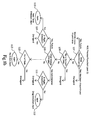
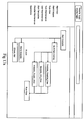
- the subject ADE monitoring system will first check to see if an abnormal lab is received (box 100). This check is done by filtering data located within the pharmacy 56 and lab 57 databases with the plurality of ADE rules stored within the ADE rules database to see if an ADE rule is satisfied by the pharmacy and lab data.
- the filtering process includes using the lab name stored within the Target Drug 73 data field of an ADE rule to filter the drugs listed in the daily record to determine if it was administered or is scheduled to be administered to a patient during a predefined period. If a match exists, the records within the lab table is then filtered using the data located within the Target Lab 74, Baseline 80, and Type 79 data fields located in the same ADE rule to determine if an abnormal lab result has been received.
- a lab name located within the Target Lab 74 data field matches a lab name in the lab table
- the value for the lab is compared with the value within the Baseline 80 database for the same ADE rule. If the lab value is equal to or exceeds (if Type 79 is high) or if it does not exceed (if Type 79 is low) the value in the Baseline 80 data field, then the lab value is an abnormal lab. After an abnormal lab result is detected and absent any additional criteria in the detail filters or association filters, an ADE rule has been satisfied and an alert procedure is triggered.
- the data fields Hospital Unit 86, Doctor 87, Diagnosis 88, Gender 89 and Age Range 90 comprise a detail filter that, if defined, are additional requirements that must also be satisfied if an alert procedure is to be triggered. If a drug /lab match exists then the patient record is checked to see if the defined detail filters are satisfied (Box 102). If any defined detail filters are not satisfied, then the drug/lab match is disregarded.
- the search engine checks the Concurrent Drug 91 and Concurrent Lab 92 data fields to see if these association filters are defined (Box 103). As shown in Fig. 10, if any of the association filters are defined, the search engine filters through the daily record or the lab table, depending on which parameter is defined, to see if the associated drug was administered or if the associate lab result occurred within a predefined period of time prior to the abnormal lab result. If the association filter is satisfied, then the ADE monitoring system can begin an alert procedure . If they are not, then the drug/lab match is disregarded.
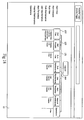
- an alert procedure includes calculating an action date (box 104) which defines a waiting period wherein the system allows the problem to be resolved by the medical staff and allows time for additional tests to ensure that a potential ADE does exist (the abnormal lab value being erroneous).
- the action date is adjusted (boxes 105 and 106) to take into account a plurality of factors such as the current abnormal lab value, the previous lab value, the amount of time between a previous lab and the current abnormal lab, and the value of a current abnormal lab relative to a potentially dangerous value for the lab.
- the system monitors incoming pharmacy and laboratory data in order to determine if a proper corrective action is taken.
- the proper corrective action can be discontinuing a medication or receiving a more recent test result or it can be a response such as raising or lowering a dosage (the appropriate change is listed in the Pattern 78 data field of the matched ADE rule). If the action date is reached without a proper corrective action being taken or if an inappropriate action has been taken (such as raising the drug level when it should be lowered), an alert indicating the existence of a potential ADE is generated and sent to the healthcare provider. If a proper action has been taken then the drug/lab match is disregarded.
- a proper corrective action can be a discontinuation of the medication (box 107).
- a discontinuation of a medication is detected by the ADE monitoring system by monitoring the period of time starting from the last administration of the medication to be discontinued.
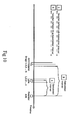
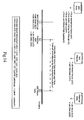
- a time interval (C) is defined which represents a period sufficient to determine a discontinuance of a particular drug. If the time interval between the last time a drug was administered and the end of the live pharmacy data is greater than (C), and if the drug was not administered between that time, then the drug is effectively discontinued and the drug/lab match is disregarded. If the interval (C) is not satisfied and there is no more data in the pharmacy database, the system will continue to monitor incoming lab results until the interval (C) is satisfied.
- Another proper corrective action may also be receiving a more current result for the same Target Lab 74 (box 108).
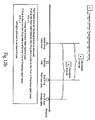
- Fig. 12a once an abnormal result (A) is received, subsequent tests are monitored to see if a more recent lab result for the same test (B) is present within the lab table. If a more recent test is present, the lab/drug match is disregarded.
- the proper corrective action can also be an adjustment to the dosage given a patient (Box 109).
- the system monitors subsequent pharmacy data to determine if an actual dosage given or planned dose (B) includes a dosage which is lowered or raised as is required by the Pattern 78 data field in the matching ADE rule. If an actual dosage or a planned dosage is properly adjusted, the drug/lab match is disregarded.
- Absolute 81, Interval 82, Danger Multiplier 83, and Momentum Multiplier 84 are all data fields within a matching ADE rule that are used to determine an appropriate waiting period wherein a corrective action is to be taken.
- the Interval 82 data field in a matching ADE rule contains the time interval (in hours) within which the ADE monitoring system expects an action to occur, and this time period is adjusted accordingly to take into account a plurality of factors such as the current abnormal lab value, the previous lab value, the amount of time between a previous lab and the current abnormal lab, and the value of a current abnormal lab relative to a potentially dangerous value for the lab.
- the date wherein the interval expires and an alert is generated is called the action date.
- the Danger Multiplier 71 contains a variable that automatically adjusts how quickly the ADE monitoring system expects a response to an abnormal lab test, based upon how close the lab test is to an Absolute 64 value.
- the variable is the slope of a linear function that governs how the interval time is adjusted relative to the proximity of a lab test result to the Absolute 71 value.
- Fig. 13 shows the formula to calculate an action date adjusted for a danger factor.
- the variables in the formula can be defined as:
- Momentum 72 is determined by the value given to the Momentum Multiplier (MF) by the user and the found Actual Momentum (AM).
- the Momentum Multiplier (MF) is set by the user much like the Danger Multiplier (DM). It acts on the Actual Momentum (AM).
- Actual Momentum (AM) is calculated by taking the difference in value between the current lab test and the last previous one (LV2 - LV1) and dividing by the time difference between the dates of each (LD2 - LD1). The value of the ratio is then corrected for the absolute value of the lab tests by dividing by the most recent lab value (LV1).
- Fig. 14 shows the formula to calculate the actual momentum and an action date adjusted by the momentum multipler.
- the variables in the formulas can be defined as:
- the system makes contact with the healthcare provider in order to alert them of a potental ADE.
- the matching ADE rule includes the name of an appropriate template in Alert Template 73, and a destination for the message in the Contact parameter 74.
- the ADE monitoring system delivers the alert through an electronic messaging system such as an E-mail. It is also contemplated that such alerts can also be transmitted in a known manner through a paging system or a voice mail system to an attending physician. This electronic message may be received at a central point in a healthcare facility, and additionally it may be received at a nursing station located in the medical ward wherein the patient is hospitalized.
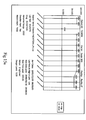
- an alert includes a graphical representation of the medication dosage relative to lab test results 160, a name of the rule satisfied, patient information 162, and drug/lab information 163.
- the alert is a page which is located within a web site, but similar information may be transmitted to an email address, a central station within a health care organization, or a pharmacy.
- the ADE monitoring system stores data received from the medical facility as well as the alerts which are generated in a database which is accessible to users for patient care, quality assurance, or medical research.
- Information within the database can be filtered and compiled by a user to provide specific information relating to a particular patient or to a number of patients within a medical facility.
- the information can be filtered and compiled via criteria determined through an interactive query or through predefined report parameters. (need more info on report generation capability)
- an individual patient report is generated utilizing an interactive query.
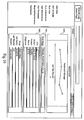
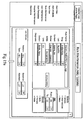
- the ADE monitoring system gives the user an option to filter and graph a particular patient's information by defining an ADE rule name, a target lab test, a target drug, an abnormal range, a lab result high or low parameter, a danger level, recent start (instructing the database to consider only recent data), new date look (a feature which enables the computer to estimate what date an action would occur), and new date time (a feature which enables the computer to estimate what time an action would occur).
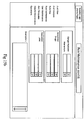
- an individual patient report can generate a graphical interpretation of the patients data, or as shown in Fig. 15b the information can be arranged in a tabular format
- ADE monitoring system includes a report generation application which can generate predefined reports such as a system report which compiles predefined data for an entire system, an ADE facility report which shows information for a specific facility, a drug management report which breaks out data according to drugs used, ADE reports which performs statistical analysis of ADE's, and an ADE doctor report which shows information for a specific doctor.
- reports are predefined and can be generated by simply selecting the function from a menu. As shown in Fig. 15b, these reports can include a specific ADE rule name, a total number of occurrences, a total number of alerts, and a percentage of alerts respective of a total number of occurrences. Alerts such as those shown in Fig. 16 can also be accessed and reviewed individually.
- a user will typically access the ADE monitoring system 10 online by logging onto a web site on a secured intranet. Every authorized user will typically be assigned a unique log on ID and password to enable access. Each user is also typically assigned a security role which limits their ability to access certain information in the ADE monitoring system .
- a primary interface screen 100 which contains selections for navigating to the primary functions of the ADE monitoring system 10.
- the primary screen includes menu options which enable a user to run a search 101, consult ADE results 102, and 103 and to create and modify ADE rules 104.
- Fig. 19a and19b shows a rule maintenance screen 110 to the ADE monitoring system.
- the screen is used to create new ADE rules, modify existing ADE rules, check the contents of an ADE rule, and to copy the contents of an ADE rule.
- the screen includes a plurality of data entry fields which enable a user to enter or change values for data fields of an ADE rule.
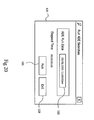
- Fig. 20 shows a search screen 120 which is used to run an ADE search.
- a user may instantaneously activate the ADE monitoring process by selecting the Run button 121.
- a status window 122 defines the exact date and time the ADE monitoring was run.
- the exit button 123 is enabled, and the user can then go back to the primary interface screen 100 by selecting it.
- the user can view ADE monitoring results by selecting the Alert View 102 and Alert Analysis 103 options.
- the ADE monitoring results can then be displayed based on a particular individual or a group of individuals by using the patient reports procedures outlined above.
Landscapes
- Engineering & Computer Science (AREA)
- Health & Medical Sciences (AREA)
- Medical Informatics (AREA)
- Public Health (AREA)
- Primary Health Care (AREA)
- Epidemiology (AREA)
- General Health & Medical Sciences (AREA)
- Biomedical Technology (AREA)
- Medicinal Chemistry (AREA)
- Chemical & Material Sciences (AREA)
- Bioinformatics & Cheminformatics (AREA)
- Data Mining & Analysis (AREA)
- Pathology (AREA)
- Databases & Information Systems (AREA)
- Pharmacology & Pharmacy (AREA)
- Toxicology (AREA)
- Business, Economics & Management (AREA)
- General Business, Economics & Management (AREA)
- Medical Treatment And Welfare Office Work (AREA)
- Management, Administration, Business Operations System, And Electronic Commerce (AREA)
- Accommodation For Nursing Or Treatment Tables (AREA)
Applications Claiming Priority (4)
| Application Number | Priority Date | Filing Date | Title |
|---|---|---|---|
| US970320 | 1997-11-14 | ||
| US27201901P | 2001-02-28 | 2001-02-28 | |
| US272019P | 2001-02-28 | ||
| US09/970,320 US6993402B2 (en) | 2001-02-28 | 2001-10-03 | Method and system for identifying and anticipating adverse drug events |
Publications (2)
| Publication Number | Publication Date |
|---|---|
| EP1237113A2 true EP1237113A2 (de) | 2002-09-04 |
| EP1237113A3 EP1237113A3 (de) | 2004-09-08 |
Family
ID=26955262
Family Applications (1)
| Application Number | Title | Priority Date | Filing Date |
|---|---|---|---|
| EP02004033A Withdrawn EP1237113A3 (de) | 2001-02-28 | 2002-02-22 | System und Verfahren zur Integration von Pharmazie- und Labordaten |
Country Status (4)
| Country | Link |
|---|---|
| US (3) | US6993402B2 (de) |
| EP (1) | EP1237113A3 (de) |
| JP (1) | JP2002342484A (de) |
| CA (1) | CA2369857A1 (de) |
Cited By (20)
| Publication number | Priority date | Publication date | Assignee | Title |
|---|---|---|---|---|
| WO2003107252A3 (en) * | 2002-06-18 | 2004-10-14 | Vigilanz Corp | METHOD AND SYSTEM FOR MONITORING PATIENT CARE |
| DE10358385A1 (de) * | 2003-12-11 | 2005-07-21 | Medimedia Gmbh | Verfahren und Vorrichtung zur systematischen Verwaltung von Medikamenteninformationen |
| WO2006026270A1 (en) | 2004-08-25 | 2006-03-09 | Cardinal Health 303, Inc. | System and method for dynamically adjusting patient therapy |
| WO2005096209A3 (en) * | 2004-03-23 | 2006-04-27 | Univ Texas | Computer based system and methods for pharmaceutical inventory and dispensation |
| WO2006045900A1 (en) * | 2004-10-29 | 2006-05-04 | Proversa Oy | Method for defining and solving problems occurring in the medication |
| US7912733B2 (en) | 2005-05-04 | 2011-03-22 | Board Of Regents, The University Of Texas System | System, method and program product for delivering medical services from a remote location |
| US8150713B2 (en) | 2004-03-23 | 2012-04-03 | Board Of Regents, The University Of Texas System | Pharmaceutical treatment effectiveness analysis computer system and methods |
| US9069887B2 (en) | 2000-05-18 | 2015-06-30 | Carefusion 303, Inc. | Patient-specific medication management system |
| US9741001B2 (en) | 2000-05-18 | 2017-08-22 | Carefusion 303, Inc. | Predictive medication safety |
| US9981085B2 (en) | 2005-02-11 | 2018-05-29 | Carefusion, 303, Inc. | Management of pending medication orders |
| US10029047B2 (en) | 2013-03-13 | 2018-07-24 | Carefusion 303, Inc. | Patient-specific medication management system |
| US10062457B2 (en) | 2012-07-26 | 2018-08-28 | Carefusion 303, Inc. | Predictive notifications for adverse patient events |
| US10275571B2 (en) | 2000-05-18 | 2019-04-30 | Carefusion 303, Inc. | Distributed remote asset and medication management drug delivery system |
| US10353856B2 (en) | 2011-03-17 | 2019-07-16 | Carefusion 303, Inc. | Scalable communication system |
| US10430554B2 (en) | 2013-05-23 | 2019-10-01 | Carefusion 303, Inc. | Medication preparation queue |
| US20200258608A1 (en) * | 2013-01-16 | 2020-08-13 | Medaware Ltd. | Medical database and system |
| US10867265B2 (en) | 2013-03-13 | 2020-12-15 | Carefusion 303, Inc. | Predictive medication safety |
| US11087873B2 (en) | 2000-05-18 | 2021-08-10 | Carefusion 303, Inc. | Context-aware healthcare notification system |
| US11182728B2 (en) | 2013-01-30 | 2021-11-23 | Carefusion 303, Inc. | Medication workflow management |
| US12079742B2 (en) | 2013-05-22 | 2024-09-03 | Carefusion 303, Inc. | Medication workflow management |
Families Citing this family (95)
| Publication number | Priority date | Publication date | Assignee | Title |
|---|---|---|---|---|
| US20040172283A1 (en) * | 2003-02-09 | 2004-09-02 | Vanderveen Timothy W. | Medication management and event logger and analysis system |
| US20050171815A1 (en) * | 2003-12-31 | 2005-08-04 | Vanderveen Timothy W. | Centralized medication management system |
| US6993402B2 (en) * | 2001-02-28 | 2006-01-31 | Vigilanz Corporation | Method and system for identifying and anticipating adverse drug events |
| JP3943342B2 (ja) * | 2001-03-26 | 2007-07-11 | 富士通株式会社 | 診療実績情報作成プログラム、医薬品情報処理プログラム、診療実績情報作成方法、医薬品情報システム |
| US6778994B2 (en) * | 2001-05-02 | 2004-08-17 | Victor Gogolak | Pharmacovigilance database |
| US7925612B2 (en) * | 2001-05-02 | 2011-04-12 | Victor Gogolak | Method for graphically depicting drug adverse effect risks |
| US7542961B2 (en) | 2001-05-02 | 2009-06-02 | Victor Gogolak | Method and system for analyzing drug adverse effects |
| US7461006B2 (en) * | 2001-08-29 | 2008-12-02 | Victor Gogolak | Method and system for the analysis and association of patient-specific and population-based genomic data with drug safety adverse event data |
| US20040010511A1 (en) * | 2002-07-11 | 2004-01-15 | Gogolak Victor V. | Method and system for drug utilization review |
| EP1550690A4 (de) * | 2002-10-08 | 2006-12-06 | Denki Kagaku Kogyo Kk | Wärmeschrumpfbare folie |
| US20040117126A1 (en) * | 2002-11-25 | 2004-06-17 | Fetterman Jeffrey E. | Method of assessing and managing risks associated with a pharmaceutical product |
| US8095544B2 (en) * | 2003-05-30 | 2012-01-10 | Dictaphone Corporation | Method, system, and apparatus for validation |
| US8020564B2 (en) | 2003-12-01 | 2011-09-20 | Carefusion 303, Inc. | System and method for analyzing medical treatment data |
| US20050228593A1 (en) * | 2004-03-12 | 2005-10-13 | Jones Reginald A | Method, system, and computer program for providing and evaluating medicine information |
| US20050209882A1 (en) * | 2004-03-22 | 2005-09-22 | Jacobsen Jeffry B | Clinical data processing system |
| US8131472B2 (en) | 2004-09-28 | 2012-03-06 | International Business Machines Corporation | Methods for hierarchical organization of data associated with medical events in databases |
| US8892571B2 (en) | 2004-10-12 | 2014-11-18 | International Business Machines Corporation | Systems for associating records in healthcare database with individuals |
| JP4868204B2 (ja) * | 2005-01-04 | 2012-02-01 | オリンパス株式会社 | 障害監視装置および方法 |
| US7580922B2 (en) | 2005-01-04 | 2009-08-25 | International Business Machines Corporation | Methods for relating data in healthcare databases |
| US20070016441A1 (en) * | 2005-06-27 | 2007-01-18 | Richard Stroup | System and method for collecting, organizing, and presenting visit-oriented medical information |
| US20080215387A1 (en) * | 2005-08-22 | 2008-09-04 | Sivakumar Muthusamy | Automation of Validation Life Cycle and Providing 100% Paperless Electronic Validation Process |
| US20070136093A1 (en) * | 2005-10-11 | 2007-06-14 | Rankin Innovations, Inc. | Methods, systems, and programs for health and wellness management |
| US8200501B2 (en) | 2006-01-26 | 2012-06-12 | International Business Machines Corporation | Methods, systems and computer program products for synthesizing medical procedure information in healthcare databases |
| US8566113B2 (en) | 2006-02-07 | 2013-10-22 | International Business Machines Corporation | Methods, systems and computer program products for providing a level of anonymity to patient records/information |
| US20070214014A1 (en) * | 2006-03-03 | 2007-09-13 | Suwalski Michael W | Pharmacy quality checking and alert system and method |
| US7865383B2 (en) * | 2006-06-23 | 2011-01-04 | Dennis William Tafoya | System and method for examining, describing, analyzing and/or predicting organization performance in response to events |
| US20080004504A1 (en) * | 2006-06-30 | 2008-01-03 | Kimmo Uutela | System for detecting allergic reactions resulting from a chemical substance given to a patient |
| CN101529453A (zh) * | 2006-08-22 | 2009-09-09 | 领头马科技股份有限公司 | 医疗评估支持系统及方法 |
| US9202184B2 (en) | 2006-09-07 | 2015-12-01 | International Business Machines Corporation | Optimizing the selection, verification, and deployment of expert resources in a time of chaos |
| US8055603B2 (en) | 2006-10-03 | 2011-11-08 | International Business Machines Corporation | Automatic generation of new rules for processing synthetic events using computer-based learning processes |
| US8145582B2 (en) | 2006-10-03 | 2012-03-27 | International Business Machines Corporation | Synthetic events for real time patient analysis |
| US8589185B2 (en) * | 2006-10-06 | 2013-11-19 | Cerner Innovation, Inc. | Acknowledgement of previous results for medication administration |
| US8775208B2 (en) * | 2006-10-06 | 2014-07-08 | Cerner Innovation, Inc. | Patient outcomes in context of documentation |
| US8560335B2 (en) * | 2006-10-06 | 2013-10-15 | Cerner Innovation, Inc. | Viewing clinical activity details within a selected time period |
| US20080086334A1 (en) * | 2006-10-06 | 2008-04-10 | Cerner Innovation, Inc. | Providing clinical activity details in context |
| US20080086333A1 (en) * | 2006-10-06 | 2008-04-10 | Cerner Innovation, Inc. | Documentation of medication activities in context of mar |
| US7853611B2 (en) | 2007-02-26 | 2010-12-14 | International Business Machines Corporation | System and method for deriving a hierarchical event based database having action triggers based on inferred probabilities |
| US7970759B2 (en) | 2007-02-26 | 2011-06-28 | International Business Machines Corporation | System and method for deriving a hierarchical event based database optimized for pharmaceutical analysis |
| ES2712778T3 (es) | 2007-05-30 | 2019-05-14 | Ascensia Diabetes Care Holdings Ag | Método y sistema para gestionar datos de salud |
| US8452815B2 (en) * | 2007-09-25 | 2013-05-28 | Purdue Pharma L.P. | System and methods for management of risk data and analytics |
| US7930262B2 (en) | 2007-10-18 | 2011-04-19 | International Business Machines Corporation | System and method for the longitudinal analysis of education outcomes using cohort life cycles, cluster analytics-based cohort analysis, and probabilistic data schemas |
| US7779051B2 (en) | 2008-01-02 | 2010-08-17 | International Business Machines Corporation | System and method for optimizing federated and ETL'd databases with considerations of specialized data structures within an environment having multidimensional constraints |
| US20090177493A1 (en) * | 2008-01-04 | 2009-07-09 | General Electric Company | Method and system for providing clinical decision support |
| US20090216555A1 (en) * | 2008-02-22 | 2009-08-27 | Mckesson Automation Inc. | System, method and computer program product for performing automatic surveillance and tracking of adverse events |
| KR20110025893A (ko) * | 2008-02-22 | 2011-03-14 | 리드 홀스 테크놀로지스 인코포레이티드 | 자동화된 온톨로지 생성 시스템 및 방법 |
| US8121858B2 (en) | 2008-03-24 | 2012-02-21 | International Business Machines Corporation | Optimizing pharmaceutical treatment plans across multiple dimensions |
| US20100076780A1 (en) * | 2008-09-23 | 2010-03-25 | General Electric Company, A New York Corporation | Methods and apparatus to organize patient medical histories |
| US8862485B2 (en) * | 2008-10-15 | 2014-10-14 | Rady Children's Hospital—San Diego | System and method for data quality assurance cycle |
| KR20120049180A (ko) * | 2009-04-22 | 2012-05-16 | 리드 홀스 테크놀로지스 인코포레이티드 | 인공지능 보조 메디컬 레퍼런스 시스템 및 방법 |
| US9039655B2 (en) | 2009-11-06 | 2015-05-26 | Crisi Medical Systems, Inc. | Medication injection site and data collection system |
| US10242159B2 (en) | 2010-01-22 | 2019-03-26 | Deka Products Limited Partnership | System and apparatus for electronic patient care |
| US11164672B2 (en) | 2010-01-22 | 2021-11-02 | Deka Products Limited Partnership | System and apparatus for electronic patient care |
| US11244745B2 (en) | 2010-01-22 | 2022-02-08 | Deka Products Limited Partnership | Computer-implemented method, system, and apparatus for electronic patient care |
| US20110313789A1 (en) | 2010-01-22 | 2011-12-22 | Deka Products Limited Partnership | Electronic patient monitoring system |
| US10911515B2 (en) | 2012-05-24 | 2021-02-02 | Deka Products Limited Partnership | System, method, and apparatus for electronic patient care |
| US11210611B2 (en) | 2011-12-21 | 2021-12-28 | Deka Products Limited Partnership | System, method, and apparatus for electronic patient care |
| US10108785B2 (en) | 2010-01-22 | 2018-10-23 | Deka Products Limited Partnership | System, method, and apparatus for electronic patient care |
| US10453157B2 (en) | 2010-01-22 | 2019-10-22 | Deka Products Limited Partnership | System, method, and apparatus for electronic patient care |
| US11881307B2 (en) | 2012-05-24 | 2024-01-23 | Deka Products Limited Partnership | System, method, and apparatus for electronic patient care |
| US8416085B2 (en) * | 2010-02-18 | 2013-04-09 | The University Of Utah Research Foundation | Medical personnel alert rules based on grouping |
| WO2011103388A1 (en) * | 2010-02-18 | 2011-08-25 | The University Of Utah Research Foundation | Complex alert rules for a medical personnel alert system |
| US8417662B2 (en) * | 2010-02-18 | 2013-04-09 | The University Of Utah Research Foundation | Adjustable alert rules for medical personnel |
| US8374988B2 (en) * | 2010-02-18 | 2013-02-12 | The University Of Utah Research Foundation | Complex alert rules for a medical personnel alert system |
| US8862484B2 (en) * | 2010-03-04 | 2014-10-14 | Siemens Aktiengesellschaft | Method and apparatus to support evidence based medicine |
| US9101534B2 (en) | 2010-04-27 | 2015-08-11 | Crisi Medical Systems, Inc. | Medication and identification information transfer apparatus |
| WO2012011997A1 (en) * | 2010-04-27 | 2012-01-26 | The Travelers Companies, Inc. | System and method for detecting drug fraud and abuse |
| US9514131B1 (en) | 2010-05-30 | 2016-12-06 | Crisi Medical Systems, Inc. | Medication container encoding, verification, and identification |
| US10492991B2 (en) | 2010-05-30 | 2019-12-03 | Crisi Medical Systems, Inc. | Medication container encoding, verification, and identification |
| WO2012001920A1 (ja) | 2010-06-28 | 2012-01-05 | 日本電気株式会社 | 医療情報からの異常イベント抽出装置、方法及びプログラム |
| JP5613495B2 (ja) * | 2010-08-12 | 2014-10-22 | シスメックス株式会社 | 臨床検査情報システム、及びコンピュータプログラム |
| US10318877B2 (en) | 2010-10-19 | 2019-06-11 | International Business Machines Corporation | Cohort-based prediction of a future event |
| US9078809B2 (en) | 2011-06-16 | 2015-07-14 | Crisi Medical Systems, Inc. | Medication dose preparation and transfer system |
| US9744298B2 (en) | 2011-06-22 | 2017-08-29 | Crisi Medical Systems, Inc. | Selectively controlling fluid flow through a fluid pathway |
| US10293107B2 (en) | 2011-06-22 | 2019-05-21 | Crisi Medical Systems, Inc. | Selectively Controlling fluid flow through a fluid pathway |
| CA2828430C (en) | 2011-07-11 | 2019-03-05 | Omnicare Inc. | Methods and apparatus for filling of packagings with medications |
| US9073206B2 (en) | 2012-06-21 | 2015-07-07 | Omnicare, Inc. | Methods and apparatus for automated filling of packagings with medications |
| US10563681B2 (en) | 2011-12-21 | 2020-02-18 | Deka Products Limited Partnership | System, method, and apparatus for clamping |
| US12196364B2 (en) | 2011-12-21 | 2025-01-14 | DEKA Research Products Limited Partnership | System, method, and apparatus for clamping |
| US20140164015A1 (en) * | 2012-12-06 | 2014-06-12 | Oracle International Corporation | Clinical trial adverse event data change reporting system |
| US10143830B2 (en) | 2013-03-13 | 2018-12-04 | Crisi Medical Systems, Inc. | Injection site information cap |
| JP2014191415A (ja) * | 2013-03-26 | 2014-10-06 | Fujitsu Ltd | 表示制御用のプログラム、表示装置および表示方法 |
| JP6482778B2 (ja) * | 2013-07-08 | 2019-03-13 | 東日本メディコム株式会社 | 臨床検査値を表示する表示装置、サーバ、表示方法及びプログラム |
| US10223423B2 (en) | 2014-10-02 | 2019-03-05 | Splunk Inc. | Custom communication alerts |
| US10331855B1 (en) | 2014-10-16 | 2019-06-25 | Walgreen Co. | Modular prescription approval system |
| US10543152B1 (en) | 2014-10-22 | 2020-01-28 | Walgreen Co. | Method and apparatus for providing prescription verification |
| CN109844733A (zh) * | 2016-08-22 | 2019-06-04 | 皇家飞利浦有限公司 | 针对不利药物事件根据社交媒体和生物医学文献的知识发现 |
| CN109346145B (zh) * | 2018-10-16 | 2022-03-11 | 国家食品药品监督管理总局药品评价中心(国家药品不良反应监测中心) | 一种药物不良反应的主动监测方法和系统 |
| US12131387B1 (en) | 2019-08-06 | 2024-10-29 | Walgreen Co. | Systems and methods of automatically correcting errors associated with patient insurance profiles |
| US20210158922A1 (en) * | 2019-11-27 | 2021-05-27 | International Business Machines Corporation | Summarizing medication events based on multidimensional information extracted from a data source |
| US11769004B2 (en) | 2020-01-02 | 2023-09-26 | International Business Machines Corporation | Goal-oriented conversation with code-mixed language |
| CN111429992B (zh) * | 2020-02-25 | 2022-11-04 | 广州七乐康药业连锁有限公司 | 一种基于医疗特征数据监测的智能化用药预警方法及系统 |
| CN113952146B (zh) * | 2021-12-01 | 2022-09-09 | 南通市传染病防治院(南通市第三人民医院) | 一种肝胆外科创口换药装置 |
| CN114005503B (zh) * | 2021-12-31 | 2022-03-18 | 四川省医学科学院·四川省人民医院 | 一种药源性疾病主动监测预警系统 |
| CN118352006A (zh) * | 2023-01-16 | 2024-07-16 | 深圳市帝迈生物技术有限公司 | 样本检测分析方法、系统及计算机可读存储介质 |
| WO2026070195A1 (ja) * | 2024-09-26 | 2026-04-02 | アークレイ株式会社 | 薬剤情報提供システム、薬剤情報提供方法、及び薬剤情報提供プログラム |
Family Cites Families (21)
| Publication number | Priority date | Publication date | Assignee | Title |
|---|---|---|---|---|
| JPS57211338A (en) * | 1981-06-24 | 1982-12-25 | Tokyo Shibaura Electric Co | Tatal image diagnosis data treating apparatus |
| JPH0191834A (ja) * | 1987-08-20 | 1989-04-11 | Tsuruta Hiroko | 個人医療データの集中管理装置 |
| JPH03218741A (ja) * | 1990-01-25 | 1991-09-26 | Fujitsu Ltd | 処方監査方式 |
| US5353793A (en) * | 1991-11-25 | 1994-10-11 | Oishi-Kogyo Company | Sensor apparatus |
| US5473537A (en) * | 1993-07-30 | 1995-12-05 | Psychresources Development Company | Method for evaluating and reviewing a patient's condition |
| US5517405A (en) * | 1993-10-14 | 1996-05-14 | Aetna Life And Casualty Company | Expert system for providing interactive assistance in solving problems such as health care management |
| US5827180A (en) * | 1994-11-07 | 1998-10-27 | Lifemasters Supported Selfcare | Method and apparatus for a personal health network |
| JP4073976B2 (ja) * | 1995-03-14 | 2008-04-09 | 株式会社東芝 | 薬発注システム |
| JPH08272882A (ja) * | 1995-04-03 | 1996-10-18 | Takashi Meguro | 服薬指導支援システム |
| US6671563B1 (en) * | 1995-05-15 | 2003-12-30 | Alaris Medical Systems, Inc. | System and method for collecting data and managing patient care |
| CA2216681A1 (en) * | 1996-09-30 | 1998-03-30 | Smithkline Beecham Corporation | Disease management method and system |
| US6076166A (en) * | 1997-01-17 | 2000-06-13 | Philips Electronics North America Corporation | Personalizing hospital intranet web sites |
| US6000828A (en) * | 1997-08-22 | 1999-12-14 | Power Med Incorporated | Method of improving drug treatment |
| US6014631A (en) * | 1998-04-02 | 2000-01-11 | Merck-Medco Managed Care, Llc | Computer implemented patient medication review system and process for the managed care, health care and/or pharmacy industry |
| US6277071B1 (en) * | 1999-06-25 | 2001-08-21 | Delphi Health Systems, Inc. | Chronic disease monitor |
| US7124031B1 (en) * | 2000-05-11 | 2006-10-17 | Medco Health Solutions, Inc. | System for monitoring regulation of pharmaceuticals from data structure of medical and labortory records |
| US20020040282A1 (en) * | 2000-03-22 | 2002-04-04 | Bailey Thomas C. | Drug monitoring and alerting system |
| US6542902B2 (en) * | 2000-03-24 | 2003-04-01 | Bridge Medical, Inc. | Method and apparatus for displaying medication information |
| US20030028811A1 (en) * | 2000-07-12 | 2003-02-06 | Walker John David | Method, apparatus and system for authenticating fingerprints, and communicating and processing commands and information based on the fingerprint authentication |
| US20020095313A1 (en) * | 2000-09-28 | 2002-07-18 | Haq Mohamed M. | Computer system for assisting a physician |
| US6993402B2 (en) * | 2001-02-28 | 2006-01-31 | Vigilanz Corporation | Method and system for identifying and anticipating adverse drug events |
-
2001
- 2001-10-03 US US09/970,320 patent/US6993402B2/en not_active Expired - Lifetime
-
2002
- 2002-01-31 CA CA002369857A patent/CA2369857A1/en not_active Abandoned
- 2002-02-22 EP EP02004033A patent/EP1237113A3/de not_active Withdrawn
- 2002-02-27 JP JP2002051754A patent/JP2002342484A/ja active Pending
-
2005
- 2005-08-16 US US11/206,261 patent/US20060074715A1/en not_active Abandoned
-
2009
- 2009-01-09 US US12/351,327 patent/US20090138289A1/en not_active Abandoned
Cited By (40)
| Publication number | Priority date | Publication date | Assignee | Title |
|---|---|---|---|---|
| US11087873B2 (en) | 2000-05-18 | 2021-08-10 | Carefusion 303, Inc. | Context-aware healthcare notification system |
| US10275571B2 (en) | 2000-05-18 | 2019-04-30 | Carefusion 303, Inc. | Distributed remote asset and medication management drug delivery system |
| US11823791B2 (en) | 2000-05-18 | 2023-11-21 | Carefusion 303, Inc. | Context-aware healthcare notification system |
| US9741001B2 (en) | 2000-05-18 | 2017-08-22 | Carefusion 303, Inc. | Predictive medication safety |
| US9069887B2 (en) | 2000-05-18 | 2015-06-30 | Carefusion 303, Inc. | Patient-specific medication management system |
| US12670986B2 (en) | 2000-05-18 | 2026-06-30 | Carefusion 303, Inc. | Context-aware healthcare notification system |
| US8160896B2 (en) | 2001-02-28 | 2012-04-17 | Vigilanz Corporation | Method and system for monitoring patient care |
| US8744873B2 (en) | 2001-02-28 | 2014-06-03 | Vigilanz Corporation | Method and system for monitoring patient care |
| US8457985B2 (en) | 2001-02-28 | 2013-06-04 | Vigilanz Corporation | Method and system for monitoring patient care |
| WO2003107252A3 (en) * | 2002-06-18 | 2004-10-14 | Vigilanz Corp | METHOD AND SYSTEM FOR MONITORING PATIENT CARE |
| DE10358385A1 (de) * | 2003-12-11 | 2005-07-21 | Medimedia Gmbh | Verfahren und Vorrichtung zur systematischen Verwaltung von Medikamenteninformationen |
| US8150713B2 (en) | 2004-03-23 | 2012-04-03 | Board Of Regents, The University Of Texas System | Pharmaceutical treatment effectiveness analysis computer system and methods |
| US7813939B2 (en) | 2004-03-23 | 2010-10-12 | Board Of Regents, The University Of Texas System | Pharmaceutical inventory and dispensation computer system and methods |
| WO2005096209A3 (en) * | 2004-03-23 | 2006-04-27 | Univ Texas | Computer based system and methods for pharmaceutical inventory and dispensation |
| AU2005280221B2 (en) * | 2004-08-25 | 2011-03-10 | Carefusion 303, Inc. | System and method for dynamically adjusting patient therapy |
| US9307907B2 (en) | 2004-08-25 | 2016-04-12 | CareFusion 303,Inc. | System and method for dynamically adjusting patient therapy |
| US10064579B2 (en) | 2004-08-25 | 2018-09-04 | Carefusion 303, Inc. | System and method for dynamically adjusting patient therapy |
| WO2006026270A1 (en) | 2004-08-25 | 2006-03-09 | Cardinal Health 303, Inc. | System and method for dynamically adjusting patient therapy |
| WO2006045900A1 (en) * | 2004-10-29 | 2006-05-04 | Proversa Oy | Method for defining and solving problems occurring in the medication |
| US10668211B2 (en) | 2005-02-11 | 2020-06-02 | Carefusion 303, Inc. | Management of pending medication orders |
| US9981085B2 (en) | 2005-02-11 | 2018-05-29 | Carefusion, 303, Inc. | Management of pending medication orders |
| US11590281B2 (en) | 2005-02-11 | 2023-02-28 | Carefusion 303, Inc. | Management of pending medication orders |
| US8321284B2 (en) | 2005-05-04 | 2012-11-27 | Board Of Regents, The University Of Texas System | System, method, and program product for delivering medical services from a remote location |
| US7912733B2 (en) | 2005-05-04 | 2011-03-22 | Board Of Regents, The University Of Texas System | System, method and program product for delivering medical services from a remote location |
| US10353856B2 (en) | 2011-03-17 | 2019-07-16 | Carefusion 303, Inc. | Scalable communication system |
| US11734222B2 (en) | 2011-03-17 | 2023-08-22 | Carefusion 303, Inc. | Scalable communication system |
| US11366781B2 (en) | 2011-03-17 | 2022-06-21 | Carefusion 303, Inc. | Scalable communication system |
| US10983946B2 (en) | 2011-03-17 | 2021-04-20 | Carefusion 303, Inc. | Scalable communication system |
| US10062457B2 (en) | 2012-07-26 | 2018-08-28 | Carefusion 303, Inc. | Predictive notifications for adverse patient events |
| US20200258608A1 (en) * | 2013-01-16 | 2020-08-13 | Medaware Ltd. | Medical database and system |
| US11182728B2 (en) | 2013-01-30 | 2021-11-23 | Carefusion 303, Inc. | Medication workflow management |
| US10937530B2 (en) | 2013-03-13 | 2021-03-02 | Carefusion 303, Inc. | Patient-specific medication management system |
| US11615871B2 (en) | 2013-03-13 | 2023-03-28 | Carefusion 303, Inc. | Patient-specific medication management system |
| US10867265B2 (en) | 2013-03-13 | 2020-12-15 | Carefusion 303, Inc. | Predictive medication safety |
| US10029047B2 (en) | 2013-03-13 | 2018-07-24 | Carefusion 303, Inc. | Patient-specific medication management system |
| US12001981B2 (en) | 2013-03-13 | 2024-06-04 | Carefusion 303, Inc. | Predictive medication safety |
| US12475417B2 (en) | 2013-03-13 | 2025-11-18 | Carefusion 303, Inc. | Predictive medication safety |
| US12665060B2 (en) | 2013-03-13 | 2026-06-23 | Carefusion 303, Inc. | Patient-specific medication management system |
| US12079742B2 (en) | 2013-05-22 | 2024-09-03 | Carefusion 303, Inc. | Medication workflow management |
| US10430554B2 (en) | 2013-05-23 | 2019-10-01 | Carefusion 303, Inc. | Medication preparation queue |
Also Published As
| Publication number | Publication date |
|---|---|
| US20060074715A1 (en) | 2006-04-06 |
| US20090138289A1 (en) | 2009-05-28 |
| US20020120350A1 (en) | 2002-08-29 |
| US6993402B2 (en) | 2006-01-31 |
| EP1237113A3 (de) | 2004-09-08 |
| CA2369857A1 (en) | 2002-08-28 |
| JP2002342484A (ja) | 2002-11-29 |
Similar Documents
| Publication | Publication Date | Title |
|---|---|---|
| US6993402B2 (en) | Method and system for identifying and anticipating adverse drug events | |
| US8160896B2 (en) | Method and system for monitoring patient care | |
| EP3374897B1 (de) | Medikamentenverabreichungs-auditsysteme und -verfahren | |
| JP6014013B2 (ja) | 無線医療データ通信システムおよび方法 | |
| CA2666509C (en) | System and method for comparing and utilizing activity information and configuration information from multiple medical device management systems | |
| JP2020064646A (ja) | 無線医療データ通信システムおよび方法 | |
| US10777312B2 (en) | Dynamic critical access override for medication dispensing apparatuses | |
| JP2007172636A (ja) | 医療データ通信の通知およびメッセージングシステムおよび方法 | |
| JP2007164807A (ja) | 医療装置接続方法およびシステム | |
| JP2006520037A5 (de) | ||
| US20170344724A1 (en) | Responsive server, server system and server method for automatically dispensing based on comprehensive medication authorization processing | |
| US20080015549A1 (en) | System For Processing Medication Restriction Information | |
| JP2006520037A (ja) | 動作パラメータの確認システムおよび方法 | |
| CN1495635A (zh) | 一种用于监视健康护理病人遭遇相关信息的系统 | |
| US20230420100A1 (en) | Methods and systems for analyzing accessing of drug dispensing systems | |
| US20120232927A1 (en) | System for the control and integral management of the medical records of patients in health care centres, hospitals, outpatient centers and the general healthcare system | |
| US20210057072A1 (en) | Responsive server, server system and server method for automatically dispensing based on comprehensive medication authorization processing | |
| JP5322883B2 (ja) | 動作パラメータの確認システム | |
| US20080114613A1 (en) | Integrated Electronic Healthcare Management System | |
| US20160019347A1 (en) | Systems and methods for managing, storing, and exchanging healthcare information across heterogeneous healthcare systems | |
| CA2947792C (en) | System and method for comparing and utilizing activity information and configuration information from multiple medical device management systems | |
| US20120078964A1 (en) | System for storing and diseminating patient data and related information |
Legal Events
| Date | Code | Title | Description |
|---|---|---|---|
| PUAI | Public reference made under article 153(3) epc to a published international application that has entered the european phase |
Free format text: ORIGINAL CODE: 0009012 |
|
| AK | Designated contracting states |
Kind code of ref document: A2 Designated state(s): AT BE CH CY DE DK ES FI FR GB GR IE IT LI LU MC NL PT SE TR |
|
| AX | Request for extension of the european patent |
Free format text: AL;LT;LV;MK;RO;SI |
|
| PUAL | Search report despatched |
Free format text: ORIGINAL CODE: 0009013 |
|
| AK | Designated contracting states |
Kind code of ref document: A3 Designated state(s): AT BE CH CY DE DK ES FI FR GB GR IE IT LI LU MC NL PT SE TR |
|
| AX | Request for extension of the european patent |
Extension state: AL LT LV MK RO SI |
|
| 17P | Request for examination filed |
Effective date: 20050304 |
|
| AKX | Designation fees paid |
Designated state(s): AT BE CH CY DE DK ES FI FR GB GR IE IT LI LU MC NL PT SE TR |
|
| 17Q | First examination report despatched |
Effective date: 20071115 |
|
| STAA | Information on the status of an ep patent application or granted ep patent |
Free format text: STATUS: THE APPLICATION IS DEEMED TO BE WITHDRAWN |
|
| 18D | Application deemed to be withdrawn |
Effective date: 20100831 |