EP1223976B1 - Neues verfahren zur herstellung von virus-ähnlichen partikeln des menschen-papillomavirus mit verbesserten eigenschaften - Google Patents
Neues verfahren zur herstellung von virus-ähnlichen partikeln des menschen-papillomavirus mit verbesserten eigenschaften Download PDFInfo
- Publication number
- EP1223976B1 EP1223976B1 EP20000970770 EP00970770A EP1223976B1 EP 1223976 B1 EP1223976 B1 EP 1223976B1 EP 20000970770 EP20000970770 EP 20000970770 EP 00970770 A EP00970770 A EP 00970770A EP 1223976 B1 EP1223976 B1 EP 1223976B1
- Authority
- EP
- European Patent Office
- Prior art keywords
- vlps
- maturation
- type
- hpv
- glutathione
- Prior art date
- Legal status (The legal status is an assumption and is not a legal conclusion. Google has not performed a legal analysis and makes no representation as to the accuracy of the status listed.)
- Expired - Lifetime
Links
Images






Classifications
-
- C—CHEMISTRY; METALLURGY
- C12—BIOCHEMISTRY; BEER; SPIRITS; WINE; VINEGAR; MICROBIOLOGY; ENZYMOLOGY; MUTATION OR GENETIC ENGINEERING
- C12N—MICROORGANISMS OR ENZYMES; COMPOSITIONS THEREOF; PROPAGATING, PRESERVING, OR MAINTAINING MICROORGANISMS; MUTATION OR GENETIC ENGINEERING; CULTURE MEDIA
- C12N7/00—Viruses; Bacteriophages; Compositions thereof; Preparation or purification thereof
-
- A—HUMAN NECESSITIES
- A61—MEDICAL OR VETERINARY SCIENCE; HYGIENE
- A61K—PREPARATIONS FOR MEDICAL, DENTAL OR TOILETRY PURPOSES
- A61K39/00—Medicinal preparations containing antigens or antibodies
- A61K39/12—Viral antigens
-
- A—HUMAN NECESSITIES
- A61—MEDICAL OR VETERINARY SCIENCE; HYGIENE
- A61P—SPECIFIC THERAPEUTIC ACTIVITY OF CHEMICAL COMPOUNDS OR MEDICINAL PREPARATIONS
- A61P15/00—Drugs for genital or sexual disorders; Contraceptives
-
- A—HUMAN NECESSITIES
- A61—MEDICAL OR VETERINARY SCIENCE; HYGIENE
- A61P—SPECIFIC THERAPEUTIC ACTIVITY OF CHEMICAL COMPOUNDS OR MEDICINAL PREPARATIONS
- A61P31/00—Antiinfectives, i.e. antibiotics, antiseptics, chemotherapeutics
- A61P31/12—Antivirals
- A61P31/20—Antivirals for DNA viruses
-
- A—HUMAN NECESSITIES
- A61—MEDICAL OR VETERINARY SCIENCE; HYGIENE
- A61P—SPECIFIC THERAPEUTIC ACTIVITY OF CHEMICAL COMPOUNDS OR MEDICINAL PREPARATIONS
- A61P35/00—Antineoplastic agents
-
- A—HUMAN NECESSITIES
- A61—MEDICAL OR VETERINARY SCIENCE; HYGIENE
- A61K—PREPARATIONS FOR MEDICAL, DENTAL OR TOILETRY PURPOSES
- A61K39/00—Medicinal preparations containing antigens or antibodies
- A61K2039/51—Medicinal preparations containing antigens or antibodies comprising whole cells, viruses or DNA/RNA
- A61K2039/525—Virus
- A61K2039/5258—Virus-like particles
-
- C—CHEMISTRY; METALLURGY
- C12—BIOCHEMISTRY; BEER; SPIRITS; WINE; VINEGAR; MICROBIOLOGY; ENZYMOLOGY; MUTATION OR GENETIC ENGINEERING
- C12N—MICROORGANISMS OR ENZYMES; COMPOSITIONS THEREOF; PROPAGATING, PRESERVING, OR MAINTAINING MICROORGANISMS; MUTATION OR GENETIC ENGINEERING; CULTURE MEDIA
- C12N2710/00—MICROORGANISMS OR ENZYMES; COMPOSITIONS THEREOF; PROPAGATING, PRESERVING, OR MAINTAINING MICROORGANISMS; MUTATION OR GENETIC ENGINEERING; CULTURE MEDIA dsDNA viruses
- C12N2710/00011—Details
- C12N2710/20011—Papillomaviridae
- C12N2710/20023—Virus like particles [VLP]
-
- C—CHEMISTRY; METALLURGY
- C12—BIOCHEMISTRY; BEER; SPIRITS; WINE; VINEGAR; MICROBIOLOGY; ENZYMOLOGY; MUTATION OR GENETIC ENGINEERING
- C12N—MICROORGANISMS OR ENZYMES; COMPOSITIONS THEREOF; PROPAGATING, PRESERVING, OR MAINTAINING MICROORGANISMS; MUTATION OR GENETIC ENGINEERING; CULTURE MEDIA
- C12N2710/00—MICROORGANISMS OR ENZYMES; COMPOSITIONS THEREOF; PROPAGATING, PRESERVING, OR MAINTAINING MICROORGANISMS; MUTATION OR GENETIC ENGINEERING; CULTURE MEDIA dsDNA viruses
- C12N2710/00011—Details
- C12N2710/20011—Papillomaviridae
- C12N2710/20034—Use of virus or viral component as vaccine, e.g. live-attenuated or inactivated virus, VLP, viral protein
Definitions
- This invention relates to a novel process for purifying and processing recombinant human papillomavirus virus-like particles (VLPs), which results in compositions suitable for vaccine use which have greater stability. Also, this invention relates to the VLPs made by this process.
- VLPs human papillomavirus virus-like particles
- VLPs Recombinant human papillomavirus (HPV) virus-like particles
- HPV human papillomavirus
- VLPs contain either L1 or a combination of L1 and L2 protein, but do not contain viral nucleic acids. They can be expressed in a variety of host cell types including yeast and insect cells and are attractive candidates for vaccine development to prevent genital HPV infection and the subsequent development of genital warts and/or cervical cancer.
- purified VLPs have been shown to induce high titers of antibodies against conformational type specific L1 epitopes. These antibodies neutralize homologous virions in in-vitro assays and protect against experimental challenge in several animal models.
- VLPs “Maturation”, i.e., a change in stability, structural definition and other properties of VLPs have been observed with VLPs during purification, processing and storage. While not wishing to be bound by theory, it appears that this is due, at least in part to changes in intermolecular disulfide bond formation which is required for the assembly and further stabilization of virions.
- this invention relates to a method for making human papilloma virus (HPV) virus-like particles (VLPs) comprising the steps of:
- this invention also is directed to virus-like particles (VLPs) made by the process of expressing an L1 or L1+L2 proteins, at least partially purifying the proteins, and subjecting the at least partially purified proteins to a maturation step.
- VLPs virus-like particles
- This invention is also directed to vaccine compositions which contain the VLPs so produced.
- Another aspect of this disclosure is a method of inducing an immune response in an individual comprising administering to the individual an effective amount of the vaccine composition comprising VLPs which were subjected to a maturation step.
- VLPs can be assembled from naturally expressed or recombinantly produced L1 protein, which is the major capsid component of the virion of HPV. VLPs may also be made from both L1 and L2 protein, which is hereinafter designated "L1+L2".
- Disulfide bonds including inter-capsomeric disulfide bonds in particular, have been demonstrated to be critical for VLP stability and possibly VLP assembly.
- any serotype HPV can be used in this process.
- serotypes associated with diseases include HPV6a, HPV6b, HPV11, HPV16, HPV18, HPV31, HPV33, HPV35, HPV39, HPV45, HPV51, HPV52, HPV56, HPV58, and HPV68.
- the vaccine formulation may also include mixtures of VLPs from different serotypes to form a "cocktail", if desired.
- a preferred vaccine formulation will include HPV6a and/or HPV6b, along with HPV11, HPV16, and HPV18.
- the recombinant protein may be produced in any desirable host cell.
- suitable host cells include yeast and insect cells, although others may be used.
- yeast cells especially Saccharomyces cereviscae are the host.
- the host cells are transformed with the appropriate genetic constructs, and HPV proteins are produced, all using known methods.
- the proteins are harvested and purified.
- any purification procedure may be used in accordance with this invention, so long as it contains at least one maturation step.
- the cells may be frozen and stored as a cell slurry prior to the purification procedure.
- the cell slurry may be diluted with a buffer. Temperatures used at this stage are typically about 5-20°C. If desired, enzymes such as BENZONASE® may be added to degrade unwanted nucleic acids. VLPs can be separated from the cell debris using a variety of techniques, including chromatography steps.
- the VLPs are separated using an ion exchange chromatography step, such as cation exchange chromatography.
- the intermediate product resulting from this process referred to as "CEP”
- CEP can either be subjected to further purification steps and a maturation step, or may be subjected to a maturation step and then further purification steps. It is generally preferred that the CEP be subjected to a maturation step.
- Maturation results in VLPs which have increased stability as compared to capsids which have not undergone a maturation process. Maturation may be achieved by incubation at an elevated temperature, glutathione-facilitated thoil oxidation, exposure to a metal surface, or exposure to light.
- the maturation step is an incubation at an elevated temperature. This may be performed on the CEP or on the product of a later purification step. It is typically an incubation for about 10-48 hours, preferably about 15-20 hours, at an elevated temperature. Typically elevated temperatures are from 30°C to 45°C, and preferably about 37°C.
- the CEP or a more purified product may be treated with either glutathione or oxidized glutatione in order to mature them.
- the absolute amount of glutathione does not appear to be critical. It may range from 0.5 mM to about 10 mM, and amounts above 1 mM are preferred. There seems to be little difference between the maturation processes using 1 mM and those using 7 mM. If oxidized glutathione is used, the amounts may range from about 0.5 mM to about 20 mM, with 1 mM to 17 mM being preferred.
- the CEP or a more purified product mal be matured by exposure to a metal surface. This involves a reaction which occurs in the presence of a soluble transition metal, such as Fe 2+ , Fe 3+ , Cu 1+ or Cu 2+ . Only a catalytic amount of metal is required for the maturation reaction.
- a soluble transition metal such as Fe 2+ , Fe 3+ , Cu 1+ or Cu 2+ . Only a catalytic amount of metal is required for the maturation reaction.
- the matured product may be subjected to any other desired purification steps.
- the matured product will be processed through a hydroxyapatite chromatography column, and then subjected to ultrafiltration to produce a final VLP product.
- the final product can then be formulated into a vaccine composition using known methodologies and additives, if desired.
- the CEP can be further processed and/or purified, such as by a hydroxyapatite column chromatography process and ultrafiltration, and then matured.
- the vaccine formulation of this invention comprises VLPs which are matured, along with other physiologically acceptable ingredients.
- it may contain alum, non-ionic surfactants (such as polysorbate derivatives, and preferably polysorbate 80 or polysorbate 20), salts, and buffers.
- the vaccine comprises matured VLPs, which are adsorbed to alum (200-550 ⁇ g/ml alum), 0.005-0.5% (wt/v) polysorbate or derivative, 2-10 mM buffer and either 0.10-0.20 M NaCl or, for a lower saline formulation, 0.01-0.05 M NaCl.
- a preferred embodiment comprises about 450 ⁇ g/ml alum, 0.03% wt/v polysorbate 80 or polysorbate 20, 5 mM histidine buffer, and either 0.15M NaCl or 0.3M NaCl.
- the final formulation generally has 10-200 ⁇ g/ml VLPs, preferably either about 20 ⁇ g/ml, 40 ⁇ g/ml or 100 ⁇ g/ml VLPs.
- a typical dosage will be a 0.5 ml injection.
- VLPs As a result of the maturation process, improvements to the VLPs result. These improved VLPs made by a maturation process are another aspect of this invention. Improvements may be classified as follows:
- EIA/BCA ratios for the CEPs derived from the maturation process and their respective control process for 8 lab scale process lots for type 6a and 1 lot for type 11 are detailed in Example 4.
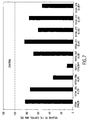
- EIA/ BCA ratios were found to increase approximately 30-50% when the maturation step was included. A consistent 20-30% increase in antigenicity using monoclonal antibody binding tests was observed.
- FIGURE 1 shows the relative antigenicity of the matured products in comparison to their respective controls (%).
- Relative antigenicity assay by BIAcore assay using neutralizing mAbs showed similar results for the antigenicity improvement as a result of spontaneous maturation (Example 4).
- the pair of CEPs from Lot #2 were formulated on Alum.
- IVRP assay (in vitro release potency assay,) on the Alum-adsorbed preparations also confirmed an approximate 30% enhancement in antigenicity.
- VLPs Reduction in Size and Heterogeneity of VLPs Through CEP Maturation .
- VLPs mature by forming more intra- and intermolecular disulfide bonds, the VLPs become better-defined and thus less associative to one another or to container surface.
- the VLPs made by the maturation process consistently showed smaller in overall size.
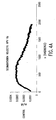
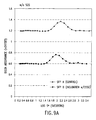
- the heterogeneity of the VLPs was found to be reduced dramatically as indicated by EM (FIGURES 2A & 2B), size-distribution analysis by dynamic light scattering (FIGURE 3) and velocity sedimentation (FIGURES 4A and 4B).
- HA step yield Enhancement upon Maturation.
- One of the key benefits of subjecting the CEP to a maturation step was the increased yield recovered from the hydroxyapatite chromatography (HA) step. Maturation of the VLPs results in a more selective hydroxyapatite column process, as VLPs become less associative non-specifically to one another and to solid surface.
- the HA step yield was higher in the maturation arm compared with the control arm. For example, in one type 6a lot, the HA step yield was 33% for the maturation arm compared with 24% for the control arm. Similarly for a type 11 lot, the HA step yield was 35% for the maturation arm compared with 30% for the control.
- L1 proteins have strong propensity to inter-cross-linked with the other L1 molecules from the neighboring capsomeres through disulfide bond formation. This structural consolidation process would occur regardless the temperature, conditions, or whether one would be aware about it or not, during process and during storage. Maturation of VLPs provide the conditions favorable for such conformational search and subsequent structural consolidation through inter-chain cross-linking. Tethering the capsomeres together using covalent disulfide bonds completes the assembly process for VLPs. By incorporating an incubation step, much less L1 proteins were left in the monomer stage, indicating more cross-linking within VLPs (FIGURES 6A-D)
- the yeast cells with recombinant HPV expressed were stored as 36% wet cell weight (wcw) frozen slurry stored at -70°C.
- the cell paste was thawed at 30°C for two hours and diluted to about 30% slurry using the harvest buffer (200 m MOPS, 2 mM MgCl 2 , pH 7.0). The temperature of the cell paste was maintained in the range of 5-10°C during and after thawing. Approximately 1:1 of Benzonase® (1 ⁇ L/L)was added per gram of wcw.
- the 30% diluted cell slurry was passed twice through a homogenizer at 14000 - 15000 psig.
- the resultant lysate was incubated at 4°C overnight for approximately 16 hours to reduce the size of the nucleic acids for improved clearance across the purification train.
- the incubated lysate was further diluted to 9% wcw by the addition of harvest buffer (200 mM MOPS, 2 mM MaCl 2 , pH 7) and sodium citrate spike buffer (1 M sodium citrate a 200 mM MOPS, pH 7).
- the VLPs were separated from the cell debris using a 0.65 micron microfiltration membrane with 2.25 volumes of diafiltration against a 250 mM sodium citrate buffer using a tangential flow filtration method.
- the majority of the purification was achieved with the HS POROS cation exchange chromatography step.
- the loaded column was washed with 8 column volumes (CV) of buffer containing 5 mM sodium phosphate, 200 mM MOPS and 800 mM NaCl.
- the product was eluted from the HS column with a 7 CV linear gradient between the wash buffer (800 mM NaCl) and elution buffer (1500 mM NaCl) both containing 5 mM sodium phosphate and 50 mM MOPS at pH 7.0.
- the resulting intermediate product designated "CEP” was allowed to incubate at 37°C in a stainless steel or glass vessel for 17 hours.
- the CEP was sterile filtered using a 0.22 micron Millipak unit prior to the 37°C maturation step to minimize bioburden.
- the matured CEP was processed through the Hydroxyapatite (HA) chromatography to reduce both the nucleic acid and protease levels in the HPV product.
- the HA column was loaded at 2 mgs of protein per ml of resin based on an on-demand BCA protein analysis.
- the loaded HA column was washed with 5 CV of buffer, and was eluted with a 4 CV linear phosphate gradient going from 5 mM sodium phosphate to 200 mM sodium phosphate, with both buffers containing 1.25 M NaCl at pH 7.0.
- An on-demand protein analysis of the HA product was carried out to determine the necessary concentration factor to be achieved during the ultrafiltration with the target protein concentration of 850 ⁇ g/ml.
- Ultrafiltration was carried out using a 10 kDa hollow fiber membrane operated at 250 mg/sqft load, 6000 s -1 shear rate, transmembrane pressure of 20 psi and Tween target of 0.03% (w/v) which allows for a calculated volume reduction during the following ultrafiltration step to target an 850 ⁇ g/ml final protein concentration.
- Tween-80 was added to the HA product to prevent aggregation during the UF step where the product is diafiltered against a 0.5 M NaCl solution.
- the resulting UF product pool was sterile filtered to produce the final aqueous product (FP).
- the FP was characterized using a battery of assays (see below).
- Double sandwich ELISA format was used to quantitate HPV types 6a and 11.
- the VLPs were captured by polyclonal goat anti-HPV6a or 11 antibodies.
- Conformational sensitive mouse anti-HPV mAb, B10.5 (HPV6a) and B2 (HPV11) were used to quantitate the amount of VLPs captured, coupled with a horseradish peroxidase labeled anti-mouse-IgG for detection. All experiments were carried out in 96-well plates. The peroxidase catalyzes the reaction to generate a product having OD at 450 nm which can be read by a plate reader. Reference and samples were always ran side by side. Incubation was at 37°C for bindings of both type-specific antibodies and the conjugated antibody.
- Electron microscopy (EM) on all of the sterile filtered products was performed by the EMBS labs in Elkridge, MD. The samples were stored from the time of generation until ready for the EM analysis at -70°C. Samples were thawed at room temperature for 45 minutes and then resuspended thoroughly by gentle tube inversion and swirling before gris preparation. Each sample submitted for the analysis was diluted in 0.5M NaCl buffer in various dilution factors in the range of 2 to 8. Each sample was re-suspended thoroughly after dilution. 300-mesh copper grids coated with formvar and carbon were clamed tightly and secured with forceps. Each grid was rinsed with 0.01% bovine serum albumin and the excess solution was then wicked off using filter paper.
- EM Electron microscopy
- HPSEC High Performance Size Exclusion Chromatography
- a Shodex SB-805-HQ column was used in the HPSEC analysis.
- the column was conditioned with partially aggregated HPV18 and HPV16 samples prior to use. The areas of several injections were compared to ensure proper conditioning.
- Several HPV and non-HPV (dextran) size/reference standards were injected first, followed by the HPV 6a and HPV 11. Each sample was injected in duplicate using a Waters 2690 pump (flow rate: 0.4 mL/min).
- the mobile phase was 0.75 M NaCl, buffered by 20 mM sodium phosphate, pH 7.0.
- DLS measurements were carried out using a Malvern Zetasizer 3000 instrument. All samples and diluents were brought to room temperature prior to the measurement. The monomodal analysis algorithm was employed. Five repeat measurements (each with a 10 second duration) were carried out for each sample. Samples were diluted using the appropriate matrix buffers for the sample of interest such that the background buffer composition did not alter significantly upon dilution. The dilution factor was such that the intensity of the signal was in the range of 100-500 Kpcs. Typically, the SFP samples require a dilution factor of approximately 25.
- Trimer, dimer and monomer contents were quantitated by running the high performance size exclusion chromatography (HPSEC) under denaturing but non-reducing conditions. Disulfide bonds were known to undergo extensive reshuffling. Therefore, low pH was employed to minimized the reshuffling.
- Final sample conditions were 5% sodium duodecylsulfonate (SDS) / 0.1% trifluroacetic acid (TFA) with a protein concentration of 200 ⁇ g/ml. Samples were vortexed for 5 s and heated at 75°C for 10 min ( ⁇ 10 s). Samples sat at room temperature for no more than 5 min before injecting onto column.
- the final product of purified VLPs of HPV 16 (approximately 0.8 mg/ml in 0.5 M NaCl) was treated with oxidized form of glutathione (GSSG, 1-17 mM) to facilitate the maturation or cross-linking process. The mixture was allowed to stay at 37°C without agitation for 16-20 hrs.
- the antigenicity of the HPV16 VLPs was monitored by the binding of a neutralizing mAb (H16.V5) with surface plasmon resonance or BIAcore sensor-chip based-assays. The antigenicity is expressed as the ratio of antigen (HPV 16 VLPs) over antibody (mAb V5).
Landscapes
- Health & Medical Sciences (AREA)
- Life Sciences & Earth Sciences (AREA)
- Chemical & Material Sciences (AREA)
- General Health & Medical Sciences (AREA)
- Organic Chemistry (AREA)
- Medicinal Chemistry (AREA)
- Virology (AREA)
- Engineering & Computer Science (AREA)
- Bioinformatics & Cheminformatics (AREA)
- Veterinary Medicine (AREA)
- Public Health (AREA)
- Animal Behavior & Ethology (AREA)
- Pharmacology & Pharmacy (AREA)
- Zoology (AREA)
- Wood Science & Technology (AREA)
- Immunology (AREA)
- Microbiology (AREA)
- Genetics & Genomics (AREA)
- Nuclear Medicine, Radiotherapy & Molecular Imaging (AREA)
- General Chemical & Material Sciences (AREA)
- Chemical Kinetics & Catalysis (AREA)
- Biotechnology (AREA)
- Biomedical Technology (AREA)
- Biochemistry (AREA)
- Epidemiology (AREA)
- Mycology (AREA)
- General Engineering & Computer Science (AREA)
- Communicable Diseases (AREA)
- Oncology (AREA)
- Molecular Biology (AREA)
- Endocrinology (AREA)
- Reproductive Health (AREA)
- Peptides Or Proteins (AREA)
- Medicines Containing Antibodies Or Antigens For Use As Internal Diagnostic Agents (AREA)
- Micro-Organisms Or Cultivation Processes Thereof (AREA)
- Medicinal Preparation (AREA)
- Preparation Of Compounds By Using Micro-Organisms (AREA)
Claims (8)
- Verfahren zum Herstellen von dem Human-Papillomavirus (HPV) ähnlichen Viruspartikeln (VLP), umfassend die Schritte:a) Exprimieren von HPV L1- oder L1 + L2-Proteinen;b) mindestens teilweises Reinigen der Proteine undc) die mindestens teilweise gereinigten Proteine einem Maturationsschritt unterziehen; wobei der Maturationsschritt ausgewählt ist aus der Gruppe, bestehend aus Inkubieren der mindestens teilweise gereinigten Proteine bei einer Temperatur von 30° bis 45°C für 10 bis 48 Stunden; Exponieren der mindestens teilweise gereinigten Proteine an einer Metalloberfläche; Glutathion-unterstützte Thiol-Oxidation unter Verwendung von 0,5 mMol bis 10 mMol Glutathion; Glutathion-unterstützte Thiol-Oxidation unter Verwendung von 0,5 mMol bis 25 mMol oxidiertes Glutathion und Kombinationen davon.
- Verfahren nach Anspruch 1, wobei das HPV-Protein ausgewählt ist aus der Gruppe, bestehend aus HPV6a, HPV6b, HPV11, HPV16, HPV18, HPV31, HPV33, HPV35, HPV39, HPV45, HPV1, HPV52, HPV56, HPV58 und HPV68.
- Verfahren nach Anspruch 1 oder 2, worin Schritt c) das Inkubieren des mindestens teilweise gereinigten Proteins für 15 bis 20 Stunden umfasst.
- Verfahren nach Anspruch 1 oder 2, wobei Glutathion mit 1 mMol bis 7 mMol vorliegt.
- Verfahren nach Anspruch 1 oder 2, wobei oxidiertes Glutathion mit 1 mMol bis 17 mMol vorliegt.
- HPV-virusähnliche Partikel (VLP), hergestellt nach einem der vorgenannten Ansprüche.
- Vakzin-Zusammensetzung, aufweisend ein VLP nach Anspruch 6.
- Verwendung eines Vakzins nach Anspruch 7 für die Herstellung eines Medikaments zur Erzeugung einer Immunantwort.
Applications Claiming Priority (3)
| Application Number | Priority Date | Filing Date | Title |
|---|---|---|---|
| US15981299P | 1999-10-15 | 1999-10-15 | |
| US159812P | 1999-10-15 | ||
| PCT/US2000/028064 WO2001028585A1 (en) | 1999-10-15 | 2000-10-11 | Novel process for making human papillomavirus virus-like particles with improved properties |
Publications (3)
| Publication Number | Publication Date |
|---|---|
| EP1223976A1 EP1223976A1 (de) | 2002-07-24 |
| EP1223976A4 EP1223976A4 (de) | 2004-08-18 |
| EP1223976B1 true EP1223976B1 (de) | 2007-12-05 |
Family
ID=22574151
Family Applications (1)
| Application Number | Title | Priority Date | Filing Date |
|---|---|---|---|
| EP20000970770 Expired - Lifetime EP1223976B1 (de) | 1999-10-15 | 2000-10-11 | Neues verfahren zur herstellung von virus-ähnlichen partikeln des menschen-papillomavirus mit verbesserten eigenschaften |
Country Status (8)
| Country | Link |
|---|---|
| US (1) | US6436402B1 (de) |
| EP (1) | EP1223976B1 (de) |
| JP (1) | JP4689914B2 (de) |
| AT (1) | ATE380034T1 (de) |
| AU (1) | AU772512B2 (de) |
| CA (1) | CA2384844A1 (de) |
| DE (1) | DE60037327T2 (de) |
| WO (1) | WO2001028585A1 (de) |
Families Citing this family (15)
| Publication number | Priority date | Publication date | Assignee | Title |
|---|---|---|---|---|
| CU22871A1 (es) | 1998-12-02 | 2003-10-21 | Ct Ingenieria Genetica Biotech | Formulaciones conteniendo partículas semejantes a virus como inmunopotenciadores por vía mucosal |
| AUPP765398A0 (en) * | 1998-12-11 | 1999-01-14 | University Of Queensland, The | Treatment of papillomavirus infections |
| US7041500B2 (en) * | 2002-02-14 | 2006-05-09 | Novavax, Inc. | Insect cell line |
| ES2381964T3 (es) * | 2003-03-24 | 2012-06-04 | Merck Sharp & Dohme Corp. | Expresión optimizada de L1 de VPH 31 en levadura |
| MY140664A (en) * | 2003-09-29 | 2010-01-15 | Merck Sharp & Dohme | Optimized expression of hpv 45 l1 in yeast |
| MY139500A (en) * | 2003-11-12 | 2009-10-30 | Merck Sharp & Dohme | Optimized expression of hpv 58 l1 in yeast |
| BRPI0509079B8 (pt) | 2004-03-24 | 2021-07-06 | Merck & Co Inc | molécula de ácido nucléico, vetor, célula hospedeira, partículas tipo vírus, método para produzir vlps, vacina, composições farmacêuticas, e, métodos para evitar infecção por hpv e para induzir uma resposta imune em um animal |
| EP1736538A1 (de) * | 2005-06-21 | 2006-12-27 | Cytos Biotechnology AG | Prozess für die preparative Reinigung von Virus-ähnlichen Partikeln (VLPs) |
| FR2887457B1 (fr) * | 2005-06-23 | 2007-10-05 | Fond Bettencourt Schueller | Vaccination par ciblage transcutane |
| EP1942932B1 (de) | 2005-08-08 | 2013-05-08 | Oregon Health and Science University | Inaktivierung von erregern mit wasserstoffperoxid zur produktion eines impfstoffes |
| EP2479187A1 (de) | 2007-11-23 | 2012-07-25 | Shanghai Zerun Biotechnology Co., Ltd. | Für Hauptkapsidprotein L1 humaner Papillomaviren kodierende Gene |
| KR101559622B1 (ko) * | 2012-07-30 | 2015-10-13 | 중앙대학교 산학협력단 | 인유두종바이러스 바이러스 유사입자의 고효율 정제방법 |
| CN104231060B (zh) * | 2013-06-05 | 2018-05-15 | 厦门大学 | 人乳头瘤病毒l1l2衣壳蛋白相互作用位点及其应用 |
| WO2025176145A1 (zh) * | 2024-02-23 | 2025-08-28 | 北京康乐卫士生物技术股份有限公司 | 九价人乳头瘤病毒疫苗及其应用 |
| CN118059224B (zh) * | 2024-02-23 | 2024-12-24 | 北京康乐卫士生物技术股份有限公司 | 九价人乳头瘤病毒疫苗制剂及其应用 |
Family Cites Families (9)
| Publication number | Priority date | Publication date | Assignee | Title |
|---|---|---|---|---|
| CU22290A1 (es) | 1990-10-08 | 1995-01-31 | Cigb | Procedimiento para la obtencion de antigeno de superficie del virus de la hepatitis b de superior capacidad inmunoganica y su uso en un preparado vacunal |
| US5437951A (en) | 1992-09-03 | 1995-08-01 | The United States Of America As Represented By The Department Of Health And Human Services | Self-assembling recombinant papillomavirus capsid proteins |
| US5888516A (en) | 1994-05-16 | 1999-03-30 | Merck & Co. Inc. | Recombinant papillomavirus vaccines |
| FR2737730B1 (fr) * | 1995-08-10 | 1997-09-05 | Pasteur Merieux Serums Vacc | Procede de purification de virus par chromatographie |
| FR2749323B1 (fr) * | 1996-06-04 | 1998-07-10 | Pasteur Merieux Serums Vacc | Pseudo-particules virales utiles en tant que vecteur de delivrance d'acide nucleique |
| US5922588A (en) | 1996-10-04 | 1999-07-13 | Merck & Co., Inc. | Synthetic HPV16 virus-like particles |
| CA2302545C (en) * | 1997-09-05 | 2012-04-03 | Medimmune, Inc. | In vitro method for disassembly/reassembly of papillomavirus virus-like particles (vlps) |
| PL347472A1 (en) * | 1998-08-14 | 2002-04-08 | Merck & Co Inc | Process for purifying human papillomavirus virus-like particles |
| JP2002532116A (ja) | 1998-12-23 | 2002-10-02 | メルク エンド カムパニー インコーポレーテッド | 改良された組換えb型肝炎表面抗原 |
-
2000
- 2000-10-06 US US09/684,233 patent/US6436402B1/en not_active Expired - Lifetime
- 2000-10-11 EP EP20000970770 patent/EP1223976B1/de not_active Expired - Lifetime
- 2000-10-11 AT AT00970770T patent/ATE380034T1/de not_active IP Right Cessation
- 2000-10-11 DE DE2000637327 patent/DE60037327T2/de not_active Expired - Lifetime
- 2000-10-11 AU AU80098/00A patent/AU772512B2/en not_active Ceased
- 2000-10-11 CA CA 2384844 patent/CA2384844A1/en not_active Abandoned
- 2000-10-11 WO PCT/US2000/028064 patent/WO2001028585A1/en not_active Ceased
- 2000-10-11 JP JP2001531413A patent/JP4689914B2/ja not_active Expired - Lifetime
Also Published As
| Publication number | Publication date |
|---|---|
| ATE380034T1 (de) | 2007-12-15 |
| DE60037327D1 (de) | 2008-01-17 |
| JP2003512031A (ja) | 2003-04-02 |
| US6436402B1 (en) | 2002-08-20 |
| EP1223976A1 (de) | 2002-07-24 |
| AU772512B2 (en) | 2004-04-29 |
| AU8009800A (en) | 2001-04-30 |
| JP4689914B2 (ja) | 2011-06-01 |
| EP1223976A4 (de) | 2004-08-18 |
| WO2001028585A1 (en) | 2001-04-26 |
| DE60037327T2 (de) | 2008-11-27 |
| CA2384844A1 (en) | 2001-04-26 |
Similar Documents
| Publication | Publication Date | Title |
|---|---|---|
| US6436402B1 (en) | Process for making human papillomavirus virus-like particles with improved properties | |
| JP4594534B2 (ja) | 分解再構築ウイルス様粒子を含むヒトパピローマウイルスワクチン | |
| EP2129394B1 (de) | Impfstoffzusammensetzung gegen papillomavirus | |
| EP1015561B1 (de) | Methode zur in vitro auseinander- und wiederzusammensetzung von papillomavirus virus-ähnlichen tielchen (vlps) | |
| DE69824013T2 (de) | Impfstoff gegen hpv | |
| JP6050811B2 (ja) | アルミニウムアジュバントを含むhpvワクチン製剤およびその産生方法 | |
| US6267967B1 (en) | Virus preparations and methods | |
| CA2479307A1 (en) | Virus like particle from papillomavirus and their use in vaccine | |
| AU2003218787A1 (en) | Virus-like particles of human papillomavirus | |
| JP7737461B2 (ja) | ヒトパピローマウイルスウイルス様粒子ワクチンの安定な調製 | |
| JP5545209B2 (ja) | 免疫原性を有する物質 | |
| CN118059224B (zh) | 九价人乳头瘤病毒疫苗制剂及其应用 | |
| CN118059223B (zh) | 九价人乳头瘤病毒疫苗及其应用 | |
| EP1250593B1 (de) | In-vitro-methode zur zerlegung und zum wiederzusammenfügen von papillomavirusartigen partikeln | |
| WO2025176145A1 (zh) | 九价人乳头瘤病毒疫苗及其应用 | |
| JP2026509820A (ja) | ヒトパピローマウイルスワクチン及びその使用 | |
| AU2002302069B2 (en) | Virus preparations and methods | |
| Garcea et al. | Interactions between Papillomavirus L1 and |
Legal Events
| Date | Code | Title | Description |
|---|---|---|---|
| PUAI | Public reference made under article 153(3) epc to a published international application that has entered the european phase |
Free format text: ORIGINAL CODE: 0009012 |
|
| 17P | Request for examination filed |
Effective date: 20020515 |
|
| AK | Designated contracting states |
Kind code of ref document: A1 Designated state(s): AT BE CH CY DE DK ES FI FR GB GR IE IT LI LU MC NL PT SE |
|
| AX | Request for extension of the european patent |
Free format text: AL PAYMENT 20020515;LT PAYMENT 20020515;LV PAYMENT 20020515;MK PAYMENT 20020515;RO PAYMENT 20020515;SI PAYMENT 20020515 |
|
| RIC1 | Information provided on ipc code assigned before grant |
Ipc: 7C 07K 14/025 B Ipc: 7C 12Q 1/70 B Ipc: 7C 12Q 1/68 B Ipc: 7C 12N 15/37 B Ipc: 7C 12N 7/06 B Ipc: 7C 12N 7/04 B Ipc: 7A 61K 39/12 A Ipc: 7C 12N 7/02 B |
|
| A4 | Supplementary search report drawn up and despatched |
Effective date: 20040705 |
|
| GRAP | Despatch of communication of intention to grant a patent |
Free format text: ORIGINAL CODE: EPIDOSNIGR1 |
|
| GRAS | Grant fee paid |
Free format text: ORIGINAL CODE: EPIDOSNIGR3 |
|
| GRAA | (expected) grant |
Free format text: ORIGINAL CODE: 0009210 |
|
| AK | Designated contracting states |
Kind code of ref document: B1 Designated state(s): AT BE CH CY DE DK ES FI FR GB GR IE IT LI LU MC NL PT SE |
|
| AX | Request for extension of the european patent |
Extension state: AL LT LV MK RO SI |
|
| REG | Reference to a national code |
Ref country code: GB Ref legal event code: FG4D |
|
| REG | Reference to a national code |
Ref country code: IE Ref legal event code: FG4D |
|
| REG | Reference to a national code |
Ref country code: CH Ref legal event code: EP |
|
| REF | Corresponds to: |
Ref document number: 60037327 Country of ref document: DE Date of ref document: 20080117 Kind code of ref document: P |
|
| REG | Reference to a national code |
Ref country code: CH Ref legal event code: NV Representative=s name: RITSCHER & PARTNER AG |
|
| PG25 | Lapsed in a contracting state [announced via postgrant information from national office to epo] |
Ref country code: ES Free format text: LAPSE BECAUSE OF FAILURE TO SUBMIT A TRANSLATION OF THE DESCRIPTION OR TO PAY THE FEE WITHIN THE PRESCRIBED TIME-LIMIT Effective date: 20080316 Ref country code: NL Free format text: LAPSE BECAUSE OF FAILURE TO SUBMIT A TRANSLATION OF THE DESCRIPTION OR TO PAY THE FEE WITHIN THE PRESCRIBED TIME-LIMIT Effective date: 20071205 Ref country code: SE Free format text: LAPSE BECAUSE OF FAILURE TO SUBMIT A TRANSLATION OF THE DESCRIPTION OR TO PAY THE FEE WITHIN THE PRESCRIBED TIME-LIMIT Effective date: 20080305 |
|
| LTIE | Lt: invalidation of european patent or patent extension |
Effective date: 20071205 |
|
| PG25 | Lapsed in a contracting state [announced via postgrant information from national office to epo] |
Ref country code: FI Free format text: LAPSE BECAUSE OF FAILURE TO SUBMIT A TRANSLATION OF THE DESCRIPTION OR TO PAY THE FEE WITHIN THE PRESCRIBED TIME-LIMIT Effective date: 20071205 |
|
| NLV1 | Nl: lapsed or annulled due to failure to fulfill the requirements of art. 29p and 29m of the patents act | ||
| PG25 | Lapsed in a contracting state [announced via postgrant information from national office to epo] |
Ref country code: AT Free format text: LAPSE BECAUSE OF FAILURE TO SUBMIT A TRANSLATION OF THE DESCRIPTION OR TO PAY THE FEE WITHIN THE PRESCRIBED TIME-LIMIT Effective date: 20071205 |
|
| ET | Fr: translation filed | ||
| PG25 | Lapsed in a contracting state [announced via postgrant information from national office to epo] |
Ref country code: BE Free format text: LAPSE BECAUSE OF FAILURE TO SUBMIT A TRANSLATION OF THE DESCRIPTION OR TO PAY THE FEE WITHIN THE PRESCRIBED TIME-LIMIT Effective date: 20071205 |
|
| PG25 | Lapsed in a contracting state [announced via postgrant information from national office to epo] |
Ref country code: PT Free format text: LAPSE BECAUSE OF FAILURE TO SUBMIT A TRANSLATION OF THE DESCRIPTION OR TO PAY THE FEE WITHIN THE PRESCRIBED TIME-LIMIT Effective date: 20080505 |
|
| PLBE | No opposition filed within time limit |
Free format text: ORIGINAL CODE: 0009261 |
|
| STAA | Information on the status of an ep patent application or granted ep patent |
Free format text: STATUS: NO OPPOSITION FILED WITHIN TIME LIMIT |
|
| PG25 | Lapsed in a contracting state [announced via postgrant information from national office to epo] |
Ref country code: DK Free format text: LAPSE BECAUSE OF FAILURE TO SUBMIT A TRANSLATION OF THE DESCRIPTION OR TO PAY THE FEE WITHIN THE PRESCRIBED TIME-LIMIT Effective date: 20071205 |
|
| 26N | No opposition filed |
Effective date: 20080908 |
|
| PG25 | Lapsed in a contracting state [announced via postgrant information from national office to epo] |
Ref country code: GR Free format text: LAPSE BECAUSE OF FAILURE TO SUBMIT A TRANSLATION OF THE DESCRIPTION OR TO PAY THE FEE WITHIN THE PRESCRIBED TIME-LIMIT Effective date: 20080306 |
|
| PG25 | Lapsed in a contracting state [announced via postgrant information from national office to epo] |
Ref country code: MC Free format text: LAPSE BECAUSE OF NON-PAYMENT OF DUE FEES Effective date: 20081031 |
|
| PG25 | Lapsed in a contracting state [announced via postgrant information from national office to epo] |
Ref country code: CY Free format text: LAPSE BECAUSE OF FAILURE TO SUBMIT A TRANSLATION OF THE DESCRIPTION OR TO PAY THE FEE WITHIN THE PRESCRIBED TIME-LIMIT Effective date: 20071205 |
|
| PG25 | Lapsed in a contracting state [announced via postgrant information from national office to epo] |
Ref country code: IE Free format text: LAPSE BECAUSE OF NON-PAYMENT OF DUE FEES Effective date: 20081013 |
|
| REG | Reference to a national code |
Ref country code: FR Ref legal event code: CD |
|
| PG25 | Lapsed in a contracting state [announced via postgrant information from national office to epo] |
Ref country code: LU Free format text: LAPSE BECAUSE OF NON-PAYMENT OF DUE FEES Effective date: 20081011 |
|
| PG25 | Lapsed in a contracting state [announced via postgrant information from national office to epo] |
Ref country code: IT Free format text: LAPSE BECAUSE OF NON-PAYMENT OF DUE FEES Effective date: 20081031 |
|
| REG | Reference to a national code |
Ref country code: CH Ref legal event code: PFA Owner name: MERCK SHARP & DOHME CORP. Free format text: MERCK & CO., INC.#126 EAST LINCOLN AVENUE#RAHWAY, NJ 07065-0907 (US) -TRANSFER TO- MERCK SHARP & DOHME CORP.#126 EAST LINCOLN AVENUE#RAHWAY, NEW JERSEY 07065 (US) |
|
| REG | Reference to a national code |
Ref country code: CH Ref legal event code: PFUS Owner name: SCHERING CORPORATION, US Free format text: FORMER OWNER: MERCK SHARP + DOHME CORP., US Ref country code: CH Ref legal event code: PFA Owner name: MERCK SHARP & DOHME CORP. Free format text: SCHERING CORPORATION#2000 GALLOPING HILL ROAD#KENILWORTH, NJ 07033 (US) -TRANSFER TO- MERCK SHARP & DOHME CORP.#126 EAST LINCOLN AVENUE#RAHWAY, NEW JERSEY 07065 (US) |
|
| REG | Reference to a national code |
Ref country code: GB Ref legal event code: 732E Free format text: REGISTERED BETWEEN 20120726 AND 20120801 |
|
| PGFP | Annual fee paid to national office [announced via postgrant information from national office to epo] |
Ref country code: DE Payment date: 20121031 Year of fee payment: 13 |
|
| REG | Reference to a national code |
Ref country code: DE Ref legal event code: R082 Ref document number: 60037327 Country of ref document: DE Representative=s name: MARKS & CLERK (LUXEMBOURG) LLP, LU Effective date: 20121213 Ref country code: DE Ref legal event code: R081 Ref document number: 60037327 Country of ref document: DE Owner name: MERCK SHARP & DOHME CORP., US Free format text: FORMER OWNER: MERCK SHARP & DOHME CORP., RAHWAY, US Effective date: 20121213 Ref country code: DE Ref legal event code: R081 Ref document number: 60037327 Country of ref document: DE Owner name: SCHERING CORPORATION, US Free format text: FORMER OWNER: MERCK SHARP & DOHME CORP., RAHWAY, US Effective date: 20121213 Ref country code: DE Ref legal event code: R081 Ref document number: 60037327 Country of ref document: DE Owner name: MERCK SHARP & DOHME CORP., RAHWAY, US Free format text: FORMER OWNER: MERCK SHARP & DOHME CORP., RAHWAY, N.J., US Effective date: 20121213 |
|
| REG | Reference to a national code |
Ref country code: FR Ref legal event code: CD Owner name: SCHERING CORPORATION, US Effective date: 20130319 Ref country code: FR Ref legal event code: TP Owner name: SCHERING CORPORATION, US Effective date: 20130318 |
|
| REG | Reference to a national code |
Ref country code: DE Ref legal event code: R082 Ref document number: 60037327 Country of ref document: DE Representative=s name: MARKS & CLERK (LUXEMBOURG) LLP, LU |
|
| REG | Reference to a national code |
Ref country code: DE Ref legal event code: R081 Ref document number: 60037327 Country of ref document: DE Owner name: MERCK SHARP & DOHME CORP., US Free format text: FORMER OWNER: SCHERING CORPORATION, RAHWAY, US Effective date: 20130514 Ref country code: DE Ref legal event code: R082 Ref document number: 60037327 Country of ref document: DE Representative=s name: MARKS & CLERK (LUXEMBOURG) LLP, LU Effective date: 20130514 Ref country code: DE Ref legal event code: R081 Ref document number: 60037327 Country of ref document: DE Owner name: MERCK SHARP & DOHME CORP., RAHWAY, US Free format text: FORMER OWNER: SCHERING CORPORATION, RAHWAY, US Effective date: 20130514 |
|
| REG | Reference to a national code |
Ref country code: CH Ref legal event code: PFA Owner name: MERCK SHARP AND DOHME CORP., US Free format text: FORMER OWNER: MERCK SHARP AND DOHME CORP., US |
|
| REG | Reference to a national code |
Ref country code: DE Ref legal event code: R119 Ref document number: 60037327 Country of ref document: DE Effective date: 20140501 |
|
| PG25 | Lapsed in a contracting state [announced via postgrant information from national office to epo] |
Ref country code: DE Free format text: LAPSE BECAUSE OF NON-PAYMENT OF DUE FEES Effective date: 20140501 |
|
| REG | Reference to a national code |
Ref country code: FR Ref legal event code: PLFP Year of fee payment: 17 |
|
| REG | Reference to a national code |
Ref country code: FR Ref legal event code: PLFP Year of fee payment: 18 |
|
| REG | Reference to a national code |
Ref country code: FR Ref legal event code: PLFP Year of fee payment: 19 |
|
| PGFP | Annual fee paid to national office [announced via postgrant information from national office to epo] |
Ref country code: FR Payment date: 20190924 Year of fee payment: 20 |
|
| PGFP | Annual fee paid to national office [announced via postgrant information from national office to epo] |
Ref country code: GB Payment date: 20190925 Year of fee payment: 20 |
|
| PGFP | Annual fee paid to national office [announced via postgrant information from national office to epo] |
Ref country code: CH Payment date: 20191028 Year of fee payment: 20 |
|
| REG | Reference to a national code |
Ref country code: CH Ref legal event code: PL |
|
| REG | Reference to a national code |
Ref country code: GB Ref legal event code: PE20 Expiry date: 20201010 |
|
| PG25 | Lapsed in a contracting state [announced via postgrant information from national office to epo] |
Ref country code: GB Free format text: LAPSE BECAUSE OF EXPIRATION OF PROTECTION Effective date: 20201010 |