EP1216980A1 - Carboxylic acid derivatives and drugs containing the same - Google Patents

Carboxylic acid derivatives and drugs containing the same Download PDF

Info

Publication number
EP1216980A1
EP1216980A1 EP00962993A EP00962993A EP1216980A1 EP 1216980 A1 EP1216980 A1 EP 1216980A1 EP 00962993 A EP00962993 A EP 00962993A EP 00962993 A EP00962993 A EP 00962993A EP 1216980 A1 EP1216980 A1 EP 1216980A1
Authority
EP
European Patent Office
Prior art keywords
group
methyl
formula
ylthio
yloxy
Prior art date
Legal status (The legal status is an assumption and is not a legal conclusion. Google has not performed a legal analysis and makes no representation as to the accuracy of the status listed.)
Withdrawn
Application number
EP00962993A
Other languages
German (de)
French (fr)
Other versions
EP1216980A4 (en
Inventor
Masanobu Shinoda
Eita Emori
Fumiyoshi Matsuura
Toshihiko Kaneko
Norihito Ohi
Shunji Kasai
Hideki Yoshitomi
Kazuto Yamazaki
Sadakazu Miyashita
Taro Hibara
Takashi Seiki
Richard Clark
Hitoshi Harada
Current Assignee (The listed assignees may be inaccurate. Google has not performed a legal analysis and makes no representation or warranty as to the accuracy of the list.)
Eisai R&D Management Co Ltd
Original Assignee
Eisai Co Ltd
Priority date (The priority date is an assumption and is not a legal conclusion. Google has not performed a legal analysis and makes no representation as to the accuracy of the date listed.)
Filing date
Publication date
Application filed by Eisai Co Ltd filed Critical Eisai Co Ltd
Publication of EP1216980A1 publication Critical patent/EP1216980A1/en
Publication of EP1216980A4 publication Critical patent/EP1216980A4/en
Withdrawn legal-status Critical Current

Links

Classifications

    • CCHEMISTRY; METALLURGY
    • C07ORGANIC CHEMISTRY
    • C07DHETEROCYCLIC COMPOUNDS
    • C07D213/00Heterocyclic compounds containing six-membered rings, not condensed with other rings, with one nitrogen atom as the only ring hetero atom and three or more double bonds between ring members or between ring members and non-ring members
    • C07D213/02Heterocyclic compounds containing six-membered rings, not condensed with other rings, with one nitrogen atom as the only ring hetero atom and three or more double bonds between ring members or between ring members and non-ring members having three double bonds between ring members or between ring members and non-ring members
    • C07D213/04Heterocyclic compounds containing six-membered rings, not condensed with other rings, with one nitrogen atom as the only ring hetero atom and three or more double bonds between ring members or between ring members and non-ring members having three double bonds between ring members or between ring members and non-ring members having no bond between the ring nitrogen atom and a non-ring member or having only hydrogen or carbon atoms directly attached to the ring nitrogen atom
    • C07D213/24Heterocyclic compounds containing six-membered rings, not condensed with other rings, with one nitrogen atom as the only ring hetero atom and three or more double bonds between ring members or between ring members and non-ring members having three double bonds between ring members or between ring members and non-ring members having no bond between the ring nitrogen atom and a non-ring member or having only hydrogen or carbon atoms directly attached to the ring nitrogen atom with substituted hydrocarbon radicals attached to ring carbon atoms
    • C07D213/28Radicals substituted by singly-bound oxygen or sulphur atoms
    • C07D213/30Oxygen atoms
    • AHUMAN NECESSITIES
    • A61MEDICAL OR VETERINARY SCIENCE; HYGIENE
    • A61PSPECIFIC THERAPEUTIC ACTIVITY OF CHEMICAL COMPOUNDS OR MEDICINAL PREPARATIONS
    • A61P3/00Drugs for disorders of the metabolism
    • A61P3/08Drugs for disorders of the metabolism for glucose homeostasis
    • A61P3/10Drugs for disorders of the metabolism for glucose homeostasis for hyperglycaemia, e.g. antidiabetics
    • AHUMAN NECESSITIES
    • A61MEDICAL OR VETERINARY SCIENCE; HYGIENE
    • A61PSPECIFIC THERAPEUTIC ACTIVITY OF CHEMICAL COMPOUNDS OR MEDICINAL PREPARATIONS
    • A61P43/00Drugs for specific purposes, not provided for in groups A61P1/00-A61P41/00
    • CCHEMISTRY; METALLURGY
    • C07ORGANIC CHEMISTRY
    • C07CACYCLIC OR CARBOCYCLIC COMPOUNDS
    • C07C233/00Carboxylic acid amides
    • C07C233/01Carboxylic acid amides having carbon atoms of carboxamide groups bound to hydrogen atoms or to acyclic carbon atoms
    • C07C233/45Carboxylic acid amides having carbon atoms of carboxamide groups bound to hydrogen atoms or to acyclic carbon atoms having the nitrogen atom of at least one of the carboxamide groups bound to a carbon atom of a hydrocarbon radical substituted by carboxyl groups
    • C07C233/46Carboxylic acid amides having carbon atoms of carboxamide groups bound to hydrogen atoms or to acyclic carbon atoms having the nitrogen atom of at least one of the carboxamide groups bound to a carbon atom of a hydrocarbon radical substituted by carboxyl groups with the substituted hydrocarbon radical bound to the nitrogen atom of the carboxamide group by an acyclic carbon atom
    • C07C233/51Carboxylic acid amides having carbon atoms of carboxamide groups bound to hydrogen atoms or to acyclic carbon atoms having the nitrogen atom of at least one of the carboxamide groups bound to a carbon atom of a hydrocarbon radical substituted by carboxyl groups with the substituted hydrocarbon radical bound to the nitrogen atom of the carboxamide group by an acyclic carbon atom having the carbon atom of the carboxamide group bound to an acyclic carbon atom of a carbon skeleton containing six-membered aromatic rings
    • CCHEMISTRY; METALLURGY
    • C07ORGANIC CHEMISTRY
    • C07CACYCLIC OR CARBOCYCLIC COMPOUNDS
    • C07C233/00Carboxylic acid amides
    • C07C233/01Carboxylic acid amides having carbon atoms of carboxamide groups bound to hydrogen atoms or to acyclic carbon atoms
    • C07C233/45Carboxylic acid amides having carbon atoms of carboxamide groups bound to hydrogen atoms or to acyclic carbon atoms having the nitrogen atom of at least one of the carboxamide groups bound to a carbon atom of a hydrocarbon radical substituted by carboxyl groups
    • C07C233/53Carboxylic acid amides having carbon atoms of carboxamide groups bound to hydrogen atoms or to acyclic carbon atoms having the nitrogen atom of at least one of the carboxamide groups bound to a carbon atom of a hydrocarbon radical substituted by carboxyl groups with the substituted hydrocarbon radical bound to the nitrogen atom of the carboxamide group by a carbon atom of a six-membered aromatic ring
    • C07C233/55Carboxylic acid amides having carbon atoms of carboxamide groups bound to hydrogen atoms or to acyclic carbon atoms having the nitrogen atom of at least one of the carboxamide groups bound to a carbon atom of a hydrocarbon radical substituted by carboxyl groups with the substituted hydrocarbon radical bound to the nitrogen atom of the carboxamide group by a carbon atom of a six-membered aromatic ring having the carbon atom of the carboxamide group bound to a carbon atom of an unsaturated carbon skeleton
    • CCHEMISTRY; METALLURGY
    • C07ORGANIC CHEMISTRY
    • C07CACYCLIC OR CARBOCYCLIC COMPOUNDS
    • C07C233/00Carboxylic acid amides
    • C07C233/64Carboxylic acid amides having carbon atoms of carboxamide groups bound to carbon atoms of six-membered aromatic rings
    • C07C233/81Carboxylic acid amides having carbon atoms of carboxamide groups bound to carbon atoms of six-membered aromatic rings having the nitrogen atom of at least one of the carboxamide groups bound to a carbon atom of a hydrocarbon radical substituted by carboxyl groups
    • C07C233/82Carboxylic acid amides having carbon atoms of carboxamide groups bound to carbon atoms of six-membered aromatic rings having the nitrogen atom of at least one of the carboxamide groups bound to a carbon atom of a hydrocarbon radical substituted by carboxyl groups with the substituted hydrocarbon radical bound to the nitrogen atom of the carboxamide group by an acyclic carbon atom
    • C07C233/87Carboxylic acid amides having carbon atoms of carboxamide groups bound to carbon atoms of six-membered aromatic rings having the nitrogen atom of at least one of the carboxamide groups bound to a carbon atom of a hydrocarbon radical substituted by carboxyl groups with the substituted hydrocarbon radical bound to the nitrogen atom of the carboxamide group by an acyclic carbon atom of a carbon skeleton containing six-membered aromatic rings
    • CCHEMISTRY; METALLURGY
    • C07ORGANIC CHEMISTRY
    • C07CACYCLIC OR CARBOCYCLIC COMPOUNDS
    • C07C235/00Carboxylic acid amides, the carbon skeleton of the acid part being further substituted by oxygen atoms
    • C07C235/02Carboxylic acid amides, the carbon skeleton of the acid part being further substituted by oxygen atoms having carbon atoms of carboxamide groups bound to acyclic carbon atoms and singly-bound oxygen atoms bound to the same carbon skeleton
    • C07C235/32Carboxylic acid amides, the carbon skeleton of the acid part being further substituted by oxygen atoms having carbon atoms of carboxamide groups bound to acyclic carbon atoms and singly-bound oxygen atoms bound to the same carbon skeleton the carbon skeleton containing six-membered aromatic rings
    • C07C235/34Carboxylic acid amides, the carbon skeleton of the acid part being further substituted by oxygen atoms having carbon atoms of carboxamide groups bound to acyclic carbon atoms and singly-bound oxygen atoms bound to the same carbon skeleton the carbon skeleton containing six-membered aromatic rings having the nitrogen atoms of the carboxamide groups bound to hydrogen atoms or to acyclic carbon atoms
    • CCHEMISTRY; METALLURGY
    • C07ORGANIC CHEMISTRY
    • C07CACYCLIC OR CARBOCYCLIC COMPOUNDS
    • C07C235/00Carboxylic acid amides, the carbon skeleton of the acid part being further substituted by oxygen atoms
    • C07C235/02Carboxylic acid amides, the carbon skeleton of the acid part being further substituted by oxygen atoms having carbon atoms of carboxamide groups bound to acyclic carbon atoms and singly-bound oxygen atoms bound to the same carbon skeleton
    • C07C235/32Carboxylic acid amides, the carbon skeleton of the acid part being further substituted by oxygen atoms having carbon atoms of carboxamide groups bound to acyclic carbon atoms and singly-bound oxygen atoms bound to the same carbon skeleton the carbon skeleton containing six-membered aromatic rings
    • C07C235/38Carboxylic acid amides, the carbon skeleton of the acid part being further substituted by oxygen atoms having carbon atoms of carboxamide groups bound to acyclic carbon atoms and singly-bound oxygen atoms bound to the same carbon skeleton the carbon skeleton containing six-membered aromatic rings having the nitrogen atom of at least one of the carboxamide groups bound to a carbon atom of a six-membered aromatic ring
    • CCHEMISTRY; METALLURGY
    • C07ORGANIC CHEMISTRY
    • C07CACYCLIC OR CARBOCYCLIC COMPOUNDS
    • C07C235/00Carboxylic acid amides, the carbon skeleton of the acid part being further substituted by oxygen atoms
    • C07C235/42Carboxylic acid amides, the carbon skeleton of the acid part being further substituted by oxygen atoms having carbon atoms of carboxamide groups bound to carbon atoms of six-membered aromatic rings and singly-bound oxygen atoms bound to the same carbon skeleton
    • C07C235/44Carboxylic acid amides, the carbon skeleton of the acid part being further substituted by oxygen atoms having carbon atoms of carboxamide groups bound to carbon atoms of six-membered aromatic rings and singly-bound oxygen atoms bound to the same carbon skeleton with carbon atoms of carboxamide groups and singly-bound oxygen atoms bound to carbon atoms of the same non-condensed six-membered aromatic ring
    • C07C235/52Carboxylic acid amides, the carbon skeleton of the acid part being further substituted by oxygen atoms having carbon atoms of carboxamide groups bound to carbon atoms of six-membered aromatic rings and singly-bound oxygen atoms bound to the same carbon skeleton with carbon atoms of carboxamide groups and singly-bound oxygen atoms bound to carbon atoms of the same non-condensed six-membered aromatic ring having the nitrogen atom of at least one of the carboxamide groups bound to an acyclic carbon atom of a hydrocarbon radical substituted by carboxyl groups
    • CCHEMISTRY; METALLURGY
    • C07ORGANIC CHEMISTRY
    • C07CACYCLIC OR CARBOCYCLIC COMPOUNDS
    • C07C235/00Carboxylic acid amides, the carbon skeleton of the acid part being further substituted by oxygen atoms
    • C07C235/42Carboxylic acid amides, the carbon skeleton of the acid part being further substituted by oxygen atoms having carbon atoms of carboxamide groups bound to carbon atoms of six-membered aromatic rings and singly-bound oxygen atoms bound to the same carbon skeleton
    • C07C235/44Carboxylic acid amides, the carbon skeleton of the acid part being further substituted by oxygen atoms having carbon atoms of carboxamide groups bound to carbon atoms of six-membered aromatic rings and singly-bound oxygen atoms bound to the same carbon skeleton with carbon atoms of carboxamide groups and singly-bound oxygen atoms bound to carbon atoms of the same non-condensed six-membered aromatic ring
    • C07C235/58Carboxylic acid amides, the carbon skeleton of the acid part being further substituted by oxygen atoms having carbon atoms of carboxamide groups bound to carbon atoms of six-membered aromatic rings and singly-bound oxygen atoms bound to the same carbon skeleton with carbon atoms of carboxamide groups and singly-bound oxygen atoms bound to carbon atoms of the same non-condensed six-membered aromatic ring with carbon atoms of carboxamide groups and singly-bound oxygen atoms, bound in ortho-position to carbon atoms of the same non-condensed six-membered aromatic ring
    • C07C235/60Carboxylic acid amides, the carbon skeleton of the acid part being further substituted by oxygen atoms having carbon atoms of carboxamide groups bound to carbon atoms of six-membered aromatic rings and singly-bound oxygen atoms bound to the same carbon skeleton with carbon atoms of carboxamide groups and singly-bound oxygen atoms bound to carbon atoms of the same non-condensed six-membered aromatic ring with carbon atoms of carboxamide groups and singly-bound oxygen atoms, bound in ortho-position to carbon atoms of the same non-condensed six-membered aromatic ring having the nitrogen atoms of the carboxamide groups bound to hydrogen atoms or to acyclic carbon atoms
    • CCHEMISTRY; METALLURGY
    • C07ORGANIC CHEMISTRY
    • C07CACYCLIC OR CARBOCYCLIC COMPOUNDS
    • C07C235/00Carboxylic acid amides, the carbon skeleton of the acid part being further substituted by oxygen atoms
    • C07C235/70Carboxylic acid amides, the carbon skeleton of the acid part being further substituted by oxygen atoms having carbon atoms of carboxamide groups and doubly-bound oxygen atoms bound to the same carbon skeleton
    • C07C235/72Carboxylic acid amides, the carbon skeleton of the acid part being further substituted by oxygen atoms having carbon atoms of carboxamide groups and doubly-bound oxygen atoms bound to the same carbon skeleton with the carbon atoms of the carboxamide groups bound to acyclic carbon atoms
    • C07C235/76Carboxylic acid amides, the carbon skeleton of the acid part being further substituted by oxygen atoms having carbon atoms of carboxamide groups and doubly-bound oxygen atoms bound to the same carbon skeleton with the carbon atoms of the carboxamide groups bound to acyclic carbon atoms of an unsaturated carbon skeleton
    • C07C235/78Carboxylic acid amides, the carbon skeleton of the acid part being further substituted by oxygen atoms having carbon atoms of carboxamide groups and doubly-bound oxygen atoms bound to the same carbon skeleton with the carbon atoms of the carboxamide groups bound to acyclic carbon atoms of an unsaturated carbon skeleton the carbon skeleton containing rings
    • CCHEMISTRY; METALLURGY
    • C07ORGANIC CHEMISTRY
    • C07CACYCLIC OR CARBOCYCLIC COMPOUNDS
    • C07C235/00Carboxylic acid amides, the carbon skeleton of the acid part being further substituted by oxygen atoms
    • C07C235/70Carboxylic acid amides, the carbon skeleton of the acid part being further substituted by oxygen atoms having carbon atoms of carboxamide groups and doubly-bound oxygen atoms bound to the same carbon skeleton
    • C07C235/84Carboxylic acid amides, the carbon skeleton of the acid part being further substituted by oxygen atoms having carbon atoms of carboxamide groups and doubly-bound oxygen atoms bound to the same carbon skeleton with the carbon atom of at least one of the carboxamide groups bound to a carbon atom of a six-membered aromatic ring
    • CCHEMISTRY; METALLURGY
    • C07ORGANIC CHEMISTRY
    • C07CACYCLIC OR CARBOCYCLIC COMPOUNDS
    • C07C255/00Carboxylic acid nitriles
    • C07C255/49Carboxylic acid nitriles having cyano groups bound to carbon atoms of six-membered aromatic rings of a carbon skeleton
    • C07C255/57Carboxylic acid nitriles having cyano groups bound to carbon atoms of six-membered aromatic rings of a carbon skeleton containing cyano groups and carboxyl groups, other than cyano groups, bound to the carbon skeleton
    • CCHEMISTRY; METALLURGY
    • C07ORGANIC CHEMISTRY
    • C07CACYCLIC OR CARBOCYCLIC COMPOUNDS
    • C07C59/00Compounds having carboxyl groups bound to acyclic carbon atoms and containing any of the groups OH, O—metal, —CHO, keto, ether, groups, groups, or groups
    • C07C59/40Unsaturated compounds
    • C07C59/58Unsaturated compounds containing ether groups, groups, groups, or groups
    • C07C59/64Unsaturated compounds containing ether groups, groups, groups, or groups containing six-membered aromatic rings
    • C07C59/66Unsaturated compounds containing ether groups, groups, groups, or groups containing six-membered aromatic rings the non-carboxylic part of the ether containing six-membered aromatic rings
    • CCHEMISTRY; METALLURGY
    • C07ORGANIC CHEMISTRY
    • C07CACYCLIC OR CARBOCYCLIC COMPOUNDS
    • C07C59/00Compounds having carboxyl groups bound to acyclic carbon atoms and containing any of the groups OH, O—metal, —CHO, keto, ether, groups, groups, or groups
    • C07C59/40Unsaturated compounds
    • C07C59/58Unsaturated compounds containing ether groups, groups, groups, or groups
    • C07C59/64Unsaturated compounds containing ether groups, groups, groups, or groups containing six-membered aromatic rings
    • C07C59/66Unsaturated compounds containing ether groups, groups, groups, or groups containing six-membered aromatic rings the non-carboxylic part of the ether containing six-membered aromatic rings
    • C07C59/68Unsaturated compounds containing ether groups, groups, groups, or groups containing six-membered aromatic rings the non-carboxylic part of the ether containing six-membered aromatic rings the oxygen atom of the ether group being bound to a non-condensed six-membered aromatic ring
    • CCHEMISTRY; METALLURGY
    • C07ORGANIC CHEMISTRY
    • C07DHETEROCYCLIC COMPOUNDS
    • C07D209/00Heterocyclic compounds containing five-membered rings, condensed with other rings, with one nitrogen atom as the only ring hetero atom
    • C07D209/02Heterocyclic compounds containing five-membered rings, condensed with other rings, with one nitrogen atom as the only ring hetero atom condensed with one carbocyclic ring
    • C07D209/04Indoles; Hydrogenated indoles
    • C07D209/10Indoles; Hydrogenated indoles with substituted hydrocarbon radicals attached to carbon atoms of the hetero ring
    • C07D209/14Radicals substituted by nitrogen atoms, not forming part of a nitro radical
    • CCHEMISTRY; METALLURGY
    • C07ORGANIC CHEMISTRY
    • C07DHETEROCYCLIC COMPOUNDS
    • C07D209/00Heterocyclic compounds containing five-membered rings, condensed with other rings, with one nitrogen atom as the only ring hetero atom
    • C07D209/02Heterocyclic compounds containing five-membered rings, condensed with other rings, with one nitrogen atom as the only ring hetero atom condensed with one carbocyclic ring
    • C07D209/04Indoles; Hydrogenated indoles
    • C07D209/30Indoles; Hydrogenated indoles with hetero atoms or with carbon atoms having three bonds to hetero atoms with at the most one bond to halogen, directly attached to carbon atoms of the hetero ring
    • C07D209/42Carbon atoms having three bonds to hetero atoms with at the most one bond to halogen, e.g. ester or nitrile radicals
    • CCHEMISTRY; METALLURGY
    • C07ORGANIC CHEMISTRY
    • C07DHETEROCYCLIC COMPOUNDS
    • C07D213/00Heterocyclic compounds containing six-membered rings, not condensed with other rings, with one nitrogen atom as the only ring hetero atom and three or more double bonds between ring members or between ring members and non-ring members
    • C07D213/02Heterocyclic compounds containing six-membered rings, not condensed with other rings, with one nitrogen atom as the only ring hetero atom and three or more double bonds between ring members or between ring members and non-ring members having three double bonds between ring members or between ring members and non-ring members
    • C07D213/04Heterocyclic compounds containing six-membered rings, not condensed with other rings, with one nitrogen atom as the only ring hetero atom and three or more double bonds between ring members or between ring members and non-ring members having three double bonds between ring members or between ring members and non-ring members having no bond between the ring nitrogen atom and a non-ring member or having only hydrogen or carbon atoms directly attached to the ring nitrogen atom
    • C07D213/24Heterocyclic compounds containing six-membered rings, not condensed with other rings, with one nitrogen atom as the only ring hetero atom and three or more double bonds between ring members or between ring members and non-ring members having three double bonds between ring members or between ring members and non-ring members having no bond between the ring nitrogen atom and a non-ring member or having only hydrogen or carbon atoms directly attached to the ring nitrogen atom with substituted hydrocarbon radicals attached to ring carbon atoms
    • C07D213/54Radicals substituted by carbon atoms having three bonds to hetero atoms with at the most one bond to halogen, e.g. ester or nitrile radicals
    • C07D213/55Acids; Esters
    • CCHEMISTRY; METALLURGY
    • C07ORGANIC CHEMISTRY
    • C07DHETEROCYCLIC COMPOUNDS
    • C07D213/00Heterocyclic compounds containing six-membered rings, not condensed with other rings, with one nitrogen atom as the only ring hetero atom and three or more double bonds between ring members or between ring members and non-ring members
    • C07D213/02Heterocyclic compounds containing six-membered rings, not condensed with other rings, with one nitrogen atom as the only ring hetero atom and three or more double bonds between ring members or between ring members and non-ring members having three double bonds between ring members or between ring members and non-ring members
    • C07D213/04Heterocyclic compounds containing six-membered rings, not condensed with other rings, with one nitrogen atom as the only ring hetero atom and three or more double bonds between ring members or between ring members and non-ring members having three double bonds between ring members or between ring members and non-ring members having no bond between the ring nitrogen atom and a non-ring member or having only hydrogen or carbon atoms directly attached to the ring nitrogen atom
    • C07D213/24Heterocyclic compounds containing six-membered rings, not condensed with other rings, with one nitrogen atom as the only ring hetero atom and three or more double bonds between ring members or between ring members and non-ring members having three double bonds between ring members or between ring members and non-ring members having no bond between the ring nitrogen atom and a non-ring member or having only hydrogen or carbon atoms directly attached to the ring nitrogen atom with substituted hydrocarbon radicals attached to ring carbon atoms
    • C07D213/54Radicals substituted by carbon atoms having three bonds to hetero atoms with at the most one bond to halogen, e.g. ester or nitrile radicals
    • C07D213/56Amides
    • CCHEMISTRY; METALLURGY
    • C07ORGANIC CHEMISTRY
    • C07DHETEROCYCLIC COMPOUNDS
    • C07D213/00Heterocyclic compounds containing six-membered rings, not condensed with other rings, with one nitrogen atom as the only ring hetero atom and three or more double bonds between ring members or between ring members and non-ring members
    • C07D213/02Heterocyclic compounds containing six-membered rings, not condensed with other rings, with one nitrogen atom as the only ring hetero atom and three or more double bonds between ring members or between ring members and non-ring members having three double bonds between ring members or between ring members and non-ring members
    • C07D213/04Heterocyclic compounds containing six-membered rings, not condensed with other rings, with one nitrogen atom as the only ring hetero atom and three or more double bonds between ring members or between ring members and non-ring members having three double bonds between ring members or between ring members and non-ring members having no bond between the ring nitrogen atom and a non-ring member or having only hydrogen or carbon atoms directly attached to the ring nitrogen atom
    • C07D213/60Heterocyclic compounds containing six-membered rings, not condensed with other rings, with one nitrogen atom as the only ring hetero atom and three or more double bonds between ring members or between ring members and non-ring members having three double bonds between ring members or between ring members and non-ring members having no bond between the ring nitrogen atom and a non-ring member or having only hydrogen or carbon atoms directly attached to the ring nitrogen atom with hetero atoms or with carbon atoms having three bonds to hetero atoms with at the most one bond to halogen, e.g. ester or nitrile radicals, directly attached to ring carbon atoms
    • C07D213/78Carbon atoms having three bonds to hetero atoms, with at the most one bond to halogen, e.g. ester or nitrile radicals
    • C07D213/81Amides; Imides
    • CCHEMISTRY; METALLURGY
    • C07ORGANIC CHEMISTRY
    • C07DHETEROCYCLIC COMPOUNDS
    • C07D213/00Heterocyclic compounds containing six-membered rings, not condensed with other rings, with one nitrogen atom as the only ring hetero atom and three or more double bonds between ring members or between ring members and non-ring members
    • C07D213/02Heterocyclic compounds containing six-membered rings, not condensed with other rings, with one nitrogen atom as the only ring hetero atom and three or more double bonds between ring members or between ring members and non-ring members having three double bonds between ring members or between ring members and non-ring members
    • C07D213/04Heterocyclic compounds containing six-membered rings, not condensed with other rings, with one nitrogen atom as the only ring hetero atom and three or more double bonds between ring members or between ring members and non-ring members having three double bonds between ring members or between ring members and non-ring members having no bond between the ring nitrogen atom and a non-ring member or having only hydrogen or carbon atoms directly attached to the ring nitrogen atom
    • C07D213/60Heterocyclic compounds containing six-membered rings, not condensed with other rings, with one nitrogen atom as the only ring hetero atom and three or more double bonds between ring members or between ring members and non-ring members having three double bonds between ring members or between ring members and non-ring members having no bond between the ring nitrogen atom and a non-ring member or having only hydrogen or carbon atoms directly attached to the ring nitrogen atom with hetero atoms or with carbon atoms having three bonds to hetero atoms with at the most one bond to halogen, e.g. ester or nitrile radicals, directly attached to ring carbon atoms
    • C07D213/78Carbon atoms having three bonds to hetero atoms, with at the most one bond to halogen, e.g. ester or nitrile radicals
    • C07D213/81Amides; Imides
    • C07D213/82Amides; Imides in position 3
    • CCHEMISTRY; METALLURGY
    • C07ORGANIC CHEMISTRY
    • C07DHETEROCYCLIC COMPOUNDS
    • C07D215/00Heterocyclic compounds containing quinoline or hydrogenated quinoline ring systems
    • C07D215/02Heterocyclic compounds containing quinoline or hydrogenated quinoline ring systems having no bond between the ring nitrogen atom and a non-ring member or having only hydrogen atoms or carbon atoms directly attached to the ring nitrogen atom
    • C07D215/04Heterocyclic compounds containing quinoline or hydrogenated quinoline ring systems having no bond between the ring nitrogen atom and a non-ring member or having only hydrogen atoms or carbon atoms directly attached to the ring nitrogen atom with only hydrogen atoms or radicals containing only hydrogen and carbon atoms, directly attached to the ring carbon atoms
    • CCHEMISTRY; METALLURGY
    • C07ORGANIC CHEMISTRY
    • C07DHETEROCYCLIC COMPOUNDS
    • C07D217/00Heterocyclic compounds containing isoquinoline or hydrogenated isoquinoline ring systems
    • C07D217/22Heterocyclic compounds containing isoquinoline or hydrogenated isoquinoline ring systems with hetero atoms or with carbon atoms having three bonds to hetero atoms with at the most one bond to halogen, e.g. ester or nitrile radicals, directly attached to carbon atoms of the nitrogen-containing ring
    • C07D217/26Carbon atoms having three bonds to hetero atoms with at the most one bond to halogen
    • CCHEMISTRY; METALLURGY
    • C07ORGANIC CHEMISTRY
    • C07DHETEROCYCLIC COMPOUNDS
    • C07D231/00Heterocyclic compounds containing 1,2-diazole or hydrogenated 1,2-diazole rings
    • C07D231/02Heterocyclic compounds containing 1,2-diazole or hydrogenated 1,2-diazole rings not condensed with other rings
    • C07D231/10Heterocyclic compounds containing 1,2-diazole or hydrogenated 1,2-diazole rings not condensed with other rings having two or three double bonds between ring members or between ring members and non-ring members
    • C07D231/14Heterocyclic compounds containing 1,2-diazole or hydrogenated 1,2-diazole rings not condensed with other rings having two or three double bonds between ring members or between ring members and non-ring members with hetero atoms or with carbon atoms having three bonds to hetero atoms with at the most one bond to halogen, e.g. ester or nitrile radicals, directly attached to ring carbon atoms
    • CCHEMISTRY; METALLURGY
    • C07ORGANIC CHEMISTRY
    • C07DHETEROCYCLIC COMPOUNDS
    • C07D233/00Heterocyclic compounds containing 1,3-diazole or hydrogenated 1,3-diazole rings, not condensed with other rings
    • C07D233/54Heterocyclic compounds containing 1,3-diazole or hydrogenated 1,3-diazole rings, not condensed with other rings having two double bonds between ring members or between ring members and non-ring members
    • C07D233/66Heterocyclic compounds containing 1,3-diazole or hydrogenated 1,3-diazole rings, not condensed with other rings having two double bonds between ring members or between ring members and non-ring members with hetero atoms or with carbon atoms having three bonds to hetero atoms with at the most one bond to halogen, e.g. ester or nitrile radicals, directly attached to ring carbon atoms
    • C07D233/90Carbon atoms having three bonds to hetero atoms with at the most one bond to halogen, e.g. ester or nitrile radicals
    • CCHEMISTRY; METALLURGY
    • C07ORGANIC CHEMISTRY
    • C07DHETEROCYCLIC COMPOUNDS
    • C07D239/00Heterocyclic compounds containing 1,3-diazine or hydrogenated 1,3-diazine rings
    • C07D239/02Heterocyclic compounds containing 1,3-diazine or hydrogenated 1,3-diazine rings not condensed with other rings
    • C07D239/24Heterocyclic compounds containing 1,3-diazine or hydrogenated 1,3-diazine rings not condensed with other rings having three or more double bonds between ring members or between ring members and non-ring members
    • C07D239/28Heterocyclic compounds containing 1,3-diazine or hydrogenated 1,3-diazine rings not condensed with other rings having three or more double bonds between ring members or between ring members and non-ring members with hetero atoms or with carbon atoms having three bonds to hetero atoms with at the most one bond to halogen, directly attached to ring carbon atoms
    • C07D239/46Two or more oxygen, sulphur or nitrogen atoms
    • C07D239/52Two oxygen atoms
    • CCHEMISTRY; METALLURGY
    • C07ORGANIC CHEMISTRY
    • C07DHETEROCYCLIC COMPOUNDS
    • C07D241/00Heterocyclic compounds containing 1,4-diazine or hydrogenated 1,4-diazine rings
    • C07D241/02Heterocyclic compounds containing 1,4-diazine or hydrogenated 1,4-diazine rings not condensed with other rings
    • C07D241/10Heterocyclic compounds containing 1,4-diazine or hydrogenated 1,4-diazine rings not condensed with other rings having three double bonds between ring members or between ring members and non-ring members
    • C07D241/14Heterocyclic compounds containing 1,4-diazine or hydrogenated 1,4-diazine rings not condensed with other rings having three double bonds between ring members or between ring members and non-ring members with hetero atoms or with carbon atoms having three bonds to hetero atoms with at the most one bond to halogen, e.g. ester or nitrile radicals, directly attached to ring carbon atoms
    • C07D241/24Carbon atoms having three bonds to hetero atoms with at the most one bond to halogen, e.g. ester or nitrile radicals
    • CCHEMISTRY; METALLURGY
    • C07ORGANIC CHEMISTRY
    • C07DHETEROCYCLIC COMPOUNDS
    • C07D261/00Heterocyclic compounds containing 1,2-oxazole or hydrogenated 1,2-oxazole rings
    • C07D261/02Heterocyclic compounds containing 1,2-oxazole or hydrogenated 1,2-oxazole rings not condensed with other rings
    • C07D261/06Heterocyclic compounds containing 1,2-oxazole or hydrogenated 1,2-oxazole rings not condensed with other rings having two or more double bonds between ring members or between ring members and non-ring members
    • C07D261/10Heterocyclic compounds containing 1,2-oxazole or hydrogenated 1,2-oxazole rings not condensed with other rings having two or more double bonds between ring members or between ring members and non-ring members with hetero atoms or with carbon atoms having three bonds to hetero atoms with at the most one bond to halogen, e.g. ester or nitrile radicals, directly attached to ring carbon atoms
    • C07D261/18Carbon atoms having three bonds to hetero atoms, with at the most one bond to halogen
    • CCHEMISTRY; METALLURGY
    • C07ORGANIC CHEMISTRY
    • C07DHETEROCYCLIC COMPOUNDS
    • C07D263/00Heterocyclic compounds containing 1,3-oxazole or hydrogenated 1,3-oxazole rings
    • C07D263/02Heterocyclic compounds containing 1,3-oxazole or hydrogenated 1,3-oxazole rings not condensed with other rings
    • C07D263/08Heterocyclic compounds containing 1,3-oxazole or hydrogenated 1,3-oxazole rings not condensed with other rings having one double bond between ring members or between a ring member and a non-ring member
    • C07D263/16Heterocyclic compounds containing 1,3-oxazole or hydrogenated 1,3-oxazole rings not condensed with other rings having one double bond between ring members or between a ring member and a non-ring member with hetero atoms or with carbon atoms having three bonds to hetero atoms with at the most one bond to halogen, e.g. ester or nitrile radicals, directly attached to ring carbon atoms
    • C07D263/18Oxygen atoms
    • C07D263/20Oxygen atoms attached in position 2
    • C07D263/26Oxygen atoms attached in position 2 with hetero atoms or acyl radicals directly attached to the ring nitrogen atom
    • CCHEMISTRY; METALLURGY
    • C07ORGANIC CHEMISTRY
    • C07DHETEROCYCLIC COMPOUNDS
    • C07D263/00Heterocyclic compounds containing 1,3-oxazole or hydrogenated 1,3-oxazole rings
    • C07D263/02Heterocyclic compounds containing 1,3-oxazole or hydrogenated 1,3-oxazole rings not condensed with other rings
    • C07D263/30Heterocyclic compounds containing 1,3-oxazole or hydrogenated 1,3-oxazole rings not condensed with other rings having two or three double bonds between ring members or between ring members and non-ring members
    • C07D263/32Heterocyclic compounds containing 1,3-oxazole or hydrogenated 1,3-oxazole rings not condensed with other rings having two or three double bonds between ring members or between ring members and non-ring members with only hydrogen atoms, hydrocarbon or substituted hydrocarbon radicals, directly attached to ring carbon atoms
    • CCHEMISTRY; METALLURGY
    • C07ORGANIC CHEMISTRY
    • C07DHETEROCYCLIC COMPOUNDS
    • C07D277/00Heterocyclic compounds containing 1,3-thiazole or hydrogenated 1,3-thiazole rings
    • C07D277/02Heterocyclic compounds containing 1,3-thiazole or hydrogenated 1,3-thiazole rings not condensed with other rings
    • C07D277/20Heterocyclic compounds containing 1,3-thiazole or hydrogenated 1,3-thiazole rings not condensed with other rings having two or three double bonds between ring members or between ring members and non-ring members
    • CCHEMISTRY; METALLURGY
    • C07ORGANIC CHEMISTRY
    • C07DHETEROCYCLIC COMPOUNDS
    • C07D277/00Heterocyclic compounds containing 1,3-thiazole or hydrogenated 1,3-thiazole rings
    • C07D277/02Heterocyclic compounds containing 1,3-thiazole or hydrogenated 1,3-thiazole rings not condensed with other rings
    • C07D277/20Heterocyclic compounds containing 1,3-thiazole or hydrogenated 1,3-thiazole rings not condensed with other rings having two or three double bonds between ring members or between ring members and non-ring members
    • C07D277/22Heterocyclic compounds containing 1,3-thiazole or hydrogenated 1,3-thiazole rings not condensed with other rings having two or three double bonds between ring members or between ring members and non-ring members with only hydrogen atoms, hydrocarbon or substituted hydrocarbon radicals, directly attached to ring carbon atoms
    • C07D277/30Radicals substituted by carbon atoms having three bonds to hetero atoms with at the most one bond to halogen, e.g. ester or nitrile radicals
    • CCHEMISTRY; METALLURGY
    • C07ORGANIC CHEMISTRY
    • C07DHETEROCYCLIC COMPOUNDS
    • C07D277/00Heterocyclic compounds containing 1,3-thiazole or hydrogenated 1,3-thiazole rings
    • C07D277/02Heterocyclic compounds containing 1,3-thiazole or hydrogenated 1,3-thiazole rings not condensed with other rings
    • C07D277/20Heterocyclic compounds containing 1,3-thiazole or hydrogenated 1,3-thiazole rings not condensed with other rings having two or three double bonds between ring members or between ring members and non-ring members
    • C07D277/32Heterocyclic compounds containing 1,3-thiazole or hydrogenated 1,3-thiazole rings not condensed with other rings having two or three double bonds between ring members or between ring members and non-ring members with hetero atoms or with carbon atoms having three bonds to hetero atoms with at the most one bond to halogen, e.g. ester or nitrile radicals, directly attached to ring carbon atoms
    • C07D277/34Oxygen atoms
    • CCHEMISTRY; METALLURGY
    • C07ORGANIC CHEMISTRY
    • C07DHETEROCYCLIC COMPOUNDS
    • C07D277/00Heterocyclic compounds containing 1,3-thiazole or hydrogenated 1,3-thiazole rings
    • C07D277/02Heterocyclic compounds containing 1,3-thiazole or hydrogenated 1,3-thiazole rings not condensed with other rings
    • C07D277/20Heterocyclic compounds containing 1,3-thiazole or hydrogenated 1,3-thiazole rings not condensed with other rings having two or three double bonds between ring members or between ring members and non-ring members
    • C07D277/32Heterocyclic compounds containing 1,3-thiazole or hydrogenated 1,3-thiazole rings not condensed with other rings having two or three double bonds between ring members or between ring members and non-ring members with hetero atoms or with carbon atoms having three bonds to hetero atoms with at the most one bond to halogen, e.g. ester or nitrile radicals, directly attached to ring carbon atoms
    • C07D277/56Carbon atoms having three bonds to hetero atoms with at the most one bond to halogen
    • CCHEMISTRY; METALLURGY
    • C07ORGANIC CHEMISTRY
    • C07DHETEROCYCLIC COMPOUNDS
    • C07D307/00Heterocyclic compounds containing five-membered rings having one oxygen atom as the only ring hetero atom
    • C07D307/02Heterocyclic compounds containing five-membered rings having one oxygen atom as the only ring hetero atom not condensed with other rings
    • C07D307/34Heterocyclic compounds containing five-membered rings having one oxygen atom as the only ring hetero atom not condensed with other rings having two or three double bonds between ring members or between ring members and non-ring members
    • C07D307/38Heterocyclic compounds containing five-membered rings having one oxygen atom as the only ring hetero atom not condensed with other rings having two or three double bonds between ring members or between ring members and non-ring members with substituted hydrocarbon radicals attached to ring carbon atoms
    • C07D307/54Radicals substituted by carbon atoms having three bonds to hetero atoms with at the most one bond to halogen, e.g. ester or nitrile radicals
    • CCHEMISTRY; METALLURGY
    • C07ORGANIC CHEMISTRY
    • C07DHETEROCYCLIC COMPOUNDS
    • C07D307/00Heterocyclic compounds containing five-membered rings having one oxygen atom as the only ring hetero atom
    • C07D307/77Heterocyclic compounds containing five-membered rings having one oxygen atom as the only ring hetero atom ortho- or peri-condensed with carbocyclic rings or ring systems
    • C07D307/78Benzo [b] furans; Hydrogenated benzo [b] furans
    • C07D307/79Benzo [b] furans; Hydrogenated benzo [b] furans with only hydrogen atoms, hydrocarbon or substituted hydrocarbon radicals, directly attached to carbon atoms of the hetero ring
    • CCHEMISTRY; METALLURGY
    • C07ORGANIC CHEMISTRY
    • C07DHETEROCYCLIC COMPOUNDS
    • C07D333/00Heterocyclic compounds containing five-membered rings having one sulfur atom as the only ring hetero atom
    • C07D333/02Heterocyclic compounds containing five-membered rings having one sulfur atom as the only ring hetero atom not condensed with other rings
    • C07D333/04Heterocyclic compounds containing five-membered rings having one sulfur atom as the only ring hetero atom not condensed with other rings not substituted on the ring sulphur atom
    • C07D333/06Heterocyclic compounds containing five-membered rings having one sulfur atom as the only ring hetero atom not condensed with other rings not substituted on the ring sulphur atom with only hydrogen atoms, hydrocarbon or substituted hydrocarbon radicals, directly attached to the ring carbon atoms
    • C07D333/24Radicals substituted by carbon atoms having three bonds to hetero atoms with at the most one bond to halogen, e.g. ester or nitrile radicals
    • CCHEMISTRY; METALLURGY
    • C07ORGANIC CHEMISTRY
    • C07DHETEROCYCLIC COMPOUNDS
    • C07D401/00Heterocyclic compounds containing two or more hetero rings, having nitrogen atoms as the only ring hetero atoms, at least one ring being a six-membered ring with only one nitrogen atom
    • C07D401/02Heterocyclic compounds containing two or more hetero rings, having nitrogen atoms as the only ring hetero atoms, at least one ring being a six-membered ring with only one nitrogen atom containing two hetero rings
    • C07D401/04Heterocyclic compounds containing two or more hetero rings, having nitrogen atoms as the only ring hetero atoms, at least one ring being a six-membered ring with only one nitrogen atom containing two hetero rings directly linked by a ring-member-to-ring-member bond
    • CCHEMISTRY; METALLURGY
    • C07ORGANIC CHEMISTRY
    • C07DHETEROCYCLIC COMPOUNDS
    • C07D417/00Heterocyclic compounds containing two or more hetero rings, at least one ring having nitrogen and sulfur atoms as the only ring hetero atoms, not provided for by group C07D415/00
    • C07D417/02Heterocyclic compounds containing two or more hetero rings, at least one ring having nitrogen and sulfur atoms as the only ring hetero atoms, not provided for by group C07D415/00 containing two hetero rings
    • C07D417/04Heterocyclic compounds containing two or more hetero rings, at least one ring having nitrogen and sulfur atoms as the only ring hetero atoms, not provided for by group C07D415/00 containing two hetero rings directly linked by a ring-member-to-ring-member bond
    • CCHEMISTRY; METALLURGY
    • C07ORGANIC CHEMISTRY
    • C07DHETEROCYCLIC COMPOUNDS
    • C07D417/00Heterocyclic compounds containing two or more hetero rings, at least one ring having nitrogen and sulfur atoms as the only ring hetero atoms, not provided for by group C07D415/00
    • C07D417/02Heterocyclic compounds containing two or more hetero rings, at least one ring having nitrogen and sulfur atoms as the only ring hetero atoms, not provided for by group C07D415/00 containing two hetero rings
    • C07D417/12Heterocyclic compounds containing two or more hetero rings, at least one ring having nitrogen and sulfur atoms as the only ring hetero atoms, not provided for by group C07D415/00 containing two hetero rings linked by a chain containing hetero atoms as chain links
    • CCHEMISTRY; METALLURGY
    • C07ORGANIC CHEMISTRY
    • C07DHETEROCYCLIC COMPOUNDS
    • C07D417/00Heterocyclic compounds containing two or more hetero rings, at least one ring having nitrogen and sulfur atoms as the only ring hetero atoms, not provided for by group C07D415/00
    • C07D417/14Heterocyclic compounds containing two or more hetero rings, at least one ring having nitrogen and sulfur atoms as the only ring hetero atoms, not provided for by group C07D415/00 containing three or more hetero rings
    • CCHEMISTRY; METALLURGY
    • C07ORGANIC CHEMISTRY
    • C07CACYCLIC OR CARBOCYCLIC COMPOUNDS
    • C07C2601/00Systems containing only non-condensed rings
    • C07C2601/06Systems containing only non-condensed rings with a five-membered ring
    • C07C2601/08Systems containing only non-condensed rings with a five-membered ring the ring being saturated
    • CCHEMISTRY; METALLURGY
    • C07ORGANIC CHEMISTRY
    • C07CACYCLIC OR CARBOCYCLIC COMPOUNDS
    • C07C2601/00Systems containing only non-condensed rings
    • C07C2601/12Systems containing only non-condensed rings with a six-membered ring
    • C07C2601/14The ring being saturated

Definitions

  • the present invention relates to a novel carboxylic acid compound useful for prevention or treatment of hyperglycemia and hyperlipemia, a salt thereof, an ester thereof or a hydrate of them, and to a medicament comprising the compound.
  • Diabetes mellitus refers to a durable hyperglycemic condition attributable to the absolute or relative shortage of intrinsic insulin (blood sugar-depressing hormone produced and secreted from Langerhans islet ⁇ cells in the pancreas), and in this disease, metabolic abnormalities caused by this condition appear as various morbid states.
  • Diabetes mellitus is classified roughly into insulin dependent diabetes mellitus (IDDM) that is diabetes mellitus of first type, for treatment of which insulin administration is absolutely necessary, non insulin dependent diabetes mellitus (NIDDM) that is diabetes mellitus of second type, and other diabetes mellitus (secondary diabetes mellitus; diabetes mellitus occurs as one symptom of other diseases).
  • IDDM insulin dependent diabetes mellitus
  • NIDDM non insulin dependent diabetes mellitus
  • second type diabetes mellitus
  • diabetes mellitus secondary diabetes mellitus; diabetes mellitus occurs as one symptom of other diseases.
  • NIDDM insulin function-suppressing factors
  • the therapy is based on 3 kinds of therapies, that is, dietary therapy, exercise therapy and chemotherapy.
  • sulfonyl urea (SU) medicines such as tolbutamide, chlorpropamide and tolazamide and biguanide (BG) medicines
  • BG biguanide
  • metformin and buformin have been used as oral blood sugar depressants, but the morbid state of NIDDM is characterized by insulin deficiency and insulin resistance, and it cannot be said that the SU medicines stimulating insulin secretion from pancreatic ⁇ cells are effective therapeutic medicines for the insulin resistance of NIDDM because the sufficient insulin secretion induced by the medicines cannot be well controlled in a target organ, thus permitting high blood sugar levels.
  • the BG medicines may permit the onset of lactic acid acidosis, so use of such medicines is limited to a certain extent. Further, these chemicals often caused severe low blood sugar as a side effect.
  • thiazolidine derivatives such as Troglitazone, Pioglitazone and Rosiglitazone are called insulin-resistant improvers, and these chemicals recently attract attention because they can ameliorate insulin resistance (or enhance the action of insulin) and lower blood sugar without promoting secretion of insulin from the pancreas.
  • thiazolidine-type chemicals are related to differentiation of adipocytes, and exhibit their action via an intranuclear receptor PPAR ⁇ (peroxisome proliferator-activated receptor gamma: a transcriptional factor important for differentiation of adipocytes) (J. Biol. Chem., 270, 12953-12956, 1995).
  • PPAR ⁇ peroxisome proliferator-activated receptor gamma: a transcriptional factor important for differentiation of adipocytes
  • Thiazolidine derivatives such as the above Troglitazone, Pioglitazone and Rosiglitazone also act as agonists for PPAR ⁇ , to exhibit the effect of ameliorating insulin resistance.
  • PPAR ⁇ Besides PPAR ⁇ , PPAR subtypes such as ⁇ , ⁇ etc. have been found, any of which regulate expression of genes involved in lipid metabolism.
  • the homology of each subtype among different biological species is higher than the homology of these subtypes in the same species, and with respect to distribution of each subtype in tissues, PPAR ⁇ is located substantially in adipose tissues while PPAR ⁇ occurs mainly in the liver, heart and kidney, and therefore it was considered that each subtype has an independent function.
  • PPAR ⁇ mainly mediates lipid anabolism by promoting expression of a group of genes for LPL, acyl-CoA carboxylase, GPDH etc. to convert sugar into lipid and storing the lipid
  • PPAR ⁇ mediates lipid catabolism by regulating expression of a gene group involved in intake of fatty acids into cells and oxidation thereof to decompose lipid.
  • insulin-resistant improvers having a carboxylic acid moiety in their structure (Current Pharmaceutical Design, 2, No. 1, pp. 85-102, 1996; Bioorganic & Medicinal Chemistry Letters, 6, No. 17, pp. 2121-2126, 1996).
  • the conventional chemicals are still unsatisfactory in respect of neutral fat (triglyceride (TG)) related closely to arteriosclerosis.
  • TG neutral fat
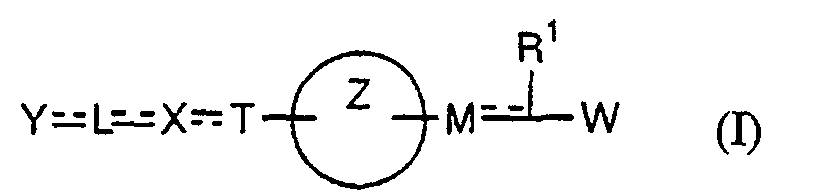
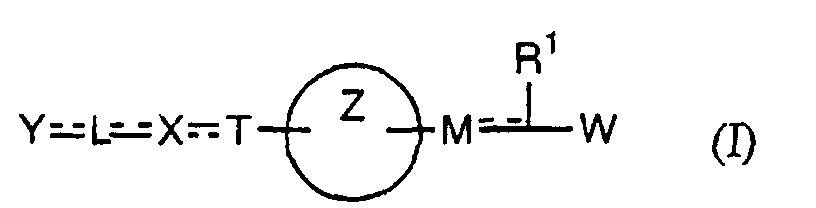
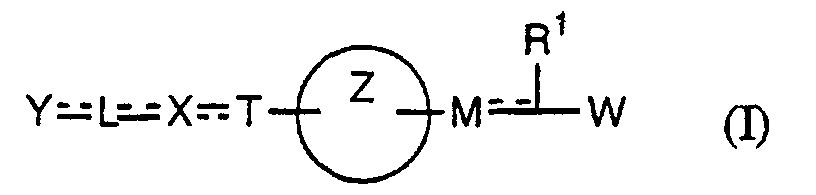
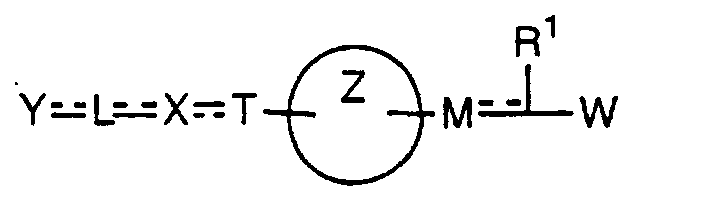
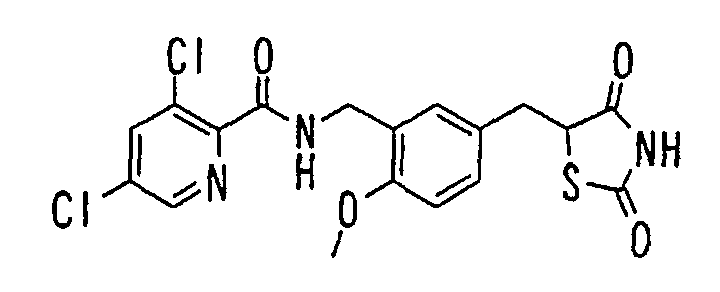
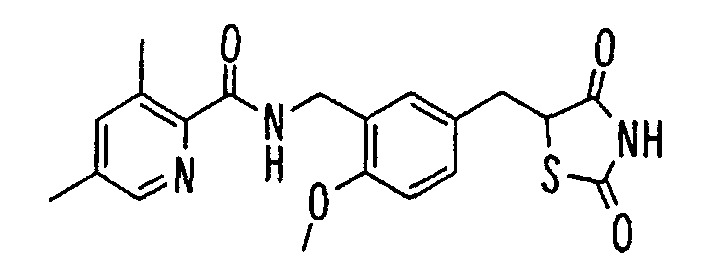
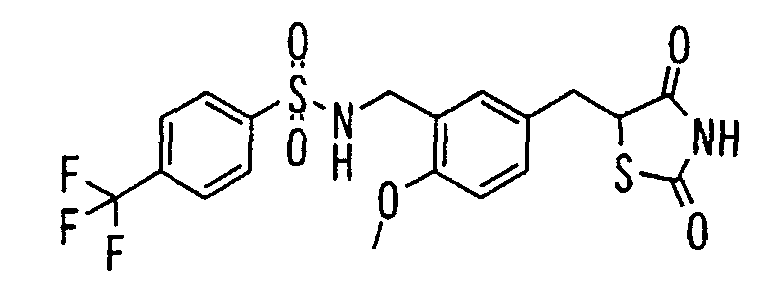
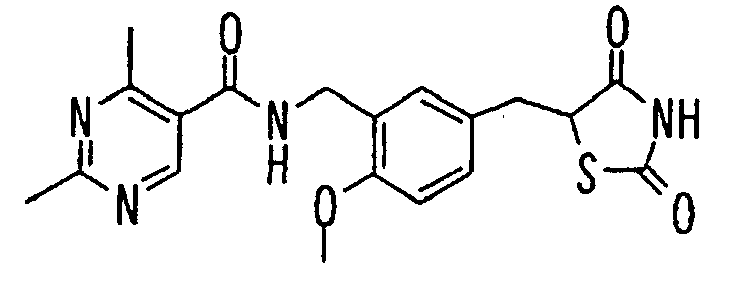
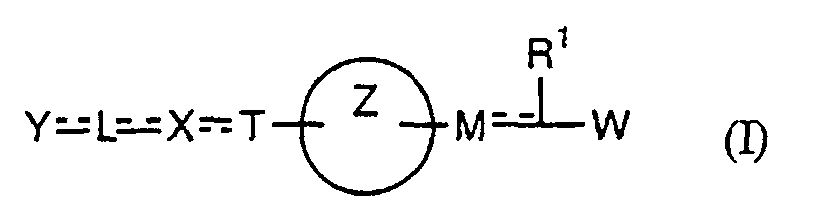
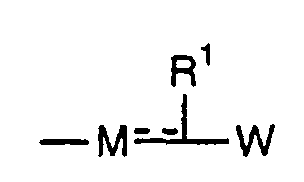
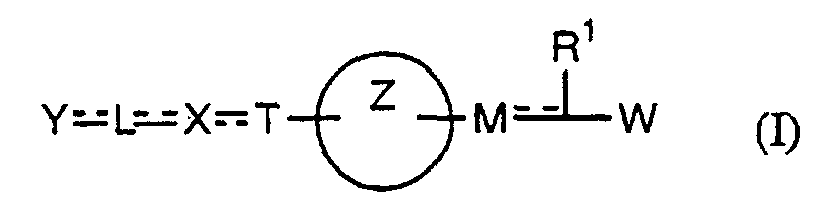
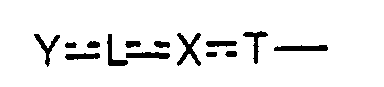
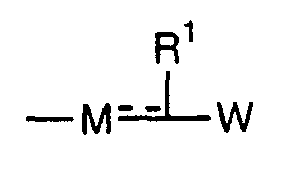
  • the present invention relates to a carboxylic acid derivative represented by the formula: (wherein R 1 represents hydrogen atom, hydroxyl group or a C 1-6 alkyl group, C 1-6 alkoxy group, C 1-6 alkylthio group, C 1-6 hydroxyalkyl group, C 1-6 hydroxyalkoxy group, C 1-6 hydroxyalkylthio group, C 1-6 aminoalkyl group, C 1-6 aminoalkoxy group, C 1-6 aminoalkylthio group, C 1-6 halogenated alkyl group, C 1-6 halogenated alkoxy group, C 1-6 halogenated alkylthio group, C 2-12 alkoxyalkyl group, C 2-12 alkoxyalkoxy group, C 2-12 alkoxyalkylthio group, C 3-7 cycyloalkyl group, C 3-7 cycloalkyloxy group, C 3-7 cycloalkylthio group, C 2-6 alkenyl group, C 2-6 alkenyloxy group,
  • the medicament which is based on PPAR ⁇ and ⁇ dual agonism the medicament based on PPAR ⁇ , ⁇ and ⁇ triple agonism; the medicament which is an insulin-resistant improver; the medicament which is an agent for preventing or treating diabetes; and the medicament which is an agent for preventing or treating X syndromes.
  • the present invention provides a method for preventing, treating or ameliorating diseases against which PPAR ⁇ and ⁇ dual agonism or PPAR ⁇ , ⁇ and ⁇ triple agonism is effective, by administering a pharmacologically effective amount of the compound represented by the above formula (I), a salt thereof, an ester thereof or a hydrate of them to a patient. Further, the present invention also provides use of the compound represented by the above formula (I), a salt thereof, an ester thereof or a hydrate of them, for producing an agent for preventing, treating or ameliorating diseases against which PPAR ⁇ and ⁇ dual agonism or PPAR ⁇ , ⁇ and ⁇ triple agonism is effective.
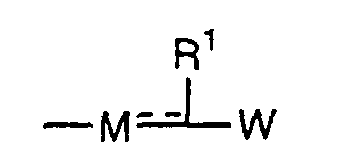
  • W is a carboxylic acid for the compound of the present invention, a salt thereof, an ester thereof or a hydrate of them;
  • R 1 is a C 1-6 alkyl group or C 1-6 alkoxy group, each of which may have one or more substituents, for the carboxylic acid derivative of the present invention, a salt thereof, an ester thereof or a hydrate of them;
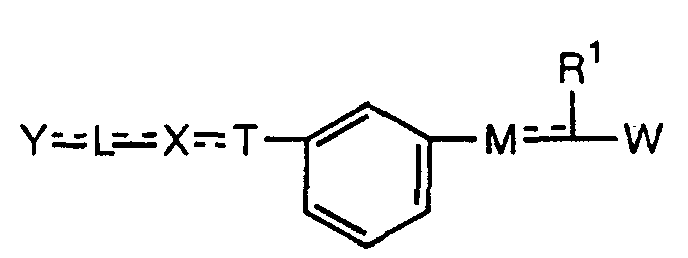
  • ring Z is a benzene ring which may further have 0 to 4 substituents, for the carboxylic acid derivative of the present invention, a salt thereof, an ester thereof or a hydrate of them;
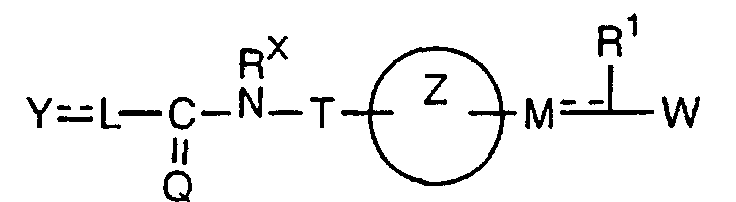
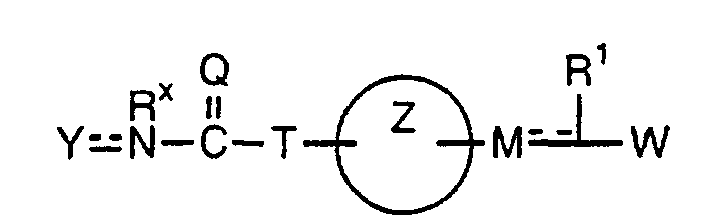
  • X is a group represented by -CQNR x - (wherein Q and R x each represent the same group as defined above) or -NR x CQ- (wherein Q and R x each represent the same group as defined above), for the carboxylic acid derivative
  • the structural formulae of the compounds may, for convenience' sake, indicate a certain isomer, but the present invention encompasses every possible isomer such as geometric isomer, optical isomer based on asymmetric carbon, stereoisomer and tautomer, which can occur in the structures of the compounds of the present invention, and mixtures of these isomers, and therefore, the compounds of the present invention are not limited by the formulae shown for convenience' sake.
  • R 1 , W, R x , R x1 and R x2 each represents a C 1-6 alkyl group which may have one or more substituents
  • the alkyl group means a C 1-6 linear or branched alkyl group, and specific examples thereof include methyl group, ethyl group, n-propyl group, i-propyl group, n-butyl group, i-butyl group, sec-butyl group, t-butyl group, n-pentyl group, i-pentyl group, sec-pentyl group, t-pentyl group, neopentyl group, 1-methylbutyl group, 2-methylbutyl group, 1,1-dimethylpropyl group, 1,2-dimethylpropyl group, n-hexyl group, i-hexyl group, 1-methylpentyl group, 2-methylpentyl group, 3-methylpentyl group, 1,1-dimethylbut
  • the phrase "which may have a substituent” specifically means that the group may be substituted with a substituent such as hydroxyl group; thiol group; nitro group; morpholino group; thiomorpholino group; a halogen atom such as fluorine atom, chlorine atom, bromine atom and iodine atom; nitrile group; azide group; formyl group; alkyl group such as methyl group, ethyl group, propyl group, isopropyl group and butyl group; alkenyl group such as vinyl group, allyl group and propenyl group; alkynyl group such as ethynyl group, butynyl group and propargyl group; alkoxy group such as methoxy group, ethoxy group, propoxy group and butoxy group corresponding to the lower alkyl group; halogenoalkyl group such as fluoromethyl group, difluoromethyl group, trifluoromethyl group and
  • the phrase "which may have one or more substituents" means that the group may have one or more of these groups in an arbitrary combination, and includes e.g. an alkyl group, alkenyl group, alkynyl group and alkoxy group substituted with hydroxyl group, thiol group, nitro group, morpholino group, thiomorpholino group, a halogen atom, nitrile group, azide group, formyl group, amino group, alkyl amino group, dialkyl amino group, carbamoyl group and sulfonyl group.
  • an alkyl group alkenyl group, alkynyl group and alkoxy group substituted with hydroxyl group, thiol group, nitro group, morpholino group, thiomorpholino group, a halogen atom, nitrile group, azide group, formyl group, amino group, alkyl amino group, dialkyl amino group, carbamoyl group and sulfony
  • R 1 represents a C 1-6 alkoxy group which may have one or more substituents
  • the alkoxy group means a C 1-6 linear or branched alkoxy group and refers to a group having an oxygen atom bound to the end of the alkyl group.
  • Specific examples thereof include methoxy group, ethoxy group, n-propoxy group, i-propoxy group, n-butoxy group, i-butoxy group, sec-butoxy group, t-butoxy group, n-pentyloxy group, i-pentyloxy group, sec-pentyloxy group, t-pentyloxy group, neopentyloxy group, 1-methylbutoxy group, 2-methylbutoxy group, 1,1-dimethylpropoxy group, 1,2-dimethylpropoxy group, n-hexyloxy group, i-hexyloxy group, 1-methylpentyloxy group, 2-methylpentyloxy group, 3-methylpentyloxy group, 1,1-dimethylbutoxy group, 1,2-dimethylbutoxy group, 2,2-dimethylbutoxy group, 1,3-dimethylbutoxy group, 2,3-dimethylbutoxy group, 3,3-dimethylbutoxy group, 1-ethylbutoxy group, 2-ethy
  • R 1 represents a C 1-6 alkylthio group which may have one or more substituents
  • the alkylthio group represents a C 1-6 linear or branched alkylthio group and refers to a group having a sulfur atom bound to the end of the alkyl group.
  • methylthio group examples thereof include methylthio group, ethylthio group, n-propylthio group, i-propylthio group, n-propylthio group, i-butylthio group, sec-butylthio group, t-butylthio group, n-pentylthio group, i-pentylthio group, sec-pentylthio group, t-pentylthio group, neopentylthio group, 1-methylbutylthio group, 2-methylbutylthio group, 1,1-dimethylpropylthio group, 1,2-dimethylpropylthio group, n-hexylthio group, i-hexylthio group, 1-methylpentylthio group, 2-methylpentylthio group, 3-methylpentylthio group, 1,1-dimethylbutylthio group, 1,2-dimethylbutylthio
  • R 1 represents a C 1-6 hydroxyalkyl group which may have one or more substituents
  • the hydroxyalkyl group represents a group having the C 1-6 linear or branched alkyl group substituted at a substitutable site with a hydroxy group. Specific examples thereof include hydroxymethyl group, 2-hydroxyethyl group and 1-hydroxyethyl group.
  • R 1 represents a C 1-6 hydroxyalkoxy group which may have one or more substituents
  • the hydroxyalkoxy group represents a group having the C 1-6 linear or branched alkoxy group substituted at a substitutable site with a hydroxy group. Specific examples thereof include hydroxymethoxy group, 2-hydroxyethoxy group and 1-hydroxyethoxy group.
  • R 1 represents a C 1-6 hydroxyalkylthio group which may have one or more substituents
  • the hydroxyalkylthio group represents a group having the C 1-6 linear or branched alkylthio group substituted at a substitutable site with a hydroxy group. Specific examples thereof include hydroxymethylthio group, 2-hydroxyethylthio group and 1-hydroxyethylthio group.
  • R 1 represents a C 1-6 aminoalkyl group which may have one or more substituents
  • the aminoalkyl group represents a group having the C 1-6 linear or branched alkyl group substituted at a substitutable site with an amino group. Specific examples thereof include aminomethyl group, 2-aminoethyl group and 1-aminoethyl group.
  • R 1 represents a C 1-6 aminoalkoxy group which may have one or more substituents
  • the aminoalkoxy group represents a group having the C 1-6 linear or branched alkoxy group substituted at a substitutable site with an amino group. Specific examples thereof include aminomethoxy group, 2-aminoethoxy group and 1-aminoethoxy group.
  • R 1 represents a C 1-6 aminoalkylthio group which may have one or more substituents
  • the aminoalkylthio group represents a group having the C 1-6 linear or branched alkylthio group substituted at a substitutable site with an amino group. Specific examples thereof include aminomethylthio group, 2-aminoethylthio group and 1-aminoethylthio group.
  • R 1 represents a C 1-6 halogenated alkyl group which may have one or more substituents
  • the halogenated alkyl group represents a group having the C 1-6 linear or branched alkyl group substituted at substitutable sites with one or more halogen atoms.
  • the halogen atoms refer to fluorine atom, chlorine atom, bromine atom and iodine atom. Specific examples of such a group include fluoromethyl group, trifluoromethyl group, 2-fluoroethyl group and 1-fluoroethyl group.
  • R 1 represents a C 1-6 halogenated alkoxy group which may have one or more substituents
  • the halogenated alkoxy group represents a group having the C 1-6 linear or branched alkoxy group substituted at substitutable sites with one or more halogen atoms. Specific examples thereof include fluoromethoxy group, trifluoromethoxy group, 2-fluoroethoxy group and 1-fluoroethoxy group.
  • R 1 represents a C 1-6 halogenated alkylthio group which may have one or more substituents
  • the halogenated alkylthio group represents a group having the C 1-6 linear or branched alkylthio group substituted at substitutable sites with one or more halogen atoms. Specific examples thereof include fluoromethylthio group, trifluoromethylthio group, 2-fluoroethylthio group and 1-fluoroethylthio group.
  • R 1 represents a C 2-12 alkoxyalkyl group which may have one or more substituents
  • the alkoxyalkyl group represents a group having the C 1-6 linear or branched alkyl group substituted at a substitutable site with the C 1-6 linear or branched alkoxy group. Specific examples thereof include methoxymethyl group, ethoxymethyl group, 1-methoxyethyl group, 2-methoxyethyl group, 1-ethoxyethyl group and 2-ethoxyethyl group.
  • R 1 represents a C 2-12 alkoxyalkoxy group which may have one or more substituents
  • the alkoxyalkoxy group represents a group having the C 1-6 linear or branched alkoxy group substituted at a substitutable site with the C 1-6 linear or branched alkoxy group.
  • Specific examples thereof include methoxymethoxy group, ethoxymethoxy group, 1-methoxyethoxy group, 2-methoxyethoxy group, 1-ethoxyethoxy group and 2-ethoxyethoxy group.
  • R 1 represents a C 2-12 alkoxyalkylthio group which may have one or more substituents
  • the alkoxyalkylthio group represents a group having the C 1-6 linear or branched alkylthio group substituted at a substitutable site with the C 1-6 linear or branched alkoxy group.
  • Specific examples thereof include methoxymethylthio group, ethoxymethylthio group, 1-methoxyethylthio group, 2-methoxyethylthio group, 1-ethoxyethylthio group and 2-ethoxyethylthio group.
  • R 1 represents a C 3-7 cycloalkyl group which may have one or more substituents
  • the cycloalkyl group means a C 3-7 cyclic alkyl group, and specific examples thereof include cyclopropyl group, cyclobutyl group, cyclopentyl group, cyclohexyl group and cycloheptyl group.
  • R 1 represents a C 3-7 cycloalkyloxy group which may have one or more substituents
  • the cycloalkyloxy group refers to a group having an oxygen atom bound to the end of the C 3-7 cyclic alkyl group, and specific examples thereof include cyclopropyloxy group, cyclobutyloxy group, cyclopentyloxy group, cyclohexyloxy group and cycloheptyloxy group.
  • R 1 represents a C 3-7 cycloalkylthio group which may have one or more substituents
  • the cycloalkylthio group refers to a group having a sulfur atom bound to the end of the C 3-7 cycloalkyl group, and specific examples thereof include cyclopropylthio group, cyclobutylthio group, cyclopentylthio group, cyclohexylthio group and cycloheptylthio group.
  • R 1 represents a C 2-6 alkenyl group which may have one or more substituents
  • the alkenyl group is a C 2-6 linear or branched alkenyl group and refers to a compound residue having a double bond in the alkyl group containing 2 or more carbon atoms.
  • ethenyl group 1-propene-1-yl group, 2-propene-1-yl group, 3-propene-1-yl group, 1-butene-1-yl group, 1-butene-2-yl group, 1-butene-3-yl group, 1-butene-4-yl group, 2-butene-1-yl group, 2-butene-2-yl group, 1-methyl-1-propene-1-yl group, 2-methyl-1-propene-1-yl group, 1-methyl-2-propene-1-yl group, 2-methyl-2-propene-1-yl group, 1-methyl-1-butene-1-yl group, 2-methyl-1-butene-1-yl, 3-methyl-1-butene-1-yl group, 1-methyl-2-butene-1-yl group, 2-methyl-2-butene-1-yl group, 3-methyl-2-butene-1-yl group, 1-methyl-2-butene-1-yl group, 2-methyl-2-butene-1-yl group, 3-methyl
  • R 1 represents a C 2-6 alkenyloxy group which may have one or more substituents
  • the alkenyloxy group refers to a group having an oxygen atom bound to the end of the C 2-6 linear or branched alkenyl group.
  • Specific examples thereof include ethenyloxy group, 1-propene-1-yloxy group, 2-propene-1-yloxy group, 3-propene-1-yloxy group, 1-butene-1-yloxy group, 1-butene-2-yloxy group, 1-butene-3-yloxy group, 1-butene-4-yloxy group, 2-butene-1-yloxy group, 2-butene-2-yloxy group, 1-methyl-1-propene-1-yloxy group, 2-methyl-1-propene-1-yloxy group, 1-methyl-2-propene-1-yloxy group, 2-methyl-2-propene-1-yloxy group, 1-methyl-1-butene-1-yloxy group, 2-methyl-1-butene-1-yloxy group, 3-methyl-1-butene-1-yloxy group, 1-methyl-2-butene-1-yloxy group, 2-methyl-2-butene-1-yloxy group, 3-methyl-2-butene-1-yloxy group, 1-methyl
  • R 1 represents a C 2-6 alkenylthio group which may have one or more substituents
  • the alkenylthio group refers to a group having sulfur atom bound to the end of the C 2-6 linear or branched alkenyl group, and specific examples thereof include ethenylthio group, 1-propene-1-ylthio group, 2-propene-1-ylthio group, 3-propene-1-ylthio group, 1-butene-1-ylthio group, 1-butene-2-ylthio group, 1-butene-3-ylthio group, 1-butene-4-ylthio group, 2-butene-1-ylthio group, 2-butene-2-ylthio group, 1-methyl-1-propene-1-ylthio group, 2-methyl-1-propene-1-ylthio group, 1-methyl-2-propene-1-ylthio group, 2-methyl-2-propene-1-ylthio group, 1-methyl-1-butane
  • R 1 represents a C 2-6 alkynyl group which may have one or more substituents
  • the alkynyl group is a C 2-6 linear or branched alkynyl group and refers to a compound residue having a triple bond in the alkyl group containing 2 or more carbon atoms.
  • Specific examples thereof include ethynyl group, 1-propyn-1-yl group, 2-propyn-1-yl group, 3-propyn-1-yl group, 1-butyn-1-yl group, 1-butyn-2-yl group, 1-butyn-3-yl group, 1-butyn-4-yl group, 2-butyn-1-yl group, 2-butyn-2-yl group, 1-methyl-1-propyn-1-yl group, 2-methyl-1-propyn-1-yl group, 1-methyl-2-propyn-1-yl group, 2-methyl-2-propyn-1-yl group, 1-methyl-1-butyn-1-yl group, 2-methyl-1-butyn-1-yl group, 3-methyl-1-butyn-1-yl group, 1-methyl-2-butyn-1-yl group, 2-methyl-2-butyn-1-yl group, 3-methyl-2-butyn-1-yl group, 1-methyl-2-butyn-1-yl group, 2-methyl-2-butyn-1
  • R 1 represents a C 2-6 alkynyloxy group which may have one or more substituents
  • the alkynyloxy group refers to a group having oxygen atom bound to the end of the C 2-6 linear or branched alkynyl group, and specific examples thereof include ethynyloxy group, 1-propyn-1-yloxy group, 2-propyn-1-yloxy group, 3-propyn-1-yloxy group, 1-butyn-1-yloxy group, 1-butyn-2-yloxy group, 1-butyn-3-yloxy group, 1-butyn-4-yloxy group, 2-butyn-1-yloxy group, 2-butyn-2-yloxy group, 1-methyl-1-propyn-1-yloxy group, 2-methyl-1-propyn-1-yloxy group, 1-methyl-2-propyn-1-yloxy group, 2-methyl-2-propyn-1-yloxy group, 1-methyl-1-butyn-1-yloxy group, 2-methyl-1-but
  • R 1 represents a C 2-6 alkynylthio group which may have one or more substituents
  • the alkynylthio group refers to a group having sulfur atom bound to the end of the C 2-6 linear or branched alkynyl group, and specific examples thereof.
  • ethynylthio group 1-propyn-1-ylthio group, 2-propyn-1-ylthio group, 3-propyn-1-ylthio group, 1-butyn-1-ylthio group, 1-butyn-2-ylthio group, 1-butyn-3-ylthio group, 1-butyn-4-ylthio group, 2-butyn-1-ylthio group, 2-butyn-2-ylthio group, 1-methyl-1-propyn-1-ylthio group, 2-methyl-1-propyn-1-ylthio group, 1-methyl-2-propyn-1-ylthio group, 2-methyl-2-propyn-1-ylthio group, 1-methyl-1-butyn-1-ylthio group, 2-methyl-1-butyn-1-ylthio group, 3-methyl-1-butyn-1-ylthio group, 1-methyl-2-butyn-1-ylthio group, 2-methyl-2-butyn-1-ylthio group, 2-
  • R 1 represents a C 6-12 aryl group which may have one or more substituents
  • the aryl group refers to an aromatic cyclic group, and specific examples thereof include phenyl group, 1-naphthyl group, 2-naphthyl group, as-indacenyl group, s-indacenyl group and acenapthylenyl group.
  • the group is preferably phenyl group, 1-naphthyl group or 2-naphthyl group, more preferably phenyl group.
  • R 1 represents a C 6-12 aryloxy group which may have one or more substituents
  • the aryloxy group refers to a group having an oxygen atom bound to the end of the C 6-12 aryl group, and specific examples thereof include phenyloxy group, 1-naphthyloxy group, 2-naphthyloxy group, as-indacenyloxy group, s-indacenyloxy group and acenapthylenyloxy group.
  • the group is preferably phenyloxy group, 1-naphthyloxy group or 2-naphthyloxy group, more preferably phenyloxy group.
  • R 1 represents a C 6-12 arylthio group which may have one or more substituents
  • the arylthio group refers to a group having a sulfur atom bound to the end of the C 6-12 aryl group, and specific examples thereof include phenylthio group, 1-naphthylthio group, 2-naphthylthio group, as indacenylthio group, s-indacenylthio group and acenapthylenylthio group.
  • the group is preferably phenylthio group, 1-naphthylthio group or 2-naphthylthio group, more preferably phenylthio group.
  • the alkylaryl group refers to a group having the C 6-12 aryl group substituted at a substitutable site with the C 1-6 alkyl group.
  • Specific examples thereof include tolyl group, xylyl group, cumenyl group, mesityl group, cymenyl group and styryl group; preferably tolyl group, xylyl group, cumenyl group, mesityl group, cymenyl group and styryl group; more preferably tolyl group, xylyl group, cumenyl group and mesityl group; and further preferably tolyl group, xylyl group and cumenyl group.
  • R 1 represents a C 7-18 alkylaryloxy group which may have one or more substituents
  • the alkylaryloxy group refers to a group having an oxygen atom bound to the end of the C 7-18 alkylaryl group.
  • Specific examples thereof include o-tolyloxy group, m-tolyloxy group, p-tolyloxy group, 2,3-xylyl-1-oxy group, 2,4-xylyl-1-oxy group, 2,5-xylyl-1-oxy group, o-cumenyloxy group, m-cumenyloxy group, p-cumenyloxy group, mesityloxy group, 2,3-cymenyl-1-oxy group, 2,4-cymenyl-1-oxy group, 2,5-cymenyl-1-oxy group, o-styryloxy group, m-styryloxy group and p-styryloxy group; preferably o-tolyloxy group, m-tolyloxy group,
  • R 1 represents a C 7-18 alkylarylthio group which may have one or more substituents
  • the alkylarylthio group refers to a group having a sulfur atom bound to the end of the C 7-18 alkylaryl group.
  • o-tolylthio group examples thereof include o-tolylthio group, m-tolylthio group, p-tolylthio group, 2,3-xylyl-1-thio group, 2,4-xylyl-1-thio group, 2,5-xylyl-1-thio group, o-cumenylthio group, m-cumenylthio group, p-cumenylthio group, mesitylthio group, 2,3-cymenyl-1-thio group, 2,4-cymenyl-1-thio group, 2,5-cymenyl-1-thio group, o-styrylthio group, m-styrylthio group and p-styrylthio group; preferably o-tolylthio group, m-tolylthio group, p-tolylthio group, 2,3-xylyl-1-thio group, 2,4-xylyl-1-thio group
  • R 1 represents a C 7-18 aralkyl group which may have one or more substituents
  • the aralkyl group refers to a group having the C 1-6 alkyl group substituted at a substitutable site with the C 6-12 aryl group.
  • R 1 represents a C 7-18 aralkyloxy group which may have one or more substituents
  • the aralkyloxy group refers to a group having an oxygen atom bound to the C 7-18 aralkyl group.
  • Specific examples thereof include benzyloxy group, phenetyloxy group, 3-phenylpropyloxy group, 4-phenylbutyloxy group, 5-phenylpentyloxy group, 6-phenylhexyloxy group, 1-naphthylmethyloxy group, 2-naphthylmethyloxy group, 1-naphthylethyloxy group, 2-naphthylethyloxy group, 1-naphthylpropyloxy group and 2-naphthylpropyloxy group; preferably benzyloxy group, phenetyloxy group, 3-phenylpropyloxy group, 4-phenylbutyloxy group, 5-phenylpentyloxy group, 6-pheny
  • R 1 represents a C 7-18 aralkylthio group which may have one or more substituents
  • the aralkylthio group refers to a group having a sulfur atom bound to the end of the C 7-18 aralkyl group.
  • benzylthio group phenetylthio group, 3-phenyl propylthio group, 4-phenyl butylthio group, 5-phenyl pentylthio group, 6-phenyl hexylthio group, 1-naphthyl methylthio group, 2-naphthyl methylthio group, 1-naphthyl ethylthio group, 2-naphthyl ethylthio group, 1-naphthyl propylthio group and 2-naphthyl propylthio group; preferably benzylthio group, phenetylthio group, 3-phenyl propylthio group, 4-phenyl butylthio group, 5-phenyl pentylthio group, 6-phenyl hexylthio group, 1-naphthyl methylthio group, 2-naphthyl methylthio group
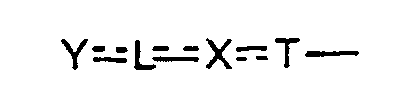
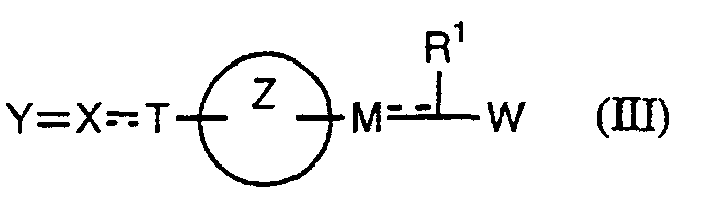
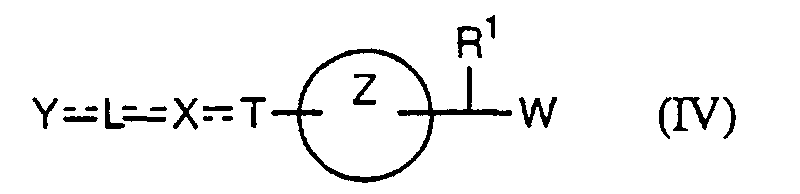
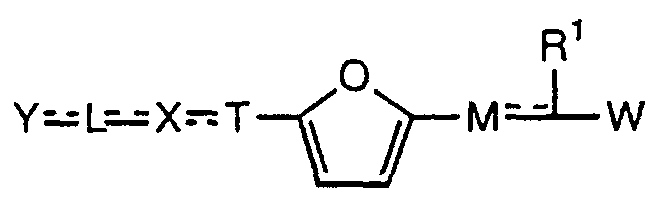
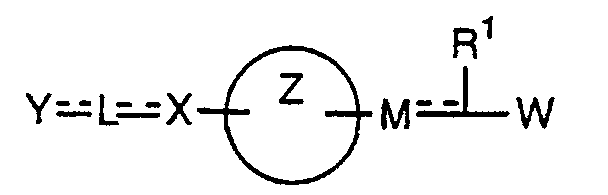
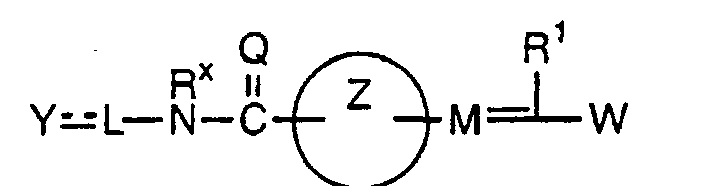
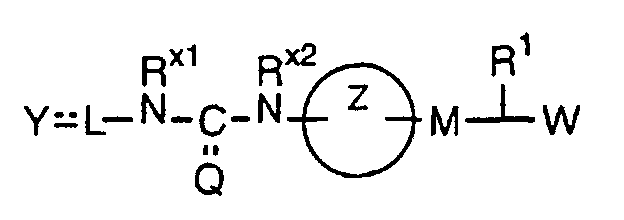
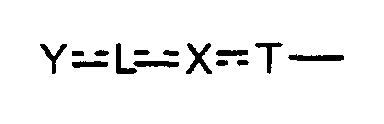
  • the compounds of the invention are exemplified by carboxylic acid derivatives having group X bound via a single bond to the group Y, represented by the following formula: (wherein each symbol has the same meaning as defined above), a salts thereof, an ester thereof or a hydrate of them.
  • the compounds of the invention are exemplified by carboxylic acid derivatives having group X bound via a single bond to the group Y, represented by the following formula: (wherein each symbol has the same meaning as defined above), a salt thereof, an ester thereof or a hydrate of them.
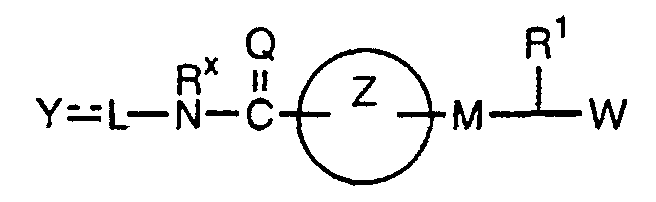
  • the compounds of the invention are exemplified by carboxylic acid derivatives represented by the following formula: (wherein each symbol has the same meaning as defined above), a salt thereof, an ester thereof or a hydrate of them.
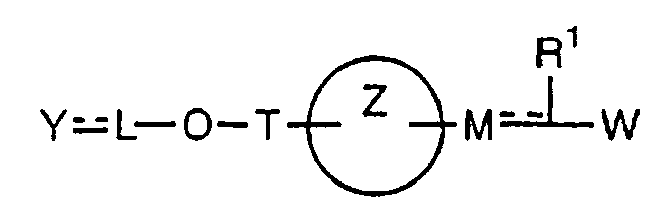
  • the compounds of the invention are exemplified by carboxylic acid derivatives represented by the following formula: (wherein each symbol has the same meaning as defined above), a salt thereof, an ester thereof or a hydrate of them.
  • the alkylene group refers to a divalent group derived by removing one hydrogen atom from the above-mentioned C 1-6 alkyl group.
  • Specific examples thereof include methylene group, ethylene group, methyl ethylene group, propylene group, ethyl ethylene group, 1,1-dimethyl ethylene group, 1,2-dimethyl ethylene group, trimethylene group, 1-methyl trimethylene group, 1-ethyl trimethylene group, 2-methyl trimethylene group, 1,1-dimethyl trimethylene group, tetramethylene group, pentamethylene group and hexamethylene group; preferably methylene group, ethylene group, methyl ethylene group, propylene group, ethyl ethylene group, 1,1-dimethyl ethylene group, 1,2-dimethyl ethylene group, trimethylene group, 1-methyl trimethylene group, 1-ethyl trimethylene group, 2-methyl trimethylene group, 1,1-dimethyl trimethylene group,
  • the alkylene group refers to a divalent group derived by removing one hydrogen atom from the C 1-3 alkyl group.
  • the alkylene group described above preferably methylene group, ethylene group and propylene group; further preferably methylene group and ethylene group; and most preferably methylene group.
  • the alkenylene group refers to a divalent group derived by removing one hydrogen atom from the C 2-6 alkenyl group.
  • Specific examples thereof include vinylene group, propenylene group, butenylene group, pentenylene group and hexenylene group; preferably vinylene group, propenylene group, butenylene group and pentenylene group; more preferably vinylene group, propenylene group and butenylene group; further preferably vinylene group and propenylene group; and most preferably vinylene group.
  • the alkenylene group refers to a divalent group derived by removing one hydrogen atom from the C 2-3 alkenyl group.
  • Specific examples thereof include the C 2-3 alkenylene group described above; preferably vinylene group or propenylene group; and further preferably vinylene group.
  • the alkynylene group refers to a divalent group derived by removing one hydrogen atom from the C 2-6 alkynyl group.
  • specific examples thereof include ethynylene group, propynylene group, butynylene group, pentynylene group and hexynylene group; preferably ethynylene group, propynylene group, butynylene group and pentynylene group; more preferably ethynylene group, propynylene group and butynylene group; further preferably ethynylene group and propynylene group; and most preferably ethynylene group.
  • the alkynylene group refers to a divalent group derived by removing one hydrogen atom from the C 2-3 alkynyl group. Specific examples thereof include the C 2-3 alkynylene group described above; preferably ethynylene or propynylene group; and further preferably ethynylene group.
  • R w1 , R w2 , R x , R x1 and R x2 each represent a C 2-7 aliphatic acyl group which may have one or more substituents
  • the aliphatic acyl group refers to a group having a carbonyl group added to the end of the C 1-6 alkyl foup, the C 2-6 alkenyl or the C 2-6 alkynyl group.
  • R w1 , R w2 , R x , R x1 and R x2 each represent a C 7-19 aromatic acyl group which may have one or more substituents
  • the aromatic acyl group refers to a group wherein a carbonyl group or a group derived by removing one hydrogen atom from the C 2-7 aliphatic acyl group has been added to the end of the C 5-12 aryl group.
  • benzoyl group o-toluoyl group, m-toluoyl group, p-toluoyl group, cinnamoyl group, 1-naphthoyl group and 2-naphthoyl group; preferably benzoyl group, o-toluoyl group, m-toluoyl group, p-toluoyl group, cinnamoyl group, 1-naphthoyl group and 2-naphthoyl group; more preferably benzoyl group, o-toluoyl group, m-toluoyl group, p-toluoyl group and cinnamoyl group; further preferably benzoyl group and cinnamoyl group; and most preferably benzoyl group.
  • Q represents oxygen or sulfur atom. Accordingly, the formula -CQ- refers to a carbonyl group or thiocarbonyl group.
  • Y represents a C 5-12 aromatic hydrocarbon group which may have one or more substituents, and which may have one or more heteroatoms
  • the aromatic hydrocarbon group refers to the C 6-12 aryl group or a group having the C 6-12 aryl group substituted at a substitutable site with the C 1-6 aliphatic hydrocarbon group, provided that the number of carbon atoms in the aromatic hydrocarbon group does not exceed 12, and the aliphatic hydrocarbon group includes a monovalent to polyvalent group.
  • this group includes phenyl group, o-tolyl group, m-tolyl group, p-tolyl group, 2,3-xylyl group, 2,4-xylyl group, 2,5-xylyl group, mesityl group, cymenyl group, o-cumenyl group, m-cumenyl group, p-cumenyl group, benzyl group, phenetyl group, ⁇ -methyl benzyl group, benzhydryl group, tolytyl group, benzylidene group, styryl group, cinnamyl group, cinnamylidene group, 3-phenyl propyl group, 4-phenyl butyl group, 5-phenyl pentyl group, 6-phenyl hexyl group, 1-naphthyl group, 2-naphthyl group, 1-naphthyl methyl group, 2-naphthyl
  • the heteroatom is for example oxygen atom, sulfur atom, nitrogen atom, phosphorus, arsenic, antimony, silicon, germanium, tin, lead, boron or mercury; preferably oxygen atom, sulfur atom, nitrogen atom and phosphorus; more preferably oxygen atom, sulfur atom and nitrogen atom; and further preferably sulfur atom or nitrogen atom.
  • heteroatoms in the phrase “may have one or more heteroatoms” in the specification have the meaning as defined above.
  • this group includes e.g. pyridine, thiophene, furan, pyrrole, oxazole, isoxazole, thiazole, isothiazole, imidazole, triazole, pyrazole, furazane, thiadiazole, oxadiazole, pyridazine, pyrimidine, pyrazine, indole, isoindole, indazole, chromene, quinoline, isoquinoline, cinnoline, quinazoline, quinoxaline, naphthylidine, phthalazine, purine, pteridine, thienofurane, imidazothiazole, benzofuran, benzothiophene, benzoxazole, benzthiazole, benzthiadiazole, benzimidazole, imidazopyridine, pyrrolo
  • alicyclic hydrocarbon group refers to a C 3-7 cyclic aliphatic hydrocarbon group.
  • cyclopropyl group examples thereof include cyclopropyl group, cyclobutyl group, cyclopentyl group, cyclohexyl group, cycloheptyl group, cyclopropenyl group, cyclobutenyl group, cyclopentenyl group, cylohexenyl group and cycloheptenyl group; preferably cyclopropyl group, cyclobutyl group, cyclopentyl group, cyclohexyl group, cycloheptyl group, cyclopropenyl group, cyclobutenyl group, cyclopentenyl group, cylohexenyl group and cycloheptenyl group; more preferably cyclopropyl group, cyclobutyl group, cyclopentyl group, cyclohexyl group and cycloheptyl group; further preferably cyclopropyl group, cyclobutyl
  • the ring Z represents a C 5-6 aromatic hydrocarbon group which may have 0 to 4 substituents, and which may have one or more heteroatoms
  • this group refers to C 5-6 aromatic hydrocarbon groups out of the above C 5-12 aromatic hydrocarbon groups, and includes phenyl group.
  • the C 5-6 aromatic hydrocarbon group which has one or more heteroatoms, which is represented by Z includes e.g. pyridine, thiophene, furan, pyrrole, oxazole, isoxazole, thiazole, isothiazole, imidazole, triazole, pyrazol, furazane, thiadiazole, oxadiazole, pyridazine, pyrimidine and pyrazine.
  • the group is preferably pyridine, thiophene, furan, pyrrole, oxazole, isoxazole, thiazole, isothiazole, imidazole, triazole, pyrazol, furazane, thiadiazole, oxadiazole, pyridazine, pyrimidine or pyrazine, more preferably pyridine, pyridazine, pyrimidine or pyrazine.
  • the group represented by the formula: (wherein each symbol has the same meaning as defined above) and the group represented by the formula: (wherein each symbol has the same meaning as defined above) are bound to each other via 3 atoms on ring Z.
  • ring Z is e.g. a benzene ring
  • it is the compound represented by the formula: (wherein each symbol has the same meaning as defined above)
  • the above-mentioned two groups are bound to each other at the m-position on the ring.
  • ring Z is e.g.
  • the two groups are bound to each other via 3 atoms therebetween, as shown in the compound represented by the formula: (wherein each symbol has the same meaning as defined above), provided that the position of the oxygen atom is not limited to the position in the above compound.
  • the salt includes, but is not limited to, inorganic acid addition salts such as hydrofluorate, hydrochloride, sulfate, nitrate, perchlorate, phosphate, carbonate, bicarbonate, hydrobromate and hydroiodate; organic carboxylic acid addition salts such as acetate, maleate, fumarate, oxalate, lactate, tartrate and trifluoroacetate; organic sulfonic acid addition salts such as methane sulfonate, trifluoromethane sulfonate, ethane sulfonate, hydroxymethane sulfonate, hydroxyethane sulfonate, benzene sulfonate, toluene sulfonate and taurine salt; amine addition salts such as trimethyl amine salt, triethylamine salt, pyridine salt, procaine salt, picoline salt, dicyclohexylamine salt, N,
  • the pharmaceutically acceptable salts include, but are not limited to, inorganic acid addition salts such as hydrochloride, sulfate, carbonate, bicarbonate, hydrobromate and hydroiodate; organic carboxylic acid addition salts such as acetate, maleate, lactate, tartrate and trifluoroacetate; organic sulfonic acid addition salts such as methanesulfonate, hydroxymethanesulfonate, hydroxyethanesulfonate, benzenesulfonate, toluenesulfonate and taurine salt; amine addition salts such as trimethyl amine salt, triethylamine salt, pyridine salt, procaine salt, picoline salt, dicyclohexylamine salt, N,N'-dibenzyl ethylene diamine salt, N-methyl glucamine salt, diethanolamine salt, triethanolamine salt, tris(hydroxymethylamino)methane salt and phenetyl benzyl
  • the ester refers to an ester formed by a carboxyl group represented by W in the formula (I).
  • This ester is not particularly limited insofar as it is usually used in organic synthesis, and includes physiologically acceptable ester groups hydrolyzed under physiological conditions.
  • Specific examples thereof include a C 1-6 alkyl group, a C 6-12 aryl group, a C 7-20 aralkyl group such as benzyl group, a C 7-20 heteroarylalkyl group, 4-methoxybenzyl group, an alkanoyloxy alkyl group such as acetoxy methyl group, propionyloxy methyl group and pivaloxy methyl group, an alkoxycarbonyloxy alkyl group such as methoxycarbonyloxy methyl group, ethoxycarbonyloxy methyl group and 2-methoxycarbonyloxy ethyl group, and (5-methyl-2-oxo-1,3-dioxo-4-yl)-methyl group.
  • an alkanoyloxy alkyl group such as acetoxy methyl group, propionyloxy methyl group and pivaloxy methyl group
  • an alkoxycarbonyloxy alkyl group such as methoxycarbonyloxy methyl group, ethoxycarbonyloxy
  • the compounds of the present invention represented by the formula (I): (wherein each symbol represents the same group as defined above) can be synthesized in a conventional method, and for example, these compounds can be synthesized in the following methods.
  • the compounds represented by the following formula: (wherein each symbol represents the same group as defined above) can be synthesized for example by the following general production method A(1) or A(2).
  • each symbol represents the same group as defined above; Pc is a carboxy-protecting group; M 1 is a single bond or a C 1-5 alkylene group, C 2-5 alkenylene group or C 2-5 alkynylene group, each of which may have one or more substituents; R 0 is a C 1-6 alkyl group; and R 11 is hydrogen atom, hydroxyl group protected with a protective group or a C 1-6 alkyl group, C 1-6 hydroxy alkyl group protected at the hydroxy group with a protective group, C 1-6 aminoalkyl group protected at the amino group with a protective group, C 1-6 halogenated alkyl group, C 2-12 alkoxy alkyl group, C 3-7 cycloalkyl group, C 2-6 alkenyl group, C 2-6 alkynyl group, C 6-12 aryl group, C 7-18 alkyl aryl group or C 7-18 aralkyl group, each of which may have one or more substituents, respectively, provided that the
  • the compound of the formula (1-iii) can be produced by reacting the compound of the formula (1-ii) with the compound of the formula (1-i).
  • reaction of the compound of the formula (1-ii) with the compound of the formula (1-i) can be carried out in the presence of sodium hydride, potassium hydride, t-butoxy potassium etc. in an organic solvent such as tetrahydrofuran and N,N-dimethylformamide.
  • the reaction can be carried out at a temperature under ice-cooling to 50 °C.
  • the compound of the formula (1-iv) can be produced by reducing the compound of the formula (1-iii) in the presence of a catalyst such as palladium-carbon in a solvent such as ethanol, ethyl acetate and tetrahydrofuran.
  • a catalyst such as palladium-carbon
  • a solvent such as ethanol, ethyl acetate and tetrahydrofuran.
  • the compound of the formula (1-v) can be produced by allowing the compound of the formula (1-vii) to act on the compound of the formula (1-iv).
  • the reaction can be carried out by treating with a condensing agent such as 1-ethyl-3-(3'-dimethylaminopropyl)carbodiimide and diethyl cyanophosphate in an organic solvent such as dimethyl sulfoxide and N,N-dimethylformamide. If necessary, an organic base such as triethylamine may be added.
  • a condensing agent such as 1-ethyl-3-(3'-dimethylaminopropyl)carbodiimide and diethyl cyanophosphate
  • an organic solvent such as dimethyl sulfoxide and N,N-dimethylformamide.
  • an organic base such as triethylamine may be added.
  • the reaction can be carried out at a temperature under ice-cooling to room temperature.
  • the compound of the formula (1-vi) can be produced by hydrolyzing the compound of the formula (1-v) with an inorganic base such as sodium hydroxide and potassium hydroxide in an ethanol solvent.
  • the reaction may be carried out at room temperature to a temperature under heating reflux.
  • each symbol represents the same group as defined above; Pn and Pn' are different from each other and each represents an amino-protecting group; and R 12 represents hydrogen atom, a hydroxyl group protected with a protective group or a C 1-6 alkyl group, C 1-6 hydroxyalkyl group protected at the hydroxy group with a protective group, C 1-6 aminoalkyl group protected at the amino group with a protective group, C 1-6 halogenated alkyl group, C 2-12 alkoxy alkyl group, C 3-7 cycloalkyl group, C 2-6 alkenyl group, C 2-6 alkynyl group, C 6-12 aryl group, C 7-18 alkyl aryl group or C 7-18 aralkyl group, each of which may have one or more substituents, respectively, provided that the group represented by the formula PcOCQ- (wherein each symbol represents the same group as defined above) and the group represented by the formula -M 1 CHO (wherein each symbol represents the same group as defined above) are bound to
  • the compound of the formula (2-iii) can be produced by reacting the compound of the formula (2-ii) with the compound of the formula (2-i).
  • reaction of the compound of the formula (2-ii) with the compound of the formula (2-i) can be carried out in the presence of sodium hydride, potassium hydride, t-butoxy potassium etc. in an organic solvent such as tetrahydrofuran and N,N-dimethylformamide.
  • the reaction can be carried out at a temperature under ice-cooling to 50 °C.
  • the compound of the formula (2-iv) can be produced by reducing the compound of the formula (2-iii) in the presence of a catalyst such as palladium-carbon in a solvent such as ethanol, ethyl acetate or tetrahydrofuran.
  • a catalyst such as palladium-carbon in a solvent such as ethanol, ethyl acetate or tetrahydrofuran.
  • the reaction can be carried out at a temperature under ice-cooling to room temperature.
  • the compound of the formula (2-v) can be produced by reacting the compound of the formula (2-iv) with di-t-butyl dicarbonate.
  • reaction of the compound of the formula (2-iv) with di-t-butyl dicarbonate can be carried out in the presence of an organic base such as triethylamine etc. in an organic solvent such as ethanol or methanol.
  • organic base such as triethylamine etc.
  • organic solvent such as ethanol or methanol.
  • the reaction can be carried out at a temperature under ice-cooling to 50 °C.
  • the compound of the formula (2-vi) can be produced by allowing the compound of the formula (1-vii) to act on the compound of the formula (2-v).
  • the reaction can be carried out by treating with a condensing agent such as 1-ethyl-3-(3'-dimethylaminopropyl)carbodiimide and diethyl cyanophosphate in an organic solvent such as dimethyl sulfoxide and N,N-dimethylformamide. If necessary, an organic base such as triethylamine may be added.
  • a condensing agent such as 1-ethyl-3-(3'-dimethylaminopropyl)carbodiimide and diethyl cyanophosphate
  • an organic solvent such as dimethyl sulfoxide and N,N-dimethylformamide.
  • an organic base such as triethylamine may be added.
  • the reaction can be carried out at a temperature under ice-cooling to room temperature.
  • the compound of the formula (2-vii) can be produced by reacting the compound of the formula (2-vi) with hydrochloric acid etc. in an organic solvent such as methanol, tetrahydrofuran, acetone and ethyl acetate.
  • the reaction may be carried out at a temperature ice-cooling to room temperature.
  • the compound of the formula (2-viii) can be produced by reacting the compound of the formula (2-vii) with isoamyl nitrite.
  • the reaction can be conducted by adding isoamyl nitrite to the compound of the formula (2-vii) in the presence of an organic acid such as acetic acid in an organic solvent such as chloroform.
  • the reaction can be carried out at a temperature under ice-cooling to 50 °C.
  • the compound of the formula (2-ix) can be produced by heating the compound of the formula (2-viii) and the compound of the formula (2-xi) under reflux in the presence of rhodium acetate.
  • the compound of the formula (2-x) can be produced by hydrolyzing the compound of the formula (2-ix) with an inorganic base such as sodium hydroxide and potassium hydroxide in an ethanol solvent.
  • the reaction may be carried out at room temperature to a temperature under heating reflux.
  • R 13 represents hydrogen atom, hydroxyl group protected with a protective group or a C 1-6 alkyl group, C 1-6 hydroxy alkyl group protected at the hydroxy group with a protective group, C 1-6 aminoalkyl group protected at the amino group with a protective group, C 1-6 halogenated alkyl group, C 2-12 alkoxy alkyl group, C 3-7 cycloalkyl group, C 2-6 alkenyl group, C 2-6 alkynyl group, C 6-12 aryl group, C 7-18 alkyl aryl group or C 7-18 aralkyl group, each of which may have one or more substituents, respectively, provided that the group represented by the formula O 2 N- (wherein each symbol represents the same group as defined above) and the group represented by the formula ⁇ M 1 CHO (wherein each symbol represents the same group as defined above) are bound to each other via 3 atoms on the ring Z.
  • the compound of the formula (3-ii) can be produced by reacting the compound of the formula (1-ii) with the compound of the formula (3-i).
  • reaction of the compound of the formula (1-ii) with the compound of the formula (3-i) can be carried out in the presence of sodium hydride, potassium hydride, t-butoxy potassium etc. in an organic solvent such as tetrahydrofuran and N,N-dimethylformamide.
  • the reaction can be carried out at a temperature under ice-cooling to 50 °C.
  • the compound of the formula (3-iii) can be produced by reducing the compound of the formula (3-ii) in the presence of a catalyst such as palladium-carbon in a solvent such as ethanol, ethyl acetate and tetrahydrofuran.
  • a catalyst such as palladium-carbon
  • a solvent such as ethanol, ethyl acetate and tetrahydrofuran.
  • the compound of the formula (3-iv) can be produced by allowing the compound of the formula (3-vi) to act on the compound of the formula (3-iii).
  • the reaction can be carried out by treating with a condensing agent such as 1-ethyl-3-(3'-dimethylaminopropyl)carbodiimide and carbonyl diimidazole in an organic solvent such as tetrahydrofuran If necessary, an organic base such as triethylamine may be added.
  • a condensing agent such as 1-ethyl-3-(3'-dimethylaminopropyl)carbodiimide and carbonyl diimidazole
  • an organic solvent such as tetrahydrofuran
  • an organic base such as triethylamine may be added.
  • the reaction can be carried out at a temperature under ice-cooling to 50 °C.
  • the compound of the formula (3-v) can be produced by hydrolyzing the compound of the formula (3-iv) with an inorganic base such as sodium hydroxide and potassium hydroxide in an ethanol solvent.
  • the reaction may be carried out at room temperature to a temperature under heating under reflux.
  • R 14 represents hydrogen atom, hydroxyl group protected with a protective group or a C 1-6 alkyl group, C 1-6 hydroxy alkyl group protected at the hydroxy group with a protective group, C 1-6 aminoalkyl group protected at the amino group with a protective group, C 1-6 halogenated alkyl group, C 2-12 alkoxy alkyl group, C 3-7 cycloalkyl group, C 2-6 alkenyl group, C 2-6 alkynyl group, C 6-12 aryl group, C 7-18 alkyl aryl group or C 7-18 aralkyl group, each of which may have one or more substituents, respectively, provided that the group represented by the formula PcOCQ (wherein each symbol represents the same group as defined above) and the group represented by the formula ⁇ M 1 CHO (wherein each symbol represents the same group as defined above) are bound to each other via 3 atoms on the ring Z.
  • PcOCQ wherein each symbol represents the same group as defined above
  • the compound of the formula (4-ii) can be produced by reacting the compound of the formula (1-ii) with the compound of the formula (4-i).
  • reaction of the compound of the formula (1-ii) with the compound of the formula (4-i) can be carried out in the presence of sodium hydride, potassium hydride, t-butoxy potassium etc. in an organic solvent such as tetrahydrofuran and N,N-dimethylformamide.
  • the reaction can be carried out at a temperature under ice-cooling to 50 °C.
  • the compound of the formula (4-iii) can be produced by treating the compound of the formula (4-ii) with an organic acid such as trifluoroacetic acid in an organic solvent such as tetrahydrofuran and dichloromethane.
  • an organic acid such as trifluoroacetic acid
  • an organic solvent such as tetrahydrofuran and dichloromethane.
  • the compound of the formula (4-iv) can be produced by allowing the compound of the formula (1-vii) to act on the compound of the formula (4-iii).
  • the reaction can be conducted by treatment with a condensing agent such as 1-ethyl-3-(3'-dimethylaminopropyl)carbodiimide and diethyl cyanophosphate in an organic solvent such as dimethyl sulfoxide and N,N-dimethylformamide. If necessary, an organic base such as triethylamine may be added.
  • a condensing agent such as 1-ethyl-3-(3'-dimethylaminopropyl)carbodiimide and diethyl cyanophosphate
  • organic solvent such as dimethyl sulfoxide and N,N-dimethylformamide.
  • an organic base such as triethylamine may be added.
  • the reaction can be carried out at a temperature under ice-cooling to room temperature.
  • the compound of the formula (4-v) can be produced by hydrolyzing the compound of the formula (4-iv) with an inorganic base such as sodium hydroxide and potassium hydroxide in an ethanol solvent.
  • the reaction may be carried out at room temperature to a temperature under heating under reflux.
  • R 15 represents hydrogen atom, hydroxyl group protected with a protective group or a C 1-6 alkyl group, C 1-6 hydroxy alkyl group protected at the hydroxy group with a protective group, C 1-6 aminoalkyl group protected at the amino group with a protective group, C 1-6 halogenated alkyl group, C 2-12 alkoxy alkyl group, C 3-7 cycloalkyl group, C 2-6 alkenyl group, C 2-6 alkynyl group, C 6-12 aryl group, C 7-18 alkyl aryl group or C 7-18 aralkyl group, each of which may have one or more substituents, respectively, provided that the group represented by the formula R x2 HN (wherein each symbol represents the same group as defined above) and the group represented by the formula ⁇ MCH(R 15 )W (wherein each symbol represents the same group as defined above) are bound to each other via 3 atoms on the ring Z.
  • the compound of the formula (5-ii) can be produced by reacting the compound of the formula (3-iii) with the compound of the formula (5-i) in a solvent such as tetrahydrofuran.
  • the reaction can be carried out at room temperature to 50 °C.
  • the compound of the formula (5-i) can be synthesized by reacting diphenyl phosphoryl azide (DPPA) with the compound of the formula (5-iii).
  • DPPA diphenyl phosphoryl azide
  • the reaction can be carried out in the presence of an organic base such as triethylamine in an organic solvent such as toluene and tetrahydrofuran.
  • the reaction can be carried out at room temperature to a temperature under heating under reflux.
  • the compounds of the present invention can be produced by the following general synthesis methods or by usual organic synthesis means.
  • R 1a represents hydrogen atom, hydroxyl group protected with a protective group or a C 1-6 alkyl group, C 1-6 hydroxyalkyl group protected at the hydroxy group with a protective group, C 1-6 aminoalkyl group protected at the amino group with a protective group, C 1-6 halogenated alkyl group, C 2-12 alkoxy alkyl group, C 3-7 cycloalkyl group, C 2-6 alkenyl group, C 2-6 alkynyl group, C 6-12 aryl group, C 7-18 alkyl aryl group or C 7-18 aralkyl group, each of which may have one or more substituents.
  • the compound of the formula (1c) can be produced by reacting the compound of the formula (1b) with the compound of the formula (1a).
  • the reaction of the compound of the formula (1b) with the compound of the formula (1a) can be carried out in the presence of sodium hydride, potassium hydride, t-butoxy potassium etc. in an organic solvent such as tetrahydrofuran and N,N-dimethylformamide.
  • the reaction can be carried out at a temperature under ice-cooling to 50 °C.
  • the compound of the formula (1d) can be produced by reducing the compound of the formula (1c) in the presence of a catalyst such as palladium-carbon in a solvent such as ethanol, ethyl acetate and tetrahydrofuran.
  • a catalyst such as palladium-carbon
  • a solvent such as ethanol, ethyl acetate and tetrahydrofuran.
  • the compound of the formula (1e) can be produced by allowing the compound of the formula (1g) to act on the compound of the formula (1d).
  • the reaction can be carried out by treating with a condensing agent such as 1-ethyl-3-(3'-dimethylaminopropyl)carbodiimide and diethyl cyanophosphate in an organic solvent such as dimethyl sulfoxide and N,N-dimethylformamide. If necessary, an organic base such as triethylamine may be added.
  • a condensing agent such as 1-ethyl-3-(3'-dimethylaminopropyl)carbodiimide and diethyl cyanophosphate
  • an organic solvent such as dimethyl sulfoxide and N,N-dimethylformamide.
  • an organic base such as triethylamine may be added.
  • the reaction can be carried out at a temperature under ice-cooling to room temperature.
  • the compound of the formula (1f) can be produced by hydrolyzing the compound of the formula (1e) with an inorganic base such as sodium hydroxide and potassium hydroxide in an ethanol solvent.
  • the reaction may be carried out at room temperature to a temperature under heating under reflux.
  • R 1b represents hydrogen atom, hydroxyl group protected with a protective group or a C 1-6 alkyl group, C 1-6 hydroxyalkyl group protected at the hydroxy group with a protective group, C 1-6 aminoalkyl group protected at the amino group with a protective group, C 1-6 halogenated alkyl group, C 2-12 alkoxy alkyl group, C 3-7 cycloalkyl group, C 2-6 alkenyl group, C 2-6 alkynyl group, C 6-12 aryl group, C 7-18 alkyl aryl group or C 7-18 aralkyl group, each of which may have one or more substituents.
  • the compound of the formula (2c) can be produced by reacting the compound of the formula (2b) with the compound of the formula (2a).
  • reaction of the compound of the formula (2b) with the compound of the formula (2a) can be carried out in the presence of sodium hydride, potassium hydride, t-butoxy potassium etc. in an organic solvent such as tetrahydrofuran and N,N-dimethylformamide.
  • the reaction can be carried out at a temperature under ice-cooling to 50 °C.
  • the compound of the formula (2d) can be produced by reducing the compound of the formula (2c) in the presence of a catalyst such as palladium-carbon in a solvent such as ethanol, ethyl acetate or tetrahydrofuran.
  • a catalyst such as palladium-carbon in a solvent such as ethanol, ethyl acetate or tetrahydrofuran.
  • the reaction can be carried out at a temperature under ice-cooling to room temperature.
  • the compound of the formula (2e) can be produced by reacting the compound of the formula (2d) with di-t-butyl dicarbonate.
  • reaction of the compound of the formula (2d) with di-t-butyl dicarbonate can be carried out in the presence of an organic base such as triethylamine in an organic solvent such as ethanol and methanol.
  • organic base such as triethylamine
  • organic solvent such as ethanol and methanol.
  • the reaction can be carried out at a temperature under ice-cooling to 50 °C.
  • the compound of the formula (2f) can be produced by allowing the compound of the formula (1g) to act on the compound of the formula (2e).
  • the reaction can be carried out by treating with a condensing agent such as 1-ethyl-3-(3'-dimethylaminopropyl)carbodiimide and diethyl cyanophosphate in an organic solvent such as dimethyl sulfoxide and N,N-dimethylformamide. If necessary, an organic base such as triethylamine may be added.
  • a condensing agent such as 1-ethyl-3-(3'-dimethylaminopropyl)carbodiimide and diethyl cyanophosphate
  • an organic solvent such as dimethyl sulfoxide and N,N-dimethylformamide.
  • an organic base such as triethylamine may be added.
  • the reaction can be carried out at a temperature under ice-cooling to room temperature.
  • the compound of the formula (2g) can be produced by reacting the compound of the formula (2f) with hydrochloric acid in an organic solvent such as methanol, tetrahydrofuran, acetone and ethyl acetate.
  • the reaction may be carried out at a temperature ice-cooling to room temperature.
  • the compound of the formula (2h) can be produced by reacting the compound of the formula (2g) with isoamyl nitrite.
  • the reaction can be conducted by adding isoamyl nitrite to the compound of the formula (2g) in the presence of an organic acid such as acetic acid in an organic solvent such as chloroform.
  • the reaction can be carried out at a temperature under ice-cooling to 50 °C.
  • the compound of the formula (2i) can be produced by heating the compound of the formula (2h) and the compound of the formula (2k) under reflux in the presence of rhodium acetate.
  • the compound of the formula (2j) can be produced by hydrolyzing the compound of the formula (2i) with an inorganic base such as sodium hydroxide and potassium hydroxide in an ethanol solvent.
  • the reaction may be carried out at room temperature to a temperature under heating under reflux.
  • R 1c represents hydrogen atom, hydroxyl group protected with a protective group or a C 1-6 alkyl group, C 1-6 hydroxyalkyl group protected at the hydroxy group with a protective group, C 1-6 aminoalkyl group protected at the amino group with a protective group, C 1-6 halogenated alkyl group, C 2-12 alkoxy alkyl group, C 3-7 cycloalkyl group, C 2-6 alkenyl group, C 2-6 alkynyl group, C 6-12 aryl group, C 7-18 alkyl aryl group or C 7-18 aralkyl group, each of which may have one or more substituents.
  • the compound of the formula (3b) can be produced by reacting the compound of the formula (1b) with the compound of the formula (3a).
  • the reaction of the compound of the formula (1b) with the compound of the formula (3a) can be carried out in the presence of sodium hydride, potassium hydride and t-butoxy potassium in an organic solvent such as tetrahydrofuran and N,N-dimethylformamide.
  • the reaction can be carried out at a temperature under ice-cooling to 50 °C.
  • the compound of the formula (3c) can be produced by reducing the compound of the formula (3b) in the presence of a catalyst such as palladium-carbon in a solvent such as ethanol, ethyl acetate and tetrahydrofuran.
  • a catalyst such as palladium-carbon in a solvent such as ethanol, ethyl acetate and tetrahydrofuran.
  • the compound of the formula (3d) can be produced by allowing the compound of the formula (3f) to act on the compound of the formula (3c).
  • the reaction can be carried out by treating with a condensing agent such as 1-ethyl-3-(3'-dimethylaminopropyl)carbodiimide and carbonyl diimidazole in an organic solvent such as tetrahydrofuran. If necessary, an organic base such as triethylamine may be added.
  • a condensing agent such as 1-ethyl-3-(3'-dimethylaminopropyl)carbodiimide and carbonyl diimidazole
  • an organic solvent such as tetrahydrofuran.
  • an organic base such as triethylamine may be added.
  • the reaction can be carried out at a temperature under ice-cooling to 50 °C.
  • the compound of the formula (3e) can be produced by hydrolyzing the compound of the formula (3d) with an inorganic base such as sodium hydroxide and potassium hydroxide in an ethanol solvent.
  • the reaction may be carried out at room temperature to a temperature under heating under reflux.
  • R 1d represents hydrogen atom, hydroxyl group protected with a protective group or a C 1-6 alkyl group, C 1-6 hydroxyalkyl group protected at the hydroxy group with a protective group, C 1-6 aminoalkyl group protected at the amino group with a protective group, C 1-6 halogenated alkyl group, C 2-12 alkoxy alkyl group, C 3-7 cycloalkyl group, C 2-6 alkenyl group, C 2-6 alkynyl group, C 6-12 aryl group, C 7-18 alkyl aryl group or C 7-18 aralkyl group, each of which may have one or more substituents.
  • the compound of the formula (4b) can be produced by reacting the compound of the formula (1b) with the compound of the formula (4a).
  • reaction of the compound of the formula (1b) with the compound of the formula (4a) can be carried out in the presence of sodium hydride, potassium hydride and t-butoxy potassium in an organic solvent such as tetrahydrofuran and N,N-dimethylformamide.
  • the reaction can be carried out at a temperature under ice-cooling to 50 °C.
  • the compound of the formula (4c) can be produced by treating the compound of the formula (4b) with an organic acid such as trifluoroacetic acid in an organic solvent such as tetrahydrofuran and dichloromethane.
  • organic acid such as trifluoroacetic acid
  • organic solvent such as tetrahydrofuran and dichloromethane.
  • the compound of the formula (4d) can be produced by allowing the compound of the formula (1g) to act on the compound of the formula (4c).
  • the reaction can be conducted by treatment with a condensing agent such as 1-ethyl-3-(3'-dimethylaminopropyl)carbodiimide and diethyl cyanophosphate in an organic solvent such as dimethyl sulfoxide and N,N-dimethylformamide. If necessary, an organic base such as triethylamine may be added.
  • a condensing agent such as 1-ethyl-3-(3'-dimethylaminopropyl)carbodiimide and diethyl cyanophosphate
  • organic solvent such as dimethyl sulfoxide and N,N-dimethylformamide.
  • an organic base such as triethylamine may be added.
  • the reaction can be carried out at a temperature under ice-cooling to room temperature.
  • the compound of the formula (4e) can be produced by hydrolyzing the compound of the formula (4d) with an inorganic base such as sodium hydroxide and potassium hydroxide in an ethanol solvent.
  • the reaction may be carried out at room temperature to a temperature under heating under reflux.
  • R 1c represents hydrogen atom, hydroxyl group protected with a protective group or a C 1-6 alkyl group, C 1-6 hydroxyalkyl group protected at the hydroxy group with a protective group, C 1-6 aminoalkyl group protected at the amino group with a protective group, C 1-6 halogenated alkyl group, C 2-12 alkoxy alkyl group, C 3-7 cycloalkyl group, C 2-6 alkenyl group, C 2-6 alkynyl group, C 6-12 aryl group, C 7-18 alkyl aryl group or C 7-18 aralkyl group, each of which may have one or more substituents.
  • the compound of the formula (5b) can be synthesized by reacting the compound of the formula (3c) with the compound of the formula (5a) in a solvent such as tetrahydrofuran.
  • the reaction can be carried out at room temperature to 50 °C.
  • the compound of the formula (5a) can be synthesized by reacting diphenyl phosphoryl azide (DPPA) with the compound of the formula (5c).
  • DPPA diphenyl phosphoryl azide
  • the reaction can be carried out in the presence of an organic base such as triethylamine in an organic solvent such as toluene and tetrahydrofuran.
  • the reaction can be carried out at room temperature to a temperature under heating under reflux.
  • the compounds represetned by the following formula: (wherein each symbol represents the same group as defined above) can be synthesized by the following production method B(1), B(6) or B(7).
  • the compounds represented by the following formula: (wherein each symbol represents the same group as defined above) can be synthesized for example by the following production method B(3).
  • the compounds represented by the following formula: (wherein each symbol represents the same group as defined above) can be synthesized for example by the following production methods B(4) or B(5).
  • the compound of the formula (1b) can be produced by reacting methyl chloroformate, ethyl chloroformate etc. with the compound of the formula (1a) in an organic solvent such as tetrahydrofuran to convert it into an acid hydride, followed by reducing with sodium borohydride, potassium borohydride etc.
  • the compound of the formula (1c) can be produced by reacting the compound of the formula (1b) with diphenylphosphoryl azide in the presence of an organic base such as azabicyclo[5.4.0]undecene in an organic solvent such as toluene.
  • the compound of the formula (1d) can be produced by allowing triphenylphosphine to act on the compound of the formula (1c) in an organic solvent such as tetrahydrofuran.
  • the compound of the formula (1e) can be produced by allowing the compound of the formula (1g) to act on the compound of the formula (1d).
  • the reaction can be carried out by treating with a condensing agent such as 1-ethyl-3-(3'-dimethylaminopropyl)carbodiimide and diethyl cyanophosphate in an organic solvent such as dimethyl sulfoxide and N,N-dimethylformamide. If necessary, an organic base such as triethylamine may be added.
  • a condensing agent such as 1-ethyl-3-(3'-dimethylaminopropyl)carbodiimide and diethyl cyanophosphate
  • an organic solvent such as dimethyl sulfoxide and N,N-dimethylformamide.
  • an organic base such as triethylamine may be added.
  • the reaction can be carried out at a temperature under ice-cooling to room temperature.
  • the compound of the formula (1f) can be produced by hydrolyzing the compound of the formula (1e) with an inorganic base such as sodium hydroxide and potassium hydroxide in an ethanol solvent.
  • the reaction may be carried out at room temperature to a temperature under heating reflux.
  • R 3 represents a hydroxyl-protecting group
  • R 4 and R 5 each represent a substituent on Y described above.
  • the compound of the formula (2b) can be produced by allowing a strong base such as n-butyl lithium, sec-butyl lithium and lithium diisopropylamide to act on the compound of the formula (2a) in a solvent such as anhydrous diethyl ether or tetrahydrofuran to lithate the ortho-position of the alkoxy group, followed by reacting with a formylating agent such as N,N-dimethylformamide.
  • a strong base such as n-butyl lithium, sec-butyl lithium and lithium diisopropylamide
  • the compound of the formula (2c) can be obtained by allowing an acid such as hydrochloric acid, sulfuric acid, p-toluenesulfonic acid and methanesulfonic acid to act in a solvent such as acetone and tetrahydrofuran.
  • an acid such as hydrochloric acid, sulfuric acid, p-toluenesulfonic acid and methanesulfonic acid
  • the compound of the formula (2d) can be obtained by allowing a base such as sodium hydride and potassium tert-butoxide to act on the compound of the formula (2c) in a solvent such as N,N-dimethylformamide, tetrahydrofuran and N-methylpyrrolidone, followed by reacting with alkyl halide such as methyl iodide.
  • a base such as sodium hydride and potassium tert-butoxide
  • a solvent such as N,N-dimethylformamide, tetrahydrofuran and N-methylpyrrolidone
  • alkyl halide such as methyl iodide
  • the compound of the formula (2e) can be obtained by allowing an oxidizing agent such as sodium chlorite to act on the compound of the formula (2d) in a mixed solvent of dimethyl sulfoxide and an aqueous solution of sodium dihydrogen phosphate.
  • an oxidizing agent such as sodium chlorite
  • each symbol represents the same group as defined above; the R 6 O- group represents a substituent on the ring Z; and R 7 represents a carboxyl-protecting group.
  • the compound of the formula (3b) can be produced by allowing an acid halogenating agent such as thionyl chloride and oxalyl dichloride to act on the compound of the formula (3a) in a solvent such as dichloromethane, carbon tetrachloride and chloroform, and then allowing a suitable aniline derivative to act on the product.
  • the reaction can be carried out at -20 °C to 100 °C.
  • the compound of the formula (3c) can be produced by allowing hexamethylene tetramine to act on the compound of the formula (3b) in a solvent such as trifluoroacetic acid in the range of 50 to 100 °C or by allowing dichloromethyl methyl ether and titanium tetrachloride to act in dichloromethane at -20 °C to 50 °C.
  • a solvent such as trifluoroacetic acid in the range of 50 to 100 °C or by allowing dichloromethyl methyl ether and titanium tetrachloride to act in dichloromethane at -20 °C to 50 °C.
  • the compound of the formula (3d) can be produced by allowing a suitable phosphorane or phosphonate to act on the compound of the formula (3c) in N,N-dimethylformamide, N-methylpyrrolidone or tetrahydrofuran.
  • the compound of the formula (3e) can be produced by subjecting the compound of the formula (3d) to hydrogenation reaction in the presence of a catalyst such as palladium-carbon in a solvent such as ethanol, ethyl acetate, methanol and tetrahydrofuran.
  • a catalyst such as palladium-carbon in a solvent such as ethanol, ethyl acetate, methanol and tetrahydrofuran.
  • the compound of the formula (3f) can be produced by hydrolyzing the compound of the formula (3e) with an inorganic base such as sodium hydroxide and potassium hydroxide in a solvent such as ethanol, methanol and tetrahydrofuran.
  • an inorganic base such as sodium hydroxide and potassium hydroxide
  • a solvent such as ethanol, methanol and tetrahydrofuran.
  • the compound of the formula (4c) can be produced by reacting the compound of the formula (4b) with the compound of the formula (4a).
  • the reaction can be conducted by treating the compound of the formula (4b) and the compound of the formula (4a) with diethyl azodicarboxylate, diisopropyl azodicarboxylate etc. in the presence of triphenylphosphine.
  • the compound of the formula (4d) can be produced by allowing hexamethylene tetramine to act on the compound of the formula (4c) in a solvent such as trifluoroacetic acid in the range of 50 to 100 °C.
  • the compound of the formula (4f) can be produced by reacting the compound of the formula (4e) with the compound of the formula (4d) in the presence of sodium hydride or potassium hydride in an organic solvent such as tetrahydrofuran, and then reducing the product in the presence of a catalyst such as palladium-carbon in a solvent such as ethanol and ethyl acetate.
  • the compound of the formula (4g) can be produced by hydrolyzing the compound of the formula (4f) with an inorganic base such as sodium hydroxide and potassium hydroxide in an ethanol solvent.
  • the reaction can be carried out at room temperature to a temperature under heating reflux.
  • the compound of the formula (5b) can be produced by reacting methyl chloroformate, ethyl chloroformate etc. with the compound of the formula (5a) in an organic solvent such as tetrahydrofuran to convert it into an acid hydride and then reducing the product with sodium borohydride, potassium borohydride etc.
  • the compound of the formula (5d) can be produced by reacting the compound of the formula 5(c) with the compound of the formula 5(b) in the presence of sodium hydride, potassium hydride etc. in an organic solvent such as tetrahydrofuran.
  • the compound of the formula (5e) can be produced by reacting N,N-dimethylformamide, N-formylmorpholine etc. with the compound of the formula (5d) in the presence of n-butyl lithium etc. in an organic solvent such as tetrahydrofuran.
  • the compound of the formula (5f) can be produced by reacting the compound of the formula (4e) with the compound of the formula (5e) in the presence of sodium hydride, potassium hydride etc. in an organic solvent such as tetrahydrofuran, and then reducing the product in the presence of a catalyst such as palladium-carbon in a solvent such as ethanol or ethyl acetate.
  • the compound of the formula (5g) can be produced by hydrolyzing the compound of the formula (5f) with an inorganic base such as sodium hydroxide and potassium hydroxide in an ethanol solvent.
  • the reaction can be carried out at room temperature to a temperature under heating reflux.
  • the compound of the formula (6b) can be produced by allowing 2-methoxybenzyl alcohol to act on the compound of the formula (6a).
  • the reaction can be carried out by treating with a condensing agent such as 1-ethyl-3-(3'-dimethylaminopropyl)carbodiimide and diethyl cyanophosphate in an organic solvent such as dimethyl sulfoxide and N,N-dimethylformamide. If necessary, an organic base such as triethylamine may be added.
  • a condensing agent such as 1-ethyl-3-(3'-dimethylaminopropyl)carbodiimide and diethyl cyanophosphate
  • an organic solvent such as dimethyl sulfoxide and N,N-dimethylformamide.
  • an organic base such as triethylamine may be added.
  • the reaction can be carried out at a temperature under ice-cooling to room temperature.
  • the compound of the formula (6c) can be produced by allowing hexamethylene tetramine to act on the compound of the formula (6b) in a solvent such as trifluoroacetic acid in the range of 50 °C to 100 °C or by allowing dichloromethyl methyl ether and titanium tetrachloride to act in dichloromethane at -20 °C to 50 °C.
  • a solvent such as trifluoroacetic acid in the range of 50 °C to 100 °C or by allowing dichloromethyl methyl ether and titanium tetrachloride to act in dichloromethane at -20 °C to 50 °C.
  • the compound of the formula (6d) can be produced by allowing 2,4-thiazolidine dione to act on the compound of the formula (6c).
  • the reaction can be carried out by heating under reflux in the presence of a secondary amine (such as piperidine and pyrrolidine) and an organic acid (such as acetic acid and benzoic acid) as catalysis in an organic solvent such as benzene and toluene.
  • a secondary amine such as piperidine and pyrrolidine
  • an organic acid such as acetic acid and benzoic acid
  • the compound of the formula (7b) can be produced by subjecting the compound of the formula (7a) to hydrogenation reaction at normal pressure to a pressure of 20 kg/cm 2 at room temperature or under heating in the presence of a catalyst such as palladium-carbon in a solvent such as ethanol, ethyl acetate and N,N-dimethylformamide.
  • a catalyst such as palladium-carbon in a solvent such as ethanol, ethyl acetate and N,N-dimethylformamide.
  • the compound of the formula (1b) can be produced by reacting the compound of the formula (1b) with diphenyl phosphorylazide in the presence of an organic base such as diazabicyclo[5.4.0]undecene in an organic solvent such as toluene.
  • the reaction temperature is preferably -20°C to 50°C.
  • the compound of the formula (1c) can be produced by subjecting the compound of the formula (1b) to catalytic hydrogenation reduction in the presence of 10 % palladium-carbon and tertiary butyl dicarbonate in an organic solvent such as ethyl acetate.
  • the compound of the formula (1d) can be produced by reacting the compound of the formula (1c) with N-bromosuccimide in an organic solvent such as N, N-dimethylformamide and acetonitrile.
  • the reaction temperature is preferably -20 °C to 50 °C.
  • the compound of the formula (1e) can be produced by reacting the compound of the formula (1c) with carbon monoxide in the presence of a metal catalyst such as dichlorobistriphenylphosphine palladium and a reducing agent such as sodium formate in an organic solvent such as N,N-dimethylformamide.
  • a metal catalyst such as dichlorobistriphenylphosphine palladium
  • a reducing agent such as sodium formate
  • organic solvent such as N,N-dimethylformamide.
  • the compound of the formula (1f) can be produced by allowing a suitable phosphorane and phosphonate to act on the compound of the formula (1e) in N,N-dimethylformamide, N-methylpyrrolidine or tetrahydrofuran, followed by conducting hydrogenation reaction in the presence of a catalyst such as palladium-carbon in a solvent such as ethanol, ethyl acetate, methanol or tetrahydrofuran.
  • the reaction temperature is preferably 0 to 50 °C.
  • the compound of formula (2b) can be produced by allowing (triphenylphosphoranilidene)acetaldehyde to act on the compound of formula (2a) in a solvent such as toluene, preferably at 80 to 100 °C, then allowing a suitable phosphonate to act on the product in the presence of a base such as sodium hydride in a solvent such as N,N-dimethylformamide, N-methylpyrrolidone and tetrahydrofuran, followed by conducting hydrogenation reaction thereof in the presence of a catalyst such as palladium-carbon in a solvent such as methanol, ethanol, ethyl acetate and tetrahydrofuran.
  • a base such as sodium hydride
  • a solvent such as N,N-dimethylformamide, N-methylpyrrolidone and tetrahydrofuran
  • a catalyst such as palladium-carbon in a solvent such as methanol, ethanol, ethyl a
  • the compound of the formula (2c) can be produced by de-protecting the tert-butoxy carbonyl group as an amino-protecting group for the compound of formula (2b) under acid conditions, then condensing RCOOH with the formed amino group, and hydrolyzing the resulting ester group with a base.
  • the de-protection reaction is carried out by using an acid such as hydrochloric acid and trifluoroacetic acid in a solvent such as dichloromethane, 1,4-dioxane, methanol and ethanol.
  • the condensation reaction can be conducted by using 1-ethyl-3-(3-dimethylaminopropyl)carbodiimide or diethyl cyanophosphate as a condensing agent in an organic solvent such as dimethyl sulfoxide and N,N-dimethylformamide. If necessary, a base such as triethylamine may be added.
  • the hydrolysis reaction can be conducted by using a base such as sodium hydroxide and potassium hydroxide in a solvent such as methanol and ethanol.
  • the compound of formula (3b) can be produced by allowing an organic peroxide such as m-chloroperbenzoic acid to act on the compound of formula (3a) in a solvent such as dichloromethane. This compound can also be produced by allowing hydrogen peroxide to act thereon in a solvet such as acetic acid and water.
  • the compound of formula (3c) can be produced by allowing dimethyl carbamoyl chloride and trimethyl silyl cyanide to act on the compound of the formula (3b) in a solvent such as dichloromethane.
  • the compound of formula (3d) can be produced by subjecting the compound of formula (3c) to hydrogenation reaction in the presence of a catalyst such as palladium-carbon in a solvent such as methanol, ethanol, ethyl acetate and tetrahydrofuran. When an acid represented by hydrochloric acid is added in this step, the reaction is promoted.
  • the compound of the formula (3e) can be produced by condensing RCOOH with the amino group of the compound of formula (3d), and then hydrolyzing the resulting ester group with a base.
  • the condensation reaction can be carried out by using 1-ethyl-3-(3-dimethylaminopropyl)carbodiimide or diethyl cyanophosphate as a condensing agent in an organic solvent such as dimethyl sulfoxide and N,N-dimethylformamide. If necessary, a base such as triethylamine may be added.
  • the hydrolysis reaction can be conducted by using a base such as sodium hydroxide and potassium hydroxide in a solvent such as methanol and ethanol.
  • the compound of the formula (4a) can be obtained by reducing its corresponding benzoic acid or benzaldehyde derivative with sodium borohydride, diborane etc.
  • the reaction temperature is preferably -20 °C to 50 °C.
  • the compound of the formula (4b) can be obtained by reacting an alkylating agent such as trialkyl silyl halide with the compound of the formula (4b) in a solvent such as tetrahydrofuran.
  • the reaction temperature is preferably 0 °C to 50 °C.
  • the compound of the formula (4c) can be produced by allowing a strong base such as butyl lithium to act on the compound of the formula (4b) in a solvent such as tetrahydrofuran to lithate it, and then reacting the product with a formylating agent such as 4-formyl morpholine.
  • the reaction temperature is suitably -78 °C.
  • the compound of the formula (4d) can be obtained by allowing a suitable phosphorane and phosphonate to act on the compound of the formula (4c) in N,N-dimethylformamide, N-methylpyrrolidine or tetrahydrofuran, and then reacting the product with tetrabutyl ammonium fluoride.
  • the reaction temperature is preferably 0 to 50 °C.
  • the compound of the formula (4e) can be produced by reacting the compound of the formula (4d) with diphenyl phosphoryl azide in the presence of an organic base such as diazabicyclo[5.4.0]undecene in an organic solvent such as toluene, followed by conducting catalytic hydrogenation reduction in the presence of 10 % palladium-carbon and tert-butyl dicarbonate in an organic solvent such as ethyl acetate.
  • the reaction temperature is preferably -20 °C to 50 °C.
  • the compound of the formula (5b) can be obtained by reacting the compound of the formula (5a) with a dehydrating agent such as trimethyl orthoformate in the presence of an acid catalyst such as toluenesulfonic acid in a solvent such as methanol at a temperature of 0 to 80 °C.
  • a dehydrating agent such as trimethyl orthoformate
  • an acid catalyst such as toluenesulfonic acid
  • a solvent such as methanol
  • the compound of the formula (5c) can be obtained by reacting the compound of the formula (5b) with a reducing agent such as lithium aluminum hydride in a solvent such as tetrahydrofuran, diethyl ether etc., then reacting the resulting alcohol with diphenyl phosphoryl azide in the presence of an organic base such as diazabicyclo[5.4.0]undecene in an organic solvent such as toluene, and allowing an acid such as hydrochloric acid to act on the product.
  • a reducing agent such as lithium aluminum hydride
  • a solvent such as tetrahydrofuran, diethyl ether etc.
  • the compound of the formula (5d) can be produced by allowing a suitable phosphorane or phosphonate to act on the compound of the formula (5c) in N,N-dimethylformamide, N-methylpyrrolidone or tetrahydrofuran, and then subjecting the product to hydrogenation reaction in the presence of a catalyst such as palladium-carbon in a solvent such as ethanol, ethyl acetate, methanol and tetrahydrofuran.
  • the reaction temperature is preferably 0 °C to 50 °C.
  • the compound of the formula (5e) can be produced by reacting the compound of the formula (5d) with an alkylating agent such as iodomethane, ethane, propane and trifluoromethane sulfonyl chloride in an organic solvent such as N,N-dimethylformamide, acetonitrile and pyridine at 0 to 50 °C.
  • an alkylating agent such as iodomethane, ethane, propane and trifluoromethane sulfonyl chloride
  • an organic solvent such as N,N-dimethylformamide, acetonitrile and pyridine at 0 to 50 °C.
  • a metal catalyst such as tetrakistriphenylphosphine palladium
  • an inorganic base such as potassium carbonate
  • the compound of the formula (6b) can be produced by reacting the compound of the formula (6a) with N-iodosuccimide in an organic solvent such as N,N-dimethylformamide and acetonitrile.
  • the reaction temperature is preferably -0 °C to 50 °C.
  • the compound of the formula (6c) can be obtained by reacting the compound of the formula (6b) with acetylene in the presence of a metal catalyst such as dichlorobistriphenylphosphine palladium, and of an organic base such as copper iodide and triethylamine in an organic solvent such as N,N-dimethylformamide.
  • a metal catalyst such as dichlorobistriphenylphosphine palladium
  • organic base such as copper iodide and triethylamine
  • organic solvent such as N,N-dimethylformamide
  • the compound of the formula (6d) can be obtained by heating the compound of the formula (6c) in the presence of an inorganic base such as potassium carbonate in an organic solvent such as N,N-dimethylformamide.
  • the reaction temperature is preferably 80 °C to 150 °C.
  • the compound of the formula (7c) can be produced by reacting the compound of the formula (7b) with hexamethyl silazane sodium, lithium diisopropylamide etc. in an anhydrous solvent such as tetrahydrofuran in the range of -78 °C to 0 °C, and then reacting the product with the compound of the formula (7a) (PG means a protective group eliminated with an acid).
  • anhydrous solvent such as tetrahydrofuran in the range of -78 °C to 0 °C
  • the compound of the formula (7d) can be produced by reacting trifluoroacetic acid and triethylsilane with the compound of the formula (7c) in the range of 0 °C to room temperature.
  • the compound of the formula (7e) can be produced by reacting the compound of the formula (7d) with a suitable acid chloride, activated ester etc. in the presence of a base such as pyridine and triethylamine in an anhydrous solvent such as N,N-dimethylformamide, dichloromethane and diethyl ether in the range of -78 °C to room temperature.
  • a base such as pyridine and triethylamine
  • an anhydrous solvent such as N,N-dimethylformamide, dichloromethane and diethyl ether in the range of -78 °C to room temperature.
  • the compound of the formula (7f) can be produced by hydrolyzing the compound of the formula (7e) with an inorganic base such as sodium hydroxide and lithium hydroxide in a solvent such as ethanol, methanol and tetrahydrofuran.
  • an inorganic base such as sodium hydroxide and lithium hydroxide
  • a solvent such as ethanol, methanol and tetrahydrofuran.
  • the intermediate (7e) can also be produced in the following route.
  • the compound of the formula (7h) can be produced by reacting hexamethyl silazane sodium, lithium diisopropylamide etc. with the compound of the formula (7b) in an anhydrous solvent such as tetrahydrofuran in the range of -78 °C to 0 °C, followed by reacting with the compound of the formula (7g).
  • the compound of the formula (7e) can be produced by reacting trifluoroacetic acid and triethylsilane with the compound of the formula (7h) in the range of 0 °C to room temperature.
  • the compound of the formula (7j) can be produced diastereo-selectively by reacting a dialkyl borane compound such as dibutyl boron triflate with the compound of the formula (7i) (X means an asymmetric assistant group such as oxazolidinone) in an anhydrous solvent such as toluene and dichloromethane in the range of -78 °C to room temperature, and then reacting the product with the compound of the formula (7a) (PG means a protective group eliminated with an acid) in the range of -78 °C to room temperature.
  • a dialkyl borane compound such as dibutyl boron triflate
  • X means an asymmetric assistant group such as oxazolidinone
  • an anhydrous solvent such as toluene and dichloromethane
  • the compound of the formula (7k) can be produced by reacting trifluoroacetic acid and triethylsilane with the compound of the formula (7j) in the range of 0 °C to room temperature.
  • the compound of the formula (7l) can be produced by reacting the compound of the formula (7k) with a suitable acid chloride, activated ester etc. in the presence of a base such as pyridine and triethylamine in an anhydrous solvent such as N,N-dimethylformamide, dichloromethane and diethyl ether in the range of -78 °C to room temperature.
  • a base such as pyridine and triethylamine
  • an anhydrous solvent such as N,N-dimethylformamide, dichloromethane and diethyl ether in the range of -78 °C to room temperature.
  • the compound of the formula (7m) can be produced by reacting the compound of the formula (7l) with an inorganic base such as lithium hydroxide/hydrogen peroxide, or sodium hydroxide, or by reacting it successively with sodium methoxide and sodium hydroxide, in a solvent such as ethanol, methanol or tetrahydrofuran or in a mixed solvent of one of such solvents and water, in the range of -30 °C to room temperature.
  • an inorganic base such as lithium hydroxide/hydrogen peroxide, or sodium hydroxide
  • a solvent such as ethanol, methanol or tetrahydrofuran
  • a mixed solvent of one of such solvents and water in the range of -30 °C to room temperature.
  • the intermediate (71) can also be produced in the following route.
  • the compound of the formula (7m) can be produced diastereo-selectively by reacting a dialkyl borane compound such as dibutyl boron triflate with the compound of the formula (7i) (X means an asymmetric assistant group such as oxazolidinone) in an anhydrous solvent such as toluene and dichloromethane in the range of -78 °C to room temperature, and then reacting the product with the compound of the formula (7g) in the range of -78 °C to room temperature.
  • a dialkyl borane compound such as dibutyl boron triflate
  • X means an asymmetric assistant group such as oxazolidinone
  • the compound of the formula (7l) can be produced by reacting trifluoroacetic acid and triethylsilane with the compound of the formula (7m) in the range of 0 °C to room temperature.
  • the compound of the formula (1b) can be produced by allowing an ortho-ester to act on the compound of the formula (1a) in the presence of a Lewis acid.
  • the reaction can be carried out in an organic solvent such as methanol, ethanol and toluene.
  • a Lewis acid p-toluenesulfonic acid, hydrochloric acid etc.
  • the ortho-ester methyl ortho-formate, ethyl ortho-formate etc. can be used.
  • the reaction can be carried out at room temperature to 100 °C.
  • the compound of the formula (8c) can be produced by allowing a base such as n-butyl lithium to act on the compound of the formula (8b) and then reacting the product with N,N-dimethylformamide, N-formyl morpholine etc.
  • the reaction can be carried out in an organic solvent such as diethyl ether and tetrahydrofuran, and at a temperature of -80 °C to 0 °C.
  • the compound of the formula (8d) can be produced by reacting sodium borohydride with the compound of the formula (8c) in a solvent such as methanol and ethanol.
  • the reaction can be carried out at a temperature of 0 °C to room temperature.
  • the compound of the general formula (8e) can be produced by reacting diphenyl phosphoryl azide with the compound of the formula (8d) in the presence of 1,8-diazabicyclo[5.4.0]-7-undecene.
  • the reaction can be carried out in toluene at a temperature of 0 °C to room temperature.
  • the compound of the formula (8f) can be produced by allowing triphenylphosphine to act on the compound of the formula (8e).
  • the reaction can be carried out in an organic solvent such as tetrahydrofuran or in water at a reaction temperature of 0 to 50 °C.
  • the compound of the formula (8g) can be produced by allowing tert-butyl dicarbonate to act on the compound of the formula (8f).
  • the reaction can be carried out in an organic solvent such as tetrahydrofuran and dichloromethane at a temperature of 0 °C to room temperature.
  • the compound of the formula (8h) can be produced by treating the compound of the formula (8g) with an acid such as hydrochloric acid.
  • the reaction can be conducted in an organic solvent such as tetrahydrofuran and acetone at a temperature of 0 °C to room temperature.
  • the compound of the formula (9b) can be produced by allowing phosphorus tribromide, thionyl bromide etc. to act on the compound of the formula (9a) in a solvent such as dichloromethane.
  • the compound of the formula (9c) can be produced by allowing an alcohol to act on the compound of the formula (9b) in the presence of a base such as sodium hydride in a solvent such as tetrahydrofuran to convert it into an ether and then hydrolyzing the product with an inorganic base such as sodium hydroxide and potassium hydroxide in ethanol or methanol.
  • a base such as sodium hydride in a solvent such as tetrahydrofuran to convert it into an ether
  • an inorganic base such as sodium hydroxide and potassium hydroxide in ethanol or methanol.
  • the compound of the formula (10b) can be produced by allowing 2,4-thiazolidine dione on the compound of the formula (9b) in the presence of an organic acid (such as acetic acid and benzoic acid) and a secondary amine (such as piperidine and pyrrolidine) under heating under reflex in an organic solvent such as benzene and toluene, and then subjecting the product to hydrogenation reaction at room temperature to temperature under heating under normal pressure to a pressure of 20 kg/cm 2 in the presence of a catalyst such as palladium-carbon in a solvent such as ethanol, ethyl acetate and N,N-dimethylformamide.
  • an organic acid such as acetic acid and benzoic acid
  • a secondary amine such as piperidine and pyrrolidine
  • the compound of the formula (10c) can be produced by de-protecting the tert-butoxycarbonyl group as an amino-protecting group for the compound of the formula (10b) under acid conditions, and then condensing a carboxylic acid with the formed amino group.
  • the de-protection reaction is conducted by using an acid such as hydrochloric acid and trifluoroacetic acid in a solvent such as dichloromethane, 1,4-dioxane, methanol and ethanol.
  • the de-protection reaction can be conducted by using a condensing agent such as 1-ethyl-3-(3'-dimethylaminopropyl)carbodiimide and diethyl cyanophosphate in an organic solvent such as dimethyl sulfoxide and N,N-dimethylformamide. If necessary, a base such as triethylamine may be added.
  • a condensing agent such as 1-ethyl-3-(3'-dimethylaminopropyl)carbodiimide and diethyl cyanophosphate
  • organic solvent such as dimethyl sulfoxide and N,N-dimethylformamide.
  • a base such as triethylamine may be added.
  • the compound of the formula (11b) can be produced by reacting the compound of the formula (11a) with bis(pinacolate)diboron at room temperature to under heating reflux in the presence of a catalyst such as 1,1-bis(diphenylphosphino)ferrocene dichloropalladium and of an inorganic base such as potassium acetate in a solvent such as dimethyl sulfoxide.
  • a catalyst such as 1,1-bis(diphenylphosphino)ferrocene dichloropalladium
  • an inorganic base such as potassium acetate
  • a solvent such as dimethyl sulfoxide
  • the compound of the formula (11c) can be produced by reacting the compound of the formula (11b) with aryl bromide at room temperature to under heating reflux in the presence of a catalyst such as 1,1-bis(diphenylphosphino)ferrocene dichloropalladium and of an inorganic base such as potassium carbonate in a solvent such as dimethyl ethane, and then hydrolyzing the product with an inorganic base such as sodium hydroxide and potassium hydroxide in ethanol or methanol.
  • a catalyst such as 1,1-bis(diphenylphosphino)ferrocene dichloropalladium
  • an inorganic base such as potassium carbonate
  • an inorganic base such as sodium hydroxide and potassium hydroxide in ethanol or methanol.
  • the hydroxyl group protected with a protective group means a hydroxyl group protected with a hydroxyl-protecting group, and may be any group and is not particularly limited insofar as it is a hydroxyl group protected with a group usually known as a hydroxyl-protecting group in organic synthesis.
  • hydroxyl-protecting group examples include a lower alkylsilyl group such as trimethylsilyl group and t-butyl dimethylsilyl group; a lower alkoxymethyl group such as methoxymethyl group and 2-methoxyethoxymethyl group; tetrahydropyranyl group; an aralkyl group such as benzyl group, p-methoxybenzyl group, 2,4-dimethoxybenzyl group, o-nitrobenzyl group, p-nitrobenzyl group and trityl group; an acyl group such as formyl group and acetyl group; a lower alkoxycarbonyl group such as t-butoxycarbonyl group, 2-iodoethoxycarbonyl group and 2,2,2-trichloroethoxycarbonyl group; an alkenyloxycarbonyl group such as 2-propenyloxycarbonyl group, 2-chloro-2-propenyloxycarbonyl group, 3-methoxy
  • Elimination of such a protective group can be carried out in a conventional method such as hydrolysis and reduction, depending on the type of the protective group used.
  • the protective group is not particularly limited and may be any group insofar as it is a group usually known as an amino-protecting group in organic synthesis.
  • examples thereof include a substituted or unsubstituted lower alkanoyl group such as formyl group, acetyl group, chloroacetyl group, dichloroacetyl group, propionyl group, phenyl acetyl group, phenoxy acetyl group and thienyl acetyl group; a substituted or unsubstituted lower alkoxy carbonyl group such as benzyloxycarbonyl group, t-butoxycarbonyl group and p-nitrobenzyloxycarbonyl group; a substituted lower alkyl group such as methyl group, t-butyl group, 2,2,2-trichloroethyl group, trityl group, p-methoxybenzyl group, p-nitrobenzyl group,
  • Elimination of such a protective group can be carried out in a conventional method such as hydrolysis and reduction, depending on the type of the protective group used.
  • the carboxyl-protecting group is not particularly limited and may be any group insofar as it is a carboxyl group protected with a group usually known as a carboxyl-protecting group in organic synthesis.
  • the carboxyl-protecting group include a linear or branched C 1-4 lower alkyl group such as methyl group, ethyl group, isopropyl group and t-butyl group; a halogeno lower alkyl group such as 2-iodoethyl group and 2,2,2-trichloroethyl group; a lower alkoxy methyl group such as methoxymethyl group, ethoxymethyl group and isobutoxymethyl group; a lower aliphatic acyloxy methyl group such as butyryloxymethyl group and pivaloyloxymethyl group; 1-lower alkoxy carbonyloxyethyl group such as 1-methoxycarbonyloxyethyl group and 1-ethoxycarbonyloxyethyl group; an a
  • Elimination of such a protective group can be carried out in a conventional method such as hydrolysis and reduction etc, depending on the type of the protective group used.
  • the solvent usable in the present invention is not particularly limited, and may be any solvent ordinarily used in organic synthesis and not inhibiting the reaction.
  • Specific examples include mixed solvents in any ratio of one or more solvents such as lower alcohols such as methanol, ethanol, propanol and butanol; polyalcohols such as ethylene glycol and glycerin; ketones such as acetone, methyl ethyl ketone, diethyl ketone and cyclohexanone; ethers such as diethyl ether, isopropyl ether, tetrahydrofuran, dioxane, 2-methoxyethanol and 1,2-dimetehoxyethane; nitriles such as acetonitrile and propionitrile; esters such as methyl acetate, ethyl acetate, isopropyl acetate, butyl acetate and diethyl phthalate; halogenated hydrocarbons such as dichlor
  • the base usable in the present invention is not particularly limited, and may be any base usually known as a base in organic synthesis and not inhibiting the reaction.
  • Specific examples include sodium carbonate, sodium hydrogencarbonate, potassium carbonate, sodium hydride, potassium hydride, t-butoxy potassium, pyridine, dimethylaminopyridine, trimethylamine, triethylamine, N,N-diisopropylethylamine, N-methylmorpholine, N-methylpyrrolidine, N-methylpiperidine, N,N-dimethylaniline, 1,8-diazabicyclo[5,4,0]undeca-7-ene (DBU), pyridine, 4-dimethylaminopiperidine, picoline, lutidine, quinoline, isoquinoline, sodium hydroxide, potassium hydroxide, lithium hydroxide, butyl lithium, and sodium or potassium alcolates such as sodium methylate, potassium methylate and sodium ethylate.
  • DBU 1,8-diazabic
  • the reducing agent usable in the present invention is not particularly limited, and may be any reducing agent ordinarily used in organic synthesis and not inhibiting the reaction, and specific examples include NaBH 4 , LiBH 4 , Zn(BH 4 ) 2 , Me 4 NBH(OAc) 3 , NaBH 3 CN, selectride, super hydride (LiBHEt 3 ), LiAlH 4 , DIBAL, LiAlH (t-BuO) 3 , Red-al, binap, and catalytic hydrogenation catalysts such as platinum, palladium, rhodium, ruthenium and nickel.
  • the product can be purified if necessary by usual treatment methods such as column chromatography on silica gel or adsorption resin, or by recrystallization from a suitable solvent.
  • the medicament according to the present invention improves insulin resistance by the agonism of PPAR as described above, and the present invention can be applied not only as an insulin-resistant improver but also as various medicaments based on PPAR ( ⁇ , ⁇ , ⁇ ) agonism (based on e.g. PPAR ⁇ and ⁇ dual agonism or on PPAR ⁇ , ⁇ and ⁇ triple agonism).
  • PPAR ⁇ , ⁇ , ⁇
  • agonism based on PPAR ( ⁇ , ⁇ , ⁇ ) agonism (based on e.g. PPAR ⁇ and ⁇ dual agonism or on PPAR ⁇ , ⁇ and ⁇ triple agonism).
  • the dose of the pharmaceutical preparation of the present invention is usually 100 ⁇ g to 10 g/day/adult, and this dose is administered in one or divided portions.
  • the administration form of the medicament of the present invention is not particularly limited, and it can be administered orally or parenterally by an ordinarily used method.
  • fillers for manufacturing of the medicament, ordinarily used fillers, binders, lubricants, coloring agents, flavoring agents and if necessary stabilizers, emulsifiers, absorption promoters, surfactants etc. can be used, and ingredients used generally as starting materials for medicament are compounded in a usual manner.
  • ingredients include e.g. animal and vegetable oils (such as soybean oil, tallow and synthetic glyceride), hydrocarbons (such as liquid paraffin, squalene and solid paraffin), ester oils (such as octyldodecyl myristate and isopropyl myristate), higher alcohols (such as cetostearyl alcohol and behenyl alcohol), silicon resin, silicon oil, surfactants (polyoxyethylene fatty ester, sorbitan fatty ester, glycerin fatty ester, polyoxyethylene sorbitan fatty ester, polyoxyethylene hardened castor oil and polyoxyethylene-polyoxypropylene block copolymer), water-soluble polymers (such as hydroethyl cellulose, polyacrylic acid, carboxyvinyl polymer, polyethylene glycol, polyvinyl pyrrolidone and methyl cellulose), alcohols (such as ethanol and isopropanol), polyvalent alcohols (such as glycerin, prop
  • inorganic acids such as hydrochloric acid and phosphoric acid
  • alkali metal salt of inorganic acid such as sodium phosphate
  • inorganic bases such as sodium hydroxide
  • organic acids such as lower fatty acids, citric acid and lactic acid
  • alkali metal salts of organic acid such as sodium citrate and sodium lactate
  • organic bases such as arginine and ethanolamine
  • a chemical suspended in 0.5 % methyl cellulose was orally administered via a sonde into male db/db mice (Nippon Charles River, Yokohama, JP) once a day (30 mg/kg/day; *however, in Examples 36g) and 37e), 1 mg/kg/day). Blood was collected through a tail vein after the mice were fasted for 1 hour, before administration, and on Day 4 and Day 9 after administration, respectively. On Day 10, an oral glucose loading test was conducted; in this test, the mice were fasted overnight from the previous day, and in the next morning, 2 g/kg glucose was given to the mice.
  • Plasma glucose, triglycerides (TG), free fatty acid (NEFA) were measured by using commercial kits, that is, Glucose C-II Test Wako (trade name) (Wako Pure Chemical Industries, Ltd., Tokyo), Deteminer L TG II (trade name) (Kyowa Medex, Tokyo) and NEFA C-Test Wako (Wako Pure Chemical Industries, Ltd., Tokyo), respectively.
  • the determined blood sugar reduction, blood tridglyceride reduction and blood free fatty acid reduction are shown in Table 1.
  • Example 2d 44.6 71.6 46.7
  • Example 3d 27.5 63.8 47
  • Example 5d 53.6 58.8 65.5
  • Example 9d 46.1 80.4 62.9
  • a GAL4-PPAR LBD chimera expression vector was constructed by ligating human PPAR 167-468 (PPAR ⁇ ), 138-440 (NUC-1) and 174-475 (PPAR ⁇ ) amino acid regions (LBD: Ligand Binding Domain) to a yeast transcriptional factor GAL4 1-147 amino acid region.
  • PLAP Proliferative Protein
  • PLAP Proliferative Protein
  • TK promoter containing a 5-copy GAL4 DNA binding element to construct a vector.
  • CV-1 ATCC CCL-70
  • CV-1 cells were spread at a density of 5 ⁇ 10 5 cells on a 35-mm dish and cultured in 10 % FCS/DMEM for 24 hours, and using FuGENE 6 transfection reagent, the cells were co-transfected with the GAL4-PPAR LBD expression vector and GAL4 DBD-TK-PLAP expression vector. 24 hours after this transfection, the cells were spread again on a 96-well plate at a density of 1 ⁇ 10 4 /well and further cultured for 24 hours. After 24 hours, the medium was exchanged with DMEM containing 10 % FCS, which was previously treated at 65 °C for inactivating intrinsic alkaline phosphatase, and a test compound was added at an arbitrary concentration.
  • the transcriptional activity was determined in terms of PLAP activity secreted 24 hours after addition of the compound, to calculate EC 50 .
  • the PLAC activity was determined after adding 50 ⁇ l assay buffer and 50 ⁇ l chemoluminescence substrate to 10 ⁇ l culture supernatant and incubating the mixture at room temperature for 1 hour.
  • the transcriptional activities for PPAR ⁇ , PPAR ⁇ and PPAR ⁇ are shown respectively in Table 2.
  • the compounds of the present invention have an excellent blood sugar- and blood lipid-ameliorating action and are very useful as anti-diabetes agents, anti-hyperlipemia agents and insulin-resistant improvers.
  • tert-butyl 5-(3-ethoxy-2-isopropoxy-3-oxo-1-propenyl)-2-methoxybenzoate was dissolved in 2.5 ml dichloromethane, and 1.2 ml trifluoroacetic acid was added under ice-cooling, and the mixture was stirred as such under ice-cooling for 2 hours. 30 ml toluene was added to the reaction mixture and the solvent was evapoarated; this procedure was repeated twice.
  • reaction solution was poured into 400 ml water and 500 ml ethyl acetate, and the organic layer was dried over anhydrous magnesium sulfate.
  • the solvent was evapoarated, and the residue was purified by silica gel column chromatography (eluting solvent: hexane-ethyl acetate), to give 12.8 g of ethyl 3-(3-[(tert-butoxycarbonyl)amino]methyl-4-methoxyphenyl)-3-hydroxy-2-isopropoxypropanoate (erythro/threo mixture) as a colorless oil.
  • Ethyl 3-[3-(aminomethyl)-4-methoxyphenyl]-2-isopropoxy propanoate and 2-methoxy-6-methylnicotinic acid were treated in the same method as in Example 19d), to give ethyl 2-isopropoxy-3-[4-methoxy-3-( ⁇ [(2-methoxy-6-methyl-3-pyridyl)carbonyl]amino ⁇ methyl)phenyl]propanoate.
  • Ethyl 3-[3-(aminomethyl)-4-methoxyphenyl]-2-isopropoxy propanoate and 2,6-dimethoxynicotinic acid were treated in the same manners as in Example 20d) and then in Example 1d), to give 3-[3-( ⁇ [(2,6-dimethoxy-3-pyridyl)carbonyl]amino ⁇ methyl)-4-methoxyphenyl]-2-isopropoxypropanoic acid.
  • the compound was purified by silica gel column chromatography (eluting solvent hexane-ethyl acetate) and then recrystallized from 410 ml ethyl acetate and 410 ml heptane, to give 61.6 g colorless solid (purity by HPLC analysis: 99.8 %, optical purity: 99.7 % e.e.).
  • the reaction mixture was diluted with ethyl acetate, and the organic layer was washed with water and brine, dried over anhydrous magnesium sulfate and the solvent was evapoarated.
  • the residue was purified by silica gel column chromatography, to give 230 mg of ethyl 2-isopropoxy-3-4-methoxy-3-(propioylamino)methyl]phenylpropionate from fractions eluted with hexane-ethyl acetate (2:1 ⁇ 3:2).

Landscapes

  • Organic Chemistry (AREA)
  • Chemical & Material Sciences (AREA)
  • Health & Medical Sciences (AREA)
  • Diabetes (AREA)
  • Veterinary Medicine (AREA)
  • General Chemical & Material Sciences (AREA)
  • Medicinal Chemistry (AREA)
  • Nuclear Medicine, Radiotherapy & Molecular Imaging (AREA)
  • Chemical Kinetics & Catalysis (AREA)
  • Pharmacology & Pharmacy (AREA)
  • Life Sciences & Earth Sciences (AREA)
  • Animal Behavior & Ethology (AREA)
  • General Health & Medical Sciences (AREA)
  • Public Health (AREA)
  • Engineering & Computer Science (AREA)
  • Bioinformatics & Cheminformatics (AREA)
  • Endocrinology (AREA)
  • Emergency Medicine (AREA)
  • Hematology (AREA)
  • Obesity (AREA)
  • Pharmaceuticals Containing Other Organic And Inorganic Compounds (AREA)
  • Organic Low-Molecular-Weight Compounds And Preparation Thereof (AREA)
  • Furan Compounds (AREA)
  • Pyridine Compounds (AREA)
  • Indole Compounds (AREA)
  • Acyclic And Carbocyclic Compounds In Medicinal Compositions (AREA)
  • Thiazole And Isothizaole Compounds (AREA)
  • Heterocyclic Compounds Containing Sulfur Atoms (AREA)
  • Heterocyclic Carbon Compounds Containing A Hetero Ring Having Nitrogen And Oxygen As The Only Ring Hetero Atoms (AREA)
  • Plural Heterocyclic Compounds (AREA)

Abstract
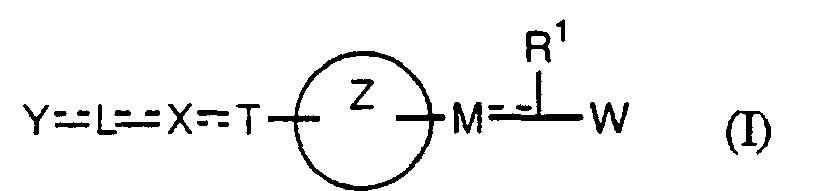
The present invention provides a novel carboxylic acid compound, a salt thereof or a hydrate of them useful as an insulin-resistant improver, and a medicament comprising the compound as an active ingredient. That is, the present invention provides a carboxylic acid compound represented by the following formula (I), a salt thereof, an ester thereof or a hydrate of them.
Figure 80000001
In the formula, R1 represents hydrogen atom, hydroxyl group or a C1-6 alkyl group etc. which may have one or more substituents; L represents a single or double bond or a C1-6 alkylene group etc. which may have one or more substituents; M represents a single bond or a C1-6 alkylene group etc. which may have one or more substituents; T represents a single bond or a C1-3 alkylene group which may have one or more substituents; W represents carboxyl group or a group represented by the formula -CON(Rw1)Rw2 (wherein Rw1 and Rw2 are the same as or different from each other and each represents hydrogen atom, formyl group etc.) etc.;
Figure 80000002
represents a single or double bond; X represents oxygen atom or a C2-6 alkenylene group etc. which may have one or more substituents; Y represents a C5-12 aromatic hydrocarbon group etc. which may have one or more substituents and which may have one or more heteroatoms; and ring Z represents a C5-6 aromatic hydrocarbon group which may have 0 to 4 substituents and which may have one or more heteroatoms.

Description
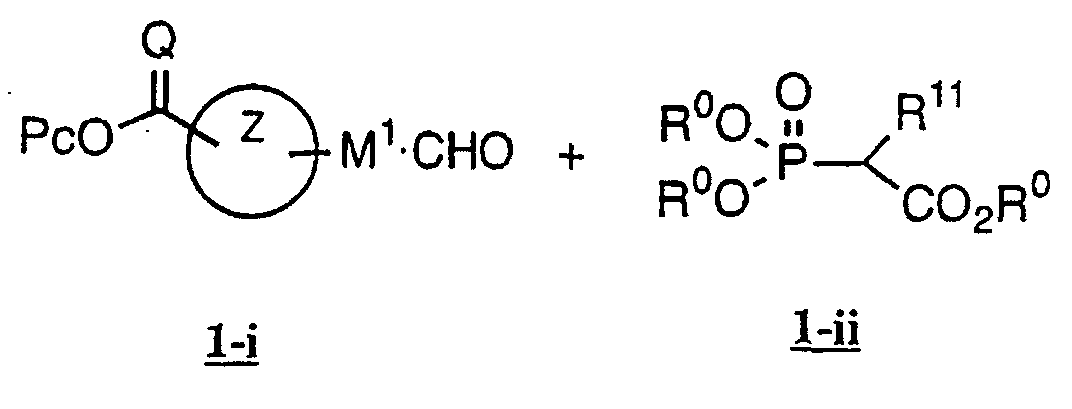
Technical Field
The present invention relates to a novel carboxylic acid compound useful for prevention or treatment of hyperglycemia and hyperlipemia, a salt thereof, an ester thereof or a hydrate of them, and to a medicament comprising the compound.
Prior Art
Diabetes mellitus refers to a durable hyperglycemic condition attributable to the absolute or relative shortage of intrinsic insulin (blood sugar-depressing hormone produced and secreted from Langerhans islet β cells in the pancreas), and in this disease, metabolic abnormalities caused by this condition appear as various morbid states.
Diabetes mellitus is classified roughly into insulin dependent diabetes mellitus (IDDM) that is diabetes mellitus of first type, for treatment of which insulin administration is absolutely necessary, non insulin dependent diabetes mellitus (NIDDM) that is diabetes mellitus of second type, and other diabetes mellitus (secondary diabetes mellitus; diabetes mellitus occurs as one symptom of other diseases).
In particular, as life-style is modernized, NIDDM is rapidly increased due to overeating and lack of exercise, thus causing a social problem. While IDDM occurs mainly in infants, NIDDM occurs in middle-aged or elderly persons, to account for the majority of diabetes mellitus in Japan. It is said that NIDDM occurs owing to insulin function-suppressing factors (insulin resistance) such as overeating, lack of exercise, obesity and stress in addition to hereditary factors.
Since excessive intake of calories and obesity resulting from lack of exercise are related to diabetes mellitus as described above, the therapy is based on 3 kinds of therapies, that is, dietary therapy, exercise therapy and chemotherapy.
However, there are not a few cases where dietary therapy and exercise therapy are hardly to conduct because of an increase in the number of persons of advanced age in this aging society in recent years.
In chemotherapy of NIDDM, sulfonyl urea (SU) medicines such as tolbutamide, chlorpropamide and tolazamide and biguanide (BG) medicines such as metformin and buformin have been used as oral blood sugar depressants, but the morbid state of NIDDM is characterized by insulin deficiency and insulin resistance, and it cannot be said that the SU medicines stimulating insulin secretion from pancreatic β cells are effective therapeutic medicines for the insulin resistance of NIDDM because the sufficient insulin secretion induced by the medicines cannot be well controlled in a target organ, thus permitting high blood sugar levels. Further, the BG medicines may permit the onset of lactic acid acidosis, so use of such medicines is limited to a certain extent. Further, these chemicals often caused severe low blood sugar as a side effect.
To solve these problems, development of chemicals with a new working mechanism is advancing, and thiazolidine derivatives such as Troglitazone, Pioglitazone and Rosiglitazone are called insulin-resistant improvers, and these chemicals recently attract attention because they can ameliorate insulin resistance (or enhance the action of insulin) and lower blood sugar without promoting secretion of insulin from the pancreas.
It has been revealed that these thiazolidine-type chemicals are related to differentiation of adipocytes, and exhibit their action via an intranuclear receptor PPARγ (peroxisome proliferator-activated receptor gamma: a transcriptional factor important for differentiation of adipocytes) (J. Biol. Chem., 270, 12953-12956, 1995). By the differentiation of pre-adipocytes, immature and small adipocytes with less secretion of TNFα, FFA and leptin are increased thus resulting in amelioration of insulin resistance.
Thiazolidine derivatives such as the above Troglitazone, Pioglitazone and Rosiglitazone also act as agonists for PPARγ, to exhibit the effect of ameliorating insulin resistance.
Besides PPARγ, PPAR subtypes such as α, β etc. have been found, any of which regulate expression of genes involved in lipid metabolism. The homology of each subtype among different biological species is higher than the homology of these subtypes in the same species, and with respect to distribution of each subtype in tissues, PPARγ is located substantially in adipose tissues while PPARα occurs mainly in the liver, heart and kidney, and therefore it was considered that each subtype has an independent function. In recent years, it has been revealed that PPARγ mainly mediates lipid anabolism by promoting expression of a group of genes for LPL, acyl-CoA carboxylase, GPDH etc. to convert sugar into lipid and storing the lipid, while PPARα mediates lipid catabolism by regulating expression of a gene group involved in intake of fatty acids into cells and oxidation thereof to decompose lipid.
As thiazolidine derivatives acting as PPARγ and α dual agonists, compounds disclosed in e.g. JP-A 9-48771 are known.
Further, some compounds are known as insulin-resistant improvers having a carboxylic acid moiety in their structure (Current Pharmaceutical Design, 2, No. 1, pp. 85-102, 1996; Bioorganic & Medicinal Chemistry Letters, 6, No. 17, pp. 2121-2126, 1996).
However, it has been reported that some chemicals acting as PPARγ agonists cause hepatic damage and thus should be carefully used, so chemicals satisfactory in both therapeutic effects and side effects such as toxicity are still not obtained.
Further, compounds having a thiazolidine moiety replaced by a carboxylic acid derivative are merely presented in literatures and not marketed. Further, there is no report showing that such compounds can be used as PPARγ and α dual agonists, and as a matter of course, their γ, α and β triple agonist action is not known. However, it is also estimated that the toxicity of PPARγ agonists described above is the unique one derived from the thiazolidine moiety, and if a compound exhibiting the above action with a new structure in place of the above structure can be found, the compound can be expected to solve the problem of toxicity, and is thus very useful.
The conventional chemicals are still unsatisfactory in respect of neutral fat (triglyceride (TG)) related closely to arteriosclerosis.
Further, the action of PPARβ to induce differentiation of adipocytes is known (J. Biol. Chem., 274, No. 31, pp. 21920-21925), and by this action, cholesterol levels are reported to be lowered (WO9904815), and if a compound having an agonist action for this subtype can be found, this compound can be expected to exhibit a higher activity than that of the conventional insulin-resistant improvers and to reduce side effects such as hepatic toxicity.
From the foregoing aspects, there is demand for development of excellent chemicals.
Disclosure of Invention
For the purpose of providing a medicament effective in prevention or treatment of hyperglycemia, which satisfies these various requirements, the present inventors made extensive study and, as a result, they found that a carboxylic acid derivative having a novel structure has an excellent anti-hyperglycemia and anti-hyperlipemia action, thus completing the present invention.
That is, the present invention relates to a carboxylic acid derivative represented by the formula:
Figure 00060001
(wherein R1 represents hydrogen atom, hydroxyl group or a C1-6 alkyl group, C1-6 alkoxy group, C1-6 alkylthio group, C1-6 hydroxyalkyl group, C1-6 hydroxyalkoxy group, C1-6 hydroxyalkylthio group, C1-6 aminoalkyl group, C1-6 aminoalkoxy group, C1-6 aminoalkylthio group, C1-6 halogenated alkyl group, C1-6 halogenated alkoxy group, C1-6 halogenated alkylthio group, C2-12 alkoxyalkyl group, C2-12 alkoxyalkoxy group, C2-12 alkoxyalkylthio group, C3-7 cycyloalkyl group, C3-7 cycloalkyloxy group, C3-7 cycloalkylthio group, C2-6 alkenyl group, C2-6 alkenyloxy group, C2-6 alkenylthio group, C2-6 alkynyl group, C2-6 alkynyloxy group, C2-6 alkynylthio group, C6-12 aryl group, C6-12 aryloxy group, C6-12 arylthio group, C7-18 alkylaryl group, C7- 18 alkylaryloxy group, C7-18 alkylarylthio group, C7-18 aralkyl group, C7-18 aralkyloxy group or C7-18 aralkylthio group, each of which may have one or more substituents; L represents a single or double bond or a C1-6 alkylene group, C2-6 alkenylene group or C2-6 alkynylene group, each of which may have one or more substituents; M represents a single bond or a C1-6 alkylene group, C2-6 alkenylene group or C2-6 alkynylene group, each of which may have one or more substituents; T represents a single bond or a C1-3 alkylene group, C2-3 alkenylene group or C2-3 alkynylene group, each of which may have one or more substituents; W represents a 2,4-dioxothiazolidine-5-yl group, 2,4-dioxothiazolidine-5-ylidene group, carboxyl group or a group represented by -CON(Rw1)Rw2 (wherein Rw1 and Rw2 are the same as or different from each other and each represents hydrogen atom, formyl group or a C1-6 alkyl group, C2-7 aliphatic acyl group or C7-19 aromatic acyl group, each of which may have one or more substituents), provided that the case where T is a single bond; and W is 2,4-dioxothiazolidine-5-yl group or 2,4-dioxothiazolidine-5-ylidene group in the above definition is excluded;
Figure 00070001
represents a single or double bond; X represents an oxygen atom, a C2-6 alkenylene group which may have one or more substituents, hydroxymethylene group, or a group represented by the formula -CQ- (wherein Q represents oxygen atom or sulfur atom), -CQNRx- (wherein Q represents the same group as defined above; Rx represents hydrogen atom, formyl group or a C1-6 alkyl group, C2-7 aliphatic acyl group or C7-19 aromatic acyl group, each of which may have one or more substituents), -NRxCQ- (wherein Q and Rx each represent the same group as defined above), -SO2NRx- (wherein Rx represents the same group as defined above), -NRxSO2- (wherein Rx represents the same group as defined above) or -NRx1CQNRx2- (wherein Q represents the same group as defined above; and Rx1 and Rx2 are the same as or different from each other and each represents hydrogen atom, formyl group or a C1-6 alkyl group, C2-7 aliphatic acyl group or C7-19 aromatic acyl group, each of which may have one or more substituents), provided that the case where T is a single bond; and X is oxygen atom in the above definition is excluded; Y represents a C5-12 aromatic hydrocarbon group or C3-7 alicyclic hydrocarbon group which may have one or more substituents and which may further have one or more heteroatoms; and ring Z represents a C5-6 aromatic hydrocarbon group which may have 0 to 4 substituents and which may have one or more heteroatoms, provided that a group represented by the formula:
Figure 00080001
(wherein each symbol has the same meaning as defined above) and a group represented by the formula:
Figure 00080002
(wherein each symbol has the same meaning as defined above) are bound to each other via 3 atoms on ring Z), a salt thereof, an ester thereof or a hydrate of them, and to a medicament comprising it. Specifically, it relates to the medicament which is based on PPAR α and γ dual agonism; the medicament based on PPAR α, β and γ triple agonism; the medicament which is an insulin-resistant improver; the medicament which is an agent for preventing or treating diabetes; and the medicament which is an agent for preventing or treating X syndromes.
The present invention provides a method for preventing, treating or ameliorating diseases against which PPAR α and γ dual agonism or PPAR α, β and γ triple agonism is effective, by administering a pharmacologically effective amount of the compound represented by the above formula (I), a salt thereof, an ester thereof or a hydrate of them to a patient. Further, the present invention also provides use of the compound represented by the above formula (I), a salt thereof, an ester thereof or a hydrate of them, for producing an agent for preventing, treating or ameliorating diseases against which PPAR α and γ dual agonism or PPAR α, β and γ triple agonism is effective.
Hereinafter, the present invention is described in detail.
The present invention is as described above, and it is preferable that in the formula (I), W is a carboxylic acid for the compound of the present invention, a salt thereof, an ester thereof or a hydrate of them; in the formula (I), R1 is a C1-6 alkyl group or C1-6 alkoxy group, each of which may have one or more substituents, for the carboxylic acid derivative of the present invention, a salt thereof, an ester thereof or a hydrate of them; in the formula (I), ring Z is a benzene ring which may further have 0 to 4 substituents, for the carboxylic acid derivative of the present invention, a salt thereof, an ester thereof or a hydrate of them; in the formula (I) , X is a group represented by -CQNRx- (wherein Q and Rx each represent the same group as defined above) or -NRxCQ- (wherein Q and Rx each represent the same group as defined above), for the carboxylic acid derivative of the present invention, a salt thereof, an ester thereof or a hydrate of them; in the formula (I), Y is a C5-12 aromatic hydrocarbon group which may have one or more substituents for the carboxylic acid derivative of the present invention, a salt thereof, an ester thereof or a hydrate of them; in the formula (I) , L or M is a C1-6 alkylene group for the carboxylic acid derivative of the present invention, a salt thereof, an ester thereof or a hydrate of them; in the formula (I), R1 is a C1-6 alkyl group or C1-6 alkoxy group, each of which may have one or more substituents, and ring Z is a benzene ring which may further have 0 to 4 substituents, for the carboxylic acid derivative of the present invention, a salt thereof, an ester thereof or a hydrate of them; and in the formula (I), X is a group represented by -CQNRx- (wherein Q and Rx each represent the same group as defined above) or -NRxCQ- (wherein Q and Rx each represent the same group as defined above), and Y is a C5-12 aromatic hydrocarbon group which may have one or more substituents, for the carboxylic acid derivative of the present invention, a salt thereof, an ester thereof or a hydrate of them; and it is more preferable that in the formula (I), R1 represents a C1-6 alkyl group or C1-6 alkoxy group, each of which may have one or more substituent, ring Z is a benzene ring which may further have 0 to 4 substituents, and X is a group represented by -CQNRx- (wherein Q and Rx each represent the same group as defined above) or -NRxCQ- (wherein Q and Rx each represent the same group as defined above), and Y is a C5-12 aromatic hydrocarbon group which may have one or more substituents, for the carboxylic acid derivative of the present invention, a salt thereof, an ester thereof or a hydrate of them.
In this specification, the structural formulae of the compounds may, for convenience' sake, indicate a certain isomer, but the present invention encompasses every possible isomer such as geometric isomer, optical isomer based on asymmetric carbon, stereoisomer and tautomer, which can occur in the structures of the compounds of the present invention, and mixtures of these isomers, and therefore, the compounds of the present invention are not limited by the formulae shown for convenience' sake.
Now, the terms used in this specification are described in detail.
When R1, W, Rx, Rx1 and Rx2 each represents a C1-6 alkyl group which may have one or more substituents, the alkyl group means a C1-6 linear or branched alkyl group, and specific examples thereof include methyl group, ethyl group, n-propyl group, i-propyl group, n-butyl group, i-butyl group, sec-butyl group, t-butyl group, n-pentyl group, i-pentyl group, sec-pentyl group, t-pentyl group, neopentyl group, 1-methylbutyl group, 2-methylbutyl group, 1,1-dimethylpropyl group, 1,2-dimethylpropyl group, n-hexyl group, i-hexyl group, 1-methylpentyl group, 2-methylpentyl group, 3-methylpentyl group, 1,1-dimethylbutyl group, 1,2-dimethylbutyl group, 2,2-dimethylbutyl group, 1,3-dimethylbutyl group, 2,3-dimethylbutyl group, 3,3-dimethylbutyl group, 1-ethylbutyl group, 2-ethylbutyl group, 1,1,2-trimethylpropyl group, 1,2,2-trimethylpropyl group, 1-ethyl-1-methylpropyl group and 1-ethyl-2-methylpropyl group, preferably methyl group, ethyl group, n-propyl group, i-propyl group, n-butyl group, i-butyl group, sec-butyl group, t-butyl group, n-pentyl group, i-pentyl group, sec-pentyl group, t-pentyl group, neopentyl group, 1-methylbutyl group, 2-methylbutyl group, 1,1-dimethylpropyl group, 1,2-dimethylpropyl group, n-hexyl group and i-hexyl group, more preferably methyl group, ethyl group, n-propyl group, i-propyl group, n-butyl group, i-butyl group, sec-butyl group, t-butyl group, n-pentyl group, i-pentyl group, sec-pentyl group, t-pentyl group, neopentyl group, 1-methylbutyl group, 2-methylbutyl group, 1,1-dimethylpropyl group and 1,2-dimethylpropyl group, further preferably methyl group, ethyl group, n-propyl group, i-propyl group, n-butyl group, i-butyl group, sec-butyl group and t-butyl group, and most preferably methyl group, ethyl group, n-propyl group and i-propyl group.
Herein, the phrase "which may have a substituent" specifically means that the group may be substituted with a substituent such as hydroxyl group; thiol group; nitro group; morpholino group; thiomorpholino group; a halogen atom such as fluorine atom, chlorine atom, bromine atom and iodine atom; nitrile group; azide group; formyl group; alkyl group such as methyl group, ethyl group, propyl group, isopropyl group and butyl group; alkenyl group such as vinyl group, allyl group and propenyl group; alkynyl group such as ethynyl group, butynyl group and propargyl group; alkoxy group such as methoxy group, ethoxy group, propoxy group and butoxy group corresponding to the lower alkyl group; halogenoalkyl group such as fluoromethyl group, difluoromethyl group, trifluoromethyl group and fluoroethyl group; hydroxyalkyl group such as hydroxymethyl group, hydroxyethyl group and hydroxypropyl group; guanidino group; formimidoyl group; acetoimidoyl group; carbamoyl group; thiocarbamoyl group; carbamoyl alkyl group such as carbamoyl methyl group and carbamoyl ethyl group; alkyl carbamoyl group such as methyl carbamoyl group and dimethyl carbamoyl group; carbamide group; alkanoyl group such as acetyl group; amino group; alkyl amino group such as methyl amino group, ethyl amino group and isopropyl amino group; dialkyl amino group such as dimethyl amino group, methyl ethyl amino group and diethyl amino group; amino alkyl group such as amino methyl group, amino ethyl group and amino propyl group; carboxy group; alkoxycarbonyl group such as methoxycarbonyl group, ethoxycarbonyl group and propoxycarbonyl group; alkoxycarbonyl alkyl group such as methoxycarbonyl methyl group, ethoxycarbonyl methyl group, propoxycarbonyl methyl group, methoxycarbonyl ethyl group, ethoxycarbonyl ethyl group and propoxycarbonyl ethyl group; alkyloxyalkyl group such as methyloxymethyl group, methyloxyethyl group, ethyloxymethyl group and ethyloxyethyl group; alkylthioalkyl group such as methylthiomethyl group, methylthioethyl group, ethylthiomethyl group and ethylthioethyl group; aminoalkyl aminoalkyl group such as aminomethyl aminomethyl group and aminoethyl aminomethyl group; alkyl carbonyloxy group such as methyl carbonyloxy group, ethyl carbonyloxy group and isopropyl carbonyloxy group; arylalkoxy alkoxy alkyl group such as oxymethyl group and benzyloxy ethyloxy ethyl group; hydroxyalkoxyalkyl group such as hydroxyethyloxymethyl group and hydroxyethyloxyethyl group; arylalkoxyalkyl group such as benzyloxymethyl group, benzyloxyethyl group and benzyloxypropyl group; quaternary ammonio group such as trimethyl ammonio group, methyl ethyl methyl ammonio group and triethyl ammonio group; cycloalkyl group such as cyclopropyl group, cyclobutyl group, cyclopentyl group and cyclohexyl group; cycloalkenyl group such as cyclopropenyl group, cyclobutenyl group, cyclopentenyl group and cylohexenyl group; aryl group such as phenyl group, pyridinyl group, thienyl group, furyl group and pyrolyl group; alkyl thio group such as methyl thio group, ethyl thio group, propyl thio group and butyl thio group; aryl thio group such as phenyl thio group, pyridinyl thio group, thienyl thio group, furyl thio group and pyrolyl thio group; aryl lower alkyl group such as benzyl group, trityl group and dimethoxy trityl group; substituted sulfonyl group such as sulfonyl group, mesyl group and p-toluene sulfonyl group; aryloyl group such as benzoyl group; halogenoaryl group such as fluorophenyl group and bromophenyl group; and oxyalkoxy group such as methylene dioxy group.
The phrase "which may have one or more substituents" means that the group may have one or more of these groups in an arbitrary combination, and includes e.g. an alkyl group, alkenyl group, alkynyl group and alkoxy group substituted with hydroxyl group, thiol group, nitro group, morpholino group, thiomorpholino group, a halogen atom, nitrile group, azide group, formyl group, amino group, alkyl amino group, dialkyl amino group, carbamoyl group and sulfonyl group.
Hereinafter, the phrases "which may have a substituent" and "which may have one or more substituents" in the present invention have the meanings as defined above.
When R1 represents a C1-6 alkoxy group which may have one or more substituents, the alkoxy group means a C1-6 linear or branched alkoxy group and refers to a group having an oxygen atom bound to the end of the alkyl group. Specific examples thereof include methoxy group, ethoxy group, n-propoxy group, i-propoxy group, n-butoxy group, i-butoxy group, sec-butoxy group, t-butoxy group, n-pentyloxy group, i-pentyloxy group, sec-pentyloxy group, t-pentyloxy group, neopentyloxy group, 1-methylbutoxy group, 2-methylbutoxy group, 1,1-dimethylpropoxy group, 1,2-dimethylpropoxy group, n-hexyloxy group, i-hexyloxy group, 1-methylpentyloxy group, 2-methylpentyloxy group, 3-methylpentyloxy group, 1,1-dimethylbutoxy group, 1,2-dimethylbutoxy group, 2,2-dimethylbutoxy group, 1,3-dimethylbutoxy group, 2,3-dimethylbutoxy group, 3,3-dimethylbutoxy group, 1-ethylbutoxy group, 2-ethylbutoxy group, 1,1,2-trimethylpropoxy group, 1,2,2-trimethylpropoxy group, 1-ethyl-1-methylpropoxy group and 1-ethyl-2-methylpropoxy group; preferably methoxy group, ethoxy group, n-propoxy group, i-propoxy group, n-butoxy group, i-butoxy group, sec-butoxy group, t-butoxy group, n-pentyloxy group, i-pentyloxy group, sec-pentyloxy group, t-pentyloxy group, neopentyloxy group, 1-methylbutoxy group, 2-methylbutoxy group, 1,1-dimethylpropoxy group, 1,2-dimethylpropoxy group, n-hexyloxy group and i-hexyloxy group; more preferably methoxy group, ethoxy group, n-propoxy group, i-propoxy group, n-butoxy group, i-butoxy group, sec-butoxy group, t-butoxy group, n-pentyloxy group, i-pentyloxy group, sec-pentyloxy group, t-pentyloxy group, neopentyloxy group, 1-methylbutoxy group, 2-methylbutoxy group, 1,1-dimethylpropoxy group and 1,2-dimethylpropoxy group; further preferably methoxy group, ethoxy group, n-propoxy group, i-propoxy group, n-butoxy group, i-butoxy group, sec-butoxy group and t-butoxy group; and most preferably a methoxy group, ethoxy group, n-propoxy group and i-propoxy group.
When R1 represents a C1-6 alkylthio group which may have one or more substituents, the alkylthio group represents a C1-6 linear or branched alkylthio group and refers to a group having a sulfur atom bound to the end of the alkyl group. Specific examples thereof include methylthio group, ethylthio group, n-propylthio group, i-propylthio group, n-propylthio group, i-butylthio group, sec-butylthio group, t-butylthio group, n-pentylthio group, i-pentylthio group, sec-pentylthio group, t-pentylthio group, neopentylthio group, 1-methylbutylthio group, 2-methylbutylthio group, 1,1-dimethylpropylthio group, 1,2-dimethylpropylthio group, n-hexylthio group, i-hexylthio group, 1-methylpentylthio group, 2-methylpentylthio group, 3-methylpentylthio group, 1,1-dimethylbutylthio group, 1,2-dimethylbutylthio group, 2,2-dimethylbutylthio group, 1,3-dimethylbutylthio group, 2,3-dimethylbutylthio group, 3,3-dimethylbutylthio group, 1-ethylbutylthio group, 2-ethylbutylthio group, 1,1,2-trimethylpropylthio group, 1,2,2-trimethylpropylthio group, 1-ethyl-1-methylpropylthio group and 1-ethyl-2-methylpropylthio group; preferably methylthio group, ethylthio group, n-propylthio group, i-propylthio group, n-butylthio group, i-butylthio group, sec-butylthio group, t-butylthio group, n-pentylthio group, i-pentylthio group, sec-pentylthio group, t-pentylthio group, neopentylthio group, 1-methylbutylthio group, 2-methylbutylthio group, 1,1-dimethylpropylthio group, 1,2-dimethylpropylthio group, n-hexylthio group and i-hexylthio group; more preferably methylthio group, ethylthio group, n-propylthio group, i-propylthio group, n-butylthio group, i-butylthio group, sec-butylthio group, t-butylthio group, n-pentylthio group, i-pentylthio group, sec-pentylthio group, t-pentylthio group, neopentylthio group, 1-methylbutylthio group, 2-methylbutylthio group, 1,1-dimethylpropylthio group and 1,2-dimethylpropylthio group; further preferably methylthio group, ethylthio group, n-propylthio group, i-propylthio group, n-butylthio group, i-butylthio group, sec-butylthio group and t-butylthio group; and most preferably a methylthio group, ethylthio group, n-propylthio group and i-propylthio group.
When R1 represents a C1-6 hydroxyalkyl group which may have one or more substituents, the hydroxyalkyl group represents a group having the C1-6 linear or branched alkyl group substituted at a substitutable site with a hydroxy group. Specific examples thereof include hydroxymethyl group, 2-hydroxyethyl group and 1-hydroxyethyl group.
Similarly, when R1 represents a C1-6 hydroxyalkoxy group which may have one or more substituents, the hydroxyalkoxy group represents a group having the C1-6 linear or branched alkoxy group substituted at a substitutable site with a hydroxy group. Specific examples thereof include hydroxymethoxy group, 2-hydroxyethoxy group and 1-hydroxyethoxy group.
Similarly, when R1 represents a C1-6 hydroxyalkylthio group which may have one or more substituents, the hydroxyalkylthio group represents a group having the C1-6 linear or branched alkylthio group substituted at a substitutable site with a hydroxy group. Specific examples thereof include hydroxymethylthio group, 2-hydroxyethylthio group and 1-hydroxyethylthio group.
When R1 represents a C1-6 aminoalkyl group which may have one or more substituents, the aminoalkyl group represents a group having the C1-6 linear or branched alkyl group substituted at a substitutable site with an amino group. Specific examples thereof include aminomethyl group, 2-aminoethyl group and 1-aminoethyl group.
Similarly, when R1 represents a C1-6 aminoalkoxy group which may have one or more substituents, the aminoalkoxy group represents a group having the C1-6 linear or branched alkoxy group substituted at a substitutable site with an amino group. Specific examples thereof include aminomethoxy group, 2-aminoethoxy group and 1-aminoethoxy group.
Similarly, when R1 represents a C1-6 aminoalkylthio group which may have one or more substituents, the aminoalkylthio group represents a group having the C1-6 linear or branched alkylthio group substituted at a substitutable site with an amino group. Specific examples thereof include aminomethylthio group, 2-aminoethylthio group and 1-aminoethylthio group.
When R1 represents a C1-6 halogenated alkyl group which may have one or more substituents, the halogenated alkyl group represents a group having the C1-6 linear or branched alkyl group substituted at substitutable sites with one or more halogen atoms. Herein, the halogen atoms refer to fluorine atom, chlorine atom, bromine atom and iodine atom. Specific examples of such a group include fluoromethyl group, trifluoromethyl group, 2-fluoroethyl group and 1-fluoroethyl group.
Similarly, when R1 represents a C1-6 halogenated alkoxy group which may have one or more substituents, the halogenated alkoxy group represents a group having the C1-6 linear or branched alkoxy group substituted at substitutable sites with one or more halogen atoms. Specific examples thereof include fluoromethoxy group, trifluoromethoxy group, 2-fluoroethoxy group and 1-fluoroethoxy group.
Similarly, when R1 represents a C1-6 halogenated alkylthio group which may have one or more substituents, the halogenated alkylthio group represents a group having the C1-6 linear or branched alkylthio group substituted at substitutable sites with one or more halogen atoms. Specific examples thereof include fluoromethylthio group, trifluoromethylthio group, 2-fluoroethylthio group and 1-fluoroethylthio group.
When R1 represents a C2-12 alkoxyalkyl group which may have one or more substituents, the alkoxyalkyl group represents a group having the C1-6 linear or branched alkyl group substituted at a substitutable site with the C1-6 linear or branched alkoxy group. Specific examples thereof include methoxymethyl group, ethoxymethyl group, 1-methoxyethyl group, 2-methoxyethyl group, 1-ethoxyethyl group and 2-ethoxyethyl group.
Similarly, when R1 represents a C2-12 alkoxyalkoxy group which may have one or more substituents, the alkoxyalkoxy group represents a group having the C1-6 linear or branched alkoxy group substituted at a substitutable site with the C1-6 linear or branched alkoxy group. Specific examples thereof include methoxymethoxy group, ethoxymethoxy group, 1-methoxyethoxy group, 2-methoxyethoxy group, 1-ethoxyethoxy group and 2-ethoxyethoxy group.
Similarly, when R1 represents a C2-12 alkoxyalkylthio group which may have one or more substituents, the alkoxyalkylthio group represents a group having the C1-6 linear or branched alkylthio group substituted at a substitutable site with the C1-6 linear or branched alkoxy group. Specific examples thereof include methoxymethylthio group, ethoxymethylthio group, 1-methoxyethylthio group, 2-methoxyethylthio group, 1-ethoxyethylthio group and 2-ethoxyethylthio group.
When R1 represents a C3-7 cycloalkyl group which may have one or more substituents, the cycloalkyl group means a C3-7 cyclic alkyl group, and specific examples thereof include cyclopropyl group, cyclobutyl group, cyclopentyl group, cyclohexyl group and cycloheptyl group.
Similarly, when R1 represents a C3-7 cycloalkyloxy group which may have one or more substituents, the cycloalkyloxy group refers to a group having an oxygen atom bound to the end of the C3-7 cyclic alkyl group, and specific examples thereof include cyclopropyloxy group, cyclobutyloxy group, cyclopentyloxy group, cyclohexyloxy group and cycloheptyloxy group.
Similarly, when R1 represents a C3-7 cycloalkylthio group which may have one or more substituents, the cycloalkylthio group refers to a group having a sulfur atom bound to the end of the C3-7 cycloalkyl group, and specific examples thereof include cyclopropylthio group, cyclobutylthio group, cyclopentylthio group, cyclohexylthio group and cycloheptylthio group.
When R1 represents a C2-6 alkenyl group which may have one or more substituents, the alkenyl group is a C2-6 linear or branched alkenyl group and refers to a compound residue having a double bond in the alkyl group containing 2 or more carbon atoms. Specific examples of there of include ethenyl group, 1-propene-1-yl group, 2-propene-1-yl group, 3-propene-1-yl group, 1-butene-1-yl group, 1-butene-2-yl group, 1-butene-3-yl group, 1-butene-4-yl group, 2-butene-1-yl group, 2-butene-2-yl group, 1-methyl-1-propene-1-yl group, 2-methyl-1-propene-1-yl group, 1-methyl-2-propene-1-yl group, 2-methyl-2-propene-1-yl group, 1-methyl-1-butene-1-yl group, 2-methyl-1-butene-1-yl, 3-methyl-1-butene-1-yl group, 1-methyl-2-butene-1-yl group, 2-methyl-2-butene-1-yl group, 3-methyl-2-butene-1-yl group, 1-methyl-3-butene-1-yl group, 2-methyl-3-butene-1-yl group, 3-methyl-3-butene-1-yl group, 1-ethyl-1-butene-1-yl group, 2-ethyl-1-butene-1-yl group, 3-ethyl-1-butene-1-yl group, 1-ethyl-2-butene-1-yl group, 2-ethyl-2-butene-1-yl group, 3-ethyl-2-butene-1-yl group, 1-ethyl-3-butene-1-yl group, 2-ethyl-3-butene-1-yl group, 3-ethyl-3-butene-1-yl group, 1,1-dimethyl-1-butene-1-yl group, 1,2-dimethyl-1-butene-1-yl group, 1,3-dimethyl-1-butene-1-yl group, 2,2-dimethyl-1-butene-1-yl group, 3,3-dimethyl-1-butene-1-yl group, 1,1-dimethyl-2-butene-1-yl group, 1,2-dimethyl-2-butene-1-yl group, 1,3-dimethyl-2-butene-1-yl group, 2,2-dimethyl-2-butene-1-yl group, 3,3-dimethyl-2-butene-1-yl group, 1,1-dimethyl-3-butene-1-yl group, 1,2-dimethyl-3-butene-1-yl group, 1,3-dimethyl-3-butene-1-yl group, 2,2-dimethyl-3-butene-1-yl group, 3,3-dimethyl-3-butene-1-yl group, 1-pentene-1-yl group, 2-pentene-1-yl group, 3-pentene-1-yl group, 4-pentene-1-yl group, 1-pentene-2-yl group, 2-pentene-2-yl group, 3-pentene-2-yl group, 4-pentene-2-yl group, 1-pentene-3-yl group, 2-pentene-3-yl group, 1-pentene-1-yl group, 2-pentene-1-yl group, 3-pentene-1-yl group, 4-pentene-1-yl group, 1-pentene-2-yl group, 2-pentene-2-yl group, 3-pentene-2-yl group, 4-pentene-2-yl group, 1-pentene-3-yl group, 2-pentene-3-yl group, 1-methyl-1-pentene-1-yl group, 2-methyl-1-pentene-1-yl group, 3-methyl-1-pentene-1-yl group, 4-methyl-1-pentene-1-yl group, 1-methyl-2-pentene-1-yl group, 2-methyl-2-pentene-1-yl group, 3-methyl-2-pentene-1-yl group, 4-methyl-2-pentene-1-yl group, 1-methyl-3-pentane-1-yl group, 2-methyl-3-pentene-1-yl group, 3-methyl-3-pentene-1-yl group, 4-methyl-3-pentene-1-yl group, 1-methyl-4-pentene-1-yl group, 2-methyl-4-pentene-1-yl group, 3-methyl-4-pentene-1-yl group, 4-methyl-4-pentene-1-yl group, 1-methyl-1-pentene-2-yl group, 2-methyl-1-pentene-2-yl group, 3-methyl-1-pentene-2-yl group, 4-methyl-1-pentene-2-yl group, 1-methyl-2-pentene-2-yl group, 2-methyl-2-pentene-2-yl group, 3-methyl-2-pentene-2-yl group, 4-methyl-2-pentene-2-yl group, 1-methyl-3-pentene-2-yl group, 2-methyl-3-pentene-2-yl group, 3-methyl-3-pentene-2-yl group, 4-methyl-3-pentene-2-yl group, 1-methyl-4-pentene-2-yl group, 2-methyl-4-pentene-2-yl group, 3-methyl-4-pentene-2-yl group, 4-methyl-4-pentene-2-yl group, 1-methyl-1-pentene-3-yl group, 2-methyl-1-pentene-3-yl group, 3-methyl-1-pentene-3-yl group, 4-methyl-1-pentene-3-yl group, 1-methyl-2-pentene-3-yl group, 2-methyl-2-pentene-3-yl group, 3-methyl-2-pentene-3-yl group, 4-methyl-2-pentene-3-yl group, 1-hexene-1-yl group, 1-hexene-2-yl group, 1-hexene-3-yl group, 1-hexene-4-yl group, 1-hexene-5-yl group, 1-hexene-6-yl group, 2-hexene-1-yl group, 2-hexene-2-yl group, 2-hexene-3-yl group, 2-hexene-4-yl group, 2-hexene-5-yl group, 2-hexene-6-yl group, 3-hexene-1-yl group, 3-hexene-2-yl group and 3-hexene-3-yl group; preferably ethenyl group, 1-propene-1-yl group, 2-propene-1-yl group, 3-propene-1-yl group, 1-butene-1-yl group, 1-butene-2-yl group, 1-butene-3-yl group, 1-butene-4-yl group, 2-butene-1-yl group, 2-butene-2-yl group, 1-methyl-1-propene-1-yl group, 2-methyl-1-propene-1-yl group, 1-methyl-2-propene-1-yl group, 2-methyl-2-propene-1-yl group, 1-methyl-1-butene-1-yl group, 2-methyl-1-butene-1-yl group, 3-methyl-1-butene-1-yl group, 1-methyl-2-butene-1-yl group, 2-methyl-2-butene-1-yl group, 3-methyl-2-butene-1-yl group, 1-methyl-3-butene-1-yl group, 2-methyl-3-butene-1-yl group, 3-methyl-3-butene-1-yl group, 1-ethyl-1-butene-1-yl group, 2-ethyl-1-butene-1-yl group, 3-ethyl-1-butene-1-yl group, 1-ethyl-2-butene-1-yl group, 2-ethyl-2-butene-1-yl group, 3-ethyl-2-butene-1-yl group, 1-ethyl-3-butene-1-yl group, 2-ethyl-3-butene-1-yl group, 3-ethyl-3-butene-1-yl group, 1,1-dimethyl-1-butene-1-yl group, 1,2-dimethyl-1-butene-1-yl group, 1,3-dimethyl-1-butene-1-yl group, 2,2-dimethyl-1-butene-1-yl group, 3,3-dimethyl-1-butene-1-yl group, 1,1-dimethyl-2-butene-1-yl group, 1,2-dimethyl-2-butene-1-yl group, 1,3-dimethyl-2-butene-1-yl group, 2,2-dimethyl-2-butene-1-yl group, 3,3-dimethyl-2-butene-1-yl group, 1,1-dimethyl-3-butene-1-yl group, 1,2-dimethyl-3-butene-1-yl group, 1,3-dimethyl-3-butene-1-yl group, 2,2-dimethyl-3-butene-1-yl group and 3,3-dimethyl-3-butene-1-yl group; more preferably ethenyl group, 1-propene-1-yl group, 2-propene-1-yl group, 3-propene-1-yl group, 1-butene-1-yl group, 1-butene-2-yl group, 1-butene-3-yl group, 1-butene-4-yl group, 2-butene-1-yl group, 2-butene-2-yl group, 1-methyl-1-propene-1-yl group, 2-methyl-1-propene-1-yl group, 1-methyl-2-propene-1-yl group, 2-methyl-2-propene-1-yl group, 1-methyl-1-butene-1-yl group, 2-methyl-1-butene-1-yl group, 3-methyl-1-butene-1-yl group, 1-methyl-2-butene-1-yl group, 2-methyl-2-butene-1-yl group, 3-methyl-2-butene-1-yl group, 1-methyl-3-butene-1-yl group, 2-methyl-3-butene-1-yl group, and 3-methyl-3-butene-1-yl group; and most preferably ethenyl group, 1-propene-1-yl group, 2-propene-1-yl group, 3-propene-1-yl group, 1-butene-1-yl group, 1-butene-2-yl group, 1-butene-3-yl group, 1-butene-4-yl group, 2-butene-1-yl group and 2-butene-2-yl group.
Similarly, when R1 represents a C2-6 alkenyloxy group which may have one or more substituents, the alkenyloxy group refers to a group having an oxygen atom bound to the end of the C2-6 linear or branched alkenyl group. Specific examples thereof include ethenyloxy group, 1-propene-1-yloxy group, 2-propene-1-yloxy group, 3-propene-1-yloxy group, 1-butene-1-yloxy group, 1-butene-2-yloxy group, 1-butene-3-yloxy group, 1-butene-4-yloxy group, 2-butene-1-yloxy group, 2-butene-2-yloxy group, 1-methyl-1-propene-1-yloxy group, 2-methyl-1-propene-1-yloxy group, 1-methyl-2-propene-1-yloxy group, 2-methyl-2-propene-1-yloxy group, 1-methyl-1-butene-1-yloxy group, 2-methyl-1-butene-1-yloxy group, 3-methyl-1-butene-1-yloxy group, 1-methyl-2-butene-1-yloxy group, 2-methyl-2-butene-1-yloxy group, 3-methyl-2-butene-1-yloxy group, 1-methyl-3-butene-1-yloxy group, 2-methyl-3-butene-1-yloxy group, 3-methyl-3-butene-1-yloxy group, 1-ethyl-1-butene-1-yloxy group, 2-ethyl-1-butene-1-yloxy group, 3-ethyl-1-butene-1-yloxy group, 1-ethyl-2-butene-1-yloxy group, 2-ethyl-2-butene-1-yloxy group, 3-ethyl-2-butene-1-yloxy group, 1-ethyl-3-butene-1-yloxy group, 2-ethyl-3-butene-1-yloxy group, 3-ethyl-3-butene-1-yloxy group, 1,1-dimethyl-1-butene-1-yloxy group, 1,2-dimethyl-1-butene-1-yloxy group, 1,3-dimethyl-1-butene-1-yloxy group, 2,2-dimethyl-1-butene-1-yloxy group, 3,3-dimethyl-1-butene-1-yloxy group, 1,1-dimethyl-2-butene-1-yloxy group, 1,2-dimethyl-2-butene-1-yloxy group, 1,3-dimethyl-2-butene-1-yloxy group, 2,2-dimethyl-2-butene-1-yloxy group, 3,3-dimethyl-2-butene-1-yloxy group, 1,1-dimethyl-3-butene-1-yloxy group, 1,2-dimethyl-3-butene-1-yloxy group, 1,3-dimethyl-3-butene-1-yloxy group, 2,2-dimethyl-3-butene-1-yloxy group, 3,3-dimethyl-3-butene-1-yloxy group, 1-pentene-1-yloxy group, 2-pentene-1-yloxy group, 3-pentene-1-yloxy group, 4-pentene-1-yloxy group, 1-pentene-2-yloxy group, 2-pentene-2-yloxy group, 3-pentene-2-yloxy group, 4-pentene-2-yloxy group, 1-pentene-3-yloxy group, 2-pentene-3-yloxy group, 1-pentene-1-yloxy group, 2-pentane-1-yloxy group, 3-pentene-1-yloxy group, 4-pentene-1-yloxy group, 1-pentene-2-yloxy group, 2-pentene-2-yloxy group, 3-pentene-2-yloxy group, 4-pentene-2-yloxy group, 1-pentene-3-yloxy group, 2-pentene-3-yloxy group, 1-methyl-1-pentene-1-yloxy group, 2-methyl-1-pentane-1-yloxy group, 3-methyl-1-pentene-1-yloxy group, 4-methyl-1-pentene-1-yloxy group, 1-methyl-2-pentene-1-yloxy group, 2-methyl-2-pentene-1-yloxy group, 3-methyl-2-pentene-1-yloxy group, 4-methyl-2-pentene-1-yloxy group, 1-methyl-3-pentene-1-yloxy group, 2-methyl-3-pentene-1-yloxy group, 3-methyl-3-pentene-1-yloxy group, 4-methyl-3-pentene-1-yloxy group, 1-methyl-4-pentene-1-yloxy group, 2-methyl-4-pentene-1-yloxy group, 3-methyl-4-pentene-1-yloxy group, 4-methyl-4-pentene-1-yloxy group, 1-methyl-1-pentene-2-yloxy group, 2-methyl-1-pentene-2-yloxy group, 3-methyl-1-pentene-2-yloxy group, 4-methyl-1-pentene-2-yloxy group, 1-methyl-2-pentene-2-yloxy group, 2-methyl-2-pentene-2-yloxy group, 3-methyl-2-pentene-2-yloxy group, 4-methyl-2-pentene-2-yloxy group, 1-methyl-3-pentene-2-yloxy group, 2-methyl-3-pentene-2-yloxy group, 3-methyl-3-pentene-2-yloxy group, 4-methyl-3-pentene-2-yloxy group, 1-methyl-4-pentene-2-yloxy group, 2-methyl-4-pentene-2-yloxy group, 3-methyl-4-pentene-2-yloxy group, 4-methyl-4-pentene-2-yloxy group, 1-methyl-1-pentene-3-yloxy group, 2-methyl-1-pentene-3-yloxy group, 3-methyl-1-pentene-3-yloxy group, 4-methyl-1-pentene-3-yloxy group, 1-methyl-2-pentene-3-yloxy group, 2-methyl-2-pentene-3-yloxy group, 3-methyl-2-pentene-3-yloxy group, 4-methyl-2-pentene-3-yloxy group, 1-hexene-1-yloxy group, 1-hexene-2-yloxy group, 1-hexene-3-yloxy group, 1-hexene-4-yloxy group, 1-hexene-5-yloxy group, 1-hexene-6-yloxy group, 2-hexene-1-yloxy group, 2-hexene-2-yloxy group, 2-hexene-3-yloxy group, 2-hexene-4-yloxy group, 2-hexene-5-yloxy group, 2-hexene-6-yloxy group, 3-hexene-1-yloxy group, 3-hexene-2-yloxy group and 3-hexene-3-yloxy group; preferably ethenyloxy group, 1-propene-1-yloxy group, 2-propene-1-yloxy group, 3-propene-1-yloxy group, 1-butene-1-yloxy group, 1-butene-2-yloxy group, 1-butene-3-yloxy group, 1-butene-4-yloxy group, 2-butene-1-yloxy group, 2-butene-2-yloxy group, 1-methyl-1-propene-1-yloxy group, 2-methyl-1-propene-1-yloxy group, 1-methyl-2-propene-1-yloxy group, 2-methyl-2-propene-1-yloxy group, 1-methyl-1-butene-1-yloxy group, 2-methyl-1-butene-1-yloxy group, 3-methyl-1-butene-1-yloxy group, 1-methyl-2-butene-1-yloxy group, 2-methyl-2-butene-1-yloxy group, 3-methyl-2-butene-1-yloxy group, 1-methyl-3-butene-1-yloxy group, 2-methyl-3-butene-1-yloxy group, 3-methyl-3-butene-1-yloxy. group, 1-ethyl-1-butene-1-yloxy group, 2-ethyl-1-butene-1-yloxy group, 3-ethyl-1-butene-1-yloxy group, 1-ethyl-2-butene-1-yloxy group, 2-ethyl-2-butene-1-yloxy group, 3-ethyl-2-butene-1-yloxy group, 1-ethyl-3-butene-1-yloxy group, 2-ethyl-3-butene-1-yloxy group, 3-ethyl-3-butene-1-yloxy group, 1,1-dimethyl-1-butene-1-yloxy group, 1,2-dimethyl-1-butene-1-yloxy group, 1,3-dimethyl-1-butene-1-yloxy group, 2,2-dimethyl-1-butene-1-yloxy group, 3,3-dimethyl-1-butene-1-yloxy group, 1,1-dimethyl-2-butene-1-yloxy group, 1,2-dimethyl-2-butene-1-yloxy group, 1,3-dimethyl-2-butene-1-yloxy group, 2,2-dimethyl-2-butene-1-yloxy group, 3,3-dimethyl-2-butene-1-yloxy group, 1,1-dimethyl-3-butene-1-yloxy group, 1,2-dimethyl-3-butene-1-yloxy group, 1,3-dimethyl-3-butene-1-yloxy group, 2,2-dimethyl-3-butene-1-yloxy group and 3,3-dimethyl-3-butene-1-yloxy group; more preferably ethenyloxy group, 1-propene-1-yloxy group, 2-propene-1-yloxy group, 3-propene-1-yloxy group, 1-butene-1-yloxy group, 1-butene-2-yloxy group, 1-butene-3-yloxy group, 1-butene-4-yloxy group, 2-butene-1-yloxy group, 2-butene-2-yloxy group, 1-methyl-1-propene-1-yloxy group, 2-methyl-1-propene-1-yloxy group, 1-methyl-2-propene-1-yloxy group, 2-methyl-2-propene-1-yloxy group, 1-methyl-1-butene-1-yloxy group, 2-methyl-1-butene-1-yloxy group, 3-methyl-1-butene-1-yloxy group, 1-methyl-2-butene-1-yloxy group, 2-methyl-2-butene-1-yloxy group, 3-methyl-2-butene-1-yloxy group, 1-methyl-3-butene-1-yloxy group, 2-methyl-3-butene-1-yloxy. group and 3-methyl-3-butene-1-yloxy group; further preferably ethenyloxy group, 1-propene-1-yloxy group, 2-propene-1-yloxy group, 3-propene-1-yloxy group, 1-butene-1-yloxy group, 1-butene-2-yloxy group, 1-butene-3-yloxy group, 1-butene-4-yloxy group, 2-butene-1-yloxy group and 2-butene-2-yloxy group; and most preferably ethenyloxy group, 1-propene-1-yloxy group, 2-propene-1-yloxy group and 3-propene-1-yloxy group.
Similarly, when R1 represents a C2-6 alkenylthio group which may have one or more substituents, the alkenylthio group refers to a group having sulfur atom bound to the end of the C2-6 linear or branched alkenyl group, and specific examples thereof include ethenylthio group, 1-propene-1-ylthio group, 2-propene-1-ylthio group, 3-propene-1-ylthio group, 1-butene-1-ylthio group, 1-butene-2-ylthio group, 1-butene-3-ylthio group, 1-butene-4-ylthio group, 2-butene-1-ylthio group, 2-butene-2-ylthio group, 1-methyl-1-propene-1-ylthio group, 2-methyl-1-propene-1-ylthio group, 1-methyl-2-propene-1-ylthio group, 2-methyl-2-propene-1-ylthio group, 1-methyl-1-butene-1-ylthio group, 2-methyl-1-butene-1-yl, 3-methyl-1-butene-1-ylthio group, 1-methyl-2-butene-1-ylthio group, 2-methyl-2-butene-1-ylthio group, 3-methyl-2-butene-1-ylthio group, 1-methyl-3-butene-1-ylthio group, 2-methyl-3-butene-1-ylthio group, 3-methyl-3-butene-1-ylthio group, 1-ethyl-1-butene-1-ylthio group, 2-ethyl-1-butene-1-ylthio group, 3-ethyl-1-butene-1-ylthio group, 1-ethyl-2-butene-1-ylthio group, 2-ethyl-2-butene-1-ylthio group, 3-ethyl-2-butene-1-ylthio group, 1-ethyl-3-butene-1-ylthio group, 2-ethyl-3-butene-1-ylthio group, 3-ethyl-3-butene-1-ylthio group, 1,1-dimethyl-1-butene-1-ylthio group, 1,2-dimethyl-1-butene-1-ylthio group, 1,3-dimethyl-1-butene-1-ylthio group, 2,2-dimethyl-2-butene-1-ylthio group, 3,3-dimethyl-1-butene-1-ylthio group, 1,1-dimethyl-2-butene-1-ylthio group, 1,2-dimethyl-2-butene-1-ylthio group, 1,3-dimethyl-2-butene-1-ylthio group, 2,2-dimethyl-2-butene-1-ylthio group, 3,3-dimethyl-2-butene-1-ylthio group, 1,1-dimethyl-3-butene-1-ylthio group, 1,2-dimethyl-3-butene-1-ylthio group, 1,3-dimethyl-3-butene-1-ylthio group, 2,2-dimethyl-3-butene-1-ylthio group, 3,3-dimethyl-3-butene-1-ylthio group, 1-pentene-1-ylthio group, 2-pentene-1-ylthio group, 3-pentene-1-ylthio group, 4-pentene-1-ylthio group, 1-pentene-2-ylthio group, 2-pentene-2-ylthio group, 3-pentene-2-ylthio group, 4-pentene-2-ylthio group, 1-pentene-3-ylthio group, 2-pentene-3-ylthio group, 1-pentene-1-ylthio group, 2-pentene-1-ylthio group, 3-pentene-1-ylthio group, 4-pentene-1-ylthio group, 1-pentene-2-ylthio group, 2-pentene-2-ylthio group, 3-pentene-2-ylthio group, 4-pentene-2-ylthio group, 1-pentene-3-ylthio group, 2-pentene-3-ylthio group, 1-methyl-1-pentene-1-ylthio group, 2-methyl-1-pentene-1-ylthio group, 3-methyl-1-pentene-1-ylthio group, 4-methyl-1-pentene-1-ylthio group, 1-methyl-2-pentene-1-ylthio group, 2-methyl-2-pentene-1-ylthio group, 3-methyl-2-pentene-1-ylthio group, 4-methyl-2-pentene-1-ylthio group, 1-methyl-3-pentene-1-ylthio group, 2-methyl-3-pentene-1-ylthio group, 3-methyl-3-pentene-1-ylthio group, 4-methyl-3-pentene-1-ylthio group, 1-methyl-4-pentene-1-ylthio group, 2-methyl-4-pentene-1-ylthio group, 3-methyl-4-pentene-1-ylthio group, 4-methyl-4-pentene-1-ylthio group, 1-methyl-1-pentene-2-ylthio group, 2-methyl-1-pentene-2-ylthio group, 3-methyl-1-pentene-2-ylthio group, 4-methyl-1-pentene-2-ylthio group, 1-methyl-2-pentene-2-ylthio group, 2-methyl-2-pentene-2-ylthio group, 3-methyl-2-pentene-2-ylthio group, 4-methyl-2-pentene-2-ylthio group, 1-methyl-3-pentene-2-ylthio group, 2-methyl-3-pentene-2-ylthio group, 3-methyl-3-pentene-2-ylthio group, 4-methyl-3-pentene-2-ylthio group, 1-methyl-4-pentene-2-ylthio group, 2-methyl-4-pentene-2-ylthio group, 3-methyl-4-pentene-2-ylthio group, 4-methyl-4-pentene-2-ylthio group, 1-methyl-1-pentene-3-ylthio group, 2-methyl-1-pentene-3-ylthio group, 3-methyl-1-pentene-3-ylthio group, 4-methyl-1-pentene-3-ylthio group, 1-methyl-2-pentene-3-ylthio group, 2-methyl-2-pentene-3-ylthio group, 3-methyl-2-pentene-3-ylthio group, 4-methyl-2-pentene-3-ylthio group, 1-hexene-1-ylthio group, 1-hexene-2-ylthio group, 1-hexene-3-ylthio group, 1-hexene-4-ylthio group, 1-hexene-5-ylthio group, 1-hexene-6-ylthio group, 2-hexene-1-ylthio group, 2-hexene-2-ylthio group, 2-hexene-3-ylthio group, 2-hexene-4-ylthio group, 2-hexene-5-ylthio group, 2-hexene-6-ylthio group, 3-hexene-1-ylthio group, 3-hexene-2-ylthio group and 3-hexene-3-ylthio group; preferably ethenylthio group, 1-propene-1-ylthio group, 2-propene-1-ylthio group, 3-propene-1-ylthio group, 1-butene-1-ylthio group, 1-butene-2-ylthio group, 1-butene-3-ylthio group, 1-butene-4-ylthio group, 2-butene-1-ylthio group, 2-butene-2-ylthio group, 1-methyl-1-propene-1-ylthio group, 2-methyl-1-propene-1-ylthio group, 1-methyl-2-propene-1-ylthio group, 2-methyl-2-propene-1-ylthio group, 1-methyl-1-butene-1-ylthio group, 2-methyl-1-butene-1-ylthio group, 3-methyl-1-butene-1-ylthio group, 1-methyl-2-butene-1-ylthio group, 2-methyl-2-butene-1-ylthio group, 3-methyl-2-butene-1-ylthio group, 1-methyl-3-butene-1-ylthio group, 2-methyl-3-butene-1-ylthio group, 3-methyl-3-butene-1-ylthio group, 1-ethyl-1-butene-1-ylthio group, 2-ethyl-1-butene-1-ylthio group, 3-ethyl-1-butene-1-ylthio group, 1-ethyl-2-butene-1-ylthio group, 2-ethyl-2-butene-1-ylthio group, 3-ethyl-2-butene-1-ylthio group, 1-ethyl-3-butene-1-ylthio group, 2-ethyl-3-butene-1-ylthio group, 3-ethyl-3-butene-1-ylthio group, 1,1-dimethyl-1-butene-1-ylthio group, 1,2-dimethyl-1-butene-1-ylthio group, 1,3-dimethyl-1-butene-1-ylthio group, 2,2-dimethyl-1-butene-1-ylthio group, 3,3-dimethyl-1-butene-1-ylthio group, 1,1-dimethyl-2-butene-1-ylthio group, 1,2-dimethyl-2-butene-1-ylthio group, 1,3-dimethyl-2-butene-1-ylthio group, 2,2-dimethyl-2-butene-1-ylthio group, 3,3-dimethyl-2-butene-1-ylthio group, 1,1-dimethyl-3-butene-1-ylthio group, 1,2-dimethyl-3-butene-1-ylthio group, 1,3-dimethyl-3-butene-1-ylthio group, 2,2-dimethyl-3-butene-1-ylthio group and 3,3-dimethyl-3-butene-1-ylthio group; more preferably ethenylthio group, 1-propene-1-ylthio group, 2-propene-1-ylthio group, 3-propene-1-ylthio group, 1-butene-1-ylthio group, 1-butene-2-ylthio group, 1-butene-3-ylthio group, 1-butene-4-ylthio group, 2-butene-1-ylthio group, 2-butene-2-ylthio group, 1-methyl-1-propene-1-ylthio group, 2-methyl-1-propene-1-ylthio group, 1-methyl-2-propene-1-ylthio group, 2-methyl-2-propene-1-ylthio group, 1-methyl-1-butene-1-ylthio group, 2-methyl-1-butene-1-ylthio group, 3-methyl-1-butene-1-ylthio group, 1-methyl-2-butene-1-ylthio group, 2-methyl-2-butene-1-ylthio group, 3-methyl-2-butene-1-ylthio group, 1-methyl-3-butene-1-ylthio group, 2-methyl-3-butene-1-ylthio group and 3-methyl-3-butene-1-ylthio group; further preferably ethenylthio group, 1-propene-1-ylthio group, 2-propene-1-ylthio group, 3-propene-1-ylthio group, 1-butene-1-ylthio group, 1-butene-2-ylthio group, 1-butene-3-ylthio group, 1-butene-4-ylthio group, 2-butene-1-ylthio group and 2-butene-2-ylthio group; and most preferably ethenylthio group, 1-propene-1-ylthio group, 2-propene-1-ylthio group and 3-propene-1-ylthio group.
When R1 represents a C2-6 alkynyl group which may have one or more substituents, the alkynyl group is a C2-6 linear or branched alkynyl group and refers to a compound residue having a triple bond in the alkyl group containing 2 or more carbon atoms. Specific examples thereof include ethynyl group, 1-propyn-1-yl group, 2-propyn-1-yl group, 3-propyn-1-yl group, 1-butyn-1-yl group, 1-butyn-2-yl group, 1-butyn-3-yl group, 1-butyn-4-yl group, 2-butyn-1-yl group, 2-butyn-2-yl group, 1-methyl-1-propyn-1-yl group, 2-methyl-1-propyn-1-yl group, 1-methyl-2-propyn-1-yl group, 2-methyl-2-propyn-1-yl group, 1-methyl-1-butyn-1-yl group, 2-methyl-1-butyn-1-yl group, 3-methyl-1-butyn-1-yl group, 1-methyl-2-butyn-1-yl group, 2-methyl-2-butyn-1-yl group, 3-methyl-2-butyn-1-yl group, 1-methyl-3-butyn-1-yl group, 2-methyl-3-butyn-1-yl group, 3-methyl-3-butyn-1-yl group, 1-ethyl-1-butyn-1-yl group, 2-ethyl-1-butyn-1-yl group, 3-ethyl-1-butyn-1-yl group, 1-ethyl-2-butyn-1-yl group, 2-ethyl-2-butyn-1-yl group, 3-ethyl-2-butyn-1-yl group, 1-ethyl-3-butyn-1-yl group, 2-ethyl-3-butyn-1-yl group, 3-ethyl-3-butyn-1-yl group, 1,1-dimethyl-1-butyn-1-yl group, 1,2-dimethyl-1-butyn-1-yl group, 1,3-dimethyl-1-butyn-1-yl group, 2,2-dimethyl-1-butyn-1-yl group, 3,3-dimethyl-1-butyn-1-yl group, 1,1-dimethyl-2-butyn-1-yl group, 1,2-dimethyl-2-butyn-1-yl group, 1,3-dimethyl-2-butyn-1-yl group, 2,2-dimethyl-2-butyn-1-yl group, 3,3-dimethyl-2-butyn-1-yl group, 1,1-dimethyl-3-butyn-1-yl group, 1,2-dimethyl-3-butyn-1-yl group, 1,3-dimethyl-3-butyn-1-yl group, 2,2-dimethyl-3-butyn-1-yl group, 3,3-dimethyl-3-butyn-1-yl group, 1-pentyn-1-yl group, 2-pentyn-1-yl group, 3-pentyn-1-yl group, 4-pentyn-1-yl group, 1-pentyn-2-yl group, 2-pentyn-2-yl group, 3-pentyn-2-yl group, 4-pentyn-2-yl group, 1-pentyn-3-yl group, 2-pentyn-3-yl group, 1-pentyn-1-yl group, 2-pentyn-1-yl group, 3-pentyn-1-yl group, 4-pentyn-1-yl group, 1-pentyn-2-yl group, 2-pentyn-2-yl group, 3-pentyn-2-yl group, 4-pentyn-2-yl group, 1-pentyn-3-yl group, 2-pentyn-3-yl group, 1-methyl-1-pentyn-1-yl group, 2-methyl-1-pentyn-1-yl group, 3-methyl-1-pentyn-1-yl group, 4-methyl-1-pentyn-1-yl group, 1-methyl-2-pentyn-1-yl group, 2-methyl-2-pentyn-1-yl group, 3-methyl-2-pentyn-1-yl group, 4-methyl-2-pentyn-1-yl group, 1-methyl-3-pentyn-1-yl group, 2-methyl-3-pentyn-1-yl group, 3-methyl-3-pentyn-1-yl group, 4-methyl-3-pentyn-1-yl group, 1-methyl-4-pentyn-1-yl group, 2-methyl-4-pentyn-1-yl group, 3-methyl-4-pentyn-1-yl group, 4-methyl-4-pentyn-1-yl group, 1-methyl-1-pentyn-2-yl group, 2-methyl-1-pentyn-2-yl group, 3-methyl-1-pentyn-2-yl group, 4-methyl-1-pentyn-2-yl group, 1-methyl-2-pentyn-2-yl group, 2-methyl-2-pentyn-2-yl group, 3-methyl-2-pentyn-2-yl group, 4-methyl-2-pentyn-2-yl group, 1-methyl-3-pentyn-2-yl group, 2-methyl-3-pentyn-2-yl group, 3-methyl-3-pentyn-2-yl group, 4-methyl-3-pentyn-2-yl group, 1-methyl-4-pentyn-2-yl group, 2-methyl-4-pentyn-2-yl group, 3-methyl-4-pentyn-2-yl group, 4-methyl-4-pentyn-2-yl group, 1-methyl-1-pentyn-3-yl group, 2-methyl-1-pentyn-3-yl group, 3-methyl-1-pentyn-3-yl group, 4-methyl-1-pentyn-3-yl group, 1-methyl-2-pentyn-3-yl group, 2-methyl-2-pentyn-3-yl group, 3-methyl-2-pentyn-3-yl group, 4-methyl-2-pentyn-3-yl group, 1-hexyn-1-yl group, 1-hexyn-2-yl group, 1-hexyn-3-yl group, 1-hexyn-4-yl group, 1-hexyn-5-yl group, 1-hexyn-6-yl group, 2-hexyn-1-yl group, 2-hexyn-2-yl group, 2-hexyn-3-yl group, 2-hexyn-4-yl group, 2-hexyn-5-yl group, 2-hexyn-6-yl group, 3-hexyn-1-yl group, 3-hexyn-2-yl group and 3-hexyn-3-yl group; preferably ethynyl group, 1-propyn-1-yl group, 2-propyn-1-yl group, 3-propyn-1-yl group, 1-butyn-1-yl group, 1-butyn-2-yl group, 1-butyn-3-yl group, 1-butyn-4-yl group, 2-butyn-1-yl group, 2-butyn-2-yl group, 1-methyl-1-propyn-1-yl group, 2-methyl-1-propyn-1-yl group, 1-methyl-2-propyn-1-yl group, 2-methyl-2-propyn-1-yl group, 1-methyl-1-butyn-1-yl group, 2-methyl-1-butyn-1-yl group, 3-methyl-1-butyn-1-yl group, 1-methyl-2-butyn-1-yl group, 2-methyl-2-butyn-1-yl group, 3-methyl-2-butyn-1-yl group, 1-methyl-3-butyn-1-yl group, 2-methyl-3-butyn-1-yl group, 3-methyl-3-butyn-1-yl group, 1-ethyl-1-butyn-1-yl group, 2-ethyl-1-butyn-1-yl group, 3-ethyl-1-butyn-1-yl group, 1-ethyl-2-butyn-1-yl group, 2-ethyl-2-butyn-1-yl group, 3-ethyl-2-butyn-1-yl group, 1-ethyl-3-butyn-1-yl group, 2-ethyl-3-butyn-1-yl group, 3-ethyl-3-butyn-1-yl group, 1,1-dimethyl-1-butyn-1-yl group, 1,2-dimethyl-1-butyn-1-yl group, 1,3-dimethyl-1-butyn-1-yl group, 2,2-dimethyl-1-butyn-1-yl group, 3,3-dimethyl-1-butyn-1-yl group, 1,1-dimethyl-2-butyn-1-yl group, 1,2-dimethyl-2-butyn-1-yl group, 1,3-dimethyl-2-butyn-1-yl group, 2,2-dimethyl-2-butyn-1-yl group, 3,3-dimethyl-2-butyn-1-yl group, 1,1-dimethyl-3-butyn-1-yl group, 1,2-dimethyl-3-butyn-1-yl group, 1,3-dimethyl-3-butyn-1-yl group, 2,2-dimethyl-3-butyn-1-yl group and 3,3-dimethyl-3-butyn-1-yl group; more preferably ethynyl group, 1-propyn-1-yl group, 2-propyn-1-yl group, 3-propyn-1-yl group, 1-butyn-1-yl group, 1-butyn-2-yl group, 1-butyn-3-yl group, 1-butyn-4-yl group, 2-butyn-1-yl group, 2-butyn-2-yl group, 1-methyl-1-propyn-1-yl group, 2-methyl-1-propyn-1-yl group, 1-methyl-2-propyn-1-yl group, 2-methyl-2-propyn-1-yl group, 1-methyl-1-butyn-1-yl group, 2-methyl-1-butyn-1-yl group, 3-methyl-1-butyn-1-yl group, 1-methyl-2-butyn-1-yl group, 2-methyl-2-butyn-1-yl group, 3-methyl-2-butyn-1-yl group, 1-methyl-3-butyn-1-yl group, 2-methyl-3-butyn-1-yl group and 3-methyl-3-butyn-1-yl group; further preferably ethynyl group, 1-propyn-1-yl group, 2-propyn-1-yl group, 3-propyn-1-yl group, 1-butyn-1-yl group, 1-butyn-2-yl group, 1-butyn-3-yl group, 1-butyn-4-yl group, 2-butyn-1-yl group and 2-butyn-2-yl group; and most preferably ethynyl group, 1-propyn-1-yl group, 2-propyn-1-yl group and 3-propyn-1-yl group.
Similarly, when R1 represents a C2-6 alkynyloxy group which may have one or more substituents, the alkynyloxy group refers to a group having oxygen atom bound to the end of the C2-6 linear or branched alkynyl group, and specific examples thereof include ethynyloxy group, 1-propyn-1-yloxy group, 2-propyn-1-yloxy group, 3-propyn-1-yloxy group, 1-butyn-1-yloxy group, 1-butyn-2-yloxy group, 1-butyn-3-yloxy group, 1-butyn-4-yloxy group, 2-butyn-1-yloxy group, 2-butyn-2-yloxy group, 1-methyl-1-propyn-1-yloxy group, 2-methyl-1-propyn-1-yloxy group, 1-methyl-2-propyn-1-yloxy group, 2-methyl-2-propyn-1-yloxy group, 1-methyl-1-butyn-1-yloxy group, 2-methyl-1-butyn-1-yl group, 3-methyl-1-butyn-1-yloxy group, 1-methyl-2-butyn-1-yloxy group, 2-methyl-2-butyn-1-yloxy group, 3-methyl-2-butyn-1-yloxy group, 1-methyl-3-butyn-1-yloxy group, 2-methyl-3-butyn-1-yloxy group, 3-methyl-3-butyn-1-yloxy group, 1-ethyl-1-butyn-1-yloxy group, 2-ethyl-1-butyn-1-yloxy group, 3-ethyl-1-butyn-1-yloxy group, 1-ethyl-2-butyn-1-yloxy group, 2-ethyl-2-butyn-1-yloxy group, 3-ethyl-2-butyn-1-yloxy group, 1-ethyl-3-butyn-1-yloxy group, 2-ethyl-3-butyn-1-yloxy group, 3-ethyl-3-butyn-1-yloxy group, 1,1-dimethyl-1-butyn-1-yloxy group, 1,2-diethyl-1-butyn-1-yloxy group, 1,3-dimethyl-1-butyn-1-yloxy group, 2,2-dimethyl-1-butyn-1-yloxy group, 3,3-dimethyl-1-butyn-1-yloxy group, 1,1-dimethyl-2-butyn-1-yloxy group, 1,2-dimethyl-2-butyn-1-yloxy group, 1,3-dimethyl-2-butyn-1-yloxy group, 2,2-dimethyl-2-butyn-1-yloxy group, 3,3-dimethyl-2-butyn-1-yloxy group, 1,1-dimethyl-3-butyn-1-yloxy group, 1,2-dimethyl-3-butyn-1-yloxy group, 1,3-dimethyl-3-butyn-1-yloxy group, 2,2-dimethyl-3-butyn-1-yloxy group, 3,3-dimethyl-3-butyn-1-yloxy group, 1-pentyn-1-yloxy group, 2-pentyn-1-yloxy group, 3-pentyn-1-yloxy group, 4-pentyn-1-yloxy group, 1-pentyn-2-yloxy group, 2-pentyn-2-yloxy group, 3-pentyn-2-yloxy group, 4-pentyn-2-yloxy group, 1-pentyn-3-yloxy group, 2-pentyn-3-yloxy group, 1-pentyn-1-yloxy group, 2-pentyn-1-yloxy group, 3-pentyn-1-yloxy group, 4-pentyn-1-yloxy group, 1-pentyn-2-yloxy group, 2-pentyn-2-yloxy group, 3-pentyn-2-yloxy group, 4-pentyn-2-yloxy group, 1-pentyn-3-yloxy group, 2-pentyn-3-yloxy group, 1-methyl-1-pentyn-1-yloxy group, 2-methyl-1-pentyn-1-yloxy group, 3-methyl-1-pentyn-1-yloxy group, 4-methyl-1-pentyn-1-yloxy group, 1-methyl-2-pentyn-1-yloxy group, 2-methyl-2-pentyn-1-yloxy group, 3-methyl-2-pentyn-1-yloxy group, 4-methyl-2-pentyn-1-yloxy group, 1-methyl-3-pentyn-1-yloxy group, 2-methyl-3-pentyn-1-yloxy group, 3-methyl-3-pentyn-1-yloxy group, 4-methyl-3-pentyn-1-yloxy group, 1-methyl-4-pentyn-1-yloxy group, 2-methyl-4-pentyn-1-yloxy group, 3-methyl-4-pentyn-1-yloxy group, 4-methyl-4-pentyn-1-yloxy group, 1-methyl-1-pentyn-2-yloxy group, 2-methyl-1-pentyn-2-yloxy group, 3-methyl-1-pentyn-2-yloxy group, 4-methyl-1-pentyn-2-yloxy group, 1-methyl-2-pentyn-2-yloxy group, 2-methyl-2-pentyn-2-yloxy group, 3-methyl-2-pentyn-2-yloxy group, 4-methyl-2-pentyn-2-yloxy group, 1-methyl-3-pentyn-2-yloxy group, 2-methyl-3-pentyn-2-yloxy group, 3-methyl-3-pentyn-2-yloxy group, 4-methyl-3-pentyn-2-yloxy group, 1-methyl-4-pentyn-2-yloxy group, 2-methyl-4-pentyn-2-yloxy group, 3-methyl-4-pentyn-2-yloxy group, 4-methyl-4-pentyn-2-yloxy group, 1-methyl-1-pentyn-3-yloxy group, 2-methyl-1-pentyn-3-yloxy group, 3-methyl-1-pentyn-3-yloxy group, 4-methyl-1-pentyn-3-yloxy group, 1-methyl-2-pentyn-3-yloxy group, 2-methyl-2-pentyn-3-yloxy group, 3-methyl-2-pentyn-3-yloxy group, 4-methyl-2-pentyn-3-yloxy group, 1-hexyn-1-yloxy group, 1-hexyn-2-yloxy group, 1-hexyn-3-yloxy group, 1-hexyn-4-yloxy group, 1-hexyn-5-yloxy group, 1-hexyn-6-yloxy group, 2-hexyn-1-yloxy group, 2-hexyn-2-yloxy group, 2-hexyn-3-yloxy group, 2-hexyn-4-yloxy group, 2-hexyn-5-yloxy group, 2-hexyn-6-yloxy group, 3-hexyn-1-yloxy group, 3-hexyn-2-yloxy group and 3-hexyn-3-yloxy group; preferably ethynyloxy group, 1-propyn-1-yloxy group, 2-propyn-1-yloxy group, 3-propyn-1-yloxy group, 1-butyn-1-yloxy group, 1-butyn-2-yloxy group, 1-butyn-3-yloxy group, 1-butyn-4-yloxy group, 2-butyn-1-yloxy group, 2-butyn-2-yloxy group, 1-methyl-1-propyn-1-yloxy group, 2-methyl-1-propyn-1-yloxy group, 1-methyl-2-propyn-1-yloxy group, 2-methyl-2-propyn-1-yloxy group, 1-methyl-1-butyn-1-yloxy group, 2-methyl-1-butyn-1-yloxy group, 3-methyl-1-butyn-1-yloxy group, 1-methyl-2-butyn-1-yloxy group, 2-methyl-2-butyn-1-yloxy group, 3-methyl-2-butyn-1-yloxy group, 1-methyl-3-butyn-1-yloxy group, 2-methyl-3-butyn-1-yloxy group, 3-methyl-3-butyn-1-yloxy group, 1-ethyl-1-butyn-1-yloxy group, 2-ethyl-1-butyn-1-yloxy group, 3-ethyl-1-butyn-1-yloxy group, 1-ethyl-2-butyn-1-yloxy group, 2-ethyl-2-butyn-1-yloxy group, 3-ethyl-2-butyn-1-yloxy group, 1-ethyl-3-butyn-1-yloxy group, 2-ethyl-3-butyn-1-yloxy group, 3-ethyl-3-butyn-1-yloxy group, 1,1-dimethyl-1-butyn-1-yloxy group, 1,2-dimethyl-1-butyn-1-yloxy group, 1,3-dimethyl-1-butyn-1-yloxy group, 2,2-dimethyl-1-butyn-1-yloxy group, 3,3-dimethyl-1-butyn-1-yloxy group, 1,1-dimethyl-2-butyn-1-yloxy group, 1,2-dimethyl-2-butyn-1-yloxy group, 1,3-dimethyl-2-butyn-1-yloxy group, 2,2-dimethyl-2-butyn-1-yloxy group, 3,3-dimethyl-2-butyn-1-yloxy group, 1,1-dimethyl-3-butyn-1-yloxy group, 1,2-dimethyl-3-butyn-1-yloxy group, 1,3-dimethyl-3-butyn-1-yloxy group, 2,2-dimethyl-3-butyn-1-yloxy group and 3,3-dimethyl-3-butyn-1-yloxy group; more preferably ethynyloxy group, 1-propyn-1-yloxy group, 2-propyn-1-yloxy group, 3-propyn-1-yloxy group, 1-butyn-1-yloxy group, 1-butyn-2-yloxy group, 1-butyn-3-yloxy group, 1-butyn-4-yloxy group, 2-butyn-1-yloxy group, 2-butyn-2-yloxy group, 1-methyl-1-propyn-1-yloxy group, 2-methyl-1-propyn-1-yloxy group, 1-methyl-2-propyn-1-yloxy group, 2-methyl-2-propyn-1-yloxy group, 1-methyl-1-butyn-2-yloxy group, 2-methyl-1-butyn-1-yloxy group, 3-methyl-1-butyn-1-yloxy group, 1-methyl-2-butyn-1-yloxy group, 2-methyl-2-butyn-1-yloxy group, 3-methyl-2-butyn-1-yloxy group, 1-methyl-3-butyn-1-yloxy group, 2-methyl-3-butyn-1-yloxy group and 3-methyl-3-butyn-1-yloxy group; further preferably ethynyloxy group, 1-propyn-1-yloxy group, 2-propyn-1-yloxy group, 3-propyn-1-yloxy group, 1-butyn-1-yloxy group, 1-butyn-2-yloxy group, 1-butyn-3-yloxy group, 1-butyn-4-yloxy group, 2-butyn-1-yloxy group and 2-butyn-2-yloxy group; and most preferably ethynyloxy group, 1-propyn-1-yloxy group, 2-propyn-1-yloxy group and 3-propyn-1-yloxy group.
Similarly, when R1 represents a C2-6 alkynylthio group which may have one or more substituents, the alkynylthio group refers to a group having sulfur atom bound to the end of the C2-6 linear or branched alkynyl group, and specific examples thereof. include ethynylthio group, 1-propyn-1-ylthio group, 2-propyn-1-ylthio group, 3-propyn-1-ylthio group, 1-butyn-1-ylthio group, 1-butyn-2-ylthio group, 1-butyn-3-ylthio group, 1-butyn-4-ylthio group, 2-butyn-1-ylthio group, 2-butyn-2-ylthio group, 1-methyl-1-propyn-1-ylthio group, 2-methyl-1-propyn-1-ylthio group, 1-methyl-2-propyn-1-ylthio group, 2-methyl-2-propyn-1-ylthio group, 1-methyl-1-butyn-1-ylthio group, 2-methyl-1-butyn-1-ylthio group, 3-methyl-1-butyn-1-ylthio group, 1-methyl-2-butyn-1-ylthio group, 2-methyl-2-butyn-1-ylthio group, 3-methyl-2-butyn-1-ylthio group, 1-methyl-3-butyn-1-ylthio group, 2-methyl-3-butyn-1-ylthio group, 3-methyl-3-butyn-1-ylthio group, 1-ethyl-1-butyn-1-ylthio group, 2-ethyl-1-butyn-1-ylthio group, 3-ethyl-1-butyn-1-ylthio group, 1-ethyl-2-butyn-1-ylthio group, 2-ethyl-2-butyn-1-ylthio group, 3-ethyl-2-butyn-1-ylthio group, 1-ethyl-3-butyn-1-ylthio group, 2-ethyl-3-butyn-1-ylthio group, 3-ethyl-3-butyn-1-ylthio group, 1,1-dimethyl-1-butyn-1-ylthio group, 1,2-dimethyl-1-butyn-1-ylthio group, 1,3-dimethyl-1-butyn-1-ylthio group, 2,2-dimethyl-1-butyn-1-ylthio group, 3,3-dimethyl-1-butyn-1-ylthio group, 1,1-dimethyl-2-butyn-1-ylthio group, 1,2-dimethyl-2-butyn-1-ylthio group, 1,3-dimethyl-2-butyn-1-ylthio group, 2,2-dimethyl-2-butyn-1-ylthio group, 3,3-dimethyl-2-butyn-1-ylthio group, 1,1-dimethyl-3-butyn-1-ylthio group, 1,2-dimethyl-3-butyn-1-ylthio group, 1,3-dimethyl-3-butyn-1-ylthio group, 2,2-dimethyl-3-butyn-1-ylthio group, 3,3-dimethyl-3-butyn-1-ylthio group, 1-pentyn-1-ylthio group, 2-pentyn-1-ylthio group, 3-pentyn-1-ylthio group, 4-pentyn-1-ylthio group, 1-pentyn-2-ylthio group, 2-pentyn-2-ylthio group, 3-pentyn-2-ylthio group, 4-pentyn-2-ylthio group, 1-pentyn-3-ylthio group, 2-pentyn-3-ylthio group; 1-pentyn-1-ylthio group, 2-pentyn-1-ylthio group, 3-pentyn-1-ylthio group, 4-pentyn-1-ylthio group, 1-pentyn-2-ylthio group, 2-pentyn-2-ylthio group, 3-pentyn-2-ylthio group, 4-pentyn-2-ylthio group, 1-pentyn-3-ylthio group, 2-pentyn-3-ylthio group, 1-methyl-1-pentyn-1-ylthio group, 2-methyl-1-pentyn-1-ylthio group, 3-methyl-1-pentyn-1-ylthio group, 4-methyl-1-pentyn-1-ylthio group, 1-methyl-2-pentyn-1-ylthio group, 2-methyl-2-pentyn-1-ylthio group, 3-methyl-2-pentyn-1-ylthio group, 4-methyl-2-pentyn-1-ylthio group, 1-methyl-3-pentyn-1-ylthio group, 2-methyl-3-pentyn-1-ylthio group, 3-methyl-3-pentyn-1-ylthio group, 4-methyl-3-pentyn-1-ylthio group, 1-methyl-4-pentyn-1-ylthio group, 2-methyl-4-pentyn-1-ylthio group, 3-methyl-4-pentyn-1-ylthio group, 4-methyl-4-pentyn-1-ylthio group, 1-methyl-1-pentyn-2-ylthio group, 2-methyl-1-pentyn-2-ylthio group, 3-methyl-1-pentyn-2-ylthio group, 4-methyl-1-pentyn-2-ylthio group, 1-methyl-2-pentyn-2-ylthio group, 2-methyl-2-pentyn-2-ylthio group, 3-methyl-2-pentyn-2-ylthio group, 4-methyl-2-pentyn-2-ylthio group, 1-methyl-3-pentyn-2-ylthio group, 2-methyl-3-pentyn-2-ylthio group, 3-methyl-3-pentyn-2-ylthio group, 4-methyl-3-pentyn-2-ylthio group, 1-methyl-4-pentyn-2-ylthio group, 2-methyl-4-pentyn-2-ylthio group, 3-methyl-4-pentyn-2-ylthio group, 4-methyl-4-pentyn-2-ylthio group, 1-methyl-1-pentyn-3-ylthio group, 2-methyl-1-pentyn-3-ylthio group, 3-methyl-1-pentyn-3-ylthio group, 4-methyl-1-pentyn-3-ylthio group, 1-methyl-2-pentyn-3-ylthio group, 2-methyl-2-pentyn-3-ylthio group, 3-methyl-2-pentyn-3-ylthio group, 4-methyl-2-pentyn-3-ylthio group, 1-hexyn-1-ylthio group, 1-hexyn-2-ylthio group, 1-hexyn-3-ylthio group, 1-hexyn-4-ylthio group, 1-hexyn-5-ylthio group, 1-hexyn-6-ylthio group, 2-hexyn-1-ylthio group, 2-hexyn-2-ylthio group, 2-hexyn-3-ylthio group, 2-hexyn-4-ylthio group, 2-hexyn-5-ylthio group, 2-hexyn-6-ylthio group, 3-hexyn-1-ylthio group, 3-hexyn-2-ylthio group and 3-hexyn-3-ylthio group; preferably ethynylthio group, 1-propyn-1-ylthio group, 2-propyn-1-ylthio group, 3-propyn-1-ylthio group, 1-butyn-1-ylthio group, 1-butyn-2-ylthio group, 1-butyn-3-ylthio group, 1-butyn-4-ylthio group, 2-butyn-1-ylthio group, 2-butyn-2-ylthio group, 1-methyl-1-propyn-1-ylthio group, 2-methyl-1-propyn-1-ylthio group, 1-methyl-2-propyn-1-ylthio group, 2-methyl-2-propyn-1-ylthio group, 1-methyl-1-butyn-1-ylthio group, 2-methyl-1-butyn-1-ylthio group, 3-methyl-1-butyn-1-ylthio group, 1-methyl-2-butyn-1-ylthio group, 2-methyl-2-butyn-1-ylthio group, 3-methyl-2-butyn-1-ylthio group, 1-methyl-3-butyn-1-ylthio group, 2-methyl-3-butyn-1-ylthio group, 3-methyl-3-butyn-1-ylthio group, 1-ethyl-1-butyn-1-ylthio group, 2-ethyl-1-butyn-1-ylthio group, 3-ethyl-1-butyn-1-ylthio group, 1-ethyl-2-butyn-1-ylthio group, 2-ethyl-2-butyn-1-ylthio group, 3-ethyl-2-butyn-1-ylthio group, 1-ethyl-3-butyn-1-ylthio group, 2-ethyl-3-butyn-1-ylthio group, 3-ethyl-3-butyn-1-ylthio group, 1,1-dimethyl-1-butyn-1-ylthio group, 1,2-dimethyl-1-butyn-1-ylthio group, 1,3-dimethyl-1-butyn-1-ylthio group, 2,2-dimethyl-1-butyn-1-ylthio group, 3,3-dimethyl-1-butyn-1-ylthio group, 1,1-dimethyl-2-butyn-1-ylthio group, 1,2-dimethyl-2-butyn-1-ylthio group, 1,3-dimethyl-2-butyn-1-ylthio group, 2,2-dimethyl-2-butyn-1-ylthio group, 3,3-dimethyl-2-butyn-1-ylthio group, 1,1-dimethyl-3-butyn-1-ylthio group, 1,2-dimethyl-3-butyn-1-ylthio group, 1,3-dimethyl-3-butyn-1-ylthio group, 2,2-dimethyl-3-butyn-1-ylthio group and 3,3-dimethyl-3-butyn-1-ylthio group; more preferably ethynylthio group, 1-propyn-1-ylthio group, 2-propyn-1-ylthio group, 3-propyn-1-ylthio group, 1-butyn-1-ylthio group, 1-butyn-2-ylthio group, 1-butyn-3-ylthio group, 1-butyn-4-ylthio group, 2-butyn-1-ylthio group, 2-butyn-2-ylthio group, 1-methyl-1-propyn-1-ylthio group, 2-methyl-1-propyn-1-ylthio group, 1-methyl-2-propyn-1-ylthio group, 2-methyl-2-propyn-1-ylthio group, 1-methyl-1-butyn-1-ylthio group, 2-methyl-1-butyn-1-ylthio group, 3-methyl-1-butyn-1-ylthio group, 1-methyl-2-butyn-1-ylthio group, 2-methyl-2-butyn-1-ylthio group, 3-methyl-2-butyn-1-ylthio group, 1-methyl-3-butyn-1-ylthio group, 2-methyl-3-butyn-1-ylthio group and 3-methyl-3-butyn-1-ylthio group; further preferably ethynylthio group, 1-propyn-1-ylthio group, 2-propyn-1-ylthio group, 3-propyn-1-ylthio group, 1-butyn-1-ylthio group, 1-butyn-2-ylthio group, 1-butyn-3-ylthio group, 1-butyn-4-ylthio group, 2-butyn-1-ylthio group and 2-butyn-2-ylthio group; and most preferably ethynylthio group, 1-propyn-1-ylthio group, 2-propyn-1-ylthio group and 3-propyn-1-ylthio group.
When R1 represents a C6-12 aryl group which may have one or more substituents, the aryl group refers to an aromatic cyclic group, and specific examples thereof include phenyl group, 1-naphthyl group, 2-naphthyl group, as-indacenyl group, s-indacenyl group and acenapthylenyl group. The group is preferably phenyl group, 1-naphthyl group or 2-naphthyl group, more preferably phenyl group.
Similarly, when R1 represents a C6-12 aryloxy group which may have one or more substituents, the aryloxy group refers to a group having an oxygen atom bound to the end of the C6-12 aryl group, and specific examples thereof include phenyloxy group, 1-naphthyloxy group, 2-naphthyloxy group, as-indacenyloxy group, s-indacenyloxy group and acenapthylenyloxy group. The group is preferably phenyloxy group, 1-naphthyloxy group or 2-naphthyloxy group, more preferably phenyloxy group.
Similarly, when R1 represents a C6-12 arylthio group which may have one or more substituents, the arylthio group refers to a group having a sulfur atom bound to the end of the C6-12 aryl group, and specific examples thereof include phenylthio group, 1-naphthylthio group, 2-naphthylthio group, as indacenylthio group, s-indacenylthio group and acenapthylenylthio group. The group is preferably phenylthio group, 1-naphthylthio group or 2-naphthylthio group, more preferably phenylthio group.
When R1 represents a C7-18 alkylaryl group which may have one or more substituents, the alkylaryl group refers to a group having the C6-12 aryl group substituted at a substitutable site with the C1-6 alkyl group. Specific examples thereof include tolyl group, xylyl group, cumenyl group, mesityl group, cymenyl group and styryl group; preferably tolyl group, xylyl group, cumenyl group, mesityl group, cymenyl group and styryl group; more preferably tolyl group, xylyl group, cumenyl group and mesityl group; and further preferably tolyl group, xylyl group and cumenyl group.
Similarly, when R1 represents a C7-18 alkylaryloxy group which may have one or more substituents, the alkylaryloxy group refers to a group having an oxygen atom bound to the end of the C7-18 alkylaryl group. Specific examples thereof include o-tolyloxy group, m-tolyloxy group, p-tolyloxy group, 2,3-xylyl-1-oxy group, 2,4-xylyl-1-oxy group, 2,5-xylyl-1-oxy group, o-cumenyloxy group, m-cumenyloxy group, p-cumenyloxy group, mesityloxy group, 2,3-cymenyl-1-oxy group, 2,4-cymenyl-1-oxy group, 2,5-cymenyl-1-oxy group, o-styryloxy group, m-styryloxy group and p-styryloxy group; preferably o-tolyloxy group, m-tolyloxy group, p-tolyloxy group, 2,3-xylyl-1-oxy group, 2,4-xylyl-1-oxy group, 2,5-xylyl-1-oxy group, o-cumenyloxy group, m-cumenyloxy group, p-cumenyloxy group, mesityloxy group, 2,3-cymenyl-1-oxy group, 2,4-cymenyl-1-oxy group, 2,5-cymenyl-1-oxy group, o-styryloxy group, m-styryloxy group and p-styryloxy group; more preferably o-tolyloxy group, m-tolyloxy group, p-tolyloxy group, 2,3-xylyl-1-oxy group, 2,4-xylyl-1-oxy group, 2,5-xylyl-1-oxy group, o-cumenyloxy group, m-cumenyloxy group, p-cumenyloxy group, mesityloxy group, o-styryloxy group, m-styryloxy group and p-styryloxy group; more preferably o-tolyloxy group, m-tolyloxy group, p-tolyloxy group, 2,3-xylyl-1-oxy group, 2,4-xylyl-1-oxy group, 2,5-xylyl-1-oxy group and mesityloxy group; and most preferably o-tolyloxy group, m-tolyloxy group and p-tolyloxy group.
Similarly, when R1 represents a C7-18 alkylarylthio group which may have one or more substituents, the alkylarylthio group refers to a group having a sulfur atom bound to the end of the C7-18 alkylaryl group. Specific examples thereof include o-tolylthio group, m-tolylthio group, p-tolylthio group, 2,3-xylyl-1-thio group, 2,4-xylyl-1-thio group, 2,5-xylyl-1-thio group, o-cumenylthio group, m-cumenylthio group, p-cumenylthio group, mesitylthio group, 2,3-cymenyl-1-thio group, 2,4-cymenyl-1-thio group, 2,5-cymenyl-1-thio group, o-styrylthio group, m-styrylthio group and p-styrylthio group; preferably o-tolylthio group, m-tolylthio group, p-tolylthio group, 2,3-xylyl-1-thio group, 2,4-xylyl-1-thio group, 2,5-xylyl-1-thio group, o-cumenylthio group, m-cumenylthio group, p-cumenylthio group, mesitylthio group, 2,3-cymenyl-1-thio group, 2,4-cymenyl-1-thio group, 2,5-cymenyl-1-thio group, o-styrylthio group, m-styrylthio group and p-styrylthio group; more preferably o-tolylthio group, m-tolylthio group, p-tolylthio group, 2,3-xylyl-1-thio group, 2,4-xylyl-1-thio group, 2,5-xylyl-1-thio group, o-cumenylthio group, m-cumenylthio group, p-cumenylthio group, mesitylthio group, o-styrylthio group, m-styrylthio group and p-styrylthio group; further preferably o-tolylthio group, m-tolylthio group, p-tolylthio group, 2,3-xylyl-1-thio group, 2,4-xylyl-1-thio group, 2,5-xylyl-1-thio group and mesitylthio group; and most preferably o-tolylthio group, m-tolylthio group and p-tolylthio group.
When R1 represents a C7-18 aralkyl group which may have one or more substituents, the aralkyl group refers to a group having the C1-6 alkyl group substituted at a substitutable site with the C6-12 aryl group. Specific examples thereof include benzyl group, phenetyl group, 3-phenyl propyl group, 4-phenyl butyl group, 5-phenyl pentyl group, 6-phenyl hexyl group, 1-naphthyl methyl group, 2-naphthyl methyl group, 1-naphthyl ethyl group, 2-naphthyl ethyl group, 1-naphthyl propyl group and 2-naphthyl propyl group; preferably benzyl group, phenetyl group, 3-phenyl propyl group, 4-phenyl butyl group, 5-phenyl pentyl group, 6-phenyl hexyl group, 1-naphthyl methyl group, 2-naphthyl methyl group, 1-naphthyl ethyl group, 2-naphthyl ethyl group, 1-naphthyl propyl group and 2-naphthyl propyl group; more preferably benzyl group, phenetyl group, 3-phenyl propyl group, 4-phenyl butyl group, 5-phenyl pentyl group, 6-phenyl hexyl group, 1-naphthyl methyl group and 2-naphthyl methyl group; further preferably benzyl group, phenetyl group, 3-phenyl propyl group and 4-phenyl butyl group; and most preferably benzyl group and phenetyl group.
Similarly, when R1 represents a C7-18 aralkyloxy group which may have one or more substituents, the aralkyloxy group refers to a group having an oxygen atom bound to the C7-18 aralkyl group. Specific examples thereof include benzyloxy group, phenetyloxy group, 3-phenylpropyloxy group, 4-phenylbutyloxy group, 5-phenylpentyloxy group, 6-phenylhexyloxy group, 1-naphthylmethyloxy group, 2-naphthylmethyloxy group, 1-naphthylethyloxy group, 2-naphthylethyloxy group, 1-naphthylpropyloxy group and 2-naphthylpropyloxy group; preferably benzyloxy group, phenetyloxy group, 3-phenylpropyloxy group, 4-phenylbutyloxy group, 5-phenylpentyloxy group, 6-phenylhexyloxy group, 1-naphthylmethyloxy group, 2-naphthylmethyloxy group, 1-naphthylethyloxy group, 2-naphthylethyloxy group, 1-naphthylpropyloxy group and 2-naphthylpropyloxy group; more preferably benzyloxy group, phenetyloxy group, 3-phenylpropyloxy group, 4-phenylbutyloxy group, 5-phenylpentyloxy group, 6-phenylhexyloxy group, 1-naphthylmethyloxy group and 2-naphthylmethyloxy group; further preferably benzyloxy group, phenetyloxy group, 3-phenylpropyloxy group and 4-phenylbutyloxy group; and most preferably benzyloxy group and phenetyloxy group.
Similarly, when R1 represents a C7-18 aralkylthio group which may have one or more substituents, the aralkylthio group refers to a group having a sulfur atom bound to the end of the C7-18 aralkyl group. Specific examples thereof include benzylthio group, phenetylthio group, 3-phenyl propylthio group, 4-phenyl butylthio group, 5-phenyl pentylthio group, 6-phenyl hexylthio group, 1-naphthyl methylthio group, 2-naphthyl methylthio group, 1-naphthyl ethylthio group, 2-naphthyl ethylthio group, 1-naphthyl propylthio group and 2-naphthyl propylthio group; preferably benzylthio group, phenetylthio group, 3-phenyl propylthio group, 4-phenyl butylthio group, 5-phenyl pentylthio group, 6-phenyl hexylthio group, 1-naphthyl methylthio group, 2-naphthyl methylthio group, 1-naphthyl ethylthio group, 2-naphthyl ethylthio group, 1-naphthyl propylthio group and 2-naphthyl propylthio group; more preferably benzylthio group, phenetylthio group, 3-phenyl propylthio group, 4-phenyl butylthio group, 5-phenyl pentylthio group, 6-phenyl hexylthio group, 1-naphthyl methylthio group and 2-naphthyl methylthio group; further preferably benzylthio group, phenetylthio group, 3-phenyl propylthio group and 4-phenyl butylthio group; and most preferably benzylthio group and phenetylthio group.
When L represents a single bond, the compounds of the invention are exemplified by carboxylic acid derivatives having group X bound via a single bond to the group Y, represented by the following formula:
Figure 00530001
(wherein each symbol has the same meaning as defined above), a salts thereof, an ester thereof or a hydrate of them.
Similarly, when L represents a double bond, the compounds of the invention are exemplified by carboxylic acid derivatives having group X bound via a single bond to the group Y, represented by the following formula:
Figure 00530002
(wherein each symbol has the same meaning as defined above), a salt thereof, an ester thereof or a hydrate of them.
Similarly, when M represents a single bond, the compounds of the invention are exemplified by carboxylic acid derivatives represented by the following formula:
Figure 00530003
(wherein each symbol has the same meaning as defined above), a salt thereof, an ester thereof or a hydrate of them.
When T represents a single bond, the compounds of the invention are exemplified by carboxylic acid derivatives represented by the following formula:
Figure 00540001
(wherein each symbol has the same meaning as defined above), a salt thereof, an ester thereof or a hydrate of them.
When L and M each represent a C1-6 alkylene group which may have one or more substituents, the alkylene group refers to a divalent group derived by removing one hydrogen atom from the above-mentioned C1-6 alkyl group. Specific examples thereof include methylene group, ethylene group, methyl ethylene group, propylene group, ethyl ethylene group, 1,1-dimethyl ethylene group, 1,2-dimethyl ethylene group, trimethylene group, 1-methyl trimethylene group, 1-ethyl trimethylene group, 2-methyl trimethylene group, 1,1-dimethyl trimethylene group, tetramethylene group, pentamethylene group and hexamethylene group; preferably methylene group, ethylene group, methyl ethylene group, propylene group, ethyl ethylene group, 1,1-dimethyl ethylene group, 1,2-dimethyl ethylene group, trimethylene group, 1-methyl trimethylene group, 1-ethyl trimethylene group, 2-methyl trimethylene group, 1,1-dimethyl trimethylene group, tetramethylene group, pentamethylene group and hexamethylene group; more preferably methylene group, ethylene group, methyl ethylene group, propylene group, ethyl ethylene group, 1,1-dimethyl ethylene group, 1,2-dimethyl ethylene group, trimethylene group, 1-methyl trimethylene group, 1-ethyl trimethylene group, 2-methyl trimethylene group and 1,1-dimethyl trimethylene group; further preferably methylene group, ethylene group, methyl ethylene group, propylene group, ethyl ethylene group, 1,1-dimethyl ethylene group, 1,2-dimethyl ethylene group and trimethylene group; more further preferably a methylene group, ethylene group, methyl ethylene group and propylene group; and most preferably methylene group or ethylene group.
Similarly, when T represents a C1-3 alkylene group which may have one or more substituents, the alkylene group refers to a divalent group derived by removing one hydrogen atom from the C1-3 alkyl group. Specific examples thereof include the C1-3 alkylene group described above; preferably methylene group, ethylene group and propylene group; further preferably methylene group and ethylene group; and most preferably methylene group.
When L, M and X each represent a C2-6 alkenylene group which may have one or more substituents, the alkenylene group refers to a divalent group derived by removing one hydrogen atom from the C2-6 alkenyl group. Specific examples thereof include vinylene group, propenylene group, butenylene group, pentenylene group and hexenylene group; preferably vinylene group, propenylene group, butenylene group and pentenylene group; more preferably vinylene group, propenylene group and butenylene group; further preferably vinylene group and propenylene group; and most preferably vinylene group.
Similarly, when T represents a C2-3 alkenylene group which may have one or more substituents, the alkenylene group refers to a divalent group derived by removing one hydrogen atom from the C2-3 alkenyl group. Specific examples thereof include the C2-3 alkenylene group described above; preferably vinylene group or propenylene group; and further preferably vinylene group.
When L and M each represent a C2-6 alkynylene group which may have one or more substituents, the alkynylene group refers to a divalent group derived by removing one hydrogen atom from the C2-6 alkynyl group. Specific examples thereof include ethynylene group, propynylene group, butynylene group, pentynylene group and hexynylene group; preferably ethynylene group, propynylene group, butynylene group and pentynylene group; more preferably ethynylene group, propynylene group and butynylene group; further preferably ethynylene group and propynylene group; and most preferably ethynylene group.
Similarly, when T represents a C2-3 alkynylene group which may have one or more substituents, the alkynylene group refers to a divalent group derived by removing one hydrogen atom from the C2-3 alkynyl group. Specific examples thereof include the C2-3 alkynylene group described above; preferably ethynylene or propynylene group; and further preferably ethynylene group.
When Rw1, Rw2, Rx, Rx1 and Rx2 each represent a C2-7 aliphatic acyl group which may have one or more substituents, the aliphatic acyl group refers to a group having a carbonyl group added to the end of the C1-6 alkyl foup, the C2-6 alkenyl or the C2-6 alkynyl group. Specific examples thereof include acetyl group, propionyl group, butyryl group, isobutyryl group, valeryl group, isovaleryl group, pivaloyl group, hexanoyl group, octanoyl group, acryloyl group, methacryloyl group and crotonyl group; preferably acetyl group, propionyl group, butyryl group, isobutyryl group, valeryl group, isovaleryl group, pivaloyl group, hexanoyl group, octanoyl group, acryloyl group, methacryloyl group and crotonyl group; more preferably acetyl group, propionyl group, butyryl group, isobutyryl group, valeryl group, isovaleryl group, pivaloyl group, hexanoyl group and octanoyl group; further preferably acetyl group, propionyl group, butyryl group and isobutyryl group; and most preferably acetyl group and propionyl group.
When Rw1, Rw2, Rx, Rx1 and Rx2 each represent a C7-19 aromatic acyl group which may have one or more substituents, the aromatic acyl group refers to a group wherein a carbonyl group or a group derived by removing one hydrogen atom from the C2-7 aliphatic acyl group has been added to the end of the C5-12 aryl group. Specific examples thereof include benzoyl group, o-toluoyl group, m-toluoyl group, p-toluoyl group, cinnamoyl group, 1-naphthoyl group and 2-naphthoyl group; preferably benzoyl group, o-toluoyl group, m-toluoyl group, p-toluoyl group, cinnamoyl group, 1-naphthoyl group and 2-naphthoyl group; more preferably benzoyl group, o-toluoyl group, m-toluoyl group, p-toluoyl group and cinnamoyl group; further preferably benzoyl group and cinnamoyl group; and most preferably benzoyl group.
Figure 00570001
represents a single or double bond. Accordingly, the compounds of the present invention represented by the following formula (I):
Figure 00580001
(wherein each symbol has the same meaning as defined above) also encompass the carboxylic acid derivatives represented by the the following formulae:
Figure 00580002
Figure 00580003
Figure 00580004
Figure 00580005
Figure 00580006
Figure 00580007
Figure 00580008
Figure 00580009
(wherein each symbol has the same meaning as defined above), a salt thereof, an ester thereof or a hydrate of them.
Q represents oxygen or sulfur atom. Accordingly, the formula -CQ- refers to a carbonyl group or thiocarbonyl group.
Y represents a C5-12 aromatic hydrocarbon group which may have one or more substituents, and which may have one or more heteroatoms, the aromatic hydrocarbon group refers to the C6-12 aryl group or a group having the C6-12 aryl group substituted at a substitutable site with the C1-6 aliphatic hydrocarbon group, provided that the number of carbon atoms in the aromatic hydrocarbon group does not exceed 12, and the aliphatic hydrocarbon group includes a monovalent to polyvalent group. Specifically, this group includes phenyl group, o-tolyl group, m-tolyl group, p-tolyl group, 2,3-xylyl group, 2,4-xylyl group, 2,5-xylyl group, mesityl group, cymenyl group, o-cumenyl group, m-cumenyl group, p-cumenyl group, benzyl group, phenetyl group, α-methyl benzyl group, benzhydryl group, tolytyl group, benzylidene group, styryl group, cinnamyl group, cinnamylidene group, 3-phenyl propyl group, 4-phenyl butyl group, 5-phenyl pentyl group, 6-phenyl hexyl group, 1-naphthyl group, 2-naphthyl group, 1-naphthyl methyl group, 2-naphthyl methyl group, 1-naphthyl ethyl group, 2-naphthyl ethyl group, as-indacenyl group, s-indacenyl group and acenapthylenyl group; preferably phenyl group, o-tolyl group, m-tolyl group, p-tolyl group, 2,3-xylyl group, 2,4-xylyl group, 2,5-xylyl group, mesityl group, cymenyl group, o-cumenyl group, m-cumenyl group, p-cumenyl group, benzyl group, phenetyl group, α-methyl benzyl group, benzhydryl group, tolytyl group, benzylidene group, styryl group, cinnamyl group, cinnamylidene group, 3-phenyl propyl group, 4-phenyl butyl group, 5-phenyl pentyl group, 6-phenyl hexyl group, 1-naphthyl group, 2-naphthyl group, 1-naphthyl methyl group, 2-naphthyl methyl group, 1-naphthyl ethyl group, 2-naphthyl ethyl group, as-indacenyl group, s-indacenyl group and acenapthylenyl group; more preferably phenyl group, o-tolyl group, m-tolyl group, p-tolyl group, 2,3-xylyl group, 2,4-xylyl group, 2,5-xylyl group, mesityl group, cymenyl group, o-cumenyl group, m-cumenyl group, p-cumenyl group, benzyl group, phenetyl group, α-methyl benzyl group, benzhydryl group, tolytyl group, benzylidene group, styryl group, cinnamyl group, cinnamylidene group, 3-phenyl propyl group, 4-phenyl butyl group, 5-phenyl pentyl group, 6-phenyl hexyl group, 1-naphthyl group, 2-naphthyl group, 1-naphthyl methyl group and 2-naphthyl methyl group; further preferably phenyl group, o-tolyl group, m-tolyl group, p-tolyl group, 2,3-xylyl group, 2,4-xylyl group, 2,5-xylyl group, mesityl group, cymenyl group, o-cumenyl group, m-cumenyl group, p-cumenyl group, benzyl group, phenetyl group, α-methyl benzyl group, benzhydryl group, tolytyl group, benzylidene group, styryl group, cinnamyl group and cinnamylidene group; further more preferably phenyl group, o-tolyl group, m-tolyl group, p-tolyl group, 2,3-xylyl group, 2,4-xylyl group, 2,5-xylyl group, mesityl group, cymenyl group, o-cumenyl group, m-cumenyl group, p-cumenyl group, benzyl group or phenetyl group; and most preferably phenyl group, o-tolyl group, m-tolyl group, p-tolyl group, 2,3-xylyl group, 2,4-xylyl group, 2,5-xylyl group and benzyl group.
As used herein, the heteroatom is for example oxygen atom, sulfur atom, nitrogen atom, phosphorus, arsenic, antimony, silicon, germanium, tin, lead, boron or mercury; preferably oxygen atom, sulfur atom, nitrogen atom and phosphorus; more preferably oxygen atom, sulfur atom and nitrogen atom; and further preferably sulfur atom or nitrogen atom.
Hereinafter, the heteroatoms in the phrase "may have one or more heteroatoms" in the specification have the meaning as defined above.
Accordingly, when Y represents a C5-12 aromatic hydrocarbon group having one or more heteroatoms, this group includes e.g. pyridine, thiophene, furan, pyrrole, oxazole, isoxazole, thiazole, isothiazole, imidazole, triazole, pyrazole, furazane, thiadiazole, oxadiazole, pyridazine, pyrimidine, pyrazine, indole, isoindole, indazole, chromene, quinoline, isoquinoline, cinnoline, quinazoline, quinoxaline, naphthylidine, phthalazine, purine, pteridine, thienofurane, imidazothiazole, benzofuran, benzothiophene, benzoxazole, benzthiazole, benzthiadiazole, benzimidazole, imidazopyridine, pyrrolopyridine, pyrrolopyrimidine and pyridopyrimidine; preferably pyridine, thiophene, furan, pyrrole, oxazole, isoxazole, thiazole, isothiazole, imidazole, triazole, pyrazole, furazane, thiadiazole, oxadiazole, pyridazine, pyrimidine, pyrazine, indole, isoindole, indazole, chromene, quinoline, isoquinoline, cinnoline, quinazoline, quinoxaline, naphthylidine, phthalazine, purine, pteridine, thienofurane, imidazothiazole, benzofuran, benzothiophene, benzoxazole, benzthiazole, benzthiadiazole, benzimidazole, imidazopyridine, pyrrolopyridine, pyrrolopyrimidine and pyridopyrimidine; more preferably pyridine, thiophene, furan, pyrrole, oxazole, isoxazole, thiazole, isothiazole, imidazole, triazole, pyrazole, furazane, thiadiazole, oxadiazole, pyridazine, pyrimidine, pyrazine, indole, isoindole, indazole, benzoxazole, benzthiazole and benzthiadiazole; further preferably thiophene, furan, pyrrole, oxazole, isoxazole, thiazole, isothiazole, imidazole, triazole, pyrazole, furazane, thiadiazole, oxadiazole, indole, isoindole and indazole; further more preferably thiophene, furan, pyrrole, oxazole, thiazole, imidazole and indole; and most preferably oxazole and indole.
When Y represents a C3-7 alicyclic hydrocarbon group which may have one or more substituents, and which may have one or more heteroatoms, the alicyclic hydrocarbon group refers to a C3-7 cyclic aliphatic hydrocarbon group. Specific examples thereof include cyclopropyl group, cyclobutyl group, cyclopentyl group, cyclohexyl group, cycloheptyl group, cyclopropenyl group, cyclobutenyl group, cyclopentenyl group, cylohexenyl group and cycloheptenyl group; preferably cyclopropyl group, cyclobutyl group, cyclopentyl group, cyclohexyl group, cycloheptyl group, cyclopropenyl group, cyclobutenyl group, cyclopentenyl group, cylohexenyl group and cycloheptenyl group; more preferably cyclopropyl group, cyclobutyl group, cyclopentyl group, cyclohexyl group and cycloheptyl group; further preferably cyclopropyl group, cyclobutyl group, cyclopentyl group and cyclohexyl group; and most preferably cyclopropyl group, cyclobutyl group and cyclopentyl group.
When the ring Z represents a C5-6 aromatic hydrocarbon group which may have 0 to 4 substituents, and which may have one or more heteroatoms, this group refers to C5-6 aromatic hydrocarbon groups out of the above C5-12 aromatic hydrocarbon groups, and includes phenyl group. The C5-6 aromatic hydrocarbon group which has one or more heteroatoms, which is represented by Z, includes e.g. pyridine, thiophene, furan, pyrrole, oxazole, isoxazole, thiazole, isothiazole, imidazole, triazole, pyrazol, furazane, thiadiazole, oxadiazole, pyridazine, pyrimidine and pyrazine. The group is preferably pyridine, thiophene, furan, pyrrole, oxazole, isoxazole, thiazole, isothiazole, imidazole, triazole, pyrazol, furazane, thiadiazole, oxadiazole, pyridazine, pyrimidine or pyrazine, more preferably pyridine, pyridazine, pyrimidine or pyrazine.
Herein, the group represented by the formula:
Figure 00630001
(wherein each symbol has the same meaning as defined above) and the group represented by the formula:
Figure 00640001
(wherein each symbol has the same meaning as defined above) are bound to each other via 3 atoms on ring Z. Specifically, when ring Z is e.g. a benzene ring, it is the compound represented by the formula:
Figure 00640002
(wherein each symbol has the same meaning as defined above), and accordingly, when ring Z is a benzene ring, the above-mentioned two groups are bound to each other at the m-position on the ring. When ring Z is e.g. a furan ring, the two groups are bound to each other via 3 atoms therebetween, as shown in the compound represented by the formula:
Figure 00640003
(wherein each symbol has the same meaning as defined above), provided that the position of the oxygen atom is not limited to the position in the above compound.
In the present invention, the salt includes, but is not limited to, inorganic acid addition salts such as hydrofluorate, hydrochloride, sulfate, nitrate, perchlorate, phosphate, carbonate, bicarbonate, hydrobromate and hydroiodate; organic carboxylic acid addition salts such as acetate, maleate, fumarate, oxalate, lactate, tartrate and trifluoroacetate; organic sulfonic acid addition salts such as methane sulfonate, trifluoromethane sulfonate, ethane sulfonate, hydroxymethane sulfonate, hydroxyethane sulfonate, benzene sulfonate, toluene sulfonate and taurine salt; amine addition salts such as trimethyl amine salt, triethylamine salt, pyridine salt, procaine salt, picoline salt, dicyclohexylamine salt, N,N'-dibenzyl ethylene diamine salt, N-methyl glucamine salt, diethanolamine salt, triethanolamine salt, tris(hydroxymethylamino)methane salt and phenetyl benzyl amine salt; alkali metal addition salts such as sodium salt and potassium salt; alkaline earth metal addition salts such as magnesium salt and calcium salt; and amino acid addition salts such as arginine salt, lysine salt, serine salt, glycine salt, aspartate and glutamate. Preferably, these salts are pharmaceutically acceptable salts.
The pharmaceutically acceptable salts include, but are not limited to, inorganic acid addition salts such as hydrochloride, sulfate, carbonate, bicarbonate, hydrobromate and hydroiodate; organic carboxylic acid addition salts such as acetate, maleate, lactate, tartrate and trifluoroacetate; organic sulfonic acid addition salts such as methanesulfonate, hydroxymethanesulfonate, hydroxyethanesulfonate, benzenesulfonate, toluenesulfonate and taurine salt; amine addition salts such as trimethyl amine salt, triethylamine salt, pyridine salt, procaine salt, picoline salt, dicyclohexylamine salt, N,N'-dibenzyl ethylene diamine salt, N-methyl glucamine salt, diethanolamine salt, triethanolamine salt, tris(hydroxymethylamino)methane salt and phenetyl benzyl amine salt; alkali metal addition salts such as sodium salt and potassium salt; and amino acid addition salts such as arginine salt, lysine salt, serine salt, glycine salt, aspartate and glutamate.
In the present invention, the ester refers to an ester formed by a carboxyl group represented by W in the formula (I). This ester is not particularly limited insofar as it is usually used in organic synthesis, and includes physiologically acceptable ester groups hydrolyzed under physiological conditions. Specific examples thereof include a C1-6 alkyl group, a C6-12 aryl group, a C7-20 aralkyl group such as benzyl group, a C7-20 heteroarylalkyl group, 4-methoxybenzyl group, an alkanoyloxy alkyl group such as acetoxy methyl group, propionyloxy methyl group and pivaloxy methyl group, an alkoxycarbonyloxy alkyl group such as methoxycarbonyloxy methyl group, ethoxycarbonyloxy methyl group and 2-methoxycarbonyloxy ethyl group, and (5-methyl-2-oxo-1,3-dioxo-4-yl)-methyl group.
In the present invention, when the carboxylic acid derivatives of the above formula (I), a pharmacologically acceptable salt thereof or a pharmacologically acceptable ester thereof form solvates, these solvates also fall under the scope of the present invention.
The compounds of the present invention represented by the formula (I):
Figure 00670001
(wherein each symbol represents the same group as defined above) can be synthesized in a conventional method, and for example, these compounds can be synthesized in the following methods. A. Process for producing the compounds of the presetn invention represented by the formula:
Figure 00670002
(wherein each symbol represents the same group as defined above), in which in the formula (I), T is a single bond.
Specifically, in the present invention, the compounds represented by the following formula:
Figure 00670003
(wherein each symbol represents the same group as defined above) can be synthesized for example by the following general production method A(1) or A(2).
General Production Method A(1)
Figure 00670004
Figure 00680001
wherein each symbol represents the same group as defined above; Pc is a carboxy-protecting group; M1 is a single bond or a C1-5 alkylene group, C2-5 alkenylene group or C2-5 alkynylene group, each of which may have one or more substituents; R0 is a C1-6 alkyl group; and R11 is hydrogen atom, hydroxyl group protected with a protective group or a C1-6 alkyl group, C1-6 hydroxy alkyl group protected at the hydroxy group with a protective group, C1-6 aminoalkyl group protected at the amino group with a protective group, C1-6 halogenated alkyl group, C2-12 alkoxy alkyl group, C3-7 cycloalkyl group, C2-6 alkenyl group, C2-6 alkynyl group, C6-12 aryl group, C7-18 alkyl aryl group or C7-18 aralkyl group, each of which may have one or more substituents, respectively, provided that the group represented by the formula PcOCQ-(wherein each symbol represents the same group as defined above) and the group represented by the formula -M1CHO (wherein each symbol represents the same group as defined above) are bound to each other via 3 atoms on the ring Z.
The compound of the formula (1-iii) can be produced by reacting the compound of the formula (1-ii) with the compound of the formula (1-i).
The reaction of the compound of the formula (1-ii) with the compound of the formula (1-i) can be carried out in the presence of sodium hydride, potassium hydride, t-butoxy potassium etc. in an organic solvent such as tetrahydrofuran and N,N-dimethylformamide. The reaction can be carried out at a temperature under ice-cooling to 50 °C.
The compound of the formula (1-iv) can be produced by reducing the compound of the formula (1-iii) in the presence of a catalyst such as palladium-carbon in a solvent such as ethanol, ethyl acetate and tetrahydrofuran.
The compound of the formula (1-v) can be produced by allowing the compound of the formula (1-vii) to act on the compound of the formula (1-iv).
The reaction can be carried out by treating with a condensing agent such as 1-ethyl-3-(3'-dimethylaminopropyl)carbodiimide and diethyl cyanophosphate in an organic solvent such as dimethyl sulfoxide and N,N-dimethylformamide. If necessary, an organic base such as triethylamine may be added. The reaction can be carried out at a temperature under ice-cooling to room temperature.
The compound of the formula (1-vi) can be produced by hydrolyzing the compound of the formula (1-v) with an inorganic base such as sodium hydroxide and potassium hydroxide in an ethanol solvent. The reaction may be carried out at room temperature to a temperature under heating reflux.
General Production Method A(2)
Figure 00700001
Figure 00710001
wherein each symbol represents the same group as defined above; Pn and Pn' are different from each other and each represents an amino-protecting group; and R12 represents hydrogen atom, a hydroxyl group protected with a protective group or a C1-6 alkyl group, C1-6 hydroxyalkyl group protected at the hydroxy group with a protective group, C1-6 aminoalkyl group protected at the amino group with a protective group, C1-6 halogenated alkyl group, C2-12 alkoxy alkyl group, C3-7 cycloalkyl group, C2-6 alkenyl group, C2-6 alkynyl group, C6-12 aryl group, C7-18 alkyl aryl group or C7-18 aralkyl group, each of which may have one or more substituents, respectively, provided that the group represented by the formula PcOCQ- (wherein each symbol represents the same group as defined above) and the group represented by the formula -M1CHO (wherein each symbol represents the same group as defined above) are bound to each other via 3 atoms on the ring Z.
The compound of the formula (2-iii) can be produced by reacting the compound of the formula (2-ii) with the compound of the formula (2-i).
The reaction of the compound of the formula (2-ii) with the compound of the formula (2-i) can be carried out in the presence of sodium hydride, potassium hydride, t-butoxy potassium etc. in an organic solvent such as tetrahydrofuran and N,N-dimethylformamide. The reaction can be carried out at a temperature under ice-cooling to 50 °C.
The compound of the formula (2-iv) can be produced by reducing the compound of the formula (2-iii) in the presence of a catalyst such as palladium-carbon in a solvent such as ethanol, ethyl acetate or tetrahydrofuran. The reaction can be carried out at a temperature under ice-cooling to room temperature.
The compound of the formula (2-v) can be produced by reacting the compound of the formula (2-iv) with di-t-butyl dicarbonate.
The reaction of the compound of the formula (2-iv) with di-t-butyl dicarbonate can be carried out in the presence of an organic base such as triethylamine etc. in an organic solvent such as ethanol or methanol. The reaction can be carried out at a temperature under ice-cooling to 50 °C.
The compound of the formula (2-vi) can be produced by allowing the compound of the formula (1-vii) to act on the compound of the formula (2-v).
The reaction can be carried out by treating with a condensing agent such as 1-ethyl-3-(3'-dimethylaminopropyl)carbodiimide and diethyl cyanophosphate in an organic solvent such as dimethyl sulfoxide and N,N-dimethylformamide. If necessary, an organic base such as triethylamine may be added. The reaction can be carried out at a temperature under ice-cooling to room temperature.
The compound of the formula (2-vii) can be produced by reacting the compound of the formula (2-vi) with hydrochloric acid etc. in an organic solvent such as methanol, tetrahydrofuran, acetone and ethyl acetate. The reaction may be carried out at a temperature ice-cooling to room temperature.
The compound of the formula (2-viii) can be produced by reacting the compound of the formula (2-vii) with isoamyl nitrite.
The reaction can be conducted by adding isoamyl nitrite to the compound of the formula (2-vii) in the presence of an organic acid such as acetic acid in an organic solvent such as chloroform. The reaction can be carried out at a temperature under ice-cooling to 50 °C.
The compound of the formula (2-ix) can be produced by heating the compound of the formula (2-viii) and the compound of the formula (2-xi) under reflux in the presence of rhodium acetate.
The compound of the formula (2-x) can be produced by hydrolyzing the compound of the formula (2-ix) with an inorganic base such as sodium hydroxide and potassium hydroxide in an ethanol solvent. The reaction may be carried out at room temperature to a temperature under heating reflux.
In the present invention, the compounds represented by the following formula:
Figure 00740001
(wherein each symbol represents the same group as defined above) can be synthesized by the following general production method A(3).
General Production Method A(3)
Figure 00740002
wherein each symbol represents the same group as defined above; and R13 represents hydrogen atom, hydroxyl group protected with a protective group or a C1-6 alkyl group, C1-6 hydroxy alkyl group protected at the hydroxy group with a protective group, C1-6 aminoalkyl group protected at the amino group with a protective group, C1-6 halogenated alkyl group, C2-12 alkoxy alkyl group, C3-7 cycloalkyl group, C2-6 alkenyl group, C2-6 alkynyl group, C6-12 aryl group, C7-18 alkyl aryl group or C7-18 aralkyl group, each of which may have one or more substituents, respectively, provided that the group represented by the formula O2N- (wherein each symbol represents the same group as defined above) and the group represented by the formula ―M1CHO (wherein each symbol represents the same group as defined above) are bound to each other via 3 atoms on the ring Z.
The compound of the formula (3-ii) can be produced by reacting the compound of the formula (1-ii) with the compound of the formula (3-i).
The reaction of the compound of the formula (1-ii) with the compound of the formula (3-i) can be carried out in the presence of sodium hydride, potassium hydride, t-butoxy potassium etc. in an organic solvent such as tetrahydrofuran and N,N-dimethylformamide. The reaction can be carried out at a temperature under ice-cooling to 50 °C.
The compound of the formula (3-iii) can be produced by reducing the compound of the formula (3-ii) in the presence of a catalyst such as palladium-carbon in a solvent such as ethanol, ethyl acetate and tetrahydrofuran.
The compound of the formula (3-iv) can be produced by allowing the compound of the formula (3-vi) to act on the compound of the formula (3-iii).
The reaction can be carried out by treating with a condensing agent such as 1-ethyl-3-(3'-dimethylaminopropyl)carbodiimide and carbonyl diimidazole in an organic solvent such as tetrahydrofuran If necessary, an organic base such as triethylamine may be added. The reaction can be carried out at a temperature under ice-cooling to 50 °C.
The compound of the formula (3-v) can be produced by hydrolyzing the compound of the formula (3-iv) with an inorganic base such as sodium hydroxide and potassium hydroxide in an ethanol solvent. The reaction may be carried out at room temperature to a temperature under heating under reflux.
In the present invention, the compounds represented by the following formula:
Figure 00760001
(wherein each symbol represents the same group as defined above) can be synthesized for example by the following general production method A(4).
General Production Method A(4)
Figure 00760002
Figure 00770001
wherein each symbol represents the same group as defined above; and R14 represents hydrogen atom, hydroxyl group protected with a protective group or a C1-6 alkyl group, C1-6 hydroxy alkyl group protected at the hydroxy group with a protective group, C1-6 aminoalkyl group protected at the amino group with a protective group, C1-6 halogenated alkyl group, C2-12 alkoxy alkyl group, C3-7 cycloalkyl group, C2-6 alkenyl group, C2-6 alkynyl group, C6-12 aryl group, C7-18 alkyl aryl group or C7-18 aralkyl group, each of which may have one or more substituents, respectively, provided that the group represented by the formula PcOCQ (wherein each symbol represents the same group as defined above) and the group represented by the formula ―M1CHO (wherein each symbol represents the same group as defined above) are bound to each other via 3 atoms on the ring Z.
The compound of the formula (4-ii) can be produced by reacting the compound of the formula (1-ii) with the compound of the formula (4-i).
The reaction of the compound of the formula (1-ii) with the compound of the formula (4-i) can be carried out in the presence of sodium hydride, potassium hydride, t-butoxy potassium etc. in an organic solvent such as tetrahydrofuran and N,N-dimethylformamide. The reaction can be carried out at a temperature under ice-cooling to 50 °C.
The compound of the formula (4-iii) can be produced by treating the compound of the formula (4-ii) with an organic acid such as trifluoroacetic acid in an organic solvent such as tetrahydrofuran and dichloromethane.
The compound of the formula (4-iv) can be produced by allowing the compound of the formula (1-vii) to act on the compound of the formula (4-iii).
The reaction can be conducted by treatment with a condensing agent such as 1-ethyl-3-(3'-dimethylaminopropyl)carbodiimide and diethyl cyanophosphate in an organic solvent such as dimethyl sulfoxide and N,N-dimethylformamide. If necessary, an organic base such as triethylamine may be added. The reaction can be carried out at a temperature under ice-cooling to room temperature.
The compound of the formula (4-v) can be produced by hydrolyzing the compound of the formula (4-iv) with an inorganic base such as sodium hydroxide and potassium hydroxide in an ethanol solvent. The reaction may be carried out at room temperature to a temperature under heating under reflux.
In the present invention, the compounds represented by the following formula:
Figure 00780001
(wherein each symbol represents the same group as defined above) can be synthesized for example by the following general production method A(5).
Production Method A(5)
Figure 00790001
wherein each symbol represents the same group as defined above; and R15 represents hydrogen atom, hydroxyl group protected with a protective group or a C1-6 alkyl group, C1-6 hydroxy alkyl group protected at the hydroxy group with a protective group, C1-6 aminoalkyl group protected at the amino group with a protective group, C1-6 halogenated alkyl group, C2-12 alkoxy alkyl group, C3-7 cycloalkyl group, C2-6 alkenyl group, C2-6 alkynyl group, C6-12 aryl group, C7-18 alkyl aryl group or C7-18 aralkyl group, each of which may have one or more substituents, respectively, provided that the group represented by the formula Rx2HN (wherein each symbol represents the same group as defined above) and the group represented by the formula ―MCH(R15)W (wherein each symbol represents the same group as defined above) are bound to each other via 3 atoms on the ring Z. The compound of the formula (5-ii) can be produced by reacting the compound of the formula (3-iii) with the compound of the formula (5-i) in a solvent such as tetrahydrofuran. The reaction can be carried out at room temperature to 50 °C.
The compound of the formula (5-i) can be synthesized by reacting diphenyl phosphoryl azide (DPPA) with the compound of the formula (5-iii).
The reaction can be carried out in the presence of an organic base such as triethylamine in an organic solvent such as toluene and tetrahydrofuran. The reaction can be carried out at room temperature to a temperature under heating under reflux.
Hereinafter, the general processes for synthesizing the compounds of the present invention are described in more detail. The compounds of the present invention can be produced by the following general synthesis methods or by usual organic synthesis means.
Production Method A(1)
Figure 00800001
wherein symbols represent the same groups as defined above; R1a represents hydrogen atom, hydroxyl group protected with a protective group or a C1-6 alkyl group, C1-6 hydroxyalkyl group protected at the hydroxy group with a protective group, C1-6 aminoalkyl group protected at the amino group with a protective group, C1-6 halogenated alkyl group, C2-12 alkoxy alkyl group, C3-7 cycloalkyl group, C2-6 alkenyl group, C2-6 alkynyl group, C6-12 aryl group, C7-18 alkyl aryl group or C7-18 aralkyl group, each of which may have one or more substituents.
The compound of the formula (1c) can be produced by reacting the compound of the formula (1b) with the compound of the formula (1a).
The reaction of the compound of the formula (1b) with the compound of the formula (1a) can be carried out in the presence of sodium hydride, potassium hydride, t-butoxy potassium etc. in an organic solvent such as tetrahydrofuran and N,N-dimethylformamide. The reaction can be carried out at a temperature under ice-cooling to 50 °C.
The compound of the formula (1d) can be produced by reducing the compound of the formula (1c) in the presence of a catalyst such as palladium-carbon in a solvent such as ethanol, ethyl acetate and tetrahydrofuran.
The compound of the formula (1e) can be produced by allowing the compound of the formula (1g) to act on the compound of the formula (1d).
The reaction can be carried out by treating with a condensing agent such as 1-ethyl-3-(3'-dimethylaminopropyl)carbodiimide and diethyl cyanophosphate in an organic solvent such as dimethyl sulfoxide and N,N-dimethylformamide. If necessary, an organic base such as triethylamine may be added. The reaction can be carried out at a temperature under ice-cooling to room temperature.
The compound of the formula (1f) can be produced by hydrolyzing the compound of the formula (1e) with an inorganic base such as sodium hydroxide and potassium hydroxide in an ethanol solvent. The reaction may be carried out at room temperature to a temperature under heating under reflux.
Production Method A(2)
Figure 00820001
Figure 00830001
wherein symbols represent the same groups as defined above; R1b represents hydrogen atom, hydroxyl group protected with a protective group or a C1-6 alkyl group, C1-6 hydroxyalkyl group protected at the hydroxy group with a protective group, C1-6 aminoalkyl group protected at the amino group with a protective group, C1-6 halogenated alkyl group, C2-12 alkoxy alkyl group, C3-7 cycloalkyl group, C2-6 alkenyl group, C2-6 alkynyl group, C6-12 aryl group, C7-18 alkyl aryl group or C7-18 aralkyl group, each of which may have one or more substituents.
The compound of the formula (2c) can be produced by reacting the compound of the formula (2b) with the compound of the formula (2a).
The reaction of the compound of the formula (2b) with the compound of the formula (2a) can be carried out in the presence of sodium hydride, potassium hydride, t-butoxy potassium etc. in an organic solvent such as tetrahydrofuran and N,N-dimethylformamide. The reaction can be carried out at a temperature under ice-cooling to 50 °C.
The compound of the formula (2d) can be produced by reducing the compound of the formula (2c) in the presence of a catalyst such as palladium-carbon in a solvent such as ethanol, ethyl acetate or tetrahydrofuran. The reaction can be carried out at a temperature under ice-cooling to room temperature.
The compound of the formula (2e) can be produced by reacting the compound of the formula (2d) with di-t-butyl dicarbonate.
The reaction of the compound of the formula (2d) with di-t-butyl dicarbonate can be carried out in the presence of an organic base such as triethylamine in an organic solvent such as ethanol and methanol. The reaction can be carried out at a temperature under ice-cooling to 50 °C.
The compound of the formula (2f) can be produced by allowing the compound of the formula (1g) to act on the compound of the formula (2e).
The reaction can be carried out by treating with a condensing agent such as 1-ethyl-3-(3'-dimethylaminopropyl)carbodiimide and diethyl cyanophosphate in an organic solvent such as dimethyl sulfoxide and N,N-dimethylformamide. If necessary, an organic base such as triethylamine may be added. The reaction can be carried out at a temperature under ice-cooling to room temperature.
The compound of the formula (2g) can be produced by reacting the compound of the formula (2f) with hydrochloric acid in an organic solvent such as methanol, tetrahydrofuran, acetone and ethyl acetate. The reaction may be carried out at a temperature ice-cooling to room temperature.
The compound of the formula (2h) can be produced by reacting the compound of the formula (2g) with isoamyl nitrite.
The reaction can be conducted by adding isoamyl nitrite to the compound of the formula (2g) in the presence of an organic acid such as acetic acid in an organic solvent such as chloroform. The reaction can be carried out at a temperature under ice-cooling to 50 °C.
The compound of the formula (2i) can be produced by heating the compound of the formula (2h) and the compound of the formula (2k) under reflux in the presence of rhodium acetate.
The compound of the formula (2j) can be produced by hydrolyzing the compound of the formula (2i) with an inorganic base such as sodium hydroxide and potassium hydroxide in an ethanol solvent. The reaction may be carried out at room temperature to a temperature under heating under reflux.
Production Method A(3)
Figure 00850001
wherein symbols represent the same groups as defined above; R1c represents hydrogen atom, hydroxyl group protected with a protective group or a C1-6 alkyl group, C1-6 hydroxyalkyl group protected at the hydroxy group with a protective group, C1-6 aminoalkyl group protected at the amino group with a protective group, C1-6 halogenated alkyl group, C2-12 alkoxy alkyl group, C3-7 cycloalkyl group, C2-6 alkenyl group, C2-6 alkynyl group, C6-12 aryl group, C7-18 alkyl aryl group or C7-18 aralkyl group, each of which may have one or more substituents.
The compound of the formula (3b) can be produced by reacting the compound of the formula (1b) with the compound of the formula (3a).
The reaction of the compound of the formula (1b) with the compound of the formula (3a) can be carried out in the presence of sodium hydride, potassium hydride and t-butoxy potassium in an organic solvent such as tetrahydrofuran and N,N-dimethylformamide. The reaction can be carried out at a temperature under ice-cooling to 50 °C.
The compound of the formula (3c) can be produced by reducing the compound of the formula (3b) in the presence of a catalyst such as palladium-carbon in a solvent such as ethanol, ethyl acetate and tetrahydrofuran.
The compound of the formula (3d) can be produced by allowing the compound of the formula (3f) to act on the compound of the formula (3c).
The reaction can be carried out by treating with a condensing agent such as 1-ethyl-3-(3'-dimethylaminopropyl)carbodiimide and carbonyl diimidazole in an organic solvent such as tetrahydrofuran. If necessary, an organic base such as triethylamine may be added. The reaction can be carried out at a temperature under ice-cooling to 50 °C.
The compound of the formula (3e) can be produced by hydrolyzing the compound of the formula (3d) with an inorganic base such as sodium hydroxide and potassium hydroxide in an ethanol solvent. The reaction may be carried out at room temperature to a temperature under heating under reflux.
Production Method A(4)
Figure 00870001
wherein symbols represent the same groups as defined above; R1d represents hydrogen atom, hydroxyl group protected with a protective group or a C1-6 alkyl group, C1-6 hydroxyalkyl group protected at the hydroxy group with a protective group, C1-6 aminoalkyl group protected at the amino group with a protective group, C1-6 halogenated alkyl group, C2-12 alkoxy alkyl group, C3-7 cycloalkyl group, C2-6 alkenyl group, C2-6 alkynyl group, C6-12 aryl group, C7-18 alkyl aryl group or C7-18 aralkyl group, each of which may have one or more substituents.
The compound of the formula (4b) can be produced by reacting the compound of the formula (1b) with the compound of the formula (4a).
The reaction of the compound of the formula (1b) with the compound of the formula (4a) can be carried out in the presence of sodium hydride, potassium hydride and t-butoxy potassium in an organic solvent such as tetrahydrofuran and N,N-dimethylformamide. The reaction can be carried out at a temperature under ice-cooling to 50 °C.
The compound of the formula (4c) can be produced by treating the compound of the formula (4b) with an organic acid such as trifluoroacetic acid in an organic solvent such as tetrahydrofuran and dichloromethane.
The compound of the formula (4d) can be produced by allowing the compound of the formula (1g) to act on the compound of the formula (4c).
The reaction can be conducted by treatment with a condensing agent such as 1-ethyl-3-(3'-dimethylaminopropyl)carbodiimide and diethyl cyanophosphate in an organic solvent such as dimethyl sulfoxide and N,N-dimethylformamide. If necessary, an organic base such as triethylamine may be added. The reaction can be carried out at a temperature under ice-cooling to room temperature.
The compound of the formula (4e) can be produced by hydrolyzing the compound of the formula (4d) with an inorganic base such as sodium hydroxide and potassium hydroxide in an ethanol solvent. The reaction may be carried out at room temperature to a temperature under heating under reflux.
Production Method A(5)
Figure 00890001
wherein each symbol represents the same group as defined above; R1c represents hydrogen atom, hydroxyl group protected with a protective group or a C1-6 alkyl group, C1-6 hydroxyalkyl group protected at the hydroxy group with a protective group, C1-6 aminoalkyl group protected at the amino group with a protective group, C1-6 halogenated alkyl group, C2-12 alkoxy alkyl group, C3-7 cycloalkyl group, C2-6 alkenyl group, C2-6 alkynyl group, C6-12 aryl group, C7-18 alkyl aryl group or C7-18 aralkyl group, each of which may have one or more substituents.
The compound of the formula (5b) can be synthesized by reacting the compound of the formula (3c) with the compound of the formula (5a) in a solvent such as tetrahydrofuran. The reaction can be carried out at room temperature to 50 °C.
The compound of the formula (5a) can be synthesized by reacting diphenyl phosphoryl azide (DPPA) with the compound of the formula (5c).
The reaction can be carried out in the presence of an organic base such as triethylamine in an organic solvent such as toluene and tetrahydrofuran. The reaction can be carried out at room temperature to a temperature under heating under reflux.
B. Process for producing the compounds of the present invention represented by the formula:
Figure 00900001
(wherein each symbol represents the same group as defined above)
wherein in the formula (I) T is not a single bond.
Hereinafter, the general methods for synthesizing the compounds of the present invention are described.
Specifically, in the present invention, the compounds represetned by the following formula:
Figure 00900002
(wherein each symbol represents the same group as defined above) can be synthesized by the following production method B(1), B(6) or B(7).
Specifically, in the present invention, the compounds represented by the following formula:
Figure 00910001
(wherein each symbol represents the same group as defined above) can be synthesized for example by the following production method B(3).
Specifically, in the present invention, the compounds represented by the following formula:
Figure 00910002
(wherein each symbol represents the same group as defined above) can be synthesized for example by the following production methods B(4) or B(5).
Production Method B(1)
Figure 00910003
wherein each symbol represents the same group as defined above; and R2 represents a group corresponding to the Y-L- group or Y=L- group described above.
The compound of the formula (1b) can be produced by reacting methyl chloroformate, ethyl chloroformate etc. with the compound of the formula (1a) in an organic solvent such as tetrahydrofuran to convert it into an acid hydride, followed by reducing with sodium borohydride, potassium borohydride etc.
The compound of the formula (1c) can be produced by reacting the compound of the formula (1b) with diphenylphosphoryl azide in the presence of an organic base such as azabicyclo[5.4.0]undecene in an organic solvent such as toluene.
The compound of the formula (1d) can be produced by allowing triphenylphosphine to act on the compound of the formula (1c) in an organic solvent such as tetrahydrofuran.
The compound of the formula (1e) can be produced by allowing the compound of the formula (1g) to act on the compound of the formula (1d). The reaction can be carried out by treating with a condensing agent such as 1-ethyl-3-(3'-dimethylaminopropyl)carbodiimide and diethyl cyanophosphate in an organic solvent such as dimethyl sulfoxide and N,N-dimethylformamide. If necessary, an organic base such as triethylamine may be added. The reaction can be carried out at a temperature under ice-cooling to room temperature.
The compound of the formula (1f) can be produced by hydrolyzing the compound of the formula (1e) with an inorganic base such as sodium hydroxide and potassium hydroxide in an ethanol solvent. The reaction may be carried out at room temperature to a temperature under heating reflux.
Production Method B(2)
Figure 00930001
wherein R3 represents a hydroxyl-protecting group; and R4 and R5 each represent a substituent on Y described above.
The compound of the formula (2b) can be produced by allowing a strong base such as n-butyl lithium, sec-butyl lithium and lithium diisopropylamide to act on the compound of the formula (2a) in a solvent such as anhydrous diethyl ether or tetrahydrofuran to lithate the ortho-position of the alkoxy group, followed by reacting with a formylating agent such as N,N-dimethylformamide. The reaction can be carried out at -78 °C to 50 °C.
When R1 in the compound of the formula (2b) is e.g. methoxymethyl group, the compound of the formula (2c) can be obtained by allowing an acid such as hydrochloric acid, sulfuric acid, p-toluenesulfonic acid and methanesulfonic acid to act in a solvent such as acetone and tetrahydrofuran.
The compound of the formula (2d) can be obtained by allowing a base such as sodium hydride and potassium tert-butoxide to act on the compound of the formula (2c) in a solvent such as N,N-dimethylformamide, tetrahydrofuran and N-methylpyrrolidone, followed by reacting with alkyl halide such as methyl iodide. The reaction can be carried out in the range of -78 °C to 100 °C.
The compound of the formula (2e) can be obtained by allowing an oxidizing agent such as sodium chlorite to act on the compound of the formula (2d) in a mixed solvent of dimethyl sulfoxide and an aqueous solution of sodium dihydrogen phosphate.
Production Method B(3)
Figure 00940001
wherein each symbol represents the same group as defined above; the R6O- group represents a substituent on the ring Z; and R7 represents a carboxyl-protecting group.
The compound of the formula (3b) can be produced by allowing an acid halogenating agent such as thionyl chloride and oxalyl dichloride to act on the compound of the formula (3a) in a solvent such as dichloromethane, carbon tetrachloride and chloroform, and then allowing a suitable aniline derivative to act on the product. The reaction can be carried out at -20 °C to 100 °C.
The compound of the formula (3c) can be produced by allowing hexamethylene tetramine to act on the compound of the formula (3b) in a solvent such as trifluoroacetic acid in the range of 50 to 100 °C or by allowing dichloromethyl methyl ether and titanium tetrachloride to act in dichloromethane at -20 °C to 50 °C.
The compound of the formula (3d) can be produced by allowing a suitable phosphorane or phosphonate to act on the compound of the formula (3c) in N,N-dimethylformamide, N-methylpyrrolidone or tetrahydrofuran.
The compound of the formula (3e) can be produced by subjecting the compound of the formula (3d) to hydrogenation reaction in the presence of a catalyst such as palladium-carbon in a solvent such as ethanol, ethyl acetate, methanol and tetrahydrofuran.
The compound of the formula (3f) can be produced by hydrolyzing the compound of the formula (3e) with an inorganic base such as sodium hydroxide and potassium hydroxide in a solvent such as ethanol, methanol and tetrahydrofuran.
Production Method B(4)
Figure 00960001
wherein each symbol represents the same group as defined above.
The compound of the formula (4c) can be produced by reacting the compound of the formula (4b) with the compound of the formula (4a). The reaction can be conducted by treating the compound of the formula (4b) and the compound of the formula (4a) with diethyl azodicarboxylate, diisopropyl azodicarboxylate etc. in the presence of triphenylphosphine.
The compound of the formula (4d) can be produced by allowing hexamethylene tetramine to act on the compound of the formula (4c) in a solvent such as trifluoroacetic acid in the range of 50 to 100 °C.
The compound of the formula (4f) can be produced by reacting the compound of the formula (4e) with the compound of the formula (4d) in the presence of sodium hydride or potassium hydride in an organic solvent such as tetrahydrofuran, and then reducing the product in the presence of a catalyst such as palladium-carbon in a solvent such as ethanol and ethyl acetate.
The compound of the formula (4g) can be produced by hydrolyzing the compound of the formula (4f) with an inorganic base such as sodium hydroxide and potassium hydroxide in an ethanol solvent. The reaction can be carried out at room temperature to a temperature under heating reflux.
Production Method B(5)
Figure 00970001
wherein each symbol represents the same group as defined above; and R8 represents a group corresponding to the Y-L- group or Y=L- group described above.
The compound of the formula (5b) can be produced by reacting methyl chloroformate, ethyl chloroformate etc. with the compound of the formula (5a) in an organic solvent such as tetrahydrofuran to convert it into an acid hydride and then reducing the product with sodium borohydride, potassium borohydride etc.
The compound of the formula (5d) can be produced by reacting the compound of the formula 5(c) with the compound of the formula 5(b) in the presence of sodium hydride, potassium hydride etc. in an organic solvent such as tetrahydrofuran.
The compound of the formula (5e) can be produced by reacting N,N-dimethylformamide, N-formylmorpholine etc. with the compound of the formula (5d) in the presence of n-butyl lithium etc. in an organic solvent such as tetrahydrofuran.
The compound of the formula (5f) can be produced by reacting the compound of the formula (4e) with the compound of the formula (5e) in the presence of sodium hydride, potassium hydride etc. in an organic solvent such as tetrahydrofuran, and then reducing the product in the presence of a catalyst such as palladium-carbon in a solvent such as ethanol or ethyl acetate.
The compound of the formula (5g) can be produced by hydrolyzing the compound of the formula (5f) with an inorganic base such as sodium hydroxide and potassium hydroxide in an ethanol solvent. The reaction can be carried out at room temperature to a temperature under heating reflux.
Production Method B(6)
Figure 00990001
wherein each symbol represents the same group as defined above; and R2 represents a group corresponding to the Y-L- group or Y=L- group described above.
The compound of the formula (6b) can be produced by allowing 2-methoxybenzyl alcohol to act on the compound of the formula (6a). The reaction can be carried out by treating with a condensing agent such as 1-ethyl-3-(3'-dimethylaminopropyl)carbodiimide and diethyl cyanophosphate in an organic solvent such as dimethyl sulfoxide and N,N-dimethylformamide. If necessary, an organic base such as triethylamine may be added. The reaction can be carried out at a temperature under ice-cooling to room temperature.
The compound of the formula (6c) can be produced by allowing hexamethylene tetramine to act on the compound of the formula (6b) in a solvent such as trifluoroacetic acid in the range of 50 °C to 100 °C or by allowing dichloromethyl methyl ether and titanium tetrachloride to act in dichloromethane at -20 °C to 50 °C.
The compound of the formula (6d) can be produced by allowing 2,4-thiazolidine dione to act on the compound of the formula (6c). The reaction can be carried out by heating under reflux in the presence of a secondary amine (such as piperidine and pyrrolidine) and an organic acid (such as acetic acid and benzoic acid) as catalysis in an organic solvent such as benzene and toluene.
Production Method B(7)
Figure 01000001
wherein each symbol represents the same group as defined above; and R2 represents a group corresponding to the Y-L- group or Y=L- group described above.
The compound of the formula (7b) can be produced by subjecting the compound of the formula (7a) to hydrogenation reaction at normal pressure to a pressure of 20 kg/cm2 at room temperature or under heating in the presence of a catalyst such as palladium-carbon in a solvent such as ethanol, ethyl acetate and N,N-dimethylformamide.
Production Method C(1)
Figure 01010001
The compound of the formula (1b) can be produced by reacting the compound of the formula (1b) with diphenyl phosphorylazide in the presence of an organic base such as diazabicyclo[5.4.0]undecene in an organic solvent such as toluene. The reaction temperature is preferably -20°C to 50°C.
The compound of the formula (1c) can be produced by subjecting the compound of the formula (1b) to catalytic hydrogenation reduction in the presence of 10 % palladium-carbon and tertiary butyl dicarbonate in an organic solvent such as ethyl acetate.
The compound of the formula (1d) can be produced by reacting the compound of the formula (1c) with N-bromosuccimide in an organic solvent such as N, N-dimethylformamide and acetonitrile. The reaction temperature is preferably -20 °C to 50 °C.
The compound of the formula (1e) can be produced by reacting the compound of the formula (1c) with carbon monoxide in the presence of a metal catalyst such as dichlorobistriphenylphosphine palladium and a reducing agent such as sodium formate in an organic solvent such as N,N-dimethylformamide. The reaction temperature is preferably 80 °C to 150 °C.
The compound of the formula (1f) can be produced by allowing a suitable phosphorane and phosphonate to act on the compound of the formula (1e) in N,N-dimethylformamide, N-methylpyrrolidine or tetrahydrofuran, followed by conducting hydrogenation reaction in the presence of a catalyst such as palladium-carbon in a solvent such as ethanol, ethyl acetate, methanol or tetrahydrofuran. The reaction temperature is preferably 0 to 50 °C.
Production Method C(2)
Figure 01020001
wherein R represents a group corresponding to the Y-L- group or Y=L- group described above.
The compound of formula (2b) can be produced by allowing (triphenylphosphoranilidene)acetaldehyde to act on the compound of formula (2a) in a solvent such as toluene, preferably at 80 to 100 °C, then allowing a suitable phosphonate to act on the product in the presence of a base such as sodium hydride in a solvent such as N,N-dimethylformamide, N-methylpyrrolidone and tetrahydrofuran, followed by conducting hydrogenation reaction thereof in the presence of a catalyst such as palladium-carbon in a solvent such as methanol, ethanol, ethyl acetate and tetrahydrofuran.
The compound of the formula (2c) can be produced by de-protecting the tert-butoxy carbonyl group as an amino-protecting group for the compound of formula (2b) under acid conditions, then condensing RCOOH with the formed amino group, and hydrolyzing the resulting ester group with a base. The de-protection reaction is carried out by using an acid such as hydrochloric acid and trifluoroacetic acid in a solvent such as dichloromethane, 1,4-dioxane, methanol and ethanol. The condensation reaction can be conducted by using 1-ethyl-3-(3-dimethylaminopropyl)carbodiimide or diethyl cyanophosphate as a condensing agent in an organic solvent such as dimethyl sulfoxide and N,N-dimethylformamide. If necessary, a base such as triethylamine may be added. The hydrolysis reaction can be conducted by using a base such as sodium hydroxide and potassium hydroxide in a solvent such as methanol and ethanol.
Production Method C(3)
Figure 01030001
wherein R represents a group corresponding to the Y-L- group or Y=L- group described above.
The compound of formula (3b) can be produced by allowing an organic peroxide such as m-chloroperbenzoic acid to act on the compound of formula (3a) in a solvent such as dichloromethane. This compound can also be produced by allowing hydrogen peroxide to act thereon in a solvet such as acetic acid and water.
The compound of formula (3c) can be produced by allowing dimethyl carbamoyl chloride and trimethyl silyl cyanide to act on the compound of the formula (3b) in a solvent such as dichloromethane.
The compound of formula (3d) can be produced by subjecting the compound of formula (3c) to hydrogenation reaction in the presence of a catalyst such as palladium-carbon in a solvent such as methanol, ethanol, ethyl acetate and tetrahydrofuran. When an acid represented by hydrochloric acid is added in this step, the reaction is promoted.
The compound of the formula (3e) can be produced by condensing RCOOH with the amino group of the compound of formula (3d), and then hydrolyzing the resulting ester group with a base. The condensation reaction can be carried out by using 1-ethyl-3-(3-dimethylaminopropyl)carbodiimide or diethyl cyanophosphate as a condensing agent in an organic solvent such as dimethyl sulfoxide and N,N-dimethylformamide. If necessary, a base such as triethylamine may be added. The hydrolysis reaction can be conducted by using a base such as sodium hydroxide and potassium hydroxide in a solvent such as methanol and ethanol.
Production Method C(4)
Figure 01050001
The compound of the formula (4a) can be obtained by reducing its corresponding benzoic acid or benzaldehyde derivative with sodium borohydride, diborane etc. The reaction temperature is preferably -20 °C to 50 °C.
The compound of the formula (4b) can be obtained by reacting an alkylating agent such as trialkyl silyl halide with the compound of the formula (4b) in a solvent such as tetrahydrofuran. The reaction temperature is preferably 0 °C to 50 °C.
The compound of the formula (4c) can be produced by allowing a strong base such as butyl lithium to act on the compound of the formula (4b) in a solvent such as tetrahydrofuran to lithate it, and then reacting the product with a formylating agent such as 4-formyl morpholine. The reaction temperature is suitably -78 °C.
The compound of the formula (4d) can be obtained by allowing a suitable phosphorane and phosphonate to act on the compound of the formula (4c) in N,N-dimethylformamide, N-methylpyrrolidine or tetrahydrofuran, and then reacting the product with tetrabutyl ammonium fluoride. The reaction temperature is preferably 0 to 50 °C.
The compound of the formula (4e) can be produced by reacting the compound of the formula (4d) with diphenyl phosphoryl azide in the presence of an organic base such as diazabicyclo[5.4.0]undecene in an organic solvent such as toluene, followed by conducting catalytic hydrogenation reduction in the presence of 10 % palladium-carbon and tert-butyl dicarbonate in an organic solvent such as ethyl acetate. The reaction temperature is preferably -20 °C to 50 °C.
Production Method C(5)
Figure 01060001
The compound of the formula (5b) can be obtained by reacting the compound of the formula (5a) with a dehydrating agent such as trimethyl orthoformate in the presence of an acid catalyst such as toluenesulfonic acid in a solvent such as methanol at a temperature of 0 to 80 °C.
The compound of the formula (5c) can be obtained by reacting the compound of the formula (5b) with a reducing agent such as lithium aluminum hydride in a solvent such as tetrahydrofuran, diethyl ether etc., then reacting the resulting alcohol with diphenyl phosphoryl azide in the presence of an organic base such as diazabicyclo[5.4.0]undecene in an organic solvent such as toluene, and allowing an acid such as hydrochloric acid to act on the product.
The compound of the formula (5d) can be produced by allowing a suitable phosphorane or phosphonate to act on the compound of the formula (5c) in N,N-dimethylformamide, N-methylpyrrolidone or tetrahydrofuran, and then subjecting the product to hydrogenation reaction in the presence of a catalyst such as palladium-carbon in a solvent such as ethanol, ethyl acetate, methanol and tetrahydrofuran. The reaction temperature is preferably 0 °C to 50 °C.
The compound of the formula (5e) can be produced by reacting the compound of the formula (5d) with an alkylating agent such as iodomethane, ethane, propane and trifluoromethane sulfonyl chloride in an organic solvent such as N,N-dimethylformamide, acetonitrile and pyridine at 0 to 50 °C.
The compound of the formula (5f) can be obtained by reacting the compound of the formula (5e) (R2 = trifluoromethanesulfonic acid derivative) with an allylboric acid derivative at 80 to 150 °C in the presence of a metal catalyst such as tetrakistriphenylphosphine palladium and an inorganic base such as potassium carbonate in an organic solvent such as toluene.
Production Method C(6)
Figure 01080001
The compound of the formula (6b) can be produced by reacting the compound of the formula (6a) with N-iodosuccimide in an organic solvent such as N,N-dimethylformamide and acetonitrile. The reaction temperature is preferably -0 °C to 50 °C.
The compound of the formula (6c) can be obtained by reacting the compound of the formula (6b) with acetylene in the presence of a metal catalyst such as dichlorobistriphenylphosphine palladium, and of an organic base such as copper iodide and triethylamine in an organic solvent such as N,N-dimethylformamide. The reaction temperature is preferably 80 °C to 150 °C.
The compound of the formula (6d) can be obtained by heating the compound of the formula (6c) in the presence of an inorganic base such as potassium carbonate in an organic solvent such as N,N-dimethylformamide. The reaction temperature is preferably 80 °C to 150 °C.
Production Method C(7)
Figure 01090001
The compound of the formula (7c) can be produced by reacting the compound of the formula (7b) with hexamethyl silazane sodium, lithium diisopropylamide etc. in an anhydrous solvent such as tetrahydrofuran in the range of -78 °C to 0 °C, and then reacting the product with the compound of the formula (7a) (PG means a protective group eliminated with an acid).
The compound of the formula (7d) can be produced by reacting trifluoroacetic acid and triethylsilane with the compound of the formula (7c) in the range of 0 °C to room temperature.
The compound of the formula (7e) can be produced by reacting the compound of the formula (7d) with a suitable acid chloride, activated ester etc. in the presence of a base such as pyridine and triethylamine in an anhydrous solvent such as N,N-dimethylformamide, dichloromethane and diethyl ether in the range of -78 °C to room temperature.
The compound of the formula (7f) can be produced by hydrolyzing the compound of the formula (7e) with an inorganic base such as sodium hydroxide and lithium hydroxide in a solvent such as ethanol, methanol and tetrahydrofuran.
Alternatively, the intermediate (7e) can also be produced in the following route.
Figure 01100001
The compound of the formula (7h) can be produced by reacting hexamethyl silazane sodium, lithium diisopropylamide etc. with the compound of the formula (7b) in an anhydrous solvent such as tetrahydrofuran in the range of -78 °C to 0 °C, followed by reacting with the compound of the formula (7g).
The compound of the formula (7e) can be produced by reacting trifluoroacetic acid and triethylsilane with the compound of the formula (7h) in the range of 0 °C to room temperature.
Figure 01100002
Figure 01110001
The compound of the formula (7j) can be produced diastereo-selectively by reacting a dialkyl borane compound such as dibutyl boron triflate with the compound of the formula (7i) (X means an asymmetric assistant group such as oxazolidinone) in an anhydrous solvent such as toluene and dichloromethane in the range of -78 °C to room temperature, and then reacting the product with the compound of the formula (7a) (PG means a protective group eliminated with an acid) in the range of -78 °C to room temperature.
The compound of the formula (7k) can be produced by reacting trifluoroacetic acid and triethylsilane with the compound of the formula (7j) in the range of 0 °C to room temperature.
The compound of the formula (7l) can be produced by reacting the compound of the formula (7k) with a suitable acid chloride, activated ester etc. in the presence of a base such as pyridine and triethylamine in an anhydrous solvent such as N,N-dimethylformamide, dichloromethane and diethyl ether in the range of -78 °C to room temperature.
The compound of the formula (7m) can be produced by reacting the compound of the formula (7l) with an inorganic base such as lithium hydroxide/hydrogen peroxide, or sodium hydroxide, or by reacting it successively with sodium methoxide and sodium hydroxide, in a solvent such as ethanol, methanol or tetrahydrofuran or in a mixed solvent of one of such solvents and water, in the range of -30 °C to room temperature.
Alternatively, the intermediate (71) can also be produced in the following route.
Figure 01120001
The compound of the formula (7m) can be produced diastereo-selectively by reacting a dialkyl borane compound such as dibutyl boron triflate with the compound of the formula (7i) (X means an asymmetric assistant group such as oxazolidinone) in an anhydrous solvent such as toluene and dichloromethane in the range of -78 °C to room temperature, and then reacting the product with the compound of the formula (7g) in the range of -78 °C to room temperature.
The compound of the formula (7l) can be produced by reacting trifluoroacetic acid and triethylsilane with the compound of the formula (7m) in the range of 0 °C to room temperature.
Production Method C(8)
Figure 01120002
Figure 01130001
The compound of the formula (1b) can be produced by allowing an ortho-ester to act on the compound of the formula (1a) in the presence of a Lewis acid. The reaction can be carried out in an organic solvent such as methanol, ethanol and toluene. As the Lewis acid, p-toluenesulfonic acid, hydrochloric acid etc. can be used, and as the ortho-ester, methyl ortho-formate, ethyl ortho-formate etc. can be used. The reaction can be carried out at room temperature to 100 °C.
The compound of the formula (8c) can be produced by allowing a base such as n-butyl lithium to act on the compound of the formula (8b) and then reacting the product with N,N-dimethylformamide, N-formyl morpholine etc. The reaction can be carried out in an organic solvent such as diethyl ether and tetrahydrofuran, and at a temperature of -80 °C to 0 °C.
The compound of the formula (8d) can be produced by reacting sodium borohydride with the compound of the formula (8c) in a solvent such as methanol and ethanol. The reaction can be carried out at a temperature of 0 °C to room temperature.
The compound of the general formula (8e) can be produced by reacting diphenyl phosphoryl azide with the compound of the formula (8d) in the presence of 1,8-diazabicyclo[5.4.0]-7-undecene. The reaction can be carried out in toluene at a temperature of 0 °C to room temperature.
The compound of the formula (8f) can be produced by allowing triphenylphosphine to act on the compound of the formula (8e). The reaction can be carried out in an organic solvent such as tetrahydrofuran or in water at a reaction temperature of 0 to 50 °C.
The compound of the formula (8g) can be produced by allowing tert-butyl dicarbonate to act on the compound of the formula (8f). The reaction can be carried out in an organic solvent such as tetrahydrofuran and dichloromethane at a temperature of 0 °C to room temperature.
The compound of the formula (8h) can be produced by treating the compound of the formula (8g) with an acid such as hydrochloric acid. The reaction can be conducted in an organic solvent such as tetrahydrofuran and acetone at a temperature of 0 °C to room temperature.
Production Method C(9)
Figure 01150001
The compound of the formula (9b) can be produced by allowing phosphorus tribromide, thionyl bromide etc. to act on the compound of the formula (9a) in a solvent such as dichloromethane.
The compound of the formula (9c) can be produced by allowing an alcohol to act on the compound of the formula (9b) in the presence of a base such as sodium hydride in a solvent such as tetrahydrofuran to convert it into an ether and then hydrolyzing the product with an inorganic base such as sodium hydroxide and potassium hydroxide in ethanol or methanol.
Production Method C(10)
Figure 01150002
The compound of the formula (10b) can be produced by allowing 2,4-thiazolidine dione on the compound of the formula (9b) in the presence of an organic acid (such as acetic acid and benzoic acid) and a secondary amine (such as piperidine and pyrrolidine) under heating under reflex in an organic solvent such as benzene and toluene, and then subjecting the product to hydrogenation reaction at room temperature to temperature under heating under normal pressure to a pressure of 20 kg/cm2 in the presence of a catalyst such as palladium-carbon in a solvent such as ethanol, ethyl acetate and N,N-dimethylformamide.
The compound of the formula (10c) can be produced by de-protecting the tert-butoxycarbonyl group as an amino-protecting group for the compound of the formula (10b) under acid conditions, and then condensing a carboxylic acid with the formed amino group. The de-protection reaction is conducted by using an acid such as hydrochloric acid and trifluoroacetic acid in a solvent such as dichloromethane, 1,4-dioxane, methanol and ethanol. The de-protection reaction can be conducted by using a condensing agent such as 1-ethyl-3-(3'-dimethylaminopropyl)carbodiimide and diethyl cyanophosphate in an organic solvent such as dimethyl sulfoxide and N,N-dimethylformamide. If necessary, a base such as triethylamine may be added.
Production Method C(11)
Figure 01160001
The compound of the formula (11b) can be produced by reacting the compound of the formula (11a) with bis(pinacolate)diboron at room temperature to under heating reflux in the presence of a catalyst such as 1,1-bis(diphenylphosphino)ferrocene dichloropalladium and of an inorganic base such as potassium acetate in a solvent such as dimethyl sulfoxide.
The compound of the formula (11c) can be produced by reacting the compound of the formula (11b) with aryl bromide at room temperature to under heating reflux in the presence of a catalyst such as 1,1-bis(diphenylphosphino)ferrocene dichloropalladium and of an inorganic base such as potassium carbonate in a solvent such as dimethyl ethane, and then hydrolyzing the product with an inorganic base such as sodium hydroxide and potassium hydroxide in ethanol or methanol.
In the synthesis methods described above, the hydroxyl group protected with a protective group means a hydroxyl group protected with a hydroxyl-protecting group, and may be any group and is not particularly limited insofar as it is a hydroxyl group protected with a group usually known as a hydroxyl-protecting group in organic synthesis. Examples of the hydroxyl-protecting group include a lower alkylsilyl group such as trimethylsilyl group and t-butyl dimethylsilyl group; a lower alkoxymethyl group such as methoxymethyl group and 2-methoxyethoxymethyl group; tetrahydropyranyl group; an aralkyl group such as benzyl group, p-methoxybenzyl group, 2,4-dimethoxybenzyl group, o-nitrobenzyl group, p-nitrobenzyl group and trityl group; an acyl group such as formyl group and acetyl group; a lower alkoxycarbonyl group such as t-butoxycarbonyl group, 2-iodoethoxycarbonyl group and 2,2,2-trichloroethoxycarbonyl group; an alkenyloxycarbonyl group such as 2-propenyloxycarbonyl group, 2-chloro-2-propenyloxycarbonyl group, 3-methoxycarbonyl-2-propenyloxycarbonyl group, 2-methyl-2-propenyloxycarbonyl group, 2-butenyloxycarbonyl group and cinnamyloxycarbonyl group; and an aralkyloxy carbonyl group such as benzyloxycarbonyl group, p-methoxybenzyloxycarbonyl group, o-nitrobenzyloxycarbonyl group and p-nitrobenzyloxy carbonyl group.
Elimination of such a protective group can be carried out in a conventional method such as hydrolysis and reduction, depending on the type of the protective group used.
In the amino group protected with a protective group, the protective group is not particularly limited and may be any group insofar as it is a group usually known as an amino-protecting group in organic synthesis. Examples thereof include a substituted or unsubstituted lower alkanoyl group such as formyl group, acetyl group, chloroacetyl group, dichloroacetyl group, propionyl group, phenyl acetyl group, phenoxy acetyl group and thienyl acetyl group; a substituted or unsubstituted lower alkoxy carbonyl group such as benzyloxycarbonyl group, t-butoxycarbonyl group and p-nitrobenzyloxycarbonyl group; a substituted lower alkyl group such as methyl group, t-butyl group, 2,2,2-trichloroethyl group, trityl group, p-methoxybenzyl group, p-nitrobenzyl group, diphenylmethyl group and pivaloyloxymethyl group; a substituted silyl group such as trimethylsilyl group and t-butyldimethylsilyl group; a substituted silyl alkoxyalkyl group such as trimethylsilyl methoxymethyl group, trimethylsilyl ethoxymethyl group, t-butyldimethylsilyl methoxymethyl group and t-butyldimethylsilyl ethoxymethyl group; and a substituted or unsubstituted benzylidene group such as benzylidene group, salicylidene group, p-nitrobenzylidene group, m-chlorobenzylidene group, 3,5-di(t-butyl)-4-hydroxybenzylidene group and 3,5-di(t-butyl)benzylidene group.
Elimination of such a protective group can be carried out in a conventional method such as hydrolysis and reduction, depending on the type of the protective group used.
The carboxyl-protecting group is not particularly limited and may be any group insofar as it is a carboxyl group protected with a group usually known as a carboxyl-protecting group in organic synthesis. Examples of the carboxyl-protecting group include a linear or branched C1-4 lower alkyl group such as methyl group, ethyl group, isopropyl group and t-butyl group; a halogeno lower alkyl group such as 2-iodoethyl group and 2,2,2-trichloroethyl group; a lower alkoxy methyl group such as methoxymethyl group, ethoxymethyl group and isobutoxymethyl group; a lower aliphatic acyloxy methyl group such as butyryloxymethyl group and pivaloyloxymethyl group; 1-lower alkoxy carbonyloxyethyl group such as 1-methoxycarbonyloxyethyl group and 1-ethoxycarbonyloxyethyl group; an aralkyl group such as benzyl, p-methoxybenzyl group, o-nitrobenzyl group and p-nitrobenzyl group; benzhydride group; and phthalidyl group.
Elimination of such a protective group can be carried out in a conventional method such as hydrolysis and reduction etc, depending on the type of the protective group used.
As described above, the solvent usable in the present invention is not particularly limited, and may be any solvent ordinarily used in organic synthesis and not inhibiting the reaction. Specific examples include mixed solvents in any ratio of one or more solvents such as lower alcohols such as methanol, ethanol, propanol and butanol; polyalcohols such as ethylene glycol and glycerin; ketones such as acetone, methyl ethyl ketone, diethyl ketone and cyclohexanone; ethers such as diethyl ether, isopropyl ether, tetrahydrofuran, dioxane, 2-methoxyethanol and 1,2-dimetehoxyethane; nitriles such as acetonitrile and propionitrile; esters such as methyl acetate, ethyl acetate, isopropyl acetate, butyl acetate and diethyl phthalate; halogenated hydrocarbons such as dichloromethane, chloroform, carbon tetrachloride, 1,2-dichloroethane, trichloroethylene and tetrachloroethylene; aromatics such as benzene, toluene, xylene, monochlorobenzene, nitrobenzene, indene, pyridine, quinoline, collidine and phenol; hydrocarbons such as pentane, cyclohexane, hexane, heptane, octane, isooctane, petroleum benzine and petroleum ether; amines such as ethanolamine, diethylamine, triethylamine, pyrrolidine, piperidine, piperazine, morpholine, aniline, dimethylaniline, benzylamine and toluidine; amides such as formamide, N-methylpyrrolidone, N,N-dimethylimidazolone, N,N-dimethylacetamide and N,N-dimethylformamide; phosphoric acid amides such as hexamethylphosphoric acid triamide and hexamethylphosphorous acid triamide; water; and other generally used solvents.
As described above, the base usable in the present invention is not particularly limited, and may be any base usually known as a base in organic synthesis and not inhibiting the reaction. Specific examples include sodium carbonate, sodium hydrogencarbonate, potassium carbonate, sodium hydride, potassium hydride, t-butoxy potassium, pyridine, dimethylaminopyridine, trimethylamine, triethylamine, N,N-diisopropylethylamine, N-methylmorpholine, N-methylpyrrolidine, N-methylpiperidine, N,N-dimethylaniline, 1,8-diazabicyclo[5,4,0]undeca-7-ene (DBU), pyridine, 4-dimethylaminopiperidine, picoline, lutidine, quinoline, isoquinoline, sodium hydroxide, potassium hydroxide, lithium hydroxide, butyl lithium, and sodium or potassium alcolates such as sodium methylate, potassium methylate and sodium ethylate.
As described above, the reducing agent usable in the present invention is not particularly limited, and may be any reducing agent ordinarily used in organic synthesis and not inhibiting the reaction, and specific examples include NaBH4, LiBH4, Zn(BH4)2, Me4NBH(OAc)3, NaBH3CN, selectride, super hydride (LiBHEt3), LiAlH4, DIBAL, LiAlH (t-BuO)3, Red-al, binap, and catalytic hydrogenation catalysts such as platinum, palladium, rhodium, ruthenium and nickel.
After the reaction is completed, the product can be purified if necessary by usual treatment methods such as column chromatography on silica gel or adsorption resin, or by recrystallization from a suitable solvent.
The medicament according to the present invention improves insulin resistance by the agonism of PPAR as described above, and the present invention can be applied not only as an insulin-resistant improver but also as various medicaments based on PPAR (α, β, γ) agonism (based on e.g. PPAR α and γ dual agonism or on PPAR α, β and γ triple agonism).
For example, the relationship of PPAR not only with insulin resistance but also with blood lipid or inflammatory diseases is known (Current Opinion in Lipidol. 10:245-257,1999 ; Jiang, C., et al., PPAR-gamma agonists inhibit production of monocyte inflammatory cytokines, Nature 391:82-86 (1998); Jackson, S.M., et al., Peroxisome proliferator-activated receptor activators target human endothelial cells to inhibit leukocyte-endothelial cell interaction., Arterioscler. Thromb. Vasc. Biol. 19: 2094-2104 (1999); Su, C.G., et al., A novel therapy for colitis utilizing PPAR-gamma ligands to inhibit the epithelial inflammatory response., J Clin Invest 1999 Aug;104(4):383-9; Ricote, M., et al., The peroxisome proliferator-activated receptor-gamma is a negative regulator of macrophage activation., Nature 1998 Jan 1; 391 (6662) : 79-82), and the medicament of the present invention can be applied to diseases against which it is reported to be effective in these literatures.
The dose of the pharmaceutical preparation of the present invention, though being varied depending on the severeness of symptom, age, sex, body weight, administration form and the type of disease, is usually 100 µg to 10 g/day/adult, and this dose is administered in one or divided portions.
The administration form of the medicament of the present invention is not particularly limited, and it can be administered orally or parenterally by an ordinarily used method.
For manufacturing of the medicament, ordinarily used fillers, binders, lubricants, coloring agents, flavoring agents and if necessary stabilizers, emulsifiers, absorption promoters, surfactants etc. can be used, and ingredients used generally as starting materials for medicament are compounded in a usual manner.
These ingredients include e.g. animal and vegetable oils (such as soybean oil, tallow and synthetic glyceride), hydrocarbons (such as liquid paraffin, squalene and solid paraffin), ester oils (such as octyldodecyl myristate and isopropyl myristate), higher alcohols (such as cetostearyl alcohol and behenyl alcohol), silicon resin, silicon oil, surfactants (polyoxyethylene fatty ester, sorbitan fatty ester, glycerin fatty ester, polyoxyethylene sorbitan fatty ester, polyoxyethylene hardened castor oil and polyoxyethylene-polyoxypropylene block copolymer), water-soluble polymers (such as hydroethyl cellulose, polyacrylic acid, carboxyvinyl polymer, polyethylene glycol, polyvinyl pyrrolidone and methyl cellulose), alcohols (such as ethanol and isopropanol), polyvalent alcohols (such as glycerin, propylene glycol, dipropylene glycol and sorbitol), sugars (such as glucose and sucrose), inorganic powder (such as silicic anhydride, aluminum magnesium silicate and aluminum silicate), and pure water. For pH adjustment, it is possible to use inorganic acids (such as hydrochloric acid and phosphoric acid), alkali metal salt of inorganic acid (such as sodium phosphate), inorganic bases (such as sodium hydroxide), organic acids (such as lower fatty acids, citric acid and lactic acid), alkali metal salts of organic acid (such as sodium citrate and sodium lactate) and organic bases (such as arginine and ethanolamine). If necessary, preservatives, antioxidants etc. can be added.
Hereinafter, pharmacological experiment examples are shown to show the usefulness of this invention.
Experiment Example 1: Measurement of blood sugar reduction, blood triglyceride reduction and blood free fatty acid reduction
A chemical suspended in 0.5 % methyl cellulose was orally administered via a sonde into male db/db mice (Nippon Charles River, Yokohama, JP) once a day (30 mg/kg/day; *however, in Examples 36g) and 37e), 1 mg/kg/day). Blood was collected through a tail vein after the mice were fasted for 1 hour, before administration, and on Day 4 and Day 9 after administration, respectively. On Day 10, an oral glucose loading test was conducted; in this test, the mice were fasted overnight from the previous day, and in the next morning, 2 g/kg glucose was given to the mice. Plasma glucose, triglycerides (TG), free fatty acid (NEFA) were measured by using commercial kits, that is, Glucose C-II Test Wako (trade name) (Wako Pure Chemical Industries, Ltd., Tokyo), Deteminer L TG II (trade name) (Kyowa Medex, Tokyo) and NEFA C-Test Wako (Wako Pure Chemical Industries, Ltd., Tokyo), respectively. The determined blood sugar reduction, blood tridglyceride reduction and blood free fatty acid reduction are shown in Table 1.
in vivo db/db mice day 9 after administration
Blood sugar
reduction (%)
Blood triglycerides
reduction (%)
Blood free fatty acid
reduction (%)
Example 2d) 44.6 71.6 46.7
Example 3d) 27.5 63.8 47
Example 5d) 53.6 58.8 65.5
Example 9d) 46.1 80.4 62.9
Example 36g)* 51.5 55.2 54.0
Example 37e)* 48.1 68.3 70.2
Experiment Example 2: Measurement of transcriptional activity
A GAL4-PPAR LBD chimera expression vector was constructed by ligating human PPAR 167-468 (PPARα), 138-440 (NUC-1) and 174-475 (PPARγ) amino acid regions (LBD: Ligand Binding Domain) to a yeast transcriptional factor GAL4 1-147 amino acid region. As the reporter gene, PLAP (Placental Alkaline Phosphatase) was used, and this was ligated downstream of a TK promoter containing a 5-copy GAL4 DNA binding element to construct a vector. As host cells, CV-1 (ATCC CCL-70) was used. That is, CV-1 cells were spread at a density of 5×10⁵ cells on a 35-mm dish and cultured in 10 % FCS/DMEM for 24 hours, and using FuGENE 6 transfection reagent, the cells were co-transfected with the GAL4-PPAR LBD expression vector and GAL4 DBD-TK-PLAP expression vector. 24 hours after this transfection, the cells were spread again on a 96-well plate at a density of 1×10⁴/well and further cultured for 24 hours. After 24 hours, the medium was exchanged with DMEM containing 10 % FCS, which was previously treated at 65 °C for inactivating intrinsic alkaline phosphatase, and a test compound was added at an arbitrary concentration. The transcriptional activity was determined in terms of PLAP activity secreted 24 hours after addition of the compound, to calculate EC50. The PLAC activity was determined after adding 50 µl assay buffer and 50 µl chemoluminescence substrate to 10 µl culture supernatant and incubating the mixture at room temperature for 1 hour. The transcriptional activities for PPARα, PPARβ and PPARγ are shown respectively in Table 2.
Transcriptional activities EC50 (Unit: µM)
PRAR α PRAR β PRAR γ
Example 2d) 0.08 2.513 0.382
Example 3d) 0.087 5.072 0.217
Example 5d) 0.394 0.789 0.254
Example 9d) 0.701 > 30 0.746
Example 18d) 0.162 8.054 > 10
Example 36g) 0.012 0.037 0.047
Example 37e) 0.028 0.432 0.016
As described above, the compounds of the present invention have an excellent blood sugar- and blood lipid-ameliorating action and are very useful as anti-diabetes agents, anti-hyperlipemia agents and insulin-resistant improvers.
Examples
Hereinafter, the present invention is described in more detail by reference to the following Examples, which are however not intended to limit the present invention.
Example 1 Production Example 1a)
Figure 01270001
1.5 g of ethyl 2-(diethylphosphoryl)-2-ethylacetate was dissolved in 30 ml tetrahydrofuran, and 0.26 g of 60 % sodium hydride was added thereto under ice-cooling. The reaction solution was stirred for 30 minutes under ice-cooling and 1.5 g of benzyl 5-formyl-2-methoxybenzoate was added thereto, and the mixture was stirred at room temperature for 20 hours. Aqueous ammonium chloride solution was added to the reaction mixture, followed by extracting with ethyl acetate. The organic layer was washed with brine, dried over anhydrous magnesium sulfate, and the solvent was evaporated. The residue was subjected to silica gel column chromatography, to give 1.6 g of benzyl 5-(3-ethoxy-2-ethoxy-3-oxo-1-propenyl)-2-methoxybenzoate as an E-Z mixture from fractions eluted with hexane-ethyl acetate (4:1).
1H-NMR(Z-isomer, CDCl3) δ : 1.25 (t, J=6.8Hz, 3H) 1.36 (t, J=7.2Hz, 3H) 3.96 (s, 3H) 3.98 (q, J=6.8Hz, 2H) 4.27 (q, J=7.2Hz, 2H) 6.92 (s, 1H) 6.98 (d, J=8.0Hz, 1H) 7.30-7.43 (m, 5H) 7.90 (dd, J=2.4, 8.0HZ, 1H) 8.32 (d, J=2.4Hz, 1H)
Production Example 1b)
Figure 01280001
1.6 g of benzyl 5-(3-ethoxy-2-ethoxy-3-oxo-1-propenyl)-2-methoxybenzoate was dissolved in 30 ml ethanol, 0.35 g of 10 % palladium-carbon was added, and the mixture was stirred for 16 hours in a hydrogen atmosphere. The catalyst was filtered through Celite and the solvent was evaporated. Then, the residue was subjected to silica gel column chromatography, and from fractions eluted with hexane-ethyl acetate (2:1), 1.2 g of 5-(3-ethoxy-2-ethoxy-3-oxopropyl)-2-methoxybenzoic acid was obtained.
1H-NMR(CDCl3) δ : 1.16 (t, J=6.8Hz, 3H) 1.25 (t, J=7.2Hz, 3H) 2.98 (dd, J=8.0, 14.0Hz, 1H) 3.04 (dd, J=4.8, 14.0Hz, 1H) 3.34 (dq, J=6.8, 9.2Hz, 1H) 3.61 (dq, J=6.8, 9.2Hz, 1H) 3.98 (dd, J=4.8, 8.0Hz, 1H) 4.05 (s, 3H) 4.18 (q, J=7.2Hz, 2H) 6.97 (d, J=8.0Hz, 1H) 7.47 (dd, J=2.4, 8.0Hz, 1H) 8.06 (d, J=2.4Hz, 1H)
Example 1c)
Figure 01290001
0.58 g of 5-(3-ethoxy-2-ethoxy-3-oxopropyl)-2-methoxybenzoic acid and 0.34 g of 4-(trifluoromethyl)benzylamine were dissolved in 7 ml N,N-dimethylformamide, and 0.30 ml diethyl cyanophosphonate and 0.27 ml triethylamine were added thereto under ice-cooling. The reaction mixture was stirred at room temperature for 16 hours, then poured into iced water and extracted with ethyl acetate. The organic layer was washed with 1N hydrochloric acid and brine in this order, dried over anhydrous magnesium sulfate, and the solvent was evaporated. The residue was subjected to silica gel column chromatography, and from fractions eluted with hexane-ethyl acetate (3:1), 0.64 g of ethyl 2-ethoxy-3-(4-methoxy-3-({[4-(trifluoromethyl)benzyl]amino}carbonyl)phenyl)propanoate was obtained.
1H-NMR(CDCl3) δ : 1.16 (t, J=6.8Hz, 3H) 1.25 (t, J=7.2Hz, 3H) 2.98 (dd, J=8.0, 14.0Hz, 1H) 3.04 (dd, J=4.8, 14.0HZ, 1H) 3.34 (dq, J=6.8, 9.2Hz, 1H) 3.61 (dq, J=6.8, 9.2Hz, 1H) 3.93 (s, 3H) 4.01 (dd, J=4.8, 8.0Hz, 1H) 4.18 (q, J=7.2Hz, 2H) 4.73 (d, J=6.0Hz, 2H) 6.91 (d, J=8.0Hz, 1H) 7.37 (dd, J=2.4, 8.0Hz, 1H) 7.47 (d, J=8.0Hz, 2H) 7.59 (d, J=8.0Hz, 2H) 8.12 (d, J=2.4Hz, 1H) 8.29 (m, 1H)
Example 1d)
Figure 01300001
0.25 g of ethyl 2-ethoxy-3-(4-methoxy-3-({[4-(trifluoromethyl)benzyl]amino}carbonyl)phenyl)propanoate was dissolved in 7 ml ethanol, and 3 ml of 1 N sodium hydroxide was added, and the mixture was stirred at room temperature for 14 hours. The reaction mixture was ice-cooled, neutralized with 1N hydrochloric acid, and then extracted with ethyl acetate. The organic layer was washed with brine, dried over anhydrous sodium sulfate and the solvent was evaporated, to give 0.18 g of 2-ethoxy-3-(4-methoxy-3-({[4-(trifluoromethyl)benzyl]amino}carbonyl)phenyl)propanoic acid.
1H-NMR(DMSO-d6) δ : 1.02 (t, J=7.2Hz, 3H) 2.82 (dd, J=8.0, 14.4Hz, 1H) 2.91 (dd, J=5.2, 14.4Hz, 1H) 3.30 (dq, J=7.2, 9.6Hz, 1H) 3.50 (dq, J=7.2, 9.6Hz, 1H) 3.86 (s, 3H) 3.94 (dd, J=5.2, 8.0Hz, 1H) 4.55 (d, J=6.0Hz, 2H) 7.05 (d, J=8.0Hz, 1H) 7.32 (dd, J=2.4, 8.0Hz, 1H) 7.52 (d, J=8.0Hz, 2H) 7.61 (d, J=2.4Hz, 1H) 7.68 (d, J=2.4Hz, 2H) 8.78 (t, J=6.0Hz, 1H)
Example 2 Production Example 2b)
Figure 01310001
5-(3-Ethoxy-2-isopropoxy-3-oxypropyl)-2-methoxybenzoic acid was obtained in the same method as in Production Example 1b).
1H-NMR(CDCl3) δ : 0.94 (d, J=6.0Hz, 3H) 1.15 (d, J=6.0Hz, 3H) 1.26 (t, J=7.2Hz, 3H) 2.93 (dd, J=8.0, 14.0Hz, 1H) 3.02 (dd, J=4.8, 14.0Hz, 1H) 3.52 (sept, J=6.0Hz, 1H) 4.03 (dd, J=4.8, 8.0Hz, 1H) 4.06 (s, 3H) 4.15-4.22 (m, 2H) 6.98 (d, J=8.0Hz, 1H) 7.47 (dd, J=2.4, 8.0Hz, 1H) 8.08 (d, J=2.4Hz, 1H)
Example 2c)
Figure 01310002
Ethyl 2-isopropoxy-3-(4-methoxy-3-({[4-(trifluoromethyl)benzyl]amino}carbonyl)phenyl)propanoate was obtained in the same method as in Example 1 c).
1H-NMR(CDCl3) δ : 0.96 (d, J=6.0Hz, 3H) 1.15 (d, J=6.0Hz, 3H) 1.25 (t, J=7.2Hz, 3H) 2.92 (dd, J=8.0, 14.0Hz, 1H) 3.01 (dd, J=4.8, 14.0Hz, 1H) 3.51 (sept, J=6.0Hz, 1H) 3.93 (s, 3H) 4.05 (dd, J=4.8, 8.0Hz, 1H) 4.14-4.21 (m, 2H) 4.73 (d, J=6.0Hz, 2H) 6.90 (d, J=8.0Hz, 1H) 7.37 (dd, J=2.4, 8.0Hz, 1H) 7.47 (d, J=8.0Hz, 2H) 7.59 (d, J=8.0Hz, 2H) 8.13 (d, J=2.4Hz, 1H) 8.30(m, 1H)
Example 2d)
Figure 01320001
2-Isopropoxy-3-(4-methoxy-3-({[4-(trifluoromethyl)benzyl]amino}carbonyl)phenyl)propanoic acid was obtained in the same method as in Example 1 d).
1H-NMR(DMSO-d6) δ : 0.89 (t, J=6.0Hz, 3H) 1.03 (t, J=6.0Hz, 3H) 2.76 (dd, J=8.0, 14.0Hz, 1H) 2.88 (dd, J=4.8, 14.0Hz, 1H) 3.48 (sept, J=6.0Hz, 1H) 3.86 (s, 3H) 3.99 (dd, J=4.8, 8.0Hz, 1H) 4.55 (d, J=6.0Hz, 2H) 7.04 (d, J=8.0Hz, 1H) 7.32 (dd, J=2.4, 8.0Hz, 1H) 7.52 (d, J=8.0Hz, 2H) 7.62 (d, J=2.4Hz, 1H) 7.68 (d, J=8.0Hz, 2H) 8.77 (t, J=6.0Hz, 1H)
Example 3 Production Example 3b)
Figure 01320002
5-(3-Ethoxy-2-tert-butoxy-3-oxypropyl)-2-methoxybenzoic acid was obtained in the same method as in Production Example 1b).
1H-NMR(CDCl3) δ : 1.02 (s, 9H) 1.25 (t, J=7.2Hz, 3H) 2.85 (dd, J=8.0, 14.0Hz, 1H) 2.95 (dd, J=4.8, 14.0Hz, 1H) 4.06 (s, 3H) 4.10 (dd, J=4.8, 8.0Hz, 1H) 4.18 (q, J=7.2Hz, 2H) 6.98 (d, J=8.0Hz, 1H) 7.47 (dd, J=2.4, 8.0Hz, 1H) 8.07 (d, J=2.4Hz, 1H)
Production Example 3c)
Figure 01330001
Ethyl 2-tert-butoxy-3-(4-methoxy-3-({[4-(trifluoromethyl)benzyl]amino}carbonyl)phenyl)propanoate was obtained in the same method as in Example 1 c).
1H-NMR(CDCl3) δ : 1.02 (s, 9H) 1.25 (t, J=7.2Hz, 3H) 2.85 (dd, J=8.0, 14.0Hz, 1H) 2.95 (dd, J=4.8, 14.0Hz, 1H) 3.93 (s, 3H) 4.10 (dd, J=4.8, 8.0Hz, 1H) 4.18 (q, J=7.2Hz, 2H) 4.73 (d, J=6.0Hz, 2H) 6.90 (d, J=8.0Hz, 1H) 7.37 (dd, J=2.4, 8.0Hz, 1H) 7.47 (d, J=8.0Hz, 2H) 7.59 (d, J=8.0Hz, 2H) 8.13 (d, J=2.4Hz, 1H) 8.29 (m, 1H)
Example 3d)
Figure 01330002
2-tert-Butoxy-3-(4-methoxy-3-({[4-(trifluoromethyl)benzyl]amino}carbonyl)phenyl)propanoic acid was obtained in the same method as in Example 1d).
1H-NMR(DMSO-d6) δ : 0.94 (s, 9H) 2.70 (dd, J=8.8, 13.2Hz, 1H) 2.83 (dd, J=4.4, 13.2Hz, 1H) 3.86 (s, 3H) 4.01 (dd, J=4.4, 8.8Hz, 1H) 4.56 (d, J=6.0Hz, 2H) 7.04 (d, J=8.0Hz, 1H) 7.31 (dd, J=2.0, 8.0Hz, 1H) 7.52 (d, J=8.0Hz, 2H) 7.63 (d, J=2.0Hz, 1H) 7.68 (d, J=8.0Hz, 2H) 8.77 (t, J=6.0Hz, 1H)
Example 4 Production Example 4b)
Figure 01340001
5-(3-Ethoxy-2-hydroxy-3-oxopropyl)-2-methoxybenzoic acid was obtained in the same method as in Production Example 1b).
1H-NMR(CDCl3) δ : 1.31 (t, J=7.2Hz, 3H) 2.95 (dd, J=8.0, 14.0Hz, 1H) 3.12 (dd, J=4.8, 14.0Hz, 1H) 4.06 (s, 3H) 4.23 (q, J=7.2Hz, 2H) 4.40 (dd, J=4.8, 8.0Hz, 1H) 6.98 (d, J=8.0Hz, 1H) 7.47 (dd, J=2.4, 8.0Hz, 1H) 8.01 (d, J=2.4Hz, 1H)
Example 4c)
Figure 01340002
Ethyl 2-hydroxy-3-(4-methoxy-3-({[4-(trifluoromethyl)benzyl]amino}carbonyl)phenyl)propanoate was obtained in the same method as in Example 1c).
1H-NMR(CDCl3) δ : 1.31 (t, J=7.2Hz, 3H) 2.95 (dd, J=8.0, 14.0Hz, 1H) 3.15 (dd, J=4.8, 14.0Hz, 1H) 3.92 (s, 3H) 4.23 (q, J=7.2Hz, 2H) 4.40-4.43 (m, 1H) 4.73 (d, J=6.0Hz, 2H) 6.92 (d, J=8.0Hz, 1H) 7.37 (dd, J=2.4, 8.0Hz, 1H) 7.47 (d, J=8.0Hz, 2H) 7.59 (d, J=8.0Hz, 2H) 8.08 (d, J=2.4Hz, 1H) 8.28 (m, 1H)
Example 4d)
Figure 01350001
2-Hydroxy-3-(4-methoxy-3-({[4-(trifluoromethyl)benzyl]amino}carbonyl)phenyl)propanoic acid was obtained in the same method as in Example 1d).
1H-NMR(DMSO-d6) δ : 2.75 (dd, J=8.0, 14.0Hz, 1H) 2.90 (dd, J=4.8, 14.0Hz, 1H) 3.86 (s, 3H) 4.08 (dd, J=4.8, 8.0Hz, 1H) 4.55 (d, J=6.0Hz, 2H) 7.05 (d, J=8.0Hz, 1H) 7.32 (dd, J=2.4, 8.0Hz, 1H) 7.52 (d, J=8.0Hz. 2H) 7.62 (d, J=2.4Hz, 1H) 7.68 (d, J=8.0Hz, 2H) 8.77 (t, J=6.0Hz, 1H)
Example 5 Production Example 5b)
Figure 01350002
5-[2-(Ethoxycarbonyl)butyl]-2-methoxybenzoic acid was obtained in the same method as in Production Example 1b).
1H-NMR(CDCl3) δ : 0.92 (t, J=7.6Hz, 3H) 1.17 (t, J=6.8Hz, 3H) 1.51-1.70 (m, 2H) 2.54-2.60 (m, 1H) 2.75 (dd, J=6.4, 13.6Hz, 1H) 2.91 (dd, J=8.4, 13.6Hz, 1H) 4.02-4.10 (m, 2H) 4.05 (s, 3H) 6.96 (d, J=8.0Hz, 1H) 7.37 (dd, J=2.4, 8.0Hz, 1H) 8.00 (d, J=2.4Hz, 1H)
Example 5c)
Figure 01360001
Ethyl 2-[4-methoxy-3-({[4-(trifluoromethyl)benzyl]amino}carbonyl)benzyl)butanoate was obtained in the same method as in Example 1c).
1H-NMR(CDCl3) δ : 0.91 (t, J=7.6Hz, 3H) 1.18 (t, J=6.8Hz, 3H) 1.51-1.70 (m, 2H) 2.54-2.61 (m, 1H) 2.75 (dd, J=6.4, 13.6Hz, 1H) 2.92 (dd, J=8.4, 13.6Hz, 1H) 3.92 (s, 3H) 4.04-4.15 (m, 2H) 4.73 (d, J=6.0Hz, 2H) 6.89 (d, J=8.0Hz, 1H) 7.26 (dd, J=2.4, 8.0Hz, 1H) 7.47 (d, J=8.0Hz, 2H) 7.59 (d, J=8.0Hz, 2H) 8.05 (d, J=2.4Hz, 1H) 8.30 (m, 1H)
Example 5d)
Figure 01360002
2-[4-Methoxy-3-({[4-(trifluoromethyl)benzyl]amino}carbonyl)benzyl)butanoic acid was obtained in the same method as in Example 1 d).
1H-NMR(DMSO-d6) δ : 0.84 (t, J=7.2Hz, 3H) 1.43-1.49 (m, 2H) 2.38-2.43 (m, 1H) 2.64 (dd, J=6.0, 13.6Hz, 1H) 2.75 (dd, J=8.8, 13.6Hz, 1H) 3.85 (s, 3H) 4.54 (d, J=6.4Hz, 2H) 7.04 (d, J=8.0Hz, 1H) 7.27 (dd, J=2.4, 8.0Hz, 1H) 7.52 (d, J=8.0Hz, 2H) 7.55 (d, J=2.4Hz, 1H) 7.68 (d, J=8.0Hz, 2H) 8.78 (t, J=6.4Hz, 1H)
Example 6 Production Example 6b)
Figure 01370001
5-[2-(Ethoxycarbonyl)ethyl]-2-methoxybenzoic acid was obtained in the same method as in Production Example 1b).
1H-NMR (CDCl3) δ : 1.14 (t, J=6.8Hz, 3H) 2.56 (t, J=7.2Hz, 2H) 2.88 (t, J=7.2Hz, 2H) 3.98 (s, 3H) 4.06 (q, J=6.8Hz, 2H) 6.92 (d, J=8.0Hz, 1H) 7.37 (dd, J=2.4, 8.0Hz, 1H) 7.98 (d, J=2.4Hz, 1H)
Example 6c)
Figure 01370002
Ethyl 3-[4-methoxy-3-({[4-(trifluoromethyl)benzyl]amino}carbonyl)phenyl]propanoate was obtained in the same method as in Example 1c).
1H-NMR(CDCl3) δ : 1.12 (t, J=6.8Hz, 3H) 2.60 (t, J=7.2Hz, 2H) 2.95 (t, J=7.2Hz, 2H) 3.92 (s, 3H) 4.11 (q, J=6.8Hz, 2H) 4.73 (d, J=6.0Hz, 2H) 6.90 (d, J=8.0Hz, 1H) 7.26 (dd, J=2.4, 8.0Hz, 1H) 7.47 (d,J=8.0Hz, 2H) 7.59 (d, J=8.0Hz, 2H) 8.07 (d,J=2.4Hz,1H) 8.30 (m, 1H)
Example 6d)
Figure 01370003
3-[4-Methoxy-3-({[4-(trifluoromethyl)benzyl]amino}carbonyl)phenyl]propanoic acid was obtained in the same method as in Example 1d).
1H-NMR(DMSO-d6) δ : 2.48 (t, J=7.2Hz, 2H) 2.76 (t, J=7.2Hz, 2H) 3.85 (s, 3H) 4.54 (d, J=6.4Hz, 2H) 7.04 (d, J=8.0Hz, 1H) 7.31 (dd, J=2.4, 8.0Hz, 1H) 7.51 (d, J=8.0Hz, 2H) 7.57 (d, J=2.4Hz, 1H) 7.68 (d, J=8.0Hz, 2H) 8.78 (t, J=6.4Hz, 1H)
Example 7 Example 7c)
Figure 01380001
Ethyl 2-ethoxy-3-[4-methoxy-3-({[(1-methyl-1H-2-indolyl)methyl]amino}carbonyl)phenyl]propanoate was obtained in the same method as in Example 1c).
1H-NMR(CDCl3) δ : 1.16 (t, J=6.8Hz, 3H) 1.25 (t, J=7.2Hz, 3H) 2.98 (dd, J=8.0, 14.0Hz, 1H) 3.04 (dd, J=4.8, 14.0Hz, 1H) 3.34 (dq, J=6.8, 9.2Hz, 1H) 3.61 (dq, J=6.8, 9.2Hz, 1H) 3.74 (s, 3H) 3.84 (s, 3H) 4.01 (dd, J=4.8, 8.0Hz, 1H) 4.18 (q, J=7.2Hz, 2H) 4.87 (d, J=6.0Hz, 2H) 6.87 (d, J=8.0Hz, 1H) 6.90 (s, 1H) 7.11 (dd, J=0.8, 8.0Hz, 1H) 7.20 (dd, J=0.8, 8.0Hz, 1H) 7.30 (d, J=8.0Hz, 1H) 7.37 (dd, J=2.4, 8.0Hz, 1H) 7.59 (d, J=8.0Hz, 1H) 8.10 (m, 1H) 8.12 (d, J=2.4Hz, 1H)
Example 7d)
Figure 01380002
2-Ethoxy-3-[4-methoxy-3-({[(1-methyl-1H-2-indolyl)methyl]amino}carbonyl)phenyl]propanoic acid was obtained in the same method as in Example 1d).
1H-NMR(DMSO-d6) δ : 1.03 (t, J=6.8Hz, 3H) 2.83 (dd, J=7.2, 14.0Hz, 1H) 2.91 (dd, J=4.8, 14.0Hz, 1H) 3.30 (dq, J=6.8, 9.6Hz, 1H) 3.50 (dq, J=6.8, 9.6Hz, 1H) 3.74 (s, 3H) 3.84 (s, 3H) 3.94 (dd, J=4.8, 7.2Hz, 1H) 4.67 (d, J=5.6Hz, 2H) 6.35 (s, 1H) 6.97 (dd, J=0.8, 8.0Hz, 1H) 7.04 (d, J=8.0Hz, 1H) 7.09 (dd, J=0.8, 8.0Hz, 1H) 7.31 (dd, J=2.0, 8.0Hz, 1H) 7.39 (d, J=8.0Hz, 1H) 7.46 (d, J=8.0Hz, 1H) 7.61 (d, J=2.0Hz, 1H) 8.57 (t, J=5.6Hz, 1H)
Example 8 Example 8c)
Figure 01390001
Ethyl 3-[3-({[cyclohexylmethyl]amino}carbonyl)-4-methoxyphenyl]-2-ethoxypropanoate was obtained in the same method as in Example 1c).
1H-NMR(CDCl3) δ : 0.95-1.07 (m, 2H) 1.16 (t, J=6.8Hz, 3H) 1.16-1.25 (m, 3H) 1.25 (t, J=7.2Hz, 3H) 1.50-1.80 (m, 6H) 2.98 (dd, J=8.0, 14.0Hz, 1H) 3.04 (dd, J=4.8, 14.0Hz, 1H) 3.30 (t, J=6.4Hz, 2H) 3.34 (dq, J=6.8, 9.2Hz, 1H) 3.61 (dq, J=6.8, 9.2Hz, 1H) 3.94 (s, 3H) 4.01 (dd, J=4.8, 8.0Hz, 1H) 4.18 (q, J=7.2Hz, 2H) 6.87 (d, J=8.0Hz, 1H) 7.37 (dd, J=2.4, 8.0Hz, 1H) 7.90 (m, 1H) 8.08 (d, J=2.4Hz, 1H)
Example 8d)
Figure 01400001
3-[3-[{(Cyclohexylmethyl]amino}carbonyl]-4-methoxyphenyl)-2-ethoxypropanoic acid was obtained in the same method as in Example 1d).
1H-NMR (DMSO-d6) δ : 0.89-0.95 (m, 2H) 1.03 (t, J=7.2Hz, 3H) 1.14-1.20 (m, 3H) 1.45-1.70 (m, 6H) 2.81 (dd, J=8.0, 14.0Hz, 1H) 2.90 (dd, J=5.2, 14.0Hz, 1H) 3.10 (dd, J=6.4, 6.4Hz, 2H) 3.30 (dq, J=7.2, 9.6Hz, 1H) 3.50 (dq, J=7.2, 9.6Hz, 1H) 3.83 (s, 3H) 3.93 (dd, J=5.2, 8.0Hz, 1H) 7.02 (d, J=8.0Hz, 1H) 7.28 (dd, J=2.4, 8.0Hz, 1H) 7.57 (d, J=2.4Hz, 1H) 8.07 (t,J=6.4Hz, 1H)
Example 9 Example 9a)
Figure 01400002
0.25 g of methyl 2-amino-3-methoxy({[4-(trifluoromethyl)benzyl]amino}carbonyl)phenyl]propanoate and 0.12 ml acetic acid were dissolved in 8 ml chloroform, and 0.10 ml isoamyl nitrite was added at room temperature. The reaction solution was heated under reflux for 30 minutes, then cooled to room temperature and diluted with ethyl acetate. The organic layer was successively washed with a saturated aqueous sodium hydrogencarbon solution and brine, and then dried over anhydrous magnesium sulfate. The solvent was evaporated, and the residue was dissolved in 8 ml 1-propanol, and 13 mg rhodium acetate was added at room temperature. The reaction solution was heated under reflux for 5 hours and the solvent was evaporated. Then, the residue was subjected to silica gel column chromatography, and from fractions eluted with hexane-ethyl acetate (2:1), 0.18 g of methyl 3-[4-methoxy-3-({[4-(trifluoromethyl)benzyl]amino}carbonyl)phenyl]-2-propoxypropanoate was obtained.
1H-NMR(CDCl3) δ : 0.84 (t, J=7.2Hz, 3H) 1.55 (tq, J=6.8, 7.2 Hz, 2H) 2.98 (dd, J=8.0, 14.0Hz, 1H) 3.04 (dd, J=4.8, 14.0Hz, 1H) 3.21 (dt, J=6.8, 8.8Hz, 1H) 3.53 (dt, J=6.8, 8.8Hz, 1H) 3.73 (s, 3H) 3.93 (s, 3H) 4.02 (dd, J=4.8, 8.0Hz, 1H) 4.73 (d, J=6.0Hz, 2H) 6.91 (d, J=8.0Hz, 1H) 7.36 (dd, J=2.4, 8.0 Hz, 1H) 7.47 (d, J=8.0Hz, 2H) 7.59 (d, J=8.0Hz, 2H) 8.10 (d, J=2.4Hz, 1H) 8.29 (m, 1H)
Example 9b)
Figure 01410001
0.18 g of methyl 3-[4-methoxy-3-({[4-(trifluoromethyl)benzyl]amino}carbonyl)phenyl]-2-propoxypropanoate was dissolved in 2 ml methanol, and 2 ml of 1 N sodium hydroxide was added, and the mixture was stirred at room temperature for 4 hours. The reaction mixture was ice-cooled, neutralized with 1N hydrochloric acid, and then extracted with ethyl acetate. The organic layer was washed with brine, dried over anhydrous sodium sulfate and the solvent was evaporated, to give 0.15 g of 3-[4-methoxy-3-({[4-(trifluoromethyl)benzyl]amino}carbonyl)phenyl]-2-propoxypropanoic acid.
1H-NMR(DMSO-d6) δ : 0.76 (t, J=7.2Hz, 3H) 1.41 (tq, J=6.4, 7.2Hz, 2H) 2.82 (dd, J=8.0, 14.4Hz, 1H) 2.91 (dd, J=4.8, 14.4Hz, 1H) 3.17 (dt, J=6.4, 9.2Hz, 1H) 3.43 (dt, J=6.4, 9.2Hz, 1H) 3.86 (s, 3H) 3.92 (dd, J=4.8, 8.0Hz, 1H) 4.55 (d, J=6.0Hz, 2H) 7.05 (d, J=8.0Hz, 1H) 7.32 (dd, J=2.4, 8.0 Hz, 1H) 7.52 (d, J=8.0Hz, 2H) 7.61(d,J=2.4Hz,1H) 7.68(d,J=8.0Hz,2H) 8.78(t,J=6.0Hz,1H)
Example 10 Example 10a)
Figure 01420001
Methyl 2-butoxy-3-[4-methoxy-3-({[4-(trifluoromethyl)benzyl]amino}carbonyl)phenyl]propanoate was obtained in the same method as in Example 9a).
1H-NMR(CDCl3) δ : 0.84 (t, J=7.2Hz, 3H) 1.25-1.32 (m, 2H) 1.46-1.55 (m, 2H) 2.98 (dd, J=8.0, 14.0Hz, 1H) 3.04 (dd, J=4.8, 14.0Hz, 1H) 3.25 (dt, J=6.8, 8.8Hz, 1H) 3.55 (dt, J=6.8, 8.8Hz,1H) 3.73 (s, 3H) 3.93 (s, 3H) 4.01 (dd, J=4.8, 8.0Hz, 1H) 4.73 (d, J=6.0Hz, 2H) 6.91 (d, J=8.0Hz, 1H) 7.35 (dd, J=2.4, 8.0 Hz, 1H) 7.47 (d, J=8.0Hz, 2H) 7.59 (d, J=8.0Hz, 2H) 8.10 (d, J=2.4Hz, 1H) 8.29 (m, 1H)
Example 10b)
Figure 01430001
2-Butoxy-3-[4-methoxy-3-({[4-(trifluoromethyl)benzyl]amino}carbonyl)phenyl]propanoic acid was obtained in the same method as in Example 9b).
1H-NMR(DMSO-d6) δ : 0.77 (t, J=7.2Hz, 3H) 1.15-1.25 (m, 2H) 1.32-1.41 (m, 2H) 2.82 (dd, J=8.4, 14.0Hz, 1H) 2.91 (dd, J=4.8, 14.0Hz, 1H) 3.20 (dt, J=6.4, 9.2Hz, 1H) 3.46 (dt, J=6.4, 9.2Hz, 1H) 3.86 (s, 3H) 3.90 (dd, J=4.8, 8.4Hz, 1H) 4.55 (d, J=6.0Hz, 2H) 7.05 (d, J=8.0Hz, 1H) 7.32 (dd, J=2.4, 8.0 Hz, 1H) 7.52 (d, J=8.0Hz, 2H) 7.61 (d, J=2.4Hz, 1H) 7.68 (d, J=8.0Hz, 2H) 8.77 (t, J=6.0Hz, 1H)
Example 11 Example 11a)
Figure 01430002
Methyl 2-cyclohexyloxy-3-[4-methoxy-3-({[4-(trifluoromethyl)benzyl]amino]carbonyl)phenyl]propanoate was obtained in the same method as in Example 9a).
1H-NMR(CDCl3) δ : 0.80 (dd, J=6.4, 16.0Hz, 1H) 1.08-1.90 (m, 9H) 2.96 (dd, J=8.0, 14.0Hz, 1H) 3.02 (dd, J=4.8, 14.0Hz, 1H) 3.14-3.21 (m, 1H) 3.73 (s, 3H) 3.93 (s, 3H) 4.10 (dd, J=4.8, 8.0Hz, 1H) 4.73 (d, J=6.0Hz, 2H) 6.91 (d, J=8.0Hz, 1H) 7.36 (dd, J=2.4, 8.0 Hz, 1H) 7.47 (d, J=8.0Hz, 2H) 7.59 (d, J=8.0Hz, 2H) 8.10 (d, J=2.4Hz, 1H) 8.29 (m, 1H)
Example 11b)
Figure 01440001
2-Cyclohexyloxy-3-[4-methoxy-3-({[4-(trifluoromethyl)benzyl]amino}carbonyl)phenyl]propanoic acid was obtained in the same method as in Example 9b).
1H-NMR(DMSO-d6) δ : 0.75 (dd, J=6.4, 16.0Hz, 1H) 1.00-1.71 (m, 9H) 2.78 (dd, J=8.0, 14.0Hz, 1H) 2.89 (dd, J=4.8, 14.0Hz, 1H) 3.18-3.23 (m, 1H) 3.86 (s, 3H) 4.03 (dd, J=4.8, 8.0Hz, 1H) 4.55 (d, J=6.0Hz, 2H) 7.05 (d, J=8.0Hz, 1H) 7.33 (dd, J=2.4, 8.0 Hz, 1H) 7.52 (d, J=8.0Hz, 2H) 7.63 (d, J=2.4Hz, 1H) 7.67 (d, J=8.0Hz, 2H) 8.77 (t, J=6.0Hz, 1H)
Example 12 Example 12a)
Figure 01440002
Methyl 3-[4-methoxy-3-({[4-(trifluoromethyl)benzyl] amino}carbonyl)phenyl]-2-(2,2,2-trifluoroethoxy)propanoate was obtained in the same method as in Example 9a).
1H-NMR(CDCl3) δ : 3.04 (dd, J=8.0, 14.0Hz, 1H) 3.15 (dd, J=4.8, 14.0Hz, 1H) 3.67 (dd, J=8.8, 12.0Hz, 1H) 3.73 (s, 3H) 3.93 (s, 3H) 4.03 (d, J=8.8, 12.0Hz, 1H) 4.20 (dd, J=4.8, 8.0Hz, 1H) 4.73 (d, J=6.0Hz, 2H) 6.91 (d, J=8.0Hz, 1H) 7.36 (dd, J=2.4, 8.0Hz, 1H) 7.47 (d, J=8.0Hz, 2H) 7.59 (d, J=8.0Hz, 1H) 8.10(d,J=8.0Hz,2H) 8.29 (m, 1H)
Example 12b)
Figure 01450001
3-[4-Methoxy-3-({[4-(trifluoromethyl)benzyl]amino}carbonyl)phenyl]-2-(2,2,2-trifluoroethoxy)propanoic acid was obtained in the same method as in Example 9b).
1H-NMR(DMSO-d6) δ : 2.92 (dd, J=8.0, 14.0Hz, 1H) 3.01 (dd, J=4.8, 14.0HZ, 1H) 3.87 (s, 3H) 4.03 (dd, J=8.8, 12.0Hz, 1H) 4.11 (d, J=8.8, 12.0Hz, 1H) 4.26 (dd, J=4.8, 8.0Hz, 1H) 4.55 (d, J=6.4Hz, 2H) 7.06 (d, J=8.0Hz, 1H) 7.31 (dd, J=2.4, 8.0Hz, 1H) 7.52 (d, J=8.0Hz, 2H) 7.61 (d, J=2.4Hz, 1H) 7.68 (d, J=8.0Hz, 2H) 8.78 (t, J=6.4Hz, 1H)
Example 13 Example 13a)
Figure 01450002
Methyl 2-isobutoxy-3-[4-methoxy-3-({[4-(trifluoromethyl)benzyl]amino}carbonyl)phenyl]propanoate was obtained in the same method as in Example 9a).
1H-NMR(CDCl3) δ : 0.82 (d, J=6.4Hz, 6H) 1.80 (tq, J=6.4, 6.4Hz, 1H) 2.98 (dd, J=8.0, 14.0Hz, 1H) 2.99 (dd, J=6.4, 8.8Hz, 1H) 3.04 (dd, J=4.8, 14.0Hz, 1H) 3.36 (dd, J=6.4, 8.8Hz, 1H) 3.72 (s, 3H) 3.93 (s, 3H) 4.00 (dd, J=4.8, 8.0Hz, 1H) 4.73 (d, J=6.0Hz, 2H) 6.91 (d, J=8.0Hz, 1H) 7.36 (dd, J=2.4, 8.0 Hz, 1H) 7.47 (d, J=8.0Hz, 2H) 7.59 (d, J=8.0Hz, 2H) 8.10 (d, J=2.4Hz, 1H) 8.29 (m, 1H)
Example 13b)
Figure 01460001
2-Isobutoxy-3-[4-methoxy-3-({[4-(trifluoromethyl)benzyl]amino}carbonyl)phenyl]propanoic acid was obtained in the same method as in Example 9b).
1H-NMR(DMSO-d6) δ : 0.74 (d, J = 6.4Hz, 6H) 1.67 (tq, J=6.4, 6.4Hz, 1H) 2.82 (dd, J=8.0, 14.4Hz, 1H) 2.92 (dd, J=4.8, 14.4Hz, 1H) 2.96 (dd, J=6.4, 8.8Hz, 1H) 3.26 (dd, J=6.4, 8.8Hz, 1H) 3.86 (s, 3H) 3.90 (dd, J=4.8, 8.0Hz, 1H) 4.55 (d, J=6.0Hz, 2H) 7.04 (d, J=8.0Hz, 1H) 7.32 (dd, J = 2.4, 8.0 Hz, 1H) 7.51 (d, J=8.0Hz, 2H) 7.62 (d, J=2.4Hz, 1H) 7.67 (d, J=8.0Hz, 2H) 8.76 (t, J=6.0Hz, 1H)
Example 14 Production Example 14a)
Figure 01460002
1.5 g of ethyl 2-(diethylphospholyl)-2-isopropylacetate was dissolved in 10 ml tetrahydrofuran, and 0.22 g of 60 % sodium hydride was added under ice-cooling. After the reaction solution was stirred for 20 minutes under ice-cooling, 0.88 g of 4-methoxy-3-nitrobenzaldehyde was added, and the mixture was stirred at room temperature for 2 hours. Aqueous ammonium chloride solution was added to the reaction product which was then extracted with ethyl acetate. The organic layer was washed with brine, dried over anhydrous magnesium sulfate and the solvent was evaporated. The residue was subjected to silica gel column chromatography, and from fractions eluted with hexane-ethyl acetate (9:1), 0.85 g of ethyl 2-isopropoxy-3-(4-methoxy-3-nitrophenyl)-2-propanoate was obtained as an E-Z mixture.
1H-NMR(CDCl3) δ : 1.17+1.37(t, J=6.0Hz, 3H) 1.27+1.31(d, J=6.0Hz, 6H) 3.94+3.98(s, 3H) 4.17+4.28(q, J=6.0Hz, 2H) 6.10+6.88(s, 1H) 7.00+7.06(d, J=8.0Hz, 1H) 7.40+7.91(dd, J=8.0, 2.0Hz, 1H) 7.75+8.37(d, J=2.0Hz, 1H)
Production Example 14b)
Figure 01470001
0.85 g of ethyl 2-isopropoxy-3-(4-methoxy-3-nitrophenyl) -2-propanoate was dissolved in 15 ml ethanol, and 0.3 g of 10 % palladium-carbon was added, and the mixture was stirred for 4 hours in a hydrogen atmosphere. The catalyst was filtered off, then the solvent was evaporated, the residue was subjected to silica gel column chromatography, and from fractions eluted with hexane-ethyl acetate (6:1), 0.72 g of ethyl 3-(3-amino-4-methoxyphenyl)-2-isopropoxypropanoate was obtained.
1H-NMR(CDCl3) δ : 1. 00(d, J=6.0Hz, 3H) 1.15(d, J=6.0Hz, 3H) 1.24(t, J=6.0Hz, 3H) 2.83(m, 2H) 3.50(dq, J-6.4, 6.4Hz, 1H) 3.81(s, 3H) 4.00(dd, J=8.4, 4.8Hz, 1H) 4.17(q, J=6.0Hz, 2H) 6.60(dd,J=8.0,2.0Hz,1H) 6.67(d,J=2.0Hz,1H) 6.70(d,J=8.0Hz,1H)
Example 14c)
Figure 01480001
0.3 g of ethyl 3-(3-amino-4-methoxyphenyl)-2-isopropoxypropanoate and 0.218 g of (α,α,α-trifluoro-p-tolyl)acetic acid were dissolved in 7 ml tetrahydrofuran, and 0.22 g of carbonyldiimidazole and 0.23 ml triethylamine were added thereto, and the mixture was stirred at 50 °C for 2 hours. The reaction mixture was ice-cooled, and water was added followed by extraction with ethyl acetate. The organic layer was washed with brine, dried over anhydrous magnesium sulfate and the solvent was evaporated. The residue was subjected to silica gel column chromatography, and from fractions eluted with hexane-ethyl acetate (6:1), 0.34 g of ethyl 2-isopropoxy-3-[4-methoxy-3-(4-trifluoromethylphenylacetylamino)phenyl]propanoate was obtained.
1H-NMR (CDCl3) δ : 0.95 (d, J=6.0Hz, 3H) 1.10(d, J=6.0Hz, 3H) 1.22(t, J=7.2Hz, 3H) 2.83(dd, J=14.0, 6.0Hz, 1H) 2.93(dd, J=14.0, 4.4Hz, 1H) 3.48(dq, J=6.0, 6.0Hz, 1H) 3.73(s, 3H) 3.78(s, 2H) 4.02(dd, J=7.6, 4.4Hz, 1H) 4.15(q, J=8.0Hz, 2H) 6.72(d,J=8.0Hz,1H) 6.91(dd,J=8.0,2.0Hz,1H) 7.46(d,J=8.0Hz,2H) 7.64(d,J=8.0Hz,2H) 7.73(s,1H) 8.24(d,J=2.0Hz,1H)
Example 14d)
Figure 01490001
0.34 g of ethyl 2-isopropoxy-3-(4-methoxy-3-(4-trifluoromethylphenylacetylamino)phenyl)propanoate was dissolved in 5 ml ethanol, and 0.28 ml of 5N sodium hydroxide was added, and the mixture was stirred at room temperature for 4 hours. The reaction mixture was ice-cooled and neutralized with 1N hydrochloric acid, followed by extracting with ethyl acetate. The organic layer was washed with brine, dried over anhydrous sodium sulfate and the solvent was evaporated, to give 0.28 g of 2-isopropoxy-3-(4-methoxy-3-{[2-(4-trifluoromethyl)phenyl]acetyl)amino)phenylpropanoic acid.
1H-NMR(CDCl3) δ : 1.06(d,J=6.0Hz, 3H) 1.15(d,J=6.0Hz, 3H) 2.89(dd, J=14.0, 6.0Hz, 1H) 3.06(dd, J=14.0, 4.4Hz, 1H) 3.58(dq, J=6.0, 6.0Hz, 1H) 3.75(s, 3H) 3.80(s, 2H) 4.13(dd, J=7.6, 4.4Hz, 1H) 6.74(d, J=8.0Hz, 1H) 6.90(dd, J=8.0, 2.0Hz, 1H) 7.48(d, J=8.0Hz, 2H) 7.65(d, J=8.0Hz, 2H) 7.73(s,1H) 8.26(d, J=2.0Hz, 1H)
Example 15 Example 15c)
Figure 01500001
Ethyl 2-isopropoxy-3-(4-methoxy-3-{[2-(5-methyl-2-phenyl-1,3-oxazolyl-4-yl)acetyl]amino}phenyl)propanoate was obtained in the same method as in Example 14 c).
1H-NMR(CDCl3) δ : 0.96(d, J=6.0Hz, 3H) 1.13(d, J=6.0Hz, 3H) 1.24(t, J=7.2Hz, 3H) 2.40(s, 3H) 2.87(dd, J=14.0, 8.8Hz, 1H) 2.95(dd, J=14.0, 8.8Hz, 1H) 3.50(dq, J=6.4, 6.4HZ, 1H) 3.63(s, 2H) 3.75(s, 3H) 4.04(dd, J=8.4, 4.8Hz, 1H) 4.17(q, J=7.2Hz, 2H) 6.73(d, J=8.0Hz, 1H) 6.90(dd, J=8.0, 2.0Hz, 1H) 7.47(m, 3H) 8.08(m, 2H) 8.33(d, J=2.0Hz, 1H) 9.42(s, 1H)
Example 15d)
Figure 01500002
2-Isopropoxy-3-(4-methoxy-3-{[2-(5-methyl-2-phenyl-1,3-oxazole-4-yl)acetyl]amino}phenyl)propanoic acid was obtained in the same method as in Example 14 d).
1H-NMR(CDCl3) δ : 1.07(d, J=6.0Hz, 3H) 1.15(d, J=6.0Hz, 3H) 2.40(s, 3H) 2.89(dd, J=14.0, 8.8Hz, 1H) 3.09(dd, J=14.0, 8.8Hz, 1H) 3.58(dq, J=6.4, 6.4HZ, 1H) 3.63(s, 2H) 3.75(s, 3H) 4.14(dd, J=8.4, 4.8Hz, 1H) 6.75(d, J=8.0Hz, 1H) 6.88(dd, J=8.0, 2.0Hz, 1H) 7.46(m, 3H) 8.08(m, 2H) 8.33(d, J=2.0Hz, 1H) 9.46(s, 1H)
Example 16 Production Example 16a)
Figure 01510001
1.6 g of ethyl 2-(diethylphosphoryl)-2-isopropylacetate was dissolved in 30 ml tetrahydrofuran, and 0.24 g of 60 % sodium hydride was added thereto under ice-cooling. After stirring the reaction solution for 30 minutes under ice-cooling, 1.2 g of tert-butyl 5-formyl-2-methoxybenzoate was added, followed by stirring at room temperature for 3 hours. Aqueous ammonium chloride solution was added to the reaction mixture, followed by extracting with ethyl acetate. The organic layer was washed with brine, dried over anhydrous magnesium sulfate and the solvent was evaporated. The residue was subjected to silica gel column chromatography, and from fractions eluted with hexane-ethyl acetate (3:1), 1.5 g of tert-butyl 5-(3-ethoxy-2-isopropoxy-3-oxo-1-propenyl)-2-methoxybenzoate was obtained as an E-Z mixture.
1H-NMR(Z-isomer, CDCl3) δ : 1.28 (d, J=6.4Hz, 6H) 1.36 (t, J=7.2Hz, 3H) 1.59 (s, 9H) 3.91 (s, 3H) 4.29 (q, J=7.2Hz, 2H) 4.41 (sept, J=6.4Hz, 1H) 6.92 (d, J=8.0Hz, 1H) 6.96 (s, 1H) 7.85 (dd, J=2.4, 8.0Hz, 1H) 8.26 (d, J=2.4Hz, 1H)
Production Example 16b)
Figure 01520001
0.3 g of tert-butyl 5-(3-ethoxy-2-isopropoxy-3-oxo-1-propenyl)-2-methoxybenzoate was dissolved in 2.5 ml dichloromethane, and 1.2 ml trifluoroacetic acid was added under ice-cooling, and the mixture was stirred as such under ice-cooling for 2 hours. 30 ml toluene was added to the reaction mixture and the solvent was evapoarated; this procedure was repeated twice. Then, the residue was subjected to silica gel column chromatography, and from fractions eluted with hexane-ethyl acetate (2:1), 65 mg of 5-[(Z)-3-ethoxy-2-isopropoxy-3-oxo-1-propenyl]-2-methoxybenzoic acid was obtained.
1H-NMR (CDCl3) δ : 1.30 (d, J=6.4Hz, 6H) 1.36 (t, J=7.2Hz, 3H) 4.09 (s, 3H) 4.29 (q, J=7.2Hz, 2H) 4.47 (sept, J=6.4Hz, 1H) 6.96 (s, 1H) 7.05 (d, J=8.0Hz, 1H) 8.18 (dd, J=2.4, 8.0Hz, 1H) 8.57 (d, J=2.4Hz, 1H)
Example 16c)
Figure 01520002
65 mg of 5-[(Z)-3-ethoxy-2-isopropoxy-3-oxo-1-propenyl]-2-methoxybenzoic acid and 37 mg of 4-(trifluoromethyl)benzylamine were dissolved in 1 ml N,N-dimethylformamide, and 33 µl diethyl cyanophosphonate and 30 µl triethylamine were added under ice-cooling. After stirring the reaction mixture at room temperature for 16 hours, it was poured into ice-water and extracted with ethyl acetate. The organic layer was successively washed with 1N hydrochloric acid and brine, dried over anhydrous magnesium sulfate and the solvent was evaporated. The residue was subjected to silica gel column chromatography, and from fractions eluted with hexane-ethyl acetate (5:1), 77 mg of ethyl (Z)-2-isopropoxy-3-[4-methoxy-3-({[4-(trifluoromethyl)benzyl]amino}carbonyl)phenyl]-2-propenoate was obtained.
1H-NMR(CDCl3) δ : 1.30 (d, J=6.4Hz, 6H) 1.36 (t, J=7.2Hz, 3H) 3.97 (s, 3H) 4.29 (q, J=7.2Hz, 2H) 4.47 (sept, J=6.4Hz, 1H) 4.75 (d, J=6.0Hz, 2H) 6.99 (d, J=8.0Hz, 1H) 7.01 (s, 1H) 7.47 (d, J=8.0Hz, 2H) 7.60 (d, J=8.0Hz, 2H) 8.12 (dd, J=2.4, 8.0Hz, 1H) 8.18 (m, 1H) 8.57 (d, J=2.4Hz, 1H)
Example 16d)
Figure 01530001
77 mg of ethyl (Z)-2-isopropoxy-3-[4-methoxy-3-({[4-(trifluoromethyl)benzyl]amino}carbonyl)phenyl]-2-propenoate was dissolved in 2 ml methanol, and 1 ml of 1N sodium hydroxide was added, and the mixture was stirred at room temperature for 22 hours. The reaction mixture was ice-cooled and neutralized with 1N hydrochloric acid, followed by extracting with ethyl acetate. The organic layer was washed with brine, dried over anhydrous sodium sulfate and the solvent was evaporated, to give 44 mg of (Z)-2-isopropoxy-3-[4-methoxy-3-({[4-(trifluoromethyl)benzyl]amino}carbonyl)phenyl]-2-propenoic acid.
1H-NMR(DMSO-d6) δ : 1.17 (d, J=6.4Hz, 6H) 3.90 (s, 3H) 4.46 (sept, J=6.4Hz, 1H) 4.56 (d, J=6.4Hz, 2H) 6.90 (s, 1H) 7.15 (d, J=8.8Hz, 1H) 7.53 (d, J=8.0Hz, 2H) 7.68 (d, J=8.0Hz, 2H) 7.87 (dd, J=2.4, 8.8Hz, 1H) 8.30 (d, J=2.4Hz, 1H) 8.82 (m, 1H)
Example 17 Production Example 17a)
Figure 01540001
Ethyl 2-ethyl-3-(4-methoxy-3-nitrophenyl)-2-propenoate was obtained as an E-Z mixture in the same method as in Production Example 14a).
1H-NMR(CDCl3) δ : 1.15+1.35(m, 6H) 2.45+2.53(q, J=6.0Hz, 2H) 3.95+3.98(s, 3H) 4.18+4.27(d, J=6.0Hz, 2H) 6.52+7.53(d, 1H) 7.01+7.11(d, J=8.0Hz, 1H) 7.44+7.55(dd, J=8.0, 2.0Hz, 1H) 7.79+7.89(d, J=2.0Hz, 1H)
Production Example 17b)
Figure 01540002
Ethyl 2-(3-amino-4-methoxybenzyl)butanoate was obtained in the same method as in Production Example 14b).
1H-NMR(CDCl3) δ : 0.88(t, J=6.0Hz, 3H) 1.17(t, J=6.0Hz, 3H) 1.56(m, 2H) 2.52(m, 1H) 2.59(dd, J=13.5,7.0Hz, 1H) 2.80(dd, J=13.5, 8.0Hz, 1H) 3.81(s, 3H) 4.08(q, J=6.0Hz, 2H) 6.50(dd, J=8.0, 2.0Hz, 1H) 6.54(d, J=2.0Hz, 1H) 6.68(d, J=8.0Hz, 1H)
Example 17c)
Figure 01550001
Ethyl 2-(4-methoxy-3-{[2-(5-methyl-2-phenyl-1,3-oxazole-4-yl)acetyl]amino}benzyl)butanoate was obtained in the same method as in Example 14c).
1H-NMR(CDCl3) δ : 0.89(t, J=6.0Hz, 3H) 1.18(t, J=6.0Hz, 3H) 1.58(m, 2H) 2.56(m, 1H) 2.68(dd, J=13.5, 7.0Hz, 1H) 2.88(dd, J=13.5, 8.0Hz, 1H) 3.63(s, 2H) 3.74(s, 3H) 4.08(q, J=6.0Hz, 2H) 6.71(d, J=8.0Hz, 2H) 6.79(dd, J=8.0, 2.0Hz, 2H) 7.46(m, 3H) 8.07(m, 2H) 8.25(d, J=2.0Hz, 1H) 9.40(bs, 1H)
Example 17d)
Figure 01550002
2-(4-Methoxy-3-{[2-(5-methyl-2-phenyl-1,3-oxazole-4-yl)acetyl]amino}benzyl)butanoic acid was obtained in the same method as in Example 14d).
1H-NMR(CDCl3) δ : 0.94(t, J=6.0Hz, 3H) 1.60(m, 2H) 2.61(m, 1H) 2.72(dd, J=13.5, 7.0Hz, 1H) 2.90(dd, J=13.5, 8.0Hz, 1H) 3.62(s, 2H) 3.74(s, 3H) 6.73(d, J=8.0Hz, 2H) 6.83(dd, J=8.0, 2.0Hz, 2H) 7.46(m, 3H) 8.06(m, 2H) 8.26(d, J=2.0Hz, 1H) 9.40(bs, 1H)
Example 18 Example 18c)
Figure 01560001
Ethyl 2-(4-methoxy-3-{[2-(3-fluoro-4-trifluoromethylphenyl)acetyl]amino}benzyl)butanoate was obtained in the same method as in Example 17c).
1H-NMR(CDCl3) δ : 0.88(t, J=6.0Hz, 3H) 1.17(t, J=6.0Hz, 3H) 1.58(m, 2H) 2.54(m, 1H) 2.67(dd, J=13.5, 7.0Hz, 1H) 2.86(dd, J=13.5, 8.0Hz, 1H) 3.77(s, 2H) 3.79(s, 3H) 4.08(q, J=6.0Hz, 2H) 6.73(d, J=8.0Hz, 1H) 6.83(dd, J=8.0, 2.0Hz, 1H) 7.24(m, 2H) 7.61(t, J=7.5Hz, 1H) 7.77(bs, 1H) 8.17(d, J=2.0Hz, 1H)
Example 18d)
Figure 01560002
2-(4-Methoxy-3-{[2-(3-fluoro-4-trifluoromethylphenyl)acetyl]amino}benzyl)butanoic acid was obtained in the same method as in Example 17d).
1H-NMR (CDCl3) δ : 0.93(t, J=6.0Hz, 3H) 1.59(m, 2H) 2.59(m, 1H) 2.70(dd, J=13.5, 7.0Hz, 1H) 2.89(dd, J=13.5, 8.0Hz, 1H) 3.70+3.77(s, 2H) 3.79+3.81(s, 3H) 6.74(d, J=8.0Hz, 1H) 6.86(dd, J=8.0, 2.0Hz, 1H) 7.17(d, J=8.0Hz, 1H) 7.22(d, J=10.5Hz, 1H) 7.60(t, J=7.5Hz, 1H) 7.78(bs, 1H) 8.17(d, J=2.0Hz, 1H)
Example 19 Production Example 19a)
Figure 01570001
0.50 g of 5-[2-(ethoxycarbonyl)butyl]-2-methoxybenzoic acid was dissolved in 8 ml tetrahydrofuran, and 0.20 ml ethyl chloroformate and 0.29 ml triethylamine were added under ice-cooling. After the reaction solution was stirred for 10 minutes under ice-cooling, insoluble matters were filtered off. The mother liquor was ice-cooled again, and 10 L water and 136 mg sodium borohydride were added, and the mixture was stirred at room temperature for 2 hours. Water was added to the reaction product, followed by extracting with ethyl acetate. The organic layer was washed with brine, dried over anhydrous magnesium sulfate and the solvent was evapoarated. The residue was subjected to silica gel column chromatography, and from fractions eluted with hexane-ethyl acetate (3:1), 0.47 g of ethyl 2-[3-(hydroxymethyl)-4-methoxybenzyl]butanoate was obtained.
1H-NMR(CDCl3) δ : 0.90 (t, J=7.2Hz, 3H) 1.17 (t, J=6.8Hz, 3H) 1.50-1.64 (m, 2H) 2.51-2.57 (m, 1H) 2.68 (dd, J=6.8, 14.0Hz, 1H) 2.87 (dd, J=8.0, 14.0Hz, 1H) 3.84 (s, 3H) 4.04-4.10 (m, 2H) 4.65 (s,2H) 6.78 (d,J=9.2Hz,1H) 7.05 (d,J=9.2Hz,1H) 7.07(s,1H)
Production Example 19b)
Figure 01580001
0.47 g of ethyl 2-[3-(hydroxymethyl)-4-methoxybenzyl]butanoate was dissolved in 6 ml toluene, and 0.54 ml diphenyl phosphoryl azide and 0.37 ml diazabicyclo[5.4.0]undecene were added and the mixture was stirred at room temperature for 16 hours. Water was added to the reaction mixture, and then extracted with ethyl acetate. The organic layer was washed with brine, dried over anhydrous magnesium sulfate and the solvent was evaporated. The residue was subjected to silica gel column chromatography, and from fractions eluted with hexane-ethyl acetate (5:1), 0.47 g of 1-{5-[2-(ethoxycarbonyl)butyl]-2-methoxybenzyl]-1,2-triazadiene-2-ium.
1H-NMR(CDCl3) δ : 0.90 (t, J=7.2Hz, 3H) 1.17 (t, J=6.8Hz, 3H) 1.50-1.64 (m, 2H) 2.51-2.57 (m, 1H) 2.68 (dd, J=6.8, 14.0Hz, 1H) 2.87 (dd, J=8.0, 14.0Hz, 1H) 3.82 (s, 3H) 4.02-4.12 (m, 2H) 4.30 (s, 2H) 6.81 (d,J=8.0Hz,1H) 7.03 (s,1H) 7.11(d,J=8.0Hz,1H)
Production Example 19c)
Figure 01580002
0.47 g of 1-{5-[2-(ethoxycarbonyl)butyl]-2-methoxybenzyl}-1,2-triazadiene-2-ium was dissolved in 6 ml tetrahydrofuran, and 0.4 ml water and 0.55 g triphenyl phosphine were added and the mixture was stirred at room temperature for 20 hours. After evaporating the solvent, the residue was subjected to silica gel column chromatography, and from fractions eluted with ethyl acetate-methanol-triethylamine (10:1:0.1), 0.40 g of ethyl 2-[3-(aminomethyl)-4-methoxybenzyl]butanoate was obtained.
1H-NMR(CDCl3) δ : 0.90 (t, J=7.2Hz, 3H) 1.17 (t, J=6.8Hz, 3H) 1.50-1.64 (m, 2H) 2.49-2.56 (m, 1H) 2.67 (dd, J=6.8, 14.0Hz, 1H) 2.86 (dd, J=8.0, 14.0Hz, 1H) 3.77 (s, 2H) 3.81 (s, 3H) 4.04-4.10 (m, 2H) 6.76 (d, J=8.8Hz, 1H) 7.00 (d, J=8.8Hz, 1H) 7.01(s, 1H)
Example 19d)
Figure 01590001
0.40 g of ethyl 2-[3-(aminomethyl)-4-methoxybenzyl]butanoate and 0.29 g of 4-(trifluoromethyl)benzoic acid were dissolved in 5 ml N,N-dimethylformamide, and 0.24 ml diethyl cyanophosphonate and 0.21 ml triethylamine were added under ice-cooling. After stirring the reaction mixture at room temperature for 16 hours, the mixture was poured into ice-water and extracted with ethyl acetate. The organic layer was successively washed with 1N hydrochloric acid and brine, dried over anhydrous magnesium sulfate and the solvent was evapoarated. The residue was subjected to silica gel column chromatography, and from fractions eluted with hexane-ethyl acetate (3:1), 0.59 g of ethyl 2-[4-methoxy-3-({[4-(trifluoromethyl)benzoyl)amino}methyl)benzyl]butanoate was obtained.
1H-NMR(CDCl3) δ : 0.91 (t, J=7.2Hz, 3H) 1.16 (t, J=6.8Hz, 3H) 1.50-1.67 (m, 2H) 2.49-2.56 (m, 1H) 2.68 (dd, J=6.4, 14.0Hz, 1H) 2.86 (dd, J=8.6, 14.0Hz, 1H) 3.86 (s, 3H) 4.01-4.10 (m, 2H) 4.61 (d, J=6.0Hz, 2H) 6.67-6.72(m, 1H) 6.81 (d, J=8.0Hz, 1H) 7.08 (dd, J=2.4, 8.0Hz, 1H) 7.13 (d, J=2.4Hz, 1H) 7.68 (d, J=8.0Hz, 2H) 7.86 (d, J=8.0Hz, 2H)
Example 19e)
Figure 01600001
0.59 g of ethyl 2-[4-methoxy-3-({[4-(trifluoromethyl)benzoyl]amino}methyl)benzyl]butanoate was dissolved in 5 ml ethanol, and 2 ml of 1 N sodium hydroxide was added, and the mixture was stirred at 70 °C for 4 hours. The reaction mixture was ice-cooled and neutralized with 1N hydrochloric acid, followed by extracting with ethyl acetate. The organic layer was washed with brine, dried over anhydrous sodium sulfate and the solvent was evaporated, to give 0.50 g of 2-[4-methoxy-3-({[4-(trifluoromethyl)benzoyl]amino}methyl]benzyl]butanoic acid.
1H-NMR(DMSO-d6) δ : 0.80 (t, J=7.2Hz, 3H) 1.39-1.46 (m, 2H) 2.33-2.40 (m, 1H) 2.55 (dd, J=6.4, 14.0Hz, 1H) 2.72 (dd, J=8.0, 14.0Hz, 1H) 3.77 (s, 3H) 4.42 (d, J=5.6Hz, 2H) 6.88 (d, J=8.0Hz, 1H) 7.01 (s, 1H) 7.03 (d, J=8.0Hz, 1H) 7.85 (d, J=8.0Hz, 2H) 8.07 (d, J=8.0Hz, 2H) 9.03 (t, J=5.6Hz, 1H)
Example 20 Production Example 20a)
Figure 01610001
Ethyl 3-[3-(hydroxymethyl)-4-methoxyphenyl]-2-isopropoxypropanoate was obtained in the same method as in Production Example 19a).
1H-NMR (CDCl3) δ : 0.97 (d, J=6.0Hz, 3H) 1.15 (d, J=6.0Hz, 3H) 1.24 (t, J=7.2Hz, 3H) 2.88 (dd, J=8.4, 14.0Hz, 1H) 2.95 (dd, J=5.2, 14.0Hz, 1H) 3.50 (sept, J=6.0Hz, 1H) 3.85 (s, 3H) 4.00 (dd, J=5.2, 8.4Hz, 1H) 4.11-4.21 (m, 2H) 4.65 (d, J=6.4Hz, 2H) 6.79 (d, J=8.8Hz, 1H) 7.14 (d, J=8.8Hz, 1H) 7.15 (s, 1H)
Production Example 20b)
Figure 01610002
1-[5-(3-Ethoxyisopropoxyoxopropyl)-2-methoxybenzyl]-1,2-triazadiene-2-ium was obtained in the same method as in Production Example 19b).
1H-NMR(CDCl3) δ : 0.96 (d, J=6.0Hz, 3H) 1.15 (d, J=6.0Hz, 3H) 1.25 (t, J=7.2Hz, 3H) 2.88 (dd, J=8.8, 13.6Hz, 1H) 2.95 (dd, J=4.8, 13.6Hz, 1H) 3.50 (sept, J=6.0Hz, 1H) 3.84 (s, 3H) 4.00 (dd, J=4.8, 8.8Hz, 1H) 4.15-4.21 (m, 2H) 4.32 (s, 2H) 6.83 (d, J=8.0Hz, 1H) 7.14 (d, J=2.0Hz, 1H) 7.20 (dd, J=2.0, 8.0Hz, 1H)
Production Example 20c)
Figure 01620001
Ethyl 3-[3-(aminomethyl)-4-methoxyphenyl]-2-isopropoxypropanoate was obtained in the same method as in Production Example 19c).
1H-NMR(CDCl3) δ : 0.96 (d, J=6.0Hz, 3H) 1.15 (d, J=6.0Hz, 3H) 1.25 (t, J=7.2Hz, 3H) 2.88 (dd, J=8.8, 13.6Hz, 1H) 2.95 (dd, J=4.8, 13.6Hz, 1H) 3.50 (sept, J=6.0Hz, 1H) 3.84 (s, 3H) 4.00 (dd, J=4.8, 8.8Hz, 1H) 4.15-4.21 (m, 2H) 4.32 (s, 2H) 6.83 (d, J=8.0Hz, 1H) 7.14 (d, J=2.0Hz, 1H) 7.20 (dd, J=2.0, 8.0Hz, 1H)
Example 20d)
Figure 01620002
Ethyl 2-isopropoxy-3-[4-methoxy-3-({[4-(trifluoromethyl)benzoyl]amino}methyl)phenyl]propanoate was obtained in the same method as in Example 19d).
1H-NMR (CDCl3) δ : 0.96 (d, J=6.0Hz, 3H) 1.14 (d, J=6.0Hz, 3H) 1.24 (t, J=7.2Hz, 3H) 2.88 (dd, J=8.4, 14.0Hz, 1H) 2.95 (dd, J=4.8, 14.0Hz, 1H) 3.51 (sept, J=6.0Hz, 1H) 3.87 (s, 3H) 4.01 (dd, J=4.8, 8.4Hz, 1H) 4.12-4.20 (m, 2H) 4.62 (d, J=6.0Hz, 2H) 6.65-6.70 (m, 1H) 6.82 (d, J=8.0Hz, 1H) 7.17 (dd, J=2.0, 8.0Hz, 1H) 7.22 (d, J=2.0Hz, 1H) 7.68 (d, J=8.4Hz, 2H) 7.86 (d, J=8.4Hz, 2H)
Example 20e)
Figure 01630001
2-Isopropoxy-3-[4-methoxy-3-({[4-(trifluoromethyl)benzoyl]amino}methyl)phenyl]propanoic acid was obtained in the same method as in Example 19e).
1H-NMR(DMSO-d6) δ : 0.78 (d, J=6.0Hz, 3H) 0.93 (d, J=6.0Hz, 3H) 2.68 (dd, J=8.0, 14.0Hz, 1H) 2.81 (dd, J=4.0, 14.0Hz, 1H) 3.41 (sept, J=6.0Hz, 1H) 3.78 (s, 3H) 3.92 (dd, J=4.8, 8.4Hz, 1H) 4.43 (d, J=6.0Hz, 2H) 6.88 (d, J=8.0Hz, 1H) 7.07 (s, 1H) 7.08 (d, J=8.0Hz, 1H) 7.85 (d, J=8.0Hz, 2H) 8.09 (d, J=8.0Hz, 2H) 9.06 (t, J=6.0Hz, 1H)
Example 21 Production Example 21a)
Figure 01630002
7.0 g of 1-(methoxymethyl)-3-(trifluoromethyl)benzene was dissolved in 300 ml anhydrous diethyl ether, and 19 ml n-butyl lithium (2.5 M solution in hexane) was added dropwise at -78 °C. The reaction mixture was stirred at room temperature for 3 hours and cooled again at -78 °C, and 10 ml N,N-dimethylformamide was added. The reaction solution was returned to room temperature, poured into water, extracted with ethyl acetate. The extract was washed with brine, dried over anhydrous magnesium sulfate and the solvent was evapoarated. The residue was subjected to silica gel column chromatography, and from fractions eluted with hexane-ethyl acetate (9:1), 5.0 g of 1-(methoxymethyl)-3-(trifluoromethyl)benzaldehyde was obtained as a reddish orange oil.
1H-NMR(CDCl3) δ : 3.54 (s,3H) 5.35(s,2H) 7.34(d,J=8Hz,1H) 7.49(s,1H) 7.94(d,J=8Hz,1H) 10.52(s,1H)
Production Example 21b)
Figure 01640001
5.0 g of 1-(methoxymethyl)-3-(trifluoromethyl)benzaldehyde was dissolved in 25 ml acetone, and 22 ml of 6 N hydrochloric acid was added. The mixture was reacted at room temperature for 3 hours, and water was added thereto, followed by extracting with ethyl acetate. The extract was washed with brine, dried over anhydrous magnesium sulfate and the solvent was evapaorated, to give 4.5 g of 2-hydroxy-4-(trifluoromethyl)benzaldehyde as a pale reddish orange oil.
1H-NMR (CDCl3) δ : 7.2-7.3(m,2H) 7.70(d,J=8Hz,1H) 10.0(s,1H) 11.1(s,1H)
Production Example 21c)
Figure 01650001
4.5 g of 2-hydroxy-4-(trifluoromethyl)benzaldehyde was dissolved in 20 ml N,N-dimethylformamide. 1.0 g of sodium hydride (60 % oily) was added, followed by stirring at room temperature for 30 minutes. 1.8 ml methyl iodide was added dropwise thereinto, follwed by reacting for 1 hour. Water was added to the reaction solution, and the mixture was extracted with ethyl acetate, washed with brine, dried over anhydrous magnesium sulfate and the solvent was evaporated. The residue was subjected to silica gel column chromatography, to give 3.0 g of 2-methoxy-4-(trifluoromethyl)benzaldehyde as a colorless oil from fractions eluted with hexane-ethyl acetate (9:1).
1H-NMR(CDCl3) δ : 4.00(s,3H) 7.22(s,1H) 7.29(d,J=8Hz,1H) 7.93(d,J=8Hz,1H) 10.50(s,1H)
Production Example 21d)
Figure 01650002
3.0 g of 2-methoxy-4-(trifluoromethyl)benzaldehyde was dissolved in 50 ml dimethyl sulfoxide and an aqueous solution (20 ml) of 1.6 g sodium dihydrogenphosphate, followed by adding dropwise an aqueous solution (30 ml) of 8.0 g sodium chlorite thereinto. After stirring at room temperature for 3 days, water was added thereto, followed by extracting with ethyl acetate. The extract was washed with brine, dried over anhydrous magnesium sulfate and the solvent was evaporated. The residue was subjected to silica gel column chromatography, to give 0.8 g of 2-methoxy-4-(trifluoromethyl)benzoic acid as a colorless solid from fractions eluted with hexane-ethyl acetate (3:7). 1H-NMR(CDCl3) δ : 4.14 (s, 3H) 7.29(s,1H) 7.41(d,J=8Hz,1H) 8.30(d,J=8Hz,1H)
Example 21e)
Figure 01660001
0.24 g of 2-methoxy-4-(trifluoromethyl)benzoic acid and 0.3 g of ethyl 2-[3-(aminomethyl)-4-methoxybenzyl]butanoate were treated in the same manners as in Example 19d) and then in Example 19e), to give 0.3 g of 2-[4-methoxy-3-({[2-methoxy-4-(trifluoromethyl)benzoyl]amino}methyl)benzyl]butanoic acid as a pale yellow oil.
1H-NMR(CDCl3) δ : 0.93(t,J=7Hz,3H) 1.5-1.7(m,2H) 2.5-2.6(m,1H) 2.69(dd,J=7,14Hz,1H) 2.89(dd,J=8,14Hz,1H) 3.87(s,3H) 3.98(s,3H) 4.62(d,J=6Hz,2H) 6.80(d,J=8Hz,1H) 7.08(dd,J=2,8Hz,1H) 7.16(s,2H) 7.28-7.34(m,1H) 8.26-8.40(m,1H) 8.36(t,J=6Hz,1H)
Example 22 Production Example 22a)
Figure 01670001
5.0 g of 2-methoxyphenylacetic acid was dissolved in 20 ml dichloromethane, and 4.6 g of oxalyl dichloride was added, and the mixture was stirred at room temperature for 3 hours. The solvent and an excessive oxalyl dichloride were evapoarated, and the residue was dissolved in 20 ml dichloromethane. Under ice-cooling, 14 g of 4-trifluoromethyl aniline was added thereto, followed by stirring at room temperature for 12 hours. Water was added to the reaction solution, and the mixture was extracted with ethyl acetate, washed with 1N hydrochloric acid and brine, dried over anhydrous magnesium sulfate and then the solvent was evpoarated. The resulting solid was collected by filtration and washed with diethyl ether, to give 8.0 g of N-[4-(trifluoromethyl)phenyl]-2-(2-methoxyphenyl)acetamide as a colorless solid.
1H-NMR(CDCl3) δ : 3.73(s,2H) 4.95(s,3H) 6.98(d,J=8Hz,1H) 7.00(d,J=8Hz,1H) 7.28-7.35(m,2H) 7.50-7.60(m,4H) 7.91(s,1H)
Production Example 22b)
Figure 01670002
1.0 g of N-[4-(trifluoromethyl)phenyl]-2-(2-methoxyphenyl)acetamide was dissolved in 10 mg trifluoroacetic. acid, and 0.46 g hexamethylene tetramine was added, and the mixture was reacted at 85 °C for 3 hours. The reaction solution was returned to room temperature, water and ethyl acetate were added, and sodium bicarbonate was further added until the pH reached 8. The reaction solution was extracted with ethyl acetate, washed with brine and dried over anhdydrous magnesium sulfate and the solvent was evaporated. The residue was subjected to silica gel column chromatography, to give 0.7 g of N-[4-(trifluoromethyl)phenyl]-2-(5-formyl-2-methoxyphenyl)acetamide as a colorless oil from fractions eluted with hexane-ethyl acetate (1:1).
1H-NMR(CDCl3) δ : 3.78(s,2H) 4.00(s,3H) 7.07(d,J=8Hz,1H) 7.54(d,J=9Hz,2H) 7.57(d,J=9Hz,2H) 7.85(d,J=2Hz,1H) 7.83-7.90(m,1H) 9.91(s,1H)
Example 22c)
Figure 01680001
0.7 g of N-[4-(trifluoromethyl)phenyl]-2-(5-formyl-2-methoxyphenyl)acetamide and 1.6 g of ethyl 2-phosphonobutanoate were treated in the same manner as in Production Example 1a), to give 0.8 g of ethyl 2-ethyl-3-(4-methoxy-3-{2-oxo-2-[4-(trifluoromethyl)anilino]ethyl]phenyl)-2-propenoate as a colorless oil.
1H-NMR(CDCl3) δ : 1.18(t,J=7Hz,3H) 1.34(t,J=7Hz,3H) 2.55(q,J=7Hz,2H) 3.74(s,2H) 3.97(s,3H) 4.26(q,J=7Hz,2H) 6.99(d,J=9Hz,1H) 7.34(d,J=9Hz,1H) 7.38(dd,J=2,8Hz,1H) 7.48-7.62(m,5H) 7.82(s,1H)
Example 22d)
Figure 01690001
0.3 g of ethyl 2-ethyl-3-(4-methoxy-3-{2-oxo-2-[4-(trifluoromethyl)anilino]ethyl}phenyl)-2-propenoate was treated in the same manner as in Production Example 1b), to give 0.3 g of ethyl 2-(4-methoxy-3-{2-oxo-2-[4-(trifluoromethyl)anilino]ethyl}benzyl)butanoate as a colorless oil.
1H-NMR(CDCl3) δ : 0.91(t,J=7Hz,3H) 1.14(t,J=7Hz,3H) 1.5-1.8(m,2H) 2.48-2.60(m,1H) 2.71(dd,J=6,14Hz,1H) 2.87(dd,J=4,14Hz,1H) 3.68(s,2H) 3.91(s,3H) 3.95-4.10(m,2H) 6.86(d,J=9Hz,1H) 7.09(s,1H) 7.06-7.12(m,1H) 7.51(d,J=9Hz,2H) 7.56(d,J=9Hz,2H) 7.94(s,1H)
Example 22e)
Figure 01700001
0.3 g of ethyl 2-(4-methoxy-3-{2-oxo-2-[4-(trifluoromethyl)anilino]ethyl}benzyl)butanoate was treated in the same manner as in Production Example 19e), to give 0.11 g of 2-(4-methoxy-3-{2-oxo-2-[4-(trifluoromethyl)anilino]ethyl}benzyl)butanoic acid as a colorless solid.
1H-NMR(DMSO-d6) δ : 0.84 (t, J=8Hz, 3H) 1.46(sept, J=8Hz, 2H) 2.35-2.60(m,1H) 2.57(dd,J=6,14Hz,1H) 2.74(dd,J=8,14Hz,1H) 3.61(s,2H) 3.71(s,3H) 6.86(d,J=8Hz,1H) 7.02(s,1H) 7.03(d,J=8Hz,1H) 7.64(d,J=9Hz,2H) 7.79(d,J=9Hz,2H) 10.4(s,1H) 12.1(s,1H)
Example 23 Example 23a)
Figure 01700002
0.15 g of ethyl 3-[3-(aminomethyl)-4-methoxyphenyl]-2-isopropoxypropanoate and 0.24 g of 2-methoxy-4-(trifluoromethyl)benzoic acid were treated in the same manners as in Example 19d) and then in Example 1d), to give 0.15 g of 2-isopropoxy-3-[4-methoxy-3-({[2-methoxy-4-(trifluoromethyl)benzoyl]amino]methyl)phenyl]propanoic acid as a pale yellow oil.
1H-NMR(CDCl3) δ : 1.00(d,J=6Hz,3H) 1.14(d,J=6Hz,3H) 2.90(dd,J=8,14Hz,1H) 3.03(dd,J=4,14Hz,1H) 3.56(sept,J=6Hz,1H) 3.88(s,3H) 4.00(s,3H) 4.08(dd,J=4,8Hz,1H) 4.63(d,J=6Hz,2H) 6.81(d,J=8Hz,1H) 7.14(dd,J=2,8Hz,1H) 7.17(s,1H) 7.22(d,J=2Hz,1H) 7.32(d,J=8Hz,1H) 8.30(d,J=8Hz,1H) 8.35(t,J=8Hz,1H)
Example 24 Example 24a)
Figure 01710001
0.15 g of ethyl 3-[3-(aminomethyl)-4-methoxyphenyl]-2-isopropoxypropanoate was dissolved in 5 ml N,N-dimethylformamide, and 0.2 ml pyridine and 0.24 g of 2-fluoro-4-(trifluoromethyl)benzoate chloride were added, followed by stirring at room temperature for 12 hours. Water was added to the reaction solution, followed by extracting with ethyl acetate. The extract was washed with brine, dried over anhydrous magnesium sulfate and the solvent was evapoarated. The residue was subjected to silica gel column chromatography, and from fractions eluted with ethyl acetate-hexane (1:2), 0.2 g of ethyl 2-isopropoxy-3-[4-methoxy-3-({[2-fluoro-4-(trifluoromethyl)benzoyl]amino}methyl)phenyl]propanoate was obtained as a pale yellow oil. This product was treated in the same manner as in Example 1d), to give 0.15 g of 2-isopropoxy-3-[4-methoxy-3-({[2-fluoro-4-(trifluoromethyl)benzoyl]amino}methyl)phenyl]propanoic acid as a pale yellow solid.
1H-NMR(CDCl3) δ : 1.00(d,J=6Hz,3H) 1.15(d,J=6Hz,3H) 2.91(dd,J=8,14Hz,1H) 3.04(dd,J=4,14Hz,1H) 3.56(sept,J=6Hz,1H) 3.87(s,3H) 4.09(dd,J=4,8Hz,1H) 4.64(d,J=6Hz,2H) 6.82(d,J=8Hz,1H) 7.16(dd,J=2,8Hz,1H) 7.22(d,J=2Hz,1H) 7.37(d,J=12Hz,1H) 7.51(d,J=8Hz,1H) 7.34-7.5(m,1H) 8.22(t,J=8Hz,1H)
Example 25 Example 25a)
Figure 01720001
1.1 g of 4-hydroxybenzotrifluoride and 1.0 g of 2-methoxyphenetyl alcohol were dissolved in 200 ml tetrahydrofuran. 2.6 g of triphenyl phosphine and 2.0 g of diisopropyl azodicarboxylate were added thereto, followed by stirring at room temperature for 24 hours. After evaporating the solvent, the residue was subjected to silica gel column chromatography, to give 1.6 g of 1-methoxy-2-{2-[4-(trifluoromethyl)phenoxy]ethyl}benzene was obtained from fractions eluted with hexane-ethyl acetate (10:1).
1H-NMR(CDCl3) δ : 3.14 (t, J=7.2Hz, 2H) 3.85 (s, 3H) 4.20 (t, J=7.2Hz, 2H) 6.85-6.92 (m, 2H) 6.96 (d, J=8.0Hz, 2H) 7.20-7.27 (m, 2H) 7.51 (d, J=8.0Hz, 2H)
Example 25b)
Figure 01730001
1.6g of 1-methoxy-2-{2-[4-(trifluoromethyl)phenoxy]ethyl}benzene was treated in the same manner as in Example 22b), to give 0.20g of 4-methoxy-3-{2-[4-(trifluoromethyl)phenoxy]ethyl}benzaldehyde.
1H-NMR(CDCl3) δ : 3.18 (t, J=7.2Hz, 2H) 3.93 (s, 3H) 4.20 (t, J=7.2Hz, 2H) 6.95 (d, J=8.0Hz, 2H) 6.99 (d, J=8.0Hz, 1H) 7.52 (d, J=8.0Hz, 2H) 7.78 (s, 1H) 7.80 (d, J=8.0Hz, 1H) 9.89 (s,1H)
Example 25c)
Figure 01730002
0.20 g of 4-methoxy-3-{2-[4-(trifluoromethyl)phenoxy]ethyl}benzaldehyde was treated in the same manners as in Production Example 1a) and then in Production Example 1b), to give 0.22 g of ethyl 2-(4-methoxy-3-{2-[4-(trifluoromethyl)phenoxy]ethyl}benzyl)butanoate.
1H-NMR(CDCl3) δ : 0.91 (t, J=6.8Hz, 3H) 1.16 (t, J=7.2Hz, 3H) 1.52-1.67 (m, 2H) 2.48-2.56 (m, 1H) 2.67 (dd, J=6.8, 13.6Hz, 1H) 2.86 (dd, J=8.4, 13.6Hz, 1H) 3.07 (t, J=7.2Hz, 2H) 3.81 (s, 3H) 4.04-4.10 (m, 2H) 4.16 (t, J=7.2Hz, 2H) 6.77 (d, J=8.0Hz, 1H) 6.96 (d, J=8.0Hz, 2H) 7.00 (s, 1H) 7.01 (d, J=8.0Hz, 1H) 7.52 (d, J=8.0Hz, 2H)
Example 25d)
Figure 01740001
0.22 g of ethyl 2-(4-methoxy-3-{2-[4-(trifluoromethyl)phenoxy)ethyl}benzyl)butanoate was treated in the same manner as in Example 19e), to give 0.20 g of 2-(4-methoxy-3-{2-[4-(trifluoromethyl)phenoxy]ethyl}benzyl)butanoic acid.
1H-NMR(CDCl3) δ : 0.95 (t, J=7.2Hz, 3H) 1.53-1.67 (m, 2H) 2.52-2.60 (m, 1H) 2.69 (dd, J=6.8, 14.0Hz, 1H) 2.90 (dd, J=8.0, 14.0Hz, 1H) 3.07 (t, J=7.2Hz, 2H) 3.81 (s, 3H) 4.16 (t, J=7.2Hz, 2H) 6.78(d, J=8.0Hz, 1H) 6.96 (d, J=8.0Hz, 2H) 7.02 (s, 1H) 7.03 (d, J=8.0Hz, 1H) 7.52 (d, J=8.0Hz, 2H)
Example 26 Production Example 26a)
Figure 01740002
3.0 g of 5-bromo-2-methoxybenzoic acid was treated in the same manner as in Production Example 19a), to give 1.7 g of 5-bromo-2-methoxyphenyl methanol.
1H-NMR(CDCl3) δ : 2.20 (m, 1H) 3.82 (s, 3H) 4.64 (d, J=6.0Hz, 2H) 6.77 (d, J=8.0Hz, 1H) 7.37 (dd, J=2.0, 8.0Hz, 1H) 7.52 (d, J=2.0Hz, 1H)
Production Example 26b)
Figure 01740003
0.8 g of 5-bromo-2-methoxyphenyl methanol was dissolved in 30 ml tetrahydrofuran. 2.6 g of 4- (trifluoromethyl)benzyl bromide and 0.22 g of sodium hydride (60 % oily) were added thereto, followed by stirring at room temperature for 16 hours. Water was added to the reaction solution, followed by extracting with diethyl ether. The organic layer was washed with brine, dried over anhydrous magnesium sulfate and the solvent was evaporated. The residue was subjected to silica gel column chromatography, to give 1.4 g of 4-bromo-1-methoxy-2-({[4-(trifluoromethyl)benzyl]oxy}methyl)benzene from fractions eluted with hexane-ethyl acetate (9:1).
1H-NMR(CDCl3) δ : 3.80 (s, 3H) 4.57 (s, 2H) 4.64 (s, 2H) 6.77 (d, J=8.0Hz, 1H) 7.37 (dd, J=2.0, 8.0Hz, 1H) 7.50 (d, J=8.0Hz, 2H) 7.52 (d, J=2.0Hz, 1H) 7.61 (d, J=8.0Hz, 2H)
Example 26c)
Figure 01750001
1.4 g of 4-bromo-1-methoxy-2-({[4-(trifluoromethyl)benzyl)oxy}methyl)benzene was dissolved in 15 ml tetrahydrofuran and cooled at -78 °C, and 3.0 ml n-butyl lithium (1.5 M solution in pentane) was added. After stirring the reaction mixture at -78 °C for 30 minutes, 0.45 ml N-formyl morpholine was added, and the mixture was stirred at -78 °C for 1 hour. 1N hydrochloric acid was added to the reaction solution, followed by extracting with ethyl acetate. The organic layer was washed with brine, dried over anhydrous magnesium sulfate and the solvent was evaporated. The residue was subjected to silica gel column chromatography, and from fractions eluted with hexane-ethyl acetate (3:1), 0.42 g of 4-methoxy-3-({[4-(trifluoromethyl)benzyl]oxy}methyl)benzaldehyde was obtained.
1H-NMR(CDCl3) δ : 3.92 (s, 3H) 4.63 (s, 2H) 4.70 (s, 2H) 6.99 (d, J=8.0Hz, 1H) 7.51 (d, J=8.0Hz, 2H) 7.62 (d, J=8.0Hz, 2H) 7.84 (dd, J=2.0, 8.0Hz, 1H) 7.98 (d, J=2.0Hz, 1H) 9.90 (s, 1H)
Example 26d)
Figure 01760001
0.42 g of 4-methoxy-3-({[4-(trifluoromethyl)benzyl]oxy}methyl)benzaldehyde was treated in the same manners as in Production Example 1a) and then in Production Example 1b), to give 0.33 g of ethyl 2-[4-methoxy-3-({[4-(trifluoromethyl)benzyl]oxy}methyl)benzyl]butanoate.
1H-NMR(CDCl3) δ : 0.91 (t, J=7.6Hz, 3H) 1.16 (t, J=7.2Hz, 3H) 1.52-1.68 (m, 2H) 2.50-2.57 (m, 1H) 2.70 (dd, J=6.8, 14.0Hz, 1H) 2.88 (dd, J=8.4, 14.0Hz, 1H) 3.80 (s, 3H) 4.01-4.10 (m, 2H) 4.57 (s, 2H) 4.64 (s, 2H) 6.78 (d, J=8.0Hz, 1H) 7.06 (dd, J=2.0, 8.0Hz, 1H) 7.19 (d, J=2.0Hz, 1H) 7.50 (d, J=8.0Hz, 2H) 7.61 (d, J=8.0Hz, 2H)
Example 26e)
Figure 01760002
0.33 g of ethyl 2-[4-methoxy-3-({[4-(trifluoromethyl)benzyl]oxy}methyl)benzyl]butanoate was treated in the same manner as in Example 19e), to give 0.30 g of 2-[4-methoxy-3-({[4-(trifluoromethyl)benzyl]oxy}methyl)benzyl]butanoic acid.
1H-NMR(CDCl3) δ : 0.95 (t, J=7.2Hz, 3H) 1.54-1.68 (m, 2H) 2.55-2.62 (m, 1H) 2.71 (dd, J=6.8, 13.6Hz, 1H) 2.92 (dd, J=8.0, 13.6Hz, 1H) 3.79 (s, 3H) 4.57 (s, 2H) 4.63 (s, 2H) 6.78 (d, J=8.0Hz, 1H) 7.08 (dd, J=2.0, 8.0Hz, 1H) 7.21 (d, J=2.0Hz, 1H) 7.49 (d, J=8.0Hz, 2H) 7.61 (d, J=8.0Hz, 2H)
Example 27 Example 27a)
Figure 01770001
5.7 g of 4-(trifluoromethyl)benzoic acid and 4.0 g of 2-methoxybenzylamide were dissolved in 100 ml N,N-dimethylformamide, and 4.8 ml diethyl cyanophosphonate and 4.2 ml triethylamine were added under ice-cooling. The reaction mixture was stirred at room temperature for 16 hours, then poured into ice-water and extracted with ethyl acetate. The organic layer was successively washed with 1N hydrochloric acid and brine, dried over anhydrous magnesium sulfate and the solvent was evapoarated. The residue was subjected to silica gel column chromatography, and from fractions eluted with hexane-ethyl acetate (2:1), 8.7 g of N1-(2-methoxybenzyl)-4. (trifluoromethyl)benzamide was obtained.
1H-NMR (CDCl3) δ : 3.89(s,3H) 4.65(d, J=5.6Hz,2H) 6.70(br,1H) 6.92(d,J=8.4Hz,1H) 6.95(t,J=7.6Hz,1H) 7.28-7.36(m,2H) 7.68(d,J=8.4Hz,2H) 7.86(d,J=8.4Hz,2H)
Production Example 27b)
Figure 01780001
8.7 g of N1-(2-methoxybenzyl)-4-(trifluoromethyl)benzamide was dissolved in 20 ml trifluoroacetic acid, and 3.9 g of hexamethylene tetramine was added, and the mixture was reacted at 85 °C for 3 hours. The reaction solution was returned to room temperature, and water and ethyl acetate were added, and further sodium bicarbonate was added until the pH reached 8. After extracting with ethyl acetate, the extract was washed with brine, dried over anhydrous magnesium sulfate and the solvent was evapoarated. The residue was subjected to silica gel column chromatography, and from fractions eluted with hexane-ethyl acetate (2:1), 4.2 g of Nl-(5-formyl-2-methoxybenzyl)-4-(trifluoromethyl)benzamide was obtained.
1H-NMR(CDCl3) δ : 3.99 (s, 3H) 4.72 (d, J=5.6Hz, 2H) 6.70(br, 1H) 7.02 (d, J=8.4Hz, 1H) 7.68 (d, J=8.4Hz, 2H) 7.83-7.90 (m, 4H) 9.89 (s,1H)
Example 27c)
Figure 01790001
1.5 g of N1-(5-formyl-2-methoxybenzyl)-4-(trifluoromethyl)benzamide was dissolved in 15 ml toluene, and 0.52 g of 2,4-thiazolidine dione, 36 mg pyrrolidine and 30 mg acetic acid were added thereto, and the mixture was heated under reflux for 2 hours with a Dean-Stark apparatus. After cooling to room temperature, the precipitated crystals were collected by filtration, washed with ethyl acetate and then dried, to give 1.4 g of N1-[5-[(2,4-dioxo-1,3-thiazolane-5-ylidene)methyl]-2-methoxybenzyl)-4-(trifluoromethyl)benzamide.
1H-NMR(DMSO-d6) δ : 3.90 (s, 3H) 4.47 (d, J=5.6Hz, 2H) 6.70(br, 1H) 7.17 (d, J=8.8Hz, 1H) 7.40 (s, 1H) 7.54 (d, J=8.8 Hz, 1H) 7.70 (s, 1H) 7.87 (d, J=8.0Hz, 2H) 8.13 (d, J=8.0Hz, 2H) 9.23 (t, J=5.6Hz, 1H)
Example 28 Production Example 28a)
Figure 01790002
1.5 g of 2-fluoro-4-(trifuluoromethyl)benzoic acid and 0.90 g of 2-methoxybenzylamine were treated in the same manner as in Production Example 27a), to give 2.0 g of N1-(2-methoxybenzyl)-2-fluoro-4-(trifluoromethyl)benzamide.
1H-NMR(CDCl3) δ : 3.90 (s, 3H) 4.67 (d, J=4.8Hz, 2H) 6.90-6.96 (m, 2H) 7.25-7.39 (m, 4H) 7.52 (d, J=8.0Hz, 1H) 8.24 (t,J=8.0Hz,1H)
Production Example 28b)
Figure 01800001
2.0 g of N1-(2-methoxybenzyl)-2-fluoro-4-(trifluoromethyl)benzamide was treated in the same manner as in Production Example 27b), to give 1.1 g of N1-(5-formyl-2-methoxybenzyl)-2-fluoro-4-(trifluoromethyl)benzamide.
1H-NMR(CDCl3) δ : 4.00 (s, 3H) 4.72 (d, J=5.6Hz, 2H) 7.03 (d, J=8.0Hz, 1H) 7.32(br, 1H) 7.40 (d, J=12.0Hz, 1H) 7.53 (d, J=8.0Hz, 1H) 7.84-7.88 (m, 2H) 8.25 (t, J=8.0Hz, 1H) 9.89 (s,1H)
Example 28c)
Figure 01800002
1.1 g of N1-(5-formyl-2-methoxybenzyl)-2-fluoro-4-(trifluoromethyl)benzamide was treated in the same manner as in Example 27c), to give 0.70 g of N1-(5-[(2,4-dioxo-1,3-thiazolane-5-ylidene)methyl]-2-methoxybenzyl)-2-fluoro-4-(trifluoromethyl)benzamide.
1H-NMR(DMSO-d6) δ : 3.89 (s, 3H) 4.45 (d, J=5.6Hz, 2H) 7.18 (d, J=8.8Hz, 1H) 7.44 (d, J=2.0Hz, 1H) 7.55 (dd, J=2.0, 8.8 Hz, 1H) 7.68 (d, J=8.0Hz, 1H) 7.71 (s, 1H) 7.83-7.90 (m, 2H) 9.02 (t, J=5.6Hz, 1H)
Example 29
Figure 01810001
0.55 g of N1-(5-[(2,4-dioxo-1,3-thiazolane-5-ylidene) methyl]-2-methoxybenzyl)-4-(trifluoromethyl)benzamide was suspended in 20 ml N,N-dimethylformamide, and 0.60 g of 10 % palladium-carbon was added, and the mixture was stirred at 50 °C under pressure at 15 kg/cm2 hydrogen for 16 hours. After the reaction, the catalyst was filtered off, and after the solvent was evapoarated. Water was added to the residue, followed by extracting with ethyl acetate. The organic layer was washed with brine, dried over anhydrous magnesium sulfate and the solvent was evapoarated. The residue was subjected to silica gel column chromatography, and from fractions eluted with hexane-ethyl acetate (1:1), 1.2 g of N1-{5-[(2,4-dioxo-1,3-thiazolane-5-yl)methyl]-2-methoxybenzyl]-4-(trifluoromethyl)benzamide was obtained.
1H-NMR(DMSO-d6) δ : 2.99 (dd, J=9.2, 17.5Hz, 1H) 3.28 (dd, J=4.0, 17.5Hz, 1H) 3.79 (s, 3H) 4.42 (d, J=5.6Hz, 2H) 4.79 (dd, J=4.0, 9.2Hz, 1H) 6.93 (d, J=8.4 Hz, 1H) 7.08 (d, J=2.0 Hz, 1H) 7.10 (dd, J=2.0, 8.4Hz, 1H) 7.84 (d, J=8.0Hz, 2H) 8.08 (d, J=8.0Hz, 2H) 9.05 (t, J=5.6Hz,1H)
Example 30
Figure 01820001
0.70 g of N1-{5-[(2,4-dioxo-1,3-thiazolane-5-ylidene)methyl]-2-methoxybenzyl)-2-fluoro-4-(trifluoromethyl)benzamide was treated in the same manner as in Production Example 29), to give 0.47 g of N1-{5-[(2,4-dioxo-1,3-thiazolane-5-yl)methyl]-2-methoxybenzyl)-2-fluoro-4-(trifluoromethyl)benzamide.
1H-NMR(DMSO-d6) δ : 3.01 (dd,J=9.6,18.0Hz,1H) 3.31(dd,J=4.0,18.0Hz,1H) 3.79 (s, 3H) 4.40 (d, J=5.6Hz, 2H) 4.81 (dd, J=4.0, 9.6Hz, 1H) 6.94 (d, J=9.2Hz, 1H) 7.12 (m, 2H) 7.66 (d, J=7.2Hz, 1H) 7.80-7.84 (m, 2H) 8.88 (t, J=5.6Hz, 1H)
Example 31 Production Example 31a)
Figure 01820002
13.0 g of 2-methoxybenzylamine was dissolved in 80 ml tetrahydrofuran, and a solution of 16 g tertiary butyl dicarbonate in tetrahydrofuran (20 ml) was added. After the mixture was stirred at room temperature for 1 hour, the solvent was evaporated. The residue was dissolved in ethyl acetate and successively washed with 1N hydrochloric acid and brine. After the organic layer was dried over anhydrous magnesium sulfate, the solvent was evaporated, to give 19.0 g of tertiary butyl N-(2-methoxybenzyl)carbamate was obtained.
1H-NMR (CDCl3) δ : 1.45 (s, 9H) 3.84 (s, 3H) 4.27-4.33 (m, 2H) 5.01 (br, 1H) 6.84 (d, J=8.8Hz, 1H) 6.94 (t, J=8.8Hz, 1H) 7.23-7.29 (m, 2H)
MS m/e (ESI) 440 (MH+)
Production Example 31b)
Figure 01830001
6.04 g of tertiary butyl N-(2-methoxybenzyl)carbamate was dissolved in 50 ml acetonitrile, followed by adding 4.6 g of N-bromosuccinimide thereto. After stirring at room temperature for 3 hours, the solvent was evaporated. The residue was dissolved in ethyl acetate and successively washed with water and brine. The organic layer was dried over anhydrous magnesium sulfate and the solvent was evapoarated. The residue was washed with a mixture of methyl tertiary butyl methyl ether and hexane, to give 6.97 g of tertiary butyl N-(5-bromo-2-methoxybenzyl)carbamate.
1H-NMR(CDCl3) δ : 1.45 (s, 9H) 3.62 (s, 3H) 4.26 (d, J=6.4Hz, 2H) 4.97 (br, 1H) 6.72 (d, J=8.8Hz, 1H) 7.34 (dd, J=2.8, 11.2Hz) 7.35 (s, 1H)
Production Example 31c)
Figure 01830002
1.015 g of tertiary butyl N-(5-bromo-2-methoxybenzyl)carbamate, 45 mg of dichlorobis(triphenylphosphine) palladium (II), 330 mg of sodium formate and 17 mg of triphenyl phosphine were dissolved in anhydrous N,N-dimethylformamide and stirred at 110 °C for 2 hours in a carbon monoxide atmosphere. The reaction mixture was diluted with ethyl acetate, and successively washed with water and saturated aqueous sodium bicarbonate. The organic layer was dried over anhydrous magnesium sulfate and the solvent was evapoarated. The residue was purified by silica gel column chromatography, and from fractions eluted with hexane-ethyl acetate (3:1), 640 mg of tertiary butyl N-(5-formyl-2-methoxybenzyl)carbamate was obtained.
1H-NMR(CDCl3) δ : 1.45 (s, 9H) 3.94 (s, 3H) 4.36 (d, J=6.0Hz, 2H) 5.00 (br, 1H) 6.98 (d, J=8.4Hz, 1H) 7.80-7.83 (m, 2H) 9.88 (s, 1H)
Production Example 31d)
Figure 01840001
80 ml sodium hexamethyl disilazane (1 M solution in tetrahydrofuran) was diluted with 40 ml tetrahydrofuran in a nitrogen atmosphere and cooled at -78 °C, and then a solution of 11.68 g ethyl 2-isopropoxyacetate in tetrahydrofuran (10 ml) was added. After stirring for 30 minutes, a solution of 10.73 g tert-butyl N-(5-formyl-2-methoxybenzyl)carbamate in tetrahydrofuran (10 ml) was added. After the mixture was further stirred for 1 hour, 100 ml saturated aqueous ammonium chloride solution was added. The reaction solution was poured into 400 ml water and 500 ml ethyl acetate, and the organic layer was dried over anhydrous magnesium sulfate. The solvent was evapoarated, and the residue was purified by silica gel column chromatography (eluting solvent: hexane-ethyl acetate), to give 12.8 g of ethyl 3-(3-[(tert-butoxycarbonyl)amino]methyl-4-methoxyphenyl)-3-hydroxy-2-isopropoxypropanoate (erythro/threo mixture) as a colorless oil.
1H-NMR(CDCl3) δ : 0.99(d,J=6.1Hz,3H) 1.15(d,J=6.1Hz,3H) 1.19(t,J=7.6Hz,3H) 1.44(s,9H) 2.91(d,J=5.2Hz,1H) 3.43(sept,J=6.1Hz,1H) 3.83(s,3H) 4.03(d,J=6.3Hz,1H) 4.12(q,J=7.6Hz,2H) 4.29(d,J=6.6Hz,2H) 4.86(dd,J=5.2,6.3Hz,1H) 4.99(t,J=6.6Hz,1H) 6.81(d,J=8.7Hz,1H) 7.23-7.29(m,2H)
δ:1.11(t,J=6.9Hz,3H) 1.17(d,J=6.1,Hz,3H) 1.19(d,J=6.1Hz,3H) 1.44(s,9H) 3.00(d,J=4.4Hz,1H) 3.63(sept,J=6.1Hz,1H) 3.83(s,3H) 3.95(d,J=5.9Hz,1H) 4.08(q,J=6.9Hz,2H) 4.29(d,J=6.6Hz,2H) 4.80(dd,J=4.4,5.9Hz,1H) 4.99 (t,J=6.6Hz,1H) 6.81(d,J=8.7Hz,1H) 7.23-7.29(m,2H)
Production Example 31e)
Figure 01850001
24.7 g of ethyl 3-(3-[(tertbutoxycarbonyl)amino]methyl-4-methoxyphenyl)-3-hydroxy-2-isopropoxypropanoate (erythro/threo mixture) was dissolved in 400 ml trifluoroacetic acid, and 96 ml triethylsilane was added, and the mixture was stirred for 38 hours. The solvent was evapoarated, and the residue was dissolved in 300 ml of 3 N hydrochloric acid and 200 ml hexane. The aqueous layer was washed with 100 ml hexane and basified with 5N sodium hydroxide and extracted 4 times with 200 ml dichloromethane. The organic layers were combined, dried over anhydrous magnesium sulfate and the solvent was evapoarated, to give 13.0 g of ethyl 3-[3-(aminoethyl)-4-methoxyphenyl]-2-isopropoxypropanoate identical in TLC and 1H-NMR to the compound obtained in Production Example 2c) as a pale yellow oil.
Example 31f)
Figure 01860001
A solution of 15.9 g 2,4-dichlorobenzoyl chloride in tetrahydrofuran (15 ml) was added dropwise to a solution of 18.67 g ethyl 3-[3-(aminomethyl)-4-methoxyphenyl]-2-isopropoxypropanoate and 7.7 g triethylamine in diethyl ether (300 ml) under ice-cooling. After stirring under ice-cooling for 30 minutes and further at room temperature for 30 minutes, the reaction solution was poured into 500 ml water and extracted with 300 ml ethyl acetate. The organic layer was successively washed with 200 ml saturated aqueous sodium bisulfate, 200 ml saturated sodium hydrogencarbonate and 200 ml brine, dried over anhydrous magnesium sulfate and the solvent was evapoarated. The residue was purified by silica gel column chromatography (eluting solvent: hexane-ethyl acetate), to give 28.2 g of ethyl 3-(3-{[(2,4-dichlorobenzoyl)amino]methyl}-4-methoxyphenyl)-2-isopropoxypropanoate identical in TLC and 1H-NMR to the compound obtained in Example 31g) as a colorless solid.
Example 31g)
Figure 01870001
Ethyl 3-[3-(aminomethyl)-4-methoxyphenyl]-2-isopropoxypropanoate and 2,4-dichlorobenzoic acid were treated in the same manner as in Example 19d), to give ethyl 3-(3-{[(2,4-dichlorobenzoyl)amino]methyl}-4-methoxyphenyl)-2-isopropoxypropanoate.
1H-NMR(CDCl3) δ : 0.95 (d, J=6.0Hz, 3H) 1.14 (d, J=6.0Hz, 3H) 1.23 (t, J=6.8Hz, 3H) 2.87(dd,J=8.4, 13.6Hz, 1H) 2.94 (dd, J=4.8, 13.6Hz, 1H) 3.50 (sept, J=6.0Hz, 1H) 3.84 (s, 3H) 4.01(dd, J=4.8, 8.4Hz, 1H) 4.05-4.20 (m, 2H) 4.61 (d, J=5.6Hz, 2H) 6.74-6.84(m,1H) 6.79(d,J=8.4Hz,1H) 7.16(dd,J=2.0,8.4Hz,1H) 7.22(d,J=2.0Hz,1H) 7.29(dd,J=2.0,8.4Hz,1H) 7.39(d,J=2.0Hz,1H) 7.64(d,J=8.0Hz,1H)
Example 31h)
Figure 01880001
3-(3-{[(2,4-Dichlorobenzoyl)amino]methyl}-4-methoxyphenyl)-2-isopropoxypropanoic acid was obtained by the same treatment as in Example 1d).
1H-NMR(CDCl3) δ : 1.02 (d, J=6.0Hz, 3H) 1.16 (d, J=6.0Hz, 3H) 2.91 (dd, J=7.2,14Hz, 1H) 3.04 (dd, J=4.0, 14Hz, 1H) 3.56 (sept, J=6.0Hz, 1H) 3.84 (s, 3H) 4.09 (dd, J=4.4, 7.6Hz, 1H) 4.60 (d, J=6.0Hz, 2H) 6.81 (d,J=8.4Hz, 1H) 6.83(m, 1H) 7.16 (dd, J=2.4, 8.4Hz, 1H) 7.23 (d, J=2.0Hz, 1H) 7.29 (dd, J=2.0, 8.4Hz, 1H) 7.39 (d, J=2.0Hz, 1H) 7.64 (d, J=8.4Hz, 1H)
Example 31i)
Figure 01880002
1.0 g of 3-(3-{[(2,4-dichlorobenzoyl)amino]methyl}-4-methoxyphenyl)-2-isopropoxypropanoic acid was dissolved in 5 ml ethanol, and 2.3 ml of 1 N aqueous sodium hydroxide solution was added thereto, and the solvent was removed, to give sodium 3-(3-{[(2,4-dichlorobenzoyl)amino] methyl}-4-methoxyphenyl)-2-isopropoxypropanoate was obtained.
1H-NMR(DMSO-d6) δ : 0.79 (d, J=6.0Hz, 3H) 0.97 (d, J=6.0Hz, 3H) 2.51 (dd, J=9.2, 13.6Hz, 1H) 2.79 (dd, J=4.0, 13.6Hz, 1H) 3.48 (sept, J=6.0Hz, 1H) 3.63 (dd, J=3.6, 8.8Hz, 1H) 3.75 (s,3H) 4.35 (d, J=6.0Hz, 2H) 6.82 (d, J=8.4Hz, 1H) 7.07 (d, J=7.6Hz, 1H) 7.15 (s, 1H) 7.48 (s, 2H) 7.67 (s, 1H) 8.87 (t, J=6.0Hz, 1H)
Example 32 Example 32a)
Figure 01890001
Ethyl 3-[3-(aminomethyl)-4-methoxyphenyl]-2-isopropoxypropanoate and 4-chloro-2-fluorobenzoic acid were treated in the same manner as in Example 19d), to give ethyl 3-(3-{[(4-chloro-2-fluorobenzoyl)amino)methyl}-4-methoxyphenyl)-2-isopropoxypropanoate.
1H-NMR (CDCl3) δ : 0.95 (d, J=6.0Hz, 3H) 1.13 (d, J=6.0Hz, 3H) 1.22 (t, J=7.2Hz, 3H) 2.86 (dd, J=8.0, 14Hz, 1H) 2.93 (dd, J=4.8, 14Hz, 1H) 3.49 (sept, J=6.0Hz, 1H) 3.86 (s, 3H) 4.00 (dd, J=5.2, 8.0Hz, 1H) 4.05-4.25 (m, 2H) 4.62 (d, J=5.6Hz, 2H) 6.80 (d, J=8.4Hz, 1H) 7.10-7.20 (m, 2H) 7.20(d, J=2.0Hz, 1H) 7.23 (dd, J=2.0, 8.4Hz, 1H) 7.2-7.35 (m, 1H) 8.06 (t, J=8.4Hz, 1H) Example 32b)
Figure 01890002
3-(3-{[(4-Chloro-2-fluorobenzoyl)amino]methyl}-4-methoxyphenyl)-2-isopropoxypropanoic acid was obtained in the same method as in Example 1d).
1H-NMR(CDCl3) δ : 1.01 (d, J=6.0Hz, 3H) 1.15 (d, J=6.0Hz, 3H) 2.90 (dd, J=7.6, 14Hz, 1H) 3.04 (dd, J=4.0, 14Hz, 1H) 3.55 (sept, J=6.0Hz, 1H) 3.87 (s, 3H) 4.09 (dd, J=4.0, 7.6Hz, 1H) 4.62 (d, J=5.6Hz, 2H) 6.82 (d, J=8.0Hz, 1H) 7.08-7.18 (m, 2H) 7.16-7.28 (m, 2H) 7.24-7.38 (m, 1H) 8.05 (t, J=8.4Hz, 1H)
Example 32b)
Figure 01900001
Sodium 3-(3-{[(4-chloro-2-fluorobenzoyl)amino]methyl}-4-methoxyphenyl)-2-isopropoxypropanoate was obtained in the same method as in Example 31c).
1H-NMR (DMSO-d6) δ : 0.77(d, J=6.4Hz, 3H) 0.95(d, J=6.0Hz, 3H) 2.53(dd, J=9.2, 14Hz, 1H) 2.79(dd, J=3.2, 14Hz, 1H) 3.46(sept, J=6.0Hz, 1H) 3.64(dd, J=3.6, 9.2Hz, 1H) 3.76(s, 3H) 4.38(t, J=5.2Hz, 2H) 6.82(d, J=8.4Hz, 1H) 7.07(d, J=8.8Hz, 1H) 7.10(s, 1H) 7.36(d, J=8.4Hz, 1H) 7.53(d, J=10Hz, 1H) 7.67(t, J=8Hz, 1H) 8.76(m, 1H)
Example 33 Example 33a)
Figure 01910001
Ethyl 3-[3-(aminomethyl)-4-methoxyphenyl]-2-isopropoxy propanoate and 2-methoxy-6-methylnicotinic acid were treated in the same method as in Example 19d), to give ethyl 2-isopropoxy-3-[4-methoxy-3-({[(2-methoxy-6-methyl-3-pyridyl)carbonyl]amino}methyl)phenyl]propanoate.
1H-NMR(CDCl3) δ : 0.95 (d, J=6.0Hz, 3H) 1.12 (d, J=6.0Hz, 3H) 1.21 (t, J=7.2Hz, 3H) 2.47 (s, 3H) 2.86 (dd, J=8.4, 14Hz, 1H) 2.93 (dd, J=5.2, 14Hz, 1H) 3.49 (sept, J=6.0Hz, 1H) 3.89 (s, 3H) 4.00 (dd, J=4.8, 8.0Hz, 1H) 4.04 (s, 3H) 4.1-4.2 (m, 2H) 4.62 (d, J=6.0Hz, 2H) 6.80 (d, J=8.4Hz, 1H) 6.86 (d, J=7.6Hz, 1H) 7.14 (dd, J=2.0, 8.0Hz, 1H) 7.20 (d, J=2.0Hz, 1H) 8.39 (d, J=7.6Hz, 1H) 8.42 (m, 1H)
Example 33b)
Figure 01910002
2-Isopropoxy-3-[4-methoxy-3-({[(2-methoxy-6-methyl-3-pyridyl)carbonyl]amino}methyl)phenyl]propanoic acid was obtained in the same method as in Example 1d).
1H-NMR(CDCl3) δ : 1.03 (d, J=6.0Hz, 3H) 1.14 (d, J=6.4Hz, 3H) 2.47 (s, 3H) 2.90 (dd, J=7.2, 14Hz, 1H) 3.04 (dd, J=4.4, 14Hz, 1H) 3.56 (sept, J=6.4Hz, 1H) 3.89 (s, 3H) 4.06 (s, 3H) 4.0-4.15 (m, 1H) 4.61 (d, J=4.0Hz, 2H) 6.81 (d, J=8.4Hz, 1H) 6.86 (d, J=7.6Hz, 1H) 7.12 (dd, J=2.0, 8.4Hz, 1H) 7.20 (d, J=2.4Hz, 1H) 8.37 (d, J=7.6Hz, 1H) 8.48 (m, 1H)
Example 34
Figure 01920001
Ethyl 3-[3-(aminomethyl)-4-methoxyphenyl]-2-isopropoxypropanoate and 4-chloro-2-methoxybenzoic acid were treated in the same manners as in Example 20d) and then in Example 1d), to give 3-(3-{[(4-chloro-2-methoxybenzoyl)amino]methyl}-4-methoxyphenyl)-2-isopropoxypropanoic acid.
1H-NMR(CDCl3) δ : 1.02 (d, J=6.0Hz, 3H) 1.14 (d, J=6.0Hz, 3H) 2.90 (dd, J=7.6, 14Hz, 1H) 3.03 (dd, J=4.4, 14Hz, 1H) 3.56 (sept, J=6.0Hz, 1H) 3.88 (s, 3H) 3.94 (s, 3H) 4.05-4.15 (m, 1H) 4.61 (dd, J=2.0, 6.0Hz, 2H) 6.81 (d, J=8.4Hz, 1H) 6.95 (d, J=2.0Hz, 1H) 7.05 (dd, J=2.0, 8.4Hz, 1H) 7.13 (dd, J=2.0, 8.4Hz, 1H) 7.20 (d, J=2.0Hz, 1H) 8.14 (d, J=8.4Hz, 1H) 8.28 (t, J=5.6Hz, 1H)
Example 35 Example 35d)
Figure 01930001
Ethyl 3-[3-(aminomethyl)-4-methoxyphenyl]-2-isopropoxy propanoate and 2,6-dimethoxynicotinic acid were treated in the same manners as in Example 20d) and then in Example 1d), to give 3-[3-({[(2,6-dimethoxy-3-pyridyl)carbonyl]amino}methyl)-4-methoxyphenyl]-2-isopropoxypropanoic acid.
1H-NMR(CDCl3) δ : 1.00 (d, J=6.4Hz, 3H) 1.13 (d, J=6.4Hz, 3H) 2.89 (dd, J=7.6, 14Hz, 1H) 3.03 (dd, J=4.4, 14Hz, 1H) 3.55 (sept, J=6.0Hz, 1H) 3.88 (s, 3H) 3.95 (s, 3H) 4.07 (s, 3H) 3.8-4.2 (m, 1H) 4.60 (dd, J=1.6, 6.0Hz, 2H) 6.41 (d, J=8.4Hz, 1H) 6.80 (d, J=8.4Hz, 1H) 7.13 (dd, J=2.0, 8.4Hz, 1H) 7.21 (d, J=2.0Hz, 1H) 8.32 (m, 1H) 8.41 (d, J=8.4Hz, 1H)
Example 36 Example 36a)
Figure 01930002
A solution of 98 g 2-isopropoxyacetic acid and 360 ml triethylamine in tetrahydrofuran (4 L) was cooled at -25 °C, and 92 ml 2,2-dimethylpropanoyl chloride was added dropwise, and the reaction solution was stirred for 5 hours at -20 °C. 50 g of anhydrous lithium chloride and 120 g of (4S)-4-benzyl-1,3-oxazolone-2-one were added sequentially, then the mixture was further stirred overnight at room temperature, the reaction solution was filtered and the filtrate was evaporated. The residue was dissolved in 2 L ethyl acetate, washed with saturated aqueous sodium hydrogencarbonate, dried over anhydrous magnesium sulfate and the solvent was evapoarated. The residue was purified by silica gel column chromatography (eluting solvent: hexane-ethyl acetate), to give 106.6 g of (4S)-4-benzyl-3-(2-isopropoxyacetyl)-1,3-oxazolone-2-one as a colorless oil.
1H-NMR(CDCl3) δ : 1.17 (d,J=6.0Hz, 6H) 2.81(dd,J=9.5,13.4Hz,1H) 3.35(dd, J=3.2, 13.4Hz, 1H) 3.74 (sept, J=6.0Hz, 1H)) 4.24(dd,J=3.5,9.3Hz) 4.29(t,J=9.3Hz,1H) 4.65(d,J=19.5Hz,1H) 4.69(m,1H) 4.70 (d,J=19.5Hz, 1H) 7.22(d,J=7.2Hz,2H) 7.30-7.45(m,3H)
Example 36b)
Figure 01940001
A solution of 127.4 g of (4S)-4-benzyl-3-(2-isopropoxyacetyl)-1,3-oxazolone-2-one in toluene (4 L) was divided into 2 portions of equal volume and cooled at -75 °C. Then, 28.0 g of triethylamine was added to each solution. 232 ml dibutyl boron triflate (1 M solution in dichloromethane) was added dropwise at such a rate that the internal temperature did not exceed -70 °C. After the dropwise addition, the mixture was stirred for 50 minutes and then the internal temperature was raised to 0 °C, and the mixture was further stirred for 50 minutes and cooled again at -75 °C. To the reaction solution was added via a cannula a solution of tert-butyl N-(5-formyl-2-methoxybenzyl)carbamate in dichloromethane (1.4 L) previously cooled at about -70 °C, followed by stirring at -75 °C for 30 minutes. Then, the internal temperature was elevated at a rate of 10 °C/10 minutes to 0 °C over about 1 hour. After stirring at 0 °C for 75 minutes, a mixture of 1.21 L methanol, 0.605 L buffer pH 7 (sodium dihydrogen phosphate-citric acid) and 0.262 L hydrogen peroxide (30 % aqueous solution) was added. The two reaction solutions were combined, poured into 9 L water and extracted with 1 L dichloromethane. The organic layer was washed with 4 L brine, and then the aqueous layers were combined and extracted with 4 L ethyl acetate. All the organic layers were combined, dried over anhydrous magnesium sulfate and the solvent was evapoarated. The residue was purified by silica gel column chromatography (eluting solvent: hexane-ethyl acetate), to give 111.0 g of tert-butyl N-(5-(1R,2S)-3-[(4S)-4-benzyl-2-oxo-1,3-oxazolane-3-yl]-1-hydroxy-2-isopropoxy-3-oxopropyl-2-methoxybenzyl)carbamate as a colorless solid.
1H-NMR(CDCl3) δ : 1.17 (d.J=6.2Hz,3H) 1.21(d, J=6.2Hz, 3H) 1.43(s,9H) 2.75(dd, J=9.6, 13.2Hz, 1H) 3.02-3.15(br.s,1H) 3.24(dd,J=3.6,13.2Hz,1H) 3.64-3.73(m,2H) 3.83(s,3H) 4.02(d,J=8.2Hz,1H) 4.23(dd,J=6.2,15.6Hz,1H) 4.31(dd,J=6.4,15.6Hz,1H) 4.46(m,1H) 4.78(d,J=5.6Hz,1H) 4.99(m,1H) 5.42(d,J=5.6Hz,1H) 6.83(d,J=8.3Hz,1H) 7.19(d,J=7.2Hz,2H) 7.26-7.39(m,5H)
Production Example 36c)
Figure 01960001
8.96 g of tert-butyl N-(5-(1R,2S)-3-[(4S)-4-benzyl-2-oxo-1,3-oxazolane-3-yl]-1-hydroxy-2-isopropoxy-3-oxopropyl-2-methoxybenzyl) carbamate was reduced in the same manner as in Production Example 31e). Then, to the crude product was added 50 ml of 4N hydrochloric acid-ethyl acetate solution. After evaporating the solvent, the residue was suspended in diisopropyl ether-hexane. The solid was collected by filtration and washed with the above solvent, to give 7.89 g of (4S)-3-(2S)-3-[3-(aminomethyl)-4-methoxyphenyl]-2-isopropoxypropanoyl-4-benzyl-1,3-oxazolane-2-one hydrochloride as a colorless solid.
1H-NMR(CDCl3) δ : 1.00(d, J=6.3Hz,3H) 1.14(d,J=6.3Hz,3H) 2.77-2.85(m,2H) 2.94(dd,J=3.5,11.9Hz,1H) 3.28(dd,J=1.7,12.8Hz,1H) 3.50(sept,J=6.3Hz,1H) 3.82(s,3H) 4.10-4.19(m,4H) 4.64(m,1H) 5.28(dd,J=3.5,7.9Hz,1H) 6.81(d,J=8.4Hz,1H) 7.20(d,J=7.0Hz,2H) 7.25-7.34(m,5H) 8.25(br.s,3H)
Example 36d)
Figure 01970001
7.66 g of (4S)-3-(2S)-3-[3-(aminomethyl)-4-methoxyphenyl]-2-isopropoxypropanoyl-4-benzyl-1,3-oxazolane-2-one hydrochloride was amidated in the same manner as in Production Example 31f). Then, the crude product was dissolved in 20 ml ethyl acetate under refluxing, followed by cooling to room temperature. 60 ml diisopropyl ether and 120 ml hexane were successively added thereto, and the resulting precipitates were collected by filtration, to give 6.46 g of N1-(5-(2S)-3-[(4S)-4-benzyl-2-oxo-1,3-oxazolane-3-yl]-2-isopropoxy-3-oxopropyl-2-methoxybenzyl)-2-fluoro-4-(trifluoromethyl)benzaldehyde as a colorless solid.
1H-NMR(CDCl3) δ : 1.04(d,J=6.2Hz,3H) 1.16(d,J=6.2Hz,3H) 2.75(dd, J=10,1,12.6Hz,1H) 2.88(dd,J=7.9,13.9Hz,1H) 2.93(dd,J=4.7,13.9Hz,1H) 3.32(dd,J=3.5,12.6Hz,1H) 3.52(sept,J=6.2Hz,1H) 3.86(s,3H) 3.98(t,J=8.5Hz,1H) 4.11(dd,J=2.6,8.5Hz,1H) 4.56(m,1H) 4.65(d,J=5.9Hz,2H) 5.34(dd,J=4.7,7.9Hz,1H) 6.8(d,J=8.7Hz,1H) 7.20-7.38(m,8H) 7.56(d,J=8.7Hz,1H),8.34(t,J=8.7Hz,1H)
Example 36e)
Figure 01980001
From 1.39 g of (4S)-4-benzyl-3-(2-isopropoxyacetyl)-1,3-oxazolone-2-one and 0.89 g of N1-(5-formyl-2-methoxybenzyl)-2-fluoro-4-(trifluoromethyl)benzamide, 1.36 g of N1-(5-(2S)-3-[(4S)-4-benzyl-2-oxo-1,3-oxazolane-3-yl]-1-hydroxy-2-isopropoxy-3-oxopropyl-2-methoxybenzyl)-2-fluoro-4-(trifluoromethyl)benzamide was obtained as a colorless solid in the same manner as in Production Example 36b).
1H-NMR(CDCl3) δ : 1.15(d,J=6.0Hz,3H) 1.20(d,J=3Hz,3H) 2.67(dd,J=9.6,13.4Hz,1H) 3.05-3.14(br.s,1H) 3.25(dd,J=3.8,13.4Hz,1H) 3.61(t,J=8.6Hz,1H) 3.67(sept,J=6.0Hz,1H) 3.86(s,3H) 3.93(dd, J=1.7,8.6Hz, 1H) 4.44(m,1H) 4.60(dd,J=5.2,14.1Hz,1H) 4.66(dd,J=5.2,14.1Hz) 4.79(d,J=5.8Hz,1H) 5.42(d,J=5.8Hz,1H) 6.88(d,J=8.7Hz,1H) 7.19(d,J=7.1Hz,2H) 7.27-7.33(m,4H) 7.36(dd,J=0.8,11.1Hz,1H) 7.39(dd,J=2.0,8.0Hz,1H) 7.44(d,J=7.7Hz,1H) 8.03(t,J=7.7Hz,1H)
Example 36f)
Figure 01990001
From 1.36 g of N1-(5-(2S)-3-[(4S)-4-benzyl-2-oxo-1,3-oxazolane-3-yl]-1-hydroxy-2-isopropoxy-3-oxopropyl-2-methoxybenzyl)-2-fluoro-4-(trifluoromethyl)benzamide, 1.30 g of N1-(5-(2S)-3-[(4S)-4-benzyl-2-oxo-1,3-oxazolane-3-yl]-2-isopropoxy-3-oxopropyl-2-methoxybenzyl)-2-fluoro-4-(trifluoromethyl)benzamide which was identical in TLC and 1H-NMR to the compound obtained in Production Example 36d) was obtained as a colorless solid in the same manner as in Example 31e).
Example 36g)
Figure 01990002
From 6.46 g of N1-(5-(2S)-3-[(4S)-4-benzyl-2-oxo-1,3-oxazolane-3-yl]-2-isopropoxy-3-oxopropyl-2-methoxybenzyl)-2-fluoro-4- (trifluoromethyl)benzamide, 4.81 g of (2S)-3-[3-([2-fluoro-4-(trifluoromethyl)benzoyl]aminomethyl)-4-methoxyphenyl]-2-isopropoxypropanoic acid which was identical in TLC and 1H-NMR to the compound obtained in Production Example 6a) was obtained as a colorless oil in the same manner as in Example 37c) . Purity by HPLC analysis: 97.7 %, optical purity: 96.8 % e.e. (OD column; flow rate 0.5 ml/min; 2-propanol: hexane:trifluoroacetic acid=700:300:1).
Example 37 Production Example 37a)
Figure 02000001
45 mL 2,4-dichlorobenzoyl chloride was added dropwise over 1.5 hours into a solution of 50 ml 2-methoxybenzylamine and 123 ml pyridine in N,N-dimethylformamide (400 mL) at 5 to 10 °C, followed by stirring at room temperature for 16 hours. The reaction solution was diluted with ethyl acetate, saturated aqueous ammonium chloride solution and 1N aqueous sodium hydroxide solution. The organic layer was washed with 1N aqueous sodium hydroxide solution, 1 N hydrochloric acid (×2), saturated aqueous ammonium chloride solution (×2) and brine, dried over anhydrous sodium sulfate and concentrated. The residue was suspended in diisopropyl ether (300 mL) and diethyl ether (500 mL). The solid was collected by filtration and washed with diethyl ether, to give 81.1 g of N1-(2-methoxybenzyl)-2,4-dichlorobenzamide as a pale yellow solid.
1H-NMR(CDCl3) δ : 3.87 (s, 3H) 4.64 (d, J=6.0Hz, 2H) 6.82 (br, 1H) 6.89 (d, J=8.4Hz, 1H) 6.92-6.98 (m, 1H) 7.26-7.32 (m, 2H) 7.35 (dd, J=2.4, 7.6Hz, 1H) 7.40 (d, J=2.4Hz, 1H) 7.65 (d, J=8.4 Hz, 1H)
Production Example 37b)
Figure 02010001
9.04 g of hexamethylene tetramine was added to a solution of 10.0 g N1-(2-methoxybenzyl)-2,4-dichlorobenzamide in trifluoroacetic acid (200 mL), followed by stirring at 50 °C for 23 hours. The reaction solution was left and cooled to room temperature and then concentrated. The residue was diluted with ice-water and adjusted to pH 11 to 12 with 1N aqueous sodium hydroxide solution. The solution was extracted with ethyl acetate. The organic layer was washed with 1 N aqueous sodium hydroxide solution (×3), 1 N hydrochloric acid (×2) and brine, dried over anhydrous sodium sulfate and filtered thorough 100 g silica gel. After concentrating the filtrate, the residue was suspended in ethyl acetate. The solid was collected by filtration and washed with ethyl acetate, to give 7.15 g of N1-(5-formyl-2-methoxybenzyl)-2,4-dichlorobenzamide as a colorless solid.
1H-NMR(CDCl3) δ : 3.97 (s, 3H) 4.68 (d, J=6.0Hz, 2H) 6.81 (br, 1H) 7.01 (d, J=8.4Hz, 1H) 7.31 (dd, J=2.0, 8.4Hz, 1H) 7.41 (d, J=2.0Hz, 1H) 7.68 (d, J=8.4Hz, 1H) 7.85 (dd, J=2.0, 8.4Hz, 1H) 7.90 (d, J=2.0Hz, 1H) 9.88 (s, 1H)
Example 37c)
Figure 02020001
From 125.0 g of (4S)-4-benzyl-3-(2-isopropoxyacetyl)-1,3-oxazolone-2-one and 101.9 g of N1-(5-formyl-2-methoxybenzyl)-2,4-dichlorobenzamide, 167.0 g of N1-(5-(2S)-3-[(4S)-4-benzyl-2-oxo-1,3-oxazolane-3-yl]-1-hydroxy-2-isopropoxy-3-oxopropyl-2-methoxybenzyl)-2,4-dichlorobenzamide was obtained as a colorless solid in the same manner as in Example 36b).
1H-NMR(CDCl3) δ : 1.15 (d, J=6.2Hz, 3H) 1.20 (d, J=6.2Hz, 3H) 2.71(dd,J=9.5,14.1Hz,1H) 3.06-3.15(br.s,1H) 3.25(dd,J=3.2,14.1Hz,1H) 3.68(sept,J=6.2Hz,1H) 3.69(dd,J=7.8,8.5Hz,1H) 3.84(s,3H) 3.97(dd,J=2.1,8.5Hz,1H) 4.44(m,1H) 4.58(dd,J=5.3,13.9Hz,H) 4.63 (dd, J=5.3,13.9Hz,1H) 4.79(d,J=5.6Hz,1H) 5.40(d,J=5.6Hz,1H) 6.73(t,J=5.3Hz,1H) 6.85(d,J=8.2Hz,1H) 7.16(d,J=7.0Hz,2H) 7.25-7.34(m,5H) 7.37(dd,J=1.9,8.2Hz,1H) 7.40(d,J=1.9Hz,1H) 7.58(d,J=8.2Hz,1H)
Production Example 37d)
Figure 02030001
From 167 g of N1-(5-(2S)-3-[(4S)-4-benzyl-2-oxo-1,3-oxazolane-3-yl]-1-hydroxy-2-isopropoxy-3-oxopropyl-2-methoxybenzyl)-2,4-dichlorobenzamide, a crude product was obtained in the same manner as in Production Example 31e) . This product was dissolved in 550 ml ethyl acetate under reflux and cooled to room temperature, and 550 ml diisopropyl ether and 800 ml hexane were successively added thereto. The precipitates were collected by filtration, to give 119.7 g of N1-(5-(2S)-3-[(4S)-4-benzyl-2-oxo-1,3-oxazolane-3-yl]-2-isopropoxy-3-oxopropyl-2-methoxybenzyl)-2,4-dichlorobenzamide as a colorless solid.
1H-NMR(CDCl3) δ : 1.04 (d,J=6.2Hz,3H) 1.17(d,J=6.2Hz,1H) 2.96(dd,J=9.1,13.3Hz,1H) 2.89(dd,J=7.8,13.2Hz,1H) 2.94(dd,J=5.3,13.2Hz,1H) 3.30(dd,J=3.1,13.3Hz,1H) 3.53(sept,J=6.2Hz,1H) 3.84(s,3H) 4.02(t,J=8.4Hz,1H) 4.11(dd,J=1.6,8.4Hz,1H) 4.57(m,1H) 4.59(dd,J=6.2,14.3Hz,1H) 4.63(dd,J=6.2,14.3Hz,1H) 5.34(dd,J=5.3,7.8Hz,1H) 6.75(t,J=6.2Hz,1H) 6.80(d,J=8.2Hz,1H) 7.19(d,J=8.3Hz,2H) 7.22-7.33(m,6H) 7.40(d,J=2.8Hz,1H) 7.63(d,J=10.3Hz,1H)
Production Example 37e)
Figure 02040001
400 ml water was added to a solution of 124.9 g N1-(5-(2S)-3-[(4S)-4-benzyl-2-oxo-1,3-oxazolane-3-yl]-2-isopropoxy-3-oxopropyl-2-methoxybenzyl)-2,4-dichlorobenzamide in tetrahydrofuran (1.6 L), and the mixture was cooled to -10 °C. Then, 184 ml of 30 % hydrogen peroxide and a solution of 20.3 g lithium hydroxide in water (150 ml) were successively added thereto, followed by stirring at 4 °C for 24 hours. After the solution was cooled again to -10 °C, 1.5 L of 2 M aqueous sodium sulfite was added thereto, adjusted to pH 2 to 3 with 5N hydrochloric acid and extracted with 1.5 L ethyl acetate. The organic layer was dried over anhydrous magnesium sulfate and the solvent was evaporated. The residue was dissolved in 1 N sodium hydroxide, and the aqueous layer was extracted 4 times with a mixed solvent of diethyl ether-dichloromethane (4:1). The organic layers were combined, and the solvent was evapoarated. The residue was recrystallized from ethyl acetate-hexane, and 33.7 g of (4S)-4-benzyl-3-(2-isopropoxyacetyl)-1,3-oxazolone-2-one was recovered. The aqueous layer was adjusted to pH 2 to 3 with 5N hydrochloric acid and extracted with 1.5 L and 0.5 L dichloromethane. The organic layers were combined, dried over anhydrous magnesium sulfate and the solvent was evaporated, to give 87.7 g of (2S)-3-[3-([2,4-dichlorobenzoyl]aminomethyl)-4-methoxyphenyl]-2-isopropoxypropanoic acid which was identical in TLC and 1H-NMR to the compound obtained in Production Example 31b). Purity by HPLC analysis : 98.6 % (OD column; flow rate 0.5 ml/min; 2-propanol:hexane:trifluoroacetic acid=700:300:1). The compound was purified by silica gel column chromatography (eluting solvent hexane-ethyl acetate) and then recrystallized from 410 ml ethyl acetate and 410 ml heptane, to give 61.6 g colorless solid (purity by HPLC analysis: 99.8 %, optical purity: 99.7 % e.e.).
Example 38 Production Example 38a)
Figure 02050001
A suspension of 2.75 g tert-butyl N-(5-formyl-2-methoxybenzyl)carbamate and 4.73 g (triphenylphosphoranilidene)acetaldehyde in toluene (50 mL) was stirred at 80 °C for 16 hours. The reaction solution was left and cooled to room temperature, and the insoluble matters were filtered off through silica gel, and the filtrate was concentrated. Using 2.47 g of the resulting residue, 630 mg of ethyl 5-(3-{[(tert-butoxycarbonyl)amino]methyl}-4-methoxyphenyl)-2-isopropoxypentanoate was obtained as a colorless oil in the same manners as in Production Example 1a) and Production Example 1b).
1H-NMR(CDCl3) δ : 1.13 (d, J=6.0Hz, 3H) 1.19 (d, J=6.0Hz, 3H) 1.27 (t, J=7.2Hz, 3H) 1.44 (s, 9H) 1.50-1.80 (m, 4H) 2.55 (t, J=7.2Hz, 2H) 3.57 (sept, J=6.0Hz, 1H) 3.81 (s, 3H) 3.88 (dd, J=4.8, 7.6Hz, 1H) 4.19 (q, J=7.2Hz, 2H) 4.27 (d, J=5.6Hz, 2H) 5.01 (br, 1H) 6.76 (d, J=8.0Hz, 1H) 7.00-7.08 (m, 2H)
Example 38b)
Figure 02060001
2 ml of 4N HCl/dioxane was added to 50 mg of ethyl 5-(3-{[(tert-butoxycarbonyl)amino]methyl}-4-methoxyphenyl)-2-isopropoxypentanoate, followed by stirring at room temperature for 3.5 hours. After the reaction solution was concentrated, the residue was dissolved in 2 mL N,N-dimethylformamide, and to 1 ml thereof were added 12 mg of 2,4-dichlorobenzoic acid, 9 µL diethyl cyanophosphonate and 17 µL triethylamine, followed by stirring at room temperature for 17 hours. The reaction solution was diluted with water and extracted with ethyl acetate. The organic layer was concentrated, and then the residue was dissolved in 0.4 mL methanol. 0.1 mL of 5N aqueous sodium hydroxide solution was added, and the mixture was stirred at room temperature for 1 hour. The reaction solution was concentrated and neutralized with 1 N hydrochloric acid. After extracting with ethyl acetate, the extract was purified by HPLC on a reverse phase column with a water-acetonitrile-trifluoroacetic acid system as an eluting solvent, to give 5.02 mg of 5-(3-{[(2,4-dichlorobenzoyl)amino]methyl}-4-methoxyphenyl)-2-isopropoxypentanoic acid.
MS m/e (ESI) 468 (MH+)
Example 39
Figure 02070001
2-Isopropoxy-5-[4-methoxy-3-({[(5-methyl-2-phenyl-1,3-thiazole-4-yl)carbonyl]amino}methyl)phenyl]pentanoic acid was obtained in the same method as in Example 38 from ethyl 5-(3-{[(tert-butoxycarbonyl)amino]methyl}-4-methoxyphenyl)-2-isopropoxypentanoate.
MS m/e (ESI) 497 (MH+)
Example 40 Production Example 40a)
Figure 02070002
Using 4.0 g of 4-pyridine carboxyaldehyde, 4.88 g of ethyl 2-isopropoxy-3-(4-pyridyl)propanoate was obtained as a colorless oil in the same methods as in Production Example 1a) and Production Example 1b).
1H-NMR(CDCl3) δ : 0.93 (d, J=6.0Hz, 3H) 1.15 (d, J=6.0Hz, 3H) 1.26 (t, J=7.2Hz, 3H) 2.92 (dd, J=8.8, 13.6Hz, 1H) 3.00 (dd, J=4.4, 13.6Hz, 1H) 3.52 (sept, J=6.0Hz, 1H) 4.06 (dd, J=4.4, 8.8Hz, 1H) 4.15-4.24 (m, 2H) 7.19 (dd, J=1.6, 4.4Hz, 2H) 8.51 (dd, J=1.6, 4.4Hz, 2H)
Production Example 40b)
Figure 02080001
6.0 g of m-chloroperbenzoic acid was added to a solution of 4.88 g ethyl 2-isopropoxy-3-(4-pyridyl)propanoate in dichloromethane (50 mL), followed by stirring at room temperature for 1.5 hours. After the reaction solution was diluted with saturated aqueous sodium hydrogencarbonate solution, the aqueous layer was extracted with dichloromethane for 3 times. The combined organic layer was dried over anhydrous sodium sulfate and then concentrated, to give 6.40 g crude 4-(3-ethoxy-2-isopropoxy-3-oxopropyl)-1-pyridinium oleate as a yellow oil.
1H-NMR(CDCl3) δ : 0.96 (d, J=6.0Hz, 3H) 1.16 (d, J=6.0Hz, 3H) 1.27 (t, J=7.2Hz, 3H) 2.93 (dd, J=8.8, 14.0Hz, 1H) 3.00 (dd, J=4.0, 14.0H2, 1H) 3.55 (sept, J=6.0Hz, 1H) 4.03 (dd, J=4.0, 8.8Hz, 1H) 4.16-4.25 (m, 2H) 7.20-7.25 (m, 2H) 8.16-8.21 (m, 2H)
Production Example 40c)
Figure 02080002
2.3 mL dimethyl carbamyl chloride was added dropwise over 40 minutes into a solution of 6.40 g crude 4-(3-ethoxy-2-isopropoxy-3-oxopropyl)-1-pyridinium oleate and 3.3 mL trimethylsilyl cyanide in dichloromethane (60 mL), followed by stirring for 11.5 hours. 10 % aqueous potassium carbonate was added to the reaction solution, followed by stirring at room temperature for 30 minutes. The organic layer was dried over anhydrous sodium sulfate and concentrated. The residue was purified by silica gel flash column chromatography, to give 3.87 g of ethyl 3-(2-cyano-4-pyridyl)-2-isopropoxypropanoate as a pale yellow oil.
1H-NMR(CDCl3) δ : 0.94 (d, J=6.0Hz, 3H) 1.17 (d, J=6.0Hz, 3H) 1.28 (t, J=7.2Hz, 3H) 2.99 (dd, J=8.8, 14.0Hz, 1H) 3.06 (dd, J=4.0, 14.0Hz, 1H) 3.56 (sept, J=6.0Hz, 1H) 4.06 (dd, J=4.0, 8.8Hz, 1H) 4.17-4.26 (m, 2H) 7.43 (dd, J=1.6, 5.0Hz, 1H) 7.63 (dd, J=0.8, 1.6Hz, 1H) 8.61 (dd, J=0.8, 5.0Hz, 2H)
Production Example 40d)
Figure 02090001
1.0 g of ethyl 3-(2-cyano-4-pyridyl)-2-isopropoxypropanoate was dissolved in 70 mL ethanol, and 1.9 mL conc. hydrochloric acid and 0.9 g of 10 % palladium-carbon were added thereto, and the mixture was stirred at room temperature for 2 hours in a hydrogen atmosphere. After the catalyst was filtered off and the solvent was evaporated, the reaction product was subjected to azeotropic distillation with ethyl acetate and toluene, to give 1.21 g of ethyl 3-[2-(aminomethyl)-4-pyridyl]-2-isopropoxypropanoate hydrochloride was obtained as a crude product.
1H-NMR (DMSO-d6) δ : 0.90 (d, J=6.0Hz, 3H) 1.07 (d, J=6.0Hz, 3H) 1.19 (t, J=7.2Hz, 3H) 2.96 (dd, J=8.8, 14.0Hz, 1H) 3.08 (dd, J=4.4, 8.8Hz, 1H) 3.55 (sept, J=6.0Hz, 1H) 4.13 (q, J=7.2Hz, 2H) 4.25 (br, 2H) 4.31 (dd, J=4.4, 8.8Hz, 1H) 7.52 (d, J=5.2Hz, 1H) 7.97 (s, 1H) 8.63 (d, J=5.2Hz, 1H) 8.66-8.83 (m, 3H)
Example 40e)
Figure 02100001
3-(2-{[(2,4-Dichlorobenzoyl)amino]methyl}-4-pyridyl)-2-isopropoxypropanoate trifluoroacetate was obtained from ethyl 3-[2-(aminomethyl)-4-pyridyl]-2-isopropoxypropanoate hydrochloride in the same manners as in Example 19d) and Example 19e).
1H-NMR(CDCl3) δ : 1.07 (d, J=6.0Hz, 3H) 1.17 (d, J=6.0Hz, 3H) 3.27 (d, J=5.6Hz, 2H) 3.69 (sept, J=6.0Hz, 1H) 4.30 (t, J=5.6Hz, 1H) 4.80-4.91 (m, 2H) 7.27 (dd, J=2.0, 7.8Hz, 1H) 7.39(d, J=2.0Hz, 1H) 7.48(d, J=7.8Hz, 1H) 7.68(dd, J=1.6, 6.0Hz, 1H) 7.93 (d, J=1.6Hz, 1H) 8.56 (d, J=6.0Hz, 1H) 8.60 (t, J=6.0Hz, 1H)
MS m/e (ESI) 440 (MH+)
Example 41
Figure 02100002
2-Iopropoxy-3-[2-({[(5-methyl-2-phenyl-1,3-thiazol-4-yl)carbonyl]amino}methyl)-4-pyridyl]propanoic acid trifluoroacetate was obtained from ethyl 3-[2-(aminomethyl)-4-pyridyl]-2-isopropoxypropanoate hydrochloride in the same methods as in Example 19d) and Example 19e).
1H-NMR(CDCl3) δ : 1.07 (d, J=6.0Hz, 3H) 1.19 (d, J=6.0Hz, 3H) 2.72 (s, 3H) 3.28 (d, J=6.0Hz, 2H) 3.71 (sept, J=6.0Hz, 1H) 4.31 (t, J=5.6Hz, 1H) 4.84 (dd, J=2.8,5.6Hz, 2H) 7.41-7.49 (m, 3H) 7.68 (dd, J=2.0, 6.0Hz, 1H) 7.88-7.93 (m, 2H) 7.94(d, J=1.2Hz, 1H) 8.57(d, J=6.0Hz. 1H) 8.74 (t, J=6.0Hz, 1H)
MS m/e (ESI) 411 (MH+)
Example 42
Figure 02110001
3-(2-{[(2-Chloro-4-isopropoxybenzoyl)amino]methyl}-4-pyridyl)-2-isopropoxypropanoate trifluoroacetate was obtained from ethyl 3-[2-(aminomethyl)-4-pyridyl]-2-isopropoxypropanoate hydrochloride in the same method as in Example 19d) and Example 19e).
MS m/e (ESI) 435 (MH+)
Example 43
Figure 02110002
3-(2-{[(2-Chloro-4-propoxybenzoyl)amino]methyl}-4-pyridyl)-2-isopropoxypropanoate trifluoroacetate was obtained from ethyl 3-[2-(aminomethyl)-4-pyridyl]-2-isopropoxypropanoate hydrochloride in the same method as in Example 19d) and Example 19e).
MS m/e (ESI) 435 (MH+)
Example 44
Figure 02120001
3- [2-({[2-Chloro-4-(cyclopentyloxy)benzoyl]amino}methyl)-4-pyridyl]-2-isopropoxypropanoate trifluoroacetate was obtained from ethyl 3-[2-(aminomethyl)-4-pyridyl]-2-isopropoxypropanoate hydrochloride in the same method as in Example 19d) and Example 19e).
MS m/e (ESI) 461 (MH+)
Example 45
Figure 02120002
Ethyl 3-[2-({[2-Fluoro-4-(trifluoromethyl)benzoyl]amino}methyl)-4-pyridyl]-2-isopropoxypropanoate trifluoroacetate was obtained from ethyl 3-[2-(aminomethyl)-4-pyridyl]-2-isopropoxypropanoate hydrochloride in the same method as in Example 19d) and Example 19e).
MS m/e (ESI) 429 (MH+)
Example 46
Figure 02130001
2-Isopropoxy-3-{2-[({[5-methyl-2-(4-methylphenyl)-1,3-thiazole-4-yl]carbonyl}amino)methyl]-4-pyridyl}propanoic acid trifluoroacetate was obtained from ethyl 3-[2-(aminomethyl)-4-pyridyl]-2-isopropoxypropanoate hydrochloride in the same methods as in Example 19d) and Example 19e).
MS m/e (ESI) 454 (MH+)
Example 47
Figure 02130002
3-{2-[({[2-(3-Chloro-4-fluorophenyl)-5-methyl-1,3-thiazole-4-yl]carbonyl}amino)methyl]-4-pyridyl}-2-isopropoxypropanoate trifluoroacetate was obtained from ethyl 3-[2-(aminomethyl)-4-pyridyl]-2-isopropoxypropanoate hydrochloride in the same methods as in Example 19d) and Example 19e).
MS m/e (ESI) 492 (MH+)
Example 48
Figure 02140001
3-{2-[({[2-(4-Chlorophenyl)-5-methyl-1,3-thiazol-4-yl]carbonyl}amino)methyl]-4-pyridyl}-2-isopropoxypropanoic acid trifluoroacetate was obtained from ethyl 3-[2-(aminomethyl)-4-pyridyl]-2-isopropoxypropanoate hydrochloride in the same methods as in Example 19d) and Example 19e).
MS m/e (ESI) 474 (MH+)
Example 49
Figure 02140002
3-{2-[({[2-(2-Chlorophenyl)-5-methyl-1,3-thiazole-4-yl]carbonyl}amino)methyl]-4-pyridyl}-2-isopropoxypropanoic acid trifluoroacetate was obtained from ethyl 3-[2-(aminomethyl)-4-pyridyl]-2-isopropoxypropanoate hydrochloride in the same methods as in Example 19d) and Example 19e).
MS m/e (ESI) 474 (MH+)
Example 50
Figure 02140003
3-{2-[({[2-(2,4-Dichlorophenyl)-5-methyl-1,3-thiazole-4-yl]carbonyl}amino)methyl]-4-pyridyl}-2-isopropoxypropanoic acid trifluoroacetate was obtained from ethyl 3-[2-(aminomethyl)-4-pyridyl]-2-isopropoxypropanoate hydrochloride in the same methods as in Example 19d) and Example 19e).
MS m/e (ESI) 508 (MH+)
Example 51
Figure 02150001
2-Isopropoxy-3-{2-[({[2-(4-methoxyphenyl)-5-methyl-l,3-thiazole-4-yl]carbonyl}amino)methyl]-4-pyridyl}propanoate trifluoroacetate was obtained from ethyl 3-[2-(aminomethyl)-4-pyridyl]-2-isopropoxypropanoate hydrochloride in the same methods as in Example 19d) and Example 19e).
MS m/e (ESI) 470 (MH+)
Example 52
Figure 02150002
2-Isopropoxy-3-{2-[({[5-methyl-2-(2-methoxyphenyl)-1,3-thiazole-4-yl]carbonyl}amino)methyl]-4-pyridyl}propanoic acid trifluoroacetate was obtained from ethyl 3-[2-(aminomethyl)-4-pyridyl]-2-isopropoxypropanoate hydrochloride in the same methods as in Example 19d) and Example 19e) .
MS m/e (ESI) 454 (MH+)
Example 53
Figure 02160001
2-Isopropoxy-3-{2-[({[5-methyl-2-(2-thienyl)-1,3-thiazole-4-yl]carbonyl}amino)methyl]-4-pyridyl}propanoate trifluoroacetate was obtained from ethyl 3-[2-(aminomethyl)-4-pyridyl]-2-isopropoxypropanoate hydrochloride in the same methods as in Example 19d) and Example 19e).
MS m/e (ESI) 446 (MH+)
Example 54
Figure 02160002
Using cinnamic acid, 2-isopropoxy-3-[4-methoxy-3-([(E)-3-phenyl-2-propenoyl]aminomethyl)phenyl]propionic acid was obtained in the same methods as in Example 19d) and Example 19e).
MS m/e (ESI) 398 (MH+)
Example 55
Figure 02160003
2-Isopropoxy-3-[4-methoxy-3-([(E)-2-methyl-3-phenyl-2-propenoyl]aminomethyl)phenyl]propionic acid was obtained in the same method as in Example 54.
1H-NMR(CDCl3) δ : 1.07 (d, J=6.0Hz, 3H) 1.17 (d, J=6.0Hz, 3H) 2.09 (d, J=1.2Hz, 3H) 2.92 (dd, J=7.2, 13.6Hz, 1H) 3.07 (dd, J=4.4, 14.0 Hz, 1H) 3.60 (sept, J=6.0Hz, 1H) 3.87 (s, 3H) 4.12 (dd, J=4.4, 7.2Hz, 1H) 4.54 (d, J=5.6Hz, 2H) 6.46 (br, 1H) 6.82 (d, J=8.4Hz, 1H) 7.15 (dd, J=2.0, 8.4 Hz, 1H) 7.22 (d, J=2.4Hz, 1H) 7.26-7.39 (m, 6H)
MS m/e(ESI) 412 (MH+)
Example 56
Figure 02170001
2-Isopropoxy-3-[4-methoxy-3-([(E)-3-(2-chlorophenyl-2-propenoyl]aminomethyl)phenyl]propionic acid was obtained in the same method as in Example 54.
1H-NMR(CDCl3) δ : 1.07 (d, J=6.0Hz, 3H) 1.17 (d, J=6.0Hz, 3H) 2.92 (dd, J=7.2, 13.6Hz, 1H) 3.05 (dd, J=4.4, 14.0Hz, 1H) 3.57 (sept, J=6.0Hz, 1H) 3.86 (s, 3H) 4.11 (t, J=4.4Hz, 1H) 4.54 (d, J=5.6Hz, 2H) 6.22 (br, 1H) 6.40 (d, J=16.0Hz, 1H) 6.81 (d, J=8.4Hz, 1H) 7.14 (d, J=8.0Hz. 1H) 7.21-7.27 (m, 2H) 7.40 (d, J=2.0, 7.6 Hz, 1H) 7.56 (d, J=7.6Hz, 1H) 7.97 (d, J=16.0Hz, 1H)
MS m/e(ESI) 432 (MH+)
Example 57
Figure 02180001
2-Isopropoxy-3-[4-methoxy-3-([(E)-3-(3-chlorophenyl-2-propenoyl]aminomethyl)phenyl]propionic acid was obtained in the same method as in Example 54.
MS m/e (ESI) 432 (MH+)
Example 58
Figure 02180002
2-Isopropoxy-3-[4-methoxy-3-([(E)-3-(4-chlorophenyl-2-propenoyl]aminomethyl)phenyl]propionic acid was obtained in the same method as in Example 54.
MS m/e(ESI) 432 (MH+)
Example 59
Figure 02180003
2-Isopropoxy-3-[4-methoxy-3-([(E)-3-(3,4-dichlorophenyl-2-propenoyl]aminomethyl)phenyl]propionic acid was obtained in the same method as in Example 54.
MS m/e (ESI) 466 (MH+)
Example 60 Production Example 60a)
Figure 02190001
600 mg diethylphosphonoacetic acid and 969 mg of ethyl 3-[3-(aminomethyl)-4-methoxyphenyl]-2-isopropoxypropionate were dissolved in 10 ml N,N-dimethylformamide, followed by the successive addition of 470 µl diethyl cyanophosphonate and 1.07 ml triethylamine. The mixture was stirred overnight at room temperature, and the reaction mixture was diluted with ethyl acetate. The organic layer was washed with water and brine, dried over anhydrous magnesium sulfate and the solvent was evaporated. Thus, 1.387 g of ethyl 3-[3-([2-(diethoxyphosphoryl)acetyl]aminomethyl)-4-methoxyphenyl]-2-isopropoxypropionate was obtained.
1H-NMR(CDCl3) δ : 0.97(d, J=6.0Hz, 3H) 1.15 (d, J=6.0Hz, 3H) 1.23-1.30 (m, 9H) 2.84 (d, J=20.4Hz, 2H) 2.85-2.94 (m, 2H) 3.48 (sept, J=6.0Hz, 1H) 3.84 (s, 3H) 4.00 (dd, J=4.8, 8.4Hz, 1H) 4.03-4.21 (m, 6H) 4.43 (d, J=6.0Hz, 2H) 6.77 (d, J=8.0Hz, 1H) 7.12-7.15 (m, 2H)
Example 60b)
Figure 02190002
15 mg of ethyl 3-[3-([2-(diethoxyphospholyl)acetyl]aminomethyl)-4-methoxyphenyl]-2-isopropoxypropionate was dissolved in 0.4 ml tetrahydrofuran. About 3 mg of lithium hydride was added thereto, followed by stirring at room temperature for 0.5 hour. A solution of 10 mg 4-(trifluoromethyl)benzaldehyde in N,N-dimethylformamide (0.1 ml) was added thereto. After stirring at room temperature for 1 hour, 0.5 ml methanol and 0.1 ml of 5N sodium hydroxide were added thereto, the mixture was stirred overnight at room temperature. Then, 1N hydrochloric acid was added thereto which was then extracted with ethyl acetate, and the solvent was evaporated. The residue was purified by HPLC, to give 9.26 mg of 2-isopropoxy-3-4-methoxy-3-[(((E)-3-[4-(trifluoromethyl)phenyl]-2-propenoylamino)methyl]phenylpropionic acid.
MS m/e (ESI) 466 (MH+)
Example 61
Figure 02200001
2-Isopropoxy-3-[4-methoxy-3-([(E)-3-(2,3-dichlorophenyl-2-propenoyl]aminomethyl)phenyl]propionic acid was obtained in the same method as in Example 60.
MS m/e (ESI) 466 (MH+)
Example 62
Figure 02200002
2-Isopropoxy-3-4-methoxy-3-([(E)-3-[2-fluoro-3-(trifluoromethyl)phenyl]-2-propenoylamino)methyl]phenylpropionic acid was obtained in the same method as in Example 60.
MS m/e(ESI) 484 (MH+)
Example 63
Figure 02210001
2-Isopropoxy-3-[4-methoxy-3-([(E)-3-(2,4-dichlorophenyl-2-propenoyl]aminomethyl)phenyl]propionic acid was obtained in the same method as in Example 60.
MS m/e(ESI) 466 (MH+)
Example 64
Figure 02210002
2-Isopropoxy-3-[4-methoxy-3-([(E)-3-(4-bromo-2-fluorophenyl-2-propenoyl]aminomethyl)phenyl]propionic acid was obtained in the same method as in Example 60.
MS m/e(ESI) 494 (MH+)
Example 65
Figure 02210003
2-Isopropoxy-3-[4-methoxy-3-([(E)-3-(2,5-dichlorophenyl-2-propenoyl]aminomethyl) phenyl] propionic acid was obtained in the same method as in Example 60.
MS m/e (ESI) 466 (MH+)
Example 66
Figure 02220001
2-Isopropoxy-3-[4-methoxy-3-([(E)-3-(1-naphthyl)-2-propenoyl]aminomethyl)phenyl]propionic acid was obtained in the same method as in Example 60.
MS m/e (ESI) 448 (MH+)
Example 67 Production Example 67a)
Figure 02220002
643 mg of 2-diethylphosphonopropionic acid and 973 mg of ethyl 3-[3-(aminomethyl)-4-methoxyphenyl]-2-isopropoxypropionate were dissolved in 10 ml N,N-dimethylformamide, and 470 µl diethyl cyanophosphonate and 1.07 ml triethylamine were successively added thereto. The mixture was stirred overnight at room temperature, and the reaction mixture was diluted with ethyl acetate. The organic layer was washed with water and brine, dried over anhydrous magnesium sulfate and the solvent was evaporated, to give 1.310 g of ethyl 3-[3-([2-(diethoxyphosphoryl)propanoyl]aminomethyl)-4-methoxyphenyl]-2-isopropoxypropionate.
1H-NMR(CDCl3) δ : 0.97 (d, J=6.0Hz, 3H) 1.15 (d, J=6.0Hz, 3H) 1.24-1.29 (m, 9H) 1.40 (dd, J=7.2, 17.6Hz, 3H) 2.79-2.94 (m, 3H) 3.50 (sept, J=6.0Hz, 1H) 3.84 (s, 3H) 3.98-4.2 (m, 7H) 4.43 (d, J=4.8Hz, 2H) 6.77 (d, J=8.4Hz, 1H) 7.12 (d, J=8.4Hz, 1H) 7.16 (s, 1H)
Example 67b)
Figure 02230001
3-[3-([(E)-3-(2-chlorophenyl)-2-methylpropenoyl]aminomethyl)-4-methoxyphenyl]-2-isopropoxypropionic acid was obtained in the same method as in Example 60.
MS m/e(ESI) 446 (MH+)
Example 68
Figure 02230002
3-[3-([(E)-3-(2-methylphenyl)-2-methylpropenoyl]aminomethyl)-4-methoxyphenyl]-2-isopropoxypropionic acid was obtained in the same method as in Example 60.
MS m/e(ESI) 426 (MH+)
Example 69
Figure 02240001
3-[3-([(E)-3-(4-chlorophenyl)-2-methylpropenoyl]aminomethyl)-4-methoxyphenyl]-2-isopropoxypropionic acid was obtained in the same method as in Example 60.
MS m/e (ESI) 446 (MH+)
Example 70
Figure 02240002
2-Isopropoxy-3-4-methoxy-3-[3-([(E)-2-methyl-3- [4-(trifluoromethyl)phenyl]-2-propenoylamino)methyl]phenylpropionic acid was obtained in the same method as in Example 60.
MS m/e(ESI) 480 (MH+)
Example 71
Figure 02240003
3-[3-([(E) -3-(2,3-Dichlorophenyl)-2-methylpropenoyl]aminomethyl)-4-methoxyphenyl]-2-isopropoxypropionic acid was obtained in the same method as in Example 60.
MS m/e (ESI) 480 (MH+)
Example 72
Figure 02250001
3-3-[((E)-3-[2-Fluoro-3-(trifluoromethyl)phenyl]-2-methyl-2-propenoylamino)methyl]-4-methoxyphenyl-2-isopropoxypropionic acid was obtained in the same method as in Example 60.
MS m/e(ESI) 498 (MH+)
Example 73
Figure 02250002
3-[3-([(E)-3-(3-Fluoro-2-methylphenyl)-2-methylpropenoyl]aminomethyl)-4-methoxyphenyl]-2-isopropoxypropionic acid was obtained in the same method as in Example 60.
MS m/e(ESI) 444 (MH+)
Example 74
Figure 02250003
3-[3-([(E)-3-(2,4-Dichlorophenyl)-2-methylpropenol]aminomethyl)-4-methoxyphenyl]-2-isopropoxypropionic acid was obtained in the same method as in Example 60.
MS m/e (ESI) 480 (MH+)
Example 75
Figure 02260001
3-[3-([(E)-3-(2-Fluoro-4-bromophenyl)-2-methylpropenoyl]aminomethyl)-4-methoxyphenyl]-2-isopropoxypropionic acid was obtained in the same method as in Example 60.
MS m/e(ESI) 510 (MH+)
Example 76
Figure 02260002
3-[3-([(E)-3-(3,4-Dichlorophenyl)-2-methylpropenoyl]aminomethyl)-4-methoxyphenyl]-2-isopropoxypropionic acid was obtained in the same method as in Example 60.
MS m/e(ESI) 480 (MH+)
Example 77
Figure 02260003
2-Isopropoxy-3-[4-methoxy-3-([(E)-2-methyl-3-(1-naphthyl)-2-propenoyl]aminomethyl)phenyl]propionic acid was obtained in the same method as in Example 60.
MS m/e(ESI) 462 (MH+)
Example 78 Production Example 78a)
Figure 02270001
114 mg propiolic acid was dissolved in 8 ml tetrahydrofuran, and 13 mg lithium hydride and 140 µl ethyl chloroformate were successively added thereto, followed by stirring at room temperature for 1 hour. After adding the mixture to a solution of 489 mg ethyl 3-[3-(aminomethyl)-4-methoxyphenyl]-2-isopropoxypropionate in 2 ml tetrahydrofuran, 210 µl triethylamine was added thereto, followed by stirring overnight at room temperature. The reaction mixture was diluted with ethyl acetate, and the organic layer was washed with water and brine, dried over anhydrous magnesium sulfate and the solvent was evapoarated. The residue was purified by silica gel column chromatography, to give 230 mg of ethyl 2-isopropoxy-3-4-methoxy-3-(propioylamino)methyl]phenylpropionate from fractions eluted with hexane-ethyl acetate (2:1 → 3:2).
1H-NMR(CDCl3) δ : 0.98(d, J=6.0Hz, 3H) 1.16(d, J=6.0Hz, 3H) 1.25(t, J=7.2Hz, 3H) 2.76(s, 1H) 2.87(dd, J=8.4, 14.0Hz, 1H) 2.94(dd, J=4.8, 14.0 Hz, 1H) 3.51 (sept, J=6.0Hz, 1H) 3.85 (s, 3H) 4.01 (dd, J=5.2, 8.4 Hz, 1H) 4.12 (q, J=8.0Hz, 2H) 4.45 (d, J=6.0Hz, 2H) 6.35 (br, 1H) 6.80 (d, J=8.0Hz, 1H) 7.13-7.18 (m,2H)
Example 78b)
Figure 02280001
16 mg of ethyl 2-isopropoxy-3-4-methoxy-3-[(propioylamino)methyl]phenylpropionate was dissolved in 0.6 ml N,N-dimethylformamide. To the mixture were added 15 mg iodobenzene, 3 mg dichlorobistriphenyl phosphine palladium, 2 mg copper iodide, 3 mg lithium chloride and 0.1 ml triethylamine were added, followed by stirring in nitrogen atmosphere at room temperature overnight. Water was added to the reaction mixture which was then extracted with ethyl acetate, and the solvent was evaporated. To the residue were added 0.5 ml methanol and 0.1 ml of 5N sodium hydroxide, followed by stirring at room temperature overnight. The reaction mixture was acidified with 5N hydrochloric acid and extracted with ethyl acetate, and the solvent was evaporated. The residue was purified by HPLC, to give 1.91 mg of 2-isopropoxy-3-(4-methoxy-3-[(3-phenyl-2-propinoyl)amino]methylphenyl)propionic acid.
MS m/e(ESI) 397 (MH+)
Example 79
Figure 02280002
2-Isopropoxy-3-[4-methoxy-3-([3-(4-methoxyphenyl)-2-propinoyl]aminomethyl)phenyl]propionic acid was obtained in the same method as in Example 78.
MS m/e (ESI) 426 (MH+)
Example 80
Figure 02290001
2-Isopropoxy-3-[4-methoxy-3-([3-(4-methylphenyl)-2-propinoyl]aminomethyl)phenyl]propionic acid was obtained in the same method as in Example 78.
MS m/e(ESI) 410 (MH+)
Example 81
Figure 02290002
2-Isopropoxy-3-[4-methoxy-3-([3-(4-fluorophenyl)-2-propinoyl]aminomethyl)phenyl]propionic acid was obtained in the same method as in Example 78.
MS m/e (ESI) 414 (MH+)
Example 82
Figure 02290003
2-Isopropoxy-3- [4-methoxy-3-([3-(3-methoxyphenyl)-2-propinoyl]aminomethyl)phenyl]propionic acid was obtained in the same method as in Example 78.
MS m/e(ESI) 426 (MH+)
Example 83
Figure 02300001
2-Isopropoxy-3-[4-methoxy-3-([3-(3-bromophenyl)-2-propinoyl]aminomethyl)phenyl]propionic acid was obtained in the same method as in Example 78.
MS m/e(ESI) 475 (MH+)
Example 84
Figure 02300002
2-Isopropoxy-3-4-methoxy-3-([3-[3-(trifluoromethyl)phenyl]-2-propinoylaminomethyl]propionic acid was obtained in the same method as in Example 78.
MS m/e(ESI) 464 (MH+)
Example 85
Figure 02300003
2-Isopropoxy-3-[4-methoxy-3-([3-(3-methylphenyl)-2-propinoyl]aminomethyl)phenyl]propionic acid was obtained in the same method as in Example 78.
MS m/e(ESI) 410 (MH+)
Example 86
Figure 02310001
2-Isopropoxy-3-[4-methoxy-3-([3-(1-naphthyl)-2-propinoyl]aminomethyl)phenyl]propionic acid was obtained in the same method as in Example 78.
MS m/e (ESI) 446 (MH+)
Example 87 Production Example 87a)
Figure 02310002
Using 3-bromo-2,6-dimethoxybenzaldehyde, ethyl 3-(3-[(tertiary butoxycarbonyl)amino]methyl-2,4-dimethoxyphenyl)-2-isopropoxypropionate was obtained in the same method as in Production Example 89e).
1H-NMR(CDCl3) δ : 0.96 (d, J=6.0Hz, 3H) 1.15 (d, J=6.0Hz, 3H) 1.23 (t, J=7.2Hz, 3H) 1.44 (s, 9H) 2.87 (dd, J=8.4, 14.0Hz, 1H) 2.98 (dd, J=5.6, 14.0 Hz, 1H) 3.51 (sept, J=6.4Hz, 1H) 3.80 (s, 3H) 3.83 (s, 3H) 4.12-4.17 (m, 3H) 4.40 (d, J=5.2Hz, 2H) 5.11 (br, 1H) 6.60 (d, J=8.8Hz, 1H) 7.15 (d, J=8.8Hz, 1H)
Example 87b)
Figure 02310003
Using ethyl 3-(3-[(tertiary butoxycarbonyl)amino]methyl-2,4-dimethoxyphenyl)-2-isopropoxypropionate, 3-(3-[(2,4-dichlorobenzoyl)amino]methyl-2,4-dimethoxyphenyl)-2-isopropoxypropionic acid was obtained in the same method as in Example 38.
MS m/e(ESI) 470 (MH+)
Example 88 Production Example 88a)
Figure 02320001
Using 5-bromo-2,4-dimethoxybenzaldehyde, ethyl 3-(3-[(tertiary butoxycarbonyl)amino]methyl-4,6-dimethoxyphenyl)-2-isopropoxypropionate was obtained in the same method as in Production Example 89e).
1H-NMR(CDCl3) δ : 0.98 (d, J=6.0Hz, 3H) 1.14 (d, J=6.0Hz, 3H) 1.26 (t, J=6.8Hz, 3H) 1.43 (s, 9H) 2.86 (dd, J=8.8, 18.4Hz, 1H) 2.98 (dd, J=6.4, 13.6 Hz, 1H) 3.51 (sept, J=6.4Hz, 1H) 3.83 (s, 3H) 3.84 (s, 3H) 4.08-4.17 (m, 3H) 4.20 (brs, 2H) 4.94 (br, 1H) 6.40 (s, 1H) 7.02 (s, 1H)
Example 88b)
Figure 02320002
Using ethyl 3-(3-[(tertiary butoxycarbonyl)amino]methyl-4,6-dimethoxyphenyl)-2-isopropoxypropionate, 3-(5-[(2,4-dichlorobenzoyl)amino]methyl-2,4-dimethoxyphenyl)-2-isopropoxypropionic acid was obtained by treatment in the same method as in Example 38.
MS m/e(ESI) 470 (MH+)
Example 89 Example 89a)
Figure 02330001
10.67 g of 5-bromo-2,3-dimethoxybenzaldehyde was dissolved in 100 ml tetrahydrofuran and 100 ml ethanol. 1 g of sodium borohydride was added thereto, followed by stirring overnight at room temperature. After adding 1 N hydrochloric acid thereto, the reaction solution was extracted with ethyl acetate, and the organic layer was washed with water and brine, dried over anhydrous magnesium sulfate and the solvent was evaporated, to give 10.27 g of 5-bromo-2,3-dimethoxybenzyl alcohol. 5.326 g of this crude product was dissolved in 50 ml N,N-dimethylformamide, and 1.8 g of imidazole and 5.9 g of tertiary butyl chlorodiphenyl silane were added, and the mixture was stirred overnight at room temperature. The reaction mixture was diluted with ethyl acetate, and the organic layer was washed with water and brine, dried over anhydrous magnesium sulfate and the solvent was evpoarated, to give 10.72 g of [(5-bromo-2,3-dimethoxybenzyl )oxy] (tertiary butyl)diphenylsilane.
1H-NMR(CDCl3) δ : 1.10 (s, 9H) 3.63 (s, 3H) 3.84 (s, 3H) 4.76 (s,2H) 6.96 (d, J=2.0Hz, 1H) 7.33 (d, J=1.6Hz, 1H) 7.63-7.45 (m, 6H) 7.68-7.71 (m, 4H)
Production Example 89b)
Figure 02340001
10.72 g of [(5-bromo-2,3-dimethoxybenzyl)oxy] (tertiary butyl) diphenyl silane was dissolved in 100 ml tetrahydrofuran, followed by cooling at -78 °C in a nitrogen atmosphere. 16 ml butyl lithium (1.5 M solution in hexane) was added thereto, followed by stirring for 30 minutes. Then, 2.5 ml 4-formyl morpholine was added thereto. After stirrin at -78 °C for 1 hour, 1N hydrochloric acid was added thereto and the mixture was extracted with ethyl acetate. The organic layer was washed with water and brine, dride dried over anhydrous magnesium sulfate and the solvent was distilled away under reduced pressure. The residue was purified by silica gel column chromatography, and form fractions eluted with hexane-ethyl acetate (2:1 → 3:2), 9.4 g of 3-(1-(tertiary butyl)-1,1-diphenylsilyl]oxymethyl)-4,5-dimethoxybenzaldehyde was obtained.
1H-NMR(CDCl3) δ : 1.12 (s, 9H) 3.77 (s, 3H) 3.91 (s, 3H) 4.84 (s, 2H) 7.39-7.44 (m, 7H) 7.69-7.72 (m, 5H) 9.91 (s, 1H)
Production Example 89c)
Figure 02350001
510 mg of diethyl 2-isopropoxyphosphonoacetate was dissolved in 20 ml tetrahydrofuran, and 370 mg of sodium hydride was added. After stirring at room temperature for 30 minutes, a solution of 3.485 g 3-([1-(tertiary butyl)-1,1-diphenylsilyl]oxymethyl)-4,5-dimethoxybenzaldehyde in 5 ml N,N-dimethylformamide was added thereto. After stirring overnight at room temperature, the reaction mixture was diluted with ethyl acetate. The organic layer was washed with water and brine, dried over anhydrous magnesium sulfate and the solvent was evapoarated, to give 5.01 g of ethyl (E,Z)-3-[[1-(tertiary butyl)-1,1-diphenylsilyl]oxymethyl]-4,5-dimethoxyphenyl)-2-isopropoxy-2-propionate. 5.01 g of this crude product was dissolved in 30 ml tetrahydrofuran, and 1 ml acetic acid and 10 ml tetrabutyl ammonium fluoride (1 M solution) were added successively. The reaction mixture was diluted with ethyl acetate, and the organic layer was washed with water and brine, dried over anhydrous magnesium sulfate. The residue was purified by silica gel column chromatography, and form fractions eluted with hexane-ethyl acetate (2:1 → 3:2), 2.209 g of ethyl (E,Z)-3-[hydroxymethyl)-4,5-dimethoxyphenyl]-2-isopropoxy-2-propionate was obtained.
1H-NMR(CDCl3) δ : 1.24-1.39 (m, 9H) 3.84, 3.87 (each s, 3H) 3.89, 3.92 (each s, 3H) 4.16, 4.29 (each q, J=7.2 Hz, 2H) 4.27, 4.4 (each sept, J=6.0Hz, 1H) 4.65, 4.67 (each s, 2H) 6.16, 6.94 (each s, 1H) 6.79 (s, 1H) 7.23, 7.67 (each d, J=2.0Hz and 1.6Hz, 1H)
Production Example 89d)
Figure 02360001
2.209 g of ethyl (E,Z)-3-[hydroxymethyl]-4,5-dimethoxyphenyl]-2-isopropoxy-2-propionate was dissolved in 15 ml toluene, and 1.6 ml diphenyl phosphoryl azide and 1.1 ml diazabicyclo[5.4.0]undecene were added, followed by stirring overnight at room temperature. Water was added to the reaction product and extracted with ethyl acetate. The organic layer was washed with brine, dried over anhydrous magnesium sulfate and the solvent was evapoarated. The residue was purified by silica gel column chromatography, and form fractions eluted with hexane-ethyl acetate (2:1 → 3:2), ethyl (E,Z)-3-[3-(azide methyl)-4,5-dimethoxyphenyl]-2-isopropoxy-2-propionate was obtained.
1H-NMR(CDCl3) δ : 1.14 (t, =6.8Hz, 3H) 1.30 (d, J=7.2Hz, 3H) 1.35 (d, J=7.2Hz, 3H) 3.84, 3.87 (each s, 3H) 3.90, 3.92 (each s, 3H) 4.16, 4.30 (each q, J=6.8 Hz, 2H) 4.35 (d, J=11.2 Hz, 2H) 4.50 (sept, J=6.4Hz, 1H) 6.14, 6.93 (eachs, 1H) 6.75, 6.72 (each d, J=2.0Hz, 1H) 7.26, 7.64 (each d, J=2.0Hz, 1H)
Production Example 89e)
Figure 02370001
2.124 g of ethyl (E,Z)-3-[3-(methylazide)-4,5-dimethoxyphenyl]-2-isopropoxy-2-propionate was dissolved in 50 ml ethyl acetate. 1.5 g of tertiary butyl dicarbonate and 800 mg of 10 % palladium-carbon were added thereto, followed by stirring for 20 hours at room temperature in a hydrogen atmosphere. The reaction mixture was filtered through Celite, and the filtrate was concentrated and the residue was purified by silica gel column chromatography, to give 1.93 g of ethyl 3-(3-[(tertiary butoxycarbonyl)amino]methyl-4,5-dimethoxyphenyl)-2-isopropoxypropionate from fractions eluted with hexane-ethyl acetate (5:1 → 4:1).
1H-NMR(CDCl3) δ : 0.97 (d, J=6.0Hz, 3H) 1.16 (d, J=6.0Hz, 3H) 1.26 (t, J=6.8Hz, 3H) 1.44 (s, 9H) 2.87 (dd, J=8.4, 14.0Hz, 1H) 2.94 (dd, J=4.8, 14.0 Hz, 1H) 3.51 (sept, J=6.4Hz, 1H) 3.82 (s, 3H) 3.84 (s, 3H) 4.02 (dd, J=4.8, 8.4 Hz, 1H) 4.13-4.22 (m, 2H) 4.29 (d, J=6.0Hz, 2H) 4.94 (br, 1H) 6.76 (s, 1H) 6.78 (s, 1H)
Example 89f)
Figure 02370002
Ethyl 3-(3-[(tertiary butoxycarbonyl)amino]methyl-4,5-dimethoxyphenyl)-2-isopropoxypropionate was treated in the same manner as in Example 38, to give 3-(3-[(2,4-dichlorobenzoyl)amino]methyl-4,5-dimethoxyphenyl)-2-isopropoxypropionic acid.
MS m/e(ESI) 470 (MH+)
Example 90 Example 90a)
Figure 02380001
39.1 g of methyl 2-benzyloxy-5-formyl-benzoate was dissolved in 300 ml methanol. 60 ml trimethyl orthoformate and 2 g of p-toluenesulffonic acid were added thereto, followed by heating under reflux for 4 hours. After cooling to room temperature, 5 ml triethylamine was added thereto, and the mixture was evaporated. The residue was dissolved in ethyl acetate, successively washed with water and saturated aqueous sodium bicarbonate solution, dried over anhydrous magnesium sulfate and the solvent was evaporated, to give 39.08 g of methyl 2- (benzyloxy)-5-(dimethoxymethyl)benzoate.
1H-NMR(CDCl3 ) δ : 3.32 (6H, s) 3.88 (s, 3H) 5.19 (s, 2H) 5.37 (s, 1H) 7.03 (d, J=8.0Hz, 1H) 7.33-7.41 (m, 3H) 7.47-7.53 (m, 3H) 7.91 (s, 1H)
Production Example 90b)
Figure 02380002
7 g of aluminum hydride was suspended in 200 ml tetrahydrofuran under ice-cooling, and a solution of 39.08 g of methyl 2-(benzyloxy)-5-(dimethoxymethyl)benzoate in 100 ml tetrahydrofuran was added thereto. After stirring for 5 minutes, water, 15 % sodium hydroxide and water were added thereto and filtered. The filtrate was evapoarated, to give 35.15 g of 2-(benzyloxy)-5-(dimethoxymethyl)benzyl alcohol. This crude product was dissolved in 250 ml toluene, and 40 g of diphenyl phosphoryl azide and 22 ml diazabicylo[5.4.0]undecene were added, followed by stirring overnight at room temperature. Water was added to the reaction product, followed by extracting with ethyl acetate. The organic layer was washed with brine, dried over anhydrous magnesium sulfate and the solvent was evapoarated. The residue was purified by silica gel column chromatography, and from fractions eluted with hexane-ethyl acetate (15:1), 17.4 g of 4-(benzyloxy)-3-(azidomethyl)dimethoxymethylbenzene was obtained. This product was left for 1 month at room temperature and purified by silica gel column chromatography, and from fractions eluted with hexane-ethyl acetate (12:1), 9.39 g of 4-(benzyloxy)-3-(azidomethyl)benzaldehyde was obtained.
1H-NMR (CDCl3) δ : 4.48 (s, 2H) 5.22 (s, 2H) 7.90 (d, J=8.8Hz, 1H) 7.37-7.45 (m, 5H) 7.84-7.86 (m, 2H) 9.90 (s, 1H)
Production Example 90c)
Figure 02390001
12.9 g of diethyl 2-isopropoxyphosphonoacetate was dissolved in 100 ml tetrahydrofuran, and 1.7 g of sodium hydride was added under ice-cooling. After stirring at room temperature for 30 minutes, a solution of 9.39 g of 3,4-(benzyloxy)-3-(azidomethyl)benzaldehyde in 20 ml N,N-dimethylformamide was added. After stirring at room temperature for 4 hours, the reaction mixture was diluted with ethyl acetate. The organic layer was washed successively with water and brine, dried over anhydrous magnesium sulfate and the solvent was evapoarated, to give 16.7 g of ethyl (E,Z)-3-[azidomethyl]-4-(benzyloxy)phenyl]-2-isopropoxy-2-propionate. 12.46 g of this crude product was dissolved in ethanol, and 8.3 g of tertiary butyl dicarbonate and 3 g of 10 % palladium-carbon were added, followed by stirring at room temperature for 1.5 days in a hydrogen atmosphere. The reaction mixture was filtered through Celite, and the filtrate was concentrated. The residue was purified by silica gel column chromatography, and from fractions eluted with hexane-ethyl acetate (4:1), 6.2 g of ethyl 3-(3-[(tertiary butoxycarbonyl)amino]methyl-4-hydroxyphenyl)-2-isopropoxypropionate was obtained.
1H-NMR(CDCl3) δ : 0.99 (d, J=6.0Hz, 3H) 1.15 (d, J=6.0Hz, 3H) 1.23 (t, J=7.2Hz, 3H) 1.44 (s, 9H) 2.84 (dd, J=8.4, 13.6Hz, 1H) 2.90 (dd, J=5.0, 13.6Hz, 1H) 3.50 (sept, J=6.4Hz, 1H) 3.98 (dd, J=5.6, 8.4Hz, 1H) 4.12 (q, J=6.8Hz, 2H) 4.19 (d, J=6.4Hz, 2H) 5.22 (br, 1H) 6.86 (d, J=8.4Hz, 1H) 6.94 (d, J=2.0Hz, 1H) 7.08 (dd, =2.0, 8.0 Hz, 1H) 8.77 (br, 1H)
Production Example 90d)
Figure 02410001
402 mg of ethyl 3-(3-[(tertiary butoxycarbonyl)amino]methyl-4-hydroxyphenyl)-2-isopropoxypropionate was dissolved in 5 ml acetonitrile, and 200 mg N-bromosuccimide was added. After stirring at room temperature for 1 hour, the reaction mixture was diluted with ethyl acetate. The organic layer was successively washed with water and brine, dried over anhydrous magnesium sulfate and the solvent was evapoarated. The residue was purified by silica gel column chromatography, and from fractions eluted with hexane-ethyl acetate (5:1), 433 mg of ethyl 3-(3-bromo-5-[(tertiary butoxycarbonyl)amino] methyl-4-hydroxyphenyl)-2-isopropoxypropionate was obtained.
1H-NMR (CDCl3) δ : 0.98 (d, J=6.0Hz, 3H) 1.16 (d, J=6.0Hz, 3H) 1.25 (t, J=6.8Hz, 3H) 1.44 (s, 9H) 2.80 (dd, J=8.4, 13.6Hz, 1H) 2.88 (dd, J=7.2, 14.0Hz, 1H) 3.51 (sept, J=6.4Hz, 1H) 3.97 (dd, J=4.8, 8.4 Hz, 1H) 4.16-4.22 (m, 2H) 4.24 (d, J=6.8Hz, 2H) 5.20 (br, 1H) 6.96 (d, J=1.6Hz, 1H) 7.35 (d, J=2.0Hz, 1H) 8.45 (br, 1H)
Production Example 90e)
Figure 02410002
944 mg of ethyl 3-(3-bromo-5-[(tertiary butoxycarbonyl)amino]methyl-4-hydroxyphenyl)-2-isopropoxypropionate was dissolved in 5 ml N,N-dimethylformamide, and 0.15 ml iodomethane and 500 mg of potassium carbonate were successively added. After stirring at room temperature for 2 hours, the reaction mixture was diluted with ethyl acetate. The organic layer was washed with water and brine, dried over anhydrous magnesium sulfate and the solvent was evapoarated. The residue was purified by silica gel column chromatography, and from fractions eluted with hexane-ethyl acetate (4:1), 876 mg of ethyl 3-(3-bromo-5-[(tertiary butoxycarbonyl)amino]methyl-4-methoxyphenyl)-2-isopropoxypropionate was obtained.
1H-NMR(CDCl3) δ : 0.97 (d, J=6.0Hz, 3H) 1.16 (d, J=6.0Hz, 3H) 1.45 (s, 9H) 2.86 (dd, J=8.4, 14.0Hz, 1H) 2.93 (dd, J=4.4, 14.0 Hz, 1H) 3.51 (sept, J=6.4Hz, 1H) 3.74 (s, 3H) 3.84 (s, 3H) 4.02 (dd, J=4.8, 8.4 Hz, 1H) 4.34 (d, J=6.0Hz, 2H) 4.95 (br, 1H) 7.12 (d, J=1.6Hz, 1H) 7.37 (d, J=2.0Hz, 1H)
Example 90f)
Figure 02420001
Ethyl 3-(3-bromo-5-[(tertiary butoxycarbonyl)amino]methyl-4-methoxyphenyl)-2-isopropoxypropionate was treated in the same method as in Example 38, to give 3-(3-bromo-5-[(2,4-dichlorobenzoyl)amino]methyl-4-methoxyphenyl)-2-isopropoxypropionic acid.
MS m/e(ESI) 520 (MH+)
Example 91 Production Example 91a)
Figure 02430001
876 mg of ethyl 3-(3-bromo-5-[(tertiary butoxycarbonyl)amino]methyl-4-methoxyphenyl)-2-isopropoxypropionate was dissolved in 5 ml propionitrile, and 182 mg of sodium cyanide, 214 mg of tetrakistriphenylphosphine palladium and 70 mg of copper iodide were added, followed by heating under reflux overnight in a nitrogen atmosphere. The reaction mixture was cooled to room temperature, ethyl acetate was added thereto and filtered through Celite. The filtrate was evapoarated and the residue was purified by silica gel column chromatography, and from fractions eluted with hexane-ethyl acetate (4:1), 586 mg of ethyl 3-(3-cyano-5-[(tertiary butoxycarbonyl)amino]methyl-4-methoxyphenyl)-2-isopropoxypropionate was obtained.
1H-NMR(CDCl3) δ : 0.95(d, J=6.0Hz, 3H) 1.17(d, J=6.0Hz, 3H) 1.27(t, J=6.8Hz, 3H) 1.45 (s, 9H) 2.89 (dd, J=8.4, 14.0Hz, 1H) 2.97 (dd, J=4.4, 14.0 Hz, 1H) 3.53 (sept, J=6.4Hz, 1H) 4.00 (dd, J=4.8, 8.4 Hz, 1H) 4.07 (s, 3H) 4.21-4.27 (m, 2H) 4.30 (s, 2H) 4.94 (br, 1H) 7.40 (d, J=2.4Hz, 1H) 7.42 (d, J=0.8Hz, 1H)
Example 91b)
Figure 02440001
Ethyl 3-(3-cyano-5-[(tertiary butoxycarbonyl)amino]methyl-4-methoxyphenyl)-2-isopropoxypropionate was treated in the same method as in Example 38, to give 3-(3-cyano-5-[(2,4-dichlorobenzoyl)amino]methyl-4-methoxyphenyl)-2-isopropoxypropionic acid.
MS m/e (ESI) 465 (MH+)
Example 92 Example 92a)
Figure 02440002
12 g of 5-bromo-2-chorobenzoic acid was dissolved in 60 ml tetrahydrofuran, and 148.3 g of borane-tetrahydrofuran complex (1 M solution in tetrahydrofuran) was added, followed by stirring at room temperature for 2.5 days. 1N hydrochloric acid was added, and the mixture was extracted with ethyl acetate. The organic layer was washed with water and brine, dried over anhydrous magnesium sulfate and the solvent was evapoarated, to give 11.46 g of 5-bromo-2-chlorobenzyl alcohol. This crude product was treated in the same method as in Production Example 89e), to give ethyl 3-(3-[(tertiary butoxycarbonyl)amino]methylphenyl)-2-isopropoxypropionate.
1H-NMR (CDCl3) δ : 0.95 (d, J=6.0Hz, 3H) 1.15 (d, J=6.0Hz, 3H) 1.24 (t, J=7.2Hz, 3H) 1.46 (s, 9H) 2.93 (dd, J=8.4, 14.0Hz, 1H) 3.07 (dd, J=4.8, 14.0Hz, 1H) 3.49 (sept, J=6.4Hz, 1H) 4.04 (dd, J=4.8, 8.4Hz, 1H) 4.12-4.19 (m, 2H) 4.30 (d, J=5.2Hz, 2H) 4.80 (br, 1H) 7.12-7.16 (m, 3H) 7.23 (d, J=8.0Hz, 1H)
Example 92b)
Figure 02450001
Ethyl 3-(3-[(tertiary butoxycarbonyl)amino]methylphenyl)-2-isopropoxypropionate was treated in the same method as in Example 38, to give 3-(3-[(2,4-dichlorobenzoyl)amino]methylphenyl)-2-isopropoxypropionic acid.
MS m/e(ESI) 410 (MH+)
Example 93 Production Example 93a)
Figure 02450002
795 mg of ethyl 3-(3-[(tertiary butoxycarbonyl)amino]methyl-4-hydroxyphenyl)-2-isopropoxypropionic acid was dissolved in 2 ml N,N-dimethylformamide, and 0.3 ml iodoethane and 200 mg potassium carbonate were successively added. After stirring at 50 °C for 4 hours, the reaction mixture was diluted with ethyl acetate, The organic layer was washed with water and brine, dried over anhydrous magnesium sulfate and the solvent was evapoarated. The residue was purified by silica gel column chromatography, and from fractions eluted with hexane-ethyl acetate (8:1), 185 mg of ethyl 3-(3-[(tertiary butoxycarbonyl)amino]methyl-4-ethoxyphenyl)-2-isopropoxypropionate was obtained.
1H-NMR(CDCl3) δ : 0.96 (d, J=6.0Hz, 3H) 1.15 (d, J=6.0Hz, 3H) 1.24 (t, J=6.8Hz, 3H) 1.42 (t, J=6.8Hz, 3H) 1.45 (s, 9H) 2.86 (dd, J=8.4, 14.0Hz, 1H) 2.93 (dd, J=4.8, 14.0 Hz, 1H) 3.49 (sept, J=6.4Hz, 1H) 3.98-4.06 (m, 3H) 4.13-4.21 (m, 2H) 4.29 (d, J=5.2Hz, 2H) 4.99 (br, 1H) 6.75 (d, J=8.4Hz, 1H) 7.14 (d, J=8.8Hz, 1H) 7.14 (s, 1H)
Example 93b)
Figure 02460001
Ethyl 3-(3-[(tertiary butoxycarbonyl)amino]methyl-4-ethoxyphenyl)-2-isopropoxypropionate was treated in the same method as in Example 38, to give 3-(3-[(2,4-dichlorobenzoyl)amino]methyl-4-ethoxyphenyl)-2-isopropoxypropionic acid.
1H-NMR(CDCl3) δ : 1.06 (d, J=6.0Hz, 3H) 1.17 (d, J=6.0Hz, 3H) 1.45 (t, J=7.2Hz, 3H) 2.92 (dd, J=8.0, 14.0Hz, 1H) 3.07 (dd, J=4.4, 14.0 Hz, 1H) 3.58 (sept, J=6.0Hz, 1H) 4.06-4.15 (m, 3H) 4.64 (d, J=6.0Hz, 2H) 6.81 (d, J=8.4Hz, 1H) 6.88 (br, 1H) 7.15 (dd, J=2.4,8.4Hz, 1H) 7.27 (d, J=8.4 Hz, 2H) 7.42 (d, J=2.4Hz, 1H) 7.68 (d, J=8.4Hz, 1H)
MS m/e(ESI) 454 (MH+)
Example 94 Production Example 94a)
Figure 02470001
Ethyl 3-(3-[(tertiary butoxycarbonyl)amino]methyl-4-propoxyphenyl)-2-isopropoxypropionate was obtained in the same method as in Production Example 93.
1H-NMR(CDCl3) δ : 0.97 (d, J=6.0Hz, 3H) 1.05 (t, J=6.8Hz, 3H) 1.15 (d, J=6.0Hz, 3H) 1.25 (t, J=6.8Hz, 3H) 1.44 (s, 9H) 1.78-1.86 (m, 2H) 2.86 (dd, J=8.4, 14.0Hz, 1H) 2.93 (dd, J=4.8, 14.0 Hz, 1H) 3.50 (sept, J=6.4Hz, 1H) 3.93 (t, J=6.4 Hz, 2H) 4.00 (dd, J=4.8, 8.4 Hz, 1H) 4.14-4.21 (m, 2H) 4.30 (d, J=5.2Hz, 2H) 4.98 (br, 1H) 6.75 (d, J=8.4Hz, 1H) 7.09 (dd, J=2.0, 8.4Hz, 1H) 7.13 (s, 1H)
Example 94b)
Figure 02470002
Ethyl 3-(3-[(tertiary butoxycarbonyl)amino]methyl-4-propoxyphenyl)-2-isopropoxypropionate was treated in the same method as in Example 38, to give 3-(3-[(2,4-dichlorobenzoyl)amino]methyl-4-propoxyphenyl)-2-isopropoxypropionic acid.
1H-NMR(CDCl3) δ :1.05(t, J=7.2Hz, 3H) 1.06(d, J=6.0Hz, 3H) 1.18(d, J=6.0Hz. 3H) 1.80-1.87 (m, 2H) 2.91 (dd, J=8.0, 14.0Hz, 1H) 3.07 (dd, J=4.4, 14.0 Hz, 1H) 3.59 (sept, J=6.0Hz, 1H) 3.97 (t, J=7.2Hz, 2H) 4.12 (dd, J=4.4, 8.0Hz, 1H) 4.65 (d, J=6.0Hz, 2H) 6.81-6.84 (m, 2H) 7.15 (dd, J=2.4,8.4Hz, 1H) 7.25 (d, J=2.4 Hz, 1H) 7.28-7.33 (m, 1H) 7.42 (d, J=2.4Hz, 1H) 7.67 (d, J=9.6Hz, 1H)
MS m/e (ESI) 470 (MH+)
Example 95 Production Example 95a)
Figure 02480001
Ethyl 3-(3-[(tertiary butoxycarbonyl)amino]methyl-4-isopropoxyphenyl)-2-isopropoxypropionate was obtained in the same method as in Production Example 93.
1H-NMR(CDCl3) δ : 0.97 (d, J=6.0Hz, 3H) 1.15 (d, J=6.0Hz, 3H) 1.24 (t, J=6.8Hz, 3H) 1.33 (d, J=6.0Hz, 6H) 1.44 (s, 9H) 1.78-1.86 (m, 2H) 2.86 (dd, J=8.4, 14.0Hz, 1H) 2.92 (dd, J=4.8, 14.0 Hz, 1H) 3.50 (sept, J=6.0Hz, 1H) 4.00 (dd, J=4.8, 8.4 Hz, 1H) 4.13-4.21 (m, 2H) 4.26 (d, J=5.2Hz, 2H) 4.54 (sept, J=6.0Hz, 1H) 4.96 (br, 1H) 6.77 (d, J=8.4Hz, 1H) 7.08 (dd, J=2.4, 8.4Hz, 1H) 7.13 (s, 1H)
Example 95b)
Figure 02490001
Ethyl 3-(3-[(tertiary butoxycarbonyl)amino]methyl-4-isopropoxyphenyl)-2-isopropoxypropionate was treated in the same method as in Example 38, to give 3-(3-[(2,4-dichlorobenzoyl)amino]methyl-4-isopropoxyphenyl)-2-isopropoxypropionic acid.
MS m/e(ESI) 470 (MH+)
Example 96 Production Example 96a)
Figure 02490002
Ethyl 3-(3-[(tertiary butoxycarbonyl)amino]methyl-4-cyclopentyloxyphenyl)-2-isopropoxypropionate was obtained in the same method as in Production Example 93.
1H-NMR(CDCl3) δ : 0.97 (d, J=6.0Hz, 3H) 1.15 (d, J=6.0Hz, 3H) 1.24 (t, J=6.8Hz, 3H) 1.44 (s, 9H) 1.63-1.65 (m, 2H) 1.75-1.90 (m, 6H) 2.85 (dd, J=8.4, 14.0Hz, 1H) 2.92 (dd, J=4.8, 14.0 Hz, 1H) 3.50 (sept, J=6.0Hz, 1H) 4.00 (dd, J=4.8, 8.4 Hz, 1H) 4.10-4.21 (m, 2H) 4.25 (d, J=5.2Hz, 2H) 4.76-4.79 (m, 1H) 4.95 (br, 1H) 6.75 (d, J=8.4Hz, 1H) 7.07 (d, J=8.4Hz, 1H) 7.12 (s, 1H)
Example 96b)
Figure 02500001
Ethyl 3-(3-[(tertiary butoxycarbonyl)amino]methyl-4-cyclopentyloxyphenyl)-2-isopropoxypropionate was treated in the same method as in Example 38, to give 3-(3-[(2,4-dichlorobenzoyl)amino]methyl-4-cyclopentyloxyphenyl)-2-isopropoxypropionic acid.
MS m/e (ESI) 494 (MH+)
Example 97 Production Example 97a)
Figure 02500002
329 mg of ethyl 3-(3-[(tertiary butoxycarbonyl)amino]methyl-4-[(trifluoromethyl)sulfonyl]oxyphenyl)-2-isopropoxypropionate was dissolved in 4 ml toluene. 110 mg of 4-fluorophenylboric acid, 74 mg of tetrakistriphenyl phosphine palladium and 440 mg of potassium carbonate were added, followed by stirring overnight at 100 °C in a nitrogen atmosphere. The reaction mixture was diluted with ethyl acetate, filtered through Celite and the filtrate was evaporated. The residue was purified by silica gel column chromatography, and from fractions eluted with hexane-ethyl acetate (6:1), 262 mg of ethyl 3-(3-[(tertiary butoxycarbonyl)amino]methyl-4-[(trifluoromethyl)sulfonyl]oxyphenyl)-2-(4-fluorophenyl)phenylpropoxypropionate was obtained.
1H-NMR(CDCl3) δ : 1.01 (d, J=6.4Hz, 3H) 1.18 (d, J=6.4Hz, 3H) 1.26 (t, J=7.2Hz, 3H) 1.43 (s, 9H) 2.99 (dd, J=8.8, 13.6Hz, 1H) 3.04 (dd, J=5.6, 13.2 Hz, 1H) 3.56 (sept, J=6.4Hz, 1H) 4.08-4.24 (m,5H) 4.60 (br 1H) 7.05-7.15 (m, 4H) 7.19-7.30 (m, 3H)
Example 97b)
Figure 02510001
Ethyl 3-(3-[(tertiary butoxycarbonyl)amino]methyl-4-[(trifluoromethyl)sulfonyl]oxyphenyl)-2-(4-fluorophenyl)phenylpropoxypropionate was treated in the same method as in Example 38, to give 3-(3-[(2,4-dichlorobenzoyl)amino]methyl-4-(4-fluorophenyl)phenyl)-2-isopropoxypropionic acid.
MS m/e(ESI) 504 (MH+)
Example 98 Production Example 98a)
Figure 02510002
501 mg of ethyl 3-(3-[(tertiary butoxycarbonyl)amino]methyl-4-hydroxyphenyl)-2-isopropoxypropionate was dissolved in 7 ml pyridine, and 270 µL trifluoromethane sulfonic anhydride was added under ice-cooling. After stirring at room temperature for 1 hour, 100 µL trifluoromethane sulfonic anhydride was further added. The mixture was further stirred for 2 hours, then the reaction mixture was diluted with ethyl acetate. The organic layer was washed with 1N hydrochloric acid, water and brine, dried over anhydrous magnesium sulfate and the solvent was evapoarated, to give 663 mg of ethyl 3-(3-[(tertiary butoxycarbonyl)amino]methyl-4-[(trifluoromethyl)sulfonyl]oxyphenyl)-2-isopropoxypropionate.
1H-NMR (CDCl3) δ : 0.92 (d, J=6.0Hz, 3H) 1.16 (d, J=6.0Hz, 3H) 1.24 (t, J=6.8Hz, 3H) 1.46 (s, 9H) 2.91-3.04 (m, 2H) 3.51 (sept, J=6.4Hz, 1H) 4.02 (dd, J=4.4, 8.8 Hz, 1H) 4.16-4.23 (m, 2H) 4.40 (d, J=6.0Hz, 2H) 4.95 (br, 1H) 7.17-7.20 (m, 1H) 7.24-7.25 (m, 1H) 7.40 (s, 1H)
Production Example 98b)
Figure 02520001
334 mg of ethyl 3-(3-[(tertiary butoxycarbonyl)amino]methyl-4-[(trifluoromethyl)sulfonyl]oxyphenyl)-2-isopropoxypropionate was dissolved in 4 ml dioxane. 280 mg of 2-tributylstannylfuran, 75 mg of tetrakistriphenylphosphine palladium and 83 mg of lithium chloride were added thereto, followed by stirring overnight at 80 °C in a nitrogen atmosphere. The reaction mixture was concentrated and the residue was purified by silica gel column chromatography, to give 180 mg of ethyl 3-(3-[(tertiary butoxycarbonyl)amino]methyl-4-[(trifluoromethyl)sulfonyl]oxyphenyl)-2-(2-furyl)propoxypropionate from fractions eluted with hexane-ethyl acetate (7:1).
1H-NMR(CDCl3) δ : 0.96 (d, J=6.0Hz, 3H) 1.16 (d, J=6.4Hz, 3H) 1.26 (t, J=6.8Hz, 3H) 1.46 (s, 9H) 2.95 (dd, J=8.8, 13.6Hz, 1H) 3.02 (dd, J=4.8, 14.0Hz, 1H) 3.51 (sept, J=6.4Hz, 1H) 4.06 (dd, J=4.8, 8.8 Hz, 1H) 4.19 (q, J=6.8Hz, 2H) 4.47 (s, 2H) 4.95 (br 1H) 6.52 (d, J=20Hz, 2H) 6.98 (s, 1H) 7.21 (d, J=8.4Hz, 1H) 7.32 (s, 1H) 7.51-7.53 (m, 2H)
Example 98c)
Figure 02530001
Ethyl 3-(3-[(tertiary butoxycarbonyl)amino]methyl-4-[(trifluoromethyl)sulfonyl]oxyphenyl)-2-(2-furyl)propoxypropionate was treated in the same method as in Example 38, to give 3-(3-[(2,4-dichlorobenzoyl)amino]methyl-4-(2-furyl)phenyl)-2-isopropoxypropionic acid.
MS m/e(ESI) 476 (MH+)
Example 99 Production Example 99a)
Figure 02540001
7.4 g of 2-methoxy-3-hydroxymethylpyridine was dissolved in 100 ml toluene, and 13.8 ml diphenyl phosphoryl azide and 9.5 ml diazabicyclo [5.4.0] undecene were added, and the mixture was stirred overnight at room temperature. Water was added to the reaction product which was then extracted with ethyl acetate. The organic layer was washed with brine, dried over anhydrous magnesium sulfate and the solvent was evaporated, to give 9.5 g of [(2-methoxy-3-pyridyl)methyl]azide.
1H-NMR(CDCl3) δ : 4.00 (s, 3H) 4.35 (s, 2H) 6.89-6.92 (m, 1H) 7.55-7.57 (m, 1H) 8.15-8.16 (m, 1H)
Production Example 99b)
Figure 02540002
9.5 g of [(2-methoxy-3-pyridyl)methyl]azide was dissolved in 100 ml ethyl acetate, and 13 g of tertiary butyl dicarbonate and 3 g of 10 % palladium-carbon were added, and the mixture was stirred at room temperature for 3 hours in a hydrogen atmosphere. The reaction mixture was filtered through Celite, and the filtrate was concentrated, and the residue was purified by silica gel column chromatography, and from fractions eluted with hexane-ethyl acetate (5:1 → 4:1), 6.84 g of tertiary butyl N-[(2-methoxy-3-pyridyl)methyl]carbamate was obtained. 2.916 g of this crude product was dissolved in 30 ml acetonitrile, and 2.19 g of N-bromosuccimide was added. After stirring at room temperature for 3 days, the solvent was evaporated and the residue was dissolved in ethyl acetate. The organic layer was successively washed with water and brine, dried over anhydrous magnesium sulfate and the solvent was evapoarated. The residue was washed with a mixed solvent of diethyl ether, ethyl acetate and hexane, to give 1.185 g of N-[(5-bromo-2-methoxy-3-pyridyl)methyl]carbamate.
1H-NMR(CDCl3) δ : 1.44 (s, 9H) 3.94 (s, 3H) 4.22 (d, J=6.0Hz, 2H) 5.02 (br, 1H) 7.62 (s, 1H) 8.01 (s, 1H)
Production Example 99c)
Figure 02550001
1.009 g of N-[(5-bromo-2-methoxy-3-pyridyl)methyl]carbamate, 45 mg of dichlorobistriphenylphosphine palladium, 325 mg of sodium formate and 17 mg of triphenylphosphine were dissolved in 3 ml anhydrous N,N-dimethylformamide, followed by stirring at 110°C for 2.5 hours in a carbon monoxide atmosphere. The reaction mixture was diluted with ethyl acetate, and the organic layer was washed with water and saturated aqueous sodium bicarbonate solution, dried over anhydrous magnesium sulfate and the solvent was evaporated. The residue was purified by silica gel column chromatography, to give 401 mg of tertiary butyl N-[(5-formyl-2-methoxy-3-pyridyl)methyl]carbamate was obtained from fractions eluted with hexane-ethyl acetate (3.5:1).
1H-NMR(CDCl3) δ : 1.46 (s, 9H) 4.08 (s, 3H) 4.31 (d, J=6.0Hz, 2H) 5.02 (br, 1H) 8.01 (d, J=2.4Hz, 1H) 8.54 (d, J=2.0Hz, 1H)
Production Example 99d)
Figure 02560001
510 mg of diethyl ethyl-2-isopropoxyphosphonoacetate was dissolved in 5 ml tetrahydrofuran, and 70 mg of sodium hydride was added. After stirring at room temperature for 15 minutes, a solution of 401 mg N-[(5-formyl-2-methoxy-3-pyridyl)methyl]carbamate in 2 ml N,N-dimethylformamide was added thereto. The mixture was stirred at room temperature for 15 minutes, and the reaction mixture was diluted with ethyl acetate. The organic layer was washed with water and brine, dried over anhydrous magnesium sulfate and the solvent was evaporated. The residue was dissolved in 8 ml ethyl acetate and 2 ml ethanol, and 200 mg of 10 % palladium-carbon was added, and the mixture was stirred overnight at room temperature in a hydrogen atmosphere. The reaction mixture was filtered through Celite, the filtrate was concentrated and the residue was purified by silica gel column chromatography, and from fractions eluted with hexane-ethyl acetate (4:1 → 2.5:1), 514 mg of ethyl 3-(5-[(tertiary butoxycarbonyl)amino]methyl-6-methoxy-3-pyridyl)-2-isopropoxypropionate was obtained.
1H-NMR(CDCl3) δ : 0.96 (d, J=6.0Hz, 3H) 1.16 (d, J=6.0Hz, 3H) 1.27 (t, J=7.2Hz, 3H) 1.45 (s, 9H) 2.85 (dd, J=8.4, 14.0Hz, 1H) 2.92 (dd, J=4.8, 14.0 Hz, 1H) 3.52 (sept, J=6.0Hz) 3.96 (s, 3H) 3.99 (dd, J=4.8, 8.4 Hz, 1H) 4.17-4.24 (m, 4H) 5.03 (br, 1H) 7.47 (s, 1H) 7.93 (d, J=2.0Hz, 1H)
Example 99e)
Figure 02570001
Ethyl 3-(5-[(tertiary butoxycarbonyl)amino]methyl-6-methoxy-3-pyridyl)-2-isopropoxypropionate was treated in the same method as in Example 38, to give 3-(5-[(2,4-dichlorobenzoyl)amino]methyl-6-methoxy-3-pyridyl)-2-isopropoxypropionic acid.
MS m/e(ESI) 441 (MH+)
Example 100 Production Example 100a)
Figure 02570002
253 mg of ethyl 3-(3-bromo-5-[(tertiary butoxycarbonyl)amino]methyl-4-hydroxyphenyl)-2-isopropoxypropionate was dissolved in 3 ml acetonitrile, and 157 mg of N-iodosuccinimide was added thereto. After stirring at room temperature for 2.5 hours, the reaction mixture was diluted with ethyl acetate. The organic layer was washed with water and saturated aqueous sodium thiosulfate, dried over anhydrous magnesium sulfate and the solvent was evaporated. The residue was purified by silica gel column chromatography, to give 100 mg of ethyl 3-(3-iodo-5-[(tertiary butoxycarbonyl)amino]methyl-4-hydroxyphenyl)-2-isopropoxypropionate was obtained from fractions eluted with hexane-ethyl acetate (4:1).
1H-NMR (CDCl3) δ : 0.99 (d, J=6.0Hz, 3H) 1.16 (d, J=6.0Hz, 3H) 1.24 (t, J=6.8Hz, 3H) 1.44 (s, 9H) 2.80 (dd, J=8.0, 13.6Hz, 1H) 2.86 (dd, J=5.6, 13.6 Hz, 1H) 3.50 (sept, J=6.4Hz, 1H) 3.96 (dd, J=5.2, 8.8 Hz, 1H) 4.15-4.23 (m, 5H) 6.96 (d, J=1.6Hz, 1H) 7.58 (d, J=1.6Hz, 1H)
Production Example 100b)
Figure 02580001
305 mg of ethyl 3-(3-iodo-5-[(tertiary butoxycarbonyl)amino]methyl-4-hydroxyphenyl)-2-isopropoxypropionate was dissolved in 3 ml N,N-dimethylformamide. 120 mg of trimethyl silyl acetylene, 70 mg of tetrakistriphenylphosphine palladium, 11.5 mg of copper iodide and 0.5 ml triethylamine were added thereto, followed by stirring overnight at room temperature. The reaction mixture was diluted with ethyl acetate, and the organic layer was washed with water and saturated ammonium chloride solution, dried over anhydrous magnesium sulfate and the solvent was evpoarated. The residue was purified by silica gel column chromatography, and from fractions eluted with hexane-ethyl acetate (6:1), 165 mg of ethyl 3-3-[(tertiary butoxycarbonyl)amino]methyl-4-hydroxy-5-[2-(1,1,1-trimethylsilyl)-1-ethynyl]phenyl-2-isopropoxypropionate was obtained.
1H-NMR(CDCl3) δ : 0.27 (s, 9H) 0.96 (d, J=6.0Hz, 3H) 1.15 (d, J=6.4Hz, 3H) 1.24 (t, J=7.2Hz, 3H) 1.44 (s, 9H) 2.80 (dd, J=9.2, 14.4Hz, 1H) 2.88 (dd, J=5.2, 14.0 Hz, 1H) 3.49 (sept, J=6.4Hz, 1H) 3.96 (dd, J=4.8, 8.8 Hz, 1H) 4.13-4.21 (m, 3H) 4.24 (d, J=6.0Hz, 2H) 5.11 (br, 1H) 7.05 (d, J=1.6Hz, 1H) 7.19 (d, J=2.4Hz, 1H)
Production Example 100c)
Figure 02590001
165 mg of ethyl 3-3-[(tertiary butoxycarbonyl)amino]methyl-4-hydroxy-5-[2-(1,1,1-trimethylsilyl)-1-ethynyl]phenyl-2-isopropoxypropionate was dissolved in 2 ml tetrahydrofuran, and 40 µl acetic acid and 0.5 ml tetrabutyl ammonium fluoride (1 M solution in tetrahydrofuran) were added thereto, followed by stirring at room temperature for 1 hour. The reaction mixture was diluted with ethyl acetate, and the organic layer was washed with water and saturated aqueous sodium bicarbonate solution, dried over anhydrous magnesium sulfate and the solvent was evpoarated. The residue was purified by silica gel column chromatography, to give 122 mg of ethyl 3-3-[(tertiary butoxycarbonyl)amino]methyl-4-hydroxy-5-(1-ethynyl)phenyl-2-isopropoxypropionate from fractions eluted with hexane-ethyl acetate (3:1).
1H-NMR (CDCl3) δ : 0.97 (d, J=6.0Hz, 3H) 1.15 (d, J=6.4Hz, 3H) 1.26 (t, J=7.2Hz, 3H) 1.44 (s, 9H) 2.81 (dd, J=9.2, 14.4Hz, 1H) 2.88 (dd, J=5.2, 14.0 Hz, 1H) 3.36 (s, 1H) 3.50 (sept, J=6.4Hz, 1H) 3.97 (dd, J=4.8, 8.8 Hz, 1H) 4.15-4.22 (m, 2H) 4.23 (d, J=6.8Hz, 2H) 7.04 (s, 1H) 7.20 (s, 1H)
Production Example 100d)
Figure 02600001
121 mg of ethyl 3-3-[(tertiary butoxycarbonyl)amino]methyl-4-hydroxy-5-(1-ethynyl) phenyl-2-isopropoxypropionate was dissolved in 2 ml N,N-dimethylformamide, and 50 mg potassium carbonate was added. After stirring overnight at 60-70 °C, the reaction mixture was diluted with ethyl acetate. The organic layer was washed with water and brine, dried over anhydrous magnesium sulfate and the solvent was evaporated. The residue was purified by silica gel column chromatography, and from fractions eluted with hexane-ethyl acetate (6:1), 57 mg of ethyl 3-(7-[(tertiary butoxycarbonyl)amino]methylbenzo[b]furan-5-yl)-2-isopropoxypropionate was obtained.
1H-NMR(CDCl3) δ : 0.94 (d, J=6.0Hz, 3H) 1.15 (d, J=6.0Hz, 3H) 1.23 (t, J=6.8Hz, 3H) 1.46 (s, 9H) 3.01 (dd, J=8.8, 14.0Hz, 1H) 3.08 (dd, J=5.2, 14.0Hz, 1H) 3.49 (sept, J=6.4Hz, 1H) 4.07 (dd, J=5.2, 8.4 Hz, 1H) 4.12-4.19 (m, 2H) 4.60 (brs, 2H) 5.01 (br, 1H) 6.72 (s, 1H) 7.13 (s, 1H) 7.39 (d, J=1.6Hz, 1H) 7.61 (d, J=2.0Hz,1H)
Example 100e)
Figure 02610001
Ethyl 3-(7-[(tertiary butoxycarbonyl)amino]methylbenzo[b]furan-5-yl)-2-isopropoxypropionate was treated in the same method as in Example 38, to give 3-(7-[(2,4-dichlorobenzoyl)amino]methylbenzo[b]furan-5-yl)-2-isopropoxypropionic acid.
MS m/e (ESI) 451 (MH+)
Example 101 Production Example 101a)
Figure 02610002
29 mg of ethyl 3-(7-[(tertiary butoxycarbonyl)amino]methylbenzo[b] furan-5-yl)-2-isopropoxypropionate was dissolved in ethanol, and 30 mg of 10 % palladium-carbon was added, and the mixture was stirred at room temperature for 3 days in a hydrogen atmosphere. The reaction mixture was filtered through Celite, and the filtrate was concentrated, to give 27 mg of ethyl 3-(7-[(tertiary butoxycarbonyl)amino]methyl-2,3-dihydrobenzo[b]furan-5-yl)-2-isopropoxypropionate.
1H-NMR(CDCl3) δ : 0.99 (d, J=6.0Hz, 3H) 1.15 (d, J=6.0Hz, 3H) 1.25 (t, J=6.8Hz, 3H) 1.45 (s, 9H) 2.85 (dd, J=8.4, 14.0Hz, 1H) 2.92 (dd, J=4.8, 14.0 Hz, 1H) 3.17 (t, J=5.2Hz, 2H) 3.50 (sept, J=6.0Hz, 1H) 3.98 (dd, J=4.8, 8.4 Hz, 1H) 4.13-4.20 (m, 2H) 4.24 (brs, 2H) 4.57 (t, J=5.2 Hz, 2H) 4.97 (br, 1H) 6.91 (s, 1H) 7.00 (s, 1H)
Example 101b)
Figure 02620001
Ethyl 3-(7-[(tertiary butoxycarbonyl)amino]methyl-2,3-dihydrobenzo[b]furan-5-yl)-2-isopropoxypropionate was treated in the same method as in Example 38, to give 3-(7-[(2,4-dichlorobenzoyl)amino]methyl-2,3-dihydrobenzo[b]furan-5-yl)-2-isopropoxypropionic acid.
MS m/e(ESI) 481 (MH+)
Example 102
Figure 02620002
3- [2,4-Dimethoxy-3-([(5-methyl-2-phenyl-1,3-thiazole-4-yl)carbonyl]aminomethyl)phenyl]-2-isopropoxypropionic acid was obtained by treatment in the same method as in Example 87.
MS m/e (ESI) 499 (MH+)
Example 103
Figure 02630001
3-[2,4-Dimethoxy-5-([(5-methyl-2-phenyl-1,3-thiazole-4-yl)carbonyl]aminomethyl)phenyl]-2-isopropoxypropionic acid was obtained by treatment in the same method as in Example 88.
MS m/e (ESI) 499 (MH+)
Example 104
Figure 02630002
3-[3,4-Dimethoxy-5-([(5-methyl-2-phenyl-1,3-thiazole-4-yl)carbonyl]aminomethyl)phenyl]-2-isopropoxypropionic acid was obtained by treatment in the same method as in Example 89.
MS m/e(ESI) 499 (MH+)
Example 105
Figure 02630003
3-[3-Bromo-4-methoxy-5-([(5-methyl-2-phenyl-1,3-thiazole-4-yl)carbonyl]aminomethyl)phenyl]-2-isopropoxypropionic acid was obtained by treatment in the same method as in Example 90.
MS m/e (ESI) 548 (MH+)
Example 106
Figure 02640001
3-[3-Cyano-4-methoxy-5-([(5-methyl-2-phenyl-1,3-thiazole-4-yl)carbonyl]aminomethyl)phenyl]-2-isopropoxypropionic acid was obtained by treatment in the same method as in Example 91.
MS m/e(ESI) 494 (MH+)
Example 107
Figure 02640002
2-Isopropoxy-3-[3-([(5-methyl-2-phenyl-1,3-thiazole-4-yl)carbonyl)aminomethyl)phenyl]]propionic acid was obtained by treatment in the same method as in Example 92.
MS m/e(ESI) 439 (MH+)
Example 108
Figure 02640003
3-[4-Ethoxy-3-([(5-methyl-2-phenyl-1,3-thiazole-4-yl) carbonyl] aminomethyl)phenyl]-2-isopropoxypropionic acid was obtained by treatment in the same method as in Example 93.
MS m/e(ESI) 483 (MH+)
Example 109
Figure 02650001
3-[4-Propoxy-3-([(5-methyl-2-phenyl-1,3-thiazole-4-yl)carbonyl]aminomethyl)phenyl]-2-isopropoxypropionic acid was obtained by treatment in the same method as in Example 94.
MS m/e(ESI) 497 (MH+)
Example 110
Figure 02650002
3-[4-Isopropoxy-3-([(5-methyl-2-phenyl-1,3-thiazole-4-yl)carbonyl]aminomethyl)phenyl]-2-isopropoxypropionic acid was obtained by treatment in the same method as in Example 95.
MS m/e(ESI) 497 (MH+)
Example 111
Figure 02660001
3-[4-Cyclopentyloxy-3-([(5-methyl-2-phenyl-1,3-thiazole-4-yl)carbonyl]aminomethyl)phenyl]-2-isopropoxypropionic acid was obtained by treatment in the same method as in Example 96.
MS m/e(ESI) 523 (MH+)
Example 112
Figure 02660002
3-[4-(4-Fluorophenyl)-3-([(5-methyl-2-phenyl-1,3-thiazole-4-yl)carbonyl]aminomethyl)phenyl]-2-isopropoxypropionic acid was obtained by treatment in the same method as in Example 97.
MS m/e (ESI) 533 (MH+)
Example 113
Figure 02660003
3-[4-(4-Furyl)-3-([(5-methyl-2-phenyl-1,3-thiazole-4-yl)carbonyl]aminomethyl)phenyl]-2-isopropoxypropionic acid was obtained by treatment in the same method as in Example 98.
MS m/e (ESI) 505 (MH+)
Example 114
Figure 02670001
2-Isopropoxy-3-[6-methoxy-5-([(5-methyl-2-phenyl-1,3-thiazole-4-yl)carbonyl]aminomethyl)-3-pyridyl]propionic acid was obtained by treatment in the same method as in Example 99.
MS m/e(ESI) 470 (MH+)
Example 115
Figure 02670002
2-Isopropoxy-3-[7-([(5-methyl-2-phenyl-1,3-thiazole-4-yl)carbonyl]aminomethyl)benzo[b]furan-5-yl]propionic acid was obtained by treatment in the same method as in Example 100.
MS m/e (ESI) 479 (MH+)
Example 116
Figure 02670003
2-Isopropoxy-3-[7-([(5-methyl-2-phenyl-1,3-thiazole-4-yl)carbonyl]aminomethyl)-2,3-dihydrobenzo[b]furan-5-yl]propionic acid was obtained by treatment in the same method as in Example 101.
MS m/e (ESI) 480 (MH+)
Example 117
Figure 02680001
3-(3-([(2-Chloro-4-propoxybenzoyl)amino]methyl-4-ethoxyphenyl)-2-isopropoxypropionic acid was obtained by treatment in the same method as in Example 93.
MS m/e(ESI) 498 (MH+)
Example 118
Figure 02680002
3-(3-([(2-Chloro-4-isopropoxybenzoyl)amino]methyl-4-ethoxyphenyl)-2-isopropoxypropionic acid was obtained by treatment in the same method as in Example 93.
1H-NMR (CDCl3) δ : 1.04 (d, J=6.0Hz, 3H) 1.15 (d, J=6.0Hz, 3H) 1.34 (d, J=6.0Hz, 6H) 1.43 (t, J=7.2Hz, 3H) 2.90 (dd, J=8.0, 14.0Hz, 1H) 3.06 (dd, J=4.4, 14.0 Hz, 1H) 3.57 (sept, J=6.0Hz, 1H) 4.06 (q, J=7.2Hz, 2H) 4.11 (dd, J=4.4, 8.0Hz, 1H) 4.56 (sept, J=6.0Hz, 1H) 4.62 (d, J=5.6Hz, 2H) 6.79 (d, J=8.8Hz, 1H) 6.81 (dd, J=2.4,8.4Hz, 1H) 6.87 (d, J=2.8Hz, 1H) 7.07 (br, 1H) 7.12 (dd, J=2.4, 8.4 Hz, 1H) 7.23 (d, J=2.4Hz, 1H) 7.74 (d, J=8.4Hz, 1H)
MS m/e(ESI) 478 (MH+)
Example 119
Figure 02690001
3-(3-([(2-Chloro-4-cyclopentyloxybenzoyl)amino]methyl-4-ethoxyphenyl)-2-isopropoxypropionic acid was obtained by treatment in the same method as in Example 93.
1H-NMR(CDCl3) δ : 1.04 (d, J=6.0Hz, 3H) 1.15 (d, J=6.0Hz, 3H) 1.43 (t, J=7.2Hz, 3H) 1.61-1.65 (m, 2H) 1.74-1.94 (m, 6H) 2.90 (dd, J=8.0, 14.0Hz, 1H) 3.05 (dd, J=4.4, 14.0 Hz, 1H) 3.57 (sept, J=6.0Hz, 1H) 4.06 (q, J=7.2Hz, 2H) 4.10 (dd, J=4.4, 8.0Hz, 1H) 4.62 (d, J=5.6Hz, 2H) 4.74-4.77 (m, 1H) 6.78 (d, J=8.0Hz, 1H) 6.80 (dd, J=2.4, 8.4Hz, 1H) 6.86 (d, J=2.4Hz, 1H) 7.08 (brt, J=5.6Hz, 1H) 7.12 (dd, J=2.4, 8.4 Hz, 1H) 7.23 (d, J=2.4Hz, 1H) 7.73 (d, J=8.4Hz, 1H)
MS m/e(ESI) 504 (MH+)
Example 120
Figure 02690002
3-3-[([2-(4-Methylphenyl)-5-methyl-1,3-thiazole-4-yl]carbonylamino)methyl]-4-ethoxyphenyl-2-isopropoxypropionic acid was obtained by treatment in the same method as in Example 93.
1H-NMR (CDCl3) δ : 1.06 (d, J=6.0Hz, 3H) 1.17 (d, J=6.0Hz, 3H) 1.48 (t, J=7.2Hz, 3H) 2.04 (s, 3H) 2.71 (s, 3H) 2.92 (dd, J=8.0, 14.0Hz, 1H) 3.06 (dd, J=4.4, 14.0 Hz, 1H) 3.59 (sept, J=6.0Hz, 1H) 4.08-4.13 (m, 3H) 4.59 (d, J=5.6Hz, 2H) 4.74-4.77 (m, 1H) 6.53 (brt, J=6.4Hz, 1H) 6.81 (d, J=8.4Hz, 1H) 7.13 (dd, J=2.4, 8.4Hz, 1H) 7.21 (d, J=2.4Hz, 1H) 7.24 (d, J=8.0 Hz, 2H) 7.80 (d, J=8.4Hz, 2H)
MS m/e(ESI) 497 (MH+)
Example 121
Figure 02700001
3-3-[([2-(2-Chlorophenyl)-5-methyl-1,3-thiazole-4-yl]carbonylamino)methyl]-4-ethoxyphenyl-2-isopropoxypropionic acid was obtained by treatment in the same method as in Example 93.
1H-NMR(CDCl3) δ : 1.06 (d, J=6.0Hz, 3H) 1.17 (d, J=6.0Hz, 3H) 1.48 (t, J=7.2Hz, 3H) 2.75 (s, 3H) 2.92 (dd, J=8.0, 14.0Hz, 1H) 3.06 (dd, J=4.4, 14.0 Hz, 1H) 3.59 (sept, J=6.0Hz, 1H) 4.08-4.13 (m, 3H) 4.60 (d, J=6.0Hz, 2H) 6.61 (brt, J=6.4Hz, 1H) 6.82 (d, J=8.4Hz, 1H) 7.14 (dd, J=2.4, 8.4Hz, 1H) 7.22 (d, J=2.4Hz, 1H) 7.35-7.40 (m, 1H) 7.48-7.51 (m, 1H) 8.24-8.27 (m, 1H)
MS m/e(ESI) 516 (MH+)
Example 122
Figure 02700002
3-3-[([2-(4-Chlorophenyl)-5-methyl-1,3-thiazole-4-yl]carbonylamino)methyl]-4-ethoxyphenyl-2-isopropoxypropionic acid was obtained by treatment in the same method as in Example 93.
1H-NMR(CDCl3) δ : 1.06 (d, J=6.0Hz, 3H) 1.17 (d, J=6.0Hz, 3H) 1.48 (t, J=7.2Hz, 3H) 2.71 (s, 3H) 2.92 (dd, J=8.0, 14.0Hz, 1H) 3.06 (dd, J=4.4, 14.0 Hz, 1H) 3.59 (sept, J=6.0Hz, 1H) 4.08-4.13 (m, 3H) 4.59 (d, J=6.0Hz, 2H) 6.54 (brt, J=5.6Hz, 1H) 6.82 (d, J=8.4Hz, 1H) 7.14 (dd, J=2.4, 8.4Hz, 1H) 7.21 (d, J=2.4Hz, 1H) 7.41 (d, J=8.8Hz, 2H) 7.86 (d, J=8.8Hz, 2H)
MS m/e(ESI) 516 (MH+)
Example 123
Figure 02710001
3-3-[([2-(2,4-Dichlorophenyl)-5-methyl-1,3-thiazole-4-yl]carbonylamino)methyl]-4-ethoxyphenyl-2-isopropoxypropionic acid was obtained by treatment in the same method as in Example 93.
MS m/e(ESI) 551 (MH+)
Example 124
Figure 02710002
3-4-Ethoxy-3-[([5-methyl-2-(2-thienyl)-1,3-thiazole-4-yl]carbonylamino)methyl]phenyl-2-isopropoxypropionic acid was obtained by treatment in the same method as in Example 93.
1H-NMR(CDCl3) δ : 1.06 (d, J=6.0Hz, 3H) 1.17 (d, J=6.0Hz, 3H) 1.47 (t, J=7.2Hz, 3H) 2.05 (s, 3H) 2.92 (dd, J=8.0, 14.0Hz, 1H) 3.06 (dd, J=4.4, 14.0 Hz, 1H) 3.57 (sept, J=6.0Hz, 1H) 4.08-4.13 (m, 3H) 4.58 (d, J=5.6Hz, 2H) 6.50 (br, 1H) 6.82 (d, J=8.0Hz, 1H) 7.09 (dd, J=3.6, 5.2Hz, 1H) 7.13 (dd, J=2.4, 8.0Hz, 1H) 7.21 (d, J=2.0Hz, 1H) 7.48 (ddd, J=1.2, 5.2, 33.6 Hz, 1H)
MS m/e (ESI) 489 (MH+)
Example 125
Figure 02720001
3-(3-[(2-Chloro-4-propoxybenzoyl)amino]methyl-4-propoxyphenyl)-2-isopropoxypropionic acid was obtained by treatment in the same method as in Example 94.
MS m/e (ESI) 492 (MH+)
Example 126
Figure 02720002
3-(3-([(2-Chloro-4-propoxybenzoyl)amino]methyl-4-isopropoxyphenyl)-2-isopropoxypropionic acid was obtained in the same treatment as in Example 94.
1H-NMR(CDCl3) δ : 1.04 (d, J=6.0Hz, 3H) 1.05 (t, J=7.2Hz, 3H) 1.16 (d, J=6.0Hz, 3H) 1.33 (d, J=6.0Hz, 6H) 1.79-1.87 (m, 2H) 2.90 (dd, J=8.0, 14.0Hz, 1H) 3.06 (dd, J=4.4, 14.0 Hz, 1H) 3.57 (sept, J=6.0Hz, 1H) 3.95 (t, J=7.2Hz, 2H) 4.11 (dd, J=4.4, 8.0Hz, 1H) 4.56 (sept, J=6.0Hz, 1H) 4.63 (d, J=7.0Hz, 2H) 6.79 (d, J=8.8Hz, 1H) 6.81 (dd, J=2.4, 8.8Hz, 1H) 6.86 (d, J=2.8Hz, 1H) 6.99 (br, 1H) 7.11 (dd, J=2.4, 8.4Hz, 1H) 7.23 (d, J=2.0Hz, 1H) 7.72(d, J=8.4Hz, 1H)
MS m/e(ESI) 492 (MH+)
Example 127
Figure 02730001
3-(3-[(2-Chloro-4-cyclopentyloxybenzoyl)amino]methyl-4-propoxyphenyl)-2-isopropoxypropionic acid was obtained in the same treatment as in Example 94.
MS m/e (ESI) 518 (MH+)
Example 128
Figure 02730002
3-3-[([2-(4-Methylphenyl)-5-methyl-1,3-thiazole-4-yl]carbonylamino)methyl]-4-propoxyphenyl-2-isopropoxypropionic acid was obtained in the same treatment as in Example 94.
1H-NMR(CDCl3) δ : 1.06 (d, J=6.0Hz, 3H) 1.09 (t, J=7.2Hz, 3H) 1.17 (d, J=6.0Hz, 3H) 1.82-1.91 (m, 2H) 2.40 (s, 3H) 2.71 (s, 3H) 2.92 (dd, J=8.0, 14.0Hz, 1H) 3.06 (dd, J=4.4, 14.0 Hz, 1H) 3.59 (sept, J=6.0Hz, 1H) 3.99 (t, J=6.8Hz, 2H) 4.12 (dd, J=4.4, 8.0Hz, 1H) 4.59 (d, J=6.0Hz, 2H) 6.46 (brt, J=6.4Hz, 1H) 6.82 (d, J=8.2Hz, 1H) 7.14 (dd, J=2.4, 8.8Hz, 1H) 7.22 (d, J=2.4Hz, 1H) 7.24 (d, J=8.0Hz, 2H) 7.80 (d, J=8.4Hz, 2H)
MS m/e(ESI) 511 (MH+)
Example 129
Figure 02740001
3-3-[([2-(2-Chlorophenyl)-5-methyl-1,3-thiazole-4-yl]carbonylamino)methyl]-4-propoxyphenyl-2-isopropoxypropionic acid was obtained by treatment in the same method as in Example 94.
1H-NMR(CDCl3) δ : 1.07 (d, J=6.0Hz, 3H) 1.09 (t, J=7.6Hz, 3H) 1.17 (d, J=6.0Hz, 3H) 1.85-1.91 (m, 2H) 2.74 (s, 3H) 2.92 (dd, J=8.0, 14.0Hz, 1H) 3.06 (dd, J=4.4, 14.0 Hz, 1H) 3.59 (sept, J=6.0Hz, 1H) 3.99 (t, J=6.4Hz, 2H) 4.12 (dd, J=4.4, 8.0Hz, 1H) 4.60 (d, J=6.0Hz, 2H) 6.57 (brt, J=6.4Hz, 1H) 6.82 (d, J=8.4Hz, 1H) 7.14 (dd, J=2.4, 8.4Hz, 1H) 7.22 (d, J=2.4Hz, 1H) 7.35-7.40 (m, 2H) 7.48-7.51 (m, 1H) 8.24-8.27 (m, 1H)
MS m/e(ESI) 531 (MH+)
Example 130
Figure 02740002
3-3-[([2-(4-Chlorophenyl)-5-methyl-1,3-thiazole-4-yl]carbonylamino)methyl]-4-propoxyphenyl-2-isopropoxypropionic acid was obtained by treatment in the same method as in Example 94.
1H-NMR (CDCl3) δ : 1.06 (d, J=6.0Hz, 3H) 1.08 (t, J=7.6Hz, 3H) 1.17 (d, J=6.0Hz, 3H) 1.84-1.89 (m, 2H) 2.70 (s, 3H) 2.92 (dd, J=8.0, 14.0Hz, 1H) 3.05 (dd, J=4.4, 14.0 Hz, 1H) 3.60 (sept, J=6.0Hz, 1H) 3.99 (t, J=6.4Hz, 2H) 4.12 (dd, J=4.4, 8.0Hz, 1H) 4.59 (d, J=5.6Hz, 2H) 6.49 (brt, J=6.4Hz, 1H) 6.82 (d, J=8.4Hz, 1H) 7.14 (dd, J=2.4, 8.4Hz, 1H) 7.21 (d, J=2.4Hz, 1H) 7.41 (d, J=8.8Hz, 2H) 7.85 (d, J=8.8Hz, 2H)
MS m/e(ESI) 531 (MH+)
Example 131
Figure 02750001
3-3-[([(2-(2,4-Dichlorophenyl)-5-methyl-1,3-thiazole-4-yl]carbonylamino)methyl]-4-propoxyphenyl-2-isopropoxypropionic acid was obtained by treatment in the same method as in Example 94.
1H-NMR(CDCl3) δ : 1.07 (d, J=6.0Hz, 3H) 1.07 (t, J=7.2Hz, 3H) 1.17 (d, J=6.0Hz, 3H) 1.83-1.92 (m, 2H) 2.73 (s, 3H) 2.92 (dd, J=7.2, 14.0Hz, 1H) 3.06 (dd, J=4.0, 14.0 Hz, 1H) 3.60 (sept, J=6.0Hz, 1H) 3.99 (t, J=6.4Hz, 2H) 4.12 (dd, J=4.4, 8.0Hz, 1H) 4.60 (d, J=5.6Hz, 2H) 6.55 (brt, J=6.4Hz, 1H) 6.82 (d, J=8.4Hz, 1H) 7.14 (dd, J=2.4, 8.4Hz, 1H) 7.22 (d, J=2.4Hz, 1H) 7.36 (dd, J=2.4, 8.8Hz, 1H) 7.51 (d, J=2.0Hz, 1H) 8.26 (d, J=8.4Hz, 1H)
MS m/e(ESI) 565 (MH+)
Example 132
Figure 02760001
3-4-Propoxy-3-[([5-methyl-2-(2-thienyl)-1,3-thiazole-4-yl]carbonylamino)methyl]phenyl-2-isopropoxypropionic acid was obtained by treatment in the same method as in Example 94.
MS m/e(ESI) 503 (MH+)
Example 133
Figure 02760002
3-(3-[(2-Chloro-4-propoxybenzoyl)amino]methyl-4-isopropoxyphenyl)-2-isopropoxypropionic acid was obtained by treatment in the same method as in Example 95.
1H-NMR(CDCl3) δ : 1.03 (t, J=7.2Hz, 3H) 1.04 (d, J=6.0Hz, 3H) 1.16 (d, J=6.0Hz, 3H) 1.35 (d, J=6.0Hz, 6H) 1.78-1.83 (m, 2H) 2.90 (dd, J=7.2, 14.0Hz, 1H) 3.05 (dd, J=4.0, 14.0 Hz, 1H) 3.57 (sept, J=6.0Hz, 1H) 3.92 (t, J=6.4Hz, 2H) 4.10 (dd, J=4.0, 7.2Hz, 1H) 4.56-4.61 (m, 3H) 6.80 (d, J=8.4Hz, 1H) 6.83 (dd, J=2.4, 8.4Hz, 1H) 6.89 (d, J=2.4Hz, 1H) 7.04 (brt, J=5.2Hz, 1H) 7.11 (dd, J=2.4, 8.4Hz, 1H) 7.23 (d, J=2.4Hz, 1H) 7.74 (d, J=8.8Hz, 1H)
MS m/e (ESI) 492 (MH+)
Example 134
Figure 02770001
3-(3-[(2-Chloro-4-isopropoxybenzoyl)amino]methyl-4-isopropoxyphenyl)-2-isopropoxypropionic acid was obtained by treatment in the same method as in Example 95.
MS m/e(ESI) 492 (MH+)
Example 135
Figure 02770002
3-(3-[(2-Chloro-4-cyclopentyloxybenzoyl)amino]methyl-4-isopropoxyphenyl)-2-isopropoxypropionic acid was obtained by treatment in the same method as in Example 95.
1H-NMR(CDCl3) δ : 1.04 (d, J=6.0Hz, 3H) 1.16 (d, J=6.0Hz, 3H) 1.35 (d, J=6.0Hz, 6H) 1.61-1.65 (m, 2H) 1.75-1.94 (m, 6H) 2.90 (dd, J=7.2, 14.0Hz, 1H) 3.05 (dd, J=4.0, 14.0 Hz, 1H) 3.57 (sept, J=6.0Hz, 1H) 4.10 (dd, J=4.0, 7.2Hz, 1H) 4.60 (d, J=5.6Hz, 3H) 4.76 (sept, J=6.0Hz, 1H) 6.80 (d, J=8.8Hz, 1H) 6.81 (d, J=8.8Hz, 1H) 6.86 (d, J=2.4Hz, 1H) 7.05 (brt, J=5.6Hz, 1H) 7.11 (dd, J=2.4, 8.4Hz, 1H) 7.23 (d, J=2.0Hz, 2H) 7.73 (d, J=8.8Hz, 2H)
MS m/e(ESI) 518 (MH+)
Example 136
Figure 02770003
3-3-[([2-(4-Methylphenyl)-5-methyl-1,3-thiazole-4-yl]carbonylamino)methyl]-4-isopropoxyphenyl-2-isopropoxypropionic acid was obtained by treatment in the same method as in Example 95.
1H-NMR(CDCl3) δ : 1.06 (d, J=6.0Hz, 3H) 1.17 (d, J=6.0Hz, 3H) 1.39 (d, J=6.0Hz, 6H) 2.40 (s, 3H) 2.71 (s, 3H) 2.91 (dd, J=7.2, 14.0Hz, 1H) 3.05 (dd, J=4.0, 14.0 Hz, 1H) 3.59 (sept, J=6.0Hz, 1H) 4.11 (dd, J=4.0, 7.2Hz, 1H) 4.56 (d, J=5.6Hz, 2H) 4.63 (sept, J=6.0Hz, 1H) 6.53 (brt, J=5.6Hz, 1H) 6.83 (d, J=8.4Hz, 1H) 7.13 (dd, J=2.4, 8.4Hz, 1H) 7.21 (d, J=2.4Hz, 1H) 7.24 (d, J=8.4Hz, 2H) 7.80 (d, J=8.4Hz, 2H)
MS m/e(ESI) 511 (MH+)
Example 137
Figure 02780001
3-3-[([2-(2-Chlorophenyl)-5-methyl-1,3-thiazole-4-yl]carbonylamino)methyl]-4-isopropoxyphenyl-2-isopropoxypropionic acid was obtained by treatment in the same method as in Example 95.
1H-NMR(CDCl3) δ : 1.07 (d, J=6.0Hz, 3H) 1.17 (d, J=6.0Hz, 3H) 1.40 (d, J=6.0Hz, 6H) 2.75 (s, 3H) 2.92 (dd, J=7.2, 14.0Hz, 1H) 3.05 (dd, J=4.0, 14.0 Hz, 1H) 3.60 (sept, J=6.0Hz, 1H) 4.12 (dd, J=4.0, 7.2Hz, 1H) 4.58 (d, J=5.6Hz, 2H) 4.64 (sept, J=6.0Hz, 1H) 6.63 (brt, J=5.6Hz, 1H) 6.83 (d, J=8.4Hz, 1H) 7.13 (dd, J=2.4, 8.4Hz, 1H) 7.21 (d, J=2.4Hz, 1H) 7.35-7.39 (m,2H) 7.48-7.50 (m, 1H) 8.25-8.27 (m, 1H)
MS m/e (ESI) 531 (MH+)
Example 138
Figure 02790001
3-3-[([2-(2,4-Dichlorophenyl)-5-methyl-1,3-thiazole-4-yl]carbonylamino)methyl]-4-isopropoxyphenyl-2-isopropoxypropionic acid was obtained by treatment in the same method as in Example 95.
1H-NMR(CDCl3) δ : 1.07 (d, J=6.0Hz, 3H) 1.17 (d, J=6.0Hz, 3H) 1.40 (d, J=6.0Hz, 6H) 2.74 (s, 3H) 2.92 (dd, J=7.2, 14.0Hz, 1H) 3.05 (dd, J=4.0, 14.0Hz, 1H) 3.60 (sept, J=6.0Hz, 1H) 4.12 (dd, J=4.0, 7.2Hz, 1H) 4.56 (d, J=5.6Hz, 2H) 4.64 (sept, J=6.0Hz, 1H) 6.63 (brt, J=5.6Hz, 1H) 6.83 (d, J=8.4Hz, 1H) 7.13 (dd, J=2.4, 8.4Hz, 1H) 7.21 (d, J=2.4Hz, 1H) 7.36 (dd, J=2.0, 8.4Hz, 1H) 7.51 (d, J=2.4Hz, 1H) 7.26 (d, J=8.8Hz, 2H)
MS m/e(ESI) 565 (MH+)
Example 139
Figure 02790002
3-4-Isopropoxy-3-[([5-methyl-2-(2-thienyl)-1,3-thiazole-4-yl]carbonylamino)methyl]phenyl-2-isopropoxypropionic acid was obtained by treatment in the same method as in Example 95.
MS m/e(ESI) 503 (MH+)
Example 140
Figure 02800001
3-(3-[(2-Chloro-4-propoxybenzoyl)amino]methyl-4-cyclopentyloxyphenyl)-2-isopropoxypropionic acid was obtained by treatment in the same method as in Example 96.
MS m/e (ESI) 513 (MH+)
Example 141
Figure 02800002
3-(3-[(2-Chloro-4-isopropoxybenzoyl)amino]methyl-4-cyclopentyloxyphenyl)-2-isopropoxypropionic acid was obtained by treatment in the same method as in Example 96.
MS m/e(ESI) 518 (MH+)
Example 142
Figure 02800003
3-(3-[(2-Chloro-4-cyclopentyloxybenzoyl)amino]methyl-4-cyclopentyloxyphenyl)-2-isopropoxypropionic acid was obtained by treatment in the same method as in Example 96.
MS m/e(ESI) 544 (MH+)
Example 143
Figure 02810001
3-3-[([2-(4-Methylphenyl)-5-methyl-1,3-thiazole-4-yl]carbonylamino)methyl]-4-cyclopentyloxyphenyl-2-isopropoxypropionic acid was obtained by treatment in the same method as in Example 96.
1H-NMR(CDCl3) δ : 1.06 (d, J=6.0Hz, 3H) 1.17 (d, J=6.0Hz, 3H) 1.65-1.69 (m, 2H) 1.77-2.10 (m, 6H) 2.40 (s, 3H) 2.71 (s, 3H) 2.91 (dd, J=7.2, 14.0Hz, 1H) 3.06 (dd, J=4.0, 14.0 Hz, 1H) 3.59 (sept, J=6.0Hz, 1H) 4.11 (dd, J=4.0, 7.2Hz, 1H) 4.54 (d, J=5.6Hz, 2H) 4.82-4.85 (m, 1H) 6.44 (br, 1H) 6.82 (d, J=8.4Hz, 1H) 7.12 (dd, J=2.4, 8.4Hz, 1H) 7.20 (d, J=2.4Hz, 1H) 7.24 (d, J=7.2Hz, 2H) 7.80 (d, J=8.0Hz, 2H)
MS m/e(ESI) 537 (MH+)
Example 144
Figure 02810002
3-3-[([2-(2-Chlorophenyl)-5-methyl-1,3-thiazole-4-yl]carbonylamino)methyl]-4-cyclopentyloxyphenyl-2-isopropoxypropionic acid was obtained by treatment in the same method as in Example 96.
MS m/e(ESI) 557 (MH+)
Example 145
Figure 02820001
3-3-[([2-(4-Chlorophenyl)-5-methyl-1,3-thiazole-4-yl]carbonylamino)methyl]-4-cyclopentyloxyphenyl-2-isopropoxypropionic acid was obtained by treatment in the same method as in Example 96.
MS m/e(ESI) 557 (MH+)
Example 146
Figure 02820002
3-3-[([2-(2,4-Dichlorophenyl) -5-methyl-1,3-thiazole-4-yl]carbonylamino)methyl]-4-cyclopentyloxyphenyl-2-isopropoxypropionic acid was obtained by treatment in the same method as in Example 96.
MS m/e(ESI) 591 (MH+)
Example 147
Figure 02830001
3-4-Cyclopentyloxy-3-[([5-methyl-2-(2-thienyl)-1,3-thiazole-4-yl]carbonylamino)methyl]phenyl-2-isopropoxypropionic acid was obtained by treatment in the same method as in Example 96.
MS m/e(ESI) 529 (MH+)
Example 148
Figure 02830002
3-[3-[(2-Chloro-4-propoxybenzoyl)amino]methyl-4-(2-furyl)phenyl)-2-isopropoxypropionic acid was obtained by treatment in the same method as in Example 98.
MS m/e(ESI) 500 (MH+)
Example 149
Figure 02830003
3-[3-[(2-Chloro-4-isopropoxybenzoyl)amino]methyl-4-(2-furyl)phenyl]-2-isopropoxypropionic acid was obtained by treatment in the same method as in Example 98.
MS m/e(ESI) 500 (MH+)
Example 150
Figure 02840001
3-[3-[(2-Chloro-4-cyclopentyloxybenzoyl)amino]methyl-4-(2-furyl)phenyl] -2-isopropoxypropionic acid was obtained by treatment in the same method as in Example 98.
MS m/e(ESI) 526 (MH+)
Example 151
Figure 02840002
3-4-(2-Furyl)-3-[([5-methyl-2-(4-methylphenyl)-1,3-thiazole-4-yl]carbonylamino)methyl]phenyl-2-isopropoxypropionic acid was obtained by treatment in the same method as in Example 98.
MS m/e(ESI) 519 (MH+)
Example 152
Figure 02840003
3-4-(2-Furyl)-3-[([5-methyl-2-(2-chlorophenyl)-1,3-thiazole-4-yl]carbonylamino)methyl]phenyl-2-isopropoxypropionic acid was obtained by treatment in the same method as in Example 98.
MS m/e(ESI) 539 (MH+)
Example 153 Production Example 153a)
Figure 02850001
Ethyl 3-(3-[(tertiary butoxycarbonyl)amino]methyl-4-[(trifluoromethyl)sulfonyl]oxyphenyl)-2-(2-thienyl)propoxypropionate was obtained in the same manner as in Production Example 97.
1H-NMR(CDCl3) δ : 1.01 (d, J=6.0Hz, 3H) 1.18 (d, J=6.4Hz, 3H) 1.27 (t, J=7.2Hz, 3H) 1.46 (s, 9H) 2.91-3.06 (m, 2H) 3.51 (sept, J=6.4Hz, 1H) 4.10 (dd, J=4.8, 8.8 Hz, 1H) 4.16-4.24 (m, 2H) 4.40 (d, J=5.6Hz, 2H) 4.69 (br 1H) 7.01 (d, J=6.0Hz, 1H) 7.08 (d, J=5.2Hz, 1H) 7.13-7.20 (m, 2H) 7.24-7.35 (m, 2H)
Example 153b)
Figure 02850002
Ethyl 3-(3-[(tertiary butoxycarbonyl)amino]methyl-4-[(trifluoromethyl)sulfonyl]oxyphenyl)-2-(2-thienyl)propoxypropionate was treated in the same manner as in Example 98, to give 3-(3-[(2,4-dichlorobenzoyl)amino]methyl-4-(2-thienyl)phenyl]-2-isopropoxypropionic acid.
MS m/e(ESI) 492 (MH+)
Example 154
Figure 02860001
3-[3-([(2-Chloro-4-propoxybenzoyl)amino]methyl-4-(2-thienyl)phenyl)-2-isopropoxypropionic acid was obtained by treatment in the same manner as in Example 153.
MS m/e (ESI) 516 (MH+)
Example 155
Figure 02860002
3-[3-([(2-Chloro-4-isopropoxybenzoyl)amino]methyl-4-(2-thienyl)phenyl)-2-isopropoxypropionic acid was obtained by treatment in the same manner as in Example 153.
MS m/e (ESI) 516 (MH+)
Example 156 Production Example 156a)
Figure 02860003
Ethyl 3-(3-[(tertiary butoxycarbonyl)amino]methyl-4-[(trifluoromethyl)sulfonyl]oxyphenyl)-2-(5-methyl-2-thienyl)propoxypropionate was obtained in the same method as in Production Example 97.
1H-NMR(CDCl3) δ : 1.01 (d, J=6.0Hz, 3H) 1.17 (d, J=6.4Hz, 3H) 1.25 (t, J=7.2Hz, 3H) 1.46 (s, 9H) 2.51 (s, 3H) 2.91-3.05 (m, 2H) 3.51 (sept, J=6.4Hz, 1H) 4.07 (dd, J=4.8, 8.8 Hz, 1H) 4.18-4.29 (m, 2H) 4.40 (br, 2H) 4.70 (br 1H) 6.73 (s, 1H) 7.11-7.19 (m, 2H) 7.23-7.30 (m, 2H)
Example 156b)
Figure 02870001
Ethyl 3-(3-[(tertiary butoxycarbonyl)amino]methyl-4-[(trifluoromethyl)sulfonyl]oxyphenyl)-2-(5-methyl-2-thienyl)propoxypropionate was treated in the same manner as in Example 153, to give 3-[3-[(2,4-dichlorobenzoyl)amino]methyl-4-(5-methyl-2-thienyl)phenyl]-2-isopropoxypropionic acid.
MS m/e(ESI) 506 (MH+)
Example 157
Figure 02870002
3-[3-([(2-Chloro-4-propoxybenzoyl)amino]methyl-4-(5-methyl-2-thienyl)phenyl]-2-isopropoxypropionic acid was obtained by treatment in the same manner as in Example 156.
MS m/e(ESI) 530 (MH+)
Example 158
Figure 02880001
3-[3-[(2-Chloro-4-isopropoxybenzoyl)amino]methyl-4-(5-methyl-2-thienyl)phenyl]-2-isopropoxypropionic acid was obtained by treatment in the same manner as in Example 156.
MS m/e(ESI) 530 (MH+)
Example 159 Production Example 159a)
Figure 02880002
Ethyl 3-(3-[(tertiary butoxycarbonyl)amino]methyl-4-[(trifluoromethyl)sulfonyl]oxyphenyl)-2-(5-chloro-2-thienyl)propoxypropionate was obtained in the same method as in Production Example 97.
1H-NMR(CDCl3) δ : 1.00 (d, J=6.0Hz, 3H) 1.17 (d, J=6.4Hz, 3H) 1.25 (t, J=7.2Hz, 3H) 1.45 (s, 9H) 2.51 (s, 3H) 2.91-3.05 (m, 2H) 3.50 (sept, J=6.0Hz, 1H) 4.08 (dd, J=4.8, 8.8 Hz, 1H) 4.21-4.24 (m, 2H) 4.38-4.41 (m, 2H) 4.69 (br 1H) 6.78 (d, J=3.6Hz, 1H) 7.17-7.20 (m, 2H) 7.25 (d, J=8.0Hz, 1H) 7.31 (s, 1H)
Example 159b)
Figure 02890001
Ethyl 3-(3-[(tertiary butoxycarbonyl)amino]methyl-4-[(trifluoromethyl)sulfonyl]oxyphenyl)-2-(5-chloro-2-thienyl)propoxypropionate was treated in the same manner as in Example 153, to give 3-[3-[(2,4-dichlorobenzoyl)amino]methyl-4-(5-chloro-2-thienyl)phenyl]-2-isopropoxypropionic acid.
MS m/e(ESI) 526 (MH+)
Example 160
Figure 02890002
3-[3-[(2-Chloro-4-propoxybenzoyl)amino]methyl-4-(5-chloro-2-thienyl)phenyl]-2-isopropoxypropionic acid was obtained by treatment in the same manner as in Example 159.
MS m/e (ESI) 550 (MH+)
Example 161
Figure 02890003
3-(3-[(2-Chloro-4-isopropoxybenzoyl)amino]methyl-4-(5-chloro-4-thienyl)phenyl)-2-isopropoxypropionic acid was obtained by treatment in the same manner as in Example 159.
MS m/e(ESI) 550 (MH+)
Example 162 Production Example 162a)
Figure 02900001
Ethyl 3-(3-[(tertiary butoxycarbonyl)amino]methyl-4-[(trifluoromethyl)sulfonyl]oxyphenyl)-2-(4-methyl-2-thienyl)propoxypropionate was obtained in the same method as in Production Example 97.
1H-NMR(CDCl3) δ : 1.00 (d, J=6.0Hz, 3H) 1.17 (d, J=6.4Hz, 3H) 1.26 (t, J=7.2Hz, 3H) 1.45 (s, 9H) 2.29 (s, 3H) 2.94-3.05 (m, 2H) 3.54 (sept, J=6.0Hz, 1H) 4.08 (dd, J=4.8, 8.8 Hz, 1H) 4.12-4.24 (m, 2H) 4.40 (br, 2H) 4.70 (br 1H) 6.82 (s, 1H) 7.14-7.19 (m, 2H) 7.28 (d, J=9.6Hz, 1H) 7.31 (s, 1H)
Example 162b)
Figure 02900002
Ethyl 3-(3-[(tertiary butoxycarbonyl)amino]methyl-4-[(trifluoromethyl)sulfonyl]oxyphenyl)-2-(4-methyl-2-thienyl)propoxypropionate was treated in the same manner as in Example 153, to give 3-[3-[(2,4-dichlorobenzoyl)amino]methyl-4-(4-methyl-2-thienyl)phenyl]-2-isopropoxypropionic acid.
MS m/e(ESI) 506 (MH+)
Example 163
Figure 02910001
3-(3-[(2-Chloro-4-propoxybenzoyl)amino]methyl-4-(4-methyl-2-thienyl)phenyl]-2-isopropoxypropionic acid was obtained by treatment in the same manner as in Example 162.
MS m/e(ESI) 530 (MH+)
Example 164
Figure 02910002
3-[3-[(2-Chloro-4-isopropoxybenzoyl)amino]methyl-4-(4-methyl-2-thienyl)phenyl]-2-isopropoxypropionic acid was obtained by treatment in the same manner as in Example 162.
MS m/e(ESI) 530 (MH+)
Example 165 Production Example 165a)
Figure 02910003
Ethyl 3-(3-[(tertiary butoxycarbonyl)amino]methyl-4-[(trifluoromethyl)sulfonyl]oxyphenyl)-2-(3-thienyl)propoxypropionate was obtained in the same method as in Production Example 97.
1H-NMR(CDCl3) δ : 1.01 (d, J=6.0Hz, 3H) 1.17 (d, J=6.4Hz, 3H) 1.27 (t, J=7.2Hz, 3H) 1.44 (s, 9H) 2.95-3.06 (m, 2H) 3.55 (sept, J=6.0Hz, 1H) 4.09 (dd, J=4.8, 8.8 Hz, 1H) 4.14-4.25 (m, 2H) 4.32 (d, J=5.6Hz, 2H) 4.64 (br 1H) 7.10-7.11 (m, 1H) 7.18-7.25 (m, 3H) 7.30 (s, 1H) 7.37 (dd, J=2.1, 5.2Hz, 1H)
Example 165b)
Figure 02920001
Ethyl 3-(3-[(tertiary butoxycarbonyl)amino]methyl-4-[(trifluoromethyl)sulfonyl]oxyphenyl)-2-(3-thienyl)propoxypropionate was treated in the same manner as in Example 153, to give 3-[3-[(2,4-dichlorobenzoyl)amino]methyl-4-(3-thienyl)phenyl]-2-isopropoxypropionic acid.
MS m/e(ESI) 492 (MH+)
Example 166
Figure 02920002
3-[3-[(2-Chloro-4-propoxybenzoyl)amino]methyl-4-(3-thienyl)phenyl]-2-isopropoxypropionic acid was obtained by treatment in the same manner as in Example 165.
MS m/e(ESI) 516 (MH+)
Example 167
Figure 02930001
3-[3-[(2-Chloro-4-isopropoxybenzoyl)amino]methyl-4-(3-thienyl)phenyl)-2-isopropoxypropionic acid was obtained by treatment in the same manner as in Example 165.
MS m/e(ESI) 516 (MH+)
Example 168 Production Example 168a)
Figure 02930002
Ethyl 3-(3-[(tertiary butoxycarbonyl)amino]methyl-4-[(trifluoromethyl)sulfonyl]oxyphenyl)-2-(3-furyl)propoxypropionate was obtained in the same method as in Production Example 97.
1H-NMR(CDCl3) δ : 1.00 (d, J=6.0Hz, 3H) 1.17 (d, J=6.0Hz, 3H) 1.27 (t, J=7.2Hz, 3H) 1.45 (s, 9H) 2.93-3.04 (m, 2H) 3.54 (sept, J=6.0Hz, 1H) 4.08 (dd, J=6.8, 8.0 Hz, 1H) 4.18-4.26 (m, 2H) 4.30-4.41 (m, 2H) 4.67 (br 1H) 6.52 (d, J=4.0Hz, 1H) 7.13-7.19 (m, 2H) 7.25-7.28 (m, 2H) 7.49 (d, J=4.0Hz, 1H)
Example 168b)
Figure 02940001
Ethyl 3-(3-[(tertiary butoxycarbonyl)amino]methyl-4-[(trifluoromethyl)sulfonyl]oxyphenyl)-2-(3-furyl)propoxypropionate was treated in the same manner as in Example 153), to give 3-[3-[(2,4-dichlorobenzoyl)amino]methyl-4- (3-furyl)phenyl]-2-isopropoxypropionic acid.
MS m/e(ESI) 476 (MH+)
Example 169
Figure 02940002
3-[3-[(2-Chloro-4-propoxybenzoyl)amino]methyl-4-(3-furyl)phenyl]-2-isopropoxypropionic acid was obtained by treatment in the same manner as in Example 168.
MS m/e(ESI) 500 (MH+)
Example 170
Figure 02940003
3-[3-[(2-Chloro-4-isopropoxybenzoyl)amino]methyl-4-(3-furyl)phenyl]-2-isopropoxypropionic acid was obtained by treatment in the same manner as in Example 168.
MS m/e(ESI) 500 (MH+)
Example 171
Figure 02950001
3-[3-([2-Fluoro-4-(trifluoromethyl)benzoyl]aminomethyl)-4-(2-thienyl)phenyl]-2-isopropoxypropionic acid was obtained by treatment in the same manner as in Example 153.
MS m/e(ESI) 510 (MH+)
Example 172
Figure 02950002
3-[3-[(2-Chloro-4-cyclopentyloxybenzoyl)amino]methyl-4-(2-thienyl)phenyl]-2-isopropoxypropionic acid was obtained by treatment in the same manner as in Example 153.
MS m/e(ESI) 542 (MH+)
Example 173
Figure 02950003
2-Isopropoxy-3-[3-([(5-methyl-2-(4-methylphenyl)-1,3-thiazole-4-yl]carbonylamino)methyl]-4-(2-thienyl)phenyl]propionic acid was obtained by treatment in the same manner as in Example 153.
MS m/e (ESI) 535 (MH+)
Example 174
Figure 02960001
3-(3-[(2-Fluoro-4-(trifluoromethyl)benzoyl]aminomethyl)-4-(5-methyl-2-thienyl)phenyl]-2-isopropoxypropionic acid was obtained by treatment in the same manner as in Example 156.
MS m/e(ESI) 524 (MH+)
Example 175
Figure 02960002
3-(3-[(2-Chloro-4-cyclopentyloxybenzoyl)amino]methyl-4-(5-methyl-2-thienyl)phenyl)-2-isopropoxypropionic acid was obtained by treatment in the same manner as in Example 156.
MS m/e(ESI) 556 (MH+)
Example 176
Figure 02960003
2-Isopropoxy-3-[3-[([5-methyl-2-(4-methylphenyl)-1,3-thiazole-4-yl]carbonylamino)methyl]-4-(5-methyl-2-thienyl)phenyl]propionic acid was obtained by treatment in the same manner as in Example 156.
MS m/e(ESI) 549 (MH+)
Example 177
Figure 02970001
3- [3- [(2-Fluoro-4-(trifluoromethyl)benzoyl]aminomethyl]-4-(5-chloro-2-thienyl)phenyl]-2-isopropoxypropionic acid was obtained by treatment in the same manner as in Example 159.
MS m/e(ESI) 544 (MH+)
Example 178
Figure 02970002
3-[3-[(2-Chloro-4-cyclopentyloxybenzoyl)amino]methyl-4-(5-chloro-2-thienyl)phenyl)-2-isopropoxypropionic acid was obtained by treatment in the same manner as in Example 159.
MS m/e (ESI) 576 (MH+)
Example 179
Figure 02970003
2-Isopropoxy-3-[3-([(5-methyl-2-(4-methylphenyl)-1,3-thiazole-4-yl]carbonylamino)methyl]-4-(5-chloro-2-thienyl)phenyl]propionic acid was obtained by treatment in the same manner as in Example 159.
MS m/e (ESI) 569 (MH+)
Example 180
Figure 02980001
3-(3-[(2-Fluoro-4-(trifluoromethyl)benzoyl]aminomethyl)-4-(4-methyl-2-thienyl)phenyl]-2-isopropoxypropionic acid was obtained by treatment in the same manner as in Example 162.
MS m/e(ESI) 524 (MH+)
Example 181
Figure 02980002
3-[3-[(2-Chloro-4-cyclopentyloxybenzoyl)amino]methyl-4-(4-methyl-2-thienyl)phenyl]-2-isopropoxypropionic acid was obtained by treatment in the same manner as in Example 162).
MS m/e(ESI) 556 (MH+)
Example 182
Figure 02990001
2-Isopropoxy-3-[3-[([5-methyl-2-(4-methylphenyl)-1,3-thiazole-4-yl]carbonylamino)methyl]-4-(4-methyl-2-thienyl)phenyl]propionic acid was obtained by treatment in the same manner as in Example 162.
MS m/e (ESI) 549 (MH+)
Example 183
Figure 02990002
3-(3-([2-Fluoro-4-(trifluoromethyl)benzoyl]aminomethyl]-4-(3-thienyl)phenyl]-2-isopropoxypropionic acid was obtained by treatment in the same manner as in Example 165.
MS m/e(ESI) 510 (MH+)
Example 184
Figure 02990003
3-[3-[(2-Chloro-4-cyclopentyloxybenzoyl)amino]methyl-4-(3-thienyl)phenyl)-2-isopropoxypropionic acid was obtained by treatment in the same manner as in Example 165.
MS m/e (ESI) 542 (MH+)
Example 185
Figure 03000001
2-Isopropoxy-3-[3-[([5-methyl-2-(4-methylphenyl)-1,3-thiazole-4-yl]carbonylamino)methyl]-4-(3-thienyl)phenyl]propionic acid was obtained by treatment in the same manner as in Example 165.
MS m/e(ESI) 535 (MH+)
Example 186
Figure 03000002
3-[3-([2-Fluoro-4-(trifluoromethyl)benzoyl]aminomethyl)-4-(3-furyl)phenyl]-2-isopropoxypropionic acid was obtained by treatment in the same manner as in Example 168.
MS m/e(ESI) 494 (MH+)
Example 187
Figure 03010001
3-[3-[(2-Chloro-4-cyclopentyloxybenzoyl)amino]methyl-4-(3-furyl)phenyl]-2-isopropoxypropionic acid was obtained by treatment in the same manner as in Example 168.
MS m/e(ESI) 526 (MH+)
Example 188
Figure 03010002
2-Isopropoxy-3-[3-[([5-methyl-2-(4-methylphenyl)-1,3-thiazole-4-yl]carbonylamino)methyl]-4-(3-furyl)phenyl]propionic acid was obtained by treatment in the same manner as in Example 168.
MS m/e(ESI) 519 (MH+)
Example 189 Production Example 189a)
Figure 03010003
2.95 g of benzyl 5-formyl-2-methoxybenzoate and 5 g of triphenyl phosphoranilidene acetaldehyde were mixed in toluene, followed by stirring at 80 °C for 7 hours. The solvent was evaporated, and the residue was purified by silica gel column chromatography (hexane:ethyl acetate=3:1), to give 2.0 g of benzyl 2-methoxy-5-(3-oxo-1-propenyl)benzoate (E-Z mixture) as a yellow solid.
1H-NMR(CDCl3) δ : 3.95+3.97(s, 3H) 5.37(s, 2H) 6.61+6.64(s, J=8.0Hz, 1H) 6.90-7.07(m, 2H) 7.33-7.47(m, 5H) 7.62+7.70(dd, J=2.0,8.0Hz, 1H) 7.95+8.02(d, J=2.0Hz, 1H)
Example 189b)
Figure 03020001
0.77 g of triethyl-2-phosphonobutyrate was dissolved in N,N-dimethylformamide, and 115 mg of sodium hydride was added and the mixture was stirred at room temperature for 1 hour. A solution of 0.6 g benzyl 2-methoxy-5-(3-oxo-1-propenyl)benzoate (E-Z mixture) in N,N-dimethylformamide was added thereto, followed by stirring at room temperature for 2 hours. Water and aqueous ammonium chloride solution were added to the reaction solution, followed by extracting with ethyl acetate. The organic layer was extracted with brine, dried over anhydrous magnesium sulfate and evaporated. The residue was purified by silica gel column chromatography (hexane:ethyl acetate=8:1). The resulting product was dissolved in ethanol, and 10 % palladium-carbon was added, and the atmosphere was replaced by hydrogen, and the solution was stirred at room temperature for 7 hours. The palladium-carbon was filtered off and the solvent was evaporated, to give 0.47 g of 5-[4-(ethoxycarbonyl)hexyl]-2-methoxybenzoic acid as a colorless oil.
1H-NMR(CDCl3) δ : 0.50(t,J =8.0Hz, 3H) 1.17(t, J=8.0Hz, 3H) 1.38-1.58(m, 6H) 2.20(m, 1H) 2.54(t, J=8.0Hz, 2H) 3.99(s, 3H) 4.07(q, J=8.0Hz, 2H) 7.90(d, J=8.0Hz, 1H) 7.29(dd, J=2,0, 8.0Hz, 1H) 7.91(d, J=2.0Hz, 1H)
Example 189c)
Figure 03030001
0.47 g of 5-[4-(ethoxycarbonyl)hexyl]-2-methoxybenzoic acid and 0.27 g of 4- (trifluoromethyl)benzylamine were reacted in the same methods as in Example 1c) and 1d), whereby 0.21 g of 2-ethyl-5-[4-methoxy-3-([4-(trifluoromethyl)benzyl]aminocarbonyl)phenyl]pentanoic acid was obtained as a colorless amorphous.
1H-NMR(CDCl3) δ : 0.85(t, J=8.0Hz, 3H) 1.42-1.59(m, 6H) 2.27(m, 1H) 2.53(m, 2H) 3.85(s, 3H) 4.66(d, J=6.0Hz, 2H) 6.90(d, J=7.0Hz, 1H) 7.26(m, 1H) 7.47(d, J=8.0Hz, 2H) 7.59(d, J=8.0Hz, 2H) 8.04(d, J=2.0Hz, 1H) 8.34(bs, 1H)
Example 190 Production Example 190a)
Figure 03030002
5-(5-Ethoxy-4-isopropoxy-5-oxopentyl)-2-methoxybenzoic acid was obtained in the same methods as in Production Example 189a) and Example 189a).
1H-NMR(CDCl3) δ : 1.13(d, J=6.0Hz, 3H) 1.19(d, J=6.0Hz, 3H) 1.27(t, J=8.0Hz, 3H) 1.54-1.74(m, 4H) 2.62(t, J=8.0Hz, 2H) 3.58(sept, J=6.0Hz, 1H) 3.88(m, 1H) 4.05(s, 3H) 4.18(q, J=8.0Hz, 2H) 6.98(d, J=8.0Hz, 1H) 7.37(dd, J=2.0,8.0Hz, 1H) 8.00(d, J=2.0Hz, 1H)
Example 190b)
Figure 03040001
0.35 g of 5-(5-ethoxy-4-isopropoxy-5-oxopentyl)-2-methoxybenzoic acid and 0.18 g of 4-(trifluoromethyl)benzylamine were reacted in the same methods as in Examples 1c) and 1d), whereby 0.18 g of 5-3-[(benzylamino)carbonyl]-4-methoxyphenyl-1-isopropoxypentanoic acid was obtained as a colorless amorphous.
1H-NMR(CDCl3) δ : 1.20(d, J=6.0Hz, 3H) 1.21(d, J=6.0Hz, 3H) 1.67-1.80(m, 4H) 2.63(t, J=8.0Hz, 2H) 3.69(sept, J=6.0Hz, 1H) 3.92(s, 3H) 3.96(m, 1H) 4.70(d, J=6.0Hz, 2H) 6.98(d, J=8.0Hz, 1H) 7.26(m, 1H) 7.47(d, J=8.0Hz, 1H) 7.59(d, J=8.0Hz, 2H) 8.04(d, J=2.0Hz, 1H) 8.33(bs, 1H)
Example 191
Figure 03040002
2-(4-Methoxy-3-{[2-(2,4-dichlorophenyl)acetyl]amino}benzyl)butanoic acid was obtained in the same method as in Example 17.
1H-NMR(CDCl3) δ : 0.93(t, J=8.0Hz, 3H) 1.55-1.64(m, 2H) 2.58(m, 1H) 2.68(dd, J=4.5,14.0Hz, 1H) 2.89(dd, J=7.0, 14.0Hz, 1H) 3.78(s, 3H) 3.82(s, 2H) 6.73(d, J=8.0Hz, 1H) 6.84(dd, J=2.0, 8.0Hz, 1H) 7.26(m, 1H) 7.35(d, J=8.0Hz, 2H) 7.45(d, 2.0Hz, 1H) 7.88(s, 1H) 8.19(d, J=2.0Hz, 1H)
Example 192
Figure 03050001
2-Isopropoxy-3-(4-methoxy-3-{[2-(3-fluoro)-4-trifluoromethyl)phenyl]acetyl}amino)phenylpropanoic acid was obtained by the same method as in Example 14.
1H-NMR(CDCl3) δ : 1.06(d, J=6.0Hz, 3H) 1.65(d, J=6.0Hz, 3H) 2.90(dd, J=7.0, 14.0H2, 1H) 3.06(dd, J=4.5, 14.0Hz, 1H) 3.58(sept, J=6.0Hz, 1H) 3.78(s, 2H) 3.80(s, 3H) 4.13(m, 1H) 6.77(d, J=8.0H2, 1H) 6.92(dd, J=2.0, 8.0Hz, 1H) 7.25(m, 2H) 7.61(t, J=8.0Hz, 1H) 7.76(s, 1H) 8.24(d, J=2.0Hz, 1H)
Example 193
Figure 03050002
2-Isopropoxy-3-(4-methoxy-3-{[2-(2,4-dichlorophenyl]acetyl}amino)phenylpropionic acid was obtained by the same method as in Example 14.
1H-NMR(CDCl3) δ : 1.06(d, J=6.0Hz, 3H) 1.15(d, J=6.0Hz, 3H) 2.88(dd, J=7.0, 14.0Hz, 1H) 3.05(dd, J=4.5, 14.0Hz, 1H) 3.57(sept, J=6.0H2, 1H) 3.80(s, 3H) 3.83(s, 2H) 4.12(m, 1H) 6.76(d, J=8.0Hz, 1H) 6.90(dd, J=2.0, 8.0Hz, 1H) 7.27(dd, J=2.0, 8.0Hz, 1H) 7.36(d, J=8.0Hz, 1H) 7.46(d, J=2.0Hz, 1H) 7.86(s, 1H) 8.26(d, J=2.0Hz, 1H)
Example 194
Figure 03060001
2-(4-Methoxy-3-{2-oxo-2-[2,4-difluoroanilino]ethyl}benzyl)butanoic acid was obtained by the same method as in Example 22.
1H-NMR(CDCl3) δ : 0.95(t, J-8.0Hz, 3H) 1.57-1.66(m, 2H) 2.57(m, 1H) 2.70(dd, J=7.0, 14.0Hz, 1H) 2.89(dd, J=4.5, 14.0Hz, 1H) 3.69(s, 2H) 3.92(s, 3H) 6.76-6.87(m, 3H) 7.09-7.12(m, 2H) 8.22-8.29(m, 2H)
Example 195
Figure 03060002
2-(4-Methoxy-3-{2-oxo-2-[2-methyl-4-(trifluoromethyl)anilino]ethyl}benzyl)butanoic acid was obtained by the same method as in Example 22.
1H-NMR(CDCl3) δ : 0.96(t, J-8.0Hz, 3H) 1.55-1.70(m, 2H) 2.10(m, 1H) 2.57(dd, J=4.5,14.0Hz, 1H) 2.89(dd, J=7.0, 14.0Hz, 1H) 3.73(s, 3H) 3.89(s, 2H) 6.88(d, J=8.0Hz, 1H) 7.12-7.15(m, 2H) 7.26(t, J=8.0Hz, 1H) 7.39(d, J=8.0Hz, 2H) 7.63(s, 1H) 8.03 (d, J=8.0Hz, 1H)
Example 196 Production Example 196a)
Figure 03070001
Ethyl 2-ethyl-3-(4-methoxy-3-{2-oxo-2-[2,4-dichloroanilino]ethyl}phenyl)-2-propenoate was obtained by the same method as in Examples 22a)-c).
1H-NMR(CDCl3) δ : 1.17(t, J=8.0Hz, 3H) 1.34(t, J=8.0Hz, 3H) 2.56(q, J=8.0Hz, 2H) 3.77(s, 3H) 3.96(s, 3H) 4.26(q, J=8.0Hz, 2H) 6.98(d, J=8.0Hz, 1H) 7.22(dd, J=2.0, 8.0Hz, 1H) 7.31(d, J=8.0Hz, 1H) 7.37(dd, J=2.0, 8.0Hz, 1H) 7.58(s, 1H) 8.22(bs, 1H) 8.37(d, J=8.0Hz, 1H)
Example 196b)
Figure 03070002
0.9 g of 2-ethyl-3-(4-methoxy-3-{2-oxo-2-[2,4-dichloroanilino]ethyl}phenyl)-2-propenoate was dissolved in 15 ml ethanol and 15 ml ethyl acetate, and 0.6 g of palladium-carbon poisoned with ethylene diamine was added. The reaction solution was stirred at room temperature for 5 hours in a hydrogen atmosphere, and then the palladium-carbon was filtered off, and the solvent was evaporated. The residue was purified by silica gel column chromatography, to give 0.44 g of ethyl 2-(4-methoxy-3-{2-oxo-2-[2,4-dichloroanilino]ethyl}benzyl)butanoate as a colorless oil.
1H-NMR(CDCl3) δ : 0.90(t, J-8.0Hz, 3H) 1.14(t, J-8.0Hz, 3H) 1.50-1.68(m, 2H) 2.54(m, 2H) 2.68(dd, J=4.5, 14.0Hz, 1H) 2.86(dd, J=4.5, 14.0Hz, 1H) 3.72(s, 2H) 3.88(s, 3H) 4.05(q, J=8.0Hz, 2H) 6.85(d, J=8.0Hz, 1H) 7.10(m, 2H) 7.20(d, J=8.0Hz, 1H) 7.26(d, J=8.0Hz, 1H) 8.30(bs,1H) 8.37(d,J=8.0Hz,1H)
Example 196c)
Figure 03080001
0.27 g of ethyl 2-(4-methoxy-3-{2-oxo-2-[2,4-dichloroanilino]ethyl}benzyl)butanoate was dissolved in 10 ml ethanol, and 1 ml of 5 N sodium hydroxide was added. After stirring the reaction solution at room temperature for 24 hours, water was added thereto and the aqueous layer was extracted with diethyl ether. The aqueous layer was acidified with hydrochloric acid and extracted with ethyl acetate. The ethyl acetate layer was washed with brine, dried over anhydrous magnesium sulfate and the solvent was evaporated, to give 2-(4-methoxy-3-{2-oxo-2-[2,4-dichloroanilino]ethyl}benzyl)butanoic acid as a colorless oil.
1H-NMR(CDCl3) δ : 0.89(t, J-8.0Hz, 3H) 1.49-1.62(m, 2H) 2.50(m, 2H) 2.64(dd, J=4.5, 14.0HZ, 1H) 2.84(dd, J=4.5, 14.0HZ, 1H) 3.72(s, 2H) 3.88(s, 3H) 6.80(d, J=8.0Hz, 1H) 7.06(m, 2H) 7.12(dd, J=2.0, 8.0Hz, 1H) 7.22(d, J=8.0Hz, 1H) 8.23(s, 1H) 8.28(d, J=8.0Hz, 1H)
Example 197 Production Example 197a)
Figure 03090001
1 g of sodium hydride was suspended in tetrahydrofuran, and 3 g acetophenone dissolved in tetrahydrofuran was added, followed by stirring at room temperature for 30 minutes. Further, 3.7 g of diethyl oxazalate was added, and the mixture was heated under reflux for 1 hour. The reaction solution was ice-cooled, and water and aqueous ammonium chloride solution were added thereto, followed by extracting with ethyl acetate. The organic layer was washed with brine, dried over anhydrous magnesium sulfate and the solvent was evaporated. Diisopropyl ether was added to the residue, and the resulting crystals were filtered, to give 2.37 g of ethyl-(Z)-4-hydroxy-2-oxo-4-phenyl-3-butanoate.
1H-NMR(DMSO-d6) δ : 1.15 (t, J=8.0Hz, 3H) 4.18(q, J=8.0Hz, 2H) 6.55(s, 1H) 7.35-7.48(m, 3H) 7.80(m, 2H)
Production Example 197b)
0.67 g of ethyl-(Z)-4-hydroxy-2-oxo-4-phenyl-3-butanoate was dissolved in 10 ml acetic acid, and 0.17 g of methyl hydrazine was added. After heating under reflux the reaction solution for 2 hours, the acetic acid was evaporated. The residue was dissolved by adding ethyl acetate and tetrahydrofuran, then washed with aqueous sodium hydrogencarbonate solution and brine, dried over anhydrous magnesium sulfate and evaporated. The residue was purified by silica gel column chromatography, to give 0.12 g of ethyl 1-methyl-3-phenyl-1H-5-pyrazolecarboxylate from a fraction of hexane:ethyl acetate (9:1) and 0.55 g of ethyl 1-methyl-5-phenyl-1H-3-pyrazolecarboxylate from a fracton of hexane:ethyl acetate (4:1).
Figure 03100001
Ethyl 1-methyl-3-phenyl-1H-5-pyrazolecarboxylate
1H-NMR(CDCl3) δ :1.42(t, J=8.0Hz, 3H) 4.21(s, 3H) 4.38(q, J=8.0Hz, 2H) 7.11(s, 1H) 7.32(t, J=8.0Hz, 1H) 7.40(t, J=8.0Hz, 2H) 8.79(d, J=8.0Hz, 2H)
Figure 03100002
Ethyl 1-methyl-5-phenyl-1H-3-pyrazolecarboxylate
1H-NMR(CDCl3) δ : 1.41(t, J=8.0Hz, 3H) 3.95(s, 3H) 4.43(q, J=8.0Hz, 2H) 6.85(s, 1H) 7.40-7.53(m, 5H)
Production Example 197c)
Figure 03110001
0.12 g of ethyl 1-methyl-3-phenyl-1H-5-pyrazolecarboxylate was dissolved in 5 ml ethanol. 1 ml of 5N aqueous sodium hydroxide solution was added thereto, followed by heating under reflux for 1 hour. The reaction solution was ice-cooled, neutralized with 2N hydrochloric acid and then extracted with ethyl acetate. The organic layer was washed with brine, dried over anhydrous magnesium sulfate and evaporated, to give 0.11 g of 1-methyl-3-phenyl-1H-5-pyrazolecarboxylic acid.
1H-NMR(CDCl3) δ : 4.22(s, 3H) 7.22(s, 1H) 7.33(t, J=8.0Hz, 1H) 7.40(t, J=8.0Hz, 2H) 8.80(d, J=8.0Hz, 2H)
Example 197d)
Figure 03110002
2-Isopropoxy-3-[4-methoxy-3-([(1-methyl-3-phenyl-1H-5-pyrazolyl)carbonyl]aminoethyl)phenyl]propanoic acid was obtained by the same method as in Examples 19d) and e).
1H-NMR(CDCl3) δ : 1.06(d, J=6.0Hz, 3H) 1.17(d, J=6.0Hz, 3H) 2.94(dd, J=7.0, 14.0Hz, 1H) 3.06(dd, J=4.5, 14.0, 1H) 3.88(s, 3H) 4.12(dd, J=4.0, 7.0Hz, 1H) 4.20(s, 3H) 4.57(d, J=6.0Hz, 3H) 6.57(bs, 1H) 6.73(s, 1H) 6.84(d, J=2.0Hz, 1H) 7.16(dd, J=2.0, 8.0Hz, 1H) 7.22(d, J=2.0Hz, 1H) 7.32(d, J=8.0Hz. 1H) 7.39(m, 2H) 7.76(m, 2H)
Example 198 Production Example 198a)
Figure 03120001
0.55 g of ethyl 1-methyl-5-phenyl-1H-3-pyrazolecarboxylate was dissolved in 10 ml ethanol. 2 ml of 5N aqueous sodium hydroxide solution was added thereto, followed by heating under reflux for 1 hour. The reaction mixture was ice-cooled, neutralized with 2N hydrochloric acid and then extracted with ethyl acetate. The organic layer was washed with brine, dried over anhydrous magnesium sulfate and evaporated, to give 0.5 g of 1-methyl-5-phenyl-1H-3-pyrazolecarboxylic acid.
1H-NMR(CDCl3) δ : 3.91(s, 3H) 6.82(s, 1H) 7.34-7.45(m, 5H)
Example 198b)
Figure 03120002
2-Isopropoxy-3-[4-methoxy-3-([(1-methyl-5-phenyl-1H-3-pyrazolyl)carbonyl]aminoethyl)phenyl]propanoic acid was obtained by the same method as in Examples 19d) and e).
1H-NMR(CDCl3) δ : 1.04(d, J=6.0Hz, 3H) 1.14(d, J=6.0Hz, 3H) 2.90(dd, J=7.0, 14.0Hz, 1H) 3.04(dd, J=4.5, 14.0, 1H) 3.55(sept, J=6.0Hz, 1H) 3.86(s, 3H) 3.88(s, 3H) 4.09(dd, J=4.0, 7.0Hz, 1H) 4.60(d, J=6.0Hz, 3H) 6.80(d, J=6.0Hz, 1H) 6.84(s, 1H) 7.12(dd, J=2.0, 8.0Hz, 1H) 7.23(d, J=2.0Hz, 1H) 7.32(bs, 1H) 7.39-7.57(m, 5H)
Example 199 Production Example 199a)
Figure 03130001
1 g of phenyl acetylene and 1.48 g of ethyl 2-chloro-2-hydroxyiminoacetate were dissolved in 20 ml chloroform, and 1.4 g of potassium carbonate was added thereto, and the mixture was stirred at room temperature for 16 hours. Water and aqueous ammonium chloride solution were added to the reaction solution, followed by extracting with ethyl acetate. The organic layer was washed with brine, dried over anhydrous magnesium sulfate and evaporated. The residue was purified by silica gel column chromatography (hexane:ethyl acetate=9:1), to give 1.2 g of ethyl 5-phenyl-4-isoxazole carboxylate.
1H-NMR(CDCl3) δ : 1.35(t, J=8.0Hz, 3H) 4.40(q, J=8.0Hz, 2H) 6.85(s, 1H) 7.36-7.50(m, 3H) 7.68-7.80(m, 2H)
Production Example 199b)
Figure 03130002
0.4 g of ethyl 5-phenyl-4-isoxazole carboxylate was dissolved in 10 ml ethanol, and 2 ml of 5N sodium hydroxide solution was added, and the mixture was stirred at room temperature for 1 hour. The reaction solution was neutralized with 2 N hydrochloric acid and then extracted with ethyl acetate. The organic layer was washed with brine, dried over anhydrous magnesium sulfate and evaporated, to give 0.25 g of 5-phenyl-3-isoxazolecarboxylic acid.
1H-NMR(DMSO-d6) δ : 7.32(s, 1H) 7.48-7.57(m, 3H) 7.92(m, 2H)
Example 199c)
Figure 03140001
2-Isopropoxy-3-[4-methoxy-3-([(5-phenyl-3-isoxazolyl)carbonyl]aminoethyl)phenyl]propanoic acid was obtained by the same method as in Examples 19d) and e).
1H-NMR(CDCl3) δ : 1.04(d, J=6.5Hz, 3H) 1.16(d, J=6.5Hz, 3H) 2.90(dd, J=7.0, 14.0Hz, 1H) 3.06(dd, J=4.5, 14.0Hz, 1H) 3.56(sept, J=6.0Hz, 1H) 3.87(s, 3H) 4.10(dd, J=4.5, 7.0Hz, 1H) 4.61(d, J=6.0Hz, 2H) 6.82(d, J=8.0Hz, 1H) 6.96(s, 1H) 7.15(dd, J=2.0, 8.0Hz, 1H) 7.22(d, J=2.0Hz, 1H) 7.36(bs, 1H) 7.47(m, 3H) 7.78(m, 2H)
Example 200 Production Example 200a)
Figure 03150001
1-Methyl-5-(2-pyridyl)-1H-3-pyrazolecarboxylic acid was obtained by the same method as in Production Examples 197a), b) and 198.
1H-NMR(DMSO-d6) δ : 4.18(s, 3H) 7.22(s, 1H) 7.40(t, J=6.0Hz, 1H) 7.85-7.94(m, 2H) 8.68(d, J=4.0Hz, 1H) 12.75(s, 1H)
Example 200b)
Figure 03150002
2-Isopropoxy-3-4-methoxy-3-[([1-methyl-5-(2-pyridyl)-1H-3-pyrazolyl]carbonylamino)methyl]phenylpropanoic acid was obtained by the same method as in Examples 19d) and e).
1H-NMR(CDCl3) δ : 1.03(d, J=6.5Hz, 3H) 1.34(d, J=6.5Hz, 3H) 2.90(dd, J=7.0, 14.0Hz, 1H) 3.05(dd, J=4.5, 14.0Hz, 1H) 3.55(sept, J=6.0Hz, 1H) 3.87(s, 3H) 4.09(dd, J=4.5, 7.0Hz, 1H) 4.24(s, 3H) 4.60(d, J=6.0Hz, 2H) 6.81(d, J=8.0Hz, 1H) 7.14(m, 2H) 7.23(m, 2H) 7.34(bs, 1H) 7.64(d, J=8.0Hz, 1H) 7.85(bs, 1H) 8.70(d, J=4.0Hz, 1H)
Example 201 Production Example 201a)
Figure 03160001
1-Methyl-3-(2-pyridyl)-1H-5-pyrazolecarboxylic acid was obtained by the same method as in Production Examples 197a)-c).
1H-NMR(DMSO-d6) δ : 4.13(s, 3H) 7.26(s, 1H) 7.32(dd, J=4.0, 8.0Hz, 1H) 7.82(t, J=8.0Hz, 1H) 7.91(d, J=8.0Hz, 1H) 8.57(d,J=4.0Hz,1H)
Production Example 201b)
Figure 03160002
2-Isopropoxy-3-4-methoxy-3-[([1-methyl-3-(2-pyridyl)-1H-5-pyrazolyl]carbonylamino)methyl]phenylpropanoic acid was obtained by the same method as in Examples 19d) and e).
1H-NMR(CDCl3) δ : 1.03 (d, J=6.5Hz, 3H) 1.10(d, J=6.5Hz, 3H) 2.75-3.00(m, 2H) 3.57(sept, J=6.0Hz, 1H) 3.81(s, 3H) 4.05(dd, J=4.5, 7.0Hz, 1H) 4.21(s, 3H) 4.52(d, J=6.0Hz, 2H) 6.75(d, J=8.0Hz, 1H) 7.08(m, 2H) 7.15(bs, 1H) 7.45(bs, 1H) 7.84(s, 1H) 8.04(t, J=8.0Hz, 1H) 8.24(d, J=8.0Hz, 1H) 8.70(d, J=4.0Hz, 1H)
Example 202 Production Example 202a)
Figure 03160003
2.33 ml ethyl 2-chloroacetoacetate and 1.5 g thiopropionamide were dissolved in 30 ml ethanol, followed by stirring at room temperature for 16 hours. The reaction solution was ice-cooled and water was added thereto, followed by extracting with ethyl acetate. The organic layer was washed with brine, dried over anhydrous magnesium sulfate and evaporated. The residue was purified by silica gel column chromatography (hexane:ethyl acetate=14:1), to give 0.8 g of ethyl 2-ethyl-5-methyl-1,3-thiazole-4-carboxylate.
1H-NMR(CDCl3) δ : 1.34-1.60 (m, 6H) 2.98 (q, J=8.0Hz, 2H) 3.70(s,3H) 4.29(q,J=8.0Hz,2H)
Production Example 202b)
Figure 03170001
0.8 g of ethyl 2-ethyl-5-methyl-1,3-thiazole-4-carboxylate was dissolved in 10 ml ethanol. 2 ml of 5N sodium hydroxide was added, followed by heating under reflux for 1 hour. The reaction solution was ice-cooled and neutralized with 2N hydrochloric acid, followed by extracting with ethyl acetate. The organic layer was washed with brine, dried over anhydrous magnesium sulfate and evapoarated, to give 0.8 g of 2-ethyl-5-methyl-1,3-thiazole-4-carboxylic acid.
1H-NMR(CDCl3) δ : 1.40(t,J=8.0Hz,3H) 3.74(s,3H) 4.03(q,J=8.0Hz,2H)
Example 202c)
Figure 03180001
3-[3-([(2-Ethyl-5-methyl-1,3-thiazole-4-yl)carbonyl]aminoethyl)-4-methoxyphenyl]-2-isopropoxypropanoic acid was obtained by the same method as in Production Examples 19d) and e).
1H-NMR(CDCl3) δ : 0.98 (d, J=6.5Hz, 3H) 1.10(d, J=6.5Hz, 3H) 1.30(t, J=8.0Hz. 3H) 2.56(s, 3H) 2.82-3.01(m, 4H) 3.51(sept, J=6.0Hz, 1H) 3.80(s, 3H) 4.04(dd, J=4.5, 7.0Hz, 1H) 4.48d, J=6.0Hz, 2H) 6.31(bs, 1H) 6.75(d, J=8.0Hz, 1H) 6.08(dd, J=2.0, 8.0Hz, 1H) 7.13(d, J=2.0Hz,1H)
Example 203 Production Example 203a)
Figure 03180002
10 ml ethyl 2-chloroacetacetate and 10 g thiobenzamide were dissolved in 100 ml ethanol, followed by heating under reflux for 4 hours. The reaction solution was ice-cooled and water was added thereto, followed by extracting with ethyl acetate. The organic layer was washed with brine, dried over anhydrous magnesium sulfate and evaporated. The residue was purified by silica gel column chromatography (hexane:ethyl acetate=14:1), to give 17 g of ethyl 5-methyl-2-phenyl-1,3-thiazole-4-carboxylate.
1H-NMR(CDCl3) δ : 1.39(t, J=8.0Hz, 3H) 2.78(s, 3H) 4.35(q, J=8.0Hz, 2H) 7.45(m, 3H) 7.95(m, 2H)
Production Example 203b)
Figure 03190001
0.8 g of ethyl 5-methyl-2-phenyl-1,3-thiazole-4-carboxylate was dissolved in 10 ml ethanol. 2 ml of 5N sodium hydroxide was added thereto, followed by heating under reflux for 1 hour. The reaction solution was ice-cooled and neutralized with 2N hydrochloric acid, followed by extracting with ethyl acetate. The organic layer was washed with brine, dried over anhydrous magnesium sulfate and evaporated, to give 0.8 g of 5-methyl-2-phenyl-1,3-thiazole-4-carboxylic acid.
1H-NMR(DMSO-d6) δ : 2.66(s, 3H) 7.52(m, 3H) 7.96(m, 2H)
Example 203c)
Figure 03190002
2-Isopropoxy-3-[4-methoxy-3-([(5-methyl-2-phenyl-1,3-thiazole-4-yl)carbonyl]aminoethyl)phenyl]propanoic acid was obtained by the same method as in Examples 19d) and e).
1H-NMR(CDCl3) δ : 0.99(d, J=6.5Hz, 3H) 1.10(d, J=6.5Hz, 3H) 2.65(s, 3H) 2.86(dd, J=7.0, 14.0Hz, 1H) 3.00(dd, J=4.5, 14.0Hz, 1H) 3.52(sept, J=6.0Hz, 1H) 3.82(s, 3H) 4.05(dd, J=4.5, 7.0Hz, 1H) 4.51(d, J=6.0Hz, 2H) 6.42(bs, 1H) 6.77(d, J=8.0Hz, 1H) 7.09(dd, J=2.0, 8.0Hz, 1H) 7.16(d, J=2.0Hz, 1H) 7.37(m, 3H) 7.85(m, 2H)
Example 204 Example 204a)
Figure 03200001
3.1 g of N-(2,4-dichlorophenyl)-2-(5-formyl-2-methoxyphenyl)acetamide and 3.3 g of ethyl 2-(diethylphosphoryl)-2-ethylacetate were treated by the same method as in Example 1a), to give 2.6 g of 2-ethyl-3-(4-methoxy-3-{2-oxo-2-[2,4-dichloroanilino]ethyl}phenyl)-2-propenoate.
1H-NMR(CDCl3) δ : 1.26 (d, J=6.0Hz, 6H) 1.35(t, J=8.0Hz, 3H) 3.75(s, 2H) 3.94(s, 3H) 4.27(q, J=8.0Hz, 2H) 4.41(sept, J=6.0Hz, 1H) 6.95 (m, 2H) 7.20 (d, J=8.0Hz, 1H) 7.30(d, J=8.0Hz. 1H) 7.79(d, J=2.0Hz, 1H) 7.85(dd, J=2.0, 8.0Hz, 1H) 8.18(bs, 1H) 8.38(d, J=8.0Hz, 1H)
Example 204b)
Figure 03200002
By the same method as in Example 196b), 0.3 g of ethyl 2-(4-methoxy-3-{2-oxo-2-[2,4-dichloroanilino]ethyl}benzyl)butanoate was obtained from 2 g of 2-ethyl-3-(4-methoxy-3-{2-oxo-2-[2,4-dichloroanilino]ethyl}phenyl)-2-propenoate.
1H-NMR(CDCl3) δ : 0.88(d, J=6.0Hz, 3H) 1.06(d, J=6.0Hz, 3H) 1.15(t, J=8.0Hz, 3H) 2.85(m, 2H) 3.43(sept, J=6.0Hz, 1H) 3.65(s, 3H) 3.82(s, 3H) 3.94(dd, J=4.0, 8.0Hz, 1H) 4.09(q, J=8.0Hz, 2H) 6.80(d, J=8.0Hz, 1H) 7.13(m, 3H) 7.23(d, J=8.0H2, 1H) 8.22(s, 1H) 8.28(d.J=8.0Hz,1H)
Example 204c)
Figure 03210001
0.3 g of ethyl 2-(4-methoxy-3-{2-oxo-2-[2,4-dichloroanilino]ethyl}benzyl)butanoate was dissolved in 10 ml ethanol, followed by adding 1 ml of 5N sodium hydroxide. The reaction solution was heated under reflux for 10 minutes, and then acidified with 1N hydrochloric acid under ice-cooling. The aqueous layer was extracted with ethyl acetate and washed with brine. The organic layer was dried over anhydrous magnesium sulfate and the solvent was evaporated, to give 0.19 g of 2-(4-methoxy-3-{2-oxo-2-[4-(trifluoromethyl)anilino]ethyl}benzyl)butanoic acid.
1H-NMR(CDCl3) δ : 0.95(d, J=6.0Hz, 3H) 1.08(d, J=6.0Hz, 3H) 2.86(dd, J=7.0, 14.0Hz, 1H) 3.00(dd, J=4.5, 14.0Hz, 1H) 3.49(sept, J=6.0Hz, 1H) 3.67(s, 3H) 3.84(s, 3H) 4.04(dd, J=4.5, 7.0Hz, 1H) 6.82(d, J=8.0Hz, 1H) 7.12 (m, 3H) 7.23(d, J=8.0Hz, 1H) 8.20(s, 1H) 8.28(d, J=8.0Hz,1H)
Example 205 Production Example 205a)
Figure 03220001
5-(2-Chlorophenyl)-4-isoxazolecarboxylic acid was obtained by the same method as in Production Example 199.
1H-NMR(CDCl3) δ : 7.40(s, 1H) 7.43(m, 2H) 7.56(m, 1H) 8.00 (dd,J=2.0,8.0Hz, 1H)
Example 205b)
Figure 03220002
3-3-[([5-(2-Chlorophenyl)-3-isoxazolyl]carbonylamino)methyl]-4-methoxyphenyl-2-isopropoxypropanoic acid was obtained by the same method as in Examples 19d) and e).
1H-NMR(CDCl3) δ : 0.98(d, J=6.0Hz, 3H) 1.09(d, J=6.0Hz, 3H) 2.84(dd, J=7.0, 14.0Hz, 1H) 3.00(dd, J=4.5, 14.0Hz, 1H) 3.50(sept, J=6.0Hz, 1H) 3.81(s, 3H) 4.05(dd, J=4.5, 7.0Hz, 1H) 4.46(d, J=7.0Hz,2H) 6.76(d, J=8.0Hz, 1H) 7.08(dd, J=2.0, 8.0Hz, 1H) 7.16(d, J=2.0Hz, 1H) 7.29-7.35(m, 2H) 7.46(dd, J=4.0, 7.5Hz, 1H) 7.85(dd, J=4.0, 7.5Hz, 1H)
Example 206 Production Example 206a)
2 ml ethyl 2,4-dioxovalerate and 1.2 g phenyl hydrazine were dissolved in 20 ml acetic acid, followed by stirring at 100 °C for 2 hours. After evaporating acetic acid, ethyl acetate was added to the residue. The mixture was washed with aqueous sodium hydrogencarbonate solution and brine, dried over anhydrous magnesium sulfate and evaporated. The residue was subjected to silica gel column chromatography, to give 0.37 g of ethyl 3-methyl-1-phenyl-1H-5-pyrazolecarboxylate with hexane:ethyl acetate (14:1) and 0.46 g of ethyl 5-methyl-1-phenyl-1H-3-pyrazolecarboxylate with hexane:ethyl acetate (9:1).
Figure 03230001
Ethyl 3-methyl-1-phenyl-1H-5-pyrazolecarboxylate
1H-NMR (CDCl3) δ : 1.22(t, J=8.0Hz, 3H) 2.35(s, 3H) 4.22(q, J=8.0Hz, 2H) 6.80(s, 1H) 7.42(m, 5H)
Figure 03230002
Ethyl 5-methyl-1-phenyl-1H-3-pyrazolecarboxylate
1H-NMR(CDCl3) δ : 1.39(t, J=8.0Hz, 3H) 2.34(s, 3H) 4.41(q, J=8.0Hz, 2H) 6.74(s, 1H) 7.40-7.50(m, 5H)
Production Example 206b)
Figure 03230003
0.37 g of ethyl 3-methyl-1-phenyl-1H-5-pyrazolecarboxylate was dissolved in 10 ml ethanol, and 1 ml of 5N sodium hydroxide was added, followed by heating under reflux for 1 hour. The reaction solution was ice-cooled and neutralized with 2N hydrochloric acid, followed by extracting with ethyl acetate. The organic layer was washed with brine, dried over anhydrous magnesium sulfate and evaporated, to give 0.26 g of 3-methyl-1-phenyl-1H-5-pyrazolecarboxylic acid.
1H-NMR(CDCl3) δ : 2.35(s, 3H) 6.87(s, 1H) 7.40(m, 5H)
Example 206
Figure 03240001
2-Isopropoxy-3-[4-methoxy-3-([(3-methyl-1-phenyl-1H-5-pyrazolyl)carbonyl]aminoethyl)phenyl]propanoic acid was obtained by the same method as in Examples 19d) and e).
1H-NMR(CDCl3) δ : 0.98(d, J=6.0Hz, 3H) 1.09(d, J=6.0Hz, 3H) 2.62(s, 3H) 2.84(dd, J=7.0, 14.0Hz, 1H) 2.96(dd, J=4.5, 14.0Hz, 1H) 3.51(sept, J=6.0Hz, 1H) 3.64(s, 3H) 4.03(dd, J=4.5, 7.0Hz, 1H) 4.38(d, J=7.0Hz,2H) 6.23(bs, 1H) 6.67(d, J=8.0Hz, 1H) 7.05-7.08(m, 2H) 7.24-7.32(m, 5H)
Example 207 Production Example 207a)
Figure 03250001
5-Methyl-1-phenyl-1H-3-pyrazolecarboxylic acid was obtained by the same method as in Production Example 206b).
1H-NMR(CDCl3) δ : 2.35(s, 3H) 6.79(s, 1H) 7.42-7.52(m, 5H)
Example 207b)
Figure 03250002
2-Isopropoxy-3-[4-methoxy-3-([(5-methyl-1-phenyl-1H-3-pyrazolyl)carbonyl]aminoethyl)phenyl]propanoic acid was obtained by the same method as in Examples 19d) and e).
1H-NMR(CDCl3) δ : 0.96(d, J=6.0Hz, 3H) 1.09(d, J=6.0Hz, 3H) 2.60(s, 3H) 2.82(dd, J=7.0, 14.0Hz, 1H) 2.97(dd, J=4.5, 14.0Hz, 1H) 3.47(sept, J=6.0Hz, 1H) 3.76(s, 3H) 4.01(dd, J=4.5, 7.0Hz, 1H) 4.51(d, J=7.0Hz,2H) 6.67(s, 1H) 6.71(d, J=8.0Hz, 1H) 7.04(dd, J=8.0, 2.0Hz, 1H) 7.15(d, J=2.0Hz, 1H) 7.27(bs,1H) 7.35-7.38(m, 3H) 7.41-7.46(m, 2H)
Example 208 Example 208a)
Figure 03250003
N1-{5-[(2,4-dioxo-1,3-thiazolane-5-ilydene)methyl]-2-methoxybenzyl}-2-fluoro-4-chlorobenzamide was obtained by the same method as in Examples 28a)-c).
1H-NMR(DMSO-d6) δ : 3.74(s, 2H) 3.85(s, 3H) 7.12(d, J=8.0Hz, 1H) 7.23(d, J=8.0Hz, 1H) 7.44(bs, 1H) 7.50(t, J=8.0Hz, 1H) 7.66(s, 1H) 7.90 t, J=8.0Hz, 1H) 9.98(s, 1H)
Example 208b)
Figure 03260001
0.3 g of N1-{5-[(2,4-dioxo-1,3-thiazolane-5-ilydene)methyl]-2-methoxybenzyl)-2-fluoro-4-chlorobenzamide was dissolved in 20 ml methanol, followed by adding 20 mg iodine. While heating under reflux the reaction solution, 400 mg magnesium was added in 10 portions at 10 minutes intervals. The reaction solution was ice-cooled and acidified with 2N hydrochloric acid, followed by extracting with dichloromethane. The organic layer was washed with brine, dried over anhydrous magnesium sulfate and evaporated. Diisopropyl ether was added to the residue and the resulting crystals were filtered, to give 80 mg of N1-(4-chloro-2-fluorophenyl)-2-2-methoxy-5-[(2-methylene-4-oxo-1,3-thiazolane-5-yl)methyl]phenylacetamide.
1H-NMR(DMSO-d6) δ :2.99(dd, J=10.0, 14.0Hz, 1H) 3.27(m, 1H) 3.65(s, 2H) 3.73(s, 3H) 4.81(m, 1H) 6.91(d, J=8.0Hz, 1H) 7.08-7.11(m, 2H) 7.22(m, 1H) 7.47(m, 1H) 7.89(m, 1H) 9.84(s, 1H)
Example 209 Production Example 209a)
Figure 03270001
5-Methyl-2-(3-pyridyl)-1,3-thiazole-4-carboxylic acid was obtained by the same method as in Production Example 203.
1H-NMR (CDCl3) δ : 2.67(s, 3H) 7.54(dd, J=4.0, 8.0Hz, 1H) 8.31(d, J=8.0Hz, 1H) 8.70(d, J=4.0Hz, 1H) 9.51(s, 1H)
Example 209b)
Figure 03270002
2-Isopropoxy-3-4-methoxy-3-[([5-methyl-2-(3-pyridyl)-1,3-thiazole-4-yl]carbonylamino)methyl]phenylpropanoic acid was obtained by the same method as in Production Examples 19d) and e).
1H-NMR(CDCl3) δ : 1.01(d, J=6.0Hz, 3H) 1.11(d, J=6.0Hz, 3H) 2.66(s, 3H) 2.87(dd, J=7.0, 14.0Hz, 1H) 2.99(dd, J=4.5, 14.0Hz, 1H) 3.55(sept, J=6.0Hz, 1H) 3.83(s, 3H) 4.06(dd, J=4.5, 7.0Hz, 1H) 4.52(d, J=7.0Hz,2H) 6.59(bs,1H) 6.78(d, J=8.0Hz, 1H) 6.91(s, 1H) 7.09-7.26(m, 2H) 7.40(m, 1H) 7.60(m, 1H) 8.56(d, J=7.0Hz, 1H)
Example 210 Production Example 210a)
Figure 03270003
3.7 g of 1-methyl-3-phenylimidazole was dissolved in tetrahydrofuran, followed by adding dropwise 18.7 ml of n-butyl lithium (1.5 mol/l solution in hexane) thereinto under cooling at -50 °C. After elevating the reaction temperature to -20 °C, it was cooled again to -50 °C. 3.6 ml N,N-dimethylformamide was added thereto and then the cooling device was removed and the reaction temperature was elevated to room temperature. Aqueous ammonium chloride solution was added to the reaction solution, followed by extracting with ethyl acetate. The ethyl acetate layer was washed with brine, dried over anhydrous magnesium sulfate and the solvent was evaporated. The residue was purified by silica gel column chromatography (hexane:ethyl acetate=3:1), to give 1.9 g of 1-methyl-5-phenyl-1H-2-imidazole carboxyaldehyde.
1H-NMR(DMSO-d6) δ : 3.98(s, 3H) 7.28(t, J=8.0Hz, 1H) 7.40(t, J=8.0Hz, 2H) 8.82(d, J=8.0Hz, 2H) 8.10(s, 1H) 9.75(s, 1H)
Production Example 210b)
Figure 03280001
1 g of 1-methyl-5-phenyl-1H-2-imidazolecarboxyaldehyde was dissolved in 15 ml dimethyl sulfoxide, and 3 ml potassium hydrogen phosphate (1 mol/l) was added. An aqueous solution of 1.5 g sodium chlorite was added, followed by stirring at room temperature for 20 minutes. Water was added to the reaction solution, followed by extracting with ethyl acetate. The ethyl acetate layer was washed with brine, dried over anhydrous magnesium sulfate and evaporated. The residue was purified by silica gel column chromatography (hexane:ethyl acetate=3:1 → 1.4 → ethyl acetate:methanol=3:1), to give 90 mg 1-methyl-5-phenyl-1H-2-imidazolecarboxylic acid.
1H-NMR(DMSO-d6) δ : 4.00(s, 3H) 7.26(t, J=8.0Hz, 1H) 7.42(t, J=8.0Hz, 2H) 7.75(s, 1H) 8.82(d, J=8.0Hz, 2H)
Example 210c)
Figure 03290001
2-Isopropoxy-3-[4-methoxy-3-([(1-methyl-5-phenyl-1H-2-imidazolyl)carbonyl]aminoethyl)phenyl]propanoic acid was obtained by the same method as in Examples 19d) and e).
1H-NMR(CDCl3) δ : 0.97(d, J=6.0Hz, 3H) 1.06(d, J=6.0Hz, 3H) 2.84(dd, J=7.0, 14.0Hz, 1H) 2.97(dd, J=4.5, 14.0Hz, 1H) 3.48(sept, J=6.0Hz, 1H) 3.81(s, 3H) 4.02(m, 1H) 4.03(s, 3H) 4.52(d, J=7.0Hz,2H) 6.75(d, J=8.0Hz, 1H) 6.91(s, 1H) 7.06(dd, J=2.0, 8.0Hz, 1H) 7.16(m, 2H) 7.21(m, 1H) 7.31(t, J=7.5Hz, 2H) 7.68(d, J=7.5Hz, 2H)
Example 211
Figure 03290002
N1-(2,4-dichlorophenyl)-2-2-methoxy-5-[(2-methylene-4-oxo-1,3-thiazolane-5-yl)methyl]phenylacetamide was obtained by the same method as in Examples 28a)-c), 208a) and b).
1H-NMR(DMSO-d6) δ : 3.00(dd, J=10.0, 14.0Hz, 1H) 3.32(m, 1H) 3.65(s, 2H) 3.76(s,3H) 4.82(dd,J=4.5,10.0Hz,1H) 6.93(d, J=8.0Hz; 1H) 7.11(m, 2H) 7.38(dd, J=2.5, 8.0Hz, 1H) 7.64(d, J=2.5Hz, 1H) 7.80(d, J=8.0Hz, 1H) 9.42(s, 1H)
Example 212 Production Example 212a)
Figure 03300001
2-(2-Ethyl-4-pyridyl)-5-methyl-1,3-thiazole-4-carboxylic acid was obtained by the same method as in Production Example 203.
1H-NMR(DMSO-d6) δ : 1.23 (t, J=8.0Hz, 3H) 2.69(s, 3H) 2.83(q, J=8.0Hz, 2H) 7.70(d, J=6.0Hz, 1H) 7.78(s, 1H) 8.60(d, J=6.0Hz, 1H)
Example 212b)
Figure 03300002
3-3-[([2-(2-ethyl-4-pyridyl)-5-methyl-1,3-thiazole-4-yl]carbonylamino)methyl]-4-methoxyphenyl-2-isopropoxypropanoic acid was obtained by the same method as in Examples 19d) and e).
1H-NMR(CDCl3) δ : 1.07 (d, J=6.0Hz, 3H) 1.18(d, J=6.0Hz, 3H) 1.37(d, J=7.5Hz, 3H) 2.72(s, 3H) 2.94(m, 3H) 3.06(dd, J=4.5, 14.0Hz, 1H) 3.61(sept, J=6.0Hz, 1H) 3.89(s, 3H) 4.12(dd, J=4.5, 7.0Hz, 1H) 4.59(d, J=7.0Hz, 2H) 6.55(bs, 1H) 6.84(d, J=7.0Hz, 1H) 7.18(d, J=7.0Hz, 1H) 7.22(s, 1H) 7.63(m, 1H) 7.72(s, 1H) 8.62(d, J=5.0Hz, 1H)
Example 213 Production Example 213a)
Figure 03310001
6.7 g of benzamidoxime and 5 ml ethyl propiolate were dissolved in 5 ml methanol and heated under reflux for 3 hours. The solvent was evaporated and the residue was purified by silica gel column chromatography (hexane:ethyl acetate=10:1), to give 4.5 g of ethyl (Z)-3-([(Z)-1-amino-1-phenylmethylidene]aminoxy)-2-propenoate.
1H-NMR(CDCl3) δ : 1.30(t, J=8.0Hz, 3H) 4.17(q, J=8.0Hz, 2H) 4.90(d, J=6.0Hz, 1H) 5.25(bs, 2H) 7.38(d, J=6.0Hz, 1H) 7.40-7.50(m, 3H) 7.65(m, 2H)
Production Example 213b)
Figure 03310002
4.5 g of (Z)-3-([(Z)-1-amino-1-phenylmethylidene]aminoxy)-2-propenoate was dissolved in 30 ml diphenyl ether and heated at 200 °C for 5 hours. Hexane was added to the reaction mixture, and the resulting solid was filtered and purified by silica gel column chromatography (hexane:ethyl acetate=1:1 → dichloromethane:methanol=50:1), to give 3.5 g of ethyl 2-phenyl-1H-5-imidazolecarboxylate.
1H-NMR(CDCl3) δ : 1.39(t, J=8.0Hz, 3H) 4.38(q, J=8.0Hz, 2H) 7.43(m,3H) 7.78(s, 1H) 7.90(m, 2H)
Production Example 213c)
3.5 g of ethyl 2-phenyl-1H-5-imidazolecarboxylate was dissolved in 30 ml N,N-dimethylformamide. 0.71 g of sodium hydride was added thereto under ice-cooling, followed by stirring at room temperature for 1 hour. The reaction solution was ice-cooled again and 1.5 ml methyl iodide was added, followed by stirring at room temperature for 30 minutes. Water and aqueous ammonium chloride solution were added to the reaction solution, followed by extracting with ethyl acetate. The ethyl acetate layer was washed with brine, dried over anhydrous magnesium sulfate and evaporated. The residue was purified by silica gel column chromatography, to give 0.6 g of ethyl 1-methyl-2-phenyl-1H-4-imidazole carboxylate with hexane:ethyl acetate=8:1 and 2.2 g of ethyl 1-methyl-2-phenyl-1H-5-imidazolecarboxylate with hexane:ethyl acetate=1:1.
Figure 03320001
Ethyl 1-methyl-2-phenyl-1H-4-imidazolecarboxylate
1H-NMR(CDCl3) δ : 1.37(t, J=8.0Hz, 3H) 3.94(s, 3H) 4.34(q, J=8.0Hz, 2H) 7.46(m, 3H) 7.60(m, 2H) 7.83(s, 1H)
Figure 03330001
Ethyl 1-methyl-2-phenyl-1H-5-imidazolecarboxylate
1H-NMR(CDCl3) δ : 1.39(t, J=8.0Hz, 3H) 3.77(s, 3H) 4.39(q, J=8.0Hz, 2H) 7.45(m, 3H) 7.64(m, 2H) 7.68(s, 1H)
Production Example 213d)
Figure 03330002
2.2 g of ethyl 1-methyl-2-phenyl-1H-5-imidazolecarboxylate was dissolved in 20 ml ethanol and 2 ml of 5N sodium hydroxide was added, followed by heating under reflux for 1 hour. The reaction solution was ice-cooled and neutralized with 2N hydrochloric acid, followed by extracting with a mixed solvent of ethyl acetate and tetrahydrofuran. The organic layer was washed with brine, dried over anhydrous magnesium sulfate and evaporated, to give 1.1 g of 1-methyl-2-phenyl-1H-5-imidazolecarboxylic acid.
1H-NMR(CDCl3) δ : 3.77(s, 3H) 7.52(m, 3H) 7.71(m, 2H) 8.06(s, 1H)
Example 213e)
Figure 03330003
2-Isopropoxy-3-[4-methoxy-3-([(1-methyl-2-phenyl-1H-5-imidazolyl)carbonyl]aminoethyl)phenyl]propanoic acid was obtained by the same method as in Examples 19d) and e).
1H-NMR(CDCl3) δ : 0.82(d, J=6.0Hz, 3H) 0.97(d, J=6.0Hz, 3H) 2.66(dd, J=7.0, 14.0Hz, 1H) 2.79(dd, J=4.5, 14.0Hz, 1H) 3.41(sept, J=6.0Hz, 1H) 3.76(s, 3H) 3.78(s, 3H) 3.91(dd, J=4.5, 7.0Hz, 1H) 4.37 (d, J=7.0Hz,2H) 6.87(d, J=8.0Hz, 1H) 7.05-7.08(m, 2H) 7.46-7.53(m, 3H) 7.72(d, J=6.5Hz, 1H) 7.82(s, 1H) 8.13(bs, 1H)
Example 214 Production Example 214a)
Figure 03340001
0.6 g of ethyl 1-methyl-2-phenyl-1H-4-imidazolecarboxylate was dissolved in 10 ml ethanol and 1 ml of 5N sodium hydroxide was added, followed by heating under reflux for 1 hour. The reaction solution was ice-cooled and neutralized with 2N hydrochloric acid, followed by extracting with ethyl acetate and tetrahydrofuran. The organic layer was washed with brine, dried over anhydrous magnesium sulfate and evaporated, to give 0.5 g of 1-methyl-2-phenyl-1H-4-imidazolecarboxylic acid.
1H-NMR(CDCl3) δ : 3.86(s, 3H) 7.52(m, 3H) 7.68(m, 2H) 7.83(s, 1H)
Example 214b)
Figure 03350001
2-Isopropoxy-3-[4-methoxy-3-([(1-methyl-2-phenyl-1H-4-imidazolyl)carbonyl]aminoethyl)phenyl]propanoic acid was obtained by the same method as in Examples 19d) and e).
1H-NMR (CDCl3) δ : 0.84(d, J=6.0Hz, 3H) 0.99(d, J=6.0Hz, 3H) 2.70(dd, J=7.0, 14.0Hz, 1H) 2.84(dd, J=4.5, 14.0Hz, 1H) 3.44 (sept, J=6.0Hz, 1H) 3.79(s, 3H) 3.90(s, 3H) 3.96(dd, J=4.5, 7.0Hz, 1H) 4.40 (d, J=7.0Hz, 2H) 6.90(d, J=8.0Hz, 1H) 7.11(m, 2H) 7.56-7.64(m, 3H) 7.70-7.76(m, 1H) 8.10(s, 1H) 8.97(bs, 1H)
Example 215 Production Example 215a)
Figure 03350002
2-(2-Chlorophenyl)-5-methyl-1,3-thiazole-4-carboxylic acid was obtained by the same method as in Production Example 203.
1H-NMR(DMSO-d6) δ : 2.68(s, 3H) 7.48-7.55(m, 2H) 7.65(d, J=8.0Hz, 1H) 8.24(dd, J=2.0, 8.0Hz, 1H) 13.50(bs, 1H)
Example 215b)
Figure 03350003
3-3-[([2-(2-Chlorophenyl)-5-methyl-1,3-thiazolane-4-yl]carbonylamino)methyl]-4-methoxyphenyl-2-isopropoxycarboxylic acid was obtained by the same method as in Example 38.
1H-NMR(CDCl3) δ : 1.07(d, J=6.0Hz, 3H) 1.17(d, J=6.0Hz, 3H) 2.74(s, 3H) 2.93(dd, J=7.0, 14.0Hz, 1H) 3.07(dd, J=4.5, 14.0Hz, 1H) 3.60(sept, J=6.0Hz, 1H) 3.89(s, 3H) 4.13(dd, J=4.5, 7.0Hz, 1H) 4.59 (d, J=7.0Hz, 2H) 6.84(d, J=8.0Hz, 1H) 7.16(dd, J=2.0, 8.0Hz, 1H) 7.23(d, J=2.0Hz, 1H) 7.35-7.38(m, 2H) 7.48-7.51(m, 1H) 8.23-8.26(m, 1H)
Example 216 Production Example 216a)
Figure 03360001
2-(4-Chlorophenyl)-5-methyl-1,3-thiazole-4-carboxylic acid was obtained by the same method as in Production Example 203.
1H-NMR(DMSO-d6) δ : 2.66(s, 3H) 7.56(d, J=8.0Hz, 2H) 7.98(d,J=8.0Hz,2H)
Example 216b)
Figure 03360002
3-3-[([2-(4-Chlorophenyl)-5-methyl-1,3-thiazolane-4-yl]carbonylamino)methyl]-4-methoxyphenyl-2-isopropoxycarboxylic acid was obtained by the same method as in Example 38.
1H-NMR(CDCl3) δ : 1.07(d, J=6.0Hz, 3H) 1.17(d, J=6.0Hz, 3H) 2.70(s, 3H) 2.93(dd, J=7.0, 14.0Hz, 1H) 3.06(dd, J=4.5, 14.0Hz, 1H) 3.60(sept, J=6.0Hz, 1H) 3.90(s, 3H) 4.13(dd, J=4.5, 7.0Hz, 1H) 4.58 (d, J=7.0Hz, 2H) 6.52(bs, 1H) 6.84(d, J=8.0Hz, 1H) 7.16(dd, J=2.0, 8.0Hz, 1H) 7.22(d, J=2.0Hz, 1H) 7.41(d, J=9.0Hz, 2H) 7.86(d, J=9.0Hz, 2H)
Example 217 Production Example 217a)
Figure 03370001
5-Methyl-2-(2-thienyl)-1,3-thiazole-4-carboxylic acid was obtained by the same method as in Production Example 203.
1H-NMR(DMSO-d6) δ : 2.60 (s, 3H) 7.08(dd, J=4.0, 5.0Hz, 1H) 7.77 (d, J=8.0Hz, 1H) 7.80(d, J=5.0Hz, 1H) 38(bs, 1H)
Example 217b)
Figure 03370002
2-Isopropoxy-3-4-methoxy-3-[([5-methyl-2-(2-thienyl)-1,3-thiazole-4-yl]carbonylamino)methyl]phenylpropanoic acid was obtained by the same method as in Example 38.
1H-NMR(CDCl3) δ : 1.05(d,J=6.0Hz, 3H) 1.17(d,J=6.0Hz, 3H) 2.67(s,3H) 2.93(dd,J=7.0,14.0Hz, 1H) 3.06(dd, J=4.5, 14.0Hz, 1H) 3.59(sept, J=6.0Hz, 1H) 3.89(s, 3H) 4.11(dd, J=4.5, 7.0Hz, 1H) 4.57 (d, J=7.0Hz, 2H) 6.49(bs, 1H) 6.83(d, J=8.0Hz, 1H) 7.08(dd, J=4.0, 5.0Hz, 1H) 7.17(dd, J=2.0, 8.0Hz, 1H) 7.22(d, J=2.0Hz, 1H) 7.43(dd, J=1.0, 5.0Hz, 1H) 7.52(dd, J=1.0, 4.0Hz, 1H)
Example 218 Production Example 218a)
Figure 03380001
20.6 g of (±)-Z-α-phosphonoglycinetrimethyl ester was dissolved in 200 ml dichloromethane, followed by adding 8.9 ml of 1,8-diazabicyclo[5.4.0]-7-undecene. After stirring the reaction solution at room temperature for 15 minutes, tert-butyl-N-(5-formyl-2-methoxybenzyl)carbamate dissolved in 50 ml dichloromethane was added, followed by stirring at room temperature for 16 hours. The reaction solution was ice-cooled and water was added, followed by extracting with ethyl acetate. The organic layer was washed brine, dried over anhydrous magnesium sulfate and evaporated. The residue was purified by silica gel column chromatography (hexane:ethyl acetate=3:1), to give 21 g of methyl (Z)-2-[(benzyloxy)carbonyl]amino-3-(3-[(tert-butoxycarbonyl)amino]methyl-4-methoxyphenyl)-2-propenoate.
1H-NMR(CDCl3) δ : 1.44(s, 9H) 3.80(s, 3H) 3.86(s, 3H) 4.25(s, 2H) 4.90 (bs, 1H) 5.13 (s, 2H) 6.78(d, J=8.0Hz, 1H) 7.35(m, 5H) 7.42(m, 1H) 7.49(m,1H)
Production Example 218b)
Figure 03390001
5 g of methyl (Z)-2-[(benzyloxy)carbonyl]amino-3-(3-[(tert-butoxycarbonyl)amino]methyl-4-methoxyphenyl) -2-propenoate was dissolved in methanol. 0.7 g of 10 % palladium-carbon was added thereto, followed by stirring for 16 hours in a hydrogen atmosphere. The reaction solution was filtered and evaporated. The residue was purified by silica gel column chromatography (ethyl acetate), to give 3.4 g of methyl 2-amino-3-(3-[(tert-butoxycarbonyl)amino]methyl-4-methoxyphenyl)propanoate was obtained.
1H-NMR(CDCl3) δ : 1.43 (s,9H) 2.80(dd,J=7.0,14.0Hz,1H) 3.69(dd,J=4.5,14.0Hz,1H) 3.72(s,3H) 3.82(s,3H) 4.27(d,J=6.0Hz,2H) 5.00(bs,1H) 6.79(d,J=8.0Hz,1H) 7.06(m,2H)
Production Example 218c)
Figure 03390002
3.4 g of methyl 2-amino-3-(3-[(tert-butoxycarbonyl)amino]methyl-4-methoxyphenyl) propanoate was dissolved in 30 ml chloroform, and 1.7 ml acetic acid and 1.35 ml isoamyl nitrite were added, followed by stirring at 60 °C for 20 minutes. The reaction solution was ice-cooled and water was added thereto, followed by extracting with dichloromethane. The organic layer was washed with brine, dried over anhydrous magnesium sulfate and then evaporated. The residue was purified by silica gel column chromatography (hexane:ethyl acetate=9:1), to give 2.5 g of 1-[1-(3-[(tert-butoxycarbonyl)amino]methyl-4-methoxybenzyl)-2-methoxy-2-oxoethyl]-1-diazine-1-ium.
1H-NMR(CDCl3) δ : 1.43(s,9H) 3.78(s,3H) 3.82(s,3H) 4.27(d,J=6.0Hz,1H) 5.00(bs,1H) 6.79(d,J=8.0Hz,1H) 7.11(m,2H)
Example 218d)
Figure 03400001
2 g of 1-[1-(3-[(tert-butoxycarbonyl)amino]methyl-4-methoxybenzyl)-2-methoxy-2-oxoethyl]-1-diazine-1-ium was dissolved in 30 ml n-propanol, followed by adding 25 mg of rhodium (II) acetate. After stirring at room temperature for 1 hour, it was evaporated. The residue was purified by silica gel column chromatography (hexane:ethyl acetate=9:1). The resulting product was treated by the same method as in Example 38, to give 3-(3-[(2,4-dichlorobenzoyl)amino]methyl-4-methoxyphenyl)-2-propoxypropanoic acid was obtained.
1H-NMR(CDCl3) δ : 0.87(d, J=8.0Hz, 3H) 1.58(q, J=8.0Hz, 2H) 2.97(dd, J=7.0, 14.0Hz, 1H) 3.09(dd, J=4.5, 14.0Hz, 1H) 3.38(m, 1H) 3.52(m, 1H) 3.85(s, 3H) 4.07(dd, J=4.5, 7.0Hz, 1H) 4.60(d, J=7.0Hz, 2H) 6.82(m, 2H) 7.16(dd, J=2.0, 8.0Hz, 1H) 7.30(dd, J=2.0, 8.0Hz, 1H) 7.40(d, J=2.0Hz, 1H) 7.40(d, J=2.0Hz, 1H) 7.65(d, J=8.0Hz, 1H)
Example 219 Production Example 219a)
Figure 03410001
2-(4-Methylphenyl)-5-methyl-1,3-thiazole-4-carboxylic acid was obtained by the same method as in Production Example 203.
1H-NMR(CDCl3) δ : 2.40(s,3H) 2.77(s,3H) 7.25(d,J=8.0Hz,2H) 7.85(d,J=8.0Hz,2H)
Example 219b)
Figure 03410002
3-3-[([2-(4-Methylphenyl)-5-methyl-1,3-thiazole-4-yl]carbonylamino)methyl]-4-methoxyphenyl-2-isopropoxycarboxylic acid was obtained by the same method as in Example 38.
1H-NMR (CDCl3) δ : 1.07(d, J=6.0Hz, 3H) 1.17(d, J=6.0Hz, 3H) 2.40(s, 3H) 2.70(s, 3H) 2.93(dd, J=7.0, 14.0Hz, 1H) 3.07(dd, J=4.5, 14.0Hz, 1H) 3.60(sept, J=6.0Hz, 1H) 3.89(s, 3H) 4.13(dd, J=4.5, 7.0Hz, 1H) 4.58 (d, J=7.0Hz, 2H) 6.49(bs, 1H) 6.84(d, J=8.0Hz, 1H) 7.16(dd, J=2.0, 8.0Hz, 1H) 7.22 (d, J=2.0Hz, 1H) 7.24 (d, J=8.0Hz, 2H) 7.81(d,J=8.0Hz,2H)
Example 220 Production Example 220a)
Figure 03420001
2-(3-Chloro-4-fluorophenyl)-5-methyl-1,3-thiazole-4-carboxylic acid was obtained by the same method as in Production Example 203.
1H-NMR(CDCl3) δ : 2.80(s, 3H) 7.23(d, J=8.0Hz, 1H) 7.84(m, 1H) 8.09(dd, J=2.0, 8.0Hz, 1H)
Example 220b)
Figure 03420002
3-3-[([2-(3-Chloro-4-fluorophenyl)-5-methyl-1,3-thiazole-4-yl]carbonylamino)methyl]-4-methoxyphenyl-2-isopropoxycarboxylic acid was obtained by the same method as in Example 38.
1H-NMR(CDCl3) δ : 1.07(d, J=6.0Hz, 3H) 1.18(d, J=6.0Hz, 3H) 2.70(s, 3H) 2.94(dd, J=7.0, 14.0Hz, 1H) 3.07(dd, J=4.5, 14.0Hz, 1H) 3.61(sept, J=6.0Hz, 1H) 3.89(s, 3H) 4.13(dd, J=4.5, 7.0Hz, 1H) 4.58 (d, J=7.0Hz, 2H) 6.52(bs, 1H) 6.84(d, J=8.0Hz, 1H) 7.17(dd, J=2.0, 8.0Hz, 1H) 7.21-7.23(m, 2H) 7.76-7.80(m, 1H) 8.02(dd, J=2.0, 8.0Hz, 1H)
Example 221 Production Example 221a)
Figure 03430001
2-(2,4-Dichlorophenyl)-5-methyl-1,3-thiazole-4-carboxylic acid was obtained by the same method as in Production Example 203.
1H-NMR(DMSO-d6) δ : 2.67(s, 3H) 7.60(dd, J=2.0, 8.0Hz, 1H) 7.86(d, J=2.0Hz, 1H) 8.28(d, J= 8.0Hz, 1H)
Example 221b)
Figure 03430002
3-3-[([2-(2,4-Dichlorophenyl)-5-methyl-1,3-thiazole-4-yl]carbonylamino)methyl]-4-methoxyphenyl-2-isopropoxycarboxylic acid was obtained by the same method as in Example 38.
1H-NMR (CDCl3) δ : 1.07 (d, J=6.0Hz, 3H) 1.17(d, J=6.0Hz, 3H) 2.72(s, 3H) 2.94(dd, J=7.0, 14.0Hz, 1H) 3.07(dd, J=4.5, 14.0Hz, 1H) 3.60(sept, J=6.0Hz, 1H) 3.89(s, 3H) 4.13(dd, J=4.5, 7.0Hz, 1H) 4.59 (d, J=7.0Hz,2H) 6.52(bs, 1H) 6.84(d, J=8.0Hz, 1H) 7.17(dd, J=2.0, 8.0Hz, 1H)7.23(d, J=2.0Hz, 1H) 7.36(dd, J=2.0, 8.0Hz, 1H) 7.51(d, J=2.0Hz, 1H) 8.24(d, J=8.0Hz, 1H)
Example 222 Production Example 222a)
Figure 03440001
2-(2-Methylphenyl)-5-methyl-1,3-thiazole-4-carboxylic acid was obtained by the same method as in Production Example 203.
1H-NMR(CDCl3) δ : 2.61(s, 3H) 2.82(s, 3H), 7.27-7.33(m, 2H) 7.37(d, J=8.0Hz, 1H) 7.80(d, J=8.0Hz, 1H)
Example 222b)
Figure 03440002
3-3-[([2-(2-Methylphenyl)-5-methyl-1,3-thiazole-4-yl]carbonylamino)methyl] -4-methoxyphenyl-2-isopropoxycarboxylic acid was obtained by the same method as in Example 38.
1H-NMR(CDCl3) δ : 1.07(d, J=6.0Hz, 3H) 1.17(d, J=6.0Hz, 3H) 2.57(s, 3H) 2.72(s, 3H) 2.94(dd, J=7.0, 14.0Hz, 1H) 3.07(dd, J=4.5, 14.0Hz, 1H) 3.60(sept, J=6.0Hz, 1H) 3.89(s, 3H) 4.12(dd, J=4.5, 7.0Hz, 1H) 4.59 (d, J=7.0Hz,2H) 6.51(bs, 1H) 6.84(d, J=8.0Hz, 1H) 7.16(dd, J=2.0, 8.0Hz, 1H) 7.24(d, J=2.0Hz, 1H) 7.26-7.38(m, 3H) 7.70(dd, J=2.0, 8.0Hz, 1H)
Example 223 Production Example 223a)
Figure 03440003
2-(4-Methylphenyl)-5-methyl-1,3-thiazole-4-carboxylic acid was obtained by the same method as in Production Example 203.
1H-NMR (DMSO-d6) δ : 2.63(s,3H) 3.80(s, 3H) 7.04(d,J=8.0Hz, 2H) 7.90(d, J=8.0Hz, 2H)
Example 223b)
Figure 03450001
3-3-[([2-(4-Methylphenyl)-5-methyl-1,3-thiazole-4-yl]carbonylamino)methyl]-4-methoxyphenyl-2-isopropoxycarboxylic acid was obtained by the same method as in Example 38.
1H-NMR(CDCl3) δ : 1.05(d, J=6.0Hz, 3H) 1.17(d, J=6.0Hz, 3H) 2.69(s, 3H) 2.93(dd, J=7.0, 14.0Hz, 1H) 3.05(dd, J=4.5, 14.0Hz, 1H) 3.59(sept, J=6.0Hz, 1H) 3.86(s, 3H) 3.89(s, 3H) 4.12(dd, J=4.5, 7.0Hz, 1H) 4.58(d, J=7.0Hz,2H) 6.49(bs, 1H) 6.83(d, J=8.0Hz, 1H) 6.94(d, J=8.0Hz, 2H ) 7.17(dd, J=2.0, 8.0Hz, 1H) 7.22(d, J=2.0Hz, 1H) 7.86(d, J=8.0Hz, 2H)
Example 224 Production Example 224a)
Figure 03450002
2-(3-Methylphenyl)-5-methyl-1,3-thiazole-4-carboxylic acid was obtained by the same method as in Production Example 203.
1H-NMR(CDCl3) δ : 2.42 (s, 3H) 2.81(s, 3H) 7.32(m, 2H) 7.76(dd, J=2.0, 8.0Hz, 1H) 7.82(d, J=2.0Hz, 1H)
Example 224b)
Figure 03460001
3-3-[([2-(3-Methylphenyl)-5-methyl-1,3-thiazole-4-yl]carbonylamino)methyl]-4-methoxyphenyl-2-isopropoxycarboxylic acid was obtained by the same method as in Example 38.
1H-NMR(CDCl3) δ : 1.07(d, J=6.0Hz, 3H) 1.17(d, J=6.0Hz, 3H) 2.41(s, 3H) 2.71(s, 3H) 2.93(dd, J=7.0, 14.0Hz, 1H) 3.06(dd, J=4.5, 14.0Hz, 1H) 3.60(sept, J=6.0Hz, 1H) 3.89(s, 3H) 4.12(dd, J=4.5, 7.0Hz, 1H) 4.58 (d, J=7.0Hz,2H) 6.49(bs, 1H) 6.84(d, J=8.0Hz, 1H) 7.17(dd, J=2.0, 8.0Hz, 1H) 7.23(d, J=2.0Hz, 1H) 7.25-7.34(m, 2H) 7.70(d, J=8.0Hz, 2H) 7.76(bs, 1H)
Example 225 Production Example 225a)
Figure 03460002
2-(4-Fluorophenyl)-5-methyl-1,3-thiazole-4-carboxylic acid was obtained by the same method as in Production Example 203.
1H-NMR(CDCl3) δ : 2.85(s, 3H) 7.16(t, J=8.0Hz, 1H) 7.87(t, J=8.0Hz, 1H)
Example 225b)
Figure 03470001
3-3-[([2-(4-Fluorophenyl)-5-methyl-1,3-thiazole-4-yl]carbonylamino)methyl]-4-methoxyphenyl-2-isopropoxycarboxylic acid was obtained by the same method as in Example 38.
MSm/e(ESI) (MH+) 487
Example 226 Production Example 226a)
Figure 03470002
20 g of methyl dichloroacetate and 8 g of acetaldehyde were dissolved in 50 ml anhydrous diethyl ether, followed by adding dropwise 25 g of 28 % sodium methylate thereinto under ice-cooling. After stirring the reaction solution for 2 hours under ice-cooling, water and brine, followed by extracting with diethyl ether. The organic layer was dried over anhydrous magnesium sulfate and then evapoarated. The residue was dissolved in 60 ml methanol and 8.5 g of thiourea was added thereto, followed by heating under reflux for 4 hours. The reaction solution was ice-cooled and adjusted to pH 9 by adding water and an aqueous ammonia thereto, followed by extracting with dichloromethane. The organic layer was dried over anhydrous magnesium sulfate and evaporated. The residue was purified by silica gel column chromatography (hexane:ethyl acetate=4:1 → 1:1), to give 2.8 g of methyl 2-amino-5-methyl-1,3-thiazole-4-carboxylate. 1H-NMR(CDCl3) δ : 2.61(s, 3H) 3.88(s, 3H) 5.02(bs, 2H)
Production Example 226b)
Figure 03480001
2.8 g of methyl 2-amino-5-methyl-1,3-thiazole-4-carboxylate was dissolved in 30 ml methanol and 7 ml hydrobromic acid, followed by adding dropwise an aqueous solution of 1.2 g sodium nitrite thereinto under ice-cooling. After stirring the reaction solution under ice-cooling for 30 minutes, a solution, previously heated at 60 °C, of 1.3 g cuprous bromide in 7 ml hydrobromic acid was added thereto, followed by stirring at 60 °C for 1 hour. The reaction solution was ice-cooled and water was added, followed by extracting with diethyl ether. The organic layer was extracted with brine, dried over anhydrous magnesium sulfate and evaporated, to give 0.47 g of methyl 2-bromo-5-methyl-1,3-thiazole-4-carboxylate.
1H-NMR(CDCl3) δ : 2.74(s, 3H) 3.93(s, 3H)
Production Example 226c)
Figure 03480002
0.3 g of methyl 2-bromo-5-methyl-1,3-thiazole-4-carboxylate and 0.2 g of 3-chlorophenylboric acid were dissolved in toluene, and 0.15 g of tetrakistriphenyl phosphine and 0.7g of potassium carbonate were added. The reaction solution was heated under reflux for 4 hours in a nitrogen atmosphere. The reaction solution was cooled, filtered through Celite and evapoarated. The residue was purified by silica gel column chromatography, to give 0.2 g of methyl 2-(3-methylphenyl)-5-methyl-1,3-thiazole-4-carboxylate.
1H-NMR(CDCl3) δ : 2.83 (s, 3H) 3.97(s, 3H) 7.38(m, 2H) 7.77(dd, J=2.0, 8.0Hz, 1H) 7.94(d, J=2.0Hz, 1H)
Production Example 226d)
Figure 03490001
0.2 g of methyl 2-(3-methylphenyl)-5-methyl-1,3-thiazole-4-carboxylate was dissolved in 10 ml methanol, 1 ml of 5N sodium hydroxide was added, and the mixture was heated under reflux for 1 hour. The reaction solution was ice-cooled and neutralized with 2N hydrochloric acid, followed by extracting with ethyl acetate. The organic layer was washed with brine, dried over anhydrous magnesium sulfate and evaporated, to give 0.2 g of 2-(3-methylphenyl)-5-methyl-1,3-thiazole-4-carboxylic acid.
1H-NMR(DMSO-d6) δ : 2.73 (s,3H) 7.55(m,2H) 7.83(d,J=8.0Hz,1H) 7.93 (d, J=2.0Hz, 1H)
Example 226e)
Figure 03500001
3-3-[([2-(3-Methylphenyl)-5-methyl-1,3-thiazole-4-yl]carbonylamino)methyl]-4-methoxyphenyl-2-isopropoxycarboxylic acid was obtained by the same method as in Example 38.
MSm/e(ESI) 503 (MH+)
Example 227 Production Example 227a)
Figure 03500002
2-(3-5-Dichlorophenyl)-5-methyl-1,3-thiazole-4-carboxylic acid was obtained by the same method as in Production Example 226.
1H-NMR(DMSO-d6) δ : 2.74 (s, 3H) 8.75(s, 1H) 8.90(s, 2H)
Example 227b)
Figure 03500003
3-3-[([2-(3-5-Dichlorophenyl)-5-methyl-1,3-thiazole-4-yl]carbonylamino)methyl]-4-methoxyphenyl-2-isopropoxycarboxylic acid was obtained by the same method as in Example 38.
MSm/e(ESI) 537 (MH+)
Example 228 Production Example 228a)
Figure 03510001
5-Methyl-2-(5-methyl-2-thienyl)-1,3-thiazole-4-carboxylic acid was obtained by the same method as in Production Example 226.
1H-NMR (CDCl3) δ : 2.53 (s,3H) 2.81(s,3H) 6.74(d,J=5.0Hz,1H) 7.28(d, J=5.0Hz, 1H)
Example 228b)
Figure 03510002
2-Isopropoxy-3-4-methoxy-3-[([5-methyl-2-(5-methyl-2-thienyl)-1,3-thiazole-4-yl] carbonylamino)methyl]phenylpropanonic acid was obtained by the same method as in Example 38.
MSm/e(ESI) 489(MH+)
Example 229 Production Example 229a)
Figure 03510003
5-Methyl-2-(3-thienyl)-1,3-thiazole-4-carboxylic acid was obtained by the same method as in Production Example 226. 1H-NMR(CDCl3) δ : 2.84(s, 3H) 7.41(dd, J=1.0, 5.0Hz, 1H) 7.50(d, J=1.0Hz, 1H) 7.81 (d, J=5.0Hz, 1H)
Example 229b)
Figure 03520001
2-Isopropoxy-3-4-methoxy-3-[([5-methyl-2-(3-thienyl)-1,3-thiazole-4-yl]carbonylamino)methyl]phenylpropanonic acid was obtained by the same method as in Example 38.
MSm/e (ESI) 475 (MH+)
Example 230 Production Example 230a)
Figure 03520002
2-(5-Chloro-2-thienyl)-5-methyl-1,3-thiazole-4-carboxylic acid was obtained by the same method as in Production Example 226.
1H-NMR(CDCl3) δ : 2.83(s, 3H) 6.92(d, J=5.0Hz, 1H) 7.24(d, J=5.0Hz, 1H)
Example 230b)
Figure 03520003
3-3-[([2-(5-Chloro-2-thienyl)-5-methyl-1,3-thiazole-4-yl]carbonylamino)methyl]-4-methoxyphenyl-2-isopropoxycarboxylic acid was obtained by the same method as in Example 38.
MSm/e (ESI) 509 (MH+)
Example 231 Production Example 231a)
Figure 03530001
2 g of 1-cyclopentane carboxamide was dissolved in tetrahydrofuran, and 4.3 g Lawesson's reagent was added, and the mixture was stirred at room temperature for 16 hours. After the reaction solution was evaporated, the residue was purified by silica gel column chromatography, to give 1.8 g of 1-cyclopentane carbothioamide.
1H-NMR(CDCl3) δ : 1.64 (m, 2H) 1.78-1.94(m, 4H) 2.00(m, 2H) 2.95(qui, J=6.0Hz, 1H) 6.86(bs, 1H) 7.50(bs, 1H)
Production Example 231b)
Figure 03530002
Ethyl 2-chloroacetoacetate and 1-cyclopentane carbothioamide were treated as the starting materials by the same method as in Production Example 203, to give 2-cyclopentyl-5-methyl-1,3-thiazole-4-carboxylic acid.
1H-NMR(CDCl3) δ : 1.70-1.88(m, 6H) 2.20(m, 2H) 2.72(s, 3H) 3.42(qui, J=6.0Hz,1H)
Example 231c)
Figure 03530003
3-[3-([(2-Cyclopentyl-5-methyl-1,3-thiazole-4-yl)carbonyl]aminomethyl])-4-methoxyphenyl]-2-isopropoxypropanoic acid was obtained by the same method as in Example 38.
MSm/e(ESI) 461(MH+)
Example 232 Production Example 232a)
Figure 03540001
2-Cyclohexyl-5-methyl-1,3-thiazole-4-carboxylic acid was obtained by the same method as in Production Example 231.
1H-NMR(CDCl3) δ :1.25-1.55(m, 5H) 1.75(m, 1H) 1.86(m, 2H) .213(m, 2H) 2.72(s, 3H) 2.96(qui, J=6.0Hz, 1H)
Example 232b)
Figure 03540002
3-[3-([(2-Cyclohexyl-5-methyl-1,3-thiazole-4-yl)carbonyl)aminomethyl])-4-methoxyphenyl]-2-isopropoxypropanoic acid was obtained by the same method as in Example 38.
MSm/e(ESI) (MH+) 475
Example 233 Production Example 233a)
Figure 03540003
2-(2-Methylphenyl)-5-methyl-1,3-thiazole-4-carboxylic acid was obtained by the same method as in Production Example 231.
1H-NMR(CDCl3) δ : 2.61 (s, 3H) 2.82(s, 3H) 7.30(m, 2H) 7.37(d, J=8.0Hz, 1H) 7.80(dd, J=2.0, 8.0Hz, 1H)
Example 233b)
Figure 03550001
3-3-[([2-(2-Methylphenyl)-5-methyl-1,3-thiazole-4-yl]carbonylamino)methyl]-4-methoxyphenyl-2-isopropoxycarboxylic acid was obtained by the same method as in Example 38.
MSm/e(ESI) 482(MH+)
Example 234 Production Example 234a)
Figure 03550002
2-(2-Methoxyphenyl) -5-methyl-1,3-thiazole-4-carboxylic acid was obtained by the same method as in Production Example 231.
1H-NMR(DMSO-d6) δ : 2.66(s,3H) 4.02(s,3H) 7.10(t,J=8.0Hz,1H) 7.25(d,J=8.0Hz,1H) 7.55(t, J=8.0Hz, 1H) 8.28(d, J=8.0Hz, 1H)
Example 234b)
Figure 03560001
3-3-[([2-(2-Methoxyphenyl)-5-methyl-1,3-thiazole-4-yl] carbonylamino)methyl]-4-methoxyphenyl-2-isopropoxycarboxylic acid was obtained by the same method as in Example 38.
MSm/e (ESI) 498 (MH+)
Example 235 Production Example 235a)
Figure 03560002
2 g of 2-cyano-3-methylpyridine was dissolved in 30 ml pyridine and 12 ml triethylamine, and a hydrogen sulfide gas was bubbled for 2 hours. The reaction solution was stirred at 50 °C for 2 hours in a sealed tube and then evaporated. The residue was purified by silica gel column chromatography (hexane:ethyl acetate=1:1), to give 2.6 g of 3-methyl-2-pyridine carbothioamide.
1H-NMR(CDCl3) δ : 2.76(s,3H) 7.28(m,1H) 7.62(d,J=8.0Hz,1H) 8.37(d,J=4.0Hz,1H)
Production Example 235b)
Figure 03570001
Ethyl 2-chloroacetacetate and 3-methyl-2-pyridinecarbothioamide were treated as the starting materials by the same method as in Production Example 203, to give 5-methyl-2-(3-methyl-2-pyridyl)-1,3-thiazole-4-carboxylic acid.
1H-NMR(DMSO-d6) δ : 2.66 (s, 3H) 2.71(s, 3H) 7.42(dd, J=4.0, 8.0Hz, 1H) 7.80(d, J=8.0Hz, 1H) 8.44(d, J=4.0Hz, 1H)
Example 235c)
Figure 03570002
3-3-[([2-(3-Methyl-2-pyridyl)-5-methyl-1,3-thiazole-4-yl]carbonylamino)methyl]-4-methoxyphenyl-2-isopropoxypropanoic acid was obtained by the same method as in Example 38.
MSm/e(ESI) 484(MH+)
Example 236 Production Example 236a)
Figure 03570003
2 g of 3-picoline was dissolved in 30 ml dichloromethane, and 5.6 g of m-chlorobenzoic acid was added, and the mixture was stirred at room temperature for 16 hours. The reaction solution was evaporated, and the residue was purified by silica gel column chromatography (ethyl acetate:methanol=4:1), to give 2.4 g of 3-pyridine N-oxide.
1H-NMR(CDCl3) δ : 2.31(s,3H) 7,10(d,J=8.0Hz,1H) 7.17(dd,J=4.0,8.0Hz,1H) 8.07(m,2H)
Production Example 236b)
Figure 03580001
2.4 g of 3-pyridine N-oxide was dissolved in 30 ml acetonitrile, and 3.5 ml trimethylsilyl cyanide and 2.4 ml dimethylcarbamoyl chloride were added, and the mixture was heated under reflux for 2 hours. The reaction solution was ice-cooled, and water was added, followed by extracting with ethyl acetate. The organic layer was washed with brine, dried over anhydrous magnesium sulfate and evapoarated. The residue was purified by silica gel column chromatography (hexane:ethyl acetate=1:1), and it was treated according to Production Example 235a), to give 0.2 g of 5-methyl-2-pyridinecarbothioamide.
1H-NMR(CDCl3) δ : 2.41(s, 3H) 7.63 (d,J=8.0Hz,1H) 8.34(bs, 1H) 8.60 (d, J=8.0Hz, 1H)
Production Example 236c)
Figure 03580002
2-Chloroacetacetic acid and 5-methyl-2-pyridinecarbothioamide were treated as the starting materials by the same method as in Production Example 203, to give 2-(5-ethyl-2-pyridyl)-5-methyl-1,3-thiazole-4-carboxylic acid.
1H-NMR(DMSO-d6) δ : 2.35 (s, 3H) 2.65(s, 3H) 7.78(dd, J=2.0, 8.0Hz, 1H) 8.02(d, J=8.0Hz, 1H) 8.48(d, J=2.0Hz, 1H)
Example 236d)
Figure 03590001
3-3- [([2-(5-Methyl-2-pyridyl)-5-methyl-1,3-thiazole-4-yl]carbonylamino)methyl]-4-methoxyphenyl-2-isopropoxypropanoic acid was obtained by the same method as in Example 38.
MSm/e (ESI) 484 (MH+)
Example 237 Production Example 237a)
Figure 03590002
2-(2-Chlorophenyl)-5-ethyl-1,3-thiazole-4-carboxylic acid was obtained by the same method as in Production Example 203.
1H-NMR(CDCl3) δ : 1.37(t, J=8.0Hz, 3H) 3.24(q, H=8.0Hz, 2H) 7.40(m, 2H) 7.52(m, 1H) 8.35(m, 1H)
Example 237b)
Figure 03600001
3-3-[([2-(2-Chlorophenyl)-5-ethyl-1,3-thiazole-4-yl]carbonylamino)methyl]-4-methoxyphenyl-2-isopropoxycarboxylic acid was obtained by the same method as in Example 38.
MSm/e(ESI) 517(MH+)
Example 238 Production Example 238a)
Figure 03600002
2-(4-Chlorophenyl)-5-ethyl-1,3-thiazole-4-carboxylic acid was obtained by the same method as in Production Example 203.
1H-NMR(DMSO-d6) δ : 1.23(t,J=8.0Hz,3H) 3.08(q,H=8.0Hz,2H) 7.57(d,J=8.0Hz,2H) 8.00(d,J=8.0Hz,2H)
Example 238b)
Figure 03600003
3-3-[([2-(4-Chlorophenyl)-5-ethyl-1,3-thiazole-4-yl]carbonylamino)methyl]-4-methoxyphenyl-2-isopropoxycarboxylic acid was obtained by the same method as in Example 38.
MSm/e(ESI) 517 (MH+)
Example 239 Production Example 239a)
Figure 03610001
2-(4-Methylphenyl)-5-ethyl-1,3-thiazole-4-carboxylic acid was obtained by the same method as in Production Example 203.
1H-NMR(DMSO-d6) δ : 1.23(t, J=8.0Hz, 3H) 2.35(s, 3H) 3.07(q, H=8.0Hz, 2H) 7.30(d, J=8.0Hz, 2H) 7.86(d, J=8.0Hz, 2H)
Example 239b)
Figure 03610002
3-3- [([2-(4-Methylphenyl)-5-ethyl-1,3-thiazole-4-yl]carbonylamino)methyl]-4-methoxyphenyl-2-isopropoxycarboxylic acid was obtained by the same method as in Example 38.
MSm/e (ESI) 497(MH+)
Example 240 Production Example 240a)
Figure 03610003
5-Ethyl-2-(3-methyl-2-pyridyl)-1,3-thiazole-4-carboxylic acid was obtained by the same method as in Production Example 235.
1H-NMR(DMSO-d6) δ : 1.27 (t, J=8.0Hz, 3H) 2.74(s, 3H) 3.10(q, H=8.0Hz, 2H) 7.42(dd, J=4.0, 8.0Hz, 1H) 7.81(d, J=8.0Hz, 1H) 8.48 (d, J=4.0Hz, 1H)
Example 240b)
Figure 03620001
3-3-[([2-(3-Methyl-2-pyridyl)-5-ethyl-1,3-thiazole-4-yl]carbonylamino)methyl]-4-methoxyphenyl-2-isopropoxypropanoic acid was obtained by the same method as in Example 38.
MSm/e(ESI) 498(MH+)
Example 241 Production Example 241a)
Figure 03620002
2-(5-Methyl-2-pyridyl)-5-ethyl-1,3-thiazole-4-carboxylic acid was obtained by the same method as in Production Examples 236 a)-c).
1H-NMR(DMSO-d6) δ : 1.24(t, J=8.0Hz, 3H) 2.35(s, 3H) 3.09(q, H=8.0Hz, 2H) 7.79(d, J=8.0Hz, 1H) 7.81(d, J=8.0Hz, 1H) 8.49(s, 1H)
Example 241b)
Figure 03630001
3-3-[([2-(5-Methyl-2-pyridyl)-5-ethyl-1,3-thiazole-4-yl]carbonylamino)methyl]-4-methoxyphenyl-2-isopropoxypropanoic acid was obtained by the same method as in Example 38.
MSm/e(ESI) 498(MH+)
Example 242 Production Example 242a)
Figure 03630002
2-(3-Chloro-4-fluorophenyl)-5-ethyl-1,3-thiazole-4-carboxylic acid was obtained by the same method as in Production Example 203.
1H-NMR (CDCl3) δ : 1.35(t, J=8.0Hz, 3H) 3.20(q, H=8.0Hz, 2H) 7.21(d, J=8.0Hz, 1H) 7.83(m, 1H) 8.10(dd, J=2.0, 8.0Hz, 1H)
Example 242b)
Figure 03630003
3-3- [([2-(3-Chloro-4-fluorophenyl)-5-ethyl-1,3-thiazole-4-yl]carbonylamino)methyl]-4-methoxyphenyl-2-isopropoxycarboxylic acid was obtained by the same method as in Example 38.
MSm/e (ESI) 535(MH+)
Example 243 Production Example 243a)
Figure 03640001
5-Ethyl-2-(2-thienyl)-1,3-thiazole-4-carboxylic acid was obtained by the same method as in Production Example 203.
1H-NMR (CDCl3) δ : 1.33 (t, J=8.0Hz, 3H) 3.18(q, H=8.0Hz, 2H) 7.10(dd, J=4.0, 5.0Hz, 1H) 7.47(d, J=4.0Hz, 1H) 7.60(d, J=5.0Hz, 1H)
Example 243b)
Figure 03640002
2-Isopropoxy-3-4-methoxy-3-[([5-ethyl-2-(2-thienyl)-1,3-thiazole-4-yl]carbonylamino)methyl]phenylpropanoic acid was obtained by the same method as in Example 38.
MSm/e(ESI) 489(MH+)
Example 244 Example 244a)
Figure 03640003
Using 4-methoxy-3-{2-[4-(trifluoromethyl)phenoxy]ethyl}benzaldehyde, ethyl 2-isopropoxy-3-(4-methoxy-3-2-[4-(trifluoromethyl)phenoxy]ethylphenyl)propanoate was obtained by the same method as in Production Example 1a) and then in Production Example 1b).
1H-NMR(CDCl3) δ : 0.96 (d, J=6.0Hz, 3H) 1.15 (d, J=6.0Hz, 3H) 1.23 (t, J=7.2Hz, 3H) 2.79 (dd, J=8.4, 14.0Hz, 1H) 2.95 (dd, J=4.8, 14.0Hz, 1H) 3.08 (t, J=7.6Hz, 2H) 3.50 (sept, J=6.0Hz, 1H) 3.82 (s, 3H) 4.00 (dd, J=4.8, 8.4Hz, 1H) 4.15-4.20 (m, 4H) 6.78 (d, J=8.0Hz, 1H) 6.96 (d, J=8.8Hz, 2H) 7.09 (s, 1H) 7.10 (d, J=8.0Hz, 1H) 7.52 (d, J=8.8Hz,2H)
Example 244b)
Figure 03650001
Ethyl 2-isopropoxy-3-(4-methoxy-3-2-[4-(trifluoromethyl)phenoxy]ethylphenyl)propanoate was treated in the same method as in Example 1e), to give 2-isopropoxy-3-(4-methoxy-3-2-[4-(trifluoromethyl)phenoxy]ethylphenyl)propanoic acid.
1H-NMR(CDCl3) δ : 1.02 (d, J=6.0Hz, 3H) 1.15 (d, J=6.0Hz, 3H) 2.89 (dd, J=7.6, 14.0Hz, 1H) 3.07(dd, J=4.0, 14.0Hz, 1H) 3.09 (t, J=7.6Hz, 2H) 3.56 (sept, J=6.0Hz, 1H) 3.83 (s, 3H) 4.10 (dd, J=4.0, 7.6Hz, 1H) 4.17 (t, J=7.6Hz, 2H) 6.80 (d, J=8.0Hz, 1H) 6.96 (d, J=8.8Hz, 2H) 7.09 (s, 1H) 7.09 (d, J=8.0Hz, 1H) 7.52 (d, J=8.8Hz, 2H)
Example 245 Example 245a)
Figure 03660001
Using 4-methoxy-3-({[4-(trifluoromethyl)benzyl]oxy}methyl)benzaldehyde, ethyl 2-isopropoxy-3-[4-methoxy-3-([4-(trifluoromethyl)benzyl]oxymethyl)phenyl]propanoate was obtained by the same method as in Production Example 1a) and then in Production Example 1b).
1H-NMR(CDCl3) δ : 0.96 (d, J=6.0Hz, 3H) 1.15 (d, J=6.0Hz, 3H) 1.23 (t, J=7.2Hz, 3H) 2.79 (dd, J=8.4, 14.0Hz, 1H) 2.95 (dd, J=4.8, 14.0Hz, 1H) 3.50 (sept, J=6.0Hz, 1H) 3.82 (s, 3H) 4.00 (dd, J=4.8, 8.4Hz, 1H) 4.15-4.20 (m, 2H) 4.58 (s, 2H) 4.64 (s, 2H) 6.79 (d, J=8.0Hz, 1H) 7.16 (dd, J=2.4, 8.0Hz, 1H) 7.28 (d, J=2.4Hz, 1H) 7.49 (d, J=8.0Hz, 2H) 7.60 (d, J=8.4Hz, 2H)
Example 245b)
Figure 03660002
Ethyl 2-isopropoxy-3-[4-methoxy-3-([4-(trifluoromethyl)benzyl]oxymethyl)phenyl]propanoate was treated in the same method as in Example 1e), to give 2-isopropoxy-3-[4-methoxy-3-([4-(trifluoromethyl)benzyl]oxymethyl)phenyl]propanoic acid.
1H-NMR(CDCl3) δ : 1.02 (d, J=6.0Hz, 3H) 1.15 (d, J=6.0Hz, 3H) 2.92 (dd, J=7.6, 14.0Hz, 1H) 3.09(dd, J=4.0, 14.0Hz, 1H) 3.56 (sept, J=6.0Hz, 1H) 3.81 (s, 3H) 4.12 (dd, J=4.0, 7.6Hz, 1H) 4.59 (s, 2H) 4.64 (s, 2H) 6.80 (d, J=8.0Hz, 1H) 7.14 (dd, J=2.4, 8.0Hz, 1H) 7.28 (d, J=2.4Hz, 1H) 7.50 (d, J=8.4Hz, 2H) 7.60 (d, J=8.4Hz, 2H)
Example 246
Figure 03670001
40 mg of sodium hydride was dissolved in 2 ml tetrahydrofuran and a solution of 0.51 g ethyl 3-[3-(hydroxymethyl)-4-methoxyphenyl]-2-isopropoxypropanoate in tetrahydrofuran (1 ml) and 0.25 mg 4-chlorobenzyl bromide were successively added thereto, followed by stirring at room temperature for 15 hours. The reaction solution was ice-cooled and neutralized with 1N hydrochloric acid, followed by extracting with ethyl acetate. The organic layer was washed with brine, dried over anhydrous magnesium sulfate and the solvent was evaporated. The residue was subjected to silica gel column chromatography, and from fractions eluted with hexane-ethyl acetate (4:1), 0.19 g product was obtained. 0.19 g of the resulting product was treated in the same method as in Example 1e), to give 0.17 g of 3-(3-[(4-chloromethyl)oxy]methyl-4-methoxyphenyl)-2-isopropoxypropanoic acid.
1H-NMR(CDCl3) δ : 1.02 (d, J=6.0Hz, 3H) 1.15 (d, J=6.0Hz, 3H) 2.92 (dd, J=7.6, 14.0Hz, 1H) 3.09(dd, J=4.0, 14.0Hz, 1H) 3.56 (sept, J=6.0Hz, 1H) 3.81 (s, 3H) 4.12 (dd, J=4.0, 7.6Hz, 1H) 4.59 (s, 2H) 4.60 (s, 2H) 6.80 (d, J=8.0Hz, 1H) 7.13 (dd, J=2.4, 8.0Hz, 1H) 7.27 (d, J=2.4Hz, 1H) 7.32 (s, 4H)
Example 247 Production Example 247a)
Figure 03680001
2.2 g of ethyl 3-[3-(hydroxymethyl)-4-methoxyphenyl]-2-isopropoxypropanoate was dissolved in 15 ml dimethoxyethane. 1.2 ml phosphorus tribromide was added thereto under ice-cooling, followed by stirring at room temperature for 4 hours. The reaction solution was diluted with ether and washed with water. The organic layer was washed with brine, dried over anhydrous magnesium sulfate and the solvent was evapoarated. The residue was subjected to silica gel column chromatography, to give 2.6 g of ethyl 3-[3-(bromomethyl)-4-methoxyphenyl]-2-isopropoxypropanoate from fractions eluted with hexane-ethyl acetate (4:1).
1H-NMR(CDCl3) δ : 0.97 (d, J=6.0Hz, 3H) 1.15 (d, J=6.0Hz, 3H) 1.24 (t, J=7.2Hz, 3H) 2.88(dd, J=8.4, 14.0Hz, 1H) 2.95(dd, J=5.2, 14.0Hz, 1H) 3.50(sept, J=6.0Hz, 1H) 3.87(s, 3H) 4.00(dd, J=5.2, 8.4Hz, 1H) 4.11-4.21(m, 2H) 4.53(d, J=2.4Hz, 2H) 6.79(d, J=8.8Hz, 1H) 7.08(d, J=8.8Hz, 1H) 7.12(s, 1H)
Production Example 247b)
Figure 03690001
87 mg of lithium aluminum hydride was dissolved in 7.5 ml tetrahydrofuran. Under ice-cooling, a solution of 0.50 g ethyl 5-methyl-2-phenyl-1,3-thiazole-4-carboxylate in tetrahydrofuran (2.5 ml) was added thereto, followed by stirring at room temperature for 3 hours. The reaction solution was ice-cooled and 1N hydrochloric acid was added thereto, followed by extracting with ethyl acetate. The organic layer was washed with brine, dried over anhydrous magnesium sulfate and the solvent was evaporated. The residue was subjected to silica gel column chromatography, to give, 0.42 g of (5-methyl-2-phenyl-1,3-thiazole-4-yl)methanol from fractions eluted with hexane-ethyl acetate (2:1).
1H-NMR(CDCl3) δ : 2.46(s,3H) 4.82(s,2H) 7.50-7.53(m,3H) 7.88-7.91(m,2H)
Example 247c)
Figure 03690002
24 mg of sodium hydride was dissolved in 2 ml tetrahydrofuran. Under ice-cooling, a solution of 0.19 g of 3-[3-(bromomethyl)-4-methoxyphenyl]-2-isopropoxypropanoate in tetrahydrofuran (1 ml) and a solution of 0.12 mg of (5-methyl-2-phenyl-1,3-thiazole-4-yl)methanol in tetrahydrofuran (1 ml) were successively added thereto, followed by stirring at room temperature for 15 hours. 2 ml of 1N aqueous sodium hydroxide solution was added to the reaction solution, followed by stirring at room temperature for 2 hours. The reaction solution was ice-cooled and neutralized with 1N hydrochloric acid, followed by extracting with ethyl acetate. After concentrating the organic layer, the residue was purified by HPLC on a reverse phase column in a water-acetonitrile-trifluoroacetic acid system as the eluting solvent, to give 0.13 g of 2-isopropoxy-3-(4-methoxy-3-[(5-methyl-2-phenyl-1,3-thiazole-4-yl)methoxy]methylphenyl)propanoic acid.
MS m/e (ESI) 454(MH+)
Example 248 Production Example 248a)
Figure 03700001
Using fusaric acid, (5-butyl-2-pyridyl)methanol was obtained in the same method as in Production Example 247b).
1H-NMR(CDCl3) δ : 0.93 (t, J=8.0Hz, 3H) 1.31-1.40 (m, 2H) 1.56-1.65 (m, 2H) 2.63 (t, J=8.0Hz, 2H) 4.73 (s, 2H) 7.14 (d, J=8.0Hz, 1H) 7.50 (d, J=8.0Hz, 1H) 8.39 (s, 1H)
Example 248b)
Figure 03700002
Using (5-butyl-2-pyridyl)methanol and 3-[3-(bromomethyl)-4-methoxyphenyl]-2-isopropoxypropanoate, 3-(3-[(5-butyl-2-pyridyl)methoxy]methyl-4-methoxyphenyl)-2-isopropoxypropanoic acid was obtained in the same method as in Example 247).
MS m/e (ESI) 416(MH+)
Example 249 Production Example 249a)
Figure 03710001
Using 4-isopropoxybenzoic acid, (4-isopropoxyphenyl)methanol was obtained in the same method as in Production Example 247b).
1H-NMR(CDCl3) δ : 1.34 (d, J=6.4Hz, 6H) 4.55 (sept, J=6.4Hz, 1H) 4.62 (s, 2H) 6.87 (d, J=8.8Hz, 2H) 7.22 (d, J=8.8Hz, 2H)
Example 249b)
Figure 03710002
Using (4-isopropoxyphenyl)methanol and 3-[3-(bromomethyl)-4-methoxyphenyl)-2-isopropoxypropanoate, 2-isopropoxy-3-(3-[(4-isopropoxybenzyl)oxy]methyl-4-methoxy)propanoic acid was obtained in the same method as in Production Example 247).
MS m/e (ESI) 417(MH+)
Example 250 Production Example 250a)
Figure 03720001
Using 4-chloro-2-methoxybenzoic acid, (4-chloro-2-methoxyphenyl)methanol was obtained in the same method as in Production Example 247b).
1H-NMR(CDCl3) δ : 3.83 (s, 3H) 4.62 (s, 2H) 6.85 (s, 1H) 6.94 (d, J=8.0Hz, 1H) 7.20 (d, J=8.0Hz, 1H)
Example 250b)
Figure 03720002
Using (4-chloro-2-methoxyphenyl)methanol and 3-[3-(bromomethyl)-4-methoxyphenyl]-2-isopropoxypropanoate, 3-(3-[(4-chloro-2-methoxybenzyl)oxy]methyl-4-methoxyphenyl)-2-isopropoxypropanoic acid was obtained in the same method as in Example 247).
MS m/e (ESI) 423(MH+)
Example 251 Production Example 251a)
Figure 03720003
Using 2-chloro-4-methoxybenzoic acid, (2-chloro-4-methoxyphenyl)methanol was obtained in the same method as in Production Example 247b).
1H-NMR(CDCl3) δ : 3.80 (s, 3H) 4.70 (s, 2H) 6.80 (d, J=8.0Hz, 1H) 6.95 (s, 1H) 7.37 (d, J=8.0Hz, 1H)
Example 251b)
Figure 03730001
Using (2-chloro-4-methoxyphenyl)methanol and 3-[3-(bromomethyl)-4-methoxyphenyl]-2-isopropoxypropanoate, 3-(3-[(2-chloro-4-methoxybenzyl)oxy]methyl-4-methoxyphenyl)-2-isopropoxy propanoic acid was obtained in the same method as in Example 247).
MS m/e (ESI) 423 (MH+)
Example 252 Production Example 252a)
Figure 03730002
Using 2-methoxy-4-(trifluoromethyl)benzoic acid, [2-methoxy-4-(trifluoromethyl)phenyl]methanol was obtained in the same method as in Production Example 247b).
1H-NMR(CDCl3) δ : 3.92 (s, 3H) 4.72 (s, 2H) 7.08 (s, 1H) 7.22 (d, J=8.0Hz, 1H) 7.42 (d, J=8.0Hz, 1H)
Example 252b)
Figure 03730003
Using (2-chloro-4-methoxyphenyl)methanol and 3-[3-(bromomethyl)-4-methoxyphenyl]-2-isopropoxypropanoate, 3-(3-([2-fluoro-4-(trifluoromethyl)benzyl]oxymethyl)-4-methoxyphenyl]-2-isopropoxypropanoic acid was obtained in the same method as in Example 247).
MS m/e (ESI) 457 (MH+)
Example 253 Production Example 253a)
Figure 03740001
Using 4-phenoxybenzoic acid, (4-phenoxyphenyl)methanol was obtained in the same method as in Production Example 247b).
1H-NMR(CDCl3) δ : 4.72 (s, 2H) 7.00-7.02(m,4H) 7.12(t,J=8.0Hz,1H) 7.30-7.38(m,4H)
Example 253b)
Figure 03740002
Using (4-phenoxyphenyl)methanol and 3-[3-(bromomethyl)-4-methoxyphenyl]-2-isopropoxypropanoate, 2-isopropoxy-3-(4-methoxy-3-[(4-phenoxybenzyl)oxy]methylphenyl)propanoic acid was obtained in the same method as in Example 247).
MS m/e (ESI) 451(MH+)
Example 254
Figure 03750001
Using 2,4-dichlorobenzyl alcohol and 3-[3-(bromomethyl)-4-methoxyphenyl)-2-isopropoxypropanoate, 3-(3-[(2,4-dichlorobenzyl)oxy]methyl-4-methoxyphenyl)-2-isopropoxypropanoic acid was obtained in the same method as in Example 247).
MS m/e (ESI) 427(MH+)
Example 255
Figure 03750002
Using 2-fluoro-4-(trifluoromethyl)benzyl alcohol and 3-[3-(bromomethyl)-4-methoxyphenyl]-2-isopropoxypropanoate, 3-[3-([2-fluoro-4-(trifluoromethyl)benzyl]oxymethyl)-4-methoxyphenyl] -2-isopropoxypropanoic acid was obtained in the same method as in Example 247).
MS m/e (ESI) 445(MH+)
Example 256
Figure 03750003
Using 4-chloro-2-fluorobenzyl alcohol and 3-[3-(bromomethyl)-4-methoxyphenyl]-2-isopropoxy propanoate, 3-(3-[(4-chloro-2-fluorobenzyl)oxy]methyl-4-methoxyphenyl)-2-isopropoxypropanoic acid was obtained in the same method as in Example 247).
MS m/e (ESI) 411(MH+)
Example 257
Figure 03760001
Using 3,4-dichlorobenzyl alcohol and 3-[3-(bromomethyl)-4-methoxyphenyl]-2-isopropoxypropanoate, 3-(3-[(3,4-dichlorobenzyl)oxy]methyl-4-methoxyphenyl)-2-isopropoxypropanoic acid was obtained in the same method as in Example 247).
MS m/e (ESI) 427(MH+)
Example 258
Figure 03760002
Using 4-isopropylbenzyl alcohol and 3-[3-(bromomethyl)-4-methoxyphenyl]-2-isopropoxypropanoate, 2-isopropoxy-3-(3-[(4-isopropylbenzyl)oxy]methyl-4-methoxyphenyl)propanoic acid was obtained in the same method as in Example 247).
MS m/e (ESI) 401(MH+)
Example 259
Figure 03770001
Using 4-methoxy-3-{2-[4-(trifluoromethyl)phenoxy]ethyl]benzaldehyde and 2,4-thiazolidine dione, 5-(4-methoxy-3-2-[4-(trifluoromethyl) phenoxy] ethylbenzyl)-1,3-thiazolane-2,4-dione was obtained in the same method as in Production Example 27c) and then in Example 29).
1H-NMR(DMSO-d6) δ : 3.09 (t, J=7.2Hz, 2H) 3.10 (dd, J=9.2, 14.0Hz, 1H) 3.45 (dd, J=4.0, 14.0Hz, 1H) 3.83 (s, 3H) 4.17 (t, J=7.6Hz, 2H) 4.49 (dd, J=4.0, 9.2Hz, 1H) 6.82 (d, J=8.0Hz, 1H) 6.96 (d, J=8.8Hz, 2H) 7.08-7.10 (m,2H) 7.52 (d, J=8.8Hz, 2H) 8.37 (brs,1H)
Example 260
Figure 03770002
Using 4-methoxy-3-({[4-(trifluoromethyl)benzyl]oxy}methyl)benzaldehyde and 2,4-thiazolidinedione, 5-[4-methoxy-3-([4-(trifluoromethyl)benzyl)oxymethyl)benzyl)-1,3-thiazolane-2,4-dione was obtained in the same method as in Production Example 27c) and then in Example 29).
1H-NMR(DMSO-d6) δ : 3.11 (dd, J=10.0, 14.0Hz, 1H) 3.47 (dd, J=4.0, 14.0Hz, 1H) 3.82 (s, 3H) 4.51 (dd, J=4.0, 9.2Hz, 1H) 4.58 (s, 2H) 4.66 (s, 2H) 6.82 (d, J=8.0Hz, 1H) 7.12 (dd, J=2.4, 8.0Hz, 1H) 7.24-7.28 (m, 1H) 7.50 (d, J=8.0Hz, 2H) 7.61 (d, J=8.0Hz, 2H) 8.10 (brs, 1H)
Example 261 Production Example 261a)
Figure 03780001
7.7 g of tert-butyl N-(5-formyl-2-methoxybenzyl)carbamate and 3.4 g of 2.4-thiazolidinedione were dissolved in 100 ml toluene, and 0.28 g piperidine and 0.24 g acetic acid were added, and the mixture was heated under reflux for 3 hours with Dean-Stark apparatus. After cooling the reaction solution to room temperature, the resulting crystals were collected by filtration, washed with toluene and then dried under reduced pressure, to give tert-butyl N-5-[(2,4-dioxo-1,3-thiazolane-5-ylidene)methyl]-2-methoxybenzylcarbamate. Then, the resulting tert-butyl N-5-[(2,4-dioxo-1,3-thiazolane-5-ylidene)methyl]-2-methoxybenzylcarbamate was dissolved in 80 ml dimethylformamide, and 8.0 g of 10 % palladium carbon was added, and the mixture was stirred at 50 °C under pressure at 15 kg/cm2 hydrogen for 20 minutes. The catalyst was filtered and the solvent was evaporated. Then, water was added thereto, followed by extracting with ethyl acetate. The organic layer was washed with brine, dried over anhydrous magnesium sulfate and the solvent was evaporated. The residue was subjected to silica gel column chromatography, and from fractions eluted with hexane-ethyl acetate (1:1), 8.2 g of tert-butyl N-5-[(2,4-dioxo-1,3-thiazolane-5-yl)methyl]-2-methoxybenzylcarbamate was obtained.
1H-NMR(CDCl3) δ : 1.45(s,9H) 3.11(dd,J=9.2, 14.0Hz, 1H) 3.42 (dd, J=3.6, 14.0Hz, 1H) 3.83 (s, 3H) 4.26 (d, J=6.0Hz, 2H) 4.50 (dd, J=3.6, 9.2Hz, 1H) 5.00-5.08 (m, 1H) 6.79 (d, J=8.0Hz, 1H) 7.09-7.13 (m, 2H) 8.28-8.33 (m, 1H)
Example 261b)
Figure 03790001
40 ml of 4 M HCl-dioxane was added to 8.2 g of tert-butyl N-5-[(2,4-dioxo-1,3-thiazolane-5-yl)methyl]-2-methoxybenzylcarbamate, foollowed by stirring for 1 hour. The reaction solution was concentrated and dried under reduced pressure, to give 6.0 g of tert-butyl N-5-[(2,4-dioxo-1,3-thiazolane-5-yl)methyl]-2-methoxybenzylamine hydrochloride. Then, 0.20 g of the resulting tert-butyl N-5-[(2,4-dioxo-l,3-thiazolane-5-yl)methyl]-2-methoxybenzylamine hydrochloride and 0.15 g of 2-methoxy-4-(trifluoromethyl)benzoic acid were dissolved in 2.5 ml dimethylformamide, and 0.11 ml diethyl cyanophosphonate and 0.10 ml triethylamine were added under ice-cooling. After stirring at room temperature for 16 hours, the reaction solution was diluted with water and extracted with ethyl acetate. The organic layer was successively washed with 1N hydrochloric acid and brine, dried over anhydrous magnesium sulfate and the solvent was evaporated. The residue was subjected to silica gel column chromatography, and from fractions eluted with hexane-ethyl acetate (2:1), 0.18 g of N1-5-[(2,4-dioxo-1,3-thiazolane-5-yl)methyl]-2-methoxybenzyl-2-methoxy-4-(trifluoromethyl)benzamide was obtained.
1H-NMR(DMSO-d6) δ : 2.99 (dd, J=9.6, 14.0Hz, 1H) 3.28 (dd, J=4.0, 14.0Hz, 1H) 3.79 (s, 3H) 3.97 (s, 3H) 4.42 (d, J=6.0Hz, 2H) 4.79 (dd, J=4.0, 9.6Hz, 1H) 6.93 (d, J=8.4Hz, 1H) 7.08-7.13 (m, 2H) 7.37 (d, J=8.0Hz, 1H) 7.42 (s, 1H) 7.84 (d, J=8.0Hz, 1H) 8.64 (t, J=6.0Hz, 1H) 12.02 (brs, 1H)
Example 262
Figure 03800001
Using 2-chloro-4-methoxybenzoic acid and tert-butyl N-5-[(2,4-dioxo-1,3-thiazolane-5-yl)methyl]-2-methoxybenzylamine hydrochloride, N1-5-[(2,4-dioxo-1,3-thiazolane-5-yl)methyl]-2-methoxybenzyl-2-chloro-4-methoxybenzamide was obtained in the same method as in Example 261).
1H-NMR(DMSO-d6) δ : 2.99 (dd, J=9.6, 14.0Hz, 1H) 3.28 (dd, J=4.0, 14.0Hz, 1H) 3.78 (s, 3H) 3.79 (s, 3H) 4.42 (d, J=6.0Hz, 2H) 4.79 (dd, J=4.0, 9.6Hz, 1H) 6.93 (d, J=8.4Hz, 1H) 6.94-6.96 (m, 1H) 7.06 (d, J=2.4Hz, 1H) 7.08-7.13 (m, 2H) 7.43 (d, J=8.0Hz, 1H) 8.64 (t, J=6.0Hz, 1H) 12.02 (brs, 1H)
Example 263
Figure 03810001
Using fusaric acid and tert-butyl N-5-[(2,4-dioxo-1,3-thiazolane-5-yl)methyl]-2-methoxybenzylamine hydrochloride, N2-5-[(2,4-dioxo-1,3-thiazolane-5-yl)methyl]-2-methoxybenzyl-5-butyl-2-pyridinecarboxyamide was obtained in the same method as in Example 261).
1H-NMR(DMSO-d6) δ : 0.89 (t, J=7.2Hz, 3H) 1.25-1.33 (m, 2H) 1.53-1.60 (m, 2H) 2.67 (t, J=8.0Hz, 2H) 2.99 (dd, J=9.6, 14.0Hz, 1H) 3.28 (dd, J=4.0, 14.0Hz, 1H) 3.79 (s, 3H) 4.42 (d, J=6.0Hz, 2H) 4.77 (dd, J=4.0, 9.6Hz, 1H) 6.93 (d, J=8.4Hz, 1H) 7.03 (d, J=2.4Hz, 1H) 7.10 (dd, J=2.4, 8.4Hz, 1H) 7.81 (dd, J=2.0, 8.0Hz, 1H) 7.95 (d, J=8.0Hz. 1H) 8.49 (d, J=2.0Hz, 1H) 8.89(t, J=6.0Hz. 1H) 12.02 (brs, 1H)
Example 264
Figure 03810002
Using 4-isopropoxybenzoic acid and tert-butyl N-5-[(2,4-dioxo-1,3-thiazolane-5-yl)methyl]-2-methoxybenzylamine hydrochloride, N1-5-[(2,4-dioxo-1,3-thiazolane-5-yl)methyl]-2-methoxybenzyl-4-isopropoxybenzamide was obtained in the same method as in Example 261).
1H-NMR(DMSO-d6) δ : 1.26 (d, J=6.0Hz, 6H) 2.99 (dd, J=9.6, 14.0Hz, 1H) 3.28 (dd, J=4.0, 14.0Hz, 1H) 3.79 (s, 3H) 4.42 (d, J=6.0Hz, 2H) 4.69 (sept, J=6.0Hz, 1H)4.79 (dd, J=4.0, 9.6Hz, 1H) 6.93 (d, J=8.4Hz, 1H) 6.95 (d, J=8.4Hz, 2H) 7.03 (s, 1H) 7.08 (d, J=8.4Hz, 1H) 7.84 (d, J=8.4Hz, 2H) 8.63 (t, J=6.0Hz, 1H) 12.02 (brs, 1H)
Example 265
Figure 03820001
Using 5-methyl-2-phenyl-1,3-thiazole-4-carboxylic acid and tert-butyl N-5-[(2,4-dioxo-1,3-thiazolane-5-yl)methyl]-2-methoxybenzylamine hydrochloride, N4-5-[(2,4-dioxo-1,3-thiazolane-5-yl)methyl]-2-methoxybenzyl-5-methyl-2-phenyl-1,3-thiazole-4-carboxyamide was obtained in the same method as in Example 261).
1H-NMR (DMSO-d6) δ : 2.61(s, 3H) 2.99 (dd, J=9.6, 14.0Hz, 1H) 3.28 (dd, J=4.0, 14.0Hz, 1H) 3.79 (s, 3H) 4.37 (m, 2H) 4.77 (dd, J=4.0, 9.6Hz, 1H) 6.93 (d, J=8.4Hz, 1H) 7.08-7.13 (m, 2H) 7.46-7.52 (m, 3H) 7.90-7.95 (m, 2H) 8.61 (m, 1H) 12.02 (brs, 1H)
Example 266
Figure 03820002
Using 4-phenylbenzoic acid and tert-butyl N-5-[(2,4-dioxo-1,3-thiazolane-5-yl)methyl]-2-methoxybenzylamine hydrochloride, N1-5-[(2,4-dioxo-1,3-thiazolane-5-yl)methyl]-2-methoxybenzyl-4-phenylbenzamide was obtained in the same method as in Example 261).
1H-NMR(DMSO-d6) δ : 2.99 (dd, J=9.6, 14.0Hz, 1H) 3.28 (dd, J=4.0, 14.0Hz, 1H) 3.79 (s, 3H) 4.42 (d, J=6.0Hz, 2H) 4.77 (dd, J=4.0, 9.6Hz, 1H) 6.93 (d, J=8.4Hz, 1H) 7.08-7.13 (m, 2H) 7.39 (t, J=7.2Hz, 1H) 7.48 (t, J=7.6Hz, 2H) 7.72 (d, J=7.6Hz, 2H) 7.76 (d, J=8.0Hz, 2H) 7.99 (d, J=8.0Hz, 2H) 8.87 (t, J=6.0Hz, 1H) 12.02 (brs, 1H)
Example 267
Figure 03830001
Using 4-phenoxybenzoic acid and tert-butyl N-5-[(2,4-dioxo-1,3-thiazolane-5-yl)methyl]-2-methoxybenzylamine hydrochloride, N1-5-[(2,4-dioxo-1,3-thiazolane-5-yl)methyl]-2-methoxybenzyl-4-phenoxybenzamide was obtained in the same method as in Example 261).
1H-NMR(DMSO-d6) δ : 2.99(dd, J=9.6, 14.0Hz, 1H) 3.28(dd, J=4.0, 14.0Hz, 1H) 3.79(s, 3H) 4.42(d, J=6.0Hz, 2H) 4.77(dd, J=4.0, 9.6Hz, 1H) 6.93(d, J=8.4Hz, 1H) 7.02(d, J=8.8Hz, 2H) 7.05-7.10(m, 4H) 7.20(t, J=8.0Hz, 1H) 7.43(t, J=8.0Hz, 2H) 7.92(d, J=8.8Hz, 2H) 8.76(t, J=6.0Hz, 1H) 12.02(brs, 1H)
Example 268
Figure 03840001
Using fusaric acid and ethyl 3-[3-(aminomethyl)-4-methoxyphenyl]-2-isopropoxypropanoate, 3-[3-([(5-butyl-2-pyridyl)carbonyl]aminomethyl)-4-methoxyphenyl]-2-isopropoxypropanoic acid was obtained in the same method as in Example 19d) and then in Example 19e).
1H-NMR(CDCl3) δ : 0.93 (t, J=8.0Hz, 3H) 1.00 (d, J=6.0Hz, 3H) 1.12 (d, J=6.0Hz, 3H) 1.31-1.40 (m, 2H) 1.56-1.65 (m, 2H) 2.66 (t, J=8.0Hz, 2H) 2.88 (dd, J=8.0, 14.0HZ, 1H) 3.04 (dd, J=4.4, 14.0Hz, 1H) 3.53 (sept, J=6.0Hz, 1H) 3.87 (s, 3H) 4.08 (dd, J=4.4, 8.0Hz, 1H) 4.63 (d, J=6.4Hz, 2H) 6.80 (d, J=8.0Hz, 1H) 7.12 (dd, J=2.4, 8.0Hz, 1H) 7.22 (d, J=2.4Hz, 1H) 7.63 (dd, J=1.6, 8.0Hz, 1H) 8.10 (d, J=8.0Hz, 1H) 8.35 (d, J=1.6Hz, 1H)
Example 269
Figure 03840002
Using 4-isopropoxybenzoic acid and ethyl 3-[3-(aminomethyl)-4-methoxyphenyl]-2-isopropoxypropanoate, 2-isopropoxy-3-[3-[(4-isopropoxybenzoyl)amino]methyl-4-methoxyphenyl)propanoic acid was obtained in the same manner as in Example 19d) and then in Example 19e).
1H-NMR(CDCl3) δ : 1.02 (d, J=6.0Hz, 3H) 1.15 (d, J=6.0Hz, 3H) 1.34 (d, J=6.4Hz, 6H) 2.90 (dd, J=8.0, 14.0Hz, 1H) 3.05 (dd, J=4.4, 14.0Hz, 1H) 3.57 (sept, J=6.0Hz, 1H) 3.86 (s, 3H) 4.10 (dd, J=4.4, 8.0Hz, 1H) 4.58 (d, J=6.0Hz, 2H) 4.59-4.61 (m, 1H) 6.55-6.61 (m, 1H) 6.80 (d, J=8.0Hz, 1H) 6.87 (d, J=8.8Hz, 2H) 7.13 (dd, J=2.0, 8.0Hz, 1H) 7.22 (d, J=2.0Hz, 1H) 7.69 (d, J=8.8Hz, 2H)
Example 270
Figure 03850001
Using 4-phenylbenzoic acid and ethyl 3-[3-(aminomethyl)-4-methoxyphenyl]-2-isopropoxypropanoate, 2-isopropoxy-3-(4-methoxy-3-[(4-phenylbenzoyl)amino]methylphenyl)propanoic acid was obtained in the same method as in Example 19d) and then in Example 19e).
1H-NMR (CDCl3) δ : 1.03 (d, J=6.0Hz, 3H) 1.15 (d, J=6.0Hz, 3H) 2.92 (dd, J=8.0, 14.0Hz, 1H) 3.06 (dd, J=4.4, 14.0Hz, 1H) 3.58 (sept, J=6.0Hz, 1H) 3.88 (s, 3H) 4.11 (dd, J=4.4, 8.0Hz, 1H) 4.63 (d, J=6.4Hz, 2H) 6.68-6.73 (m, 1H) 6.82 (d, J=8.0Hz, 1H) 7.15 (dd, J=2.0, 8.0Hz, 1H) 7.24 (d, J=2.0Hz, 1H) 7.35-7.40 (m, 1H) 7.46 (t, J=7.2Hz, 2H) 7.59 (d, J=7.2Hz, 2H) 7.64 (d, J=8.0Hz, 2H) 7.82 (d, J=8.0Hz, 2H)
Example 271
Figure 03850002
Using 4-phenoxybenzoic acid and ethyl 3-[3-(aminomethyl)-4-methoxyphenyl]-2-isopropoxypropanoate, 2-isopropoxy-3-(4-methoxy-3-[(4-phenylbenzoyl)amino]methylphenyl)propanoic acid was obtained in the same method as in Example 19d) and then in Example 19e).
1H-NMR(CDCl3) δ : 1.04 (d, J=6.0Hz, 3H) 1.15 (d, J=6.0Hz, 3H) 2.91 (dd, J=8.0, 14.0Hz, 1H) 3.04 (dd, J=4.4, 14.0Hz, 1H) 3.57 (sept, J=6.0Hz, 1H) 3.86 (s, 3H) 4.10 (dd, J=4.4, 8.0Hz, 1H) 4.59 (d, J=6.0Hz, 2H) 6.60-6.65(m, 1H) 6.81(d, J=8.0Hz, 1H) 6.98 (d, J=8.0Hz, 2H) 7.03(d, J=8.0Hz, 2H) 7.13-7.18 (m, 2H) 7.22(d, J=2.0Hz, 1H) 7.37(t, J=8.0Hz, 2H) 7.72(d, J=8.0Hz, 2H)
Example 272
Figure 03860001
Using 4-isopropylbenzoic acid and ethyl 3-[3-(aminomethyl)-4-methoxyphenyl]-2-isopropoxypropanoate, 2-isopropoxy-3-(3-[(4-isopropylbenzoyl)amino]methyl-4-methoxyphenyl)propanoic acid was obtained in the same method as in Example 19d) and then in Example 19e).
1H-NMR(CDCl3) δ : 1.02 (d, J=6.0Hz, 3H) 1.15 (d, J=6.0Hz, 3H) 1.25 (d, J=6.0Hz, 6H) 2.90 (dd, J=8.0, 14.0Hz, 1H) 2.92 (sept, J=6.0Hz, 1H) 3.04 (dd, J=4.4, 14.0Hz, 1H) 3.56 (sept, J=6.0Hz, 1H) 3.86 (s, 3H) 4.10 (dd, J=4.4, 8.0Hz, 1H) 4.60 (d, J=6.0Hz, 2H) 6.66-6.70 (m, 1H) 6.81 (d, J=8.0Hz, 1H) 7.14 (dd, J=2.0, 8.0Hz, 1H) 7.23 (d, J=2.0Hz, 1H) 7.26 (d, J=8.0Hz, 2H) 7.68 (d, J=8.0Hz, 2H)
Example 273
Figure 03870001
Using 2,4-dimethoxybenzoic acid and ethyl 3-[3-(aminomethyl)-4-methoxyphenyl]-2-isopropoxypropanoate, 3-(3-[(2,4-dimethoxybenzoyl)amino]methyl-4-methoxyphenyl)-2-isopropoxypropanoic acid was obtained in the same method as in Example 19d) and then in Example 19e).
1H-NMR(CDCl3) δ : 1.02 (d, J=6.0Hz, 3H) 1.15 (d, J=6.0Hz, 3H) 2.90 (dd, J=8.0, 14.0Hz, 1H) 3.04 (dd, J=4.4, 14.0Hz, 1H) 3.56 (sept, J=6.0Hz, 1H) 3.85 (s, 3H) 3.88 (s, 3H) 3.92 (s, 3H) 4.09 (dd, J=4.4, 8.0Hz, 1H) 4.61-4.63 (m, 2H) 6.47 (d, J=2.0Hz, 1H) 6.59 (dd, J=2.0, 8.8Hz, 1H) 6.81 (d, J=8.0Hz, 1H) 7.13 (dd, J=2.0, 8.0Hz, 1H) 7.22 (d, J=2.0Hz, 1H) 8.19 (d, J=8.8Hz, 1H) 8.34-8.39 (m, 1H)
Example 2.74
Figure 03870002
Using 4-cyclohexylbenzoic acid and ethyl 3-[3-([(tert-butoxycarbonyl)amino]methyl)-4-methoxyphenyl]-2-isopropoxypropanoate, 3-(3-[(4-cyclohexylbenzoyl)amino]methyl-4-methoxyphenyl)-2-isopropoxypropanoic acid was obtained in the same method as in Example 38).
MS m/e (ESI) 454 (MH+)
Example 275
Figure 03880001
Using 4-(4'-ethylphenyl)benzoic acid and ethyl 3-[3-([(tert-butoxycarbonyl)amino]methyl)-4-methoxyphenyl]-2-isopropoxypropanoate, 2-isopropoxy-3-[4-methoxy-3-([4-(4'-ethylphenyl)benzoyl]amino)methylphenyl]propanoic acid was obtained in the same method as in Example 38).
MS m/e (ESI) 476 (MH+)
Example 276
Figure 03880002
Using 2-naphthalene carboxylic acid and ethyl 3-[3-([(tert-butoxycarbonyl)amino]methyl)-4-methoxyphenyl]-2-isopropoxypropanoate, 2-isopropoxy-3-(4-methoxy-3-[(2-naphthylcarbonyl)amino]methylphenyl]propanoic acid was obtained in the same method as in Example 38).
MS m/e (ESI) 422(MH+)
Example 277 Production Example 277a)
Figure 03880003
1.9 g of 2-chloro-4-hydroxybenzoic acid was dissolved in 20 ml dimethylformamide, and 1.8 g of methyl iodide and 1.2 g of potassium bicarbonate were added, and the mixture was stirred at room temperature for 3 hours. The reaction solution was diluted with water and then extracted with ethyl acetate. The organic layer was successively washed with 1N hydrochloric acid and brine, dried over anhydrous magnesium sulfate and the solvent was evaporated. The residue was subjected to silica gel column chromatography, and from fractions eluted with hexane-ethyl acetate (3:1), 1.7 g of methyl 2-chloro-4-hydroxybenzoate was obtained.
Production Example 277b)
Figure 03890001
0.25 g of methyl 2-chloro-4-hydroxybenzoate was dissolved in 10 ml dimethylformamide, and 0.23 g of ethyl iodide and 0.21 g of potassium carbonate were added, and the mixture was stirred for 8 hours. After diluting the reaction mixture, it was extracted with ethyl acetate. The organic layer was successively washed with 1N hydrochloric acid and brine, dried over anhydrous magnesium sulfate and the solvent was evaporated. The residue was dissolved in 6 ml methanol, and 3 ml of 1 N sodium hydroxide was added, and the solution was stirred at room temperature for 6 hours. The reaction mixture was ice-cooled and neutralized with 1N hydrochloric acid, followed by extracting with ethyl acetate. The organic layer was washed with brine, dried over anhydrous sodium sulfate and the solvent was evaporated, to give 1.7 g of 2-chloro-4-ethoxybenzoic acid.
1H-NMR(CDCl3) δ : 1.43 (t, J=7.2Hz, 3H) 4.10 (q, J=7.2Hz, 2H) 6.84 (dd, J=2.8, 8.8Hz, 1H) 6.99 (d, J=2.8Hz, 1H) 8.03 (d, J=8.8Hz, 1H)
Example 277c)
Figure 03900001
Using 2-chloro-4-ethoxybenzoic acid and 3-[3-([(tert-butoxycarbonyl)amino]methyl)-4-methoxyphenyl]-2-isopropoxypropanoate, 3-[3-([(2-chloro-4-ethoxybenzoyl)amino]methyl-4-methoxyphenyl)-2-isopropoxypropanoic acid was obtained in the same method as in Example 38).
MS m/e (ESI) 450 (MH+)
Example 278 Production Example 278a)
Figure 03900002
Using methyl 2-chloro-4-hydroxybenzoate and propyl iodide, 2-chloro-4-propoxybenzoic acid was obtained in the same manner as in Example 277b).
1H-NMR(CDCl3) δ : 1.05 (t, J=7.2Hz, 3H) 1.80-1.86 (m, 2H) 3.98 (t, J=6.4Hz, 2H) 6.84(dd, J=2.8, 8.8Hz, 1H) 6.99(d, J=2.8Hz, 1H) 8.03(d, J=8.8Hz, 1H)
Example 278b)
Figure 03910001
Using 2-chloro-4-propoxybenzoic acid and 3-[3-([(tert-butoxycarbonyl)amino]methyl)-4-methoxyphenyl]-2-isopropoxypropanoate, 3-(3-[(2-chloro-4-propoxybenzoyl)amino]methyl-4-methoxyphenyl)-2-isopropoxypropanoic acid was obtained in the same method as in Example 38).
1H-NMR(CDCl3) δ : 1.03(t, J=7.2Hz, 3H) 1.04(d, J=6.0Hz, 3H) 1.16 (d, J=6.0Hz, 3H) 1.76-1.85 (m, 2H) 2.91 (dd, J=8.0, 14.0Hz, 1H) 3.06 (dd, J=4.4, 14.0Hz, 1H) 3.57 (sept, J=6.0Hz, 1H) 3.85 (s, 3H) 3.92 (t, J=6.4Hz, 2H) 4.10(dd, J=4.4, 8.0Hz, 1H) 4.61(d, J=6.0Hz, 2H) 6.80-6.89(m, 3H) 6.95-7.02(m, 1H) 7.14(dd, J=2.0, 8.0Hz, 1H) 7.24(d, J=2.0Hz, 1H) 7.74(d, J=8.8Hz, 1H)
Example 279 Production Example 279a)
Figure 03910002
Using methyl 2-chloro-4-hydroxybenzoate and isopropyl iodide, 2-chloro-4-isopropoxybenzoic acid was obtained in the same method as in Production Example 277b).
1H-NMR(CDCl3) δ : 1.37 (d, J=6.0Hz, 6H) 4.62 (sept, J=6.0Hz, 1H) 6.81 (dd, J=2.8, 8.8Hz, 1H) 6.99 (d, J=2.8Hz, 1H) 8.02 (d, J=8.8Hz, 1H)
Example 279b)
Figure 03920001
Using 2-chloro-4-isopropoxybenzoic acid and 3-[3-([(tert-butoxycarbonyl)amino]methyl)-4-methoxyphenyl]-2-isopropoxypropanoate, 3-(3-[(2-chloro-4-isopropoxybenzoyl)amino]methyl-4-methoxyphenyl)-2-isopropoxypropanoic acid was obtained in the same method as in Example 38).
MS m/e (ESI) 464(MH+)
Example 280 Production Example 280a)
Figure 03920002
Using methyl 2-chloro-4-hydroxybenzoate and cyclopentyl bromide, 2-chloro-4-cyclopentyloxybenzoic acid was obtained in the same manner as in Example 277b).
1H-NMR(CDCl3) δ : 1.76-1.98 (m, 8H) 4.78-4.82 (m, 1H) 6.81 (dd, J=2.8, 8.8Hz, 1H) 6.99 (d, J=2.8Hz, 1H) 8.02 (d, J=8.8Hz, 1H)
Example 280b)
Figure 03930001
Using 2-chloro-4-cyclopentyloxybenzoic acid and 3-[3-([(tert-butoxycarbonyl)amino]methyl)-4-methoxyphenyl]-2-isopropoxypropanoate, 3-(3-[(2-chloro-4-cyclopentyloxybenzoyl)amino]methyl-4-methoxyphenyl)-2-isopropoxypropanoic acid was obtained in the same method as in Example 38).
1H-NMR(CDCl3) δ : 1.03 (d, J=6.0Hz, 3H) 1.15 (d, J=6.0Hz, 3H) 1.72-1.95 (m, 8H) 2.91 (dd, J=8.0, 14.0Hz, 1H) 3.05 (dd, J=4.4, 14.0Hz, 1H) 3.56 (sept, J=6.0Hz, 1H) 3.85 (s, 3H) 4.10 (dd, J=4.4, 8.0Hz, 1H) 4.60 (d, J=6.0Hz, 2H) 4.74-4.77 (m, 1H) 6.79 -6.86 (m, 3H) 6.95-7.01 (m, 1H) 7.14 (dd, J=2.0, 8.0Hz, 1H) 7.24 (d, J=2.0Hz, 1H) 7.73 (d, J=8.8Hz, 1H)
Example 281 Production Example 281a)
Figure 03930002
5.0 g of 4-chloro-2-hydroxybenzoic acid was dissolved in 25 ml dimethylformamide, and 14.5 g of ethyl iodide and 12 g of potassium carbonate were added thereto, followed by stirring at 70 °C for 8 hours. The reaction solution was diluted with water and then extracted with ethyl acetate. The organic layer was successively washed with 1N hydrochloric acid and brine, dried over anhydrous magnesium sulfate and the solvent was evaporated. The residue was subjected to silica gel column chromatography, and from fractions eluted with hexane-ethyl acetate (2:1), 3.8 g of ethyl 4-chloro-2-ethoxybenzoate was obtained.
1H-NMR(CDCl3) δ : 1.48 (t, J=7.2Hz, 3H) 1.59 (t, J=7.2Hz, 3H) 4.10 (q, J=7.2Hz, 2H) 4.33 (q, J=7.2Hz, 2H) 6.92 (d, J=2.0Hz, 1H) 6.94 (dd, J=2.0, 8.8Hz, 1H) 7.73 (d, J=8.8Hz, 1H)
Production Example 281b)
Figure 03940001
0.2 g of ethyl 4-chloro-2-ethoxybenzoate was dissolved in 5 ml methanol, and 2 ml of 1N sodium hydroxide was added, and the mixture was stirred at room temperature for 6 hours. The reaction mixture was ice-cooled and neutralized with 1N hydrochloric acid, followed by extracting with ethyl acetate. The organic layer was washed with brine, dried over anhydrous sodium sulfate and the solvent was evaporated, to give 0.20 g of 4-chloro-2-ethoxybenzoic acid.
1H-NMR(CDCl3) δ : 1.59 (t, J=7.2Hz, 3H) 4.33 (q, J=7.2Hz, 2H) 7.04 (d, J=2.0Hz, 1H) 7.13 (dd, J=2.0, 8.8Hz, 1H) 8.13 (d, J=8.8Hz, 1H)
Example 281c)
Figure 03950001
Using 4-chloro-2-ethoxybenzoic acid and 3-[3-([(tert-butoxycarbonyl)amino]methyl)-4-methoxyphenyl]-2-isopropoxypropanoate, 3-(3-[(4-chloro-2-ethoxybenzoyl)amino]methyl-4-methoxyphenyl)-2-isopropoxypropanoic acid was obtained in the same method as in Example 38).
MS m/e (ESI) 450 (MH+)
Example 282 Production Example 282a)
Figure 03950002
Using 2,4-dihydroxybenzoic acid and ethyl iodide, 2,4-diethoxybenzoic acid was obtained in the same method as in Production Example 281a) and then in Production Example 281b).
1H-NMR(CDCl3) δ : 1.45 (t, J=7.2Hz, 3H) 1.56 (t, J=7.2Hz, 3H) 4.10 (q, J=7.2Hz, 2H) 4.28 (q, J=7.2Hz, 2H) 6.51 (d, J=2.0Hz, 1H) 6.62 (dd, J=2.0, 8.8Hz, 1H) 8.12 (d, J=8.8Hz, 1H)
Example 282b)
Figure 03950003
Using 2,4-diethoxybenzoic acid and 3-[3-([(tert-butoxycarbonyl)amino]methyl)-4-methoxyphenyl]-2-isopropoxypropanoate, 3-(3-[(2,4-diethoxybenzoyl)amino]methyl-4-methoxyphenyl)-2-isopropoxypropanoic acid was obtained in the same method as in Example 38).
MS m/e (ESI) 460(MH+)
Example 283 Production Example 283a)
Figure 03960001
0.80 g of 2-hydroxy-4-(trifluoromethyl)benzaldehyde was dissolved in 8 ml dimethylformamide, and 0.78 g of ethyl iodide and 0.69 g of potassium carbonate were added, and the mixture was stirred at 70 °C for 2 hours. The reaction solution was diluted with water and then extracted with ethyl acetate. The organic layer was successively washed with 1N hydrochloric acid and brine, dried over anhydrous magnesium sulfate and the solvent was evaporated. The residue was subjected to silica gel column chromatography, and from fractions eluted with hexane-ethyl acetate (5:1), 0.60 g of 2-ethoxy-4-(trifluoromethyl)benzaldehyde was obtained.
1H-NMR(CDCl3) δ : 1.57 (t, J=7.2Hz, 3H) 4.22 (q, J=7.2Hz, 2H) 7.22 (s, 1H) 7.29 (d, J=8.0Hz, 1H) 7.93 (d, J=8.0Hz, 1H) 10.50 (s,1H)
Production Example 283b)
Figure 03970001
0.60 g of 2-ethoxy-4-(trifluoromethyl)benzaldehyde was dissolved in 5 ml dimethyl sulfoxide and an aqueous solution (1 ml) of 67 mg sodium dihydrogen phosphate, and an aqueous solution (3 ml) of 0.35 g sodium chlorite was added dropwise. After stirring at room temperature for 12 hours, water was added thereto, followed by extracting with ethyl acetate. The extract was washed with brine, dried over anhydrous magnesium sulfate and the solvent was evaporated. The residue was subjected to silica gel column chromatography, and from fractions eluted with hexane-ethyl acetate (2:1), 0.55 g of 2-ethoxy-4-(trifluoromethyl)benzoic acid was obtained.
1H-NMR(CDCl3) δ : 1.61 (t, J=7.2Hz, 3H) 4.40 (q, J=7.2Hz, 2H) 7.28 (s, 1H) 7.40 (d, J=8.0Hz, 1H) 8.30 (d, J=8.0Hz, 1H)
Example 283c)
Figure 03970002
Using 2-ethoxy-4-(trifluoromethyl)benzoic acid and 3-[3-([(tert-butoxycarbonyl)amino]methyl)-4-methoxyphenyl]-2-isopropoxypropanoate, 3-(3-[(2-ethoxy-4-(trifluoromethyl)benzoyl]aminomethyl)-4-methoxyphenyl]-2-isopropoxypropanoic acid was obtained in the same method as in Example 38).
MS m/e (ESI) 484(MH+)
Example 284 Production Example 284a)
Figure 03980001
Using 2-hydroxy-4-(trifluoromethyl)benzaldehyde and propyl iodide, 2-propoxy-4-(trifluoromethyl)benzaldehyde was obtained in the same method as in Production Example 283a).
1H-NMR(CDCl3) δ : 1.11 (t, J=7.2Hz, 3H) 1.88-1.96 (m, 2H) 4.10 (t, J=7.2Hz, 2H) 7.22(s, 1H) 7.29(d, J=8.0Hz, 1H) 7.93 (d, J=8.0Hz, 1H) 10.50 (s, 1H)
Production Example 284b)
Figure 03980002
Using 2-propoxy-4-(trifluoromethyl)benzaldehyde, 2-propoxy-4-(trifluoromethyl)benzoic acid was obtained in the same method as in Production Example 283b).
1H-NMR(CDCl3) δ : 1.15 (t, J=7.2Hz, 3H) 1.94-2.04 (m, 2H) 4.30 (t, J=7.2Hz, 2H) 7.28 (s, 1H) 7.40 (d, J=8.0Hz, 1H) 8.30 (d, J=8.0Hz, 1H)
Example 284c)
Figure 03990001
Using 2-propoxy-4-(trifluoromethyl)benzoic acid and 3-[3-([(tert-butoxycarbonyl)amino]methyl)-4-methoxyphenyl]-2-isopropoxypropanoate, 2-isopropoxy-3-[4-methoxy-3-([2-propoxy-4-(trifluoromethyl) benzoyl]aminomethyl)phenyl]propanoic acid was obtained in the same method as in Example 38).
MS m/e (ESI) 498 (MH+)
Example 285 Production Example 285a)
Figure 03990002
Using 4-bromobenzoic acid and ethyl 3-[3-(aminomethyl)-4-methoxyphenyl]-2-isopropoxypropanoate, ethyl 3-[3-([4-bromobenzoyl]amino)methyl]-4-methoxyphenyl)-2-isopropoxypropanoate was obtained in the same method as in Example 19d). Then, 1.1 g of the resulting ethyl 3-[3-([4-bromobenzoyl]amino)methyl]-4-methoxyphenyl)-2-isopropoxypropanoate, 0.64 g of bis(pinacolate)diboron, 56 mg of 1,1-bis(diphenylphosphino)ferrocene dichloropalladium and 0.68 g of potassium acetate were dissolved in 20 ml dimethyl sulfoxide, followed by stirring at 80 °C for 1 hour in a nitrogen atmosphere. After cooling the reaction solution to room temperature, ethyl acetate and water were added thereto. The mixture was filtered through Celite, and the mother liquor was extracted with ethyl acetate. The organic layer was washed with brine, dried over anhydrous magnesium sulfate and the solvent was evaporated. The residue was subjected to silica gel column chromatography, and from fractions eluted with hexane-ethyl acetate (1:1), 1.23 g of 2-isopropoxy-3-[4-methoxy-3-([4-(4,4,5,5-tetramethyl-1,3,2-dioxaborolane-2-yl)benzoyl]aminomethyl)phenyl]propanoate was obtained.
1H-NMR(CDCl3) δ : 0.96 (t, J=6.4Hz, 3H) 1.14 (d, J=6.4Hz, 3H) 1.21-1.27 (m, 3H) 1.35 (s, 12H) 2.88 (dd, J=8.4, 14.0Hz, 1H) 2.94 (dd, J=4.8, 14.0Hz, 1H) 3.50 (sept, J=6.4Hz, 1H) 3.86 (s, 3H) 4.02 (dd, J=4.8, 8.4Hz, 1H) 4.14-4.19 (m, 2H) 4.62 (d, J=5.6Hz, 2H) 6.65-6.70 (m, 1H) 6.81 (d, J=8.4Hz, 1H) 7.16 (dd, J=2.4, 8.4Hz, 1H) 7.22 (d, J=2.4Hz, 1H) 7.73 (d, J=8.0Hz, 2H) 7.85 (d, J=8.0Hz, 2H)
Example 285b)
Figure 04000001
53 mg of ethyl 2-isopropoxy-3-[4-methoxy-3-([4-(4,4,5,5-tetramethyl-1,3,2-dioxaborolane-2-yl)benzoyl]aminomethyl)phenyl]propanoate, 21 mg of 4-bromofluorobenzene, 5.7 mg of 1,1-bis(diphenylphosphino)ferrocene dichloropalladium and 55 mg of potassium carbonate were dissolved in 1.5 ml dimethoxyethane, followed by stirring at 80 °C for 2 hours in a nitrogen atmosphere. After cooling the reaction solution to room temperature, it.was filtered through Celite, and the mother liquor was evaporated. The residue was dissolved in 2 ml ethanol, and then 1 ml of 1 N sodium hydroxide was added, and the mixture was stirred at room temperature for 6 hours. The reaction solution was neutralized with 1N hydrochloric acid and extracted with ethyl acetate. The organic layer was concentrated and purified by HPLC on a reverse phase column in a water-acetonitrile-trifluoroacetic acid system as the eluting solvent, to give 19 mg of 2-isopropoxy-3-4-[methoxy-3- [(4-(4'-fluorophenyl)benzoyl] amino)methylphenyl]propanoic acid.
MS m/e (ESI) 466(MH+)
Example 286
Figure 04010001
Using ethyl 2-isopropoxy-3-[4-methoxy-3-([4-(4,4,5,5-tetramethyl-1,3,2-dioxaborolane-2-yl)benzoyl]aminomethyl)phenyl]propanoate and 4-bromochlorobenzene, 2-isopropoxy-3-4-[methoxy-3-[(4-(4'-chlorophenyl)benzoyl]amino)methylphenyl]propanoic acid was obtained in the same method as in Example 285).
MS m/e (ESI) 482(MH+)
Example 287
Figure 04020001
Using ethyl 2-isopropoxy-3-[4-methoxy-3-([4-(4,4,5,5-tetramethyl-1,3,2-dioxaborolane-2-yl)benzoyl]aminomethyl)phenyl]propanoate and 2-bromochlorobenzene, 2-isopropoxy-3-4-[methoxy-3-[(4-(2'-chlorophenyl)benzoyl]amino)methylphenyl]propanoic acid was obtained in the same method as in Example 285).
MS m/e (ESI) 482(MH+)
Example 288
Figure 04020002
Using ethyl 2-isopropoxy-3-[4-methoxy-3-([4-(4,4,5,5-tetramethyl-1,3,2-dioxaborolane-2-yl)benzoyl]aminomethyl)phenyl]propanoate and 4-bromoanisole, 2-isopropoxy-3-4- [methoxy-3- [(4-(4'-methoxyphenyl)benzoyl]amino)methylphenyl]propanoic acid was obtained in the same method as in Example 285).
MS m/e (ESI) 478 (MH+)
Example 289
Figure 04020003
Using ethyl 2-isopropoxy-3-[4-methoxy-3-([4-(4,4,5,5-tetramethyl-1,3,2-dioxaborolane-2-yl)benzoyl]aminomethyl)phenyl]propanoate and 4-bromobenzotrifluoride, 2-isopropoxy-3-4-(methoxy-3-[(4-[4'-(trifluoromethyl)phenyl]benzoyl)amino]methylphenyl)propanoi c acid was obtained in the same method as in Example 285).
MS m/e (ESI) 516 (MH+)
Example 290
Figure 04030001
Using ethyl 2-isopropoxy-3-[4-methoxy-3-([4-(4,4,5,5-tetramethyl-1,3,2-dioxaborolane-2-yl)benzoyl]aminomethyl)phenyl]propanoate and 2-bromothiazole, 2-isopropoxy-3-[4-methoxy-3-[(4-(1,3-thiazole-2-yl)benzoyl]amino)methyl]phenyl)propanoic acid was obtained in the same method as in Example 285).
MS m/e (ESI) 455 (MH+)
Example 291
Figure 04030002
Using ethyl 2-isopropoxy-3-[4-methoxy-3-([4-(4,4,5,5-tetramethyl-1,3,2-dioxaborolane-2-yl)benzoyl]aminomethyl)phenyl]propanoate and 2-bromopyridine, 2-isopropoxy-3-[4-methoxy-3-[([4-(2-pyridyl)benzoyl]amino)methyl]phenyl)propanoic acid was obtained in the same method as in Example 285).
MS m/e (ESI) 449(MH+)
Example 292 Production Example 292a)
Figure 04040001
Using 1.0 g of 4-bromo-2-chlorobenzoic acid, 0.91 g of methyl 2-chloro-4-(4,4,5,5-tetramethyl-1,3,2-dioxaborolane-2-yl)benzoate was obtained in the same method as in Production Example 277a) and then in Production Example 285).
1H-NMR(CDCl3) δ : 1.25(s, 6H) 1.36 (s, 6H) 1.14 (d, J=6.4Hz, 3H) 3.94 (s, 3H) 7.70 (d, J=8.0Hz, 1H) 7.79 (d, J=8.0Hz, 1H) 7.84 (s, 1H)
Production Example 292b)
Figure 04040002
0.30 g of methyl 2-chloro-4-(4,4,5,5-tetramethyl-1,3,2-dioxaborolane-2-yl)benzoate, 0.19 g of bromobenzene, 57mg of 1,1-bis(diphenylphosphino)ferrocene dichloropalladium and 0.55 g of potassium carbonate were dissolved in 15 ml dimethoxyethane, and the mixture was heated under reflux for 1 hour. After cooling the reaction solution to room temperature, ethyl acetate and water were added thereto. The mixture was filtered through Celite, and the mother liquor was extracted with ethyl acetate. The organic layer was washed with brine, dried over anhydrous magnesium sulfate and the solvent was evaporated. The residue was subjected to silica gel column chromatography, and from fractions eluted with hexane-ethyl acetate (5:1), methyl 2-chloro-4-phenylbenzoate was obtained. Then, the resulting methyl 2-chloro-4-phenylbenzoate was dissolved in 4 ml methanol, and 2 ml of 1N sodium hydroxide was added, and the mixture was stirred at room temperature for 6 hours. The reaction mixture was ice-cooled and neutralized with 1N hydrochloric acid, followed by extracting with ethyl acetate. The organic layer was washed with brine, dried over anhydrous sodium sulfate and the solvent was evaporated, to give 0.12 g of 2-chloro-4-phenylbenzoic acid.
1H-NMR(CDCl3) δ : 7.44-7.52 (m, 3H) 7.56-7.63 (m, 3H) 7.73 (d, J=1.6Hz, 3H) 8.05 (d, J=8.0Hz, 1H)
Example 292c)
Figure 04050001
Using 2-chloro-4-phenylbenzoic acid and ethyl 3-[3-([(tert-butoxycarbonyl)amino]methyl)-4-methoxyphenyl]-2-isopropoxypropanoate, 3-(3-[(2-chloro-4-phenylbenzoyl)amino]methyl-4-methoxyphenyl)-2-isopropoxypropanoic acid was obtained in the same method as in Example 38).
MS m/e (ESI) 482(MH+)
Example 293 Production Example 293a)
Figure 04060001
Using methyl 2-chloro-4-(4,4,5,5-tetramethyl-1,3,2-dioxaborolane-2-yl)benzoate and 4-bromochlorobenzene, 2-chloro-4-(4'-chlorophenyl)benzoic acid was obtained in the same method as in Production Example 292b).
1H-NMR(DMSO-d6) δ : 7.54(d,J=8.8Hz, 2H) 7.72(dd, J=1.6, 8.0Hz, 2H) 7.78 (d, J=8.8Hz, 2H) 7.84 (d, J=1.6Hz, 2H) 7.87 (d, J=8.0Hz, 1H)
Example 293b)
Figure 04060002
Using 2-chloro-4-(4'-chlorophenyl)benzoic acid and ethyl 3-[3-([(tert-butoxycarbonyl)amino]methyl)-4-methoxyphenyl]-2-isopropoxypropanoate, 3-(3-[2-chloro-4-(4'-chlorophenyl)benzoyl]aminomethyl)-4-methoxyphenyl]-2-isopropoxypropanoic acid was obtained in the same method as in Example 38).
MS m/e (ESI) 516 (MH+)
Example 294 Production Example 294a)
Figure 04070001
Using methyl 2-chloro-4-(4,4,5,5-tetramethyl-1,3,2-dioxaborolane-2-yl)benzoate and 4-bromotoluene, 2-chloro-4-(4'-methylphenyl)benzoic acid was obtained in the same method as in Production Example 292b).
1H-NMR(CDCl3) δ : 2.42 (s, 3H) 7.29 (d, J=8.0Hz, 2H) 7.52 (d, J=8.0Hz, 2H) 7.56 (dd, J=1.6, 8.4Hz, 1H) 7.71 (d, J=1.6Hz, 1H) 8.09 (d, J=8.4Hz, 1H)
Example 294b)
Figure 04070002
Using 2-chloro-4-(4'-methylphenyl)benzoic acid and ethyl 3-[3- ([(tert-butoxycarbonyl)amino]methyl)-4-methoxyphenyl]-2-isopropoxypropanoate, 3-(3-[2-chloro-4-(4'-methylphenyl)benzoyl]aminomethyl)-4-methoxyphenyl]-2-isopropoxypropanoic acid was obtained in the same method as in Example 38).
MS m/e (ESI) 496(MH+)
Example 295 Production Example 295a)
Figure 04080001
0.50 g of ethyl 4-chloro-2-ethoxybenzoate, 0.31 g of phenylboric acid, 85 mg of 1,1-bis(diphenylphosphino)ferrocene dichloronickel and 1.4 g of potassium phosphate were dissolved in 8 ml dioxane, followed by stirring at 95 °C for 1 hour in a nitrogen atmosphere. After cooling the reaction solution to room temperature, ethyl acetate and water were added thereto. The mixture was filtered through Celite, and the mother liquor was extracted with ethyl acetate. The organic layer was washed with brine, dried over anhydrous magnesium sulfate and the solvent was evaporated. The residue was subjected to silica gel column chromatography, and from fractions eluted with hexane-ethyl acetate (9:1), ethyl 2-ethoxy-4-phenylbenzoate was obtained. Then, the resulting ethyl 2-ethoxy-4-phenylbenzoate was dissolved in 4 ml ethanol, and 2 ml of 1N sodium hydroxide was added thereto, followed by stirring at room temperature for 6 hours. The reaction mixture was ice-cooled and neutralized with 1N hydrochloric acid, followed by extracting with ethyl acetate. The organic layer was washed with brine, dried over anhydrous sodium sulfate and the solvent was evaporated, to give 0.22 g of 2-ethoxy-4-phenylbenzoic acid.
1H-NMR(CDCl3) δ : 1.61 (t, J=7.2Hz, 3H) 4.42 (q, J=7.2Hz, 2H) 7.21 (d, J=1.6Hz, 1H) 7.36 (dd, J=1.6, 8.4Hz, 1H) 7.43-7.51 (m, 3H) 7.59-7.61 (m, 1H) 8.25 (d, J=8.4Hz, 1H)
Example 295b)
Figure 04090001
Using 2-ethoxy-4-phenylbenzoic acid and ethyl 3-[3-([(tert-butoxycarbonyl)amino]methyl)-4-methoxyphenyl]-2-isopropoxypropanoate, 3-(3-[(2-chloro-4-phenylbenzoyl)amino]methyl-4-methoxyphenyl) -2-isopropoxypropanoic acid was obtained in the same method as in Example 38).
MS m/e (ESI) 492(MH+)
Example 296 Production Example 296a)
Figure 04090002
Using ethyl 4-chloro-2-ethoxybenzoate and 4-fluorobenzeneboric acid, 2-ethoxy-4-(4'-fluorophenyl)benzoic acid was obtained in the same method as in Production Example 295).
1H-NMR(CDCl3) δ : 1.61 (t, J=7.2Hz, 3H) 4.42 (q, J=7.2Hz, 2H) 7.15-7.20 (m, 3H) 7.30 (dd, J=1.6, 8.0Hz, 1H) 7.55-7.59 (m, 2H) 8.24 (d, J=8.0Hz, 1H)
Example 296b)
Figure 04100001
Using 2-ethoxy-4-(4'-fluorophenyl)benzoic acid and ethyl 3-[3-([(tert-butoxycarbonyl)amino]methyl)-4-methoxyphenyl]-2-isopropoxypropanoate, 3-(3-[2-ethoxy-4-(4'-fluorophenyl)benzoyl]aminomethyl)-4-methoxyphenyl]-2-isopropoxypropanoic acid was obtained in the same method as in Example 38).
MS m/e (ESI) 510(MH+)
Example 297 Production Example 297a)
Figure 04100002
Using ethyl 4-chloro-2-ethoxybenzoate and 4-methoxybenzeneboric acid, 2-ethoxy-4-(4'-methoxyphenyl)benzoic acid was obtained in the same method as in Production Example 295.
1H-NMR(CDCl3) δ : 1.61 (t, J=7.2Hz, 3H) 3.87 (s, 3H) 4.41 (q, J=7.2Hz, 2H) 7.01 (d, J=8.0Hz, 2H) 7.17 (d, J=1.6Hz, 1H) 7.31 (dd, J=1.6, 8.4Hz, 1H) 7.55 (d, J=8.0Hz, 2H) 8.22 (d, J=8.4Hz, 1H)
Example 297b)
Figure 04110001
Using 2-ethoxy-4-(4'-methoxyphenyl)benzoic acid and ethyl 3-[3-([(tert-butoxycarbonyl)amino]methyl)-4-methoxyphenyl]-2-isopropoxypropanoate, 3-(3-[2-ethoxy-4-(4'-methoxyphenyl)benzoyl]aminomethyl)-4-methoxyphenyl]-2-isopropoxypropanoic acid was obtained in the same method as in Example 38.
MS m/e (ESI) 522 (MH+)
Example 298
Figure 04110002
3-[3-([2-Fluoro-4-(trifluoromethyl)benzoyl]aminomethyl)-4-methoxyphenyl]-2-propoxypropanoic acid was obtained in the same method as in Example 218.
1H-NMR(CDCl3) δ : 0.86 (t, J=7.2Hz, 3H) 1.51-1.61 (m, 2H) 2.97 (dd, J=8.0, 14.0Hz, 1H) 3.07 (dd, J=4.4, 14.0Hz, 1H) 3.35 (dt, J=6.4, 8.8Hz, 1H) 3.50 (dt, J=6.4, 8.8Hz, 1H) 3.89 (s, 3H) 4.04 (dd, J=4.4, 8.0HZ, 1H) 4.64 (d, J=6.0Hz, 2H) 6.82 (d, J=8.0Hz, 1H) 7.17 (dd, J=2.0, 8.0Hz, 1H) 7.22 (d, J=2.0Hz, 1H) 7.38 (d, J=12.0Hz. 1H) 7.37-7.45 (m, 1H) 7.52 (d, J=8.0Hz, 1H) 8.23 (t, J=8.0Hz, 1H)
Example 299
Figure 04120001
3-(3-[(4-Chloro-2-fluorobenzoyl)amino]methyl-4-methoxyphenyl)-2-propoxypropanoic acid was obtained in the same method as in Example 218.
MS m/e (ESI) 424 (MH+)
Example 300
Figure 04120002
3-[4-Methoxy-3-([(5-methyl-2-phenyl-1,3-thiazole-4-yl)carbonyl]aminomethyl)phenyl]-2-propoxypropanoic acid was obtained in the same method as in Example 218.
MS m/e (ESI) 469(MH+)
Example 301
Figure 04120003
3-(3-[(2-Chloro-4-propoxy)amino]methyl-4-methoxyphenyl)-2-propoxypropanoic acid was obtained in the same method as in Example 218.
MS m/e (ESI) 464(MH+)
Example 302
Figure 04130001
3-[3-([2-Chloro-4-(cyclopentyloxy)benzoyl]aminomethyl)-4-methoxyphenyl]-2-propoxypropanoic acid was obtained in the same method as in Example 218.
MS m/e (ESI) 490(MH+)
Example 303
Figure 04130002
3-(3-[(4-Cyclohexylbenzoyl)amino]methyl-4-methoxyphenyl)-2-propoxypropanoic acid was obtained in the same method as in Example 218.
MS m/e (ESI) 454(MH+)
Example 304
Figure 04130003
3-3-[([2-(2-Chlorophenyl)-5-methyl-1,3-thiazole-4-yl]carbonylamino)methyl]-4-methoxyphenyl-2-propoxypropanoic acid was obtained in the same method as in Example 218.
MS m/e (ESI) 503(MH+)
Example 305
Figure 04140001
3-4-Methoxy-3-[([5-methyl-2-(4-methylphenyl)-1,3-thiazole-4-yl]carbonylamino)methyl]phenyl-2-propoxypropanoic acid was obtained in the same method as in Example 218.
MS m/e (ESI) 483 (MH+)
Example 306
Figure 04140002
3-(3-[(2,4-Dichlorobenzoyl)amino]methyl-4-methoxyphenyl)-2-ethoxypropanoic acid was obtained in the same method as in Example 218.
MS m/e (ESI) 426(MH+)
Example 307
Figure 04140003
2-Ethoxy-3-[4-methoxy-3-([(5-methyl-2-phenyl-1,3-thiazole-4-yl)carbonyl]aminomethyl)phenyl]propanoic acid was obtained in the same method as in Example 218.
MS m/e (ESI) 455(MH+)
Example 308
Figure 04150001
3-(3-[(2,4-Dichlorobenzoyl)amino]methyl-4-methoxyphenyl)-2-isobutoxypropanoic acid was obtained in the same method as in Example 218.
MS m/e (ESI) 454(MH+)
Example 309
Figure 04150002
2-Isobutoxy-3-[4-methoxy-3-([(5-methyl-2-phenyl-1,3-thiazole-4-yl)carbonyl]aminomethyl)phenyl]propanoic acid was obtained in the same method as in Example 218.
MS m/e (ESI) 483(MH+)
Example 310
Figure 04150003
2-[4-Methoxy-3-([(4-(trifluoromethoxy)benzoyl]aminomethyl)benzyl]butanoic acid was obtained by treatment in the same manner as in Examples 1d) and 1e).
δ : 0.94 (t, J=7.2Hz, 3H) 1.51-1.71 (m, 2H) 2.51-2.58 (m, 1H) 2.70 (dd, J=5.8, 14.0Hz, 1H) 2.88 (dd, J=8.4, 14.0Hz, 1H) 3.84 (s, 3H) 4.57 (d, J=5.6Hz, 2H) 6.75 (t, J=5.6Hz, 1H) 6.80 (d, J=8.4Hz, 1H) 7.09(dd, J=2.0, 8.4Hz, 1H) 7.15(d, J=2.0Hz, 1H) 7.23(d, 8.4Hz, 2H) 7.79(dt, J=2.0, 8.4Hz, 2H)
Example 311
Figure 04160001
2-(4-Methoxy-3-[(2-naphthylcarbonyl)amino]methylbenzyl)butanoic acid was obtained by treatment in the same method as in Examples 1d) and 1e).
1H-NMR(CDCl3) δ : 0.96 (t, J=7.2Hz, 3H) 2.53-2.62 (m, 1H) 2.73 (dd, J=5.8, 14.0Hz, 1H) 2.89 (dd, J=8.6, 14.0Hz, 1H) 2.89 (dd, J=8.6, 14.0Hz, 1H) 3.87 (s, 3H) 4.64 (d, J=6.0Hz, 2H) 6.82 (d, J=8.4Hz, 1H) 6.85 (t, J=6.0Hz, 1H) 7.10 (dd, 2.2, 8.4Hz, 1H) 7.22 (d, J=2.2Hz, 1H), 7.4-7.58 (m, 2H) 7.78-7.94 (m, 4H) 8.27 (s, 1H)
Example 312
Figure 04160002
2-[4-Methoxy-3-([(1-methyl-1H-2-indolyl)carbonyl]aminomethyl)benzyl)butanoic acid was obtained by treatment in the same method as in Examples 1d) and 1e).
1H-NMR(CDCl3) δ : 0.95 (t, J=7.2Hz, 3H) 1.51-1.62 (m, 2H) 2.53-2.62 (m, 1H) 2.72 (dd, J=6.4, 14.0Hz, 1H) 2.89 (dd, J=4.4, 14.0Hz, 1H) 3.86 (s, 3H) 4.04 (s, 3H) 4.57 (d, J=5.6Hz, 2H) 6.77 (t, J=5.6Hz, 1H) 6.79-6.83 (m, 2H) 7.06-7.18 (m, 3H) 7.27-7.33 (m, 1H) 7.37 (d, J=8.4Hz, 1H) 7.61 (d, J=8.0Hz, 1H)
Example 313
Figure 04170001
2-(3-[(2,4-Dimethoxybenzoyl)amino]methyl-4-methoxybenzyl)butanoic acid was obtained by treatment in the same method as in Examples 1d) and 1e).
1H-NMR(CDCl3) δ : 0.94 (t, J=7.2Hz, 3H) 1.50-1.71 (m, 2H) 2.49-2.58 (m, 1H) 2.70 (dd, J=6.0, 14.0 Hz, 1H) 2.86 (dd, J=4.4, 14.0Hz, 1H) 3.84 (s, 3H) 3.86 (s, 3H) 3.90 (s, 3H) 4.59 (d, J=6.0Hz, 1H) 4.60 (d, J=6.0Hz, 1H) 6.46 (d, J=2.4Hz, 1H) 6.58 (dd, J=2.4, 8.8Hz, 1H) 6.78 (d, J=8.4Hz, 1H) 7.05 (dd, J=2.4, 8.4Hz, 1H) 7.17 (d, J=2.4Hz, 1H) 8.16 (d, J=8.8Hz, 1H) 8.35 (t, J=6.0Hz, 1H)
Example 314
Figure 04170002
2-[3-([(5-Butyl-2-pyridyl)carbonyl]aminomethyl)-4-methoxybenzyl]butanoic acid was obtained by treatment in the same method as in Examples 1d) and 1e).
1H-NMR(CDCl3) δ : 0.90-1.00 (m, 6H) 1.30-1.42 (m, 2H) 1.50-1.71 (m, 4H) 2.50-2.59 (m, 1H) 2.65 (t, J=8.0Hz, 2H) 2.70 (dd, J=6.4, 14.0Hz, 1H) 2.86 (dd, J=8.4, 14.0Hz, 1H) 3.86 (s, 3H) 4.61 (d, J=6.4Hz, 2H) 6.78 (d, J=8.4Hz, 1H) 7.06 (dd, J=2.4, 8.4Hz, 1H) 7.17 (d, J=2.4Hz, 1H) 7.62 (dd, J=2.0, 8.0Hz, 1H) 8.10 (d, J=8.0Hz, 1H) 8.35 (d, J=2.0Hz, 1H) 8.42(t, J=6.4Hz, 1H)
Example 315
Figure 04180001
2-(4-Methoxy-3-[(2,4,5-trimethoxybenzoyl)amino]methylbenzyl)butanoic acid was obtained by treatment in the same method as in Examples 1d) and 1e).
1H-NMR(CDCl3) δ : 0.93 (t, J=7.6Hz, 3H) 1.50-1.70 (m, 2H) 2.50-2.58 (m, 1H) 2.69 (dd, J=6.0, 13.6Hz, 1H) 2.88 (dd, J=8.4, 13.6Hz, 1H) 3.86 (s, 3H) 3.88 (s, 3H) 3.91 (s, 3H) 3.92 (s, 3H) 4.60 (d, J=6.0H2, 2H) 6.49 (s, 1H) 6.78 (d, J=8.0Hz, 1H) 7.06 (dd, J=2.0, 8.0Hz, 1H) 7.17 (d, J=2.0Hz, 1H) 7.75 (s, 1H) 8.45 (t, J=6.0Hz, 1H)
Example 316
Figure 04180002
2-(3-[(2,4-Dimethoxybenzoylamino]methyl-4-methoxybenzyl)butanoic acid was obtained by treatment in the same method as in Examples 1d) and 1e). 1H-NMR(CDCl3) δ : 0.94 (t, J=7.2Hz, 3H) 1.50-1.71 (m, 2H) 2.31 (s, 3H) 2.36 (s, 3H) 2.50-2.59 (m, 1H) 2.70 (dd, J=6.6, 14.0Hz, 1H) 2.88 (dd, J=8.4, 14.0Hz, 1H) 3.81 (s, 3H) 4.54 (d, J=6.0Hz, 1H) 4.55 (d, J=6.0Hz, 1H) 6.29(t, J=6.0Hz, 1H) 6.78(d, J=8.6Hz, 1H) 6.98(d, J=7.6Hz, 1H) 7.00(s, 1H) 7.08(dd, J=2.0, 8.6Hz, 1H) 7.18(d, J=2.0Hz, 1H) 7.24 (d, J=7.6Hz, 1H)
Example 317
Figure 04190001
2-[4-Methoxy-3-([(5-methyl-2-pyrazinyl)carbonyl]aminomethyl)benzyl)butanoic acid was obtained by treatment in the same method as in Examples 1d) and 1e).
1H-NMR(CDCl3) δ : 0.94 (t, J=7.2Hz, 3H) 1.50-1.70 (m, 2H) 2.50-2.58 (m, 1H) 2.69 (dd, J=6.8, 14.0Hz, 1H) 2.88 (dd, J=8.4, 14.0Hz, 1H) 3.85 (s, 3H) 4.61 (d, J=6.0Hz, 2H) 6.79 (d, J=8.4Hz, 1H) 7.08 (dd, J=2.0, 8.4Hz, 1H) 7.15 (d, J=2.0Hz, 1H) 8.21 (t, J=6.0Hz, 1H) 8.36 (s, 1H) 9.26 (s, 1H)
Example 318
Figure 04190002
2-(4-Methoxy-3-[(2-quinolylcarbonyl)amino]methylbenzyl)butanoic acid was obtained by treatment in the same method as in Examples 1d) and 1e).
1H-NMR(CDCl3) δ : 0.93 (t, J=7.2Hz, 3H) 1.50-1.70 (m, 2H) 2.51-2.60 (m, 1H) 2.70 (dd, J=6.4, 13.4Hz, 1H) 2.89 (dd, J=8.6, 13.4Hz, 1H) 3.87 (s, 3H) 4.68 (d, J=6.4Hz, 2H) 6.80 (d, J=8.2Hz, 1H) 7.07 (dd, J=2.2, 8.2Hz, 1H) 7.21(d, J=2.2Hz, 1H) 7.69(t, J=8.0Hz, 1H) 7.76(t, J=8.0Hz, 1H) 7.97(d, J=8.0Hz, 1H) 8.01(d, J=8.0Hz, 1H) 8.62(s, 1H) 8.67(t, J=6.4Hz, 1H) 9.15(s, 1H)
Example 319
Figure 04200001
2-(4-Methoxy-3-[(6-quinolylcarbonyl)amino]methylbenzyl)butanoic acid was obtained by treatment in the same method as in Examples 1d) and 1e).
1H-NMR(CDCl3) δ : 0.91 (t, J=7.6Hz, 3H) 1.47-1.70 (m, 2H) 2.47-2.56 (m, 1H) 2.69 (dd, J=6.0, 14.0Hz, 1H) 2.84 (dd, J=8.8, 14.0Hz, 1H) 3.79 (s, 3H) 4.57 (d, J=6.0Hz, 2H) 6.75 (d, J=8.0Hz, 1H) 6.84 (t, J=6.0Hz, 1H) 7.05 (dd, J=2.0, 8.0Hz, 1H) 7:17 (d, J=2.0Hz, 1H) 7.34 (dd, J=4.4, 8.4Hz, 1H) 7.88 (dd, J=2.0, 8.8Hz, 1H) 7.96 (t, J=8.8Hz, 1H) 8.06 (d, J=8.4Hz, 1H) 8.10 (s, 1H) 8.86 (d, J=2.8Hz, 1H)
Example 320
Figure 04200002
2-(3-[(2,6-Difluoro-4-methoxybenzoyl)amino]methyl-4-methoxybenzyl)butanoic acid was obtained.
1H-NMR(CDCl3) δ : 0.95(t, J=7.6Hz, 3H) 1.53-1.71(m, 2H) 2.52-2.59(m, 1H) 2.70(dd, J=6.6, 14.0Hz, 1H) 2.88(dd, J=8.4, 14.0Hz, 1H) 3.79(s, 3H) 3.83(s, 3H) 4.57(d, J=5.6Hz, 1H) 4.57 (d, J=5.6Hz, 1H) 6.44 (s, 1H) 6.46 (s, 1H) 6.78 (d, J=8.0Hz, 1H) 7.07 (dd, J=2.0, 8.0Hz, 1H) 7.17 (d, J=2.0Hz, 1H)
Example 321
Figure 04210001
2-[4-Methoxy-3-([(5-methoxypyridyl-2-pyridyl)carbonyl]aminomethyl)benzyl]butanoic acid was obtained by treatment in the same method as in Examples 1d) and 1e).
1H-NMR(CDCl3) δ : 0.93 (t, J=7.2Hz, 3H) 1.48-1.70 (m, 2H) 2.48-2.57 (m, 1H) 2.69 (dd, J=6.6, 13.6Hz, 1H) 2.87 (dd, J=8.4, 13.6Hz, 1H) 3.85 (s, 3H) 3.89 (s, 3H) 4.59 (d, J=6.0Hz, 2H) 6.78 (d, J=8.0Hz, 1H) 7.06 (dd, J=2.0, 8.0Hz, 1H) 7.16 (d, J=2.0Hz, 1H) 7.26 (dd, J=3.2, 8.4Hz, 1H) 8.14 (d, J=8.4Hz, 1H) 8.19 (d, J=3.2Hz, 1H) 8.30 (t, J=6.0Hz, 1H)
Example 322
Figure 04210002
2-[3-([(3,5-Dichloro-2-pyridyl)carbonyl]aminomethyl)-4-methoxybenzyl]butanoic acid was obtained by treatment in the same method as in Examples 1d) and 1e).
1H-NMR(CDCl3) δ : 0.94(t, J=7.2Hz, 3H) 1.51-1.70(m, 2H) 2.50-2.59(m, 1H) 2.69(dd, J=6.4, 13.6Hz, 1H) 2.87(dd, J=8.4, 13.6Hz, 1H) 3.85 (s, 3H) 4.57 (d, J=6.4Hz, 2H) 6.78 (d, J=8.4Hz, 1H) 7.07 (dd, J=2.2, 8.4Hz, 1H) 7.16 (s, 1H) 7.82 (d, J=2.0Hz, 1H) 8.09(t, J=6.4Hz, 1H) 8.40(d, J=2.0Hz, 1H)
Example 323
Figure 04220001
2-[3-([(4-Chlorobenzo[b]furan-7-yl)carbonyl]aminomethyl)-4-methoxybenzyl]butanoic acid was obtained by treatment in the same method as in Examples 1d) and 1e).
1H-NMR(CDCl3) δ : 0.94(t, J=7.2Hz, 3H) 1.50-1.71 (m, 2H) 2.50-2.60 (m, 1H) 2.71(dd, J=6.0, 13.8Hz, 1H) 2.87(dd, J=8.8, 13.8Hz, 1H) 3.89 (s, 3H) 4.69(d, J=6.0Hz, 1H) 4.70 (d, J=6.0Hz, 1H) 6.81 (d, J=8.4Hz, 1H) 6.96 (d, J=2.0Hz, 1H) 7.08 (dd, J=2.0, 8.4Hz, 1H) 7.20 (d, J=2.0Hz, 1H) 7.33 (d, J=8.0Hz, 1H) 7.71 (d, J=2.0Hz, 1H) 8.01 (t, J=6.0Hz, 1H) 8.04 (d, J=8.0Hz, 1H)
Example 324
Figure 04220002
3-(3-[(4-Cyanobenzoyl)amino]methyl-4-methoxyphenyl)-2-isopropoxypropanoic acid was obtained by treatment in the same method as in Examples 1d) and 1e).
1H-NMR(CDCl3) δ : 1.04 (d, J=6.0Hz, 3H) 1.16 (d, J=6.0Hz, 3H) 2.92 (dd, J=7.2, 14.0Hz, 1H) 3.03 (dd, J=4.4, 14.0Hz, 1H) 3.59 (sept, J=6.0Hz, 1H) 3.86(s, 3H) 4.11 (dd, J=4.4, 7.2Hz, 1H) 4.60 (d, J=6.0Hz, 2H) 6.77 (br, 1H) 6.82 (d, J=8.4Hz, 1H) 7.16(dd, J=2.0, 8.4Hz, 1H) 7.21 (d, J=2.0Hz, 1H) 7.70(d, J=8.0Hz, 2H) 7.84 (d, J=8.0Hz, 2H)
Example 325
Figure 04230001
3-[3-([3-Fluoro-4-(trifluoromethyl)benzoyl]aminomethyl)-4-methoxyphenyl]-2-isopropoxypropanoic acid was obtained by treatment in the same method as in Examples 1d) and 1e).
1H-NMR(CDCl3) δ : 1.03(d, J=6.0Hz, 3H) 1.16(d, J=6.0Hz, 3H) 2.92(dd, J=7.4, 14.0Hz, 1H) 3.03(dd, J=4.6, 14.0Hz, 1H) 3.58(sept, J=6.0Hz, 1H) 3.87(s, 3H) 4.11(dd, J=4.6, 7.4Hz, 1H) 4.60(d, J=6.0Hz, 2H) 6.75(br,1H) 6.83(d, J=8.4Hz,1H) 7.17(dd,J=2.0,8.4Hz, 1H) 7.21(d, J=2.0Hz, 1H) 7.56-7.70(m, 3H)
Example 326
Figure 04230002
3-(3-[(2-Fluoro-4-methoxybenzoyl)amino]methyl-4-methoxyphenyl)-2-isopropoxypropanoic acid was obtained by treatment in the same method as in Examples 1d) and 1e).
1H-NMR(CDCl3) δ : 1.00 (d, J=6.0Hz, 3H) 1.14 (d, J=6.0Hz, 3H) 2.89 (dd, J=8.0, 14.0Hz, 1H) 3.04 (dd, J=4.0, 14.0Hz, 1H) 3.54 (sept, J=6.0Hz, 1H) 3.83 (s, 3H) 3.86 (s, 3H) 4.09 (dd, J=4.0, 8.0Hz, 1H) 4.62 (d, J=6.0Hz, 2H) 6.59 (dd, J=2.4, 14.0Hz, 1H) 6.77 (dd, J=2.4, 8.8Hz, 1H) 6.81 (d, J=8.0Hz, 1H) 7.13 (dd, J=2.0, 8.4Hz, 1H) 7.21 (d, J=2.0Hz, 1H) 7.27-7.36 (m, 1H) 8.05 (t, J=8.8Hz, 1H)
Example 327
Figure 04240001
3-(3-[(2-Chloro-4-methoxybenzoyl)amino]methyl-4-methoxyphenyl)-2-isopropoxypropanoic acid was obtained by treatment in the same method as in Examples 1d) and 1e).
1H-NMR(CDCl3) δ : 1.02 (d, J=6.0Hz, 3H) 1.15 (d, J=6.0Hz, 3H) 2.90 (dd, J=7.6, 14.0Hz, 1H) 3.05 (dd, J=4.4, 14.0Hz, 1H) 3.56 (sept, J=6.0Hz, 1H) 3.81 (s, 3H) 3.84 (s, 3H) 4.09 (dd, J=4.4, 7.6Hz, 1H) 4.61 (d, J=5.6Hz, 2H) 6.59 (dd, J=2.4, 14.0Hz, 1H) 6.80 (d, J=8.4Hz, 1H) 6.84 (dd, J=2.8, 8.8Hz, 1H) 6.88 (d, J=2.8Hz, 1H) 6.97 (t, J=5.6Hz, 1H) 7.14 (dd, J=2.0, 8.4Hz, 1H) 7.24 (d, J=2.0Hz, 1H) 7.74 (d, J=8.8Hz, 1H)
Example 328
Figure 04250001
2-Isopropoxy-3-(4-methoxy-3- [(2,4,6-trichlorobenzoyl)amino]methylphenyl)propanoic acid was obtained by treatment in the same method as in Examples 1d) and 1e).
1H-NMR(CDCl3) δ : 1.04 (d, J=6.0Hz, 3H) 1.16 (d, J=6.0Hz, 3H) 2.91 (dd, J=7.6, 14.0H2, 1H) 3.05 (dd, J=4.4, 14.0Hz, 1H) 3.57 (sept, J=6.0Hz, 1H) 3.82 (s, 3H) 4.11 (dd, J=4.4, 7.6Hz, 1H) 4.61 (d, J=6.0Hz, 2H) 6.40 (br, 1H) 6.80 (d, J=8.4Hz, 1H) 7.16 (dd, J=2.4, 8.4Hz, 1H) 7.27 (d, J=2.4Hz, 1H) 7.26 (s, 1H) 7.32 (s, 1H)
Example 329
Figure 04250002
2-Isopropoxy-3-4-methoxy-3-[([6-(trifluoromethyl)-3-pyridyl]carbonylamino)methyl]phenylpropanoic acid was obtained by treatment in the same method as in Examples 1d) and 1e).
1H-NMR (CDCl3) δ : 1.05 (d, J=6.0Hz, 3H) 1.16 (d, J=6.0Hz, 3H) 2.93 (dd, J=7.2, 14.0Hz, 1H) 3.04 (dd, J=4.4, 14.0Hz, 1H) 3.59 (sept, J=6.0Hz, 1H) 3.86 (s, 3H) 4.10 (dd, J=4.4, 7.2Hz, 1H) 4.63 (d, J=6.0Hz, 2H) 6.83 (d, J=8.4Hz, 1H) 6.93 (br, 1H) 7.17 (dd, J=2.0, 8.4Hz, 1H) 7.22 (d, J=2.0Hz, 1H) 7.75 (d, J=8.4Hz, 1H) 8.29 (dd, J=1.2, 8.4Hz, 1H) 9.02 (s, 1H)
Example 330
Figure 04260001
3-3-[([3-Chloro-5-(trifluoromethyl)-2-pyridyl]carbonylamino)methyl]-4-methoxyphenyl-2-isopropoxypropanoic acid was obtained.
1H-NMR(CDCl3) δ : 1.02 (d, J=6.0Hz, 3H) 1.15 (d, J=6.0Hz, 3H) 2.90 (dd, J=7.6, 14.0Hz, 1H) 3.04 (dd, J=4.4, 14.0Hz, 1H) 3.56 (sept, J=6.0Hz, 1H) 3.86 (s, 3H) 4.09 (dd, J=4.4, 7.6Hz, 1H) 4.61 (d, J=6.0Hz, 2H) 6.82 (d, J=8.2Hz, 1H) 7.15 (dd, J=2.0, 8.2Hz, 1H) 7.23 (d, J=2.0Hz, 1H) 8.05 (d, J=0.8Hz, 1H) 8.14 (t, J=6.0Hz, 1H) 8.70 (d, J=0.8Hz, 1H)
Example 331
Figure 04260002
3-[3-[([2,4-Dimethoxy-5-pyrimidinyl)carbonyl]aminomethyl)-4-methoxyphenyl]-2-isopropoxypropanoic acid was obtained by treatment in the same method as in Examples 1d) and 1e).
1H-NMR(CDCl3) δ : 1.04 (d, J=6.0Hz, 3H) 1.16 (d, J=6.0Hz, 3H) 2.91 (dd, J=7.4, 14.0Hz, 1H) 3.04 (dd, J=4.2, 14.0Hz, 1H) 3.58 (sept, J=6.0Hz, 1H) 3.89 (s, 3H) 4.10 (dd, J=4.2, 7.4Hz, 1H) 4.60 (d, J=6.0Hz, 2H) 6.82 (d, J=8.4Hz, 1H) 7.14 (dd, J=2.0, 8.4Hz, 1H) 7.19 (d, J=2.0Hz, 1H) 7.96 (t, J=6.0Hz, 1H) 9.10 (s, 1H)
Example 332 Production Example 332a)
Figure 04270001
25 g of 3-bromo-4-fluorobenzaldehyde was dissolved in 300 ml methanol, then 40 g of trimethyl orthoformate and 3 g of p-toluenesulfonic acid were added, followed by heating under reflux for 6 hours. The reaction mixture was ice-cooled, and 5 g of sodium bicarbonate was added thereto. The reaction mixture was evaporated, and to the residue was added ethyl acetate. The organic layer was washed with water and brine, dried over anhydrous magnesium sulfate and the solvent was evaporated, to give 30 g of 2-bromo-4-(dimethoxymethyl)benzene was obtained. This crude product was dissolved in 300 ml tetrahydrofuran, followed by cooling to -78 °C in a nitrogen atmosphere. 60 ml butyl lithium (2.47 M solution in hexane) was added thereto. After stirring for 1hr, 20 ml N,N-dimethylformamide was added thereto, and the mixture was heated to room temperature. Water was added to the reaction mixture, followed by extracting with ethyl acetate. The extract was dried over anhydrous magnesium sulfate and the solvent was evaporated, to give 25 g of 2-fluoro-5-(dimethoxymethyl)benzaldehyde. This crude product was dissolved in 200 ml ethanol, and 3.3 g of sodium borohydride was added under ice-cooling. After stirring at room temperature for 2 hours, water was added thereto and the mixture was extracted with ethyl acetate. The extract was dried over anhydrous magnesium sulfate and the solvent was evaporated, to give 25 g of 2-fluoro-5-(dimethoxymethyl)benzyl alcohol. This crude product was dissolved in 400 ml toluene, and 32 ml diphenyl phosphoryl azide and 22 ml diazabicyclo[5.4.0]undecene were added thereto, and the mixture was stirred at room temperature for 12 hours. Water was added to the reaction mixture, followed by extracting with ethyl acetate. The organic layer was washed with brine, dried over anhydrous magnesium sulfate and the solvent was evaporated, to give 30 g of 2-azidomethyl-4-(dimethoxymethyl)fluorobenzene. This crude product was dissolved in 500 ml tetrahydrofuran, and 50 ml water and 45 g triphenyl phosphine were added thereto, and the mixture was stirred at 50 °C for 3 hours. The solvent was evaporated, to give 70 g of 2-fluoro-5-(dimethoxymethyl)benzylamine. The crude product was dissolved in 200 ml N,N-dimethylformamide, and 55 g tertiary butyl dicarbonate and 43 ml triethylamine were added thereto, and the mixture was stirred at room temperature for 4 days. Water was added to the reaction mixture, followed by extracting with ethyl acetate. The organic layer was washed with brine, dried over anhydrous magnesium sulfate and the solvent was evaporated. The residue was subjected to silica gel column chromatography, and from fractions eluted with hexane-ethyl acetate (10:1 → 2:1), 30 g of tertiary butyl N-[5- (dimethoxymethyl)-2-fluorobenzyl]carbamate was obtained.
1H-NMR(CDCl3) δ : 1.44 (s, 9H) 3.30 (s, 6H) 4.36 (d, J=5.2Hz, 2H 4.90 (br, 1H) 5.34 (s, 1H) 7.02 (t, J=9.2Hz, 1H) 7.16-7.46 (m, 2H
Production Example 332b)
Figure 04290001
30 g of tertiary butyl N-[5-(dimethoxymethyl)-2-fluorobenzyl]carbamate was dissolved in 300 ml tetrahydrofuran, and 80 ml of 1 N hydrochloric acid was added thereto, and the mixture was stirred for 20 minutes under ice-cooling. Saturated aqueous sodium bicarbonate solution was added thereto, followed by extracting with ethyl acetate. The organic layer was washed with brine, dried over anhydrous magnesium sulfate and the solvent was evaporated, to give 25 g of tertiary butyl N-(2-fluoro-5-formyl)carbamate.
1H-NMR(CDCl3) δ : 1.45 (s, 9H) 4.43 (d, J=5.6Hz, 2H) 4.98 (br, 1H) 7.19 (t, J=8.8Hz, 1H) 7.79-7.85 (m, 1H) 7.90 (dd, J=2.0, 7.2Hz, 1H)
Production Example 332c)
Figure 04290002
Tertiary butyl N-(2-fluoro-5-formyl)carbamate was treated in the same method as in Production Example 261, to give tertiary butyl N-5-[(2,4-dioxo-1,3-thiazolane-5-yl)methyl]-2-fluorobenzylcarbamate.
1H-NMR(DMSO-d6) δ : 1.38 (s, 9H) 3.06 (dd, J=9.2, 14.0Hz, 1H) 3.34 (dd, J=4.0, 14.0Hz, 1H) 4.12 (d, J=5.6Hz, 2H) 4.81 (dd, J=4.0, 9.2Hz) 7.05-7.20 (m, 2H) 7.35 (t, J=5.6Hz, 1H) 7.93 (s, 1H)
Example 332d)
Figure 04300001
N1-5-[(2,4-Dioxo-1,3-thiazolane-5-yl)methyl]-2-fluorobenzyl-2,4-dichlorobenzamide was obtained by treatment in the same method as in Example 261.
1H-NMR (CDCl3) δ : 3.17 (dd, J=8.4, 14.4Hz, 1H) 3.26 (dd, J=4.4, 14.4Hz, 1H) 4.45 (dd, J=4.4, 8.4Hz) 4.59 (d, J=6.0Hz, 2H) 6.61 (br, 1H) 6.96 (t, J=9.2Hz, 1H) 7.04-7.11 (m, 1H) 7.20-7.29 (m, 2H) 7.36 (d, J=2.0Hz, 1H) 7.80 (d, J=8.4Hz, 1H)
Example 333
Figure 04300002
N1-5-[(2,4-Dioxo-1,3-thiazolane-5-yl)methyl]-2-fluorobenzyl-2-chloro-4-methoxybenzamide was obtained by treatment in the same method as in Example 261.
1H-NMR(CDCl3) δ : 3.15 (dd, J=8.6, 14.0Hz, 1H) 3.32 (dd, J=4.2, 14.0Hz, 1H) 3.76 (s, 3H) 4.44 (dd, J=4.2, 8.6Hz, 1H) 4.59 (d, J=6.4Hz, 2H) 6.76-6.86 (m, 3H) 6.95 (t, J=8.4Hz, 1H) 7.03-7.08 (m, 1H) 7.27 (dd, J=2.0, 7.2Hz, 1H) 7.69 (d, J=8.4Hz, 1H) 8.4 (br, 1H)
Example 334
Figure 04310001
N1-5-[(2,4-Dioxo-1,3-thiazolane-5-yl)methyl]-2-fluorobenzyl-4-chloro-2-methoxybenzamide was obtained by treatment in the same method as in Example 261.
1H-NMR(DMSO-d6) δ : 3.07 (dd, J=8.8, 14.0Hz, 1H) 3.34 (dd, J=4.4, 14.0Hz, 1H) 3.90 (s, 3H) 4.47 (d, J=6.0Hz, 2H) 4.82 (dd, J=4.4, 8.8Hz, 1H) 7.00-7.30 (m, 5H) 7.70 (d, J=8.0Hz, 1H) 8.63 (t, J=5.6Hz, 1H) 12.03 (s, 1H)
Example 335
Figure 04310002
N3-5-[(2,4-Dioxo-1,3-thiazolane-5-yl)methyl]-2-fluorobenzyl-2-methoxynicotinamide was obtained by treatment in the same method as in Example 261.
1H-NMR(CDCl3) δ : 3.07 (dd, J=9.6, 14.0Hz, 1H) 3.34 (dd, J=4.4, 14.0Hz, 1H) 3.97 (s, 3H) 4.50 (d, J=6.0Hz, 2H) 4.83 (dd, J=4.4, 9.2Hz, 1H) 7.08-7.20 (m, 3H) 8.07-8.14 (m, 1H) 8.26-8.33 (m, 1H) 8.74 (t, J=6.0Hz, 1H) 12.03 (s, 1H)
Example 336
Figure 04320001
N3-5-[(2,4-Dioxo-1,3-thiazolane-5-yl)methyl]-2-fluorobenzyl-2-methoxy-6-methylnicotinamide was obtained by treatment in the same method as in Example 261.
1H-NMR(CDCl3) δ : 2.43 (3H, s) 3.07 (dd, J=9.4, 14.0Hz, 1H) 3.40 (dd, J=4.0, 14.0Hz, 1H) 3.96 (s, 3H) 4.49 (d, J=5.6Hz, 2H) 4.82 (dd, J=4.0, 9.4Hz, 1H) 6.94-7.00 (m, 1H) 7.10-7.30 (m, 3H) 8.02-8.10 (m, 1H) 8.64 (t, J=5.6Hz, 1H) 12.02 (s, 1H)
Example 337
Figure 04320002
N3-5-[(2,4-Dioxo-1,3-thiazolane-5-yl)methyl]-2-fluorobenzyl-2,6-dimethoxynicotinamide was obtained by treatment in the same method as in Example 261.
1H-NMR(CDCl3) δ : 3.02-3.10 (m, 1H) 3.27-3.36 (m, 1H) 3.90 (d, J=2.0Hz, 3H) 4.10 (d, J=2.0Hz, 3H) 4.49 (d, J=5.6Hz, 2H) 4.79-4.84 (m, 1H) 6.48 (d, J=8.0Hz, 1H) 7.08-7.27 (m, 3H) 8.13 (d, J=8.0Hz, 1H) 8.48 (t, J=5.6Hz, 1H) 12.01 (s, 1H)
Example 338
Figure 04320003
N3-5-[(2,4-Dioxo-1,3-thiazolane-5-yl)methyl]-2-fluorobenzyl-2-ethoxynicotinamide was obtained by treatment in the same method as in Example 261.
1H-NMR(DMSO-d6) δ : 1.33 (t, J=7.2Hz, 3H) 3.07 (dd, J=9.6, 14.0Hz, 1H) 3.35 (dd, J=4.4, 14.0Hz, 1H) 4.43 (q, J=7.2Hz, 2H) 4.49 (d, J=5.6Hz, 2H) 4.85 (dd, J=4.4, 9.6Hz, 1H) 7.06-7.30 (m, 4H) 8.12 (dd, J=2.0, 7.6Hz, 1H) 8.27 (dd, J=2.0, 4.8Hz, 1H) 8.63 (t, J=5.6Hz, 1H)
Example 339
Figure 04330001
N4-5-[(2,4-Dioxo-1,3-thiazolane-5-yl)methyl]-2-fluorobenzyl-5-methyl-2-phenyl-1,3-thiazole-4-carboxamide was obtained by treatment in the same method as in Example 261.
1H-NMR(DMSO-d6) δ : 2.61 (s, 3H) 3.09 (dd, J=9.6, 14.0Hz, 1H) 3.35 (dd, J=4.4, 14.0Hz, 1H) 4.44 (d, J=5.6Hz, 2H) 4.85 (dd, J=4.4, 9.6Hz, 1H) 7.10-7.29 (m, 3H) 7.46-7.55 (m, 3H) 7.90-7.96 (m, 2H) 8.81 (t, J=5.6Hz, 1H) 12.03(s, 1H)
Example 340
Figure 04330002
N1-5-[(2,4-Dioxo-1,3-thiazolane-5-yl)methyl]-2-fluorobenzyl-4-isopropylbenzamide was obtained by treatment in the same method as in Example 261.
1H-NMR(CDCl3) δ : 1.25 (d, J=7.2Hz, 6H) 2.94 (sept, J=7.2Hz, 1H) 3.19 (dd, J=8.8, 14.0Hz, 1H) 3.36 (dd, J=4.4, 14.0Hz, 1H) 4.50 (dd, J=4.4, 8.8Hz, 1H) 4.64 (d, J=6.0Hz, 2H) 6.61 (t, J=6.0Hz, 1H) 7.00 (dd, J=8.6, 9.6Hz, 1H) 7.08-7.14 (m, 1H) 7.25-7.35 (m, 3H) 7.68-7.74 (m, 2H) 9.04 (br, 1H)
Example 341
Figure 04340001
N7-5-[(2,4-Dioxo-1,3-thiazolane-5-yl)methyl]-2-fluorobenzyl-4-chlorobenzo[b]furan-7-carboxamide was obtained by treatment in the same method as in Example 261.
1H-NMR(CDCl3) δ : 3.19 (dd, J=8.8, 14.0Hz, 1H) 3.39 (dd, J=4.4, 14.0Hz, 1H) 4.50 (dd, J=4.4, 8.8Hz, 1H) 4.76 (d, J=6.0Hz, 2H) 6.98 (d, J=2.0Hz, 1H) 7.03 (t, J=9.0Hz, 1H) 7.10-7.16 (m, 1H) 7.30-7.42 (m, 2H) 7.77 (d, J=2.0Hz, 1H) 7.83 (t, J=6.0Hz, 1H) 8.06 (d, J=8.8Hz, 1H)
Example 342
Figure 04340002
N1-5-[(2,4-Dioxo-1,3-thiazolane-5-yl)methyl]-2-fluorobenzyl-2-fluoro-4-(trifluoromethyl)benzamide was obtained by treatment in the same method as in Example 261.
1H-NMR(CDCl3) δ : 3.14 (dd, J=8.8, 14.0Hz, 1H) 3.33 (dd, J=4.4, 14.0Hz, 1H) 4.44 (dd, J=4.4, 8.8Hz, 1H) 4.62 (d, J=5.6Hz, 2H) 6.97 (t, J=9.0Hz, 1H) 7.04-7.16 (m, 2H) 7.23(dd,J=2.2,7.2Hz,1H) 7.35(d, J=11.6Hz, 2H) 7.48(d, J=8.0Hz, 1H) 8.17(t, J=8.0Hz, 1H)
Example 343
Figure 04350001
N3-5-[(2,4-Dioxo-1,3-thiazolane-5-yl)methyl]-2-methoxybenzyl-2,6-dimethoxynicotinamide was obtained by treatment in the same method as in Example 261.
1H-NMR(DMSO-d6) δ : 3.00 (dd, J=9.6, 14.0Hz, 1H) 3.28 (dd, J=4.4, 14.0Hz, 1H) 3.84 (s, 3H) 3.91 (s, 3H) 4.03 (s, 3H) 4.42 (d, J=5.6Hz, 2H) 4.80 (dd, J=4.0, 9.6Hz, 1H) 6.49 (d, J=8.4Hz, 1H) 6.95 (d, J=8.4Hz, 1H) 7.06-7.15 (m, 2H) 8.17 (d, J=8.4Hz, 1H) 8.40 (t, J=5.6Hz, 1H)
Example 344
Figure 04350002
N3-5-[(2,4-Dioxo-1,3-thiazolane-5-yl)methyl]-2-methoxybenzyl-2-methoxynicotinamide was obtained by treatment in the same method as in Example 261.
1H-NMR(DMSO-d6) δ : 3.03 (dd, J=9.6, 14.0Hz, 1H) 3.30 (dd, J=4.0, 14.0Hz, 1H) 3.87 (s, 3H) 3.99 (s, 3H) 4.43 (d, J=6.0Hz, 2H) 4.80 (dd, J=4.0, 9.6Hz, 1H) 6.95 (d, J=8.8Hz, 1H) 7.05-7.20 (m, 3H) 8.13-8.20 (m, 1H) 8.27-8.33 (m, 1H) 8.63 (t, J=6.0Hz, 1H) 12.01 (br, 1H)
Example 345
Figure 04360001
N2-5-[(2,4-Dioxo-1,3-thiazolane-5-yl)methyl]-2-methoxybenzyl-6-methyl-2-pyridinecarboxamide was obtained by treatment in the same method as in Example 261.
1H-NMR(DMSO-d6) δ : 2.54(s, 3H) 2.98(dd, J=9.6, 14.0Hz, 1H) 3.24-3.31 (m, 1H) 3.82 (s, 3H) 4.44 (d, J=6.4Hz, 2H) 4.79 (dd, J=4.4, 9.6Hz, 1H) 6.95 (d, J=8.4Hz, 1H) 7.05 (d, J=1.6Hz, 1H) 7.11 (dd, J=1.6, 8.4Hz, 1H) 7.45 (dd, J=1.6, 6.8Hz, 1H) 7.80-7.90 (m, 2H) 8.85 (t, J=6.4Hz, 1H) 11.99 (br, 1H)
Example 346
Figure 04360002
N2-5-[(2,4-Dioxo-1,3-thiazolane-5-yl)methyl]-2-methoxybenzyl-3,5-dichloro-2-pyridinecarboxamide was obtained by treatment in the same method as in Example 261.
1H-NMR(DMSO-d6) δ : 2.98(dd, J=9.6, 14.0Hz, 1H) 3.30(dd, J=4.6, 14.0Hz, 1H) 3.79 (s, 3H) 4.38 (d, J=6.0Hz, 2H) 4.78 (dd, J=4.6, 9.6Hz, 1H) 6.94 (d, J=8.2Hz, 1H) 7.13(d, J=8.2Hz, 1H) 7.15 (s, 1H) 8.35 (d, J=2.0Hz, 1H) 8.64(s, 1H) 8.94 (t, J=6.0Hz, 1H) 12.02 (br, 1H)
Example 347
Figure 04370001
N2-5-[(2,4-Dioxo-1,3-thiazolane-5-yl)methyl]-2-methoxybenzyl-3,5-dimethyl-2-pyridinecarboxamide was obtained by treatment in the same method as in Example 261.
1H-NMR(DMSO-d6) δ : 2.31 (s, 3H) 2.52 (s, 3H) 2.97 (dd, J=9.6, 14.0Hz, 1H) 3.28 (dd, J=3.8, 14.0Hz, 1H) 3.80 (s, 3H) 4.38 (d, J=6.4Hz, 2H) 4.77 (dd, J=3.8, 9.6Hz, 1H) 6.93 (d, J=8.4Hz, 1H) 7.06 (s, 1H) 7.10 (d, J=8.4Hz, 1H) 7.55 (s, 1H) 8.28 (s, 1H) 8.79 (t, J=6.4Hz, 1H)
Example 348
Figure 04370002
N1-5-[(2,4-Dioxo-1,3-thiazolane-5-yl)methyl]-2-methoxybenzyl-4-(trifluoromethyl)-1-benzenesulfamide was obtained by treatment in the same method as in Example 261.
1H-NMR(DMSO-d6) δ : 3.03 (dd, J=9.0, 14.0Hz, 1H) 3.30 (dd, J=4.0, 14.0Hz, 1H) 3.69 (s, 3H) 4.16 (d, J=6.4Hz, 2H) 4.46 (dd, J=4.0, 9.6Hz, 1H) 5.59 (t, J=6.4Hz, 1H) 6.63 (d, J=8.4Hz, 1H) 6.95 (d, J=2.0Hz, 1H) 7.03 (dd, J=2.0, 8.4Hz, 1H) 7.64 (d, J=8.4Hz, 2H) 7.85 (d, J=8.4Hz, 2H) 8.95 (s, 1H)
Example 349
Figure 04380001
N5-5-[(2,4-Dioxo-1,3-thiazolane-5-yl)methyl]-2-methoxybenzyl-2,4-dimethyl-5-pyrimidinecarboxamide was obtained by treatment in the same method as in Example 261.
1H-NMR(DMSO-d6) δ : 3.14 (s, 6H) 3.03 (dd, J=9.6, 14.0Hz, 1H) 3.30 (dd, J=4.4, 14.0Hz, 1H) 3.79 (s, 3H) 4.36-4.40 (m, 2H) 4.82 (dd, J=4.4, 9.6Hz, 1H) 6.94 (d, J=8.8Hz, 1H) 7.06-7.16 (m, 2H) 8.63 (s, 1H) 8.88 (t, J=5.6Hz, 1H) 12.00 (br, 1H)
Example 350
Figure 04380002
N5-5-[(2,4-Dioxo-1,3-thiazolane-5-yl)methyl]-2-methoxybenzyl-2,4-dimethyl-5-pyrimidinecarboxamide was obtained by treatment in the same method as in Example 261.
1H-NMR(DMSO-d6) δ : 3.00 (dd, J=9.6, 14.0Hz, 1H) 3.28 (dd, J=4.0, 14.0Hz, 1H) 3.82 (s, 3H) 3.94 (s, 3H) 4.03 (s, 3H) 4.40 (d, J=6.0Hz, 2H) 4.79 (dd, J=4.0, 9.6Hz, 1H) 6.94 (d, J=8.4Hz, 1H) 7.05-7.15 (m, 2H) 8.36 (t,J=6.0Hz,1H) 8.72 (s,1H) 12.00 (br,1H)
Example 351
Figure 04380003
N1-5-[(2,4-Dioxo-1,3-thiazolane-5-yl)methyl]-2-methoxybenzyl-2,4-dichloro-1-benzenesulfonamide was obtained by treatment in the same method as in Example 261.
1H-NMR((DMSO-d6) δ : 2.96 (dd, J=9.2, 14.4Hz, 1H) 3.26 (dd, J=4.0, 14.4Hz, 1H) 3.79 (s, 3H) 4.15 (d, J=5.6Hz, 2H) 4.39 (dd, J=4.0, 9.2Hz, 1H) 5.82 (t, J=5.6Hz, 1H) 6.67 (d, J=8.4Hz, 1H) 6.70 (s, 1H) 7.02 (d, J=8.4Hz, 1H) 7.28 (d, J=8.4Hz, 1H) 7.88 (d, J=8.4Hz, 1H) 8.16 (br, 1H)

Claims (18)

  1. A carboxylic acid compound represented by the following formula, a salt thereof, an ester thereof or a hydrate of them.
    Figure 04400001
    In the formula, R1 represents hydrogen atom, hydroxyl group or a C1-6 alkyl group, C1-6 alkoxy group, C1-6 alkylthio group, C1-6 hydroxyalkyl group, C1-6 hydroxyalkoxy group, C1-6 hydroxyalkylthio group, C1-6 aminoalkyl group, C1-6 aminoalkoxy group, C1-6 aminoalkylthio group, C1-6 halogenated alkyl group, C1-6 halogenated alkoxy group, C1-6 halogenated alkylthio group, C2-12 alkoxyalkyl group, C2-12 alkoxyalkoxy group, C2-12 alkoxyalkylthio group, C3-7 cycyloalkyl group, C3-7 cycloalkyloxy group, C3-7 cycloalkylthio group, C2-6 alkenyl group, C2-6 alkenyloxy group, C2-6 alkenylthio group, C2-6 alkynyl group, C2-6 alkynyloxy group, C2-6 alkynylthio group, C6-12 aryl group, C6-12 aryloxy group, C6-12 arylthio group, C7-18 alkylaryl group, C7- 18 alkylaryloxy group, C7-18 alkylarylthio group, C7-18 aralkyl group, C7-18 aralkyloxy group or C7-18 aralkylthio group, each of which may have one or more substituents; L represents a single or double bond or a C1-6 alkylene group, C2-6 alkenylene group or C2-6 alkynylene group, each of which may have one or more substituents; M represents a single bond or a C1-6 alkylene group, C2-6 alkenylene group or C2-6 alkynylene group, each of which may have one or more substituents; T represents a single bond or a C1-3 alkylene group, C2-3 alkenylene group or C2-3 alkynylene group, each of which may have one or more substituents; W represents 2,4-dioxothiazolidine-5-yl group, 2,4-dioxothiazolidine-5-ylidene group, carboxyl group or a group represented by the formula -CON(Rw1)Rw2 (wherein Rw1 and Rw2 are the same as or different from each other and each represents hydrogen atom, formyl group or a C1-6 alkyl group, C2-7 aliphatic acyl group or C7-19 aromatic acyl group, each of which may have one or more substituents), provided that the case where T is a single bond and W is 2,4-dioxothiazolidine-5-yl group or 2,4-dioxothiazolidine-5-ylidene group in the above definition is excluded;
    Figure 04410001
    represents a single or double bond; X represents oxygen atom, a C2-6 alkenylene group which may have one or more substituents, hydroxymethylene group or a group represented by the formula -CQ- (wherein Q represents oxygen atom or sulfur atom), -CQNRx- (wherein Q represents the same group as defined above, and Rx represents hydrogen atom, formyl group or a C1-6 alkyl group, C2-7 aliphatic acyl group or C7-19 aromatic acyl group, each of which may have one or more substituents), -NRxCQ- (wherein Q and Rx each represent the same group as defined above), -SO2NRx- (wherein Rx represents the same group as defined above), -NRxSO2- (wherein Rx represents the same group as defined above) or -NRx1CQNRx2- (wherein Q represents the same group as defined above, and Rx1 and Rx2 are the same as or different from each other and each represents hydrogen atom, formyl group or a C1-6 alkyl group, C2-7 aliphatic acyl group or C7-19 aromatic acyl group, each of which may have one or more substituents), provided that the case where T is a single bond and X is oxygen atom in the above definition is excluded; Y represents a C5-12 aromatic hydrocarbon group or C3-7 alicyclic hydrocarbon group which may have one or more substituents and which may have one or more heteroatoms; ring Z represents a C5-6 aromatic hydrocarbon group which may have 0 to 4 substituents and which may have one or more hetero atoms; and a group represented by the formula:
    Figure 04420001
    (wherein each symbol has the same meaning as defined above) and a group represented by the formula:
    Figure 04420002
    (wherein each symbol has the same meaning as defined above) are bound to each other via 3 atoms on ring Z.
  2. The carboxylic acid compound according to claim 1, a salt thereof, an ester thereof or a hydrate of them, wherein in the formula (I), W is a carboxylic acid.
  3. The carboxylic acid compound according to claim 1 or 2, a salt thereof, an ester thereof or a hydrate of them, wherein in the formula (I), R1 is a C1-6 alkyl group or C1-6 alkoxy group which may have one or more substituents.
  4. The carboxylic acid compound according to claim 1 or 2, a salt thereof, an ester thereof or a hydrate of them, wherein in the formula (I), ring Z is a benzene ring which may further have 0 to 4 substituents.
  5. The carboxylic acid compound according to claim 1 or 2, a salt thereof, an ester thereof or a hydrate of them, wherein in the formula (I), X is a group represented by the formula -CQNRx- (wherein Q and Rx represent the same group as defined above) or -NRxCQ- (wherein Q and Rx represent the same group as defined above).
  6. The carboxylic acid compound according to claim 1 or 2, a salt thereof, an ester thereof or a hydrate of them, wherein in the formula (I), Y is a C5-12 aromatic hydrocarbon group which may have one or more substituents.
  7. The carboxylic acid compound according to claim 1 or 2, a salt thereof, an ester thereof or a hydrate of them, wherein in the formula (I), L or M is a C1-6 alkylene group.
  8. The carboxylic acid compound according to claim 1 or 2, a salt thereof, an ester thereof or a hydrate of them, wherein in the formula (I), T is a C1-3 alkylene group.
  9. The carboxylic acid compound according to claim 1 or 2, a salt thereof, an ester thereof or a hydrate of them, wherein in the formula (I), R1 is a C1-6 alkyl group or C1-6 alkoxy group which may have one or more substituents; and ring Z is a benzene ring which may further have 0 to 4 substituents.
  10. The carboxylic acid compound according to claim 1 or 9, a salt thereof, an ester thereof or a hydrate of them, wherein in the formula (I), X is a group represented by the formula -CQNRx- (wherein Q and Rx represent the same group as defined above) or -NRxCQ- (wherein Q and Rx represent the same group as defined above); and Y is a C5-12 aromatic hydrocarbon group which may have one or more substituents.
  11. A medicament comprising a carboxylic acid compound represented by the following formula, a salt thereof, an ester thereof or a hydrate of them.
    Figure 04440001
       In the formula, R1 represents hydrogen atom, hydroxyl group or a C1-6 alkyl group, C1-6 alkoxy group, C1-6 alkylthio group, C1-6 hydroxyalkyl group, C1-6 hydroxyalkoxy group, C1-6 hydroxyalkylthio group, C1-6 aminoalkyl group, C1-6 aminoalkoxy group, C1-6 aminoalkylthio group, C1-6 halogenated alkyl group, C1-6 halogenated alkoxy group, C1-6 halogenated alkylthio group, C2-12 alkoxyalkyl group, C2-12 alkoxyalkoxy group, C2-12 alkoxyalkylthio group, C3-7 cycyloalkyl group, C3-7 cycloalkyloxy group, C3-7 cycloalkylthio group, C2-6 alkenyl group, C2-6 alkenyloxy group, C2-6 alkenylthio group, C2-6 alkynyl group, C2-6 alkynyloxy group, C2-6 alkynylthio group, C6-12 aryl group, C6-12 aryloxy group, C6-12 arylthio group, C7-18 alkylaryl group, C7- 18 alkylaryloxy group, C7-18 alkylarylthio group, C7-18 aralkyl group, C7-18 aralkyloxy group or C7-18 aralkylthio group, each of which may have one or more substituents; L represents a single or double bond or a C1-6 alkylene group, C2-6 alkenylene group or C2-6 alkynylene group, each of which may have one or more substituents; M represents a single bond or a C1-6 alkylene group, C2-6 alkenylene group or C2-6 alkynylene group, each of which may have one or more substituents; T represents a single bond or a C1-3 alkylene group, C2-3 alkenylene group or C2-3 alkynylene group, each of which may have one or more substituents; W represents 2,4-dibxothiazolidine-5-yl group, 2,4-dioxothiazolidine-5-ylidene group, carboxyl group or a group represented by the formula -CON(Rw1)Rw2 (wherein Rw1 and Rw2 are the same as or different from each other and each represents hydrogen atom, formyl group or a C1-6 alkyl group, C2-7 aliphatic acyl group or C7-19 aromatic acyl group, each of which may have one or more substituents), provided that the case where T is a single bond and W is 2,4-dioxothiazolidine-5-yl group or 2,4-dioxothiazolidine-5-ylidene group in the above definition is excluded;
    Figure 04450001
    represents a single or double bond; X represents oxygen atom, a C2-6 alkenylene group which may have one or more substituents, hydroxymethylene group or a group represented by the formula -CQ- (wherein Q represents oxygen atom or sulfur atom), -CQNRx- (wherein Q represents the same group as defined above, Rx represents hydrogen atom, formyl group or a C1-6 alkyl group, C2-7 aliphatic acyl group or C7-19 aromatic acyl group, each of which may have one or more substituents), -NRxCQ- (wherein Q and Rx each represent the same group as defined above), -SO2NRx- (wherein Rx represents the same group as defined above), -NRxSO2- (wherein Rx represents the same group as defined above) or -NRx1CQNRx2- (wherein Q represents the same group as defined above; and Rx1 and Rx2 are the same as or different from each other and each represents hydrogen atom, formyl group or a C1-6 alkyl group, C2-7 aliphatic acyl group or C7-19 aromatic acyl group, each of which may have one or more substituents), provided that the case where T is a single bond and X is oxygen atom in the above definition is excluded; Y represents a C5-12 aromatic hydrocarbon group or C3-7 alicyclic hydrocarbon group which may have one or more substituents and which may have one or more heteroatoms; ring Z represents a C5-6 aromatic hydrocarbon group which may further have 0 to 4 substituents and which may have one or more heteroatoms; and a group represented by the formula:
    Figure 04460001
    (wherein each symbol has the same meaning as defined above) and a group represented by the formula:
    Figure 04460002
    (wherein each symbol has the same meaning as defined above) are bound to each other via 3 atoms on ring Z.
  12. The medicament according to claim 11, which is a medicament based on PPAR α and γ dual agonism.
  13. The medicament according to claim 11, which is a medicament based on PPAR α, β and γ triple agonism.
  14. The medicament according to claims 11 to 13, which is an insulin-resistant improver.
  15. The medicament according to claims 11 to 13, which is an agent for preventing or treating diabetes mellitus.
  16. The medicament according to claims 11 to 13, which is an agent for preventing or treating X syndromes.
  17. A method for preventing, treating or ameliorating diseases against which PPAR α and γ dual agonism or PPAR α, β and γ triple agonism is efficacious, by administering a pharmacologically effective amount of the compound according to claim 1, a salt thereof, an ester thereof or a hydrate of them to a patient.
  18. Use of the compound according to claim 1, a salt thereof, an ester thereof or a hydrate of them, for producing an agent for preventing, treating or ameliorating diseases against which PPAR α and γ dual agonism or PPAR α, β and γ triple agonism is efficacious.
EP00962993A 1999-10-01 2000-09-29 Carboxylic acid derivatives and drugs containing the same Withdrawn EP1216980A4 (en)

Applications Claiming Priority (9)

Application Number Priority Date Filing Date Title
JP28207999 1999-10-01
JP36944299 1999-12-27
JP2000038795 2000-02-16
JP2000104260 2000-04-06
PCT/JP2000/006788 WO2001025181A1 (en) 1999-10-01 2000-09-29 Carboxylic acid derivatives and drugs containing the same

Publications (2)

Publication Number Publication Date
EP1216980A1 true EP1216980A1 (en) 2002-06-26
EP1216980A4 EP1216980A4 (en) 2010-12-08

Family

ID=27479266

Family Applications (1)

Application Number Title Priority Date Filing Date
EP00962993A Withdrawn EP1216980A4 (en) 1999-10-01 2000-09-29 Carboxylic acid derivatives and drugs containing the same

Country Status (10)

Country Link
US (1) US6884821B1 (en)
EP (1) EP1216980A4 (en)
JP (1) JP4571766B2 (en)
KR (1) KR100694686B1 (en)
CN (1) CN1228327C (en)
AU (1) AU776267B2 (en)
CA (1) CA2385081C (en)
NZ (1) NZ517719A (en)
TW (1) TWI262185B (en)
WO (1) WO2001025181A1 (en)

Cited By (25)

* Cited by examiner, † Cited by third party
Publication number Priority date Publication date Assignee Title
WO2002100403A1 (en) * 2001-06-07 2002-12-19 Eli Lilly And Company Modulators of peroxisome proliferator activated receptors (ppar)
WO2003099793A1 (en) * 2002-05-24 2003-12-04 Takeda Pharmaceutical Company Limited 1,2-azole derivatives with hypoglycemic and hypolipidemic activity
WO2003048116A3 (en) * 2001-12-03 2004-06-10 Reddys Lab Ltd Dr Esters and amides as ppar-alpha agonists ____________
FR2856401A1 (en) * 2003-06-20 2004-12-24 Galderma Res & Dev New bi-heteroaryl or phenyl-heteroaryl compounds, are PPAR-gamma receptor modulators useful e.g. for treating dermatological, metabolic or immunological disorders or precancerous lesions
WO2004113331A1 (en) * 2003-06-20 2004-12-29 Galderma Research & Development, S.N.C. Novel compounds that modulate pparϝ type receptors, and use thereof in cosmetic or pharmaceutical compositions
WO2004111008A3 (en) * 2003-06-10 2005-03-17 Ricardo Miguel Biondi Use of a compound of formula i for making a pharmaceutical composition
EP1602656A1 (en) 2004-05-24 2005-12-07 NEUROSCIENZE PHARMANESS S.C. a R.L. Pyrazole derivatives having affinity for cb1 and/or cb2 receptors
US7276539B2 (en) 2001-12-19 2007-10-02 Astrazeneca Ab 3-Phenyl-2-arylalkylthiopropionic acid derivatives as selective agonists of ppar-alpha
EP1585745A4 (en) * 2002-12-24 2008-07-09 Trillium Therapeutics Inc Fc receptor modulating compounds and compositions
EP1669348A4 (en) * 2003-09-30 2009-03-11 Eisai R&D Man Co Ltd Novel antifungal agent comprising heterocyclic compound
WO2009080821A3 (en) * 2007-12-21 2010-01-14 Giuliani International Limited Multitarget compounds active at a ppar and cannabinoid receptor
EP1776111A4 (en) * 2004-08-13 2010-01-20 Metabolex Inc Modulators of ppar and methods of their preparation
US7655641B2 (en) 2003-02-14 2010-02-02 Eli Lilly And Company Sulfonamide derivatives as PPAR modulators
US7691882B2 (en) 2005-10-31 2010-04-06 Eisai R&D Management Co., Ltd. Heterocycles substituted pyridine derivatives and antifungal agent containing thereof
US7829585B2 (en) 2005-03-30 2010-11-09 Eisai R&D Management Co., Ltd. Antifungal agent containing pyridine derivative
WO2011051165A1 (en) 2009-10-28 2011-05-05 Bayer Schering Pharma Aktiengesellschaft Substituted 3-phenylpropionic acids and the use thereof
US8058444B2 (en) 2007-04-27 2011-11-15 Eisai R&D Management Co., Ltd. Heterocycle-substituted pyridine derivative's salt or crystal thereof
US8183264B2 (en) 2006-09-21 2012-05-22 Eisai R&D Managment Co., Ltd. Pyridine derivative substituted by heteroaryl ring, and antifungal agent comprising the same
US8188119B2 (en) 2008-10-24 2012-05-29 Eisai R&D Management Co., Ltd Pyridine derivatives substituted with heterocyclic ring and γ-glutamylamino group, and antifungal agents containing same
DE102010062544A1 (en) 2010-12-07 2012-06-14 Bayer Schering Pharma Aktiengesellschaft New substituted 1-benzylcycloalkylcarboxylic acid compounds are soluble guanylate cyclase activators useful to treat and/or prevent e.g. heart failure, angina pectoris, hypertension, pulmonary hypertension and vascular disease
WO2012076466A2 (en) 2010-12-07 2012-06-14 Bayer Pharma Aktiengesellschaft Substituted 1-benzylcycloalkylcarboxlic acids and use thereof
DE102011006974A1 (en) 2011-04-07 2012-10-11 Bayer Pharma Aktiengesellschaft New substituted 1-benzylcycloalkylcarboxylic acid compounds are soluble guanylate cyclase activators useful to treat and/or prevent e.g. heart failure, angina pectoris, hypertension, ischemia and vascular disease
WO2012139888A1 (en) 2011-04-13 2012-10-18 Bayer Intellectual Property Gmbh Branched 3-phenylpropionic acid derivatives and the use thereof
US8507530B2 (en) 2007-04-27 2013-08-13 Eisai R&D Management Co., Ltd. Pyridine derivatives substituted by heterocyclic ring and phosphonoamino group, and anti-fungal agent containing same
US8513287B2 (en) 2007-12-27 2013-08-20 Eisai R&D Management Co., Ltd. Heterocyclic ring and phosphonoxymethyl group substituted pyridine derivatives and antifungal agent containing same

Families Citing this family (75)

* Cited by examiner, † Cited by third party
Publication number Priority date Publication date Assignee Title
PT1285908E (en) * 2000-05-29 2008-12-04 Kyorin Seiyaku Kk Substituted phenylpropionic acid derivatives
US7049342B2 (en) 2000-05-29 2006-05-23 Kyorin Pharmaceutical Co., Ltd. Substituted phenylpropionic acid derivatives
AU2002222549A1 (en) * 2000-11-29 2002-06-11 Kyorin Pharmaceutical Co. Ltd. Substituted carboxylic acid derivatives
WO2002044127A1 (en) * 2000-11-29 2002-06-06 Kyorin Pharmaceutical Co., Ltd. Substituted carboxylic acid derivatives
WO2002044130A1 (en) * 2000-11-29 2002-06-06 Kyorin Pharmaceutical Co., Ltd. Substituted carboxylic acid derivatives
AU2002222551A1 (en) * 2000-11-29 2002-06-11 Kyorin Pharmaceutical Co. Ltd. Substituted carboxylic acid derivatives
JPWO2002046161A1 (en) 2000-12-05 2004-04-08 杏林製薬株式会社 Substituted carboxylic acid derivatives
JPWO2002080899A1 (en) * 2001-03-30 2005-01-06 エーザイ株式会社 Gastrointestinal disease treatment
JP4549021B2 (en) * 2001-03-30 2010-09-22 エーザイ・アール・アンド・ディー・マネジメント株式会社 Benzene compounds and their salts
TWI311133B (en) * 2001-04-20 2009-06-21 Eisai R&D Man Co Ltd Carboxylic acid derivativeand the salt thereof
JPWO2002098840A1 (en) * 2001-06-04 2004-09-16 エーザイ株式会社 Pharmaceuticals comprising carboxylic acid derivatives and their salts or esters
EA200400010A1 (en) * 2001-06-07 2004-06-24 Эли Лилли Энд Компани MODULATORS OF PEROXYS PROLIFERATION ACTIVATOR RECEPTORS
WO2003016265A1 (en) 2001-08-17 2003-02-27 Eisai Co., Ltd. Cyclic compound and ppar agonist
CN1312121C (en) * 2001-12-11 2007-04-25 杏林制药株式会社 Novel stable crystals of substituted phenylpropionic acid derivative and process for producing the same
SE0104334D0 (en) * 2001-12-19 2001-12-19 Astrazeneca Ab Therapeutic agents
GB0314079D0 (en) * 2003-06-18 2003-07-23 Astrazeneca Ab Therapeutic agents
GB0229931D0 (en) * 2002-12-21 2003-01-29 Astrazeneca Ab Therapeutic agents
EP1539163A1 (en) * 2002-08-13 2005-06-15 Warner-Lambert Company LLC 4-hydroxyquinoline derivatives as matrix metalloproteinase inhibitors
KR20050057178A (en) 2002-09-05 2005-06-16 노보 노르디스크 에이/에스 Novel vinyl carboxylic acid derivatives and their therapeutical use
US7129268B2 (en) 2002-10-28 2006-10-31 Novo Nordisk A/S Peroxisome proliferator activated receptor-active arylene acetic acid derivatives
AU2003273783C1 (en) 2002-10-28 2010-08-12 Vtv Therapeutics Llc Novel compounds and their use as PPAR-modulators
US20050080115A1 (en) 2002-10-28 2005-04-14 Lone Jeppesen Novel compounds, their preparation and use
ES2344106T3 (en) 2002-10-28 2010-08-18 High Point Pharmaceuticals, Llc NEW USEFUL COMPOUNDS IN THE TREATMENT OF DISEASES MEDIATED BY PPAR.
GB0314131D0 (en) * 2003-06-18 2003-07-23 Astrazeneca Ab Therapeutic agents
US20050149414A1 (en) * 2003-12-30 2005-07-07 Kimberly-Clark Worldwide, Inc. RFID system and method for managing out-of-stock items
US20080125403A1 (en) 2004-04-02 2008-05-29 Merck & Co., Inc. Method of Treating Men with Metabolic and Anthropometric Disorders
US8053598B2 (en) 2004-05-05 2011-11-08 High Point Pharmaceuticals, Llc Compounds, their preparation and use
ATE486055T1 (en) 2004-05-05 2010-11-15 High Point Pharmaceuticals Llc NEW COMPOUNDS, THEIR PRODUCTION AND USE
BRPI0515015A (en) 2004-08-11 2008-07-01 Kyorin Seiyaku Kk cyclic aminobenzoic acid derivative; medicine; ppar (alpha) agonist; ppar (alpha) double agonist, y; ppar double agonist (alpha), (delta); par modulator; lipid agent; prophylactic or therapeutic agent comprising at least one of the pharmaceutically acceptable cyclic derivatives of aminobenzoic acid or salt thereof
SG155222A1 (en) * 2004-08-13 2009-09-30 Genentech Inc Thiazole based inhibitors of atp-utilizing enzymes
JP5052511B2 (en) 2005-06-30 2012-10-17 ハイ ポイント ファーマシューティカルズ,エルエルシー Phenoxyacetic acid as a PPAR delta activator
ITRM20050389A1 (en) 2005-07-22 2007-01-23 Giuliani Spa COMPOUNDS AND THEIR SPECIFIC SALTS FOR PPAR RECEPTORS AND RECEPTORS FOR EGF AND THEIR USE IN MEDICAL FIELDS.
TW200800872A (en) * 2005-09-07 2008-01-01 Plexxikon Inc PPAR active compounds
CA2631390C (en) 2005-12-22 2014-03-11 Per Sauerberg Phenoxy acetic acids as ppar delta activators
KR101394245B1 (en) * 2005-12-30 2014-05-14 에스케이바이오팜 주식회사 Isoxazole Derivatives and Use thereof
JP2009529512A (en) 2006-03-09 2009-08-20 ハイ ポイント ファーマシューティカルズ,リミティド ライアビリティ カンパニー Novel compounds, methods for their production and use
JP4999923B2 (en) * 2006-06-13 2012-08-15 中国科学院上海薬物研究所 Heterocyclic non-nucleoside compounds, antiviral pharmaceutical compositions, and drugs for treating viral diseases
JP5147071B2 (en) * 2006-07-03 2013-02-20 国立大学法人 東京大学 α-Substituted phenylpropionic acid derivatives
TW200902508A (en) * 2007-03-07 2009-01-16 Janssen Pharmaceutica Nv Substituted phenoxy thiazolidinediones as estrogen related receptor-α modulators
PL2125711T3 (en) * 2007-03-08 2014-05-30 Albireo Ab 3-phenylpropionic acid derivatives and their use in the treatment of inflammatory bowel disease
DE102008018675A1 (en) * 2008-04-14 2009-10-15 Bayer Schering Pharma Aktiengesellschaft Oxo-heterocyclic substituted carboxylic acid derivatives and their use
WO2010048207A2 (en) * 2008-10-21 2010-04-29 Metabolex, Inc. Aryl gpr120 receptor agonists and uses thereof
US8410284B2 (en) 2008-10-22 2013-04-02 Merck Sharp & Dohme Corp Cyclic benzimidazole derivatives useful as anti-diabetic agents
US8329914B2 (en) 2008-10-31 2012-12-11 Merck Sharp & Dohme Corp Cyclic benzimidazole derivatives useful as anti-diabetic agents
EP2386546B1 (en) * 2008-11-21 2015-08-19 RaQualia Pharma Inc Novel pyrazole-3-carboxamide derivate having 5-ht2b receptor antagonist activity
UA107562C2 (en) 2008-12-05 2015-01-26 METHOD OF TREATMENT OF PSORIASIS
PT2396081T (en) * 2009-02-16 2017-07-11 Nogra Pharma Ltd Alkylamido compounds and uses thereof
DE102009012314A1 (en) 2009-03-09 2010-09-16 Bayer Schering Pharma Aktiengesellschaft Oxo-heterocyclic substituted alkylcarboxylic acids and their use
JP2012162460A (en) * 2009-05-27 2012-08-30 Nippon Soda Co Ltd Nitrogen-containing heteroaryl derivative and germicide for agriculture and horticulture
JP2013520502A (en) 2010-02-25 2013-06-06 メルク・シャープ・エンド・ドーム・コーポレイション Novel cyclic benzimidazole derivatives that are useful anti-diabetic drugs
WO2012027331A1 (en) 2010-08-27 2012-03-01 Ironwood Pharmaceuticals, Inc. Compositions and methods for treating or preventing metabolic syndrome and related diseases and disorders
JP5990526B2 (en) 2010-11-05 2016-09-14 セノミックス インコーポレイテッド Compounds useful as TRPM8 activity regulators
PH12013501686A1 (en) 2011-02-25 2017-10-25 Merck Sharp & Dohme Novel cyclic azabenzimidazole derivatives useful as anti-diabetic agents
EP2717689A4 (en) * 2011-06-13 2014-11-05 Panacea Biotec Ltd NEW SGLT INHIBITORS
EP2811993B1 (en) 2012-02-09 2019-10-09 Nogra Pharma Limited Methods of treating fibrosis
IN2014DN08157A (en) 2012-04-18 2015-05-01 Nogra Pharma Ltd
DE102012208530A1 (en) 2012-05-22 2013-11-28 Bayer Pharma AG Substituted piperidinoacetamides and their use
CA2880901A1 (en) 2012-08-02 2014-02-06 Merck Sharp & Dohme Corp. Antidiabetic tricyclic compounds
RU2015140066A (en) 2013-02-22 2017-03-30 Мерк Шарп И Доум Корп. ANTI-DIABETIC BICYCLIC COMPOUNDS
WO2014139388A1 (en) 2013-03-14 2014-09-18 Merck Sharp & Dohme Corp. Novel indole derivatives useful as anti-diabetic agents
EP3043789B1 (en) 2013-09-09 2020-07-08 vTv Therapeutics LLC Use of a ppar-delta agonists for treating muscle atrophy
JPWO2015046317A1 (en) * 2013-09-30 2017-03-09 国立大学法人 岡山大学 New acetylenamide derivatives
WO2015051496A1 (en) 2013-10-08 2015-04-16 Merck Sharp & Dohme Corp. Antidiabetic tricyclic compounds
AU2014369153B2 (en) 2013-12-18 2017-09-21 Astex Therapeutics Limited Nrf2 regulators
EP3307729B1 (en) 2015-06-15 2020-09-02 GlaxoSmithKline Intellectual Property Development Limited Nrf2 regulators
PH12017502255B1 (en) 2015-06-15 2022-07-22 Astex Therapeutics Ltd Nrf2 regulators
US10392371B2 (en) 2015-10-01 2019-08-27 Senomyx, Inc. Compounds useful as modulators of TRPM8
US10364256B2 (en) 2015-10-06 2019-07-30 Glaxosmithkline Intellectual Property Development Limited Biaryl pyrazoles as NRF2 regulators
US11072602B2 (en) 2016-12-06 2021-07-27 Merck Sharp & Dohme Corp. Antidiabetic heterocyclic compounds
WO2018118670A1 (en) 2016-12-20 2018-06-28 Merck Sharp & Dohme Corp. Antidiabetic spirochroman compounds
US10905667B2 (en) 2018-07-24 2021-02-02 Bayer Pharma Aktiengesellschaft Orally administrable modified-release pharmaceutical dosage form
WO2020153414A1 (en) 2019-01-24 2020-07-30 武田薬品工業株式会社 Heterocyclic compound and use thereof
SI3921299T1 (en) 2019-02-08 2025-03-31 Nogra Pharma Limited Process of making 3-(4'-aminophenyl)-2-methoxypropionic acid, and analogs and intermediates thereof
WO2023147309A1 (en) 2022-01-25 2023-08-03 Reneo Pharmaceuticals, Inc. Use of ppar-delta agonists in the treatment of disease
WO2025215450A1 (en) * 2024-04-08 2025-10-16 Sk Biopharmaceuticals Co., Ltd. Thiazole compounds as sodium channel blockers

Family Cites Families (29)

* Cited by examiner, † Cited by third party
Publication number Priority date Publication date Assignee Title
CH480070A (en) * 1967-03-01 1969-10-31 Eprova Ag X-ray contrast media
ES419319A1 (en) * 1973-10-04 1976-03-01 Gallardo Antonio Sa Amide derivatives of 3-benzoylphenyl-alkanoic acids
JPS5111748A (en) * 1974-07-16 1976-01-30 Taisho Pharmaceutical Co Ltd Suchirubenjudotaino seizoho
JPS51149240A (en) * 1975-06-17 1976-12-22 Mitsubishi Yuka Yakuhin Kk Process for preparing new 3-substituted aminophenylacetic acid derivat ives
DE3026402A1 (en) * 1980-07-11 1982-02-04 Syntex Corp., Palo Alto, Calif. Non-steroidal antiinflammatory agents - for treatment of micro:vascular disease, e.g. diabetic retinopathy or diabetic nephropathy
JPS5764655A (en) * 1980-10-04 1982-04-19 Nippon Zoki Pharmaceut Co Ltd Novel benzoylaminophenylcarboxylic acid derivative, its preparation, and drug composition comprising it
FR2653119B1 (en) * 1989-10-18 1994-08-05 Lipha NOVEL ARYLOXY ALCOYL BENZENES, PROCESSES FOR THEIR PREPARATION AND PHARMACEUTICAL COMPOSITIONS CONTAINING THE SAME.
TW204343B (en) * 1991-05-31 1993-04-21 Sumitomo Pharmaceutics Co Ltd
US5783593A (en) * 1993-11-04 1998-07-21 Abbott Laboratories Inhibitors of squalene synthetase and protein farnesyltransferase
ES2103181B1 (en) * 1994-08-01 1998-04-01 Menarini Lab NAFTALENIC AMIDES WITH ANTAGONIST ACTION OF THE LEUKOTRENEES.
NZ306734A (en) * 1995-04-04 2000-01-28 Texas Biotechnology Corp
JP3144624B2 (en) * 1995-06-02 2001-03-12 杏林製薬株式会社 N-benzyldioxothiazolidylbenzamide derivative and method for producing the same
FR2736914B1 (en) * 1995-07-21 1997-08-22 Adir NOVEL AMINOPHENYLPHOSPHONIC ACID DERIVATIVES, THEIR PREPARATION PROCESS AND THE PHARMACEUTICAL COMPOSITIONS CONTAINING THEM
CZ272296A3 (en) * 1995-09-18 1997-04-16 Sankyo Co Novel derivatives of urea exhibiting acat inhibition activity, their preparation and therapeutic and prophylactic application
ES2162676T3 (en) * 1996-03-29 2002-01-01 Searle & Co PHENYLENE DERIVATIVES REPLACED IN META AND ITS USE AS ANTAGONISTS OR INHIBITORS OF INTEGRINA ALFAV, BETA3.
WO1997040028A1 (en) * 1996-04-23 1997-10-30 Vertex Pharmaceuticals Incorporated Urea derivatives as inhibitors of impdh enzyme
US6300364B1 (en) 1997-07-24 2001-10-09 Yamanouchi Pharmaceutical Co., Ltd. Medicinal compositions with cholesterol-lowering effect
AU738134B2 (en) 1997-10-02 2001-09-06 Sankyo Company Limited Amidocarboxylic acid derivatives
UA67754C2 (en) * 1997-10-10 2004-07-15 Пфайзер, Інк. Prostaglandin agonists and use thereof for the treatment of bone disorders
EA200000427A1 (en) * 1997-10-17 2001-02-26 Авентис Фармасьютикалз Продактс Инк. THERAPEUTIC APPLICATIONS OF QUINOLINE DERIVATIVES
TW577758B (en) 1997-10-27 2004-03-01 Ssp Co Ltd Intra-articular preparation for the treatment of arthropathy
US6506757B1 (en) * 1998-03-10 2003-01-14 Ono Pharmaceutical Co., Ltd. Carboxylic acid derivatives and drugs containing the same as the active ingredient
IT1311923B1 (en) * 1999-04-13 2002-03-20 Nicox Sa PHARMACEUTICAL COMPOUNDS.
RU2267484C2 (en) * 1999-04-28 2006-01-10 Авентис Фарма Дойчланд Гмбх Derivatives of diarylic acid and pharmaceutical composition based on thereof
JP4618845B2 (en) * 1999-06-09 2011-01-26 杏林製薬株式会社 Substituted phenylpropionic acid derivatives as human peroxisome proliferator-activated receptor (PPAR) alpha agonists
DE60020381T2 (en) * 1999-08-23 2006-01-26 Kyorin Pharmaceutical Co., Ltd. SUBSTITUTED BENZYLTHIAZOLIDINE-2,4-DION DERIVATIVES
US6734199B1 (en) * 1999-08-23 2004-05-11 Kyorin Pharmaceutical Co., Ltd. Substituted benzylthiazolidine-2, 4-dione derivatives
CA2382789A1 (en) * 1999-08-27 2001-03-08 Sugen, Inc. Phosphate mimics and methods of treatment using phosphatase inhibitors
DE60025621T2 (en) * 1999-09-17 2006-11-23 Kyorin Pharmaceutical Co., Ltd. O anisamide DERIVATIVES

Cited By (45)

* Cited by examiner, † Cited by third party
Publication number Priority date Publication date Assignee Title
WO2002100403A1 (en) * 2001-06-07 2002-12-19 Eli Lilly And Company Modulators of peroxisome proliferator activated receptors (ppar)
US7282501B2 (en) 2001-06-07 2007-10-16 Eli Lilly And Company Modulators of peroxisome proliferator activated receptors (PPAR)
WO2003048116A3 (en) * 2001-12-03 2004-06-10 Reddys Lab Ltd Dr Esters and amides as ppar-alpha agonists ____________
US7598293B2 (en) 2001-12-03 2009-10-06 Dr. Reddy's Laboratories, Inc. Compounds and their use in medicine, process for their preparation and pharmaceutical compositions containing them
EA008947B1 (en) * 2001-12-03 2007-10-26 Д-Р Редди'С Лабораторис Лтд. PRARα AGONISTS AND USE THEREOF
US7314889B2 (en) 2001-12-03 2008-01-01 Dr. Reddy's Laboratories, Inc. Compounds and their use in medicine, process for their preparation and pharmaceutical compositions containing them
US7276539B2 (en) 2001-12-19 2007-10-02 Astrazeneca Ab 3-Phenyl-2-arylalkylthiopropionic acid derivatives as selective agonists of ppar-alpha
WO2003099793A1 (en) * 2002-05-24 2003-12-04 Takeda Pharmaceutical Company Limited 1,2-azole derivatives with hypoglycemic and hypolipidemic activity
EP1585745A4 (en) * 2002-12-24 2008-07-09 Trillium Therapeutics Inc Fc receptor modulating compounds and compositions
US7910770B2 (en) 2002-12-24 2011-03-22 Trillium Therapeutics Inc. Fc receptor modulating compounds and compositions
US7655641B2 (en) 2003-02-14 2010-02-02 Eli Lilly And Company Sulfonamide derivatives as PPAR modulators
WO2004111008A3 (en) * 2003-06-10 2005-03-17 Ricardo Miguel Biondi Use of a compound of formula i for making a pharmaceutical composition
US7968560B2 (en) 2003-06-20 2011-06-28 Galderma Research & Development Compounds that modulate PPARγ-type receptors and cosmetic/pharmaceutical compositions comprising said compounds
JP2009513488A (en) * 2003-06-20 2009-04-02 ガルデルマ・リサーチ・アンド・デヴェロップメント Novel compounds that modulate PPARγ type receptors and their use in cosmetic or pharmaceutical compositions
US8022079B2 (en) 2003-06-20 2011-09-20 Galderma Research & Development Methods of modulating PPAR gamma-type receptors
US7625914B2 (en) 2003-06-20 2009-12-01 Galderma Research & Development Compounds that modulate PPARγ type receptors and cosmetic/pharmaceutical compositions comprised thereof
AU2004249430B2 (en) * 2003-06-20 2011-08-18 Galderma Research & Development, S.N.C. Novel compounds that modulate PPARgamma type receptors, and use thereof in cosmetic or pharmaceutical compositions
WO2004113331A1 (en) * 2003-06-20 2004-12-29 Galderma Research & Development, S.N.C. Novel compounds that modulate pparϝ type receptors, and use thereof in cosmetic or pharmaceutical compositions
FR2856401A1 (en) * 2003-06-20 2004-12-24 Galderma Res & Dev New bi-heteroaryl or phenyl-heteroaryl compounds, are PPAR-gamma receptor modulators useful e.g. for treating dermatological, metabolic or immunological disorders or precancerous lesions
RU2401836C2 (en) * 2003-06-20 2010-10-20 Галдерма Ресерч энд Девелопмент, С.Н.С. PPARγ RECEPTOR MODULATING NOVEL COMPOUNDS AND USE THEREOF IN COSMETIC AND PHARMACEUTICAL COMPOSITIONS
EP1669348A4 (en) * 2003-09-30 2009-03-11 Eisai R&D Man Co Ltd Novel antifungal agent comprising heterocyclic compound
US7932272B2 (en) 2003-09-30 2011-04-26 Eisai R&D Management Co., Ltd. Antifungal agent containing heterocyclic compound
US7659407B2 (en) 2004-05-24 2010-02-09 Neuroscienze Pharmaness S.C.a.R.I. Pharmaceutical compounds
US8227620B2 (en) 2004-05-24 2012-07-24 Neuroscienze Pharmaness S.C. A.R.L. Pharmaceutical compounds
EP1602656A1 (en) 2004-05-24 2005-12-07 NEUROSCIENZE PHARMANESS S.C. a R.L. Pyrazole derivatives having affinity for cb1 and/or cb2 receptors
EP1776111A4 (en) * 2004-08-13 2010-01-20 Metabolex Inc Modulators of ppar and methods of their preparation
US7829585B2 (en) 2005-03-30 2010-11-09 Eisai R&D Management Co., Ltd. Antifungal agent containing pyridine derivative
US8841327B2 (en) 2005-10-31 2014-09-23 Eisai R&D Management Co., Ltd. Heterocycles substituted pyridine derivatives and antifungal agent containing thereof
US7691882B2 (en) 2005-10-31 2010-04-06 Eisai R&D Management Co., Ltd. Heterocycles substituted pyridine derivatives and antifungal agent containing thereof
US8153662B2 (en) 2005-10-31 2012-04-10 Eisai R&D Management Co., Ltd. Heterocycles substituted pyridine derivatives and antifungal agent containing thereof
US8158657B2 (en) 2005-10-31 2012-04-17 Eisai R&D Management Co., Ltd. Heterocycles substituted pyridine derivatives and antifungal agent containing thereof
US8183264B2 (en) 2006-09-21 2012-05-22 Eisai R&D Managment Co., Ltd. Pyridine derivative substituted by heteroaryl ring, and antifungal agent comprising the same
US8058444B2 (en) 2007-04-27 2011-11-15 Eisai R&D Management Co., Ltd. Heterocycle-substituted pyridine derivative's salt or crystal thereof
US8507530B2 (en) 2007-04-27 2013-08-13 Eisai R&D Management Co., Ltd. Pyridine derivatives substituted by heterocyclic ring and phosphonoamino group, and anti-fungal agent containing same
WO2009080821A3 (en) * 2007-12-21 2010-01-14 Giuliani International Limited Multitarget compounds active at a ppar and cannabinoid receptor
JP2011506581A (en) * 2007-12-21 2011-03-03 ジュリアーニ インターナショナル リミテッド Multi-target compounds active at PPAR and cannabinoid receptors
US8513287B2 (en) 2007-12-27 2013-08-20 Eisai R&D Management Co., Ltd. Heterocyclic ring and phosphonoxymethyl group substituted pyridine derivatives and antifungal agent containing same
US8188119B2 (en) 2008-10-24 2012-05-29 Eisai R&D Management Co., Ltd Pyridine derivatives substituted with heterocyclic ring and γ-glutamylamino group, and antifungal agents containing same
WO2011051165A1 (en) 2009-10-28 2011-05-05 Bayer Schering Pharma Aktiengesellschaft Substituted 3-phenylpropionic acids and the use thereof
DE102009046115A1 (en) 2009-10-28 2011-09-08 Bayer Schering Pharma Aktiengesellschaft Substituted 3-phenylpropanoic acids and their use
WO2012076466A2 (en) 2010-12-07 2012-06-14 Bayer Pharma Aktiengesellschaft Substituted 1-benzylcycloalkylcarboxlic acids and use thereof
DE102010062544A1 (en) 2010-12-07 2012-06-14 Bayer Schering Pharma Aktiengesellschaft New substituted 1-benzylcycloalkylcarboxylic acid compounds are soluble guanylate cyclase activators useful to treat and/or prevent e.g. heart failure, angina pectoris, hypertension, pulmonary hypertension and vascular disease
DE102011006974A1 (en) 2011-04-07 2012-10-11 Bayer Pharma Aktiengesellschaft New substituted 1-benzylcycloalkylcarboxylic acid compounds are soluble guanylate cyclase activators useful to treat and/or prevent e.g. heart failure, angina pectoris, hypertension, ischemia and vascular disease
WO2012139888A1 (en) 2011-04-13 2012-10-18 Bayer Intellectual Property Gmbh Branched 3-phenylpropionic acid derivatives and the use thereof
DE102011007272A1 (en) 2011-04-13 2012-10-18 Bayer Pharma Aktiengesellschaft Branched 3-phenylpropionic acid derivatives and their use

Also Published As

Publication number Publication date
CA2385081C (en) 2010-02-16
JP4571766B2 (en) 2010-10-27
NZ517719A (en) 2004-10-29
CA2385081A1 (en) 2001-04-12
AU7449900A (en) 2001-05-10
KR20020087383A (en) 2002-11-22
CN1377336A (en) 2002-10-30
AU776267B2 (en) 2004-09-02
WO2001025181A1 (en) 2001-04-12
CN1228327C (en) 2005-11-23
EP1216980A4 (en) 2010-12-08
TWI262185B (en) 2006-09-21
US6884821B1 (en) 2005-04-26
KR100694686B1 (en) 2007-04-23

Similar Documents

Publication Publication Date Title
US6884821B1 (en) Carboxylic acid derivatives and drugs containing the same
JPWO2001025181A1 (en) Carboxylic acid derivatives and pharmaceuticals comprising the derivatives
US7687664B2 (en) Carboxylic acid derivative, a salt thereof or an ester of them, and medicament comprising it
JPWO2002080899A1 (en) Gastrointestinal disease treatment
CA2442319C (en) Carboxylic acid derivative and salt thereof
JP4549021B2 (en) Benzene compounds and their salts
US7371777B2 (en) Cyclic compound and PPAR agonist
DE60216094T2 (en) MODULATORS OF PEROXISOM PROLIFERATOR ACTIVATED RECEPTORS (PPAR)
CZ20021903A3 (en) Substituted oxazole and thiazole derivatives functioning as HPPAR-alpha activators
KR20000070568A (en) Thiazole benzenesulfonamides as β3 agonists for the treatment of diabetes and obesity
JP2004182657A (en) Agent for promoting elevation of hdl level
ES2352071T3 (en) THIROSINE DERIVATIVES REPLACED WITH N-PHENYLACROLOYL AS AGONOSTAS OF HPPAR ALFA AND HPPAR RANGE.
KR20090077091A (en) Compounds that are novel peroxysome proliferator-activated receptor agonists and methods for their preparation
WO2002044129A1 (en) Substituted carboxylic acid derivatives

Legal Events

Date Code Title Description
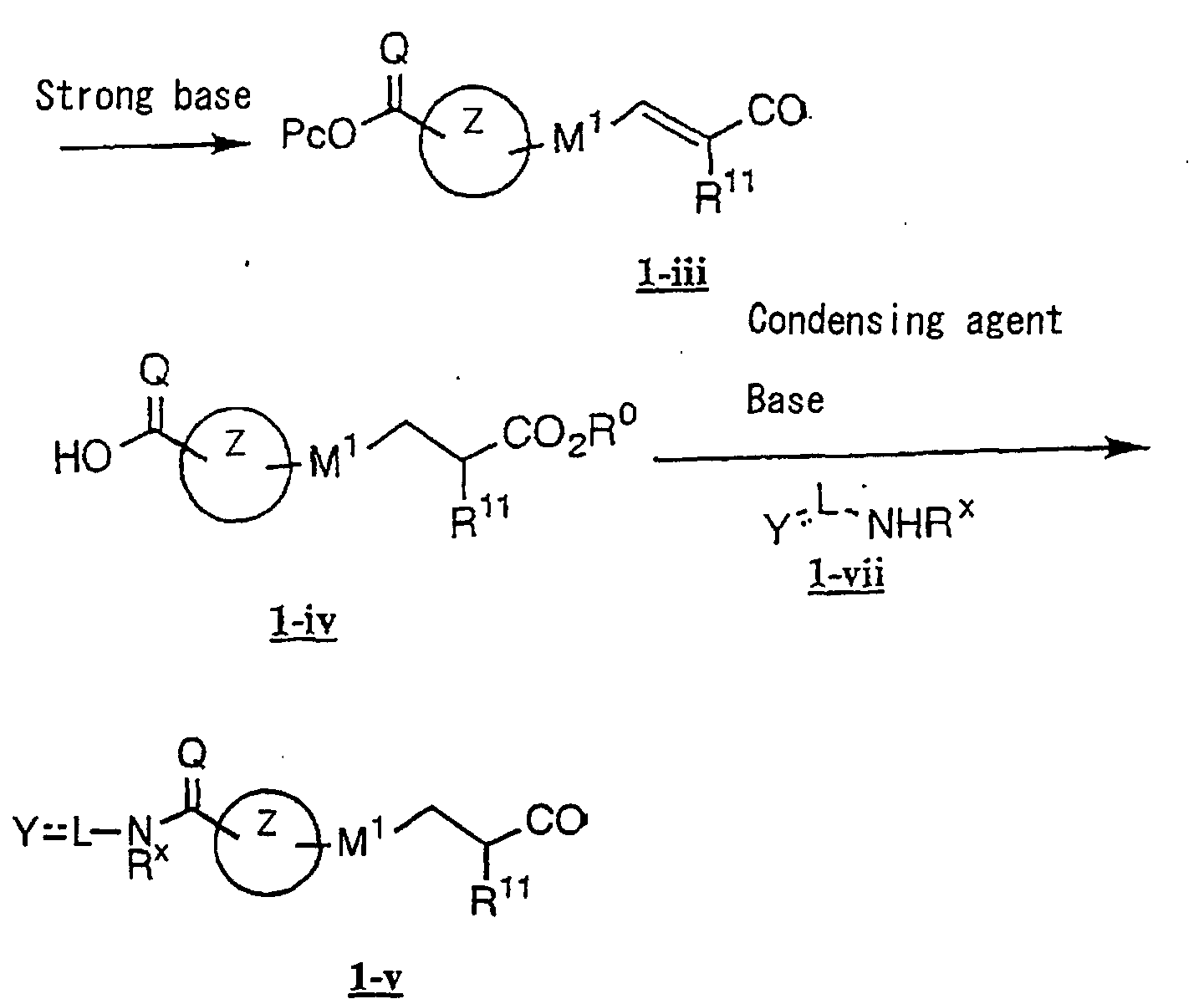
PUAI Public reference made under article 153(3) epc to a published international application that has entered the european phase

Free format text: ORIGINAL CODE: 0009012

17P Request for examination filed

Effective date: 20020313

AK Designated contracting states

Kind code of ref document: A1

Designated state(s): AT BE CH CY DE DK ES FI FR GB GR IE IT LI LU MC NL PT SE

RIN1 Information on inventor provided before grant (corrected)
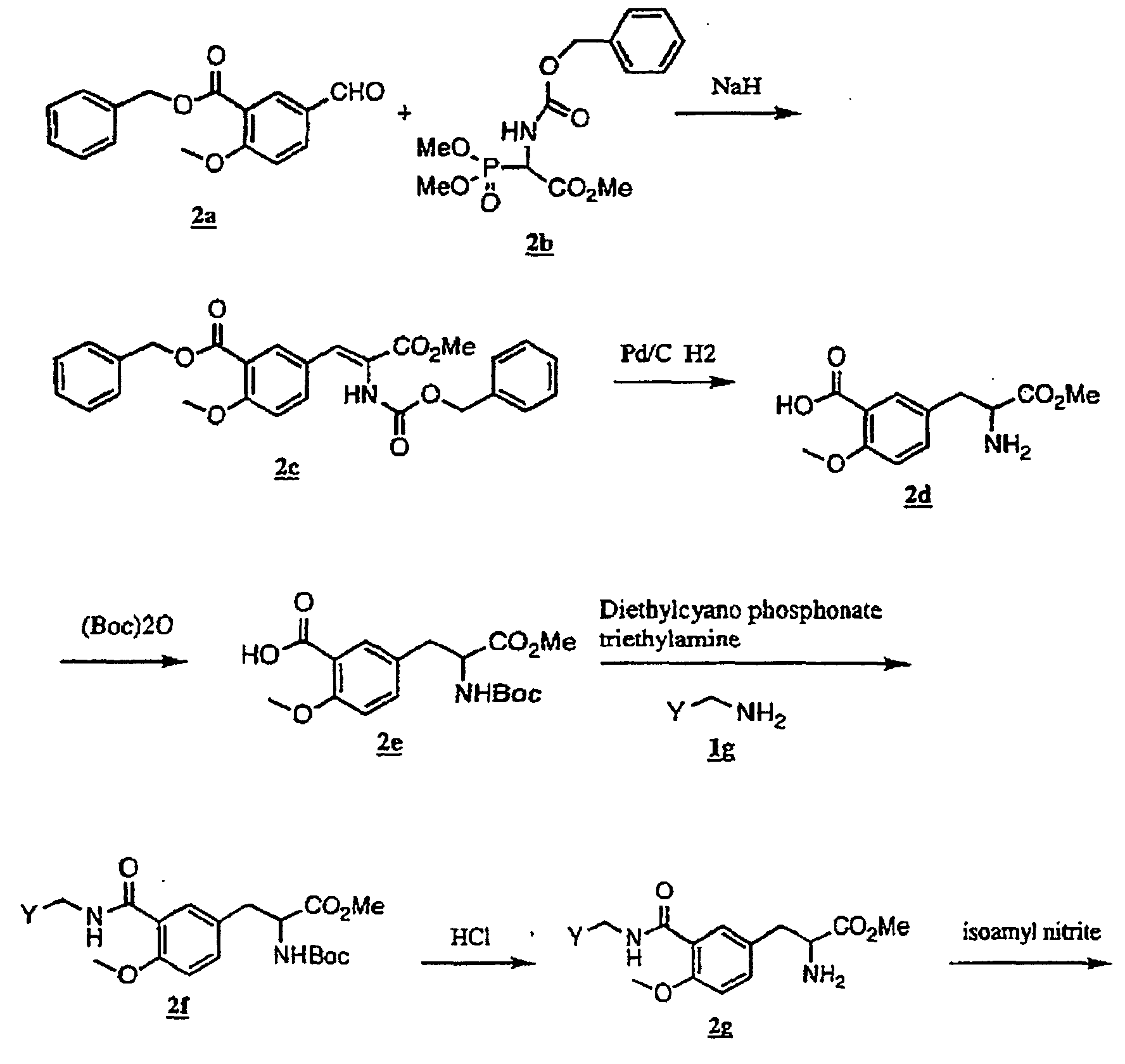
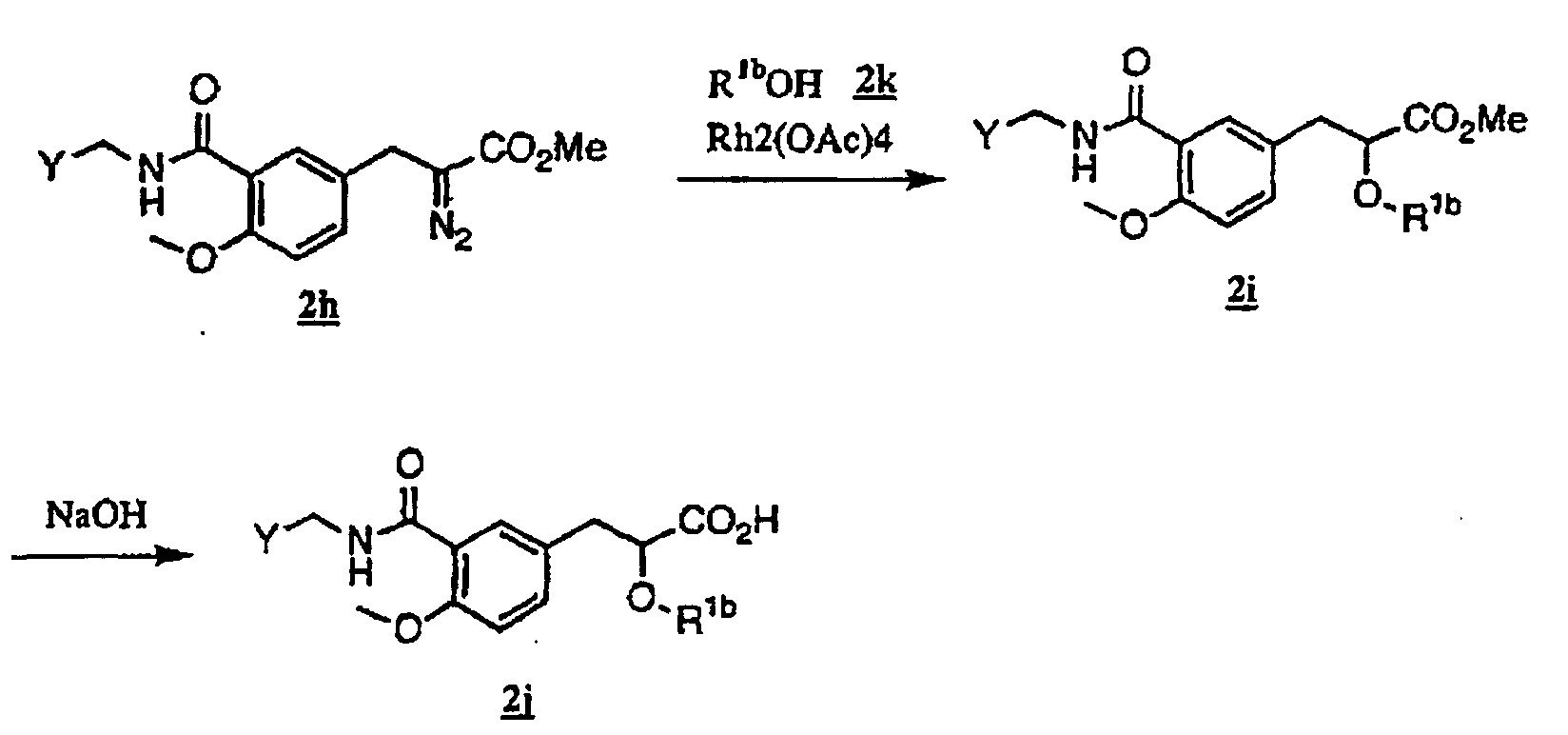
Inventor name: EMORI, EITA

Inventor name: MATSUURA, FUMIYOSHI

Inventor name: KASAI, SHUNJI

Inventor name: OHI, NORIHITO

Inventor name: KANEKO, TOSHIHIKO

Inventor name: SHINODA, MASANOBU

Inventor name: YOSHITOMI, HIDEKI

Inventor name: YAMAZAKI, KAZUTO

RAP1 Party data changed (applicant data changed or rights of an application transferred)

Owner name: EISAI R&D MANAGEMENT CO., LTD.

A4 Supplementary search report drawn up and despatched

Effective date: 20101110

STAA Information on the status of an ep patent application or granted ep patent

Free format text: STATUS: THE APPLICATION HAS BEEN WITHDRAWN

18W Application withdrawn

Effective date: 20110114