EP1216956A2 - Mit Kalium dotierte pyrogene Oxide - Google Patents
Mit Kalium dotierte pyrogene Oxide Download PDFInfo
- Publication number
- EP1216956A2 EP1216956A2 EP01125293A EP01125293A EP1216956A2 EP 1216956 A2 EP1216956 A2 EP 1216956A2 EP 01125293 A EP01125293 A EP 01125293A EP 01125293 A EP01125293 A EP 01125293A EP 1216956 A2 EP1216956 A2 EP 1216956A2
- Authority
- EP
- European Patent Office
- Prior art keywords
- potassium
- doped
- aerosol
- flame
- pyrogenic
- Prior art date
- Legal status (The legal status is an assumption and is not a legal conclusion. Google has not performed a legal analysis and makes no representation as to the accuracy of the status listed.)
- Granted
Links
- 0 CC1*(C)C(C(C(C(C(O)O)N)P)[Cn])C(C)[Cn]C1I Chemical compound CC1*(C)C(C(C(C(C(O)O)N)P)[Cn])C(C)[Cn]C1I 0.000 description 2
Images




Classifications
-
- B—PERFORMING OPERATIONS; TRANSPORTING
- B82—NANOTECHNOLOGY
- B82Y—SPECIFIC USES OR APPLICATIONS OF NANOSTRUCTURES; MEASUREMENT OR ANALYSIS OF NANOSTRUCTURES; MANUFACTURE OR TREATMENT OF NANOSTRUCTURES
- B82Y30/00—Nanotechnology for materials or surface science, e.g. nanocomposites
-
- C—CHEMISTRY; METALLURGY
- C01—INORGANIC CHEMISTRY
- C01B—NON-METALLIC ELEMENTS; COMPOUNDS THEREOF; METALLOIDS OR COMPOUNDS THEREOF NOT COVERED BY SUBCLASS C01C
- C01B13/00—Oxygen; Ozone; Oxides or hydroxides in general
- C01B13/14—Methods for preparing oxides or hydroxides in general
- C01B13/20—Methods for preparing oxides or hydroxides in general by oxidation of elements in the gaseous state; by oxidation or hydrolysis of compounds in the gaseous state
- C01B13/22—Methods for preparing oxides or hydroxides in general by oxidation of elements in the gaseous state; by oxidation or hydrolysis of compounds in the gaseous state of halides or oxyhalides
- C01B13/24—Methods for preparing oxides or hydroxides in general by oxidation of elements in the gaseous state; by oxidation or hydrolysis of compounds in the gaseous state of halides or oxyhalides in the presence of hot combustion gases
-
- C—CHEMISTRY; METALLURGY
- C01—INORGANIC CHEMISTRY
- C01B—NON-METALLIC ELEMENTS; COMPOUNDS THEREOF; METALLOIDS OR COMPOUNDS THEREOF NOT COVERED BY SUBCLASS C01C
- C01B33/00—Silicon; Compounds thereof
- C01B33/113—Silicon oxides; Hydrates thereof
- C01B33/12—Silica; Hydrates thereof, e.g. lepidoic silicic acid
- C01B33/18—Preparation of finely divided silica neither in sol nor in gel form; After-treatment thereof
- C01B33/181—Preparation of finely divided silica neither in sol nor in gel form; After-treatment thereof by a dry process
- C01B33/183—Preparation of finely divided silica neither in sol nor in gel form; After-treatment thereof by a dry process by oxidation or hydrolysis in the vapour phase of silicon compounds such as halides, trichlorosilane, monosilane
-
- C—CHEMISTRY; METALLURGY
- C09—DYES; PAINTS; POLISHES; NATURAL RESINS; ADHESIVES; COMPOSITIONS NOT OTHERWISE PROVIDED FOR; APPLICATIONS OF MATERIALS NOT OTHERWISE PROVIDED FOR
- C09C—TREATMENT OF INORGANIC MATERIALS, OTHER THAN FIBROUS FILLERS, TO ENHANCE THEIR PIGMENTING OR FILLING PROPERTIES ; PREPARATION OF CARBON BLACK ; PREPARATION OF INORGANIC MATERIALS WHICH ARE NO SINGLE CHEMICAL COMPOUNDS AND WHICH ARE MAINLY USED AS PIGMENTS OR FILLERS
- C09C1/00—Treatment of specific inorganic materials other than fibrous fillers; Preparation of carbon black
- C09C1/28—Compounds of silicon
- C09C1/30—Silicic acid
- C09C1/3045—Treatment with inorganic compounds
-
- C—CHEMISTRY; METALLURGY
- C01—INORGANIC CHEMISTRY
- C01P—INDEXING SCHEME RELATING TO STRUCTURAL AND PHYSICAL ASPECTS OF SOLID INORGANIC COMPOUNDS
- C01P2002/00—Crystal-structural characteristics
- C01P2002/50—Solid solutions
-
- C—CHEMISTRY; METALLURGY
- C01—INORGANIC CHEMISTRY
- C01P—INDEXING SCHEME RELATING TO STRUCTURAL AND PHYSICAL ASPECTS OF SOLID INORGANIC COMPOUNDS
- C01P2004/00—Particle morphology
- C01P2004/01—Particle morphology depicted by an image
- C01P2004/04—Particle morphology depicted by an image obtained by TEM, STEM, STM or AFM
-
- C—CHEMISTRY; METALLURGY
- C01—INORGANIC CHEMISTRY
- C01P—INDEXING SCHEME RELATING TO STRUCTURAL AND PHYSICAL ASPECTS OF SOLID INORGANIC COMPOUNDS
- C01P2004/00—Particle morphology
- C01P2004/30—Particle morphology extending in three dimensions
- C01P2004/32—Spheres
-
- C—CHEMISTRY; METALLURGY
- C01—INORGANIC CHEMISTRY
- C01P—INDEXING SCHEME RELATING TO STRUCTURAL AND PHYSICAL ASPECTS OF SOLID INORGANIC COMPOUNDS
- C01P2004/00—Particle morphology
- C01P2004/51—Particles with a specific particle size distribution
-
- C—CHEMISTRY; METALLURGY
- C01—INORGANIC CHEMISTRY
- C01P—INDEXING SCHEME RELATING TO STRUCTURAL AND PHYSICAL ASPECTS OF SOLID INORGANIC COMPOUNDS
- C01P2004/00—Particle morphology
- C01P2004/51—Particles with a specific particle size distribution
- C01P2004/52—Particles with a specific particle size distribution highly monodisperse size distribution
-
- C—CHEMISTRY; METALLURGY
- C01—INORGANIC CHEMISTRY
- C01P—INDEXING SCHEME RELATING TO STRUCTURAL AND PHYSICAL ASPECTS OF SOLID INORGANIC COMPOUNDS
- C01P2004/00—Particle morphology
- C01P2004/60—Particles characterised by their size
- C01P2004/64—Nanometer sized, i.e. from 1-100 nanometer
-
- C—CHEMISTRY; METALLURGY
- C01—INORGANIC CHEMISTRY
- C01P—INDEXING SCHEME RELATING TO STRUCTURAL AND PHYSICAL ASPECTS OF SOLID INORGANIC COMPOUNDS
- C01P2006/00—Physical properties of inorganic compounds
- C01P2006/10—Solid density
-
- C—CHEMISTRY; METALLURGY
- C01—INORGANIC CHEMISTRY
- C01P—INDEXING SCHEME RELATING TO STRUCTURAL AND PHYSICAL ASPECTS OF SOLID INORGANIC COMPOUNDS
- C01P2006/00—Physical properties of inorganic compounds
- C01P2006/12—Surface area
-
- C—CHEMISTRY; METALLURGY
- C01—INORGANIC CHEMISTRY
- C01P—INDEXING SCHEME RELATING TO STRUCTURAL AND PHYSICAL ASPECTS OF SOLID INORGANIC COMPOUNDS
- C01P2006/00—Physical properties of inorganic compounds
- C01P2006/19—Oil-absorption capacity, e.g. DBP values
-
- C—CHEMISTRY; METALLURGY
- C01—INORGANIC CHEMISTRY
- C01P—INDEXING SCHEME RELATING TO STRUCTURAL AND PHYSICAL ASPECTS OF SOLID INORGANIC COMPOUNDS
- C01P2006/00—Physical properties of inorganic compounds
- C01P2006/90—Other properties not specified above
Definitions
- the invention relates to an aerosol doped with potassium fumed oxides, the process for their preparation and their Use.
- the invention relates to aerosol with potassium doped pyrogenic oxides of metals or Metalloids, which are characterized in that the Base component a pyrogenic according to the type of Flame oxidation or preferably flame hydrolysis oxide produced with potassium greater than 0.03 is doped to 20 wt .-%, the amount of doping is preferably in the range from 500 to 20,000 ppm and the doping component is a salt of potassium, and the BET surface area of the doped oxide between 1 and 1000 m2 / g lies.
- the Base component a pyrogenic according to the type of Flame oxidation or preferably flame hydrolysis oxide produced with potassium greater than 0.03 is doped to 20 wt .-%
- the amount of doping is preferably in the range from 500 to 20,000 ppm and the doping component is a salt of potassium
- the BET surface area of the doped oxide between 1 and 1000 m2 / g lies.
- the potassium doped with aerosol according to the invention Silicon dioxide has a significantly narrower Particle size distribution curve than that known Silicon dioxide. It is therefore suitable especially for use as an abrasive in the CMP (Chemical Mechanical Polishing).
- the potassium is with that silicon dioxide according to the invention evenly distributed. It cannot be located on the EM recordings.
- the pyrogenic oxides so doped with potassium have Surprisingly in the electron microscopic picture spherical, round primary particles that have very little have grown together, which manifests itself in the fact that at a "structure determination" according to the DBP method none End point is recognizable. You can also use these Potassium-doped pyrogenic powders highly filled Low viscosity dispersions can be produced.
- a burner arrangement is used, as described in DE OS 196 50 500 is described.
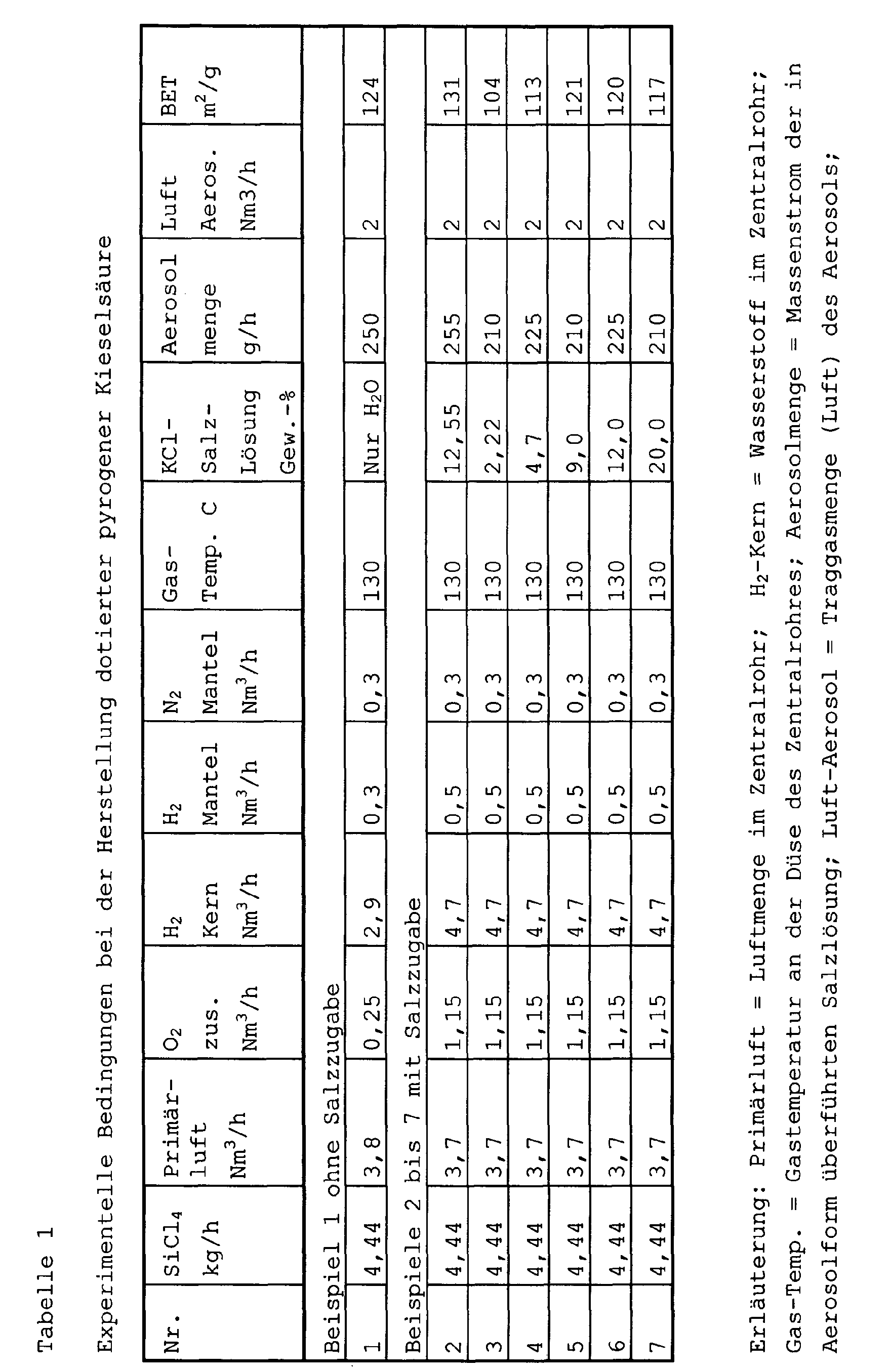
- the second gas component entered into the axial tube in this comparative example consists of water vapor, the distilled by overheating at approx. 180 ° C Water is generated. 2 serve as an aerosol generator Two-substance nozzles that have a nebulizing capacity of 250 g / h Bring water.
- the atomized water vapor is passed through heated lines with the aid of a carrier gas flow of approx. 2 Nm 3 / h air, the water vapor mist turning into gas at temperatures of approx. 180 ° C.
- reaction gases and created fumed silica After flame hydrolysis, the reaction gases and created fumed silica by applying a Vacuum sucked through a cooling system and the Particle gas stream cooled to approx. 100 to 160 ° C. In a filter or cyclone removes the solid from that Exhaust gas flow separated.
- the fumed silica that forms is white finely divided powder.
- the second gas component which is fed into the axial tube, consists of an aerosol which is generated from a 12.55 percent aqueous potassium chloride solution.
- Two dual-substance nozzles serve as an aerosol generator, which deliver a nebulization rate of 255 g / h aerosol.
- This aqueous salt aerosol is conveyed through lines heated from the outside by means of 2 Nm 3 / h of carrying air and leaves the inner nozzle with an outlet temperature of approximately 180 ° C.
- the potassium salt-containing aerosol is introduced into the flame.
- the resulting pyrogenic silica doped with potassium is obtained as a fine white powder.
- Hydrochloric acid residues of water vapor-containing air from the silica removed.
- the BET surface area of the fumed silica is 131 m 2 / g.
- the second gas component which is fed into the axial tube, consists of an aerosol which is generated from a 2.22 percent aqueous potassium chloride solution.
- Two aerosol nozzles are used as the aerosol generator, which produce a nebulization rate of 210 g / h aerosol.
- This aqueous salt aerosol is passed through lines heated from the outside by means of 2 Nm 3 / h of carrying air and leaves the inner nozzle with an outlet temperature of approximately 180 ° C. The aerosol is introduced into the flame and changes the properties of the fumed silica generated accordingly.
- the Reaction gases and the resulting fumed silica by applying negative pressure through a cooling system sucked and the particle gas flow to about 100 to 160 ° C cooled.
- a filter or cyclone Solid separated from the exhaust gas stream In a filter or cyclone Solid separated from the exhaust gas stream.
- the resulting pyrogenic silica doped with potassium is obtained as a fine white powder.
- Hydrochloric acid residues of water vapor-containing air from the silica removed.
- the BET surface area of the fumed silica is 104 m 2 / g.
- the Reaction gases and the resulting fumed silica by applying negative pressure through a cooling system sucked and the particle gas flow to about 100 to Cooled down to 160 ° C.
- a filter or cyclone Solid separated from the exhaust gas stream In a filter or cyclone Solid separated from the exhaust gas stream.
- the resulting pyrogenic silica doped with potassium is obtained as a fine white powder.
- Hydrochloric acid residues of water vapor-containing air from the silica removed.
- the second gas component which is fed into the axial tube, consists of an aerosol which is generated from a 9.0 percent aqueous potassium chloride solution.
- Two aerosol nozzles are used as the aerosol generator, which produce a nebulization rate of 210 g / h aerosol.
- This aqueous salt aerosol is passed through lines heated from the outside by means of 2 Nm 3 / h of carrying air and leaves the inner nozzle with an outlet temperature of approximately 180 ° C. The aerosol is introduced into the flame.
- the second gas component which is fed into the axial tube, consists of an aerosol which is generated from a 12.0 percent aqueous potassium chloride solution.
- Two aerosol nozzles are used as the aerosol generator, which produce a nebulization rate of 225 g / h aerosol.
- This aqueous salt aerosol is passed through lines heated from the outside by means of 2 Nm 3 / h of carrying air and leaves the inner nozzle with an outlet temperature of approximately 180 ° C. The aerosol is introduced into the flame.
- the BET surface area of the fumed silica is 120 m 2 / g.
- the second gas component which is fed into the axial tube, consists of an aerosol, which is generated from a 20 percent aqueous potassium chloride solution.
- Two aerosol nozzles are used as the aerosol generator, which produce a nebulization rate of 210 g / h aerosol.
- This aqueous salt aerosol is passed through lines heated from the outside by means of 2 Nm 3 / h of carrying air and leaves the inner nozzle with an outlet temperature of approximately 180 ° C. The aerosol is introduced into the flame.
- the resulting pyrogenic doped with potassium oxide Silicic acid is obtained as a fine white powder.
- a further step are carried out at elevated temperature Treatment with air containing water vapor still adherent Hydrochloric acid residues removed from the silica.
- the BET surface area of the fumed silica is 117 m 2 / g.
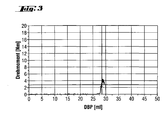
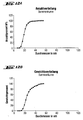
- Figure 3 shows the DBP curve of the powder of Comparative example 1 (sample weight 16 g): the force absorption or the measured torque (in Nm) of rotating blades of the DBP measuring device (Rheocord 90 der Haake / Düsseldorf) shows a sharp maximum with a subsequent drop in a given addition from DBP.
- This curve shape is characteristic of known ones pyrogenic oxides that are not doped.
- Figure 4 shows the DBP curve of the powder of Potassium-doped pyrogenic oxide according to the invention (16 g Weight) according to example 2.
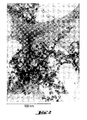
- Figure 5 shows the electron micrograph of the Powder according to Example 3 with a magnification of 1: 50000.
- Figure 6 shows the electron micrograph of the Powder according to Example 3 with a magnification of 1: 100000.
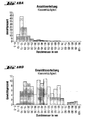
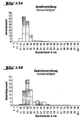
- the particle count by means of EM recording shows clearly the narrower particle distribution curve of the Potassium doped with aerosol according to the invention Silicon dioxide.
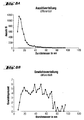
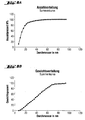
- Table 3 shows the results of the particle counting of the powders of Example 1 (comparative example) by means of the EM image. These values are shown graphically in FIGS. 8, 9 and 10.
- Median number distribution D50 (A) 12.347 nm Median weight distribution D50 (g) 40.086 nm 90% range number distribution 3.166 nm - 36.619 nm 90% range weight distribution 12.153 nm - 72.335 nm total margin 7.400 nm - 94.200 nm Diameter D number N Number % N% total Number % Weight% ND3% total Weight% 7,400 593 11.687 11.6
- Table 4 shows the results of the particle counting of the powders of Example 7 by means of the EM image. These values are shown graphically in FIGS. 11 to 13.
- Median number distribution D50 (A) 18.740 nm Median weight distribution D50 (g) 23.047 nm 90% range number distribution 12.615 nm - 29.237 nm 90% range weight distribution 14.686 nm - 44.743 nm total margin 7.400 nm - 55.000 nm Diameter D number N Number % N% total Number % Weight% ND3% total Weight% 7,400 1 0.023 0.023 0.001 0.00
Landscapes
- Chemical & Material Sciences (AREA)
- Organic Chemistry (AREA)
- Engineering & Computer Science (AREA)
- Nanotechnology (AREA)
- Inorganic Chemistry (AREA)
- General Physics & Mathematics (AREA)
- Composite Materials (AREA)
- Condensed Matter Physics & Semiconductors (AREA)
- Physics & Mathematics (AREA)
- Materials Engineering (AREA)
- Crystallography & Structural Chemistry (AREA)
- Combustion & Propulsion (AREA)
- Silicon Compounds (AREA)
- Oxygen, Ozone, And Oxides In General (AREA)
- Organic Low-Molecular-Weight Compounds And Preparation Thereof (AREA)
- Catalysts (AREA)
- Cosmetics (AREA)
- Compounds Of Alkaline-Earth Elements, Aluminum Or Rare-Earth Metals (AREA)
Abstract
Description
| Analytische Daten der nach Beispiel 1 bis 7 erhaltenen dotierten Kieselsäuren | ||||||
| Nr. | BET m2/g | pH 4% wäßrige Dispersion | Kaliumgehalt in Gew.-% als K2O | DBP in g/100g bei 16 g Einwaage | Schüttdichte G/l | Stampfdichte g/l |
| Vergleichsbeispiel ohne Salz | ||||||
| 1 | 124 | 4,68 | 0 | 185 | 28 | 39 |
| Beispiele mit Kaliumsalzzugabe | ||||||
| 2 | 131 | 7,64 | 0,44 | kein Endpunkt | 28 | 36 |
| 3 | 104 | 7,22 | 0,12 | kein Endpunkt | 31 | 43 |
| 4 | 113 | 7,67 | 0,24 | kein Endpunkt | 32 | 45 |
| 5 | 121 | 7,7 | 0,49 | kein Endpunkt | 32 | 43 |
| 6 | 120 | 7,96 | 0,69 | kein Endpunkt | 30 | 44 |
| 7 | 117 | 7,86 | 1,18 | kein Endpunkt | 28 | 38 |
| Gesamtzahl der gemessenenen Teilchen N | 5074 |
| Teilchendurchmesser, arithmetisches Mittel DN | 16,678 nm |
| Teilchendurchmesser, über die Oberfläche gemittelt DA | 31,825 nm |
| Teilchendurchmesser, über das Volumen gemittelt DV | 42,178 nm |
| Teilchendurchmesser, Standardabweichung S | 10,011 nm |
| Teilchendurchmesser, Variationskoeffizient V | 60,027 |
| spezifische Oberfläche OEM | 85,696 qm/g |
| Medianwert Anzahlverteilung D50(A) | 12,347 nm |
| Medianwert Gewichtsverteilung D50(g) | 40,086 nm |
| 90 %-Spanne Anzahlverteilung | 3,166 nm - 36,619 nm |
| 90 %-Spanne Gewichtsverteilung | 12,153 nm - 72,335 nm |
| Gesamtspanne | 7,400 nm - 94,200 nm |
| Durch-messer D | Anzahl N | Anzahl % N % | Summe Anzahl % | Gewichts % ND3 % | Summe Gewichts % |
| 7,400 | 593 | 11,687 | 11,687 | 0,393 | 0,393 |
| 10,200 | 1142 | 22,507 | 34,194 | 1,984 | 2,377 |
| 13,000 | 1046 | 20,615 | 54,809 | 3,761 | 6,138 |
| 15,800 | 693 | 13,658 | 68,467 | 4,474 | 10,612 |
| 18,600 | 498 | 9,815 | 78,281 | 5,245 | 15,857 |
| 21,400 | 281 | 5,538 | 83,819 | 4,507 | 20,364 |
| 24,200 | 193 | 3,804 | 87,623 | 4,477 | 24,841 |
| 27,000 | 124 | 2,444 | 90,067 | 3,995 | 28,836 |
| 29,800 | 86 | 1,695 | 91,762 | 3,725 | 32,561 |
| 32,600 | 74 | 1,458 | 93,220 | 4,196 | 36,757 |
| 35,400 | 62 | 1,222 | 94,442 | 4,502 | 41,259 |
| 38,200 | 65 | 1,281 | 95,723 | 5,930 | 47,189 |
| 41,000 | 37 | 0,729 | 96,453 | 4,174 | 51,363 |
| 43,800 | 35 | 0,690 | 97,142 | 4,814 | 56,176 |
| 46,600 | 30 | 0,591 | 97,734 | 4,969 | 61,145 |
| 49,400 | 30 | 0,591 | 98,325 | 5,919 | 67,065 |
| 52,200 | 16 | 0,315 | 98,640 | 3,725 | 70,789 |
| 55,000 | 14 | 0,276 | 98,916 | 3,812 | 74,602 |
| 57,800 | 15 | 0,296 | 99,212 | 4,741 | 79,343 |
| 60,600 | 10 | 0,197 | 99,409 | 3,642 | 82,985 |
| 63,400 | 7 | 0,138 | 99,547 | 2,920 | 85,905 |
| 66,200 | 8 | 0,158 | 99,704 | 3,799 | 89,703 |
| 69,000 | 8 | 0,158 | 99,862 | 4,301 | 94,005 |
| 71,800 | 1 | 0,020 | 99,882 | 0,606 | 94,611 |
| 74,600 | 3 | 0,059 | 99,941 | 2,039 | 96,649 |
| 80,200 | 1 | 0,020 | 99,961 | 0,844 | 97,494 |
| 88,600 | 1 | 0,020 | 99,980 | 1,138 | 98,632 |
| 94,200 | 1 | 0,020 | 100,000 | 1,368 | 100,000 |
| Gesamtzahl der gemessenenen Teilchen N | 4259 |
| Teilchendurchmesser, arithmetisches Mittel DN | 20,993 nm |
| Teilchendurchmesser, über die Oberfläche gemittelt DA | 24,270 nm |
| Teilchendurchmesser, über das Volumen gemittelt DV | 26,562 nm |
| Teilchendurchmesser, Standardabweichung S | 5,537 nm |
| Teilchendurchmesser, Variationskoeffizient V | 26,374 |
| spezifische Oberfläche OEM | 112,370 qm/g |
| Medianwert Anzahlverteilung D50(A) | 18,740 nm |
| Medianwert Gewichtsverteilung D50(g) | 23,047 nm |
| 90 %-Spanne Anzahlverteilung | 12,615 nm - 29,237 nm |
| 90 %-Spanne Gewichtsverteilung | 14,686 nm - 44,743 nm |
| Gesamtspanne | 7,400 nm - 55,000 nm |
| Durch-messer D | Anzahl N | Anzahl % N % | Summe Anzahl % | Gewichts % ND3 % | Summe Gewichts % |
| 7,400 | 1 | 0,023 | 0,023 | 0,001 | 0,001 |
| 10,200 | 11 | 0,258 | 0,282 | 0,024 | 0,025 |
| 13,000 | 233 | 5,471 | 5,753 | 1,051 | 1,075 |
| 15,800 | 805 | 18,901 | 24,654 | 6,517 | 7,592 |
| 18,600 | 1034 | 24,278 | 48,932 | 13,656 | 21,248 |
| 21,400 | 913 | 21,437 | 70,369 | 18,364 | 39,613 |
| 24,200 | 607 | 14,252 | 84,621 | 17,656 | 57,269 |
| 27,000 | 311 | 7,302 | 91,923 | 12,564 | 69,833 |
| 29,800 | 164 | 3,851 | 95,774 | 8,908 | 78,740 |
| 32,600 | 63 | 1,479 | 97,253 | 4,480 | 83,220 |
| 35,400 | 35 | 0,822 | 98,075 | 3,187 | 86,407 |
| 38,200 | 28 | 0,657 | 98,732 | 3,203 | 89,610 |
| 41,000 | 18 | 0,423 | 99,155 | 2,546 | 92,156 |
| 43,800 | 10 | 0,235 | 99,390 | 1,725 | 93,881 |
| 46,600 | 16 | 0,376 | 99,765 | 3,323 | 97,204 |
| 49,400 | 5 | 0,117 | 99,883 | 1,237 | 98,441 |
| 52,200 | 3 | 0,070 | 99,953 | 0,876 | 99,317 |
| 55,000 | 2 | 0,047 | 100,000 | 0,683 | 100,000 |
Claims (5)
- Mittels Aerosol mit Kalium dotierte pyrogen hergestellte Oxide von Metallen oder Metalloiden, dadurch gekennzeichnet, daß die Basiskomponente ein pyrogen nach der Art der Flammenoxidation oder bevorzugt der Flammenhydrolyse hergestelltes Oxid ist, das mit Kalium von 0,000001 bis 20 Gew.-% dotiert wurde, wobei die Dotierungsmenge vorzugsweise im Bereich von 1 bis 20.000 ppm liegt und die Dotierungskomponente ein Salz des Kaliums ist, wobei die BET-Oberfläche des dotierten Oxids zwischen 1 und 1000 m2/g liegt und die Breite der Teilchengrößenverteilung mindestens 0,7 beträgt.
- Mittels Aerosol mit Kalium dotierte pyrogen hergestellte Oxide von Metallen oder Metalloiden gemäß Anspruch 1, dadurch gekennzeichnet, daß die Basiskomponente ein pyrogen nach der Art der Flammenoxidation oder bevorzugt der Flammenhydrolyse hergestelltes Oxid ist, das mit Kalium von 0,000001 bis 20 Gew.-% dotiert wurde, wobei die Dotierungsmenge vorzugsweise im Bereich von 1 bis 20.000 ppm liegt und der pH-Wert des dotierten pyrogenen Oxids gemessen in einer 4-prozentigen wäßrigen Dispersion mehr als 5 beträgt, und die BET-Oberfläche des dotierten Oxids zwischen 1 und 1000 m2/g liegt.
- Mittels Aerosol mit Kalium dotierte pyrogen hergestellte Oxide von Metallen oder Metalloiden gemäß Anspruch 1, dadurch gekennzeichnet, daß die Basiskomponente ein pyrogen nach der Art der Flammenoxidation oder bevorzugt der Flammenhydrolyse hergestelltes Oxid ist, das mit Kalium von 0,000001 bis 20 Gew.-% dotiert wurde, wobei die Dotierungsmenge vorzugsweise im Bereich von 1 bis 20.000 ppm liegt und Dibutylphtalatabsorption keinen Endpunkt erkennen läßt, und die BET-Oberfläche des dotierten Oxids zwischen 1 und 1000 m2/g liegt.
- Verfahren zur Herstellung von mittels Aerosol mit Kalium dotierten pyrogenen Oxiden gemäß Anspruch 1, dadurch gekennzeichnet, daß in eine Flamme, wie sie zur Herstellung von pyrogenen Oxiden nach der Art der Flammenoxidation oder bevorzugt der der Flammenhydrolyse benutzt wird, ein Aerosol eingespeist wird, dieses Aerosol vor der Reaktion mit dem Gasgemisch der Flammenoxidation beziehungsweise Flammenhydrolyse homogen gemischt wird, dann das Aerosol-Gasgemisch in einer Flamme abreagieren läßt und die entstandenen pyrogenen mit Kalium dotierten Oxide in bekannter Weise vom Gasstrom abtrennt, wobei als Ausgangsprodukt des Aerosols eine Kaliumsalzlösung dient, die das Kaliumsalz enthält, wobei das Aerosol durch Vernebelung durch einen Aerosolgenerator vorzugsweise nach der Zweistoffdüsenmethode hergestellt wird.
- Verwendung der mittels Aerosol mit Kalium dotierten pyrogenen Oxide gemäß Anspruch 1 als Füllstoff, als Trägermaterial, als katalytisch aktive Substanz, als Ausgangsmaterial zur Herstellung von Dispersionen, als Poliermaterial (CMP-Anwendungen), als keramischen Grundstoff, in der Elektronikindustrie, in der Kosmetikindustrie, als Additiv in der Silikon- und Kautschukindustrie, zur Einstellung der Rheologie von flüssigen Systemen, zur Hitzeschutzstabilisierung, in der Lackindustrie.
Applications Claiming Priority (2)
| Application Number | Priority Date | Filing Date | Title |
|---|---|---|---|
| DE10065028A DE10065028A1 (de) | 2000-12-23 | 2000-12-23 | Mit Kalium dotierte pyrogene Oxide |
| DE10065028 | 2000-12-23 |
Publications (3)
| Publication Number | Publication Date |
|---|---|
| EP1216956A2 true EP1216956A2 (de) | 2002-06-26 |
| EP1216956A3 EP1216956A3 (de) | 2003-01-29 |
| EP1216956B1 EP1216956B1 (de) | 2006-08-02 |
Family
ID=7668991
Family Applications (1)
| Application Number | Title | Priority Date | Filing Date |
|---|---|---|---|
| EP01125293A Expired - Lifetime EP1216956B1 (de) | 2000-12-23 | 2001-10-25 | Mit Kalium dotierte pyrogene Oxide |
Country Status (8)
| Country | Link |
|---|---|
| US (2) | US20020168312A1 (de) |
| EP (1) | EP1216956B1 (de) |
| JP (1) | JP3883862B2 (de) |
| AT (1) | ATE334937T1 (de) |
| DE (2) | DE10065028A1 (de) |
| DK (1) | DK1216956T3 (de) |
| ES (1) | ES2269275T3 (de) |
| PT (1) | PT1216956E (de) |
Cited By (4)
| Publication number | Priority date | Publication date | Assignee | Title |
|---|---|---|---|---|
| CN1304468C (zh) * | 2002-09-14 | 2007-03-14 | 德古萨股份公司 | 硅橡胶 |
| RU2369623C2 (ru) * | 2003-09-04 | 2009-10-10 | Дегусса Аг | Сажа, способ получения сажи или других образуемых в пламени аэрозолей и устройство для осуществления этого способа |
| DE102010002356A1 (de) | 2010-02-25 | 2011-08-25 | Evonik Degussa GmbH, 45128 | Zusammensetzungen von mit oligomeren Siloxanolen funktionalisierten Metalloxiden und deren Verwendung |
| WO2014001293A1 (de) * | 2012-06-26 | 2014-01-03 | Heraeus Quarzglas Gmbh & Co. Kg | Verfahren zur herstellung eines dotierten sio2-schlickers sowie verwendung des sio2-schlickers |
Families Citing this family (6)
| Publication number | Priority date | Publication date | Assignee | Title |
|---|---|---|---|---|
| EP1526115A1 (de) * | 2003-10-23 | 2005-04-27 | Universität Hannover | Funktionalisierte Kieselsäure-Partikel |
| DE102005027720A1 (de) | 2005-06-16 | 2006-12-21 | Degussa Ag | Alkalimetalloxid enthaltendes Mischoxidpulver und Siliconkautschuk enthaltend dieses Pulver |
| CN107922197B (zh) | 2015-07-10 | 2021-11-19 | 赢创运营有限公司 | 具有高盐稳定性的含金属氧化物的分散体 |
| PL3319906T3 (pl) | 2015-07-10 | 2022-01-31 | Evonik Operations Gmbh | Zawierająca SiO2 dyspersja o wysokiej stabilności soli |
| EP3368633B1 (de) | 2015-10-26 | 2020-05-27 | Evonik Operations GmbH | Verfahren zur gewinnung von mineralöl mithilfe eines siliciumdioxidfluids |
| CN113336616B (zh) * | 2020-02-18 | 2023-05-05 | 中国石油化工股份有限公司 | 一种阻聚剂及其制备方法和热裂解石油烃以增产丙烯的方法 |
Family Cites Families (14)
| Publication number | Priority date | Publication date | Assignee | Title |
|---|---|---|---|---|
| US4056488A (en) * | 1974-03-14 | 1977-11-01 | Mobil Oil Corporation | Synthetic amorphous silicas of predetermined pore distribution, method of producing same |
| US4149899A (en) * | 1978-03-31 | 1979-04-17 | A. P. Green Refractories Co. | Chromic oxide refractory |
| DE2931810A1 (de) * | 1979-08-06 | 1981-02-19 | Degussa | Temperaturstabilisiertes siliciumdioxid-mischoxid, das verfahren zu seiner herstellung und verwendung |
| US4501602A (en) * | 1982-09-15 | 1985-02-26 | Corning Glass Works | Process for making sintered glasses and ceramics |
| US4722952A (en) * | 1986-05-09 | 1988-02-02 | Elkem A/S | Resin compositions |
| JPS6374911A (ja) * | 1986-09-19 | 1988-04-05 | Shin Etsu Chem Co Ltd | 微細球状シリカの製造法 |
| US5043002A (en) * | 1990-08-16 | 1991-08-27 | Corning Incorporated | Method of making fused silica by decomposing siloxanes |
| US5152819A (en) * | 1990-08-16 | 1992-10-06 | Corning Incorporated | Method of making fused silica |
| DE19530339A1 (de) * | 1995-08-18 | 1997-02-20 | Degussa | Pyrogene Kieselsäure, Verfahren zu ihrer Herstellung und Verwendung |
| DE19650500A1 (de) * | 1996-12-05 | 1998-06-10 | Degussa | Dotierte, pyrogen hergestellte Oxide |
| DE19847161A1 (de) * | 1998-10-14 | 2000-04-20 | Degussa | Mittels Aerosol dotiertes pyrogen hergestelltes Siliciumdioxid |
| US6372648B1 (en) * | 1998-11-16 | 2002-04-16 | Texas Instruments Incorporated | Integrated circuit planarization method |
| US6423638B1 (en) * | 1999-09-28 | 2002-07-23 | Motorola, Inc. | Filter apparatus and method therefor |
| KR100497413B1 (ko) * | 2004-11-26 | 2005-06-23 | 에이스하이텍 주식회사 | 텅스텐-화학적 기계적 연마에 유용한 슬러리 및 그 제조방법 |
-
2000
- 2000-12-23 DE DE10065028A patent/DE10065028A1/de not_active Ceased
-
2001
- 2001-10-25 EP EP01125293A patent/EP1216956B1/de not_active Expired - Lifetime
- 2001-10-25 DK DK01125293T patent/DK1216956T3/da active
- 2001-10-25 AT AT01125293T patent/ATE334937T1/de active
- 2001-10-25 ES ES01125293T patent/ES2269275T3/es not_active Expired - Lifetime
- 2001-10-25 PT PT01125293T patent/PT1216956E/pt unknown
- 2001-10-25 DE DE50110602T patent/DE50110602D1/de not_active Expired - Lifetime
- 2001-12-19 US US10/020,920 patent/US20020168312A1/en not_active Abandoned
- 2001-12-20 JP JP2001387377A patent/JP3883862B2/ja not_active Expired - Lifetime
-
2010
- 2010-08-16 US US12/857,105 patent/US20100301264A1/en not_active Abandoned
Cited By (6)
| Publication number | Priority date | Publication date | Assignee | Title |
|---|---|---|---|---|
| CN1304468C (zh) * | 2002-09-14 | 2007-03-14 | 德古萨股份公司 | 硅橡胶 |
| RU2369623C2 (ru) * | 2003-09-04 | 2009-10-10 | Дегусса Аг | Сажа, способ получения сажи или других образуемых в пламени аэрозолей и устройство для осуществления этого способа |
| DE102010002356A1 (de) | 2010-02-25 | 2011-08-25 | Evonik Degussa GmbH, 45128 | Zusammensetzungen von mit oligomeren Siloxanolen funktionalisierten Metalloxiden und deren Verwendung |
| WO2011103939A1 (de) | 2010-02-25 | 2011-09-01 | Evonik Degussa Gmbh | Zusammensetzungen von mit oligomeren siloxanolen funktionalisierten metalloxiden und deren verwendung |
| WO2014001293A1 (de) * | 2012-06-26 | 2014-01-03 | Heraeus Quarzglas Gmbh & Co. Kg | Verfahren zur herstellung eines dotierten sio2-schlickers sowie verwendung des sio2-schlickers |
| US9518218B2 (en) | 2012-06-26 | 2016-12-13 | Heraeus Quarzglas Gmbh & Co. Kg | Method for producing a doped SiO2 slurry and use of the SiO2 slurry |
Also Published As
| Publication number | Publication date |
|---|---|
| PT1216956E (pt) | 2006-12-29 |
| DE10065028A1 (de) | 2002-07-18 |
| US20020168312A1 (en) | 2002-11-14 |
| JP2002234722A (ja) | 2002-08-23 |
| EP1216956B1 (de) | 2006-08-02 |
| ATE334937T1 (de) | 2006-08-15 |
| JP3883862B2 (ja) | 2007-02-21 |
| DK1216956T3 (da) | 2006-11-27 |
| US20100301264A1 (en) | 2010-12-02 |
| EP1216956A3 (de) | 2003-01-29 |
| ES2269275T3 (es) | 2007-04-01 |
| DE50110602D1 (de) | 2006-09-14 |
Similar Documents
| Publication | Publication Date | Title |
|---|---|---|
| EP0850876B1 (de) | Mittels Aerosol dotierte, pyrogen hergestellte Oxide | |
| EP0995718B1 (de) | Mittels Aerosol dotiertes pyrogen hergestelltes Siliciumdioxid | |
| EP1083146B1 (de) | Bakterizides, mit Silber dotiertes Siliciumdioxid | |
| EP1243552B1 (de) | Mit einer Hülle umgebene, dotierte Oxidpartikeln | |
| EP1236773B1 (de) | Oberflächenmodifizierte, dotierte, pyrogen hergestellte Oxide | |
| EP1197472B1 (de) | Eisenoxid- und Siliciumdioxid-Titandioxid-Mischung | |
| EP1216958B1 (de) | Wässrige Dispersion, Verfahren zu deren Herstellung und Verwendung | |
| DE69009110T2 (de) | Kieselsäure mit kontrollierter Porosität und Verfahren zu deren Herstellung. | |
| EP1321432B1 (de) | Flammenhydrolytisch hergestelltes Silicium-Titan-Mischoxidpulver mit an der Oberfläche angereichertem Siliciumdioxid, dessen Herstellung und Verwendung | |
| EP1997776B1 (de) | Pyrogen hergestelltes Siliciumdioxid mit niedriger Verdickungswirkung | |
| DE10258857A1 (de) | Pyrogen hergestelltes Siliciumdioxid und Dispersion hiervon | |
| DE10312970A1 (de) | Pyrogenes Siliciumdioxidpulver und Dispersion hiervon | |
| EP3452409B1 (de) | Verfahren zur verarbeitung von pyrogenen metalloxiden | |
| EP0595078A2 (de) | Flammenhydrolytisch hergestelltes Titandioxid-Mischoxid, Verfahren zu seiner Herstellung und Verwendung | |
| DE3611449A1 (de) | Grundstoff zur herstellung von keramischen werkstoffen | |
| US20100301264A1 (en) | Pyrogenic oxides doped with potassium | |
| EP1078883B1 (de) | Granulate auf Basis von pyrogen hergestelltem Titandioxid, Verfahren zu ihrer Herstellung und ihre Verwendung | |
| DE10238463A1 (de) | Stabilisierte, wässerige Siliciumdioxid-Dispersion | |
| EP1931737A1 (de) | Verfahren zur herstellung oberflächenmodifizierter nanopartikulärer metalloxide, metallhydroxide und/oder metalloxidhydroxide | |
| DE602005002265T2 (de) | Durch flammenhydrolyse hergestelltes silicium-titan-mischoxidpulver | |
| EP1785395B1 (de) | Verfahren zur Herstellung dotierter Metalloxidpartikel | |
| DE10258858A1 (de) | Pyrogen hergestelltes Siliciumdioxid | |
| DE10134382B4 (de) | Mit Erbiumoxid dotierte pyrogene Oxide | |
| DE19953029A1 (de) | Polyester | |
| DE102005027720A1 (de) | Alkalimetalloxid enthaltendes Mischoxidpulver und Siliconkautschuk enthaltend dieses Pulver |
Legal Events
| Date | Code | Title | Description |
|---|---|---|---|
| PUAI | Public reference made under article 153(3) epc to a published international application that has entered the european phase |
Free format text: ORIGINAL CODE: 0009012 |
|
| 17P | Request for examination filed |
Effective date: 20011025 |
|
| AK | Designated contracting states |
Kind code of ref document: A2 Designated state(s): AT BE CH CY DE DK ES FI FR GB GR IE IT LI LU MC NL PT SE TR |
|
| AX | Request for extension of the european patent |
Free format text: AL;LT;LV;MK;RO;SI |
|
| PUAL | Search report despatched |
Free format text: ORIGINAL CODE: 0009013 |
|
| AK | Designated contracting states |
Designated state(s): AT BE CH CY DE DK ES FI FR GB GR IE IT LI LU MC NL PT SE TR |
|
| AX | Request for extension of the european patent |
Extension state: AL LT LV MK RO SI |
|
| 17Q | First examination report despatched |
Effective date: 20030325 |
|
| AKX | Designation fees paid |
Designated state(s): AT BE CH CY DE DK ES FI FR GB GR IE IT LI LU MC NL PT SE TR |
|
| GRAP | Despatch of communication of intention to grant a patent |
Free format text: ORIGINAL CODE: EPIDOSNIGR1 |
|
| GRAS | Grant fee paid |
Free format text: ORIGINAL CODE: EPIDOSNIGR3 |
|
| GRAA | (expected) grant |
Free format text: ORIGINAL CODE: 0009210 |
|
| AK | Designated contracting states |
Kind code of ref document: B1 Designated state(s): AT BE CH CY DE DK ES FI FR GB GR IE IT LI LU MC NL PT SE TR |
|
| PG25 | Lapsed in a contracting state [announced via postgrant information from national office to epo] |
Ref country code: IT Free format text: LAPSE BECAUSE OF FAILURE TO SUBMIT A TRANSLATION OF THE DESCRIPTION OR TO PAY THE FEE WITHIN THE PRESCRIBED TIME-LIMIT;WARNING: LAPSES OF ITALIAN PATENTS WITH EFFECTIVE DATE BEFORE 2007 MAY HAVE OCCURRED AT ANY TIME BEFORE 2007. THE CORRECT EFFECTIVE DATE MAY BE DIFFERENT FROM THE ONE RECORDED. Effective date: 20060802 |
|
| REG | Reference to a national code |
Ref country code: GB Ref legal event code: FG4D Free format text: NOT ENGLISH |
|
| REG | Reference to a national code |
Ref country code: CH Ref legal event code: EP |
|
| REG | Reference to a national code |
Ref country code: IE Ref legal event code: FG4D Free format text: LANGUAGE OF EP DOCUMENT: GERMAN |
|
| REF | Corresponds to: |
Ref document number: 50110602 Country of ref document: DE Date of ref document: 20060914 Kind code of ref document: P |
|
| PG25 | Lapsed in a contracting state [announced via postgrant information from national office to epo] |
Ref country code: MC Free format text: LAPSE BECAUSE OF NON-PAYMENT OF DUE FEES Effective date: 20061031 |
|
| REG | Reference to a national code |
Ref country code: SE Ref legal event code: TRGR |
|
| REG | Reference to a national code |
Ref country code: DK Ref legal event code: T3 |
|
| GBT | Gb: translation of ep patent filed (gb section 77(6)(a)/1977) |
Effective date: 20061108 |
|
| REG | Reference to a national code |
Ref country code: GR Ref legal event code: EP Ref document number: 20060403813 Country of ref document: GR |
|
| REG | Reference to a national code |
Ref country code: PT Ref legal event code: SC4A Free format text: AVAILABILITY OF NATIONAL TRANSLATION Effective date: 20061030 |
|
| RAP2 | Party data changed (patent owner data changed or rights of a patent transferred) |
Owner name: DEGUSSA GMBH |
|
| ET | Fr: translation filed | ||
| REG | Reference to a national code |
Ref country code: ES Ref legal event code: FG2A Ref document number: 2269275 Country of ref document: ES Kind code of ref document: T3 |
|
| NLT2 | Nl: modifications (of names), taken from the european patent patent bulletin |
Owner name: DEGUSSA GMBH Effective date: 20070221 |
|
| PLBE | No opposition filed within time limit |
Free format text: ORIGINAL CODE: 0009261 |
|
| STAA | Information on the status of an ep patent application or granted ep patent |
Free format text: STATUS: NO OPPOSITION FILED WITHIN TIME LIMIT |
|
| 26N | No opposition filed |
Effective date: 20070503 |
|
| PG25 | Lapsed in a contracting state [announced via postgrant information from national office to epo] |
Ref country code: LU Free format text: LAPSE BECAUSE OF NON-PAYMENT OF DUE FEES Effective date: 20061025 |
|
| PG25 | Lapsed in a contracting state [announced via postgrant information from national office to epo] |
Ref country code: CY Free format text: LAPSE BECAUSE OF FAILURE TO SUBMIT A TRANSLATION OF THE DESCRIPTION OR TO PAY THE FEE WITHIN THE PRESCRIBED TIME-LIMIT Effective date: 20060802 |
|
| PGFP | Annual fee paid to national office [announced via postgrant information from national office to epo] |
Ref country code: CH Payment date: 20081015 Year of fee payment: 8 Ref country code: DK Payment date: 20081015 Year of fee payment: 8 Ref country code: IE Payment date: 20081023 Year of fee payment: 8 |
|
| PGFP | Annual fee paid to national office [announced via postgrant information from national office to epo] |
Ref country code: FI Payment date: 20081015 Year of fee payment: 8 Ref country code: PT Payment date: 20081003 Year of fee payment: 8 |
|
| PGFP | Annual fee paid to national office [announced via postgrant information from national office to epo] |
Ref country code: SE Payment date: 20081014 Year of fee payment: 8 |
|
| PGFP | Annual fee paid to national office [announced via postgrant information from national office to epo] |
Ref country code: GR Payment date: 20081017 Year of fee payment: 8 |
|
| REG | Reference to a national code |
Ref country code: FR Ref legal event code: CD Ref country code: FR Ref legal event code: CA |
|
| REG | Reference to a national code |
Ref country code: NL Ref legal event code: SD Effective date: 20100223 Ref country code: NL Ref legal event code: TD Effective date: 20100223 |
|
| REG | Reference to a national code |
Ref country code: PT Ref legal event code: MM4A Free format text: LAPSE DUE TO NON-PAYMENT OF FEES Effective date: 20100426 |
|
| REG | Reference to a national code |
Ref country code: CH Ref legal event code: PL |
|
| EUG | Se: european patent has lapsed | ||
| REG | Reference to a national code |
Ref country code: DK Ref legal event code: EBP |
|
| PG25 | Lapsed in a contracting state [announced via postgrant information from national office to epo] |
Ref country code: PT Free format text: LAPSE BECAUSE OF NON-PAYMENT OF DUE FEES Effective date: 20100426 |
|
| PG25 | Lapsed in a contracting state [announced via postgrant information from national office to epo] |
Ref country code: FI Free format text: LAPSE BECAUSE OF NON-PAYMENT OF DUE FEES Effective date: 20091025 |
|
| PG25 | Lapsed in a contracting state [announced via postgrant information from national office to epo] |
Ref country code: CH Free format text: LAPSE BECAUSE OF NON-PAYMENT OF DUE FEES Effective date: 20091031 Ref country code: GR Free format text: LAPSE BECAUSE OF NON-PAYMENT OF DUE FEES Effective date: 20100504 Ref country code: IE Free format text: LAPSE BECAUSE OF NON-PAYMENT OF DUE FEES Effective date: 20091026 Ref country code: LI Free format text: LAPSE BECAUSE OF NON-PAYMENT OF DUE FEES Effective date: 20091031 |
|
| PG25 | Lapsed in a contracting state [announced via postgrant information from national office to epo] |
Ref country code: DK Free format text: LAPSE BECAUSE OF NON-PAYMENT OF DUE FEES Effective date: 20091031 |
|
| PG25 | Lapsed in a contracting state [announced via postgrant information from national office to epo] |
Ref country code: SE Free format text: LAPSE BECAUSE OF NON-PAYMENT OF DUE FEES Effective date: 20091026 |
|
| PGFP | Annual fee paid to national office [announced via postgrant information from national office to epo] |
Ref country code: TR Payment date: 20121001 Year of fee payment: 12 |
|
| PGFP | Annual fee paid to national office [announced via postgrant information from national office to epo] |
Ref country code: AT Payment date: 20121011 Year of fee payment: 12 |
|
| REG | Reference to a national code |
Ref country code: AT Ref legal event code: MM01 Ref document number: 334937 Country of ref document: AT Kind code of ref document: T Effective date: 20131025 |
|
| PG25 | Lapsed in a contracting state [announced via postgrant information from national office to epo] |
Ref country code: AT Free format text: LAPSE BECAUSE OF NON-PAYMENT OF DUE FEES Effective date: 20131025 |
|
| PG25 | Lapsed in a contracting state [announced via postgrant information from national office to epo] |
Ref country code: TR Free format text: LAPSE BECAUSE OF NON-PAYMENT OF DUE FEES Effective date: 20131025 |
|
| REG | Reference to a national code |
Ref country code: FR Ref legal event code: PLFP Year of fee payment: 15 |
|
| PGFP | Annual fee paid to national office [announced via postgrant information from national office to epo] |
Ref country code: IT Payment date: 20151028 Year of fee payment: 15 Ref country code: GB Payment date: 20151021 Year of fee payment: 15 |
|
| PGFP | Annual fee paid to national office [announced via postgrant information from national office to epo] |
Ref country code: NL Payment date: 20151021 Year of fee payment: 15 Ref country code: BE Payment date: 20151021 Year of fee payment: 15 Ref country code: FR Payment date: 20151023 Year of fee payment: 15 Ref country code: ES Payment date: 20151028 Year of fee payment: 15 |
|
| PG25 | Lapsed in a contracting state [announced via postgrant information from national office to epo] |
Ref country code: BE Free format text: LAPSE BECAUSE OF NON-PAYMENT OF DUE FEES Effective date: 20161031 |
|
| REG | Reference to a national code |
Ref country code: NL Ref legal event code: MM Effective date: 20161101 |
|
| GBPC | Gb: european patent ceased through non-payment of renewal fee |
Effective date: 20161025 |
|
| REG | Reference to a national code |
Ref country code: FR Ref legal event code: ST Effective date: 20170630 |
|
| PG25 | Lapsed in a contracting state [announced via postgrant information from national office to epo] |
Ref country code: GB Free format text: LAPSE BECAUSE OF NON-PAYMENT OF DUE FEES Effective date: 20161025 Ref country code: FR Free format text: LAPSE BECAUSE OF NON-PAYMENT OF DUE FEES Effective date: 20161102 |
|
| PG25 | Lapsed in a contracting state [announced via postgrant information from national office to epo] |
Ref country code: NL Free format text: LAPSE BECAUSE OF NON-PAYMENT OF DUE FEES Effective date: 20161101 |
|
| PG25 | Lapsed in a contracting state [announced via postgrant information from national office to epo] |
Ref country code: IT Free format text: LAPSE BECAUSE OF NON-PAYMENT OF DUE FEES Effective date: 20161025 |
|
| REG | Reference to a national code |
Ref country code: BE Ref legal event code: MM Effective date: 20161031 |
|
| PG25 | Lapsed in a contracting state [announced via postgrant information from national office to epo] |
Ref country code: ES Free format text: LAPSE BECAUSE OF FAILURE TO SUBMIT A TRANSLATION OF THE DESCRIPTION OR TO PAY THE FEE WITHIN THE PRESCRIBED TIME-LIMIT Effective date: 20060802 |
|
| REG | Reference to a national code |
Ref country code: ES Ref legal event code: FD2A Effective date: 20180626 |
|
| PG25 | Lapsed in a contracting state [announced via postgrant information from national office to epo] |
Ref country code: ES Free format text: LAPSE BECAUSE OF FAILURE TO SUBMIT A TRANSLATION OF THE DESCRIPTION OR TO PAY THE FEE WITHIN THE PRESCRIBED TIME-LIMIT Effective date: 20161026 |
|
| REG | Reference to a national code |
Ref country code: DE Ref legal event code: R081 Ref document number: 50110602 Country of ref document: DE Owner name: EVONIK OPERATIONS GMBH, DE Free format text: FORMER OWNER: EVONIK DEGUSSA GMBH, 40474 DUESSELDORF, DE |
|
| PGFP | Annual fee paid to national office [announced via postgrant information from national office to epo] |
Ref country code: DE Payment date: 20201022 Year of fee payment: 20 |
|
| REG | Reference to a national code |
Ref country code: DE Ref legal event code: R071 Ref document number: 50110602 Country of ref document: DE |