EP1207886B1 - Sphingomyelinase inhibitoren als wirkstoffe mit antiapoptotischer und antiseptischer wirkung - Google Patents
Sphingomyelinase inhibitoren als wirkstoffe mit antiapoptotischer und antiseptischer wirkung Download PDFInfo
- Publication number
- EP1207886B1 EP1207886B1 EP00927242A EP00927242A EP1207886B1 EP 1207886 B1 EP1207886 B1 EP 1207886B1 EP 00927242 A EP00927242 A EP 00927242A EP 00927242 A EP00927242 A EP 00927242A EP 1207886 B1 EP1207886 B1 EP 1207886B1
- Authority
- EP
- European Patent Office
- Prior art keywords
- radical
- alkylene
- carbon atoms
- compound
- hydrogen atom
- Prior art date
- Legal status (The legal status is an assumption and is not a legal conclusion. Google has not performed a legal analysis and makes no representation as to the accuracy of the status listed.)
- Expired - Lifetime
Links
- 0 BN(C[C@](C)*)C[C@](C)* Chemical compound BN(C[C@](C)*)C[C@](C)* 0.000 description 4
Images


Classifications
-
- A—HUMAN NECESSITIES
- A61—MEDICAL OR VETERINARY SCIENCE; HYGIENE
- A61K—PREPARATIONS FOR MEDICAL, DENTAL OR TOILETRY PURPOSES
- A61K31/00—Medicinal preparations containing organic active ingredients
- A61K31/33—Heterocyclic compounds
- A61K31/395—Heterocyclic compounds having nitrogen as a ring hetero atom, e.g. guanethidine or rifamycins
-
- A—HUMAN NECESSITIES
- A61—MEDICAL OR VETERINARY SCIENCE; HYGIENE
- A61K—PREPARATIONS FOR MEDICAL, DENTAL OR TOILETRY PURPOSES
- A61K31/00—Medicinal preparations containing organic active ingredients
- A61K31/13—Amines
- A61K31/135—Amines having aromatic rings, e.g. ketamine, nortriptyline
- A61K31/137—Arylalkylamines, e.g. amphetamine, epinephrine, salbutamol, ephedrine or methadone
-
- A—HUMAN NECESSITIES
- A61—MEDICAL OR VETERINARY SCIENCE; HYGIENE
- A61K—PREPARATIONS FOR MEDICAL, DENTAL OR TOILETRY PURPOSES
- A61K31/00—Medicinal preparations containing organic active ingredients
- A61K31/33—Heterocyclic compounds
- A61K31/395—Heterocyclic compounds having nitrogen as a ring hetero atom, e.g. guanethidine or rifamycins
- A61K31/40—Heterocyclic compounds having nitrogen as a ring hetero atom, e.g. guanethidine or rifamycins having five-membered rings with one nitrogen as the only ring hetero atom, e.g. sulpiride, succinimide, tolmetin, buflomedil
- A61K31/403—Heterocyclic compounds having nitrogen as a ring hetero atom, e.g. guanethidine or rifamycins having five-membered rings with one nitrogen as the only ring hetero atom, e.g. sulpiride, succinimide, tolmetin, buflomedil condensed with carbocyclic rings, e.g. carbazole
-
- A—HUMAN NECESSITIES
- A61—MEDICAL OR VETERINARY SCIENCE; HYGIENE
- A61K—PREPARATIONS FOR MEDICAL, DENTAL OR TOILETRY PURPOSES
- A61K31/00—Medicinal preparations containing organic active ingredients
- A61K31/33—Heterocyclic compounds
- A61K31/395—Heterocyclic compounds having nitrogen as a ring hetero atom, e.g. guanethidine or rifamycins
- A61K31/495—Heterocyclic compounds having nitrogen as a ring hetero atom, e.g. guanethidine or rifamycins having six-membered rings with two or more nitrogen atoms as the only ring heteroatoms, e.g. piperazine or tetrazines
- A61K31/4965—Non-condensed pyrazines
- A61K31/497—Non-condensed pyrazines containing further heterocyclic rings
-
- A—HUMAN NECESSITIES
- A61—MEDICAL OR VETERINARY SCIENCE; HYGIENE
- A61K—PREPARATIONS FOR MEDICAL, DENTAL OR TOILETRY PURPOSES
- A61K31/00—Medicinal preparations containing organic active ingredients
- A61K31/33—Heterocyclic compounds
- A61K31/395—Heterocyclic compounds having nitrogen as a ring hetero atom, e.g. guanethidine or rifamycins
- A61K31/535—Heterocyclic compounds having nitrogen as a ring hetero atom, e.g. guanethidine or rifamycins having six-membered rings with at least one nitrogen and one oxygen as the ring hetero atoms, e.g. 1,2-oxazines
- A61K31/5375—1,4-Oxazines, e.g. morpholine
- A61K31/538—1,4-Oxazines, e.g. morpholine ortho- or peri-condensed with carbocyclic ring systems
-
- A—HUMAN NECESSITIES
- A61—MEDICAL OR VETERINARY SCIENCE; HYGIENE
- A61K—PREPARATIONS FOR MEDICAL, DENTAL OR TOILETRY PURPOSES
- A61K31/00—Medicinal preparations containing organic active ingredients
- A61K31/33—Heterocyclic compounds
- A61K31/395—Heterocyclic compounds having nitrogen as a ring hetero atom, e.g. guanethidine or rifamycins
- A61K31/54—Heterocyclic compounds having nitrogen as a ring hetero atom, e.g. guanethidine or rifamycins having six-membered rings with at least one nitrogen and one sulfur as the ring hetero atoms, e.g. sulthiame
- A61K31/5415—Heterocyclic compounds having nitrogen as a ring hetero atom, e.g. guanethidine or rifamycins having six-membered rings with at least one nitrogen and one sulfur as the ring hetero atoms, e.g. sulthiame ortho- or peri-condensed with carbocyclic ring systems, e.g. phenothiazine, chlorpromazine, piroxicam
-
- A—HUMAN NECESSITIES
- A61—MEDICAL OR VETERINARY SCIENCE; HYGIENE
- A61K—PREPARATIONS FOR MEDICAL, DENTAL OR TOILETRY PURPOSES
- A61K31/00—Medicinal preparations containing organic active ingredients
- A61K31/33—Heterocyclic compounds
- A61K31/395—Heterocyclic compounds having nitrogen as a ring hetero atom, e.g. guanethidine or rifamycins
- A61K31/55—Heterocyclic compounds having nitrogen as a ring hetero atom, e.g. guanethidine or rifamycins having seven-membered rings, e.g. azelastine, pentylenetetrazole
-
- A—HUMAN NECESSITIES
- A61—MEDICAL OR VETERINARY SCIENCE; HYGIENE
- A61P—SPECIFIC THERAPEUTIC ACTIVITY OF CHEMICAL COMPOUNDS OR MEDICINAL PREPARATIONS
- A61P25/00—Drugs for disorders of the nervous system
- A61P25/28—Drugs for disorders of the nervous system for treating neurodegenerative disorders of the central nervous system, e.g. nootropic agents, cognition enhancers, drugs for treating Alzheimer's disease or other forms of dementia
-
- A—HUMAN NECESSITIES
- A61—MEDICAL OR VETERINARY SCIENCE; HYGIENE
- A61P—SPECIFIC THERAPEUTIC ACTIVITY OF CHEMICAL COMPOUNDS OR MEDICINAL PREPARATIONS
- A61P31/00—Antiinfectives, i.e. antibiotics, antiseptics, chemotherapeutics
-
- A—HUMAN NECESSITIES
- A61—MEDICAL OR VETERINARY SCIENCE; HYGIENE
- A61P—SPECIFIC THERAPEUTIC ACTIVITY OF CHEMICAL COMPOUNDS OR MEDICINAL PREPARATIONS
- A61P31/00—Antiinfectives, i.e. antibiotics, antiseptics, chemotherapeutics
- A61P31/12—Antivirals
- A61P31/14—Antivirals for RNA viruses
- A61P31/18—Antivirals for RNA viruses for HIV
-
- A—HUMAN NECESSITIES
- A61—MEDICAL OR VETERINARY SCIENCE; HYGIENE
- A61P—SPECIFIC THERAPEUTIC ACTIVITY OF CHEMICAL COMPOUNDS OR MEDICINAL PREPARATIONS
- A61P43/00—Drugs for specific purposes, not provided for in groups A61P1/00-A61P41/00
-
- A—HUMAN NECESSITIES
- A61—MEDICAL OR VETERINARY SCIENCE; HYGIENE
- A61P—SPECIFIC THERAPEUTIC ACTIVITY OF CHEMICAL COMPOUNDS OR MEDICINAL PREPARATIONS
- A61P9/00—Drugs for disorders of the cardiovascular system
- A61P9/10—Drugs for disorders of the cardiovascular system for treating ischaemic or atherosclerotic diseases, e.g. antianginal drugs, coronary vasodilators, drugs for myocardial infarction, retinopathy, cerebrovascula insufficiency, renal arteriosclerosis
Definitions
- the present invention relates to pharmaceutical compositions with anti-apoptotic and antiseptic effects, which act as inhibitors of sphingomyelinases Act.
- the pharmaceutical compositions of the invention are especially for the treatment of sepsis, arteriosclerosis, neurodegenerative Diseases such as Alzheimer's disease, and retroviral Infections, e.g. HIV infections, usable.
- German Auslegeschrift 1 051 858 (published 1959) describes the production of derivatives of phenthiazine and the pharmacological Effect of these phenthiazine derivatives as ganglion blocking, Hypotensive, nicotinolytic and sympathicolytic. For the Connections become different ways of making described.
- German Auslegeschrift 1 087 605 (published 1960) provides a Additional application to the above-mentioned DE 1 051 858 and treated more or less the same thing, with very specific cyano groups Phenthiazinderivate be considered.
- EP-A-354 568 describes another type of chemical compounds, namely catechol derivatives, for use as a medicament against progression of diseases of the central nervous system or for treatment of neurological diseases.
- Apoptosis is the programmed cell death. This is e.g. from the immune system used to repel harmful substances, such as viruses. For this virus-specific T lymphocytes target those cells of the body that are virus-infected and kill them by releasing apoptosis-induced proteins. Other studies showed that apoptosis also for the formation of various diseases is jointly responsible. Such diseases are e.g. AIDS, autoimmune diseases and neurodegenerative diseases.
- the lipid mediator ceramide has a significant part in the signal transduction of oxidative stress that can lead to cell death.
- Ceramide is produced by the hydrolysis of sphingomyelin.
- the sphingomyelin-ceramide pathway represents a way signals from the receptors on the cell surface into the nucleus using the diffusing, to transmit lipid ceramides as messenger substance.
- the signal transmission in the Cells are induced by sphingomyelin specific by sphingomyelin specific Phospholipasen, the sphingomyelinases, is hydrolyzed.
- the present invention has the object, compounds and pharmaceutical
- To provide compositions useful as inhibitors of sphingomyelinases reduce the intracellular increase in ceramide concentration so the use of such pharmaceutical compositions for treatment of sepsis, arteriosclerosis, neurodegenerative diseases, such as e.g. Alzheimer's disease, and retroviral infections, e.g. HIV infection, provided.
- the pharmaceutical compositions are said to have high activity selectivity, but at the same time the lowest possible side effects or general toxicity demonstrate.
- compounds of general formula (I) are provided for use as a medicament wherein the radicals R 1 and R 2 each independently represent a hydrogen atom or an alkoxy group having 1 to 4 carbon atoms, X represents an alkylene group having 1 to 4 carbon atoms which may be substituted by one or more fluorine atoms, or a keto group -CO-, the radicals R 3 and R 4 are each simultaneously phenyl, which may be independently substituted with one or more straight or branched chain alkyl or alkoxy having 1 to 4 carbon atoms, or the radical R 3 is a hydrogen atom or a straight or branched chain Alkyl radical having 1 to 4 carbon atoms and the radical R 4 is a 1-naphthylalkylene radical - (CH 2 ) n -C 8 H 7 , a [3- (10,11-dihydro-dibenzo [a, d] cyclohepten-5-ylidene) -propy
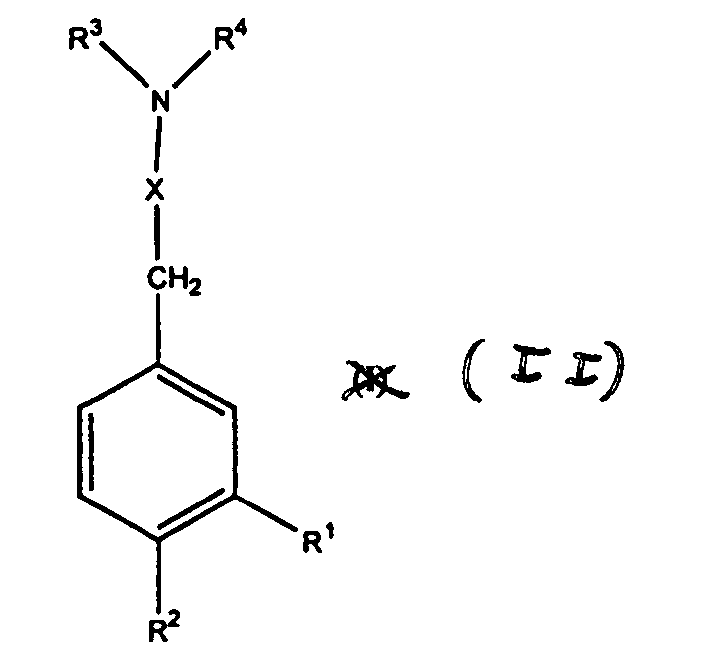
- the invention relates to the use of a compound having the general formula (II) wherein the radicals R 1 and R 2 each independently represent a hydrogen atom or an alkoxy group having 1 to 4 carbon atoms, X represents an alkylene group having 1 to 4 carbon atoms which may be substituted by one or more fluorine atoms, or a keto group -CO-, the radicals R 3 and R 4 are each simultaneously phenyl, which may be independently substituted with one or more straight or branched chain alkyl or alkoxy having 1 to 4 carbon atoms, or the radical R 3 is a hydrogen atom or a straight or branched chain Alkyl radical having 1 to 4 carbon atoms and the radical R 4 is a 1-naphthylalkylene radical - (CH 2 ) n -C 8 H 7 , a [3- (10,11-dihydro-dibenzo [a, d] cyclohepten-5-ylidene)
- a medicament may contain a pharmaceutically acceptable carrier and / or diluent.
- compositions according to the invention which are at least contain a compound having the general formula (I)
- a compound having the general formula (I) Surprisingly, in different cell types, such as mononuclear cells, fibroblasts and hepatocytes, the increase in intracellular ceramide concentration produced by substances such as e.g. Tumor necrosis factor ⁇ , lipopolysaccharides and oxidized lipoproteins as well oxidative stress, can be induced.
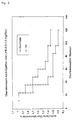
- compositions of the invention contained compounds of general formula (I) act proven anti-apoptotic. In addition, experiments showed that they reduce mortality of mice in induced sepsis. Accordingly, the Pharmaceutical compositions according to the invention containing at least one Compound with the general formula (I), a new therapeutic approach for the treatment of, for example, sepsis, arteriosclerosis, neurodegenerative Diseases such as Alzheimer's disease, and retroviral infections, e.g. HIV infections.
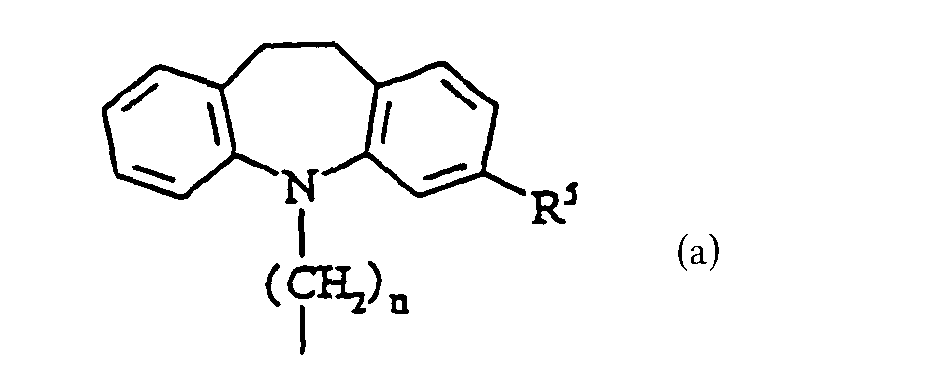
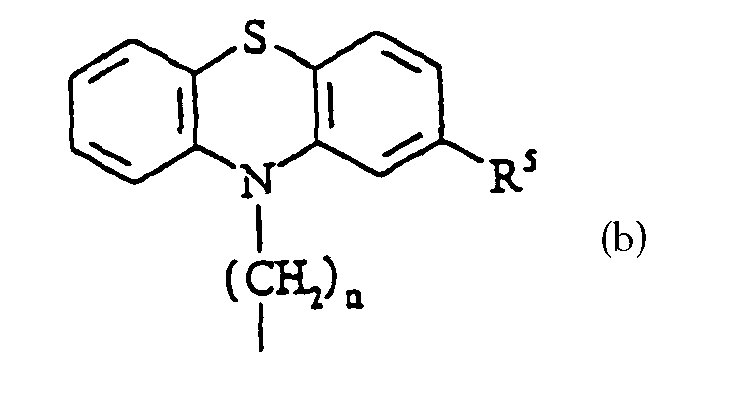
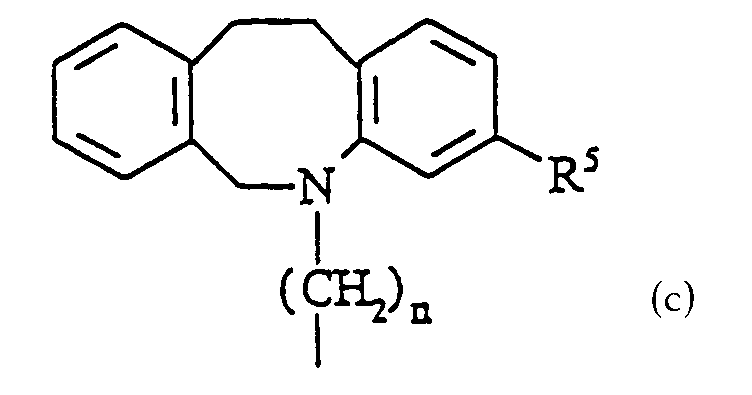
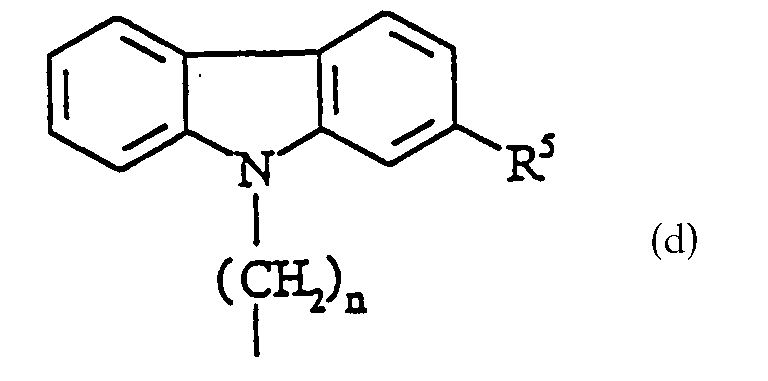
- the radical B is a (10, 11-dihydro-dibenzo [b, f] azepin-5-yl) -N-alkylene radical a phenothiazine-10-yl-N-alkylene radical a (5,6,1,12-tetrahydrodibenzo [b, f] azocin-5-yl) -N-alkylene radical or a carbazol-9-yl-N-alkylene radical
- the radical (A) is preferably one of the radicals (a), (c) or (d)
- the radical R 3 in the formulas (I) and (II) is preferably a methyl group.
- the radicals R 1 and R 2 in the formulas (I) and (II) are preferably each independently a hydrogen atom or a methoxy group.
- the radical R 5 may be, for example, a chlorine atom.
- the present invention lies in the pharmaceutical Composition of the compound of general formula (I) or (II) preferably in a concentration of 4 to 80% by weight, more preferably 10 to 60 wt .-%, most preferably 15 to 50 wt .-%, based on the Total amount of the pharmaceutical composition, before.
- compositions are not subject to any particular restriction, and it may be in liquid, gelatinous or solid dosage form.
- the pharmaceutical may also be in microencapsulated form available.
- the pharmaceutical preparations according to the invention can in addition to one or more of the abovementioned compounds of the formula (I) or (II) optionally a conventional one known to those of ordinary skill in the art pharmaceutically acceptable carrier and / or a pharmaceutically acceptable Contain diluent.
- the administration of the pharmaceutical according to the invention Compositions are not particularly limited and may be, for example, orally, intravenously, subcutaneously, intramuscularly, rectally, topically and / or externally applied to a patient.
- the radical A is a (10,11-dihydro-dibenzo [b, f] azepin-5-yl) -N-alkylene radical, a phenothiazin-10-yl-N-alkylene radical, a (5,6 , 11,12-tetrahydrodibenzo [b, f] azocin-5-yl) -N-alkylene radical or a carbazol-9-yl-N-alkylene radical
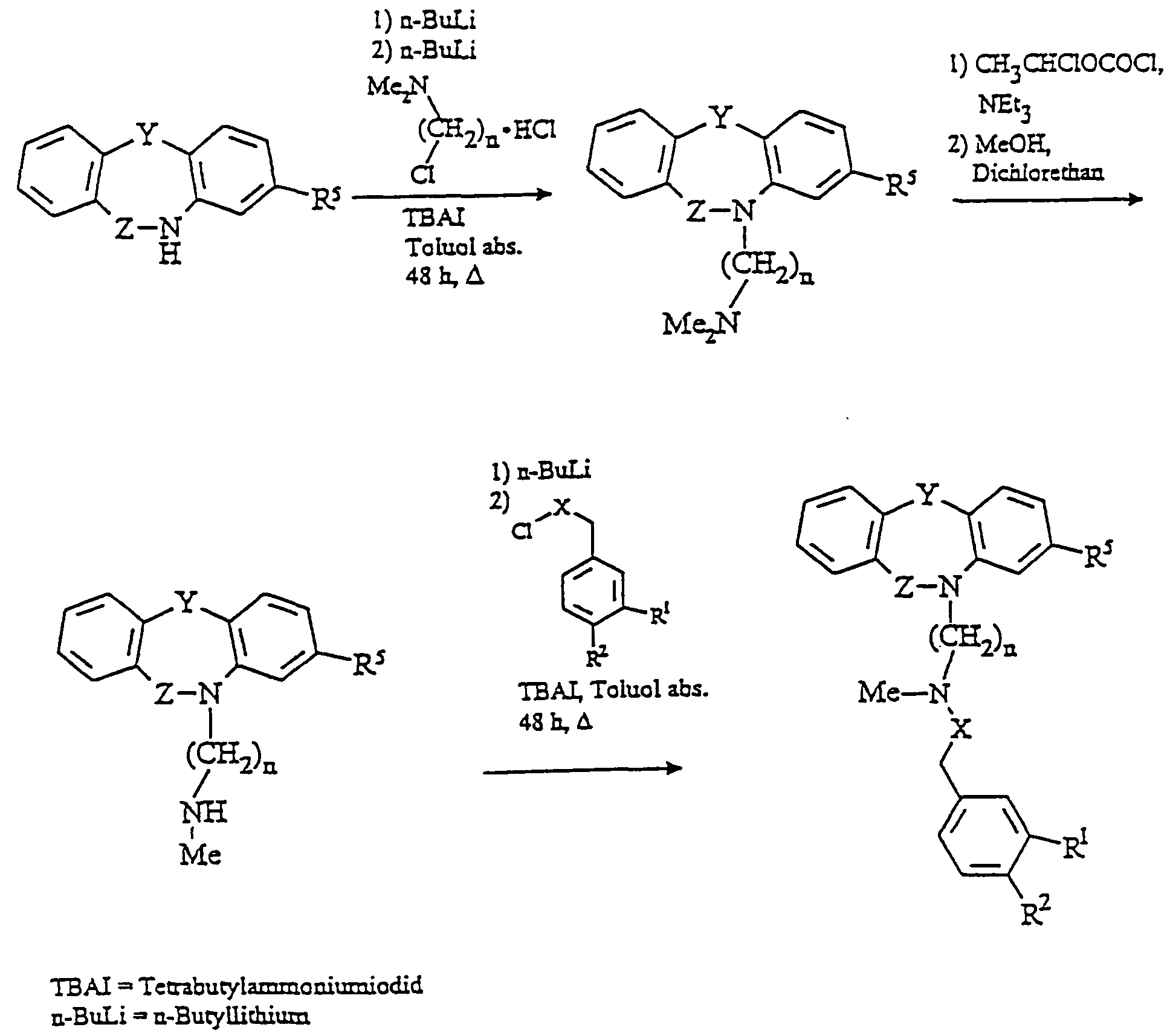
- the compounds of the formula (I) which are contained in the pharmaceutical composition according to the invention or (II) for example, but not limited to, the following reaction scheme, wherein n, X, Y, Z, R 1 , R 2 and R 5 are as defined above.
- LDL was obtained from healthy volunteers by sequential flotation in an ultracentrifuge at predetermined densities as described in Havel et al. (J. Clin Invest 34, 3145 (1955)) and Deigner et al. (Arzneim.-Forsch./Drug Res. 44, 956, (1994)) described.
- LDL was minimally modified (mmLDL) by dialysis against Tris-HCl buffer containing 20 ⁇ M FeCl 3 for 48 hours as described by Watson et al. (J. Clin. Invest., 95, 774 (1995).
- Human macrophages were pretreated with corresponding compounds contained in the compositions of the invention for 30 minutes and then for two hours with oxidized LDL (27 ⁇ g / ml). The medium was then decolorized, the cells washed with precooled (4 ° C) PBS and treated with lysis buffer (NaAc, 250 mM, pH 5.0, TritonX-100 0.2%) at 4 ° C for 15 minutes and centrifuged (18,000 G).
- lysis buffer NaAc, 250 mM, pH 5.0, TritonX-100 0.26%
- the supernatants (5 ul) were diluted with ARB buffer (NaAc, 250 mM, pH 5.0) to obtain a protein concentration of 80 ug / ml, 45 minutes BODIPY®-FL-C 5 -sphingomyelin (8 nM) at Incubated at 37 ° C. Subsequently, 150 ⁇ l of methanol (internal standard: C 5 -BODIPY® acid) were added. The samples were subjected to HPLC analysis (50% MeOH / 10% Tris-HCl, pH 7.5, 10 mmol, 2 ml / min, E. Merck Lichrospher 125-4, 100-5 ⁇ M RP-18, fluorescence detection 503 Ex / 512 Em ).
- HPLC analysis 50% MeOH / 10% Tris-HCl, pH 7.5, 10 mmol, 2 ml / min, E. Merck Lichrospher 125-4, 100-5 ⁇ M RP-18, fluorescence detection
- ceramide concentrations in the cells were catalysed after diacylglycerol Phosphorylation as described in Kinscherf et al. (FEBS, 405, 55 (1997)) and Dressler et al. (J. Biol. Chem. 265, 14917 (1990)).
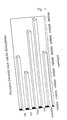
- FIG. 1 shows in a diagram the phospho-ceramide concentration (cpm / spot) to ox.
- LDL stimulation on the one hand without (ox) and on the other with the addition corresponding compounds of the general formula (I) which in the inventive pharmaceutical compositions may be included namely, [2- (3,4-dimethoxyphenyl) ethyl] - [3- (2-chlorophenothiazin-10-yl) -N-propyl] -methylamine (V3) and [3- (carbazol-9-yl) -N-propyl] - [2- (4-methoxyphenyl) -ethyl] methylamine (V6).
- the phospho-ceramide concentration is due to the Stimulation by TNF indicated.
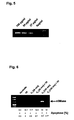
- Fig. 5 shows the RT-PCR of aSMase in M ⁇ . It shows an expression of aSMase (687 bp) after incubation (4 h) of M ⁇ with increasing mmLDL concentrations.
- Fig. 6 shows the effect of pretreatment of M ⁇ with a composition containing [3- (carbazol-9-yl) -N-propyl] - [2- (4-methoxyphenyl) ethyl] methylamine (V6) (2 ⁇ M, 30 min), aSMase expression and apoptosis in M ⁇ (percentage of apoptotic M ⁇ , determined by YOPRO-1 staining after incubation with medium or C 6 -ceramide (10 ⁇ M) with or without pretreatment with the Compound V6 data are presented as the mean ⁇ SEM of three experiments *, P ⁇ 0.05 vs. control or #, P ⁇ 0.05 vs C 6 -Ceramide-treated cells (120 min)).
- apoptosis (percentage of apoptotic cells) was quantified by counting YOPRO-1 stained apoptotic cells using a microscope equipped with a mercury lamp and a fluorescence unit in combination with a computer-assisted morphometry system.
- the primers and the conditions were as follows: 5'-CAGGGTTCCTGGCTGGGCAGCA-3 '(forward) and 5'-GGTCCTGGACCATGAGACCTAC-3', 94 ° C, 60 ° C, 72 ° C, 1 minute each, 40 cycles (Sequence analysis of the purified PCR product by the Deutsche Krebsgeberstechnik, Heidelberg , BR Germany, confirmed the amplification of the expected aSMase fragment).
Landscapes
- Health & Medical Sciences (AREA)
- Life Sciences & Earth Sciences (AREA)
- Veterinary Medicine (AREA)
- Chemical & Material Sciences (AREA)
- Medicinal Chemistry (AREA)
- Pharmacology & Pharmacy (AREA)
- Animal Behavior & Ethology (AREA)
- General Health & Medical Sciences (AREA)
- Public Health (AREA)
- Epidemiology (AREA)
- Organic Chemistry (AREA)
- Engineering & Computer Science (AREA)
- Bioinformatics & Cheminformatics (AREA)
- Nuclear Medicine, Radiotherapy & Molecular Imaging (AREA)
- General Chemical & Material Sciences (AREA)
- Chemical Kinetics & Catalysis (AREA)
- Neurosurgery (AREA)
- Communicable Diseases (AREA)
- Neurology (AREA)
- Virology (AREA)
- Biomedical Technology (AREA)
- Oncology (AREA)
- Tropical Medicine & Parasitology (AREA)
- Emergency Medicine (AREA)
- AIDS & HIV (AREA)
- Psychiatry (AREA)
- Molecular Biology (AREA)
- Hospice & Palliative Care (AREA)
- Urology & Nephrology (AREA)
- Vascular Medicine (AREA)
- Cardiology (AREA)
- Heart & Thoracic Surgery (AREA)
- Pharmaceuticals Containing Other Organic And Inorganic Compounds (AREA)
Description


| Verbindung | Apoptose (IC-50, µM) | Hemmung der sauren Sphingomyelinase (Zellen) (IC-50, µM) |
| V2 | 3 | 15 |
| V3 | 2 | 6 |
| V4 | 5 | 101 |
| V5 | 6 | 8 |
| V6 | 0,5 | 9 |
| V8 | 3 | 9 |
| V15 | 1 | 14 |
| V16 | 7 | 16 |
| V18 | 0,5 | 33 |
| V19 | 2, 5 | 9 |
| V20 | 5 | 6 |
| V21 | 11 | 17 |
| V22 | 3 | 10 |
| V23 | 4 | 8 |
| V30 | 1,5 | 30 |
| V31 | 1,5 | 20 |
| V32 | 18 | |
| V34 | 3 | |
| V35 | 6 | 63 |
| V36 | 1 | |
| V37 | 2,5 | |
| V38 | 6 | |
| V41 | 7 | |
| V42 | 4 |
M wurden mmLDL (27 µg/ml), C6-Ceramid (10 µM) bzw. H2O2 (30 µM) unterworfen. Apoptotische Zellen wurden mittels YOPRO-1-Färbung (s. Idziorek et al, J. Immunol. Methods, 185, 1995, 249-258) und/oder mittels TUNEL-Technik (Quantum Appligene, Heidelberg, BR Deutschland) identifiziert. Die Bestimmung der Apoptose (Prozentanteil apoptotischer Zellen) wurde durch Zählen von YOPRO-1-gefärbten apoptotischen Zellen unter Verwendung eines Mikroskops, ausgestattet mit einer Quecksilberlampe und einer Fluoreszenzeinheit in Kombination mit einem Computer-unterstützten Morphometriesystem, quantifiziert.
5'-CAGGGTTCCTGGCTGGGCAGCA-3' (vorwärts) und 5'-GGTCCTGGACCATGAGACCTAC-3', 94°C, 60°C, 72°C, jeweils 1 min, 40 Zyklen (Sequenzanalyse des gereinigten PCR-Produkts durch das Deutsche Krebsforschungszentrum, Heidelberg, BR Deutschland, bestätigte die Amplifizierung des erwarteten aSMase-Fragments).
Claims (14)
- Verbindung mit der allgemeinen Formel (I)worin die Reste R1 und R2 jeweils unabhängig voneinander ein Wasserstoffatom oder eine Alkoxygruppe mit 1 bis 4 Kohlenstoffatomen bedeuten, X eine Alkylengruppe mit 1 bis 4 Kohlenstoffatomen, die mit einem oder mehreren Fluoratomen substituiert sein kann, oder eine Ketogruppe -CO- bedeutet, die Reste R3 und R4 jeweils gleichzeitig für Phenylreste stehen, die unabhängig voneinander mit einem oder mehreren gerad- oder verzweigtkettigen Alkyl- oder Alkoxyresten mit 1 bis 4 Kohlenstoffatomen substituiert sein können, oder der Rest R3 ein Wasserstoffatom oder einen gerad- oder verzweigtkettigen Alkylrest mit 1 bis 4 Kohlenstoffatomen und der Rest R4 einen 1-Naphthylalkylenrest -(CH2)n-C8H7, einen [3-(10,11-Dihydro-dibenzo[a,d]cyclohepten-5-yliden)-propyl]-rest-CH2CH2CHC15H12, ei nen N-(1-naphthyl)-N-alkylenaminrest-(CH2)n-NH-C8H7, einen N-(5H-Dibenzo[a,d]cycloheptan-5-yl)-N-alkylenaminrest-(CH2)n-NH-C15H13, oder einen nachstehenden Rest A bedeuten,
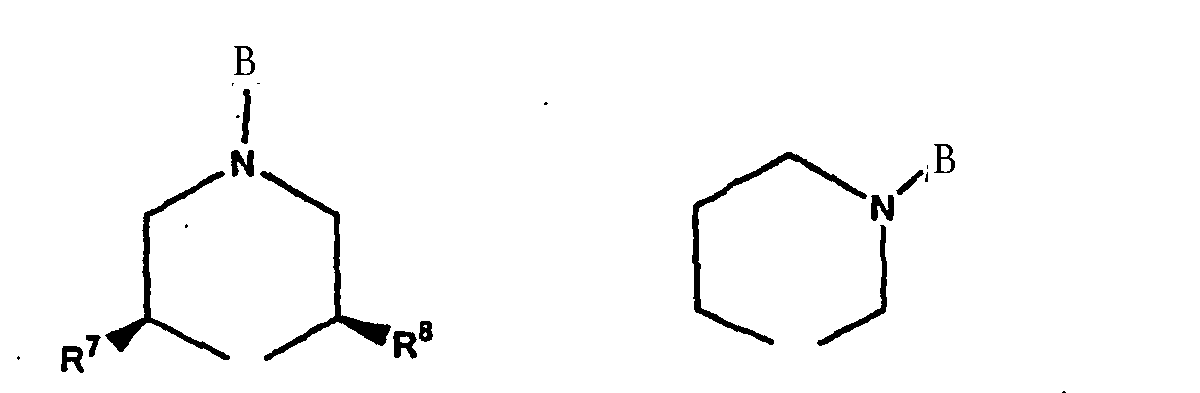
 wobei n 1, 2 oder 3 ist, R5 ein Wasserstoffatom oder Halogenatom bedeutet. Z eine Alkylenbrücke -(CH2)l-, wobei l = 0 oder 1 ist, bedeutet, Y eine Alkylenbrücke -(CH2)m-, wobei m = 0, 1 oder 2 ist, ein Sauerstoffatom oder eine NR6-Gruppe bedeutet, wobei der Rest R6 ein Wasserstoffatom, einen gerad- oder verzweigtkettigen Alkylrest mit 1 bis 4 Kohlenstoffatomen oder einen unsubstituierten oder substituierten Arylrest bedeutet, oder R3 und R4 miteinander unter Einbindung des Stickstoffatoms der Formel (I) einen nachstehenden Piperazinring oder Hexahydropyrimidinring bilden
 worin der Rest A wie vorgenannt definiert ist und R7 und R8 jeweils unabhängig voneinander ein Wasserstoffatom oder eine Alkylgruppe mit 1 bis 4 Kohlenstoffatomen bedeuten, oder ein pharmazeutisch verträgliches Salz davon zur Verwendung als Medikament.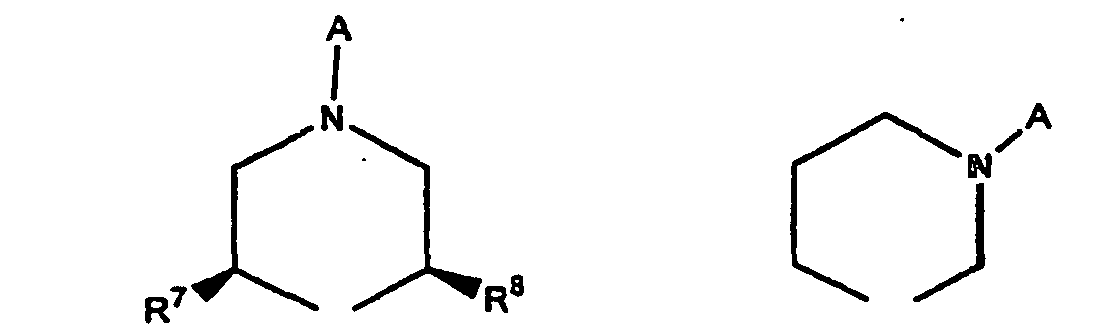
- Verbindung nach Anspruch 1, wobei der Rest A ein (10,11-Dihydrodibenzo[b,f]azepin-5-yl)-N-alkylenrest, ein (5,6,11,12-Tetrahydrodibenzo[b,f]azocin-5-yl)-N-alkylenrest oder ein Carbazol-9-yl-N-alkylenrest ist.
- Verbindung nach Anspruch 1 oder 2, wobei der Rest R3 eine Methylgruppe ist.
- Verbindung nach einem der Ansprüche 1 bis 3, wobei die Reste R1 und R2 jeweils unabhängig voneinander ein Wasserstoffatom oder eine Methoxygruppe sind.
- Verbindung nach einem der Ansprüche 1 bis 4, wobei der Rest R5 ein Chloratom ist.
- Pharmazeutische Zusammensetzung, enthaltend eine Verbindung nach einem der Ansprüche 1 bis 5 und gegebenenfalls einen pharmazeutisch verträglichen Träger und/oder ein pharmazeutisch verträgliches Verdünnungsmittel.
- Pharmazeutische Zusammensetzung nach Anspruch 6, wobei die Verbindung mit der allgemeinen Formel (I) in einer Konzentration von 4 bis 80 Gew.-%, bezogen auf die Gesamtmenge der pharmazeutischen Zusammensetzung, vorliegt.
- Pharmazeutische Zusammensetzung nach einem der Ansprüche 6 oder 7, welche in flüssiger, gelartiger oder fester Darreichungsform vorliegt.
- Verwendung einer Verbindung mit der allgemeinen Formel (II)worin die Reste R1 und R2 jeweils unabhängig voneinander ein Wasserstoffatom oder eine Alkoxygruppe mit 1 bis 4 Kohlenstoffatomen bedeuten, X eine Alkylengruppe mit 1 bis 4 Kohlenstoffatomen, die mit einem oder mehreren Fluoratomen substituiert sein kann, oder eine Ketogruppe -CO- bedeutet, die Reste R3 und R4 jeweils gleichzeitig für Phenylreste stehen, die unabhängig voneinander mit einem oder mehreren gerad- oder verzweigtkettigen Alkyl- oder Alkoxyresten mit 1 bis 4 Kohlenstoffatomen substituiert sein können, oder der Rest R3 ein Wasserstoffatom oder einen gerad- oder verzweigtkettigen Alkylrest mit 1 bis 4 Kohlenstoffatomen und der Rest R4 einen 1-Naphthylalkylenrest -(CH2)n-C8H7, einen [3-(10,11-Dihydro-dibenzo[a,d]cyclohepten-5-yliden)-propyl]-rest-CH2CH2CHC15H12, einen N-(1-naphthyl)-N-alkylenaminrest-(CH2)n-NH-C8H7, einen N-(5H-Dibenzo[a,d]cycloheptan-5-yl)-N-alkylenaminrest-(CH2)n-NH-C15H13, oder einen nachstehenden Rest B bedeuten,
 wobei n 1, 2 oder 3 ist, R5 ein Wasserstoffatom oder Halogenatom bedeutet. Z eine Alkylenbrücke -(CH2)l-, wobei l = 0 oder 1 ist, bedeutet, Y eine Alkylenbrücke -(CH2)m-, wobei m = 0, 1 oder 2 ist, ein Sauerstoffatom, ein Schwefelatom oder eine NR6-Gruppe bedeutet, wobei der Rest R6 ein Wasserstoffatom, einen gerad- oder verzweigtkettigen Alkylrest mit 1 bis 4 Kohlenstoffatomen oder einen unsubstituierten oder substituierten Arylrest bedeutet, oder R3 und R4 miteinander unter Einbindung des Stickstoffatoms der Formel (II) einen nachstehenden Piperazinring oder Hexahydropyrimidinring bilden
 worin der Rest B wie vorgenannt definiert ist und R7 und R8 jeweils unabhängig voneinander ein Wasserstoffatom oder eine Alkylgruppe mit 1 bis 4 Kohlenstoffatomen bedeuten, oder ein pharmazeutisch verträgliches Salz davon zur Herstellung eines Arzneimittels mit antiapoptotischer und antiseptischer Wirkung.
- Verwendung gemäß Anspruch 9 zur Herstellung eines Arzneimittels zur Behandlung von neurodegenerativen Erkrankungen, Sepsis, Arteriosklerose und retroviralen Infektionen.
- Verwendung einer Verbindung gemäß Anspruch 9 oder 10, wobei der Rest B ein (10,11-Dihydro-dibenzo[b.f]azepin-5-yl)-N-alkylenrest, ein (5,6,11,12-Tetrayhdrodibenzo[b,f]azocin-5-yl)-N-alkylenrest, ein Phenothiazin-10-yl-N-alkylenrest oder ein Carbazol-9-yl-N-alkylenrest ist.
- Verwendung einer Verbindung gemäß Ansprüchen 9 bis 11, wobei der Rest R3 eine Methylgruppe ist.
- Verwendung einer Verbindung nach einem der Ansprüche 9 bis 12, wobei die Reste R1 und R2 jeweils unabhängig voneinander ein Wasserstoffatom oder eine Methoxygruppe sind.
- Verwendung einer Verbindung nach einem der Ansprüche 9 bis 13, wobei der Rest R5 ein Chloratom ist.
Applications Claiming Priority (3)
| Application Number | Priority Date | Filing Date | Title |
|---|---|---|---|
| DE19924148 | 1999-05-26 | ||
| DE19924148A DE19924148A1 (de) | 1999-05-26 | 1999-05-26 | Sphingomyelinasehemmer |
| PCT/EP2000/004738 WO2000072833A2 (de) | 1999-05-26 | 2000-05-24 | Pharmazeutische zubereitungen zur hemmung von spimgomyelinase |
Publications (2)
| Publication Number | Publication Date |
|---|---|
| EP1207886A2 EP1207886A2 (de) | 2002-05-29 |
| EP1207886B1 true EP1207886B1 (de) | 2005-11-16 |
Family
ID=7909261
Family Applications (1)
| Application Number | Title | Priority Date | Filing Date |
|---|---|---|---|
| EP00927242A Expired - Lifetime EP1207886B1 (de) | 1999-05-26 | 2000-05-24 | Sphingomyelinase inhibitoren als wirkstoffe mit antiapoptotischer und antiseptischer wirkung |
Country Status (5)
| Country | Link |
|---|---|
| EP (1) | EP1207886B1 (de) |
| AT (1) | ATE309803T1 (de) |
| AU (1) | AU4568400A (de) |
| DE (2) | DE19924148A1 (de) |
| WO (1) | WO2000072833A2 (de) |
Families Citing this family (10)
| Publication number | Priority date | Publication date | Assignee | Title |
|---|---|---|---|---|
| WO2002051439A2 (en) | 2000-12-22 | 2002-07-04 | Medlyte, Inc. | Compositions and methods for the treatment and prevention of cardiovascular diseases and disorders, and for identifying agents therapeutic therefor |
| US6992082B2 (en) * | 2001-01-19 | 2006-01-31 | Cytokinetics, Inc. | Phenothiazine kinesin inhibitors |
| US7417040B2 (en) | 2004-03-01 | 2008-08-26 | Bristol-Myers Squibb Company | Fused tricyclic compounds as inhibitors of 17β-hydroxysteroid dehydrogenase 3 |
| US9274129B2 (en) | 2006-05-31 | 2016-03-01 | Lpath, Inc. | Methods and reagents for detecting bioactive lipids |
| US20080138334A1 (en) | 2006-05-31 | 2008-06-12 | Sabbadini Roger A | Immune-Derived Moieties Reactive Against Bioactive Lipids, and Methods of Making and Using Same |
| US9274130B2 (en) | 2006-05-31 | 2016-03-01 | Lpath, Inc. | Prevention and treatment of pain using antibodies to lysophosphatidic acid |
| DK2087002T3 (da) | 2006-10-27 | 2014-10-27 | Lpath Inc | Sammensætninger og fremgangsmåder til binding af sphingosin-1-phosphat |
| US8871202B2 (en) | 2008-10-24 | 2014-10-28 | Lpath, Inc. | Prevention and treatment of pain using antibodies to sphingosine-1-phosphate |
| DK3856196T3 (da) * | 2018-09-28 | 2024-02-19 | Univ Griffith | Phenylpropionsyrederivater til modulation af patogen aktivitet |
| WO2020231629A1 (en) | 2019-05-16 | 2020-11-19 | Snake River Bioscience, Inc. | Compositions and methods for the treatment of major depressive disorder |
Family Cites Families (5)
| Publication number | Priority date | Publication date | Assignee | Title |
|---|---|---|---|---|
| DE1051858B (de) * | 1957-04-27 | 1959-03-05 | Knoll Ag | Verfahren zur Herstellung von Abkoemmlingen des Phenthiazins |
| DE1087605B (de) * | 1958-03-29 | 1960-08-25 | Knoll Ag | Verfahren zur Herstellung von Phenthiazinderivaten |
| DK386089A (da) * | 1988-08-12 | 1990-02-13 | Japan Tobacco Inc | Katekolderivater |
| GB9025509D0 (en) * | 1990-11-23 | 1991-01-09 | Fujisawa Pharmaceutical Co | New amide derivatives,processes for the preparation thereof and pharmaceutical composition comprising the same |
| EP0637237B1 (de) * | 1993-02-23 | 2004-05-19 | Brigham And Women's Hospital, Inc. | Calciumrezeptoraktive moleküle |
-
1999
- 1999-05-26 DE DE19924148A patent/DE19924148A1/de not_active Ceased
-
2000
- 2000-05-24 DE DE50011645T patent/DE50011645D1/de not_active Expired - Fee Related
- 2000-05-24 AT AT00927242T patent/ATE309803T1/de not_active IP Right Cessation
- 2000-05-24 WO PCT/EP2000/004738 patent/WO2000072833A2/de not_active Ceased
- 2000-05-24 EP EP00927242A patent/EP1207886B1/de not_active Expired - Lifetime
- 2000-05-24 AU AU45684/00A patent/AU4568400A/en not_active Abandoned
Also Published As
| Publication number | Publication date |
|---|---|
| WO2000072833A3 (de) | 2001-05-25 |
| DE19924148A1 (de) | 2000-12-07 |
| AU4568400A (en) | 2000-12-18 |
| WO2000072833A2 (de) | 2000-12-07 |
| EP1207886A2 (de) | 2002-05-29 |
| DE50011645D1 (de) | 2005-12-22 |
| ATE309803T1 (de) | 2005-12-15 |
Similar Documents
| Publication | Publication Date | Title |
|---|---|---|
| DE69903661T2 (de) | Kombinationen von ileumgallensäuretransports inhibitoren und nicotinsäure derivaten für kardiovaskuläre indikationen | |
| US6190691B1 (en) | Methods for treating inflammatory conditions | |
| DE69630479T2 (de) | Arzneimittel zur Behandlung von entzündlichen Herzkrankheiten | |
| DE69908643T2 (de) | Kombinationen von cholesteryl ester transfer protein inhibitoren und nicotinsäure derivaten für kardiovaskuläre indikationen | |
| US20050239799A1 (en) | 1-phenyl-4-benzylpiperazines dopamine receptor subtype | |
| EP1514542B1 (de) | Medizinische Zusammensetzung enthaltend Tacrin oder Donepezil zur Verbesserung der Hirnfunktion | |
| WO2001022954A2 (de) | Indolyl-3-glyoxylsäurederivate als antitumormittel | |
| EP1207886A2 (de) | Sphingomyelinase inhibitoren als wirkstoffe mit antiapoptotischer und antiseptischer wirkung | |
| HU193302B (en) | Process for producing phospholipide compositions and pharmaceutical compositions containing them as active agents | |
| EP1415667B1 (de) | Mittel zur regulierung der sekretion von pankreassaft mit einem lpa-rezeptor-regler | |
| EP0937460A2 (de) | Verwendung eines Mittels gegen Durchfall für die Zubereitung eines Medikaments für die Behandlung von Entzündungen | |
| EP2242738B1 (de) | Sgk1-inhibitoren zur prophylaxe und/oder therapie von viralen erkrankungen und/oder karzinomen | |
| EP0482183B1 (de) | Histamin-h3-rezeptor-agonisten zur therapeutischen anwendung, pharmazeutische zubereitungen, die an h3-rezeptoren-agonistisch wirken, un die methode ihrer darstellung | |
| US5266571A (en) | Treatment of hemorrhoids with 5-HT2 antagonists | |
| WO1999036072A1 (en) | Pyrimidin 3-oxide compounds suitable for the treatment of pathologies of the skeletal muscle, in particular for the treatment of the hypokalemic paralysis | |
| CN102186473A (zh) | 用于治疗周围神经病的化合物 | |
| DE69812933T2 (de) | FARNESYL TRANSFERASEINHIBITOREN IN KOMBINATION MIT HMG CoA REDUKTASEINHIBITOR UND DEREN VERWENDUNG IN DER KREBSTHERAPIE | |
| EP0236390A1 (de) | Mittel gegen multiple sklerose. | |
| DE69208569T2 (de) | Thioharnstoffderivate und sie enthaltendes, antimikrobielles und antiulcerogenes Mittel | |
| JPH08268885A (ja) | 過酸化脂質増量抑制剤 | |
| DE69716430T2 (de) | Antioxidantien | |
| JPH0623105B2 (ja) | てんかんの発作の治療用製薬組成物 | |
| JP2008534569A (ja) | 非イミダゾール系アルキルアミンであるヒスタミンh3受容体リガンドを用いたてんかんの治療 | |
| KR101016927B1 (ko) | 알츠하이머 질환의 치료용 nmda 길항제 및 아세틸콜린에스테라제 억제제의 조합물 | |
| DE68910090T2 (de) | Verwendung heterozyklischer Amide zur Verhinderung der Tumormetastasierung. |
Legal Events
| Date | Code | Title | Description |
|---|---|---|---|
| PUAI | Public reference made under article 153(3) epc to a published international application that has entered the european phase |
Free format text: ORIGINAL CODE: 0009012 |
|
| 17P | Request for examination filed |
Effective date: 20020311 |
|
| AK | Designated contracting states |
Kind code of ref document: A2 Designated state(s): AT BE CH CY DE DK ES FI FR GB GR IE IT LI LU MC NL PT SE |
|
| AX | Request for extension of the european patent |
Free format text: AL;LT;LV;MK;RO;SI |
|
| RIN1 | Information on inventor provided before grant (corrected) |
Inventor name: MEISNER, MICHAEL Inventor name: BIBAK, NILOFAR Inventor name: KINSCHERF, RALF Inventor name: DEIGNER, HANS-PETER |
|
| RAP1 | Party data changed (applicant data changed or rights of an application transferred) |
Owner name: BIOFRONTERA PHARMACEUTICALS GMBH |
|
| 17Q | First examination report despatched |
Effective date: 20031216 |
|
| RTI1 | Title (correction) |
Free format text: SPHINGOMYELINASE INHIBITORS AS AGENTS WITH ANTIAPOPTOTIC AND ANTISEPTIC ACTION |
|
| RIC1 | Information provided on ipc code assigned before grant |
Ipc: 7A 61K 31/538 B Ipc: 7A 61P 9/10 B Ipc: 7A 61K 31/5415 A Ipc: 7A 61K 31/137 B Ipc: 7A 61K 31/403 B Ipc: 7A 61P 25/28 B Ipc: 7A 61K 31/496 B Ipc: 7A 61P 31/00 B Ipc: 7A 61P 31/18 B |
|
| GRAP | Despatch of communication of intention to grant a patent |
Free format text: ORIGINAL CODE: EPIDOSNIGR1 |
|
| GRAS | Grant fee paid |
Free format text: ORIGINAL CODE: EPIDOSNIGR3 |
|
| GRAA | (expected) grant |
Free format text: ORIGINAL CODE: 0009210 |
|
| AK | Designated contracting states |
Kind code of ref document: B1 Designated state(s): AT BE CH CY DE DK ES FI FR GB GR IE IT LI LU MC NL PT SE |
|
| PG25 | Lapsed in a contracting state [announced via postgrant information from national office to epo] |
Ref country code: IT Free format text: LAPSE BECAUSE OF FAILURE TO SUBMIT A TRANSLATION OF THE DESCRIPTION OR TO PAY THE FEE WITHIN THE PRE;WARNING: LAPSES OF ITALIAN PATENTS WITH EFFECTIVE DATE BEFORE 2007 MAY HAVE OCCURRED AT ANY TIME BEFORE 2007. THE CORRECT EFFECTIVE DATE MAY BE DIFFERENT FROM THE ONE RECORDED.SCRIBED TIME-LIMIT Effective date: 20051116 Ref country code: FI Free format text: LAPSE BECAUSE OF FAILURE TO SUBMIT A TRANSLATION OF THE DESCRIPTION OR TO PAY THE FEE WITHIN THE PRESCRIBED TIME-LIMIT Effective date: 20051116 Ref country code: NL Free format text: LAPSE BECAUSE OF FAILURE TO SUBMIT A TRANSLATION OF THE DESCRIPTION OR TO PAY THE FEE WITHIN THE PRESCRIBED TIME-LIMIT Effective date: 20051116 |
|
| REG | Reference to a national code |
Ref country code: GB Ref legal event code: FG4D Free format text: NOT ENGLISH |
|
| REG | Reference to a national code |
Ref country code: CH Ref legal event code: EP Ref country code: CH Ref legal event code: NV Representative=s name: FIAMMENGHI-FIAMMENGHI |
|
| REG | Reference to a national code |
Ref country code: IE Ref legal event code: FG4D Free format text: LANGUAGE OF EP DOCUMENT: GERMAN |
|
| REF | Corresponds to: |
Ref document number: 50011645 Country of ref document: DE Date of ref document: 20051222 Kind code of ref document: P |
|
| PG25 | Lapsed in a contracting state [announced via postgrant information from national office to epo] |
Ref country code: DK Free format text: LAPSE BECAUSE OF FAILURE TO SUBMIT A TRANSLATION OF THE DESCRIPTION OR TO PAY THE FEE WITHIN THE PRESCRIBED TIME-LIMIT Effective date: 20060216 Ref country code: GR Free format text: LAPSE BECAUSE OF FAILURE TO SUBMIT A TRANSLATION OF THE DESCRIPTION OR TO PAY THE FEE WITHIN THE PRESCRIBED TIME-LIMIT Effective date: 20060216 Ref country code: SE Free format text: LAPSE BECAUSE OF FAILURE TO SUBMIT A TRANSLATION OF THE DESCRIPTION OR TO PAY THE FEE WITHIN THE PRESCRIBED TIME-LIMIT Effective date: 20060216 |
|
| PG25 | Lapsed in a contracting state [announced via postgrant information from national office to epo] |
Ref country code: ES Free format text: LAPSE BECAUSE OF FAILURE TO SUBMIT A TRANSLATION OF THE DESCRIPTION OR TO PAY THE FEE WITHIN THE PRESCRIBED TIME-LIMIT Effective date: 20060227 |
|
| GBT | Gb: translation of ep patent filed (gb section 77(6)(a)/1977) |
Effective date: 20060222 |
|
| PG25 | Lapsed in a contracting state [announced via postgrant information from national office to epo] |
Ref country code: PT Free format text: LAPSE BECAUSE OF FAILURE TO SUBMIT A TRANSLATION OF THE DESCRIPTION OR TO PAY THE FEE WITHIN THE PRESCRIBED TIME-LIMIT Effective date: 20060417 |
|
| NLV1 | Nl: lapsed or annulled due to failure to fulfill the requirements of art. 29p and 29m of the patents act | ||
| REG | Reference to a national code |
Ref country code: CH Ref legal event code: PFA Owner name: BIOFRONTERA BIOSCIENCE GMBH Free format text: BIOFRONTERA PHARMACEUTICALS GMBH#HEMMELRATHER WEG 201#51377 LEVERKUSEN (DE) -TRANSFER TO- BIOFRONTERA BIOSCIENCE GMBH#HEMMELRATHER WEG 201#51377 LEVERKUSEN (DE) |
|
| RAP2 | Party data changed (patent owner data changed or rights of a patent transferred) |
Owner name: BIOFRONTERA BIOSCIENCE GMBH |
|
| ET | Fr: translation filed | ||
| REG | Reference to a national code |
Ref country code: FR Ref legal event code: CD |
|
| PLBE | No opposition filed within time limit |
Free format text: ORIGINAL CODE: 0009261 |
|
| STAA | Information on the status of an ep patent application or granted ep patent |
Free format text: STATUS: NO OPPOSITION FILED WITHIN TIME LIMIT |
|
| 26N | No opposition filed |
Effective date: 20060817 |
|
| PGFP | Annual fee paid to national office [announced via postgrant information from national office to epo] |
Ref country code: LU Payment date: 20070511 Year of fee payment: 8 |
|
| PGFP | Annual fee paid to national office [announced via postgrant information from national office to epo] |
Ref country code: MC Payment date: 20070514 Year of fee payment: 8 |
|
| PGFP | Annual fee paid to national office [announced via postgrant information from national office to epo] |
Ref country code: AT Payment date: 20070515 Year of fee payment: 8 |
|
| PGFP | Annual fee paid to national office [announced via postgrant information from national office to epo] |
Ref country code: IE Payment date: 20070524 Year of fee payment: 8 |
|
| PGFP | Annual fee paid to national office [announced via postgrant information from national office to epo] |
Ref country code: BE Payment date: 20070531 Year of fee payment: 8 |
|
| BECN | Be: change of holder's name |
Owner name: *BIOFRONTERA BIOSCIENCE G.M.B.H. Effective date: 20051116 |
|
| PGFP | Annual fee paid to national office [announced via postgrant information from national office to epo] |
Ref country code: CH Payment date: 20080515 Year of fee payment: 9 Ref country code: DE Payment date: 20080429 Year of fee payment: 9 |
|
| PG25 | Lapsed in a contracting state [announced via postgrant information from national office to epo] |
Ref country code: CY Free format text: LAPSE BECAUSE OF FAILURE TO SUBMIT A TRANSLATION OF THE DESCRIPTION OR TO PAY THE FEE WITHIN THE PRESCRIBED TIME-LIMIT Effective date: 20051116 |
|
| BERE | Be: lapsed |
Owner name: *BIOFRONTERA BIOSCIENCE G.M.B.H. Effective date: 20080531 |
|
| PG25 | Lapsed in a contracting state [announced via postgrant information from national office to epo] |
Ref country code: MC Free format text: LAPSE BECAUSE OF NON-PAYMENT OF DUE FEES Effective date: 20080531 |
|
| PGFP | Annual fee paid to national office [announced via postgrant information from national office to epo] |
Ref country code: GB Payment date: 20080522 Year of fee payment: 9 |
|
| REG | Reference to a national code |
Ref country code: IE Ref legal event code: MM4A |
|
| PG25 | Lapsed in a contracting state [announced via postgrant information from national office to epo] |
Ref country code: AT Free format text: LAPSE BECAUSE OF NON-PAYMENT OF DUE FEES Effective date: 20080524 |
|
| PG25 | Lapsed in a contracting state [announced via postgrant information from national office to epo] |
Ref country code: BE Free format text: LAPSE BECAUSE OF NON-PAYMENT OF DUE FEES Effective date: 20080531 |
|
| PG25 | Lapsed in a contracting state [announced via postgrant information from national office to epo] |
Ref country code: IE Free format text: LAPSE BECAUSE OF NON-PAYMENT OF DUE FEES Effective date: 20080526 |
|
| REG | Reference to a national code |
Ref country code: CH Ref legal event code: PL |
|
| GBPC | Gb: european patent ceased through non-payment of renewal fee |
Effective date: 20090524 |
|
| PG25 | Lapsed in a contracting state [announced via postgrant information from national office to epo] |
Ref country code: LI Free format text: LAPSE BECAUSE OF NON-PAYMENT OF DUE FEES Effective date: 20090531 Ref country code: CH Free format text: LAPSE BECAUSE OF NON-PAYMENT OF DUE FEES Effective date: 20090531 |
|
| REG | Reference to a national code |
Ref country code: FR Ref legal event code: ST Effective date: 20100129 |
|
| PG25 | Lapsed in a contracting state [announced via postgrant information from national office to epo] |
Ref country code: FR Free format text: LAPSE BECAUSE OF NON-PAYMENT OF DUE FEES Effective date: 20090602 |
|
| PGFP | Annual fee paid to national office [announced via postgrant information from national office to epo] |
Ref country code: FR Payment date: 20080425 Year of fee payment: 9 |
|
| PG25 | Lapsed in a contracting state [announced via postgrant information from national office to epo] |
Ref country code: GB Free format text: LAPSE BECAUSE OF NON-PAYMENT OF DUE FEES Effective date: 20090524 |
|
| PG25 | Lapsed in a contracting state [announced via postgrant information from national office to epo] |
Ref country code: DE Free format text: LAPSE BECAUSE OF NON-PAYMENT OF DUE FEES Effective date: 20091201 |
|
| PG25 | Lapsed in a contracting state [announced via postgrant information from national office to epo] |
Ref country code: LU Free format text: LAPSE BECAUSE OF NON-PAYMENT OF DUE FEES Effective date: 20080524 |