EP1199869A1 - Poste téléphonique comportant des moyens de mémorisation ou d'indication de données relatives à des appels entrants et/ou sortants - Google Patents
Poste téléphonique comportant des moyens de mémorisation ou d'indication de données relatives à des appels entrants et/ou sortants Download PDFInfo
- Publication number
- EP1199869A1 EP1199869A1 EP01402576A EP01402576A EP1199869A1 EP 1199869 A1 EP1199869 A1 EP 1199869A1 EP 01402576 A EP01402576 A EP 01402576A EP 01402576 A EP01402576 A EP 01402576A EP 1199869 A1 EP1199869 A1 EP 1199869A1
- Authority
- EP
- European Patent Office
- Prior art keywords
- line
- station
- station according
- indication
- calls
- Prior art date
- Legal status (The legal status is an assumption and is not a legal conclusion. Google has not performed a legal analysis and makes no representation as to the accuracy of the status listed.)
- Granted
Links
- 230000006870 function Effects 0.000 claims abstract description 13
- 230000015654 memory Effects 0.000 claims abstract description 7
- 230000004044 response Effects 0.000 claims description 9
- 238000009877 rendering Methods 0.000 claims 1
- 238000006677 Appel reaction Methods 0.000 description 5
- 238000009434 installation Methods 0.000 description 3
- 238000001514 detection method Methods 0.000 description 2
- 238000010586 diagram Methods 0.000 description 2
- 230000004913 activation Effects 0.000 description 1
- 238000007726 management method Methods 0.000 description 1
- 238000000034 method Methods 0.000 description 1
- 230000008569 process Effects 0.000 description 1
Images
Classifications
-
- H—ELECTRICITY
- H04—ELECTRIC COMMUNICATION TECHNIQUE
- H04M—TELEPHONIC COMMUNICATION
- H04M1/00—Substation equipment, e.g. for use by subscribers
- H04M1/56—Arrangements for indicating or recording the called number at the calling subscriber's set
-
- H—ELECTRICITY
- H04—ELECTRIC COMMUNICATION TECHNIQUE
- H04M—TELEPHONIC COMMUNICATION
- H04M1/00—Substation equipment, e.g. for use by subscribers
- H04M1/57—Arrangements for indicating or recording the number of the calling subscriber at the called subscriber's set
- H04M1/573—Line monitoring circuits for detecting caller identification
-
- H—ELECTRICITY
- H04—ELECTRIC COMMUNICATION TECHNIQUE
- H04M—TELEPHONIC COMMUNICATION
- H04M3/00—Automatic or semi-automatic exchanges
- H04M3/22—Arrangements for supervision, monitoring or testing
- H04M3/36—Statistical metering, e.g. recording occasions when traffic exceeds capacity of trunks
-
- H—ELECTRICITY
- H04—ELECTRIC COMMUNICATION TECHNIQUE
- H04M—TELEPHONIC COMMUNICATION
- H04M3/00—Automatic or semi-automatic exchanges
- H04M3/22—Arrangements for supervision, monitoring or testing
- H04M3/2272—Subscriber line supervision circuits, e.g. call detection circuits
-
- H—ELECTRICITY
- H04—ELECTRIC COMMUNICATION TECHNIQUE
- H04M—TELEPHONIC COMMUNICATION
- H04M9/00—Arrangements for interconnection not involving centralised switching
- H04M9/02—Arrangements for interconnection not involving centralised switching involving a common line for all parties
Definitions
- the invention relates to a telephone set comprising means for storing or indicating data relating to incoming and / or outgoing calls.
- Telephone sets often have a memory for storing call information inbound and / or outbound.
- a telephone set can also include an indicator, such as a screen entry or a flashing light, indicating that there has been a call and that it has not been answered. In this case the indicator disappears when the user performs a process showing that he has taken knowledge of the call.
- Such telephone sets are, for the same line, that is, in general, for the same number, often associated with other positions which may or may not have the same means of memorization or indication.
- the post telephone with means for storing calls inbound and / or outbound is in the main room of a housing while secondary stations, wireless type or not, are in other rooms.
- the invention results from the observation that, when extension with storage or indication of incoming calls and / or outgoing is associated, on the same line, with other extensions, the information stored or indicated cannot be reliable. Incoming call information are correct only when the answer is made on the main station (the one containing the storage means or indication). Similarly, for outgoing calls the stored information is accurate only when these calls are performed entirely from the main station and are not not finish on another post.
- the main station For an incoming call, if a response is made on a secondary station, the main station will include an indication that the call was not answered. If the communication is taken on the main station and continues on a secondary station the duration displayed will be that of communication on the main station and not its total duration.
- the main telephone set includes means of memorizing the numbers called and the duration of the communications, and when a call is initiated on the set main and continues on a secondary position, the duration recorded is that of the communication made from the main position and does not take into account the duration of the communication which continued on the secondary station. In addition, if an outgoing call is initiated from an extension secondary data related to this call is not recorded.
- the extension main may be disabled when the answer is made on an extension secondary.
- the post includes a means of recording the duration of incoming and / or outgoing communications, this recorded duration is reliable since it takes into account the positions secondary thanks to the signal supplied by the line.
- the main receiver has a memorization of the duration of the received calls, and if the answer is performed on a secondary station the duration recorded will be that of actual communication, regardless of position, or posts, from which (or from which) it will have been answered the call. If the position includes a non-response indicator to a call, means are provided to deactivate this indicator when the line status detector indicates an occupation of line, that is to say a response to a call.
- the telephone set contains means for memorizing the duration of outgoing calls with possibly the corresponding numbers, when a call is initiated from this post and ends on a post secondary, the duration of the call that is recorded corresponds to the total duration because the end of the call is determined by the line condition detector which provides a stop signal counting the duration of a calling call when the line condition detector provides signal indicating passage from the line of the busy state to the free state.
- the telephone set includes a called number detector such as a DTMF decoder.
- a called number detector can be realized at using filters and corresponding programming of a processor.
- the line condition detector is, for example, a detector comprising means for measuring the voltage of the line or a line activity detector, that is to say a means of measuring the AC signal on the line.
- the invention makes it possible to make the relative data more reliable. to incoming and / or outgoing calls without complicating implementation a telephone set.
- the detectors line condition are often provided in telephone sets for other uses.
- number management callers and / or called is usually done using a microprocessor or microcontroller.
- the invention only needs to modify the programming of the processor so that it takes into account the line condition detector for, in particular, that the communication times correspond to the actual durations, that is to say durations independent of the station from which communication is made on the line concerned.
- the software to be added to realize the invention can be downloaded using the telephone line.
- the invention thus relates, in general, to a telephone set comprising storage means or indication of data relating to incoming calls and / or outgoing; this station has a detector providing a signal line status to storage or indication means so whether the data stored or indicated is a function of line status.
- the storage means or indication include a non-response indicator to a call Incoming which remains activated when a call has not been answered incoming, this non-response being determined from the signal line status provided by the detector.
- the station includes means for memorization of communication times for calls incoming including means determining the duration which for such calls, between two changes of state of line.
- the storage or indication means may include means for memorizing the numbers received.
- the means of memorization or indication include means of memorization of the duration of outgoing calls determining the duration between two changes of state for such calls line.
- the storage means or indication may include a means of memorizing the numbers called. These can be detected by a number detector dialed on the line, such as a decoder DTMF, in order to memorize numbers initiated from other stations connected on the same line.
- the station includes a processor and means for receiving, over the telephone line, programming signals loaded into processor memory so that it becomes able to render the data stored or indicated line status functions.
- the invention also relates to a set of at least two telephone sets including an extension as defined above and a station devoid of storage means or indication.
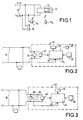
- FIG. 1 there is shown schematically a telephone installation comprising a line 10 to which is connected a telephone set 12 comprising storage means 14 for data relating to incoming and / or outgoing calls.
- this station 12 to means 14 of memorization will be called main station.
- On this same line 10 are connected in parallel secondary stations 16 and 18.
- the station 12 and / or the secondary stations 16 and 18 can be of the wireless type.
- the station 16 is of the wireless type, that is to say that a base 16 1 is connected by wire to the line 10 while the station 16 2 proper communicates wirelessly with the base 16 1 .
- the storage means does not provide reliable data if communication is carried out in whole or in part using a secondary station. So for the first function, if the first station 12 is not off-hook but if it is only one of the stations which is off-hook to answer an incoming call, the incoming call non-response indicator remains on.
- this duration corresponds only to the duration of the intervention of extension 12. For example if the user answers to the incoming call using extension 12 and then using from a post 16 or 18 having hung up the main post the recorded duration will not be that of the communication but that which elapses between taking the line and the end of the intervention from the main station.
- the duration of the outgoing call which will be recorded is the one that corresponds to the time during which the main station takes line 10. So the data provided by the storage means 14 will not be correct. Finally, if an outgoing call is made only from a secondary station no data will be saved in the station main.
- the invention makes it possible to record reliable data on the main station, even if a secondary station intervenes in incoming and / or outgoing communication.
- the station 12 includes a module 14 1 for storing and displaying data relating to incoming calls.
- the station 12 therefore includes a detector 22 of the calling numbers, the output of which is connected to an input of the module 14 1 .
- the station 12 also includes a parking meter 24 which provides date and duration data to the module 14 1 .
- the station also includes a memory 26 forming a telephone directory containing the telephone numbers and, optionally, other indications relating to the numbers.
- the station also includes an indicator light for notification of unanswered calls which is activated by an output signal from the module 14 1 .
- an indicator light for notification of unanswered calls which is activated by an output signal from the module 14 1 .
- another type of indication can be provided, in particular on a display.
- station 12 includes a detector 30 line state signal which provides a signal representative of the state line occupation.
- This signal supplied by the detector 30 is an indication of line status and not an indication of take line or not by extension 12.
- the detector 30 provides a line busy signal when one any of the telephone sets connected to the line is off hook. It provides a free line signal when all connected telephones are hung up.
- the line condition detector 30 is, so self known, either of the voltage level detection type continuous on line 10, i.e. of the activity detection type (alternative signal level) of this line 10.
- the signal provided by the detector 30 is applied to an input 32 of the module 14 1 in order to prevent activation of the lamp 28 when the line goes from the free state to the occupied state, that is to say when extension 12 or a secondary extension is picked up following an incoming call.
- the signal supplied on input 32 also allows determine the actual duration of the call regardless of the extension used to answer. So the duration displayed will be that that runs between the line seizure (start of busy line) and end of line seizure (all stations are hung up).
- the parking meter 24 makes it possible to determine the durations of communications, as well as their dates.
- the directory memory 26 is used, per se known, to store the name of the caller when the number caller is already in directory 26 and when the name is not sent over the line by the telephone exchange.
- the station 40 shown in Figure 3 has means for storing data relating to outgoing calls. It includes a module 42 for storing this data and for order their display. This module 42 receives information a parking meter 24 and a memory-like directory 26 of the same reference of the embodiment described with the figure 2.
- Dialer 44 on extension 40 provides a signal number on an input of module 42. This called number is memorized by this module with the name of the called party if this number is found in directory 26.
- the parking meter allows you to memorize dates and call durations.
- station 40 includes a detector 30 status of line 10.
- This detector is identical to that which bears the same reference in the embodiment shown on the Figure 2.
- the signal provided by this detector 30 is applied to an input 46 of module 42 so that the durations stored for display outgoing communications be independent of extension from which communications were made or initiated, and depend only on the state of the line. So the recorded duration is that which elapses between the start of the line seizure and end of line seizure.
- this station 40 includes, in a variant shown in lines interrupted in FIG. 3, a number detector 50 called issued on line 10 by another extension.
- This detector 50 is, for example, a DTMF decoder.
- the invention allows, with simple and economical means, to make reliable recorded data relating to incoming calls and / or Outgoing.
- a line condition detector 30 is provided in a position for a function other than that for which he is provided in the context of the present invention and when the station also includes a processor, the reliability functions of data can be loaded as program (s) in the processor. This loading can be done through telephone line 10.
- the detector 50 in particular a DTMF decoder, can also be performed using the processor.
Landscapes
- Engineering & Computer Science (AREA)
- Signal Processing (AREA)
- Telephone Function (AREA)
- Sub-Exchange Stations And Push- Button Telephones (AREA)
- Meter Arrangements (AREA)
- Mobile Radio Communication Systems (AREA)
Abstract
Description
Claims (9)
- Poste téléphonique (12 ; 40) comprenant des moyens de mémorisation ou d'indication de données relatives à des appels entrants et/ou sortants, caractérisé en ce qu'il comporte un détecteur (30) fournissant un signal d'état de ligne aux moyens de mémorisation ou d'indication (141 ; 42) afin que les données mémorisées ou indiquées soient fonctions de l'état de ligne.
- Poste selon la revendication 1 caractérisé en ce que les moyens de mémorisation ou d'indication comportent un indicateur (28) de non-réponse à un appel entrant qui reste activé quand il n'a pas été répondu à un appel entrant, cette non-réponse étant déterminée à partir du signal d'état de la ligne fourni par le détecteur (30).
- Poste selon la revendication 1 ou 2 caractérisé en ce qu'il comporte des moyens de mémorisation des durées de communications pour des appels entrants comprenant des moyens déterminant la durée qui s'écoule, pour de tels appels, entre deux changements d'état de ligne.
- Poste selon la revendication 3 caractérisé en ce que les moyens de mémorisation ou d'indication comportent des moyens de mémorisation des numéros reçus.
- Poste selon l'une quelconque des revendications précédentes caractérisé en ce que les moyens de mémorisation ou d'indication comportent des moyens de mémorisation des durées des appels sortants déterminant la durée qui s'écoule, pour de tels appels, entre deux changements d'état de ligne.
- Poste selon la revendication 5 caractérisé en ce que les moyens de mémorisation ou d'indication comportent un moyen de mémorisation des numéros appelés.
- Poste selon la revendication 6 caractérisé en ce qu'il comporte un détecteur de numéro composé sur la ligne, tel qu'un décodeur DTMF, afin de mémoriser les numéros initiés à partir d'autres postes raccordés sur la même ligne.
- Poste selon l'une quelconque des revendications précédentes, caractérisé en ce qu'il comprend un processeur et des moyens pour recevoir, par la ligne téléphonique, des signaux de programmation chargés dans la mémoire du processeur afin que celui-ci devienne capable de rendre les données mémorisées ou indiquées fonctions de l'état de la ligne.
- Ensemble d'au moins deux postes téléphoniques comprenant un poste selon l'une quelconque des revendications précédentes et un poste dépourvu de moyens de mémorisation ou d'indication.
Applications Claiming Priority (2)
| Application Number | Priority Date | Filing Date | Title |
|---|---|---|---|
| FR0013364 | 2000-10-19 | ||
| FR0013364A FR2815802B1 (fr) | 2000-10-19 | 2000-10-19 | Poste telephonique comportant des moyens de memorisation ou d'indication de donnees relatives a des appels entrants et/ou sortants |
Publications (2)
| Publication Number | Publication Date |
|---|---|
| EP1199869A1 true EP1199869A1 (fr) | 2002-04-24 |
| EP1199869B1 EP1199869B1 (fr) | 2006-07-05 |
Family
ID=8855487
Family Applications (1)
| Application Number | Title | Priority Date | Filing Date |
|---|---|---|---|
| EP01402576A Expired - Lifetime EP1199869B1 (fr) | 2000-10-19 | 2001-10-05 | Poste téléphonique comportant des moyens de mémorisation ou d'indication de données relatives à des appels entrants et/ou sortants |
Country Status (7)
| Country | Link |
|---|---|
| US (1) | US20020044641A1 (fr) |
| EP (1) | EP1199869B1 (fr) |
| AT (1) | ATE332608T1 (fr) |
| AU (1) | AU7945901A (fr) |
| CA (1) | CA2359262A1 (fr) |
| DE (1) | DE60121273T2 (fr) |
| FR (1) | FR2815802B1 (fr) |
Families Citing this family (17)
| Publication number | Priority date | Publication date | Assignee | Title |
|---|---|---|---|---|
| US20080207202A1 (en) * | 1997-07-30 | 2008-08-28 | Zellner Samuel N | Apparatus and method for providing a user interface for facilitating communications between devices |
| US20080220776A1 (en) * | 1997-07-30 | 2008-09-11 | Steven Tischer | Interface devices for facilitating communications between devices and communications networks |
| US20080195641A1 (en) * | 1997-07-30 | 2008-08-14 | Steven Tischer | Apparatus and method for aggregating and accessing data according to user information |
| US7149514B1 (en) | 1997-07-30 | 2006-12-12 | Bellsouth Intellectual Property Corp. | Cellular docking station |
| US7194083B1 (en) | 2002-07-15 | 2007-03-20 | Bellsouth Intellectual Property Corporation | System and method for interfacing plain old telephone system (POTS) devices with cellular networks |
| US20080194251A1 (en) * | 1997-07-30 | 2008-08-14 | Steven Tischer | Apparatus and method for providing communications and connection-oriented services to devices |
| US20080207197A1 (en) | 1997-07-30 | 2008-08-28 | Steven Tischer | Apparatus, method, and computer-readable medium for interfacing devices with communications networks |
| US20080192769A1 (en) * | 1997-07-30 | 2008-08-14 | Steven Tischer | Apparatus and method for prioritizing communications between devices |
| US6411802B1 (en) * | 1999-03-15 | 2002-06-25 | Bellsouth Intellectual Property Management Corporation | Wireless backup telephone device |
| US7120454B1 (en) | 2001-12-26 | 2006-10-10 | Bellsouth Intellectual Property Corp. | Auto sensing home base station for mobile telephone with remote answering capabilites |
| US8543098B2 (en) | 2002-07-15 | 2013-09-24 | At&T Intellectual Property I, L.P. | Apparatus and method for securely providing communications between devices and networks |
| US8554187B2 (en) | 2002-07-15 | 2013-10-08 | At&T Intellectual Property I, L.P. | Apparatus and method for routing communications between networks and devices |
| US7200424B2 (en) | 2002-07-15 | 2007-04-03 | Bellsouth Intelectual Property Corporation | Systems and methods for restricting the use and movement of telephony devices |
| US8416804B2 (en) | 2002-07-15 | 2013-04-09 | At&T Intellectual Property I, L.P. | Apparatus and method for providing a user interface for facilitating communications between devices |
| US8275371B2 (en) | 2002-07-15 | 2012-09-25 | At&T Intellectual Property I, L.P. | Apparatus and method for providing communications and connection-oriented services to devices |
| US8526466B2 (en) | 2002-07-15 | 2013-09-03 | At&T Intellectual Property I, L.P. | Apparatus and method for prioritizing communications between devices |
| US8000682B2 (en) | 2002-07-15 | 2011-08-16 | At&T Intellectual Property I, L.P. | Apparatus and method for restricting access to data |
Citations (3)
| Publication number | Priority date | Publication date | Assignee | Title |
|---|---|---|---|---|
| US4924496A (en) * | 1988-05-12 | 1990-05-08 | Romek Figa D/B/A Abraham & Sons | Automatic incoming telephone call originating number and party display system |
| US5388150A (en) * | 1992-07-28 | 1995-02-07 | Schneyer; Robin | Automatic incoming telephone call identification and disposition system |
| US5734706A (en) * | 1995-07-27 | 1998-03-31 | Windsor; Victoria Brein | Caller identification and data retrieval system |
Family Cites Families (15)
| Publication number | Priority date | Publication date | Assignee | Title |
|---|---|---|---|---|
| US4125749A (en) * | 1975-08-09 | 1978-11-14 | Tamura Electric Works, Ltd. | Key telephone systems |
| US4122308A (en) * | 1977-06-03 | 1978-10-24 | Utility Verification Corp. | Telephone call metering device |
| JPS57131163A (en) * | 1981-02-05 | 1982-08-13 | Hashimoto Corp | Integrating display device of telephone rate and its system |
| US4585904A (en) * | 1982-02-05 | 1986-04-29 | General Telephone Inc. | Programmable computerized telephone call cost metering device |
| US4656657A (en) * | 1985-10-15 | 1987-04-07 | Richard Hunsicker | Telephone monitoring device |
| US5146490A (en) * | 1991-05-31 | 1992-09-08 | Primo Microphones, Inc. | Passive telephone line monitoring system |
| US5230017A (en) * | 1991-11-08 | 1993-07-20 | British Technology Group Usa | Communication line monitoring system |
| US5390236A (en) * | 1992-03-31 | 1995-02-14 | Klausner Patent Technologies | Telephone answering device linking displayed data with recorded audio message |
| JPH06133038A (ja) * | 1992-10-16 | 1994-05-13 | Fujitsu Ltd | 多機能電話機の保留表示方式 |
| US5838777A (en) * | 1997-02-28 | 1998-11-17 | Inventec Corporation | Apparatus for auto-detecting dialing of a parallel communication device |
| US5903632A (en) * | 1997-03-19 | 1999-05-11 | Tmax Technologies Inc. | Automated telephone directory |
| EP0899926A1 (fr) * | 1997-08-25 | 1999-03-03 | Alcatel | Dispositif de télécommunication avec identification de l'appelant |
| US6134308A (en) * | 1998-06-05 | 2000-10-17 | Lucent Technologies Inc. | Caller ID logging: entry storage on a per line basis |
| US6240164B1 (en) * | 1998-06-05 | 2001-05-29 | David D. Jensen | Method and apparatus for providing call detail records at subscriber premises |
| US6075845A (en) * | 1998-06-11 | 2000-06-13 | Conexant Systems, Inc. | System and method for performing telephone line-in-use detection, extension pick-up detection, and remote hang-up detection in a modem |
-
2000
- 2000-10-19 FR FR0013364A patent/FR2815802B1/fr not_active Expired - Fee Related
-
2001
- 2001-10-05 EP EP01402576A patent/EP1199869B1/fr not_active Expired - Lifetime
- 2001-10-05 AT AT01402576T patent/ATE332608T1/de not_active IP Right Cessation
- 2001-10-05 DE DE60121273T patent/DE60121273T2/de not_active Expired - Fee Related
- 2001-10-16 AU AU79459/01A patent/AU7945901A/en not_active Abandoned
- 2001-10-17 CA CA002359262A patent/CA2359262A1/fr not_active Abandoned
- 2001-10-17 US US09/981,518 patent/US20020044641A1/en not_active Abandoned
Patent Citations (3)
| Publication number | Priority date | Publication date | Assignee | Title |
|---|---|---|---|---|
| US4924496A (en) * | 1988-05-12 | 1990-05-08 | Romek Figa D/B/A Abraham & Sons | Automatic incoming telephone call originating number and party display system |
| US5388150A (en) * | 1992-07-28 | 1995-02-07 | Schneyer; Robin | Automatic incoming telephone call identification and disposition system |
| US5734706A (en) * | 1995-07-27 | 1998-03-31 | Windsor; Victoria Brein | Caller identification and data retrieval system |
Non-Patent Citations (1)
| Title |
|---|
| HOFFERT B W: "TELEPHONE CALL LOG DEVICE AND ACCESS CONTROLLER", WESCON TECHNICAL PAPERS, 1 November 1989 (1989-11-01), XP000116054 * |
Also Published As
| Publication number | Publication date |
|---|---|
| FR2815802B1 (fr) | 2004-09-10 |
| DE60121273D1 (de) | 2006-08-17 |
| AU7945901A (en) | 2002-05-02 |
| CA2359262A1 (fr) | 2002-04-19 |
| FR2815802A1 (fr) | 2002-04-26 |
| EP1199869B1 (fr) | 2006-07-05 |
| ATE332608T1 (de) | 2006-07-15 |
| US20020044641A1 (en) | 2002-04-18 |
| DE60121273T2 (de) | 2006-11-09 |
Similar Documents
| Publication | Publication Date | Title |
|---|---|---|
| EP1199869B1 (fr) | Poste téléphonique comportant des moyens de mémorisation ou d'indication de données relatives à des appels entrants et/ou sortants | |
| US5781613A (en) | Telephone answering device and method for screening incoming telephone calls with blocked calling party identification information | |
| EP0989720A1 (fr) | Dispositif téléphonique destiné au milieu carcéral | |
| US8848892B2 (en) | Contact list with conversation point reminder | |
| WO2010142879A1 (fr) | Procédé et application pour le contrôle parental de l'utilisation d'un terminal | |
| JPH06244944A (ja) | 将来の電話呼び出し閉そく装置 | |
| US6885739B2 (en) | Adaptive caller ID storage based on answer status of incoming call | |
| EP0268717A1 (fr) | Appareil de contrôle pour poste téléphonique | |
| KR100664122B1 (ko) | 부재중 통화 시 발신자 표시방법 | |
| JP2000270077A (ja) | 携帯電話機 | |
| EP4561042B1 (fr) | Test d'une interface de communication connectée à une ligne téléphonique analogique | |
| JP3812860B2 (ja) | ボタン電話装置 | |
| AU2006203320A1 (en) | Telephone with means of memorization or indication of data related to incoming and/or outgoing calls description | |
| US9386429B2 (en) | Reverse look up monitoring system | |
| JP3781629B2 (ja) | 通話料金表示機能付き電話機 | |
| KR101080484B1 (ko) | 통신 단말기의 상대방 시간 정보 표시 장치 및 방법 | |
| JP2658181B2 (ja) | 電話端末装置 | |
| FR2718592A1 (fr) | Dispositif répondeur téléphonique. | |
| FR2661301A1 (fr) | Procede et dispositif pour mesurer la qualite de messages diffuses. | |
| KR20040106931A (ko) | 이동 통신 단말기에서의 최종 통화 시간정보 관리방법 | |
| AU7999898A (en) | A telecommunication device for detecting incoming signals | |
| KR100292338B1 (ko) | 전화기의카드식메모리다이얼링방법 | |
| US20060088147A1 (en) | Device and method for monitoring available calling plan minutes | |
| FR2606959A1 (fr) | Dispositif de selection de liaison telephonique | |
| JP2003304321A (ja) | 着信履歴提供方法、着信履歴提供機能を持つ電話機、着信履歴提供プログラム及びそのプログラムを記録した記録媒体 |
Legal Events
| Date | Code | Title | Description |
|---|---|---|---|
| PUAI | Public reference made under article 153(3) epc to a published international application that has entered the european phase |
Free format text: ORIGINAL CODE: 0009012 |
|
| AK | Designated contracting states |
Kind code of ref document: A1 Designated state(s): AT BE CH CY DE DK ES FI FR GB GR IE IT LI LU MC NL PT SE TR |
|
| AX | Request for extension of the european patent |
Free format text: AL;LT;LV;MK;RO;SI |
|
| 17P | Request for examination filed |
Effective date: 20021004 |
|
| AKX | Designation fees paid |
Free format text: AT BE CH CY DE DK ES FI FR GB GR IE IT LI LU MC NL PT SE TR |
|
| 17Q | First examination report despatched |
Effective date: 20040920 |
|
| GRAP | Despatch of communication of intention to grant a patent |
Free format text: ORIGINAL CODE: EPIDOSNIGR1 |
|
| GRAS | Grant fee paid |
Free format text: ORIGINAL CODE: EPIDOSNIGR3 |
|
| GRAA | (expected) grant |
Free format text: ORIGINAL CODE: 0009210 |
|
| AK | Designated contracting states |
Kind code of ref document: B1 Designated state(s): AT BE CH CY DE DK ES FI FR GB GR IE IT LI LU MC NL PT SE TR |
|
| PG25 | Lapsed in a contracting state [announced via postgrant information from national office to epo] |
Ref country code: IT Free format text: LAPSE BECAUSE OF FAILURE TO SUBMIT A TRANSLATION OF THE DESCRIPTION OR TO PAY THE FEE WITHIN THE PRESCRIBED TIME-LIMIT;WARNING: LAPSES OF ITALIAN PATENTS WITH EFFECTIVE DATE BEFORE 2007 MAY HAVE OCCURRED AT ANY TIME BEFORE 2007. THE CORRECT EFFECTIVE DATE MAY BE DIFFERENT FROM THE ONE RECORDED. Effective date: 20060705 Ref country code: AT Free format text: LAPSE BECAUSE OF FAILURE TO SUBMIT A TRANSLATION OF THE DESCRIPTION OR TO PAY THE FEE WITHIN THE PRESCRIBED TIME-LIMIT Effective date: 20060705 Ref country code: NL Free format text: LAPSE BECAUSE OF FAILURE TO SUBMIT A TRANSLATION OF THE DESCRIPTION OR TO PAY THE FEE WITHIN THE PRESCRIBED TIME-LIMIT Effective date: 20060705 Ref country code: IE Free format text: LAPSE BECAUSE OF FAILURE TO SUBMIT A TRANSLATION OF THE DESCRIPTION OR TO PAY THE FEE WITHIN THE PRESCRIBED TIME-LIMIT Effective date: 20060705 Ref country code: FI Free format text: LAPSE BECAUSE OF FAILURE TO SUBMIT A TRANSLATION OF THE DESCRIPTION OR TO PAY THE FEE WITHIN THE PRESCRIBED TIME-LIMIT Effective date: 20060705 |
|
| REG | Reference to a national code |
Ref country code: GB Ref legal event code: FG4D Free format text: NOT ENGLISH |
|
| REG | Reference to a national code |
Ref country code: CH Ref legal event code: EP |
|
| REG | Reference to a national code |
Ref country code: IE Ref legal event code: FG4D Free format text: LANGUAGE OF EP DOCUMENT: FRENCH |
|
| REF | Corresponds to: |
Ref document number: 60121273 Country of ref document: DE Date of ref document: 20060817 Kind code of ref document: P |
|
| GBT | Gb: translation of ep patent filed (gb section 77(6)(a)/1977) |
Effective date: 20060807 |
|
| PGFP | Annual fee paid to national office [announced via postgrant information from national office to epo] |
Ref country code: GB Payment date: 20060908 Year of fee payment: 6 |
|
| PG25 | Lapsed in a contracting state [announced via postgrant information from national office to epo] |
Ref country code: DK Free format text: LAPSE BECAUSE OF FAILURE TO SUBMIT A TRANSLATION OF THE DESCRIPTION OR TO PAY THE FEE WITHIN THE PRESCRIBED TIME-LIMIT Effective date: 20061005 Ref country code: SE Free format text: LAPSE BECAUSE OF FAILURE TO SUBMIT A TRANSLATION OF THE DESCRIPTION OR TO PAY THE FEE WITHIN THE PRESCRIBED TIME-LIMIT Effective date: 20061005 |
|
| PG25 | Lapsed in a contracting state [announced via postgrant information from national office to epo] |
Ref country code: ES Free format text: LAPSE BECAUSE OF FAILURE TO SUBMIT A TRANSLATION OF THE DESCRIPTION OR TO PAY THE FEE WITHIN THE PRESCRIBED TIME-LIMIT Effective date: 20061016 |
|
| PGFP | Annual fee paid to national office [announced via postgrant information from national office to epo] |
Ref country code: DE Payment date: 20061017 Year of fee payment: 6 |
|
| PG25 | Lapsed in a contracting state [announced via postgrant information from national office to epo] |
Ref country code: CH Free format text: LAPSE BECAUSE OF NON-PAYMENT OF DUE FEES Effective date: 20061031 Ref country code: LI Free format text: LAPSE BECAUSE OF NON-PAYMENT OF DUE FEES Effective date: 20061031 Ref country code: MC Free format text: LAPSE BECAUSE OF NON-PAYMENT OF DUE FEES Effective date: 20061031 |
|
| NLV1 | Nl: lapsed or annulled due to failure to fulfill the requirements of art. 29p and 29m of the patents act | ||
| PG25 | Lapsed in a contracting state [announced via postgrant information from national office to epo] |
Ref country code: PT Free format text: LAPSE BECAUSE OF FAILURE TO SUBMIT A TRANSLATION OF THE DESCRIPTION OR TO PAY THE FEE WITHIN THE PRESCRIBED TIME-LIMIT Effective date: 20061205 |
|
| REG | Reference to a national code |
Ref country code: IE Ref legal event code: FD4D |
|
| PLBE | No opposition filed within time limit |
Free format text: ORIGINAL CODE: 0009261 |
|
| STAA | Information on the status of an ep patent application or granted ep patent |
Free format text: STATUS: NO OPPOSITION FILED WITHIN TIME LIMIT |
|
| 26N | No opposition filed |
Effective date: 20070410 |
|
| REG | Reference to a national code |
Ref country code: CH Ref legal event code: PL |
|
| BERE | Be: lapsed |
Owner name: ATLINKS Effective date: 20061031 |
|
| PG25 | Lapsed in a contracting state [announced via postgrant information from national office to epo] |
Ref country code: GR Free format text: LAPSE BECAUSE OF FAILURE TO SUBMIT A TRANSLATION OF THE DESCRIPTION OR TO PAY THE FEE WITHIN THE PRESCRIBED TIME-LIMIT Effective date: 20061006 |
|
| GBPC | Gb: european patent ceased through non-payment of renewal fee |
Effective date: 20071005 |
|
| PG25 | Lapsed in a contracting state [announced via postgrant information from national office to epo] |
Ref country code: LU Free format text: LAPSE BECAUSE OF NON-PAYMENT OF DUE FEES Effective date: 20061005 Ref country code: DE Free format text: LAPSE BECAUSE OF NON-PAYMENT OF DUE FEES Effective date: 20080501 Ref country code: TR Free format text: LAPSE BECAUSE OF FAILURE TO SUBMIT A TRANSLATION OF THE DESCRIPTION OR TO PAY THE FEE WITHIN THE PRESCRIBED TIME-LIMIT Effective date: 20060705 |
|
| REG | Reference to a national code |
Ref country code: FR Ref legal event code: ST Effective date: 20080630 |
|
| PGFP | Annual fee paid to national office [announced via postgrant information from national office to epo] |
Ref country code: FR Payment date: 20061023 Year of fee payment: 6 |
|
| PG25 | Lapsed in a contracting state [announced via postgrant information from national office to epo] |
Ref country code: CY Free format text: LAPSE BECAUSE OF FAILURE TO SUBMIT A TRANSLATION OF THE DESCRIPTION OR TO PAY THE FEE WITHIN THE PRESCRIBED TIME-LIMIT Effective date: 20060705 Ref country code: GB Free format text: LAPSE BECAUSE OF NON-PAYMENT OF DUE FEES Effective date: 20071005 |
|
| PG25 | Lapsed in a contracting state [announced via postgrant information from national office to epo] |
Ref country code: FR Free format text: LAPSE BECAUSE OF NON-PAYMENT OF DUE FEES Effective date: 20071031 |
|
| PG25 | Lapsed in a contracting state [announced via postgrant information from national office to epo] |
Ref country code: BE Free format text: LAPSE BECAUSE OF FAILURE TO SUBMIT A TRANSLATION OF THE DESCRIPTION OR TO PAY THE FEE WITHIN THE PRESCRIBED TIME-LIMIT Effective date: 20061031 |