EP1191613A2 - Luminescence device, display apparatus and metal coordination compound - Google Patents
Luminescence device, display apparatus and metal coordination compound Download PDFInfo
- Publication number
- EP1191613A2 EP1191613A2 EP01122938A EP01122938A EP1191613A2 EP 1191613 A2 EP1191613 A2 EP 1191613A2 EP 01122938 A EP01122938 A EP 01122938A EP 01122938 A EP01122938 A EP 01122938A EP 1191613 A2 EP1191613 A2 EP 1191613A2
- Authority
- EP
- European Patent Office
- Prior art keywords
- luminescence
- hydrogen atom
- metal coordination
- substituent
- coordination compound
- Prior art date
- Legal status (The legal status is an assumption and is not a legal conclusion. Google has not performed a legal analysis and makes no representation as to the accuracy of the status listed.)
- Granted
Links
- 0 CCC1(C2(CC)*1)c1c(*)c(*)c(*)c(*)c1-c1*2c(*)c(**)c(C)c1* Chemical compound CCC1(C2(CC)*1)c1c(*)c(*)c(*)c(*)c1-c1*2c(*)c(**)c(C)c1* 0.000 description 6
- IMRWILPUOVGIMU-UHFFFAOYSA-N Brc1ncccc1 Chemical compound Brc1ncccc1 IMRWILPUOVGIMU-UHFFFAOYSA-N 0.000 description 1
- JFZJMSDDOOAOIV-UHFFFAOYSA-N FC(c(cc1)cnc1Cl)(F)F Chemical compound FC(c(cc1)cnc1Cl)(F)F JFZJMSDDOOAOIV-UHFFFAOYSA-N 0.000 description 1
- FKACHUDGNZNGGU-UHFFFAOYSA-N FC(c1ccc(-c2ccccc2)nc1)(F)F Chemical compound FC(c1ccc(-c2ccccc2)nc1)(F)F FKACHUDGNZNGGU-UHFFFAOYSA-N 0.000 description 1
- SYYLZPZMUSNHKU-UHFFFAOYSA-N FC(c1cccc(-c2ccccn2)c1)(F)F Chemical compound FC(c1cccc(-c2ccccn2)c1)(F)F SYYLZPZMUSNHKU-UHFFFAOYSA-N 0.000 description 1
Images


Classifications
-
- C—CHEMISTRY; METALLURGY
- C07—ORGANIC CHEMISTRY
- C07F—ACYCLIC, CARBOCYCLIC OR HETEROCYCLIC COMPOUNDS CONTAINING ELEMENTS OTHER THAN CARBON, HYDROGEN, HALOGEN, OXYGEN, NITROGEN, SULFUR, SELENIUM OR TELLURIUM
- C07F15/00—Compounds containing elements of Groups 8, 9, 10 or 18 of the Periodic Table
- C07F15/0006—Compounds containing elements of Groups 8, 9, 10 or 18 of the Periodic Table compounds of the platinum group
- C07F15/0086—Platinum compounds
-
- C—CHEMISTRY; METALLURGY
- C07—ORGANIC CHEMISTRY
- C07F—ACYCLIC, CARBOCYCLIC OR HETEROCYCLIC COMPOUNDS CONTAINING ELEMENTS OTHER THAN CARBON, HYDROGEN, HALOGEN, OXYGEN, NITROGEN, SULFUR, SELENIUM OR TELLURIUM
- C07F15/00—Compounds containing elements of Groups 8, 9, 10 or 18 of the Periodic Table
- C07F15/0006—Compounds containing elements of Groups 8, 9, 10 or 18 of the Periodic Table compounds of the platinum group
- C07F15/0033—Iridium compounds
-
- C—CHEMISTRY; METALLURGY
- C07—ORGANIC CHEMISTRY
- C07F—ACYCLIC, CARBOCYCLIC OR HETEROCYCLIC COMPOUNDS CONTAINING ELEMENTS OTHER THAN CARBON, HYDROGEN, HALOGEN, OXYGEN, NITROGEN, SULFUR, SELENIUM OR TELLURIUM
- C07F15/00—Compounds containing elements of Groups 8, 9, 10 or 18 of the Periodic Table
- C07F15/0006—Compounds containing elements of Groups 8, 9, 10 or 18 of the Periodic Table compounds of the platinum group
- C07F15/006—Palladium compounds
-
- C—CHEMISTRY; METALLURGY
- C09—DYES; PAINTS; POLISHES; NATURAL RESINS; ADHESIVES; COMPOSITIONS NOT OTHERWISE PROVIDED FOR; APPLICATIONS OF MATERIALS NOT OTHERWISE PROVIDED FOR
- C09K—MATERIALS FOR MISCELLANEOUS APPLICATIONS, NOT PROVIDED FOR ELSEWHERE
- C09K11/00—Luminescent materials, e.g. electroluminescent or chemiluminescent
- C09K11/06—Luminescent materials, e.g. electroluminescent or chemiluminescent containing organic luminescent materials
-
- H—ELECTRICITY
- H05—ELECTRIC TECHNIQUES NOT OTHERWISE PROVIDED FOR
- H05B—ELECTRIC HEATING; ELECTRIC LIGHT SOURCES NOT OTHERWISE PROVIDED FOR; CIRCUIT ARRANGEMENTS FOR ELECTRIC LIGHT SOURCES, IN GENERAL
- H05B33/00—Electroluminescent light sources
- H05B33/12—Light sources with substantially two-dimensional [2D] radiating surfaces
- H05B33/14—Light sources with substantially two-dimensional [2D] radiating surfaces characterised by the chemical or physical composition or the arrangement of the electroluminescent material, or by the simultaneous addition of the electroluminescent material in or onto the light source
-
- H—ELECTRICITY
- H10—SEMICONDUCTOR DEVICES; ELECTRIC SOLID-STATE DEVICES NOT OTHERWISE PROVIDED FOR
- H10K—ORGANIC ELECTRIC SOLID-STATE DEVICES
- H10K50/00—Organic light-emitting devices
- H10K50/10—OLEDs or polymer light-emitting diodes [PLED]
- H10K50/11—OLEDs or polymer light-emitting diodes [PLED] characterised by the electroluminescent [EL] layers
-
- H—ELECTRICITY
- H10—SEMICONDUCTOR DEVICES; ELECTRIC SOLID-STATE DEVICES NOT OTHERWISE PROVIDED FOR
- H10K—ORGANIC ELECTRIC SOLID-STATE DEVICES
- H10K85/00—Organic materials used in the body or electrodes of devices covered by this subclass
- H10K85/30—Coordination compounds
- H10K85/341—Transition metal complexes, e.g. Ru(II)polypyridine complexes
-
- H—ELECTRICITY
- H10—SEMICONDUCTOR DEVICES; ELECTRIC SOLID-STATE DEVICES NOT OTHERWISE PROVIDED FOR
- H10K—ORGANIC ELECTRIC SOLID-STATE DEVICES
- H10K85/00—Organic materials used in the body or electrodes of devices covered by this subclass
- H10K85/30—Coordination compounds
- H10K85/341—Transition metal complexes, e.g. Ru(II)polypyridine complexes
- H10K85/342—Transition metal complexes, e.g. Ru(II)polypyridine complexes comprising iridium
-
- H—ELECTRICITY
- H10—SEMICONDUCTOR DEVICES; ELECTRIC SOLID-STATE DEVICES NOT OTHERWISE PROVIDED FOR
- H10K—ORGANIC ELECTRIC SOLID-STATE DEVICES
- H10K85/00—Organic materials used in the body or electrodes of devices covered by this subclass
- H10K85/30—Coordination compounds
- H10K85/341—Transition metal complexes, e.g. Ru(II)polypyridine complexes
- H10K85/346—Transition metal complexes, e.g. Ru(II)polypyridine complexes comprising platinum
-
- C—CHEMISTRY; METALLURGY
- C09—DYES; PAINTS; POLISHES; NATURAL RESINS; ADHESIVES; COMPOSITIONS NOT OTHERWISE PROVIDED FOR; APPLICATIONS OF MATERIALS NOT OTHERWISE PROVIDED FOR
- C09K—MATERIALS FOR MISCELLANEOUS APPLICATIONS, NOT PROVIDED FOR ELSEWHERE
- C09K2211/00—Chemical nature of organic luminescent or tenebrescent compounds
- C09K2211/10—Non-macromolecular compounds
- C09K2211/1003—Carbocyclic compounds
-
- C—CHEMISTRY; METALLURGY
- C09—DYES; PAINTS; POLISHES; NATURAL RESINS; ADHESIVES; COMPOSITIONS NOT OTHERWISE PROVIDED FOR; APPLICATIONS OF MATERIALS NOT OTHERWISE PROVIDED FOR
- C09K—MATERIALS FOR MISCELLANEOUS APPLICATIONS, NOT PROVIDED FOR ELSEWHERE
- C09K2211/00—Chemical nature of organic luminescent or tenebrescent compounds
- C09K2211/10—Non-macromolecular compounds
- C09K2211/1003—Carbocyclic compounds
- C09K2211/1011—Condensed systems
-
- C—CHEMISTRY; METALLURGY
- C09—DYES; PAINTS; POLISHES; NATURAL RESINS; ADHESIVES; COMPOSITIONS NOT OTHERWISE PROVIDED FOR; APPLICATIONS OF MATERIALS NOT OTHERWISE PROVIDED FOR
- C09K—MATERIALS FOR MISCELLANEOUS APPLICATIONS, NOT PROVIDED FOR ELSEWHERE
- C09K2211/00—Chemical nature of organic luminescent or tenebrescent compounds
- C09K2211/10—Non-macromolecular compounds
- C09K2211/1018—Heterocyclic compounds
- C09K2211/1025—Heterocyclic compounds characterised by ligands
- C09K2211/1029—Heterocyclic compounds characterised by ligands containing one nitrogen atom as the heteroatom
-
- C—CHEMISTRY; METALLURGY
- C09—DYES; PAINTS; POLISHES; NATURAL RESINS; ADHESIVES; COMPOSITIONS NOT OTHERWISE PROVIDED FOR; APPLICATIONS OF MATERIALS NOT OTHERWISE PROVIDED FOR
- C09K—MATERIALS FOR MISCELLANEOUS APPLICATIONS, NOT PROVIDED FOR ELSEWHERE
- C09K2211/00—Chemical nature of organic luminescent or tenebrescent compounds
- C09K2211/18—Metal complexes
- C09K2211/185—Metal complexes of the platinum group, i.e. Os, Ir, Pt, Ru, Rh or Pd
-
- H—ELECTRICITY
- H10—SEMICONDUCTOR DEVICES; ELECTRIC SOLID-STATE DEVICES NOT OTHERWISE PROVIDED FOR
- H10K—ORGANIC ELECTRIC SOLID-STATE DEVICES
- H10K2101/00—Properties of the organic materials covered by group H10K85/00
- H10K2101/10—Triplet emission
-
- H—ELECTRICITY
- H10—SEMICONDUCTOR DEVICES; ELECTRIC SOLID-STATE DEVICES NOT OTHERWISE PROVIDED FOR
- H10K—ORGANIC ELECTRIC SOLID-STATE DEVICES
- H10K85/00—Organic materials used in the body or electrodes of devices covered by this subclass
- H10K85/30—Coordination compounds
- H10K85/321—Metal complexes comprising a group IIIA element, e.g. Tris (8-hydroxyquinoline) gallium [Gaq3]
- H10K85/324—Metal complexes comprising a group IIIA element, e.g. Tris (8-hydroxyquinoline) gallium [Gaq3] comprising aluminium, e.g. Alq3
-
- H—ELECTRICITY
- H10—SEMICONDUCTOR DEVICES; ELECTRIC SOLID-STATE DEVICES NOT OTHERWISE PROVIDED FOR
- H10K—ORGANIC ELECTRIC SOLID-STATE DEVICES
- H10K85/00—Organic materials used in the body or electrodes of devices covered by this subclass
- H10K85/60—Organic compounds having low molecular weight
- H10K85/615—Polycyclic condensed aromatic hydrocarbons, e.g. anthracene
-
- H—ELECTRICITY
- H10—SEMICONDUCTOR DEVICES; ELECTRIC SOLID-STATE DEVICES NOT OTHERWISE PROVIDED FOR
- H10K—ORGANIC ELECTRIC SOLID-STATE DEVICES
- H10K85/00—Organic materials used in the body or electrodes of devices covered by this subclass
- H10K85/60—Organic compounds having low molecular weight
- H10K85/631—Amine compounds having at least two aryl rest on at least one amine-nitrogen atom, e.g. triphenylamine
-
- H—ELECTRICITY
- H10—SEMICONDUCTOR DEVICES; ELECTRIC SOLID-STATE DEVICES NOT OTHERWISE PROVIDED FOR
- H10K—ORGANIC ELECTRIC SOLID-STATE DEVICES
- H10K85/00—Organic materials used in the body or electrodes of devices covered by this subclass
- H10K85/60—Organic compounds having low molecular weight
- H10K85/649—Aromatic compounds comprising a hetero atom
-
- Y—GENERAL TAGGING OF NEW TECHNOLOGICAL DEVELOPMENTS; GENERAL TAGGING OF CROSS-SECTIONAL TECHNOLOGIES SPANNING OVER SEVERAL SECTIONS OF THE IPC; TECHNICAL SUBJECTS COVERED BY FORMER USPC CROSS-REFERENCE ART COLLECTIONS [XRACs] AND DIGESTS
- Y10—TECHNICAL SUBJECTS COVERED BY FORMER USPC
- Y10S—TECHNICAL SUBJECTS COVERED BY FORMER USPC CROSS-REFERENCE ART COLLECTIONS [XRACs] AND DIGESTS
- Y10S428/00—Stock material or miscellaneous articles
- Y10S428/917—Electroluminescent
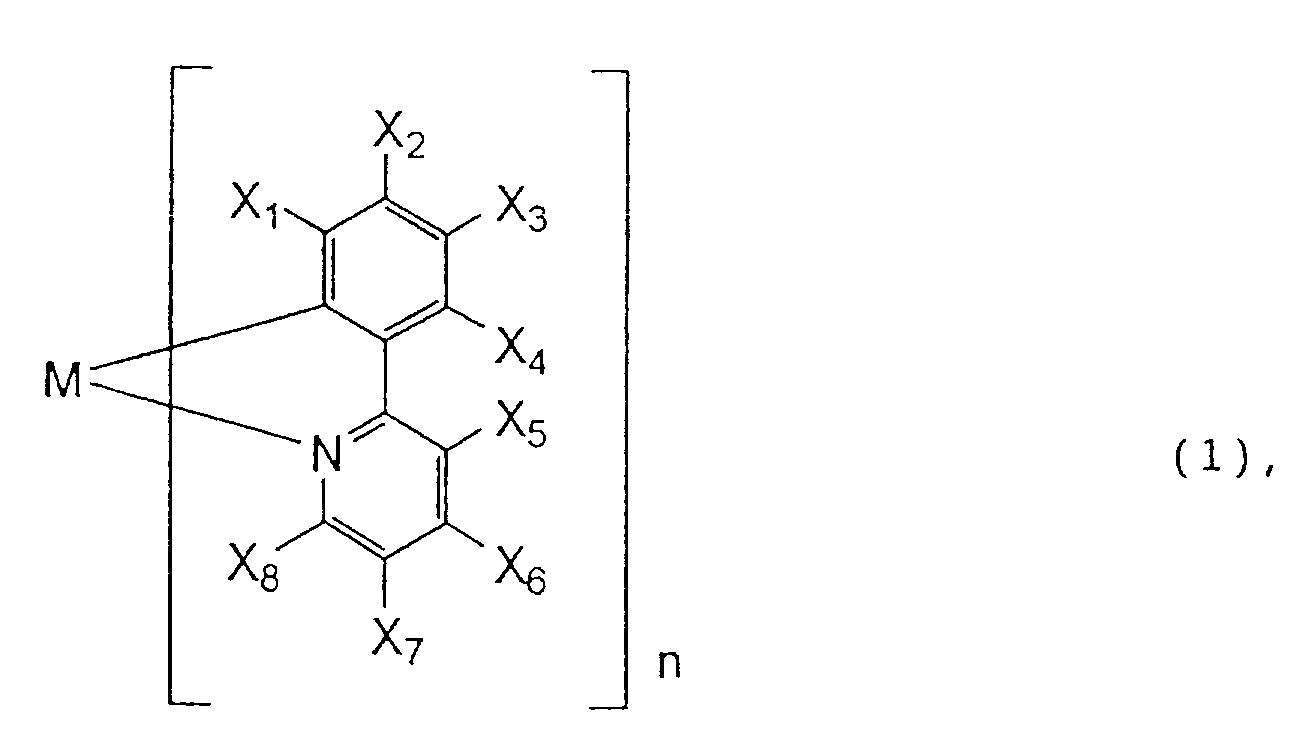
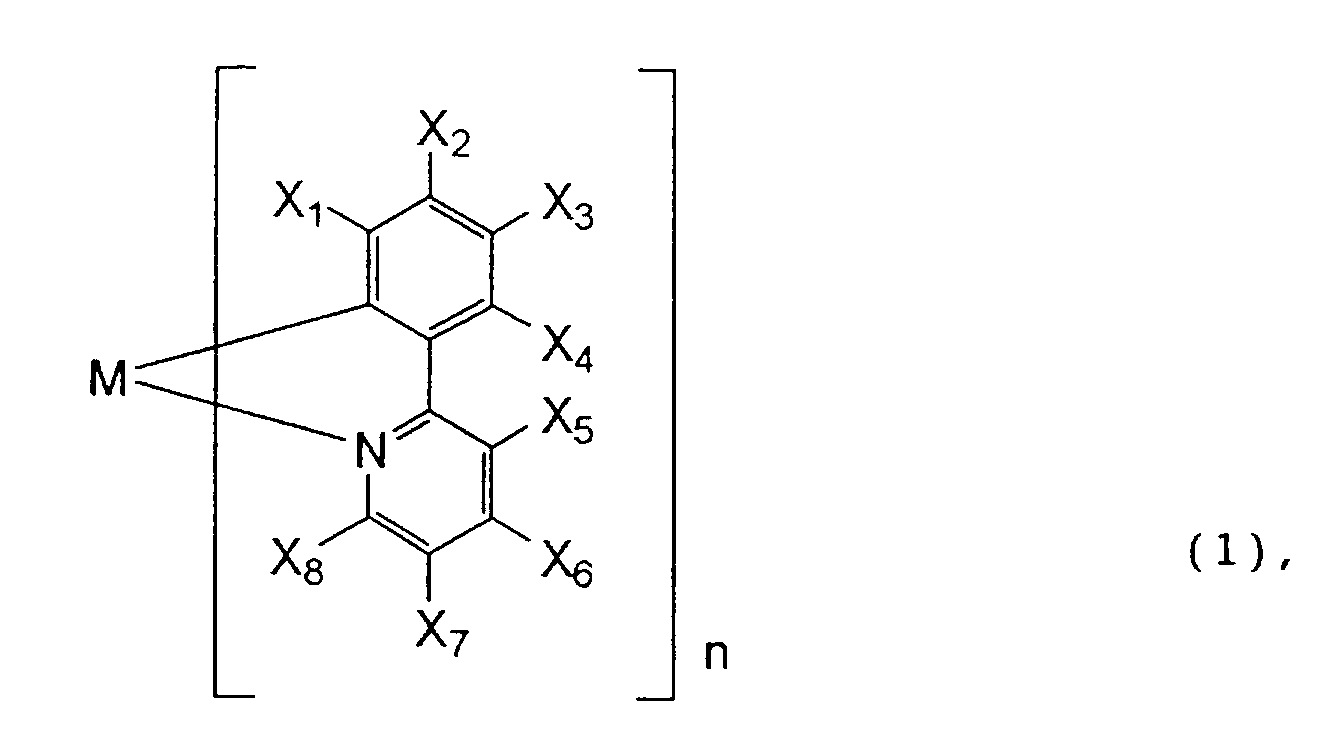
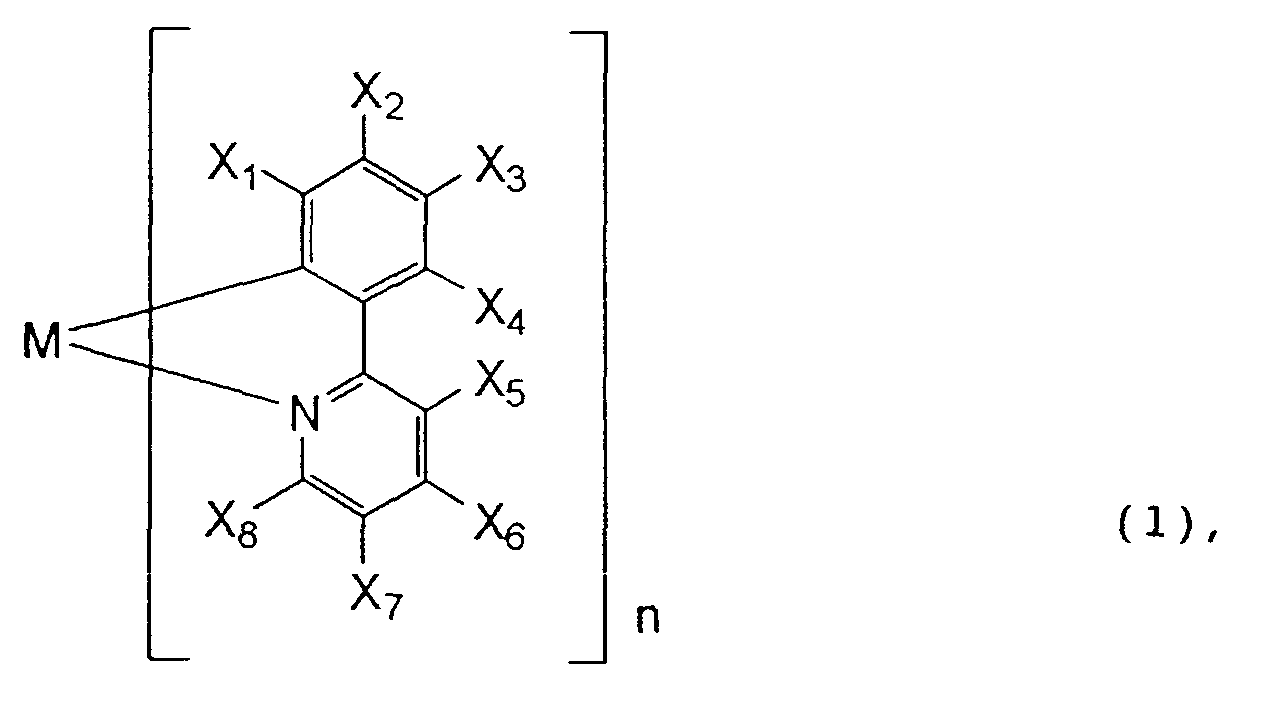
Definitions
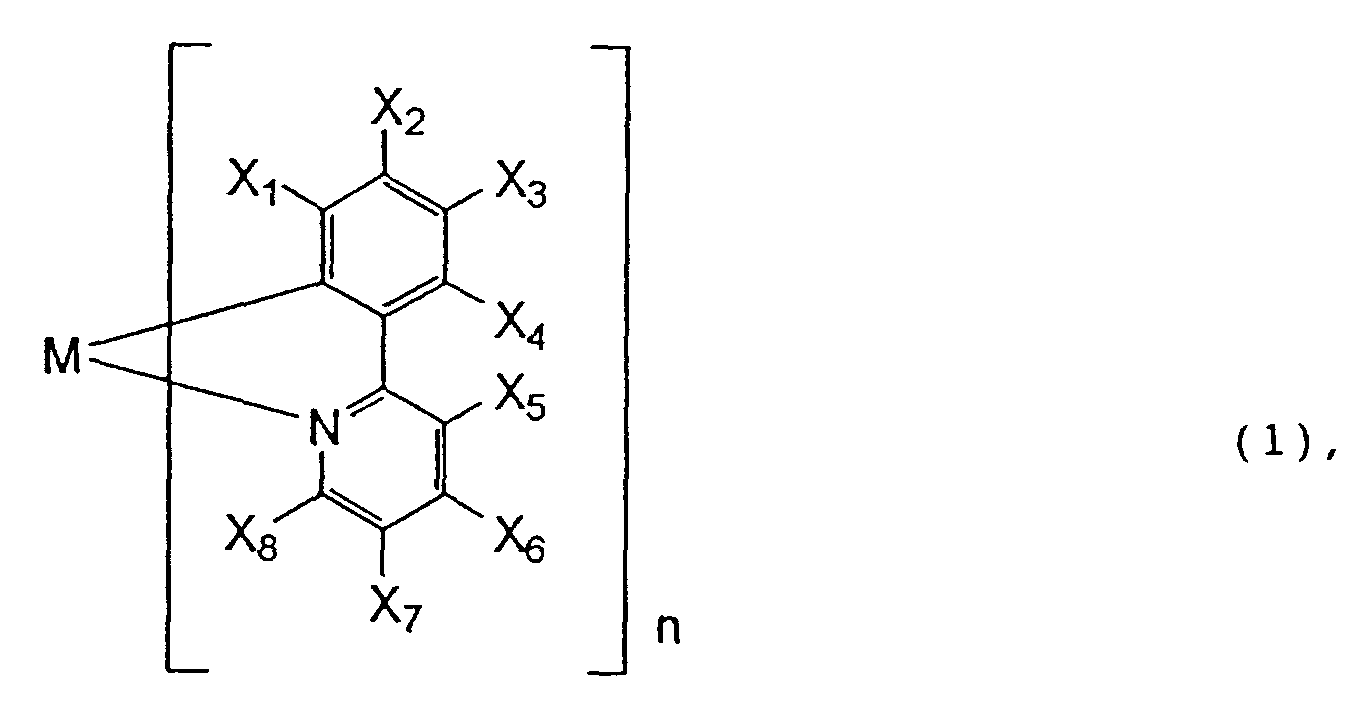
- the present invention relates to a luminescence device, a metal coordination compound therefor and a display apparatus including the luminescence device. More specifically, the present invention relates to an organic (electro-)luminescence device employing a metal coordination compound having a formula (1) or (2) appearing hereinafter as a luminescence material, the metal coordination compound adapted for use in the luminescence device, and a display apparatus using the luminescence device.
- An organic electroluminescence (EL) device has been extensively studied as a luminescence device with a high responsiveness and high efficiency.
- the organic EL device generally has a sectional structure as shown in Figure 1A or 1B (e.g., as described in "Macromol. Symp.”, 125, pp. 1 - 48 (1997)).
- the EL device generally has a structure including a transparent substrate 15, a transparent electrode 14 disposed on the transparent substrate 15, a metal electrode 11 disposed opposite to the transparent electrode 14, and a plurality of organic (compound) layers disposed between the transparent electrode 14 and the metal electrode 11.
- the EL device in this embodiment has two organic layers including a luminescence layer 12 and a hole transport layer 13.
- the transparent electrode 14 may be formed of a film of ITO (indium tin oxide) having a larger work function to ensure a good hole injection performance into the hole transport layer.
- the metal electrode 11 may be formed of a layer of aluminum, magnesium, alloys thereof, etc., having a smaller work function to ensure a good electron injection performance into the organic layer(s).
- These (transparent and metal) electrodes 14 and 11 may be formed in a thickness of 50 - 200 nm.
- the luminescence layer 12 may be formed of, e.g., aluminum quinolinol complex (representative example thereof may include Alq3 described hereinafter) having an electron transporting characteristic and a luminescent characteristic.
- the hole transport layer 13 may be formed of, e.g., triphenyldiamine derivative (representative example thereof may include ⁇ -NPD described hereinafter) having an electron donating characteristic.
- the above-described EL device exhibits a rectification characteristic, so that when an electric field is applied between the metal electrode 11 as a cathode and the transparent electrode 14 as an anode, electrons are injected from the metal electrode 11 into the luminescence layer 12 and holes are injected from the transparent electrodes 14.
- the hole transport layer 13 functions as an electron-blocking layer to increase a recombination efficiency at the boundary between the luminescence layer 12 and the hole transport layer 13, thus enhancing a luminescence efficiency.
- an electron transport layer 16 is disposed between the metal electrode 11 and the luminescence layer 12, whereby an effective carrier blocking performance can be ensured by separating functions of luminescence, electron transport and hole transport, thus allowing effective luminescence.
- the electron transport layer 16 may be formed of, e.g., oxadiazole derivatives.
- luminescence caused during a transition of luminescent center molecule from a singlet excited state to a ground state is used as luminescence.
- the EL devices shown in these documents may generally have a sectional structure shown in Figure 1C.
- the phosphorescence (luminescence) material used in the luminescence layer 12 has attracted notice. This is because the phosphorescence material is expected to provide a higher luminescence efficiency in principle.
- excitons produced by recombination of carriers comprise singlet excitons and triplet excitons presented in a ratio of 1:3.
- a resultant luminescence efficiency is 25 % (as upper limit) based on all the produced excitons in principle.
- a resultant luminescence efficiency is expected to be at least three times that of the case of fluorescence in principle.
- the luminescence efficiency of phosphorescence can be expected to be 100 % (four times that of fluorescence) in principle.
- JP-A Japanese Laid-Open Patent Application
- the reason for luminescent deterioration has not been clarified as yet but may be attributable to such a phenomenon that the life of triplet exciton is generally longer than that of singlet exciton by at least three digits, so that molecule is placed in a higher-energy state for a long period to cause reaction with ambient substance, formation of exciplex or excimer, change in minute molecular structure, structural change of ambient substance, etc.
- the (electro)phosphorescence EL device is expected to provide a higher luminescence efficiency as described above, while the EL device is required to suppress or minimize the luminescent deterioration in energized state.
- An object of the present invention is to provide a luminescence device capable of providing a high-efficiency luminescent state at a high brightness (or luminance) for a long period while minimizing the deterioration in luminescence in energized state.
- evaluation criteria for "high efficiency” and “high brightness (luminance) for a long period” may vary depending on luminescent performances required for an objective luminescence device (EL device), for example, a luminescence efficiency of at least 1 cd/W based on an inputted current value may be evaluated as “high efficiency”. Further, a luminance half-life of, e.g., at least 500 hours at the time of luminescence at an initial luminance of 100 cd/m 2 may be evaluated as "high brightness (luminance) for a long period” or a smaller luminance deterioration in energized state.
- Another object of the present invention is to provide a metal coordination compound as a material suitable for an organic layer for the luminescence device.
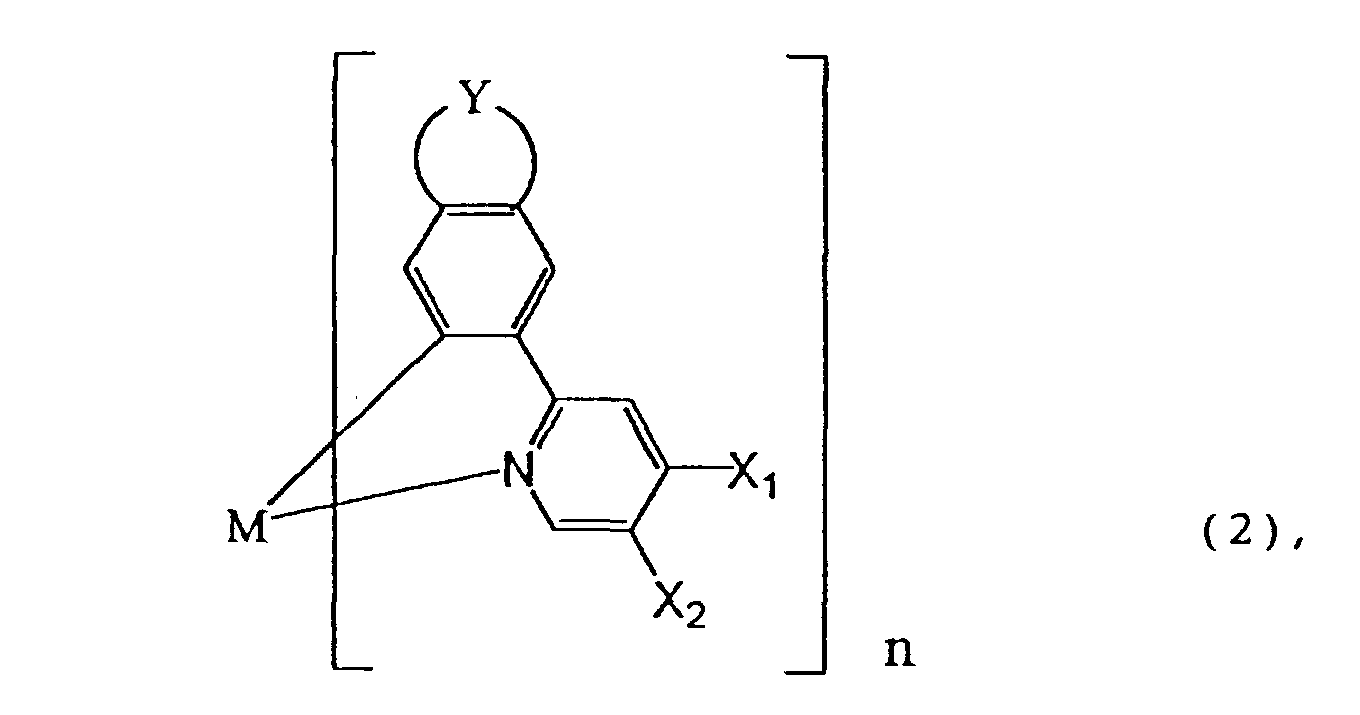
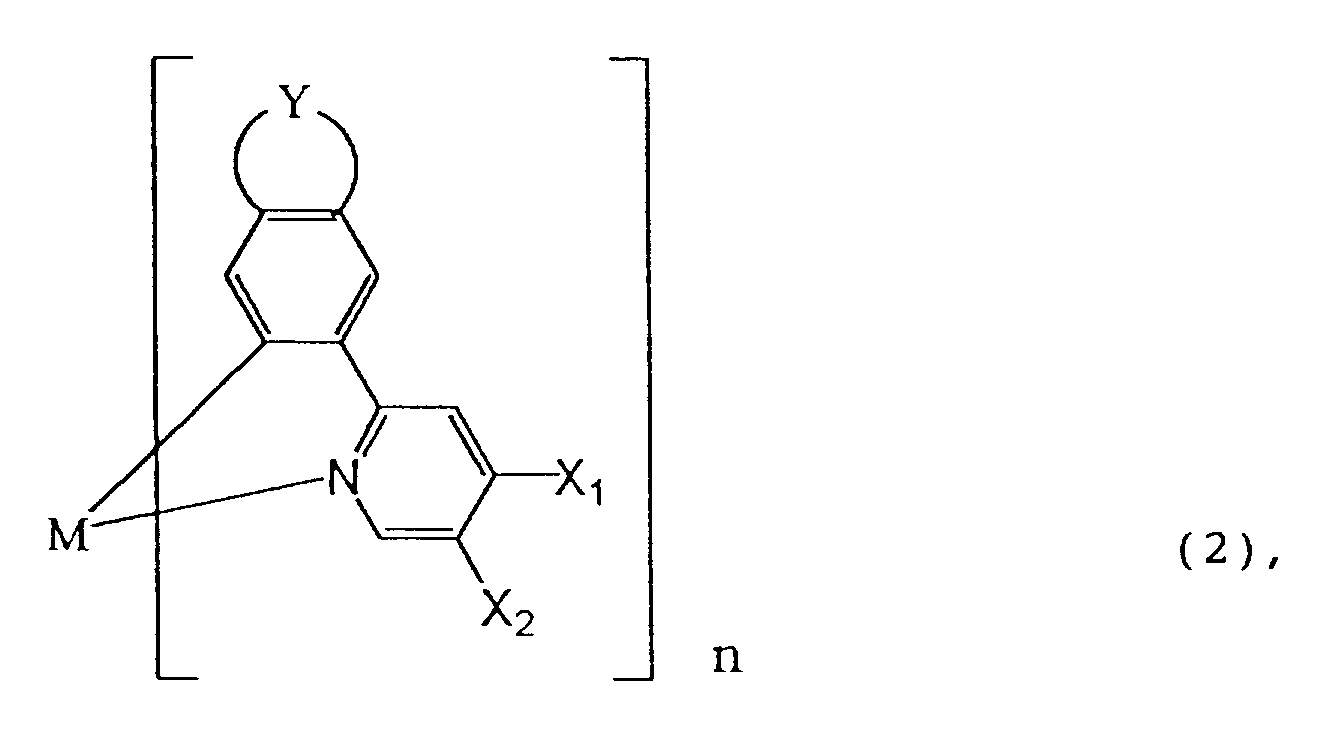
- the present invention provides a luminescence device, comprising: an organic compound layer comprising a metal coordination compound represented by the following formula (2): wherein M denotes Ir, Rh or Pd; n is 2 or 3; Y denotes an alkylene group having 2 - 4 carbon atoms capable of including one or at least two non-neighboring methylene groups which can be replaced with -O-, -S-or -CO- and capable of including hydrogen atom which can be replaced with a linear or branched alkyl group having 1 - 10 carbon atoms; and X1 and X2 independently denote hydrogen atom; halogen atom; nitro group; trialkylsilyl group having 1 - 8 carbon atoms; or a linear or branched alkyl group having 1-20 carbon atoms capable of including one or at least two non-neighboring methylene groups which can be replaced with -O-, -S-, -CO-, -CO-O-, -O-CO-
- the present invention also provides a metal coordination compound, adapted for use in a luminescence device, represented by the following formula (2): wherein M denotes Ir, Rh or Pd; n is 2 or 3; Y denotes an alkylene group having 2 - 4 carbon atoms capable of including one or at least two non-neighboring methylene groups which can be replaced with -O-, -S- or -CO- and capable of including hydrogen atom which can be replaced with a linear or branched alkyl group having 1 - 10 carbon atoms; and X1 and X2 independently denote hydrogen atom; halogen atom; nitro group; trialkylsilyl group having 1 - 8 carbon atoms; or a linear or branched alkyl group having 1-20 carbon atoms capable of including one or at least two non-neighboring methylene groups which can be replaced with -O-, -S-, -CO-, -CO-O-, -O-CO-,
- the present invention further provides a display apparatus including the above-mentioned luminescence device and drive means for driving the luminescence device.
- Figures 1A, 1B and 1C are respectively a schematic sectional view of a layer structure of a luminescence device.
- Figure 2 is a graph showing a relationship between a Hammett's substitution constant ⁇ and a peak (maximum) emission wavelength ⁇ PE .
- a process of emission of light may generally involve the following steps:
- desired energy transmission and luminescence may generally be caused based on various quenching and competition.
- a luminescence center material per se is required to provide a higher yield of luminescence quantum.
- an efficient energy transfer between host material molecules and/or between host material molecule and guest material molecule is also an important factor.
- the above-described luminescent deterioration in energized state may presumably relate to the luminescent center material per se or an environmental change thereof by its ambient molecular structure.
- the metal coordination compound represented by the above-mentioned formula (1) or (2) allows a high-efficiency luminescence with a high brightness (luminance) for a long period (i.e., a decreased luminescent deterioration in energized state).
- the metal coordination compound of formula (1) may preferably have substituents X1 to X8 in which at least two of X1 to X8 are substituents other than hydrogen atom. Further, in the formula (1), at least one of X5 to X8 may preferably be a substituent other than hydrogen atom and/or at least two of X1 to X4 may preferably be substituents other than hydrogen atom.
- the metal coordination compound represented by the formulas (1) causes phosphorescence (luminescence) and is assumed to have a lowest excited state comprising a triplet excited state liable to cause metal-to-ligand charge transfer (MLCT* state).
- MLCT* state metal-to-ligand charge transfer
- the phosphorescent emission of light (phosphorescence) is produced during the transition from the MLCT* state to the ground state.
- the metal coordination compound of formula (1) according to the present invention has been found to provide a higher phosphorescence yield of 0.1 - 0.9 and a shorter phosphorescence life of 1 - 60 ⁇ sec.
- the shorter phosphorescence life is necessary to provide a resultant EL device with a higher luminescence efficiency. This is because the longer phosphorescence life increases molecules placed in their triplet excited state which is a waiting state for phosphorescence, thus lowering the resultant luminescence efficiency particularly at a higher current density.
- the metal coordination compound of formula (1) according to the present invention is a suitable luminescent material for an EL device with a higher phosphorescence yield and a shorter phosphorescence life.
- a Hammett's substituent constant ⁇ m for meta-position was used for the substituents X2 and X4 and a Hammett's substituent constant ⁇ p for para-position was used for the substituent X3.
- a sum of ⁇ m and ⁇ p was used as a Hammett's substituent constant ⁇ .
- Hammett's substituent constants ⁇ of several metal coordination compounds (Ex. Comp. Nos. (1), (32), (122) and (111) described later and the metal coordination compound A described in the above-mentioned Document 2) are calculated and shown in Table 2 below together with corresponding peak emission wavelength ⁇ PE in toluene at 25 °C. The results of Table 2 are also shown in Figure 2.
- Metal coordination compound A 0.40 505 Ex. Comp. No. (32) 0.54 487 Ex. Comp. No. (122) 0.68 471 Ex. Comp. No. (121) 0.88 466 Ex. Comp. No. (111) 0.91 479
- the metal coordination compound having the sum of peak emission wavelengths of at least 0.41, particularly at least 0.50 is suitable as the blue luminescent material.
- a similar effect can be expected also for metal coordination compounds other than the metal coordination compound of formula (1) of the present invention.
- the metal coordination compound of formula (1) is a suitable luminescent material for the EL device.
- the metal coordination compound of formula (1) of the present invention has an excellent stability in a continuous energization test.
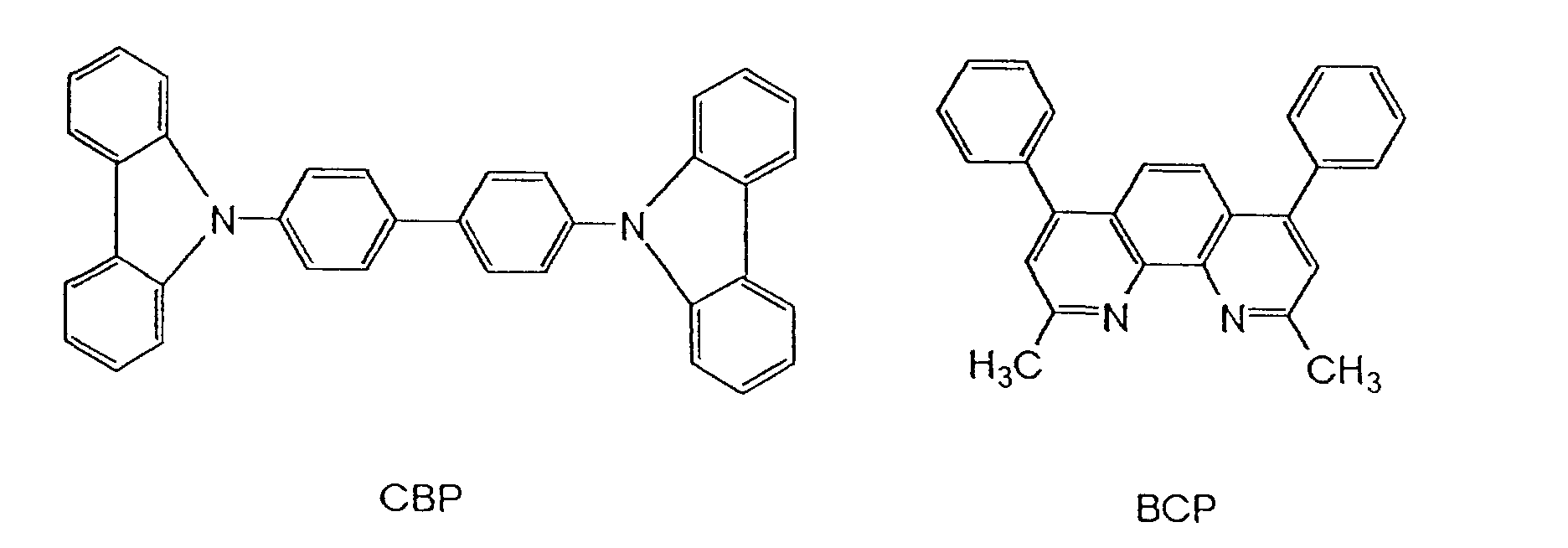
- This may be attributable to introduction of particular substituents (X1 to X8) allowing control of intermolecular interaction with a host luminescent material (e.g., CBP described above) and suppression of formation of associated exciton leading to thermal quenching, thus minimizing quenching to improve device characteristics.
- a host luminescent material e.g., CBP described above
- the methyl group of methyl-substituted iridium-phenylpyrimidine complex described in the above-mentioned Document 1 has a smaller bulkiness than ethyl group and methoxy group and a smaller electronic effect than halogen atom, trifluoromethyl group and methoxy group. As a result, the effect of controlling intermolecular interaction in the present invention cannot be expected.
- a luminescence device using the metal coordination compound of formula (1) according to the present invention has a higher durability, i.e., a higher luminance stability for a long period, shown in Examples described later.
- luminescent in the case of phosphorescent (luminescent) material, luminescent characteristics are largely affected by its molecular environment. On the other hand, principal characteristics of the fluorescent material are studied based on photoluminescence.
- results of photoluminescence of the phosphorescent material do not reflect luminescent characteristics of the resultant EL device in many cases since the luminescent characteristics in the case of the phosphorescent material depend on a magnitude of polarity of ambient host material molecules, ambient temperature, presence state of the material (e.g., solid state or liquid state, etc. Accordingly, different from the fluorescent material, it is generally difficult to expect the resultant EL characteristics for the phosphorescent material by simply removing a part of characteristics from photoluminescence results.
- the metal coordination compound of formula (2) may preferably have hydrogen atom(s) as at least one of X1 and X2 in the formula (2).
- the metal coordination compound of formula (2) also causes phosphorescence (luminescence) and is assumed to have a lowest excited state comprising a triplet excited state liable to cause metal-to-ligand charge transfer (MLCT* state).
- MLCT* state metal-to-ligand charge transfer
- the phosphorescent emission of light (phosphorescence) is produced during the transition from the MLCT* state to the ground state.
- the metal coordination compound according to the present invention has been found to provide a higher phosphorescence yield of 0.15 - 0.9 and a shorter phosphorescence life of 1 - 40 ⁇ sec, as a result of a luminescence test based on photoluminescence by photo-excitation.
- the shorter phosphorescence life is necessary to provide a resultant EL device with a higher luminescence efficiency. This is because the longer phosphorescence life increases molecules placed in their triplet excited state which is a waiting state for phosphorescence, thus lowering the resultant luminescence efficiency particularly at a higher current density.
- the metal coordination compound of formula (2) according to the present invention is a suitable luminescent material for an EL device with a higher phosphorescence yield and a shorter phosphorescence life.
- emission wavelength control can be expected for the resultant metal coordination compound of formula (2).
- the metal coordination compound of formula (2) is a suitable luminescent material for the EL device.
- the metal coordination compound of formula (2) of the present invention has an excellent stability in a continuous energization test.
- This may be attributable to introduction of particular alkylene group and/or substituents (Y, X1, X2) allowing control of intermolecular interaction with a host luminescent material (e.g., CBP described above) and suppression of formation of associated exciton leading to thermal quenching, thus minimizing quenching to improve device characteristics.
- a host luminescent material e.g., CBP described above
- the luminescence device (EL) device employs the above-mentioned metal coordination compound in an organic layer, particularly a luminescence layer.
- the luminescence device may preferably include the organic layer comprising the metal coordination compound of formula (1) or formula (2) between a pair of oppositely disposed electrodes comprising a transparent electrode (anode) and a metal electrode (cathode) which are supplied with a voltage to cause luminescence, thus constituting an electric-field luminescence device.
- the organic layer comprising the metal coordination compound of formula (1) or formula (2) between a pair of oppositely disposed electrodes comprising a transparent electrode (anode) and a metal electrode (cathode) which are supplied with a voltage to cause luminescence, thus constituting an electric-field luminescence device.
- the liquid crystal of the present invention has a layer structure shown in Figures 1A to 1C as specifically described above.
- the resultant luminescence device has a high luminescence efficiency as described above.
- the luminescence device according to the present invention may be applicable to devices required to allow energy saving and high luminance, such as those for display apparatus and illumination apparatus, a light source for printers, and backlight (unit) for a liquid crystal display apparatus.
- a flat panel display apparatus capable of exhibiting an excellent energy saving performance, a high visibility and a good lightweight property.
- the light source it becomes possible to replace a laser light source of laser beam printer currently used widely with the luminescence device according to the present invention.
- the luminescence device of the present invention is arranged in independently addressable arrays as an exposure means for effecting desired exposure of light to a photosensitive drum for forming an image, it becomes possible to considerably reducing the volume (size) of image forming apparatus.
- the resultant apparatus (unit) using the luminescence device of the present invention is expected to have an energy saving effect.
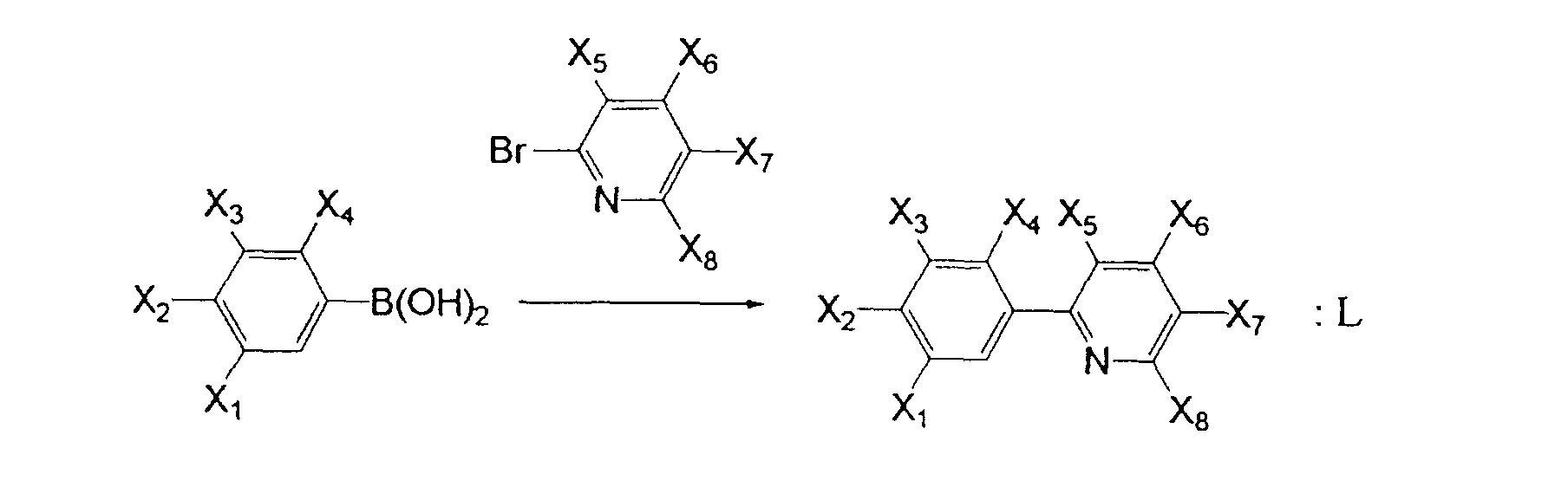
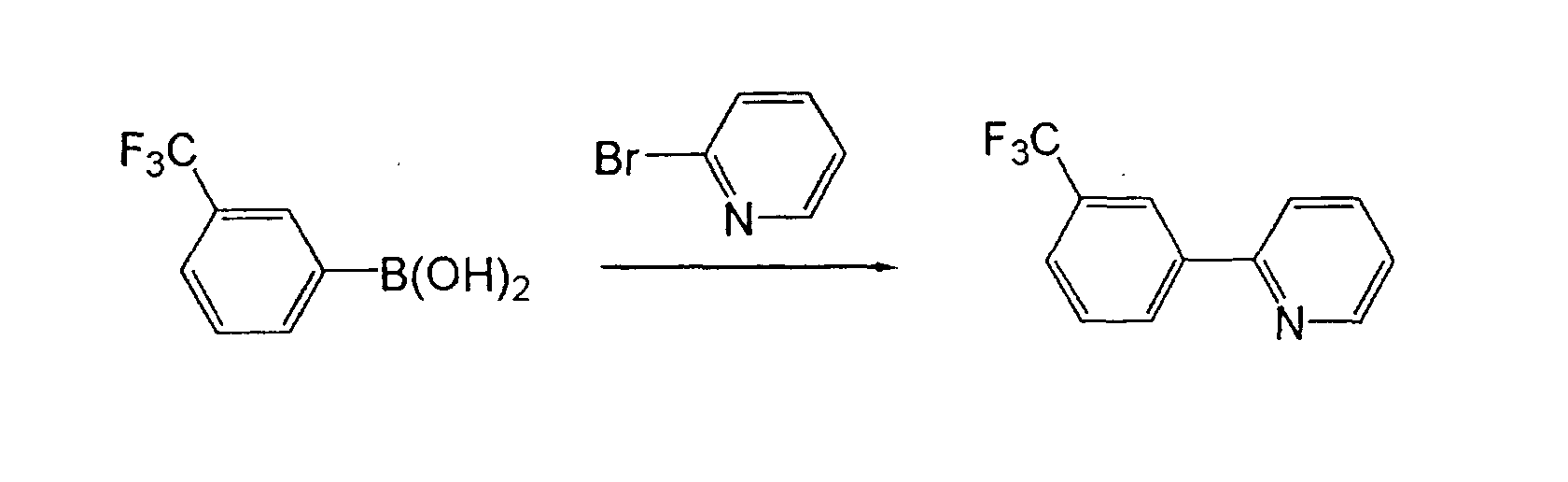
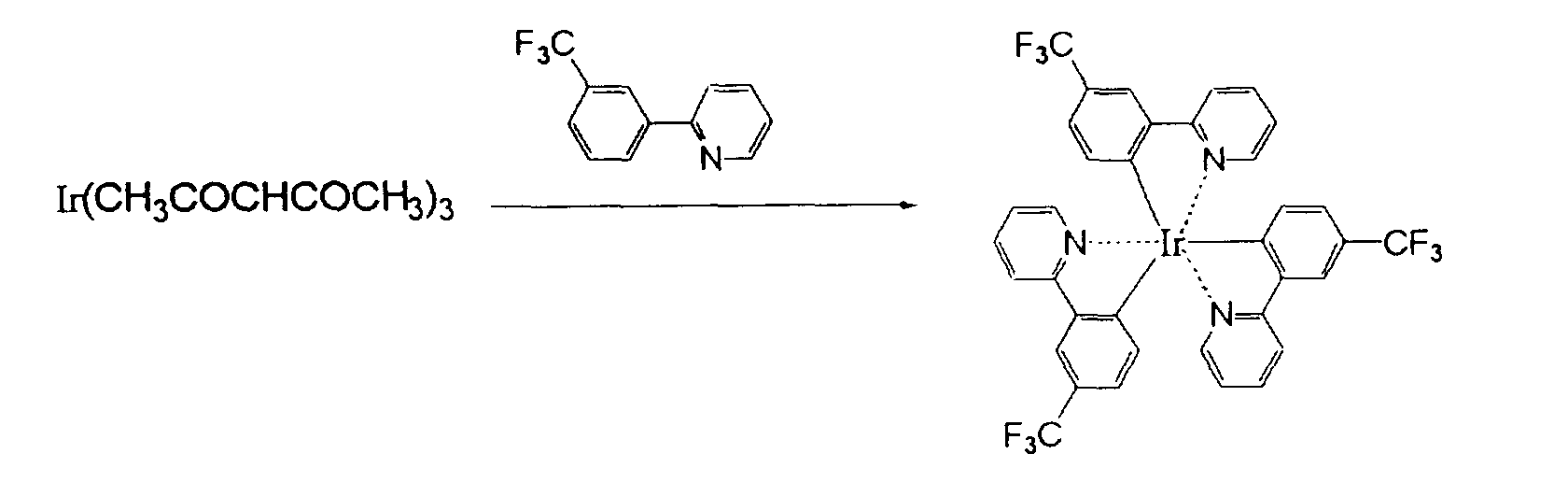
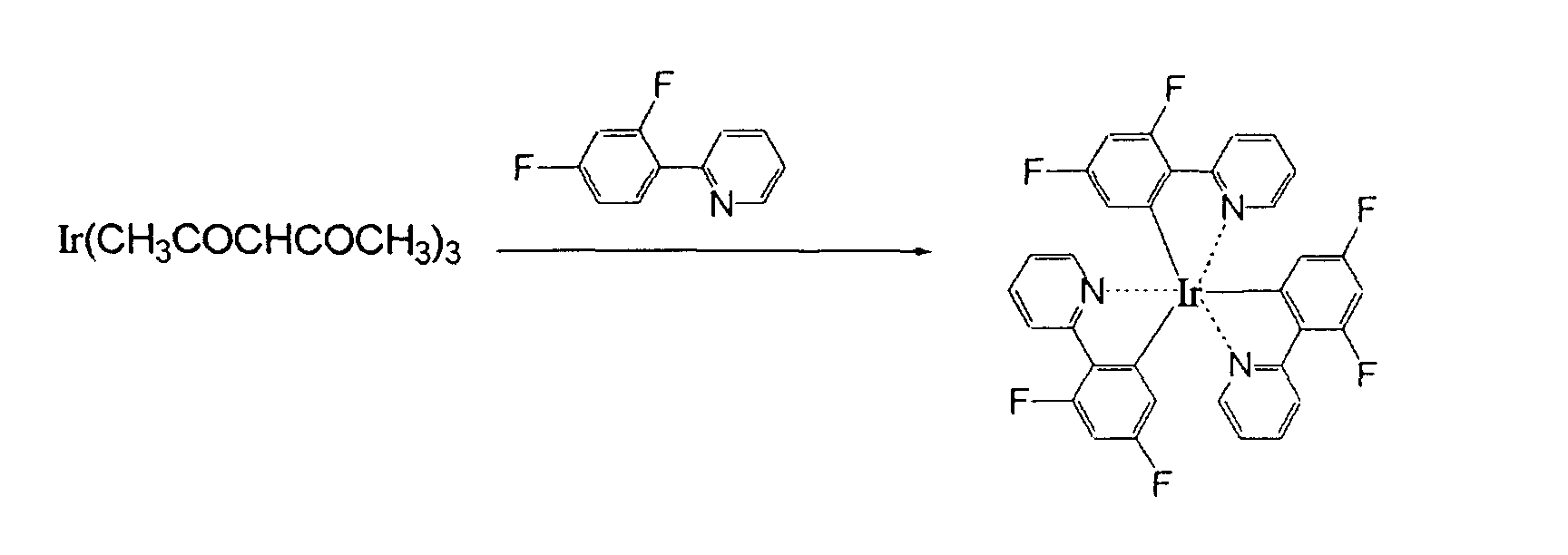
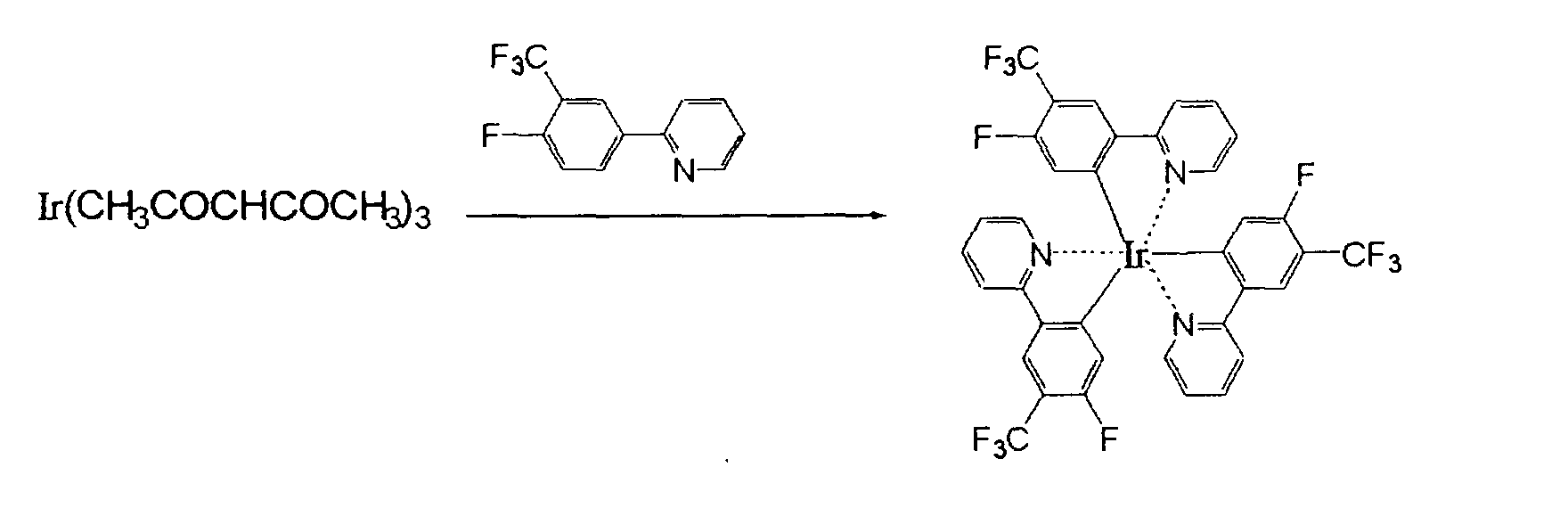
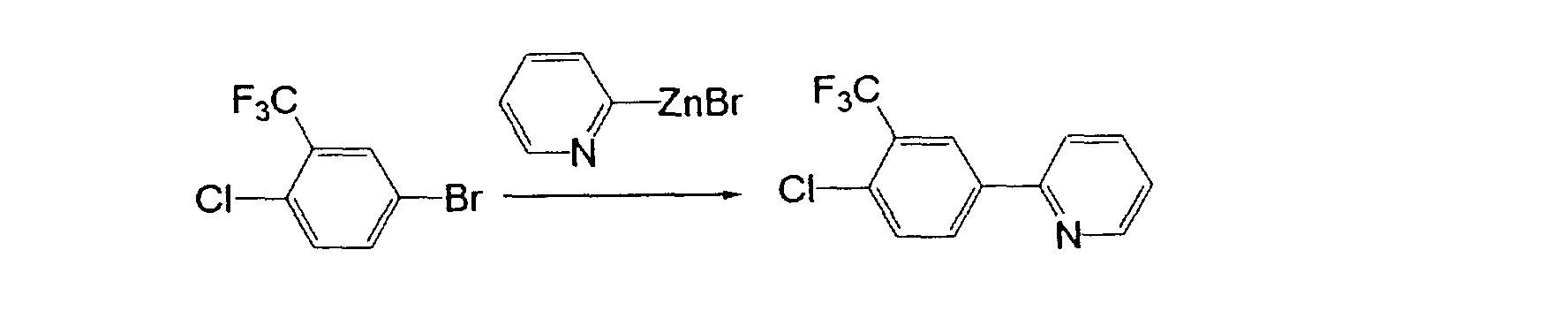
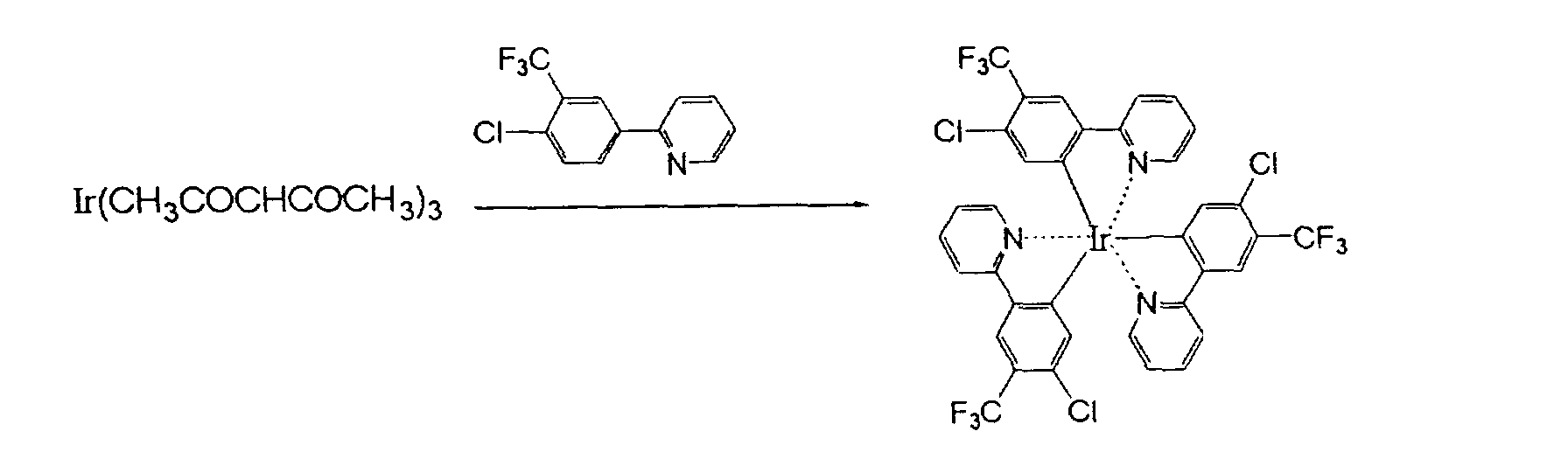
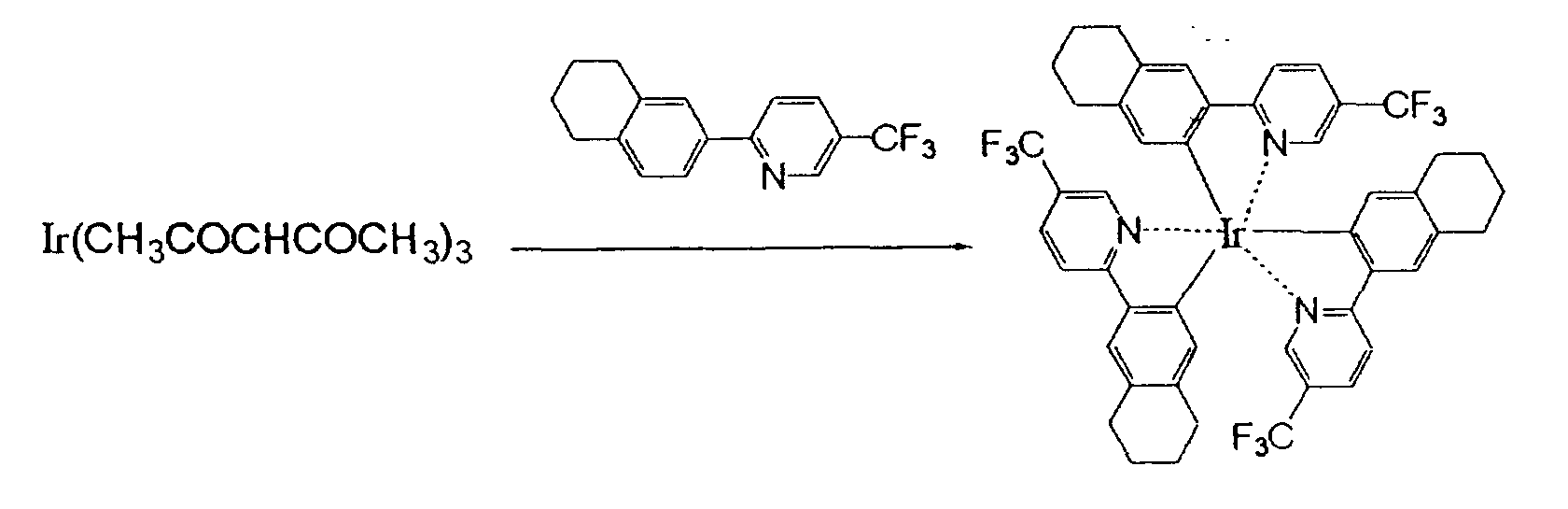
- the metal coordination compound of formula (1) may generally be synthesized through the following reaction scheme.
- Rh complex may be synthesized in the same manner as in Ir complex shown above.
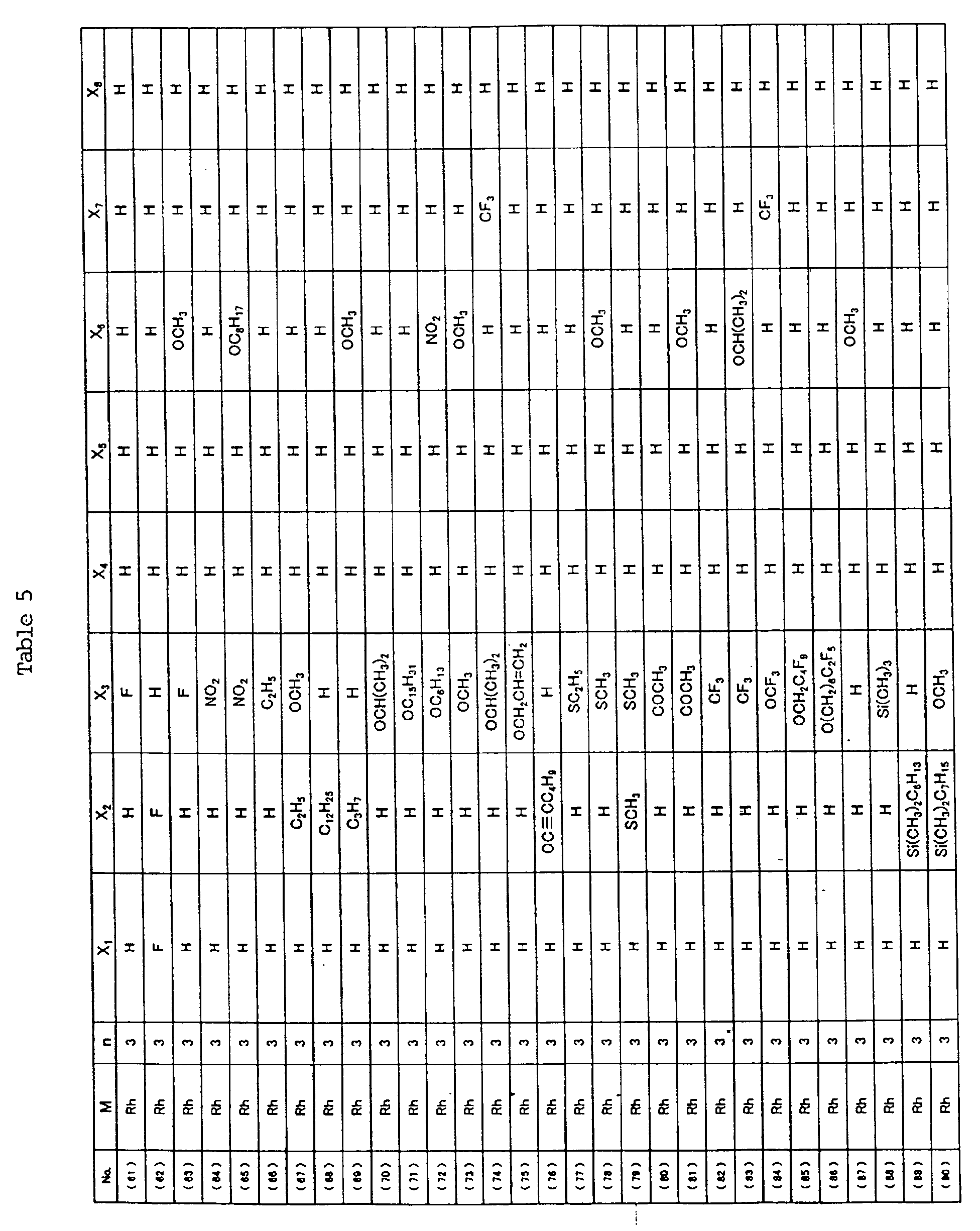
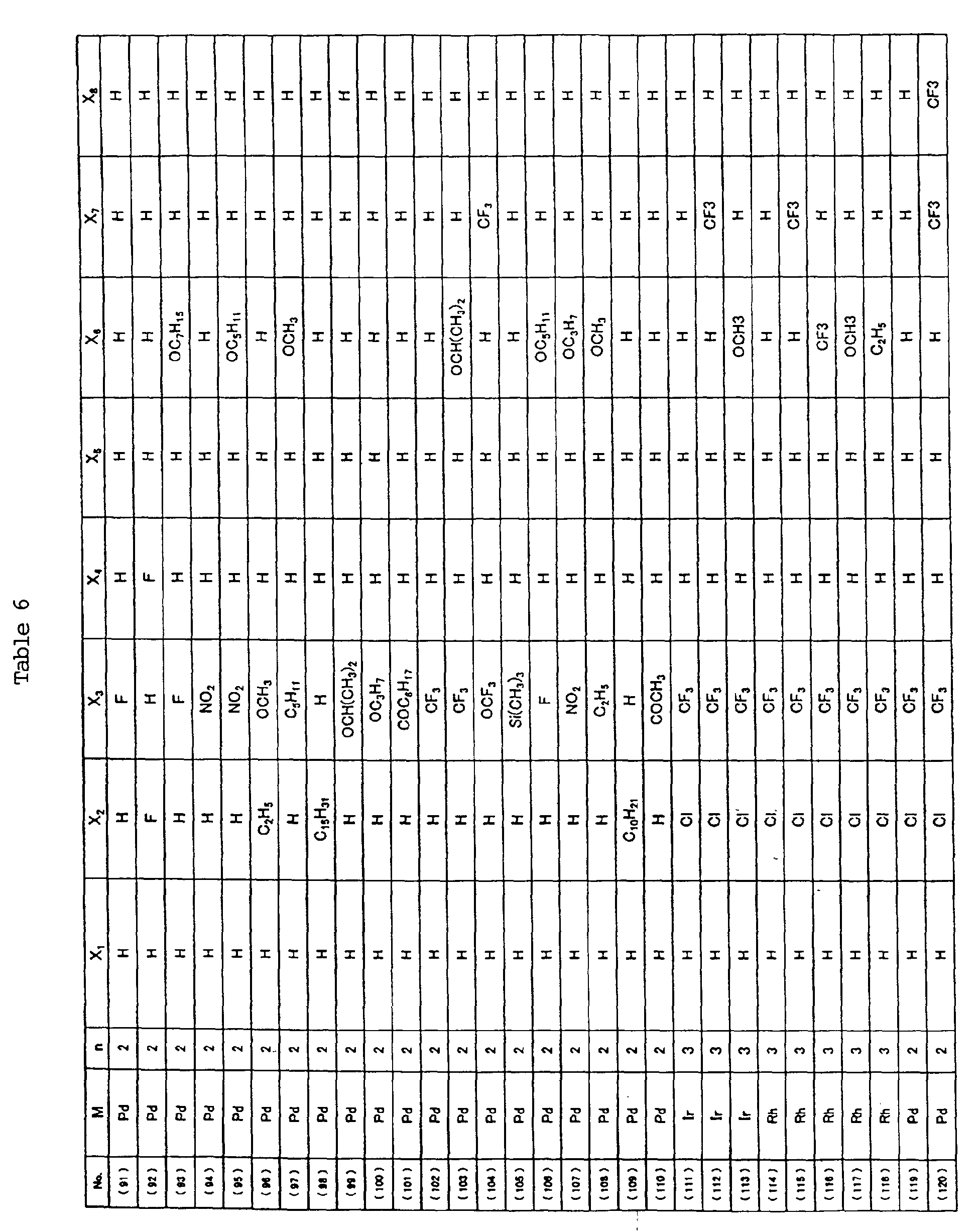
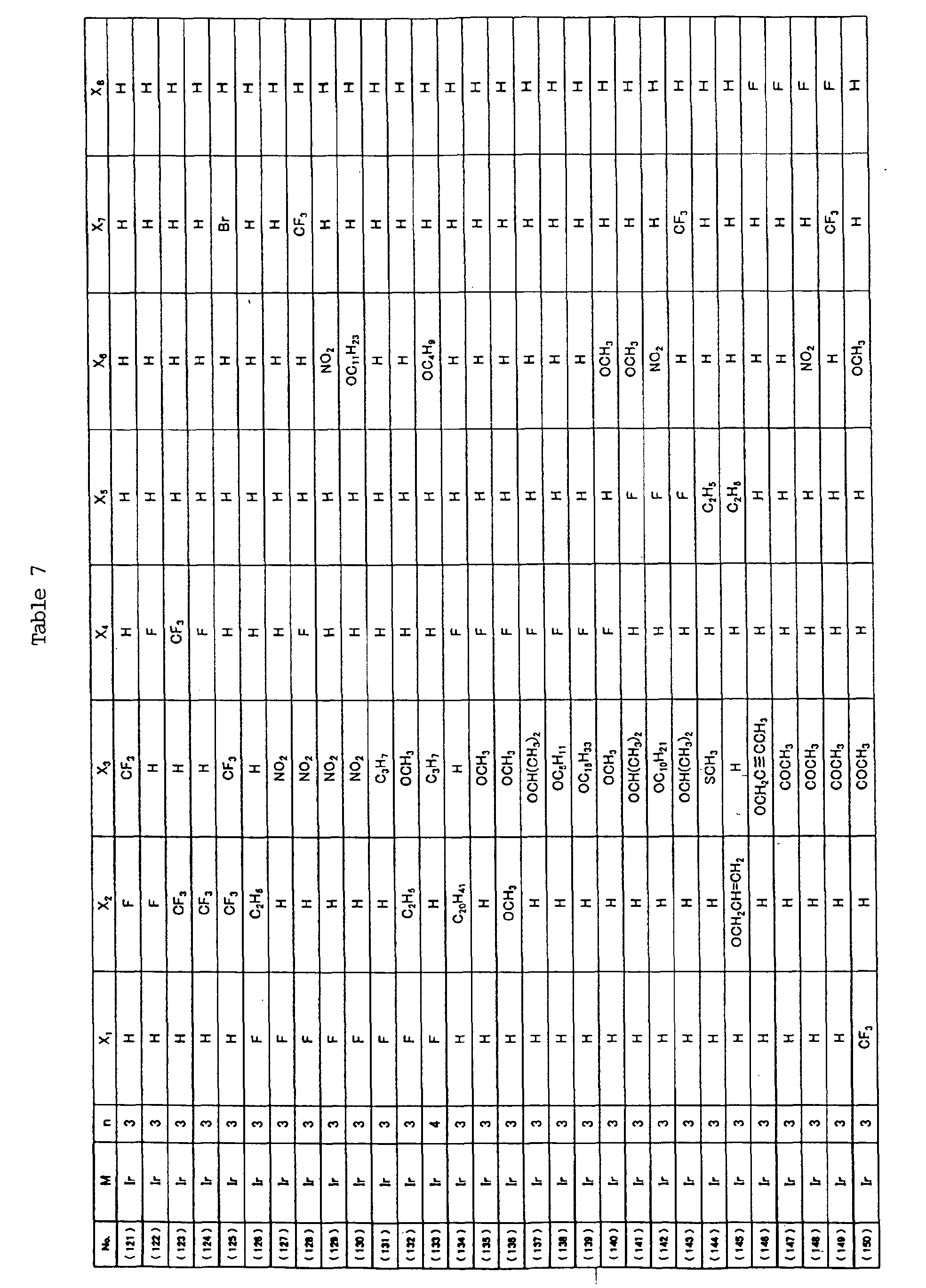
- metal coordination compound of formula (1) may include those (Example Compound Nos. (1-1) to (1-180)) shown in Tables 3 - 8 wherein Ex. Comp. Nos. (1-1) to (1-180) are simply indicated as (1) to (180), respectively.
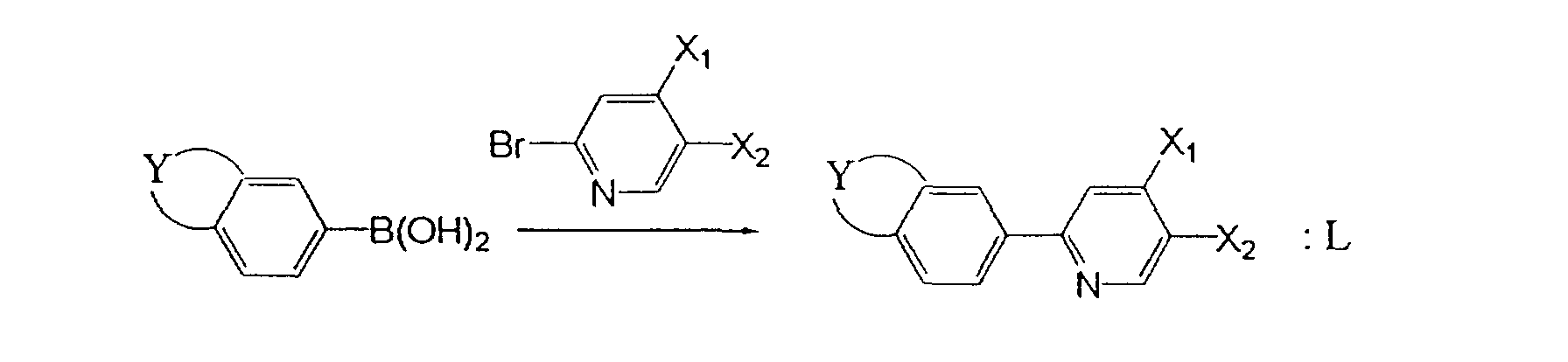
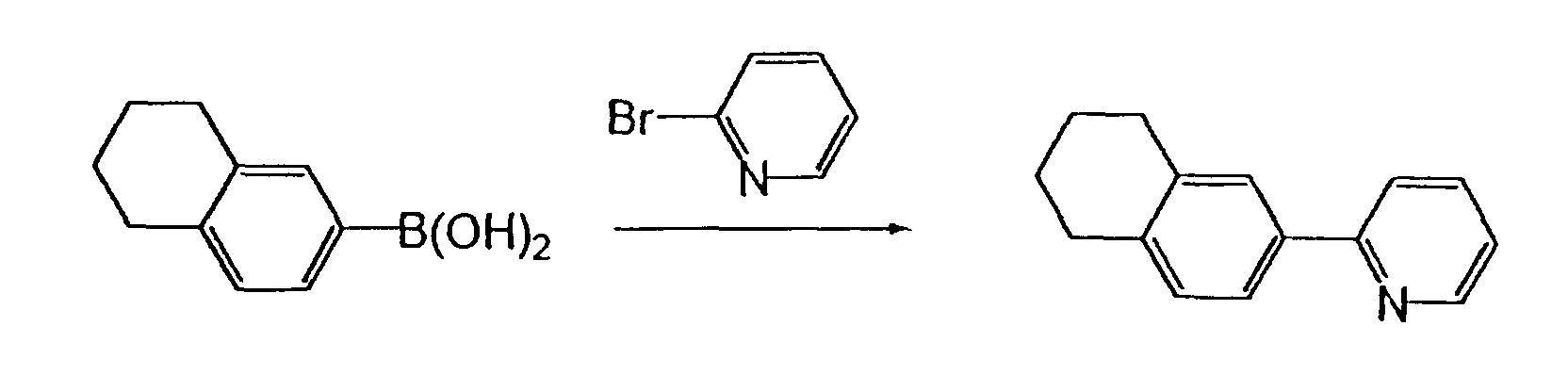
- the metal coordination compound of formula (2) may generally be synthesized through the following reaction scheme.
- Rh complex may be synthesized in the same manner as in Ir complex shown above.
- metal coordination compound of formula (2) may include those (Example Compound Nos. (2-1) to (2-200) shown in Tables 9 - 15 wherein Ex. Comp. Nos. (2-1) to (2-200) are simply indicated as (1) to (200), respectively.
- metal coordination compounds of formula (1) (Ex. Comp. Nos. (I-4), (I-7), (I-17), (I-18), (I-21), (I-23), (I-32), (I-56), (I-67) and (I-74) were used in respective luminescence layers for Examples I-1 - I-10, respectively.
- a 100 nm-thick film (transparent electrode 14) of ITO (indium tin oxide) was formed by sputtering, followed by patterning to have an (opposing) electrode area of 3 mm 2 .
- Each of the thus-prepared luminescence devices was taken out of the vacuum chamber and was subjected to a continuous energization test in an atmosphere of dry nitrogen gas stream so as to remove device deterioration factors, such as oxygen and moisture (water content).
- the continuous energization test was performed by continuously applying a voltage at a constant current density of 70 mA/cm 2 to the luminescence device having the ITO (transparent) electrode (as an anode) and the Al (metal) electrode (as a cathode), followed by measurement of luminance (brightness) with time so as to determine a time (luminance half-life) required for decreasing an initial luminance (70 - 120 cd/m 2 ) to 1/2 thereof.
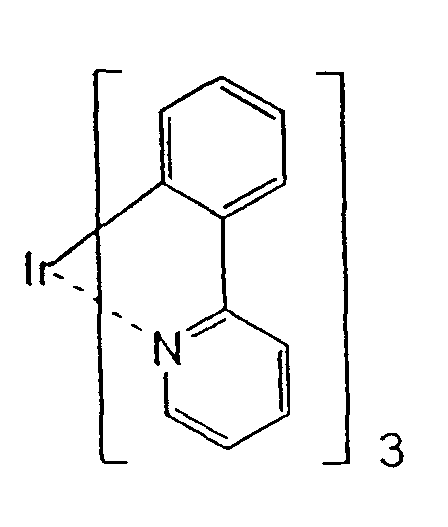
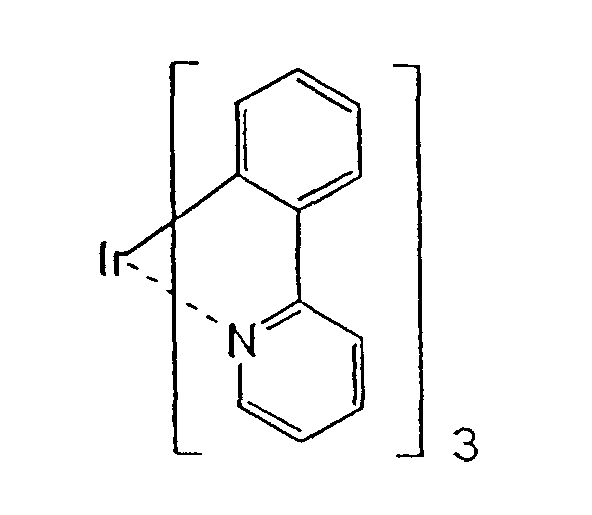
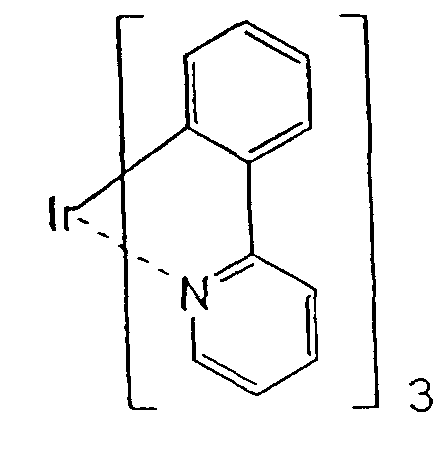
- a comparative luminescence device was prepared and evaluated in the same manner as in Example I-1 - I-10 except that the metal coordination compound of formula (1) was changed to Ir-phenylpyrimidine complex (Ir(ppy) 3 ) shown below.
- the luminescence devices using the metal coordination compounds of formula (1) according to the present invention provide longer luminance half-lifes, thus resulting in an EL device having a high durability (luminance stability) based on a good stability of the metal coordination compound of formula (1) of the present invention.
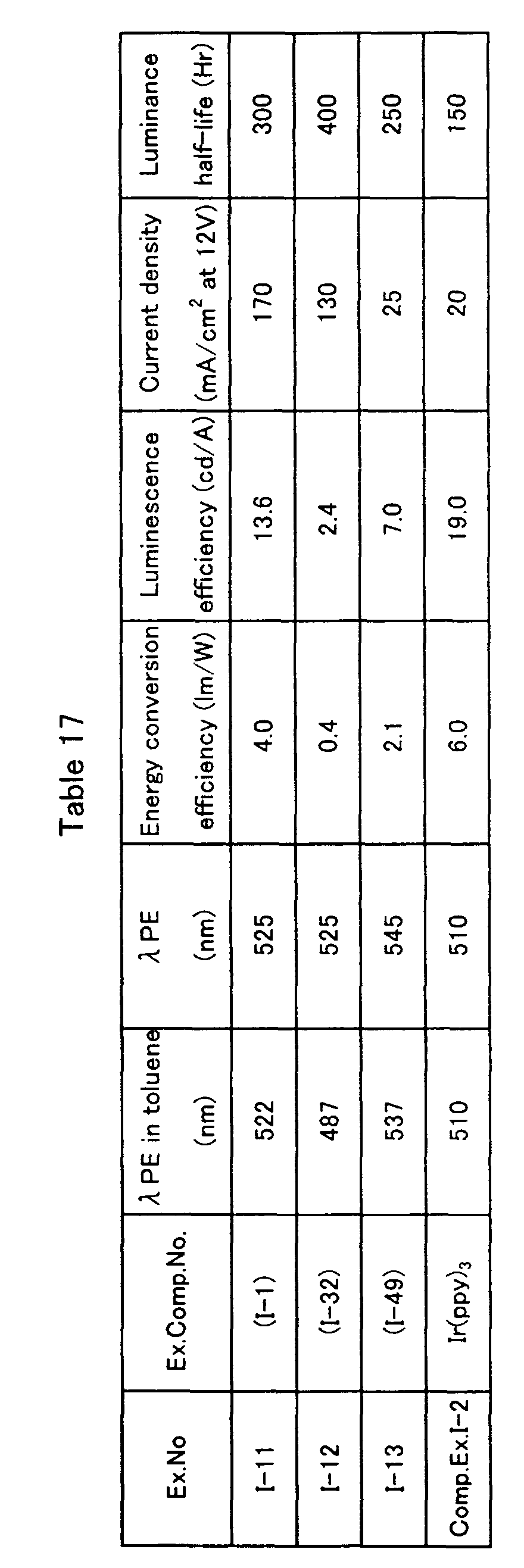
- metal coordination compounds of formula (1) (Ex. Comp. Nos. (I-1), (I-32) and (I-49) were used in respective luminescence layers for Examples I-11 - I-13, respectively.
- a 100 nm-thick film (transparent electrode 14) of ITO (indium tin oxide) was formed by sputtering, followed by patterning to have an (opposing) electrode area of 3 mm 2 .
- each of the metal coordination compounds of formula (1) (Ex. Comp. Nos. (I-1), (I-32) and (I-49)) for the thus-prepared luminescence devices was subjected to measurement of photoluminescence spectrum in order to evaluate a luminescent characteristic of the metal coordination compounds of formula (1) (Ex. Comp. Nos. (I-1), (I-32) and (I-49)).
- each of the metal coordination compounds was dissolved in toluene at a concentration of 10 -4 mol/l and subjected to measurement of photo-luminescence spectrum at 25 °C by using excited light (ca. 350 nm) and a spectrophoto-fluorometer ("Model F4500", mfd. by Hitachi K.K.).
- a comparative luminescence device was prepared and evaluated in the same manner as in Example I-2 - I-13 except that the metal coordination compound of formula (1) was changed to Ir-phenylpyrimidine complex (Ir(ppy) 3 ) shown below.
- the luminescence devices using the metal coordination compounds of formula (1) according to the present invention showed considerably longer luminance half-lifes of 250 - 400 hours.
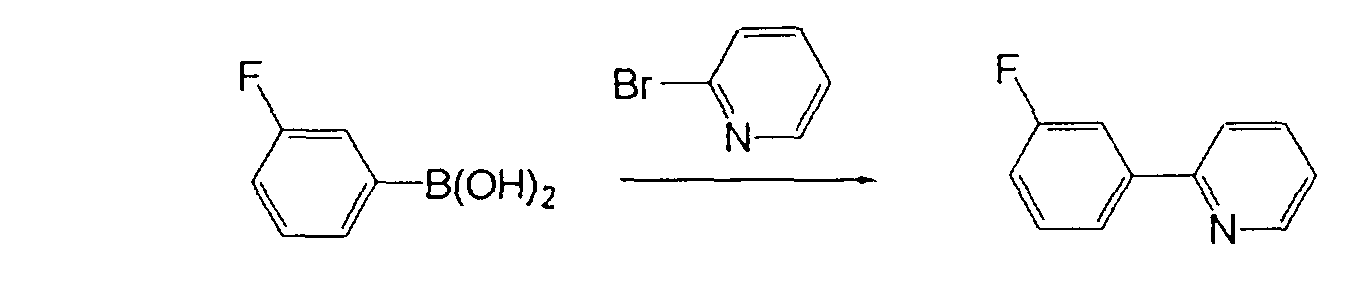
- glycerol In a 100 ml-four necked flask, 50 ml of glycerol was placed and heat-stirred for 2 hours at 130 - 140 °C while supplying nitrogen gas therein in the form of bubbles, followed by cooing to 100 °C by standing. To glycerol, 1.04 g (6.00 mM) of 2-(3-fluorophenyl)pyridine and 0.50 g (1.02 mM) of Iridium (III) acetylacetonate were added, followed by heat-refluxing for 10 hours under stirring in nitrogen gas stream.
- glycerol In a 100 ml-four necked flask, 50 ml of glycerol was placed and heat-stirred for 2 hours at 130 - 140 °C while supplying nitrogen gas therein in the form of bubbles, followed by cooing to 100 °C by standing. To glycerol, 0.96 g (5.02 mM) of 2-(2,4-difluorophenyl)pyridine and 0.50 g (1.02 mM) of Iridium (III) acetylacetonate were added, followed by heat-refluxing for 10 hours under stirring in nitrogen gas stream.
- reaction mixture was poured into cool water, followed by addition of ethyl acetate to remove the insoluble matter by filtration.
- organic layer was washed with water and dried with anhydrous sodium sulfate, followed by distilling-off of the solvent under reduced pressure to obtain a residue.
- glycerol In a 100 ml-four necked flask, 50 ml of glycerol was placed and heat-stirred for 2 hours at 130 - 140 °C while supplying nitrogen gas therein in the form of bubbles, followed by cooing to 100 °C by standing.
- glycerol To glycerol, 1.21 g (5.02 mM) of 2-(4-fluoro-3-trifluoromethylphenyl)pyridine and 0.50 g (1.02 mM) of Iridium (III) acetylacetonate were added, followed by heat-refluxing for 10 hours under stirring in nitrogen gas stream.
- glycerol In a 100 ml-four necked flask, 50 ml of glycerol was placed and heat-stirred for 2 hours at 130 - 140 °C while supplying nitrogen gas therein in the form of bubbles, followed by cooing to 100 °C by standing.
- glycerol To glycerol, 1.29 g (5.01 mM) of 2-(4-chloro-3-trifluoromethylphenyl)pyridine and 0.50 g (1.02 mM) of Iridium (III) acetylacetonate were added, followed by heat-refluxing for 8 hours under stirring in nitrogen gas stream.
- a metal coordination compound A (iridium (III) tris[2-(4,5-difluoromethylphenyl)pyridine described in Polymer Preprints, 41(1), pp. 770 - 771 (2000)) was prepared in the same manner as in Example 17 except that 2,4-difluorophenylbronic acid was changed to 3,4-difluorophenylbronic acid.
- the metal coordination compound A showed a peak emission wavelength ⁇ PE in toluene at 25 °C of 505 nm.
- the luminescence device using the metal coordination compound of formula (1) according to the present invention exhibited a luminance half-life considerably longer than that of the luminescence device using the metal coordination compound A, thus resulting in an EL device excellent in durability (luminance stability).
- the metal coordination compound of formula (1) according to the present invention provides a higher phosphorescence efficiency and a shorter phosphorescence life and allows control of its emission wavelength by appropriately modifying the substituents X1 to X8, thus being suitable as a luminescent material for EL device.
- the result EL device (luminescence device) having an organic layer containing the metal coordination compound of formula (1) exhibits excellent characteristics including a high efficiency luminescence, a high luminance for a long period, and a decreased luminescence deterioration in energized state.
- metal coordination compounds of formula (1) (Ex. Comp. Nos. (II-10), (II-15), (II-17), (II-21), (II-39), (II-43), (II-46), (II-85), (II-96), (II-122), (II-131), (II-146), (II-163), (II-177) and (II-182) were used in respective luminescence layers for Examples II-1 - II-15, respectively.
- a 100 nm-thick film (transparent electrode 14) of ITO (indium tin oxide) was formed by sputtering, followed by patterning to have an (opposing) electrode area of 3 mm 2 .
- Each of the thus-prepared luminescence devices was taken out of the vacuum chamber and was subjected to a continuous energization test in an atmosphere of dry nitrogen gas stream so as to remove device deterioration factors, such as oxygen and moisture (water content).
- the continuous energization test was performed by continuously applying a voltage at a constant current density of 70 mA/cm 2 to the luminescence device having the ITO (transparent) electrode (as an anode) and the Al (metal) electrode (as a cathode), followed by measurement of luminance (brightness) with time so as to determine a time (luminance half-life) required for decreasing an initial luminance (60 - 220 cd/m 2 ) to 1/2 thereof.
- a comparative luminescence device was prepared and evaluated in the same manner as in Example II-1 - II-15 except that the metal coordination compound of formula (2) was changed to Ir-phenylpyrimidine complex (Ir(ppy) 3 ) shown below.
- the luminescence devices using the metal coordination compounds of formula (2) according to the present invention provide longer luminance half-lifes, thus resulting in an EL device having a high durability (luminance stability) based on a good stability of the metal coordination compound of formula (2) of the present invention.
- metal coordination compounds of formula (2) (Ex. Comp. Nos. II-15 and II-17 were used in respective luminescence layers for Examples II-16 - II-17, respectively.
- a 100 nm-thick film (transparent electrode 14) of ITO (indium tin oxide) was formed by sputtering, followed by patterning to have an (opposing) electrode area of 3 mm 2 .
- each of the metal coordination compounds of formula (2) (Ex. Comp. Nos. (II-15 and (II-17)) was subjected to measurement of photoluminescence spectrum in order to evaluate a luminescent characteristic of the metal coordination compounds of formula (2) (Ex. Comp. Nos. (II-15) and (II-17)).
- each of the metal coordination compounds was dissolved in toluene at a concentration of 10 -4 mol/l and subjected to measurement of photoluminescence spectrum at 25 °C by using excited light (ca. 350 nm) and a spectrophoto-fluorometer ("Model F4500", mfd. by Hitachi K.K.).
- a comparative luminescence device was prepared and evaluated in the same manner as in Example II-16 - II-17 except that the metal coordination compound of formula (1) was changed to Ir-phenylpyrimidine complex (Ir(ppy) 3 ) shown below.
- the luminescence devices using the metal coordination compounds of formula (2) according to the present invention showed considerably longer luminance half-lifes of 250 - 300 hours.
- the organic layer was successively washed with 5 %-NaHSO 3 aqueous solution, 5 %-NaOH aqueous solution and distilled water, followed by distilling-off of the solvent under reduced pressure to obtain 243.2 g of a dark brown liquid.
- reaction mixture was gradually warmed to room temperature and left standing overnight.
- the resultant reaction mixture was gradually added dropwise to a mixture of 108 ml of HCl and 438 ml of water kept at 10 °C or below, followed by stirring for 1 hour at that temperature. Thereafter, the mixture was subjected to extraction with toluene. The organic layer was washed with water, followed by distilling-off of the solvent under reduced pressure to obtain a residue.
- glycerol In a 100 ml-four necked flask, 50 ml of glycerol was placed and heat-stirred for 2 hours at 130 - 140 °C while supplying nitrogen gas therein in the form of bubbles, followed by cooing to 100 °C by standing.
- glycerol To glycerol, 1.30 g (6.21 mM) of 6-(pyridine-2-yl)-1,2,3,4-tetrahydronaphthalene and 0.50 g (1.02 mM) of Iridium (III) acetylacetonate were added, followed by heat-refluxing for 5 hours under stirring in nitrogen gas stream.
- glycerol In a 100 ml-four necked flask, 50 ml of glycerol was placed and heat-stirred for 2 hours at 130 - 140 °C while supplying nitrogen gas therein in the form of bubbles, followed by cooing to 100 °C by standing.
- glycerol To glycerol, 1.72 g (6.20 mM) of 6-(5-trifluoromethylpyridine-2-yl)-1,2,3,4-tetrahydronaphthalene and 0.50 g (1.02 mM) of Iridium (III) acetylacetonate were added, followed by heat-refluxing for 7 hours under stirring in nitrogen gas stream.
- the metal coordination compound of formula (2) according to the present invention provides a higher phosphorescence efficiency and a shorter phosphorescence life and allows control of its emission wavelength by appropriately modifying the alkylene group Y and/or substituents X1 and X2, thus being suitable as a luminescent material for EL device.
- the result EL device (luminescence device) having an organic layer containing the metal coordination compound of formula (2) exhibits excellent characteristics including a high efficiency luminescence, a high luminance for a long period, and a decreased luminescence deterioration in energized state.
- a luminescence device is principally constituted by a pair of electrodes and an organic compound layer disposed therebetween.
Landscapes
- Chemical & Material Sciences (AREA)
- Organic Chemistry (AREA)
- Engineering & Computer Science (AREA)
- Materials Engineering (AREA)
- Crystallography & Structural Chemistry (AREA)
- Inorganic Chemistry (AREA)
- Physics & Mathematics (AREA)
- Optics & Photonics (AREA)
- Electroluminescent Light Sources (AREA)
- Pyridine Compounds (AREA)
- Luminescent Compositions (AREA)
Abstract
Description





| Substituent | σp | σm |
| F | 0.06 | 0.34 |
| Cl | 0.23 | 0.37 |
| CF3 | 0.54 | 0.43 |
| Compound | σ | λPE (nm) |
| Ex. Comp. No. (1) | 0.06 | 522 |
| Metal coordination compound A | 0.40 | 505 |
| Ex. Comp. No. (32) | 0.54 | 487 |
| Ex. Comp. No. (122) | 0.68 | 471 |
| Ex. Comp. No. (121) | 0.88 | 466 |
| Ex. Comp. No. (111) | 0.91 | 479 |
















| No | M | n | Y | R1 | R2 | X1 | X2 |
| (1) | Ir | 3 | A | - | - | H | H |
| (2) | Ir | 3 | A | - | - | OCH3 | H |
| (3) | Ir | 3 | B | H | - | H | H |
| (4) | Ir | 3 | B | H | - | OCH3 | H |
| (5) | Ir | 3 | B | H | - | H | CF3 |
| (6) | Ir | 3 | B | H | - | H | Cl |
| (7) | Ir | 3 | B | CH3 | - | H | H |
| (8) | Ir | 3 | B | CH3 | - | F | H |
| (9) | Ir | 3 | B | CH3 | - | NO2 | H |
| (10) | Ir | 3 | B | C2H5 | - | H | H |
| (11) | Ir | 3 | B | C3H7 | - | H | CF3 |
| (12) | Ir | 3 | B | C2H5(CH3)CHCH2 | - | H | H |
| (13) | Ir | 4 | B | C6H13 | - | OCH(CH3)2 | H |
| (14) | Ir | 3 | B | C10H21 | - | Si(CH3)3 | H |
| (15) | Ir | 3 | C | H | H | H | H |
| (16) | Ir | 3 | C | H | H | OCH3 | H |
| (17) | Ir | 3 | C | H | H | H | CF3 |
| (18) | Ir | 3 | C | H | H | F | H |
| (19) | Ir | 3 | C | H | H | NO2 | H |
| (20) | Ir | 3 | C | H | H | OC5H11 | H |
| (21) | Ir | 3 | C | H | H | O(CH2)2C3F7 | H |
| (22) | Ir | 3 | C | H | H | H | Si(C2H5)3 |
| (23) | Ir | 3 | C | H | H | H | Br |
| (24) | Ir | 3 | C | H | H | CH3 | H |
| (25) | Ir | 3 | C | CH3 | H | CH3 | H |
| (26) | Ir | 3 | C | H | CH3 | H | H |
| (27) | Ir | 3 | C | CH3 | CH3 | H | H |
| (28) | Ir | 3 | C | C3H7 | H | Si(CH3)3 | H |
| (29) | Ir | 3 | C | H | C5H11 | H | H |
| (30) | Ir | 3 | C | C8H17 | H | Cl | H |
| No | M | n | Y | R1 | R2 | X1 | X2 |
| (31) | Ir | 3 | C | C2H5 | C2H5 | H | C7F15 |
| (32) | Ir | 3 | C | H | C6H13 | NO2 | H |
| (33) | Ir | 3 | C | C10H21 | H | CF3 | H |
| (34) | Ir | 3 | C | H | C9H19 | H | OC4H9 |
| (35) | Ir | 3 | D | - | - | H | H |
| (36) | Ir | 3 | D | - | - | OCH3 | H |
| (37) | Ir | 3 | E | H | - | H | H |
| (38) | Ir | 3 | E | H | - | H | NO2 |
| (39) | Ir | 3 | E | CH3 | - | H | H |
| (40) | Ir | 3 | E | CH3 | - | OCH3 | H |
| (41) | Ir | 3 | E | CH3 | - | H | CF3 |
| (42) | Ir | 3 | E | CH3 | - | NO2 | H |
| (43) | Ir | 3 | E | CH3 | - | OC3H7 | H |
| (44) | Ir | 3 | E | C2H5 | - | H | H |
| (45) | Ir | 3 | E | C2H5 | - | H | CF3 |
| (46) | Ir | 3 | E | C3H7 | - | H | H |
| (47) | Ir | 3 | E | C3H7 | - | OC5H11 | H |
| (48) | Ir | 3 | E | (CH3)2CHCH2CH2 | - | H | H |
| (49) | Ir | 3 | E | C5H11 | - | H | C4F9 |
| (50) | Ir | 3 | E | C6H13 | - | H | H |
| (51) | Ir | 3 | E | C6H13 | - | H | Br |
| (52) | Ir | 3 | E | C6H13 | - | NO2 | H |
| (53) | Ir | 3 | E | C8H17 | - | H | H |
| (54) | Ir | 3 | E | C3H19 | - | OCH2C≡CCH3 | H |
| (55) | Ir | 3 | E | C10H21 | - | H | H |
| (56) | Ir | 3 | E | C10H21 | - | OCH2CH=CH2 | H |
| (57) | Ir | 3 | F | H | - | OCH3 | H |
| (58) | Ir | 3 | F | CH3 | - | H | H |
| (59) | Ir | 3 | F | CH3 | - | OCH3 | H |
| (60) | Ir | 3 | F | C2H5 | - | H | CF3 |
| No | M | n | Y | R1 | R2 | X1 | X2 |
| (61) | Ir | 3 | F | C6H13 | - | OCH(CH3)2 | H |
| (62) | Ir | 3 | F | C8H17 | - | Si(CH3)2C8H17 | H |
| (63) | Ir | 3 | G | H | - | OCH3 | H |
| (64) | Ir | 3 | G | H | - | H | CF3 |
| (65) | Ir | 3 | G | H | - | O(CH2)3OCH2C2F5 | H |
| (66) | Ir | 3 | G | CH3 | - | H | H |
| (67) | Ir | 3 | H | H | H | H | H |
| (68) | Ir | 3 | H | CH3 | H | Si(CH3)3 | H |
| (69) | Ir | 3 | H | H | CH3 | H | Cl |
| (70) | Ir | 3 | I | H | H | H | H |
| (71) | Ir | 3 | I | H | H | OCH3 | H |
| (72) | Ir | 3 | I | H | H | H | CF3 |
| (73) | Ir | 3 | I | H | H | H | CH3 |
| (74) | Ir | 3 | I | C2H5 | H | COOC2H5 | H |
| (75) | Ir | 3 | I | H | C5H11 | OCH2CH=CH2 | H |
| (76) | Ir | 3 | J | H | - | H | H |
| (77) | Ir | 3 | J | H | - | NO2 | H |
| (78) | Ir | 3 | J | CH3 | - | OCH3 | H |
| (79) | Ir | 3 | K | H | - | H | H |
| (80) | Ir | 3 | K | H | - | H | Si(CH3)3 |
| (81) | Ir | 3 | K | C3H7 | - | H | CF3 |
| (82) | Ir | 3 | L | H | H | H | H |
| (83) | Ir | 3 | L | CH3 | H | SC2H5 | H |
| (84) | Ir | 3 | L | H | CH3 | OC6H13 | H |
| (85) | Ir | 3 | M | H | H | H | H |
| (86) | Ir | 3 | M | C2H5 | H | COOC3H7 | H |
| (87) | Ir | 3 | M | H | C2H5 | H | O(CH2)3C2F5 |
| (88) | Ir | 3 | N | - | H | H | H |
| (89) | Ir | 3 | N | - | C2H5 | H | NO2 |
| (90) | Ir | 3 | N | - | C6H13 | Cl | H |
| No | M | n | Y | R1 | R2 | X1 | X2 |
| (91) | Ir | 3 | O | H | - | H | H |
| (92) | Ir | 3 | O | H | - | H | Si(C2H5)3 |
| (93) | Ir | 3 | O | C8H17 | - | OCH(CH3)2 | H |
| (94) | Ir | 3 | P | H | - | H | H |
| (95) | Ir | 3 | P | C3H7 | - | H | COOCH3 |
| (96) | Ir | 3 | P | C6H13 | - | H | H |
| (97) | Ir | 3 | Q | H | - | H | H |
| (98) | Ir | 3 | Q | C4H9 | - | O(CH2)3CH=CH2 | H |
| (99) | Ir | 3 | R | - | - | H | H |
| (100) | Ir | 3 | R | - | - | H | CF3 |
| (101) | Ir | 3 | S | - | - | H | H |
| (102) | Ir | 3 | S | - | - | OC2H5 | H |
| (103) | Ir | 3 | T | H | - | H | Br |
| (104) | Ir | 3 | T | C2H5 | - | H | H |
| (105) | Ir | 3 | U | - | - | H | H |
| (106) | Ir | 3 | U | - | - | H | C7F15 |
| (107) | Ir | 3 | V | H | - | H | H |
| (108) | Ir | 3 | W | - | - | OCH2C≡CCH3 | H |
| (109) | Ir | 3 | X | CH3 | - | H | H |
| (110) | Ir | 3 | Z | - | H | O(CH2)2CH(CH3)2 | H |
| (111) | Ir | 3 | Z | - | C3H7 | H | H |
| (112) | Ir | 3 | A' | H | H | H | H |
| (113) | Ir | 3 | B' | H | - | H | NO2 |
| (114) | Ir | 3 | B' | CH3 | - | H | H |
| (115) | Ir | 3 | C' | H | C9H19 | OCH3 | H |
| (116) | Pt | 2 | A | - | - | H | H |
| (117) | Pt | 2 | B | H | - | H | H |
| (118) | Pt | 2 | B | H | - | H | C4F9 |
| (119) | Pt | 2 | B | CH3 | - | OCH3 | H |
| (120) | Pt | 2 | B | C3H7 | - | H | CF3 |
| No | M | n | Y | R1 | R2 | X1 | X2 |
| (121) | Pt | 2 | 8 | C8H17 | - | H | H |
| (122) | Pt | 2 | C | H | H | H | H |
| (123) | Pt | 2 | C | H | H | H | CF3 |
| (124) | Pt | 2 | C | CH3 | CH3 | H | H |
| (125) | Pt | 2 | C | C2H5 | H | H | H |
| (126) | Pt | 2 | C | C10H21 | H | OCH3. | H |
| (127) | Pt | 2 | D | - | - | H | H |
| (128) | Pt | 2 | E | H | - | H | H |
| (129) | Pt | 2 | E | CH3 | - | H | H |
| (130) | Pt | 2 | E | CH3 | - | H | H |
| (131) | Pt | 2 | E | CH3 | - | H | NO2 |
| (132) | Pt | 2 | E | C6H13 | - | OC2H5 | H |
| (133) | Pt | 2 | F | CH3 | - | H | H |
| (134) | Pt | 2 | F | C2H5 | - | H | CF3 |
| (135) | Pt | 2 | G | H | - | H | H |
| (136) | Pt | 2 | G | H | - | H | Si(CH3)3 |
| (137) | Pt | 2 | G | C4H9 | - | H | CH3 |
| (138) | Pt | 2 | H | H | C6H13 | H | H |
| (139) | Pt | 2 | I | H | H | H | H |
| (140) | Pt | 2 | I | C2H5 | H | H | Si(C2H5)3 |
| (141) | Pt | 2 | J | - | H | H | H |
| (142) | Pt | 2 | K | C5H11 | - | H | H |
| (143) | Pt | 2 | L | C8H17 | H | SC2H5 | H |
| (144) | Pt | 2 | N | - | H | H | H |
| (145) | Pt | 2 | O | H | - | H | H |
| (146) | Pt | 2 | P | H | - | H | H |
| (147) | Pt | 2 | Q | H | - | H | CH3 |
| (148) | Pt | 2 | R | - | - | H | H |
| (149) | Pt | 2 | U | - | - | H | H |
| (150) | Pt | 2 | V | H | - | NO2 | H |
| No | M | n | Y | R1 | R2 | X1 | X2 |
| (151) | Pt | 2 | W | - | - | H | H |
| (152) | Pt | 2 | X | CH3 | - | H | H |
| (153) | Pt | 2 | Z | - | H | H | H |
| (154) | Pt | 2 | A' | H | H | H | H |
| (155) | Pt | 2 | B' | H | - | OCH3 | H |
| (156) | Pt | 2 | C' | H | H | H | CF3 |
| (157) | Rh | 3 | B | H | - | H | Br |
| (158) | Rh | 3 | B | H | - | OC6H13 | H |
| (159) | Rh | 3 | B | CH3 | - | H | H |
| (160) | Rh | 3 | C | H | H | H | H |
| (161) | Rh | 3 | C | H | H | OCH3 | H |
| (162) | Rh | 3 | C | H | H | NO2 | H |
| (163) | Rh | 3 | C | H | CH3 | H | H |
| (164) | Rh | 3 | C | C6H13 | H | H | Si(CH3)3 |
| (165) | Rh | 3 | D | - | - | H | H |
| (166) | Rh | 3 | E | H | - | COOC2H5 | H |
| (167) | Rh | 3 | E | CH3 | - | H | H |
| (168) | Rh | 3 | E | CH3 | - | H | O(CH2)6C2F5 |
| (169) | Rh | 3 | E | C3H7 | - | H | H |
| (170) | Rh | 3 | E | C10H21 | - | H | H |
| (171) | Rh | 3 | F | C8H17 | - | H | H |
| (172) | Rh | 3 | G | H | - | OCH2CH=CH2 | H |
| (173) | Rh | 3 | G | CH3 | - | H | CF3 |
| (174) | Rh | 3 | H | H | H | H | H |
| (175) | Rh | 3 | I | H | H | H | H |
| (176) | Rh | 3 | K | C2H5 | - | Cl | H |
| (177) | Rh | 3 | M | H | H | H | H |
| (178) | Rh | 3 | N | - | H | H | H |
| (179) | Rh | 3 | P | CH3 | - | H | NO2 |
| (180) | Rh | 3 | S | - | - | H | H |
| No | M | n | Y | R1 | R2 | X1 | X2 |
| (181) | Rh | 3 | V | H | - | H | H |
| (182) | Rh | 3 | X | H | - | SC5H11 | H |
| (183) | Rh | 3 | C' | H | OC7H15 | H | |
| (184) | Pd | 2 | B | C6H13 | - | H | H |
| (185) | Pd | 2 | C | H | H | OCH3 | H |
| (186) | Pd | 2 | C | H | H | H | H |
| (187) | Pd | 2 | D | - | - | H | H |
| (188) | Pd | 2 | E | H | - | H | CF3 |
| (189) | Pd | 2 | E | CH3 | - | H | H |
| (190) | Pd | 2 | F | C3H7 | - | H | H |
| (191) | Pd | 2 | G | H | - | H | H |
| (192) | Pd | 2 | G | H | - | Si(CH3)3 | H |
| (193) | Pd | 2 | I | CH3 | H | NO2 | H |
| (194) | Pd | 2 | J | - | H | H | H |
| (195) | Pd | 2 | L | H | H | H | H |
| (196) | Pd | 2 | M | H | H | C4F9 | H |
| (197) | Pd | 2 | O | H | - | H | C4H9 |
| (198) | Pd | 2 | T | H | - | H | H |
| (199) | Pd | 2 | W | - | - | OCH3 | OCH3 |
| (200) | Pd | 2 | A' | CH3 | H | H | Cl |
| Ex. No. | Ex.Comp. No. | Luminance half-life (Hr) |
| I-1 | (I-4) | 750 |
| I-2 | (I-7) | 500 |
| I-3 | (I-17) | 900 |
| I-4 | (I-18) | 850 |
| I-5 | (I-21) | 850 |
| I-6 | (I-23) | 500 |
| I-7 | (I-32) | 600 |
| I-8 | (I-56) | 700 |
| I-9 | (I-67) | 400 |
| I-10 | (I-74) | 450 |
| Comp.Ex. I-1 | Ir(ppy)3 | 350 |




| Ex. No. | Ex. Comp. No. | Luminance half-life (Hr) |
| I-20 | (I-122) | 630 |
| Comp.Ex. I-4 | Metal coordination compound A | 310 |

| Ex. No. | Ex.Comp. No. | Luminance half-life (Hr) |
| II-1 | (II-10) | 750 |
| II-2 | (II-15) | 950 |
| II-3 | (II-17) | 800 |
| II-4 | (II-21) | 850 |
| II-5 | (II-39) | 900 |
| II-6 | (II-43) | 750 |
| II-7 | (II-46) | 900 |
| II-8 | (II-85) | 500 |
| II-9 | (II-96) | 650 |
| II-10 | (II-122) | 650 |
| II-11 | (II-131) | 600 |
| II-12 | (II-146) | 550 |
| II-13 | (II-163) | 600 |
| II-14 | (II-177) | 450 |
| II-15 | (II-182) | 450 |
| Comp.Ex. II-1 | Ir(ppy)3 | 350 |




Claims (25)
- A luminescence device, comprising: an organic compound layer comprising a metal coordination compound represented by the following formula (1):wherein M denotes Ir, Rh or Pd; n is 2 or 3; and X1 to X8 independently denote hydrogen atom or a substituent selected from the group consisting of halogen atom; nitro group; trifluoromethyl group trialkylsilyl group having three linear or branched alkyl groups each independently having 1 - 8 carbon atoms; and a linear or branched alkyl group having 2 - 20 carbon atoms capable of including one or at least two non-neighboring methylene groups which can be replaced with -O-, -S-, -CO-, -CO-O-, -O-CO-, -CH=CH- or -C≡C- and capable of including hydrogen atom which can be replaced with fluorine atom; with the proviso that at least one of X1 to X8 is a substituent other than hydrogen atom, and X2 and X3 cannot be fluorine atom at the same time.
- A device according to Claim 1, wherein at least two of X1 to X8 are substituents other than hydrogen atom.
- A device according to Claim 1 or 2, wherein at least one of X5 to X8 is a substituent other than hydrogen atom.
- A device according to any one of Claims 1-3, wherein at least two of X1 to X4 are substituents other than hydrogen atom.
- A device according to any one of Claims 1-4, wherein at least one of X2, X3 and X4 has a Hammett's substituent constant of at least 0.2 with respect to the carbon atom connected to M, and the metal coordination compound exhibits a peak emission wavelength in toluene at 25 °C of at most 490 nm.
- A device according to any one of Claims 1-5, wherein X2, X3 and X4 provides a sum of Hammett's substituent constant of at least 0.41 with respect to the carbon atom connected to M, and the metal coordination compound exhibits a peak emission wavelength in toluene at 25 °C of at most 490 nm.
- A device according to Claim 6, wherein the sum of Hammett's substituent constant is at least 0.50.
- A luminescence device, comprising: an organic compound layer comprising a metal coordination compound having at least one substituent, wherein
said at least one substituent includes a substituent having a Hammett's substituent constant of at least 0.2, and the metal coordination compound exhibits a peak emission wavelength in toluene at 25 °C of at most 490 nm. - A device according to Claim 8, wherein said at least one substituent includes two or more substituents each having a Hammett's substituent constant of at least 0.2.
- A device according to any one of Claims 1-9, further comprising a pair of electrodes oppositely disposed to sandwich the organic compound layer, wherein a voltage is applied between the pair of electrodes to cause luminescence.
- A display apparatus, comprising: a luminescence device according to any one of Claims 1-10 and drive means for driving the luminescence device.
- A metal coordination compound, adapted for use in a luminescence device, represented by the following formula (1):wherein M denotes Ir, Rh or Pd; n is 2 or 3; and X1 to X8 independently denote hydrogen atom or a substituent selected from the group consisting of halogen atom; nitro group; trifluoromethyl group trialkylsilyl group having three linear or branched alkyl groups each independently having 1 - 8 carbon atoms; and a linear or branched alkyl group having 2 - 20 carbon atoms capable of including one or at least two non-neighboring methylene groups which can be replaced with -O-, -S-, -CO-, -CO-O-, -O-CO-, -CH=CH- or -C≡C- and capable of including hydrogen atom which can be replaced with fluorine atom; with the proviso that at least one of X1 to X8 is a substituent other than hydrogen atom, and X2 and X3 cannot be fluorine atom at the same time.
- A compound according to Claim 12, wherein at least two of X1 to X8 are substituents other than hydrogen atom.
- A compound according to Claim 12 or 13, wherein at least one of X5 to X8 is a substituent other than hydrogen atom.
- A compound according to any one of Claims 12 - 14, wherein at least two of X1 to X4 are substituents other than hydrogen atom.
- A compound according to any one of Claims 12 - 15, wherein at least one of X2, X3 and X4 has a Hammett's substituent constant of at least 0.2 with respect to the carbon atom connected to M, and the metal coordination compound exhibits a peak emission wavelength in toluene at 25 °C of at most 490 nm.
- A compound according to any one of Claims 12 - 16, wherein X2, X3 and X4 provides a sum of Hammett's substituent constant of at least 0.41 with respect to the carbon atom connected to M, and the metal coordination compound exhibits a peak emission wavelength in toluene at 25 °C of at most 490 nm.
- A compound according to Claim 17, wherein the sum of Hammett's substituent constant is at least 0.50.
- A metal coordination compound having at least one substituent adapted for use in a luminescence device, wherein
said at least one substituent includes a substituent having a Hammett's substituent constant of at least 0.2, and the metal coordination compound exhibits a peak emission wavelength in toluene at 25 25 °C of at most 490 nm. - A compound according to Claim 19, wherein said at least one substituent includes two or more substituents each having a Hammett's substituent constant of at least 0.2.
- A luminescence device, comprising: an organic compound layer comprising a metal coordination compound represented by the following formula (2):wherein M denotes Ir, Rh or Pd; n is 2 or 3; Y denotes an alkylene group having 2 - 4 carbon atoms capable of including one or at least two non-neighboring methylene groups which can be replaced with -O-, -S- or -CO- and capable of including hydrogen atom which can be replaced with a linear or branched alkyl group having 1 - 10 carbon atoms; and X1 and X2 independently denote hydrogen atom; halogen atom; nitro group; trialkylsilyl group having 1 - 8 carbon atoms; or a linear or branched alkyl group having 1-20 carbon atoms capable of including one or at least two non-neighboring methylene groups which can be replaced with -O-, -S-, -CO-, -CO-O-, -O-CO-, -CH=CH- or -C≡C- and capable of including hydrogen atom which can be replaced with fluorine atom.

- A device according to Claim 21, wherein at least one of X1 to X2 is hydrogen atom.
- A device according to Claim 21 or 22, further comprising a pair of electrodes oppositely disposed to sandwich the organic compound layer, wherein a voltage is applied between the pair of electrodes to cause luminescence.
- A metal coordination compound, adapted for use in a luminescence device, represented by the following formula (2):wherein M denotes Ir, Rh or Pd; n is 2 or 3; Y denotes an alkylene group having 2 - 4 carbon atoms capable of including one or at least two non-neighboring methylene groups which can be replaced with -O-, -S- or -CO- and capable of including hydrogen atom which can be replaced with a linear or branched alkyl group having 1 - 10 carbon atoms; and X1 and X2 independently denote hydrogen atom; halogen atom; nitro group; trialkylsilyl group having 1 - 8 carbon atoms; or a linear or branched alkyl group having 1-20 carbon atoms capable of including one or at least two non-neighboring methylene groups which can be replaced with -O-, -S-, -CO-, -CO-O-, -O-CO-, -CH=CH- or -C≡C- and capable of including hydrogen atom which can be replaced with fluorine atom.
- A compound according to Claim 24, wherein at least one of X1 to X2 is hydrogen atom.
Priority Applications (1)
| Application Number | Priority Date | Filing Date | Title |
|---|---|---|---|
| EP05018186.6A EP1598879B1 (en) | 2000-09-26 | 2001-09-25 | Luminescence device, display apparatus and metal coordination compound |
Applications Claiming Priority (12)
| Application Number | Priority Date | Filing Date | Title |
|---|---|---|---|
| JP2000292492 | 2000-09-26 | ||
| JP2000292493 | 2000-09-26 | ||
| JP2000292493 | 2000-09-26 | ||
| JP2000292492 | 2000-09-26 | ||
| JP2000358741 | 2000-11-27 | ||
| JP2000358742 | 2000-11-27 | ||
| JP2000358741 | 2000-11-27 | ||
| JP2000358742 | 2000-11-27 | ||
| JP2001255537 | 2001-08-27 | ||
| JP2001255537 | 2001-08-27 | ||
| JP2001284599 | 2001-09-19 | ||
| JP2001284599A JP4154138B2 (en) | 2000-09-26 | 2001-09-19 | Light emitting element, display device and metal coordination compound |
Related Child Applications (1)
| Application Number | Title | Priority Date | Filing Date |
|---|---|---|---|
| EP05018186.6A Division EP1598879B1 (en) | 2000-09-26 | 2001-09-25 | Luminescence device, display apparatus and metal coordination compound |
Publications (3)
| Publication Number | Publication Date |
|---|---|
| EP1191613A2 true EP1191613A2 (en) | 2002-03-27 |
| EP1191613A3 EP1191613A3 (en) | 2002-07-17 |
| EP1191613B1 EP1191613B1 (en) | 2006-03-29 |
Family
ID=27554846
Family Applications (2)
| Application Number | Title | Priority Date | Filing Date |
|---|---|---|---|
| EP01122938A Expired - Lifetime EP1191613B1 (en) | 2000-09-26 | 2001-09-25 | Luminescence device, display apparatus and metal coordination compound |
| EP05018186.6A Expired - Lifetime EP1598879B1 (en) | 2000-09-26 | 2001-09-25 | Luminescence device, display apparatus and metal coordination compound |
Family Applications After (1)
| Application Number | Title | Priority Date | Filing Date |
|---|---|---|---|
| EP05018186.6A Expired - Lifetime EP1598879B1 (en) | 2000-09-26 | 2001-09-25 | Luminescence device, display apparatus and metal coordination compound |
Country Status (4)
| Country | Link |
|---|---|
| US (3) | US6815091B2 (en) |
| EP (2) | EP1191613B1 (en) |
| JP (1) | JP4154138B2 (en) |
| DE (1) | DE60118284T2 (en) |
Cited By (509)
| Publication number | Priority date | Publication date | Assignee | Title |
|---|---|---|---|---|
| WO2002068435A1 (en) * | 2001-02-24 | 2002-09-06 | Covion Organic Semiconductors Gmbh | Rhodium and iridium complexes |
| EP1238981A3 (en) * | 2001-03-08 | 2002-10-30 | Canon Kabushiki Kaisha | Metal coordination compound, luminescence device and display apparatus |
| WO2003084972A1 (en) * | 2002-04-05 | 2003-10-16 | Covion Organic Semiconductors Gmbh | Rhodium complexes and iridium complexes |
| EP1211257A3 (en) * | 2000-12-01 | 2003-10-29 | Canon Kabushiki Kaisha | Metal coordination compound, luminescence device and display apparatus |
| EP1239526A3 (en) * | 2001-03-08 | 2004-04-07 | Canon Kabushiki Kaisha | Metal coordination compound, luminescene device and display apparatus |
| WO2004037836A1 (en) * | 2002-10-26 | 2004-05-06 | Covion Organic Semiconductors Gmbh | Rhodium and iridium complexes |
| WO2004041835A1 (en) * | 2002-11-08 | 2004-05-21 | Covion Organic Semiconductors Gmbh | Palladium and platinum complexes |
| WO2004081019A1 (en) | 2003-02-14 | 2004-09-23 | Semiconductor Energy Laboratory Co., Ltd. | Organic metal complex, electroluminescent material using the complex and ectroluminescent element using the complex |
| EP1538153A1 (en) * | 2003-09-06 | 2005-06-08 | Samsung SDI Co., Ltd. | Binuclear organometallic iridium-complexes for use in an organometallic device |
| US6916554B2 (en) | 2002-11-06 | 2005-07-12 | The University Of Southern California | Organic light emitting materials and devices |
| US6963005B2 (en) | 2002-08-15 | 2005-11-08 | E. I. Du Pont De Nemours And Company | Compounds comprising phosphorus-containing metal complexes |
| US7011897B2 (en) | 2002-08-16 | 2006-03-14 | The University Of Southern California | Organic light emitting materials and devices |
| WO2006014599A3 (en) * | 2004-07-07 | 2006-06-22 | Universal Display Corp | Stable and efficient electroluminescent materials |
| US7154114B2 (en) | 2004-05-18 | 2006-12-26 | Universal Display Corporation | Cyclometallated iridium carbene complexes for use as hosts |
| US7198730B2 (en) | 2003-08-28 | 2007-04-03 | E. I. Du Pont De Nemours And Company | Phosphorescent material |
| US7279704B2 (en) | 2004-05-18 | 2007-10-09 | The University Of Southern California | Complexes with tridentate ligands |
| CN100349908C (en) * | 2003-02-14 | 2007-11-21 | 株式会社半导体能源研究所 | Organic metal complex, electroluminescent material using the complex and ectroluminescent element using the complex |
| US7345301B2 (en) | 2003-04-15 | 2008-03-18 | Merck Patent Gmbh | Mixtures of matrix materials and organic semiconductors capable of emission, use of the same and electronic components containing said mixtures |
| US7393599B2 (en) | 2004-05-18 | 2008-07-01 | The University Of Southern California | Luminescent compounds with carbene ligands |
| DE102007002714A1 (en) | 2007-01-18 | 2008-07-31 | Merck Patent Gmbh | New materials for organic electroluminescent devices |
| US7445855B2 (en) | 2004-05-18 | 2008-11-04 | The University Of Southern California | Cationic metal-carbene complexes |
| US7491823B2 (en) | 2004-05-18 | 2009-02-17 | The University Of Southern California | Luminescent compounds with carbene ligands |
| WO2009011447A3 (en) * | 2007-07-19 | 2009-03-26 | Showa Denko Kk | Iridium complex compounds, organic electroluminescent devices and uses thereof |
| DE102007044872A1 (en) * | 2007-09-20 | 2009-04-02 | Fraunhofer-Gesellschaft zur Förderung der angewandten Forschung e.V. | Polymer light-emitting diode and process for its preparation |
| DE102007053771A1 (en) | 2007-11-12 | 2009-05-14 | Merck Patent Gmbh | Organic electroluminescent devices |
| US7534505B2 (en) | 2004-05-18 | 2009-05-19 | The University Of Southern California | Organometallic compounds for use in electroluminescent devices |
| DE102008015526A1 (en) | 2008-03-25 | 2009-10-01 | Merck Patent Gmbh | metal complexes |
| US7598388B2 (en) | 2004-05-18 | 2009-10-06 | The University Of Southern California | Carbene containing metal complexes as OLEDs |
| DE102008017591A1 (en) | 2008-04-07 | 2009-10-08 | Merck Patent Gmbh | New materials for organic electroluminescent devices |
| US7601436B2 (en) | 2004-05-18 | 2009-10-13 | The University Of Southern California | Carbene metal complexes as OLED materials |
| DE102008027005A1 (en) | 2008-06-05 | 2009-12-10 | Merck Patent Gmbh | Organic electronic device containing metal complexes |
| DE102008033943A1 (en) | 2008-07-18 | 2010-01-21 | Merck Patent Gmbh | New materials for organic electroluminescent devices |
| US7655323B2 (en) | 2004-05-18 | 2010-02-02 | The University Of Southern California | OLEDs utilizing macrocyclic ligand systems |
| DE102008036982A1 (en) | 2008-08-08 | 2010-02-11 | Merck Patent Gmbh | Organic electroluminescent device |
| DE102008050841A1 (en) | 2008-10-08 | 2010-04-15 | Merck Patent Gmbh | New materials for organic electroluminescent devices |
| US7709100B2 (en) | 2004-07-07 | 2010-05-04 | Universal Display Corporation | Electroluminescent efficiency |
| DE102008056688A1 (en) | 2008-11-11 | 2010-05-12 | Merck Patent Gmbh | Materials for organic electroluminescent devices |
| WO2010055040A1 (en) * | 2008-11-12 | 2010-05-20 | Solvay Sa | Phosphorescent light-emitting material |
| DE102008063490A1 (en) | 2008-12-17 | 2010-06-24 | Merck Patent Gmbh | Organic electroluminescent device |
| DE102008063470A1 (en) | 2008-12-17 | 2010-07-01 | Merck Patent Gmbh | Organic electroluminescent device |
| WO2010083871A1 (en) | 2009-01-20 | 2010-07-29 | Merck Patent Gmbh | Compounds for electronic devices |
| DE102009009277A1 (en) | 2009-02-17 | 2010-08-19 | Merck Patent Gmbh | Organic electronic device |
| WO2010097433A1 (en) | 2009-02-26 | 2010-09-02 | Basf Se | Quinone compounds as dopants in organic electronics |
| WO2010099852A1 (en) | 2009-03-02 | 2010-09-10 | Merck Patent Gmbh | Metal complexes having azaborol ligands and electronic device having the same |
| WO2010102706A1 (en) | 2009-03-09 | 2010-09-16 | Merck Patent Gmbh | Organic electroluminescence device |
| DE102009014513A1 (en) | 2009-03-23 | 2010-09-30 | Merck Patent Gmbh | Organic electroluminescent device |
| DE102009017064A1 (en) | 2009-04-09 | 2010-10-14 | Merck Patent Gmbh | Organic electroluminescent device |
| EP2251396A2 (en) | 2003-07-07 | 2010-11-17 | Merck Patent GmbH | Mixture of organic emission-capable semiconductors and matrix materials, use of same and electronic components containing same |
| WO2010136110A2 (en) | 2009-05-29 | 2010-12-02 | Merck Patent Gmbh | Polymers comprising substituted indenofluorene derivates as structural units, method for the production thereof, and use thereof |
| US7851072B2 (en) | 2005-05-19 | 2010-12-14 | Universal Display Corporation | Stable and efficient electroluminescent materials |
| WO2010149259A2 (en) | 2009-06-22 | 2010-12-29 | Merck Patent Gmbh | Conducting formulation |
| DE102009031021A1 (en) | 2009-06-30 | 2011-01-05 | Merck Patent Gmbh | Materials for organic electroluminescent devices |
| WO2011006574A1 (en) | 2009-07-14 | 2011-01-20 | Merck Patent Gmbh | Materials for organic electroluminescent devices |
| US7880379B2 (en) | 2003-11-25 | 2011-02-01 | Merck Patent Gmbh | Phosphorescent organic electroluminescent device having no hole transporting layer |
| WO2011015265A2 (en) | 2009-08-04 | 2011-02-10 | Merck Patent Gmbh | Electronic devices comprising multi cyclic hydrocarbons |
| DE102009041289A1 (en) | 2009-09-16 | 2011-03-17 | Merck Patent Gmbh | Organic electroluminescent device |
| WO2011032686A1 (en) | 2009-09-16 | 2011-03-24 | Merck Patent Gmbh | Formulas for producing electronic devices |
| EP2306789A1 (en) * | 2001-12-26 | 2011-04-06 | E. I. du Pont de Nemours and Company | Phenyl-pyridine compounds |
| WO2011042107A2 (en) | 2009-10-08 | 2011-04-14 | Merck Patent Gmbh | Materials for organic electroluminescent devices |
| DE102009052428A1 (en) | 2009-11-10 | 2011-05-12 | Merck Patent Gmbh | Connection for electronic devices |
| DE102009053644A1 (en) | 2009-11-17 | 2011-05-19 | Merck Patent Gmbh | Materials for organic electroluminescent devices |
| WO2011057706A2 (en) | 2009-11-14 | 2011-05-19 | Merck Patent Gmbh | Materials for electronic devices |
| DE102009053645A1 (en) | 2009-11-17 | 2011-05-19 | Merck Patent Gmbh | Materials for organic electroluminescent device |
| DE102009053836A1 (en) | 2009-11-18 | 2011-05-26 | Merck Patent Gmbh | Materials for organic electroluminescent devices |
| DE102009023154A1 (en) | 2009-05-29 | 2011-06-16 | Merck Patent Gmbh | A composition comprising at least one emitter compound and at least one polymer having conjugation-interrupting units |
| WO2011076325A1 (en) | 2009-12-23 | 2011-06-30 | Merck Patent Gmbh | Compositions comprising polymeric binders |
| WO2011076324A1 (en) | 2009-12-23 | 2011-06-30 | Merck Patent Gmbh | Compositions comprising organic semiconducting compounds |
| WO2011076326A1 (en) | 2009-12-22 | 2011-06-30 | Merck Patent Gmbh | Electroluminescent functional surfactants |
| WO2011076323A1 (en) | 2009-12-22 | 2011-06-30 | Merck Patent Gmbh | Formulations comprising phase-separated functional materials |
| WO2011076314A1 (en) | 2009-12-22 | 2011-06-30 | Merck Patent Gmbh | Electroluminescent formulations |
| US7981522B2 (en) | 2003-12-05 | 2011-07-19 | Merck Patent Gmbh | Organic electroluminescent element |
| DE102010004803A1 (en) | 2010-01-16 | 2011-07-21 | Merck Patent GmbH, 64293 | Materials for organic electroluminescent devices |
| DE102010005697A1 (en) | 2010-01-25 | 2011-07-28 | Merck Patent GmbH, 64293 | Connections for electronic devices |
| DE102010006377A1 (en) | 2010-01-29 | 2011-08-04 | Merck Patent GmbH, 64293 | Styrene-based copolymers, in particular for use in optoelectronic components |
| US8003227B2 (en) | 2003-11-27 | 2011-08-23 | Merck Patent Gmbh | Organic electroluminescent element |
| DE102010009193A1 (en) | 2010-02-24 | 2011-08-25 | Merck Patent GmbH, 64293 | Fluorine-fluorine associates |
| DE102010009903A1 (en) | 2010-03-02 | 2011-09-08 | Merck Patent Gmbh | Connections for electronic devices |
| DE102010010481A1 (en) | 2010-03-06 | 2011-09-08 | Merck Patent Gmbh | Organic electroluminescent device |
| US8017774B2 (en) | 2006-03-31 | 2011-09-13 | Canon Kabushiki Kaisha | Producing method for iridium complex |
| WO2011110275A2 (en) | 2010-03-11 | 2011-09-15 | Merck Patent Gmbh | Radiative fibers |
| WO2011110277A1 (en) | 2010-03-11 | 2011-09-15 | Merck Patent Gmbh | Fibers in therapy and cosmetics |
| WO2011116857A1 (en) | 2010-03-23 | 2011-09-29 | Merck Patent Gmbh | Materials for organic electroluminescent devices |
| WO2011116869A1 (en) | 2010-03-26 | 2011-09-29 | Merck Patent Gmbh | Compounds for electronic devices |
| WO2011116865A1 (en) | 2010-03-25 | 2011-09-29 | Merck Patent Gmbh | Materials for organic electroluminescence devices |
| DE102010014933A1 (en) | 2010-04-14 | 2011-10-20 | Merck Patent Gmbh | Materials for electronic devices |
| WO2011128035A1 (en) | 2010-04-12 | 2011-10-20 | Merck Patent Gmbh | Composition and method for preparation of organic electronic devices |
| WO2011128034A1 (en) | 2010-04-12 | 2011-10-20 | Merck Patent Gmbh | Composition having improved performance |
| DE102010018321A1 (en) | 2010-04-27 | 2011-10-27 | Merck Patent Gmbh | Organic electroluminescent device |
| DE102010019306A1 (en) | 2010-05-04 | 2011-11-10 | Merck Patent Gmbh | Organic electroluminescent devices |
| WO2011137922A1 (en) | 2010-05-03 | 2011-11-10 | Merck Patent Gmbh | Formulations and electronic devices |
| WO2011141109A1 (en) | 2010-05-11 | 2011-11-17 | Merck Patent Gmbh | Organic electroluminescent devices |
| US8067100B2 (en) | 2007-10-04 | 2011-11-29 | Universal Display Corporation | Complexes with tridentate ligands |
| WO2011147522A1 (en) | 2010-05-27 | 2011-12-01 | Merck Patent Gmbh | Compositions comprising quantum dots |
| WO2011147523A1 (en) | 2010-05-27 | 2011-12-01 | Merck Patent Gmbh | Formulation and method for preparation of organic electronic devices |
| WO2011147521A1 (en) | 2010-05-27 | 2011-12-01 | Merck Patent Gmbh | Down conversion |
| DE102009022858A1 (en) | 2009-05-27 | 2011-12-15 | Merck Patent Gmbh | Organic electroluminescent devices |
| WO2011157790A1 (en) | 2010-06-18 | 2011-12-22 | Basf Se | Organic electronic devices comprising a layer of a dibenzofurane compound and a 8-hydroxyquinolinolato earth alkaline metal, or alkali metal complex |
| DE102010024335A1 (en) | 2010-06-18 | 2011-12-22 | Merck Patent Gmbh | Connections for electronic devices |
| WO2011157779A1 (en) | 2010-06-18 | 2011-12-22 | Basf Se | Organic electronic devices comprising a layer of a pyridine compound and a 8-hydroxyquinolinolato earth alkaline metal, or alkali metal complex |
| DE102010024542A1 (en) | 2010-06-22 | 2011-12-22 | Merck Patent Gmbh | Materials for electronic devices |
| WO2011160758A1 (en) | 2010-06-24 | 2011-12-29 | Merck Patent Gmbh | Materials for organic electroluminescent devices |
| DE102010033080A1 (en) | 2010-08-02 | 2012-02-02 | Merck Patent Gmbh | Polymers with structural units that have electron transport properties |
| WO2012013271A1 (en) | 2010-07-30 | 2012-02-02 | Merck Patent Gmbh | Organic electroluminescent device |
| WO2012013272A1 (en) | 2010-07-26 | 2012-02-02 | Merck Patent Gmbh | Quantum dots and hosts |
| WO2012013270A1 (en) | 2010-07-26 | 2012-02-02 | Merck Patent Gmbh | Nanocrystals in devices |
| DE102010033548A1 (en) | 2010-08-05 | 2012-02-09 | Merck Patent Gmbh | Materials for electronic devices |
| DE102010045369A1 (en) | 2010-09-14 | 2012-03-15 | Merck Patent Gmbh | Materials for organic electroluminescent devices |
| DE102010045405A1 (en) | 2010-09-15 | 2012-03-15 | Merck Patent Gmbh | Materials for organic electroluminescent devices |
| DE102010046412A1 (en) | 2010-09-23 | 2012-03-29 | Merck Patent Gmbh | Metal ligand coordination compounds |
| WO2012045384A1 (en) | 2010-10-09 | 2012-04-12 | Merck Patent Gmbh | Materials for electronic devices |
| WO2012045710A1 (en) | 2010-10-07 | 2012-04-12 | Basf Se | Phenanthro[9,10-b]furans for electronic applications |
| DE102010048607A1 (en) | 2010-10-15 | 2012-04-19 | Merck Patent Gmbh | Connections for electronic devices |
| DE102010048608A1 (en) | 2010-10-15 | 2012-04-19 | Merck Patent Gmbh | Materials for organic electroluminescent devices |
| WO2012048778A1 (en) | 2010-10-14 | 2012-04-19 | Merck Patent Gmbh | Materials for organic electroluminescence devices |
| WO2012048779A1 (en) | 2010-10-14 | 2012-04-19 | Merck Patent Gmbh | Formulations for organic electroluminescence devices |
| DE102010054525A1 (en) | 2010-12-15 | 2012-04-26 | Merck Patent Gmbh | Organic electroluminescent device |
| WO2012069121A1 (en) | 2010-11-24 | 2012-05-31 | Merck Patent Gmbh | Materials for organic electroluminescent devices |
| DE102010054316A1 (en) | 2010-12-13 | 2012-06-14 | Merck Patent Gmbh | Substituted tetraarylbenzenes |
| WO2012080052A1 (en) | 2010-12-13 | 2012-06-21 | Basf Se | Bispyrimidines for electronic applications |
| DE102010056151A1 (en) | 2010-12-28 | 2012-06-28 | Merck Patent Gmbh | Materials for organic electroluminescent devices |
| WO2012084115A1 (en) | 2010-12-23 | 2012-06-28 | Merck Patent Gmbh | Organic electroluminescent device |
| WO2012084114A1 (en) | 2010-12-23 | 2012-06-28 | Merck Patent Gmbh | Organic electroluminescent device |
| WO2012095143A1 (en) | 2011-01-13 | 2012-07-19 | Merck Patent Gmbh | Compounds for organic electroluminescent devices |
| DE102012000064A1 (en) | 2011-01-21 | 2012-07-26 | Merck Patent Gmbh | New heterocyclic compound excluding 9,10-dioxa-4b-aza-9a-phospha-indeno(1,2-a)indene and 9,10-dioxa-4b-aza-indeno(1,2-a)indene, useful e.g. as matrix material for fluorescent or phosphorescent emitters of electronic devices |
| EP2482159A2 (en) | 2011-01-28 | 2012-08-01 | Honeywell International, Inc. | Methods and reconfigurable systems to optimize the performance of a condition based health maintenance system |
| WO2012107158A1 (en) | 2011-02-10 | 2012-08-16 | Merck Patent Gmbh | 1,3-dioxan-5-one compounds |
| WO2012107163A1 (en) | 2011-02-12 | 2012-08-16 | Merck Patent Gmbh | Substituted dibenzonaphthacene |
| WO2012110182A1 (en) | 2011-02-17 | 2012-08-23 | Merck Patent Gmbh | Compounds for electronic devices |
| WO2012110178A1 (en) | 2011-02-14 | 2012-08-23 | Merck Patent Gmbh | Device and method for treatment of cells and cell tissue |
| WO2012126566A1 (en) | 2011-03-24 | 2012-09-27 | Merck Patent Gmbh | Organic ionic functional materials |
| WO2012130709A1 (en) | 2011-03-25 | 2012-10-04 | Basf Se | 4h-imidazo[1,2-a]imidazoles for electronic applications |
| WO2012136295A1 (en) | 2011-04-05 | 2012-10-11 | Merck Patent Gmbh | Organic electroluminescent device |
| WO2012139692A1 (en) | 2011-04-13 | 2012-10-18 | Merck Patent Gmbh | Materials for electronic devices |
| WO2012139693A1 (en) | 2011-04-13 | 2012-10-18 | Merck Patent Gmbh | Compounds for electronic devices |
| WO2012143080A2 (en) | 2011-04-18 | 2012-10-26 | Merck Patent Gmbh | Materials for organic electroluminescent devices |
| WO2012143079A1 (en) | 2011-04-18 | 2012-10-26 | Merck Patent Gmbh | Compounds for electronic devices |
| WO2012149999A1 (en) | 2011-05-05 | 2012-11-08 | Merck Patent Gmbh | Compounds for electronic devices |
| WO2012149992A1 (en) | 2011-05-04 | 2012-11-08 | Merck Patent Gmbh | Device for preserving fresh goods |
| WO2012150001A1 (en) | 2011-05-05 | 2012-11-08 | Merck Patent Gmbh | Compounds for electronic devices |
| WO2012152366A1 (en) | 2011-05-12 | 2012-11-15 | Merck Patent Gmbh | Organic ionic compounds, compositions and electronic devices |
| DE102011102586A1 (en) | 2011-05-27 | 2012-11-29 | Merck Patent Gmbh | Organic electronic device |
| WO2012163465A1 (en) | 2011-06-03 | 2012-12-06 | Merck Patent Gmbh | Organic electroluminescence device |
| DE102011104745A1 (en) | 2011-06-17 | 2012-12-20 | Merck Patent Gmbh | Materials for organic electroluminescent devices |
| US8362246B2 (en) | 2010-12-13 | 2013-01-29 | Basf Se | Bispyrimidines for electronic applications |
| WO2013013754A1 (en) | 2011-07-25 | 2013-01-31 | Merck Patent Gmbh | Copolymers with functionalized side chains |
| WO2013017189A1 (en) | 2011-07-29 | 2013-02-07 | Merck Patent Gmbh | Compounds for electronic devices |
| WO2013017192A1 (en) | 2011-08-03 | 2013-02-07 | Merck Patent Gmbh | Materials for electronic devices |
| DE102012016192A1 (en) | 2011-08-19 | 2013-02-21 | Merck Patent Gmbh | New compounds capable of forming hydrogen bonds are useful in electronic device, e.g. organic electroluminescent device, organic light-emitting transistor and organic light-emitting electrochemical cell |
| US8383249B2 (en) | 2007-10-04 | 2013-02-26 | Universal Display Corporation | Complexes with tridentate ligands |
| US8384068B2 (en) | 2007-10-02 | 2013-02-26 | Basf Se | Use of acridine derivatives as matrix materials and/or electron blockers in OLEDs |
| DE102011111328A1 (en) * | 2011-08-23 | 2013-02-28 | Industrial Technology Research Institute | New organometallic iridium complexes useful in organic electroluminescent device such as mobile telephones, personal digital assistant and notebook computers |
| WO2013041176A1 (en) | 2011-09-21 | 2013-03-28 | Merck Patent Gmbh | Carbazole derivatives for organic electroluminescence devices |
| WO2013050101A1 (en) | 2011-10-06 | 2013-04-11 | Merck Patent Gmbh | Organic electroluminescent device |
| DE102011116165A1 (en) | 2011-10-14 | 2013-04-18 | Merck Patent Gmbh | Benzodioxepin-3-one compounds |
| WO2013056776A1 (en) | 2011-10-20 | 2013-04-25 | Merck Patent Gmbh | Materials for organic electroluminescent devices |
| DE102011117422A1 (en) | 2011-10-28 | 2013-05-02 | Merck Patent Gmbh | Hyperbranched polymers, process for their preparation and their use in electronic devices |
| WO2013060418A1 (en) | 2011-10-27 | 2013-05-02 | Merck Patent Gmbh | Materials for electronic devices |
| WO2013064206A1 (en) | 2011-11-01 | 2013-05-10 | Merck Patent Gmbh | Organic electroluminescent device |
| TWI395804B (en) * | 2010-05-18 | 2013-05-11 | Ind Tech Res Inst | Organic metal compound, organic electroluminescence device and composition employing the same |
| WO2013068376A1 (en) | 2011-11-10 | 2013-05-16 | Basf Se | 4h-imidazo[1,2-a]imidazoles for electronic applications |
| WO2013083216A1 (en) | 2011-11-17 | 2013-06-13 | Merck Patent Gmbh | Spiro dihydroacridine derivatives and the use thereof as materials for organic electroluminescence devices |
| WO2013087142A1 (en) | 2011-12-12 | 2013-06-20 | Merck Patent Gmbh | Compounds for electronic devices |
| DE102012022880A1 (en) | 2011-12-22 | 2013-06-27 | Merck Patent Gmbh | Electronic device e.g. organic integrated circuits, organic field-effect transistors, organic thin-film transistors, organic light emitting transistors, comprises an organic layer comprising substituted heteroaryl compounds |
| WO2013113349A1 (en) | 2012-01-30 | 2013-08-08 | Merck Patent Gmbh | Nanocrystals on fibers |
| WO2013120577A1 (en) | 2012-02-14 | 2013-08-22 | Merck Patent Gmbh | Spirobifluorene compounds for organic electroluminescent devices |
| WO2013135352A1 (en) | 2012-03-15 | 2013-09-19 | Merck Patent Gmbh | Electronic devices |
| WO2013139431A1 (en) | 2012-03-23 | 2013-09-26 | Merck Patent Gmbh | 9,9'-spirobixanthene derivatives for electroluminescent devices |
| CN103339137A (en) * | 2010-11-22 | 2013-10-02 | 索尔维公司 | A metal complex comprising a ligand having a combination of donor-acceptor substituents |
| WO2013182263A1 (en) | 2012-06-06 | 2013-12-12 | Merck Patent Gmbh | Phenanthrene compounds for organic electronic devices |
| US8618533B2 (en) | 2008-10-07 | 2013-12-31 | Osram Opto Semiconductors Gmbh | Siloles substituted by fused ring systems and use thereof in organic electronics |
| WO2014008967A2 (en) | 2012-07-10 | 2014-01-16 | Merck Patent Gmbh | Materials for organic electroluminescent devices |
| WO2014009317A1 (en) | 2012-07-10 | 2014-01-16 | Basf Se | Benzimidazo[1,2-a]benzimidazole derivatives for electronic applications |
| WO2014015935A2 (en) | 2012-07-23 | 2014-01-30 | Merck Patent Gmbh | Compounds and organic electronic devices |
| WO2014015937A1 (en) | 2012-07-23 | 2014-01-30 | Merck Patent Gmbh | Compounds and organic electroluminescent devices |
| WO2014015938A1 (en) | 2012-07-23 | 2014-01-30 | Merck Patent Gmbh | Derivatives of 2-diarylaminofluorene and organic electronic compounds containing them |
| WO2014015931A1 (en) | 2012-07-23 | 2014-01-30 | Merck Patent Gmbh | Materials for organic electroluminescent devices |
| WO2014023388A1 (en) | 2012-08-10 | 2014-02-13 | Merck Patent Gmbh | Materials for organic electroluminescence devices |
| WO2014044344A1 (en) | 2012-09-18 | 2014-03-27 | Merck Patent Gmbh | Materials for electronic devices |
| US8697255B2 (en) | 2007-07-05 | 2014-04-15 | Basf Se | Organic light-emitting diodes comprising at least one disilyl compound selected from disilylcarbazoles, disilyldibenzofurans, disilyldibenzothiophenes, disilyldibenzopholes, disilyldibenzothiophene S-oxides and disilyldibenzothiophene S,S-dioxides |
| WO2014056567A1 (en) | 2012-10-11 | 2014-04-17 | Merck Patent Gmbh | Materials for organic electroluminescent devices |
| WO2014067614A1 (en) | 2012-10-31 | 2014-05-08 | Merck Patent Gmbh | Electronic device |
| WO2014072320A1 (en) | 2012-11-06 | 2014-05-15 | Basf Se | Phenoxasiline based compounds for electronic application |
| WO2014079532A1 (en) | 2012-11-20 | 2014-05-30 | Merck Patent Gmbh | Formulation in high-purity solvent for producing electronic devices |
| WO2014082705A1 (en) | 2012-11-30 | 2014-06-05 | Merck Patent Gmbh | Electronic device |
| WO2014086454A1 (en) | 2012-12-05 | 2014-06-12 | Merck Patent Gmbh | Electronic apparatus having an oxygen ion pump |
| WO2014101981A1 (en) | 2012-12-28 | 2014-07-03 | Merck Patent Gmbh | Composition comprising polymeric organic semiconducting compounds |
| WO2014106522A1 (en) | 2013-01-03 | 2014-07-10 | Merck Patent Gmbh | Materials for electronic devices |
| WO2014106523A1 (en) | 2013-01-03 | 2014-07-10 | Merck Patent Gmbh | Electronic device |
| WO2014106524A2 (en) | 2013-01-03 | 2014-07-10 | Merck Patent Gmbh | Materials for electronic devices |
| WO2014147134A1 (en) | 2013-03-20 | 2014-09-25 | Basf Se | Azabenzimidazole carbene complexes as efficiency booster in oleds |
| US8859110B2 (en) | 2008-06-20 | 2014-10-14 | Basf Se | Cyclic phosphazene compounds and use thereof in organic light emitting diodes |
| US8865321B2 (en) | 2008-11-11 | 2014-10-21 | Merck Patent Gmbh | Organic electroluminescent devices |
| WO2015000955A1 (en) | 2013-07-02 | 2015-01-08 | Basf Se | Monosubstituted diazabenzimidazole carbene metal complexes for use in organic light emitting diodes |
| WO2015014427A1 (en) | 2013-07-29 | 2015-02-05 | Merck Patent Gmbh | Electro-optical device and the use thereof |
| WO2015014429A1 (en) | 2013-07-29 | 2015-02-05 | Merck Patent Gmbh | Electroluminescence device |
| WO2015063046A1 (en) | 2013-10-31 | 2015-05-07 | Basf Se | Azadibenzothiophenes for electronic applications |
| WO2015082037A1 (en) | 2013-12-06 | 2015-06-11 | Merck Patent Gmbh | Compositions containing a polymeric binder which comprises acrylic and/or methacrylic acid ester units |
| WO2015082046A2 (en) | 2013-12-06 | 2015-06-11 | Merck Patent Gmbh | Substituted oxepines |
| WO2015086108A1 (en) | 2013-12-12 | 2015-06-18 | Merck Patent Gmbh | Materials for electronic devices |
| WO2015090504A2 (en) | 2013-12-19 | 2015-06-25 | Merck Patent Gmbh | Heterocyclic spiro compounds |
| US9079872B2 (en) | 2010-10-07 | 2015-07-14 | Basf Se | Phenanthro[9, 10-B]furans for electronic applications |
| US9142792B2 (en) | 2010-06-18 | 2015-09-22 | Basf Se | Organic electronic devices comprising a layer comprising at least one metal organic compound and at least one metal oxide |
| EP2927300A1 (en) | 2014-03-31 | 2015-10-07 | Commonwealth Scientific and Industrial Research Organisation | Phenylenediamine compounds for phosphorescent diazaborole metal complexes |
| EP2927221A1 (en) | 2014-03-31 | 2015-10-07 | Commonwealth Scientific and Industrial Research Organisation | Diamine compounds for phosphorescent diazaborole metal complexes and electroluminescent devices |
| WO2015165563A1 (en) | 2014-04-30 | 2015-11-05 | Merck Patent Gmbh | Materials for electronic devices |
| WO2015169412A1 (en) | 2014-05-05 | 2015-11-12 | Merck Patent Gmbh | Materials for organic light emitting devices |
| WO2015192941A1 (en) | 2014-06-18 | 2015-12-23 | Merck Patent Gmbh | Compositions for electronic devices |
| WO2015197156A1 (en) | 2014-06-25 | 2015-12-30 | Merck Patent Gmbh | Materials for organic electroluminescent devices |
| WO2016016791A1 (en) | 2014-07-28 | 2016-02-04 | Idemitsu Kosan Co., Ltd (Ikc) | 2,9-functionalized benzimidazolo[1,2-a]benzimidazoles as hosts for organic light emitting diodes (oleds) |
| EP2982676A1 (en) | 2014-08-07 | 2016-02-10 | Idemitsu Kosan Co., Ltd. | Benzimidazo[2,1-B]benzoxazoles for electronic applications |
| EP2993215A1 (en) | 2014-09-04 | 2016-03-09 | Idemitsu Kosan Co., Ltd. | Azabenzimidazo[2,1-a]benzimidazoles for electronic applications |
| WO2016034262A1 (en) | 2014-09-05 | 2016-03-10 | Merck Patent Gmbh | Formulations and electronic devices |
| EP3015469A1 (en) | 2014-10-30 | 2016-05-04 | Idemitsu Kosan Co., Ltd. | 5-((benz)imidazol-2-yl)benzimidazo[1,2-a]benzimidazoles for electronic applications |
| WO2016074755A1 (en) | 2014-11-11 | 2016-05-19 | Merck Patent Gmbh | Materials for organic electroluminescent devices |
| WO2016079667A1 (en) | 2014-11-17 | 2016-05-26 | Idemitsu Kosan Co., Ltd. | Indole derivatives for electronic applications |
| EP3034506A1 (en) | 2014-12-15 | 2016-06-22 | Idemitsu Kosan Co., Ltd | 4-functionalized carbazole derivatives for electronic applications |
| EP3034507A1 (en) | 2014-12-15 | 2016-06-22 | Idemitsu Kosan Co., Ltd | 1-functionalized dibenzofurans and dibenzothiophenes for organic light emitting diodes (OLEDs) |
| WO2016107663A1 (en) | 2014-12-30 | 2016-07-07 | Merck Patent Gmbh | Formulations and electronic devices |
| WO2016119992A1 (en) | 2015-01-30 | 2016-08-04 | Merck Patent Gmbh | Materials for electronic devices |
| WO2016120007A1 (en) | 2015-01-30 | 2016-08-04 | Merck Patent Gmbh | Formulations with a low particle content |
| EP3053918A1 (en) | 2015-02-06 | 2016-08-10 | Idemitsu Kosan Co., Ltd | 2-carbazole substituted benzimidazoles for electronic applications |
| EP3054498A1 (en) | 2015-02-06 | 2016-08-10 | Idemitsu Kosan Co., Ltd. | Bisimidazodiazocines |
| EP3061759A1 (en) | 2015-02-24 | 2016-08-31 | Idemitsu Kosan Co., Ltd | Nitrile substituted dibenzofurans |
| EP3070144A1 (en) | 2015-03-17 | 2016-09-21 | Idemitsu Kosan Co., Ltd. | Seven-membered ring compounds |
| EP3072943A1 (en) | 2015-03-26 | 2016-09-28 | Idemitsu Kosan Co., Ltd. | Dibenzofuran/carbazole-substituted benzonitriles |
| EP3075737A1 (en) | 2015-03-31 | 2016-10-05 | Idemitsu Kosan Co., Ltd | Benzimidazolo[1,2-a]benzimidazole carrying aryl- or heteroarylnitril groups for organic light emitting diodes |
| WO2016155866A1 (en) | 2015-03-30 | 2016-10-06 | Merck Patent Gmbh | Formulation of an organic functional material comprising a siloxane solvent |
| WO2016184540A1 (en) | 2015-05-18 | 2016-11-24 | Merck Patent Gmbh | Materials for organic electroluminescent devices |
| WO2016198144A1 (en) | 2015-06-10 | 2016-12-15 | Merck Patent Gmbh | Materials for organic electroluminescent devices |
| WO2016198141A1 (en) | 2015-06-12 | 2016-12-15 | Merck Patent Gmbh | Esters containing non-aromatic cycles as solvents for oled formulations |
| WO2017008883A1 (en) | 2015-07-15 | 2017-01-19 | Merck Patent Gmbh | Composition comprising organic semiconducting compounds |
| WO2017012687A1 (en) | 2015-07-22 | 2017-01-26 | Merck Patent Gmbh | Materials for organic electroluminescent devices |
| WO2017016630A1 (en) | 2015-07-30 | 2017-02-02 | Merck Patent Gmbh | Materials for organic electroluminescent devices |
| WO2017025166A1 (en) | 2015-08-13 | 2017-02-16 | Merck Patent Gmbh | Hexamethylindanes |
| WO2017028940A1 (en) | 2015-08-14 | 2017-02-23 | Merck Patent Gmbh | Phenoxazine derivatives for organic electroluminescent devices |
| WO2017032143A1 (en) * | 2015-08-27 | 2017-03-02 | 江西冠能光电材料有限公司 | Light-emitting metal iridium complex and organic electroluminescence device prepared therefrom |
| WO2017036573A1 (en) | 2015-08-28 | 2017-03-09 | Merck Patent Gmbh | Compounds for electronic devices |
| WO2017036572A1 (en) | 2015-08-28 | 2017-03-09 | Merck Patent Gmbh | Formulation of an organic functional material comprising an epoxy group containing solvent |
| US9598450B2 (en) | 2010-01-07 | 2017-03-21 | Nitto Denko Corporation | Emissive compounds for organic light-emitting diodes |
| EP3150604A1 (en) | 2015-10-01 | 2017-04-05 | Idemitsu Kosan Co., Ltd. | Benzimidazolo[1,2-a]benzimidazole carrying benzimidazolo[1,2-a]benzimidazolyl groups, carbazolyl groups, benzofurane groups or benzothiophene groups for organic light emitting diodes |
| EP3150606A1 (en) | 2015-10-01 | 2017-04-05 | Idemitsu Kosan Co., Ltd. | Benzimidazolo[1,2-a]benzimidazoles carrying benzofurane or benzothiophene groups for organic light emitting diodes |
| WO2017056053A1 (en) | 2015-10-01 | 2017-04-06 | Idemitsu Kosan Co., Ltd. | Benzimidazolo[1,2-a]benzimidazole carrying benzimidazolo[1,2-a]benzimidazolyl groups, carbazolyl groups, benzofurane groups or benzothiophene groups for organic light emitting diodes |
| WO2017056055A1 (en) | 2015-10-01 | 2017-04-06 | Idemitsu Kosan Co., Ltd. | Benzimidazolo[1,2-a]benzimidazole carrying triazine groups for organic light emitting diodes |
| WO2017071791A1 (en) | 2015-10-27 | 2017-05-04 | Merck Patent Gmbh | Materials for organic electroluminescent devices |
| WO2017078182A1 (en) | 2015-11-04 | 2017-05-11 | Idemitsu Kosan Co., Ltd. | Benzimidazole fused heteroaryls |
| WO2017093958A1 (en) | 2015-12-04 | 2017-06-08 | Idemitsu Kosan Co., Ltd. | Benzimidazolo[1,2-a]benzimidazole derivatives for organic light emitting diodes |
| WO2017097391A1 (en) | 2015-12-10 | 2017-06-15 | Merck Patent Gmbh | Formulations containing ketones comprising non-aromatic cycles |
| WO2017102049A1 (en) | 2015-12-16 | 2017-06-22 | Merck Patent Gmbh | Formulations containing a mixture of at least two different solvents |
| WO2017102048A1 (en) | 2015-12-15 | 2017-06-22 | Merck Patent Gmbh | Esters containing aromatic groups as solvents for organic electronic formulations |
| WO2017102052A1 (en) | 2015-12-16 | 2017-06-22 | Merck Patent Gmbh | Formulations containing a solid solvent |
| DE10307125B4 (en) * | 2002-02-20 | 2017-06-22 | Novaled Gmbh | An organic semiconductor material doped electrically with a donor, process for its preparation and use |
| WO2017109727A1 (en) | 2015-12-21 | 2017-06-29 | Idemitsu Kosan Co., Ltd. | Hetero-condensed phenylquinazolines and their use in electronic devices |
| WO2017133829A1 (en) | 2016-02-05 | 2017-08-10 | Merck Patent Gmbh | Materials for electronic devices |
| WO2017140404A1 (en) | 2016-02-17 | 2017-08-24 | Merck Patent Gmbh | Formulation of an organic functional material |
| WO2017148564A1 (en) | 2016-03-03 | 2017-09-08 | Merck Patent Gmbh | Materials for organic electroluminescent devices |
| WO2017157783A1 (en) | 2016-03-15 | 2017-09-21 | Merck Patent Gmbh | Receptacle comprising a formulation containing at least one organic semiconductor |
| WO2017157983A1 (en) | 2016-03-17 | 2017-09-21 | Merck Patent Gmbh | Compounds with spirobifluorene-structures |
| WO2017178311A1 (en) | 2016-04-11 | 2017-10-19 | Merck Patent Gmbh | Heterocyclic compounds comprising dibenzofuran and/or dibenzothiophene structures |
| WO2017178864A1 (en) | 2016-04-12 | 2017-10-19 | Idemitsu Kosan Co., Ltd. | Seven-membered ring compounds |
| US9806270B2 (en) | 2011-03-25 | 2017-10-31 | Udc Ireland Limited | 4H-imidazo[1,2-a]imidazoles for electronic applications |
| WO2017186760A1 (en) | 2016-04-29 | 2017-11-02 | Merck Patent Gmbh | Materials for organic electroluminescent devices |
| WO2017207596A1 (en) | 2016-06-03 | 2017-12-07 | Merck Patent Gmbh | Materials for organic electroluminescent devices |
| WO2017216128A1 (en) | 2016-06-17 | 2017-12-21 | Merck Patent Gmbh | Formulation of an organic functional material |
| WO2017216129A1 (en) | 2016-06-16 | 2017-12-21 | Merck Patent Gmbh | Formulation of an organic functional material |
| WO2017221999A1 (en) | 2016-06-22 | 2017-12-28 | Idemitsu Kosan Co., Ltd. | Specifically substituted benzofuro- and benzothienoquinolines for organic light emitting diodes |
| WO2018001928A1 (en) | 2016-06-28 | 2018-01-04 | Merck Patent Gmbh | Formulation of an organic functional material |
| US9862739B2 (en) | 2014-03-31 | 2018-01-09 | Udc Ireland Limited | Metal complexes, comprising carbene ligands having an O-substituted non-cyclometalated aryl group and their use in organic light emitting diodes |
| WO2018007421A1 (en) | 2016-07-08 | 2018-01-11 | Merck Patent Gmbh | Materials for organic electroluminescent devices |
| WO2018024719A1 (en) | 2016-08-04 | 2018-02-08 | Merck Patent Gmbh | Formulation of an organic functional material |
| WO2018050583A1 (en) | 2016-09-14 | 2018-03-22 | Merck Patent Gmbh | Compounds with carbazole structures |
| WO2018050584A1 (en) | 2016-09-14 | 2018-03-22 | Merck Patent Gmbh | Compounds with spirobifluorene-structures |
| WO2018060218A1 (en) | 2016-09-30 | 2018-04-05 | Merck Patent Gmbh | Carbazoles with diazadibenzofurane or diazadibenzothiophene structures |
| WO2018060307A1 (en) | 2016-09-30 | 2018-04-05 | Merck Patent Gmbh | Compounds with diazadibenzofurane or diazadibenzothiophene structures |
| WO2018069167A1 (en) | 2016-10-10 | 2018-04-19 | Merck Patent Gmbh | Electronic device |
| DE102017008794A1 (en) | 2016-10-17 | 2018-04-19 | Merck Patent Gmbh | Materials for use in electronic devices |
| WO2018077660A1 (en) | 2016-10-31 | 2018-05-03 | Merck Patent Gmbh | Formulation of an organic functional material |
| WO2018077662A1 (en) | 2016-10-31 | 2018-05-03 | Merck Patent Gmbh | Formulation of an organic functional material |
| EP3318566A1 (en) | 2012-09-20 | 2018-05-09 | UDC Ireland Limited | Azadibenzofurans for electronic applications |
| WO2018083053A1 (en) | 2016-11-02 | 2018-05-11 | Merck Patent Gmbh | Materials for electronic devices |
| WO2018087022A1 (en) | 2016-11-09 | 2018-05-17 | Merck Patent Gmbh | Materials for organic electroluminescent devices |
| WO2018087346A1 (en) | 2016-11-14 | 2018-05-17 | Merck Patent Gmbh | Compounds with an acceptor and a donor group |
| WO2018087020A1 (en) | 2016-11-08 | 2018-05-17 | Merck Patent Gmbh | Compounds for electronic devices |
| WO2018091435A1 (en) | 2016-11-17 | 2018-05-24 | Merck Patent Gmbh | Materials for organic electroluminescent devices |
| WO2018095392A1 (en) | 2016-11-23 | 2018-05-31 | 广州华睿光电材料有限公司 | Organic mixture, composition, and organic electronic component |
| WO2018095839A1 (en) | 2016-11-22 | 2018-05-31 | Merck Patent Gmbh | Bridged triarylamines for electronic devices |
| WO2018095381A1 (en) | 2016-11-23 | 2018-05-31 | 广州华睿光电材料有限公司 | Printing ink composition, preparation method therefor, and uses thereof |
| WO2018095940A1 (en) | 2016-11-25 | 2018-05-31 | Merck Patent Gmbh | Bisbenzofuran-fused indeno[1,2-b]fluorene derivatives and related compounds as materials for organic electroluminescent devices (oled) |
| WO2018095888A1 (en) | 2016-11-25 | 2018-05-31 | Merck Patent Gmbh | Bisbenzofuran-fused 2,8-diaminoindeno[1,2-b]fluorene derivatives and related compounds as materials for organic electroluminescent devices (oled) |
| WO2018095395A1 (en) | 2016-11-23 | 2018-05-31 | 广州华睿光电材料有限公司 | High polymer, mixture containing same, composition, organic electronic component, and monomer for polymerization |
| WO2018099846A1 (en) | 2016-11-30 | 2018-06-07 | Merck Patent Gmbh | Compounds having valerolactam structures |
| WO2018104193A1 (en) | 2016-12-05 | 2018-06-14 | Merck Patent Gmbh | Materials for organic electroluminescent devices |
| WO2018104194A1 (en) | 2016-12-05 | 2018-06-14 | Merck Patent Gmbh | Materials for organic electroluminescent devices |
| WO2018104202A1 (en) | 2016-12-06 | 2018-06-14 | Merck Patent Gmbh | Preparation process for an electronic device |
| WO2018104195A1 (en) | 2016-12-05 | 2018-06-14 | Merck Patent Gmbh | Nitrogen-containing heterocycles for use in oleds |
| WO2018103744A1 (en) | 2016-12-08 | 2018-06-14 | 广州华睿光电材料有限公司 | Mixture, composition and organic electronic device |
| WO2018108760A1 (en) | 2016-12-13 | 2018-06-21 | Merck Patent Gmbh | Formulation of an organic functional material |
| WO2018113785A1 (en) | 2016-12-22 | 2018-06-28 | 广州华睿光电材料有限公司 | Polymer containing furan crosslinking group and use thereof |
| WO2018114882A1 (en) | 2016-12-22 | 2018-06-28 | Merck Patent Gmbh | Materials for electronic devices |
| WO2018114744A1 (en) | 2016-12-20 | 2018-06-28 | Merck Patent Gmbh | A white light emitting solid state light source |
| WO2018114883A1 (en) | 2016-12-22 | 2018-06-28 | Merck Patent Gmbh | Mixtures comprising at least two organofunctional compounds |
| EP3345984A1 (en) | 2013-12-06 | 2018-07-11 | Merck Patent GmbH | Connections and organic electronic devices |
| WO2018127465A1 (en) | 2017-01-04 | 2018-07-12 | Merck Patent Gmbh | Materials for organic electroluminescent devices |
| WO2018134392A1 (en) | 2017-01-23 | 2018-07-26 | Merck Patent Gmbh | Materials for organic electroluminescent devices |
| WO2018138319A1 (en) | 2017-01-30 | 2018-08-02 | Merck Patent Gmbh | Method for forming an organic electroluminescence (el) element |
| WO2018138318A1 (en) | 2017-01-30 | 2018-08-02 | Merck Patent Gmbh | Method for forming an organic element of an electronic device |
| WO2018138039A1 (en) | 2017-01-25 | 2018-08-02 | Merck Patent Gmbh | Carbazole derivatives |
| WO2018138306A1 (en) | 2017-01-30 | 2018-08-02 | Merck Patent Gmbh | Materials for organic electroluminescent devices |
| WO2018141706A1 (en) | 2017-02-02 | 2018-08-09 | Merck Patent Gmbh | Materials for electronic devices |
| WO2018149769A1 (en) | 2017-02-14 | 2018-08-23 | Merck Patent Gmbh | Materials for organic electroluminescent devices |
| WO2018158232A1 (en) | 2017-03-01 | 2018-09-07 | Merck Patent Gmbh | Organic electroluminescent device |
| WO2018157981A1 (en) | 2017-03-02 | 2018-09-07 | Merck Patent Gmbh | Materials for organic electronic devices |
| WO2018166934A1 (en) | 2017-03-15 | 2018-09-20 | Merck Patent Gmbh | Materials for organic electroluminescent devices |
| WO2018166932A1 (en) | 2017-03-13 | 2018-09-20 | Merck Patent Gmbh | Compounds with arylamine structures |
| EP3378857A1 (en) | 2012-11-12 | 2018-09-26 | Merck Patent GmbH | Materials for electronic devices |
| WO2018178136A1 (en) | 2017-03-31 | 2018-10-04 | Merck Patent Gmbh | Printing method for an organic light emitting diode (oled) |
| WO2018189134A1 (en) | 2017-04-13 | 2018-10-18 | Merck Patent Gmbh | Composition for organic electronic devices |
| WO2018189050A1 (en) | 2017-04-10 | 2018-10-18 | Merck Patent Gmbh | Formulation of an organic functional material |
| WO2018197447A1 (en) | 2017-04-25 | 2018-11-01 | Merck Patent Gmbh | Compounds for electronic devices |
| WO2018202603A1 (en) | 2017-05-03 | 2018-11-08 | Merck Patent Gmbh | Formulation of an organic functional material |
| WO2018206537A1 (en) | 2017-05-11 | 2018-11-15 | Merck Patent Gmbh | Carbazole-based bodipys for organic electroluminescent devices |
| WO2018206526A1 (en) | 2017-05-11 | 2018-11-15 | Merck Patent Gmbh | Organoboron complexes for organic electroluminescent devices |
| US10141513B2 (en) | 2001-03-27 | 2018-11-27 | Sumitomo Chemical Company, Limited | Polymeric light emitting substance and polymer light emitting device using the same |
| WO2018215318A1 (en) | 2017-05-22 | 2018-11-29 | Merck Patent Gmbh | Hexacyclic heteroaromatic compounds for electronic devices |
| WO2018234220A1 (en) | 2017-06-21 | 2018-12-27 | Merck Patent Gmbh | MATERIALS FOR ELECTRONIC DEVICES |
| WO2018234346A1 (en) | 2017-06-23 | 2018-12-27 | Merck Patent Gmbh | Materials for organic electroluminescent devices |
| WO2019002198A1 (en) | 2017-06-26 | 2019-01-03 | Merck Patent Gmbh | Homogeneous mixtures |
| WO2019002190A1 (en) | 2017-06-28 | 2019-01-03 | Merck Patent Gmbh | Materials for electronic devices |
| WO2019007867A1 (en) | 2017-07-05 | 2019-01-10 | Merck Patent Gmbh | COMPOSITION FOR ORGANIC ELECTRONIC DEVICES |
| WO2019007866A1 (en) | 2017-07-05 | 2019-01-10 | Merck Patent Gmbh | COMPOSITION FOR ORGANIC ELECTRONIC DEVICES |
| WO2019007823A1 (en) | 2017-07-03 | 2019-01-10 | Merck Patent Gmbh | Formulations with a low content of phenol type impurities |
| WO2019016184A1 (en) | 2017-07-18 | 2019-01-24 | Merck Patent Gmbh | Formulation of an organic functional material |
| WO2019020654A1 (en) | 2017-07-28 | 2019-01-31 | Merck Patent Gmbh | Spirobifluorene derivatives for use in electronic devices |
| WO2019048443A1 (en) | 2017-09-08 | 2019-03-14 | Merck Patent Gmbh | Materials for electronic devices |
| WO2019052933A1 (en) | 2017-09-12 | 2019-03-21 | Merck Patent Gmbh | MATERIALS FOR ORGANIC ELECTROLUMINESCENT DEVICES |
| EP3466954A1 (en) | 2017-10-04 | 2019-04-10 | Idemitsu Kosan Co., Ltd. | Fused phenylquinazolines bridged with a heteroatom |
| WO2019068679A1 (en) | 2017-10-06 | 2019-04-11 | Merck Patent Gmbh | Materials for organic electroluminescent devices |
| WO2019076789A1 (en) | 2017-10-17 | 2019-04-25 | Merck Patent Gmbh | Materials for organic electroluminescent devices |
| WO2019081391A1 (en) | 2017-10-24 | 2019-05-02 | Merck Patent Gmbh | MATERIALS FOR ORGANIC ELECTROLUMINESCENT DEVICES |
| WO2019096717A2 (en) | 2017-11-14 | 2019-05-23 | Merck Patent Gmbh | Composition for organic electronic devices |
| WO2019101835A1 (en) | 2017-11-24 | 2019-05-31 | Merck Patent Gmbh | Materials for organic electroluminescent devices |
| WO2019101719A1 (en) | 2017-11-23 | 2019-05-31 | Merck Patent Gmbh | Materials for electronic devices |
| WO2019101833A1 (en) | 2017-11-24 | 2019-05-31 | Merck Patent Gmbh | Materials for organic electroluminescent devices |
| WO2019115577A1 (en) | 2017-12-15 | 2019-06-20 | Merck Patent Gmbh | Substituted aromatic amines for use in organic electroluminescent devices |
| WO2019115573A1 (en) | 2017-12-15 | 2019-06-20 | Merck Patent Gmbh | Formulation of an organic functional material |
| WO2019121483A1 (en) | 2017-12-20 | 2019-06-27 | Merck Patent Gmbh | Heteroaromatic compounds |
| WO2019121458A1 (en) | 2017-12-19 | 2019-06-27 | Merck Patent Gmbh | Heterocyclic compound for use in electronic devices |
| US10364316B2 (en) | 2015-01-13 | 2019-07-30 | Guangzhou Chinaray Optoelectronics Materials Ltd. | Conjugated polymer containing ethynyl crosslinking group, mixture, formulation, organic electronic device containing the same and application therof |
| WO2019145316A1 (en) | 2018-01-25 | 2019-08-01 | Merck Patent Gmbh | Materials for organic electroluminescent devices |
| WO2019162483A1 (en) | 2018-02-26 | 2019-08-29 | Merck Patent Gmbh | Formulation of an organic functional material |
| WO2019170572A1 (en) | 2018-03-06 | 2019-09-12 | Merck Patent Gmbh | Materials for organic electroluminescent devices |
| WO2019170578A1 (en) | 2018-03-06 | 2019-09-12 | Merck Patent Gmbh | Materials for organic electroluminescent devices |
| WO2019175149A1 (en) | 2018-03-16 | 2019-09-19 | Merck Patent Gmbh | Materials for organic electroluminescent devices |
| WO2019229011A1 (en) | 2018-05-30 | 2019-12-05 | Merck Patent Gmbh | Composition for organic electronic devices |
| WO2019233904A1 (en) | 2018-06-07 | 2019-12-12 | Merck Patent Gmbh | Organic electroluminescence devices |
| WO2019238782A1 (en) | 2018-06-15 | 2019-12-19 | Merck Patent Gmbh | Formulation of an organic functional material |
| WO2020011686A1 (en) | 2018-07-09 | 2020-01-16 | Merck Patent Gmbh | Materials for organic electroluminescent devices |
| WO2020016264A1 (en) | 2018-07-20 | 2020-01-23 | Merck Patent Gmbh | Materials for organic electroluminescent devices |
| EP3604477A1 (en) | 2018-07-30 | 2020-02-05 | Idemitsu Kosan Co., Ltd. | Polycyclic compound, organic electroluminescence device, and electronic device |
| EP3608319A1 (en) | 2018-08-07 | 2020-02-12 | Idemitsu Kosan Co., Ltd. | Condensed aza cycles as organic light emitting device and materials for use in same |
| WO2020043640A1 (en) | 2018-08-28 | 2020-03-05 | Merck Patent Gmbh | Materials for organic electroluminescent devices |
| WO2020043657A1 (en) | 2018-08-28 | 2020-03-05 | Merck Patent Gmbh | Materials for organic electroluminescent devices |
| WO2020043646A1 (en) | 2018-08-28 | 2020-03-05 | Merck Patent Gmbh | Materials for organic electroluminescent devices |
| WO2020053150A1 (en) | 2018-09-12 | 2020-03-19 | Merck Patent Gmbh | Materials for organic electroluminescent devices |
| WO2020064666A1 (en) | 2018-09-27 | 2020-04-02 | Merck Patent Gmbh | Compounds that can be used in an organic electronic device as active compounds |
| WO2020064582A1 (en) | 2018-09-24 | 2020-04-02 | Merck Patent Gmbh | Method for the production of a granular material |
| WO2020064662A2 (en) | 2018-09-27 | 2020-04-02 | Merck Patent Gmbh | Method for producing sterically hindered, nitrogen-containing heteroaromatic compounds |
| EP3647393A1 (en) | 2013-07-30 | 2020-05-06 | Merck Patent GmbH | Materials for electronic devices |
| WO2020089138A1 (en) | 2018-10-31 | 2020-05-07 | Merck Patent Gmbh | Materials for organic electroluminescent devices |
| WO2020094539A1 (en) | 2018-11-05 | 2020-05-14 | Merck Patent Gmbh | Compounds that can be used in an organic electronic device |
| WO2020094538A1 (en) | 2018-11-06 | 2020-05-14 | Merck Patent Gmbh | Method for forming an organic element of an electronic device |
| WO2020094542A1 (en) | 2018-11-06 | 2020-05-14 | Merck Patent Gmbh | 5,6-diphenyl-5,6-dihydro-dibenz[c,e][1,2]azaphosphorin and 6-phenyl-6h-dibenzo[c,e][1,2]thiazin-5,5-dioxide derivatives and similar compounds as organic electroluminescent materials for oleds |
| WO2020099307A1 (en) | 2018-11-15 | 2020-05-22 | Merck Patent Gmbh | Materials for organic electroluminescent devices |
| WO2020099349A1 (en) | 2018-11-14 | 2020-05-22 | Merck Patent Gmbh | Compounds that can be used for producing an organic electronic device |
| WO2020127165A1 (en) | 2018-12-19 | 2020-06-25 | Merck Patent Gmbh | Materials for organic electroluminescent devices |
| WO2020148243A1 (en) | 2019-01-16 | 2020-07-23 | Merck Patent Gmbh | Materials for organic electroluminescent devices |
| WO2020148303A1 (en) | 2019-01-17 | 2020-07-23 | Merck Patent Gmbh | Materials for organic electroluminescent devices |
| WO2020169241A1 (en) | 2019-02-18 | 2020-08-27 | Merck Patent Gmbh | Composition for organic electronic devices |
| WO2020182779A1 (en) | 2019-03-12 | 2020-09-17 | Merck Patent Gmbh | Materials for organic electroluminescent devices |
| EP3712229A1 (en) | 2013-07-30 | 2020-09-23 | Merck Patent GmbH | Materials for electronic devices |
| WO2020187865A1 (en) | 2019-03-20 | 2020-09-24 | Merck Patent Gmbh | Materials for organic electroluminescent devices |
| WO2020193447A1 (en) | 2019-03-25 | 2020-10-01 | Merck Patent Gmbh | Materials for organic electroluminescent devices |
| WO2020208051A1 (en) | 2019-04-11 | 2020-10-15 | Merck Patent Gmbh | Materials for organic electroluminescent devices |
| US10840450B2 (en) | 2014-12-04 | 2020-11-17 | Guangzhou Chinaray Optoelectronic Materials Ltd. | Polymer, and mixture or formulation, and organic electronic device containing same, and monomer thereof |
| WO2021013775A1 (en) | 2019-07-22 | 2021-01-28 | Merck Patent Gmbh | Method for producing ortho-metallated metal compounds |
| WO2021037401A1 (en) | 2019-08-26 | 2021-03-04 | Merck Patent Gmbh | Materials for organic electroluminescent devices |
| WO2021043703A1 (en) | 2019-09-02 | 2021-03-11 | Merck Patent Gmbh | Materials for organic electroluminescent devices |
| WO2021043755A1 (en) | 2019-09-03 | 2021-03-11 | Merck Patent Gmbh | Materials for organic electroluminescent devices |
| WO2021052921A1 (en) | 2019-09-19 | 2021-03-25 | Merck Patent Gmbh | Mixture of two host materials, and organic electroluminescent device comprising same |
| WO2021052924A1 (en) | 2019-09-16 | 2021-03-25 | Merck Patent Gmbh | Materials for organic electroluminescent devices |
| WO2021053046A1 (en) | 2019-09-20 | 2021-03-25 | Merck Patent Gmbh | Peri-condensed heterocyclic compounds as materials for electronic devices |
| WO2021078831A1 (en) | 2019-10-25 | 2021-04-29 | Merck Patent Gmbh | Compounds that can be used in an organic electronic device |
| WO2021078710A1 (en) | 2019-10-22 | 2021-04-29 | Merck Patent Gmbh | Materials for organic electroluminescent devices |
| WO2021089450A1 (en) | 2019-11-04 | 2021-05-14 | Merck Patent Gmbh | Materials for organic electroluminescent devices |
| WO2021089447A1 (en) | 2019-11-04 | 2021-05-14 | Merck Patent Gmbh | Organic electroluminescent apparatus |
| WO2021094269A1 (en) | 2019-11-12 | 2021-05-20 | Merck Patent Gmbh | Materials for organic electroluminescent devices |
| WO2021122535A1 (en) | 2019-12-17 | 2021-06-24 | Merck Patent Gmbh | Materials for organic electroluminescent devices |
| WO2021122538A1 (en) | 2019-12-18 | 2021-06-24 | Merck Patent Gmbh | Aromatic compounds for organic electroluminescent devices |
| WO2021122740A1 (en) | 2019-12-19 | 2021-06-24 | Merck Patent Gmbh | Polycyclic compounds for organic electroluminescent devices |
| CN113201022A (en) * | 2021-04-29 | 2021-08-03 | 南京邮电大学 | Small conjugated phosphorescent metal iridium (III) complex with isomer and preparation method and application thereof |
| WO2021170522A1 (en) | 2020-02-25 | 2021-09-02 | Merck Patent Gmbh | Use of heterocyclic compounds in an organic electronic device |
| WO2021170886A2 (en) | 2020-08-06 | 2021-09-02 | Merck Patent Gmbh | Electronic device |
| WO2021175706A1 (en) | 2020-03-02 | 2021-09-10 | Merck Patent Gmbh | Use of sulfone compounds in an organic electronic device |
| WO2021180625A1 (en) | 2020-03-11 | 2021-09-16 | Merck Patent Gmbh | Organic electroluminescent apparatus |
| WO2021180614A1 (en) | 2020-03-11 | 2021-09-16 | Merck Patent Gmbh | Organic electroluminescent apparatus |
| WO2021185712A1 (en) | 2020-03-17 | 2021-09-23 | Merck Patent Gmbh | Heteroaromatic compounds for organic electroluminescent devices |
| WO2021185829A1 (en) | 2020-03-17 | 2021-09-23 | Merck Patent Gmbh | Heterocyclic compounds for organic electroluminescent devices |
| WO2021191058A1 (en) | 2020-03-23 | 2021-09-30 | Merck Patent Gmbh | Materials for organic electroluminescent devices |
| WO2021191183A1 (en) | 2020-03-26 | 2021-09-30 | Merck Patent Gmbh | Cyclic compounds for organic electroluminescent devices |
| WO2021191117A1 (en) | 2020-03-24 | 2021-09-30 | Merck Patent Gmbh | Materials for electronic devices |
| WO2021198213A1 (en) | 2020-04-02 | 2021-10-07 | Merck Patent Gmbh | Materials for organic electroluminescent devices |
| WO2021204646A1 (en) | 2020-04-06 | 2021-10-14 | Merck Patent Gmbh | Polycyclic compounds for organic electroluminescent devices |
| WO2021213917A1 (en) | 2020-04-21 | 2021-10-28 | Merck Patent Gmbh | Emulsions comprising organic functional materials |
| WO2021213918A1 (en) | 2020-04-21 | 2021-10-28 | Merck Patent Gmbh | Formulation of an organic functional material |
| EP3904361A2 (en) | 2013-10-02 | 2021-11-03 | Merck Patent GmbH | Boron containing compounds |
| WO2021239772A1 (en) | 2020-05-29 | 2021-12-02 | Merck Patent Gmbh | Organic electroluminescent apparatus |
| US11201298B2 (en) | 2017-01-09 | 2021-12-14 | Universal Display Corporation | Organic electroluminescent materials and devices |
| WO2021254984A1 (en) | 2020-06-18 | 2021-12-23 | Merck Patent Gmbh | Indenoazanaphthalenes |
| WO2021259824A1 (en) | 2020-06-23 | 2021-12-30 | Merck Patent Gmbh | Method for producing a mixture |
| WO2022002771A1 (en) | 2020-06-29 | 2022-01-06 | Merck Patent Gmbh | Heterocyclic compounds for organic electroluminescent devices |
| WO2022002772A1 (en) | 2020-06-29 | 2022-01-06 | Merck Patent Gmbh | Heteroaromatic compounds for organic electroluminescent devices |
| WO2022017997A1 (en) | 2020-07-22 | 2022-01-27 | Merck Patent Gmbh | Materials for organic electroluminescent devices |
| WO2022029096A1 (en) | 2020-08-06 | 2022-02-10 | Merck Patent Gmbh | Materials for organic electroluminescent devices |
| WO2022034046A1 (en) | 2020-08-13 | 2022-02-17 | Merck Patent Gmbh | Metal complexes |
| WO2022038066A1 (en) | 2020-08-19 | 2022-02-24 | Merck Patent Gmbh | Materials for organic electroluminescent devices |
| WO2022038065A1 (en) | 2020-08-18 | 2022-02-24 | Merck Patent Gmbh | Materials for organic electroluminescent devices |
| US11292875B2 (en) | 2016-12-22 | 2022-04-05 | Guangzhou Chinaray Optoelectronic Materials Ltd. | Cross-linkable polymer based on Diels-Alder reaction and use thereof in organic electronic device |
| WO2022069422A1 (en) | 2020-09-30 | 2022-04-07 | Merck Patent Gmbh | Compounds for structuring functional layers of organic electroluminescent devices |
| WO2022069421A1 (en) | 2020-09-30 | 2022-04-07 | Merck Patent Gmbh | Compounds that can be used for structuring functional layers of organic electroluminescent devices |
| WO2022079067A1 (en) | 2020-10-16 | 2022-04-21 | Merck Patent Gmbh | Compounds comprising heteroatoms for organic electroluminescent devices |
| WO2022079068A1 (en) | 2020-10-16 | 2022-04-21 | Merck Patent Gmbh | Heterocyclic compounds for organic electroluminescent devices |
| WO2022101171A1 (en) | 2020-11-10 | 2022-05-19 | Merck Patent Gmbh | Sulfurous compounds for organic electroluminescent devices |
| WO2022117473A1 (en) | 2020-12-02 | 2022-06-09 | Merck Patent Gmbh | Heterocyclic compounds for organic electroluminescent devices |
| WO2022122682A2 (en) | 2020-12-10 | 2022-06-16 | Merck Patent Gmbh | Materials for organic electroluminescent devices |
| WO2022122607A1 (en) | 2020-12-08 | 2022-06-16 | Merck Patent Gmbh | An ink system and a method for inkjet printing |
| WO2022129116A1 (en) | 2020-12-18 | 2022-06-23 | Merck Patent Gmbh | Indolo[3.2.1-jk]carbazole-6-carbonitrile derivatives as blue fluorescent emitters for use in oleds |
| WO2022129113A1 (en) | 2020-12-18 | 2022-06-23 | Merck Patent Gmbh | Nitrogenous heteroaromatic compounds for organic electroluminescent devices |
| WO2022129114A1 (en) | 2020-12-18 | 2022-06-23 | Merck Patent Gmbh | Nitrogenous compounds for organic electroluminescent devices |
| WO2022148717A1 (en) | 2021-01-05 | 2022-07-14 | Merck Patent Gmbh | Materials for organic electroluminescent devices |
| WO2022157343A1 (en) | 2021-01-25 | 2022-07-28 | Merck Patent Gmbh | Nitrogenous compounds for organic electroluminescent devices |
| WO2022184601A1 (en) | 2021-03-02 | 2022-09-09 | Merck Patent Gmbh | Compounds for organic electroluminescent devices |
| WO2022194799A1 (en) | 2021-03-18 | 2022-09-22 | Merck Patent Gmbh | Heteroaromatic compounds for organic electroluminescent devices |
| WO2022200638A1 (en) | 2021-07-06 | 2022-09-29 | Merck Patent Gmbh | Materials for organic electroluminescent devices |
| WO2022223675A1 (en) | 2021-04-23 | 2022-10-27 | Merck Patent Gmbh | Formulation of an organic functional material |
| WO2022229234A1 (en) | 2021-04-30 | 2022-11-03 | Merck Patent Gmbh | Nitrogenous heterocyclic compounds for organic electroluminescent devices |
| WO2022229126A1 (en) | 2021-04-29 | 2022-11-03 | Merck Patent Gmbh | Materials for organic electroluminescent devices |
| WO2022229298A1 (en) | 2021-04-29 | 2022-11-03 | Merck Patent Gmbh | Materials for organic electroluminescent devices |
| WO2022243403A1 (en) | 2021-05-21 | 2022-11-24 | Merck Patent Gmbh | Method for the continuous purification of at least one functional material and device for the continuous purification of at least one functional material |
| WO2023012084A1 (en) | 2021-08-02 | 2023-02-09 | Merck Patent Gmbh | A printing method by combining inks |
| US11594690B2 (en) | 2017-12-14 | 2023-02-28 | Guangzhou Chinaray Optoelectronic Materials Ltd. | Organometallic complex, and polymer, mixture and formulation comprising same, and use thereof in electronic device |
| WO2023036976A1 (en) | 2021-09-13 | 2023-03-16 | Merck Patent Gmbh | Materials for organic electroluminescent devices |
| WO2023041454A1 (en) | 2021-09-14 | 2023-03-23 | Merck Patent Gmbh | Boronic heterocyclic compounds for organic electroluminescent devices |
| WO2023052275A1 (en) | 2021-09-28 | 2023-04-06 | Merck Patent Gmbh | Materials for electronic devices |
| WO2023052313A1 (en) | 2021-09-28 | 2023-04-06 | Merck Patent Gmbh | Materials for electronic devices |
| WO2023052314A1 (en) | 2021-09-28 | 2023-04-06 | Merck Patent Gmbh | Materials for electronic devices |
| WO2023052272A1 (en) | 2021-09-28 | 2023-04-06 | Merck Patent Gmbh | Materials for electronic devices |
| WO2023072799A1 (en) | 2021-10-27 | 2023-05-04 | Merck Patent Gmbh | Boronic and nitrogenous heterocyclic compounds for organic electroluminescent devices |
| WO2023094412A1 (en) | 2021-11-25 | 2023-06-01 | Merck Patent Gmbh | Materials for electronic devices |
| WO2023099543A1 (en) | 2021-11-30 | 2023-06-08 | Merck Patent Gmbh | Compounds having fluorene structures |
| WO2023110742A1 (en) | 2021-12-13 | 2023-06-22 | Merck Patent Gmbh | Materials for organic electroluminescent devices |
| WO2023117837A1 (en) | 2021-12-21 | 2023-06-29 | Merck Patent Gmbh | Process for preparing deuterated organic compounds |
| WO2023152346A1 (en) | 2022-02-14 | 2023-08-17 | Merck Patent Gmbh | Materials for electronic devices |
| WO2023152063A1 (en) | 2022-02-09 | 2023-08-17 | Merck Patent Gmbh | Materials for organic electroluminescent devices |
| WO2023161167A1 (en) | 2022-02-23 | 2023-08-31 | Merck Patent Gmbh | Nitrogenous heterocycles for organic electroluminescent devices |
| WO2023161168A1 (en) | 2022-02-23 | 2023-08-31 | Merck Patent Gmbh | Aromatic hetreocycles for organic electroluminescent devices |
| WO2023213837A1 (en) | 2022-05-06 | 2023-11-09 | Merck Patent Gmbh | Cyclic compounds for organic electroluminescent devices |
| WO2023222559A1 (en) | 2022-05-18 | 2023-11-23 | Merck Patent Gmbh | Process for preparing deuterated organic compounds |
| WO2023237458A1 (en) | 2022-06-07 | 2023-12-14 | Merck Patent Gmbh | Method of printing a functional layer of an electronic device by combining inks |
| WO2023247663A1 (en) | 2022-06-24 | 2023-12-28 | Merck Patent Gmbh | Composition for organic electronic devices |
| WO2023247662A1 (en) | 2022-06-24 | 2023-12-28 | Merck Patent Gmbh | Composition for organic electronic devices |
| WO2024013004A1 (en) | 2022-07-11 | 2024-01-18 | Merck Patent Gmbh | Materials for electronic devices |
| WO2024033282A1 (en) | 2022-08-09 | 2024-02-15 | Merck Patent Gmbh | Materials for organic electroluminescent devices |
| WO2024061942A1 (en) | 2022-09-22 | 2024-03-28 | Merck Patent Gmbh | Nitrogen-containing compounds for organic electroluminescent devices |
| WO2024061948A1 (en) | 2022-09-22 | 2024-03-28 | Merck Patent Gmbh | Nitrogen-containing hetreocycles for organic electroluminescent devices |
| WO2024094592A2 (en) | 2022-11-01 | 2024-05-10 | Merck Patent Gmbh | Nitrogenous heterocycles for organic electroluminescent devices |
| WO2024105066A1 (en) | 2022-11-17 | 2024-05-23 | Merck Patent Gmbh | Materials for organic electroluminescent devices |
| WO2024126635A1 (en) | 2022-12-16 | 2024-06-20 | Merck Patent Gmbh | Formulation of an organic functional material |
| WO2024133048A1 (en) | 2022-12-20 | 2024-06-27 | Merck Patent Gmbh | Method for preparing deuterated aromatic compounds |
| WO2024132892A1 (en) | 2022-12-19 | 2024-06-27 | Merck Patent Gmbh | Materials for organic electroluminescent devices |
| WO2024132993A1 (en) | 2022-12-19 | 2024-06-27 | Merck Patent Gmbh | Materials for electronic devices |
| WO2024149694A1 (en) | 2023-01-10 | 2024-07-18 | Merck Patent Gmbh | Nitrogenous heterocycles for organic electroluminescent devices |
| WO2024153568A1 (en) | 2023-01-17 | 2024-07-25 | Merck Patent Gmbh | Heterocycles for organic electroluminescent devices |
| WO2024170605A1 (en) | 2023-02-17 | 2024-08-22 | Merck Patent Gmbh | Materials for organic electroluminescent devices |
| WO2024184050A1 (en) | 2023-03-07 | 2024-09-12 | Merck Patent Gmbh | Cyclic nitrogen compounds for organic electroluminescent devices |
| WO2024194264A1 (en) | 2023-03-20 | 2024-09-26 | Merck Patent Gmbh | Materials for organic electroluminescent devices |
| WO2024218109A1 (en) | 2023-04-20 | 2024-10-24 | Merck Patent Gmbh | Materials for electronic devices |
| WO2024240725A1 (en) | 2023-05-25 | 2024-11-28 | Merck Patent Gmbh | Tris[1,2,4]triazolo[1,5-a:1',5'-c:1'',5''-e][1,3,5]triazine derivatives for use in organic electroluminescent devices |
| EP4486099A1 (en) | 2023-06-30 | 2025-01-01 | Merck Patent GmbH | Compounds for organic electroluminescent devices |
| WO2025012253A1 (en) | 2023-07-12 | 2025-01-16 | Merck Patent Gmbh | Materials for electronic devices |
| WO2025021855A1 (en) | 2023-07-27 | 2025-01-30 | Merck Patent Gmbh | Materials for organic light-emitting devices and organic sensors |
| WO2025032039A1 (en) | 2023-08-07 | 2025-02-13 | Merck Patent Gmbh | Process for the preparation of an electronic device |
| WO2025045851A1 (en) | 2023-08-30 | 2025-03-06 | Merck Patent Gmbh | Materials for organic light-emitting devices |
| WO2025045842A1 (en) | 2023-08-30 | 2025-03-06 | Merck Patent Gmbh | Materials for organic light-emitting devices |
| WO2025045843A1 (en) | 2023-08-30 | 2025-03-06 | Merck Patent Gmbh | Materials for organic light-emitting devices |
| WO2025109056A1 (en) | 2023-11-24 | 2025-05-30 | Merck Patent Gmbh | Oxygen-containing heterocycles for organic electroluminescent devices |
| WO2025132547A1 (en) | 2023-12-21 | 2025-06-26 | Merck Patent Gmbh | Mechanochemical method for deuterating organic compounds |
| WO2025132551A1 (en) | 2023-12-22 | 2025-06-26 | Merck Patent Gmbh | Materials for electronic devices |
| WO2025181044A1 (en) | 2024-02-29 | 2025-09-04 | Merck Patent Gmbh | Nitrogen-containing compounds for organic electroluminescent devices |
| WO2025181124A1 (en) | 2024-03-01 | 2025-09-04 | Merck Patent Gmbh | Materials for organic electroluminescent devices |
| WO2025181097A1 (en) | 2024-02-29 | 2025-09-04 | Merck Patent Gmbh | Nitrogen-containing hetreocycles for organic electroluminescent devices |
| WO2025196145A1 (en) | 2024-03-22 | 2025-09-25 | Merck Patent Gmbh | Materials for organic light emitting devices |
| WO2026008710A1 (en) | 2024-07-05 | 2026-01-08 | Merck Patent Gmbh | Cyclic silicon compounds for organic electroluminescent devices |
| WO2026022016A1 (en) | 2024-07-22 | 2026-01-29 | Merck Patent Gmbh | Materials for organic light-emitting devices |
| US12540275B2 (en) | 2021-01-13 | 2026-02-03 | Zhejiang Brilliant Optoelectronic Technology Co., Ltd. | Organic compounds, mixtures and applications thereof in organic electronic devices |
| WO2026041632A1 (en) | 2024-08-21 | 2026-02-26 | Merck Patent Gmbh | Heterocyclic materials for organic light-emitting devices |
| WO2026073855A1 (en) | 2024-10-01 | 2026-04-09 | Merck Patent Gmbh | Silicon compounds for organic electroluminescent devices |
| WO2026104430A1 (en) | 2024-11-14 | 2026-05-21 | Merck Patent Gmbh | Use of silicon compounds in an electronic device |
| WO2026131611A1 (en) | 2024-12-17 | 2026-06-25 | Merck Patent Gmbh | Silicon compounds for organic electroluminescent devices |
| WO2026131982A1 (en) | 2024-12-20 | 2026-06-25 | Merck Patent Gmbh | Materials for organic light emitting devices |
| WO2026153982A1 (en) | 2025-01-17 | 2026-07-23 | Merck Patent Gmbh | Materials for organic electroluminescent devices |
Families Citing this family (95)
| Publication number | Priority date | Publication date | Assignee | Title |
|---|---|---|---|---|
| US20020121638A1 (en) * | 2000-06-30 | 2002-09-05 | Vladimir Grushin | Electroluminescent iridium compounds with fluorinated phenylpyridines, phenylpyrimidines, and phenylquinolines and devices made with such compounds |
| US6946688B2 (en) * | 2000-06-30 | 2005-09-20 | E. I. Du Pont De Nemours And Company | Electroluminescent iridium compounds with fluorinated phenylpyridines, phenylpyrimidines, and phenylquinolines and devices made with such compounds |
| US7132681B2 (en) * | 2000-06-30 | 2006-11-07 | E. I. Du Pont De Nemours And Company | Electroluminescent iridium compounds with fluorinated phenylpyridines, phenylpyrimidines, and phenylquinolines and devices made with such compounds |
| JP4154139B2 (en) * | 2000-09-26 | 2008-09-24 | キヤノン株式会社 | Light emitting element |
| JP4460743B2 (en) * | 2000-09-29 | 2010-05-12 | 富士フイルム株式会社 | Method for producing iridium complex or tautomer thereof |
| EP1881050B1 (en) * | 2000-11-30 | 2013-01-09 | Canon Kabushiki Kaisha | Luminescence device and display apparatus |
| CN100505376C (en) * | 2000-11-30 | 2009-06-24 | 佳能株式会社 | Light emitting device and display device |
| JP4858279B2 (en) * | 2001-03-27 | 2012-01-18 | 住友化学株式会社 | Complex and production method thereof |
| JP4285947B2 (en) * | 2001-06-15 | 2009-06-24 | 三洋電機株式会社 | Luminescent organometallic compound and light emitting device |
| JP4310077B2 (en) | 2001-06-19 | 2009-08-05 | キヤノン株式会社 | Metal coordination compound and organic light emitting device |
| JP5135660B2 (en) * | 2001-09-27 | 2013-02-06 | コニカミノルタホールディングス株式会社 | Organic electroluminescence device |
| JP4011325B2 (en) * | 2001-10-31 | 2007-11-21 | パイオニア株式会社 | Organic electroluminescence device |
| US7250512B2 (en) * | 2001-11-07 | 2007-07-31 | E. I. Du Pont De Nemours And Company | Electroluminescent iridium compounds having red-orange or red emission and devices made with such compounds |
| US7166368B2 (en) * | 2001-11-07 | 2007-01-23 | E. I. Du Pont De Nemours And Company | Electroluminescent platinum compounds and devices made with such compounds |
| DE10223337A1 (en) * | 2002-05-25 | 2003-12-04 | Covion Organic Semiconductors | Process for the production of high-purity, tris-orthometallized organo-iridium compounds |
| US7816016B1 (en) | 2003-02-13 | 2010-10-19 | E. I. Du Pont De Nemours And Company | Electroluminescent iridium compounds and devices made therefrom |
| US20060099448A1 (en) * | 2003-04-28 | 2006-05-11 | Zheng-Hong Lu | Top light-emitting devices with fullerene layer |
| JP4891615B2 (en) * | 2003-07-22 | 2012-03-07 | 出光興産株式会社 | Metal complex compound and organic electroluminescence device using the same |
| TWI287567B (en) * | 2003-07-30 | 2007-10-01 | Chi Mei Optoelectronics Corp | Light-emitting element and iridium complex |
| KR100773523B1 (en) * | 2003-11-06 | 2007-11-07 | 삼성에스디아이 주식회사 | Organometallic Complex and Organic Electroluminescent Device Using the Same |
| KR100773524B1 (en) * | 2003-12-24 | 2007-11-07 | 삼성에스디아이 주식회사 | Binary organometallic complexes and organic electroluminescent devices using the same |
| KR101074418B1 (en) | 2004-02-09 | 2011-10-17 | 엘지디스플레이 주식회사 | Phosphorescene emission materials manufacturing for OLED and OLED comprising the same |
| WO2005097941A1 (en) * | 2004-03-31 | 2005-10-20 | Konica Minolta Holdings, Inc. | Organic electroluminescent device material, organic electroluminescent device, display and illuminating device |
| WO2005097943A1 (en) * | 2004-03-31 | 2005-10-20 | Konica Minolta Holdings, Inc. | Organic electroluminescent device material, organic electroluminescent device, display and illuminating device |
| JP2005327526A (en) * | 2004-05-13 | 2005-11-24 | Fuji Photo Film Co Ltd | Organic electroluminescence device |
| KR100730115B1 (en) * | 2004-06-23 | 2007-06-19 | 삼성에스디아이 주식회사 | Iridium compound and organic electroluminescent device using same |
| JP2006013222A (en) * | 2004-06-28 | 2006-01-12 | Fuji Photo Film Co Ltd | Organic electroluminescence element and method for manufacturing the same |
| KR100738053B1 (en) * | 2004-06-29 | 2007-07-10 | 삼성에스디아이 주식회사 | Iridium (II) organometallic complex having a hetero atom linking group and an organic electroluminescent device using the same |
| US8852755B2 (en) | 2004-08-13 | 2014-10-07 | Merck Patent Gmbh | Oxadiazole metallic complexes and their electronic and opto-electronic applications |
| KR101030011B1 (en) * | 2004-08-28 | 2011-04-20 | 삼성모바일디스플레이주식회사 | Cyclometallated Transition Metal Complexes and Organic Electroluminescent Devices Using the Same |
| KR100668305B1 (en) * | 2004-10-01 | 2007-01-12 | 삼성에스디아이 주식회사 | Cyclometallated Transition Metal Complexes and Organic Electroluminescent Devices Using the Same |
| KR100880220B1 (en) * | 2004-10-04 | 2009-01-28 | 엘지디스플레이 주식회사 | Iridium compound light emitting compound including phenyl pyridine group having organic silicon and organic electroluminescent device using the same as color developing material |
| KR101015882B1 (en) * | 2004-10-11 | 2011-02-23 | 삼성모바일디스플레이주식회사 | Cyclometallated Transition Metal Complexes and Organic Electroluminescent Devices Using the Same |
| KR101030009B1 (en) * | 2004-11-06 | 2011-04-20 | 삼성모바일디스플레이주식회사 | Cyclometallated Transition Metal Complexes and Organic Electroluminescent Devices Using the Same |
| JP2006137676A (en) * | 2004-11-10 | 2006-06-01 | Idemitsu Kosan Co Ltd | Metal complex compound and organic electroluminescence device using the same |
| KR101234226B1 (en) * | 2005-02-03 | 2013-02-18 | 삼성디스플레이 주식회사 | Organometallic complexes and organic electroluminescence device using the same |
| KR101202342B1 (en) * | 2005-02-04 | 2012-11-16 | 삼성디스플레이 주식회사 | Cyclometalated transition metal complex and organic electroluminescence device using the same |
| JP5125502B2 (en) * | 2005-03-16 | 2013-01-23 | コニカミノルタホールディングス株式会社 | Organic electroluminescence element material, organic electroluminescence element |
| KR101223717B1 (en) * | 2005-04-12 | 2013-01-18 | 삼성디스플레이 주식회사 | Silyl substituted cyclometalated transition metal complex and organic electroluminescence device using the same |
| EP2036913A3 (en) * | 2005-06-30 | 2009-04-08 | Koninklijke Philips Electronics N.V. | Electro luminescent metal complexes |
| JP5076891B2 (en) | 2005-07-01 | 2012-11-21 | コニカミノルタホールディングス株式会社 | ORGANIC ELECTROLUMINESCENT ELEMENT MATERIAL, ORGANIC ELECTROLUMINESCENT ELEMENT, DISPLAY DEVICE AND LIGHTING DEVICE |
| DE102005032332A1 (en) * | 2005-07-08 | 2007-01-11 | Merck Patent Gmbh | metal complexes |
| JP5076900B2 (en) | 2005-09-06 | 2012-11-21 | コニカミノルタホールディングス株式会社 | Organic electroluminescence element, display device and lighting device |
| GB2449796B (en) * | 2006-02-22 | 2011-11-16 | Sumitomo Chemical Co | Metal complex, polymer compound and device containing it |
| JP5273910B2 (en) | 2006-03-31 | 2013-08-28 | キヤノン株式会社 | Organic compound for light emitting element, light emitting element and image display device |
| US7691292B2 (en) * | 2006-07-28 | 2010-04-06 | General Electric Company | Organic iridium compositions and their use in electronic devices |
| US7718277B2 (en) * | 2006-07-28 | 2010-05-18 | General Electric Company | Electronic devices comprising organic iridium compositions |
| US7608677B2 (en) * | 2006-07-28 | 2009-10-27 | General Electric Company | Method for preparing polymeric organic iridium compositions |
| US7718087B2 (en) * | 2006-07-28 | 2010-05-18 | General Electric Company | Organic iridium compositions and their use in electronic devices |
| US7695640B2 (en) * | 2006-07-28 | 2010-04-13 | General Electric Company | Organic iridium compositions and their use in electronic devices |
| US7691494B2 (en) * | 2006-07-28 | 2010-04-06 | General Electric Company | Electronic devices comprising organic iridium compositions |
| US7704610B2 (en) * | 2006-07-28 | 2010-04-27 | General Electric Company | Electronic devices comprising organic iridium compositions |
| JP5110851B2 (en) * | 2006-11-01 | 2012-12-26 | キヤノン株式会社 | Organic light emitting device |
| JP5127206B2 (en) | 2006-11-28 | 2013-01-23 | キヤノン株式会社 | Metal complex compound, organic light emitting device and display device |
| JP2008288254A (en) * | 2007-05-15 | 2008-11-27 | Canon Inc | Organic EL device |
| US7973126B2 (en) * | 2007-12-17 | 2011-07-05 | General Electric Company | Emissive polymeric materials for optoelectronic devices |
| KR100880224B1 (en) * | 2008-06-20 | 2009-01-28 | 엘지디스플레이 주식회사 | Iridium compound light emitting compound including phenyl pyridine group having organic silicon and organic electroluminescent device using the same as color developing material |
| JP2012517422A (en) * | 2009-02-06 | 2012-08-02 | ソルヴェイ(ソシエテ アノニム) | Phosphorescent luminescent iridium complexes containing pyridyltriazole ligands |
| JP2011105676A (en) * | 2009-11-19 | 2011-06-02 | Mitsubishi Chemicals Corp | Organometallic complex, luminescent material, material of organic electroluminescent element, composition for organic electroluminescent element, organic electroluminescent element, organic el display and organic el illumination |
| TWI421255B (en) * | 2011-08-05 | 2014-01-01 | Ind Tech Res Inst | Organic metal compound, organic electroluminescence device employing the same |
| TWI429652B (en) | 2011-08-05 | 2014-03-11 | Ind Tech Res Inst | Organic metal compound, organic electroluminescence device employing the same |
| WO2014023377A2 (en) | 2012-08-07 | 2014-02-13 | Merck Patent Gmbh | Metal complexes |
| EP2906575B1 (en) * | 2012-10-09 | 2018-01-17 | Merck Patent GmbH | Metal complexes |
| KR101681273B1 (en) | 2012-11-02 | 2016-11-30 | 삼성전자 주식회사 | Organometallic complexes, organic electroluminescence device using the same and display |
| KR20140080606A (en) | 2012-12-12 | 2014-07-01 | 삼성전자주식회사 | Organometallic complexes, organic electroluminescence device using the same and display |
| US20140183456A1 (en) * | 2012-12-28 | 2014-07-03 | Chien-Hong Cheng | Blue light-emitting iridium complex and application for organic light emitting diode |
| KR101553590B1 (en) | 2013-03-22 | 2015-09-18 | 주식회사 네패스 | Process for the preparation of ligand of blue phosphorescence |
| JP6131712B2 (en) * | 2013-05-21 | 2017-05-24 | 宇部興産株式会社 | Binuclear metal complex compound and organic electroluminescence device using the same |
| KR102103959B1 (en) * | 2013-07-11 | 2020-04-28 | 삼성디스플레이 주식회사 | Iridium complex and Organic light emitting device comprising the same |
| KR20150022529A (en) * | 2013-08-23 | 2015-03-04 | 삼성디스플레이 주식회사 | Organic light emitting device |
| WO2015036074A1 (en) * | 2013-09-11 | 2015-03-19 | Merck Patent Gmbh | Metal complexes |
| KR102349550B1 (en) * | 2014-02-05 | 2022-01-11 | 메르크 파텐트 게엠베하 | Metal complexes |
| KR102432970B1 (en) * | 2014-07-28 | 2022-08-16 | 메르크 파텐트 게엠베하 | Metal complexes |
| US20170358760A1 (en) * | 2014-10-24 | 2017-12-14 | Merck Patent Gmbh | Organic electroluminescent device |
| US10323180B2 (en) | 2014-12-04 | 2019-06-18 | Guangzhou Chinaray Optoelectronic Materials Ltd. | Deuterated organic compound, mixture and composition containing said compound, and organic electronic device |
| WO2016091219A1 (en) | 2014-12-11 | 2016-06-16 | 广州华睿光电材料有限公司 | Organic compound, mixture comprising same, composite, and organic electronic component |
| KR102429871B1 (en) | 2015-03-13 | 2022-08-05 | 삼성전자주식회사 | Organometallic compound and organic light emitting device including the same |
| US11672167B2 (en) | 2015-03-13 | 2023-06-06 | Samsung Electronics Co., Ltd. | Organometallic compound and organic light-emitting device including the same |
| US10153441B2 (en) * | 2015-03-30 | 2018-12-11 | Industrial Technology Research Institute | Organic metal compound, organic light-emitting device, and lighting device employing the same |
| US10115912B2 (en) | 2015-04-28 | 2018-10-30 | Semiconductor Energy Laboratory Co., Ltd. | Organometallic complex, light-emitting element, light-emitting device, electronic device, and lighting device |
| CN108291103B (en) | 2015-11-12 | 2021-12-07 | 广州华睿光电材料有限公司 | Printing composition, electronic device comprising same and preparation method of functional material film |
| CN108137634B (en) | 2015-12-04 | 2020-11-20 | 广州华睿光电材料有限公司 | A metal-organic complex and its application in electronic devices |
| WO2018095379A1 (en) | 2016-11-23 | 2018-05-31 | 广州华睿光电材料有限公司 | Metal organic complex, high polymer, composition, and organic electronic component |
| WO2018095397A1 (en) | 2016-11-23 | 2018-05-31 | 广州华睿光电材料有限公司 | Organic compound containing boron and uses thereof, organic mixture, and organic electronic device |
| US11447496B2 (en) | 2016-11-23 | 2022-09-20 | Guangzhou Chinaray Optoelectronic Materials Ltd. | Nitrogen-containing fused heterocyclic ring compound and application thereof |
| US10804470B2 (en) | 2016-11-23 | 2020-10-13 | Guangzhou Chinaray Optoelectronic Materials Ltd | Organic compound |
| US11161933B2 (en) | 2016-12-13 | 2021-11-02 | Guangzhou Chinaray Optoelectronic Materials Ltd. | Conjugated polymer and use thereof in organic electronic device |
| EP3582275B1 (en) | 2017-02-07 | 2023-09-06 | Canon Kabushiki Kaisha | Photoelectric conversion element, optical area sensor using same, imaging element, and imaging device |
| US11404651B2 (en) | 2017-12-14 | 2022-08-02 | Guangzhou Chinaray Optoelectronic Materials Ltd. | Transition metal complex material and application thereof in electronic devices |
| US11674080B2 (en) | 2017-12-14 | 2023-06-13 | Guangzhou Chinaray Optoelectronic Materials Ltd. | Transition metal complex, polymer, mixture, formulation and use thereof |
| CN111315721B (en) | 2017-12-21 | 2023-06-06 | 广州华睿光电材料有限公司 | Organic Compounds and Their Applications in Organic Electronic Devices |
| CN109608502B (en) * | 2018-12-12 | 2020-12-08 | 西安交通大学 | Organometallic iridium complex phosphorescent material containing coumarin skeleton and preparation method thereof |
| US20210399237A1 (en) * | 2020-06-02 | 2021-12-23 | Universal Display Corporation | Organic electroluminescent materials and devices |
| US20230120996A1 (en) * | 2021-04-06 | 2023-04-20 | Universal Display Corporation | Organic electroluminescent materials and devices |
| US20220352477A1 (en) * | 2021-04-06 | 2022-11-03 | Universal Display Corporation | Organic electroluminescent materials and devices |
Family Cites Families (15)
| Publication number | Priority date | Publication date | Assignee | Title |
|---|---|---|---|---|
| US5150006A (en) * | 1991-08-01 | 1992-09-22 | Eastman Kodak Company | Blue emitting internal junction organic electroluminescent device (II) |
| DE69305262T2 (en) * | 1992-07-13 | 1997-04-30 | Eastman Kodak Co | Internal transition organic electroluminescent device with a new composition |
| JP2002516629A (en) | 1994-08-11 | 2002-06-04 | コーニンクレッカ フィリップス エレクトロニクス エヌ ヴィ | Solid-state image intensifier and X-ray inspection apparatus comprising solid-state image intensifier |
| JPH11256148A (en) | 1998-03-12 | 1999-09-21 | Oki Electric Ind Co Ltd | Light emitting material and organic EL device using the same |
| JPH11329739A (en) | 1998-05-11 | 1999-11-30 | Oki Electric Ind Co Ltd | Organic EL device and method of manufacturing the same |
| US6830828B2 (en) * | 1998-09-14 | 2004-12-14 | The Trustees Of Princeton University | Organometallic complexes as phosphorescent emitters in organic LEDs |
| JP3929690B2 (en) * | 1999-12-27 | 2007-06-13 | 富士フイルム株式会社 | Light emitting device material, light emitting device and novel iridium complex comprising orthometalated iridium complex |
| US6821645B2 (en) * | 1999-12-27 | 2004-11-23 | Fuji Photo Film Co., Ltd. | Light-emitting material comprising orthometalated iridium complex, light-emitting device, high efficiency red light-emitting device, and novel iridium complex |
| US20020121638A1 (en) * | 2000-06-30 | 2002-09-05 | Vladimir Grushin | Electroluminescent iridium compounds with fluorinated phenylpyridines, phenylpyrimidines, and phenylquinolines and devices made with such compounds |
| JP4712232B2 (en) * | 2000-07-17 | 2011-06-29 | 富士フイルム株式会社 | Light emitting device and azole compound |
| DE60143106D1 (en) | 2000-07-17 | 2010-11-04 | Fujifilm Corp | Light-emitting element and azole compound |
| CN101924190B (en) | 2000-08-11 | 2012-07-04 | 普林斯顿大学理事会 | Organometallic compounds and emission-shifting organic electrophosphorescence |
| JP4154139B2 (en) | 2000-09-26 | 2008-09-24 | キヤノン株式会社 | Light emitting element |
| JP4154140B2 (en) | 2000-09-26 | 2008-09-24 | キヤノン株式会社 | Metal coordination compounds |
| JP2002359079A (en) * | 2001-05-31 | 2002-12-13 | Canon Inc | Light emitting element and display device |
-
2001
- 2001-09-19 JP JP2001284599A patent/JP4154138B2/en not_active Expired - Lifetime
- 2001-09-24 US US09/961,075 patent/US6815091B2/en not_active Expired - Lifetime
- 2001-09-25 DE DE60118284T patent/DE60118284T2/en not_active Expired - Lifetime
- 2001-09-25 EP EP01122938A patent/EP1191613B1/en not_active Expired - Lifetime
- 2001-09-25 EP EP05018186.6A patent/EP1598879B1/en not_active Expired - Lifetime
-
2004
- 2004-08-06 US US10/912,128 patent/US7026062B2/en not_active Expired - Lifetime
-
2005
- 2005-09-15 US US11/226,258 patent/US7534506B2/en not_active Expired - Lifetime
Cited By (682)
| Publication number | Priority date | Publication date | Assignee | Title |
|---|---|---|---|---|
| EP1211257A3 (en) * | 2000-12-01 | 2003-10-29 | Canon Kabushiki Kaisha | Metal coordination compound, luminescence device and display apparatus |
| US7205054B2 (en) | 2000-12-01 | 2007-04-17 | Canon Kabushiki Kaisha | Metal coordination compound, luminescence device and display apparatus |
| US6991857B2 (en) | 2000-12-01 | 2006-01-31 | Canon Kabushiki Kaisha | Metal coordination compound, luminescence device and display apparatus |
| WO2002068435A1 (en) * | 2001-02-24 | 2002-09-06 | Covion Organic Semiconductors Gmbh | Rhodium and iridium complexes |
| US7125998B2 (en) | 2001-02-24 | 2006-10-24 | Merck Patent Gmbh | Rhodium and iridium complexes |
| EP1239526A3 (en) * | 2001-03-08 | 2004-04-07 | Canon Kabushiki Kaisha | Metal coordination compound, luminescene device and display apparatus |
| US7354662B2 (en) | 2001-03-08 | 2008-04-08 | Canon Kabushiki Kaisha | Metal coordination compound, luminescence device and display apparatus |
| US6921915B2 (en) | 2001-03-08 | 2005-07-26 | Canon Kabushiki Kaisha | Metal coordination compound, luminescence device and display apparatus |
| EP1238981A3 (en) * | 2001-03-08 | 2002-10-30 | Canon Kabushiki Kaisha | Metal coordination compound, luminescence device and display apparatus |
| US10141513B2 (en) | 2001-03-27 | 2018-11-27 | Sumitomo Chemical Company, Limited | Polymeric light emitting substance and polymer light emitting device using the same |
| EP2306789A1 (en) * | 2001-12-26 | 2011-04-06 | E. I. du Pont de Nemours and Company | Phenyl-pyridine compounds |
| DE10307125B4 (en) * | 2002-02-20 | 2017-06-22 | Novaled Gmbh | An organic semiconductor material doped electrically with a donor, process for its preparation and use |
| CN100347182C (en) * | 2002-04-05 | 2007-11-07 | 默克专利有限公司 | Rhodium complexes and iridium complexes |
| WO2003084972A1 (en) * | 2002-04-05 | 2003-10-16 | Covion Organic Semiconductors Gmbh | Rhodium complexes and iridium complexes |
| US7635526B2 (en) | 2002-04-05 | 2009-12-22 | Merck Patent Gmbh | Rhodium complexes and iridium complexes |
| US6963005B2 (en) | 2002-08-15 | 2005-11-08 | E. I. Du Pont De Nemours And Company | Compounds comprising phosphorus-containing metal complexes |
| US7011897B2 (en) | 2002-08-16 | 2006-03-14 | The University Of Southern California | Organic light emitting materials and devices |
| JP2006507279A (en) * | 2002-10-26 | 2006-03-02 | コビオン オーガニック セミコンダクターズ ゲーエムベーハー | Rhodium and iridium complexes. |
| WO2004037836A1 (en) * | 2002-10-26 | 2004-05-06 | Covion Organic Semiconductors Gmbh | Rhodium and iridium complexes |
| US7589203B2 (en) | 2002-10-26 | 2009-09-15 | Merck Patent Gmbh | Rhodium and iridium complexes |
| KR100989247B1 (en) * | 2002-10-26 | 2010-10-20 | 메르크 파텐트 게엠베하 | Rhodium and Iridium Complexes |
| US6916554B2 (en) | 2002-11-06 | 2005-07-12 | The University Of Southern California | Organic light emitting materials and devices |
| CN100549016C (en) * | 2002-11-08 | 2009-10-14 | 默克专利有限公司 | Palladium and platinum complex |
| US7414133B2 (en) | 2002-11-08 | 2008-08-19 | Merck Patent Gmbh | Palladium and platinum complexes |
| WO2004041835A1 (en) * | 2002-11-08 | 2004-05-21 | Covion Organic Semiconductors Gmbh | Palladium and platinum complexes |
| KR101054663B1 (en) | 2003-02-14 | 2011-08-08 | 가부시키가이샤 한도오따이 에네루기 켄큐쇼 | Organometallic complexes, electroluminescent materials using these complexes, and electroluminescent devices using these complexes |
| CN100349908C (en) * | 2003-02-14 | 2007-11-21 | 株式会社半导体能源研究所 | Organic metal complex, electroluminescent material using the complex and ectroluminescent element using the complex |
| US7176307B2 (en) | 2003-02-14 | 2007-02-13 | Semiconductor Energy Laboratory Co., Ltd. | Organometal complex, electroluminescence material using the complex, and electroluminescence element using the complex |
| WO2004081019A1 (en) | 2003-02-14 | 2004-09-23 | Semiconductor Energy Laboratory Co., Ltd. | Organic metal complex, electroluminescent material using the complex and ectroluminescent element using the complex |
| US7041390B2 (en) | 2003-02-14 | 2006-05-09 | Semiconductor Energy Laboratory Co., Ltd. | Organometal complex, electroluminescence material using the complex, and electroluminescence element using the complex |
| US7345301B2 (en) | 2003-04-15 | 2008-03-18 | Merck Patent Gmbh | Mixtures of matrix materials and organic semiconductors capable of emission, use of the same and electronic components containing said mixtures |
| EP2281861A2 (en) | 2003-04-15 | 2011-02-09 | Merck Patent GmbH | Mixture of organic emission-enabled semiconductors and matrix materials, use of same and electronic components containing same |
| EP2251396A2 (en) | 2003-07-07 | 2010-11-17 | Merck Patent GmbH | Mixture of organic emission-capable semiconductors and matrix materials, use of same and electronic components containing same |
| US7198730B2 (en) | 2003-08-28 | 2007-04-03 | E. I. Du Pont De Nemours And Company | Phosphorescent material |
| US7320835B2 (en) | 2003-08-28 | 2008-01-22 | E. I. Du Pont De Nemours And Company | Phosphorescent material |
| US7306857B2 (en) | 2003-09-06 | 2007-12-11 | Samsung Sdi Co., Ltd. | Binuclear organometallic complexes and organic electroluminescence device using the same |
| EP1538153A1 (en) * | 2003-09-06 | 2005-06-08 | Samsung SDI Co., Ltd. | Binuclear organometallic iridium-complexes for use in an organometallic device |
| US7880379B2 (en) | 2003-11-25 | 2011-02-01 | Merck Patent Gmbh | Phosphorescent organic electroluminescent device having no hole transporting layer |
| US8003227B2 (en) | 2003-11-27 | 2011-08-23 | Merck Patent Gmbh | Organic electroluminescent element |
| US7981522B2 (en) | 2003-12-05 | 2011-07-19 | Merck Patent Gmbh | Organic electroluminescent element |
| US7601436B2 (en) | 2004-05-18 | 2009-10-13 | The University Of Southern California | Carbene metal complexes as OLED materials |
| US7655322B2 (en) | 2004-05-18 | 2010-02-02 | The University Of Southern California | OLEDs utilizing macrocyclic ligand systems |
| US9356245B2 (en) | 2004-05-18 | 2016-05-31 | Universal Display Corporation | Carbene metal complexes as OLED materials |
| US8007926B2 (en) * | 2004-05-18 | 2011-08-30 | The University Of Southern California | Luminescent compounds with carbene ligands |
| US7279704B2 (en) | 2004-05-18 | 2007-10-09 | The University Of Southern California | Complexes with tridentate ligands |
| US7534505B2 (en) | 2004-05-18 | 2009-05-19 | The University Of Southern California | Organometallic compounds for use in electroluminescent devices |
| US8426041B2 (en) | 2004-05-18 | 2013-04-23 | Universal Display Corporation | Carbene metal complexes as OLED materials |
| US7956192B2 (en) | 2004-05-18 | 2011-06-07 | The University Of Southern California | Carbene containing metal complexes as OLEDs |
| US7655323B2 (en) | 2004-05-18 | 2010-02-02 | The University Of Southern California | OLEDs utilizing macrocyclic ligand systems |
| US7598388B2 (en) | 2004-05-18 | 2009-10-06 | The University Of Southern California | Carbene containing metal complexes as OLEDs |
| US7491823B2 (en) | 2004-05-18 | 2009-02-17 | The University Of Southern California | Luminescent compounds with carbene ligands |
| US11778898B2 (en) | 2004-05-18 | 2023-10-03 | The University Of Southern California | Carbene metal complexes as OLED materials |
| US7154114B2 (en) | 2004-05-18 | 2006-12-26 | Universal Display Corporation | Cyclometallated iridium carbene complexes for use as hosts |
| US7445855B2 (en) | 2004-05-18 | 2008-11-04 | The University Of Southern California | Cationic metal-carbene complexes |
| US7393599B2 (en) | 2004-05-18 | 2008-07-01 | The University Of Southern California | Luminescent compounds with carbene ligands |
| US8114533B2 (en) | 2004-05-18 | 2012-02-14 | Universal Display Corporation | Carbene metal complexes as OLED materials |
| US10249834B2 (en) | 2004-05-18 | 2019-04-02 | The University Of Southern California | Carbene metal complexes as OLED materials |
| KR101214539B1 (en) * | 2004-07-07 | 2012-12-24 | 유니버셜 디스플레이 코포레이션 | Stable and efficient electroluminescent materials |
| EP3855519A3 (en) * | 2004-07-07 | 2021-09-22 | Universal Display Corporation | Stable and efficient electroluminescent materials |
| WO2006014599A3 (en) * | 2004-07-07 | 2006-06-22 | Universal Display Corp | Stable and efficient electroluminescent materials |
| JP2008505925A (en) * | 2004-07-07 | 2008-02-28 | ユニバーサル ディスプレイ コーポレイション | Stable and efficient electroluminescent material |
| EP3428986A1 (en) * | 2004-07-07 | 2019-01-16 | Universal Display Corporation | Stable and efficient electroluminescent materials |
| US7709100B2 (en) | 2004-07-07 | 2010-05-04 | Universal Display Corporation | Electroluminescent efficiency |
| EP2378582A1 (en) * | 2004-07-07 | 2011-10-19 | Universal Display Corporation | Stable and efficient electroluminescent materials |
| US8449990B2 (en) | 2004-07-07 | 2013-05-28 | Universal Display Corporation | Electroluminescent efficiency |
| US8603645B2 (en) | 2005-05-19 | 2013-12-10 | Universal Display Corporation | Stable and efficient electroluminescent materials |
| US7851072B2 (en) | 2005-05-19 | 2010-12-14 | Universal Display Corporation | Stable and efficient electroluminescent materials |
| US8017774B2 (en) | 2006-03-31 | 2011-09-13 | Canon Kabushiki Kaisha | Producing method for iridium complex |
| US8343637B2 (en) | 2007-01-18 | 2013-01-01 | Merck Patent Gmbh | Carbazole derivatives for organic electroluminescent devices |
| DE102007002714A1 (en) | 2007-01-18 | 2008-07-31 | Merck Patent Gmbh | New materials for organic electroluminescent devices |
| EP3345983A1 (en) | 2007-07-05 | 2018-07-11 | UDC Ireland Limited | Compounds containing at least one disilyl compound selected from disilylcarbazoles, disilyldibenzofurans, disilyldibenzothiophenes, disilyldibenzophospholes, disilyldibenzothiophene s-oxides and disilyldibenzothiophene s, s-dioxides |
| US8697255B2 (en) | 2007-07-05 | 2014-04-15 | Basf Se | Organic light-emitting diodes comprising at least one disilyl compound selected from disilylcarbazoles, disilyldibenzofurans, disilyldibenzothiophenes, disilyldibenzopholes, disilyldibenzothiophene S-oxides and disilyldibenzothiophene S,S-dioxides |
| WO2009011447A3 (en) * | 2007-07-19 | 2009-03-26 | Showa Denko Kk | Iridium complex compounds, organic electroluminescent devices and uses thereof |
| DE102007044872A1 (en) * | 2007-09-20 | 2009-04-02 | Fraunhofer-Gesellschaft zur Förderung der angewandten Forschung e.V. | Polymer light-emitting diode and process for its preparation |
| US8384068B2 (en) | 2007-10-02 | 2013-02-26 | Basf Se | Use of acridine derivatives as matrix materials and/or electron blockers in OLEDs |
| US8067100B2 (en) | 2007-10-04 | 2011-11-29 | Universal Display Corporation | Complexes with tridentate ligands |
| EP3690004A1 (en) | 2007-10-04 | 2020-08-05 | Universal Display Corporation | Complexes with tridentate ligands |
| US8383249B2 (en) | 2007-10-04 | 2013-02-26 | Universal Display Corporation | Complexes with tridentate ligands |
| US8487300B2 (en) | 2007-11-12 | 2013-07-16 | Merck Patent Gmbh | Organic electroluminescent devices comprising azomethine-metal complexes |
| DE102007053771A1 (en) | 2007-11-12 | 2009-05-14 | Merck Patent Gmbh | Organic electroluminescent devices |
| DE102008015526B4 (en) | 2008-03-25 | 2021-11-11 | Merck Patent Gmbh | Metal complexes |
| DE102008015526A1 (en) | 2008-03-25 | 2009-10-01 | Merck Patent Gmbh | metal complexes |
| DE102008017591A1 (en) | 2008-04-07 | 2009-10-08 | Merck Patent Gmbh | New materials for organic electroluminescent devices |
| US9481826B2 (en) | 2008-06-05 | 2016-11-01 | Merck Patent Gmbh | Electronic device comprising metal complexes |
| US10538698B2 (en) | 2008-06-05 | 2020-01-21 | Merck Patent Gmbh | Electronic device comprising metal complexes |
| DE102008027005A1 (en) | 2008-06-05 | 2009-12-10 | Merck Patent Gmbh | Organic electronic device containing metal complexes |
| US8859110B2 (en) | 2008-06-20 | 2014-10-14 | Basf Se | Cyclic phosphazene compounds and use thereof in organic light emitting diodes |
| DE102008033943A1 (en) | 2008-07-18 | 2010-01-21 | Merck Patent Gmbh | New materials for organic electroluminescent devices |
| DE102008036982A1 (en) | 2008-08-08 | 2010-02-11 | Merck Patent Gmbh | Organic electroluminescent device |
| US8618533B2 (en) | 2008-10-07 | 2013-12-31 | Osram Opto Semiconductors Gmbh | Siloles substituted by fused ring systems and use thereof in organic electronics |
| DE102008050841B4 (en) | 2008-10-08 | 2019-08-01 | Merck Patent Gmbh | New materials for organic electroluminescent devices |
| DE102008050841A1 (en) | 2008-10-08 | 2010-04-15 | Merck Patent Gmbh | New materials for organic electroluminescent devices |
| US8637168B2 (en) | 2008-10-08 | 2014-01-28 | Merck Patent Gmbh | Materials for organic electroluminescence devices |
| DE102008056688A1 (en) | 2008-11-11 | 2010-05-12 | Merck Patent Gmbh | Materials for organic electroluminescent devices |
| US8865321B2 (en) | 2008-11-11 | 2014-10-21 | Merck Patent Gmbh | Organic electroluminescent devices |
| WO2010055040A1 (en) * | 2008-11-12 | 2010-05-20 | Solvay Sa | Phosphorescent light-emitting material |
| CN102317297A (en) * | 2008-11-12 | 2012-01-11 | 索尔维公司 | Phosphorescent light-emitting material |
| DE102008063490B4 (en) | 2008-12-17 | 2023-06-15 | Merck Patent Gmbh | Organic electroluminescent device and method for adjusting the color locus of a white-emitting electroluminescent device |
| DE102008063490A1 (en) | 2008-12-17 | 2010-06-24 | Merck Patent Gmbh | Organic electroluminescent device |
| DE102008063470A1 (en) | 2008-12-17 | 2010-07-01 | Merck Patent Gmbh | Organic electroluminescent device |
| US9034485B2 (en) | 2009-01-20 | 2015-05-19 | Merck Patent Gmbh | Compounds for electronic devices |
| WO2010083871A1 (en) | 2009-01-20 | 2010-07-29 | Merck Patent Gmbh | Compounds for electronic devices |
| DE102009009277A1 (en) | 2009-02-17 | 2010-08-19 | Merck Patent Gmbh | Organic electronic device |
| US9066410B2 (en) | 2009-02-17 | 2015-06-23 | Merck Patent Gmbh | Organic electronic device |
| DE102009009277B4 (en) | 2009-02-17 | 2023-12-07 | Merck Patent Gmbh | Organic electronic device, process for its production and use of compounds |
| WO2010094378A1 (en) | 2009-02-17 | 2010-08-26 | Merck Patent Gmbh | Organic electronic device |
| US8592806B2 (en) | 2009-02-26 | 2013-11-26 | Novaled Ag | Quinone compounds as dopants in organic electronics |
| WO2010097433A1 (en) | 2009-02-26 | 2010-09-02 | Basf Se | Quinone compounds as dopants in organic electronics |
| US9074128B2 (en) | 2009-03-02 | 2015-07-07 | Merck Patent Gmbh | Metal complexes having azaborol ligands and electronic device having the same |
| WO2010099852A1 (en) | 2009-03-02 | 2010-09-10 | Merck Patent Gmbh | Metal complexes having azaborol ligands and electronic device having the same |
| DE102009011223A1 (en) | 2009-03-02 | 2010-09-23 | Merck Patent Gmbh | metal complexes |
| WO2010102706A1 (en) | 2009-03-09 | 2010-09-16 | Merck Patent Gmbh | Organic electroluminescence device |
| DE102009012346A1 (en) | 2009-03-09 | 2010-09-16 | Merck Patent Gmbh | Organic electroluminescent device |
| DE102009012346B4 (en) | 2009-03-09 | 2024-02-15 | Merck Patent Gmbh | Organic electroluminescent device and method for producing the same |
| DE102009014513A1 (en) | 2009-03-23 | 2010-09-30 | Merck Patent Gmbh | Organic electroluminescent device |
| US9444064B2 (en) | 2009-03-23 | 2016-09-13 | Merck Patent Gmbh | Organic electroluminescent device |
| WO2010108579A1 (en) | 2009-03-23 | 2010-09-30 | Merck Patent Gmbh | Organic electroluminescent device |
| DE102009017064A1 (en) | 2009-04-09 | 2010-10-14 | Merck Patent Gmbh | Organic electroluminescent device |
| WO2010115498A1 (en) | 2009-04-09 | 2010-10-14 | Merck Patent Gmbh | Organic electroluminescence device |
| DE102009022858A1 (en) | 2009-05-27 | 2011-12-15 | Merck Patent Gmbh | Organic electroluminescent devices |
| DE102009023154A1 (en) | 2009-05-29 | 2011-06-16 | Merck Patent Gmbh | A composition comprising at least one emitter compound and at least one polymer having conjugation-interrupting units |
| DE102009023156A1 (en) | 2009-05-29 | 2010-12-02 | Merck Patent Gmbh | Polymers containing substituted indenofluorene derivatives as a structural unit, process for their preparation and their use |
| WO2010136110A2 (en) | 2009-05-29 | 2010-12-02 | Merck Patent Gmbh | Polymers comprising substituted indenofluorene derivates as structural units, method for the production thereof, and use thereof |
| WO2010149259A2 (en) | 2009-06-22 | 2010-12-29 | Merck Patent Gmbh | Conducting formulation |
| WO2011000455A1 (en) | 2009-06-30 | 2011-01-06 | Merck Patent Gmbh | Materials for organic electroluminescence devices |
| DE102009031021A1 (en) | 2009-06-30 | 2011-01-05 | Merck Patent Gmbh | Materials for organic electroluminescent devices |
| DE102009032922B4 (en) | 2009-07-14 | 2024-04-25 | Merck Patent Gmbh | Materials for organic electroluminescent devices, processes for their preparation, their use and electronic device |
| WO2011006574A1 (en) | 2009-07-14 | 2011-01-20 | Merck Patent Gmbh | Materials for organic electroluminescent devices |
| DE102009032922A1 (en) | 2009-07-14 | 2011-01-20 | Merck Patent Gmbh | Materials for organic electroluminescent devices |
| WO2011015265A2 (en) | 2009-08-04 | 2011-02-10 | Merck Patent Gmbh | Electronic devices comprising multi cyclic hydrocarbons |
| DE102009041289A1 (en) | 2009-09-16 | 2011-03-17 | Merck Patent Gmbh | Organic electroluminescent device |
| WO2011032686A1 (en) | 2009-09-16 | 2011-03-24 | Merck Patent Gmbh | Formulas for producing electronic devices |
| WO2011032624A1 (en) | 2009-09-16 | 2011-03-24 | Merck Patent Gmbh | Organic electroluminescent device |
| DE102009048791A1 (en) | 2009-10-08 | 2011-04-14 | Merck Patent Gmbh | Materials for organic electroluminescent devices |
| WO2011042107A2 (en) | 2009-10-08 | 2011-04-14 | Merck Patent Gmbh | Materials for organic electroluminescent devices |
| WO2011057701A1 (en) | 2009-11-10 | 2011-05-19 | Merck Patent Gmbh | Organic compounds for electroluminescent devices |
| DE102009052428A1 (en) | 2009-11-10 | 2011-05-12 | Merck Patent Gmbh | Connection for electronic devices |
| WO2011057706A2 (en) | 2009-11-14 | 2011-05-19 | Merck Patent Gmbh | Materials for electronic devices |
| DE102009053382A1 (en) | 2009-11-14 | 2011-05-19 | Merck Patent Gmbh | Materials for electronic devices |
| DE102009053645A1 (en) | 2009-11-17 | 2011-05-19 | Merck Patent Gmbh | Materials for organic electroluminescent device |
| DE102009053644A1 (en) | 2009-11-17 | 2011-05-19 | Merck Patent Gmbh | Materials for organic electroluminescent devices |
| DE102009053644B4 (en) | 2009-11-17 | 2019-07-04 | Merck Patent Gmbh | Materials for organic electroluminescent devices |
| WO2011060877A2 (en) | 2009-11-17 | 2011-05-26 | Merck Patent Gmbh | Materials for organic light emitting devices |
| WO2011060859A1 (en) | 2009-11-17 | 2011-05-26 | Merck Patent Gmbh | Materials for organic electroluminescent devices |
| DE102009053836A1 (en) | 2009-11-18 | 2011-05-26 | Merck Patent Gmbh | Materials for organic electroluminescent devices |
| WO2011060867A1 (en) | 2009-11-18 | 2011-05-26 | Merck Patent Gmbh | Nitrogen-containing condensed heterocyclic compounds for oleds |
| WO2011076314A1 (en) | 2009-12-22 | 2011-06-30 | Merck Patent Gmbh | Electroluminescent formulations |
| WO2011076323A1 (en) | 2009-12-22 | 2011-06-30 | Merck Patent Gmbh | Formulations comprising phase-separated functional materials |
| WO2011076326A1 (en) | 2009-12-22 | 2011-06-30 | Merck Patent Gmbh | Electroluminescent functional surfactants |
| WO2011076324A1 (en) | 2009-12-23 | 2011-06-30 | Merck Patent Gmbh | Compositions comprising organic semiconducting compounds |
| WO2011076380A1 (en) | 2009-12-23 | 2011-06-30 | Merck Patent Gmbh | Composition for the preparation of organic electronic (oe) devices |
| WO2011076325A1 (en) | 2009-12-23 | 2011-06-30 | Merck Patent Gmbh | Compositions comprising polymeric binders |
| EP2725632A1 (en) | 2009-12-23 | 2014-04-30 | Merck Patent GmbH | Use of compositions comprising polymeric inert binders for the fabricaiton of light-emitting diode |
| US9598450B2 (en) | 2010-01-07 | 2017-03-21 | Nitto Denko Corporation | Emissive compounds for organic light-emitting diodes |
| WO2011085781A1 (en) | 2010-01-16 | 2011-07-21 | Merck Patent Gmbh | Materials for organic electroluminescent devices |
| DE102010004803A1 (en) | 2010-01-16 | 2011-07-21 | Merck Patent GmbH, 64293 | Materials for organic electroluminescent devices |
| DE102010005697A1 (en) | 2010-01-25 | 2011-07-28 | Merck Patent GmbH, 64293 | Connections for electronic devices |
| WO2011088877A1 (en) | 2010-01-25 | 2011-07-28 | Merck Patent Gmbh | Compounds for electronic devices |
| DE102010006377A1 (en) | 2010-01-29 | 2011-08-04 | Merck Patent GmbH, 64293 | Styrene-based copolymers, in particular for use in optoelectronic components |
| WO2011091838A1 (en) | 2010-01-29 | 2011-08-04 | Merck Patent Gmbh | Styrene-based copolymers, in particular for use in optoelectronic components |
| DE102010009193A1 (en) | 2010-02-24 | 2011-08-25 | Merck Patent GmbH, 64293 | Fluorine-fluorine associates |
| DE102010009193B4 (en) | 2010-02-24 | 2022-05-19 | MERCK Patent Gesellschaft mit beschränkter Haftung | Composition containing fluorine-fluorine associates, processes for their production, their use and organic electronic devices containing them |
| WO2011103953A1 (en) | 2010-02-24 | 2011-09-01 | Merck Patent Gmbh | Fluorine-fluorine associates |
| DE102010009903A1 (en) | 2010-03-02 | 2011-09-08 | Merck Patent Gmbh | Connections for electronic devices |
| WO2011107186A2 (en) | 2010-03-02 | 2011-09-09 | Merck Patent Gmbh | Compounds for electronic devices |
| WO2011110262A1 (en) | 2010-03-06 | 2011-09-15 | Merck Patent Gmbh | Organic electroluminescent device |
| DE102010010481A1 (en) | 2010-03-06 | 2011-09-08 | Merck Patent Gmbh | Organic electroluminescent device |
| WO2011110277A1 (en) | 2010-03-11 | 2011-09-15 | Merck Patent Gmbh | Fibers in therapy and cosmetics |
| WO2011110275A2 (en) | 2010-03-11 | 2011-09-15 | Merck Patent Gmbh | Radiative fibers |
| WO2011116857A1 (en) | 2010-03-23 | 2011-09-29 | Merck Patent Gmbh | Materials for organic electroluminescent devices |
| WO2011116865A1 (en) | 2010-03-25 | 2011-09-29 | Merck Patent Gmbh | Materials for organic electroluminescence devices |
| DE102010012738A1 (en) | 2010-03-25 | 2011-09-29 | Merck Patent Gmbh | Materials for organic electroluminescent devices |
| WO2011116869A1 (en) | 2010-03-26 | 2011-09-29 | Merck Patent Gmbh | Compounds for electronic devices |
| DE102010013068A1 (en) | 2010-03-26 | 2011-09-29 | Merck Patent Gmbh | Connections for electronic devices |
| WO2011128035A1 (en) | 2010-04-12 | 2011-10-20 | Merck Patent Gmbh | Composition and method for preparation of organic electronic devices |
| WO2011128034A1 (en) | 2010-04-12 | 2011-10-20 | Merck Patent Gmbh | Composition having improved performance |
| WO2011128017A1 (en) | 2010-04-14 | 2011-10-20 | Merck Patent Gmbh | Bridged triarylamines and -phosphines as materials for electronic devices |
| DE102010014933A1 (en) | 2010-04-14 | 2011-10-20 | Merck Patent Gmbh | Materials for electronic devices |
| DE102010018321A1 (en) | 2010-04-27 | 2011-10-27 | Merck Patent Gmbh | Organic electroluminescent device |
| WO2011134577A1 (en) | 2010-04-27 | 2011-11-03 | Merck Patent Gmbh | Organic electroluminescent device |
| WO2011137922A1 (en) | 2010-05-03 | 2011-11-10 | Merck Patent Gmbh | Formulations and electronic devices |
| DE102010019306A1 (en) | 2010-05-04 | 2011-11-10 | Merck Patent Gmbh | Organic electroluminescent devices |
| WO2011137951A1 (en) | 2010-05-04 | 2011-11-10 | Merck Patent Gmbh | Organic electroluminescence devices |
| WO2011141109A1 (en) | 2010-05-11 | 2011-11-17 | Merck Patent Gmbh | Organic electroluminescent devices |
| DE102010020044A1 (en) | 2010-05-11 | 2011-11-17 | Merck Patent Gmbh | Organic electroluminescent device |
| US8722207B2 (en) | 2010-05-18 | 2014-05-13 | Industrial Technology Research Institute | Organometallic compound, organic electroluminescence device and composition employing the same |
| TWI395804B (en) * | 2010-05-18 | 2013-05-11 | Ind Tech Res Inst | Organic metal compound, organic electroluminescence device and composition employing the same |
| EP3309236A1 (en) | 2010-05-27 | 2018-04-18 | Merck Patent GmbH | Compositions comprising quantum dots |
| WO2011147521A1 (en) | 2010-05-27 | 2011-12-01 | Merck Patent Gmbh | Down conversion |
| WO2011147522A1 (en) | 2010-05-27 | 2011-12-01 | Merck Patent Gmbh | Compositions comprising quantum dots |
| WO2011147523A1 (en) | 2010-05-27 | 2011-12-01 | Merck Patent Gmbh | Formulation and method for preparation of organic electronic devices |
| US9142792B2 (en) | 2010-06-18 | 2015-09-22 | Basf Se | Organic electronic devices comprising a layer comprising at least one metal organic compound and at least one metal oxide |
| WO2011157790A1 (en) | 2010-06-18 | 2011-12-22 | Basf Se | Organic electronic devices comprising a layer of a dibenzofurane compound and a 8-hydroxyquinolinolato earth alkaline metal, or alkali metal complex |
| DE102010024335A1 (en) | 2010-06-18 | 2011-12-22 | Merck Patent Gmbh | Connections for electronic devices |
| WO2011157779A1 (en) | 2010-06-18 | 2011-12-22 | Basf Se | Organic electronic devices comprising a layer of a pyridine compound and a 8-hydroxyquinolinolato earth alkaline metal, or alkali metal complex |
| WO2011157346A1 (en) | 2010-06-18 | 2011-12-22 | Merck Patent Gmbh | Compounds for electronic devices |
| DE102010024542A1 (en) | 2010-06-22 | 2011-12-22 | Merck Patent Gmbh | Materials for electronic devices |
| WO2011160757A1 (en) | 2010-06-22 | 2011-12-29 | Merck Patent Gmbh | Materials for electronic devices |
| WO2011160758A1 (en) | 2010-06-24 | 2011-12-29 | Merck Patent Gmbh | Materials for organic electroluminescent devices |
| DE102010024897A1 (en) | 2010-06-24 | 2011-12-29 | Merck Patent Gmbh | Materials for organic electroluminescent devices |
| WO2012013272A1 (en) | 2010-07-26 | 2012-02-02 | Merck Patent Gmbh | Quantum dots and hosts |
| WO2012013270A1 (en) | 2010-07-26 | 2012-02-02 | Merck Patent Gmbh | Nanocrystals in devices |
| WO2012013271A1 (en) | 2010-07-30 | 2012-02-02 | Merck Patent Gmbh | Organic electroluminescent device |
| EP2889320A2 (en) | 2010-08-02 | 2015-07-01 | Merck Patent GmbH | Polymers with structure units having electron transport properties |
| DE102010033080A1 (en) | 2010-08-02 | 2012-02-02 | Merck Patent Gmbh | Polymers with structural units that have electron transport properties |
| WO2012016627A2 (en) | 2010-08-02 | 2012-02-09 | Merck Patent Gmbh | Polymers having structural units with electron transport properties |
| WO2012016630A1 (en) | 2010-08-05 | 2012-02-09 | Merck Patent Gmbh | Materials for electronic devices |
| DE102010033548A1 (en) | 2010-08-05 | 2012-02-09 | Merck Patent Gmbh | Materials for electronic devices |
| DE102010045369A1 (en) | 2010-09-14 | 2012-03-15 | Merck Patent Gmbh | Materials for organic electroluminescent devices |
| WO2012034626A1 (en) | 2010-09-14 | 2012-03-22 | Merck Patent Gmbh | Materials for organic electroluminescent devices |
| WO2012034627A1 (en) | 2010-09-15 | 2012-03-22 | Merck Patent Gmbh | Materials for organic electroluminescent devices |
| DE102010045405A1 (en) | 2010-09-15 | 2012-03-15 | Merck Patent Gmbh | Materials for organic electroluminescent devices |
| DE102010046412A1 (en) | 2010-09-23 | 2012-03-29 | Merck Patent Gmbh | Metal ligand coordination compounds |
| WO2012045710A1 (en) | 2010-10-07 | 2012-04-12 | Basf Se | Phenanthro[9,10-b]furans for electronic applications |
| US9079872B2 (en) | 2010-10-07 | 2015-07-14 | Basf Se | Phenanthro[9, 10-B]furans for electronic applications |
| WO2012045384A1 (en) | 2010-10-09 | 2012-04-12 | Merck Patent Gmbh | Materials for electronic devices |
| DE102010048074A1 (en) | 2010-10-09 | 2012-04-12 | Merck Patent Gmbh | Materials for electronic devices |
| DE102010048497A1 (en) | 2010-10-14 | 2012-04-19 | Merck Patent Gmbh | Formulations for organic electroluminescent devices |
| WO2012048900A1 (en) | 2010-10-14 | 2012-04-19 | Fraunhofer-Gesellschaft Zur Förderung Der Angewandten Forschung E.V. . | Materials for organic electroluminescence devices |
| WO2012048778A1 (en) | 2010-10-14 | 2012-04-19 | Merck Patent Gmbh | Materials for organic electroluminescence devices |
| DE102010048498A1 (en) | 2010-10-14 | 2012-04-19 | Merck Patent Gmbh | Materials for organic electroluminescent devices |
| EP2787053A1 (en) | 2010-10-14 | 2014-10-08 | Merck Patent GmbH | Polymeric materials |
| WO2012048779A1 (en) | 2010-10-14 | 2012-04-19 | Merck Patent Gmbh | Formulations for organic electroluminescence devices |
| DE102010048608A1 (en) | 2010-10-15 | 2012-04-19 | Merck Patent Gmbh | Materials for organic electroluminescent devices |
| WO2012048781A1 (en) | 2010-10-15 | 2012-04-19 | Merck Patent Gmbh | Triphenylene-based materials for organic electroluminescent devices |
| WO2012048780A1 (en) | 2010-10-15 | 2012-04-19 | Merck Patent Gmbh | Compounds for electronic devices |
| DE102010048607A1 (en) | 2010-10-15 | 2012-04-19 | Merck Patent Gmbh | Connections for electronic devices |
| CN103339137A (en) * | 2010-11-22 | 2013-10-02 | 索尔维公司 | A metal complex comprising a ligand having a combination of donor-acceptor substituents |
| WO2012069121A1 (en) | 2010-11-24 | 2012-05-31 | Merck Patent Gmbh | Materials for organic electroluminescent devices |
| US8362246B2 (en) | 2010-12-13 | 2013-01-29 | Basf Se | Bispyrimidines for electronic applications |
| WO2012079678A1 (en) | 2010-12-13 | 2012-06-21 | Merck Patent Gmbh | Substituted tetraarylbenzenes |
| WO2012080052A1 (en) | 2010-12-13 | 2012-06-21 | Basf Se | Bispyrimidines for electronic applications |
| DE102010054316A1 (en) | 2010-12-13 | 2012-06-14 | Merck Patent Gmbh | Substituted tetraarylbenzenes |
| WO2012079673A1 (en) | 2010-12-15 | 2012-06-21 | Merck Patent Gmbh | Organic electroluminescent device |
| DE102010054525A1 (en) | 2010-12-15 | 2012-04-26 | Merck Patent Gmbh | Organic electroluminescent device |
| WO2012084114A1 (en) | 2010-12-23 | 2012-06-28 | Merck Patent Gmbh | Organic electroluminescent device |
| WO2012084115A1 (en) | 2010-12-23 | 2012-06-28 | Merck Patent Gmbh | Organic electroluminescent device |
| DE102010055901A1 (en) | 2010-12-23 | 2012-06-28 | Merck Patent Gmbh | Organic electroluminescent device |
| DE102010055902A1 (en) | 2010-12-23 | 2012-06-28 | Merck Patent Gmbh | Organic electroluminescent device |
| DE102010056151A1 (en) | 2010-12-28 | 2012-06-28 | Merck Patent Gmbh | Materials for organic electroluminescent devices |
| WO2012089294A1 (en) | 2010-12-28 | 2012-07-05 | Merck Patent Gmbh | Materials for organic electroluminescence devices |
| WO2012095143A1 (en) | 2011-01-13 | 2012-07-19 | Merck Patent Gmbh | Compounds for organic electroluminescent devices |
| DE102012000064A1 (en) | 2011-01-21 | 2012-07-26 | Merck Patent Gmbh | New heterocyclic compound excluding 9,10-dioxa-4b-aza-9a-phospha-indeno(1,2-a)indene and 9,10-dioxa-4b-aza-indeno(1,2-a)indene, useful e.g. as matrix material for fluorescent or phosphorescent emitters of electronic devices |
| EP2482159A2 (en) | 2011-01-28 | 2012-08-01 | Honeywell International, Inc. | Methods and reconfigurable systems to optimize the performance of a condition based health maintenance system |
| WO2012107158A1 (en) | 2011-02-10 | 2012-08-16 | Merck Patent Gmbh | 1,3-dioxan-5-one compounds |
| DE102011010841A1 (en) | 2011-02-10 | 2012-08-16 | Merck Patent Gmbh | (1,3) -dioxane-5-one compounds |
| WO2012107163A1 (en) | 2011-02-12 | 2012-08-16 | Merck Patent Gmbh | Substituted dibenzonaphthacene |
| DE102011011104A1 (en) | 2011-02-12 | 2012-08-16 | Merck Patent Gmbh | Substituted dibenzonaphthacenes |
| WO2012110178A1 (en) | 2011-02-14 | 2012-08-23 | Merck Patent Gmbh | Device and method for treatment of cells and cell tissue |
| DE102011011539A1 (en) | 2011-02-17 | 2012-08-23 | Merck Patent Gmbh | Connections for electronic devices |
| WO2012110182A1 (en) | 2011-02-17 | 2012-08-23 | Merck Patent Gmbh | Compounds for electronic devices |
| WO2012126566A1 (en) | 2011-03-24 | 2012-09-27 | Merck Patent Gmbh | Organic ionic functional materials |
| US12538704B2 (en) | 2011-03-25 | 2026-01-27 | Udc Ireland Limited | 4H-imidazo[1,2-a]imidazoles for electronic applications |
| US9806270B2 (en) | 2011-03-25 | 2017-10-31 | Udc Ireland Limited | 4H-imidazo[1,2-a]imidazoles for electronic applications |
| EP3034508A1 (en) | 2011-03-25 | 2016-06-22 | Basf Se | 4h-imidazo[1,2-a]imidazoles for electronic applications |
| EP3640252A1 (en) | 2011-03-25 | 2020-04-22 | UDC Ireland Limited | 4h-imidazo[1,2-a]imidazoles for electronic applications |
| US10431750B2 (en) | 2011-03-25 | 2019-10-01 | Udc Ireland Limited | 4H-imidazo[1,2-a]imidazoles for electronic applications |
| WO2012130709A1 (en) | 2011-03-25 | 2012-10-04 | Basf Se | 4h-imidazo[1,2-a]imidazoles for electronic applications |
| US11450812B2 (en) | 2011-03-25 | 2022-09-20 | Udc Ireland Limited | 4H-imidazo[1,2-a]imidazoles for electronic applications |
| WO2012136295A1 (en) | 2011-04-05 | 2012-10-11 | Merck Patent Gmbh | Organic electroluminescent device |
| WO2012139693A1 (en) | 2011-04-13 | 2012-10-18 | Merck Patent Gmbh | Compounds for electronic devices |
| WO2012139692A1 (en) | 2011-04-13 | 2012-10-18 | Merck Patent Gmbh | Materials for electronic devices |
| WO2012143080A2 (en) | 2011-04-18 | 2012-10-26 | Merck Patent Gmbh | Materials for organic electroluminescent devices |
| WO2012143079A1 (en) | 2011-04-18 | 2012-10-26 | Merck Patent Gmbh | Compounds for electronic devices |
| WO2012149992A1 (en) | 2011-05-04 | 2012-11-08 | Merck Patent Gmbh | Device for preserving fresh goods |
| WO2012150001A1 (en) | 2011-05-05 | 2012-11-08 | Merck Patent Gmbh | Compounds for electronic devices |
| WO2012149999A1 (en) | 2011-05-05 | 2012-11-08 | Merck Patent Gmbh | Compounds for electronic devices |
| WO2012152366A1 (en) | 2011-05-12 | 2012-11-15 | Merck Patent Gmbh | Organic ionic compounds, compositions and electronic devices |
| WO2012163480A1 (en) | 2011-05-27 | 2012-12-06 | Merck Patent Gmbh | Organic electronic device |
| DE102011102586A1 (en) | 2011-05-27 | 2012-11-29 | Merck Patent Gmbh | Organic electronic device |
| WO2012163465A1 (en) | 2011-06-03 | 2012-12-06 | Merck Patent Gmbh | Organic electroluminescence device |
| WO2012171609A1 (en) | 2011-06-17 | 2012-12-20 | Merck Patent Gmbh | Materials for organic electroluminescent devices |
| DE102011104745A1 (en) | 2011-06-17 | 2012-12-20 | Merck Patent Gmbh | Materials for organic electroluminescent devices |
| WO2013013754A1 (en) | 2011-07-25 | 2013-01-31 | Merck Patent Gmbh | Copolymers with functionalized side chains |
| WO2013017189A1 (en) | 2011-07-29 | 2013-02-07 | Merck Patent Gmbh | Compounds for electronic devices |
| WO2013017192A1 (en) | 2011-08-03 | 2013-02-07 | Merck Patent Gmbh | Materials for electronic devices |
| EP3439065A1 (en) | 2011-08-03 | 2019-02-06 | Merck Patent GmbH | Materials for electronic devices |
| DE102012016192A1 (en) | 2011-08-19 | 2013-02-21 | Merck Patent Gmbh | New compounds capable of forming hydrogen bonds are useful in electronic device, e.g. organic electroluminescent device, organic light-emitting transistor and organic light-emitting electrochemical cell |
| DE102011111328A1 (en) * | 2011-08-23 | 2013-02-28 | Industrial Technology Research Institute | New organometallic iridium complexes useful in organic electroluminescent device such as mobile telephones, personal digital assistant and notebook computers |
| WO2013041176A1 (en) | 2011-09-21 | 2013-03-28 | Merck Patent Gmbh | Carbazole derivatives for organic electroluminescence devices |
| WO2013050101A1 (en) | 2011-10-06 | 2013-04-11 | Merck Patent Gmbh | Organic electroluminescent device |
| DE102011116165A1 (en) | 2011-10-14 | 2013-04-18 | Merck Patent Gmbh | Benzodioxepin-3-one compounds |
| WO2013056776A1 (en) | 2011-10-20 | 2013-04-25 | Merck Patent Gmbh | Materials for organic electroluminescent devices |
| WO2013060418A1 (en) | 2011-10-27 | 2013-05-02 | Merck Patent Gmbh | Materials for electronic devices |
| WO2013060411A1 (en) | 2011-10-28 | 2013-05-02 | Merck Patent Gmbh | Hyperbranched polymers, methods for producing same, and use of same in electronic devices |
| DE102011117422A1 (en) | 2011-10-28 | 2013-05-02 | Merck Patent Gmbh | Hyperbranched polymers, process for their preparation and their use in electronic devices |
| WO2013064206A1 (en) | 2011-11-01 | 2013-05-10 | Merck Patent Gmbh | Organic electroluminescent device |
| US9502664B2 (en) | 2011-11-10 | 2016-11-22 | Udc Ireland Limited | 4H-imidazo[1,2-a]imidazoles for electronic applications |
| WO2013068376A1 (en) | 2011-11-10 | 2013-05-16 | Basf Se | 4h-imidazo[1,2-a]imidazoles for electronic applications |
| WO2013083216A1 (en) | 2011-11-17 | 2013-06-13 | Merck Patent Gmbh | Spiro dihydroacridine derivatives and the use thereof as materials for organic electroluminescence devices |
| WO2013087142A1 (en) | 2011-12-12 | 2013-06-20 | Merck Patent Gmbh | Compounds for electronic devices |
| DE102012022880A1 (en) | 2011-12-22 | 2013-06-27 | Merck Patent Gmbh | Electronic device e.g. organic integrated circuits, organic field-effect transistors, organic thin-film transistors, organic light emitting transistors, comprises an organic layer comprising substituted heteroaryl compounds |
| WO2013113349A1 (en) | 2012-01-30 | 2013-08-08 | Merck Patent Gmbh | Nanocrystals on fibers |
| EP3235892A1 (en) | 2012-02-14 | 2017-10-25 | Merck Patent GmbH | Materials for organic electroluminescent devices |
| EP3101088A1 (en) | 2012-02-14 | 2016-12-07 | Merck Patent GmbH | Materials for organic electroluminescent devices |
| WO2013120577A1 (en) | 2012-02-14 | 2013-08-22 | Merck Patent Gmbh | Spirobifluorene compounds for organic electroluminescent devices |
| EP4707357A2 (en) | 2012-03-15 | 2026-03-11 | Merck Patent GmbH | Electronic devices |
| WO2013135352A1 (en) | 2012-03-15 | 2013-09-19 | Merck Patent Gmbh | Electronic devices |
| EP4369378A2 (en) | 2012-03-15 | 2024-05-15 | Merck Patent GmbH | Electronic devices |
| EP3460864A1 (en) | 2012-03-15 | 2019-03-27 | Merck Patent GmbH | Electronic devices |
| WO2013139431A1 (en) | 2012-03-23 | 2013-09-26 | Merck Patent Gmbh | 9,9'-spirobixanthene derivatives for electroluminescent devices |
| DE102012011335A1 (en) | 2012-06-06 | 2013-12-12 | Merck Patent Gmbh | Connections for Organic Electronic Devices |
| WO2013182263A1 (en) | 2012-06-06 | 2013-12-12 | Merck Patent Gmbh | Phenanthrene compounds for organic electronic devices |
| DE102012011335B4 (en) | 2012-06-06 | 2026-08-20 | Merck Patent Gmbh | Compounds for Organic Electronic Devices |
| US10243150B2 (en) | 2012-07-10 | 2019-03-26 | Udc Ireland Limited | Benzimidazo[1,2-a]benzimidazole derivatives for electronic applications |
| US11744152B2 (en) | 2012-07-10 | 2023-08-29 | Udc Ireland Limited | Benzimidazo[1,2-a]benzimidazole derivatives for electronic applications |
| WO2014009317A1 (en) | 2012-07-10 | 2014-01-16 | Basf Se | Benzimidazo[1,2-a]benzimidazole derivatives for electronic applications |
| EP3232485A1 (en) | 2012-07-10 | 2017-10-18 | UDC Ireland Limited | Benzimidazo[1,2-a]benzimidazole derivatives for electronic applications |
| US9620724B2 (en) | 2012-07-10 | 2017-04-11 | Udc Ireland Limited | Benzimidazo[1,2-A]benzimidazole derivatives for electronic applications |
| US10862051B2 (en) | 2012-07-10 | 2020-12-08 | Udc Ireland Limited | Benzimidazo[1,2-a]benzimidazole derivatives for electronic applications |
| WO2014008967A2 (en) | 2012-07-10 | 2014-01-16 | Merck Patent Gmbh | Materials for organic electroluminescent devices |
| WO2014015938A1 (en) | 2012-07-23 | 2014-01-30 | Merck Patent Gmbh | Derivatives of 2-diarylaminofluorene and organic electronic compounds containing them |
| EP3424907A2 (en) | 2012-07-23 | 2019-01-09 | Merck Patent GmbH | Connections and organic electronic devices |
| WO2014015935A2 (en) | 2012-07-23 | 2014-01-30 | Merck Patent Gmbh | Compounds and organic electronic devices |
| WO2014015931A1 (en) | 2012-07-23 | 2014-01-30 | Merck Patent Gmbh | Materials for organic electroluminescent devices |
| DE202013012401U1 (en) | 2012-07-23 | 2016-11-17 | Merck Patent Gmbh | Connections and Organic Electronic Devices |
| WO2014015937A1 (en) | 2012-07-23 | 2014-01-30 | Merck Patent Gmbh | Compounds and organic electroluminescent devices |
| WO2014023388A1 (en) | 2012-08-10 | 2014-02-13 | Merck Patent Gmbh | Materials for organic electroluminescence devices |
| WO2014044344A1 (en) | 2012-09-18 | 2014-03-27 | Merck Patent Gmbh | Materials for electronic devices |
| EP3318566A1 (en) | 2012-09-20 | 2018-05-09 | UDC Ireland Limited | Azadibenzofurans for electronic applications |
| US10249827B2 (en) | 2012-09-20 | 2019-04-02 | Udc Ireland Limited | Azadibenzofurans for electronic applications |
| WO2014056567A1 (en) | 2012-10-11 | 2014-04-17 | Merck Patent Gmbh | Materials for organic electroluminescent devices |
| EP3806176A1 (en) | 2012-10-31 | 2021-04-14 | Merck Patent GmbH | Electronic device |
| WO2014067614A1 (en) | 2012-10-31 | 2014-05-08 | Merck Patent Gmbh | Electronic device |
| US11031559B2 (en) | 2012-11-06 | 2021-06-08 | Udc Ireland Limited | Phenoxasiline based compounds for electronic application |
| WO2014072320A1 (en) | 2012-11-06 | 2014-05-15 | Basf Se | Phenoxasiline based compounds for electronic application |
| US10319917B2 (en) | 2012-11-06 | 2019-06-11 | Udc Ireland Limited | Phenoxasiline based compounds for electronic application |
| EP3378857A1 (en) | 2012-11-12 | 2018-09-26 | Merck Patent GmbH | Materials for electronic devices |
| WO2014079532A1 (en) | 2012-11-20 | 2014-05-30 | Merck Patent Gmbh | Formulation in high-purity solvent for producing electronic devices |
| WO2014082705A1 (en) | 2012-11-30 | 2014-06-05 | Merck Patent Gmbh | Electronic device |
| WO2014086454A1 (en) | 2012-12-05 | 2014-06-12 | Merck Patent Gmbh | Electronic apparatus having an oxygen ion pump |
| WO2014101981A1 (en) | 2012-12-28 | 2014-07-03 | Merck Patent Gmbh | Composition comprising polymeric organic semiconducting compounds |
| WO2014106524A2 (en) | 2013-01-03 | 2014-07-10 | Merck Patent Gmbh | Materials for electronic devices |
| WO2014106522A1 (en) | 2013-01-03 | 2014-07-10 | Merck Patent Gmbh | Materials for electronic devices |
| WO2014106523A1 (en) | 2013-01-03 | 2014-07-10 | Merck Patent Gmbh | Electronic device |
| WO2014147134A1 (en) | 2013-03-20 | 2014-09-25 | Basf Se | Azabenzimidazole carbene complexes as efficiency booster in oleds |
| EP3266789A1 (en) | 2013-07-02 | 2018-01-10 | UDC Ireland Limited | Monosubstituted diazabenzimidazole carbene metal complexes for use in organic light emitting diodes |
| WO2015000955A1 (en) | 2013-07-02 | 2015-01-08 | Basf Se | Monosubstituted diazabenzimidazole carbene metal complexes for use in organic light emitting diodes |
| EP3608329A1 (en) | 2013-07-02 | 2020-02-12 | UDC Ireland Limited | Monosubstituted diazabenzimidazole carbene metal complexes for use in organic light emitting diodes |
| WO2015014427A1 (en) | 2013-07-29 | 2015-02-05 | Merck Patent Gmbh | Electro-optical device and the use thereof |
| WO2015014429A1 (en) | 2013-07-29 | 2015-02-05 | Merck Patent Gmbh | Electroluminescence device |
| EP3647393A1 (en) | 2013-07-30 | 2020-05-06 | Merck Patent GmbH | Materials for electronic devices |
| EP3712229A1 (en) | 2013-07-30 | 2020-09-23 | Merck Patent GmbH | Materials for electronic devices |
| EP3904361A2 (en) | 2013-10-02 | 2021-11-03 | Merck Patent GmbH | Boron containing compounds |
| WO2015063046A1 (en) | 2013-10-31 | 2015-05-07 | Basf Se | Azadibenzothiophenes for electronic applications |
| WO2015082046A2 (en) | 2013-12-06 | 2015-06-11 | Merck Patent Gmbh | Substituted oxepines |
| EP3345984A1 (en) | 2013-12-06 | 2018-07-11 | Merck Patent GmbH | Connections and organic electronic devices |
| EP3693437A1 (en) | 2013-12-06 | 2020-08-12 | Merck Patent GmbH | Compounds and organic electronic devices |
| WO2015082037A1 (en) | 2013-12-06 | 2015-06-11 | Merck Patent Gmbh | Compositions containing a polymeric binder which comprises acrylic and/or methacrylic acid ester units |
| WO2015086108A1 (en) | 2013-12-12 | 2015-06-18 | Merck Patent Gmbh | Materials for electronic devices |
| WO2015090504A2 (en) | 2013-12-19 | 2015-06-25 | Merck Patent Gmbh | Heterocyclic spiro compounds |
| EP4438693A2 (en) | 2013-12-19 | 2024-10-02 | Merck Patent GmbH | Heterocyclic spiro compounds |
| EP3708634A1 (en) | 2013-12-19 | 2020-09-16 | Merck Patent GmbH | Heterocyclic spiro compounds |
| US10118939B2 (en) | 2014-03-31 | 2018-11-06 | Udc Ireland Limited | Metal complexes, comprising carbene ligands having an o-substituted non-cyclometalated aryl group and their use in organic light emitting diodes |
| US9768397B2 (en) | 2014-03-31 | 2017-09-19 | Commonwealth Scientific And Industrial Research Organisation | Phenylenediamine compounds for phosphorescent diazaborole metal complexes |
| EP2927300A1 (en) | 2014-03-31 | 2015-10-07 | Commonwealth Scientific and Industrial Research Organisation | Phenylenediamine compounds for phosphorescent diazaborole metal complexes |
| EP2927221A1 (en) | 2014-03-31 | 2015-10-07 | Commonwealth Scientific and Industrial Research Organisation | Diamine compounds for phosphorescent diazaborole metal complexes and electroluminescent devices |
| US9859504B2 (en) | 2014-03-31 | 2018-01-02 | Commonwealth Scientific And Industrial Research Organisation | Diamine compounds for phosphorescent diazaborole metal complexes and electroluminescent devices |
| US9862739B2 (en) | 2014-03-31 | 2018-01-09 | Udc Ireland Limited | Metal complexes, comprising carbene ligands having an O-substituted non-cyclometalated aryl group and their use in organic light emitting diodes |
| US10370396B2 (en) | 2014-03-31 | 2019-08-06 | Udc Ireland Limited | Metal complexes, comprising carbene ligands having an O-substituted non-cyclometallated aryl group and their use in organic light emitting diodes |
| EP3533794A2 (en) | 2014-04-30 | 2019-09-04 | Merck Patent GmbH | Materials for electronic devices |
| WO2015165563A1 (en) | 2014-04-30 | 2015-11-05 | Merck Patent Gmbh | Materials for electronic devices |
| WO2015169412A1 (en) | 2014-05-05 | 2015-11-12 | Merck Patent Gmbh | Materials for organic light emitting devices |
| DE102014008722A1 (en) | 2014-06-18 | 2015-12-24 | Merck Patent Gmbh | Compositions for electronic devices |
| DE102014008722B4 (en) | 2014-06-18 | 2024-08-22 | Merck Patent Gmbh | Compositions for electronic devices, formulation containing them, use of the composition, use of the formulation and organic electronic device containing the composition |
| WO2015192941A1 (en) | 2014-06-18 | 2015-12-23 | Merck Patent Gmbh | Compositions for electronic devices |
| WO2015197156A1 (en) | 2014-06-25 | 2015-12-30 | Merck Patent Gmbh | Materials for organic electroluminescent devices |
| WO2016016791A1 (en) | 2014-07-28 | 2016-02-04 | Idemitsu Kosan Co., Ltd (Ikc) | 2,9-functionalized benzimidazolo[1,2-a]benzimidazoles as hosts for organic light emitting diodes (oleds) |
| EP2982676A1 (en) | 2014-08-07 | 2016-02-10 | Idemitsu Kosan Co., Ltd. | Benzimidazo[2,1-B]benzoxazoles for electronic applications |
| EP2993215A1 (en) | 2014-09-04 | 2016-03-09 | Idemitsu Kosan Co., Ltd. | Azabenzimidazo[2,1-a]benzimidazoles for electronic applications |
| WO2016034262A1 (en) | 2014-09-05 | 2016-03-10 | Merck Patent Gmbh | Formulations and electronic devices |
| EP3015469A1 (en) | 2014-10-30 | 2016-05-04 | Idemitsu Kosan Co., Ltd. | 5-((benz)imidazol-2-yl)benzimidazo[1,2-a]benzimidazoles for electronic applications |
| WO2016067261A1 (en) | 2014-10-30 | 2016-05-06 | Idemitsu Kosan Co., Ltd. | 5-((benz)imidazol-2-yl)benzimidazo[1,2-a]benzimidazoles for electronic applications |
| WO2016074755A1 (en) | 2014-11-11 | 2016-05-19 | Merck Patent Gmbh | Materials for organic electroluminescent devices |
| WO2016079667A1 (en) | 2014-11-17 | 2016-05-26 | Idemitsu Kosan Co., Ltd. | Indole derivatives for electronic applications |
| US10840450B2 (en) | 2014-12-04 | 2020-11-17 | Guangzhou Chinaray Optoelectronic Materials Ltd. | Polymer, and mixture or formulation, and organic electronic device containing same, and monomer thereof |
| EP3034507A1 (en) | 2014-12-15 | 2016-06-22 | Idemitsu Kosan Co., Ltd | 1-functionalized dibenzofurans and dibenzothiophenes for organic light emitting diodes (OLEDs) |
| WO2016097983A1 (en) | 2014-12-15 | 2016-06-23 | Idemitsu Kosan Co., Ltd. | 1-functionalized dibenzofurans and dibenzothiophenes for organic light emitting diodes (oleds) |
| EP3034506A1 (en) | 2014-12-15 | 2016-06-22 | Idemitsu Kosan Co., Ltd | 4-functionalized carbazole derivatives for electronic applications |
| WO2016107663A1 (en) | 2014-12-30 | 2016-07-07 | Merck Patent Gmbh | Formulations and electronic devices |
| US10364316B2 (en) | 2015-01-13 | 2019-07-30 | Guangzhou Chinaray Optoelectronics Materials Ltd. | Conjugated polymer containing ethynyl crosslinking group, mixture, formulation, organic electronic device containing the same and application therof |
| WO2016119992A1 (en) | 2015-01-30 | 2016-08-04 | Merck Patent Gmbh | Materials for electronic devices |
| WO2016120007A1 (en) | 2015-01-30 | 2016-08-04 | Merck Patent Gmbh | Formulations with a low particle content |
| EP3053918A1 (en) | 2015-02-06 | 2016-08-10 | Idemitsu Kosan Co., Ltd | 2-carbazole substituted benzimidazoles for electronic applications |
| EP3054498A1 (en) | 2015-02-06 | 2016-08-10 | Idemitsu Kosan Co., Ltd. | Bisimidazodiazocines |
| WO2016125110A1 (en) | 2015-02-06 | 2016-08-11 | Idemitsu Kosan Co., Ltd. | Bisimidazolodiazocines |
| EP3061759A1 (en) | 2015-02-24 | 2016-08-31 | Idemitsu Kosan Co., Ltd | Nitrile substituted dibenzofurans |
| EP3070144A1 (en) | 2015-03-17 | 2016-09-21 | Idemitsu Kosan Co., Ltd. | Seven-membered ring compounds |
| EP3072943A1 (en) | 2015-03-26 | 2016-09-28 | Idemitsu Kosan Co., Ltd. | Dibenzofuran/carbazole-substituted benzonitriles |
| WO2016155866A1 (en) | 2015-03-30 | 2016-10-06 | Merck Patent Gmbh | Formulation of an organic functional material comprising a siloxane solvent |
| EP3075737A1 (en) | 2015-03-31 | 2016-10-05 | Idemitsu Kosan Co., Ltd | Benzimidazolo[1,2-a]benzimidazole carrying aryl- or heteroarylnitril groups for organic light emitting diodes |
| WO2016157113A1 (en) | 2015-03-31 | 2016-10-06 | Idemitsu Kosan Co., Ltd. | Benzimidazolo[1,2-a]benzimidazole carrying aryl- or heteroarylnitril groups for organic light emitting diodes |
| WO2016184540A1 (en) | 2015-05-18 | 2016-11-24 | Merck Patent Gmbh | Materials for organic electroluminescent devices |
| WO2016198144A1 (en) | 2015-06-10 | 2016-12-15 | Merck Patent Gmbh | Materials for organic electroluminescent devices |
| WO2016198141A1 (en) | 2015-06-12 | 2016-12-15 | Merck Patent Gmbh | Esters containing non-aromatic cycles as solvents for oled formulations |
| EP3581633A1 (en) | 2015-06-12 | 2019-12-18 | Merck Patent GmbH | Esters containing non-aromatic cycles as solvents for oled formulations |
| WO2017008883A1 (en) | 2015-07-15 | 2017-01-19 | Merck Patent Gmbh | Composition comprising organic semiconducting compounds |
| WO2017012687A1 (en) | 2015-07-22 | 2017-01-26 | Merck Patent Gmbh | Materials for organic electroluminescent devices |
| EP4301110A2 (en) | 2015-07-30 | 2024-01-03 | Merck Patent GmbH | Materials for organic electroluminescent devices |
| WO2017016630A1 (en) | 2015-07-30 | 2017-02-02 | Merck Patent Gmbh | Materials for organic electroluminescent devices |
| WO2017025166A1 (en) | 2015-08-13 | 2017-02-16 | Merck Patent Gmbh | Hexamethylindanes |
| WO2017028940A1 (en) | 2015-08-14 | 2017-02-23 | Merck Patent Gmbh | Phenoxazine derivatives for organic electroluminescent devices |
| WO2017032143A1 (en) * | 2015-08-27 | 2017-03-02 | 江西冠能光电材料有限公司 | Light-emitting metal iridium complex and organic electroluminescence device prepared therefrom |
| WO2017036572A1 (en) | 2015-08-28 | 2017-03-09 | Merck Patent Gmbh | Formulation of an organic functional material comprising an epoxy group containing solvent |
| WO2017036573A1 (en) | 2015-08-28 | 2017-03-09 | Merck Patent Gmbh | Compounds for electronic devices |
| EP3150606A1 (en) | 2015-10-01 | 2017-04-05 | Idemitsu Kosan Co., Ltd. | Benzimidazolo[1,2-a]benzimidazoles carrying benzofurane or benzothiophene groups for organic light emitting diodes |
| WO2017056053A1 (en) | 2015-10-01 | 2017-04-06 | Idemitsu Kosan Co., Ltd. | Benzimidazolo[1,2-a]benzimidazole carrying benzimidazolo[1,2-a]benzimidazolyl groups, carbazolyl groups, benzofurane groups or benzothiophene groups for organic light emitting diodes |
| WO2017056055A1 (en) | 2015-10-01 | 2017-04-06 | Idemitsu Kosan Co., Ltd. | Benzimidazolo[1,2-a]benzimidazole carrying triazine groups for organic light emitting diodes |
| WO2017056052A1 (en) | 2015-10-01 | 2017-04-06 | Idemitsu Kosan Co., Ltd. | Benzimidazolo[1,2-a]benzimidazole carrying benzimidazolo[1,2-a]benzimidazolyl groups, carbazolyl groups, benzofurane groups or benzothiophene groups for organic light emitting diodes |
| EP3150604A1 (en) | 2015-10-01 | 2017-04-05 | Idemitsu Kosan Co., Ltd. | Benzimidazolo[1,2-a]benzimidazole carrying benzimidazolo[1,2-a]benzimidazolyl groups, carbazolyl groups, benzofurane groups or benzothiophene groups for organic light emitting diodes |
| WO2017071791A1 (en) | 2015-10-27 | 2017-05-04 | Merck Patent Gmbh | Materials for organic electroluminescent devices |
| WO2017078182A1 (en) | 2015-11-04 | 2017-05-11 | Idemitsu Kosan Co., Ltd. | Benzimidazole fused heteroaryls |
| WO2017093958A1 (en) | 2015-12-04 | 2017-06-08 | Idemitsu Kosan Co., Ltd. | Benzimidazolo[1,2-a]benzimidazole derivatives for organic light emitting diodes |
| WO2017097391A1 (en) | 2015-12-10 | 2017-06-15 | Merck Patent Gmbh | Formulations containing ketones comprising non-aromatic cycles |
| WO2017102048A1 (en) | 2015-12-15 | 2017-06-22 | Merck Patent Gmbh | Esters containing aromatic groups as solvents for organic electronic formulations |
| EP4084109A1 (en) | 2015-12-15 | 2022-11-02 | Merck Patent GmbH | Esters containing aromatic groups as solvents for organic electronic formulations |
| WO2017102052A1 (en) | 2015-12-16 | 2017-06-22 | Merck Patent Gmbh | Formulations containing a solid solvent |
| WO2017102049A1 (en) | 2015-12-16 | 2017-06-22 | Merck Patent Gmbh | Formulations containing a mixture of at least two different solvents |
| WO2017109722A1 (en) | 2015-12-21 | 2017-06-29 | Idemitsu Kosan Co., Ltd. | Nitrogen-containing heterocyclic compounds and organic electroluminescence devices containing them |
| WO2017109727A1 (en) | 2015-12-21 | 2017-06-29 | Idemitsu Kosan Co., Ltd. | Hetero-condensed phenylquinazolines and their use in electronic devices |
| WO2017133829A1 (en) | 2016-02-05 | 2017-08-10 | Merck Patent Gmbh | Materials for electronic devices |
| WO2017140404A1 (en) | 2016-02-17 | 2017-08-24 | Merck Patent Gmbh | Formulation of an organic functional material |
| WO2017148564A1 (en) | 2016-03-03 | 2017-09-08 | Merck Patent Gmbh | Materials for organic electroluminescent devices |
| WO2017148565A1 (en) | 2016-03-03 | 2017-09-08 | Merck Patent Gmbh | Materials for organic electroluminescence devices |
| WO2017157783A1 (en) | 2016-03-15 | 2017-09-21 | Merck Patent Gmbh | Receptacle comprising a formulation containing at least one organic semiconductor |
| DE102016003104A1 (en) | 2016-03-15 | 2017-09-21 | Merck Patent Gmbh | Container comprising a formulation containing at least one organic semiconductor |
| WO2017157983A1 (en) | 2016-03-17 | 2017-09-21 | Merck Patent Gmbh | Compounds with spirobifluorene-structures |
| WO2017178311A1 (en) | 2016-04-11 | 2017-10-19 | Merck Patent Gmbh | Heterocyclic compounds comprising dibenzofuran and/or dibenzothiophene structures |
| WO2017178864A1 (en) | 2016-04-12 | 2017-10-19 | Idemitsu Kosan Co., Ltd. | Seven-membered ring compounds |
| WO2017186760A1 (en) | 2016-04-29 | 2017-11-02 | Merck Patent Gmbh | Materials for organic electroluminescent devices |
| WO2017207596A1 (en) | 2016-06-03 | 2017-12-07 | Merck Patent Gmbh | Materials for organic electroluminescent devices |
| WO2017216129A1 (en) | 2016-06-16 | 2017-12-21 | Merck Patent Gmbh | Formulation of an organic functional material |
| WO2017216128A1 (en) | 2016-06-17 | 2017-12-21 | Merck Patent Gmbh | Formulation of an organic functional material |
| WO2017221999A1 (en) | 2016-06-22 | 2017-12-28 | Idemitsu Kosan Co., Ltd. | Specifically substituted benzofuro- and benzothienoquinolines for organic light emitting diodes |
| WO2018001928A1 (en) | 2016-06-28 | 2018-01-04 | Merck Patent Gmbh | Formulation of an organic functional material |
| EP3792235A1 (en) | 2016-07-08 | 2021-03-17 | Merck Patent GmbH | Materials for organic electroluminescent devices |
| WO2018007421A1 (en) | 2016-07-08 | 2018-01-11 | Merck Patent Gmbh | Materials for organic electroluminescent devices |
| WO2018024719A1 (en) | 2016-08-04 | 2018-02-08 | Merck Patent Gmbh | Formulation of an organic functional material |
| WO2018050583A1 (en) | 2016-09-14 | 2018-03-22 | Merck Patent Gmbh | Compounds with carbazole structures |
| WO2018050584A1 (en) | 2016-09-14 | 2018-03-22 | Merck Patent Gmbh | Compounds with spirobifluorene-structures |
| WO2018060218A1 (en) | 2016-09-30 | 2018-04-05 | Merck Patent Gmbh | Carbazoles with diazadibenzofurane or diazadibenzothiophene structures |
| WO2018060307A1 (en) | 2016-09-30 | 2018-04-05 | Merck Patent Gmbh | Compounds with diazadibenzofurane or diazadibenzothiophene structures |
| EP4255151A2 (en) | 2016-10-10 | 2023-10-04 | Merck Patent GmbH | Spiro[fluorene-9,9'-(thio)xanthene] compounds |
| EP4113643A1 (en) | 2016-10-10 | 2023-01-04 | Merck Patent GmbH | Electronic device |
| WO2018069167A1 (en) | 2016-10-10 | 2018-04-19 | Merck Patent Gmbh | Electronic device |
| DE102017008794A1 (en) | 2016-10-17 | 2018-04-19 | Merck Patent Gmbh | Materials for use in electronic devices |
| WO2018077660A1 (en) | 2016-10-31 | 2018-05-03 | Merck Patent Gmbh | Formulation of an organic functional material |
| WO2018077662A1 (en) | 2016-10-31 | 2018-05-03 | Merck Patent Gmbh | Formulation of an organic functional material |
| WO2018083053A1 (en) | 2016-11-02 | 2018-05-11 | Merck Patent Gmbh | Materials for electronic devices |
| WO2018087020A1 (en) | 2016-11-08 | 2018-05-17 | Merck Patent Gmbh | Compounds for electronic devices |
| WO2018087022A1 (en) | 2016-11-09 | 2018-05-17 | Merck Patent Gmbh | Materials for organic electroluminescent devices |
| EP4271163A2 (en) | 2016-11-14 | 2023-11-01 | Merck Patent GmbH | Compounds with an acceptor and a donor group |
| WO2018087346A1 (en) | 2016-11-14 | 2018-05-17 | Merck Patent Gmbh | Compounds with an acceptor and a donor group |
| WO2018091435A1 (en) | 2016-11-17 | 2018-05-24 | Merck Patent Gmbh | Materials for organic electroluminescent devices |
| WO2018095839A1 (en) | 2016-11-22 | 2018-05-31 | Merck Patent Gmbh | Bridged triarylamines for electronic devices |
| WO2018095395A1 (en) | 2016-11-23 | 2018-05-31 | 广州华睿光电材料有限公司 | High polymer, mixture containing same, composition, organic electronic component, and monomer for polymerization |
| WO2018095381A1 (en) | 2016-11-23 | 2018-05-31 | 广州华睿光电材料有限公司 | Printing ink composition, preparation method therefor, and uses thereof |
| WO2018095392A1 (en) | 2016-11-23 | 2018-05-31 | 广州华睿光电材料有限公司 | Organic mixture, composition, and organic electronic component |
| WO2018095940A1 (en) | 2016-11-25 | 2018-05-31 | Merck Patent Gmbh | Bisbenzofuran-fused indeno[1,2-b]fluorene derivatives and related compounds as materials for organic electroluminescent devices (oled) |
| WO2018095888A1 (en) | 2016-11-25 | 2018-05-31 | Merck Patent Gmbh | Bisbenzofuran-fused 2,8-diaminoindeno[1,2-b]fluorene derivatives and related compounds as materials for organic electroluminescent devices (oled) |
| WO2018099846A1 (en) | 2016-11-30 | 2018-06-07 | Merck Patent Gmbh | Compounds having valerolactam structures |
| WO2018104193A1 (en) | 2016-12-05 | 2018-06-14 | Merck Patent Gmbh | Materials for organic electroluminescent devices |
| EP3978491A1 (en) | 2016-12-05 | 2022-04-06 | Merck Patent GmbH | Nitrogen-containing heterocycles for use in oleds |
| WO2018104195A1 (en) | 2016-12-05 | 2018-06-14 | Merck Patent Gmbh | Nitrogen-containing heterocycles for use in oleds |
| WO2018104194A1 (en) | 2016-12-05 | 2018-06-14 | Merck Patent Gmbh | Materials for organic electroluminescent devices |
| WO2018104202A1 (en) | 2016-12-06 | 2018-06-14 | Merck Patent Gmbh | Preparation process for an electronic device |
| WO2018103744A1 (en) | 2016-12-08 | 2018-06-14 | 广州华睿光电材料有限公司 | Mixture, composition and organic electronic device |
| WO2018108760A1 (en) | 2016-12-13 | 2018-06-21 | Merck Patent Gmbh | Formulation of an organic functional material |
| WO2018114744A1 (en) | 2016-12-20 | 2018-06-28 | Merck Patent Gmbh | A white light emitting solid state light source |
| US11292875B2 (en) | 2016-12-22 | 2022-04-05 | Guangzhou Chinaray Optoelectronic Materials Ltd. | Cross-linkable polymer based on Diels-Alder reaction and use thereof in organic electronic device |
| WO2018114883A1 (en) | 2016-12-22 | 2018-06-28 | Merck Patent Gmbh | Mixtures comprising at least two organofunctional compounds |
| WO2018114882A1 (en) | 2016-12-22 | 2018-06-28 | Merck Patent Gmbh | Materials for electronic devices |
| WO2018113785A1 (en) | 2016-12-22 | 2018-06-28 | 广州华睿光电材料有限公司 | Polymer containing furan crosslinking group and use thereof |
| WO2018127465A1 (en) | 2017-01-04 | 2018-07-12 | Merck Patent Gmbh | Materials for organic electroluminescent devices |
| US11201298B2 (en) | 2017-01-09 | 2021-12-14 | Universal Display Corporation | Organic electroluminescent materials and devices |
| WO2018134392A1 (en) | 2017-01-23 | 2018-07-26 | Merck Patent Gmbh | Materials for organic electroluminescent devices |
| WO2018138039A1 (en) | 2017-01-25 | 2018-08-02 | Merck Patent Gmbh | Carbazole derivatives |
| WO2018138319A1 (en) | 2017-01-30 | 2018-08-02 | Merck Patent Gmbh | Method for forming an organic electroluminescence (el) element |
| WO2018138318A1 (en) | 2017-01-30 | 2018-08-02 | Merck Patent Gmbh | Method for forming an organic element of an electronic device |
| WO2018138306A1 (en) | 2017-01-30 | 2018-08-02 | Merck Patent Gmbh | Materials for organic electroluminescent devices |
| WO2018141706A1 (en) | 2017-02-02 | 2018-08-09 | Merck Patent Gmbh | Materials for electronic devices |
| WO2018149769A1 (en) | 2017-02-14 | 2018-08-23 | Merck Patent Gmbh | Materials for organic electroluminescent devices |
| WO2018158232A1 (en) | 2017-03-01 | 2018-09-07 | Merck Patent Gmbh | Organic electroluminescent device |
| WO2018157981A1 (en) | 2017-03-02 | 2018-09-07 | Merck Patent Gmbh | Materials for organic electronic devices |
| WO2018166932A1 (en) | 2017-03-13 | 2018-09-20 | Merck Patent Gmbh | Compounds with arylamine structures |
| WO2018166934A1 (en) | 2017-03-15 | 2018-09-20 | Merck Patent Gmbh | Materials for organic electroluminescent devices |
| WO2018178136A1 (en) | 2017-03-31 | 2018-10-04 | Merck Patent Gmbh | Printing method for an organic light emitting diode (oled) |
| WO2018189050A1 (en) | 2017-04-10 | 2018-10-18 | Merck Patent Gmbh | Formulation of an organic functional material |
| WO2018189134A1 (en) | 2017-04-13 | 2018-10-18 | Merck Patent Gmbh | Composition for organic electronic devices |
| WO2018197447A1 (en) | 2017-04-25 | 2018-11-01 | Merck Patent Gmbh | Compounds for electronic devices |
| WO2018202603A1 (en) | 2017-05-03 | 2018-11-08 | Merck Patent Gmbh | Formulation of an organic functional material |
| WO2018206537A1 (en) | 2017-05-11 | 2018-11-15 | Merck Patent Gmbh | Carbazole-based bodipys for organic electroluminescent devices |
| WO2018206526A1 (en) | 2017-05-11 | 2018-11-15 | Merck Patent Gmbh | Organoboron complexes for organic electroluminescent devices |
| WO2018215318A1 (en) | 2017-05-22 | 2018-11-29 | Merck Patent Gmbh | Hexacyclic heteroaromatic compounds for electronic devices |
| WO2018234220A1 (en) | 2017-06-21 | 2018-12-27 | Merck Patent Gmbh | MATERIALS FOR ELECTRONIC DEVICES |
| WO2018234346A1 (en) | 2017-06-23 | 2018-12-27 | Merck Patent Gmbh | Materials for organic electroluminescent devices |
| WO2019002198A1 (en) | 2017-06-26 | 2019-01-03 | Merck Patent Gmbh | Homogeneous mixtures |
| WO2019002190A1 (en) | 2017-06-28 | 2019-01-03 | Merck Patent Gmbh | Materials for electronic devices |
| WO2019007823A1 (en) | 2017-07-03 | 2019-01-10 | Merck Patent Gmbh | Formulations with a low content of phenol type impurities |
| EP4186898A1 (en) | 2017-07-05 | 2023-05-31 | Merck Patent GmbH | Composition for organic electronic compounds |
| WO2019007867A1 (en) | 2017-07-05 | 2019-01-10 | Merck Patent Gmbh | COMPOSITION FOR ORGANIC ELECTRONIC DEVICES |
| WO2019007866A1 (en) | 2017-07-05 | 2019-01-10 | Merck Patent Gmbh | COMPOSITION FOR ORGANIC ELECTRONIC DEVICES |
| WO2019016184A1 (en) | 2017-07-18 | 2019-01-24 | Merck Patent Gmbh | Formulation of an organic functional material |
| EP4603562A2 (en) | 2017-07-28 | 2025-08-20 | Merck Patent GmbH | Spirobifluorene derivatives for use in electronic devices |
| WO2019020654A1 (en) | 2017-07-28 | 2019-01-31 | Merck Patent Gmbh | Spirobifluorene derivatives for use in electronic devices |
| WO2019048443A1 (en) | 2017-09-08 | 2019-03-14 | Merck Patent Gmbh | Materials for electronic devices |
| WO2019052933A1 (en) | 2017-09-12 | 2019-03-21 | Merck Patent Gmbh | MATERIALS FOR ORGANIC ELECTROLUMINESCENT DEVICES |
| EP3466954A1 (en) | 2017-10-04 | 2019-04-10 | Idemitsu Kosan Co., Ltd. | Fused phenylquinazolines bridged with a heteroatom |
| WO2019068679A1 (en) | 2017-10-06 | 2019-04-11 | Merck Patent Gmbh | Materials for organic electroluminescent devices |
| WO2019076789A1 (en) | 2017-10-17 | 2019-04-25 | Merck Patent Gmbh | Materials for organic electroluminescent devices |
| WO2019081391A1 (en) | 2017-10-24 | 2019-05-02 | Merck Patent Gmbh | MATERIALS FOR ORGANIC ELECTROLUMINESCENT DEVICES |
| WO2019096717A2 (en) | 2017-11-14 | 2019-05-23 | Merck Patent Gmbh | Composition for organic electronic devices |
| EP4242286A2 (en) | 2017-11-23 | 2023-09-13 | Merck Patent GmbH | Materials for electronic devices |
| WO2019101719A1 (en) | 2017-11-23 | 2019-05-31 | Merck Patent Gmbh | Materials for electronic devices |
| WO2019101835A1 (en) | 2017-11-24 | 2019-05-31 | Merck Patent Gmbh | Materials for organic electroluminescent devices |
| WO2019101833A1 (en) | 2017-11-24 | 2019-05-31 | Merck Patent Gmbh | Materials for organic electroluminescent devices |
| US11594690B2 (en) | 2017-12-14 | 2023-02-28 | Guangzhou Chinaray Optoelectronic Materials Ltd. | Organometallic complex, and polymer, mixture and formulation comprising same, and use thereof in electronic device |
| WO2019115573A1 (en) | 2017-12-15 | 2019-06-20 | Merck Patent Gmbh | Formulation of an organic functional material |
| WO2019115577A1 (en) | 2017-12-15 | 2019-06-20 | Merck Patent Gmbh | Substituted aromatic amines for use in organic electroluminescent devices |
| WO2019121458A1 (en) | 2017-12-19 | 2019-06-27 | Merck Patent Gmbh | Heterocyclic compound for use in electronic devices |
| WO2019121483A1 (en) | 2017-12-20 | 2019-06-27 | Merck Patent Gmbh | Heteroaromatic compounds |
| WO2019145316A1 (en) | 2018-01-25 | 2019-08-01 | Merck Patent Gmbh | Materials for organic electroluminescent devices |
| WO2019162483A1 (en) | 2018-02-26 | 2019-08-29 | Merck Patent Gmbh | Formulation of an organic functional material |
| WO2019170572A1 (en) | 2018-03-06 | 2019-09-12 | Merck Patent Gmbh | Materials for organic electroluminescent devices |
| WO2019170578A1 (en) | 2018-03-06 | 2019-09-12 | Merck Patent Gmbh | Materials for organic electroluminescent devices |
| WO2019175149A1 (en) | 2018-03-16 | 2019-09-19 | Merck Patent Gmbh | Materials for organic electroluminescent devices |
| WO2019229011A1 (en) | 2018-05-30 | 2019-12-05 | Merck Patent Gmbh | Composition for organic electronic devices |
| WO2019233904A1 (en) | 2018-06-07 | 2019-12-12 | Merck Patent Gmbh | Organic electroluminescence devices |
| WO2019238782A1 (en) | 2018-06-15 | 2019-12-19 | Merck Patent Gmbh | Formulation of an organic functional material |
| WO2020011686A1 (en) | 2018-07-09 | 2020-01-16 | Merck Patent Gmbh | Materials for organic electroluminescent devices |
| WO2020016264A1 (en) | 2018-07-20 | 2020-01-23 | Merck Patent Gmbh | Materials for organic electroluminescent devices |
| EP3604477A1 (en) | 2018-07-30 | 2020-02-05 | Idemitsu Kosan Co., Ltd. | Polycyclic compound, organic electroluminescence device, and electronic device |
| WO2020026133A1 (en) | 2018-07-30 | 2020-02-06 | Idemitsu Kosan Co., Ltd. | Polycyclic compound, organic electroluminescence device, and electronic device |
| EP3608319A1 (en) | 2018-08-07 | 2020-02-12 | Idemitsu Kosan Co., Ltd. | Condensed aza cycles as organic light emitting device and materials for use in same |
| WO2020043646A1 (en) | 2018-08-28 | 2020-03-05 | Merck Patent Gmbh | Materials for organic electroluminescent devices |
| WO2020043640A1 (en) | 2018-08-28 | 2020-03-05 | Merck Patent Gmbh | Materials for organic electroluminescent devices |
| WO2020043657A1 (en) | 2018-08-28 | 2020-03-05 | Merck Patent Gmbh | Materials for organic electroluminescent devices |
| WO2020053150A1 (en) | 2018-09-12 | 2020-03-19 | Merck Patent Gmbh | Materials for organic electroluminescent devices |
| WO2020064582A1 (en) | 2018-09-24 | 2020-04-02 | Merck Patent Gmbh | Method for the production of a granular material |
| EP4190880A1 (en) | 2018-09-27 | 2023-06-07 | Merck Patent GmbH | Compounds usable as active compounds in an organic electronic device |
| EP4601449A2 (en) | 2018-09-27 | 2025-08-13 | Merck Patent GmbH | Compounds usable as active compounds in an organic electronic device |
| WO2020064666A1 (en) | 2018-09-27 | 2020-04-02 | Merck Patent Gmbh | Compounds that can be used in an organic electronic device as active compounds |
| WO2020064662A2 (en) | 2018-09-27 | 2020-04-02 | Merck Patent Gmbh | Method for producing sterically hindered, nitrogen-containing heteroaromatic compounds |
| WO2020089138A1 (en) | 2018-10-31 | 2020-05-07 | Merck Patent Gmbh | Materials for organic electroluminescent devices |
| WO2020094539A1 (en) | 2018-11-05 | 2020-05-14 | Merck Patent Gmbh | Compounds that can be used in an organic electronic device |
| WO2020094538A1 (en) | 2018-11-06 | 2020-05-14 | Merck Patent Gmbh | Method for forming an organic element of an electronic device |
| WO2020094542A1 (en) | 2018-11-06 | 2020-05-14 | Merck Patent Gmbh | 5,6-diphenyl-5,6-dihydro-dibenz[c,e][1,2]azaphosphorin and 6-phenyl-6h-dibenzo[c,e][1,2]thiazin-5,5-dioxide derivatives and similar compounds as organic electroluminescent materials for oleds |
| WO2020099349A1 (en) | 2018-11-14 | 2020-05-22 | Merck Patent Gmbh | Compounds that can be used for producing an organic electronic device |
| WO2020099307A1 (en) | 2018-11-15 | 2020-05-22 | Merck Patent Gmbh | Materials for organic electroluminescent devices |
| WO2020127165A1 (en) | 2018-12-19 | 2020-06-25 | Merck Patent Gmbh | Materials for organic electroluminescent devices |
| WO2020148243A1 (en) | 2019-01-16 | 2020-07-23 | Merck Patent Gmbh | Materials for organic electroluminescent devices |
| WO2020148303A1 (en) | 2019-01-17 | 2020-07-23 | Merck Patent Gmbh | Materials for organic electroluminescent devices |
| WO2020169241A1 (en) | 2019-02-18 | 2020-08-27 | Merck Patent Gmbh | Composition for organic electronic devices |
| WO2020182779A1 (en) | 2019-03-12 | 2020-09-17 | Merck Patent Gmbh | Materials for organic electroluminescent devices |
| WO2020187865A1 (en) | 2019-03-20 | 2020-09-24 | Merck Patent Gmbh | Materials for organic electroluminescent devices |
| WO2020193447A1 (en) | 2019-03-25 | 2020-10-01 | Merck Patent Gmbh | Materials for organic electroluminescent devices |
| WO2020208051A1 (en) | 2019-04-11 | 2020-10-15 | Merck Patent Gmbh | Materials for organic electroluminescent devices |
| WO2021013775A1 (en) | 2019-07-22 | 2021-01-28 | Merck Patent Gmbh | Method for producing ortho-metallated metal compounds |
| WO2021037401A1 (en) | 2019-08-26 | 2021-03-04 | Merck Patent Gmbh | Materials for organic electroluminescent devices |
| WO2021043703A1 (en) | 2019-09-02 | 2021-03-11 | Merck Patent Gmbh | Materials for organic electroluminescent devices |
| WO2021043755A1 (en) | 2019-09-03 | 2021-03-11 | Merck Patent Gmbh | Materials for organic electroluminescent devices |
| WO2021052924A1 (en) | 2019-09-16 | 2021-03-25 | Merck Patent Gmbh | Materials for organic electroluminescent devices |
| EP4697919A2 (en) | 2019-09-19 | 2026-02-18 | Merck Patent GmbH | Organic electroluminescence device |
| WO2021052921A1 (en) | 2019-09-19 | 2021-03-25 | Merck Patent Gmbh | Mixture of two host materials, and organic electroluminescent device comprising same |
| WO2021053046A1 (en) | 2019-09-20 | 2021-03-25 | Merck Patent Gmbh | Peri-condensed heterocyclic compounds as materials for electronic devices |
| WO2021078710A1 (en) | 2019-10-22 | 2021-04-29 | Merck Patent Gmbh | Materials for organic electroluminescent devices |
| WO2021078831A1 (en) | 2019-10-25 | 2021-04-29 | Merck Patent Gmbh | Compounds that can be used in an organic electronic device |
| WO2021089447A1 (en) | 2019-11-04 | 2021-05-14 | Merck Patent Gmbh | Organic electroluminescent apparatus |
| WO2021089450A1 (en) | 2019-11-04 | 2021-05-14 | Merck Patent Gmbh | Materials for organic electroluminescent devices |
| WO2021094269A1 (en) | 2019-11-12 | 2021-05-20 | Merck Patent Gmbh | Materials for organic electroluminescent devices |
| WO2021122535A1 (en) | 2019-12-17 | 2021-06-24 | Merck Patent Gmbh | Materials for organic electroluminescent devices |
| WO2021122538A1 (en) | 2019-12-18 | 2021-06-24 | Merck Patent Gmbh | Aromatic compounds for organic electroluminescent devices |
| WO2021122740A1 (en) | 2019-12-19 | 2021-06-24 | Merck Patent Gmbh | Polycyclic compounds for organic electroluminescent devices |
| WO2021170522A1 (en) | 2020-02-25 | 2021-09-02 | Merck Patent Gmbh | Use of heterocyclic compounds in an organic electronic device |
| WO2021175706A1 (en) | 2020-03-02 | 2021-09-10 | Merck Patent Gmbh | Use of sulfone compounds in an organic electronic device |
| WO2021180614A1 (en) | 2020-03-11 | 2021-09-16 | Merck Patent Gmbh | Organic electroluminescent apparatus |
| WO2021180625A1 (en) | 2020-03-11 | 2021-09-16 | Merck Patent Gmbh | Organic electroluminescent apparatus |
| WO2021185712A1 (en) | 2020-03-17 | 2021-09-23 | Merck Patent Gmbh | Heteroaromatic compounds for organic electroluminescent devices |
| WO2021185829A1 (en) | 2020-03-17 | 2021-09-23 | Merck Patent Gmbh | Heterocyclic compounds for organic electroluminescent devices |
| WO2021191058A1 (en) | 2020-03-23 | 2021-09-30 | Merck Patent Gmbh | Materials for organic electroluminescent devices |
| WO2021191117A1 (en) | 2020-03-24 | 2021-09-30 | Merck Patent Gmbh | Materials for electronic devices |
| WO2021191183A1 (en) | 2020-03-26 | 2021-09-30 | Merck Patent Gmbh | Cyclic compounds for organic electroluminescent devices |
| WO2021198213A1 (en) | 2020-04-02 | 2021-10-07 | Merck Patent Gmbh | Materials for organic electroluminescent devices |
| WO2021204646A1 (en) | 2020-04-06 | 2021-10-14 | Merck Patent Gmbh | Polycyclic compounds for organic electroluminescent devices |
| WO2021213917A1 (en) | 2020-04-21 | 2021-10-28 | Merck Patent Gmbh | Emulsions comprising organic functional materials |
| WO2021213918A1 (en) | 2020-04-21 | 2021-10-28 | Merck Patent Gmbh | Formulation of an organic functional material |
| WO2021239772A1 (en) | 2020-05-29 | 2021-12-02 | Merck Patent Gmbh | Organic electroluminescent apparatus |
| WO2021254984A1 (en) | 2020-06-18 | 2021-12-23 | Merck Patent Gmbh | Indenoazanaphthalenes |
| WO2021259824A1 (en) | 2020-06-23 | 2021-12-30 | Merck Patent Gmbh | Method for producing a mixture |
| WO2022002772A1 (en) | 2020-06-29 | 2022-01-06 | Merck Patent Gmbh | Heteroaromatic compounds for organic electroluminescent devices |
| WO2022002771A1 (en) | 2020-06-29 | 2022-01-06 | Merck Patent Gmbh | Heterocyclic compounds for organic electroluminescent devices |
| WO2022017997A1 (en) | 2020-07-22 | 2022-01-27 | Merck Patent Gmbh | Materials for organic electroluminescent devices |
| WO2021170886A2 (en) | 2020-08-06 | 2021-09-02 | Merck Patent Gmbh | Electronic device |
| WO2022029096A1 (en) | 2020-08-06 | 2022-02-10 | Merck Patent Gmbh | Materials for organic electroluminescent devices |
| WO2022034046A1 (en) | 2020-08-13 | 2022-02-17 | Merck Patent Gmbh | Metal complexes |
| WO2022038065A1 (en) | 2020-08-18 | 2022-02-24 | Merck Patent Gmbh | Materials for organic electroluminescent devices |
| WO2022038066A1 (en) | 2020-08-19 | 2022-02-24 | Merck Patent Gmbh | Materials for organic electroluminescent devices |
| WO2022069421A1 (en) | 2020-09-30 | 2022-04-07 | Merck Patent Gmbh | Compounds that can be used for structuring functional layers of organic electroluminescent devices |
| WO2022069422A1 (en) | 2020-09-30 | 2022-04-07 | Merck Patent Gmbh | Compounds for structuring functional layers of organic electroluminescent devices |
| WO2022079068A1 (en) | 2020-10-16 | 2022-04-21 | Merck Patent Gmbh | Heterocyclic compounds for organic electroluminescent devices |
| WO2022079067A1 (en) | 2020-10-16 | 2022-04-21 | Merck Patent Gmbh | Compounds comprising heteroatoms for organic electroluminescent devices |
| WO2022101171A1 (en) | 2020-11-10 | 2022-05-19 | Merck Patent Gmbh | Sulfurous compounds for organic electroluminescent devices |
| WO2022117473A1 (en) | 2020-12-02 | 2022-06-09 | Merck Patent Gmbh | Heterocyclic compounds for organic electroluminescent devices |
| WO2022122607A1 (en) | 2020-12-08 | 2022-06-16 | Merck Patent Gmbh | An ink system and a method for inkjet printing |
| WO2022122682A2 (en) | 2020-12-10 | 2022-06-16 | Merck Patent Gmbh | Materials for organic electroluminescent devices |
| WO2022129113A1 (en) | 2020-12-18 | 2022-06-23 | Merck Patent Gmbh | Nitrogenous heteroaromatic compounds for organic electroluminescent devices |
| WO2022129116A1 (en) | 2020-12-18 | 2022-06-23 | Merck Patent Gmbh | Indolo[3.2.1-jk]carbazole-6-carbonitrile derivatives as blue fluorescent emitters for use in oleds |
| WO2022129114A1 (en) | 2020-12-18 | 2022-06-23 | Merck Patent Gmbh | Nitrogenous compounds for organic electroluminescent devices |
| EP4676208A2 (en) | 2020-12-18 | 2026-01-07 | Merck Patent GmbH | Nitrogen-containing hetero-aromatics for organic electroluminescent devices |
| WO2022148717A1 (en) | 2021-01-05 | 2022-07-14 | Merck Patent Gmbh | Materials for organic electroluminescent devices |
| US12540275B2 (en) | 2021-01-13 | 2026-02-03 | Zhejiang Brilliant Optoelectronic Technology Co., Ltd. | Organic compounds, mixtures and applications thereof in organic electronic devices |
| WO2022157343A1 (en) | 2021-01-25 | 2022-07-28 | Merck Patent Gmbh | Nitrogenous compounds for organic electroluminescent devices |
| WO2022184601A1 (en) | 2021-03-02 | 2022-09-09 | Merck Patent Gmbh | Compounds for organic electroluminescent devices |
| WO2022194799A1 (en) | 2021-03-18 | 2022-09-22 | Merck Patent Gmbh | Heteroaromatic compounds for organic electroluminescent devices |
| WO2022223675A1 (en) | 2021-04-23 | 2022-10-27 | Merck Patent Gmbh | Formulation of an organic functional material |
| WO2022229298A1 (en) | 2021-04-29 | 2022-11-03 | Merck Patent Gmbh | Materials for organic electroluminescent devices |
| CN113201022A (en) * | 2021-04-29 | 2021-08-03 | 南京邮电大学 | Small conjugated phosphorescent metal iridium (III) complex with isomer and preparation method and application thereof |
| WO2022229126A1 (en) | 2021-04-29 | 2022-11-03 | Merck Patent Gmbh | Materials for organic electroluminescent devices |
| WO2022229234A1 (en) | 2021-04-30 | 2022-11-03 | Merck Patent Gmbh | Nitrogenous heterocyclic compounds for organic electroluminescent devices |
| WO2022243403A1 (en) | 2021-05-21 | 2022-11-24 | Merck Patent Gmbh | Method for the continuous purification of at least one functional material and device for the continuous purification of at least one functional material |
| WO2022200638A1 (en) | 2021-07-06 | 2022-09-29 | Merck Patent Gmbh | Materials for organic electroluminescent devices |
| WO2023012084A1 (en) | 2021-08-02 | 2023-02-09 | Merck Patent Gmbh | A printing method by combining inks |
| WO2023036976A1 (en) | 2021-09-13 | 2023-03-16 | Merck Patent Gmbh | Materials for organic electroluminescent devices |
| WO2023041454A1 (en) | 2021-09-14 | 2023-03-23 | Merck Patent Gmbh | Boronic heterocyclic compounds for organic electroluminescent devices |
| WO2023052272A1 (en) | 2021-09-28 | 2023-04-06 | Merck Patent Gmbh | Materials for electronic devices |
| WO2023052275A1 (en) | 2021-09-28 | 2023-04-06 | Merck Patent Gmbh | Materials for electronic devices |
| WO2023052313A1 (en) | 2021-09-28 | 2023-04-06 | Merck Patent Gmbh | Materials for electronic devices |
| WO2023052314A1 (en) | 2021-09-28 | 2023-04-06 | Merck Patent Gmbh | Materials for electronic devices |
| WO2023072799A1 (en) | 2021-10-27 | 2023-05-04 | Merck Patent Gmbh | Boronic and nitrogenous heterocyclic compounds for organic electroluminescent devices |
| WO2023094412A1 (en) | 2021-11-25 | 2023-06-01 | Merck Patent Gmbh | Materials for electronic devices |
| WO2023099543A1 (en) | 2021-11-30 | 2023-06-08 | Merck Patent Gmbh | Compounds having fluorene structures |
| WO2023110742A1 (en) | 2021-12-13 | 2023-06-22 | Merck Patent Gmbh | Materials for organic electroluminescent devices |
| WO2023117837A1 (en) | 2021-12-21 | 2023-06-29 | Merck Patent Gmbh | Process for preparing deuterated organic compounds |
| WO2023152063A1 (en) | 2022-02-09 | 2023-08-17 | Merck Patent Gmbh | Materials for organic electroluminescent devices |
| WO2023152346A1 (en) | 2022-02-14 | 2023-08-17 | Merck Patent Gmbh | Materials for electronic devices |
| EP4719022A2 (en) | 2022-02-23 | 2026-04-01 | UDC Ireland Limited | Nitrogen-containing heterocycles for organic electroluminescent devices |
| WO2023161168A1 (en) | 2022-02-23 | 2023-08-31 | Merck Patent Gmbh | Aromatic hetreocycles for organic electroluminescent devices |
| WO2023161167A1 (en) | 2022-02-23 | 2023-08-31 | Merck Patent Gmbh | Nitrogenous heterocycles for organic electroluminescent devices |
| WO2023213837A1 (en) | 2022-05-06 | 2023-11-09 | Merck Patent Gmbh | Cyclic compounds for organic electroluminescent devices |
| WO2023222559A1 (en) | 2022-05-18 | 2023-11-23 | Merck Patent Gmbh | Process for preparing deuterated organic compounds |
| WO2023237458A1 (en) | 2022-06-07 | 2023-12-14 | Merck Patent Gmbh | Method of printing a functional layer of an electronic device by combining inks |
| WO2023247662A1 (en) | 2022-06-24 | 2023-12-28 | Merck Patent Gmbh | Composition for organic electronic devices |
| WO2023247663A1 (en) | 2022-06-24 | 2023-12-28 | Merck Patent Gmbh | Composition for organic electronic devices |
| WO2024013004A1 (en) | 2022-07-11 | 2024-01-18 | Merck Patent Gmbh | Materials for electronic devices |
| WO2024033282A1 (en) | 2022-08-09 | 2024-02-15 | Merck Patent Gmbh | Materials for organic electroluminescent devices |
| WO2024061942A1 (en) | 2022-09-22 | 2024-03-28 | Merck Patent Gmbh | Nitrogen-containing compounds for organic electroluminescent devices |
| WO2024061948A1 (en) | 2022-09-22 | 2024-03-28 | Merck Patent Gmbh | Nitrogen-containing hetreocycles for organic electroluminescent devices |
| WO2024094592A2 (en) | 2022-11-01 | 2024-05-10 | Merck Patent Gmbh | Nitrogenous heterocycles for organic electroluminescent devices |
| WO2024105066A1 (en) | 2022-11-17 | 2024-05-23 | Merck Patent Gmbh | Materials for organic electroluminescent devices |
| WO2024126635A1 (en) | 2022-12-16 | 2024-06-20 | Merck Patent Gmbh | Formulation of an organic functional material |
| WO2024132892A1 (en) | 2022-12-19 | 2024-06-27 | Merck Patent Gmbh | Materials for organic electroluminescent devices |
| WO2024132993A1 (en) | 2022-12-19 | 2024-06-27 | Merck Patent Gmbh | Materials for electronic devices |
| WO2024133048A1 (en) | 2022-12-20 | 2024-06-27 | Merck Patent Gmbh | Method for preparing deuterated aromatic compounds |
| WO2024149694A1 (en) | 2023-01-10 | 2024-07-18 | Merck Patent Gmbh | Nitrogenous heterocycles for organic electroluminescent devices |
| WO2024153568A1 (en) | 2023-01-17 | 2024-07-25 | Merck Patent Gmbh | Heterocycles for organic electroluminescent devices |
| WO2024170605A1 (en) | 2023-02-17 | 2024-08-22 | Merck Patent Gmbh | Materials for organic electroluminescent devices |
| WO2024184050A1 (en) | 2023-03-07 | 2024-09-12 | Merck Patent Gmbh | Cyclic nitrogen compounds for organic electroluminescent devices |
| WO2024194264A1 (en) | 2023-03-20 | 2024-09-26 | Merck Patent Gmbh | Materials for organic electroluminescent devices |
| WO2024218109A1 (en) | 2023-04-20 | 2024-10-24 | Merck Patent Gmbh | Materials for electronic devices |
| WO2024240725A1 (en) | 2023-05-25 | 2024-11-28 | Merck Patent Gmbh | Tris[1,2,4]triazolo[1,5-a:1',5'-c:1'',5''-e][1,3,5]triazine derivatives for use in organic electroluminescent devices |
| EP4486099A1 (en) | 2023-06-30 | 2025-01-01 | Merck Patent GmbH | Compounds for organic electroluminescent devices |
| WO2025012253A1 (en) | 2023-07-12 | 2025-01-16 | Merck Patent Gmbh | Materials for electronic devices |
| WO2025021855A1 (en) | 2023-07-27 | 2025-01-30 | Merck Patent Gmbh | Materials for organic light-emitting devices and organic sensors |
| WO2025032039A1 (en) | 2023-08-07 | 2025-02-13 | Merck Patent Gmbh | Process for the preparation of an electronic device |
| WO2025045843A1 (en) | 2023-08-30 | 2025-03-06 | Merck Patent Gmbh | Materials for organic light-emitting devices |
| WO2025045842A1 (en) | 2023-08-30 | 2025-03-06 | Merck Patent Gmbh | Materials for organic light-emitting devices |
| WO2025045851A1 (en) | 2023-08-30 | 2025-03-06 | Merck Patent Gmbh | Materials for organic light-emitting devices |
| WO2025109056A1 (en) | 2023-11-24 | 2025-05-30 | Merck Patent Gmbh | Oxygen-containing heterocycles for organic electroluminescent devices |
| WO2025132547A1 (en) | 2023-12-21 | 2025-06-26 | Merck Patent Gmbh | Mechanochemical method for deuterating organic compounds |
| WO2025132551A1 (en) | 2023-12-22 | 2025-06-26 | Merck Patent Gmbh | Materials for electronic devices |
| WO2025181044A1 (en) | 2024-02-29 | 2025-09-04 | Merck Patent Gmbh | Nitrogen-containing compounds for organic electroluminescent devices |
| WO2025181097A1 (en) | 2024-02-29 | 2025-09-04 | Merck Patent Gmbh | Nitrogen-containing hetreocycles for organic electroluminescent devices |
| WO2025181124A1 (en) | 2024-03-01 | 2025-09-04 | Merck Patent Gmbh | Materials for organic electroluminescent devices |
| WO2025196145A1 (en) | 2024-03-22 | 2025-09-25 | Merck Patent Gmbh | Materials for organic light emitting devices |
| WO2026008710A1 (en) | 2024-07-05 | 2026-01-08 | Merck Patent Gmbh | Cyclic silicon compounds for organic electroluminescent devices |
| WO2026022016A1 (en) | 2024-07-22 | 2026-01-29 | Merck Patent Gmbh | Materials for organic light-emitting devices |
| WO2026041632A1 (en) | 2024-08-21 | 2026-02-26 | Merck Patent Gmbh | Heterocyclic materials for organic light-emitting devices |
| WO2026073855A1 (en) | 2024-10-01 | 2026-04-09 | Merck Patent Gmbh | Silicon compounds for organic electroluminescent devices |
| WO2026104430A1 (en) | 2024-11-14 | 2026-05-21 | Merck Patent Gmbh | Use of silicon compounds in an electronic device |
| WO2026131611A1 (en) | 2024-12-17 | 2026-06-25 | Merck Patent Gmbh | Silicon compounds for organic electroluminescent devices |
| WO2026131982A1 (en) | 2024-12-20 | 2026-06-25 | Merck Patent Gmbh | Materials for organic light emitting devices |
| WO2026153982A1 (en) | 2025-01-17 | 2026-07-23 | Merck Patent Gmbh | Materials for organic electroluminescent devices |
Also Published As
| Publication number | Publication date |
|---|---|
| US20020064681A1 (en) | 2002-05-30 |
| EP1598879B1 (en) | 2015-12-02 |
| US7534506B2 (en) | 2009-05-19 |
| US20060014047A1 (en) | 2006-01-19 |
| US6815091B2 (en) | 2004-11-09 |
| EP1598879A3 (en) | 2008-05-14 |
| EP1191613A3 (en) | 2002-07-17 |
| JP2003146996A (en) | 2003-05-21 |
| US7026062B2 (en) | 2006-04-11 |
| JP4154138B2 (en) | 2008-09-24 |
| EP1598879A2 (en) | 2005-11-23 |
| US20050014025A1 (en) | 2005-01-20 |
| EP1191613B1 (en) | 2006-03-29 |
| DE60118284D1 (en) | 2006-05-18 |
| DE60118284T2 (en) | 2006-11-09 |
Similar Documents
| Publication | Publication Date | Title |
|---|---|---|
| US6815091B2 (en) | Luminescence device, display apparatus and metal coordination compound | |
| US6733905B2 (en) | Metal coordination compound, luminescence device and display apparatus | |
| US6821646B2 (en) | Luminescence device, display apparatus and metal coordination compound | |
| US6797980B2 (en) | Metal coordination compound, luminescence device and display apparatus | |
| KR100747060B1 (en) | Metal Coordination Compounds and Electroluminescent Devices | |
| US6780528B2 (en) | Luminescence device and metal coordination compound therefor | |
| JP4307001B2 (en) | Metal coordination compound, electroluminescent element and display device | |
| US7205054B2 (en) | Metal coordination compound, luminescence device and display apparatus | |
| JP4438042B2 (en) | Metal coordination compound, electroluminescent element and display device | |
| JP4307000B2 (en) | Metal coordination compound, electroluminescent element and display device | |
| EP2759585B1 (en) | Organic electroluminescent element, and display and illuminator | |
| JPWO2002045466A1 (en) | Light emitting element and display device |
Legal Events
| Date | Code | Title | Description |
|---|---|---|---|
| PUAI | Public reference made under article 153(3) epc to a published international application that has entered the european phase |
Free format text: ORIGINAL CODE: 0009012 |
|
| 17P | Request for examination filed |
Effective date: 20010925 |
|
| AK | Designated contracting states |
Kind code of ref document: A2 Designated state(s): AT BE CH CY DE DK ES FI FR GB GR IE IT LI LU MC NL PT SE TR |
|
| AX | Request for extension of the european patent |
Free format text: AL;LT;LV;MK;RO;SI |
|
| PUAL | Search report despatched |
Free format text: ORIGINAL CODE: 0009013 |
|
| AK | Designated contracting states |
Kind code of ref document: A3 Designated state(s): AT BE CH CY DE DK ES FI FR GB GR IE IT LI LU MC NL PT SE TR |
|
| AX | Request for extension of the european patent |
Free format text: AL;LT;LV;MK;RO;SI |
|
| AKX | Designation fees paid |
Designated state(s): DE FR GB |
|
| 17Q | First examination report despatched |
Effective date: 20030508 |
|
| GRAP | Despatch of communication of intention to grant a patent |
Free format text: ORIGINAL CODE: EPIDOSNIGR1 |
|
| GRAS | Grant fee paid |
Free format text: ORIGINAL CODE: EPIDOSNIGR3 |
|
| GRAA | (expected) grant |
Free format text: ORIGINAL CODE: 0009210 |
|
| AK | Designated contracting states |
Kind code of ref document: B1 Designated state(s): DE FR GB |
|
| REG | Reference to a national code |
Ref country code: GB Ref legal event code: FG4D |
|
| RIC1 | Information provided on ipc code assigned before grant |
Ipc: C09K 11/06 20060101ALI20060206BHEP Ipc: H05B 33/14 20060101ALI20060206BHEP Ipc: H01L 51/50 20060101AFI20060206BHEP |
|
| REF | Corresponds to: |
Ref document number: 60118284 Country of ref document: DE Date of ref document: 20060518 Kind code of ref document: P |
|
| PLBE | No opposition filed within time limit |
Free format text: ORIGINAL CODE: 0009261 |
|
| STAA | Information on the status of an ep patent application or granted ep patent |
Free format text: STATUS: NO OPPOSITION FILED WITHIN TIME LIMIT |
|
| 26N | No opposition filed |
Effective date: 20070102 |
|
| EN | Fr: translation not filed | ||
| GBPC | Gb: european patent ceased through non-payment of renewal fee |
Effective date: 20060925 |
|
| PG25 | Lapsed in a contracting state [announced via postgrant information from national office to epo] |
Ref country code: GB Free format text: LAPSE BECAUSE OF NON-PAYMENT OF DUE FEES Effective date: 20060925 |
|
| PG25 | Lapsed in a contracting state [announced via postgrant information from national office to epo] |
Ref country code: FR Free format text: LAPSE BECAUSE OF FAILURE TO SUBMIT A TRANSLATION OF THE DESCRIPTION OR TO PAY THE FEE WITHIN THE PRESCRIBED TIME-LIMIT Effective date: 20070309 |
|
| PG25 | Lapsed in a contracting state [announced via postgrant information from national office to epo] |
Ref country code: FR Free format text: LAPSE BECAUSE OF FAILURE TO SUBMIT A TRANSLATION OF THE DESCRIPTION OR TO PAY THE FEE WITHIN THE PRESCRIBED TIME-LIMIT Effective date: 20060329 |
|
| PGFP | Annual fee paid to national office [announced via postgrant information from national office to epo] |
Ref country code: DE Payment date: 20201127 Year of fee payment: 20 |
|
| REG | Reference to a national code |
Ref country code: DE Ref legal event code: R071 Ref document number: 60118284 Country of ref document: DE |