EP1191100B1 - Rekombinante Allergene aus der Dörrobstmotte Plodia interpunctella - Google Patents
Rekombinante Allergene aus der Dörrobstmotte Plodia interpunctella Download PDFInfo
- Publication number
- EP1191100B1 EP1191100B1 EP01120286A EP01120286A EP1191100B1 EP 1191100 B1 EP1191100 B1 EP 1191100B1 EP 01120286 A EP01120286 A EP 01120286A EP 01120286 A EP01120286 A EP 01120286A EP 1191100 B1 EP1191100 B1 EP 1191100B1
- Authority
- EP
- European Patent Office
- Prior art keywords
- sequence
- polypeptide
- seq
- nucleic acid
- allergen
- Prior art date
- Legal status (The legal status is an assumption and is not a legal conclusion. Google has not performed a legal analysis and makes no representation as to the accuracy of the status listed.)
- Expired - Lifetime
Links
- 239000013566 allergen Substances 0.000 title claims abstract description 118
- 241000595629 Plodia interpunctella Species 0.000 title claims description 53
- 108090000765 processed proteins & peptides Proteins 0.000 claims abstract description 59
- 102000004196 processed proteins & peptides Human genes 0.000 claims abstract description 56
- 229920001184 polypeptide Polymers 0.000 claims abstract description 55
- 108010020366 Arginine kinase Proteins 0.000 claims abstract description 36
- 108090000623 proteins and genes Proteins 0.000 claims abstract description 34
- 102000004169 proteins and genes Human genes 0.000 claims abstract description 34
- 206010020751 Hypersensitivity Diseases 0.000 claims abstract description 32
- 230000007815 allergy Effects 0.000 claims abstract description 29
- 208000026935 allergic disease Diseases 0.000 claims abstract description 25
- 150000007523 nucleic acids Chemical class 0.000 claims abstract description 24
- 108020004707 nucleic acids Proteins 0.000 claims abstract description 22
- 102000039446 nucleic acids Human genes 0.000 claims abstract description 22
- 230000002009 allergenic effect Effects 0.000 claims abstract description 20
- 238000000034 method Methods 0.000 claims abstract description 18
- 239000013598 vector Substances 0.000 claims abstract description 15
- 241000238421 Arthropoda Species 0.000 claims abstract description 11
- 230000002068 genetic effect Effects 0.000 claims abstract description 9
- 150000001413 amino acids Chemical class 0.000 claims abstract description 6
- 238000003745 diagnosis Methods 0.000 claims description 11
- 230000007850 degeneration Effects 0.000 claims description 8
- 239000003814 drug Substances 0.000 claims description 8
- 239000013604 expression vector Substances 0.000 claims description 8
- 238000002360 preparation method Methods 0.000 claims description 8
- 229920002678 cellulose Polymers 0.000 claims description 7
- 239000001913 cellulose Substances 0.000 claims description 7
- 230000000694 effects Effects 0.000 claims description 6
- 238000002560 therapeutic procedure Methods 0.000 claims description 6
- 108010000241 Arthropod Proteins Proteins 0.000 claims description 5
- 230000015572 biosynthetic process Effects 0.000 claims description 5
- 238000000338 in vitro Methods 0.000 claims description 5
- 239000000203 mixture Substances 0.000 claims description 5
- 239000000032 diagnostic agent Substances 0.000 claims description 4
- 229940039227 diagnostic agent Drugs 0.000 claims description 4
- 241000238876 Acari Species 0.000 claims description 3
- 210000001124 body fluid Anatomy 0.000 claims description 3
- 239000010839 body fluid Substances 0.000 claims description 3
- 238000009169 immunotherapy Methods 0.000 claims description 3
- 239000002773 nucleotide Substances 0.000 claims description 2
- 125000003729 nucleotide group Chemical group 0.000 claims description 2
- 238000003259 recombinant expression Methods 0.000 claims description 2
- FWMNVWWHGCHHJJ-SKKKGAJSSA-N 4-amino-1-[(2r)-6-amino-2-[[(2r)-2-[[(2r)-2-[[(2r)-2-amino-3-phenylpropanoyl]amino]-3-phenylpropanoyl]amino]-4-methylpentanoyl]amino]hexanoyl]piperidine-4-carboxylic acid Chemical compound C([C@H](C(=O)N[C@H](CC(C)C)C(=O)N[C@H](CCCCN)C(=O)N1CCC(N)(CC1)C(O)=O)NC(=O)[C@H](N)CC=1C=CC=CC=1)C1=CC=CC=C1 FWMNVWWHGCHHJJ-SKKKGAJSSA-N 0.000 claims 2
- 230000001413 cellular effect Effects 0.000 claims 2
- 230000008105 immune reaction Effects 0.000 claims 2
- 201000010099 disease Diseases 0.000 claims 1
- 208000037265 diseases, disorders, signs and symptoms Diseases 0.000 claims 1
- RWSXRVCMGQZWBV-WDSKDSINSA-N glutathione Chemical compound OC(=O)[C@@H](N)CCC(=O)N[C@@H](CS)C(=O)NCC(O)=O RWSXRVCMGQZWBV-WDSKDSINSA-N 0.000 claims 1
- 229960003180 glutathione Drugs 0.000 claims 1
- 235000003969 glutathione Nutrition 0.000 claims 1
- 230000002163 immunogen Effects 0.000 claims 1
- 229940124597 therapeutic agent Drugs 0.000 claims 1
- 239000012634 fragment Substances 0.000 abstract description 2
- 239000008194 pharmaceutical composition Substances 0.000 abstract description 2
- 229960004784 allergens Drugs 0.000 description 40
- 239000002299 complementary DNA Substances 0.000 description 35
- 235000018102 proteins Nutrition 0.000 description 32
- 238000012360 testing method Methods 0.000 description 28
- 241001201489 Vitula serratilineella Species 0.000 description 23
- 238000006243 chemical reaction Methods 0.000 description 20
- 230000000172 allergic effect Effects 0.000 description 18
- 208000010668 atopic eczema Diseases 0.000 description 18
- 239000000284 extract Substances 0.000 description 18
- 241000894007 species Species 0.000 description 18
- 108010093488 His-His-His-His-His-His Proteins 0.000 description 17
- 241001674044 Blattodea Species 0.000 description 16
- 238000003119 immunoblot Methods 0.000 description 16
- 239000000428 dust Substances 0.000 description 15
- 102000037865 fusion proteins Human genes 0.000 description 12
- 108020001507 fusion proteins Proteins 0.000 description 12
- 208000024780 Urticaria Diseases 0.000 description 11
- 210000004027 cell Anatomy 0.000 description 11
- 241000238631 Hexapoda Species 0.000 description 10
- 108020004414 DNA Proteins 0.000 description 9
- 210000002966 serum Anatomy 0.000 description 9
- 206010010741 Conjunctivitis Diseases 0.000 description 7
- 208000006673 asthma Diseases 0.000 description 7
- 239000000872 buffer Substances 0.000 description 7
- 239000000499 gel Substances 0.000 description 7
- 238000001727 in vivo Methods 0.000 description 7
- 206010039083 rhinitis Diseases 0.000 description 7
- 239000000020 Nitrocellulose Substances 0.000 description 6
- 108091028043 Nucleic acid sequence Proteins 0.000 description 6
- 206010048908 Seasonal allergy Diseases 0.000 description 6
- 241000607479 Yersinia pestis Species 0.000 description 6
- 238000001514 detection method Methods 0.000 description 6
- 238000002474 experimental method Methods 0.000 description 6
- 229920001220 nitrocellulos Polymers 0.000 description 6
- 239000013612 plasmid Substances 0.000 description 6
- 230000009257 reactivity Effects 0.000 description 6
- 210000003491 skin Anatomy 0.000 description 6
- 241000122098 Ephestia kuehniella Species 0.000 description 5
- 241000276438 Gadus morhua Species 0.000 description 5
- 241000237536 Mytilus edulis Species 0.000 description 5
- FAPWRFPIFSIZLT-UHFFFAOYSA-M Sodium chloride Chemical compound [Na+].[Cl-] FAPWRFPIFSIZLT-UHFFFAOYSA-M 0.000 description 5
- 235000013305 food Nutrition 0.000 description 5
- 238000010561 standard procedure Methods 0.000 description 5
- 108091032973 (ribonucleotides)n+m Proteins 0.000 description 4
- 208000035285 Allergic Seasonal Rhinitis Diseases 0.000 description 4
- 241000238657 Blattella germanica Species 0.000 description 4
- 206010012438 Dermatitis atopic Diseases 0.000 description 4
- 102000004190 Enzymes Human genes 0.000 description 4
- 108090000790 Enzymes Proteins 0.000 description 4
- NTYJJOPFIAHURM-UHFFFAOYSA-N Histamine Chemical compound NCCC1=CN=CN1 NTYJJOPFIAHURM-UHFFFAOYSA-N 0.000 description 4
- PXHVJJICTQNCMI-UHFFFAOYSA-N Nickel Chemical compound [Ni] PXHVJJICTQNCMI-UHFFFAOYSA-N 0.000 description 4
- 108091034117 Oligonucleotide Proteins 0.000 description 4
- 102000007056 Recombinant Fusion Proteins Human genes 0.000 description 4
- 108010008281 Recombinant Fusion Proteins Proteins 0.000 description 4
- 239000000427 antigen Substances 0.000 description 4
- 102000036639 antigens Human genes 0.000 description 4
- 108091007433 antigens Proteins 0.000 description 4
- 238000012512 characterization method Methods 0.000 description 4
- 230000007613 environmental effect Effects 0.000 description 4
- 229940088598 enzyme Drugs 0.000 description 4
- 208000030603 inherited susceptibility to asthma Diseases 0.000 description 4
- 238000002955 isolation Methods 0.000 description 4
- 238000002703 mutagenesis Methods 0.000 description 4
- 231100000350 mutagenesis Toxicity 0.000 description 4
- 239000012071 phase Substances 0.000 description 4
- YBYRMVIVWMBXKQ-UHFFFAOYSA-N phenylmethanesulfonyl fluoride Chemical compound FS(=O)(=O)CC1=CC=CC=C1 YBYRMVIVWMBXKQ-UHFFFAOYSA-N 0.000 description 4
- 201000004338 pollen allergy Diseases 0.000 description 4
- 229920002401 polyacrylamide Polymers 0.000 description 4
- 239000007790 solid phase Substances 0.000 description 4
- MDYOLVRUBBJPFM-UHFFFAOYSA-N tropolone Chemical compound OC1=CC=CC=CC1=O MDYOLVRUBBJPFM-UHFFFAOYSA-N 0.000 description 4
- XTWYTFMLZFPYCI-KQYNXXCUSA-N 5'-adenylphosphoric acid Chemical compound C1=NC=2C(N)=NC=NC=2N1[C@@H]1O[C@H](COP(O)(=O)OP(O)(O)=O)[C@@H](O)[C@H]1O XTWYTFMLZFPYCI-KQYNXXCUSA-N 0.000 description 3
- ZKHQWZAMYRWXGA-KQYNXXCUSA-J ATP(4-) Chemical compound C1=NC=2C(N)=NC=NC=2N1[C@@H]1O[C@H](COP([O-])(=O)OP([O-])(=O)OP([O-])([O-])=O)[C@@H](O)[C@H]1O ZKHQWZAMYRWXGA-KQYNXXCUSA-J 0.000 description 3
- XTWYTFMLZFPYCI-UHFFFAOYSA-N Adenosine diphosphate Natural products C1=NC=2C(N)=NC=NC=2N1C1OC(COP(O)(=O)OP(O)(O)=O)C(O)C1O XTWYTFMLZFPYCI-UHFFFAOYSA-N 0.000 description 3
- ZKHQWZAMYRWXGA-UHFFFAOYSA-N Adenosine triphosphate Natural products C1=NC=2C(N)=NC=NC=2N1C1OC(COP(O)(=O)OP(O)(=O)OP(O)(O)=O)C(O)C1O ZKHQWZAMYRWXGA-UHFFFAOYSA-N 0.000 description 3
- 101710185173 Arylphorin Proteins 0.000 description 3
- 241000238557 Decapoda Species 0.000 description 3
- 108010054576 Deoxyribonuclease EcoRI Proteins 0.000 description 3
- 241000255777 Lepidoptera Species 0.000 description 3
- 108090000854 Oxidoreductases Proteins 0.000 description 3
- 102000004316 Oxidoreductases Human genes 0.000 description 3
- 102000001253 Protein Kinase Human genes 0.000 description 3
- 108020004511 Recombinant DNA Proteins 0.000 description 3
- 238000012300 Sequence Analysis Methods 0.000 description 3
- 201000008937 atopic dermatitis Diseases 0.000 description 3
- 238000005119 centrifugation Methods 0.000 description 3
- 238000010276 construction Methods 0.000 description 3
- 229940079593 drug Drugs 0.000 description 3
- 238000009396 hybridization Methods 0.000 description 3
- 230000005764 inhibitory process Effects 0.000 description 3
- BPHPUYQFMNQIOC-NXRLNHOXSA-N isopropyl beta-D-thiogalactopyranoside Chemical compound CC(C)S[C@@H]1O[C@H](CO)[C@H](O)[C@H](O)[C@H]1O BPHPUYQFMNQIOC-NXRLNHOXSA-N 0.000 description 3
- 241000238565 lobster Species 0.000 description 3
- 210000003205 muscle Anatomy 0.000 description 3
- 238000011533 pre-incubation Methods 0.000 description 3
- 235000014102 seafood Nutrition 0.000 description 3
- 238000003786 synthesis reaction Methods 0.000 description 3
- 230000001225 therapeutic effect Effects 0.000 description 3
- CNNSWSHYGANWBM-UHFFFAOYSA-N 6-chloro-2,3-dimethylquinoxaline Chemical compound C1=C(Cl)C=C2N=C(C)C(C)=NC2=C1 CNNSWSHYGANWBM-UHFFFAOYSA-N 0.000 description 2
- 102100031126 6-phosphogluconolactonase Human genes 0.000 description 2
- 108010029731 6-phosphogluconolactonase Proteins 0.000 description 2
- 241000239223 Arachnida Species 0.000 description 2
- 239000004475 Arginine Substances 0.000 description 2
- IJGRMHOSHXDMSA-UHFFFAOYSA-N Atomic nitrogen Chemical compound N#N IJGRMHOSHXDMSA-UHFFFAOYSA-N 0.000 description 2
- 241000255789 Bombyx mori Species 0.000 description 2
- 108091003079 Bovine Serum Albumin Proteins 0.000 description 2
- 201000004624 Dermatitis Diseases 0.000 description 2
- 241000238740 Dermatophagoides pteronyssinus Species 0.000 description 2
- KCXVZYZYPLLWCC-UHFFFAOYSA-N EDTA Chemical compound OC(=O)CN(CC(O)=O)CCN(CC(O)=O)CC(O)=O KCXVZYZYPLLWCC-UHFFFAOYSA-N 0.000 description 2
- 206010015150 Erythema Diseases 0.000 description 2
- 241000588724 Escherichia coli Species 0.000 description 2
- 241001198387 Escherichia coli BL21(DE3) Species 0.000 description 2
- 208000004262 Food Hypersensitivity Diseases 0.000 description 2
- 206010016946 Food allergy Diseases 0.000 description 2
- 108010050375 Glucose 1-Dehydrogenase Proteins 0.000 description 2
- 241001465754 Metazoa Species 0.000 description 2
- 108700026244 Open Reading Frames Proteins 0.000 description 2
- 206010033733 Papule Diseases 0.000 description 2
- 241000238675 Periplaneta americana Species 0.000 description 2
- 108010093965 Polymyxin B Proteins 0.000 description 2
- 229920001213 Polysorbate 20 Polymers 0.000 description 2
- 230000024932 T cell mediated immunity Effects 0.000 description 2
- 241000333690 Tineola bisselliella Species 0.000 description 2
- 239000013504 Triton X-100 Substances 0.000 description 2
- 229920004890 Triton X-100 Polymers 0.000 description 2
- 241000251539 Vertebrata <Metazoa> Species 0.000 description 2
- 239000004480 active ingredient Substances 0.000 description 2
- 238000001042 affinity chromatography Methods 0.000 description 2
- 229940074608 allergen extract Drugs 0.000 description 2
- 208000030961 allergic reaction Diseases 0.000 description 2
- 230000002052 anaphylactic effect Effects 0.000 description 2
- 230000000890 antigenic effect Effects 0.000 description 2
- ODKSFYDXXFIFQN-UHFFFAOYSA-N arginine Natural products OC(=O)C(N)CCCNC(N)=N ODKSFYDXXFIFQN-UHFFFAOYSA-N 0.000 description 2
- 235000009697 arginine Nutrition 0.000 description 2
- 239000012131 assay buffer Substances 0.000 description 2
- 210000004369 blood Anatomy 0.000 description 2
- 239000008280 blood Substances 0.000 description 2
- 229940098773 bovine serum albumin Drugs 0.000 description 2
- 239000003153 chemical reaction reagent Substances 0.000 description 2
- 230000009260 cross reactivity Effects 0.000 description 2
- 230000001419 dependent effect Effects 0.000 description 2
- 238000010790 dilution Methods 0.000 description 2
- 239000012895 dilution Substances 0.000 description 2
- 235000020932 food allergy Nutrition 0.000 description 2
- 229960001340 histamine Drugs 0.000 description 2
- 229960004931 histamine dihydrochloride Drugs 0.000 description 2
- PPZMYIBUHIPZOS-UHFFFAOYSA-N histamine dihydrochloride Chemical compound Cl.Cl.NCCC1=CN=CN1 PPZMYIBUHIPZOS-UHFFFAOYSA-N 0.000 description 2
- 210000003630 histaminocyte Anatomy 0.000 description 2
- 238000003018 immunoassay Methods 0.000 description 2
- 239000012139 lysis buffer Substances 0.000 description 2
- 239000003550 marker Substances 0.000 description 2
- 235000013372 meat Nutrition 0.000 description 2
- 238000010369 molecular cloning Methods 0.000 description 2
- 239000000178 monomer Substances 0.000 description 2
- 235000020638 mussel Nutrition 0.000 description 2
- 239000013642 negative control Substances 0.000 description 2
- 229910052759 nickel Inorganic materials 0.000 description 2
- 230000003287 optical effect Effects 0.000 description 2
- CCTIOCVIZPCTGO-BYPYZUCNSA-N phosphoarginine Chemical compound OC(=O)[C@@H](N)CCCNC(=N)NP(O)(O)=O CCTIOCVIZPCTGO-BYPYZUCNSA-N 0.000 description 2
- 229920000024 polymyxin B Polymers 0.000 description 2
- 229960005266 polymyxin b Drugs 0.000 description 2
- 239000000256 polyoxyethylene sorbitan monolaurate Substances 0.000 description 2
- 235000010486 polyoxyethylene sorbitan monolaurate Nutrition 0.000 description 2
- 239000013641 positive control Substances 0.000 description 2
- 230000019617 pupation Effects 0.000 description 2
- 238000000746 purification Methods 0.000 description 2
- 230000004044 response Effects 0.000 description 2
- 239000000243 solution Substances 0.000 description 2
- 208000024891 symptom Diseases 0.000 description 2
- 238000005406 washing Methods 0.000 description 2
- ZCYVEMRRCGMTRW-UHFFFAOYSA-N 7553-56-2 Chemical compound [I] ZCYVEMRRCGMTRW-UHFFFAOYSA-N 0.000 description 1
- 102000005369 Aldehyde Dehydrogenase Human genes 0.000 description 1
- 108020002663 Aldehyde Dehydrogenase Proteins 0.000 description 1
- 241000223602 Alternaria alternata Species 0.000 description 1
- 206010002198 Anaphylactic reaction Diseases 0.000 description 1
- 241000256844 Apis mellifera Species 0.000 description 1
- 206010003645 Atopy Diseases 0.000 description 1
- 235000007319 Avena orientalis Nutrition 0.000 description 1
- 244000075850 Avena orientalis Species 0.000 description 1
- 241000194107 Bacillus megaterium Species 0.000 description 1
- 102100026189 Beta-galactosidase Human genes 0.000 description 1
- 235000018185 Betula X alpestris Nutrition 0.000 description 1
- 235000018212 Betula X uliginosa Nutrition 0.000 description 1
- 241000238662 Blatta orientalis Species 0.000 description 1
- 241000283707 Capra Species 0.000 description 1
- 108010059892 Cellulase Proteins 0.000 description 1
- 241000196324 Embryophyta Species 0.000 description 1
- 102000057955 Eosinophil Cationic Human genes 0.000 description 1
- 101710191360 Eosinophil cationic protein Proteins 0.000 description 1
- 241000701959 Escherichia virus Lambda Species 0.000 description 1
- 241000233866 Fungi Species 0.000 description 1
- 241000287828 Gallus gallus Species 0.000 description 1
- 102000005720 Glutathione transferase Human genes 0.000 description 1
- 108010070675 Glutathione transferase Proteins 0.000 description 1
- 241000238073 Homarus gammarus Species 0.000 description 1
- ODKSFYDXXFIFQN-BYPYZUCNSA-N L-arginine Chemical compound OC(=O)[C@@H](N)CCCN=C(N)N ODKSFYDXXFIFQN-BYPYZUCNSA-N 0.000 description 1
- 229930064664 L-arginine Natural products 0.000 description 1
- 235000014852 L-arginine Nutrition 0.000 description 1
- OUYCCCASQSFEME-QMMMGPOBSA-N L-tyrosine Chemical compound OC(=O)[C@@H](N)CC1=CC=C(O)C=C1 OUYCCCASQSFEME-QMMMGPOBSA-N 0.000 description 1
- 241000562507 Liphyra brassolis Species 0.000 description 1
- 241001529936 Murinae Species 0.000 description 1
- 206010073310 Occupational exposures Diseases 0.000 description 1
- 241000283973 Oryctolagus cuniculus Species 0.000 description 1
- 241000238055 Palaemon kadiakensis Species 0.000 description 1
- 241000943275 Parapenaeus fissurus Species 0.000 description 1
- 241001494479 Pecora Species 0.000 description 1
- 241000238552 Penaeus monodon Species 0.000 description 1
- 208000003251 Pruritus Diseases 0.000 description 1
- 241001340903 Pyralis farinalis Species 0.000 description 1
- 206010070834 Sensitisation Diseases 0.000 description 1
- 206010040914 Skin reaction Diseases 0.000 description 1
- QAOWNCQODCNURD-UHFFFAOYSA-L Sulfate Chemical compound [O-]S([O-])(=O)=O QAOWNCQODCNURD-UHFFFAOYSA-L 0.000 description 1
- 210000001744 T-lymphocyte Anatomy 0.000 description 1
- 244000299461 Theobroma cacao Species 0.000 description 1
- 241000333689 Tineola Species 0.000 description 1
- 102000005937 Tropomyosin Human genes 0.000 description 1
- 108010030743 Tropomyosin Proteins 0.000 description 1
- 240000008042 Zea mays Species 0.000 description 1
- 235000005824 Zea mays ssp. parviglumis Nutrition 0.000 description 1
- 235000002017 Zea mays subsp mays Nutrition 0.000 description 1
- 239000011543 agarose gel Substances 0.000 description 1
- 238000004458 analytical method Methods 0.000 description 1
- 208000003455 anaphylaxis Diseases 0.000 description 1
- 239000008346 aqueous phase Substances 0.000 description 1
- 239000007864 aqueous solution Substances 0.000 description 1
- 230000001174 ascending effect Effects 0.000 description 1
- 238000003556 assay Methods 0.000 description 1
- 230000002238 attenuated effect Effects 0.000 description 1
- 238000000376 autoradiography Methods 0.000 description 1
- 230000001580 bacterial effect Effects 0.000 description 1
- 108010058966 bacteriophage T7 induced DNA polymerase Proteins 0.000 description 1
- 210000003651 basophil Anatomy 0.000 description 1
- 108010005774 beta-Galactosidase Proteins 0.000 description 1
- 230000007910 cell fusion Effects 0.000 description 1
- 230000036755 cellular response Effects 0.000 description 1
- 229940106157 cellulase Drugs 0.000 description 1
- 239000013522 chelant Substances 0.000 description 1
- 239000003795 chemical substances by application Substances 0.000 description 1
- 235000019219 chocolate Nutrition 0.000 description 1
- 238000003776 cleavage reaction Methods 0.000 description 1
- 239000012141 concentrate Substances 0.000 description 1
- 210000000795 conjunctiva Anatomy 0.000 description 1
- 235000005822 corn Nutrition 0.000 description 1
- 239000000539 dimer Substances 0.000 description 1
- 235000011869 dried fruits Nutrition 0.000 description 1
- 239000012636 effector Substances 0.000 description 1
- 238000001962 electrophoresis Methods 0.000 description 1
- 238000005516 engineering process Methods 0.000 description 1
- 230000005183 environmental health Effects 0.000 description 1
- 230000002255 enzymatic effect Effects 0.000 description 1
- 210000000222 eosinocyte Anatomy 0.000 description 1
- 231100000321 erythema Toxicity 0.000 description 1
- 210000003527 eukaryotic cell Anatomy 0.000 description 1
- 239000013613 expression plasmid Substances 0.000 description 1
- 235000013312 flour Nutrition 0.000 description 1
- 210000000245 forearm Anatomy 0.000 description 1
- 230000001900 immune effect Effects 0.000 description 1
- 229910052740 iodine Inorganic materials 0.000 description 1
- 239000011630 iodine Substances 0.000 description 1
- 230000007803 itching Effects 0.000 description 1
- 230000001418 larval effect Effects 0.000 description 1
- 239000007788 liquid Substances 0.000 description 1
- 239000012160 loading buffer Substances 0.000 description 1
- 210000004072 lung Anatomy 0.000 description 1
- 238000004519 manufacturing process Methods 0.000 description 1
- 238000005259 measurement Methods 0.000 description 1
- 108020004999 messenger RNA Proteins 0.000 description 1
- 230000001617 migratory effect Effects 0.000 description 1
- 239000004570 mortar (masonry) Substances 0.000 description 1
- 229910052757 nitrogen Inorganic materials 0.000 description 1
- 210000001331 nose Anatomy 0.000 description 1
- 230000031787 nutrient reservoir activity Effects 0.000 description 1
- 235000014571 nuts Nutrition 0.000 description 1
- 231100000675 occupational exposure Toxicity 0.000 description 1
- 210000000056 organ Anatomy 0.000 description 1
- 244000045947 parasite Species 0.000 description 1
- 239000002245 particle Substances 0.000 description 1
- 239000000546 pharmaceutical excipient Substances 0.000 description 1
- 125000002467 phosphate group Chemical group [H]OP(=O)(O[H])O[*] 0.000 description 1
- 210000002381 plasma Anatomy 0.000 description 1
- 239000002798 polar solvent Substances 0.000 description 1
- 210000001236 prokaryotic cell Anatomy 0.000 description 1
- 230000035755 proliferation Effects 0.000 description 1
- 210000001243 pseudopodia Anatomy 0.000 description 1
- 230000002441 reversible effect Effects 0.000 description 1
- 230000007017 scission Effects 0.000 description 1
- 238000012216 screening Methods 0.000 description 1
- 238000012163 sequencing technique Methods 0.000 description 1
- 230000035483 skin reaction Effects 0.000 description 1
- 231100000430 skin reaction Toxicity 0.000 description 1
- 150000003384 small molecules Chemical class 0.000 description 1
- 239000011780 sodium chloride Substances 0.000 description 1
- 238000001179 sorption measurement Methods 0.000 description 1
- 230000000638 stimulation Effects 0.000 description 1
- 238000003860 storage Methods 0.000 description 1
- 229940104230 thymidine Drugs 0.000 description 1
- 238000012546 transfer Methods 0.000 description 1
- 230000007704 transition Effects 0.000 description 1
- 238000013519 translation Methods 0.000 description 1
- OUYCCCASQSFEME-UHFFFAOYSA-N tyrosine Natural products OC(=O)C(N)CC1=CC=C(O)C=C1 OUYCCCASQSFEME-UHFFFAOYSA-N 0.000 description 1
- 230000002568 urticarial effect Effects 0.000 description 1
- 229940046552 various allergen extract Drugs 0.000 description 1
- 108010046241 vestitone reductase Proteins 0.000 description 1
Images





Classifications
-
- C—CHEMISTRY; METALLURGY
- C07—ORGANIC CHEMISTRY
- C07K—PEPTIDES
- C07K14/00—Peptides having more than 20 amino acids; Gastrins; Somatostatins; Melanotropins; Derivatives thereof
- C07K14/435—Peptides having more than 20 amino acids; Gastrins; Somatostatins; Melanotropins; Derivatives thereof from animals; from humans
- C07K14/43504—Peptides having more than 20 amino acids; Gastrins; Somatostatins; Melanotropins; Derivatives thereof from animals; from humans from invertebrates
- C07K14/43563—Peptides having more than 20 amino acids; Gastrins; Somatostatins; Melanotropins; Derivatives thereof from animals; from humans from invertebrates from insects
-
- A—HUMAN NECESSITIES
- A61—MEDICAL OR VETERINARY SCIENCE; HYGIENE
- A61P—SPECIFIC THERAPEUTIC ACTIVITY OF CHEMICAL COMPOUNDS OR MEDICINAL PREPARATIONS
- A61P37/00—Drugs for immunological or allergic disorders
- A61P37/08—Antiallergic agents
-
- C—CHEMISTRY; METALLURGY
- C07—ORGANIC CHEMISTRY
- C07K—PEPTIDES
- C07K14/00—Peptides having more than 20 amino acids; Gastrins; Somatostatins; Melanotropins; Derivatives thereof
- C07K14/435—Peptides having more than 20 amino acids; Gastrins; Somatostatins; Melanotropins; Derivatives thereof from animals; from humans
- C07K14/43504—Peptides having more than 20 amino acids; Gastrins; Somatostatins; Melanotropins; Derivatives thereof from animals; from humans from invertebrates
-
- A—HUMAN NECESSITIES
- A61—MEDICAL OR VETERINARY SCIENCE; HYGIENE
- A61K—PREPARATIONS FOR MEDICAL, DENTAL OR TOILETRY PURPOSES
- A61K39/00—Medicinal preparations containing antigens or antibodies
-
- C—CHEMISTRY; METALLURGY
- C07—ORGANIC CHEMISTRY
- C07K—PEPTIDES
- C07K2319/00—Fusion polypeptide
Definitions
- the presented invention deals in particular with the problem of the allergic reaction to invertebrate proteins using the example of the allergy to proteins from the dried fruit moth Plodia interpunctella. It describes recombinant molecules derived from four allergens of this species and their application to the diagnosis and therapy of allergies and the detection of allergens in the human environment.
- type I allergic symptoms rhinitis, conjunctivitis, bronchial asthma
- type I allergy the allergen binds to IgE antibodies on the surface of mast cells.
- the IgE is bound to the high affinity Fc ⁇ RI receptors, which are cross-linked by the additional binding of the allergens and thus signal the mast cell to release biological mediators such as histamine (Segal et al. , 1977).
- allergens are mostly water-soluble proteins, which in many cases can be produced in recombinant form (Kraft et al. , 1999).
- the house has more allergens from animals, both pests and pets.
- the allergen source is house dust mite and arachnid (Thomas and Smith, 1999) comes first.
- the cockroach a wingless insect, also as a source of allergens important (Rosenstreich et al., 1997; van Wijnen et al., 1997). Both have a number of recombinant allergens (Arruda et al. , 1995, Thomas and Smith, 1999).
- An additional allergen source in the house are molds, of which several allergenic components have also been characterized and used for diagnostics in recent years (Unger et al. , 1999).
- This invention is concerned with a hitherto little studied allergen source in the domestic field, the moths.
- the moths are insects, real butterflies (Lepidoptera).
- the main representatives are Plodia interpunctella , the dried fruit moth, in English usage "Indian meal moth” and Tineola bisseliella , the clothes moth, "webbing clothes moth”.
- the present invention relates to P. interpunctella , however, the various moth species are closely related, and therefore it is expected that the allergens of the various moth species are immunologically cross-reactive.
- the dried fruit moth is a food parasite, it is mainly found in the kitchen and infects dry foods such as nuts, dried fruit, chocolate, oats, corn flour, muesli.
- the dried fruit moth comes from South America. It is the most common food pest in American households, and was named "Pest of the Month” by Harvard University's Department of Environmental Health & Safety in May 1999 (http://www.uos.harvard.edu/ehs/hot_topics/pom_meal_moth .html) .Even In the German households, the dried fruit moth is common (for example: stock pest # 1: the dried fruit moth, broadcast on West Wegr Rundfunk on May 9, 1997, by Michael Wiegert-Wegener). Dead moths dry up and typically end up in the vacuum cleaner via house dust. This releases large quantities of tiny dust particles, which also contain proteins of the sucked insects and thus potential allergens.
- the present application provides four recombinant allergens from the major food moth for various medical diagnostic, environmental analytical and therapeutic purposes.
- Arginine kinase is an enzyme that forms arginine phosphate as an energy reserve in invertebrate muscles (Wyss et al. , 1995). In insects too, arginine kinase has been clarified in its primary structure (Kucharski and Maleszka, 1998), but has never been described as an allergen.
- the present invention is based on the finding that the dried fruit moth, which is very common in our homes as a food pest, can also be an allergen source. About half of the patient sera tested showed IgE against moth allergens.
- the application provides molecularly well-defined reagents derived from the described allergens p40 (arginine kinase), p33 (tropomyosin), p84 (arylphorin) and p27 (oxidoreductase) and, on the one hand, a precisely defined and simple in vitro and in vivo diagnosis and diagnosis Therapy of allergy to moths, on the other hand, the detection of moth proteins in samples from household, school or operation.
- the names of the allergens are based on their molecular weights in kDa.
- the allergen p40 is also a new panallergene of invertebrates, which is also found in house dust mite, cockroach and seafood, and in this species is immunologically related to p40 the moth is. So it is conceivable that sensitized by the contact with moths or mites and developed as a result of a food allergy to seafood. For the study of such cross-sensitization, the recombinant p40 or closely related molecules can be used.
- a first aspect of the invention are recombinant DNA molecules having nucleotide sequences (I) encoding polypeptides having the antigenicity of the p40 allergen and being isolated from arthropods.
- the recombinant DNA molecules also include degenerate variants of these nucleotide sequences.
- the recombinant DNA molecules may also contain nucleotide sequences that encode polypeptides having antigenic cross-reactivity and a high degree of identity (preferably> 50%, especially> 60% or> 75%) with the aromropod allergen p40 described in U.S. Pat Figure 3 is specified.
- the term p40 refers to the molecular weight of the polypeptide in kDa.
- hybridization under high stringency conditions is as in Sambrook et al. (Molecular Cloning: A Laboratory Manual, Cold Spring Harbor Laboratory Press (1989) 1.101-1.104 ) used.
- a high stringency hybridization according to the present invention is present when after washing for 1 hour with 1 x SSC and 0.1% SDS at 50 ° C, preferably at 55 ° C, more preferably at 62 ° C, and most preferably at 68 ° C, and more preferably for 1 hour at 0.2 x SSC and 0.1% SDS at 50 ° C, preferably at 55 ° C, more preferably at 62 ° C, and most preferably at 68 ° C still a positive hybridization signal can be observed.
- a second aspect of the invention are recombinant expression vectors having an expression control sequence operatively linked to one of the molecules described above.
- a third aspect of the invention is a host cell transformed with a vector according to the second aspect of the invention.
- a fourth aspect of the invention is a recombinant or synthetic protein or polypeptide having antigenic epitopes of the p40 molecule that are present in the amino acid sequence of Figure 3 are included.
- the protein or polypeptide may be fused with another heterologous polypeptide, such as a cellulase binding domain, ⁇ -galactosidase or glutathione S-transferase, or any other polypeptide that can be expressed in prokaryotic or eukaryotic cells.
- the protein or polypeptide which is cross-reactive with p40 may be conjugated to analytically detectable groups or to water-soluble or water-insoluble phases suitable for carrying out the detection of antibodies such as IgA, IgD, IgE, IgG or IgM.
- the peptides of the invention may be a) coupled to a water-insoluble phase by physical adsorption or a covalent bond or b) covalently attached to an analytically detectable group (label) be coupled.
- the polypeptides of the invention can be used as immunogens for the production of antibodies. Standard protocols can be used to prepare antibodies specific for the allergenic determinants. The antibodies can then be used e.g. used for the detection of allergens and / or for therapy.
- the invention further includes a composition for use as a pharmaceutical composition
- a composition for use as a pharmaceutical composition comprising a nucleic acid, a vector, a cell, a polypeptide or an antibody as defined herein, as an active ingredient.
- the Composition may contain pharmaceutically acceptable excipients and optionally other active ingredients.
- the composition may be used for diagnostic or / and therapeutic purposes, in particular for the therapy and / or diagnosis of allergic diseases.
- the fifth aspect of the invention is an in vitro method for the diagnosis of allergy to arthropod proteins which determines the humoral antibodies directed against the arthropod proteins.
- the allergies included are mostly directed against insects.
- the relevant antibodies are mostly of the IgE class, but also IgG antibodies can provide important information about the allergy.
- this method involves contact of a body fluid from a patient with a polypeptide of the invention.
- the proportions and conditions are chosen so that immune complexes between the polypeptide and antibodies in the sample form in an amount that is a function of the amount of antibodies in the sample.
- the immune complex is then measured by one of the methods known per se.
- a preferred method of the fifth aspect of the invention is to contact a sample of a body fluid containing, for example, IgE antibody, with a polypeptide of the invention and an anti-IgE antibody such that an IgE antibody is present.
- Polypeptide anti-IgE immune complex forms.
- either the polypeptide or the anti-IgE antibody is coupled to a solid phase which is either insoluble or precipitated in the assay buffer so that the immune complex can be separated from the assay buffer.
- the detection step may be carried out in these variants using an analytically detectable group (label) either covalently coupled to the IgE antibody (in which case the polypeptide is coupled to the solid phase) or to the polypeptide (in this case the Anti-IgE antibody coupled to the solid phase). If IgG antibodies are to be detected then the anti-IgE antibody is replaced with an anti-IgG antibody.
- label an analytically detectable group
- a sixth aspect of the invention is an in vitro method which utilizes a cellular immune response measuring the polypeptide of the invention and a recombinant or synthetic polypeptide as described in the fourth aspect to stimulate the cellular immune response.
- cellular responses histamine release from basophil granulocytes or proliferation of T lymphocytes as measured by uptake of 3 H-thymidine can be measured as well as stimulation of eosinophilic granulocytes as measured by the release of mediators such as the eosinophil cationic protein.
- the samples used in the methods described above are mostly derived from blood, such as heparinized whole blood, serum or plasma.
- a seventh aspect of the invention pertains only to the p40 allergen and is to measure the presence of arthropod allergens in human environmental samples, for example, by measuring the enzyme activity of p40 allergen and its homologs, arginine kinase activity (EC 2.7.3.3) Dust samples from household or businesses.
- Arginine kinase catalyzes the reversible conversion of L-arginine and adenosine triphosphate (ATP) into N-phospho-L-arginine and adenosine diphosphate (ADP).
- ATP adenosine triphosphate
- ADP N-phospho-L-arginine and adenosine diphosphate
- standard methods are described in the literature, for example indirectly measuring the resulting product ADP (Anisike et al ., 1975).
- the eighth aspect of the invention is to measure by means of an immunoassay the presence of the p40 allergen or its homologues in samples from the human environment, for example in dust samples from households or businesses.
- the immunoassay consists in obtaining a murine monoclonal antibody obtained by standard methods against one of the polypeptides of the invention or a vertebrate antiserum, such as rabbit, goat, sheep, chicken, raised against one of the
- Polypeptides of the invention is brought into contact with the environmental sample to be tested for the p40 allergen or its homologs with a sequence identity> 70% for this purpose.
- the first antibody or antiserum is typically coupled covalently or noncovalently to a solid phase, the environmental sample is presented dissolved in aqueous solution or in a polar solvent. After a washing step, the bound p40 allergen or its homologs is detected with a second, labeled monoclonal antibody or antiserum.
- a p40 homologue of any species more preferably moth or mite, most preferably house dust mite, can be determined.
- the ninth aspect of the invention is to produce from the synthetic or recombinant polypeptide of the invention a drug which can be used for the hyposensitization (immunotherapy) of patients with allergy to p40 or its homologues with a sequence identity> 70%.
- the application further discloses the preparation of such fragments or partial peptides or multimers of the polypeptide of the invention which contain one or more epitopes, especially IgE, IgG or / and IgA epitopes, of the p40 allergen or its homologues, but not or only strongly limited extent may lead to an anaphylactic reaction.
- Multimers of an allergen are often less anaphylactic than monomers.
- IgG and IgA epitopes may have less anaphylactic effect than IgE epitopes.
- derivatives of the polypeptides of the invention can be made into a drug which are either used for passive therapy of the effector organ (nose, conjunctiva, lung) to prevent release of mediators in a later allergen exposure, or also to active immunotherapy in the sense of hyposensitization.
- the application further discloses a diagnostic agent for detecting an allergy in a patient, which agent contains a polypeptide or an antibody as described above.
- the dried fruit moth especially the dried fruit moth.
- extracts thereof such as whole extracts or individual components, in particular in the form of parts extracts for the determination of an allergic reaction, for example as an antigen can be used.
- a component-specific allergy diagnosis in which samples are examined for the individual allergens described above.
- diagnosis of an arginine kinase in particular from a moth or from a mite, for example the house dust mite, is of particular great interest.
- the other identified allergens and their homologues from arthropods can also be used for component-specific allergy diagnostics.
- an arginine kinase can be used to prepare a drug and / or a diagnostic agent for the treatment of allergic diseases or / and for the determination of allergens.
- the arginine kinase is p40 or an arginine kinase, which has an identity of> 70%, preferably> 80%, to p40, and preferably concentrates with p40.
- Preparations from two different moth species were used to detect moth-specific IgE antibodies in patient sera.
- the one preparation is a commercially available homogenate of butterflies Ephestia kuehniella (Allergon, Pharmacia Upjohn, Uppsala, Sweden).
- the other preparation was made from moth larvae (walking stage, shortly before pupation) of the Indian meal moth Plodia interpunctella.
- Insect samples (5 larvae) were homogenized in 0.2 ml PBS, spiked with Laemmli loading buffer in the ratio of 1: 1 and separated on a 12.5% SDS-polyacrylamide gel (Fling and Gregerson, 1986).
- a preparative gel was used, to which about 20 ⁇ g total protein per cm was applied.
- the marker used was a rainbow marker (Amersham Pharmacia).
- the gel was blotted to nitrocellulose (Schleicher & Schuell, Dassel, Germany) after electrophoresis (Towbin et al. , 1979) and cut into 0.5 cm strips.
- the test of the patient sera for IgE against moths was carried out analogously to that of Jarolim et al. (1989) method described.
- the strips were washed 2 ⁇ 5 min and 1 ⁇ 30 min in buffer G (42 mM Na 2 HPO 4 , 6.4 mM NaH 2 PO 4 , 0.5% (v / v) Tween 20, 0.5% (w / v) bovine serum albumin, 0.05% (w / v) NaN 3 , pH 7.5) at room temperature, then in 1 ml volume in 1:10 (unless otherwise described) buffered patient sera overnight at 4 ° C tilted.
- the strips were washed 2 x 5 minutes and 1 x 30 minutes at room temperature in Buffer G, then tilted overnight with a 1:10 dilution of 125 I-labeled anti-human IgE antibody (Amersham Pharmacia) at room temperature, as washed above , dried and glued on. Bound moth-specific IgE was thus detected with the radiolabeled anti-IgE antibody, and the positive signals were visualized by autoradiography on an X-ray film (Kodak).
- FIG. 1 shows in the upper part the results of this experiment for the group of "indoor" allergy sufferers (patients with allergic complaints in interiors),
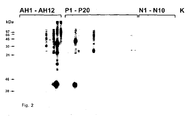
- Figure. 2 shows in the upper part the results for the other three groups.
- the results are also shown below in Table 1.
- Table 1 ⁇ / u>: Summary of IgE immunoblot results against various allergen extracts and against the recombinant p40 allergen with hexahistidine tag from the dried fruit moth. + + +, very strong reaction; + + strong reaction with at least two strong positive bands; + weak positive reaction with at least one visible band; - no defined positive band observed. patient Dried fruit moth larvae Flour moths butterflies Rec.
- the insects Plodia interpunctella
- the insects were grown in oatmeal (S. Prozell, M. Schöller, Institute for storage protection, Biologische Bundesweg, Berlin). 180 larvae in the late migratory stage, just before pupation (2.4 g) were used for the preparation of RNA.
- the larvae were homogenized in 30 ml of Trizol reagent (Life Technologies, Frederick, MY, USA) and the RNA was recovered from the aqueous phase according to the manufacturer's protocol. From 5 .mu.g of the obtained total RNA using the PolyATtract system (Promega, Madison, WI, USA) polyA + RNA was recovered.
- the mRNA was overwritten into cDNA and incorporated into ⁇ ZAP phage in a directional manner using the Uni-ZAP system (Stratagene, La Jolla, CA).
- the primary library contained 3 x 10 6 cDNA clones and was amplified by standard methods.
- the corresponding cDNA plasmids were recovered by "in vivo excision" (Short et al. , 1988) using Heiferphagen (Stratagene, La Jolla, CA) and isolated by standard methods. The DNA was analyzed using Thermosequenase (Amersham Pharmacia, Uppsala, Sweden) and IRD800-labeled primers (MWG Biotech, Ebersberg) on a LI-COR sequencer (LI-COR, Lincoln, NE). The base sequences were translated into amino acid sequences and compared to the SwissProt database using the FastA program (Pearson and Lipman, 1988).
- Arginine kinases can transfer the terminal phosphate group from ATP to arginine to form an energy reserve. To date, arginine kinases have not been identified as allergens (see also Introduction). The honey bee's arginine kinase (Kucharski and Maleszka, 1998), which is most closely related to the p40 allergen, has 85% amino acid sequence identity with p40.
- 200,000 phages of the ⁇ ZAP cDNA library were screened with serum H20 as described above to give 11 immunopositive clones.
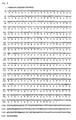
- the in vivo excised plasmids were analyzed and sequenced as above. 10 of the 11 clones encoded the same protein. Three of the clones were full length, and two of them had the identical sequence in Fig. 4 is shown.
- the open reading frame represents an allergen of 33 kDa (p33), which is closely related to tropomyosins of various species. Tropomyosins are known as cross-reacting allergens, especially in the field of food allergy (Reese et al. , 1999).
- 200,000 phages of the ⁇ ZAP cDNA library were screened with sera AH10 and AH12 as described above to give 6 immunopositive clones.
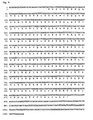
- the in vivo excised plasmids were analyzed and sequenced as above. Only one of the clones (Sequence Fig. 5 ) encoded a full-length protein that was homologous to arylphorins.
- Arylphorins are considered storage proteins of insects and contain a high proportion of tyrosine.
- An arylphorin of the cockroach ( Periplaneta americana ) has already been described in a publication (Wu et al., 1996) as an allergen.
- the p40 cDNA was cloned into pET expression vectors in two different ways so that the p40 allergen was generated once with only one hexahistidine insert and once as a cellulose-binding domain fusion protein.
- the first construct was purified under native conditions.
- the second construct was purified on a column of cellulose. Both the cellulose-binding domain fusion protein and the hexahistidine-type non-fusion protein had arginine kinase activity.
- the complete cDNA was cloned in two steps into the Eco RI and Xho I cleavage sites of the plasmid pET23 (+) (Novagen, Madison, Wisconsin, USA).
- the ribosome binding site was prepared by oligonucleotide-dependent mutagenesis according to Kunkel et al. , (1987) incorporated into the expression vector.
- the mutagenesis oligonucleotide 5'-GGT AGC GGC GTC CAC CAT GGT ATA TCT CCT TCT AGA GGG AAA CCG-3 ' was used.
- the resulting vector pETAK1 was checked by DNA sequence analysis.
- a hexahistidine tag for purification via a nickel affinity column (Qiagen, Hilden , Germany) in the Expression plasmid introduced, and there was the vector pETHisAK1, which was checked by sequencing.
- the vector pETHisAK1 was transformed into Escherichia coli BL21 (DE3) and the transformed cells were shaken in a 400 ml culture at 37 ° C to an optical density (600 nm) of 0.8. Synthesis of the recombinant protein was induced by addition of 0.4 mM (final concentration) of IPTG (isopropyl- ⁇ -D-galactoside), and the culture was further shaken for 3 hours at 37 ° C.
- the cells were harvested by centrifugation, then cells were incubated in lysis buffer (100 mM KCl, 50 mM Mes, 4% (v / v) Triton X-100, 8 mM DTT, 8 mM EDTA, 25 ⁇ g / ml polymyxin B for 10 min Suifat (Sigma, St. Louis, Mo., USA), pH 7.5) (Schupp et al. , 1995). Cell detritus was centrifuged for 30 min at 2000 xg and 4 ° C. The protein was purified by nickel chelate affinity chromatography using native small-molecule centrifugation columns as described by the manufacturer (Qiagen).
- lysis buffer 100 mM KCl, 50 mM Mes, 4% (v / v) Triton X-100, 8 mM DTT, 8 mM EDTA, 25 ⁇ g / ml polymyxin B for 10 min Suifat (Sigma, St. Louis
- the complete cDNA encoding the p40 allergen was recloned into the expression vector pET36b (Novagen) by standard methods (Sambrook et al. , 1989) using the Eco RI and Xho I restriction sites. This was done in two steps because the cDNA had an internal Xho I site.
- the still missing transition between the cellulosic binding domain-encoding sequence and the arginine kinase-encoding sequence was incorporated into the expression vector by oligonucleotide-dependent mutagenesis according to Kunkel et al. (1987).
- the mutagenesis oligonucleotide 5'-GGT AGC GGC GTC CAC CAT GGT ATA TCT CCT TCT AGA GGG AAA CCG-3 ' was used.
- the resulting vector pCBDAK1 was checked by DNA sequence analysis.
- the vector pCBDAK1 was transformed into Escherichia coli BL21 (DE3) and the transformed cells shaken in a 400 ml culture at 37 ° C to an optical density (600 nm) of 0.8. Synthesis of the recombinant protein was induced by addition of 0.4 mM (final concentration) of IPTG (isopropyl- ⁇ -D-galactoside), and the culture was further shaken for 3 hours at 37 ° C.
- Cells were harvested by centrifugation, then cells were incubated in lysis buffer (100 mM KCi, 50 mM Mes, 4% (v / v) Triton X-100, 8 mM DTT, 8 mM EDTA, 25 ⁇ g / ml polymyxin B for 10 min Sulfate (Sigma, St. Louis, Mo., pH 7.5) (Schupp et al ., 1995). Cell detritus was centrifuged for 30 min at 2000 xg and 4 ° C. The fusion protein was purified by cellulose affinity chromatography as described by the manufacturer (Novagen).
- the purified p40 allergen with a hexahistidine tag was electrophoresed as described above at a concentration of 10 ⁇ g per cm on a preparative 12.5% SDS-polyacrylamide gel, blotted onto nitrocellulose and tested with those patient sera used in the experiments described above with the extract of P. interpunctella larvae had been tested.
- the purified recombinant fusion protein was electrophoresed on a preparative 12.5% SDS-polyacrylamide gel at a concentration of 5 ⁇ g per cm as described above, blotted onto nitrocellulose and tested with those patient sera used in the experiments described above with the extract of P.interpunctella Larvae had yielded positive signals.
- the recombinant p40 fusion protein was also suitable for detecting IgE antibodies against the natural p40 antigen.
- the purified recombinant p40 allergen with hexahistidine tag was adjusted to 10 different concentrations in sterile 0.9% NaCl solution: # 1 contained 400 ng / ⁇ l, the other samples contained descending concentrations of 200 ng / ⁇ l (# 2), 100 ng / ⁇ l (# 3), 50 ng / ⁇ l (# 4), 25 ng / ⁇ l (# 5), 12.5 ng / ⁇ l (# 6), 6.25 ng / ⁇ l (# 7 ), 3.13 ng / ⁇ l (# 8), 1.56 ng / ⁇ l (# 9), and 0.78 ng / ⁇ l (# 10).
- a rub test was carried out on the contralateral arm with 30 ⁇ l of concentrations no. 10 to no. 2 each and read after 5, 10 and 20 min and 24 h.
- the negative control was 0.9% NaCl, as a positive control histamine dihydrochloride was used at a concentration of 1 mg / ml.
- the prick test was then carried out at concentrations # 10 to # 5 and read at 20 minutes and 24 hours, respectively.
- the moth allergic patient AH 11 was tested against the recombinant p40 allergen with hexahistidine tag first in the rub test and then in the prick test.
- concentrations Nos. 10 to 6 did not cause immediate reactions; concentration # 5 induced a slight itching in the sample area.
- No. 4 produced tiny wheals after 5-10 minutes.
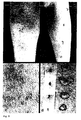
- No. 3 and No. 2 produced multiple wheals (diameter 4-5 mm). These had the maximum expression after 15-20 minutes ( Fig. 8d ) and all formed back after 45 minutes.
- the total mite and cockroach allergens were from Pharmacia / Allergon.
- the various seafoods were purchased fresh, uncooked at the Nasch here in Vienna. It was processed as good as possible only muscle meat.
- the various samples (1-5 g) were frozen in liquid nitrogen, ground in the mortar, with 3 ml per gram of sample in ice-cold redist. H 2 O with 5 mM PMSF (phenylmethanesulfonyl fluoride), stirred for 1 h at 4 ° C.
- PMSF phenylmethanesulfonyl fluoride
- the serum of patient AH11 and of patients H89 and H32 was in the concentration 1:10 with buffer G (42 mM Na 2 HPO 4 , 6.4 mM NaH 2 PO 4 , 0.5% (v / v) Tween 20 , 0.5% (w / v) bovine serum albumin, 0.05% (w / v) NaN 3 , pH 7.5).
- buffer G 42 mM Na 2 HPO 4 , 6.4 mM NaH 2 PO 4 , 0.5% (v / v) Tween 20 , 0.5% (w / v) bovine serum albumin, 0.05% (w / v) NaN 3 , pH 7.5).
- 1 ml each of the samples was preincubated either with 10 ⁇ g of the recombinant p40 allergen with hexahistidine tag in buffer G, or only in buffer G overnight at 4 ° C., and then the IgE reactivity was determined with a strip of nitrocellulose with blo
Landscapes
- Health & Medical Sciences (AREA)
- Chemical & Material Sciences (AREA)
- Life Sciences & Earth Sciences (AREA)
- Organic Chemistry (AREA)
- Zoology (AREA)
- Medicinal Chemistry (AREA)
- General Health & Medical Sciences (AREA)
- Gastroenterology & Hepatology (AREA)
- Biochemistry (AREA)
- Biophysics (AREA)
- Toxicology (AREA)
- Genetics & Genomics (AREA)
- Tropical Medicine & Parasitology (AREA)
- Molecular Biology (AREA)
- Proteomics, Peptides & Aminoacids (AREA)
- Pulmonology (AREA)
- Animal Behavior & Ethology (AREA)
- Engineering & Computer Science (AREA)
- Bioinformatics & Cheminformatics (AREA)
- Immunology (AREA)
- Chemical Kinetics & Catalysis (AREA)
- General Chemical & Material Sciences (AREA)
- Nuclear Medicine, Radiotherapy & Molecular Imaging (AREA)
- Pharmacology & Pharmacy (AREA)
- Insects & Arthropods (AREA)
- Public Health (AREA)
- Veterinary Medicine (AREA)
- Peptides Or Proteins (AREA)
- Micro-Organisms Or Cultivation Processes Thereof (AREA)
- Medicines That Contain Protein Lipid Enzymes And Other Medicines (AREA)
- Medicines Containing Antibodies Or Antigens For Use As Internal Diagnostic Agents (AREA)
- General Preparation And Processing Of Foods (AREA)
- Medicines Containing Plant Substances (AREA)
- Enzymes And Modification Thereof (AREA)
Description
- Die vorgestellte Erfindung befaßt sich insbesondere mit dem Problem der allergischen Reaktion auf Invertebratenproteine am Beispiel der Allergie gegen Proteine aus der Dörrobstmotte Plodia interpunctella. Sie beschreibt rekombinante Moleküle, die von vier Allergenen dieser Spezies 1abgeleitet sind und ihre Anwendung für Diagnose und Therapie von Allergien und die Detektion von Allergenen in der Umwelt des Menschen.
- Bis zu 20 % der Bevölkerung der Industriestaaten leiden unter Typ I allergischen Symptomen (Rhinitis, Konjunktivitis, bronchialem Asthma) (Myamoto et al., 1992). Bei der Typ I Allergie bindet das Allergen an IgE-Antikörper auf der Oberfläche von Mastzellen. Das IgE ist an die hochaffinen FcεRI-Rezeptoren gebunden, die durch die zusätzliche Bindung der Allergene quervernetzt werden und damit der Mastzelle signalisieren, biologische Mediatoren wie zum Beispiel Histamin freizusetzen (Segal et al., 1977). In den vergangenen Jahren ist gezeigt worden, daß Allergene meist wasserlösliche Proteine sind, die in vielen Fällen in rekombinanter Form erzeugt werden können (Kraft et al., 1999). Noch vor wenigen Jahren wurde ausschließlich speziesspezifische Allegiediagnostik betrieben, bei der Gesamtextrakte natürlicher Allergenquellen, z.B. von Pollen oder Tierhaarextrakte als Antigen eingesetzt wurden. Diese Extrakte sind biochemisch nicht genau definiert, manchmal fehlen wichtige allergene Komponenten. Deshalb wird in den vergangenen Jahren in zunehmender Weise eine komponentenspezifische Diagnose (CRD, "component resolved diagnosis") mit Hilfe von gut definierten, rekombinanten Allergenen eingeführt (Valenta et al., 1999).
- Während die Allergene außerhalb des Hauses meist mit Pflanzenpollen assoziiert sind, kommen im Haus mehr Allergene aus Tieren vor, sowohl von Schädlingen als auch von Haustieren. Bei den Schädlingen steht als Allergenquelle die Hausstaubmilbe, ein Spinnentier (Thomas und Smith, 1999) an erster Stelle. Besonders in den USA ist die Küchenschabe, ein flügelloses Insekt, auch als Allergenquelle wichtig (Rosenstreich et al., 1997; van Wijnen et al., 1997). Von beiden sind eine Reihe rekombinanter Allergene bekannt (Arruda et al., 1995; Thomas und Smith, 1999). Eine zusätzliche Allergenquelle im Haus sind Schimmelpilze, von denen in den letzten Jahren ebenfalls mehrere allergene Komponenten charakterisiert und für die Diagnostik eingesetzt wurden (Unger et al., 1999).
- Diese Erfindung befaßt sich mit einer bisher kaum untersuchten Allergenquelle im häuslichen Bereich, den Motten. Bei den Motten handelt es sich um Insekten, um echte Schmetterlinge (Lepidoptera). Die Hauptvertreter sind Plodia interpunctella, die Dörrobstmotte, im englischen Sprachgebrauch "Indian meal moth" und Tineola bisseliella, die Kleidermotte, "webbing clothes moth". Die vorliegende Erfindung bezieht sich auf P. interpunctella, allerdings sind die verschiedenen Mottenarten nah verwandt und deshalb ist zu erwarten, daß die Allergene der verschiedenen Mottenarten immunologisch kreuzreaktiv sind. Die Dörrobstmotte ist ein Nahrungsmittelparasit, sie wird hauptsächlich in der Küche gefunden und befällt trockene Nahrungsmittel wie Nüsse, Dörrobst, Schokolade, Hafer, Maismehl, Müesli. Es wird vermutet, daß die Dörrobstmotte aus Südamerika stammt. Sie ist der häufiste Nahrungsmittelschädling in den amerikanischen Haushalten und wurde deshalb im Mai 1999 vom Department of Environmental Health & Safety der Harvard Universität zum "Schädling des Monats" gewählt (http://www.uos.harvard.edu/ehs/hot_topics/pom_meal_moth.html).Auch in den deutschen Haushalten ist die Dörrobstmotte häufig (zum Beispiel: Vorratsschädling Nr. 1: die Dörrobstmotte. Sendung im Westdeutschen Rundfunk am 9. Mai 1997, von Michael Wiegert-Wegener). Abgestorbene Motten trocknen aus und landen typischerweise über den Hausstaub im Staubsauger. Dieser stößt große Mengen von winzigen Staubpartikeln aus, die auch Proteine der eingesaugten Insekten und damit potentielle Allergene enthalten.
- Bisher ist noch von keinem Allergen aus irgendeiner Mottenspezies die Struktur aufgeklärt worden. Außerdem gibt es noch keine Publikation in der gesamten medizinischen Literatur (Medline), die sich mit der Dörrobstmotte im Zusammenhang mit Allergie beschäftigt. Dennoch gibt es eine kleine Zahl von Publikationen, die sich mit Allergien gegen andere Motten beschäftigen. Die Studie von Baldo und Panzani (1988) charakterisiert Extrakte verschiedener Insektenspezies, darunter auch der Kleidermotte (Tineola bisselliella) mit IgE Immunoblots, enthält jedoch keine Primärstrukturen. Mehrere Publikationen berichten über allergische Reaktionen gegen Motten oder Seidenraupen bei beruflicher Exposition, zum Beispiel mit Seidenraupen (Komase et al. 1997, Suzuki et al., 1995, Wang et al., 1994), verschiedenen Schmetterlingen (Davis and Jenkins 1995), oder Mehlmotten (Storms et al., 1981).
- Die vorliegende Anmeldung stellt vier rekombinante Allergene aus der wichtigsten Nahrungsmittelmotte für verschiedene medizinischdiagnostische, umweltanalytische und therapeutische Zwecke zur Verfügung.
- Homologe der vier beschriebenen Allergene sind in verschiedenen Spezies in der Vergangenheit bereits untersucht worden, es handelt sich um Argininkinasen, Tropomyosine, Arylphorine und eine Familie von Oxidoreduktasen. Tropomyosine sind als Allergene gut beschrieben (Reese et al., 1999) und auch zum Arylphorin als Allergen bei Schaben (Periplaneta americana) gibt es eine Publikation (Wu et al., 1996). In der Literatur sind auch schon einige Redox-Enzyme als Allergen beschrieben, hauptsächlich bei Pilzen und Pflanzen. Das Protein, das zu der gefundenen Oxidoreduktase aus der Motte am nächsten verwandt ist, ist die bakterielle Glukose-1-Dehydrogenase (Nagao et al., 1992), welche selbst nicht als Allergen bekannt ist. Die Argininkinase ist hingegen noch nicht als Allergen identifiziert worden, auch wenn in einer Publikation über ein Allergen Par f 1 aus der Garnele Parapenaeus fissurus Peptidsequenzen veröffentlicht wurden, die Sequenzähnlichkeiten zu Argininkinasen anderer Spezies aufweisen (Lin et al., 1993). Diese Ähnlichkeiten wurden jedoch in der Veröffentlichung nicht beschrieben. Die Argininkinase ist ein Enzym, das in Muskeln von Invertebraten Argininphosphat als Energie-Reservestoff bildet (Wyss et al., 1995). Auch bei Insekten wurde die Argininkinase in ihrer Primärstruktur aufgeklärt (Kucharski und Maleszka, 1998), allerdings nie als Allergen beschrieben.
- Die vorliegende Erfindung basiert auf der Erkenntnis, daß die Dörrobstmotte, die in unseren Wohnungen sehr häufig als Nahrungsmittelschädling auftritt, auch eine Allergenquelle darstellen kann. Etwa die Hälfte der untersuchten Patientenseren wiesen IgE gegen Mottenallergene auf. Die Anmeldung stellt molekular genau definierte Reagenzien zur Verfügung, die von den beschriebenen Allergen p40 (Argininkinase), p33 (Tropomyosin), p84 (Arylphorin) und p27 (Oxidoreduktase) abgeleitet sind und einerseits eine exakt definierte und einfache in vitro und in vivo Diagnose und Therapie der Allergie gegen Motten ermöglichen, andererseits den Nachweis von Mottenproteinen in Proben aus Haushalt, Schule oder Betrieb. Die Bezeichnungen der Allergene erfolgen in Anlehnung an ihre Molekulargewichte in kDa.
- Das Allergen p40 ist überdies ein neues Panallergen von wirbellosen Tieren, das auch in der Hausstaubmilbe, in der Schabe und in Meeresfrüchten gefunden wird und in diesen Spezies immunologisch verwandt mit p40 aus der Motte ist. So ist es denkbar, daß man sich durch den Kontakt mit Motten oder Milben sensibilisiert und in der Folge eine Nahrungsmittelallergie gegen Meeresfrüchte entwickelt. Für die Untersuchung einer solchen Kreuzsensibilisierung können das rekombinante p40 oder nahe verwandte Moleküle eingesetzt werden.
- Die Erfindung betrifft eine Nukleinsäure, kodierend für ein allergenes Polypeptid aus Anthropoden, umfassend
- (a) die in SEQ ID No. 1 dargestellte Sequenz,
- (b) eine von einer Sequenz gemäß (a) auf Grund einer Degeneration des genetischen Codes abweichende Sequenz, oder/und
- (c) eine Sequenz mit einer Identität > 80 % zu einer der Sequenzen unter (a) und/oder (b),
- Ein erster Aspekt der Erfindung sind rekombinante DNA-Moleküle, die Nukleotidsequenzen (I) aufweisen, die Polypeptide kodieren, die die Antigenität des Allergens p40 besitzen und aus Arthropoden isoliert sind. Die rekombinanten DNA-Moleküle umfassen auch degenerierte Varianten dieser Nukleotidsequenzen.
- Die rekombinanten DNA-Moleküle können auch Nukleotidsequenzen enthalten, die für Polypeptide kodieren, die antigene Kreuzreaktivität und einen hohen Grad von Identität (vorzugsweise > 50 %, insbesondere > 60 % oder > 75 %) mit dem Allergen p40 aus Arthropoden besitzen, das in der
Abbildung 3 angegeben ist. Die Bezeichnung p40 bezieht sich auf das Molekulargewicht des Polypeptids in kDa. - Der Ausdruck "Hybridisierung unter hochstringenten Bedingungen" gemäß der vorliegenden Erfindung wird wie bei Sambrook et al. (Molecular Cloning: A Laboratory Manual, Cold Spring Harbor Laboratory Press (1989)1.101-1.104) verwendet. Bevorzugt liegt eine hochstringente Hybridisierung gemäß der vorliegenden Erfindung vor, wenn nach Waschen für 1 Stunde mit 1 x SSC und 0,1 % SDS bei 50 °C, bevorzugt bei 55 °C, mehr bevorzugt bei 62 °C und am meisten bevorzugt bei 68 °C, und mehr bevorzugt für 1 Stunde bei 0,2 x SSC und 0,1 % SDS bei 50 °C, bevorzugt bei 55 °C, mehr bevorzugt bei 62 °C und am meisten bevorzugt bei 68 °C noch ein positives Hybridisierungssignal beobachtet werden kann.
- Der Ausdruck "Identität", wie hierin verwendet, kann durch die Gleichung I(%) = [1-V/X] x 100 definiert werden, worin I die Identität in % ausgedrückt bedeutet, X die Gesamtzahl der Nukleobasen einer Nukleotidsequenz für p40 ist und V die Anzahl an davon abweichenden Nukleobasen der zu vergleichenden Sequenzen ist.
- Ein zweiter Aspekt der Erfindung sind rekombinante Expressionsvektoren, die eine Expressionskontrollsequenz aufweisen, die operativ mit einem der oben beschriebenen Moleküle verknüpft ist.
- Ein dritter Aspekt der Erfindung ist eine Wirtszelle, die mit einem Vektor nach dem zweiten Aspekt der Erfindung transformiert ist.
- Ein vierter Aspekt der Erfindung ist ein rekombinantes oder synthetisches Protein oder Polypeptid, das antigene Epitope des p40 Moleküls besitzt, die in der Aminosäuresequenz von
Abbildung 3 enthalten sind. Das Protein oder Polypeptid kann dabei mit einem weiteren heterologen Polypeptid wie einer zellulosebindenden Domäne, β-Galaktosidase oder Glutathion-S-Transferase oder irgendeinem anderen Polypeptid fusioniert sein, das in prokaryontischen oder eukaryontischen Zellen exprimiert werden kann. Das Protein oder Polypeptid, das mit p40 kreuzreaktiv ist, kann dabei mit analytisch nachweisbaren Gruppen oder mit wasserlöslichen oder wasserunlöslichen Phasen konjugiert sein, die für die Durchführung des Nachweises von Antikörpern wie zum Beispiel IgA, IgD, IgE, IgG oder IgM geeignet sind. In den Aspekten der Erfindung, die sich mit in vitro Diagnostik befassen (siehe unten), können die Peptide der Erfindung a) an eine wasserunlösliche Phase durch physikalische Adsorption oder eine kovalente Bindung gekoppelt sein oder b) kovalent an eine analytisch nachweisbare Gruppe (Markierung) gekoppelt sein. - Die erfindungsgemäßen Polypeptide können als Immunogene zur Herstellung von Antikörpern eingesetzt werden. Zur Herstellung von für die allergenen Determinanten spezifischen Antikörpern können Standardprotokolle herangezogen werden. Die Antikörper können dann z.B. zum Nachweis von Allergenen und/oder zur Therapie verwendet werden.
- Die Erfindung umfaßt weiterhin eine Zusammensetzung zur Verwendung als Arzneimittel, umfassend eine Nukleinsäure, einen Vektor, eine Zelle, ein Polypeptid oder einen Antikörper, wie hierin definiert, als Wirkstoff. Die Zusammensetzung kann pharmazeutisch annehmbare Hilfsstoffe sowie ggf. weitere Wirkstoffe enthalten. Die Zusammensetzung kann für diagnostische oder/und therapeutische Zwecke verwendet werden, insbesondere für Therapie oder/und Diagnose von allergischen Erkrankungen.
- Der fünfte Aspekt der Erfindung ist eine in vitro Methode zur Diagnose von Allergie gegen Arthropodenproteine, die die humoralen Antikörper bestimmt, die gegen die Arthropodenproteine gerichtet sind. Die umfaßten Allergien sind meistens gegen Insekten gerichtet. Die relevanten Antikörper sind meistens von der IgE Klasse, aber auch IgG-Antikörper können wichtige Information über die Allergie liefern. Im Normalfall umfaßt diese Methode den Kontakt einer Körperflüssigkeit aus einem Patienten mit einem Polypeptid der Erfindung. Die Mengenverhältnisse und Bedingungen werden so gewählt, daß sich Immunkomplexe zwischen dem Polypeptid und Antikörpern in der Probe in einer Menge ausbilden, die eine Funktion der Menge der Antikörper in der Probe ist. Der Immunkomplex wird dann mit einer der an sich bekannten Methoden gemessen. Etwas spezifischer ausgedrückt, eine bevorzugte Methode des fünften Aspekts der Erfindung besteht darin, eine Probe einer Körperflüssigkeit, die zum Beispiel IgE Antikörper enthält, mit einem Polypeptid der Erfindung und einem Anti-IgE-Antikörper in Kontakt zu bringen, so daß sich ein lgE-Polypeptid-Anti-lgE-Immunkomplex bildet. Im Normalfall ist entweder das Polypeptid oder der Anti-lgE-Antikörper an eine feste Phase gekoppelt, die entweder unlöslich ist, oder im Testpuffer gefällt werden kann, so daß der Immunkomplex von dem Testpuffer getrennt werden kann. Der Detektionsschritt kann in diesen Varianten unter Verwendung einer analytisch nachweisbaren Gruppe (Markierung) ausgeführt werden, die entweder kovalent an den IgE-Antikörper gekoppelt ist (in diesem Fall ist das Polypeptid an die Festphase gekoppelt) oder an das Polypeptid (in diesem Fall ist der Anti-IgE-Antikörper an die Festphase gekoppelt). Wenn IgG-Antikörper bestimmt werden sollen, dann wird der Anti-IgE-Antikörper durch einen Anti-lgG-Antikörper ersetzt.
- Ein sechster Aspekt der Erfindung ist eine in vitro Methode, die eine zelluläre Immunreaktion, auf das Polypeptid der Erfindung mißt und ein rekombinantes oder synthetisches Polypeptid wie im vierten Aspekt beschrieben verwendet, um die zelluläre Immunreaktion, zu stimulieren. Als zelluläre Reaktionen können die Histaminfreisetzung aus basophilen Granulozyten oder die Proliferation von T-Lymphozyten, gemessen durch Aufnahme von 3H-Thymidin gemessen werden, ebenso die Stimulation von eosinophilen Granulozyten, gemessen durch die Freisetzung von Mediatoren, wie zum Beispiel dem eosinophilen kationischen Protein. Die Proben, die in den oben beschrieben Methoden verwendet werden, sind meistens aus Blut gewonnen, wie zum Beispiel heparinisiertem Vollblut, Serum oder Plasma.
- Ein siebenter Aspekt der Erfindung betrifft nur das p40 Allergen und besteht darin, durch Messung der Enzymaktivität des p40 Allergens und seiner Homologen, der Argininkinaseaktivität (EC 2.7.3.3), das Vorhandensein von Arthropodenallergenen in Proben aus der Umwelt des Menschen zu messen, beispielsweise in Staubproben aus Haushalt oder Betrieben. Die Argininkinase katalysiert die reversible Umwandlung von L-Arginin und Adenosintriphosphat (ATP) in N-Phospho-L-Arginin und Adenosindiphosphat (ADP). Für die Messung der Argininkinaseaktivität sind in der Literatur Standardmethoden beschrieben, die zum Beispiel das entstehende Produkt ADP indirekt messen (Anisike et al., 1975).
- Der achte Aspekt der Erfindung besteht darin, mit Hilfe eines Immunoassays das Vorhandensein des p40 Allergens oder seiner Homologen in Proben aus der Umwelt des Menschen zu messen, beispielsweise in Staubproben aus Haushalt oder Betrieben. Der Immunassay besteht darin, daß man einen monoklonalen Antikörper aus der Maus, der nach Standardmethoden gegen eines der Polypeptide der Erfindung gewonnen wird, oder ein Antiserum aus einem Wirbeltier, wie zum Beispiel, Kaninchen, Ziege, Schaf, Huhn, das gegen eines der
- Polypeptide der Erfindung gerichtet ist, mit der Umweltprobe in Kontakt bringt, die auf das p40 Allergen oder seine Homologen mit einer Sequenzidentität >70% hierzu getestet werden soll. Dabei ist der erste Antikörper oder das Antiserum typischerweise kovalent oder nichtkovalent an eine feste Phase gekoppelt, die Umweltprobe wird in wässriger Lösung oder in einem polaren Lösungsmittel gelöst angeboten. Nach einem Waschschritt wird das gebundene p40 Allergen oder seine Homologen mit einem zweiten, markierten monoklonalen Antikörper oder einem Antiserum detektiert.
- Bei diesem Verfahren kann insbesondere ein p40-Homologes aus einer beliebigen Spezies, besonders bevorzugt aus Motte oder Milbe, am meisten bevorzugt aus Hausstaubmilbe, bestimmt werden.
- Der neunte Aspekt der Erfindung besteht darin, aus dem synthetischen oder rekombinanten Polypeptid der Erfindung ein Arzneimittel herzustellen, das zur Hyposensibilisierung (Immunotherapie) von Patienten mit Allergie gegen p40 oder seine Homologen mit einer Sequenzidentität > 70% hierzu eingesetzt werden kann.
- Die Anmeldung offenbart ferner die Herstellung solcher Fragmente oder Teilpeptide oder Multimere des Polypeptids der Erfindung, die zwar ein oder mehrere Epitope, insbesondere IgE, IgG oder/und IgA-Epitope, des p40 Allergens oder seiner Homologen enthalten, aber nicht oder nur in einem stark eingeschränkten Maß zu einer anaphylaktischen Reaktion führen können. Multimere eines Allergens wirken oftmals weniger anaphylaktisch als Monomere. IgG und IgA-Epitope können eine geringere anaphylaktische Wirkung als IgE-Epitope aufweisen. Diese Derivate der Polypeptide der Erfindung können zu einem Arzneimittel entwickelt werden, das entweder zur passiven Therapie des Effektororgans eingesetzt werden (Nase, Conjunctiva, Lunge), um einer Freisetzung von Mediatoren bei einer späteren Allergenexposition vorzubeugen, oder ebenfalls zu einer aktiven Immunotherapie im Sinne einer Hyposensibilisierung.
- Die Anmeldung offenbart ferner ein diagnostisches Mittel zum Nachweis einer Allergie bei einem Patienten, wobei dieses Mittel ein Polypeptid oder einen Antikörper wie oben beschrieben, enthält.
- Mit den Erkentnissen der vorliegenden Erfindung ist es möglich, eine speziesspezifische Allergiediagnostik unter Verwendung einer Motte, insbesondere der Dörrobstmotte zu betreiben. Hierzu können die Dörrobstmotte, Extrakte davon, wie etwa Gesamtextrakte oder einzelne Bestandteile, insbesondere in Form von Teilextrakten zur Bestimmung einer allergischen Reaktion, beispielsweise als Antigen eingesetzt werden.
- Daneben ist es auch möglich, eine komponentenspezifische Allergiediagnostik durchzuführen, in dem Proben auf die einzelnen, oben beschriebenen Allergene untersucht werden. In diesem Zusammenhang ist die Diagnose einer Argininkinase, insbesondere aus einer Motte oder aus einer Milbe, beispielsweise der Hausstaubmilbe, von besonders großem Interesse. Aber auch die anderen identifizierten Allergene sowie deren Homologen aus Arthropoden können für eine komponentenspezifische Allergiediagnostik herangezogen werden.
- Auf Grund der hierin präsentierten Ergebnisse kann eine Argininkinase zur Herstellung eines Arzneimittels oder/und eines diagnostischen Mittels zur Behandlung von allergischen Erkrankungen oder/und zur Bestimmung von Allergenen verwendet werden. Bevorzugt wird hierzu eine Argininkinase aus einem Arthropoden, insbesondere aus Motte oder aus Milbe, z.B. Hausstaubmilbe eingesetzt bzw. ein Test auf das Vorhandensein einer solchen Argininkinase durchgeführt. Bei der Argininkinase handelt es sich um p40 oder eine Argininkinase, die zu p40 eine Identität von > 70 %, bevorzugt > 80 %, aufweist und bevorzugt mit p40 konzentriert.
- Grundsätzlich eröffnet sich somit eine breite Verwendung der erfindungsgemäß gefundenen Allergen und der dafür kodierenden Nukleinsäuren auf medizinisch-diagnostischem, umweltanalytischem und therapeutischem Gebiet.
- Die Erfindung wird durch die folgenden Beispiele und die beigefügten Figuren weiter erläutert. Die Figuren zeigen:
-
Fig. 1 :
Immunoblotstreifchen mit Gesamtextrakt aus Larven der Dörrobstmotte, untersucht auf IgE in den Seren von 90 Patienten mit allergischen Beschwerden in Innenräumen (H1 - H90, jeweils oberer Teil). Im jeweils unteren Teil wurden Immunoblotstreifchen mit rekombinantem p40 Allergen mit Hexahistidintag mit denselben Seren geprobt. Die Positionen von Molgewichtsmarkern sind auf der linken Seite in kDa angegeben. K ist die Pufferkontrolle ohne Zugabe von Serum. -
Fig. 2 :
Immunoblotstreifchen mit Gesamtextrakt aus Larven der Dörrobstmotte (jeweils oberer Teil), untersucht auf IgE in den Seren von Patienten mit allergischen Beschwerden in Innenräumen plus atopischer Dermatitis (AH1 - AH12), von Patienten mit Pollenallergie ohne angegebene Beschwerden im Haus (P1 - P20) und von Normalpersonen (N1 - N10). Im jeweils unteren Teil wurden Immunoblotstreifchen mit rekombinantem p40 Allergen mit Hexahistidintag mit denselben Seren untersucht. Die Positionen von Molgewichtsmarkern sind auf der linken Seite in kDa angegeben. K ist die Pufferkontrolle ohne die Zugabe von Serum. -
Fig.3 :
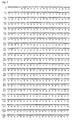
cDNA (SEQ ID No. 1) und davon abgeleitete Proteinsequenz (SEQ ID No. 2) des Allergens p40 aus Plodia interpunctella -
Fig. 4 :
cDNA (SEQ ID No. 3) und davon abgeleitete Proteinsequenz (SEQ ID No. 4) des Allergens p33 aus Plodia interpunctella -
Fig. 5 :
cDNA (SEQ ID No. 5) und davon abgeleitete Proteinsequenz (SEQ ID No. 6) des Allergens p84 aus Plodia interpunctella -
Fig. 6 :
cDNA (SEQ ID No. 7) und davon abgeleitete Proteinsequenz (SEQ ID No. 8) des Allergens p27 aus Piodia interpunctella -
Fig. 7 :
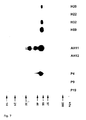
IgE-Immunoblot. Streifchen mit rekombinantem p40 Fusionsprotein mit einer Zellulose-bindenden Domäne wurden mit einer Auswahl der oben beschriebenen Seren getestet. Auf der rechten Seite sind die Molekulargewichtsmarker angegeben -
Fig. 8 :
Soforttypreaktionen beim Hauttest mit dem rekombinanten p40 Allergen mit Hexahistidintag.- a: Pricktest bei dem mottenallergischen Patienten AH11. Keine Hautreaktivität auf Konzentrationen Nr. 10 und 9. Qaddeln und Rötung bei den Konzentrationen Nr. 8 (3.12 ng/µl) bis Nr. 5 (25 ng/µl). Die höheren Konzentrationen wurden nicht mehr getestet. + + Positivkontrolle (Histamindihydrochlorid), - Negativkontrolle (0,9 % NaCl). Die Quaddeln sind mit einem Stift markiert.
- b: Reibetest am kontralateralen Unterarm desselben Patienten, starke Quaddelbildung und Hautrötung in den Konzentrationen Nr. 2 (200 ng/µl) und Nr. 3 (100 ng/µl).
- c: Vergrößerung des Bereichs von
Fig. 8a bevor die Quaddeln angezeichnet wurden. Die urtikarielle Reaktion mit der Bildung von Pseudopodien (Nr. 6) ist gut zu erkennen. - d: Vergrößerung von
Fig. 8b : Quaddelbildung im Reibetest bei der Konzentration Nr. 2 nach 20 min.
-
Fig. 9 :
Spätphasenreaktionen nach 24 h bei der Hauttestung mit dem rekombinanten p40 Allergen mit Hexahistidintag.- a: Reibetest: ekzematöse Reaktion in den Konzentrationen Nr. 6 (12.5 ng/µl) bis Nr. 2 (200 ng/µl). Nr. 1 wurde nicht durchgeführt.
- b: Reibetest: keine ekzematöse Reaktionen in den Konzentrationen Nr. 10 bis Nr. 7.
- c: Vergrößerung von
Fig. 9a : Ekzematöse Reaktion bei Konzentration Nr. 4. - d: Pricktest: Infiltrierte Papeln innerhalb der markierten Grenzen der vorangegangenen Soforttyp-Reaktion.
-
Fig. 10 :
Immunoblot-Inhibitionsexperiment. Drei mit rekombinantem p40 Allergen aus der Dörrobstmotte positive Seren wurden verwendet, um mit und ohne Präinkubation mit rekombinantem p40 allergenhaltige Extrakte aus verschiedenen Spezies (Dörrobstmotte, Küchenschabe, Hausstaubmilbe, Hummer, Garnele, Miesmuschel und Kabeljau) zu testen. Die Molekulargewichte sind auf der linken Seite der Immunoblots angegeben, von oben nach unten 66, 46, 30 und 21 kDa. - SEQ ID No. 1 zeigt die cDNA des Allergens p40 aus Plodia interpunctella,
- SEQ ID No. 2 zeigt die davon abgeleitete Proteinsequenz,
- SEQ ID No. 3 zeigt die cDNA des Allergens p33 aus Plodia interpunctella,
- SEQ ID No. 4 zeigt die davon abgeleitete Proteinsequenz,
- SEQ ID No. 5 zeigt die cDNA des Allergens p84 aus Plodia interpunctella,
- SEQ ID No. 6 zeigt die davon abgeleitete Proteinsequenz,
- SEQ ID No. 7 zeigt die cDNA des Allergens p27 aus Plodia interpunctella, und
- SEQ ID No. 8 zeigt die davon abgeleitete Proteinsequenz.
- Da im klinischen Bereich eine mögliche Allergie gegen Motten bislang kaum Beachtung gefunden hat, konnte bei der Auswahl der Patienten keine Gruppe definiert werden, die klinische Beschwerden nach Kontakt mit Mottenallergenen als Symptom angab. Deshalb stellten wir für unsere Arbeit die folgenden Gruppen zusammen, die auf IgE-Antikörper gegen Mottenproteine getestet wurden:
- 1. Patienten mit Typ I allergischen Beschwerden (Rhinitis, Conjunctivitis, allergisches Asthma bronchiale) in Innenräumen (n = 90, Patienten H1-H90),
- 2. Patienten mit atopischer Dermatitis und Typ I allergischen Beschwerden (Rhinitis, Conjunctivitis, allergisches Asthma bronchiale) in Innenräumen (n = 12, Patienten AH 1 -AH 12),
- 3. Patienten mit nachgewiesener Pollenallergie ohne Typ I allergische Beschwerden (Rhinitis, Conjunctivitis, allergisches Asthma bronchiale) in Innenräumen (n = 20, Patienten P1 - P20),
- 4. Probanden ohne atopische Dermatitis und ohne nachgewiesene Typ I Allergien (n=10, Probanden N1 - N10).
- Präparationen von zwei verschiedenen Mottenspezies wurden verwendet, um mottenspezifische IgE-Antikörper in Patientenseren zu detektieren. Die eine Präparation ist ein kommerziell erhältliches Homogenisat von Faltern der Mehlmotte Ephestia kuehniella (Allergon, Pharmacia Upjohn, Uppsala, Schweden). Die andere Präparation wurde aus Mottenlarven (Wanderstadium, kurz vor der Verpuppung) von der Dörrobstmotte Plodia interpunctella hergestellt. Die Insektenproben (5 Larven) wurden in 0,2 ml PBS homogenisiert, im Verhältnis von 1:1 mit Laemmli-Auftragspuffer versetzt und auf einem 12,5 % SDS-Polyacrylamidgel aufgetrennt (Fling und Gregerson, 1986). Es wurde ein präparatives Gel verwendet, auf das etwa 20 µg Gesamtprotein pro cm aufgetragen wurden. Als Marker diente ein Rainbow-Marker (Amersham Pharmacia). Das Gel wurde nach der Elektrophorese auf Nitrozellulose (Schleicher & Schuell, Dassel, Deutschland) geblottet (Towbin et al., 1979) und in 0,5 cm Streifen geschnitten.
- Der Test der Patientenseren auf IgE gegen Motten wurde analog zu der von Jarolim et al. (1989) beschrieben Methode durchgeführt. Die Streifen wurden 2 x 5 min und 1 x 30 min in Puffer G (42 mM Na2HPO4, 6,4 mM NaH2PO4, 0,5 % (v/v) Tween 20, 0,5 % (w/v) Rinderserumalbumin, 0,05 % (w/v) NaN3, pH 7.5) bei Raumtemperatur abgesättigt, dann in 1 ml Volumen in 1:10 (wenn nicht anders beschrieben) mit Puffer G verdünnten Patientenseren über Nacht bei 4 °C gekippt. Die Streifen wurden 2 x 5 min und 1 x 30 min bei Raumtemperatur in Puffer G gewaschen, dann über Nacht mit einer 1:10 Verdünnung eines 125I-markierten Anti-Human-lgE Antikörpers (Amersham Pharmacia) bei Raumtemperatur gekippt, wie oben gewaschen, getrocknet und aufgeklebt. Gebundenes mottenspezifisches IgE wurde so mit dem radioaktiv markierten Anti-IgE-Antikörper detektiert und die positiven Signale wurden mittels Autoradiographie auf einem Röntgenfilm (Kodak) sichtbar gemacht.
- Die
Figur 1 zeigt in ihrem oberen Teil die Resultate dieses Experiments für die Gruppe der "Indoor"-Allergiker (Patienten mit allergischen Beschwerden in Innenräumen),Figur. 2 zeigt im oberen Teil die Ergebnisse für die anderen drei Gruppen. Die Ergebnisse sind auch weiter unten in Tabelle 1 dargestellt.Tabelle 1: Zusammenfassung der IgE-Immunoblotresultate gegen verschiedene Allergenextrakte und gegen das rekombinante p40 Allergen mit Hexahistidintag aus der Dörrobstmotte. + + +, sehr starke Reaktion; + + starke Reaktion mit mindestens zwei starken positiven Banden; + schwache positive Reaktion mit mindestens einer sichtbaren Bande; - keine definierte positive Bande beobachtet. Patient Dörrobst motten larven Mehl motten falter Rek. p40 Allergen (His6) Haus staub milbe Küchen schabe H1 + + - H2 - - - H3 - - - H4 - - - H5 ++ + - ++ + H6 - - - H7 ++ ++ - - - H8 - - - H9 + + - - - H10 - - - H11 - - - H12 - - - H13 ++ ++ - - ++ H14 - - H15 - - - H16 - - - + - H17 + - - H18 - - - H19 - - - H20 +++ +++ +++ ++ +++ H21 + + - ++ - H22 + + - + - H23 - - - H24 - - - H25 - - - H26 - - - H27 - - - H28 ++ ++ - ++ ++ H29 - + - + - H30 - - - - - H31 - + - - - H32 ++ ++ +++ - + H33 + + - - - H34 - - - - - H35 + + - - + H36 - - - H37 - - - H38 + - - - - H39 ++ + ++ + - H40 + + - - + H41 + - - H42 + - - - - H43 - - - H44 - - - H45 + - - +++ - H46 + + - + - H47 - - - - - H48 + - - - - H49 - + - H50 - - - H51 - - - H52 - - - H53 ++ ++ - + ++ H54 + - - - - H55 - + - H56 - - + H57 ++ + - H58 ++ - + ++ - H59 - - - H60 - - - H61 + - - H62 + - - - - H63 + - - H64 + - - - - H65 - - - H66 - + - H67 - - - H68 - - - H69 + + - H70 ++ ++ - - ++ H71 - - - H72 + - + + - H73 ++ + - - H74 - + - H75 - - - H76 +++ ++ - - ++ H77 - - H78 ++ ++ + - + H79 + ++ - - ++ H80 + + - - - H81 +++ +++ + - +++ H82 + ++ - - + H83 - - - - - H84 + - - + - H85 - - - H86 ++ + + - + H87 - - - + - H88 - - - H89 +++ + +++ + + H90 - - - +++ - AH1 - - - AH2 + - - + - AH3 + - - AH4 + - - AH5 + + - - - AH6 + - - AH7 - - AH8 ++ ++ + +++ ++ AH9 + + - - - AH10 +++ +++ + +++ ++ AH11 +++ +++ +++ +++ +++ AH12 ++ +++ - +++ + P1 + - - P2 - - - P3 - - - P4 +++ +++ +++ + +++ P5 + + - ++ + P6 - - - - - P7 + - - - + P8 - - - - P9 +++ +++ - + ++ P10 - - - P11 - - - P12 + - - - + P13 - - - - - P14 - - - P15 + - - - - P16 + - - - - P17 - - - P18 - - - P19 + ++ - + + P20 + ++ - + + N1 - - - - - N2 - - - - - N3 - - - - - N4 - - - - - N5 - - - - - N6 - - - N7 - - - N8 - - - N9 - - - N10 - - - - Insgesamt wurden bei den "Indoor"-Allergikern (n=90) beim IgE-Immunoblot mit dem Dörrobstmottenlarven-Gesamtextrakt 4 sehr stark positive, 1 3 stark positive und 25 schwach positive Reaktionen beobachtet, bei den Atopikern mit allergischen Beschwerden in Innenräumen (n =12) 2 sehr stark positive, 2 stark positive und 6 schwach positive. Bei den Pollenallergikern ohne angegebene allergische Beschwerden in Innenräumen (n = 20) gab es 2 sehr stark positive und 8 schwach positive Reaktionen. Insgesamt wurde bei 51 % der Patienten eine positive Reaktion auf Mottenlarvenproteine beobachtet. Keine der nichtallergischen Kontrollpersonen zeigte eine Reaktion im Immunoblot.
- Das gleiche Patientenkollektiv wie oben wurde auf Streifchen mit einem kommerziell erhältlichen Extrakt aus der Mehlmotte untersucht, wobei die Ergebnisse auch in der Tabelle 1 dargestellt sind. Insgesamt zeigten 36 % der Allergiker eine positive Reaktion auf Mottenfalter.
- Ausgewählte Patienten und Normalpersonen aus dem Kollektiv wurden auf Streifchen mit kommerziell erhältlichen Extrakten aus der Hausstaubmilbe und der Küchenschabe getestet. Die Ergebnisse sind wieder in Tabelle 1 dargestellt. Die Küchenschabe ist ein flügelloses Insekt und näher mit der Dörrobstmotte verwandt als die Hausstaubmilbe, die zu den Spinnentieren zählt. Alle drei zählen zu den Gliederfüßlern (Arthropoden). Trotz der phylogenetischen Verwandtschaft der drei Spezies ist die IgE-Reaktivität der Patienten oft stark unterschiedlich. So reagiert zum Beispiel Patient H81 sehr stark auf Motte und Küchenschabe, aber nicht auf die Hausstaubmilbe. Patient H90 reagiert nur sehr stark mit der Milbe, aber nicht mit Schabe oder Motte. Patienten H7, H9, H33, H80, AH5 und AH9 reagieren auf Mottenlarven und Falter, aber nicht auf Schabe oder Milbe.
- Die Insekten (Plodia interpunctella) wurden in Haferflocken angezüchtet (S. Prozell, M. Schöller, Institut für Vorratsschutz, Biologische Bundesanstalt, Berlin). 180 Larven im späten Wanderstadium, kurz vor der Verpuppung (2,4 g) wurden zur Präparation von RNA eingesetzt. Die Larven wurden in 30 ml Trizol Reagens (Life Technologies, Frederick, MY, USA) homogenisiert, und aus der wäßrigen Phase wurde nach dem Protokoll des Herstellers die RNA gewonnen. Aus 5 µg der erhaltenen Gesamt-RNA wurden mit Hilfe des PolyATtract Systems (Promega, Madison, WI, USA) polyA+ RNA gewonnen. Die mRNA wurde in cDNA überschrieben und diese mit Hilfe des Uni-ZAP Systems (Stratagene, La Jolla, CA, USA) auf gerichtete Weise in λ ZAP Phagen eingebaut. Die primäre Bank enthielt 3 x 10⁶ cDNA Klone und wurde nach Standardmethoden amplifiziert.
- Zum Screening einer cDNA-Bank von Plodia interpunctella wurden Seren der Patienten AH11 (Screen 1), H20 (Screen 2) und AH10 und AH12 (Screen 3) verwendet. 360000 (Screen 1) oder 200000 (Screen 2, 3) Phagen der λ ZAP cDNA Bank wurden auf einem Rasen von Escherichia coli XL1-Blue (Stratagene) Zellen in einer Dichte von 15000 Phagen pro Petrischale mit 140 mm Durchmesser ausplattiert. Die Synthese von rekombinanten Proteinen wurde durch Auflegen von Nitrozellulosefiltern (Schleicher & Schüll, Dassel, Deutschland) induziert, die mit einer 10 mM IPTG (Isopropylthio-β-D-Galaktosid) Lösung getränkt waren (Huynh et al., 1985). 31 (Screen 1, Patient AH11) bzw. 11 (Screen 2, Patient H20) und 6 (Screen 3, Patienten AH10 und AH12) immunopositive Klone wurden jeweils mit Hilfe von Patientenseren und von 125I-markierten, gegen humanes IgE gerichteten Antikörpern (Pharmacia & Upjohn, Uppsala, Schweden) nach etablierten Methoden (Breiteneder et al., 1989; Valenta etal., 1991; Vrtala et al., 1993) isoliert.
- Aus den positiven Phagen wurden durch "in vivo excision" (Short et al., 1988) mit Hilfe von Heiferphagen (Stratagene, La Jolla, CA) die entsprechenden cDNA Plasmide gewonnen und nach Standardmethoden isoliert. Die DNA wurde mit Hilfe von Thermosequenase (Amersham Pharmacia, Uppsala, Schweden) und IRD800-markierten Primern (MWG Biotech, Ebersberg) auf einem LI-COR Sequenzer (LI-COR, Lincoln, NE) analysiert. Die Basensequenzen wurden in Aminosäuresequenzen übersetzt und mit Hilfe des FastA-Programms (Pearson und Lipman, 1988) mit der SwissProt Datenbank verglichen. Alle Klone wurden mit Hilfe des GAP Programms aus dem UWGCG Programmpaket (Program Manual for the Wisconsin Package, Version 8, August 1994, Genetics Computer Group, 575 Science Drive, Madison, Wisconsin, USA 53711) miteinander verglichen. Auf diese Weise und mit Hilfe des Vergleichs zu den homologen Proteinen wurden Klone identifiziert, die einen kompletten Leserahmen aufwiesen.
- Beim Screening von 360000 Phagen der λ ZAP cDNA Bank mit dem Serum AH11 wurden 31 immunopositive Klone erhalten. Die in vivo exzidierten Plasmide wurden zunächst mit EcoRI und XhoI gespalten und auf einem Agarosegel wurden die Schnittmuster analysiert. Alle analysierbaren Klone enthielten dieselbe cDNA. Der längste verfügbare Klon wurde sequenziert (
Fig. 3 ) und der offene Leserahmen, der ein Polypeptid von vorhergesagten 40 kDa (p40) darstellte, wurde mit den Datenbanken verglichen. Es zeigte sich, daß das gefundene Polypeptid (Fig. 3 ) über die gesamte Länge mit Argininkinasen verschiedener Spezies homolog war. Argininkinasen können die terminale Phosphatgruppe von ATP auf Arginin übertragen und so einen Energiereservestoff bilden. Bislang sind Argininkinasen nicht als Allergene identifiziert worden (siehe auch Einleitung). Die dem p40 Allergen am nächsten verwandte Argininkinase aus der Honigbiene (Kucharski und Maleszka, 1998) weist 85 % Aminosäure-Sequenzidentität mit p40 auf. - 200000 Phagen der λ ZAP cDNA Bank wurden wie oben beschrieben mit dem Serum H20 gescreent, dabei wurden 11 immunopositive Klone erhalten. Die in vivo exzidierten Plasmide wurden wie oben analysiert und sequenziert. 10 der 11 Klone kodierten für das gleiche Protein. Drei der Klone hatten die volle Länge, und zwei von ihnen hatten die identische Sequenz, die in
Fig. 4 dargestellt ist. Der offene Leserahmen stellt ein Allergen von 33 kDa dar (p33), das mit Tropomyosinen verschiedener Spezies eng verwandt ist. Tropomyosine sind als kreuzreagierende Allergene besonders auch aus dem Bereich der Nahrungsmittelallergie bekannt (Reese et al., 1999). - 200000 Phagen der λ ZAP cDNA Bank wurden wie oben beschrieben mit den Seren AH10 und AH12 gescreent, dabei wurden 6 immunopositive Klone erhalten. Die in vivo exzidierten Plasmide wurden wie oben analysiert und sequenziert. Nur einer der Klone (Sequenz
Fig. 5 ) kodierte für ein Protein in voller Länge, es handelte sich um ein homologes zu Arylphorinen. Arylphorine gelten als Speicherproteine von Insekten und enthalten einen hohen Anteil an Tyrosin. Ein Arylphorin der Schabe (Periplaneta americana) ist bereits in einer Publikation (Wu et al., 1996) als Allergen beschrieben. - 200000 Phagen der λ ZAP cDNA Bank wurden wie oben beschrieben mit dem Serum H20 gescreent (Screen 2), ebensoviele mit den Seren AH 10 und AH12 (Screen 3). Die in vivo exzidierten Plasmide wurden wie oben analysiert und sequenziert. Einer der Klone von Screen 2 und drei der Klone von Screen 3 kodierten für das gleiche Protein. Ein Sequenzvergleich der durch Übersetzung erhaltenen Aminosäuresequenz ergab eine signifikante Ähnlichkeit mit einer Glukose 1-Dehydrogenase aus Bacillus megaterium (36 % Sequenzidentität, Nagao et al., 1992). Es gab auch eine kleinere aber noch signifikante Ähnlichkeit mit dem Alt a 2 Allergen aus dem Pilz Alternaria alternata (26 % Sequenzidentität, De Vouge et al., 1998), einer Aldehyddehydrogenase, und dem Bet v 5 Allergen aus der Birke (20 % Sequenzidentität, Karamloo et al., 1999), einer Isoflavonreduktase. Bei dem p27 Allergen handelt es sich also um ein Redoxenzym. Die Sequenz ist in
Fig. 6 dargestellt. - Die p40 cDNA wurde auf zwei verschiedene Weisen in pET-Expressionsvektoren einkloniert so daß das p40 Allergen einmal nur mit einem Hexahistidintag und einmal als Fusionsprotein mit einer Zellulose-bindenden Domäne erzeugt wurde. Das erste Konstrukt wurde unter nativen Bedingungen gereinigt. Das zweite Konstrukt wurde über eine Zellulosesäule gereinigt. Sowohl das Fusionsprotein mit einer zellulosebindenden Domäne als auch das Nichtfusionsprotein mit Hexahistidintag besaßen Argininkinaseaktivität.
- Die komplette cDNA wurde in zwei Stufen in die EcoRI und XhoI Schnittstellen des Plasmids pET23( +) (Novagen, Madison, Wisconsin, USA) einkloniert, Die Ribosomenbindungsstelle wurde mit Hilfe der Oigonukleotidabhängigen Mutagenese nach Kunkel et al., (1987) in den Expressionsvektor eingebaut. Dazu wurde das Mutageneseoligonukleotid 5' - GGT AGC GGC GTC CAC CAT GGT ATA TCT CCT TCT AGA GGG AAA CCG - 3' verwendet. Der entstandene Vektor pETAK1 wurde durch DNA-Sequenzanalyse überprüft. In dem Vektor wurde dann am carboxyterminalen Ende der Sequenz durch eine zweite Mutagenese mit dem Oligonukleotid 5'-ATC TCA GTG GTG GTG GTG GTG GTG CAG GGA TTT CTC GAT TTT GAT-3' ein Hexahistidintag für die Reinigung über eine Nickelaffinitätssäule (Qiagen, Hilden, Deutschland) in das Expressionsplasmid eingebracht, und es entstand der Vektor pETHisAK1, der durch Sequenzierung überprüft wurde.
- Der Vektor pETHisAK1 wurde in Escherichia coli BL21 (DE3) transformiert und die transformierten Zellen in einer 400 ml Kultur bei 37 °C geschüttelt bis zu einer optischen Dichte (600 nm) von 0,8. Die Synthese des rekombinanten Proteins wurde durch Zugabe von 0,4 mM (Endkonzentration) von IPTG (Isopropyl-β-D-Galaktosid) induziert, und die Kultur wurde noch 3 h bei 37 °C weitergeschüttelt. Die Zellen wurden durch Zentrifugation geerntet, dann wurden die Zellen 10 min in Lysepuffer (100 mM KCI, 50 mM Mes, 4 % (v/v) Triton X-100, 8 mM DTT, 8 mM EDTA, 25 µg/ml Polymyxin B Suifat (Sigma, St. Louis, MO, USA), pH 7.5) behandelt (Schupp et al., 1995). Zelldetritus wurde 30 min bei 2000 x g und 4 °C abzentrifugiert. Das Protein wurde mit Hilfe von zentrifugierbaren Kleinsäulen unter nativen Bedingungen durch Nickelchelat-Affinitätschromatographie gereinigt wie vom Hersteller (Qiagen) beschrieben.
- Die komplette cDNA, die für das p40 Allergen kodiert, wurde in den Expressionsvektor pET36b (Novagen) nach Standardmethoden (Sambrook et al., 1989) unter Verwendung der EcoRI und XhoI Restriktionsstellen umkloniert. Dies geschah in zwei Stufen, da die cDNA eine interne XhoI-Stelle aufwies. Der noch fehlende Übergang zwischen der Sequenz, die für die Zellulose bindende Domäne kodierte und der Sequenz, die für die Argininkinase kodierte, wurde mit Hilfe der Oligonukleotid-abhängigen Mutagenese nach Kunkel et al., (1987) in den Expressionsvektor eingebaut.
- Dazu wurde das Mutageneseoligonukleotid 5 '- GGT AGC GGC GTC CAC CAT GGT ATA TCT CCT TCT AGA GGG AAA CCG - 3' verwendet. Der entstandene Vektor pCBDAK1 wurde durch DNA-Sequenzanalyse überprüft.
- Der Vektor pCBDAK1 wurde in Escherichia coli BL21 (DE3) transformiert und die transformierten Zellen in einer 400 ml Kultur bei 37°C geschüttelt bis zu einer optischen Dichte (600 nm) von 0,8. Die Synthese des rekombinanten Proteins wurde durch Zugabe von 0,4 mM (Endkonzentration) von IPTG (Isopropyl-β-D-Galaktosid) induziert, und die Kultur wurde noch 3 h bei 37°C weitergeschüttelt. Die Zellen wurden durch Zentrifugation geerntet, dann wurden die Zellen 10 min in Lysepuffer (100 mM KCi, 50 mM Mes, 4 % (v/v) Triton X-100, 8 mM DTT, 8 mM EDTA, 25 µg/ml Polymyxin B Sulfat (Sigma, St. Louis, MO, USA), pH 7.5) behandelt (Schupp et al., 1995). Zelldetritus wurde 30 min bei 2000 x g und 4 °C abzentrifugiert. Das Fusionsprotein wurde durch Zellulose-Affinitätschromatographie gereinigt wie vom Hersteller (Novagen) beschrieben.
- Das gereinigte p40 Allergen mit einem Hexahistidintag wurde wie oben beschrieben in einer Konzentration von 10 µg pro cm auf einem präparativen 12,5 % SDS-Polyacrylamidgel elektrophoretisiert, auf Nitrozellulose geblottet und mit jenen Patientenseren getestet, die in den oben beschriebenen Experimenten mit dem Extrakt von P. interpunctella Larven getestet worden waren.
- Das gereinigte rekombinante Fusionsprotein wurde wie oben beschrieben in einer Konzentration von 5 µg pro cm auf einem präparativen 12,5 % SDS-Polyacrylamidgel elektrophoretisiert, auf Nitrozellulose geblottet und mit jenen Patientenseren getestet, die in den oben beschriebenen Experimenten mit dem Extrakt von P. interpunctella Larven positive Signale ergeben hatten.
- Alle Seren der oben beschriebenen Patienten und Normalpersonen wurden auf gleiche Weise wie oben beschrieben auf IgE-Antikörper gegen das gereinigte p40 Allergen mit Hexahistidintag getestet (
Fig. 1 ,2 , Tabelle 1). Bei diesem Versuch zeigte sich eine Reaktivität nur im Molekulargewichtsbereich bei 40 kDa, deshalb ist ein schmalerer Ausschnitt der Immunoblots unter den Blots mit Larvenproteinen dargestellt. Insgesamt waren 10 von 90 "Indoor"-Allergikern positiv, 3 von 12 Atopikern mit "Indoor"-Allergie und einer von 20 Pollenallergikern ohne angegebene allergischen Beschwerden in Innenräumen. Das bedeutet, dass 11 % der Patienten H1-H90 und 23 % der Patienten AH 1-AH 12 IgE gegen Larven der Dörrobstmotte hatten. - Eine Auswahl der oben beschriebenen Seren wurde auf IgE gegen das rekombinante p40 Fusionsprotein getestet (Beispiele in
Fig. 7 ). Auch das rekombinante p40 Fusionsprotein war geeignet, IgE-Antikörper gegen das natürliche p40 Antigen nachzuweisen. - Das gereinigte rekombinante p40 Allergen mit Hexahistidintag wurde in steriler0,9 % NaCI-Lösung auf 10 verschiedene Konzentrationen eingestellt: Nr. 1 enthielt 400 ng/µl, die weiteren Proben enthielten absteigende Konzentrationen von 200 ng/µl (Nr. 2), 100 ng/µl (Nr. 3), 50 ng/µl (Nr. 4), 25 ng/ul (Nr. 5), 12,5 ng/ul (Nr. 6), 6,25 ng/µl (Nr. 7), 3,13 ng/µl (Nr. 8), 1,56 ng/µl (Nr. 9) und 0,78 ng/µl (Nr. 10). Vor dem intrakutanen Hauttest wurde am kontralateralen Arm ein Reibetest mit je 30 µl der Konzentrationen Nr. 10 bis Nr. 2 durchgeführt und nach 5, 10 und 20 min sowie 24 h abgelesen. Die Negativkontrolle war 0,9 % NaCI, als Positivkontrolle wurde Histamindihydrochlorid in einer Konzentration von 1 mg/mi verwendet. Basierend auf den Ergebnissen des Reibetests wurde dann der Pricktest in den Konzentrationen Nr. 10 bis Nr. 5 durchgeführt und jeweils nach 20 min und 24 h abgelesen.
- Der mottenallergische Patient AH 11 wurde gegen das rekombinante p40 Allergen mit Hexahistidintag zuerst im Reibetest und dann im Pricktest untersucht. Im Reibetest (
Fig. 8b ) riefen die Konzentrationen Nr. 10 bis Nr. 6 keine Sofortreaktionen hervor, die Konzentration Nr. 5 induzierte einen leichten Juckreiz im Probegebiet. Nr. 4 rief nach 5-10 Minuten winzige Quaddeln hervor. Nr. 3 und Nr. 2 riefen multiple Quaddeln (Durchmesser 4-5 mm) hervor. Diese hatten nach 15-20 min die maximale Ausprägung (Fig. 8d ) und bildeten sich alle nach 45 min zurück. - Nach dem Reibetest wurde der Pricktest mit den gleichen Verdünnungen (Nr. 10 bis Nr. 5) in aufsteigenden Konzentrationen durchgeführt (
Fig. 8a ). Auf die Konzentrationen Nr. 10 und Nr. 9 wurde keine unmittelbare Hautreaktion beobachtet. Qaddeln und Hautrötung traten in den Konzentrationen Nr. 8 (3,12 ng/µl) bis Nr. 5 (25 ng/µl) auf. Der Durchmesser der Quaddeln war zwischen 7 mm (Konzentration Nr. 8) und 15 mm (Konzentration Nr. 6) (Fig. 8c ). Aufgrund der Stärke der Reaktionen von den Konzentrationen Nr. 8 bis Nr. 5 wurden Konzentrationen Nr. 4 bis Nr. 1 nicht getestet. Die Quaddeln wurden zur Dokumentation bei ihrer maximalen Ausprägung nach 20 min mit einem Stift markiert und bildeten sich nach 45 min spontan zurück. - Bei der Ablesung nach 24 h wurden innerhalb der markierten Grenzen der vorangegangenen Soforttyp-Reaktionen akzematoide Papeln als Spätphasenreaktion des Pricktests beobachtet (
Fig. 9d ). Der kontralaterale Arm, an dem der Reibetest durchgeführt worden war, zeigte eine ausgeprägte ekzematöse Reaktion im Gebiet der Konzentrationen Nr. 6 bis Nr. 4 (Fig. 9 a, c ), während bei den niedrigeren Konzentrationen Nr. 10 bis Nr. 7 keine ekzematöse Reaktion beobachtet wurde (Fig. 9b ). - Aus der Literatur ist bekannt, daß eine enzymatische Argininkinaseaktivität praktisch in allen untersuchten Invertebraten vorkommt. Um zu überprüfen, welche immunologische Ähnlichkeiten zwischen dem p40 Allergen der Dörrobstmotte und den Homologen in anderen Spezies bestehen, wurde ein Immunoblot-Inhibitionsexperiment durchgeführt. Allergenextrakte aus der Milbe (Dermatophagoides pteronyssinus), Küchenschabe (Blattella germanica), Garnele (Penaeus monodon), Hummer (Homarus gammarus), Miesmuschel (Mytilus edulis), und Kabeljau (Gadus morhua) als einzigem Vertebraten wurden entweder eingekauft (Milbe und Schabe) oder aus frisch eingekauftem, ungekochten Muskelfleisch präpariert.
- Die Gesamtallergene von der Milbe und der Küchenschabe stammten von Pharmacia/Allergon. Die verschiedenen Meeresfrüchte wurden in frischem, ungekochten Zustand auf dem Naschmarkt in Wien erworben. Es wurde so gut wie möglich nur Muskelfleisch verarbeitet. Die verschiedenen Proben (1 - 5 g) wurden in flüssigem Stickstoff eingefroren, in der Reibschale zerrieben, mit 3 ml pro g Probe in eiskaltem bidest. H2O mit 5 mM PMSF (Phenylmethansulfonylfluorid) 1 h bei 4 °C gerührt. Ein Volumen Auftragspuffer (Fling und Gregerson, 1986) wurde zugesetzt und die Proben wurden 10 min bei 95 °C denaturiert, unlösliche Bestandteile wurden 10 min bei 14500 Upm und 4 °C abzentrifugiert, und die Proteinkonzentration der Extrakte wurde auf einem Coomassie-gefärbten SDS-Polyacrylamidgel abgeschätzt. Wie oben wurden präparative Gele mit 200µg Protein pro cm gefahren, auf Nitrozellulose geblottet und in Streifen geschnitten. Das Serum des Patienten AH11 und von den Patienten H89 und H32 wurde in der Konzentration 1 :10 mit Puffer G (42 mM Na2HPO4, 6,4 mM NaH2PO4, 0,5 % (v/v) Tween 20, 0,5 % (w/v) Rinderserumalbumin, 0,05 % (w/v) NaN3, pH 7.5) verdünnt. Je 1 ml der Proben wurde entweder mit 10 µg des rekombinanten p40 Allergens mit Hexahistidintag in Puffer G, oder nur in Puffer G über Nacht bei 4 °C präinkubiert, und dann wurde je mit einem Streifen Nitrozellulose mit geblotteten Extrakten die IgE-Reaktivität bestimmt. Das gebundene IgE wurde wie üblich mit jodmarkierten Antihuman-IgE Antikörpern detektiert.
- Bei allen untersuchten Invertebratenspezies reagierten die Seren mit einer Bande im Bereich von 40 kDa, die durch Präinkubation mit dem rekombinanten p40 Allergen aus der Dörrobstmotte entweder ausgelöscht (Dörrobstmotte, Hausstaubmilbe) oder abgeschwächt (Küchenschabe, Garnele, Hummer, Miesmuschel) wurde (
Fig. 10 ). Im Extrakt aus Kabeljau gab es zwar eine Reihe von allergenen Proteinen, aber keines von ihnen wurde durch Präinkubation mit dem p40 Allergen aus der Motte teilweise oder vollständig inhibiert. -
- Anisike E O, Moreland B H, Watts D C (1975) Evolutionary variation between a monomer and a dimer arginine kinase. Biochem. J. 145: 535-543.
- Arruda L K, Vailes L D, Benjamin D C, Chapman M D (1995) Molecular cloning of German cockroach (Blattella germanica) allergens. Int. Arch. Allergy Immunol. 107: 295-297.
- Baldo B A, Panzani R C (1988) Detection of IgE antibodies to a wide range of insect species in subjects with suspected inhalant allergies to insects. Int. Arch. Allergy Appl. Immunol. 85: 278-287.
- Breiteneder H, Pettenburger K, Bito A, Valenta R, Kraft D, Rumpold H, Scheiner O, Breitenbach M (1989) The gene coding for the major birch pollen allergen Bet v 1, is highly homologous to a pea disease resistance response gene. EMBO J. 8: 1935-1938.
- Davis F M, Jenkins J N (1995) Management of scales and other insect debris: occupational health hazard in a lepidopterous rearing facility. J. Econ. Entomol. 88: 185-191.
- De Vouge M W, Thaker A J; Zhang L, Muradia G, Rode H, Vijay H M (1998) Molecular cloning of IgE-binding fragments of Alternaria alternata allergens. Int. Arch. Allergy Immunol. 116: 261-268.
- Fling S P, Gregerson D S (1986) Peptide and protein molecular weight determination by electrophoresis using a high-molarity tris buffer system without urea. Anal. Biochem. 155: 83-8.
- Huynh T V et al., In: cDNA cloning, Oxford, IRL Press, 1 (1985) 49-78.
- Jarolim E, Rumpold H, Endler A T, Ebner H, Breitenbach M, Scheiner O, Kraft D (1989) IgE and IgG antibodies of patients with allergy to birch pollen as tools to define the allergen profile of Betula verrucosa. Allergy 44: 385-395.
- Karamloo F, Schmitz N, Scheurer S, Foetisch K, Hoffmann A, Haustein D, Vieths S (1999) Molecular cloning and characterization of a birch pollen minor allergen, Bet v 5, belonging to a family of isoflavone reductaserelated proteins. J. Allergy Clin. Immunol. 104: 991-999.
- Komase Y, Sakata M, Azuma T, Tanaka A, Nakagawa T (1997) IgE antibodies against midge and moth found in Japanese asthmatic subjects and comparison of allergenicity between these insects. Allergy 52 : 75-81.
- Kraft D, Ferreira F, Vrtala S, Breiteneder H, Ebner C, Valenta R, Susani M, Breitenbach M, Scheiner O (1999) The importance of recombinant allergens for diagnosis and therapy of IgE-mediated allergies. Int. Arch. Allergy Immunol. 118: 171-176.
- Kucharski R, Maleszka R (1998) Arginine kinase is highly expressed in the compound eye of the honey bee, Apis mellifera. Gene 211: 343-349.
- Kunkel T A, Roberts J D, Zakour R A (1987) Rapid and efficient site-specific mutagenesis without phenotypic selection. Methods Enzymol. 154: 367-382.
- Lin R-Y, Shen H-D, Han S-H (1993) Identification and characterization of a 30 kd major allergen from Parapenaeus fissurus. J. Allergy Clin. Immunol. 92: 837-845.
- Miyamoto T, In: Advances in Allergology and Clinical Immunology, Eds Godard P et al., The Parthenon Publishing Group-Carnforth, U.K. and New Jersey, USA, (1992) 343-347.
- Nagao T, Mitamura T, Wang X H, Negoro S, Yomo T, Urabe I, Okada H (1992) Cloning, nucleotide sequences, and enzymatic properties of glucose dehydrogenase isozymes from Bacillus megaterium IAM1030. J. Bacteriol. 174: 5013-5020.
- Pearson W R, Lipman D J (1988) Improved tools for biological sequence comparison. Proc. Natl. Acad. Sci. USA 85 : 2444-2448.
- Reese G, Ayuso R, Lehrer S B (1999) Tropomyosin: an invertebrate panallergen. Int. Arch. Allergy Immunol. 119: 247-258.
- Rosenstreich D L, Eggleston P, Kattan M, Baker D, Slavin R G, Gergen P, Mitchell H, McNiff Mortimer K, Lynn H, Ownby D, Malveaux F (1997) The role of cockroach allergy and exposure to cockroach allergen in causing morbidity among inner-city children with asthma. N. Engl. J. Med. 336: 1356-1363.
- Schupp J M, Travis SE, Price L B, Shand R F, Keim P (1995) Rapid bacterial permeabilization reagent useful for enzyme assays. Biotechniques 19 : 18-20.
- Segal D M, Taurog J D, Metzger H (1977) Dimeric immunoglobulin E serves as a unit signal for mast cell degranulation. Proc. Natl. Acad. Sci. USA 74: 2993-2997.
- Short J M, Fernandez J M, Sorge J A, Huse W D (1988) Lambda ZAP: a bacteriophage lambda expression vector with in vivo excision properties. Nucleic Acids Res. 16: 7583-7600.
- Storms W W, Berry C, Withee W (1981) Miller moth asthma. Clin. Allergy 11: 55-59.
- Suzuki M, Itoh H, Sugiyama K, Takagi I, Nishimura J, Kato K, Mamiya S, Baba S, Ohya Y et al. (1995) Causative allergens of allergic rhinitis in Japan with special reference to silkworm moth allergen. Allergy 50: 23-27.
- Thomas W R, Smith W (1999) Towards defining the full spectrum of important house dust mite allergens. Clin. Exp. Allergy 29: 1583-1587.
- Towbin H, Staehelin T, Gordon J (1979) Electrophoretic transfer of proteins from polyacrylamide gels to nitrocellulose sheets: procedure and some applications. Proc. Natl. Acad. Sci. USA 76: 4350-4354.
- Unger A, Stoger P, Simon Nobbe B, Susani M, Crameri R, Ebner C, Hintner H, Breitenbach M (1999) Clinical testing of recombinant allergens of the mold Alternaria alternata. Int. Arch. Allergy Immunol. 118: 220-221.
- Valenta R, Duchene M, Pettenburger K, Sillaber C, Valent P, Bettelheim P, Breitenbach M, Rumpold H, Kraft D, Scheiner O (1991) Identification of profilin as a novel pollen allergen; IgE autoreactivity in sensitized individuals. Science 253: 557-560.
- Valenta R, Lidholm J, Niederberger V, Hayek B, Kraft D, Gronlund H (1999) The recombinant allergen-based concept of component-resolved diagnostics and immunotherapy (CRD and CRIT). Clin. Exp. Allergy 29 (1999) 896-904.
- Van Wijnen J H, Verhoeff A P, Mulder Folkerts D K, Brachel H J, Schou C (1997) Cockroach allergen in house dust. Allergy 52: 460-464.
- Vrtala S, Sperr W R, Reimitzer I, van Ree R, Laffer S, Muller W D, Valent P, Lechner K, Rumpold H, Kraft D, et al. (1993) cDNA cloning of a major allergen from timothy grass (Phleum pratense) pollen; characterization of the recombinant Phl pV allergen. J. Immunol. 151: 4773-4781
- Wang X, Zheng S, Zhang H (1994) A study of occupational asthma and specific IgE in sericulture workers. Chung Kuo I Hsueh Ko Hsueh Yuan Hsueh Pao. 16: 323-327
- Wu C H, Lee M F, Liao S C, Luo S F (1996) Sequencing analysis of cDNA clones encoding the American cockroach Cr-PI allergens. Homology with insect hemolymph proteins. J. Biol. Chem. 271: 17937-17943.
- Wyss M, Maughan D, Wallimann T (1995) Re-evaluation of the structure and physiological function of guanidino kinases in fruitfly (Drosophila), sea urchin (Psammechinus miliaris) and man. Biochem. J. 309: 255-261.
-
- <110> Duchene, Michael
- <120> Rekombinante Allergene aus der Motte Plodia interpunctella
- <130> 22034pdemd
- <140>
<141> - <160> 8
- <170> PatentIn Ver. 2.1
- <210> 1
<211> 1294
<212> DNA
<213> Plodia interpunctella - <220>
<221> CDS
<222> (25)..(1089) - <400> 1


- <210> 2
<211> 355
<212> PRT
<213> Plodia interpunctella - <400> 2


- <210> 3
<211> 1092
<212> DNA
<213> Plodia interpunctella - <220>
<221> CDS
<222> (31)..(885) - <400> 3


- <210> 4
<211> 285
<212> PRT
<213> Plodia interpunctella - <400> 4


- <210> 5
<211> 2230
<212> DNA
<213> Plodia interpunctella - <220>
<221> CDS
<222> (13)..(2127) - <400> 5


- <210> 6
<211> 705
<212> PRT
<213> Plodia interpunctella - <400> 6


- <210> 7
<211> 1076
<212> DNA
<213> Plodia interpunctella - <220>
<221> CDS
<222> (73)..(834) - <400> 7


- <210> 8
<211> 254
<212> PRT
<213> Plodia interpunctella - <400> 8


-
- <110> Duchene, Michael
- <120> Rekombinante Allergene aus der Motte Plodia interpunctella
- <130> 22034pdemd
- <140>
<141> - <160> 8
- <170> PatentIn Ver. 2.1
- <210> 1
<211> 1294
<212> DNA
<213> Plodia interpunctella - <220>
<221> CDS
<222> (25)..(1089) - <400> 1


- <210> 2
<211> 355
<212> PRT
<213> Plodia interpunctella - <400> 2


- <210> 3
<211> 1092
<212> DNA
<213> Plodia interpunctella - <220>
<221> CDS
<222> (31)..(885) - <400> 3


- <210> 4
<211> 285
<212> PRT
<213> Plodia interpunctella - <400> 4


- <210> 5
<211> 2230
<212> DNA
<213> Plodia interpunctella - <220>
<221> CDS
<222> (13)..(2127) - <400> 5


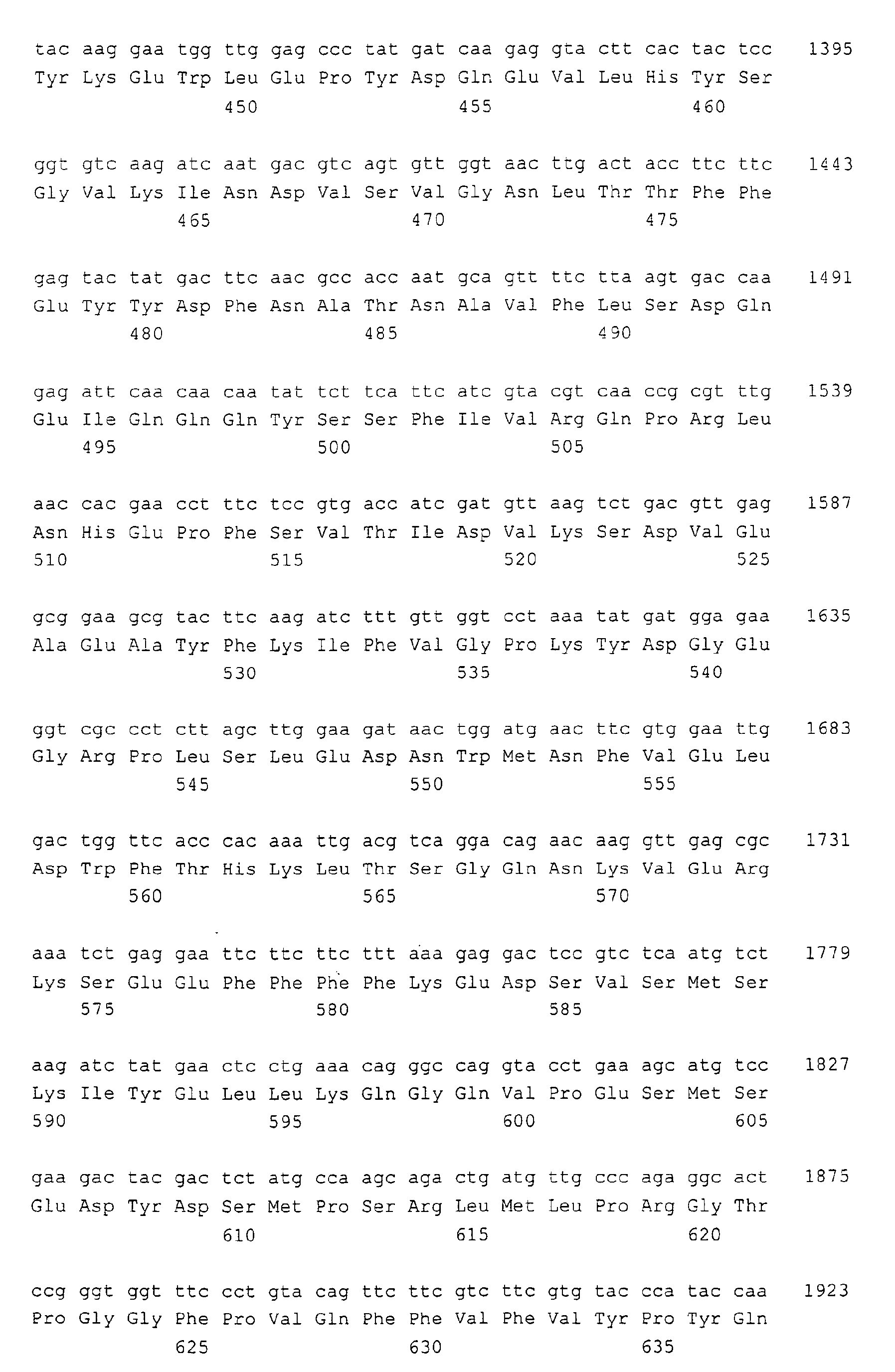

- <210> 6
<211> 705
<212> PRT
<213> Plodia interpunctella - <400> 6
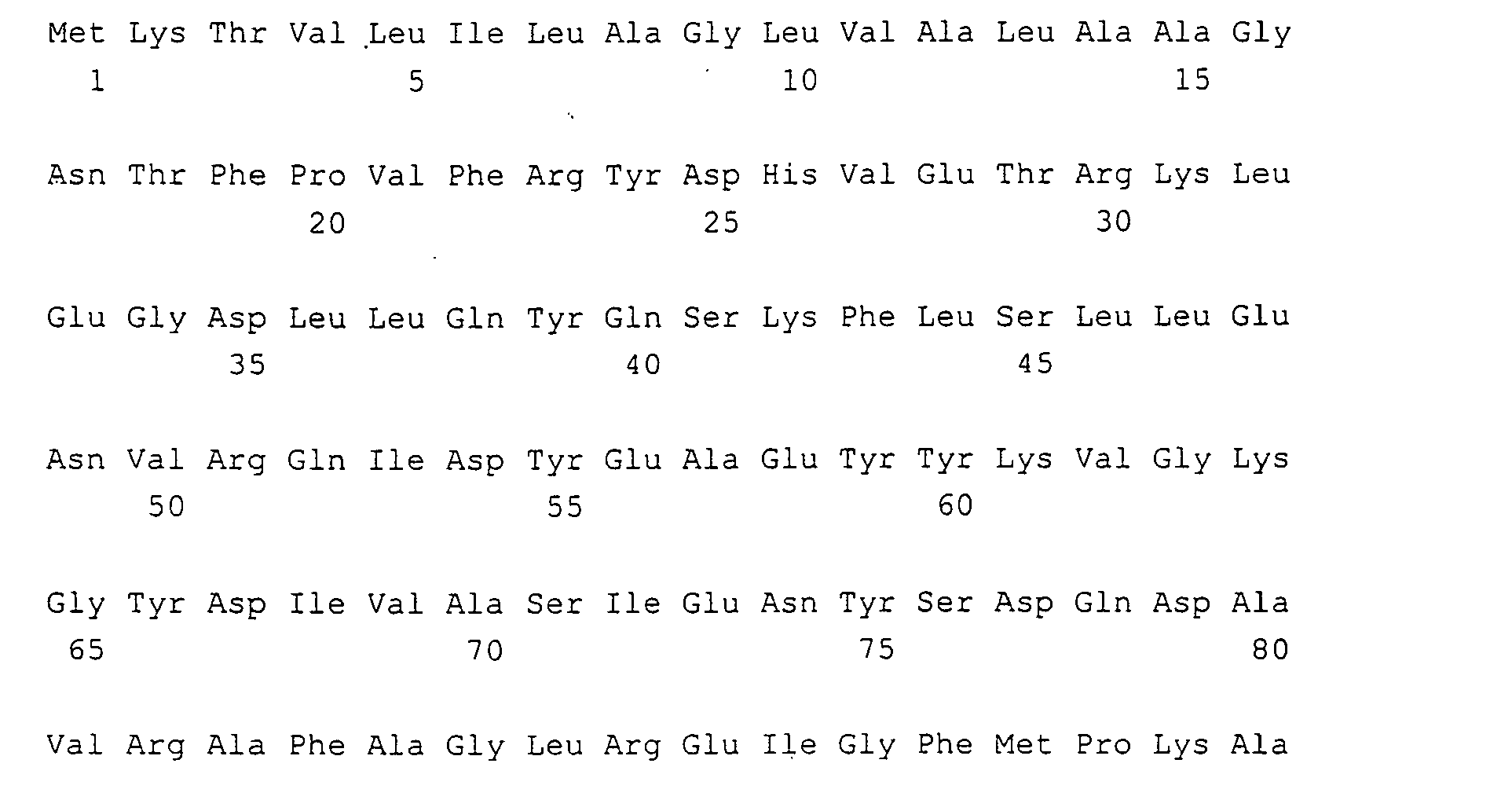


- <210> 7
<211> 1076
<212> DNA
<213> Plodia interpunctella - <220>
<221> CDS
<222> (73)..(834) - <400> 7


- <210> 8
<211> 254
<212> PRT
<213> Plodia interpunctella - <400> 8


Claims (25)
- Nukleinsäure, kodierend für ein allergenes Polypeptid aus Anthropoden, umfassend(a) die in SEQ ID NO: 1 dargestellte Sequenz,(b) eine von einer Sequenz gemäß (a) auf Grund der Degeneration des genetischen Codes abweichende Sequenz, oder/und(c) eine Sequenz mit einer Identität > 80 % zu einer der Sequenzen von (a) oder/und (b).
- Nukleinsäure, umfassend einen Bereich, der für ein Polypeptid mit der in SEQ ID NO: 2 dargestellten Sequenz kodiert.
- Vektor, umfassend eine Nukleinsäure nach Anspruch 1 oder 2 in operativer Verknüpfung mit einer Expressionskontrollsequenz.
- Rekombinanter Expressionsvektor, der eine Expressionskontrollsequenz besitzt, die funktionell mit einer Nukleotidsequenz gemäß Anspruch 1 verknüpft ist.
- Zelle, transformiert mit einem Vektor nach Anspruch 3 oder 4.
- Allergenes Polypeptid, kodiert durch eine der Nukleinsäuren nach Anspruch 1 oder 2.
- Allergenes Polypeptid nach Anspruch 6 mit der in SEQ ID NO: 2 dargestellten Aminosäuresequenz.
- Allergenes Polypeptid nach Anspruch 6 oder 7, dadurch gekennzeichnet, dass es mit einem heterologen Peptid oder Polypeptid fusioniert ist.
- Allergenes Polypeptid nach Anspruch 8, dadurch gekennzeichnet, dass das heterologe Peptid oder Polypeptid eine zellulosebindende Domäne, ß-Galaktosidase oder Glutathion S-Transferase ist.
- Verwendung eines Polypeptids, kodiert durch eine Nukleinsäure, welche(a) die in SEQ ID NO: 1 dargestellte Sequenz,(b) eine von einer Sequenz gemäß (a) auf Grund der Degeneration des genetischen Codes abweichende Sequenz, oder(c) eine Sequenz mit einer Identität > 80% zu einer der Sequenzen von (a) oder/und (b),umfasst, als Immunogen zur Herstellung von Antikörpern.
- Antikörper gegen ein allergenes Polypeptid nach einem der Ansprüche 6-9, wobei der Antikörper für eine allergene Determinante des allergenen Polypeptids spezifisch ist.
- Zusammensetzung zur Verwendung als Arzneimittel, umfassend:(a) eine Nukleinsäure, kodierend für ein allergenes Polypeptid, umfassend(i) die in SEQ ID NO: 1 dargestellte Sequenz,(ii) eine von einer Sequenz gemäß (i) auf Grund der Degeneration des genetischen Codes abweichende Sequenz,(iii) eine Sequenz mit einer Identität > 80% zu einer der Sequenzen von (i) oder/und (ii), oder(iv) eine Sequenz, die mit einer der Sequenzen gemäß (i), (ii) oder/und (iii) unter stringenten Bedingungen hybridisiert,(b) einen rekombinanten Vektor, umfassend eine Nukleinsäure gemäß (a) in operativer Verknüpfung mit einer Expressionskontrollsequenz,(c) eine Zelle, transformiert mit einem Vektor gemäß (b),(d) ein Polypeptid, kodiert durch eine Nukleinsäure gemäß (a), oder/und(e) einen Antikörper gegen ein Polypeptid gemäß (d).
- Verwendung einer Zusammensetzung nach Anspruch 12 zur Herstellung eines diagnostischen und/oder therapeutischen Mittels.
- Verwendung nach Anspruch 13 für die Therapie oder/und Diagnose von allergischen Erkrankungen.
- In vitro-Verfahren zur Diagnose einer Allergie gegen Arthropodenproteine, wobei man eine Probe einer Körperflüssigkeit aus dem Patienten, in der Antikörper gegen das Arthropodenprotein vermutet werden, mit einem Polypeptid, kodiert durch eine Nukleinsäure, welche(a) die in SEQ ID NO: 1 dargestellte Sequenz,(b) eine von einer Sequenz gemäß (a) auf Grund der Degeneration des genetischen Codes abweichende Sequenz,(c) eine Sequenz mit einer Identität > 80% zu einer der Sequenzen von (a) oder/und (b), oder(d) eine Sequenz, die mit einer der Sequenzen gemäß (a), (b) oder/und (c) unter stringenten Bedingungen hybridisiert, umfasst,unter Bedingungen in Kontakt bringt, die die Bildung eines Komplexes zwischen dem Antikörper und dem Polypeptid ermöglichen, wonach der Komplex gemessen wird und zu der Menge des Antikörpers in der Probe in Beziehung gesetzt wird, wobei ein erhöhter Spiegel als Zeichen einer Allergie gegen das Arthropodenprotein gewertet wird, die das Polypeptid enthält.
- In vitro-Verfahren zur Messung einer zellulären Immunreaktion, wobei ein rekombinantes oder synthetisches Protein oder Polypeptidkodiert durch eine Nukleinsäure, welche(a) die in SEQ ID NO: 1 dargestellte Sequenz,(b) eine von einer Sequenz gemäß (a) auf Grund der Degeneration des genetischen Codes abweichende Sequenz,(c) eine Sequenz mit einer Identität 80% zu einer der Sequenzen von (a) oder/und (b), oder(d) eine Sequenz, die mit einer der Sequenzen gemäß (a), (b) oder/und (c) unter stringenten Bedingungen hybridisiert, umfasst,zur Stimulation der zellulären Immunreaktion verwendet wird.
- Verfahren zur Bestimmung von Arthropodenallergenen in Proben aus der Umwelt des Menschen, dadurch gekennzeichnet, dass man die Argininkinaseaktivität (EC 2.7.3.3) in den Proben bestimmt.
- Verfahren zur Bestimmung von Arthropodenallergenen in Proben aus der Umwelt des Menschen, dadurch gekennzeichnet, dass man das Vorhandensein(a) einer Nukleinsäurekodierend für ein allergenes Polypeptid, umfassend(i) die in SEQ ID NO: 1 dargestellte Sequenz,(ii) eine von einer Sequenz gemäß (i) auf Grund der Degeneration des genetischen Codes abweichende Sequenz,(iii) eine Sequenz mit einer Identität > 80% zu einer der Sequenzen von (i) oder/und (ii), oder(iv) eine Sequenz, die mit einer der Sequenzen gemäß (i), (ii) oder/und (iii) unter stringenten Bedingungen hybridisiert, oder(b) eines allergenen Polypeptids, kodiert durch eine Nukleinsäure gemäß (a),bestimmt.
- Verfahren zur Bestimmung von Arthropodenallergenen in Proben aus der Umwelt des Menschen, dadurch gekennzeichnet, dass man das Vorhandensein von Argininkinase aus Plodia interpunctella gemäß SEQ ID NO: 2 oder einer Argininkinase mit einer Sequenzidentität > 70% hierzu bestimmt.
- Verfahren nach Anspruch 19, dadurch gekennzeichnet, dass man das Vorhandensein einer Argininkinase aus Milbe oder Motte bestimmt.
- Verfahren zur Herstellung eines Arzneimittels, das ein synthetisches oder rekombinantes Polypeptid kodiert durch eine Nukleinsäure, welche(a) die in SEQ ID NO: 1 dargestellte Sequenz,(b) eine von einer Sequenz gemäß (a) auf Grund der Degeneration des genetischen Codes abweichende Sequenz,(c) eine Sequenz mit einer Identität > 80% zu einer der Sequenzen von (a) oder/und (b), oder(d) eine Sequenz, die mit einer der Sequenzen gemäß (a), (b) oder/und (c) unter stringenten Bedingungen hybridisiert, umfasst,enthält und zur Hyposensibilislerung (Immuntherapie) von Patienten mit Allergie gegen Argininkinase aus Plodia interpunctella gemäß SEQ ID NO: 2 oder einer Argininkinase mit einer Sequenzidentität > 70% hierzu eingesetzt werden kann.
- Verwendung von Argininkinase aus Plodia interpunctella gemäß SEQ ID NO: 2 oder einer Argininkinase mit einer Sequenzidentität > 70% hierzu zur Herstellung eines Arzneimittels oder/und eines diagnostischen Mittels zur Behandlung von allergischen Erkrankungen oder/und zur Bestimmung von Allergenen.
- Verwendung nach Anspruch 22, dadurch gekennzeichnet, dass eine Argininkinase aus einer Motte oder aus einer Milbe verwendet oder bestimmt wird.
- In vitro-Verfahren zum Nachweis einer Allergie, bei dem Argininkinase aus Plodia interpunctella gemäß SEQ ID NO: 2 zur Bestimmung der Allergie eingesetzt wird.
- Allergen zur Verwendung als Arzneimittel, dadurch gekennzeichnet, dass es sich bei dem Allergen um Argininkinase aus Plodia interpunctella gemäß SEQ ID NO: 2 oder eine Argininkinase mit einer Sequenzidentität > 70% hierzu handelt.
Applications Claiming Priority (2)
| Application Number | Priority Date | Filing Date | Title |
|---|---|---|---|
| DE10041541A DE10041541A1 (de) | 2000-08-24 | 2000-08-24 | Rekombinante Allergene aus der Motte Plodia interpunctella |
| DE10041541 | 2000-08-24 |
Publications (3)
| Publication Number | Publication Date |
|---|---|
| EP1191100A2 EP1191100A2 (de) | 2002-03-27 |
| EP1191100A3 EP1191100A3 (de) | 2002-08-21 |
| EP1191100B1 true EP1191100B1 (de) | 2010-03-17 |
Family
ID=7653616
Family Applications (1)
| Application Number | Title | Priority Date | Filing Date |
|---|---|---|---|
| EP01120286A Expired - Lifetime EP1191100B1 (de) | 2000-08-24 | 2001-08-23 | Rekombinante Allergene aus der Dörrobstmotte Plodia interpunctella |
Country Status (3)
| Country | Link |
|---|---|
| EP (1) | EP1191100B1 (de) |
| AT (1) | ATE461280T1 (de) |
| DE (2) | DE10041541A1 (de) |
Cited By (1)
| Publication number | Priority date | Publication date | Assignee | Title |
|---|---|---|---|---|
| US8404834B2 (en) | 2007-12-14 | 2013-03-26 | Fresenius Kabi Deutschland Gmbh | Hydroxyalkyl starch derivatives and process for their preparation |
Families Citing this family (11)
| Publication number | Priority date | Publication date | Assignee | Title |
|---|---|---|---|---|
| DE10112825A1 (de) | 2001-03-16 | 2002-10-02 | Fresenius Kabi De Gmbh | HESylierung von Wirkstoffen in wässriger Lösung |
| DE10209822A1 (de) | 2002-03-06 | 2003-09-25 | Biotechnologie Ges Mittelhesse | Kopplung niedermolekularer Substanzen an ein modifiziertes Polysaccharid |
| DE10209821A1 (de) | 2002-03-06 | 2003-09-25 | Biotechnologie Ges Mittelhesse | Kopplung von Proteinen an ein modifiziertes Polysaccharid |
| MXPA05002594A (es) | 2002-09-11 | 2005-05-27 | Fresenius Kabi Gmbh | Derivados de polipeptidos con hidroxialquilalmidon, especialmente derivados de eritropoyetina con hidroxialquilalmidon. |
| ATE409048T1 (de) | 2002-10-08 | 2008-10-15 | Fresenius Kabi De Gmbh | Pharmazeutisch aktive oligosaccharid-conjugate |
| WO2005014655A2 (en) | 2003-08-08 | 2005-02-17 | Fresenius Kabi Deutschland Gmbh | Conjugates of hydroxyalkyl starch and a protein |
| AR048035A1 (es) | 2004-03-11 | 2006-03-22 | Fresenius Kabi De Gmbh | Conjugados de almidon de hidroxialquilo y una proteina, preparados por aminacion reductora |
| CN103710352B (zh) * | 2014-01-02 | 2017-01-04 | 黑龙江大学 | 亚洲玉米螟OfAK基因及其编码蛋白和OfAK基因RNAi干扰工程菌株构建的方法 |
| EP4257680A1 (de) | 2022-04-07 | 2023-10-11 | Consejo Superior de Investigaciones Científicas (CSIC) | Verfahren zum biologischen abbau von polyolefin-abgeleiteten polymeren |
| EP4257255A1 (de) * | 2022-04-07 | 2023-10-11 | Consejo Superior De Investigaciones Científicas (CSIC) | Verfahren zum biologischen abbau von polyolefin-abgeleiteten polymeren |
| CN116478235A (zh) * | 2023-01-15 | 2023-07-25 | 昆明理工大学 | 一种火腿鲜味肽及其制备方法 |
-
2000
- 2000-08-24 DE DE10041541A patent/DE10041541A1/de not_active Withdrawn
-
2001
- 2001-08-23 EP EP01120286A patent/EP1191100B1/de not_active Expired - Lifetime
- 2001-08-23 AT AT01120286T patent/ATE461280T1/de not_active IP Right Cessation
- 2001-08-23 DE DE50115391T patent/DE50115391D1/de not_active Expired - Lifetime
Non-Patent Citations (2)
| Title |
|---|
| DATABASE EMBL 16 March 2000 (2000-03-16), WEICHRAUCH D., TOWLE D.W.: "Eriocheir sinensis arginine kinase mRNA", Database accession no. AF233356 * |
| THE FOOD INSECTS NEWSLETTER, vol. VIII, no. 2, July 1995 (1995-07-01), Retrieved from the Internet <URL:http://www.food-insects.com/Vol8%20no2.htm> [retrieved on 20070611] * |
Cited By (1)
| Publication number | Priority date | Publication date | Assignee | Title |
|---|---|---|---|---|
| US8404834B2 (en) | 2007-12-14 | 2013-03-26 | Fresenius Kabi Deutschland Gmbh | Hydroxyalkyl starch derivatives and process for their preparation |
Also Published As
| Publication number | Publication date |
|---|---|
| DE50115391D1 (de) | 2010-04-29 |
| EP1191100A3 (de) | 2002-08-21 |
| EP1191100A2 (de) | 2002-03-27 |
| ATE461280T1 (de) | 2010-04-15 |
| DE10041541A1 (de) | 2002-03-14 |
Similar Documents
| Publication | Publication Date | Title |
|---|---|---|
| DE69131131T2 (de) | Klonierung und sequenzierung von dermatophagoiden-antigenen (hausstaubmilben) | |
| EP1637147B1 (de) | Stallstaub-Extrakt zum Schutz vor Allergien | |
| Chan-Yeung et al. | Aetiological agents in occupational asthma | |
| DE60004172T2 (de) | Gcsf konjugate | |
| Ewuola et al. | Haematological and serum biochemical response of growing rabbits fed graded levels of Moringa oleifera leaf meal | |
| Tarvainen et al. | Allergy and toxicodermia from shiitake mushrooms | |
| Armentia et al. | Occupational allergic disease in cereal workers by stored grain pests | |
| Baldo | Grass Allergens, with Particular Reference to Cereals¹ | |
| EP1191100A2 (de) | Rekombinante Allergene aus der Dörrobstmotte Plodia interpunctella | |
| Lutsky et al. | Occupational asthma due to poultry mites | |
| DE69434885T2 (de) | Allergene Proteine und Peptide aus Hausstaubmilben und deren Verwendungen | |
| WO2003048780A2 (de) | Verwendungen der aldose-1-epimerase für die diagnose und therapie von entzündungserkrangungen und sepsis | |
| DE10119804A1 (de) | Entzündungsspezifische Peptide und deren Verwendungen | |
| DE69712124T2 (de) | Hormones de croissance humaines mutantes et leur utilisation | |
| DE69233311T3 (de) | Weidelgraspollen-allergen | |
| DE69535173T2 (de) | Allergieauslösende Proteine aus natürlichem Gummi-Latex, ihre Herstellung und Anwendung in Nachweismethoden | |
| EP1896497A2 (de) | Verfahren zur diagnose von rheumatischen erkrankungen | |
| DE69024693T2 (de) | Gene, die ein Protein mit menschlicher MACIF-Aktivität kodieren, Expressionsvektoren mit diesen Genen, Transformantenzellen und Proteine mit menschlicher MACIF-Aktivität | |
| DE3751777T2 (de) | Impfstoff, der zecken-antigene enthält | |
| Delgado et al. | Occupational rhinoconjunctivitis and asthma caused by Tetranychus urticae (red spider mite). A case report | |
| WO2003048781A1 (de) | Verwendungen der glycin-n-acyl-transferase (gnat) für die diagnose und therapie von entzündungserkrankungen und sepsis | |
| DE60115475T2 (de) | VARIANTEN DES DERMATOPHAGOIDES-ALLERGENS DER p 2 | |
| DE60035267T2 (de) | Verfahren zur analyse der menge an intraabdominalem fettgewebe | |
| DE69825395T2 (de) | Medikament, behandlungsmethode, prophylaktikum und prophylaxe gegen immunologische erkrankungen von hunden und katzen | |
| DE69937191T2 (de) | Gen kodierend für organischen Aniontransporter |
Legal Events
| Date | Code | Title | Description |
|---|---|---|---|
| PUAI | Public reference made under article 153(3) epc to a published international application that has entered the european phase |
Free format text: ORIGINAL CODE: 0009012 |
|
| AK | Designated contracting states |
Kind code of ref document: A2 Designated state(s): AT BE CH CY DE DK ES FI FR GB GR IE IT LI LU MC NL PT SE TR |
|
| AX | Request for extension of the european patent |
Free format text: AL PAYMENT 20010823;LT PAYMENT 20010823;LV PAYMENT 20010823;MK PAYMENT 20010823;RO PAYMENT 20010823;SI PAYMENT 20010823 |
|
| PUAL | Search report despatched |
Free format text: ORIGINAL CODE: 0009013 |
|
| AK | Designated contracting states |
Kind code of ref document: A3 Designated state(s): AT BE CH CY DE DK ES FI FR GB GR IE IT LI LU MC NL PT SE TR |
|
| AX | Request for extension of the european patent |
Free format text: AL PAYMENT 20010823;LT PAYMENT 20010823;LV PAYMENT 20010823;MK PAYMENT 20010823;RO PAYMENT 20010823;SI PAYMENT 20010823 |
|
| 17P | Request for examination filed |
Effective date: 20021015 |
|
| AKX | Designation fees paid |
Designated state(s): AT BE CH CY DE DK ES FI FR GB GR IE IT LI LU MC NL PT SE TR |
|
| AXX | Extension fees paid |
Extension state: MK Payment date: 20010823 Extension state: AL Payment date: 20010823 Extension state: SI Payment date: 20010823 Extension state: LV Payment date: 20010823 Extension state: LT Payment date: 20010823 Extension state: RO Payment date: 20010823 |
|
| 17Q | First examination report despatched |
Effective date: 20070706 |
|
| GRAP | Despatch of communication of intention to grant a patent |
Free format text: ORIGINAL CODE: EPIDOSNIGR1 |
|
| GRAS | Grant fee paid |
Free format text: ORIGINAL CODE: EPIDOSNIGR3 |
|
| GRAA | (expected) grant |
Free format text: ORIGINAL CODE: 0009210 |
|
| AK | Designated contracting states |
Kind code of ref document: B1 Designated state(s): AT BE CH CY DE DK ES FI FR GB GR IE IT LI LU MC NL PT SE TR |
|
| AX | Request for extension of the european patent |
Extension state: AL LT LV MK RO SI |
|
| REG | Reference to a national code |
Ref country code: GB Ref legal event code: FG4D Free format text: NOT ENGLISH |
|
| REG | Reference to a national code |
Ref country code: CH Ref legal event code: EP |
|
| REG | Reference to a national code |
Ref country code: IE Ref legal event code: FG4D |
|
| REF | Corresponds to: |
Ref document number: 50115391 Country of ref document: DE Date of ref document: 20100429 Kind code of ref document: P |
|
| REG | Reference to a national code |
Ref country code: NL Ref legal event code: VDEP Effective date: 20100317 |
|
| LTIE | Lt: invalidation of european patent or patent extension |
Effective date: 20100317 |
|
| PG25 | Lapsed in a contracting state [announced via postgrant information from national office to epo] |
Ref country code: FI Free format text: LAPSE BECAUSE OF FAILURE TO SUBMIT A TRANSLATION OF THE DESCRIPTION OR TO PAY THE FEE WITHIN THE PRESCRIBED TIME-LIMIT Effective date: 20100317 |
|
| REG | Reference to a national code |
Ref country code: IE Ref legal event code: FD4D |
|
| PG25 | Lapsed in a contracting state [announced via postgrant information from national office to epo] |
Ref country code: ES Free format text: LAPSE BECAUSE OF FAILURE TO SUBMIT A TRANSLATION OF THE DESCRIPTION OR TO PAY THE FEE WITHIN THE PRESCRIBED TIME-LIMIT Effective date: 20100628 Ref country code: GR Free format text: LAPSE BECAUSE OF FAILURE TO SUBMIT A TRANSLATION OF THE DESCRIPTION OR TO PAY THE FEE WITHIN THE PRESCRIBED TIME-LIMIT Effective date: 20100618 Ref country code: SE Free format text: LAPSE BECAUSE OF FAILURE TO SUBMIT A TRANSLATION OF THE DESCRIPTION OR TO PAY THE FEE WITHIN THE PRESCRIBED TIME-LIMIT Effective date: 20100317 Ref country code: NL Free format text: LAPSE BECAUSE OF FAILURE TO SUBMIT A TRANSLATION OF THE DESCRIPTION OR TO PAY THE FEE WITHIN THE PRESCRIBED TIME-LIMIT Effective date: 20100317 Ref country code: CY Free format text: LAPSE BECAUSE OF FAILURE TO SUBMIT A TRANSLATION OF THE DESCRIPTION OR TO PAY THE FEE WITHIN THE PRESCRIBED TIME-LIMIT Effective date: 20100317 |
|
| PLBE | No opposition filed within time limit |
Free format text: ORIGINAL CODE: 0009261 |
|
| STAA | Information on the status of an ep patent application or granted ep patent |
Free format text: STATUS: NO OPPOSITION FILED WITHIN TIME LIMIT |
|
| PG25 | Lapsed in a contracting state [announced via postgrant information from national office to epo] |
Ref country code: DK Free format text: LAPSE BECAUSE OF FAILURE TO SUBMIT A TRANSLATION OF THE DESCRIPTION OR TO PAY THE FEE WITHIN THE PRESCRIBED TIME-LIMIT Effective date: 20100317 Ref country code: PT Free format text: LAPSE BECAUSE OF FAILURE TO SUBMIT A TRANSLATION OF THE DESCRIPTION OR TO PAY THE FEE WITHIN THE PRESCRIBED TIME-LIMIT Effective date: 20100719 Ref country code: IE Free format text: LAPSE BECAUSE OF FAILURE TO SUBMIT A TRANSLATION OF THE DESCRIPTION OR TO PAY THE FEE WITHIN THE PRESCRIBED TIME-LIMIT Effective date: 20100317 |
|
| 26N | No opposition filed |
Effective date: 20101220 |
|
| BERE | Be: lapsed |
Owner name: DUCHENE, MICHAEL, DR. Effective date: 20100831 |
|
| PG25 | Lapsed in a contracting state [announced via postgrant information from national office to epo] |
Ref country code: IT Free format text: LAPSE BECAUSE OF FAILURE TO SUBMIT A TRANSLATION OF THE DESCRIPTION OR TO PAY THE FEE WITHIN THE PRESCRIBED TIME-LIMIT Effective date: 20100317 Ref country code: MC Free format text: LAPSE BECAUSE OF NON-PAYMENT OF DUE FEES Effective date: 20100831 |
|
| REG | Reference to a national code |
Ref country code: CH Ref legal event code: PL |
|
| GBPC | Gb: european patent ceased through non-payment of renewal fee |
Effective date: 20100823 |
|
| PG25 | Lapsed in a contracting state [announced via postgrant information from national office to epo] |
Ref country code: CH Free format text: LAPSE BECAUSE OF NON-PAYMENT OF DUE FEES Effective date: 20100831 Ref country code: LI Free format text: LAPSE BECAUSE OF NON-PAYMENT OF DUE FEES Effective date: 20100831 |
|
| REG | Reference to a national code |
Ref country code: FR Ref legal event code: ST Effective date: 20110502 |
|
| PG25 | Lapsed in a contracting state [announced via postgrant information from national office to epo] |
Ref country code: FR Free format text: LAPSE BECAUSE OF NON-PAYMENT OF DUE FEES Effective date: 20100831 Ref country code: BE Free format text: LAPSE BECAUSE OF NON-PAYMENT OF DUE FEES Effective date: 20100831 |
|
| PG25 | Lapsed in a contracting state [announced via postgrant information from national office to epo] |
Ref country code: GB Free format text: LAPSE BECAUSE OF NON-PAYMENT OF DUE FEES Effective date: 20100823 |
|
| PG25 | Lapsed in a contracting state [announced via postgrant information from national office to epo] |
Ref country code: AT Free format text: LAPSE BECAUSE OF NON-PAYMENT OF DUE FEES Effective date: 20100823 |
|
| PGFP | Annual fee paid to national office [announced via postgrant information from national office to epo] |
Ref country code: DE Payment date: 20110831 Year of fee payment: 11 |
|
| PG25 | Lapsed in a contracting state [announced via postgrant information from national office to epo] |
Ref country code: LU Free format text: LAPSE BECAUSE OF NON-PAYMENT OF DUE FEES Effective date: 20100823 |
|
| PG25 | Lapsed in a contracting state [announced via postgrant information from national office to epo] |
Ref country code: TR Free format text: LAPSE BECAUSE OF FAILURE TO SUBMIT A TRANSLATION OF THE DESCRIPTION OR TO PAY THE FEE WITHIN THE PRESCRIBED TIME-LIMIT Effective date: 20100317 |
|
| PG25 | Lapsed in a contracting state [announced via postgrant information from national office to epo] |
Ref country code: DE Free format text: LAPSE BECAUSE OF NON-PAYMENT OF DUE FEES Effective date: 20130301 |
|
| REG | Reference to a national code |
Ref country code: DE Ref legal event code: R119 Ref document number: 50115391 Country of ref document: DE Effective date: 20130301 |