EP1171517B1 - Method of expanding a gel material - Google Patents
Method of expanding a gel material Download PDFInfo
- Publication number
- EP1171517B1 EP1171517B1 EP00920079A EP00920079A EP1171517B1 EP 1171517 B1 EP1171517 B1 EP 1171517B1 EP 00920079 A EP00920079 A EP 00920079A EP 00920079 A EP00920079 A EP 00920079A EP 1171517 B1 EP1171517 B1 EP 1171517B1
- Authority
- EP
- European Patent Office
- Prior art keywords
- microspheres
- gel
- expansion
- weight
- parts
- Prior art date
- Legal status (The legal status is an assumption and is not a legal conclusion. Google has not performed a legal analysis and makes no representation as to the accuracy of the status listed.)
- Expired - Lifetime
Links
- 239000000463 material Substances 0.000 title claims abstract description 86
- 238000000034 method Methods 0.000 title claims description 19
- 239000004005 microsphere Substances 0.000 claims abstract description 57
- 239000000203 mixture Substances 0.000 claims abstract description 25
- 239000002243 precursor Substances 0.000 claims abstract description 22
- 238000010438 heat treatment Methods 0.000 claims abstract description 13
- 229920000103 Expandable microsphere Polymers 0.000 claims abstract description 7
- 229920001296 polysiloxane Polymers 0.000 claims description 28
- VYPSYNLAJGMNEJ-UHFFFAOYSA-N Silicium dioxide Chemical compound O=[Si]=O VYPSYNLAJGMNEJ-UHFFFAOYSA-N 0.000 claims description 6
- 229910021485 fumed silica Inorganic materials 0.000 claims description 6
- 239000003054 catalyst Substances 0.000 claims description 3
- 239000013067 intermediate product Substances 0.000 abstract description 4
- 239000000499 gel Substances 0.000 description 71
- 239000004205 dimethyl polysiloxane Substances 0.000 description 16
- 229920000435 poly(dimethylsiloxane) Polymers 0.000 description 16
- 125000000391 vinyl group Chemical group [H]C([*])=C([H])[H] 0.000 description 15
- 229920002554 vinyl polymer Polymers 0.000 description 15
- 238000001723 curing Methods 0.000 description 14
- 150000004678 hydrides Chemical class 0.000 description 13
- 238000002156 mixing Methods 0.000 description 12
- 238000011068 loading method Methods 0.000 description 8
- 238000009472 formulation Methods 0.000 description 7
- 239000012530 fluid Substances 0.000 description 6
- 229910052751 metal Inorganic materials 0.000 description 6
- 239000002184 metal Substances 0.000 description 6
- 238000013006 addition curing Methods 0.000 description 5
- 229920001577 copolymer Polymers 0.000 description 5
- 239000007788 liquid Substances 0.000 description 5
- 238000011049 filling Methods 0.000 description 4
- BASFCYQUMIYNBI-UHFFFAOYSA-N platinum Chemical compound [Pt] BASFCYQUMIYNBI-UHFFFAOYSA-N 0.000 description 4
- OEPOKWHJYJXUGD-UHFFFAOYSA-N 2-(3-phenylmethoxyphenyl)-1,3-thiazole-4-carbaldehyde Chemical compound O=CC1=CSC(C=2C=C(OCC=3C=CC=CC=3)C=CC=2)=N1 OEPOKWHJYJXUGD-UHFFFAOYSA-N 0.000 description 3
- NLHHRLWOUZZQLW-UHFFFAOYSA-N Acrylonitrile Chemical compound C=CC#N NLHHRLWOUZZQLW-UHFFFAOYSA-N 0.000 description 3
- 239000004606 Fillers/Extenders Substances 0.000 description 3
- 230000008859 change Effects 0.000 description 3
- 239000003085 diluting agent Substances 0.000 description 3
- 229920001971 elastomer Polymers 0.000 description 3
- 229910052697 platinum Inorganic materials 0.000 description 3
- -1 polydimethylsiloxane Polymers 0.000 description 3
- 238000007789 sealing Methods 0.000 description 3
- VMAWODUEPLAHOE-UHFFFAOYSA-N 2,4,6,8-tetrakis(ethenyl)-2,4,6,8-tetramethyl-1,3,5,7,2,4,6,8-tetraoxatetrasilocane Chemical compound C=C[Si]1(C)O[Si](C)(C=C)O[Si](C)(C=C)O[Si](C)(C=C)O1 VMAWODUEPLAHOE-UHFFFAOYSA-N 0.000 description 2
- KAKZBPTYRLMSJV-UHFFFAOYSA-N Butadiene Chemical group C=CC=C KAKZBPTYRLMSJV-UHFFFAOYSA-N 0.000 description 2
- GWEVSGVZZGPLCZ-UHFFFAOYSA-N Titan oxide Chemical compound O=[Ti]=O GWEVSGVZZGPLCZ-UHFFFAOYSA-N 0.000 description 2
- XLOMVQKBTHCTTD-UHFFFAOYSA-N Zinc monoxide Chemical compound [Zn]=O XLOMVQKBTHCTTD-UHFFFAOYSA-N 0.000 description 2
- DSVRVHYFPPQFTI-UHFFFAOYSA-N bis(ethenyl)-methyl-trimethylsilyloxysilane;platinum Chemical compound [Pt].C[Si](C)(C)O[Si](C)(C=C)C=C DSVRVHYFPPQFTI-UHFFFAOYSA-N 0.000 description 2
- 238000001816 cooling Methods 0.000 description 2
- 238000013016 damping Methods 0.000 description 2
- 238000005538 encapsulation Methods 0.000 description 2
- 239000000945 filler Substances 0.000 description 2
- NNPPMTNAJDCUHE-UHFFFAOYSA-N isobutane Chemical compound CC(C)C NNPPMTNAJDCUHE-UHFFFAOYSA-N 0.000 description 2
- 238000002955 isolation Methods 0.000 description 2
- 239000008188 pellet Substances 0.000 description 2
- 229920000642 polymer Polymers 0.000 description 2
- 239000000843 powder Substances 0.000 description 2
- 230000008569 process Effects 0.000 description 2
- 230000009467 reduction Effects 0.000 description 2
- 239000007787 solid Substances 0.000 description 2
- 229920001187 thermosetting polymer Polymers 0.000 description 2
- 239000011800 void material Substances 0.000 description 2
- FRWYFWZENXDZMU-UHFFFAOYSA-N 2-iodoquinoline Chemical compound C1=CC=CC2=NC(I)=CC=C21 FRWYFWZENXDZMU-UHFFFAOYSA-N 0.000 description 1
- 229910052582 BN Inorganic materials 0.000 description 1
- PZNSFCLAULLKQX-UHFFFAOYSA-N Boron nitride Chemical compound N#B PZNSFCLAULLKQX-UHFFFAOYSA-N 0.000 description 1
- 239000004970 Chain extender Substances 0.000 description 1
- 239000004971 Cross linker Substances 0.000 description 1
- 239000000654 additive Substances 0.000 description 1
- PNEYBMLMFCGWSK-UHFFFAOYSA-N aluminium oxide Inorganic materials [O-2].[O-2].[O-2].[Al+3].[Al+3] PNEYBMLMFCGWSK-UHFFFAOYSA-N 0.000 description 1
- 239000003963 antioxidant agent Substances 0.000 description 1
- 235000006708 antioxidants Nutrition 0.000 description 1
- 230000008901 benefit Effects 0.000 description 1
- LTPBRCUWZOMYOC-UHFFFAOYSA-N beryllium oxide Inorganic materials O=[Be] LTPBRCUWZOMYOC-UHFFFAOYSA-N 0.000 description 1
- 239000006229 carbon black Substances 0.000 description 1
- 239000004359 castor oil Substances 0.000 description 1
- 235000019438 castor oil Nutrition 0.000 description 1
- 238000006555 catalytic reaction Methods 0.000 description 1
- 238000006243 chemical reaction Methods 0.000 description 1
- 239000002131 composite material Substances 0.000 description 1
- 150000001875 compounds Chemical class 0.000 description 1
- 239000011231 conductive filler Substances 0.000 description 1
- PMHQVHHXPFUNSP-UHFFFAOYSA-M copper(1+);methylsulfanylmethane;bromide Chemical compound Br[Cu].CSC PMHQVHHXPFUNSP-UHFFFAOYSA-M 0.000 description 1
- 239000007822 coupling agent Substances 0.000 description 1
- 229920006037 cross link polymer Polymers 0.000 description 1
- 238000002425 crystallisation Methods 0.000 description 1
- 230000008025 crystallization Effects 0.000 description 1
- 239000000806 elastomer Substances 0.000 description 1
- 239000013536 elastomeric material Substances 0.000 description 1
- 238000001125 extrusion Methods 0.000 description 1
- 239000000835 fiber Substances 0.000 description 1
- ZEMPKEQAKRGZGQ-XOQCFJPHSA-N glycerol triricinoleate Natural products CCCCCC[C@@H](O)CC=CCCCCCCCC(=O)OC[C@@H](COC(=O)CCCCCCCC=CC[C@@H](O)CCCCCC)OC(=O)CCCCCCCC=CC[C@H](O)CCCCCC ZEMPKEQAKRGZGQ-XOQCFJPHSA-N 0.000 description 1
- 238000009434 installation Methods 0.000 description 1
- 238000009413 insulation Methods 0.000 description 1
- UQSXHKLRYXJYBZ-UHFFFAOYSA-N iron oxide Inorganic materials [Fe]=O UQSXHKLRYXJYBZ-UHFFFAOYSA-N 0.000 description 1
- 239000001282 iso-butane Substances 0.000 description 1
- 239000011344 liquid material Substances 0.000 description 1
- 239000000395 magnesium oxide Substances 0.000 description 1
- CPLXHLVBOLITMK-UHFFFAOYSA-N magnesium oxide Inorganic materials [Mg]=O CPLXHLVBOLITMK-UHFFFAOYSA-N 0.000 description 1
- AXZKOIWUVFPNLO-UHFFFAOYSA-N magnesium;oxygen(2-) Chemical compound [O-2].[Mg+2] AXZKOIWUVFPNLO-UHFFFAOYSA-N 0.000 description 1
- 238000002844 melting Methods 0.000 description 1
- 230000008018 melting Effects 0.000 description 1
- 230000005012 migration Effects 0.000 description 1
- 238000013508 migration Methods 0.000 description 1
- 238000000465 moulding Methods 0.000 description 1
- TWNQGVIAIRXVLR-UHFFFAOYSA-N oxo(oxoalumanyloxy)alumane Chemical compound O=[Al]O[Al]=O TWNQGVIAIRXVLR-UHFFFAOYSA-N 0.000 description 1
- NDLPOXTZKUMGOV-UHFFFAOYSA-N oxo(oxoferriooxy)iron hydrate Chemical compound O.O=[Fe]O[Fe]=O NDLPOXTZKUMGOV-UHFFFAOYSA-N 0.000 description 1
- 239000002245 particle Substances 0.000 description 1
- 230000035515 penetration Effects 0.000 description 1
- 150000002978 peroxides Chemical class 0.000 description 1
- 238000005191 phase separation Methods 0.000 description 1
- 239000000049 pigment Substances 0.000 description 1
- 239000004033 plastic Substances 0.000 description 1
- 229920003023 plastic Polymers 0.000 description 1
- 231100000572 poisoning Toxicity 0.000 description 1
- 230000000607 poisoning effect Effects 0.000 description 1
- 230000005855 radiation Effects 0.000 description 1
- 239000006254 rheological additive Substances 0.000 description 1
- HBMJWWWQQXIZIP-UHFFFAOYSA-N silicon carbide Chemical compound [Si+]#[C-] HBMJWWWQQXIZIP-UHFFFAOYSA-N 0.000 description 1
- 229910010271 silicon carbide Inorganic materials 0.000 description 1
- 229920002379 silicone rubber Polymers 0.000 description 1
- 239000004945 silicone rubber Substances 0.000 description 1
- 239000003381 stabilizer Substances 0.000 description 1
- 239000000126 substance Substances 0.000 description 1
- 238000010189 synthetic method Methods 0.000 description 1
- 239000012815 thermoplastic material Substances 0.000 description 1
- 239000004408 titanium dioxide Substances 0.000 description 1
- 239000011787 zinc oxide Substances 0.000 description 1
Images


Classifications
-
- C—CHEMISTRY; METALLURGY
- C08—ORGANIC MACROMOLECULAR COMPOUNDS; THEIR PREPARATION OR CHEMICAL WORKING-UP; COMPOSITIONS BASED THEREON
- C08J—WORKING-UP; GENERAL PROCESSES OF COMPOUNDING; AFTER-TREATMENT NOT COVERED BY SUBCLASSES C08B, C08C, C08F, C08G or C08H
- C08J9/00—Working-up of macromolecular substances to porous or cellular articles or materials; After-treatment thereof
- C08J9/32—Working-up of macromolecular substances to porous or cellular articles or materials; After-treatment thereof from compositions containing microballoons, e.g. syntactic foams
-
- C—CHEMISTRY; METALLURGY
- C08—ORGANIC MACROMOLECULAR COMPOUNDS; THEIR PREPARATION OR CHEMICAL WORKING-UP; COMPOSITIONS BASED THEREON
- C08J—WORKING-UP; GENERAL PROCESSES OF COMPOUNDING; AFTER-TREATMENT NOT COVERED BY SUBCLASSES C08B, C08C, C08F, C08G or C08H
- C08J2203/00—Foams characterized by the expanding agent
- C08J2203/22—Expandable microspheres, e.g. Expancel®
-
- C—CHEMISTRY; METALLURGY
- C08—ORGANIC MACROMOLECULAR COMPOUNDS; THEIR PREPARATION OR CHEMICAL WORKING-UP; COMPOSITIONS BASED THEREON
- C08J—WORKING-UP; GENERAL PROCESSES OF COMPOUNDING; AFTER-TREATMENT NOT COVERED BY SUBCLASSES C08B, C08C, C08F, C08G or C08H
- C08J2205/00—Foams characterised by their properties
- C08J2205/02—Foams characterised by their properties the finished foam itself being a gel or a gel being temporarily formed when processing the foamable composition
-
- C—CHEMISTRY; METALLURGY
- C08—ORGANIC MACROMOLECULAR COMPOUNDS; THEIR PREPARATION OR CHEMICAL WORKING-UP; COMPOSITIONS BASED THEREON
- C08J—WORKING-UP; GENERAL PROCESSES OF COMPOUNDING; AFTER-TREATMENT NOT COVERED BY SUBCLASSES C08B, C08C, C08F, C08G or C08H
- C08J2383/00—Characterised by the use of macromolecular compounds obtained by reactions forming in the main chain of the macromolecule a linkage containing silicon with or without sulfur, nitrogen, oxygen, or carbon only; Derivatives of such polymers
- C08J2383/04—Polysiloxanes
Definitions
- This invention relates to a method of expanding a gel material.
- US 4861804 discloses a compound type silicone gel material which uses silicone gel having a penetration of 50 to 200 as a basic material and contains a number of fine hollow cell.
- EP-A-0336001 discloses thermoset plastic pellets and a method and apparatus for making such pellets.
- Gels have been used for a variety of applications, such as sealing, encapsulation, acoustic isolation or damping, insulation, and the like. Properties which make gels valuable in such applications include their conformability, adhesion to a wide variety of materials, and re-enterability.
- gels can be difficult to handle. For certain applications, it may be desirable to be able to place the gel more or less at its final desired location, and then expand the gel to its full void-filling or gap-bridging size.
- This invention provides method of expanding a gel material, comprising the steps of:
- a mixture of a precursor of the gel material and heat-expandable microspheres (also known as microballoons) is prepared, so that the microspheres are dispersed in the precursor.
- the precursor is subjected to a pre-determined curing condition which causes the precursor to cure into the gel material but which does not cause the microspheres to expand, forming an intermediate product which is a gel material containing as-yet unexpanded microspheres.
- This intermediate product is more handleable than the precursor material, which typically is a syrupy liquid, and can be positioned substantially at its final intended location, without its running or dripping.
- the gel material is heated to a temperature equal to or exceeding the expansion temperature of the microspheres, causing the latter to expand. Consequently, the gel material as a whole also expands, by between 10 and 50 volume %, preferably between 40 and 50 volume % in a partially constrained setting such as an open container. (The free volume expansion can be over 300 %).
- Heat expandable microspheres 12 are dispersed in a precursor 10 of a gel material. Upon subjection to cure conditions, precursor 10 is converted to a gel material 10', containing dispersed therein as-yet unexpanded microspheres 12. Upon heating to the expansion temperature of microspheres 12, they expand to form expanded microspheres 12', causing the overall expansion of gel material 10'.
- the curing condition is heating the precursor to a curing temperature which is lower than the expansion temperature of the microspheres, so that the precursor cures to the gel material, but the microspheres are left unexpanded (until a subsequent subjection to the higher expansion temperature).
- commercially available plastic microspheres have expansion temperatures between 80 and 150°C, so that curing temperatures will, correspondingly, be between room temperature and 60°C for compositions having microspheres with low expansion temperatures and about 90°C for compositions having microspheres with high expansion temperatures.
- the curing times will be on the order of between 5 and 60 minutes.
- the expansion times are typically between 5 and 60 minutes, with about 15 minutes being typical.
- the precursor is photochemically curable, so that the curing condition is irradiation with ultraviolet light.
- the curing condition is simply the passage of time, because the gel material (e.g., a silicone gel curable by platinum catalyst chemistry) is a room-temperature curing material.
- the gel material e.g., a silicone gel curable by platinum catalyst chemistry
- the curing condition may be a combination, for example the introduction of a chemical catalyst combined with heating.
- the curing condition may be a combination, for example the introduction of a chemical catalyst combined with heating.
- gel materials it is possible to formulate precursor compositions curing under a variety of different regimens, depending on the intended application.
- the gel material comprises a crosslinked silicone gel, preferably based on polydimethylsiloxane (PDMS) and prepared by the platinum-catalyzed reaction between a vinyl-functionalized PDMS and a hydride-functionalized PDMS.
- PDMS polydimethylsiloxane
- Such gels can be formed in a number of ways.
- One method synthesizes the crosslinked polymer in the presence of a non-reactive extender fluid, e.g. trimethylsiloxy-terminated PDMS.
- An alternative method fabricates the silicone gel by reacting a stoichiometric excess of a multifunctional vinyl-substituted silicone with a multifunctional hydride-substituted silicone in such a fashion that a soft, fluid-extended system is obtained.
- soft, tough, tacky, high elongation silicone gels that exhibit good stress relaxation and reduced fluid exudation. Exudation of extender fluid from the gel material (also referred to as fluid migration or bleed-out) is undesirable because it contaminates the surrounding environment with a thin liquid film.
- a low-exudation silicone gel can fabricated by the chain extension of a divinyl silicone material in the presence of a cross-linker and a chain extender to create a high molecular weight sol, such that the weight average molecular weight (M w ) of the extractable fluid is at least 100,000 g/mol.
- the extractable fluid consists of the sol and nonreactive diluent present in the formulation, if any.
- the gel material is preferably fabricated with 0 to 40 weight % added inert extender diluent.
- An alternative synthetic method is to use a diluent with M w of at least 100,000 g/mol, but then the initial (uncured) viscosity is greater than 50 Pa-s (50,000 cP), which may make filling the base more difficult.
- these silicone gels preferably have a hardness of 10 to 1,000 g (more preferably 10 to 500 g), a tack of 5 to 250 g, an ultimate elongation of greater than 500 %, and a stress relaxation of 20 to 95 %.
- the tensile strength of the cured gel material will not exceed about 1.034 MPa (150 psi), to permit the expansion process to take place.
- Microspheres are available under the tradename ExpancelTM from Akzo Nobel (Sweden), in several grades with expansion temperatures ranging from 80 to 150°C.
- the microspheres may be viewed as spheres filled with isobutane, which causes the microspheres to expand upon heating to the expansion temperature.
- the expansion temperature is determined by the composition of the polymer which forms the microsphere walls.
- the lowest temperature expanding microspheres (grade 820) have a composition of roughly 80% vinylidene chloride and 20% acrylonitrile.
- An intermediate-temperature grade (551) comprises 50/50 vinylidene chloride and acrylonitrile.
- a 120°C-expanding grade (091) contains over 90% acrylonitrile and no vinylidene chloride.
- Yet another grade (051) expands around 110°C.
- the particle size of unexpanded microspheres ranges from 3 to 50 ⁇ m, with an average diameter of 10 to 17 ⁇ m. After expansion, they range in size from 10 to 200 ⁇ m, with an average diameter of 50 to 60 ⁇ m.
- the microspheres may be present in an amount of between about 1 and about 40 weight %, preferably between about 9 and about 20 weight %, based on the combined weight of microspheres and gel material.
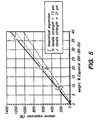
- a loading of 1 wt % of microspheres converts to approximately 30 volume % of microspheres after expansion and a loading of 40 weight % of microspheres converts to approximately 95 volume % of microspheres after expansion. It should be noted that the conversions will depend on the physical characteristics of the gel material and that, even for the same gel material, the expanded volume % is not linearly related to the weight %.
- a small amount of fumed silica or surface treated fumed silica (between about 0.5 and about 1.0 weight %, based on total amount of gel, microspheres and fumed silica) can also be added to the formulation to prevent phase separation of the microspheres prior to the curing step.
- the gel material may include fillers and additives, such as fumed silica (e.g., Cab-o-SilTM), pigments, carbon black, thermally conductive particulate fillers (e.g., aluminum oxide (alumina), silicon carbide, zinc oxide, aluminum nitride, ferric oxide, beryllium oxide, titanium dioxide, magnesium oxide, boron nitride, and the like), stabilizers, anti-oxidants, coupling agents; rheological additives such as surface-treated fumed silica, organically modified clays, hydrogenated castor oil, and the like; polyhedralorganosilsesquioxane (POSS) macromers and POSS-containing polymers; electrically conductive fillers (metal powders, metal coated oxide powders, metal fibers, metal flakes, and the like), etc.
- fumed silica e.g., Cab-o-SilTM
- thermally conductive particulate fillers e.g., aluminum oxide (alumina), silicon carbide
- the unexpanded gel material is solid and not a liquid, liquid processing equipment is not necessary for its installation.
- the material can be formed (extrusion, die-cutting, molding, etc.) to a desired shape and fixtured into the final application. Compared to liquid materials, it has better storage stability and is not susceptible to cure poisoning during storage (being already cured). Because the gel material is a non-crystalline crosslinked composition, there is no phase change (e.g., melting of crystallites) so the volume expansion is the result of only expansion of the microspheres. Without a phase change, the material does not display a reduction in volume upon cooling, as is often the case with thermoplastic materials, which often experience a volume change upon cooling (crystallization). Lastly, because the gel material is crosslinked, it is resistant to flow during the high temperature expansion process, unlike uncrosslinked solids and reactive liquids, which can flow and cause slumping during expansion.
- Expanded gel materials of the present invention can be used in the sealing, encapsulation, vibration damping/isolation, and other applications in which gel materials are typically used.
- the expanded gel materials offer an extra advantage of reduction in material weight and cost, for applications where such considerations are important.
- a specific example of an application of an expanded gel material according to the present invention is found in the co-pending application of Rinde et al., U.S. Application No. 09/285,407, entitled “Sealing System for Acoustic Wave Touchscreens,” filed April 2, 1999, incorporated herein by reference.
- An expandable gel formulation was prepared by combining 25 parts of Part A, 25 parts of Part B, and 5 parts of Expancel 091-80-DU unexpanded microspheres in a beaker followed by mixing for 5 min. with an overhead mixer. Disks with dimensions of 13 mm diameter x 6.5 mm thickness were prepared by pouring the mixed material into metal molds with the appropriately sized cut-out. The material was cured at 90°C, 30 min.
- Expansion of the material was performed by heating the material at 150°C for 15 min.
- the unexpanded and expanded materials properties are shown in the table following. cured at 90 °C expanded at 150 °C weight % silicone 91% weight % Expancel 9% Voland hardness 19 g 112 g diameter 13.0 mm 20.3 mm length 6.5 mm 10.7 mm density 0.93 g/cc 0.23 g/cc volume expansion - 302%
- Part A was prepared as in Example 1.
- Example 1 When mixed 1:1 and cured as in Example 1, the resulting gel displays a Voland hardness of 240 g, tensile strength of 89.6 x 10 3 Pa (13 psi) and ultimate elongation of 1,300%.
- An expandable gel formulation was prepared by combining 25 parts of Part A, 25 parts of Part B, and 5 parts of Expancel 091-80-DU unexpanded microspheres, and disks were prepared, cured, and expanded as Example 1.
- Part A was prepared as in Example 1.
- Example 2 When mixed 1:1 and cured as in Example 1, the resulting gel displays a Voland hardness of 340 g, tensile strength of 96.5 x 10 3 Pa (14 psi) and ultimate elongation of 600%.
- An expandable gel formulation was prepared by combining 25 parts of Part A, 25 parts of Part B, and 5 parts of Expancel 091-80-DU unexpanded microspheres, and disks were prepared, cured, and expanded as in Example 1. The unexpanded and expanded materials properties are shown in the table below.
- Part A was prepared as in Example 1.
- Example 2 When mixed 1:1 and cured as in Example 1, the resulting gel displays a Voland hardness of 1300 g, tensile strength of 144.8 x 10 3 Pa (21 psi) and ultimate elongation of 120%.
- An expandable gel formulation was prepared by combining 25 parts of Part A, 25 parts of Part B, and 5 parts of Expancel 091-80-DU unexpanded microspheres, and disks were prepared, cured, and expanded as in Example 1. The unexpanded and expanded materials properties are shown in the table below.
- An expandable gel formulation was prepared by combining 25 parts of Part A, 25 parts of Part B, and 5 parts of Expancel 091-80-DU unexpanded microspheres, and disks were prepared, cured, and expanded as in Example 1.
- the unexpanded and expanded materials properties are shown in the table below. cured @ 90 °C expanded @ 150 °C weight % silicone 91% weight % Expancel 9% Voland hardness 740 g 530 g diameter 13.0 mm 18.2 mm length 6.5 mm 9.2 mm density 0.93 g/cc 0.33 g/cc volume expansion - 180 %
- a silicone rubber composite containing unexpanded microspheres was prepared in the following manner: 90 parts by weight RTV 118, a one-part RTV rubber material with a tensile strength of 2.24 MPa (325 psi) and ultimate elongation of 325% available from GE Silicones, and 10 parts Expancel 091-80-DU unexpanded microspheres were combined in a beaker and mixed for 5 min. with an overhead mixer. Disks with dimension of approximately 13 mm diameter x 5 mm thickness were prepared by pouring the mixed material into metal molds with the appropriately sized cut-out. The material was cured at room temperature for 7 days.
Landscapes
- Chemical & Material Sciences (AREA)
- Engineering & Computer Science (AREA)
- Materials Engineering (AREA)
- Health & Medical Sciences (AREA)
- Chemical Kinetics & Catalysis (AREA)
- Medicinal Chemistry (AREA)
- Polymers & Plastics (AREA)
- Organic Chemistry (AREA)
- Manufacture Of Porous Articles, And Recovery And Treatment Of Waste Products (AREA)
- Compositions Of Macromolecular Compounds (AREA)
- Manufacturing Of Micro-Capsules (AREA)
- Dowels (AREA)
Applications Claiming Priority (3)
| Application Number | Priority Date | Filing Date | Title |
|---|---|---|---|
| US09/285,414 US6235801B1 (en) | 1999-04-02 | 1999-04-02 | Method of expanding a gel material |
| US285414 | 1999-04-02 | ||
| PCT/US2000/008834 WO2000059991A1 (en) | 1999-04-02 | 2000-03-30 | Method of expanding a gel material |
Publications (2)
| Publication Number | Publication Date |
|---|---|
| EP1171517A1 EP1171517A1 (en) | 2002-01-16 |
| EP1171517B1 true EP1171517B1 (en) | 2005-11-23 |
Family
ID=23094132
Family Applications (1)
| Application Number | Title | Priority Date | Filing Date |
|---|---|---|---|
| EP00920079A Expired - Lifetime EP1171517B1 (en) | 1999-04-02 | 2000-03-30 | Method of expanding a gel material |
Country Status (7)
| Country | Link |
|---|---|
| US (1) | US6235801B1 (enExample) |
| EP (1) | EP1171517B1 (enExample) |
| JP (1) | JP2002541287A (enExample) |
| AT (1) | ATE310767T1 (enExample) |
| DE (1) | DE60024247T2 (enExample) |
| MX (1) | MXPA01009964A (enExample) |
| WO (1) | WO2000059991A1 (enExample) |
Families Citing this family (28)
| Publication number | Priority date | Publication date | Assignee | Title |
|---|---|---|---|---|
| TW555794B (en) * | 2000-02-29 | 2003-10-01 | Shinetsu Chemical Co | Method for the preparation of low specific gravity silicone rubber elastomers |
| JP4796704B2 (ja) * | 2001-03-30 | 2011-10-19 | 株式会社タイカ | 押出可能な架橋済グリース状放熱材を充填・封入した容器の製法 |
| US6989182B2 (en) * | 2002-12-20 | 2006-01-24 | Eastman Kodak Company | Fluoroelastomer roller for a fusing station |
| US7001653B2 (en) * | 2002-12-20 | 2006-02-21 | Eastman Kodak Company | Fusing-station roller |
| US7008678B2 (en) * | 2002-12-20 | 2006-03-07 | Eastman Kodak Company | Roller for a fusing station |
| US7014899B2 (en) * | 2002-12-20 | 2006-03-21 | Eastman Kodak Company | Roller for use in a fusing station |
| US20040235996A1 (en) * | 2003-05-23 | 2004-11-25 | Jayesh Shah | Foamable underfill encapsulant |
| US20060142424A1 (en) * | 2003-05-23 | 2006-06-29 | Jayesh Shah | Foamable underfill encapsulant |
| US7569626B2 (en) | 2003-06-05 | 2009-08-04 | Dfine, Inc. | Polymer composites for biomedical applications and methods of making |
| US7545365B2 (en) * | 2004-04-14 | 2009-06-09 | Tyco Electronics Corporation | Acoustic touch sensor |
| US20060177966A1 (en) * | 2005-02-09 | 2006-08-10 | Jayesh Shah | Package or pre-applied foamable underfill for lead-free process |
| US20070038807A1 (en) * | 2005-08-11 | 2007-02-15 | International Business Machines Corporation | Reduced stress relaxation in elastomeric compression structures adapted for use with electrical components |
| US7691325B2 (en) * | 2006-10-19 | 2010-04-06 | Xerox Corporation | Photonic crystal solvent vapor sensing device |
| WO2008111852A1 (en) | 2007-03-13 | 2008-09-18 | Acma Industries Limited | Impact absorbing product |
| US20110300766A1 (en) * | 2009-02-17 | 2011-12-08 | Lawrence Carbary | Silicone Gel Seal And Method For Its Preparation And Use |
| US10113043B2 (en) | 2010-02-26 | 2018-10-30 | Twin Brook Capital Partners, Llc | Polyurethane gel particles, methods and use in flexible foams |
| US9556336B2 (en) * | 2011-06-20 | 2017-01-31 | CommScope Connectivity Belgium BVBA | Dry silicone gels and their methods of making |
| US8642891B2 (en) * | 2011-06-20 | 2014-02-04 | Tyco Electronics Amp Gmbh | Closure and interconnect systems and methods of using dry silicone gels in closure and interconnect systems |
| CN104781322B (zh) * | 2012-11-19 | 2018-04-27 | 陶氏环球技术有限责任公司 | 含多面体寡聚倍半硅氧烷接枝聚合物的聚合泡沫 |
| US9394442B2 (en) | 2013-03-12 | 2016-07-19 | Commscope Technologies Llc | Hybrid thermoplastic gels and their methods of making |
| CN110891613B (zh) * | 2017-04-07 | 2022-08-26 | 观点医疗有限公司 | 多模式成像标记物 |
| CN114929152B (zh) | 2019-08-28 | 2025-03-25 | 观点医疗有限公司 | 超声标记物检测、标记物及相关联的系统、方法和物品 |
| US11903767B2 (en) | 2019-11-27 | 2024-02-20 | View Point Medical, Inc. | Composite tissue markers detectable via multiple detection modalities |
| US11882992B2 (en) | 2019-11-27 | 2024-01-30 | View Point Medical, Inc. | Composite tissue markers detectable via multiple detection modalities including radiopaque element |
| US11814566B2 (en) | 2020-07-13 | 2023-11-14 | L&P Property Management Company | Thermally conductive nanomaterials in flexible foam |
| US11597862B2 (en) | 2021-03-10 | 2023-03-07 | L&P Property Management Company | Thermally conductive nanomaterial coatings on flexible foam or fabrics |
| CN113061284B (zh) * | 2021-03-24 | 2023-03-14 | 中国科学院深圳先进技术研究院 | 一种轻质有机复合材料及其制备方法 |
| CN114806397B (zh) * | 2022-03-21 | 2022-12-23 | 昆明理工大学 | 一种绿色自修复型超滑表面海洋防污涂层及其制备方法 |
Family Cites Families (23)
| Publication number | Priority date | Publication date | Assignee | Title |
|---|---|---|---|---|
| US3020260A (en) | 1960-08-18 | 1962-02-06 | Dow Corning | Organosiloxane potting compound |
| US3615972A (en) | 1967-04-28 | 1971-10-26 | Dow Chemical Co | Expansible thermoplastic polymer particles containing volatile fluid foaming agent and method of foaming the same |
| US4075134A (en) | 1970-06-08 | 1978-02-21 | The Dow Chemical Company | Emulsion polymerization method for preparing microspheres having liquid center and seamless rigid walls |
| BE787211A (fr) | 1971-08-05 | 1973-02-05 | Dow Chemical Co | Procede de dilatation de spherules creuses en resine synthetique thermoplastique et produits obtenus par sa mise en oeuvre |
| US4108806A (en) | 1971-12-06 | 1978-08-22 | The Dow Chemical Company | Thermoplastic expandable microsphere process and product |
| US4179546A (en) | 1972-08-28 | 1979-12-18 | The Dow Chemical Company | Method for expanding microspheres and expandable composition |
| US3945956A (en) | 1975-06-23 | 1976-03-23 | The Dow Chemical Company | Polymerization of styrene acrylonitrile expandable microspheres |
| US4075138A (en) | 1976-01-16 | 1978-02-21 | The Dow Chemical Company | Polymerization process and vinylidene chloride microspheres produced thereby |
| SE439599B (sv) | 1981-01-14 | 1985-06-24 | Kema Nord Ab | Sett att torka och expandera i vetska dispergerade, termoplastiska mikrosferer innehallande, flyktiga, flytande jesmedel |
| US4634207A (en) | 1982-10-12 | 1987-01-06 | Raychem Corporation | Apparatus and method for protection of a substrate |
| US4600261A (en) | 1982-10-12 | 1986-07-15 | Raychem Corporation | Apparatus and method for protection of electrical contacts |
| KR930004059B1 (ko) | 1984-12-28 | 1993-05-19 | 가부시끼가이샤 큐우빅 엔지니어링 | 완충재용 복합형 실리콘겔재 |
| US4777063A (en) | 1985-05-02 | 1988-10-11 | Raychem Corporation | Curable organopolysiloxane composition |
| EP0336001A1 (en) | 1988-04-08 | 1989-10-11 | Essex Composite Systems | Thermoset plastic pellets and method and apparatus for making such pellets |
| US4686244A (en) * | 1986-12-17 | 1987-08-11 | Dow Corning Corporation | Intumescent foamable compositions |
| ATE101823T1 (de) | 1988-06-23 | 1994-03-15 | Casco Nobel Ab | Verfahren und vorrichtung zur herstellung expandierbarer thermoplastischer mikrokugeln. |
| CA2049019A1 (en) | 1989-03-01 | 1990-09-02 | Robert S. Dubrow | Method of curing organopolysiloxane compositions and compositions and articles therefrom |
| JPH04170815A (ja) | 1990-11-05 | 1992-06-18 | Nissan Motor Co Ltd | ハイサイド・スイッチ回路及び半導体装置 |
| SE9003600L (sv) | 1990-11-12 | 1992-05-13 | Casco Nobel Ab | Expanderbara termoplastiska mikrosfaerer samt foerfarande foer framstaellning daerav |
| JP3274487B2 (ja) * | 1992-01-30 | 2002-04-15 | 東レ・ダウコーニング・シリコーン株式会社 | 発泡性シリコーンゴム組成物およびシリコーンゴム発泡体の製造方法 |
| SE500077C2 (sv) | 1992-06-03 | 1994-04-11 | Casco Nobel Ab | Plastisolbaserad beläggningskomposition, förfarande för sprutbeläggning av en yta samt användning av beläggningskompositionen som beläggningsmassa på bilar |
| JP2752904B2 (ja) * | 1994-06-20 | 1998-05-18 | 東芝シリコーン株式会社 | 導電性シリコーンゴムスポンジの製造方法 |
| DE19540886A1 (de) * | 1995-11-02 | 1997-05-07 | Wacker Chemie Gmbh | Kompressibler Siliconkautschuk |
-
1999
- 1999-04-02 US US09/285,414 patent/US6235801B1/en not_active Expired - Lifetime
-
2000
- 2000-03-30 MX MXPA01009964A patent/MXPA01009964A/es active IP Right Grant
- 2000-03-30 AT AT00920079T patent/ATE310767T1/de not_active IP Right Cessation
- 2000-03-30 JP JP2000609493A patent/JP2002541287A/ja active Pending
- 2000-03-30 DE DE60024247T patent/DE60024247T2/de not_active Expired - Lifetime
- 2000-03-30 EP EP00920079A patent/EP1171517B1/en not_active Expired - Lifetime
- 2000-03-30 WO PCT/US2000/008834 patent/WO2000059991A1/en not_active Ceased
Also Published As
| Publication number | Publication date |
|---|---|
| JP2002541287A (ja) | 2002-12-03 |
| MXPA01009964A (es) | 2002-09-02 |
| EP1171517A1 (en) | 2002-01-16 |
| WO2000059991A1 (en) | 2000-10-12 |
| DE60024247T2 (de) | 2006-08-10 |
| US6235801B1 (en) | 2001-05-22 |
| DE60024247D1 (de) | 2005-12-29 |
| ATE310767T1 (de) | 2005-12-15 |
Similar Documents
| Publication | Publication Date | Title |
|---|---|---|
| EP1171517B1 (en) | Method of expanding a gel material | |
| AU724839B2 (en) | Highly thermally conductive yet highly conformable alumina filled composition and method of making the same | |
| US5246973A (en) | Foamable silicone rubber composition | |
| Liu et al. | Structure and properties of closed‐cell foam prepared from irradiation crosslinked silicone rubber | |
| US7956121B2 (en) | Thermoconductive silicone elastomer, thermoconductive silicone elastomer composition and thermoconductive medium | |
| EP2742085A1 (en) | Viscoelastic silicone rubber compositions | |
| JP2012184403A (ja) | 樹脂発泡体及びその製造方法 | |
| US7879922B2 (en) | Rigid, closed-cell, graft-polymer foam; rigid flexible cellular foam; rigid flexible cellular foam mixtures; and method for manufacturing a rigid, closed-cell, graft-polymer foam | |
| KR20040019384A (ko) | 발포체, 그의 제조 방법 및 반사판 | |
| JP3405821B2 (ja) | シリコーンゴムスポンジ組成物 | |
| JP3476543B2 (ja) | シリコーンゴムスポンジ組成物 | |
| EP0868492A2 (en) | Foamed pressure sensitive tapes | |
| JP2011178989A (ja) | 熱可塑性樹脂発泡体、およびその製造方法 | |
| EP1149859B1 (en) | Silicone rubber sponge composition | |
| Benning | Modified PE foam systems—Part I | |
| CN101790562A (zh) | 聚苯乙烯组合物及其制备和使用方法 | |
| Rastin et al. | Microstructure, mechanical properties, and flame retardancy of nanoclay‐incorporated polyurethane flexible foam composites | |
| JPH0812797A (ja) | 自動車用ウェザーストリップ | |
| EP1156081A2 (en) | Silicone rubber sponge composition, silicone rubber sponge, and process for making the sponge | |
| Rahmany Naeim Abady et al. | The effect of curing system on the properties of the thermoplastic elastomer foams of ethylene‐vinyl acetate copolymer and styrene‐butadiene and ethylene‐propylene‐diene monomer rubbers | |
| CN114836152A (zh) | 发泡树脂胶、光固化交联型橡胶弹性体泡棉及其制备方法 | |
| CN117362846A (zh) | 一种阻水聚烯烃发泡材料及其制备方法 | |
| EP4026862A1 (en) | Thermally conductive silicone composition, sheet using same, and production method therefor | |
| Patterson et al. | Handbook of Thermoset Plastics: 17. Crosslinked Thermoplastics | |
| JPWO2020022050A1 (ja) | 樹脂組成物、蓄熱材、及び物品 |
Legal Events
| Date | Code | Title | Description |
|---|---|---|---|
| PUAI | Public reference made under article 153(3) epc to a published international application that has entered the european phase |
Free format text: ORIGINAL CODE: 0009012 |
|
| 17P | Request for examination filed |
Effective date: 20010911 |
|
| AK | Designated contracting states |
Kind code of ref document: A1 Designated state(s): AT BE CH CY DE DK ES FI FR GB GR IE IT LI LU MC NL PT SE |
|
| 17Q | First examination report despatched |
Effective date: 20040611 |
|
| GRAP | Despatch of communication of intention to grant a patent |
Free format text: ORIGINAL CODE: EPIDOSNIGR1 |
|
| GRAS | Grant fee paid |
Free format text: ORIGINAL CODE: EPIDOSNIGR3 |
|
| GRAA | (expected) grant |
Free format text: ORIGINAL CODE: 0009210 |
|
| AK | Designated contracting states |
Kind code of ref document: B1 Designated state(s): AT BE CH CY DE DK ES FI FR GB GR IE IT LI LU MC NL PT SE |
|
| PG25 | Lapsed in a contracting state [announced via postgrant information from national office to epo] |
Ref country code: IT Free format text: LAPSE BECAUSE OF FAILURE TO SUBMIT A TRANSLATION OF THE DESCRIPTION OR TO PAY THE FEE WITHIN THE PRESCRIBED TIME-LIMIT;WARNING: LAPSES OF ITALIAN PATENTS WITH EFFECTIVE DATE BEFORE 2007 MAY HAVE OCCURRED AT ANY TIME BEFORE 2007. THE CORRECT EFFECTIVE DATE MAY BE DIFFERENT FROM THE ONE RECORDED. Effective date: 20051123 Ref country code: AT Free format text: LAPSE BECAUSE OF FAILURE TO SUBMIT A TRANSLATION OF THE DESCRIPTION OR TO PAY THE FEE WITHIN THE PRESCRIBED TIME-LIMIT Effective date: 20051123 Ref country code: NL Free format text: LAPSE BECAUSE OF FAILURE TO SUBMIT A TRANSLATION OF THE DESCRIPTION OR TO PAY THE FEE WITHIN THE PRESCRIBED TIME-LIMIT Effective date: 20051123 Ref country code: FI Free format text: LAPSE BECAUSE OF FAILURE TO SUBMIT A TRANSLATION OF THE DESCRIPTION OR TO PAY THE FEE WITHIN THE PRESCRIBED TIME-LIMIT Effective date: 20051123 Ref country code: CH Free format text: LAPSE BECAUSE OF FAILURE TO SUBMIT A TRANSLATION OF THE DESCRIPTION OR TO PAY THE FEE WITHIN THE PRESCRIBED TIME-LIMIT Effective date: 20051123 Ref country code: BE Free format text: LAPSE BECAUSE OF FAILURE TO SUBMIT A TRANSLATION OF THE DESCRIPTION OR TO PAY THE FEE WITHIN THE PRESCRIBED TIME-LIMIT Effective date: 20051123 Ref country code: LI Free format text: LAPSE BECAUSE OF FAILURE TO SUBMIT A TRANSLATION OF THE DESCRIPTION OR TO PAY THE FEE WITHIN THE PRESCRIBED TIME-LIMIT Effective date: 20051123 |
|
| REG | Reference to a national code |
Ref country code: GB Ref legal event code: FG4D |
|
| REG | Reference to a national code |
Ref country code: CH Ref legal event code: EP |
|
| REF | Corresponds to: |
Ref document number: 60024247 Country of ref document: DE Date of ref document: 20051229 Kind code of ref document: P |
|
| REG | Reference to a national code |
Ref country code: IE Ref legal event code: FG4D |
|
| PG25 | Lapsed in a contracting state [announced via postgrant information from national office to epo] |
Ref country code: SE Free format text: LAPSE BECAUSE OF FAILURE TO SUBMIT A TRANSLATION OF THE DESCRIPTION OR TO PAY THE FEE WITHIN THE PRESCRIBED TIME-LIMIT Effective date: 20060223 Ref country code: DK Free format text: LAPSE BECAUSE OF FAILURE TO SUBMIT A TRANSLATION OF THE DESCRIPTION OR TO PAY THE FEE WITHIN THE PRESCRIBED TIME-LIMIT Effective date: 20060223 Ref country code: GR Free format text: LAPSE BECAUSE OF FAILURE TO SUBMIT A TRANSLATION OF THE DESCRIPTION OR TO PAY THE FEE WITHIN THE PRESCRIBED TIME-LIMIT Effective date: 20060223 |
|
| PG25 | Lapsed in a contracting state [announced via postgrant information from national office to epo] |
Ref country code: ES Free format text: LAPSE BECAUSE OF FAILURE TO SUBMIT A TRANSLATION OF THE DESCRIPTION OR TO PAY THE FEE WITHIN THE PRESCRIBED TIME-LIMIT Effective date: 20060306 |
|
| PG25 | Lapsed in a contracting state [announced via postgrant information from national office to epo] |
Ref country code: IE Free format text: LAPSE BECAUSE OF NON-PAYMENT OF DUE FEES Effective date: 20060330 |
|
| PG25 | Lapsed in a contracting state [announced via postgrant information from national office to epo] |
Ref country code: LU Free format text: LAPSE BECAUSE OF NON-PAYMENT OF DUE FEES Effective date: 20060331 Ref country code: MC Free format text: LAPSE BECAUSE OF NON-PAYMENT OF DUE FEES Effective date: 20060331 |
|
| PG25 | Lapsed in a contracting state [announced via postgrant information from national office to epo] |
Ref country code: PT Free format text: LAPSE BECAUSE OF FAILURE TO SUBMIT A TRANSLATION OF THE DESCRIPTION OR TO PAY THE FEE WITHIN THE PRESCRIBED TIME-LIMIT Effective date: 20060424 |
|
| NLV1 | Nl: lapsed or annulled due to failure to fulfill the requirements of art. 29p and 29m of the patents act | ||
| REG | Reference to a national code |
Ref country code: CH Ref legal event code: PL |
|
| ET | Fr: translation filed | ||
| PLBE | No opposition filed within time limit |
Free format text: ORIGINAL CODE: 0009261 |
|
| STAA | Information on the status of an ep patent application or granted ep patent |
Free format text: STATUS: NO OPPOSITION FILED WITHIN TIME LIMIT |
|
| 26N | No opposition filed |
Effective date: 20060824 |
|
| REG | Reference to a national code |
Ref country code: IE Ref legal event code: MM4A |
|
| PG25 | Lapsed in a contracting state [announced via postgrant information from national office to epo] |
Ref country code: CY Free format text: LAPSE BECAUSE OF FAILURE TO SUBMIT A TRANSLATION OF THE DESCRIPTION OR TO PAY THE FEE WITHIN THE PRESCRIBED TIME-LIMIT Effective date: 20051123 |
|
| REG | Reference to a national code |
Ref country code: FR Ref legal event code: PLFP Year of fee payment: 17 |
|
| REG | Reference to a national code |
Ref country code: FR Ref legal event code: PLFP Year of fee payment: 18 |
|
| REG | Reference to a national code |
Ref country code: FR Ref legal event code: PLFP Year of fee payment: 19 |
|
| REG | Reference to a national code |
Ref country code: FR Ref legal event code: CD Owner name: TYCO ELECTRONICS CORPORATION, US Effective date: 20180626 |
|
| REG | Reference to a national code |
Ref country code: DE Ref legal event code: R081 Ref document number: 60024247 Country of ref document: DE Owner name: TE CONNECTIVITY CORPORATION, BERWYN, US Free format text: FORMER OWNER: TYCO ELECTRONICS CORP., MIDDLETOWN, PA., US |
|
| PGFP | Annual fee paid to national office [announced via postgrant information from national office to epo] |
Ref country code: DE Payment date: 20190319 Year of fee payment: 20 Ref country code: GB Payment date: 20190327 Year of fee payment: 20 |
|
| PGFP | Annual fee paid to national office [announced via postgrant information from national office to epo] |
Ref country code: FR Payment date: 20190213 Year of fee payment: 20 |
|
| REG | Reference to a national code |
Ref country code: DE Ref legal event code: R071 Ref document number: 60024247 Country of ref document: DE |
|
| REG | Reference to a national code |
Ref country code: GB Ref legal event code: PE20 Expiry date: 20200329 |
|
| PG25 | Lapsed in a contracting state [announced via postgrant information from national office to epo] |
Ref country code: GB Free format text: LAPSE BECAUSE OF EXPIRATION OF PROTECTION Effective date: 20200329 |