EP1167531A1 - Corn transformant PV-ZMGT32 (NK603) and compositions and methods for detection thereof - Google Patents
Corn transformant PV-ZMGT32 (NK603) and compositions and methods for detection thereof Download PDFInfo
- Publication number
- EP1167531A1 EP1167531A1 EP01202314A EP01202314A EP1167531A1 EP 1167531 A1 EP1167531 A1 EP 1167531A1 EP 01202314 A EP01202314 A EP 01202314A EP 01202314 A EP01202314 A EP 01202314A EP 1167531 A1 EP1167531 A1 EP 1167531A1
- Authority
- EP
- European Patent Office
- Prior art keywords
- dna
- seq
- corn
- molecule
- dna molecule
- Prior art date
- Legal status (The legal status is an assumption and is not a legal conclusion. Google has not performed a legal analysis and makes no representation as to the accuracy of the status listed.)
- Granted
Links
Images

Classifications
-
- C—CHEMISTRY; METALLURGY
- C12—BIOCHEMISTRY; BEER; SPIRITS; WINE; VINEGAR; MICROBIOLOGY; ENZYMOLOGY; MUTATION OR GENETIC ENGINEERING
- C12N—MICROORGANISMS OR ENZYMES; COMPOSITIONS THEREOF; PROPAGATING, PRESERVING, OR MAINTAINING MICROORGANISMS; MUTATION OR GENETIC ENGINEERING; CULTURE MEDIA
- C12N15/00—Mutation or genetic engineering; DNA or RNA concerning genetic engineering, vectors, e.g. plasmids, or their isolation, preparation or purification; Use of hosts therefor
- C12N15/09—Recombinant DNA-technology
- C12N15/63—Introduction of foreign genetic material using vectors; Vectors; Use of hosts therefor; Regulation of expression
- C12N15/79—Vectors or expression systems specially adapted for eukaryotic hosts
- C12N15/82—Vectors or expression systems specially adapted for eukaryotic hosts for plant cells, e.g. plant artificial chromosomes (PACs)
- C12N15/8241—Phenotypically and genetically modified plants via recombinant DNA technology
- C12N15/8261—Phenotypically and genetically modified plants via recombinant DNA technology with agronomic (input) traits, e.g. crop yield
- C12N15/8271—Phenotypically and genetically modified plants via recombinant DNA technology with agronomic (input) traits, e.g. crop yield for stress resistance, e.g. heavy metal resistance
- C12N15/8274—Phenotypically and genetically modified plants via recombinant DNA technology with agronomic (input) traits, e.g. crop yield for stress resistance, e.g. heavy metal resistance for herbicide resistance
- C12N15/8275—Glyphosate
-
- C—CHEMISTRY; METALLURGY
- C12—BIOCHEMISTRY; BEER; SPIRITS; WINE; VINEGAR; MICROBIOLOGY; ENZYMOLOGY; MUTATION OR GENETIC ENGINEERING
- C12N—MICROORGANISMS OR ENZYMES; COMPOSITIONS THEREOF; PROPAGATING, PRESERVING, OR MAINTAINING MICROORGANISMS; MUTATION OR GENETIC ENGINEERING; CULTURE MEDIA
- C12N15/00—Mutation or genetic engineering; DNA or RNA concerning genetic engineering, vectors, e.g. plasmids, or their isolation, preparation or purification; Use of hosts therefor
- C12N15/09—Recombinant DNA-technology
- C12N15/63—Introduction of foreign genetic material using vectors; Vectors; Use of hosts therefor; Regulation of expression
- C12N15/79—Vectors or expression systems specially adapted for eukaryotic hosts
- C12N15/82—Vectors or expression systems specially adapted for eukaryotic hosts for plant cells, e.g. plant artificial chromosomes (PACs)
- C12N15/8216—Methods for controlling, regulating or enhancing expression of transgenes in plant cells
-
- C—CHEMISTRY; METALLURGY
- C12—BIOCHEMISTRY; BEER; SPIRITS; WINE; VINEGAR; MICROBIOLOGY; ENZYMOLOGY; MUTATION OR GENETIC ENGINEERING
- C12N—MICROORGANISMS OR ENZYMES; COMPOSITIONS THEREOF; PROPAGATING, PRESERVING, OR MAINTAINING MICROORGANISMS; MUTATION OR GENETIC ENGINEERING; CULTURE MEDIA
- C12N15/00—Mutation or genetic engineering; DNA or RNA concerning genetic engineering, vectors, e.g. plasmids, or their isolation, preparation or purification; Use of hosts therefor
- C12N15/09—Recombinant DNA-technology
- C12N15/63—Introduction of foreign genetic material using vectors; Vectors; Use of hosts therefor; Regulation of expression
- C12N15/79—Vectors or expression systems specially adapted for eukaryotic hosts
- C12N15/82—Vectors or expression systems specially adapted for eukaryotic hosts for plant cells, e.g. plant artificial chromosomes (PACs)
- C12N15/8216—Methods for controlling, regulating or enhancing expression of transgenes in plant cells
- C12N15/8221—Transit peptides
-
- C—CHEMISTRY; METALLURGY
- C12—BIOCHEMISTRY; BEER; SPIRITS; WINE; VINEGAR; MICROBIOLOGY; ENZYMOLOGY; MUTATION OR GENETIC ENGINEERING
- C12Q—MEASURING OR TESTING PROCESSES INVOLVING ENZYMES, NUCLEIC ACIDS OR MICROORGANISMS; COMPOSITIONS OR TEST PAPERS THEREFOR; PROCESSES OF PREPARING SUCH COMPOSITIONS; CONDITION-RESPONSIVE CONTROL IN MICROBIOLOGICAL OR ENZYMOLOGICAL PROCESSES
- C12Q1/00—Measuring or testing processes involving enzymes, nucleic acids or microorganisms; Compositions therefor; Processes of preparing such compositions
- C12Q1/68—Measuring or testing processes involving enzymes, nucleic acids or microorganisms; Compositions therefor; Processes of preparing such compositions involving nucleic acids
- C12Q1/6876—Nucleic acid products used in the analysis of nucleic acids, e.g. primers or probes
- C12Q1/6888—Nucleic acid products used in the analysis of nucleic acids, e.g. primers or probes for detection or identification of organisms
- C12Q1/6895—Nucleic acid products used in the analysis of nucleic acids, e.g. primers or probes for detection or identification of organisms for plants, fungi or algae
-
- C—CHEMISTRY; METALLURGY
- C12—BIOCHEMISTRY; BEER; SPIRITS; WINE; VINEGAR; MICROBIOLOGY; ENZYMOLOGY; MUTATION OR GENETIC ENGINEERING
- C12Q—MEASURING OR TESTING PROCESSES INVOLVING ENZYMES, NUCLEIC ACIDS OR MICROORGANISMS; COMPOSITIONS OR TEST PAPERS THEREFOR; PROCESSES OF PREPARING SUCH COMPOSITIONS; CONDITION-RESPONSIVE CONTROL IN MICROBIOLOGICAL OR ENZYMOLOGICAL PROCESSES
- C12Q2600/00—Oligonucleotides characterized by their use
- C12Q2600/13—Plant traits
-
- C—CHEMISTRY; METALLURGY
- C12—BIOCHEMISTRY; BEER; SPIRITS; WINE; VINEGAR; MICROBIOLOGY; ENZYMOLOGY; MUTATION OR GENETIC ENGINEERING
- C12Q—MEASURING OR TESTING PROCESSES INVOLVING ENZYMES, NUCLEIC ACIDS OR MICROORGANISMS; COMPOSITIONS OR TEST PAPERS THEREFOR; PROCESSES OF PREPARING SUCH COMPOSITIONS; CONDITION-RESPONSIVE CONTROL IN MICROBIOLOGICAL OR ENZYMOLOGICAL PROCESSES
- C12Q2600/00—Oligonucleotides characterized by their use
- C12Q2600/158—Expression markers
Definitions
- the present invention relates to the field of plant molecular biology, specifically the invention relates to a DNA construct for conferring glyphosate tolerance to a plant.
- the invention more specifically relates to a glyphosate tolerant corn plant PV-ZMGT32(nk603) and to assays for detecting the presence of corn plant PV-ZMGT32(nk603) DNA in a sample and compositions thereof.
- This invention relates to the glyphosate herbicide tolerant corn ( Zea mays ) plant PV-ZMGT32(nk603) and to the DNA plant expression construct of corn plant PV-ZMGT32(nk603) and the detection of the transgene/genomic insertion region in corn PV-ZMGT32(nk603) and progeny thereof.
- Corn is an important crop and is a primary food source in many areas of the world.
- the methods of biotechnology have been applied to corn for improvement of the agronomic traits and the quality of the product.
- One such agronomic trait is herbicide tolerance, in particular, tolerance to glyphosate herbicide.
- This trait in corn has been conferred by the expression of a transgene in the corn plants (U.S. Patent No. 6,040,497).
- a method for detecting a particular event would be helpful for complying with regulations requiring the premarket approval and labeling of foods derived from recombinant crop plants, for example. It is possible to detect the presence of a transgene by any well known nucleic acid detection method such as the polymerase chain reaction (PCR) or DNA hybridization using nucleic acid probes. These detection methods generally focus on frequently used genetic elements, such as promoters, terminators, marker genes, etc.
- PCR polymerase chain reaction
- a DNA construct that when expressed in plant cells and plants confers tolerance to glyphosate herbicide.
- This invention relates preferably to the methods for producing and selecting a glyphosate tolerant monocot crop plant.
- the DNA construct consists of two transgene expression cassettes.
- the first expression cassette comprising a DNA molecule of a rice ( Oryzae sativa ) actin 1 promoter and rice actin 1 intron operably joined to a DNA molecule encoding a chloroplast transit peptide sequence, operably connected to a DNA molecule encoding a glyphosate resistant 5-enol-pyruvylshikimate-3-phosphate synthase (EPSPS), operably connected to a DNA molecule comprising a 3' transcriptional terminator.
- EPSPS glyphosate resistant 5-enol-pyruvylshikimate-3-phosphate synthase
- the second transgene expression cassette of the DNA construct comprising a DNA molecule of the cauliflower mosaic virus (CaMV) 35S promoter, operably connected to a DNA molecule comprising a Hsp70 intron, operably connected to a DNA molecule encoding a chloroplast transit peptide sequence, operably connected to a DNA molecule encoding a glyphosate resistant 5-enol-pyruvylshikimate-3-phosphate synthase (EPSPS), operably connected to a DNA molecule comprising a 3' transcriptional terminator.
- CaMV cauliflower mosaic virus
- a DNA construct that when expressed in plant cells and plants confers tolerance to glyphosate herbicide.
- This invention relates preferably to the methods for producing and selecting a glyphosate tolerant corn plant.
- the DNA construct consists of two transgene expression cassettes.
- the first expression cassette consisting of a DNA molecule of a rice ( Oryzae sativa ) actin 1 promoter and rice actin 1 intron operably joined to a DNA molecule encoding an Arabidopsis EPSPS chloroplast transit peptide sequence, operably connected to a DNA molecule encoding a glyphosate resistant 5-enol-pyruvylshikimate-3-phosphate synthase (EPSPS) isolated from Agrobacterium tumefaciens sp. strain CP4, operably connected to a DNA molecule consisting of a nopaline synthase transcriptional terminator.
- EPSPS 5-enol-pyruvylshikimate-3-phosphate synthase
- the second transgene expression cassette consisting of a DNA molecule of the cauliflower mosaic virus (CaMV) 35S promoter containing a tandem duplication of the enhancer region, operably connected to a DNA molecule consisting of a Zea mays Hsp70 intron, operably connected to a DNA molecule encoding an Arabidopsis EPSPS chloroplast transit peptide sequence, operably connected to a DNA molecule encoding a glyphosate resistant 5-enol-pyruvylshikimate-3-phosphate synthase (EPSPS) isolated from Agrobacterium tumefaciens sp. strain CP4, operably connected to a DNA molecule consisting of a nopaline synthase transcriptional terminator.
- CaMV cauliflower mosaic virus
- compositions and methods are provided for detecting the presence of the transgene/genomic insertion region from a novel corn plant designated PV-ZMGT32(nk603).
- DNA molecules are provided that comprise at least one junction sequence of PV-ZMGT32(nk603) selected from the group consisting of 5' TGTAGCGGCCCACGCGTGG 3' (SEQ ID NO:9), 5' TACCACGCGACACACTTC 3' (SEQ ID NO:10), and 5' TGCTGTTCTGCTGACTTT 3' (SEQ ID NO:11) and complements thereof; wherein a junction sequence spans the junction between heterologous DNA inserted into the genome and the DNA from the corn cell flanking the insertion site and is diagnostic for the event.
- the corn plant and seed comprising these molecules is an aspect of this invention.
- a novel DNA molecule 5'ACCAAGCTTTTATAATAG 3' (SEQ ID NO:12) and the complement thereof, wherein this DNA molecule is novel in PV-ZMGT32(nk603) and its progeny, the corn plant and seed comprising this molecule are other aspects of this invention.
- DNA molecules that comprise the novel transgene/genomic insertion region, SEQ ID NO:7 and SEQ ID NO:8 and are homologous or complementary to SEQ ID NO:7 and SEQ ID NO:8 are an aspect of this invention.
- DNA primers homologous or complementary to a length of SEQ ID NO:7 and SEQ ID NO:8 are an aspect of the invention.
- the amplicons produced using DNA primers that are diagnostic for corn event PV-ZMGT32(nk603) and its progeny are a subject of this invention.
- methods of detecting the presence of DNA corresponding to the corn event PV-ZMGT32(nk603) event in a sample comprise: (a) contacting the sample comprising DNA with a DNA primer set, that when used in a nucleic acid amplification reaction with genomic DNA extracted from corn event PV-ZMGT32 (nk603) produces an amplicon that is diagnostic for corn event PV-ZMGT32(nk603); (b) performing a nucleic acid amplification reaction, thereby producing the amplicon; and (c) detecting the amplicon.
- a pair of DNA molecules comprising a DNA primer set that are homologous or complementary to SEQ ID NO:7 or SEQ ID NO:8 that function in a nucleic acid amplification reaction to produce an amplicon DNA molecule diagnostic for PV-ZMGT329(nk603) are provided. More specifically, a pair of DNA molecules comprising a DNA primer set, wherein the DNA molecules are identified as SEQ ID NO:13 or complements thereof and SEQ ID NO:14 or complements thereof; SEQ ID NO:15 or complements thereof and SEQ ID NO:16 or complements thereof are provided.
- the amplicon produced by the afore described method can hybridize under stringent conditions to SEQ ID NO:9, SEQ ID NO:10, SEQ ID NO:11, or SEQ ID NO:12.
- methods of detecting the presence of a DNA molecule corresponding to the PV-ZMGT32(nk603) event in a sample comprising: (a) contacting the sample comprising DNA extracted from a corn plant with a DNA probe molecule that hybridizes under stringent hybridization conditions with genomic DNA from corn event PV-ZMGT32(nk603) and does not hybridize under the stringent hybridization conditions with a control corn plant DNA; (b) subjecting the sample and probe to stringent hybridization conditions; and (c) detecting hybridization of the probe to the DNA.
- a method for detecting the presence of a DNA molecule corresponding to the PV-ZMGT32(nk603) event in a sample consisting of (a) contacting the sample comprising DNA extracted from a corn plant with a DNA probe molecule that consists of SEQ ID NO:9, SEQ ID NO:10, SEQ ID NO:11, or SEQ ID NO:12, wherein said DNA probe molecule hybridizes under stringent hybridization conditions with genomic DNA from corn event PV-ZMGT32(nk603) and does not hybridize under the stringent hybridization conditions with a control corn plant DNA; (b) subjecting the sample and probe to stringent hybridization conditions; and (c) detecting hybridization of the probe to the DNA.
- methods of producing a corn plant that tolerates application of glyphosate comprise the steps of: (a) sexually crossing a first parental corn line comprising the expression cassettes of the present invention, which confers tolerance to application of glyphosate, and a second parental corn line that lacks the glyphosate tolerance, thereby producing a plurality of progeny plants; and (b) selecting a progeny plant that tolerates application of glyphosate.
- Such methods may optionally comprise the further step of back-crossing the progeny plant to the second parental corn line to producing a true-breeding corn plant that tolerates application of glyphosate.
- a method is provided to select for glyphosate tolerant corn plants of the present invention and progeny thereof comprising extracting DNA from a plant sample, contacting a DNA with a marker nucleic acid molecule selected from the group consisting of SEQ ID NO:9, SEQ ID NO:10, SEQ ID NO:11, or SEQ ID NO:12, or complements thereof, detecting the hybridization of said marker nucleic acid molecule to the DNA, and performing a marker assisted breeding analysis for the genetic linkage of the glyphosate tolerant trait to the marker nucleic acid molecule.
- the present invention provides a method of producing a corn plant tolerant to glyphosate herbicide comprising transforming a corn cell with the DNA construct (pMON25496), selecting the corn cell for tolerance to the treatment with an effective dose of glyphosate, and growing the corn cell into a fertile corn plant.
- the fertile corn plant can be self pollinated or crossed with compatible corn varieties to produce glyphosate tolerant progeny.
- the invention further relates to a DNA detection kit comprising at least one DNA molecule of sufficient length of contiguous nucleotides homologous or complementary to SEQ ID NO:7 or SEQ ID NO:8 that functions as a DNA primer or probe specific for corn event PV-ZMGT32(nk603) and/or its progeny.
- This invention further relates to the plants and seeds of glyphosate tolerant corn ( Zea mays ) PV-ZMGT32 (nk603) having ATCC Accession No. PTA-2478 and the progeny derived thereof.
- the corn plant or its parts produced by growing of the glyphosate tolerant corn plant PV-ZMGT32(nk603), the pollen and ovules of the corn plant PV-ZMGT32(nk603).
- the corn plant and seed PV-ZMGT32(nk603) from which the DNA primer molecules of the present invention provide a specific amplicon product is an aspect of the invention.
- corn means Zea mays or maize and includes all plant varieties that can be bred with corn, including wild maize species.
- Glyphosate refers to N-phosphonomethylglycine and its salts, Glyphosate is the active ingredient of Roundup® herbicide (Monsanto Co.). Treatments with “glyphosate herbicide” refer to treatments with the Roundup®, Roundup Ultra®, Roundup UltraMax® herbicide or any other herbicide formulation containing glyphosate. The selection of application rates for a glyphosate formulation that constitute a biologically effective dose is within the skill of the ordinary agricultural technician.
- a DNA construct is an assembly of DNA molecules linked together that provide one or more expression cassettes.
- the DNA construct is preferably a plasmid that is enabled for self replication in a bacterial cell and contains various endonuclease enzyme restriction sites that are useful for introducing DNA molecules that provide functional genetic elements, i.e. , promoters, introns, leaders, coding sequences, 3' termination regions, among others.
- the expression cassettes contained within a DNA construct comprise the necessary genetic elements to provide transcription of a messenger RNA.
- the expression cassettes can be designed to express in prokaryote cells or eukaryotic cells.
- the expression cassettes of the present invention are designed to express most preferably in plant cells. The combination of expression cassettes in transgenic plants can lead to unexpected phenotypes.
- the combination of the rice actin 1 promoter cassette and the CaMV 35S promoter cassette provided in a DNA construct enhanced transgenic corn plant tolerance to glyphosate herbicide when compared to the single cassettes alone and to the commercial standard so-called GA21 that contains three copies of a rice actin 1 promoter cassette.
- a transgenic "event” is produced by transformation of plant cells with heterologous DNA construct, including a nucleic acid expression cassette that comprises a transgene of interest, the regeneration of a population of plants resulting from the insertion of the transgene into the genome of the plant, and selection of a particular plant characterized by insertion into a particular genome location.
- the term “event” refers to the original transformant and progeny of the transformant that include the heterologous DNA.
- the term “event” also refers to progeny produced by a sexual outcross between the transformant and another variety that include the heterologous DNA.
- vent also refers to DNA from the original transformant comprising the inserted DNA and flanking genomic sequence immediately adjacent to the inserted DNA that would be expected to be transferred to a progeny that receives inserted DNA including the transgene of interest as the result of a sexual cross of one parental line that includes the inserted DNA (e.g., the original transformant and progeny resulting from selfing) and a parental line that does not contain the inserted DNA.
- a glyphosate tolerant corn plant PV-ZMGT32 (nk603) can be breed by first sexually crossing a first parental corn plant consisting of a corn plant grown from the transgenic corn plant PV-ZMGT32 (nk603) having ATCC Accession No.
- steps can further include the back-crossing of the first glyphosate tolerant progeny plant or the second glyphosate tolerant progeny plant to the second parental corn plant or a third parental corn plant, thereby producing a corn plant that tolerates the application of glyphosate herbicide.
- transgenic plants can also be mated to produce offspring that contain two independently segregating added, exogenous genes. Selfing of appropriate progeny can produce plants that are homozygous for both added, exogenous genes.
- Back-crossing to a parental plant and out-crossing with a non-transgenic plant are also contemplated, as is vegetative propagation. Descriptions of other breeding methods that are commonly used for different traits and crops can be found in one of several references, e.g., Fehr, in Breeding Methods for Cultivar Development, Wilcox J. ed., American Society of Agronomy, Madison WI (1987).
- a “probe” is an isolated nucleic acid to which is attached a conventional detectable label or reporter molecule, e.g., a radioactive isotope, ligand, chemiluminescent agent, or enzyme.
- a conventional detectable label or reporter molecule e.g., a radioactive isotope, ligand, chemiluminescent agent, or enzyme.
- Such a probe is complementary to a strand of a target nucleic acid, in the case of the present invention, to a strand of genomic DNA from corn event PV-ZMGT32(nk603) whether from a corn plant or from a sample that includes DNA from the event.
- Probes according to the present invention include not only deoxyribonucleic or ribonucleic acids but also polyamides and other probe materials that bind specifically to a target DNA sequence and can be used to detect the presence of that target DNA sequence.
- Primer pairs of the present invention refer to their use for amplification of a target nucleic acid sequence, e.g. , by the polymerase chain reaction (PCR) or other conventional nucleic-acid amplification methods.
- PCR polymerase chain reaction
- Probes and primers are of sufficient nucleotide length to bind to the target DNA sequence specifically in the hybridization conditions or reaction conditions determined by the operator. This length may be of any length that is of sufficient length to be useful in the detection method of choice. Generally, 11 nucleotides or more in length, preferably 18 nucleotides or more, more preferably 24 nucleotides or more, and most preferably 30 nucleotides or more are used. Such probes and primers hybridize specifically to a target sequence under high stringency hybridization conditions.
- probes and primers according to the present invention have complete DNA sequence similarity of contiguous nucleotides with the target sequence, although probes differing from the target DNA sequence and that retain the ability to hybridize to target DNA sequences may be designed by conventional methods.
- PCR-primer pairs can be derived from a known sequence, for example, by using computer programs intended for that purpose such as Primer (Version 0.5, ⁇ 1991, Whitehead Institute for Biomedical Research, Cambridge, MA).
- Primers and probes based on the flanking DNA and insert sequences disclosed herein can be used to confirm (and, if necessary, to correct) the disclosed sequences by conventional methods, e.g., by re-cloning and sequencing such sequences.
- nucleic acid probes and primers of the present invention hybridize under stringent conditions to a target DNA sequence. Any conventional nucleic acid hybridization or amplification method can be used to identify the presence of DNA from a transgenic event in a sample.
- Nucleic acid molecules or fragments thereof are capable of specifically hybridizing to other nucleic acid molecules under certain circumstances. As used herein, two nucleic acid molecules are said to be capable of specifically hybridizing to one another if the two molecules are capable of forming an anti-parallel, double-stranded nucleic acid structure.
- a nucleic acid molecule is said to be the "complement" of another nucleic acid molecule if they exhibit complete complementarity.
- molecules are said to exhibit "complete complementarity" when every nucleotide of one of the molecules is complementary to a nucleotide of the other.
- Two molecules are said to be “minimally complementary” if they can hybridize to one another with sufficient stability to permit them to remain annealed to one another under at least conventional "low-stringency” conditions.
- the molecules are said to be “complementary” if they can hybridize to one another with sufficient stability to permit them to remain annealed to one another under conventional "high-stringency” conditions.
- a substantially homologous sequence is a nucleic acid molecule that will specifically hybridize to the complement of the nucleic acid molecule to which it is being compared under high stringency conditions.
- Appropriate stringency conditions which promote DNA hybridization for example, 6.0 x sodium chloride/sodium citrate (SSC) at about 45°C, followed by a wash of 2.0 x SSC at 50°C, are known to those skilled in the art or can be found in Current Protocols in Molecular Biology, John Wiley & Sons, N.Y. (1989), 6.3.1-6.3.6.
- the salt concentration in the wash step can be selected from a low stringency of about 2.0 x SSC at 50°C to a high stringency of about 0.2 x SSC at 50°C.
- the temperature in the wash step can be increased from low stringency conditions at room temperature, about 22°C, to high stringency conditions at about 65°C. Both temperature and salt may be varied, or either the temperature or the salt concentration may be held constant while the other variable is changed.
- a nucleic acid of the present invention will specifically hybridize to one or more of the nucleic acid molecules set forth in SEQ ID NO: 9, 10, 11 and 12 or complements thereof or fragments of either under moderately stringent conditions, for example at about 2.0 x SSC and about 65°C.
- a nucleic acid of the present invention will specifically hybridize to one or more of the nucleic acid molecules set forth in SEQ ID NO:9 through SEQ ID NO:12 or complements or fragments of either under high stringency conditions.
- a preferred marker nucleic acid molecule of the present invention has the nucleic acid sequence set forth in SEQ ID NO:9 through SEQ ID NO:12 or complements thereof or fragments of either.
- a preferred marker nucleic acid molecule of the present invention shares between 80% and 100% or 90% and 100% sequence identity with the nucleic acid sequence set forth in SEQ ID NO:9 through SEQ ID NO:12 or complement thereof or fragments of either.
- a preferred marker nucleic acid molecule of the present invention shares between 95% and 100% sequence identity with the sequence set forth in SEQ ID NO:9 through SEQ ID NO:12 or complement thereof or fragments of either.
- SEQ ID NO:9 through SEQ IN NO:12 may be used as markers in plant breeding methods to identify the progeny of genetic crosses similar to the methods described for simple sequence repeat DNA marker analysis, in "DNA markers: Protocols, applications, and overviews: (1997) 173-185, Cregan, et al., eds., Wiley-Liss NY; all of which is herein incorporated by reference in its' entirely.
- the hybridization of the probe to the target DNA molecule can be detected by any number of methods known to those skilled in the art, these can include, but are not limited to, fluorescent tags, radioactive tags, antibody based tags, and chemiluminescent tags.
- stringent conditions are conditions that permit the primer pair to hybridize only to the target nucleic-acid sequence to which a primer having the corresponding wild-type sequence (or its complement) would bind and preferably to produce a unique amplification product, the amplicon, in a DNA thermal amplification reaction.
- the term "specific for (a target sequence)" indicates that a probe or primer hybridizes under stringent hybridization conditions only to the target sequence in a sample comprising the target sequence.
- amplified DNA refers to the product of nucleic-acid amplification of a target nucleic acid sequence that is part of a nucleic acid template.
- DNA extracted from a corn plant tissue sample may be subjected to nucleic acid amplification method using a DNA primer pair that includes a first primer derived from flanking sequence in the genome of the plant adjacent to the insertion site of inserted heterologous DNA, and a second primer derived from the inserted heterologous DNA to produce an amplicon that is diagnostic for the presence of the event DNA.
- the amplicon is of a length and has a sequence that is also diagnostic for the event.
- the amplicon may range in length from the combined length of the primer pairs plus one nucleotide base pair, preferably plus about fifty nucleotide base pairs, more preferably plus about two hundred-fifty nucleotide base pairs, and even more preferably plus about four hundred-fifty nucleotide base pairs.
- a primer pair can be derived from flanking sequence on both sides of the inserted DNA so as to produce an amplicon that includes the entire insert nucleotide sequence (e.g. , the Mlul DNA fragment of the pMON25496 expression construct, Figure 1, approximately 6706 nucleotide base pairs).
- a member of a primer pair derived from the plant genomic sequence may be located a distance from the inserted DNA sequence, this distance can range from one nucleotide base pair up to the limits of the amplification reaction, or about twenty thousand nucleotide base pairs.
- the use of the term "amplicon" specifically excludes primer dimers that may be formed in the DNA thermal amplification reaction.
- Nucleic-acid amplification can be accomplished by any of the various nucleic-acid amplification methods known in the art, including the polymerase chain reaction (PCR).
- PCR polymerase chain reaction
- a variety of amplification methods are known in the art and are described, inter alia, in U.S. Patent Nos. 4,683,195 and 4,683,202 and in PCR Protocols: A Guide to Methods and Applications, ed. Innis et al., Academic Press, San Diego, 1990.
- PCR amplification methods have been developed to amplify up to 22 kb of genomic DNA and up to 42 kb of bacteriophage DNA (Cheng et al., Proc. Natl. Acad. Sci. USA 91:5695-5699, 1994).
- sequence of the heterologous DNA insert or flanking DNA sequence from corn event PV-ZMGT32(nk603) can be verified (and corrected if necessary) by amplifying such sequences from DNA extracted from the ATCC deposit Accession No. PTA-2478 seed or plants using DNA primers derived from the sequences provided herein followed by standard DNA sequencing of the PCR amplicon or of the cloned DNA.
- the amplicon produced by these methods may be detected by a plurality of techniques.
- One such method is Genetic Bit Analysis (Nikiforov, et al. Nucleic Acid Res. 22:4167-4175, 1994) where an DNA oligonucleotide is designed which overlaps both the adjacent flanking genomic DNA sequence and the inserted DNA sequence .
- the oligonucleotide is immobilized in wells of a microwell plate.
- a single-stranded PCR product can be hybridized to the immobilized oligonucleotide and serve as a template for a single base extension reaction using a DNA polymerase and labelled ddNTPs specific for the expected next base.
- Readout may be fluorescent or ELISA-based. A signal indicates presence of the insert/flanking sequence due to successful amplification, hybridization, and single base extension.
- oligonucleotide is designed that overlaps the adjacent genomic DNA and insert DNA junction.
- the oligonucleotide is hybridized to single-stranded PCR product from the region of interest (one primer in the inserted sequence and one in the flanking genomic sequence) and incubated in the presence of a DNA polymerase, ATP, sulfurylase, luciferase, apyrase, adenosine 5' phosphosulfate and luciferin.
- dNTPs are added individually and the incorporation results in a light signal which is measured.
- a light signal indicates the presence of the transgene insert/flanking sequence due to successful amplification, hybridization, and single or multi-base extension.
- Fluorescence Polarization as described by Chen, et al ., (Genome Res. 9:492-498, 1999) is a method that can be used to detect the amplicon of the present invention.
- an oligonucleotide is designed which overlaps the genomic flanking and inserted DNA junction.
- the oligonucleotide is hybridized to single-stranded PCR product from the region of interest (one primer in the inserted DNA and one in the flanking genomic DNA sequence) and incubated in the presence of a DNA polymerase and a fluorescent-labeled ddNTP. Single base extension results in incorporation of the ddNTP.
- Incorporation can be measured as a change in polarization using a fluorometer. A change in polarization indicates the presence of the transgene insert/flanking sequence due to successful amplification, hybridization, and single base extension.
- Taqman® PE Applied Biosystems, Foster City, CA
- a FRET oligonucleotide probe is designed which overlaps the genomic flanking and insert DNA junction.
- the FRET probe and PCR primers are cycled in the presence of a thermostable polymerase and dNTPs.
- Hybridization of the FRET probe results in cleavage and release of the fluorescent moiety away from the quenching moiety on the FRET probe.
- a fluorescent signal indicates the presence of the flanking/transgene insert sequence due to successful amplification and hybridization.
- Molecular Beacons have been described for use in sequence detection as described in Tyangi, et al. (Nature Biotech.14:303-308, 1996) Briefly, a FRET oligonucleotide probe is designed that overlaps the flanking genomic and insert DNA junction. The unique structure of the FRET probe results in it containing secondary structure that keeps the fluorescent and quenching moieties in close proximity.
- the FRET probe and PCR primers (one primer in the insert DNA sequence and one in the flanking genomic sequence) are cycled in the presence of a thermostable polymerase and dNTPs. Following successful PCR amplification, hybridization of the FRET probe to the target sequence results in the removal of the probe secondary structure and spatial separation of the fluorescent and quenching moieties. A fluorescent signal results. A fluorescent signal indicates the presence of the flanking/transgene insert sequence due to successful amplification and hybridization.
- the PV-ZMGT32(nk603) (hence forth referred to as nk603) transgenic corn event was generated by microprojectile bombardment of maize embryos (Songstad et al ., In Vitro Cell Plant 32:179-183, 1996) using a linear Mlu I DNA fragment derived from pMON25496 ( Figure 1).
- This DNA fragment contains two transgene expression cassettes that collectively confer corn plant tolerance to glyphosate.
- the first cassette is composed of the rice actin 1 promoter and intron (P-Os.Act1 and I-Os.Act1, U.S. Patent No.
- EPSPS Arabidopsis EPSPS chloroplast transit peptide
- TS-At.EPSPS:CTP2 Arabidopsis EPSPS chloroplast transit peptide
- EPSPS glyphosate tolerant 5-enol-pyruvylshikimate-3-phosphate synthase
- AGRTU. aroA glyphosate tolerant 5-enol-pyruvylshikimate-3-phosphate synthase
- T-AGRTU.nos nopaline synthase transcriptional terminator
- the second transgene expression cassette consists of the cauliflower mosaic virus 35S promoter containing a tandem duplication of the enhancer region (P-CaMV.35S, Kay et al. Science 236:1299-1302, 1987; U.S. Patent No. 5,164,316), operably connected to a Zea mays Hsp70 intron (I-Zm.Hsp70, U.S. Patent No. 5,362,865), operably connected to an Arabidopsis EPSPS chloroplast transit peptide (TS-At.EPSPS:CTP2, Klee et al ., Mol. Gen. Genet.
- glyphosate tolerant 5-enol-pyruvylshikimate-3-phosphate synthase EPSPS
- EPSPS 5-enol-pyruvylshikimate-3-phosphate synthase
- CP4 Agrobacterium sp. strain CP4
- T-AGRTU.nos a nopaline synthase transcriptional terminator
- Post-bombardment, glyphosate-tolerant transgenic calli were selected on media containing 3 mM glyphosate and plants were subsequently regenerated.
- nk603 was selected from this population based on a superior combination of characteristics, including glyphosate tolerance, agronomic performance, and single transgenic insertion. Greenhouse and field evaluations of the nk603 event and its derived progeny indicated this transgenic insertion confers tolerance that exceeds commercial specifications for full vegetative and reproductive tolerance to 340 g glyphosate/acre (840 g glyphosate/hectare; 32 oz Roundup Ultra/acre) when applied at the V4 and V8 leaf stages.
- GA21 contains at least 3 transgene expression cassettes arranged in tandem in the corn genome of GA21 event (SCP/GMO/232-Final, European Commission Health & Consumer Protection Directorate-General).
- the transgene cassette of GA21 consists of a rice actin 1 promoter and intron linked to a ribulose 1,5-bisphosphate carboxylase chloroplast transit peptide linked to a modified maize glyphosate resistant EPSPS and a 3' nopaline synthase transcription termination region.
- Plants of nk603 and GA21 were planted in rows in replicated field plots. The treatments were 1) unsprayed, 2) sprayed at a 64 ounces/acre rate of Roundup Ultra® at V4 leaf stage and again with 64 ounces/acre Roundup Ultra® at V8 leaf stage, 3) sprayed at a 96 ounces/acre rate of Roundup Ultra® at V4 leaf stage and again with 96 ounces/acre Roundup Ultra® at V8 leaf stage. Vegetative tolerance was measured as percent vegetative injury determined by the amount of leaf malformation observed 10 days after the herbicide treatment at the V8 leaf stage. The yield of each plot was measured in bushels/acre and the percent reduction in yield determined for each herbicide treatment relative to the unsprayed treatment.
- nk603 shows a lower percent vegetative injury level than the GA21 plants and the observed percent yield reduction is also less for the nk603 event.
- a low incidence of vegetative injury was observed in the unsprayed plots, this observation is attributable to various environmental factors other than glyphosate herbicide exposure.
- the double expression cassette of pMON25496 in nk603 was compared to vegetative injury and fertility rating of 3 independent corn events obtained from only the CaMV.35S promoter driving expression of the glyphosate tolerance gene (AGRTU.aroA:CP4).
- the double expression cassette conferred a higher level of vegetative tolerance and reproductive tolerance than three independent corn events (ev 1, ev 2, and ev 3) containing only the expression cassette where the glyphosate tolerance gene expression was driven by the CaMV.35S promoter.
- a higher level of vegetative tolerance to glyphosate herbicide injury was observed for nk603 plus 3 additional corn events derived from pMON25496 when compared to the average injury of 6 corn events derived from a construct where the glyphosate tolerance gene expression was driven only by the rice actin promoter and intron (P-Os.Actl/I-Os.Actl).
- the plants transformed with the double expression cassette possessed a higher level of glyphosate tolerance to vegetative and fertility injury than plants derived from transformation with the single expression cassettes this resulted in improved resistance to yield loss due to glyphosate herbicide application.
- the pMON25496 construct provides two plant expression cassettes at a single location in nk603 that confers a higher lever of glyphosate tolerance than the triple tandem insertion occurring in the commercial standard, GA21. Glyphosate Tolerance of nk603 -Vegetative injury, Yield, and Fertility Rating Event Treatment % Veg injury* Yield (bushels/acre) % Yield red.
- genomic DNA from the nk603 event was purified by the CTAB purification method (Rogers et al., Plant Mol. Biol. 5:69-76, 1985).
- the genomic DNA libraries for amplification were prepared according to manufacturer's instructions (Genome WalkerTM, CloneTech Laboratories, Inc, Palo Alto, CA).
- genomic DNA was digested overnight at 37°C with the following blunt-end restriction endonucleases: Eco RV, Sca I, Dra I, Pvu II, and Stu I (CloneTech Laboratories, Inc, Palo Alto, CA).
- Eco RV Eco RV
- Sca I Sca I
- Dra I Dra I
- Pvu II Pvu II
- Stu I Stu I
- the reaction mixtures were extracted with phenol:chloroform, the DNA was precipitated by the addition of ethanol to the aqueous phase, pelleted by centrifugation, then resuspended in Tris-EDTA buffer (10mM Tris-.HCl, pH 8.0, 1mM EDTA).
- Tris-EDTA buffer 10mM Tris-.HCl, pH 8.0, 1mM EDTA.
- the purified blunt-ended genomic DNA fragments were ligated to the Genome WalkerTM adapters according to the manufacturer's protocol.
- each reaction was heat treated (70°C for 5 min) to terminate the reaction and then diluted 10-fold in Tris-EDTA buffer.
- One ⁇ l of each respective ligation was then amplified in a 50 ⁇ l reaction that included 1 ⁇ l of respective adapter-ligated library, 1 ⁇ l of 10 ⁇ M Genome WalkerTM adapter primer AP1 (5'GTATATCGACTCACTATAGGGC 3', SEQ ID NO:1), 1 ⁇ l of 10 ⁇ M nk603 transgene-specific oligonucleotide (5' TGACGTATCAAAGTACCGACAAAAACATCC 3' SEQ ID NO:2), 1 ⁇ l 10 mM deoxyribonucleotides, 2.5 ⁇ l dimethyl sulfoxide, 5 ⁇ l of 10X PCR buffer containing MgCl 2 , 0.5 ⁇ l (2.5 units)of Amplitaq thermostable DNA polymerase (PE Applied Biosystems, Foster City, CA), and H 2
- the reactions were performed in a thermocycler using calculated temperature control and the following cycling conditions: 1 cycle of 95°C for 9 min; 7 cycles of 94°C for 2 s, 70°C for 3 min; 36 cycles of 94°C for 2 s, 65°C for 3 min; 1 cycle of 65°C for 4 min.
- each primary reaction was diluted 50-fold with water and amplified in a secondary reaction (1 ⁇ l of respective diluted primary reaction, 1 ⁇ l of 10 ⁇ M Genome WalkerTM nested adapter primer AP2 (5'ACTATAGGGCACGCGTGGT 3', SEQ ID NO:3, supplied by manufacturer), 1 ⁇ l of 10 ⁇ M nk603 transgene-specific nested oligonucleotide (5' CTTTGTTTTATTTTGGACTATCCCGACTC 3', SEQ ID NO:4), 1 ⁇ l 10 mM deoxyribonucleotides, 2.5 ⁇ l dimethyl sulfoxide, 5 ⁇ l of 10X PCR buffer containing MgCl 2 , 0.5 ⁇ l (2.5 units)of Amplitaq thermostable DNA polymerase (PE Applied Biosystems, Foster City, CA), and H 2 O to 50 ⁇ l] using the following cycling conditions: 1 cycle of 95°C for 9 min; 5 cycles of 94°C
- PCR products representing 5' regions that span the junction between the nk603 transgenic insertion and the neighboring flanking corn DNA were purified by agarose gel electrophoresis followed by purification from the agarose matrix using the QIAquick Gel Extraction Kit (catalog # 28704, Qiagen Inc., Valencia, CA) and direct cloning into the pGEM-T Easy vector (catalog. # A1360, Promega, Madison, WI). The identity of the cloned PCR products and relationship to the Mlu I fragment of pMON25496 was confirmed by DNA sequence analysis (ABI PrismTM 377, PE Biosystems, Foster City, CA and DNASTAR sequence analysis software, DNASTAR Inc., Madison, WI).
- the nk603 3' flanking corn DNA sequence was amplified and cloned using nested gene specific primers, such as, SEQ ID NO:5 (5' AGATTGAATCCTGTTGCCGGTCTTGC 3') and SEQ ID NO:6 (5' GCGGTGTCATCTATGTTACTAGATCGGG 3') that anneal to the T-AGRTU.nos transcriptional terminator.
- SEQ ID NO:5 AGATTGAATCCTGTTGCCGGTCTTGC 3'
- SEQ ID NO:6 5' GCGGTGTCATCTATGTTACTAGATCGGG 3'
- Two T-AGRTU.nos transcriptional terminators are present in the nk603 transgenic/genomic insertion, one internal in the construct and one at the 3' end of the construct adjacent to corn genomic DNA.
- the PCR products produced in this reaction were sequenced and the DNA sequence that spans the junction between transgene and flanking sequence was distinguished from products of the internal T-AGRTU.nos by comparison to the known genetic element sequence
- Corn DNA sequence flanking both sides of the transgenic insertion was determined for nk603 by sequencing the Genome WalkerTM -derived amplification products and alignment to known transgene sequence.
- the sequence of a 498 bp segment around the insertion junction was determined (SEQ ID NO:7). This consisted of 304 base pairs (bp) of the flanking maize genomic DNA sequence (nucleotides 1-304 of SEQ ID NO:7), 45 bp of pMON25496 construct DNA sequence (nucleotides 305-349 of SEQ ID NO:7) and 149 bp of DNA sequence from the 5' end of P-Os.Act1 (nucleotides 350-498 of SEQ ID NO:7).
- the DNA sequence was determined for a 1183 bp segment around the 3' insertion junction (SEQ ID NO:8), that begins with 164 bp of the T-AGRTU.nos transcriptional terminator (nucleotides 1-164 of SEQ ID NO:8), 217 bp of pMON25496 construct DNA sequence (nucleotides 165-381 of SEQ ID NO:8), 305 bp of the maize plastid genes, rps11 and rpoA (partial segments of each gene corresponding to bases 63-363 of Genbank accession X07810, corresponding to bases 382-686 of SEQ ID NO:8), and the remaining DNA sequence consisting of maize genomic DNA sequence flanking the integration site (corresponding to bases 687-1183 of SEQ ID NO:8).
- junction DNA molecules, SEQ ID NO:9, SEQ ID NO:10, SEQ ID NO:11, and SEQ ID NO:12 are novel DNA molecules in nk603 and are diagnostic for corn plant nk603 and its progeny.
- the junction molecules in SEQ ID NO:9, SEQ ID NO:10, and SEQ ID NO:11 represent about 9 nucleotides on each side of an insertion site of a transgene DNA fragment and corn genomic DNA.
- SEQ ID NO:9 is found at nucleotide positions 296-314 of SEQ ID NO:7.
- junction sequences SEQ ID NO:10 and 11 are located at nucleotide positions 373-390 and 678-695, respectively, of SEQ ID NO:8, representing a junction DNA molecule of construct DNA sequence with corn plastid DNA sequence (SEQ ID NO:10) and construct sequence with corn genomic DNA sequence (SEQ ID NO:11).
- SEQ ID NO:12 is located at nucleotide position 156-173 of SEQ ID NO:8 and represents a novel DNA molecule in nk603 due to it being a fusion of the T-AGRTU.nos terminator sequence with an inverted fragment of the rice actin promoter DNA sequence.
- DNA event primer pairs are used to produce an amplicon diagnostic for nk603. These event primer pairs include but are not limited to SEQ ID NO:13 and SEQ ID NO:14 for the 5' amplicon DNA molecule and SEQ ID NO:15 and SEQ ID NO:16 for the 3' amplicon DNA molecule. In addition to these primer pairs, any primer pair derived from SEQ ID NO:7 and SEQ ID NO:8 that when used in a DNA amplification reaction produces a DNA amplicon diagnostic for nk603 is an aspect of the present invention. The amplification conditions for this analysis is illustrated in Table 2 and Table 3 for the 5' transgene insert/genomic junction region.
- nk603 plant tissue DNA extract sample should include a positive tissue DNA extract control from nk603, a negative DNA extract control from a corn plant that is not nk603, and a negative control that contains no template corn DNA extract.
- Additional DNA primer molecules of sufficient length can be selected from SEQ ID NO:7 and SEQ ID NO:8 by those skilled in the art of DNA amplification methods, and conditions optimized for the production of an amplicon that may differ from the methods shown in Table 2 and Table 3 but result in an amplicon diagnostic for nk603.
- the use of these DNA primer sequences with modifications to the methods of Table 2 and 3 are within the scope of the invention.
- the amplicon wherein at least one DNA primer molecule of sufficient length derived from SEQ ID NO:7 and SEQ ID NO:8 that is diagnostic for nk603 is an aspect of the invention.
- the amplicon wherein at least one DNA primer of sufficient length derived from any of the genetic elements of pMON25496 that is diagnostic for nk603 is an aspect of the invention.
- the assay for the nk603 amplicon can be performed by using a Stratagene Robocycler, MJ Engine, Perkin-Elmer 9700, or Eppendorf Mastercycler Gradient thermocycler as shown in Table 3, or by methods and apparatus known to those skilled in the art PCR procedure and reaction mixture for the confirmation of nk603 5' transgene insert/genomic junction region.
- a deposit of the Monsanto Company, corn seed of event PV-ZMGT32(nk603) disclosed above has been made under the Budapest Treaty with the American Type Culture Collection (ATCC), 10801 University Boulevard, Manassas, Va. 20110.
- the ATCC accession number is PTA-2478.
- the deposit will be maintained in the depository for a period of 30 years, or 5 years after the last request, or for the effective life of the patent, whichever is longer, and will be replaced as necessary during that period.
Landscapes
- Health & Medical Sciences (AREA)
- Life Sciences & Earth Sciences (AREA)
- Genetics & Genomics (AREA)
- Engineering & Computer Science (AREA)
- Chemical & Material Sciences (AREA)
- Organic Chemistry (AREA)
- Zoology (AREA)
- Wood Science & Technology (AREA)
- Biotechnology (AREA)
- Bioinformatics & Cheminformatics (AREA)
- General Engineering & Computer Science (AREA)
- Biomedical Technology (AREA)
- Molecular Biology (AREA)
- Microbiology (AREA)
- Biophysics (AREA)
- Physics & Mathematics (AREA)
- Biochemistry (AREA)
- General Health & Medical Sciences (AREA)
- Cell Biology (AREA)
- Plant Pathology (AREA)
- Analytical Chemistry (AREA)
- Proteomics, Peptides & Aminoacids (AREA)
- Botany (AREA)
- Mycology (AREA)
- Immunology (AREA)
- Measuring Or Testing Involving Enzymes Or Micro-Organisms (AREA)
- Breeding Of Plants And Reproduction By Means Of Culturing (AREA)
- Physiology (AREA)
- Developmental Biology & Embryology (AREA)
- Environmental Sciences (AREA)
- Micro-Organisms Or Cultivation Processes Thereof (AREA)
Abstract
Description
- The present invention relates to the field of plant molecular biology, specifically the invention relates to a DNA construct for conferring glyphosate tolerance to a plant. The invention more specifically relates to a glyphosate tolerant corn plant PV-ZMGT32(nk603) and to assays for detecting the presence of corn plant PV-ZMGT32(nk603) DNA in a sample and compositions thereof.
- This invention relates to the glyphosate herbicide tolerant corn (Zea mays) plant PV-ZMGT32(nk603) and to the DNA plant expression construct of corn plant PV-ZMGT32(nk603) and the detection of the transgene/genomic insertion region in corn PV-ZMGT32(nk603) and progeny thereof.
- Corn is an important crop and is a primary food source in many areas of the world. The methods of biotechnology have been applied to corn for improvement of the agronomic traits and the quality of the product. One such agronomic trait is herbicide tolerance, in particular, tolerance to glyphosate herbicide. This trait in corn has been conferred by the expression of a transgene in the corn plants (U.S. Patent No. 6,040,497).
- The expression of foreign genes in plants is known to be influenced by their chromosomal position, perhaps due to chromatin structure (e.g., heterochromatin) or the proximity of transcriptional regulation elements (e.g., enhancers) close to the integration site (Weising et al., Ann. Rev. Genet 22:421-477, 1988). For this reason, it is often necessary to screen a large number of events in order to identify an event characterized by optimal expression of a introduced gene of interest. For example, it has been observed in plants and in other organisms that there may be a wide variation in levels of expression of introduced genes among events. There may also be differences in spatial or temporal patterns of expression, for example, differences in the relative expression of a transgene in various plant tissues, that may not correspond to the patterns expected from transcriptional regulatory elements present in the introduced gene construct. For this reason, it is common to produce hundreds to thousands of different events and screen those events for a single event that has desired transgene expression levels and patterns for commercial purposes. An event that has desired levels or patterns of transgene expression is useful for introgressing the transgene into other genetic backgrounds by sexual outcrossing using conventional breeding methods. Progeny of such crosses maintain the transgene expression characteristics of the original transformant. This strategy is used to ensure reliable gene expression in a number of varieties that are well adapted to local growing conditions.
- It would be advantageous to be able to detect the presence of a particular event in order to determine whether progeny of a sexual cross contain a transgene of interest. In addition, a method for detecting a particular event would be helpful for complying with regulations requiring the premarket approval and labeling of foods derived from recombinant crop plants, for example. It is possible to detect the presence of a transgene by any well known nucleic acid detection method such as the polymerase chain reaction (PCR) or DNA hybridization using nucleic acid probes. These detection methods generally focus on frequently used genetic elements, such as promoters, terminators, marker genes, etc. As a result, such methods may not be useful for discriminating between different events, particularly those produced using the same DNA construct unless the DNA sequence of chromosomal DNA adjacent to the inserted DNA ("flanking DNA") is known. An event-specific PCR assay is discussed, for example, by Windels et al. (Med. Fac. Landbouww, Univ. Gent 64/5b:459-462, 1999), who identified glyphosate tolerant soybean event 40-3-2 by PCR using a primer set spanning the junction between the insert and flanking DNA, specifically one primer that included sequence from the insert and a second primer that included sequence from flanking DNA.
- According to one aspect of the invention, a DNA construct is provided that when expressed in plant cells and plants confers tolerance to glyphosate herbicide. This invention relates preferably to the methods for producing and selecting a glyphosate tolerant monocot crop plant. The DNA construct consists of two transgene expression cassettes. The first expression cassette comprising a DNA molecule of a rice (Oryzae sativa) actin 1 promoter and rice actin 1 intron operably joined to a DNA molecule encoding a chloroplast transit peptide sequence, operably connected to a DNA molecule encoding a glyphosate resistant 5-enol-pyruvylshikimate-3-phosphate synthase (EPSPS), operably connected to a DNA molecule comprising a 3' transcriptional terminator. The second transgene expression cassette of the DNA construct comprising a DNA molecule of the cauliflower mosaic virus (CaMV) 35S promoter, operably connected to a DNA molecule comprising a Hsp70 intron, operably connected to a DNA molecule encoding a chloroplast transit peptide sequence, operably connected to a DNA molecule encoding a glyphosate resistant 5-enol-pyruvylshikimate-3-phosphate synthase (EPSPS), operably connected to a DNA molecule comprising a 3' transcriptional terminator.
- More specifically, a DNA construct is provided that when expressed in plant cells and plants confers tolerance to glyphosate herbicide. This invention relates preferably to the methods for producing and selecting a glyphosate tolerant corn plant. The DNA construct consists of two transgene expression cassettes. The first expression cassette consisting of a DNA molecule of a rice (Oryzae sativa) actin 1 promoter and rice actin 1 intron operably joined to a DNA molecule encoding an Arabidopsis EPSPS chloroplast transit peptide sequence, operably connected to a DNA molecule encoding a glyphosate resistant 5-enol-pyruvylshikimate-3-phosphate synthase (EPSPS) isolated from Agrobacterium tumefaciens sp. strain CP4, operably connected to a DNA molecule consisting of a nopaline synthase transcriptional terminator. The second transgene expression cassette consisting of a DNA molecule of the cauliflower mosaic virus (CaMV) 35S promoter containing a tandem duplication of the enhancer region, operably connected to a DNA molecule consisting of a Zea mays Hsp70 intron, operably connected to a DNA molecule encoding an Arabidopsis EPSPS chloroplast transit peptide sequence, operably connected to a DNA molecule encoding a glyphosate resistant 5-enol-pyruvylshikimate-3-phosphate synthase (EPSPS) isolated from Agrobacterium tumefaciens sp. strain CP4, operably connected to a DNA molecule consisting of a nopaline synthase transcriptional terminator.
- According to another aspect of the invention, compositions and methods are provided for detecting the presence of the transgene/genomic insertion region from a novel corn plant designated PV-ZMGT32(nk603). DNA molecules are provided that comprise at least one junction sequence of PV-ZMGT32(nk603) selected from the group consisting of
5' TGTAGCGGCCCACGCGTGG 3' (SEQ ID NO:9), 5' TACCACGCGACACACTTC 3' (SEQ ID NO:10), and 5' TGCTGTTCTGCTGACTTT 3' (SEQ ID NO:11) and complements thereof; wherein a junction sequence spans the junction between heterologous DNA inserted into the genome and the DNA from the corn cell flanking the insertion site and is diagnostic for the event. The corn plant and seed comprising these molecules is an aspect of this invention. - A novel DNA molecule 5'ACCAAGCTTTTATAATAG 3' (SEQ ID NO:12) and the complement thereof, wherein this DNA molecule is novel in PV-ZMGT32(nk603) and its progeny, the corn plant and seed comprising this molecule are other aspects of this invention.
- According to another aspect of the invention, DNA molecules that comprise the novel transgene/genomic insertion region, SEQ ID NO:7 and SEQ ID NO:8 and are homologous or complementary to SEQ ID NO:7 and SEQ ID NO:8 are an aspect of this invention.
- DNA molecules that comprise a sufficient length of a transgene portion of the DNA sequence of SEQ ID NO:7 and a similar sufficient length of a 5' flanking corn DNA sequence of SEQ ID NO:7; or a similar sufficient length of a transgene portion of the DNA sequence of SEQ ID NO:8 and a similar sufficient length of a 3' DNA sequence flanking the transgene, wherein these DNA molecules are useful as DNA primers in DNA amplification methods so as to provide a DNA amplicon product specifically produced from PV-ZMGT32(nk603) DNA and its progeny are another aspect of the invention. DNA primers homologous or complementary to a length of SEQ ID NO:7 and SEQ ID NO:8 are an aspect of the invention. The amplicons produced using DNA primers that are diagnostic for corn event PV-ZMGT32(nk603) and its progeny are a subject of this invention.
- According to another aspect of the invention, methods of detecting the presence of DNA corresponding to the corn event PV-ZMGT32(nk603) event in a sample are provided. Such methods comprise: (a) contacting the sample comprising DNA with a DNA primer set, that when used in a nucleic acid amplification reaction with genomic DNA extracted from corn event PV-ZMGT32 (nk603) produces an amplicon that is diagnostic for corn event PV-ZMGT32(nk603); (b) performing a nucleic acid amplification reaction, thereby producing the amplicon; and (c) detecting the amplicon. A pair of DNA molecules comprising a DNA primer set that are homologous or complementary to SEQ ID NO:7 or SEQ ID NO:8 that function in a nucleic acid amplification reaction to produce an amplicon DNA molecule diagnostic for PV-ZMGT329(nk603) are provided. More specifically, a pair of DNA molecules comprising a DNA primer set, wherein the DNA molecules are identified as SEQ ID NO:13 or complements thereof and SEQ ID NO:14 or complements thereof; SEQ ID NO:15 or complements thereof and SEQ ID NO:16 or complements thereof are provided. The amplicon comprising the DNA molecules of SEQ ID NO:13 and SEQ ID NO:14. The amplicon comprising the DNA molecules of SEQ ID NO:15 and SEQ ID NO:16. The amplicon produced by the afore described method can hybridize under stringent conditions to SEQ ID NO:9, SEQ ID NO:10, SEQ ID NO:11, or SEQ ID NO:12.
- According to another aspect of the invention, methods of detecting the presence of a DNA molecule corresponding to the PV-ZMGT32(nk603) event in a sample, such methods comprising: (a) contacting the sample comprising DNA extracted from a corn plant with a DNA probe molecule that hybridizes under stringent hybridization conditions with genomic DNA from corn event PV-ZMGT32(nk603) and does not hybridize under the stringent hybridization conditions with a control corn plant DNA; (b) subjecting the sample and probe to stringent hybridization conditions; and (c) detecting hybridization of the probe to the DNA. More specifically, a method for detecting the presence of a DNA molecule corresponding to the PV-ZMGT32(nk603) event in a sample, such methods, consisting of (a) contacting the sample comprising DNA extracted from a corn plant with a DNA probe molecule that consists of SEQ ID NO:9, SEQ ID NO:10, SEQ ID NO:11, or SEQ ID NO:12, wherein said DNA probe molecule hybridizes under stringent hybridization conditions with genomic DNA from corn event PV-ZMGT32(nk603) and does not hybridize under the stringent hybridization conditions with a control corn plant DNA; (b) subjecting the sample and probe to stringent hybridization conditions; and (c) detecting hybridization of the probe to the DNA.
- According to another aspect of the invention, methods of producing a corn plant that tolerates application of glyphosate are provided that comprise the steps of: (a) sexually crossing a first parental corn line comprising the expression cassettes of the present invention, which confers tolerance to application of glyphosate, and a second parental corn line that lacks the glyphosate tolerance, thereby producing a plurality of progeny plants; and (b) selecting a progeny plant that tolerates application of glyphosate. Such methods may optionally comprise the further step of back-crossing the progeny plant to the second parental corn line to producing a true-breeding corn plant that tolerates application of glyphosate.
- According to another aspect of the invention, a method is provided to select for glyphosate tolerant corn plants of the present invention and progeny thereof comprising extracting DNA from a plant sample, contacting a DNA with a marker nucleic acid molecule selected from the group consisting of SEQ ID NO:9, SEQ ID NO:10, SEQ ID NO:11, or SEQ ID NO:12, or complements thereof, detecting the hybridization of said marker nucleic acid molecule to the DNA, and performing a marker assisted breeding analysis for the genetic linkage of the glyphosate tolerant trait to the marker nucleic acid molecule.
- The present invention provides a method of producing a corn plant tolerant to glyphosate herbicide comprising transforming a corn cell with the DNA construct (pMON25496), selecting the corn cell for tolerance to the treatment with an effective dose of glyphosate, and growing the corn cell into a fertile corn plant. The fertile corn plant can be self pollinated or crossed with compatible corn varieties to produce glyphosate tolerant progeny.
- The invention further relates to a DNA detection kit comprising at least one DNA molecule of sufficient length of contiguous nucleotides homologous or complementary to SEQ ID NO:7 or SEQ ID NO:8 that functions as a DNA primer or probe specific for corn event PV-ZMGT32(nk603) and/or its progeny.
- This invention further relates to the plants and seeds of glyphosate tolerant corn (Zea mays) PV-ZMGT32 (nk603) having ATCC Accession No. PTA-2478 and the progeny derived thereof. The corn plant or its parts produced by growing of the glyphosate tolerant corn plant PV-ZMGT32(nk603), the pollen and ovules of the corn plant PV-ZMGT32(nk603). The nuclei of vegetative cells, the nuclei of pollen cells, and the nuclei of egg cells of the corn plant PV-ZMGT32 (nk603) and the progeny derived thereof. The corn plant and seed PV-ZMGT32(nk603) from which the DNA primer molecules of the present invention provide a specific amplicon product is an aspect of the invention.
- The foregoing and other aspects of the invention will become more apparent from the following detailed description and accompanying drawings.
- Figure 1. Plasmid map of pMON25496
- The following definitions and methods are provided to better define the present invention and to guide those of ordinary skill in the art in the practice of the present invention. Unless otherwise noted, terms are to be understood according to conventional usage by those of ordinary skill in the relevant art. Definitions of common terms in molecular biology may also be found in Rieger et al., Glossary of Genetics: Classical and Molecular, 5th edition, Springer-Verlag: New York, 1991; and Lewin, Genes V, Oxford University Press: New York, 1994. The nomenclature for DNA bases as set forth at 37 CFR § 1.822 is used.
- As used herein, the term "corn" means Zea mays or maize and includes all plant varieties that can be bred with corn, including wild maize species.
- As used herein, the term "comprising" means "including but not limited to".
- "Glyphosate" refers to N-phosphonomethylglycine and its salts, Glyphosate is the active ingredient of Roundup® herbicide (Monsanto Co.). Treatments with "glyphosate herbicide" refer to treatments with the Roundup®, Roundup Ultra®, Roundup UltraMax® herbicide or any other herbicide formulation containing glyphosate. The selection of application rates for a glyphosate formulation that constitute a biologically effective dose is within the skill of the ordinary agricultural technician.
- A DNA construct is an assembly of DNA molecules linked together that provide one or more expression cassettes. The DNA construct is preferably a plasmid that is enabled for self replication in a bacterial cell and contains various endonuclease enzyme restriction sites that are useful for introducing DNA molecules that provide functional genetic elements, i.e., promoters, introns, leaders, coding sequences, 3' termination regions, among others. The expression cassettes contained within a DNA construct comprise the necessary genetic elements to provide transcription of a messenger RNA. The expression cassettes can be designed to express in prokaryote cells or eukaryotic cells. The expression cassettes of the present invention are designed to express most preferably in plant cells. The combination of expression cassettes in transgenic plants can lead to unexpected phenotypes. In the present invention, the combination of the rice actin 1 promoter cassette and the CaMV 35S promoter cassette provided in a DNA construct (pMON25496) enhanced transgenic corn plant tolerance to glyphosate herbicide when compared to the single cassettes alone and to the commercial standard so-called GA21 that contains three copies of a rice actin 1 promoter cassette.
- A transgenic "event" is produced by transformation of plant cells with heterologous DNA construct, including a nucleic acid expression cassette that comprises a transgene of interest, the regeneration of a population of plants resulting from the insertion of the transgene into the genome of the plant, and selection of a particular plant characterized by insertion into a particular genome location. The term "event" refers to the original transformant and progeny of the transformant that include the heterologous DNA. The term "event" also refers to progeny produced by a sexual outcross between the transformant and another variety that include the heterologous DNA. Even after repeated back-crossing to a recurrent parent, the inserted DNA and flanking DNA from the transformed parent is present in the progeny of the cross at the same chromosomal location. The term "event" also refers to DNA from the original transformant comprising the inserted DNA and flanking genomic sequence immediately adjacent to the inserted DNA that would be expected to be transferred to a progeny that receives inserted DNA including the transgene of interest as the result of a sexual cross of one parental line that includes the inserted DNA (e.g., the original transformant and progeny resulting from selfing) and a parental line that does not contain the inserted DNA. A glyphosate tolerant corn plant PV-ZMGT32 (nk603) can be breed by first sexually crossing a first parental corn plant consisting of a corn plant grown from the transgenic corn plant PV-ZMGT32 (nk603) having ATCC Accession No. PTA-2478 and progeny thereof derived from transformation with the expression cassettes of the present invention that tolerates application of glyphosate herbicide, and a second parental corn plant that lacks the tolerance to glyphosate herbicide, thereby producing a plurality of first progeny plants; and then selecting a first progeny plant that is tolerant to application of glyphosate herbicide; and selfing the first progeny plant, thereby producing a plurality of second progeny plants; and then selecting from the second progeny plants a glyphosate herbicide tolerant plant. These steps can further include the back-crossing of the first glyphosate tolerant progeny plant or the second glyphosate tolerant progeny plant to the second parental corn plant or a third parental corn plant, thereby producing a corn plant that tolerates the application of glyphosate herbicide.
- It is also to be understood that two different transgenic plants can also be mated to produce offspring that contain two independently segregating added, exogenous genes. Selfing of appropriate progeny can produce plants that are homozygous for both added, exogenous genes. Back-crossing to a parental plant and out-crossing with a non-transgenic plant are also contemplated, as is vegetative propagation. Descriptions of other breeding methods that are commonly used for different traits and crops can be found in one of several references, e.g., Fehr, in Breeding Methods for Cultivar Development, Wilcox J. ed., American Society of Agronomy, Madison WI (1987).
- A "probe" is an isolated nucleic acid to which is attached a conventional detectable label or reporter molecule, e.g., a radioactive isotope, ligand, chemiluminescent agent, or enzyme. Such a probe is complementary to a strand of a target nucleic acid, in the case of the present invention, to a strand of genomic DNA from corn event PV-ZMGT32(nk603) whether from a corn plant or from a sample that includes DNA from the event. Probes according to the present invention include not only deoxyribonucleic or ribonucleic acids but also polyamides and other probe materials that bind specifically to a target DNA sequence and can be used to detect the presence of that target DNA sequence.
- "Primers" are isolated nucleic acids that are annealed to a complementary target DNA strand by nucleic acid hybridization to form a hybrid between the primer and the target DNA strand, then extended along the target DNA strand by a polymerase, e.g., a DNA polymerase. Primer pairs of the present invention refer to their use for amplification of a target nucleic acid sequence, e.g., by the polymerase chain reaction (PCR) or other conventional nucleic-acid amplification methods.
- Probes and primers are of sufficient nucleotide length to bind to the target DNA sequence specifically in the hybridization conditions or reaction conditions determined by the operator. This length may be of any length that is of sufficient length to be useful in the detection method of choice. Generally, 11 nucleotides or more in length, preferably 18 nucleotides or more, more preferably 24 nucleotides or more, and most preferably 30 nucleotides or more are used. Such probes and primers hybridize specifically to a target sequence under high stringency hybridization conditions. Preferably, probes and primers according to the present invention have complete DNA sequence similarity of contiguous nucleotides with the target sequence, although probes differing from the target DNA sequence and that retain the ability to hybridize to target DNA sequences may be designed by conventional methods.
- Methods for preparing and using probes and primers are described, for example, in Molecular Cloning: A Laboratory Manual, 2nd ed., vol. 1-3, ed. Sambrook et al., Cold Spring Harbor Laboratory Press, Cold Spring Harbor, NY, 1989 (hereinafter, "Sambrook et al., 1989"); Current Protocols in Molecular Biology, ed. Ausubel et al., Greene Publishing and Wiley-Interscience, New York, 1992 (with periodic updates) (hereinafter, "Ausubel et al., 1992"); and Innis et al., PCR Protocols: A Guide to Methods and Applications, Academic Press: San Diego, 1990. PCR-primer pairs can be derived from a known sequence, for example, by using computer programs intended for that purpose such as Primer (Version 0.5, © 1991, Whitehead Institute for Biomedical Research, Cambridge, MA).
- Primers and probes based on the flanking DNA and insert sequences disclosed herein can be used to confirm (and, if necessary, to correct) the disclosed sequences by conventional methods, e.g., by re-cloning and sequencing such sequences.
- The nucleic acid probes and primers of the present invention hybridize under stringent conditions to a target DNA sequence. Any conventional nucleic acid hybridization or amplification method can be used to identify the presence of DNA from a transgenic event in a sample. Nucleic acid molecules or fragments thereof are capable of specifically hybridizing to other nucleic acid molecules under certain circumstances. As used herein, two nucleic acid molecules are said to be capable of specifically hybridizing to one another if the two molecules are capable of forming an anti-parallel, double-stranded nucleic acid structure. A nucleic acid molecule is said to be the "complement" of another nucleic acid molecule if they exhibit complete complementarity. As used herein, molecules are said to exhibit "complete complementarity" when every nucleotide of one of the molecules is complementary to a nucleotide of the other. Two molecules are said to be "minimally complementary" if they can hybridize to one another with sufficient stability to permit them to remain annealed to one another under at least conventional "low-stringency" conditions. Similarly, the molecules are said to be "complementary" if they can hybridize to one another with sufficient stability to permit them to remain annealed to one another under conventional "high-stringency" conditions. Conventional stringency conditions are described by Sambrook et al., 1989, and by Haymes et al., In: Nucleic Acid Hybridization, A Practical Approach, IRL Press, Washington, DC (1985), Departures from complete complementarity are therefore permissible, as long as such departures do not completely preclude the capacity of the molecules to form a double-stranded structure. In order for a nucleic acid molecule to serve as a primer or probe it need only be sufficiently complementary in sequence to be able to form a stable double-stranded structure under the particular solvent and salt concentrations employed.
- As used herein, a substantially homologous sequence is a nucleic acid molecule that will specifically hybridize to the complement of the nucleic acid molecule to which it is being compared under high stringency conditions. Appropriate stringency conditions which promote DNA hybridization, for example, 6.0 x sodium chloride/sodium citrate (SSC) at about 45°C, followed by a wash of 2.0 x SSC at 50°C, are known to those skilled in the art or can be found in Current Protocols in Molecular Biology, John Wiley & Sons, N.Y. (1989), 6.3.1-6.3.6. For example, the salt concentration in the wash step can be selected from a low stringency of about 2.0 x SSC at 50°C to a high stringency of about 0.2 x SSC at 50°C. In addition, the temperature in the wash step can be increased from low stringency conditions at room temperature, about 22°C, to high stringency conditions at about 65°C. Both temperature and salt may be varied, or either the temperature or the salt concentration may be held constant while the other variable is changed. In a preferred embodiment, a nucleic acid of the present invention will specifically hybridize to one or more of the nucleic acid molecules set forth in SEQ ID NO: 9, 10, 11 and 12 or complements thereof or fragments of either under moderately stringent conditions, for example at about 2.0 x SSC and about 65°C. In a particularly preferred embodiment, a nucleic acid of the present invention will specifically hybridize to one or more of the nucleic acid molecules set forth in SEQ ID NO:9 through SEQ ID NO:12 or complements or fragments of either under high stringency conditions. In one aspect of the present invention, a preferred marker nucleic acid molecule of the present invention has the nucleic acid sequence set forth in SEQ ID NO:9 through SEQ ID NO:12 or complements thereof or fragments of either. In another aspect of the present invention, a preferred marker nucleic acid molecule of the present invention shares between 80% and 100% or 90% and 100% sequence identity with the nucleic acid sequence set forth in SEQ ID NO:9 through SEQ ID NO:12 or complement thereof or fragments of either. In a further aspect of the present invention, a preferred marker nucleic acid molecule of the present invention shares between 95% and 100% sequence identity with the sequence set forth in SEQ ID NO:9 through SEQ ID NO:12 or complement thereof or fragments of either. SEQ ID NO:9 through SEQ IN NO:12 may be used as markers in plant breeding methods to identify the progeny of genetic crosses similar to the methods described for simple sequence repeat DNA marker analysis, in "DNA markers: Protocols, applications, and overviews: (1997) 173-185, Cregan, et al., eds., Wiley-Liss NY; all of which is herein incorporated by reference in its' entirely. The hybridization of the probe to the target DNA molecule can be detected by any number of methods known to those skilled in the art, these can include, but are not limited to, fluorescent tags, radioactive tags, antibody based tags, and chemiluminescent tags.
- Regarding the amplification of a target nucleic acid sequence (e.g., by PCR) using a particular amplification primer pair, "stringent conditions" are conditions that permit the primer pair to hybridize only to the target nucleic-acid sequence to which a primer having the corresponding wild-type sequence (or its complement) would bind and preferably to produce a unique amplification product, the amplicon, in a DNA thermal amplification reaction.
- The term "specific for (a target sequence)" indicates that a probe or primer hybridizes under stringent hybridization conditions only to the target sequence in a sample comprising the target sequence.
- As used herein, "amplified DNA" or "amplicon" refers to the product of nucleic-acid amplification of a target nucleic acid sequence that is part of a nucleic acid template. For example, to determine whether the corn plant resulting from a sexual cross contains transgenic event genomic DNA from the corn plant of the present invention, DNA extracted from a corn plant tissue sample may be subjected to nucleic acid amplification method using a DNA primer pair that includes a first primer derived from flanking sequence in the genome of the plant adjacent to the insertion site of inserted heterologous DNA, and a second primer derived from the inserted heterologous DNA to produce an amplicon that is diagnostic for the presence of the event DNA. The amplicon is of a length and has a sequence that is also diagnostic for the event. The amplicon may range in length from the combined length of the primer pairs plus one nucleotide base pair, preferably plus about fifty nucleotide base pairs, more preferably plus about two hundred-fifty nucleotide base pairs, and even more preferably plus about four hundred-fifty nucleotide base pairs. Alternatively, a primer pair can be derived from flanking sequence on both sides of the inserted DNA so as to produce an amplicon that includes the entire insert nucleotide sequence (e.g., the Mlul DNA fragment of the pMON25496 expression construct, Figure 1, approximately 6706 nucleotide base pairs). A member of a primer pair derived from the plant genomic sequence may be located a distance from the inserted DNA sequence, this distance can range from one nucleotide base pair up to the limits of the amplification reaction, or about twenty thousand nucleotide base pairs. The use of the term "amplicon" specifically excludes primer dimers that may be formed in the DNA thermal amplification reaction.
- Nucleic-acid amplification can be accomplished by any of the various nucleic-acid amplification methods known in the art, including the polymerase chain reaction (PCR). A variety of amplification methods are known in the art and are described, inter alia, in U.S. Patent Nos. 4,683,195 and 4,683,202 and in PCR Protocols: A Guide to Methods and Applications, ed. Innis et al., Academic Press, San Diego, 1990. PCR amplification methods have been developed to amplify up to 22 kb of genomic DNA and up to 42 kb of bacteriophage DNA (Cheng et al., Proc. Natl. Acad. Sci. USA 91:5695-5699, 1994). These methods as well as other methods known in the art of DNA amplification may be used in the practice of the present invention. The sequence of the heterologous DNA insert or flanking DNA sequence from corn event PV-ZMGT32(nk603) can be verified (and corrected if necessary) by amplifying such sequences from DNA extracted from the ATCC deposit Accession No. PTA-2478 seed or plants using DNA primers derived from the sequences provided herein followed by standard DNA sequencing of the PCR amplicon or of the cloned DNA.
- The amplicon produced by these methods may be detected by a plurality of techniques. One such method is Genetic Bit Analysis (Nikiforov, et al. Nucleic Acid Res. 22:4167-4175, 1994) where an DNA oligonucleotide is designed which overlaps both the adjacent flanking genomic DNA sequence and the inserted DNA sequence . The oligonucleotide is immobilized in wells of a microwell plate. Following PCR of the region of interest (using one primer in the inserted sequence and one in the adjacent flanking genomic sequence), a single-stranded PCR product can be hybridized to the immobilized oligonucleotide and serve as a template for a single base extension reaction using a DNA polymerase and labelled ddNTPs specific for the expected next base. Readout may be fluorescent or ELISA-based. A signal indicates presence of the insert/flanking sequence due to successful amplification, hybridization, and single base extension.
- Another method is the pyrosequencing technique as described by Winge (Innov. Pharma. Tech. 00:18-24, 2000). In this method an oligonucleotide is designed that overlaps the adjacent genomic DNA and insert DNA junction. The oligonucleotide is hybridized to single-stranded PCR product from the region of interest (one primer in the inserted sequence and one in the flanking genomic sequence) and incubated in the presence of a DNA polymerase, ATP, sulfurylase, luciferase, apyrase, adenosine 5' phosphosulfate and luciferin. dNTPs are added individually and the incorporation results in a light signal which is measured. A light signal indicates the presence of the transgene insert/flanking sequence due to successful amplification, hybridization, and single or multi-base extension.
- Fluorescence Polarization as described by Chen, et al., (Genome Res. 9:492-498, 1999) is a method that can be used to detect the amplicon of the present invention. Using this method an oligonucleotide is designed which overlaps the genomic flanking and inserted DNA junction. The oligonucleotide is hybridized to single-stranded PCR product from the region of interest (one primer in the inserted DNA and one in the flanking genomic DNA sequence) and incubated in the presence of a DNA polymerase and a fluorescent-labeled ddNTP. Single base extension results in incorporation of the ddNTP. Incorporation can be measured as a change in polarization using a fluorometer. A change in polarization indicates the presence of the transgene insert/flanking sequence due to successful amplification, hybridization, and single base extension.
- Taqman® (PE Applied Biosystems, Foster City, CA) is described as a method of detecting and quantifying the presence of a DNA sequence and is fully understood in the instructions provided by the manufacturer. Briefly, a FRET oligonucleotide probe is designed which overlaps the genomic flanking and insert DNA junction. The FRET probe and PCR primers (one primer in the insert DNA sequence and one in the flanking genomic sequence) are cycled in the presence of a thermostable polymerase and dNTPs. Hybridization of the FRET probe results in cleavage and release of the fluorescent moiety away from the quenching moiety on the FRET probe. A fluorescent signal indicates the presence of the flanking/transgene insert sequence due to successful amplification and hybridization.
- Molecular Beacons have been described for use in sequence detection as described in Tyangi, et al. (Nature Biotech.14:303-308, 1996) Briefly, a FRET oligonucleotide probe is designed that overlaps the flanking genomic and insert DNA junction. The unique structure of the FRET probe results in it containing secondary structure that keeps the fluorescent and quenching moieties in close proximity. The FRET probe and PCR primers (one primer in the insert DNA sequence and one in the flanking genomic sequence) are cycled in the presence of a thermostable polymerase and dNTPs. Following successful PCR amplification, hybridization of the FRET probe to the target sequence results in the removal of the probe secondary structure and spatial separation of the fluorescent and quenching moieties. A fluorescent signal results. A fluorescent signal indicates the presence of the flanking/transgene insert sequence due to successful amplification and hybridization.
- The following examples are included to demonstrate examples of certain preferred embodiments of the invention. It should be appreciated by those of skill in the art that the techniques disclosed in the examples that follow represent approaches the inventors have found function well in the practice of the invention, and thus can be considered to constitute examples of preferred modes for its practice. However, those of skill in the art should, in light of the present disclosure, appreciate that many changes can be made in the specific embodiments that are disclosed and still obtain a like or similar result without departing from the spirit and scope of the invention.
- The PV-ZMGT32(nk603) (hence forth referred to as nk603) transgenic corn event was generated by microprojectile bombardment of maize embryos (Songstad et al., In Vitro Cell Plant 32:179-183, 1996) using a linear Mlu I DNA fragment derived from pMON25496 (Figure 1). This DNA fragment contains two transgene expression cassettes that collectively confer corn plant tolerance to glyphosate. The first cassette is composed of the rice actin 1 promoter and intron (P-Os.Act1 and I-Os.Act1, U.S. Patent No. 5,641,876), operably connected to an Arabidopsis EPSPS chloroplast transit peptide (TS-At.EPSPS:CTP2, Klee et al., Mol. Gen. Genet. 210:47-442, 1987), operably connected to a glyphosate tolerant 5-enol-pyruvylshikimate-3-phosphate synthase (EPSPS) from Agrobacterium sp. strain CP4 (AGRTU.aroA:CP4, U.S. Patent No. 5,633,435) and operably connected to a nopaline synthase transcriptional terminator (T-AGRTU.nos, Fraley et al. Proc. Natl. Acad. Sci. USA 80:4803-4807, 1983). The second transgene expression cassette consists of the cauliflower mosaic virus 35S promoter containing a tandem duplication of the enhancer region (P-CaMV.35S, Kay et al. Science 236:1299-1302, 1987; U.S. Patent No. 5,164,316), operably connected to a Zea mays Hsp70 intron (I-Zm.Hsp70, U.S. Patent No. 5,362,865), operably connected to an Arabidopsis EPSPS chloroplast transit peptide (TS-At.EPSPS:CTP2, Klee et al., Mol. Gen. Genet. 210:47-442, 1987), operably connected to a glyphosate tolerant 5-enol-pyruvylshikimate-3-phosphate synthase (EPSPS) from Agrobacterium sp. strain CP4 (AGRTU.aroA:CP4, U.S. Patent No. 5,633,435) and operably connected to a nopaline synthase transcriptional terminator (T-AGRTU.nos, Fraley et al. Proc. Natl. Acad. Sci. USA 80:4803-4807, 1983). Post-bombardment, glyphosate-tolerant transgenic calli were selected on media containing 3 mM glyphosate and plants were subsequently regenerated. Three hundred-four plants from 91 independent transgenic events were produced, nk603 was selected from this population based on a superior combination of characteristics, including glyphosate tolerance, agronomic performance, and single transgenic insertion. Greenhouse and field evaluations of the nk603 event and its derived progeny indicated this transgenic insertion confers tolerance that exceeds commercial specifications for full vegetative and reproductive tolerance to 340 g glyphosate/acre (840 g glyphosate/hectare; 32 oz Roundup Ultra/acre) when applied at the V4 and V8 leaf stages.
- The glyphosate tolerant nk603 corn event was compared to the current commercial standard, GA21 (U.S. Patent No. 6,040,497), for tolerance to glyphosate vegetative injury and effect on yield. GA21 contains at least 3 transgene expression cassettes arranged in tandem in the corn genome of GA21 event (SCP/GMO/232-Final, European Commission Health & Consumer Protection Directorate-General). The transgene cassette of GA21 consists of a rice actin 1 promoter and intron linked to a ribulose 1,5-bisphosphate carboxylase chloroplast transit peptide linked to a modified maize glyphosate resistant EPSPS and a 3' nopaline synthase transcription termination region. Plants of nk603 and GA21 were planted in rows in replicated field plots. The treatments were 1) unsprayed, 2) sprayed at a 64 ounces/acre rate of Roundup Ultra® at V4 leaf stage and again with 64 ounces/acre Roundup Ultra® at V8 leaf stage, 3) sprayed at a 96 ounces/acre rate of Roundup Ultra® at V4 leaf stage and again with 96 ounces/acre Roundup Ultra® at V8 leaf stage. Vegetative tolerance was measured as percent vegetative injury determined by the amount of leaf malformation observed 10 days after the herbicide treatment at the V8 leaf stage. The yield of each plot was measured in bushels/acre and the percent reduction in yield determined for each herbicide treatment relative to the unsprayed treatment. The results shown in Table 1 illustrates that nk603 shows a lower percent vegetative injury level than the GA21 plants and the observed percent yield reduction is also less for the nk603 event. A low incidence of vegetative injury was observed in the unsprayed plots, this observation is attributable to various environmental factors other than glyphosate herbicide exposure. The double expression cassette of pMON25496 in nk603 was compared to vegetative injury and fertility rating of 3 independent corn events obtained from only the CaMV.35S promoter driving expression of the glyphosate tolerance gene (AGRTU.aroA:CP4). It was observed that the double expression cassette conferred a higher level of vegetative tolerance and reproductive tolerance than three independent corn events (ev 1, ev 2, and ev 3) containing only the expression cassette where the glyphosate tolerance gene expression was driven by the CaMV.35S promoter. A higher level of vegetative tolerance to glyphosate herbicide injury was observed for nk603 plus 3 additional corn events derived from pMON25496 when compared to the average injury of 6 corn events derived from a construct where the glyphosate tolerance gene expression was driven only by the rice actin promoter and intron (P-Os.Actl/I-Os.Actl). The plants transformed with the double expression cassette possessed a higher level of glyphosate tolerance to vegetative and fertility injury than plants derived from transformation with the single expression cassettes this resulted in improved resistance to yield loss due to glyphosate herbicide application. The pMON25496 construct provides two plant expression cassettes at a single location in nk603 that confers a higher lever of glyphosate tolerance than the triple tandem insertion occurring in the commercial standard, GA21.
Glyphosate Tolerance of nk603 -Vegetative injury, Yield, and Fertility Rating Event Treatment % Veg injury* Yield (bushels/acre) % Yield red. GA21 Unsprayed 0.3 142.2 64 oz Roundup Ultra® at V4 followed by 64 oz at V8 5.3 134.1 5.7 96 oz Roundup Ultra® at V4 followed by 96 oz at V8 8.3 129.1 9.2 nk603 Unsprayed 0.9 145.6 64 oz Roundup Ultra® at V4 followed by 64 oz at V8 2.9 138.5 4.9 96 oz Roundup Ultra® at V4 followed by 96 oz at V8 4.7 140.1 3.8 Treatment Fertility Rating** nk603 64 oz Roundup® Ultra at V8 4.5 CaMV.35S ev 1 64 oz Roundup® Ultra at V8 2.0 CaMV.35S ev 2 64 oz Roundup® Ultra at V8 2.2 CaMV.35S ev 3 64 oz Roundup® Ultra at V8 2.4 Treatment ave. % Veg injury nk603 plus 3 additional pMON25496 events 128 oz Roundup® Ultra at V4 followed by 128 oz at V8 22.9 Six P-Os.Actl single cassette events 128 oz Roundup® Ultra at V4 followed by 128 oz at V8 28.9 - The corresponding flanking DNA molecule from nk603 was cloned by using ligated adapters and nested PCR as described in the Genome Walkers kit (catalog # K1807-1, CloneTech Laboratories, Inc, Palo Alto, CA). First, genomic DNA from the nk603 event was purified by the CTAB purification method (Rogers et al., Plant Mol. Biol. 5:69-76, 1985). The genomic DNA libraries for amplification were prepared according to manufacturer's instructions (Genome Walker™, CloneTech Laboratories, Inc, Palo Alto, CA). In separate reactions, genomic DNA was digested overnight at 37°C with the following blunt-end restriction endonucleases: EcoRV, ScaI, DraI, PvuII, and StuI (CloneTech Laboratories, Inc, Palo Alto, CA). The reaction mixtures were extracted with phenol:chloroform, the DNA was precipitated by the addition of ethanol to the aqueous phase, pelleted by centrifugation, then resuspended in Tris-EDTA buffer (10mM Tris-.HCl, pH 8.0, 1mM EDTA). The purified blunt-ended genomic DNA fragments were ligated to the Genome Walker™ adapters according to the manufacturer's protocol. After ligation, each reaction was heat treated (70°C for 5 min) to terminate the reaction and then diluted 10-fold in Tris-EDTA buffer. One µl of each respective ligation was then amplified in a 50 µl reaction that included 1 µl of respective adapter-ligated library, 1 µl of 10 µM Genome Walker™ adapter primer AP1 (5'GTATATCGACTCACTATAGGGC 3', SEQ ID NO:1), 1 µl of 10 µM nk603 transgene-specific oligonucleotide
(5' TGACGTATCAAAGTACCGACAAAAACATCC 3' SEQ ID NO:2), 1 µl 10 mM deoxyribonucleotides, 2.5 µl dimethyl sulfoxide, 5 µl of 10X PCR buffer containing MgCl2, 0.5 µl (2.5 units)of Amplitaq thermostable DNA polymerase (PE Applied Biosystems, Foster City, CA), and H2O to 50 µl. The reactions were performed in a thermocycler using calculated temperature control and the following cycling conditions: 1 cycle of 95°C for 9 min; 7 cycles of 94°C for 2 s, 70°C for 3 min; 36 cycles of 94°C for 2 s, 65°C for 3 min; 1 cycle of 65°C for 4 min. One µl of each primary reaction was diluted 50-fold with water and amplified in a secondary reaction (1 µl of respective diluted primary reaction, 1 µl of 10 µM Genome Walker™ nested adapter primer AP2 (5'ACTATAGGGCACGCGTGGT 3', SEQ ID NO:3, supplied by manufacturer), 1 µl of 10 µM nk603 transgene-specific nested oligonucleotide
(5' CTTTGTTTTATTTTGGACTATCCCGACTC 3', SEQ ID NO:4), 1 µl 10 mM deoxyribonucleotides, 2.5 µl dimethyl sulfoxide, 5 µl of 10X PCR buffer containing MgCl2, 0.5 µl (2.5 units)of Amplitaq thermostable DNA polymerase (PE Applied Biosystems, Foster City, CA), and H2O to 50 µl] using the following cycling conditions: 1 cycle of 95°C for 9 min; 5 cycles of 94°C for 2 s, 70°C for 3 min; 24 cycles of 94°C for 2 s, 65°C for 3 min; 1 cycle of 65° C for 4 min. - PCR products, representing 5' regions that span the junction between the nk603 transgenic insertion and the neighboring flanking corn DNA were purified by agarose gel electrophoresis followed by purification from the agarose matrix using the QIAquick Gel Extraction Kit (catalog # 28704, Qiagen Inc., Valencia, CA) and direct cloning into the pGEM-T Easy vector (catalog. # A1360, Promega, Madison, WI). The identity of the cloned PCR products and relationship to the Mlu I fragment of pMON25496 was confirmed by DNA sequence analysis (ABI Prism™ 377, PE Biosystems, Foster City, CA and DNASTAR sequence analysis software, DNASTAR Inc., Madison, WI).
- Similarly, the nk603 3' flanking corn DNA sequence was amplified and cloned using nested gene specific primers, such as, SEQ ID NO:5
(5' AGATTGAATCCTGTTGCCGGTCTTGC 3') and SEQ ID NO:6
(5' GCGGTGTCATCTATGTTACTAGATCGGG 3') that anneal to the T-AGRTU.nos transcriptional terminator. Two T-AGRTU.nos transcriptional terminators are present in the nk603 transgenic/genomic insertion, one internal in the construct and one at the 3' end of the construct adjacent to corn genomic DNA. The PCR products produced in this reaction were sequenced and the DNA sequence that spans the junction between transgene and flanking sequence was distinguished from products of the internal T-AGRTU.nos by comparison to the known genetic element sequences of the pMON25496 construct as previously described. - Corn DNA sequence flanking both sides of the transgenic insertion was determined for nk603 by sequencing the Genome Walker™ -derived amplification products and alignment to known transgene sequence. At the 5' end of the transgenic insertion, the sequence of a 498 bp segment around the insertion junction was determined (SEQ ID NO:7). This consisted of 304 base pairs (bp) of the flanking maize genomic DNA sequence (nucleotides 1-304 of SEQ ID NO:7), 45 bp of pMON25496 construct DNA sequence (nucleotides 305-349 of SEQ ID NO:7) and 149 bp of DNA sequence from the 5' end of P-Os.Act1 (nucleotides 350-498 of SEQ ID NO:7).
- The DNA sequence was determined for a 1183 bp segment around the 3' insertion junction (SEQ ID NO:8), that begins with 164 bp of the T-AGRTU.nos transcriptional terminator (nucleotides 1-164 of SEQ ID NO:8), 217 bp of pMON25496 construct DNA sequence (nucleotides 165-381 of SEQ ID NO:8), 305 bp of the maize plastid genes, rps11 and rpoA (partial segments of each gene corresponding to bases 63-363 of Genbank accession X07810, corresponding to bases 382-686 of SEQ ID NO:8), and the remaining DNA sequence consisting of maize genomic DNA sequence flanking the integration site (corresponding to bases 687-1183 of SEQ ID NO:8).
- The junction DNA molecules, SEQ ID NO:9, SEQ ID NO:10, SEQ ID NO:11, and SEQ ID NO:12 are novel DNA molecules in nk603 and are diagnostic for corn plant nk603 and its progeny. The junction molecules in SEQ ID NO:9, SEQ ID NO:10, and SEQ ID NO:11 represent about 9 nucleotides on each side of an insertion site of a transgene DNA fragment and corn genomic DNA. SEQ ID NO:9 is found at nucleotide positions 296-314 of SEQ ID NO:7. The junction sequences SEQ ID NO:10 and 11 are located at nucleotide positions 373-390 and 678-695, respectively, of SEQ ID NO:8, representing a junction DNA molecule of construct DNA sequence with corn plastid DNA sequence (SEQ ID NO:10) and construct sequence with corn genomic DNA sequence (SEQ ID NO:11). SEQ ID NO:12 is located at nucleotide position 156-173 of SEQ ID NO:8 and represents a novel DNA molecule in nk603 due to it being a fusion of the T-AGRTU.nos terminator sequence with an inverted fragment of the rice actin promoter DNA sequence.
- DNA event primer pairs are used to produce an amplicon diagnostic for nk603. These event primer pairs include but are not limited to SEQ ID NO:13 and SEQ ID NO:14 for the 5' amplicon DNA molecule and SEQ ID NO:15 and SEQ ID NO:16 for the 3' amplicon DNA molecule. In addition to these primer pairs, any primer pair derived from SEQ ID NO:7 and SEQ ID NO:8 that when used in a DNA amplification reaction produces a DNA amplicon diagnostic for nk603 is an aspect of the present invention. The amplification conditions for this analysis is illustrated in Table 2 and Table 3 for the 5' transgene insert/genomic junction region. The same method is applied for amplification of the 3' amplicon DNA molecule using primer DNA molecules SEQ ID NO:15 and SEQ ID NO:16, however, any modification of these methods that use DNA molecules or complements thereof to produce an amplicon DNA molecule diagnostic for nk603 is within the ordinary skill of the art. In addition, a control primer pair (SEQ ID NO:17 and 18) for amplification of an endogenous corn gene is included as an internal standard for the reaction conditions. The analysis of nk603 plant tissue DNA extract sample should include a positive tissue DNA extract control from nk603, a negative DNA extract control from a corn plant that is not nk603, and a negative control that contains no template corn DNA extract. Additional DNA primer molecules of sufficient length can be selected from SEQ ID NO:7 and SEQ ID NO:8 by those skilled in the art of DNA amplification methods, and conditions optimized for the production of an amplicon that may differ from the methods shown in Table 2 and Table 3 but result in an amplicon diagnostic for nk603. The use of these DNA primer sequences with modifications to the methods of Table 2 and 3 are within the scope of the invention. The amplicon wherein at least one DNA primer molecule of sufficient length derived from SEQ ID NO:7 and SEQ ID NO:8 that is diagnostic for nk603 is an aspect of the invention. The amplicon wherein at least one DNA primer of sufficient length derived from any of the genetic elements of pMON25496 that is diagnostic for nk603 is an aspect of the invention. The assay for the nk603 amplicon can be performed by using a Stratagene Robocycler, MJ Engine, Perkin-Elmer 9700, or Eppendorf Mastercycler Gradient thermocycler as shown in Table 3, or by methods and apparatus known to those skilled in the art
PCR procedure and reaction mixture for the confirmation of nk603 5' transgene insert/genomic junction region. Step Reagent Amount Comments 1 Nuclease-free water add to final volume of 20 µl - 2 10X reaction buffer (with MgCl2) 2.0 µl 1X final concentration of buffer, 1.5 mM final concentration of MgCl2 3 10 mM solution of dATP, dCTP, dGTP, and dTTP 0.4 µl 200 µM final concentration of each dNTP 4 event primer (SEQ ID NO:13) (resuspended in 1X TE buffer or nuclease-free water to a concentration of 10 µM) 0.4 µl 0.2 µM final concentration 5 event primer (SEQ ID NO:14) (resuspended in 1X TE buffer or nuclease-free water to a concentration of 10 µM) 0.4 µl 0.2 µM final concentration 6 control primer (SEQ ID NO: 17) (resuspended in 1X TE buffer or nuclease-free water to a concentration of 10 µM) 0.2 µl 0.1 µM final concentration 7 control primer (SEQ ID NO:18) (resuspended in 1X TE buffer or nuclease-free water to a concentration of 10 µM) 0.2 µl 0.1 µM final concentration 8 RNase, DNase free (500 ng/µl) 0.1 µl 50 ng/reaction 9 REDTaq DNA polymerase (1 unit/µl) 1.0 µl (recommended to switch pipets prior to next step) 1 unit/reaction 10 Extracted DNA (template): - • Samples to be analyzed * individual leaves • 10-200 ng of genomic DNA * pooled leaves (maximum of 50 leaves/pool) • 200 ng of genomic DNA • Negative control • 50 ng of corn genomic DNA (notnk603) • Negative control • no template DNA • Positive control • 50 ng of nk603 genomic DNA 
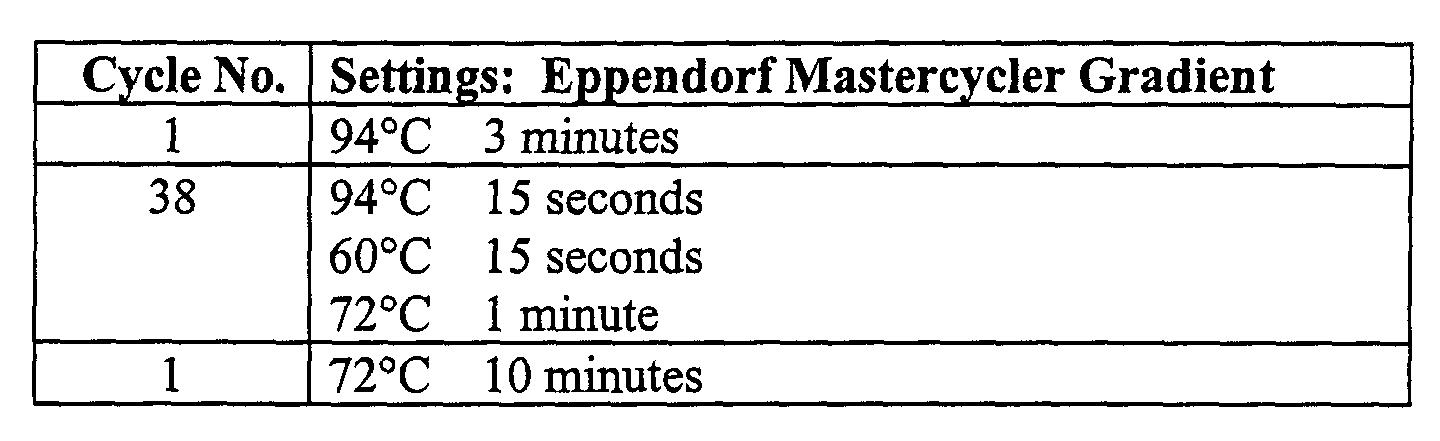
- A deposit of the Monsanto Company, corn seed of event PV-ZMGT32(nk603) disclosed above has been made under the Budapest Treaty with the American Type Culture Collection (ATCC), 10801 University Boulevard, Manassas, Va. 20110. The ATCC accession number is PTA-2478. The deposit will be maintained in the depository for a period of 30 years, or 5 years after the last request, or for the effective life of the patent, whichever is longer, and will be replaced as necessary during that period.
- Having illustrated and described the principles of the present invention, it should be apparent to persons skilled in the art that the invention can be modified in arrangement and detail without departing from such principles. We claim all modifications that are within the spirit and scope of the appended claims.
- All publications and published patent documents cited in this specification are incorporated herein by reference to the same extent as if each individual publication or patent application was specifically and individually indicated to be incorporated by reference.
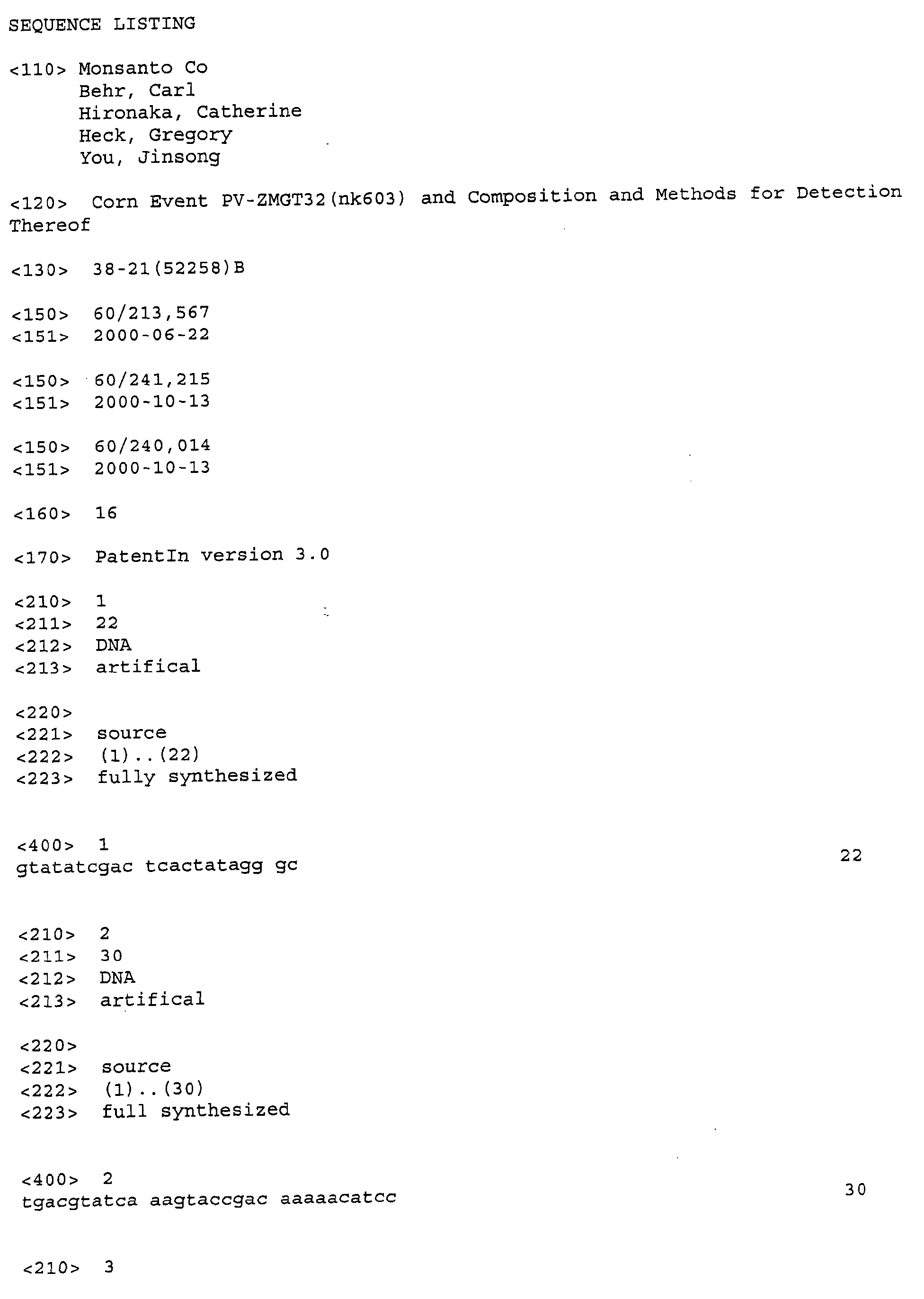

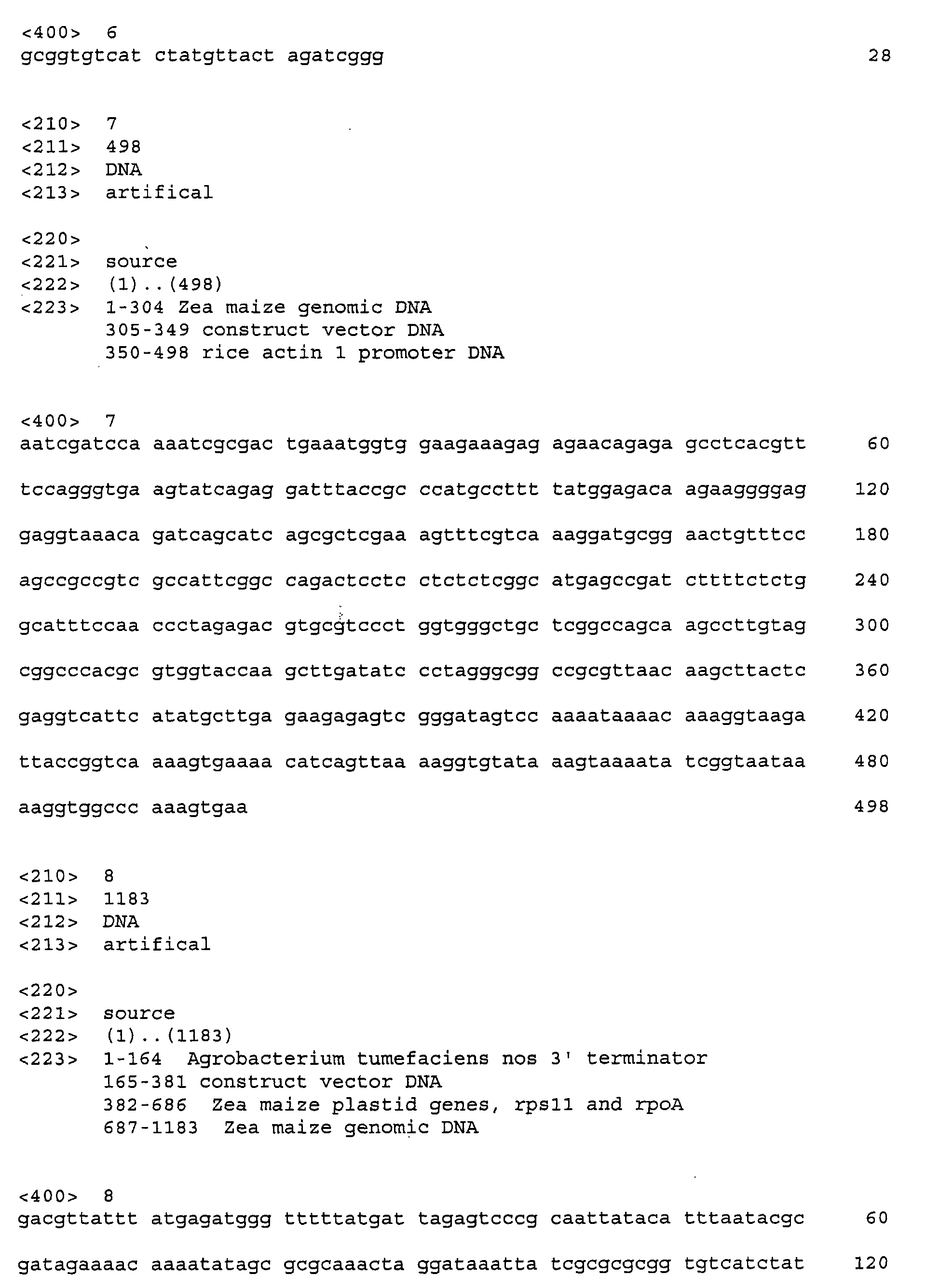
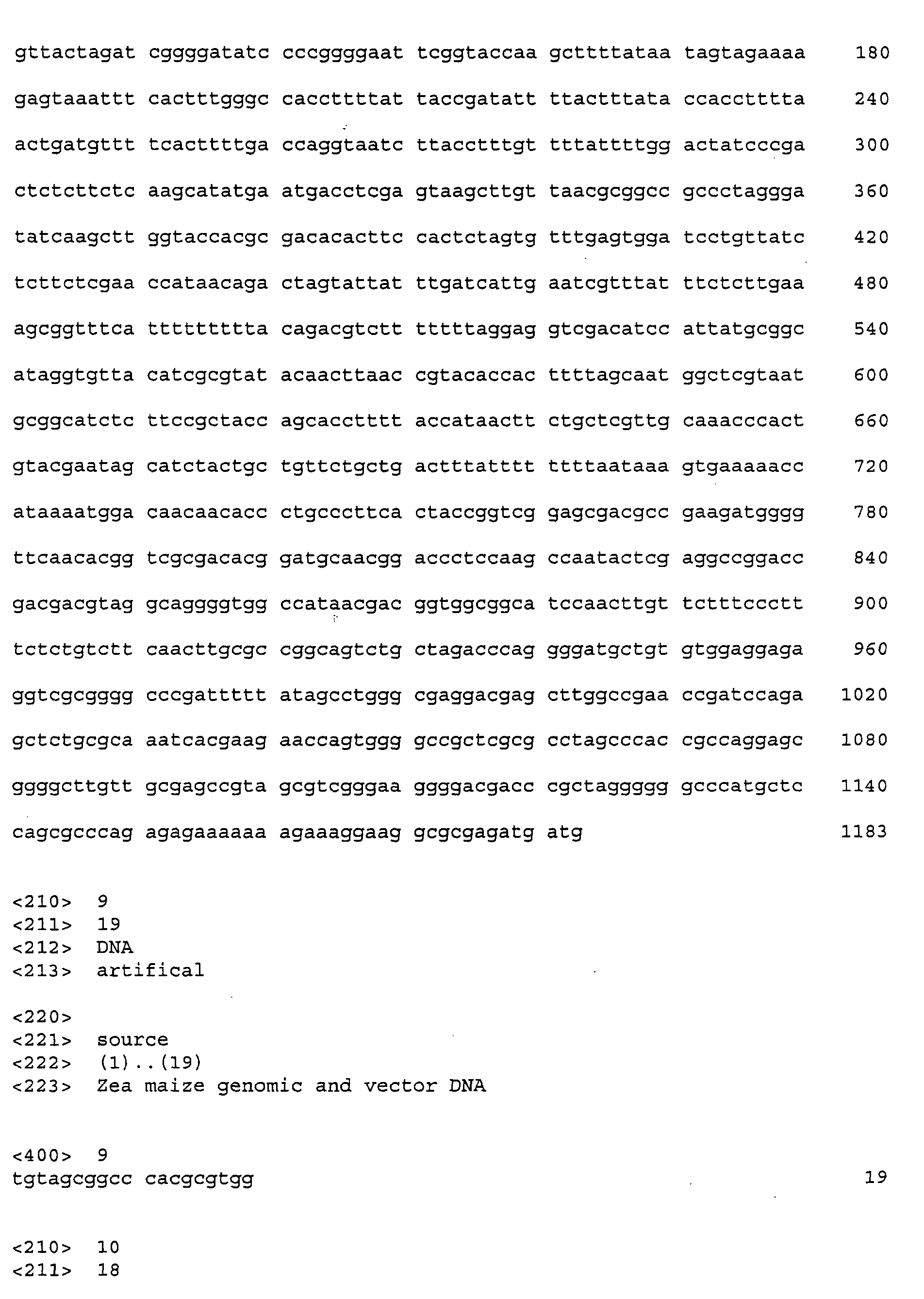
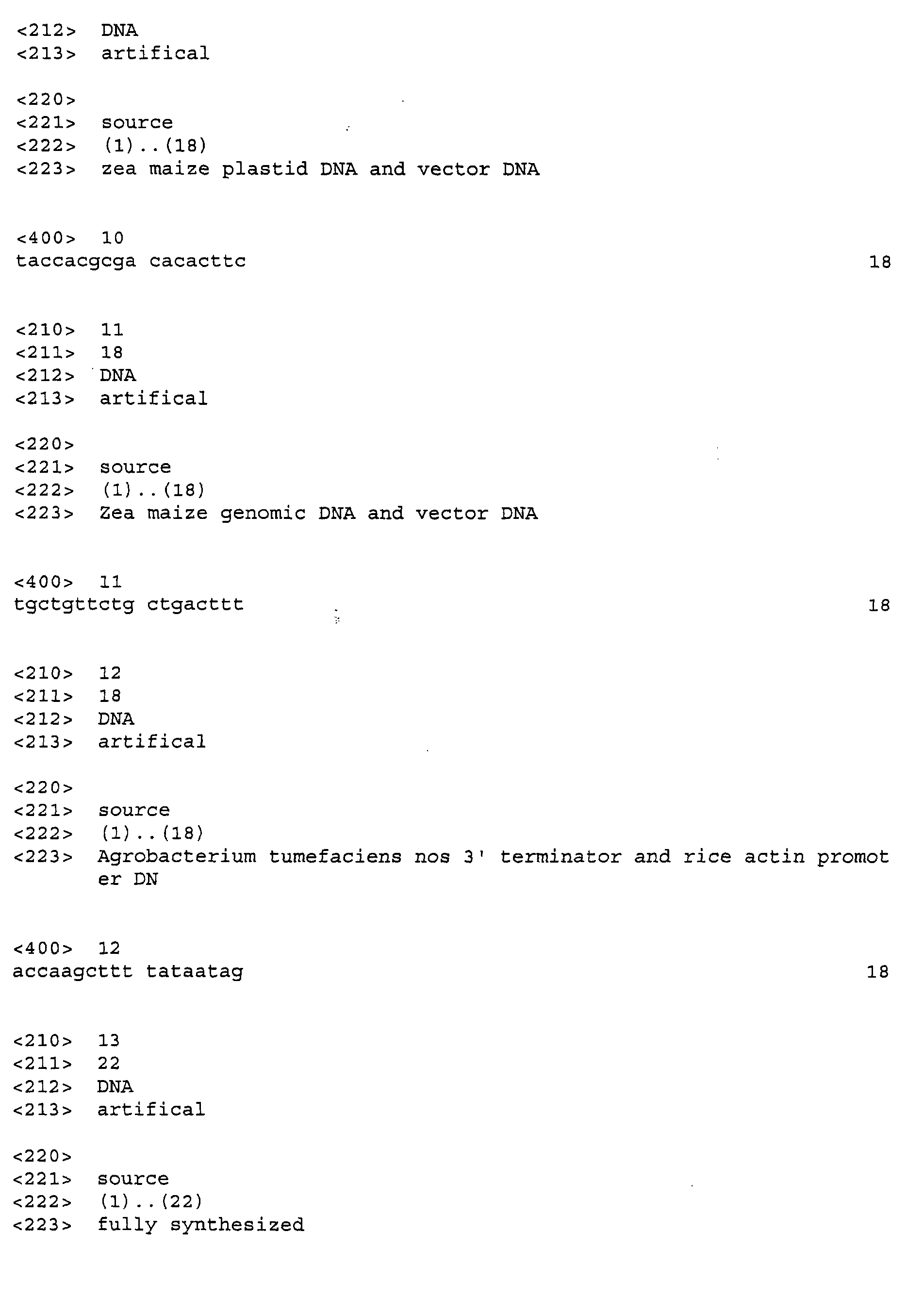
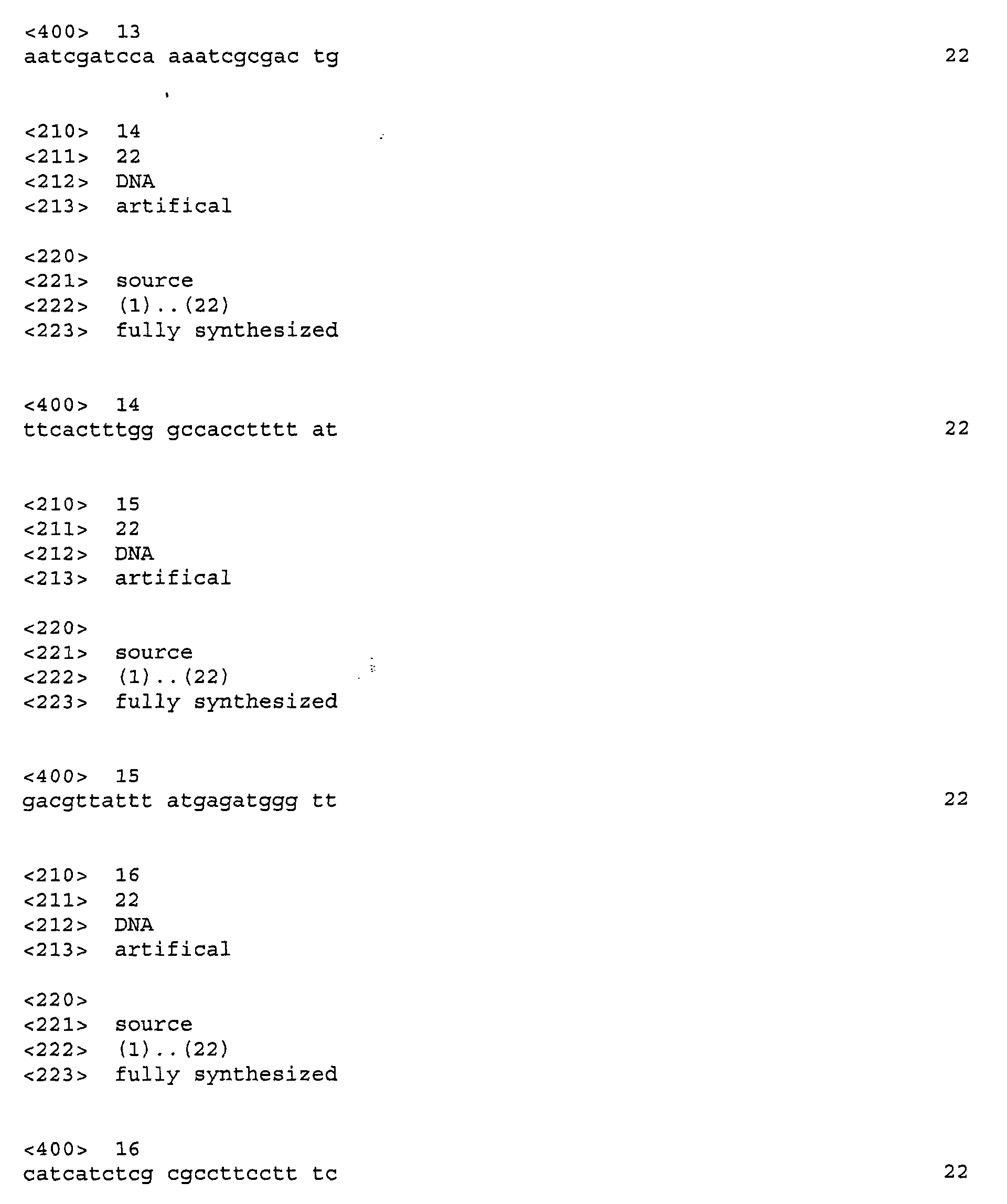
Claims (12)
- A DNA construct comprising: a first and a second expression cassette, wherein said first expression cassette in operable linkage comprises (i) a rice actin 1 promoter; (ii) a rice actin 1 intron; (iii) a chloroplast transit peptide encoding DNA molecule; (iv) a glyphosate tolerant EPSPS encoding DNA molecule; and (v) a transcriptional terminator DNA molecule; and said second expression cassette comprising in operable linkage (a) a CaMV 35S promoter; (b) a Hsp70 intron; (c) a chloroplast transit peptide encoding DNA molecule; (d) a glyphosate tolerant EPSPS encoding DNA molecule; and (e) a transcriptional terminator DNA molecule.
- A DNA construct of claim 1, wherein the glyphosate tolerant EPSPS encoding DNA molecule consists of an AGRTU.aroA:CP4 DNA molecule.
- A DNA molecule comprising a nucleotide sequence identified as SEQ ID NO:7 or SEQ ID NO:8.
- A pair of DNA molecules comprising: a first DNA molecule and a second DNA molecule, wherein the DNA molecules are of sufficient length of contiguous nucleotides of SEQ ID NO:7 or its complement to function as DNA primers or probes diagnostic for DNA extracted from corn plant PV-ZMGT32(nk603) or progeny thereof.
- A pair of DNA molecules comprising: a first DNA molecule and a second DNA molecule, wherein the DNA molecules are of sufficient length of contiguous nucleotides of SEQ ID NO:8 or its complement to function as DNA primers or probes diagnostic for DNA extracted from corn plant PV-ZMGT32(nk603) or progeny thereof.
- A method of detecting the presence of a DNA molecule selected from the group consisting of SEQ ID NO:7 and SEQ ID NO:8 in a DNA sample, the method comprising:(a) extracting a DNA sample from a corn plant;(b) contacting the DNA sample with a DNA primer pair comprising DNA primer molecules of sufficient length of contiguous nucleotides of SEQ ID NO:7 or its complement, or SEQ ID NO:8 or its complement;(c) providing a nucleic acid amplification reaction condition;(d) performing said nucleic acid amplification reaction, thereby producing a DNA amplicon molecule; and(e) detecting the DNA amplicon molecule.
- A method of detecting the presence of a DNA molecule selected from the group consisting of SEQ ID NO:7 and SEQ ID NO:8 in a DNA sample, the method comprising:(a) extracting a DNA sample from a corn plant;(b) contacting the DNA sample with a DNA molecule identified as SEQ ID NO:9, SEQ ID NO:10, SEQ ID NO:11, or SEQ ID NO:12, wherein said DNA molecule is a DNA probe that hybridizes under stringent hybridization conditions with the DNA molecule selected from the group consisting of SEQ ID NO:7 or SEQ ID NO:8, and does not hybridize under the stringent hybridization conditions with a DNA sample not containing the DNA molecule identified as SEQ ID NO:7 or SEQ ID NO:8;(c) subjecting the sample and probe to stringent hybridization conditions; and detecting hybridization of the probe to the DNA.
- A DNA molecule selected from the group consisting of SEQ ID NO:9, SEQ ID NO:10, SEQ ID NO:11, SEQ ID NO:12, and complements thereof.
- A method of breeding a glyphosate tolerant trait into corn plants comprisinga) extracting a DNA sample from progeny corn plants;b) contacting the DNA sample with a marker nucleic acid molecule selected from the group consisting of SEQ ID NO:9, SEQ ID NO:10, SEQ ID NO:11, SEQ ID NO:12, or complements thereof.c) performing a marker assisted breeding method for the glyphosate tolerant trait, wherein the glyphosate tolerant trait is genetically linked to a complement of the marker nucleic acid molecule;
- A method of producing a corn plant that tolerates application of glyphosate herbicide comprising:(a) transforming a corn cell with the DNA construct of claim 1;(b) selecting said corn cell for tolerance to application of glyphosate;(c) growing said corn cell into a fertile corn plant.
- A DNA detection kit comprising: at least one DNA molecule of sufficient length of contiguous nucleotides homologous or complementary to SEQ ID NO:7 or SEQ ID NO:8 that functions as a DNA primer or probe specific for corn event PV-ZMGT32(nk603) and/or its progeny.
- A glyphosate tolerant corn plant, its progeny, or its parts thereof, said corn plant provided by ATCC seed deposit PTA-2478.
Priority Applications (4)
| Application Number | Priority Date | Filing Date | Title |
|---|---|---|---|
| DK05105879.0T DK1582592T3 (en) | 2000-06-22 | 2001-06-15 | Corn transformant PV-ZMGT32 (NK6039 and compositions and methods for detection thereof |
| EP05105879A EP1582592B1 (en) | 2000-06-22 | 2001-06-15 | Corn event PV-ZMGT32(NK603) and compositions and methods for detection thereof |
| SI200130562T SI1167531T1 (en) | 2000-06-22 | 2001-06-15 | Compositions and methods for detection of corn transformant PV-ZMGT32 (NK603) |
| EP10154997.0A EP2210951B1 (en) | 2000-06-22 | 2001-06-15 | CORN EVENT PV-ZMGT32(NK603) and compositions and methods for detection thereof |
Applications Claiming Priority (6)
| Application Number | Priority Date | Filing Date | Title |
|---|---|---|---|
| US21356700P | 2000-06-22 | 2000-06-22 | |
| US213567P | 2000-06-22 | ||
| US24121500P | 2000-10-13 | 2000-10-13 | |
| US24001400P | 2000-10-13 | 2000-10-13 | |
| US241215P | 2000-10-13 | ||
| US240014P | 2000-10-13 |
Related Child Applications (2)
| Application Number | Title | Priority Date | Filing Date |
|---|---|---|---|
| EP05105879A Division EP1582592B1 (en) | 2000-06-22 | 2001-06-15 | Corn event PV-ZMGT32(NK603) and compositions and methods for detection thereof |
| EP10154997.0A Division EP2210951B1 (en) | 2000-06-22 | 2001-06-15 | CORN EVENT PV-ZMGT32(NK603) and compositions and methods for detection thereof |
Publications (2)
| Publication Number | Publication Date |
|---|---|
| EP1167531A1 true EP1167531A1 (en) | 2002-01-02 |
| EP1167531B1 EP1167531B1 (en) | 2006-04-12 |
Family
ID=27395887
Family Applications (3)
| Application Number | Title | Priority Date | Filing Date |
|---|---|---|---|
| EP01202314A Expired - Lifetime EP1167531B1 (en) | 2000-06-22 | 2001-06-15 | Compositions and methods for detection of corn transformant PV-ZMGT32 (NK603) |
| EP05105879A Expired - Lifetime EP1582592B1 (en) | 2000-06-22 | 2001-06-15 | Corn event PV-ZMGT32(NK603) and compositions and methods for detection thereof |
| EP10154997.0A Expired - Lifetime EP2210951B1 (en) | 2000-06-22 | 2001-06-15 | CORN EVENT PV-ZMGT32(NK603) and compositions and methods for detection thereof |
Family Applications After (2)
| Application Number | Title | Priority Date | Filing Date |
|---|---|---|---|
| EP05105879A Expired - Lifetime EP1582592B1 (en) | 2000-06-22 | 2001-06-15 | Corn event PV-ZMGT32(NK603) and compositions and methods for detection thereof |
| EP10154997.0A Expired - Lifetime EP2210951B1 (en) | 2000-06-22 | 2001-06-15 | CORN EVENT PV-ZMGT32(NK603) and compositions and methods for detection thereof |
Country Status (21)
| Country | Link |
|---|---|
| US (8) | US6825400B2 (en) |
| EP (3) | EP1167531B1 (en) |
| CN (2) | CN100350043C (en) |
| AR (4) | AR031665A1 (en) |
| AT (2) | ATE323168T1 (en) |
| BG (1) | BG65315B1 (en) |
| BR (2) | BR122013026754B1 (en) |
| CA (1) | CA2349841C (en) |
| CY (2) | CY1106109T1 (en) |
| CZ (2) | CZ305949B6 (en) |
| DE (2) | DE60142092D1 (en) |
| DK (3) | DK1167531T3 (en) |
| ES (3) | ES2343252T3 (en) |
| HU (2) | HU230814B1 (en) |
| ID (1) | ID30575A (en) |
| MX (1) | MXPA01006407A (en) |
| PL (1) | PL199928B1 (en) |
| PT (2) | PT1582592E (en) |
| RS (1) | RS49990B (en) |
| SI (3) | SI1167531T1 (en) |
| UY (1) | UY26788A1 (en) |
Cited By (13)
| Publication number | Priority date | Publication date | Assignee | Title |
|---|---|---|---|---|
| WO2002027004A3 (en) * | 2000-09-29 | 2002-12-05 | Monsanto Technology Llc | Glyphosate tolerant wheat plant 33391 and compositions and methods for detection thereof |
| WO2005103301A2 (en) | 2004-03-25 | 2005-11-03 | Syngenta Participations Ag | Corn event mir604 |
| US7241567B2 (en) | 2000-11-30 | 2007-07-10 | Ses Europe N.V./S.A. | T227-1 flanking sequence |
| EP1567000A4 (en) * | 2002-12-05 | 2007-09-05 | Monsanto Technology Llc | EVENT ASSOCIATED WITH AGROSTIDE ASR-368 AND COMPOSITIONS AND METHODS FOR DETECTING THE PRESENCE THEREOF |
| US7323556B2 (en) | 2004-09-29 | 2008-01-29 | Pioneer Hi-Bred International, Inc. | Corn event DAS-59122-7 and methods for detection thereof |
| EP2112224A3 (en) * | 2005-07-29 | 2010-09-01 | Monsanto Technology, LLC | Development of novel germplasm using segregates from transgenic crosses |
| CN1984558B (en) * | 2004-04-30 | 2011-01-12 | 美国陶氏益农公司 | New herbicide resistance gene |
| US8212113B2 (en) | 2003-12-15 | 2012-07-03 | Monsanto Technology Llc | Corn plant Mon88017 and compositions and methods for detection thereof |
| WO2013014241A1 (en) | 2011-07-28 | 2013-01-31 | Genective | Glyphosate tolerant corn event vco-ø1981-5 and kit and method for detecting the same |
| CN103209993A (en) * | 2010-09-15 | 2013-07-17 | 陶氏益农公司 | Monoclonal antibodies and detection methods for enzymes that confer resistance to 2,4-dichlorophenoxyacetic acid |
| CN111826387A (en) * | 2020-07-07 | 2020-10-27 | 黑龙江省农业科学院农产品质量安全研究所 | Positive plasmid molecule for identifying transgenic corn strain |
| CN112266419A (en) * | 2020-10-29 | 2021-01-26 | 中国科学院微生物研究所 | A synthetic herbicide-resistant protein |
| US11371055B2 (en) | 2005-10-28 | 2022-06-28 | Corteva Agriscience Llc | Herbicide resistance genes |
Families Citing this family (394)
| Publication number | Priority date | Publication date | Assignee | Title |
|---|---|---|---|---|
| BR122013026754B1 (en) * | 2000-06-22 | 2018-02-27 | Monsanto Company | DNA Molecule And Processes To Produce A Corn Plant Tolerant For Glyphosate Herbicide Application |
| DK1587931T3 (en) | 2003-01-31 | 2012-07-23 | Monsanto Technology Llc | Glyphosate tolerant alfalfa events and methods for detecting them |
| KR101152465B1 (en) * | 2003-05-02 | 2012-07-04 | 다우 아그로사이언시즈 엘엘씨 | Corn event tc1507 and methods for detection thereof |
| US7157281B2 (en) * | 2003-12-11 | 2007-01-02 | Monsanto Technology Llc | High lysine maize compositions and event LY038 maize plants |
| AR047598A1 (en) * | 2004-02-10 | 2006-01-25 | Monsanto Technology Llc | TRANSGENIZED CORN SEED WITH GREATER AMINO ACID CONTENT |
| US7683237B2 (en) * | 2004-02-10 | 2010-03-23 | Monsanto Technology Llc | Maize seed with synergistically enhanced lysine content |
| US7855323B2 (en) | 2004-02-10 | 2010-12-21 | Monsanto Technology Llc | Recombinant DNA for gene suppression |
| US20070197474A1 (en) * | 2004-03-30 | 2007-08-23 | Clinton William P | Methods for controlling plants pathogens using N-phosphonomethylglycine |
| BRPI0509541A (en) | 2004-03-30 | 2007-09-18 | Monsanto Technology Llc | methods for controlling plant pathogens using n-phosphonomethylglycine |
| US20070199095A1 (en) | 2005-10-13 | 2007-08-23 | Edwards Allen | Methods for producing hybrid seed |
| AP2693A (en) | 2005-05-27 | 2013-07-16 | Monsanto Technology Llc | Soybean event MON89788 and methods for detection thereof |
| EP1917360A2 (en) * | 2005-08-24 | 2008-05-07 | Pioneer Hi-Bred International Inc. | Compositions providing tolerance to multiple herbicides and methods of use thereof |
| EP1931790B1 (en) * | 2005-10-03 | 2012-01-25 | Monsanto Technology, LLC | Transgenic plant seed with increased lysine |
| WO2007087279A2 (en) * | 2006-01-23 | 2007-08-02 | Board Of Trustees Of Michigan State University | Methods for breeding glyphosate resistant plants and compositions thereof |
| US20100257621A1 (en) * | 2006-10-03 | 2010-10-07 | Monsanto Technology Llc | Methods for Hybrid Corn Seed Production and Compositions Produced Therefrom |
| TWM318228U (en) * | 2006-11-02 | 2007-09-01 | Datafab Sys Inc | Structure for protecting terminal of memory card adapter |
| AU2008321220A1 (en) * | 2007-11-15 | 2009-05-22 | Monsanto Technology Llc | Soybean plant and seed corresponding to transgenic event MON87701 and methods for detection thereof |
| KR101597376B1 (en) | 2008-02-15 | 2016-02-26 | 몬산토 테크놀로지 엘엘씨 | Soybean plant and seed corresponding to transgenic event mon87769 and methods for detection thereof |
| CL2009000440A1 (en) | 2008-02-29 | 2010-11-12 | Monsanto Technology Llc | Polynucleotides comprising a truncated rice actin promoter operatively linked to the cspb gene, a corn chromosome comprising said polycleotide, a procedure for the generation of drought-resistant plant species, and food based on seeds of said plant species. |
| EP2113172A1 (en) * | 2008-04-28 | 2009-11-04 | Bayer CropScience AG | Method for improved utilisation of the production potential of transgene plants |
| US9078406B2 (en) | 2008-08-29 | 2015-07-14 | Monsanto Technology Llc | Soybean plant and seed corresponding to transgenic event MON87754 and methods for detection thereof |
| WO2010037016A1 (en) | 2008-09-29 | 2010-04-01 | Monsanto Technology Llc | Soybean transgenic event mon87705 and methods for detection thereof |
| AR075126A1 (en) * | 2009-01-29 | 2011-03-09 | Bayer Cropscience Ag | METHOD FOR THE BEST USE OF THE TRANSGENIC PLANTS PRODUCTION POTENTIAL |
| US10555527B2 (en) | 2009-05-18 | 2020-02-11 | Monsanto Technology Llc | Use of glyphosate for disease suppression and yield enhancement in soybean |
| RU2764586C2 (en) | 2009-11-23 | 2022-01-18 | Монсанто Текнолоджи Ллс | Transgenic event mon 87427 of maize and relative development scale |
| EA022553B1 (en) | 2010-01-22 | 2016-01-29 | Байер Интеллектуэль Проперти Гмбх | Use of biologically active ingredient combination, kit and composition comprising biologically active ingredient combination for controlling animal pests and method for improving utilization of production potential of transgenic plant |
| CN101812527B (en) * | 2010-04-20 | 2014-09-17 | 北京农业职业学院 | Method for quickly detecting six kinds of genetically modified corns |
| EA033088B1 (en) | 2010-06-04 | 2019-08-30 | Монсанто Текнолоджи Ллс | TRANSGENIC EVENT MON 88302 IN BRASSICA SPECIES AND WAYS OF ITS APPLICATION |
| CA2814532C (en) | 2010-10-12 | 2021-07-27 | Monsanto Technology Llc | Soybean plant and seed corresponding to transgenic event mon87712 and methods for detection thereof |
| EP2640706B1 (en) | 2010-11-15 | 2017-03-01 | Bayer Intellectual Property GmbH | N-aryl pyrazole(thio)carboxamides |
| SG190295A1 (en) | 2010-11-29 | 2013-06-28 | Bayer Ip Gmbh | Alpha,beta-unsaturated imines |
| AP3519A (en) | 2010-12-01 | 2016-01-11 | Bayer Ip Gmbh | Use of fluopyram for controlling nematodes in crops and for increasing yield |
| EP2460407A1 (en) | 2010-12-01 | 2012-06-06 | Bayer CropScience AG | Agent combinations comprising pyridylethyl benzamides and other agents |
| WO2012120105A1 (en) | 2011-03-10 | 2012-09-13 | Bayer Cropscience Ag | Use of lipochito-oligosaccharide compounds for safeguarding seed safety of treated seeds |
| CN103491785A (en) | 2011-03-23 | 2014-01-01 | 拜耳知识产权有限责任公司 | Active compound combinations |
| JP2014512358A (en) | 2011-04-08 | 2014-05-22 | バイエル・インテレクチユアル・プロパテイー・ゲー・エム・ベー・ハー | Fungicide hydroxymoyl-tetrazole derivative |
| EA029682B1 (en) | 2011-04-22 | 2018-04-30 | Байер Интеллекчуал Проперти Гмбх | Active compound combinations comprising a (thio)carboxamide derivative and a fungicidal compound |
| EP2720543B1 (en) | 2011-06-14 | 2018-08-22 | Bayer CropScience AG | Use of an enaminocarbonyl compound in combination with a biological control agent |
| PE20141518A1 (en) | 2011-07-01 | 2014-11-17 | Monsanto Technology Llc | METHODS AND COMPOSITIONS FOR THE SELECTIVE REGULATION OF PROTEIN EXPRESSION |
| US9265252B2 (en) | 2011-08-10 | 2016-02-23 | Bayer Intellectual Property Gmbh | Active compound combinations comprising specific tetramic acid derivatives |
| AU2012299691B2 (en) | 2011-08-22 | 2015-01-29 | BASF Agricultural Solutions Seed US LLC | Methods and means to modify a plant genome |
| CN102952861B (en) * | 2011-08-26 | 2014-12-31 | 深圳出入境检验检疫局动植物检验检疫技术中心 | Multiplex PCR-DHPLC (polymerase chain reaction-denaturing high performance liquid chromatography) detection primer and detection method for genetically modified maize |
| EP2561759A1 (en) | 2011-08-26 | 2013-02-27 | Bayer Cropscience AG | Fluoroalkyl-substituted 2-amidobenzimidazoles and their effect on plant growth |
| JP6002225B2 (en) | 2011-09-12 | 2016-10-05 | バイエル・インテレクチュアル・プロパティ・ゲゼルシャフト・ミット・ベシュレンクテル・ハフツングBayer Intellectual Property GmbH | Bactericidal 4-substituted-3- {phenyl [(heterocyclylmethoxy) imino] methyl} -1,2,4-oxadiazol-5 (4H) -one derivatives |
| CN103929956B (en) | 2011-09-16 | 2017-02-22 | 拜耳知识产权有限责任公司 | Use of acylsulfonamides for improving plant yield |
| MX362112B (en) | 2011-09-16 | 2019-01-07 | Bayer Ip Gmbh | Use of phenylpyrazolin-3-carboxylates for improving plant yield. |
| EP2755484A1 (en) | 2011-09-16 | 2014-07-23 | Bayer Intellectual Property GmbH | Use of 5-phenyl- or 5-benzyl-2 isoxazoline-3 carboxylates for improving plant yield |
| WO2013050410A1 (en) | 2011-10-04 | 2013-04-11 | Bayer Intellectual Property Gmbh | RNAi FOR THE CONTROL OF FUNGI AND OOMYCETES BY INHIBITING SACCHAROPINE DEHYDROGENASE GENE |
| CA2792804A1 (en) | 2011-10-18 | 2013-04-18 | Dow Agrosciences Llc | Materials and methods for detecting the aryloxyalkanoate dioxygenase gene (aad-12) containing event pdab4472-1606 in plants |
| CN102409092B (en) * | 2011-11-17 | 2013-06-26 | 四川省农业科学院分析测试中心 | Structure-specific quantitative PCR (polymerase chain reaction) accurate detection method of transgenic maize NK603 |
| CN102409094B (en) * | 2011-11-17 | 2013-06-26 | 四川省农业科学院分析测试中心 | Transgenic corn NK603 strain specific quantitative PCR (Polymerase Chain Reaction) accurate detection method |
| CN103958531B (en) | 2011-11-21 | 2016-12-28 | 拜耳知识产权有限责任公司 | Antifungal N [(trisubstituted silicyl) methyl] carboxamide derivative |
| CA2857438A1 (en) | 2011-11-30 | 2013-06-06 | Bayer Intellectual Property Gmbh | Fungicidal n-bicycloalkyl and n-tricycloalkyl (thio)carboxamide derivatives |
| IN2014CN04325A (en) | 2011-12-19 | 2015-09-04 | Bayer Cropscience Ag | |
| US9556158B2 (en) | 2011-12-29 | 2017-01-31 | Bayer Intellectual Property Gmbh | Fungicidal 3-[(pyridin-2-ylmethoxyimino)(phenyl)methyl]-2-substituted-1,2,4-oxadiazol-5(2H)-one derivatives |
| JP5976837B2 (en) | 2011-12-29 | 2016-08-24 | バイエル・インテレクチュアル・プロパティ・ゲゼルシャフト・ミット・ベシュレンクテル・ハフツングBayer Intellectual Property GmbH | Bactericidal 3-[(1,3-thiazol-4-ylmethoxyimino) (phenyl) methyl] -2-substituted-1,2,4-oxadiazol-5 (2H) -one derivatives |
| PL2806740T3 (en) | 2012-01-25 | 2018-07-31 | Bayer Intellectual Property Gmbh | Active compounds combination containing fluopyram bacillus and biologically control agent |
| EP2806739A1 (en) | 2012-01-25 | 2014-12-03 | Bayer Intellectual Property GmbH | Active compound combinations containing fluopyram and biological control agent |
| US8952229B1 (en) | 2012-02-21 | 2015-02-10 | Pioneer Hi Bred International Inc | Maize inbred PH1K0H1 |
| US8975469B1 (en) | 2012-02-21 | 2015-03-10 | Pioneer Hi Bred International Inc | Maize hybrid X13C704HR |
| CA2865300C (en) | 2012-02-27 | 2021-02-16 | Bayer Intellectual Property Gmbh | Active compound combinations containing a thiazoylisoxazoline and a fungicide |
| WO2013139949A1 (en) | 2012-03-23 | 2013-09-26 | Bayer Intellectual Property Gmbh | Compositions comprising a strigolactame compound for enhanced plant growth and yield |
| EP2836489B1 (en) | 2012-04-12 | 2016-06-29 | Bayer Cropscience AG | N-acyl-2-(cyclo) alkylpyrrolidines and piperidines useful as fungicides |
| JP6109295B2 (en) | 2012-04-20 | 2017-04-05 | バイエル・クロップサイエンス・アクチェンゲゼルシャフト | N-cycloalkyl-N-[(heterocyclylphenyl) methylene]-(thio) carboxamide derivatives |
| JP2015516396A (en) | 2012-04-20 | 2015-06-11 | バイエル・クロップサイエンス・アーゲーBayer Cropscience Ag | N-cycloalkyl-N-[(trisubstituted silylphenyl) methylene]-(thio) carboxamide derivatives |
| PY1319541A (en) | 2012-05-08 | 2016-06-01 | Monsanto Technology Llc | MON CORN EVENT 87411 |
| EP2662361A1 (en) | 2012-05-09 | 2013-11-13 | Bayer CropScience AG | Pyrazol indanyl carboxamides |
| CN104364236B (en) | 2012-05-09 | 2018-01-16 | 拜尔农作物科学股份公司 | 5 halo-pyrazole dihydro indenyl formamides |
| JP6262208B2 (en) | 2012-05-09 | 2018-01-17 | バイエル・クロップサイエンス・アクチェンゲゼルシャフト | Pyrazole indanyl carboxamides |
| EP2662364A1 (en) | 2012-05-09 | 2013-11-13 | Bayer CropScience AG | Pyrazole tetrahydronaphthyl carboxamides |
| EP2662362A1 (en) | 2012-05-09 | 2013-11-13 | Bayer CropScience AG | Pyrazole indanyl carboxamides |
| EP2662360A1 (en) | 2012-05-09 | 2013-11-13 | Bayer CropScience AG | 5-Halogenopyrazole indanyl carboxamides |
| EP2662363A1 (en) | 2012-05-09 | 2013-11-13 | Bayer CropScience AG | 5-Halogenopyrazole biphenylcarboxamides |
| EP2662370A1 (en) | 2012-05-09 | 2013-11-13 | Bayer CropScience AG | 5-Halogenopyrazole benzofuranyl carboxamides |
| AR091104A1 (en) | 2012-05-22 | 2015-01-14 | Bayer Cropscience Ag | COMBINATIONS OF ACTIVE COMPOUNDS THAT INCLUDE A LIPO-CHYTOOLIGOSACARIDE DERIVATIVE AND A NEMATICIDE, INSECTICIDE OR FUNGICIDE COMPOUND |
| MX356530B (en) | 2012-05-30 | 2018-06-01 | Bayer Cropscience Ag | Composition comprising a biological control agent and a fungicide selected from inhibitors of amino acid or protein biosynthesis, inhibitors of atp production and inhibitors of the cell wall synthesis. |
| PT2854547T (en) | 2012-05-30 | 2018-11-16 | Bayer Cropscience Ag | Composition comprising a biological control agent and trifloxystrobin |
| NZ701724A (en) | 2012-05-30 | 2016-11-25 | Bayer Cropscience Ag | Compositions comprising a biological control agent and an insecticide |
| PT2854548T (en) | 2012-05-30 | 2018-12-06 | Bayer Cropscience Ag | Composition comprising a biological control agent and a fungicide selected from metalaxyl and metalaxyl-m |
| WO2013178658A1 (en) | 2012-05-30 | 2013-12-05 | Bayer Cropscience Ag | Compositions comprising a biological control agent and an insecticide |
| EP3300603A3 (en) | 2012-05-30 | 2018-06-27 | Bayer CropScience Aktiengesellschaft | Composition comprising a biological control agent and a fungicide |
| AR091201A1 (en) | 2012-05-30 | 2015-01-21 | Bayer Cropscience Ag | COMPOSITION THAT INCLUDES A BIOLOGICAL CONTROL AGENT AND A FUNGICIDE |
| US9386773B2 (en) | 2012-05-30 | 2016-07-12 | Bayer Cropscience Ag | Compositions comprising a biological control agent and a fungicide from the group consisting of inhibitors of the respiratory chain at complex I or II |
| EP2879493B1 (en) | 2012-07-31 | 2018-09-19 | Bayer CropScience AG | Pesticidal compositions comprising a terpene mixture and flupyradifurone |
| MY196630A (en) | 2012-09-14 | 2023-04-23 | BASF Agricultural Solutions Seed US LLC | Hppd Variants and Methods of use |
| EP2719280A1 (en) | 2012-10-11 | 2014-04-16 | Bayer CropScience AG | Use of N-phenylethylpyrazole carboxamide derivatives or salts thereof for resistance management of phytopathogenic fungi |
| EP2908642B1 (en) | 2012-10-19 | 2022-02-23 | Bayer Cropscience AG | Method for enhancing tolerance to abiotic stress in plants by using carboxamide or thiocarboxamide derivatives |
| EA026839B1 (en) | 2012-10-19 | 2017-05-31 | Байер Кропсайенс Аг | Active compound combinations comprising carboxamide compounds |
| WO2014060518A1 (en) | 2012-10-19 | 2014-04-24 | Bayer Cropscience Ag | Method of plant growth promotion using carboxamide derivatives |
| UA114648C2 (en) | 2012-10-19 | 2017-07-10 | Байєр Кропсайнс Аг | Method for treating plants against fungi resistant to fungicides using carboxamide or thiocarboxamide derivatives |
| EP2735231A1 (en) | 2012-11-23 | 2014-05-28 | Bayer CropScience AG | Active compound combinations |
| WO2014082950A1 (en) | 2012-11-30 | 2014-06-05 | Bayer Cropscience Ag | Ternary fungicidal mixtures |
| CA2892712A1 (en) | 2012-11-30 | 2014-06-05 | Bayer Cropscience Ag | Ternary fungicidal and pesticidal mixtures |
| CN104837351A (en) | 2012-11-30 | 2015-08-12 | 拜耳作物科学股份公司 | Binary fungicidal or pesticidal mixture |
| UA117819C2 (en) | 2012-11-30 | 2018-10-10 | Байєр Кропсайєнс Акцієнгезелльшафт | Binary pesticidal and fungicidal mixtures |
| WO2014083088A2 (en) | 2012-11-30 | 2014-06-05 | Bayer Cropscience Ag | Binary fungicidal mixtures |
| US9867377B2 (en) | 2012-12-03 | 2018-01-16 | Bayer Cropscience Ag | Composition comprising a biological control agent and an insecticide |
| MX2015006631A (en) | 2012-12-03 | 2015-08-05 | Bayer Cropscience Ag | Composition comprising a biological control agent and an insecticide. |
| CN105163589A (en) | 2012-12-03 | 2015-12-16 | 拜耳作物科学股份公司 | Composition comprising biological control agent and fungicide |
| WO2014086749A2 (en) | 2012-12-03 | 2014-06-12 | Bayer Cropscience Ag | Composition comprising a biological control agent and an insecticide |
| BR112015012781A2 (en) | 2012-12-03 | 2018-06-26 | Bayer Cropscience Ag | composition comprising biological control agents |
| WO2014086764A2 (en) | 2012-12-03 | 2014-06-12 | Bayer Cropscience Ag | Composition comprising a biological control agent and a fungicide |
| WO2014086753A2 (en) | 2012-12-03 | 2014-06-12 | Bayer Cropscience Ag | Composition comprising biological control agents |
| WO2014086747A2 (en) | 2012-12-03 | 2014-06-12 | Bayer Cropscience Ag | Composition comprising a biological control agent and a fungicide |
| AR093909A1 (en) | 2012-12-12 | 2015-06-24 | Bayer Cropscience Ag | USE OF ACTIVE INGREDIENTS TO CONTROL NEMATODES IN CULTURES RESISTANT TO NEMATODES |
| AR093996A1 (en) | 2012-12-18 | 2015-07-01 | Bayer Cropscience Ag | BACTERICIDAL COMBINATIONS AND BINARY FUNGICIDES |
| EP2935218A1 (en) | 2012-12-19 | 2015-10-28 | Bayer CropScience AG | Difluoromethyl-nicotinic- tetrahydronaphtyl carboxamides |
| CA2898725A1 (en) | 2013-02-11 | 2014-08-14 | Bayer Cropscience Lp | Compositions comprising a streptomyces-based biological control agent and an insecticide |
| MX2015010260A (en) | 2013-02-11 | 2016-04-04 | Bayer Cropscience Lp | Compositions comprising a streptomyces-based biological control agent and a fungicide. |
| BR112015018676A2 (en) | 2013-02-11 | 2017-07-18 | Bayer Cropscience Lp | compositions comprising gougerotine and a biological control agent |
| US8907159B1 (en) | 2013-02-13 | 2014-12-09 | Pioneer Hi Bred International Inc | Maize inbred PH24DM |
| US8921672B1 (en) | 2013-02-13 | 2014-12-30 | Pioneer Hi Bred International Inc | Maize inbred PH24DS |
| US8916744B1 (en) | 2013-02-13 | 2014-12-23 | Pioneer Hi Bred International Inc | Maize inbred PH24DV |
| BR112015021651B1 (en) | 2013-03-07 | 2021-12-28 | Bayer Cropscience Lp | RECOMBINANT NUCLEIC ACID MOLECULE, EXPRESSION CASSETTE, BACTERIAL HOST CELL, RECOMBINANT POLYPEPTIDE, COMPOSITION AND METHODS FOR THEIR APPLICATION |
| WO2014170345A2 (en) | 2013-04-19 | 2014-10-23 | Bayer Cropscience Ag | Method for improved utilization of the production potential of transgenic plants |
| US9554573B2 (en) | 2013-04-19 | 2017-01-31 | Bayer Cropscience Aktiengesellschaft | Binary insecticidal or pesticidal mixture |
| TW201507722A (en) | 2013-04-30 | 2015-03-01 | Bayer Cropscience Ag | N-(2-halogen-2-phenethyl)carboxamides as nematicides and endoparasiticides |
| WO2014177514A1 (en) | 2013-04-30 | 2014-11-06 | Bayer Cropscience Ag | Nematicidal n-substituted phenethylcarboxamides |
| US9770022B2 (en) | 2013-06-26 | 2017-09-26 | Bayer Cropscience Ag | N-cycloalkyl-N-[(bicyclylphenyl)methylene]-(thio)carboxamide derivatives |
| EP3502127B1 (en) | 2013-10-09 | 2023-07-26 | Monsanto Technology LLC | Transgenic corn event mon87403 and methods for detection thereof |
| AR097995A1 (en) | 2013-10-14 | 2016-04-27 | Syngenta Participations Ag | METHOD FOR SEEDING ROWS OF CROPS |
| RU2685723C1 (en) | 2013-12-05 | 2019-04-23 | Байер Кропсайенс Акциенгезелльшафт | N-cycloalkyl-n-{[2-(1-substituted cycloalkyl)phenyl]methylene}-(thio)carboxamide derivatives |
| EP3077377B1 (en) | 2013-12-05 | 2020-01-22 | Bayer CropScience Aktiengesellschaft | N-cycloalkyl-n-{[2-(1-substitutedcycloalkyl)phenyl]methylene}-(thio)carboxamide derivatives |
| EP2885970A1 (en) | 2013-12-21 | 2015-06-24 | Bayer CropScience AG | Fungicide compositions comprising compound I, at least one succinate dehydrogenase (SDH) inhibitor and at least one triazole fungicide |
| WO2015138394A2 (en) | 2014-03-11 | 2015-09-17 | Bayer Cropscience Lp | Hppd variants and methods of use |
| WO2015160619A1 (en) | 2014-04-16 | 2015-10-22 | Bayer Cropscience Lp | Compositions comprising ningnanmycin and a fungicide |
| WO2015160620A1 (en) | 2014-04-16 | 2015-10-22 | Bayer Cropscience Lp | Compositions comprising ningnanmycin and an insecticide |
| WO2015160618A1 (en) | 2014-04-16 | 2015-10-22 | Bayer Cropscience Lp | Compositions comprising ningnanmycin and a biological control agent |
| PT3837970T (en) | 2014-10-15 | 2023-09-12 | Monsanto Technology Llc | HERBICIDES TOLERANCE GENES AND METHODS OF USE THEREOF |
| WO2016075327A2 (en) | 2014-11-14 | 2016-05-19 | Basf Plant Science Company Gmbh | Production of pufas in plants |
| CN104745708A (en) * | 2015-04-02 | 2015-07-01 | 湖南省食品安全生产工程技术研究中心 | LAMP (loop-mediated isothermal amplification) detection kit and detection method for transgenic corn NK603 strain |
| US10214510B2 (en) | 2015-04-13 | 2019-02-26 | Bayer Cropscience Aktiengesellschaft | N-cycloalkyl-N-(biheterocyclylethylene)-(thio)carboxamide derivatives |
| CN104830846B (en) * | 2015-04-30 | 2018-10-30 | 北京大北农科技集团股份有限公司 | Nucleic acid sequence and its detection method for detecting herbicide tolerant corn plant DBN9898 |
| CN104878096B (en) * | 2015-04-30 | 2019-01-15 | 北京大北农科技集团股份有限公司 | For detecting the nucleic acid sequence and its detection method of herbicide tolerant corn plant DBN9868 |
| CN104830845B (en) * | 2015-04-30 | 2018-10-30 | 北京大北农科技集团股份有限公司 | Nucleic acid sequence and its detection method for detecting herbicide tolerant corn plant DBN9878 |
| CN104830847B (en) * | 2015-04-30 | 2019-01-11 | 北京大北农科技集团股份有限公司 | For detecting the nucleic acid sequence and its detection method of corn plant DBN9936 |
| CN104878094B (en) * | 2015-04-30 | 2019-01-15 | 北京大北农科技集团股份有限公司 | For detecting the nucleic acid sequence and its detection method of herbicide tolerant corn plant DBN9888 |
| CN104878090B (en) * | 2015-04-30 | 2019-01-15 | 北京大北农科技集团股份有限公司 | For detecting the nucleic acid sequence and its detection method of herbicide tolerant corn plant DBN9877 |
| CN104878095B (en) * | 2015-04-30 | 2018-10-26 | 北京大北农科技集团股份有限公司 | Nucleic acid sequence and its detection method for detecting herbicide tolerant corn plant DBN9858 |
| CN104846084B (en) * | 2015-04-30 | 2019-02-01 | 北京大北农科技集团股份有限公司 | For detecting the nucleic acid sequence and its detection method of corn plant DBN9927 |
| EP3097782A1 (en) | 2015-05-29 | 2016-11-30 | Bayer CropScience Aktiengesellschaft | Methods for controlling phytopathogenic nematodes by combination of fluopyram and biological control agents |
| WO2017011462A1 (en) * | 2015-07-15 | 2017-01-19 | University Of Florida Research Foundation, Inc. | Use of elongator genes to improve plant disease resistance |
| JP6873979B2 (en) | 2015-09-11 | 2021-05-19 | バイエル・クロップサイエンス・アクチェンゲゼルシャフト | HPPD mutants and usage |
| CN105331725B (en) * | 2015-11-30 | 2018-04-24 | 中国农业大学 | The flanking sequence of transgenic maroACC gene herbicide-resistant maize CC-2 and its application |
| US20190159451A1 (en) | 2016-07-29 | 2019-05-30 | Bayer Cropscience Aktiengesellschaft | Active compound combinations and methods to protect the propagation material of plants |
| BR112019010476A2 (en) | 2016-11-23 | 2019-09-10 | BASF Agricultural Solutions Seed US LLC | recombinant nucleic acid molecule, vector, host cell, transgenic plant, transgenic seed, recombinant polypeptide, composition, method for controlling a pest population, for killing pests, for producing a polypeptide, plant or plant cell, method for protecting a plant against a pest, to increase yield on a plant, use and primary product |
| EP3555056A1 (en) | 2016-12-19 | 2019-10-23 | Basf Se | Substituted oxadiazoles for combating phytopathogenic fungi |
| WO2018136604A1 (en) | 2017-01-18 | 2018-07-26 | Bayer Cropscience Lp | Bp005 toxin gene and methods for its use |
| US11286498B2 (en) | 2017-01-18 | 2022-03-29 | BASF Agricultural Solutions Seed US LLC | Use of BP005 for the control of plant pathogens |
| WO2018153730A1 (en) | 2017-02-21 | 2018-08-30 | Basf Se | Substituted oxadiazoles for combating phytopathogenic fungi |
| CA3055317A1 (en) | 2017-03-07 | 2018-09-13 | BASF Agricultural Solutions Seed US LLC | Hppd variants and methods of use |
| AU2018247768A1 (en) | 2017-04-07 | 2019-10-03 | Basf Se | Substituted oxadiazoles for combating phytopathogenic fungi |
| WO2018188962A1 (en) | 2017-04-11 | 2018-10-18 | Basf Se | Substituted oxadiazoles for combating phytopathogenic fungi |
| CA3061009A1 (en) | 2017-04-21 | 2018-10-25 | Bayer Cropscience Lp | Method of improving crop safety |
| WO2018202487A1 (en) | 2017-05-04 | 2018-11-08 | Basf Se | Substituted 5-(haloalkyl)-5-hydroxy-isoxazoles for combating phytopathogenic fungi |
| WO2018202491A1 (en) | 2017-05-04 | 2018-11-08 | Basf Se | Substituted trifluoromethyloxadiazoles for combating phytopathogenic fungi |
| WO2018219797A1 (en) | 2017-06-02 | 2018-12-06 | Basf Se | Substituted oxadiazoles for combating phytopathogenic fungi |
| WO2018234139A1 (en) | 2017-06-19 | 2018-12-27 | Basf Se | 2 - [[5- (TRIFLUOROMETHYL) -1,2,4-OXADIAZOL-3-YL] ARYLOXY] (THIO) ACETAMIDES FOR THE CONTROL OF PHYTOPATHOGENIC FUNGI |
| WO2019025250A1 (en) | 2017-08-04 | 2019-02-07 | Basf Se | Substituted trifluoromethyloxadiazoles for combating phytopathogenic fungi |
| WO2019038042A1 (en) | 2017-08-21 | 2019-02-28 | Basf Se | Substituted trifluoromethyloxadiazoles for combating phytopathogenic fungi |
| EP3684761A1 (en) | 2017-09-18 | 2020-07-29 | Basf Se | Substituted trifluoromethyloxadiazoles for combating phytopathogenic fungi |
| WO2019068811A1 (en) | 2017-10-06 | 2019-04-11 | Bayer Aktiengesellschaft | Compositions comprising fluopyram and tioxazafen |
| WO2019083810A1 (en) | 2017-10-24 | 2019-05-02 | Basf Se | Improvement of herbicide tolerance to 4-hydroxyphenylpyruvate dioxygenase (hppd) inhibitors by down-regulation of hppd expression in soybean |
| US20210032651A1 (en) | 2017-10-24 | 2021-02-04 | Basf Se | Improvement of herbicide tolerance to hppd inhibitors by down-regulation of putative 4-hydroxyphenylpyruvate reductases in soybean |
| WO2019101511A1 (en) | 2017-11-23 | 2019-05-31 | Basf Se | Substituted trifluoromethyloxadiazoles for combating phytopathogenic fungi |
| WO2019121143A1 (en) | 2017-12-20 | 2019-06-27 | Basf Se | Substituted cyclopropyl derivatives |
| WO2019137995A1 (en) | 2018-01-11 | 2019-07-18 | Basf Se | Novel pyridazine compounds for controlling invertebrate pests |
| CN111669972A (en) | 2018-01-29 | 2020-09-15 | 巴斯夫农业公司 | New agrochemical formulations |
| WO2019154665A1 (en) | 2018-02-07 | 2019-08-15 | Basf Se | New pyridine carboxamides |
| CA3088722A1 (en) | 2018-02-07 | 2019-08-15 | Basf Se | New pyridine carboxamides |
| WO2019166257A1 (en) | 2018-03-01 | 2019-09-06 | BASF Agro B.V. | Fungicidal compositions of mefentrifluconazole |
| WO2019219464A1 (en) | 2018-05-15 | 2019-11-21 | Basf Se | Substituted trifluoromethyloxadiazoles for combating phytopathogenic fungi |
| WO2019224092A1 (en) | 2018-05-22 | 2019-11-28 | Basf Se | Pesticidally active c15-derivatives of ginkgolides |
| US11091768B2 (en) | 2018-05-23 | 2021-08-17 | The United States Of America, As Represented By The Secretary Of Agriculture | Fruit-specific promoters |
| JP2021525774A (en) | 2018-06-04 | 2021-09-27 | バイエル アクチェンゲゼルシャフトBayer Aktiengesellschaft | Herbicidal active bicyclic benzoylpyrazole |
| EP3613736A1 (en) | 2018-08-22 | 2020-02-26 | Basf Se | Substituted glutarimide derivatives |
| EP3628158A1 (en) | 2018-09-28 | 2020-04-01 | Basf Se | Pesticidal mixture comprising a mesoionic compound and a biopesticide |
| JP7443357B2 (en) | 2018-10-23 | 2024-03-05 | ビーエーエスエフ ソシエタス・ヨーロピア | Tricyclic pesticide compounds |
| EP3643705A1 (en) | 2018-10-24 | 2020-04-29 | Basf Se | Pesticidal compounds |
| EP3670501A1 (en) | 2018-12-17 | 2020-06-24 | Basf Se | Substituted [1,2,4]triazole compounds as fungicides |
| HRP20230770T8 (en) | 2019-01-11 | 2024-01-05 | Basf Se | CRYSTAL FORMS 1-(1,2-DIMETHYLPROPYL)-N-ETHYL-5-METHYL-N-PYRIDAZIN-4-YL-PYRAZOLE-4-CARBOXAMIDE |
| EP3696177A1 (en) | 2019-02-12 | 2020-08-19 | Basf Se | Heterocyclic compounds for the control of invertebrate pests |
| CA3139524A1 (en) | 2019-05-10 | 2020-11-19 | Bayer Cropscience Lp | Active compound combinations |
| EP3769623A1 (en) | 2019-07-22 | 2021-01-27 | Basf Se | Mesoionic imidazolium compounds and derivatives for combating animal pests |
| EP3975718A1 (en) | 2019-05-29 | 2022-04-06 | Basf Se | Mesoionic imidazolium compounds and derivatives for combating animal pests |
| WO2020244969A1 (en) | 2019-06-06 | 2020-12-10 | Basf Se | Pyridine derivatives and their use as fungicides |
| WO2020244970A1 (en) | 2019-06-06 | 2020-12-10 | Basf Se | New carbocyclic pyridine carboxamides |
| MX2021014864A (en) | 2019-06-06 | 2022-01-18 | Basf Se | N-(PIRID-3-IL) CARBOXAMIDES FUNGICIDES. |
| EP3766879A1 (en) | 2019-07-19 | 2021-01-20 | Basf Se | Pesticidal pyrazole derivatives |
| CA3147858A1 (en) | 2019-07-22 | 2021-01-28 | Bayer Aktiengesellschaft | 5-amino substituted pyrazoles and triazoles as pest control agents |
| PH12022550166A1 (en) | 2019-07-23 | 2022-11-14 | Bayer Ag | Novel heteroaryl-triazole compounds as pesticides |
| US12610949B2 (en) | 2019-07-23 | 2026-04-28 | Bayer Aktiengesellschaft | Heteroaryl-triazole compounds as pesticides |
| CA3149206A1 (en) | 2019-08-01 | 2021-02-04 | Bayer Cropscience Lp | Method of improving cold stress tolerance and crop safety |
| EP3701796A1 (en) | 2019-08-08 | 2020-09-02 | Bayer AG | Active compound combinations |
| US20220403410A1 (en) | 2019-09-26 | 2022-12-22 | Bayer Aktiengesellschaft | Rnai-mediated pest control |
| WO2021063736A1 (en) | 2019-10-02 | 2021-04-08 | Basf Se | Bicyclic pyridine derivatives |
| KR20220070282A (en) | 2019-10-02 | 2022-05-30 | 바이엘 악티엔게젤샤프트 | Active compound combinations comprising fatty acids |
| WO2021063735A1 (en) | 2019-10-02 | 2021-04-08 | Basf Se | New bicyclic pyridine derivatives |
| PY2062533A (en) | 2019-10-09 | 2021-10-05 | Bayer Ag | NEW HETEROARYL-TRIAZOLE COMPOUNDS AS PESTICIDES |
| EP4041393B1 (en) | 2019-10-09 | 2026-04-08 | Bayer Aktiengesellschaft | Novel heteroaryl-triazole compounds as pesticides |
| AU2020367523A1 (en) | 2019-10-14 | 2022-04-28 | BASF Agricultural Solutions Seed US LLC | Novel insect resistant genes and methods of use |
| KR20220098170A (en) | 2019-11-07 | 2022-07-11 | 바이엘 악티엔게젤샤프트 | Substituted sulfonyl amides for controlling animal pests |
| WO2021097162A1 (en) | 2019-11-13 | 2021-05-20 | Bayer Cropscience Lp | Beneficial combinations with paenibacillus |
| EP4061131A1 (en) | 2019-11-18 | 2022-09-28 | Bayer Aktiengesellschaft | Active compound combinations comprising fatty acids |
| TW202134226A (en) | 2019-11-18 | 2021-09-16 | 德商拜耳廠股份有限公司 | Novel heteroaryl-triazole compounds as pesticides |
| TW202136248A (en) | 2019-11-25 | 2021-10-01 | 德商拜耳廠股份有限公司 | Novel heteroaryl-triazole compounds as pesticides |
| UY39058A (en) | 2020-01-31 | 2021-08-31 | Pairwise Plants Services Inc | SUPPRESSION OF THE SHADOW EVASION RESPONSE IN PLANTS |
| US20230148601A1 (en) | 2020-02-18 | 2023-05-18 | Bayer Aktiengesellschaft | Novel heteroaryl-triazole compounds as pesticides |
| EP3708565A1 (en) | 2020-03-04 | 2020-09-16 | Bayer AG | Pyrimidinyloxyphenylamidines and the use thereof as fungicides |
| WO2021209490A1 (en) | 2020-04-16 | 2021-10-21 | Bayer Aktiengesellschaft | Cyclaminephenylaminoquinolines as fungicides |
| US20230212600A1 (en) | 2020-04-16 | 2023-07-06 | Pairwise Plants Services, Inc. | Methods for controlling meristem size for crop improvement |
| BR112022021264A2 (en) | 2020-04-21 | 2023-02-14 | Bayer Ag | 2-(HET)ARYL SUBSTITUTED HETEROCYCLIC DERIVATIVES AS PESTICIDES |
| EP3903584A1 (en) | 2020-04-28 | 2021-11-03 | Basf Se | Use of strobilurin type compounds for combating phytopathogenic fungi containing an amino acid substitution f129l in the mitochondrial cytochrome b protein conferring resistance to qo inhibitors iv |
| EP3903582A1 (en) | 2020-04-28 | 2021-11-03 | Basf Se | Use of strobilurin type compounds for combating phytopathogenic fungi containing an amino acid substitution f129l in the mitochondrial cytochrome b protein conferring resistance to qo inhibitors ii |
| EP3903581A1 (en) | 2020-04-28 | 2021-11-03 | Basf Se | Use of strobilurin type compounds for combating phytopathogenic fungi containing an amino acid substitution f129l in the mitochondrial cytochrome b protein conferring resistance to qo inhibitors i |
| EP3903583A1 (en) | 2020-04-28 | 2021-11-03 | Basf Se | Use of strobilurin type compounds for combating phytopathogenic fungi containing an amino acid substitution f129l in the mitochondrial cytochrome b protein conferring resistance to qo inhibitors iii |
| CN115443267B (en) | 2020-04-28 | 2025-09-05 | 巴斯夫欧洲公司 | Insecticidal compounds |
| CN115915941B (en) | 2020-05-06 | 2025-07-15 | 拜耳公司 | Pyridine (thio)amides as fungicidal compounds |
| TWI891782B (en) | 2020-05-06 | 2025-08-01 | 德商拜耳廠股份有限公司 | Novel heteroaryl-triazole compounds as pesticides |
| BR112022023012A2 (en) | 2020-05-12 | 2022-12-20 | Bayer Ag | (THIO)AMIDES OF TRIAZINE AND PYRMIDINE AS FUNGICIDAL COMPOUNDS |
| EP3909950A1 (en) | 2020-05-13 | 2021-11-17 | Basf Se | Heterocyclic compounds for the control of invertebrate pests |
| BR112022023550A2 (en) | 2020-05-19 | 2023-01-03 | Bayer Cropscience Ag | AZABICYCLIC (THIO)AMIDES AS FUNGICIDAL COMPOUNDS |
| BR112022024489A2 (en) | 2020-06-02 | 2023-01-31 | Pairwise Plants Services Inc | METHODS FOR CONTROLLING THE SIZE OF THE MERISTEM TO IMPROVE THE AGRICULTURAL CULTURE |
| CN115803320B (en) | 2020-06-04 | 2025-07-15 | 拜耳公司 | Heterocyclic pyrimidines and heterocyclic triazines as new fungicides |
| WO2021249800A1 (en) | 2020-06-10 | 2021-12-16 | Basf Se | Substituted [1,2,4]triazole compounds as fungicides |
| EP3945089A1 (en) | 2020-07-31 | 2022-02-02 | Basf Se | Use of strobilurin type compounds for combating phytopathogenic fungi containing an amino acid substitution f129l in the mitochondrial cytochrome b protein conferring resistance to qo inhibitors v |
| MX2022015625A (en) | 2020-06-10 | 2023-01-11 | Bayer Ag | Azabicyclyl-substituted heterocycles as fungicides. |
| AR122661A1 (en) | 2020-06-17 | 2022-09-28 | Pairwise Plants Services Inc | MERISTEM SIZE CONTROL METHODS FOR CROP IMPROVEMENT |
| CN116157017A (en) | 2020-06-18 | 2023-05-23 | 拜耳公司 | 3-(Pyridazin-4-yl)-5,6-dihydro-4H-1,2,4-oxadiazine derivatives as fungicides for crop protection |
| CA3187291A1 (en) | 2020-06-18 | 2021-12-23 | Bayer Aktiengesellschaft | Composition for use in agriculture |
| BR112022025692A2 (en) | 2020-06-19 | 2023-02-28 | Bayer Ag | 1,3,4-OXADIAZOLES AND THEIR DERIVATIVES AS FUNGICIDES |
| UY39276A (en) | 2020-06-19 | 2022-01-31 | Bayer Ag | USE OF 1,3,4-OXADIAZOL-2-ILPYRIMIDINE COMPOUNDS TO CONTROL PHYTOPATHOGENIC MICROORGANISMS, METHODS OF USE AND COMPOSITIONS. |
| WO2021255089A1 (en) | 2020-06-19 | 2021-12-23 | Bayer Aktiengesellschaft | 1,3,4-oxadiazole pyrimidines and 1,3,4-oxadiazole pyridines as fungicides |
| UY39275A (en) | 2020-06-19 | 2022-01-31 | Bayer Ag | 1,3,4-OXADIAZOLE PYRIMIDINES AS FUNGICIDES, PROCESSES AND INTERMEDIARIES FOR THEIR PREPARATION, METHODS OF USE AND USES OF THE SAME |
| EP3929189A1 (en) | 2020-06-25 | 2021-12-29 | Bayer Animal Health GmbH | Novel heteroaryl-substituted pyrazine derivatives as pesticides |
| US20230247994A1 (en) | 2020-07-02 | 2023-08-10 | Bayer Aktiengesellschaft | Heterocyclene derivatives as pest control agents |
| EP3960727A1 (en) | 2020-08-28 | 2022-03-02 | Basf Se | Use of strobilurin type compounds for combating phytopathogenic fungi containing an amino acid substitution f129l in the mitochondrial cytochrome b protein conferring resistance to qo inhibitors vi |
| EP3939961A1 (en) | 2020-07-16 | 2022-01-19 | Basf Se | Strobilurin type compounds and their use for combating phytopathogenic fungi |
| WO2022017836A1 (en) | 2020-07-20 | 2022-01-27 | BASF Agro B.V. | Fungicidal compositions comprising (r)-2-[4-(4-chlorophenoxy)-2-(trifluoromethyl)phenyl]-1- (1,2,4-triazol-1-yl)propan-2-ol |
| US20230313221A1 (en) * | 2020-07-31 | 2023-10-05 | Inari Agriculture Technology, Inc. | Expedited breeding of transgenic crop plants by genome editing |
| US12529062B2 (en) | 2020-07-31 | 2026-01-20 | Inari Agriculture Technology, Inc. | INIR12 transgenic maize |
| EP3970494A1 (en) | 2020-09-21 | 2022-03-23 | Basf Se | Use of strobilurin type compounds for combating phytopathogenic fungi containing an amino acid substitution f129l in the mitochondrial cytochrome b protein conferring resistance to qo inhibitors viii |
| WO2022033991A1 (en) | 2020-08-13 | 2022-02-17 | Bayer Aktiengesellschaft | 5-amino substituted triazoles as pest control agents |
| WO2022053453A1 (en) | 2020-09-09 | 2022-03-17 | Bayer Aktiengesellschaft | Azole carboxamide as pest control agents |
| WO2022058327A1 (en) | 2020-09-15 | 2022-03-24 | Bayer Aktiengesellschaft | Substituted ureas and derivatives as new antifungal agents |
| EP3974414A1 (en) | 2020-09-25 | 2022-03-30 | Bayer AG | 5-amino substituted pyrazoles and triazoles as pesticides |
| WO2022089969A1 (en) | 2020-10-27 | 2022-05-05 | BASF Agro B.V. | Compositions comprising mefentrifluconazole |
| WO2022090071A1 (en) | 2020-11-02 | 2022-05-05 | Basf Se | Use of mefenpyr-diethyl for controlling phytopathogenic fungi |
| WO2022090069A1 (en) | 2020-11-02 | 2022-05-05 | Basf Se | Compositions comprising mefenpyr-diethyl |
| WO2022106304A1 (en) | 2020-11-23 | 2022-05-27 | BASF Agro B.V. | Compositions comprising mefentrifluconazole |
| US20240043431A1 (en) | 2020-12-14 | 2024-02-08 | Basf Se | Sulfoximine Pesticides |
| EP3915971A1 (en) | 2020-12-16 | 2021-12-01 | Bayer Aktiengesellschaft | Phenyl-s(o)n-phenylamidines and the use thereof as fungicides |
| EP4262394A1 (en) | 2020-12-18 | 2023-10-25 | Bayer Aktiengesellschaft | Use of dhodh inhibitor for controlling resistant phytopathogenic fungi in crops |
| WO2022129188A1 (en) | 2020-12-18 | 2022-06-23 | Bayer Aktiengesellschaft | 1,2,4-oxadiazol-3-yl pyrimidines as fungicides |
| WO2022129196A1 (en) | 2020-12-18 | 2022-06-23 | Bayer Aktiengesellschaft | Heterobicycle substituted 1,2,4-oxadiazoles as fungicides |
| WO2022129190A1 (en) | 2020-12-18 | 2022-06-23 | Bayer Aktiengesellschaft | (hetero)aryl substituted 1,2,4-oxadiazoles as fungicides |
| EP4036083A1 (en) | 2021-02-02 | 2022-08-03 | Bayer Aktiengesellschaft | 5-oxy substituted heterocycles as pesticides |
| EP4291641A1 (en) | 2021-02-11 | 2023-12-20 | Pairwise Plants Services, Inc. | Methods and compositions for modifying cytokinin oxidase levels in plants |
| EP4043444A1 (en) | 2021-02-11 | 2022-08-17 | Basf Se | Substituted isoxazoline derivatives |
| CN117203227A (en) | 2021-02-25 | 2023-12-08 | 成对植物服务股份有限公司 | Methods and compositions for modifying root architecture in plants |
| BR112023019788A2 (en) | 2021-03-30 | 2023-11-07 | Bayer Ag | 3-(HETERO)ARYL-5-CHLORODIFLOROMETHYL-1,2,4-OXADIAZOLE AS A FUNGICIDE |
| BR112023019400A2 (en) | 2021-03-30 | 2023-12-05 | Bayer Ag | 3-(HETERO)ARYL-5-CHLORODIFLOROMETHYL-1,2,4-OXADIAZOLE AS A FUNGICIDE |
| AU2022270888A1 (en) | 2021-05-03 | 2023-11-09 | Basf Se | Additives for enhancing the pesticidal effectiveness of pesticidal microorganisms |
| US20240254121A1 (en) | 2021-05-06 | 2024-08-01 | Bayer Aktiengesellschaft | Alkylamide substituted, annulated imidazoles and use thereof as insecticides |
| EP4337661A1 (en) | 2021-05-12 | 2024-03-20 | Bayer Aktiengesellschaft | 2-(het)aryl-substituted condensed heterocycle derivatives as pest control agents |
| EP4091451A1 (en) | 2021-05-17 | 2022-11-23 | BASF Agro B.V. | Compositions comprising mefentrifluconazole |
| EP4341257A1 (en) | 2021-05-18 | 2024-03-27 | Basf Se | New substituted quinolines as fungicides |
| JP2024519815A (en) | 2021-05-18 | 2024-05-21 | ビーエーエスエフ ソシエタス・ヨーロピア | New substituted pyridines as fungicides. |
| KR20240008857A (en) | 2021-05-18 | 2024-01-19 | 바스프 에스이 | Novel substituted pyridines as fungicides |
| AR126172A1 (en) | 2021-06-17 | 2023-09-27 | Pairwise Plants Services Inc | MODIFICATION OF TRANSCRIPTION FACTORS OF THE FAMILY OF GROWTH REGULATORY FACTORS IN SOYBEAN |
| UY39827A (en) | 2021-06-24 | 2023-01-31 | Pairwise Plants Services Inc | MODIFICATION OF UBIQUITIN LIGASE E3 HECT GENES TO IMPROVE PERFORMANCE TRAITS |
| CN117794358A (en) | 2021-07-01 | 2024-03-29 | 成对植物服务股份有限公司 | Methods and compositions for enhancing root development |
| EP4119547A1 (en) | 2021-07-12 | 2023-01-18 | Basf Se | Triazole compounds for the control of invertebrate pests |
| AU2022321882A1 (en) | 2021-08-02 | 2024-02-15 | Basf Se | (3-pirydyl)-quinazoline |
| MX2024001592A (en) | 2021-08-02 | 2024-02-15 | Basf Se | (3-quinolyl)-quinazoline. |
| WO2023019188A1 (en) | 2021-08-12 | 2023-02-16 | Pairwise Plants Services, Inc. | Modification of brassinosteroid receptor genes to improve yield traits |
| AU2022326207A1 (en) | 2021-08-13 | 2024-02-15 | Bayer Aktiengesellschaft | Active compound combinations and fungicide compositions comprising those |
| PY2270221A (en) | 2021-08-17 | 2023-03-20 | Pairwise Plants Services Inc | METHODS AND COMPOSITIONS FOR MODIFYING HISTIDINE KINASE CYTOKININ RECEPTOR GENES IN PLANTS |
| EP4140986A1 (en) | 2021-08-23 | 2023-03-01 | Basf Se | Pyrazine compounds for the control of invertebrate pests |
| WO2023025682A1 (en) | 2021-08-25 | 2023-03-02 | Bayer Aktiengesellschaft | Novel pyrazinyl-triazole compounds as pesticides |
| EP4140995A1 (en) | 2021-08-27 | 2023-03-01 | Basf Se | Pyrazine compounds for the control of invertebrate pests |
| MX2024002276A (en) | 2021-08-30 | 2024-03-07 | Pairwise Plants Services Inc | Modification of ubiquitin binding peptidase genes in plants for yield trait improvement. |
| EP4144739A1 (en) | 2021-09-02 | 2023-03-08 | Bayer Aktiengesellschaft | Anellated pyrazoles as parasiticides |
| AR126938A1 (en) | 2021-09-02 | 2023-11-29 | Pairwise Plants Services Inc | METHODS AND COMPOSITIONS TO IMPROVE PLANT ARCHITECTURE AND PERFORMANCE TRAITS |
| EP4151631A1 (en) | 2021-09-20 | 2023-03-22 | Basf Se | Heterocyclic compounds for the control of invertebrate pests |
| US12540332B2 (en) | 2021-09-21 | 2026-02-03 | Pairwise Plants Services, Inc. | Methods and compositions for reducing pod shatter in canola |
| AR127236A1 (en) | 2021-10-04 | 2024-01-03 | Pairwise Plants Services Inc | METHODS TO IMPROVE FLOWER FERTILITY AND SEED YIELD |
| EP4413022A2 (en) | 2021-10-07 | 2024-08-14 | Pairwise Plants Services, Inc. | Methods for improving floret fertility and seed yield |
| WO2023072670A1 (en) | 2021-10-28 | 2023-05-04 | Basf Se | Use of strobilurin type compounds for combating phytopathogenic fungi containing an amino acid substitution f129l in the mitochondrial cytochrome b protein conferring resistance to qo inhibitors x |
| WO2023072671A1 (en) | 2021-10-28 | 2023-05-04 | Basf Se | Use of strobilurin type compounds for combating phytopathogenic fungi containing an amino acid substitution f129l in the mitochondrial cytochrome b protein conferring resistance to qo inhibitors ix |
| CN118541353A (en) | 2021-11-03 | 2024-08-23 | 拜耳公司 | Bis (hetero) aryl thioether (thio) amides as fungicidal compounds |
| EP4441049A1 (en) | 2021-11-30 | 2024-10-09 | Bayer Aktiengesellschaft | Bis(hetero)aryl thioether oxadiazines as fungicidal compounds |
| EP4194453A1 (en) | 2021-12-08 | 2023-06-14 | Basf Se | Pyrazine compounds for the control of invertebrate pests |
| AR127904A1 (en) | 2021-12-09 | 2024-03-06 | Pairwise Plants Services Inc | METHODS TO IMPROVE FLOWER FERTILITY AND SEED YIELD |
| EP4198033A1 (en) | 2021-12-14 | 2023-06-21 | Basf Se | Heterocyclic compounds for the control of invertebrate pests |
| EP4198023A1 (en) | 2021-12-16 | 2023-06-21 | Basf Se | Pesticidally active thiosemicarbazone compounds |
| AR128372A1 (en) | 2022-01-31 | 2024-04-24 | Pairwise Plants Services Inc | SUPPRESSION OF THE SHADE AVOIDANCE RESPONSE IN PLANTS |
| CN118984651A (en) | 2022-02-01 | 2024-11-19 | 环球化学股份有限公司 | Methods and compositions for controlling insect pests on corn |
| WO2023148028A1 (en) | 2022-02-01 | 2023-08-10 | Globachem Nv | Methods and compositions for controlling pests |
| US20250197358A1 (en) | 2022-02-17 | 2025-06-19 | Basf Se | Pesticidally active thiosemicarbazone compounds |
| EP4238971A1 (en) | 2022-03-02 | 2023-09-06 | Basf Se | Substituted isoxazoline derivatives |
| PY2314419A (en) | 2022-03-02 | 2023-09-25 | Pairwise Plants Services Inc | MODIFICATION OF BRASSINOSTEROID RECEPTOR GENES TO IMPROVE PERFORMANCE TRAITS |
| US20260043040A1 (en) | 2022-03-31 | 2026-02-12 | Pairwise Plants Services, Inc. | Early flowering rosaceae plants with improved characteristics |
| AU2023251095A1 (en) | 2022-04-07 | 2024-10-17 | Monsanto Technology Llc | Methods and compositions for improving resistance to fusarium head blight |
| CN119278208A (en) | 2022-04-21 | 2025-01-07 | 成对植物服务股份有限公司 | Methods and compositions for improving yield traits |
| PY2331827A (en) | 2022-05-02 | 2023-11-08 | Pairwise Plants Services Inc | METHODS AND COMPOSITIONS TO IMPROVE PERFORMANCE AND DISEASE RESISTANCE |
| JP2025516326A (en) | 2022-05-03 | 2025-05-27 | バイエル、アクチエンゲゼルシャフト | Crystalline form of (5S)-3-[3-(3-chloro-2-fluorophenoxy)-6-methylpyridazin-4-yl]-5-(2-chloro-4-methylbenzyl)-5,6-dihydro-4H-1,2,4-oxadiazine |
| CA3256572A1 (en) | 2022-05-03 | 2023-11-09 | Bayer Aktiengesellschaft | Use of (5s)-3-[3-(3-chloro-2-fluorophenoxy)-6-methylpyridazin-4-yl]-5-(2-chloro-4-methylbenzyl)-5,6-dihydro-4h-1,2,4-oxadiazine for controlling unwanted microorganisms |
| UY40255A (en) | 2022-05-05 | 2023-11-15 | Pairwise Plants Services Inc | METHODS AND COMPOSITIONS FOR MODIFYING ROOT ARCHITECTURE AND/OR IMPROVING PERFORMANCE RANGES |
| UY40326A (en) | 2022-06-27 | 2023-12-29 | Pairwise Plants Services Inc | METHODS AND COMPOSITIONS FOR MODIFYING SHADE ESCAPE IN PLANTS |
| EP4547693A1 (en) | 2022-06-29 | 2025-05-07 | Pairwise Plants Services, Inc. | Methods and compositions for controlling meristem size for crop improvement |
| CA3259677A1 (en) | 2022-06-29 | 2024-01-04 | Pairwise Plants Services, Inc. | Methods and compositions for controlling meristem size for crop improvement |
| CA3263381A1 (en) | 2022-08-02 | 2024-02-08 | Basf Se | Pyrazolo pesticidal compounds |
| WO2024030984A1 (en) | 2022-08-04 | 2024-02-08 | Pairwise Plants Services, Inc. | Methods and compositions for improving yield traits |
| AR130164A1 (en) | 2022-08-11 | 2024-11-13 | Pairwise Plants Services Inc | METHODS AND COMPOSITIONS FOR CONTROLLING MERISTEM SIZE FOR CROPS IMPROVEMENT |
| US20240090466A1 (en) | 2022-09-08 | 2024-03-21 | Pairwise Plants Services, Inc. | Methods and compositions for improving yield characteristics in plants |
| EP4342885A1 (en) | 2022-09-20 | 2024-03-27 | Basf Se | N-(3-(aminomethyl)-phenyl)-5-(4-phenyl)-5-(trifluoromethyl)-4,5-dihydroisoxazol-3-amine derivatives and similar compounds as pesticides |
| EP4295688A1 (en) | 2022-09-28 | 2023-12-27 | Bayer Aktiengesellschaft | Active compound combination |
| WO2024068520A1 (en) | 2022-09-28 | 2024-04-04 | Bayer Aktiengesellschaft | 3-(hetero)aryl-5-chlorodifluoromethyl-1,2,4-oxadiazole as fungicide |
| WO2024068517A1 (en) | 2022-09-28 | 2024-04-04 | Bayer Aktiengesellschaft | 3-(hetero)aryl-5-chlorodifluoromethyl-1,2,4-oxadiazole as fungicide |
| WO2024068519A1 (en) | 2022-09-28 | 2024-04-04 | Bayer Aktiengesellschaft | 3-(hetero)aryl-5-chlorodifluoromethyl-1,2,4-oxadiazole as fungicide |
| WO2024068518A1 (en) | 2022-09-28 | 2024-04-04 | Bayer Aktiengesellschaft | 3-heteroaryl-5-chlorodifluoromethyl-1,2,4-oxadiazole as fungicide |
| EP4361126A1 (en) | 2022-10-24 | 2024-05-01 | Basf Se | Use of strobilurin type compounds for combating phytopathogenic fungi containing an amino acid substitution f129l in the mitochondrial cytochrome b protein conferring resistance to qo inhibitors xv |
| WO2024104815A1 (en) | 2022-11-16 | 2024-05-23 | Basf Se | Substituted benzodiazepines as fungicides |
| EP4619399A1 (en) | 2022-11-16 | 2025-09-24 | Basf Se | New substituted tetrahydrobenzoxazepine |
| CN120202194A (en) | 2022-11-16 | 2025-06-24 | 巴斯夫欧洲公司 | Substituted tetrahydrobenzodiazepines as fungicides |
| EP4619393A1 (en) | 2022-11-16 | 2025-09-24 | Basf Se | Substituted benzodiazepines as fungicides |
| EP4385326A1 (en) | 2022-12-15 | 2024-06-19 | Kimitec Biogorup | Biopesticide composition and method for controlling and treating broad spectrum of pests and diseases in plants |
| EP4638759A2 (en) | 2022-12-19 | 2025-10-29 | BASF Agricultural Solutions US LLC | Insect toxin genes and methods for their use |
| EP4389210A1 (en) | 2022-12-21 | 2024-06-26 | Basf Se | Heteroaryl compounds for the control of invertebrate pests |
| WO2024165343A1 (en) | 2023-02-08 | 2024-08-15 | Basf Se | New substituted quinoline compounds for combatitng phytopathogenic fungi |
| WO2024173622A1 (en) | 2023-02-16 | 2024-08-22 | Pairwise Plants Services, Inc. | Methods and compositions for modifying shade avoidance in plants |
| UY40661A (en) | 2023-03-02 | 2024-10-15 | Pairwise Plants Services Inc | METHODS AND COMPOSITIONS FOR MODIFYING SHADE AVOIDANCE IN PLANTS |
| UY40664A (en) | 2023-03-09 | 2024-10-15 | Pairwise Plants Services Inc | MODIFICATION OF BRASSINOSTEROID SIGNALING PATHWAY GENES TO IMPROVE PERFORMANCE TRAITS |
| CN120957986A (en) | 2023-03-17 | 2025-11-14 | 巴斯夫欧洲公司 | Substituted pyridyl/pyrazinyl dihydrobenzothiocyanate compounds for combating plant pathogenic fungi |
| EP4455137A1 (en) | 2023-04-24 | 2024-10-30 | Basf Se | Pyrimidine compounds for the control of invertebrate pests |
| EP4702006A1 (en) | 2023-04-26 | 2026-03-04 | Basf Se | Use of strobilurin type compounds for combating phytopathogenic fungi containing an amino acid substitution f129l in the mitochondrial cytochrome b protein conferring resistance to qo inhibitors xvi |
| PY2439028A (en) | 2023-05-18 | 2025-06-18 | Monsanto Technology Llc | METHODS AND COMPOSITIONS FOR IMPROVING PLANT PERFORMANCE CHARACTERISTICS |
| EP4467535A1 (en) | 2023-05-25 | 2024-11-27 | Basf Se | Lactam pesticidal compounds |
| WO2025008447A1 (en) | 2023-07-05 | 2025-01-09 | Bayer Aktiengesellschaft | Composition for use in agriculture |
| WO2025008446A1 (en) | 2023-07-05 | 2025-01-09 | Bayer Aktiengesellschaft | Composition for use in agriculture |
| WO2025008227A1 (en) | 2023-07-05 | 2025-01-09 | Basf Se | Substituted pyridyl/pyrazinyl dihydropyrrolotriazine compounds for combatting phytopath-ogenic fungi |
| CN121464139A (en) | 2023-07-05 | 2026-02-03 | 巴斯夫欧洲公司 | Substituted quinolines for combating phytopathogenic fungi base/quinoxalinyl dihydro pyrrolotriazine compounds |
| EP4488273A1 (en) | 2023-07-06 | 2025-01-08 | Basf Se | Triazole compounds for the control of invertebrate pests |
| EP4488269A1 (en) | 2023-07-06 | 2025-01-08 | Basf Se | Triazole compounds for the control of invertebrate pests |
| EP4488270A1 (en) | 2023-07-06 | 2025-01-08 | Basf Se | Triazole compounds for the control of invertebrate pests |
| AR133164A1 (en) | 2023-07-18 | 2025-09-03 | Pairwise Plants Services Inc | METHODS AND COMPOSITIONS FOR MODIFYING ROOT ARCHITECTURE IN PLANTS |
| AR133310A1 (en) | 2023-07-27 | 2025-09-17 | Pairwise Plants Services Inc | METHODS AND COMPOSITIONS FOR MODIFYING PLANT PERFORMANCE TRAITS |
| WO2025026738A1 (en) | 2023-07-31 | 2025-02-06 | Bayer Aktiengesellschaft | 6-[5-(ethylsulfonyl)-1-methyl-1h-imidazol-4-yl]-7-methyl-3-(pentafluoroethyl)-7h-imidazo[4,5-c]pyridazine derivatives as pesticides |
| KR20260042262A (en) | 2023-08-01 | 2026-03-30 | 글로바켐 엔브이 | insecticide mixture |
| EP4501112A1 (en) | 2023-08-01 | 2025-02-05 | Globachem NV | Plant defense elicitors |
| CN121646590A (en) | 2023-08-09 | 2026-03-10 | 巴斯夫欧洲公司 | Novel substituted benzo[a]oxazine-based pyridine carboxynitrile compounds for combating plant pathogenic fungi. |
| WO2025031668A1 (en) | 2023-08-09 | 2025-02-13 | Bayer Aktiengesellschaft | Azaheterobiaryl-substituted 4,5-dihydro-1h-2,4,5-oxadiazines as novel fungicides |
| WO2025031843A1 (en) | 2023-08-09 | 2025-02-13 | Basf Se | New substituted benzoxazine picolinonitrile compounds for combatting phytopathogenic fungi |
| CN121693501A (en) | 2023-08-09 | 2026-03-17 | 拜耳公司 | Pyridazin-4-yl oxadiazines as novel bactericides |
| WO2025064734A1 (en) | 2023-09-21 | 2025-03-27 | Pairwise Plants Services, Inc. | Early flowering black raspberry plants with improved characteristics |
| WO2025068226A2 (en) | 2023-09-29 | 2025-04-03 | Basf Se | Methods for protecting plants using mixtures comprising sulfur and selected terpenes |
| AU2024358155A1 (en) | 2023-10-09 | 2026-04-16 | Basf Se | Fungicidal mixture comprising substituted quinazolyl quinolines |
| WO2025078181A1 (en) | 2023-10-09 | 2025-04-17 | Basf Se | Fungicidal mixture comprising substituted pyridines |
| CN122003403A (en) | 2023-10-11 | 2026-05-08 | 拜耳公司 | Pyridazin-3-one-4-yl oxadiazines as novel bactericides |
| WO2025080600A1 (en) | 2023-10-11 | 2025-04-17 | Pairwise Plants Services, Inc. | Methods and compositions for improving crop yield traits |
| WO2025098875A1 (en) | 2023-11-10 | 2025-05-15 | Bayer Aktiengesellschaft | Active compound combinations having insecticidal/acaricidal properties |
| WO2025098876A1 (en) | 2023-11-10 | 2025-05-15 | Bayer Aktiengesellschaft | Active compound combinations having insecticidal/acaricidal properties |
| WO2025098874A1 (en) | 2023-11-10 | 2025-05-15 | Bayer Aktiengesellschaft | Active compound combinations having fungicidal/insecticidal/acaricidal properties |
| WO2025131902A1 (en) | 2023-12-21 | 2025-06-26 | Basf Se | Methods for protecting plants using mixtures comprising sulfur, selected terpenes and phosphites. |
| EP4574819A1 (en) | 2023-12-22 | 2025-06-25 | Basf Se | Diazinone compounds for the control of invertebrate pests |
| WO2025168620A1 (en) | 2024-02-07 | 2025-08-14 | Bayer Aktiengesellschaft | Heteroaryl-substituted 4,5-dihydro-1h-2,4,5-oxadiazines as novel fungicides |
| WO2025178902A1 (en) | 2024-02-22 | 2025-08-28 | Pairwise Plants Services, Inc. | Methods and compositions for improving yield characteristics in plants |
| WO2025180964A1 (en) | 2024-03-01 | 2025-09-04 | Basf Se | New substituted benzoxazepine compounds for combatting phytopathogenic fungi |
| WO2025186065A1 (en) | 2024-03-05 | 2025-09-12 | Bayer Aktiengesellschaft | Heteroaryl-substituted (aza)quinoxaline derivatives as pesticides |
| WO2025190927A1 (en) | 2024-03-14 | 2025-09-18 | Bayer Aktiengesellschaft | Active compound combinations having insecticidal/acaricidal properties |
| WO2025211272A1 (en) | 2024-04-04 | 2025-10-09 | Nihon Nohyaku Co., Ltd. | Pesticidal mixtures comprising an ethylsulfone compound |
| EP4640052A1 (en) | 2024-04-24 | 2025-10-29 | Basf Se | Mixtures of strobilurin type compounds for combating phytopathogenic fungi containing an amino acid substitution f129l in the mitochondrial cytochrome b protein conferring resistance to qo inhibitors with at least one further pesticide i |
| WO2025223904A1 (en) | 2024-04-24 | 2025-10-30 | Basf Se | Mixtures of strobilurin type compounds for combating phytopathogenic fungi containing an amino acid substitution f129l in the mitochondrial cytochrome b protein conferring resistance to qo inhibitors with at least one further pesticide i |
| EP4652843A1 (en) | 2024-05-21 | 2025-11-26 | Kimitec Biogroup S.L | Biopesticide composition, procedure of obtain thereof, and method for controlling and treating broad spectrum of pests in plants |
| EP4652842A1 (en) | 2024-05-21 | 2025-11-26 | Kimitec Biogroup S.L | Biopesticide composition, procedure of obtain thereof, and method for controlling and treating broad spectrum of pests, diseases and weeds in plants |
| WO2025257122A1 (en) | 2024-06-12 | 2025-12-18 | Bayer Aktiengesellschaft | Active compound combinations having insecticidal/acaricidal properties |
| WO2025257121A1 (en) | 2024-06-12 | 2025-12-18 | Bayer Aktiengesellschaft | Active compound combinations having insecticidal/acaricidal properties |
| WO2026002763A1 (en) | 2024-06-26 | 2026-01-02 | Basf Se | Pesticidal mixtures and applications of beauveria bassiana and dimpropyridaz |
| WO2026012814A1 (en) | 2024-07-10 | 2026-01-15 | Basf Se | Compositions and methods to enhance crop yield and plant health |
| WO2026021910A1 (en) | 2024-07-23 | 2026-01-29 | Basf Se | New substituted benzothiazine pyridine compounds for combatting phytopathogenic fungi |
| WO2026021909A1 (en) | 2024-07-23 | 2026-01-29 | Basf Se | New substituted benzothiazine pyridine compounds for combatting phytopathogenic fungi |
| WO2026021911A1 (en) | 2024-07-23 | 2026-01-29 | Basf Se | New substituted benzothiazine pyridine compounds for combatting phytopathogenic fungi |
| WO2026021912A1 (en) | 2024-07-23 | 2026-01-29 | Basf Se | New substituted benzothiazine pyridine compounds for combatting phytopathogenic fungi |
| WO2026027375A1 (en) | 2024-07-29 | 2026-02-05 | Bayer Aktiengesellschaft | Hydroxy-dihydropyridinone carboxamides as pesticides |
| WO2026027723A1 (en) | 2024-08-01 | 2026-02-05 | Syngenta Crop Protection Ag | Herbicide resistant plants |
| WO2026037853A1 (en) | 2024-08-14 | 2026-02-19 | Basf Se | Benzoxazole derivatives as pesticidal compounds |
| WO2026041702A1 (en) | 2024-08-21 | 2026-02-26 | Basf Se | Benzoxazole derivatives as pesticidal compounds |
| EP4710766A1 (en) | 2024-09-11 | 2026-03-18 | Basf Se | Mixtures of ambruticin with at least one further pesticide |
| WO2026057375A1 (en) | 2024-09-11 | 2026-03-19 | Basf Se | Mixtures of ambruticin with at least one further pesticide |
| EP4721566A1 (en) | 2024-10-07 | 2026-04-08 | Kimitec Biogroup S.L | Microbial composition based on bacillus infantis strain for agricultural use |
| WO2026082481A1 (en) | 2024-10-17 | 2026-04-23 | Bayer Aktiengesellschaft | Active compound combinations having insecticidal/acaricidal properties |
| WO2026082514A1 (en) | 2024-10-18 | 2026-04-23 | Basf Se | Pesticidal mixtures and applications of dimpropyridaz |
| WO2026093251A1 (en) | 2024-10-28 | 2026-05-07 | Basf Se | Pesticidal compounds and uses thereof |
Citations (2)
| Publication number | Priority date | Publication date | Assignee | Title |
|---|---|---|---|---|
| WO1998044140A1 (en) * | 1997-04-03 | 1998-10-08 | Dekalb Genetics Corporation | Glyphosate resistant maize lines |
| US5948956A (en) * | 1997-10-16 | 1999-09-07 | Oms Investments, Inc. | Transgenic plants and method for node segment transformation |
Family Cites Families (13)
| Publication number | Priority date | Publication date | Assignee | Title |
|---|---|---|---|---|
| US4683202A (en) | 1985-03-28 | 1987-07-28 | Cetus Corporation | Process for amplifying nucleic acid sequences |
| US4683195A (en) | 1986-01-30 | 1987-07-28 | Cetus Corporation | Process for amplifying, detecting, and/or-cloning nucleic acid sequences |
| US5164316A (en) | 1987-01-13 | 1992-11-17 | The University Of British Columbia | DNA construct for enhancing the efficiency of transcription |
| US5641876A (en) | 1990-01-05 | 1997-06-24 | Cornell Research Foundation, Inc. | Rice actin gene and promoter |
| US5633435A (en) | 1990-08-31 | 1997-05-27 | Monsanto Company | Glyphosate-tolerant 5-enolpyruvylshikimate-3-phosphate synthases |
| US5593874A (en) | 1992-03-19 | 1997-01-14 | Monsanto Company | Enhanced expression in plants |
| US5362865A (en) | 1993-09-02 | 1994-11-08 | Monsanto Company | Enhanced expression in plants using non-translated leader sequences |
| US5853973A (en) * | 1995-04-20 | 1998-12-29 | American Cyanamid Company | Structure based designed herbicide resistant products |
| US6040497A (en) * | 1997-04-03 | 2000-03-21 | Dekalb Genetics Corporation | Glyphosate resistant maize lines |
| DE69941009D1 (en) * | 1998-11-17 | 2009-07-30 | Monsanto Technology Llc | PHOSPHONATE METABOLIZING PLANTS |
| BR122013026754B1 (en) * | 2000-06-22 | 2018-02-27 | Monsanto Company | DNA Molecule And Processes To Produce A Corn Plant Tolerant For Glyphosate Herbicide Application |
| PL214848B1 (en) | 2000-09-29 | 2013-09-30 | Monsanto Technology Llc | Glyphosate tolerant wheat plant 33391 and compositions and methods for detection thereof |
| AU2003299579B2 (en) * | 2002-12-05 | 2008-09-04 | Monsanto Technology Llc | Bentgrass event ASR-368 and compositions and methods for detection thereof |
-
2001
- 2001-02-22 BR BR122013026754-9A patent/BR122013026754B1/en active IP Right Grant
- 2001-02-22 BR BRPI0100752A patent/BRPI0100752B1/en not_active IP Right Cessation
- 2001-06-01 US US09/872,051 patent/US6825400B2/en not_active Expired - Lifetime
- 2001-06-07 ID IDP00200100445D patent/ID30575A/en unknown
- 2001-06-15 AT AT01202314T patent/ATE323168T1/en active
- 2001-06-15 PT PT05105879T patent/PT1582592E/en unknown
- 2001-06-15 SI SI200130562T patent/SI1167531T1/en unknown
- 2001-06-15 DK DK01202314T patent/DK1167531T3/en active
- 2001-06-15 EP EP01202314A patent/EP1167531B1/en not_active Expired - Lifetime
- 2001-06-15 SI SI200131049T patent/SI2210951T1/en unknown
- 2001-06-15 EP EP05105879A patent/EP1582592B1/en not_active Expired - Lifetime
- 2001-06-15 ES ES05105879T patent/ES2343252T3/en not_active Expired - Lifetime
- 2001-06-15 DK DK10154997.0T patent/DK2210951T3/en active
- 2001-06-15 PT PT01202314T patent/PT1167531E/en unknown
- 2001-06-15 ES ES10154997.0T patent/ES2564464T3/en not_active Expired - Lifetime
- 2001-06-15 AT AT05105879T patent/ATE466945T1/en active
- 2001-06-15 EP EP10154997.0A patent/EP2210951B1/en not_active Expired - Lifetime
- 2001-06-15 DE DE60142092T patent/DE60142092D1/en not_active Expired - Lifetime
- 2001-06-15 ES ES01202314T patent/ES2261330T3/en not_active Expired - Lifetime
- 2001-06-15 DE DE60118660T patent/DE60118660T2/en not_active Expired - Lifetime
- 2001-06-15 SI SI200130973T patent/SI1582592T1/en unknown
- 2001-06-15 DK DK05105879.0T patent/DK1582592T3/en active
- 2001-06-18 CZ CZ2008-437A patent/CZ305949B6/en not_active IP Right Cessation
- 2001-06-18 CZ CZ20012203A patent/CZ299722B6/en not_active IP Right Cessation
- 2001-06-18 RS YUP-437/01A patent/RS49990B/en unknown
- 2001-06-20 CA CA2349841A patent/CA2349841C/en not_active Expired - Lifetime
- 2001-06-21 HU HU0800015A patent/HU230814B1/en unknown
- 2001-06-21 MX MXPA01006407A patent/MXPA01006407A/en active IP Right Grant
- 2001-06-21 HU HU0102569A patent/HU226193B1/en unknown
- 2001-06-22 UY UY26788A patent/UY26788A1/en not_active IP Right Cessation
- 2001-06-22 BG BG105637A patent/BG65315B1/en unknown
- 2001-06-22 PL PL348225A patent/PL199928B1/en unknown
- 2001-06-22 CN CNB011220368A patent/CN100350043C/en not_active Expired - Lifetime
- 2001-06-22 AR ARP010102985A patent/AR031665A1/en active IP Right Grant
- 2001-06-22 CN CNA2007101543414A patent/CN101186918A/en active Pending
-
2004
- 2004-03-01 US US10/790,430 patent/US7193071B2/en not_active Expired - Lifetime
- 2004-08-16 US US10/919,423 patent/US20070292854A1/en not_active Abandoned
-
2006
- 2006-04-19 AR ARP060101550A patent/AR053231A2/en unknown
- 2006-06-29 CY CY20061100886T patent/CY1106109T1/en unknown
- 2006-11-03 US US11/592,497 patent/US7582434B2/en not_active Expired - Lifetime
-
2008
- 2008-03-11 AR ARP080100998A patent/AR065690A2/en unknown
- 2008-08-15 AR ARP080103584A patent/AR066163A2/en unknown
-
2009
- 2009-07-21 US US12/460,523 patent/US8273959B2/en not_active Expired - Fee Related
-
2010
- 2010-06-15 CY CY20101100549T patent/CY1110083T1/en unknown
-
2012
- 2012-05-18 US US13/475,841 patent/US8722969B2/en not_active Expired - Fee Related
-
2014
- 2014-03-06 US US14/199,883 patent/US9701980B2/en not_active Expired - Fee Related
-
2017
- 2017-05-24 US US15/604,462 patent/US20170327838A1/en not_active Abandoned
Patent Citations (2)
| Publication number | Priority date | Publication date | Assignee | Title |
|---|---|---|---|---|
| WO1998044140A1 (en) * | 1997-04-03 | 1998-10-08 | Dekalb Genetics Corporation | Glyphosate resistant maize lines |
| US5948956A (en) * | 1997-10-16 | 1999-09-07 | Oms Investments, Inc. | Transgenic plants and method for node segment transformation |
Non-Patent Citations (1)
| Title |
|---|
| WINDELS P ET AL: "Development of a line specific GMO detection method: A case study.", MEDEDELINGEN FACULTEIT LANDBOUWKUNDIGE EN TOEGEPASTE BIOLOGISCHE, vol. 64, no. 5b, 1999, Thirteenth Forum for Applied Biotechnology.;Gent, Belgium; September 22-23, 1999, 1999, pages 459 - 462, XP001032975 * |
Cited By (44)
| Publication number | Priority date | Publication date | Assignee | Title |
|---|---|---|---|---|
| US7268274B2 (en) | 2000-09-29 | 2007-09-11 | Monsanto Technology Llc | Glyphosate tolerant wheat plant 33391 and compositions and methods for detection thereof |
| US6689880B2 (en) | 2000-09-29 | 2004-02-10 | Monsanto Technology Llc | DNA molecule for detecting glyphosate tolerant wheat plant 33391 and progeny thereof |
| US7071325B2 (en) | 2000-09-29 | 2006-07-04 | Monsanto Technology Llc | DNA molecule for detecting glyphosate tolerant wheat plant 33391 and progeny thereof |
| WO2002027004A3 (en) * | 2000-09-29 | 2002-12-05 | Monsanto Technology Llc | Glyphosate tolerant wheat plant 33391 and compositions and methods for detection thereof |
| US7645579B2 (en) | 2000-11-30 | 2010-01-12 | Ses Europe N.V./S.A. | T227-1 flanking sequence |
| US7241567B2 (en) | 2000-11-30 | 2007-07-10 | Ses Europe N.V./S.A. | T227-1 flanking sequence |
| EP1567000A4 (en) * | 2002-12-05 | 2007-09-05 | Monsanto Technology Llc | EVENT ASSOCIATED WITH AGROSTIDE ASR-368 AND COMPOSITIONS AND METHODS FOR DETECTING THE PRESENCE THEREOF |
| US7569747B2 (en) | 2002-12-05 | 2009-08-04 | Monsanto Technology Llc | Bentgrass event ASR-368 and compositions and methods for detection thereof |
| US10308988B2 (en) | 2003-12-15 | 2019-06-04 | Monsanto Technology Llc | Corn plant MON88017 and compositions and methods for detection thereof |
| US8212113B2 (en) | 2003-12-15 | 2012-07-03 | Monsanto Technology Llc | Corn plant Mon88017 and compositions and methods for detection thereof |
| US11421286B2 (en) | 2003-12-15 | 2022-08-23 | Monsanto Technology Llc | Corn plant MON88017 and compositions and methods for detection thereof |
| US8686230B2 (en) | 2003-12-15 | 2014-04-01 | Monsanto Technology Llc | Corn plant MON88017 and compositions and methods for detection thereof |
| US9556492B2 (en) | 2003-12-15 | 2017-01-31 | Monsanto Technology Llc | Corn plant MON88017 and compositions and methods for detection thereof |
| WO2005103301A2 (en) | 2004-03-25 | 2005-11-03 | Syngenta Participations Ag | Corn event mir604 |
| US8884102B2 (en) | 2004-03-25 | 2014-11-11 | Syngenta Participations Ag | Corn event MIR604 |
| EP1737290A4 (en) * | 2004-03-25 | 2008-04-02 | Syngenta Participations Ag | MAIS-EVENT MIR604 |
| CN1984558B (en) * | 2004-04-30 | 2011-01-12 | 美国陶氏益农公司 | New herbicide resistance gene |
| US10947555B2 (en) | 2004-04-30 | 2021-03-16 | Dow Agrosciences Llc | Herbicide resistance genes |
| US11149283B2 (en) | 2004-04-30 | 2021-10-19 | Dow Agrosciences Llc | Herbicide resistance genes |
| US11299745B1 (en) | 2004-04-30 | 2022-04-12 | Dow Agrosciences Llc | Herbicide resistance genes |
| CN102094032B (en) * | 2004-04-30 | 2014-02-26 | 美国陶氏益农公司 | New herbicide resistance gene |
| USRE43373E1 (en) | 2004-09-29 | 2012-05-08 | Pioneer Hi-Bred International, Inc. | Corn event DAS-59122-7 and methods for detection thereof |
| US7875430B2 (en) | 2004-09-29 | 2011-01-25 | Pioneer Hi-Bred International, Inc. | Corn event DAS-59122-7 and methods for detection thereof |
| US7932033B2 (en) | 2004-09-29 | 2011-04-26 | Pioneer Hi-Bred International, Inc. | Corn event DAS-59122-7 and methods for detection thereof |
| US7323556B2 (en) | 2004-09-29 | 2008-01-29 | Pioneer Hi-Bred International, Inc. | Corn event DAS-59122-7 and methods for detection thereof |
| US7695914B2 (en) | 2004-09-29 | 2010-04-13 | Pioneer Hi-Bred International, Inc. | Corn event DAS-59122-7 and methods for detection thereof |
| US8592653B2 (en) | 2004-09-29 | 2013-11-26 | Pioneer Hi-Bred International, Inc. | Corn event DAS-59122-7 and methods for detection thereof |
| US7897342B2 (en) | 2004-09-29 | 2011-03-01 | Pioneer Hi-Bred International, Inc. | Corn event DAS-59122-7 and methods for detection thereof |
| US7888495B2 (en) | 2004-09-29 | 2011-02-15 | Pioneer Hi-Bred International, Inc. | Corn event DAS-59122-7 and methods for detection thereof |
| US7888023B2 (en) | 2004-09-29 | 2011-02-15 | Pioneer Hi-Bred International, Inc. | Corn event DAS-59122-7 and methods for detection thereof |
| US7696341B2 (en) | 2004-09-29 | 2010-04-13 | Pioneer Hi-Bred International, Inc. | Corn event DAS-59122-7 and methods for detection thereof |
| US8952223B2 (en) | 2004-09-29 | 2015-02-10 | E.I. Dupont De Nemours And Company | Corn event DAS-59122-7 and methods for detection thereof |
| US7956246B2 (en) | 2004-09-29 | 2011-06-07 | Pioneer Hi-Bred International, Inc. | Corn event DAS-59122-7 and methods for detection thereof |
| US9879321B2 (en) | 2004-09-29 | 2018-01-30 | Pioneer Hi-Bred International, Inc. | Corn event DAS-59122-7 and methods for detection thereof |
| US11053544B2 (en) | 2004-09-29 | 2021-07-06 | E. I. Dupont De Nemours And Company | Corn event DAS-59122-7 and methods for detection thereof |
| US7875429B2 (en) | 2004-09-29 | 2011-01-25 | Pioneer Hi-Bred International, Inc. | Corn event DAS-59122-7 and methods for detection thereof |
| EP2112224A3 (en) * | 2005-07-29 | 2010-09-01 | Monsanto Technology, LLC | Development of novel germplasm using segregates from transgenic crosses |
| US11371055B2 (en) | 2005-10-28 | 2022-06-28 | Corteva Agriscience Llc | Herbicide resistance genes |
| CN103209993B (en) * | 2010-09-15 | 2014-12-10 | 陶氏益农公司 | Monoclonal antibodies and detection methods for enzymes that confer resistance to 2,4-dichlorophenoxyacetic acid |
| CN103209993A (en) * | 2010-09-15 | 2013-07-17 | 陶氏益农公司 | Monoclonal antibodies and detection methods for enzymes that confer resistance to 2,4-dichlorophenoxyacetic acid |
| US9994863B2 (en) | 2011-07-28 | 2018-06-12 | Genective | Glyphosate tolerant corn event VCO-O1981-5 and kit and method for detecting the same |
| WO2013014241A1 (en) | 2011-07-28 | 2013-01-31 | Genective | Glyphosate tolerant corn event vco-ø1981-5 and kit and method for detecting the same |
| CN111826387A (en) * | 2020-07-07 | 2020-10-27 | 黑龙江省农业科学院农产品质量安全研究所 | Positive plasmid molecule for identifying transgenic corn strain |
| CN112266419A (en) * | 2020-10-29 | 2021-01-26 | 中国科学院微生物研究所 | A synthetic herbicide-resistant protein |
Also Published As
Similar Documents
| Publication | Publication Date | Title |
|---|---|---|
| US9701980B2 (en) | Methods for producing glyphosate tolerant plants comprising corn event PV-ZMGT32(nk603) | |
| US20250092414A1 (en) | Soybean event mon89788 and methods for detection thereof | |
| EP2298921B1 (en) | Cotton event mon 88913 and compositions and methods for detection thereof | |
| AU2002215363B2 (en) | Cotton event PV-GHGT07(1445) and compositions and methods for detection thereof | |
| CA2508032C (en) | Bentgrass event asr-368 and compositions and methods for detection thereof | |
| EP2270189B1 (en) | Glyphosate tolerant alfalfa events and methods for detection thereof | |
| AU2002215363A1 (en) | Cotton event PV-GHGT07(1445) and compositions and methods for detection thereof | |
| US20040009504A1 (en) | Cotton event pv-ghgto7(1445) and compositions and methods for detection thereof | |
| HK1151558B (en) | Cotton event mon 88913 and compositions and methods for detection thereof | |
| HK1151558A (en) | Cotton event mon 88913 and compositions and methods for detection thereof |
Legal Events
| Date | Code | Title | Description |
|---|---|---|---|
| PUAI | Public reference made under article 153(3) epc to a published international application that has entered the european phase |
Free format text: ORIGINAL CODE: 0009012 |
|
| AK | Designated contracting states |
Kind code of ref document: A1 Designated state(s): AT BE CH CY DE DK ES FI FR GB GR IE IT LI LU MC NL PT SE TR |
|
| AX | Request for extension of the european patent |
Free format text: AL;LT;LV;MK;RO;SI |
|
| RIN1 | Information on inventor provided before grant (corrected) |
Inventor name: BEHR, CARL F. Inventor name: HIRONAKA, CATHERINE Inventor name: YOU, JINSONG Inventor name: HECK, GREGORY R. |
|
| 17P | Request for examination filed |
Effective date: 20020628 |
|
| AKX | Designation fees paid |
Free format text: AT BE CH CY DE DK ES FI FR GB GR IE IT LI LU MC NL PT SE TR |
|
| AXX | Extension fees paid |
Free format text: AL PAYMENT 20020628;LT PAYMENT 20020628;LV PAYMENT 20020628;MK PAYMENT 20020628;RO PAYMENT 20020628;SI PAYMENT 20020628 |
|
| 17Q | First examination report despatched |
Effective date: 20030813 |
|
| TPAC | Observations filed by third parties |
Free format text: ORIGINAL CODE: EPIDOSNTIPA |
|
| GRAP | Despatch of communication of intention to grant a patent |
Free format text: ORIGINAL CODE: EPIDOSNIGR1 |
|
| RTI1 | Title (correction) |
Free format text: COMPOSITIONS AND METHODS FOR DETECTION OF CORN TRANSFORMANT PV-ZMGT32 (NK603) |
|
| GRAS | Grant fee paid |
Free format text: ORIGINAL CODE: EPIDOSNIGR3 |
|
| GRAA | (expected) grant |
Free format text: ORIGINAL CODE: 0009210 |
|
| AK | Designated contracting states |
Kind code of ref document: B1 Designated state(s): AT BE CH CY DE DK ES FI FR GB GR IE IT LI LU MC NL PT SE TR |
|
| AX | Request for extension of the european patent |
Extension state: AL LT LV MK RO SI |
|
| REG | Reference to a national code |
Ref country code: GB Ref legal event code: FG4D |
|
| REG | Reference to a national code |
Ref country code: CH Ref legal event code: EP |
|
| REF | Corresponds to: |
Ref document number: 60118660 Country of ref document: DE Date of ref document: 20060524 Kind code of ref document: P |
|
| REG | Reference to a national code |
Ref country code: IE Ref legal event code: FG4D |
|
| REG | Reference to a national code |
Ref country code: GR Ref legal event code: EP Ref document number: 20060401500 Country of ref document: GR |
|
| REG | Reference to a national code |
Ref country code: CH Ref legal event code: NV Representative=s name: A. BRAUN, BRAUN, HERITIER, ESCHMANN AG PATENTANWAE Ref country code: PT Ref legal event code: SC4A Effective date: 20060608 |
|
| REG | Reference to a national code |
Ref country code: SE Ref legal event code: TRGR |
|
| REG | Reference to a national code |
Ref country code: DK Ref legal event code: T3 |
|
| ET | Fr: translation filed | ||
| REG | Reference to a national code |
Ref country code: ES Ref legal event code: FG2A Ref document number: 2261330 Country of ref document: ES Kind code of ref document: T3 |
|
| PLBE | No opposition filed within time limit |
Free format text: ORIGINAL CODE: 0009261 |
|
| STAA | Information on the status of an ep patent application or granted ep patent |
Free format text: STATUS: NO OPPOSITION FILED WITHIN TIME LIMIT |
|
| 26N | No opposition filed |
Effective date: 20070115 |
|
| REG | Reference to a national code |
Ref country code: CH Ref legal event code: PFA Owner name: MONSANTO TECHNOLOGY LLC Free format text: MONSANTO TECHNOLOGY LLC#800 NORTH LINDBERGH BOULEVARD#ST. LOUIS, MISSOURI 63167 (US) -TRANSFER TO- MONSANTO TECHNOLOGY LLC#800 NORTH LINDBERGH BOULEVARD#ST. LOUIS, MISSOURI 63167 (US) |
|
| REG | Reference to a national code |
Ref country code: CH Ref legal event code: PCAR Free format text: NEW ADDRESS: HOLBEINSTRASSE 36-38, 4051 BASEL (CH) |
|
| REG | Reference to a national code |
Ref country code: DE Ref legal event code: R082 Ref document number: 60118660 Country of ref document: DE Representative=s name: UEXKUELL & STOLBERG, DE Ref country code: DE Ref legal event code: R082 Ref document number: 60118660 Country of ref document: DE Representative=s name: UEXKUELL & STOLBERG PARTNERSCHAFT VON PATENT- , DE |
|
| REG | Reference to a national code |
Ref country code: DE Ref legal event code: R082 Ref document number: 60118660 Country of ref document: DE Representative=s name: UEXKUELL & STOLBERG, DE Ref country code: DE Ref legal event code: R082 Ref document number: 60118660 Country of ref document: DE Representative=s name: UEXKUELL & STOLBERG PARTNERSCHAFT VON PATENT- , DE |
|
| REG | Reference to a national code |
Ref country code: FR Ref legal event code: PLFP Year of fee payment: 16 |
|
| REG | Reference to a national code |
Ref country code: FR Ref legal event code: PLFP Year of fee payment: 17 |
|
| REG | Reference to a national code |
Ref country code: FR Ref legal event code: PLFP Year of fee payment: 18 |
|
| PGFP | Annual fee paid to national office [announced via postgrant information from national office to epo] |
Ref country code: DK Payment date: 20200610 Year of fee payment: 20 Ref country code: FR Payment date: 20200526 Year of fee payment: 20 Ref country code: MC Payment date: 20200528 Year of fee payment: 20 Ref country code: LU Payment date: 20200610 Year of fee payment: 20 Ref country code: PT Payment date: 20200612 Year of fee payment: 20 Ref country code: CH Payment date: 20200616 Year of fee payment: 20 Ref country code: FI Payment date: 20200609 Year of fee payment: 20 Ref country code: DE Payment date: 20200602 Year of fee payment: 20 Ref country code: GR Payment date: 20200528 Year of fee payment: 20 Ref country code: TR Payment date: 20200615 Year of fee payment: 20 Ref country code: IE Payment date: 20200609 Year of fee payment: 20 |
|
| PGFP | Annual fee paid to national office [announced via postgrant information from national office to epo] |
Ref country code: GB Payment date: 20200603 Year of fee payment: 20 Ref country code: BE Payment date: 20200526 Year of fee payment: 20 Ref country code: IT Payment date: 20200527 Year of fee payment: 20 Ref country code: SE Payment date: 20200610 Year of fee payment: 20 Ref country code: NL Payment date: 20200615 Year of fee payment: 20 |
|
| PGFP | Annual fee paid to national office [announced via postgrant information from national office to epo] |
Ref country code: AT Payment date: 20200526 Year of fee payment: 20 |
|
| PGFP | Annual fee paid to national office [announced via postgrant information from national office to epo] |
Ref country code: ES Payment date: 20200701 Year of fee payment: 20 |
|
| PGFP | Annual fee paid to national office [announced via postgrant information from national office to epo] |
Ref country code: CY Payment date: 20200814 Year of fee payment: 20 |
|
| REG | Reference to a national code |
Ref country code: DE Ref legal event code: R071 Ref document number: 60118660 Country of ref document: DE |
|
| REG | Reference to a national code |
Ref country code: NL Ref legal event code: MK Effective date: 20210614 |
|
| REG | Reference to a national code |
Ref country code: DK Ref legal event code: EUP Expiry date: 20210615 |
|
| REG | Reference to a national code |
Ref country code: CH Ref legal event code: PL |
|
| REG | Reference to a national code |
Ref country code: GB Ref legal event code: PE20 Expiry date: 20210614 |
|
| REG | Reference to a national code |
Ref country code: LT Ref legal event code: MM9A Effective date: 20210615 |
|
| REG | Reference to a national code |
Ref country code: FI Ref legal event code: MAE |
|
| REG | Reference to a national code |
Ref country code: BE Ref legal event code: MK Effective date: 20210615 |
|
| PG25 | Lapsed in a contracting state [announced via postgrant information from national office to epo] |
Ref country code: PT Free format text: LAPSE BECAUSE OF EXPIRATION OF PROTECTION Effective date: 20210623 |
|
| REG | Reference to a national code |
Ref country code: SE Ref legal event code: EUG |
|
| REG | Reference to a national code |
Ref country code: IE Ref legal event code: MK9A |
|
| REG | Reference to a national code |
Ref country code: AT Ref legal event code: MK07 Ref document number: 323168 Country of ref document: AT Kind code of ref document: T Effective date: 20210615 |
|
| PG25 | Lapsed in a contracting state [announced via postgrant information from national office to epo] |
Ref country code: GB Free format text: LAPSE BECAUSE OF EXPIRATION OF PROTECTION Effective date: 20210614 |
|
| PG25 | Lapsed in a contracting state [announced via postgrant information from national office to epo] |
Ref country code: IE Free format text: LAPSE BECAUSE OF EXPIRATION OF PROTECTION Effective date: 20210615 |
|
| REG | Reference to a national code |
Ref country code: ES Ref legal event code: FD2A Effective date: 20211230 |
|
| PG25 | Lapsed in a contracting state [announced via postgrant information from national office to epo] |
Ref country code: ES Free format text: LAPSE BECAUSE OF EXPIRATION OF PROTECTION Effective date: 20210616 |