EP1165134B1 - Utilisation d'anticorps monoclonaux anti-ferritines dans le traitement de certains cancers - Google Patents
Utilisation d'anticorps monoclonaux anti-ferritines dans le traitement de certains cancers Download PDFInfo
- Publication number
- EP1165134B1 EP1165134B1 EP01907655A EP01907655A EP1165134B1 EP 1165134 B1 EP1165134 B1 EP 1165134B1 EP 01907655 A EP01907655 A EP 01907655A EP 01907655 A EP01907655 A EP 01907655A EP 1165134 B1 EP1165134 B1 EP 1165134B1
- Authority
- EP
- European Patent Office
- Prior art keywords
- antibody
- use according
- ferritin
- myc
- epitope
- Prior art date
- Legal status (The legal status is an assumption and is not a legal conclusion. Google has not performed a legal analysis and makes no representation as to the accuracy of the status listed.)
- Expired - Lifetime
Links
Images


Classifications
-
- A—HUMAN NECESSITIES
- A61—MEDICAL OR VETERINARY SCIENCE; HYGIENE
- A61K—PREPARATIONS FOR MEDICAL, DENTAL OR TOILETRY PURPOSES
- A61K51/00—Preparations containing radioactive substances for use in therapy or testing in vivo
- A61K51/02—Preparations containing radioactive substances for use in therapy or testing in vivo characterised by the carrier, i.e. characterised by the agent or material covalently linked or complexing the radioactive nucleus
- A61K51/04—Organic compounds
- A61K51/08—Peptides, e.g. proteins, carriers being peptides, polyamino acids, proteins
- A61K51/10—Antibodies or immunoglobulins; Fragments thereof, the carrier being an antibody, an immunoglobulin or a fragment thereof, e.g. a camelised human single domain antibody or the Fc fragment of an antibody
- A61K51/1027—Antibodies or immunoglobulins; Fragments thereof, the carrier being an antibody, an immunoglobulin or a fragment thereof, e.g. a camelised human single domain antibody or the Fc fragment of an antibody against receptors, cell-surface antigens or cell-surface determinants
-
- A—HUMAN NECESSITIES
- A61—MEDICAL OR VETERINARY SCIENCE; HYGIENE
- A61K—PREPARATIONS FOR MEDICAL, DENTAL OR TOILETRY PURPOSES
- A61K47/00—Medicinal preparations characterised by the non-active ingredients used, e.g. carriers or inert additives; Targeting or modifying agents chemically bound to the active ingredient
- A61K47/50—Medicinal preparations characterised by the non-active ingredients used, e.g. carriers or inert additives; Targeting or modifying agents chemically bound to the active ingredient the non-active ingredient being chemically bound to the active ingredient, e.g. polymer-drug conjugates
- A61K47/51—Medicinal preparations characterised by the non-active ingredients used, e.g. carriers or inert additives; Targeting or modifying agents chemically bound to the active ingredient the non-active ingredient being chemically bound to the active ingredient, e.g. polymer-drug conjugates the non-active ingredient being a modifying agent
- A61K47/68—Medicinal preparations characterised by the non-active ingredients used, e.g. carriers or inert additives; Targeting or modifying agents chemically bound to the active ingredient the non-active ingredient being chemically bound to the active ingredient, e.g. polymer-drug conjugates the non-active ingredient being a modifying agent the modifying agent being an antibody, an immunoglobulin or a fragment thereof, e.g. an Fc-fragment
- A61K47/6835—Medicinal preparations characterised by the non-active ingredients used, e.g. carriers or inert additives; Targeting or modifying agents chemically bound to the active ingredient the non-active ingredient being chemically bound to the active ingredient, e.g. polymer-drug conjugates the non-active ingredient being a modifying agent the modifying agent being an antibody, an immunoglobulin or a fragment thereof, e.g. an Fc-fragment the modifying agent being an antibody or an immunoglobulin bearing at least one antigen-binding site
- A61K47/6843—Medicinal preparations characterised by the non-active ingredients used, e.g. carriers or inert additives; Targeting or modifying agents chemically bound to the active ingredient the non-active ingredient being chemically bound to the active ingredient, e.g. polymer-drug conjugates the non-active ingredient being a modifying agent the modifying agent being an antibody, an immunoglobulin or a fragment thereof, e.g. an Fc-fragment the modifying agent being an antibody or an immunoglobulin bearing at least one antigen-binding site the antibody targeting a material from animals or humans
-
- A—HUMAN NECESSITIES
- A61—MEDICAL OR VETERINARY SCIENCE; HYGIENE
- A61P—SPECIFIC THERAPEUTIC ACTIVITY OF CHEMICAL COMPOUNDS OR MEDICINAL PREPARATIONS
- A61P35/00—Antineoplastic agents
-
- C—CHEMISTRY; METALLURGY
- C07—ORGANIC CHEMISTRY
- C07K—PEPTIDES
- C07K16/00—Immunoglobulins [IG], e.g. monoclonal or polyclonal antibodies
- C07K16/18—Immunoglobulins [IG], e.g. monoclonal or polyclonal antibodies against material from animals or humans
-
- A—HUMAN NECESSITIES
- A61—MEDICAL OR VETERINARY SCIENCE; HYGIENE
- A61K—PREPARATIONS FOR MEDICAL, DENTAL OR TOILETRY PURPOSES
- A61K39/00—Medicinal preparations containing antigens or antibodies
- A61K2039/505—Medicinal preparations containing antigens or antibodies comprising antibodies
Definitions
- the present invention aims at providing new means for the diagnosis and therapy of cancers characterized by over-expression gene products from the Myc family. These means include essentially the use of monoclonal antibodies recognizing a epitope common to acidic and basic isoferritins.
- ferritin is a building macromolecular composition consisting of a glycoprotein structure in the form of shell, Apoferrifin, which is its protein component and contains within the cavity that it constitutes a metal core of iron atoms distributed in ferric crystals
- X-ray crystallographic analysis of ferritin revealed the presence of 24 subunits, distributed according to strict symmetry.
- the subunits are of two types H and L.
- the genes coding for each of these subunits have been cloned and their chromosomal location is known (Murow H.N., Aziz N., Leibold E.A. et al, The Ferritin Genes Expression and Regulation, Ann NY Acad. Sci. 1988, 528-113).
- ferritin The iron stored in ferritin is mobilized for the synthesis of proteins that incorporate ferrous or ferric ions as components (hemoglobins and enzymes such as cytochromes and catalases).
- the main functions of ferritin in the liver, spleen and the marrow are, on the one hand, to protect the tissues from oxidation and damage caused by free radicals produced by interactions with iron, water and oxygen and, secondly, to reuse iron for synthesis hemoglobin. In other organs or in the plasma, ferritin contains little or no iron and its function is currently poorly understood.
- Indium 111 coupling for imaging or Yttrium 90 for therapy has also been developed.
- the coupling is generally carried out by grafting a chelate on the antibody, the chelate fixing the radioactive emitter according to techniques described and developed by the team of SM Quadri and HM Vriesendorp (Vriesendorp HM et al. 1991), J. Clin Oncol 9 : 918-928, PE Borchardt et al (1998), The Journal of Nuclear Medicine 39 : 476-484).
- the choice of Yttrium 90 as a therapeutic radioisotope is relevant for oncology.
- the three main members of the myc family (c, N, L) are among the most frequently found oncogenes activated by these three different mechanisms, in human cancers.
- c-myc in malignant lymphomas L-myc and N-myc in lung cancers small cells and neuroblastomas from where the latter has been characterized.
- the degree of expression of myc genes is a negative prognostic factor.
- the known target genes whose transcription is regulated by the products of the genes of the myc family are few.
- the gene encoding the H chain of ferritin is the last gene that has just been shown to be downregulated by the product of the c-myc gene (Wu et al., Coordinated regulation of iron controlling genes, H ferritin and IRP2 c-myc Science (1999) 283: 676-679).
- the expression of the c-myc gene and / or other members of this family in cancer cells is inversely proportional to the expression of ferritin.
- the present invention results from the unexpected finding and not predictable from the available data set out above according to which some monoclonal antibodies after immunization of mice with ferritin extracted and purified from a human spleen had a very high specificity in cell targeting cancers or cancers in which the myc gene is over-expressed.
- the ferritin extraction-purification technique used allows to get both acidic and basic forms of ferritin with a big purity level.
- the extraction-purification technique implemented in the present invention consists in particular in the extraction and purification human ferritins extracted and purified from patients with anemia microsphérocytaire.
- Antibody Screening monoclonal antibodies is done in two steps: i) selection of antiferritin antibodies by solid phase capture coated with the same ferritin as that used for the immunization of animals; (ii) revelation of the fixation of anti-ferritin specific antibodies fixed on this solid phase by adding in wells of the same ferritin radiolabeled with iodine 125. Selection solid phase antibodies using purified ferritin and using ferritin labeled with iodine 125 thus makes it possible to select antibodies directed against a common and repetitive epitope to all isoferritins human acids and alkalis. "Repetitive epitope” means a single epitope present in several copies on a molecule.
- the invention also results from the highlighting according to which, contrary to what was foreseeable in view of Wu's article and al. (supra), monoclonal antibodies specific for both forms of ferritin recognize tumor cells or cancerous tissue in which the C-myc gene is overexpressed.
- the present invention relates to the use in the manufacture of a drug for the therapy of a cancer whose cells have a overexpression of the product of a gene of the family c-myc, L-myc and N-myc, an anti-ferritin monoclonal antibody or a fragment thereof or a construct including such a fragment, said antibody or fragment recognizing an epitope common to acidic human ferritins and basic.
- an antibody fragment By construction including an antibody fragment, we mean a product of a polynucleotide sequence encoding said fragment and a polypeptide having a stabilizing or transporting function, albumin, ovalbumin or a fragment thereof.
- it may be a combination of the product of a sequence as described above conjugated to an adjuvant and / or a molecule or structure providing transport and / or stabilization of the molecule.
- the monoclonal antibodies in question do not cross-react with antigens other than ferritins.
- the antiferritin monoclonal antibody according to the invention must also have an affinity for the corresponding antigen sufficient to eliminate as much as possible the diffusion of this antibody, possibly carrying a toxic or therapeutic substance in healthy tissues or cells. .
- the affinity for ferritins must be greater than 10 -9 mol / liter.
- the epitope common to isoferritins acidic and basic is a repetitive epitope.
- the repetition of the same epitope on isoferritins allows the attachment of several antibodies on a same molecule of ferritin. Diagnostic and therapeutic properties coupling products resulting from these antibodies are thus advantageously improved.
- the antibodies used according to the invention are preferably IgG immunoglobulins of Kappa type. But, it can also be IgM which, by the multiplicity of their epitope recognition sites, can improve targeting. When performing an in vivo injection directly into the lesion, IgM is preferred in that it has ten antigen binding sites; the yield is then better.
- diagnosis we mean both in vitro diagnosis and immunoscintigraphy or any in vivo diagnostic method using the monoclonal antibody as a vector of a substance allowing its localization.
- the quality of the monoclonal antibodies that can be used according to the invention results, on the one hand, from the quality of the antigen used for the immunization and, on the other hand, of its degree of purity.
- Table I summarizes a number of characteristics of the antibodies obtained after cloning hybridomas obtained according to the extraction technique purification and immunization according to the invention.
- the names of the monoclonals are indicated and polyclonal tests, their isotypic nature, their affinity for the ferritin and the reactivity towards a whole series of ferritins measured by precipitation by the Ouchterlony immuno-diffusion technique.
- the antibodies usable according to the invention must have a negative reactivity for all cells or non-human tissues, namely the horse spleen and LIA (for lemia inhibitors activities), which is not the case for any of the polyclonal antibodies or for the M211 monoclonal antibody.
- Another characteristic of the antibodies that can be used according to the invention is their affinity constant; it appears that among the antibodies of this table, only the B8 and M29 are usable in the invention.
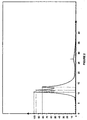
- the antibodies used according to the invention are directed against a repetitive epitope common to acidic and basic isoferritins. Such antibodies are demonstrated using a Sandwich ELISA test as described in Example 2 below and illustrated in FIG. 3. The possibility of carrying out such a test confirms that several antibodies can be attached to the same molecule of ferritin. This property confers a determining advantage for their diagnostic or therapeutic uses.
- a second approach is to reconstitute the antibodies (Reshape antibodies) (Riechmann et al., (1988), Nature 332 : 323-327).
- the starting point of this approach is the observation that the sites of contact of the antibodies with the epitopes of the antigens that they recognize are located on certain sequences of the so-called hypervariable variable regions.
- the technique involves grafting the hypervariable regions of a murine immunoglobulin called "antigen complementarity determining region" or "CDR" onto the variable regions of a human class G immunoglobulin.
- the monoclonal antibodies used according to the invention which they whether of IgG or IgM type, may be mono-specific, bi-specific or polyspecific.
- the genetic manipulation techniques described above allow to associate in a molecule specificities, a on the other hand, for ferritin and, on the other hand, for a receptor or antigen specific surface of a cell that one wishes to target.
- the first is to use the antibody as an immune effector, using therapies anti-tumors to a CDCC-type activity (complement dependent cell cytotoxicity) or ADCC (antibody dependent cell cytotoxicity). he can also be a blockage of a tumor cell receptor or an anti-idiotypic vaccination specific for the tumor antigen.
- CDCC-type activity complement dependent cell cytotoxicity
- ADCC antibody dependent cell cytotoxicity
- the antibody or fragment of it can be coupled with a molecule X, where X is a molecule toxic, drug or prodrug or nude sequence or a second antibody regardless of its specificity of recognition.
- X is a toxic molecule
- a first example is where X is a radioactive isotope, preferably with ⁇ emissions.
- X is a radioactive isotope, preferably with ⁇ emissions.
- Y Yttrium
- studies using antiferritin polyclonal antibodies labeled with Indium 111 (in 111) and Yttrium (Y 90) have given interesting results concerning, on the one hand, the imaging of tumor sites, preferably with In 111 and, on the other hand, the treatment of refractory forms of Hodgkin's disease (Y 90) (PE Borchardt et al (1998), The Journal of Nuclear Medicine, 39 : No. 3, page 476).
- the radioactive isotope is coupled to the antibody by chelation techniques described either in Borchardt and al. (see above).
- Yttrium 90 is particularly relevant: it is a pure ⁇ radiation isotope, its half-life is 67 hours and its irradiation radius is 6.6 minutes. It seems perfectly adapted to the treatment of tumor masses, especially Hodgkin's disease, lymphomas or pancreatic cancers especially.
- X can also be a toxic molecule of chain A type of ricin, Abrine or diphtheria toxin.
- the toxicity of these polypeptides is known. They can be coupled to immunoglobulin by carboxylic type bonds or by any type of link allowing to couple proteins together, in particular by their residues -COOH, -NH2, -SH, etc., and which are well known to those skilled in the art.
- X is a cytotoxic molecule
- Cytotoxic drugs are known, others are in development. They have the property of blocking cell division, either by blocking the transcription or by blocking the translation or by induction of apoptosis. By way of example, mention may be made of mitomycin, adriamycin, taxol, etc. The problem that still remains with the use of such drugs is their toxicity towards healthy cells, or healthy tissue. Monoclonal antibodies according to the invention, mono-specific ferritin or bi-specific with respect to ferritin and a receptor allows the targeting of these substances on the chosen cells.
- X is a galenic vector or a prodrug.
- the monoclonal antibody according to the invention can be coupled to a liposome vector, or cationic type emulsions already used. as a drug delivery system (Texeira et al (1999) Pharmaceutical Research, 16 : 30-36). It may also be cationic lipids such as those described by D. Deshpande et al. (1998), Pharmaceutical Research, 15 : 1340-1347.
- a liposome vector or cationic type emulsions already used.
- it may also be cationic lipids such as those described by D. Deshpande et al. (1998), Pharmaceutical Research, 15 : 1340-1347.
- it is particularly appropriate to integrate cytostatic and / or cytotoxic molecules of RNA and antisense DNA type. Nevertheless, for the reasons mentioned above and all aimed at increasing the specificity of the targeting, and the decrease of the cytotoxicity of the various usable toxins, the molecules mentioned in point b) above can be advantageously carried by these vectors.
- X may also be coupled to a carbon chain sensitive to esterases.
- This chain from length of 5 to 15 carbon atoms, linear or branched, is sensitive esterases.
- the coupling of the molecule X to this type of chain in the therapeutic use is particularly interesting in the measure where healthy cells have enzymatic systems including esterases, unlike cancer cells. So in this mode of achievement, only cancer cells will be marked by the antibody coupled to the labeled isotope; the action of esterases in healthy cells will lead to release of the isotope into the circulation general, and therefore only cancer cells benefit from a specific and differential marking.
- the present invention also relates to a method for determining or locating the possible presence in an individual of a tumor or cancer cells in which the product of a gene of the family c-myc, L-myc and N-myc overexpressed comprises a step of in vitro , ex vivo or in vivo labeling of said cells or said tumor with an anti-ferritin monoclonal antibody or a fragment thereof directly or indirectly coupled to a signal-emitting substance, said antibody or said fragment recognizing an epitope common to acidic and basic human ferritins.
- the antibody is preferably coupled to a radioactive isotope; for example, Indium 111 is particularly suitable for the use of the monoclonal antibodies according to the invention in immunoscintigraphy.
- the quality of the monoclonal antibodies according to the invention as described above, namely its specificity and its affinity, is important in the determination or localization method according to the invention.
- the skilled person will know, as needed; pair with the mono- or bi-specific antibody the appropriate signal for highlighting and / or the location of a tumor or tumor cells.
- fluorescence emitting or luminescence coupled by any method appropriate to the antibody.
- a An example of a widely used method is avidin / biotin coupling.
- epitope common to acidic human ferritins and basic is repetitive.
- pancreatic cancer b) pancreatic cancer:
- Pancreatic cancer affects 8,000 new cases per year in France. This cancer has a catastrophic prognosis in the sense that there is less than 3% survival at five years. This cancer is not chemo-sensibie; he is radio-sensitive but radio-incurable (critical organ). Treatments current are surgery, if possible, radiotherapy or radiotherapy Intraoperative.
- the advantage of using monoclonal antibodies antiferritins coupled to a radioactive isotope, in particular Yttrium 90 is that the dose of deliverable radiotherapy is potentially multiplied by 20, accompanied by a very low secondary toxicity. Indeed, the consequence of targeting avoids destruction of the radioactive isotope in the general circulation and the latter is directly targeted within the tumors.
- This liver cancer represents about 15 cases for 100,000 inhabitants. They are operable in 20% of cases with a prognosis from 40% to five years. In 80% of the inoperable cases, the prognosis is 10% to five years. No treatment has yet proven effective except radioactive lipiodol. Treatment with the compounds of the invention allows to increase the therapeutic index (residence / emission time) from 4 to 10 compared to treatment with 131I-labeled lipiodol, also because of direct tumor administration of the isotope.
- carcinoma of the head and neck carcinoma of the airways upper digestive tract or VADS.
- ferritin is expressed only intracellularly, in the neoplastic process, connected most often with the c-myc oncogene, ferritin is usually expressed on the cellular membrane. It is thus clear that having the product coupling between the monoclonal antibodies and a molecule X such that defined above antiferritin allows to specifically target a spectrum variety of tumors or tumor cells, all of which have in common the specificity of hyperexpression of a gene of the myc family. In the case metabolic radiotherapy treatment, the use of IgM is interesting because of its slow diffusion and longer life.
- the list of tumoral pathologies mentioned is not exhaustive.
- the hybridomas are grown in a multitrays in vitro cell culture system (Nunc, references 16795).
- the cells are cultured in RPMI 4+ TCH.
- the innoculum consists of 5 x 10 7 in 200 ml of TCH.
- RPMI medium (about 100 to 200 ml) is added every two days until confluence. The supernatant is harvested after about a week when the cells are dead.
- the supernatant is concentrated ten times and then loaded onto a column of chromatography on protein G sepharose FF (Pharmacia), after half dilution in 20 mM sodium phosphate buffer pH 7. After chromatography, the antibody is eluted with glycine HCl buffer 0.1 M pH 7 and the column is desalted immediately against buffer 0.2 M potassium phosphate pH 7.2. The percentage of purity obtained is at least 95%. The isotype, the isolating point and the reactivity by immunodiffusion are then studied on these purified preparations.
- monoclonal antibodies B8 and M29 appear as the most interesting in terms of affinity and specificity for human cells. These two antibodies are Kapa IgG I isotype.
- the tissues were fixed with a 4% paraformaldehyde bath, 0.1 M ethenolamide pH 7.4 and cast in paraffin. Sections of 5 ⁇ are made. After dewaxing with xylene-ethanol baths, non-specific reactions are blocked by incubation of the preparation with bovine serum albumin. The section is incubated with the AMB8LK antibody at a dilution of 1 / 25th, one hour at room temperature. The revelation of the binding of AMB8LK is by a peroxidase system (Cordell J.-L. et al., J. Histochem 1984 32 : 219-229).
- photograph C also indicates that the tumor itself is highly positive for the expression of ferritin.
- the ELISA sandwich test makes it possible to identify antibodies directed against repetitive epitopes. Indeed, the principle of the test is based on the fixing of a same antigen on the one hand with a first antibody fixed on one phase solid and secondly with a second free antibody and wearing a marker (enzymatic for example). For the test to be functional, it two or more antibodies must be able to recognize the same molecule, in other words, that the recognized molecule comprises at least two repeated epitopes.
- the monoclonal antibody of the invention AMB8 LK was used for the performing a sandwich ELISA test for the detection of ferritins human.
- the ELISA test is carried out according to the following protocol:
- Absorbance at 492 nm is measured which reflects the amount of antibody attached to ferritin, itself attached to the antibodies of the solid phase.
- FIG. 3 shows the results of the test.
- results presented here show that it is possible to carry out a test sandwich with AMB8 LK antibody. These results demonstrate that the antibody recognizes a repetitive common epitope on isoferritins human.
Landscapes
- Health & Medical Sciences (AREA)
- Life Sciences & Earth Sciences (AREA)
- Chemical & Material Sciences (AREA)
- General Health & Medical Sciences (AREA)
- Medicinal Chemistry (AREA)
- Immunology (AREA)
- Proteomics, Peptides & Aminoacids (AREA)
- Organic Chemistry (AREA)
- Pharmacology & Pharmacy (AREA)
- Animal Behavior & Ethology (AREA)
- Veterinary Medicine (AREA)
- Public Health (AREA)
- Epidemiology (AREA)
- Biochemistry (AREA)
- Biophysics (AREA)
- Molecular Biology (AREA)
- Genetics & Genomics (AREA)
- Bioinformatics & Cheminformatics (AREA)
- Engineering & Computer Science (AREA)
- Physics & Mathematics (AREA)
- Optics & Photonics (AREA)
- Zoology (AREA)
- Chemical Kinetics & Catalysis (AREA)
- Nuclear Medicine, Radiotherapy & Molecular Imaging (AREA)
- General Chemical & Material Sciences (AREA)
- Medicines Containing Antibodies Or Antigens For Use As Internal Diagnostic Agents (AREA)
- Peptides Or Proteins (AREA)
- Medicines That Contain Protein Lipid Enzymes And Other Medicines (AREA)
- Preparation Of Compounds By Using Micro-Organisms (AREA)
- Pharmaceuticals Containing Other Organic And Inorganic Compounds (AREA)
- Investigating Or Analysing Biological Materials (AREA)
Description
- d'affiner les connaissances relatives à la structure biochimique de la ferritine tissulaire ;
- de préciser la signification de l'hétérogénéité des formes moléculaires désignées sous le terme "d'isoferritines" ;
- de comparer les différentes caractéristiques de la ferritine extraite du plasma ou de divers organes sains ou pathologiques.
caractérisées.
- soit à une amplification du gène,
- soit à une activation de la transcription du gène,
- soit à des modifications post-transcriptionnelles entraínant une stabilité accrue des ARNm. L'étude in vivo, de la surexpression de produits de gènes de la famille myc dans différents tissus par la création d'animaux transgéniques, confirme ces faits. Enfin toute augmentation de prolifération s'accompagne physiologiquement d'une expression accrue de gènes de la famille myc.
- il reconnaít un épitope commun aux ferritines acides et basiques et, de préférence, il ne reconnaít pas les ferritines non humaines et mieux encore, ledit épitope commun aux ferritines acides et basiques est un épitope répétitif;
- son affinité pour l'antigène est supérieure à 10-9 Mole/litre.
| Anticorps monoclonal | M29 | M211 | M386 | B8 | - | - | - |
| Anticorps polyclonal | - | - | - | - | F1 | F2 | F3 |
| Isotypes | Ig G1K | Ig G1 K | Ig G2b K | Ig G1 K | - | - | - |
| Constante d'affinité (L/Mol) | 2.3 10-10 | 1.3 10-9 | 2.2 10-8 | 5.1 10-9 | 1.3 10-11 | 5.9 10-11 | 4.0 10-11 |
| Réactivité : | |||||||
| . foie humain | + | + | + | + | + | + | + |
| . rate humaine | + | + | + | + | + | + | + |
| . coeur humain | + | + | + | + | + | + | + |
| . placenta humain | + | + | + | + | + | + | + |
| . cellules HeLa | + | + | + | + | + | + | + |
| . rate de cheval | - | + | - | - | - | + | + |
| . LIA | - | - | - | - | + | + | + |
- soit dirigé contre la ferritine permettant le cross-linkage de plusieurs molécules de ferritine,
- soit dirigé contre un antigène de cellules lymphoïdes dendritiques, macrophagiques ou de type Natural Killer (tels que CD20, CD30, CD33, HNK1, CD56, à titre d'exemples), permettant alors le recrutement de ladite cellule et son activation au niveau de la cellule tumorale,
- soit enfin dirigé contre un récepteur situé sur une cellule tumorale cible permettant ainsi le cross-linkage de la cellule cible avec la ferritine.
- radioisotopes à émission beta, alpha ou gamma ;
- molécules cytotoxiques de type chaíne A de la ricine, Abrine, ou chaíne A de la toxine diphtérique ;
- substances cytolytiques de type methotrexate, mitomycine, taxol
- des ARN et ADN antisens.
| Rate humaine de Minkowsky-Chauffard | Découpage et broyage Sonication 20 min (Duty C. constant/G40 |
| Rate soniquée | Chauffage à 70 - 75° C pendant 10 min |
| Extrait de rate enrichi en ferritine | Centrifugation 25 000 g pendant 10 min |
| Surnageant de centrifugation | + acide acétique --- pH 4,8 Contact 2 heures à 4° C + K2HP04--- pH 6,5 |
| Surnageant de centrifugation | Précipitation fractionnée Sulfate d'ammonium 50 % 1 nuit 4°C Centrifugation 2 500 g pendant 10 min |
| Culot de centrifugation | Reprise en tampon K2HP04 100 mM, pH 7,2 Dialyse en tampon K2HP04 100 mM, pH 7,2 1 nuit 4° C |
| Surnageant de dialyse | Reprécipitation par du Sulfate de cadmium à 5% 1 nuit à 4°C Centrifugation à 10 000 g pendant 30 min |
| Culot de centrifugation | Reprise en tampon K2HP04 100 mM, pH 7,2 Dialyse en tampon K2HP04 100 mM, pH 7,2 1 nuit 4° C |
| Surnageant de dialyse | Chromatographie sur SUPERDEX 200 Concentration par ultrafiltration AMICON Tampon phosphate 100 mM, pH 7,2 |
| Ferritine 50 au sulfate de cadmium | Analyses physico-chimique et immunochimique (QC) |
| Standardisation et immunisation des souris |
- splénique
- hépatique
- cardiaque
- placentaire.
Claims (26)
- Utilisation, dans la fabrication d'un médicament pour la thérapie d'un cancer dont les cellules présentent une surexpression du produit d'un gène de la famille c-myc, L-myc et N-myc, d'un anticorps monoclonal anti-ferritine ou un fragment de celui-ci ou d'une construction incluant un tel fragment, ledit anticorps ou ledit fragment reconnaissant un épitope commun aux ferritines humaines acides et basiques:
- Utilisation selon la revendication 1 dans laquelle ledit épitope commun aux ferritines humaines acides et basiques est répétitif.
- Utilisation selon la revendication 1 ou la revendication 2 dans laquelle l'anticorps ou le fragment de celui-ci est couplé avec une molécule X, où un X est une molécule toxique, un médicament, une pro-drogue, ou un deuxième anticorps quelle que soit sa spécificité.
- Utilisation selon l'une des revendications 1, 2 ou 3 dans laquelle l'anticorps monoclonal antiferritine est une IgG K d'affinité supérieure à 10-9 Mole/litre, ledit anticorps étant mono- ou bi-spécifique.
- Utilisation selon la revendication 4 dans laquelle, quand l'anticorps est bi-spécifique, le premier paratope est afin pour la ferritine, et le deuxième paratope est affin pour un épitope spécifique d'un antigène de surface ou un récepteur spécifique d'une cellule cible.
- Utilisation selon la revendication 1 , 2 ou 3 dans laquelle l'anticorps monoclonal est une IgM ou un fragment de cette-ci.
- Utilisation selon la revendication 3 dans laquelle X est un radioisotope à émission beta.
- Utilisation selon la revendication 3 dans laquelle X est une molécule toxique de type chaíne A de la ricine, Abrine, ou chaíne A de la toxine diphtérique.
- Utilisation selon la revendication 3 dans laquelle X est une substance cytolytique de type methotrexate, mitomycine, taxol ou adriamycine.
- Utilisation selon la revendication 3 dans laquelle X est une substance cytostatique et/ou cytotoxique de type ARN antisens.
- Utilisation selon la revendication 3 dans laquelle X est une substance stabilisée par un vecteur de type liposome.
- Utilisation selon la revendication 3 dans laquelle, X est un anticorps reconnaissant un récepteur spécifique d'une cellule tumorale.
- Utilisation selon la revendication 3 dans laquelle X est un anticorps reconnaissant un antigène de cellules lympoïdes, dendritiques, macrophagiques ou de type Natural Killer.
- Utilisation selon la revendication 3 dans laquelle X est un radioisotope à émission alpha.
- Utilisation selon la revendication 3 dans laquelle X est un radioisotope à émission gamma.
- Utilisation selon l'une des revendications 1 à 15 dans laquelle un espaceur C5 à C15 est intégré dans le produit de couplage et permet de libérer la molécule X lorsque le produit de couplage est mis en présence d'estérases.
- Utilisation dans la fabrication d'un produit pour déterminer ou localiser la présence éventuelle chez un individu d'une tumeur ou de cellules cancéreuses dans lesquelles le produit de la famille d'un gène de la famille c-myc, L-myc et N-myc est surexprimé, d'un anticorps monoclonal anti-ferritine ou d'un fragment de celui-ci couplé directement ou indirectement à une substance émettrice d'un signal, ledit anticorps ou ledit fragment reconnaissant un épitope commun aux ferritines humaines acides et basiques.
- Utilisation selon la revendication 17 dans laquelle ledit épitope commun aux ferritines humaines acides et basiques est répétitif.
- Utilisation selon la revendication 17 ou 18 dans laquelle l'anticorps est couplé à un isotope radioactif à rayonnement beta, de type Yttrium-90, d'un rayonnement gamma de type Indium-111 ou d'un rayonnement alpha.
- Utilisation selon la revendication 17 ou 18 dans laquelle l'anticorps est couplé à une substance émettrice d'un signal fluorescent ou luminescent.
- Utilisation selon l'une des revendications 17 à 20 dans laquelle l'anticorps a une affinité supérieure à 10-9 Mole/litre, ledit anticorps étant mono- ou bi-spécifique.
- Utilisation selon la revendication 21 dans laquelle, quand l'anticorps est bi-spécifique, le premier paratope est affin pour la ferritine, et le deuxième paratope est affin pour un épitope spécifique d'un antigène de surface ou un récepteur spécifique d'une cellule cible.
- Produit de couplage entre un anticorps et une substance X choisie dans un groupe constitué de :ledit anticorps étant un anticorps monoclonal anti-ferritine reconnaissant un épitope commun aux ferritines humaines acides et basiques et ayant une affinité pour l'antigène supérieure à 10-9 Mole/litre.radioisotopes à émission beta, alpha ou gamma ;molécules toxiques de type chaíne A de la ricine, Abrine, ou chaíne A de la toxine diphtérique ;substances cytolytiques de type methotrexate, mitomycine, taxol ou adriamycine ;des ARN antisens.
- Produit de couplage selon la revendication 23 dans lequel ledit épitope commun aux ferritines humaines acides et basiques est répétitif.
- Produit de couplage selon la revendication 23 dans lequel X est stabilisé par un vecteur de type liposome.
- Produit de couplage selon la revendication 23 dans lequel un espaceur C5 à C15 est intégré dans le produit de couplage et permet de libérer la molécule X lorsque le produit de couplage est mis en présence d'estérases.
Applications Claiming Priority (3)
| Application Number | Priority Date | Filing Date | Title |
|---|---|---|---|
| FR0000718 | 2000-01-20 | ||
| FR0000718A FR2804027B1 (fr) | 2000-01-20 | 2000-01-20 | Utilisation d'anticorps monoclonaux anti-ferritines dans le traitement de certains cancers |
| PCT/FR2001/000192 WO2001052889A1 (fr) | 2000-01-20 | 2001-01-19 | Utilisation d'anticorps monoclonaux anti-ferritines dans le traitement de certains cancers |
Publications (2)
| Publication Number | Publication Date |
|---|---|
| EP1165134A1 EP1165134A1 (fr) | 2002-01-02 |
| EP1165134B1 true EP1165134B1 (fr) | 2005-03-16 |
Family
ID=8846119
Family Applications (1)
| Application Number | Title | Priority Date | Filing Date |
|---|---|---|---|
| EP01907655A Expired - Lifetime EP1165134B1 (fr) | 2000-01-20 | 2001-01-19 | Utilisation d'anticorps monoclonaux anti-ferritines dans le traitement de certains cancers |
Country Status (10)
| Country | Link |
|---|---|
| US (2) | US7153506B2 (fr) |
| EP (1) | EP1165134B1 (fr) |
| JP (1) | JP2003520250A (fr) |
| AT (1) | ATE290881T1 (fr) |
| AU (1) | AU3556901A (fr) |
| CA (1) | CA2387383C (fr) |
| DE (1) | DE60109359T2 (fr) |
| ES (1) | ES2239126T3 (fr) |
| FR (1) | FR2804027B1 (fr) |
| WO (1) | WO2001052889A1 (fr) |
Families Citing this family (11)
| Publication number | Priority date | Publication date | Assignee | Title |
|---|---|---|---|---|
| EP2292264A3 (fr) | 2003-07-24 | 2012-12-19 | Innate Pharma | Procédés et compositions pour augmenter l'efficacité des anticorps thérapeutiques en utilisant des composés de potentialisation de cellules NK |
| EP1563851A1 (fr) * | 2004-02-17 | 2005-08-17 | Yissum Research Development Company of the Hebrew University of Jerusalem | Emulsions cationiques ciblées avec des anticorps pour la livraison de drogues |
| ES2534288T3 (es) | 2004-08-03 | 2015-04-21 | Innate Pharma | Composiciones terapéuticas contra el cáncer que seleccionan como objetivo 4Ig-B7-H3 |
| GB0420566D0 (en) * | 2004-09-16 | 2004-10-20 | Sec Dep For Environment Food & | Assay method |
| US20080267876A1 (en) * | 2005-09-20 | 2008-10-30 | Yissum Research Development Company | Nanoparticles for Targeted Delivery of Active Agent |
| GB0612825D0 (en) * | 2006-06-28 | 2006-08-09 | Iti Scotland Ltd | Analyte detection |
| GB0616508D0 (en) * | 2006-08-18 | 2006-09-27 | Iti Scotland Ltd | Analyte manipulation and detection |
| US20090053736A1 (en) * | 2007-08-21 | 2009-02-26 | Mattingly Phillip G | Homogeneous Chemiluminescent Immunoassay for Analysis of Iron Metalloproteins |
| ES2541907T3 (es) * | 2007-09-19 | 2015-07-28 | Immune Pharmaceuticals Ltd. | Secuencias de nucleótidos y proteínas de un anticuerpo dirigido frente a un epítopo común para ferritínas humanas ácidas y básicas, anticuerpos monoclonales o moléculas semejantes a anticuerpo que comprenden estas secuencias y uso de éstos. |
| US8728477B2 (en) | 2007-09-19 | 2014-05-20 | Immune Pharmaceuticals Ltd. | Nucleotide and protein sequences of an antibody directed against an epitope common to human acidic and basic ferritins, monoclonal antibodies or antibody-like molecules comprising these sequences and uses thereof |
| CN119591703B (zh) * | 2023-09-08 | 2025-11-18 | 东莞市朋志生物科技有限公司 | 一种抗铁蛋白的抗体及其应用 |
Family Cites Families (3)
| Publication number | Priority date | Publication date | Assignee | Title |
|---|---|---|---|---|
| US5156840A (en) * | 1982-03-09 | 1992-10-20 | Cytogen Corporation | Amine-containing porphyrin derivatives |
| US5843440A (en) * | 1990-10-03 | 1998-12-01 | Redcell Canada, Inc. | Cellular and serum protein anchors for modulating pharmacokinetics |
| EP0627941A1 (fr) * | 1992-02-28 | 1994-12-14 | ORDER, Stanley E. | Utilisation de proteines agregees pour prolonger le temps de retention d'un agent therapeutique adjacent a un site cible tel qu'une tumeur |
-
2000
- 2000-01-20 FR FR0000718A patent/FR2804027B1/fr not_active Expired - Fee Related
-
2001
- 2001-01-19 WO PCT/FR2001/000192 patent/WO2001052889A1/fr not_active Ceased
- 2001-01-19 AT AT01907655T patent/ATE290881T1/de not_active IP Right Cessation
- 2001-01-19 DE DE60109359T patent/DE60109359T2/de not_active Expired - Lifetime
- 2001-01-19 AU AU35569/01A patent/AU3556901A/en not_active Abandoned
- 2001-01-19 CA CA002387383A patent/CA2387383C/fr not_active Expired - Fee Related
- 2001-01-19 ES ES01907655T patent/ES2239126T3/es not_active Expired - Lifetime
- 2001-01-19 JP JP2001552936A patent/JP2003520250A/ja active Pending
- 2001-01-19 EP EP01907655A patent/EP1165134B1/fr not_active Expired - Lifetime
- 2001-09-13 US US09/952,307 patent/US7153506B2/en not_active Expired - Lifetime
-
2006
- 2006-10-30 US US11/589,406 patent/US20070042447A1/en not_active Abandoned
Non-Patent Citations (2)
| Title |
|---|
| VRIESENDORP ET AL, CANCER, vol. SUP. 80, no. 12, 1997, pages 2721 - 2727 * |
| WU ET AL: "Coordinated Regulation of Iron-Controlling Genes H-Ferritin and IRP2, by c-MYC", SCIENCE, vol. 283, 1999, pages 676 - 679 * |
Also Published As
| Publication number | Publication date |
|---|---|
| FR2804027A1 (fr) | 2001-07-27 |
| FR2804027B1 (fr) | 2002-08-30 |
| CA2387383A1 (fr) | 2001-07-26 |
| US20020106324A1 (en) | 2002-08-08 |
| AU3556901A (en) | 2001-07-31 |
| EP1165134A1 (fr) | 2002-01-02 |
| DE60109359T2 (de) | 2006-04-13 |
| ATE290881T1 (de) | 2005-04-15 |
| US20070042447A1 (en) | 2007-02-22 |
| US7153506B2 (en) | 2006-12-26 |
| WO2001052889A1 (fr) | 2001-07-26 |
| ES2239126T3 (es) | 2005-09-16 |
| JP2003520250A (ja) | 2003-07-02 |
| CA2387383C (fr) | 2008-10-21 |
| DE60109359D1 (de) | 2005-04-21 |
Similar Documents
| Publication | Publication Date | Title |
|---|---|---|
| US12084518B2 (en) | Trispecific binding proteins and methods of use | |
| JP5028635B2 (ja) | Fzd10に対する腫瘍標的化モノクローナル抗体とその使用 | |
| US20160319031A1 (en) | Tumor specific antibodies and uses therefor | |
| JP2019535763A (ja) | 前立腺特異的膜抗原(psma)を標的とする三重特異性タンパク質と使用方法 | |
| CA2387383C (fr) | Utilisation d'anticorps monoclonaux anti-ferritines dans le traitement de certains cancers | |
| JPH09509053A (ja) | T−細胞抗原、並びにt−細胞介在状態の診断及び処理へのそれらの使用 | |
| JP2012523383A (ja) | がんの治療のためのアマトキシンと複合体形成した標的結合部分 | |
| EP2566511A2 (fr) | Utilisation d'anticorps anti-cd71 pour la preparation d'un medicament | |
| JPH05117164A (ja) | 治療薬を固形組織に補給するための方法および物質 | |
| US20180043038A1 (en) | Tumor specific antibody conjugates and uses therefor | |
| JP2009533350A (ja) | B細胞悪性疾患を処置するための組成物および方法 | |
| CN1849136B (zh) | 癌症疾病改善抗体 | |
| TWI445525B (zh) | 用以偵測、成像和治療瘤新生或血管新生的血管標的物之用途 | |
| EP0837699B1 (fr) | Immunovecteurs utilisables pour le transport intracellulaire et intranucleaire | |
| Goldsmith et al. | Bispecific antibodies for the treatment of multiple myeloma | |
| SK11982002A3 (sk) | Nová protilátka so špecificitou pre rakovinu hrubého čreva | |
| US20220259322A1 (en) | Anti-grp78 antibodies and method of use thereof | |
| FR3160407A1 (fr) | Complexe peptidique radiosensibilisant | |
| US6685930B1 (en) | Methods and substances for recruiting therapeutic agents to solid tumors | |
| Suurs | Molecular imaging of immunotherapy biodistribution and the tumor immune environment | |
| Class et al. | Patent application title: TUMOR SPECIFIC ANITBODY CONJUGATES AND USES THEREFOR Inventors: Pinku Mukherjee (Waxhaw, NC, US) Juan Luis Vivero-Escoto (Charlotte, NC, US) | |
| Robert et al. | Bispecific Antibodies for the Retargeting of Cytokines | |
| WO2000014118A1 (fr) | Anticorps monoclonaux anti-proteine ozf et leurs applications dans le domaine diagnostic et therapeutique |
Legal Events
| Date | Code | Title | Description |
|---|---|---|---|
| PUAI | Public reference made under article 153(3) epc to a published international application that has entered the european phase |
Free format text: ORIGINAL CODE: 0009012 |
|
| 17P | Request for examination filed |
Effective date: 20011019 |
|
| AK | Designated contracting states |
Kind code of ref document: A1 Designated state(s): AT BE CH CY DE DK ES FI FR GB GR IE IT LI LU MC NL PT SE TR |
|
| AX | Request for extension of the european patent |
Free format text: AL;LT;LV;MK;RO;SI |
|
| 17Q | First examination report despatched |
Effective date: 20021111 |
|
| GRAP | Despatch of communication of intention to grant a patent |
Free format text: ORIGINAL CODE: EPIDOSNIGR1 |
|
| GRAS | Grant fee paid |
Free format text: ORIGINAL CODE: EPIDOSNIGR3 |
|
| GRAA | (expected) grant |
Free format text: ORIGINAL CODE: 0009210 |
|
| AK | Designated contracting states |
Kind code of ref document: B1 Designated state(s): AT BE CH CY DE DK ES FI FR GB GR IE IT LI LU MC NL PT SE TR |
|
| PG25 | Lapsed in a contracting state [announced via postgrant information from national office to epo] |
Ref country code: NL Free format text: LAPSE BECAUSE OF FAILURE TO SUBMIT A TRANSLATION OF THE DESCRIPTION OR TO PAY THE FEE WITHIN THE PRESCRIBED TIME-LIMIT Effective date: 20050316 Ref country code: FI Free format text: LAPSE BECAUSE OF FAILURE TO SUBMIT A TRANSLATION OF THE DESCRIPTION OR TO PAY THE FEE WITHIN THE PRESCRIBED TIME-LIMIT Effective date: 20050316 |
|
| REG | Reference to a national code |
Ref country code: GB Ref legal event code: FG4D Free format text: NOT ENGLISH |
|
| REG | Reference to a national code |
Ref country code: CH Ref legal event code: EP |
|
| RAP2 | Party data changed (patent owner data changed or rights of a patent transferred) |
Owner name: MONOCLONAL ANTIBODIES THERAPEUTICS M.A.T. |
|
| REG | Reference to a national code |
Ref country code: IE Ref legal event code: FG4D Free format text: FRENCH |
|
| REF | Corresponds to: |
Ref document number: 60109359 Country of ref document: DE Date of ref document: 20050421 Kind code of ref document: P |
|
| REG | Reference to a national code |
Ref country code: CH Ref legal event code: NV Representative=s name: SCHNEIDER FELDMANN AG PATENT- UND MARKENANWAELTE |
|
| PG25 | Lapsed in a contracting state [announced via postgrant information from national office to epo] |
Ref country code: GR Free format text: LAPSE BECAUSE OF FAILURE TO SUBMIT A TRANSLATION OF THE DESCRIPTION OR TO PAY THE FEE WITHIN THE PRESCRIBED TIME-LIMIT Effective date: 20050616 Ref country code: DK Free format text: LAPSE BECAUSE OF FAILURE TO SUBMIT A TRANSLATION OF THE DESCRIPTION OR TO PAY THE FEE WITHIN THE PRESCRIBED TIME-LIMIT Effective date: 20050616 |
|
| GBT | Gb: translation of ep patent filed (gb section 77(6)(a)/1977) |
Effective date: 20050607 |
|
| NLT2 | Nl: modifications (of names), taken from the european patent patent bulletin |
Owner name: MONOCLONAL ANTIBODIES THERAPEUTICS M.A.T. |
|
| NLV1 | Nl: lapsed or annulled due to failure to fulfill the requirements of art. 29p and 29m of the patents act | ||
| PG25 | Lapsed in a contracting state [announced via postgrant information from national office to epo] |
Ref country code: PT Free format text: LAPSE BECAUSE OF FAILURE TO SUBMIT A TRANSLATION OF THE DESCRIPTION OR TO PAY THE FEE WITHIN THE PRESCRIBED TIME-LIMIT Effective date: 20050907 |
|
| REG | Reference to a national code |
Ref country code: ES Ref legal event code: FG2A Ref document number: 2239126 Country of ref document: ES Kind code of ref document: T3 |
|
| PLBE | No opposition filed within time limit |
Free format text: ORIGINAL CODE: 0009261 |
|
| STAA | Information on the status of an ep patent application or granted ep patent |
Free format text: STATUS: NO OPPOSITION FILED WITHIN TIME LIMIT |
|
| PG25 | Lapsed in a contracting state [announced via postgrant information from national office to epo] |
Ref country code: MC Free format text: LAPSE BECAUSE OF NON-PAYMENT OF DUE FEES Effective date: 20060131 Ref country code: LU Free format text: LAPSE BECAUSE OF NON-PAYMENT OF DUE FEES Effective date: 20060131 |
|
| 26N | No opposition filed |
Effective date: 20051219 |
|
| PG25 | Lapsed in a contracting state [announced via postgrant information from national office to epo] |
Ref country code: SE Free format text: LAPSE BECAUSE OF FAILURE TO SUBMIT A TRANSLATION OF THE DESCRIPTION OR TO PAY THE FEE WITHIN THE PRESCRIBED TIME-LIMIT Effective date: 20050616 |
|
| PG25 | Lapsed in a contracting state [announced via postgrant information from national office to epo] |
Ref country code: TR Free format text: LAPSE BECAUSE OF FAILURE TO SUBMIT A TRANSLATION OF THE DESCRIPTION OR TO PAY THE FEE WITHIN THE PRESCRIBED TIME-LIMIT Effective date: 20050316 |
|
| PG25 | Lapsed in a contracting state [announced via postgrant information from national office to epo] |
Ref country code: CY Free format text: LAPSE BECAUSE OF FAILURE TO SUBMIT A TRANSLATION OF THE DESCRIPTION OR TO PAY THE FEE WITHIN THE PRESCRIBED TIME-LIMIT Effective date: 20050316 |
|
| PGFP | Annual fee paid to national office [announced via postgrant information from national office to epo] |
Ref country code: IE Payment date: 20100128 Year of fee payment: 10 |
|
| PGFP | Annual fee paid to national office [announced via postgrant information from national office to epo] |
Ref country code: AT Payment date: 20100119 Year of fee payment: 10 |
|
| PGFP | Annual fee paid to national office [announced via postgrant information from national office to epo] |
Ref country code: BE Payment date: 20100310 Year of fee payment: 10 |
|
| BERE | Be: lapsed |
Owner name: MONOCLONAL ANTIBODIES THERAPEUTICS *MAT Effective date: 20110131 |
|
| REG | Reference to a national code |
Ref country code: IE Ref legal event code: MM4A |
|
| PG25 | Lapsed in a contracting state [announced via postgrant information from national office to epo] |
Ref country code: AT Free format text: LAPSE BECAUSE OF NON-PAYMENT OF DUE FEES Effective date: 20110119 Ref country code: BE Free format text: LAPSE BECAUSE OF NON-PAYMENT OF DUE FEES Effective date: 20110131 |
|
| PG25 | Lapsed in a contracting state [announced via postgrant information from national office to epo] |
Ref country code: IE Free format text: LAPSE BECAUSE OF NON-PAYMENT OF DUE FEES Effective date: 20110119 |
|
| REG | Reference to a national code |
Ref country code: FR Ref legal event code: PLFP Year of fee payment: 16 |
|
| REG | Reference to a national code |
Ref country code: FR Ref legal event code: PLFP Year of fee payment: 17 |
|
| PGFP | Annual fee paid to national office [announced via postgrant information from national office to epo] |
Ref country code: FR Payment date: 20161215 Year of fee payment: 17 |
|
| PGFP | Annual fee paid to national office [announced via postgrant information from national office to epo] |
Ref country code: DE Payment date: 20170110 Year of fee payment: 17 Ref country code: CH Payment date: 20170112 Year of fee payment: 17 |
|
| PGFP | Annual fee paid to national office [announced via postgrant information from national office to epo] |
Ref country code: GB Payment date: 20170118 Year of fee payment: 17 |
|
| PGFP | Annual fee paid to national office [announced via postgrant information from national office to epo] |
Ref country code: IT Payment date: 20170123 Year of fee payment: 17 |
|
| REG | Reference to a national code |
Ref country code: DE Ref legal event code: R119 Ref document number: 60109359 Country of ref document: DE |
|
| REG | Reference to a national code |
Ref country code: CH Ref legal event code: PL |
|
| GBPC | Gb: european patent ceased through non-payment of renewal fee |
Effective date: 20180119 |
|
| PG25 | Lapsed in a contracting state [announced via postgrant information from national office to epo] |
Ref country code: DE Free format text: LAPSE BECAUSE OF NON-PAYMENT OF DUE FEES Effective date: 20180801 Ref country code: FR Free format text: LAPSE BECAUSE OF NON-PAYMENT OF DUE FEES Effective date: 20180131 |
|
| REG | Reference to a national code |
Ref country code: FR Ref legal event code: ST Effective date: 20180928 |
|
| PG25 | Lapsed in a contracting state [announced via postgrant information from national office to epo] |
Ref country code: GB Free format text: LAPSE BECAUSE OF NON-PAYMENT OF DUE FEES Effective date: 20180119 Ref country code: CH Free format text: LAPSE BECAUSE OF NON-PAYMENT OF DUE FEES Effective date: 20180131 Ref country code: LI Free format text: LAPSE BECAUSE OF NON-PAYMENT OF DUE FEES Effective date: 20180131 |
|
| PG25 | Lapsed in a contracting state [announced via postgrant information from national office to epo] |
Ref country code: IT Free format text: LAPSE BECAUSE OF NON-PAYMENT OF DUE FEES Effective date: 20180119 |
|
| PGFP | Annual fee paid to national office [announced via postgrant information from national office to epo] |
Ref country code: ES Payment date: 20190201 Year of fee payment: 19 |
|
| REG | Reference to a national code |
Ref country code: ES Ref legal event code: FD2A Effective date: 20210603 |
|
| PG25 | Lapsed in a contracting state [announced via postgrant information from national office to epo] |
Ref country code: ES Free format text: LAPSE BECAUSE OF NON-PAYMENT OF DUE FEES Effective date: 20200120 |