EP1159575B1 - Laserschweissen von wärmetauscherrohren - Google Patents
Laserschweissen von wärmetauscherrohren Download PDFInfo
- Publication number
- EP1159575B1 EP1159575B1 EP00907397A EP00907397A EP1159575B1 EP 1159575 B1 EP1159575 B1 EP 1159575B1 EP 00907397 A EP00907397 A EP 00907397A EP 00907397 A EP00907397 A EP 00907397A EP 1159575 B1 EP1159575 B1 EP 1159575B1
- Authority
- EP
- European Patent Office
- Prior art keywords
- tube
- tubes
- collar
- heat exchanger
- infrared energy
- Prior art date
- Legal status (The legal status is an assumption and is not a legal conclusion. Google has not performed a legal analysis and makes no representation as to the accuracy of the status listed.)
- Expired - Lifetime
Links
- 238000000034 method Methods 0.000 claims abstract description 19
- 239000004033 plastic Substances 0.000 claims abstract description 12
- 229920003023 plastic Polymers 0.000 claims abstract description 12
- 239000012530 fluid Substances 0.000 claims description 36
- 239000000835 fiber Substances 0.000 claims description 18
- 239000000463 material Substances 0.000 claims description 12
- 229920002647 polyamide Polymers 0.000 claims description 8
- 239000004952 Polyamide Substances 0.000 claims description 7
- 239000006229 carbon black Substances 0.000 claims description 5
- 239000003086 colorant Substances 0.000 claims description 2
- 238000010521 absorption reaction Methods 0.000 claims 2
- 230000001427 coherent effect Effects 0.000 claims 2
- 239000012815 thermoplastic material Substances 0.000 claims 2
- 238000002844 melting Methods 0.000 claims 1
- 230000008018 melting Effects 0.000 claims 1
- 229920000106 Liquid crystal polymer Polymers 0.000 description 33
- 239000010410 layer Substances 0.000 description 29
- 239000004977 Liquid-crystal polymers (LCPs) Substances 0.000 description 27
- -1 poly(ester-imides) Polymers 0.000 description 19
- 229920000642 polymer Polymers 0.000 description 13
- 239000000203 mixture Substances 0.000 description 10
- 238000010276 construction Methods 0.000 description 8
- 229920002302 Nylon 6,6 Polymers 0.000 description 7
- LYCAIKOWRPUZTN-UHFFFAOYSA-N Ethylene glycol Chemical compound OCCO LYCAIKOWRPUZTN-UHFFFAOYSA-N 0.000 description 6
- KKEYFWRCBNTPAC-UHFFFAOYSA-N Terephthalic acid Chemical compound OC(=O)C1=CC=C(C(O)=O)C=C1 KKEYFWRCBNTPAC-UHFFFAOYSA-N 0.000 description 6
- 229920001577 copolymer Polymers 0.000 description 6
- 229920000728 polyester Polymers 0.000 description 6
- 229920002292 Nylon 6 Polymers 0.000 description 5
- NAQMVNRVTILPCV-UHFFFAOYSA-N hexane-1,6-diamine Chemical compound NCCCCCCN NAQMVNRVTILPCV-UHFFFAOYSA-N 0.000 description 5
- XLYOFNOQVPJJNP-UHFFFAOYSA-N water Substances O XLYOFNOQVPJJNP-UHFFFAOYSA-N 0.000 description 4
- 238000003466 welding Methods 0.000 description 4
- JZUHIOJYCPIVLQ-UHFFFAOYSA-N 2-methylpentane-1,5-diamine Chemical compound NCC(C)CCCN JZUHIOJYCPIVLQ-UHFFFAOYSA-N 0.000 description 3
- 102100035182 Plastin-2 Human genes 0.000 description 3
- 101710081231 Plastin-2 Proteins 0.000 description 3
- 238000009792 diffusion process Methods 0.000 description 3
- 239000000945 filler Substances 0.000 description 3
- WGCNASOHLSPBMP-UHFFFAOYSA-N hydroxyacetaldehyde Natural products OCC=O WGCNASOHLSPBMP-UHFFFAOYSA-N 0.000 description 3
- 229920001279 poly(ester amides) Polymers 0.000 description 3
- 229920001169 thermoplastic Polymers 0.000 description 3
- 239000004416 thermosoftening plastic Substances 0.000 description 3
- 238000012546 transfer Methods 0.000 description 3
- 239000004743 Polypropylene Substances 0.000 description 2
- PPBRXRYQALVLMV-UHFFFAOYSA-N Styrene Chemical compound C=CC1=CC=CC=C1 PPBRXRYQALVLMV-UHFFFAOYSA-N 0.000 description 2
- 150000001408 amides Chemical class 0.000 description 2
- IISBACLAFKSPIT-UHFFFAOYSA-N bisphenol A Chemical compound C=1C=C(O)C=CC=1C(C)(C)C1=CC=C(O)C=C1 IISBACLAFKSPIT-UHFFFAOYSA-N 0.000 description 2
- 239000002826 coolant Substances 0.000 description 2
- 150000004985 diamines Chemical class 0.000 description 2
- 229920001971 elastomer Polymers 0.000 description 2
- 150000002148 esters Chemical class 0.000 description 2
- 229920000554 ionomer Polymers 0.000 description 2
- QQVIHTHCMHWDBS-UHFFFAOYSA-N isophthalic acid Chemical compound OC(=O)C1=CC=CC(C(O)=O)=C1 QQVIHTHCMHWDBS-UHFFFAOYSA-N 0.000 description 2
- 229920001778 nylon Polymers 0.000 description 2
- 238000004023 plastic welding Methods 0.000 description 2
- 229920000098 polyolefin Polymers 0.000 description 2
- 229920001155 polypropylene Polymers 0.000 description 2
- 239000005060 rubber Substances 0.000 description 2
- 238000012360 testing method Methods 0.000 description 2
- BFKJFAAPBSQJPD-UHFFFAOYSA-N tetrafluoroethene Chemical group FC(F)=C(F)F BFKJFAAPBSQJPD-UHFFFAOYSA-N 0.000 description 2
- KHXKESCWFMPTFT-UHFFFAOYSA-N 1,1,1,2,2,3,3-heptafluoro-3-(1,2,2-trifluoroethenoxy)propane Chemical compound FC(F)=C(F)OC(F)(F)C(F)(F)C(F)(F)F KHXKESCWFMPTFT-UHFFFAOYSA-N 0.000 description 1
- LLLVZDVNHNWSDS-UHFFFAOYSA-N 4-methylidene-3,5-dioxabicyclo[5.2.2]undeca-1(9),7,10-triene-2,6-dione Chemical compound C1(C2=CC=C(C(=O)OC(=C)O1)C=C2)=O LLLVZDVNHNWSDS-UHFFFAOYSA-N 0.000 description 1
- JBRZTFJDHDCESZ-UHFFFAOYSA-N AsGa Chemical compound [As]#[Ga] JBRZTFJDHDCESZ-UHFFFAOYSA-N 0.000 description 1
- VGGSQFUCUMXWEO-UHFFFAOYSA-N Ethene Chemical compound C=C VGGSQFUCUMXWEO-UHFFFAOYSA-N 0.000 description 1
- 239000005977 Ethylene Substances 0.000 description 1
- 229910001218 Gallium arsenide Inorganic materials 0.000 description 1
- 239000004677 Nylon Substances 0.000 description 1
- 229920003189 Nylon 4,6 Polymers 0.000 description 1
- 239000004698 Polyethylene Substances 0.000 description 1
- 239000004642 Polyimide Substances 0.000 description 1
- 239000004793 Polystyrene Substances 0.000 description 1
- 229920001328 Polyvinylidene chloride Polymers 0.000 description 1
- 239000004957 Zytel Substances 0.000 description 1
- 229920006102 Zytel® Polymers 0.000 description 1
- 239000002253 acid Substances 0.000 description 1
- 150000007513 acids Chemical class 0.000 description 1
- NIXOWILDQLNWCW-UHFFFAOYSA-N acrylic acid group Chemical group C(C=C)(=O)O NIXOWILDQLNWCW-UHFFFAOYSA-N 0.000 description 1
- XECAHXYUAAWDEL-UHFFFAOYSA-N acrylonitrile butadiene styrene Chemical compound C=CC=C.C=CC#N.C=CC1=CC=CC=C1 XECAHXYUAAWDEL-UHFFFAOYSA-N 0.000 description 1
- 229920000122 acrylonitrile butadiene styrene Polymers 0.000 description 1
- 239000004676 acrylonitrile butadiene styrene Substances 0.000 description 1
- 239000012790 adhesive layer Substances 0.000 description 1
- 125000003368 amide group Chemical group 0.000 description 1
- 239000003963 antioxidant agent Substances 0.000 description 1
- 125000003118 aryl group Chemical group 0.000 description 1
- 230000000712 assembly Effects 0.000 description 1
- 238000000429 assembly Methods 0.000 description 1
- 230000004888 barrier function Effects 0.000 description 1
- 125000004432 carbon atom Chemical group C* 0.000 description 1
- 238000002144 chemical decomposition reaction Methods 0.000 description 1
- 238000001816 cooling Methods 0.000 description 1
- 230000003247 decreasing effect Effects 0.000 description 1
- 239000000975 dye Substances 0.000 description 1
- 230000007613 environmental effect Effects 0.000 description 1
- 239000003822 epoxy resin Substances 0.000 description 1
- 229920006242 ethylene acrylic acid copolymer Polymers 0.000 description 1
- 229920001038 ethylene copolymer Polymers 0.000 description 1
- 238000002474 experimental method Methods 0.000 description 1
- XUCNUKMRBVNAPB-UHFFFAOYSA-N fluoroethene Chemical compound FC=C XUCNUKMRBVNAPB-UHFFFAOYSA-N 0.000 description 1
- 229920002313 fluoropolymer Polymers 0.000 description 1
- 239000004811 fluoropolymer Substances 0.000 description 1
- 239000007789 gas Substances 0.000 description 1
- 239000011521 glass Substances 0.000 description 1
- 238000010438 heat treatment Methods 0.000 description 1
- HCDGVLDPFQMKDK-UHFFFAOYSA-N hexafluoropropylene Chemical group FC(F)=C(F)C(F)(F)F HCDGVLDPFQMKDK-UHFFFAOYSA-N 0.000 description 1
- 125000001183 hydrocarbyl group Chemical group 0.000 description 1
- 239000001257 hydrogen Substances 0.000 description 1
- 229910052739 hydrogen Inorganic materials 0.000 description 1
- 125000004435 hydrogen atom Chemical group [H]* 0.000 description 1
- 150000002531 isophthalic acids Chemical class 0.000 description 1
- 239000007788 liquid Substances 0.000 description 1
- 238000003754 machining Methods 0.000 description 1
- 238000004519 manufacturing process Methods 0.000 description 1
- 229910052751 metal Inorganic materials 0.000 description 1
- 239000002184 metal Substances 0.000 description 1
- 150000002739 metals Chemical class 0.000 description 1
- 238000013508 migration Methods 0.000 description 1
- 230000005012 migration Effects 0.000 description 1
- 238000000465 moulding Methods 0.000 description 1
- 230000035515 penetration Effects 0.000 description 1
- 230000000704 physical effect Effects 0.000 description 1
- 239000000049 pigment Substances 0.000 description 1
- 229920002493 poly(chlorotrifluoroethylene) Polymers 0.000 description 1
- 229920001652 poly(etherketoneketone) Polymers 0.000 description 1
- 229920002492 poly(sulfone) Polymers 0.000 description 1
- 229920000058 polyacrylate Polymers 0.000 description 1
- 229920000343 polyazomethine Polymers 0.000 description 1
- 229920001707 polybutylene terephthalate Polymers 0.000 description 1
- 239000004417 polycarbonate Substances 0.000 description 1
- 229920000515 polycarbonate Polymers 0.000 description 1
- 239000005023 polychlorotrifluoroethylene (PCTFE) polymer Substances 0.000 description 1
- 229920000647 polyepoxide Polymers 0.000 description 1
- 229920000573 polyethylene Polymers 0.000 description 1
- 229920001721 polyimide Polymers 0.000 description 1
- 229920000306 polymethylpentene Polymers 0.000 description 1
- 239000011116 polymethylpentene Substances 0.000 description 1
- 229920006324 polyoxymethylene Polymers 0.000 description 1
- 229920000069 polyphenylene sulfide Polymers 0.000 description 1
- 229920002223 polystyrene Polymers 0.000 description 1
- 229920001343 polytetrafluoroethylene Polymers 0.000 description 1
- 239000004810 polytetrafluoroethylene Substances 0.000 description 1
- 229920002620 polyvinyl fluoride Polymers 0.000 description 1
- 229920002981 polyvinylidene fluoride Polymers 0.000 description 1
- 239000012744 reinforcing agent Substances 0.000 description 1
- 229920005989 resin Polymers 0.000 description 1
- 239000011347 resin Substances 0.000 description 1
- 238000007789 sealing Methods 0.000 description 1
- 239000004065 semiconductor Substances 0.000 description 1
- 238000005476 soldering Methods 0.000 description 1
- 150000003504 terephthalic acids Chemical class 0.000 description 1
- 229920006345 thermoplastic polyamide Polymers 0.000 description 1
Images


Classifications
-
- B—PERFORMING OPERATIONS; TRANSPORTING
- B29—WORKING OF PLASTICS; WORKING OF SUBSTANCES IN A PLASTIC STATE IN GENERAL
- B29C—SHAPING OR JOINING OF PLASTICS; SHAPING OF MATERIAL IN A PLASTIC STATE, NOT OTHERWISE PROVIDED FOR; AFTER-TREATMENT OF THE SHAPED PRODUCTS, e.g. REPAIRING
- B29C65/00—Joining or sealing of preformed parts, e.g. welding of plastics materials; Apparatus therefor
- B29C65/02—Joining or sealing of preformed parts, e.g. welding of plastics materials; Apparatus therefor by heating, with or without pressure
- B29C65/14—Joining or sealing of preformed parts, e.g. welding of plastics materials; Apparatus therefor by heating, with or without pressure using wave energy, i.e. electromagnetic radiation, or particle radiation
- B29C65/1487—Joining or sealing of preformed parts, e.g. welding of plastics materials; Apparatus therefor by heating, with or without pressure using wave energy, i.e. electromagnetic radiation, or particle radiation making use of light guides
-
- B—PERFORMING OPERATIONS; TRANSPORTING
- B29—WORKING OF PLASTICS; WORKING OF SUBSTANCES IN A PLASTIC STATE IN GENERAL
- B29C—SHAPING OR JOINING OF PLASTICS; SHAPING OF MATERIAL IN A PLASTIC STATE, NOT OTHERWISE PROVIDED FOR; AFTER-TREATMENT OF THE SHAPED PRODUCTS, e.g. REPAIRING
- B29C65/00—Joining or sealing of preformed parts, e.g. welding of plastics materials; Apparatus therefor
- B29C65/02—Joining or sealing of preformed parts, e.g. welding of plastics materials; Apparatus therefor by heating, with or without pressure
- B29C65/14—Joining or sealing of preformed parts, e.g. welding of plastics materials; Apparatus therefor by heating, with or without pressure using wave energy, i.e. electromagnetic radiation, or particle radiation
- B29C65/1403—Joining or sealing of preformed parts, e.g. welding of plastics materials; Apparatus therefor by heating, with or without pressure using wave energy, i.e. electromagnetic radiation, or particle radiation characterised by the type of electromagnetic or particle radiation
- B29C65/1412—Infrared [IR] radiation
-
- B—PERFORMING OPERATIONS; TRANSPORTING
- B29—WORKING OF PLASTICS; WORKING OF SUBSTANCES IN A PLASTIC STATE IN GENERAL
- B29C—SHAPING OR JOINING OF PLASTICS; SHAPING OF MATERIAL IN A PLASTIC STATE, NOT OTHERWISE PROVIDED FOR; AFTER-TREATMENT OF THE SHAPED PRODUCTS, e.g. REPAIRING
- B29C65/00—Joining or sealing of preformed parts, e.g. welding of plastics materials; Apparatus therefor
- B29C65/02—Joining or sealing of preformed parts, e.g. welding of plastics materials; Apparatus therefor by heating, with or without pressure
- B29C65/14—Joining or sealing of preformed parts, e.g. welding of plastics materials; Apparatus therefor by heating, with or without pressure using wave energy, i.e. electromagnetic radiation, or particle radiation
- B29C65/1429—Joining or sealing of preformed parts, e.g. welding of plastics materials; Apparatus therefor by heating, with or without pressure using wave energy, i.e. electromagnetic radiation, or particle radiation characterised by the way of heating the interface
- B29C65/1432—Joining or sealing of preformed parts, e.g. welding of plastics materials; Apparatus therefor by heating, with or without pressure using wave energy, i.e. electromagnetic radiation, or particle radiation characterised by the way of heating the interface direct heating of the surfaces to be joined
-
- B—PERFORMING OPERATIONS; TRANSPORTING
- B29—WORKING OF PLASTICS; WORKING OF SUBSTANCES IN A PLASTIC STATE IN GENERAL
- B29C—SHAPING OR JOINING OF PLASTICS; SHAPING OF MATERIAL IN A PLASTIC STATE, NOT OTHERWISE PROVIDED FOR; AFTER-TREATMENT OF THE SHAPED PRODUCTS, e.g. REPAIRING
- B29C65/00—Joining or sealing of preformed parts, e.g. welding of plastics materials; Apparatus therefor
- B29C65/02—Joining or sealing of preformed parts, e.g. welding of plastics materials; Apparatus therefor by heating, with or without pressure
- B29C65/14—Joining or sealing of preformed parts, e.g. welding of plastics materials; Apparatus therefor by heating, with or without pressure using wave energy, i.e. electromagnetic radiation, or particle radiation
- B29C65/16—Laser beams
- B29C65/1629—Laser beams characterised by the way of heating the interface
- B29C65/1664—Laser beams characterised by the way of heating the interface making use of several radiators
-
- B—PERFORMING OPERATIONS; TRANSPORTING
- B29—WORKING OF PLASTICS; WORKING OF SUBSTANCES IN A PLASTIC STATE IN GENERAL
- B29C—SHAPING OR JOINING OF PLASTICS; SHAPING OF MATERIAL IN A PLASTIC STATE, NOT OTHERWISE PROVIDED FOR; AFTER-TREATMENT OF THE SHAPED PRODUCTS, e.g. REPAIRING
- B29C65/00—Joining or sealing of preformed parts, e.g. welding of plastics materials; Apparatus therefor
- B29C65/02—Joining or sealing of preformed parts, e.g. welding of plastics materials; Apparatus therefor by heating, with or without pressure
- B29C65/14—Joining or sealing of preformed parts, e.g. welding of plastics materials; Apparatus therefor by heating, with or without pressure using wave energy, i.e. electromagnetic radiation, or particle radiation
- B29C65/16—Laser beams
- B29C65/1629—Laser beams characterised by the way of heating the interface
- B29C65/1664—Laser beams characterised by the way of heating the interface making use of several radiators
- B29C65/1667—Laser beams characterised by the way of heating the interface making use of several radiators at the same time, i.e. simultaneous laser welding
-
- B—PERFORMING OPERATIONS; TRANSPORTING
- B29—WORKING OF PLASTICS; WORKING OF SUBSTANCES IN A PLASTIC STATE IN GENERAL
- B29C—SHAPING OR JOINING OF PLASTICS; SHAPING OF MATERIAL IN A PLASTIC STATE, NOT OTHERWISE PROVIDED FOR; AFTER-TREATMENT OF THE SHAPED PRODUCTS, e.g. REPAIRING
- B29C65/00—Joining or sealing of preformed parts, e.g. welding of plastics materials; Apparatus therefor
- B29C65/02—Joining or sealing of preformed parts, e.g. welding of plastics materials; Apparatus therefor by heating, with or without pressure
- B29C65/14—Joining or sealing of preformed parts, e.g. welding of plastics materials; Apparatus therefor by heating, with or without pressure using wave energy, i.e. electromagnetic radiation, or particle radiation
- B29C65/16—Laser beams
- B29C65/1677—Laser beams making use of an absorber or impact modifier
-
- B—PERFORMING OPERATIONS; TRANSPORTING
- B29—WORKING OF PLASTICS; WORKING OF SUBSTANCES IN A PLASTIC STATE IN GENERAL
- B29C—SHAPING OR JOINING OF PLASTICS; SHAPING OF MATERIAL IN A PLASTIC STATE, NOT OTHERWISE PROVIDED FOR; AFTER-TREATMENT OF THE SHAPED PRODUCTS, e.g. REPAIRING
- B29C66/00—General aspects of processes or apparatus for joining preformed parts
- B29C66/01—General aspects dealing with the joint area or with the area to be joined
- B29C66/05—Particular design of joint configurations
- B29C66/10—Particular design of joint configurations particular design of the joint cross-sections
- B29C66/11—Joint cross-sections comprising a single joint-segment, i.e. one of the parts to be joined comprising a single joint-segment in the joint cross-section
- B29C66/112—Single lapped joints
- B29C66/1122—Single lap to lap joints, i.e. overlap joints
-
- B—PERFORMING OPERATIONS; TRANSPORTING
- B29—WORKING OF PLASTICS; WORKING OF SUBSTANCES IN A PLASTIC STATE IN GENERAL
- B29C—SHAPING OR JOINING OF PLASTICS; SHAPING OF MATERIAL IN A PLASTIC STATE, NOT OTHERWISE PROVIDED FOR; AFTER-TREATMENT OF THE SHAPED PRODUCTS, e.g. REPAIRING
- B29C66/00—General aspects of processes or apparatus for joining preformed parts
- B29C66/50—General aspects of joining tubular articles; General aspects of joining long products, i.e. bars or profiled elements; General aspects of joining single elements to tubular articles, hollow articles or bars; General aspects of joining several hollow-preforms to form hollow or tubular articles
- B29C66/51—Joining tubular articles, profiled elements or bars; Joining single elements to tubular articles, hollow articles or bars; Joining several hollow-preforms to form hollow or tubular articles
- B29C66/53—Joining single elements to tubular articles, hollow articles or bars
- B29C66/534—Joining single elements to open ends of tubular or hollow articles or to the ends of bars
- B29C66/5346—Joining single elements to open ends of tubular or hollow articles or to the ends of bars said single elements being substantially flat
- B29C66/53465—Joining single elements to open ends of tubular or hollow articles or to the ends of bars said single elements being substantially flat said single flat elements being provided with holes facing the tube ends, e.g. for making heat-exchangers
-
- B—PERFORMING OPERATIONS; TRANSPORTING
- B29—WORKING OF PLASTICS; WORKING OF SUBSTANCES IN A PLASTIC STATE IN GENERAL
- B29C—SHAPING OR JOINING OF PLASTICS; SHAPING OF MATERIAL IN A PLASTIC STATE, NOT OTHERWISE PROVIDED FOR; AFTER-TREATMENT OF THE SHAPED PRODUCTS, e.g. REPAIRING
- B29C66/00—General aspects of processes or apparatus for joining preformed parts
- B29C66/70—General aspects of processes or apparatus for joining preformed parts characterised by the composition, physical properties or the structure of the material of the parts to be joined; Joining with non-plastics material
- B29C66/73—General aspects of processes or apparatus for joining preformed parts characterised by the composition, physical properties or the structure of the material of the parts to be joined; Joining with non-plastics material characterised by the intensive physical properties of the material of the parts to be joined, by the optical properties of the material of the parts to be joined, by the extensive physical properties of the parts to be joined, by the state of the material of the parts to be joined or by the material of the parts to be joined being a thermoplastic or a thermoset
- B29C66/739—General aspects of processes or apparatus for joining preformed parts characterised by the composition, physical properties or the structure of the material of the parts to be joined; Joining with non-plastics material characterised by the intensive physical properties of the material of the parts to be joined, by the optical properties of the material of the parts to be joined, by the extensive physical properties of the parts to be joined, by the state of the material of the parts to be joined or by the material of the parts to be joined being a thermoplastic or a thermoset characterised by the material of the parts to be joined being a thermoplastic or a thermoset
- B29C66/7392—General aspects of processes or apparatus for joining preformed parts characterised by the composition, physical properties or the structure of the material of the parts to be joined; Joining with non-plastics material characterised by the intensive physical properties of the material of the parts to be joined, by the optical properties of the material of the parts to be joined, by the extensive physical properties of the parts to be joined, by the state of the material of the parts to be joined or by the material of the parts to be joined being a thermoplastic or a thermoset characterised by the material of the parts to be joined being a thermoplastic or a thermoset characterised by the material of at least one of the parts being a thermoplastic
- B29C66/73921—General aspects of processes or apparatus for joining preformed parts characterised by the composition, physical properties or the structure of the material of the parts to be joined; Joining with non-plastics material characterised by the intensive physical properties of the material of the parts to be joined, by the optical properties of the material of the parts to be joined, by the extensive physical properties of the parts to be joined, by the state of the material of the parts to be joined or by the material of the parts to be joined being a thermoplastic or a thermoset characterised by the material of the parts to be joined being a thermoplastic or a thermoset characterised by the material of at least one of the parts being a thermoplastic characterised by the materials of both parts being thermoplastics
-
- F—MECHANICAL ENGINEERING; LIGHTING; HEATING; WEAPONS; BLASTING
- F28—HEAT EXCHANGE IN GENERAL
- F28F—DETAILS OF HEAT-EXCHANGE AND HEAT-TRANSFER APPARATUS, OF GENERAL APPLICATION
- F28F21/00—Constructions of heat-exchange apparatus characterised by the selection of particular materials
- F28F21/06—Constructions of heat-exchange apparatus characterised by the selection of particular materials of plastics material
- F28F21/062—Constructions of heat-exchange apparatus characterised by the selection of particular materials of plastics material the heat-exchange apparatus employing tubular conduits
-
- F—MECHANICAL ENGINEERING; LIGHTING; HEATING; WEAPONS; BLASTING
- F28—HEAT EXCHANGE IN GENERAL
- F28F—DETAILS OF HEAT-EXCHANGE AND HEAT-TRANSFER APPARATUS, OF GENERAL APPLICATION
- F28F9/00—Casings; Header boxes; Auxiliary supports for elements; Auxiliary members within casings
- F28F9/02—Header boxes; End plates
- F28F9/04—Arrangements for sealing elements into header boxes or end plates
- F28F9/16—Arrangements for sealing elements into header boxes or end plates by permanent joints, e.g. by rolling
- F28F9/18—Arrangements for sealing elements into header boxes or end plates by permanent joints, e.g. by rolling by welding
- F28F9/187—Arrangements for sealing elements into header boxes or end plates by permanent joints, e.g. by rolling by welding at least one of the parts being non-metallic, e.g. heat-sealing plastic elements
-
- B—PERFORMING OPERATIONS; TRANSPORTING
- B29—WORKING OF PLASTICS; WORKING OF SUBSTANCES IN A PLASTIC STATE IN GENERAL
- B29C—SHAPING OR JOINING OF PLASTICS; SHAPING OF MATERIAL IN A PLASTIC STATE, NOT OTHERWISE PROVIDED FOR; AFTER-TREATMENT OF THE SHAPED PRODUCTS, e.g. REPAIRING
- B29C65/00—Joining or sealing of preformed parts, e.g. welding of plastics materials; Apparatus therefor
- B29C65/02—Joining or sealing of preformed parts, e.g. welding of plastics materials; Apparatus therefor by heating, with or without pressure
- B29C65/14—Joining or sealing of preformed parts, e.g. welding of plastics materials; Apparatus therefor by heating, with or without pressure using wave energy, i.e. electromagnetic radiation, or particle radiation
- B29C65/1477—Joining or sealing of preformed parts, e.g. welding of plastics materials; Apparatus therefor by heating, with or without pressure using wave energy, i.e. electromagnetic radiation, or particle radiation making use of an absorber or impact modifier
-
- B—PERFORMING OPERATIONS; TRANSPORTING
- B29—WORKING OF PLASTICS; WORKING OF SUBSTANCES IN A PLASTIC STATE IN GENERAL
- B29C—SHAPING OR JOINING OF PLASTICS; SHAPING OF MATERIAL IN A PLASTIC STATE, NOT OTHERWISE PROVIDED FOR; AFTER-TREATMENT OF THE SHAPED PRODUCTS, e.g. REPAIRING
- B29C65/00—Joining or sealing of preformed parts, e.g. welding of plastics materials; Apparatus therefor
- B29C65/02—Joining or sealing of preformed parts, e.g. welding of plastics materials; Apparatus therefor by heating, with or without pressure
- B29C65/14—Joining or sealing of preformed parts, e.g. welding of plastics materials; Apparatus therefor by heating, with or without pressure using wave energy, i.e. electromagnetic radiation, or particle radiation
- B29C65/16—Laser beams
- B29C65/1603—Laser beams characterised by the type of electromagnetic radiation
- B29C65/1612—Infrared [IR] radiation, e.g. by infrared lasers
-
- B—PERFORMING OPERATIONS; TRANSPORTING
- B29—WORKING OF PLASTICS; WORKING OF SUBSTANCES IN A PLASTIC STATE IN GENERAL
- B29C—SHAPING OR JOINING OF PLASTICS; SHAPING OF MATERIAL IN A PLASTIC STATE, NOT OTHERWISE PROVIDED FOR; AFTER-TREATMENT OF THE SHAPED PRODUCTS, e.g. REPAIRING
- B29C65/00—Joining or sealing of preformed parts, e.g. welding of plastics materials; Apparatus therefor
- B29C65/02—Joining or sealing of preformed parts, e.g. welding of plastics materials; Apparatus therefor by heating, with or without pressure
- B29C65/14—Joining or sealing of preformed parts, e.g. welding of plastics materials; Apparatus therefor by heating, with or without pressure using wave energy, i.e. electromagnetic radiation, or particle radiation
- B29C65/16—Laser beams
- B29C65/1603—Laser beams characterised by the type of electromagnetic radiation
- B29C65/1612—Infrared [IR] radiation, e.g. by infrared lasers
- B29C65/1616—Near infrared radiation [NIR], e.g. by YAG lasers
-
- B—PERFORMING OPERATIONS; TRANSPORTING
- B29—WORKING OF PLASTICS; WORKING OF SUBSTANCES IN A PLASTIC STATE IN GENERAL
- B29C—SHAPING OR JOINING OF PLASTICS; SHAPING OF MATERIAL IN A PLASTIC STATE, NOT OTHERWISE PROVIDED FOR; AFTER-TREATMENT OF THE SHAPED PRODUCTS, e.g. REPAIRING
- B29C65/00—Joining or sealing of preformed parts, e.g. welding of plastics materials; Apparatus therefor
- B29C65/02—Joining or sealing of preformed parts, e.g. welding of plastics materials; Apparatus therefor by heating, with or without pressure
- B29C65/14—Joining or sealing of preformed parts, e.g. welding of plastics materials; Apparatus therefor by heating, with or without pressure using wave energy, i.e. electromagnetic radiation, or particle radiation
- B29C65/16—Laser beams
- B29C65/1687—Laser beams making use of light guides
-
- B—PERFORMING OPERATIONS; TRANSPORTING
- B29—WORKING OF PLASTICS; WORKING OF SUBSTANCES IN A PLASTIC STATE IN GENERAL
- B29C—SHAPING OR JOINING OF PLASTICS; SHAPING OF MATERIAL IN A PLASTIC STATE, NOT OTHERWISE PROVIDED FOR; AFTER-TREATMENT OF THE SHAPED PRODUCTS, e.g. REPAIRING
- B29C66/00—General aspects of processes or apparatus for joining preformed parts
- B29C66/70—General aspects of processes or apparatus for joining preformed parts characterised by the composition, physical properties or the structure of the material of the parts to be joined; Joining with non-plastics material
- B29C66/71—General aspects of processes or apparatus for joining preformed parts characterised by the composition, physical properties or the structure of the material of the parts to be joined; Joining with non-plastics material characterised by the composition of the plastics material of the parts to be joined
-
- B—PERFORMING OPERATIONS; TRANSPORTING
- B29—WORKING OF PLASTICS; WORKING OF SUBSTANCES IN A PLASTIC STATE IN GENERAL
- B29L—INDEXING SCHEME ASSOCIATED WITH SUBCLASS B29C, RELATING TO PARTICULAR ARTICLES
- B29L2031/00—Other particular articles
- B29L2031/18—Heat-exchangers or parts thereof
-
- B—PERFORMING OPERATIONS; TRANSPORTING
- B29—WORKING OF PLASTICS; WORKING OF SUBSTANCES IN A PLASTIC STATE IN GENERAL
- B29L—INDEXING SCHEME ASSOCIATED WITH SUBCLASS B29C, RELATING TO PARTICULAR ARTICLES
- B29L2031/00—Other particular articles
- B29L2031/60—Multitubular or multicompartmented articles, e.g. honeycomb
- B29L2031/601—Multi-tubular articles, i.e. composed of a plurality of tubes
- B29L2031/602—Multi-tubular articles, i.e. composed of a plurality of tubes composed of several elementary tubular elements
-
- Y—GENERAL TAGGING OF NEW TECHNOLOGICAL DEVELOPMENTS; GENERAL TAGGING OF CROSS-SECTIONAL TECHNOLOGIES SPANNING OVER SEVERAL SECTIONS OF THE IPC; TECHNICAL SUBJECTS COVERED BY FORMER USPC CROSS-REFERENCE ART COLLECTIONS [XRACs] AND DIGESTS
- Y10—TECHNICAL SUBJECTS COVERED BY FORMER USPC
- Y10T—TECHNICAL SUBJECTS COVERED BY FORMER US CLASSIFICATION
- Y10T29/00—Metal working
- Y10T29/49—Method of mechanical manufacture
- Y10T29/4935—Heat exchanger or boiler making
- Y10T29/49377—Tube with heat transfer means
- Y10T29/49378—Finned tube
Definitions
- the present invention concerns a process for producing a plastic heat exchanger according to the preamble of claim 1. Such a process is known from EP-A-0 226 094.
- Thermoplastic polyamides including nylon 6, nylon 6,6 and various high-temperature nylons have been used to make heat exchangers. Often, panels have been shaped and pressed or adhered together to make tube panels, forming chancels through which a heat exchange fluid can pass. However, it has been discovered that such tube panels are more likely to leak than assemblies of tubes themselves. However, assembling multiple tubes and sealing them into tube panels has been a labor intensive effort. More efficient and reliable methods of preparing tube sheet of thermdplastic polymers are desirable.
- the present invention provides a process for producing a plastic heat exchanger according to claim 1.
- a laser such as SDL's FD25 series, using gallium arsenide semiconductor lasers operating at wavelengths in the range of 910-930 nm, preferably 915 nm, and an energy of 6 - 12 watts with a feed rate of 7.0 in/min (17.8 cm/min), preferably at about 7 watts to bond tubes of nylon 66 (DuPont's "Zytel" 42) to tube sheets of a blend of 20% by weight nylon 6 with 80% nylon 66 (nylon 66-6).
- the tube sizes preferably range form 0.034 to 0.128 inches (0.836 - 3.25 mm) inside diameter and 0.050 to 0.144 inches (1.27 - 3.66 mm) outside diameter.
- the tube sheets can be nylon 66 or either 66-6 or 66 with glass filling, or other polyamides or ITPs as described below.
- thermoplastics preferably isotropic thermoplastics (ITP) can be used alternatively and can be used in combination with liquid crystal polymers (LCP) in various structures including multilayer tubes, as described below.
- ITP isotropic thermoplastics
- LCP liquid crystal polymers
- Isotropic herein means that the polymer is isotropic when tested by the TOT Test described in U.S. Patent 4,11S.372. Any ITP may be used so long as it meets certain rquirements. It must of course withstand the temperatures to which the heat exchanger is subjected and should throughout that temperature range provide sufficient strength (together with the LCP) to the heat exchanger to reasonably maintain its shape and contain the fluids in the heat exchanger, as needed. If it is exposed to one or more of the fluids in the heat exchanger (or any other adventitions materials that may contact it) it should be preferably reasonably chemically stable to those fluids so as to maintain its integrity.
- ITPs sometimes have serious drawbacks when they are the only materials in heat exchangers.
- an ITP may not be chemically stable to one or more of the fluids in the heat exchanger, for instance, many polyesters hydrolyze or otherwise degrade in the presence of water, water-alcohol, or water-glycol mixtures, especially at higher than ambient temperatures.
- Many ITPs are relatively permeable to many liquids and/or gases, and therefore allow losses and/or migration of these materials in or from the heat exchanger.
- Some ITPs may be swollen by one or more of the fluids used in the heat exchanger thereby changing their dimensions and/or physical properties. All of the above are of course problems in plastic heat exchangers.
- thermotropic liquid crystalline polymer used in the heat exchanger often alleviates or eliminates one or more of the above mentioned problems.
- LCP thermotropic liquid crystalline polymer
- an LCP is meant a polymer that is anisotropic when tested in the TOT Test described in U.S. Patent 4,118,372. If the LCP layer is placed between a fluid and any particular ITP in the heat exchanger it usually protects that ITP from chemical degradation by the fluid, and/or also often protects the ITP from being swollen by that fluid. In addition, even if the ITP is swollen, the LCP because of its high relative stiffness, and the fact that it is not swollen by many fluids, help the overall heat exchanger maintain its shape and dimensions.
- the LCP acts as an excellent barrier layer to many fluids.
- the commonly used internal coolant is a mixture of a glycol and water
- the external coolant is air.
- ITPs diffusion of water and/or glycol is so rapid that frequent replenishment of the water/glycol mixture is needed. If an LCP layer is included, the diffusion is greatly decreased.
- the LCP is usually the more expensive of the polymers present in the heat exchanger, it is economically preferable to limit its use. Therefore, in most constructions it is preferred that the LCP is present in relatively thin layer(s) and that layer(s) of the ITP be relatively thick so as to carry much of the structural load of the heat exchanger (i.e., pressure of the fluid(s), maintain structural shape and dimensions, etc.).
- the heat exchanger is made up of one or more LCP layers and one or more layers of ITP. If more than one layer of LCP or ITP is present, more than one type of LCP or ITP, respectively, can be used. In addition other layers may be present. For example, so called tie layers, also called adhesive layers, may be used to increase the adhesion between various LCP and ITP layers, or between ITP layers or between LCP layers.
- tie layers also called adhesive layers, may be used to increase the adhesion between various LCP and ITP layers, or between ITP layers or between LCP layers.
- Fluids 1 and 2 represent the fluids involved in the heat transfer:
- constructions may be particularly useful in certain situations. If Fluid 1 but not Fluid 2 chemically attacked the ITP, construction (a) may be particularly useful, but (c) and (f) may also be utilized. If both Fluids 1 and 2 attacked the ITP present construction (c) or (f) may be particularly useful. If one wanted to minimize diffusion of one fluid to another, a construction having two LCP layers, such as (c), (d) or (f) could be chosen. If a special surface is required to reduce abrasive damage on the Fluid 1 side, but great stiffness is also required from the ITP, a construction such as (e) could be chosen wherein ITP-1 and ITP-2 have the requisite properties. These and other combinations of layers having the correct properties for various applications will be obvious to the artisan.
- Useful LCPs include those described in U.S. Patents 3,991,013, 3,991,014 4,011,199, 4,048,148, 4,075,262, 4,083,829, 4,118,372, 4,122,070, 4,130,545, 4,153,779, 4,159,365, 4,161,470, 4,169,933, 4,184,996, 4,189,549, 4,219,461, 4,232,143, 4,232,144, 4,245,082, 4,256,624, 4,269,965, 4,272,625, 4,370,466, 4,383,105, 4,447,592, 4,522,974, 4,617,369, 4,664,972, 4,684,712, 4,727,129, 4,727,131, 4,728,714, 4,749,769, 4,762,907, 4,778,927, 4,816,555, 4,849,499, 4,851,496, 4,851,497, 4,857,626, 4,864,013, 4,868,278, 4,882,410, 4,923,94
- thermotropic LCPs include polyesters, poly(ester-amides), poly(ester-imides), and polyazomethines.
- LCPs that are polyesters or poly(ester-amides). It is also preferred in these polyesters or poly(ester-amides) that at least about 50 percent, more preferably at least about 75 percent, of the bonds to ester or amide groups, i.e., the free bonds of -C(O)O- and -C(O)NR1- wherein R1 is hydrogen or hydrocarbyl, be to carbon atoms which are part of aromatic rings.
- Included within the definition herein of an LCP is a blend of 2 or more LCPs or a blend of an LCP with one or more ITPs wherein the LCP is the continuous phase.
- Useful ITPs are those that have the requisite properties as described above, and include: polyolefins such as polyethylene and polypropylene; polyesters such as poly(ethylene terephthalate, poly(butylene terephthalate), poly(ethylene 2,6-napthalate), and a polyester from 2,2-bis(4-hydroxyphenyl)propane and a combination of isophthalic and terephthalic acids; styrenics such as polystyrene and copolymers of styrene with (meth)acrylic esters; acrylonitrile-butadiene-styrene thermoplastics; (meth)acrylic polymers including homo- and copolymers of the parent acids, and/or their esters and/or amides; polyacetals such as polymethylene oxide; fully and partially fluoropolymers such as polytetrafluoroethylene, polychlorotrifluoroethylene, poly(tetrafluoroethylene/hexafluor
- Polyamides are preferred ITPs and preferred amides are nylon-6,6, nylon-6, and a copolymer of terephthalic acid with 1,6-hexandiamine and 2-methyl-1,5-pentanediamine wherein 1,6-hexanediamine is about 30 to about 70 mole percent of the total diamine used to prepare the polymer.
- Especially preferred polyamides are nylon-6,6, nylon-6 and a copolymer of terephthalic acid with 1,6-hexandiamine and 2-methyl-1,5-pentanediamine wherein 1,6-hexanediamine is about 50 mole percent of the total diamine used to prepare the polymer.
- Included within the definition of ITP herein are blends of 2 or more ITPs or blends of one or more ITPs with an LCP provided that the ITP(s) is the continuous phase.
- One or more (if present) of the ITPs may be toughened. Toughening is known in the art, and may be accomplished by adding one or more or a rubber, functionalized rubber, resin which reacts with the ITP such as an epoxy resin, or other materials. Toughened polyamides are preferred.
- the polymers may contain other materials conventionally found in polymers, such as fillers, reinforcing agents, antioxidants, antiozonants, dyes, pigments, etc.
- An especially useful material is a filler with high heat conductivity, which may increase the efficiency of the heat exchanger.
- the composition of a tie layer will depend on which two polymers are on either side of it.
- the tie layer may be an ITP functionalized or grafted to provide adhesion between the ITP and LCP layers, or may be a blend of one or more ITPs and one or more LCPs.
- Typical thicknesses for ITP layers will range from about 0.025 to about 0.25 mm.
- Typical thicknesses for LCP layers will be about 0.01 to about 0.1 mm.
- Tie layers will usually be as thin as possible, consistent with their providing adhesion between polymer layers. This is usually about 0.01 to about 0.1 mm.
- the total thickness of the structure is preferably less than about 0.7 mm, more preferably about 0.12 to about 0.5 mm, and especially preferably about 0.15 mm to about 0.4 mm.
- air handling coils may typically have an outside diameter of .6 mm.
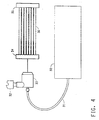
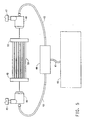
- a focused infrared light source can be used, such as PDR's SMT Soldering Light.
Landscapes
- Physics & Mathematics (AREA)
- Engineering & Computer Science (AREA)
- Mechanical Engineering (AREA)
- Electromagnetism (AREA)
- Health & Medical Sciences (AREA)
- Toxicology (AREA)
- Optics & Photonics (AREA)
- Thermal Sciences (AREA)
- General Engineering & Computer Science (AREA)
- Lining Or Joining Of Plastics Or The Like (AREA)
- Details Of Heat-Exchange And Heat-Transfer (AREA)
Claims (13)
- Verfahren zur Herstellung eines Kunststoff-Wärmetauschers mit einem in mehreren Röhren (4) umlaufenden primären Wärmeübertragungsfluid und einem außerhalb der Röhren (4) umlaufenden sekundären Wärmeübertragungsfluid, wobei der Wärmetauscher ein Paar Röhrenverteilerplatten (10,11) mit mehreren Löchern (5) von geeigneter Größe zur Aufnahme der Röhren (4) aufweist,
wobei die Platten (10,11) jeweils eine Außenseite und eine Innenseite aufweisen,
wobei die Innenseite einer der Platten der Innenseite der anderen Platte gegenüber liegt und die Innenseite nach der Montage des fertigen Wärmetauschers für die Einwirkung des sekundären Wärmeübertragungsfluids geeignet ist,
wobei an der Außenseite der jeweiligen Platte (10,11) die Löcher erhöhte Abschnitte (6) aufweisen, die so angepaßt sind, daß sie die durch die Löcher (5) vorstehenden Röhren (4) umgeben und berühren,
wobei das Verfahren aufweist:dadurch gekennzeichnet, daßEinführen der Röhren (4) durch die Löcher (5) und Verbinden der Röhrenenden mit den erhöhten Abschnitten durch Verbinden der erhöhten Abschnitte mit den Röhrenenden,
die erhöhten Abschnitte Muffen (6) bilden,
die äußeren Enden der Röhren (4) durch die Löcher (5) so eingeführt werden, daß die äußeren Enden der Röhren (4) den äußeren Enden der Muffen (6) benachbart sind, um Röhren-Muffen-Paare zu bilden,
eine Infrarotenergiequelle zum Verbinden der Röhrenenden mit den Muffen (6) benutzt wird, und
das Kunststoffmaterial der Muffen (6) etwa 0,2 Gew.-% Ruß oder andere Färbemittel anstelle oder zusätzlich zu dem Ruß enthält, um die gleiche Absorption von Infrarotenergie hervorzurufen. - Verfahren nach Anspruch 1, wobei die Infrarotenergiequelle Linsen und Lichtleiter enthält, um die Infrarotenergie auf das Ende jeder Röhre und der sie umgebenden Muffe zu fokussieren.
- Verfahren nach Anspruch 2, wobei die Infrarotenergie axial auf das Röhrenende und die entsprechende Muffe gerichtet wird.
- Verfahren nach Anspruch 1, wobei die infrarotenergiequelle kohärente Infrarotlaserenergie erzeugt.
- Verfahren nach Anspruch 1, wobei die Infrarotenergiequelle nichtkohärente Infrarotenergie erzeugt.
- Verfahren nach Anspruch 4, wobei die Laserenergie durch eine Vielzahl von Lichtleiteranordnungen unterteilt und zu den Röhren-Muffen-Paaren geleitet wird, um mehrere Röhren-Muffen-Paare gleichzeitig zu verbinden.
- Verfahren nach Anspruch 4, wobei die Röhren-Muffen-Paare in geraden Reihen angeordnet sind, wobei die Lichtleiteranordnungen eine geradlinige Form haben, welche die gleichzeitige Fokussierung auf mehr als ein Röhren-Muffen-Paar auf einmal gestattet, und wobei die Infrarotlaserenergie gleichzeitig zumindest auf einen Teil der mehreren Röhren in einer geradlinigen Reihe fokussiert wird.
- Verfahren nach Anspruch 7, wobei die Lichtleiteranordnung eine Linearlinse quer zum Lichtleiter aufweist, welche die Infrarotenergie gleichzeitig quer über eine Anzahl von Röhrenenden verteilt.
- Verfahren nach Anspruch 8, wobei die Lichtleiteranordnung im wesentlichen gleichzeitig auf eine vollständige Reihe von Röhren-Muffen-Paaren fokussiert wird.
- Verfahren nach Anspruch 5, wobei im wesentlichen alle Röhren-Muffen-Paare an beiden Enden des Wärmetauschers auf einmal verbunden werden.
- Verfahren nach Anspruch 1, wobei die Röhren und Verteilerplatten aus thermoplastischen Materialien bestehen.
- Verfahren nach Anspruch 11, wobei die thermoplastischen Materialien Polyamide sind.
- Verfahren nach Anspruch 12, wobei die Lichtundurchlässigkeit bzw. Opazität des Kunststoffs in den Röhren und in den Muffen gesteuert wird, um die Absorption der Infrarotenergie zu optimieren.
Applications Claiming Priority (3)
| Application Number | Priority Date | Filing Date | Title |
|---|---|---|---|
| US12327299P | 1999-03-08 | 1999-03-08 | |
| US123272P | 1999-03-08 | ||
| PCT/CA2000/000237 WO2000053991A1 (en) | 1999-03-08 | 2000-03-07 | Laser bonding of heat exchanger tubes |
Publications (2)
| Publication Number | Publication Date |
|---|---|
| EP1159575A1 EP1159575A1 (de) | 2001-12-05 |
| EP1159575B1 true EP1159575B1 (de) | 2005-01-05 |
Family
ID=22407691
Family Applications (1)
| Application Number | Title | Priority Date | Filing Date |
|---|---|---|---|
| EP00907397A Expired - Lifetime EP1159575B1 (de) | 1999-03-08 | 2000-03-07 | Laserschweissen von wärmetauscherrohren |
Country Status (6)
| Country | Link |
|---|---|
| US (1) | US20030029040A1 (de) |
| EP (1) | EP1159575B1 (de) |
| JP (1) | JP2002539408A (de) |
| CA (1) | CA2358552A1 (de) |
| DE (1) | DE60017246T2 (de) |
| WO (1) | WO2000053991A1 (de) |
Families Citing this family (15)
| Publication number | Priority date | Publication date | Assignee | Title |
|---|---|---|---|---|
| WO2002029347A2 (en) * | 2000-10-06 | 2002-04-11 | E.I. Du Pont De Nemours And Company | Heat exchanger made from bendable plastic tubing |
| US6950239B2 (en) * | 2004-01-08 | 2005-09-27 | Tang Yin S | Method for making micro-lens array |
| US7460748B2 (en) * | 2004-01-08 | 2008-12-02 | Tang Yin S | Lensed tip optical fiber and method of making the same |
| AU2005204571B2 (en) * | 2004-01-08 | 2008-06-26 | Yin S. Tang | Lensed tip optical fiber and method of making the same |
| US7262385B2 (en) * | 2004-01-28 | 2007-08-28 | The Boeing Company | Material processing device |
| US7469741B2 (en) * | 2004-04-26 | 2008-12-30 | Mahle International Gmbh | Non-metallic laser welded intercooler system |
| CA2538761A1 (en) * | 2005-03-08 | 2006-09-08 | Anthony Joseph Cesaroni | Method for sealing heat exchanger tubes |
| US7628883B2 (en) * | 2005-12-09 | 2009-12-08 | Mahle International Gmbh | Laser welded plastic intercooler |
| US7921905B2 (en) * | 2006-06-29 | 2011-04-12 | Mahle International Gmbh | Plastic intercooler |
| WO2009089460A2 (en) * | 2008-01-09 | 2009-07-16 | International Mezzo Technologies, Inc. | Corrugated micro tube heat exchanger |
| US20100043230A1 (en) * | 2008-08-12 | 2010-02-25 | Delphi Technologies, Inc. | Method of Making a Hybrid Metal-Plastic Heat Exchanger |
| US8177932B2 (en) * | 2009-02-27 | 2012-05-15 | International Mezzo Technologies, Inc. | Method for manufacturing a micro tube heat exchanger |
| CN103817925B (zh) * | 2014-02-20 | 2015-12-30 | 浙江金氟隆化工装备有限公司 | 一种氟塑料冷凝器焊接设备及其焊接工艺 |
| US11519670B2 (en) * | 2020-02-11 | 2022-12-06 | Airborne ECS, LLC | Microtube heat exchanger devices, systems and methods |
| US12416453B1 (en) | 2021-07-22 | 2025-09-16 | Intergalactic Spaceworx, LLC | Heat exchange header with refrigerant distribution by capillary wicking porous insert |
Family Cites Families (10)
| Publication number | Priority date | Publication date | Assignee | Title |
|---|---|---|---|---|
| BE792903A (nl) | 1971-12-30 | 1973-06-18 | American Can Co | Laserstraal-lassen van kunststoffen buizen |
| US4224096A (en) | 1976-03-25 | 1980-09-23 | W. R. Grace & Co. | Laser sealing of thermoplastic material |
| JPS6060497A (ja) * | 1983-09-12 | 1985-04-08 | Hitachi Ltd | 二重管板形熱交換器の気密性確保方法 |
| DE3543283A1 (de) * | 1985-12-07 | 1987-06-11 | Roehm Gmbh | Verfahren zum verbinden von hohlprofilkoerpern mit formkoerpern aus thermoplastischem kunststoff |
| DE3614342A1 (de) * | 1986-04-28 | 1987-10-29 | Akzo Gmbh | Waerme- und/oder stoffaustauscher und verfahren zum herstellen von waerme- und/oder stoffaustauschern |
| DE3728303A1 (de) * | 1987-08-25 | 1989-03-16 | Sueddeutsche Kuehler Behr | Waermetauscher mit einer rippen-rohranordnung |
| US5267959A (en) | 1991-11-29 | 1993-12-07 | Schneider, Inc. | Laser bonding of angioplasty balloon catheters |
| GB9211413D0 (en) | 1992-05-29 | 1992-07-15 | Cesaroni Anthony Joseph | Panel heat exchanger formed from tubes and sheets |
| US5840147A (en) * | 1995-06-07 | 1998-11-24 | Edison Welding Institute | Plastic joining method |
| DE29618878U1 (de) * | 1996-10-30 | 1996-12-19 | Rehau Ag + Co, 95111 Rehau | Wärmetauscher |
-
2000
- 2000-03-03 US US09/518,105 patent/US20030029040A1/en not_active Abandoned
- 2000-03-07 CA CA002358552A patent/CA2358552A1/en not_active Abandoned
- 2000-03-07 DE DE60017246T patent/DE60017246T2/de not_active Expired - Fee Related
- 2000-03-07 WO PCT/CA2000/000237 patent/WO2000053991A1/en not_active Ceased
- 2000-03-07 JP JP2000604175A patent/JP2002539408A/ja active Pending
- 2000-03-07 EP EP00907397A patent/EP1159575B1/de not_active Expired - Lifetime
Also Published As
| Publication number | Publication date |
|---|---|
| JP2002539408A (ja) | 2002-11-19 |
| DE60017246D1 (de) | 2005-02-10 |
| CA2358552A1 (en) | 2000-09-14 |
| WO2000053991A1 (en) | 2000-09-14 |
| DE60017246T2 (de) | 2005-12-15 |
| US20030029040A1 (en) | 2003-02-13 |
| EP1159575A1 (de) | 2001-12-05 |
Similar Documents
| Publication | Publication Date | Title |
|---|---|---|
| EP1159575B1 (de) | Laserschweissen von wärmetauscherrohren | |
| CA2016391C (en) | Panel heat exchangers formed from thermoplastic polymers | |
| JP2685095B2 (ja) | 熱可塑性ポリマーから製造された物品及び装置、該装置の製造方法及び熱交換器 | |
| US20210404749A1 (en) | Multilayer sheets for heat exchangers | |
| US5993593A (en) | High-temperature, heat-sealed products and methods and means for their manufacture | |
| US4733718A (en) | Heat exchanger bodies made of plastic | |
| JP6937531B2 (ja) | レーザー溶着体の製造方法 | |
| US6364008B1 (en) | Heat exchanger with tube plates | |
| WO2020160028A1 (en) | Film heat exchanger coupling system and method | |
| JP2020085418A (ja) | 熱交換器 | |
| EP0879134B1 (de) | Verbinden von rohren zu gegenständen | |
| US4820468A (en) | Method for making welded hollow plastic plate heat exchangers | |
| JPS62266393A (ja) | 熱−および/または物質交換器およびその製造法 | |
| US4797173A (en) | Apparatus for face welding bundles of thermoplastic moldings under pressure | |
| JP2556555B2 (ja) | 管板に管端部を溶接する方法 | |
| US20110143069A1 (en) | Method of Fabricating A Device Such As A Coupling By Laser Welding, The Device Fabricated By Such Method, And An Element Of Such Device For Implementing The Method | |
| US6753055B2 (en) | Heat exchangers containing liquid crystalline polymer layers | |
| US8006750B2 (en) | Method for sealing heat exchanger tubes | |
| KR102812327B1 (ko) | 고분자 접합제를 이용한 배터리 쿨링블럭 융착방법 및 이를 통해 제조된 배터리 쿨링블럭 | |
| EP0925182A1 (de) | Mehrschichtige wärmetauscher aus polymer, die eine sperrschicht enthalten | |
| JP3530194B2 (ja) | 物品へのチューブの接合 | |
| WO2000079206A1 (en) | Heat exchanger formed from tubes joined by simultaneous extrusion thermal bonding | |
| WO2000079199A1 (en) | Heat exchanger formed from tubes joined by thermal bonding | |
| WO2025154325A1 (ja) | マニホールドおよびマニホールドの製造方法 | |
| WO2000079198A1 (en) | Heat exchanger formed from tubes joined by solvent bonding |
Legal Events
| Date | Code | Title | Description |
|---|---|---|---|
| PUAI | Public reference made under article 153(3) epc to a published international application that has entered the european phase |
Free format text: ORIGINAL CODE: 0009012 |
|
| 17P | Request for examination filed |
Effective date: 20010918 |
|
| AK | Designated contracting states |
Kind code of ref document: A1 Designated state(s): AT BE CH CY DE DK ES FI FR GB GR IE IT LI LU MC NL PT SE |
|
| 17Q | First examination report despatched |
Effective date: 20030723 |
|
| RBV | Designated contracting states (corrected) |
Designated state(s): BE DE FR GB IT NL |
|
| GRAP | Despatch of communication of intention to grant a patent |
Free format text: ORIGINAL CODE: EPIDOSNIGR1 |
|
| GRAS | Grant fee paid |
Free format text: ORIGINAL CODE: EPIDOSNIGR3 |
|
| GRAA | (expected) grant |
Free format text: ORIGINAL CODE: 0009210 |
|
| AK | Designated contracting states |
Kind code of ref document: B1 Designated state(s): BE DE FR GB IT NL |
|
| REG | Reference to a national code |
Ref country code: GB Ref legal event code: FG4D |
|
| REG | Reference to a national code |
Ref country code: IE Ref legal event code: FG4D |
|
| REF | Corresponds to: |
Ref document number: 60017246 Country of ref document: DE Date of ref document: 20050210 Kind code of ref document: P |
|
| PGFP | Annual fee paid to national office [announced via postgrant information from national office to epo] |
Ref country code: GB Payment date: 20050302 Year of fee payment: 6 |
|
| PGFP | Annual fee paid to national office [announced via postgrant information from national office to epo] |
Ref country code: NL Payment date: 20050303 Year of fee payment: 6 |
|
| PGFP | Annual fee paid to national office [announced via postgrant information from national office to epo] |
Ref country code: DE Payment date: 20050304 Year of fee payment: 6 |
|
| PGFP | Annual fee paid to national office [announced via postgrant information from national office to epo] |
Ref country code: FR Payment date: 20050308 Year of fee payment: 6 |
|
| PGFP | Annual fee paid to national office [announced via postgrant information from national office to epo] |
Ref country code: BE Payment date: 20050510 Year of fee payment: 6 |
|
| PLBE | No opposition filed within time limit |
Free format text: ORIGINAL CODE: 0009261 |
|
| STAA | Information on the status of an ep patent application or granted ep patent |
Free format text: STATUS: NO OPPOSITION FILED WITHIN TIME LIMIT |
|
| 26N | No opposition filed |
Effective date: 20051006 |
|
| ET | Fr: translation filed | ||
| REG | Reference to a national code |
Ref country code: GB Ref legal event code: FG4D |
|
| PG25 | Lapsed in a contracting state [announced via postgrant information from national office to epo] |
Ref country code: GB Free format text: LAPSE BECAUSE OF NON-PAYMENT OF DUE FEES Effective date: 20060307 |
|
| PG25 | Lapsed in a contracting state [announced via postgrant information from national office to epo] |
Ref country code: BE Free format text: LAPSE BECAUSE OF NON-PAYMENT OF DUE FEES Effective date: 20060331 |
|
| PGFP | Annual fee paid to national office [announced via postgrant information from national office to epo] |
Ref country code: IT Payment date: 20060331 Year of fee payment: 7 |
|
| PG25 | Lapsed in a contracting state [announced via postgrant information from national office to epo] |
Ref country code: NL Free format text: LAPSE BECAUSE OF NON-PAYMENT OF DUE FEES Effective date: 20061001 |
|
| PG25 | Lapsed in a contracting state [announced via postgrant information from national office to epo] |
Ref country code: DE Free format text: LAPSE BECAUSE OF NON-PAYMENT OF DUE FEES Effective date: 20061003 |
|
| GBPC | Gb: european patent ceased through non-payment of renewal fee |
Effective date: 20060307 |
|
| NLV4 | Nl: lapsed or anulled due to non-payment of the annual fee |
Effective date: 20061001 |
|
| REG | Reference to a national code |
Ref country code: FR Ref legal event code: ST Effective date: 20061130 |
|
| BERE | Be: lapsed |
Owner name: *CESARONI ANTHONY JOSEPH Effective date: 20060331 Owner name: *CESARONI TECHNOLOGIES INC. Effective date: 20060331 |
|
| PG25 | Lapsed in a contracting state [announced via postgrant information from national office to epo] |
Ref country code: FR Free format text: LAPSE BECAUSE OF NON-PAYMENT OF DUE FEES Effective date: 20060331 |
|
| PG25 | Lapsed in a contracting state [announced via postgrant information from national office to epo] |
Ref country code: IT Free format text: LAPSE BECAUSE OF NON-PAYMENT OF DUE FEES Effective date: 20070307 |