EP1145552B1 - Systeme d'authentification de signal video - Google Patents
Systeme d'authentification de signal video Download PDFInfo
- Publication number
- EP1145552B1 EP1145552B1 EP00969433A EP00969433A EP1145552B1 EP 1145552 B1 EP1145552 B1 EP 1145552B1 EP 00969433 A EP00969433 A EP 00969433A EP 00969433 A EP00969433 A EP 00969433A EP 1145552 B1 EP1145552 B1 EP 1145552B1
- Authority
- EP
- European Patent Office
- Prior art keywords
- authentication code
- key
- video signal
- location
- appended
- Prior art date
- Legal status (The legal status is an assumption and is not a legal conclusion. Google has not performed a legal analysis and makes no representation as to the accuracy of the status listed.)
- Expired - Lifetime
Links
- 238000000034 method Methods 0.000 claims description 19
- 230000006870 function Effects 0.000 description 11
- 230000005540 biological transmission Effects 0.000 description 6
- 238000004891 communication Methods 0.000 description 6
- 238000010586 diagram Methods 0.000 description 5
- 230000008901 benefit Effects 0.000 description 2
- 238000013459 approach Methods 0.000 description 1
- 238000013475 authorization Methods 0.000 description 1
- 239000003795 chemical substances by application Substances 0.000 description 1
- 238000013461 design Methods 0.000 description 1
- 239000000835 fiber Substances 0.000 description 1
- 238000012986 modification Methods 0.000 description 1
- 230000004048 modification Effects 0.000 description 1
- 238000012795 verification Methods 0.000 description 1
Images

Classifications
-
- H—ELECTRICITY
- H04—ELECTRIC COMMUNICATION TECHNIQUE
- H04N—PICTORIAL COMMUNICATION, e.g. TELEVISION
- H04N21/00—Selective content distribution, e.g. interactive television or video on demand [VOD]
- H04N21/60—Network structure or processes for video distribution between server and client or between remote clients; Control signalling between clients, server and network components; Transmission of management data between server and client, e.g. sending from server to client commands for recording incoming content stream; Communication details between server and client
- H04N21/63—Control signaling related to video distribution between client, server and network components; Network processes for video distribution between server and clients or between remote clients, e.g. transmitting basic layer and enhancement layers over different transmission paths, setting up a peer-to-peer communication via Internet between remote STB's; Communication protocols; Addressing
- H04N21/633—Control signals issued by server directed to the network components or client
- H04N21/6332—Control signals issued by server directed to the network components or client directed to client
- H04N21/6334—Control signals issued by server directed to the network components or client directed to client for authorisation, e.g. by transmitting a key
-
- H—ELECTRICITY
- H04—ELECTRIC COMMUNICATION TECHNIQUE
- H04N—PICTORIAL COMMUNICATION, e.g. TELEVISION
- H04N21/00—Selective content distribution, e.g. interactive television or video on demand [VOD]
- H04N21/20—Servers specifically adapted for the distribution of content, e.g. VOD servers; Operations thereof
- H04N21/23—Processing of content or additional data; Elementary server operations; Server middleware
- H04N21/235—Processing of additional data, e.g. scrambling of additional data or processing content descriptors
-
- H—ELECTRICITY
- H04—ELECTRIC COMMUNICATION TECHNIQUE
- H04N—PICTORIAL COMMUNICATION, e.g. TELEVISION
- H04N21/00—Selective content distribution, e.g. interactive television or video on demand [VOD]
- H04N21/40—Client devices specifically adapted for the reception of or interaction with content, e.g. set-top-box [STB]; Operations thereof
- H04N21/43—Processing of content or additional data, e.g. demultiplexing additional data from a digital video stream; Elementary client operations, e.g. monitoring of home network or synchronising decoder's clock; Client middleware
- H04N21/435—Processing of additional data, e.g. decrypting of additional data, reconstructing software from modules extracted from the transport stream
-
- H—ELECTRICITY
- H04—ELECTRIC COMMUNICATION TECHNIQUE
- H04N—PICTORIAL COMMUNICATION, e.g. TELEVISION
- H04N21/00—Selective content distribution, e.g. interactive television or video on demand [VOD]
- H04N21/60—Network structure or processes for video distribution between server and client or between remote clients; Control signalling between clients, server and network components; Transmission of management data between server and client, e.g. sending from server to client commands for recording incoming content stream; Communication details between server and client
- H04N21/63—Control signaling related to video distribution between client, server and network components; Network processes for video distribution between server and clients or between remote clients, e.g. transmitting basic layer and enhancement layers over different transmission paths, setting up a peer-to-peer communication via Internet between remote STB's; Communication protocols; Addressing
- H04N21/633—Control signals issued by server directed to the network components or client
- H04N21/6332—Control signals issued by server directed to the network components or client directed to client
- H04N21/6334—Control signals issued by server directed to the network components or client directed to client for authorisation, e.g. by transmitting a key
- H04N21/63345—Control signals issued by server directed to the network components or client directed to client for authorisation, e.g. by transmitting a key by transmitting keys
-
- H—ELECTRICITY
- H04—ELECTRIC COMMUNICATION TECHNIQUE
- H04N—PICTORIAL COMMUNICATION, e.g. TELEVISION
- H04N7/00—Television systems
- H04N7/16—Analogue secrecy systems; Analogue subscription systems
- H04N7/162—Authorising the user terminal, e.g. by paying; Registering the use of a subscription channel, e.g. billing
-
- H—ELECTRICITY
- H04—ELECTRIC COMMUNICATION TECHNIQUE
- H04N—PICTORIAL COMMUNICATION, e.g. TELEVISION
- H04N7/00—Television systems
- H04N7/16—Analogue secrecy systems; Analogue subscription systems
- H04N7/167—Systems rendering the television signal unintelligible and subsequently intelligible
- H04N7/1675—Providing digital key or authorisation information for generation or regeneration of the scrambling sequence
Definitions
- This invention relates to a system for authenticating transmitted video signals by selecting portions of the video signal and generating authentication codes that are transmitted with those portions for verification at a receiving location.
- Transmission of video signals is widely used for a variety of purposes.
- the channels of communication are tightly controlled and it is reasonable to conclude that a received signal is exactly consistent with a transmitted signal.
- the communication channels are not tightly controlled. Therefore, it is necessary for two parties who are communicating with each other to authenticate received signals to ensure that the received signal is from an expected source and has not been tampered with in transit.
- an authentication strategy verifies that a received signal is from the appropriate source (i.e., authenticity) and that the content is what was sent by the transmitter (i.e., signal integrity).
- a digital camera processor includes a private key that is embedded into the processor. Digital cameras having a public key that corresponds to the private key are able to receive information from the processor and to determine, using a known strategy, whether the received signal is from the appropriate source.
- the cable television system includes a headend from which service "instances", or programs, are broadcast and a plurality of set top units for receiving the instances and selectively decrypting the instances for display to system subscribers.
- the service instances are encrypted using public and/or private keys provided by service providers or central authorization agents.
- this reference deals with how to decrypt an "instance" of a service that has been encrypted with a short-term key at a receiver side.
- a GBAM - a CA message - is authenticated by adding it to a multi-session key MSK, and then performing hashing by one one-way hash function.
- This invention is useful for authenticating a video signal that is transmitted from one location to a second location.
- a system designed according to this invention identifies portions of a video signal and provides an authentication code for each portion that is then used for authentication purposes at a receiving location.
- a system for ensuring the authenticity of video data within a video signal that is transmitted from a first location to a second location includes several components.
- a selector module selects at least one portion of the video signal.
- An authentication code generating module appends a key to the selected portion and then generates an authentication code using the appended portion.
- a transmitter portion appends the authentication code to the selected portion of the video signal and transmits the appended portion, including the authentication code, from the first location.
- the selector module identifies portions of the video signal by locating synchronizing codes in the video signal and choosing the data between adjacent synchronizing codes as each selected portion.
- an entire video signal is processed so that a plurality of portions between adjacent synchronizing codes each have a unique authentication code associated with them when the video signal is transmitted from the first location to the second location.
- a second selector module identifies each portion of the transmitted signal.
- a deciphering module appends the key, which is the same as the key used at the first location, to the selected portion and then generates a second authentication code using the appended portion.
- An authentication module then authenticates the video signal at the second location by determining whether the second authentication code matches the authentication code that was sent along with the transmitted video signal portion.
- a method associated with this invention includes several basic steps. First, a portion of a video signal is selected. Preferably, portions of the video signal are selected as the data between synchronizing codes associated with the video signal. A key is appended to at least one of the selected portions. An authentication code is generated using the appended selected portion. The authentication code is then appended to the selected portion and both are transmitted from the first location to the second location. At the second location a received signal portion is utilized to generate an associated second authentication code using the same key as used at the first location. The second authentication code is compared with the authentication code received from the first location to verify the authenticity of the transmitted signal.
- a computer-readable medium including a plurality of computer-executable instructions for ensuring the authenticity of a video signal, which is transmitted from a first location to a second location, that is designed according to this invention includes several basic instructions.
- a first instruction directs a computer to select a portion of the video signal.
- a second instruction directs the computer to append a key to the selected portion.
- a third instruction directs the computer to generate an authentication code using the appended selected portion.
- a fourth instruction directs the computer to append the authentication code to the selected portion of the video signal so that both can be transmitted from the first location to the second location.
- FIG. 1 schematically illustrates a system 20 for communicating video signals from a first location to a second location.
- a transmitter 22 transmits a video signal along a communication link 24 to a receiver 26.
- the communication link 24 may be fiber optic, transmission lines, Internet, satellite link or any other suitable communication medium for transmitting video signals.
- the transmitter 22 is provided with information (i.e., video data) from a video data-handling module 30 and an authentication code generating module 32.
- the video data-handling module 30 preferably processes video data that is in a compressed format.
- the video data-handling module 30 preferably identifies at least one portion of the video signal that will be used with the authentication strategy of this invention. Most preferably, each portion of the video signal is authenticated according to this invention so that an entire transmission can be verified.
- the authentication code generating module 32 preferably takes the selected portion of video data and subjects it to an authentication code generating strategy that will be described in more detail below, using a preselected key to generate an authentication code. The authentication code is then appended to the selected portion of the video signal and both are transmitted by the transmitter 22.
- the receiver 26 receives the video signal including at least one appended portion having an authentication code associated with it.
- a deciphering module 34 preferably utilizes the same key as the authentication code generating module 32 and the selected portion of the video signal to generate a second authentication code. The second authentication code is then compared with the authentication code that was transmitted by the transmitter 22 to verify the authenticity and integrity of the received portion of the video signal.
- a video data-handling module 36 preferably utilizes only authenticated portions of the video signal as desired (i.e., to display a received signal or store it in memory).
- Figure 2 includes a flow chart diagram 40 that illustrates a method associated with this invention.
- At 42 at least one portion of the video signal is selected.
- a key is appended to the selected portion.
- the key preferably is a secret key that is shared by the transmitter 22 and receiver 26.
- An authentication code is then generated using the selected portion having the key appended to it at 46. The result is an authentication code that is then appended to the selected portion of the video signal at 48 prior to transmitting the video signal.
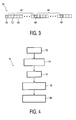
- Figure 3 schematically illustrates a compressed video signal stream 50.
- the compressed video signal includes a plurality of bits of data such as Bits 52 and 54. At certain intervals along the stream of video data, synchronizing markers or codes are provided in conventional fashion.
- Figure 3 schematically illustrates synchronizing codes 56, 58 and 60.
- Synchronizing codes are also known as resynchronization markers, resynchronizing codes, slice codes, slice markers and by other names known in the art. This application utilizes the term synchronizing codes generically to describe all such indicators. Synchronizing codes are utilized in video transmission systems for known purposes that need not be described in this specification.
- This invention includes identifying data between adjacent synchronizing codes and selected that data as a portion of the video signal to be authenticated.
- the synchronizing codes 56, 58 and 60 are spaced along the stream of video signal information.
- a first portion of the video signal 62 is between the synchronizing codes or markers 56 and 58.
- a second portion of the video signal 64 is between the adjacent synchronizing markers 58 and 60.
- every portion of the video signal preferably is identified and subjected to the authentication strategy described in this specification. Alternatively, less than all of the portions may be used for authentication purposes. The method associated with this invention is efficient enough, however, that all portions of the video signal preferably are utilized with the authentication strategy of this invention.
- Figure 4 includes a flow chart diagram 70 that illustrates more details about the steps 44 and 46 from Figure 2 .
- the preferred arrangement includes having a secret key value that is pre-selected and known at the first and second locations.
- the pre-selected key value is used to generate a first key and a second key using a selected function.
- the function for generating the first key and the second key includes appending enough zeros to the string of data identified as the key value to create a 64 byte string. That 64 byte string preferably is then exclusive ORed (i.e. XOR) with a data string known as ipad. In one example, ipad equals the byte 0 x 5C repeated to pad a block. The result of the exclusive ORed function is the first key.
- the second key is generated in one example by using the same 64 byte string (i.e. the key value with the appended zeros) and exclusive ORing (i.e. XOR) the 64 byte string with a data string known as opad.
- opad is the byte 0 x 36 repeated to pad a block.
- the result of the preferably bit wise exclusive ORing function is the second key identical first and second keys preferably are derived at the first and second locations so that the first and second keys are identical at each location.
- the selected portion of the video signal is then preferably subjected to the following procedure.
- the first key is appended to the selected portion of the video signal.
- a hash-based Authentication code generating function is performed on the appended selected portion to generate an intermediate authentication code.
- Hash-based authentication code generating functions are known in the art and those having the benefit of this description will be able to choose from among hash-based functions or to design one to accomplish the results provided by this invention.
- the second key is appended to the intermediate authentication code to generate the authentication code that is then appended to the selected video portion and transmitted by the transmitter 22.
- this invention provides an extremely secure authentication strategy.
- the authentication code preferably is placed into the user data field prior to transmission.
- this invention provides an extremely efficient way of handling large amounts of compressed video data and providing a secure strategy for authenticating that data.
- this invention provides a way of handling the video data in a manner that is computationally feasible yet not so small that the "overhead" associated with generating the authentication code is so great that it would compromise the speed or performance of the transmission of the signal.
- an error in one portion of a transmitted signal is isolated from other portions of the signal and only that portion containing an error need by rejected.
- the same key value is used to generate first and second keys that are identical to those generated at the first location.
- the first key is then appended to received portion of the video signal and the hash-based function is performed on the appended portion. This generates a received intermediate authentication code.
- the second key is appended to the received intermediate authentication code to generate a received authentication code.
- the received authentication code is then compared with the authentication code that was transmitted with the portion of the video signal. If the two authentication codes match, then the portion of the video signal has been proven authentic.
Landscapes
- Engineering & Computer Science (AREA)
- Multimedia (AREA)
- Signal Processing (AREA)
- Computer Security & Cryptography (AREA)
- Computer Networks & Wireless Communication (AREA)
- Two-Way Televisions, Distribution Of Moving Picture Or The Like (AREA)
Abstract
Claims (16)
- Procédé destiné à garantir l'authenticité de données dans un signal vidéo (50) transmis à partir d'un premier emplacement à un second emplacement, le signal vidéo (50) comprenant une pluralité de bits de données et des codes de synchronisation fournis à certains intervalles avec les données dans le signal vidéo (50), caractérisé en ce que le procédé comprend les étapes consistant à :(A) sélectionner (42) des parties (62, 64) d'un signal vidéo, l'étape comprenant l'identification des codes de synchronisation (56, 58) dans le signal vidéo et sélectionner les parties du signal vidéo entre les codes de synchronisation adjacents ;(B) annexer une clé (44) à chacune des parties sélectionnées ;(C) générer (46) un code d'authentification en utilisant chaque partie sélectionnée annexée à partir de l'étape (B) ; et(D) annexer (48) les codes d'authentification générés aux parties sélectionnées correspondantes du signal vidéo avant de les transmettre au second emplacement.
- Procédé selon la revendication 1, dans lequel les codes de synchronisation comprennent des codes de resynchronisation, des codes de tranche, des marqueurs de tranche.
- Procédé selon la revendication 1, comprenant la présélection d'une valeur de clé de base et la génération d'une première clé et d'une seconde clé, l'utilisation de la valeur de clé de base et une fonction de génération de la clé choisie.
- Procédé selon la revendication 3, dans lequel les étapes (B) et (C) comprennent :l'annexion de la première clé à une partie sélectionnée du signal vidéo ;la génération d'un premier code d'authentification en utilisant la partie du signal annexée ;l'annexion de la seconde clé au premier code d'authentification ; etla génération d'un second code d'authentification en utilisant le premier code d'authentification annexé et en utilisant le second code d'authentification en tant que code d'authentification de l'étape (C) lors de la réalisation de l'étape (D).
- Procédé selon la revendication 1, dans lequel l'étape (C) comprend une fonction de génération de code d'authentification basée sur l'empreinte numérique.
- Procédé selon la revendication 1, comprenant la réception du signal transmis au second emplacement, la réalisation des étapes (A) à (C) sur le signal reçu pour générer un code d'authentification du signal reçu, puis la détermination du fait que le code d'authentification du signal reçu correspond au code d'authentification généré au premier emplacement.
- Procédé selon la revendication 6, comprenant la réalisation des étapes (B) et (C) au premier emplacement en :présélectionnant une valeur de clé de base et générant une première clé et une seconde clé, utilisant la valeur de clé de base et une fonction de génération de clé présélectionnée ;annexant la première clé à la partie sélectionnée du signal vidéo ;générant un premier code d'authentification en utilisant la partie du signal annexée ;annexant la seconde clé au premier code d'authentification ; etgénérant un second code d'authentification en utilisant le premier code d'authentification annexé et en utilisant le second code d'authentification en tant que code d'authentification de l'étape (C) lors de la réalisation de l'étape (D).
- Procédé selon la revendication 7, comprenant la réalisation des étapes (B) et (C) au second emplacement en :générant une première clé et une seconde clé, en utilisant la valeur de clé de base présélectionnée et une fonction de génération de clé présélectionnée ;annexant la première clé à la partie sélectionnée du signal vidéo reçu ;générant un premier code d'authentification reçu en utilisant la partie du signal annexée ;annexant la seconde clé au premier code d'authentification reçu ; etgénérant un second code d'authentification en utilisant le premier code d'authentification annexé.
- Procédé selon la revendication 8, comprenant la détermination du fait que le second code d'authentification reçu correspond au second code d'authentification pour vérifier ainsi l'authenticité des données vidéo dans le signal reçu.
- Procédé selon la revendication 1, comprenant la réalisation des étapes (A) à (D) en utilisant un signal vidéo compressé.
- Procédé selon la revendication 10, dans lequel le signal vidéo compressé est un signal MPEG comportant un champ de données de l'utilisateur et dans lequel l'étape (D) comprend le positionnement du code d'authentification dans le champ de données de l'utilisateur.
- Système (20) pour garantir l'authenticité des données dans un signal vidéo (50) transmis à partir d'un premier emplacement à un second emplacement, le signal vidéo (50) comprenant une pluralité de bits de données et des codes de synchronisation fournis à certains intervalles avec les données dans le signal vidéo (50), caractérisé en ce que le système comprend :un module de sélecteur (30) qui sélectionne les parties (62, 64) du signal vidéo, la sélection comprenant l'identification des codes de synchronisation (56, 58) dans le signal vidéo et la sélection des parties du signal vidéo entre les codes de synchronisation adjacents ;un module de génération de code d'authentification (32) qui annexe une clé à chacune des parties sélectionnées puis génère un code d'authentification en utilisant chaque partie annexée ; etun émetteur (22) qui annexe les codes d'authentification générés aux parties sélectionnées correspondantes et transmet les parties annexées comprenant le code d'authentification à partir du premier emplacement.
- Système selon la revendication 12, dans lequel le module de génération de code d'authentification (32) utilise une valeur de clé connue pour générer une première clé et une seconde clé, et dans lequel le module de génération de code d'authentification annexe la première clé à la partie sélectionnée, génère un code d'authentification intermédiaire en utilisant la partie annexée, annexe la seconde clé au code d'authentification intermédiaire et génère le code d'authentification en utilisant le code d'authentification intermédiaire annexé.
- Système selon la revendication 12, comprenant :un second module de sélecteur (26) au second emplacement qui sélectionne la partie du signal transmis ;un module cryptographique (34) qui annexe la clé à la partie sélectionnée et génère ensuite un second code d'authentification en utilisant la partie annexée ; etun module d'authentification (36) qui authentifie le signal vidéo au second emplacement en déterminant si le second code d'authentification correspond au premier code d'authentification.
- Système selon la revendication 14, dans lequel le module cryptographique (34) utilise une valeur de clé connue pour générer une première clé et une seconde clé et dans lequel le module cryptographique annexe la première clé à la partie sélectionnée reçue, génère un code d'authentification intermédiaire en utilisant la partie annexée, annexe la seconde clé au code d'authentification intermédiaire et génère le second code d'authentification en utilisant le code d'authentification intermédiaire annexé.
- Support informatique comprenant une pluralité d'instructions exécutables par un ordinateur pour exécuter les étapes du procédé destiné à assurer l'authenticité d'un signal vidéo transmis depuis un premier emplacement à un second emplacement, le signal vidéo (50) comprenant une pluralité de bits de données et des codes de synchronisation fournis à certains intervalles avec les données dans le signal vidéo (50), caractérisé en ce que les instructions exécutables par ordinateur comprennent :une première instruction (42) pour sélectionner au moins une partie d'un signal vidéo, la sélection comprenant des données d'identification entre les codes de synchronisation adjacents (56, 58) et sélectionner ces données comme les parties (62, 64) du signal vidéo devant être identifiées ;une seconde instruction (44) pour annexer une clé à chacune des parties sélectionnées ;une troisième instruction (46) pour générer un code d'authentification en utilisant chaque partie sélectionnée annexée à partir de la seconde instruction ; etune quatrième instruction (48) pour annexer les codes d'authentification générés aux parties sélectionnées correspondantes du signal vidéo.
Applications Claiming Priority (3)
| Application Number | Priority Date | Filing Date | Title |
|---|---|---|---|
| US09/422,737 US6715076B1 (en) | 1999-10-21 | 1999-10-21 | Video signal authentication system |
| US422737 | 1999-10-21 | ||
| PCT/EP2000/009772 WO2001030081A1 (fr) | 1999-10-21 | 2000-10-05 | Systeme d'authentification de signal video |
Publications (2)
| Publication Number | Publication Date |
|---|---|
| EP1145552A1 EP1145552A1 (fr) | 2001-10-17 |
| EP1145552B1 true EP1145552B1 (fr) | 2009-07-01 |
Family
ID=23676148
Family Applications (1)
| Application Number | Title | Priority Date | Filing Date |
|---|---|---|---|
| EP00969433A Expired - Lifetime EP1145552B1 (fr) | 1999-10-21 | 2000-10-05 | Systeme d'authentification de signal video |
Country Status (6)
| Country | Link |
|---|---|
| US (1) | US6715076B1 (fr) |
| EP (1) | EP1145552B1 (fr) |
| JP (1) | JP4795594B2 (fr) |
| KR (1) | KR100745393B1 (fr) |
| DE (1) | DE60042481D1 (fr) |
| WO (1) | WO2001030081A1 (fr) |
Families Citing this family (9)
| Publication number | Priority date | Publication date | Assignee | Title |
|---|---|---|---|---|
| US7619657B2 (en) * | 2000-10-04 | 2009-11-17 | Fujifilm Corp. | Recording apparatus, communications apparatus, recording system, communications system, and methods therefor for setting the recording function of the recording apparatus in a restricted state |
| JP4887592B2 (ja) * | 2001-09-28 | 2012-02-29 | ソニー株式会社 | データ記録及び/又は再生方法 |
| KR101139580B1 (ko) * | 2003-09-19 | 2012-04-30 | 소니 주식회사 | 송신 장치 및 수신 장치, 및, 데이터 전송 시스템 |
| JP5101965B2 (ja) * | 2007-09-25 | 2012-12-19 | 京セラ株式会社 | 受信装置 |
| JP5101964B2 (ja) * | 2007-09-25 | 2012-12-19 | 京セラ株式会社 | 受信装置 |
| JP5101967B2 (ja) * | 2007-09-26 | 2012-12-19 | 京セラ株式会社 | 受信装置 |
| US10523490B2 (en) * | 2013-08-06 | 2019-12-31 | Agilepq, Inc. | Authentication of a subscribed code table user utilizing optimized code table signaling |
| EP3465974A1 (fr) | 2016-06-06 | 2019-04-10 | Agilepq, Inc. | Systèmes et procédés de conversion de données |
| CN109891907B (zh) * | 2017-03-14 | 2022-03-15 | 谷歌有限责任公司 | 使用可信平台模块验证在客户端设备处对视频内容的渲染 |
Family Cites Families (12)
| Publication number | Priority date | Publication date | Assignee | Title |
|---|---|---|---|---|
| US5870474A (en) * | 1995-12-04 | 1999-02-09 | Scientific-Atlanta, Inc. | Method and apparatus for providing conditional access in connection-oriented, interactive networks with a multiplicity of service providers |
| JP2675032B2 (ja) * | 1987-12-21 | 1997-11-12 | 株式会社日立製作所 | 伝票圧縮文の作成方法 |
| JPH07115414A (ja) * | 1993-10-19 | 1995-05-02 | Matsushita Electric Ind Co Ltd | スクランブル伝送装置 |
| US5499294A (en) | 1993-11-24 | 1996-03-12 | The United States Of America As Represented By The Administrator Of The National Aeronautics And Space Administration | Digital camera with apparatus for authentication of images produced from an image file |
| US5619501A (en) * | 1994-04-22 | 1997-04-08 | Thomson Consumer Electronics, Inc. | Conditional access filter as for a packet video signal inverse transport system |
| JP3260270B2 (ja) * | 1996-01-12 | 2002-02-25 | キヤノン株式会社 | 映像入力装置および映像入力システム |
| JPH103748A (ja) * | 1996-06-14 | 1998-01-06 | Sony Corp | ディジタル信号の記録方法および再生信号処理装置 |
| JP3540511B2 (ja) * | 1996-06-18 | 2004-07-07 | 株式会社東芝 | 電子署名検証装置 |
| JPH10190767A (ja) * | 1996-12-27 | 1998-07-21 | Sony Corp | データ送信装置、データ受信装置およびそれらの方法 |
| BR9810967A (pt) | 1997-08-01 | 2001-10-30 | Scientific Atlanta | Sistema de acesso condicional |
| WO1999040702A1 (fr) * | 1998-02-04 | 1999-08-12 | Sun Microsystems, Inc. | Procede et appareil efficace d'authentification et de verification d'integrite utilisant le hachage hierarchique |
| JPH11289327A (ja) * | 1998-04-01 | 1999-10-19 | Matsushita Electric Ind Co Ltd | データ送信装置、データ受信装置、及び媒体 |
-
1999
- 1999-10-21 US US09/422,737 patent/US6715076B1/en not_active Expired - Lifetime
-
2000
- 2000-10-05 WO PCT/EP2000/009772 patent/WO2001030081A1/fr not_active Ceased
- 2000-10-05 JP JP2001531311A patent/JP4795594B2/ja not_active Expired - Fee Related
- 2000-10-05 DE DE60042481T patent/DE60042481D1/de not_active Expired - Lifetime
- 2000-10-05 KR KR1020017007867A patent/KR100745393B1/ko not_active Expired - Fee Related
- 2000-10-05 EP EP00969433A patent/EP1145552B1/fr not_active Expired - Lifetime
Also Published As
| Publication number | Publication date |
|---|---|
| JP4795594B2 (ja) | 2011-10-19 |
| JP2003512784A (ja) | 2003-04-02 |
| KR20010092752A (ko) | 2001-10-26 |
| KR100745393B1 (ko) | 2007-08-03 |
| US6715076B1 (en) | 2004-03-30 |
| WO2001030081A1 (fr) | 2001-04-26 |
| EP1145552A1 (fr) | 2001-10-17 |
| DE60042481D1 (de) | 2009-08-13 |
Similar Documents
| Publication | Publication Date | Title |
|---|---|---|
| CN1197023C (zh) | 在数据通信系统中安全传送数据组的方法和系统 | |
| US8746363B2 (en) | System for conducting remote biometric operations | |
| US6038321A (en) | Data transfer method, communication system and storage medium | |
| KR100424786B1 (ko) | 해쉬키를이용한암호화서명의생성방법과재생방법및장치 | |
| US6389533B1 (en) | Anonymity server | |
| US5751813A (en) | Use of an encryption server for encrypting messages | |
| US7570759B2 (en) | System and method for secure encryption | |
| US8396218B2 (en) | Cryptographic module distribution system, apparatus, and program | |
| US8045716B2 (en) | System and method for the concealment of device input parameters | |
| US6683956B1 (en) | Encrypting conversion apparatus, decrypting conversion apparatus, cryptographic communication system, and electronic toll collection apparatus | |
| US20100293379A1 (en) | method for secure data transmission in wireless sensor network | |
| US7017182B2 (en) | Method of securely transmitting information | |
| NO306890B1 (no) | Framgangsmåte for etablering av sikker kommunikasjon | |
| JPH06315027A (ja) | データ通信環境におけるデータ認証のための方法および装置 | |
| WO2000049764A1 (fr) | Systeme d'authentification de donnees a blocs d'integrite cryptes | |
| WO2002101971A2 (fr) | Appareil, systeme et procede pour valider l'integrite des donnees transmises | |
| JP2012044716A (ja) | データの安全な伝送のための方法および装置 | |
| JP2003114877A (ja) | 受信機の機能にアクセスするための制御命令を伝送及び実行するための装置及びプロセッサ | |
| US6715076B1 (en) | Video signal authentication system | |
| EP1626524A1 (fr) | Procédé de génération d'une clé d'authentification d'un objet, dispositif utilisant ce procédé ainsi que procédé et dispositif d'authentification d'un objet | |
| US20020017781A1 (en) | Seat belt guide | |
| JP2004180318A (ja) | データの暗号化又は解読方法及びデータの暗号化又は解読装置 | |
| US20020138732A1 (en) | Methods, systems and computer program products for providing digital signatures in a network environment | |
| JPH08204701A (ja) | 電子メール暗号通信システム及び暗号通信方法 | |
| JP2000047580A (ja) | 暗号変換装置、復号変換装置、暗号通信装置および自動料金徴収装置 |
Legal Events
| Date | Code | Title | Description |
|---|---|---|---|
| PUAI | Public reference made under article 153(3) epc to a published international application that has entered the european phase |
Free format text: ORIGINAL CODE: 0009012 |
|
| AK | Designated contracting states |
Kind code of ref document: A1 Designated state(s): AT BE CH CY DE DK ES FI FR GB GR IE IT LI LU MC NL PT SE |
|
| AX | Request for extension of the european patent |
Free format text: AL;LT;LV;MK;RO;SI |
|
| 17P | Request for examination filed |
Effective date: 20011026 |
|
| RBV | Designated contracting states (corrected) |
Designated state(s): DE FR GB |
|
| 17Q | First examination report despatched |
Effective date: 20080303 |
|
| GRAP | Despatch of communication of intention to grant a patent |
Free format text: ORIGINAL CODE: EPIDOSNIGR1 |
|
| GRAS | Grant fee paid |
Free format text: ORIGINAL CODE: EPIDOSNIGR3 |
|
| GRAA | (expected) grant |
Free format text: ORIGINAL CODE: 0009210 |
|
| AK | Designated contracting states |
Kind code of ref document: B1 Designated state(s): DE FR GB |
|
| REG | Reference to a national code |
Ref country code: GB Ref legal event code: FG4D |
|
| REF | Corresponds to: |
Ref document number: 60042481 Country of ref document: DE Date of ref document: 20090813 Kind code of ref document: P |
|
| PLBE | No opposition filed within time limit |
Free format text: ORIGINAL CODE: 0009261 |
|
| STAA | Information on the status of an ep patent application or granted ep patent |
Free format text: STATUS: NO OPPOSITION FILED WITHIN TIME LIMIT |
|
| 26N | No opposition filed |
Effective date: 20100406 |
|
| REG | Reference to a national code |
Ref country code: DE Ref legal event code: R082 Ref document number: 60042481 Country of ref document: DE Representative=s name: VOLMER, GEORG, DIPL.-ING., DE |
|
| REG | Reference to a national code |
Ref country code: DE Ref legal event code: R082 Ref document number: 60042481 Country of ref document: DE Representative=s name: VOLMER, GEORG, DIPL.-ING., DE Effective date: 20140328 Ref country code: DE Ref legal event code: R081 Ref document number: 60042481 Country of ref document: DE Owner name: KONINKLIJKE PHILIPS N.V., NL Free format text: FORMER OWNER: KONINKLIJKE PHILIPS ELECTRONICS N.V., EINDHOVEN, NL Effective date: 20140328 Ref country code: DE Ref legal event code: R082 Ref document number: 60042481 Country of ref document: DE Representative=s name: MEISSNER, BOLTE & PARTNER GBR, DE Effective date: 20140328 Ref country code: DE Ref legal event code: R082 Ref document number: 60042481 Country of ref document: DE Representative=s name: MEISSNER BOLTE PATENTANWAELTE RECHTSANWAELTE P, DE Effective date: 20140328 |
|
| REG | Reference to a national code |
Ref country code: FR Ref legal event code: CD Owner name: KONINKLIJKE PHILIPS N.V., NL Effective date: 20141126 Ref country code: FR Ref legal event code: CA Effective date: 20141126 |
|
| REG | Reference to a national code |
Ref country code: FR Ref legal event code: PLFP Year of fee payment: 16 |
|
| REG | Reference to a national code |
Ref country code: DE Ref legal event code: R082 Ref document number: 60042481 Country of ref document: DE Representative=s name: MEISSNER, BOLTE & PARTNER GBR, DE Ref country code: DE Ref legal event code: R082 Ref document number: 60042481 Country of ref document: DE Representative=s name: MEISSNER BOLTE PATENTANWAELTE RECHTSANWAELTE P, DE |
|
| REG | Reference to a national code |
Ref country code: FR Ref legal event code: PLFP Year of fee payment: 17 |
|
| REG | Reference to a national code |
Ref country code: FR Ref legal event code: PLFP Year of fee payment: 18 |
|
| REG | Reference to a national code |
Ref country code: FR Ref legal event code: PLFP Year of fee payment: 19 |
|
| PGFP | Annual fee paid to national office [announced via postgrant information from national office to epo] |
Ref country code: DE Payment date: 20191129 Year of fee payment: 20 |
|
| PGFP | Annual fee paid to national office [announced via postgrant information from national office to epo] |
Ref country code: FR Payment date: 20191025 Year of fee payment: 20 |
|
| PGFP | Annual fee paid to national office [announced via postgrant information from national office to epo] |
Ref country code: GB Payment date: 20191029 Year of fee payment: 20 |
|
| REG | Reference to a national code |
Ref country code: DE Ref legal event code: R071 Ref document number: 60042481 Country of ref document: DE |
|
| REG | Reference to a national code |
Ref country code: GB Ref legal event code: PE20 Expiry date: 20201004 |
|
| PG25 | Lapsed in a contracting state [announced via postgrant information from national office to epo] |
Ref country code: GB Free format text: LAPSE BECAUSE OF EXPIRATION OF PROTECTION Effective date: 20201004 |