EP1145552B1 - Video signal authentication system - Google Patents
Video signal authentication system Download PDFInfo
- Publication number
- EP1145552B1 EP1145552B1 EP00969433A EP00969433A EP1145552B1 EP 1145552 B1 EP1145552 B1 EP 1145552B1 EP 00969433 A EP00969433 A EP 00969433A EP 00969433 A EP00969433 A EP 00969433A EP 1145552 B1 EP1145552 B1 EP 1145552B1
- Authority
- EP
- European Patent Office
- Prior art keywords
- authentication code
- key
- video signal
- location
- appended
- Prior art date
- Legal status (The legal status is an assumption and is not a legal conclusion. Google has not performed a legal analysis and makes no representation as to the accuracy of the status listed.)
- Expired - Lifetime
Links
- 238000000034 method Methods 0.000 claims description 19
- 230000006870 function Effects 0.000 description 11
- 230000005540 biological transmission Effects 0.000 description 6
- 238000004891 communication Methods 0.000 description 6
- 238000010586 diagram Methods 0.000 description 5
- 230000008901 benefit Effects 0.000 description 2
- 238000013459 approach Methods 0.000 description 1
- 238000013475 authorization Methods 0.000 description 1
- 239000003795 chemical substances by application Substances 0.000 description 1
- 238000013461 design Methods 0.000 description 1
- 239000000835 fiber Substances 0.000 description 1
- 238000012986 modification Methods 0.000 description 1
- 230000004048 modification Effects 0.000 description 1
- 238000012795 verification Methods 0.000 description 1
Images

Classifications
-
- H—ELECTRICITY
- H04—ELECTRIC COMMUNICATION TECHNIQUE
- H04N—PICTORIAL COMMUNICATION, e.g. TELEVISION
- H04N21/00—Selective content distribution, e.g. interactive television or video on demand [VOD]
- H04N21/60—Network structure or processes for video distribution between server and client or between remote clients; Control signalling between clients, server and network components; Transmission of management data between server and client, e.g. sending from server to client commands for recording incoming content stream; Communication details between server and client
- H04N21/63—Control signaling related to video distribution between client, server and network components; Network processes for video distribution between server and clients or between remote clients, e.g. transmitting basic layer and enhancement layers over different transmission paths, setting up a peer-to-peer communication via Internet between remote STB's; Communication protocols; Addressing
- H04N21/633—Control signals issued by server directed to the network components or client
- H04N21/6332—Control signals issued by server directed to the network components or client directed to client
- H04N21/6334—Control signals issued by server directed to the network components or client directed to client for authorisation, e.g. by transmitting a key
-
- H—ELECTRICITY
- H04—ELECTRIC COMMUNICATION TECHNIQUE
- H04N—PICTORIAL COMMUNICATION, e.g. TELEVISION
- H04N21/00—Selective content distribution, e.g. interactive television or video on demand [VOD]
- H04N21/20—Servers specifically adapted for the distribution of content, e.g. VOD servers; Operations thereof
- H04N21/23—Processing of content or additional data; Elementary server operations; Server middleware
- H04N21/235—Processing of additional data, e.g. scrambling of additional data or processing content descriptors
-
- H—ELECTRICITY
- H04—ELECTRIC COMMUNICATION TECHNIQUE
- H04N—PICTORIAL COMMUNICATION, e.g. TELEVISION
- H04N21/00—Selective content distribution, e.g. interactive television or video on demand [VOD]
- H04N21/40—Client devices specifically adapted for the reception of or interaction with content, e.g. set-top-box [STB]; Operations thereof
- H04N21/43—Processing of content or additional data, e.g. demultiplexing additional data from a digital video stream; Elementary client operations, e.g. monitoring of home network or synchronising decoder's clock; Client middleware
- H04N21/435—Processing of additional data, e.g. decrypting of additional data, reconstructing software from modules extracted from the transport stream
-
- H—ELECTRICITY
- H04—ELECTRIC COMMUNICATION TECHNIQUE
- H04N—PICTORIAL COMMUNICATION, e.g. TELEVISION
- H04N21/00—Selective content distribution, e.g. interactive television or video on demand [VOD]
- H04N21/60—Network structure or processes for video distribution between server and client or between remote clients; Control signalling between clients, server and network components; Transmission of management data between server and client, e.g. sending from server to client commands for recording incoming content stream; Communication details between server and client
- H04N21/63—Control signaling related to video distribution between client, server and network components; Network processes for video distribution between server and clients or between remote clients, e.g. transmitting basic layer and enhancement layers over different transmission paths, setting up a peer-to-peer communication via Internet between remote STB's; Communication protocols; Addressing
- H04N21/633—Control signals issued by server directed to the network components or client
- H04N21/6332—Control signals issued by server directed to the network components or client directed to client
- H04N21/6334—Control signals issued by server directed to the network components or client directed to client for authorisation, e.g. by transmitting a key
- H04N21/63345—Control signals issued by server directed to the network components or client directed to client for authorisation, e.g. by transmitting a key by transmitting keys
-
- H—ELECTRICITY
- H04—ELECTRIC COMMUNICATION TECHNIQUE
- H04N—PICTORIAL COMMUNICATION, e.g. TELEVISION
- H04N7/00—Television systems
- H04N7/16—Analogue secrecy systems; Analogue subscription systems
- H04N7/162—Authorising the user terminal, e.g. by paying; Registering the use of a subscription channel, e.g. billing
-
- H—ELECTRICITY
- H04—ELECTRIC COMMUNICATION TECHNIQUE
- H04N—PICTORIAL COMMUNICATION, e.g. TELEVISION
- H04N7/00—Television systems
- H04N7/16—Analogue secrecy systems; Analogue subscription systems
- H04N7/167—Systems rendering the television signal unintelligible and subsequently intelligible
- H04N7/1675—Providing digital key or authorisation information for generation or regeneration of the scrambling sequence
Definitions
- This invention relates to a system for authenticating transmitted video signals by selecting portions of the video signal and generating authentication codes that are transmitted with those portions for verification at a receiving location.
- Transmission of video signals is widely used for a variety of purposes.
- the channels of communication are tightly controlled and it is reasonable to conclude that a received signal is exactly consistent with a transmitted signal.
- the communication channels are not tightly controlled. Therefore, it is necessary for two parties who are communicating with each other to authenticate received signals to ensure that the received signal is from an expected source and has not been tampered with in transit.
- an authentication strategy verifies that a received signal is from the appropriate source (i.e., authenticity) and that the content is what was sent by the transmitter (i.e., signal integrity).
- a digital camera processor includes a private key that is embedded into the processor. Digital cameras having a public key that corresponds to the private key are able to receive information from the processor and to determine, using a known strategy, whether the received signal is from the appropriate source.
- the cable television system includes a headend from which service "instances", or programs, are broadcast and a plurality of set top units for receiving the instances and selectively decrypting the instances for display to system subscribers.
- the service instances are encrypted using public and/or private keys provided by service providers or central authorization agents.
- this reference deals with how to decrypt an "instance" of a service that has been encrypted with a short-term key at a receiver side.
- a GBAM - a CA message - is authenticated by adding it to a multi-session key MSK, and then performing hashing by one one-way hash function.
- This invention is useful for authenticating a video signal that is transmitted from one location to a second location.
- a system designed according to this invention identifies portions of a video signal and provides an authentication code for each portion that is then used for authentication purposes at a receiving location.
- a system for ensuring the authenticity of video data within a video signal that is transmitted from a first location to a second location includes several components.
- a selector module selects at least one portion of the video signal.
- An authentication code generating module appends a key to the selected portion and then generates an authentication code using the appended portion.
- a transmitter portion appends the authentication code to the selected portion of the video signal and transmits the appended portion, including the authentication code, from the first location.
- the selector module identifies portions of the video signal by locating synchronizing codes in the video signal and choosing the data between adjacent synchronizing codes as each selected portion.
- an entire video signal is processed so that a plurality of portions between adjacent synchronizing codes each have a unique authentication code associated with them when the video signal is transmitted from the first location to the second location.
- a second selector module identifies each portion of the transmitted signal.
- a deciphering module appends the key, which is the same as the key used at the first location, to the selected portion and then generates a second authentication code using the appended portion.
- An authentication module then authenticates the video signal at the second location by determining whether the second authentication code matches the authentication code that was sent along with the transmitted video signal portion.
- a method associated with this invention includes several basic steps. First, a portion of a video signal is selected. Preferably, portions of the video signal are selected as the data between synchronizing codes associated with the video signal. A key is appended to at least one of the selected portions. An authentication code is generated using the appended selected portion. The authentication code is then appended to the selected portion and both are transmitted from the first location to the second location. At the second location a received signal portion is utilized to generate an associated second authentication code using the same key as used at the first location. The second authentication code is compared with the authentication code received from the first location to verify the authenticity of the transmitted signal.
- a computer-readable medium including a plurality of computer-executable instructions for ensuring the authenticity of a video signal, which is transmitted from a first location to a second location, that is designed according to this invention includes several basic instructions.
- a first instruction directs a computer to select a portion of the video signal.
- a second instruction directs the computer to append a key to the selected portion.
- a third instruction directs the computer to generate an authentication code using the appended selected portion.
- a fourth instruction directs the computer to append the authentication code to the selected portion of the video signal so that both can be transmitted from the first location to the second location.
- FIG. 1 schematically illustrates a system 20 for communicating video signals from a first location to a second location.
- a transmitter 22 transmits a video signal along a communication link 24 to a receiver 26.
- the communication link 24 may be fiber optic, transmission lines, Internet, satellite link or any other suitable communication medium for transmitting video signals.
- the transmitter 22 is provided with information (i.e., video data) from a video data-handling module 30 and an authentication code generating module 32.
- the video data-handling module 30 preferably processes video data that is in a compressed format.
- the video data-handling module 30 preferably identifies at least one portion of the video signal that will be used with the authentication strategy of this invention. Most preferably, each portion of the video signal is authenticated according to this invention so that an entire transmission can be verified.
- the authentication code generating module 32 preferably takes the selected portion of video data and subjects it to an authentication code generating strategy that will be described in more detail below, using a preselected key to generate an authentication code. The authentication code is then appended to the selected portion of the video signal and both are transmitted by the transmitter 22.
- the receiver 26 receives the video signal including at least one appended portion having an authentication code associated with it.
- a deciphering module 34 preferably utilizes the same key as the authentication code generating module 32 and the selected portion of the video signal to generate a second authentication code. The second authentication code is then compared with the authentication code that was transmitted by the transmitter 22 to verify the authenticity and integrity of the received portion of the video signal.
- a video data-handling module 36 preferably utilizes only authenticated portions of the video signal as desired (i.e., to display a received signal or store it in memory).
- Figure 2 includes a flow chart diagram 40 that illustrates a method associated with this invention.
- At 42 at least one portion of the video signal is selected.
- a key is appended to the selected portion.
- the key preferably is a secret key that is shared by the transmitter 22 and receiver 26.
- An authentication code is then generated using the selected portion having the key appended to it at 46. The result is an authentication code that is then appended to the selected portion of the video signal at 48 prior to transmitting the video signal.
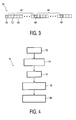
- Figure 3 schematically illustrates a compressed video signal stream 50.
- the compressed video signal includes a plurality of bits of data such as Bits 52 and 54. At certain intervals along the stream of video data, synchronizing markers or codes are provided in conventional fashion.
- Figure 3 schematically illustrates synchronizing codes 56, 58 and 60.
- Synchronizing codes are also known as resynchronization markers, resynchronizing codes, slice codes, slice markers and by other names known in the art. This application utilizes the term synchronizing codes generically to describe all such indicators. Synchronizing codes are utilized in video transmission systems for known purposes that need not be described in this specification.
- This invention includes identifying data between adjacent synchronizing codes and selected that data as a portion of the video signal to be authenticated.
- the synchronizing codes 56, 58 and 60 are spaced along the stream of video signal information.
- a first portion of the video signal 62 is between the synchronizing codes or markers 56 and 58.
- a second portion of the video signal 64 is between the adjacent synchronizing markers 58 and 60.
- every portion of the video signal preferably is identified and subjected to the authentication strategy described in this specification. Alternatively, less than all of the portions may be used for authentication purposes. The method associated with this invention is efficient enough, however, that all portions of the video signal preferably are utilized with the authentication strategy of this invention.
- Figure 4 includes a flow chart diagram 70 that illustrates more details about the steps 44 and 46 from Figure 2 .
- the preferred arrangement includes having a secret key value that is pre-selected and known at the first and second locations.
- the pre-selected key value is used to generate a first key and a second key using a selected function.
- the function for generating the first key and the second key includes appending enough zeros to the string of data identified as the key value to create a 64 byte string. That 64 byte string preferably is then exclusive ORed (i.e. XOR) with a data string known as ipad. In one example, ipad equals the byte 0 x 5C repeated to pad a block. The result of the exclusive ORed function is the first key.
- the second key is generated in one example by using the same 64 byte string (i.e. the key value with the appended zeros) and exclusive ORing (i.e. XOR) the 64 byte string with a data string known as opad.
- opad is the byte 0 x 36 repeated to pad a block.
- the result of the preferably bit wise exclusive ORing function is the second key identical first and second keys preferably are derived at the first and second locations so that the first and second keys are identical at each location.
- the selected portion of the video signal is then preferably subjected to the following procedure.
- the first key is appended to the selected portion of the video signal.
- a hash-based Authentication code generating function is performed on the appended selected portion to generate an intermediate authentication code.
- Hash-based authentication code generating functions are known in the art and those having the benefit of this description will be able to choose from among hash-based functions or to design one to accomplish the results provided by this invention.
- the second key is appended to the intermediate authentication code to generate the authentication code that is then appended to the selected video portion and transmitted by the transmitter 22.
- this invention provides an extremely secure authentication strategy.
- the authentication code preferably is placed into the user data field prior to transmission.
- this invention provides an extremely efficient way of handling large amounts of compressed video data and providing a secure strategy for authenticating that data.
- this invention provides a way of handling the video data in a manner that is computationally feasible yet not so small that the "overhead" associated with generating the authentication code is so great that it would compromise the speed or performance of the transmission of the signal.
- an error in one portion of a transmitted signal is isolated from other portions of the signal and only that portion containing an error need by rejected.
- the same key value is used to generate first and second keys that are identical to those generated at the first location.
- the first key is then appended to received portion of the video signal and the hash-based function is performed on the appended portion. This generates a received intermediate authentication code.
- the second key is appended to the received intermediate authentication code to generate a received authentication code.
- the received authentication code is then compared with the authentication code that was transmitted with the portion of the video signal. If the two authentication codes match, then the portion of the video signal has been proven authentic.
Landscapes
- Engineering & Computer Science (AREA)
- Multimedia (AREA)
- Signal Processing (AREA)
- Computer Security & Cryptography (AREA)
- Computer Networks & Wireless Communication (AREA)
- Two-Way Televisions, Distribution Of Moving Picture Or The Like (AREA)
Abstract
Description
- This invention relates to a system for authenticating transmitted video signals by selecting portions of the video signal and generating authentication codes that are transmitted with those portions for verification at a receiving location.
- Transmission of video signals is widely used for a variety of purposes. In some circumstances, the channels of communication are tightly controlled and it is reasonable to conclude that a received signal is exactly consistent with a transmitted signal. In many, if not most, circumstances, however, the communication channels are not tightly controlled. Therefore, it is necessary for two parties who are communicating with each other to authenticate received signals to ensure that the received signal is from an expected source and has not been tampered with in transit. Ideally, an authentication strategy verifies that a received signal is from the appropriate source (i.e., authenticity) and that the content is what was sent by the transmitter (i.e., signal integrity).
- A variety of strategies have been proposed for authenticating signals in transit. Encryption algorithms have been utilized in a variety of fields including remote keyless entry systems and video systems. One example of a video system authentication strategy is shown in
U.S. Patent No. 5,499,294 . In that arrangement a digital camera processor includes a private key that is embedded into the processor. Digital cameras having a public key that corresponds to the private key are able to receive information from the processor and to determine, using a known strategy, whether the received signal is from the appropriate source. - One limitation on currently proposed systems is that they are not capable of efficiently handling large amounts of video data. Another limitation is that many proposals do not provide a secure enough system that is effectively tamper proof. There is a need for a system that handles large amounts of video data in an efficient manner and provides results that are sufficiently secure. This invention addresses that need by providing a unique approach to authenticating video signals that are transmitted from one location to another.
- International Patent Application
WO99/09743A - In this reference a GBAM - a CA message - is authenticated by adding it to a multi-session key MSK, and then performing hashing by one one-way hash function.
- This invention is useful for authenticating a video signal that is transmitted from one location to a second location. A system designed according to this invention identifies portions of a video signal and provides an authentication code for each portion that is then used for authentication purposes at a receiving location.
- A system for ensuring the authenticity of video data within a video signal that is transmitted from a first location to a second location, which is designed according to this invention, includes several components. A selector module selects at least one portion of the video signal. An authentication code generating module appends a key to the selected portion and then generates an authentication code using the appended portion. A transmitter portion appends the authentication code to the selected portion of the video signal and transmits the appended portion, including the authentication code, from the first location.
- In the most preferred embodiment, the selector module identifies portions of the video signal by locating synchronizing codes in the video signal and choosing the data between adjacent synchronizing codes as each selected portion. Preferably an entire video signal is processed so that a plurality of portions between adjacent synchronizing codes each have a unique authentication code associated with them when the video signal is transmitted from the first location to the second location. At the second location, a second selector module identifies each portion of the transmitted signal. A deciphering module appends the key, which is the same as the key used at the first location, to the selected portion and then generates a second authentication code using the appended portion. An authentication module then authenticates the video signal at the second location by determining whether the second authentication code matches the authentication code that was sent along with the transmitted video signal portion.
- A method associated with this invention includes several basic steps. First, a portion of a video signal is selected. Preferably, portions of the video signal are selected as the data between synchronizing codes associated with the video signal. A key is appended to at least one of the selected portions. An authentication code is generated using the appended selected portion. The authentication code is then appended to the selected portion and both are transmitted from the first location to the second location. At the second location a received signal portion is utilized to generate an associated second authentication code using the same key as used at the first location. The second authentication code is compared with the authentication code received from the first location to verify the authenticity of the transmitted signal.
- A computer-readable medium including a plurality of computer-executable instructions for ensuring the authenticity of a video signal, which is transmitted from a first location to a second location, that is designed according to this invention includes several basic instructions. A first instruction directs a computer to select a portion of the video signal. A second instruction directs the computer to append a key to the selected portion. A third instruction directs the computer to generate an authentication code using the appended selected portion. A fourth instruction directs the computer to append the authentication code to the selected portion of the video signal so that both can be transmitted from the first location to the second location.
- The various features and advantages of this invention will become apparent to those skilled in the art from the following detailed description of the currently preferred embodiments. The drawings that accompany the detailed description can be briefly described as follows.
-
-
Figure 1 schematically illustrates a system designed according to this invention. -
Figure 2 is a flow-chart diagram illustrating a method associated with this invention. -
Figure 3 schematically illustrates a compressed video signal stream. -
Figure 4 is a flow-chart diagram illustrating more detail of selected portions of the flow-chart diagram ofFigure 2 . -
Figure 1 schematically illustrates a system 20 for communicating video signals from a first location to a second location. Atransmitter 22 transmits a video signal along acommunication link 24 to areceiver 26. Thecommunication link 24 may be fiber optic, transmission lines, Internet, satellite link or any other suitable communication medium for transmitting video signals. At the first location, thetransmitter 22 is provided with information (i.e., video data) from a video data-handling module 30 and an authenticationcode generating module 32. The video data-handling module 30 preferably processes video data that is in a compressed format. The video data-handling module 30 preferably identifies at least one portion of the video signal that will be used with the authentication strategy of this invention. Most preferably, each portion of the video signal is authenticated according to this invention so that an entire transmission can be verified. - The authentication code generating
module 32 preferably takes the selected portion of video data and subjects it to an authentication code generating strategy that will be described in more detail below, using a preselected key to generate an authentication code. The authentication code is then appended to the selected portion of the video signal and both are transmitted by thetransmitter 22. - At a second, remote location the
receiver 26 receives the video signal including at least one appended portion having an authentication code associated with it. A decipheringmodule 34 preferably utilizes the same key as the authenticationcode generating module 32 and the selected portion of the video signal to generate a second authentication code. The second authentication code is then compared with the authentication code that was transmitted by thetransmitter 22 to verify the authenticity and integrity of the received portion of the video signal. A video data-handling module 36 preferably utilizes only authenticated portions of the video signal as desired (i.e., to display a received signal or store it in memory). - It should be noted that although individual modules or portions are schematically illustrated in
Figure 1 , a system designed according to this invention does not necessarily include that number of discreet components. The functions performed by each portion could be integrated into a single computer, for example. Similarly, a greater number of discreet components or devices could be utilized than schematically illustrated inFigure 1 . Additionally, it should be noted that although thetransmitter 22 andreceiver 26 are identified as such, each could be a transceiver so that two way communication is possible at each location. -
Figure 2 includes a flow chart diagram 40 that illustrates a method associated with this invention. At 42, at least one portion of the video signal is selected. Next, at 44, a key is appended to the selected portion. The key preferably is a secret key that is shared by thetransmitter 22 andreceiver 26. An authentication code is then generated using the selected portion having the key appended to it at 46. The result is an authentication code that is then appended to the selected portion of the video signal at 48 prior to transmitting the video signal. -
Figure 3 schematically illustrates a compressedvideo signal stream 50. The compressed video signal includes a plurality of bits of data such asBits Figure 3 schematically illustrates synchronizingcodes - This invention includes identifying data between adjacent synchronizing codes and selected that data as a portion of the video signal to be authenticated.
- For example, the synchronizing
codes video signal 62 is between the synchronizing codes ormarkers video signal 64 is between theadjacent synchronizing markers -
Figure 4 includes a flow chart diagram 70 that illustrates more details about thesteps Figure 2 . The preferred arrangement includes having a secret key value that is pre-selected and known at the first and second locations. The pre-selected key value is used to generate a first key and a second key using a selected function. - In one example, the function for generating the first key and the second key includes appending enough zeros to the string of data identified as the key value to create a 64 byte string. That 64 byte string preferably is then exclusive ORed (i.e. XOR) with a data string known as ipad. In one example, ipad equals the byte 0 x 5C repeated to pad a block. The result of the exclusive ORed function is the first key.
- The second key is generated in one example by using the same 64 byte string (i.e. the key value with the appended zeros) and exclusive ORing (i.e. XOR) the 64 byte string with a data string known as opad. In one example, opad is the byte 0 x 36 repeated to pad a block. The result of the preferably bit wise exclusive ORing function is the second key identical first and second keys preferably are derived at the first and second locations so that the first and second keys are identical at each location.
- Once the first and second keys have been derived from the preselected key value, the selected portion of the video signal is then preferably subjected to the following procedure. At 76 the first key is appended to the selected portion of the video signal. At 78 a hash-based Authentication code generating function is performed on the appended selected portion to generate an intermediate authentication code. Hash-based authentication code generating functions are known in the art and those having the benefit of this description will be able to choose from among hash-based functions or to design one to accomplish the results provided by this invention.
- Next, at 80, the second key is appended to the intermediate authentication code to generate the authentication code that is then appended to the selected video portion and transmitted by the
transmitter 22. By utilizing the two-stage application of the hash function to generate an intermediate authentication code and then using that to generate the transmitted authentication code, this invention provides an extremely secure authentication strategy. In situations where the compressed video signal is in the MPEG format having a user data field, the authentication code preferably is placed into the user data field prior to transmission. - By utilizing the video data between synchronizing codes, this invention provides an extremely efficient way of handling large amounts of compressed video data and providing a secure strategy for authenticating that data. By selecting portions of the video data between the synchronizing codes, this invention provides a way of handling the video data in a manner that is computationally feasible yet not so small that the "overhead" associated with generating the authentication code is so great that it would compromise the speed or performance of the transmission of the signal. Additionally, by identifying the selected portions of the video data, an error in one portion of a transmitted signal is isolated from other portions of the signal and only that portion containing an error need by rejected.
- At the receiving location, the same key value is used to generate first and second keys that are identical to those generated at the first location. The first key is then appended to received portion of the video signal and the hash-based function is performed on the appended portion. This generates a received intermediate authentication code. Then the second key is appended to the received intermediate authentication code to generate a received authentication code. The received authentication code is then compared with the authentication code that was transmitted with the portion of the video signal. If the two authentication codes match, then the portion of the video signal has been proven authentic.
- The preceding description is exemplary rather than limiting in nature. Variations and modifications to the disclosed example may become apparent to those skilled in the art that do no necessarily depart from the basis of this invention. The scope of legal protection given to this invention can only be determined by studying the following claims.
Claims (16)
- A method of ensuring the authenticity of data within a video signal (50) that is transmitted from a first location to a second location, the video signal (50) including plurality of bits of data and synchronizing codes provided at certain intervals along the data within the video signal (50), characterized by that the method comprises the steps of:(A) selecting (42) portions (62,64) of a video signal where the step includes identifying synchronizing codes (56,58) within the video signal and selecting the portions of the video signal between adjacent synchronizing codes;(B) appending (44) a key to each of the selected portions;(C) generating (46) an authentication code using each appended selected portion from step (B); and(D) appending (48) the generated authentication codes to the corresponding selected portions of the video signal prior to transmitting both to the second location.
- A method according to claim 1, wherein the synchronizing codes includes resynchronizing codes, slice codes, slice markers.
- The method of claim 1, including preselecting a base key value and generating a first key and a second key, using the base key value and a chosen key generating function.
- The method of claim 4, wherein steps (B) and (C) include:appending the first key to a selected portion of the video signal;generating a first authentication code using the appended signal portion;appending the second key to the first authentication code; andgenerating a second authentication code using the appended first authentication code and using the second authentication code as the authentication code of step (C) when performing step (D).
- The method of claim 1, wherein step (C) includes using a hash based authentication code generating function.
- The method of claim 1, including receiving the transmitted signal at the second location, performing steps (A) through (C) on the received signal to generate a received signal authentication code and then determining whether the received signal authentication code matches the authentication code generated at the first location.
- The method of claim 7, including performing steps (B) and (C) at the first location by: preselecting a base key value and generating a first key and a second key, using the base key value and a preselected key generating function;
appending the first key to the selected portion of the video signal;
generating a first authentication code using the appended signal portion;
appending the second key to the first authentication code; and
generating a second authentication code using the appended first authentication code and using the second authentication code as the authentication code of step (C) when performing step (D). - The method of claim 8, including performing steps (B) and (C) at the second location by:generating a first key and a second key, using the preselected base key value and a preselected key generating function;appending the first key to the selected portion of the received video signal;generating a first received authentication code using the appended signal portion;appending the second key to the first received authentication code; andgenerating a second received authentication code using the appended first authentication code.
- The method of claim 9, including determining whether the second received authentication code matches the second authentication code to thereby verify the authenticity of the video data in the received signal.
- The method of claim 1, including performing steps (A) through (D) using a compressed video signal.
- The method of claim 11, wherein the compressed video signal is an MPEG signal having a user data field and wherein step (D) includes placing the authentication code into the user data field.
- A system (20) for ensuring the authenticity of data within a video signal (50) that is transmitted from a first location to a second location, the video signal (50) including plurality of bits of data and synchronizing codes provided at certain intervals along the data within the video signal (50), characterized by that the system comprises:a selector module (30) that selects portions (62,64) of the video signal, the selection including identifying synchronizing codes (56,58) within the video signal and selecting the portions of the video signal between adjacent synchronizing codes;an authentication code generating module (32) that appends a key each of to the selected portions and then generates an authentication code using each appended portion; anda transmitter (22) that appends the generated authentication codes to the corresponding selected portions and transmits the appended portions including the authentication code from the first location.
- The system of claim 13, wherein the authentication code generating module (32) uses a known key value to generate a first key and a second key and wherein the authentication code generating module appends the first key to the selected portion, generates an intermediate authentication code using the appended portion, appends the second key to the intermediate authentication code and generates the authentication code using the appended intermediate authentication code.
- The system of claim 13, including:a second selector module (26) at the second location that selects the portion of the transmitted signal;a deciphering module (34) that appends the key to the selected portion and then generates a second authentication code using the appended portion; andan authentication module (36) that authenticates the video signal at the second location by determining whether the second authentication code matches the first authentication code.
- The system of claim 15, wherein the deciphering module (34) uses a known key value to generate a first key and a second key and wherein the deciphering module appends the first key to the received selected portion, generates an intermediate authentication code using the appended portion, appends the second key to the intermediate authentication code and generates the second authentication code using the appended intermediate authentication code.
- A computer-readable medium having a plurality of computer-executable instructions to execute process steps for ensuring the authenticity of a video signal that is transmitted from a first location to a second location, the video signal (50) including plurality of bits of data and synchronizing codes provided at certain intervals along the data within the video signal (50), characterized by that the computer-executable instructions comprise:a first instruction (42) for selecting at least one portion of a video signal the selection including identifying data between adjacent synchronizing codes (56, 58) and select that data as the portions (62, 64) of the video signal to be authenticated;a second instruction (44) for appending a key to each of the selected portions;a third instruction (46) for generating an authentication code using each appended selected portion from the second instruction from; anda fourth instruction (48) for appending the generated authentication codes to the corresponding selected portions of the video signal.
Applications Claiming Priority (3)
| Application Number | Priority Date | Filing Date | Title |
|---|---|---|---|
| US09/422,737 US6715076B1 (en) | 1999-10-21 | 1999-10-21 | Video signal authentication system |
| US422737 | 1999-10-21 | ||
| PCT/EP2000/009772 WO2001030081A1 (en) | 1999-10-21 | 2000-10-05 | Video signal authentication system |
Publications (2)
| Publication Number | Publication Date |
|---|---|
| EP1145552A1 EP1145552A1 (en) | 2001-10-17 |
| EP1145552B1 true EP1145552B1 (en) | 2009-07-01 |
Family
ID=23676148
Family Applications (1)
| Application Number | Title | Priority Date | Filing Date |
|---|---|---|---|
| EP00969433A Expired - Lifetime EP1145552B1 (en) | 1999-10-21 | 2000-10-05 | Video signal authentication system |
Country Status (6)
| Country | Link |
|---|---|
| US (1) | US6715076B1 (en) |
| EP (1) | EP1145552B1 (en) |
| JP (1) | JP4795594B2 (en) |
| KR (1) | KR100745393B1 (en) |
| DE (1) | DE60042481D1 (en) |
| WO (1) | WO2001030081A1 (en) |
Families Citing this family (9)
| Publication number | Priority date | Publication date | Assignee | Title |
|---|---|---|---|---|
| US7619657B2 (en) * | 2000-10-04 | 2009-11-17 | Fujifilm Corp. | Recording apparatus, communications apparatus, recording system, communications system, and methods therefor for setting the recording function of the recording apparatus in a restricted state |
| JP4887592B2 (en) * | 2001-09-28 | 2012-02-29 | ソニー株式会社 | Data recording and / or reproducing method |
| KR101139580B1 (en) * | 2003-09-19 | 2012-04-30 | 소니 주식회사 | Transmitting apparatus, receiving apparatus, and data transmitting system |
| JP5101965B2 (en) * | 2007-09-25 | 2012-12-19 | 京セラ株式会社 | Receiver |
| JP5101964B2 (en) * | 2007-09-25 | 2012-12-19 | 京セラ株式会社 | Receiver |
| JP5101967B2 (en) * | 2007-09-26 | 2012-12-19 | 京セラ株式会社 | Receiver |
| US10523490B2 (en) * | 2013-08-06 | 2019-12-31 | Agilepq, Inc. | Authentication of a subscribed code table user utilizing optimized code table signaling |
| EP3465974A1 (en) | 2016-06-06 | 2019-04-10 | Agilepq, Inc. | Data conversion systems and methods |
| CN109891907B (en) * | 2017-03-14 | 2022-03-15 | 谷歌有限责任公司 | Authenticating the rendering of video content at the client device using the Trusted Platform Module |
Family Cites Families (12)
| Publication number | Priority date | Publication date | Assignee | Title |
|---|---|---|---|---|
| US5870474A (en) * | 1995-12-04 | 1999-02-09 | Scientific-Atlanta, Inc. | Method and apparatus for providing conditional access in connection-oriented, interactive networks with a multiplicity of service providers |
| JP2675032B2 (en) * | 1987-12-21 | 1997-11-12 | 株式会社日立製作所 | How to create compressed slips |
| JPH07115414A (en) * | 1993-10-19 | 1995-05-02 | Matsushita Electric Ind Co Ltd | Scramble transmission device |
| US5499294A (en) | 1993-11-24 | 1996-03-12 | The United States Of America As Represented By The Administrator Of The National Aeronautics And Space Administration | Digital camera with apparatus for authentication of images produced from an image file |
| US5619501A (en) * | 1994-04-22 | 1997-04-08 | Thomson Consumer Electronics, Inc. | Conditional access filter as for a packet video signal inverse transport system |
| JP3260270B2 (en) * | 1996-01-12 | 2002-02-25 | キヤノン株式会社 | Video input device and video input system |
| JPH103748A (en) * | 1996-06-14 | 1998-01-06 | Sony Corp | Digital signal recording method and reproduced signal processing device |
| JP3540511B2 (en) * | 1996-06-18 | 2004-07-07 | 株式会社東芝 | Electronic signature verification device |
| JPH10190767A (en) * | 1996-12-27 | 1998-07-21 | Sony Corp | Data transmitting device, data receiving device and their methods |
| BR9810967A (en) | 1997-08-01 | 2001-10-30 | Scientific Atlanta | Conditional access system |
| WO1999040702A1 (en) * | 1998-02-04 | 1999-08-12 | Sun Microsystems, Inc. | Method and apparatus for efficient authentication and integrity checking using hierarchical hashing |
| JPH11289327A (en) * | 1998-04-01 | 1999-10-19 | Matsushita Electric Ind Co Ltd | Data transmitting device, data receiving device, and medium |
-
1999
- 1999-10-21 US US09/422,737 patent/US6715076B1/en not_active Expired - Lifetime
-
2000
- 2000-10-05 WO PCT/EP2000/009772 patent/WO2001030081A1/en not_active Ceased
- 2000-10-05 JP JP2001531311A patent/JP4795594B2/en not_active Expired - Fee Related
- 2000-10-05 DE DE60042481T patent/DE60042481D1/en not_active Expired - Lifetime
- 2000-10-05 KR KR1020017007867A patent/KR100745393B1/en not_active Expired - Fee Related
- 2000-10-05 EP EP00969433A patent/EP1145552B1/en not_active Expired - Lifetime
Also Published As
| Publication number | Publication date |
|---|---|
| JP4795594B2 (en) | 2011-10-19 |
| JP2003512784A (en) | 2003-04-02 |
| KR20010092752A (en) | 2001-10-26 |
| KR100745393B1 (en) | 2007-08-03 |
| US6715076B1 (en) | 2004-03-30 |
| WO2001030081A1 (en) | 2001-04-26 |
| EP1145552A1 (en) | 2001-10-17 |
| DE60042481D1 (en) | 2009-08-13 |
Similar Documents
| Publication | Publication Date | Title |
|---|---|---|
| CN1197023C (en) | Method and system for securely transferring data set in a data communications system | |
| US8746363B2 (en) | System for conducting remote biometric operations | |
| US6038321A (en) | Data transfer method, communication system and storage medium | |
| KR100424786B1 (en) | Method and apparatus for generating encrypted signature using hash key | |
| US6389533B1 (en) | Anonymity server | |
| US5751813A (en) | Use of an encryption server for encrypting messages | |
| US7570759B2 (en) | System and method for secure encryption | |
| US8396218B2 (en) | Cryptographic module distribution system, apparatus, and program | |
| US8045716B2 (en) | System and method for the concealment of device input parameters | |
| US6683956B1 (en) | Encrypting conversion apparatus, decrypting conversion apparatus, cryptographic communication system, and electronic toll collection apparatus | |
| US20100293379A1 (en) | method for secure data transmission in wireless sensor network | |
| US7017182B2 (en) | Method of securely transmitting information | |
| NO306890B1 (en) | Procedure for establishing secure communication | |
| JPH06315027A (en) | Method and equipment for data authentication in data communication environment | |
| WO2000049764A1 (en) | Data authentication system employing encrypted integrity blocks | |
| WO2002101971A2 (en) | Apparatus, system and method for validating integrity of transmitted data | |
| JP2012044716A (en) | Method and apparatus for secure transmission of data | |
| JP2003114877A (en) | Apparatus and processor for transmitting and executing control commands for accessing functions of a receiver | |
| US6715076B1 (en) | Video signal authentication system | |
| EP1626524A1 (en) | Method of generating a key for device authentication and apparatus using the method, and device authentication method and device authentication apparatus | |
| US20020017781A1 (en) | Seat belt guide | |
| JP2004180318A (en) | Data encryption or decryption method and data encryption or decryption device | |
| US20020138732A1 (en) | Methods, systems and computer program products for providing digital signatures in a network environment | |
| JPH08204701A (en) | E-mail encryption communication system and encryption communication method | |
| JP2000047580A (en) | Encryption conversion device, decryption conversion device, encryption communication device, and automatic fee collection device |
Legal Events
| Date | Code | Title | Description |
|---|---|---|---|
| PUAI | Public reference made under article 153(3) epc to a published international application that has entered the european phase |
Free format text: ORIGINAL CODE: 0009012 |
|
| AK | Designated contracting states |
Kind code of ref document: A1 Designated state(s): AT BE CH CY DE DK ES FI FR GB GR IE IT LI LU MC NL PT SE |
|
| AX | Request for extension of the european patent |
Free format text: AL;LT;LV;MK;RO;SI |
|
| 17P | Request for examination filed |
Effective date: 20011026 |
|
| RBV | Designated contracting states (corrected) |
Designated state(s): DE FR GB |
|
| 17Q | First examination report despatched |
Effective date: 20080303 |
|
| GRAP | Despatch of communication of intention to grant a patent |
Free format text: ORIGINAL CODE: EPIDOSNIGR1 |
|
| GRAS | Grant fee paid |
Free format text: ORIGINAL CODE: EPIDOSNIGR3 |
|
| GRAA | (expected) grant |
Free format text: ORIGINAL CODE: 0009210 |
|
| AK | Designated contracting states |
Kind code of ref document: B1 Designated state(s): DE FR GB |
|
| REG | Reference to a national code |
Ref country code: GB Ref legal event code: FG4D |
|
| REF | Corresponds to: |
Ref document number: 60042481 Country of ref document: DE Date of ref document: 20090813 Kind code of ref document: P |
|
| PLBE | No opposition filed within time limit |
Free format text: ORIGINAL CODE: 0009261 |
|
| STAA | Information on the status of an ep patent application or granted ep patent |
Free format text: STATUS: NO OPPOSITION FILED WITHIN TIME LIMIT |
|
| 26N | No opposition filed |
Effective date: 20100406 |
|
| REG | Reference to a national code |
Ref country code: DE Ref legal event code: R082 Ref document number: 60042481 Country of ref document: DE Representative=s name: VOLMER, GEORG, DIPL.-ING., DE |
|
| REG | Reference to a national code |
Ref country code: DE Ref legal event code: R082 Ref document number: 60042481 Country of ref document: DE Representative=s name: VOLMER, GEORG, DIPL.-ING., DE Effective date: 20140328 Ref country code: DE Ref legal event code: R081 Ref document number: 60042481 Country of ref document: DE Owner name: KONINKLIJKE PHILIPS N.V., NL Free format text: FORMER OWNER: KONINKLIJKE PHILIPS ELECTRONICS N.V., EINDHOVEN, NL Effective date: 20140328 Ref country code: DE Ref legal event code: R082 Ref document number: 60042481 Country of ref document: DE Representative=s name: MEISSNER, BOLTE & PARTNER GBR, DE Effective date: 20140328 Ref country code: DE Ref legal event code: R082 Ref document number: 60042481 Country of ref document: DE Representative=s name: MEISSNER BOLTE PATENTANWAELTE RECHTSANWAELTE P, DE Effective date: 20140328 |
|
| REG | Reference to a national code |
Ref country code: FR Ref legal event code: CD Owner name: KONINKLIJKE PHILIPS N.V., NL Effective date: 20141126 Ref country code: FR Ref legal event code: CA Effective date: 20141126 |
|
| REG | Reference to a national code |
Ref country code: FR Ref legal event code: PLFP Year of fee payment: 16 |
|
| REG | Reference to a national code |
Ref country code: DE Ref legal event code: R082 Ref document number: 60042481 Country of ref document: DE Representative=s name: MEISSNER, BOLTE & PARTNER GBR, DE Ref country code: DE Ref legal event code: R082 Ref document number: 60042481 Country of ref document: DE Representative=s name: MEISSNER BOLTE PATENTANWAELTE RECHTSANWAELTE P, DE |
|
| REG | Reference to a national code |
Ref country code: FR Ref legal event code: PLFP Year of fee payment: 17 |
|
| REG | Reference to a national code |
Ref country code: FR Ref legal event code: PLFP Year of fee payment: 18 |
|
| REG | Reference to a national code |
Ref country code: FR Ref legal event code: PLFP Year of fee payment: 19 |
|
| PGFP | Annual fee paid to national office [announced via postgrant information from national office to epo] |
Ref country code: DE Payment date: 20191129 Year of fee payment: 20 |
|
| PGFP | Annual fee paid to national office [announced via postgrant information from national office to epo] |
Ref country code: FR Payment date: 20191025 Year of fee payment: 20 |
|
| PGFP | Annual fee paid to national office [announced via postgrant information from national office to epo] |
Ref country code: GB Payment date: 20191029 Year of fee payment: 20 |
|
| REG | Reference to a national code |
Ref country code: DE Ref legal event code: R071 Ref document number: 60042481 Country of ref document: DE |
|
| REG | Reference to a national code |
Ref country code: GB Ref legal event code: PE20 Expiry date: 20201004 |
|
| PG25 | Lapsed in a contracting state [announced via postgrant information from national office to epo] |
Ref country code: GB Free format text: LAPSE BECAUSE OF EXPIRATION OF PROTECTION Effective date: 20201004 |