EP1141294B1 - Method of enhancing the biological activity of ligands - Google Patents
Method of enhancing the biological activity of ligands Download PDFInfo
- Publication number
- EP1141294B1 EP1141294B1 EP99968956A EP99968956A EP1141294B1 EP 1141294 B1 EP1141294 B1 EP 1141294B1 EP 99968956 A EP99968956 A EP 99968956A EP 99968956 A EP99968956 A EP 99968956A EP 1141294 B1 EP1141294 B1 EP 1141294B1
- Authority
- EP
- European Patent Office
- Prior art keywords
- ang
- cell
- nucleic acid
- fusion polypeptide
- protein
- Prior art date
- Legal status (The legal status is an assumption and is not a legal conclusion. Google has not performed a legal analysis and makes no representation as to the accuracy of the status listed.)
- Expired - Lifetime
Links
- 238000000034 method Methods 0.000 title claims abstract description 25
- 239000003446 ligand Substances 0.000 title abstract description 74
- 230000004071 biological effect Effects 0.000 title description 9
- 230000002708 enhancing effect Effects 0.000 title description 4
- 229920001184 polypeptide Polymers 0.000 claims abstract description 93
- 102000004196 processed proteins & peptides Human genes 0.000 claims abstract description 93
- 108090000765 processed proteins & peptides Proteins 0.000 claims abstract description 93
- 230000004927 fusion Effects 0.000 claims abstract description 74
- 150000007523 nucleic acids Chemical class 0.000 claims abstract description 53
- 108020004707 nucleic acids Proteins 0.000 claims abstract description 43
- 102000039446 nucleic acids Human genes 0.000 claims abstract description 43
- 238000004519 manufacturing process Methods 0.000 claims abstract description 13
- 210000004027 cell Anatomy 0.000 claims description 129
- 230000014509 gene expression Effects 0.000 claims description 28
- 239000013598 vector Substances 0.000 claims description 26
- 239000013604 expression vector Substances 0.000 claims description 20
- 210000004978 chinese hamster ovary cell Anatomy 0.000 claims description 17
- 102000008946 Fibrinogen Human genes 0.000 claims description 15
- 108010049003 Fibrinogen Proteins 0.000 claims description 15
- 229940012952 fibrinogen Drugs 0.000 claims description 15
- 239000000539 dimer Substances 0.000 claims description 11
- 239000000203 mixture Substances 0.000 claims description 11
- 108060003951 Immunoglobulin Proteins 0.000 claims description 8
- 102000018358 immunoglobulin Human genes 0.000 claims description 8
- 230000001580 bacterial effect Effects 0.000 claims description 7
- 241000588724 Escherichia coli Species 0.000 claims description 4
- 241000238631 Hexapoda Species 0.000 claims description 4
- 210000004899 c-terminal region Anatomy 0.000 claims description 4
- 210000004962 mammalian cell Anatomy 0.000 claims description 4
- 210000005253 yeast cell Anatomy 0.000 claims description 4
- 108010090091 TIE-2 Receptor Proteins 0.000 abstract description 54
- 102000012753 TIE-2 Receptor Human genes 0.000 abstract description 54
- 230000000694 effects Effects 0.000 abstract description 10
- 108091008815 Eph receptors Proteins 0.000 abstract description 4
- 102000050554 Eph Family Receptors Human genes 0.000 abstract description 2
- 108090000623 proteins and genes Proteins 0.000 description 132
- 102000004169 proteins and genes Human genes 0.000 description 117
- 235000018102 proteins Nutrition 0.000 description 116
- 102100034594 Angiopoietin-1 Human genes 0.000 description 63
- 230000026731 phosphorylation Effects 0.000 description 35
- 238000006366 phosphorylation reaction Methods 0.000 description 35
- 101000924552 Homo sapiens Angiopoietin-1 Proteins 0.000 description 34
- 150000001413 amino acids Chemical class 0.000 description 32
- 102000005962 receptors Human genes 0.000 description 31
- 108020003175 receptors Proteins 0.000 description 31
- 230000001404 mediated effect Effects 0.000 description 30
- 108010048154 Angiopoietin-1 Proteins 0.000 description 29
- 108010048036 Angiopoietin-2 Proteins 0.000 description 29
- 102000009075 Angiopoietin-2 Human genes 0.000 description 29
- 238000004458 analytical method Methods 0.000 description 26
- 241000282414 Homo sapiens Species 0.000 description 24
- 239000006228 supernatant Substances 0.000 description 24
- 235000001014 amino acid Nutrition 0.000 description 22
- 229940024606 amino acid Drugs 0.000 description 22
- 108020004414 DNA Proteins 0.000 description 19
- 102100022014 Angiopoietin-1 receptor Human genes 0.000 description 14
- 101100481408 Danio rerio tie2 gene Proteins 0.000 description 14
- 101000753291 Homo sapiens Angiopoietin-1 receptor Proteins 0.000 description 14
- 101100481410 Mus musculus Tek gene Proteins 0.000 description 14
- 238000000149 argon plasma sintering Methods 0.000 description 14
- 230000006870 function Effects 0.000 description 14
- 239000000556 agonist Substances 0.000 description 12
- 239000013612 plasmid Substances 0.000 description 12
- 238000000746 purification Methods 0.000 description 11
- 241000894007 species Species 0.000 description 11
- 230000000903 blocking effect Effects 0.000 description 10
- 238000003566 phosphorylation assay Methods 0.000 description 10
- 102000009840 Angiopoietins Human genes 0.000 description 9
- 108010009906 Angiopoietins Proteins 0.000 description 9
- 208000037265 diseases, disorders, signs and symptoms Diseases 0.000 description 9
- 230000003993 interaction Effects 0.000 description 9
- XUJNEKJLAYXESH-REOHCLBHSA-N L-Cysteine Chemical compound SC[C@H](N)C(O)=O XUJNEKJLAYXESH-REOHCLBHSA-N 0.000 description 8
- 230000004988 N-glycosylation Effects 0.000 description 8
- 108091028043 Nucleic acid sequence Proteins 0.000 description 8
- 108010076504 Protein Sorting Signals Proteins 0.000 description 8
- 238000002474 experimental method Methods 0.000 description 8
- 239000012634 fragment Substances 0.000 description 8
- 239000005557 antagonist Substances 0.000 description 7
- 239000003814 drug Substances 0.000 description 7
- 210000002889 endothelial cell Anatomy 0.000 description 7
- 238000005516 engineering process Methods 0.000 description 7
- 230000003394 haemopoietic effect Effects 0.000 description 7
- 108091003079 Bovine Serum Albumin Proteins 0.000 description 6
- 238000012512 characterization method Methods 0.000 description 6
- 239000012091 fetal bovine serum Substances 0.000 description 6
- 238000002523 gelfiltration Methods 0.000 description 6
- 238000013365 molecular weight analysis method Methods 0.000 description 6
- 238000012163 sequencing technique Methods 0.000 description 6
- 238000002415 sodium dodecyl sulfate polyacrylamide gel electrophoresis Methods 0.000 description 6
- 108700005091 Immunoglobulin Genes Proteins 0.000 description 5
- 230000008859 change Effects 0.000 description 5
- 208000035475 disorder Diseases 0.000 description 5
- ZDXPYRJPNDTMRX-UHFFFAOYSA-N glutamine Natural products OC(=O)C(N)CCC(N)=O ZDXPYRJPNDTMRX-UHFFFAOYSA-N 0.000 description 5
- 150000003839 salts Chemical class 0.000 description 5
- 239000000523 sample Substances 0.000 description 5
- 230000000638 stimulation Effects 0.000 description 5
- 108091026890 Coding region Proteins 0.000 description 4
- 238000012300 Sequence Analysis Methods 0.000 description 4
- 102000004142 Trypsin Human genes 0.000 description 4
- 108090000631 Trypsin Proteins 0.000 description 4
- 239000013543 active substance Substances 0.000 description 4
- 238000013459 approach Methods 0.000 description 4
- 230000015572 biosynthetic process Effects 0.000 description 4
- 238000004440 column chromatography Methods 0.000 description 4
- 238000010276 construction Methods 0.000 description 4
- 230000004069 differentiation Effects 0.000 description 4
- 201000010099 disease Diseases 0.000 description 4
- 238000003384 imaging method Methods 0.000 description 4
- 239000007943 implant Substances 0.000 description 4
- 238000001727 in vivo Methods 0.000 description 4
- 229920002521 macromolecule Polymers 0.000 description 4
- 239000003550 marker Substances 0.000 description 4
- 239000000178 monomer Substances 0.000 description 4
- 230000035755 proliferation Effects 0.000 description 4
- 239000012460 protein solution Substances 0.000 description 4
- 108091008146 restriction endonucleases Proteins 0.000 description 4
- 238000001542 size-exclusion chromatography Methods 0.000 description 4
- 239000007787 solid Substances 0.000 description 4
- UCSJYZPVAKXKNQ-HZYVHMACSA-N streptomycin Chemical compound CN[C@H]1[C@H](O)[C@@H](O)[C@H](CO)O[C@H]1O[C@@H]1[C@](C=O)(O)[C@H](C)O[C@H]1O[C@@H]1[C@@H](NC(N)=N)[C@H](O)[C@@H](NC(N)=N)[C@H](O)[C@H]1O UCSJYZPVAKXKNQ-HZYVHMACSA-N 0.000 description 4
- 238000001890 transfection Methods 0.000 description 4
- 239000012588 trypsin Substances 0.000 description 4
- MTCFGRXMJLQNBG-REOHCLBHSA-N (2S)-2-Amino-3-hydroxypropansäure Chemical compound OC[C@H](N)C(O)=O MTCFGRXMJLQNBG-REOHCLBHSA-N 0.000 description 3
- 102000002260 Alkaline Phosphatase Human genes 0.000 description 3
- 108020004774 Alkaline Phosphatase Proteins 0.000 description 3
- NSVOVKWEKGEOQB-LURJTMIESA-N Gly-Pro-Gly Chemical compound NCC(=O)N1CCC[C@H]1C(=O)NCC(O)=O NSVOVKWEKGEOQB-LURJTMIESA-N 0.000 description 3
- 241001465754 Metazoa Species 0.000 description 3
- 108091000080 Phosphotransferase Proteins 0.000 description 3
- 102000004022 Protein-Tyrosine Kinases Human genes 0.000 description 3
- 108090000412 Protein-Tyrosine Kinases Proteins 0.000 description 3
- 108020004511 Recombinant DNA Proteins 0.000 description 3
- 102000007056 Recombinant Fusion Proteins Human genes 0.000 description 3
- 108010008281 Recombinant Fusion Proteins Proteins 0.000 description 3
- FAPWRFPIFSIZLT-UHFFFAOYSA-M Sodium chloride Chemical compound [Na+].[Cl-] FAPWRFPIFSIZLT-UHFFFAOYSA-M 0.000 description 3
- 108010073929 Vascular Endothelial Growth Factor A Proteins 0.000 description 3
- 102000005789 Vascular Endothelial Growth Factors Human genes 0.000 description 3
- 108010019530 Vascular Endothelial Growth Factors Proteins 0.000 description 3
- 238000003556 assay Methods 0.000 description 3
- XUJNEKJLAYXESH-UHFFFAOYSA-N cysteine Natural products SCC(N)C(O)=O XUJNEKJLAYXESH-UHFFFAOYSA-N 0.000 description 3
- 235000018417 cysteine Nutrition 0.000 description 3
- 238000006471 dimerization reaction Methods 0.000 description 3
- 238000000338 in vitro Methods 0.000 description 3
- 230000003834 intracellular effect Effects 0.000 description 3
- 210000004185 liver Anatomy 0.000 description 3
- 239000008194 pharmaceutical composition Substances 0.000 description 3
- 102000020233 phosphotransferase Human genes 0.000 description 3
- 230000003389 potentiating effect Effects 0.000 description 3
- 102000027426 receptor tyrosine kinases Human genes 0.000 description 3
- 108091008598 receptor tyrosine kinases Proteins 0.000 description 3
- 210000000130 stem cell Anatomy 0.000 description 3
- 230000001225 therapeutic effect Effects 0.000 description 3
- 210000001519 tissue Anatomy 0.000 description 3
- 208000030507 AIDS Diseases 0.000 description 2
- 102000007698 Alcohol dehydrogenase Human genes 0.000 description 2
- 108010021809 Alcohol dehydrogenase Proteins 0.000 description 2
- 241000283707 Capra Species 0.000 description 2
- 238000007900 DNA-DNA hybridization Methods 0.000 description 2
- 238000002965 ELISA Methods 0.000 description 2
- 241001302160 Escherichia coli str. K-12 substr. DH10B Species 0.000 description 2
- 102000003974 Fibroblast growth factor 2 Human genes 0.000 description 2
- 108090000379 Fibroblast growth factor 2 Proteins 0.000 description 2
- DHMQDGOQFOQNFH-UHFFFAOYSA-N Glycine Chemical compound NCC(O)=O DHMQDGOQFOQNFH-UHFFFAOYSA-N 0.000 description 2
- 108010033040 Histones Proteins 0.000 description 2
- 102000006496 Immunoglobulin Heavy Chains Human genes 0.000 description 2
- 108010019476 Immunoglobulin Heavy Chains Proteins 0.000 description 2
- 241000235058 Komagataella pastoris Species 0.000 description 2
- 206010028980 Neoplasm Diseases 0.000 description 2
- 102000016978 Orphan receptors Human genes 0.000 description 2
- 108070000031 Orphan receptors Proteins 0.000 description 2
- 229930182555 Penicillin Natural products 0.000 description 2
- JGSARLDLIJGVTE-MBNYWOFBSA-N Penicillin G Chemical compound N([C@H]1[C@H]2SC([C@@H](N2C1=O)C(O)=O)(C)C)C(=O)CC1=CC=CC=C1 JGSARLDLIJGVTE-MBNYWOFBSA-N 0.000 description 2
- 108010038512 Platelet-Derived Growth Factor Proteins 0.000 description 2
- 102000010780 Platelet-Derived Growth Factor Human genes 0.000 description 2
- 101710167911 Repressible acid phosphatase Proteins 0.000 description 2
- 101150014136 SUC2 gene Proteins 0.000 description 2
- 241000256251 Spodoptera frugiperda Species 0.000 description 2
- 102000006601 Thymidine Kinase Human genes 0.000 description 2
- 108020004440 Thymidine kinase Proteins 0.000 description 2
- 230000004913 activation Effects 0.000 description 2
- 239000011543 agarose gel Substances 0.000 description 2
- 102000005840 alpha-Galactosidase Human genes 0.000 description 2
- 108010030291 alpha-Galactosidase Proteins 0.000 description 2
- 125000000539 amino acid group Chemical group 0.000 description 2
- 229960000723 ampicillin Drugs 0.000 description 2
- AVKUERGKIZMTKX-NJBDSQKTSA-N ampicillin Chemical compound C1([C@@H](N)C(=O)N[C@H]2[C@H]3SC([C@@H](N3C2=O)C(O)=O)(C)C)=CC=CC=C1 AVKUERGKIZMTKX-NJBDSQKTSA-N 0.000 description 2
- 230000008033 biological extinction Effects 0.000 description 2
- 210000004369 blood Anatomy 0.000 description 2
- 239000008280 blood Substances 0.000 description 2
- 210000000601 blood cell Anatomy 0.000 description 2
- 230000003197 catalytic effect Effects 0.000 description 2
- 239000003153 chemical reaction reagent Substances 0.000 description 2
- 239000003795 chemical substances by application Substances 0.000 description 2
- 230000004087 circulation Effects 0.000 description 2
- 230000001086 cytosolic effect Effects 0.000 description 2
- 238000000502 dialysis Methods 0.000 description 2
- 230000029087 digestion Effects 0.000 description 2
- -1 for example Chemical class 0.000 description 2
- 238000009472 formulation Methods 0.000 description 2
- 239000003102 growth factor Substances 0.000 description 2
- PJJJBBJSCAKJQF-UHFFFAOYSA-N guanidinium chloride Chemical compound [Cl-].NC(N)=[NH2+] PJJJBBJSCAKJQF-UHFFFAOYSA-N 0.000 description 2
- 238000004191 hydrophobic interaction chromatography Methods 0.000 description 2
- 210000003000 inclusion body Anatomy 0.000 description 2
- 238000011534 incubation Methods 0.000 description 2
- 239000003112 inhibitor Substances 0.000 description 2
- 238000002347 injection Methods 0.000 description 2
- 239000007924 injection Substances 0.000 description 2
- 238000003780 insertion Methods 0.000 description 2
- 230000037431 insertion Effects 0.000 description 2
- 238000007913 intrathecal administration Methods 0.000 description 2
- 238000001990 intravenous administration Methods 0.000 description 2
- 238000004255 ion exchange chromatography Methods 0.000 description 2
- 238000002356 laser light scattering Methods 0.000 description 2
- 210000004698 lymphocyte Anatomy 0.000 description 2
- 230000035800 maturation Effects 0.000 description 2
- 230000005012 migration Effects 0.000 description 2
- 238000013508 migration Methods 0.000 description 2
- 230000004048 modification Effects 0.000 description 2
- 238000012986 modification Methods 0.000 description 2
- 238000010369 molecular cloning Methods 0.000 description 2
- 230000035772 mutation Effects 0.000 description 2
- 210000000056 organ Anatomy 0.000 description 2
- 230000037361 pathway Effects 0.000 description 2
- 239000008188 pellet Substances 0.000 description 2
- 229940049954 penicillin Drugs 0.000 description 2
- 108010079892 phosphoglycerol kinase Proteins 0.000 description 2
- 238000007747 plating Methods 0.000 description 2
- 239000002243 precursor Substances 0.000 description 2
- 239000000047 product Substances 0.000 description 2
- 230000006798 recombination Effects 0.000 description 2
- 230000001105 regulatory effect Effects 0.000 description 2
- 238000004366 reverse phase liquid chromatography Methods 0.000 description 2
- 230000011664 signaling Effects 0.000 description 2
- MFBOGIVSZKQAPD-UHFFFAOYSA-M sodium butyrate Chemical compound [Na+].CCCC([O-])=O MFBOGIVSZKQAPD-UHFFFAOYSA-M 0.000 description 2
- 239000011780 sodium chloride Substances 0.000 description 2
- 238000010561 standard procedure Methods 0.000 description 2
- 230000003068 static effect Effects 0.000 description 2
- 229960005322 streptomycin Drugs 0.000 description 2
- 230000014616 translation Effects 0.000 description 2
- 230000004614 tumor growth Effects 0.000 description 2
- 230000029663 wound healing Effects 0.000 description 2
- 201000010000 Agranulocytosis Diseases 0.000 description 1
- 108010088751 Albumins Proteins 0.000 description 1
- 206010002961 Aplasia Diseases 0.000 description 1
- 239000004475 Arginine Substances 0.000 description 1
- DCXYFEDJOCDNAF-UHFFFAOYSA-N Asparagine Natural products OC(=O)C(N)CC(N)=O DCXYFEDJOCDNAF-UHFFFAOYSA-N 0.000 description 1
- 210000002237 B-cell of pancreatic islet Anatomy 0.000 description 1
- 241000894006 Bacteria Species 0.000 description 1
- 206010065553 Bone marrow failure Diseases 0.000 description 1
- 102000004031 Carboxy-Lyases Human genes 0.000 description 1
- 108090000489 Carboxy-Lyases Proteins 0.000 description 1
- 101710176668 Cartilage oligomeric matrix protein Proteins 0.000 description 1
- 102000004127 Cytokines Human genes 0.000 description 1
- 108090000695 Cytokines Proteins 0.000 description 1
- 102000053602 DNA Human genes 0.000 description 1
- 102000003951 Erythropoietin Human genes 0.000 description 1
- 108090000394 Erythropoietin Proteins 0.000 description 1
- 241000233866 Fungi Species 0.000 description 1
- 108010001515 Galectin 4 Proteins 0.000 description 1
- 102100039556 Galectin-4 Human genes 0.000 description 1
- 108700028146 Genetic Enhancer Elements Proteins 0.000 description 1
- 108700039691 Genetic Promoter Regions Proteins 0.000 description 1
- WQZGKKKJIJFFOK-GASJEMHNSA-N Glucose Chemical compound OC[C@H]1OC(O)[C@H](O)[C@@H](O)[C@@H]1O WQZGKKKJIJFFOK-GASJEMHNSA-N 0.000 description 1
- WHUUTDBJXJRKMK-UHFFFAOYSA-N Glutamic acid Natural products OC(=O)C(N)CCC(O)=O WHUUTDBJXJRKMK-UHFFFAOYSA-N 0.000 description 1
- 239000004471 Glycine Substances 0.000 description 1
- 108010017080 Granulocyte Colony-Stimulating Factor Proteins 0.000 description 1
- 102000004269 Granulocyte Colony-Stimulating Factor Human genes 0.000 description 1
- 108010017213 Granulocyte-Macrophage Colony-Stimulating Factor Proteins 0.000 description 1
- 102000004457 Granulocyte-Macrophage Colony-Stimulating Factor Human genes 0.000 description 1
- 206010018687 Granulocytopenia Diseases 0.000 description 1
- 108091005904 Hemoglobin subunit beta Proteins 0.000 description 1
- 101000721661 Homo sapiens Cellular tumor antigen p53 Proteins 0.000 description 1
- 101000582950 Homo sapiens Platelet factor 4 Proteins 0.000 description 1
- XQFRJNBWHJMXHO-RRKCRQDMSA-N IDUR Chemical compound C1[C@H](O)[C@@H](CO)O[C@H]1N1C(=O)NC(=O)C(I)=C1 XQFRJNBWHJMXHO-RRKCRQDMSA-N 0.000 description 1
- 108090001061 Insulin Proteins 0.000 description 1
- 102000015696 Interleukins Human genes 0.000 description 1
- 108010063738 Interleukins Proteins 0.000 description 1
- ONIBWKKTOPOVIA-BYPYZUCNSA-N L-Proline Chemical compound OC(=O)[C@@H]1CCCN1 ONIBWKKTOPOVIA-BYPYZUCNSA-N 0.000 description 1
- QNAYBMKLOCPYGJ-REOHCLBHSA-N L-alanine Chemical compound C[C@H](N)C(O)=O QNAYBMKLOCPYGJ-REOHCLBHSA-N 0.000 description 1
- ODKSFYDXXFIFQN-BYPYZUCNSA-P L-argininium(2+) Chemical compound NC(=[NH2+])NCCC[C@H]([NH3+])C(O)=O ODKSFYDXXFIFQN-BYPYZUCNSA-P 0.000 description 1
- DCXYFEDJOCDNAF-REOHCLBHSA-N L-asparagine Chemical compound OC(=O)[C@@H](N)CC(N)=O DCXYFEDJOCDNAF-REOHCLBHSA-N 0.000 description 1
- CKLJMWTZIZZHCS-REOHCLBHSA-N L-aspartic acid Chemical compound OC(=O)[C@@H](N)CC(O)=O CKLJMWTZIZZHCS-REOHCLBHSA-N 0.000 description 1
- WHUUTDBJXJRKMK-VKHMYHEASA-N L-glutamic acid Chemical compound OC(=O)[C@@H](N)CCC(O)=O WHUUTDBJXJRKMK-VKHMYHEASA-N 0.000 description 1
- ZDXPYRJPNDTMRX-VKHMYHEASA-N L-glutamine Chemical compound OC(=O)[C@@H](N)CCC(N)=O ZDXPYRJPNDTMRX-VKHMYHEASA-N 0.000 description 1
- HNDVDQJCIGZPNO-YFKPBYRVSA-N L-histidine Chemical compound OC(=O)[C@@H](N)CC1=CN=CN1 HNDVDQJCIGZPNO-YFKPBYRVSA-N 0.000 description 1
- AGPKZVBTJJNPAG-WHFBIAKZSA-N L-isoleucine Chemical compound CC[C@H](C)[C@H](N)C(O)=O AGPKZVBTJJNPAG-WHFBIAKZSA-N 0.000 description 1
- ROHFNLRQFUQHCH-YFKPBYRVSA-N L-leucine Chemical compound CC(C)C[C@H](N)C(O)=O ROHFNLRQFUQHCH-YFKPBYRVSA-N 0.000 description 1
- KDXKERNSBIXSRK-YFKPBYRVSA-N L-lysine Chemical compound NCCCC[C@H](N)C(O)=O KDXKERNSBIXSRK-YFKPBYRVSA-N 0.000 description 1
- FFEARJCKVFRZRR-BYPYZUCNSA-N L-methionine Chemical compound CSCC[C@H](N)C(O)=O FFEARJCKVFRZRR-BYPYZUCNSA-N 0.000 description 1
- COLNVLDHVKWLRT-QMMMGPOBSA-N L-phenylalanine Chemical compound OC(=O)[C@@H](N)CC1=CC=CC=C1 COLNVLDHVKWLRT-QMMMGPOBSA-N 0.000 description 1
- AYFVYJQAPQTCCC-GBXIJSLDSA-N L-threonine Chemical compound C[C@@H](O)[C@H](N)C(O)=O AYFVYJQAPQTCCC-GBXIJSLDSA-N 0.000 description 1
- QIVBCDIJIAJPQS-VIFPVBQESA-N L-tryptophane Chemical compound C1=CC=C2C(C[C@H](N)C(O)=O)=CNC2=C1 QIVBCDIJIAJPQS-VIFPVBQESA-N 0.000 description 1
- OUYCCCASQSFEME-QMMMGPOBSA-N L-tyrosine Chemical compound OC(=O)[C@@H](N)CC1=CC=C(O)C=C1 OUYCCCASQSFEME-QMMMGPOBSA-N 0.000 description 1
- KZSNJWFQEVHDMF-BYPYZUCNSA-N L-valine Chemical compound CC(C)[C@H](N)C(O)=O KZSNJWFQEVHDMF-BYPYZUCNSA-N 0.000 description 1
- ROHFNLRQFUQHCH-UHFFFAOYSA-N Leucine Natural products CC(C)CC(N)C(O)=O ROHFNLRQFUQHCH-UHFFFAOYSA-N 0.000 description 1
- KDXKERNSBIXSRK-UHFFFAOYSA-N Lysine Natural products NCCCCC(N)C(O)=O KDXKERNSBIXSRK-UHFFFAOYSA-N 0.000 description 1
- 239000004472 Lysine Substances 0.000 description 1
- 108090000157 Metallothionein Proteins 0.000 description 1
- 241000713333 Mouse mammary tumor virus Species 0.000 description 1
- 101710107068 Myelin basic protein Proteins 0.000 description 1
- KZNQNBZMBZJQJO-UHFFFAOYSA-N N-glycyl-L-proline Natural products NCC(=O)N1CCCC1C(O)=O KZNQNBZMBZJQJO-UHFFFAOYSA-N 0.000 description 1
- 206010029113 Neovascularisation Diseases 0.000 description 1
- 108010025020 Nerve Growth Factor Proteins 0.000 description 1
- 102000007072 Nerve Growth Factors Human genes 0.000 description 1
- 241000221961 Neurospora crassa Species 0.000 description 1
- 101100202932 Neurospora crassa (strain ATCC 24698 / 74-OR23-1A / CBS 708.71 / DSM 1257 / FGSC 987) tsp-4 gene Proteins 0.000 description 1
- 101900061157 Neurospora crassa Ornithine decarboxylase Proteins 0.000 description 1
- 108010067372 Pancreatic elastase Proteins 0.000 description 1
- 208000008601 Polycythemia Diseases 0.000 description 1
- ONIBWKKTOPOVIA-UHFFFAOYSA-N Proline Natural products OC(=O)C1CCCN1 ONIBWKKTOPOVIA-UHFFFAOYSA-N 0.000 description 1
- 101100208249 Rattus norvegicus Thbs4 gene Proteins 0.000 description 1
- 230000010799 Receptor Interactions Effects 0.000 description 1
- 241000714474 Rous sarcoma virus Species 0.000 description 1
- 240000004808 Saccharomyces cerevisiae Species 0.000 description 1
- MTCFGRXMJLQNBG-UHFFFAOYSA-N Serine Natural products OCC(N)C(O)=O MTCFGRXMJLQNBG-UHFFFAOYSA-N 0.000 description 1
- AYFVYJQAPQTCCC-UHFFFAOYSA-N Threonine Natural products CC(O)C(N)C(O)=O AYFVYJQAPQTCCC-UHFFFAOYSA-N 0.000 description 1
- 239000004473 Threonine Substances 0.000 description 1
- 208000005485 Thrombocytosis Diseases 0.000 description 1
- 102000036693 Thrombopoietin Human genes 0.000 description 1
- 108010041111 Thrombopoietin Proteins 0.000 description 1
- 102000002938 Thrombospondin Human genes 0.000 description 1
- 108060008245 Thrombospondin Proteins 0.000 description 1
- QIVBCDIJIAJPQS-UHFFFAOYSA-N Tryptophan Natural products C1=CC=C2C(CC(N)C(O)=O)=CNC2=C1 QIVBCDIJIAJPQS-UHFFFAOYSA-N 0.000 description 1
- KZSNJWFQEVHDMF-UHFFFAOYSA-N Valine Natural products CC(C)C(N)C(O)=O KZSNJWFQEVHDMF-UHFFFAOYSA-N 0.000 description 1
- 230000002378 acidificating effect Effects 0.000 description 1
- 230000003213 activating effect Effects 0.000 description 1
- 235000004279 alanine Nutrition 0.000 description 1
- 108010087924 alanylproline Proteins 0.000 description 1
- 108010050122 alpha 1-Antitrypsin Proteins 0.000 description 1
- 108010026331 alpha-Fetoproteins Proteins 0.000 description 1
- 230000004075 alteration Effects 0.000 description 1
- 208000007502 anemia Diseases 0.000 description 1
- 230000033115 angiogenesis Effects 0.000 description 1
- 239000002870 angiogenesis inducing agent Substances 0.000 description 1
- 230000002491 angiogenic effect Effects 0.000 description 1
- 238000010171 animal model Methods 0.000 description 1
- 230000003042 antagnostic effect Effects 0.000 description 1
- 239000003242 anti bacterial agent Substances 0.000 description 1
- 229940088710 antibiotic agent Drugs 0.000 description 1
- 239000007864 aqueous solution Substances 0.000 description 1
- ODKSFYDXXFIFQN-UHFFFAOYSA-N arginine Natural products OC(=O)C(N)CCCNC(N)=N ODKSFYDXXFIFQN-UHFFFAOYSA-N 0.000 description 1
- 235000009582 asparagine Nutrition 0.000 description 1
- 229960001230 asparagine Drugs 0.000 description 1
- 235000003704 aspartic acid Nutrition 0.000 description 1
- 230000008901 benefit Effects 0.000 description 1
- OQFSQFPPLPISGP-UHFFFAOYSA-N beta-carboxyaspartic acid Natural products OC(=O)C(N)C(C(O)=O)C(O)=O OQFSQFPPLPISGP-UHFFFAOYSA-N 0.000 description 1
- 230000008512 biological response Effects 0.000 description 1
- 229960000074 biopharmaceutical Drugs 0.000 description 1
- 230000017531 blood circulation Effects 0.000 description 1
- 210000001185 bone marrow Anatomy 0.000 description 1
- 210000004556 brain Anatomy 0.000 description 1
- 210000000481 breast Anatomy 0.000 description 1
- 230000010261 cell growth Effects 0.000 description 1
- 108091092356 cellular DNA Proteins 0.000 description 1
- 230000001413 cellular effect Effects 0.000 description 1
- 238000002512 chemotherapy Methods 0.000 description 1
- 238000010367 cloning Methods 0.000 description 1
- 230000000295 complement effect Effects 0.000 description 1
- 150000001875 compounds Chemical class 0.000 description 1
- 239000003405 delayed action preparation Substances 0.000 description 1
- 238000011161 development Methods 0.000 description 1
- 230000018109 developmental process Effects 0.000 description 1
- 206010012601 diabetes mellitus Diseases 0.000 description 1
- 238000003745 diagnosis Methods 0.000 description 1
- 230000000447 dimerizing effect Effects 0.000 description 1
- 238000009826 distribution Methods 0.000 description 1
- 238000004520 electroporation Methods 0.000 description 1
- 229940105423 erythropoietin Drugs 0.000 description 1
- 108020001507 fusion proteins Proteins 0.000 description 1
- 102000037865 fusion proteins Human genes 0.000 description 1
- 238000007429 general method Methods 0.000 description 1
- 230000002068 genetic effect Effects 0.000 description 1
- 235000013922 glutamic acid Nutrition 0.000 description 1
- 239000004220 glutamic acid Substances 0.000 description 1
- KZNQNBZMBZJQJO-YFKPBYRVSA-N glyclproline Chemical compound NCC(=O)N1CCC[C@H]1C(O)=O KZNQNBZMBZJQJO-YFKPBYRVSA-N 0.000 description 1
- 230000013595 glycosylation Effects 0.000 description 1
- 238000006206 glycosylation reaction Methods 0.000 description 1
- 108010077515 glycylproline Proteins 0.000 description 1
- 230000001456 gonadotroph Effects 0.000 description 1
- 230000012010 growth Effects 0.000 description 1
- 210000003958 hematopoietic stem cell Anatomy 0.000 description 1
- 230000011132 hemopoiesis Effects 0.000 description 1
- 230000002607 hemopoietic effect Effects 0.000 description 1
- 210000003630 histaminocyte Anatomy 0.000 description 1
- HNDVDQJCIGZPNO-UHFFFAOYSA-N histidine Natural products OC(=O)C(N)CC1=CN=CN1 HNDVDQJCIGZPNO-UHFFFAOYSA-N 0.000 description 1
- 239000005556 hormone Substances 0.000 description 1
- 229940088597 hormone Drugs 0.000 description 1
- 230000002209 hydrophobic effect Effects 0.000 description 1
- 210000003016 hypothalamus Anatomy 0.000 description 1
- 230000006698 induction Effects 0.000 description 1
- 230000005764 inhibitory process Effects 0.000 description 1
- 229940047122 interleukins Drugs 0.000 description 1
- 238000001361 intraarterial administration Methods 0.000 description 1
- 238000007912 intraperitoneal administration Methods 0.000 description 1
- 208000028867 ischemia Diseases 0.000 description 1
- 230000000302 ischemic effect Effects 0.000 description 1
- AGPKZVBTJJNPAG-UHFFFAOYSA-N isoleucine Natural products CCC(C)C(N)C(O)=O AGPKZVBTJJNPAG-UHFFFAOYSA-N 0.000 description 1
- 229960000310 isoleucine Drugs 0.000 description 1
- 208000032839 leukemia Diseases 0.000 description 1
- 201000002364 leukopenia Diseases 0.000 description 1
- 231100001022 leukopenia Toxicity 0.000 description 1
- 239000002502 liposome Substances 0.000 description 1
- 239000007788 liquid Substances 0.000 description 1
- 229930182817 methionine Natural products 0.000 description 1
- 239000003094 microcapsule Substances 0.000 description 1
- 238000000520 microinjection Methods 0.000 description 1
- 239000011859 microparticle Substances 0.000 description 1
- 230000004001 molecular interaction Effects 0.000 description 1
- 210000000066 myeloid cell Anatomy 0.000 description 1
- 230000002071 myeloproliferative effect Effects 0.000 description 1
- 210000004165 myocardium Anatomy 0.000 description 1
- 108010065781 myosin light chain 2 Proteins 0.000 description 1
- 210000000653 nervous system Anatomy 0.000 description 1
- 210000002569 neuron Anatomy 0.000 description 1
- 230000007935 neutral effect Effects 0.000 description 1
- 210000004248 oligodendroglia Anatomy 0.000 description 1
- 230000000144 pharmacologic effect Effects 0.000 description 1
- 230000009120 phenotypic response Effects 0.000 description 1
- COLNVLDHVKWLRT-UHFFFAOYSA-N phenylalanine Natural products OC(=O)C(N)CC1=CC=CC=C1 COLNVLDHVKWLRT-UHFFFAOYSA-N 0.000 description 1
- 239000008363 phosphate buffer Substances 0.000 description 1
- OXCMYAYHXIHQOA-UHFFFAOYSA-N potassium;[2-butyl-5-chloro-3-[[4-[2-(1,2,4-triaza-3-azanidacyclopenta-1,4-dien-5-yl)phenyl]phenyl]methyl]imidazol-4-yl]methanol Chemical compound [K+].CCCCC1=NC(Cl)=C(CO)N1CC1=CC=C(C=2C(=CC=CC=2)C2=N[N-]N=N2)C=C1 OXCMYAYHXIHQOA-UHFFFAOYSA-N 0.000 description 1
- 238000002360 preparation method Methods 0.000 description 1
- 125000002924 primary amino group Chemical group [H]N([H])* 0.000 description 1
- 230000009465 prokaryotic expression Effects 0.000 description 1
- 230000002062 proliferating effect Effects 0.000 description 1
- 230000001737 promoting effect Effects 0.000 description 1
- 230000006337 proteolytic cleavage Effects 0.000 description 1
- 230000005855 radiation Effects 0.000 description 1
- 239000002464 receptor antagonist Substances 0.000 description 1
- 229940044551 receptor antagonist Drugs 0.000 description 1
- 238000003259 recombinant expression Methods 0.000 description 1
- 238000005215 recombination Methods 0.000 description 1
- 230000009467 reduction Effects 0.000 description 1
- 230000022532 regulation of transcription, DNA-dependent Effects 0.000 description 1
- 239000003488 releasing hormone Substances 0.000 description 1
- 230000004044 response Effects 0.000 description 1
- 238000012216 screening Methods 0.000 description 1
- 230000028327 secretion Effects 0.000 description 1
- 238000001338 self-assembly Methods 0.000 description 1
- 230000019491 signal transduction Effects 0.000 description 1
- 210000002027 skeletal muscle Anatomy 0.000 description 1
- 239000000243 solution Substances 0.000 description 1
- 239000008223 sterile water Substances 0.000 description 1
- 238000007920 subcutaneous administration Methods 0.000 description 1
- 239000000126 substance Substances 0.000 description 1
- 239000000758 substrate Substances 0.000 description 1
- 230000004083 survival effect Effects 0.000 description 1
- 238000013268 sustained release Methods 0.000 description 1
- 239000012730 sustained-release form Substances 0.000 description 1
- 208000011580 syndromic disease Diseases 0.000 description 1
- 238000003786 synthesis reaction Methods 0.000 description 1
- 230000008685 targeting Effects 0.000 description 1
- 230000002381 testicular Effects 0.000 description 1
- 206010043554 thrombocytopenia Diseases 0.000 description 1
- 230000002103 transcriptional effect Effects 0.000 description 1
- 238000010361 transduction Methods 0.000 description 1
- 230000026683 transduction Effects 0.000 description 1
- 230000009466 transformation Effects 0.000 description 1
- 230000009261 transgenic effect Effects 0.000 description 1
- 238000013519 translation Methods 0.000 description 1
- 239000013638 trimer Substances 0.000 description 1
- OUYCCCASQSFEME-UHFFFAOYSA-N tyrosine Natural products OC(=O)C(N)CC1=CC=C(O)C=C1 OUYCCCASQSFEME-UHFFFAOYSA-N 0.000 description 1
- 241000701447 unidentified baculovirus Species 0.000 description 1
- 239000004474 valine Substances 0.000 description 1
- 239000003981 vehicle Substances 0.000 description 1
- XLYOFNOQVPJJNP-UHFFFAOYSA-N water Chemical compound O XLYOFNOQVPJJNP-UHFFFAOYSA-N 0.000 description 1
Images





Classifications
-
- C—CHEMISTRY; METALLURGY
- C07—ORGANIC CHEMISTRY
- C07K—PEPTIDES
- C07K14/00—Peptides having more than 20 amino acids; Gastrins; Somatostatins; Melanotropins; Derivatives thereof
- C07K14/435—Peptides having more than 20 amino acids; Gastrins; Somatostatins; Melanotropins; Derivatives thereof from animals; from humans
- C07K14/475—Growth factors; Growth regulators
- C07K14/515—Angiogenesic factors; Angiogenin
-
- A—HUMAN NECESSITIES
- A61—MEDICAL OR VETERINARY SCIENCE; HYGIENE
- A61P—SPECIFIC THERAPEUTIC ACTIVITY OF CHEMICAL COMPOUNDS OR MEDICINAL PREPARATIONS
- A61P25/00—Drugs for disorders of the nervous system
- A61P25/28—Drugs for disorders of the nervous system for treating neurodegenerative disorders of the central nervous system, e.g. nootropic agents, cognition enhancers, drugs for treating Alzheimer's disease or other forms of dementia
-
- C—CHEMISTRY; METALLURGY
- C07—ORGANIC CHEMISTRY
- C07K—PEPTIDES
- C07K14/00—Peptides having more than 20 amino acids; Gastrins; Somatostatins; Melanotropins; Derivatives thereof
- C07K14/435—Peptides having more than 20 amino acids; Gastrins; Somatostatins; Melanotropins; Derivatives thereof from animals; from humans
- C07K14/52—Cytokines; Lymphokines; Interferons
-
- C—CHEMISTRY; METALLURGY
- C12—BIOCHEMISTRY; BEER; SPIRITS; WINE; VINEGAR; MICROBIOLOGY; ENZYMOLOGY; MUTATION OR GENETIC ENGINEERING
- C12N—MICROORGANISMS OR ENZYMES; COMPOSITIONS THEREOF; PROPAGATING, PRESERVING, OR MAINTAINING MICROORGANISMS; MUTATION OR GENETIC ENGINEERING; CULTURE MEDIA
- C12N15/00—Mutation or genetic engineering; DNA or RNA concerning genetic engineering, vectors, e.g. plasmids, or their isolation, preparation or purification; Use of hosts therefor
- C12N15/09—Recombinant DNA-technology
- C12N15/11—DNA or RNA fragments; Modified forms thereof; Non-coding nucleic acids having a biological activity
- C12N15/62—DNA sequences coding for fusion proteins
-
- A—HUMAN NECESSITIES
- A61—MEDICAL OR VETERINARY SCIENCE; HYGIENE
- A61K—PREPARATIONS FOR MEDICAL, DENTAL OR TOILETRY PURPOSES
- A61K38/00—Medicinal preparations containing peptides
-
- C—CHEMISTRY; METALLURGY
- C07—ORGANIC CHEMISTRY
- C07K—PEPTIDES
- C07K2319/00—Fusion polypeptide
-
- C—CHEMISTRY; METALLURGY
- C07—ORGANIC CHEMISTRY
- C07K—PEPTIDES
- C07K2319/00—Fusion polypeptide
- C07K2319/01—Fusion polypeptide containing a localisation/targetting motif
- C07K2319/02—Fusion polypeptide containing a localisation/targetting motif containing a signal sequence
-
- C—CHEMISTRY; METALLURGY
- C07—ORGANIC CHEMISTRY
- C07K—PEPTIDES
- C07K2319/00—Fusion polypeptide
- C07K2319/30—Non-immunoglobulin-derived peptide or protein having an immunoglobulin constant or Fc region, or a fragment thereof, attached thereto
-
- C—CHEMISTRY; METALLURGY
- C07—ORGANIC CHEMISTRY
- C07K—PEPTIDES
- C07K2319/00—Fusion polypeptide
- C07K2319/70—Fusion polypeptide containing domain for protein-protein interaction
- C07K2319/73—Fusion polypeptide containing domain for protein-protein interaction containing coiled-coiled motif (leucine zippers)
-
- C—CHEMISTRY; METALLURGY
- C07—ORGANIC CHEMISTRY
- C07K—PEPTIDES
- C07K2319/00—Fusion polypeptide
- C07K2319/70—Fusion polypeptide containing domain for protein-protein interaction
- C07K2319/74—Fusion polypeptide containing domain for protein-protein interaction containing a fusion for binding to a cell surface receptor
- C07K2319/75—Fusion polypeptide containing domain for protein-protein interaction containing a fusion for binding to a cell surface receptor containing a fusion for activation of a cell surface receptor, e.g. thrombopoeitin, NPY and other peptide hormones
Definitions
- the present invention provides for novel methods for producing novel fusion polypeptide ligands that have enhanced biological activity as compared to the polypeptide ligands in their native form.
- the invention also provides for nucleic acids useful for producing biologically active fusion polypeptide ligands, and the fusion polypeptide ligands themselves.
- polypeptide ligands to bind cells and thereby elicit a phenotypic response such as cell growth, survival or differentiation is often mediated through transmembrane tyrosine kinases.
- the extracellular portion of each receptor tyrosine kinase (RTK) is generally the most distinctive portion of the molecule, as it provides the protein with its ligand-recognizing characteristic. Binding of a ligand to the extracellular domain results in signal transduction via an intracellular tyrosine kinase catalytic domain which transmits a biological signal to intracellular target proteins.
- RTKs appear to undergo dimerization or some related conformational change following ligand binding (Schlessinger, J., 1988, Trend Biochem. Sci. 13:443-447; Ullrich and Schlessinger, 1990, Cell, 61:203-212; Schlessinger and Ullrich, 1992, Neuron 9:383-391); molecular interactions between dimerizing cytoplasmic domains lead to activation of kinase function.
- the ligand is a dimer that binds two receptor molecules (Hart, et al., 1988, Science, 240: 1529-1531; Heldin, 1989, J. Biol. Chem. 264:8905-8912) while, for example, in the case of EGF, the ligand is a monomer (Weber, et al., 1984, J. Biol. Chem., 259:14631-14636).
- Angiopoietin-1 is one of two known ligands for the Tie-2 receptor and has been shown to be an agonist for Tie-2 (Davis, et al, 1996, Cell 87 :1161-1169), whereas the second known ligand, angiopoietin-2, has been shown to be a naturally occurring antagonist of the Tie-2 receptor (Maisonpierre, et al., 1997, Science 277 :55-60).
- Ang1* is a mutant form of angiopoietin-1 that comprises the N-terminal domain of angiopoietin-2 fused to the coiled-coil domain and the fibrinogen domain of angiopoietin-1 and that has a Cys to Ser mutation at amino acid 245.
- Ang1* has been shown to be a potent agonist for the Tie-2 receptor.
- FD fibrinogen domains
- dimerized versions of, for example Ang-1-FD-Fc i.e., the fibrinogen domain of Ang-1 fused to an Fc domain
- Ang-1-FD-Fc dimerized versions of, for example Ang-1-FD-Fc
- Ang-1-FD-Fc dimerized versions of, for example Ang-1-FD-Fc
- Ang-1-FD-Fc dimerized versions of, for example Ang-1-FD-Fc, (i.e., the fibrinogen domain of Ang-1 fused to an Fc domain)
- Ang-1-FD-Fc is not able to induce phosphorylation (activate) the Tie-2 receptor on endothelial cells unless it is further clustered with goat anti-human Fc antibodies (Jackson Immunoresearch).
- mutant versions of Ang-1-FD and Ang-2-FD i.e., the fibrinogen domain of Ang-2) were designed that were intrinsically more highly clustered.
- WO 96/37621 discloses multimeric proteins encoded by a DNA sequence comprising first and second functional domains and first and second linking sequences and a multimerization device of not more than 110 amino acids in length and which is capable of self-assembly to a trimer or higher order oligomer.
- the multimerization device comprises at least a part of human p53, PF4, TSP-4, COMP, thrombospondin, dTAF II 42, dTAF II 31, dTAF II 62, dTAF II 80, histone 3 or histone 4.
- WO 92/03569 discloses protein polyligands joined to a stable protein core. These are provided by preparing fused proteins comprising a ligand at one terminus and a subunit or multimeric unit protein at the other terminus, where the fused protein is able to assemble to provide the polyligand.
- the subunit is an immunoglobulin ⁇ chain.
- the present invention provides for novel, biologically active, soluble forms of polypeptide ligands that bind to receptors on cells. Such polypeptide ligands are useful in promoting a differential function and/or influencing the phenotype, such as growth and/or proliferation, of receptor-bearing cells.
- the invention also provides for nucleic acids encoding such polypeptide ligands, and both prokaryotic and eukaryotic expression systems for producing such polypeptide ligands.
- soluble forms of the polypeptide ligands described herein may be used to promote biological responses in receptor-expressing cells.
- a general method is described herein which produces fusion polypeptide ligands that may then be clustered, which functions to make otherwise inactive soluble polypeptide ligands biologically active, or which enhances the biological activity of polypeptide ligands that, absent such clustering, would have lower levels of biological activity.
- This method may be used to cluster a plurality of (more than one) receptor binding domains from any ligand which has improved affinity and/or increased activity (i.e. signaling ability) when clustered as compared to the native form of the ligand.
- a method for "clustering" polypeptide ligands which functions to make otherwise inactive soluble polypeptide ligands biologically active, or which enhances the biological activity of polypeptide ligands that, absent such clustering, would have lower levels of biological activity.
- This method may be used to cluster a plurality of (more than one) receptor binding domains from any ligand which has improved affinity and/or increased activity (i.e. signaling ability) when clustered as compared to the native form of the ligand.
- the present invention provides for a nucleic acid encoding a fusion polypeptide, wherein the fusion polypeptide comprises a first subunit comprising at least one copy of a fibrinogen domain of angiopoeitin-1 or angiopoietin-2, the first subunit being fused to the N-terminal end of a multimerizing component, said multimerizing component being fused at its C-terminal end to a second subunit comprising at least one copy of the same fibrinogen domain of angiopoeitin-1 or angiopoeitin-2.
- receptor binding domain is the minimal portion of the ligand that is necessary to bind its receptor.
- the multimerizing component comprises an immunoglobulin derived domain. More specifically, the inununoglobulin derived domain may be selected from the group consisting of the Fc domain of IgG, the heavy chain. of IgG, and the light chain of IgG. In another embodiment, the multimerizing component may be an Fc domain from which the first five amino acids (including a cysteine) have been removed to produce a multimerizing component referred to as Fc( ⁇ C1).
- the present invention also provides for fusion polypeptides encoded by the nucleic acid molecules of the invention.
- the fusion polypeptides are in multimeric form, due to the function of the multimerizing component.
- the multimer is a dimer.
- Suitable multimerizing components are described in European Patent Application of ZymoGenetics, Inc., Publication No. EP 0 721 983 A1 published 17 July 1996 and include S. cerevisiae repressible acid phosphatase (Mizunaga et al., 1988, J. Biochem. (Tokyo) 103: 321-326); the S. cerevisiae type 1 killer preprotoxin (Sturley et al., 1986, EMBO J.
- the present invention also contemplates a vector which comprises the nucleic acid molecule of the invention as described herein.
- an expression vector comprising a nucleic acid molecule of the invention as described herein, wherein the nucleic acid molecule is operatively linked to an expression control sequence.
- a host-vector system for the production of a fusion polypeptide which comprises the expression vector of the invention which has been introduced into a host cell suitable for expression of the fusion polypeptide.
- the suitable host cell may be a bacterial cell such as E. coli , a yeast cell, such as Pichia pastoris, an insect cell, such as Spodoptera frugiperda, or a mammalian cell, such as a COS or CHO cell.
- the present invention also provides for methods of producing the fusion polypeptides of the invention by growing cells of the host-vector systems described herein, under conditions permitting production of the fusion polypeptide and recovering the fusion polypeptide so produced.
- the fusion polypeptides useful for practicing the present invention may be prepared by expression in a prokaryotic or eukaryotic expression system.
- the recombinant gene may be expressed and the polypeptide purified utilizing any number of methods.
- the gene may be subcloned into a bacterial expression vector, such as for example, but not by way of limitation, pCP110.
- the fusion polypeptides may be purified by any technique which allows for the subsequent formation of a stable, biologically active protein.
- the factors may be recovered from cells either as soluble proteins or as inclusion bodies, from which they may be extracted quantitatively by 8M guanidinium hydrochloride and dialysis.
- conventional ion exchange chromatography, hydrophobic interaction chromatography, reverse phase chromatography or gel filtration may be used.
- the present invention also provides for a nucleic acid encoding a fusion polypeptide wherein the fusion polypeptide comprises more than one copy of a fibrinogon binding domain of angiopoietin-1 or angiopoietin-2 in tandem, and wherein either the N-terminal or the C-terminal receptor binding domain is also fused to a multimerizing component.
- the receptor binding domains are fused contiguously.
- receptor binding domain is the minimal portion of the ligand that is necessary to bind its receptor.
- the multimerizing component comprises an immunoglobulin derived domain. More specifically, the immunoglobulin derived domain may be selected from the group consisting of the Fc domain of IgG, the heavy chain of IgG, and the light chain of IgG. In another embodiment, the multimerizing component may be an Fc domain from which the first five amino acids (including a cysteine) have been removed to produce a multimerizing component referred to as Fc( ⁇ C1).
- the present invention also provides for fusion polypeptides encoded by the nucleic acid molecules of the invention.
- the fusion polypeptides are in multimeric form, due to the function of the multimerizing component.
- the multimer is a dimer.
- Suitable multimerizing components are described in European Patent Application of ZymoGenetics, Inc., Publication No. EP 0 721 983 A1 published 17 July 1996 and include S. cerevisiae repressible acid phosphatase (Mizunaga et al., 1988, J. Biochem. (Tokyo) 103: 321-326); the S, cerevisiae type 1 killer preprotoxin (Sturley et al., 1986, EMBO J.
- the present invention also contemplates a vector which comprises the nucleic acid molecule of the invention as described herein.
- an expression vector comprising a nucleic acid molecule of the invention as described herein, wherein the nucleic acid molecule is operatively linked to an expression control sequence.
- a host-vector system for the production of a fusion polypeptide which comprises the expression vector of the invention which has been introduced into a host cell suitable for expression of the fusion polypeptide.
- the suitable host cell may be a bacterial cell such as E. coli, a yeast cell, such as Pichia pastoris, an insect cell, such as Spodoptera frugiperda, or a mammalian cell, such as a COS or CHO cell.
- the present invention also provides for methods of producing the fusion polypeptides of the invention by growing cells of the host-vector systems described herein, under conditions permitting production of the fusion polypeptide and recovering the fusion polypeptide so produced.
- the fusion polypeptides useful for practicing the present invention may be prepared by expression in a prokaryotic or eukaryotic expression system.
- the recombinant gene may be expressed and the polypeptide purified utilizing any number of methods.
- the gene may be subcloned into a bacterial expression vector, such as for example, but not by way of limitation, pCP110.
- the fusion polypeptides may be purified by any technique which allows for the subsequent formation of a stable, biologically active protein.
- the factors may be recovered from cells either as soluble proteins or as inclusion bodies, from which they may be extracted quantitatively by 8M guanidinium hydrochloride and dialysis.
- conventional ion exchange chromatography, hydrophobic interaction chromatography, reverse phase chromatography or gel filtration may be used.
- the Examples describe the preparation of novel polypeptide ligands that comprise a receptor binding domain of a member of the angiopoietin family of ligands that can bind the Tie-2 receptor.
- TIE-2 ligand 1 TIE-2 ligand 1
- Ang-2 TIE-2 ligand 2
- Ang-3 TIE ligand 3
- Ang-4 TIE ligand 4
- fusion polypeptide includes functionally equivalent molecules in which amino acid residues are substituted for residues within the sequence resulting in a silent or conservative change.
- one or more amino acid residues within the sequence can be substituted by another amino acid of a similar polarity which acts as a functional equivalent, resulting in a silent or conservative alteration.
- Substitutes for an amino acid within the sequence may be selected from other members of the class to which the amino acid belongs.
- the nonpolar (hydrophobic) amino acids include alanine, leucine, isoleucine, valine, proline, phenylalanine, tryptophan and methionine.
- the polar neutral amino acids include glycine, serine, threonine, cysteine, tyrosine, asparagine, and glutamine.
- the positively charged (basic) amino acids include arginine, lysine and histidine.
- the negatively charged (acidic) amino acids include aspartic acid and glutamic acid.
- proteins or fragments or derivatives thereof which exhibit the same or similar biological activity and derivatives which are differentially modified during or after translation, e.g. , by glycosylation, proteolytic cleavage, linkage to an antibody molecule or other cellular ligand, etc.
- Cells that express the fusion polypeptides of the invention are genetically engineered to produce them by, for example, transfection, transduction, electroporation, or microinjection.
- the present invention encompasses the nucleic acid sequences encoding the fusion polypeptides of the invention, as well as sequences that hybridize under stringent conditions to nucleic acid sequences that are complementary to the nucleic acid sequences of the invention. Stringent conditions are set forth in, for example, Sambrook, et al. Molecular Cloning: A Laboratory Manual, 2 ed. Vol. 1, pp. 101-104, Cold Spring Harbor Laboratory Press (1989).
- the present invention encompasses nucleic acid sequences that are different from the nucleic acid sequences of the invention but which nevertheless encode the fusion polypeptides of the invention due to the degeneracy of the genetic code.
- the present invention contemplates use of the fusion polypeptides described herein in tagged forms.
- any of the methods known to one skilled in the art for the insertion of DNA fragments into a vector may be used to construct expression vectors encoding the fusion polypeptides of the invention using appropriate transcriptional/translational control signals and the protein coding sequences. These methods may include in vitro recombinant DNA and synthetic techniques and in vivo recombinations (genetic recombination). Expression of nucleic acid sequence encoding the fusion polypeptides of the invention may be regulated by a second nucleic acid sequence so that the fusion polypeptide is expressed in a host transformed with the recombinant DNA molecule. For example, expression of the fusion polypeptides described herein may be controlled by any promoter/enhancer element known in the art.
- Promoters which may be used to control expression of the fusion polypeptide include, but are not limited to the long terminal repeat as described in Squinto et al., (1991, Cell 65 :1-20); the SV40 early promoter region (Bemoist and Chambon, 1981, Nature 290 :304-310), the CMV promoter, the M-MuLV 5' terminal repeat the promoter contained in the 3' long terminal repeat of Rous sarcoma virus (Yamamoto, et al., 1980, Cell 22: 787-797), the herpes thymidine kinase promoter (Wagner et al., 1981, Proc. Natl. Acad. Sci. U.S.A.
- prokaryotic expression vectors such as the b-lactamase promoter (Villa-Kamaroff, et al., 1978, Proc. Natl. Acad. Sci. U.S.A. 75 :3727-3731), or the tac promoter (DeBoer, et al., 1983, Proc. Natl. Acad. Sci. U.S.A.
- mouse mammary tumor virus control region which is active in testicular, breast, lymphoid and mast cells (Leder et al., 1986, Cell 45: 485-495), albumin gene control region which is active in liver (Pinkert et al., 1987, Genes and Devel. 1 :268-276), alpha-fetoprotein gene control region which is active in liver (Krumlauf et al., 1985, Mol. Cell. Biol. 5 :1639-1648; Hammer et al., 1987, Science 235 :53-58); alpha 1-antitrypsin gene control region which is active in the liver (Kelsey et al, 1987, Genes and Devel.
- beta-globin gene control region which is active in myeloid cells (Mogram et al., 1985, Nature 315 :338-340; Kollias et al., 1986, Cell 46 :89-94); myelin basic protein gene control region which is active in oligodendrocyte cells in the brain (Readhead et al., 1987, Cell 48: 703-712); myosin light chain-2 gene control region which is active in skeletal muscle (Shani, 1985, Nature 314 :283-286), and gonadotropic releasing hormone gene control region which is active in the hypothalamus (Mason et al., 1986, Science 234 :1372-1378).
- expression vectors capable of being replicated in a bacterial or eukaryotic host comprising angiopoietin fusion polypeptide encoding nucleic acids as described herein, are used to transfect the host and thereby direct expression of such nucleic acid to produce fusion polypeptides which may then be recovered in biologically active form.
- a biologically active form includes a form capable of binding to the relevant receptor and causing a differentiated function and/or influencing the phenotype of the cell expressing the receptor. Such biologically active forms would, for example, induce phosphorylation of the tyrosine kinase domain of the Tie2 receptor, or stimulation of synthesis of cellular DNA.
- Expression vectors containing the nucleic acid inserts can be identified by three general approaches: (a) DNA-DNA hybridization, (b) presence or absence of "marker" gene functions, and (c) expression of inserted sequences.
- first approach the presence of a foreign nucleic acids inserted in an expression vector can be detected by DNA-DNA hybridization using probes comprising sequences that are homologous to an inserted nucleic acid sequences.
- second approach the recombinant vector/host system can be identified and selected based upon the presence or absence of certain "marker" gene functions (e.g.
- recombinants containing the insert can be identified by the absence of the marker gene function.
- recombinant expression vectors can be identified by assaying the foreign nucleic acid product expressed by the recombinant.
- Such assays can be based, for example, on the physical or functional properties of the nucleic acid product of interest, for example, by binding of a ligand to a receptor or portion thereof which may be tagged with, for example, a detectable antibody or portion thereof or binding to antibodies produced against the protein of interest or a portion thereof.
- Cells of the present invention may transiently or, preferably, constitutively and permanently express the angiopoietin fusion polypeptide as described herein.
- the invention herein further provides for the development of a fusion polypeptide, as a therapeutic for the treatment of patients suffering from disorders involving cells, tissues or organs which express the TIE-2 receptor.
- a fusion polypeptide as a therapeutic for the treatment of patients suffering from disorders involving cells, tissues or organs which express the TIE-2 receptor.
- Such molecules may be used in a method of treatment of the human or animal body, or in a method of diagnosis.
- TIE-2 receptor has been identified in association with endothelial cells and, as was previously demonstrated, blocking of agonists of the receptor such as TEE-2 ligand 1 (Ang-1) has been shown to prevent vascularization
- TIE-2 agonist fusion polypeptides of the invention may be useful for the induction of vascularization in diseases or disorders where such vascularization is indicated. Such diseases or disorders would include wound healing, ischemia and diabetes.
- the ligands may be tested in animal models and used therapeutically as described for other agents, such as vascular endothelial growth factor (VEGF), another endothelial cell-specific factor that is angiogenic.
- VEGF vascular endothelial growth factor
- Ferrara et al. U.S. Patent No. 5,332,671 issued July 26, 1994.
- the Ferrara reference as well as other studies, describe in vitro and in vivo studies that may be used to demonstrate the effect of an angiogenic factor in enhancing blood flow to ischemic myocardium, enhancing wound healing, and in other therapeutic settings wherein neoangiogenesis is desired.
- the agonist fusion polypeptides may be used alone or in combination with one or more additional pharmaceutically active compounds such as, for example, VEGF or basic fibroblast growth factor (bFGF).
- TIE-2 receptorbodies TIE-2 receptorbodies or TIE-2 ligand 2 (Ang-2) as described in Example 9 in International Publication No. WO 96/31598 published 10 October 1996
- TIE-2 antagonist fusion polypeptides of the invention would also be useful for those purposes.
- These antagonists may be used alone or in combination with other compositions, such as anti-VEGF antibodies, that have been shown to be useful in treating conditions in which the therapeutic intent is to block angiogenesis.
- TIE-2 ligands are expressed in cells within, or closely associated with, tumors.
- TIE-2 ligand 2 (Ang-2) appears to be tightly associated with tumor endothelial cells.
- TIE-2 antagonist fusion polypeptides of the invention may also be useful in preventing or attenuating, for example, tumor growth.
- the TIE-2 agonist fusion polypeptides of the invention described herein may be used as hematopoietic factors.
- a variety of hematopoietic factors and their receptors are involved in the proliferation and/or differentiation and/or migration of the various cells types contained within blood. Because the TIE-2 receptors are expressed in early hematopoietic cells, the TIE-2 ligands are expected to play a comparable role in the proliferation or differentiation or migration of these cells.
- TIE-2 agonist fusion polypeptide compositions may be prepared, assayed, examined in in vitro and in vivo biological systems and used therapeutically as described in any of the following: Sousa, U.S. Patent No.
- the fusion polypeptides may be used to diagnose or treat conditions in which normal hematopoiesis is suppressed, including, but not limited to anemia, thrombocytopenia, leukopenia and granulocytopenia.
- the fusion polypeptides may be used to stimulate differentiation of blood cell precursors in situations where a patient has a disease, such as acquired immune deficiency syndrome (AIDS) which has caused a reduction in normal blood cell levels, or in clinical settings in which enhancement of hematopoietic populations is desired, such as in conjunction with bone marrow transplant, or in the treatment of aplasia or myelosuppression caused by radiation, chemical treatment or chemotherapy.
- AIDS acquired immune deficiency syndrome
- the fusion polypeptides of the present invention may be used alone, or in combination with another pharmaceutically active agents such as, for example, cytokines, neurotrophins, interleukins, etc.
- the fusion polypeptides may be used in conjunction with any of a number of factors which are known to induce stem cell or other hematopoietic precursor proliferation, or factors acting on later cells in the hematopoietic pathway, including, but not limited to, hemopoietic maturation factor, thrombopoietin, stem cell factor, erythropoietin, G-CSF, GM-CSF, etc.
- TIE-2 receptor antagonist fusion polypeptides are used to diagnose or treat patients in which the desired result is inhibition of a hematopoietic pathway, such as for the treatment of myeloproliferative or other proliferative disorders of blood forming organs such as thrombocythemias, polycythemias and leukemias.
- treatment may comprise use of a therapeutically effective amount of the fusion polypeptides as described herein.
- compositions for use according to the invention include the fusion polypeptides described above in a pharmacologically acceptable liquid, solid or semi-solid carrier, linked to a carrier or targeting molecule (e.g., antibody, hormone, growth factor, etc.) and/or incorporated into liposomes, microcapsules, and controlled release preparation prior to administration in vivo.
- a carrier or targeting molecule e.g., antibody, hormone, growth factor, etc.
- the pharmaceutical composition may comprise a fusion polypeptide in an aqueous solution, such as sterile water, saline, phosphate buffer or dextrose solution.
- the active agents may be comprised in a solid (e.g. wax) or semi-solid (e.g. gelatinous) formulation that may be implanted into a patient in need of such treatment.
- the administration route may be any mode of administration known in the art, including but not limited to intravenously, intrathecally, subcutaneously, by injection into involved tissue, intraarterially, intranasally, orally, or via an implanted device.
- Administration may result in the distribution of the active agent of the invention throughout the body or in a localized area.
- intravenous or intrathecal administration of agent may be desirable.
- an implant containing active agent may be placed in or near the lesioned area.
- Suitable implants include, but are not limited to, gelfoam, wax, or microparticle-based implants.
- compositions comprising the fusion polypeptides described herein, in a pharmacologically acceptable vehicle.
- the compositions may be administered systemically or locally. Any appropriate mode of administration known in the art may be used, including, but not limited to, intravenous, intrathecal, intraarterial, intranasal, oral, subcutaneous, intraperitoneal, or by local injection or surgical implant. Sustained release formulations are also provided for.
- FD fibrinogen domains
- dimerized versions can bind to the Tie-2 receptor with much higher affinity than monomeric Ang-1-FD.
- Ang-1-FD-Fc is not able to induce phosphorylation (activate) the Tie-2 receptor on endothelial cells unless it is further clustered with goat anti-human Fc antibodies (Jackson Immunoresearch). For this reason, mutant versions of Ang-1-FD and Ang-2-FD were designed that were intrinsically more highly clustered.
- the first type consisted of two tandem copies of Ang-1-FD fused to an Fc tag, thus leading to a secreted polypeptide molecule that is dimeric with respect to the Fc tag but tetrameric with respect to Ang-1-FD.
- two tandem copies of Ang-2-FD fused to an Fc tag constituted the angiopoietin-2 version of this type of construct.
- These molecules were designated Ang-1-FD-FD-Fc and Ang-2-FD-FD-Fc, respectively.
- both Ang-1-FD-FD-Fc and Ang-1-FD-Fc-FD could readily activate Tie-2 in endothelial cells, with a potency comparable to that of the native ligand.
- Ang-2-FD-Fc-FD could antagonize angiopoietin-1 activity with a potency that is comparable to that of native angiopoietin-2, and with much greater potency than the marginally antagonistic activity of the Ang-2-FD-Fc dimer.
- nucleic acid molecules were constructed by standard recombinant DNA techniques (See e.g., Molecular Cloning, A Laboratory Manual (Sambrook, et al., Cold Spring Harbor Laboratory, Cold Spring Harbor, NY), Current Protocols in Molecular Biology (Eds. Ausubel, et al., Greene Publ.
- sequence-verified by standard techniques using an ABI 373A DNA sequencer and Taq Dideoxy Terminator Cycle Sequencing Kit (Applied Biosystems, Inc., Foster City, CA), and subcloned into the mammalian expression vector pMT21 (Genetics Institute, Inc.) with a Kozak sequence (Kozak, M., 1987, Nucleic Acids Res. 15: 8125-8148) at the 5' end to promote protein translation.
- bridging sequences described infra were introduced to provide convenient restriction sites and to give flexibility to the junctions between the domains, but there is no indication that there is a very critical nature to these bridging sequences (though varying the length of the linker in some of these constructs led to some variation in the amount of protein produced).
- Example 1 Construction of the Ang-1-FD-FD-Fc, Ang-2-FD-FD-Fc, Ang-1-FD-Fc-FD, and Ang-2-FD-Fc-FD nucleic acid molecules.
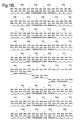
- Ang-1-FD-FD-Fc consists of a trypsin signal sequence at its amino terminus to allow for secretion (bases 1-45 of Figure 1A) followed by the angiopoietin-1 fibrinogen domain (FD) (bases 46-690 of Figure 1A- Figure 1B), a short bridging sequence consisting of the amino acids Gly-Pro Ala-Pro (bases 691-702 of Figure 1B), a second angiopoietin-1 FD (bases 703-1750 of Figure 1B- Figure 1D), another bridging sequence consisting of the amino acids Gly-Pro-Gly (bases 1351-1359 of Figure 1D), and the coding sequence for the Fc portion of human IgG1 (bases 1360-2058 of Figure 1D- Figure 1E).
- FD angiopoietin-1 fibrinogen domain
- Ang-2-FD-FD-Fc The Ang-2-FD-FD-Fc nucleic acid molecule was similarly constructed. It consists of a trypsin signal sequence (bases 1-45 of Figure 2A), an angiopoietin-2 FD (bases 46-690 of Figure 2A- Figure 2B), a bridging amino acid sequence Gly-Gly-Pro-Ala-Pro (bases 691-705 of Figure 2B), a second angiopoietin-2 FD (bases 706-1353 of Figure 2B- Figure 2D), another bridging amino acid sequence Gly-Pro-Gly (bases 1354-1362 of Figure 2D), and the coding sequence for the Fc portion of human IgG1 (bases 1363-2061 of Figure 2D- Figure 2E.
- the Ang-1-FD-Fc-FD consists of a trypsin signal sequence (bases 1-45 of Figure 3A), an angiopoietin-1 FD (bases 46-690 of Figure 3A-3B), the bridging amino acid sequence Gly-Pro-Gly (bases 691-699 of Figure 3B), the coding sequence for the Fc portion of human IgG1 (bases 700-1395 of Figure 3B-3D), another bridging amino acid sequence Gly-Gly-Gly-Gly-Ser-Gly-Ala-Pro (bases 1396-1419 of Figure 3D), and a second angiopoietin-1 FD (bases 1420-2067 of Figure 3D- Figure 3E).
- Ang-2-FD-Fc-FD The Ang-2-FD-Fc-FD nucleic acid molecule consists of a trypsin signal sequence (bases 1-45 of Figure 4A), an angiopoietin-2 FD domain (bases 46-690 of Figure 4A- Figure 4B), the bridging amino acid sequence Gly-Gly-Pro-Gly (bases 691-702 of Figure 4B), the coding sequence for the Fc portion of human IgG1 (bases 703-1398 of Figure 4B- Figure 4D), the bridging amino acid sequence Gly-Gly-Gly-Gly-Ser-Gly-Ala-Pro (bases 1399-1422 of Figure 4D), and a second angiopoietin-2 FD (bases 1423-2067 of Figure 4D- Figure 4E).
- the predicted molecular weight for Ang-1-FD-Fc-FD protein was determined using the MacVector Program (Kodak, Scientific Imaging Systems, New Haven, CT)
- the monomeric form (with respect to the Fc) has a predicted weight of 76,349.
- there are three predicted N-linked glycosylation sites approximately 2500 MW/site, that could potentially increase the molecular weight of the monomeric protein to 83,849. Due to the interaction between the Fc components of adjacent molecules, the protein actually exists as a dimer with a predicted molecular weight, including possible N-linked glycosylation, of 167,698.
- the light scattering detector is a MiniDawn laser light scattering detector was from Wyatt Technology Corporation (Santa Barbara, CA). This instrument measures static light at three different angles.
- the on line refractive index detector or UV detector serve to measure protein concentration.
- the molecular weight of protein is then calculated from the angular dependence of light scattering.
- Figure 6 shows the results of this analysis using COS cell-derived protein.
- the molecular weight of the dimeric protein appears to be approximately 200kD and presence of a single peak implies that the protein solution is, in fact, homogenous.
- COS cell supernatant containing recombinant Ang-1-FD-Fc-FD protein was generated by transiently transfecting COS cells with the Ang1-FD-Fc-FD DNA construct described supra. All transfections were performed using standard techniques known in the art. The COS cell supernatant was analyzed using Biacore technology (Pharmacia, Inc.) to quantitate the amount of Ang-1-FD-Fc-FD protein present in the supernatant. This analysis resulted in an RU value of 765, which is equivalent to 0.9mg of recombinant protein/liter of COS cell supernatant. These values represent very high levels of expression.
- the COS cell supernatant was purified as described supra and yielded approximately 1 mg of purified Ang-1-FD-Fc-FD protein that was used in the studies described infra to further characterize the protein.
- Ang-1-FD-Fc-FD protein was subjected to standard N-terminal sequence analysis to determine if any truncated species of the protein were being generated. This was of concern because the mutant molecule, Ang1*, has a history of containing between 10-20% N-terminally truncated species.
- the analysis revealed only one N-terminal sequence, Arg-Asp-X-Ala-Asp, wherein X is Cys. This sequence can be found at amino acids 16-20 of Figure 3A, and immediately follows the protein's signal sequence corresponding to amino acids 1-15 Figure 3A.
- Tie-2-Fc receptor body protein which is a fusion protein comprising the ectodomain of Tie-2 fused to the Fc domain of human IgG1
- Ang-1-FD-Fc-FD-containing solution was passed over the chip and binding between Tie-2 ectodomain and Ang-1-FD-Fc-FD was allowed to occur.
- the binding step was followed by a 0.5 M NaCl high salt wash.
- the high salt wash was not able to disrupt the interaction between the Ang-1-FD-Fc-FD protein and the Tie-2 receptor ectodomain, implying that there is a strong interaction between the mutant ligand and receptor.
- the mutant molecules designated Ang-1/FD (a monomer with respect to the FD), Ang-1/FD-Fc (also a monomer with respect to the FD, but which is able to form a dimer due to the presence of the Fc domain), and Ang-1/C/FD (a monomer with respect to the FD, but which also contains the coiled-coil domain of angiopoietin-1), do not exist in multimeric forms sufficient for high affinity binding to the Tie-2 receptor.
- Ang-1-FD-Fc-FD Molecular Weight Analysis: As described for Ang-1-FD-Fc-FD supra, the predicted molecular weight for Ang-2-FD-Fc-FD protein was determined using the MacVector Program (Kodak, Scientific Imaging Systems, New Haven, CT) The monomeric form of Ang-2-FD-Fc-FD has a predicted weight of 76,052, with three predicted N-linked glycosylation sites that could potentially increase the molecular weight of the monomeric protein to 83,552. Like Ang-1-FD-Fc-FD, the protein exists as a dimer with a predicted molecular weight, including possible N-linked glycosylation, of 167,104.
- COS cell supernatant containing recombinant Ang-2-FD-Fc-FD protein was generated by transiently transfecting COS cells with the Ang-2-FD-Fc-FD DNA construct described supra .
- the COS cell supernatant was analyzed by Biacore to quantitate the amount of Ang-2-FD-Fc-FD protein present in the supernatant. This analysis resulted in an RU value of 606, which is equivalent to 0.7mg of recombinant protein/liter of COS cell supernatant. These values represent relatively high levels of expression.
- Ang-2-FD-Fc-FD protein contains an Fc domain, so purification is relatively simple and straight forward using standard Protein A column chromatography followed by standard size exclusion chromatography.
- the COS cell supernatant was purified as described for Ang-1-FD-Fc-FD supra and yielded approximately 2 mg of purified Ang-2-FD-Fc-FD protein that was used in the studies described infra to further characterize this protein.
- N-terminal sequencing Purified COS cell-derived Ang-2-FD-Fc-FD protein was subjected to standard N-terminal sequence analysis to determine if any truncated species of the protein were being generated. The analysis revealed only one N-terminal sequence, Arg-Asp-X-Ala-Glu, wherein X is Cys. This sequence can be found at amino acids 16-20 of Figure 4A, and immediately follows the protein's signal sequence corresponding to amino acids 1-15 of Figure 4A.
- Receptor binding analysis of COS cell-derived protein To determine whether the COS cell-derived Ang-2-FD-Fc-FD protein could bind to the Tie-2 receptor, standard Biacore analysis was performed as described for Ang-1-FD-Fc-FD supra. As with Ang-1-FD-Fc-FD, a high salt wash was not able to disrupt the interaction between the Ang-2-FD-Fc-FD protein and the Tie-2-Fc receptor, again implying that there is a strong interaction between mutant ligand and receptor.
- Ang-1-FD-Fc-FD is a mutant molecule derived from the agonist angiopoietin-1 and Ang-2-FD-Fc-FD is a mutant molecule derived from the antagonist angiopoietin-2, we wanted to determine whether or not these two mutant molecules would retain the activity associated with the parent molecule from which it was derived.
- Example 5 Construction of Ang-1-FD-Fc-FD CHO cell expression vector pRG763/Ang-1-FD-Fc-FD.
- the pRG763/Ang-1-FD-Fc-FD CHO cell expression vector was constructed by isolating from the plasmid pCDNA3.1/Ang1-FD-Fc-FD a 2115 base pair EcoRI - NotI fragment containing Ang1-FD-Fc-FD and ligating this fragment into pRG763 vector digested with EcoRI and NotI.
- a large scale (2L) culture of E. coli DH10B cells carrying the pRG763/Ang-1-FD-Fc-FD plasmid was grown overnight in TB + ampicillin and the plasmid DNA was extracted using a Promega Wizard Plus Maxiprep kit, following the manufacturer's protocol.
- the concentration of the purified plasmid DNA was determined in a UV spectrophotometer and fluorometer.
- the plasmid DNA was verified by digestion of aliquots with NcoI and HincII restriction enzymes. All restriction enzyme digest fragments corresponded to the predicted sizes in a 1% agarose gel.
- Example 6 Expression of Ang-1-FD-Fc-FD in CHO cells.
- Plating media was Gibco Ham's F-12 w/10% Hyclone Fetal Bovine Serum (FBS) + penicillin/streptomycin and supplemented with glutamine. The following day each plate was transfected with 6 ⁇ g of pRG763/Ang-1-FD-Fc-FD using Gibco Optimem and Gibco Lipofectamine in 12 ml volume, following the manufacturer's protocol. Four hours after adding the transfection mix to the cells 12 ml/plate of Optimem w/ 10% FBS was added. Plates were incubated at 37°C in a 5% CO 2 incubator overnight.
- the media was removed from each plate and 25 ml expression media (Gibco CHO-S-SFM II w/ glutamine + 1mM sodium butyrate) was added.
- the plates were incubated at 37°C for 3 days. After 3 days of incubation the media was aspirated from each plate and centrifuged at 400 rpm in a swinging bucket rotor to pellet cells. The supernatant was decanted into sterile 1L bottles and purified as described infra .
- Example 7 Construction of Ang-2-FD-Fc-FD CHO cell expression vector pRG763/Ang-2-FD-Fc-FD.
- the plasmid pRG763/Ang-2-FD-Fc-FD was constructed by isolating from the plasmid pCDNA3.1/Ang-2-FD-Fc-FD a 2097 base pair EcoRI - NotI fragment containing Ang-2-FD-Fc-FD and ligating this fragment into the pRG763 vector digested with EcoRI and NotI.
- a large scale (1L) culture of E. coli DH10B cells carrying the pRG763/Ang-2-FD-Fc-FD plasmid was grown overnight in TB + ampicillin and the plasmid DNA was extracted using a Promega Wizard Plus Maxiprep kit, following the manufacturer's protocol.
- the concentration of the purified plasmid DNA was determined in a UV spectrophotometer and fluorometer.
- the plasmid DNA was also verified by digestion of plasmid DNA with NcoI and Ppu10I restriction enzymes. All restriction enzyme digest fragments corresponded to the predicted sizes in a 1% agarose gel.
- Example 8 Expression of Ang-2-FD-Fc-FD in CHO cells.
- Plating media was Gibco Ham's F-12 w/10% Hyclone Fetal Bovine Serum (FBS) + penicillin/streptomycin and supplemented with glutamine. The following day each plate was transfected with 6 ⁇ g of pRG763/Ang-2-FD-Fc-FD using Gibco Optimem and Gibco Lipofectamine in 12 ml volume, following the manufacturer's protocol. Four hours after adding the transfection mix to the cells 12 ml/plate of Optimem w/ 10% FBS was added. Plates were incubated at 37°C in a 5% CO 2 incubator overnight.
- the media was removed from each plate and 25 ml expression media (Gibco CHO-S-SFM II w/ glutamine + 1mM sodium butyrate) was added.
- the plates were incubated at 37°C for 3 days. After 3 days of incubation the media was aspirated from each plate and centrifuged at 400 rpm in a swinging bucket rotor to pellet cells. The supernatant was decanted into sterile 1L bottles purified as described infra.
- the predicted molecular weight for stable CHO clone-derived Ang-1-FD-Fc-FD protein was determined using the MacVector Program (Kodak, Scientific Imaging Systems, New Haven, CT)
- the monomeric form (with respect to the Fc) has a predicted weight of 76,349.
- there are three predicted N-linked glycosylation sites approximately 2500 MW/site, that could potentially increase the molecular weight of the monomeric protein to 83,849. Due to the interaction between the Fc components of adjacent molecules, the protein actually exists as a dimer with a predicted molecular weight, including possible N-linked glycosylation, of 167,698.
- This instrument measures static light at three different angles.
- the on line refractive index detector or UV detector serve to measure protein concentration.
- the molecular weight of protein is then calculated from the angular dependence of light scattering. The results of this analysis show that the dimeric protein appears to be approximately 173.9kD and the presence of a single peak implies that the protein solution is homogenous.
- CHO cell supernatant containing recombinant Ang-1-FD-Fc-FD protein was generated by stably transfecting CHO cells with the Ang-1-FD-Fc-FD DNA construct described supra.
- the CHO cell supernatant was analyzed by standard ELISA using an anti-human IgG antibody as a capture antibody and an anti-human IgG antibody conjugated to alkaline phosphatase as a reporter antibody to quantitate the amount of Ang-1-FD-Fc-FD protein present in the supernatant. This analysis revealed expression levels of 2-3 pg/cell/day.
- Ang-1-FD-Fc-FD protein derived from stable CHO clone supernatants : Because the Ang-1-FD-Fc-FD protein contains an Fc domain, purification is relatively simple and straight forward using standard Protein A column chromatography (Pharmacia, Inc.) followed by standard size exclusion chromatography (Pharmacia, Inc.). The CHO cell supernatant was purified as described supra and the purified ANG-1-FD-Fc-FD protein was used in the studies described infra to further characterize the protein.
- N-terminal sequencing of stable CHO clone-derived Ang-1-FD-Fc-FD protein Purified Ang-1-FD-Fc-FD protein was subjected to standard N-terminal sequence analysis to determine if any truncated species of the protein were being generated. The analysis revealed only one N-terminal sequence, Arg-Asp-X-Ala-Asp, wherein X is Cys. This sequence can be found at amino acids 16-20 of Figure 3A, and immediately follows the protein's signal sequence corresponding to amino acids 1-15 Figure 3A.
- the predicted molecular weight for stable CHO clone-derived Ang-2-FD-Fc-FD protein was determined using the MacVector Program (Kodak, Scientific Imaging Systems, New Haven, CT).
- the monomeric form of Ang-2-FD-Fc-FD has a predicted weight of 76,052, with three predicted N-linked glycosylation sites that could potentially increase the molecular weight of the monomeric protein to 83,552.
- the protein exists as a dimer with a predicted molecular weight, including possible N-linked glycosylation, of 167,104.
- CHO cell supernatant containing recombinant Ang-2-FD-Fc-FD protein was generated by stably transfecting CHO cells with the Ang-2-FD-Fc-FD DNA construct described supra.
- the CHO cell supernatant was analyzed by standard ELISA using an anti-human IgG antibody as a capture antibody and an anti-human IgG antibody conjugated to alkaline phosphatase as a reporter antibody to quantitate the amount of Ang-2-FD-Fc-FD protein present in the supernatant. This analysis revealed expression levels of approximately 1-2 pg/cell/day.
- Ang-2-FD-Fc-FD protein contains an Fc domain, so purification is relatively simple and straight forward using standard Protein A column chromatography followed by standard size exclusion chromatography.
- the CHO cell supernatant was purified as described for stable CHO clone-derived Aing-1-FD-Fc-FD supra and was used in the studies described infra to further characterize this protein.
- N-terminal sequencing of stable CHO clone-derived Ang-2-FD-Fc-FD protein Purified stable CHO clone-derived Ang-2-FD-Fc-FD protein was subjected to standard N-terminal sequence analysis to determine if any truncated species of the protein were being generated. The analysis revealed only one N-terminal sequence, Asp-X-Ala-Glu-Val, wherein X is Cys. This sequence can be found at amino acids 17-21 of Figure 4A, and immediately follows the protein's signal sequence corresponding to amino acids 1-15 of Figure 4A.
Landscapes
- Health & Medical Sciences (AREA)
- Life Sciences & Earth Sciences (AREA)
- Chemical & Material Sciences (AREA)
- Genetics & Genomics (AREA)
- Organic Chemistry (AREA)
- Engineering & Computer Science (AREA)
- Zoology (AREA)
- Molecular Biology (AREA)
- Biomedical Technology (AREA)
- General Health & Medical Sciences (AREA)
- Biophysics (AREA)
- Biochemistry (AREA)
- Bioinformatics & Cheminformatics (AREA)
- Medicinal Chemistry (AREA)
- Biotechnology (AREA)
- Proteomics, Peptides & Aminoacids (AREA)
- Gastroenterology & Hepatology (AREA)
- Wood Science & Technology (AREA)
- General Engineering & Computer Science (AREA)
- Toxicology (AREA)
- Physics & Mathematics (AREA)
- Neurology (AREA)
- Neurosurgery (AREA)
- Vascular Medicine (AREA)
- Microbiology (AREA)
- Plant Pathology (AREA)
- Psychiatry (AREA)
- Chemical Kinetics & Catalysis (AREA)
- Veterinary Medicine (AREA)
- Animal Behavior & Ethology (AREA)
- Pharmacology & Pharmacy (AREA)
- Nuclear Medicine, Radiotherapy & Molecular Imaging (AREA)
- General Chemical & Material Sciences (AREA)
- Public Health (AREA)
- Hospice & Palliative Care (AREA)
- Peptides Or Proteins (AREA)
- Micro-Organisms Or Cultivation Processes Thereof (AREA)
- Preparation Of Compounds By Using Micro-Organisms (AREA)
- Compounds Of Unknown Constitution (AREA)
- Medicines That Contain Protein Lipid Enzymes And Other Medicines (AREA)
Applications Claiming Priority (3)
| Application Number | Priority Date | Filing Date | Title |
|---|---|---|---|
| US11338798P | 1998-12-23 | 1998-12-23 | |
| US113387P | 1998-12-23 | ||
| PCT/US1999/030900 WO2000037642A1 (en) | 1998-12-23 | 1999-12-23 | Method of enhancing the biological activity of ligands |
Publications (2)
| Publication Number | Publication Date |
|---|---|
| EP1141294A1 EP1141294A1 (en) | 2001-10-10 |
| EP1141294B1 true EP1141294B1 (en) | 2005-03-02 |
Family
ID=22349103
Family Applications (1)
| Application Number | Title | Priority Date | Filing Date |
|---|---|---|---|
| EP99968956A Expired - Lifetime EP1141294B1 (en) | 1998-12-23 | 1999-12-23 | Method of enhancing the biological activity of ligands |
Country Status (12)
| Country | Link |
|---|---|
| US (1) | US7008781B1 (https=) |
| EP (1) | EP1141294B1 (https=) |
| JP (1) | JP4493854B2 (https=) |
| AT (1) | ATE290089T1 (https=) |
| AU (1) | AU776393B2 (https=) |
| CA (1) | CA2354846A1 (https=) |
| DE (1) | DE69924009T2 (https=) |
| HK (1) | HK1040093B (https=) |
| IL (1) | IL143558A0 (https=) |
| NZ (1) | NZ512326A (https=) |
| PL (1) | PL199645B1 (https=) |
| WO (1) | WO2000037642A1 (https=) |
Families Citing this family (17)
| Publication number | Priority date | Publication date | Assignee | Title |
|---|---|---|---|---|
| SE9901428D0 (sv) * | 1999-04-21 | 1999-04-21 | Karolinska Innovations Ab | Amphibodies |
| WO2001047951A2 (en) * | 1999-12-23 | 2001-07-05 | An-Go-Gen Inc. | Angiopoietin analogs |
| PL366000A1 (en) | 2000-08-08 | 2005-01-24 | M.G.V.S.Ltd. | Nucleic acid constructs, vascular cells transformed therewith, pharmaceutical compositions and methods utilizing same for inducing angiogenesis |
| US20030027751A1 (en) * | 2001-04-10 | 2003-02-06 | Genvec, Inc. | VEGF fusion proteins |
| WO2003034990A2 (en) | 2001-10-25 | 2003-05-01 | Regeneron Pharmaceuticals, Inc. | Angiopoietins and methods of use thereof |
| GB0201679D0 (en) * | 2002-01-25 | 2002-03-13 | Asterion Ltd | Polypeptide variants |
| US7081443B2 (en) * | 2002-05-21 | 2006-07-25 | Korea Advanced Institutes Of Science And Technology (Kaist) | Chimeric comp-ang1 molecule |
| US8298532B2 (en) | 2004-01-16 | 2012-10-30 | Regeneron Pharmaceuticals, Inc. | Fusion polypeptides capable of activating receptors |
| WO2008100288A2 (en) * | 2006-09-15 | 2008-08-21 | The Burnham Institute | High affinity ephb receptor binding compounds and methods of use thereof |
| ES2612258T3 (es) | 2006-10-27 | 2017-05-16 | Sunnybrook Health Sciences Center | Agonistas multiméricos de Tie 2 y usos de los mismos en la estimulación de la angiogénesis |
| EP2307456B1 (en) | 2008-06-27 | 2014-10-15 | Amgen Inc. | Ang-2 inhibition to treat multiple sclerosis |
| EP2714738B1 (en) | 2011-05-24 | 2018-10-10 | Zyngenia, Inc. | Multivalent and monovalent multispecific complexes and their uses |
| US10150800B2 (en) | 2013-03-15 | 2018-12-11 | Zyngenia, Inc. | EGFR-binding modular recognition domains |
| CA2909080C (en) | 2013-04-11 | 2022-07-26 | Sunnybrook Research Institute | Methods, uses and compositions of tie2 agonists |
| CA2928852A1 (en) | 2013-11-01 | 2015-05-07 | Regeneron Pharmaceuticals, Inc. | Angiopoietin-based interventions for treating cerebral malaria |
| ES2867249T3 (es) | 2015-11-06 | 2021-10-20 | Regeneron Pharma | Angiopoyetinas para usar en la promoción de la coagulación sanguínea y en el tratamiento de trastornos de la coagulación sanguínea |
| KR101685532B1 (ko) * | 2016-04-26 | 2016-12-13 | 한국프라임제약주식회사 | 혈관내피성장인자 수용체 융합단백질 |
Family Cites Families (18)
| Publication number | Priority date | Publication date | Assignee | Title |
|---|---|---|---|---|
| EP0547163B1 (en) * | 1990-08-29 | 2002-02-06 | Centre Hospitalier Regional De Nantes | Protein polyligands joined to a stable protein core |
| US5401650A (en) * | 1990-10-24 | 1995-03-28 | The Mount Sinai School Of Medicine Of The City University Of New York | Cloning and expression of biologically active α-galactosidase A |
| JPH08505765A (ja) | 1992-11-13 | 1996-06-25 | アムジエン・インコーポレーテツド | Eck受容体リガンド |
| US5747033A (en) | 1993-10-28 | 1998-05-05 | Regeneron Pharmaceuticals, Inc. | Method of enhancing the biological activity of Eph family ligands |
| US5643755A (en) | 1994-10-07 | 1997-07-01 | Regeneron Pharmaceuticals Inc. | Nucleic acid encoding tie-2 ligand |
| US5879672A (en) | 1994-10-07 | 1999-03-09 | Regeneron Pharmaceuticals, Inc. | Tie-2 ligand 1 |
| ATE232901T1 (de) * | 1994-04-04 | 2003-03-15 | Regeneron Pharma | Biologisch aktive ligande der eph familie |
| US5650490A (en) | 1994-10-07 | 1997-07-22 | Regeneron Pharmaceuticals, Inc. | Tie-2 ligand 2 |
| US5814464A (en) | 1994-10-07 | 1998-09-29 | Regeneron Pharma | Nucleic acids encoding TIE-2 ligand-2 |
| JP4122056B2 (ja) | 1995-04-06 | 2008-07-23 | リジエネロン ファーマシューティカルズ,インコーポレイテッド | Tie−2リガンド、その作製方法および使用方法 |
| CA2222055A1 (en) * | 1995-05-23 | 1996-11-28 | Morphosys Gesellschaft Fur Proteinoptimierung Mbh | Multimeric proteins |
| WO1997015667A1 (en) | 1995-10-25 | 1997-05-01 | Regeneron Pharmaceuticals, Inc. | Biologically active eph family ligands |
| US6337387B1 (en) * | 1995-11-17 | 2002-01-08 | Asahi Kasei Kabushiki Kaisha | Differentiation-suppressive polypeptide |
| US5814478A (en) | 1995-12-15 | 1998-09-29 | Regeneron Pharmaceuticals, Inc. | Tyrosine kinase receptors and ligands |
| WO1997023639A1 (en) * | 1995-12-22 | 1997-07-03 | Toray Industries, Inc. | Process for producing biologically active fused proteins |
| US5851797A (en) | 1996-06-19 | 1998-12-22 | Regeneron Pharmaceuticals, Inc. | Tie ligand-3, methods of making and uses thereof |
| IL127623A0 (en) | 1996-06-19 | 1999-10-28 | Regeneron Pharma | Tie-2 receptor ligands (tie ligand-3; tie ligand-4) and their uses |
| US6265564B1 (en) * | 1996-08-02 | 2001-07-24 | Regeneron Pharmaceuticals, Inc. | Expressed ligand-vascular intercellular signalling molecule |
-
1999
- 1999-12-23 IL IL14355899A patent/IL143558A0/xx not_active IP Right Cessation
- 1999-12-23 JP JP2000589696A patent/JP4493854B2/ja not_active Expired - Lifetime
- 1999-12-23 HK HK02101186.0A patent/HK1040093B/en not_active IP Right Cessation
- 1999-12-23 PL PL349158A patent/PL199645B1/pl unknown
- 1999-12-23 CA CA002354846A patent/CA2354846A1/en not_active Abandoned
- 1999-12-23 WO PCT/US1999/030900 patent/WO2000037642A1/en not_active Ceased
- 1999-12-23 US US09/868,677 patent/US7008781B1/en not_active Expired - Lifetime
- 1999-12-23 EP EP99968956A patent/EP1141294B1/en not_active Expired - Lifetime
- 1999-12-23 DE DE69924009T patent/DE69924009T2/de not_active Expired - Lifetime
- 1999-12-23 NZ NZ512326A patent/NZ512326A/en not_active IP Right Cessation
- 1999-12-23 AT AT99968956T patent/ATE290089T1/de active
- 1999-12-23 AU AU27147/00A patent/AU776393B2/en not_active Expired
Also Published As
| Publication number | Publication date |
|---|---|
| CA2354846A1 (en) | 2000-06-29 |
| PL199645B1 (pl) | 2008-10-31 |
| DE69924009D1 (de) | 2005-04-07 |
| HK1040093A1 (en) | 2002-05-24 |
| ATE290089T1 (de) | 2005-03-15 |
| JP4493854B2 (ja) | 2010-06-30 |
| NZ512326A (en) | 2003-11-28 |
| JP2003506008A (ja) | 2003-02-18 |
| WO2000037642A9 (en) | 2000-11-02 |
| HK1040093B (en) | 2005-05-06 |
| AU2714700A (en) | 2000-07-12 |
| PL349158A1 (en) | 2002-07-01 |
| WO2000037642A1 (en) | 2000-06-29 |
| US7008781B1 (en) | 2006-03-07 |
| IL143558A0 (en) | 2002-04-21 |
| AU776393B2 (en) | 2004-09-09 |
| DE69924009T2 (de) | 2006-04-13 |
| EP1141294A1 (en) | 2001-10-10 |
Similar Documents
| Publication | Publication Date | Title |
|---|---|---|
| US7309586B2 (en) | Chimeric coiled coil molecules | |
| EP1141294B1 (en) | Method of enhancing the biological activity of ligands | |
| JP4723140B2 (ja) | 改善された薬物動態特性を有する改変キメラポリペプチド | |
| EP2126092B1 (en) | Fusion proteins binding to growth factors | |
| EP0758381B1 (en) | Biologically active eph family ligands | |
| US8927232B2 (en) | Fusion protein capable of binding VEGF-A and TNF-alpha | |
| US5747033A (en) | Method of enhancing the biological activity of Eph family ligands | |
| AU712737B2 (en) | Biologically active EPH family ligands |
Legal Events
| Date | Code | Title | Description |
|---|---|---|---|
| PUAI | Public reference made under article 153(3) epc to a published international application that has entered the european phase |
Free format text: ORIGINAL CODE: 0009012 |
|
| 17P | Request for examination filed |
Effective date: 20010627 |
|
| AK | Designated contracting states |
Kind code of ref document: A1 Designated state(s): AT BE CH CY DE DK ES FI FR GB GR IE IT LI LU MC NL PT SE |
|
| AX | Request for extension of the european patent |
Free format text: AL;LT;LV;MK;RO;SI |
|
| 17Q | First examination report despatched |
Effective date: 20030919 |
|
| GRAP | Despatch of communication of intention to grant a patent |
Free format text: ORIGINAL CODE: EPIDOSNIGR1 |
|
| RIC1 | Information provided on ipc code assigned before grant |
Ipc: 7C 07K 14/52 B Ipc: 7C 07K 14/515 B Ipc: 7C 12N 5/10 B Ipc: 7C 12N 15/62 A |
|
| RIC1 | Information provided on ipc code assigned before grant |
Ipc: 7C 07K 14/52 B Ipc: 7C 07K 14/515 B Ipc: 7C 12N 5/10 B Ipc: 7C 12N 15/62 A |
|
| RIN1 | Information on inventor provided before grant (corrected) |
Inventor name: STAHL, NEIL Inventor name: YANCOPOULOS, GEORGE, D. Inventor name: GALE, NICHOLAS, W. Inventor name: DAVIS, SAMUEL, J. |
|
| GRAS | Grant fee paid |
Free format text: ORIGINAL CODE: EPIDOSNIGR3 |
|
| GRAA | (expected) grant |
Free format text: ORIGINAL CODE: 0009210 |
|
| AK | Designated contracting states |
Kind code of ref document: B1 Designated state(s): AT BE CH CY DE DK ES FI FR GB GR IE IT LI LU MC NL PT SE |
|
| PG25 | Lapsed in a contracting state [announced via postgrant information from national office to epo] |
Ref country code: IT Free format text: LAPSE BECAUSE OF FAILURE TO SUBMIT A TRANSLATION OF THE DESCRIPTION OR TO PAY THE FEE WITHIN THE PRESCRIBED TIME-LIMIT;WARNING: LAPSES OF ITALIAN PATENTS WITH EFFECTIVE DATE BEFORE 2007 MAY HAVE OCCURRED AT ANY TIME BEFORE 2007. THE CORRECT EFFECTIVE DATE MAY BE DIFFERENT FROM THE ONE RECORDED. Effective date: 20050302 Ref country code: FI Free format text: LAPSE BECAUSE OF FAILURE TO SUBMIT A TRANSLATION OF THE DESCRIPTION OR TO PAY THE FEE WITHIN THE PRESCRIBED TIME-LIMIT Effective date: 20050302 |
|
| REG | Reference to a national code |
Ref country code: GB Ref legal event code: FG4D |
|
| REG | Reference to a national code |
Ref country code: CH Ref legal event code: EP |
|
| REG | Reference to a national code |
Ref country code: IE Ref legal event code: FG4D |
|
| REF | Corresponds to: |
Ref document number: 69924009 Country of ref document: DE Date of ref document: 20050407 Kind code of ref document: P |
|
| REG | Reference to a national code |
Ref country code: HK Ref legal event code: GR Ref document number: 1040093 Country of ref document: HK |
|
| PG25 | Lapsed in a contracting state [announced via postgrant information from national office to epo] |
Ref country code: GR Free format text: LAPSE BECAUSE OF FAILURE TO SUBMIT A TRANSLATION OF THE DESCRIPTION OR TO PAY THE FEE WITHIN THE PRESCRIBED TIME-LIMIT Effective date: 20050602 Ref country code: DK Free format text: LAPSE BECAUSE OF FAILURE TO SUBMIT A TRANSLATION OF THE DESCRIPTION OR TO PAY THE FEE WITHIN THE PRESCRIBED TIME-LIMIT Effective date: 20050602 |
|
| PG25 | Lapsed in a contracting state [announced via postgrant information from national office to epo] |
Ref country code: ES Free format text: LAPSE BECAUSE OF FAILURE TO SUBMIT A TRANSLATION OF THE DESCRIPTION OR TO PAY THE FEE WITHIN THE PRESCRIBED TIME-LIMIT Effective date: 20050613 |
|
| REG | Reference to a national code |
Ref country code: CH Ref legal event code: NV Representative=s name: PATENTANWAELTE SCHAAD, BALASS, MENZL & PARTNER AG |
|
| PG25 | Lapsed in a contracting state [announced via postgrant information from national office to epo] |
Ref country code: PT Free format text: LAPSE BECAUSE OF FAILURE TO SUBMIT A TRANSLATION OF THE DESCRIPTION OR TO PAY THE FEE WITHIN THE PRESCRIBED TIME-LIMIT Effective date: 20050803 |
|
| PG25 | Lapsed in a contracting state [announced via postgrant information from national office to epo] |
Ref country code: CY Free format text: LAPSE BECAUSE OF FAILURE TO SUBMIT A TRANSLATION OF THE DESCRIPTION OR TO PAY THE FEE WITHIN THE PRESCRIBED TIME-LIMIT Effective date: 20051223 |
|
| PLBE | No opposition filed within time limit |
Free format text: ORIGINAL CODE: 0009261 |
|
| STAA | Information on the status of an ep patent application or granted ep patent |
Free format text: STATUS: NO OPPOSITION FILED WITHIN TIME LIMIT |
|
| ET | Fr: translation filed | ||
| 26N | No opposition filed |
Effective date: 20051205 |
|
| PG25 | Lapsed in a contracting state [announced via postgrant information from national office to epo] |
Ref country code: SE Free format text: LAPSE BECAUSE OF FAILURE TO SUBMIT A TRANSLATION OF THE DESCRIPTION OR TO PAY THE FEE WITHIN THE PRESCRIBED TIME-LIMIT Effective date: 20050602 |
|
| PGFP | Annual fee paid to national office [announced via postgrant information from national office to epo] |
Ref country code: MC Payment date: 20141204 Year of fee payment: 16 Ref country code: IE Payment date: 20141229 Year of fee payment: 16 |
|
| PGFP | Annual fee paid to national office [announced via postgrant information from national office to epo] |
Ref country code: LU Payment date: 20150106 Year of fee payment: 16 |
|
| REG | Reference to a national code |
Ref country code: FR Ref legal event code: PLFP Year of fee payment: 17 |
|
| PG25 | Lapsed in a contracting state [announced via postgrant information from national office to epo] |
Ref country code: LU Free format text: LAPSE BECAUSE OF NON-PAYMENT OF DUE FEES Effective date: 20151223 Ref country code: MC Free format text: LAPSE BECAUSE OF NON-PAYMENT OF DUE FEES Effective date: 20151231 |
|
| REG | Reference to a national code |
Ref country code: IE Ref legal event code: MM4A |
|
| PG25 | Lapsed in a contracting state [announced via postgrant information from national office to epo] |
Ref country code: IE Free format text: LAPSE BECAUSE OF NON-PAYMENT OF DUE FEES Effective date: 20151223 |
|
| REG | Reference to a national code |
Ref country code: FR Ref legal event code: PLFP Year of fee payment: 18 |
|
| REG | Reference to a national code |
Ref country code: FR Ref legal event code: PLFP Year of fee payment: 19 |
|
| PGFP | Annual fee paid to national office [announced via postgrant information from national office to epo] |
Ref country code: NL Payment date: 20181123 Year of fee payment: 20 |
|
| PGFP | Annual fee paid to national office [announced via postgrant information from national office to epo] |
Ref country code: DE Payment date: 20181126 Year of fee payment: 20 Ref country code: AT Payment date: 20181121 Year of fee payment: 20 |
|
| PGFP | Annual fee paid to national office [announced via postgrant information from national office to epo] |
Ref country code: CH Payment date: 20181126 Year of fee payment: 20 Ref country code: GB Payment date: 20181127 Year of fee payment: 20 Ref country code: FR Payment date: 20181127 Year of fee payment: 20 Ref country code: BE Payment date: 20181127 Year of fee payment: 20 |
|
| REG | Reference to a national code |
Ref country code: DE Ref legal event code: R071 Ref document number: 69924009 Country of ref document: DE |
|
| REG | Reference to a national code |
Ref country code: CH Ref legal event code: PL |
|
| REG | Reference to a national code |
Ref country code: GB Ref legal event code: PE20 Expiry date: 20191222 Ref country code: NL Ref legal event code: MK Effective date: 20191222 |
|
| REG | Reference to a national code |
Ref country code: BE Ref legal event code: MK Effective date: 20191223 |
|
| PG25 | Lapsed in a contracting state [announced via postgrant information from national office to epo] |
Ref country code: GB Free format text: LAPSE BECAUSE OF EXPIRATION OF PROTECTION Effective date: 20191222 |
|
| REG | Reference to a national code |
Ref country code: AT Ref legal event code: MK07 Ref document number: 290089 Country of ref document: AT Kind code of ref document: T Effective date: 20191223 |