EP1134825A2 - Batterie à électrolyte non-aqueux - Google Patents
Batterie à électrolyte non-aqueux Download PDFInfo
- Publication number
- EP1134825A2 EP1134825A2 EP01105813A EP01105813A EP1134825A2 EP 1134825 A2 EP1134825 A2 EP 1134825A2 EP 01105813 A EP01105813 A EP 01105813A EP 01105813 A EP01105813 A EP 01105813A EP 1134825 A2 EP1134825 A2 EP 1134825A2
- Authority
- EP
- European Patent Office
- Prior art keywords
- aqueous electrolyte
- positive electrode
- lithium
- active material
- electrode active
- Prior art date
- Legal status (The legal status is an assumption and is not a legal conclusion. Google has not performed a legal analysis and makes no representation as to the accuracy of the status listed.)
- Withdrawn
Links
Images


Classifications
-
- H—ELECTRICITY
- H01—ELECTRIC ELEMENTS
- H01M—PROCESSES OR MEANS, e.g. BATTERIES, FOR THE DIRECT CONVERSION OF CHEMICAL ENERGY INTO ELECTRICAL ENERGY
- H01M4/00—Electrodes
- H01M4/02—Electrodes composed of, or comprising, active material
- H01M4/36—Selection of substances as active materials, active masses, active liquids
- H01M4/48—Selection of substances as active materials, active masses, active liquids of inorganic oxides or hydroxides
- H01M4/50—Selection of substances as active materials, active masses, active liquids of inorganic oxides or hydroxides of manganese
- H01M4/505—Selection of substances as active materials, active masses, active liquids of inorganic oxides or hydroxides of manganese of mixed oxides or hydroxides containing manganese for inserting or intercalating light metals, e.g. LiMn2O4 or LiMn2OxFy
-
- H—ELECTRICITY
- H01—ELECTRIC ELEMENTS
- H01M—PROCESSES OR MEANS, e.g. BATTERIES, FOR THE DIRECT CONVERSION OF CHEMICAL ENERGY INTO ELECTRICAL ENERGY
- H01M10/00—Secondary cells; Manufacture thereof
- H01M10/05—Accumulators with non-aqueous electrolyte
- H01M10/056—Accumulators with non-aqueous electrolyte characterised by the materials used as electrolytes, e.g. mixed inorganic/organic electrolytes
-
- H—ELECTRICITY
- H01—ELECTRIC ELEMENTS
- H01M—PROCESSES OR MEANS, e.g. BATTERIES, FOR THE DIRECT CONVERSION OF CHEMICAL ENERGY INTO ELECTRICAL ENERGY
- H01M10/00—Secondary cells; Manufacture thereof
- H01M10/05—Accumulators with non-aqueous electrolyte
- H01M10/052—Li-accumulators
- H01M10/0525—Rocking-chair batteries, i.e. batteries with lithium insertion or intercalation in both electrodes; Lithium-ion batteries
-
- H—ELECTRICITY
- H01—ELECTRIC ELEMENTS
- H01M—PROCESSES OR MEANS, e.g. BATTERIES, FOR THE DIRECT CONVERSION OF CHEMICAL ENERGY INTO ELECTRICAL ENERGY
- H01M4/00—Electrodes
- H01M4/02—Electrodes composed of, or comprising, active material
- H01M4/13—Electrodes for accumulators with non-aqueous electrolyte, e.g. for lithium-accumulators; Processes of manufacture thereof
- H01M4/131—Electrodes based on mixed oxides or hydroxides, or on mixtures of oxides or hydroxides, e.g. LiCoOx
-
- H—ELECTRICITY
- H01—ELECTRIC ELEMENTS
- H01M—PROCESSES OR MEANS, e.g. BATTERIES, FOR THE DIRECT CONVERSION OF CHEMICAL ENERGY INTO ELECTRICAL ENERGY
- H01M4/00—Electrodes
- H01M4/02—Electrodes composed of, or comprising, active material
- H01M4/36—Selection of substances as active materials, active masses, active liquids
- H01M4/48—Selection of substances as active materials, active masses, active liquids of inorganic oxides or hydroxides
- H01M4/485—Selection of substances as active materials, active masses, active liquids of inorganic oxides or hydroxides of mixed oxides or hydroxides for inserting or intercalating light metals, e.g. LiTi2O4 or LiTi2OxFy
-
- Y—GENERAL TAGGING OF NEW TECHNOLOGICAL DEVELOPMENTS; GENERAL TAGGING OF CROSS-SECTIONAL TECHNOLOGIES SPANNING OVER SEVERAL SECTIONS OF THE IPC; TECHNICAL SUBJECTS COVERED BY FORMER USPC CROSS-REFERENCE ART COLLECTIONS [XRACs] AND DIGESTS
- Y02—TECHNOLOGIES OR APPLICATIONS FOR MITIGATION OR ADAPTATION AGAINST CLIMATE CHANGE
- Y02E—REDUCTION OF GREENHOUSE GAS [GHG] EMISSIONS, RELATED TO ENERGY GENERATION, TRANSMISSION OR DISTRIBUTION
- Y02E60/00—Enabling technologies; Technologies with a potential or indirect contribution to GHG emissions mitigation
- Y02E60/10—Energy storage using batteries
-
- Y—GENERAL TAGGING OF NEW TECHNOLOGICAL DEVELOPMENTS; GENERAL TAGGING OF CROSS-SECTIONAL TECHNOLOGIES SPANNING OVER SEVERAL SECTIONS OF THE IPC; TECHNICAL SUBJECTS COVERED BY FORMER USPC CROSS-REFERENCE ART COLLECTIONS [XRACs] AND DIGESTS
- Y02—TECHNOLOGIES OR APPLICATIONS FOR MITIGATION OR ADAPTATION AGAINST CLIMATE CHANGE
- Y02P—CLIMATE CHANGE MITIGATION TECHNOLOGIES IN THE PRODUCTION OR PROCESSING OF GOODS
- Y02P70/00—Climate change mitigation technologies in the production process for final industrial or consumer products
- Y02P70/50—Manufacturing or production processes characterised by the final manufactured product
Definitions
- This invention relates to a non-aqueous electrolyte cell exploiting a lithium-transition metal compound oxide as a positive electrode active material.
- the lithium secondary cell has various advantages, such as high output or high energy density.
- the lithium secondary cell is made up of a positive electrode, a negative electrode and a non-aqueous electrolyte that can be reversibly doped/undoped with lithium ions.
- the high temperature LiMnO 2 was first reported by W.D. Johnston et al. (J. Am. Chem. Soc., 78,325 (1956)) and its structure was determined by R. Hoppe, G. Brachtel and M. Jansen (Z. Anorg. Allg. Chemie, 417.1(1975)). The high temperature LiMnO 2 was first reported by T. Ozuki, A. Ueda and T. Hirai (Chem. Express. Vol.7, No.3, 193 (1992)).
- Both the high temperature LiMnO 2 and low temperature LiMnO 2 are of a structure including an orthorombic lattice and which features a spatial group Pmnm.
- the theoretical capacity of the high temperature LiMnO 2 and low temperature LiMnO 2 which is on the order of 300 mAh/g, cannot be realized if the charging/discharging condition used in the current non-aqueous electrolyte cell is used.
- the charging capacity of the high temperature LiMnO 2 and that of the low temperature LiMnO 2 are said to be 150 mAh/g and 200 mAh/g, respectively.
- the above-mentioned publications indicate that it is not higher than 50 mAh/g for the high temperature LiMnO 2 (2/0V ⁇ V (Li/Li + )) and is 190 mAh/g for the low temperature LiMnO 2 (2/0V ⁇ V (Li/Li + )).
- the first reason is that both oxides are made up of layered Mn-O sheets and Li intruded into neighboring layers of the Mn-O sheets, as shown in Fig.1.
- the Li diffusion path is zigzag-shaped, such that speedy diffusion of Li cannot be achieved.
- the second reason is that, while the temperature LiMnO 2 is of high crystallinity and is low in electronic resistance due to flaws caused by impurity, the low temperature LiMnO 2 is low in crystallinity and hence is high in impurity resistance.
- the low temperature LiMnO 2 shows significant IR drop under a high load, that is at a high current density, so that it suffers significant energy losses.
- the compound reported here is synthesized at an elevated temperature and hence is of high crystallinity, such that, with this compound, the storage capacity of the cell employing the positive electrode active material formed of this compound is thought to be increased under a high load due to a flat Li diffusion path.
- LiMnO 2 as described above undergoes structural changes in the charging process (spinelling) to lower the discharge capacity.
- LiMnO 2 as proposed by Armstrong et al. undergoes marked structural changes in the charging process and has only a small discharging capacity.
- LMn 0.75 Al 0.25 O 2 is felt to be less thermodynamically unstable than LiMnO 2 and is less susceptible to the above-mentioned structural changes than LiMnO 2
- solid solution of electrochemically inert Al is accompanied by a similarly small capacity.
- the present invention provides a non-aqueous electrolyte cell in which structural changes of the positive electrode active material are suppressed to increase the capacity further.
- the non-aqueous electrolyte cell according to the present invention includes a positive electrode containing a lithium-transition metal compound oxide as a positive electrode active material, a negative electrode containing a carbon compound or metal lithium as a negative electrode active material, and a non-aqueous electrolyte interposed between said positive and negative electrodes.
- the lithium-transition metal compound oxide is represented by the general formula Li x MnO 2 or Li x Mn 1-y Al y O 2 with 0.94 ⁇ x ⁇ 0.96 and 0.06 ⁇ y ⁇ 0.25.
- this non-aqueous electrolyte cell of the present invention including a lithium-transition metal compound oxide represented by the general formula Li x MnO 2 or Li x Mn 1-y Al y O 2 where 0.94 ⁇ x ⁇ 0.96 and 0.06 ⁇ y ⁇ 0.25, as a positive electrode active material, diffusion of lithium ions is accelerated, while the lithium content ratio is lesser than that in the conventional cell, thereby suppressing changes in structure.
- y in Li x Mn 1-y Al y O 2 it is possible to prevent the lowering in the electrically conductivity from being decreased and to improve thermal stability of the crystalline structure simultaneously.
- a lithium-transition metal compound oxide represented by the general formula Li x MnO 2 or Li x Mn 1-y Al y O 2 where 0.94 ⁇ x ⁇ 0.96 and 0.06 ⁇ y ⁇ 0.25, with the lithium content x being lower than in the conventional cell, is used as a positive electrode active material, whereby the lowering in capacity ascribable to the collapsing of the crystalline structure of the positive electrode active material may be suppressed to realize the high capacity of the non-aqueous electrolyte cell.
- Fig.1 shows the configuration of the crystal structure of orthorombic LiMnO 2 used in a conventional cell as a positive electrode active material.
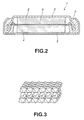
- Fig.2 is a cross-sectional view showing an illustrative structure of a non-aqueous electrolyte cell according to the present invention.
- Fig.3 shows the configuration ofthe crystal structure, represented as the spatial group C2/m, of LiMn 1-y Al y O 2 , used as a positive electrode active material in the inventive cell.
- Fig.4 is a graph showing the relation between the values of x and the discharging capacity of a cell produced in the Example and in the Comparative Examples.
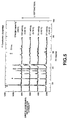
- Fig.5 shows changes in the crystal structure, as analyzed by X-ray diffraction, of the positive electrode active material prepared in the Comparative Example 1.
- Fig.2 shows an illustrative structure of a non-aqueous electrolyte cell according to an embodiment of the present invention.
- This non-aqueous electrolyte cell 1 includes a negative electrode 2, a negative electrode can 3, accommodating the negative electrode 2 therein, a positive electrode 4, a positive electrode can 5, a separator 6 arranged between the positive electrode 4 and the negative electrode 2, and an insulating gasket 7, with a non-aqueous electrolytic solution being charged into the negative electrode can 3 and in the positive electrode can 5.
- the negative electrode 2 is a foil of e.g., metal lithium, which proves a negative electrode active material. If a material capable of doping/undoping lithium is used as the negative electrode active material, the negative electrode 2 is a layer of the negative electrode active material containing the negative electrode active material and which is deposited on a negative electrode current collector. As the negative electrode current collector, a nickel foil, for example, is used. In constructing a lithium ion cell, a foil of metal lithium may be used as the negative electrode 2.
- the negative electrode active material capable of doing/undoping lithium, metal lithium, a lithium alloy, an electrically conductive high molecular material, doped with lithium, or a layered compound of, for example, a carbon material or a metal oxide, is used.
- any suitable known resin material routinely used as a binder for the negative electrode active material for this sort of the non-aqueous electrolyte cell, may be used.
- the negative electrode can 3 is used for holding the negative electrode 2 and also serves as an external negative electrode for the non-aqueous electrolyte cell.
- the positive electrode 4 is a positive electrode current collector on which is formed a layer of a positive electrode active material containing a positive electrode active material and a binder.
- a positive electrode current collector an aluminum foil, for example, is used.
- a lithium-transition metal compound oxide represented by the general formula LixMnO 2 or Li x Mn 1-y Al y O 2 , where 0.94 ⁇ x ⁇ 0.96 and 0.06 ⁇ y ⁇ 0.25, is used as a positive electrode active material.
- the crystalline structure during the charging process may be improved in thermal stability. It may be surmised that, by improving thermal stability of the crystalline structure during the charging process, the spinel transition during the charging process may be suppressed to increase the discharging capacity.
- the value of y in Li x Mn 1-y Al y O 2 is such that y ⁇ 0.06, comprised within the range of 0.06 ⁇ y ⁇ 0.25, the effect of improving the thermal stability of the crystalline structure of the oxide, as described above, is not enough.
- y ⁇ 0.25 the proportion of electrochemically inert Al is increased to lower the electrically conductivity to promote polarization of Li x Mn 1-y Al y O 2 to lower the capacity.
- the proportion of Al is increased, the amount of Mn or Mn-O linkage, taking part in the oxidation/reduction, is simultaneously decreased. So, by setting the value of y such that 0.06 ⁇ y ⁇ 0.25, it is possible to improve the thermal stability of the crystalline structure to increase the discharging capacity.
- the Li x MnO 2 or Li x Mn 1-y Al y O 2 has a crystalline structure represented by the spatial group C2/m.
- the crystalline structure, represented by the spatial group C2/m has such a configuration in which planar sheets composed e.g., of Mn-O are layered one on others and in which Li is intruded into the space between neighboring layers of the Mn-O sheets, as shown in Fig.3.
- the lithium ion diffusion paths are two-dimensional to permit diffusion of lithium ions efficiently and expeditiously.
- any suitable known binders routinely used for the positive electrode mixture of this sort of cell, may be used.
- any known suitable additives may be added to the positive electrode mixture.
- the positive electrode can 5 accommodates the positive electrode 4 and serves as an external positive electrode of the non-aqueous electrolyte cell 1.
- the separator 6, used for separating the positive electrode 4 and the negative electrode 2 from each other may be formed of any suitable known material routinely used as a separator of this sort of cell.
- a high molecular film of polypropylene for example, may be used.
- An insulating gasket 7 is assembled and unified in the negative electrode can 3.
- the insulating gasket 7 serves for prohibiting leakage of the non-aqueous electrolytic solution charged into the negative electrode can 3 and into the positive electrode can 5.
- the non-aqueous electrolytic solution is prepared by dissolving an electrolyte in a non-aqueous solvent.
- any suitable known electrolyte routinely used for the electrolytic solution for this sort of cell, may be used.
- the electrolyte include lithium salts, such as LiClO 4 , LiAsF 6 , LiPF 6 , LiBF 4 , LiB(C 6 H 5 ) 4 , CH 3 SO 3 Li, CF 3 SO 3 Li, LiCl and LiBr.
- non-aqueous solvent a variety of non-aqueous solvents, routinely used for the non-aqueous electrolytic solution, may be used.
- the non-aqueous solvent include propylene carbonate, ethylene carbonate, dimethyl carbonate, diethyl carbonate, 1, 2-dimethoxyethane, 1, 2-diethoxyethane, ⁇ -butyrolactone, tetrahydrofuran, 2-methyl tetrahydrofuran, 1, 3-dioxolane, 4-methyl-1, 3-dioxolan, 4-methyl-1, 3-dioxolan, diethyl ether, sulforane, methyl supforane, acetonitrile, propionitrile, anisole, acetic acid ester, lactic acid ester and propionic acid ester.
- These non-aqueous solvents ma be used singly or in combination.
- the above-described non-aqueous electrolyte cell 1 uses a lithium-transition metal compound oxide, represented by the general formula of Li x MnO 2 or Li x Mn 1- y Al y O 2 , with 0.94 ⁇ x ⁇ 0.96 and 0.06 ⁇ y ⁇ 0.25, as a positive electrode active material.
- the above-described non-aqueous electrolyte cell 1 is prepared by the following process:
- the negative electrode active material and the binder are dispersed in a solvent to prepare a slurried negative electrode mixture.
- the so-produced negative electrode mixture then is coated evenly on a current collector and dried in situ to form a layer of a negative electrode active material to complete the negative electrode 2.
- the binder for the negative electrode mixture any suitable known binder may be used.
- the negative electrode mixture may be admixed with known additives.
- a foil of metal lithium may be used as a negative electrode 2.
- the positive electrode 4 may be prepared by coating a positive electrode mixture containing both a positive electrode active material and the binder evenly on a metal foil, which proves a current collector, to form a layer of the positive electrode active material.
- a binder for the positive electrode mixture any suitable known binder may be used.
- the positive electrode mixture may be admixed with known additives.
- a lithium-transition metal compound oxide represented by the general formula Li x MnO 2 or Li x Mn 1-y Al y O 2 , where 0.94 ⁇ x ⁇ 0.96 and 0.06 ⁇ y ⁇ 0.25, is used as the positive electrode active material.
- the non-aqueous electrolytic solution is prepared by dissolving an electrolyte salt in a non-aqueous solvent.
- the negative electrode 2 is accommodated in a negative electrode can 3
- a positive electrode 4 is accommodated in a positive electrode can 5
- a separator 6 formed e.g., by a polypropylene porous film is placed between the negative electrode 2 and the positive electrode 4.
- the non-aqueous electrolytic solution is charged into the insides of the negative electrode can 3 and the positive electrode can 5 which are then caulked together and secured in position, with interposition of the insulating gasket 7, to complete the non-aqueous electrolyte cell 1.
- the non-aqueous electrolyte cell 1 employing a non-aqueous electrolytic solution comprised of an electrolyte dissolved in a non-aqueous solvent is taken as an example.
- the present invention may, however, be applied to a cell employing the solid electrolyte comprised of an electrolyte dispersed in a matrix high polymer, or to a cell employing a gelated solid electrolyte containing a swelling solvent.
- the present invention may be applied both to a primary cell and to a secondary cell.
- the cell of the present invention may be cylinder-, square-, coin- or a button-shaped, without any limitation as to the shape, while it may also be of a variety of sizes, such as thin type or a thick type.
- a positive electrode active material was prepared.
- the resulting powder mixture was then compression-molded to a disc-shaped pellet 15 mm in diameter and 5 mm in thickness.
- This pellet was heated in air at a temperature rising rate of 10°C/min to 1000°C and maintained at this temperature.
- the time during which the pellet was heated to and kept at this temperature was set to 12 hours in order to allow lithium, manganese and aluminum to be reacted completely and turned into a single phase mixture.
- a cell was then prepared, using a compound, obtained as discussed above, as a positive electrode active material.
- KS-15 manufactured by RONZA Inc., with a mean particle size of 5 to 20 ⁇ m, was used.
- polyvinylidene fluoride #1300 manufactured by ALDRICH Inc., was used.
- This positive electrode mixture was coated on an aluminum mesh, as a current collector, and dried in a dry argon atmosphere at 100°C for one hour to form a layer of a positive electrode active material.
- the aluminum mesh, now carrying the layer of the positive electrode active material was punched to a disc shape with a diameter of 15.5 mm, so as to be used as a pellet-shaped positive electrode. Meanwhile, 60 mg of an active material is carried by one positive electrode.
- a metal lithium foil was punched to substantially the same shape as the positive electrode for use as a negative electrode.
- LiPF 6 was dissolved at a concentration of 1 mol/l of a mixed solvent composed of an equal capacity mixture ofpropylene carbonate and dimethyl carbonate to prepare a non-aqueous electrolytic solution.
- a non-aqueous electrolytic solution was charged into the insides of the positive and negative cans, which cans were then caulked and secured together to form a 2025 type coin-shaped test cell.
- the above steps were all carried out in a dry atmosphere.
- FIG.5 An X-ray diffraction chart on Li 1.0 Mn 0.94 Al 0.06 O 2 , prepared in the Comparative Example 1, is shown in Fig.5. It is seen from Fig.5 that, if the lithium content x is 1.0, the C2/m structure is collapsed with charging. Moreover, it has been confirmed that, if the lithium content x is set to 0.94 ⁇ x ⁇ 0.96, suppression of the collapsing in the structure, which might lead to the lowering in the cell capacity, may be achieved.
- a high capacity may be achieved by using Li x Mn 1-y Al y O 2 , where x is such that 0.94 ⁇ x ⁇ 0.96, as the positive electrode active material.
- x is such that 0.94 ⁇ x ⁇ 0.96, as the positive electrode active material.
- Li x Mn 1-y Al y O 2 containing no solid-dissolved Al, as the positive electrode active material, a high capacity exceeding 140 mAh/g may be realized by setting the range of x to 0.94 ⁇ x ⁇ 0.96.
Landscapes
- Chemical & Material Sciences (AREA)
- Chemical Kinetics & Catalysis (AREA)
- Electrochemistry (AREA)
- General Chemical & Material Sciences (AREA)
- Inorganic Chemistry (AREA)
- Engineering & Computer Science (AREA)
- Manufacturing & Machinery (AREA)
- Materials Engineering (AREA)
- Secondary Cells (AREA)
- Battery Electrode And Active Subsutance (AREA)
Applications Claiming Priority (2)
| Application Number | Priority Date | Filing Date | Title |
|---|---|---|---|
| JP2000081858 | 2000-03-17 | ||
| JP2000081858A JP2001266881A (ja) | 2000-03-17 | 2000-03-17 | 非水電解質電池 |
Publications (1)
| Publication Number | Publication Date |
|---|---|
| EP1134825A2 true EP1134825A2 (fr) | 2001-09-19 |
Family
ID=18598730
Family Applications (1)
| Application Number | Title | Priority Date | Filing Date |
|---|---|---|---|
| EP01105813A Withdrawn EP1134825A2 (fr) | 2000-03-17 | 2001-03-08 | Batterie à électrolyte non-aqueux |
Country Status (7)
| Country | Link |
|---|---|
| US (1) | US20010053483A1 (fr) |
| EP (1) | EP1134825A2 (fr) |
| JP (1) | JP2001266881A (fr) |
| KR (1) | KR20010090494A (fr) |
| CN (1) | CN1314718A (fr) |
| CA (1) | CA2340483A1 (fr) |
| TW (1) | TW493292B (fr) |
Families Citing this family (1)
| Publication number | Priority date | Publication date | Assignee | Title |
|---|---|---|---|---|
| JP5734541B2 (ja) * | 2007-05-17 | 2015-06-17 | 東ソー株式会社 | リチウムマンガン複合酸化物の製造方法及び得られたリチウムマンガン複合酸化物を用いたリチウム二次電池 |
-
2000
- 2000-03-17 JP JP2000081858A patent/JP2001266881A/ja not_active Withdrawn
-
2001
- 2001-03-06 TW TW090105141A patent/TW493292B/zh not_active IP Right Cessation
- 2001-03-08 EP EP01105813A patent/EP1134825A2/fr not_active Withdrawn
- 2001-03-13 CA CA002340483A patent/CA2340483A1/fr not_active Abandoned
- 2001-03-16 CN CN01111610A patent/CN1314718A/zh active Pending
- 2001-03-17 KR KR1020010013863A patent/KR20010090494A/ko not_active Withdrawn
- 2001-03-19 US US09/811,897 patent/US20010053483A1/en not_active Abandoned
Also Published As
| Publication number | Publication date |
|---|---|
| TW493292B (en) | 2002-07-01 |
| US20010053483A1 (en) | 2001-12-20 |
| CA2340483A1 (fr) | 2001-09-17 |
| KR20010090494A (ko) | 2001-10-18 |
| JP2001266881A (ja) | 2001-09-28 |
| CN1314718A (zh) | 2001-09-26 |
Similar Documents
| Publication | Publication Date | Title |
|---|---|---|
| JP2997741B2 (ja) | 非水電解質二次電池及びその製造方法 | |
| US6582854B1 (en) | Lithium ion secondary battery, cathode active material therefor and production thereof | |
| US8404381B2 (en) | Optimised positive electrode material for lithium cell batteries, method for the production thereof, electrode, and battery for implementing said method | |
| JP3141858B2 (ja) | リチウム遷移金属系ハロゲン化酸化物とその製造方法及びその用途 | |
| JP3611190B2 (ja) | 非水電解質二次電池用正極活物質および非水電解質二次電池 | |
| JP5278994B2 (ja) | リチウム二次電池 | |
| KR20150100406A (ko) | 양극 활물질, 그 제조방법, 이를 포함하는 리튬 이차 전지용 양극 및 이를 채용한 리튬 이차 전지 | |
| KR102523095B1 (ko) | 양극활물질, 이의 제조방법, 및 상기 양극활물질을 포함하는 리튬이차전지 | |
| US6274273B1 (en) | Positive active material for rechargeable lithium battery and method of preparing same | |
| EP1443575A1 (fr) | Materiau a plaque positive et cellule le comprenant | |
| EP1255311A2 (fr) | Materiau actif cathodique et cellule à électrolyte non-aqueux | |
| JP4853608B2 (ja) | リチウム二次電池 | |
| JP2004063422A (ja) | 正極活物質、並びに非水電解質電池 | |
| KR102214463B1 (ko) | 양극활물질, 이의 제조방법 및 상기 양극활물질을 포함하는 양극을 포함한 리튬이차전지 | |
| KR20190076774A (ko) | 리튬 이차전지용 양극 활물질 전구체 및 그 제조방법, 리튬 이차전지용 양극 활물질 및 그 제조방법, 리튬 이차전지 | |
| JPWO2007007636A1 (ja) | 非水電解液二次電池 | |
| JP2003203631A (ja) | 正極活物質及びこれを用いた非水電解質二次電池 | |
| JP4232277B2 (ja) | 非水電解質電池 | |
| KR101602419B1 (ko) | 양극활물질, 이를 포함하는 양극 및 상기 양극을 채용한 리튬전지 | |
| JP2004063270A (ja) | 正極活物質の製造方法、並びに非水電解質電池の製造方法 | |
| KR20180022161A (ko) | 리튬 이차 전지용 양극 활물질, 이의 제조 방법 및 이를 포함하는 리튬 이차 전지 | |
| KR101886323B1 (ko) | 리튬 망간 복합 산화물, 이의 제조 방법 및 이를 이용한 비수전해질 이차 전지 | |
| EP1134825A2 (fr) | Batterie à électrolyte non-aqueux | |
| JPH07272765A (ja) | 非水電解液二次電池及びその製造方法 | |
| JP2002063904A (ja) | 正極活物質及び非水電解質電池並びにそれらの製造方法 |
Legal Events
| Date | Code | Title | Description |
|---|---|---|---|
| PUAI | Public reference made under article 153(3) epc to a published international application that has entered the european phase |
Free format text: ORIGINAL CODE: 0009012 |
|
| AK | Designated contracting states |
Kind code of ref document: A2 Designated state(s): AT BE CH CY DE DK ES FI FR GB GR IE IT LI LU MC NL PT SE TR |
|
| AX | Request for extension of the european patent |
Free format text: AL;LT;LV;MK;RO;SI |
|
| STAA | Information on the status of an ep patent application or granted ep patent |
Free format text: STATUS: THE APPLICATION HAS BEEN WITHDRAWN |
|
| 18W | Application withdrawn |
Effective date: 20040506 |